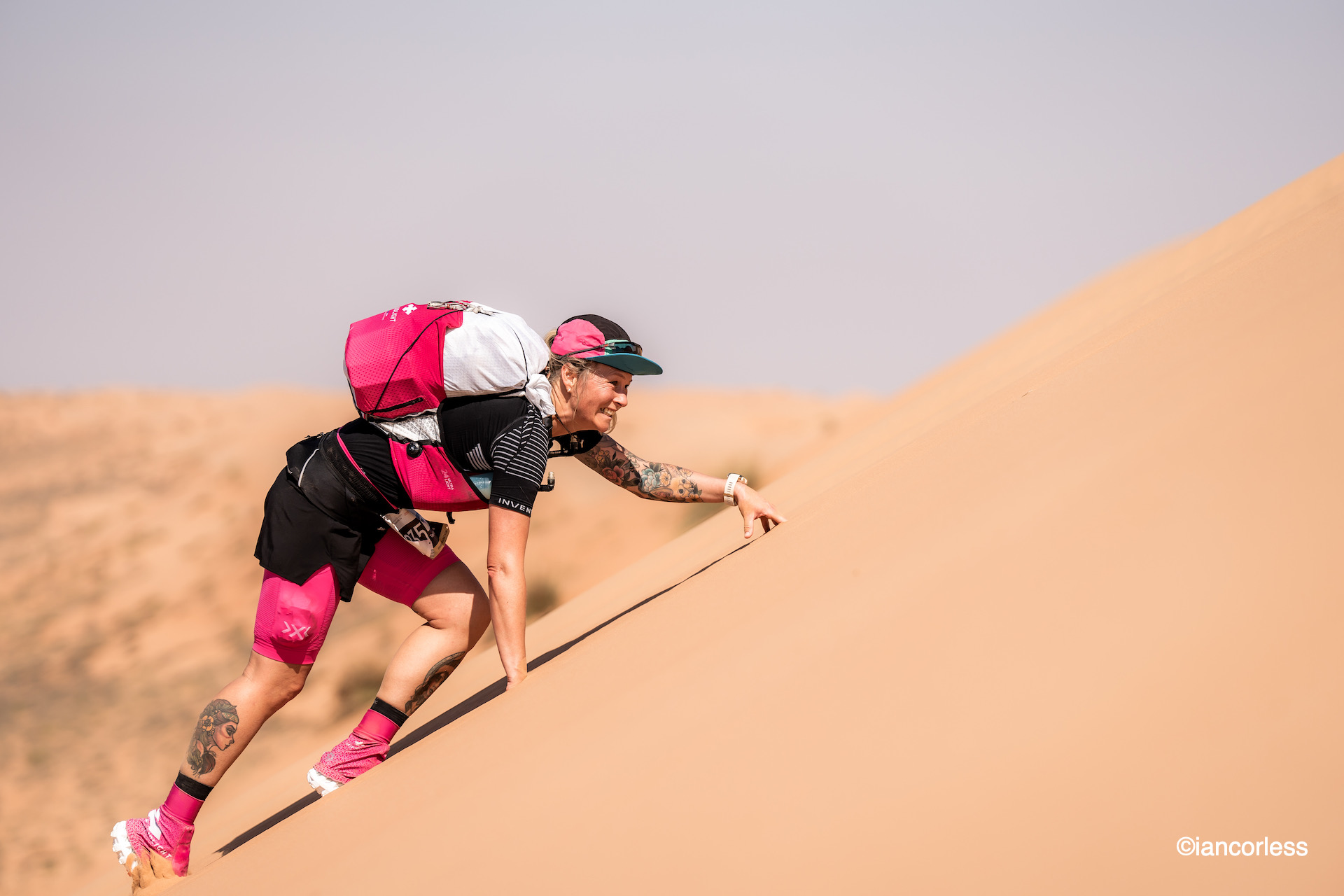
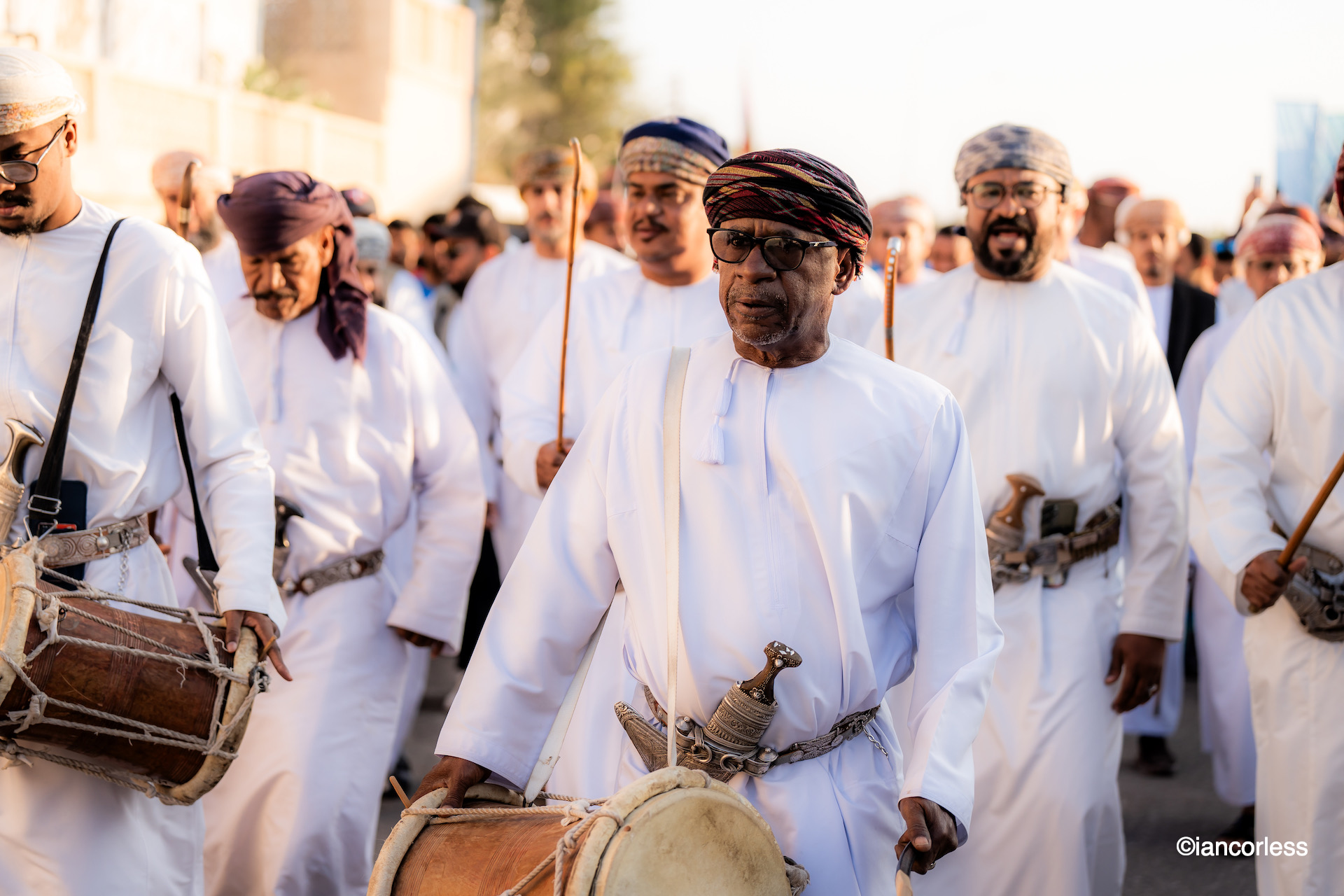
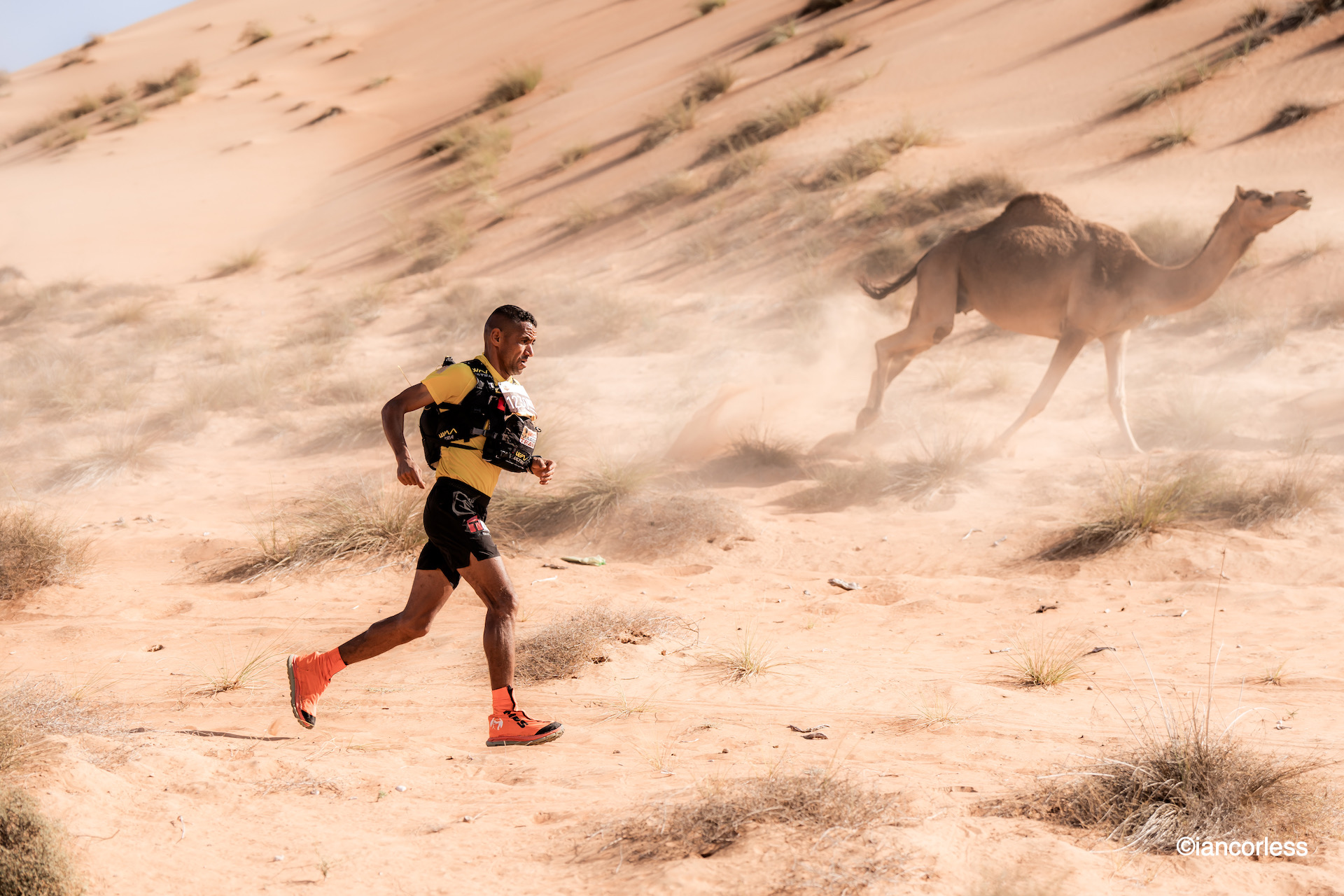
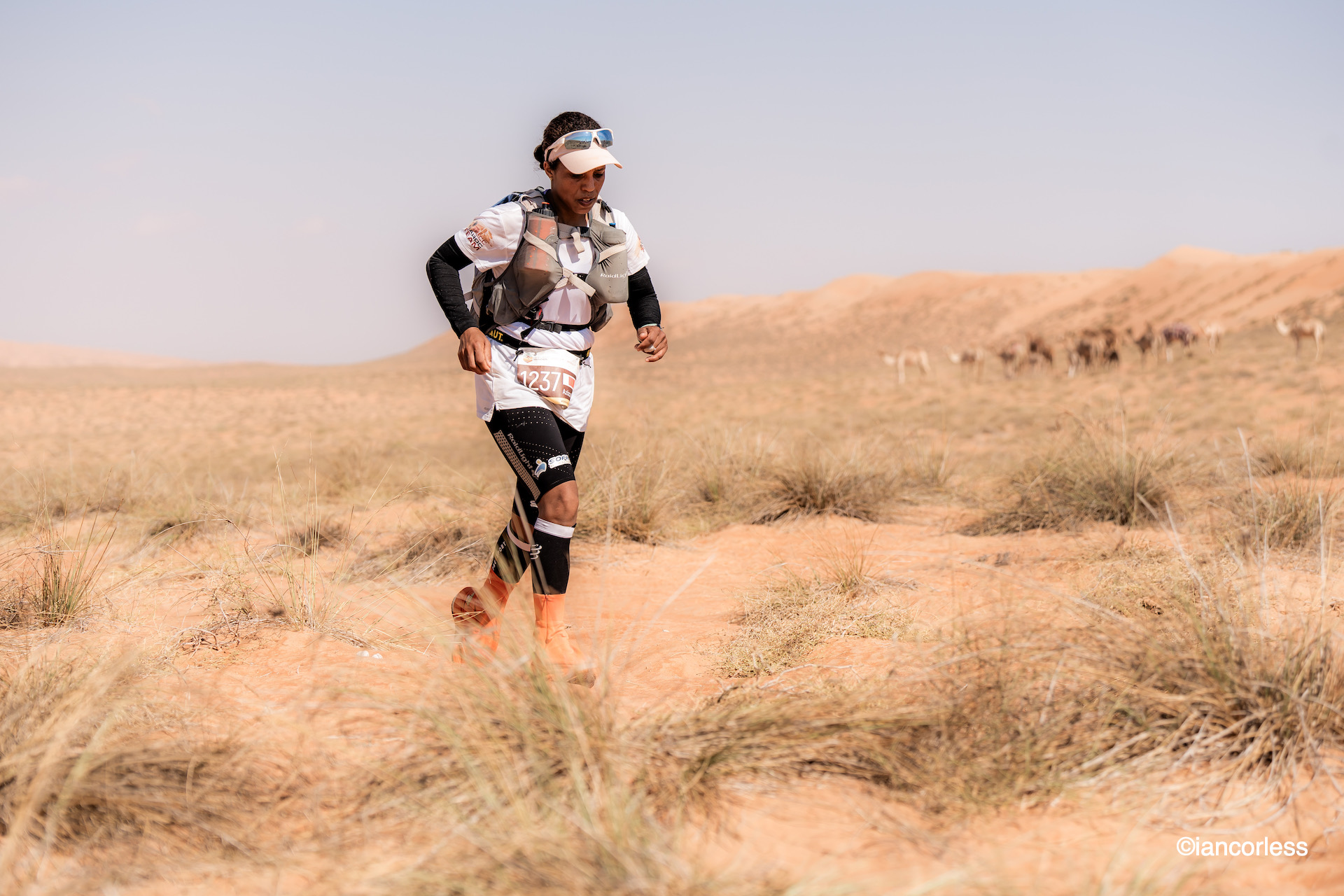
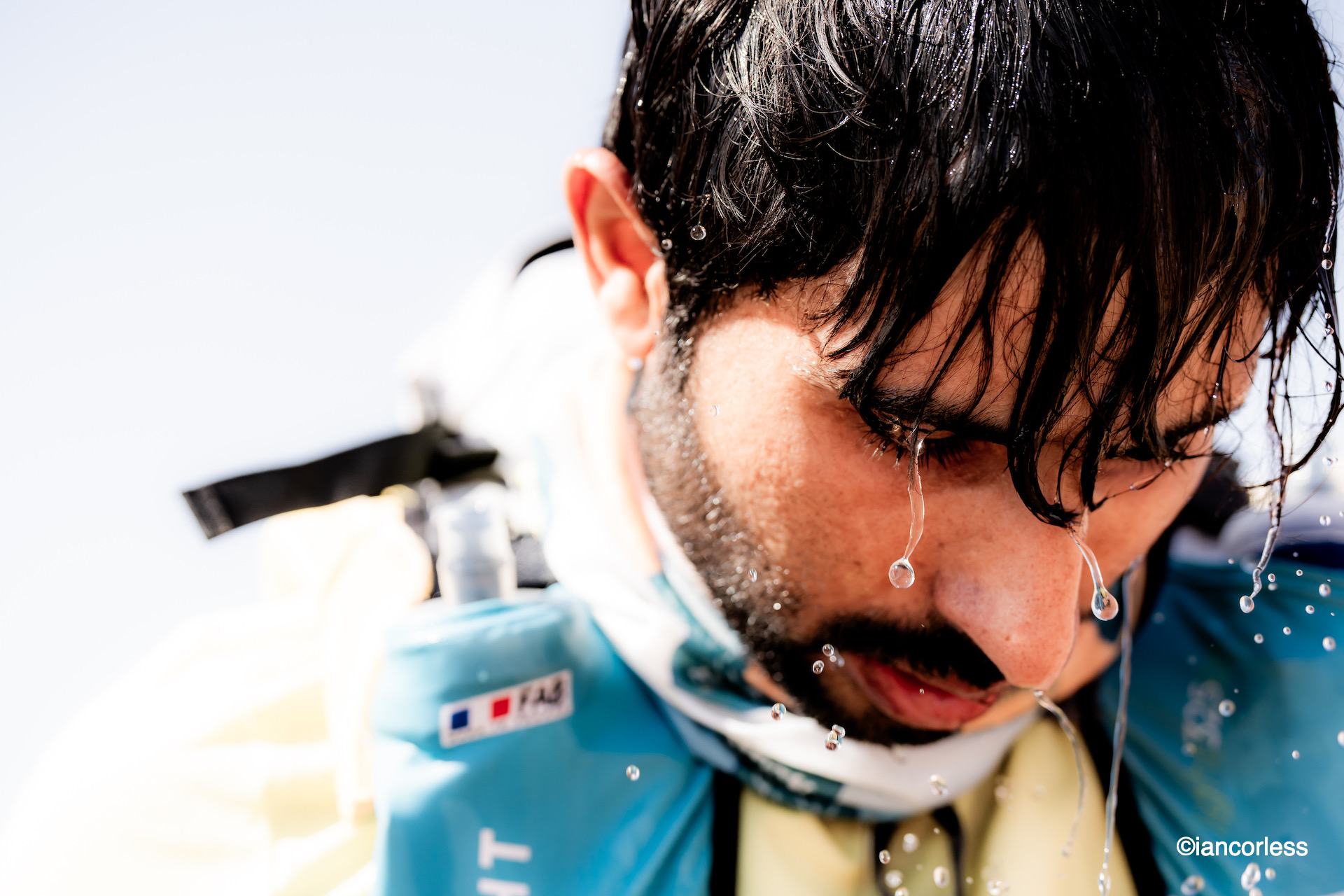
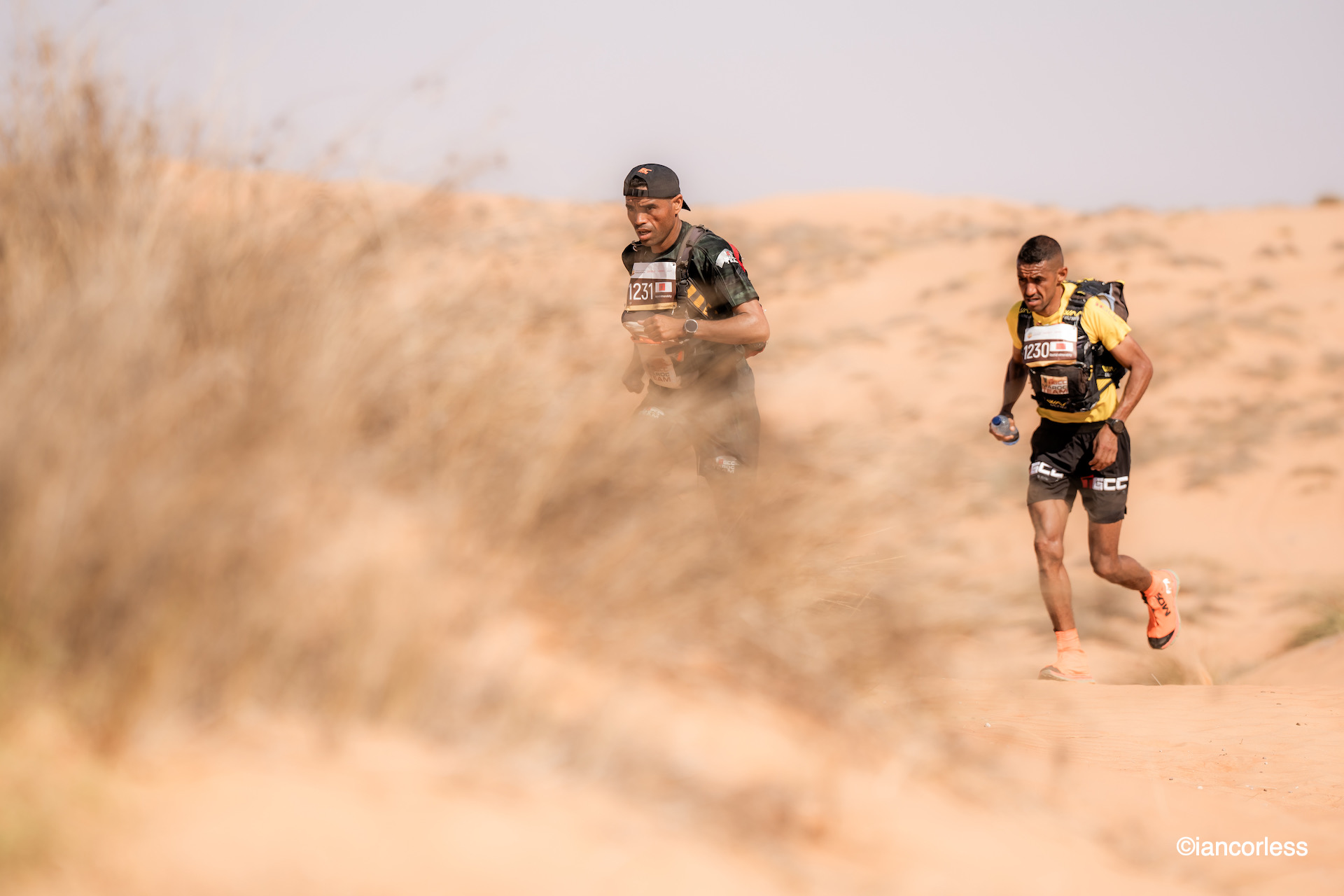
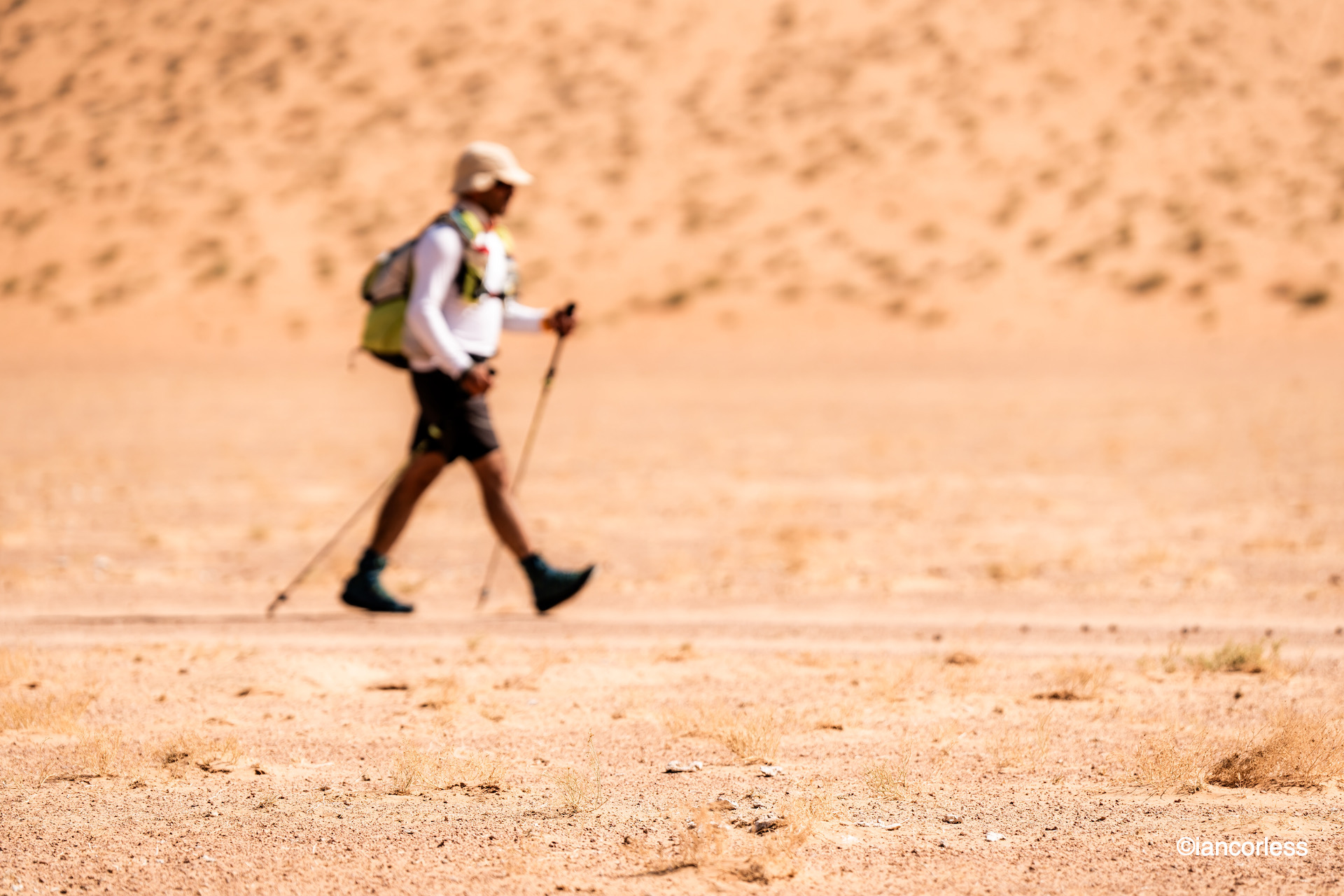
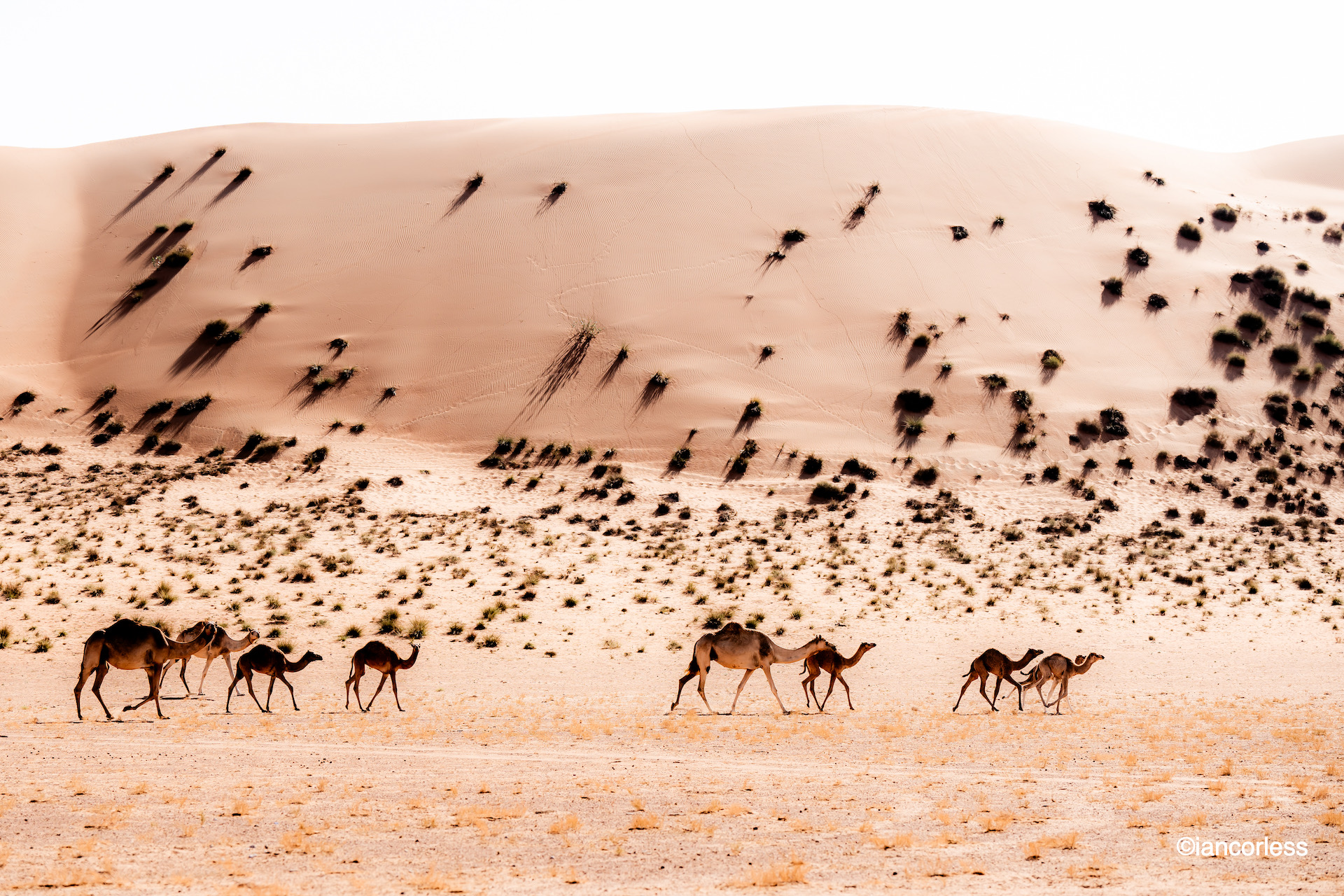
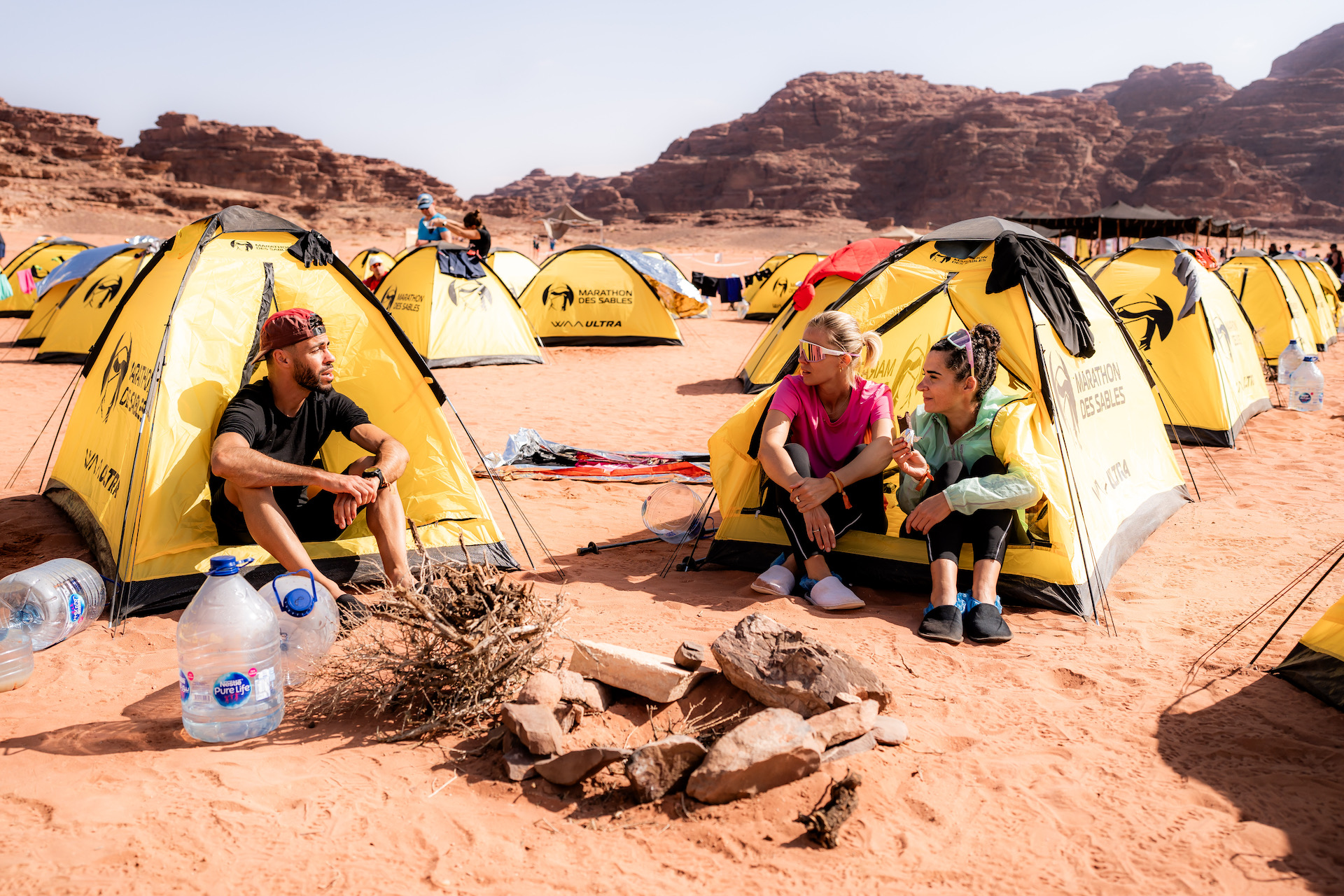
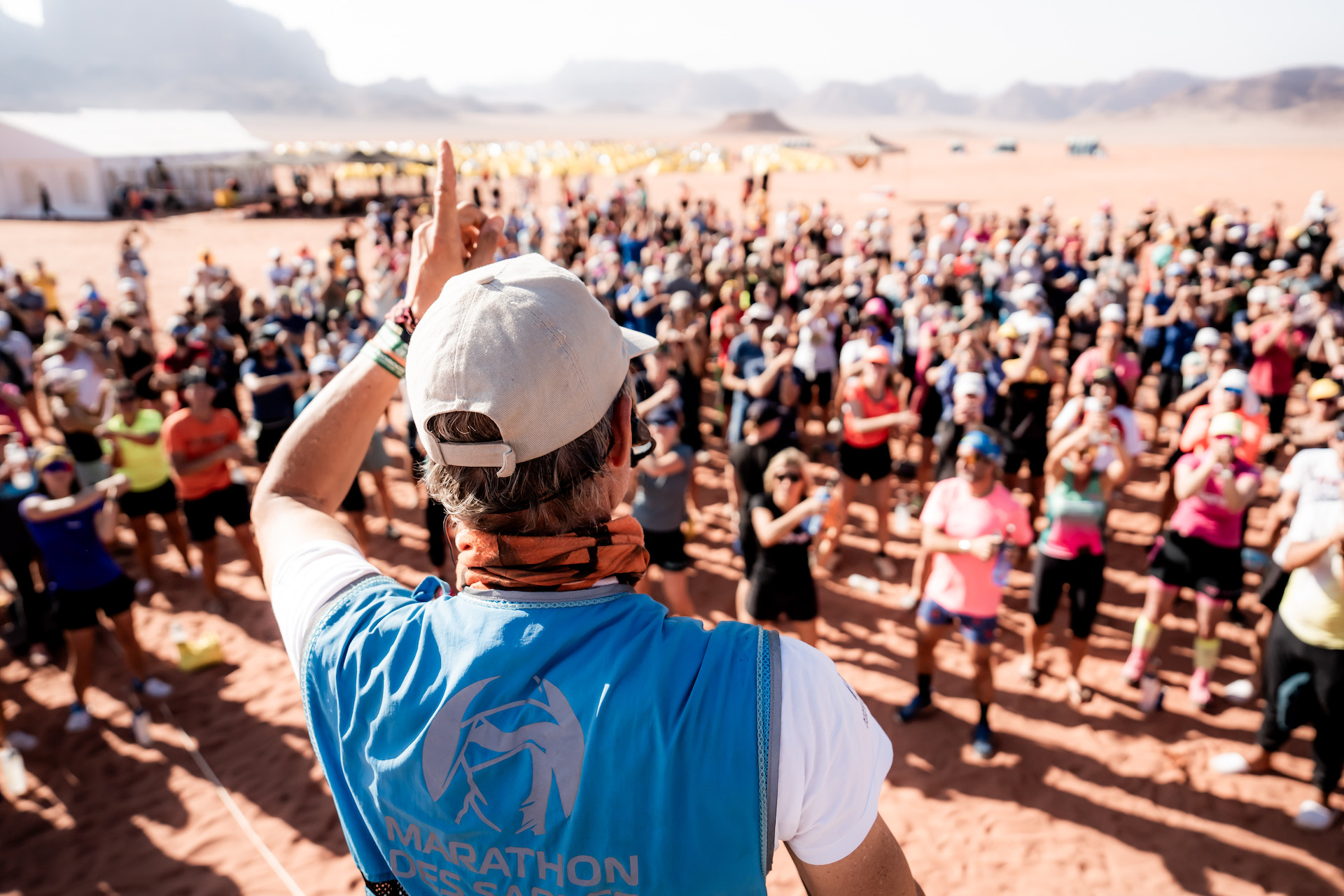
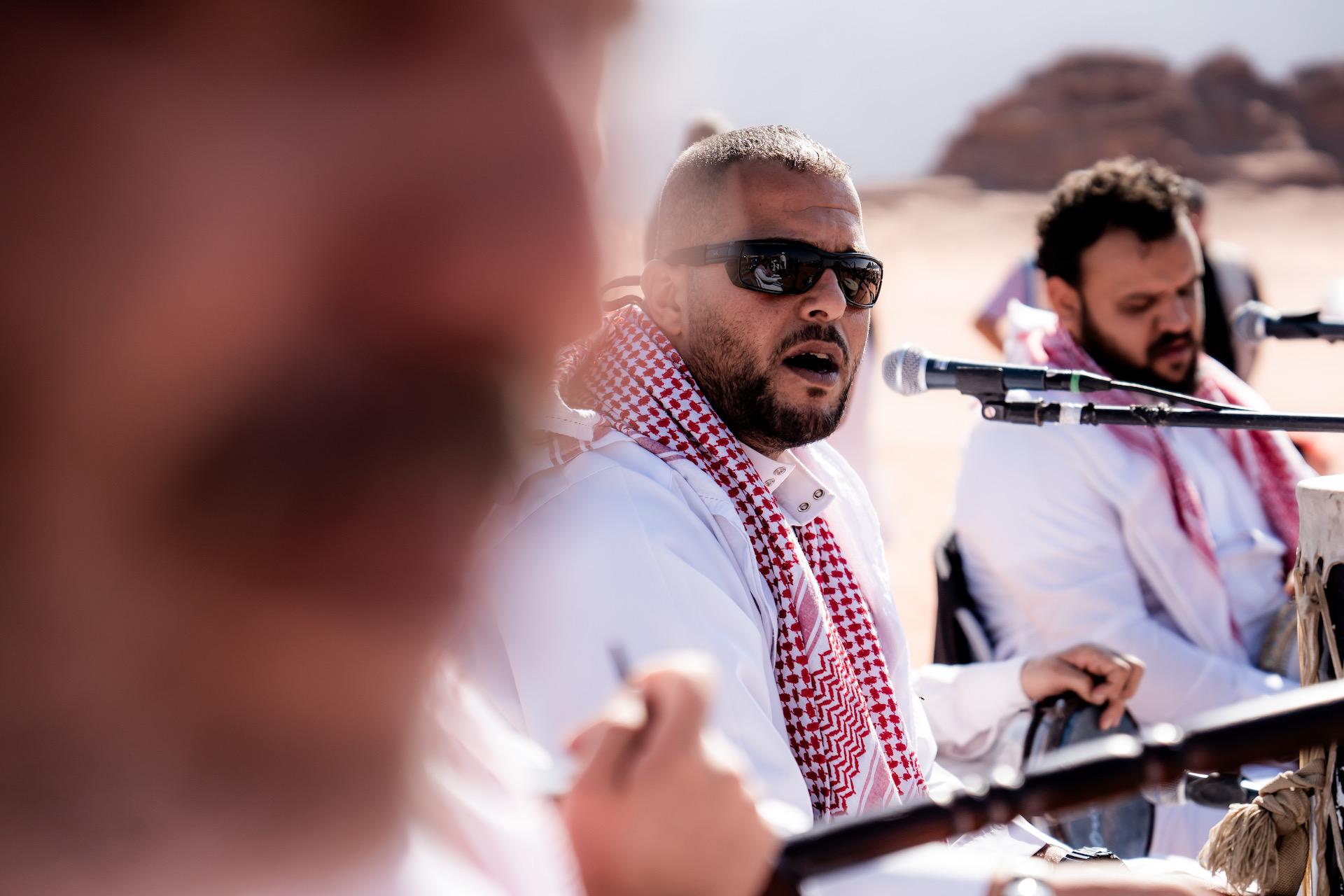
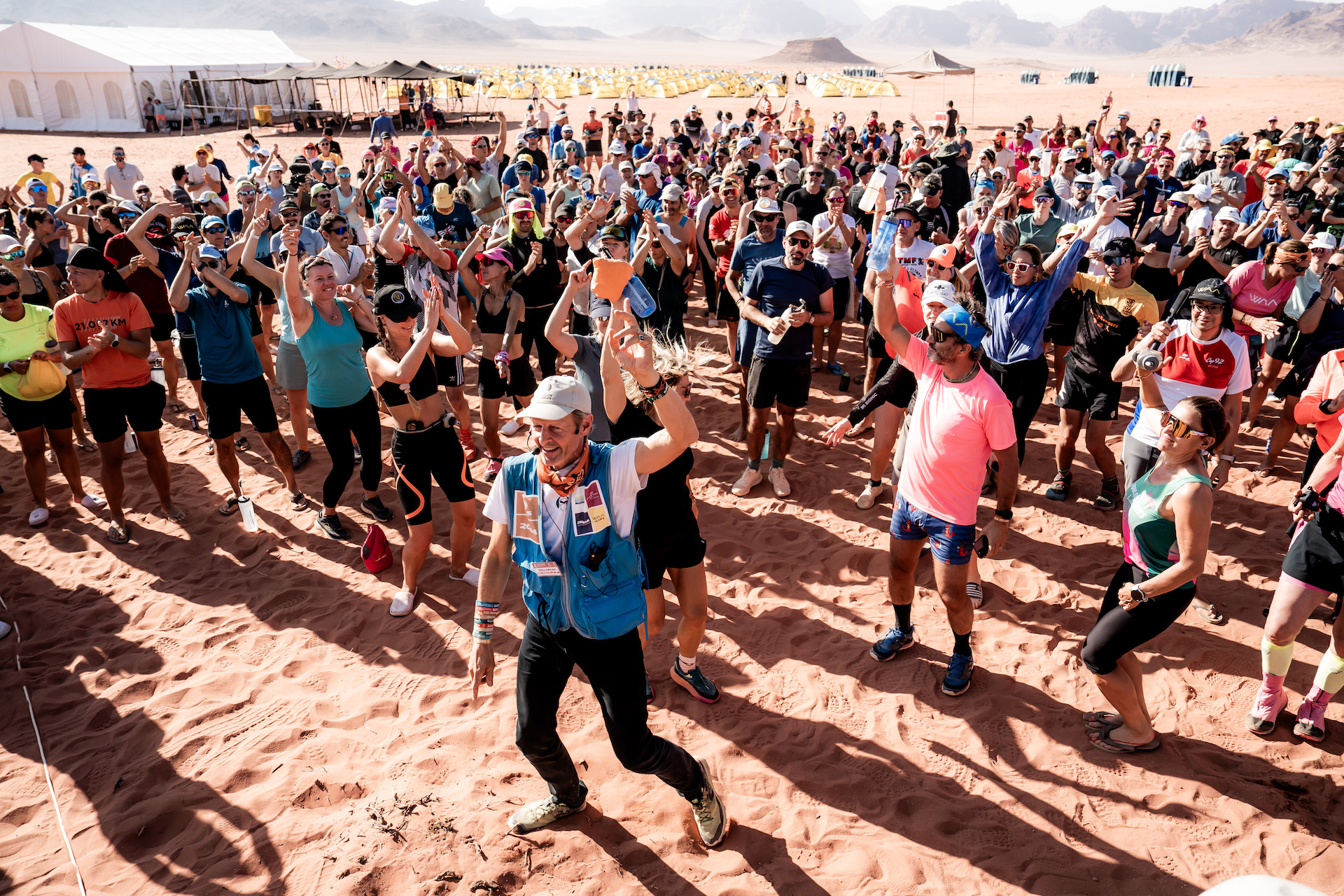
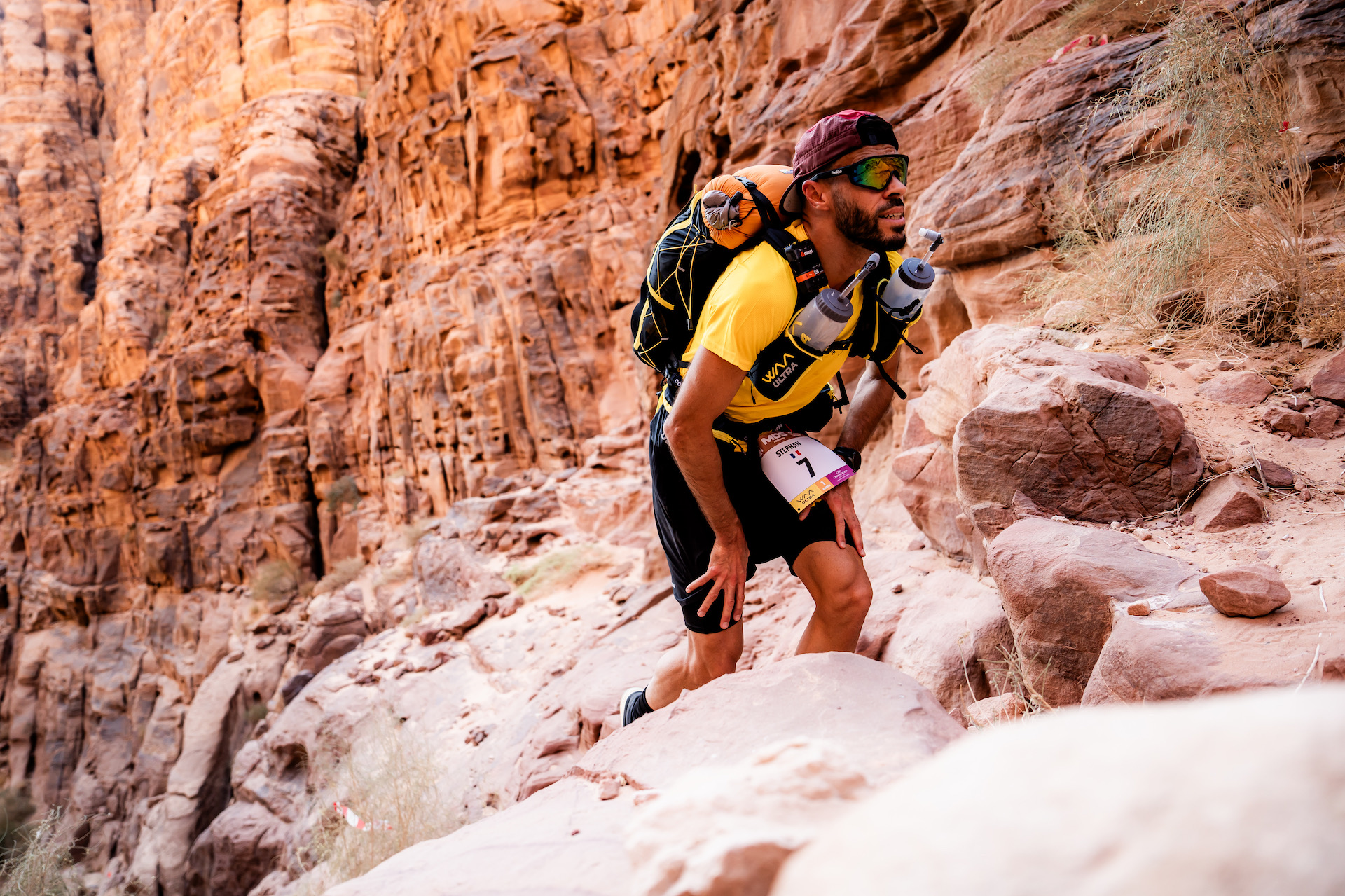
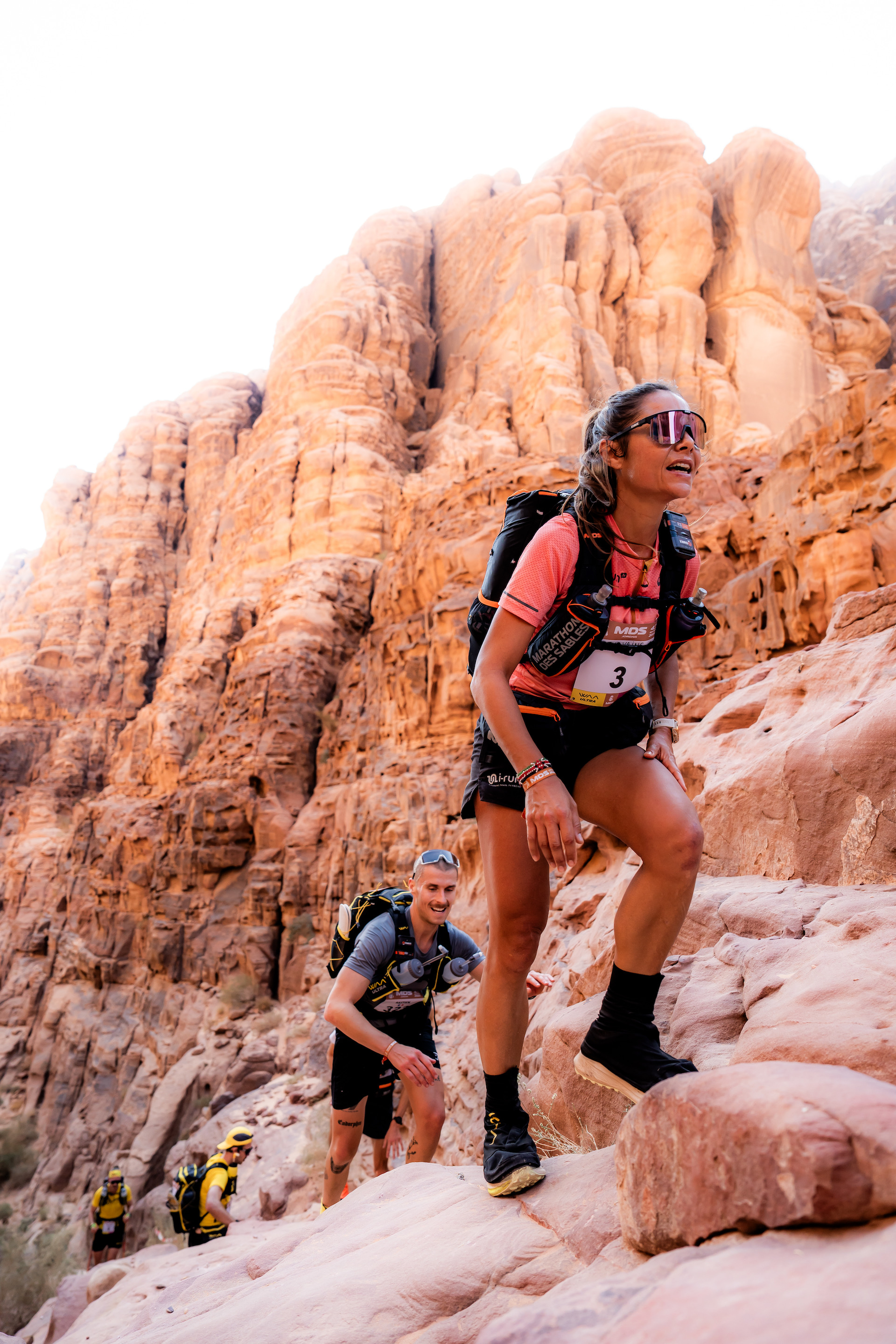
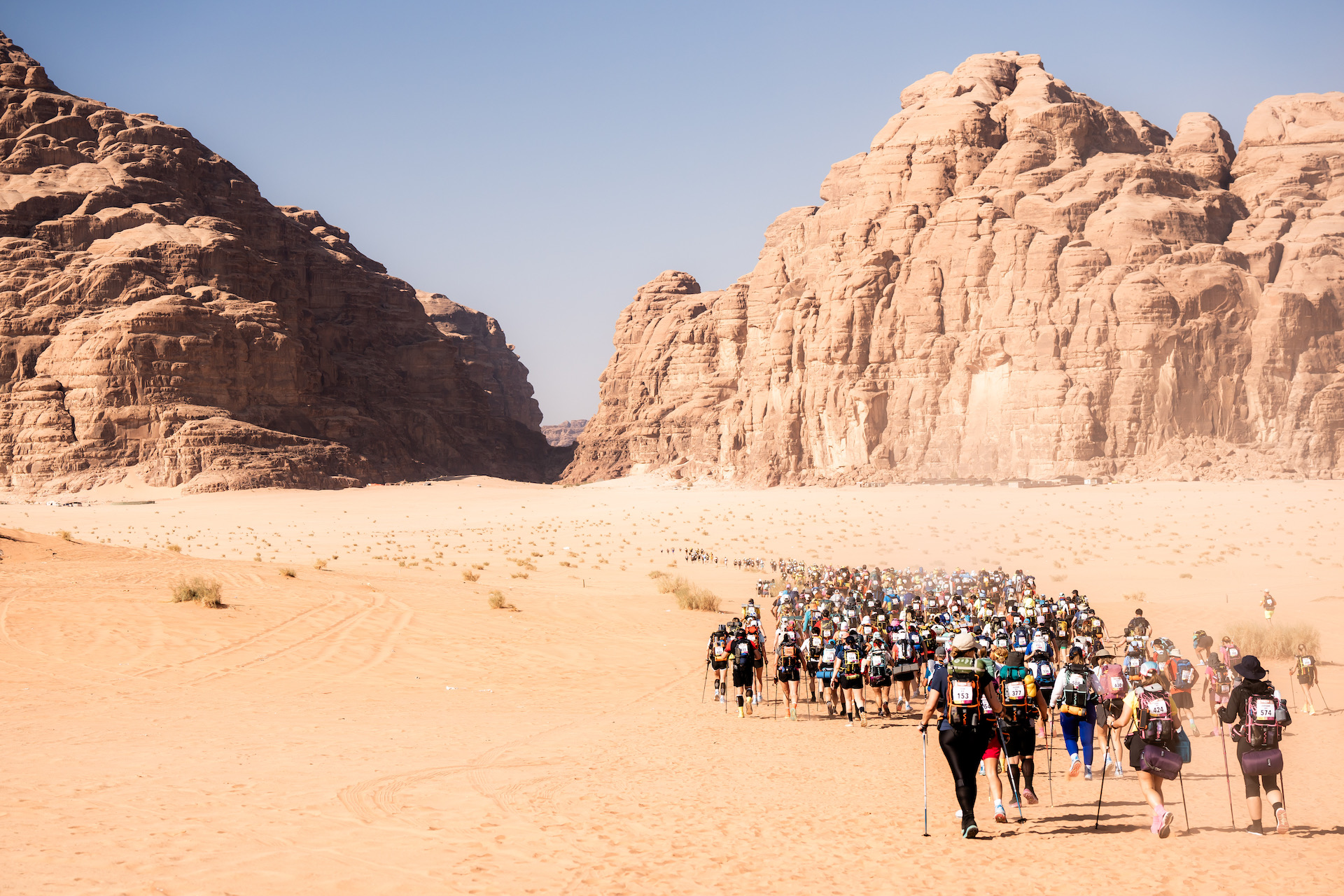
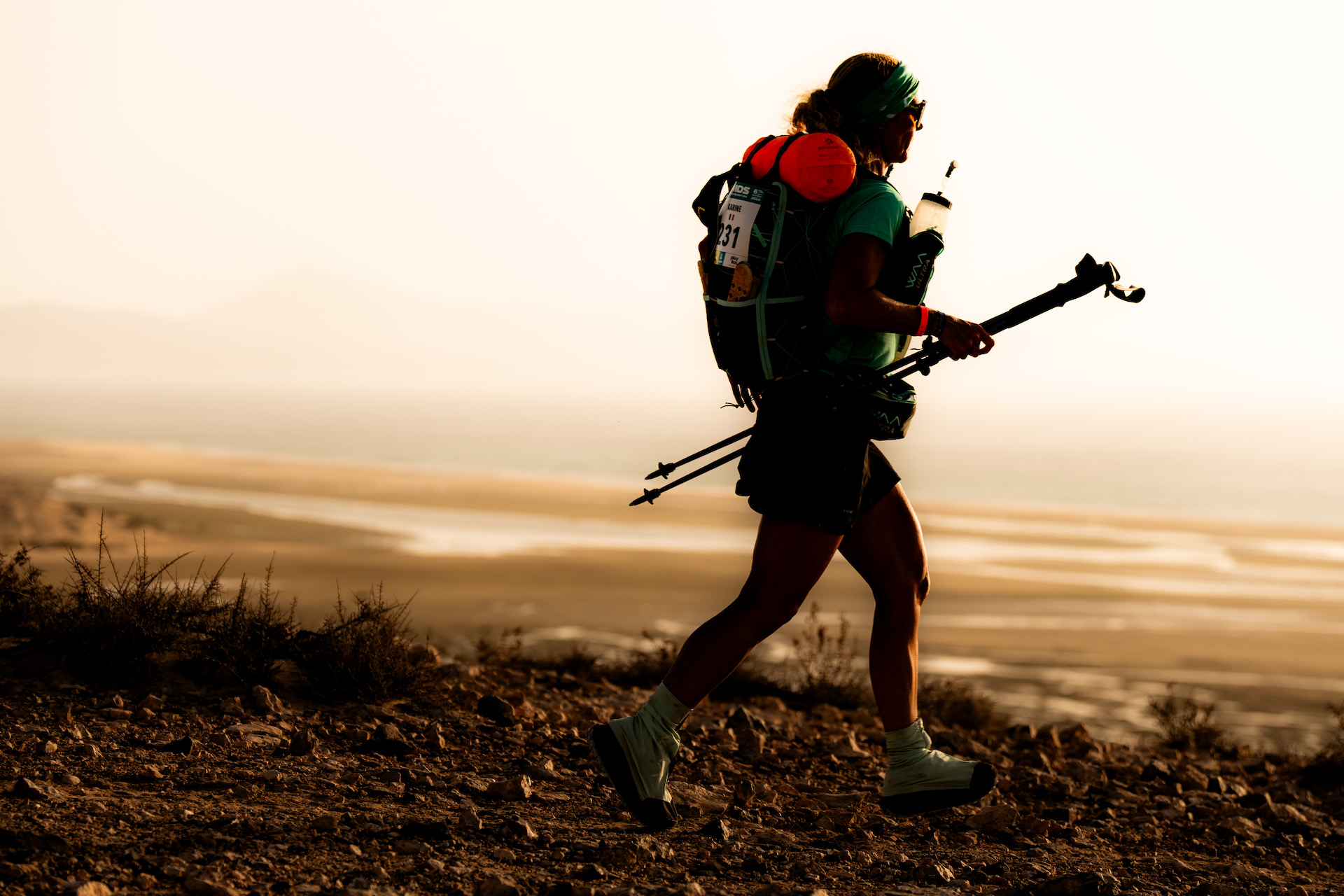
The 2025 Oman Desert Marathon got underway today in Bidiyah, Oman with music, dancing and a lively atmosphere. Stage 1 of the 165km race also includes all the one day races of 2km, 5km, 10km, 21km and 42km taking part on the same track. It was most certainly a lively start!
Photo by Ian Corless
Starting from the Oasis of Alwasil and finishing at Al Jawharat Resort in Bidiyah. The 2025 Oman Desert Marathon is a five stages of 42 km, 32 km, 40 km, 30 km and 21 km.
Photo by Ian Corless
Five stages to experience the different perspectives of one of the most beautiful deserts of the world.
Photo by Ian Corless
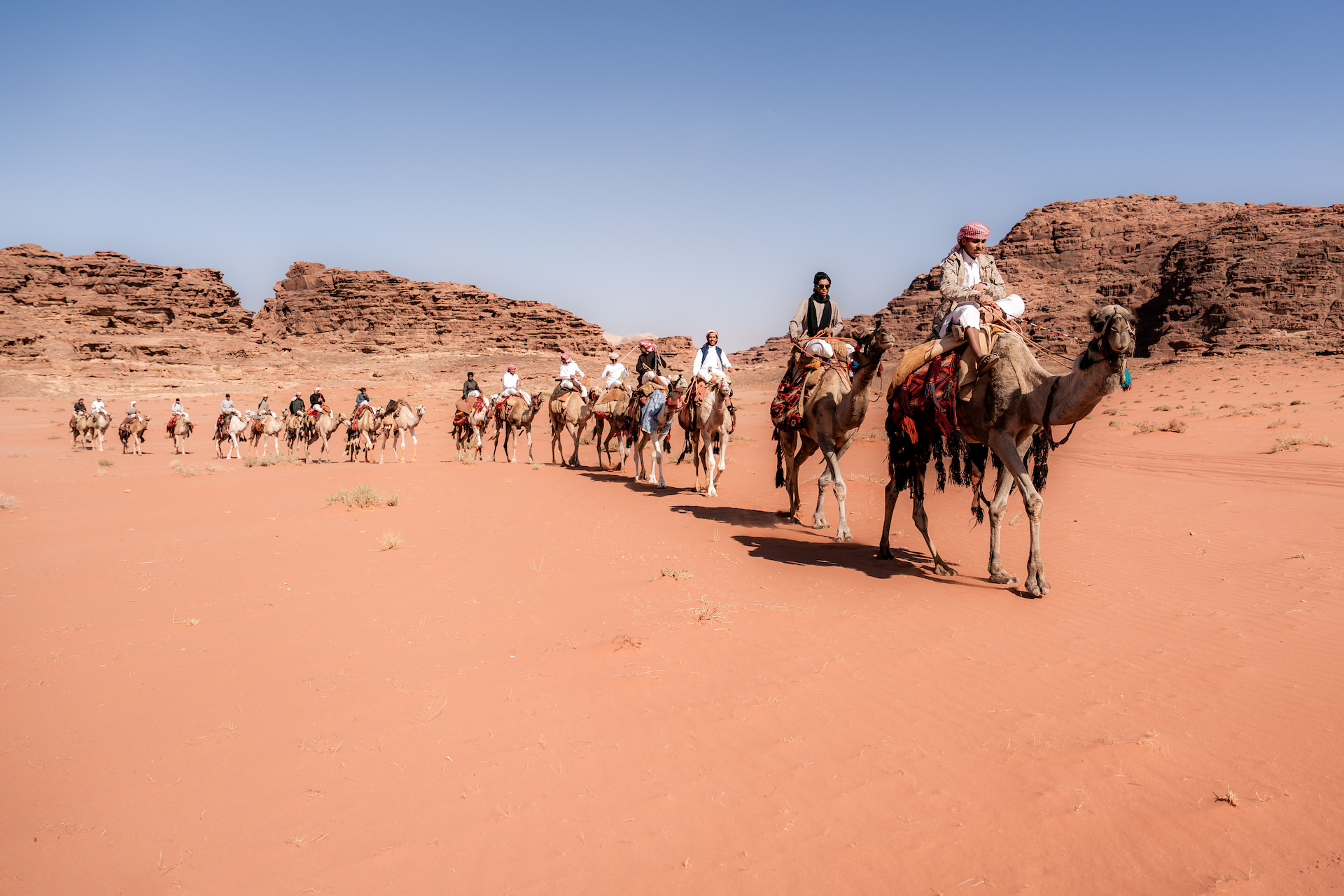
A unique journey to discover the most remote, untouched sands and the highest dunes of the Omani Desert while on the tracks of the ancient caravans.
Photo by Ian Corless
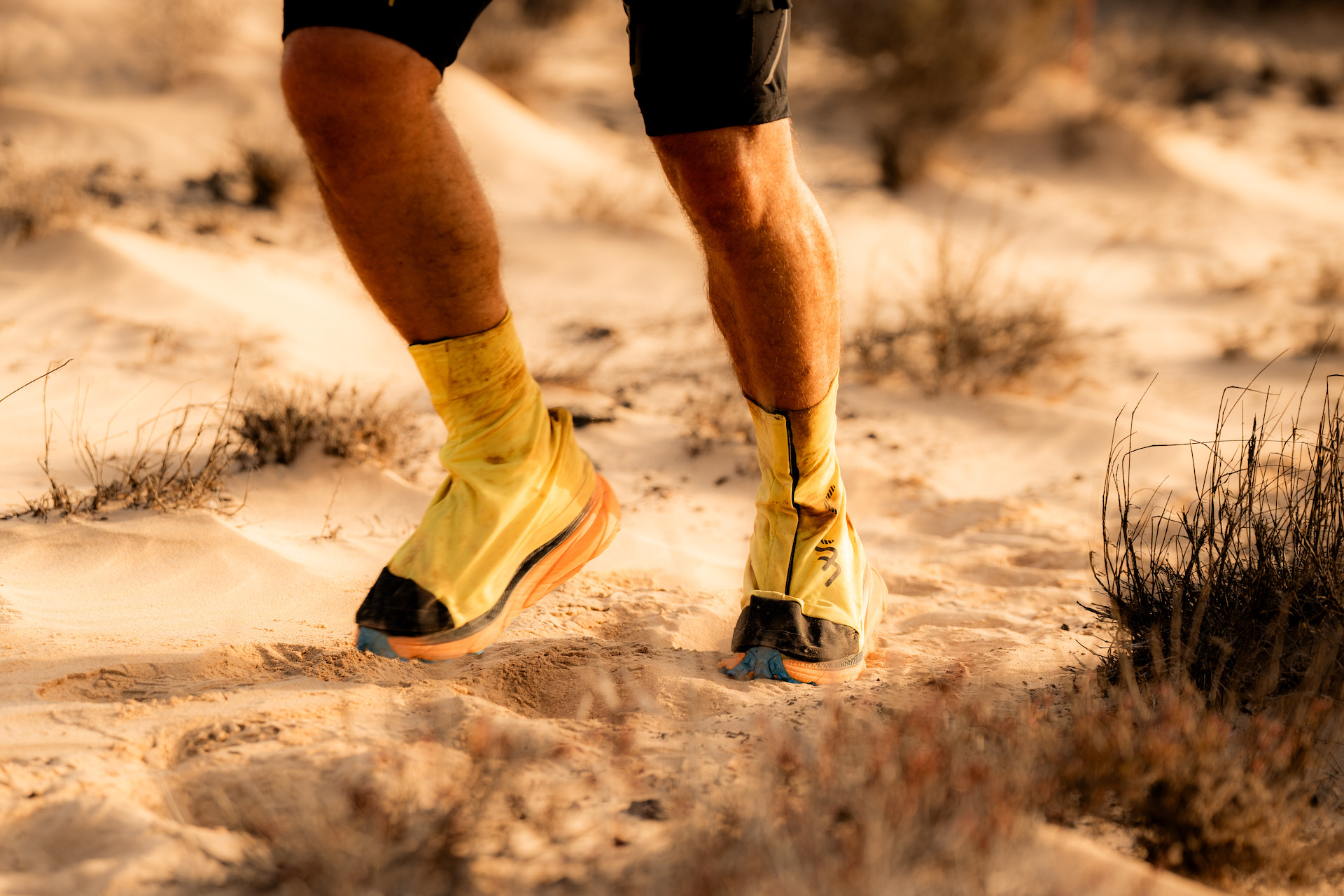
Stage 1 at 42km’s was a tough first day. One thing is notable here in Oman is that the desert is pretty much ALL soft-sand which makes for very tough and tiring days.
The weather at this time of year is considered ‘mild’ by Omani standards,, however, the 25-deg highs surely took a toll on the runner’s during the stage.
Photo by Ian Corless
The main protagonists of the day were Rachid and Mohamed El Morabity and Aziza Raji.
Aziza took the lead from the start and slowly but surely opened up a gap that just kept getting bigger as the day went on. Sally Ford and Lydia Oldham chased but were almost 45-minutes behind.
For Rachid and Mohamed, they played a waiting and watching game for the first 30km’s and then opened up the throttle to pull away. The main challenge, once again came from Ghaith Al Saidi and Saleh Al Saidi, brothers against brothers.
Photo by Ian Corless
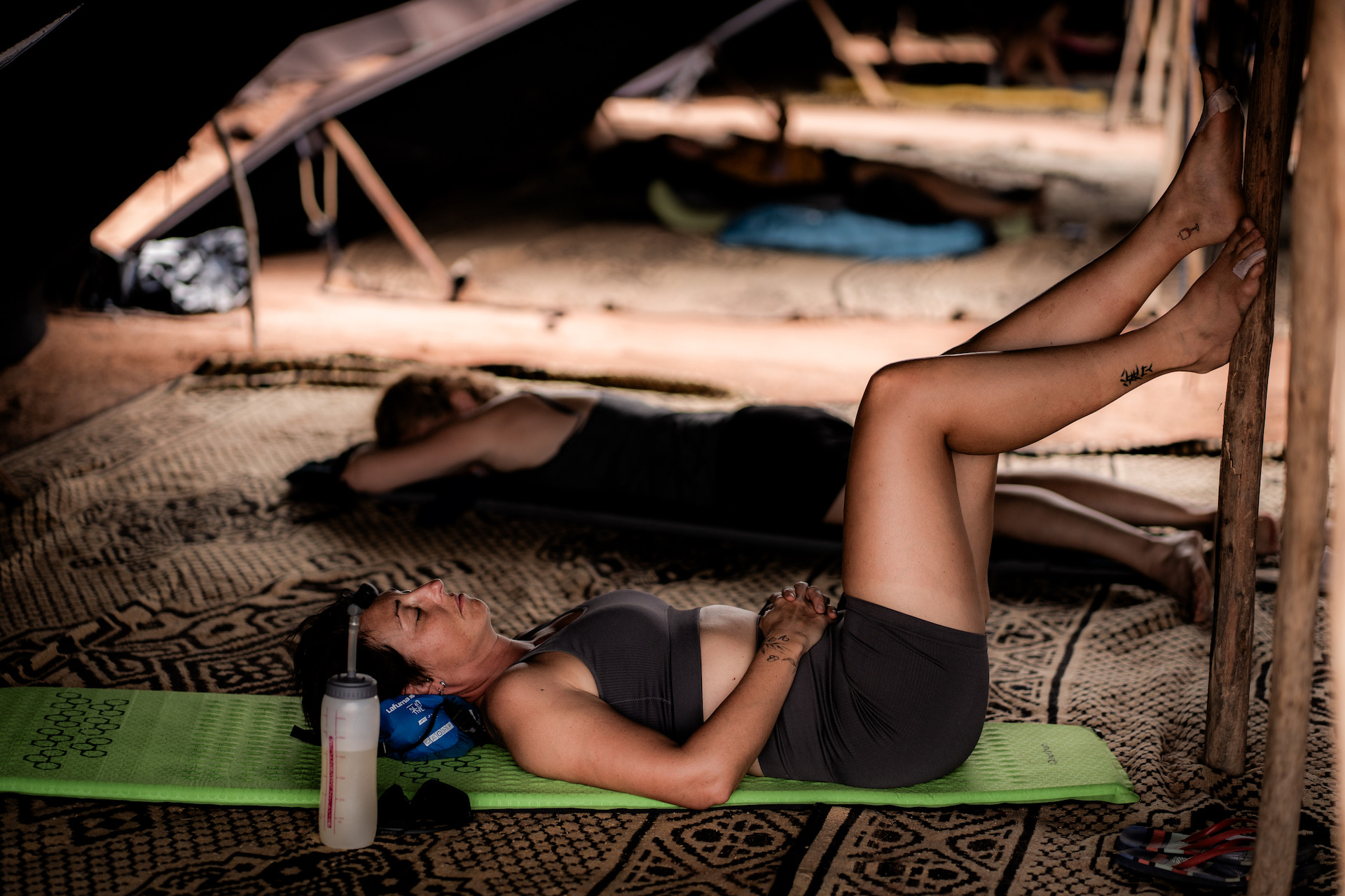
For Aziz, Rachid and Mohamed, there results were even more impressive as the trio only had approximately 3-hours sleep the night before after long travel and a 0300 arrival at the race hotel. I am sure they will sleep well tonight!
Photo by Ian Corless
For the other participants, it was a day of acclimation and hopefully taking the desert and conditions calmly, especially with 4 tough days to come.
Stage 2 at 10km’s less, I am sure will be welcomed with open arms.
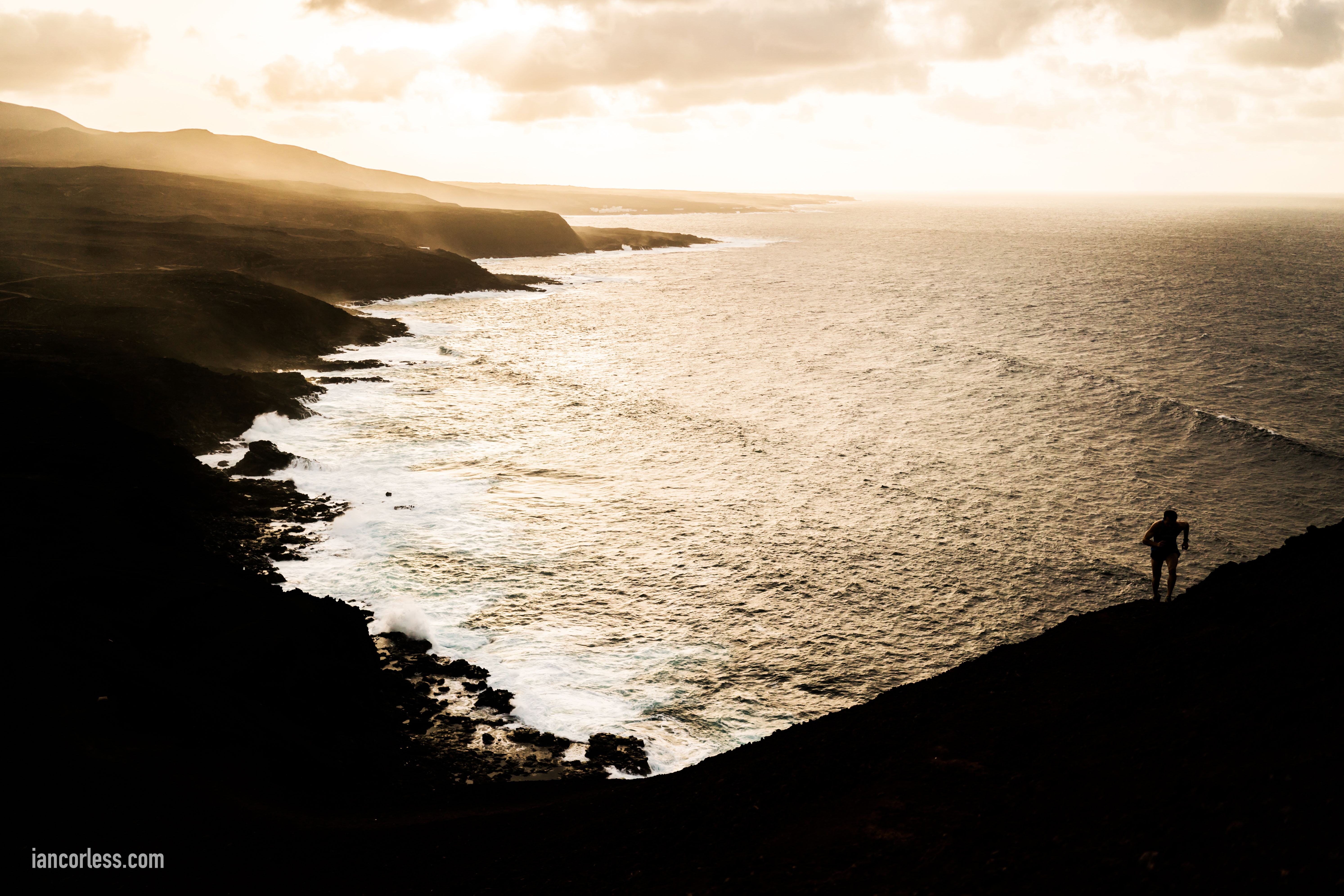
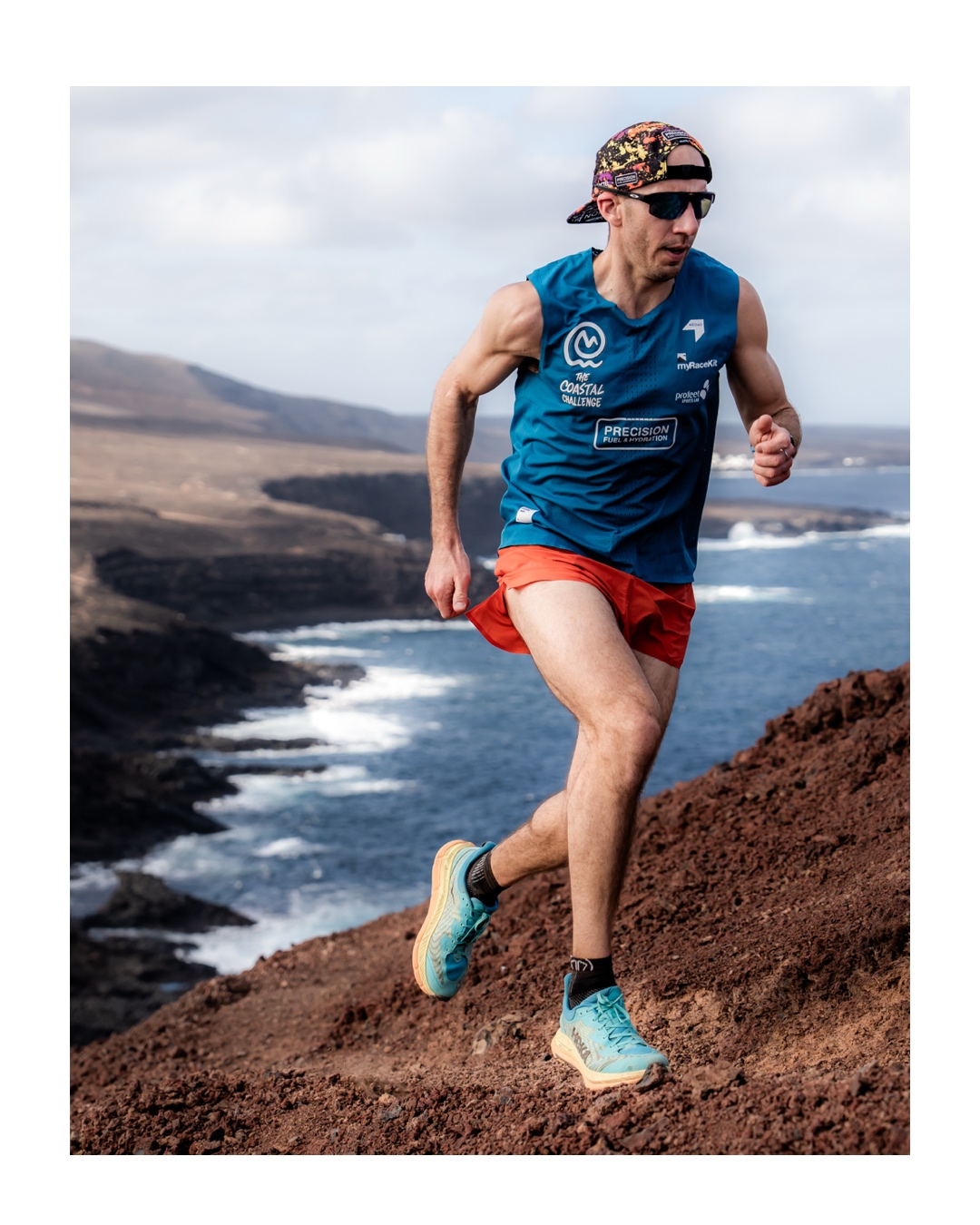
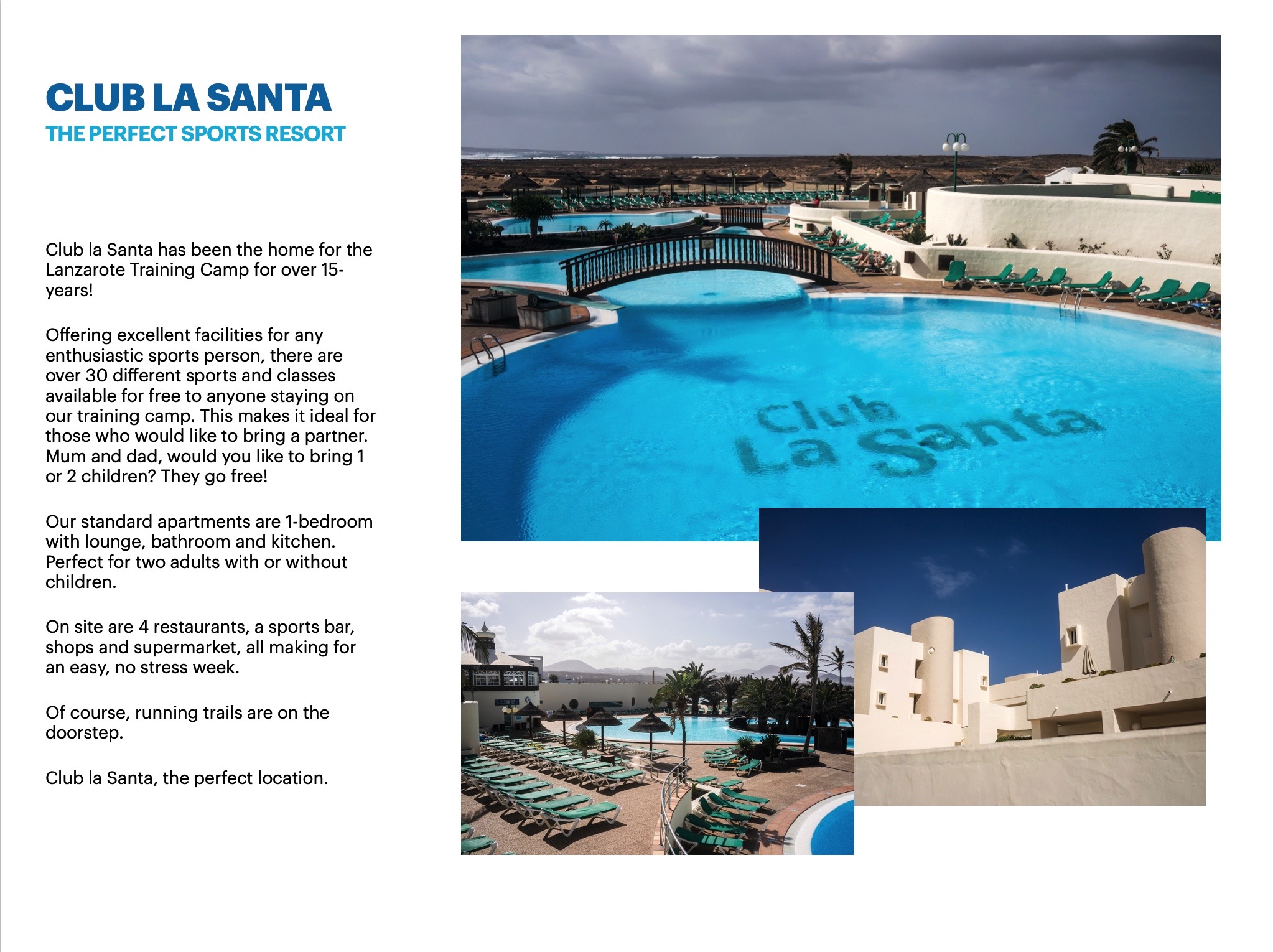
There is no better way to kick-off a new year than arriving in Lanzarote for a week of good weather and all things running.
2025 signifies 19-years of training camps for me in ‘Lanza!’ They have changed and tweaked over the years and for the past 8-years, the current trail running format has been the template on how we tweak and develop each camp.
For 2025, we actually scaled the camp back to a smaller format, despite many requests to attend the camp, we kept it small with under 25 participants.
This was a significant step in ensuring smaller run/walk groups and the ability for everyone to get to know each other. It really worked, I’d go as far to say it was the friendliest and most cohesive camp in many years.
To ensure happiness on the trails, we had a core team of four guides, Pierre Meslet, Abelone Lyng, Hanna Bradshaw and Ian Corless. In simple terms, we break the guides down into groups of:
1. Faster running.
2. Running with some walking.
3. Walk/ run and
4. Walking.
Groups of 3-6 people really work and this was a huge success.
Our days follow a similar format:
0900: Morning a run that extends to the afternoon based on the distance. We have different routes and distances for each day.
A break for lunch.
1500: A talk and or workshop.
1745: Recovery run of 3-5km.
1900: Optional evening meet up for drink/ chat before dinner.
Exception to the above is one evening we do a run and overnight bivouac camp.
The last day is ‘long run’ day which starts at 0800 and covers between 30km to 45km.
Every edition of the camp, we get a great variety of abilities and experience, 2025 was no different. Up at the front we had a multiple MDS podium champion, at the other end, we had a couple who had never run longer than 10km before. It’s what makes the camp great. Mixed abilities and everyone providing knowledge.
Our bivouac night, as always, was special. Due to some glow sticks, a portable speaker and some good tunes, it was even more special. Nothing like a mini rave in a volcano.
If you do all our sessions, typically weekly mileage is around 160km/ 100 miles. It sounds a huge amount huh? It is, but on the camp recovery and downtime plays a huge roll and even the relative novices were accumulating big distances and believe it or not, our duo who had never run longer than 10km before both did just over 30km’s on the last day, a huge success for them and the camp!
A key to the recovery process for each runner is Pierre Meslet offering the option to book massage and Luke Read from Airbornfit offering strength and conditioning.
Of course, nothing is compulsory, participants can miss sessions as they wish, however, this rarely happens. The camp takes hold and neary everyone surpasses persoanl expectations or limits.
We conclude the camp with a group meal; a great opportunity to relax and clebrate the achievements of all.
The only sad moment comes with the closure of the camp and onward travel home.
However, as I told all our 2025 participants, it’s only 51 weeks to the next camp and already, many have signed up with eager anticipation of what will be a 20 year celebration in 2026.
Fancy joining us for one of the best running weeks ever?
Who is the camp for? Anyone who is interested in running. We cater for everyone and we specifically cater for those who are doing stage races such as Marathon des Sables. Ultimately, its just a great week of running, be that for stage races or single stage races of any distance.
One year ago I was writing a review about the new addition to the VJ Sport shoe line-up, the VJ SARVA ACE.
This was a new departure for VJ. Of course, the shoe had the trademark VJ USP’s, amazing butyl outsole and fitlock foot hold. As a specific winter shoe, it also had the excellent star studded winter studs for reassuring grip on ice.
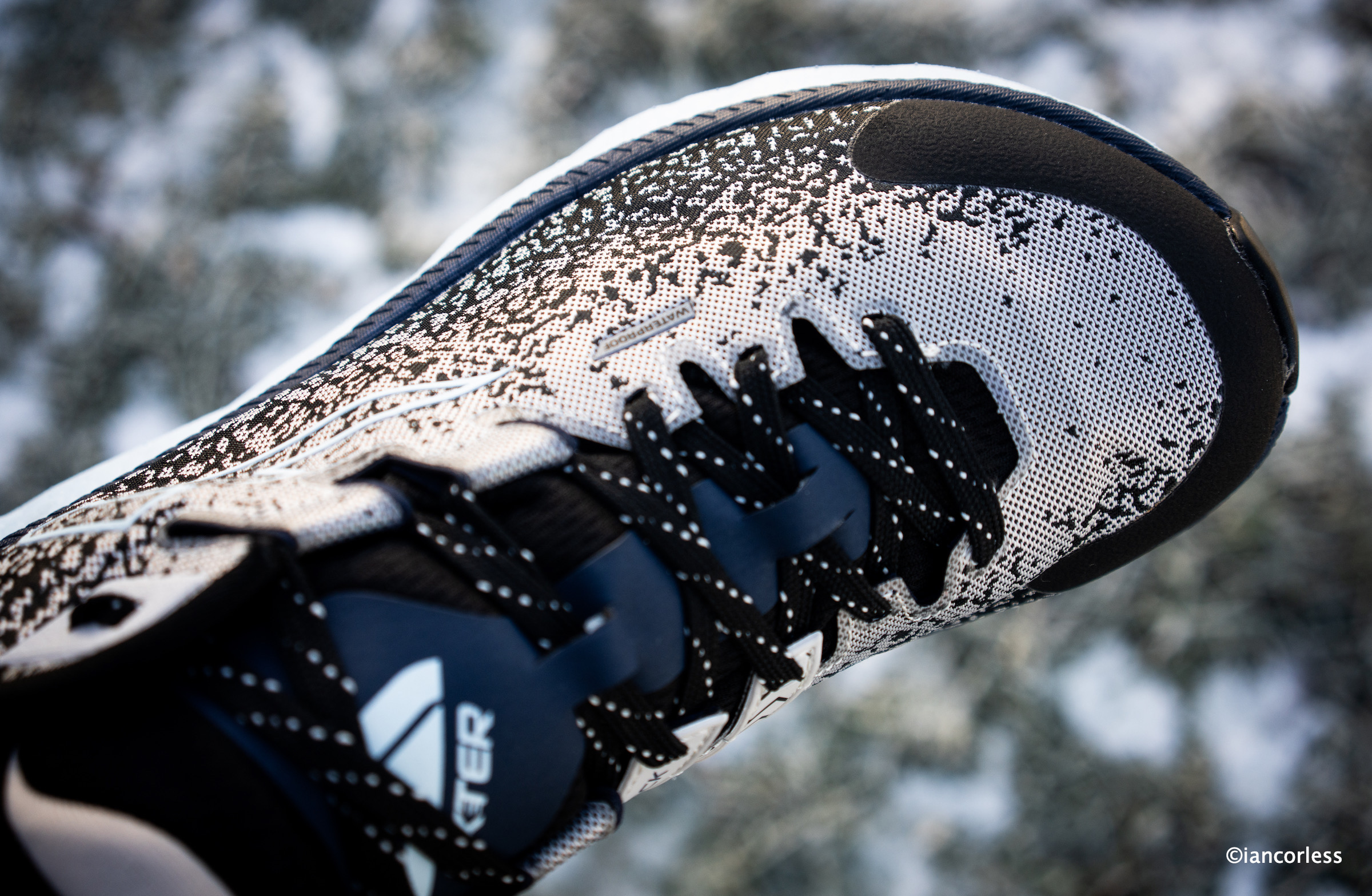
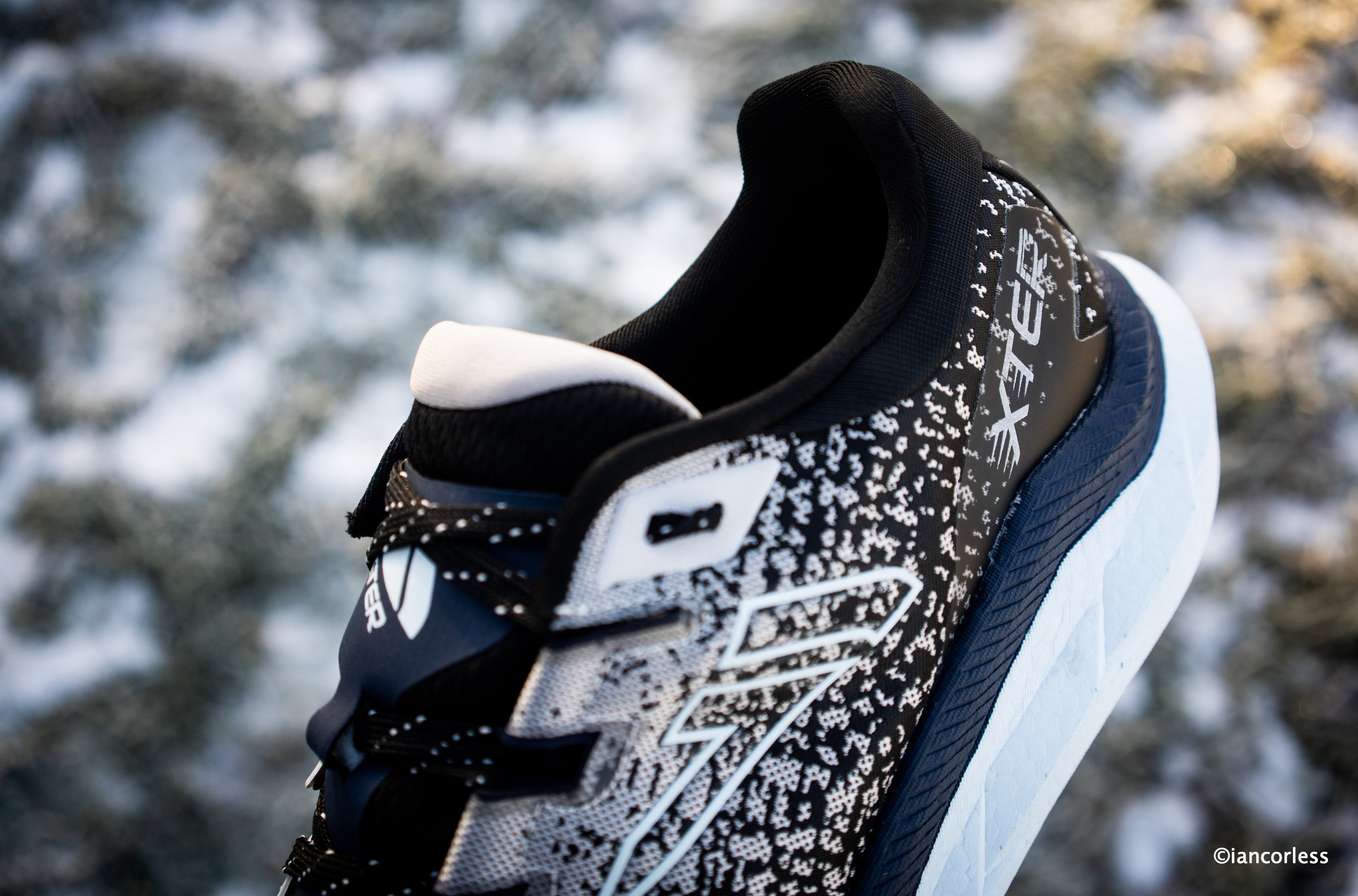
However, the new additions were extremely notable. Firstly a wide, foot-shaped toe box, very wide by VJ standards that would allow space for the toes to move and therefore aid keeping feet warmer in sub zero temperatures. Secondly, new cushioning called PerFOAMance. Thirdly, a one piece waterproof upper.
I wrote at the time that this was without doubt the most comfortable and best studded winter shoe I have tried. That still stands today.
Notably I said, ‘Light-weight, cushioned, wider fit, great foothold and superb comfort, the VJ Sarva ACE takes the previous VJ SARVA shoes to a new level. This shoe is so comfortable, I have already emailed VJ asking for this shoe to be made without studs. It would be a perfect shoe to run alongside the ULTRA, especially with the wider toe box.’
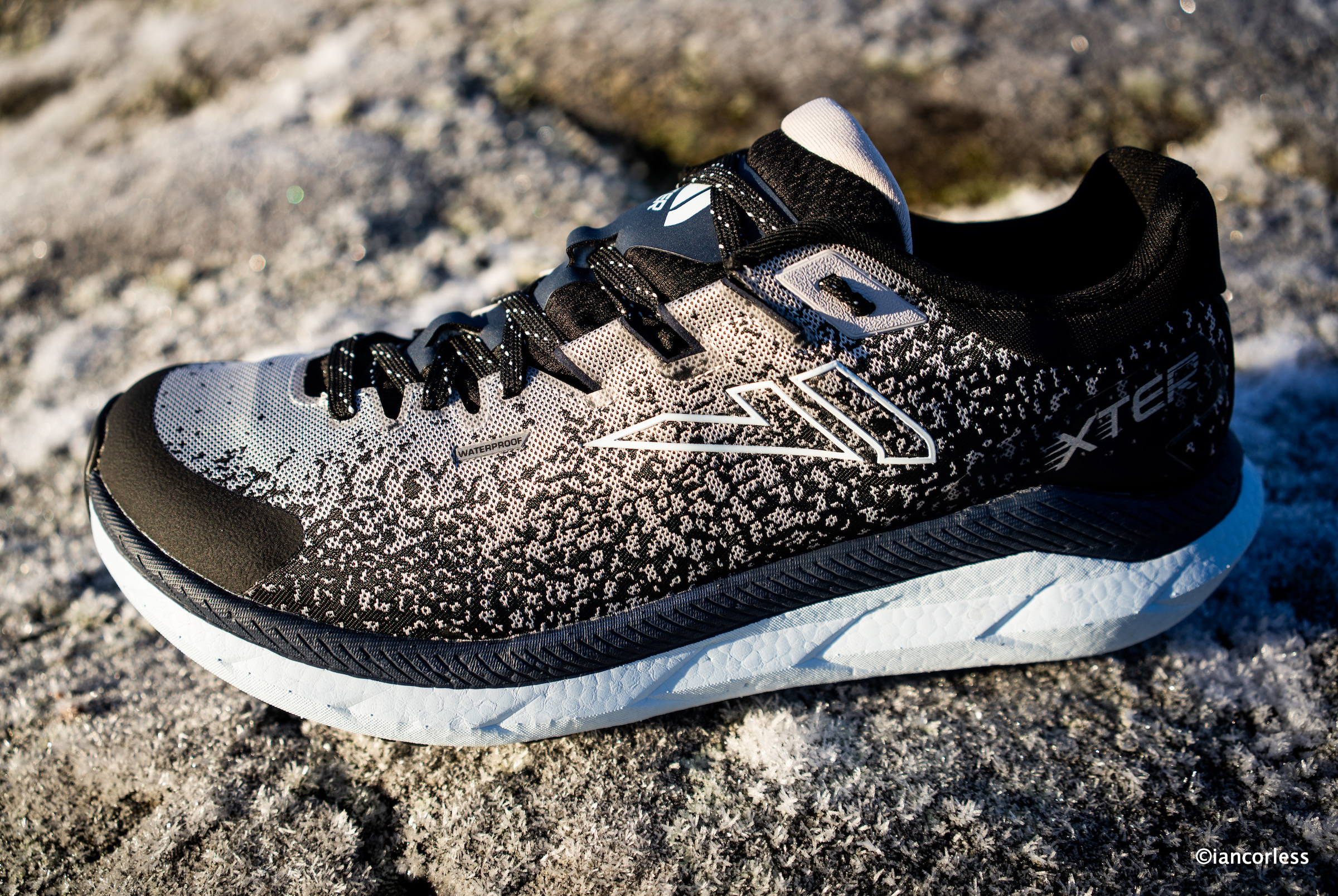
Well, VJ listened and they have now released the VJ XTER.
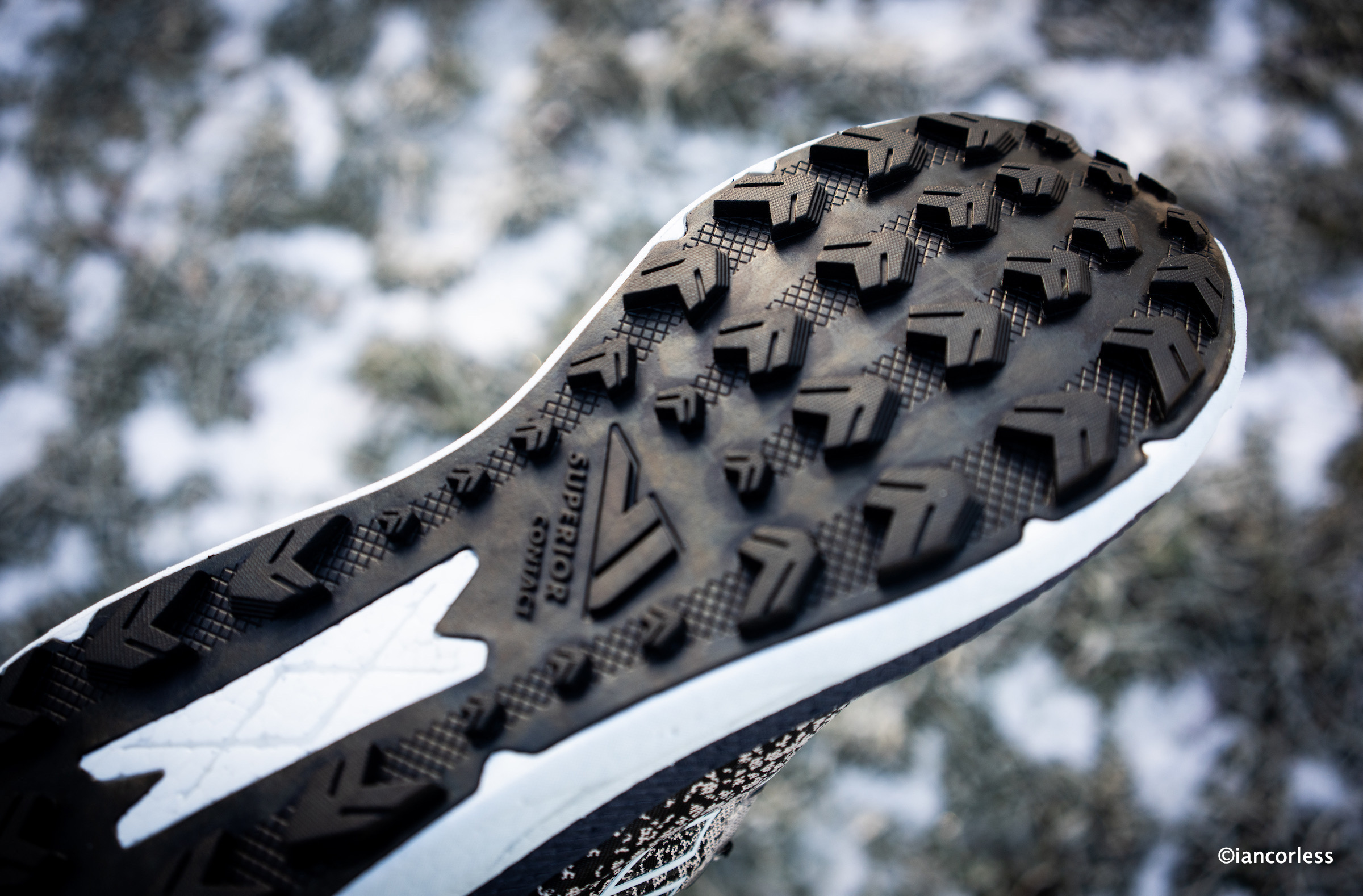
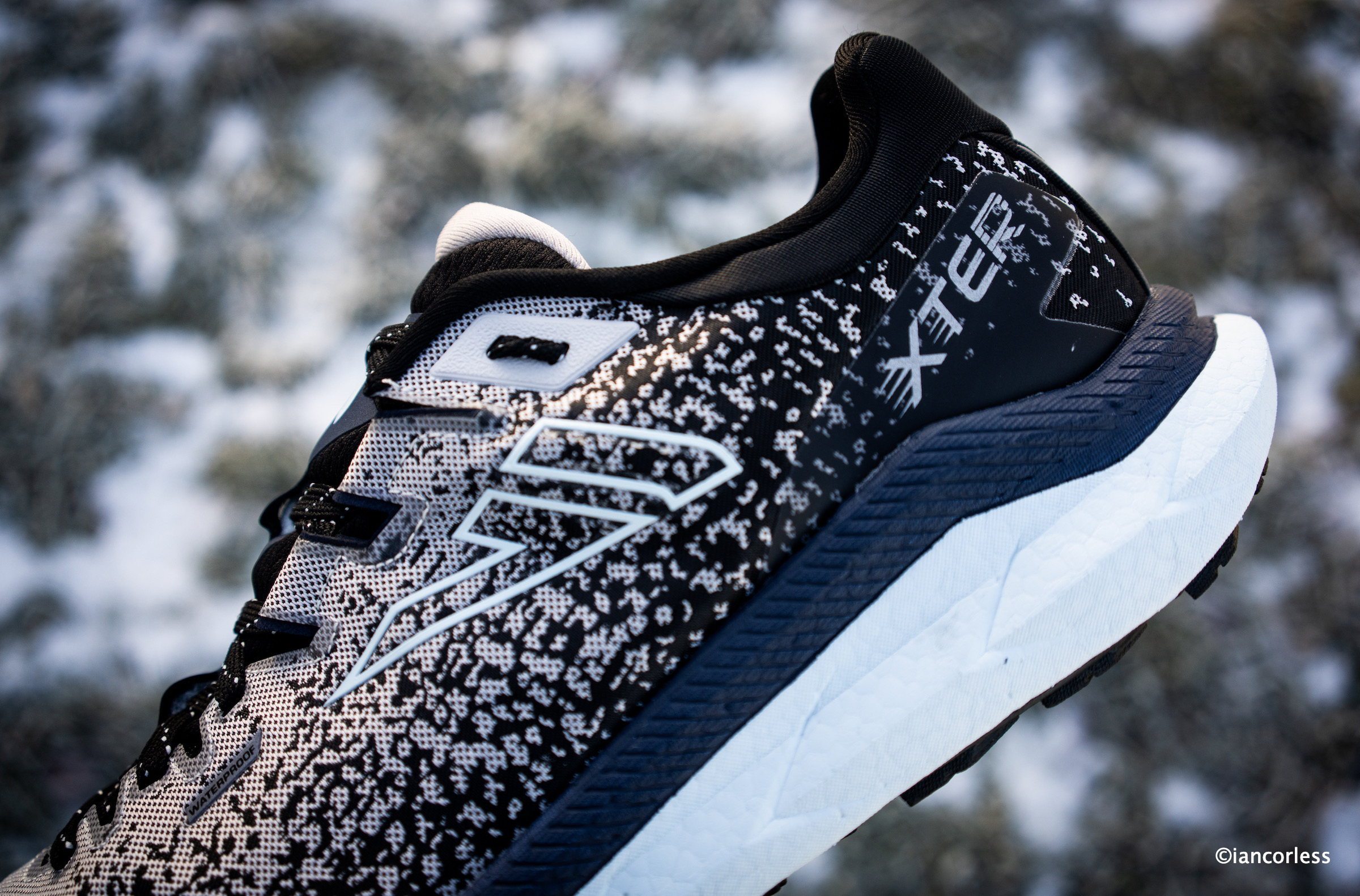
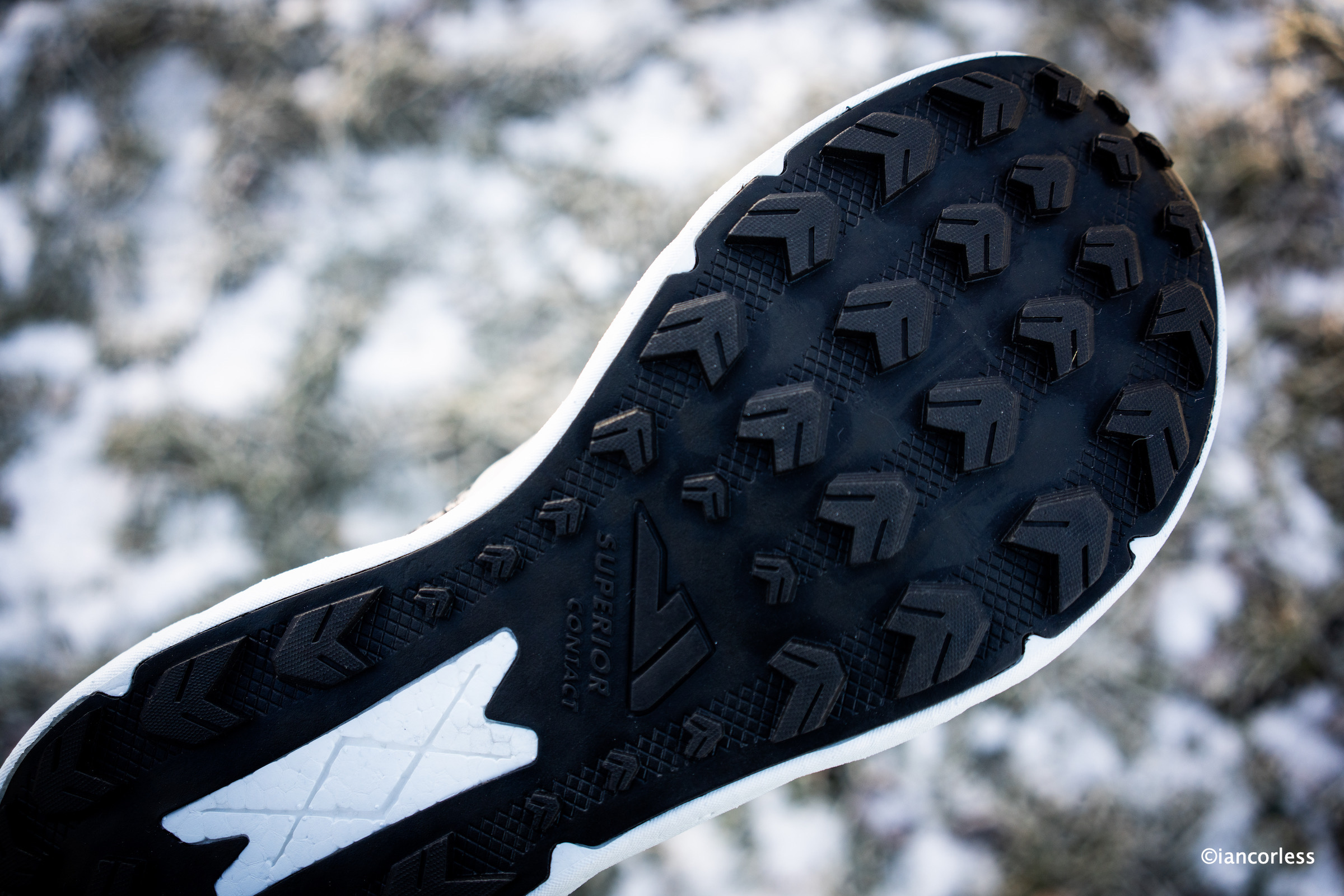
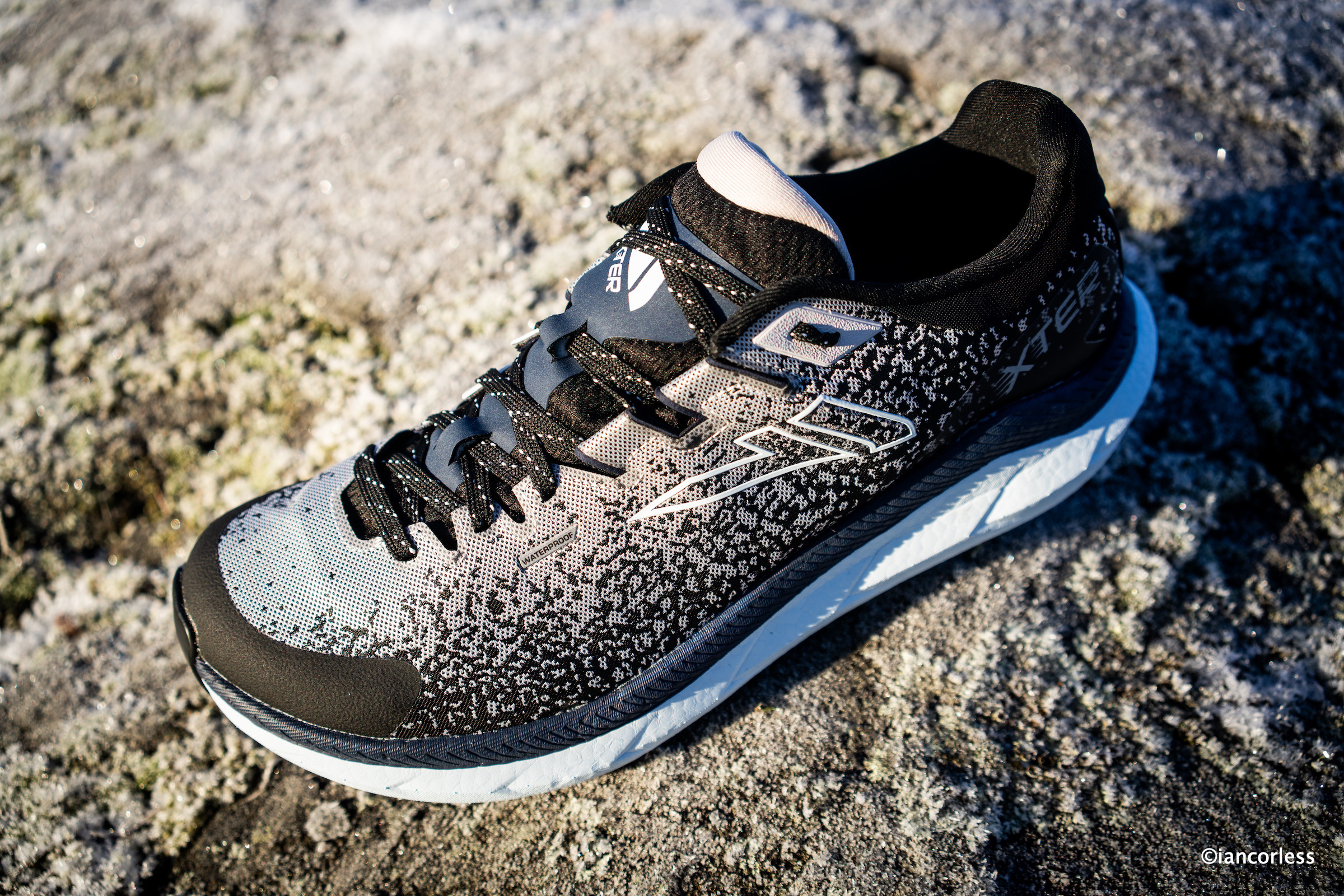
The XTER is quite simply the ACE without winter studs. With 40mm cushioning at the rear, 32mm at the front and an 8mm drop, the XTER is a dream shoe. The butyl outsole with 5mm lugs gives incredible grip on all terrain and better than normal outsole grip even on ice. Note, this is NOT an ice running shoe, you need the ACE for that.
The XTER is all about comfort and slipping them on they had all the great feelings from the ACE, notably is the space up at the front and the cushioning. These shoes feel incredible. So good that VJ need to make this shoe without a waterproof upper for all-season use. I have no doubt that this shoe would be my day-to-day trail shoe choice in spring and summer if it had no waterproof upper.
The success of the ACE and perFOAMance cushioning also made it’s way to the new MAXx2 which for me is THE best mountain running shoe in the market. The combination of features, grip, fitlock and cushioning make this a stunning shoe. However, it’s a more precision fit shoe, so, an XTER version would fulfil many requests for a ‘wider’ VJ shoe for the mountains.
KEY FEATURES
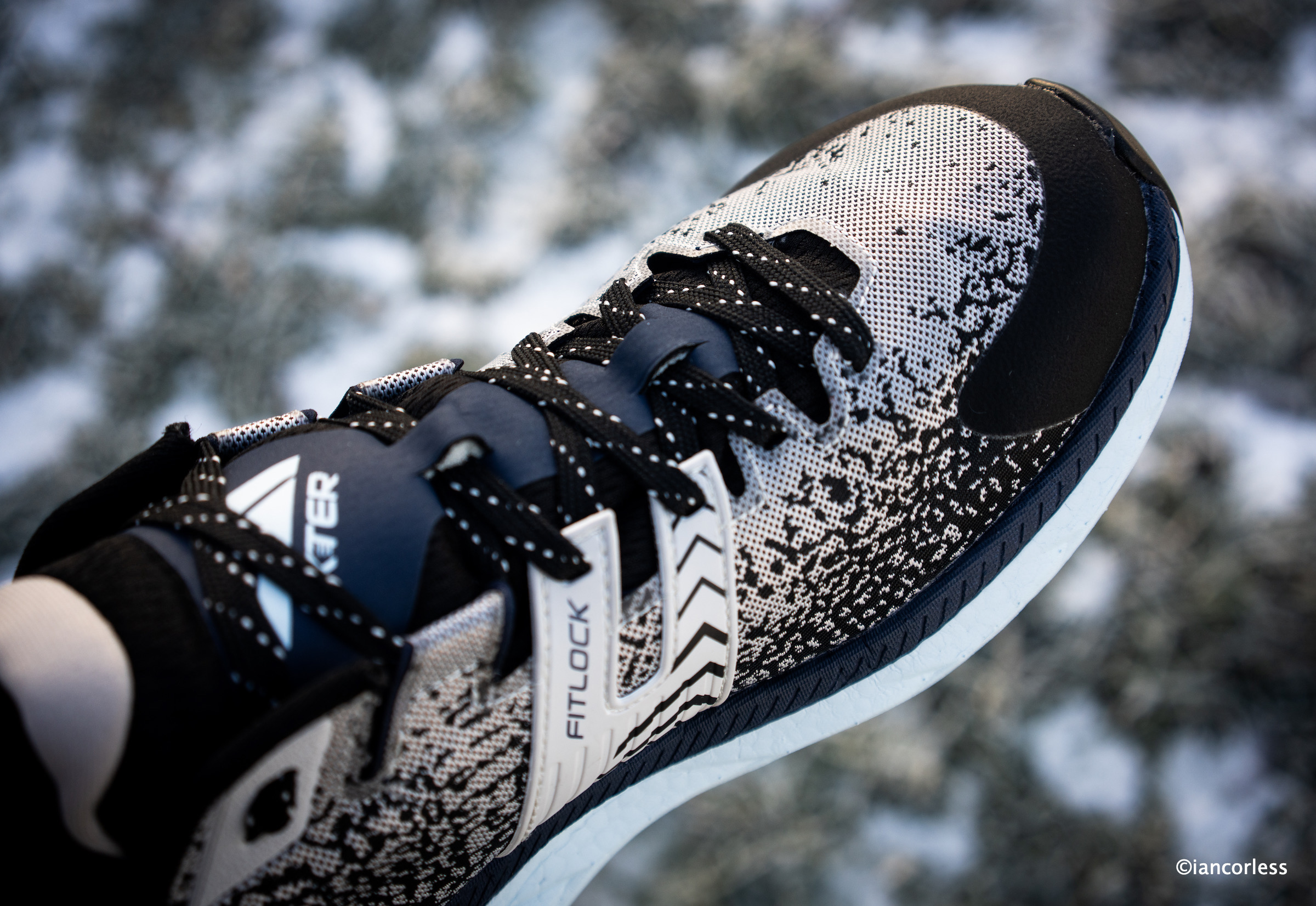
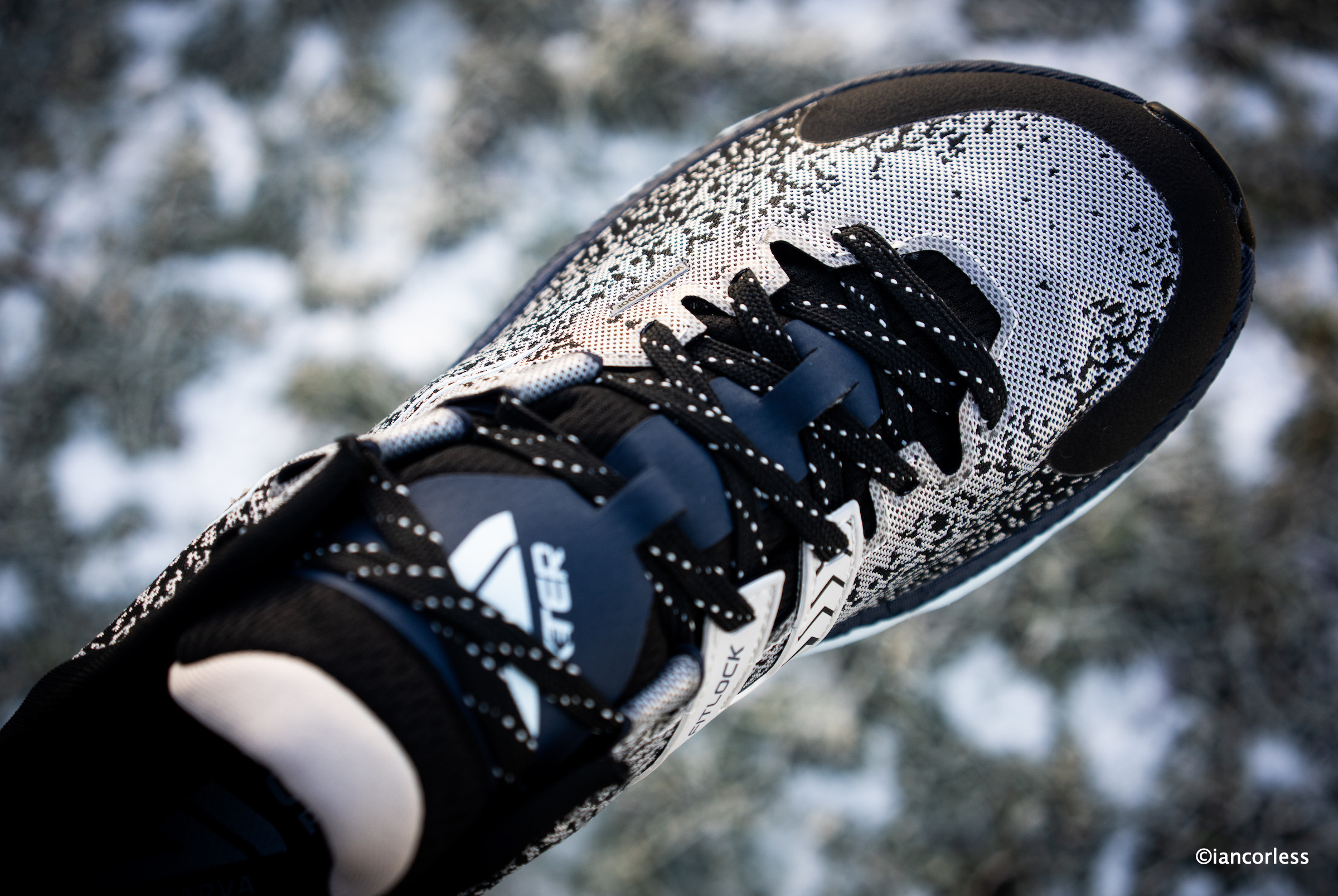
Those who have used VJ before will know how amazing the foothold is from FITLOCK, a feature on all VJ shoes. It provides a tight and secure feel and offers support and stability. It makes the shoes feel like part of the foot. This is probably even more noticeable here in the XTER with the wider toe box. The hold and feel are superb.
VJ’s SCR (Superior Contact Rubber) is the best on any terrain, be that wet or dry. The tagline for VJ is #bestgripontheplanet and that is justified. No other trail/ mountain shoe matches the outsole of VJ. 5 mm studs provide grip in all conditions, but also allow you to enjoy running on easier trails.
The upper is seamless, lightweight and waterproof with added durability. This has been tried and tested in my ACE which are now 1-year old and still look like new. You may be thinking that you do not need a waterproof upper, maybe think again. For sure, there are some downsides to a waterproof shoe, especially if you get water inside as it cannot escape. However, if you are running in extreme cold, snow and ice, a waterproof upper with good merino wool socks makes a huge difference for foot warmth.
The wide toe box is foot-shaped and to draw comparisons, it is very much in the mold of Altra or Topo. It’s very much of a departure for VJ as nearly all their shoes have a more precise/ precision fit. It’s extremely comfortable and allows excellent toe splay. As I said, love to see the XTER develop in a non-waterproof version.
SUMMARY
The added cushioning is a highlight for me, and they are ideal for longer outings, particularly when running on harder / frozen trails. The comfort level is high, not something that is usual for winter shoes. The wider toe box only adds to this package. Toes are able to move allowing for increased blood flow and therefore warmth, also helped by the waterproof upper. The wider footprint also adds to a more stable footprint on snow. Butyl outsole is amazing and sets the bar for other shoes to match. The ACE had one issue, hold in the heel area was not ideal, that has now been addressed. The XTER comes highly recommended.
MDS Jordan brought to a conclusion the 2024 season of MDS events. It has been quite a year and since Fuerteventura in September, the events have followed one after another, MDS Morocco, MDS Trek Morocco and now MDS Jordan.
Jordan has become so popular as a destination, two events now exist in a year, May and November. Dates for 2025 are May 9-16 and November 1-8.
For the 4th edition, concluding on the 8th November 2024, 599 participants were signed up from 25 different nationalities. Once again, MDS pioneer the way with more women participants than men, 55% to 45%.
Come race day, 520 toed the line over the 3 race distances.
249 in the 120km distance.
190 in the 100km distance.
81 in the 70km distance.
Full race results are available HERE via LiveTrail.
Jordan is not the easiest place to get to and typically, it will require two flights. Istanbul being a popular connecting point but many other options exist. Long haul travel always has potential problems and for the MDS Jordan, participants and staff had several problems with delays, gladly, everyone arrived on time. However, there is some general good advice here for future participants, allow yourself some time flexibility for arriving in Jordan, delays of 12-hours or even 1-day existed for some! Use reputable airlines with good track history, the cheapest option is not always the best!
Photo by Ian Corless
The current Israel – Hamas war quite obviously was on the minds of participants and some were concerned about travel. However, while the general advice from most governments was to ‘exercise caution,’ there was no reason not to travel. Having spoken to participants post-race, nobody at any time felt safety or security was at risk. The war however ‘may’ have had some impact on travel, it’s difficult to know?
Photo by Ian Corless
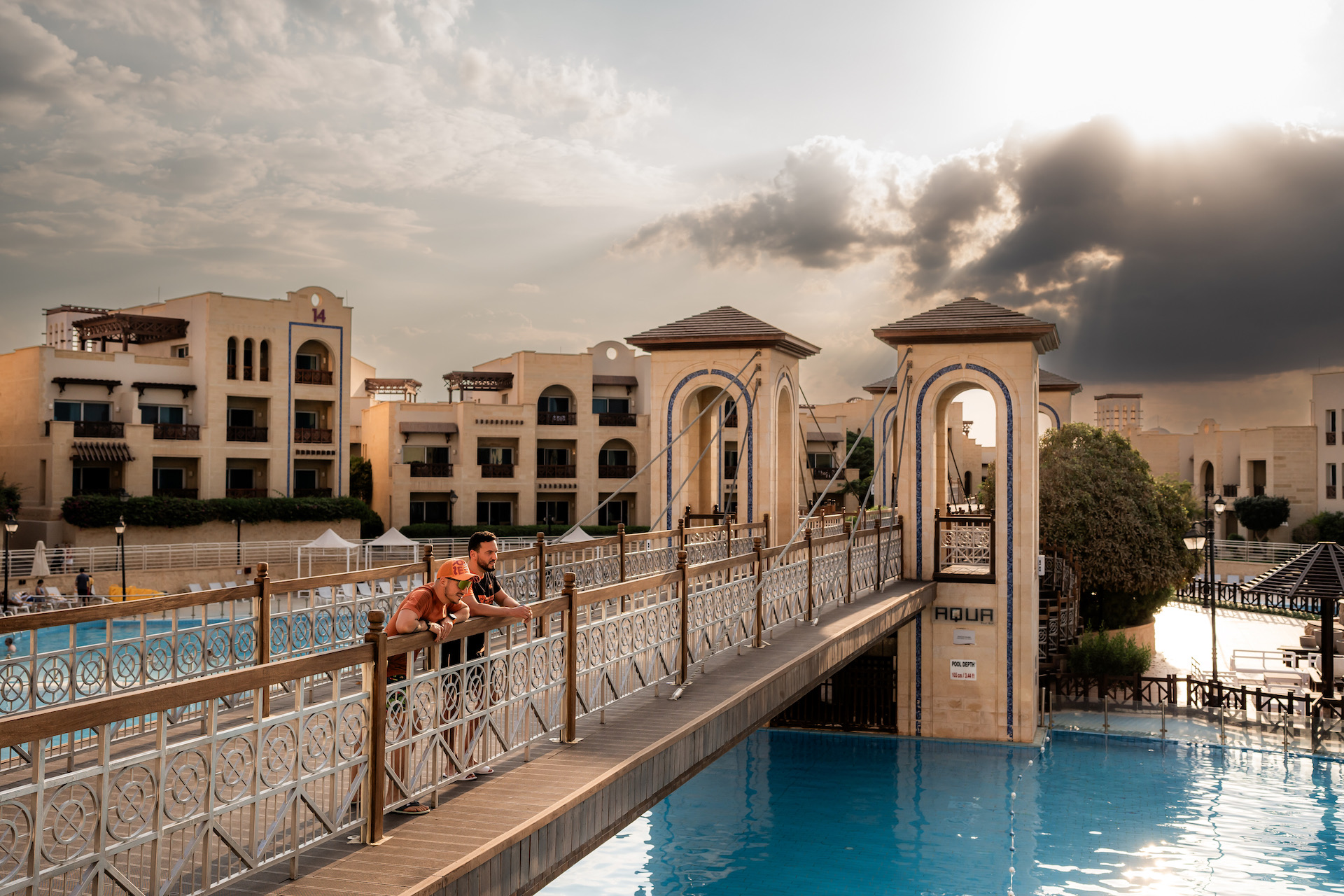
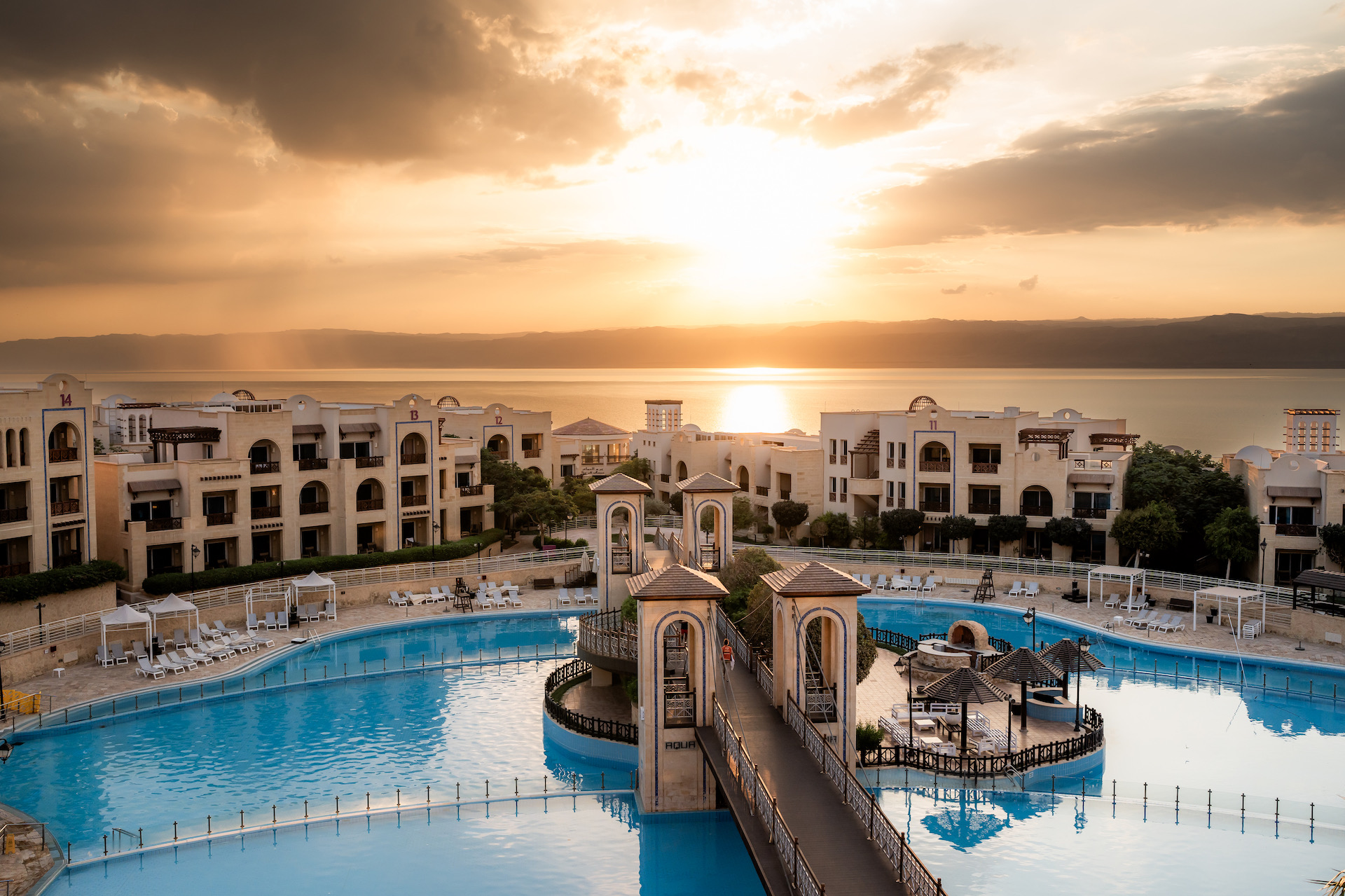
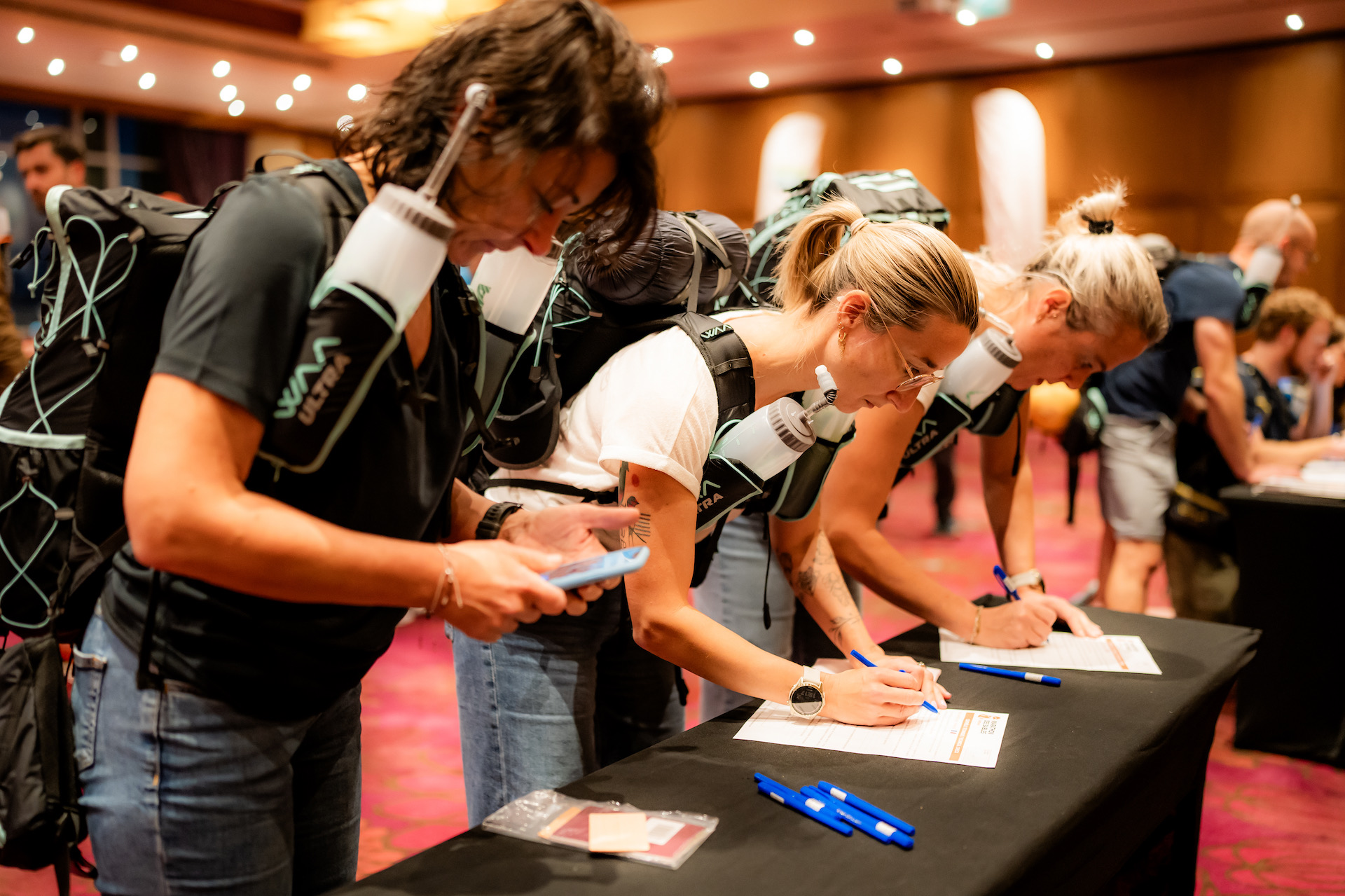
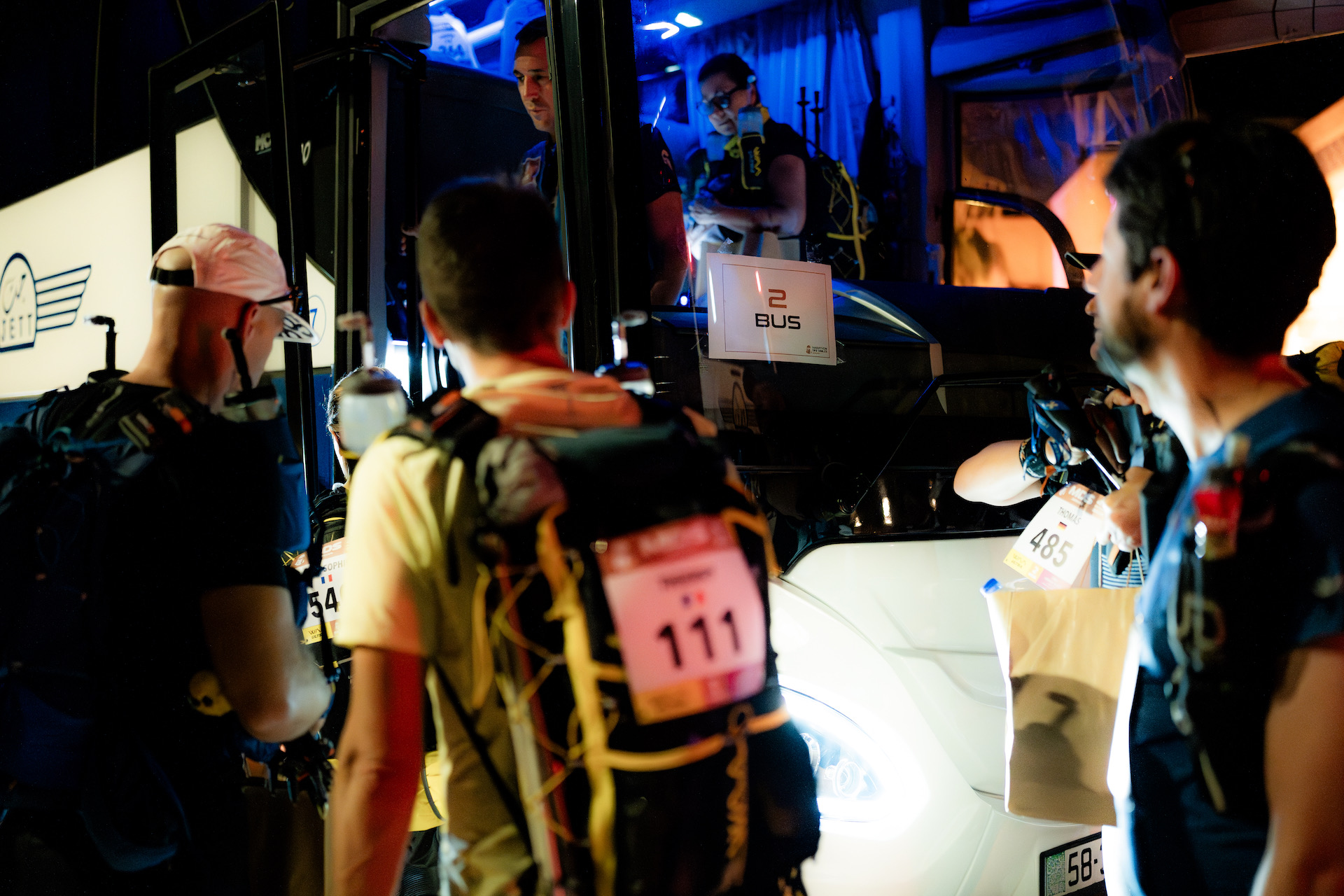
The MDS team do a fantastic job of facilitating everyones arrival in Amman and they provide a bus transfer to the Crowne Plaza hotel which is located on the Dead Sea. The journey takes under 90-minutes.
Photo by Ian Corless
The hotel is huge with excellent facilities, a good restaurant, bar, meeting rooms, multiple pools, spa, gym and of course, the Dead Sea is on its doorstep. It’s the perfect place pre and post-race. Another great benefit is that its size allows all competitors and MDS staff to stay at the same location. A great bonus for admin day and the post-race awards and gala dinner.
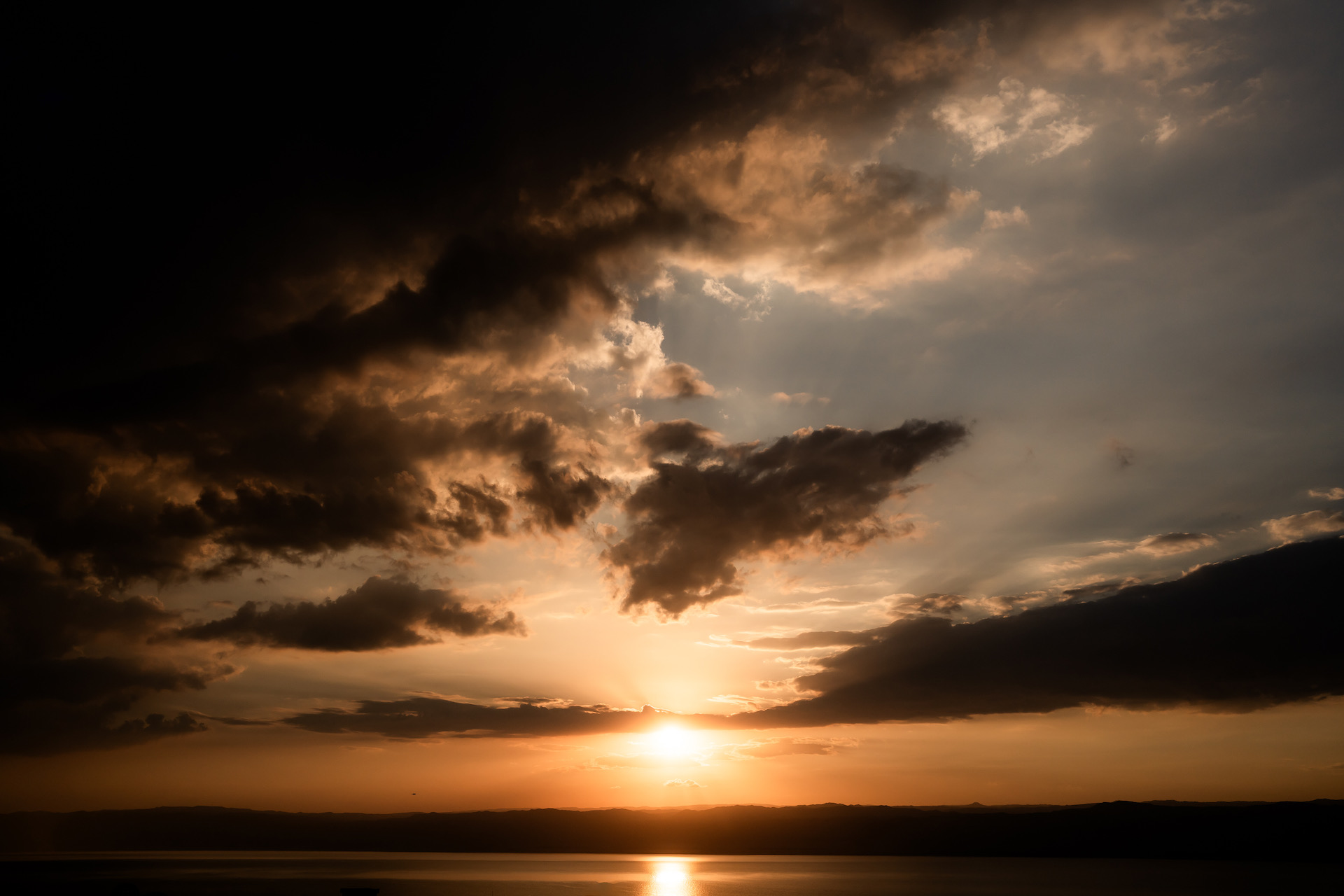
The Dead Sea is obviously an iconic place, located -430m below sea level. It is land locked between Jordan and Israeli occupied west bank in the west and Israel in the south. It is called the Dead Sea due to high levels of salt that make it impossible for any life form to live.
Photo by Ian Corless
With admin day done, the race got underway with a very early departure on Monday Nov 4th with an approximate 4-hour journey to Wadi Rum.
Stage 1 was scheduled to start at 0930am with 27.4km and 980m+ with arrival at bivouac. A point-to-point day with two Cp’s and a cut-off time of 2000hrs.
Photo by Ian Corless
The day was a shock for many! It’s a day of stunning views, epic vistas, remarkable landscape and a great deal of soft sand making the journey very hard work. If you are signed up for a future MDS Jordan, be prepared for a tough day 1.
Photo by Ian Corless
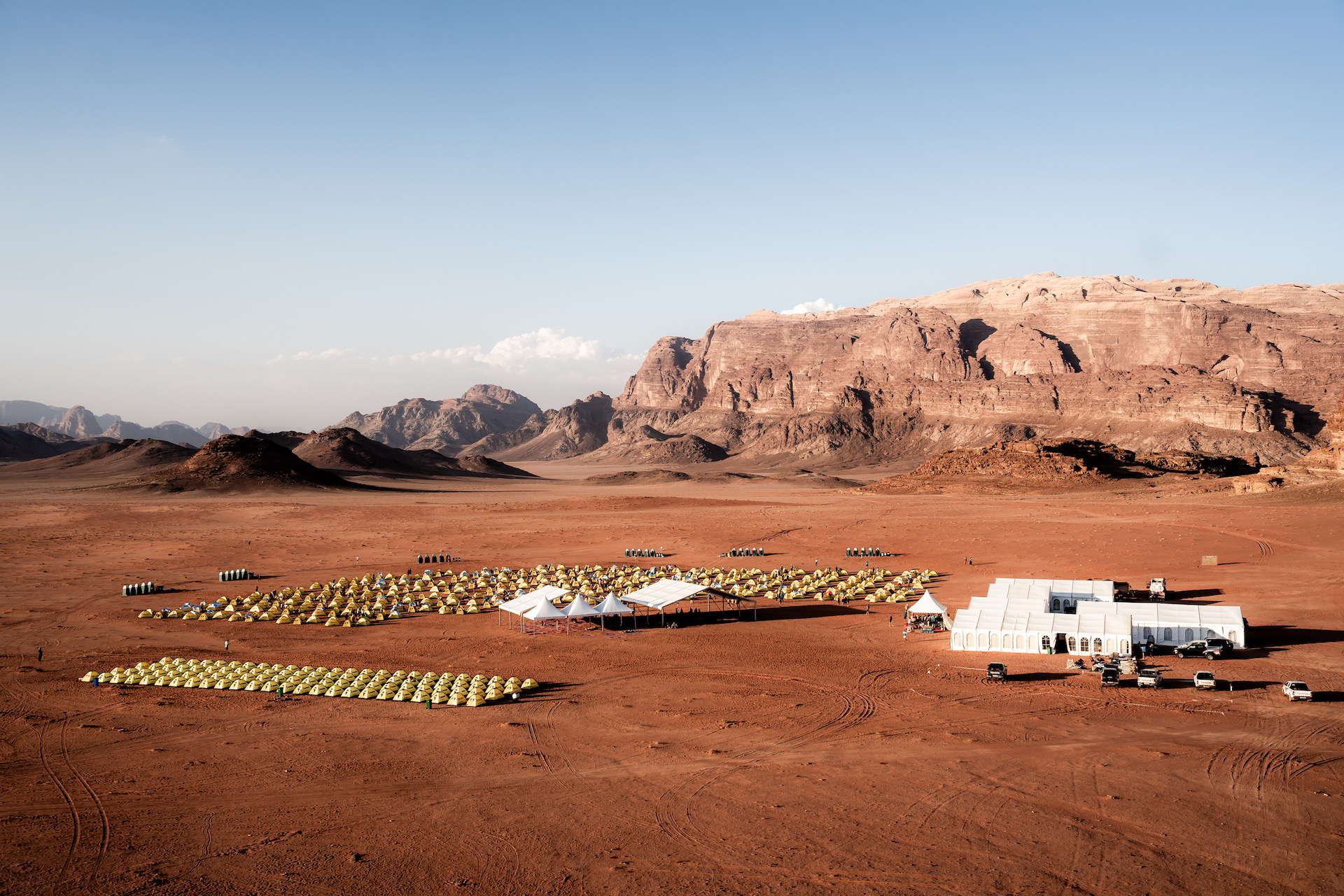
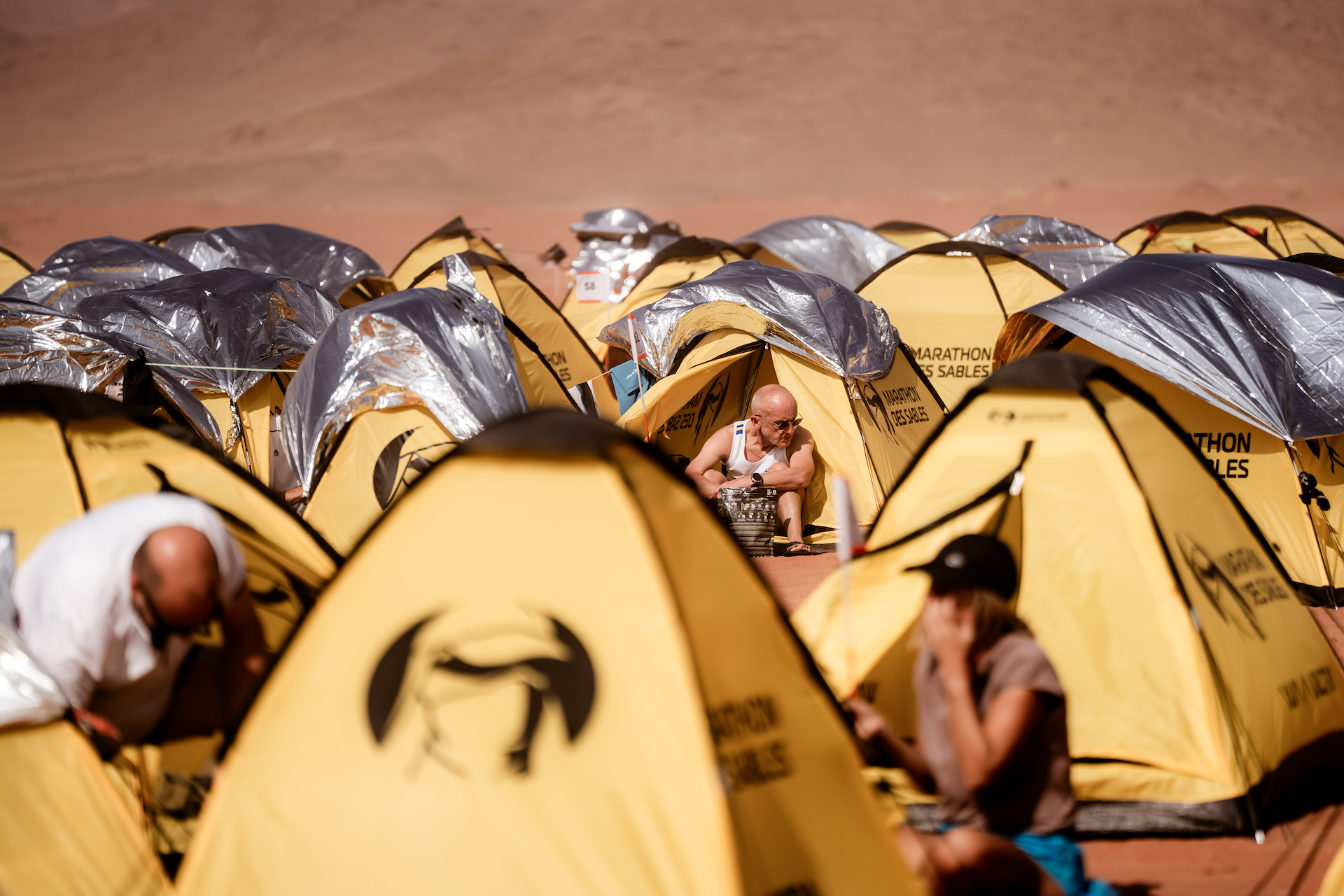
In bivouac, as per all MDS events, individual tents are in circular pods of 8. This is great for group friendship but also allows some privacy.
Photo by Ian Corless
While MDS events operate on the same formula: 3-stages over 4-days with full self-sufficiency, the exemption coming with rationed water provision and a place to sleep provided by MDS. I cannot emphasise enough that participants need to be prepared for the challenge they are undertaking. Weather and environmental condition vary from event to event and year on year. Just because Jordan was hot at one edition, it does not mean it will always be hot! Look at MDS Morocco in October, rain, thunderstorms and flooding. The 4th edition of MDS Jordan had a very cold first night. For those who did not bring a warm jacket, a warm sleeping bag or additional layers, they had a very cold and troubled night. My TOP TIP is always bring a windproof jacket such as the WAA wind running jacket as an absolute minimum and my high recommendation is to bring a light weight down jacket. Many down jackets exist these days and the top quality products are well under 200g, the Nordisk Y Strato is 165g for example. The advantage of a down jacket is warmth and comfort while sitting around post-race and in addition, on cold nights, you have a very warm layer to wear inside your sleeping bag should it be required. Make sure you have a Buff and cover your head, most heat is lost here!
Photo by Ian Corless
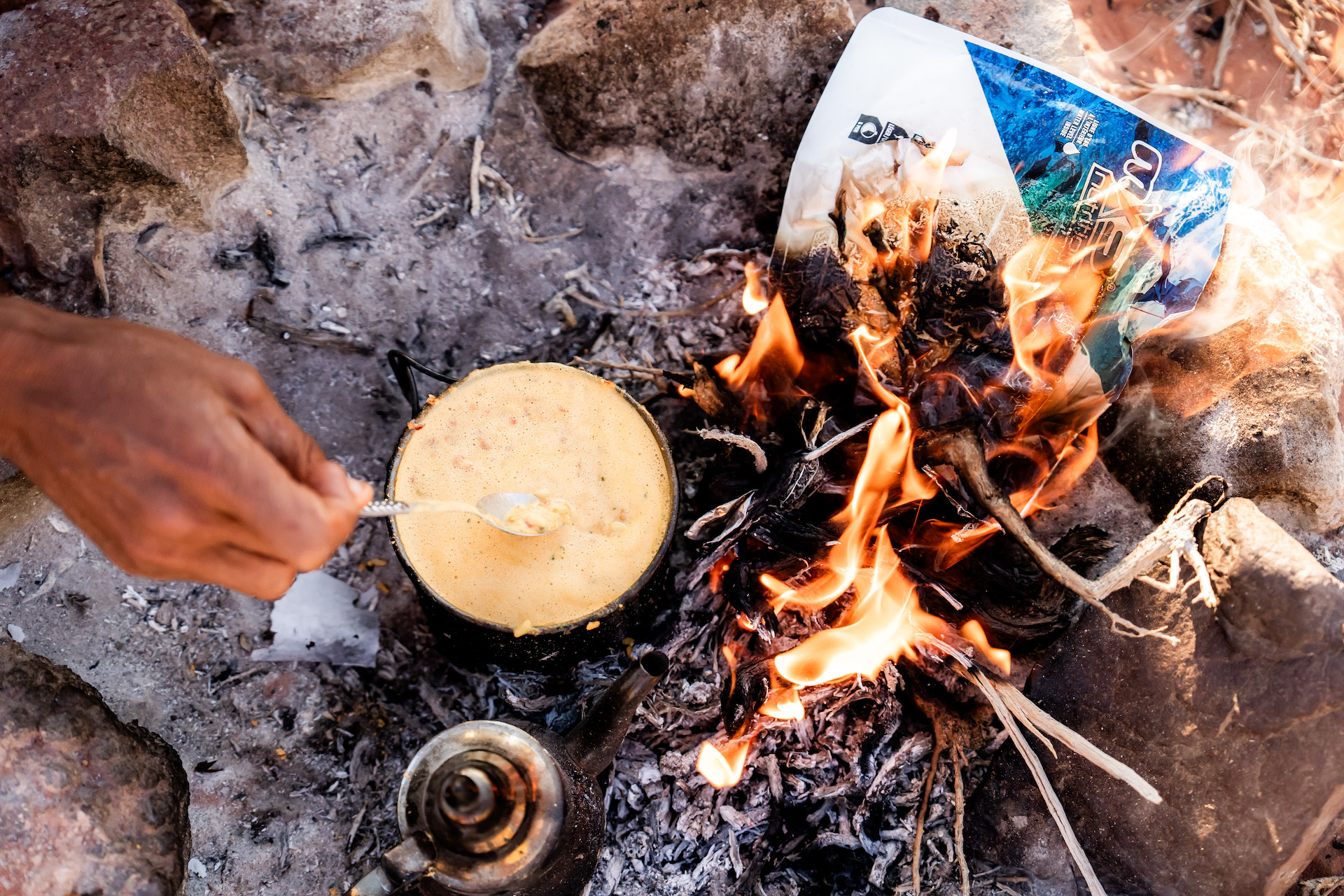
One advantage of the tent pods is the creation of a communal fire place, in Jordan, most pods created a fire place and this was used for cooking and warmth.
Photo by Ian Corless
Stage 2
Photo by Ian Corless
With a troubled night for many, stage 2 would prove a challenge. However, the great thing about MDS events is the possibility to choose how easy or how hard you want the adventure to be. Of course, all things a re relative based on individual ability and desires. The stage had two starts, 0700 and 0800, the top runner’s in the latter start.
Photo by Ian Corless
At two key points, participants can have a choice, the first option is to choose 20km’s. The second option to choose 40km’s. At the second option point if you choose not to take 40km’s, you must do 60km’s.
Photo by Ian Corless
249 chose to take the 60km route, 190 in the 40km and 81 the 70km distance.
Photo by Ian Corless
It was a challenging day, once again a great deal of soft-sand but considerably less vertical gain. For those who took the 60km route, they were treated to some additional technical terrain. At all times, the impressive Wadi Rum landscape was mind-blowing irrespective of the distance chosen.
Photo by Ian Corless
The day proved to be a long one for some with the last competitor arriving at 0300am the next day and many of the MDS team there to welcome.
Photo by Ian Corless
Rest Day
Photo by Ian Corless
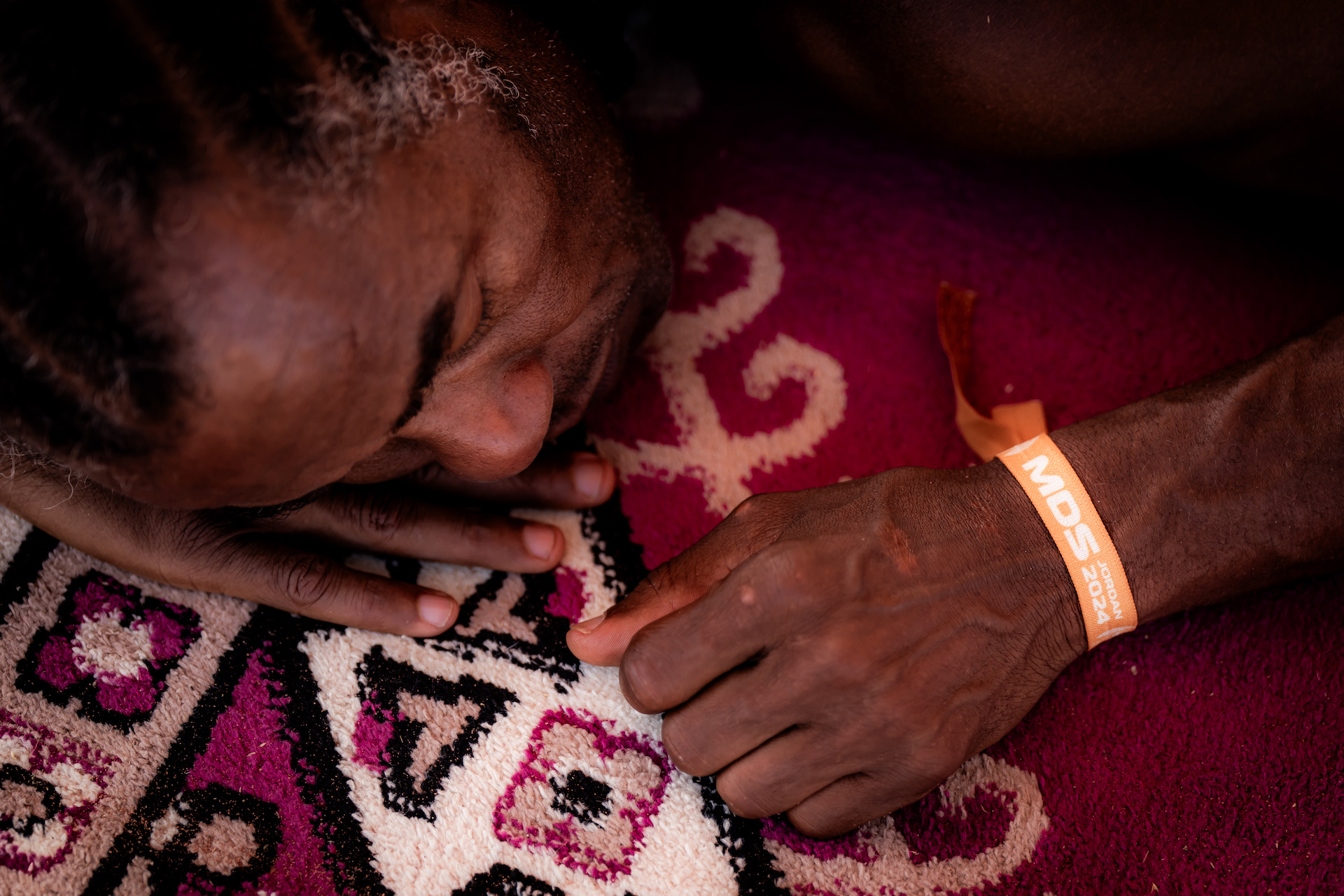
It was a welcome day of rest and an opportunity for everyone to get some rest and recovery.
Photo by Ian Corless
Competitors as per usual, looked after feet, ate as much as possible, slept and took advantage of the local terrain to get some high viewpoints to take in the amazing landscape.
Photo by Ian Corless
TOP TIP – space blankets that are gold/silver provide excellent options for keeping tents cooler in the day, silver side out. And at night, if required, use them gold side out to keep a tent warmer.
Photo by Ian CorlessPhoto by Ian Corless
In the afternoon, local fisherman gave a music show and then ice cold drinks arrived for every participant via a camel.
Photo by Ian CorlessPhoto by Ian Corless
Of course, Born To Be Alive was played and bivouac turned into a desert rave.
Photo by Ian Corless
Stage 3
Photo by Ian Corless
Once again, two starts, 0430am and 0630am. Ahead, 26km’s and 733m+ on a point-to-point route that would provide everyone some of the best views that Wadi Rum has to offer. The large dune and the views from the top a highlight.
Photo by Ian Corless
Once at the finish, tears, joy and laughter, a hard earned medal the reward.
Photo by Ian Corless
A transfer to Petra post-race for an opportunity to experience one of the seven wonders of the modern world.
Photo by Ian Corless
Everyone was back at the Crowne Plaza for around 2000hrs. Of course, it’s all about priorities, several showers, fresh clothes and then dinner in the restaurant.
Final Day
Photo by Ian Corless
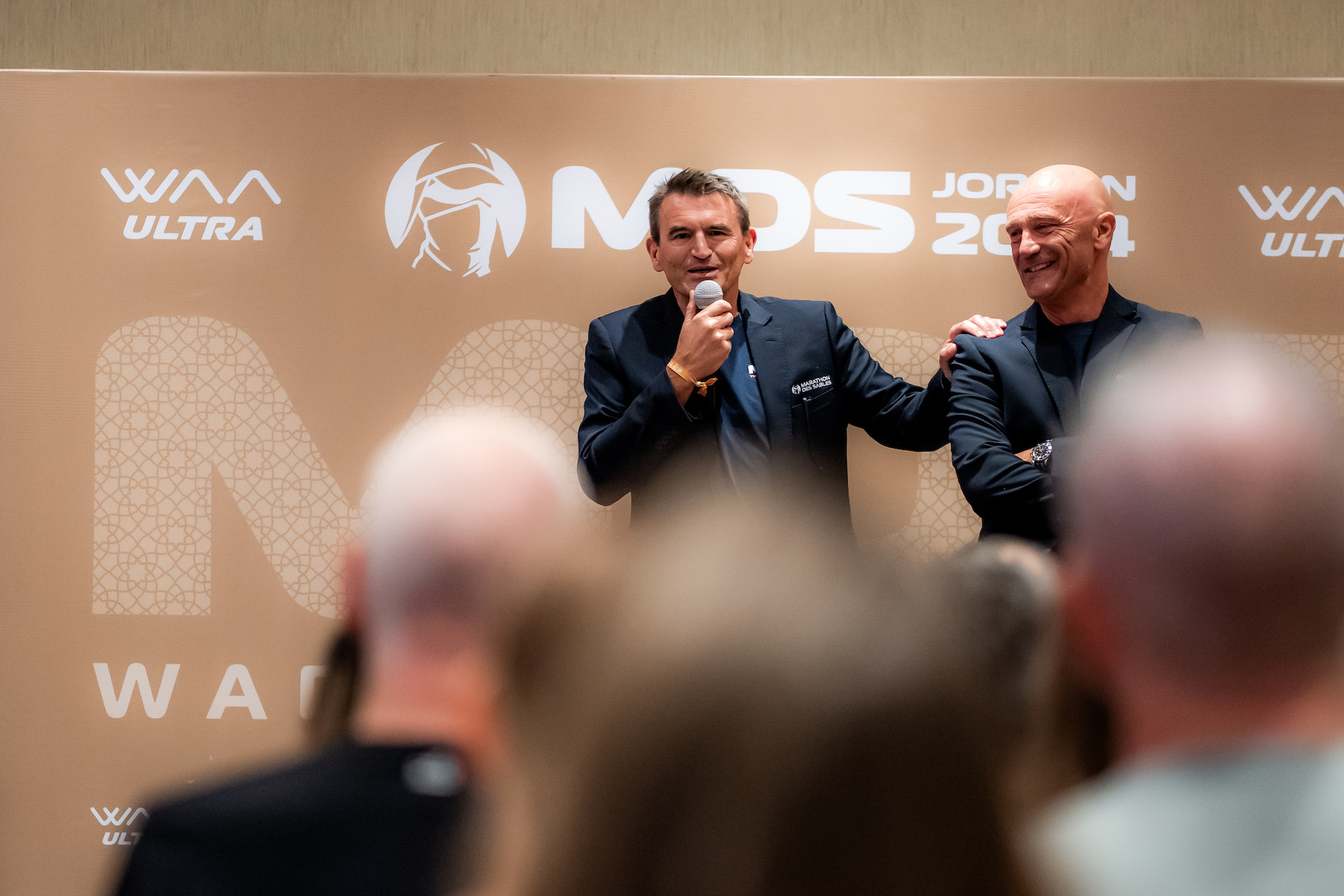
Was relaxed, a lazy breakfast, time by the pool, a swim in the Dead Sea and then at 1600hrs the awards ceremony took place followed by the MDS Jordan movie.
Photo by Ian Corless
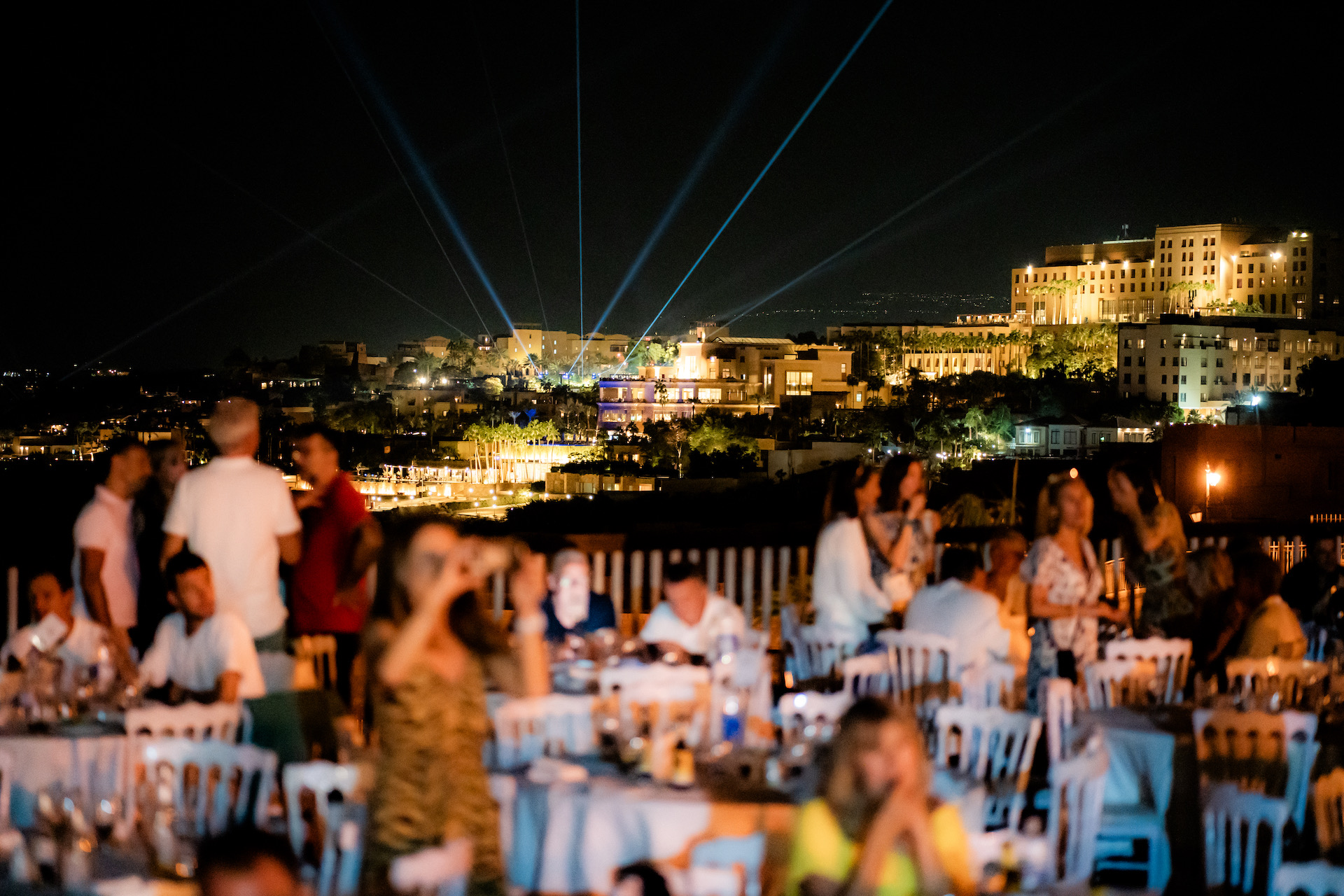
Dinner followed outside with remarkable night time views of the Dead Sea. DJ Robin as per usual played some banging tunes and the party and disco went on into the night and the early hours of the morning.
Another MDS Jordan complete.
Finally, while many things are transferable between all MDS events: clothing, pack, sleeping mat, sleeping bag, food etc, one thing is important and it cannot be emphasised enough, be prepared.
Plan for the best and worst case scenarios, plan for intense heat, plan for the cold, imagine your worst case scenario and have a solution. MDS events are self-sufficient for a reason, they bring a challenge and dynamic that is not present at other races, how you deal with it is very much part of the event.
Looking ahead!
Photo by Ian Corless
Now is time to recover, recoup and plan ahead for 2025. There are no shortage of events. Here is hoping we get to share more time at a MDS event soon:
Since 1986, the MARATHON DES SABLES has crossed the world’s most stunning deserts with several unique concepts: the MARATHON DES SABLES THE LEGENDARY (252 km in the Sahara Desert in Morocco), the MARATHON DES SABLES (70, 100, or 120 km spread over 3 stages), and the new 2024 concept, the MDS TREK (4 stages with a total distance of up to 120 km), offering an accessible adventure with optimal comfort. These international events have seen over 50 editions in various countries such as Morocco, Fuerteventura Island, Peru, Jordan, Turkey, and offer adventures that combine running/hiking in the desert with tourism.
The 2024 MDS Jordan concluded with 26km’s and 733m+ of stunning views and terrain that confirmed Jordan and the Wadi Rum as one of ‘the’ most essential places and experiences to add to your to bucket list.
Photo by Ian Corless
Wadi Rum is a very special place that rivals Cappadocia for it’s uniqueness.
Photo by Ian Corless
After a rest day, the participants were ready for the final day. Two starts, 0430 and 0630 would allow all competitors the opportunity to complete the stage before midday and in the afternoon, a visit to to Petra before finally returning to a hotel, shower, restaurant meal and a night in a bed.
Photo by Ian Corless
A point-to-point route, stage 3 had several key highlights, but the large dune climb and descent, with stunning sunrise views was without doubt a key moment of the day.
Photo by Ian Corless
The 360 panorama here is stunning and the MDS route weaves among monstering towers of rock making participants small and insignificant within such an impressive landscape.
Photo by Ian CorlessPhoto by Ian Corless
The race at the front was fast and furious for the men, with Theo Detienne winning the stage with a short margin ahead of the 2024 MDS Jordan champion, Rachid El Morabity. For the women, Sylvaine Cussot was a clear champion ahead of Marine Canas and Pauline Thinus.
Photo by Ian Corless
Full results for each category distance can be viewed at LiveTrail HERE.
Photo by Ian Corless
The finish line, as per usual was a place full of tears, emotion and release. The medal and t-shirt a reward for a tough adventure.
Photo by Ian Corless
Post-race, participants were treated to an excursion to the iconic Petra, an opportunity to relax, sightsee and soak in this iconic wonder of the modern world.
Since 1986, the MARATHON DES SABLES has crossed the world’s most stunning deserts with several unique concepts: the MARATHON DES SABLES THE LEGENDARY (252 km in the Sahara Desert in Morocco), the MARATHON DES SABLES (70, 100, or 120 km spread over 3 stages), and the new 2024 concept, the MDS TREK (4 stages with a total distance of up to 120 km), offering an accessible adventure with optimal comfort. These international events have seen over 50 editions in various countries such as Morocco, Fuerteventura Island, Peru, Jordan, Turkey, and offer adventures that combine running/hiking in the desert with tourism.
It was a cold night, the temperature plummeted when the sun disappeared and bivouac became a place of camp fires and groups of runner’s huddled together trying to keep warm.
Photo by Ian Corless
As always, MDS events are about planning and being prepared, the need for a jacket, and ideally a down jacket, was never more important. Those with sleeping bags that were too minimal, had a cold and shivering night.
A new day was welcomed and today two starts, 0700 for the masses and 0800 for the top-50.
Photo by Ian Corless
Stage 2 of MDS is special due to the three route option, 20km, 40km and 60km. The decision can actually be made on the course, the first option obviously 20km and then 40km. Pass the 40km turn and you are doing the 60km.
Photo by Ian Corless
The three route option is as much a mind game as a physical game. Given the option, do you choose to go easier or harder, it’s a tough question to answer for some, especially after a challenging stage 1 that gladly saw everyone finish.
Photo by Ian Corless
Due to the nature of the three distances, the true story of who leads each distance will come at the closing of the stage, so, check LiveTrail HERE for 120km, HERE for 100km and HERE for the 70km.
Photo by Ian Corless
Notably, Salameh Alaqra chose the 40km option today after picking up a slight injury on stage 1.
Photo by Ian Corless
The true star of stage 2 is the magical and unique landscape of Wadi Rum. It’s a very special place.
Photo by Ian CorlessPhoto by Ian Corless
Tomorrow, a rest day. An opportunity to relax and recover before the final stage 3.
Since 1986, the MARATHON DES SABLES has crossed the world’s most stunning deserts with several unique concepts: the MARATHON DES SABLES THE LEGENDARY (252 km in the Sahara Desert in Morocco), the MARATHON DES SABLES (70, 100, or 120 km spread over 3 stages), and the new 2024 concept, the MDS TREK (4 stages with a total distance of up to 120 km), offering an accessible adventure with optimal comfort. These international events have seen over 50 editions in various countries such as Morocco, Fuerteventura Island, Peru, Jordan, Turkey, and offer adventures that combine running/hiking in the desert with tourism.
Is Jordan the jewel in the MDS line-up of races? It is hard to pick any one location with so many stunning options, but, Jordan offers something very unique.
Photo by Ian Corless
The runner’s are surrounded by ampitheatres of rock, canyons, gorges and the glow of intense light making Wadi Rum a very special place.
Photo by Ian Corless
Stage 1 started with an early wake up and a 4am depart from the race hotel, ahead, a 4-hour journey to the desert.
Photo by Ian Corless
Starting a little after 0930, 550 runner’s were released for the adventure of a lifetime, ahead 27.4km and 980m+.
Photo by Ian Corless
The passage of a narrow gorge and climb came early and then the track weaved through mountains, much of the time, the terrain soft sand. It’s a tough day 1.
Photo by Ian Corless
After cp2, the track is more open and flat allowing for an ‘easier’ run to the finish line of the day and bivouac, home for the next three nights.
Photo by Ian Corless
As with all MDS races, the journey is unique and challenging for each person, run or walk. However, at the front a race takes place and today, Rachid El Morabity was the victor ahead of Theo Detienne and Dorian Louvet, 2:07:52, 2:12:47 and 2:14:58 respectively. Salameh El Alaqra, the Jordanian was 4th in 2:30:44.
Photo by Ian Corless
MDS The Legendary champion in 2022, Sylvaine Cussot was the clear winner for the women, crossing the line in 3:18:24. Pauline Thinus was 2nd and Maine Canas was 3rd, 3:40:10 and 3:43:14.
Photo by Ian Corless
Tomorrow, stage 2, is the long day where participants can choose 20km, 40km or 60km.
Since 1986, the MARATHON DES SABLES has crossed the world’s most stunning deserts with several unique concepts: the MARATHON DES SABLES THE LEGENDARY (252 km in the Sahara Desert in Morocco), the MARATHON DES SABLES (70, 100, or 120 km spread over 3 stages), and the new 2024 concept, the MDS TREK (4 stages with a total distance of up to 120 km), offering an accessible adventure with optimal comfort. These international events have seen over 50 editions in various countries such as Morocco, Fuerteventura Island, Peru, Jordan, Turkey, and offer adventures that combine running/hiking in the desert with tourism.
The 3rd edition (2024) of MDS Morocco came to a conclusion on Thursday October 17th.
What is a MDS event?
For clarity, MDS (previously HMDS) races take place over 4-days with 3-stages of running, the 3rd day is a rest day before the 4th day and stage 3. stages 1 and 3 are the same distance for all participants, typically between 20 and 30km. Stage 2 has three distance options: 20, 40 or 60km’s therefore making the MDS format adaptable to your personal ambitions, fitness and ability.
MDS The Legendary.
Legendary uses traditional Berber/ Amazigh tents
By contrast, MDS Legendary, to be known as The Legendary, is the classic full-distance race taking place over a full week. The format is 250km’s over 6-stages/ 7-days.
The race format:
MDS or MDS Legendary, you carry all you need for the race
Both formats of race are self-sufficient. Therefore, the competitor must carry all they need for the duration of the event. This includes clothes, sleeping bag, sleeping mat, food and snacks for the whole race and mandatory equipment as specified by the the organization. The only items provided are a place to sleep, for MDS events this is a single-occupancy tent and for The Legendary, a Bereber tent that holds 8 participants. In addition, rationed water is provided as specified in the race rules.
In simple terms, both races function on a very similar format. The Legendary obviously considerably harder due to the distance and duration.
MDS events provide an incredible challenge that opens the self-sufficient, stage race format to participants who would not normally take on such a challenge. For this, MDS events must be applauded and appreciated. There is a little too much ‘ultra’ snobbery that downgrades these events and I for one am glad that the ‘half’ tag (HMDS – Half Marathon des Sables) has been removed. Half had negative connotations, these events are a challenge in there own right and they should be appreciated as such.
Planning:
When planning a self-sufficient race, particularly in Morocco, you will be inundated with advice from past participants. Use caution.
I love the quote from the Baz Luhrmann song, ‘Wear Sunscreen.’
“Be careful whose advice you buy, but be patient with those who supply it. Advice is a form of nostalgia: dispensing it is a way of fishing the past from the disposal, wiping it off, painting over the ugly parts, and recycling it for more than it’s worth.”
MDS events and The Legendary have hot editions, cold editions, windy editions, sand storm editions and as with the 2024 MDS Morocco, a combination of all these elements with the addition of thunderstorms, torrential rain and yes, flooding!
Gore-Tex jacket while running in the Sahara
So, when someone tells you you don’t need a sleeping bag, you don’t need a jacket, you don’t need goggles or you don’t need x, x, or x, take this advice and then ignore it.
Flooding in the Sahara
The best advice I can give, be prepared! Be prepared for all eventualities and then fine-tune equipment very close to the event, even at the event location on admin day so that you can make sure you have the appropriate equipment based on the current weather forecast.
The 2024 MDS Morocco:
The 2024 MDS Morocco provided a unique, memorable and stunning experience, it is one that will go down in the history for the Marathon des Sables. Gladly, the rain was anticipated and in general, most participants were prepared with a jacket. Usually a jacket is worn in camp to avoid early morning chill or late night temperature drops… Imagine wearing a jacket mid-stage, in the Sahara, while rain poured down and the desert floods.
Rain cover on the WAA pack proved to be a luxury item
It’s rare that participants take additional clothes, t-shirt/ shorts for example, however, those that did were laughing on stage 1 when they could remove wet clothes, dry off and wear dry clothes.
However, there is an important caveat here, participants who did not use dry bags or pack covers (the WAA Ultra Bag has a rain cover) had wet clothes and wet sleeping bags. Important lesson, make sure you have a dry bag or rain cover to protect important items: sleeping bag, clothes, socks etc
MDS laundry as participants tried to dry equipment
Luckily, after stage 1, the weather did clear and the sun appeared making bivouac look like a laundry with clothes and sleeping bags laid out everywhere. But, had the rain persisted into the night, there would have been many miserable runners.
Stage 2, the weather cleared and the new route was excellent
The impact of the rain could not be underestimated and for stage 2 the planned routes needed to be re-worked. The original routes had sustained considerable flooding making it impossible to use the 20/40 or 60km options. This is where the MDS organization steps in. Contingency plans were activated, emergency routes were used and the MDS staff worked tirelessly to re flag the routes and put the infrastructure in place to make sure the user experience was not impacted. Bravo!
Whilst the weather did its best to make things difficult, this 3rd edition of the race also had two other unique aspects.
Handi category getting help on stage 3 in the gorge
Firstly, the inclusion of the HANDI category, 10 teams of 3 people, 2 runners/ one wheelchair athlete. Something very special this and we can only hope to see and experience more of it. Cyril Gauthier is passionate about making this work!
Secondly, a film crew were using the MDS event as a backdrop for a feature film. This actually did no impact on the race or runner experience at all, however, it did provide an extra dynamic for the MDS team to handle.
Iced water at aid stations to help cool down the runners
Stage 2 experienced some light rain early on but the weather cleared and finally the heat returned. This time though, considerably more humidity than the traditional dry heat of the Sahara. An extra challenge. For many, stage 2 is the long day with 40km or 60km. Whilst most of the 40km runners finished in daylight, the 60km went on till beyond midnight.
Late night finish party
However, the finish line atmosphere was electric with DJ Robin and participants and staff dancing.
Rest day recovery
The rest day coming on day 3 was welcome. The weather was once again unpredictable and variable; sometimes windy, occasionally raining but the Berber tents provided a welcome haven to protect from the elements.
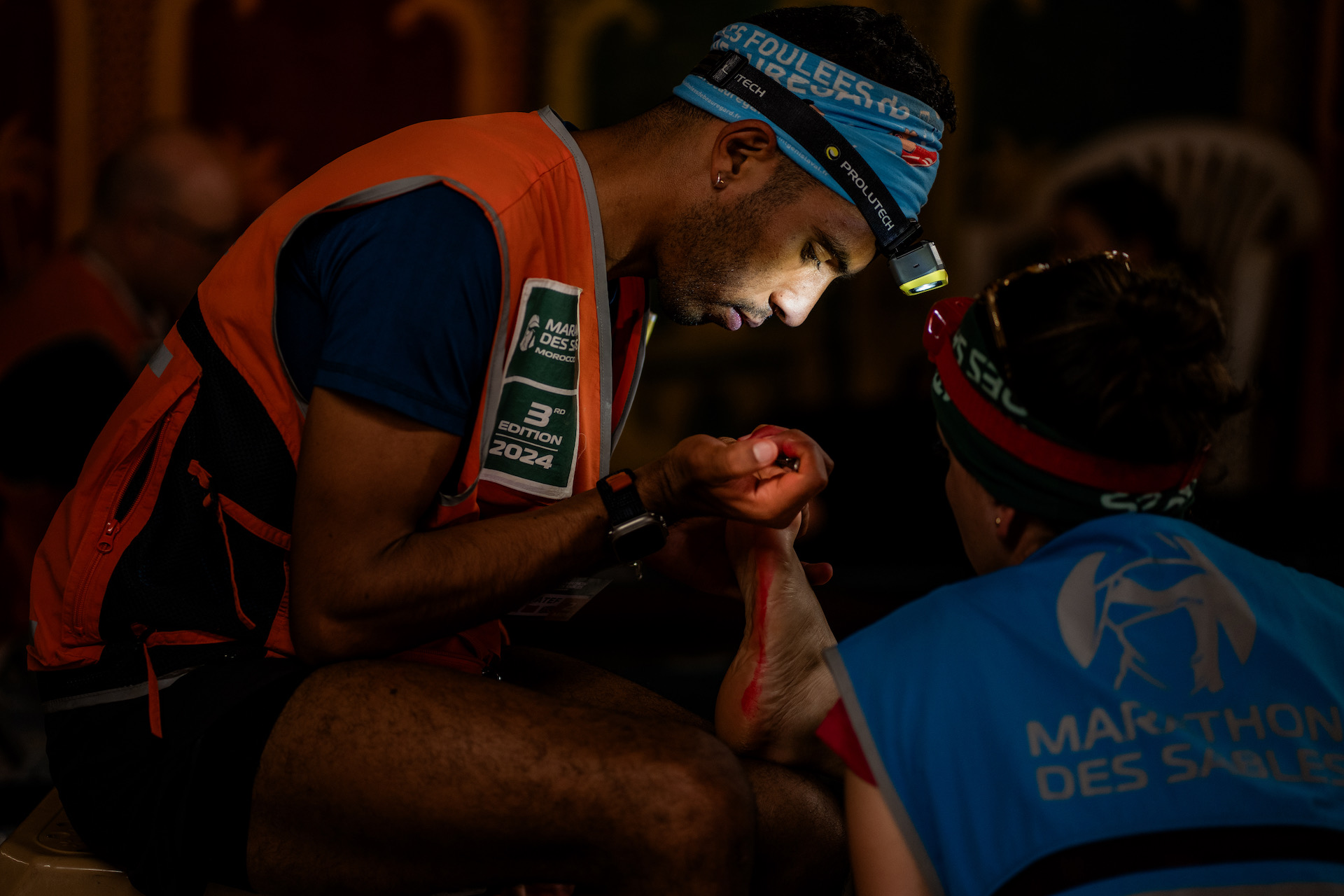
Those who had problematic feet had time to have them looked after and cared for by the Dokever team.
Even the afternoon yoga session had rain, but nobody seemed to mind!
Yoga in the desert
Stage 3 was scheduled to start at 0430, this was put back to 0530 to make sure the first finisher would be in daylight. In addition, the early stages of stage 3 were completely flooded, so, another re-route was required.
Early on stage 3
And finally, for the HANDI category, for stage 3 they would do the full 25km route. Only one section, a narrow gorge coming at 11.5km would cause a problem for them, but MDS orange and blue coats were there to support and facilitate safe passage. It was a special day to experience the HANDI teams achieve these incredible goals – it was emotional.
The HANDI category was awe-inspiring to watch
Weather wise, it felt like a typical Saharan day; an awesome sunrise, temperatures rising close to 30-deg and little wind. The last competitors arrived just before 1400 hrs and everyone, including staff were back in Ouarzazate by 2000hrs.
The following day, a trip to Ait Ben Haddou, afternoon relaxation, dinner and then the awards ceremony and party.
Post awards party time
Despite incredible challenges, the 2024 MDS Morocco was a huge success, and it is for sure, one to be remembered.
The medal
Finally, while many things are transferable between any MDS event, clothing, pack, sleeping mat, sleeping bag, food etc, one thing is important and it cannot be emphasised enough, be prepared. Plan for the best and worst case scenarios, plan for intense heat, plan for the cold, and yes, you may not think it is going to rain, but this edition proved that not only can it rain, it can rain pretty much everyday and cause many problems.
Since 1986, the MARATHON DES SABLES has crossed the world’s most stunning deserts with several unique concepts: the MARATHON DES SABLES THE LEGENDARY (MDS Legendary or The Legendary) – 252 km in the Sahara Desert in Morocco, the MARATHON DES SABLES (MDS) – 70, 100, or 120 km spread over 3 stages, and the new 2024 concept, the MDS TREK (4 stages with a total distance of up to 120 km), offering an accessible adventure with optimal comfort. These international events have seen over 50 editions in various countries such as Morocco, Fuerteventura Island, Peru, Jordan, Turkey, and offer adventures that combine running/hiking in the desert with tourism.
Bivouac in the distance towered by the ominous weather
The 2024 MDS Morocco officially got underway after a day of strong winds, sandstorms and rain through the night.
With the glow of fires in bivouac, the sky was ominous and the flashes of light and sound in the distance was a warning of what was to come.
A river runs through it
Stage 1, 24.7km and 507m+ was in theory, an easier day passing through very familiar MDS territory. With 2.5km´s of easy terrain before a short sand climb and descent before a long flat section to cp1.
Climbing the early pass before the rain came
Cp1 to Cp2 contained more soft-sand and soft-sand followed as the runners climbed to the highest point via a mountain pass and then a descent all the way to bivouac.
Making a splash
The story of the day was the weather, the ominous clouds and distance sounds moved to bivouac and then reached the first mountain pass just as the last runner came through.
The fagility of nature
What followed was nothing short of a biblical downpour turning certain sections of the stage 1 route into a mud bath of flooding, rivers and streams. Cp2 was hit hard, but participants embraced the challenge. Everyone was smiles, fully understanding that they were experiencing a very unique moment in MDS history.
As quickly as the storm came, it disappeared and as the day passed, by midday, skies were blue, the sune was once again beating down and all was resumed for a typical MDS day!
Full MDS Morocco results are available to be viewed HERE
El Morabity after cp2 in the rain
Top 3 for stage 1 came as no surprise for the men with Elmouaziz and El Morabity playing a game setting up Rachid for the long stage tomorrow.
The HANDI race started with the masses and proceed for 1km before transferring via vehicle to Cp1. They then move from Cp1 to Cp2, km8.5 to km12.2 in ´race mode.´ A tough and arduous challenge moving a special wheelchair through the soft sand of the Sahara. One pushes, the other pulls. It’s incredible to see these 10 pioneering teams pave a new way in Morocco.
Inspiration from the Handi teams
Tomorrow, stage 2, which is the theoretical long day. Athletes can choose, 20km, 40km or 60km. However, after the heavy rains of today and localised flooding, there may be a change of routes.
Since 1986, the MARATHON DES SABLES has crossed the world’s most stunning deserts with several unique concepts: the MARATHON DES SABLES THE LEGENDARY (252 km in the Sahara Desert in Morocco), the MARATHON DES SABLES (70, 100, or 120 km spread over 3 stages), and the new 2024 concept, the MDS TREK (4 stages with a total distance of up to 120 km), offering an accessible adventure with optimal comfort. These international events have seen over 50 editions in various countries such as Morocco, Fuerteventura Island, Peru, Jordan, Turkey, and offer adventures that combine running/hiking in the desert with tourism.
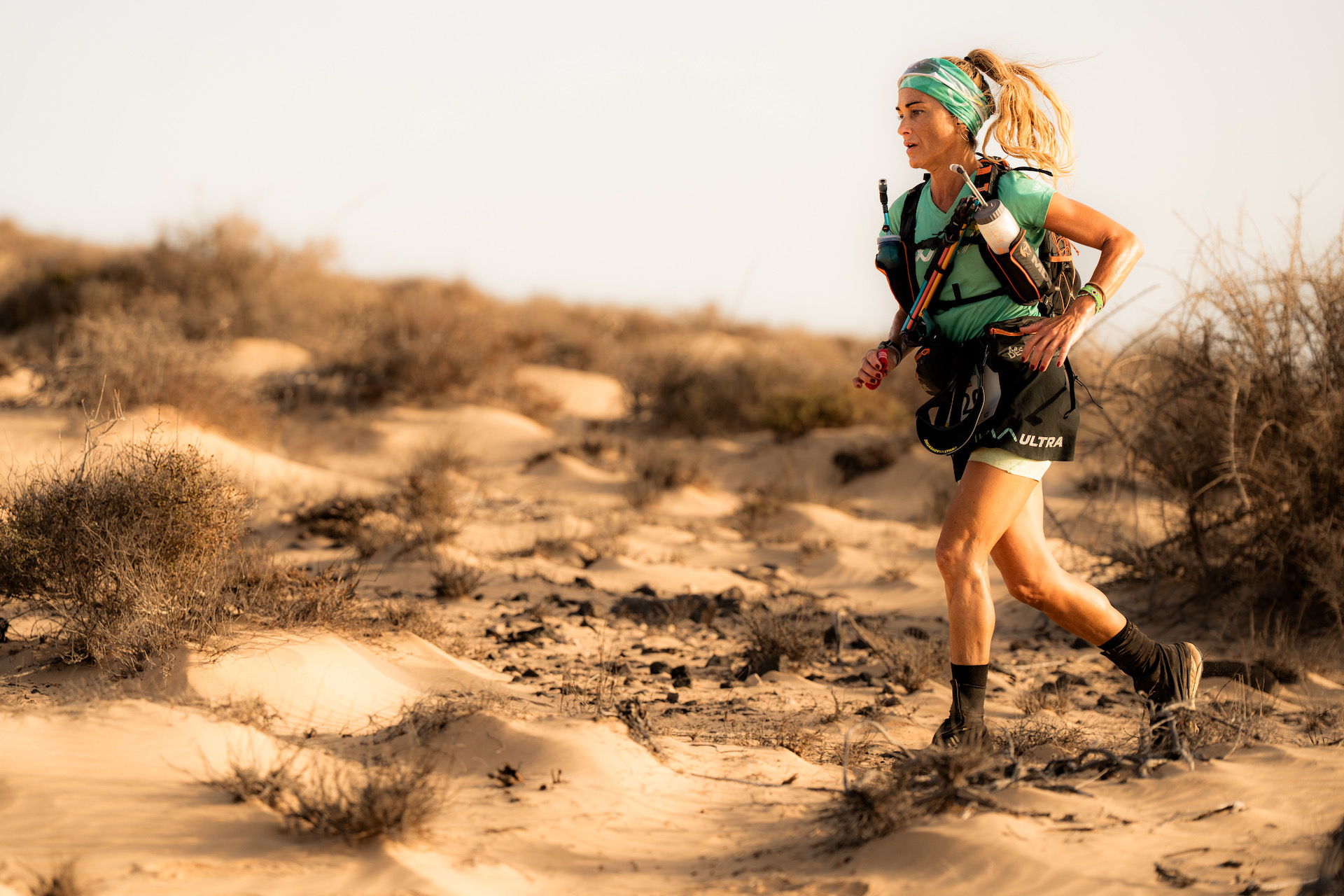
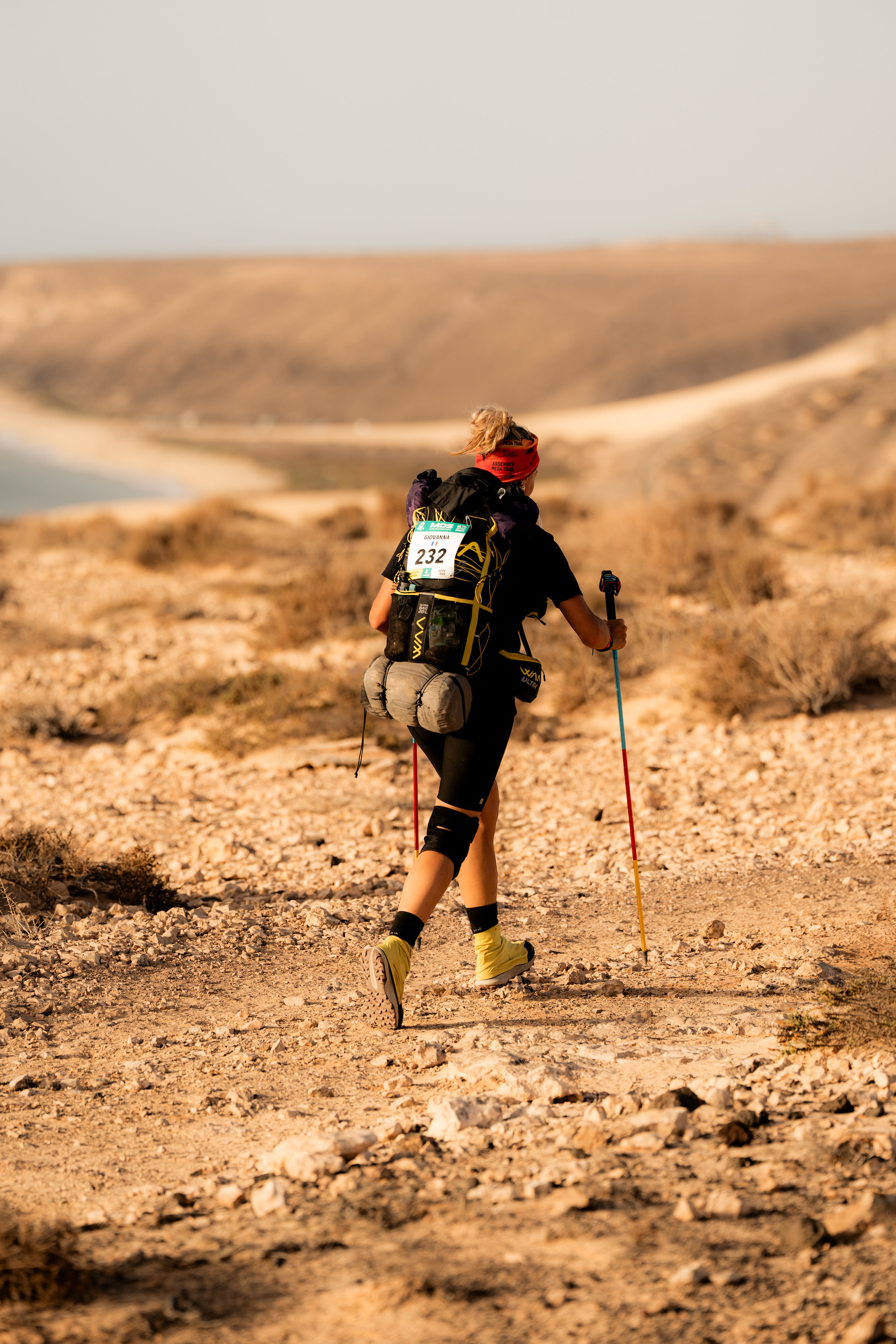
A rest day made all the difference for the participants of MDS Fuerteventura and stage 3 was eagerly anticipated.
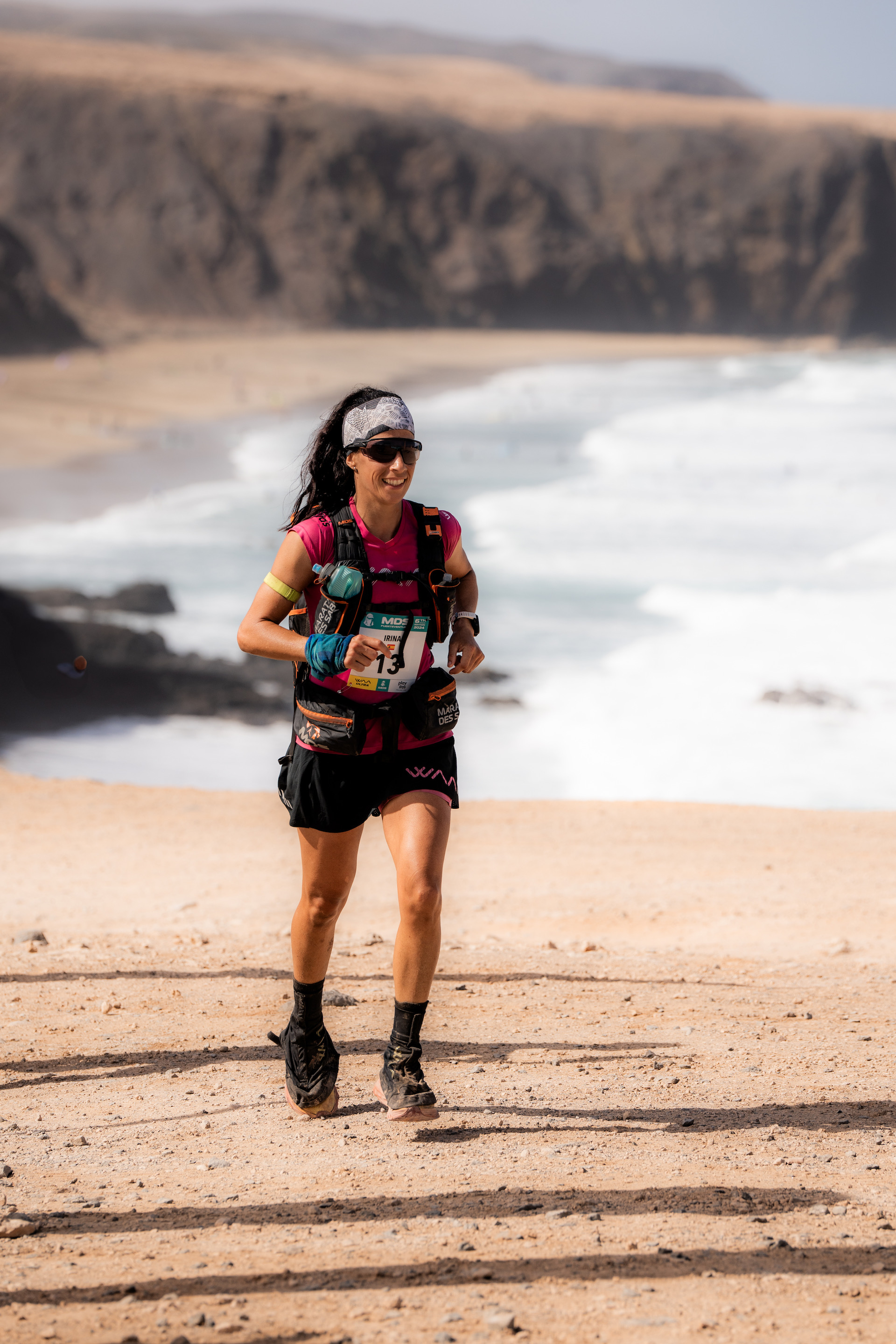
An early departure from bivouac and then a bus transfer to the start at Sotavento Beach, ahead 26.3km with 587m+ to La Pared.
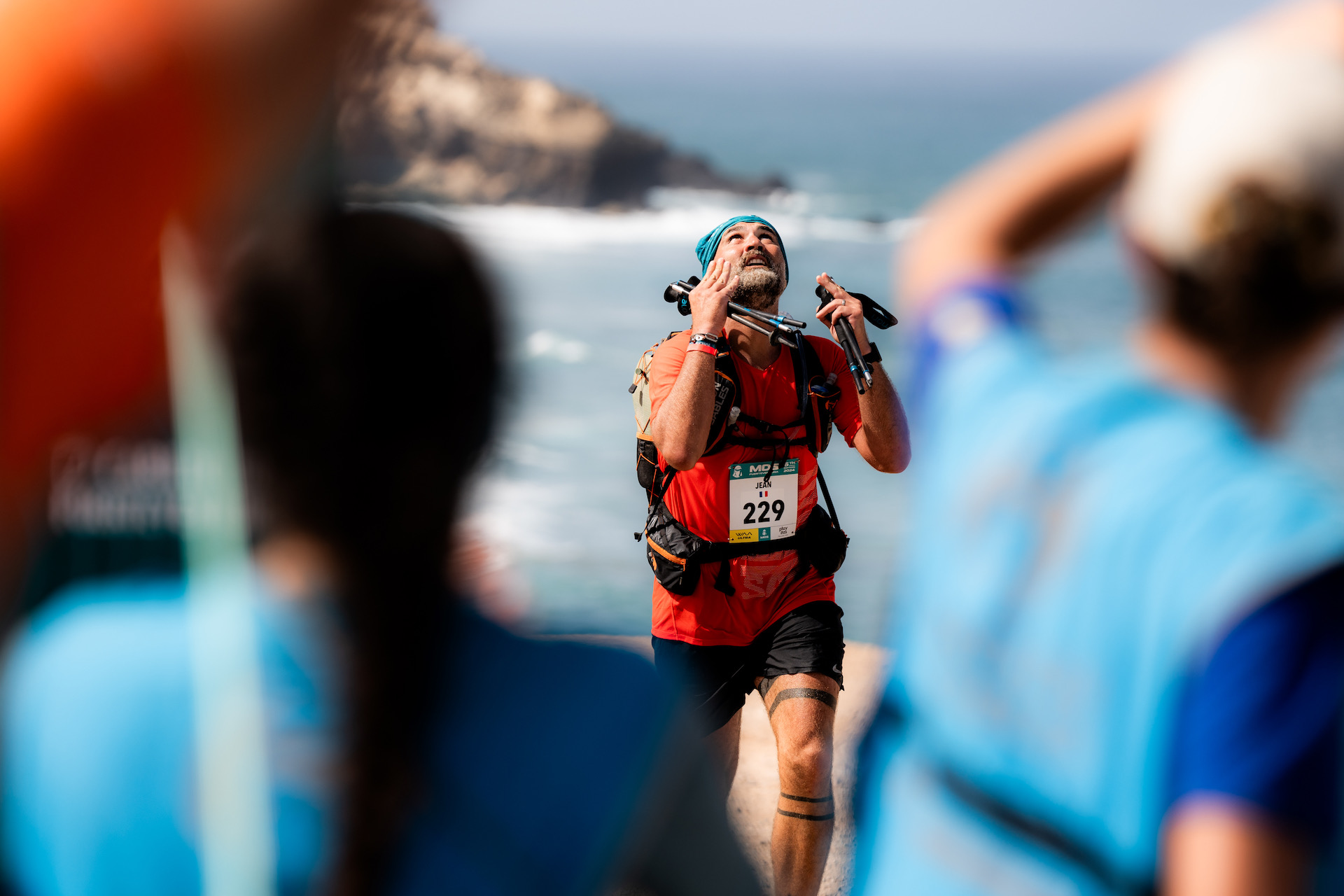
A beautiful day of sand and path passing through Jandia National Park and concluding with epic coastal cliffs and an ocean backdrop.
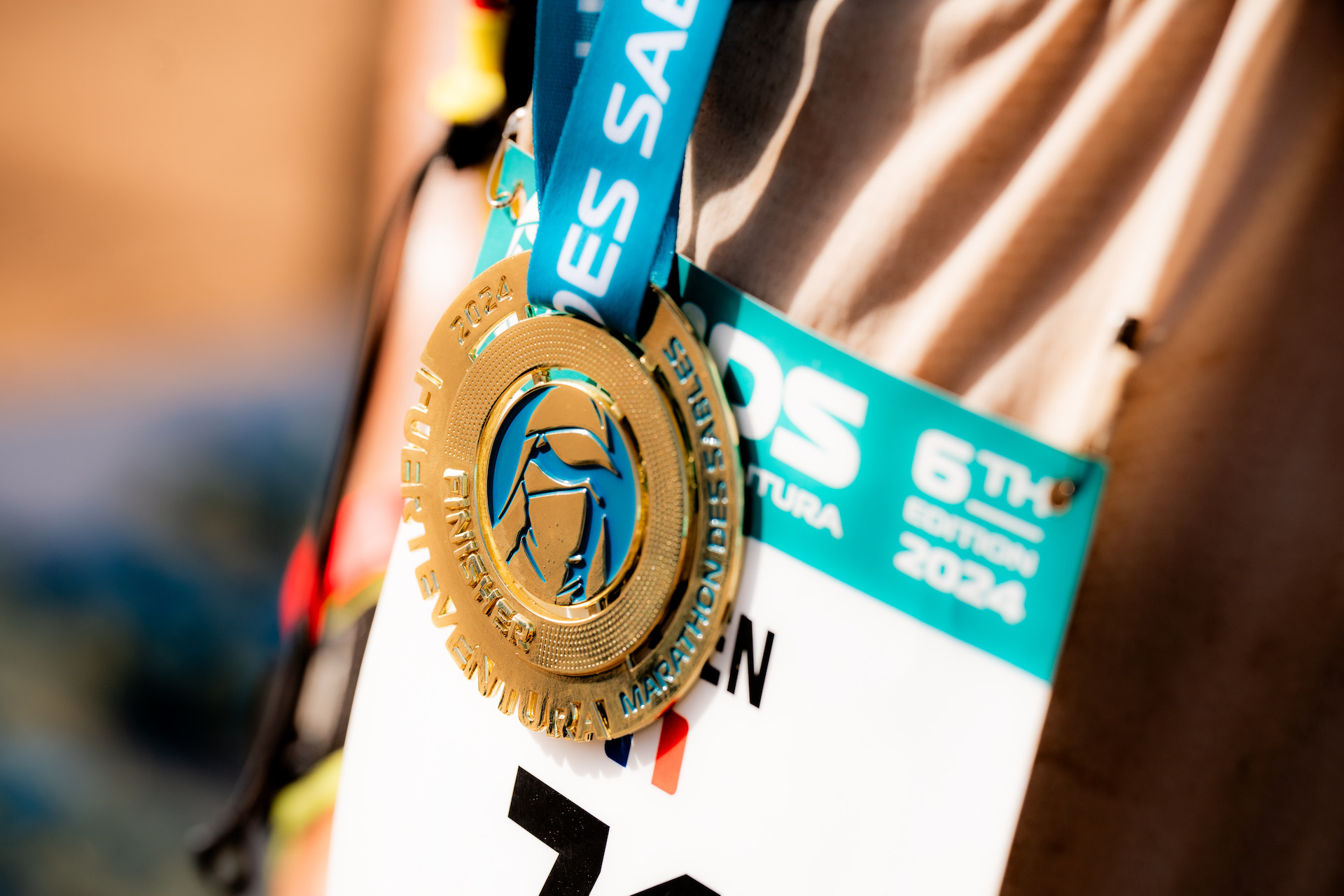
Today, was all about the medal gladly, all achieved there goal finishing before the cut-off time of 16.45, a huge success.
After the bad weather in 2022 and the missing 2023, MDS Fuerteventura is well and truly back!
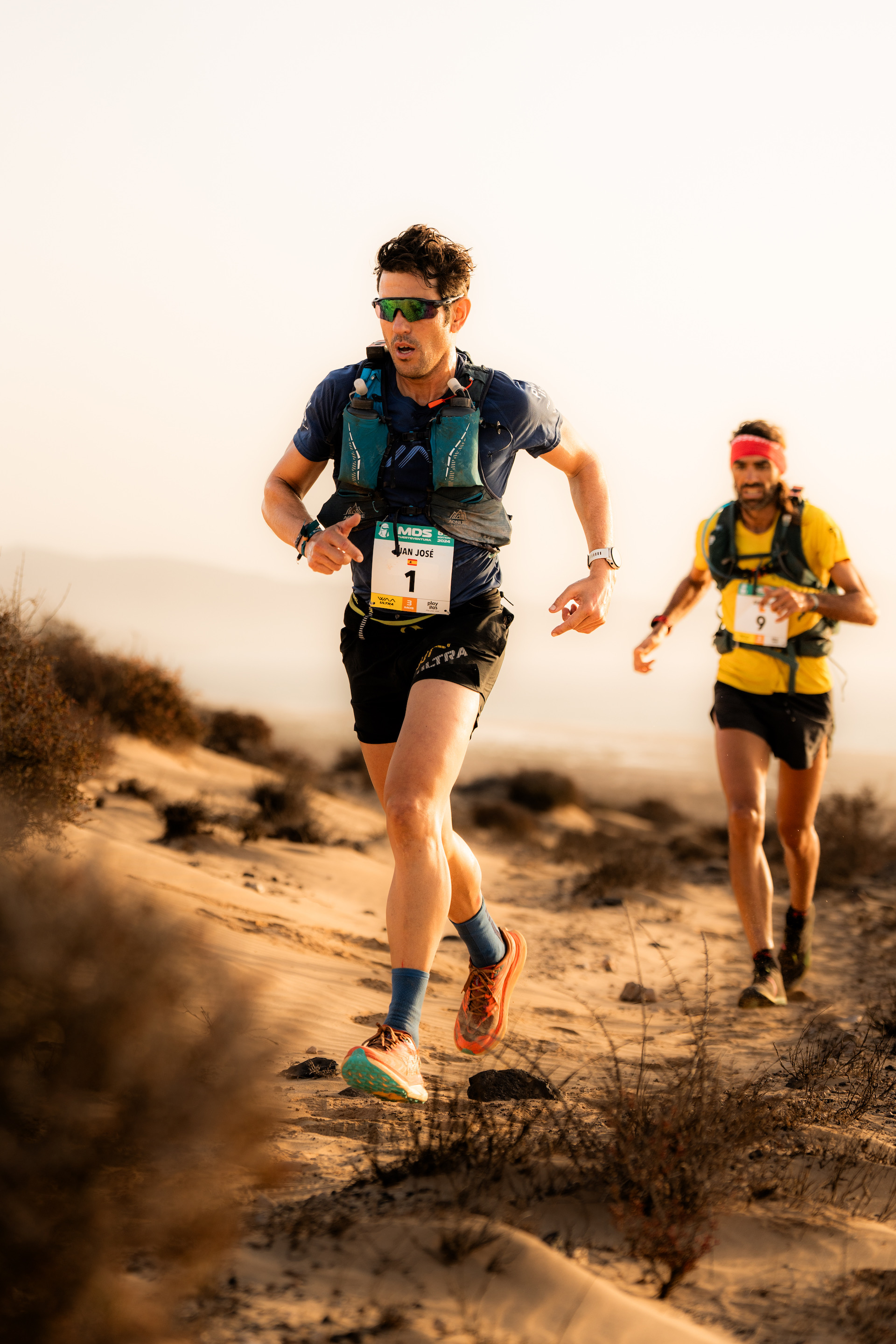
In the 120km race, SANTANA FERNÁNDEZ was crowned the winner with an elapsed time of 9:36:35. FOULQUIÉ PADILLA and ROGER PÉREZ placed 2nd and 3rd, 9:40:37 and 9:48:15 respectively.
For the women, DEL RIO VALLES, BOLLENGIER and NACHARD placed 1, 2 and 3, 13:54:20, 14:47:42 and 15:47:08 respectively.
PÉREZ DE LA CRUZ 10:23:12 and MUJICA GONZÁLEZ 11:53:49 were the male and female winners of the 100km and RODRÍGUEZ MORENO 9:02:44 and MAHIQUES 8:47:49 were the male and female winners in the 70km class, with MAHIQUES the outright winner.
Full results are available HERE for 120km, HEREfor the 100km andHERE for the 70km.
Now it is time for a shower, fresh clothes, a good dinner and bed with clean sheets. Tomorrow is a day of relaxation and then a gala dinner with awards ceremony.
Since 1986, the MARATHON DES SABLES has crossed the world’s most stunning deserts with several unique concepts: the MARATHON DES SABLES THE LEGENDARY (252 km in the Sahara Desert in Morocco), the MARATHON DES SABLES (70, 100, or 120 km spread over 3 stages), and the new 2024 concept, the MDS TREK (4 stages with a total distance of up to 120 km), offering an accessible adventure with optimal comfort. These international events have seen over 50 editions in various countries such as Morocco, Fuerteventura Island, Peru, Jordan, Turkey, and offer adventures that combine running/hiking in the desert with tourism.