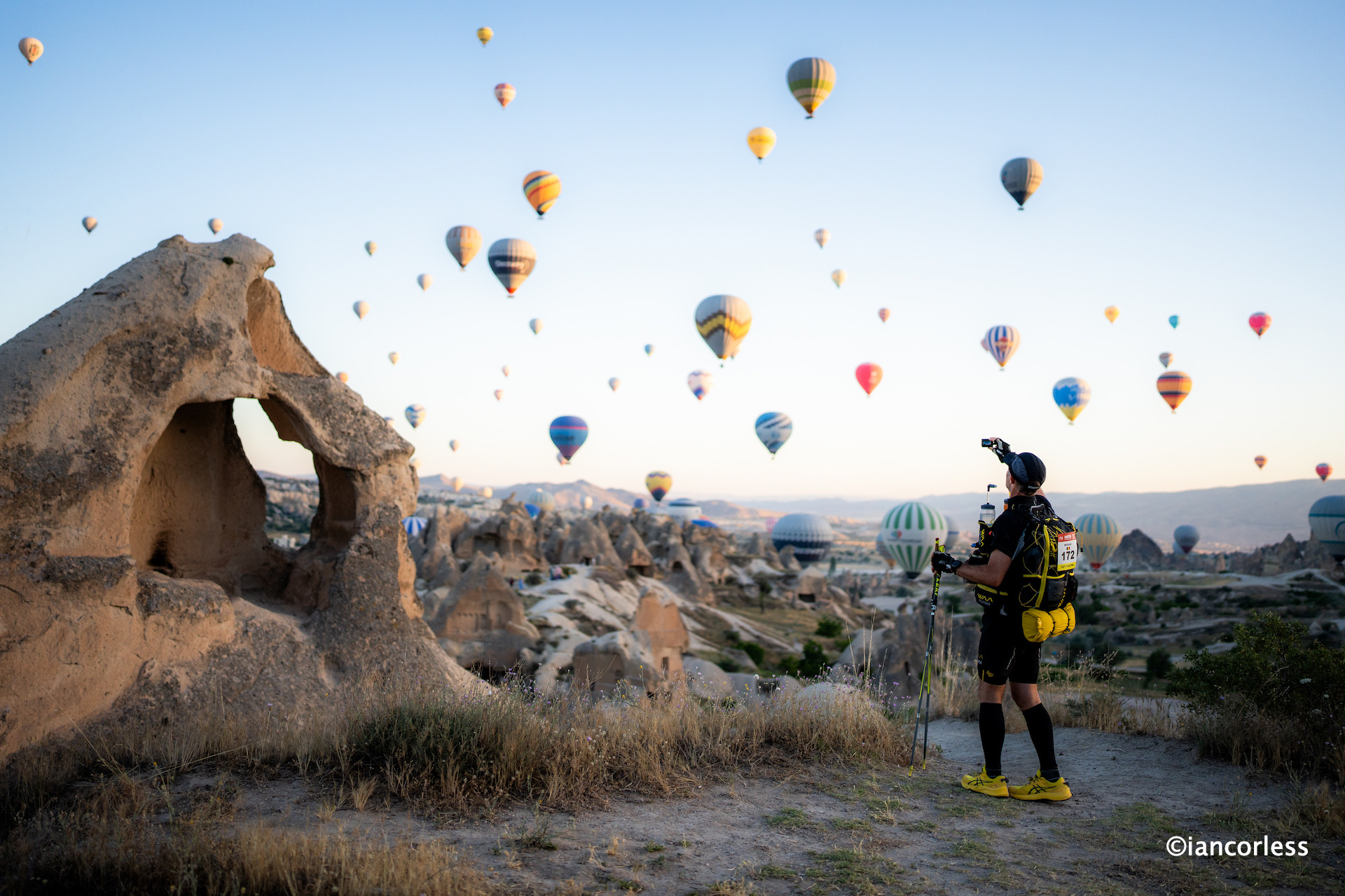
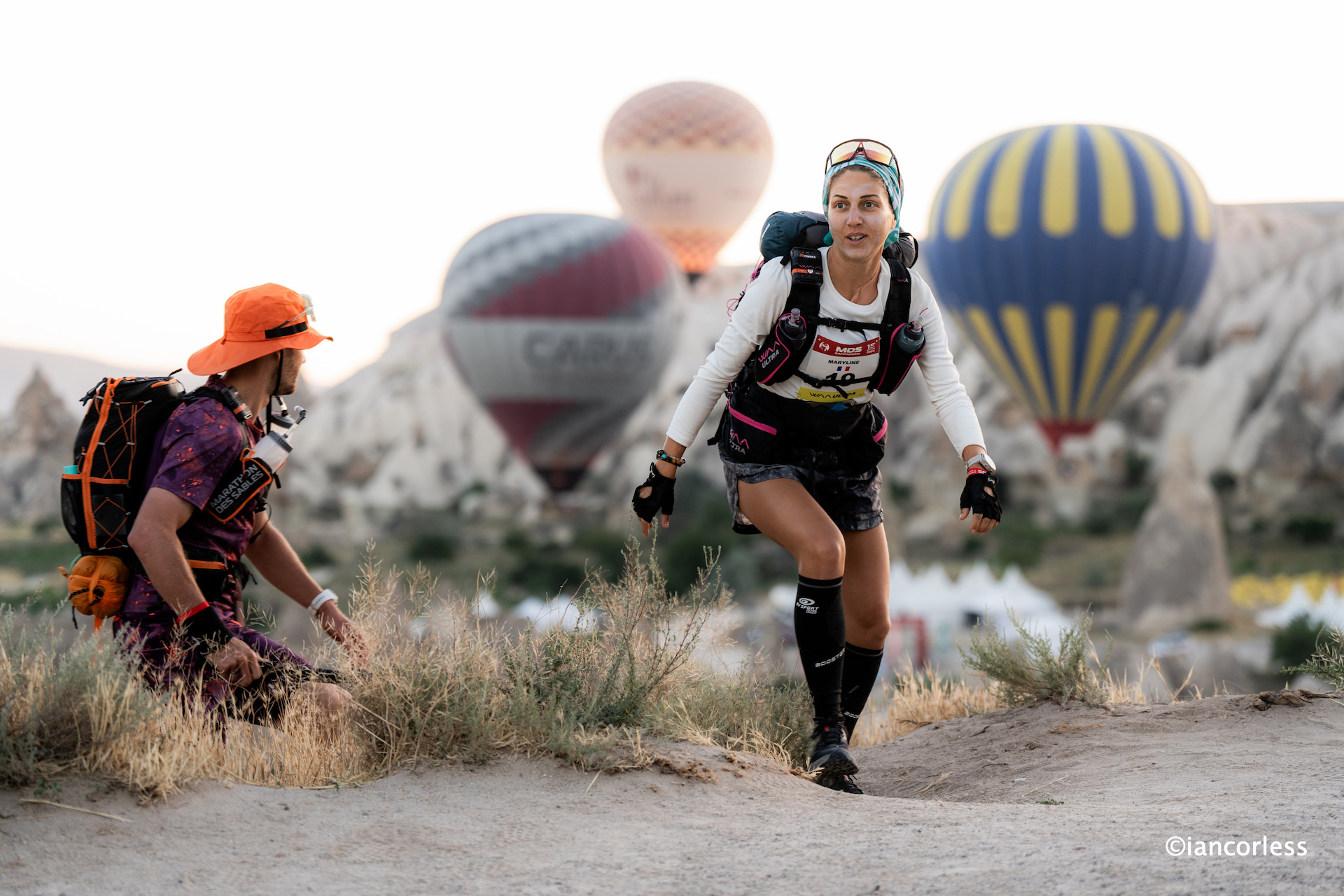
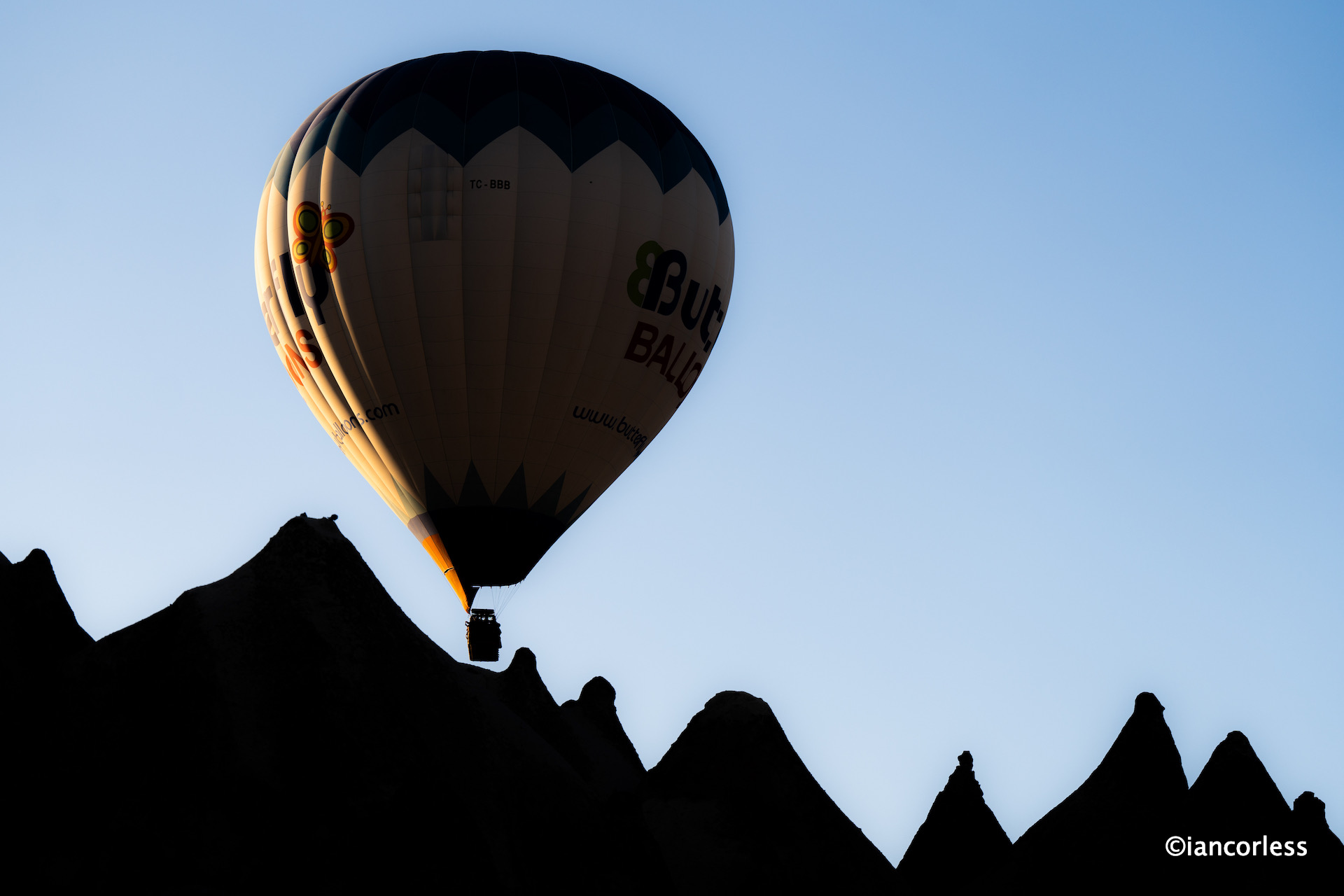
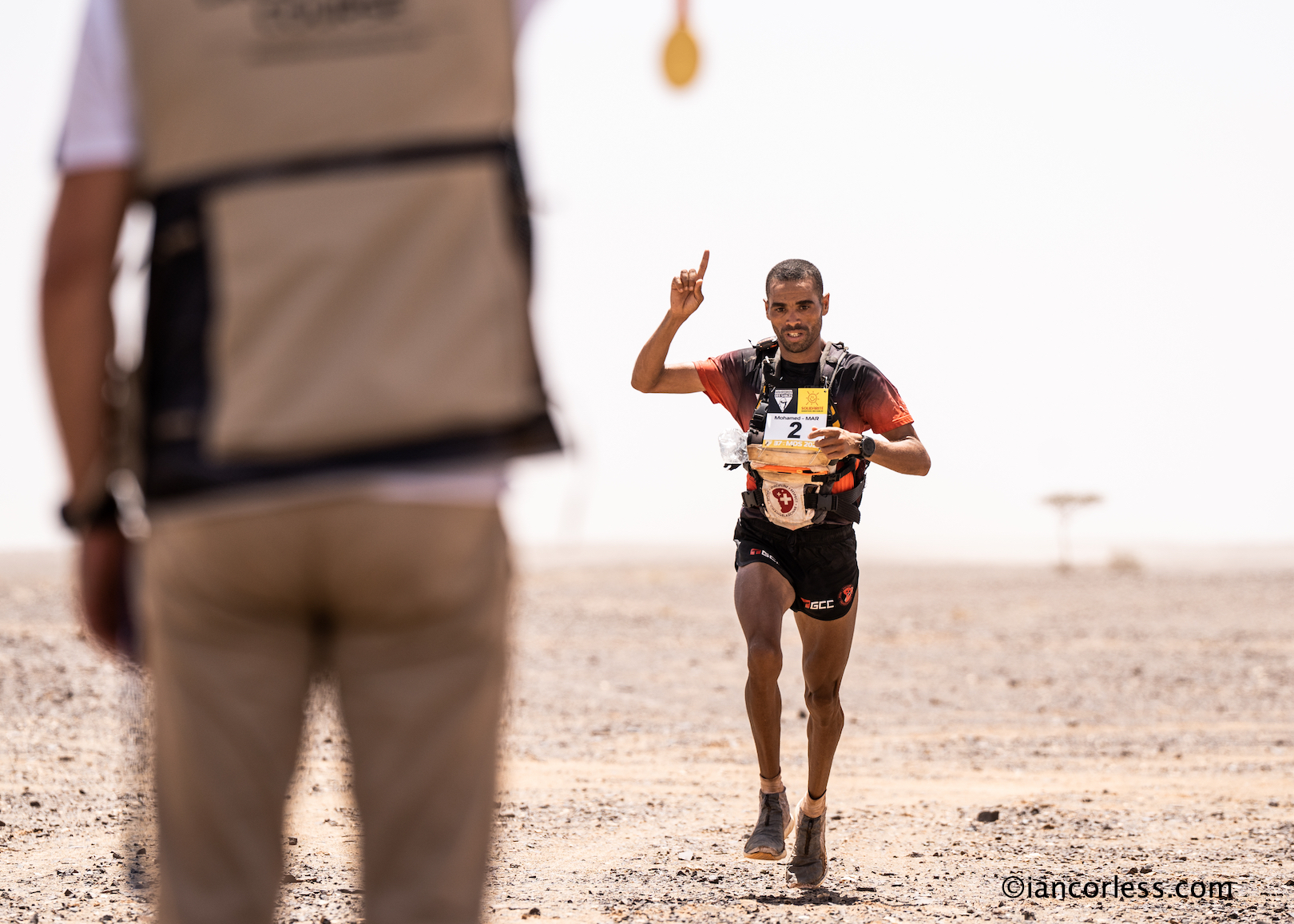
The sky came alive with arguably, one of the most impressive start lines I have ever witnessed. Stage 2 of MDS CAPPADOCIA was amidst the stunning hot air balloon spectacle that only Cappadocia bring. A wow!
The glimmer of a new day, the orange burn from the burners in the baskets of the balloons, at 05:20 stage 2 got underway. Today, the participants can choose a distance, 20km, 40km or 60km.
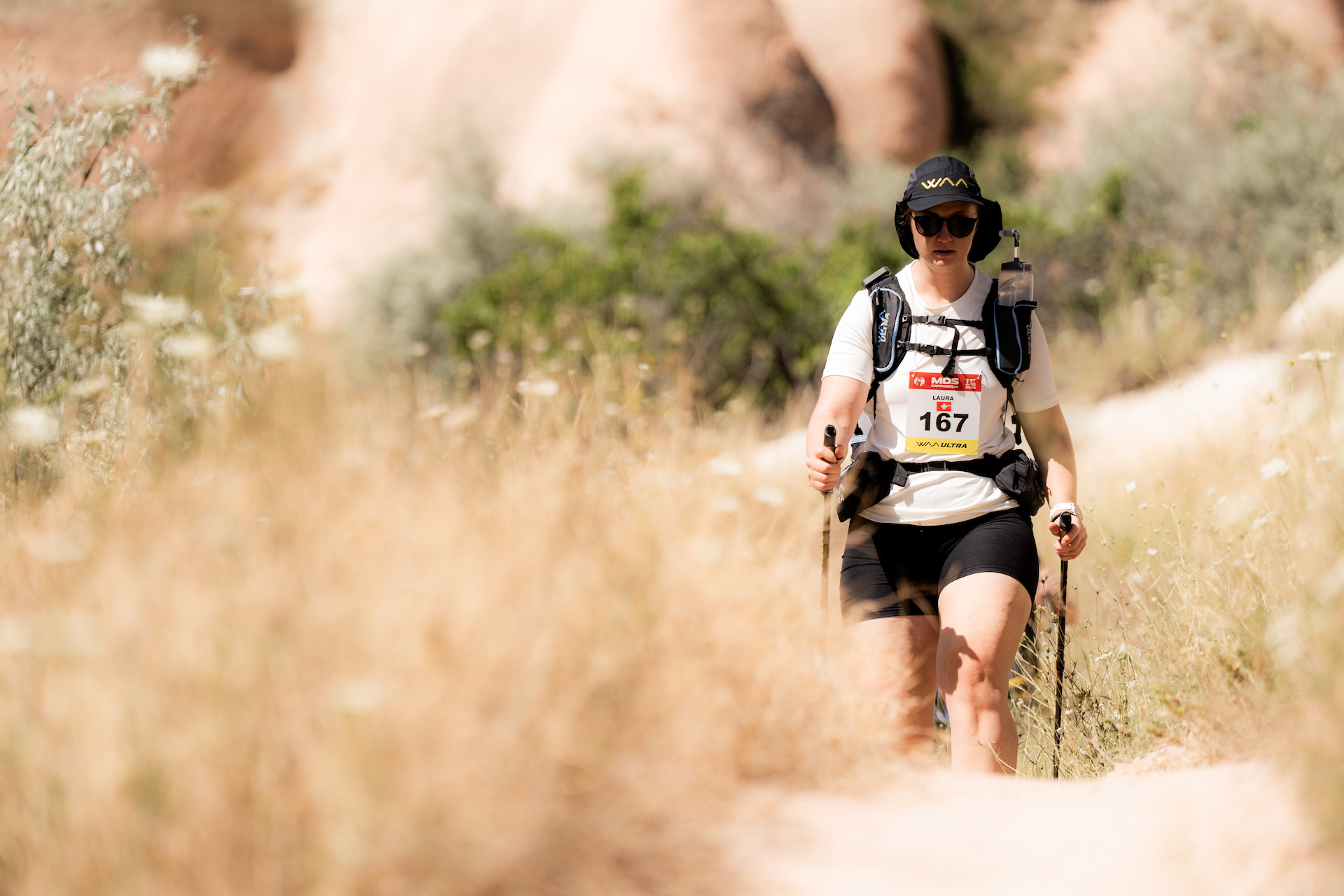
After a tough stage 1 for many, the 20km and 40km loops were going to be popular for sure. Starting slowly, the spectacle around the runner’s was just too impressive not to stop, look, film and photograph. One runner said as she passed, “This is the most impressive thing I have ever seen, this is truly magnificent.”
And so, MDS Cappadocia is etched in the mind, the unique landscape, the unique bivouac location and the dawn spectacle of hot air balloons, this is MDS Cappadocia.
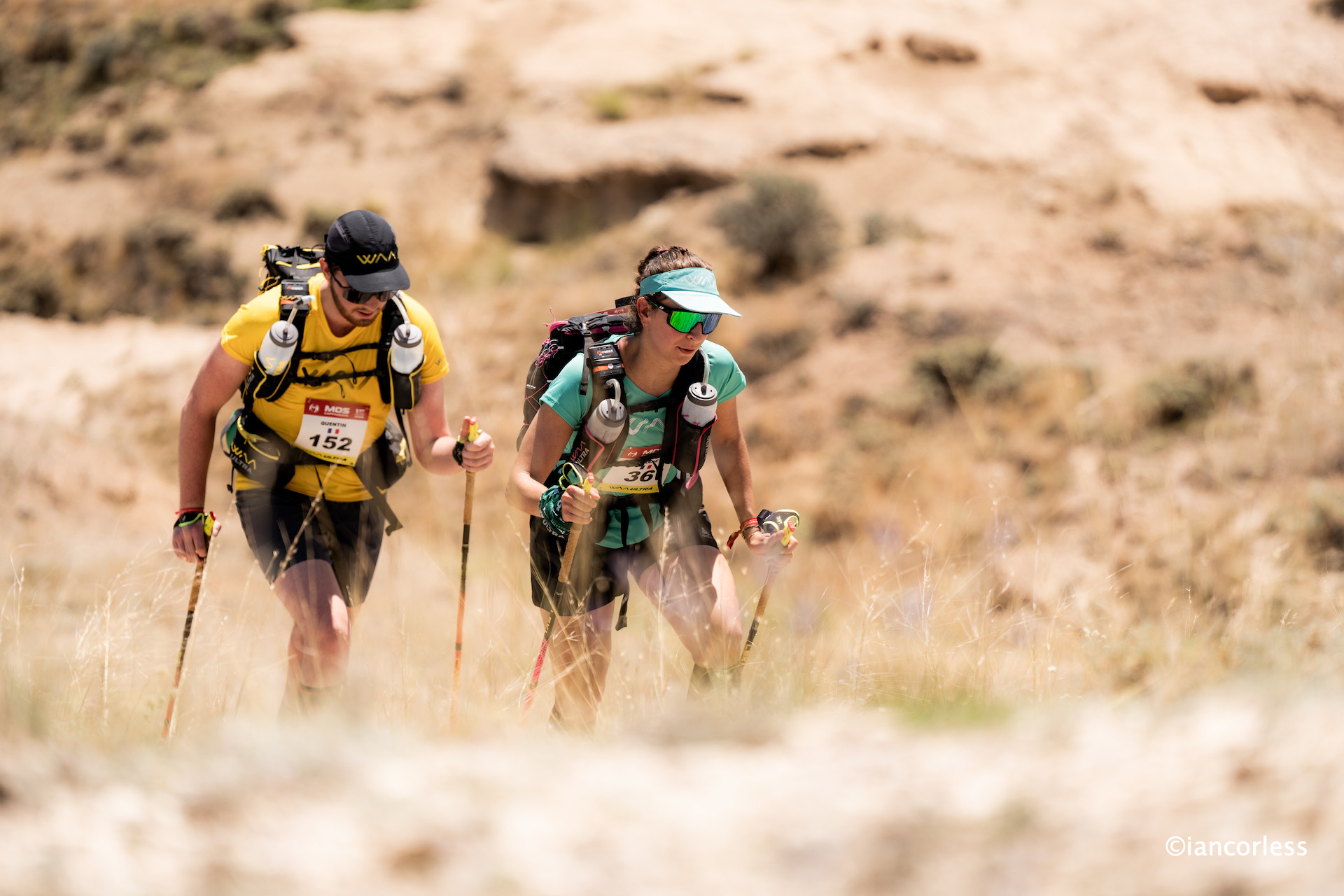
An early start was welcome, the heat of day 1 was relentless, so, several hours of calm temperatures facilitated a good start to the day before the heat started to rise around 09:00, by early afternoon, temperatures were at 34-degrees.
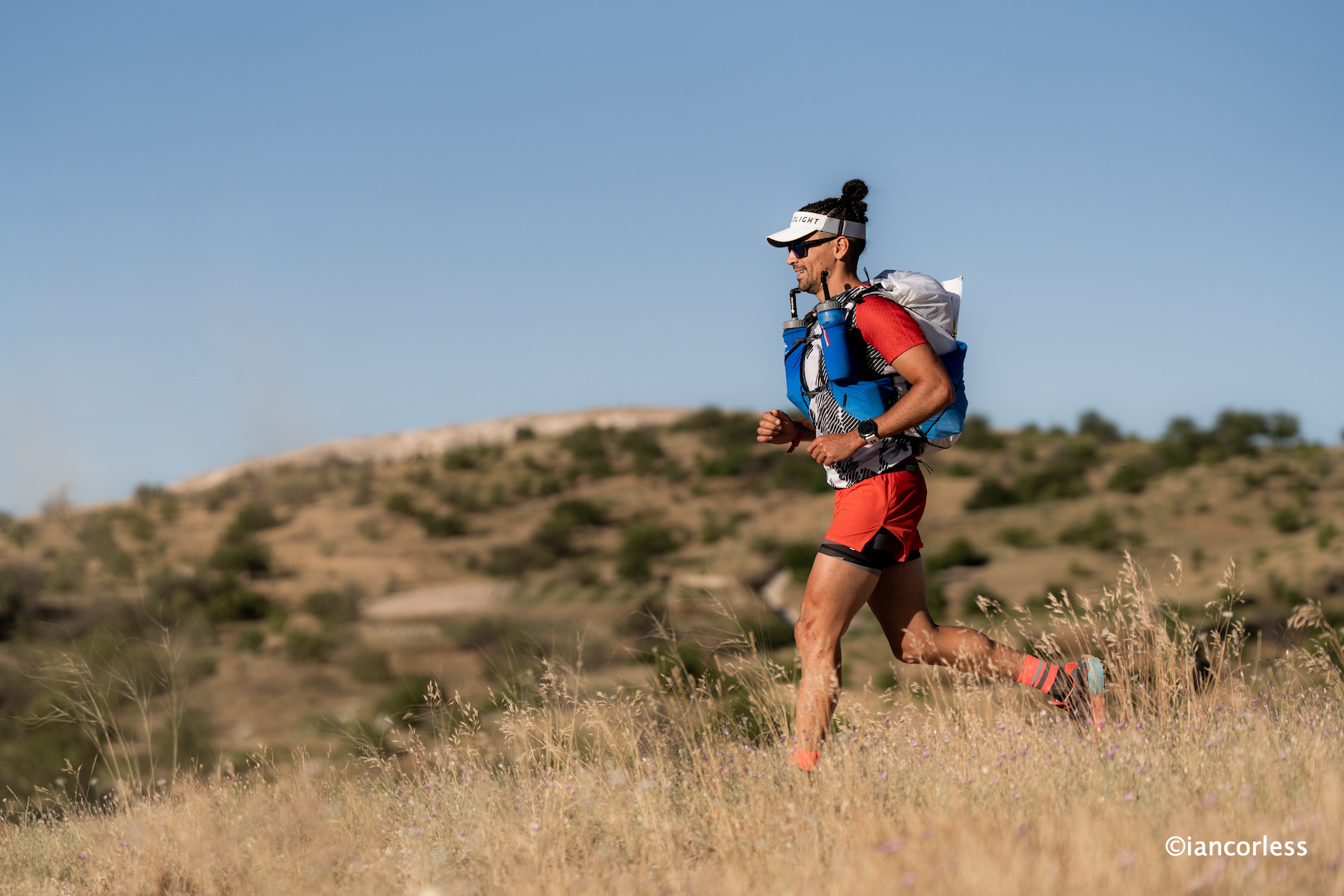
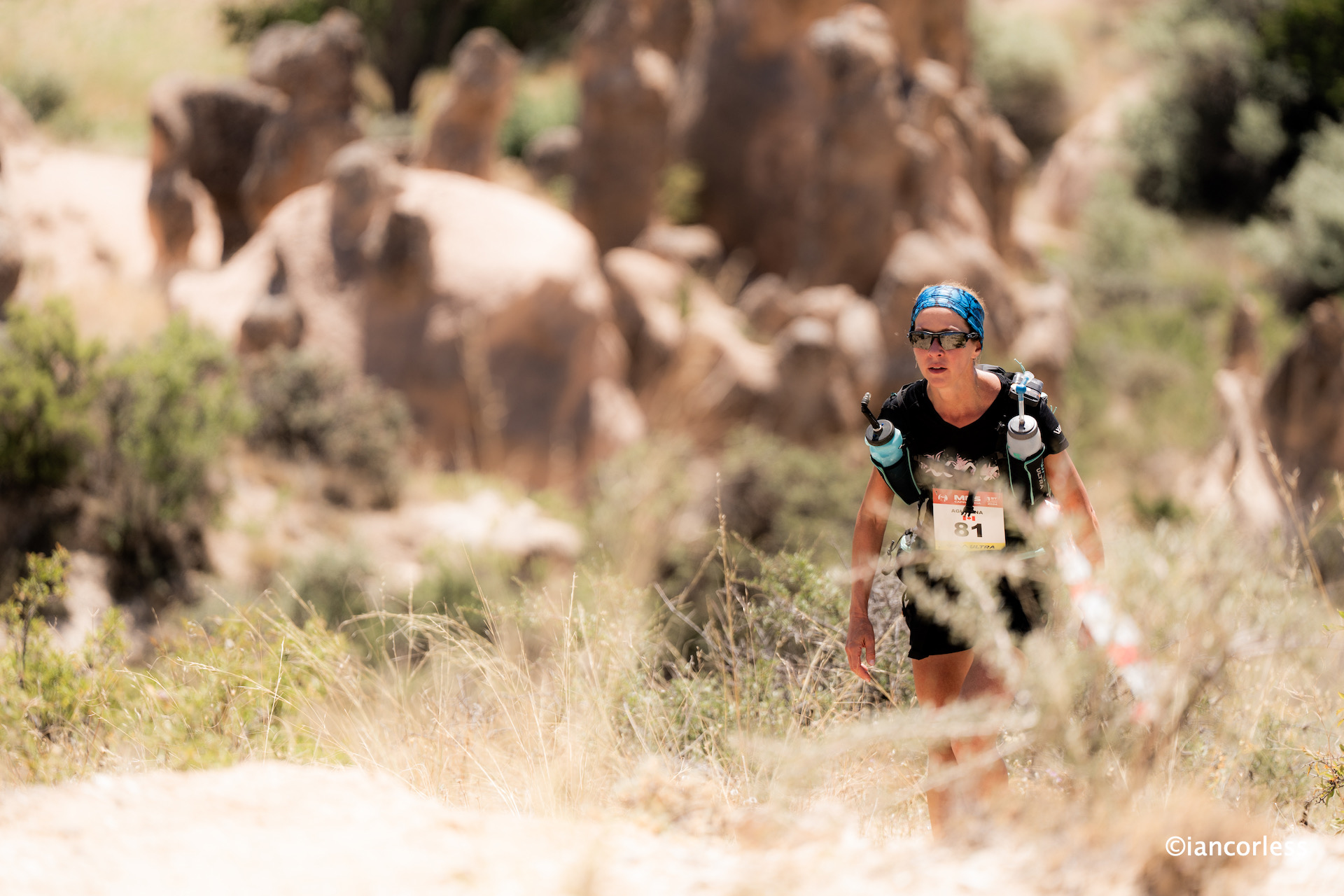
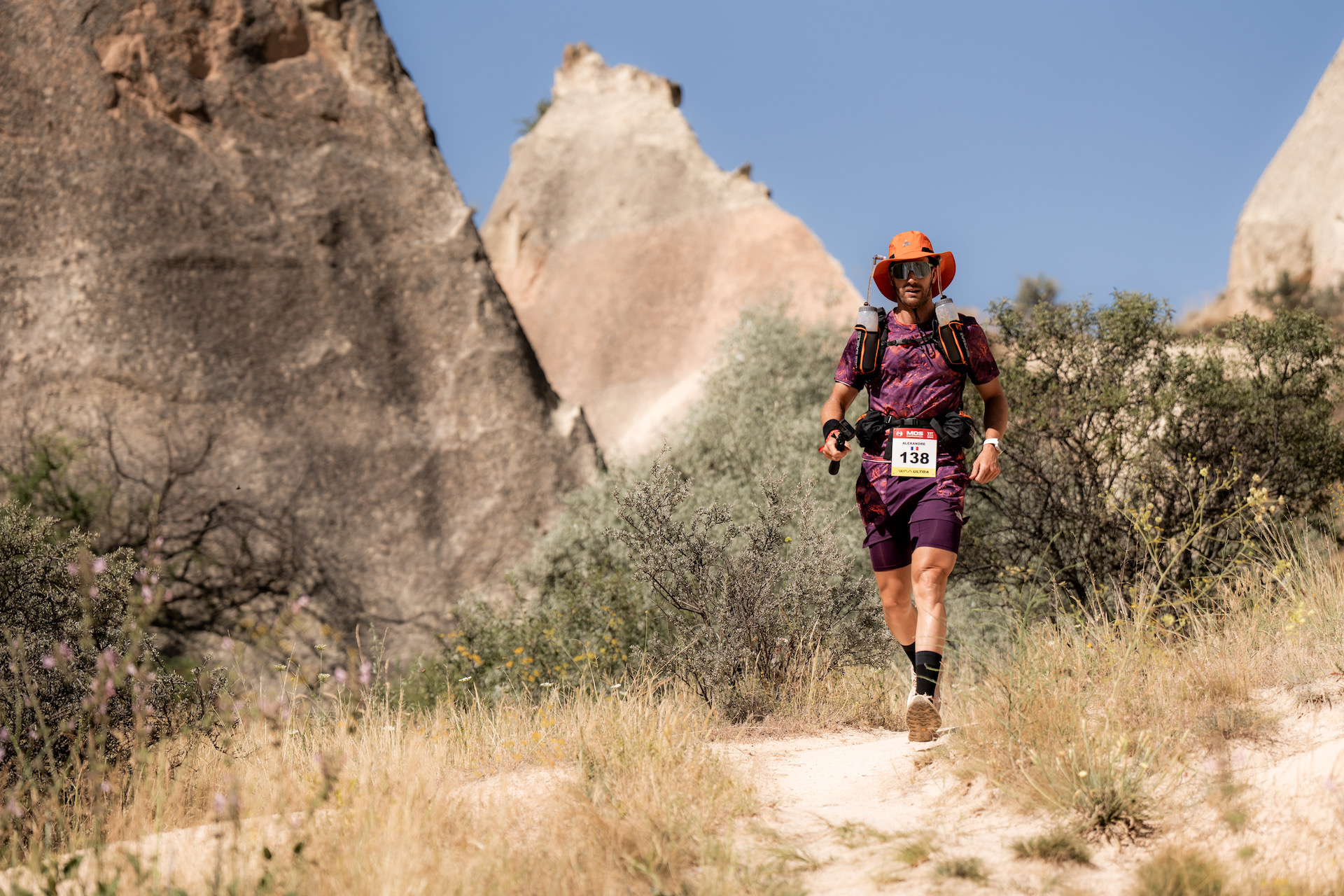
There were lots of smiling faces, as runner’s tested themselves over a distance that was a challenge for them.
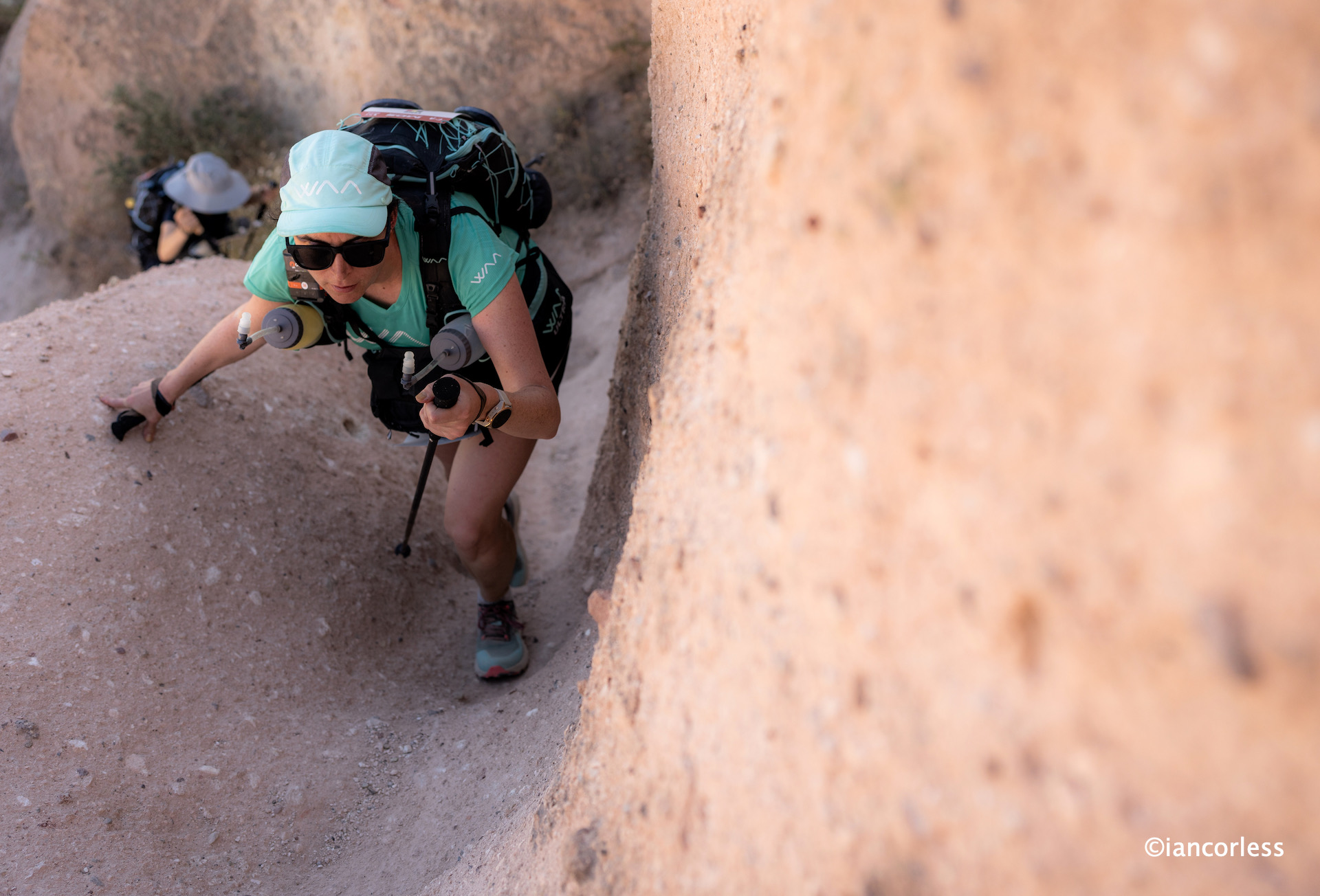
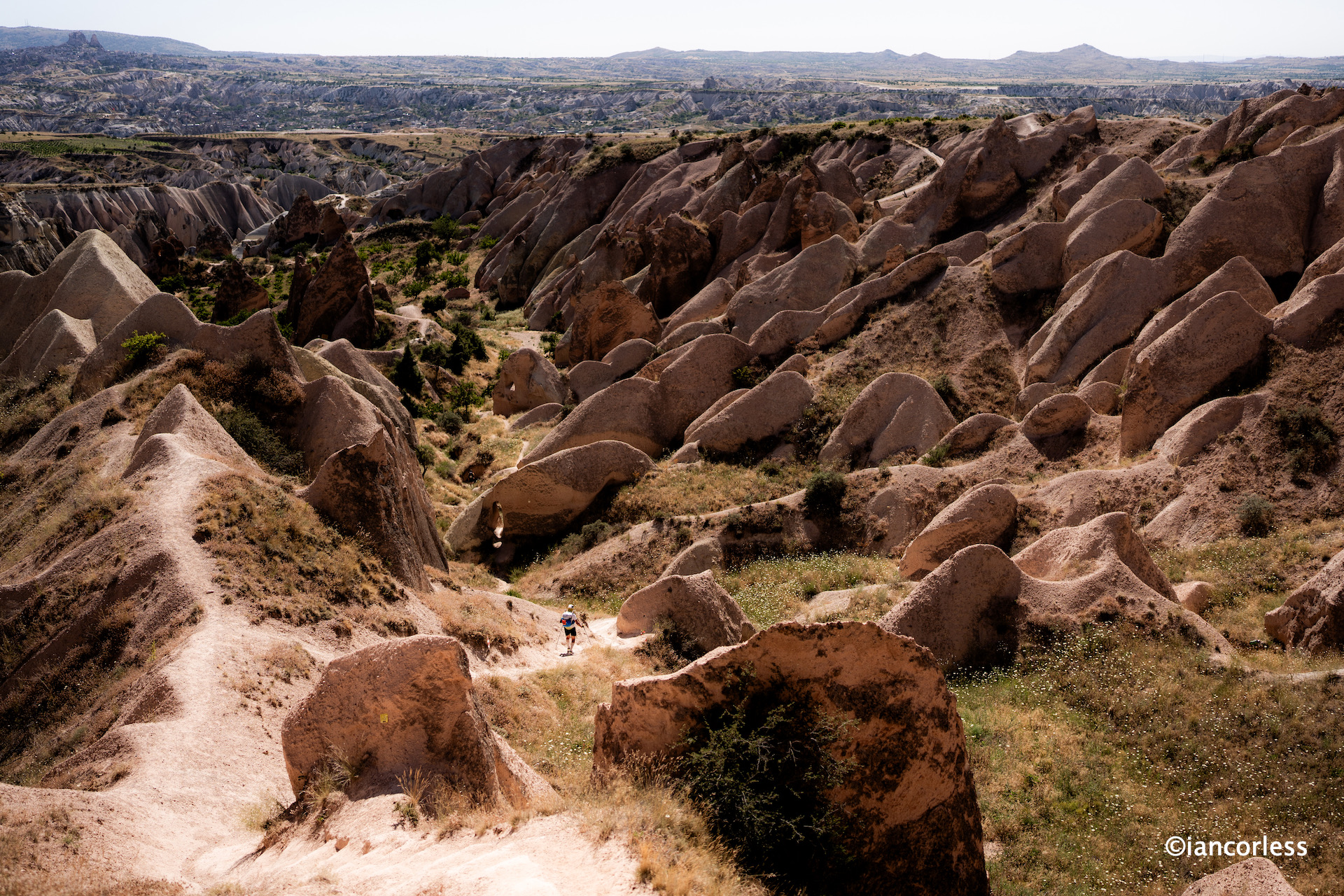
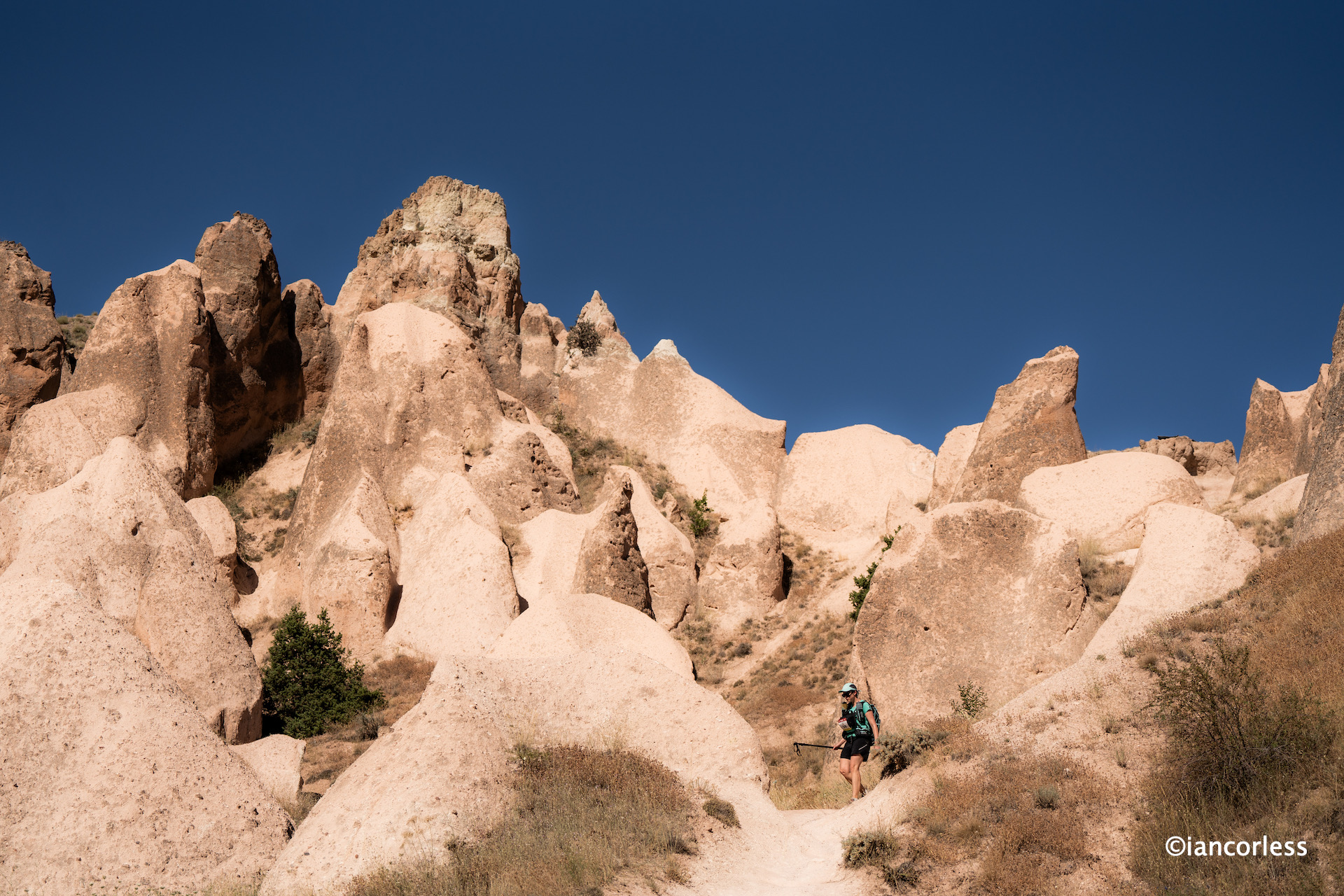
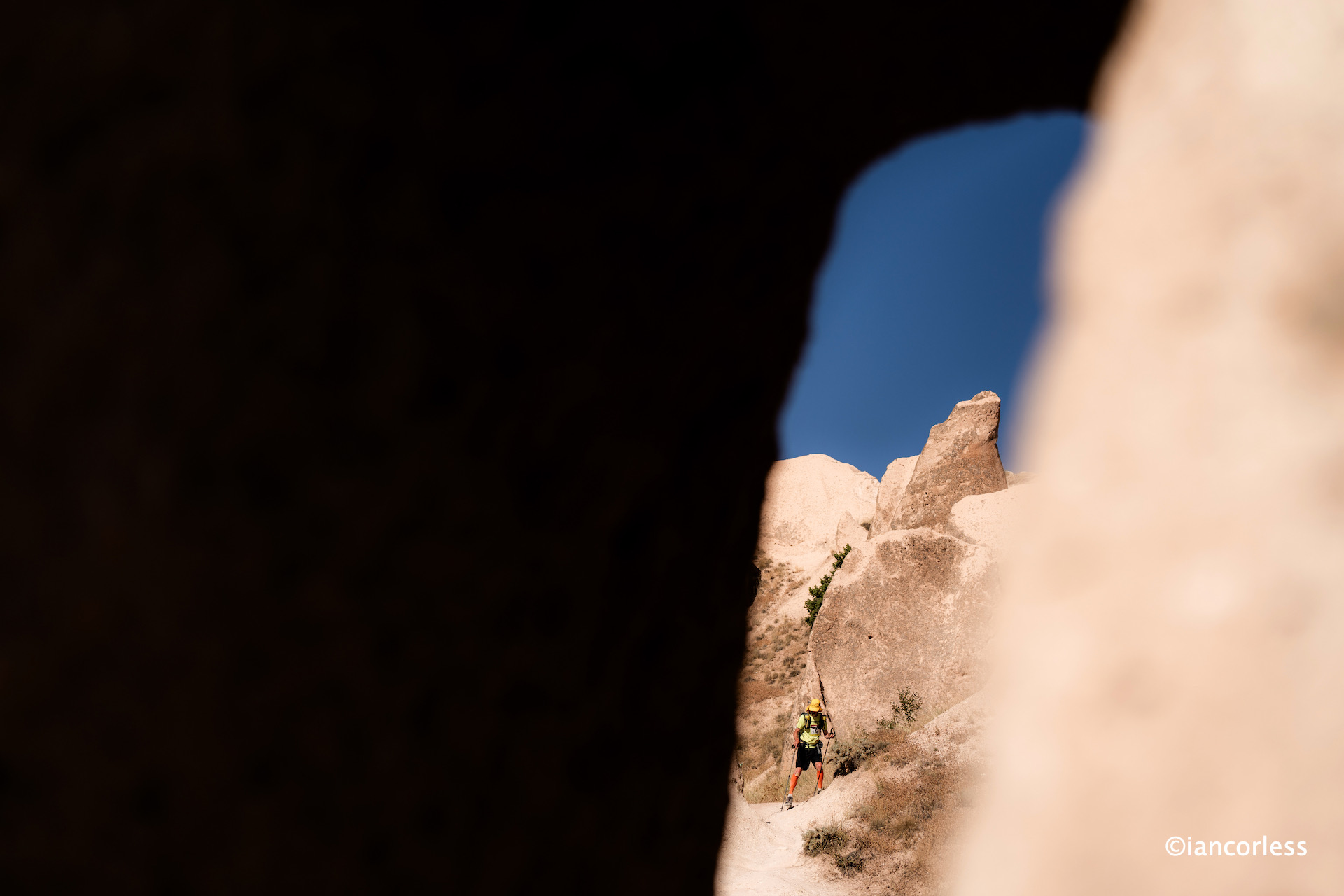
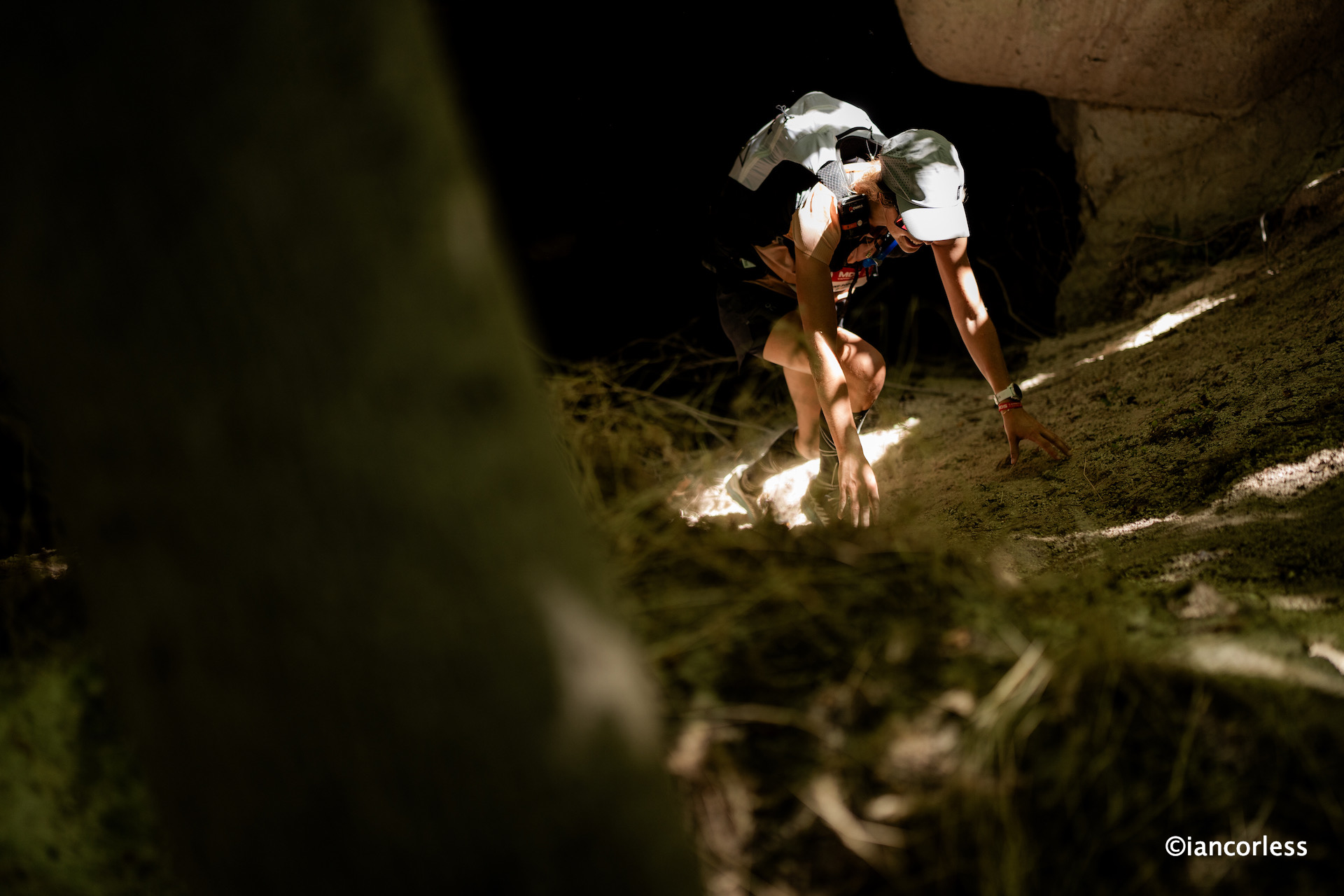
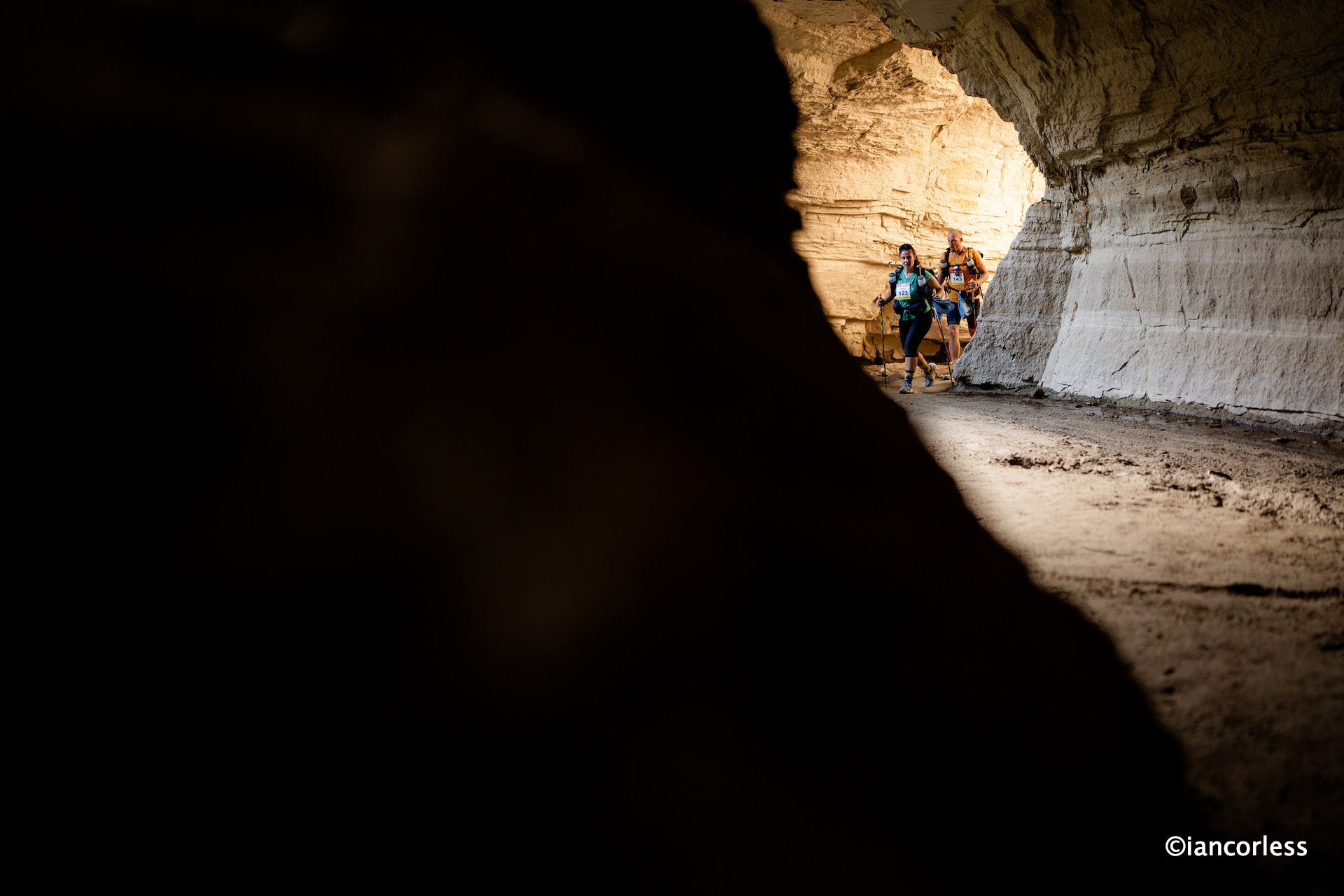
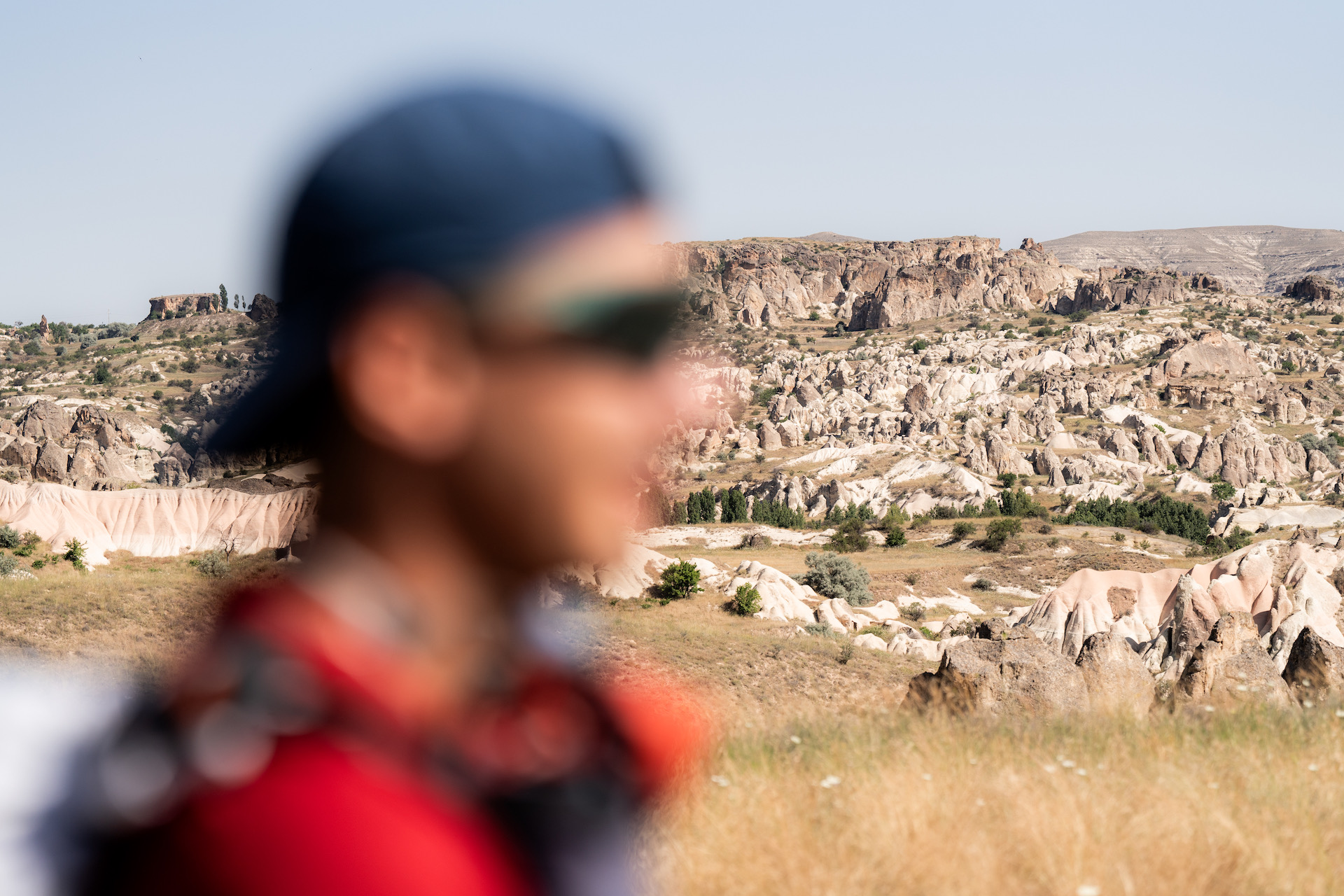
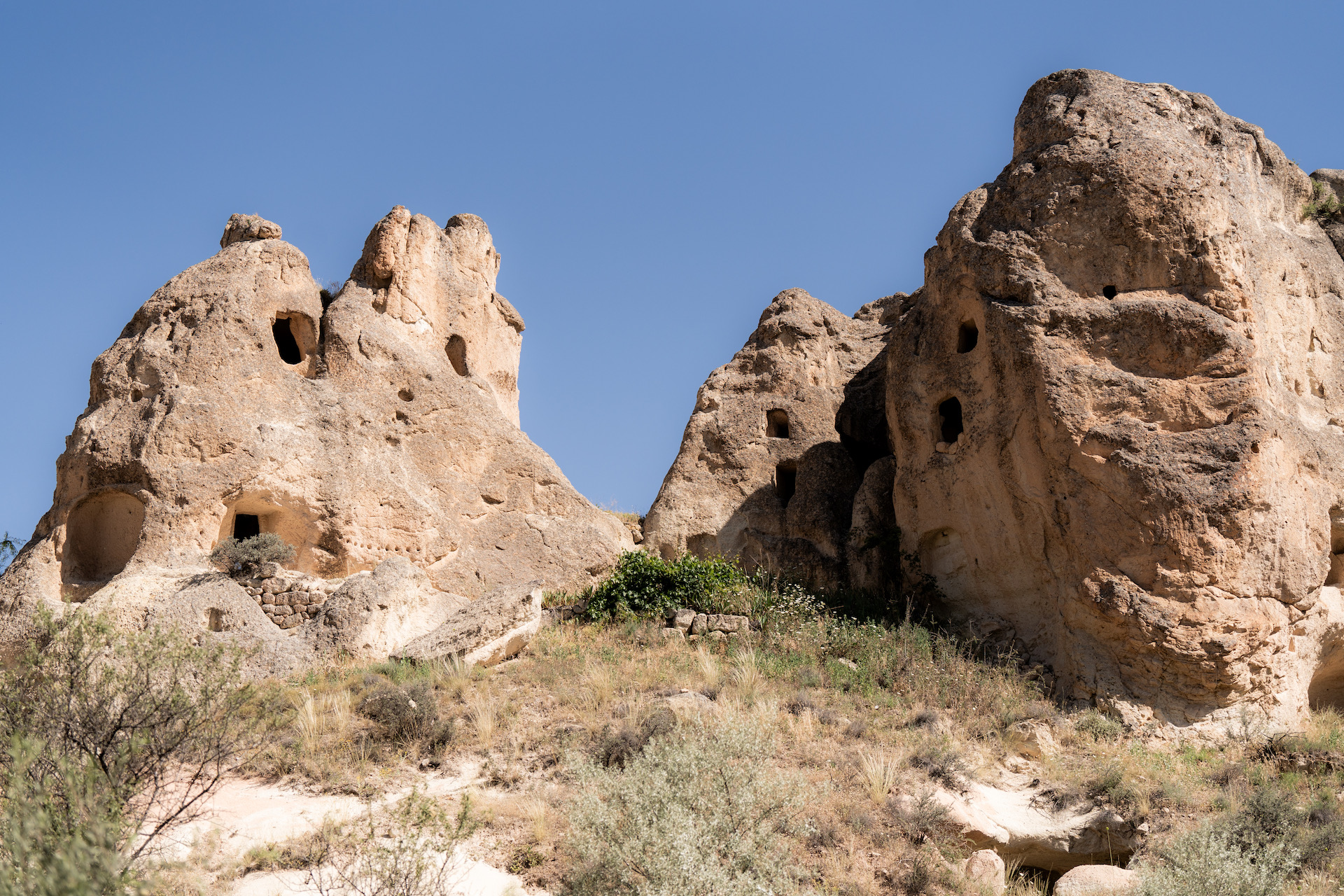
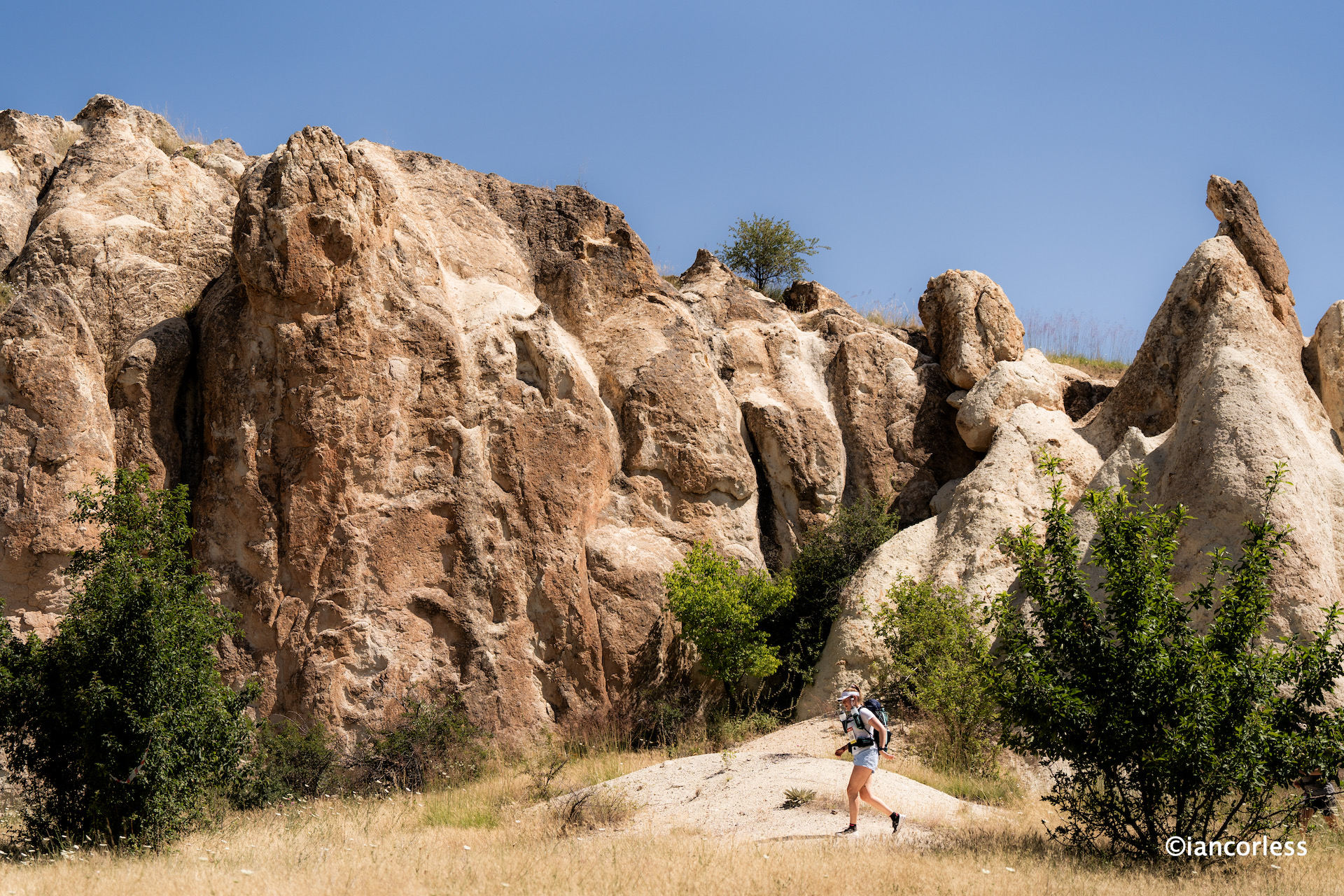
The terrain was constantly changing showing the best of what Cappadocia has to offer. Single-track, fairy towers, Troglodyte caves, lush green landscape, tunnels, gorges, canyons and so much more.
With three distances on offer, finishing times were spread throughout the day, in the 60km distance, Serge Fortini crossed first in 9:37:29, Hugo Brincard 2nd 9:57:54 and Alexandre Mallier 3rd 10:34:41. Maryline Demangel, Axelle Bellec and Augistina Gonzalez Fileur were 1,2, 3 for the women, 12:24:41, 12:47:25 and 15:17:55.
The final finishers arrived after midnight, a full day of challenge lasting over 19-hours of intense heat, beautiful views and challenging trail, a showcase of determination and strength.
For the 40km and 20km, we will need to wait for updated results to place athletes in the appropriate distance category, go to livetrail.com
Day 3 of the race is a rest and then stage 3 follows the following day and the conclusion of the first edition of MDS Cappadocia.
The 2024 first edition of MDS Cappadocia got underway today, three stages with a potential longest distance of 120km’s and options to run 71.9km/ 92.8km and 110.5km based on the desired distance of stage 2.
A unique playground
Stage 1 25km
Stage 2 20.9km/ 41.8km/ 59.5km
Stage 3 26km
Bib collection and admin checks
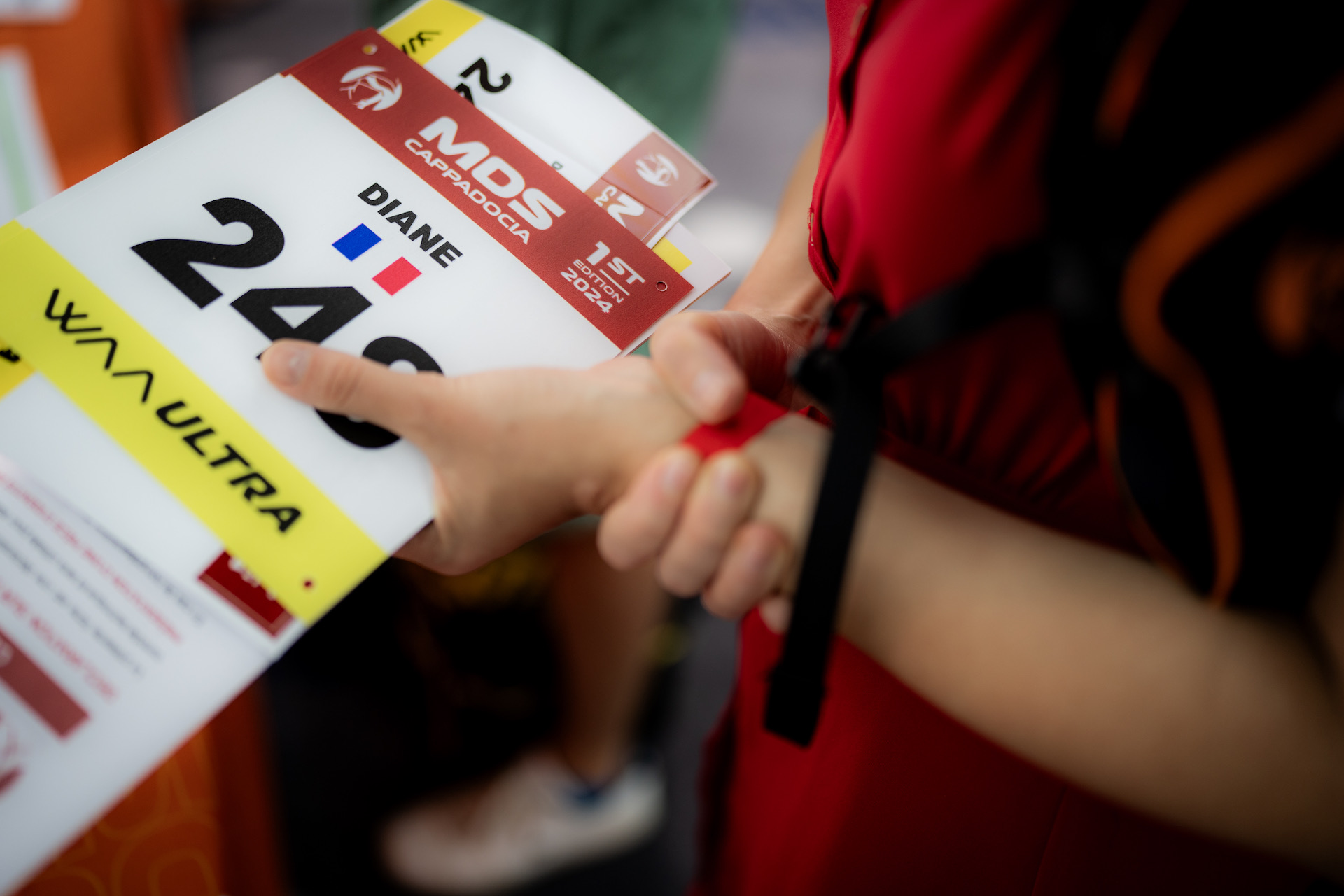
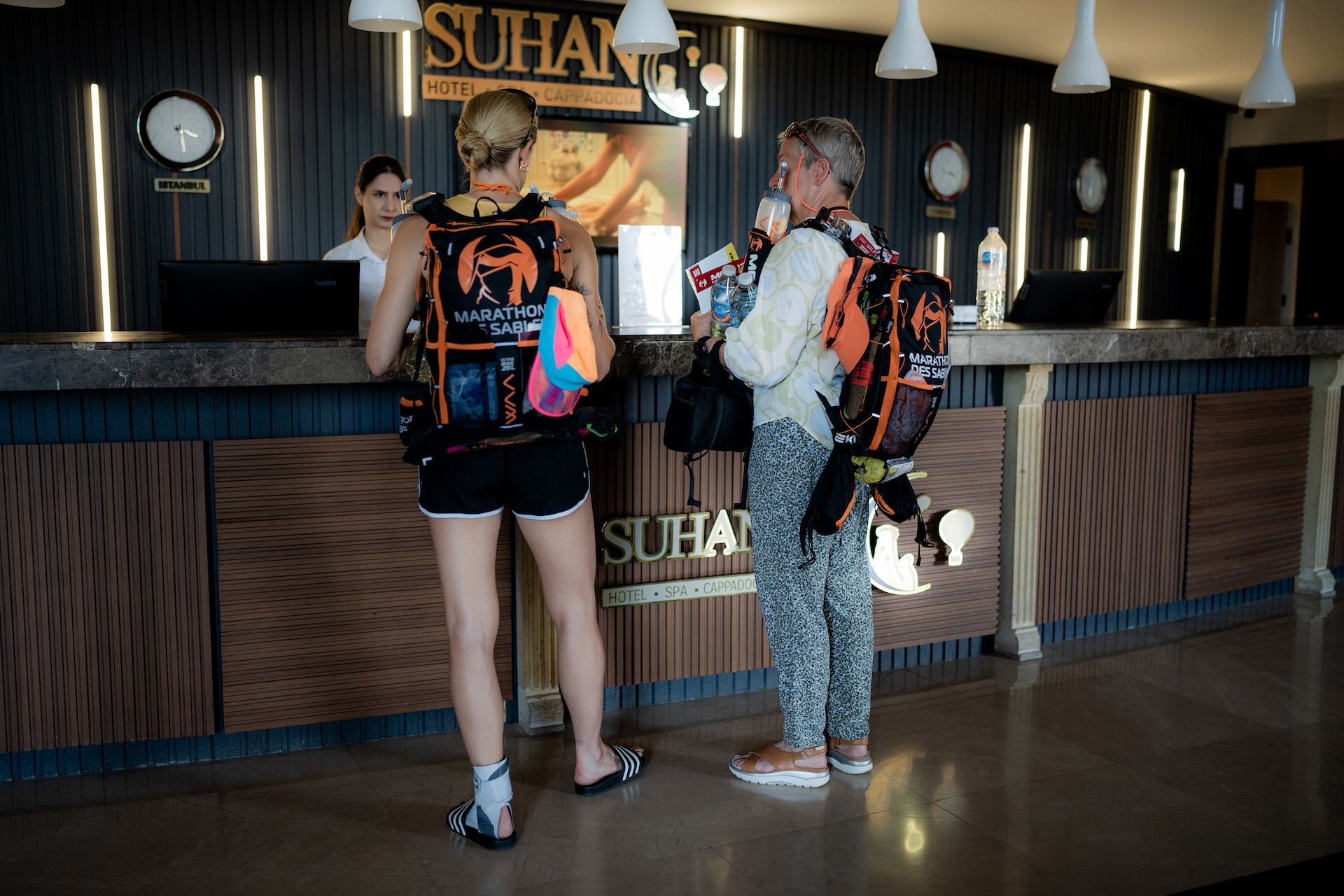
Many participants arrived in Turkey on Friday or Saturday with admin taking place on Saturday afternoon ahead of a relaxed dinner followed by a comfortable night in Suhan Cappadocia Hotel in Avanos.
Suhan Hotel, some luxury before self-sufficiency
Stage 1 began with a relaxed breakfast and 0800 departure to the start of the race and the beginning of self-sufficiency.
The challenge ahead
At 0900 briefing began and at 0930, the runners departed for 25km and 678m of elevation gain.
Cyril Gauthier
In contrast to MDS The Legendary and other MDS races, Cappadocia is not a desert race. Although the landscape has a desert feel, the route is much more single-track, mountain paths, grassland and of course it is all encompassed within the unique landscape of this area.
Troglodyte Caves a unique feature of Cappadocia
The Göreme valley is captivating, especially if never seen before.
Single-track trails
For the participants, it was the start of a journey of discovery and at each point throughout stage, the beauty and experience was one that was passed on to MDS staff during and afterwards.
A hot day, cold water at CP’s make all the difference
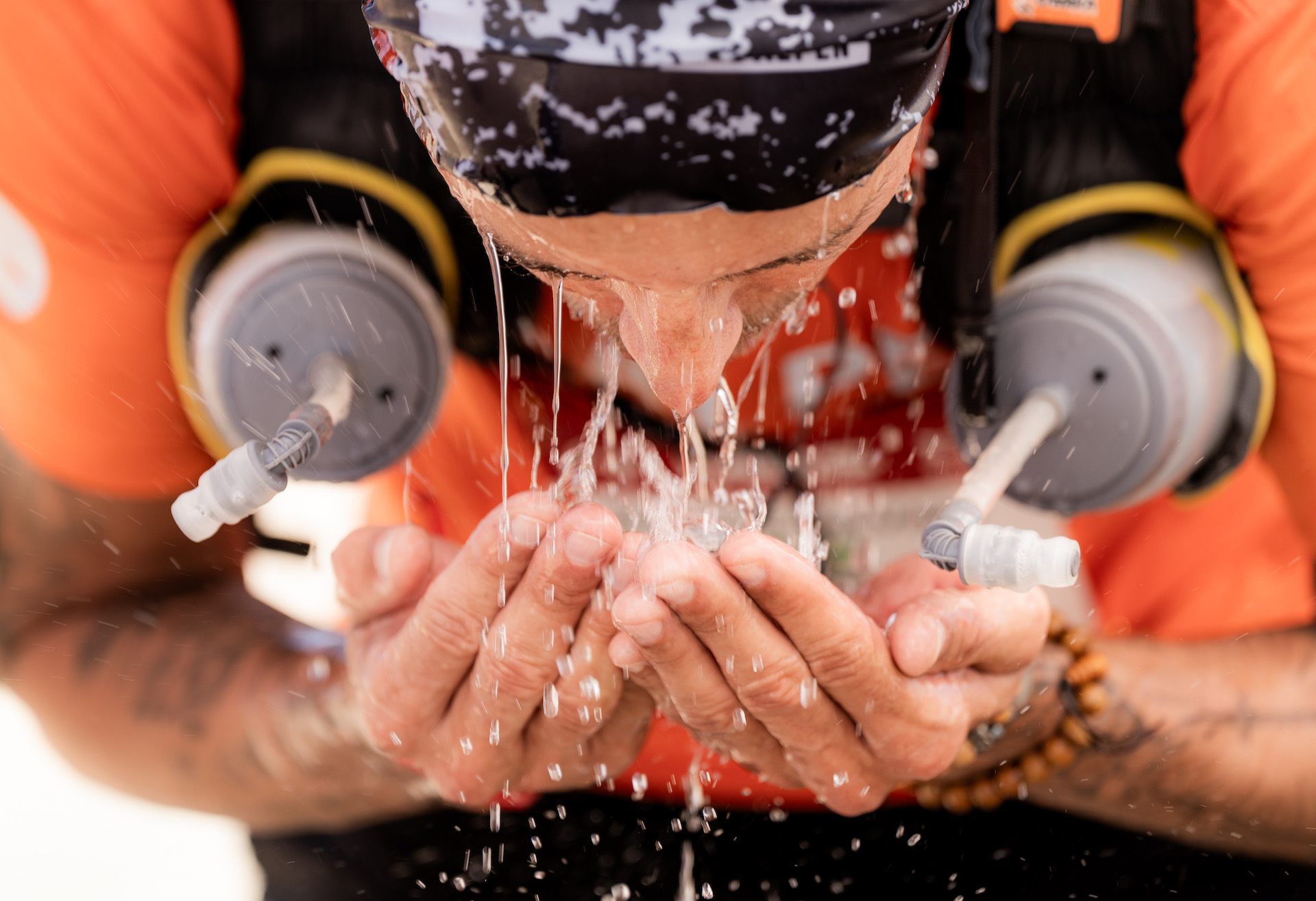
A hot day, with a recorded high of 33-degrees, however, a gentle wind throughout many sections of the race helped to cool. Main CP’s also offered iced water which was poured on the heads and necks to facilitate cooling the core.
It wasn’t all flat and easy.
The stage was won in 02:29:40 by Keven Moncelli. Hugo Brincard and Alexandre Mallier were 2nd and 3rd, 02:32:41 and 02:39:08 respectively.
A unique and magical playground
For the women, Maryline Demangel finished ahead of Axelle Bellec and Gudrun Hespel, 03:10:59, 03:20:23 and 03:39:08.
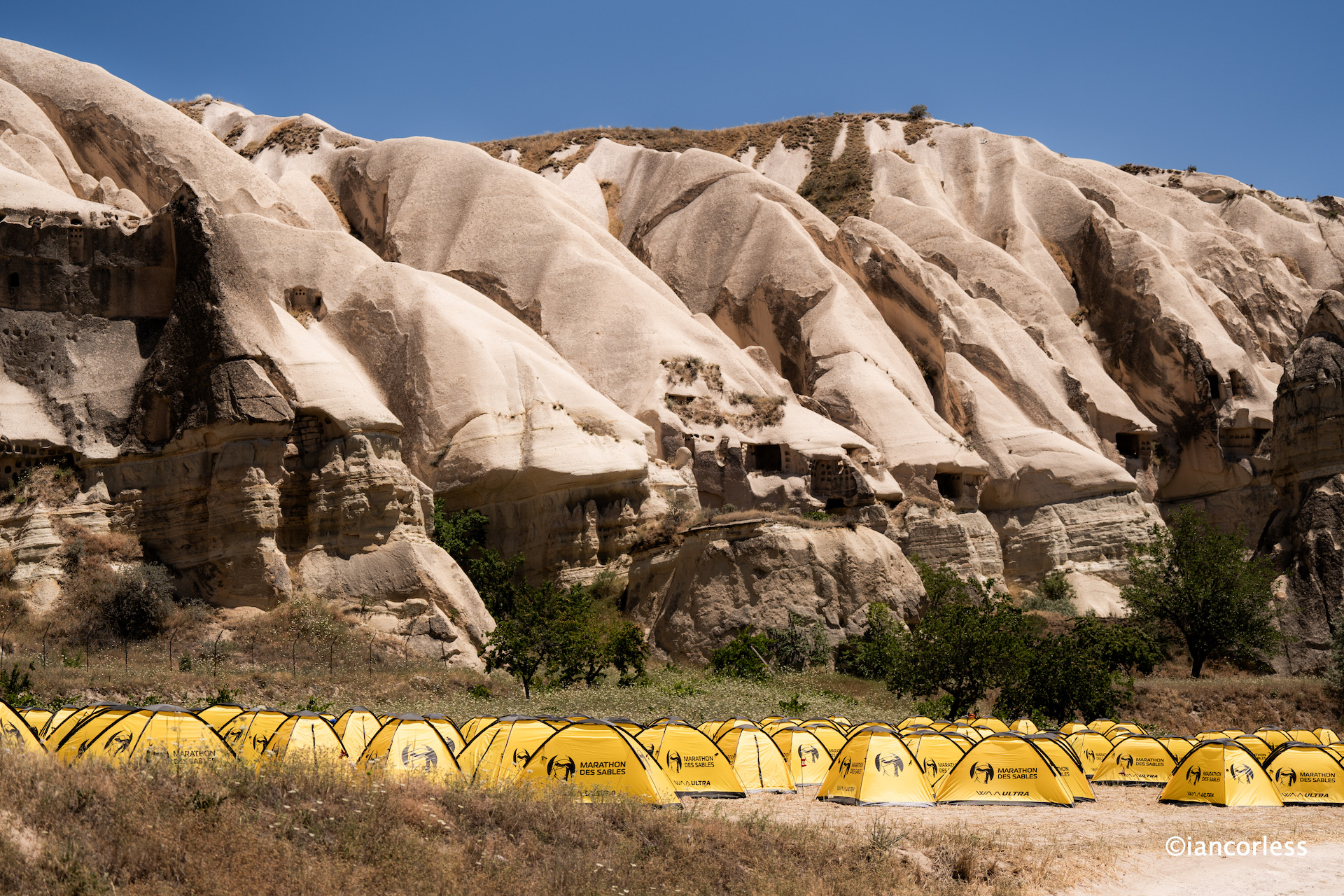
Stage 1 finish and the bivouac for the coming days is a hidden away gem backed by the unique Troglodyte homes, cut away in the rock that makes Cappadocia so unique and special.
Stage 2 (Monday) has an early wake-op of 03:30, briefing at 04:30 and the start of the stage at 05:00. Runner’s are able to choose the distance to cover.
Now is the time to make all the final preparations for a goal that you have been building towards for 6-months, 1-year or maybe even years.
DON’T PANIC.
If you have got this far, you are in a great place.
There is time for one last key week of training, adding the final touches to make sure you are in the best shape possible, BUT, after this week you need to start easing things back, looking after yourself and allowing your body to recover, rest and get ready for what may be one of the biggest weeks of your life?
MEDICAL
Make sure you have all the medical requirements fulfilled and an up to date ECG as specified in MDS rules and regulations.
The organization’s medical certificate (to download from your online account from March 11th 2024) and the resting electrocardiogram (ECG) report plus graph, dated less than 30 days before the start of the race, i.e. from March 12th 2024, are to be presented during the administrative, technical and medical checks on 13th of April 2024. Only the original documents, dated and signed, will be accepted (unvalid photocopy). Failure to present these documents will incur penalties (see ART.27 et 28). The signature and the stamp of the doctor must be applied on them.
The electrocardiogram of effort is advised for participants over 40 years. It is not compulsory and does not replace the ECG at rest and its plan. This can be joined to the medical certificate and presented in Morocco.
TRAINING
From a training perspective, what may the next weeks looks like? Well, we are all individuals, we all have different abilities, we all have different goals, we all have different free time and the list could go on. However, I have found over the years that using a ‘percentage’ taper works across the board, irrespective of the person.
Race date: 14th April 2024
Taper schedule:
Week 4: 17th March
Week 3: 24th March
Week 2: 31st March
Week 1: 7th April
If we look at the weeks above, a taper to Marathon des Sables could look like as follows:
Week 4: 80%
Week 3: 60%
Week 2: 40%
Week 1: 20%
The percentages are based as a percentage of what would be week 5, starting 10th March. For simplicity, let’s assume that week 5 is your last big training week and it was 100km or 12-hours.
The Taper:
Week 4: 80km or 9.6 hours
Week 3: 60km or 7.2 hours
Week 2: 40km or 4.8 hours
Week 1: 20km or 2.4 hours
Importantly, keep the balance of training days the same. If you typically run 5-days a week, maintain those 5-days and reduce the volume/ intensity.
Your body needs to keep alert and active. So make sure you add some stimulus in this taper period, short periods of faster running and/ or hill work are ideal. However, do all this with the priority not to get injured. Now is not the time to get a niggle, a sprain or a problem.
ACCLIMATE
In the final two weeks of taper you need to hone in on acclimation to heat and prepare the body.
Don’t leave this to the last minute, plan ahead, especially if using a heat chamber. Heat chambers are limited and obviously, time slots are limited.
If you do not have access to a heat chamber think of other options: sauna, hot baths, bikram yoga, adding layers when running, or if you are lucky with time, arrive in Morocco early and taper in a real situation.
EQUIPMENT
You will have been mulling over equipment for months and you may well have tweaked and changed your choices. Now, with 4-weeks to go, this is the time to make sure you have everything you need and also understand what it all weighs.
Clothes must be comfortable and not rub.
Shoes fit perfectly, give no hot spots and are suitable for the desert environment and have gaiters.
Socks work for you.
Sleeping bag is light and warm.
Sleeping mat
Food
Mandatory kit
Top Tip –
Use LighterpackHERE to list all your equipment. You can see an example HERE that I used for a trip climbing in the Atlas Mountains. This is a great way to look at everything and make sure you have nothing missing.
Keep luxuries to an absolute minimum, they only add weight.
Pack and re-pack your pack to make sure you have the most comfortable solution and importantly, you have immediate access to essential items.
Read my Top 20 Tips HERE which provides a great overview of all the things you need to consider now in this final phase.
FOOD
You need a minimum of 2000 calories per day. Lay food out for each day and have a spreadsheet that itemises everything and shows the weight and calories.
Where possible, re-package food in smaller and lighter packaging. Particularly important with dehydrated meals. Read HERE
TRAVEL
Travel in your run clothing including your run shoes with the gaiters. Yes, you are going to look somewhat ‘special’ at the airport but trust me, luggage goes missing and you do not want to be the person standing in the Sahara watching your dream slip away because of lost luggage. Equally, take your run pack with all contents for the race as carry-on. You can take pretty much take everything: food, sleeping bag, essentials etc. However, check with your airline what can and cannot go on the plane.
Put your main luggage in the hold and here you can take spares, extras and options. MDS varies considerably in temperature, we get hot and cold years. Never assume it will be hot, it may not be. Before admin day you can fine tune your ‘race kit’ with more or less layers.
Purchase food and drinks at the airport to take on the plane. Also consider when you land in Morocco, you will have an approximate 6-hour bus journey to bivouac 1, take food and drink with you for this trip.
Have cash with you, depending on which airline you use, card payments are not always possible, also, in Morocco, cash is king.
ARRIVAL
You will arrive in Morocco from London or Paris on one of the arranged flights on Friday 12th April. If you are not on one of these flights, you need to be at Ouarzazate airport (typically for 0900) on the same day.
Runners will then fill buses, road books will be given and then you transfer to the desert. Expect 6-hours.
At bivouac you will find your tent and settle in.
REMEMBER food is now NOT provided and you therefore need to feed yourself on arrival day and admin day. There are no restrictions on weight or calories here, so, take as much as you want and plenty of variety, this includes drinks. Only water will be in camp.
As mentioned above, until admin, you have your luggage with you, so, you can have more layers, a more comfortable inflatable bed and some luxuries – consider what will make these days more pleasurable and comfortable.
ADMIN DAY
On admin day, prepare all your kit and make sure you have everything prepared and ready. Also make sure you have all mandatory and essential kit. Once you have passed through admin, your luggage is taken away and you will not see it again until after the race.
Race self-sufficiency actually only starts the following day with stage 1.
Admin can take a while, so make sure you take liquid and snacks and my top-tip is take an umbrella to protect from standing in the direct heat.
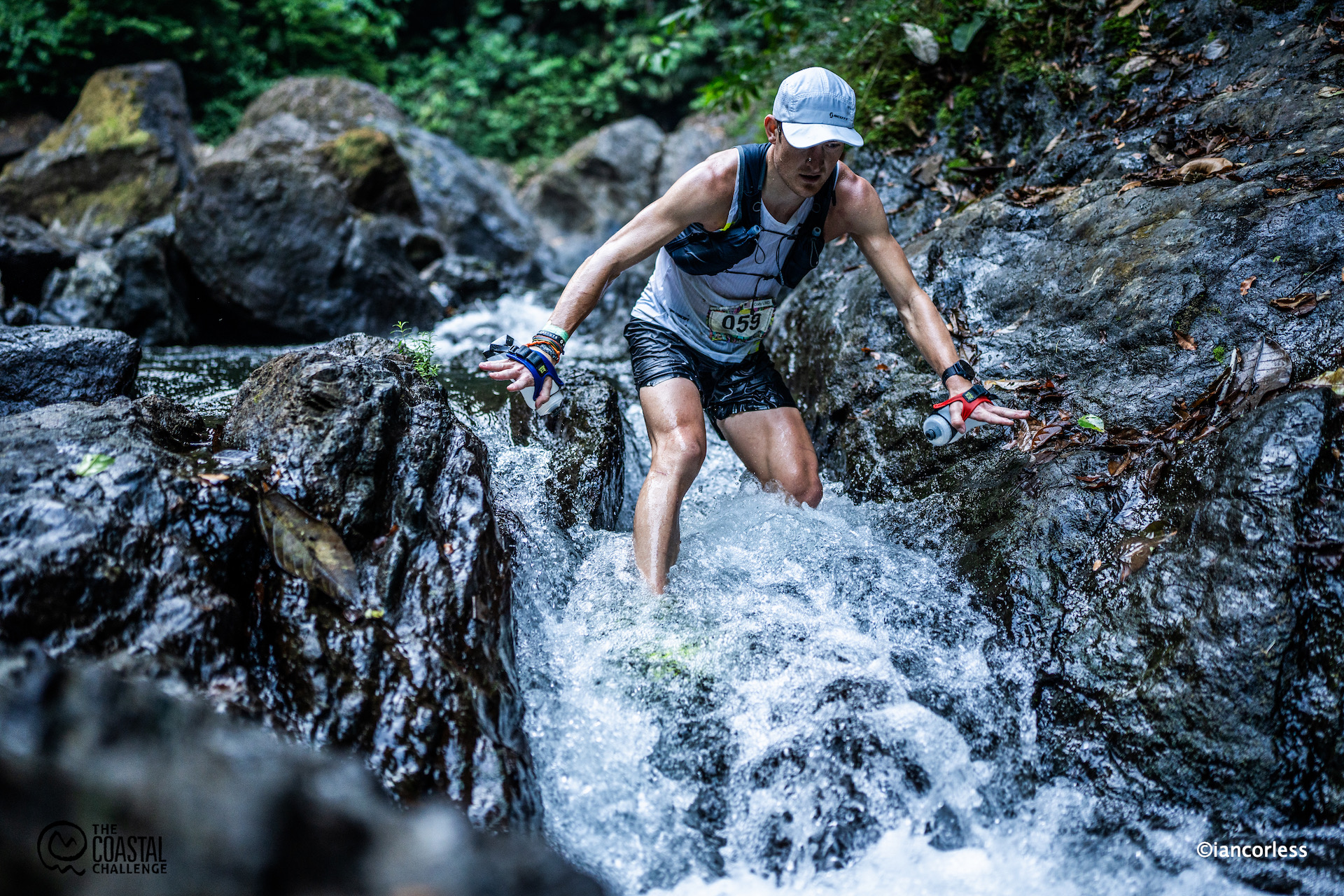
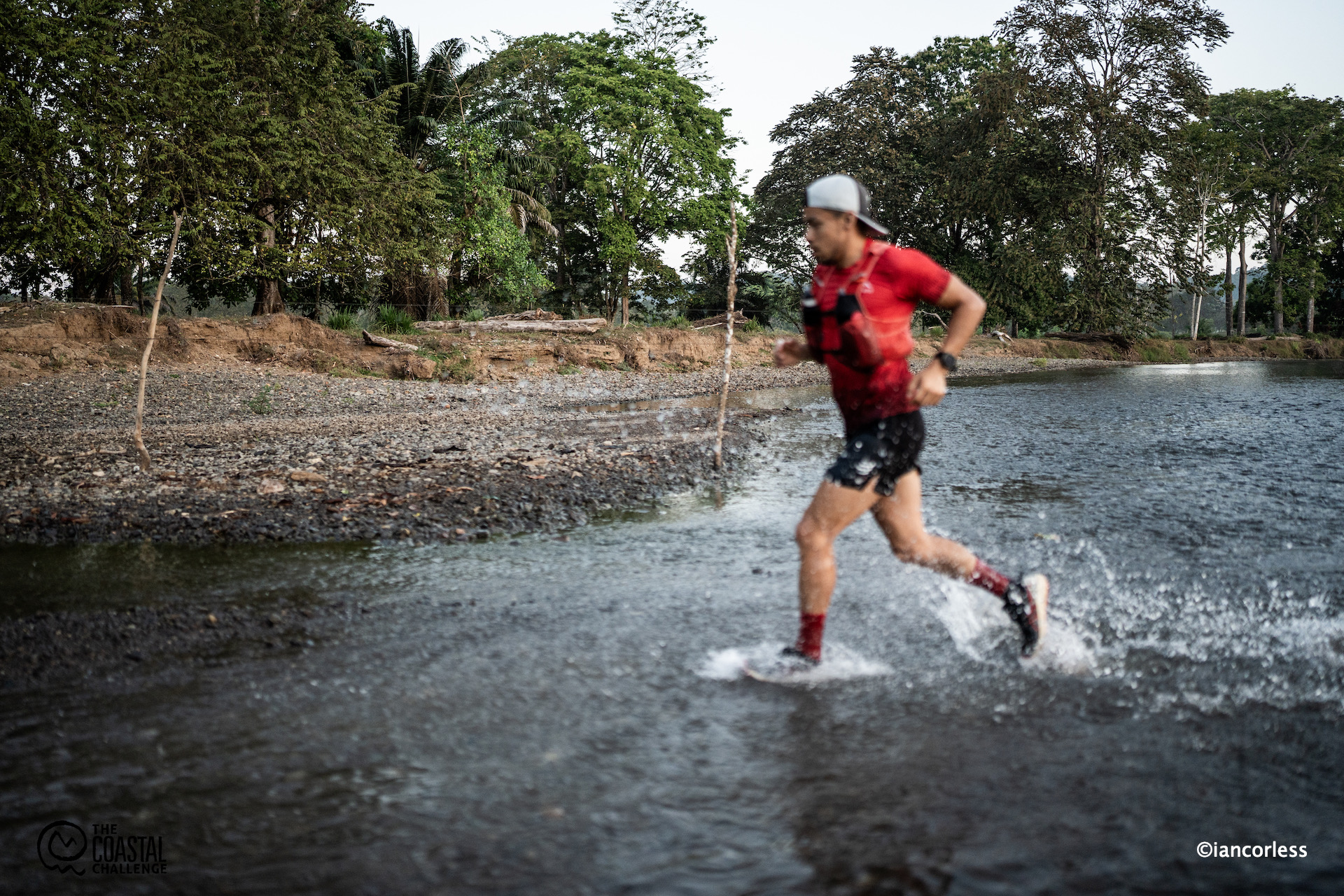
The victory loop. This stage personifies all that has gone before and arguably, is the most beautiful stage. The whole of TCC is compressed in to the 37km’s with gravel roads, river running, waterfall crossing, rainforest, coasteering and long pristine beaches.
It’s a day for celebration and one to soak up all that has been gone before. At the end, a hard earned medal. However, racing did not stop and Cody Lind and Katie Young sealed TCC 2024 with final stage wins, 3:14:42 and 4:44:32 respectively.
Cody Lind was on fire today, 2020 and 2024 champion.
There are outright winners, of course, and congratulations go to Katie Young and Cody Lind the 2024 TCC champions. But as race director, Rodrogo Carazo says, today, everyone is a winner.
Rodrigo Carazo awards the finisher medal
Emotions are released, tears are shed and finally, it’s time to kick-off run shoes and fully relax and appreciate the magnitude of the journey and the experiences that have gone before.
Carlos
It’s no mistake or act of chance that has allowed TCC to last 20-years. Costa Rica, the route, the people, the wildlife, the Pura Vida approach makes this race special and unique.
Emotion on the line
Tomorrow, competitors leave Drake Bay via speedboat, a final magical experience to confirm that TCC is one of the ‘must do’ races in the world.
Runner’s got there first night in camp last night. Tired bodies looking to recover and prepare for stage 2 of the 2024 The Coastal Challenge, a 230km, 6-stage journey from Quepos to Drake Bay. Ambiance and atmosphere was high. Stage 1 had certainly taken a toll and surprised many. The combination of route, heat and humidity a wake up call. The impact of day 1 saw 18 participants move from the Expedition race to the shorter Adventure category; a huge number!
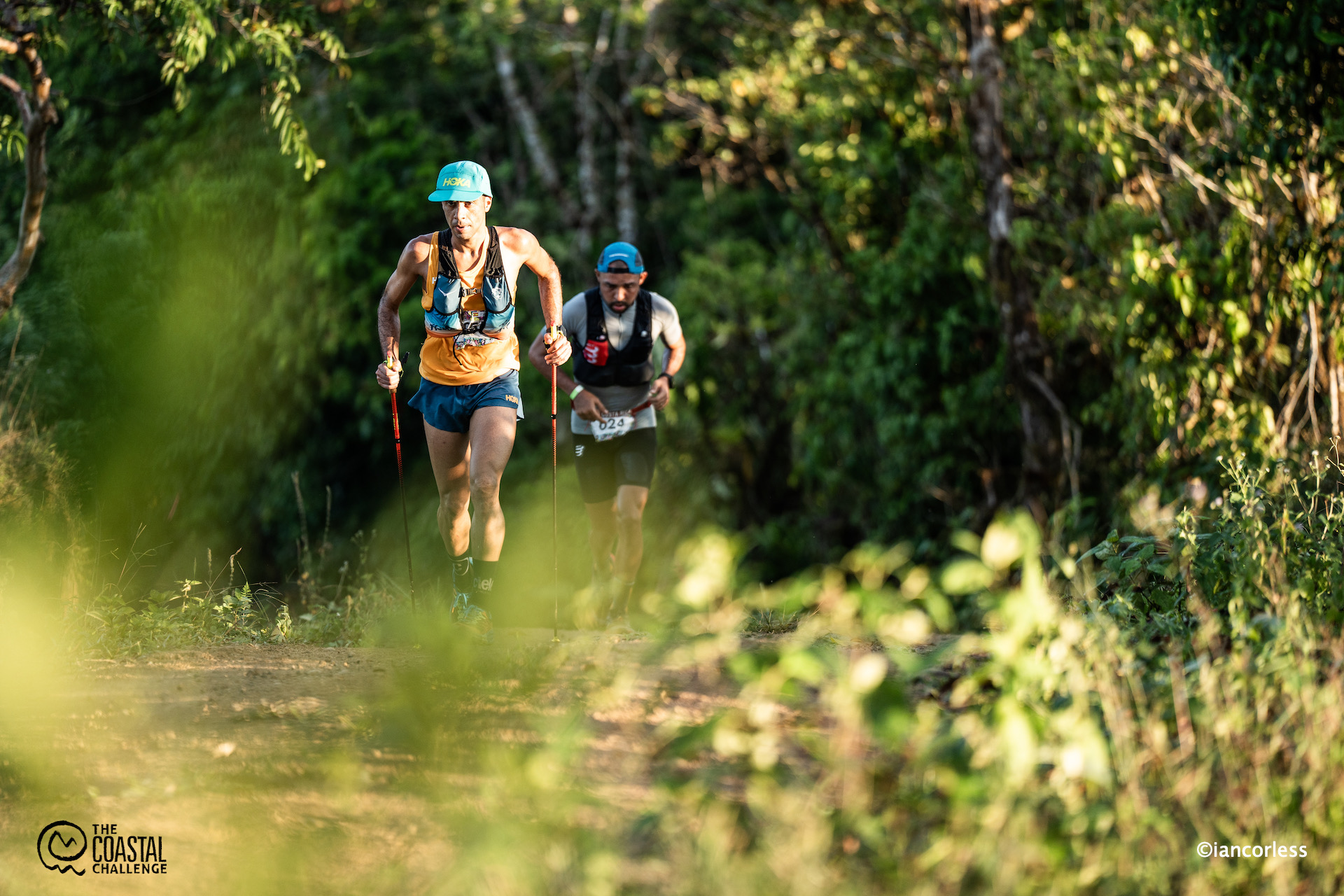
But today, starting almost 3-hours early makes a huge difference. The almost vertical climb straight out of camp allows for cooler temperatures and an ability to ease in the day.
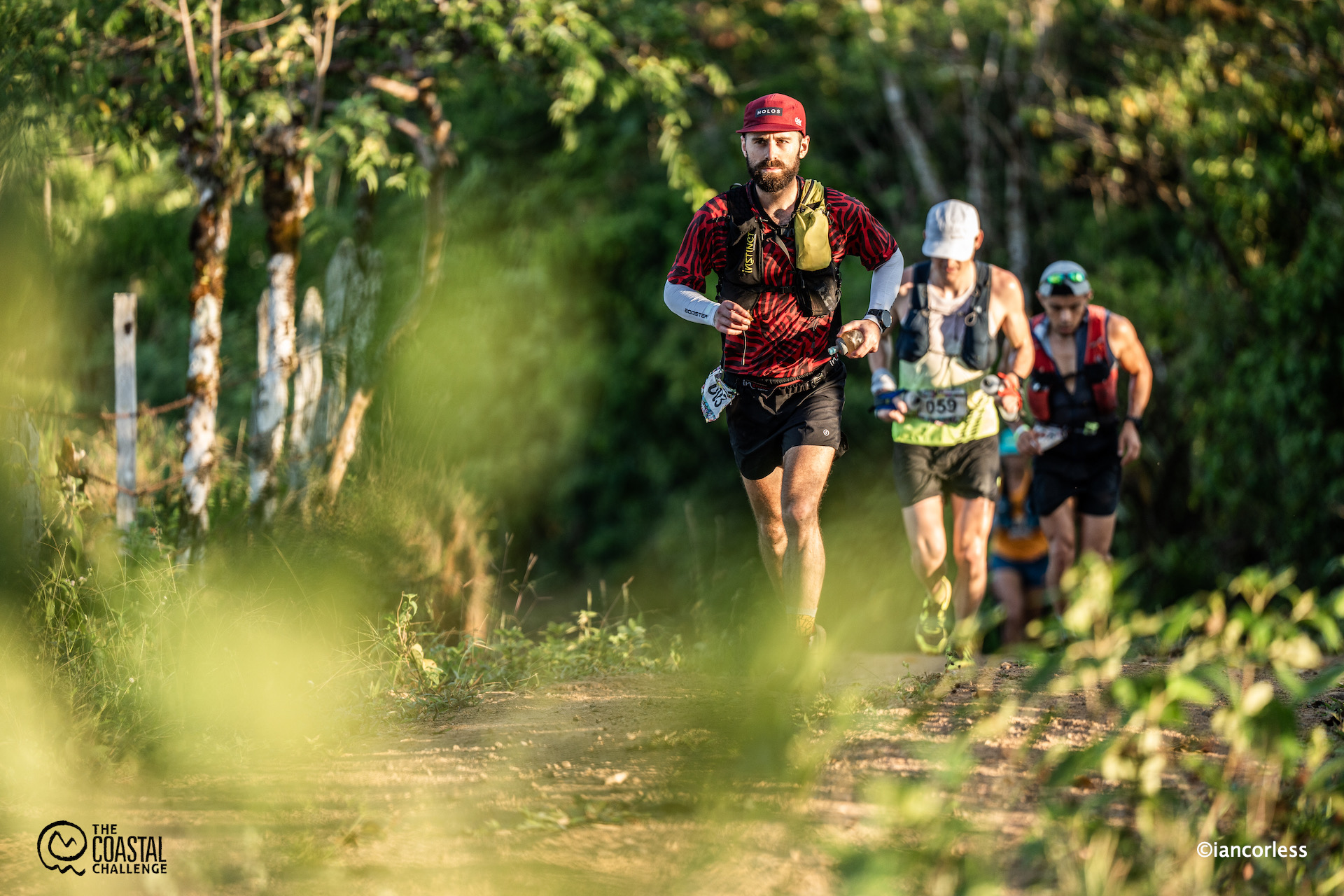
A rollercoaster of gravel roads followed by rainforest and more gravel roads lead the race to the coast and finally the ocean.
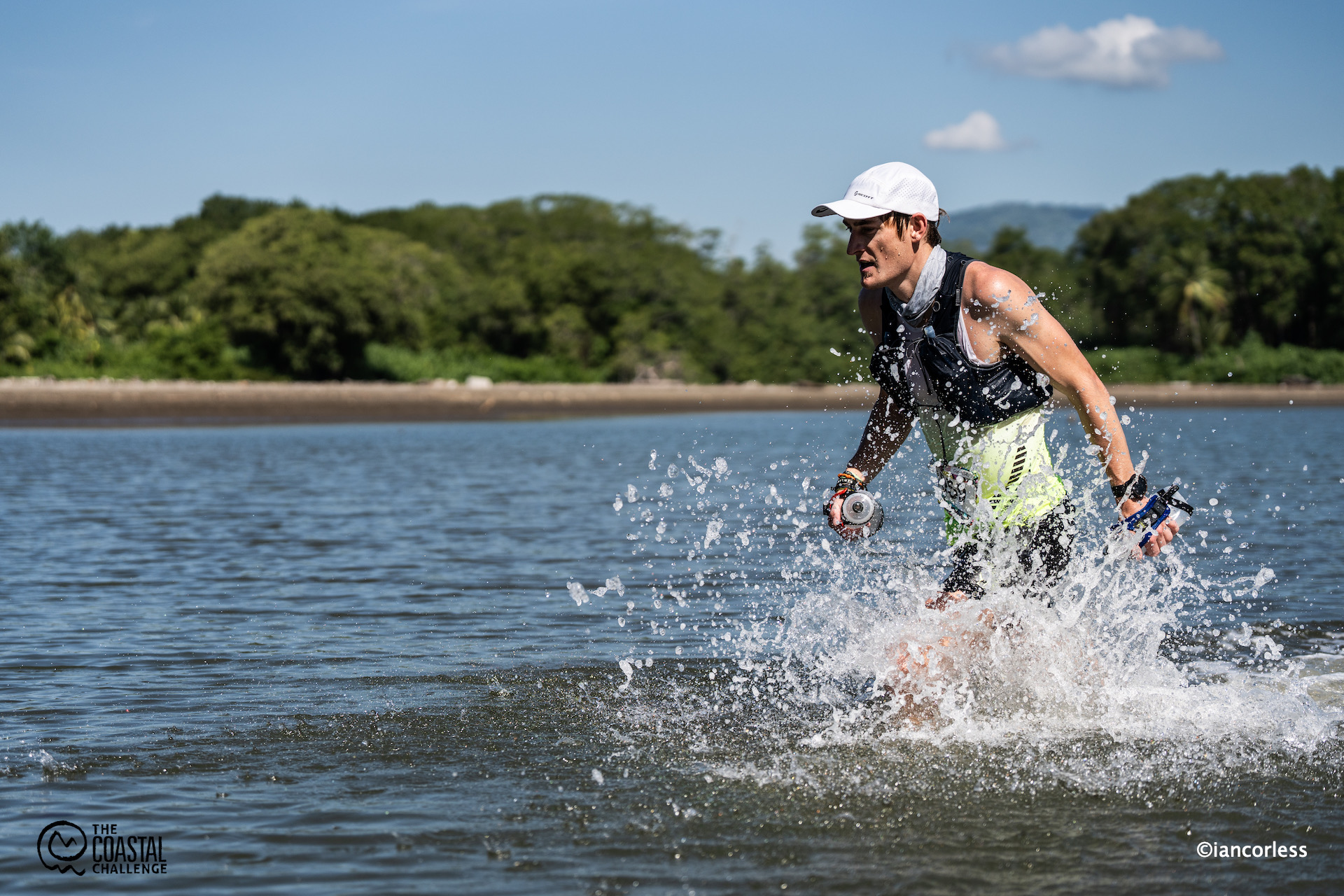
Now the heat of the day takes hold as the the participants navigate a route to the Dominical finish via long stretches of beach.
Jean-Francois leading the top men.
There was a very different mood to the start of stage 2. Summed up in one word, respect. The top men ran together lead by Jean-Francois Cauchon. This lead group did not include Cristofer Clemente Mora who ran a short distance behind with Erick Aguerro behind.
Cristofer and Erick
Pierre Meslet made a 3rd group running Lina El Kott Helander.
Pierre and Lina.
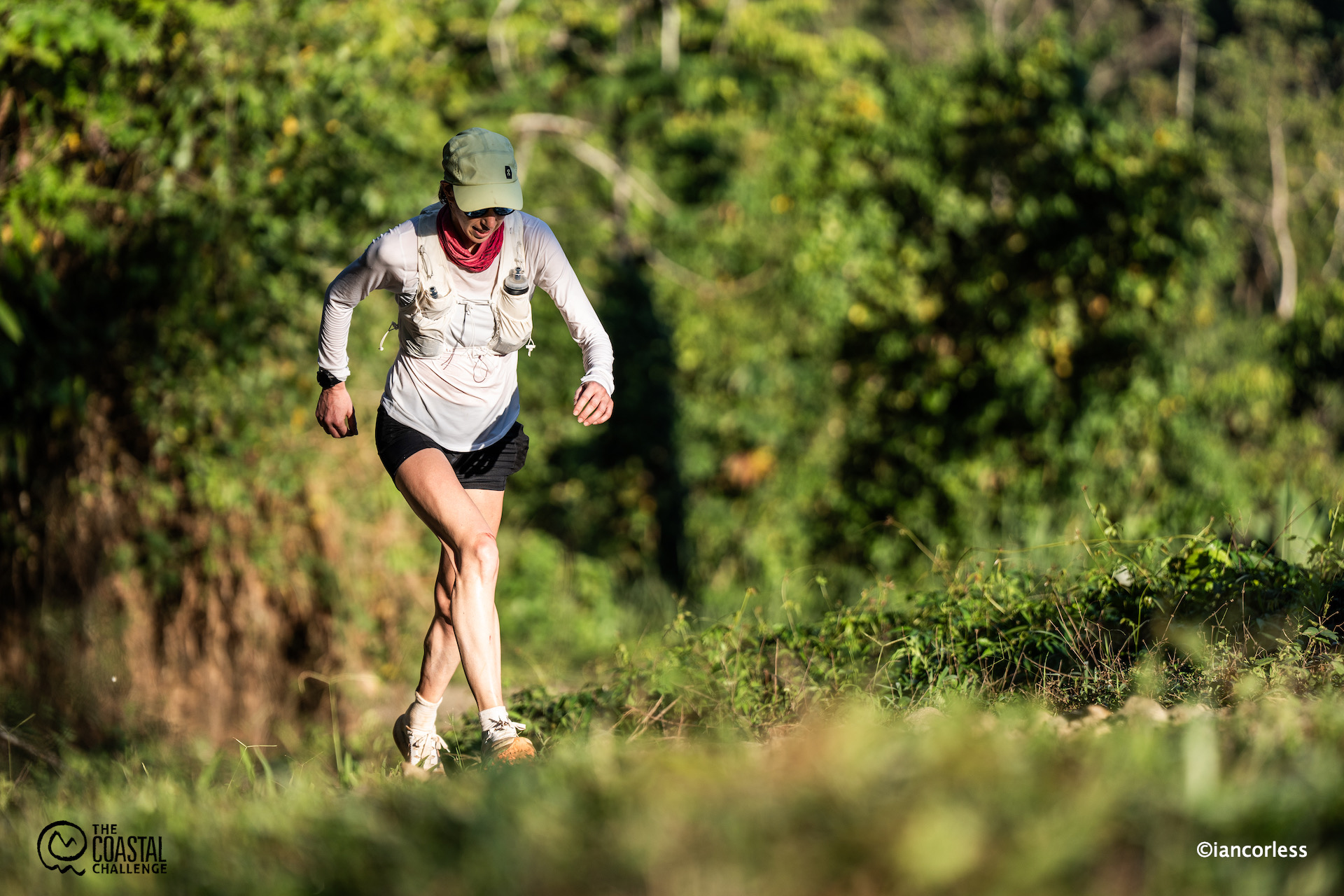
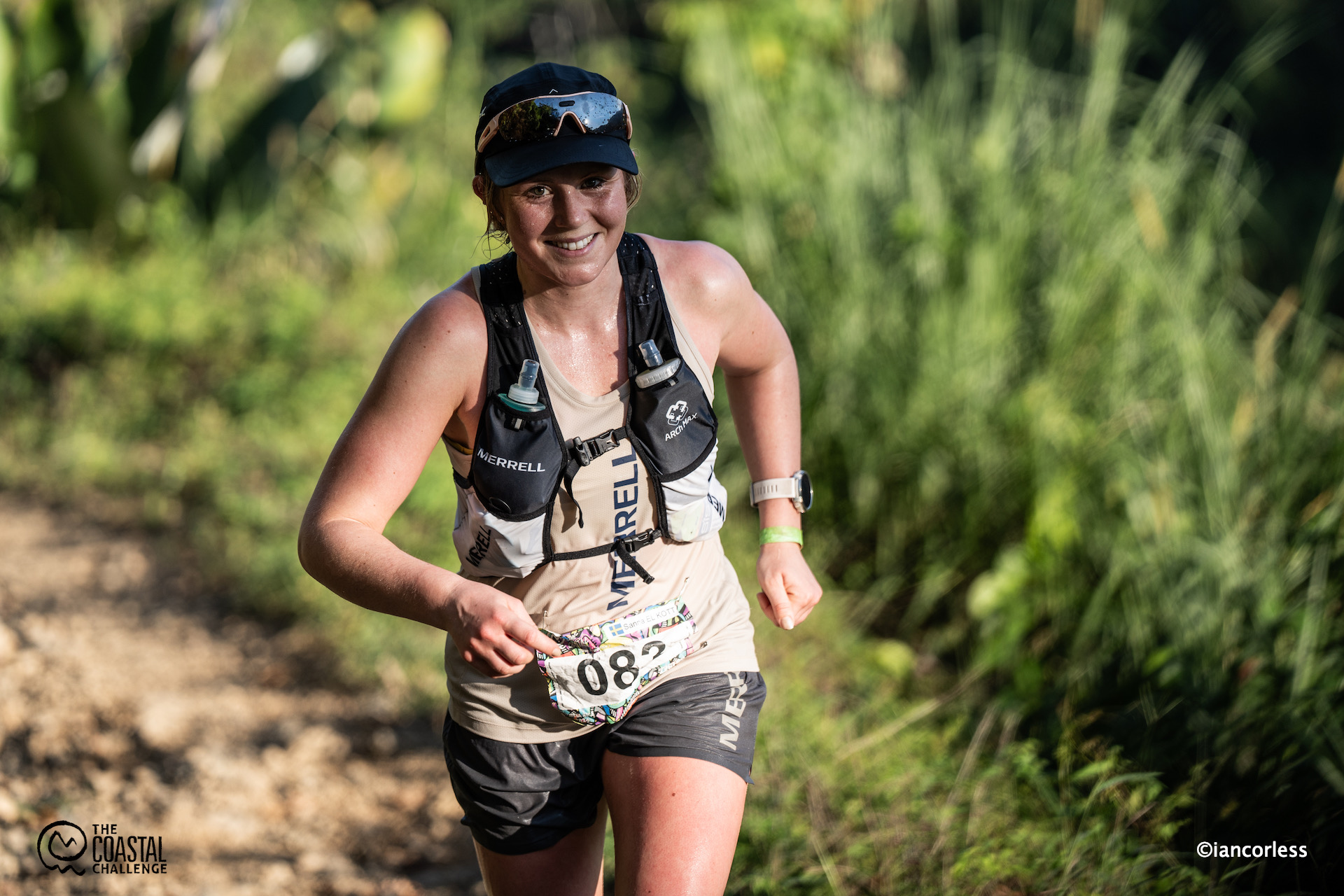
Lina El Kott Helander pushed the pace for the women, this came as no surprise with a steep climb to start the day. The skyrunner no doubt in her element. Behind Katie Young followed with a parmanent smile.
Katie
Sanna El Kott Helander, just like her twin sister, enjoyed the early vert to run in 3rd.
Sanna
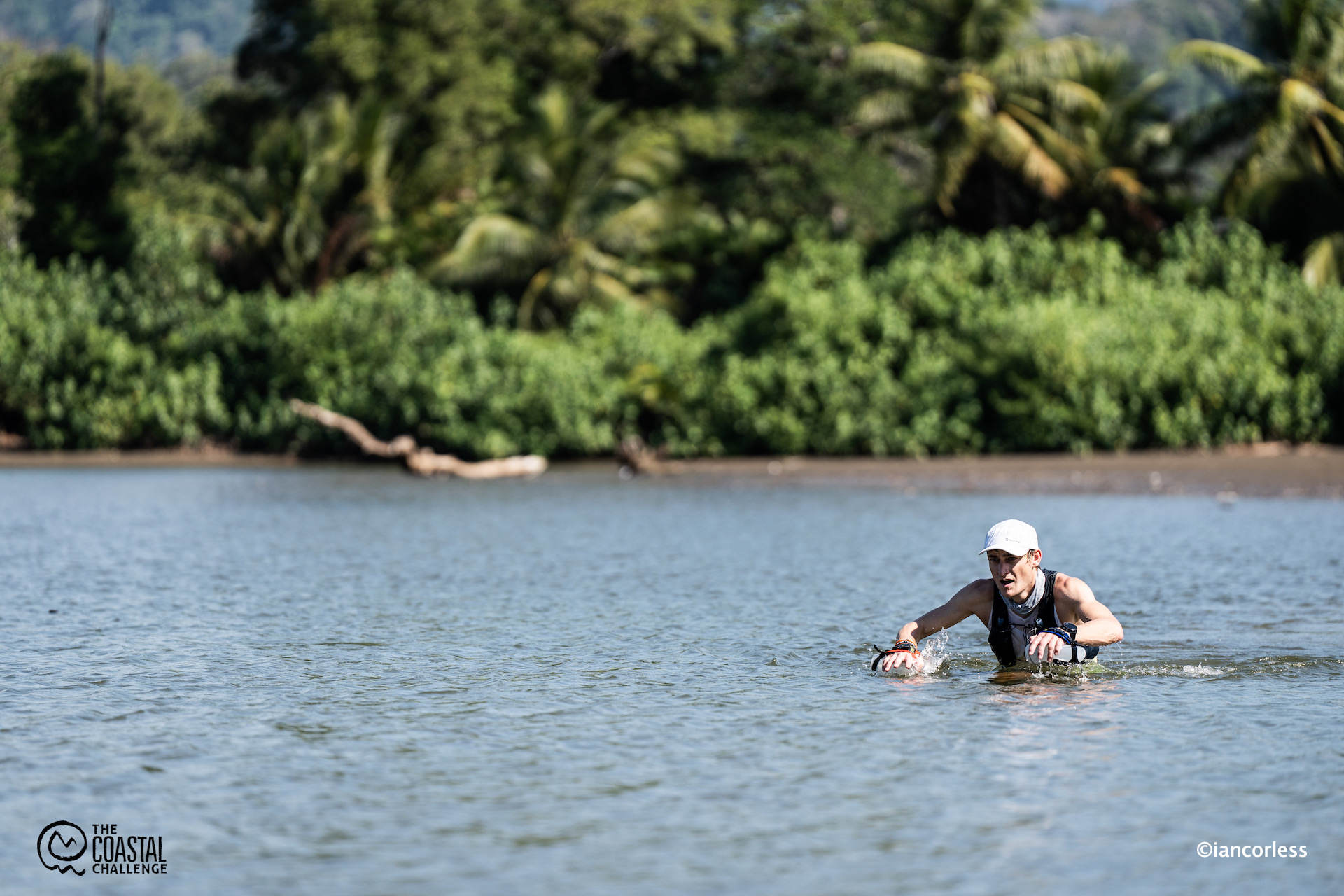
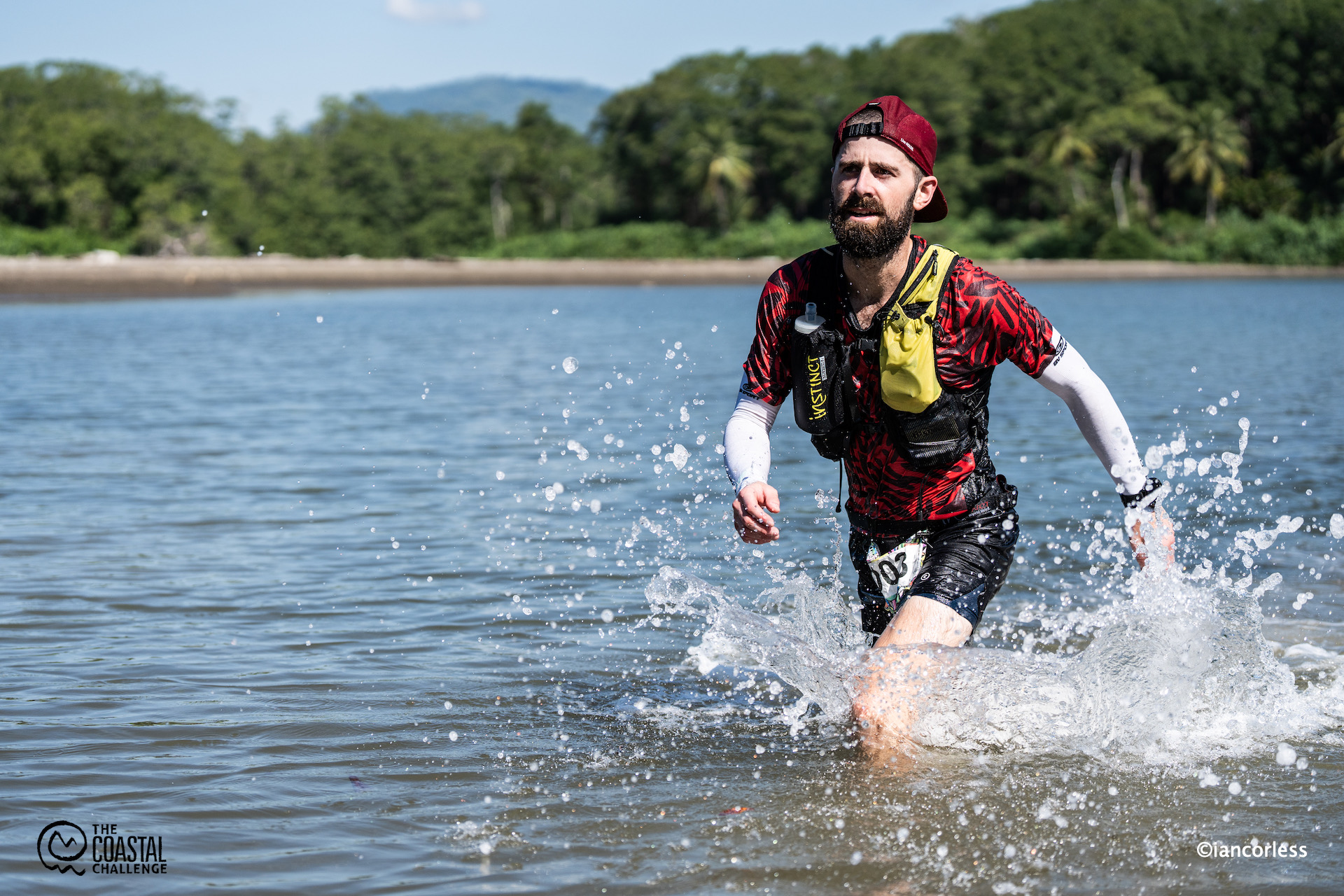
As the runner’s headed to the coast, the race opened up and Cody Lind and Carlos Calvo López were the first to arrive at the estuary leading to the final 5km’s and a long beach section. Cody now in familiar territory from his 2020 victory no doubt relishing the final km’s pushed to take the stage and overall lead with 3:59:13 on the clock.
CodyCarlos
Carlos was expected to finish 3rd but Jean-Francois pushed and not only caught but passed the Costa Rican, 4:00:15 and 4:01:53. Cristofer finished some way back and lost his overall lead by almost 10-minutes and is now in second. We have a race on!
Jean-Francois
Lina continued her strong running all the way to the estuary, she had now opened up a 6-minute lead. Katie arrived looking fresh and full of enthusiasm, with flat running all the way to the line, Katie pushed and closed the gap to under 2-minutes at the line, 5:06:08 and 5:07:58.
Lina
Sanna continued to pull away from Lindsey Ullrich and ran a strong 3rd place in 5:29:05. A very positive run after a troubled ay 1.
Stage 2 was not without drama, Lina took a bad fall and had concerns for a badly damaged arm. More news to follow. Pierre also had troubles with a very badly twisted ankle that saw him require a stick in the early stages.
Tomorrow, stage 3 to Marino Ballena is 46km with 1686m. It’s the toughest stage of the race.
You arrive in Morocco, pass through passport control, wait for your luggage, leave the airport arrivals hall and find a seat on a coach.
The MDS journey is now in full swing.
Waiting in anticipation, the Road Book (the bible) for the next edition of the race is provided and immediately pages turn, running through the mind of each participant:
“How long is the long day?”
Well, the wait is over, I can tell you. For 2024, the long day will be 85.3 km’s.
The MARATHON DES SABLES – The Legendary is breaking silence and today, we announce the daily stage distances for the 2024 edition.
Stage 1 : 31.1 km
Stage 2 : 40.8 km
Stage 3 : 85.3 km (over 2 days)
Stage 4 : 43.1 km
Stage 5 : 31.4 km
Stage 6 : 21.1 km
Total 252.8 km
Marathon des Sables typically takes place in this key area.
Taking place in the southern Moroccan Sahara since 1986; an extraordinary adventure will take place covering 252 km’s, the longest edition in the race history. Lasting 11-days with 9-days in the desert, divided into 6 stages over 7-days, a magical crossing of the Sahara walking or running.
The exact route, with maps, will once again be covered in detail in the road book, which as per usual, will be provided in Morocco whilst on the way to the bivouac one.
This is the first time that the daily distances have been disclosed before arrival in Morocco. Does this change anything? No, not really. I guess there is a reassurance knowing that the long day is not 90+ km’s.
However, with the 2024 edition being 252 km’s and over 6 timed stages, it was my prediction that this race would be a tougher challenge in contrast to those that have gone before. Therefore, to ease minds, the distances have been announced.
Previously, the long day would come on stage 4 (over 2 days) and it would be followed by the marathon stage. It was common thought, “Get the long day done and it’s just a marathon to go!” At the finish of the marathon, the medal would be received; job done.
Now, with the long day coming on stage 3, you still have 3-stages to run totaling 95.6 km’s. This will require a completely different mental and physical approach.
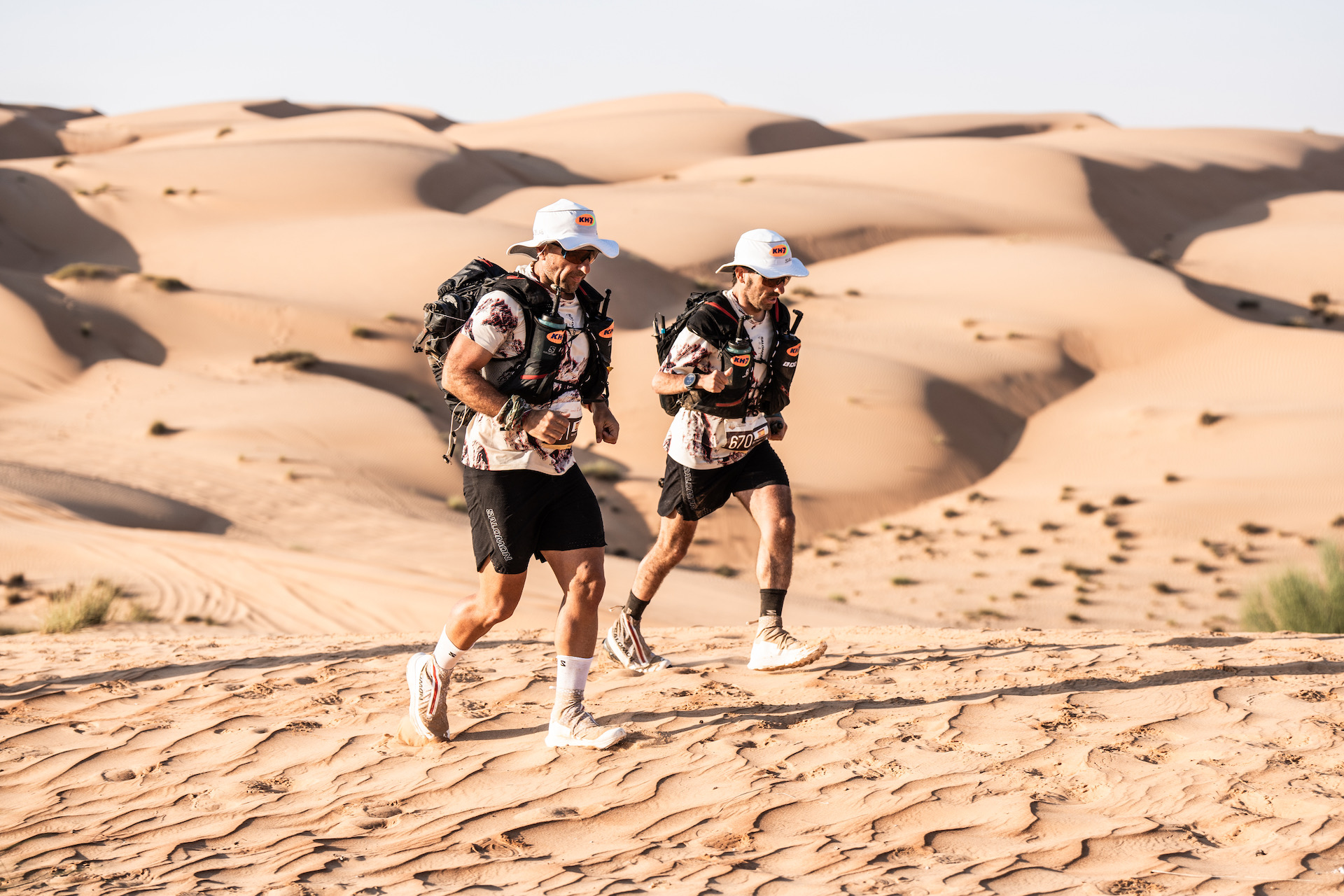
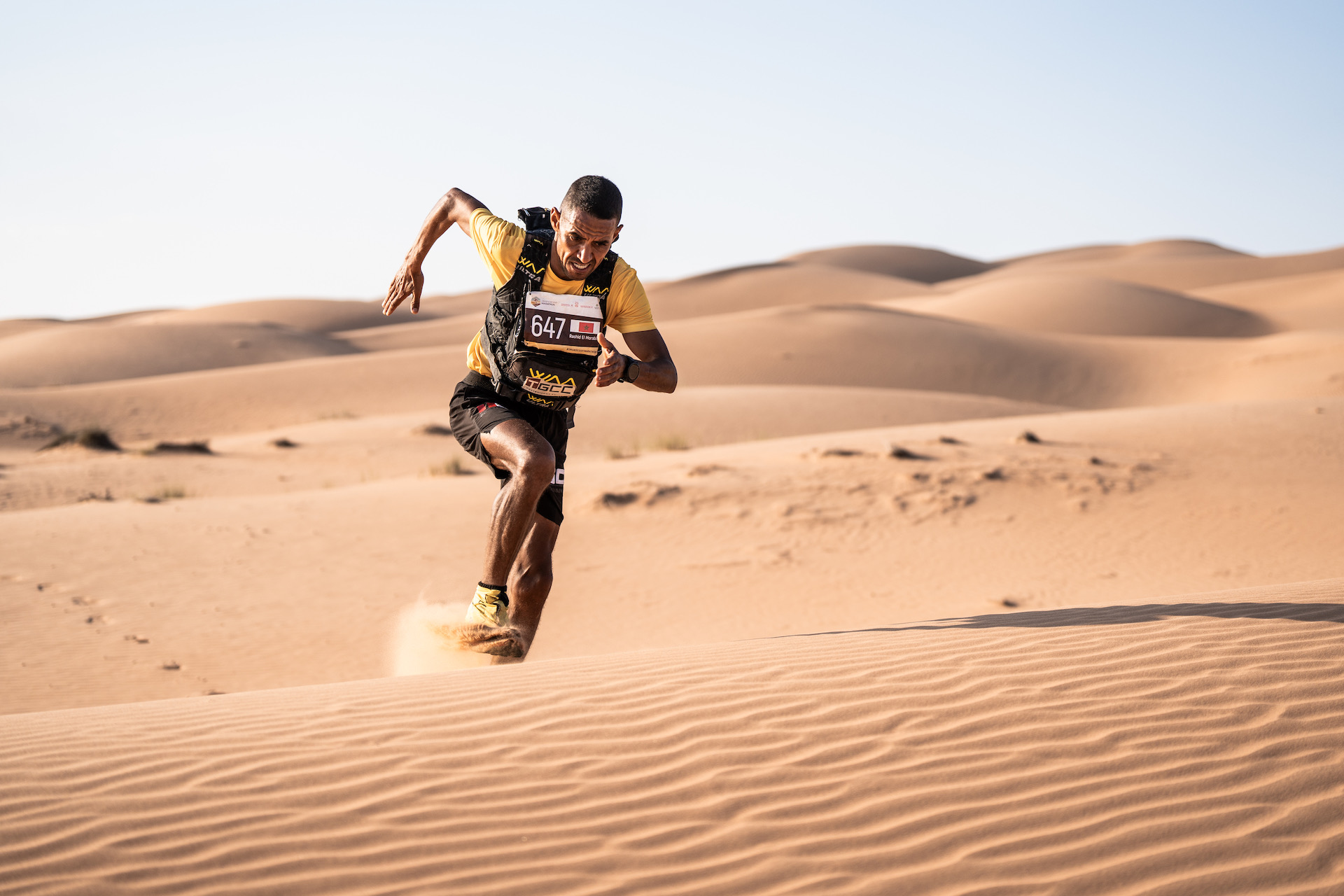
The 2024 Oman Desert Marathon concluded at Jawharat Bidiah Resort, 165km’s travelled over 4-days and Rachid El Morabity and Aziza Raji are the champions covering the total race in 16:06:49 and 23:13:32 respectively.
Going into the last 21km stage, the end result was never in question, both Rachid and Aziza had built 20-minute plus leads and all they had to do was run a calm and measured last day.
However, Saleh Al saidi pushed the pace continuously, maybe, just maybe in the back of his mind he thought he could break Rachid?
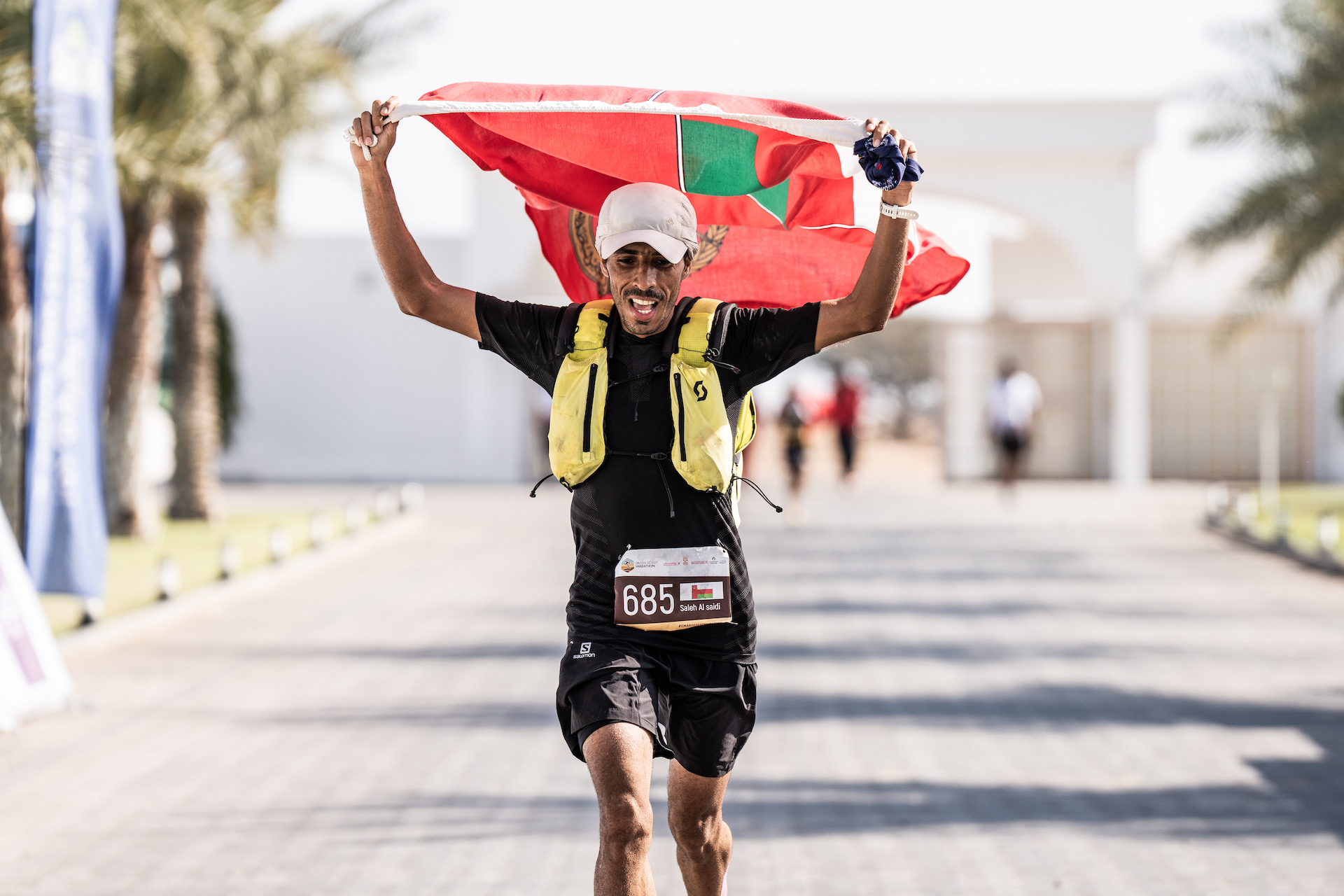
In the closing km, Rachid eased back and gave Saleh a final stage victory for the home crowd and the Army Team which he respresents.
In third place, Ghaith Al saidi. The brothers ran an incredible race and at times placed Rachid under pressure, however, Rachid for now is just too strong and experienced.
For the women, the Aziza Team were dominant and after Raji built the lead early on, El Amrany was content to run by her side.
In third place was Veronique Messina who each day consistently covered the km’s with commitment, determination and a smile. A great run in 25:38:53.
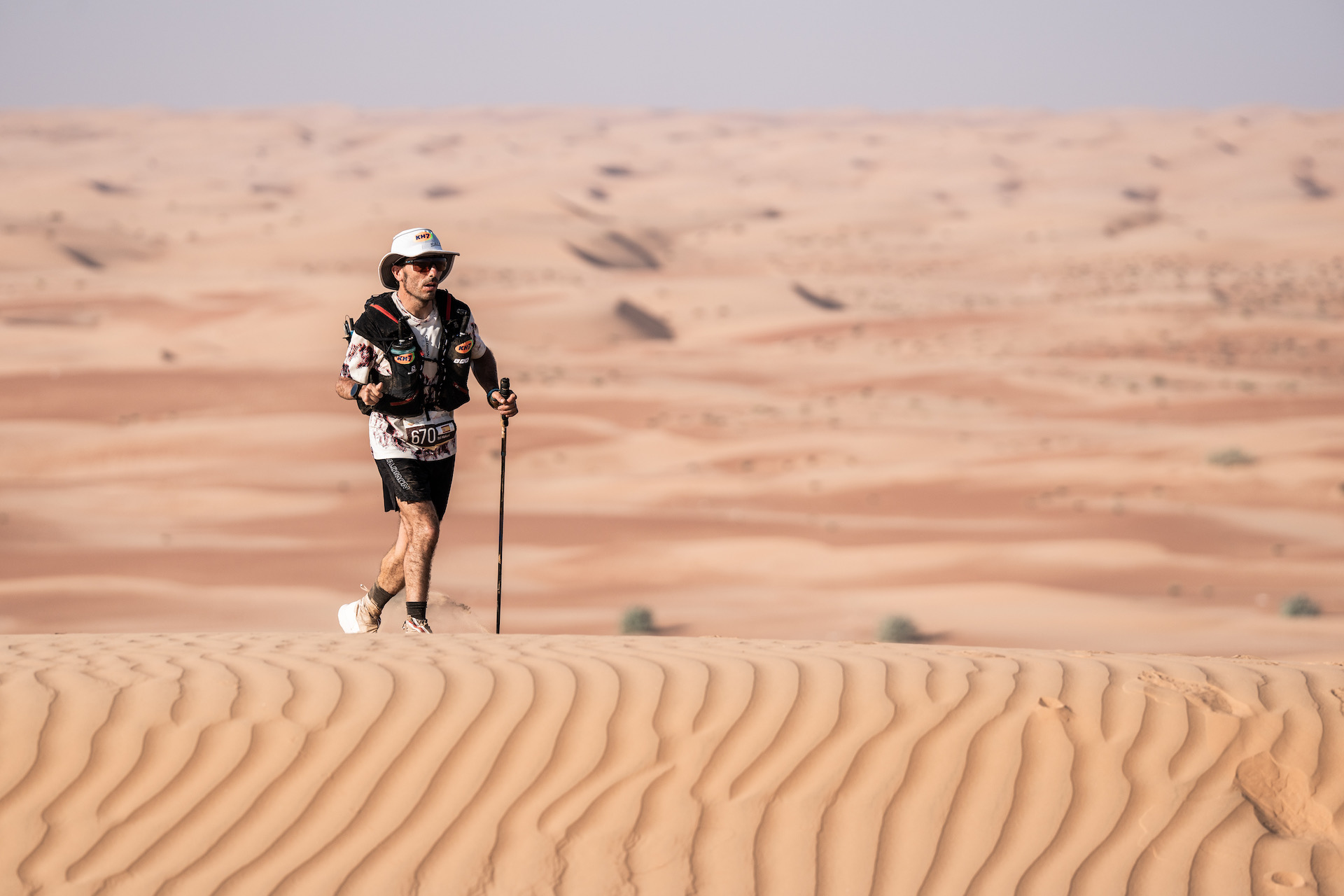
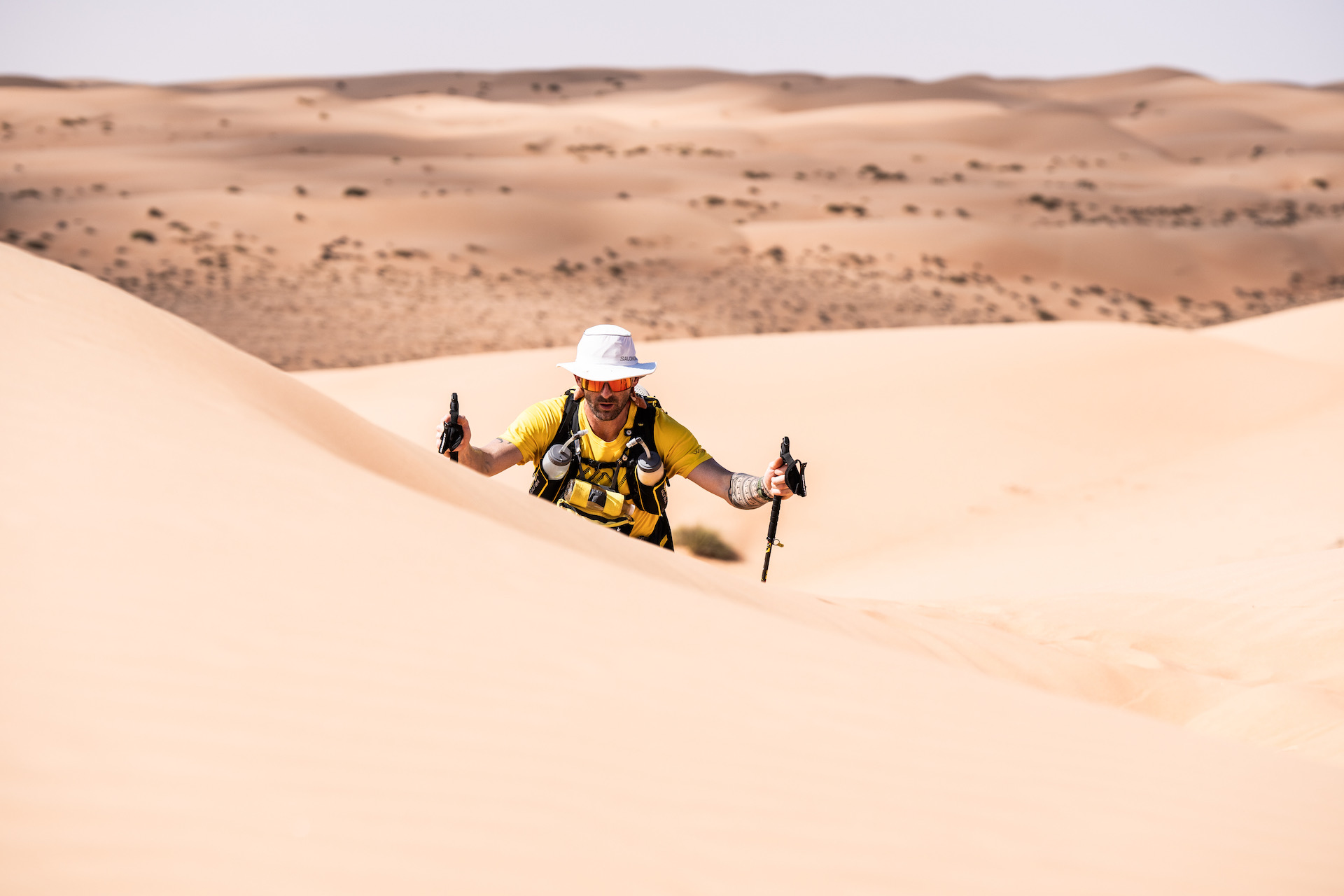
In total, thirty participants completed the race from twelve nationalities. With the race almost completely sand, the race is considered considerably harder than Marathon des Sables. This was confirmed by Rachid, “Here it is all sand, it’s slower and more tiring. Only the last day has some easier and harder terrain on which to move quicker and easier.”
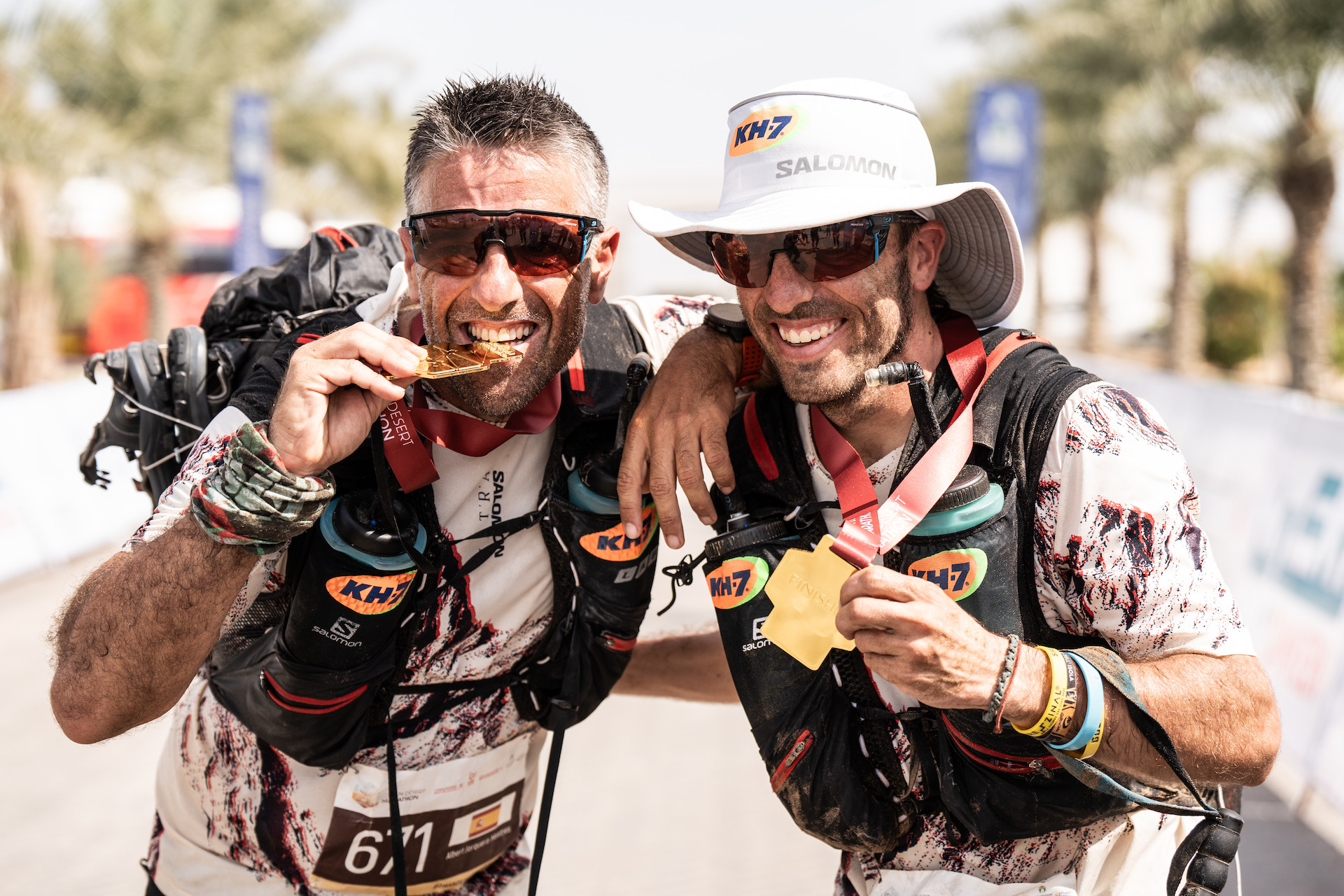
While it is difficult to pick out individuals in such a tough race, Pol Makuri has inspired everyone during the week. His commitment and dedication has been an inspiration. His completion of the event brought tears to many an eye, especially his friend and teammate, Albert Jorquera.
Rachid and Aziza may well have crossed the finish line the fastest, but a winner and champion comes in many forms and Pol Makuri is a prime example.
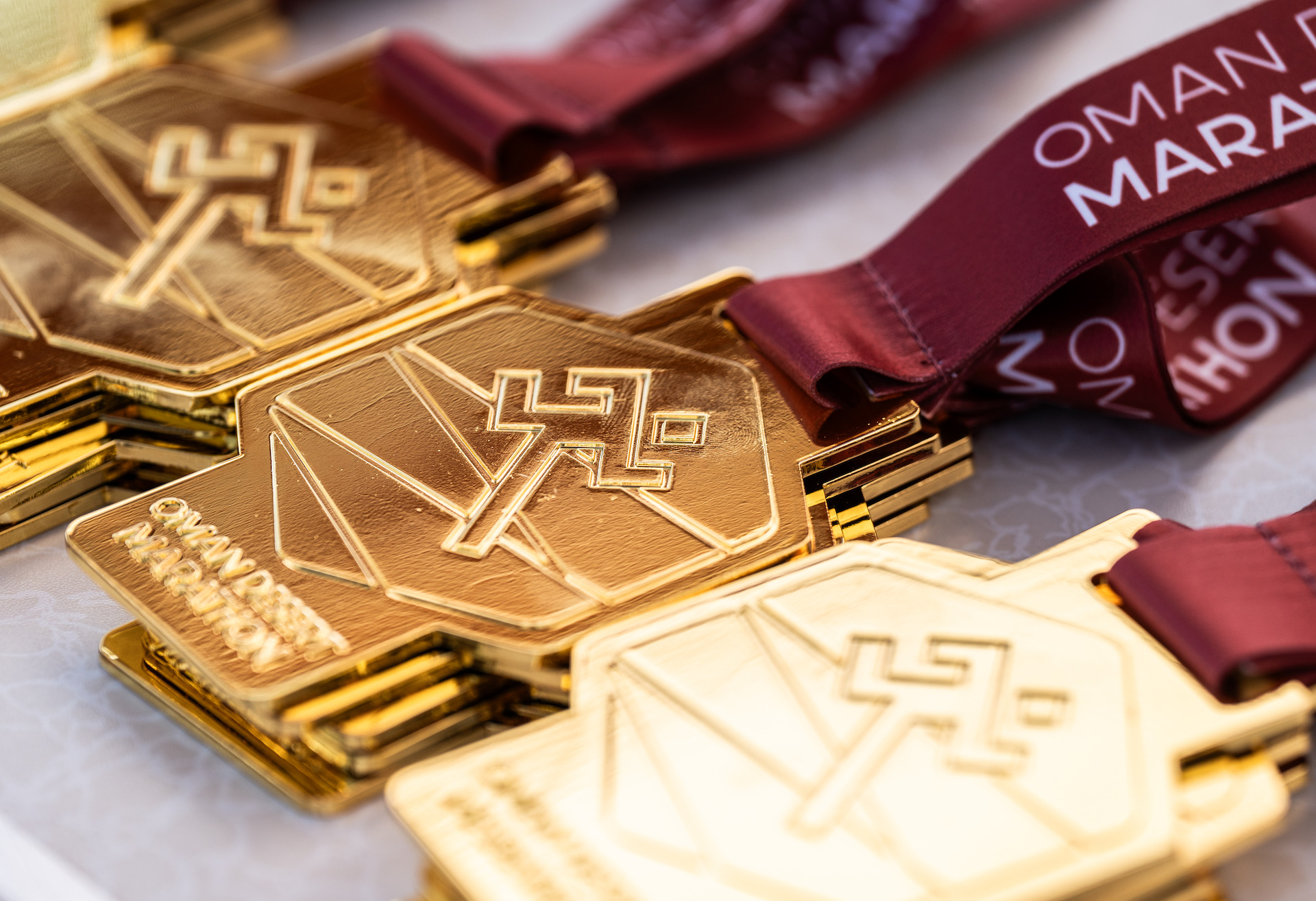
Each medal was hard earned and yes, as in many races some did not reach the finish. However, they were there at the finish line to cheer the others on, no doubt being inspired to return and try again.
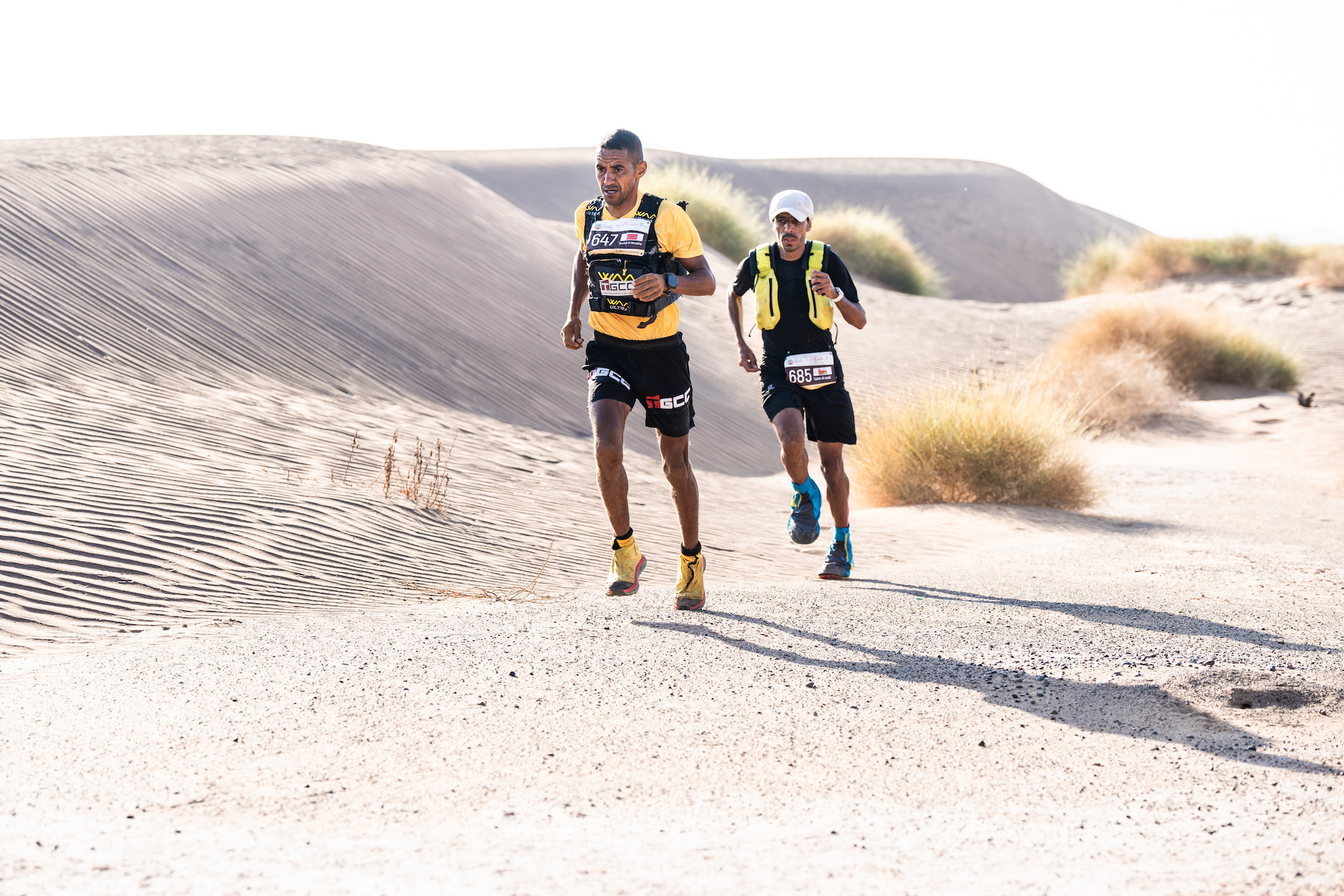
Stage 3 of the Oman Desert Marathon has a delayed start to ensure that participants experience the desert at night. With three waves: 10am, midday and 2pm (slower to faster runners respectively) the participants would cover the 47km stage in daylight and then transition to darkness.
Consider by race director, Said, stage 3 would include one of the most spectacular dune sections on the race, timed to coincide with the sun getting lower in the sky and for the lucky ones, maybe sunset would take place as the dune section came to an end.
Coming after the 55km long day, the later starts were welcomed and allowed for additional rest and recovery, however, the fatigue was starting to show on faces and bodies.
As the race got underway, it was clear that the men’s race would have a different approach, with Ghaith Al said pushing hard at the front, while behind, Saleh Al said and Rachid El Morabity ran together. Ultimately, it was an attempt to break Rachid. It didn’t work, but it was a valiant effort and one that rewarded Ghaith with the stage win in 5:03:39.
Behind, Saleh and Rachid ran together and crossed the line 5:10:29 and 5:10:39 respectively.
The women’s race had little drama with Aziza Raji and Aziza El Amrany running together and crossing the line in 6:56:35. The duo looked strong and relaxed. They will be a force to be reckoned with at Marathon des Sables this year.
Behind, once again, Veronique Messina ran a strong 3rd place in 7:49:56.
Albert Jorquera and Pol Makuri had a long day completing in 11:17. They are both very focussed mentally and strong physically. It has been a joy to watch the two of them work together and quite simply. Pol is an inspiration.
The iconic Marathon des Sables is entering a new phase, the past 37 editions have been under the aegis of Patrick Bauer, who, back in 1984, filled up a pack with food and water and trekked off alone into the Algerian Sahara to cover 350km’s on foot in a self-sufficient manner. Little did he know at the time, but this journey was the start of something incredible, the Marathon des Sables, or MDS as it is affectionately known.
Now under new ownership, the 38th edition taking place in April 2024 will see some significant changes while sticking to the main format and principles of the past 37-editions.
It is therefore timely, to update my Ultimate Guide to Marathon des Sables and acknowledge these key changes.
A recent podcast with one of the new co-owners, Cyril Gauthier, can be heard HERE.
Cyril ran the Marathon des Sables in 2009, created the brand WAA and is instrumental in the growth of the HMDS (Half Marathon des Sables) format. Moving forward, the HMDS format will no longer have the ‘half’ title, for example, HMDS Morocco will become MDS Morocco, HMDS Jordan will be MDS Jordan and the key, full distance race of the past 37-years will be called ‘LEGENDARY‘ – The Legendary Marathon des Sables.
Marathon des Sables offers more than just running, it offers a challenge, it offers something quite unique – the Sahara and the MDS strips the runner back to basics and deprives them of all luxuries so that they are stripped raw. Runners find themselves in the desert.
However, this challenge can often daunt a new participant with the challenge that is ahead and therefore, my Ultimate Guide to the Marathon des Sables is provided to settle nerves, provide initial information and provide a level of knowledge that you can use as a base from which to build your own plan and decide on what equipment to purchase and use.
Episode 238 of Talk Ultra – After 37-years, the iconic Marathon des Sables will move ahead with new owners, the legacy of Patrick Bauer is there for all of us to see. With new owners comes change and in this episode of Talk Ultra, we discuss these changes with co-owner and CEO Cyril Gauthier.
This in-depth podcast discusses the history and background of Cyril Gauthier and then organically follows through to discuss the brand WAA, the growth of HMDS and the future and changes for Marathon des Sables.
UPDATE – This was not addressed in my podcast, at the time, I did not have the facts. However, post podcast I have had questions raised by some who had concern about medical support and the Doctor team, so I reached out for an answer, and I quote:
“We will try to do better than with Doc Trotter. I have been contracted with DoK Ever since the beginning of HMDS. They were also the ones who managed MDS Peru. They are among the leaders in Europe and I believe we can increase the quality. We have the same number of doctors, podiatrists and nurses: 60. I am going to modify the management of vehicles by keeping the current system but adding a rapid intervention force with SSVs. Always with the helicopter as back up.” – Cyril Gauthier
It’s suggested you read this article written Jube 2023 in advance of this recording.