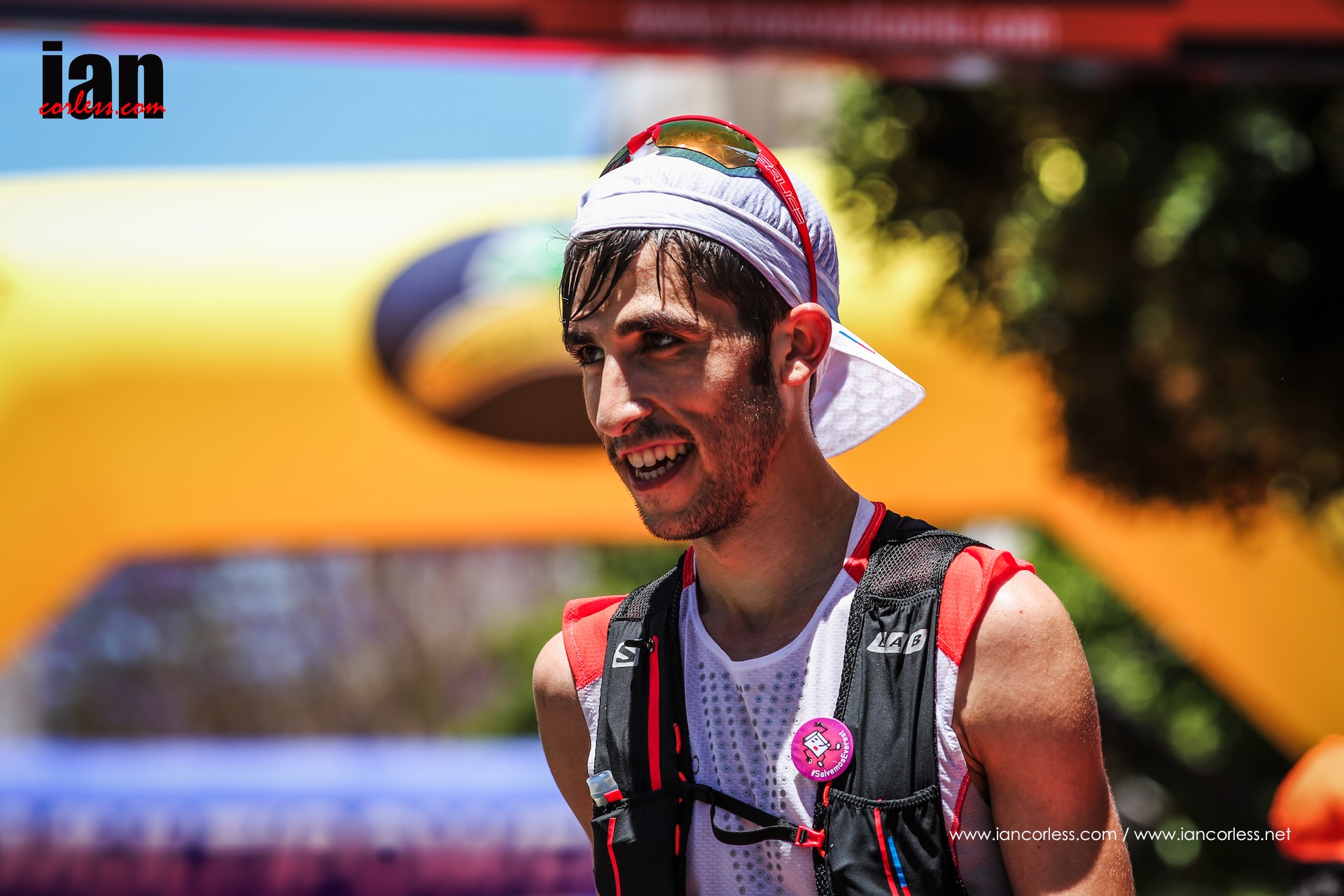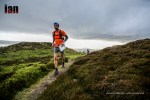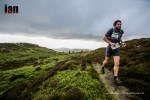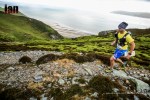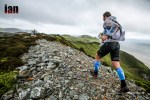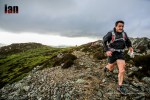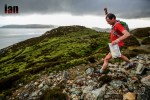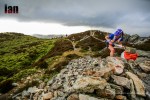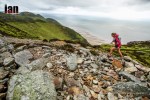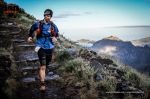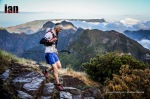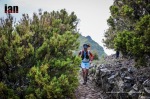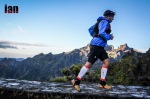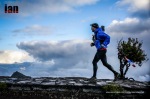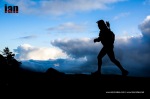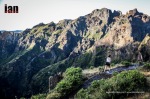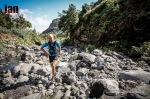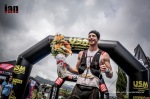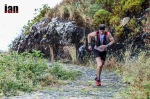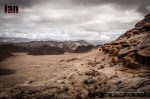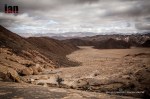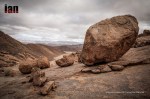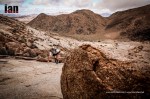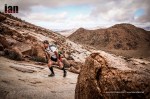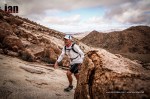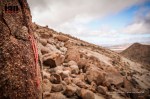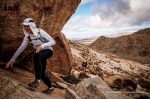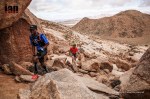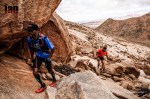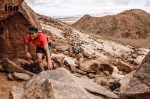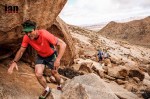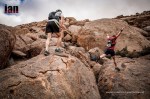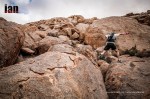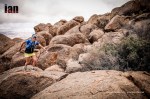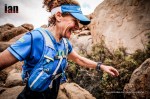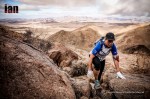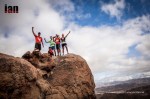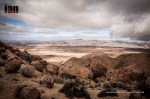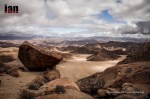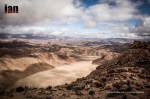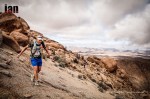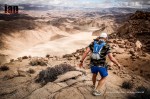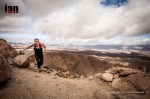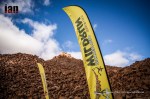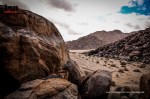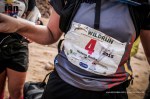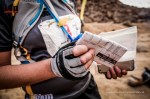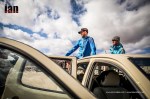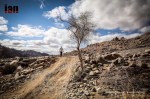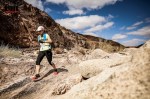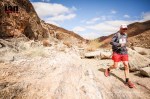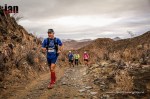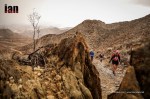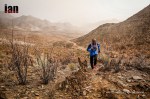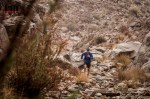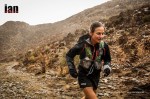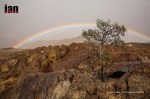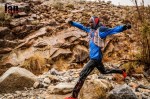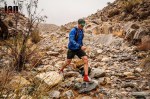
Ultra Skymarathon Madeira #USM2015 – Race Images and Summary

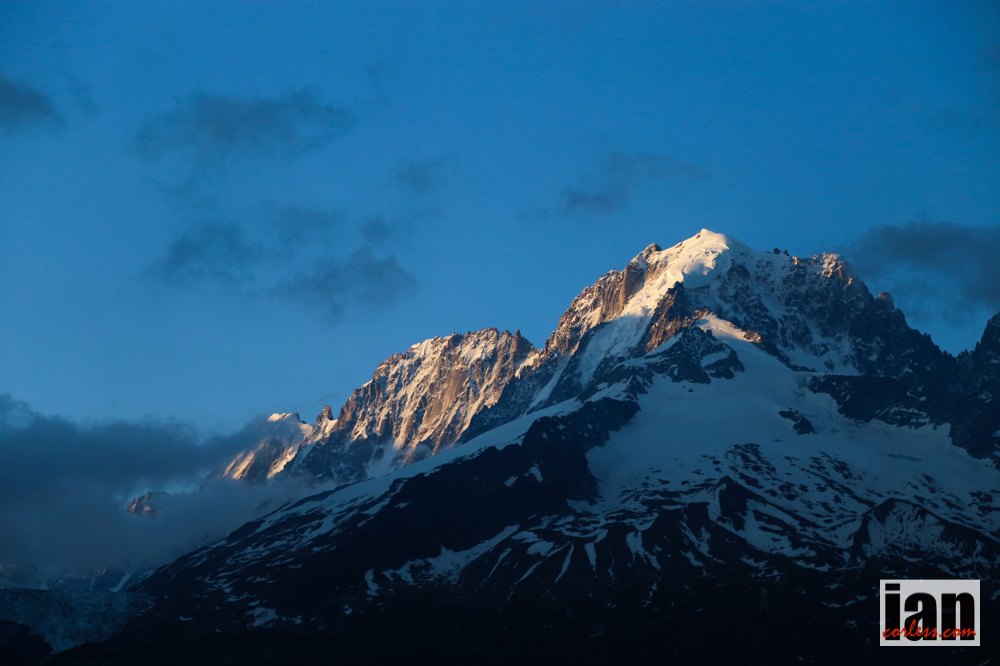
©iancorless.com_USM2015-3343

Images to purchase HERE

Waking up at 0400 to pouring rain is never a great way to start a day, particularly when you have 55km of tough, challenging and mountain terrain to get over. After a couple of recce runs in the days leading up to the race, it became very clear that the USM was going to offer a very tough challenge.

Stevie Kremer had flown in from Colorado and was praying for sun. Ricky Lightfoot and Aritz Egea are from Cumbria and the Basque country and ‘it always rains’ they told me, so no need to ask what they hoped for.

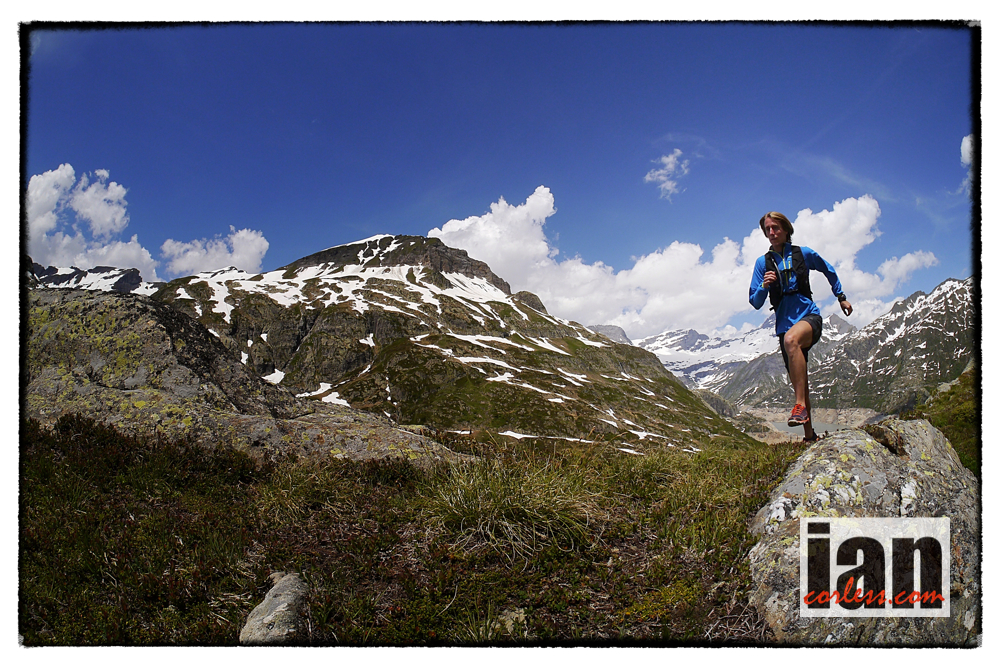
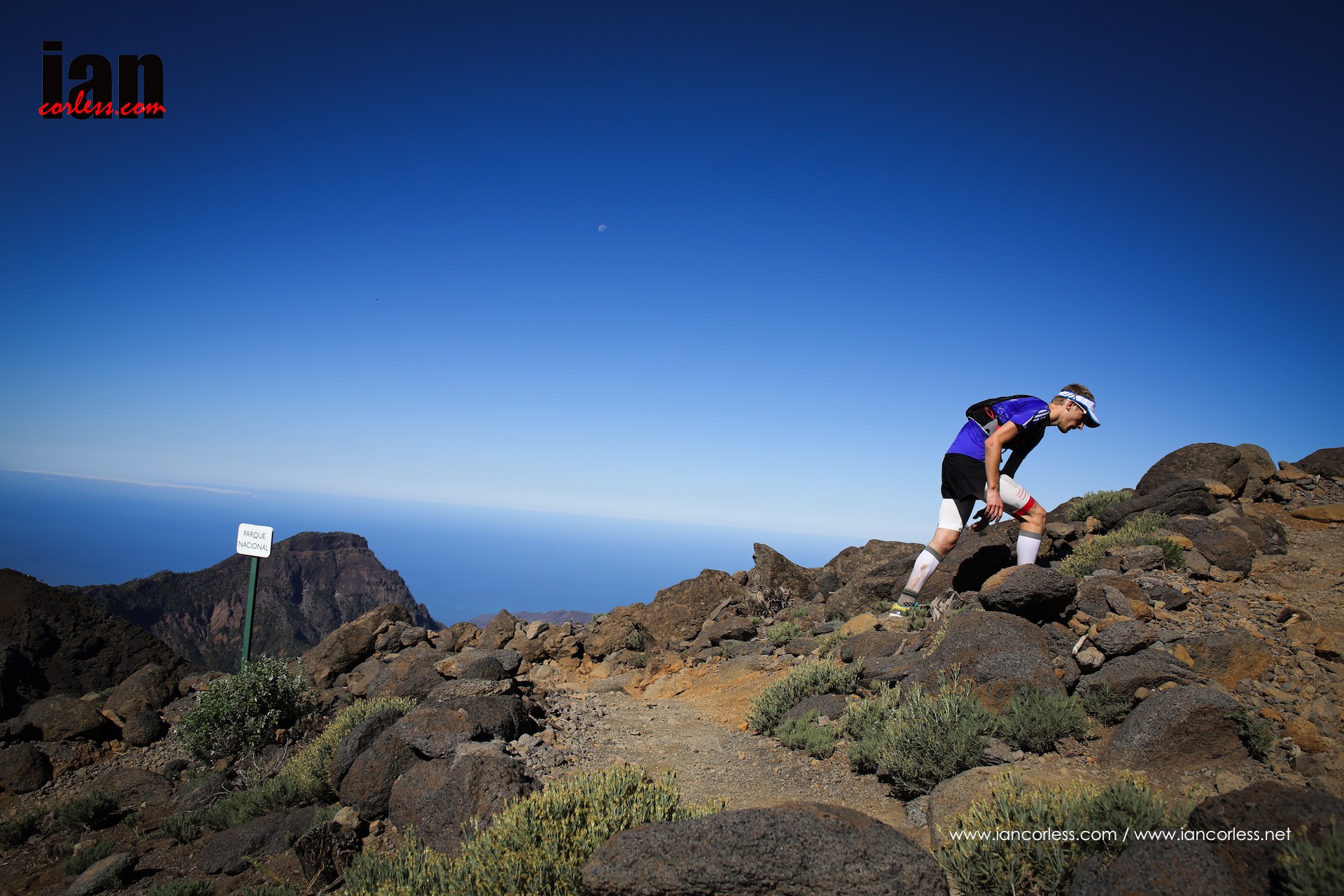
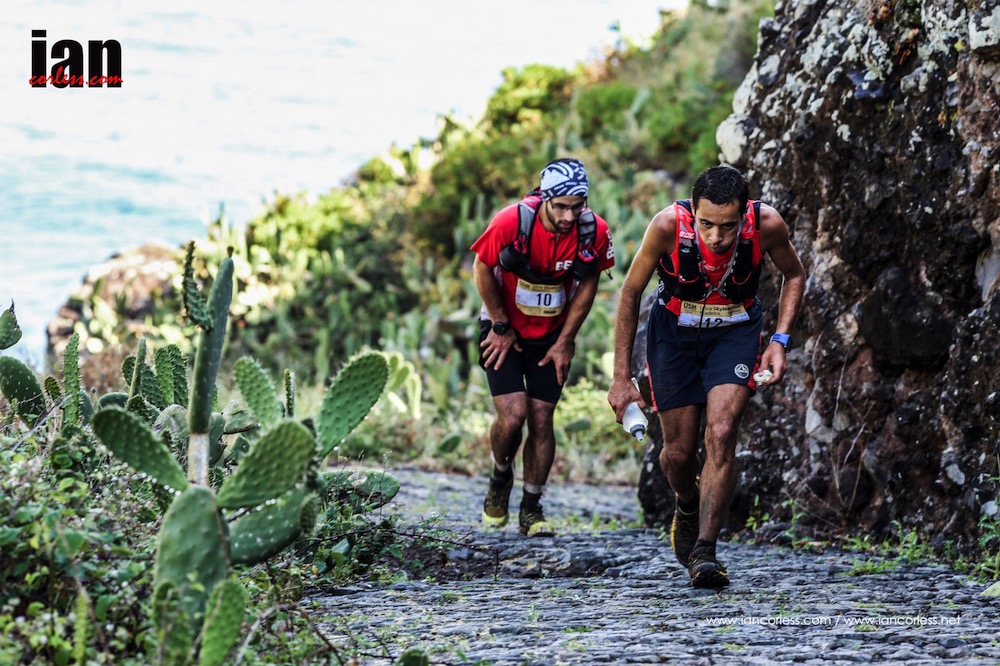
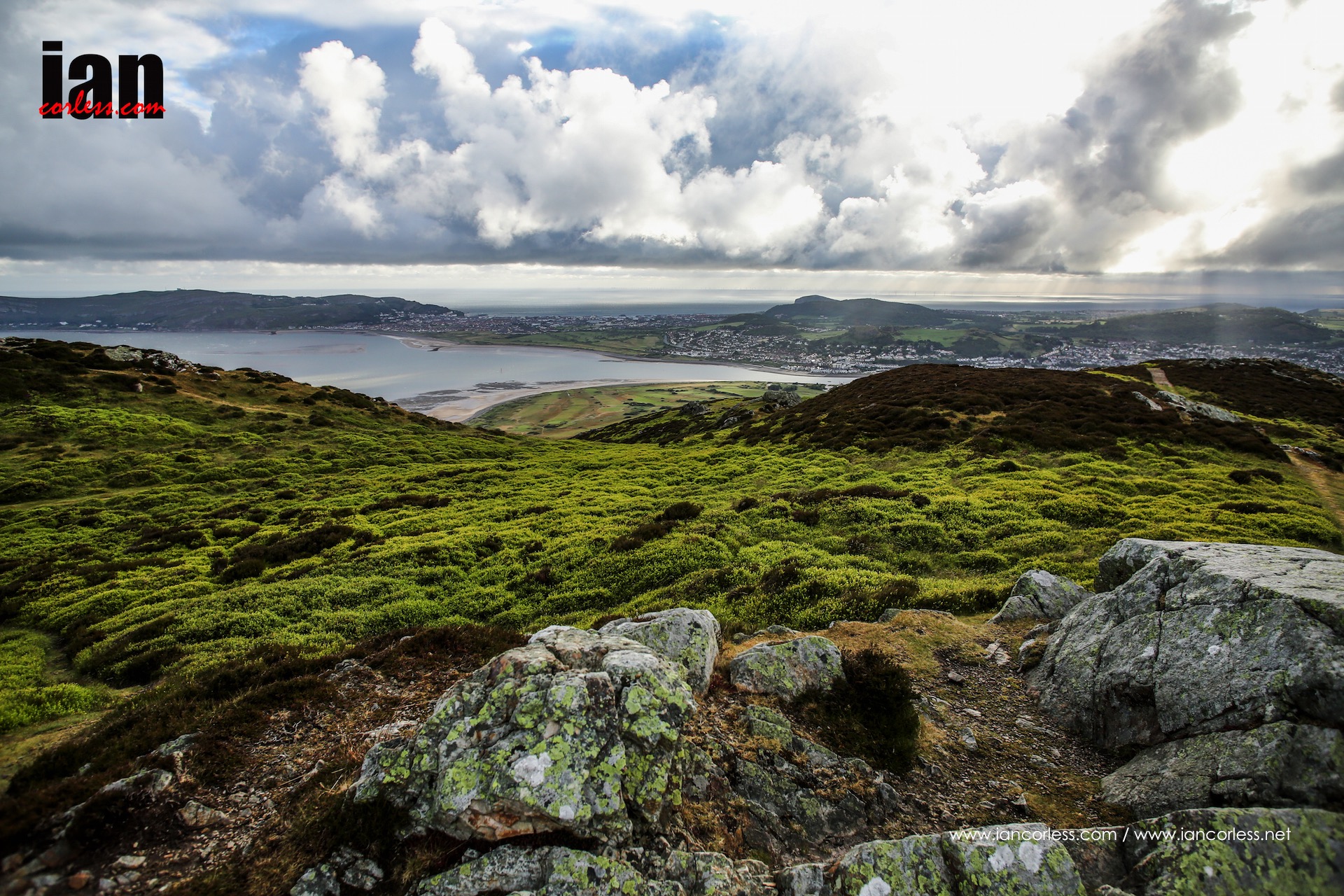
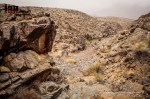
The USM course is a unique one. Weaving up and down mountains, around beaches, through dense undergrowth, up a riverbed and of course plenty of climbing and descending. It’s not your ordinary Skyrunning course!
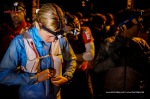
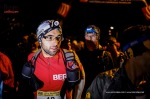
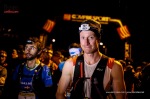
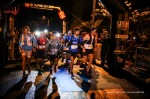
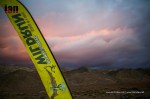
Departing the start line at 0600 on the dot, the runners disappeared down a darkened lane with only head torches and rain for company. It was a brutal start to the day, just 1km to warm up and then a climb of 1400m.

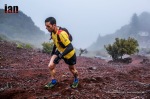
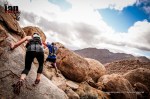
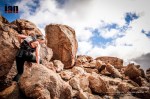
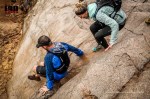
Onwards and upwards the runners climbed and a section of via ferrata at around 6km provided a taster for the final push to the summit. It wasn’t easy going. The mist had come in and visibility was poor. Add to this constant rain and steep gradients.

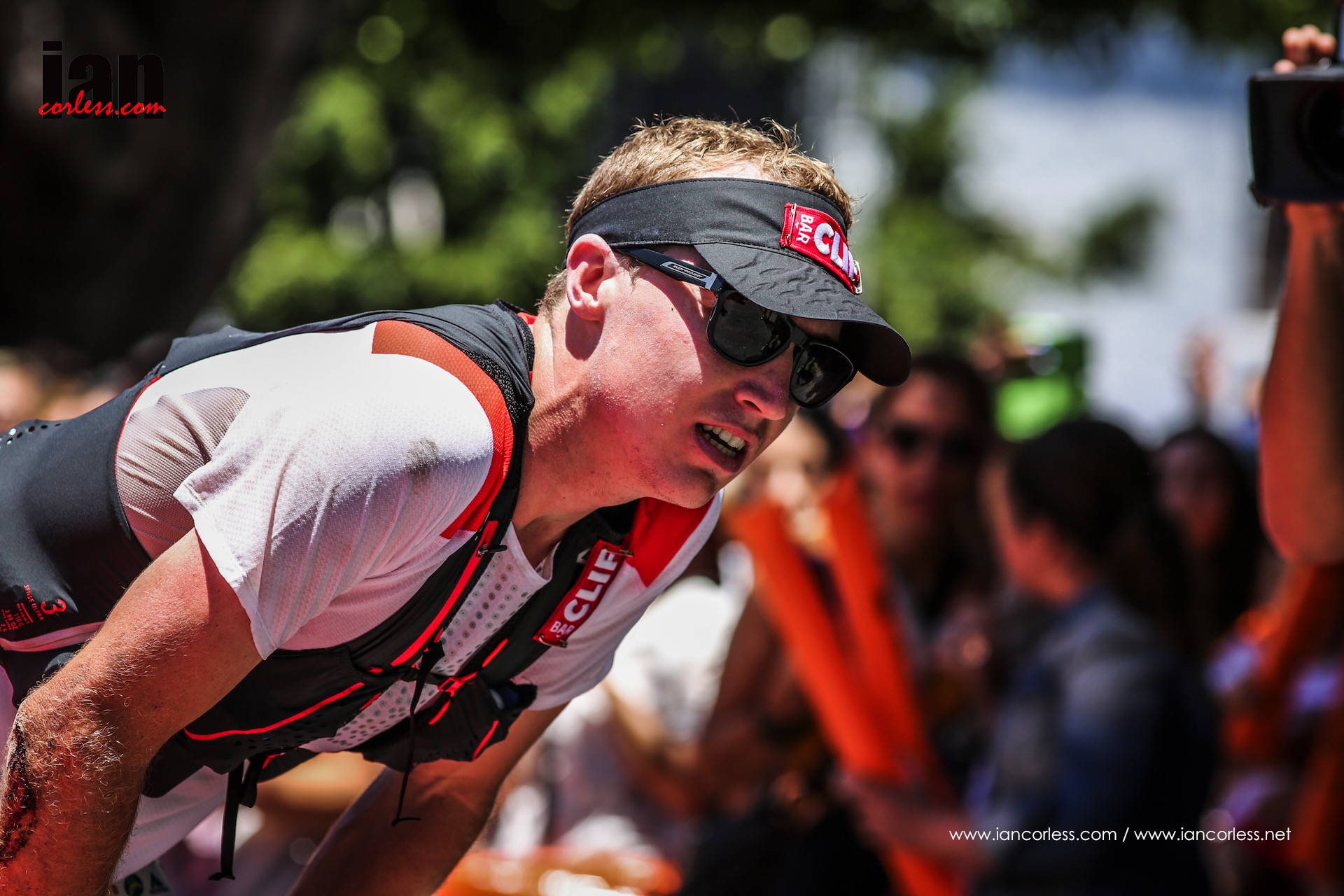
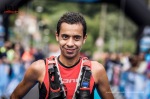
Ricky Lightfoot and Zaid Ait Malek were the first to appear. The contrast between the two striking, Ricky is tall and well built and a fireman by trade. Zaid is Moroccan, small and probably only about 50kg in weight when completely wet through and wearing three layers of clothes.
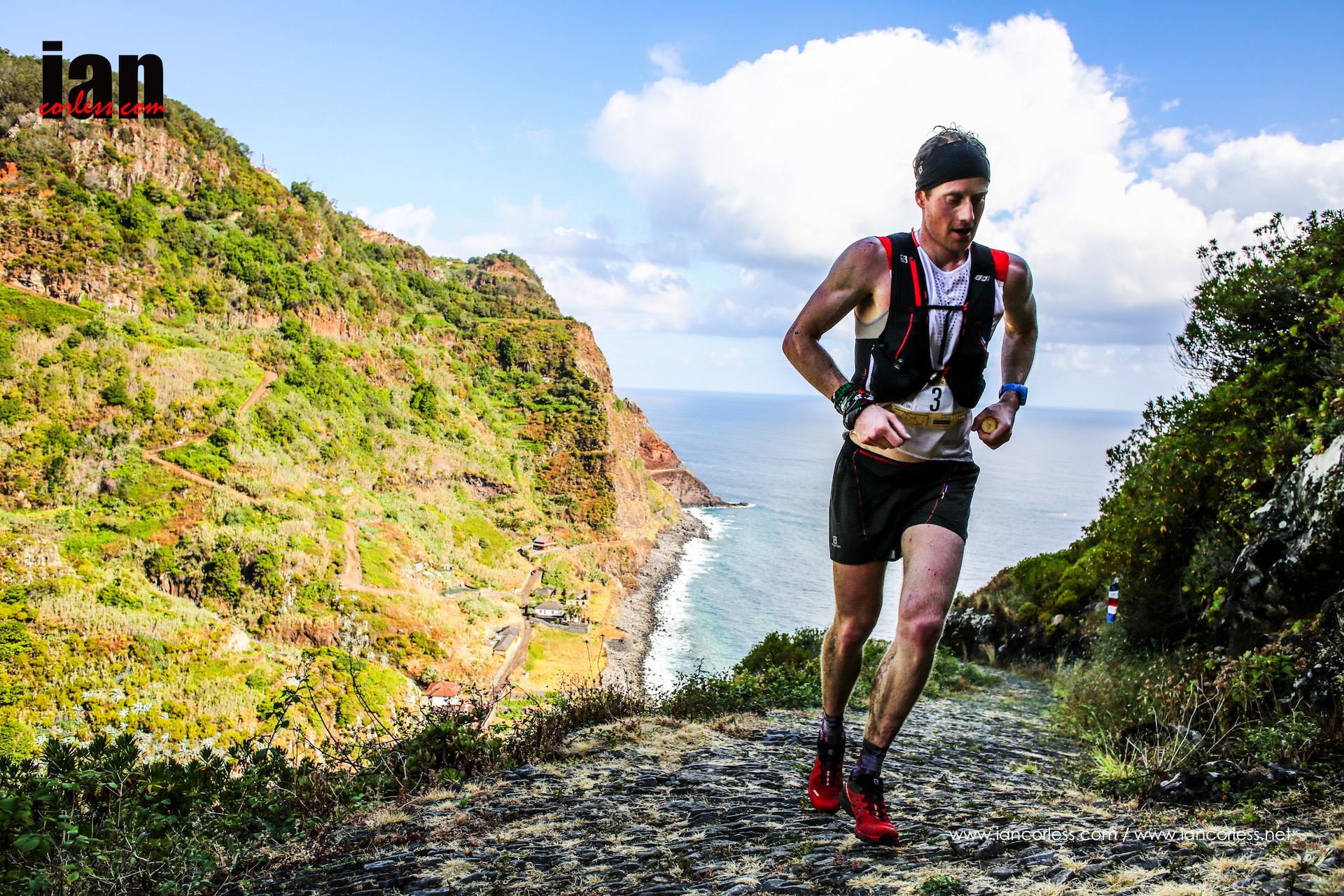
They matched each other step-by-step. Minutes later, Aritz Egea appeared looking calm and relaxed in the wet and challenging conditions. With 90 minutes of the race elapsed, the main male contenders came thick and fast and with them, Stevie Kremer.

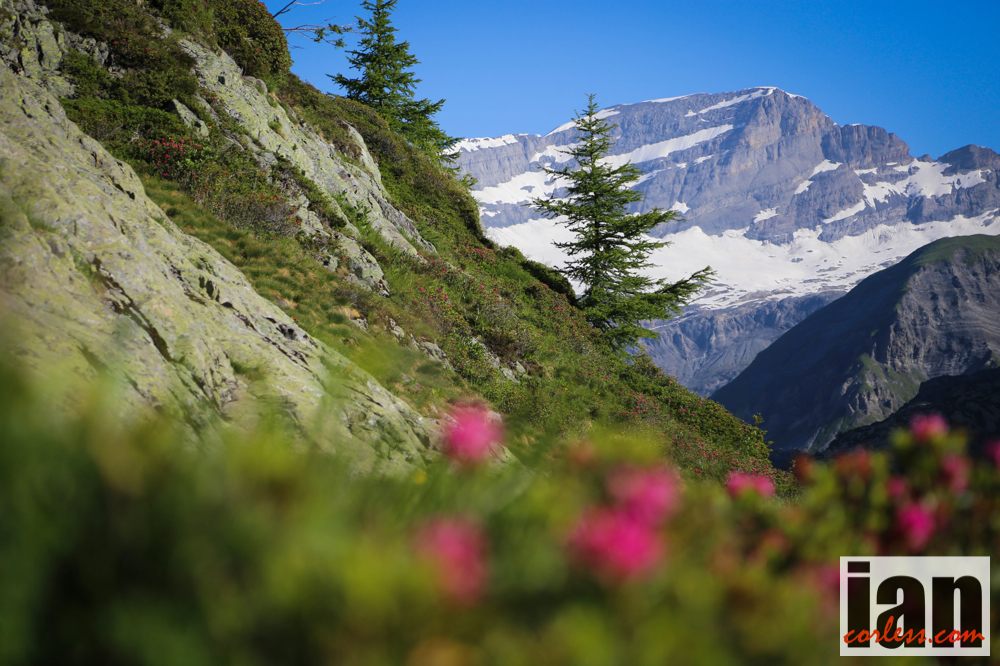
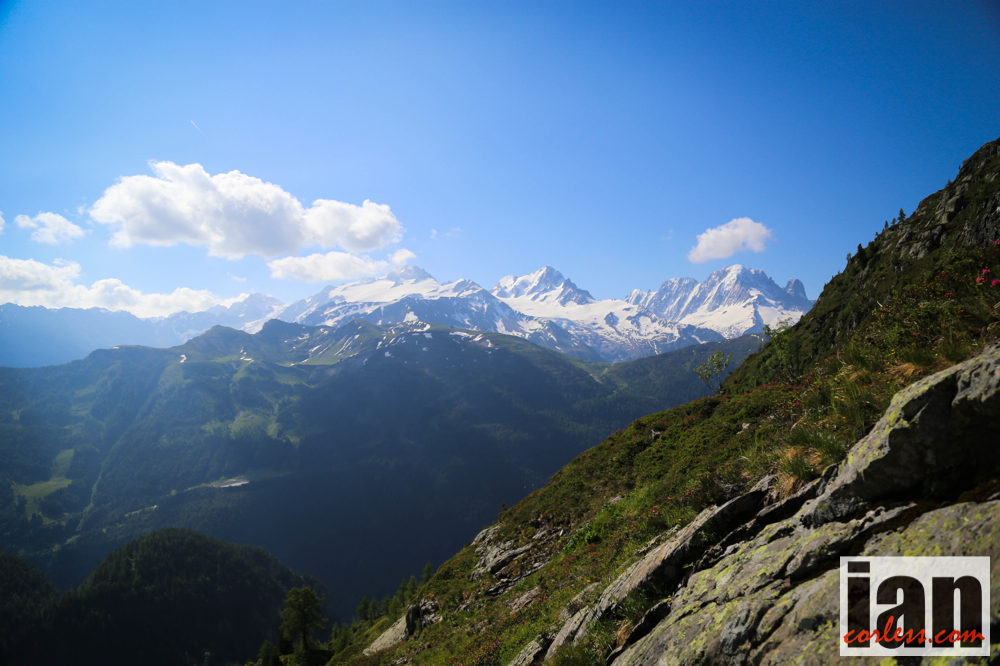
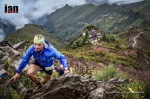
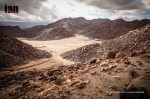
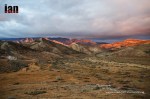
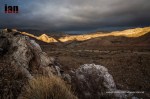
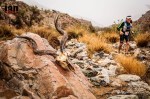
It was sometime before the 2nd lady Ester Alves came into sight and the writing was on the wall. Stevie was going to need to crumble to loose this race. Descending over the summit, an inversion came in allowing the surrounding vistas to come clear. It was quite special to see so many mountains and trails all above the cloud.

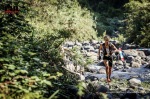
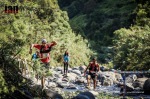
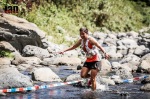
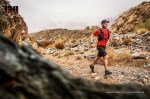
Running the ridges and several more climbing sections, the front of the race didn’t change until a decisive phase around the 30km mark. Climbing from the sea and beach, Ricky Lightfoot continued to extend his lead looking strong. However, Zaid Ait Malek looked in trouble and Aritz Egea was closing. After 5km of ridge running and a technical descent, a riverbed with boulder hopping awaited.

Ricky was long gone but here Aritz moved ahead of Zaid. It looked like a decisive move but as we know, nothing is guaranteed in racing. Behind, Clemente Mora and Nuno Silva were coming to life. In particular Nuno, he ran over the boulders in the river like a man possessed.

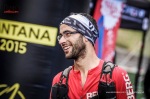
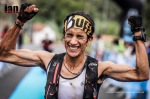
But another long climb needed to be ascended and descended before the finish line and here the podium changed. Zaid was having trouble and feeling dizzy. His only option to ease off the pace providing a gateway to third. As Clemente and Nuno battled for 3rd, Aritz exploded through a lack of calories and was forced to jog/ walk it into the finish. Seizing an opportunity, Clemente proved the stronger and finally pulled away from Nuno and they finished 6:17:22 and 6:24:57 respectively behind Rick Lightfoot’s new course record, 6:09:56.

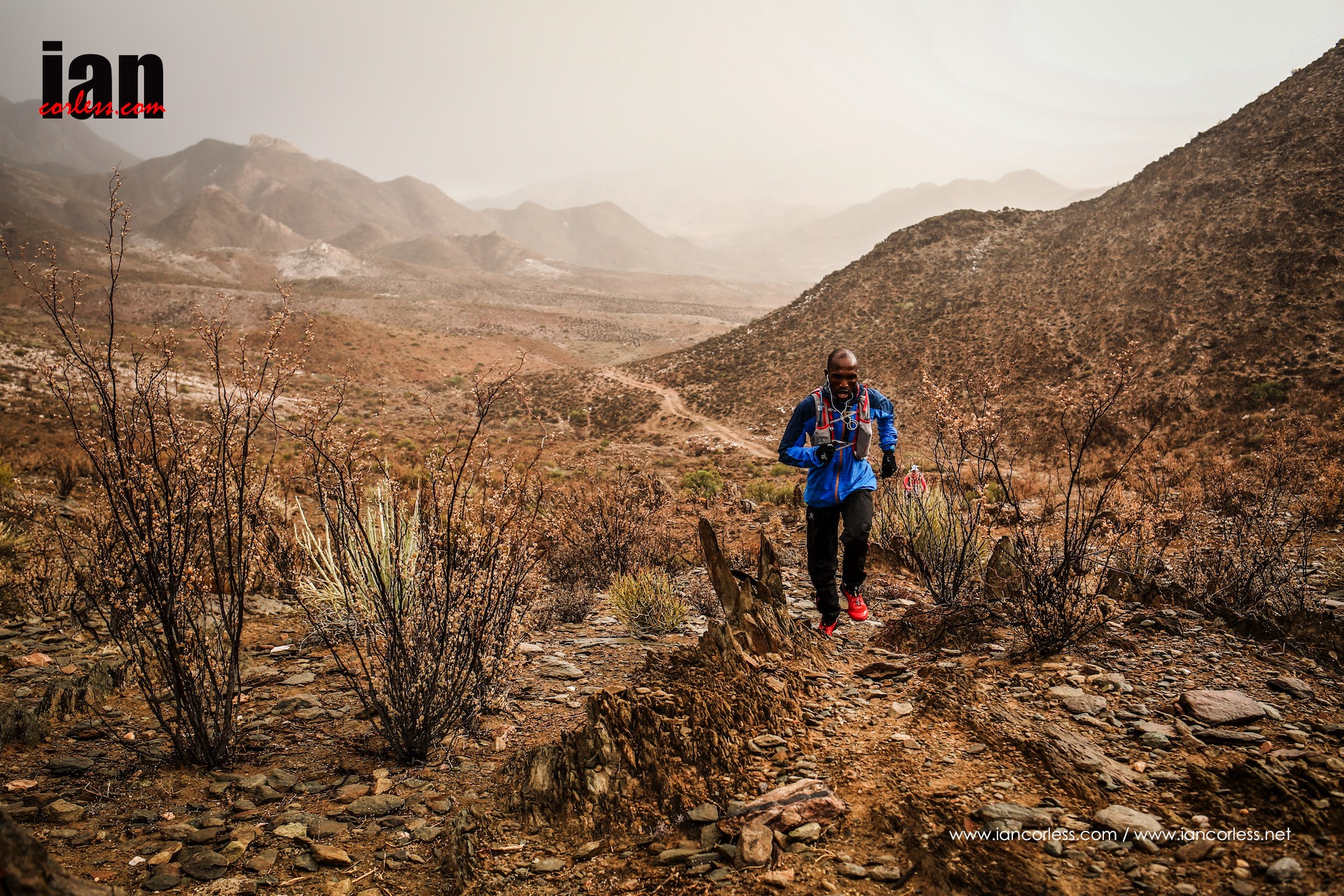
©iancorless.com_USM2015-5844

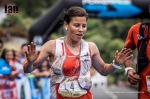
Steve Kremer was almost in another race by the time the riverbed and the final climb came. However, she did say she wasn’t feeling great. This was the longest race she had ever run! It was academic, Stevie despite what she said ran into the finish looking strong in 7:33:37 almost 45 min ahead of 2nd placed Ester Alves in 8:14:45. Lucia Franco took the final podium place in 9:01:53.

Post race, Stevie went on to say, ‘USM is one of if not the hardest race I have ever done. I think it is a much harder race than Zegama-Aizkorri. It was relentless terrain and the conditions just made it so much harder. Race organisation was brilliant and course marking superb. It was brilliant but so tough.”

By contrast, Ricky seemed relaxed after his run, ‘It was a great course and one that embodies Skyrunning exceptionally well. However, the first hour of the course is not designed for someone as tall as me! All those trees that needed to be crawled under; I was bent double,’ he said with a laugh. ‘Zaid is only tiny so he could just run. I felt like I was crawling. The views when the mist lifted were incredible. It was almost as though I was running in another race.’

The 2nd edition of the Ultra Skymarathon Madeira has been a great success. Madeira is an amazing island with a tough and challenging course. The future looks bright for this new addition to the Skyrunning calendar.
Results:

  1. Stevie Kremer 7:33:37
  2. Ester Alves 8:14:45
  3. Lucia Franco 9:01:53
  1. Ricky Lightfoot 6:09:56
  2. Clemente Mora 6:17:22
  3. Nuno Silva 6:24:57

All images ©iancorless.com – all rights reserved

Damage Limitation by Marc Laithwaite

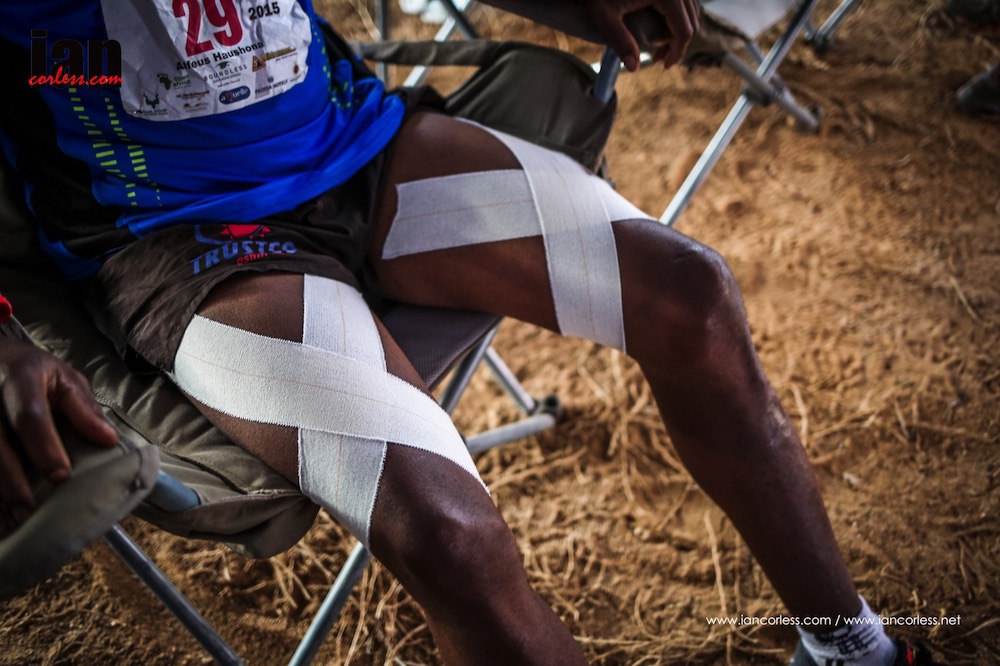
©iancorless.com_RichtersveldRaceDay22015-8568

The term D.O.M.S. is used frequently within the world of endurance, it represents the ‘Delayed Onset of Muscle Soreness’. The name refers to the fact that sometimes you don’t actually feel the effects of a training session or race until the following day when you step out of bed. Those who have ran a marathon will understand the sensation. You cross the line and undoubtedly you’re tired but there isn’t a great deal of physical pain. However, the next morning, or perhaps even the morning after that, your attempts to walk downstairs backwards provide the family with the highest level of entertainment they have ever experienced.

The same may be said of the inexperienced cyclist who decides to enter a 100 miles hilly cycle sportive, despite a poor training background. Aside from the embarrassment of being unable to sit down for a week, the morning after generally requires a family member to assist their descent to breakfast. So what’s happened? Has someone been repeatedly battering your tired legs throughout the night whilst you failed to wake from your exercise induced, coma like sleep? The answer lies with D.O.M.S. and the inflammation process.

The inflammation process

During a marathon running event the muscle tissue is damaged due to repeated stress and this triggers the inflammation process. The damage occurs ‘during’ the marathon but the inflammation process takes 24-48 hours to reach its peak, so the pain you feel the following morning was actually happening ‘real time’ during the second half of the race.

An important note to make here is that when people slow down in the final 6 miles of the marathon, we generally assume it is caused by low carbohydrate stores, often termed ‘hitting the wall’. However, there is likely to be a significant amount of muscle tissue damage by this stage in the race which will undoubtedly have an impact upon performance. Due to the D.O.M.S. effect, we rarely discuss the significance of tissue damage during the event. It’s important to recognise that the pain you experience 24-48 hours after the race is caused by damage which happened ‘real time’ in the second half of the marathon. That’s why you were getting slower!!

*Part of the inflammatory process involves fluid build up in the damaged area, due to this fluid build up you may weigh more 24-48 hours after the marathon that you did before, perhaps even 1-2kg extra in weight! Don’t worry.. it’s just water and it will pass.

How do I know if I’ve got tissue damage as opposed to simply having tight muscles?

  1. It’ll be very ‘tender, warm and swollen’ and if someone squeezes your leg you’ll instinctively want to punch them (NB: they never see the funny side of your response).
  2. When you stretch, it makes no difference to the tenderness, the pain still exists (it’s not tight, its damaged) and its probably better if you actually don’t stretch!

*Myth explosion – the pain and tenderness the day after the event has absolutely nothing to do with lactic acid in the muscles. It’s an old wife’s tail and I’m not even open to discussion on the matter.

How does damage affect performance?

You don’t have to be a rocket scientist to understand that a damaged muscle will not work as effectively as a healthy muscle. However, aside from the actual physical damage directly affecting performance, it’s possible that the inflammation process is acting on a much higher plane and going straight to the governor.

The central governor

There are various theories regarding ‘why we slow down’ and one of the most prominent in recent years has been the ‘central governor’. This theory suggests that fatigue is controlled by the brain (which can effectively switch off nerve signals to muscles) rather than fatigue being controlled by ‘peripheral factors’ such as the ‘actual muscle damage’.

Okay, here is a simple example:

  1. The muscles is damaged and therefore doesn’t work well, as a result you slow down. That is ‘peripheral control’, the muscle is damaged and the muscle doesn’t work, at no point is the brain involved.
  2. The muscle is damaged and somehow the brain’s monitoring system detects this. As a result the brain blocks nerve signals to the muscle so it can’t function fully and you are forced to slow down, that’s central governor control.

Why are we talking about central governor and gone off track from inflammation?

Yep, I was hoping you’d ask that. When we damage a muscle we kick start the ‘inflammatory process’ which is a chain of events involving a series of chemicals, each having a different purpose and action. One of the most widely researched in a chemical known as Interleukin-6 (IL-6) which is released into the blood stream during early stages of muscle damage and inflammation. Research suggests that IL-6 is detected by the brain and as a consequence, the brain then acts to slow you down in some way. In an old study (completed by Tim Noakes 2004) runners completed 2 separate 10k runs a week apart. They were healthy during both but prior to the second run they were injected with IL-6 and ran almost a minute slower.

Just stop and think about this for one second

Look at the 2 examples given at the top of this page for ‘peripheral control’ and ‘central control’. These 10k runners did not have muscle damage prior to either 10k, they were healthy, fuelled and ready to go until injected with IL-6. Their slower time cannot be explained by muscle damage, low fuel or any other form of peripheral control. The only possible explanation is the circulating chemicals. The chemical IL-6 has even been suggested as a possible cause for the lethargy associated with ‘chronic fatigue’ or ‘chronic overtraining’. We know that all general illnesses and all forms of stress kick start the inflammation process and that in turn creates IL-6.

How does energy and nutrition relate to tissue damage?

VERY IMPORTANT: In previous blogs we have talked a great deal about carbohydrate and fat use during exercise and how to refuel. There is a presumption that if you refuel correctly and use fat as a fuel source, you will be successful in endurance events. As a consequence, when people fail to hit their target times, the first thing they turn to as an excuse is ‘failing to get the nutrition correct’. We treat nutrition as some kind of magic wand and if it’s done correctly, you can cycle and run forever, but the reality is very different. It doesn’t matter how much fuel you pour into a broken car, it isn’t going to drive anywhere fast. Without the conditioning which comes from running long miles on hard surfaces, even the most fuel efficient athletes will break down due to tissue damage. CONSIDER THIS: The energy used when cycling and running at a steady pace are not significantly different (slightly higher for running). However, many people who can cycle for 6 hours with little issue, will find themselves in pretty bad shape after as little as 2 hours of running. So ask yourself this question, is it fuel intake or is it damage causing the issue?

What causes the damage?

  1. Damage will be far greater if you’re not conditioned to the distance and terrain. In simple terms you need to spend time on your feet and do the longer sessions.
  2. Harder surfaces are more likely to cause damage, although this isn’t always strictly true as runners do become accustomed to the surface they train on.
  3. Running down hill is the real killer as the muscles contract eccentrically, braking your speed, thereby causing much greater damage.
  4. This isn’t limited just to running. Cycling for several hours and repeatedly performing the same pedal action will lead to muscle tissue stress and damage.

How can you avoid the damage?

  1. As above, you need to complete longer sessions, including downhill running if relevant.
  2. It’s possible that damage may be reduced, by using compression clothing. Research is very poor but ‘subjective’ feedback suggests that it certainly helps.
  3. Your weight will have an impact upon damage, if you have a few KGs to lose, it will help!
  4. Whilst this is a subjective / commercial / controversial addition to the list, specific shoes such as HOKA which are specifically designed to reduce impact can reduce damage and associated DOMS.

What should I do if I have tissue damage?

  1. Rest and let your legs recover for a few days.
  2. Avoid very deep post event massage or stretching, sticking fingers into or stretching damaged tissue is never a good idea, wait a few days at least.
  3. After a few days do some light exercise such as cycling to encourage blood flow to the area and assist the repair process.

If you found this article useful, it would help us a great deal if you share on Facebook, Twitter and social media.

Until then, limit the damage…

About Marc:

Sports Science lecturer for 10 years at St Helens HE College.

2004 established The Endurance Coach LTD sports science and coaching business. Worked with British Cycling as physiology support 2008-2008. Previous Triathlon England Regional Academy Head Coach, North West.

In 2006 established Epic Events Management LTD. Now one of the largest event companies in the NW, organising a range of triathlon, swimming and cycling events. EPIC EVENTS also encompasses Montane Trail 26 and Petzl Night Runner events.

In 2010 established Montane Lakeland 50 & 100 LTD. This has now become the UKs leading ultra distance trail running event.

In 2010 established The Endurance Store triathlon, trail running and open water swimming store. Based in Appley Bridge, Wigan, we are the North West’s community store, organising and supporting local athletes and local events.

Check out the endurance store HERE

Endurance Store Logo

Richtersveld Wildrun 2015 Day 3

©iancorless.com_RichtersveldRaceDay32015-0413

Today the Wildrun lived up to expectations and really did become a wild run! The weather cleared, the winds dropped and the rain disappeared and we were all treated to a very special South African day.

Today’s course was special!

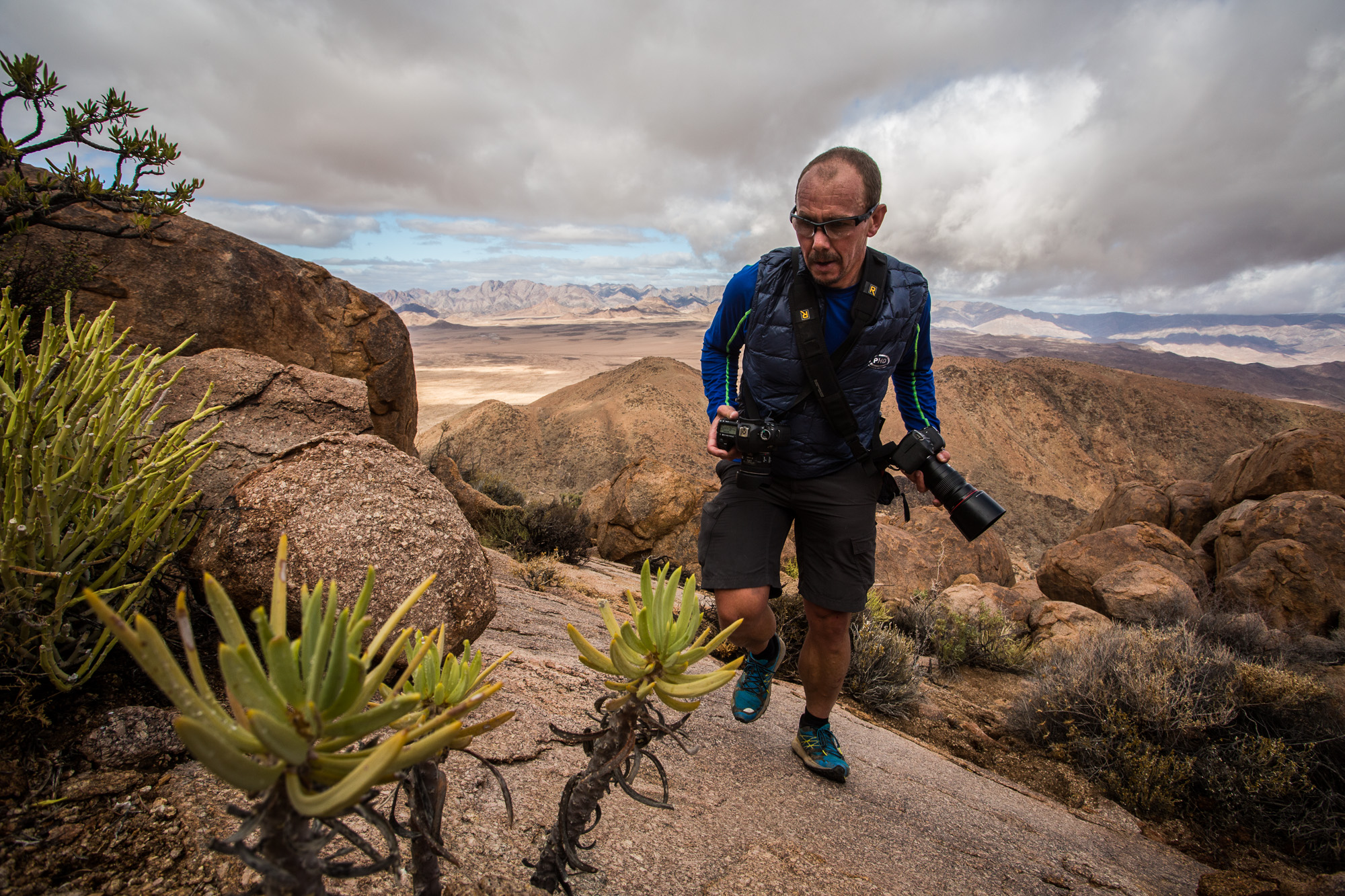
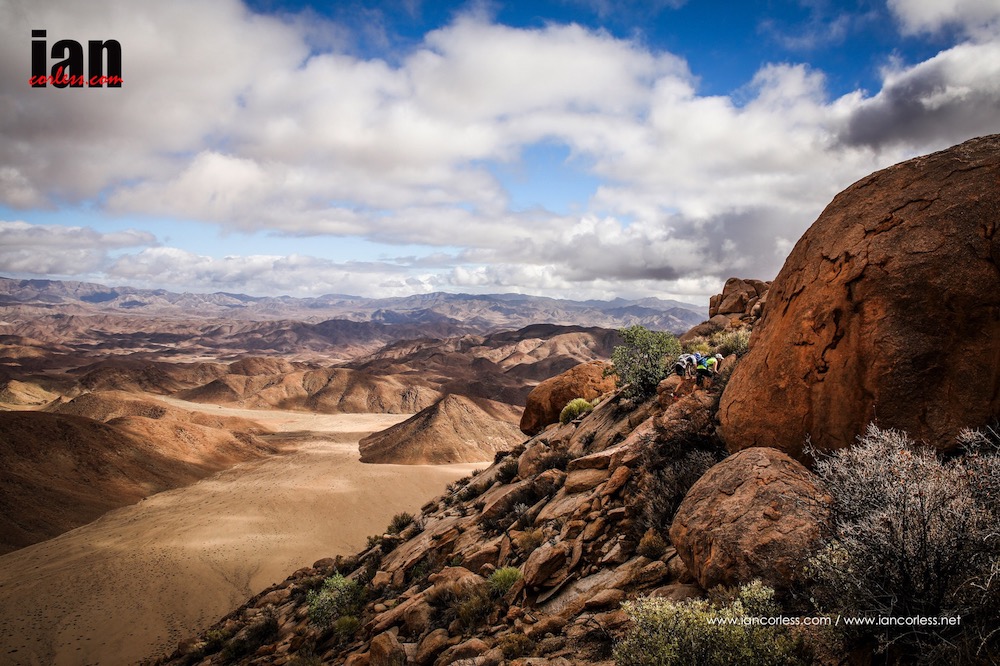
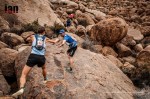
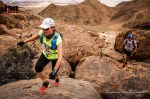
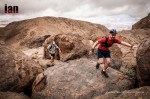
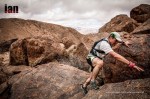
Notably, the Tatasberg Mountain is one of the most impressive sections of ‘trail’ I have ever witnessed. I use the term trail very loosely as it was a combination of scrambling and boulder hopping, not only on the way up but down. It was an intimidating section for some. A fear of heights not recommended. However, in pain, fear or discomfort on the climb was rewarded with incredible views. It was stunning!

Racing started at 0800 with separate waves; 0800, 0830, 0900 and 0930; slower runners starting first and faster runners in the last wave as per the previous day. Early running was relatively easy but the views were stunning. Particularly as early morning cloud cleared.

By the time the runners reached the climb of Tatasberg at approximately 16km, Thabang and all the usual suspects had pretty much caught all the early starters with the exception of 3 people.

Thabang made the boulders look easy as he hopped from one to the next. The other runners used a little more caution and a natural gap opened. Katya Soggot and Dayle Wheeler closely followed James Cracknell as he pursued Thabang, occasionally helping each across the larger boulders. Nikki Kimball trailed a little but only by minutes. At the summit the boulders started to clear providing the occasional opportunity to run.

The bottom of the climb opened up to a wide plateau and then a clear zigzag trail lead to the lush Orange River and across the water, Namibia. Lush green vegetation populated the left and right banks. It was a stunning contrast to what had come before. Running along the river banks, the sound of flowing water, birds and the occasional baboon made this day, arguably the best one yet.

Camp was located next to the river and of course, a braai was prepared for the arriving runners. Thabang Madiba arrived first (once again) closely followed by Katya Soggot, Dayle Wheeler, Karoline Hanks, Nikki Kimball and Filippo Faralla. But today really wasn’t about the racing, it was the course that was the hero. It was the Richtersveld National Park that had completely blown the minds of every runner and every runner on the Richtersveld Wildrun race.

James Cracknell had a tough day, his groin strain and twisted ankle from the previous day reducing him to a frustrating walk. He is currently unsure if day 3 is possible for him. He’s a stubborn and committed competitor and after travelling all this way, once has to think that he will fight his way through the last day even if it is slowly!


Results 

Thabang Madiba 3:24:03

Dayle Wheeler 3:32:31

Katya Soggot (1st lady) 3:32:31

Nikki Kimball (2nd lady) 3:49:10

Filippo Faralla (3rd man) 4:04:10

Karoline Hanks 4:04:10


Nikki Kimball has now moved up into 2nd overall, 10 minutes ahead of Karolin Hanks.


Men:

Thabang Madiba 3:24:03

Dayle Wheeler 3:32:31

Filippo Faralla 4:04:10


Ladies:

Katya Soggot 3:32:31

Nikki Kimball 3:49:10

Karoline Hanks 4:04:10


Richtersveld Widrun 2015 Day 2

©iancorless.com_RichtersveldRaceDay22015-8875

What a night! The wind blew, gusted and lifted tents off the ground. We were told yesterday that the last time it rained in the Richtersveld was August 2014. Well believe me, when the weather changes; it really changes!

The excitement continued into the morning and although the rain subsided (for a little while), the wind was going to be with the runners all day. Starting in three separate groups, 0800, 0830 and 0900 the field were split based on finish times from day 1; slower runners starting first at 0800 and faster runners starting last at 0900.

James Cracknell, the 2-time Olympic Gold Medallist for rowing finally joined the race after an epic journey of 48 hours. He departed Poland at 1900 on Sunday after commentating at the Rowing European Championships. He flew back to the UK, then flew to Joburg and followed with a connecting flight to Upington. The journey was finished off with 10 hours in the car to the race day 2 start line.

James arrive at 0800 in camp just giving him 60 minutes to sort out his equipment and get his head ready for a day on South African trails.

As expected, Thabang Madiba showed everyone a clean pair of heels as he slowly pulled away from Katya Soggot, Dayle Wheeler, Nikki Kimball and James Cracknell. Conditions were tough throughout the day and the beautiful Richtersveld landscape was shrouded by mist and permanent rain that varied in intensity.

Climbing and descending to Cp1 the runners once again climbed up and over the pass at  Tswayiberg before then dropping down into the technical riverbed that would lead to the finish.

Thabang at this stage was already leading by over 10 minutes, behind Katya Soggot, Nikki Kimball and Dayle Wheeler pursued with James Cracknell not far behind. James was certainly struggling on the slick wet rocks as he slid from left foot to right with the occasional shout of ****ing hell! A groin strain picked up at London Marathon adding to his frustrations.

At the line, Thabang Madiba completed the 36km stage in 3:14:03 with Soggot, Wheeler and Kimball crossing the line together in 3:33:35. Cracknell held on fighting some severe discomfort to finish in 3:41:56.

Georgina Ayre who had run well on day 1 frustratingly repeated Nikki Kimball’s error and made a navigational mistake by taking the wrong riverbed. This mistake was costly, as she finished the day 1 hour behind Soggot and Kimball. Karoline Hanks was 3rd lady on the day in 4:03:23.

As the day came to a close, a break in the weather came and with it the sun, a welcome return! Everyone has fingers crossed for a warm and sunny day 3 at the Richtersveld Wildrun.

Results Overall

Thabang Madiba 6:45:35

Dayle Wheeler 7:14:49

Katya Soggot (1st lady) 7:25:22

Karoline Hanks (2nd lady) 8:13:05

Nikki Kimball (3rd lady) 8:13:06

Filippo Faralla (3rd man) 8:13:10

RAIDLIGHT’S GILET RESPONSIV 8L PACK REVIEW

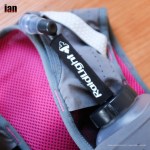
©iancorless.com_Raidlight-0432

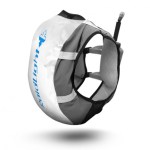
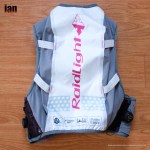
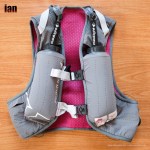
Niandi Carmont recently ran the Compressport Trail Menorca, an 85km race on the island of Menorca, Spain. Knowing the race would be semi self-sufficient, the need for a comfortable hydration system would be required. RaidLight stepped in and provided the new RAIDLIGHT GILET RESPONSIV 8L vest so that it could be tested in a ‘real’ situation. On first looks it would be easy to think that this pack is female specific, apparently no. It also comes with a hint of blue for those gentlemen who are not in touch with their feminine side.

RaidLight say:

The Responsiv 8L is a combination of bag/vest. Lightweight and ergonomic.

The Responsiv 8L race vest allows you to carry essentials and hydrate with ease, with the bonus of being ultra light at only 160 grams!

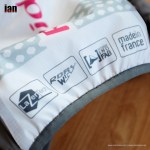
The bag has recently been awarded the prestigious Janus Design Award (2015), awarded by the Institute of French Design


Hydration is always an issue when you compete in a self-sufficient or semi self-sufficient trail race or even when training. There are multiple ways of carrying energy drinks and water but what most of us look for is a system that is:

  • Hassle-free – no fumbling around, fidgeting or groping
  • Provides easy access – you can hydrate easily on tricky technical sections of a course or when fatigued in the latter stages of a long trail race
  • Is quick and efficient – you can refill quickly when passing through the feed stations, wasting as little time and energy as possible
  • Is comfortable – no chafing, no bouncing, no sloshing, no leaking
  • Allows you to manage your water supply efficiently and gauge how much water/energy drink remains until the next feed station

Raidlight’s new Gilet Responsiv 8L ticks all the above boxes for me. It’s a great little pack.

©iancorless.com_Raidlight-0448

What I like:

  • It comes in 2 sizes: Small/Medium & Large/Extra Large. I used the smaller version as it’s probably more suited to the female body type and lighter runners. It also comes in grey/ pink! For the men, grey/ blue.

gilet-responsiv-8l

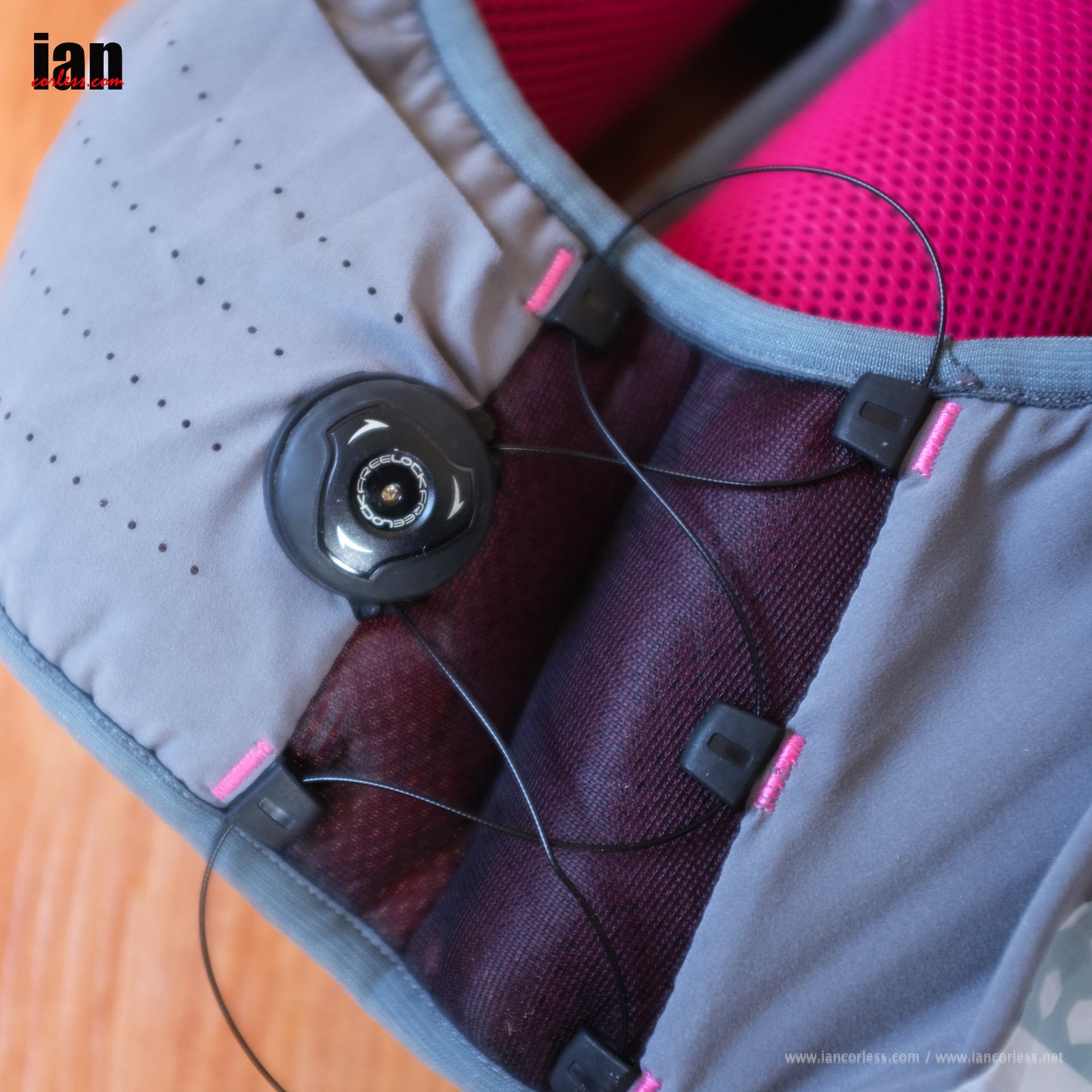
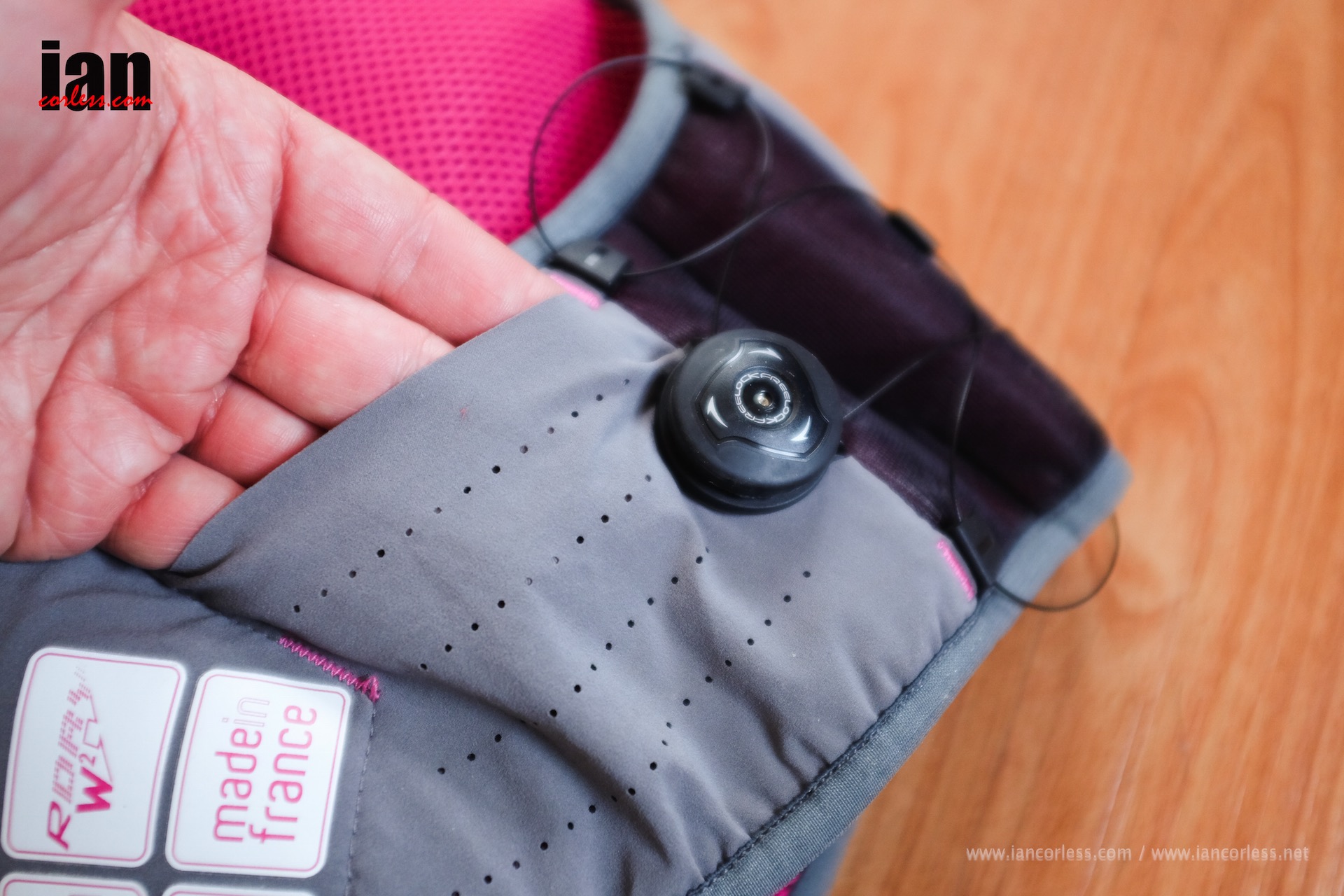
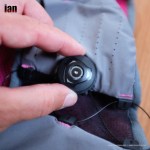
  • The vest is equipped with 2 micrometric adjustment systems; I have seen this before on a pair of TNF Shoes called the Boa and a TNF pack. This system provides for an even more “customized” fit. These are located on either side just under the arm openings. So there is no messing around with dangling straps and buckles to tighten. Basically, as you remove items from the pack (food, water and so on) you can adjust the pack in minute detail so that it remains close to the body.

©iancorless.com_Raidlight-0443


  • It weighs just 160g and that is ultra-light!
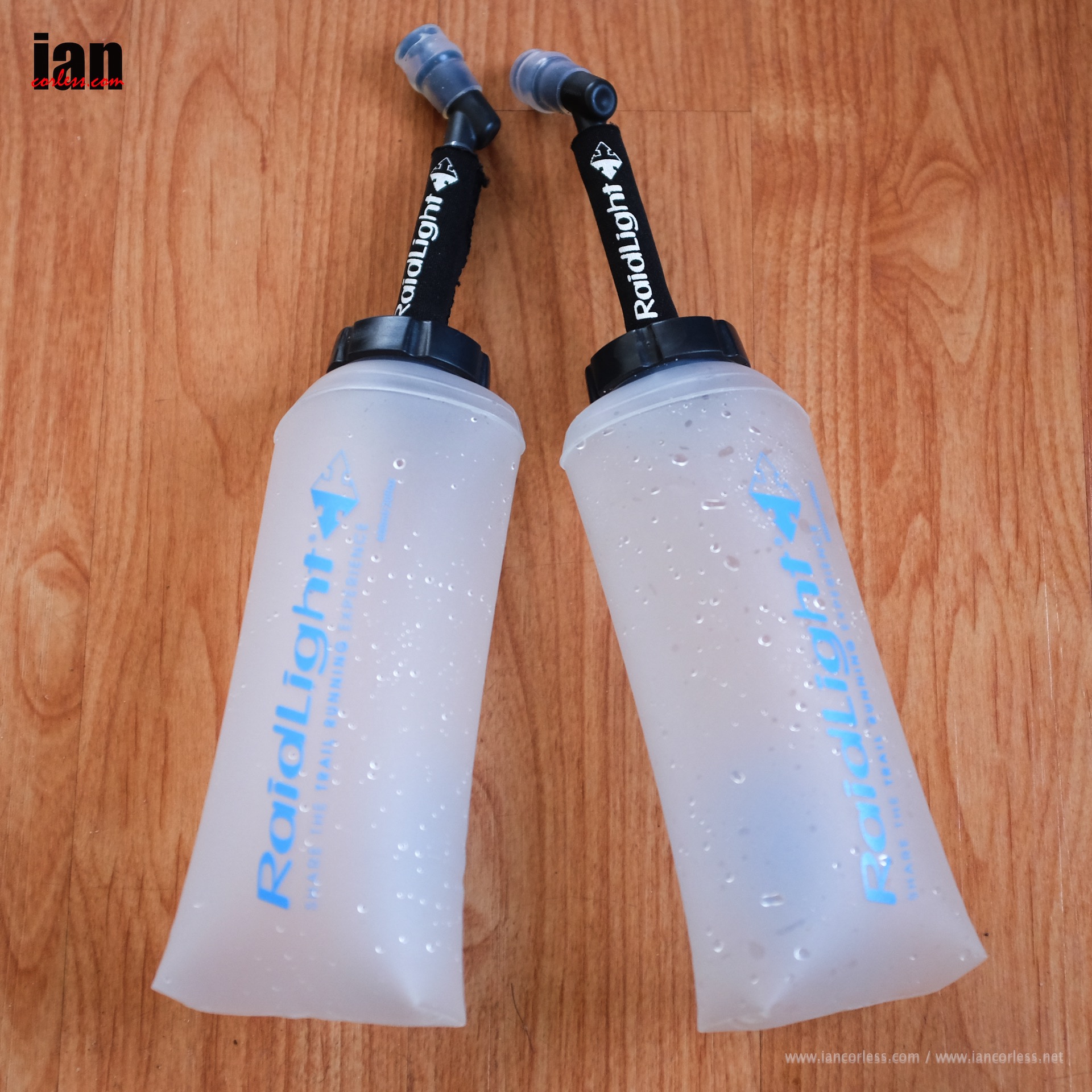
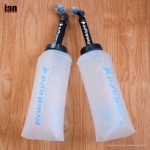
  • Designed to be used with RaidLight’s new soft flasks (optional extra) which come in 2 sizes either 350ml or 600ml. So depending on how far apart the feed stations are on a course and what your own personal hydration needs are, you can use either one or the other or a combination of both. The RaidLight soft flasks are also equipped with straws which make drinking on the go extremely practical. The flasks fit comfortably into the 2 front pockets and are extremely easy to remove and slip back in. I found the straws a little distracting as they came close to my face, however, on the shoulder straps, two access holes are available should you use a bladder (the pipe would feed through these on the left or right). I found that I could push the soft flask straws in here. Perfect!

©iancorless.com_Raidlight-0438

©iancorless.com_Raidlight-0460

  • The pack is made of a breathable flat-seamed mesh (thermal adhesive), which doesn’t chafe and please note ladies it is very pleasant to wear over a t-shirt, a sleeveless tank or even a crop top.
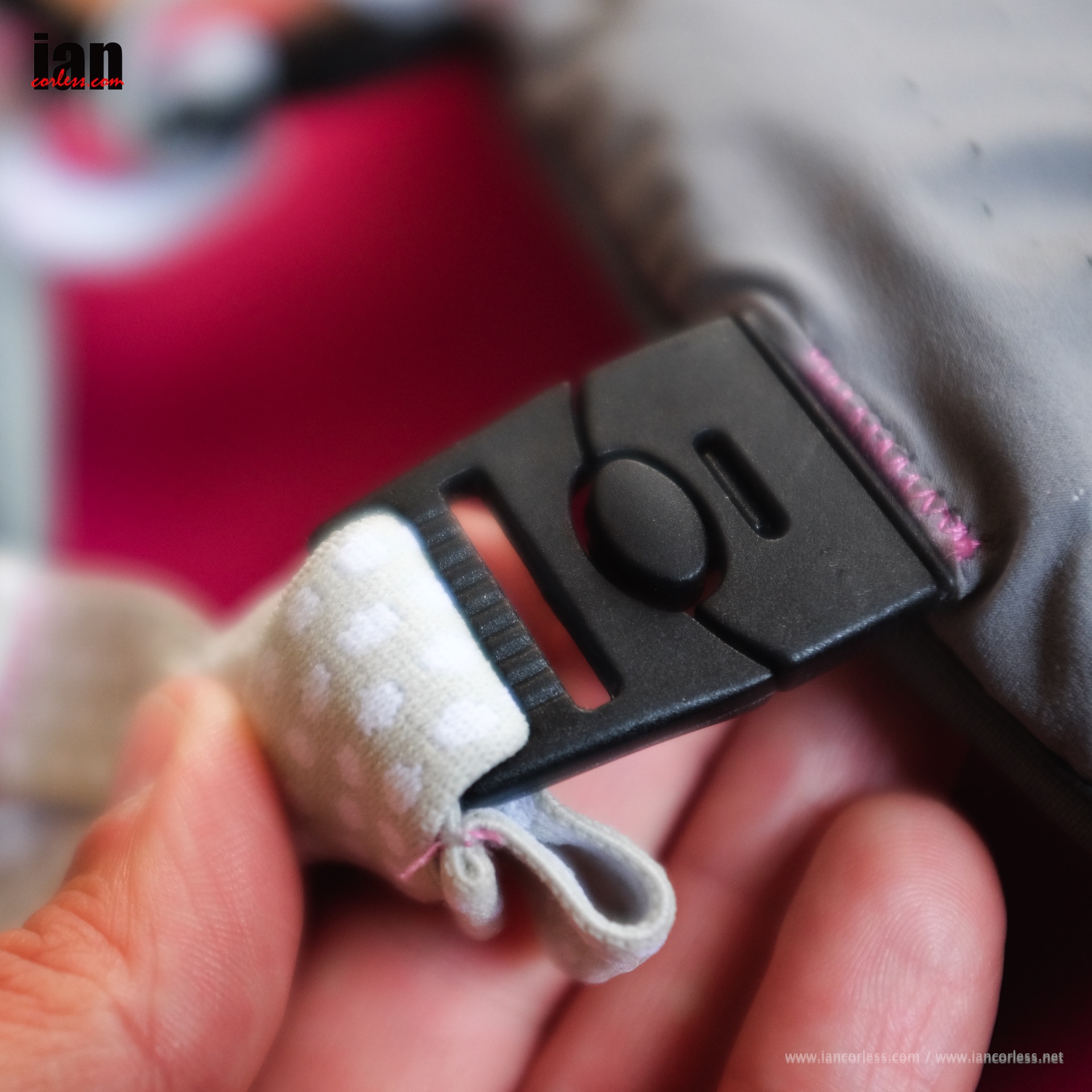
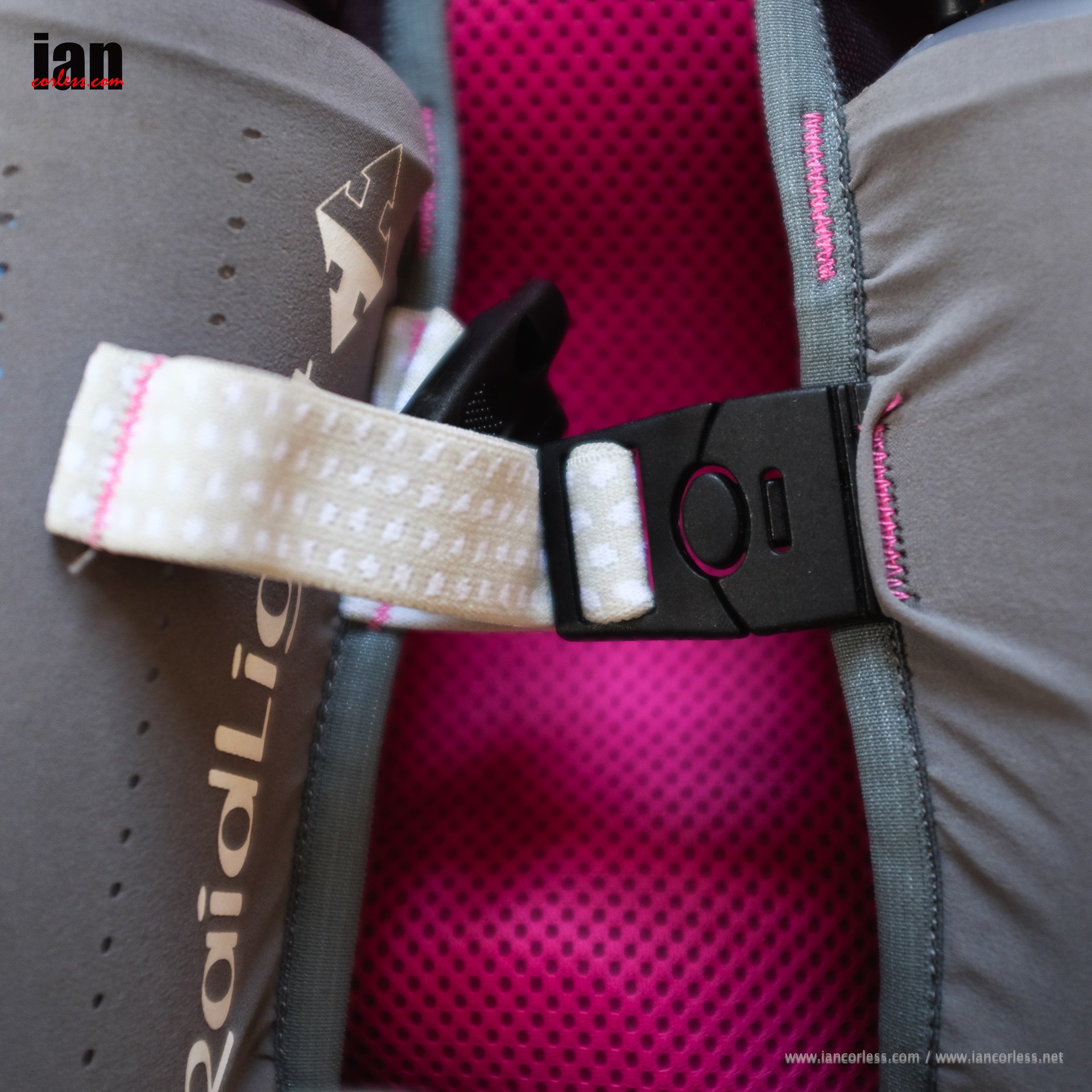
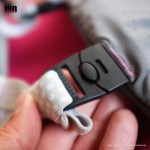
  • The stability is reinforced with two pectoral buckles on the front of the pack

©iancorless.com_Raidlight-0479 ©iancorless.com_Raidlight-0440

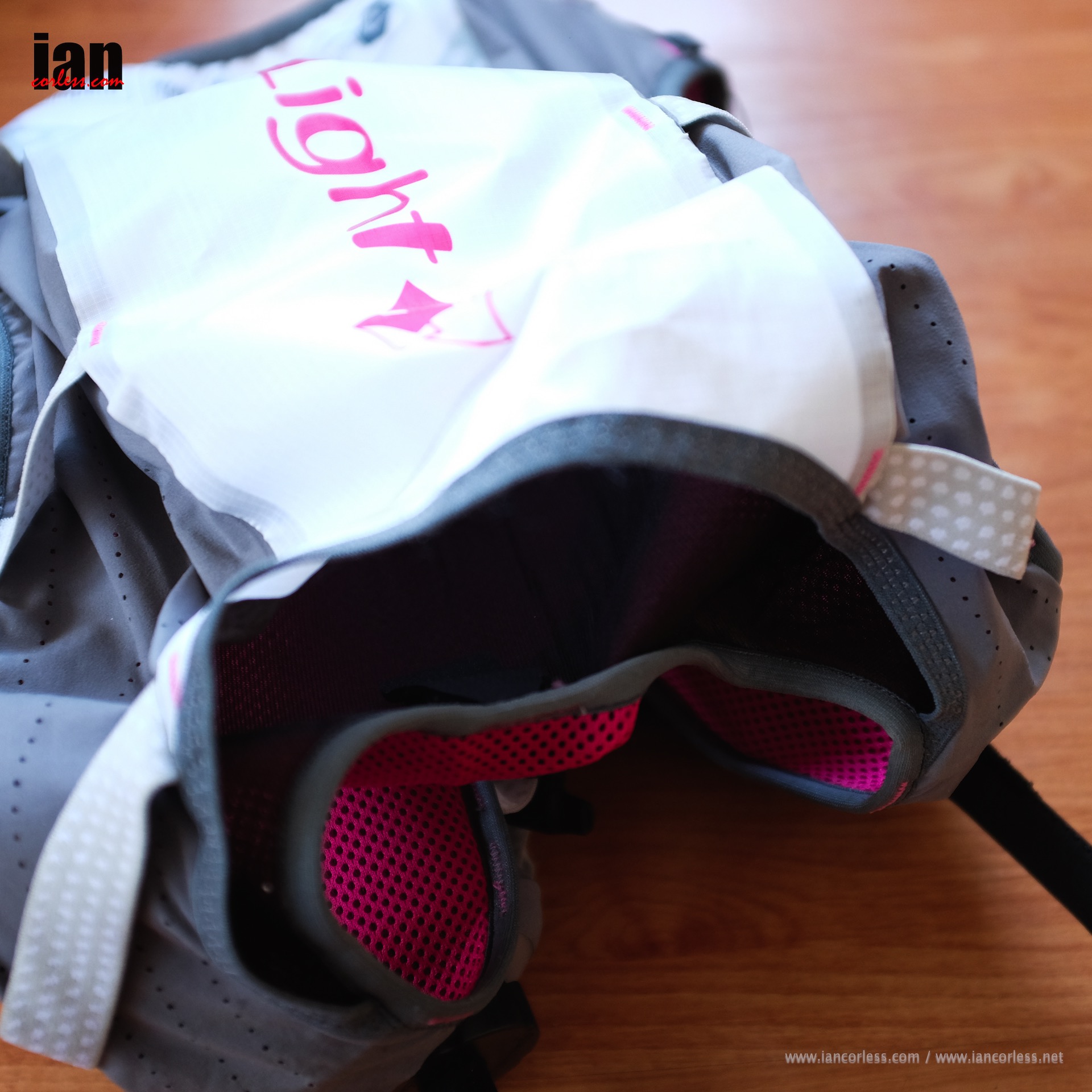
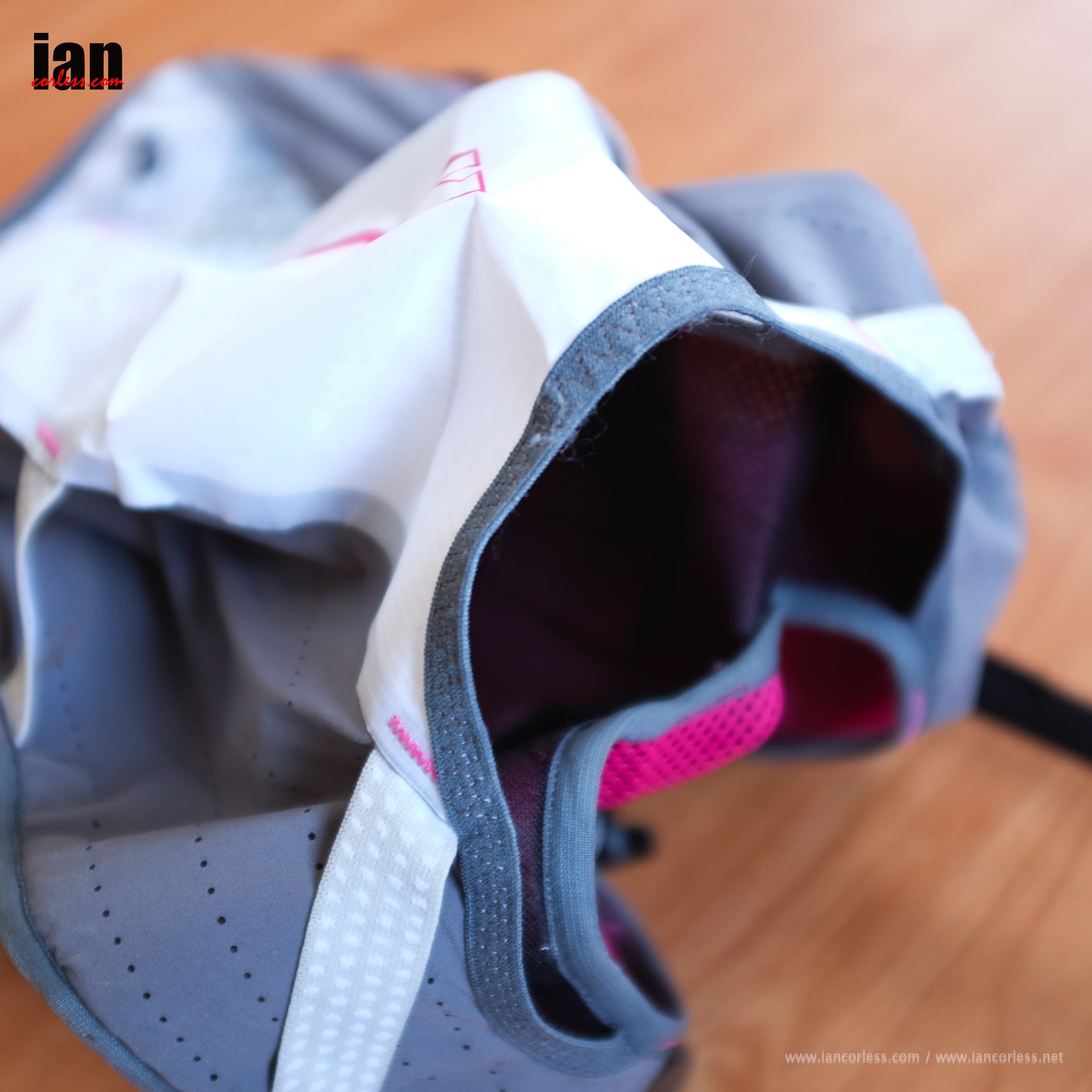
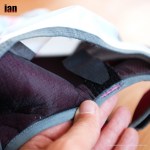
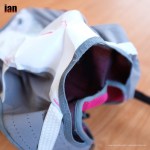
  • The stash pocket on the back can be used to carry a bladder (Velcro strap supplied) or mandatory race kit. I used it to carry a survival blanket, a mobile phone, a lightweight wind stopper and some extra food

©iancorless.com_Raidlight-0452 ©iancorless.com_Raidlight-0456

  • There are two tiny pockets underneath the main soft flask pockets; they can be used for lip balm, sunscreen, gels, tissue paper and gels/ food. For me, this is where the pack fails and needs greater improvement. I personally found I had too little room for ‘on the go’ nutrition and I used a lightweight fuel belt to store additional energy.

©iancorless.com_Raidlight-0461

I would recommend using the Gilet Responsiv 8L for any self-sufficient race or training run. It’s ideal for short outing and longer runs but I do think the lack of food storage impacts on its use for very long self-sufficient runs. If you are racing with adequate feed stations and the opportunity to replenish liquid and food, then it’s a great pack. For me it was ideal on the Trail Menorca Costa Sud, an 85km trail race with 7 feed stations, relatively hot weather (36°C) and a course which is technical in parts but without any major difficulties. Importantly ladies, this pack is one of the most comfortable I have tried. I don’t have big boobs but as you will know, anything that doesn’t sit comfortable is a real problem. The Raidlight was great in this area and gents; you have nothing to worry about. If it works for us ladies, it will work for you too!

CONCLUSION

This is a neat little product by RaidLight that works for men and ladies. Importantly, this pack is really comfortable for ladies and the option of two different sizes (S/M, L/XL) means that you can get a pack that fits you! This can also be fine tuned with the micrometric adjustment systems. The downside is on the go access to food/ gels as storage is minimal.

The vest will be available in June 2015.

Go to RaidLIght HERE to find out more

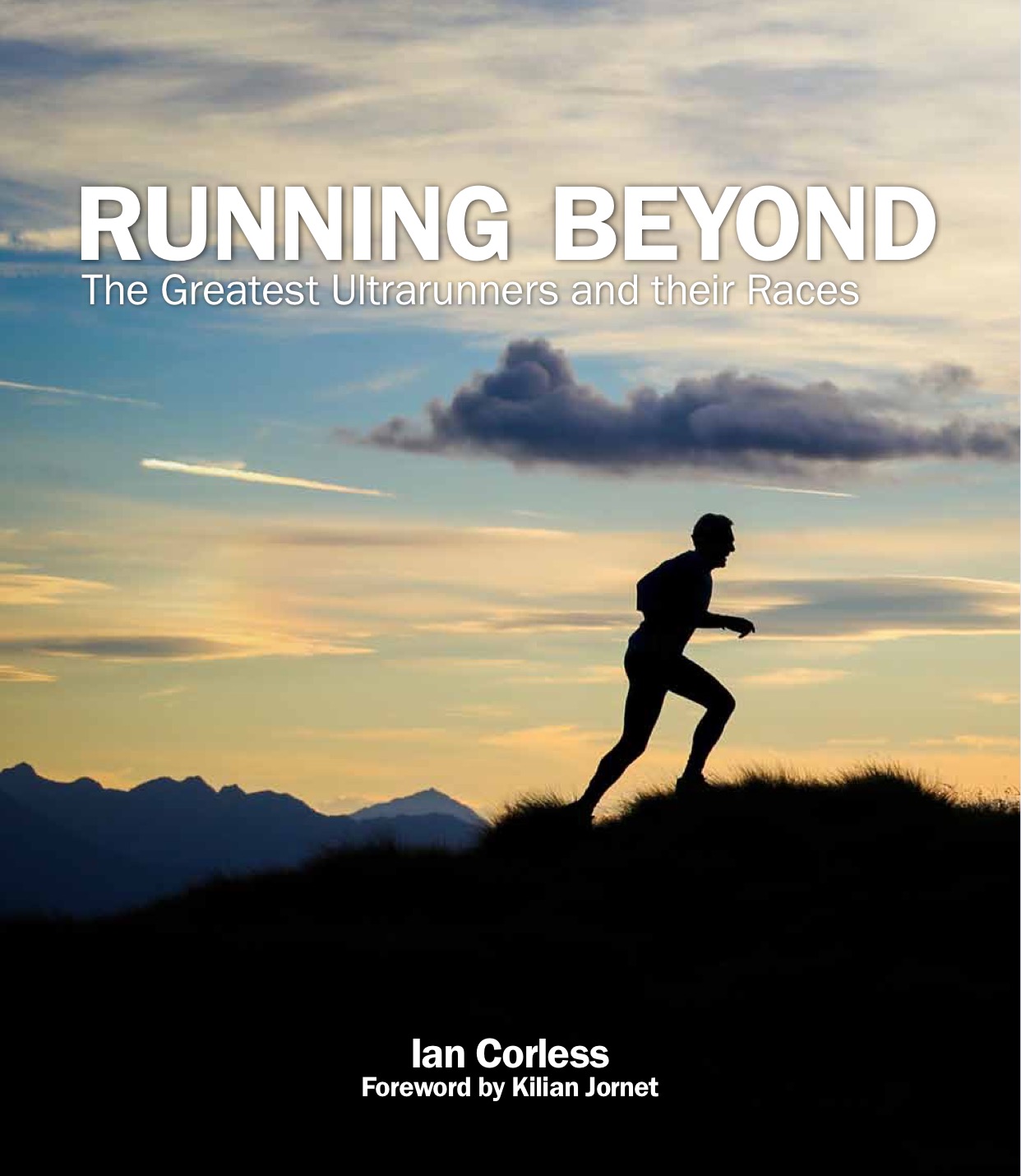
RUNNING BEYOND – A new book announcement

Cover

Multiple meetings, trips backwards and forwards to London and I am pleased to say that I can now announce that I will have a new book available in late (September tbc) 2016.

It has been a long term dream to find the backing of a publisher and I am pleased to say that Aurum Press Ltd (Here) have had the trust to allow me to produce a book on a sport I love through photography and words.

An added bonus is that Kilian Jornet has agreed to write the foreword.

A work in progress, I anticipate some long days and nights as I evolve this project. I hope through imagery and words it will be an inspiration to those who look at it and read it.

Grubby pages with repeated use, I’d like to see multiple ‘post it’ notes marking races for future ‘bucket lists’ and most of all I hope it will be a book that allows you to dream.

Wish me luck as I put this together. Many thanks for the continued support and most importantly, thanks to Aurum Press Ltd, Kilian Jornet and all the wonderful races and people around the world who have afforded me the opportunity to make a dream a reality.

Ian

*Please note the cover is just an illustration. I anticipate a new cover for the actual book.


Recent Printed Publications for iancorless.com

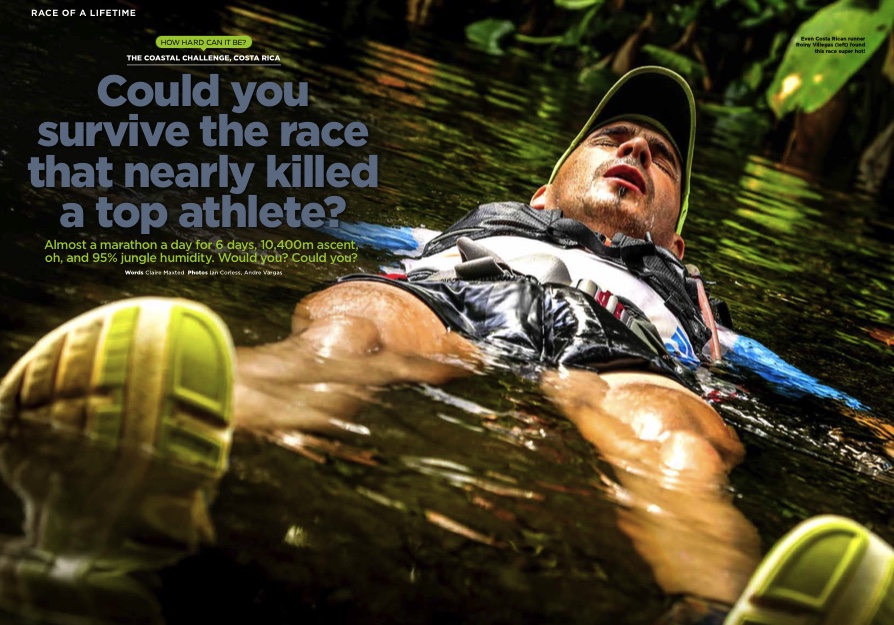
TCC Lead Page

The first few months of 2015 have been very rewarding and I have had several articles and features printed worldwide in a series of top ranking magazines.

From the rainforests of Costa Rica, to heat of the Sahara. Anton Krupicka looking broken at Transgrancanaria, Joe Grant between a rock and a hard place at The Coastal Challenge and Sir Ranulph Fiennes beating the heat at the Marathon des Sables.

Here are the magazines with links

Like The Wind HERE

Runners World HERE

Trail Running Magazine HERE

Competitor HERE

Outdoor Fitness HERE

Here is a selection of the printed articles. All my tear sheets can be viewed HERE

Screen Shot 2015-05-08 at 10.43.40

MDS 2015 Darren Outoor Fitness UTLD Runners World 2015 TCC 2015 Trail Running Mag MDS Sir Ranulph Fiennes captured_spread

Beat The Heat (Part Two) – Marc Laithwaite

©iancorless.com_Menorca2015-4326

Exercise in the heat can place a lot of strain upon your body, if you’re used to cooler climates. For this reason, many elite athletes will spend time acclimatising to the higher temperature. Acclimatisation can require up to 14 days, so what if you’re an amateur athlete traveling abroad for an endurance event, who can’t afford to travel 3 weeks before the event?

This is part 2 of our ‘exercise in the heat’ blog series. Last week we explained why exercise in the heat is such a problem (you can read by clicking the coaching articles link at the top of the page and then scrolling down through past blogs). In this week’s blog, I’ll explain how you can acclimatise before you travel and highlight the key physiological changes that take place, as a consequence of acclimatisation.

It’s a bit cold up North, so acclimatising might be difficult!!

Okay, if you live in the North of the UK and you’re traveling abroad to race, then you might be struggling to understand how you can possibly acclimatise. I use the term ‘North of UK’ as we all know that in the South of the UK, the temperature rarely drops below 18c. I’ve never traveled further South than Birmingham, but I hear they wear shorts and flip-flops pretty much year round.

In simple terms, to acclimatise before traveling, you need to make yourself hot and encourage sweating when you train. There are really easy ways to do this:

  1. Wear extra clothing
  2. Run on a treadmill or cycle indoors and turn up the heat
  3. Spend time in a sauna or steam room on a daily basis

I’d recommend you start doing this from 2 weeks out, but you need to do it consistently. Ideally it should be on a daily basis. There’s plenty of evidence to suggest that the above methods can help acclimatise you before travelling to warmer climates.

General guidelines:

  1. If you’re exercising outdoors, wearing extra clothing will lead to a higher sweat rate, so make sure you hydrate during the session. The same can be said for indoor running or cycling, make sure you are hydrating throughout.
  2. You should expect it to affect performance to some extent. If you use a power meter when cycling or you run at specific speeds on the treadmill, you should expect your power of speed to be a little lower than normal. If you’re temperature is higher, attempting to maintain the same intensity as usual could result in you being exhausted by the finish of the session!
  3. Try to progress the sessions in terms of exposure and intensity. For example, if you ride indoors, gradually turn up the temperature over a 7 day period and gradually build up the volume and intensity of the session. Don’t simply crank up the heat on day 1 and ride the full session as you’d expect to in cooler temperatures.
  4. The same rule applies for the sauna and steam room. Start with 10-15 minutes and gradually build your time to 30-45 minutes. Take a drink into the sauna or steam room with you to ensure you are hydrating adequately.

What are the physiological changes that take place?

There are a couple of key changes that take place when you are forced to sweat at a high rate:

The first is an expansion of plasma volume, this refers to an increase in the amount of blood plasma. Last week we explained that blood is made up of plasma (the fluid part) and cells. As you sweat, you lose plasma, which then thickens the blood. Part of the acclimatisation process in as increase in plasma, which means your blood is thinner. By increasing your plasma volume, this also means that you have more blood in general. The amount of cells doesn’t change, but the fluid component is increased, thereby increasing the overall blood volume. This is handy when your blood has to supply both muscles and skin, as discussed last week.

The second key change is a reduction in salt loss. Early in the acclimatisation process, your sweat contains a high amount of sodium. As the acclimatisation process progresses, your body retains sodium by reducing the amount lost in sweat. In simple terms, your sweat becomes less salty. If you’re acclimatising over a 2 week period, lick your skin every day and see if you can taste the change. It’s not socially acceptable to lick someone else’s skin.

As stated earlier, for these 2 changes to occur, you simply need to encourage a high sweat rate when training. The more you sweat, the more these changes will occur. Be sensible, reduce the intensity of the training session and gradually build up heat exposure over the 2 week period.

Until then, stay cool.

About Marc:

Sports Science lecturer for 10 years at St Helens HE College.

2004 established The Endurance Coach LTD sports science and coaching business. Worked with British Cycling as physiology support 2008-2008. Previous Triathlon England Regional Academy Head Coach, North West.

In 2006 established Epic Events Management LTD. Now one of the largest event companies in the NW, organising a range of triathlon, swimming and cycling events. EPIC EVENTS also encompasses Montane Trail 26 and Petzl Night Runner events.

In 2010 established Montane Lakeland 50 & 100 LTD. This has now become the UKs leading ultra distance trail running event.

In 2010 established The Endurance Store triathlon, trail running and open water swimming store. Based in Appley Bridge, Wigan, we are the North West’s community store, organising and supporting local athletes and local events.

Check out the endurance store HERE

Endurance Store Logo

COMPRESSPORT TRAIL MENORCA CAMI DE CAVALLS 2015 – Day One

©iancorless.com_Menorca2015-0459

The fourth edition of the COMPRESSPORT TRAIL MENORCA CAMI DE CAVALLS 2015 started on Friday May 15th at 0800 in the town of Ciutadella.

A weekend of racing and on Friday it was the 185km (0800 and 1200 start) and the 100km event that got underway.

Menorca literally threw everything at the runners in regard to weather – cloud, sun, wind, rain, thunderstorms and the occasional flash of lightening.

images

One thing remained constant though, the beauty of the surroundings and the stunning coastline.

As I write, the 185km is still taking place and the 85km event started at 0800 Saturday May 16th.

Cami de Cavalls map

Casey Morgan from the UK won the 100km event in a new course record – 8:57 (tbc) and we will update with a ladies result asap.

We will update with a series of reports and times as more information becomes available. For now, please enjoy a selection of images (many more to follow) from day one of COMPRESSPORT TRAIL MENORCA CAMI DE CAVALLS 2015. 

Website – http://www.trailmenorca.com

Beat The Heat ( Part One) – Marc Laithwaite

©iancorless.com_TCC2015_Day5-2508

This week we’re starting a series of articles titled ‘environmental physiology’. We’re going to open with a 2 part series relating to exercise in the heat (I say 2 parts, but who knows what could happen by next week). Following that, we’ll take a look at altitude training and potential benefits.

But before we go on, why not catch up on our seven part series of posts on RACE DAY NUTRITION HERE

Too Hot? Call The Police & Fireman…

Exercise in the heat can place a lot of strain upon your body, if you’re used to cooler climates. For this reason, many elite athletes will spend time acclimatising to the higher temperature. Acclimatisation can require up to 14 days, so what if you’re an amateur athlete travelling abroad for an endurance event, who can’t afford to travel 3 weeks before the event? Well this blog is quite timely for me, as I’m off to Lanzarote in less than 4 weeks for the Ironman triathlon and potentially, it could be very hot. There’s probably quite a few people reading this blog who are traveling abroad this year to take part in triathlon or running events in hot places. The purpose of this blog is to explain simple ways, which you can acclimate your body beforehand and explain the physiological changes, which take place to improve your performance.

Too hot? You Make A Dragon Want To Retire Man…

In a nutshell, when you exercise in hot climates, your core temperature rises and your performance suffers. If your core temperature rises too much, it could potentially be lethal, so your brain is pretty quick to try and stop that happening, by persuading you to stop!

How do we reduce core temperature?

There 2 main ways, the first is ‘convection’ and the second is ‘sweat evaporation’.

Convection

Think about a car radiator, it’s positioned right at the front of the car as that’s where the wind hits it when you’re driving. Heat is generated in the engine, this in turn heats the water which is then pumped to the radiator. The wind hits the radiator, cools the water and the cool water goes back into the engine to pick up more heat. This cycle continues, to keep removing heat from the engine, which is why it’s important to keep the fluid topped up or your car will overheat! The human body works the same way, heat is generated in the engine and your blood then picks up the heat. The blood is pumped to the coolest part of the body (the skin), where the wind hits it and cools the blood. It then returns back into the engine to pick up more heat and the cycle continues.

If the wind is blowing against your skin whilst you exercise, convection may well be enough to keep you cool and maintain a normal body temperature. It’s easier to do this when cycling, compared to running, as your speed is generally higher, so the wind chill is greater. Runners will notice that treadmill running leads to more sweating than running outside as the air temperature is generally warmer, but also you’re not moving, so there’s no air flow past the skin and therefore no wind chill or convection. The same can be said about indoor cycling or using a turbo trainer, especially if you don’t have a fan blowing.

Let’s use the treadmill running or turbo cycling scenarios as an example. If there’s no air flow past your skin to cool the blood, then in effect, you pump hot blood to the skin surface, it doesn’t get cooled, so the hot blood goes back into the engine / core. That’s a sure fire way to overheat. This is the same as leaving your car engine running on a hot day, whilst stuck in a traffic jam. If you’re not moving, there’s no wind hitting the radiator, so convection cooling can’t happen.

Sweating

Sweating is based on ‘evaporation’. Water from your body cells makes it’s way to the skin and as the hot blood arrives, the heat is passed from the blood into the water droplets (leaving the blood cool). The heated water on your skin, evaporates into the air like water from a boiling pan and takes the heat with it. If you’re running on a treadmill and there’s no convection, you need another method of getting rid of heat, so the sweating and evaporation will kick in.

It’s important to recognise that ‘evaporation’ removes the heat, so any sweat on your skin, clothing or floor, serves no purpose other than to lead to dehydration. 

Convection and sweating don’t compliment each other too well

If you’re racing in hot weather, convection isn’t enough so you’ll also sweat to keep your temperature down. As you sweat, you lose fluid from your body and this leads to a drop in blood plasma (plasma is the fluid/water component of blood). The problem is that you need a lot of blood for convection to work well. When you’re exercising, blood is pumped to the exercising muscles and what’s left is pumped to the vital organs. So what happens when you then need to pump extra blood to the skin to cool down? Do you reduce blood flow to the muscles and vital organs? It sounds like a great idea to keep you cool, but where is this extra blood coming from? As if that wasn’t bad enough, you’re now sweating and the amount of blood you have is dropping. So not only do you have to supply muscles, organs and the skin, you’ve got less and less blood available as sweating continues.

Blood is made up of plasma (fluid) and cells (red/white/platelets). When you sweat, you lose plasma, but not cells. This means that the total amount of blood is reduced and it also gets thicker (same number of cells but less fluid). 

What does this mean in terms of performance?

As you’ve probably guessed already, this isn’t good for performance. Heart rate is generally higher for any level of exercise. This is due to the fact that you’re trying to pump blood to all areas of your body and your total blood volume is dropping. Your cardiovascular system is therefore working overtime, trying to match the demand with a struggling supply. Due to fluid and salt losses, your body becomes dehydrated and cells cannot function correctly. We’ve mentioned previously that salt is required for transporting fluid throughout the body and as high amount of salt can be lost in sweating, this mechanism is impaired.

Something of great importance, which is less frequently discussed, is the change in substrate utilisation. Whilst the exact mechanism is still under question, it’s pretty clear that you use more carbohydrates and therefore empty your glycogen stores more quickly when exercising in the heat. The simple explanation is that that there’s a lack of ‘spare blood’ going to the muscles, due to the fact it’s going to the skin for cooling. Fat metabolism requires more oxygen than carbohydrate metabolism so there’s a switch from fat to carbohydrate. This may also be explained by a switch from ‘slow twitch’ to ‘fast twitch’ fibres, which use less oxygen.

All in all, this isn’t looking too good. We’ve got an ever-decreasing blood volume, which is being pulled in several different directions. We’ve got decreasing salt levels and an onset of dehydration. We’ve got a heart rate which is significantly higher than it should be for the intensity we’re exercising at and to cap it all off, we’re running out of carbohydrates at a faster rate than normal.

Don’t worry help is at hand. Next week we’ll discuss how acclimatisation helps you to deal with the issues and explain the physiological changes responsible.

Until then, stay cool.

– Marc

About Marc:

Sports Science lecturer for 10 years at St Helens HE College.

2004 established The Endurance Coach LTD sports science and coaching business. Worked with British Cycling as physiology support 2008-2008. Previous Triathlon England Regional Academy Head Coach, North West.

In 2006 established Epic Events Management LTD. Now one of the largest event companies in the NW, organising a range of triathlon, swimming and cycling events. EPIC EVENTS also encompasses Montane Trail 26 and Petzl Night Runner events.

In 2010 established Montane Lakeland 50 & 100 LTD. This has now become the UKs leading ultra distance trail running event.

In 2010 established The Endurance Store triathlon, trail running and open water swimming store. Based in Appley Bridge, Wigan, we are the North West’s community store, organising and supporting local athletes and local events.

Check out the endurance store HERE

Endurance Store Logo