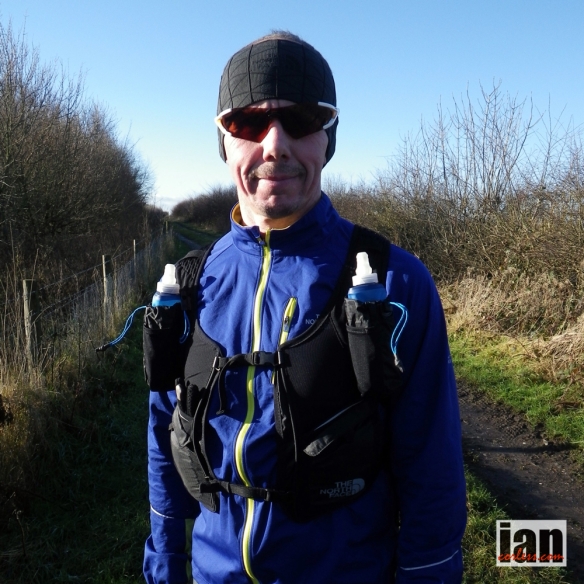
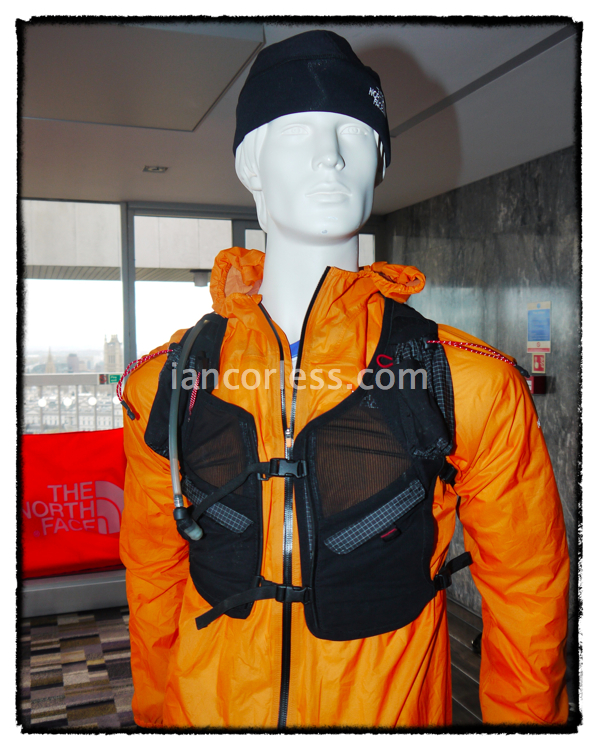
The North Face FL Race Vest is a race vest that has been well over 12-months in the making. I first had a look at this pack in November 2012. It was a prototype that had been created in preparation for Jez Bragg‘s epic run on the Te Araroa Trail in New Zealand.
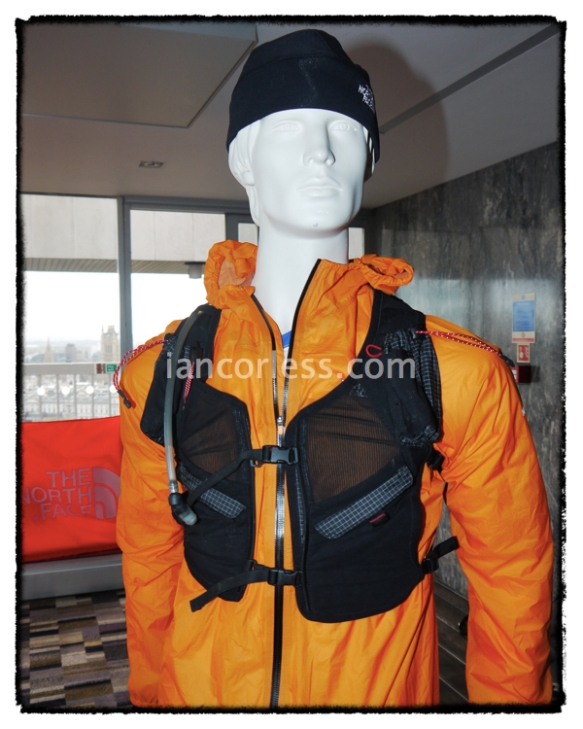
FL prototype 2012
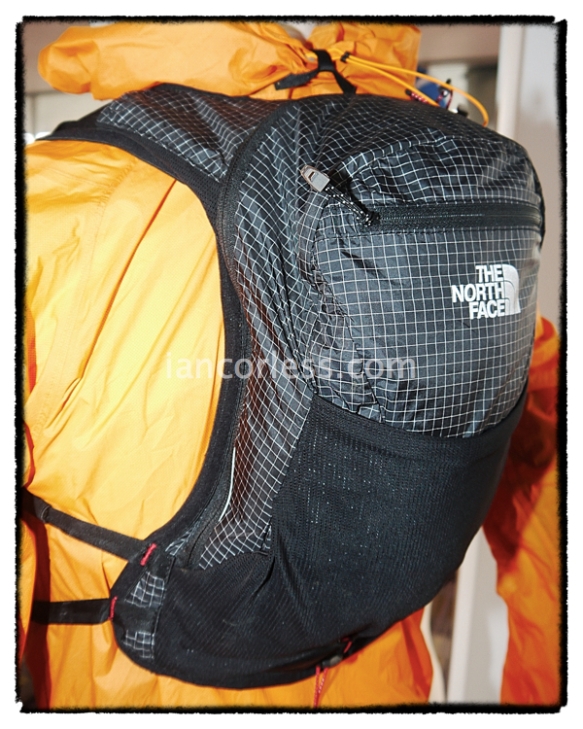
FL prototype 2012
You will see the above images are a more minimalist version of the current FL Race Vest, however, lessons were learnt from the prototype and with feedback from Jez Bragg and Lizzy Hawker, the current model has been developed and tweaked with the TNFUTMB and similar long distance races primarily in mind.
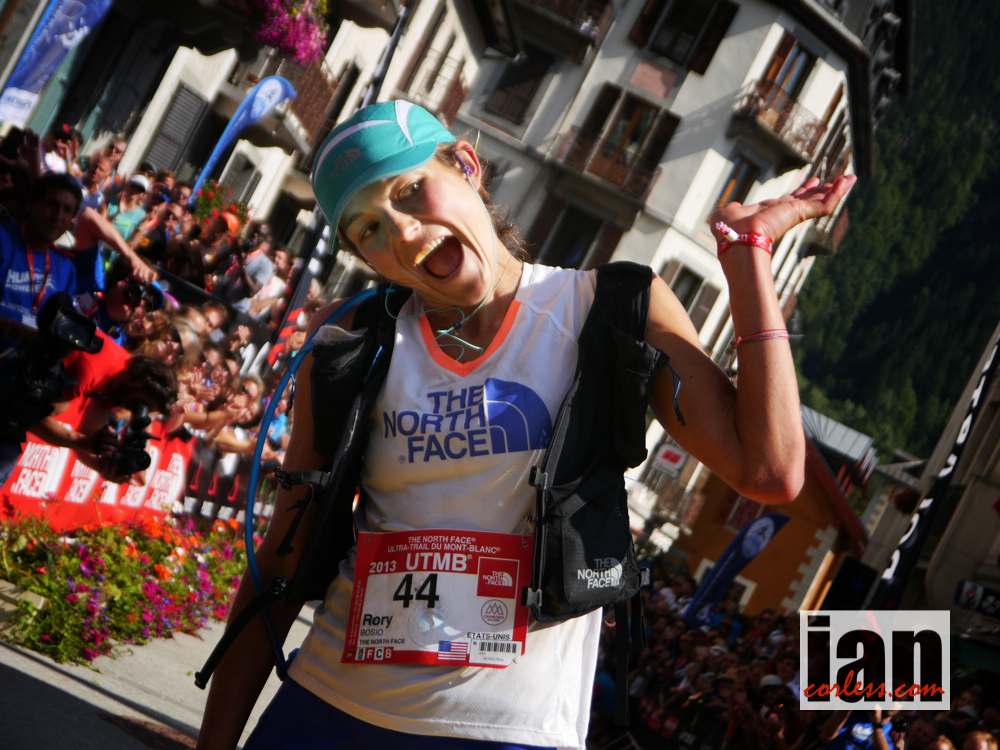
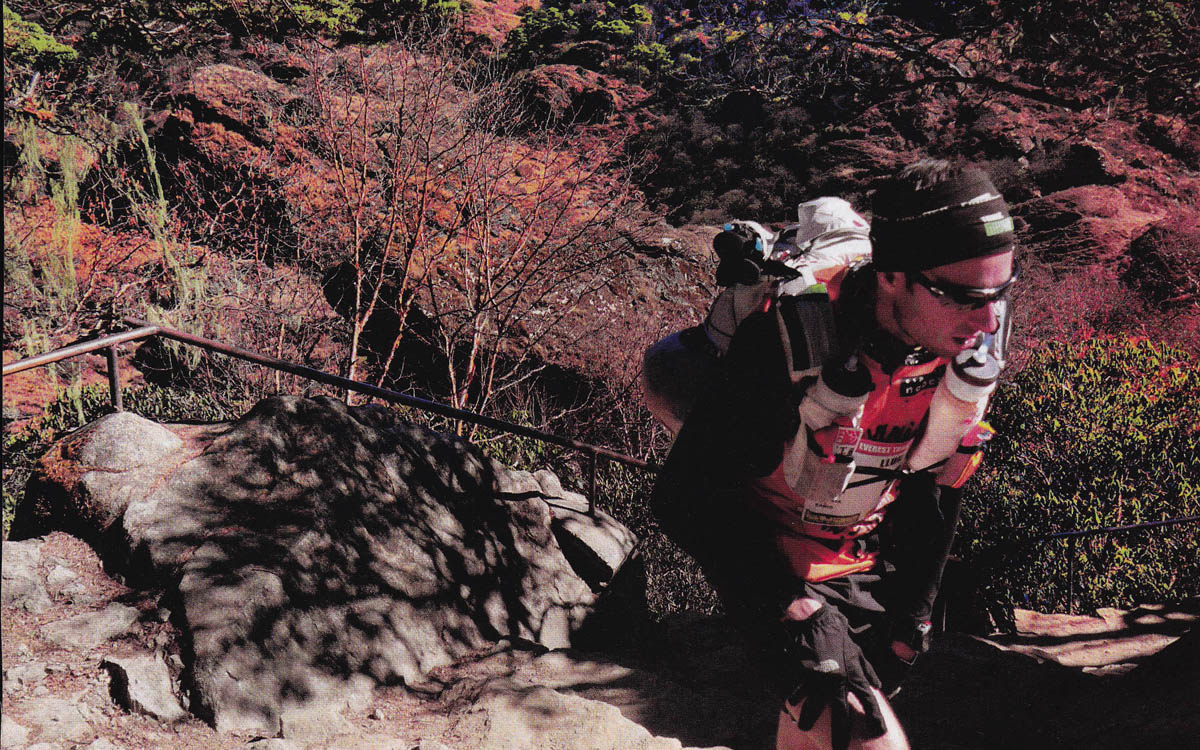
I picked up my current vest just days before the 2013 edition of the TNFUTMB and it was reassuring to see that my vest was exactly the same as the ones being used by Rory Bosio, Jez Bragg and the rest of the TNF team.
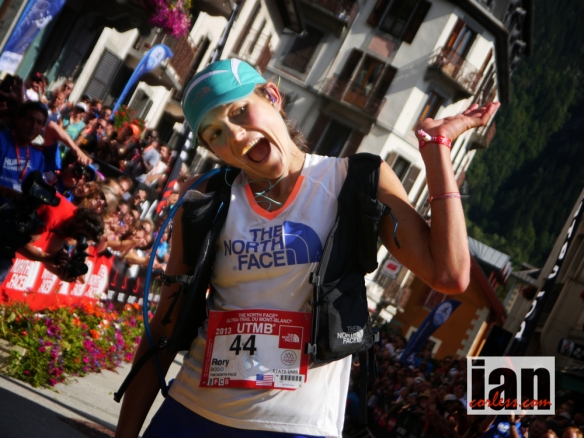
Rory Bosio wearing the FL Race Vest after dominating the 2013 TNFUTMB.
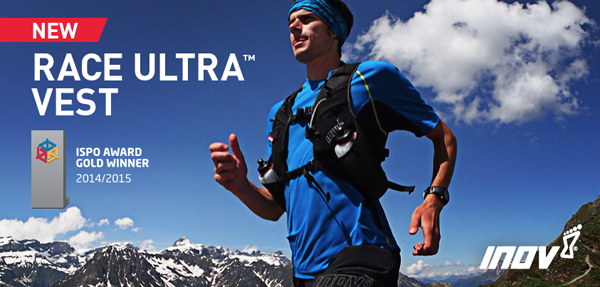
Race vests have become the ‘norm’ in regard to race packs. All the leading brands are developing new systems, new sizes and new designs in the quest for the ultimate product. Certainly, Salomon have very much paved the way recently with S-Lab 5lt and 12ltr. In addition, my recent review of the inov-8 Race Ultra Vest had me 99% convinced that in my opinion, this new product by the UK brand was currently the ‘best’ available of its type.
The North Face FL Race Vest sits between the inov-8 Race Ultra and Salomon S-Lab products. Although the inov-8 product is supremely comfortable and perfectly designed, it may just not be big enough for a tough or long race when mandatory kit will stress a packs capacity. By contrast, the Salomon S-Lab 12ltr has been designed with long racing in mind and offers an excellent form fitting pack that many swear by. At 8ltr capacity, the FL Race Vest sits nicely in the middle ground and actually may very well be the perfect size for a mountain 100-mile race like TNFUTMB or similar.
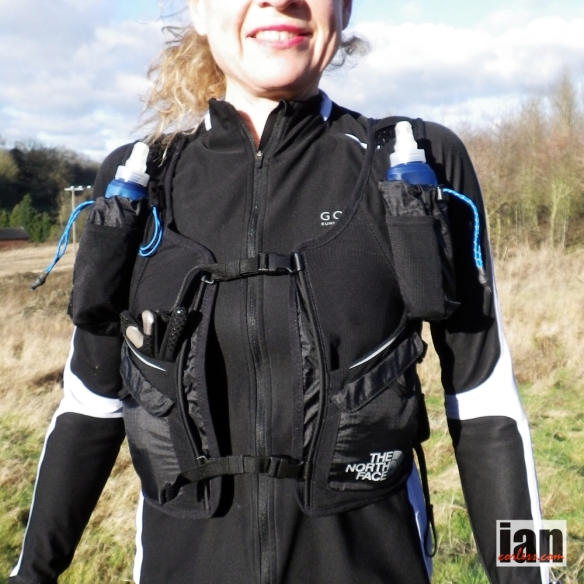
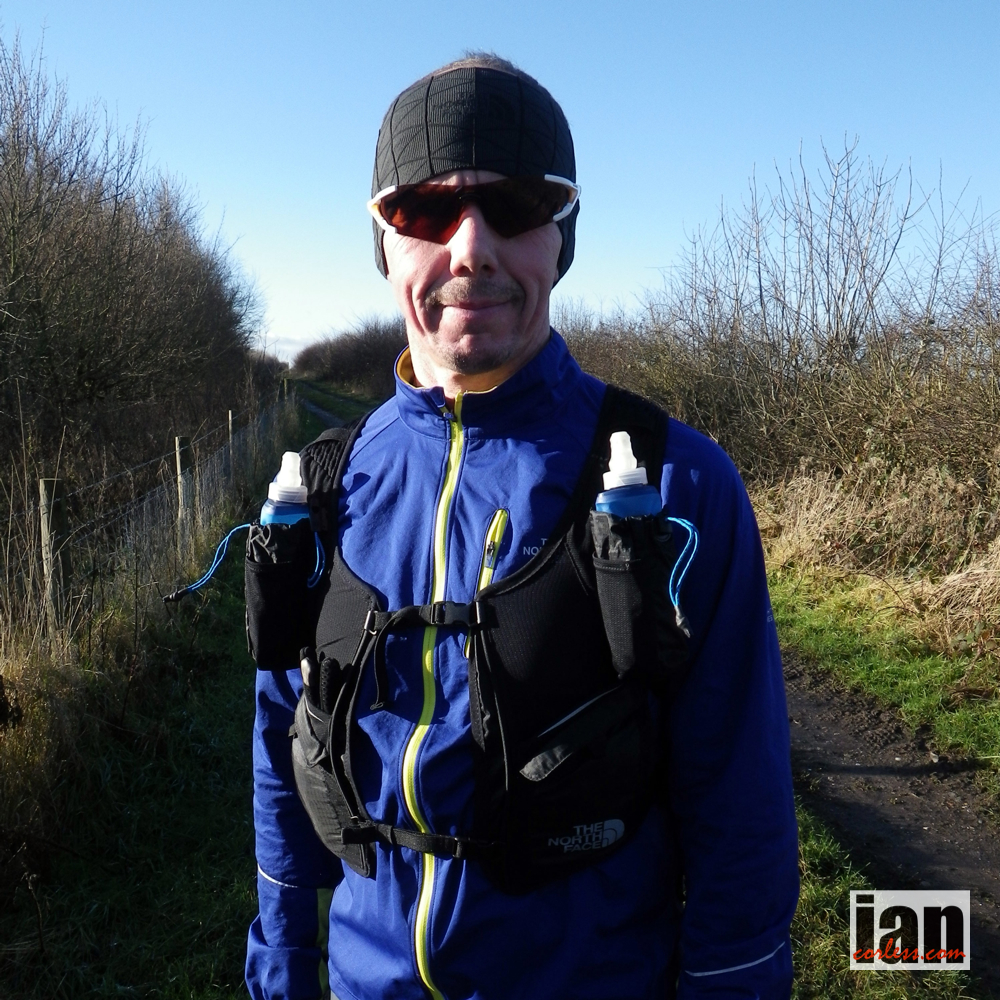
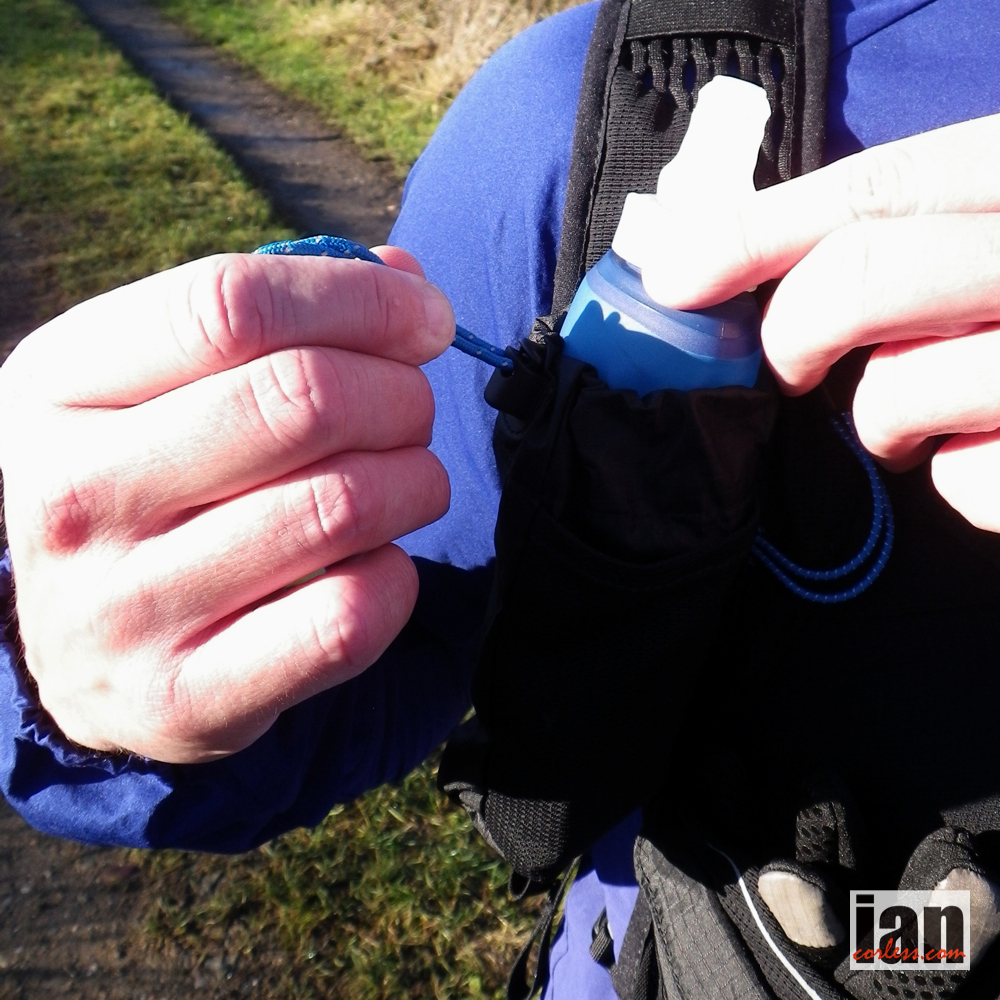
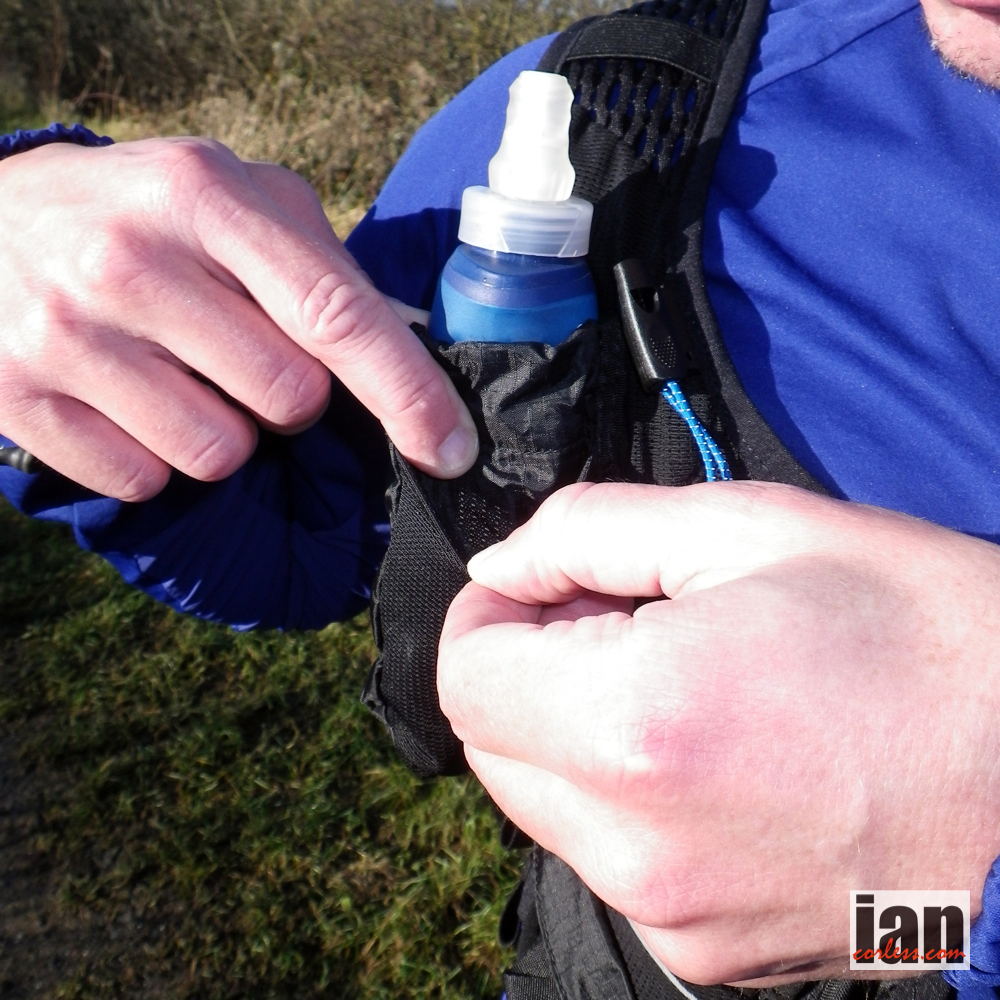
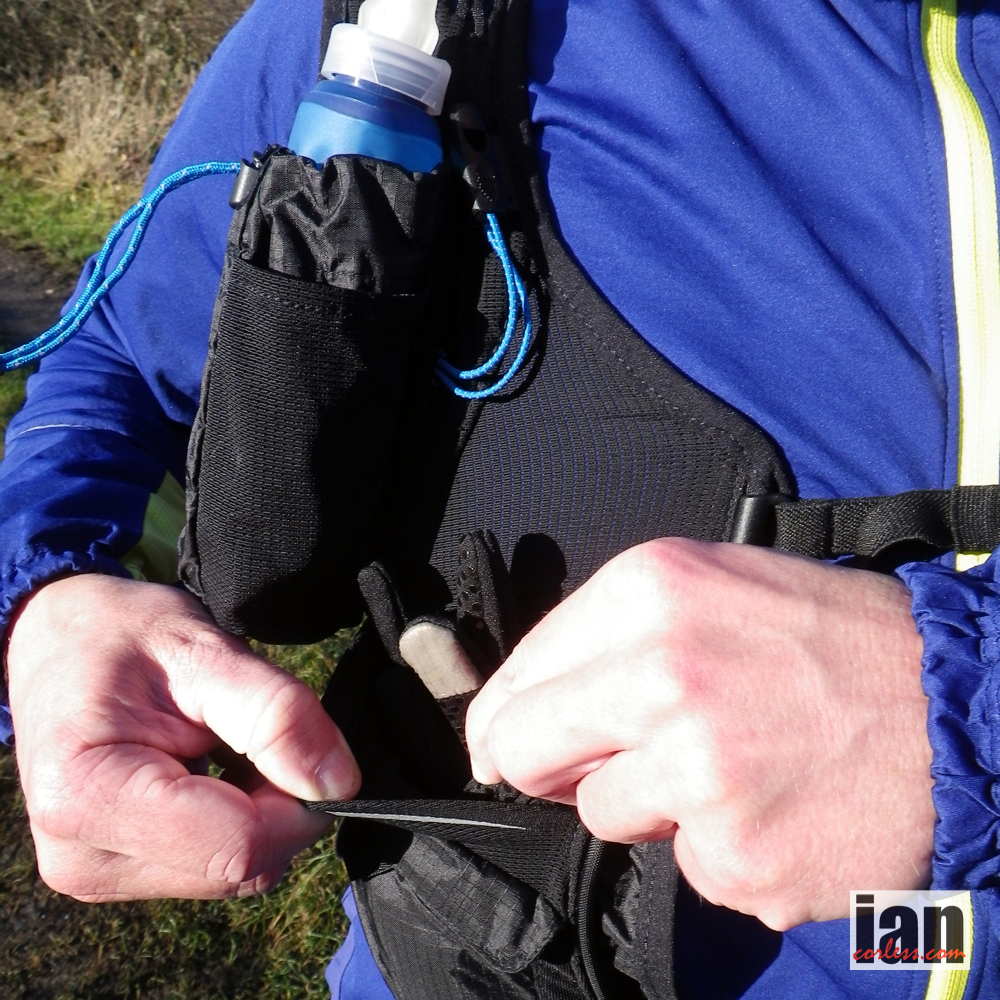
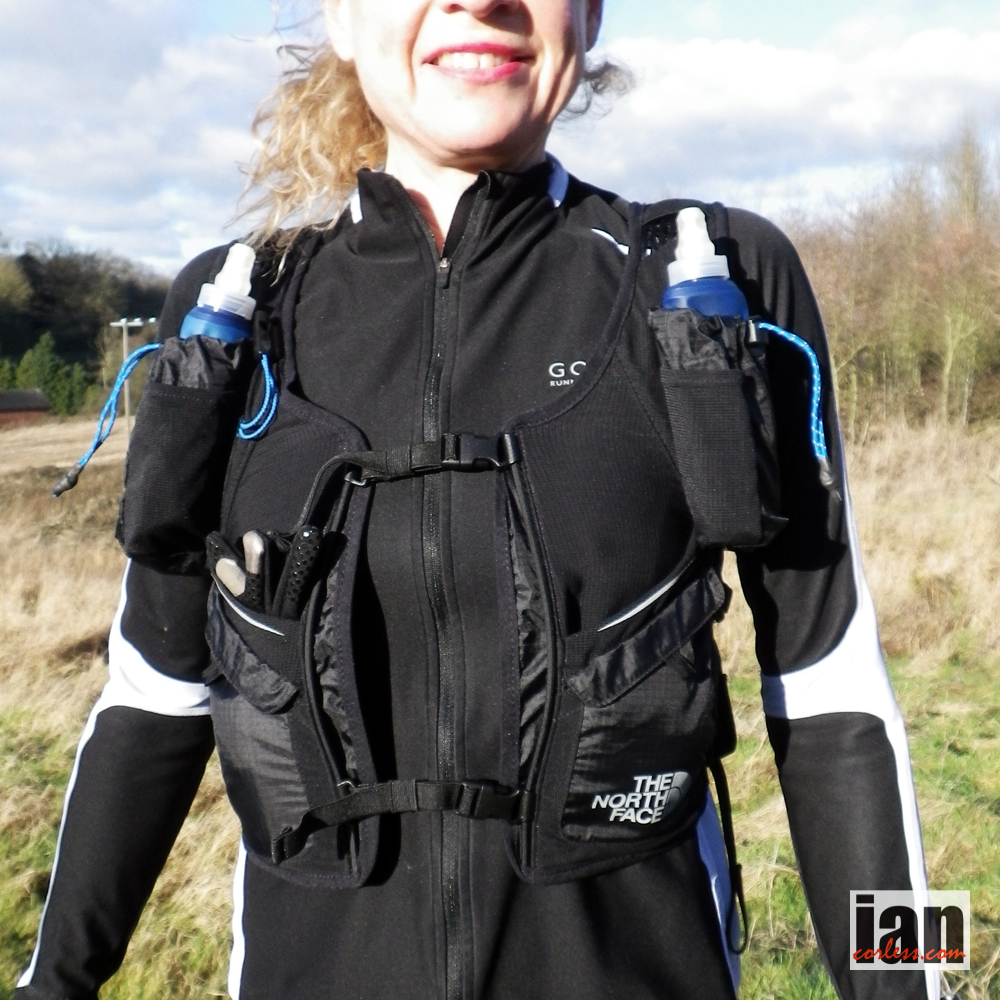
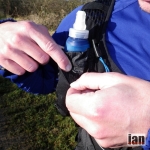
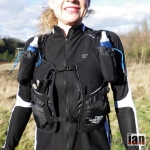
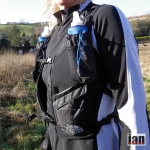
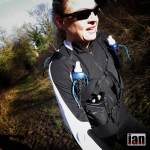
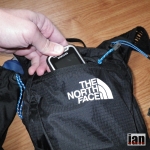
Like all current vests, the FL comes with a bladder that sits inside a mesh pocket within the main compartment of the pack. However, if you are like me, you may very well prefer bottles or soft flasks? The front of the FL has two upper drawstring pockets that can accommodate bottles/small soft flasks or other items. I initially tried two 500ml bottles but found the ‘balance’ all wrong. When running they would feel far too close to my face and noticeable bounce from the weight was annoying. However, replacing the bottles with two smaller soft flasks that could accommodate 250ml each, this irradiated bounce and made the whole system not only infinitely more comfortable but also more practical.
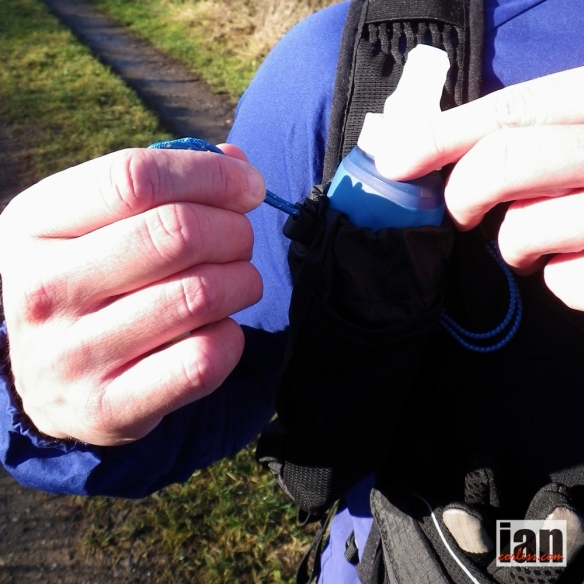
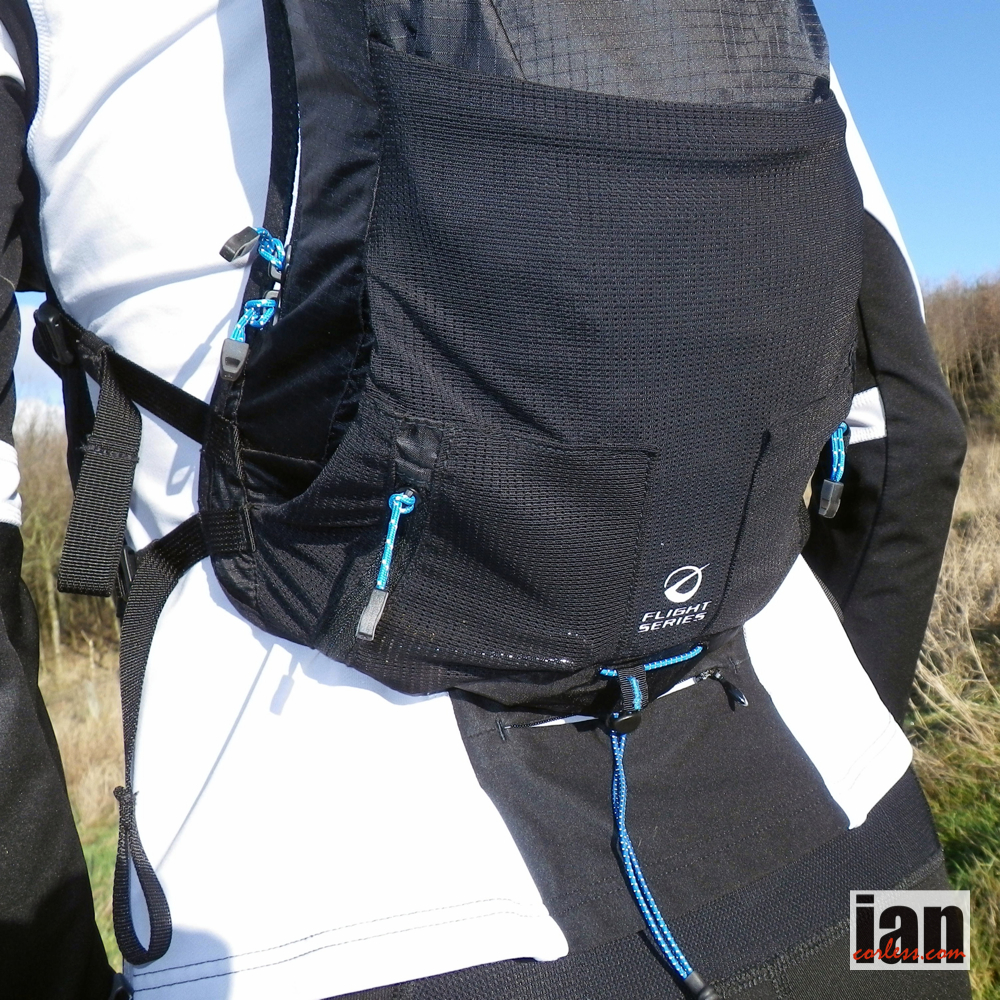
On the outside of the upper pockets are small stretchy mesh pockets that would hold gels or similar products.
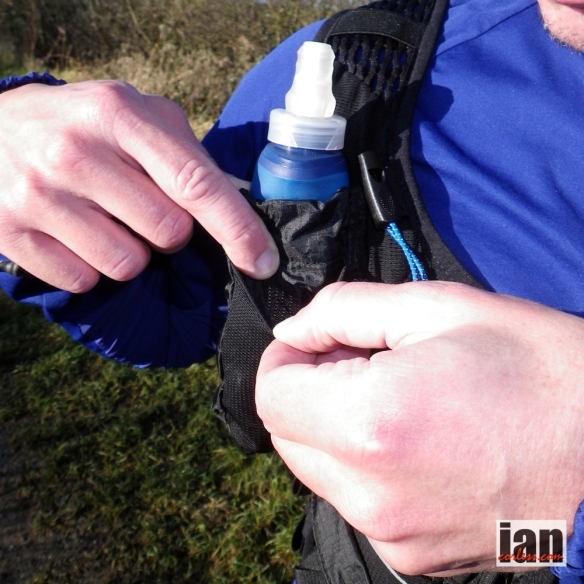
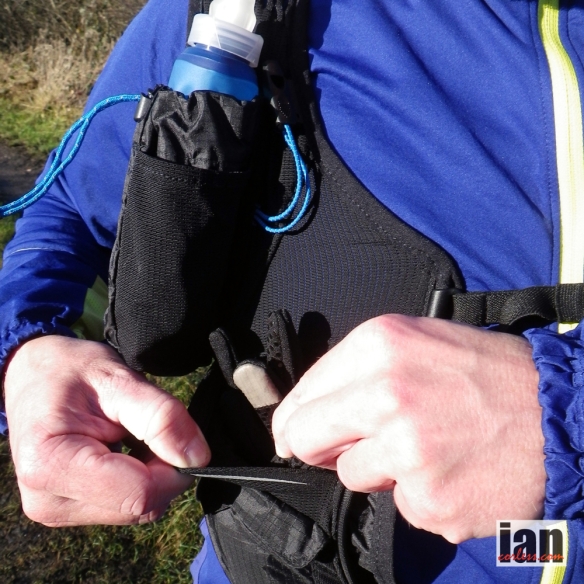
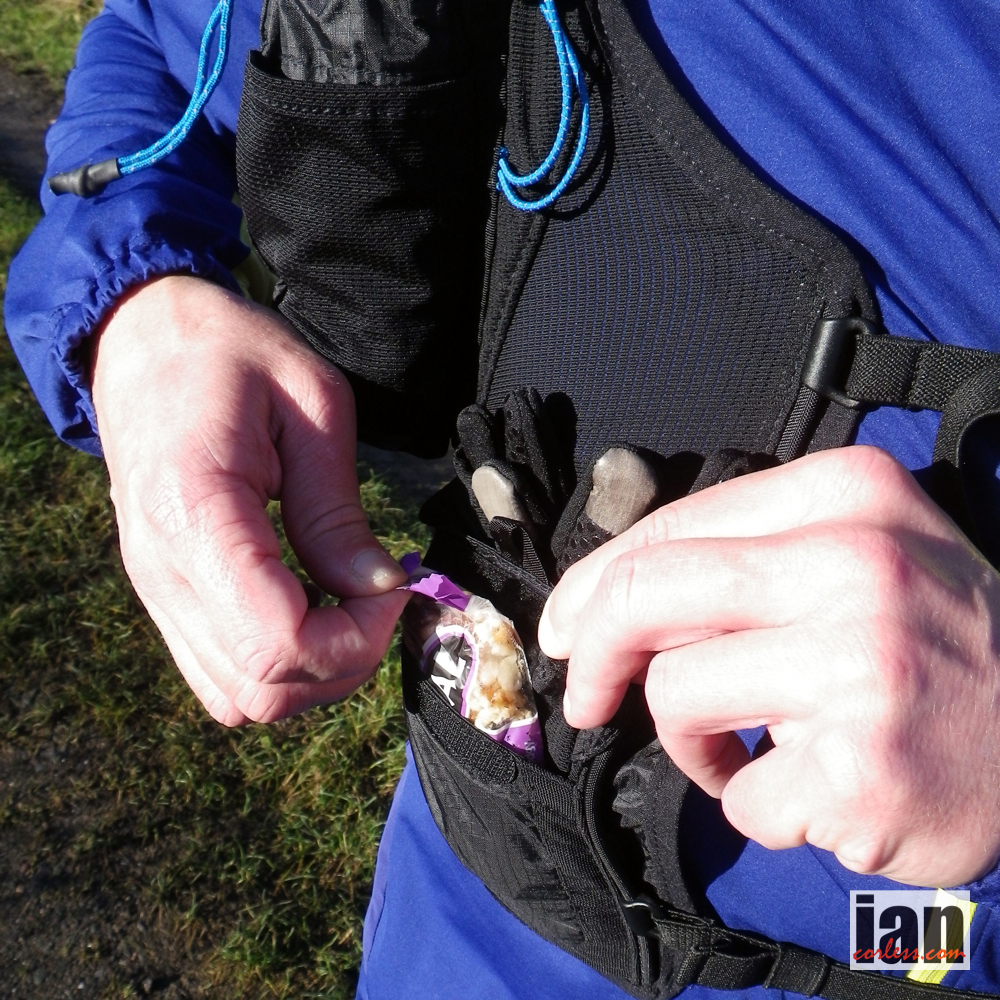
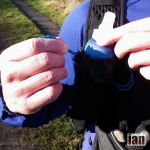
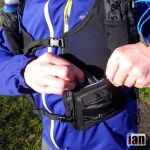
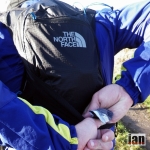
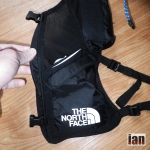
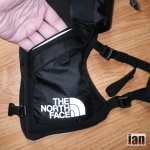
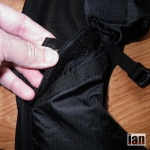
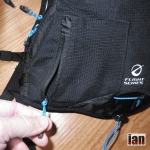
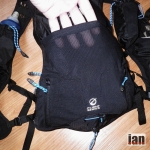
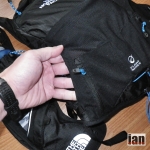
The lower part of the front vest has two Velcro closure pockets that may be useful in holding valuable items such as phone, keys, gps, camera and so on. Equally, you could add any food products for easy access on the go.
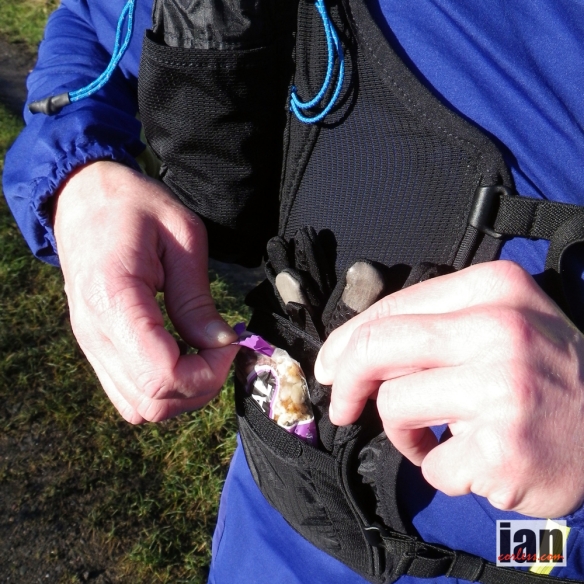
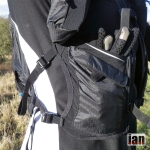
Behind the Velcro pockets are two larger mesh stretch pockets. They are capacious and ideal for gloves, hat or buff type products. In actual fact, they are so spacious you can add soft flasks to increase liquid capacity.
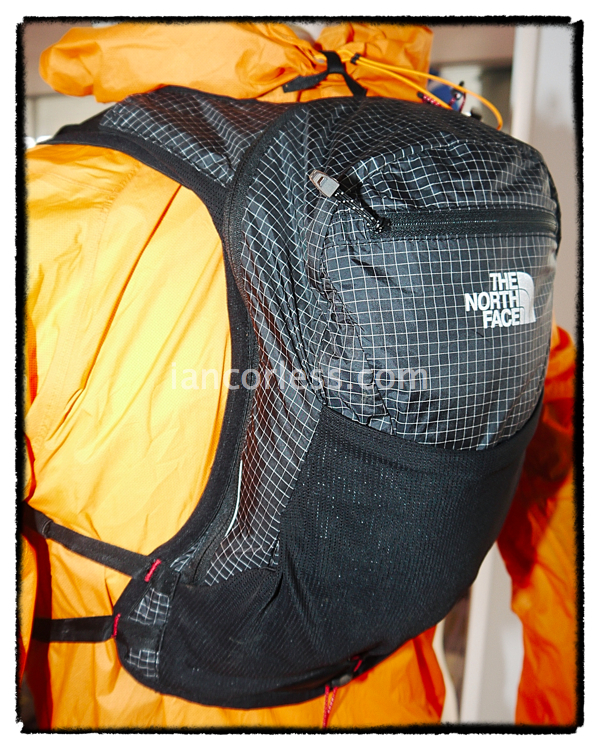
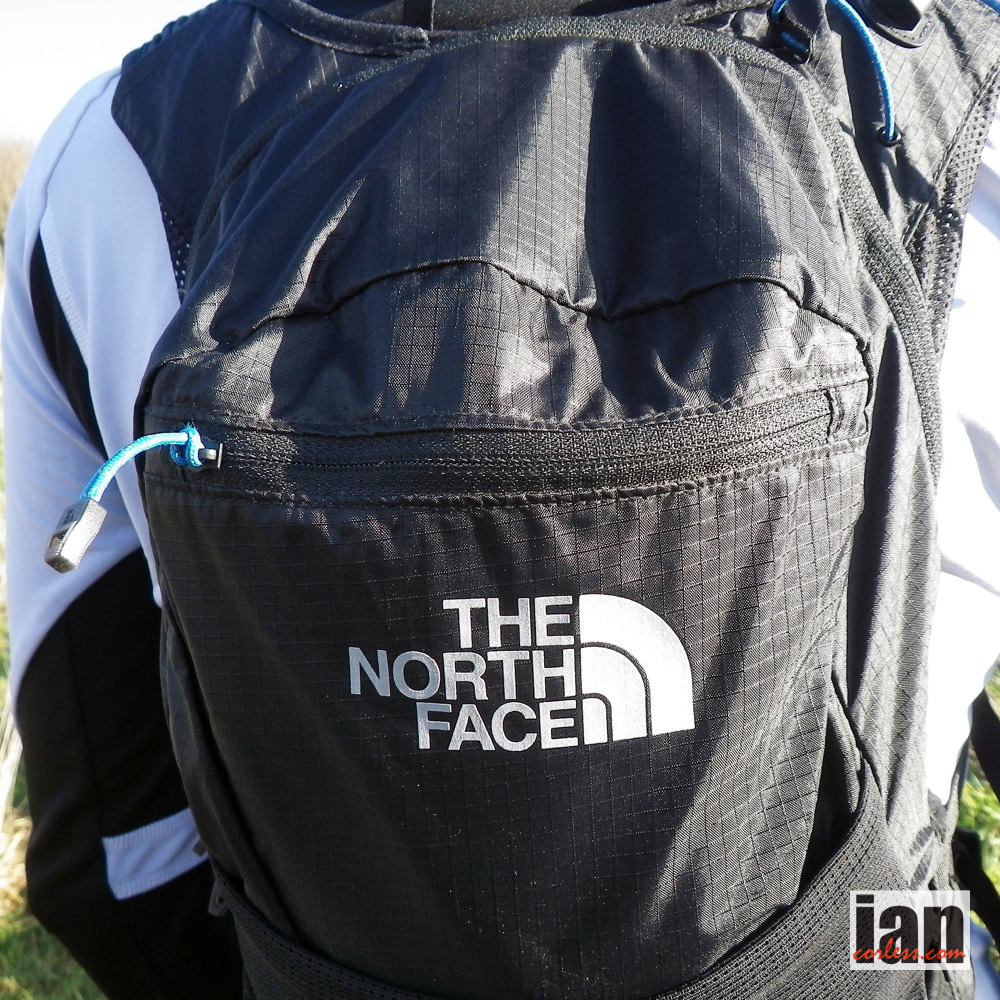
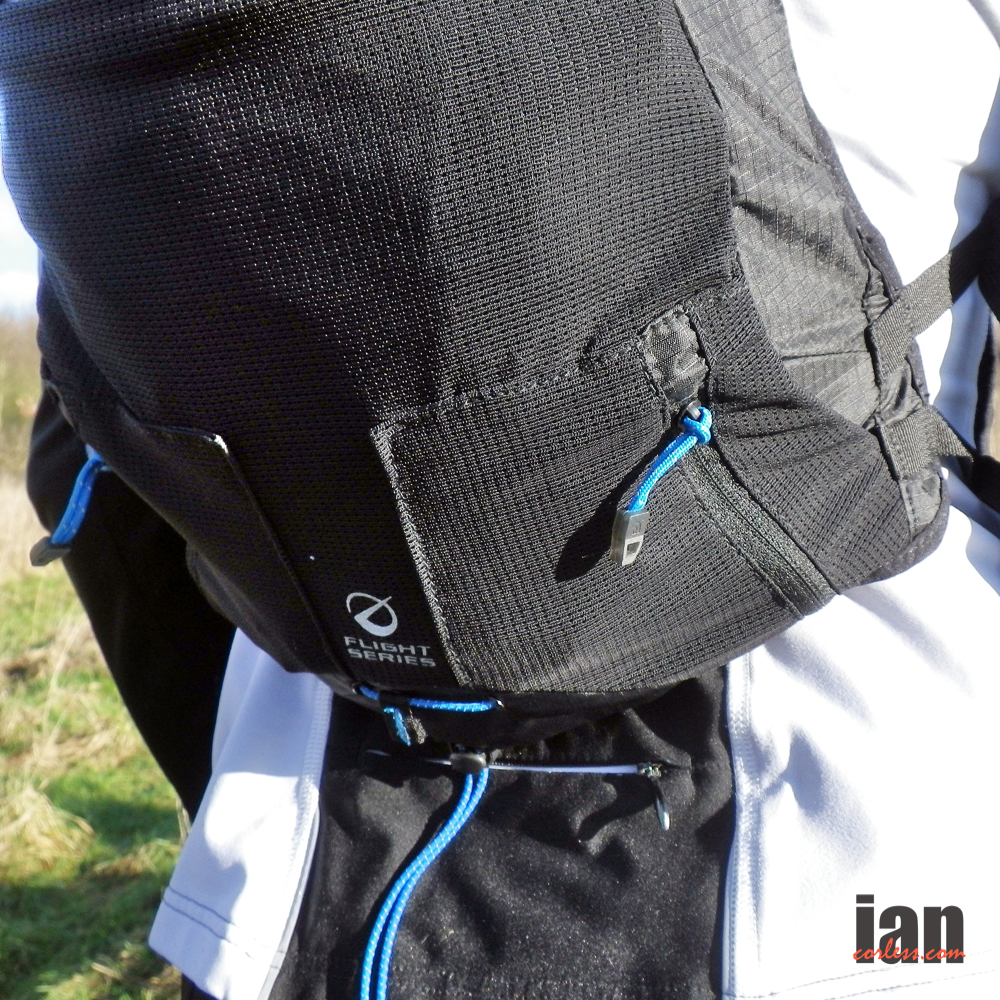
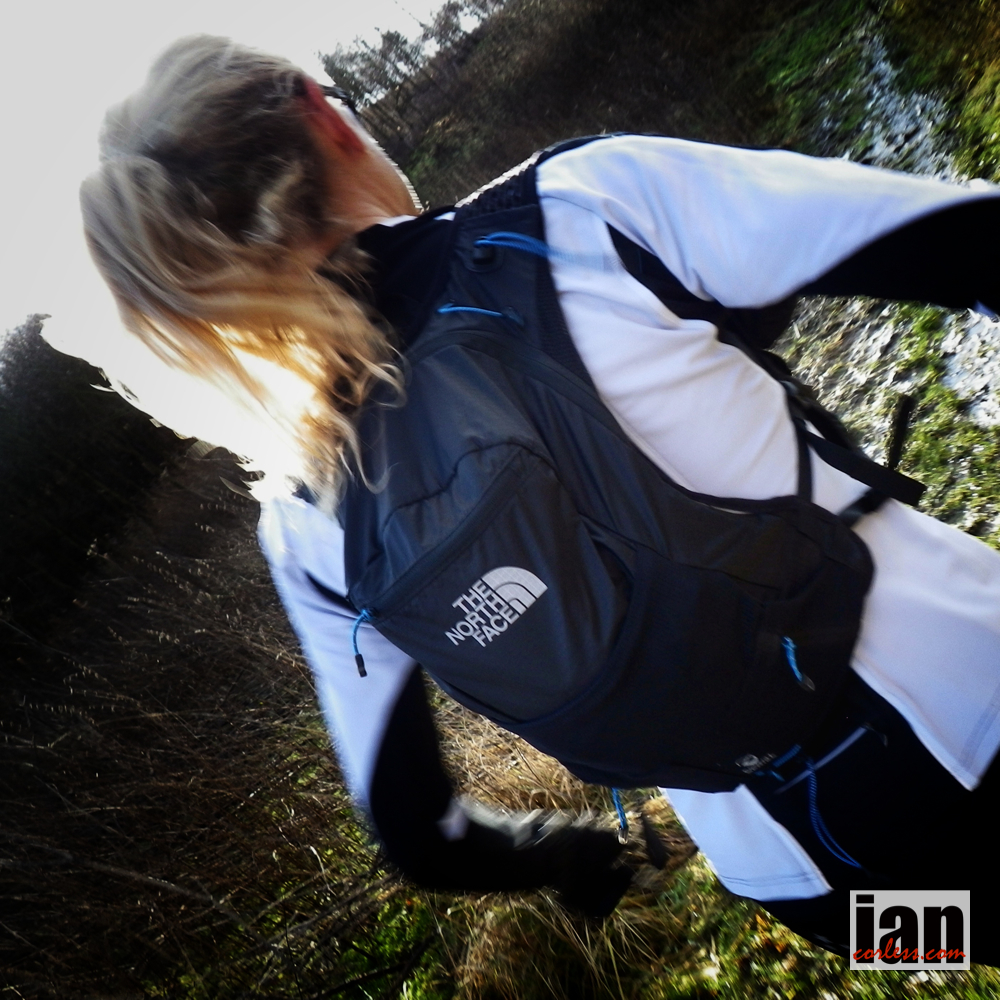
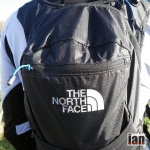
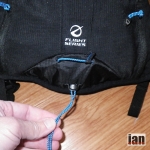
The rear of the pack has an upper zipper pocket that can hold a phone, keys, camera or any other item of value .
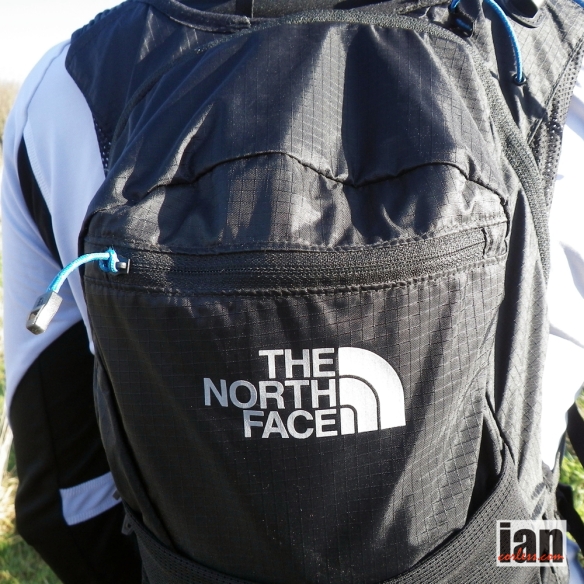
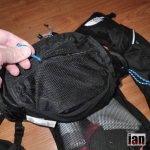
Directly below the upper zip pocket is a capacious stretchy open pocket that can be accessed from the top or the left/ right side. This pocket has been designed so that you may add or remove essential items while still moving… gloves, hat or jacket!
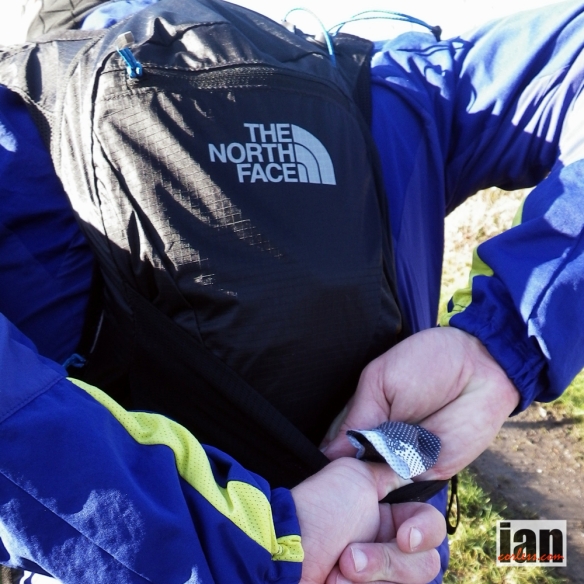
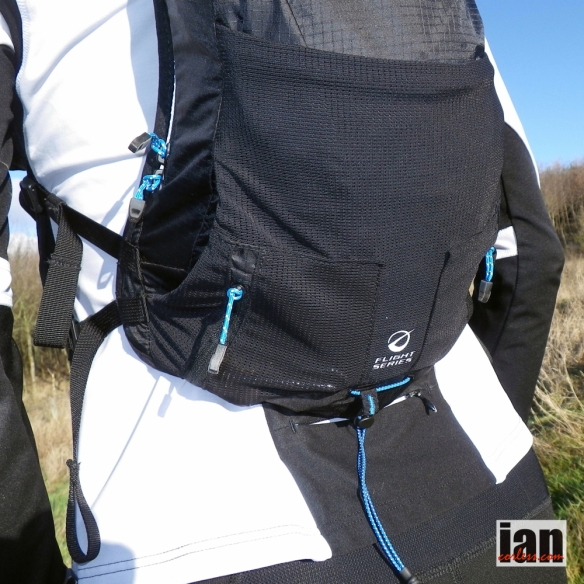
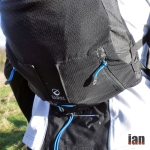
Two smaller zipper products have been added to the left and right hand sides of the larger rear mesh pocket. These pockets may also be accessed without removing the pack. They are small but ideal for money, keys or similar sized items.
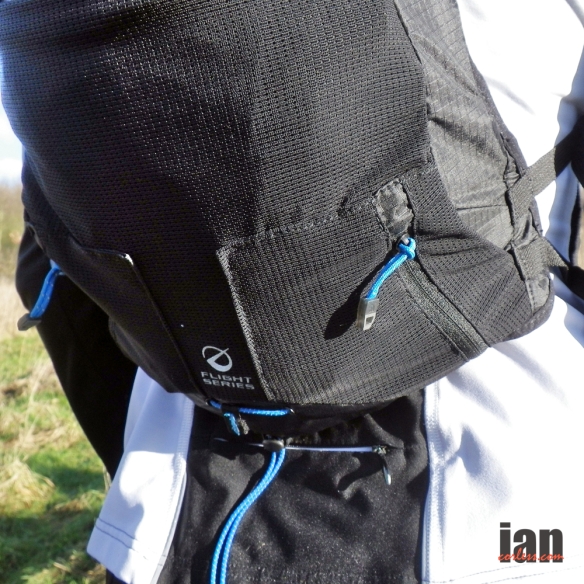
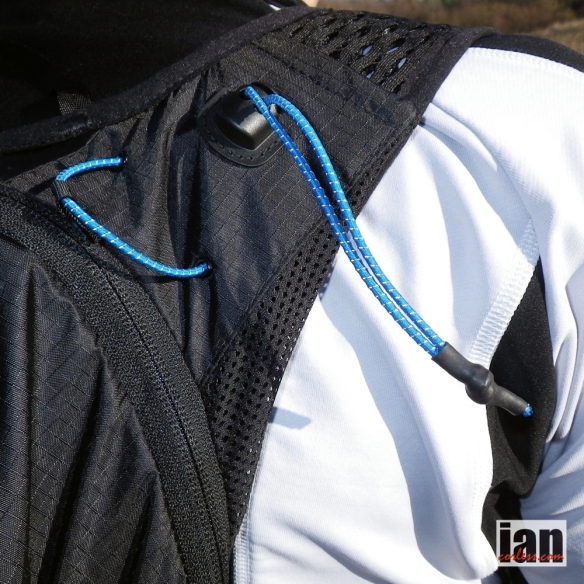
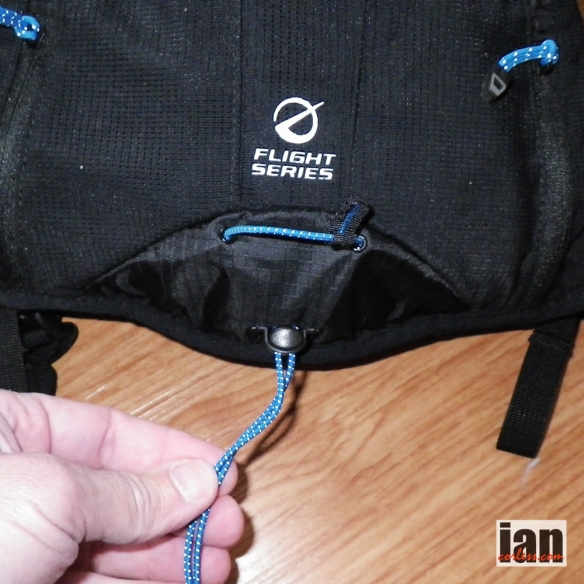
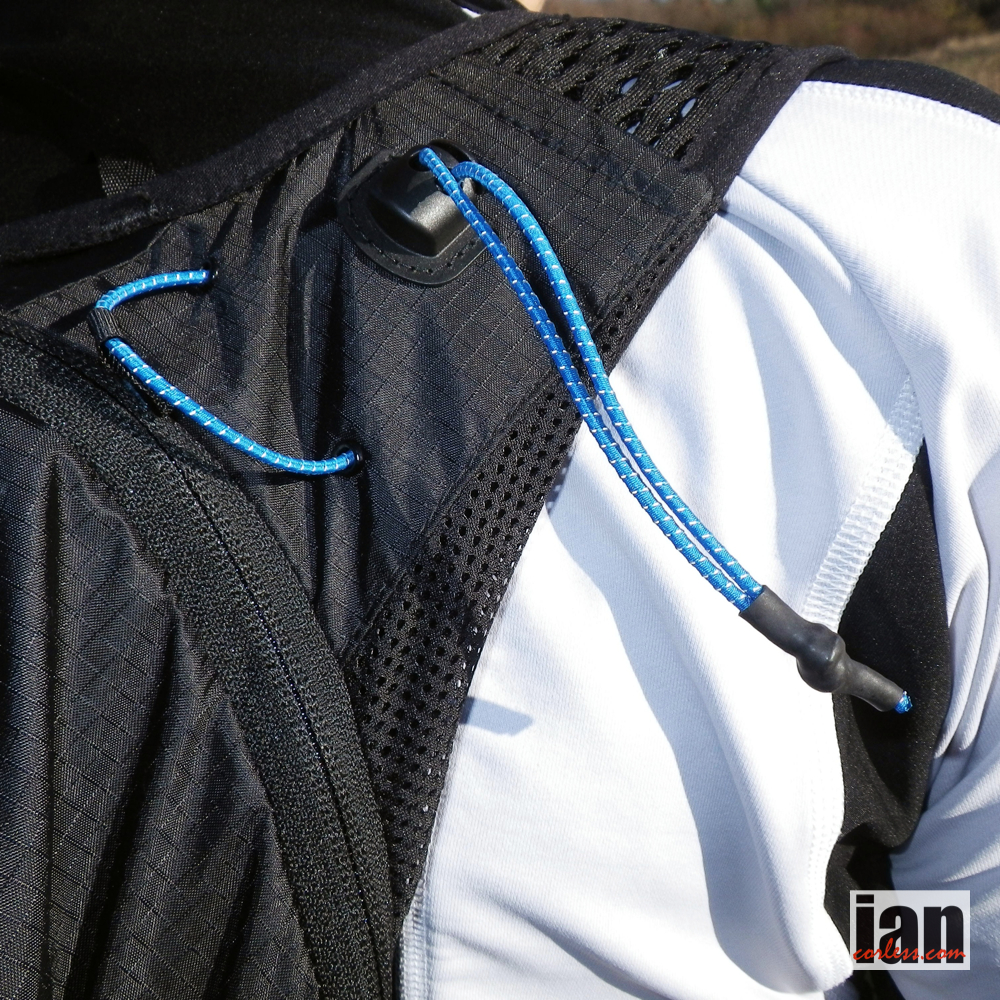
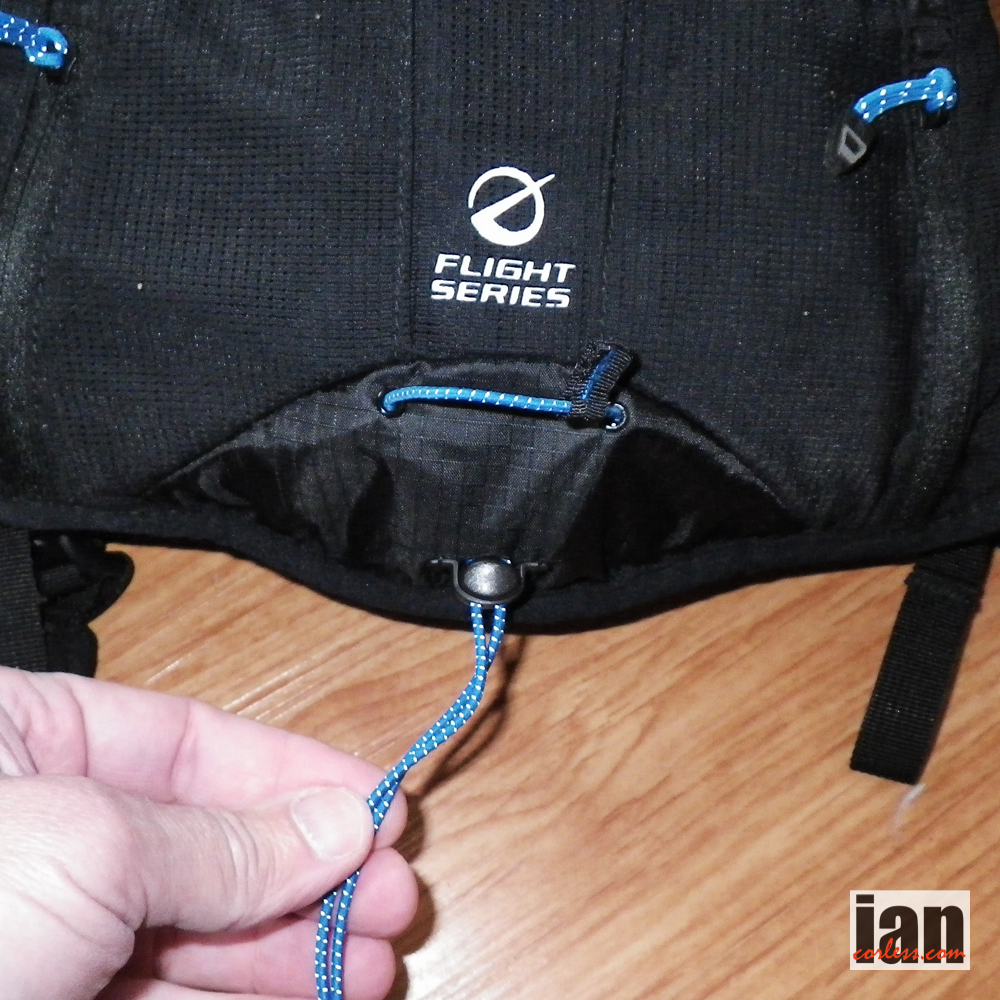
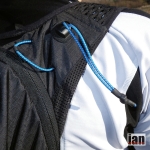
On the upper right hand side of the rear of the pack, is a blue bungee cord designed to hold ‘poles’ when not in use. Equally, at the bottom of pack on the rear is another blue bungee to hold the opposite end of the poles.
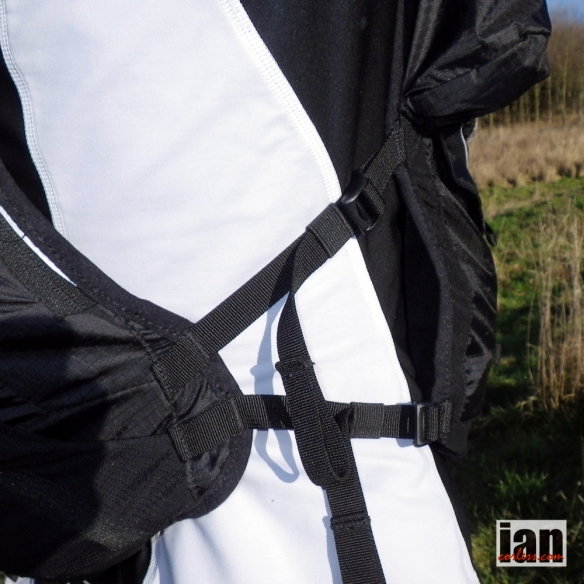
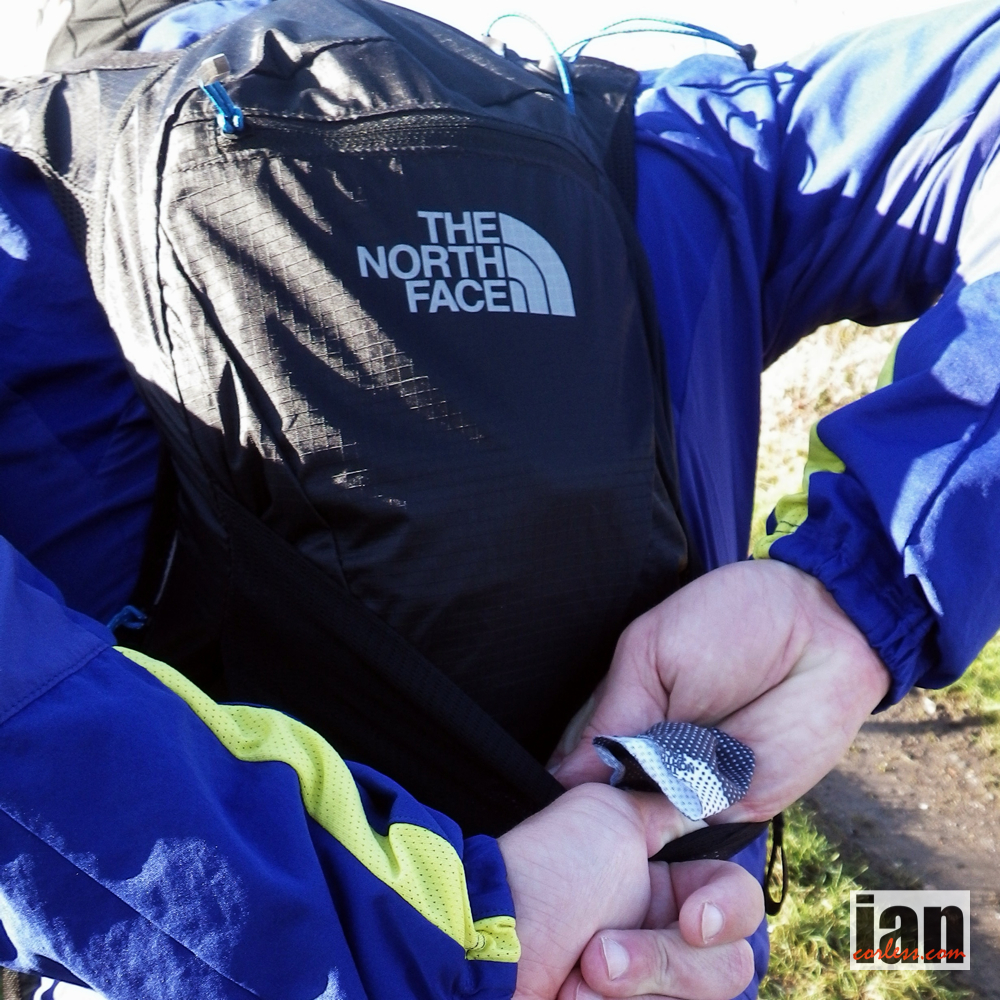
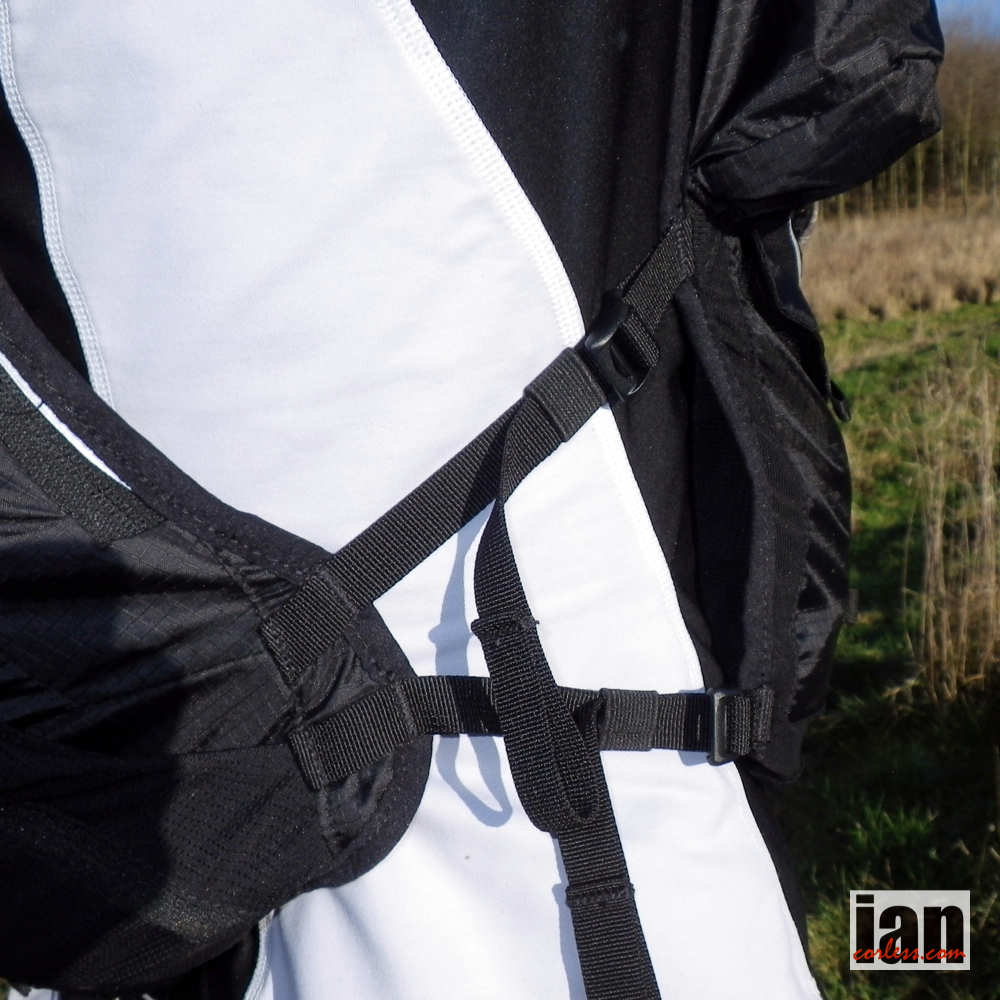
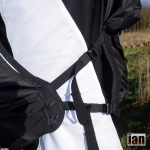
A key feature of the pack is the adjustability on the side and the front. Underneath the arms are two independent straps that may be lengthened or shortened to get just the correct fit.
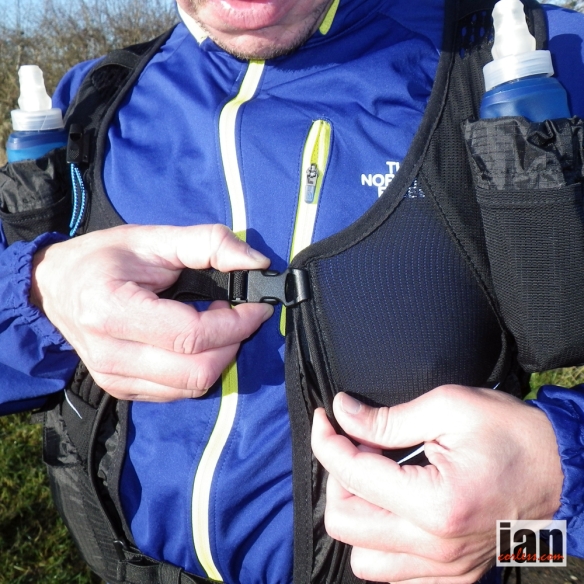
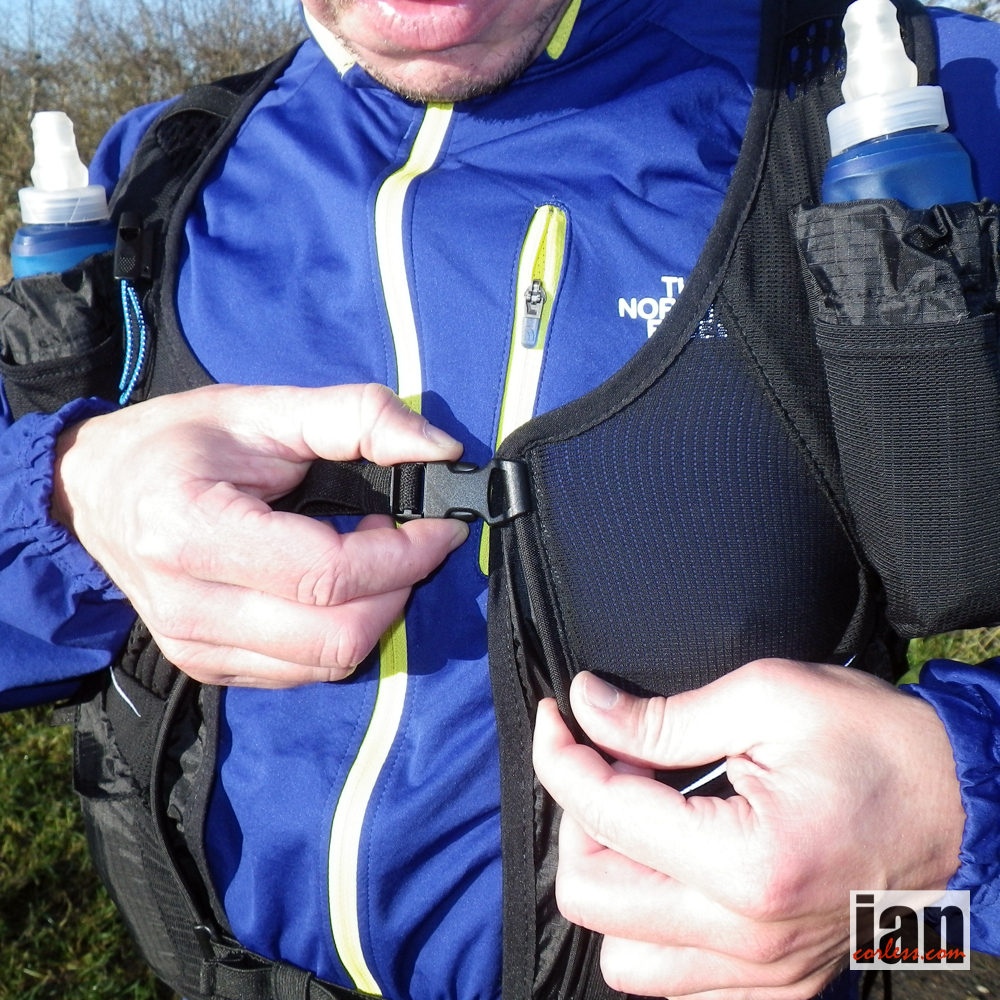
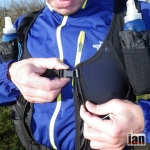
On the front are two adjustable straps that have quick release buckles. The straps may be moved up and down independently to get the correct fit based on your morphology.
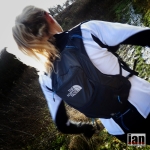
A key point, particularly for ladies, above the pockets on the front are soft panels that stretch and adjust dependent on the size of your boobs/chest. When testing the pack, we ensured that we cross referenced everything with a female perspective. The feedback? ‘The best and most comfortable pack I have used for the female form’.
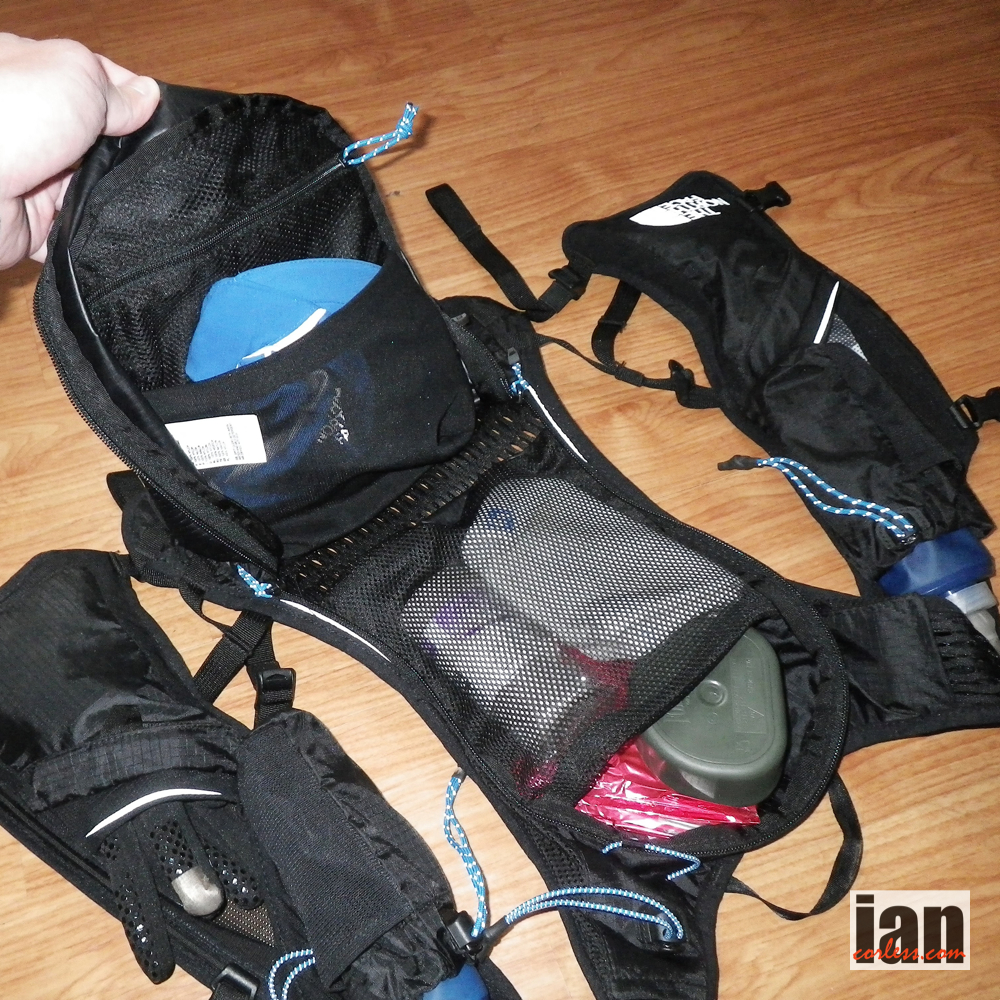
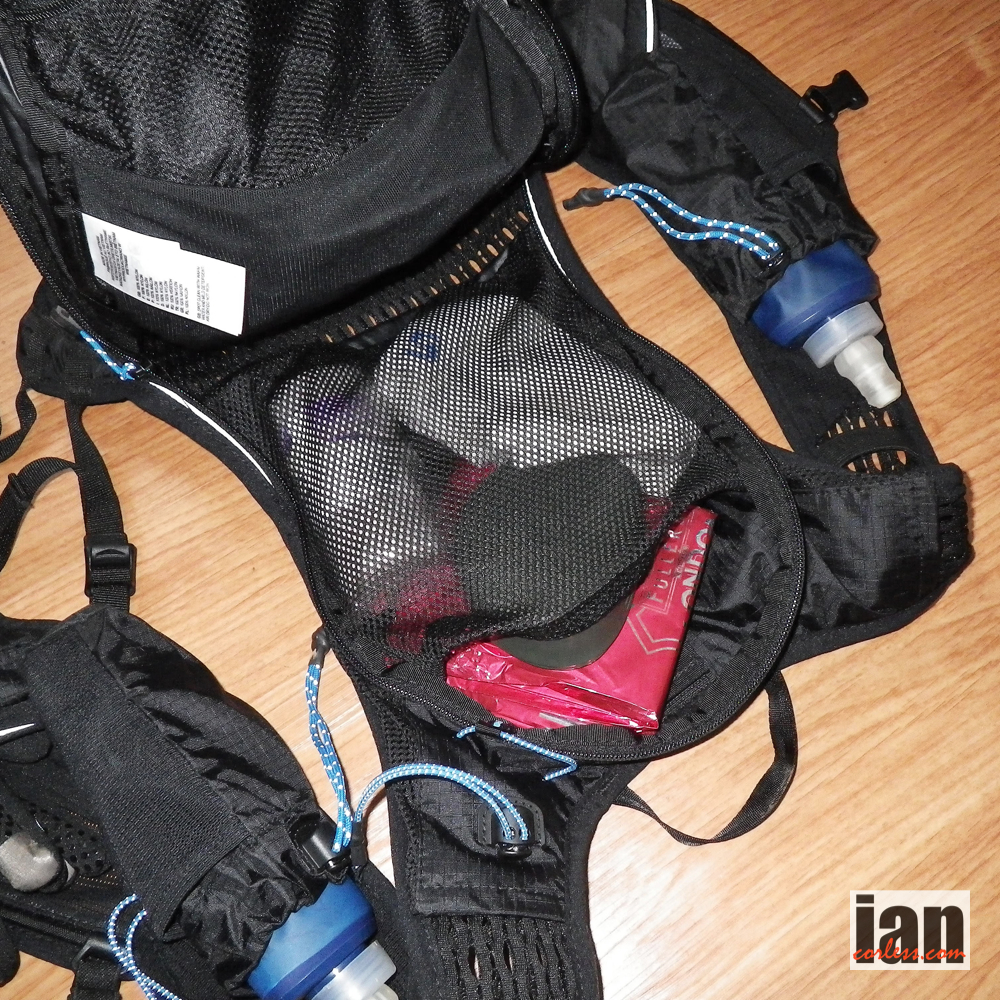
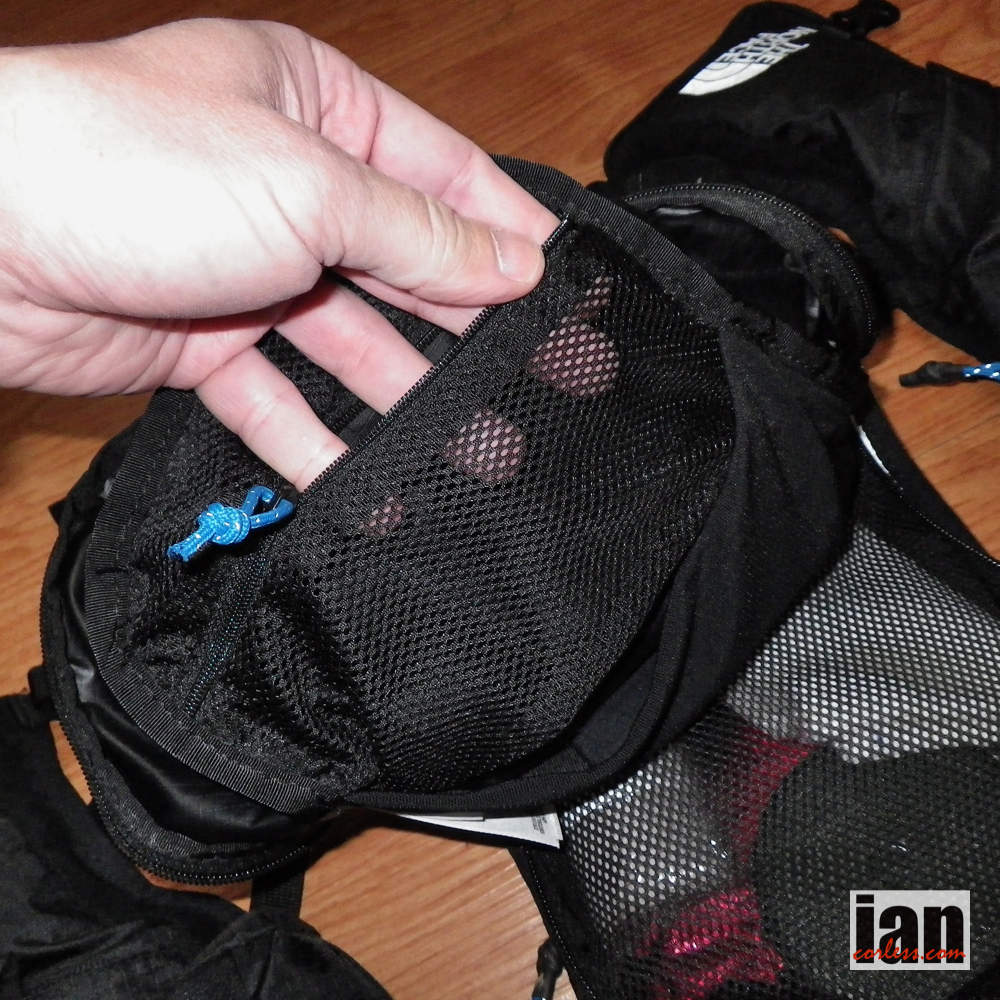
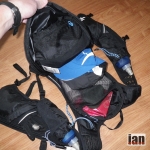
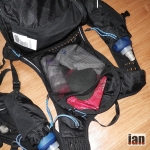
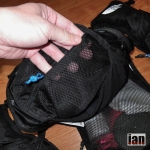
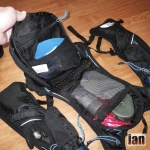
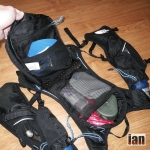
One of the key elements of the pack is the inside of the main compartment. Instead of one large space, it has been compartmentalized to provide storage space for specific items. Of course, this is open to personal taste but as you will see fromm the photographs, this is a great help for a long race when one needs to carry a jacket, over trousers, space blanket, elastic bandages, cup and so on.
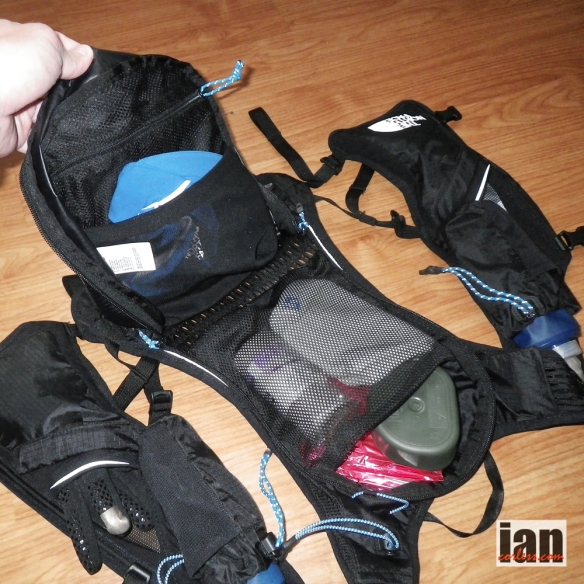
The zipper for the main compartment is full size, allowing the pack to be opened completely. This makes access very easy. On the back panel is a large mesh pocket that would hold the ‘bladder’ if this was your chosen method of hydration. I personally use this for space blanket, elastic bandages, cup, first aid and other mandatory items.
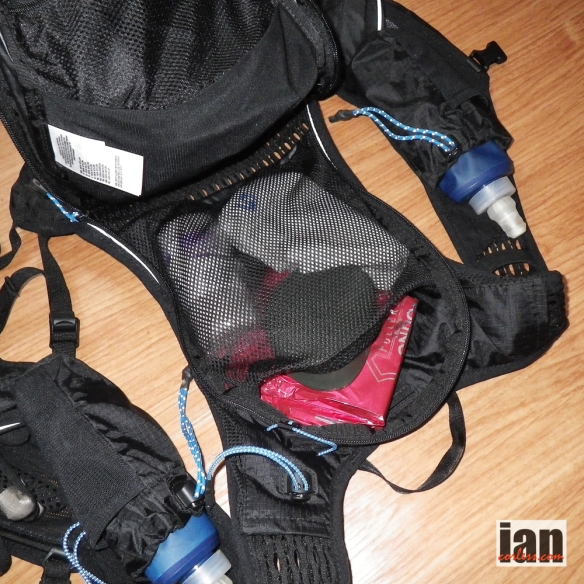
The other side has a larger mesh pocket that is open ended, I add my hat and over trousers here and above is an internal zipper pocket.
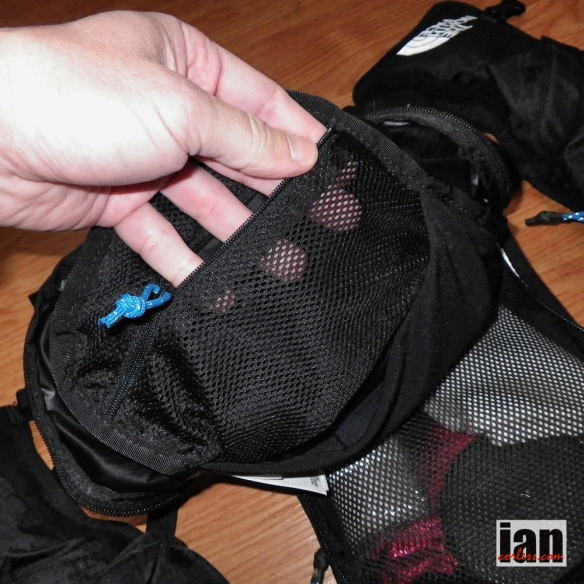
The open space between the front panel and back panel is roomy and ideal for a bulkier item such as a fully waterproof jacket.
This FL has been thought out to minute detail. It has perfect storage space built around the needs and desires of a long race when mandatory kit is required. It has also been designed to make access easy and stress free. The added combination of ‘on the go’ access to key areas of the pack while running makes this a serious and top contender for those looking for a fast, light and responsive pack that will allow the user to run stress free.
IN USE and TESTING
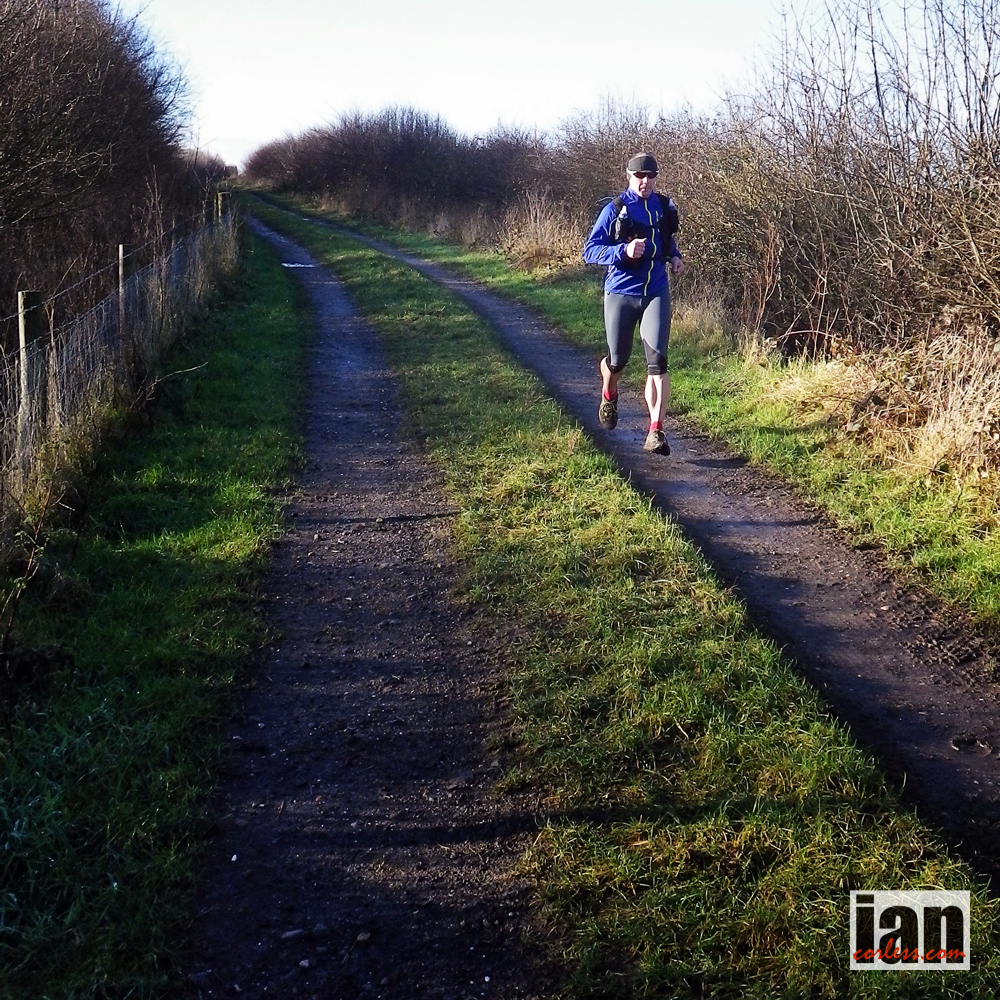
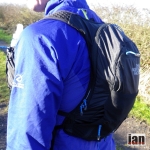
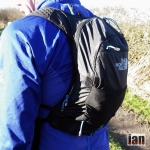
The FL has been on many runs and tested over the last 4-5months. On faster sessions of up to 90-mins and long days in the mountains, this pack holds firm against the body and is a pleasure to wear.
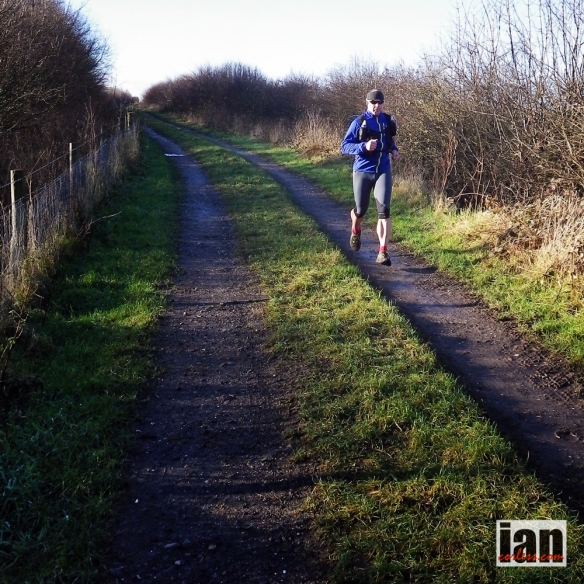
I had no issues on it’s storage capacity. I could fit all my required kit in the pack and it still retained its form and comfort, even when fully loaded.
If I added the bladder to the rear compartment, this certainly did eat into storage space and one had to be a little more creative with packing.
As mentioned previously, I would always prefer to use bottles to a bladder and this may very well be the stumbling block with the FL. Two 250ml soft flasks are not adequate liquid capacity for any long run in the mountains, even when feed stations are on the route. Adding additional soft flasks in the lower stretch pockets on the front of the pack is possible but it feels like a compromise. I did add 500ml flat bottles to these pockets for one run and I thought I had found a solution. However, after an hour my ribs started to hurt with the pressure placed on them. I never did find a full solution for the problem other than, if I was out for a longer time, I used the bladder! Of course this worked and it worked admirably. So, this is very much a personal comment. If you like bladders, this will not be an issue for you.
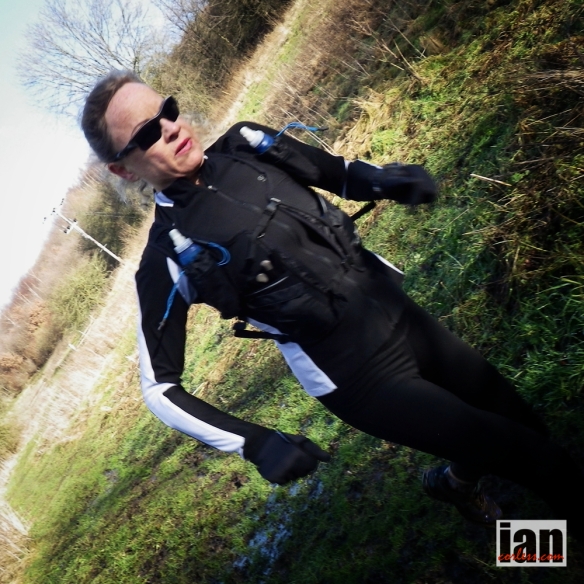
Running with the pack is a dream. It fits close to the body and does not move or bounce. Access while ‘on the go’ is excellent and you can certainly get food, gels, gloves, hat and even a jacket without stopping if you pack with those objectives in mind.
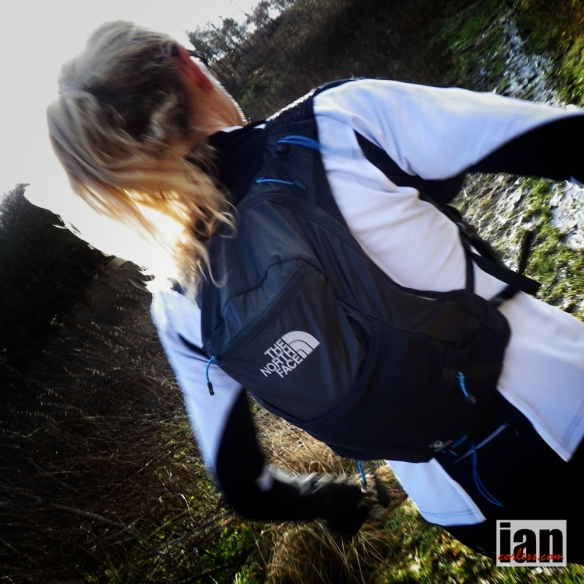
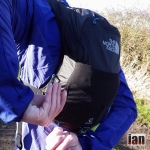
The side adjustable straps offer on the go adjustment and unlike some other vests that are one size, with the FL if you add or remove layers, you can adjust pack tension while on the go to ensure you maintain a comfortable fit.
The front of the pack with two adjustable straps allows for customised tensioning and as mentioned, the upper stretchy mesh panels will be popular with lady users!
CONCLUSION
The FL is a great pack. It addresses many of the problems we all have when mandatory kit is required. The pockets, internal and external allow you to customise the pack for your own personal needs ensuring that you have stress free training and race days. At 8ltrs, the FL is not ‘too’ big that you can’t use it in training but more importantly, it is not too small that you can’t use it for racing. Certainly, if you only wanted to purchase one pack, this may very well be the ideal purchase.
In use it is extremely comfortable and the ‘open sides’ allow increased airflow providing a more breathable and cooler running experience, certainly in comparison to the Salomon S-Lab.
Verdict? – Very highly recommended.
- Cost – £85 tbc
- Availability – Feb 2014
- The North Face HERE
The female perspective… by Niandi Carmont
Niandi is South African born, a former resident of Paris, she now lives in the UK. A runner for over 20-years; Niandi has completed Comrades Marathon 13-times, Washie 100 2-times and has finished well over 100 marathons and ultras all over the world. Currently residing in the UK, Niandi splits her work life between the UK and France.

The North Face FL Race Vest
This was my first test run with a race vest. Although no stranger to trials of varying distances ranging from 22km to 160km, I had never found a race vest to my satisfaction and had always resorted to the “safer” choice of race pack. The reasons for this choice are multiple, but basically:
- Uncomfortable fit and inadaptability to the female morphology
- Lack of breathability
- Chafing which can also be linked to female specificity
- Hydration strategy limited to bladder
In contrast the The North Face FL Race Vest addressed all the above issues:
- Comfortable fit and perfect adaptability to the female morphology.
- Very lightweight, breathable mesh back panel and front vest, covering very little surface area but offering maximum storage capacity.
- No bounce, no uncomfortable rubbing or pull from the straps.
- The upper front pockets can be used to carry 2 small 250ml bottles with either water or energy drink in addition to a TNF 2L bladder in the back for longer self-sufficiency races. Personally, I find this ideal as I can fill up the bottles on the go at the feed-stations and know exactly how much I am consuming. The bladder can be used in addition to the bottles as a safety measure for races which require more autonomy.
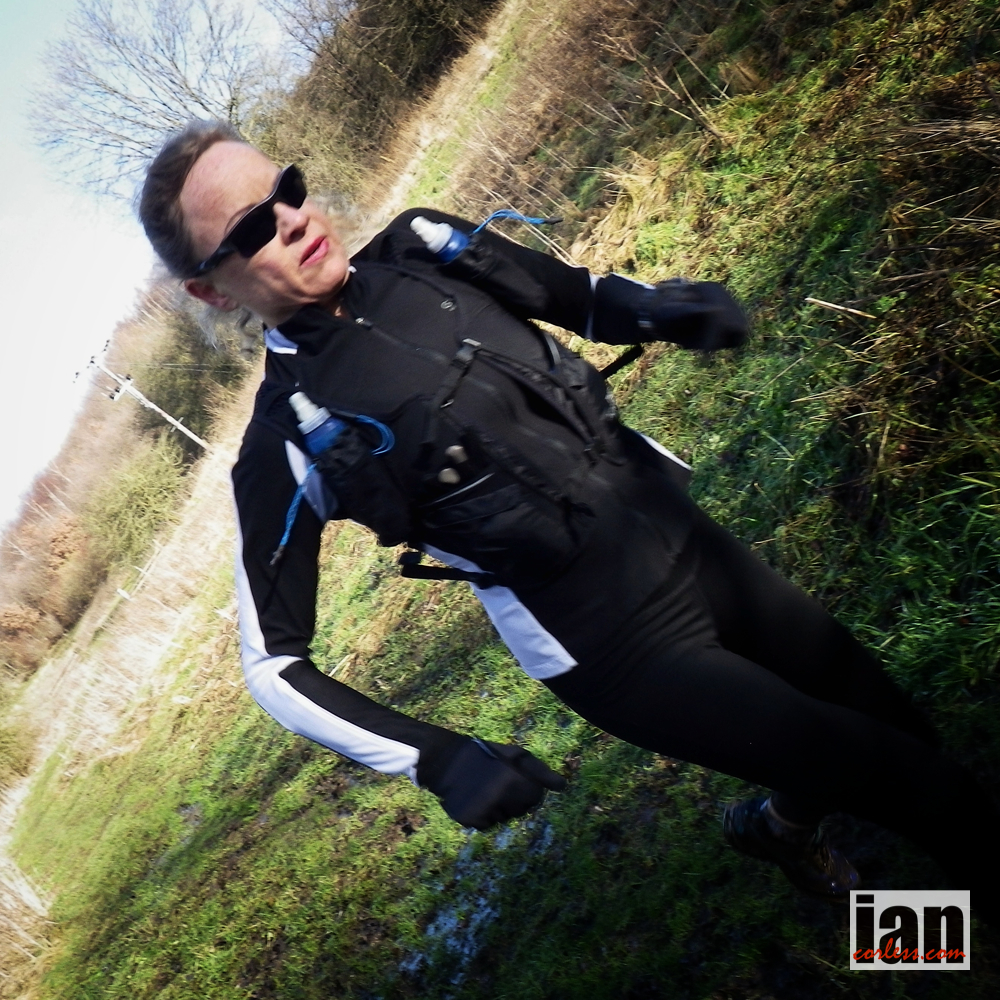
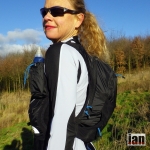
So when I tried the FL Race Vest in my training run I was pleasantly surprised to find I actually forgot I had it on. It wasn’t even a question of getting used to the vest. I instantly felt at ease in it. The front vest fitted perfectly over my chest – a sort of stretchy material which meant it never felt too loose and never to tight allowing the diaphragm to expand naturally and not causing any chafing issues.
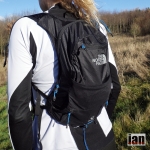
The 8L back pack has a storage capacity suitable for any trail distance between 30km and 160km. There is absolutely no bounce – it sits comfortably in the middle of your back – no sagging to the waistline or bouncing from side-to-side. Two sets of independent straps underneath the arms and 2 sets of buckles/ straps on the front allow you to adjust the vest to fit perfectly. No unnecessary and complicated irritating, dangling straps you find on so many back-packs.
Another bonus is that the vest and pack covers very little surface area thus ensuring better breathability and less over-heating and chafing should you be a heavy sweater.
Hydration-wise as mentioned above the race vest is multi-purpose and depending on the length of the event and frequency of the feed-stations, you can carry bottles in the upper front pockets and/or bladder.
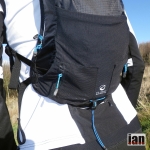
Speed is less of an issue for me but for runners wishing to waste as little time as possible, reaching around for a rain jacket, gloves, hat, head-lamp, Kleenex, energy bars; there are two lower zipped pockets on the vest and behind each of these two mesh pockets. I like this not only because it’s a time saver on technical terrain. In the dark it is also a stress-free option – nothing worse than groping behind you to get hold of a bar when your body is tired and aching all over or you are slipping around on a rocky, muddy descent in the dark. And it saves begging the runner behind to pull out a bar (or tampon) for you!
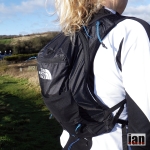
The back pack is equipped with a small zipped upper pocket – great for mobile phone and a lower mesh pocket for a jacket or over-trousers.
Inside is the bladder compartment, which can also be used for carrying race kit should you prefer, a central compartment and another pocket – so great for compartmentalizing!
Finally, my last pre-requisite – upper and lower draw strings to attach poles diagonally when not in use and the compulsory whistle on the front, should your navigation skills be as poor as mine!
Conclusion
I want it for my next 55km self-sufficiency event at night AND AT £85 it’s a bargain!




























 IAN CORLESS