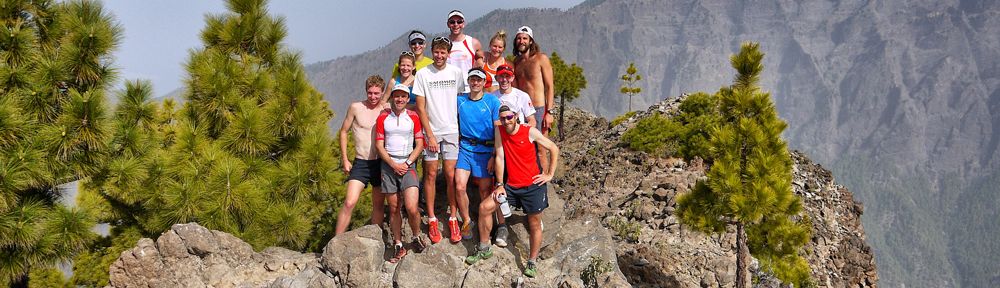
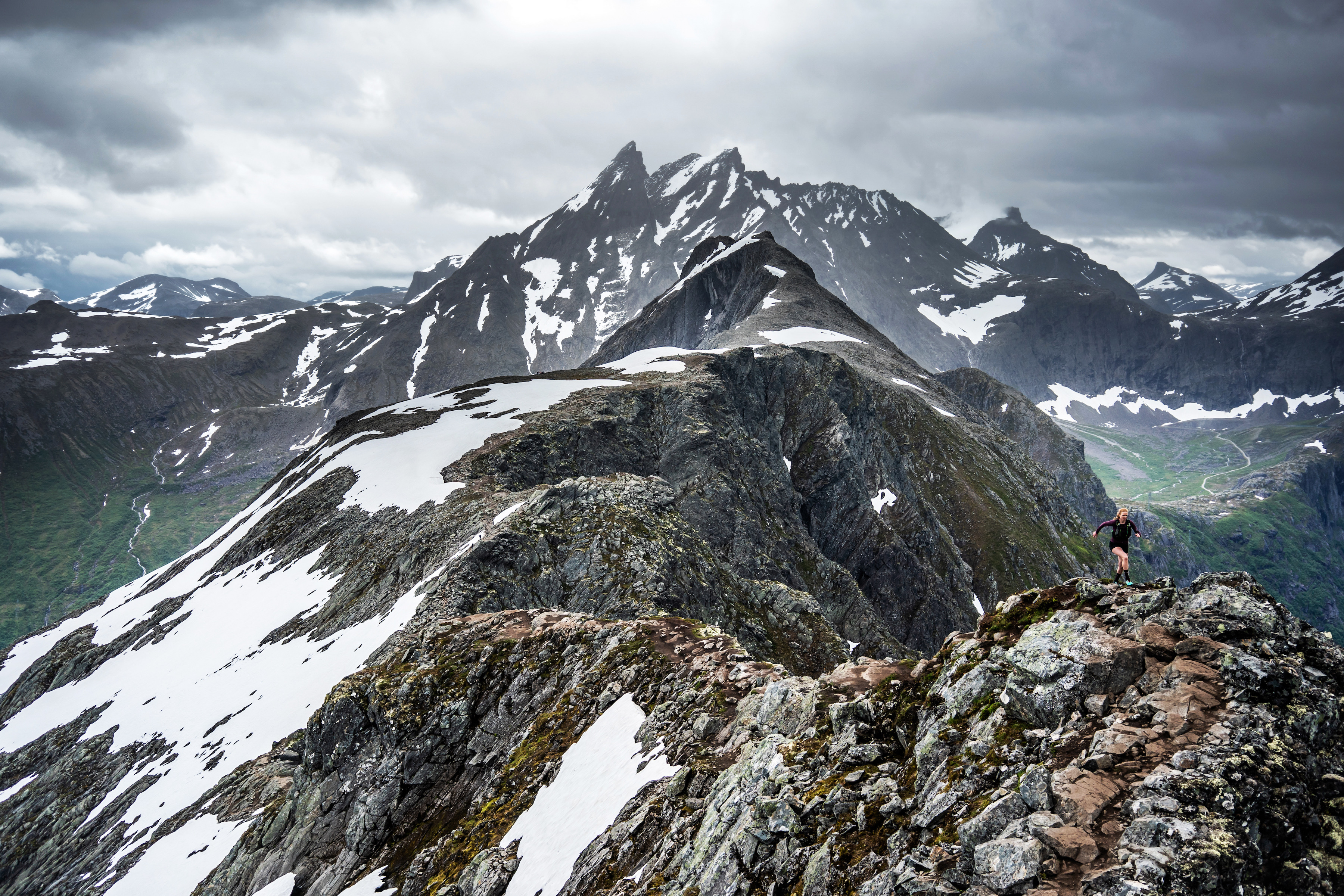
After the deaths of Ida Amelie Robsahm and Kalie McCrystal, how should mountain runners think about risk, responsibility and the desire to live fully?
On Monday, I heard the tragic news that Ida Robsahm had died after a fall while running on Romsdalseggen in Norway.
I knew Ida personally, the news hit hard stopping me in my tracks and resulting in a flood of tears for the terrible loss of someone who had so much to live for.
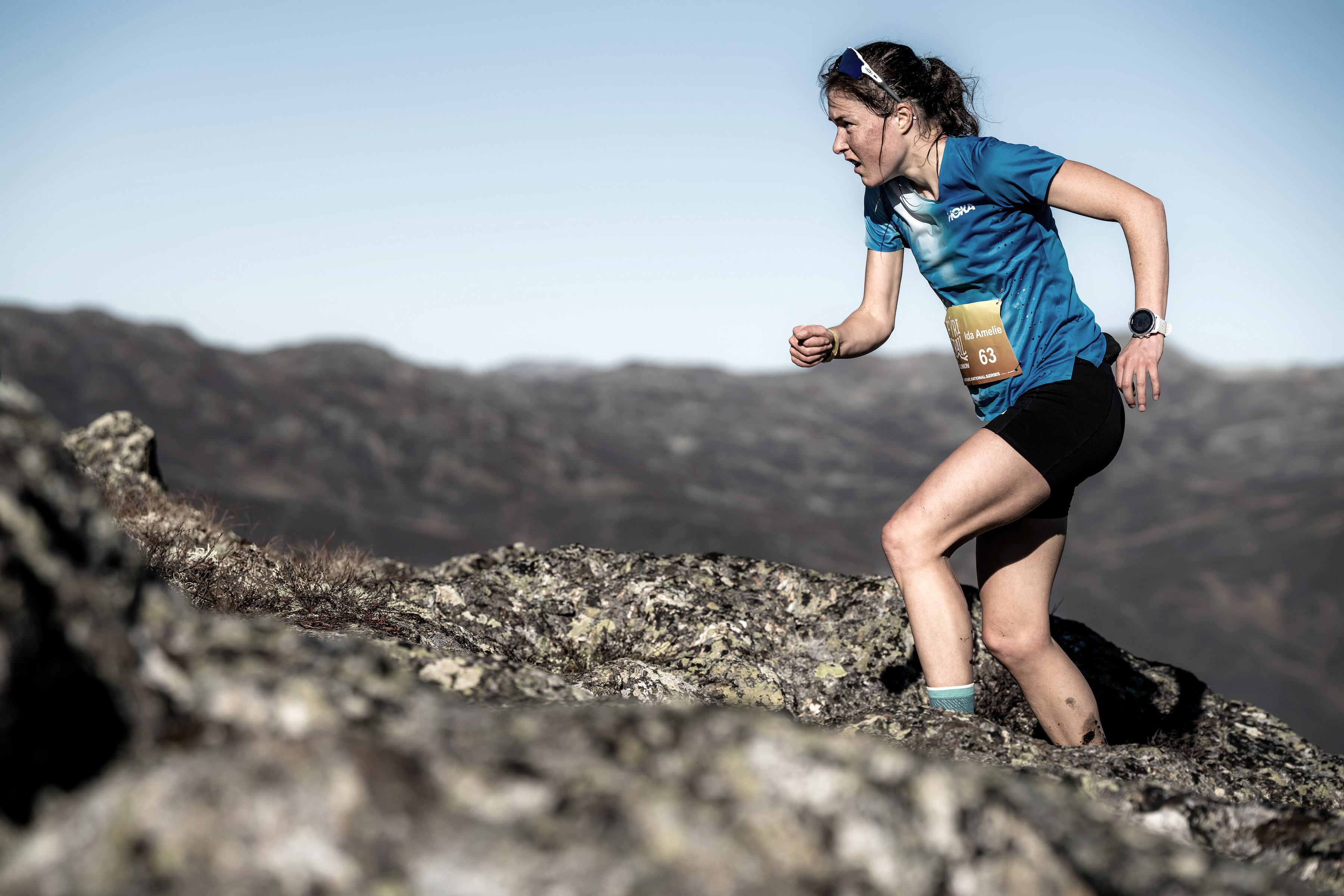
Because she was doing exactly what all of us in the trail and mountain running community do. Because I had been running on that very Romsdalseggen ridge myself. Because, following the loss of Kalie McCrystal on the Matterhorn just a few weeks before – all these elements combined as another reminder of something many of us know, yet rarely choose to confront.
Life in the mountains is fragile.
We spend our weekends and holidays and free time seeking wild places. We climb ridges, traverse summits and follow faint trails into remote corners of the world. I photograph the beauty, celebrate the adventure and tell stories of freedom, challenge and discovery. What we rarely discuss is how thin the line can sometimes be between a perfect day in the mountains and a devastating tragedy.
A single misplaced foot, one loose rock, a momentary lapse in concentration – a decision that seems insignificant in the moment but mountain terrain often deals in consequences that far outweigh the mistake.
The uncomfortable reality is that every person who ventures into the mountains understands this, at least on some level. We know that nature is indifferent to our ambitions. We know that gravity never takes a day off. We know that weather can change in an instant and that the terrain beneath our feet is never entirely predictable.
Yet despite this knowledge, we keep going back. Why?
Whenever tragedy strikes, questions inevitably follow. Is trail and mountain running too dangerous? Should we be doing this at all? Are we taking unnecessary risks?
The answer is both simpler and more complicated than many people imagine.
Mountain environments are unquestionably dangerous. That is simply a fact. But trail and mountain running, statistically speaking, are relatively safe activities. Across the world, millions of hours are spent each year on mountain paths and trails. The overwhelming majority of runners return home safely without incident.
The problem is not necessarily the frequency of accidents. It is the severity of their consequences.
There is an important distinction between different types of risk – some mountain pursuits involve deliberate exposure – a runner moving across a narrow alpine ridge understands exactly what is at stake. The risk is visible. The consequence of a mistake is obvious. In many cases, that exposure forms part of the challenge itself. The commitment required is what makes the experience meaningful.
“If death was not a possibility, coming out (of the mountains) would be nothing. It would be kindergarten, but not an adventure and not an art.” – Reinhold Messner
Whether others agree with that reasoning is beside the point. For the person undertaking the challenge, the risk is understood and consciously accepted.
Trail running often occupies a different space. Most runners are not actively seeking danger. We are following a path, climbing a mountain path or traversing terrain that feels entirely manageable. The objective, usually, is movement, not exposure. We are not hanging from ropes or balancing across technical ground. We are running.
And perhaps that is what makes accidents so difficult to process. The risk feels low. Until it isn’t. One innocent mistake can suddenly escalate into something catastrophic.
When examining fatalities in trail and mountain running, several common factors emerge. Extreme weather leading to hypothermia is one. Cardiac arrest is another. Falls leading to blunt-force trauma remain among the most significant. (Reference here)
The first two can often can be mitigated, to a certain extent.
Hypothermia, for example, is frequently linked to preparation and decision-making. There has always been a culture within endurance sports that celebrates moving fast and light. In many situations that philosophy makes perfect sense. But fast and light should never come at the expense of safety. An extra waterproof jacket, an extra down layer will never make for an exciting story. Spare gloves and a beanie rarely feature in social media posts. Carrying emergency equipment may not feel heroic. Yet these small decisions can dramatically reduce risk when conditions deteriorate. Hence the requirement for mandatory equipment when we race.
Similarly, cardiac events remind us that fitness and health are not necessarily the same thing. Someone may be exceptionally fit yet still harbour an underlying condition. Regular health screening, routine medical checks and an honest understanding of our physical health cannot eliminate every risk, but they can reduce some of the unknowns. Just look at Jeff Browning at the recent TDS. Jeff is one of the most experienced, knowledgeable and respected trail and mountain runners – his near death experience should be a warning shot for us all.
Falls are different.
Falls are the one category that can never be entirely controlled. No one plans a fall. No one starts a run expecting to make a fatal mistake. No one leaves home believing they won’t return. A fall occupies that uncomfortable territory where skill, preparation and experience intersect with simple human error.
And human beings will always make mistakes.
And then we have skyrunning – this sport sits in a different category altogether. Born from the meeting point of trail running and alpinism, it deliberately takes athletes onto steep ridge lines, exposed traverses, loose scree and technical terrain where the consequences of a mistake can be far greater than a twisted ankle or lost minutes. The risk is not an unfortunate by-product of the sport, it is woven into its identity, it is its dna. Competitors sign up precisely because it demands more than fitness and endurance; it requires judgement, composure and the ability to move confidently through terrain that feels wild, remote and uncompromising. This is what separates skyrunning from pure mountain running. The challenge extends beyond covering distance or climbing vertical gain. It introduces an element of exposure and consequence that few other running disciplines can replicate, asking athletes to balance speed with self-preservation on terrain where the mountains retain the final say.
Perhaps because of that reality, my own relationship with risk has evolved over the years. Like many people, there was a time when I valued speed, commitment and determination above almost everything else. Pushing through difficult conditions was something to be proud of, turning back or easing off often felt like failure.
Experience has changed that perspective.
The greatest lesson the mountains have taught me is not how to keep going. It is knowing when not to. The mountains will always be there. That simple truth becomes surprisingly powerful with age.
A summit reached today is not inherently more valuable than one reached next month. A route completed in dangerous conditions is not automatically a greater achievement than one postponed. A race finish line is never worth more than the ability to come back and run another day.
Unfortunately, perspective is often shaped by experience. For me, one such experience occurred in Tromsø at the Tromsø Skyrace in 2017.
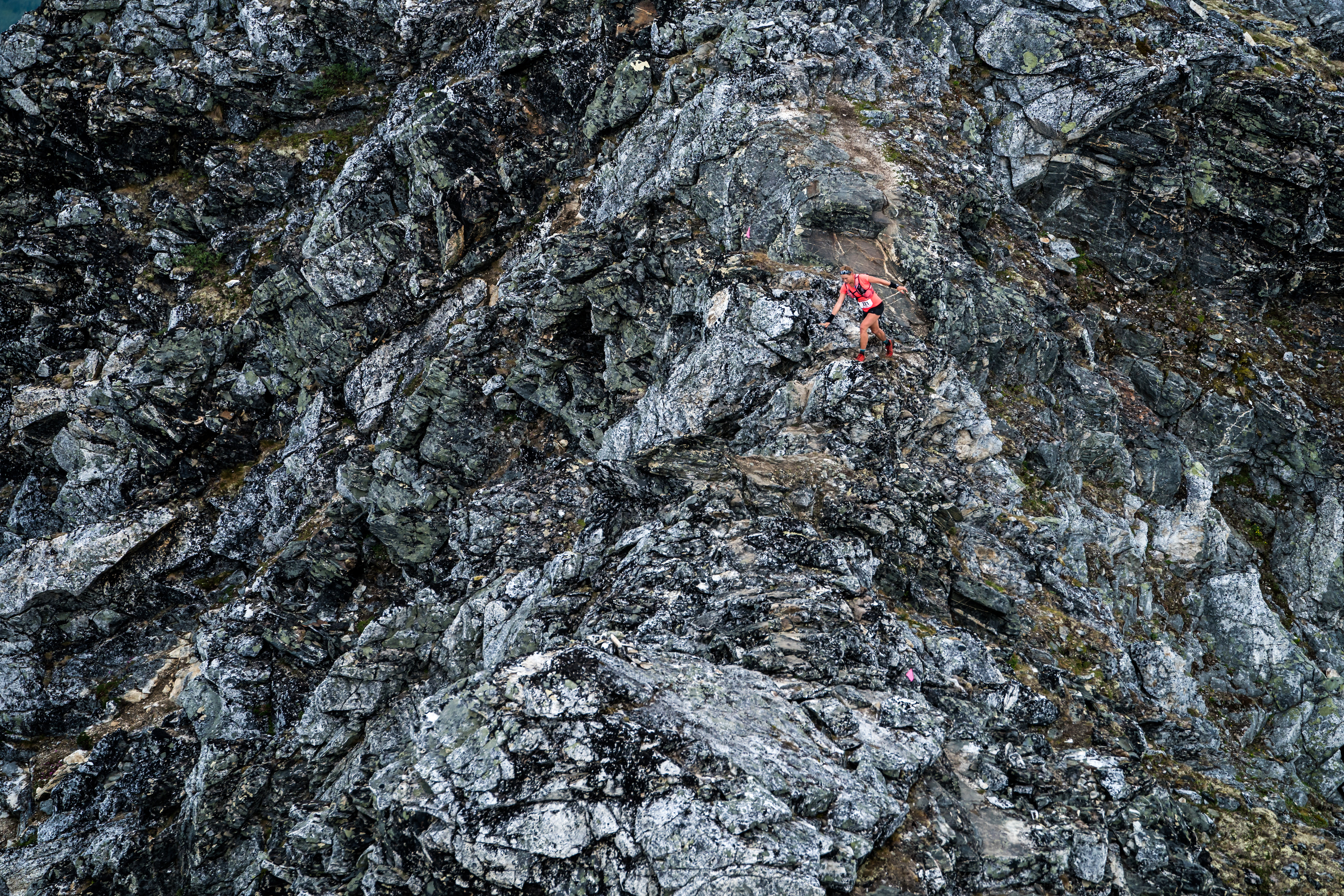
I was there when Hillary Allen fell.
I witnessed the accident unfold. I climbed down to her, helped support her and remained involved until she was eventually airlifted to safety. Hillary survived. Her recovery became one of the most remarkable stories in mountain running. But witnessing the accident itself left a lasting impression.
What remains with me all these years later is not simply the severity of the fall. It is how ordinary everything appeared beforehand. There was no drama, on the contrary, I was joking and laughing with Hillary. One moment she was racing towards me and the next, everything had changed.
Seeing that reality up close removes any illusion that accidents only happen to other people.
Many mountain runners carry an unspoken belief: it won’t happen to me.
We may never say those words aloud, but the sentiment exists. We acknowledge risk while quietly believing that our experience, fitness or judgement somehow places us beyond it. The mountains have a ruthless way of correcting that assumption.
Experience can reduce risk, but it cannot eliminate it.
So how do we move forward when confronted by losses such as those of Ida and Kalie?
Perhaps the answer lies somewhere between acceptance and responsibility.
We should never romanticise death in the mountains. Every loss is a tragedy. Families lose daughters, sons, partners, friends and loved ones. The pain left behind is immeasurable. But equally, we cannot pretend that a life completely free of risk exists. Every meaningful pursuit carries risk, adventure contains uncertainty and our passions come with vulnerability.
For those of us drawn to mountains, the attraction is not recklessness. It is something much deeper. Mountains provide perspective in a world increasingly dominated by distraction. They challenge us physically and mentally. They expose weaknesses and reveal strengths. They offer moments of fear, humility, joy, wonder and achievement.
In many ways, mountain running allows us to experience the full spectrum of what it means to be alive.
The lows are real.
The highs are extraordinary.
Perhaps that is why we continue to return, not because we fail to understand the risks, but because we do. Life is finite, certainty is an illusion and to live fully, we want to experience everything that exists between birth and death: success and failure, fear and courage, loss and joy.
The challenge is not to eliminate risk. The challenge is to respect it.
As difficult as it may be to admit, perhaps the answer is that we must learn to live with an uncomfortable truth – mountains are places of extraordinary beauty, freedom and possibility, but they are also places where consequences can be severe – risks can be reduced, managed and understood, but they can never be removed entirely.
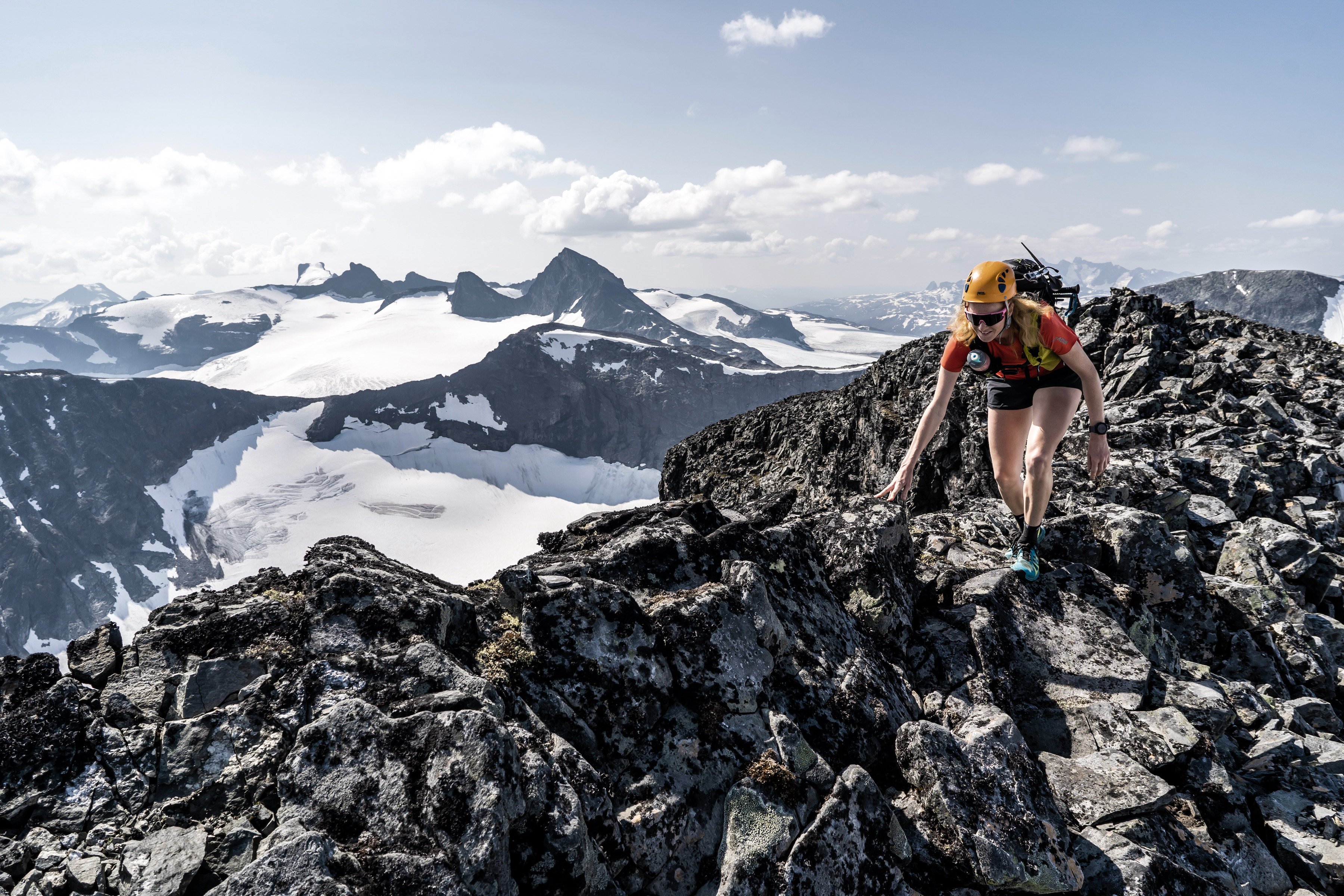
Experience teaches us that there is wisdom in slowing down when conditions demand it. Wisdom in carrying the extra layer, in choosing safety over speed, in using more equipment rather than less when circumstances require it. Sometimes the strongest decision is to turn around without embarrassment or stop when instinct quietly tells us that today is not the day. Caution is not weakness, retreat is not failure.
Because the mountains do not care about our ambitions, they do not care about our race plans, our summit goals or the expectations we place upon ourselves. Long after we have left, they will still stand exactly where they are today. They will be there tomorrow, next week and next year.
The goal is not to conquer the mountains – they cannot be conquered, they are the boss. The goal is to enjoy a lifetime within them, to return again and again, collecting experiences rather than close calls – memories rather than regrets. To understand that success is not measured by summits reached, ridges traversed or finish lines crossed, but by the opportunity to come back and do it all once more.
Mountains have given many of us some of the most meaningful moments of our lives. They have taught us humility, resilience, perspective and joy. They remind us how precious life is precisely because they reveal how fragile it can be.
And so we continue.
Not because we ignore the risks, but because we acknowledge them.
Not because we believe nothing can happen to us, but because we understand that a meaningful life is not found in avoiding every uncertainty.
__________
And finally, our thoughts, love and deepest sympathy are with everyone affected by these tragedies. To the families, partners, friends and wider communities of Ida and Kalie, and to anyone who has ever lost someone they love in the mountains or elsewhere, there are no words that can lessen such heartbreak. Grief is the price we pay for love, and the depth of that loss reflects the depth of the bond that remains. May you find comfort in the memories shared, strength in those around you and peace in knowing that the lives they touched will continue to be felt for many years to come. We hold you in our hearts.
Instagram – @iancorlessphotography
Twitter – @talkultra
facebook.com/iancorlessphotography
Web – www.iancorless.com

