Run or Die – Kilian Jornet

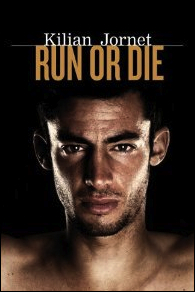
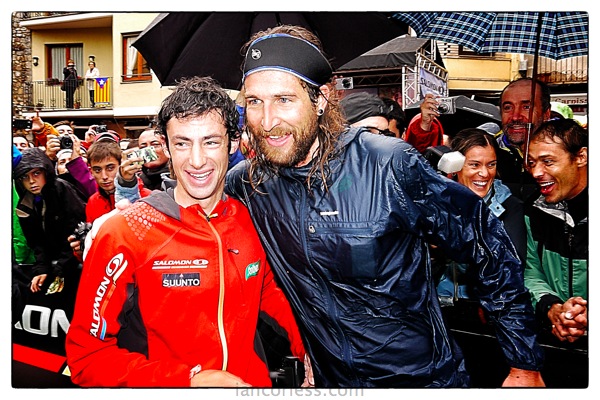
screenshot_164Looks like the wait is over… ‘Run or Die’ by Kilian Jornet is now available to ‘pre order’ in English for July 2013 delivery.

Kiss or kill. Go for glory or die trying.  

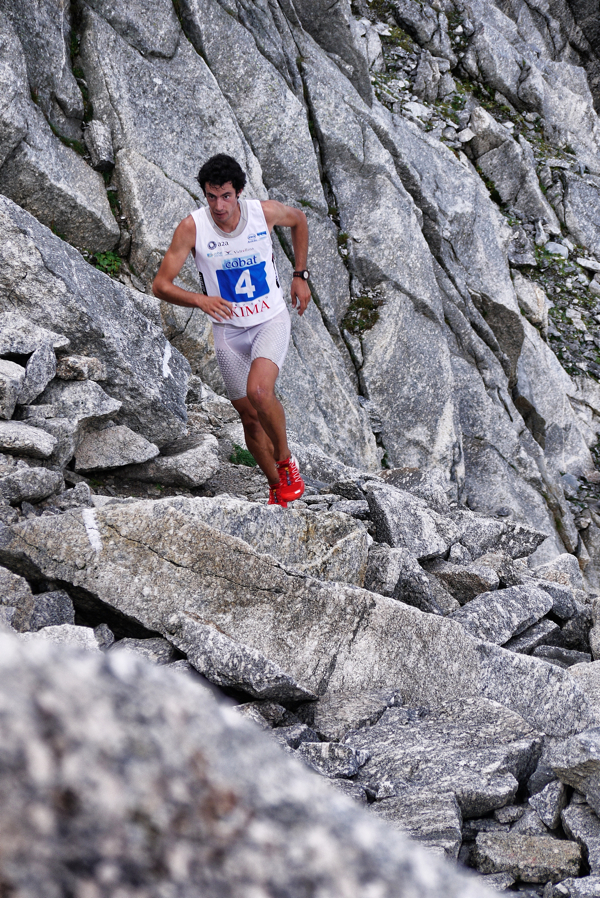
This is the extreme philosophy of an extreme athlete. A hero. An extraordinary person. An exceptional competitor. Kilian Jornet is a world champion ultra-runner, and before age 25 had conquered some of the toughest physical tests on the planet. He has run the great Mt. Kilimanjaro faster than any other human being, and struck down world records in every challenge that has been proposed.

Run or Die is not just Jornet’s story, but his philosophy of life.

Available on Amazon HERE


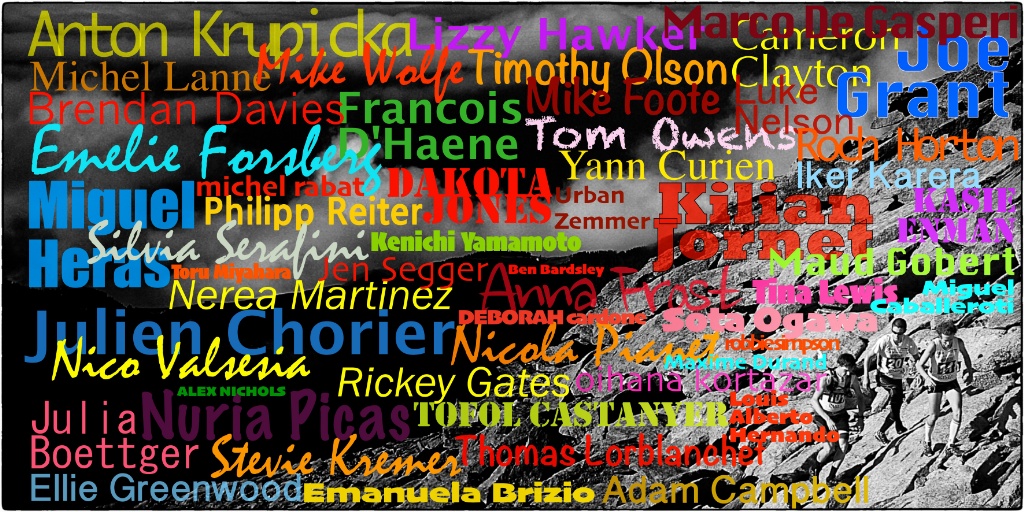
Skyrunning World Series Participants 2013

Skyrunning Image Banner 2_Snapseed

SWS – champions choice

Building on the 2012 Skyrunner® World Series success and the introduction of the Ultras, 2013 prepares for an even bigger star-studded cast.

ISF-logo

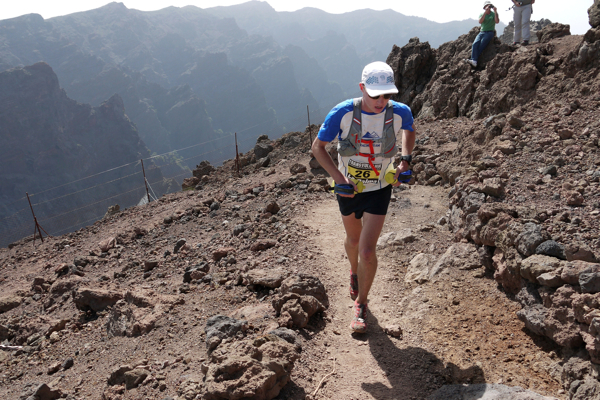
The line-up of champions is headed by 2012 SWS winners Kilian Jornet, Emelie Forsberg and Nuria Picas, joined by past world champions Emanuela Brizio, Oihana Kortazar, Luis Alberto Hernando and Tofol Castanyer and WMRA champions Marco De Gasperi and Stevie Kremer.

Nuria Picas copyright Ian Corless

Nuria Picas copyright Ian Corless

Philipp Reiter copyright Ian Corless

Philipp Reiter copyright Ian Corless

Emelie Forsberg copyright Ian Corless

Emelie Forsberg copyright Ian Corless

With some of the big American ultra legends crossing the pond last year to get a taste of skyrunning, the word is out!  Joining them this year: Anton Krupicka, Dakota Jones, Rickey Gates, Mike Foote, Timothy Olson, Joe Grant….

Kilian and Tony Krupicka copyright Ian Corless

Kilian and Tony Krupicka copyright Ian Corless

Dakota Jones copyright Ian Corless

Dakota Jones copyright Ian Corless

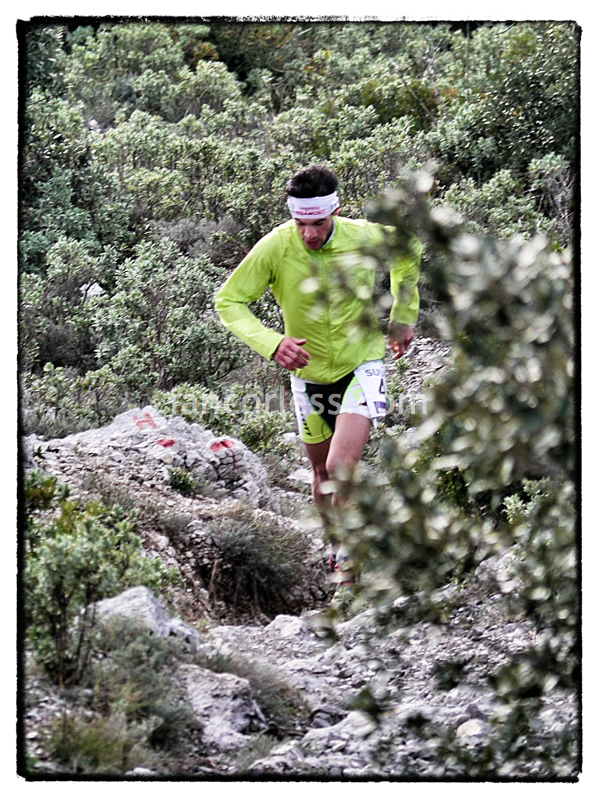
It’s full immersion for Kilian Jornet who, with his unique skills, will participate in no less than all three Series:  Vertical, Sky and Ultra!

Kilian Jornet copyright Ian Corless

Kilian Jornet copyright Ian Corless

Lizzy Hawker will be toeing the start-line at the Series’ first 100-miler while Anna Frost will take part in both the Sky and the Ultra Series.  The mix includes Phillip Reiter and Julia Böttger from Germany, top French names:  Francois d’Haene, Julien Chorier, Michel Lanne, Yann Curien, Maud Gobert and Stephanie Jimenez, Britons Andy Symonds and Tom Owens, Canada’s Adam Campbell.

Marco de Gasperi - copyright Ian Corless

Marco de Gasperi – copyright Ian Corless

Anna Frost copyright Ian Corless

Anna Frost copyright Ian Corless

Strong team participation is engaged right across the Series headed by the heavy-duty Salomon team as well as hefty, international line-ups from inov-8, La Sportiva, Salomon Agisko and Arc’teryx, The North Face, Haglöfs, Montrail, Scott as well teams from Spain, Italy, Russia, Japan

Take a look at the mix here.  Have we got everybody?

You’re still in time to join the throng and remember, if you’re competing in the World Series, there’s always a slot available for you.

Follow us for who goes where as the skyrunning season unfolds.

Follow the action on Skyrunning HERE

Follow on Talk Ultra HERE

On Twitter @talkultra

Bungle in the Jungle – A guide

iancorless.comP1050500

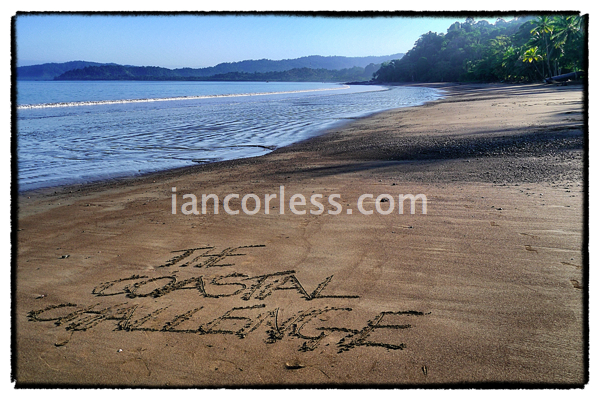
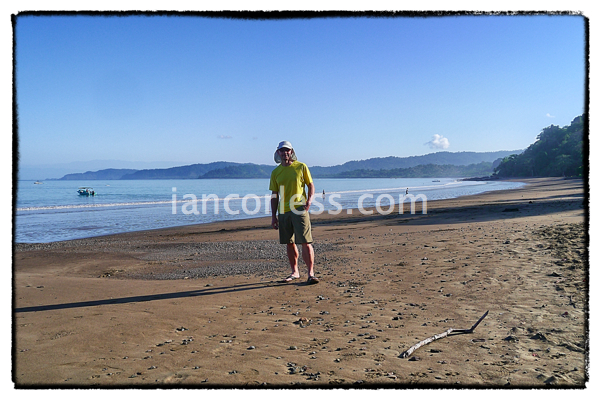
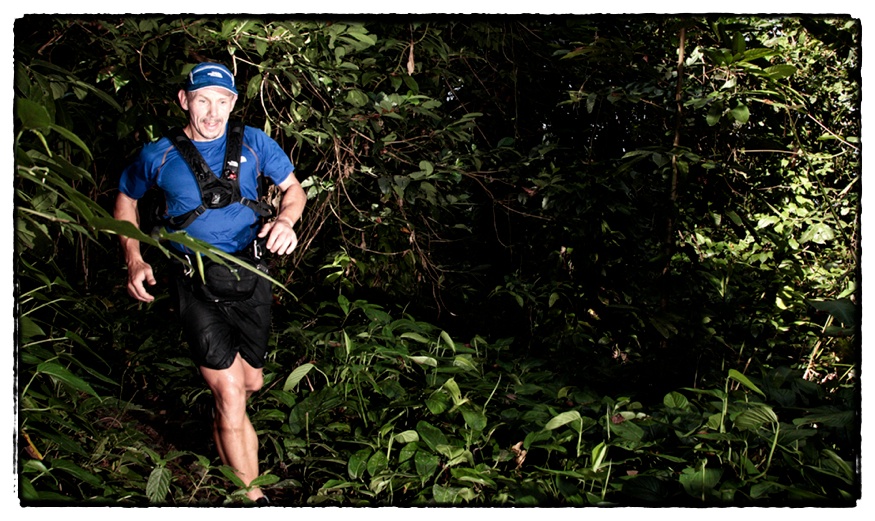
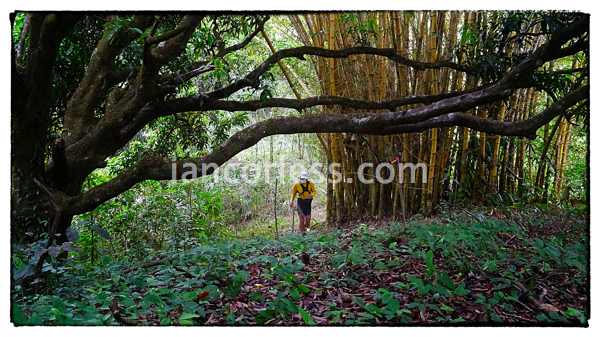
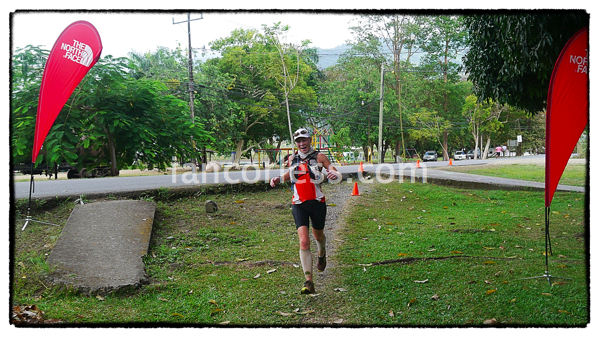
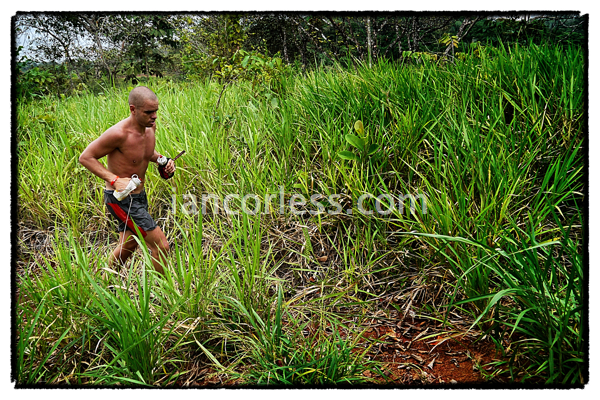
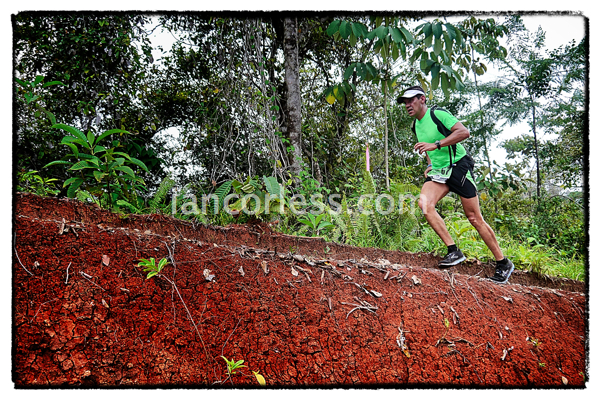
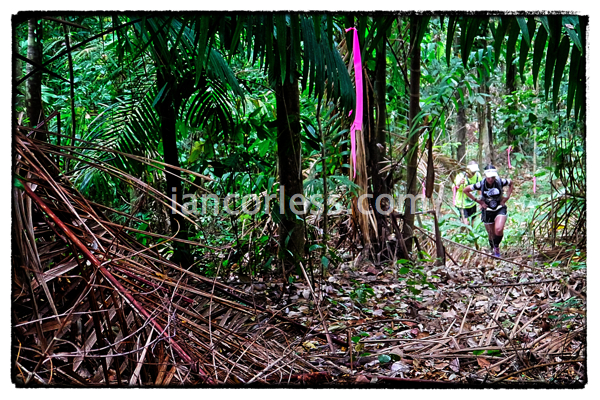
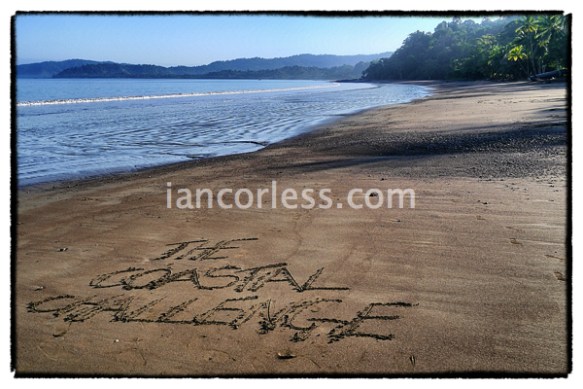
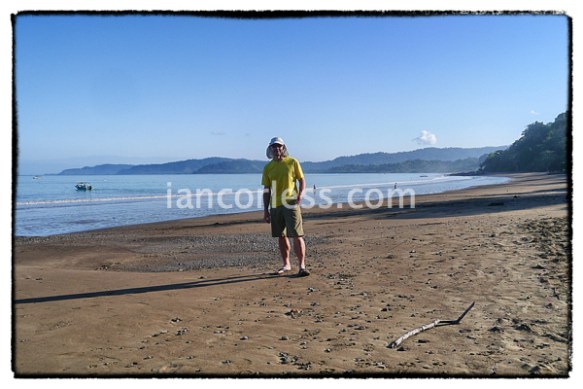
No matter how experienced, no matter how long you have been running, you can always learn something…. My recent trip to Costa Rica and The Coastal Challenge which took place in a rainforest made me realize that I knew very little about running in heat with high humidity, running in a rain forest and also running on consecutive days in this environment.
iancorless.comP1070278

I am quite meticulous in my planning. I like to tick boxes, cross ‘to do’s’ off a list and feel content that when I am at an airport travelling to a race that I feel that I have done everything I possibly can to get the best out of myself and the race when I arrive at my destination.
iancorless.comP1070287

Costa Rica was nothing like this….

I only found out I was going about four weeks before, so, that 12-20 week training plan that I would have created to then taper into an event didn’t exist. I was realistically just a week or two weeks away from the taper. When you add to this that since January 2012 I hadn’t been training due to knee issues. Of course I had been ‘working out’ but I hadn’t been training. Nothing specific. Training had consisted of runs every other day with the longest being at 2hrs 15m, other days had been cross training, plenty of time on the stairmaster and stretching and core.

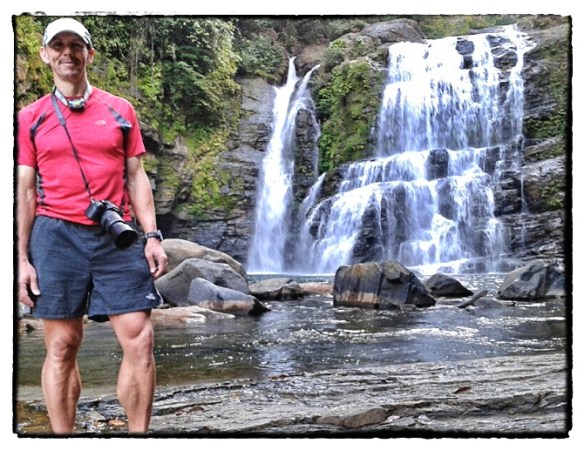
My brief was not to race at The Coastal Challenge. This was a good thing, however, I was working as a journalist and my need to document, photograph and experience the course would mean getting involved.
screenshot_163

My plan was simple. Start the day on the course at a great advantage point, photograph the front runners and then run to the end capturing more images, experience the terrain and then write up and download photos at the end of the day. Simple!

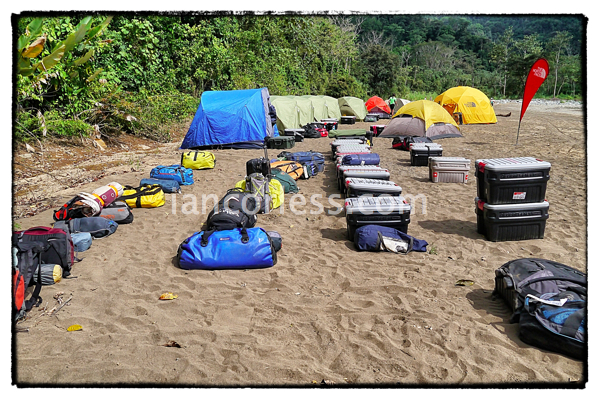
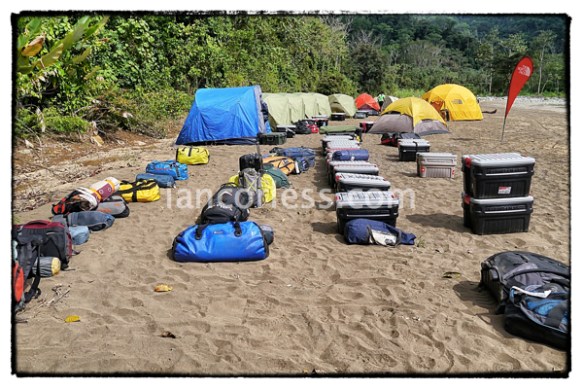
In addition to running we would be staying in a different campsite each day. Luggage and tents would be transferred ahead and food was provided.
iancorless.comP1050310

So what did I learn?

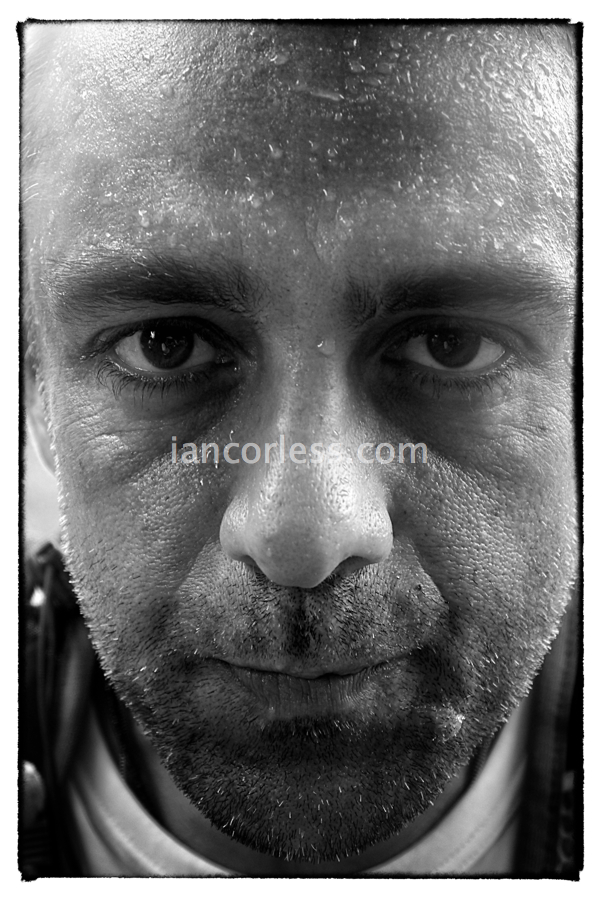
Pacing & Hydration: Costa Rica is hot and humid. Oh yes, hot and humid. Coming from a UK winter the shock is pretty drastic. But I found it manageable. You certainly need to adjust many things and you need to make those adjustments on day one. In simple terms you need to ‘slow down’ and ‘hydrate’ more. Within 10-15 minutes of exercise your body is soaked and your clothing is completely wet.

iancorless.comP1060672

It stays that way all day so get used to it. Sweat rates vary but in the excessive humidity and adding exercise to this it is fair to assume that 750ml + will be required per hour. Replacing electrolytes will also be important so look into what works for you. Runners used a combination of ‘adding’ electrolyte to water or taking salt tabs. Day one of our race started with a 10k road section, in retrospect this was designed to ease the runners into the terrain and heat/humidity, however, I think it actually allowed to many fresh runners to run too quick right from the gun.

iancorless.comP1050728

By the time they reached CP1 and the start of the jungle many were already in trouble… they didn’t know it at that point but they certainly knew it in the final 25% of the day. By pushing too hard at the beginning of the day they couldn’t then pull back the deficits in the latter stages  and suffered. By the end of day one, the race had several drops and a far too large group suffering from dehydration.

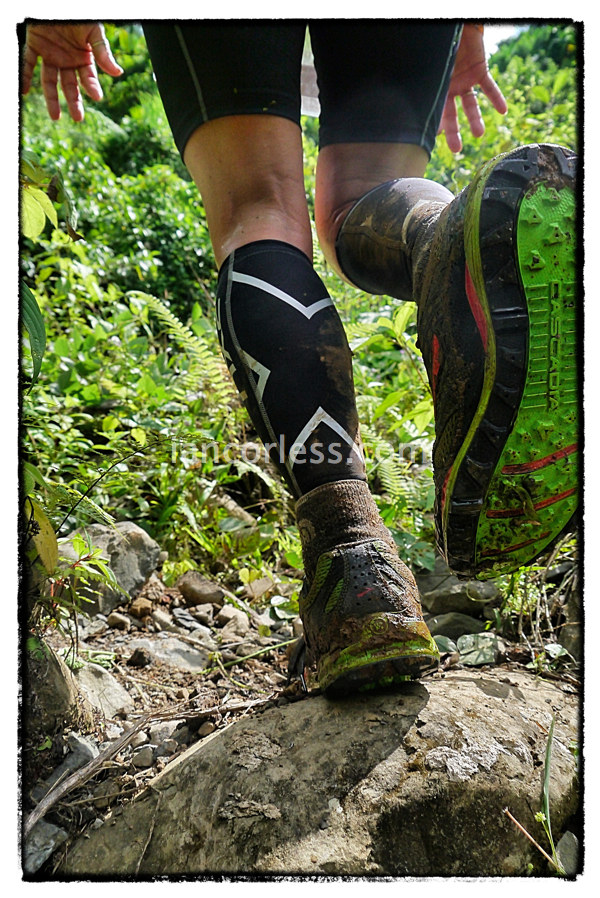
Feet: Oh boy. Multi stage races are renowned for damaging feet but really this shouldn’t happen. If you look after your feet, have the correct socks and the correct shoes it should all be straightforward. Of course unexpected things can happen such as a little rubbing and the odd blister BUT at TCC I saw people with literally no skin left on bruised and damaged feet. I am actually amazed that some of these runners managed to finish the race. The rainforest will guarantee several things:

  • Your feet will be hot
  • Your feet will be wet regularly
  • Your feet will be twisted and turned
  • Over the six days you will run/walk over 200k
iancorless.comP1060512

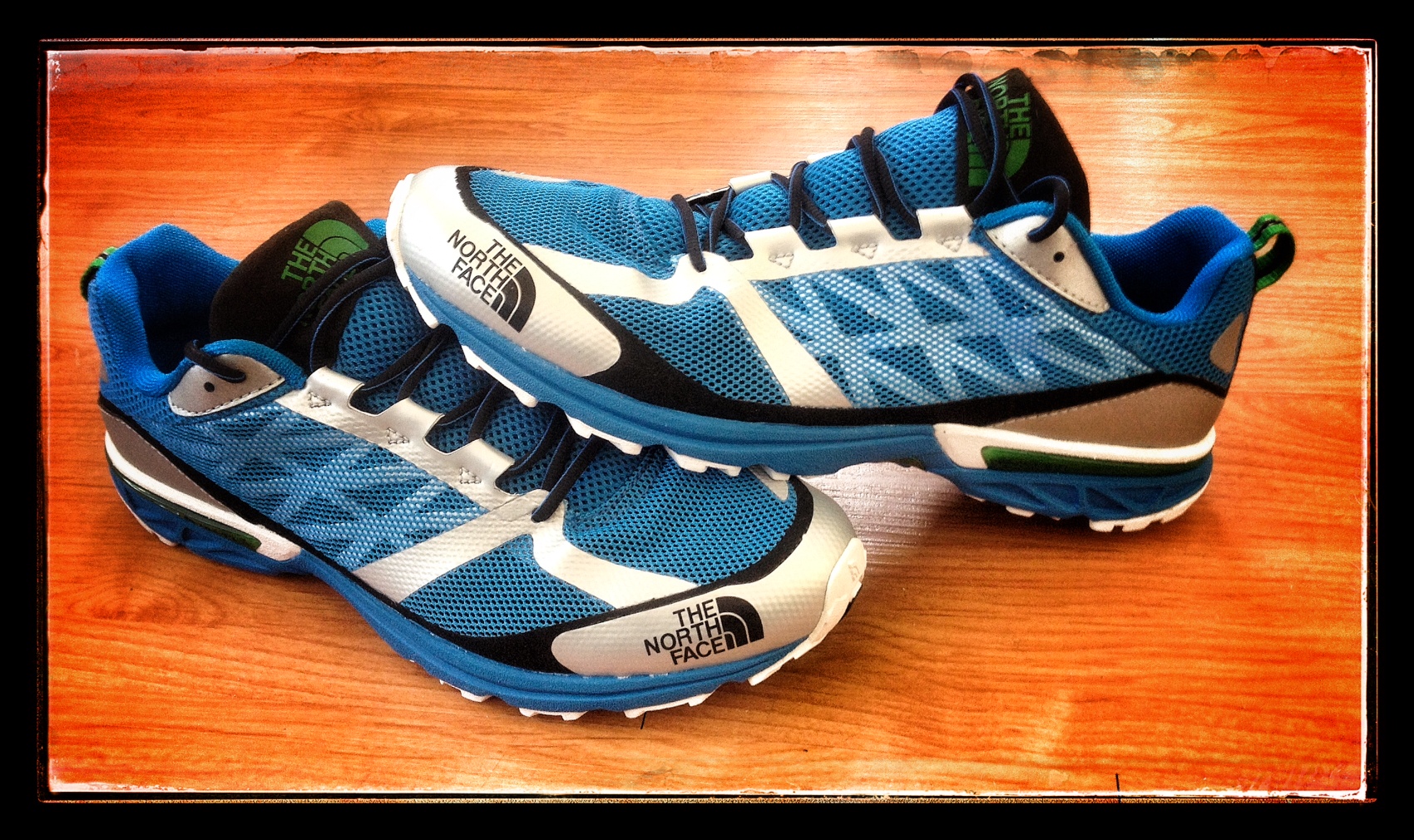
With the above in mind you need to plan accordingly. This race is not self sufficient so this is a big advantage. Why? Well for a start you can bring several run shoes. I took the two ‘styles’ of shoe, Salomon Speedcross 3 and TNF Hayasa,
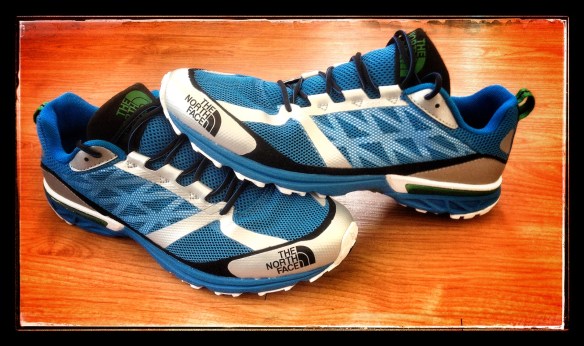
photo 3

I had two pairs of each. One my correct size and the other pair a ½ size larger (just in case). A larger shoe will allow some room should my feet expand. The two styles of shoe also allowed me options in regard to ‘grip’. The Speedcross is far more aggressive than the Hayasa. Certainly something with an aggressive tread suited the environment.
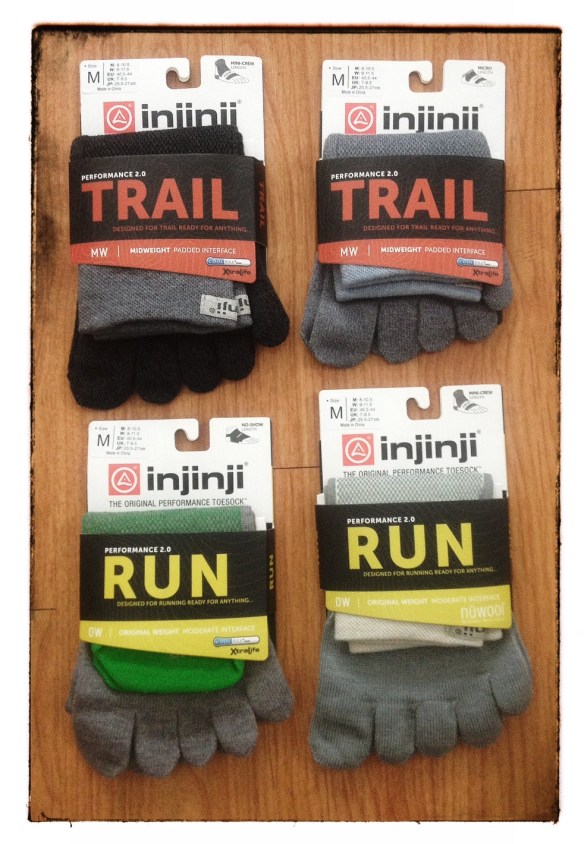
photo 2

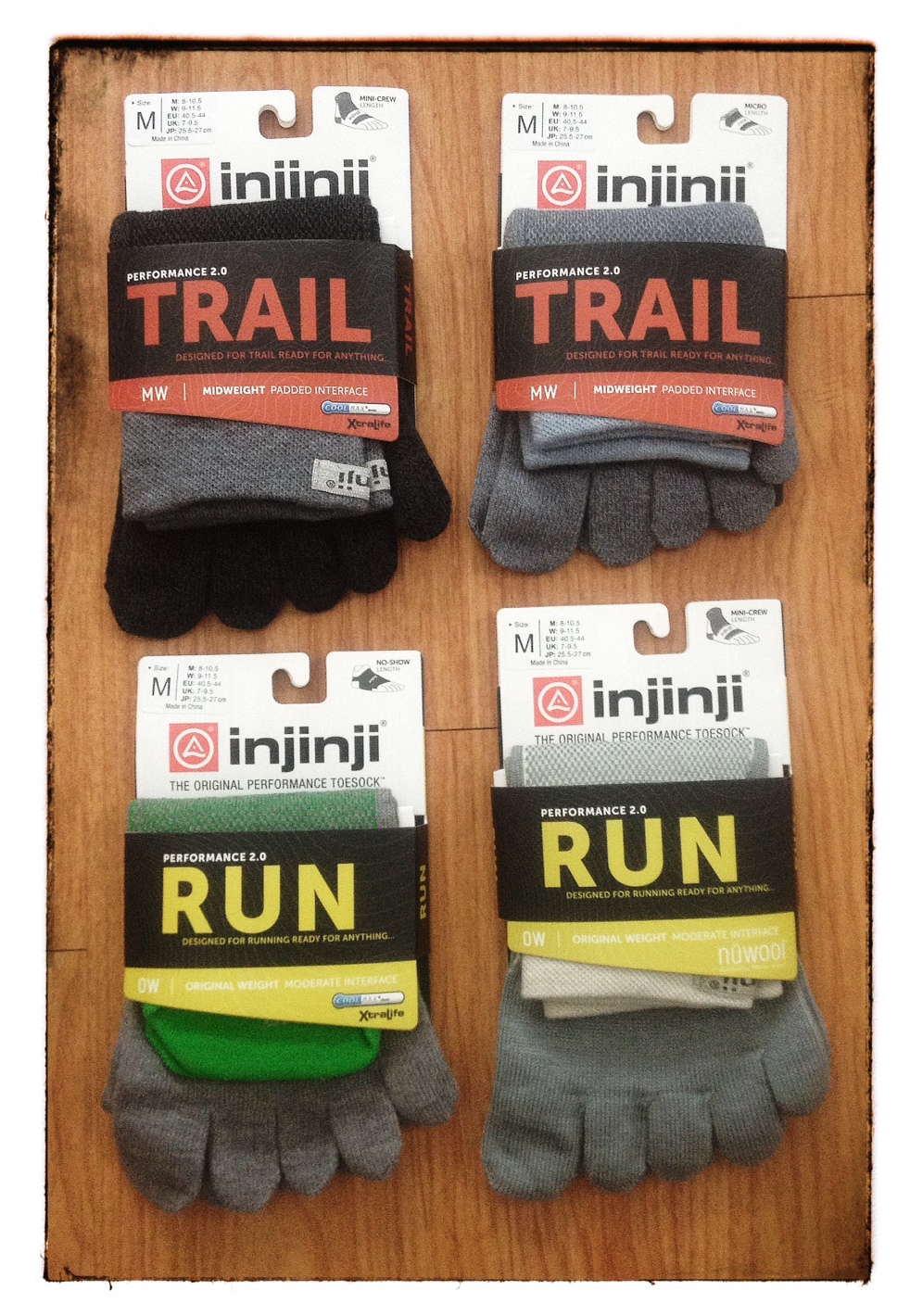
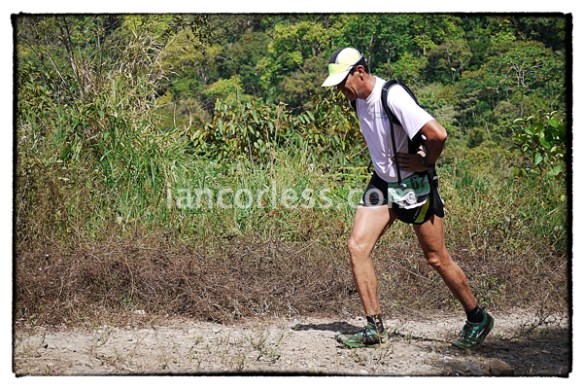
Socks, like shoes are personal but I am a firm believer in Injinji socks. Each toe is in its own ‘little pocket’. This for me reduces the possibility of problems or issues and over the 6 days of the race I never got one blister! The race had a foot doctor. Without him some runners would have been out of the race. If you have this option, take advantage.
iancorless.comP1080841

In training understand what you will be doing at your race. Practice walking, running, climbing, descending and run with wet feet. Find out what does and doesn’t work. Get the mistakes out of the way before you start the race.

I did not tape my feet prior to running and I added no Vaseline. After each day the first thing I did was to remove socks and shoes, clean them and the wear flip flops to allow them to breath.

*note – many of the runners who had problems had worn shoes too big. They had expected feet to expand but on day one and day two, the ‘larger’ shoes had allowed the foot to move within the shoe and consequently the foot had blistered. I am a firm believer that the shoe should ‘fit’. Excessive movement is a recipe for disaster.

iancorless.comP1060516

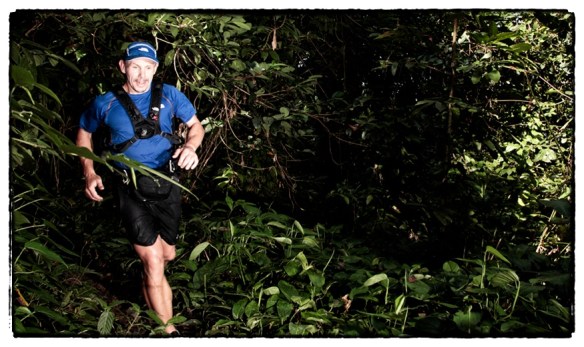
Clothing:  Six days racing means six sets of kit. As far as I was concerned. It’s a simple strategy. You run in one set, get showered and cleaned up, put another set on to relax post run and then you use that kit the next day. I was fortunate that The North Face did provide me with some clothing but not six days worth.
Stage 6 TCC_Snapseed

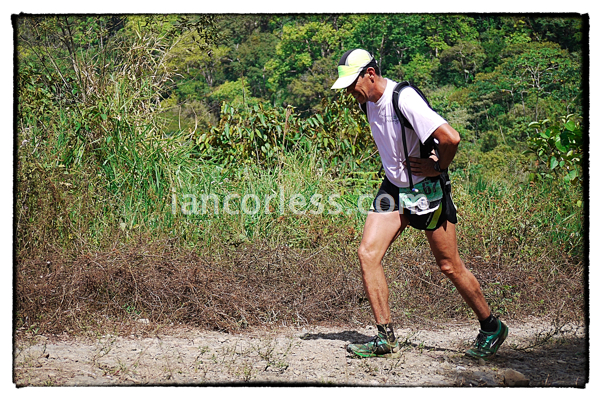
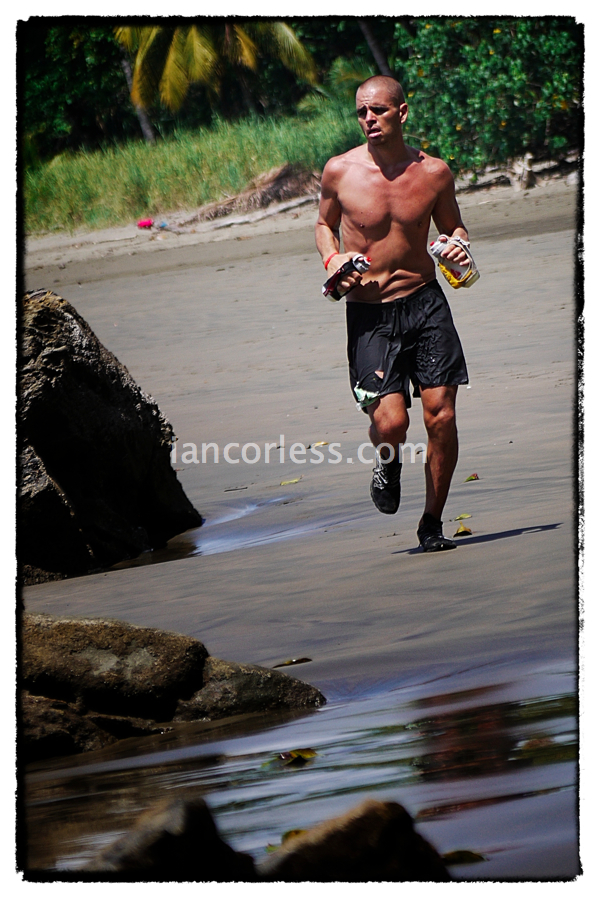
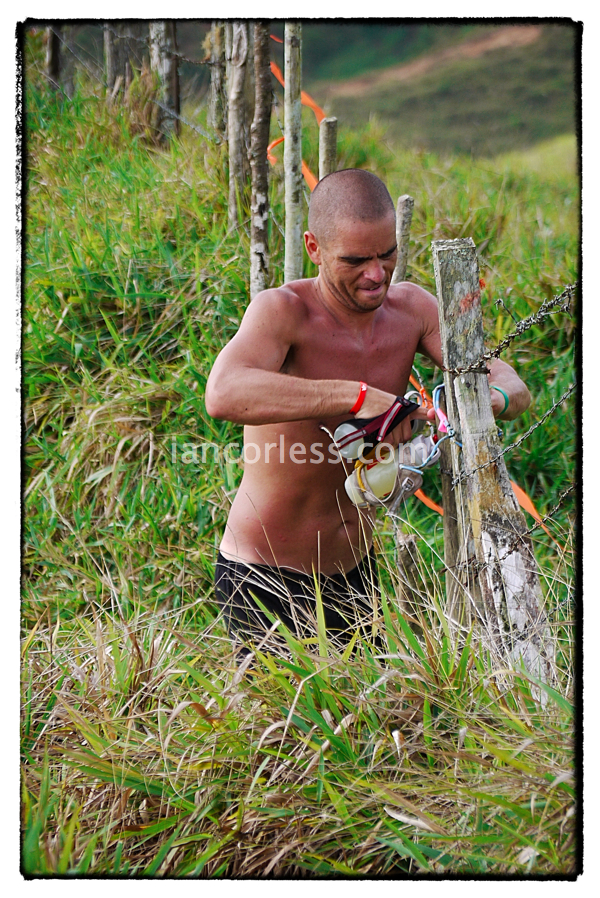
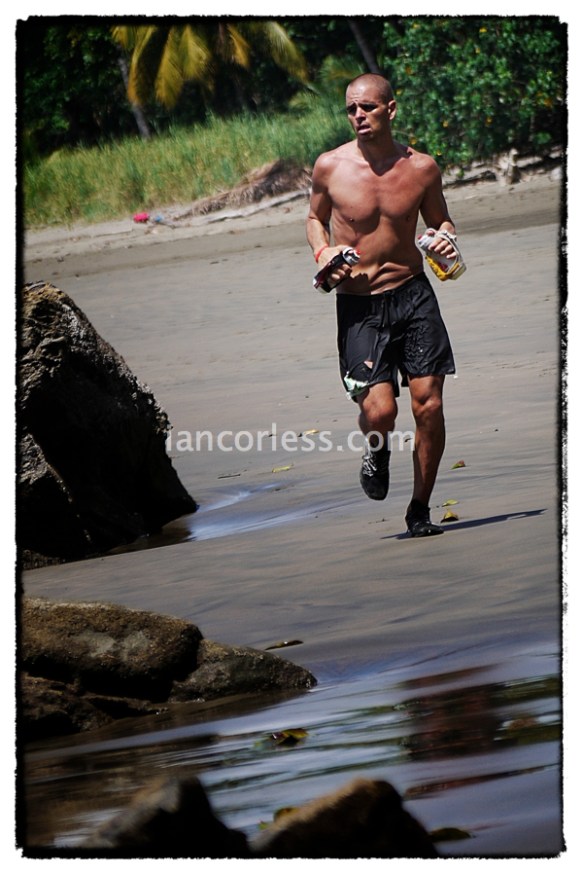
I added my existing TNF stock to the pile. Clothing is personal but the key elements for the jungle are comfort and the ability to wick sweat. I wore T-shirts instead of vests to cover my shoulders (always vulnerable) and I wore loose baggy shorts. It’s not rocket science but shirts with a mesh back certainly help with breathability, especially if using a pack. Race winner, Dave James wore no top! I don’t recommend this… it works for him but his skin looked well adjusted to the sun and I am sure he applied protection too.
iancorless.comP1080627

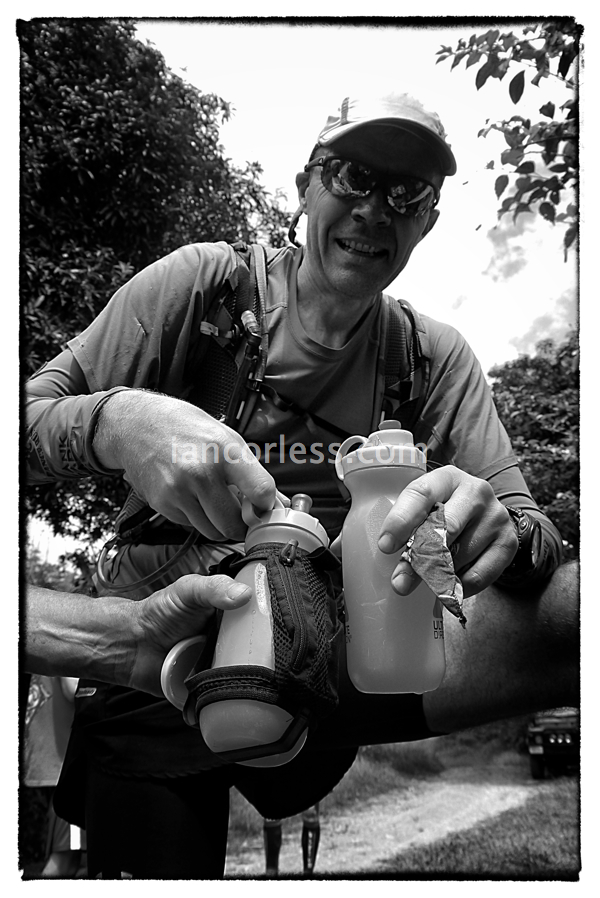
Dave also wasn’t using a pack, he used hand bottles only. Ladies have a multitude of kit options available to them, ‘looks’ can be far more important to some than functionality. However, simple functionality works best (in my opinion). Some ladies wore ‘strappy’ tops that offered minimal coverage on the shoulders and after 5+ hours on the trails the inevitable would happen… very unusual tan lines and some sunburn.


TNF Mica 1 Tent

TNF Mica 1 Tent

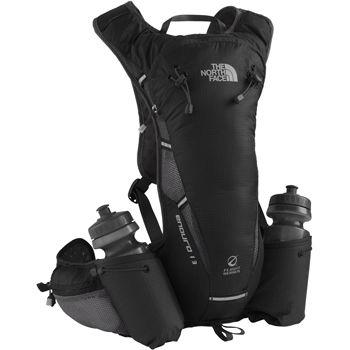
Equipment: This race was supported with feed stations. We had no ‘essential’ kit needs other than carrying adequate liquid supplies. Dave James was the only person in the race who used just hand bottles. Everyone else used a pack of some description. In my opinion, some used packs that were way too big and heavy. I am not sure what some people were carrying but the heat, humidity and long days on the trail should mean ‘minimal’ is a priority. Bladders or bottles? I have to say I am a bottle fan. Bladders are just too awkward.
northface-enduro13-2012-med

I used the TNF Enduro 13 pack with two bottles that sit on the waist. In the pack I was carrying two cameras inside and one camera which I added to the waist belt. However, this pack can also take a bladder too. So, if required I could have carried 3 liters. Had I been ‘racing’ I most certainly would have done this on the two long stages as feed stations were wider apart. Always best to stick to just water in a bladder to avoid problems with taste and bacteria. In regard to ‘essential’ kit I had a whistle, first aid kit, some food, purification tablets, phone, cash, small pocketknife and additional sun cream. With regular feed stations and such a hot climate it really wasn’t necessary to carry anything else.
iancorless.comP1060664

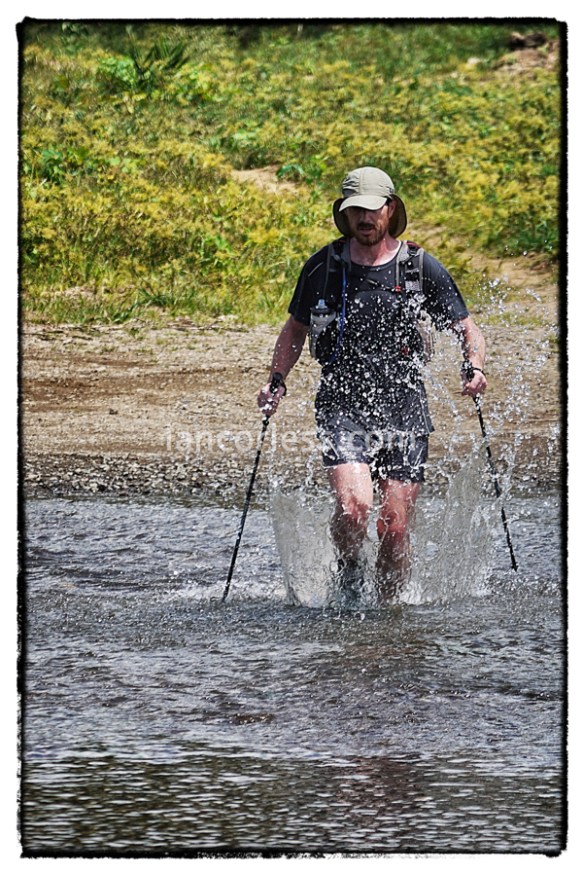
Tips on the trail: Run in the shade whenever you can. I found that as the day got hotter it was effective to run all shaded sections and then reduce pace or power walk in the open sun sections to regulate temperature.

On hills I power walked as fast as I could. On some sections of the course, depending on your run style and ability, ‘poles’ may well have been useful.
iancorless.comP1080883

Descents on the whole were easy, however, one stage in particular was brutal. It’s always a good idea to practice going down hill. Poles again may have been useful BUT vegetation can be very thick and poles would have got caught and may very well have been an additional hazard. Remember that you want to reduce fatigue and impact as much as possible. This is not a one-day race but a six-day race. Short steps reduce the impact.

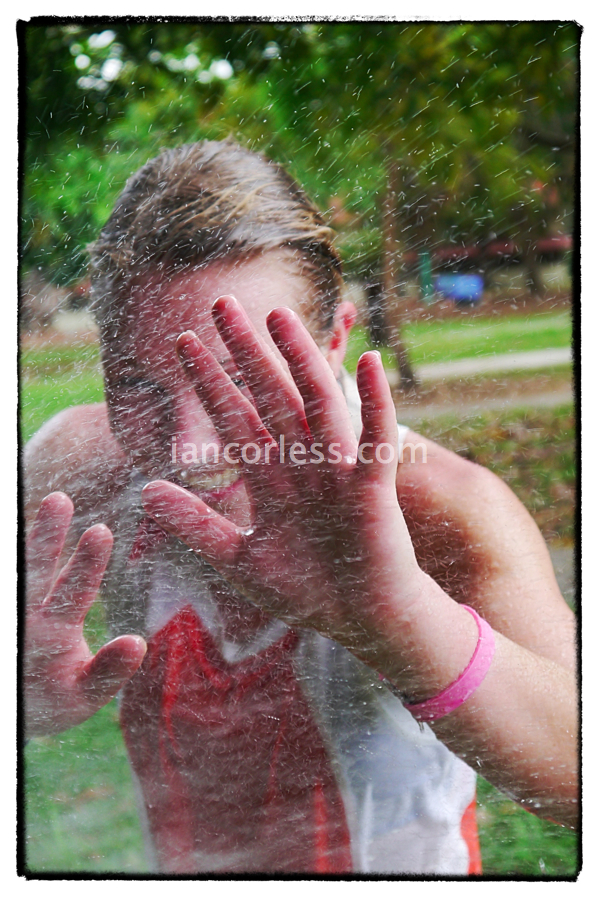
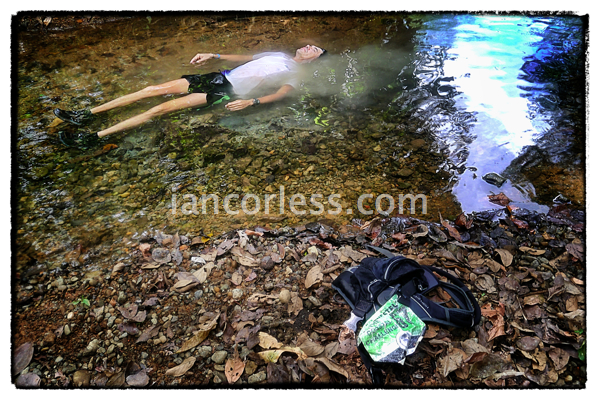
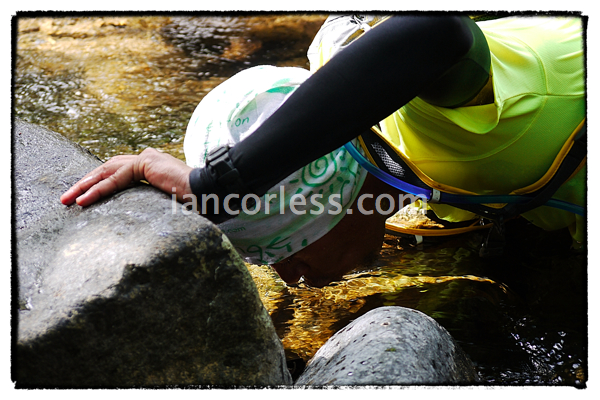
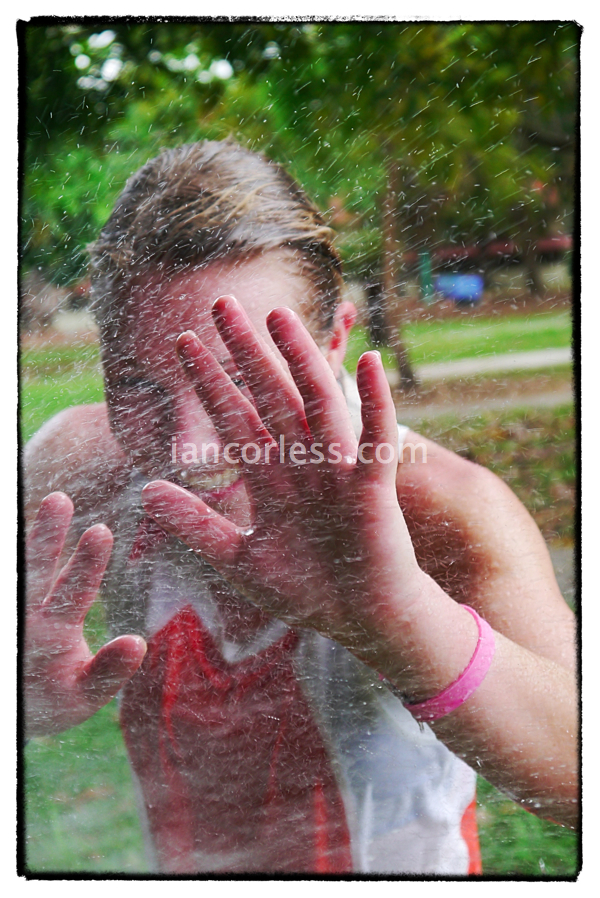
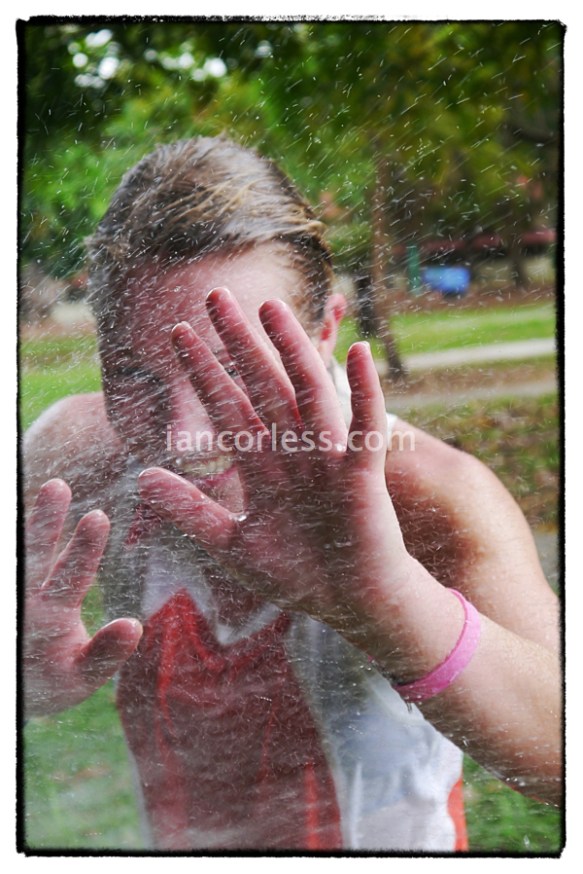
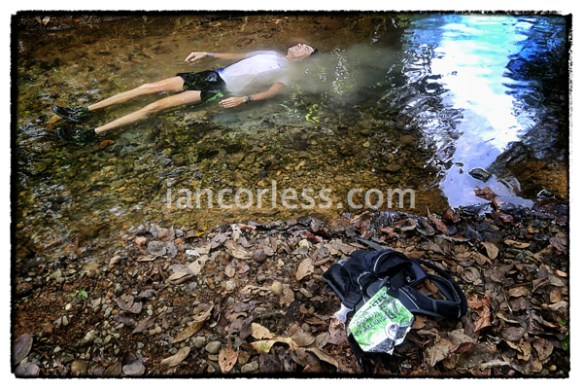
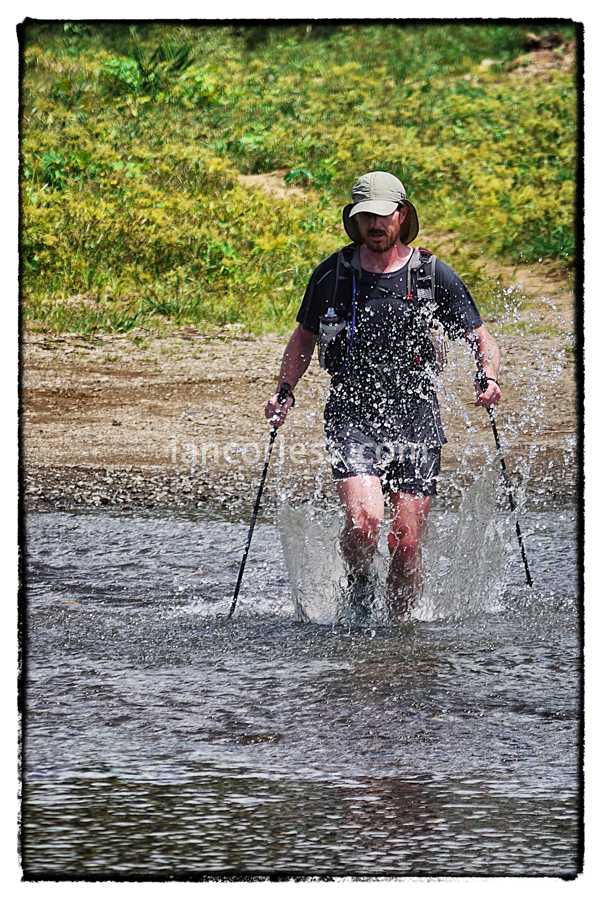
Utilize all water on the course! Any chance you get, submerge yourself in water crossings, wet your head, wet your neck and take a minute to let your core temperature drop before moving on. The route has plenty of opportunities for this, it’s crazy not to take advantage of it. I
iancorless.comP1060860

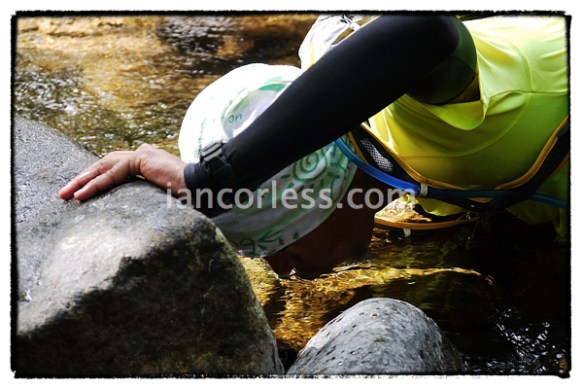
f you find ‘flowing’ water that is not near farmland then use it to drink. Many runners did this and as far as I know, nobody had issues. I carry ‘purification tablets’ just in case. Better safe than sorry.
iancorless.comP1080816

Feed stations are important. Always refill your bottles and take on energy. If you are struggling take some time out. Five minutes in the shade can make a world of difference.
iancorless.comP1060328

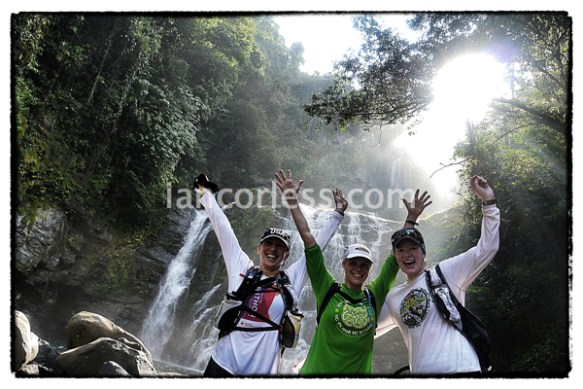
Depending on your ability, ‘buddying up’ is a great idea. If your plan is to maximize the experience and not race then buddy running can make the experience far more rewarding and potentially less stressful. The course was exceptionally well marked but you could go off course and many did. A buddy is a nice security blanket. In actual fact, 2nd and 3rd placed ladies in the 2013 edition buddied for the last two stages.

You are in a jungle so wildlife is all around you. You hear it all the time but the reality is that you see very little. All wildlife is far more scared of us than we are of them. Main issues may come from snakes or spiders. In thick vegetation its wise to look at foot and hand placement just to make sure!

iancorless.comP1050684

Calf guards (or compression) on one or two stages would have been good. I personally prefer not to have additional skin coverage so that I can keep cool, however, one stage in particular had undergrowth that was well above knee height and it did cut, graze and irritate my legs.

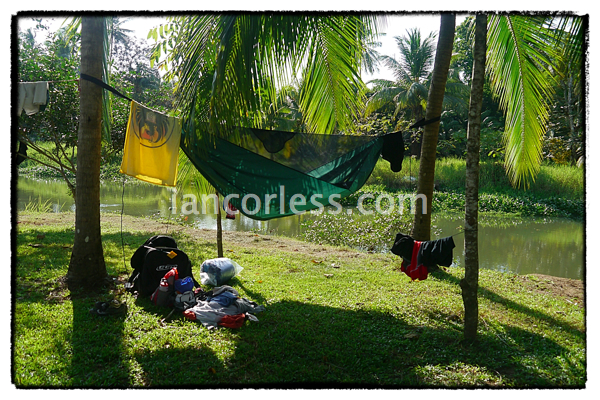
Camp life: Camp was a great place. You had very little to worry about as food and drinks are provided. It becomes a social mecca in the sun. Sites were strategically placed next to the sea or a river so you could swim or cool down that way. All sites had toilet and shower facilities (some better than others). Important factors were:

  • Tent/ Hammock
  • Clothes
  • Kit

iancorless.comP1060484

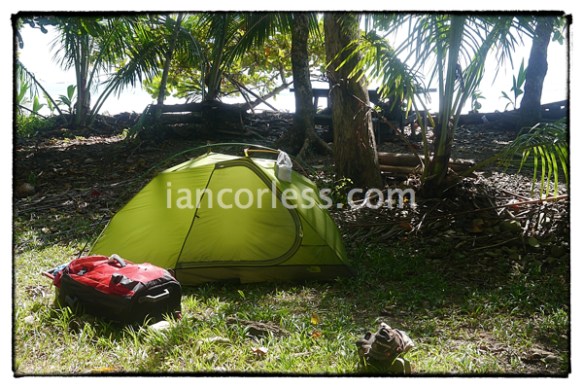
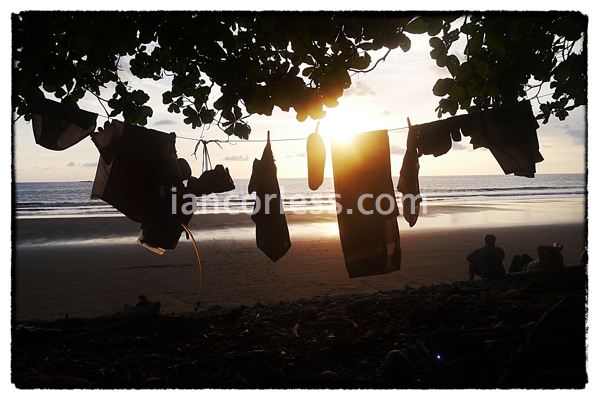
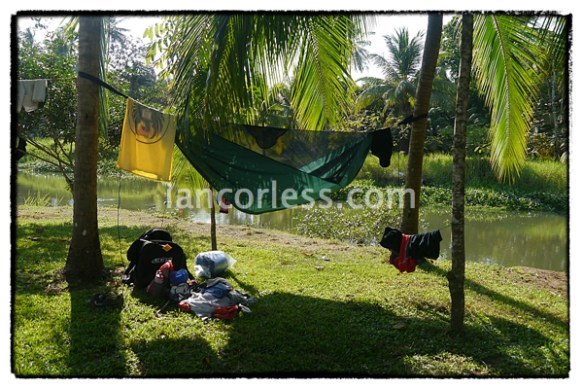
Tents that pitch ‘inner only’ are essential. It is so hot you need nothing else. Of course, it is a rainforest so make sure you bring the flysheet just in case. Other than a few short showers we had no rain (unusual apparently). I use a small one man tent, the TNF Mica 1 and it was perfect. I had an sleeping matt and inflatable pillow. I didn’t use a sleeping bag but I did take a ‘sleeping bag liner’ for any potentially cold or chilly nights. I slept in my next day run kit.

Your clothes and kit are outside all night, so, the organization recommend  ‘spacepackers’ they are waterproof containers that hold all your kit. They are a good idea but hopeless for travel. One or two people had large ‘Stanley’ toolboxes that had wheels and a pull handle; much better idea.

iancorless.comP1060489 iancorless.comP1060685

I used a TNF ‘Basecamp’ bag which was waterproof and easy to transport. I also had a TNF waterproof rucksack. It was essential. In this I stored my computer, cameras, cables, phone, microphone, etc, etc. I can’t recommend this pack enough.
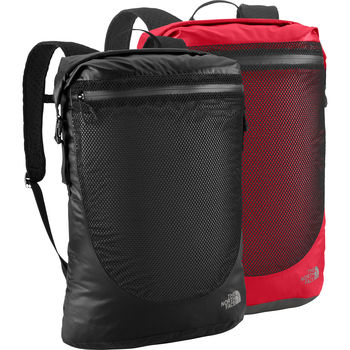
Waterproof Pack

Waterproof Pack

I had a full medical kit that included everything that I would need. It had all sorts of medication, scissors, tapes, creams, antiseptics etc to cover pretty much all eventualities. The race does have a medical team and foot doc but you should be responsible for all the essentials.

I carried very little additional clothing. I had lightweight long travel pants, travel shorts, hat with neck cover and some lightweight shirts all supplied by Arc’teryx. Perfect!

Arcteryx

I had one lightweight showerproof/ windproof jacket should it be required. I didn’t need it at any point during or after the racing but San Jose before and after the race was much cooler. It came in handy then.

Flip flops or similar are essential!

I had one towel, a travel towel that you can get from any ‘outdoor’ store. Small pack size and dries quickly.

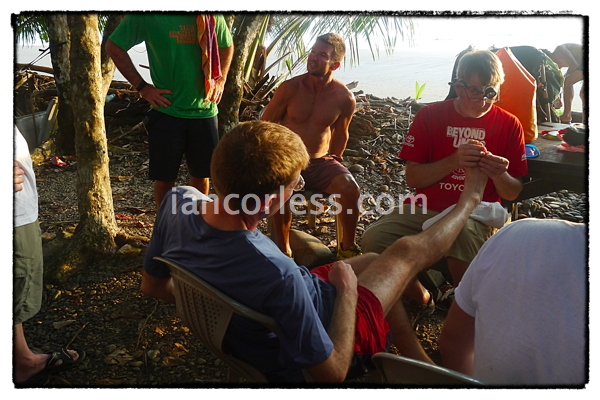
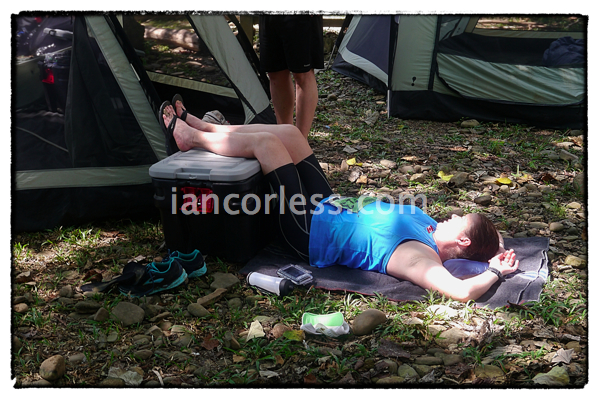
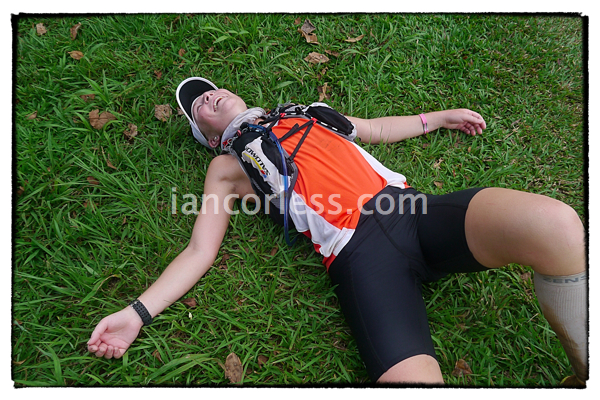
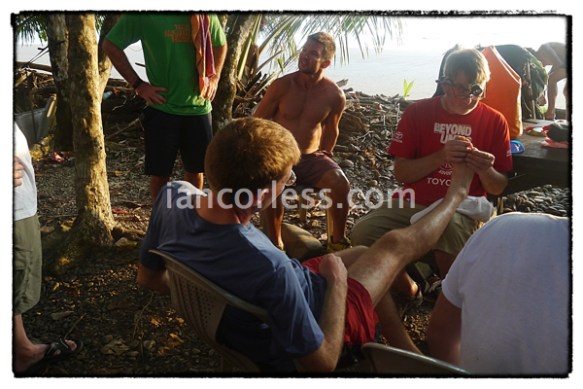
RECOVERY: Important. After each stage, recover. Drink, eat, look after your feet and then get some time with your legs in cool water and elevate. Find some shade and relax. Get a massage if it’s a possibility. At the TCC they had a team of masseurs.

Extras: Don’t get too involved in the racing. The course (and others) has so much to see and experience that you don’t want to get to the end and it be a blur. I feel very fortunate that I ran with cameras and had a job to do. I had to stop, look around, decide on photo opportunities and often wait. I really feel as though I experienced the rainforest. I will never forget sitting in the middle of a river at 0600 one morning waiting for the runners to run towards me. I saw birds, snakes, monkeys and I heard so much more… special moments that all added to the experience.

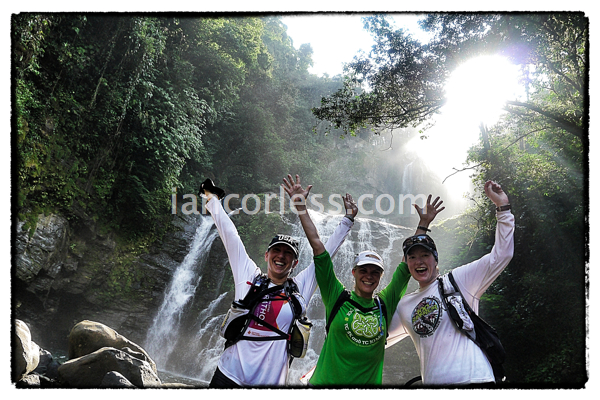
Stage racing is all about bonding and making friends. I am pretty sure that every runner left with so many more new friends. Go into these experiences with open arms and you will leave with them full.

Understand that before you start you will need to dig deep. This may be a holiday but it is no picnic. The Coastal Challenge is a tough course. The dnf’s and drop downs to the shorter Adventure category confirm this. But it is achievable for everyone. If you get day one and day two right, three, four, five and six fall into place. It’s not meant to be easy. If you understand that, the outcome will be a positive one.

Essential Kit:

  • Run shoes 2 pairs
  • Run kit for six days – tops, shorst and socks (I recommend 6 sets)
  • Rucksack that can hold 2-3 litres – bottles/ bladder or both
  • Medical supplies
  • Food for on the trail
  • Whistle
  • Sun Cream
  • Electrolytes
  • Hat
  • Sunglasses
  • Travel Towel
  • Tent that pitches inner only
  • Waterproof bag or box for all kit
  • Additional waterproof bag for electronics
  • Phone
  • Pocket Knife
  • Money
  • Credit Card

Optional Kit:

  • Run Poles
  • Gaiters
  • Sleeping bag
  • Music (ipod or similar)
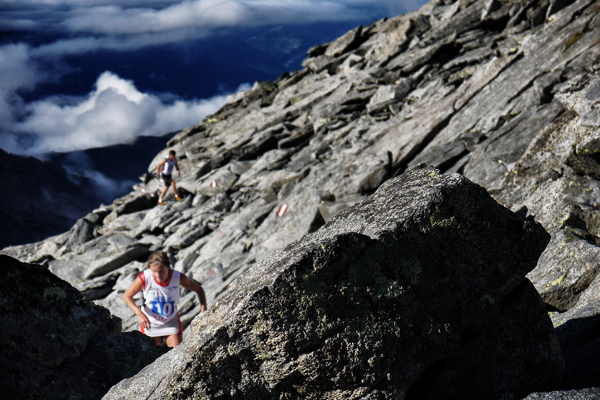
The Coastal Challenge – Day 4

Coronado to Palmar Sur 37.5km

iancorless.comP1060535

It’s routine now… the camp comes alive at 0330 as runners rise to prepare for a day ahead. Breakfast has been on the go since 0200. The catering team really are troopers!

Last nights sleep was awesome. The sound of the ocean accompanied us throughout… waves making a watery nursery rhyme to help us all drift off. The soft splashing of waves was interrupted by the chatter of Monkeys! We had invaded their environment and they were letting us know.

At 0500 the runners departed by bus for a short transfer to the race start some 20 minutes away. Temperatures were much cooler today, for sure, it would mean the early running would be much more pleasureable.

iancorless.comP1060558

I headed up the course to CP3 approximately 20km from the finish. My intention was to run in from here and capture images from strategic locations as the race unfolded. With my first spot found; I waited. The early morning mist that had engulfed us started to burn away as the sun started to heat the atmosphere.

iancorless.comP1080733

Dave James appeared on the horizon and danced his way towards me and then past me “I had forgot how beautiful it is up here man” he shouted.

“Your looking good Dave”

“Yeah, I feel good, just trying to enjoy the day”

iancorless.comP1080774

Over twenty minutes later, Ismael and Henry arrived. Dave was killing it once again… he really is head and shoulders above the completion here and that is saying something, Ismael is no slouch!

iancorless.comP1080816

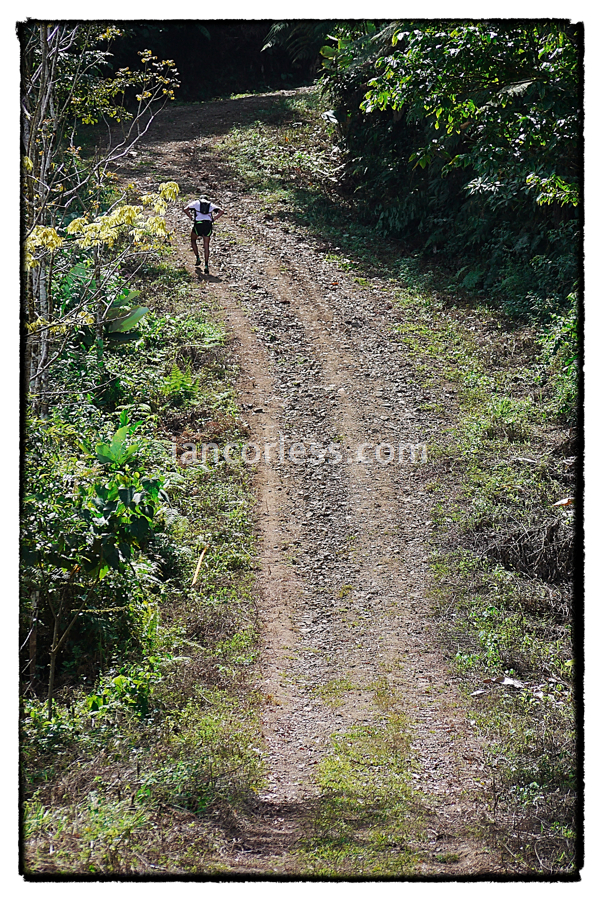
After a short section of single track; a tough, technical and twisty descent dropped to a stream and then a tough long climb waited. The heat started to beat down. It was tough.

iancorless.comP1080846

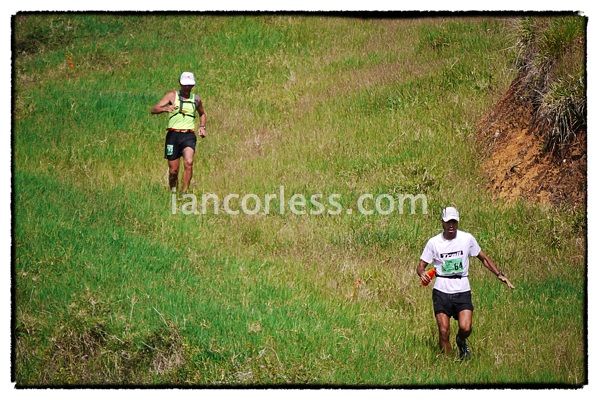
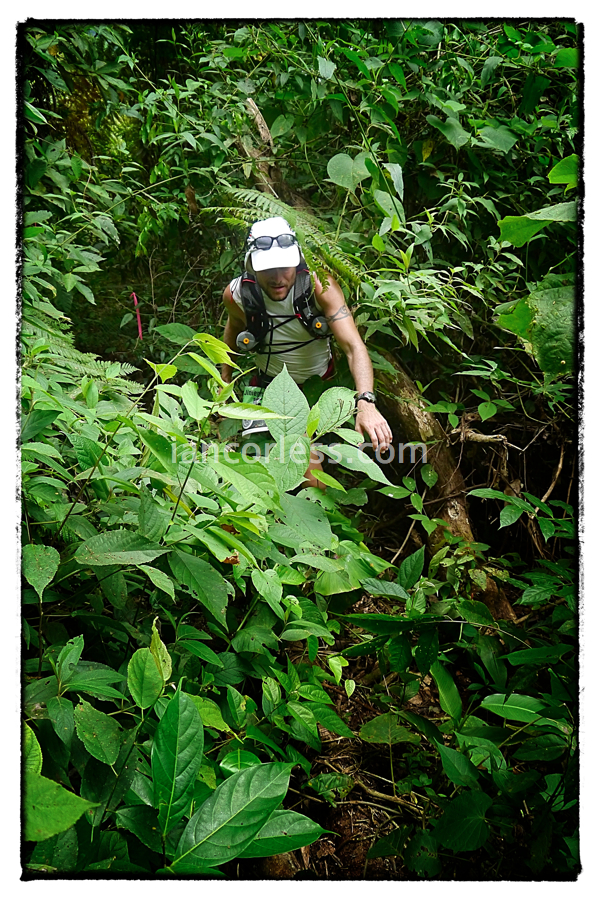
At the top of this section it was then mostly wide fire trail. Like a roller coaster it went up and down. A beautiful vista on the left with rolling hills and green pastures. To the right, dense jungle and an assault of noise. Terrain is good underfoot, to all intents and purposes its easy running. A right turn and then a long tough and technical descent through dense jungle to the final few road kilometers that would lead to the finish line.

iancorless.comP1060595

iancorless.comP1060627

iancorless.comP1060619

I waited at strategic points, captured images and slowly moved forward to my own finish line. It was a tough day. I wasn’t doing much running today but even so; it took some time for runners to come to me. By the time I reached the finish only 10 had arrived.

iancorless.comP1060656

I was fortunate to see Gemma Slaughter (Canada) arrive at the finish. She had placed 2nd on day 1, 2nd on day 2 and gave away the lead on day 3 in the final km’s (due to fatigue) to finish 4th. She put the record straight today though. She had not only won the stage but with a combination of her having a ‘good day’ and the other ladies have a ‘less good’ day she had taken the overall lead by 25 minutes.

iancorless.comP1060658

I caught up with Gemma on today’s win:

Tell me about your strategy for today. You had a tough day yesterday, after leading pretty much all day you relinquished the lead in the final 6km?

“To finish”

You had no more aspirations?

“I knew how much I struggled yesterday. I have no objectives, as I don’t know my potential. I thought I had to make the most of the day and see what happens”

So you lead from the front today, did you keep looking behind?

“I looked for the first 4km and then I was on the trail… I was shocked at how tough that climb was. It was scrambling, knees on chest; wow!”

So at the top of the climb you then hit the rolling terrain, it is like a series of dippers?

“I walked the climbs and probably ran 80% of the flats and shuffled the downs”

Was your body hurting?

“My quads felt like they were being stabbed by knives, it was so painful. I was with Bryce and Brent from Canada”

Did they help pace you?

“I ran the downs faster but they climbed quicker, it evened out”

From checkpoint 3 what happened?

“I pushed on after eating and drinking. I walk at first and then ease myself back into running.”

How was the final descent?

“I felt like Kilian… arms in the air bouncing from rocks. It’s like dot-to-dot. My feet join the dots. Its so mental concentrating on the terrain I thought I need to push it and maximize time”

And did you find that descent difficult?

“ For sure, I thought I may hurt myself but hey, that’s the race…”

So, the final stretch was a couple K of road. Did you have it sewn up?

“No, it’s like dangling a carrot. I had no idea how far the finish was. I also had no idea how far behind the next lady was. I kept my pace and pushed on to the finish. Kids came out and waved and smiled. I took that energy and used it”

So you got the stage win today but you are now in the overall lead by 25 min?

“It doesn’t feel real. I don’t know how I feel. My friends are sharing all this on Facebook. I am so shocked… it hasn’t sunk in. I am done now.”

So tomorrow, defend or attack?

“Attack, always attack”

iancorless.comP1060664

Finally Gemma tells me about the special story that brings you to The Coastal Challenge?

“Graham Snowden. He put our team together. About 10 months ago he asked me if I wanted to take part and I said yes. I am really new to running. This is my first race…”

Tell me about the other reason?

“Two things. My team, Tam, Tony, Graham, Shawn, Pavel and Marissa. We all want to support each other and that motivates all of us. The other one is test my own physical ability”

The men’s race barring a disaster is over. Dave James has a convincing lead that will not be relinquished. However, with two days to go and tomorrows long stage, anything can happen for 2md and 3rd.

The ladies race is far more open. Gemma now has a strong lead but as stage 4 shows, it only takes one person to have a good day and another to have a bad day for things to change dramatically.

Images from stage 4 can be viewed HERE

iancorless.comP1080728

Results

  1. Dave James 5:05
  2. Ismael Dris jnt 2nd 5:53
  3. Jose Lopez jnt 2nd 5:53 (now moved up into 3rd place)
  1. Gemma Slaughter 7:49 (now 25 min lead overall)
  2. Angela Mayer 8:45
  3. Irene Hale 8:46

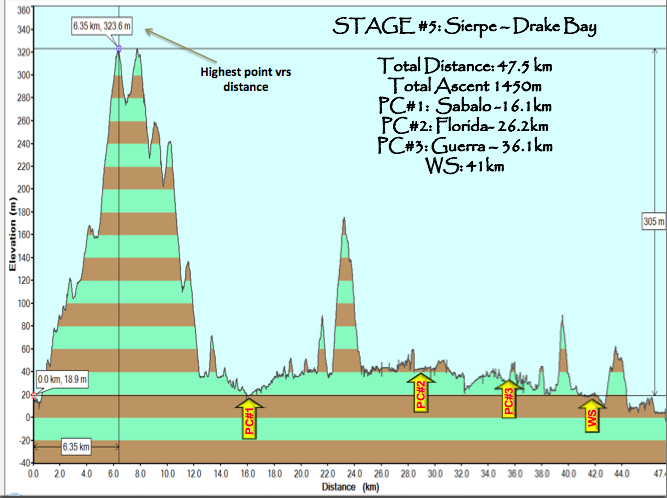
Stage 5 is one of the most beautiful. The start can only be reached by boat so it’s an early start for everyone at the camp… I can’t help but think tomorrow’s blog my start with stories of fatigue and mosquitoes.

Pura Vida

  • TCC stg 5

The Coastal Challenge – Day 1

iancorless.comP1040852


Not even a 4am start could dampen the spirits of the participants of the 9th edition of The Coastal Challenge in Costa Rica.

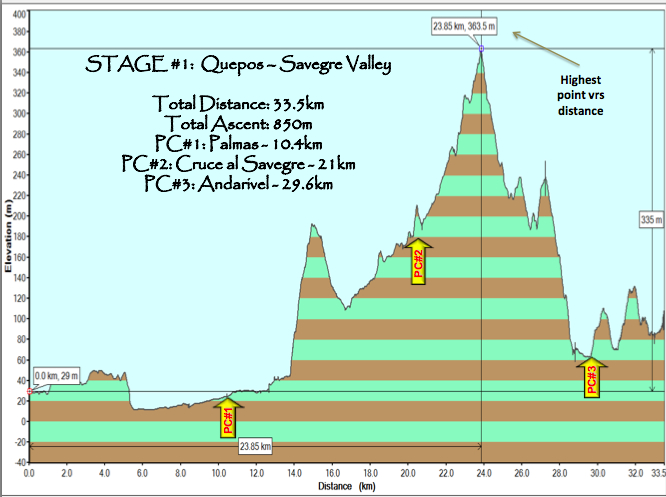
Leaving the Best Western in San Jose some 100+ racers, crew and staff made the 2.5 hour journey to the coast and the start of the first stage at Quepos. A total distance of just under 34k this day was billed as an ‘easy’ day to allow the participants to adjust to the heat and humidity. Believe me, they needed it…

TCC stg 1


Quepos is a small town on the coast of Costa Rica and the arrival of several buses was certainly a point of interest, pre-breakfast in this little town. Runners congregated at the start and prepared for the challenge ahead. Filling packs, getting bottles ready and nervously laughing.


iancorless.comP1040990


At 0900 they left the town and the first 10k was on road or pathway. Unusual you would think for a rainforest race? But a flat 10k of consistent surface is maybe just what all the runners needed to ease them into the day ahead. As expected Dave James hit the front and stayed in that place all the way to the finish.

Dave James dominating the race from the front

Dave James dominating the race from the front

I had gone to checkpoint 1 at 10k and then left following the course and ultimately would make the journey to the finish line under my own steam. My plan was to get into the jungle and then capture the runners as they approached.

iancorless.comP1050156


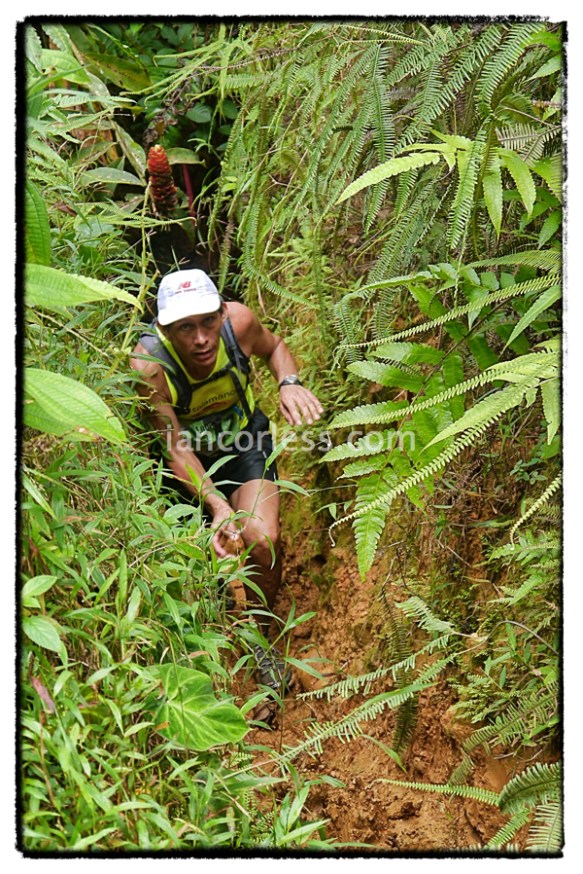
Coming from a cold winter in the UK the heat and the humidity hit me straight away. Within minutes I was soaking wet and remained that way for the whole day. The front runners seemed in control but very early on it became apparent that if you pushed too hard it was going to be a tricky day.

Follow the pink ribbons

Follow the pink ribbons

The course was a mixture of rocky fire trail and jungle. Apart from the heat the most notacable thing was the noise from the canopy. Millions and millions of insects created a chorus that was deafening.

As the course progressed and we descended down to the river, a metal bridge facilitated a safe crossing and checkpoint 3. From here it was just 6k to the finish.

iancorless.comP1050258


The Coastal Challenge team was already busy laying out peoples tents and arranging luggage so that it was ready for our arrival.

I have to say I was pleased to see the finish line. The heat really drained and as runners arrived you could see the stress and the impact on faces.

“This is the easy day” one lady said.

“Yeah, tell me about it… today is gonna be so interesting” replied another.

Cool campsite on the beach next to the river

Cool campsite on the beach next to the river

With a river to cool off in and food available the recovery process immediately starts. The runners, the team and the location is excellent. What more could you ask…

When the running is done, the relaxing begins

When the running is done, the relaxing begins

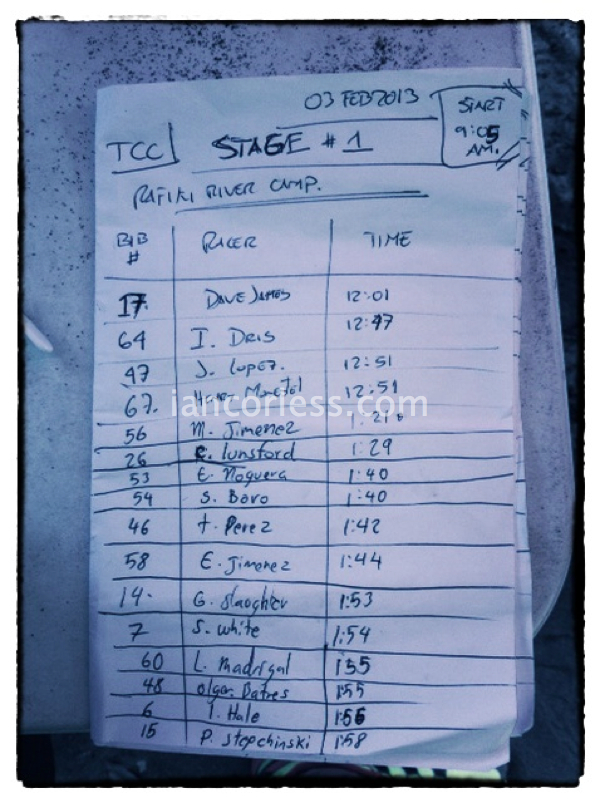
Dave James finished in 1st place in just under 3 hours (tbc)

T Dris had an excellent run to pull back into 2nd place. He had early gone off course in the day and when he passed me he said he had run an extra 6k! A top 10 finisher at MDS he has now 46 mins behind James.

In 3rd J Lupez finished just a handful of minutes behind Dris.

Stage Results

Stage Results

You can view The Coastal Challenge website HERE

Tomorrows stage is 39k with 2250m of ascent and we get underway early at 0530.

TCC stg 2


Episode 27 – Talk Ultra

Episode 27 Talk Ultra


Episode 27 of Talk Ultra – Fast man of the moment, Sage Canaday tells us about how he got into running and all about his transition to ultra. Joe Grant gives us an update on how his prepartion is going for his attempt at the 350 mile Iditarod Trail Invitational in Alaska. We also speak to Dave James who had a win at Coldwater Rumble recently and heads out to The Coastal Challenge in Costa Rica on Feb 1st. We have talk tainining, a year in the life of, the news, a blog, a Meltzer Moment, up and coming races and we have the start of a new special on the build up to the 2013 Marathon des Sables.

00:00:00

00:00:45 Start

00:10:00 ‘A year in the life of…’ – this week it is Tyler’s turn to tell us what he has been up to since Christmas.

00:21:35 The News


00:33:20 An interview with Dave James who had a recent win at the Coldwater Rumble and heads out to The Coastal Challenge on Feb 1st 2013.

Email from Andrew Bentley  – Following the tragedy in Glencoe this last weekend four climbers killed, is there any chance would you be able to put a shout out about this http://www.justgiving.com/Luke-Bradley Chris Bell was a keen bike and triathlon racer, winning numerous races, some of which I was fortunate enough to be his team mate for. Chris was always the faster one- his dedication to being fast was unmatched. 

01:00:23 Back to the News

01:05:00 Joe Grant needs no introduction… his 2nd place at the 2012 Hardrock was a great result. In February 2013 he will be taking part in the 2013 350m Iditarod Invitational Trail. He gives us an update on how his preparation is going.

01:37:50 Back to the News

01:43:30 Blog – Gary Robbinshttp://www.gary-robbins.com

01:44:10 Talk Training with Marc Laithwaite – running as we get older.

02:13:22 Interview with Sage Canaday

As a 2-time Olympic trials qualifier, Sage has competed at a national class level.  In 2007 he was the youngest participant in the Olympic marathon trials at the age of 21.

A native of Oregon, Sage ran for Newberg High School and placed 13th in the state cross country meet his senior year. Determined to run DI in college, Sage traveled across the country to run for LetsRun.com co-founder Robert Johnson at Cornell University. At Cornell Sage not only qualified for the 2008 US Olympic trials marathon (junior year) – he also won the Ivy League Conference title for 10,000m on the track and qualified as an individual for the 2007 NCAA Championships in cross country.
Sage ran as a Brooks-sponsored elite runner on the post-collegiate Hansons-Brooks Distance Project team from August of 2009 to February 2012.  His running resume from their website can be found here. During his time at Hansons, Sage placed 17th overall at the 2010 Bank of America Chicago Marathon (8th American in the race), and placed 5th in the 2011 Rock n’ Roll New Orleans Mardi Gras half marathon with a personal best time of 1:04:32. Sage also ran a personal best marathon time  of 2:16:52 at the Rock ‘n’ Roll San Diego Marathon that year (2011). In his final race wearing the Hansons singlet, Sage placed 43rd in the US Olympic Trials marathon in Houston with a 2:18:24.

At the start of 2012 Sage started ultra marathons and trail running. In his ultra debut had earned a 2nd place overall finish at the Chuckanut 50k in Bellingham, WA in March after missing a turn and running off course for 8 minutes. In June 2012, Sage won the Mt. Washington Road Race in 58:27…the fastest time ever by an American on the all uphill course. In July 2012 Sage won the White River 50 in 6:16 and bettered Anton Krupicka’s course record by over 9 minutes on the 50 mile course.

Sage looks to continue competing at a high level on the roads and trails at distances from the half marathon to 100k for the rest of the year with a focus on representing the US at the 2012 World Mountain Running Championships in Italy.

Sage’s Personal Bests and Career highlights: 

  • 1500m: 3:55 (2009)
  • Mile: 4:17 (2009)
  • 3k: 8:22   (2009)
  • 5K: 14:29 (2009)
  • 8k: 23:48 (2008)
  • 10k: 29:47 (2009)
  • 10-miles: 49:01 (2011)
  • Half Marathon: 1:04:32 (2011)
  • Marathon: 2:16:52 (2011)

03:00:50 A Meltzer Moment with Speedgoat Karl

03:06:20 Marathon des Sables spécial with Stuart Rae

03:21:05 Up & Coming Races

03:22:40 Close

03:26:06 end

http://traffic.libsyn.com/talkultra/Episode_27_Canaday_Grant_James.mp3

Libsyn – feed://talkultra.libsyn.com/rss

Website – talkultra.com

Testing the Hayasa

The North Face Single Track Hayasa

I have been testing the The North Face Single Track Hayasa on a varied terrain for a couple of weeks now. My initial review of the shoe can be read HERE

First thing you will notice is that my initial shoes were blue! No, no miracle. I made a comment in my review that I had gone a half size larger. My normal size is UK9.5 and I had taken a UK10. I did express a concern that I thought the additional half size may very well be too much. I was correct.

My first test in the shoes, a hilly 6 miler had my foot moving just a little too much within the shoe. Nothing terrible, nothing uncomfortable but it just didn’t feel quite right.

So, I am now in a UK9.5 and they feel ‘sweet’. Actually like the black and yellow too!

The Hayasa has a 10mm drop but is low to the ground and as such it still promotes a very mid to forefoot run technique. The lacing I love. It would appear the laces have an element of ‘elastic’ within them so not only can you pull the shoe tight on your foot but once tied the laces don’t come loose. A real bonus. However, the laces are way too long… not a problem, I cut mine down and then just melted the ends with a match so they wouldn’t fray. The shoe is ‘very’ breathable and actually on some of the recent really icy days, on occasion they felt a little cold (perfect for hot weather then). The toe box is roomy and the upper is light and holds the foot secure.

Still early days but I have now done seven runs in them, two on the road (one 6 mile and one 10 mile) two trail runs (both 8 miles) and two snow/ice runs with YakTrax attached (7 miles and 10 miles).

I am really enjoying the Hayasa. You are close to the ground so you can really feel a connection with the surface and this promotes good technique. On the road they feel light, responsive and although the grip is more than a conventional road shoe I haven’t felt any negative effects. On trail, again the connection with the ground and the feel is superb, however, when the ground gets muddy the grip fails. It certainly is a shoe for a more compact, harder or dry trail. The surprise has been on the snow and ice. Admittedly I have YakTrax attached so that negates the sole but what I have loved is the connection with the ground from such a light shoe. You really notice the benefits when running through soft snow or hard icy trail… the Hayasa provides immediate feedback allowing you to adapt to the terrain accordingly. The Snake Plate I am sure is really adding to this.

Cushioning is good for such a lightweight shoe. Considerably more testing and runs to be done but at this early stage it’s a big thumbs up.

Snake Plate™The patent-pending Snake Plate™ consists of a forefoot plate that winds back and forth between the medial and lateral sides of the foot. Because it is not one solid element, it is not as uncompromisingly rigid from side to side and front to back. The result is a forefoot plate that allows the foot to do what it is physiologically designed to do: flex, bend, and contort to changing terrain. At the same time, the Snake Plate™ delivers rigidity where and when it is still needed. The thickness, composition and size of the Snake Plate™ vary from style to style as appropriate. For example, a thicker, more rigid Snake Plate™ addresses the technical, ever-changing demands of a mountain run. A thinner, more flexible Snake Plate™ reconciles flexibility with a decreased demand for protection while on smoother dirt paths.

Check out the The North Face HERE

Topo Athletic

green_s2

I am not going spend too much time on this but news is news….

Tony Post, former boss of barefoot inspired ‘Five Fingers’ firm, Vibram, has moved from  five to two toes. As any minimalist runner should…?

Post says split shoes offer more than a design gimmick.

“The big toe is the most important mechanism in the foot. You want your big toe to move but retain stability from the rest of your toes. On landing, say, the big toe effectively curls upwards, pushing the ball of your foot into the ground and giving a stable pivot point from heel to forefoot. Barefoot shoes can improve strength and flexibility. It’s like having dumbbells for the feet.” taken from The Independent Richard Fenton at Profeet

The Technology?

  • Based on the Japanese Tabi shoe, the split toe creates a unique anchor point in the forefoot, offering more security and a stronger connection to your footwear.
Copyright Topo Athletic

Copyright Topo Athletic

  • The anatomically designed toe box allows the remaining toes to spread naturally, delivering comfort and control for optimal performance.
  • The shoe has lightweight material and welded seams because weight and chafing are not your friends.
  • We have a zero-drop heel-to-toe platform because we don’t think a shoe should “fix” the way you run or train.

So, a zero drop shoe that looks like a horses hoof.

Why barefoot?

In 2001, Nike sent guys to watch the Stanford University team train and were dismayed to see them doing so without shoes. “I believe when my runners train barefoot they run faster and suffer fewer injuries,” the coach said, as Christopher McDougall recounts in his book ‘Born to Run’. “We’ve shielded our feet from their natural position by providing more and more support.” The Independent

I can give no opinion at this stage as I have only researched the shoe and not physically looked at one or tried them on.

If the shoes has ‘cushioning’ and at this stage I can’t tell if that is the case but they do look more cushioned than Vibram Five Fingers. The Topo Athletic range may very well give runners of all shapes and sizes a zero drop shoe with protection.

I have to obtain a pair of shoes and feedback in due course.

You can read more at the companies website HERE

Kladdkaka by Emelie Forsberg

KLADDKAKA

by Emelie Forsberg

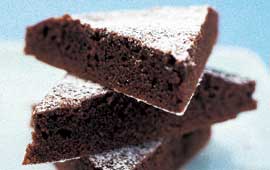
Kladdkaka (lit. Gooey cake but more commonly known as “chocolate mud cake”) is a type of Swedish cake. This dense sticky chocolate cake is similar to the American brownie but has a soft and viscous centre. It is sometimes eaten with whipped cream or vanilla ice cream.

The cake is basically a chocolate-flavoured sponge cake without leavener which is prepared by gently stirring the ingredients instead of beating eggs and sugar.

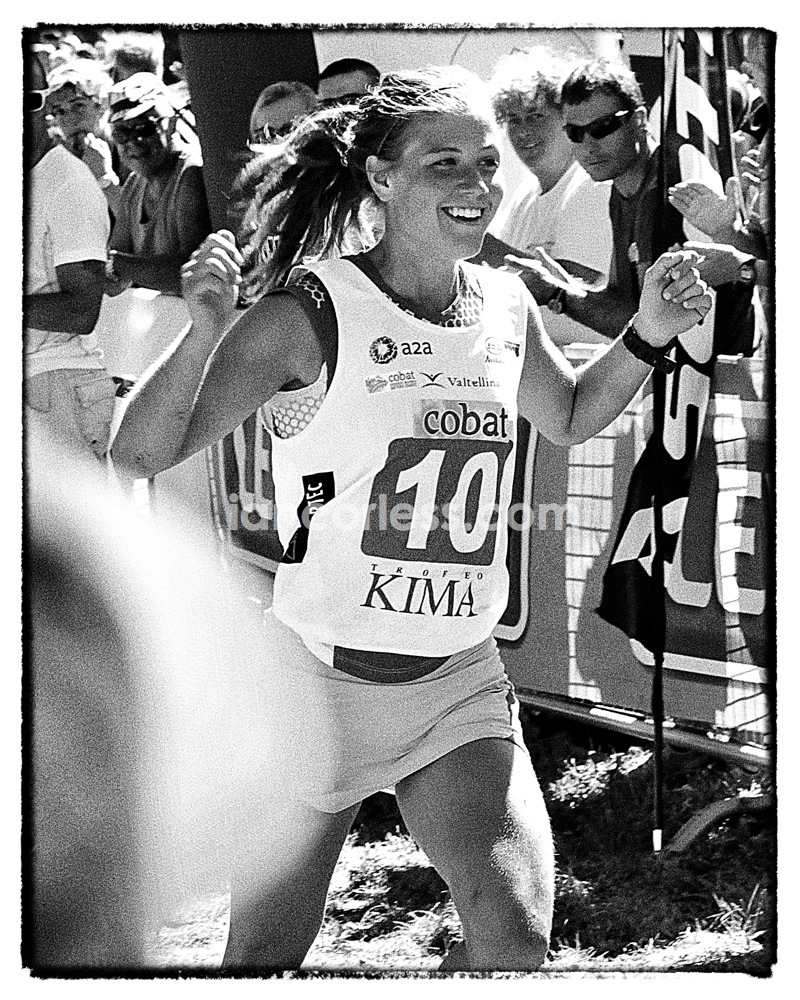
Emelie Forsberg - Trofeo Kima 2012

Emelie Forsberg – Trofeo Kima 2012

RECIPE

Kladdkaka

2 eggs

2 dl (0.2 l) sugar

5 big spoons of kakao

A small spoon of vanilla sugar

Very little salt

100 g butter

1 dl (0.1 l) Wheat

A little coffee

Stir the and the eggs and sugar very gently ( no whisking!)

Things to add in the cake: everything you like! I prefer nutella, walnuts, m&m´s or chocolate pieces.

Then add all the ingredients, put it in the owen at 175 Celsius. 15-20 minutes depending how you like the consistent to be like!

Enjoy!

This was what I eat during my first mountain marathon! Nyam nyam!

Apparently best served with Almond Milk….

Courtesy of Emelie Forsberg… Master baker and awesome runner 🙂 shhhhh don’t tell Salomon Running or Greg Vollet

Scott eRide Grip 2

Scott eRide Grip 2


Scott are renowned for cycling and skiing products. I know first hand the quality of the cycling products, In my previous life as a cyclist and triathlete I had used Scott extensively for bikes, clothes, shoes and helmets. However, Scott as a running brand grabbed my attention when I witnessed Marco de Gasperi crossing the finish line of Sierre-Zinal in first place. In chatting with him I became aware that particularly in the UK they are pretty much unknown.

De Gasperi wins


As often happens a series of events post Sierre-Zinal meant that I had several samples to test. Ironically this coincided with myself picking up a knee injury and as such I had to pretty much put all product testing to one side until I got better.

eRide Grip2


My eRide Grip 2 had tempted me for a few months, the glowing yellow tempting me to take them out. As my injury progressed, finally in November 2012 I was able to resume some running and take the Scott’s for a spin. Or should I say several spins.

Weighing in at 336g for a UK9.5 this compares well to other shoes in direct comparison. For example a Salomon Speedcross 3 is 350g and a Salomon S-Lab Softground is 367g for the same size. For a lightweight comparison, The North Face Single Track Hayasa is 280g and the Salomon Sense Ultra is 230g.

The heel to toe drop is 11mm and as such allows direct comparison to the Speedcross 3 and Softground. Also, a key element of the eRide Grip 2 is the aggressive outsole.

eRide Grip2 sole


The outsole really is aggressive and as such makes running on all terrains a pleasure. It grips well on rocks, grass, mud, sand, lava and works incredibly well on road and hard trails. The shoe has a very cushioned feel and provides real comfort over longer distances. I was really impressed how the shoe felt on the road. Of course this shoe is not for that type of surface but if you are ever out training or racing and need to transfer from trails don’t worry. This shoe can handle it!

The upper is a very breathable and lightweight mesh. A bumper at the front of the shoe provides adequate protection from rocks and other objects but not as much protection as other brands on the market. The tongue is free fitting and not very padded but perfectly comfortable.

The laces have an elastic feel and work really well. Get the shoe tightened and tied and then don’t worry. In use I never had to re tighten my laces and that included some outings of up to 9 hours. A neat addition 2/3 of the way down the laces is an elastic that stretches from one side of the show to the other.This allows you to hold the excess laces in place so they don’t bounce and flap around. Not as ground breaking as Salomon’s ‘Garage’ but it does the job and it is a welcome addition

The heel area is reinforced very well and provides a real secure and comfortable area. It is this area that provides real security on the trail holding the foot firm. Padding is excellent but at the back of the shoe this padding may come a little high for some… I had no issues whatsoever but I have heard one or two comments referring to this.

One of the key features of the shoe is eRide. eRide is designed to offer a faster foot transition when on the ground by providing a ‘rocker‘ platform. The unique rocker shape creates a very stable midstance, promoting the faster and more efficient running style that runners strive for.

Scott eRide Rocker


Now depending on your foot strike you may feel a real benefit from this rocker or you may feel a faster transition if you are already a mid to forefoot runner. Certainly if you are a heel striker, as the diagram shows you will hit the ground with the rear of the shoe and the ‘rocker’ will then help you transfer quicker to the propulsion phase. This will increase efficiency and reduce strain. On any downhill section, the rocker works really well allowing you to strike with the heel and efficiently move forward to the next step. Another key feature (and you will see this in the image of the sole above) is that the sole has NO raised arch. Therefore the eRide Grip 2 has a solid platform from which to strike the ground and this once again reduces inefficiency.

Scott boast the benefits of eRide as follows:

  • 1. Healthier body position
  • 2. More energy efficient
  • 3. Natural midfoot strike
  • 4. Lower profile heel
  • 5. Smoother ride
  • 6. Minimal and lighter weight

Refreshingly when I looked for technical specifications for the shoe, the Scott website provides minimal information:

  • Category: Trail Running
  • Weight: 340g USM 9
  • Heel to toe drop: 11 mm
  • Technologies: eRide Push-through plate High traction rubber
  • Lace: bungy
  • MaterialUpper: Mesh/Synthetic Overlays Lower: EVA/rubberSize run

It may be me but that really is a stripped down description of a shoe, No fancy names, no technical jargon I don’t understand… it’s simple. The only term that needs clarification is the eRide and they provide a very good description and breakdown of that.

TESTING

Initially I was running in these shoes for 30-45 mins on soft, muddy and wet terrain in the UK winter. Comfort was noticeable immediately. I enjoyed the feel of the shoe around my foot. The heel area offered security and for a mid to forefoot striker the eRide did help propel me forward allowing me to keep my cadence high and short. My runs from home always require me to do at least 1 mile on the road before I can get to the trail. The shoe really did feel comfortable over this hard unforgiving terrain. I was surprised at this particularly considering the aggressive sole.

When on the trail the aggressive sole immediately did it’s job providing security and grip were other trail shoes had failed. I must point out here that it performed on a par with Salomon Speedcross 3, Salomon S-Lab Softground and the Sportiva Raptor.

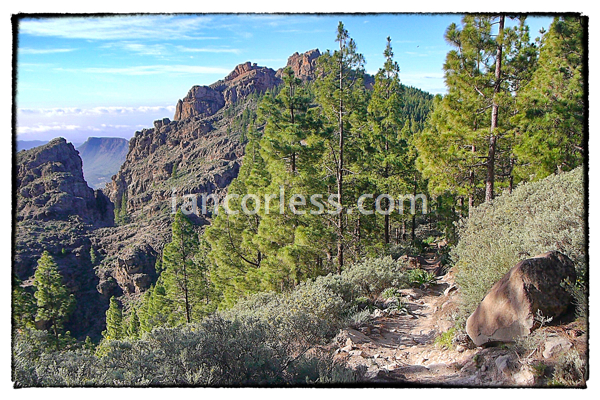
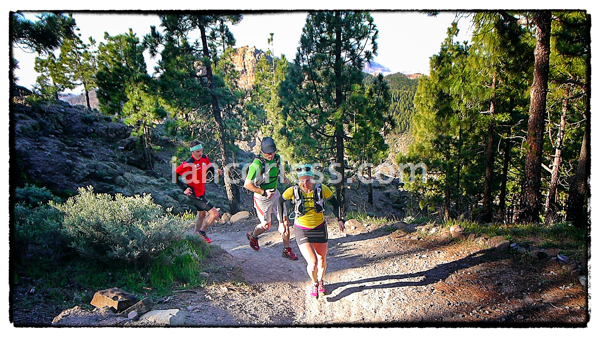
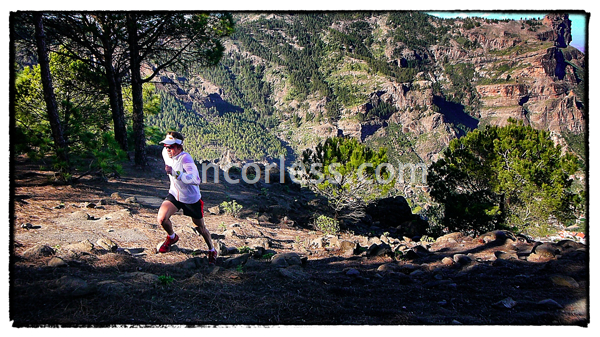
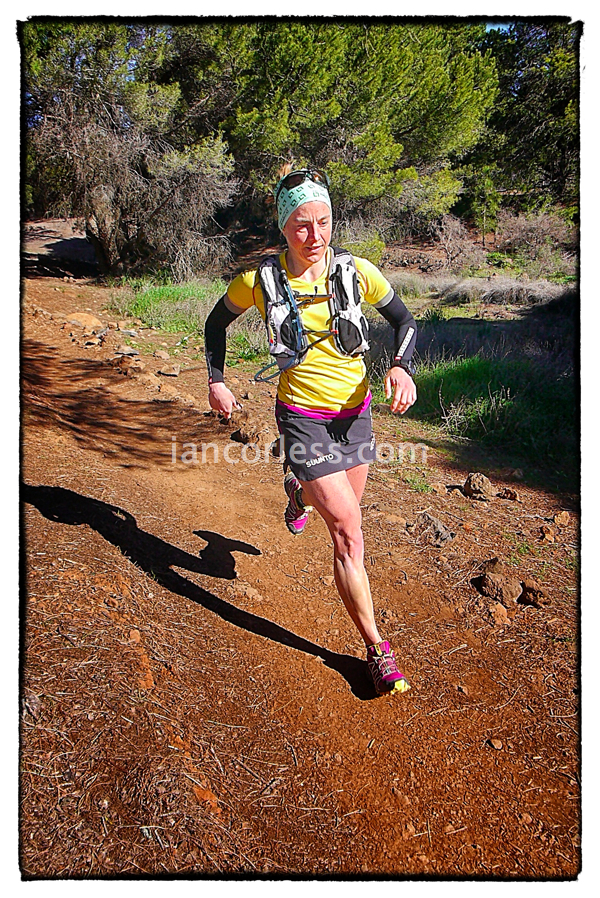
In December I went to the island of La Palma to run on the Transvulcania La Palama course. The only shoe I took was the eRide Grip 2. It was an opportunity to test the shoe on a daily basis on some tough and gnarly terrain but also a great opportunity to use the shoe for hours in contrast to minutes.

iancorless.comIMGP0727


I ran, walked and hiked over the Transvulcania course for 12 days. A short day was 2 hours, a long day was 9 hours. I ran over rocks, ran through lava fields, made my way through pine forests, ran along beaches, navigated through boulders and crossed rivers. At no point did the shoes let me down. No hot spots and no blisters. I had all day comfort in conjunction with firm grip on a multitude of terrain. Was I impressed? Absolutely.

Any negatives?

After two weeks on the Transvulcania course I threw the shoes away. No, not because I didn’t like them… but I had worn the sole away (at least in areas). This makes me question if the compound of the sole is maybe too soft? But then again, would I want Scott to change this? My answer is a definite NO.

I do believe that the sole compound is ideal for offering grip on a multitude of surfaces. On hard and wet rocks the eRide Grip 2 performed exceptionally well, had the compound been harder that may very well not have been the case.

Did the sole wear down too quickly? Arguably yes but then again the Transvulcania course is like running on sandpaper (coarse sandpaper). In addition to the abrasive lava we had to contend with sharp jagged rocks, boulders, gravel and a multitude of surfaces that would have worn any shoe down. My partner ran for 2 weeks with me in a different shoe and brand and had a similar scenario.

photo 2


Conclusion

A great trail shoe that offered a secure, firm and cushioned fit on a multitude of surfaces and terrain. The eRide technology certainly helped with an efficient run stride and overall comfort level was excellent.

Sizing is true to size.

If you need an all round trail shoe then the eRide Grip 2 is a strong recommendation.

You can see all Scott Running products HERE

The 2013 model is now available in a new colour way – blue/black

2285321034E_29457_tif_raw_1