The 2016 edition of the UTMB will take place this August, for 13-years the race has made a rendezvous in the endurance capital of the world, Chamonix!
In preparation for the 2016 edition, the organisation have just announced the elite level competitors that will compete, head-to-head, with 7500 runners over the four races – CCC, OCC, TDS and UTMB.
The main event, the UTMB, is a 170km journey that takes in 3 countries with a total elevation gain of 10,000m. A time limit of 47 hours is provided to give the 2300 runners an opportunity to complete the journey.
Now in anyones book, that is a quality ladies line-up. The most notable name missing is of course Nuria Picas. I have highlighted the hot favourites for overall victory and definite wild card of Jasmin Paris for a surprise podium place.
MEN:
Luis Alberto Hernando
Tofol Castaner
Dylan Bowman
Zach Miller
Miguel Heras
David Laney
Stephan Hugenschmidt
Timothy Olson
Seth Swanson
Ryan Sandes
Jason Schlarb
Gediminas Grinius
Pau Bartolo
Jordi Bes
Tim Tollefson
Fabien Antolinus
Jorge Maravilla
Ryan Ghelfi
Ludovic Pommeret
Didrik Hermansen
Julien Chorier
Andy Symonds
Thomas Lorblanchet
Ryan Kaiser
Arnaud Lejeune
WOW! That may well be THE elite field assembled in any race ever… It’s a seriously exciting line-up and just look at how many bold names are in that line-up! In all honesty, the whole list could be bold as victory could come from anywhere.
So with several months to go, we have already seen Caroline Chaverot and Didrik Hermansen lay down seriously strong performances at Transgrancanaria.
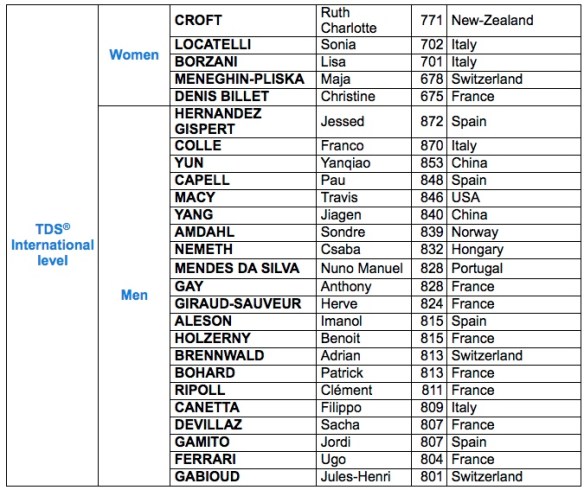
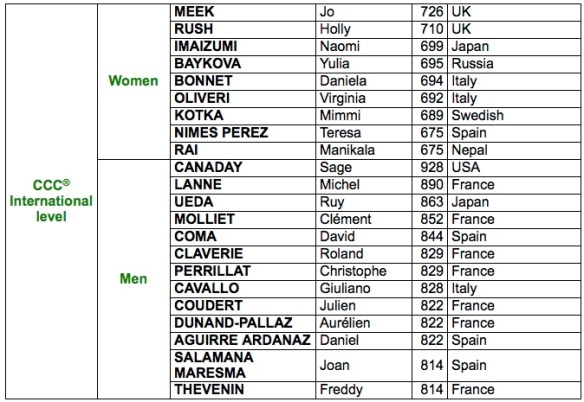
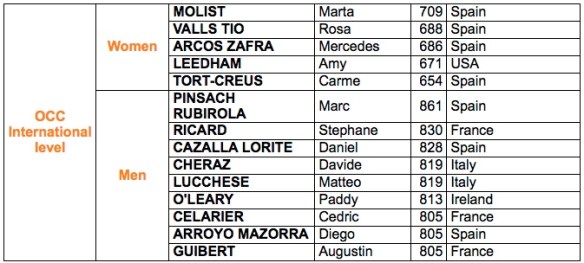
Elite line-ups for TDS, CCC and OCC are as follows:
Notable names in the TDS are Ruth Croft and Lisa Borzoi for the ladies and in the men’s race, Franco Colle, Pau Capell, Travis Macy and Sondre Amdahl amongst others.
CCC ones to watch: Jo Meek, Holly Rush and Manikala Rai fo the ladies and Sage Canaday, Michel Lanne and Freddy Thevenin amongst others for the men’s race.
Who in your opinion will make top 3 in the respective male and female races at the 170km UTMB event?
Recently I have produced a couple of articles about how to ensure that you are an efficient walker when participating in long or mountainous events. You can read them HERE and HERE.
The first article discusses Training to Walk for Ultra, Trail and Mountain Running and the second article is about Walking, Running and Climbing with Trekking Poles.
JOIN OUR YEARLY MULTI-DAY TRAINING CAMP IN LANZAROTE – HERE
On December 15th, the University of Colorado Boulder released a document called, CU-Boulder researchers discover optimal range of slopes for extreme uphill running.
This article made me take a look and read in-depth for two reasons: first and foremost it ties in nicely with my previous two articles but more importantly and secondly, research into VK data dates back some 16-years and was pioneered by the ISF (International Skyrunning Federation) who created the VK format as a racing discipline.
To clarify a VK is 1000m of vertical ascent and the objective is to climb the elevation gain as quickly as possible. The original context of the VK always was about research and data.
VK courses vary greatly but the ISF consider a true VK to be under 5km in length. To understand the variables, some VK’s, for example the Dolomites are just over 2km in length. By contrast, Limone Extreme is a considerably longer course with a less extreme gradient.
Fully, Switzerland has long been a testing ground for VK performance and a post from the ISF which was updated 22nd October 2012 adds some very clear and specific points to consider:
“Italy’s Urban Zemmer rocketed up the 1,000m vertical course, only 1.9 km long, in just 30’26”, 20 seconds faster than the standing world record set here in 2011.”
In addition, the ladies records tumbled:
“French runner Christel Dewalle was first in 36’48” followed by Axelle Mollaret in 37’44” and third, Maude Mathys from Switzerland in 37’56, all beating the previous world record set two years ago by Italian Valentina Belotti in 38’50.”
Notably, the ISF commented:
“The new men’s record nears a speed of 2,000 vertical metres per hour (precisely 1,971m) an incredible ground-breaking performance that the ISF has been monitoring for many years in a scientific research project… Depending on the course and type of start, poles are permitted and yesterday, most of the runners used them. However, to date, the advantages of using poles has not been scientifically demonstrated.”
In 2014, the record for the VK was once again broken by Urban Zemmer at Fully, Switzerland with the incredible time of 29’ 42”.
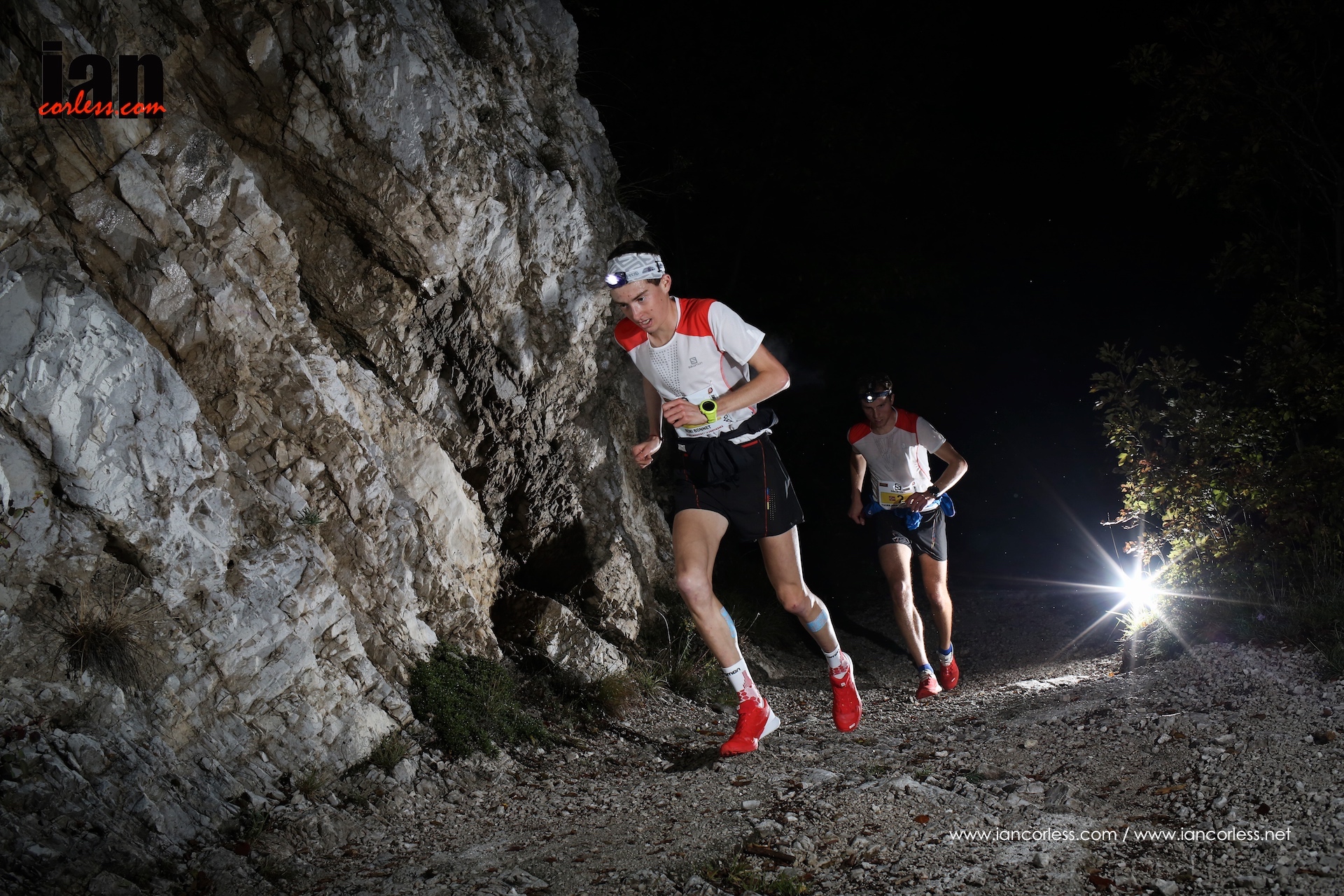
Remi Bonnet prefers to run a VK and never walks
So by simple logic (I am no scientist), it would suggest that the steepest course is the fastest as Fully is only 1.9km long. To quote, Run the Alps,”The Vertical KM race in Fully, Switzerland is considered to be the fastest vertical kilometer course in the world. The race, held on a former funicular route, is home to both the men’s and women’s world records.”
You can watch a YouTube clip of the 2013 Fully race HERE
Watch the video of Fully and you will see varying techniques, some walk, some walk/ jog, some (most) use poles but one thing is consistent, the effort is almost maximal for all. Therefore, in a non-scientific look at Fully, the fastest performances come from the genetically gifted who have all the elements required for an optimum VK performance: lung capacity, V02max, lactate threshold, power to weight ratio, technique and so on.
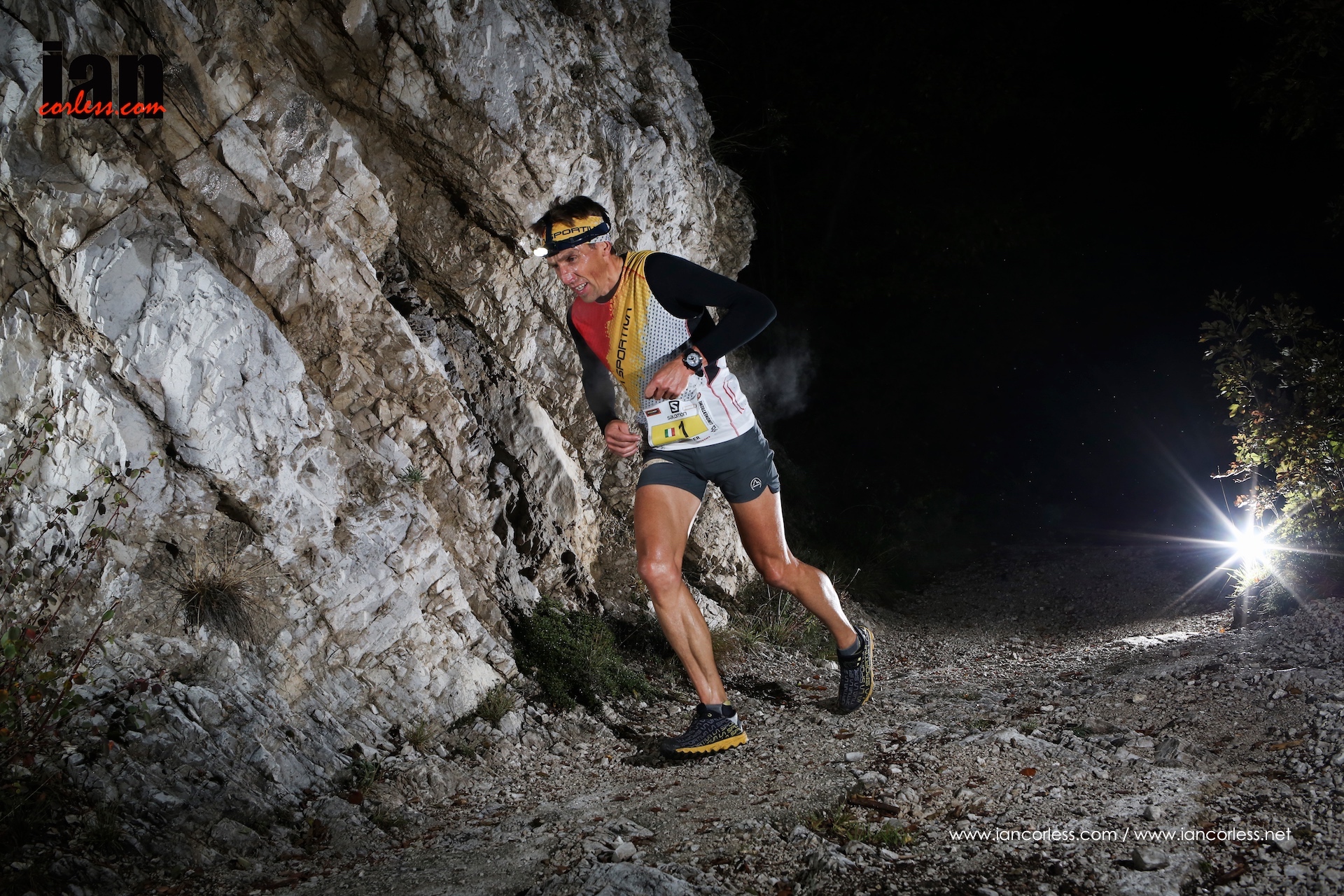
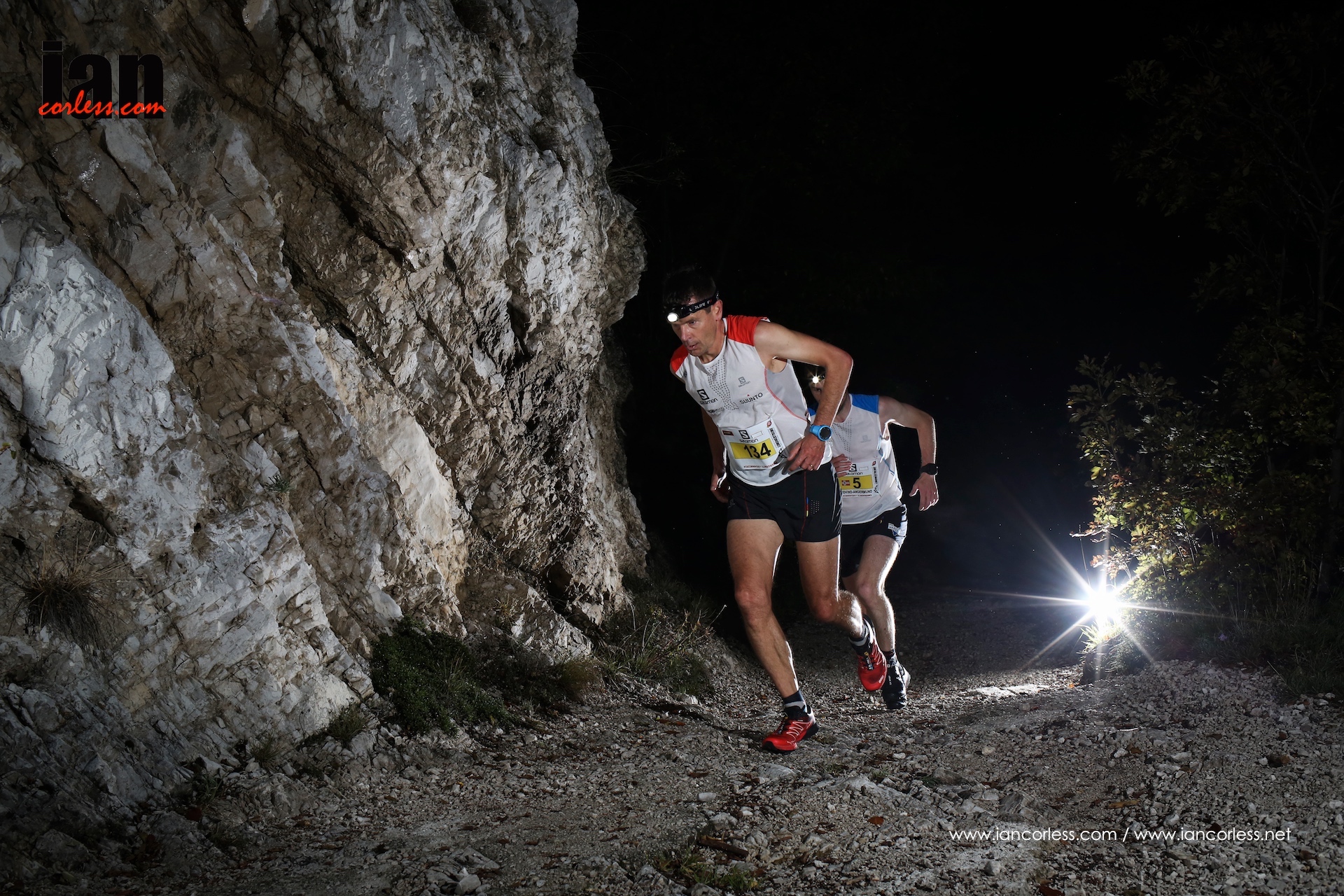
Marco de Gasperi like to mix running and walking
But what about the optimal slopes for uphill running as questioned by CU-Boulder. They posed the question:
“Imagine that you are standing in Colorado at a trailhead where the base elevation is 9,000 feet. Your friend challenges you to race to the summit of the mountain, which tops out at 12,280 feet, roughly 1,000 meters of elevation gain. There are several different trails that go to the summit. They are all steep and some are extremely steep. One trail averages a 10 degree incline and the sign says it is 3.6 miles long. A second trail averages 30 degrees, but is only 1.25 miles long. A third trail averages 40 degrees, but only 1 mile long. To get to the summit the fastest, which trail should you choose and should you walk or run?”
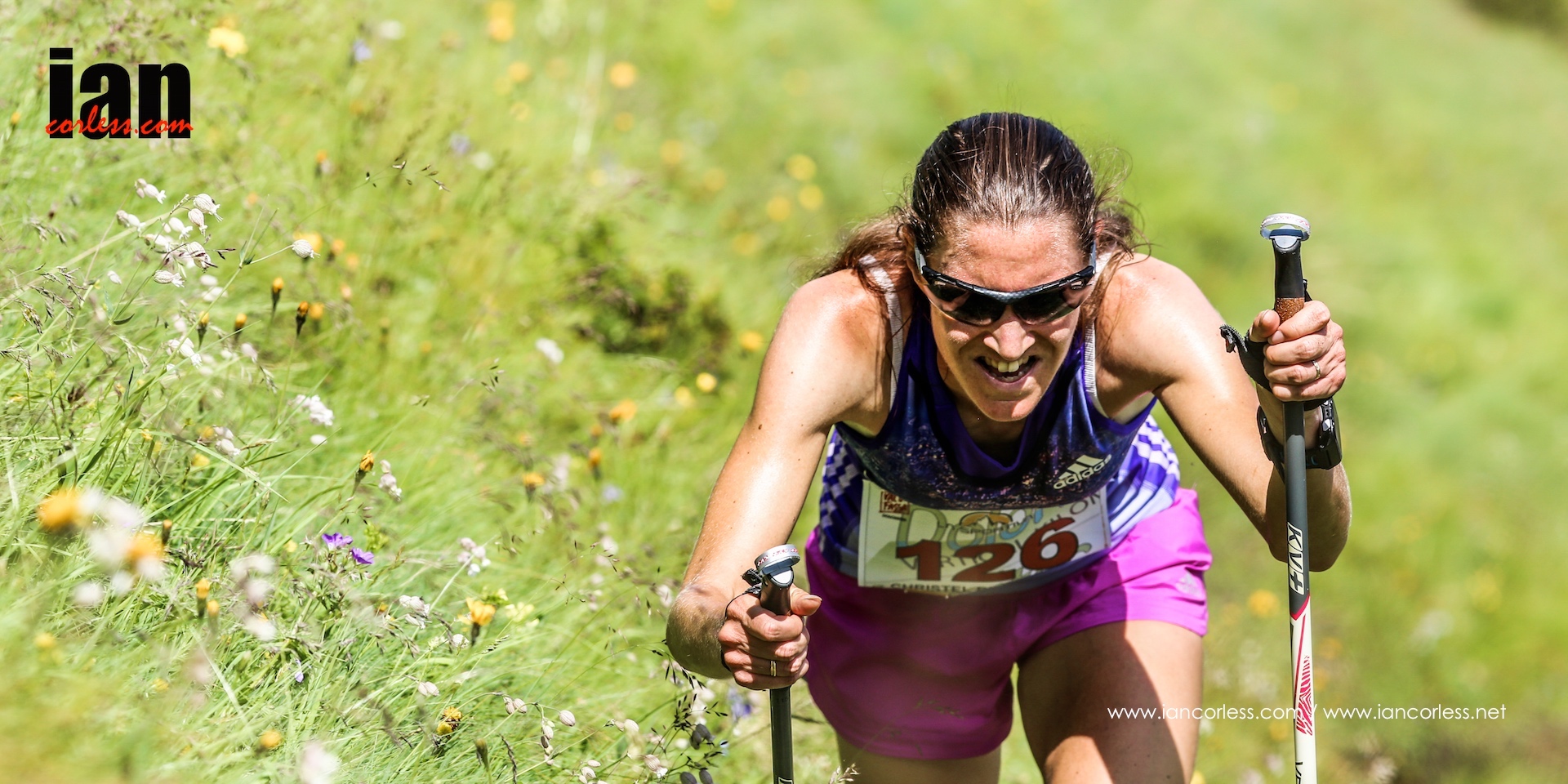
Poles or no poles on a steep gradient?
This is a question that the ISF have asked and researched for many years. A paper titled, “Energy costs of walking and running uphill and downhill at extreme slopes” looks into this:
Davide Susta, Alberto E. Minetti*, Christian Moia and Guido Ferretti
Département de Physiologie, Centre Médical Universitaire, 1211 Genève 4, Switzerland, *Department of Exercise and Sport Science, Manchester Metropolitan University, Alsager ST7 2HL, U.K.
The energy costs of walking and running (Cw and Cr, respectively, in J kg-1 m-1) increase with the slope uphill (up to +20%) and decrease with the slope downhill (down to -10%) (Margaria, 1938; Margaria et al, 1963). Outside this range, no measurements of Cw and Cr are available in the literature, even though walking and running on the mountains at greater slopes is becoming commoner and commoner practice in leisure and sport. We therefore set out to carry out the present study, the aim of which is to determine Cw and Cr on men walking and running at slopes up to +45% and -45% on the treadmill. After local ethical approval, 10 subjects (Skyrunners) were admitted to the study (age 32.6 + 7.5 years, body mass 61.2 + 5.7 kg, maximal O2 consumption 68.9 + 3.8 ml min-1 kg-1). They are all endurance athletes practicing mountain racing. O2 consumption at the steady state was measured by the open circuit method, using Leybold O2 and CO2 analysers and a Singer dry gas meter. Heart rate was measured by cardiotachography. Blood lactate concentration was determined after each run as a check for submaximal aerobic exercise.
Each subject performed up to three walking and three running trials at progressively increasing speeds on the level, and at the slopes of 10, 20, 30, 35, 40 and 45 % uphill and downhill. The duration of each trial was 4 min, and expired gas was collected during the 4th min of exercise. Minimum Cw on the level was:
1.85 + 0.57 J kg-1 m-1 (n = 10) at the speed of 0.69 m s-1. During uphill walking, Cw increased with the slope, to attainthevalueof18.08+1.57Jkg-1 m-1 (n=9)atthespeedof0.69ms-1 andat the slope of +45%. During downhill walking, minimum Cw was lower at the slope of -10% (0.81 + 0.37 J kg-1 m-1, n = 9) than on the level. At slopes below -10%, it progressively increased. At -45%, it was 3.46 + 0.95 J kg-1 m-1(n = 5). Cr on the level was 3.40 + 0.24 J kg-1 m-1(n = 30). Cr increased with the slope, to attain 18.69 + 1.42 J kg-1 m-1(n = 6) at +45%.
During downhill running, Cr decreased and attained its lowest value at the slope of -20% (1.73 + 0.36 J kg-1 m-1, n = 24). At lower slopes, it increased. At -45%, at speeds higher than 1.38 m s-1, it was equal to 3.79 + 0.57 (n = 7). The mechanical efficiency for vertical displacement was 0.216 + 0.015 at +45% and 1.078 + 0.275 at -45%. This data on the level and at slopes up to 20% correspond to those found by others on non-athletic subjects (Margaria, 1938). At higher slopes, the increases in Cw and Cr are such as could be predicted assuming that all energy is used to lift the body. By contrast, at -10% and -20%, both Cw and Cr are lower than in non- athletic subjects (Margaria, 1938), suggesting greater recovery of elastic energy at each step in the present athletes. At slopes below -20%, the increases in Cw and Cr are such as could be predicted assuming that all energy expenditure is for negative muscle contractions.
REFERENCES
Margaria, R. (1938). Atti Acad. Naz. Lincei 7, 299-368.
Margaria, R., Cerretelli, P., Aghemo, P. & Sassi, G. (1963). J. Appl. Physiol. 18, 367-370. This work was supported by a grant from the FSA- Federation.for Sport at Altitude
Referring back to the CU-Boulder research:
“Based on our research, we now know that choosing the second trail (30 degrees) and walking as fast as you can within your aerobic capacity is the fastest way to go,” Kram said. “For either running or walking, slopes between 20 and 35 degrees require nearly the same amount of energy to climb the hill at the same vertical velocity.”
This new study (HERE), which was recently published in the Journal of Applied Physiology, is believed to be the first to examine the metabolic costs of human running and walking on such steep inclines (suggested by the CU-Boulder researchers.) However, I would question this and refer to research by the FSA – “Energy cost of walking and running at extreme uphill and downhill slopes.” Received 29 November 2001; accepted in final form 29 April 2002. You can download this detailed documentation HERE and it is essential reading.
Who is the most efficient?
It would appear that gradients of 20-35 degrees require the same amount of effort and interestingly, CU-Boulder research found in a study:
“A vertical rate of ascent of just over 1 foot per second, is a pace that high-level athletes could sustain during the testing. At that speed, walking used about nine percent less energy than running. So, sub-elite athletes can ascend on very steep uphills faster by walking rather than running.”
In simple terms, this is something I have found out by attempting VK’s in my own time in and around events. More often than not, the effort required to run is so hard that it becomes counter productive. I have even found that including run sections to be counter productive as this raises my heart rate, increases lactate acid and requires me to recover while still climbing. However, if I maintain a constant effort walking, this produces the best results for me.
CU-Boulder research went on to say:
“The study examined 15 competitive mountain runners as they ran and walked on the treadmill at seven different angles ranging from 9 to 39 degrees. The treadmill speed was set so that the vertical rate of ascent was the same. Thus, the treadmill speeds were slower on the steeper angles. The athletes were unable to balance at angles above 40 degrees, suggesting a natural limit on the feasible slope for a VK competition.”
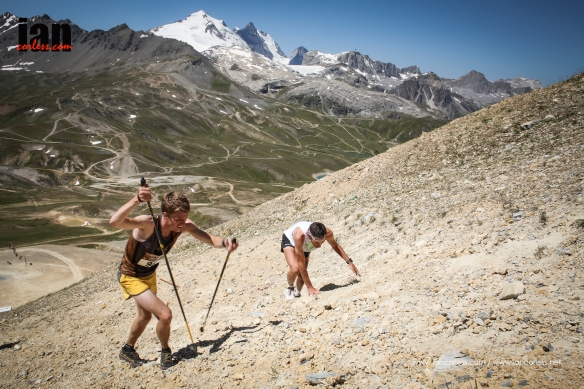
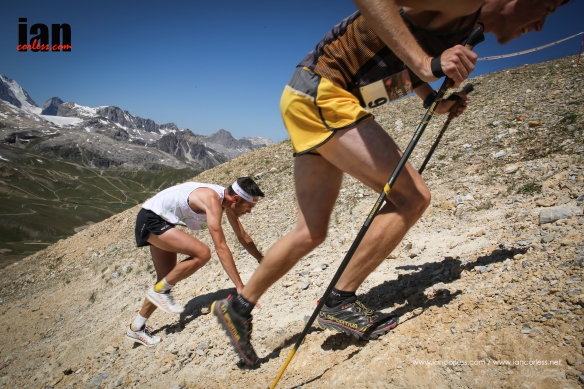
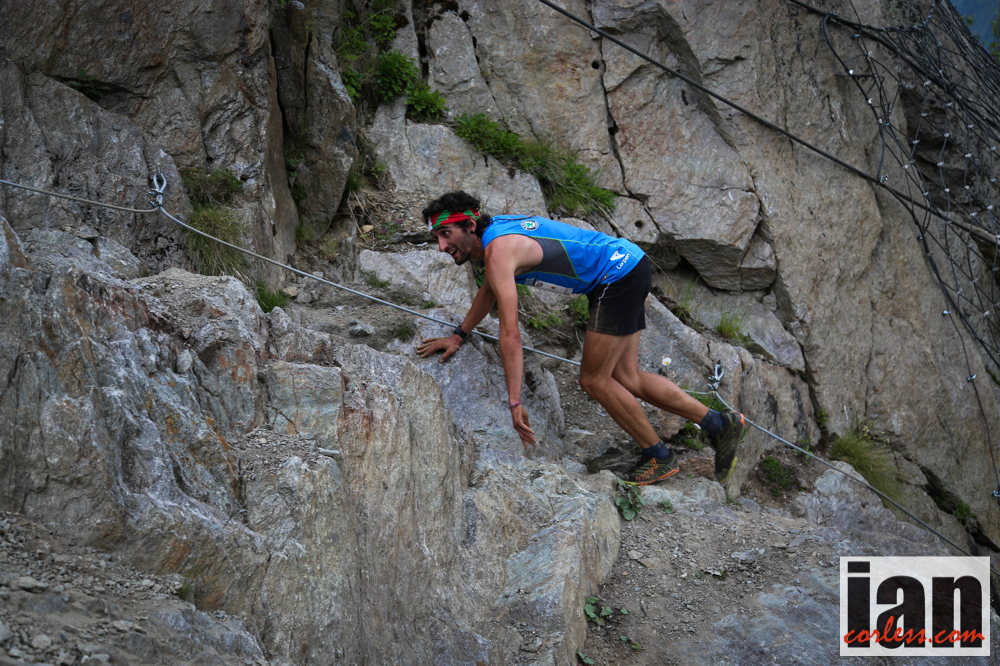
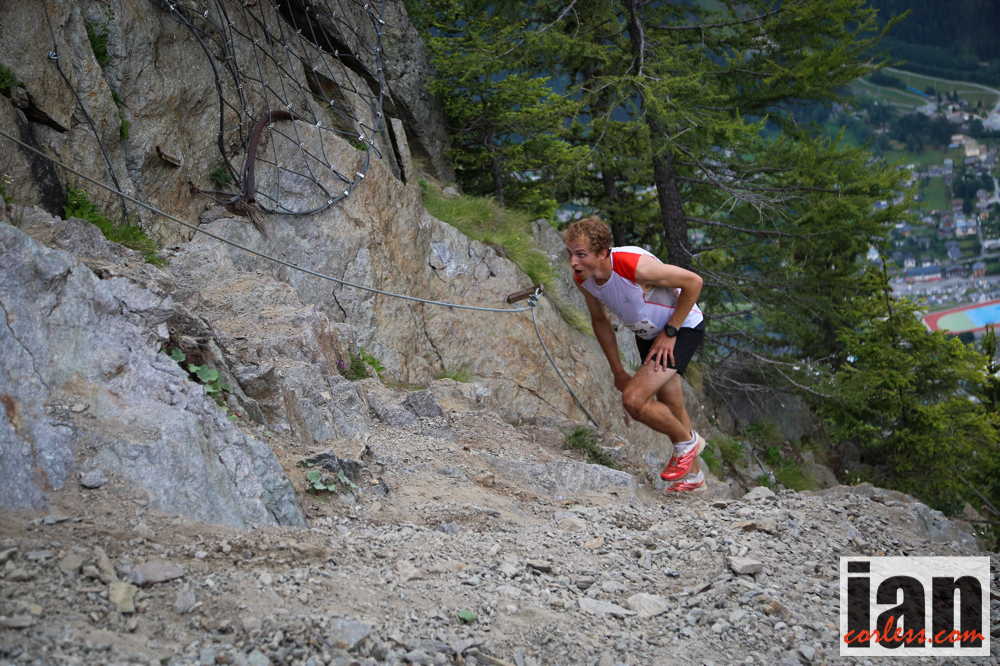
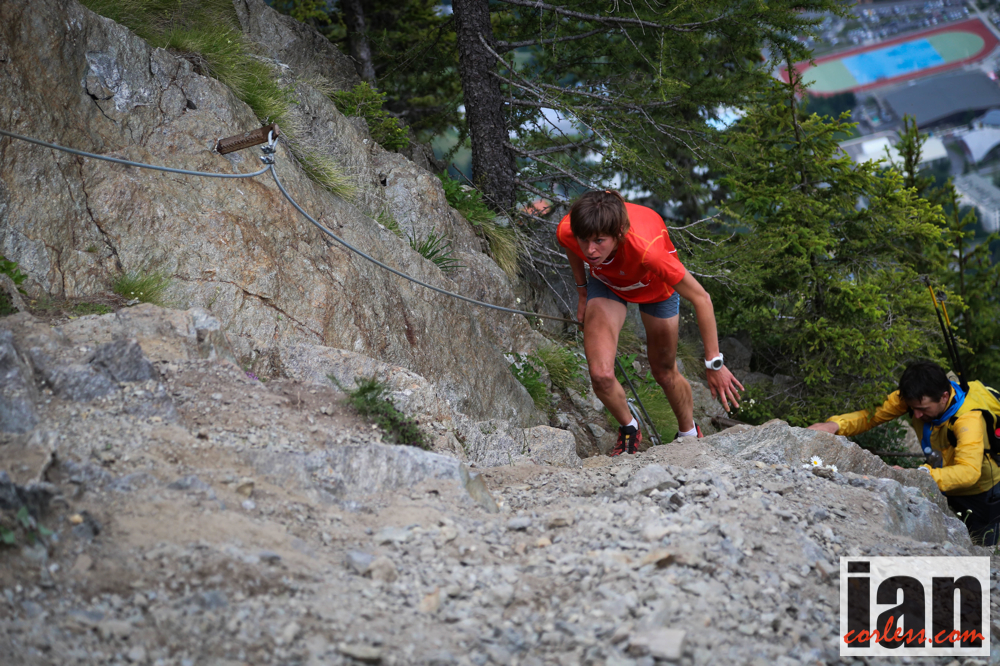
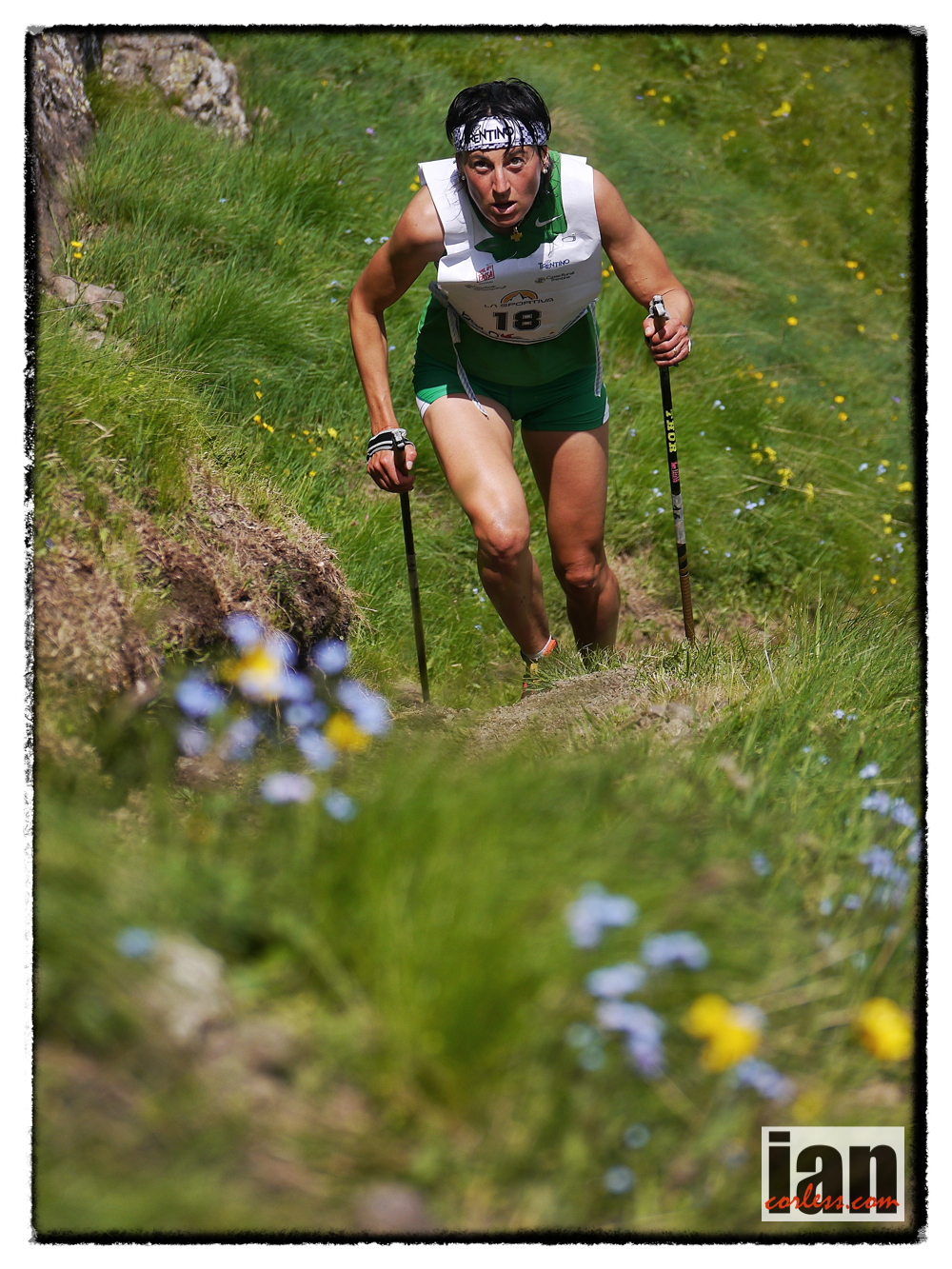
In regard to the latter point, this in some respects relates to Fully, Switzerland and brings in another element, the use of poles and if poles allow a faster ascent when the gradient steepens. One only has to look at the Dolomites VK and Fully VK where poles are used by nearly all participants. The ISF plan to do a new test with and without ski poles, but it is not easy to do a serious test. Although not scientifically proven, it’s fair to say that using poles with gradients under 20% it will mean more Kcal and a reduced performance. However, with gradients steeper than 25 or 30%, the use of poles can correct style, etcetera and can improve the overall performance.
The CU-Boulder article is available to read in full HERE.
I can quote technical papers and research all day, however, as a runner you want to know the answer to the question, should I walk or should I run uphill and should I use poles?
Irrespective of if you plan to run a VK or not, the research and thoughts provided by the FSA and CU-Boulder confirm that running or walking uphill provides an incredible workout. Importantly though, research confirms that walking should be a key element in any training plan, (*…walking used about nine percent less energy than running) especially if you are racing or training on hilly or mountainous terrain.
When participating in ultra events, reverting to periods of walking may well produce greater results and faster times. This is very evident when the terrain steepens; running will only expend more energy and produce slower times. The use of poles appears to benefit performance when gradients steepen, this is not scientifically confirmed.
On a final note though, many other factors come into play when looking at results and as with everything, there are exceptions. Urban Zemmer, Remi Bonnet, Laura Orgue, Christel Dewalle and so many more are able to run when others need to walk. We can’t choose our parents or our genetic pool. Ultimately, find out what works for you but practice makes perfect and the more climbing you do, the better and the faster you will become.
Laura Orgue and Remi Bonnet are crowned 2015 Skyrunner® World Series Champions for the VK distance in Limone on the shore of Lake Garda at the 4th edition of the Limone Extreme race.
Torrential rain and thunderstorms the previous night and morning of the VK resulted in a course change instigated by the race organisation for safety reasons. The resulting course was very different to the original route and considerably longer at 6km. Less steep, less technical and considerably more runnable. Of course this may very well have changed the dynamic of the race but the usual protagonists for the VK distance still performed at the highest level.
VK specialist Urban Zemmer dictated the early pace showing his all around ability to run and drop his hands on his knees and grind out a fast pace on the steeper gradients. However, it was rising star of the sport, Remi Bonnet, who finally made his presence felt at the front. Too many observers this was expected after his recent performances at the RUT in the USA and his most recent victory at Lantau 2 Peaks in Hong Kong. Tromso VK winner, Stian Angermund placed 3rd ahead of Hannes Perkmann VK ever-present Jonathan Wyatt in 5th.
In the ladies’ race, Laura Orgue already had the Skyrunner® World Series title sewn up based on previous victories. Despite this, her plan was to run the VK and SKY. However, in the days before the VK, Laura had picked up a virus and decided it was best to miss the distance she loves:
“Hard decision today, I need to rest instead of race in the VK. I’m not feeling 100% so I have decided to recover for tomorrow’s SKY race of 23km and 2800m of elevation!”
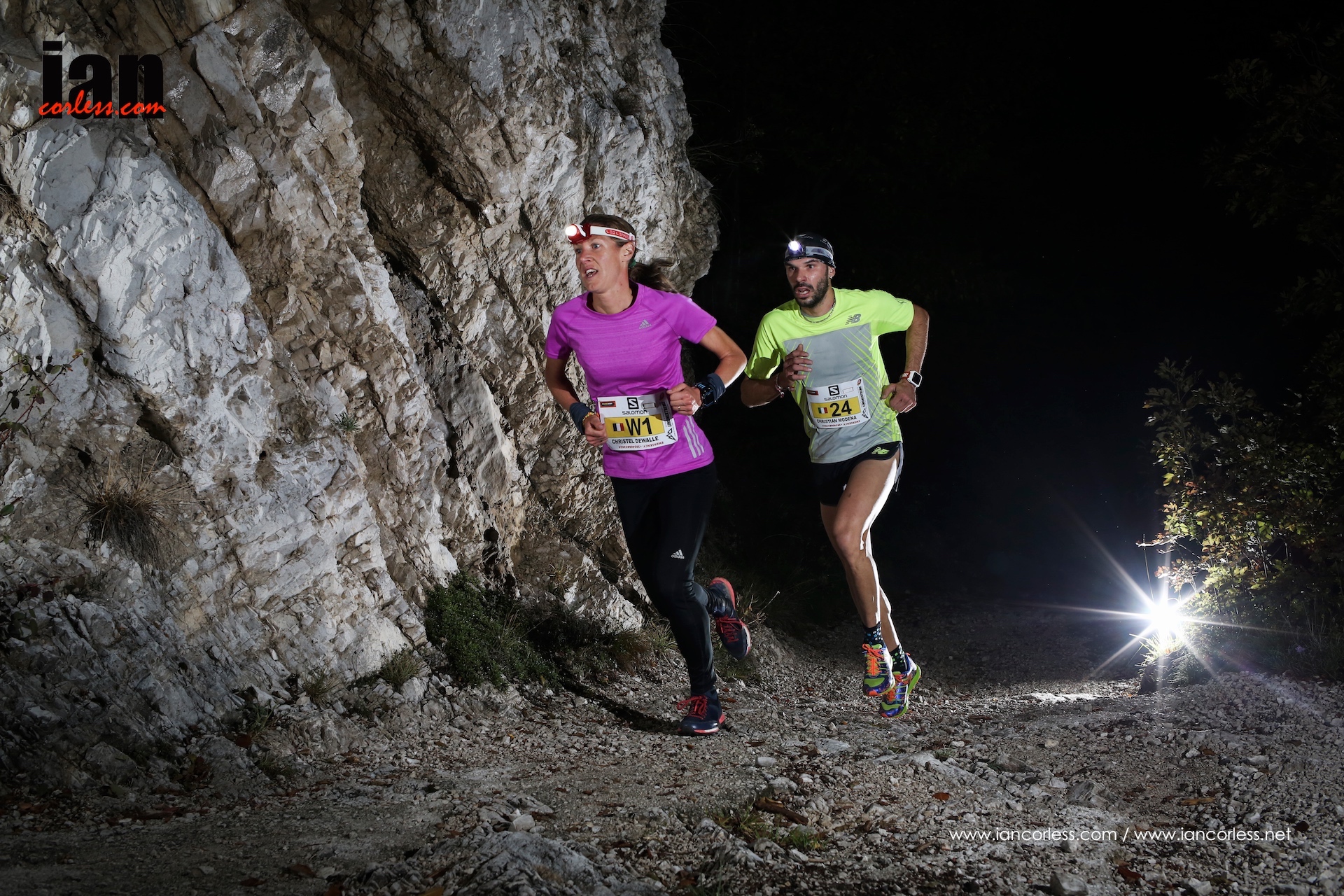
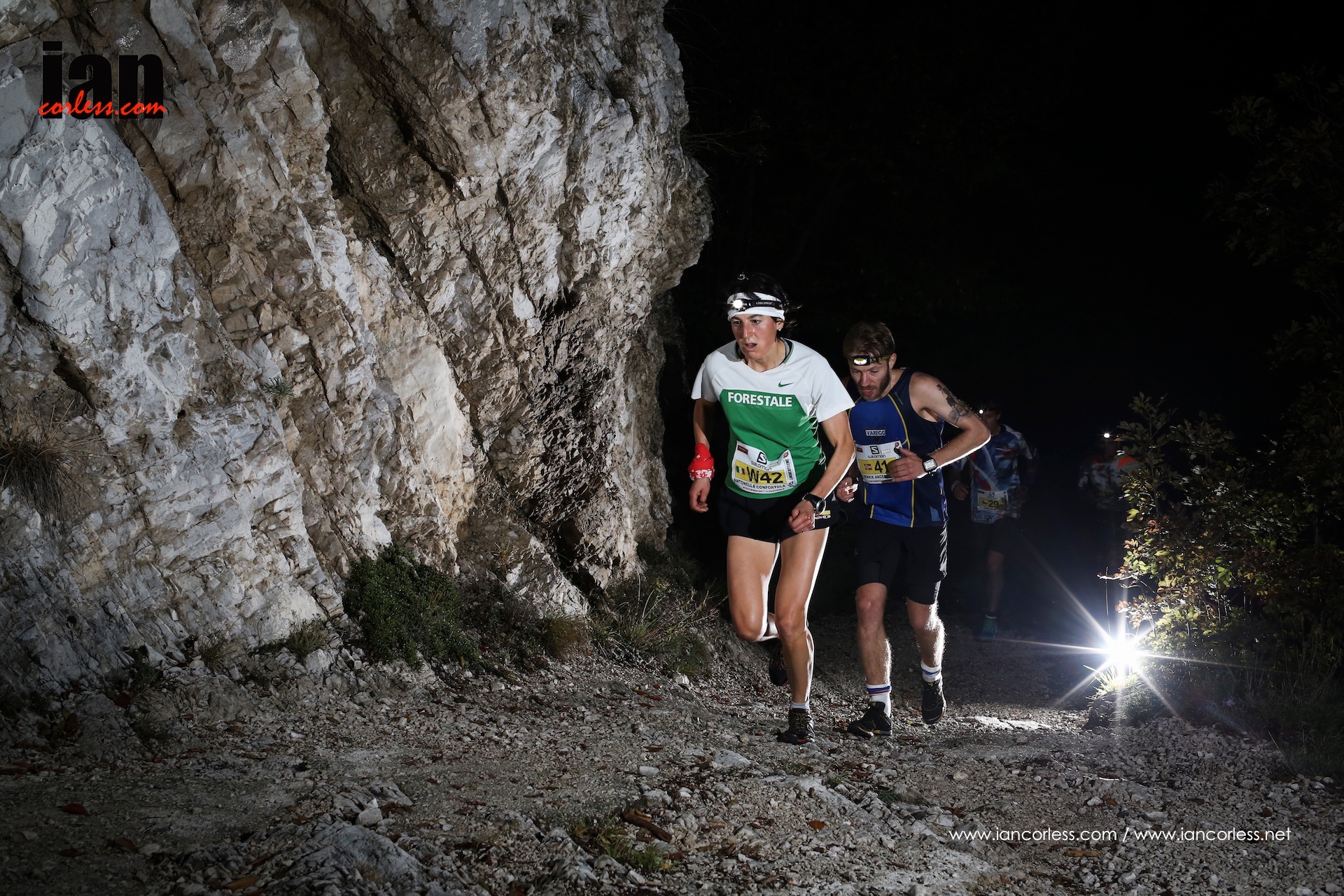
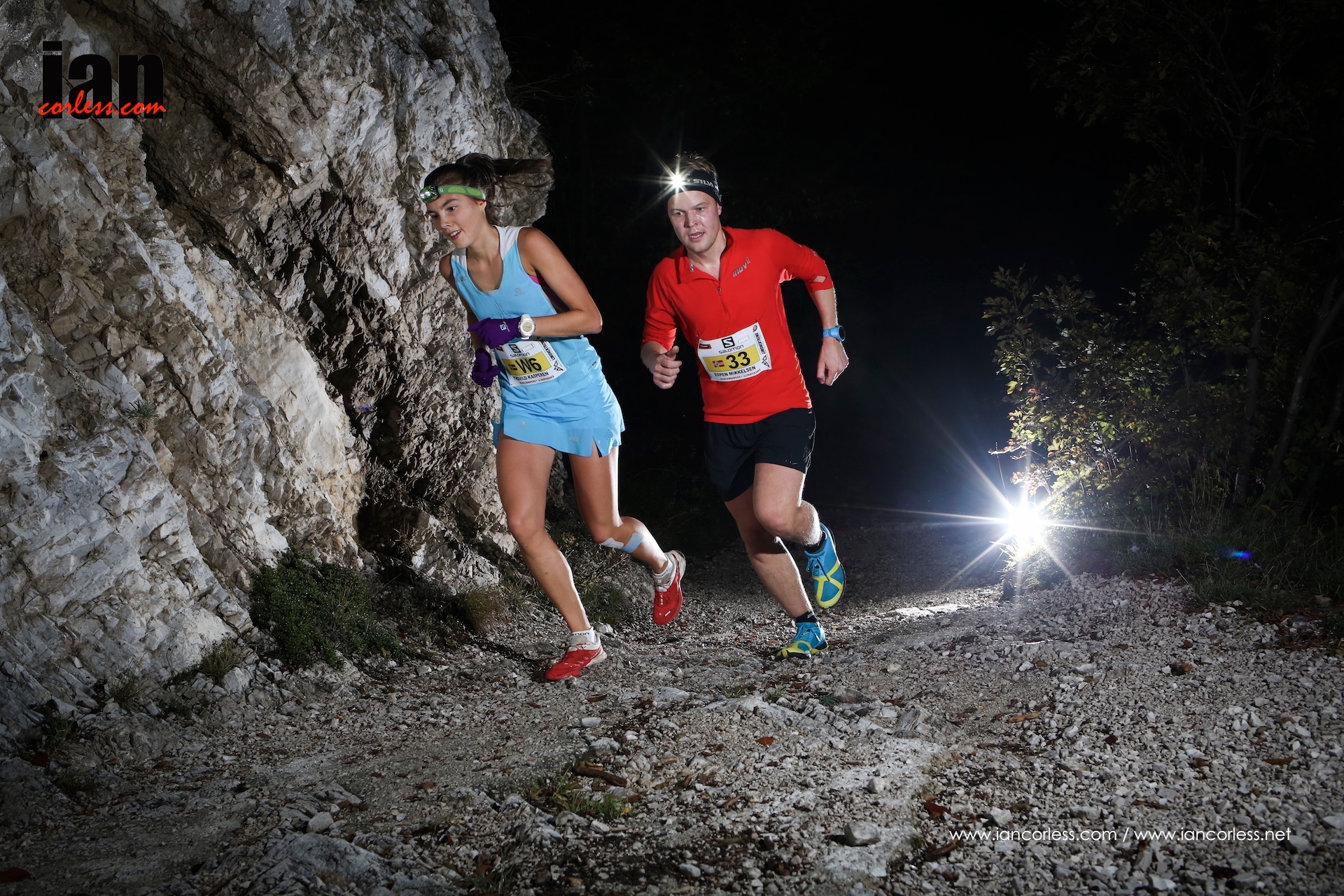
Last minute entrant and VK specialist, Christel Dewalle was the fastest lady on the day and lead from the front constantly trailed by Antonella Confortola, Maite Maiora and Norwegian rising star, Yngvild Kaspersen who moved up to 2nd in the overall rankings.
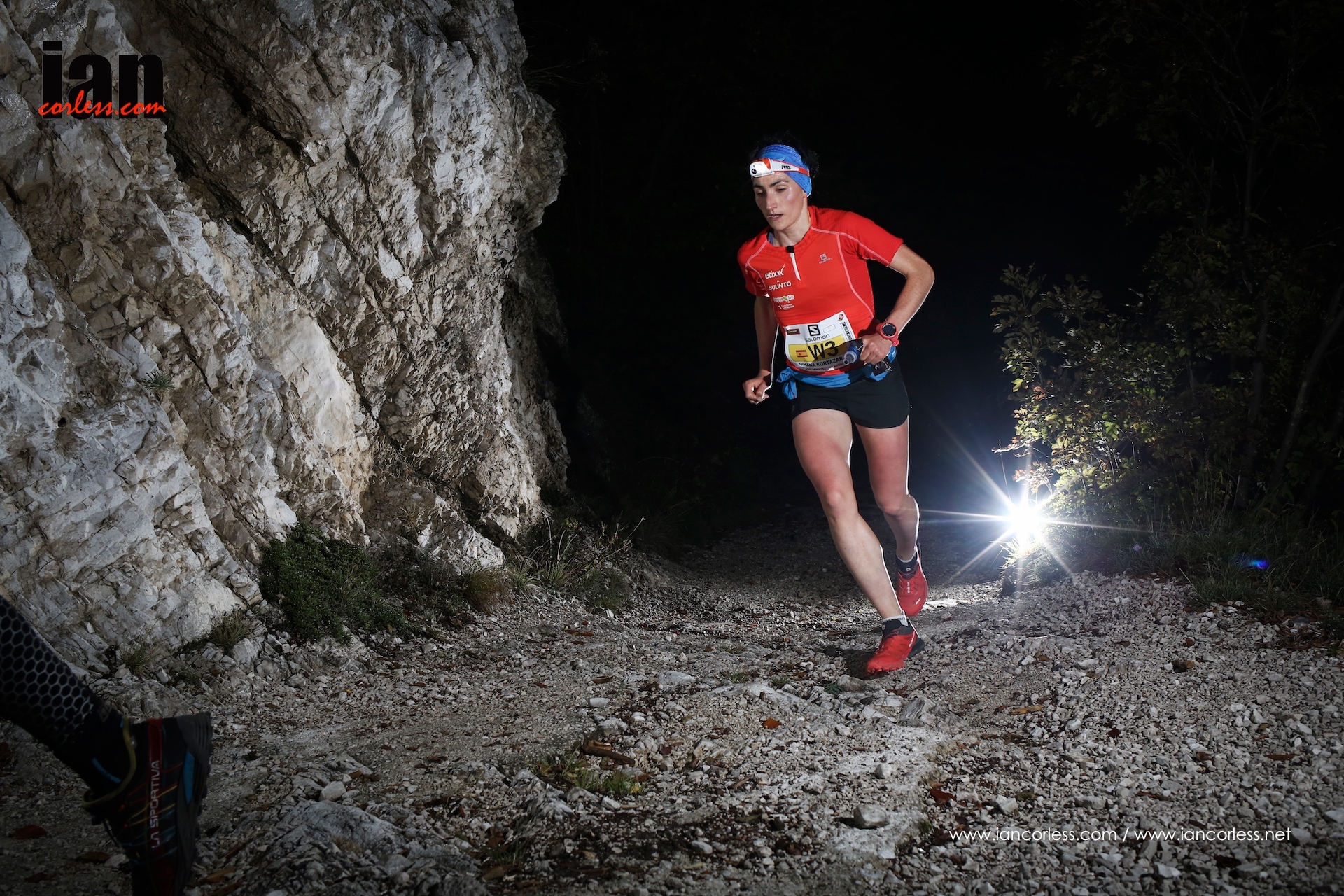
The ladies’ positions remained this way all the way to the line with Spanish runner Oihana Kortazar taking the 5th spot.
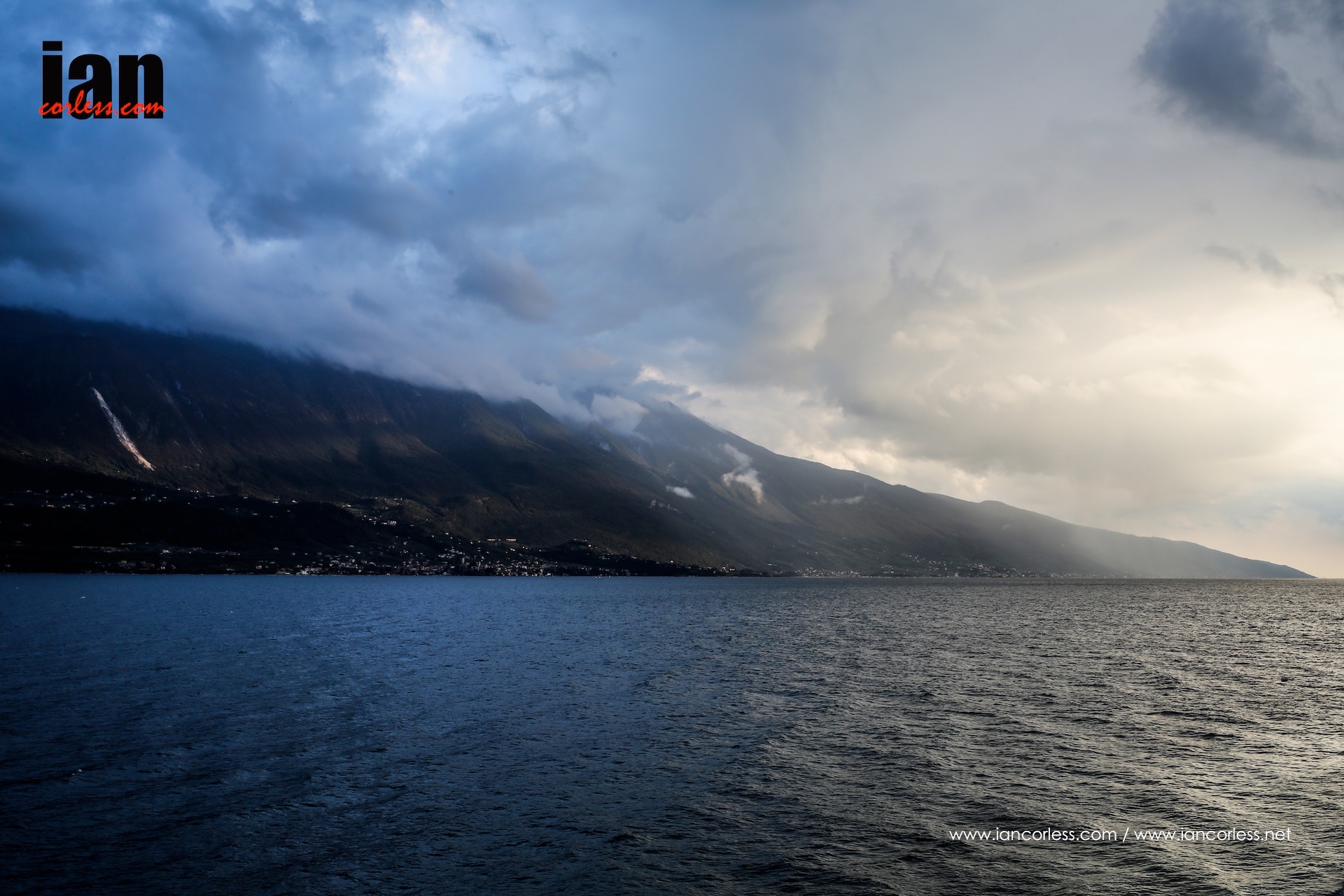
A total of 296-runners toed the line of the VK which started at the picturesque location of Marconi lakefront on the shores of Lake Garda. The overall elevation gain of the new route was 1200m+ in a distance of 6km.
Attention now turns the SKY race which will start today, Saturday at 1200 local time. This course has also been changed due to Thursday nights and Friday mornings excessive weather. The new route has an additional 800m of vertical gain which makes what was a tough race, exceptionally tough!
RESULTS
1-Christel Dewalle (50’48”)
2-Antonella Confortolla (53’12”)
3-Maite Maiora (53’46”)
4-Yngvild Kaspersen (54’58”)
5-Oihana Kortazar (56’27”)
1-Rémi Bonnet (43’51”)
2-Urban. Zemmer (44′)
3-Stian Angermund. (44’13”)
4-Hannes Perkmann (44’26”)
5-Jono Wyatt (44’43”)
Skyrunner® World Series ranking 2015:
Laura Orgue
Yngvild Kaspersen
Maite Maiora
Remi Bonnet
Nejc Kuhar
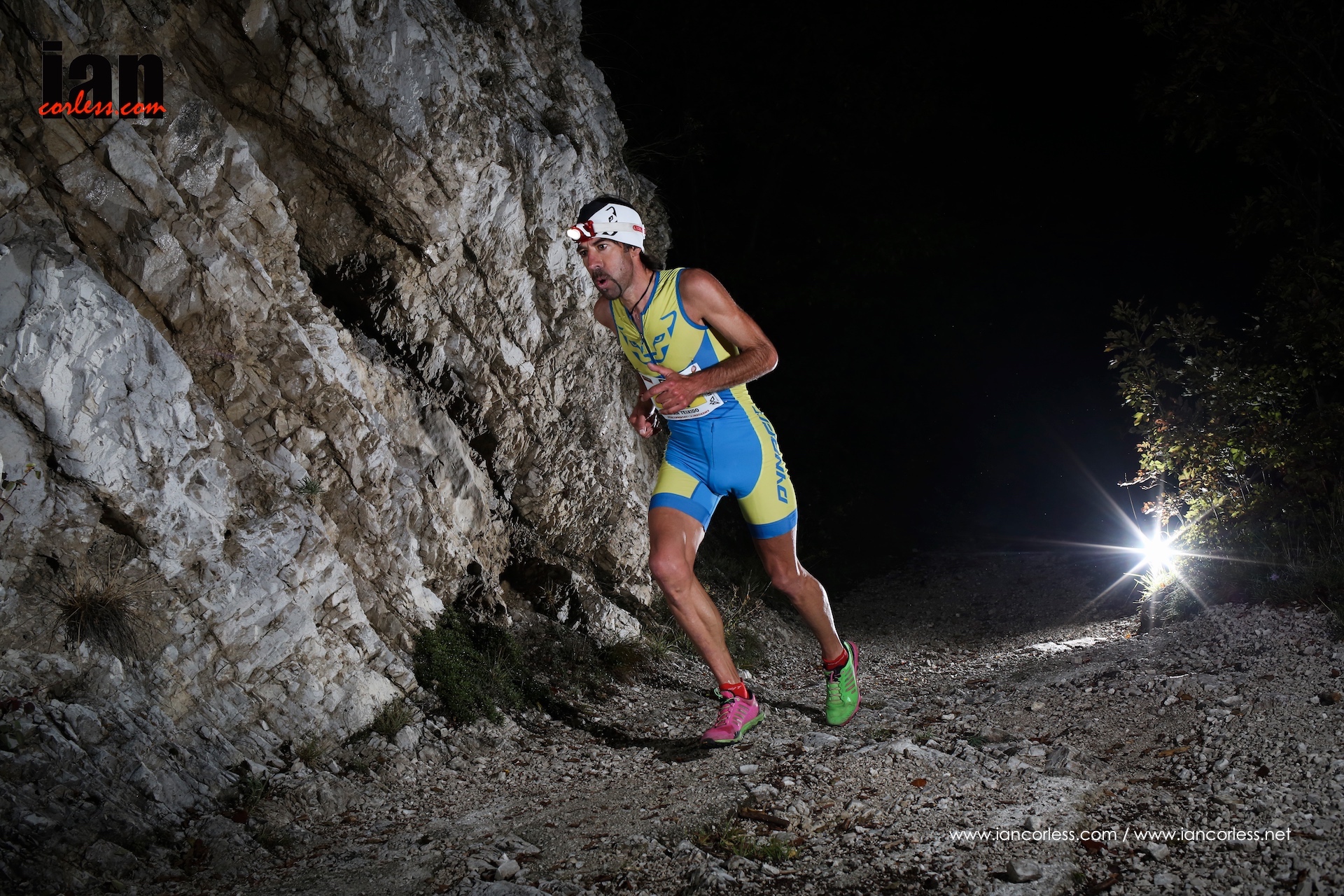
Ferran Teixido
Limone sul Garda also provided a location for the Skyrunning AGM where the 2014 calendar, 2015 calendar and the future of the sport was discussed.
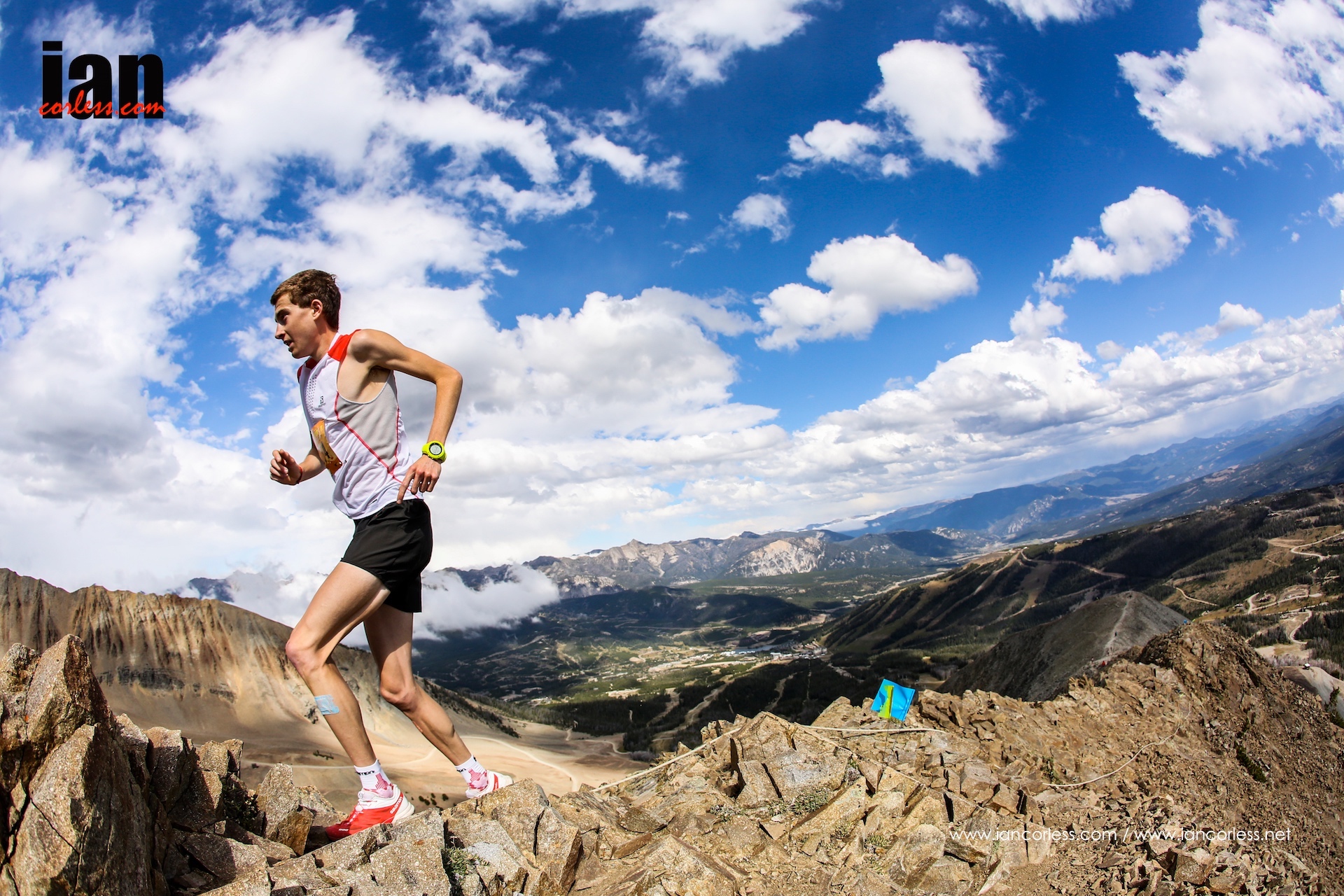
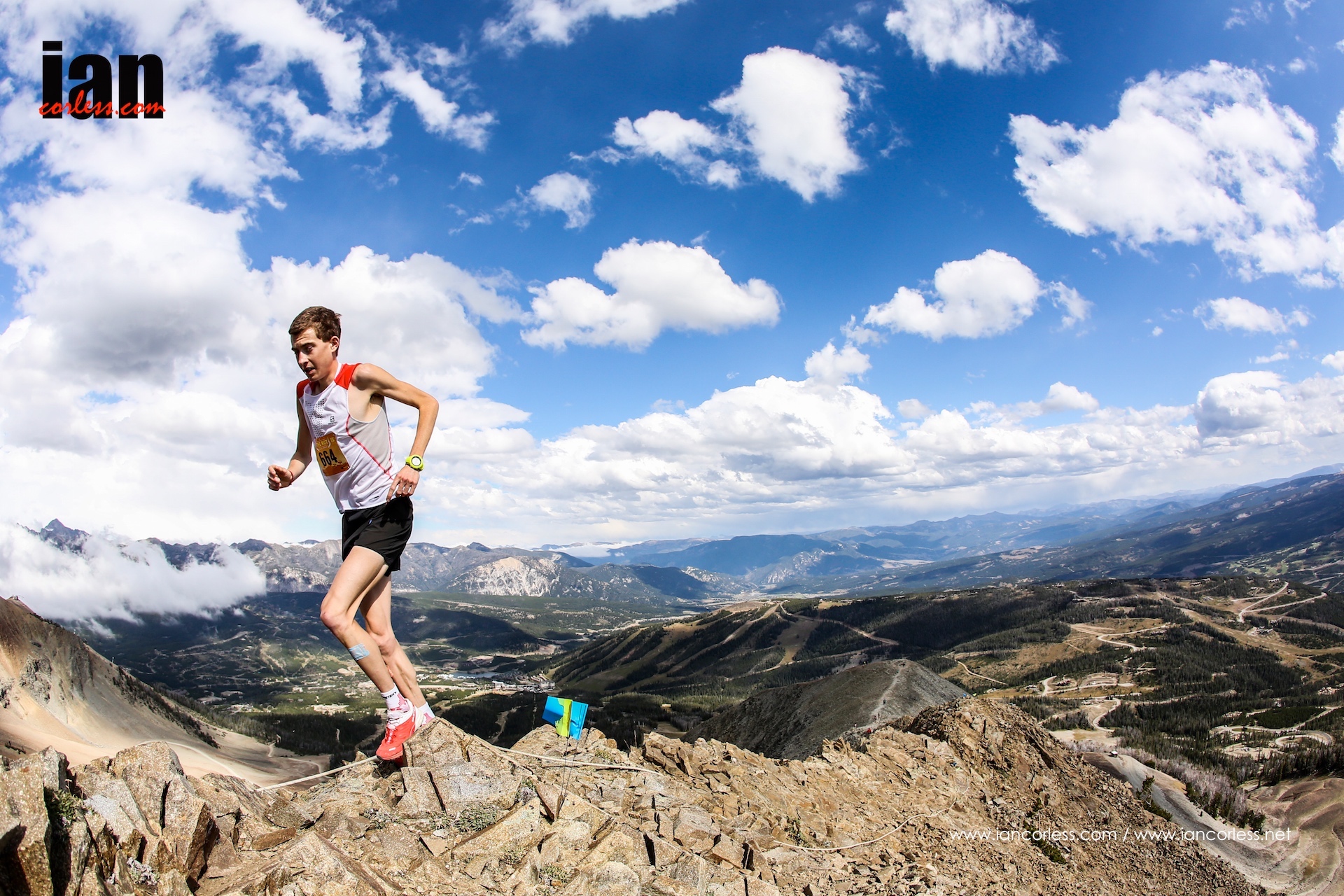
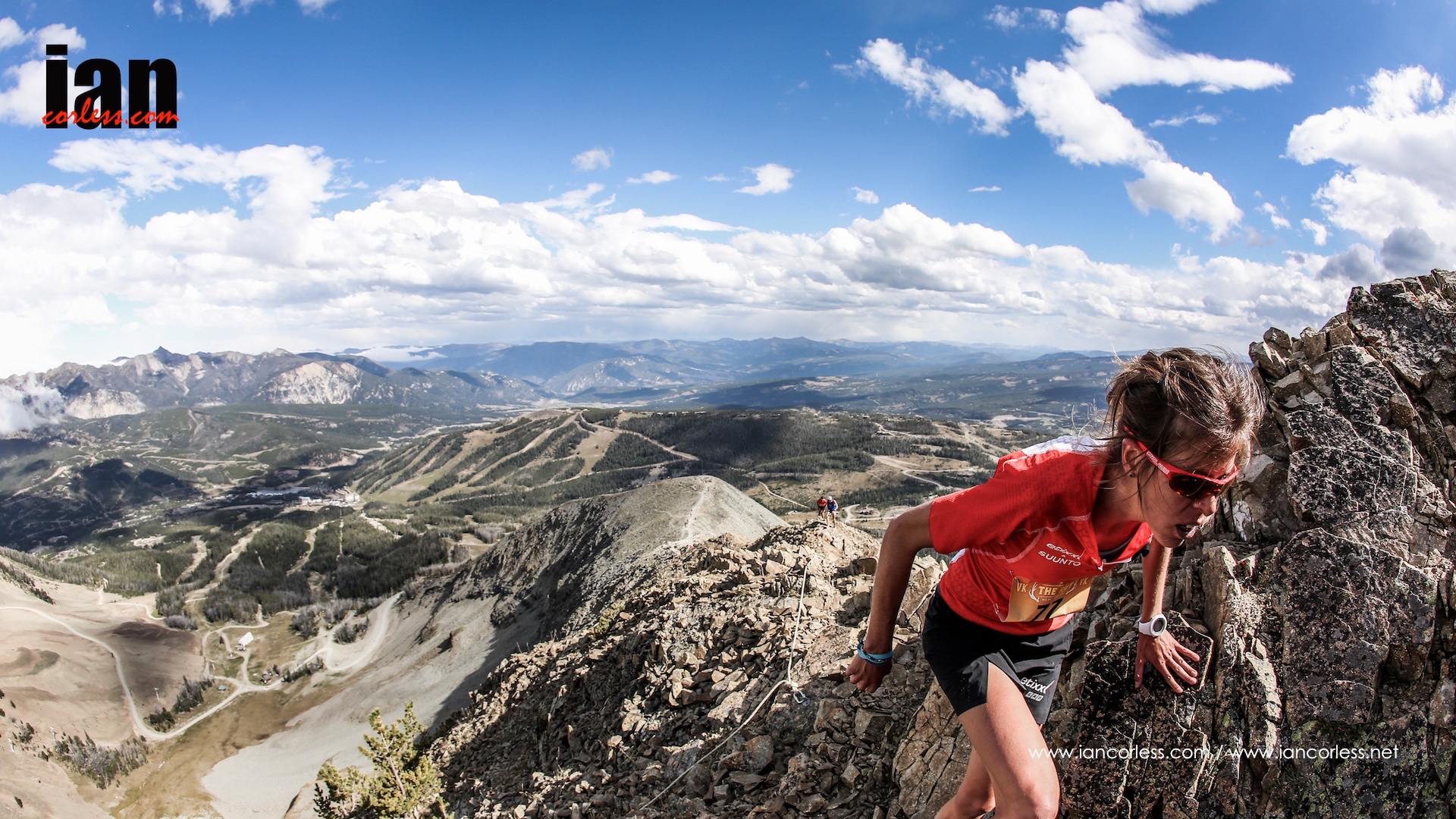
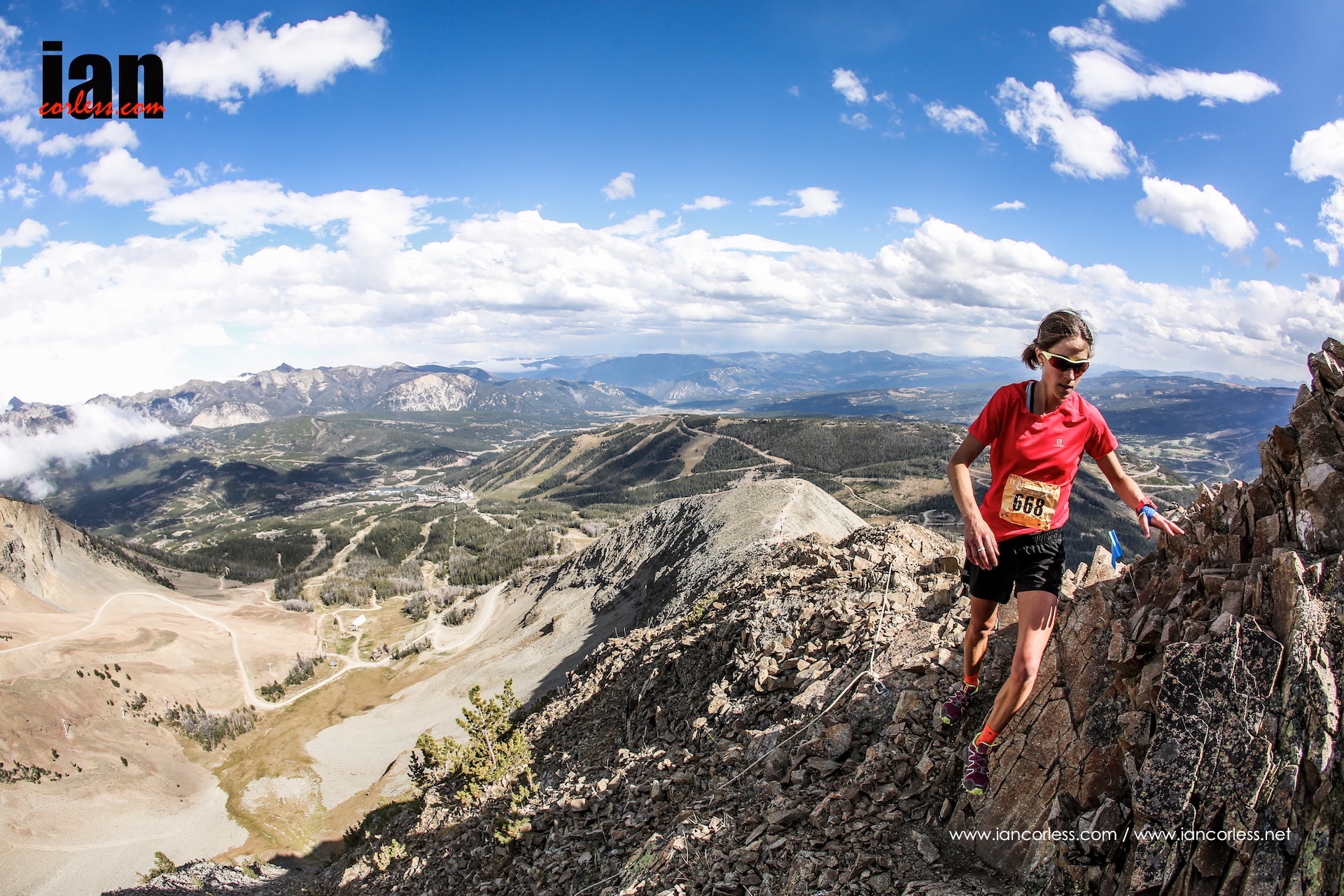
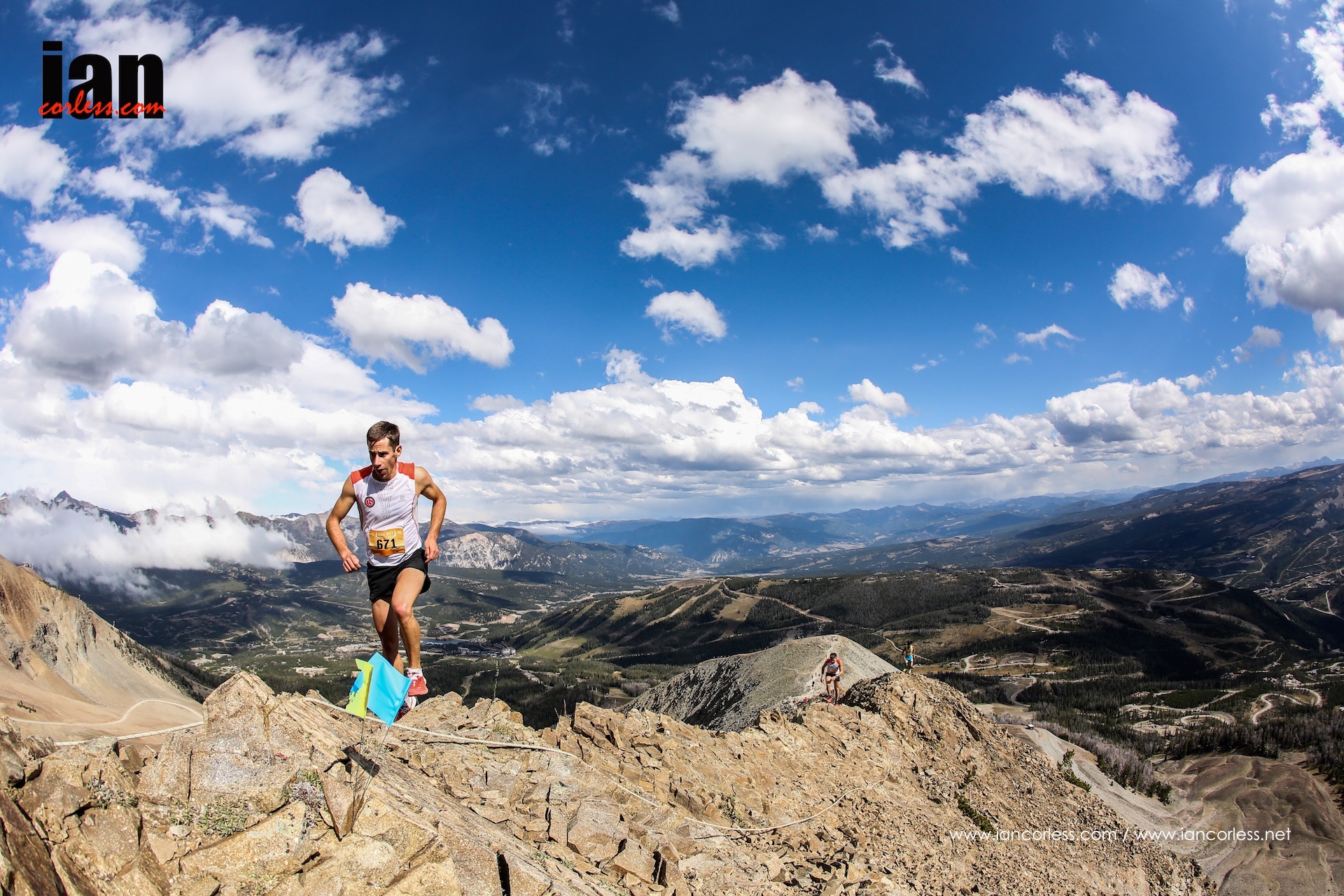
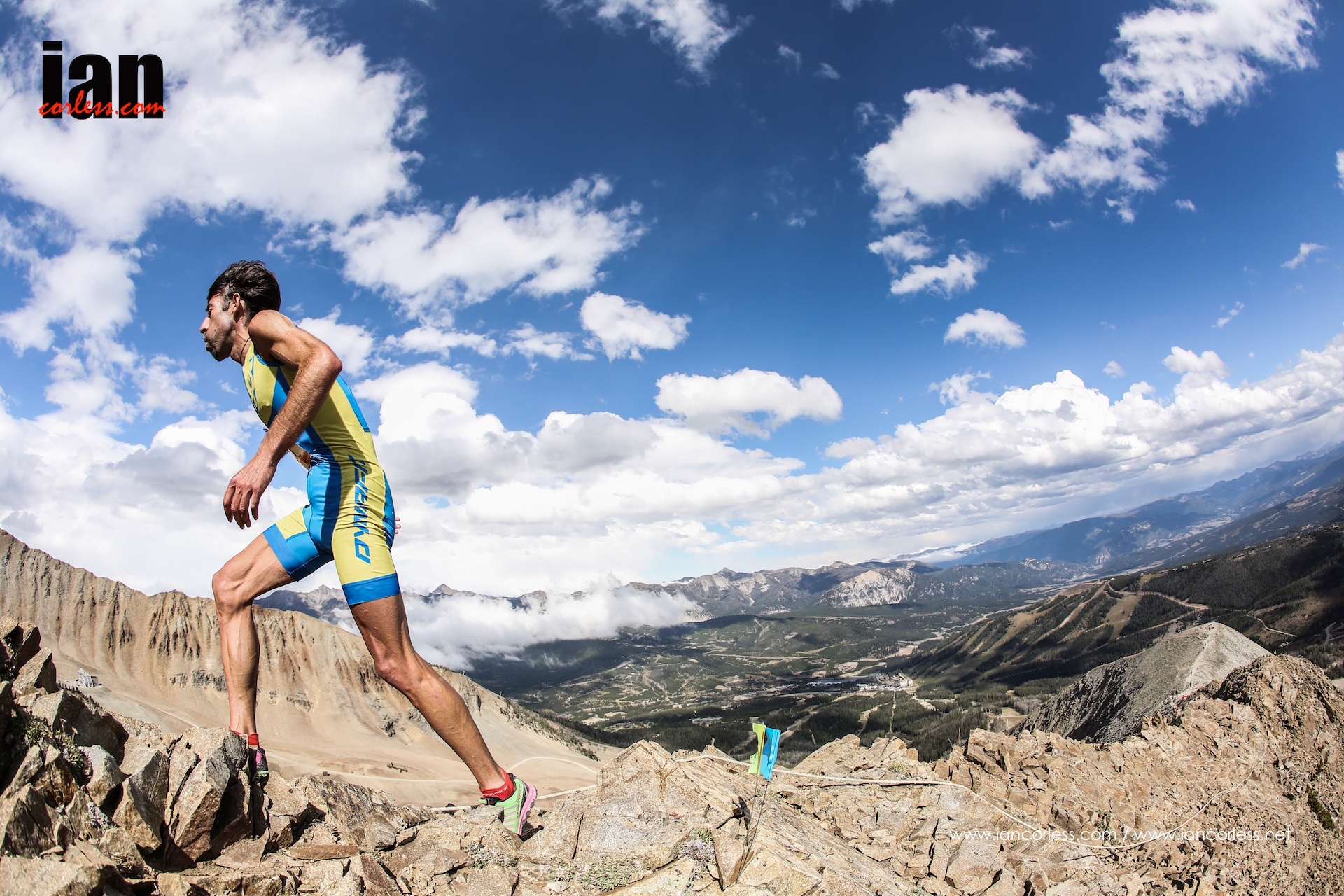
Starting at the Big Sky Resort base area, the Lone Peak VK offered Skyrunners a lung busting ascent to the summit of Lone Peak (11,166ft) in just a little less than 5k.
It may not be the steepest VK on the Skyrunner® World Series but it certainly is one of the most dramatic and the views from the summit are quite incredible.
In contrast to 2014, the first half of the VK route had a change based on operational concerns of Big Sky Resort. So this year, the sole hole biking trail is a no go and the route takes on a steeper and more direct route following the ethos and principals of Skyrunning.
Heading up Huntley Hollow and Calamity Jane ski runs the route headed up to the Bone Crusher and the impressive Alto ridge. Here it gets steep, gnarly and technical and the long haul, hands-on-knees grunt continued to the summit. The final sections had a potential for rockfall, exposure and other objective hazards.
Starting in waves, the elite runners departed first on the stroke of 1500 in a mass group. The early stages were always going to be about finding a rhythm, working out a good pace and then looking for a prime position before the more technical and challenging terrain started. Remi Bonnet and Laura Orgue pushed from the start and both looked very strong at the midway point before the more technical sections started.
In the ladies race Morgan Arritola looked to be closing the gap with 500m covered but Laura found the extra reserves to push on to the line. Ladies rising star, Yngvild Kaspersen ran a strong race and relegated ladies Tromso VK winner, Emelie Forsberg with a strong push for 3rd.
Remi Bonnet was in a class of his own on this course and finished clear of Matterhorn Ultraks winner, Martin Anthamatten and Ferran Teixido moved up from 4th place and 500m to 3rd at the line.
At the summit Remi Bonnet arrived first looking spent with the effort in a time of 45:58:04. It was a dominating performance and a confirmation of a star in the making. Holding on for 2nd was Martin Anthamatten and 3rd place was Ferran Teixido in 47:38:78 and 48:04:89. respectively.
In the ladies’ race Laura Orgue finished a strong 1st 1-minute clear of Morgan Arritola 2nd and Yngvild Kaspersen 3rd. Times were 52:20:36, 53:16:79 and 55:15:05.
The weather and altitude played a key factor in the Lone Peak VK and when a race starts on or around 2000m, a runner’s altitude adaptation was always going to play a key part.
Attention now turns to Saturday and the 25km event. This event will prove to be fast and furious with mixed terrain that includes single track, jeep roads, alpine ridge lines and the summit of the iconic Lone Peak.
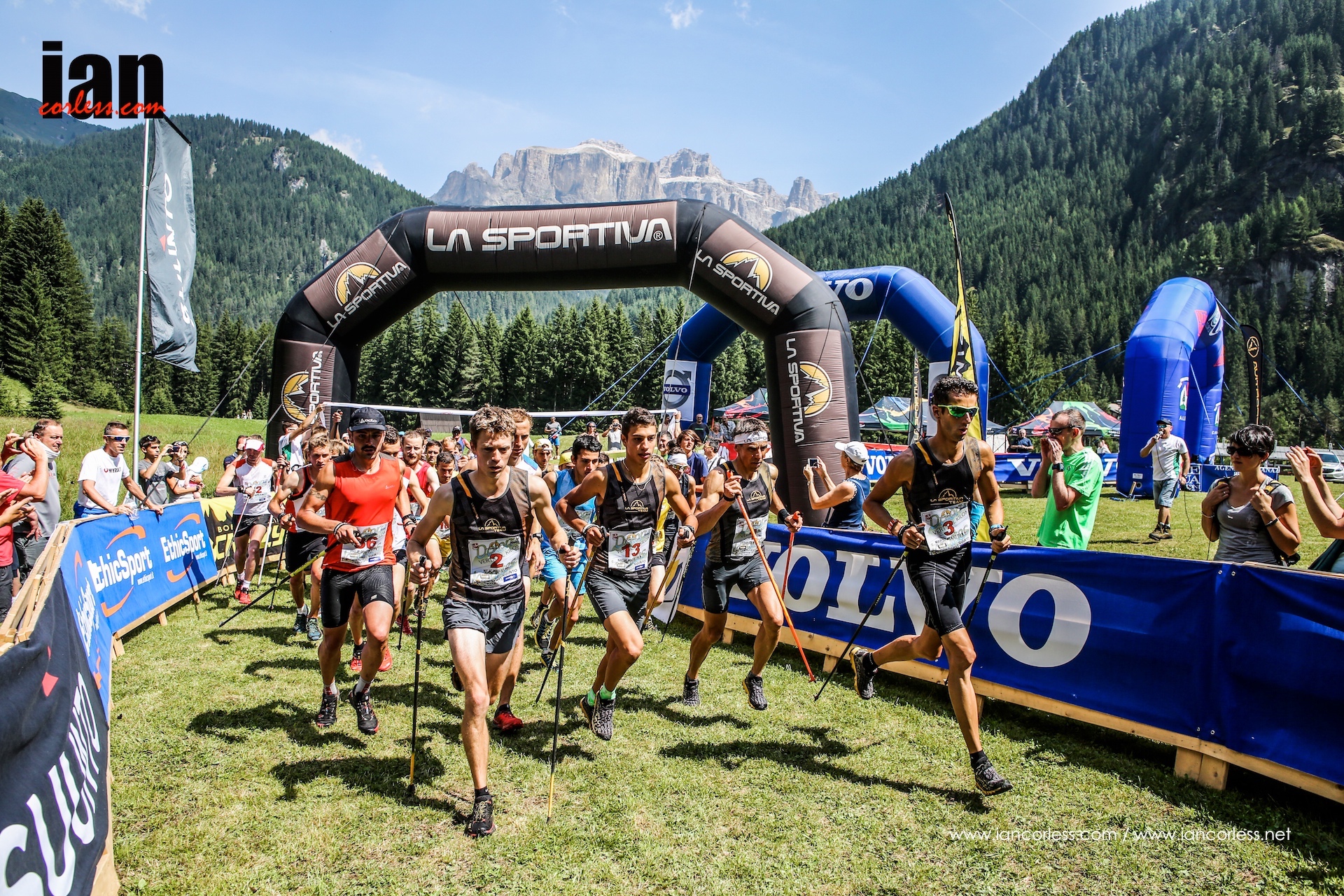
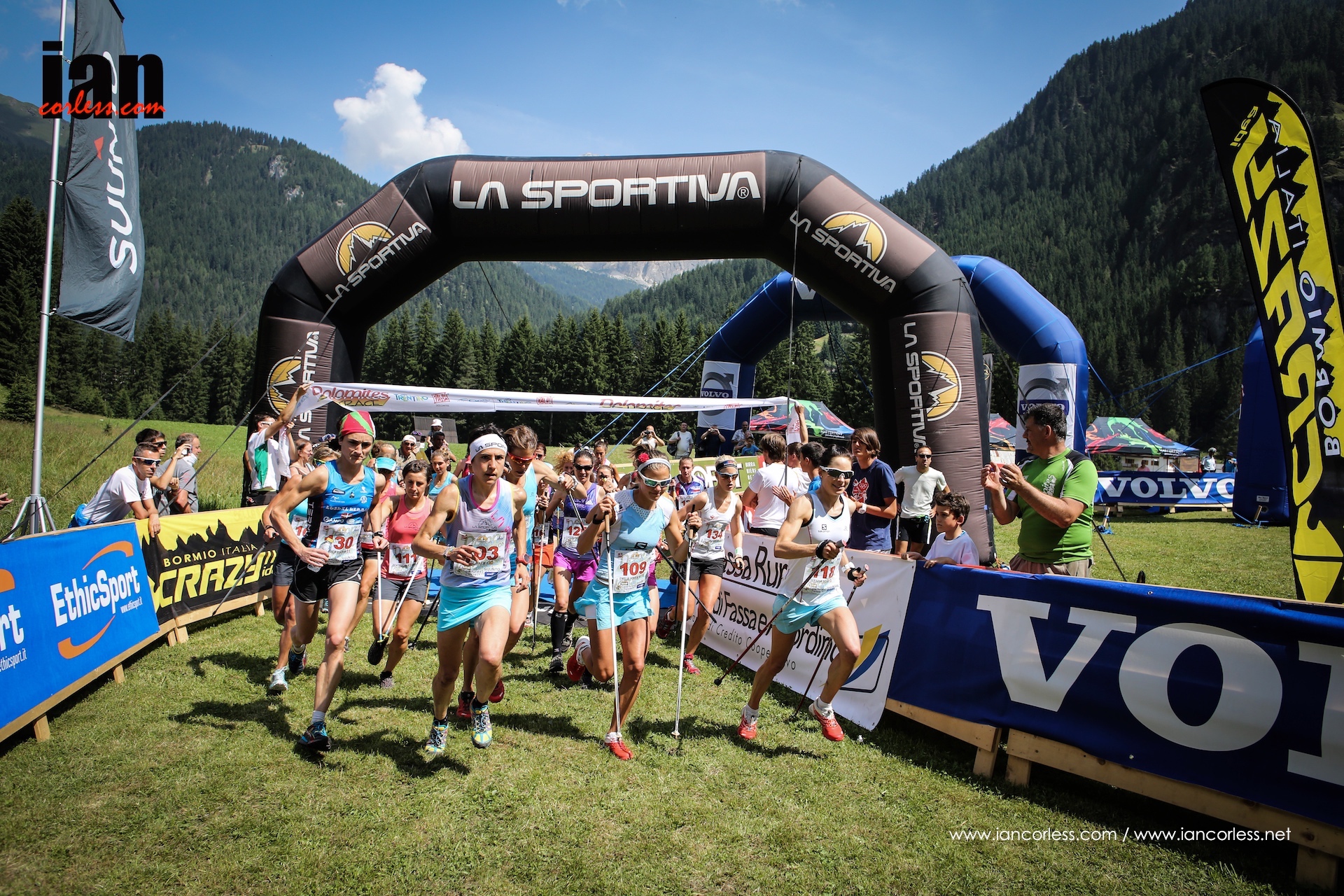
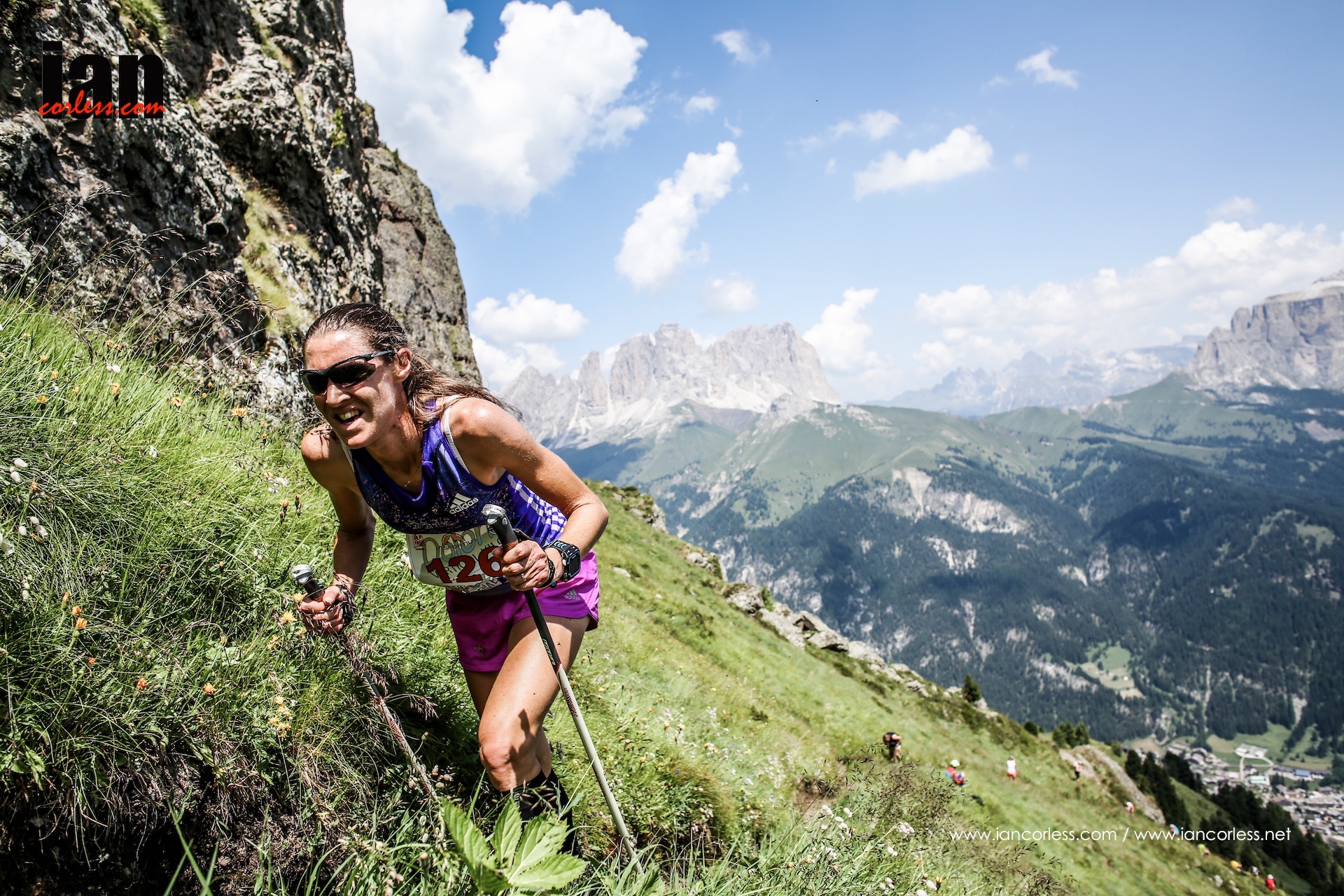
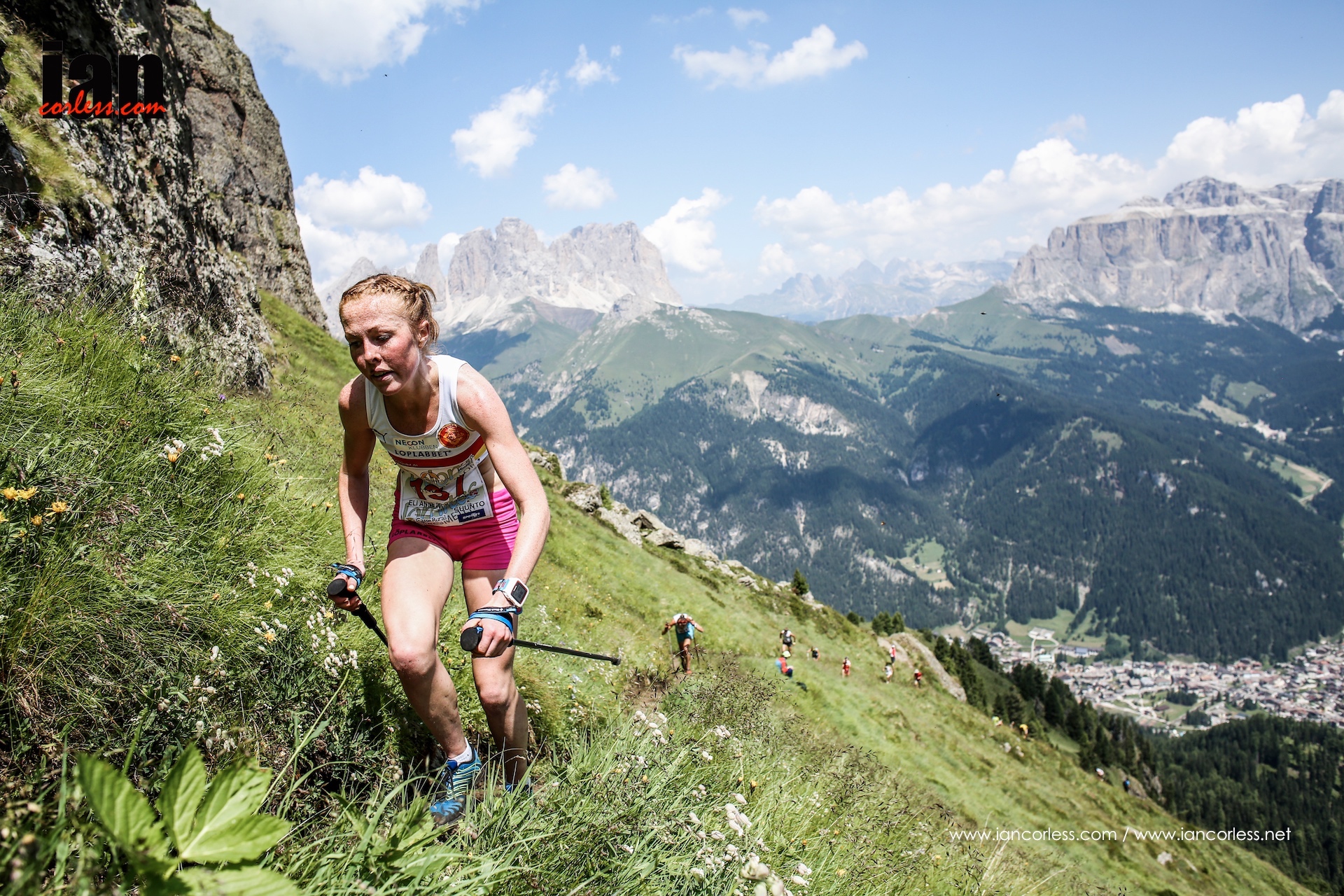
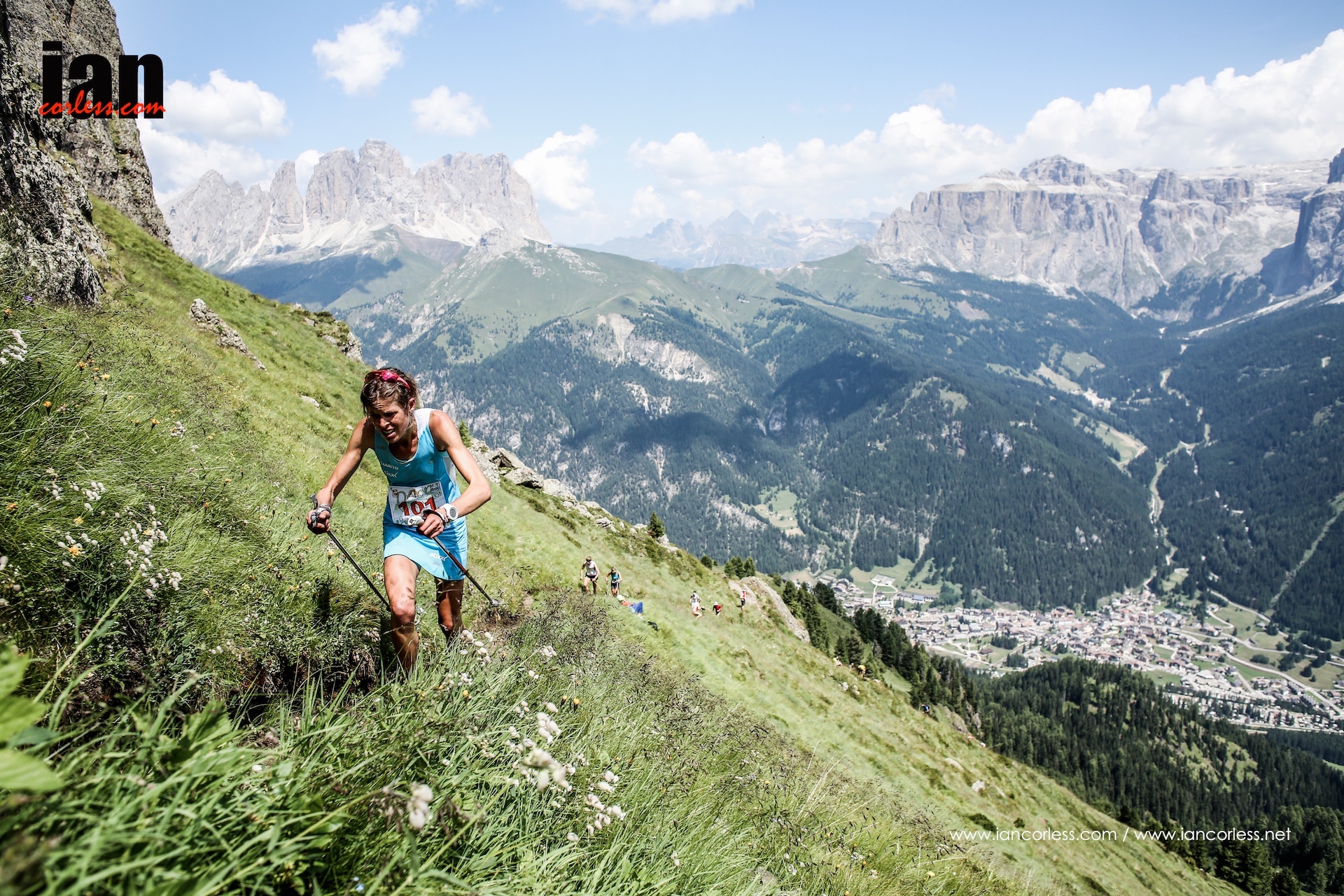
The stunning VK course in Canazei was greeted with clear skies and warm sun as runners assembled at the start today for the 8th edition of the Skyrunning Dolomites VK.
First runners departed at 0930 but the elite runners had to wait till 1130 for the men and 1135 for the ladies before they were un-leashed on the tough, steep gradients that finish 1000m in the Sky!
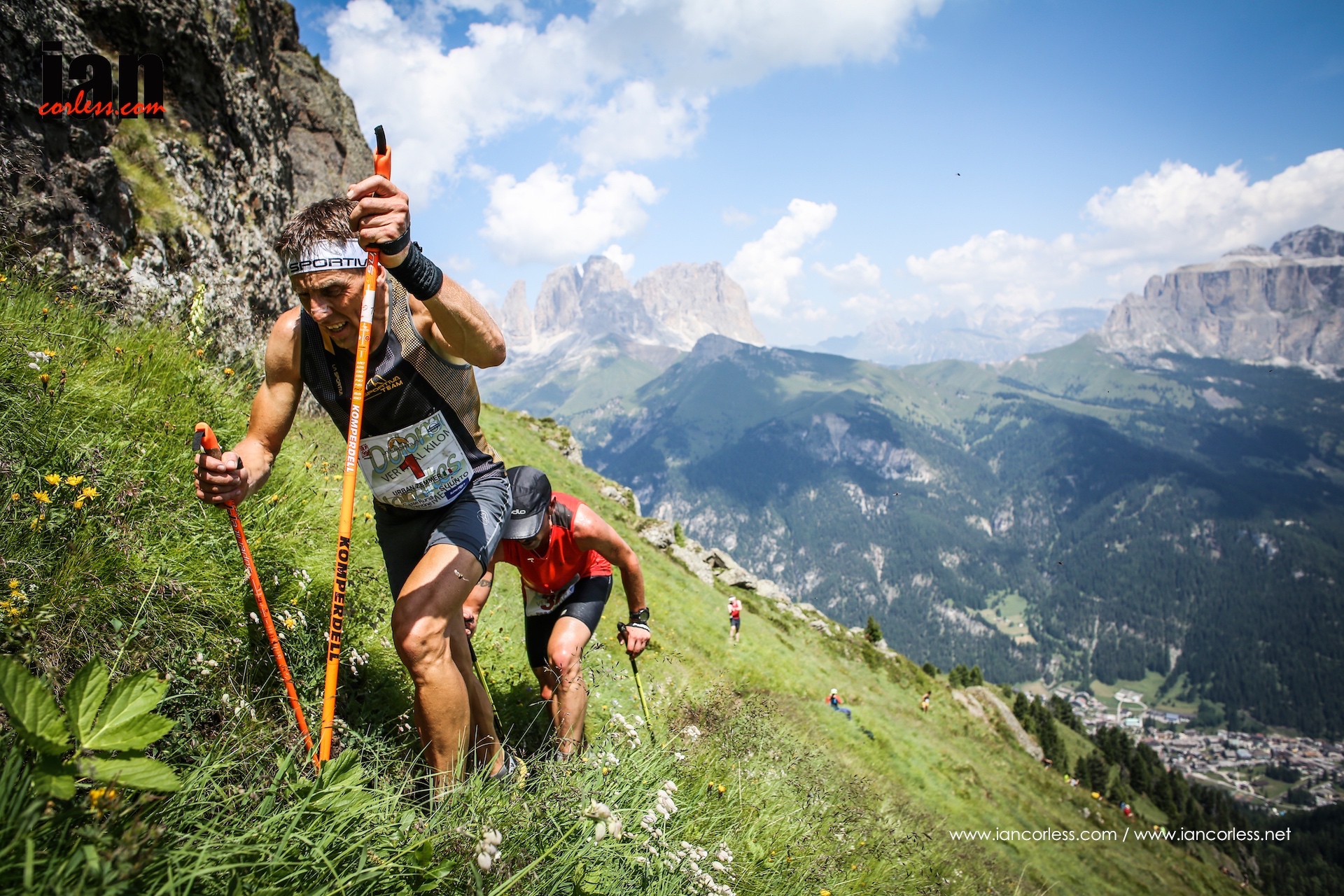
Urban Zemmer was the odds on favourite for the race and he started as he meant to go on; pushing from the front at a relentless pace that defied the gradient. However, Zemmer was not alone. Philip Goetsch slotted in behind him and marked him step-by-step.
As they approached the final 150m, Goetsch was tucked in behind Zemmer drafting like a cyclist. In the finale 50m or so, he made his move and unleashed a devastating sprint that one would have though impossible on such a steep and rutted incline. So impressive was his performance that it resulted in a new course record!
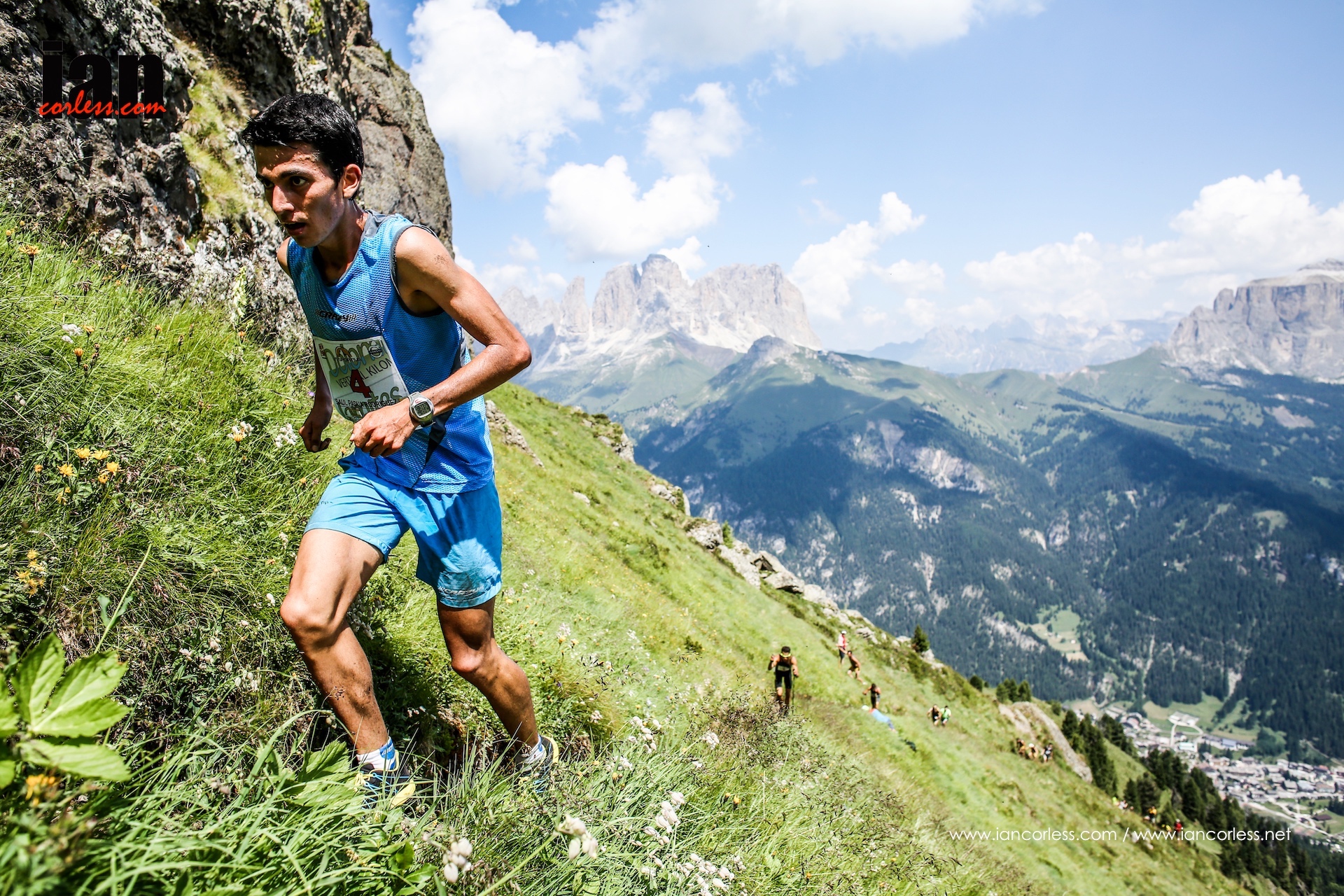
Zemmer held on for 2nd place with a clear margin and Saul Padua Rodriguez also jumped a place in the closing stages and moved from 4th to take the final podium place.
Just as Zemmer was expected to dominate the men’s race, Laura Orgue was also hotly tipped as the ladies’ winner. Christel Dewalle didn’t agree with this prediction! Fresh from the Val d’Isere VK where she podiumed, Dewalle pushed this VK course to its limits and it was clear to see the determination and dedication in her eyes. She was victorious over surprise 2nd Eli Ann Dvergsdal and Laura Orgue placed 3rd.
Attention now turns to the SkyRace on Sunday. Preview HERE
The field is stacked and we anticipate a battle royal in the men’s and ladies’ races.
Race results for the Vertical Kilometer Face Bellevarde Marco Moletto 36:50 Nejc Kuhar 36:58 Augusti Roc 37:18 Nadir Maguet 37:27 Alexis Sevennec 37:46 Laura Orgue 40:52 new CR Antonella Confortola 42:30 Axelle Mollaret 44:45 Francesca Rossi 44:51 Stephanie Jimenez … Continue reading →
Val d’Isere has a great history with the Vertical Kilometer, way back in ‘96’ the ISF were the first to organize a VK here!
A time lapse of 9-years since 2005 and Val d’Isere has re connected with the ethos of the VK using the Olympic Bellevarde Face. For many years, Marco De Gasperi held the VK world record here of 34-minutes and 41-seconds until the Italian was dethroned by a fellow countryman and VK specialist; Urban Zemmer.
The Vertical Kilometer has traditionally started at the foot of the Olympic Bellevarde face on “the board” in the heart of the Parc des Sports Charles Diebold in the center Val d’Isere.
The route then takes the greater part of what was the route of the men’s downhill Olympic Winter Games ski route (1992), won by Austrian Patrick Ortlieb.
It’s a tough course; 2.9Km’s in length and reaches an altitude of 2809m. Average gradients over the course are 35%, however, in places it reaches 63% as presented in the first hundred meters.
Including steep passages at 49% and 56% gradient, the sting comes with the famous passage of the Columbine at 55%. Followed by gentle slopes of the Great Wall (51%) a refreshment station is provided before the push to the line passing ‘Catherine Dent’ (50%) and then a finish loop passes the Bellevarde restaurant and the arrival is at a wooden start cabin at an altitude of 2809m.
Records:
Men: Marco DE GASPERI (ITA) en 34’51” (2003)
Women: Antonella CONFORTOLA (ITA) en 42’48” (2002)
Stats:
Finish Elevation: 2 809 m
Length: 2 905 m
Altitude gain: 1000 m
Maximum Gradient: 63 %
Minimum Gradient: 15 %
Average Gradient: 35 %
The Vertical Kilometer Bellevarde Face is part of the 2014 Skyrunner® World Series and will be followed by the Ice Trail Tarentaise 2-days later (preview for the ITT HERE)
Who is racing in 2014?
MEN
Urban Zemmer
Urban Zemmer is a VK specialist and this course will suit his style. Urban is odds on favourite for victory.
Aritz Egea
Aritz Egea a consistent performer in mountain races over the Sky distance, his recent top placing at the Mont-Blanc VK bodes well.
Marco Facchinelli like Zemmer specializes in the VK distance and he was 2nd in the Skyrunner® World Series 2013.Withdarwn
Marco Moletto finished offthe 2013 Skyrunner® World Series podium with 3rd place and therefore will be in contention in Val d’Isere.
Ferran Texeido
Thorbjorn Ludvigsen
Thorbjorn Ludvigsen
Augusti Roc currently 4th in the 2014 Skyrunner® World Series
Nil Cardona
Marc Casal Mir
Oscar Casal Mir
David Garcia
Marc Pinsach
LADIES
Laura Orgue
Laura Orgue Skyrunner® World Series VK champion in 2013 and recently crowned VK World Champion in Chamonix id hot favourite for the top spot.
Antonella Confortola at Canazei VK
Antonella Confortola course record holder and a formidable force in any VK.
Stevie Kremer
Stevie Kremer placed 2nd in her 1st VK in Chamonix and with no other race to hold back for, Stevie may just top the podium.Withdarwn
Emelie Forsberg needs to introduction, great going uphill and downhill. Emelie will be in the mix for the podium.
Christel Dewalle like Emelie will run the VK and the Ultra and stands a great chance to be on both podiums.
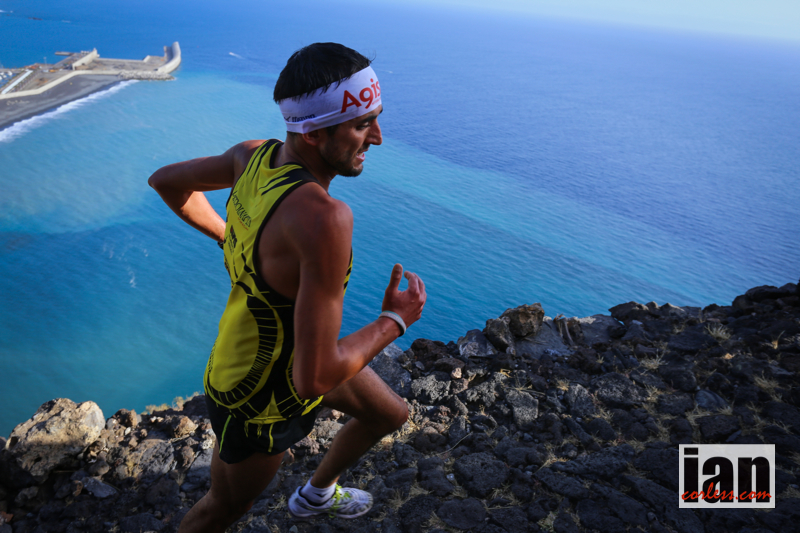
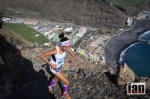
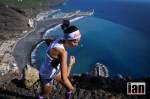
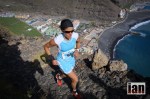
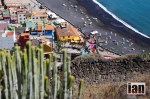
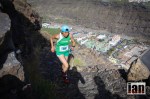
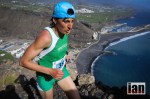
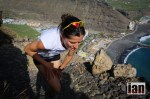
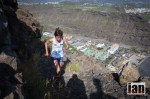
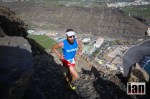
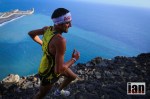
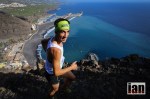
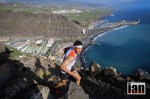
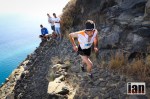
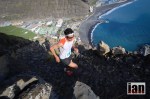
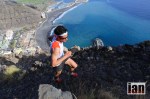
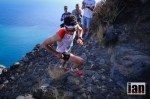
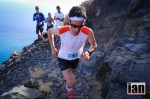
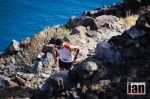
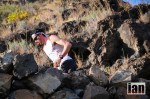
What a stunning location and what an inspirational day of running. For the first time, La Palma and Transvulcania La Palma held an inaugural Skyrunning Vertical Kilometer® on the zigzag trails leading from the beaches of Tazacorte, onwards and upwards and into the clouds.
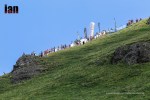
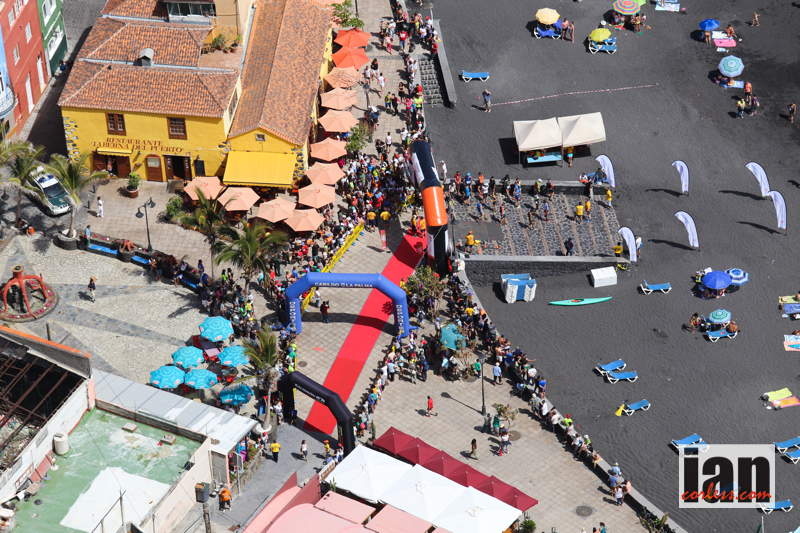
Hundreds of spectators turned out and lined the route in a scenario, not dissimilar to a scene in the Tour de France. Late evening heat, blue skies and a plethora of some of the best vertical runners in the world made the inaugural Transvulcania VK® an awe inspiring event.
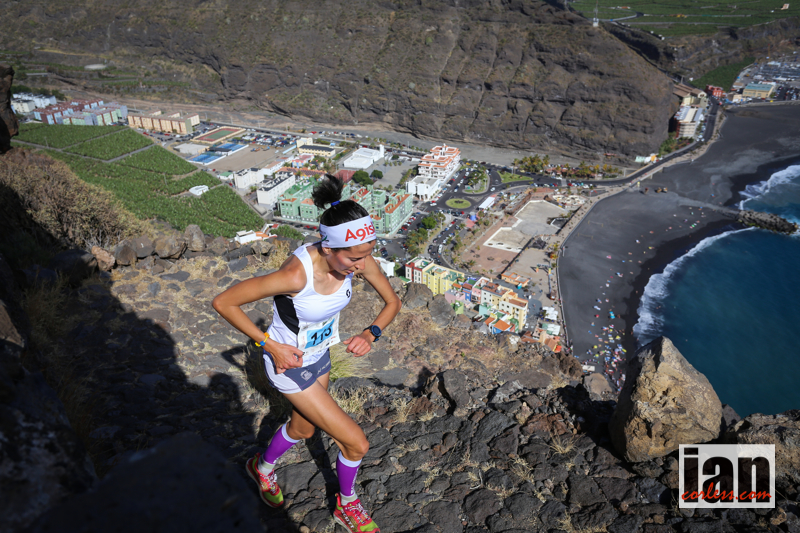
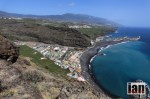
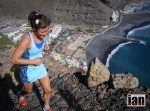
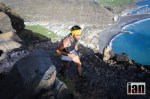
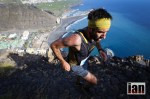
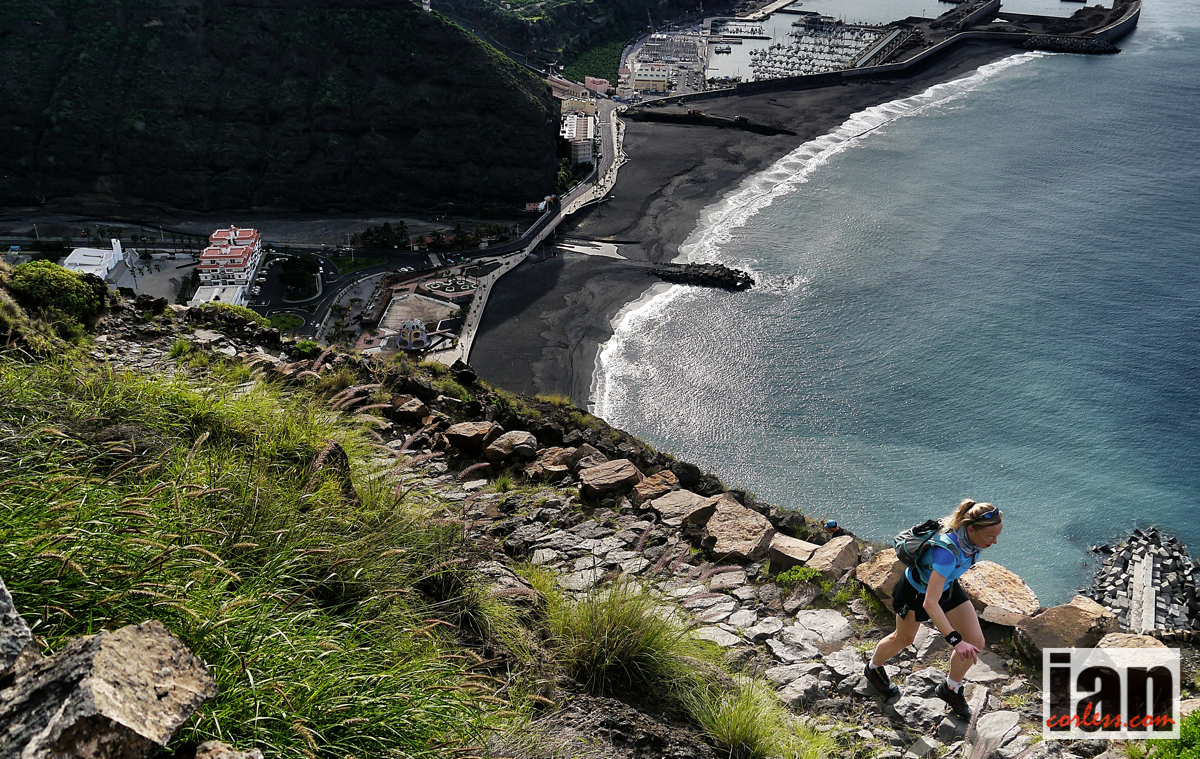
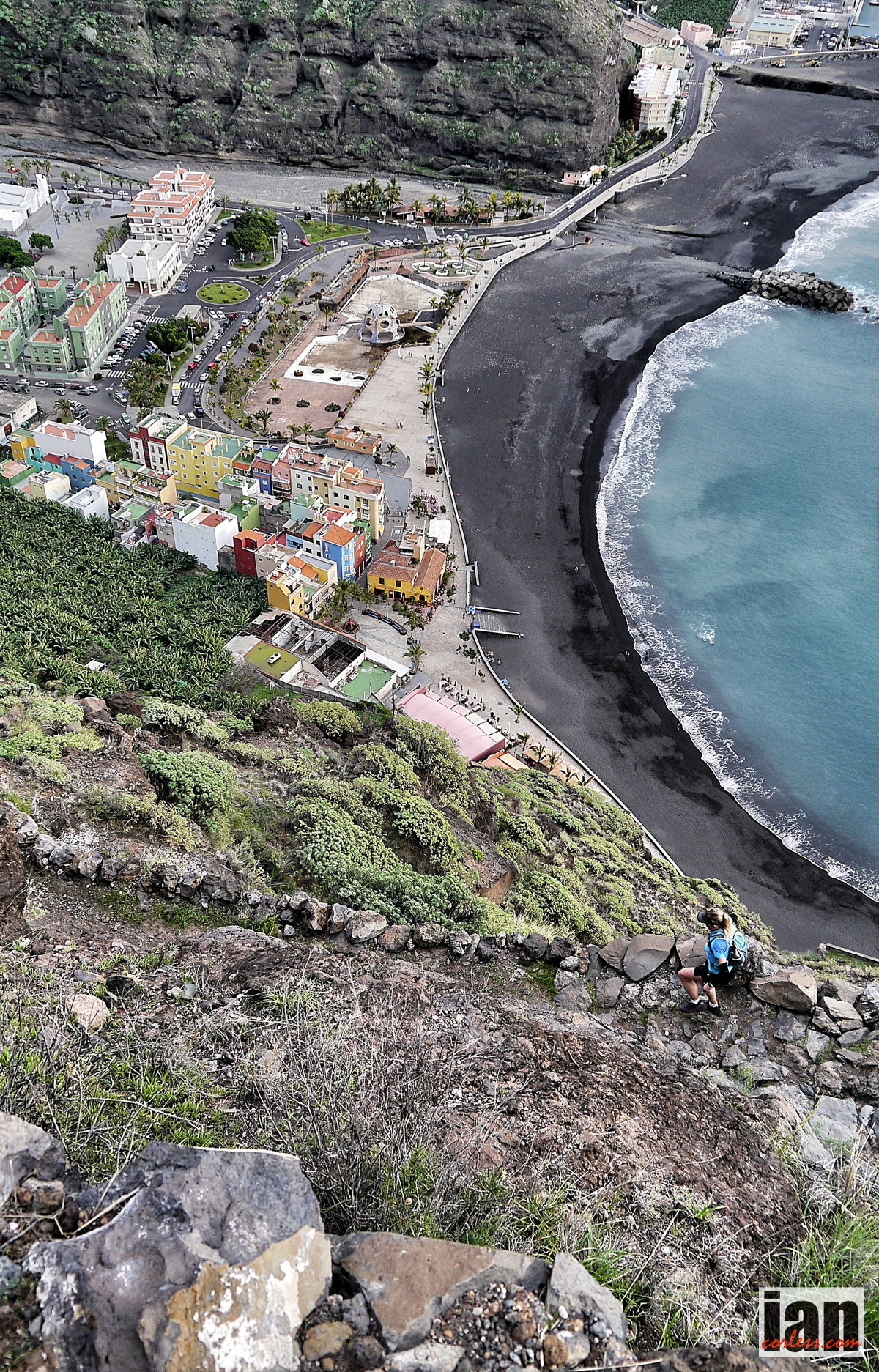
It’s quite incredible when one looks up at the mountain that a trail weaves its way onwards and upwards. Weave it does and the views are quite incredible when one sees the beads of sweat and facial grimaces contrasted by the pastel coloured houses of Tazacorte behind.
Departing in 30-second or 1-minute intervals, runners departed the beach with just one objective; who could reach the finish line in the shortest time.
Laura Orgue, Antonella Confortola, Emelie Forsberg would without doubt make an impact on the race, however, Elisa Dresco (wife of mountain running legend, Marco De Gasperi) used her speed and mountain skills to triumph on the day. Laura Orgue, Skyrunner® World Series VK Champion form 2013 placed 2nd and Azara Garcia de los Salmones Marcano 3rd.
Emelie Forsberg fresh from a very full ski season decided not to complete the whole distance preferring to use the event as a warm up for the ultra on Saturday.
Kilian Jornet running on Spanish soil is treated like a hero, calm and relaxed, Kilian takes the pressure from adoring crowds in his stride and despite little running (Kilian like Emelie has just stepped off skis) placed 3rd. The day however went to the Dematteis brothers, Bernard and Martin who placed 1st and 2nd respectively. They produced to quality runs and reaped the just rewards.
On the podium, to the blasting sounds of AC/DC, the brothers provided us with some quality showboating proving that Skyrunning is without doubt a sport that not only requires grit, fitness and determination but it also requires passion, fun and humor.
Attention turns now to the main event, the Transvulcania La Palma ultra race that will start in the early hours of Saturday morning. Stay tuned for what will be an incredible event.
From sea to sky, 1,000 metres high, the 2014 Skyrunner® World Series kicks off with a cracking new race on the magical island of La Palma, Spain. Transvulcania, renowned for the Ultramarathon, launches the Transvulcania Vertical Kilometer® on May 8. Starting at sea level, it ascends the steepest, most technical section of the Ultra and offers incredible views of the Atlantic coast – for those with the courage to look down.
The course was designed to complement the SWS Transvulcania Ultramarathon (May 10) and the half and marathon distances. From the black Tazacorte beach, the 6.6 km single track course ascends the imposing cliff face with a 40% incline before settling into a “flatter” final section to finish at 1,160m altitude. The overall incline averages 30%.
The upper section of the course follows an ancient goat-herders’ path and finishes at the El Time antenna, (the last aid station of the Ultra), rewarding runners with incomparable views of the Aridane Valley and the ocean in the distance.
With the world’s top vertical specialists leading the way, entries open on Saturday, February 1st, limited to 200 places. Not for the faint-hearted, as the race slogan says, “Get ready to meet your fate”!

























 IAN CORLESS