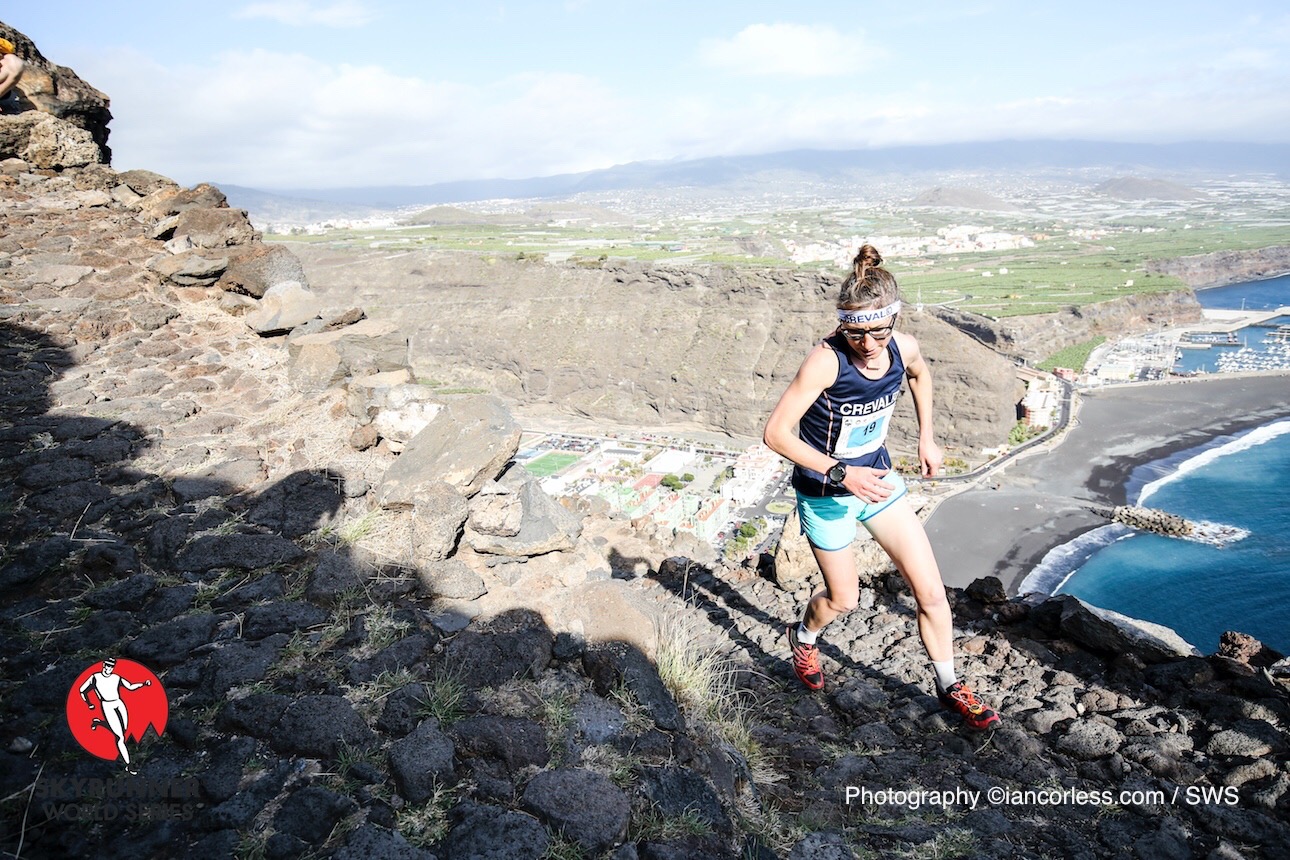
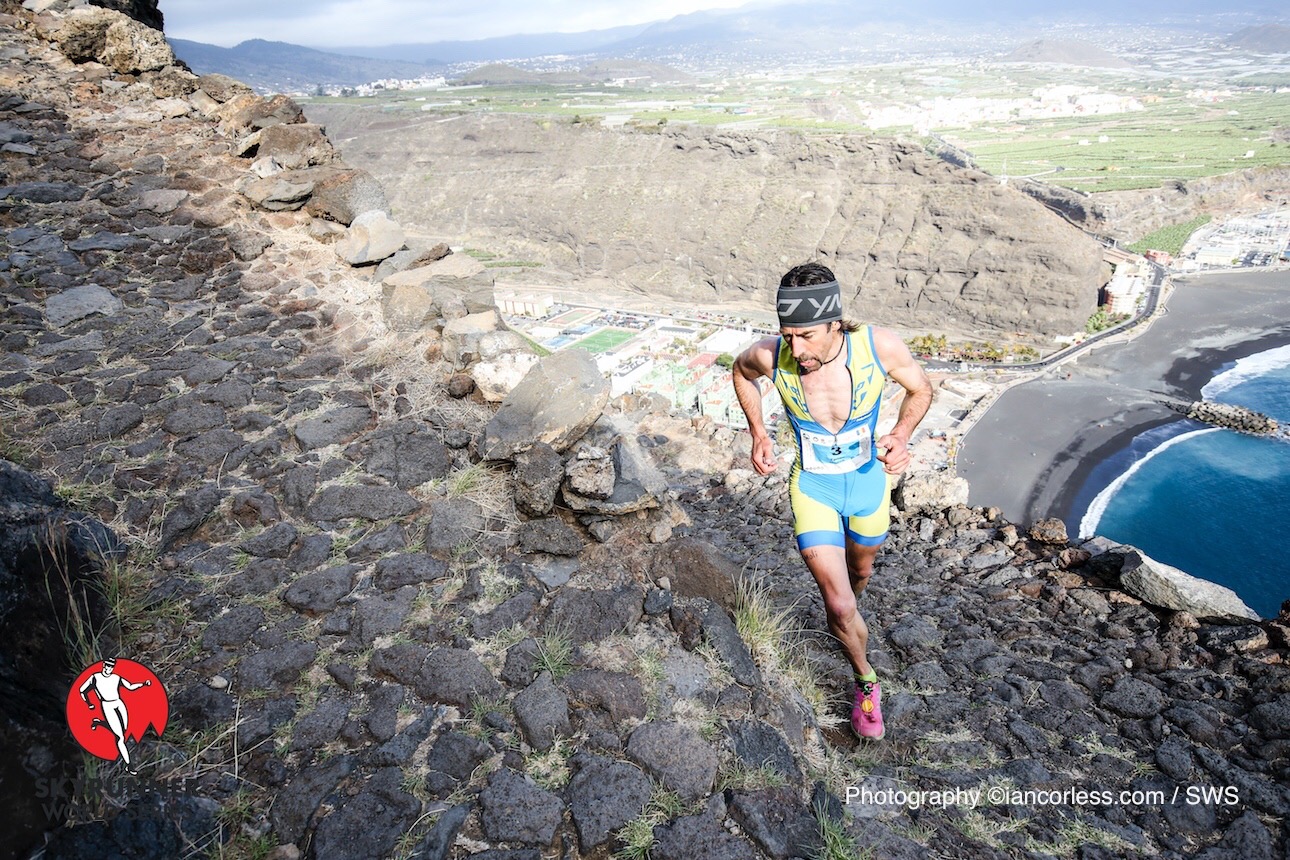
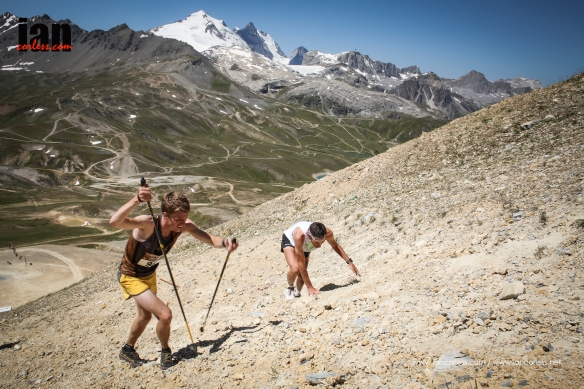
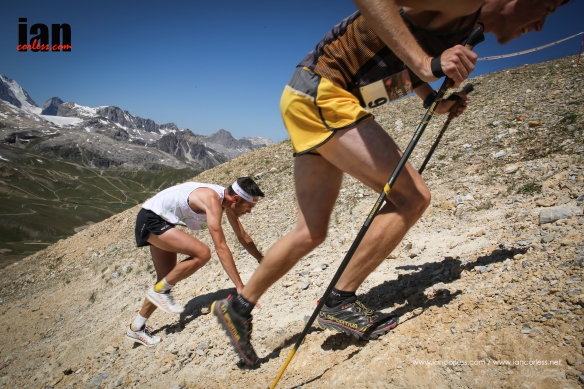
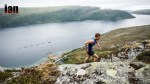
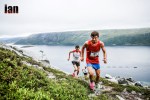
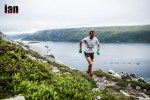
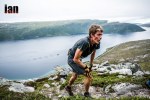
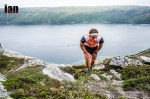
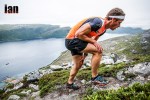
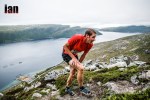
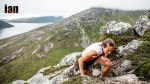
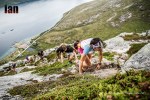
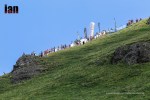
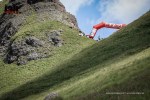
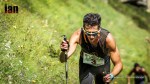
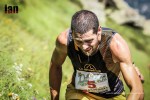
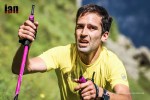
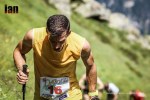
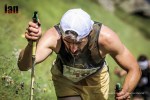
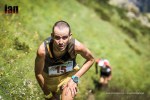
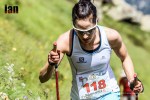
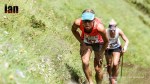
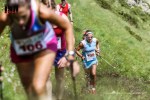
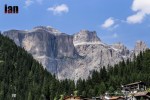
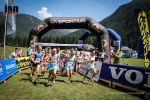
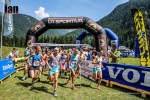
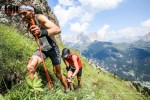
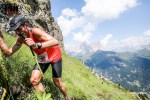
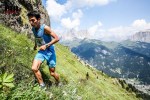
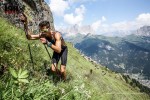
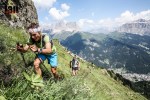
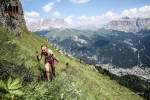
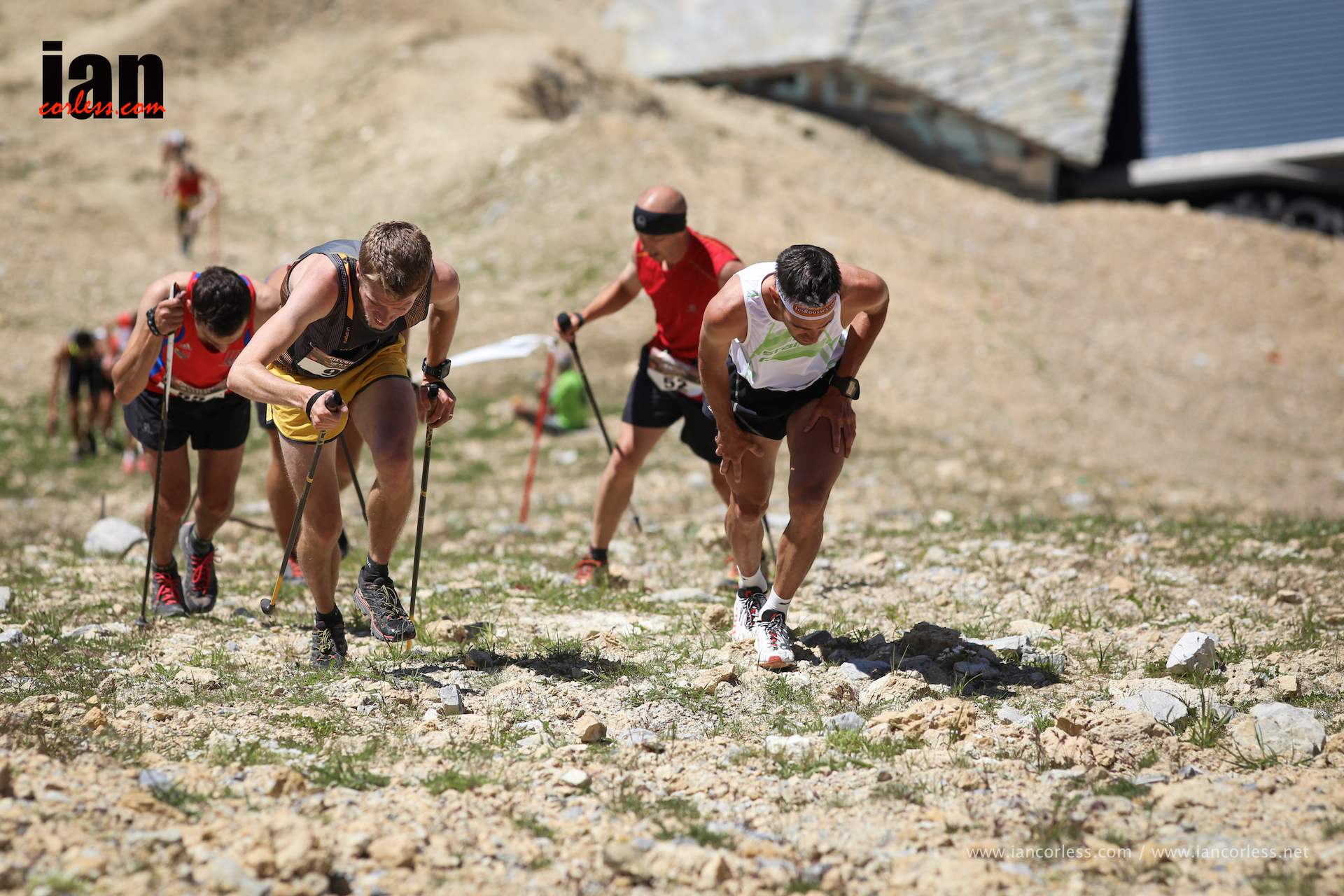
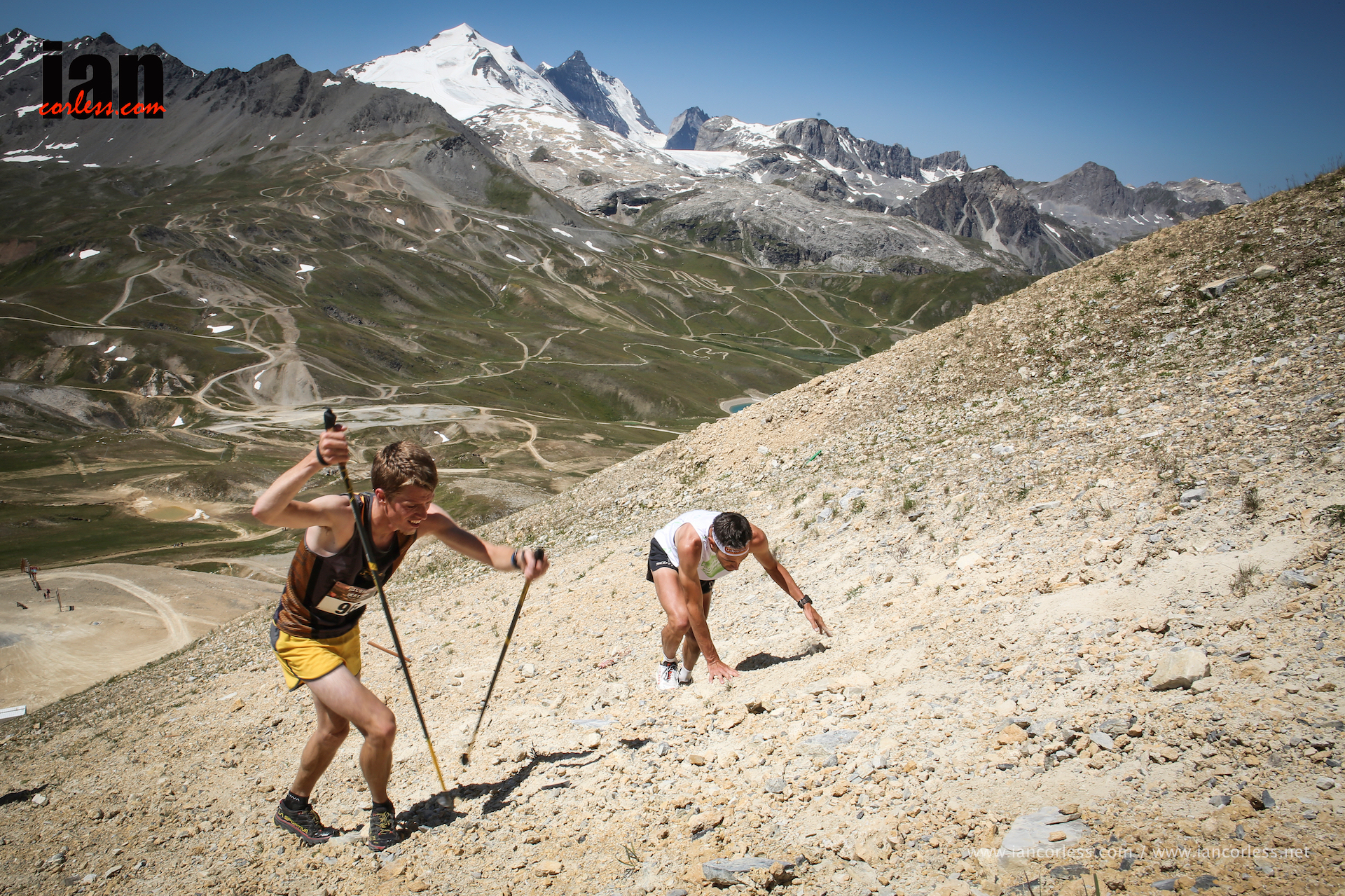
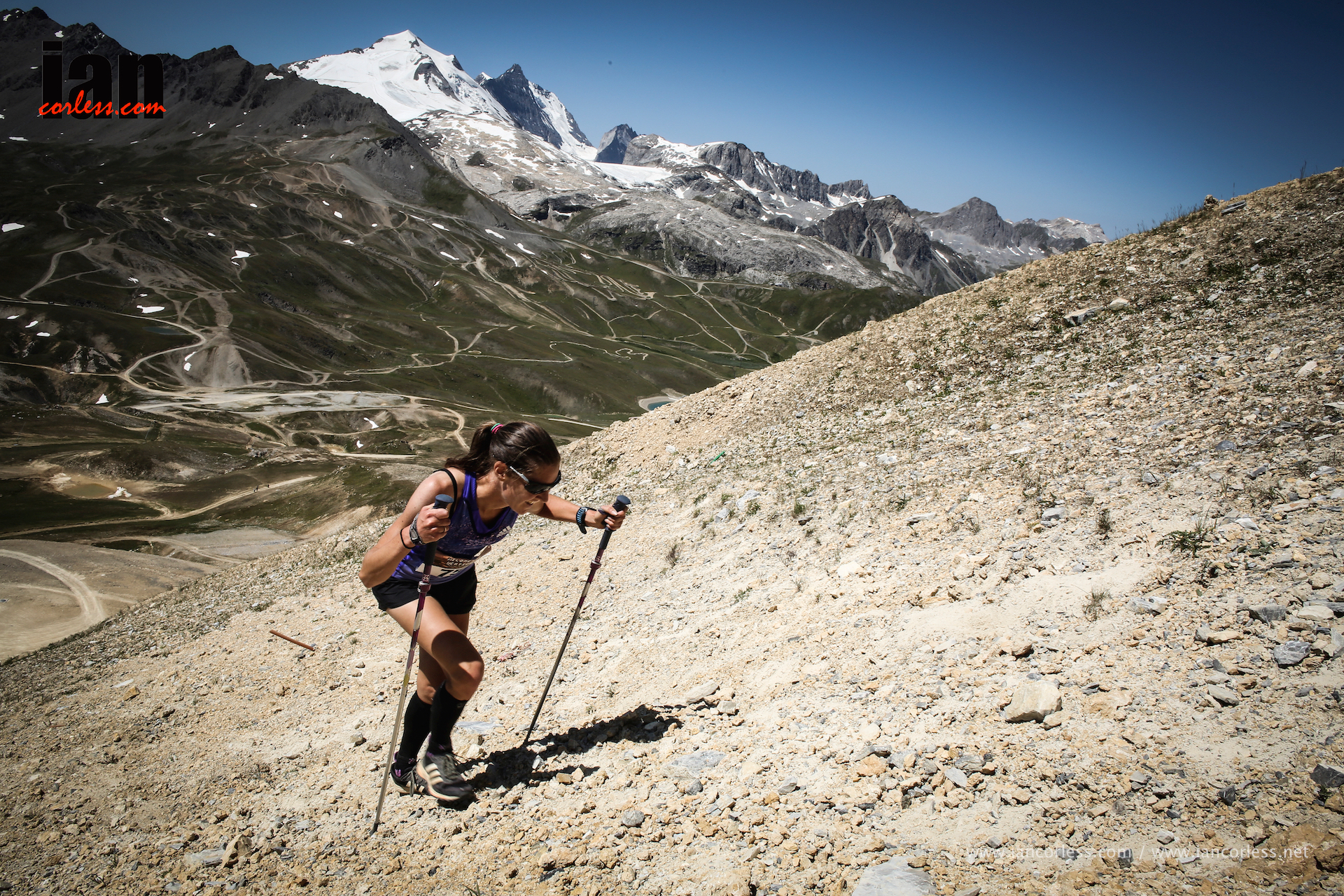
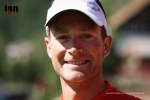
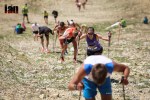
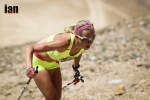
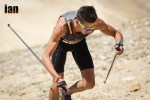
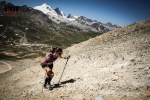
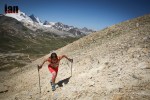
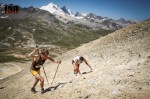
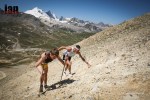
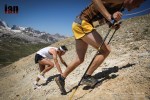
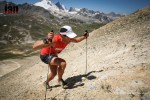
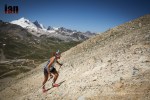
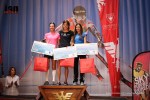
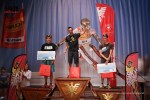
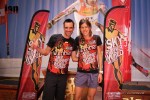
Saul Padua and Emmie Collinge are 2016 Binter Vertical Kilometer Transvulcania champions in the first VK race in the 2016 Skyrunner World Series. Saul Padua fulfilled his pre race top billing and was crowned winner of the Binter Vertical Kilometer Transvulcania. The Colombian runner, the last to leave and the fastest to reach the finish, kicked off the race with a fast pace and held that all the way to the finish. At 7.6km this is a long VK that requires a different run technique and style to many other races in the category.
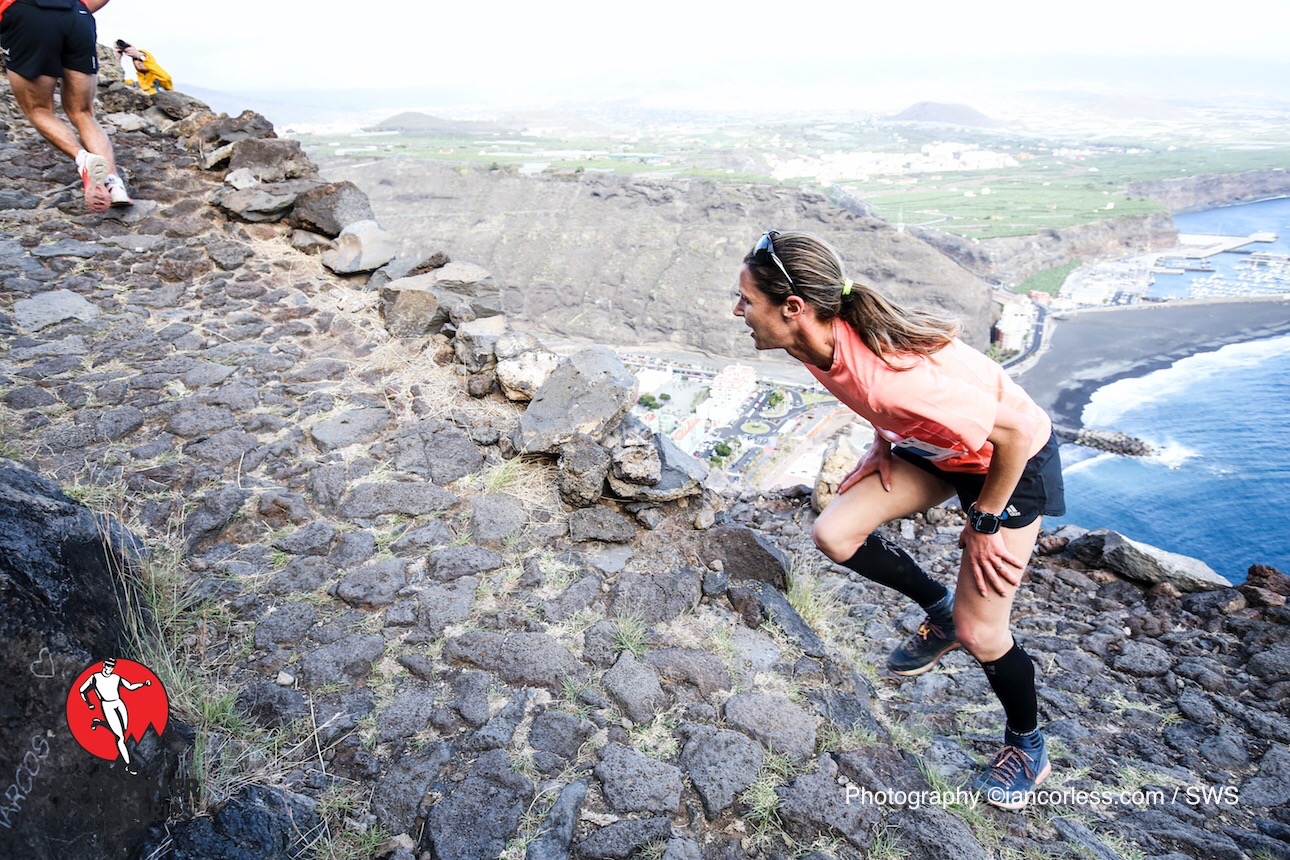
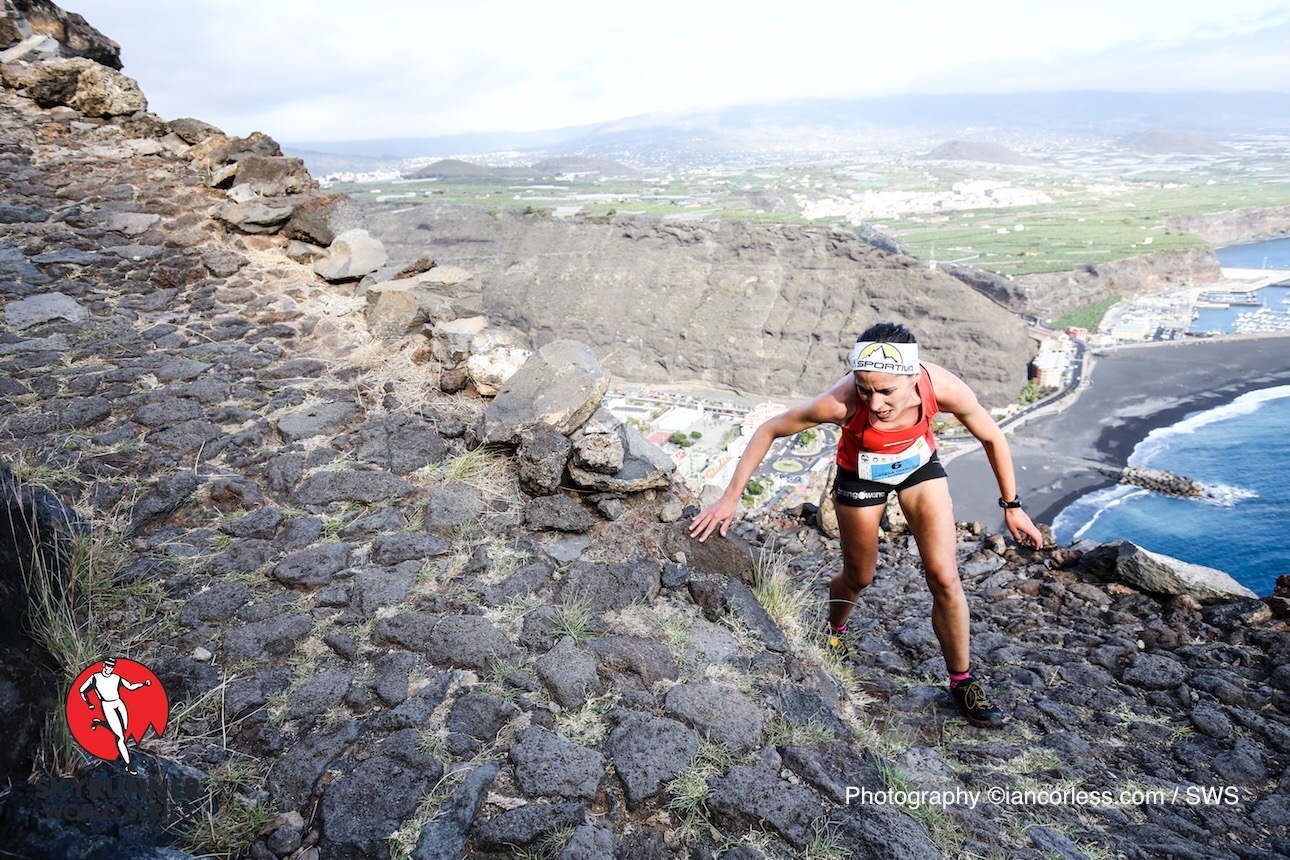
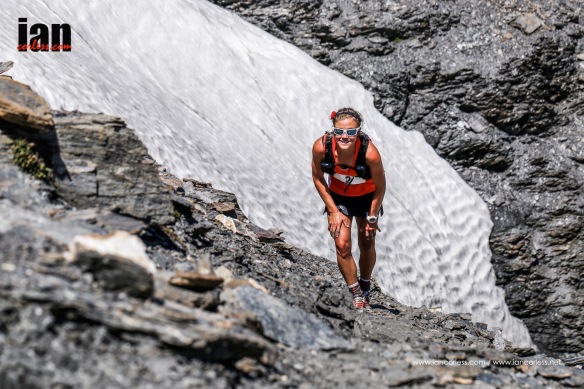
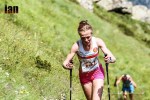
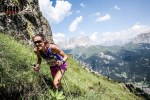
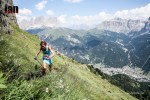
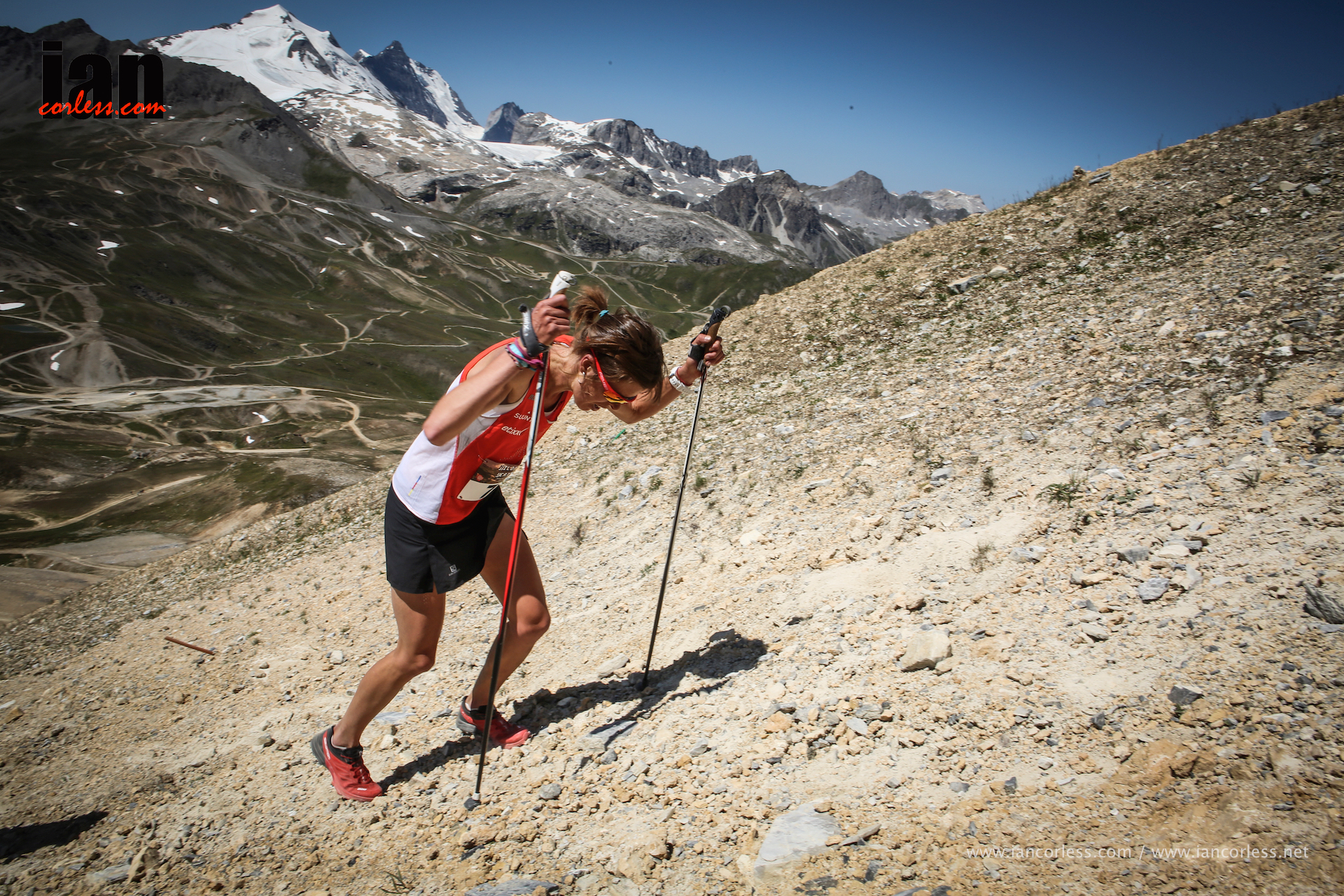
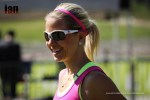
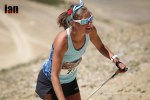
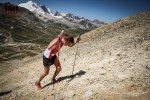
Emmie Collinge from the UK shone ahead of the rest of the ladies and beat the course record. A disciple of Marco De Gasperi, Emmie splits her time between the UK and Italy.
Bernard Dematteis still holds the male CR 48 minutes and 43 seconds. Padua’s time placed him with the third fastest time in the history of the race, just ahead of Kilian Jornet.
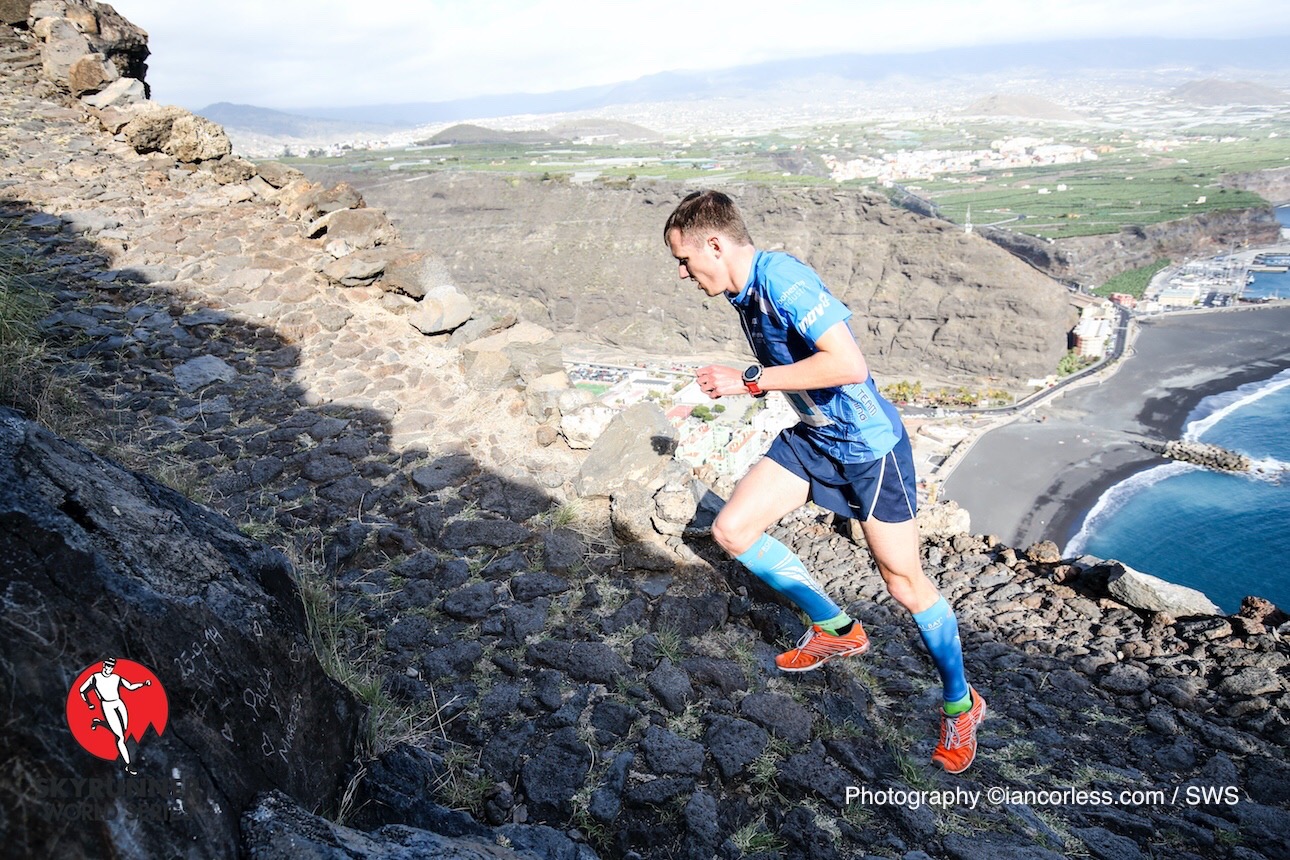
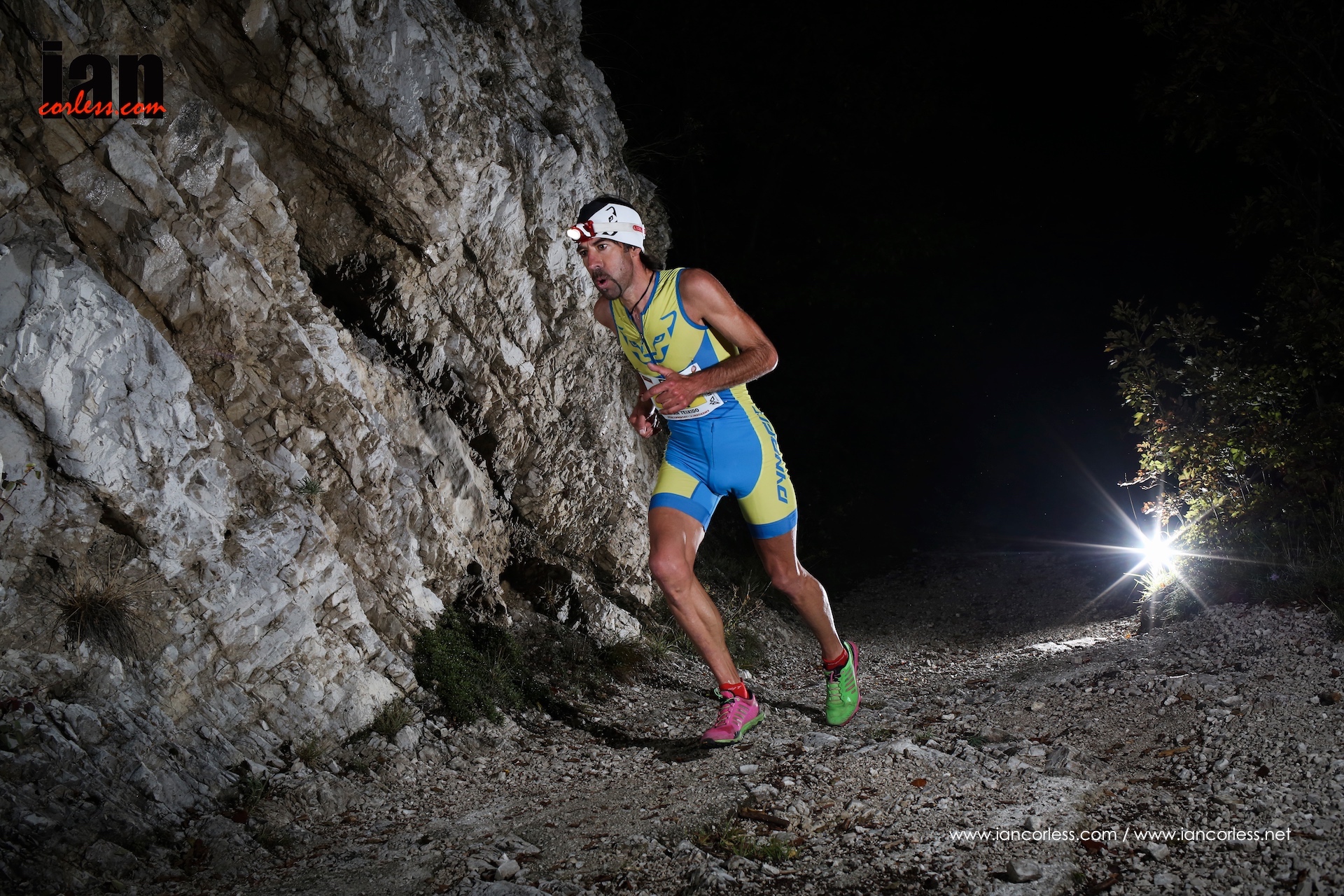
Second runner was the Czech Ondrej Fejfar who also ran under 50 minutes. Andorran Ferran Teixido completed the podium.
Emmie Collinge exceeded all expectations setting a new record of 57:56 lowering the record of Elisa Desco, previously 59 minutes and 43 seconds set two years ago.
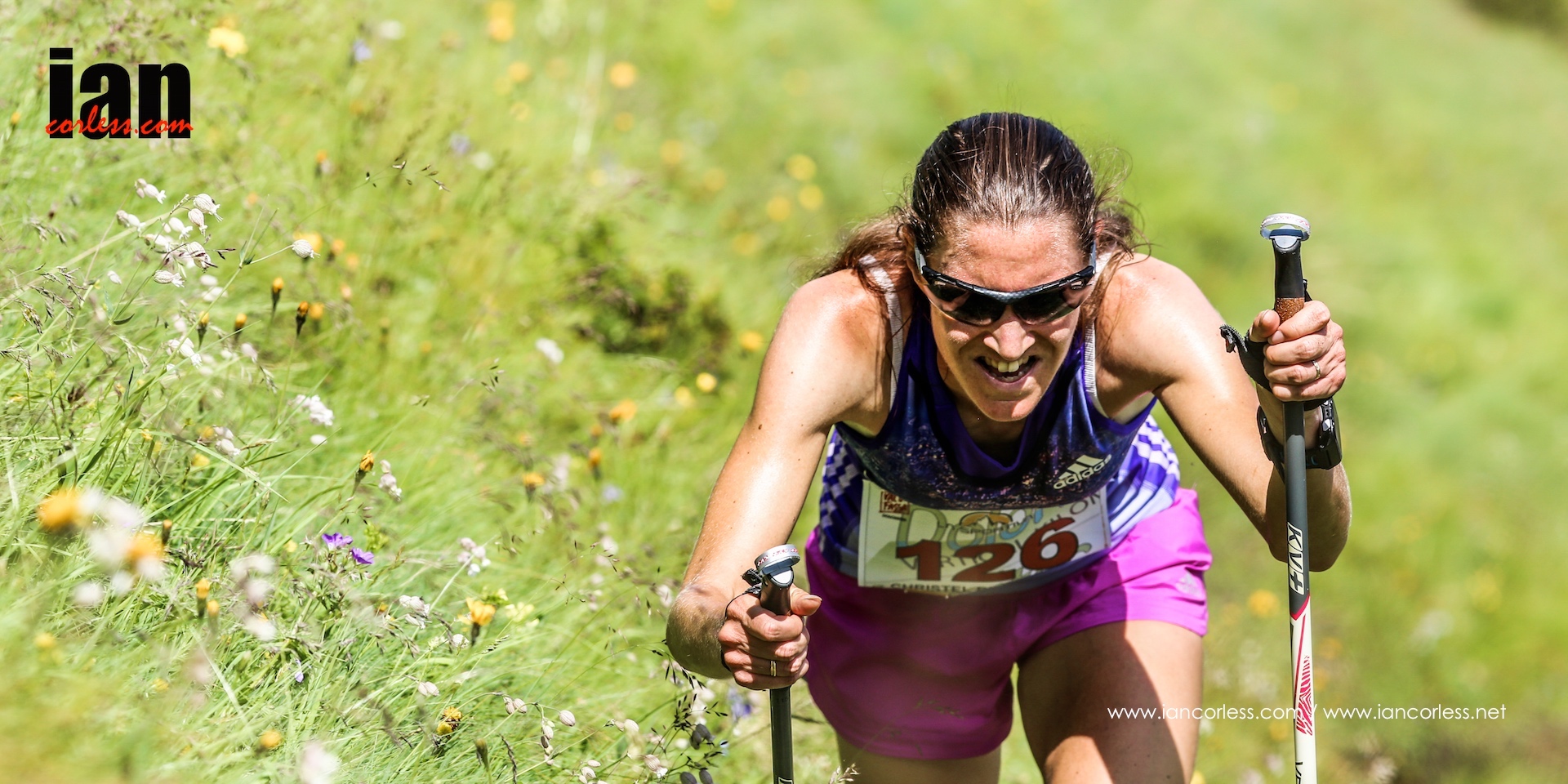
Christel Dewall, a VK specialist, holds the world record for the distance but could not beat the power of Collinge. Vanessa Ortega placed 3rd.
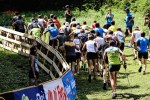
18 different nationalities, a melting pot of countries, took part in the 3rd edition of the race with over 130 runners taking part.
1. Saúl Padua
2. Ondrej Fejfar
3. Ferran Teixido Martí-Ventoso
1. Emmie Collinge (Récord de la prueba)
2. Christel Dewalle
3. Vanesa Ortega
Official times to follow
*****
The 2016 Skyrunner® World Series is brought to you with a new management company, Geneva based SkyMan SA.
SkyMan SA is pleased to present a new Main Partner, Migu Xempower, a Chinese exercise and health management platform which also counts a rich experience in organising marathons, city and mountain races for millions of runners.
The well-established, Sky, Ultra and Vertical format is joined by the Extreme Series presented by Alpina Watches, which more than ever expresses the true spirit of Skyrunning defined not only by distance, but vertical climb and technical difficulty.
Skyrunner® World Series is supported by Migu Xempower, Alpina Watches, Compressport, Salomon and Scott Sports.
iancorless.com is the official photographer and media partner for the
Recently I have produced a couple of articles about how to ensure that you are an efficient walker when participating in long or mountainous events. You can read them HERE and HERE.
The first article discusses Training to Walk for Ultra, Trail and Mountain Running and the second article is about Walking, Running and Climbing with Trekking Poles.
JOIN OUR YEARLY MULTI-DAY TRAINING CAMP IN LANZAROTE – HERE
On December 15th, the University of Colorado Boulder released a document called, CU-Boulder researchers discover optimal range of slopes for extreme uphill running.
This article made me take a look and read in-depth for two reasons: first and foremost it ties in nicely with my previous two articles but more importantly and secondly, research into VK data dates back some 16-years and was pioneered by the ISF (International Skyrunning Federation) who created the VK format as a racing discipline.
To clarify a VK is 1000m of vertical ascent and the objective is to climb the elevation gain as quickly as possible. The original context of the VK always was about research and data.
VK courses vary greatly but the ISF consider a true VK to be under 5km in length. To understand the variables, some VK’s, for example the Dolomites are just over 2km in length. By contrast, Limone Extreme is a considerably longer course with a less extreme gradient.
Fully, Switzerland has long been a testing ground for VK performance and a post from the ISF which was updated 22nd October 2012 adds some very clear and specific points to consider:
“Italy’s Urban Zemmer rocketed up the 1,000m vertical course, only 1.9 km long, in just 30’26”, 20 seconds faster than the standing world record set here in 2011.”
In addition, the ladies records tumbled:
“French runner Christel Dewalle was first in 36’48” followed by Axelle Mollaret in 37’44” and third, Maude Mathys from Switzerland in 37’56, all beating the previous world record set two years ago by Italian Valentina Belotti in 38’50.”
Notably, the ISF commented:
“The new men’s record nears a speed of 2,000 vertical metres per hour (precisely 1,971m) an incredible ground-breaking performance that the ISF has been monitoring for many years in a scientific research project… Depending on the course and type of start, poles are permitted and yesterday, most of the runners used them. However, to date, the advantages of using poles has not been scientifically demonstrated.”
In 2014, the record for the VK was once again broken by Urban Zemmer at Fully, Switzerland with the incredible time of 29’ 42”.
Remi Bonnet prefers to run a VK and never walks
So by simple logic (I am no scientist), it would suggest that the steepest course is the fastest as Fully is only 1.9km long. To quote, Run the Alps,”The Vertical KM race in Fully, Switzerland is considered to be the fastest vertical kilometer course in the world. The race, held on a former funicular route, is home to both the men’s and women’s world records.”
You can watch a YouTube clip of the 2013 Fully race HERE
Watch the video of Fully and you will see varying techniques, some walk, some walk/ jog, some (most) use poles but one thing is consistent, the effort is almost maximal for all. Therefore, in a non-scientific look at Fully, the fastest performances come from the genetically gifted who have all the elements required for an optimum VK performance: lung capacity, V02max, lactate threshold, power to weight ratio, technique and so on.
Marco de Gasperi like to mix running and walking
But what about the optimal slopes for uphill running as questioned by CU-Boulder. They posed the question:
“Imagine that you are standing in Colorado at a trailhead where the base elevation is 9,000 feet. Your friend challenges you to race to the summit of the mountain, which tops out at 12,280 feet, roughly 1,000 meters of elevation gain. There are several different trails that go to the summit. They are all steep and some are extremely steep. One trail averages a 10 degree incline and the sign says it is 3.6 miles long. A second trail averages 30 degrees, but is only 1.25 miles long. A third trail averages 40 degrees, but only 1 mile long. To get to the summit the fastest, which trail should you choose and should you walk or run?”
Poles or no poles on a steep gradient?
This is a question that the ISF have asked and researched for many years. A paper titled, “Energy costs of walking and running uphill and downhill at extreme slopes” looks into this:
Davide Susta, Alberto E. Minetti*, Christian Moia and Guido Ferretti
Département de Physiologie, Centre Médical Universitaire, 1211 Genève 4, Switzerland, *Department of Exercise and Sport Science, Manchester Metropolitan University, Alsager ST7 2HL, U.K.
The energy costs of walking and running (Cw and Cr, respectively, in J kg-1 m-1) increase with the slope uphill (up to +20%) and decrease with the slope downhill (down to -10%) (Margaria, 1938; Margaria et al, 1963). Outside this range, no measurements of Cw and Cr are available in the literature, even though walking and running on the mountains at greater slopes is becoming commoner and commoner practice in leisure and sport. We therefore set out to carry out the present study, the aim of which is to determine Cw and Cr on men walking and running at slopes up to +45% and -45% on the treadmill. After local ethical approval, 10 subjects (Skyrunners) were admitted to the study (age 32.6 + 7.5 years, body mass 61.2 + 5.7 kg, maximal O2 consumption 68.9 + 3.8 ml min-1 kg-1). They are all endurance athletes practicing mountain racing. O2 consumption at the steady state was measured by the open circuit method, using Leybold O2 and CO2 analysers and a Singer dry gas meter. Heart rate was measured by cardiotachography. Blood lactate concentration was determined after each run as a check for submaximal aerobic exercise.
Each subject performed up to three walking and three running trials at progressively increasing speeds on the level, and at the slopes of 10, 20, 30, 35, 40 and 45 % uphill and downhill. The duration of each trial was 4 min, and expired gas was collected during the 4th min of exercise. Minimum Cw on the level was:
1.85 + 0.57 J kg-1 m-1 (n = 10) at the speed of 0.69 m s-1. During uphill walking, Cw increased with the slope, to attainthevalueof18.08+1.57Jkg-1 m-1 (n=9)atthespeedof0.69ms-1 andat the slope of +45%. During downhill walking, minimum Cw was lower at the slope of -10% (0.81 + 0.37 J kg-1 m-1, n = 9) than on the level. At slopes below -10%, it progressively increased. At -45%, it was 3.46 + 0.95 J kg-1 m-1(n = 5). Cr on the level was 3.40 + 0.24 J kg-1 m-1(n = 30). Cr increased with the slope, to attain 18.69 + 1.42 J kg-1 m-1(n = 6) at +45%.
During downhill running, Cr decreased and attained its lowest value at the slope of -20% (1.73 + 0.36 J kg-1 m-1, n = 24). At lower slopes, it increased. At -45%, at speeds higher than 1.38 m s-1, it was equal to 3.79 + 0.57 (n = 7). The mechanical efficiency for vertical displacement was 0.216 + 0.015 at +45% and 1.078 + 0.275 at -45%. This data on the level and at slopes up to 20% correspond to those found by others on non-athletic subjects (Margaria, 1938). At higher slopes, the increases in Cw and Cr are such as could be predicted assuming that all energy is used to lift the body. By contrast, at -10% and -20%, both Cw and Cr are lower than in non- athletic subjects (Margaria, 1938), suggesting greater recovery of elastic energy at each step in the present athletes. At slopes below -20%, the increases in Cw and Cr are such as could be predicted assuming that all energy expenditure is for negative muscle contractions.
REFERENCES
Margaria, R. (1938). Atti Acad. Naz. Lincei 7, 299-368.
Margaria, R., Cerretelli, P., Aghemo, P. & Sassi, G. (1963). J. Appl. Physiol. 18, 367-370. This work was supported by a grant from the FSA- Federation.for Sport at Altitude
Referring back to the CU-Boulder research:
“Based on our research, we now know that choosing the second trail (30 degrees) and walking as fast as you can within your aerobic capacity is the fastest way to go,” Kram said. “For either running or walking, slopes between 20 and 35 degrees require nearly the same amount of energy to climb the hill at the same vertical velocity.”
This new study (HERE), which was recently published in the Journal of Applied Physiology, is believed to be the first to examine the metabolic costs of human running and walking on such steep inclines (suggested by the CU-Boulder researchers.) However, I would question this and refer to research by the FSA – “Energy cost of walking and running at extreme uphill and downhill slopes.” Received 29 November 2001; accepted in final form 29 April 2002. You can download this detailed documentation HERE and it is essential reading.
Who is the most efficient?
It would appear that gradients of 20-35 degrees require the same amount of effort and interestingly, CU-Boulder research found in a study:
“A vertical rate of ascent of just over 1 foot per second, is a pace that high-level athletes could sustain during the testing. At that speed, walking used about nine percent less energy than running. So, sub-elite athletes can ascend on very steep uphills faster by walking rather than running.”
In simple terms, this is something I have found out by attempting VK’s in my own time in and around events. More often than not, the effort required to run is so hard that it becomes counter productive. I have even found that including run sections to be counter productive as this raises my heart rate, increases lactate acid and requires me to recover while still climbing. However, if I maintain a constant effort walking, this produces the best results for me.
CU-Boulder research went on to say:
“The study examined 15 competitive mountain runners as they ran and walked on the treadmill at seven different angles ranging from 9 to 39 degrees. The treadmill speed was set so that the vertical rate of ascent was the same. Thus, the treadmill speeds were slower on the steeper angles. The athletes were unable to balance at angles above 40 degrees, suggesting a natural limit on the feasible slope for a VK competition.”
In regard to the latter point, this in some respects relates to Fully, Switzerland and brings in another element, the use of poles and if poles allow a faster ascent when the gradient steepens. One only has to look at the Dolomites VK and Fully VK where poles are used by nearly all participants. The ISF plan to do a new test with and without ski poles, but it is not easy to do a serious test. Although not scientifically proven, it’s fair to say that using poles with gradients under 20% it will mean more Kcal and a reduced performance. However, with gradients steeper than 25 or 30%, the use of poles can correct style, etcetera and can improve the overall performance.
The CU-Boulder article is available to read in full HERE.
I can quote technical papers and research all day, however, as a runner you want to know the answer to the question, should I walk or should I run uphill and should I use poles?
Irrespective of if you plan to run a VK or not, the research and thoughts provided by the FSA and CU-Boulder confirm that running or walking uphill provides an incredible workout. Importantly though, research confirms that walking should be a key element in any training plan, (*…walking used about nine percent less energy than running) especially if you are racing or training on hilly or mountainous terrain.
When participating in ultra events, reverting to periods of walking may well produce greater results and faster times. This is very evident when the terrain steepens; running will only expend more energy and produce slower times. The use of poles appears to benefit performance when gradients steepen, this is not scientifically confirmed.
On a final note though, many other factors come into play when looking at results and as with everything, there are exceptions. Urban Zemmer, Remi Bonnet, Laura Orgue, Christel Dewalle and so many more are able to run when others need to walk. We can’t choose our parents or our genetic pool. Ultimately, find out what works for you but practice makes perfect and the more climbing you do, the better and the faster you will become.
The International Skyrunning Federation (ISF) is pleased to announce the
2016 SKYRUNNER® WORLD SERIES
Taking Skyrunning to the next level with the best races, new events and what’s more, skyrunning is going EXTREME!
In addition to the successful Vertical, Sky and Ultra formats, the ISF is pleased to announce the introduction of the Sky Extreme Series. Three countries, three super-technical races and runners worldwide will have a real opportunity to embrace the skyrunning ethos.
“When I discovered Skyrunning years ago it was the images of small runners traversing huge glaciers, scrambling rock ridges and descending steep snow fields. I’m really happy to see this new Series, with the most technical races – the soul of skyrunning!”– Kilian Jornet
Sky Extreme kicks off on August 7, with the Tromsø SkyRace® in Norway, where Kilian Jornet and Emelie Forsberg launched the first, made-to-measure SkyRace in the Northern territories. The biennial Kima Trophy is back and the 2016 series will conclude with a new entry, the Glencoe Skyline. Set in the Scottish Highlands, it’s probably the toughest skyrunning race to date.
The Sky Series counts extends to 8 races in 6 countries and goes to Mainland China with the Yading Skyrun which opens the season in April. The highest race in the World Series, it reaches a breath-taking 4,700m altitude on the Tibetan Plateau in China’s spectacular Sichuan mountains.
More new races include the Livigno Outdoor Race Experience and Santa Caterina Vertical Kilometer®in Sondrio, Italy, designed by the magic hand of top skyrunner Marco De Gasperi. Summiting the highest point in the Principality of Andorra, the SkyRace® Comapedrosa represents a true skyrunning challenge, reaching nearly 3,000m elevation. New entry from Portugal, the Ultra SkyMarathon® Madeira will offer a challenging and technical 55k to the island’s highest point.
An end of season prize purse to the value of €36,000 will reward the remarkable efforts of the athletes competing in the 2016 Series and the combined prize purse will be over €135,000.
“We’re glad we can give more back to the athletes. In this sport, the rewards don’t just come from touching the sky, but a tangible compensation for their incredible performance.”
– Marino Gicamoetti (ISF President and founder)
2016 SKYRUNNER® WORLD SERIES
SKY
April 30 Yading Skyrun – 29 km, Sichuan – China
May 22 Maratòn Alpina Zegama-Aizkorri – 42 km, Zegama – Spain
June 26 Livigno Outdoor Race Experience – 30 km, Livigno – Italy
July 17 Dolomites SkyRace® – 22 km, Canazei – Italy
July 31 SkyRace® Comapedrosa, 22 km – Andorra
Aug 20 Matterhorn Ultraks 46K – Zermatt – Switzerland
Sept 4 The Rut 25K – Big Sky, Montana – USA
Oct 22 Limone Extreme SkyRace® – 23 km, Limone Sul Garda – Italy
SKY EXTREME
August 7 Tromsø SkyRace® – 50 km, Tromsø – Norway
August 28 Kima Ultra SkyMarathon® – 50 km. Val Masino – Italy
To keep you all excited and on your toes, Skyrunning UK are pleased to announce several key changes that will be implemented in 2016.
Prize Money
All Skyrunning UK races in 2016 will have a minimum prize purse of £500 awarded as £125, £75 and £50 for 1st, 2nd and 3rd male and female.
UK Series
The Skyrunning UK Series will be implemented in 2016 and at the end of the year a male and female champion will be crowned. Points are awarded as outlined HERE. To qualify for the series, runners must participate and finish in a minimum of 4-races. Points are accumulated and the male and the female with the most points are the Skyrunning UK 2016 Series Campions. It is possible to run all Skyrunning UK races and use your best 4 performances for the ranking.
UK Series Prizes
In addition to prize money awarded at each race, the male and female 2016 Skyrunning UK Champions will receive:
Free entry into all Skyrunning UK races in the following year.
Guaranteed entry into a 2017 Skyrunner World Series event with 2-nights accommodation.
Prizes from Skyrunning UK sponsor, Raidlight
Needless to say, Skyrunning UK is booming!
Less Cloud, More Sky.
V3K Ultra Skyrunning – June 18th
Distance/ascent: 55km, 4,000m
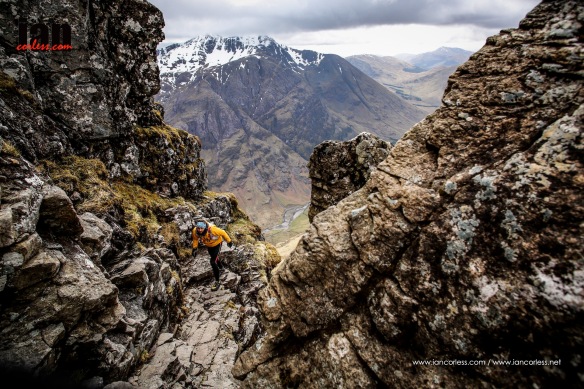
Main mountains and terrain type: The 15 highest mountains in Wales, Snowdon massive (including Crib Goch), Glyderau (inluding Tryfan) and Carneddau expect gnarly ground, a knife edged arete, grade 1 scrambles, boulder fields, scree and some great gentle grassy slopes to finish
TheV3K crosses the best of Wales – gnarly edges, rocky inclines and grassy slopes. food. You’ll need to be mountain savvy with a good head for heights, confident scrambling technical terrain and be prepared for the greatest mountain day of your life.
Main mountains and terrain type: Fairfield, Helvellyn, Swirral, Casty Cam & Striding Edge, Pinnacle Ridge, High Street and Red Screes. Its a mixture of single track trails, technical rocky ground and open fell. This is a race of 2 halves, with very technical running & graded rock scrambling in the 1st half, then faster and easier running on good trails for the second half. The course ascends and descends some of the most classic ridge lines taking in 3 of the most iconic scrambles in the Lakes.
The course is fast & furious. Be lulled into the race by ascending Fairfield via Dove Crag,then punished by Helvellyn’s Edges and the ascent to Pinnacle Ridge. Luckily there’s Patterdale CP & the second half to recover if your legs can still take it!
Note – New LSU propose a new addition for 2016. A SKY race. More news to follow via Skyrunning UK.
The route is based on a local fell running challenge called the 5 Trigs. The race principally follows public footpaths passing close to or over the tops of Axe Edge, Roaches, Shuttlingsloe, Shinning Tor and Burbedge Edge. Competitors will cross fields, moorland, limestone and millstone grit peaks/escarpments.
Peak SkyRace is an ideal introduction to Skyrunning in the UK. The Peak District cannot compete with the altitude and ruggedness of the Lake District, Snowdonia and the Scottish Highlands. However do not think that this course will be easy, pacing is crucial. Go out too fast and you will pay the price in the later stages where most of the ascent and technical descent is found.
Race entry HERE * Entries will open when land permissions have been granted
Glen Coe Skyline – September 16th, 17th and 18th
Distance/ascent: 53km / 4200m+
Main mountains and terrain type: Buachaille Etive Mor, Bidean nam Bian, Aonach Eagach Ridge: extremly remote and serious Scottish mountains.
A route that dances along the jagged and lofty mountainous horizons above Scotland’s most famous Glen and Pass, with long and serious sections of grade III scrambling. Skills needed: scrambling, endurance, running
Note – New additions for 2016
There will be a VK Friday evening 16th September and a 25km ‘Ring of Steall‘ SkyRace race on the Saturday 17th (same high mountainous terrain at Glen Coe Skyline but without the technical scrambling sections).
Main mountains and terrain type: Scafell Pike – Steep rocky terrain throughout. The summit plateau of Scafell Pike is a vast boulder field. Initial part of descent is steep & covered with loose rocks.
Helvellyn – Long ascent then rolling mountain trails along the beautiful Helvellyn ridge line. Skiddaw – A long & steep climb on grassy terrain, summit scree/slate, fast descent on gravel/stone trails.
A unique ultra running event linking the Lake District’s highest mountains-Scafell Pike, Helvellyn & Skiddaw. Designed by 2013 World Trail Running Champion Ricky Lightfoot, the route offers a journey through the full spectrum of classic Lake District fell terrain.
Garmin Mourne Skyline Mountain-Trail Race – October 22nd
Distance/ascent: 35km/ 3370m+
Main mountains and terrain type: The course covers the highest peaks in the Mourne Mountains, including Slieve Donard (850m), starting at sea-level on Newcastle Promenade and winding it’s way uphill onto forest and mountain trails, all surrounded by the most stunning scenery.
The seaside start, alongside the relentlessly tough (yet spectacular) course has proved popular with athletes. You will need mountain-trail experience, endurance and courage for the race, which is technical in places. Some speed will also help on the flat and fast sections, and the final 5k descent!
Race entry HERE* Please note entries will open on St Patricks Day (March) 2016.
“Skyrunning, to me, is racing over the sort of terrain that tests your technique and mental toughness just as much as it tests your physical fitness. The sort of routes that you look at on a map, or gaze up at from the valley and wonder what if… In the UK most of these sorts of routes have until now been limited to FKT attempts by keen individuals. At its best Skyrunning brings real racing to real mountains.”
– Es Tressider
Skyrunning has boomed in recent years and with one season coming to a conclusion and the announcement of the 2016 season imminent. I asked three runners to provide their top-5 tips on becoming a better Skyrunner.
Sarah Ridgway
Is a former Welsh international runner specialising in mountainous terrain. Her love of gnarly conditions helped her secure the woman’s record for the classic Snowdon Horseshoe in a time of 1hr 43min. Sarah works as a guide in her business Run Snowdonia (www.runsnowdonia.co.uk), which involves anything from taking people for scenic guided runs, a hard training session or instructing people on how to run safely in the mountains.
Eirik Haugsness
Is a personal trainer, inov-8 athlete and has raced the Skyrunner World Series for the past 3-years. A specialist over the VK and SKY distance, Eirik has achieved world-class results in Mont-Blanc Marathon, Dolomites SkyRace, Matterhorn Ultraks and was the winner of the inaugural Tromso SkyRace.
Jayson Cavill
Is a UK based runner who has embraced the challenge that Skyrunning brings and has been an ever-present participant in the Skyrunner UK series. He has raced at Glen Coe Skyline and Mourne Skyline MTR amongst others and in 2015 won the Lakeland 50.
SARAH RIDGWAY
As a runner I am mostly drawn to the mountains, in particular exposed rocky ridges and classic routes that showcase the beauty and uniqueness of an area. Races that fall under the SkyRunning banner provide that experience for me: I know I’m going to have a challenging and rewarding day out.
Be specific
Study the course and train to mimic what you will encounter on race day. If the race involves a fast 9km flat prior to a Grade 3 scramble ascent, then do a 10km road race and get out in the hills as soon as possible after and do some scrambling. Get out and recce the course, but if you can’t, design a route that replicates it in your nearest wild place.
Prepare for the roller-coaster
Get used to big climbs, big descents, followed by another big climb, big descent… repeat. Get time on legs in the bank and develop strength to be able to adjust and adapt to a wide variety of terrain.
Don’t fight it
The more efficient you are in managing rough terrain the less energy you expend, which leaves more energy for simply getting the hard-enough job of the distance itself done. If you tend to “fight” a certain terrain or gradient and avoid running on it, commit to improving your technique and getting better at it.
Don’t be a fair-weather runner
Race-day date doesn’t change and the weather will do whatever it likes. If you don’t feel at ease running in driving horizontal rain encased in thick clag then you’ll feel anxious and have less energy to deal with the task at hand.
Refine your kit and fuel
Respect the kit requirements and learn how to use your gear before race day. Don’t just think about meeting the base requirement, pack things that will actually help you if things go pear-shaped: For example, if the forecast is dire, don’t scrimp on weight and go for your flimsy lightweight waterproof. Don’t neglect nutrition: practice eating and know what works for you and when to get it in.
EIRIK HAUGSNESS
Skyrunning for me it is about going to the mountains with no more equipment than you really need, then go up and down again as fast as you can, but in the same time enjoy the nature and the surroundings as much as possible while you are running.
The top 5 absolute must-have Skyrunning skill tips and how to obtain them.
1 . Be able to handle variation in terrain and weather conditions.
Outreach and run in different kind of terrain, everything from soft ground, hard packed surface, easy terrain and technical terrain. And make sure to train in all kinds of weather conditions. Weather will change quickly in the mountains and the surface that your run on will change with the weather.
2. Build up your engine to cope with the uphill’s.
If you really want to enjoy Skyrunning it is an advantage to have a strong heart and a set of well working lungs -most of the time spent in a race is in the climbs. Your heart and lungs can you easily sculpt trough structured cardio training with intervals and speed sessions with a higher heart rate. A couple of regular 4×4 intervals during the week are a great way to start.
3. Make sure to have strong legs for the downhill’s .
Getting to the top of a mountain is challenging, but to get back down quick and in one piece can be just as hard. Strong legs and ankles will help you to get the job done. Step inside a gym ones or twice a week during the winter and build up your leg strength with weights or just use simple body weight exercises. 20- 30 min effort is more than enough – If you throw 15 min, or so, of balance and stability training too, you will be on the safe side. It is boring but worth every minute!
4. Learn how to pace your self during a race!!
Even it is a short uphill only race or a long sky/ ultra race, picking the right pace from the beginning to the end is essential for the running experience. It is always a lot more fun to have power left in the end of a race then to suffer from the first hour and out. Pacing is something you learn a lot from experience, but if you know your own fitness level it should be possible to pic a running pace that suits you without years of experience. Be patient and listen to your body is the only way to get this right.
5. Find a good nutrition and hydration strategy and stick to it.
Skyrunning races can be short, 35 min or even less, or they can last more than a day. When you enter a long Sky Race or a Sky Ultra race a good nutrition and hydration strategy becomes important. You normally need about 60 grams of carbohydrate and a half –one liter of water every hour to work at your best. This might seam like an easy task, but to get this done during a race when your heart is beating like a drum and the adrenalin is rushing trough your body is far from easy, whit the result that you run on empty long before the finish line. Practise eating and drinking in training! And find out witch solid and liquid nutrition that works for you long before race day! Testing and failing is the way to get this right. On race day: Discipline is the key! – Eat and drink at least every 20minute if your race is expected to last two hours or more.
JAYSON CAVILL
As a relative newbie to the world of Ultra and trail running, well running of any kind that didn’t involve carrying any webbing or rifle and stomping along in boots from past Army years, the announcement of UK Skyrunning races provided an opportunity for me to reach out of my comfort zone. My skill set lies more with mid-distance ultra races and more “runnable” terrain, though I have always enjoyed being in and around mountains given the opportunity. I felt that this was an great chance to get me into some of the UK`s more extreme areas not just to race in but spend time training and exploring.
As the courses are all marked I felt that this offered a level playing field for those who didn’t know the routes inside out. The Garmin Mourne Skyline race was a great example of this. Unfortunately I had never even heard of the Mourne mountains before, but turned up for the race and had one of the best times; the course marking was superb and the dramatic scenery of steep granite clad mountains dropping to the sea blew me away.
Now, I absolutely love the thrill of being able to travel swiftly through these stunningly rugged and often intimidating areas – all in the UK. I think due to the nature and remoteness of these races the feeling between runners becomes more about camaraderie than competitiveness. The mountains become your competition: they will exploit your weaknesses whether mental or physical. If you haven’t had much experience with this before, then here are a few things I have done which would compliment and extend any normal trail race preparation.
Get used to extremely long and very steep climbs – both up and down. It sounds obvious but really is key because with the best will in the world that short stepped run will be reduced to a walk, so don’t be afraid to practice hard, steep walking – The best place to practice is in the mountains but can still be done on any short climbs, long flights of stairs – anything you can find that is steep. Carrying extra weight, i.e. a large rucksack will help with building strength.
Feel confident on technical terrain, not necessarily fast, but comfortable. The more relaxed you stay the less energy you waste. Again time in the terrain helps, though you can build up some foundation first with ankle strengthening and co-ordination exercises. Take things a step further than just balancing on one foot: stand on a wobble cushion and do various movements such as one legged squats to introduce instability. Single leg jumps on and off a box are great too. My favourite is using the slackline as this works so many different elements and can help reduce that disco leg you may get traversing Crib Goch!
Have at least a basic level of mountain skills. I feel that it is important I take responsibility for my own safety, not just for during the race but when out training. The mountains are inherently dangerous and we all get (slightly) lost or disorientated from time to time. There are some great courses run by the FRA (Fell Running Association) for navigation, independent training days/camps or you could join other more experienced people for recce days and learn from them. Some race organisations offer these so look out for details on their own websites or pages.
Prepare yourself for the mountains mentally. Being in this environment can throw up some additional challenges; you can suddenly be alone in the fog thousands of feet up, or climbing non-stop hands on knees for over a hour, down a quick descent then back on another hour long climb, so progress can feel slow and painful. Be ready for these situations, be honest with yourself and what your fears are, imagine how you will feel and think through how you will overcome any negative thoughts – visualise and keep that end goal and sense of achievement at the front of your mind.
Don’t just run but climb. Some of the races require climbing or scrambling, and, in a race situation the adrenaline is pumping and you are suddenly changing mind-set from runner to climber. Spend some time practicing the specific climbs or more challenging ones – obviously there is another layer of safety and planning required here so take a guide or someone experienced enough if you need it. There are also lots of indoor climbing walls in the UK so why not have some fun indoors over the winter.
The 2016 Skyrunner World Series will be announced the first week of December HERE and the Skyrunning UK Series will be announced on Monday 23rd November HERE.
The UK series has a new structure for 2016 with prize money, points per race and an overall championship with great prizes on offer, more information available HERE.
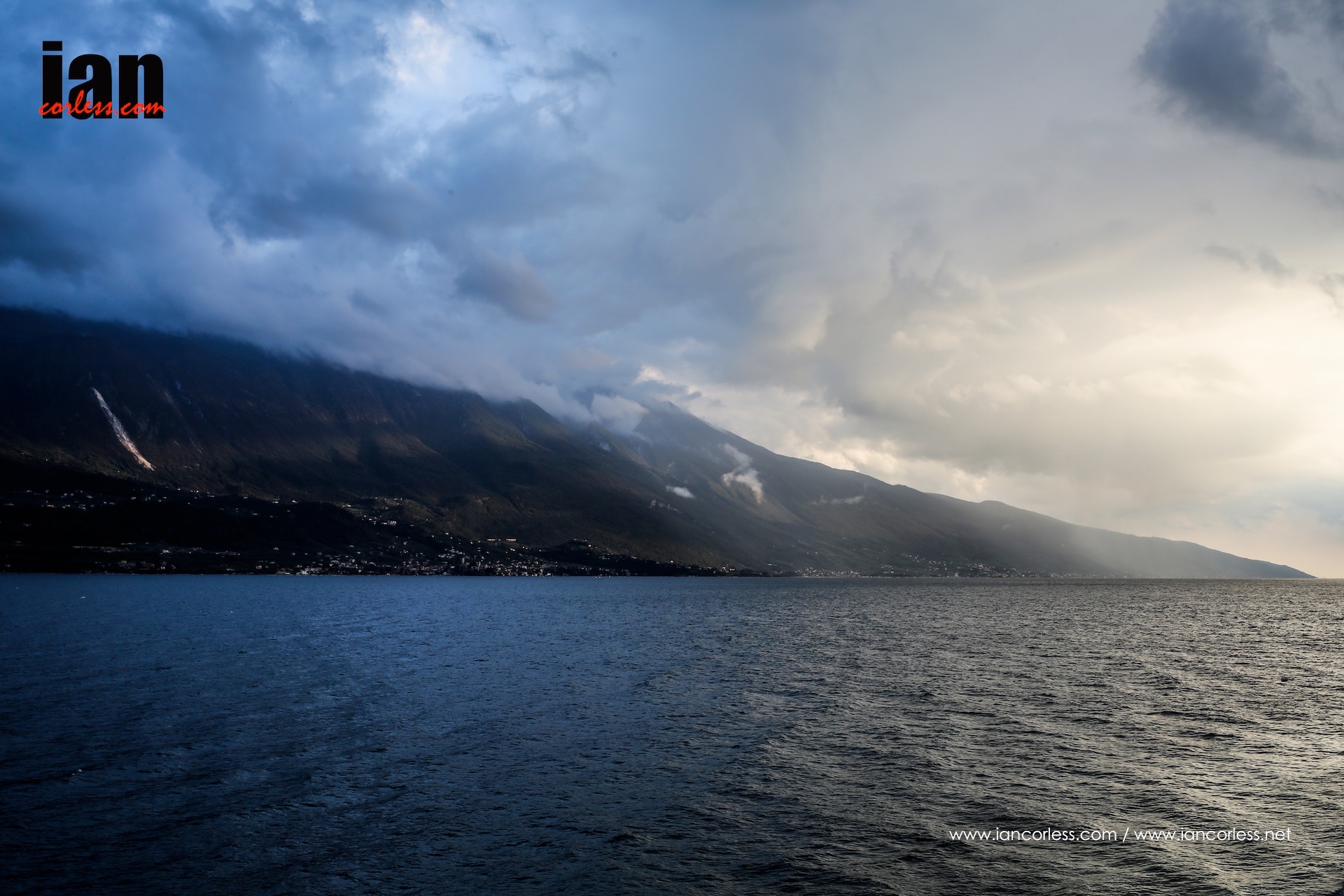
Laura Orgue and Remi Bonnet are crowned 2015 Skyrunner® World Series Champions for the VK distance in Limone on the shore of Lake Garda at the 4th edition of the Limone Extreme race.
Torrential rain and thunderstorms the previous night and morning of the VK resulted in a course change instigated by the race organisation for safety reasons. The resulting course was very different to the original route and considerably longer at 6km. Less steep, less technical and considerably more runnable. Of course this may very well have changed the dynamic of the race but the usual protagonists for the VK distance still performed at the highest level.
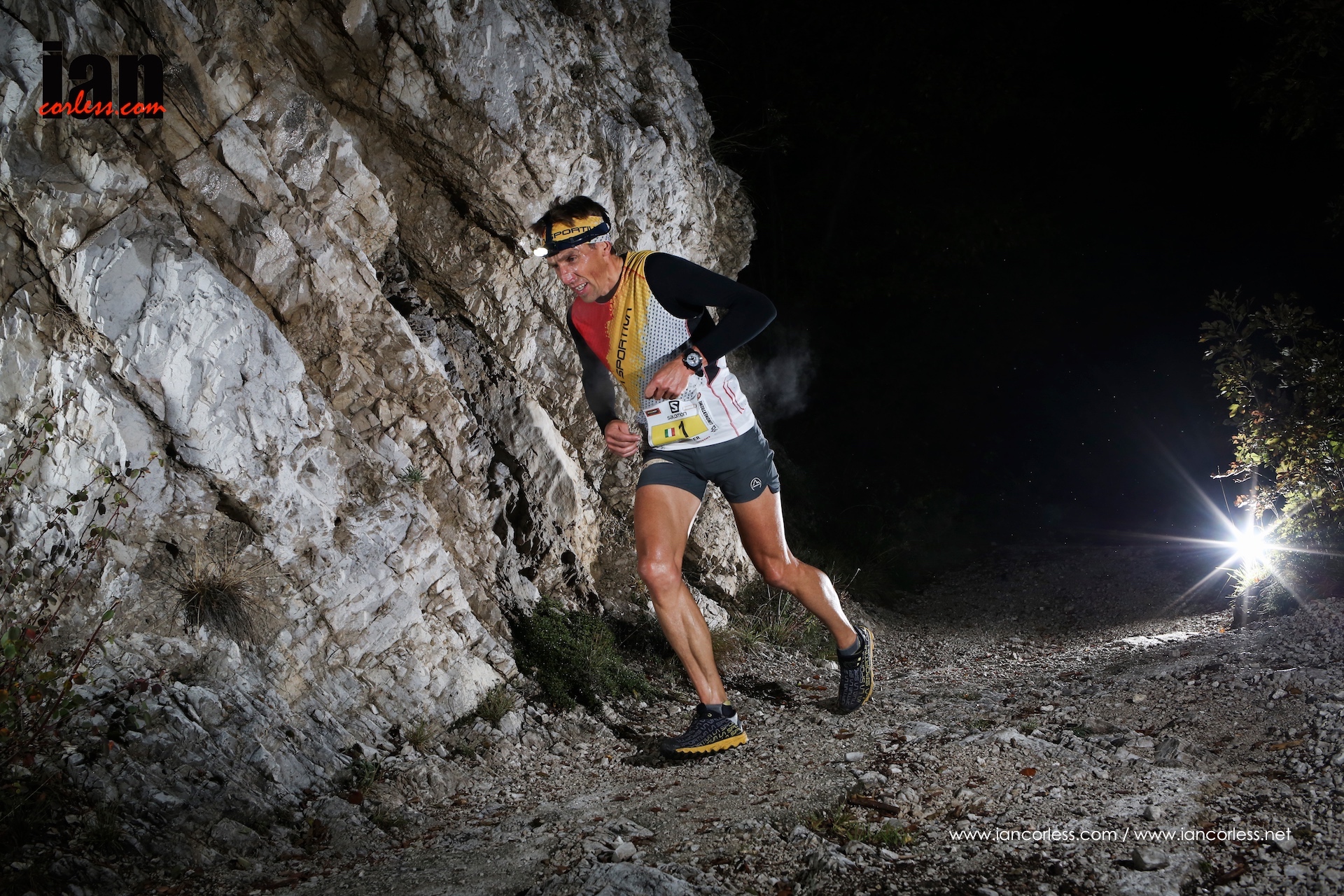
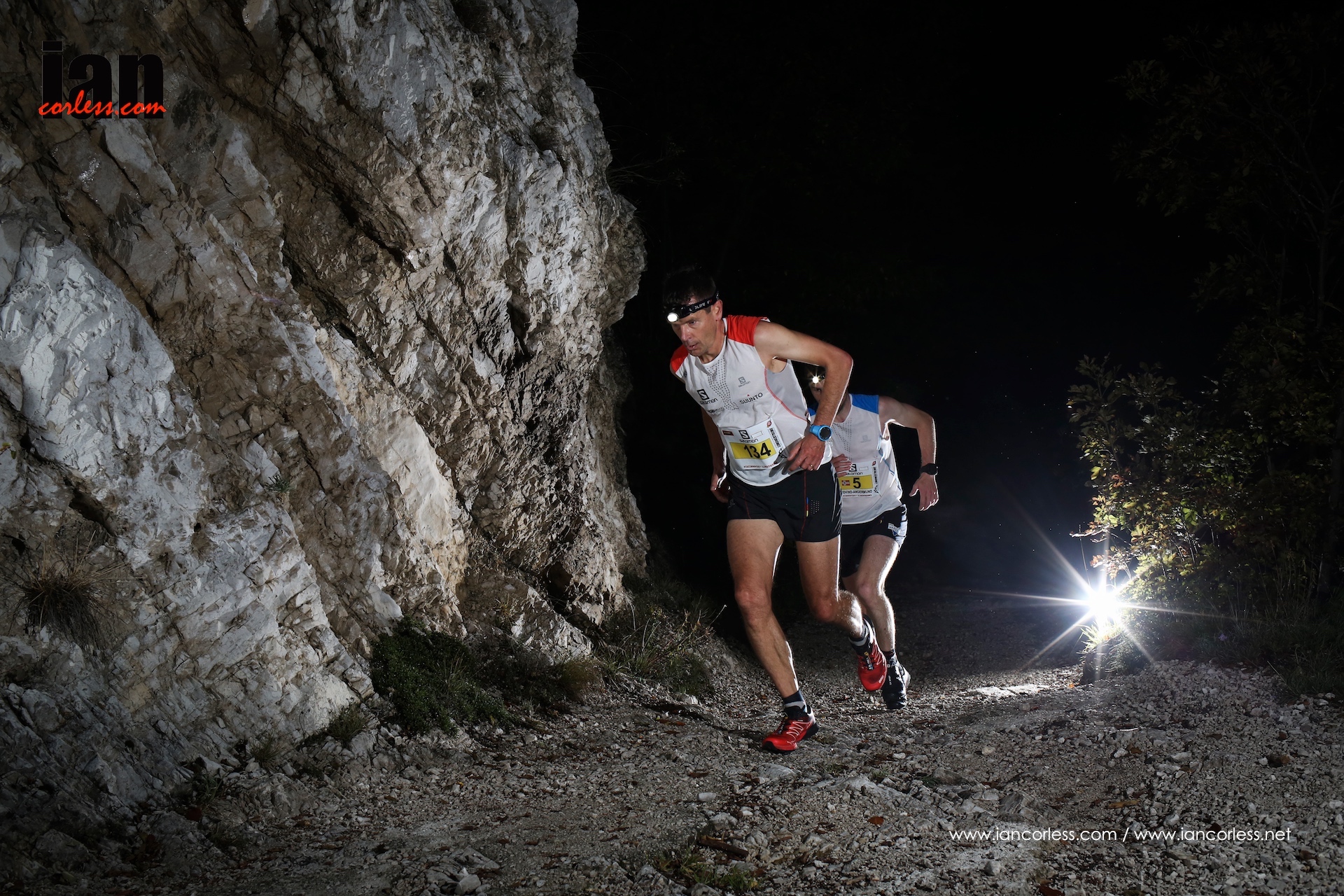
VK specialist Urban Zemmer dictated the early pace showing his all around ability to run and drop his hands on his knees and grind out a fast pace on the steeper gradients. However, it was rising star of the sport, Remi Bonnet, who finally made his presence felt at the front. Too many observers this was expected after his recent performances at the RUT in the USA and his most recent victory at Lantau 2 Peaks in Hong Kong. Tromso VK winner, Stian Angermund placed 3rd ahead of Hannes Perkmann VK ever-present Jonathan Wyatt in 5th.
In the ladies’ race, Laura Orgue already had the Skyrunner® World Series title sewn up based on previous victories. Despite this, her plan was to run the VK and SKY. However, in the days before the VK, Laura had picked up a virus and decided it was best to miss the distance she loves:
“Hard decision today, I need to rest instead of race in the VK. I’m not feeling 100% so I have decided to recover for tomorrow’s SKY race of 23km and 2800m of elevation!”
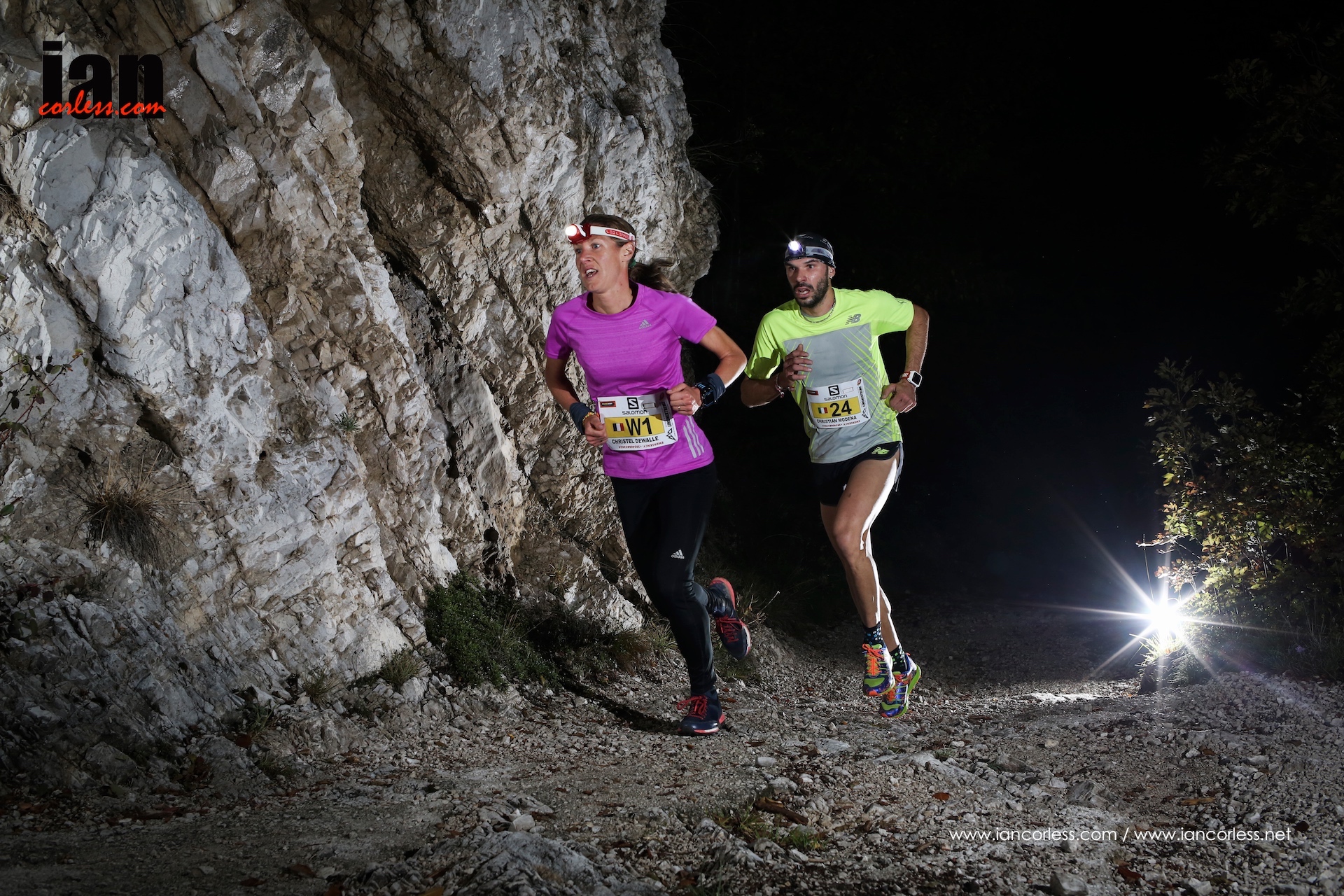
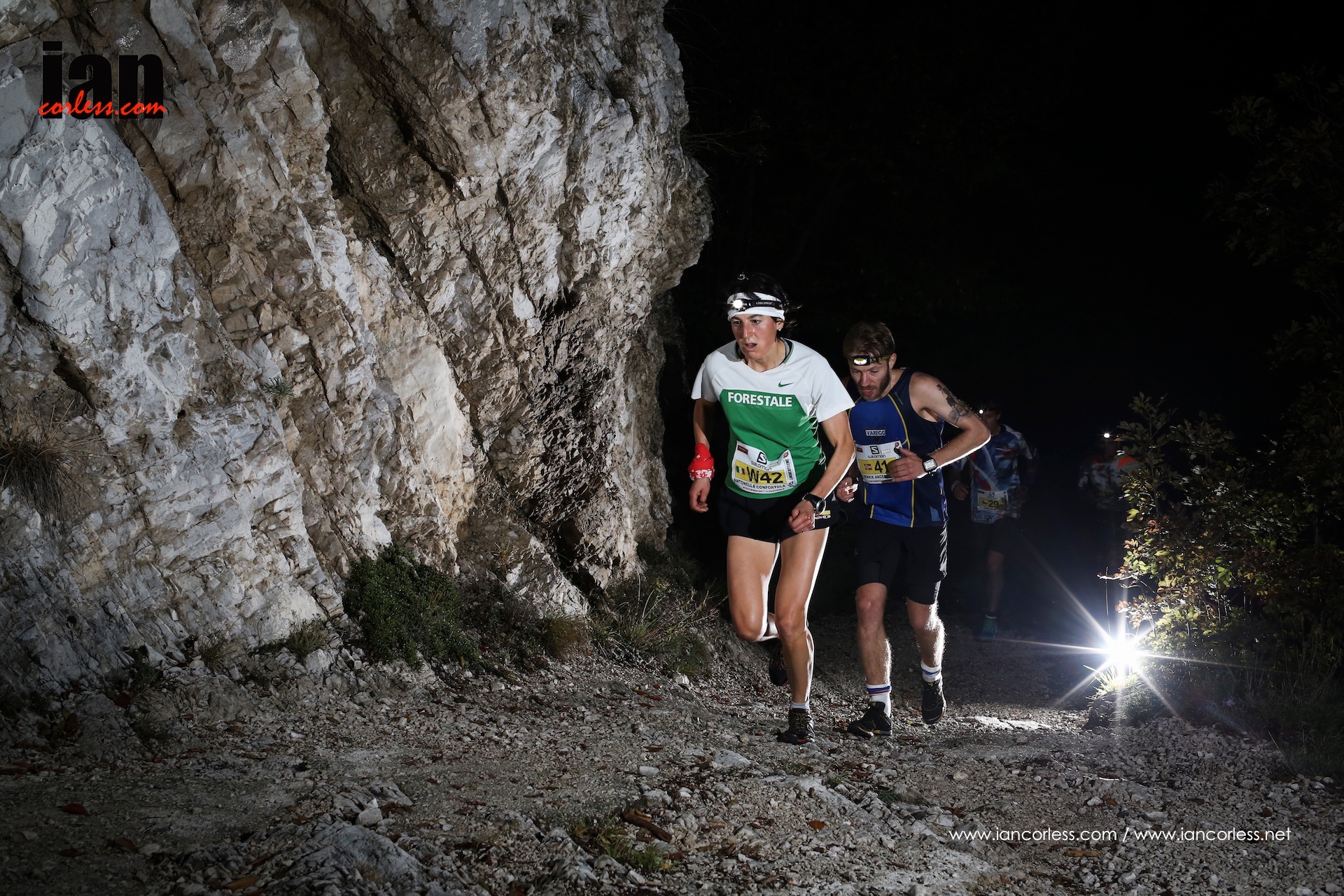
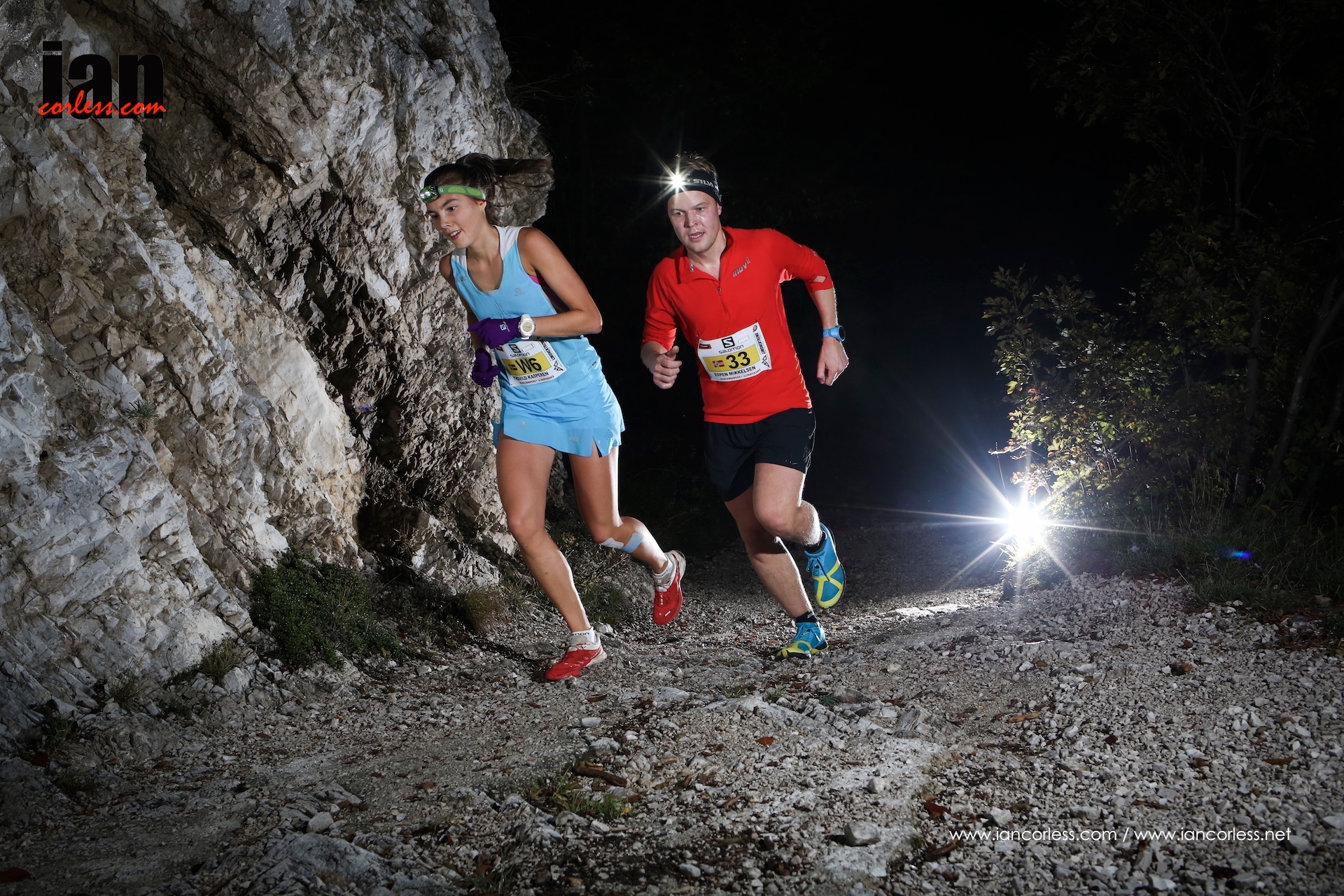
Last minute entrant and VK specialist, Christel Dewalle was the fastest lady on the day and lead from the front constantly trailed by Antonella Confortola, Maite Maiora and Norwegian rising star, Yngvild Kaspersen who moved up to 2nd in the overall rankings.
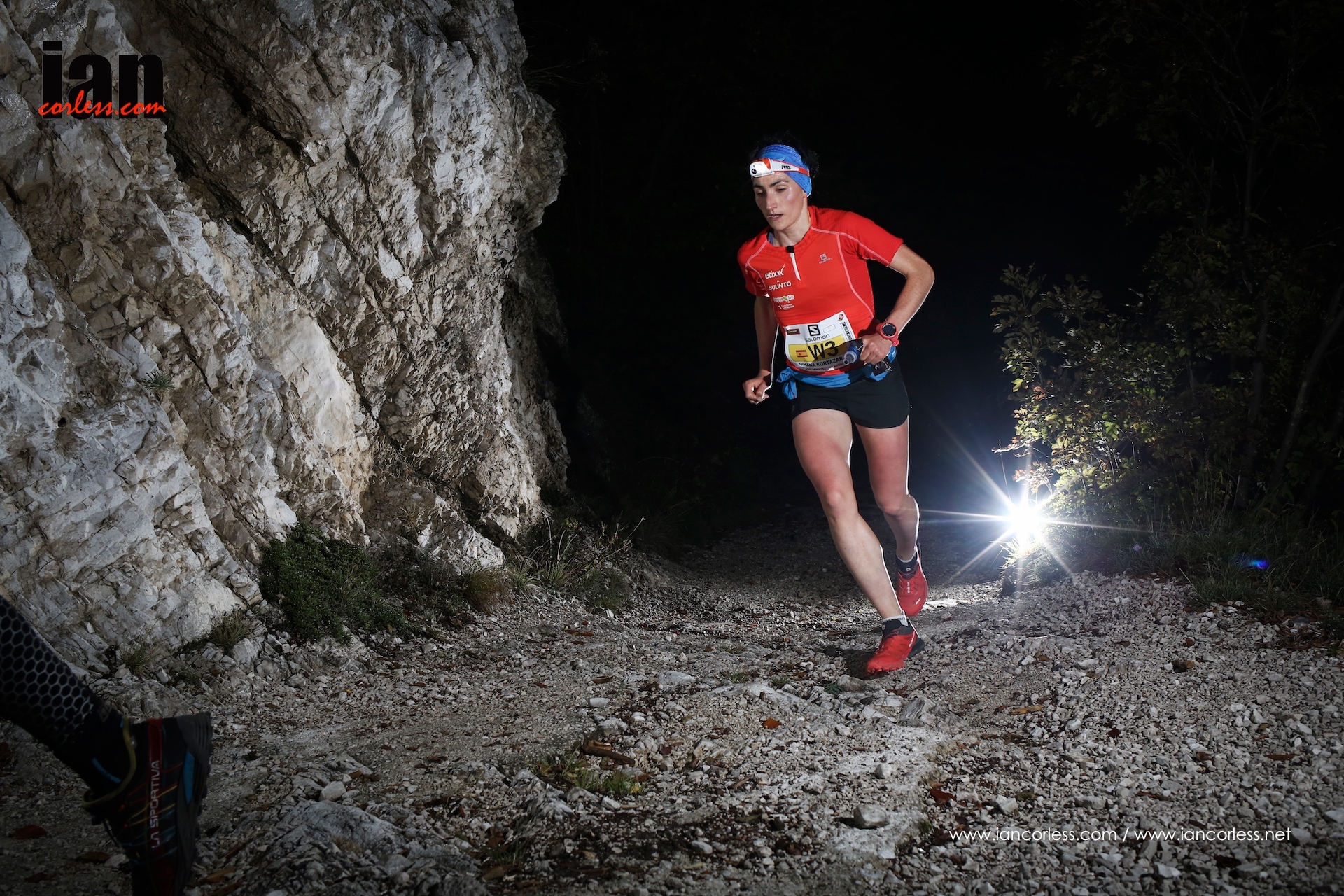
The ladies’ positions remained this way all the way to the line with Spanish runner Oihana Kortazar taking the 5th spot.
A total of 296-runners toed the line of the VK which started at the picturesque location of Marconi lakefront on the shores of Lake Garda. The overall elevation gain of the new route was 1200m+ in a distance of 6km.
Attention now turns the SKY race which will start today, Saturday at 1200 local time. This course has also been changed due to Thursday nights and Friday mornings excessive weather. The new route has an additional 800m of vertical gain which makes what was a tough race, exceptionally tough!
RESULTS
1-Christel Dewalle (50’48”)
2-Antonella Confortolla (53’12”)
3-Maite Maiora (53’46”)
4-Yngvild Kaspersen (54’58”)
5-Oihana Kortazar (56’27”)
1-Rémi Bonnet (43’51”)
2-Urban. Zemmer (44′)
3-Stian Angermund. (44’13”)
4-Hannes Perkmann (44’26”)
5-Jono Wyatt (44’43”)
Skyrunner® World Series ranking 2015:
Laura Orgue
Yngvild Kaspersen
Maite Maiora
Remi Bonnet
Nejc Kuhar
Ferran Teixido
Limone sul Garda also provided a location for the Skyrunning AGM where the 2014 calendar, 2015 calendar and the future of the sport was discussed.
A stunning weekend of Skyrunning takes place this weekend at the aptly named ski resort, Big Sky in Montana.
Yes, it’s time to get in a RUT with the RUT series of races.
The Skyrunner® World Series 2015 continues at a pace with VK, SKY and ULTRA events taking place on Friday, Saturday and Sunday respectively.
As you can imagine, with 3 races on over, a high quality world-class field will come together in Montana to do battle in earth and sky.
Friday’s Lone Peak Vertical Kilometer® has Laura Orgue and new sensation, Rémi Bonnet heading up the ladies’ and male fields on what will provide an epic Skyrunning battle as runners climb 1000m as fast possible.
Laura will have strong competition from Oihana Kortazar, rising star Yngvild Pedersen and the ever-present and persistent Maite Maiora.
For the men, Max King fresh from a podium place at Ultravasen will need all his whit’s about him to hold off fast running from Ricky Gates, Xavier and Ferran Teixido and David Magnani.
In the Sky race (25k) which will take place on Saturday, we have the ‘A” Team of ladies. Emelie Forsberg fresh from victory at the ground-breaking Salomon Glen Coe Skyline in the UK will be looking to hold off Hardrock 100 winner and recent Nolan’s 14 FKT record breaker, Anna ‘Frosty Frost.
But it is no 2 lady race, in actual fact, this 25km race has one of the finest ladies’ fields ever assembled with Laura Orgue, Maite Maiora, Oihana Kortazar, Stevie Kremer, Kasie Enman, Megan Kimmel, Yngvild Pedersen and Eva Maria Moreda; wow! That is one seriously stacked ladies’ field and one that is heavily biased towards Salomon. They may very well take a 1,2,3 on the podium?
Would you like to pick a winner?
Megan Kimmel has been on fire recently despite a minor blip at Matterhorn Ultraks, Stevie Kremer as ever is a strong contender for the podium and Laura Orgue can climb like demon. I think the overall victory may well potentially come from one of these ladies, but who know? It’s wide open and that is great. Expect dome real Skyrunning fireworks.
Tom Owens at Trofeo Kima
In the 25km men’s race, Tadei Pivk, Tom Owens, Joe Gray and Marco De Gasperi head up a quality field and they will be looking to fight off strong competition from Ferran Teixido, Xavier Texeido, Sintu Yives and Jessed Hernandez. I’m going to stick my neck out and hope that Brit and fell running exponent Tom Owens takes out the win but Tadei has been a strong and dominant force over the Sky distance in 2015 and Joe Gray has been on fire lately..
Sunday proposes a 3000m+ Ultra over 50km’s and believe it or not, we may well see Anna Frost and Emelie Forsberg do the ‘double’ and follow up Saturday’s 25km event with the Ultra. Hence why I didn’t pick them for the podium. In all honesty, Frosty and Emelie are currently better suited to the 50km event and if I were them, I’d keep my powder dry on Saturday and save it for an all explosive firework in the 50km.
In 2014, Emelie won this event ahead of Kasie Enman and Frosty placed 3rd. I think we can anticipate a similar result but with Frosty moving up 1 place and the final podium place being taken by the Mont-Blanc 80k 3rd place, Hillary Allen. We obviously can expect Ashley Erba and Kristina Pattison to disagree with this and without doubt they will be looking to shake up the podium.
The men’s race is a little wide open but Italian Franco Colle may well be the favourite after a strong result at Mont-Blanc 80km and his recent run at Tromso Skyrace. Timothy Parr will contest the podium as will Josh Arthur and Luke Nelson. Not sure if Seth Swanson is going to run but after 2nd at Western States and 4th at UTMB (just last weekend) who would put it past him rocking up and winning this one?
It’s a big weekend of running in Montana and if anyone ever asked the question, ‘is Skyrunning on the up in the USA?’ – the answer is a definite yes! 1800 runners in total will participate in the RUT’s weekend of activities and of course a winner could come from anywhere! Expect some shocks, some surprises and maybe we will see a new star of Skyrunning shine?
The VK, SKY and ULTRA races also appear in the Skyrunner® US Series and points will be available for this series handled and co-ordinated by Ian Sharman.
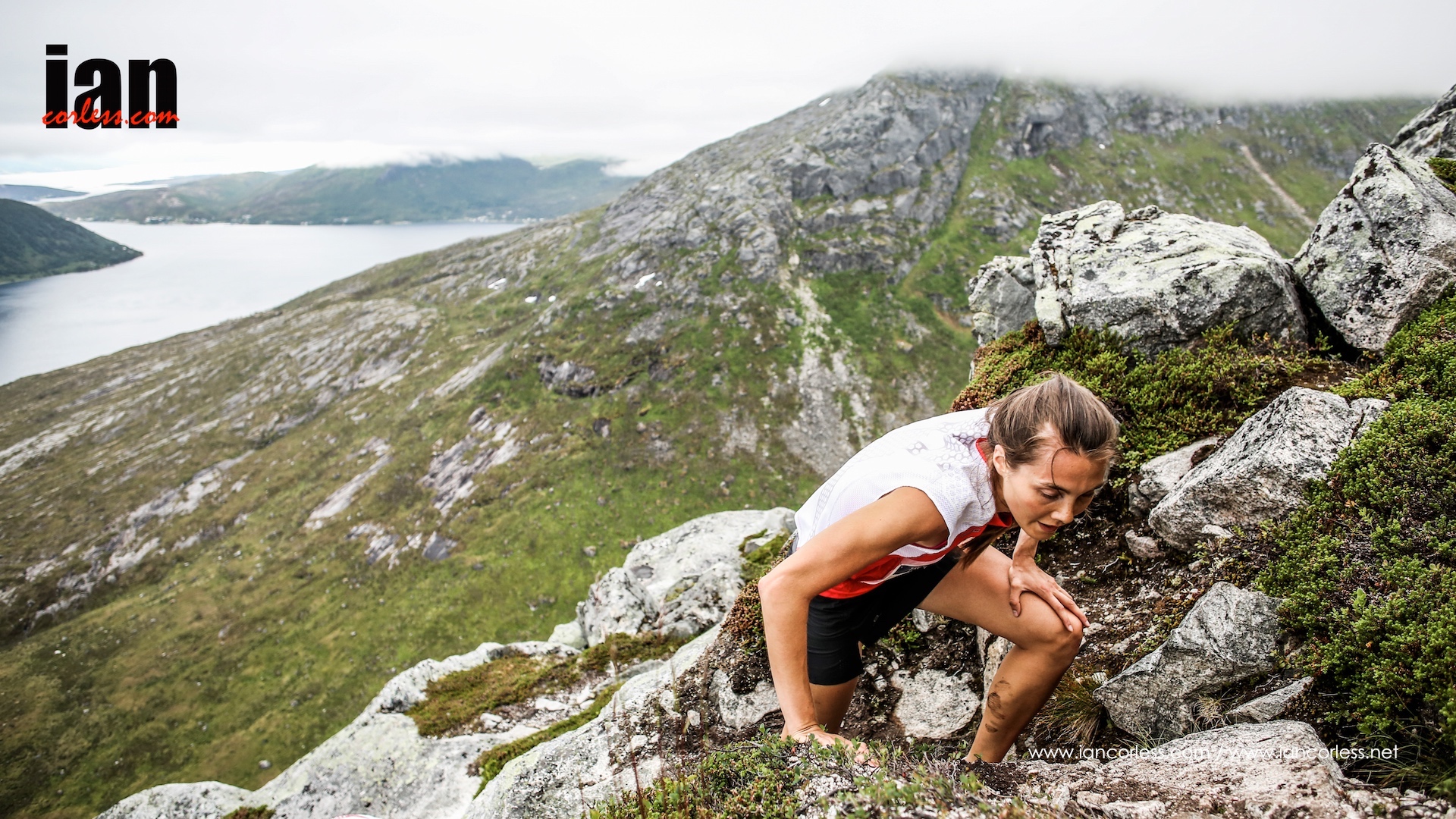
Tromsö, Norway was shrouded in mist and low cloud today. Ironic considering that the previous days had glorious sunshine and blue skies. At 3pm, leaving the sea of the Ersfjord fjord runners faced a vertical climb of 1.044m reaching the top of Store Blåmann; the first VK in Tromsö.
It’s a technical course that mixes many different terrain types to make this an ultimate challenge for the VK specialist and novice. 117 runners made it to the top having crossed several sections on large rocks, boulders, scrambling sections and snow.
From the beginning of the race, a small group of strong athletes pushed at the front with local, Stian Angermund pushing ahead of Pascal Egli and Remi Bonnet. Slovenian Nejk Kuhar and the Norwegian Thorbjorn Ludvigsen chased hard but were loosing ground at the mid point. Angermund obviously wanted victory on home soil and sealed the top podium slot with a strong finish in a remarkable 35:20. Remi Bonnet moved up into 2nd an Pascal Egli completed the podium.
Yngvild Kaspersen from Tromsö followed up a great run at Dolomites SkyRace and pushed race director Emelie Forsberg all the way to the line. But Forsberg managed to win (43:41) by just 1 second after a sprint on the last rocky section before the summit. Maite Maiora took the final podium place.
Tromsö and race directors, Kilian Jornet and Emelie Forsberg pulled out all the stops to make this VK a very special occasion. It was like a group of friends assembling and undertaking a fun day of running in a very casual and informal way. But the planning and experience was well established ahead of the race and all went smoothly. Kilian post race said:
“Everyone was very positive and happy and I am really pleased we had no issues. It was a success!”
Many of the runners will now rest and look to do ‘the double’ and get ready for Sunday’s events; The Hamperokken SkyRace, part of the for the Ultra SkyRunner® World Series and the Tromsdalstind SkyRace of 21km. Both races will start at 10am.
Results
1.Stian Hovind-Angermund 35:20 2.Remi Bonnet 35:42
3. Pascal Egli 36:05
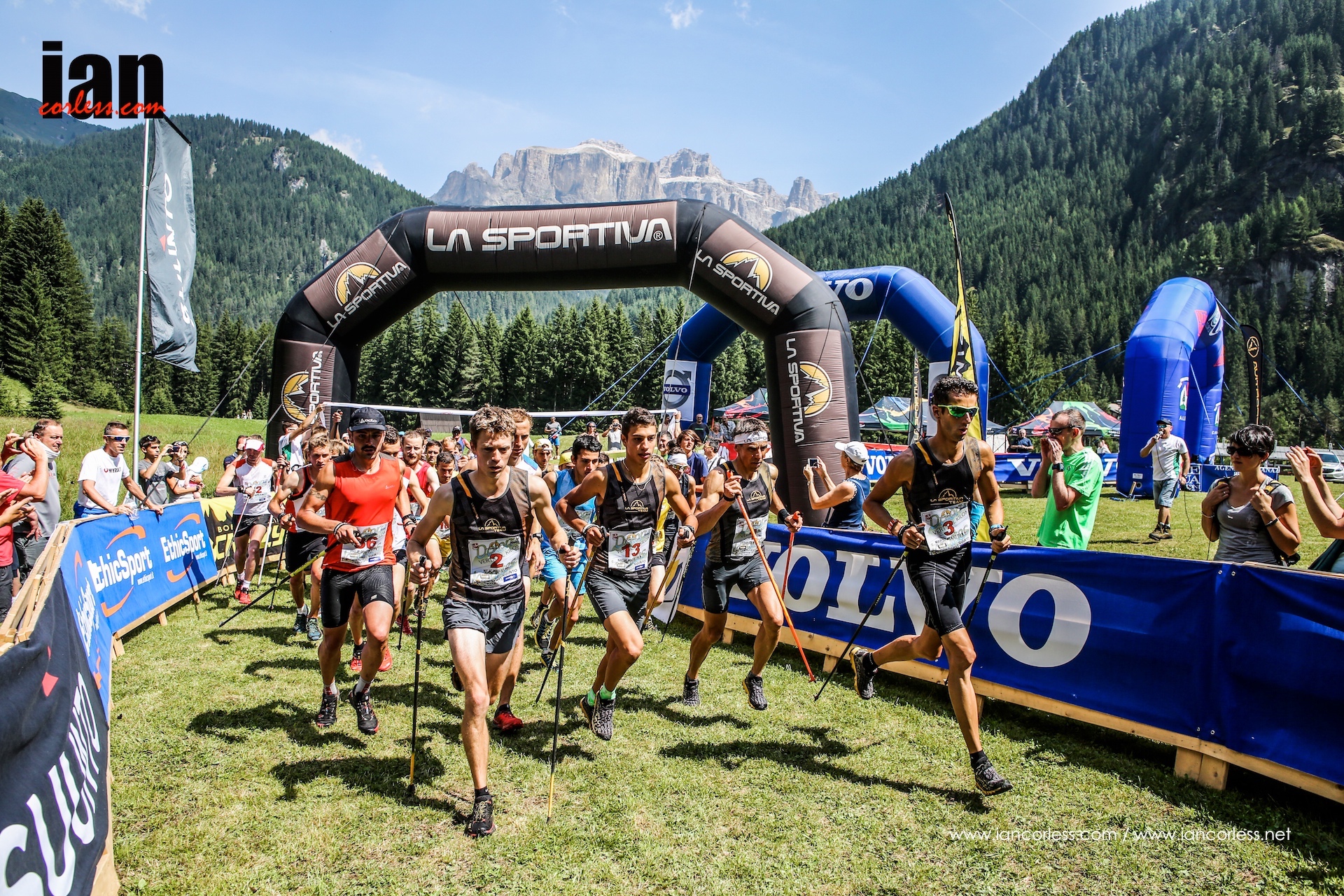
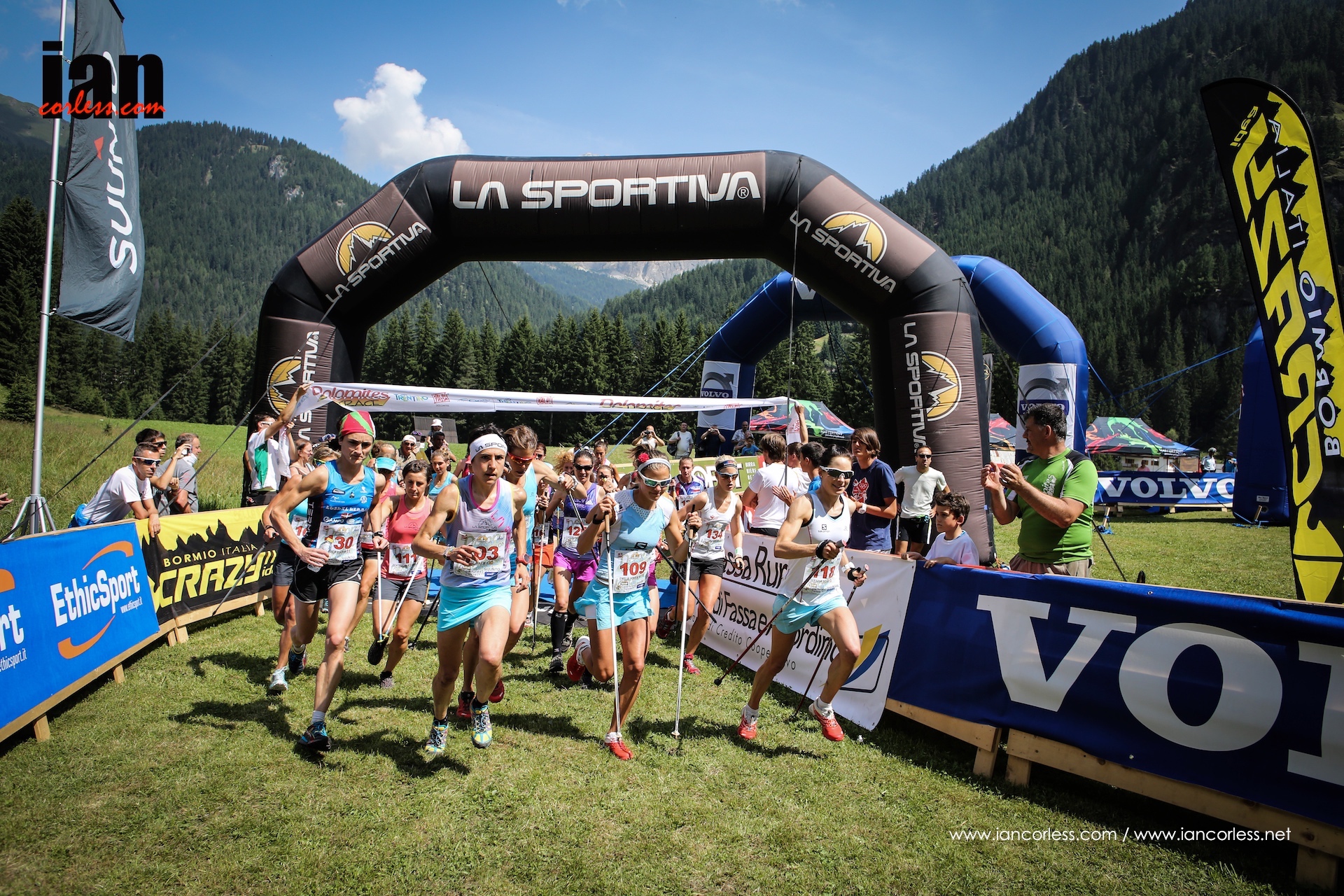
The stunning VK course in Canazei was greeted with clear skies and warm sun as runners assembled at the start today for the 8th edition of the Skyrunning Dolomites VK.
First runners departed at 0930 but the elite runners had to wait till 1130 for the men and 1135 for the ladies before they were un-leashed on the tough, steep gradients that finish 1000m in the Sky!
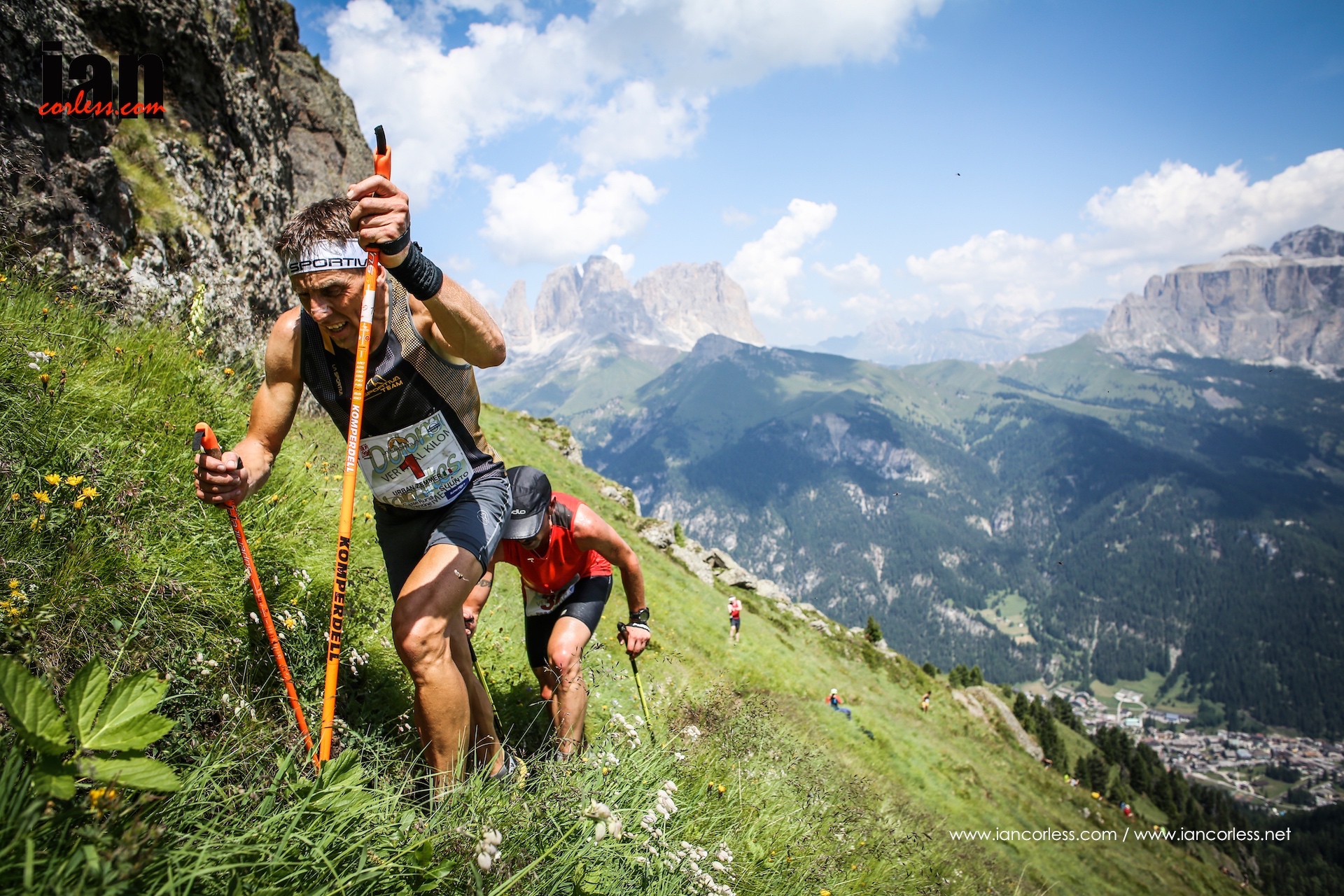
Urban Zemmer was the odds on favourite for the race and he started as he meant to go on; pushing from the front at a relentless pace that defied the gradient. However, Zemmer was not alone. Philip Goetsch slotted in behind him and marked him step-by-step.
As they approached the final 150m, Goetsch was tucked in behind Zemmer drafting like a cyclist. In the finale 50m or so, he made his move and unleashed a devastating sprint that one would have though impossible on such a steep and rutted incline. So impressive was his performance that it resulted in a new course record!
Zemmer held on for 2nd place with a clear margin and Saul Padua Rodriguez also jumped a place in the closing stages and moved from 4th to take the final podium place.
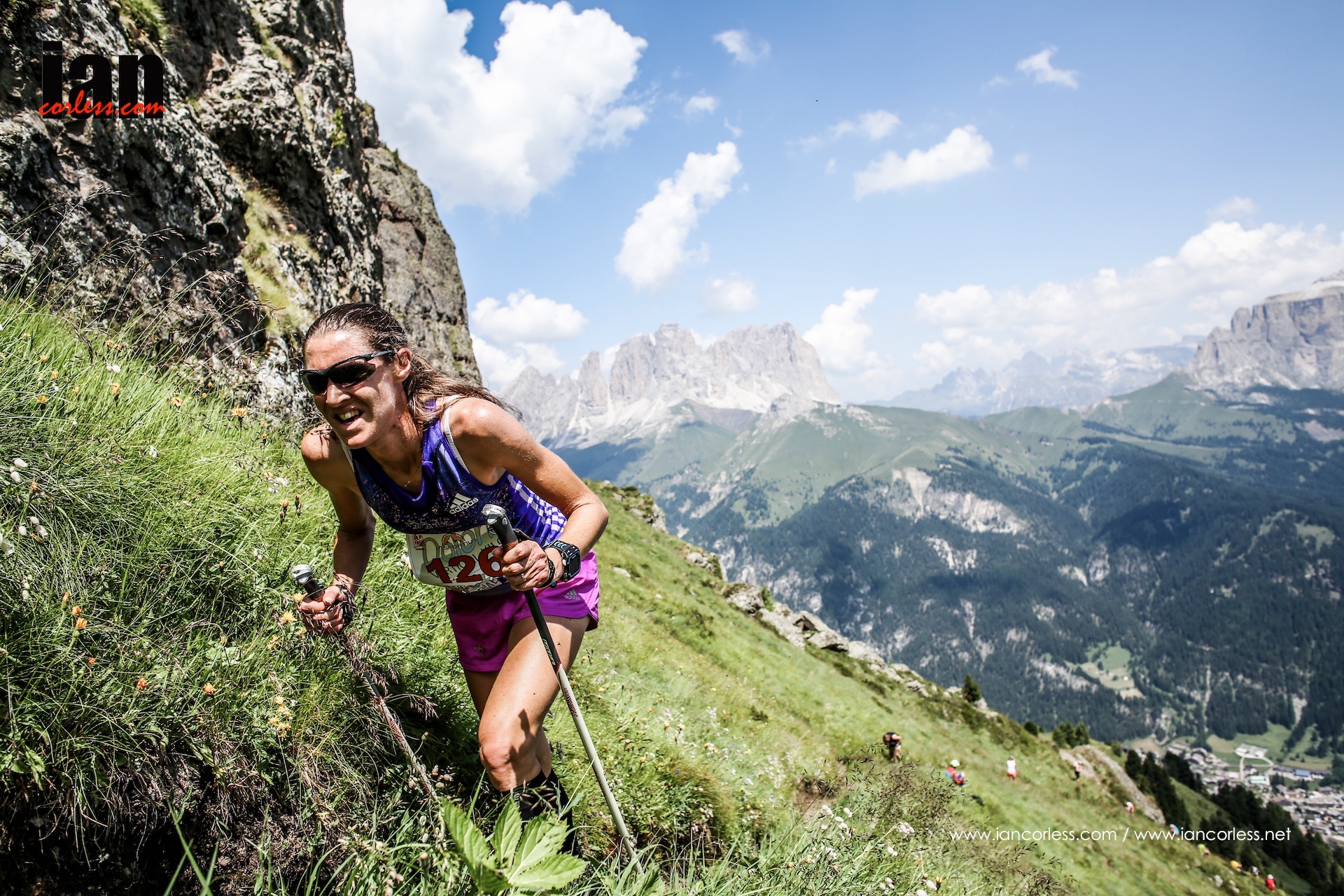
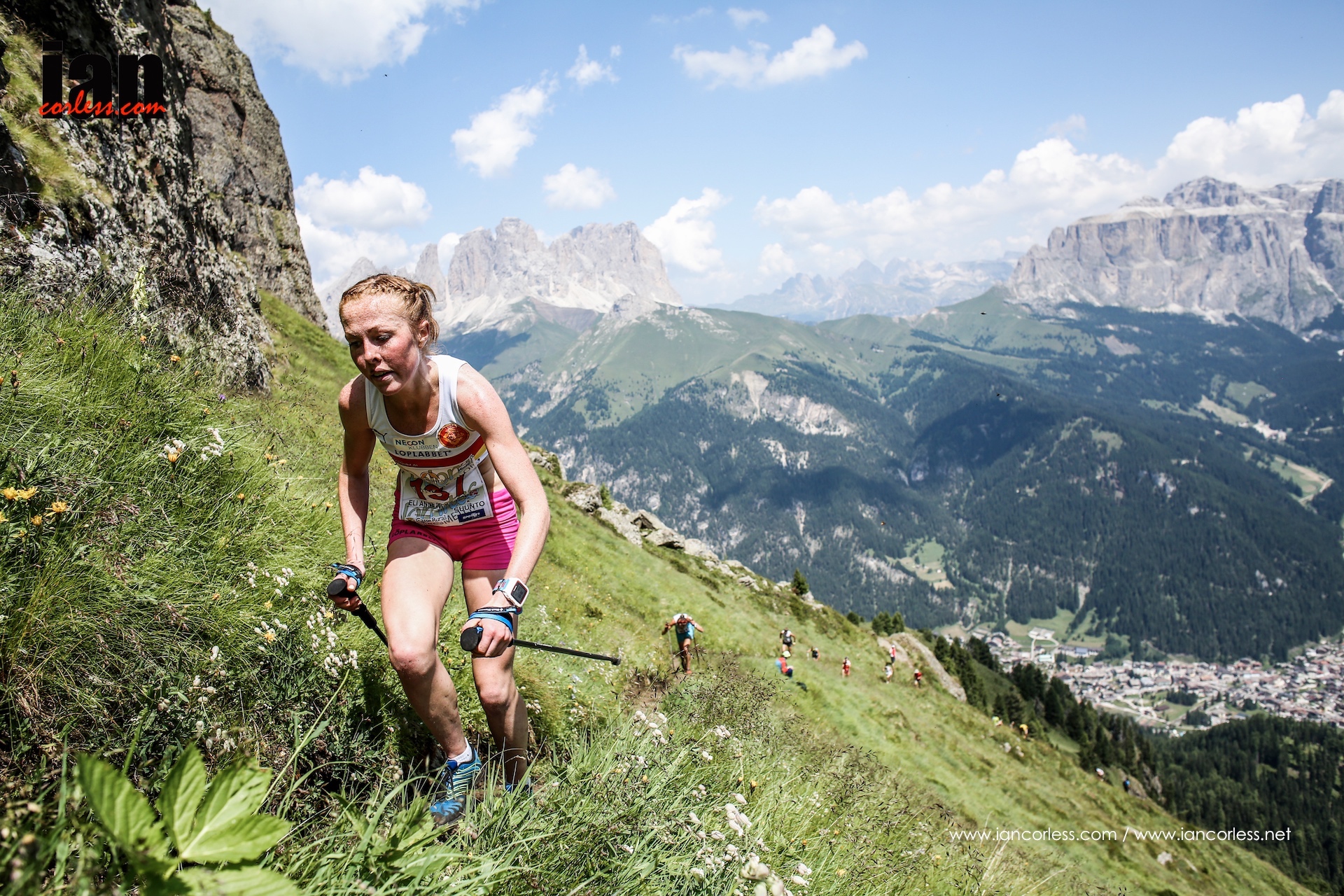
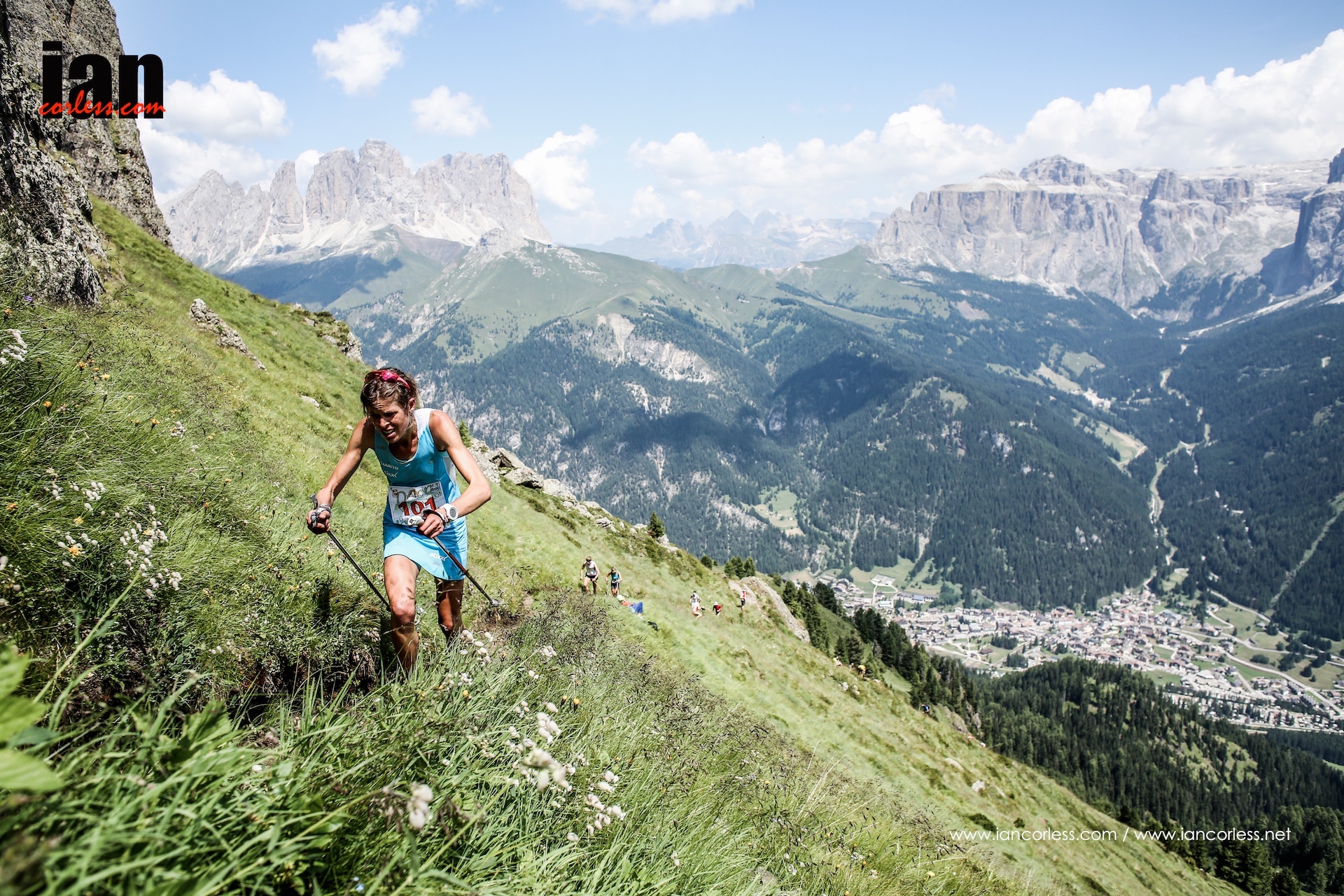
Just as Zemmer was expected to dominate the men’s race, Laura Orgue was also hotly tipped as the ladies’ winner. Christel Dewalle didn’t agree with this prediction! Fresh from the Val d’Isere VK where she podiumed, Dewalle pushed this VK course to its limits and it was clear to see the determination and dedication in her eyes. She was victorious over surprise 2nd Eli Ann Dvergsdal and Laura Orgue placed 3rd.
Attention now turns to the SkyRace on Sunday. Preview HERE
The field is stacked and we anticipate a battle royal in the men’s and ladies’ races.
Val d’Isere has a great history with the Vertical Kilometer, way back in ‘96’ the ISF were the first to organize a VK here!
A time lapse of 9-years and Val d’Isere re connected with the ethos of the VK using the Olympic Bellevarde Face in 2014. For many years, Marco De Gasperi held the VK world record here of 34-minutes and 41-seconds until the Italian was dethroned by a fellow countryman and VK specialist; Urban Zemmer.
The Vertical Kilometer has traditionally started at the foot of the Olympic Bellevarde face on “the board” in the heart of the Parc des Sports Charles Diebold in the center Val d’Isere.
The route then takes the greater part of what was the route of the men’s downhill Olympic Winter Games ski route (1992), won by Austrian Patrick Ortlieb.
It’s a tough course; 2.9Km’s in length and reaches an altitude of 2809m. Average gradients over the course are 35%, however, in places it reaches 63% as presented in the first hundred meters.
Including steep passages at 49% and 56% gradient, the sting comes with the famous passage of the Columbine at 55%. Followed by gentle slopes of the Great Wall (51%) a refreshment station is provided before the push to the line passing ‘Catherine Dent’ (50%) and then a finish loop passes the Bellevarde restaurant and the arrival is at a wooden start cabin at an altitude of 2809m.
Previous Records:
Men: Marco DE GASPERI (ITA) en 34’51” (2003)
Women: Antonella CONFORTOLA (ITA) en 42’48” (2002)
GONON and ORGUE shine on a sunny day in Val d’Isere
Following on from the Chamonix vertical kilometre, François Gonon today once again showed his competition a clean pair of heels to take victory in the 2015 Kilomètre Vertical Face De Bellevarde. Powering up the climb with hands-on-knees, Gonon was one of the few participants in the race not using poles. A disadvantage many thought but Gonon proved everyone wrong and won the race in true style in a time of 35:09.
Yoann Sert placed 2nd and 2014 winner Nejc Kuhar placed 3rd but it was a close race, the duo were separated by seconds! 35:53 to 35:58.
VK races often have different start procedures. For example in Chamonix, runners depart every 30-seconds. In the Dolomites (next weekend) a series of small group starts will take place with approximately 25 runners per group. In Val d’Isere it was an individual start. This can prove difficult! Similar to the race of truth in the Tour de France, the runners must pace themselves and judge their effort over 1000m not knowing if they are gaining or loosing time.
In the ladies race, Laura Orgue one again showed supreme climbing ability in winning the ladies race and in doing so set a new course record! Antonella Confortola’s 2002 time of 42:48 has now been reset at 40:57.
Christel Dewalle has been struggling with injury recently and although on the start list we were under the impression that she would not start. Her decision to race was a good one! Dewalle placed 2nd in 41:16 which also broke the old course record.
The final ladies podium place went to Vanesa Ortega who completed the distance in 44:05.
Stats:
Finish Elevation: 2 809 m
Length: 2 905 m
Altitude gain: 1000 m
Maximum Gradient: 63 %
Minimum Gradient: 15 %
Average Gradient: 35 %
The Vertical Kilometer Bellevarde Face is part of the 2015 Skyrunner® World Series and will be followed by the Ice Trail Tarentaise 2-days later (preview for the ITT HERE)
 Saul Padua and Emmie Collinge are 2016 Binter Vertical Kilometer Transvulcania champions in the first VK race in the 2016 Skyrunner World Series.
  Saul Padua fulfilled his pre race top billing and was crowned winner of the Binter Vertical Kilometer Transvulcania. The Colombian runner, the last to leave and the fastest to reach the finish, kicked off the race with a fast pace and held that all the way to the finish. At 7.6km this is a long VK that requires a different run technique and style to many other races in the category.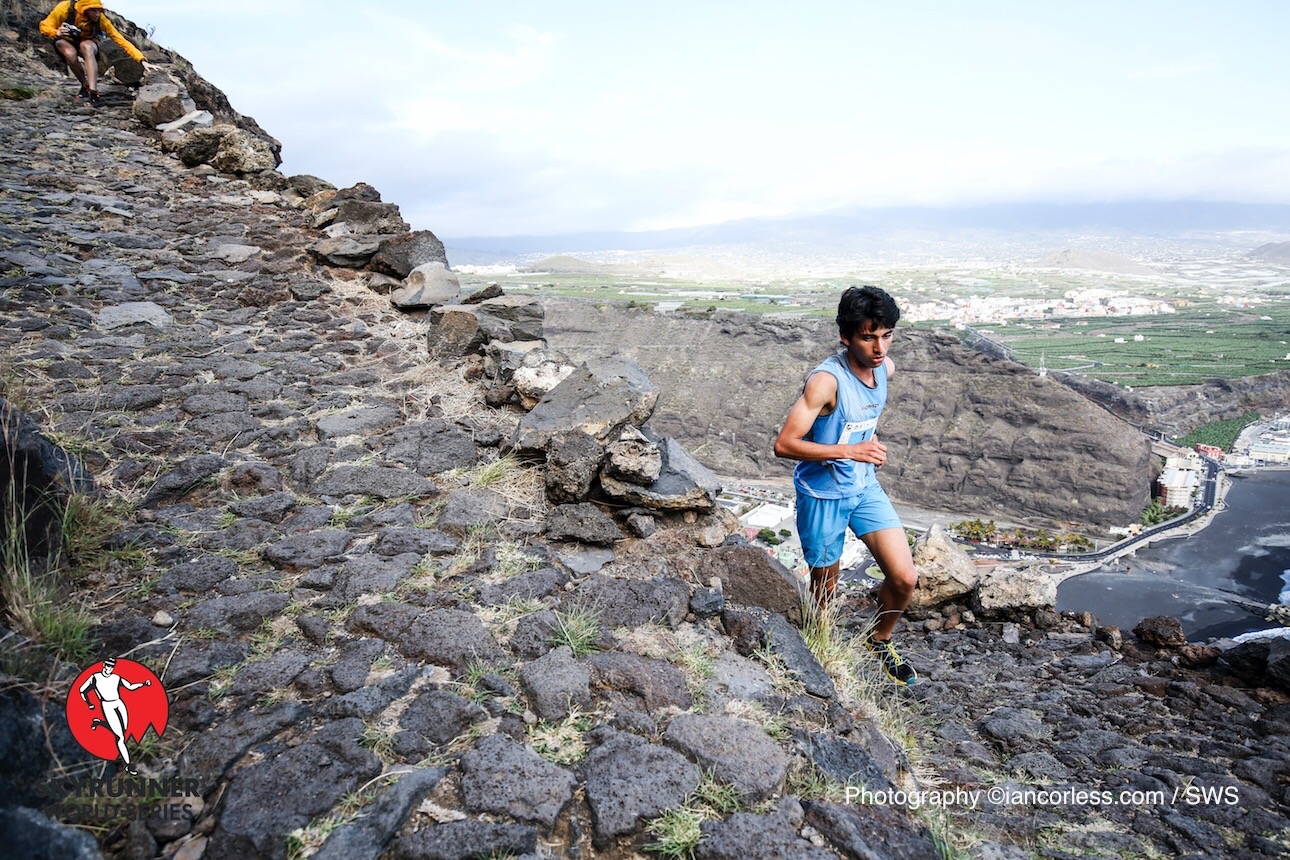
















































 IAN CORLESS