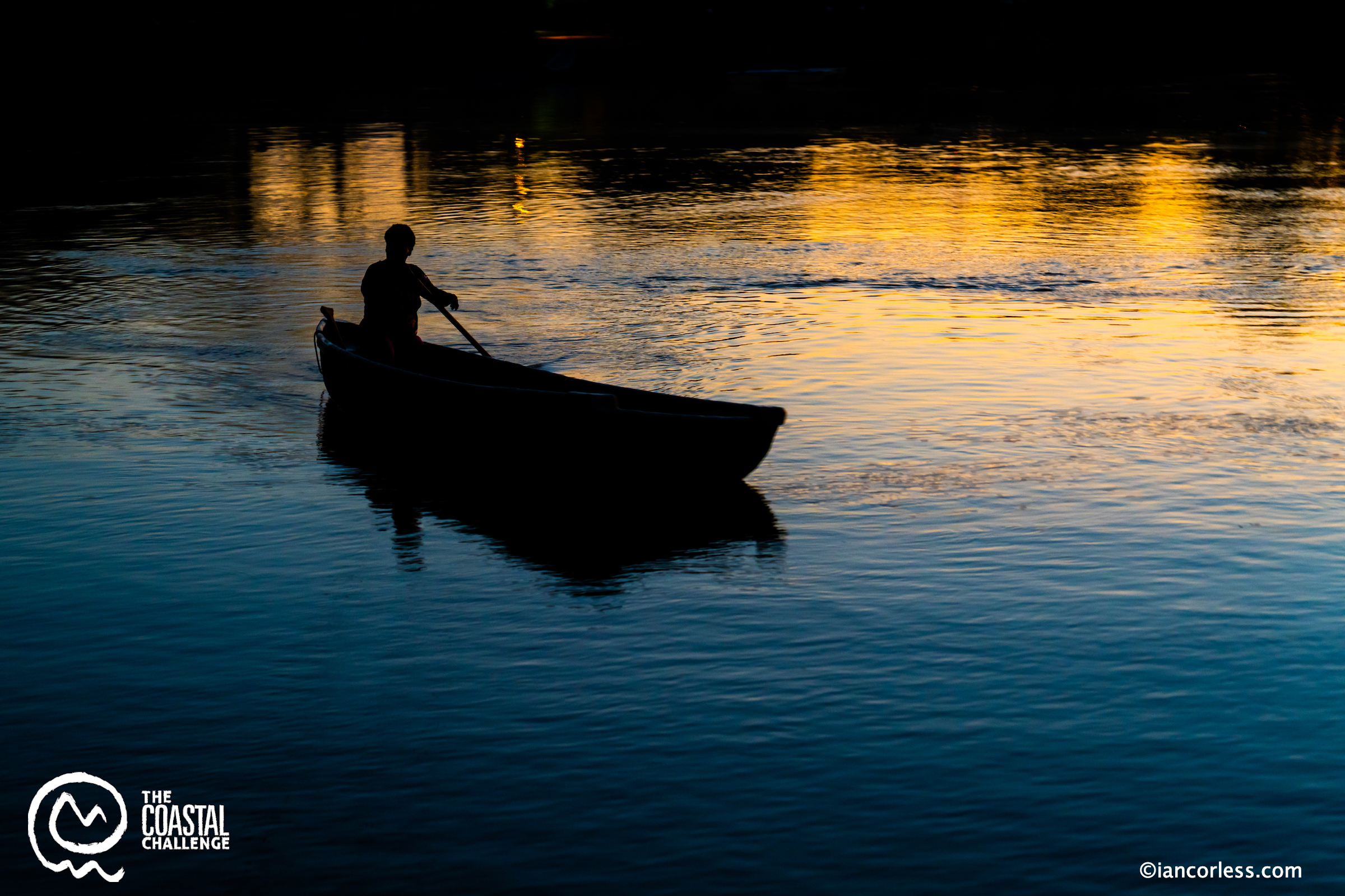
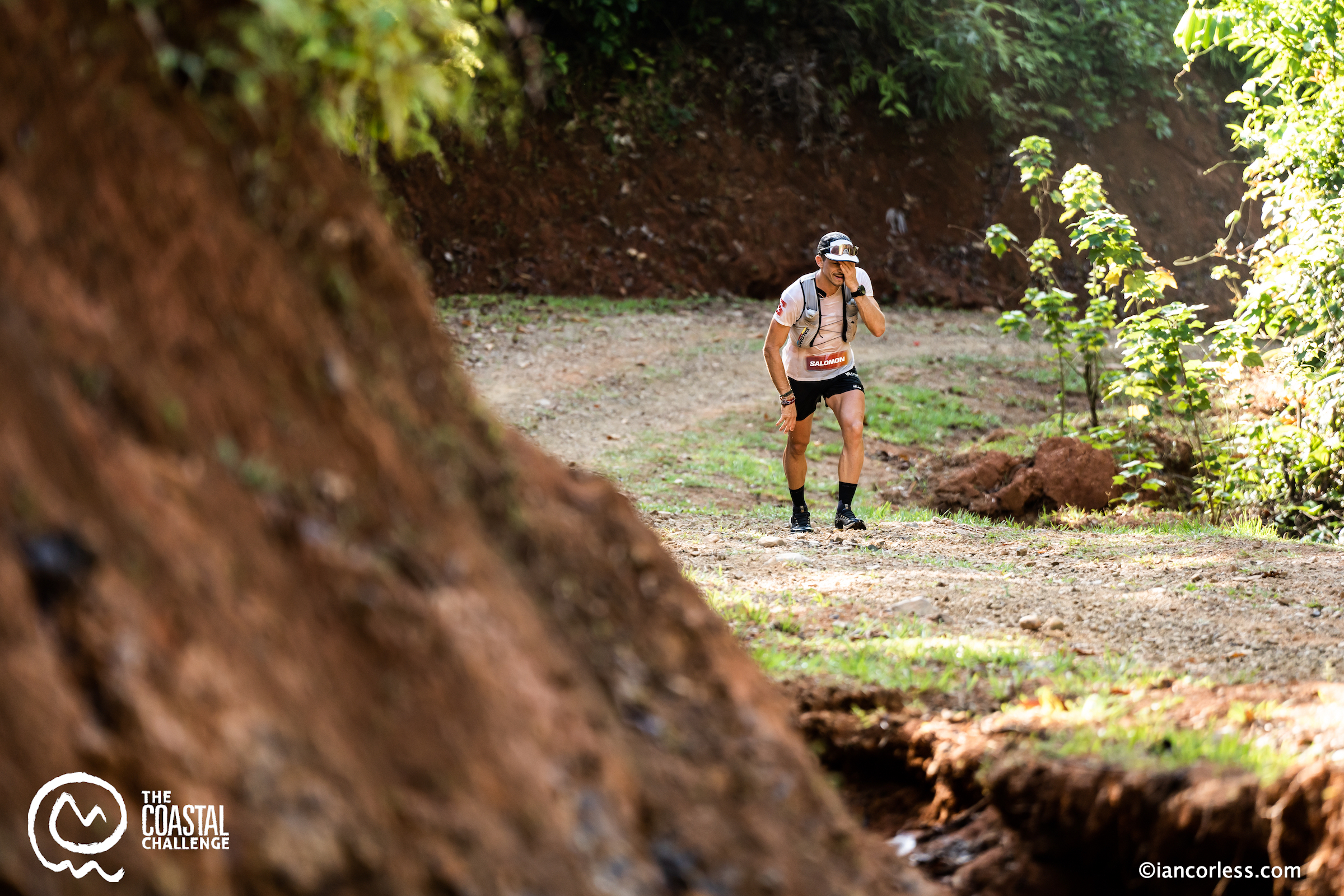
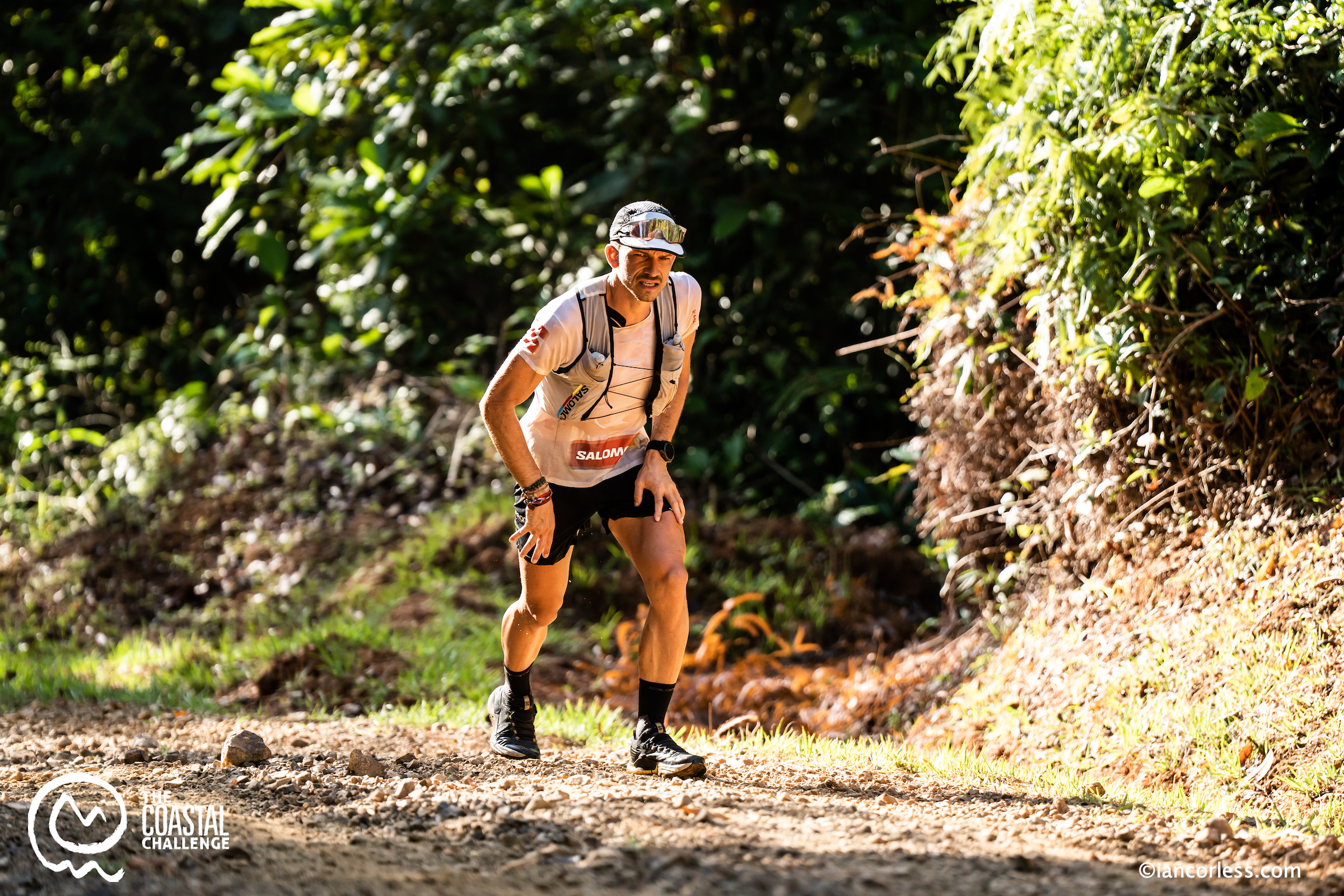
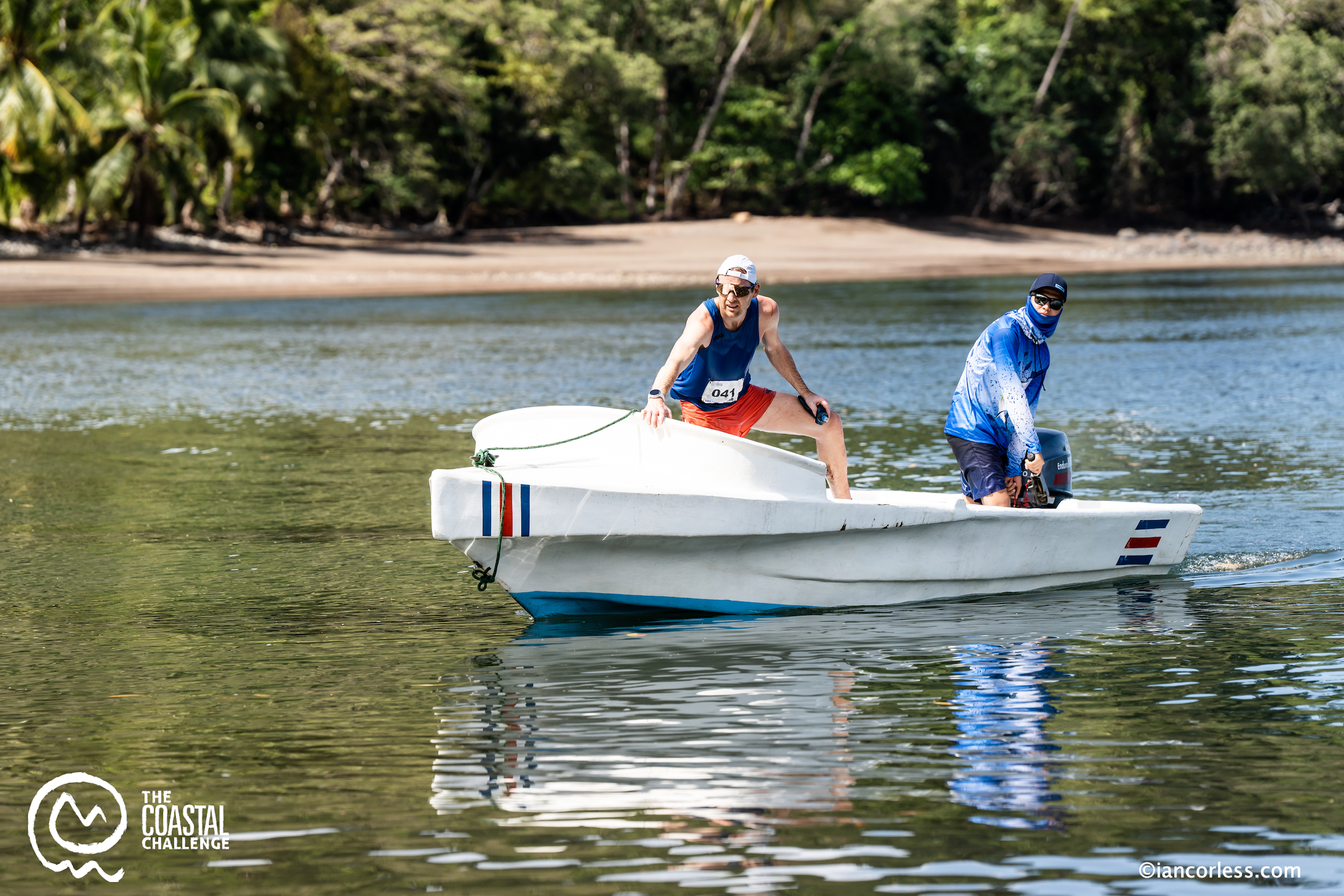
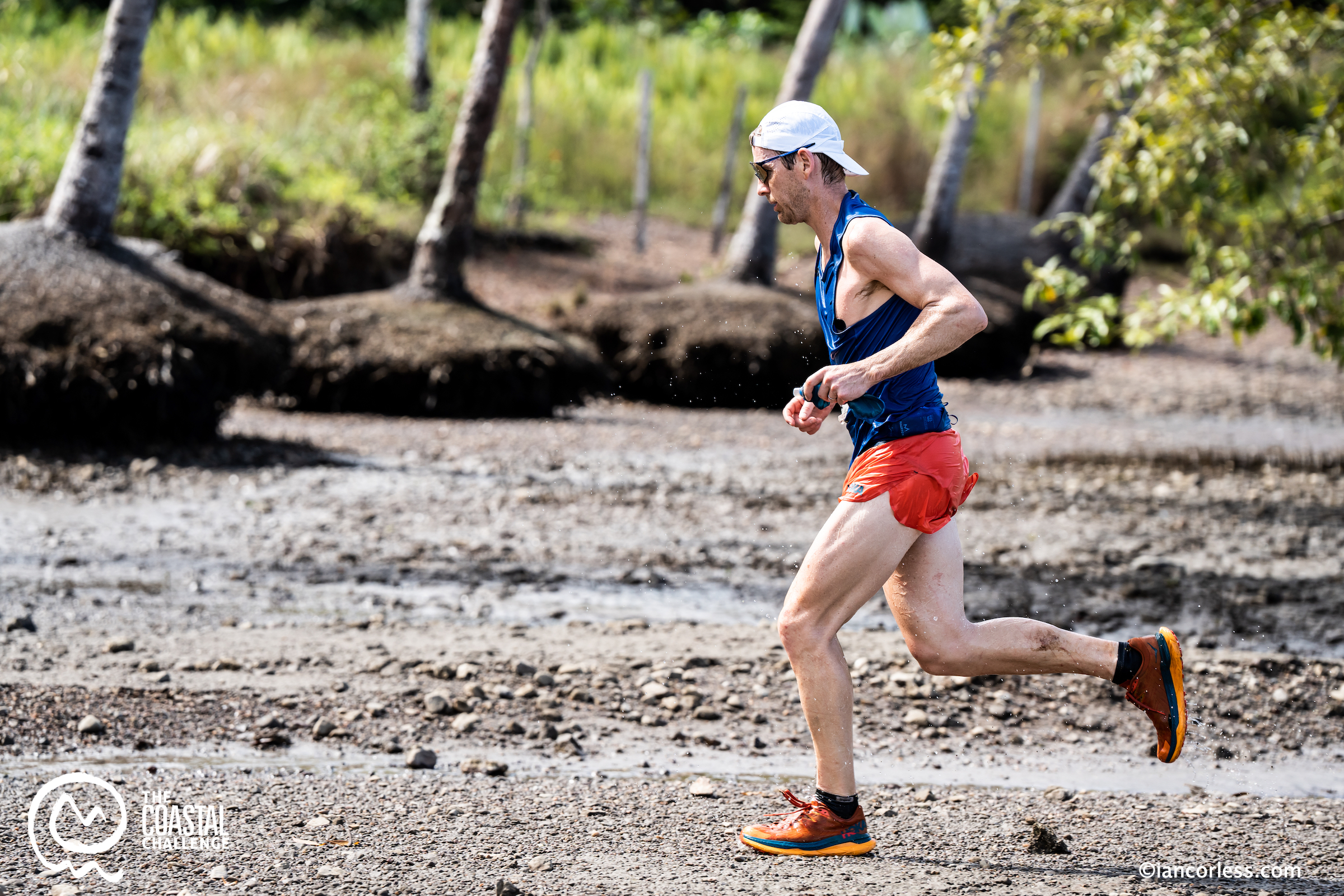
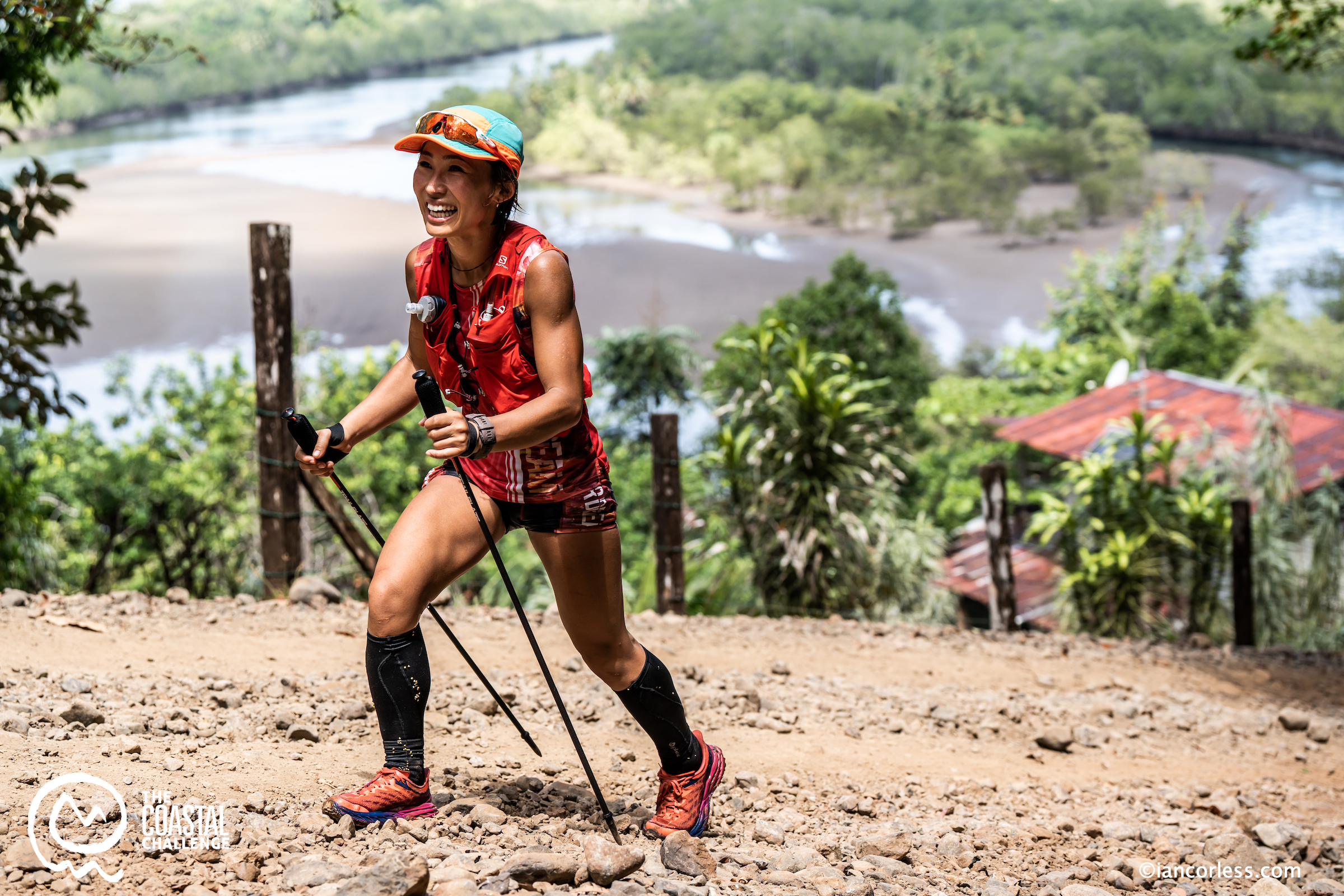
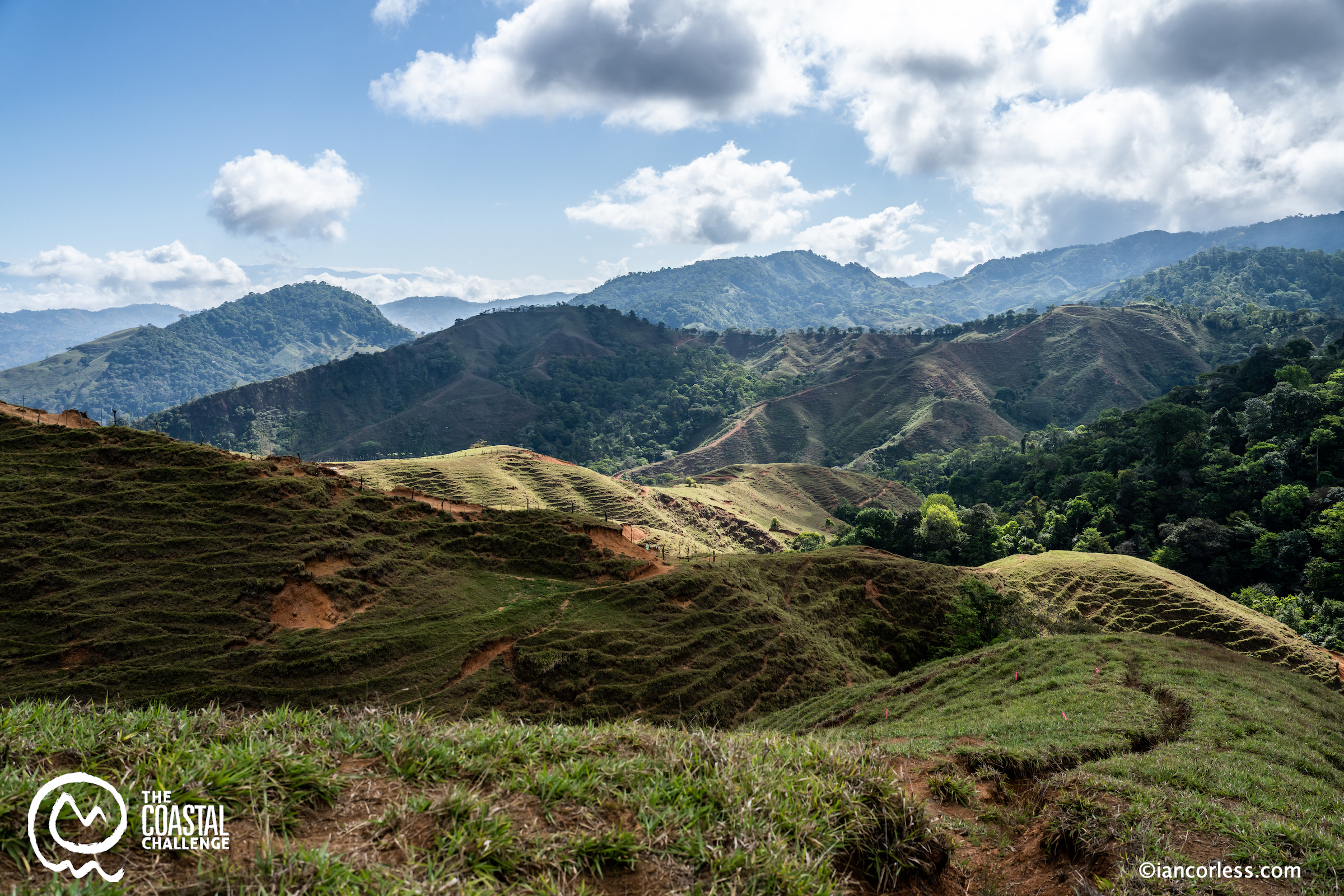
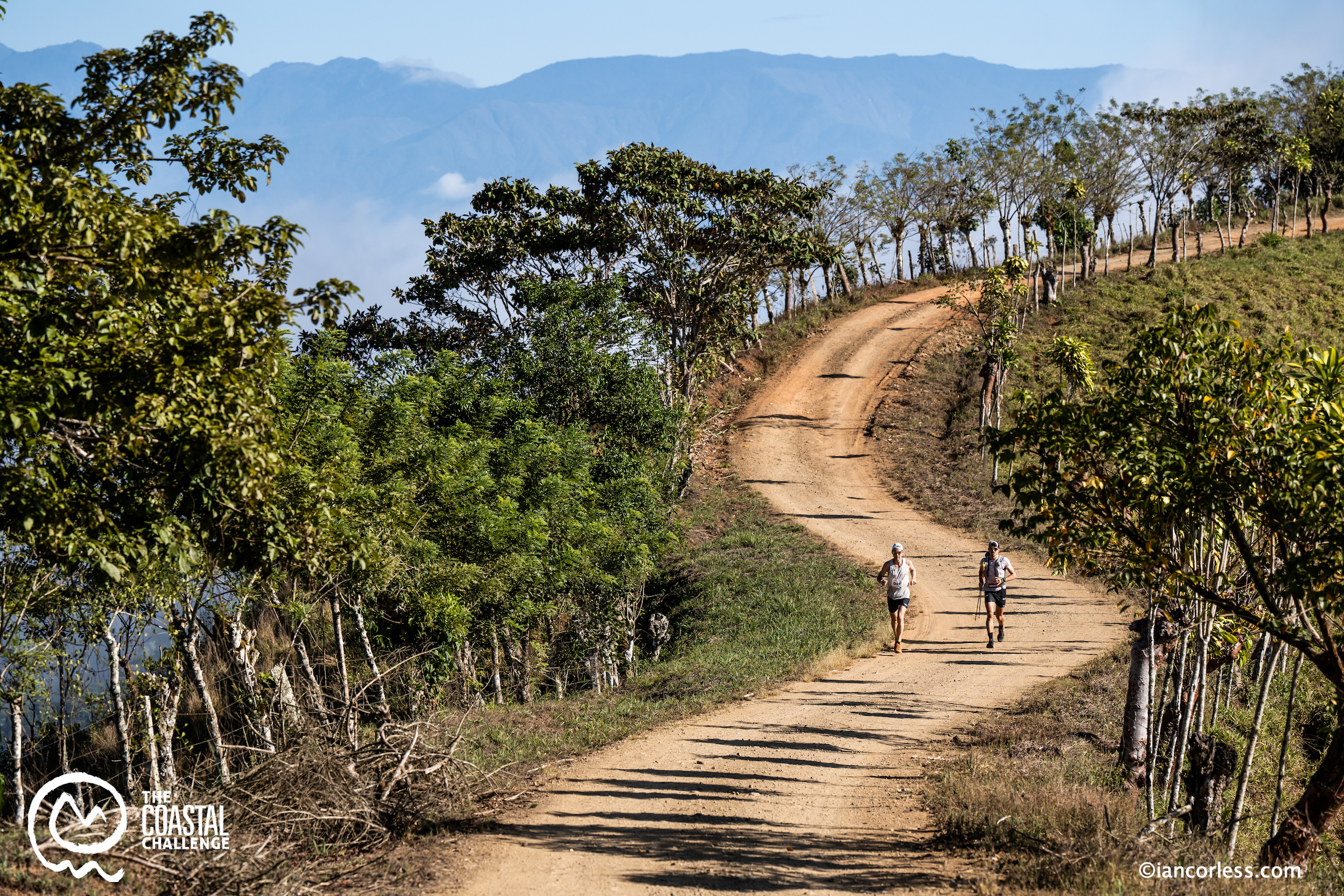
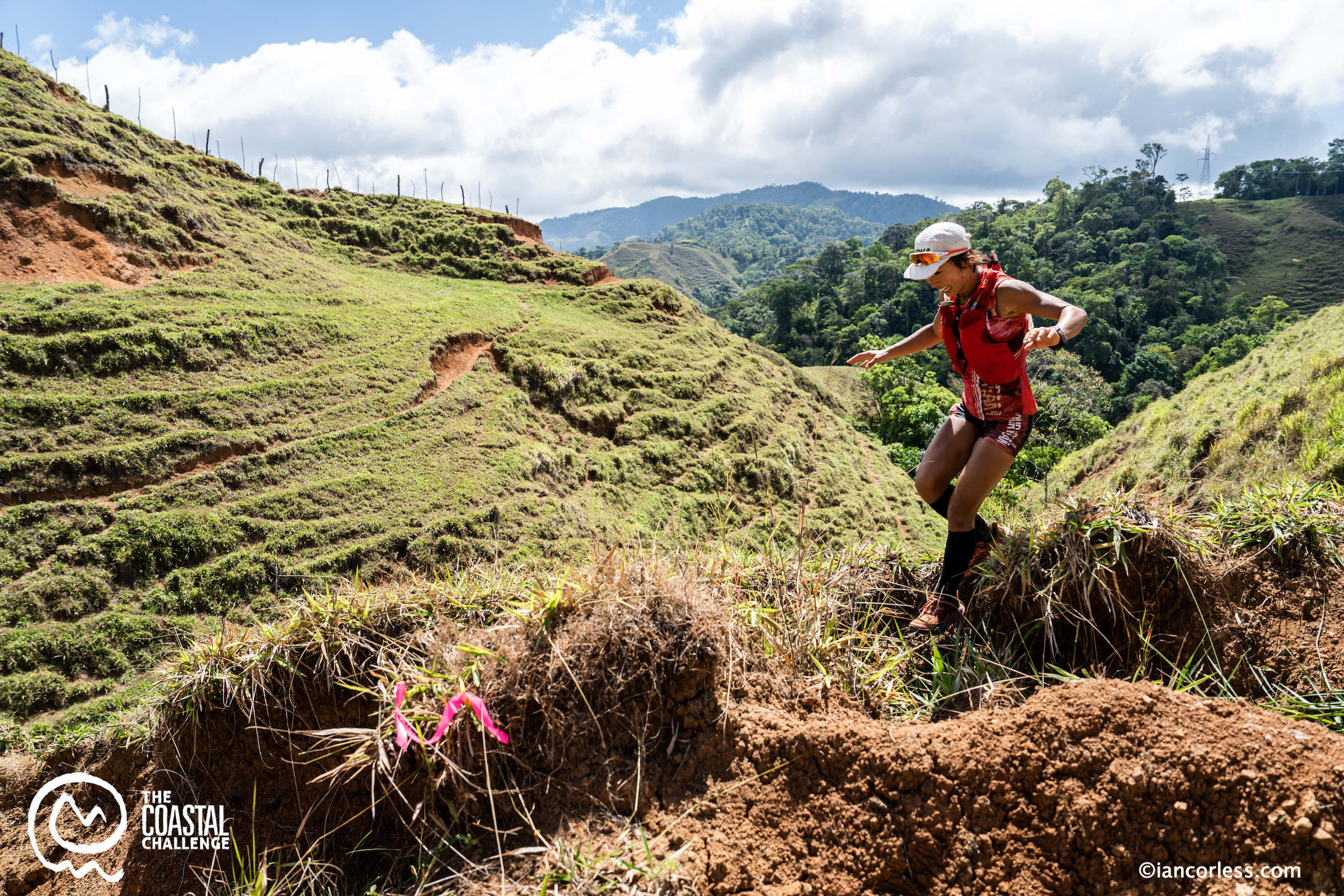
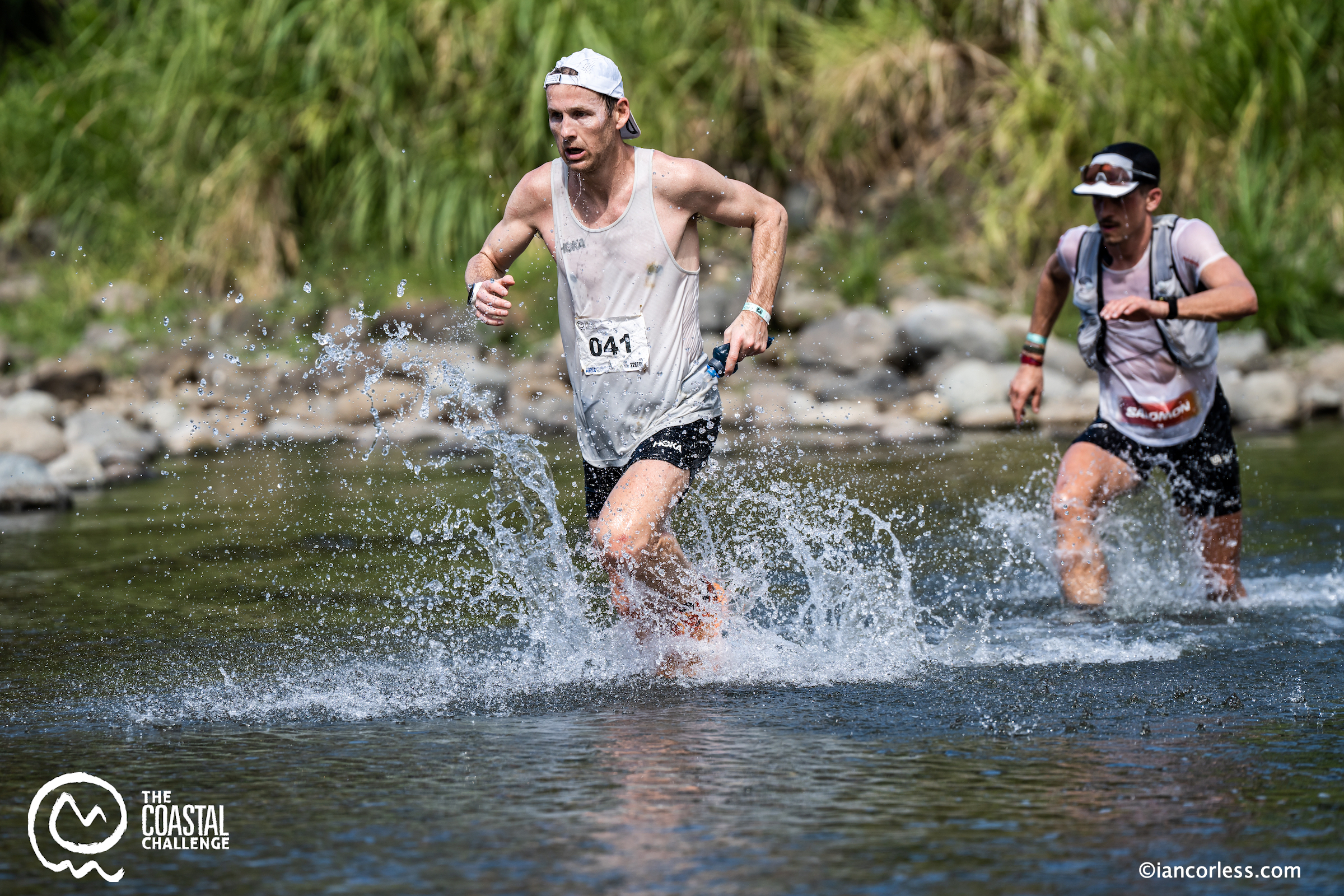
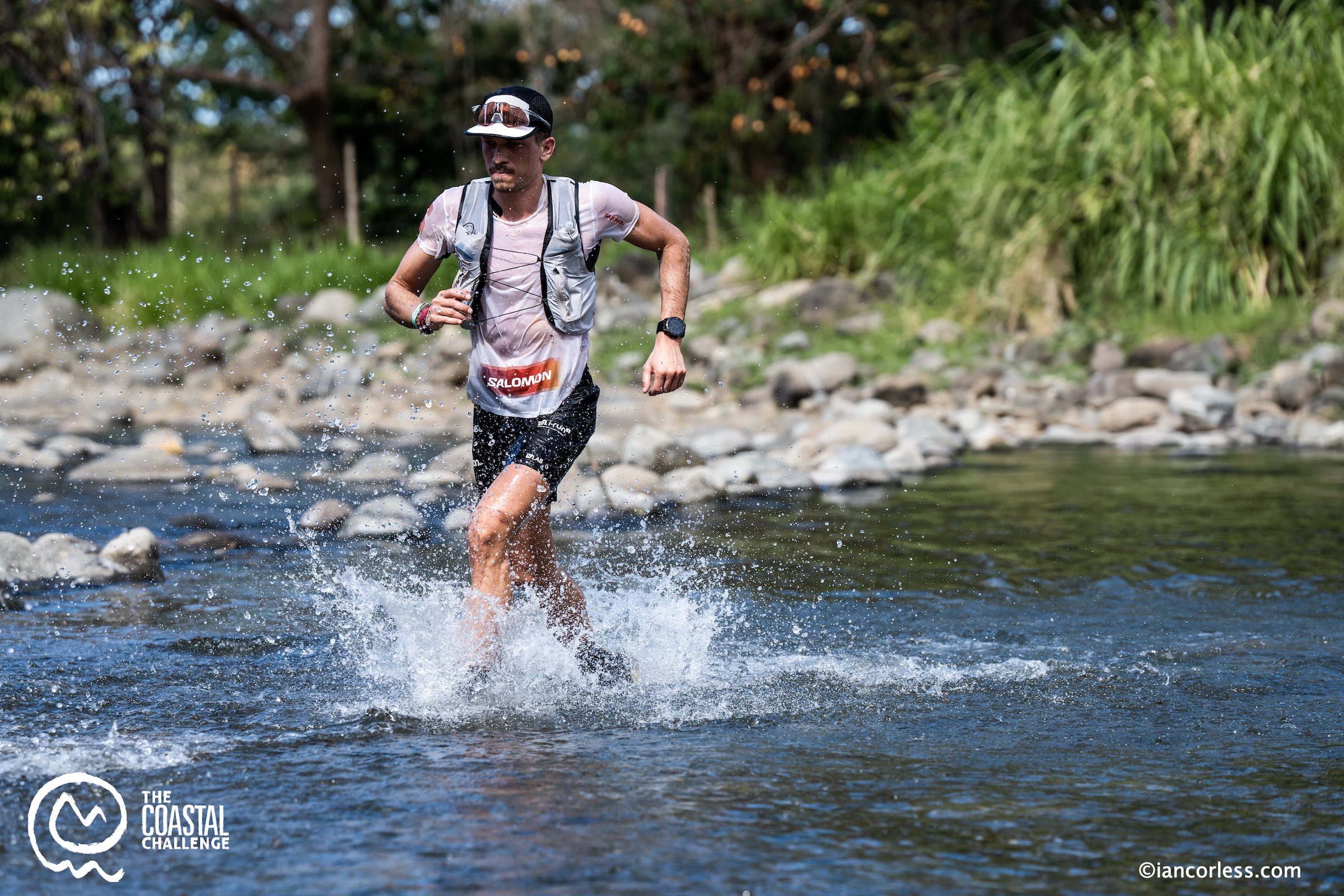
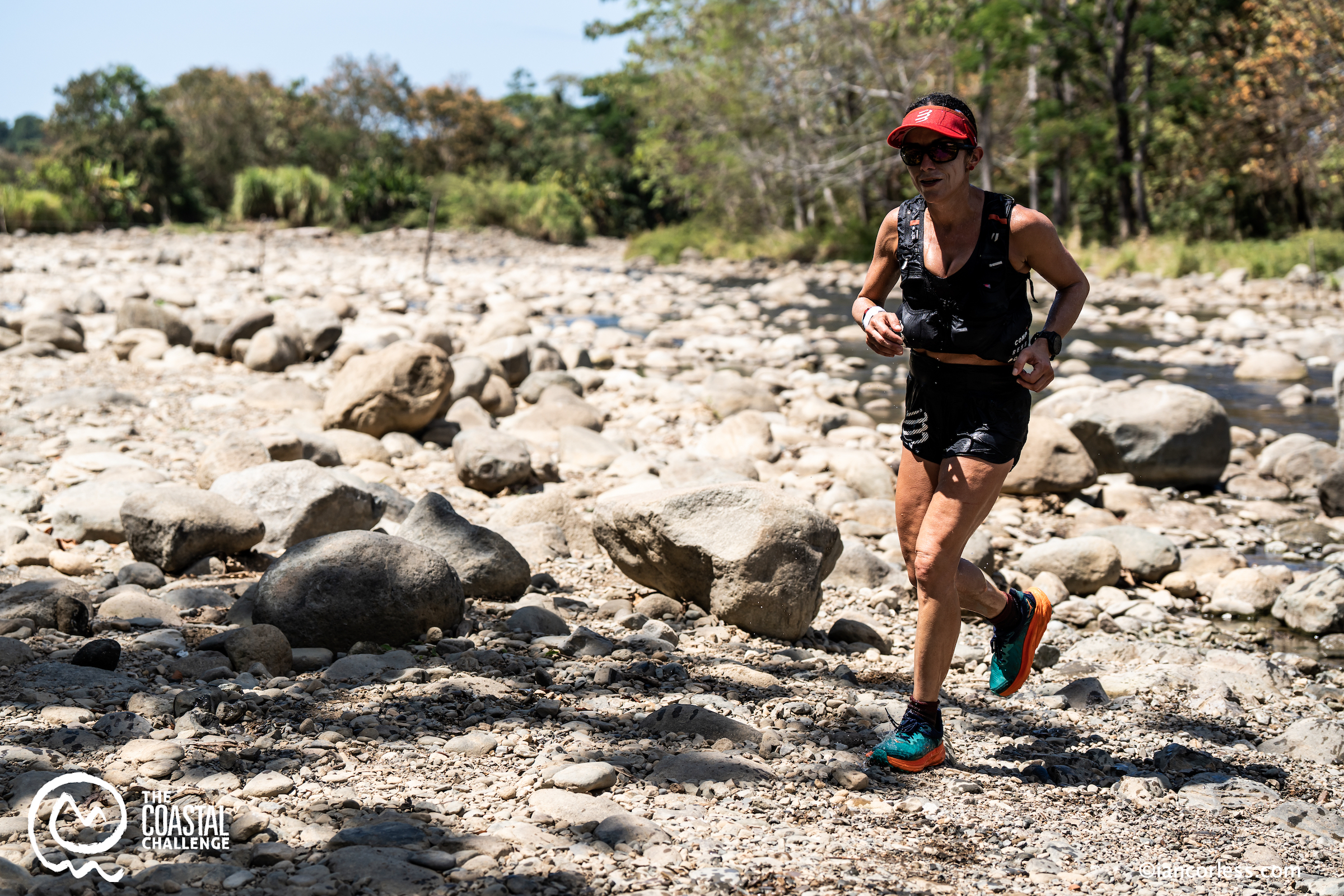
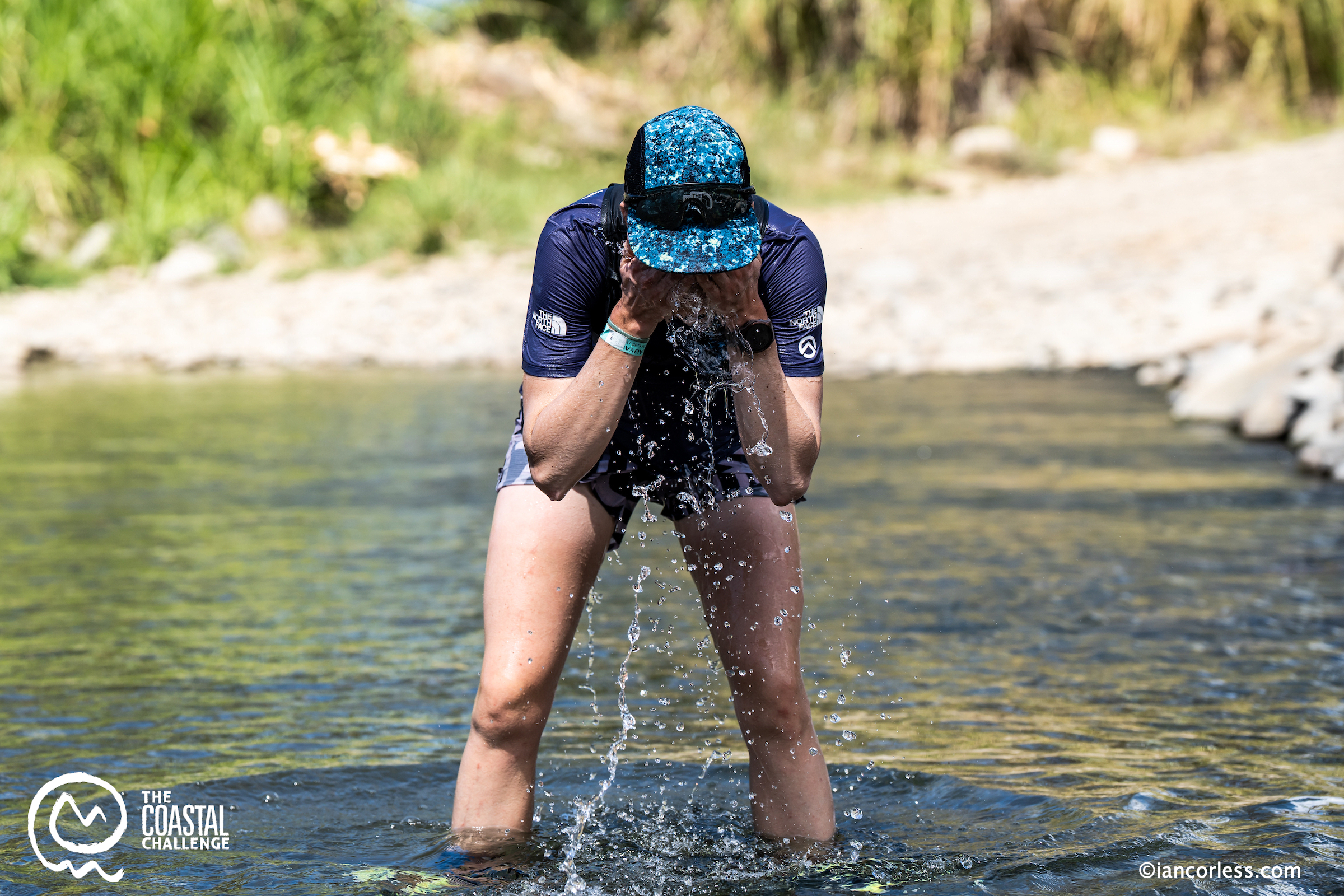
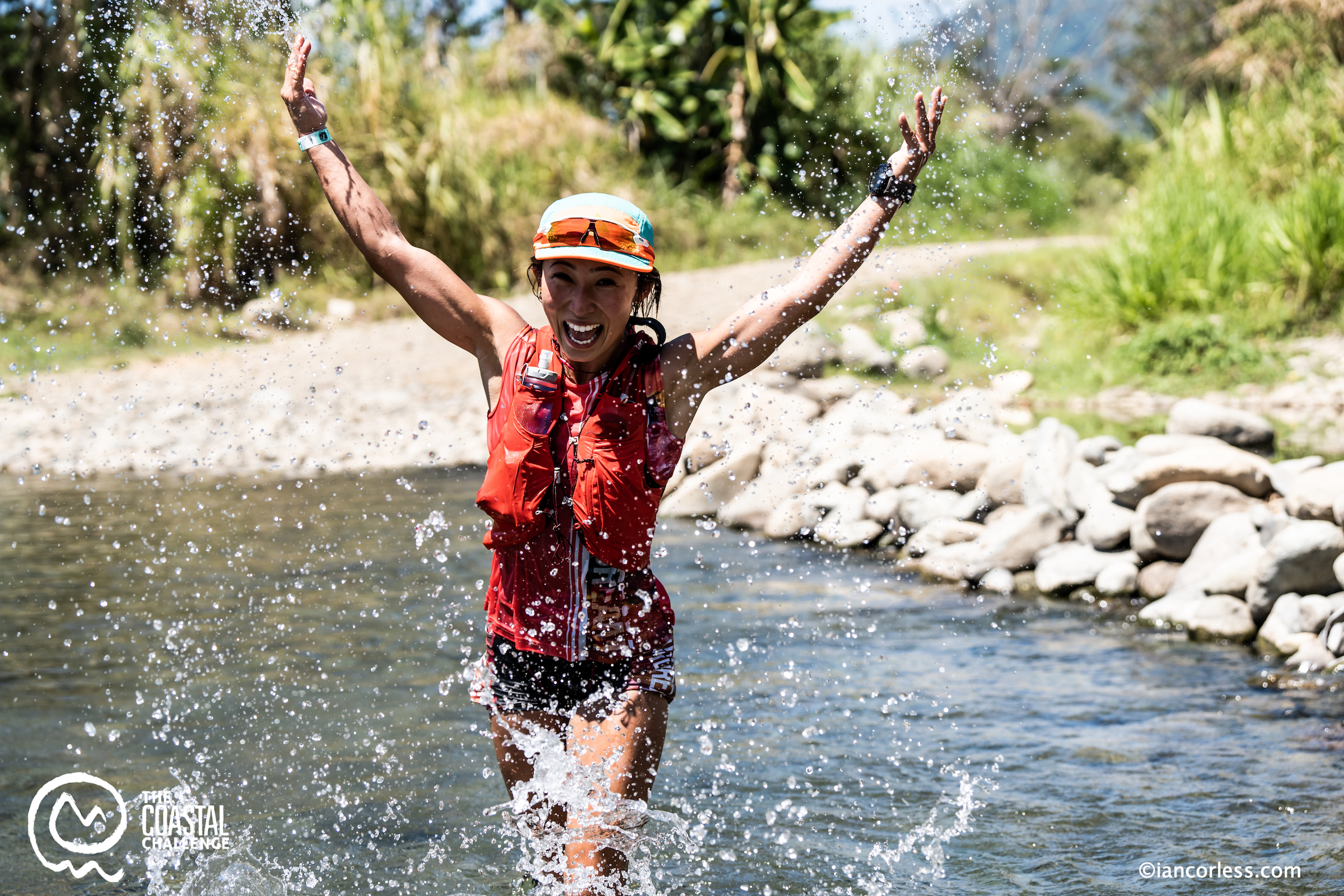
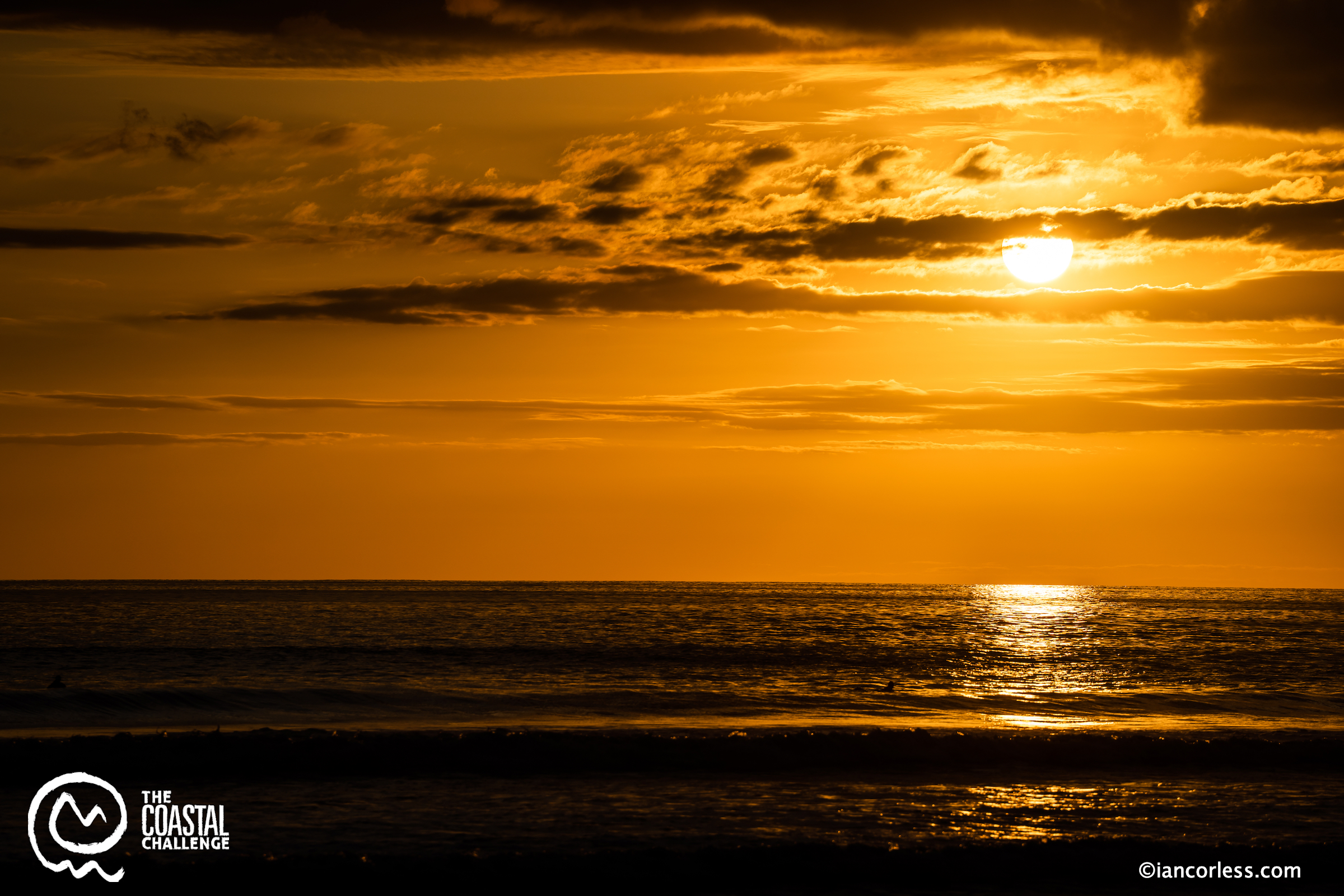
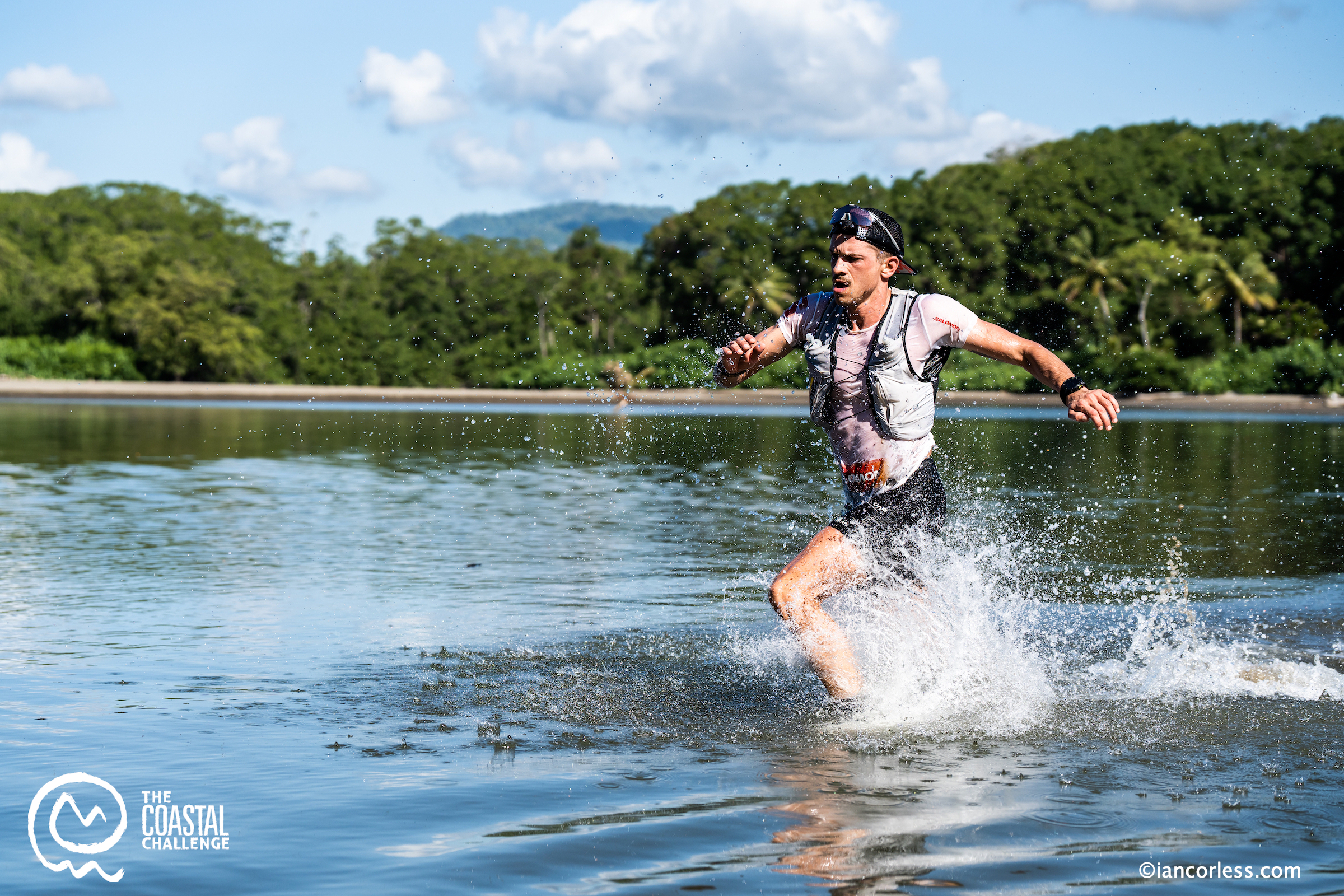
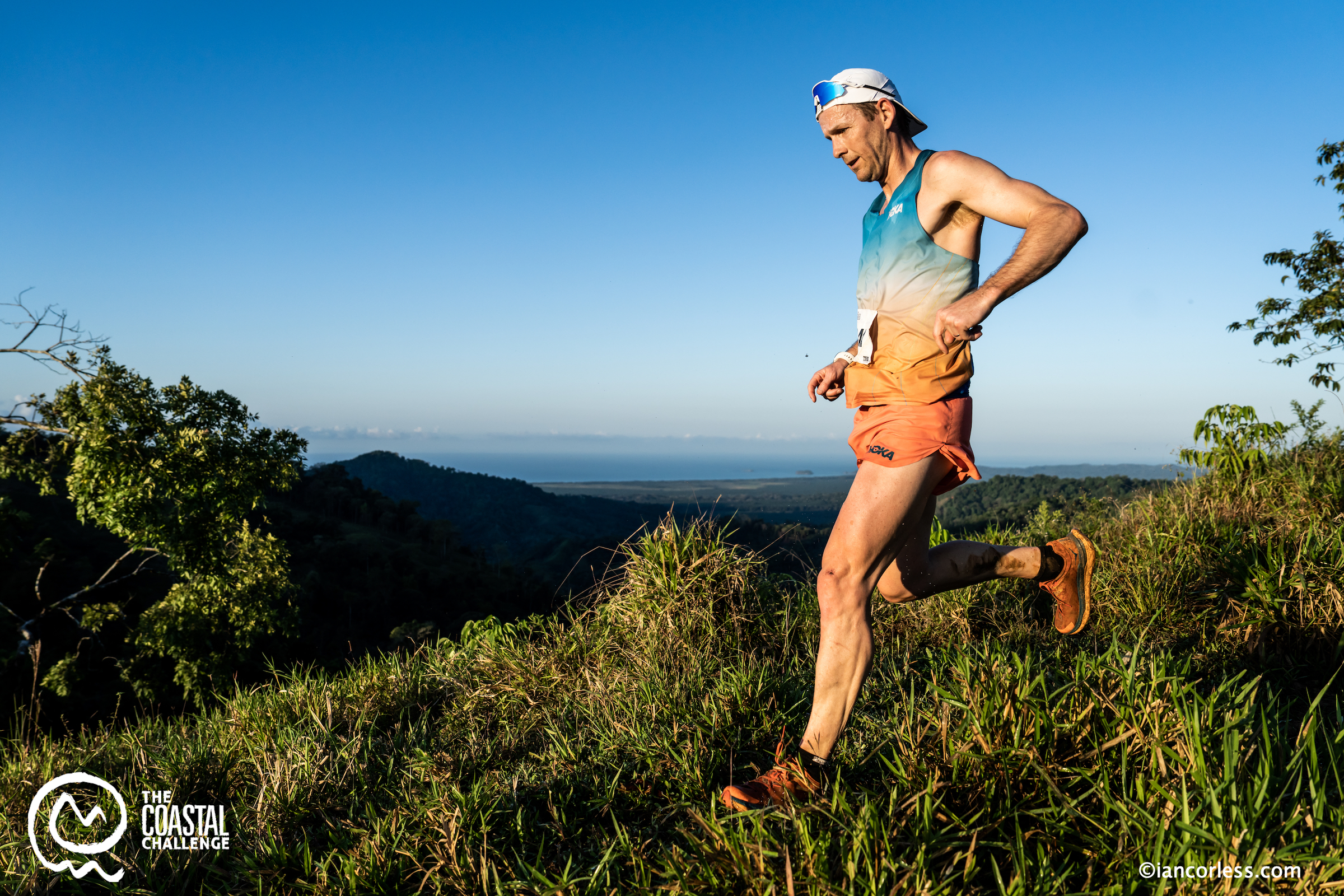
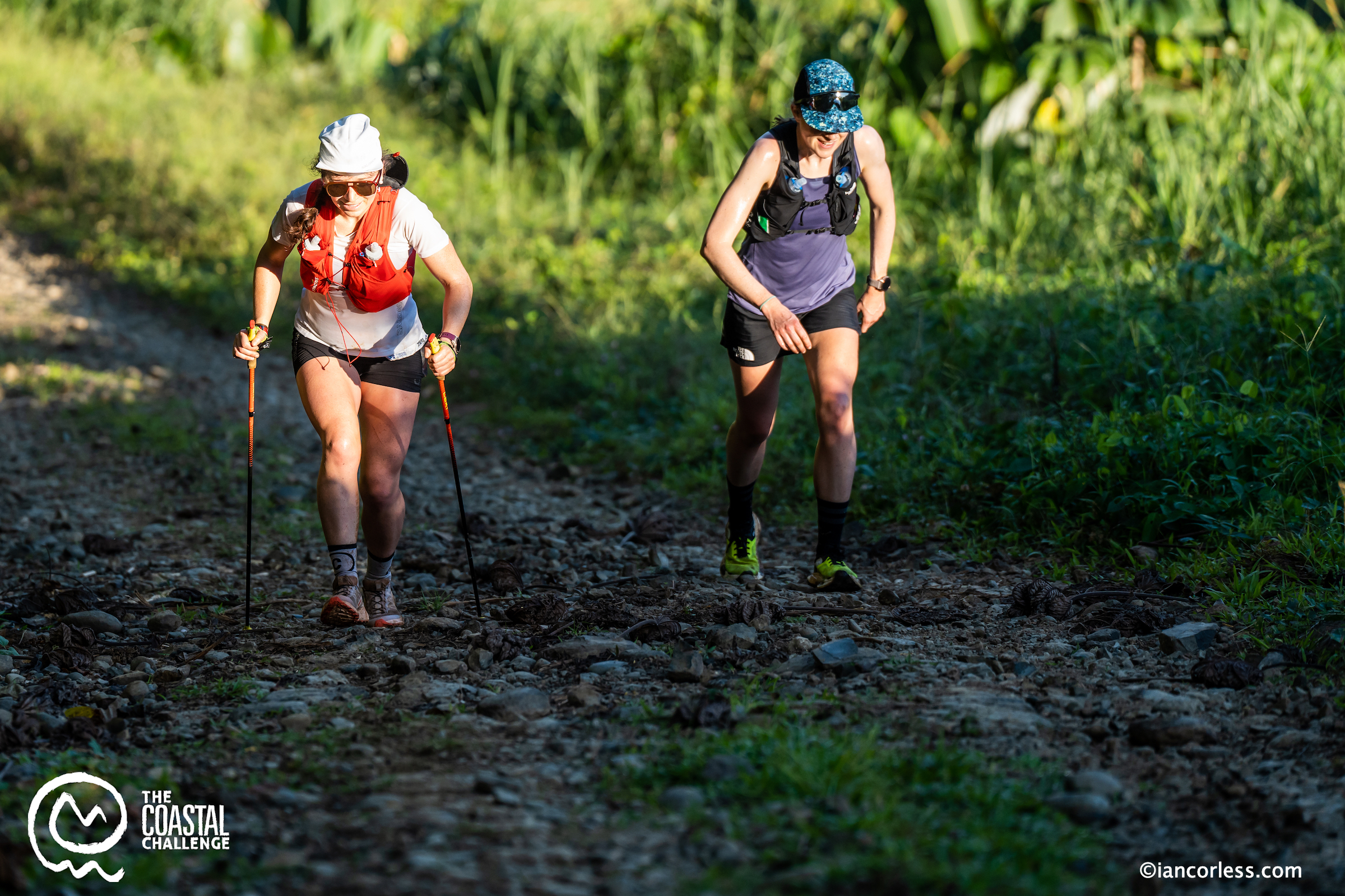
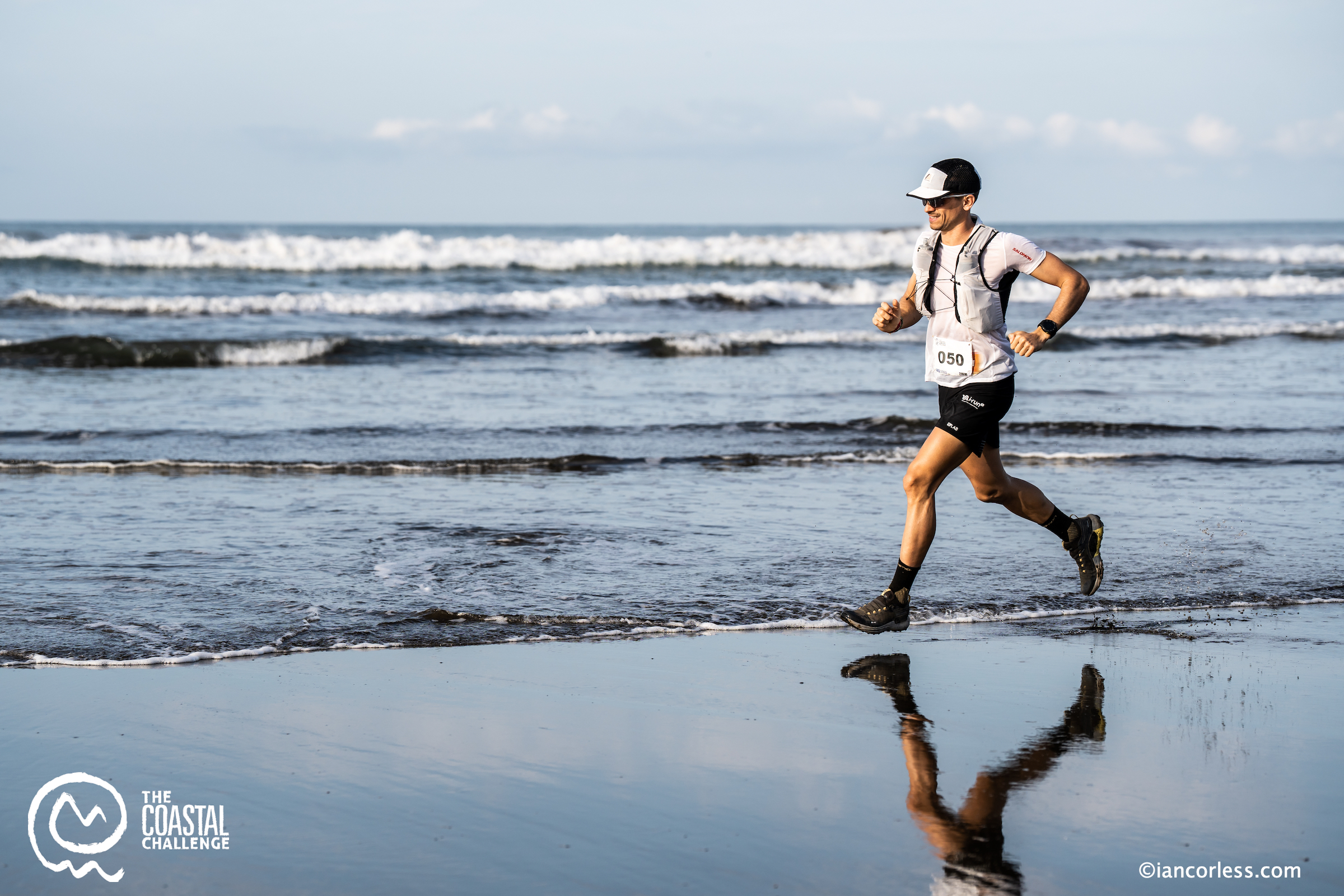
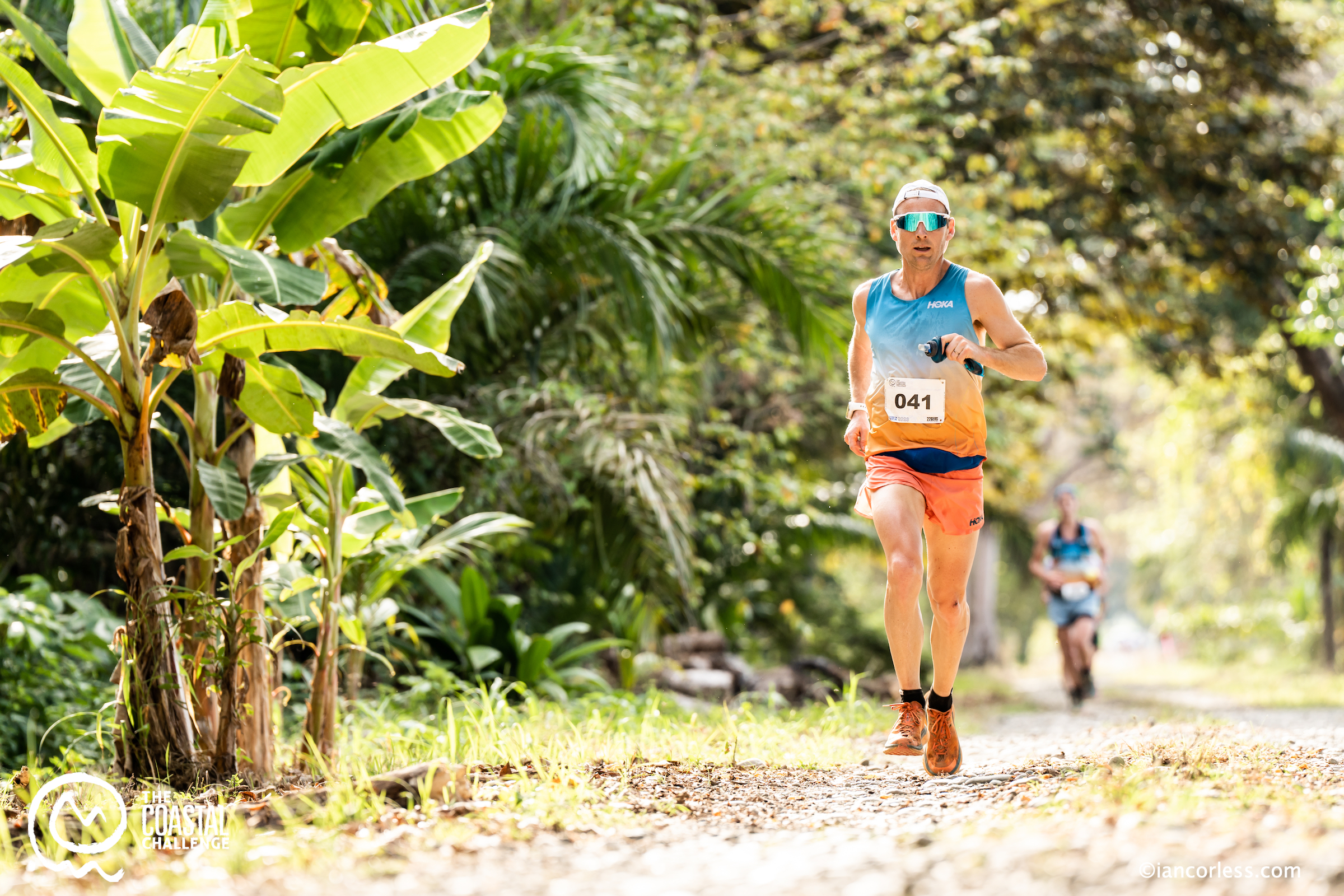
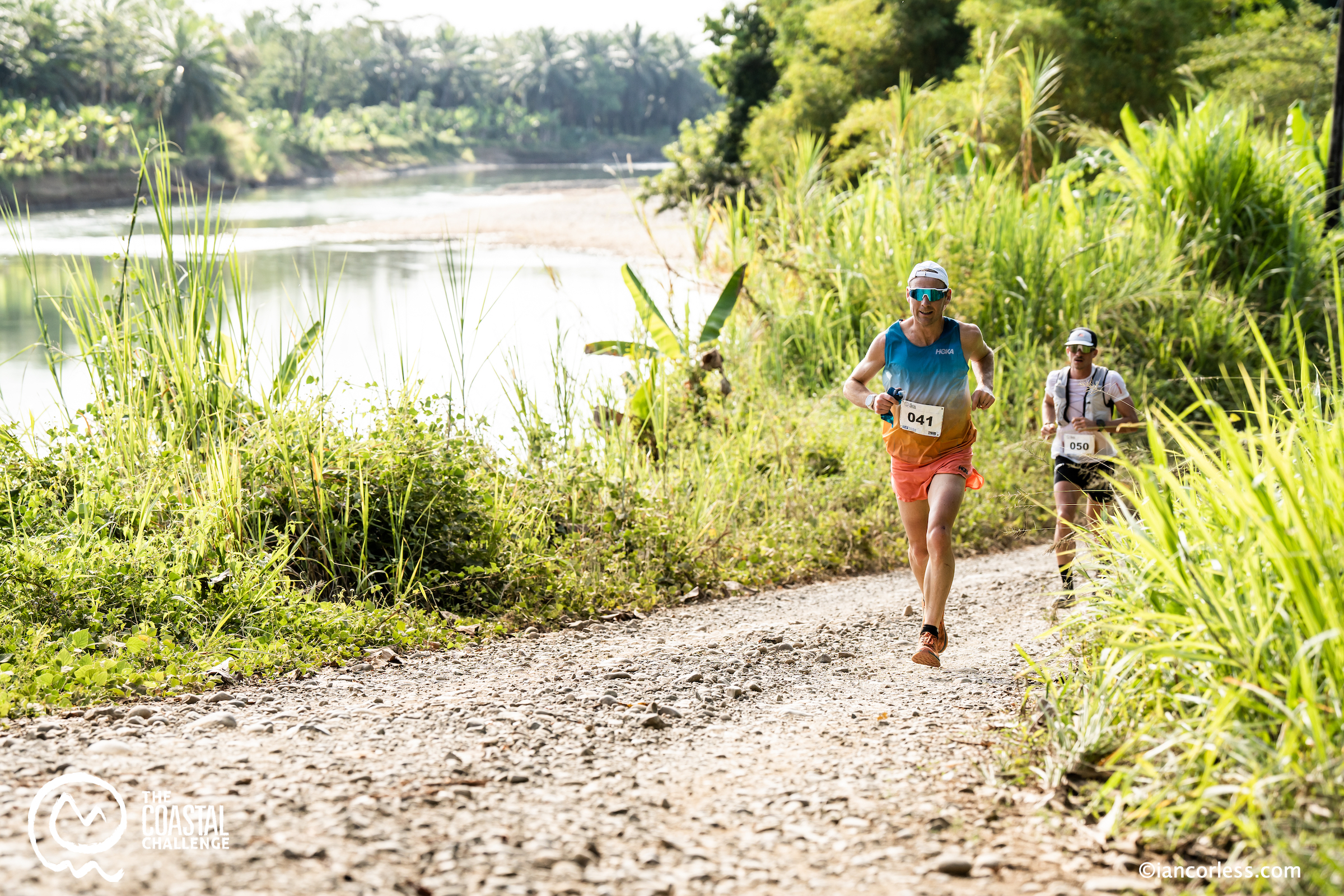
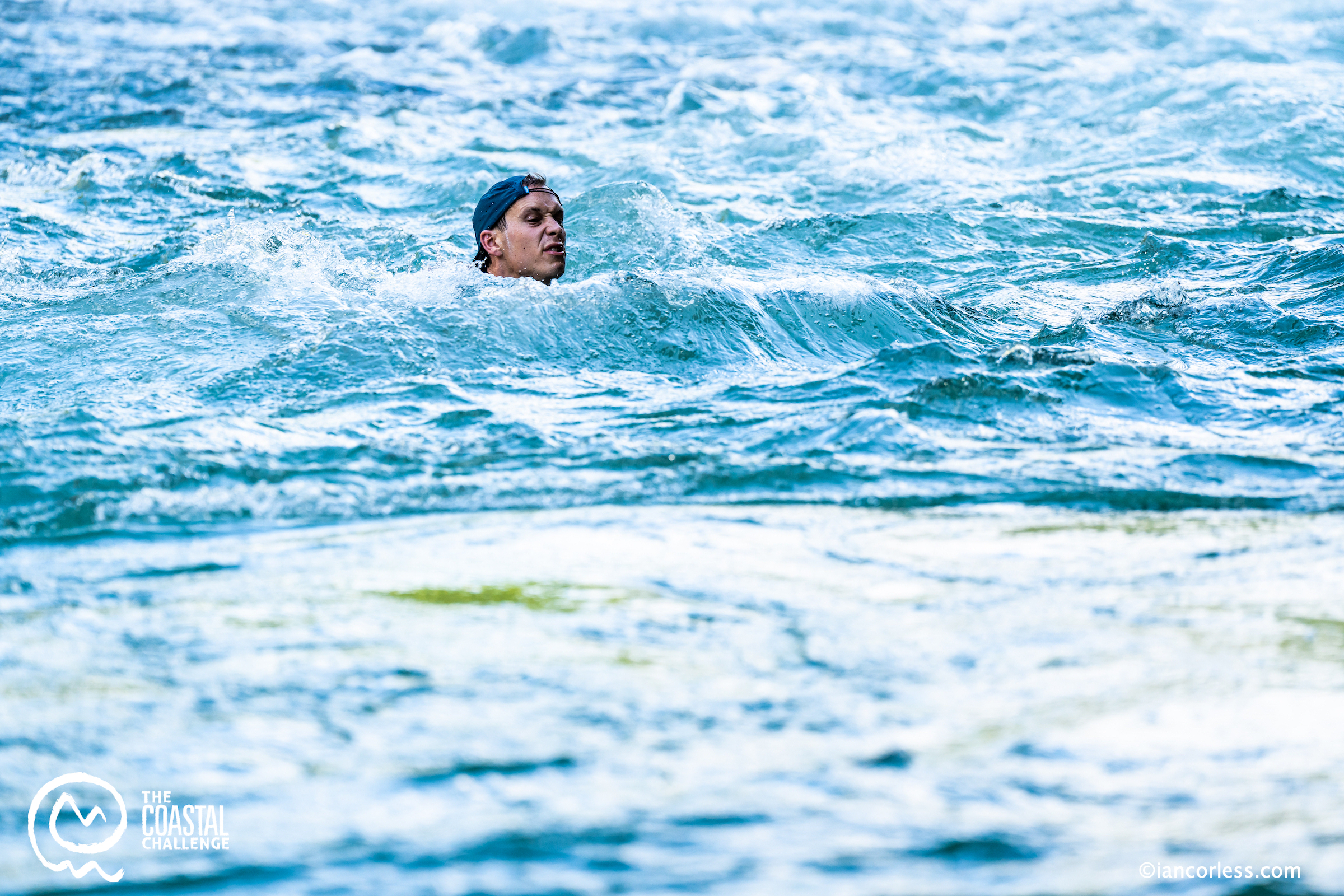
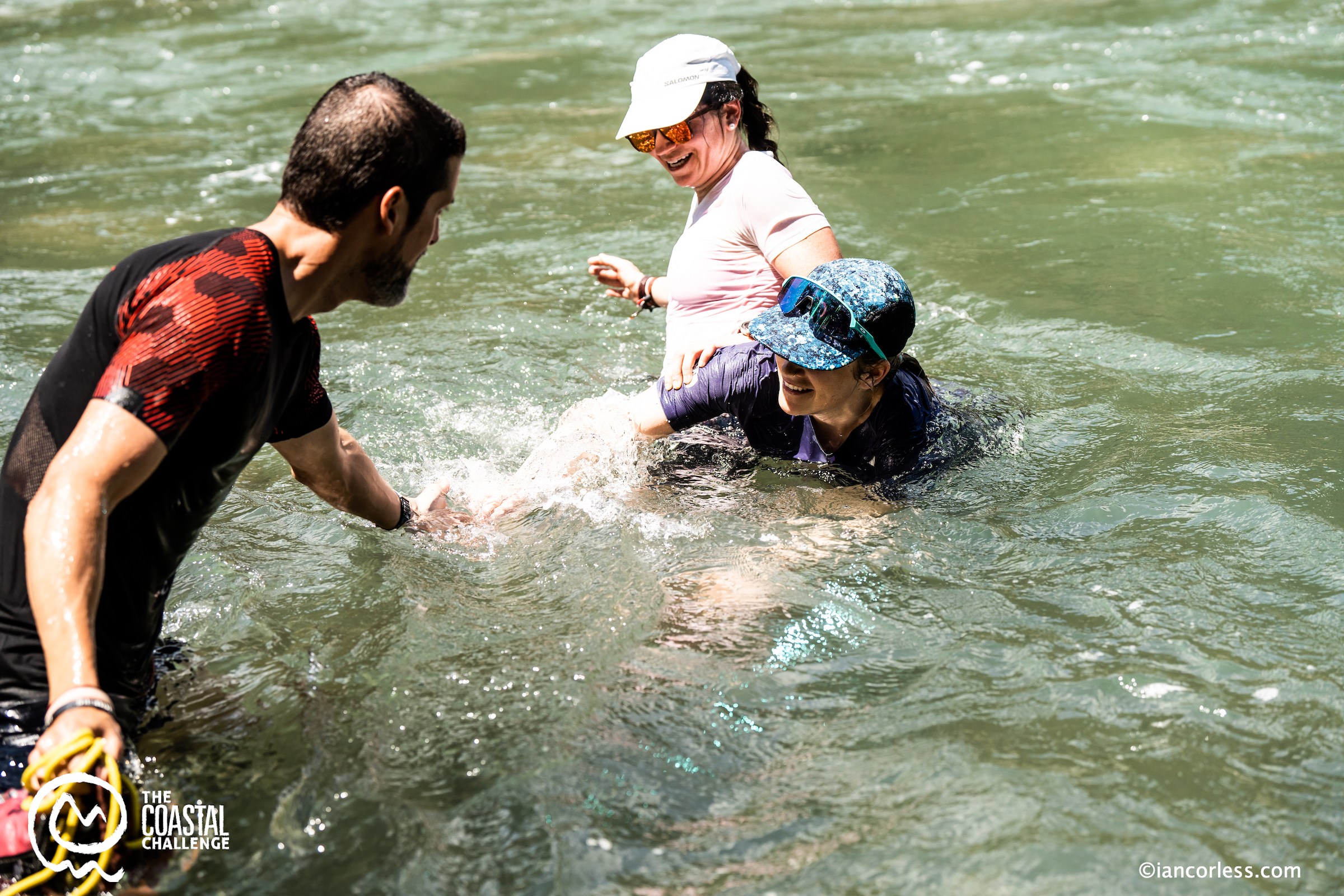
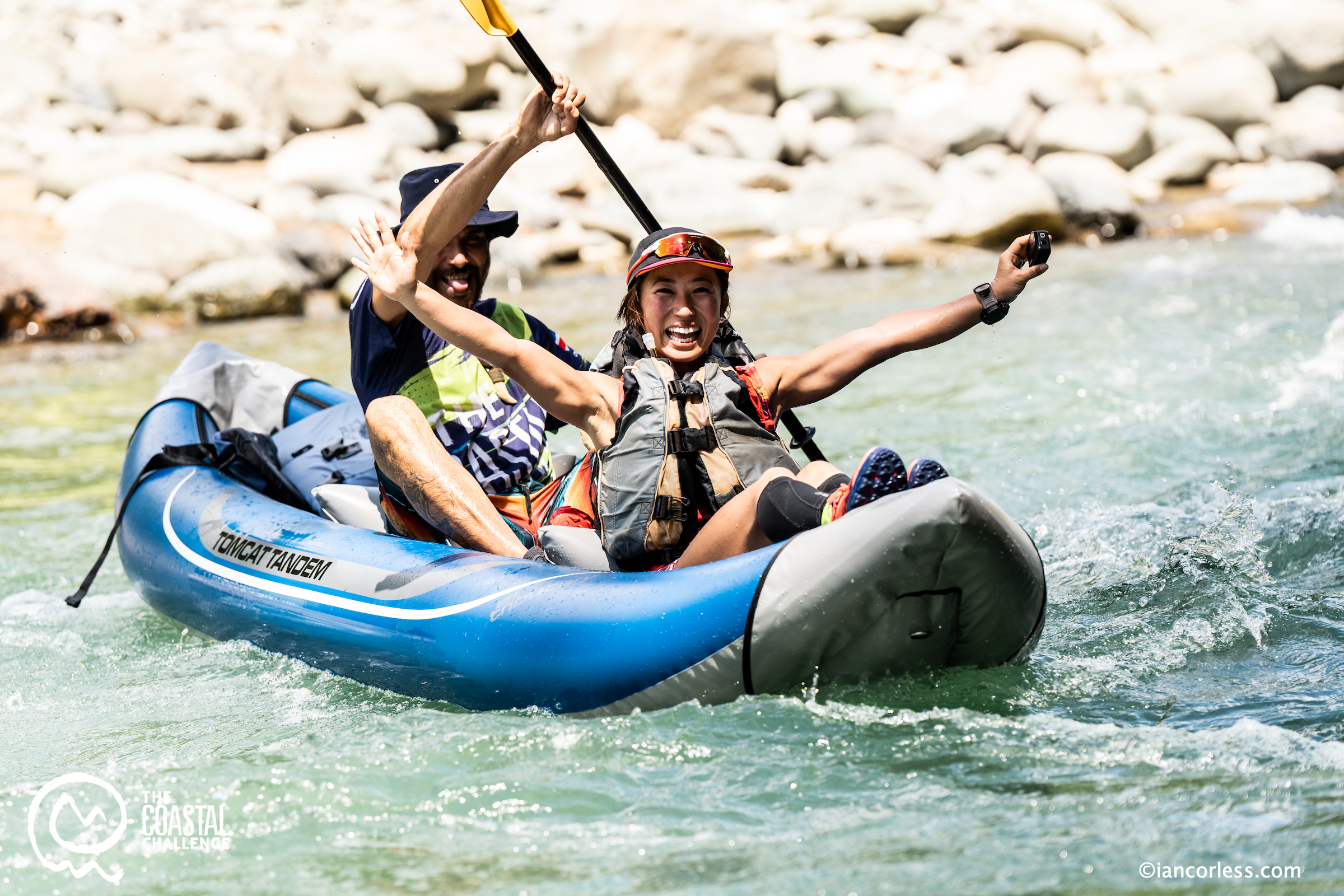
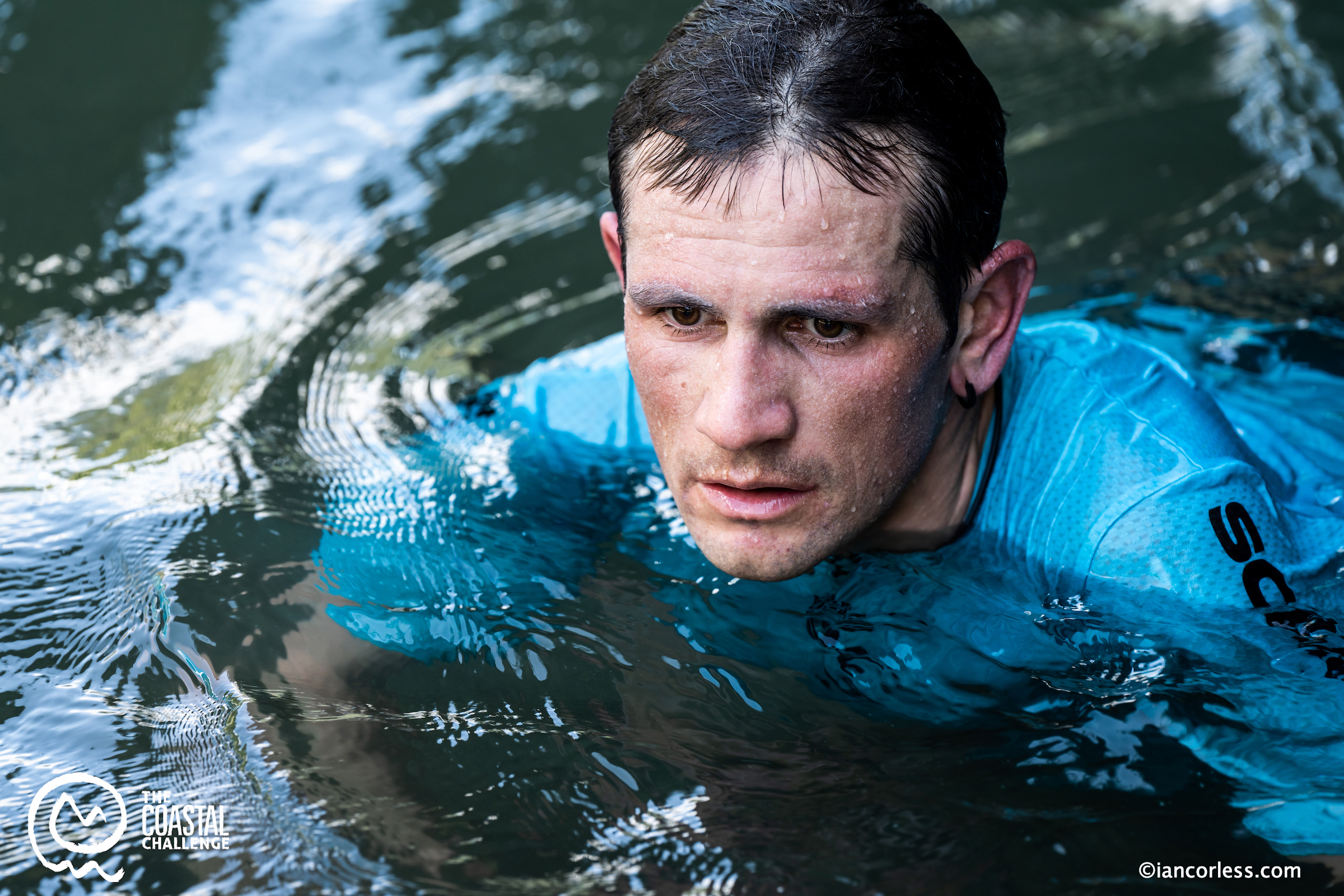
Crossing the Sierpe river at dawn with a new sun welcoming the day, stage 5 of TCC is always a key day due to large amounts of gravel road, a technical and steep descent, the iconic estuary crossing and the heat and humidity that punishes the runner’s when they leave the shade.
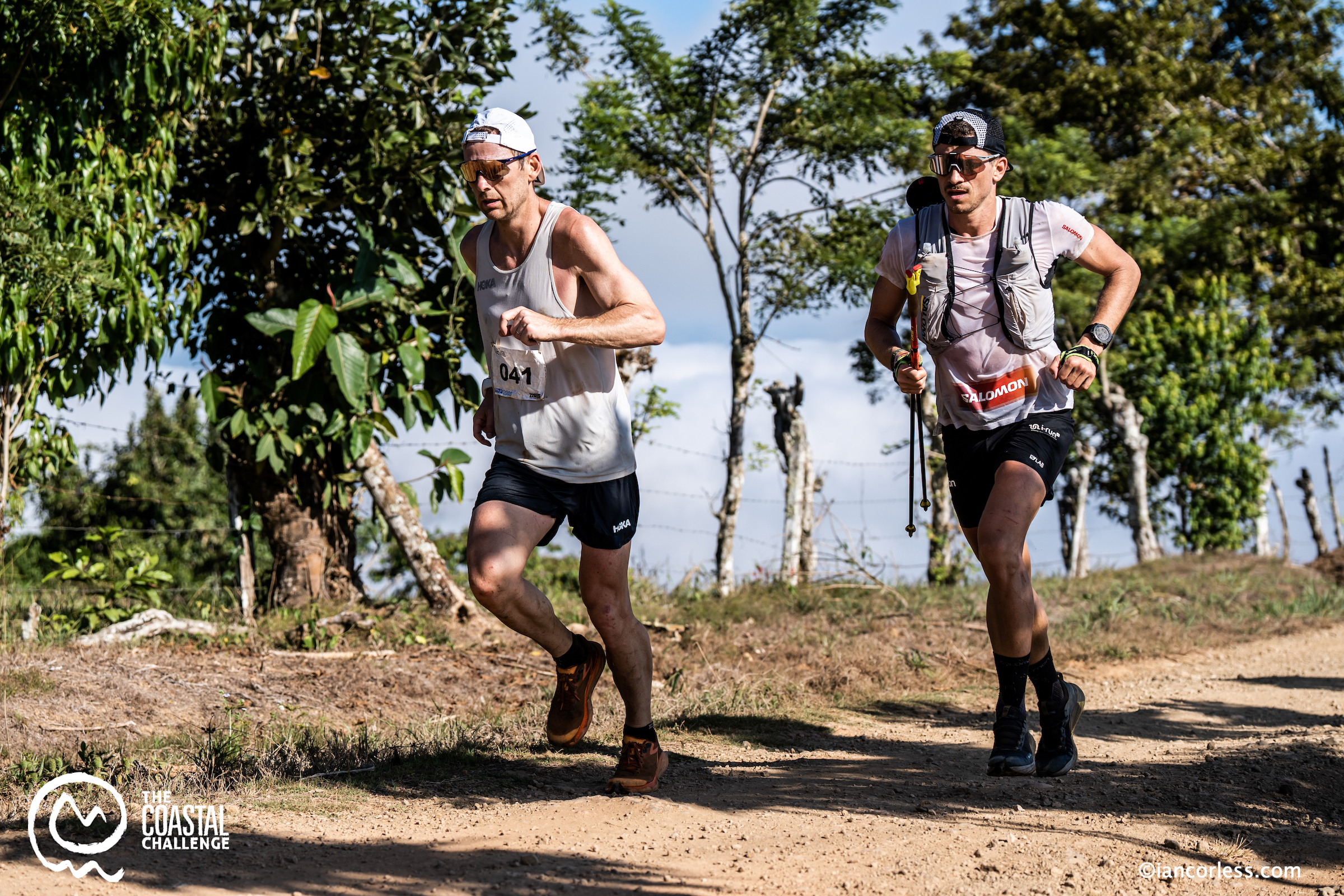
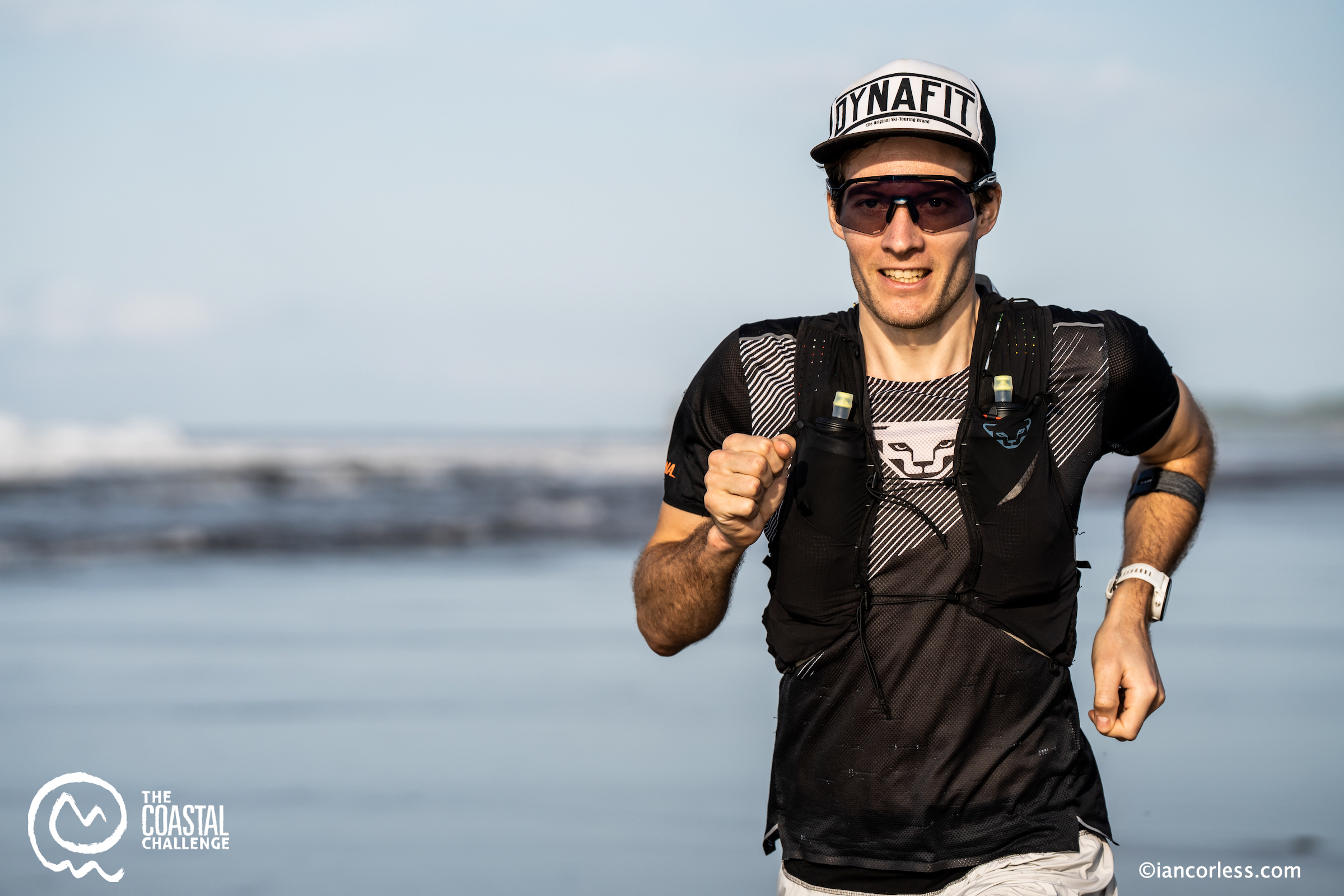
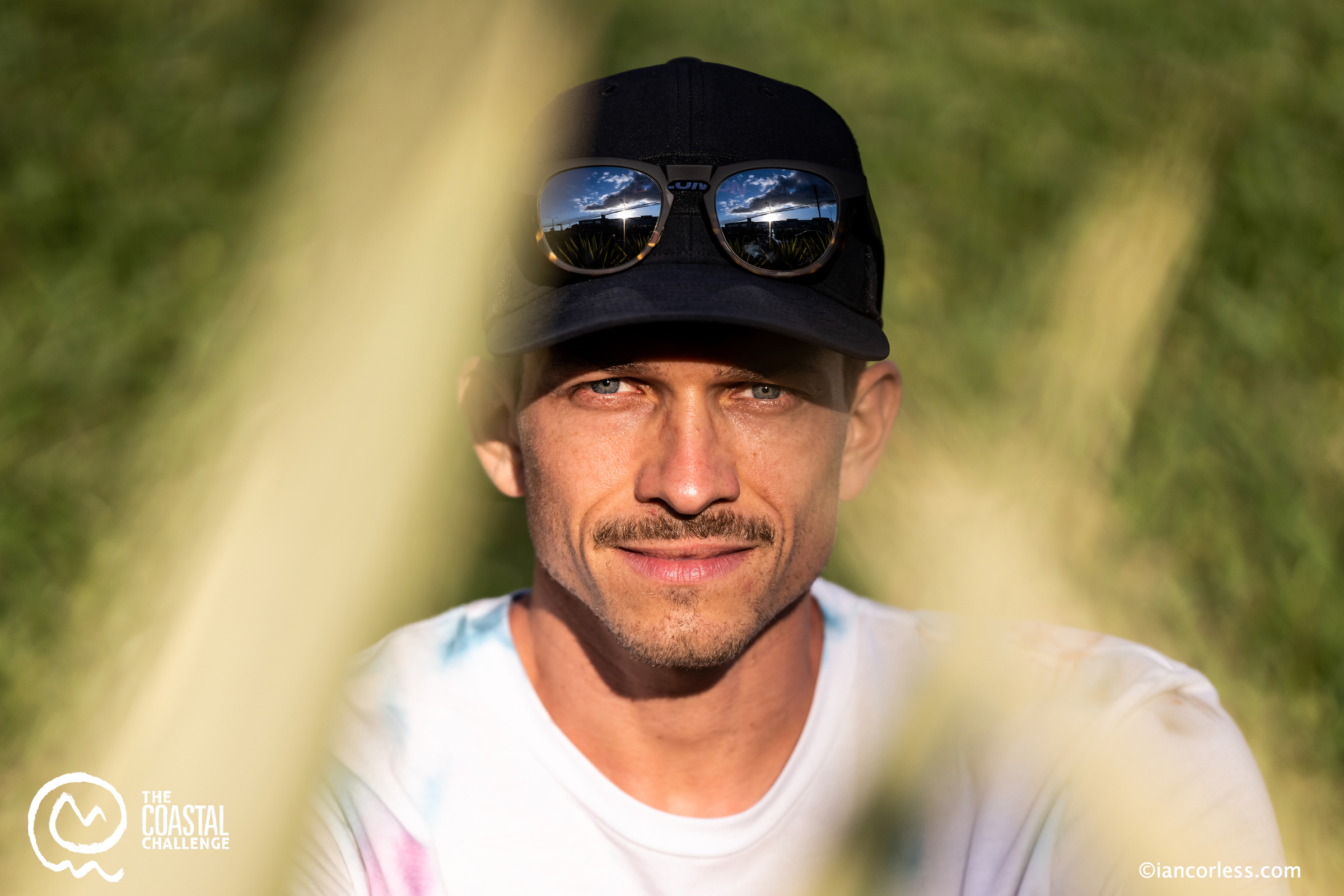
Of course, all the talk was about Mathieu Blanchard and Didrik Hermansen, we and they knew it was going to be a key day. The writing was on the wall when Didrik offered Mathieu his hand before the start, it was a clear statement of let the best man win.
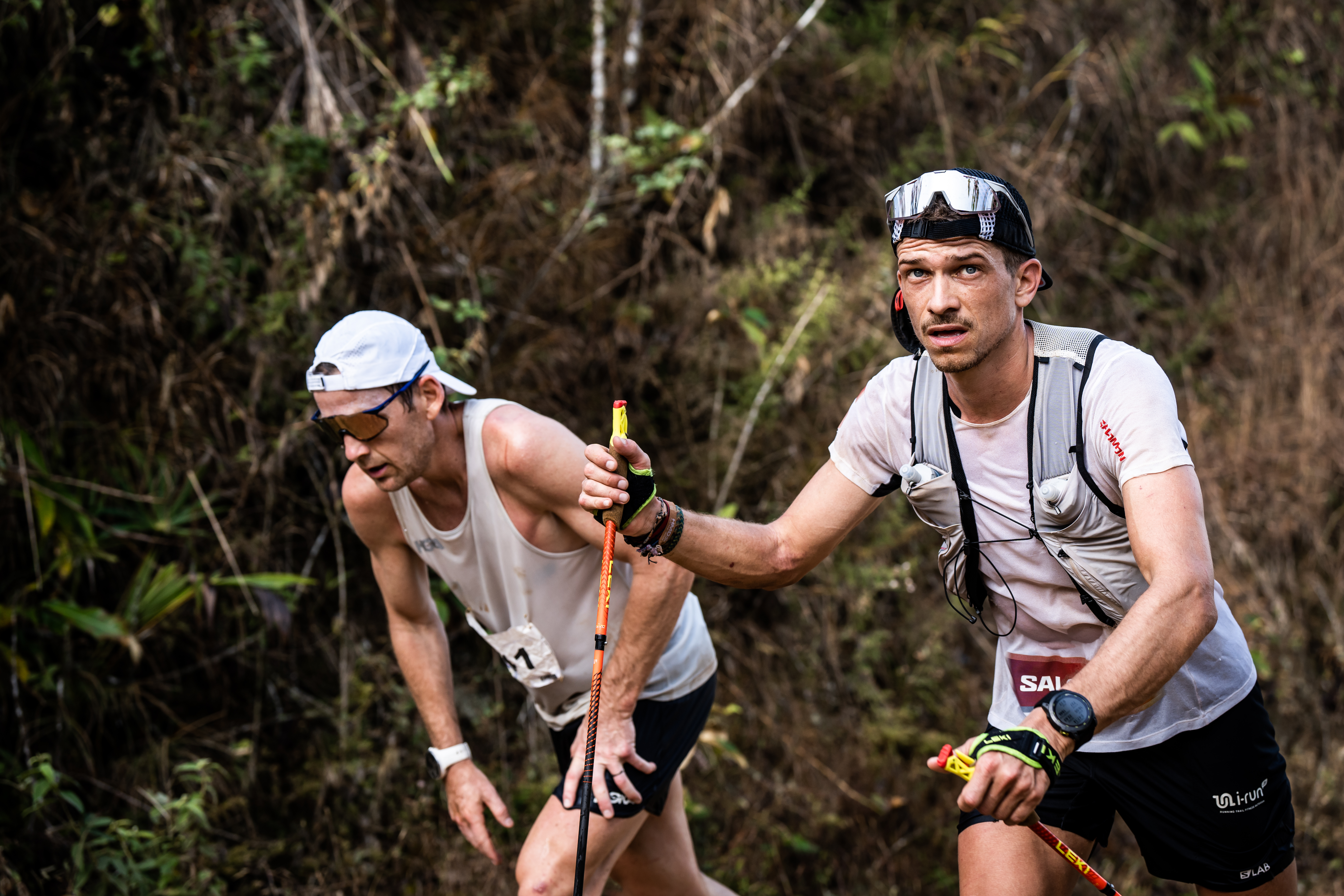
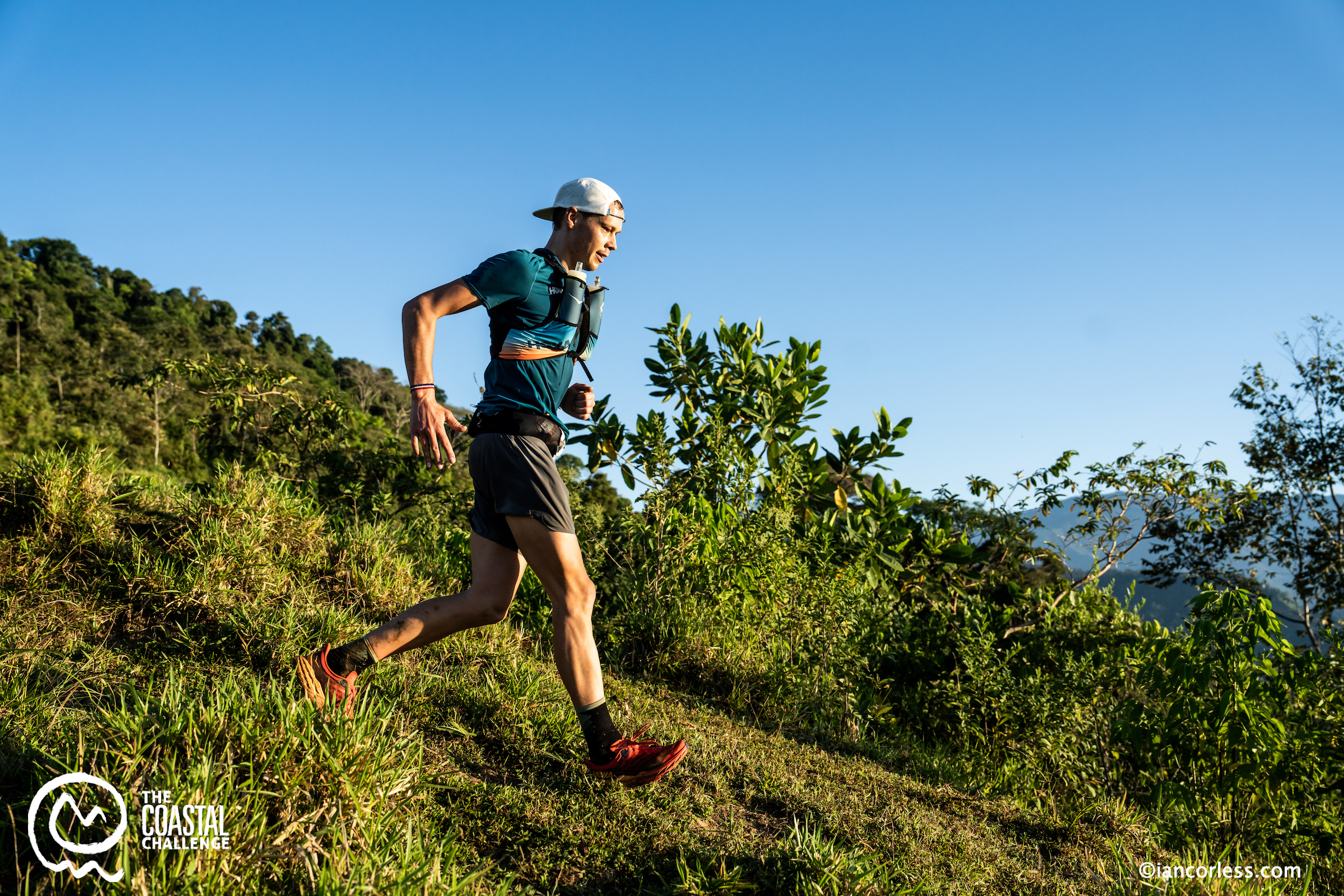
In the early stages the duo were matched but it didn’t take long before Mathieu dropped back on one of the early climbs. As the race progressed, this gap opened and at first it was difficult to ascertain if this was a tactic by Mathieu?
It was over 20-minutes later when Mathieu arrived. It’s fair to say, the 2023 TCC was decided today. Didrik’s effort, pace and consistency has been text book stage racing.
“After yesterday, I would not have been happy with 2nd. So the plan was to push the pace. Mathieu was having a bad day and he let me go early. I pushed and kept it steady. I opened a gap and more, and more minutes. It was motivating. I had considered taking it easy and saving something for stage 6, but, if Mathieu was having a bad day, I decided to push and get more time. It’s not over, we still have a day to go.” – Didrik Hermansen
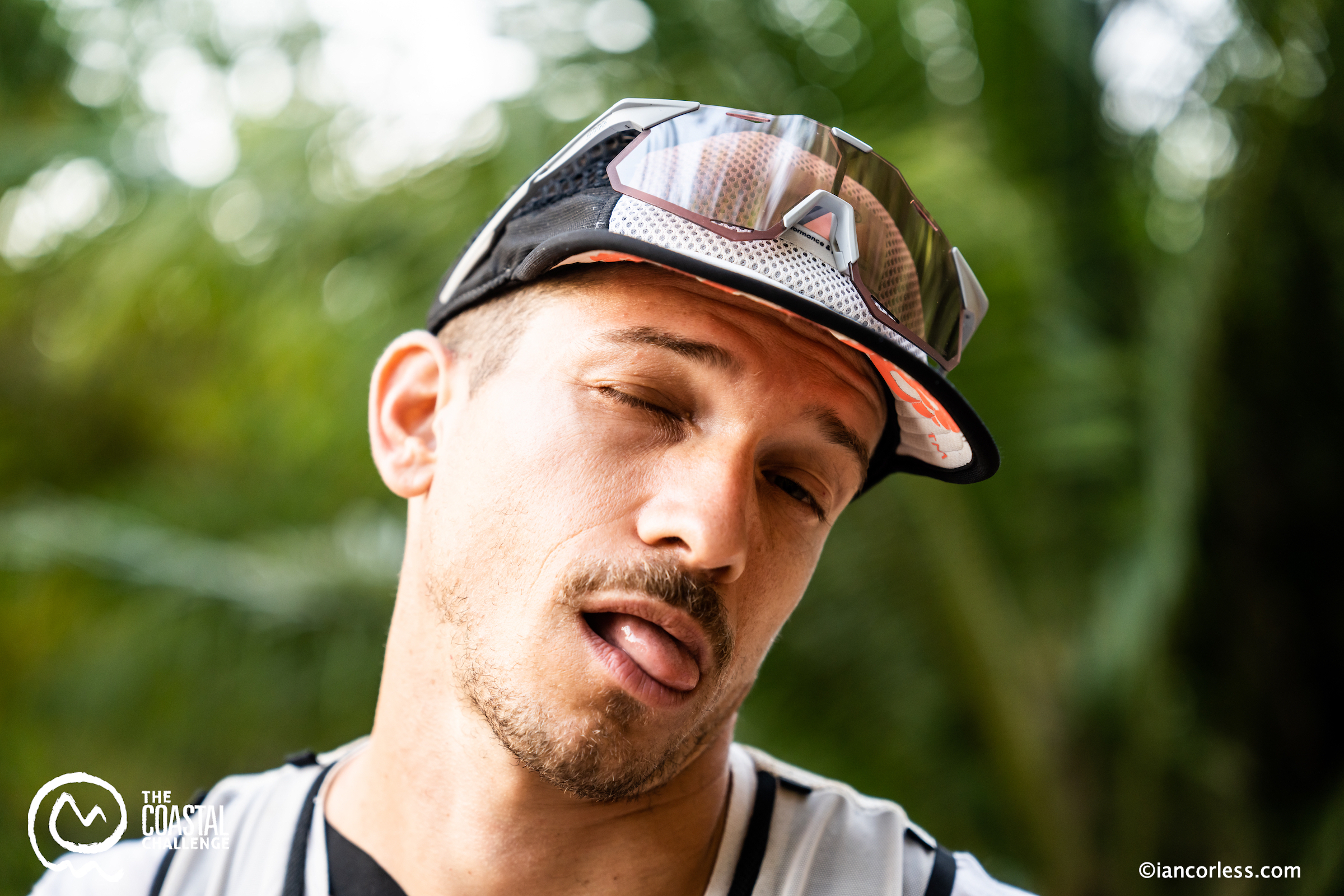
“Yes a tough day. But last night I had already decided to go easier. Yesterday I witnessed Didrik push the downhill at an incredible pace. I little bit mad maybe? But for me, it’s February, I have a long season and I can’t risk it all here in Costa Rica. Today we had another downhill like yesterday, he took many minutes again and it’s just not possible for me to get that time back when he runs so well. I came here for an adventure and fun, I didn’t expect these first 4-days and such a pace. I am very happy.” – Mathieu Blanchard
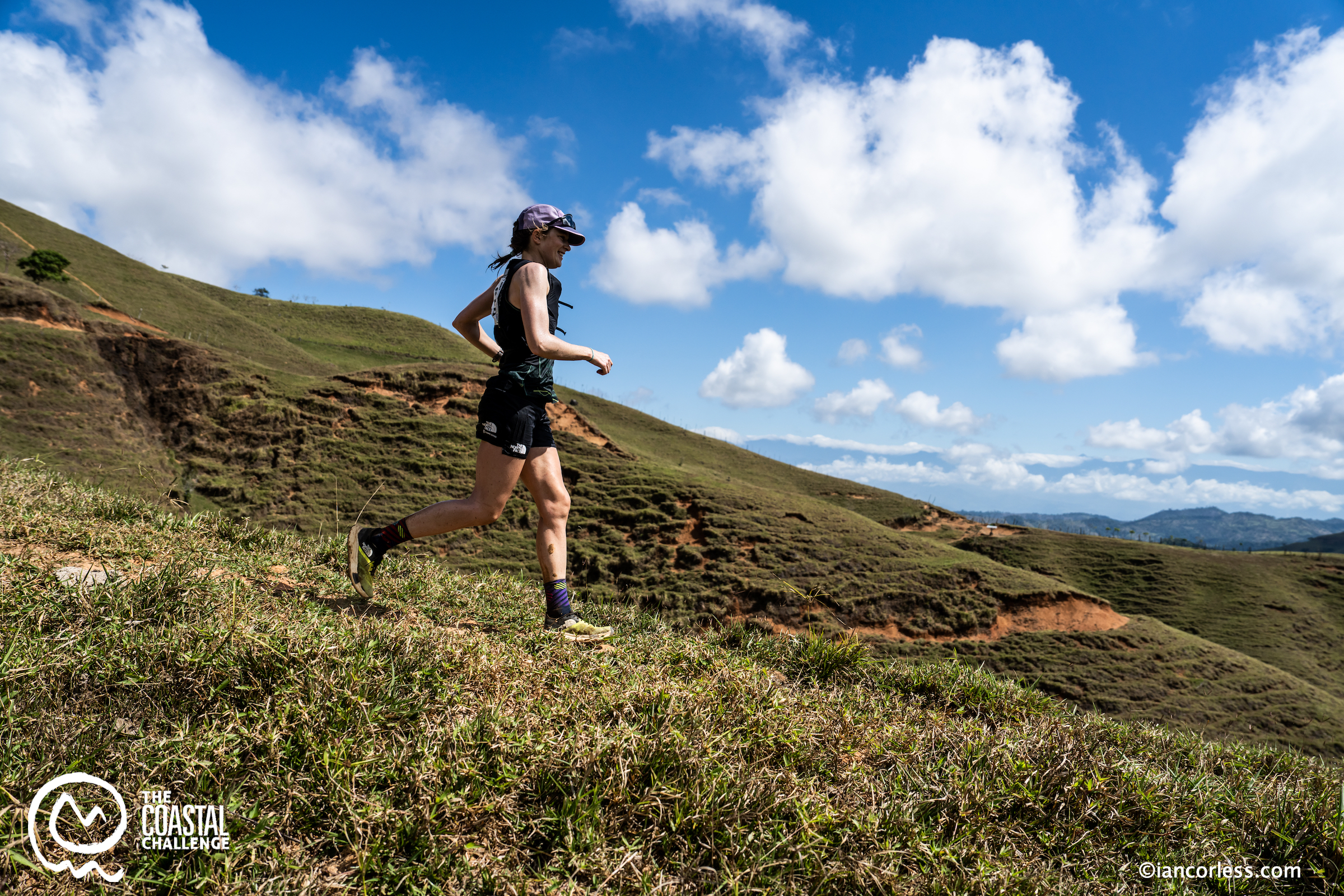
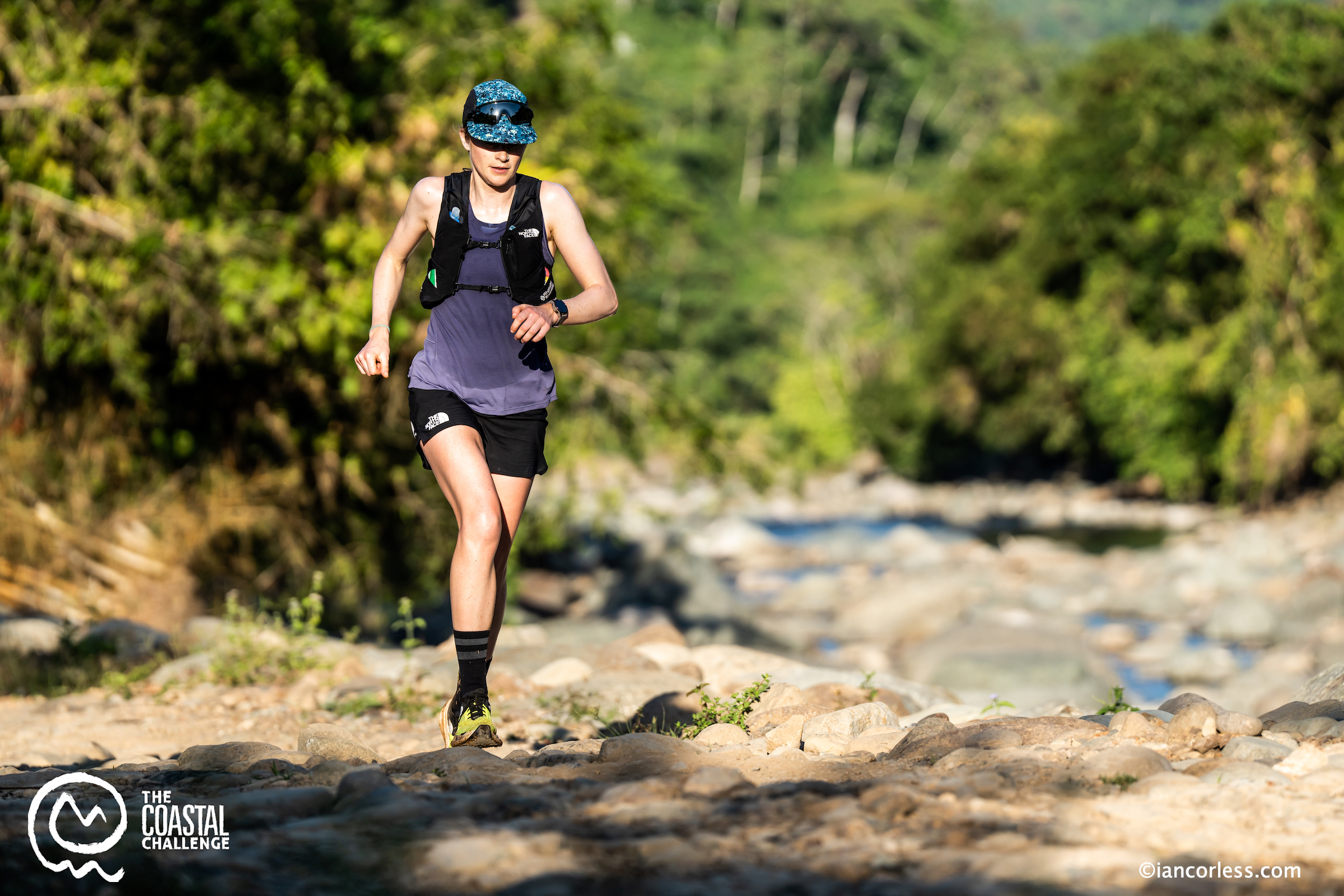
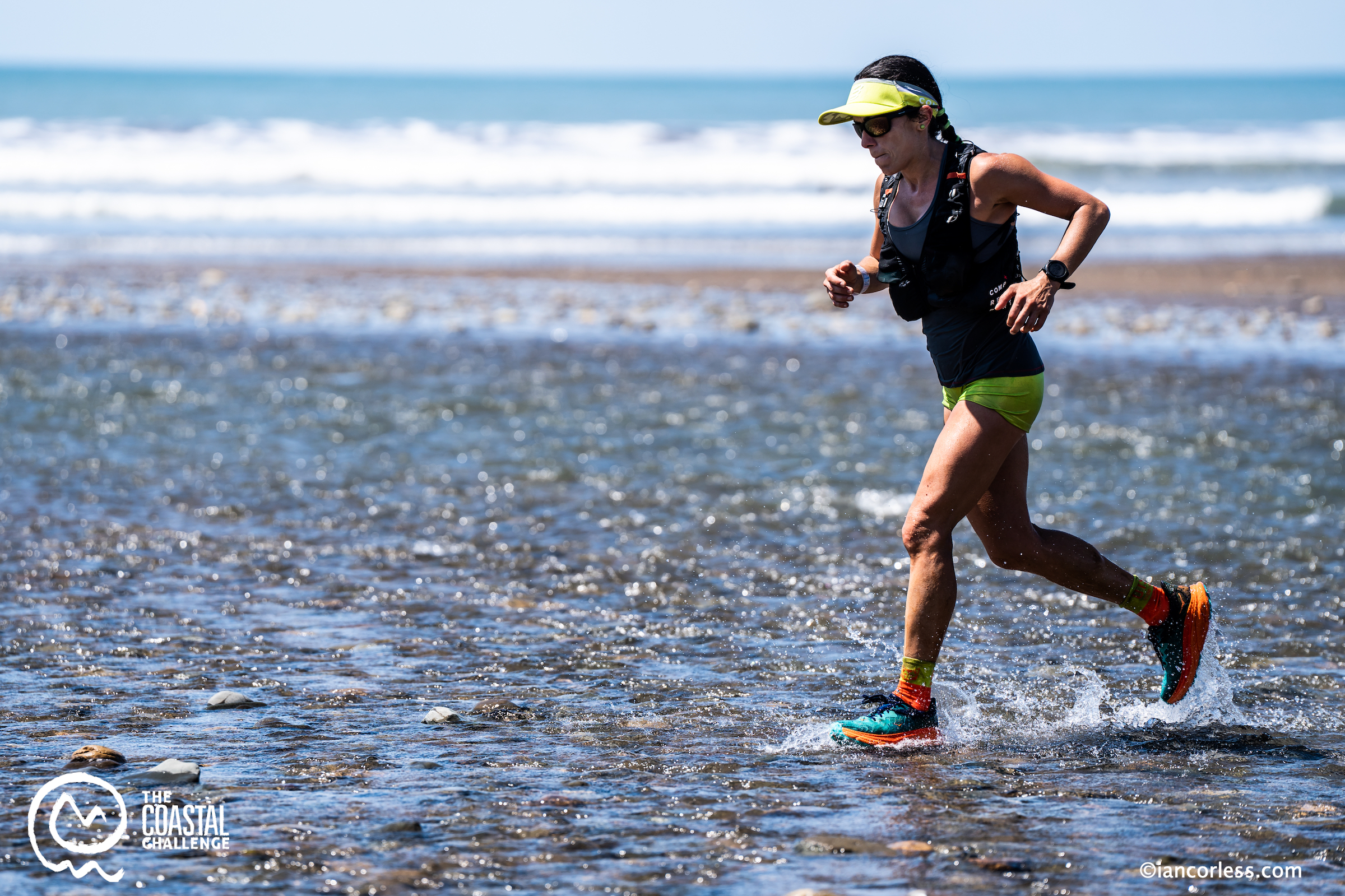
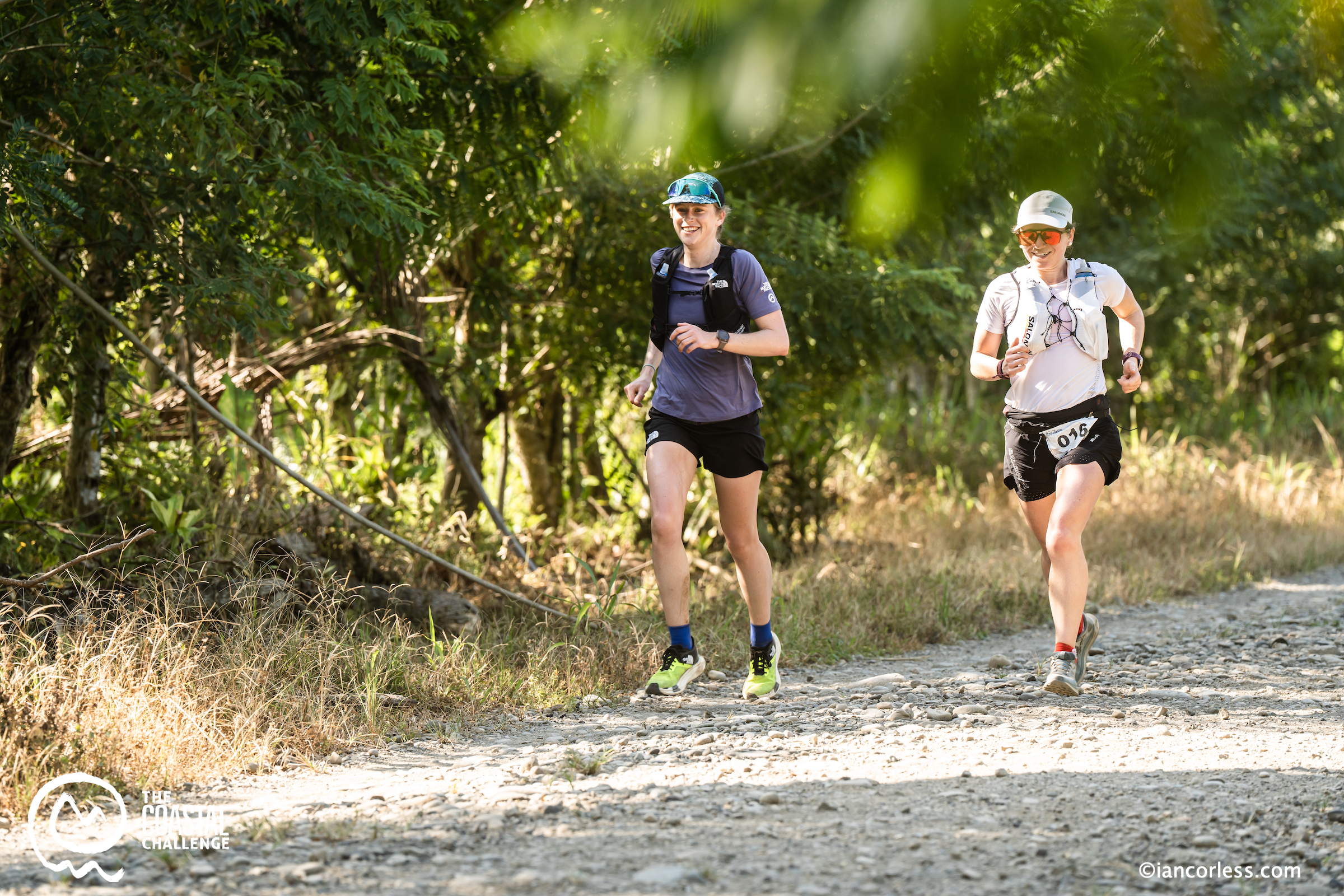
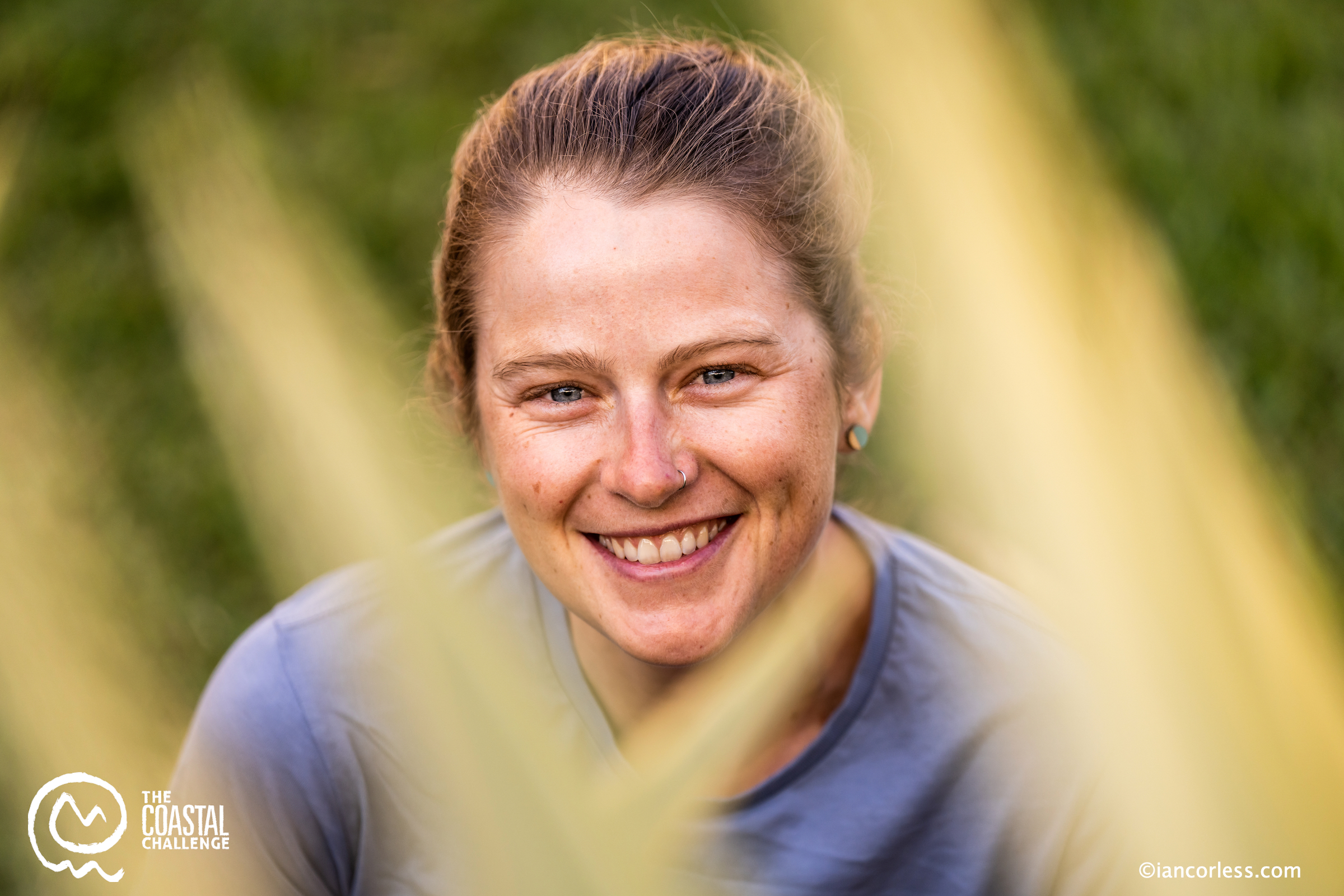
For the women, Katie Schide had a controlled and relaxed day. Her lead is far in advance of 2nd and 3rd and still she was able to take another stage win.
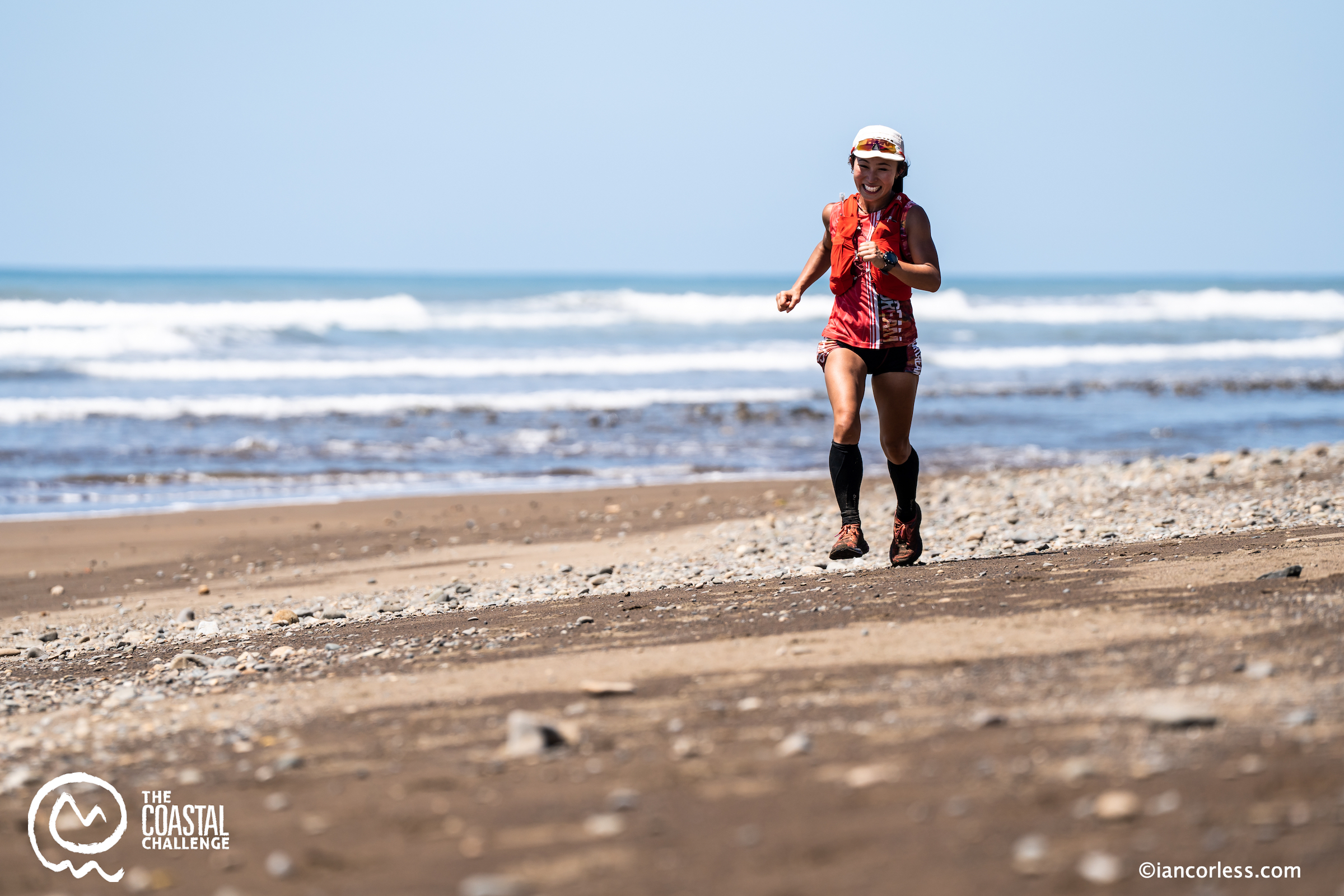
Behind, Tomomi Bitoh started strong leading Paolo Herrera. But as the day passed they switched places and although close together at the end, it was another solid 2nd for Paolo.
Tomorrow, the final stage at 35.7km and with 875m+ is to all intents and purposes a victory loop, if you can call running 35.7km a victory loop. With GC places decided, I don’t anticipate a charge from Mathieu, so, let’s expect a Pura Vida loop of enjoyment.
Stage 4 of The Coastal Challenge and today, the runner’s move away from the coast and climb high on the relentlessly rolling terrain that is backed by the Talamanca range.
Today, was an anticipated key stage for Mathieu Blanchard and Didrik Hermansen, the duo have been closely matched each day and despite Didrik’s best efforts, Mathieu has come 1st each day.
The duo today once again went head-to-head, it’s stunning to watch and also exhausting. The pace is unbelievable and between them it’s impossible to tell who is the most tired.
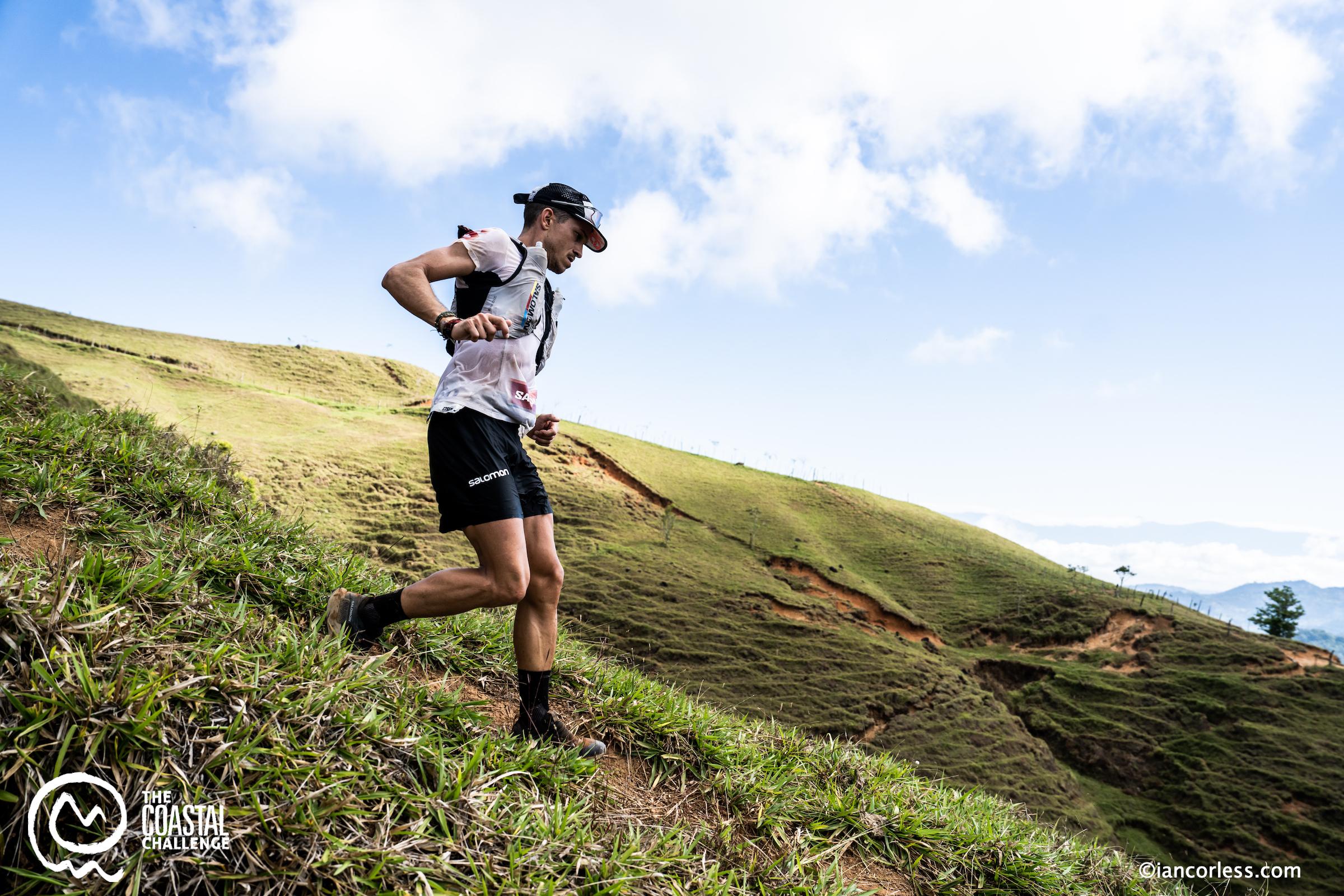
At each point along the route they were never more than meters apart but for those watching, and knowing the course, the crux would come at the end of the day with a very steep and technical descent to the line.
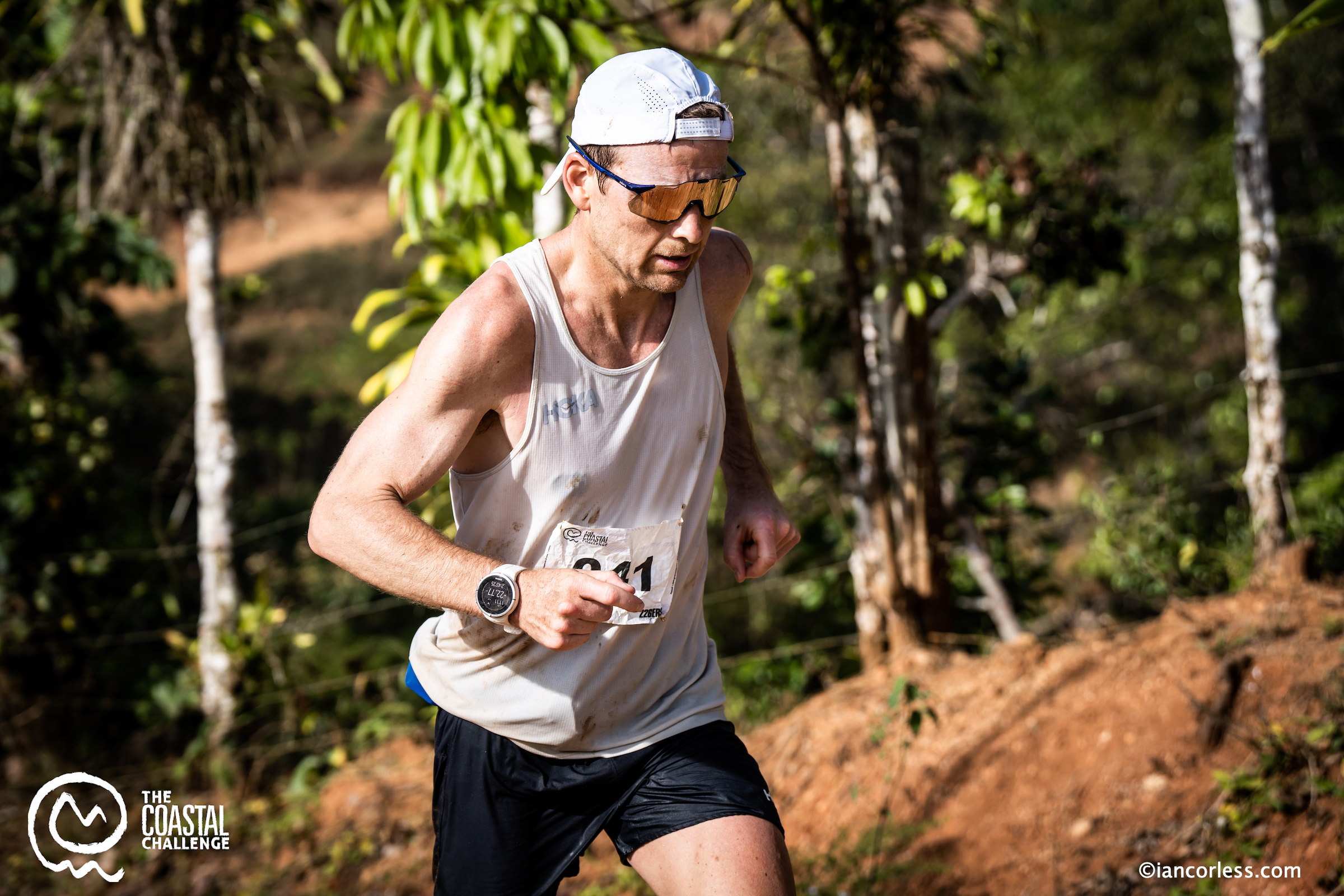
Didrik threw caution to the wind and attacked. The gap opened and opened and he crossed the line in 4:39:23.
The clock ticked, 1-minute, 2-minutes and Mathieu crossed in 4:42:23, exactly a 3-minute gap. Wow! Seriously exciting racing and then the calculations, had Mathieu held the overall on GC?
Yes, 16:48:32 for Mathieu and 16:49:16 for Didrik. Before stage 4, the 19th edition of the TCC was witnessing an epic race, now stages 5 and 6 are going to be epic. Who’s your money on?
Dani Jung once again placed 3rd looking relaxed despite a sleepless night. He had questioned wether to start, gladly he did.
“I had to do something, I felt during the days I was better than him on the downhill and I was willing to take the risk, I couldn’t believe I would take 3-minutes… It’s a real fun battle, we are neck-and-neck, we are so similar in strength. It’s fun, it’s cool. Nice to finally take a stage. I feel as though I could have pushed harder. I wanted to win and obviously reduce the gap. I am prepared to fight and compete, if I come 2nd so be it, but I will fight!” – Didrik Hermansen
By contrast, Mathieu looked relaxed post-race and he was candid with his thoughts.
“Didrik went down the last decent like a mad man. It was steep, technical with many potential problems. I have a long season ahead and I wasn’t prepared to risk everything here. I feel good, so, let’s see what happens.”
For the women, Katie Schide was a long way clear of any other competition and looked relaxed on the trail. Victory in the 2023 The Coastal Challenge is hers to lose, so, she just needs to run smart over the next two days.
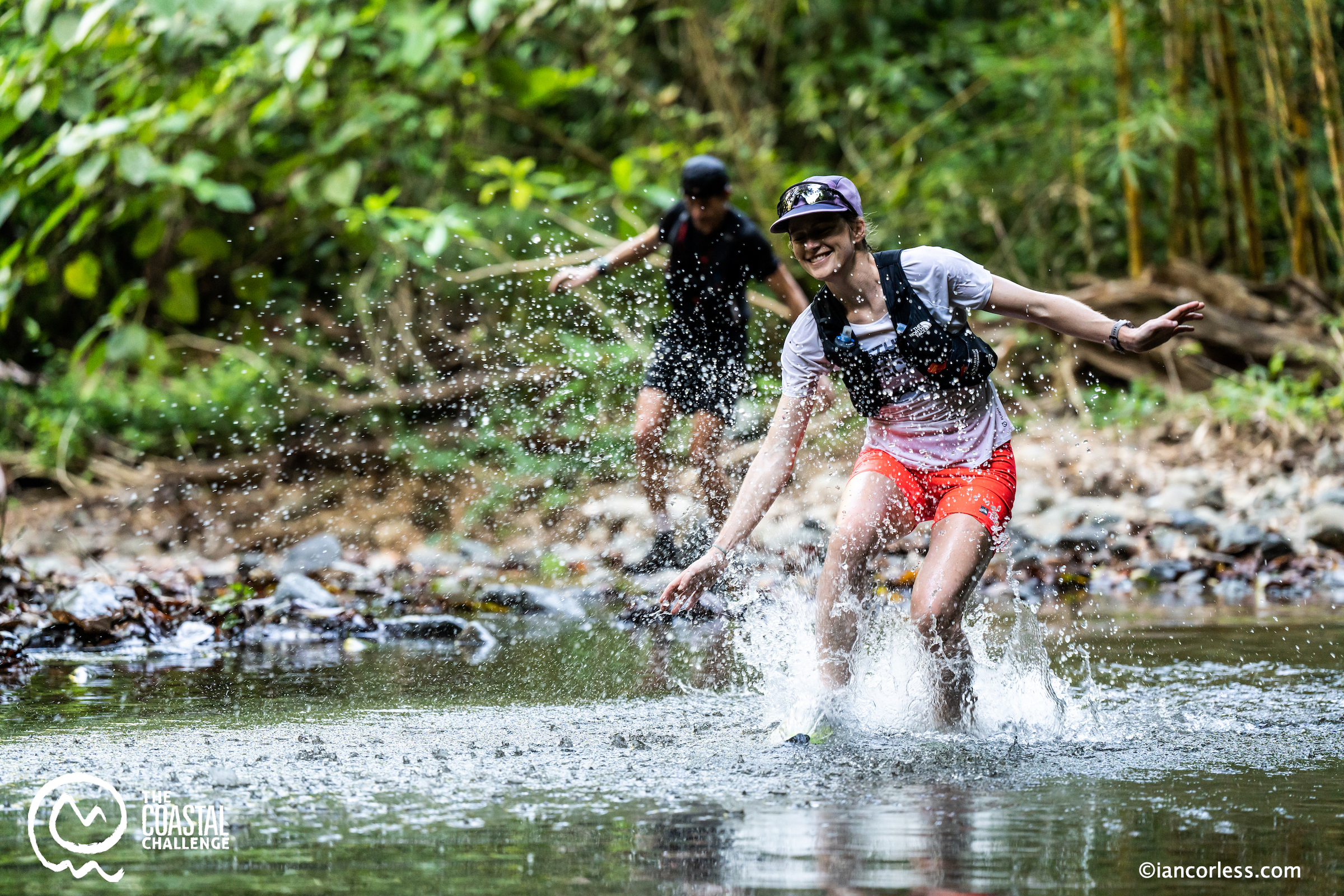
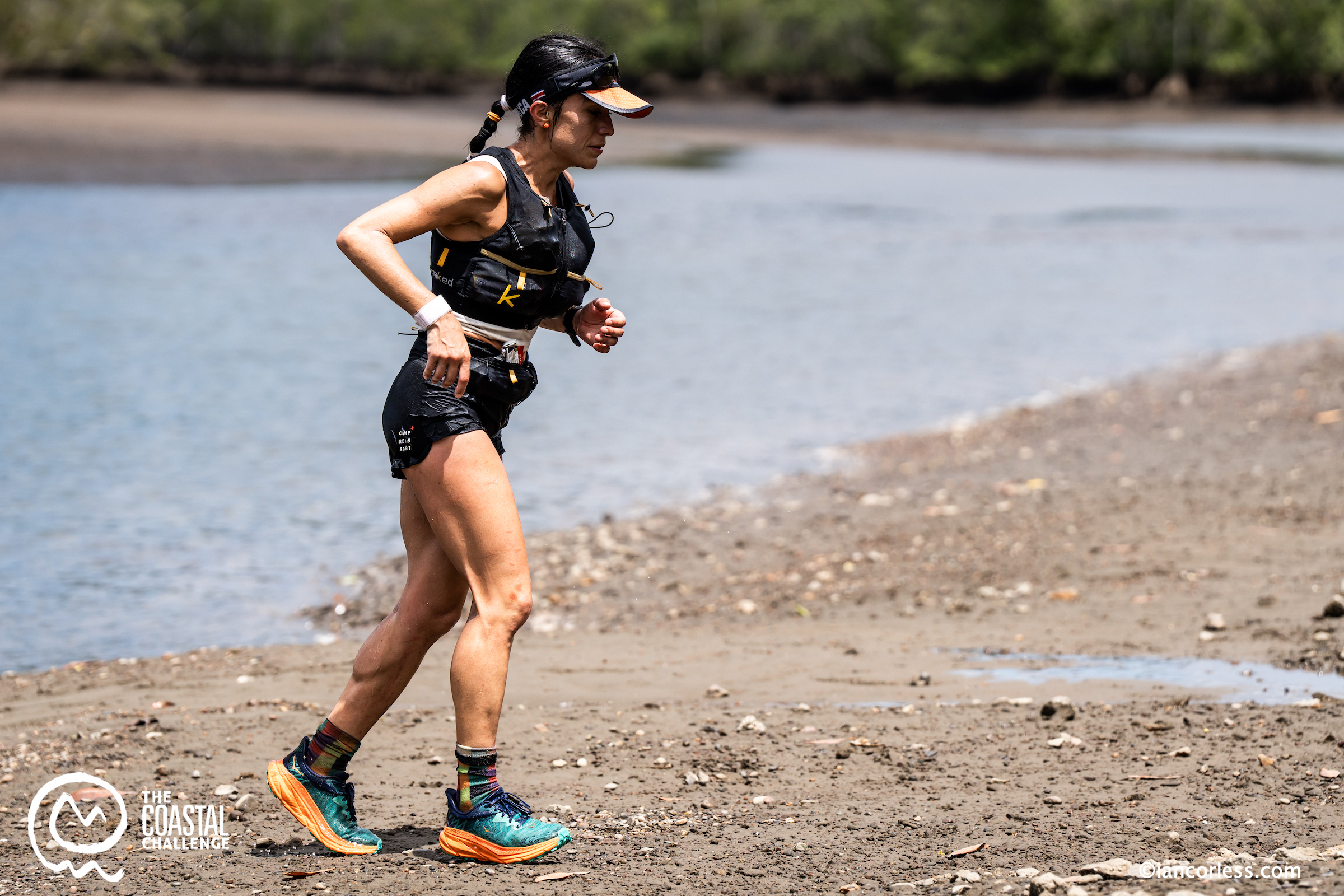
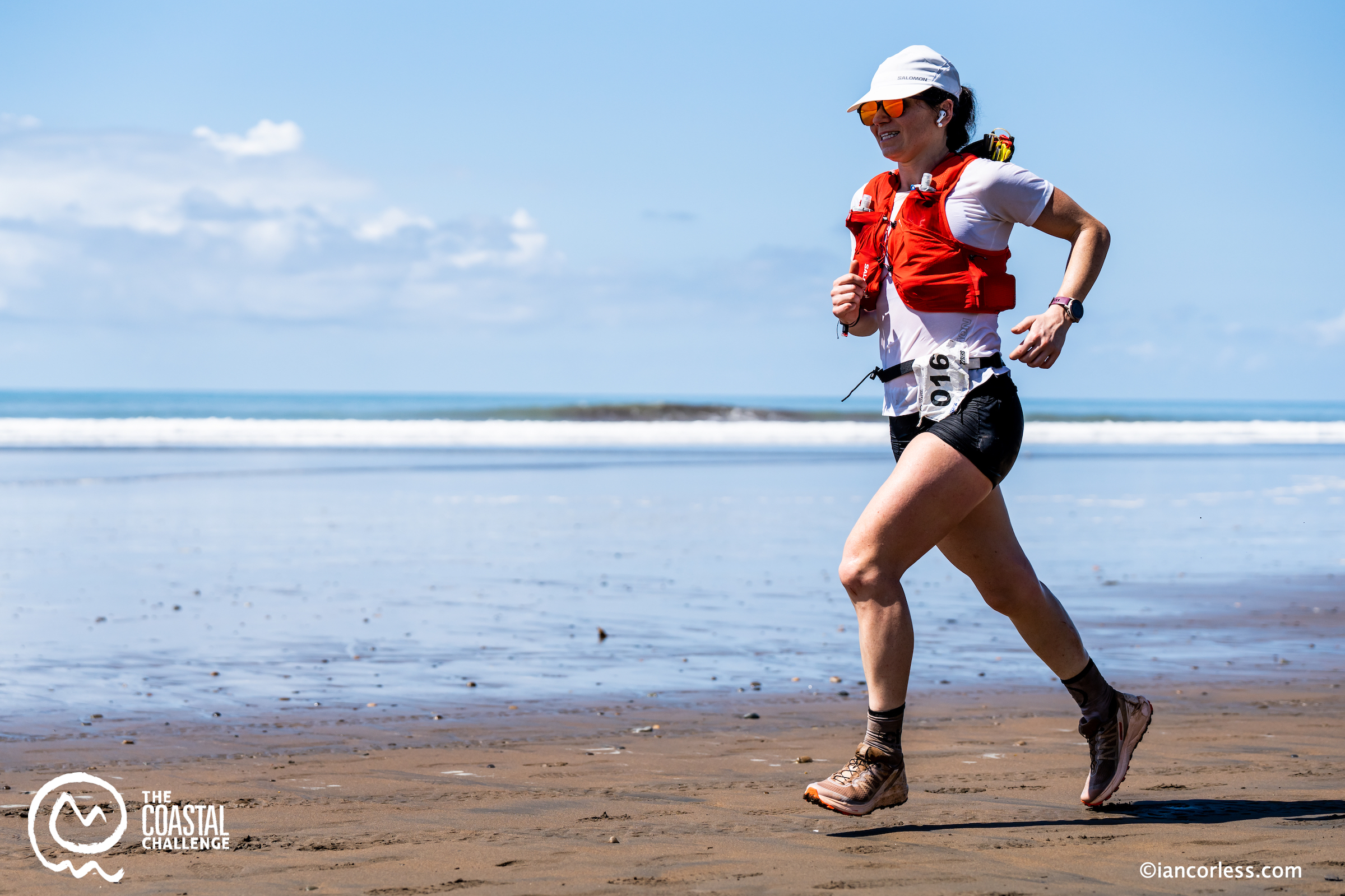
Fire roads, steep climbs, brutal descents and eventually a beach section arrives before several water crossings and then a very demanding road section leading to camp 3.
It may come as no surprise that Mathieu Blanchard and Didrik Hermansen dominated the day. The duo battled it out foot-for-foot in an impressive display of tenacity, grit and endurance.
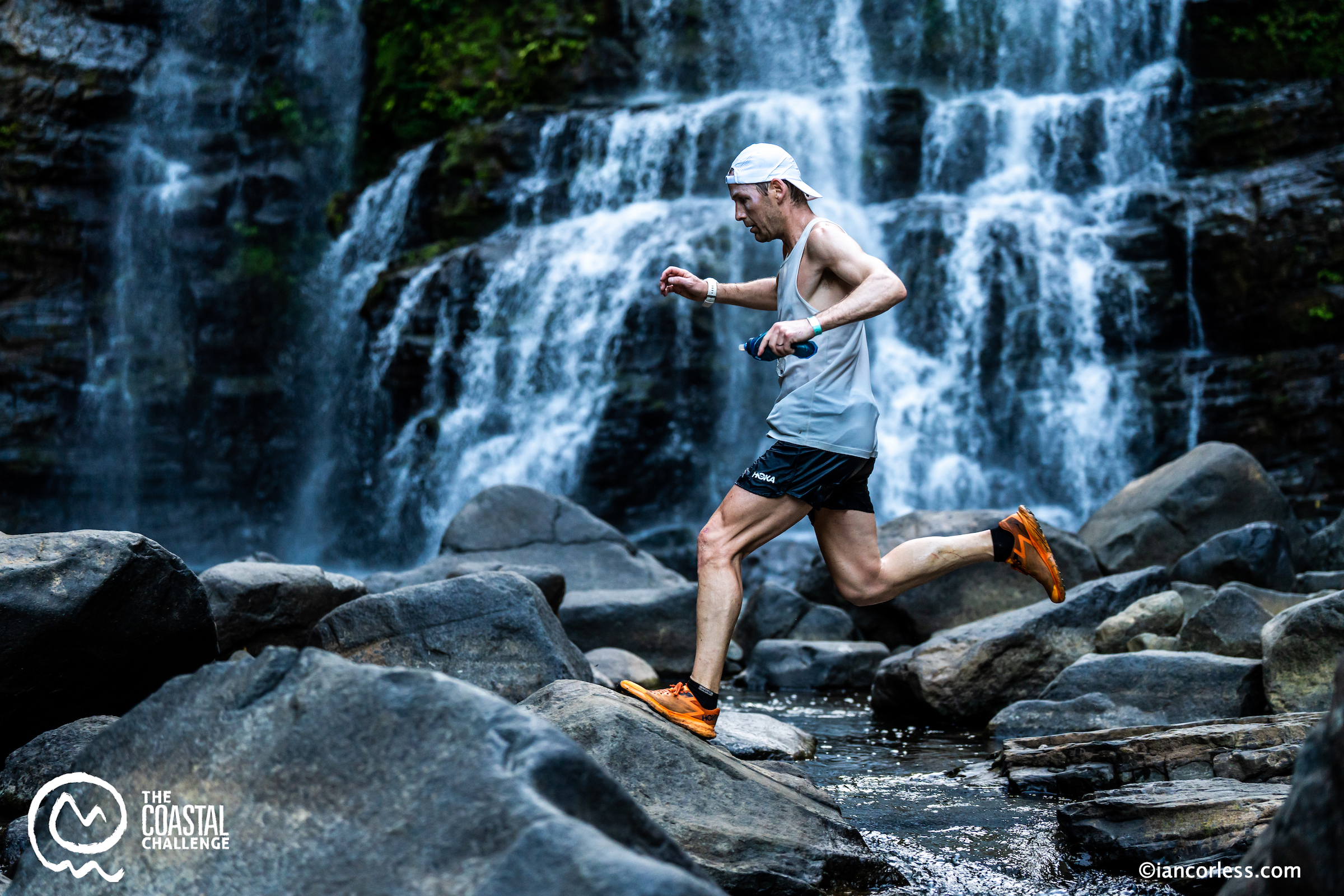
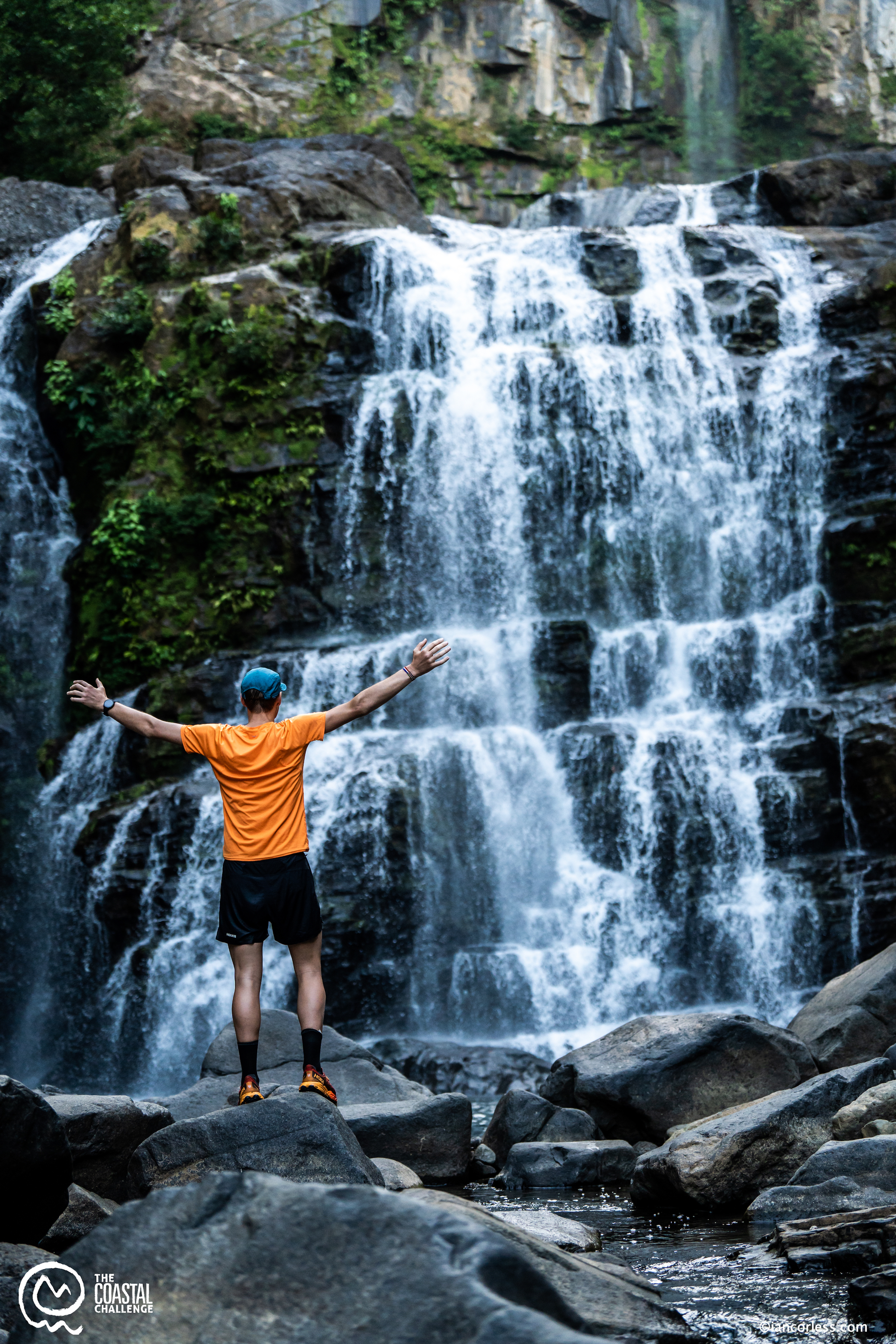
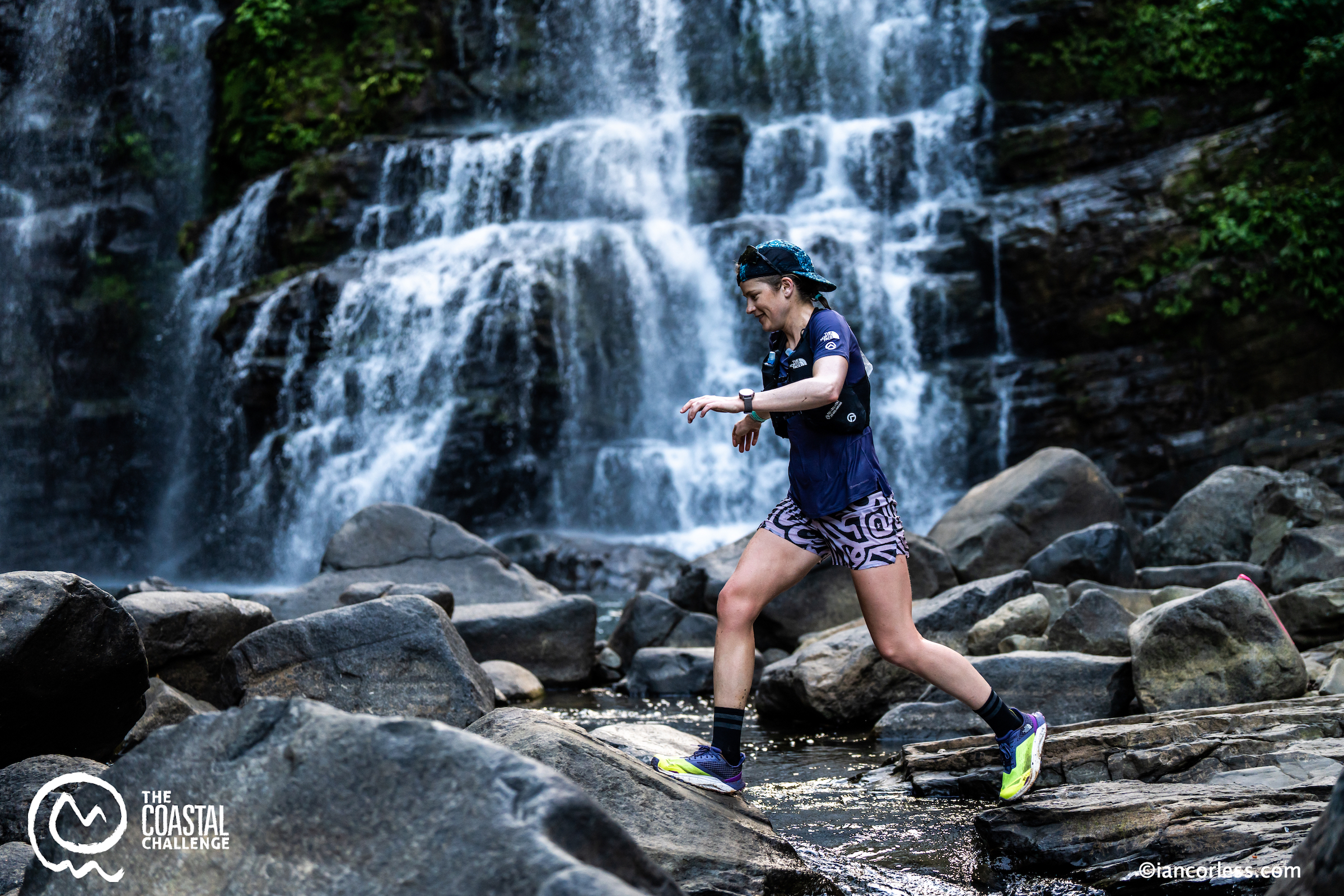
For the women, Katie Schide set the pace early on and by the waterfall she already had a huge lead. When Marianne Hogan finally arrived, all was not well, she was suffering… Marianne would eventually drop at CP2 with a sprained ankle.
Katie once again clinched victory with a huge margin, she just needs to now run smart for the remaining three days. Paolo is on a strong 2nd and Tomomi a secure 3rd. However, we are only halfway through TCC and the first three stages have only confirmed one thing, anything can happen!
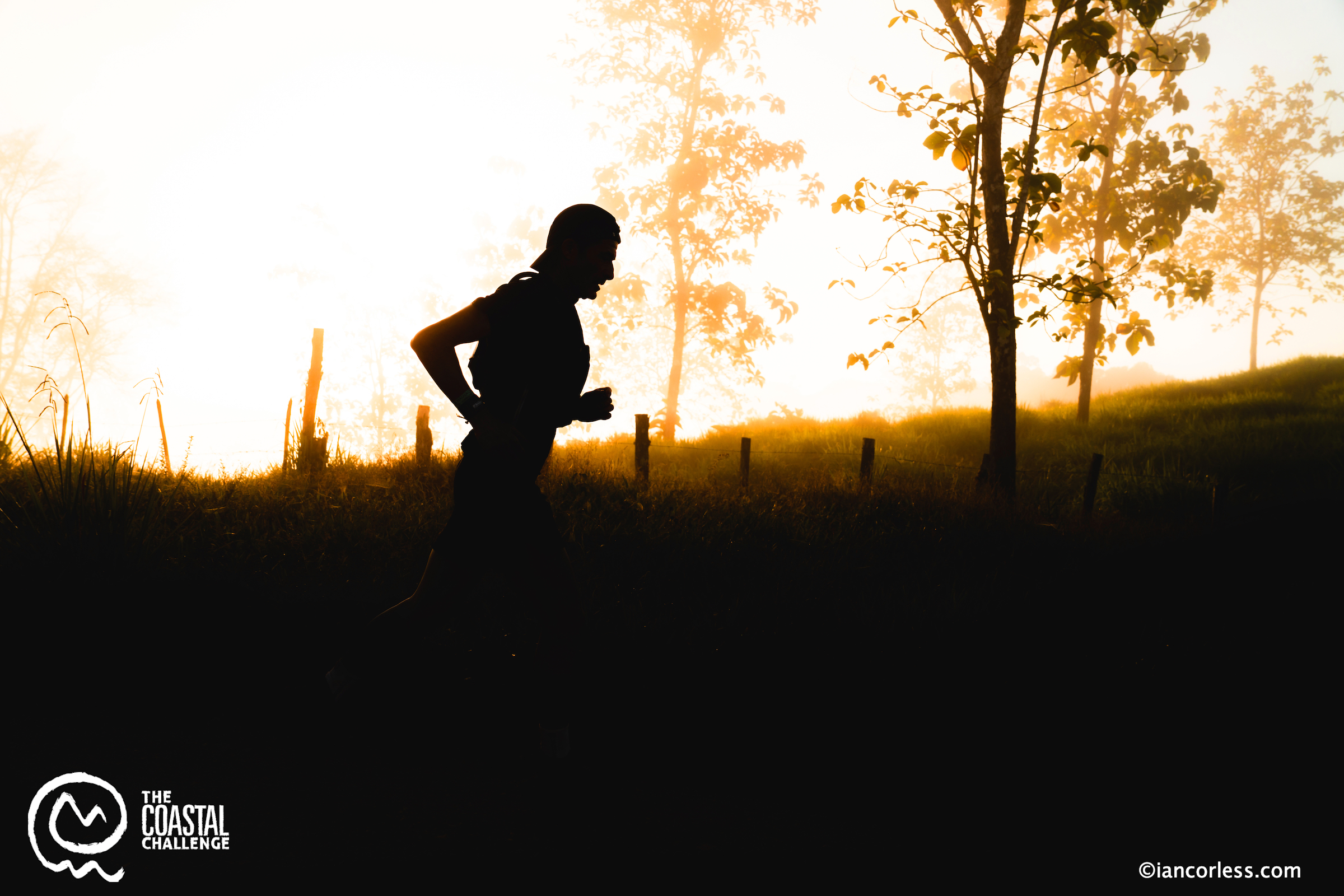
It was a 0330am wake-up in camp this morning with race start at 0530am. It may sound early, but trust me, the earlier hours pay dividends for everyone. Body clocks are now reset, bed between 1900-1800, wake-up 0330.
Sebastian Krogvig unfortunately succumbed to his sickness and did not finish day 1. He will rest and recovery and hopefully rejoin the race in the later stages for fun.
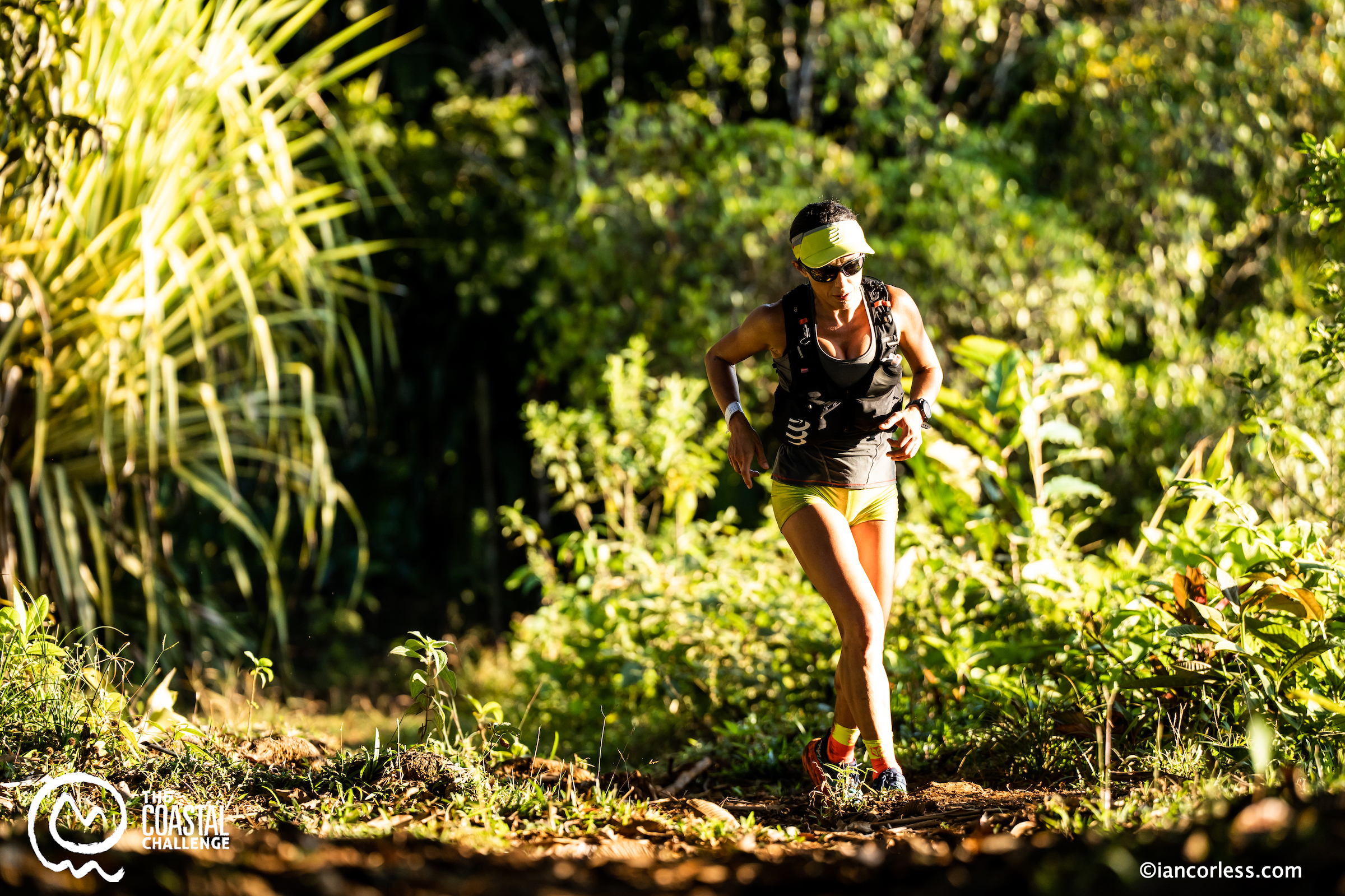
Mood in camp was buoyant, however, nobody was under any illusion of the severity of the TCC. The heat and humidity are one thing, but the fire roads, climbs, technical trails and long stretches of no shade a punishing.
“They say Marathon des Sables is hot, it’s nothing in comparison to this. I was in the ‘notorious’ October MDS that had intense heat, trust me, it’s hotter here!” – Mathieu Blanchard
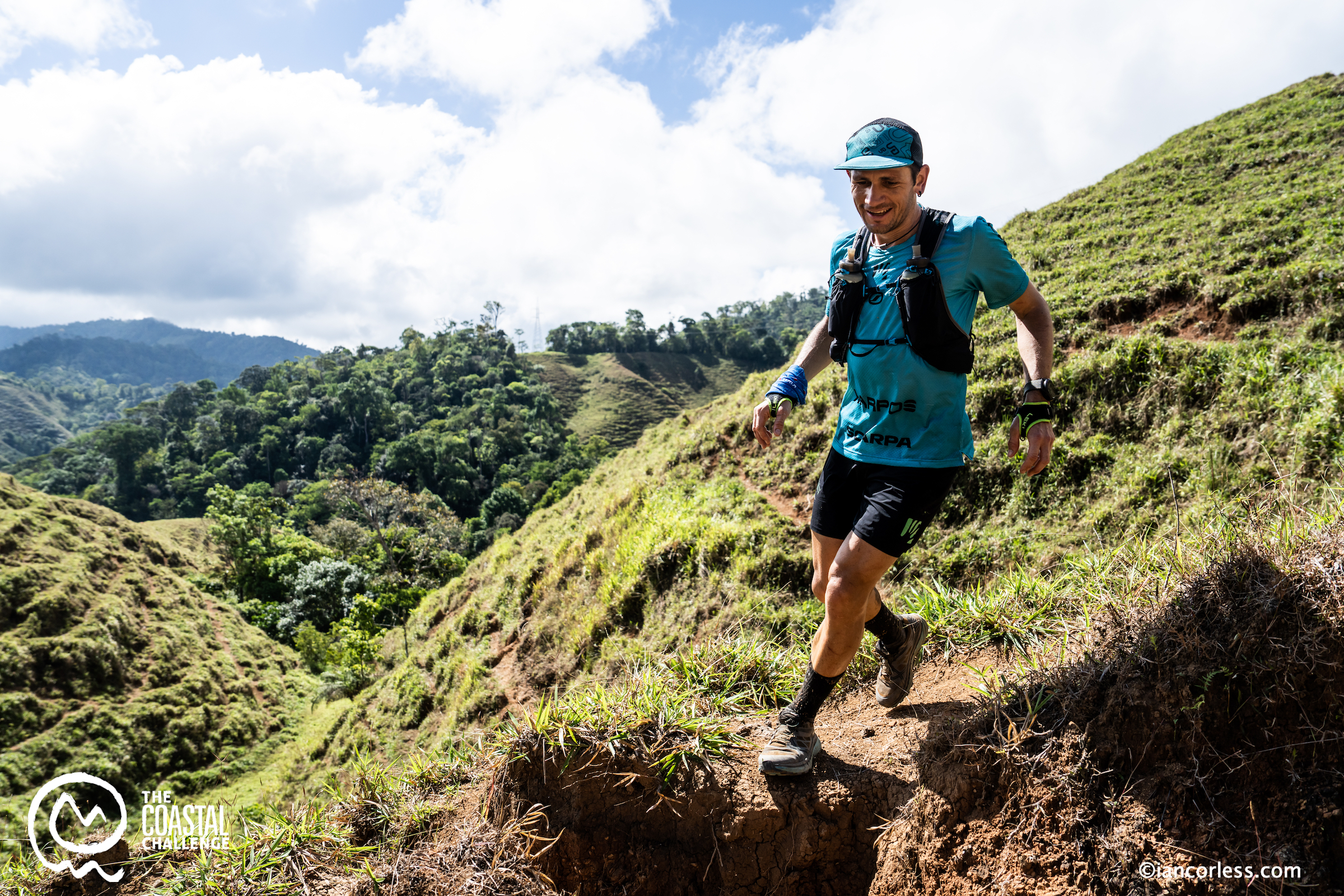
Climbing out of camp, mountain man Dani Jung was in his element and he lead Mathieu Blanchard and Didrik Hermansen. Peter van der Zon was a way back, it was obvious he was struggling… As he passed he mentioned tight hip flexors.
For the women, Marianne Hogan had a very small lead over Katie Schide. Katie looking strong, the previous night she had questioned if she should withdraw from the race as illness from previous days had returned on stage 1 making for a tough day.
Didrik and Mathieu set a relentless pace, they are very well matched. Running at this pace and in this heat and humidity, victory may well come down to the one who manages effort the best, it’s a fine line.
In the final 10km Mathieu opened a slender lead and Didrik chased. The gap remained and it was another victory for Mathieu.
In the women’s race, Katie opened a gap on Marianne and in the final 7km that gap opened, post-race on the finish line Katie discussed her race:
“I was so happy to recover from yesterday, that was helped by cooler temperatures and a climb to start the day today… I had planned to run with Marianne but on one of the more technical sections I opened up a gap. When I eventually looked around Marianne was not there, I hope she is okay?”
Marianne was okay and finished strong with a smile looking relaxed and at ease. With 4-days to go and a long day tomorrow, there are no guarantees, the men’s and women’s races are still wide-open.
The biggest change of the day was with the 3rd place woman, Paolo Herrera. She ran an incredibly strong and consistent race to finish with a good margin over Tomomi Bitoh, this making the local Costa Rican contingent very happy.
It was an early start (0300) leaving San Jose and heading to the Pacific Coast for the stage 1 of the 2023 The Coastal Challenge starting at Del Rey beach, Quepos.
This year, the shorter Adventure category and the longer Expedition category would run different distances for stage 1. In the past, they have run the same course.
Expedition would run 41km with 1071m vertical gain and the Adventure, 32km.
Getting underway before 0800, the rewards were blessed with cooler’ temperatures for the first hour, however, cooler is all relative when on the coast, it was still hot!
Overnight, Sebastian Krogvig unfortunately had picked up some sickness, although feeling generally okay, it was clear as the stage started he was not 100%. He struggled with any pace, it was a tough day…
For the women, Katie Schide and Marianne Hogan ran together and behind, Tomomi Bitoh followed.
Checkpoint 1 and there was no change, the pace by Didrik and Mathieu was fast.
As the race progressed, Didrik and Mathieu took a wrong turn and lost in the region of 1.5km allowing Peter and Dani to take the lead. They chased, caught them and then once again pushed ahead in 1st and 2nd.
Peter started to struggle in the heat and Dani started to hold on to the duo. However, Mathieu found the energy to break away and take victory on stage one, closely followed by Didrik and Dani.
“Very happy, a hot day. In Canada it was -40, today 40-degrees here, that is a big change…. My body handled the waether today. It’s a big Tropical environment, wonderful trees, amazing bridge and waterfalls.”– Mathieu Blanchard
Tomomi came in securing 3rd place, all smiles. Last year, Tomomi caught Covid one day before the race and had to miss four stages, this year, she is so happy to be back.
Faces told the story at the finish, the heat and the humidity had taken its toll, it always does on stage 1, it’s such a shock to the system without pre-acclimation, something that Marianne and Mathieu had done.
“I heard the sound of animals in the jungle, I turned to Peter and said this is incredible, ‘This is much more atmosphere than UTMB!” – Dani Jung
Runner’s have arrived in San Jose, Costa Rica ahead of the 2023 edition which starts on Sunday February 5th.
Admin day, pre-race protocols and race briefing will soon be completed and then an early morning journey to Quepos and the start line of stage 1 awaits.
For 2023, the runner’s in both Expedition and Adventure categories will experience some new route changes and distances. Notably, the expedition category, on paper, appears to be a tougher race.
Stage 1 is always brutal as for many, the heat and humidity really takes a hold and exhausts the un-prepared body. In the past, this stage has hovered around the 30km mark, for 2023 it will be 41km with 1071m+ for the Expedition category.
Stage 2 40km and 1828m+
Stage 3 49km and 1884m+
Stage 4 35.5km and 2434m+
Stage 5 40.6km and 1670m+
and the final stage 6 35.7km and 875m+
This makes a total 0f 241.8km and 9762m+.
For the shorter Adventure race, unlike in past editions, stage 1 will be shorter than the expedition at 32km.
Stage 2 17km
Stage 3 16.5km
Stage 4 12.5km
Stage 5 22.3km
Stage 6 35.7km
The Adventure race totals 136km with 4032m+.
With an International line-up, all eyes will be on the front of the race with a stellar male and female line-up.
Mathieu Blanchard, Didrik Hermansen, Sebastian Krogvig, Dani Jung and Peter van der Zon will go head-to-head for the TCC crown. Sadly, local ever-present and multi podium finisher of the TCC, Erick Aguero will not start due to injuries sustained in a fall.
UTMB one and two, Katie Schide and Marianne Hogan will once again do battle along with Tomomi Bitoh from Japan.
Departing from San Jose around 0330am, the journey to the coast will be undertaken in darkness. The hope is that runner’s can start the stage as early as possible, therefore taking advantage of cooler temperatures before the heat of the day arrives.
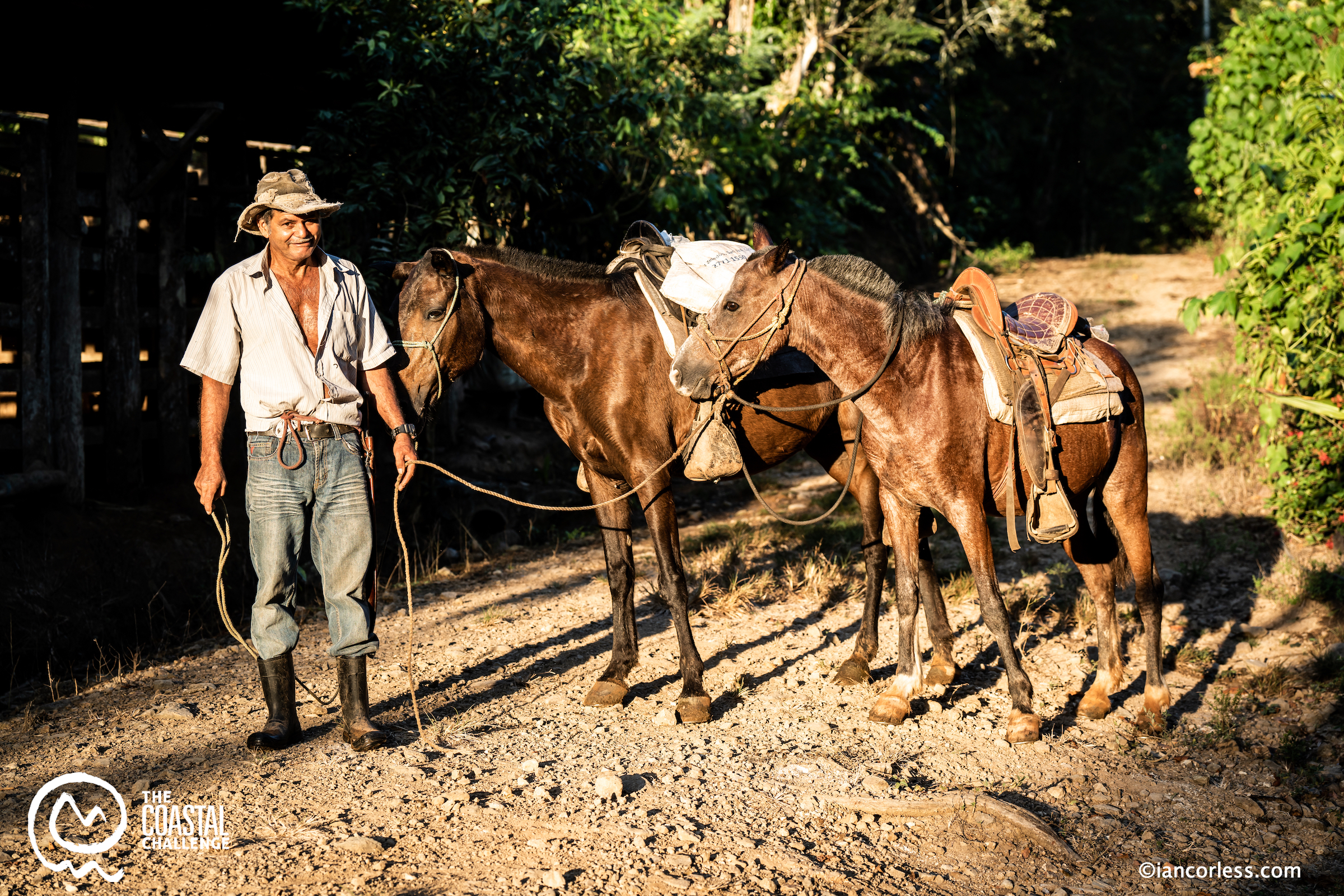
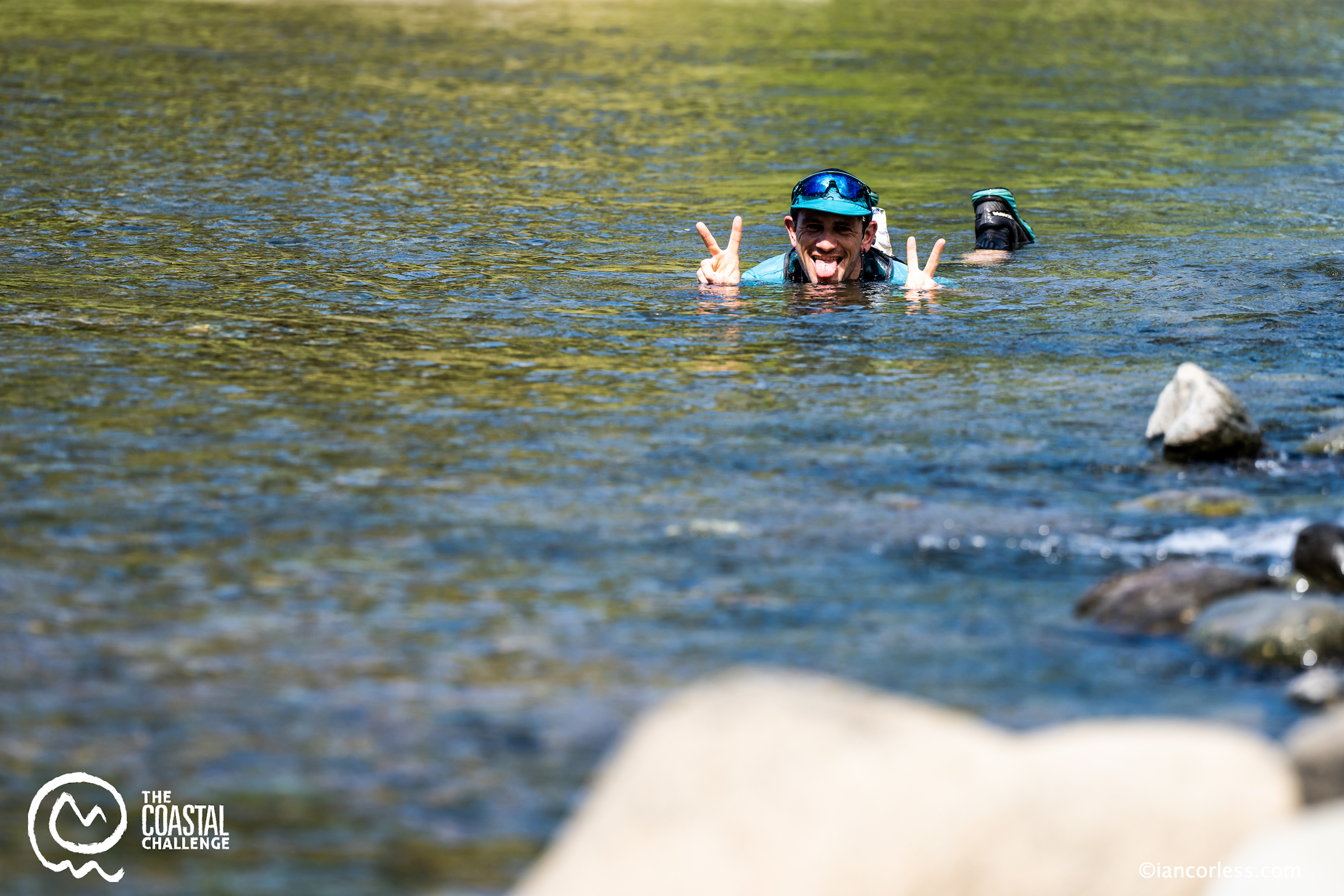
The TCC is the ultimate Costa Rican multi-day adventure. The route hugs the coastline of the tropical Pacific, weaving in and out of the Talamancas; a coastal mountain range in the Southwest corner of this Central American country. The terrain is ever-changing and challenges each participant, from wide, dusty and runnable fire trails to dense and muddy mountain trails. Add river crossings, boulder hopping, swimming through rivers, passing under waterfalls, and long and relentless beaches, TCC is a unique experience. Finally, the finish will come in the incredible Corcovado National Park, a Unesco World Heritage site with a stunning final loop around Drake Bay. After an evening relaxing, the runner’s will depart for their journeys back to San Jose via speedboat to Sierpe and then a follow on coach trip.
“TCC has always grabbed my attention, February is early in the year, so, there are not many races. For me, it will be a challenge, I’m usually home skiing in Norwegian winter and in 2023 I will be in an exotic race in the Jungle – it’s exciting! The landscapes and nature looks spectacular! The trails look challenging and fun, a perfect mix of racing and adventure.” – Sebastian Krogvig
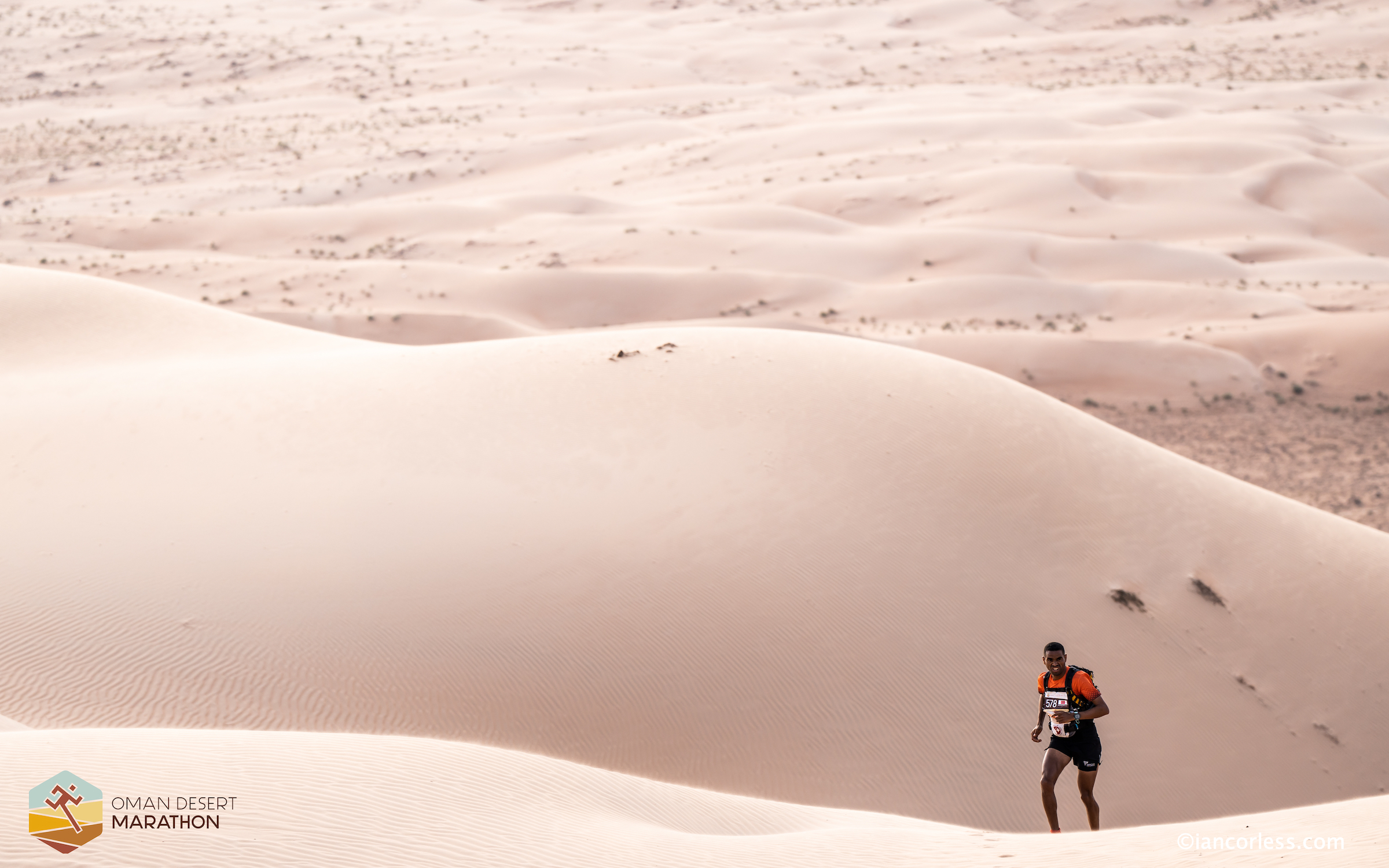
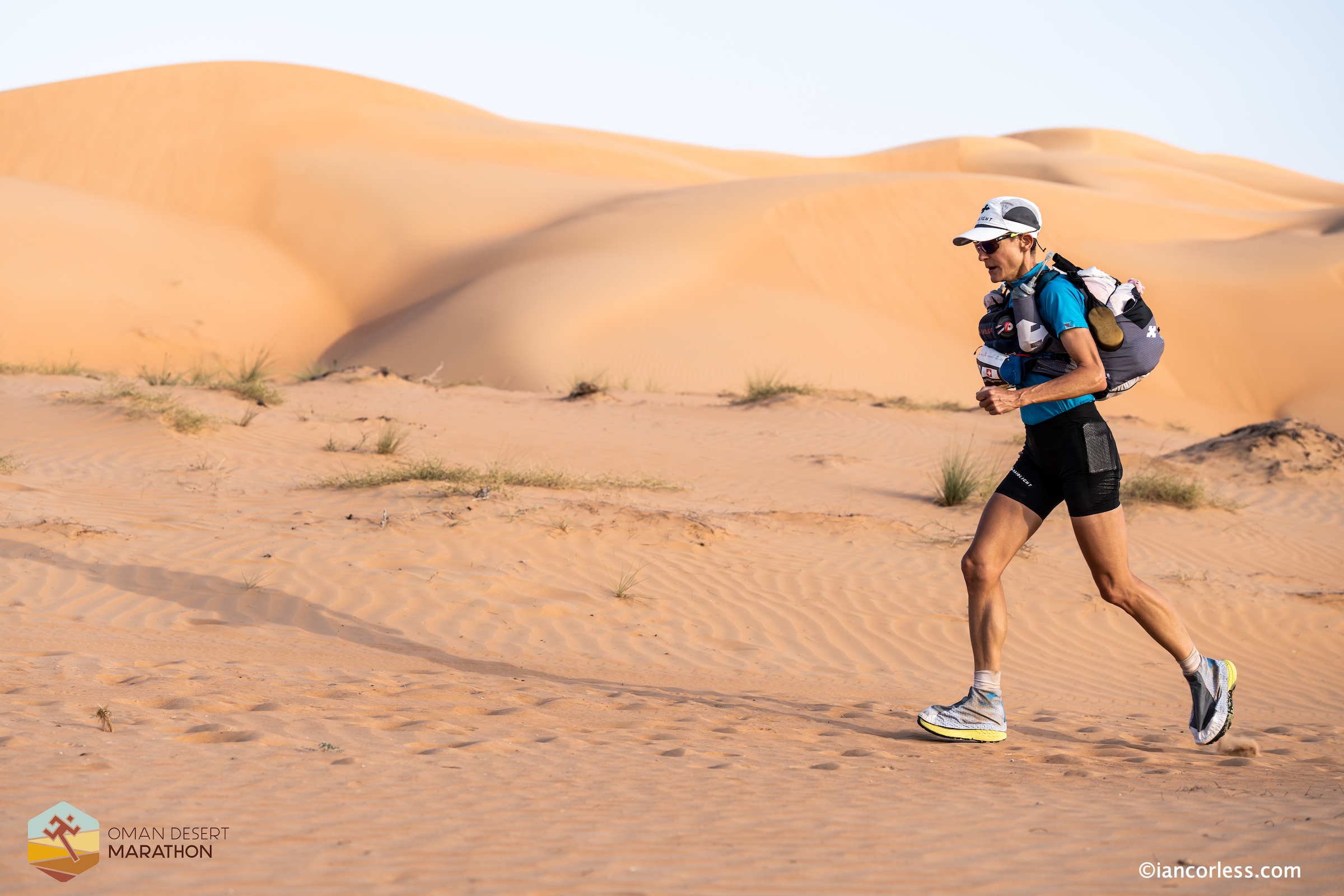
Stage 3 of the Oman Desert Marathon followed a long stage 2 of 55-km. For perspective, Mohamed won the stage in 5-hours 11-minutes, while the last runner came in close to the midnight cut-off. When you consider the 06:30am start, that is a long day on the feet.
Morning of stage 3 was rest in camp and the scheduled 3 start times would commence at midday, followed by 2pm and the final wave of top-12 runner’s departing at 4pm. Ahead 42km with all runner’s spending time in some darkness before arriving at the finish.
With a flat section to start the day, a small and beautiful dune section, and then a relatively flat run in to the line, on paper, stage 3 was by ODM standards an easy one.
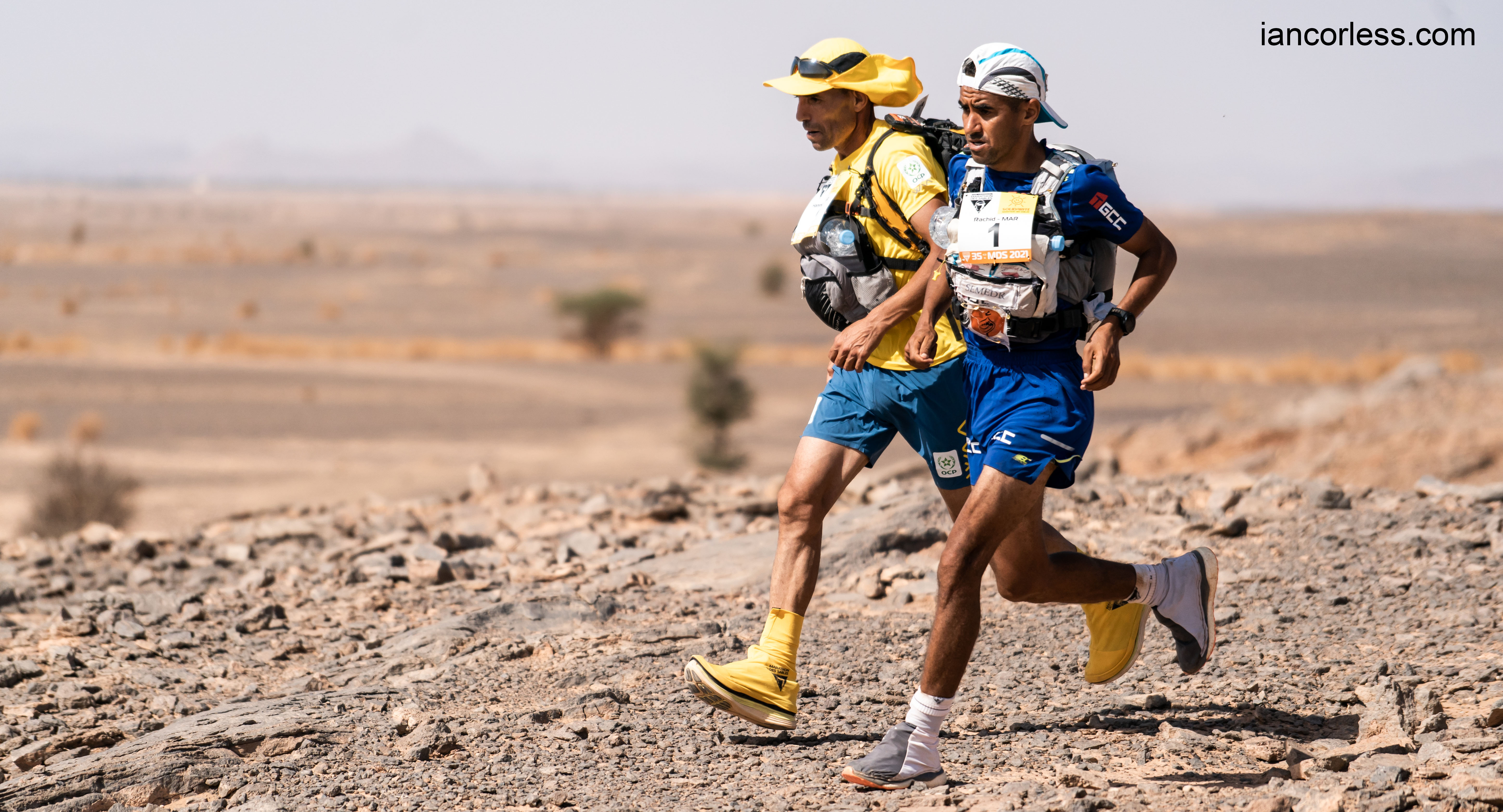
If Rachid had agreed with his brother that victory was Mohamed’s to take, Rachid did not run the last stage without a fight. Actually, the contrary, he seemed to be pushing hard and looking for the advantage.
The duo exchanged the lead at multiple times and it was during darkness that Mohamed took the lead and finished strongly ahead of his brother 3:23 to 3:40 elapsed respectively, the 2023 Oman Desert Marathon is now almost certainly his!
Behind Saleh Alsaidi once again ran a very strong stage, he never came close to the Moroccan’s but his podium place is secure.
If Aziza El Amrany thought stage 3 would be an easy one, she would need to think again… Corina Sommer had the bit between her teeth and the duo pushed a hard pace. Just before CP1 Aziza got a gap, was the writing on the wall?
No! Corina fought back, caught and passed her and then opened up her own lead. As darkness came, the lead extended and it was a nail-biter to the line, Corina crossing in 4:21:09.
The clock ticked, Aziza was losing her huge lead, eventually she came and crossed in 4:36:06. Now Corina is just 10-minutes behind with one stage to go… Is it possible to get back that time in ‘just’ 22km?
Aziza Raji was off-the-pace today and finished 3rd.
A Multi-Day race or a long-distance ultra is a huge undertaking. For many, it’s a 12-month project (or longer) that slowly but surely can consume every available day, hour, minute and second.
I get it, a long-distance race over multiple days in an unfamiliar terrain can leave more questions than answers. However, don’t panic, it’s not that complicated – read HERE.
As your key adventure looms, it’s time to focus the mind, body, and equipment so that you can plan for and anticipate all that may go wrong and right while undertaking this key target.
Quite simply, the old saying, ‘Fail to Prepare, Prepare to Fail’ does and can ring true.
So, what can be done?
Luck can have a place in any success; however, it should never be relied on. In multi-day events, particularly self-sufficient ones, the need to fine tune everything is a key element.
Training.
Kit.
Mind.
All of the above have very important roles to play in success.
Get the training wrong, you may not have the fitness or an injury that will result in you not achieving the finish line.
Get the kit wrong, be it too heavy, not durable or inappropriate may impact on your ability to achieve your goal.
Many say the mind is a key and an integral part of any success. Often, the body can be willing, but the mind can be weak, get the mind focused and prepared.
You need to be prepared for whatever your multi-day adventure will throw at you.
In the final phase of training, 6-8 weeks before your adventure starts, is a great time to start working on the final phases and plans that will help ensure success.
THE PREPARE PHASE
If we assume that tapering will take 2 to 3-weeks, this key ‘Prepare Phase’ should be in weeks 4, 5, 6 and 7 before D-Day.
Train and prepare specifically.
First and foremost, understand the challenge that you are undertaking. You may feel that you already have a grasp on this, but there is no harm sitting down and going through all they key aspects. Terrain, weather, mandatory kit, distance, and conditions. Look at the October 2021 edition of Marathon des Sables, the race started with a series of protocols to manage Coronavirus. Ultimately, Coronavirus was not a consideration, it was extreme heat, sickness and stomach problems.
Understand the event and challenge.
Walk, WALK, WALK! – Walking will (for most) be an absolute essential skill to complete any multi-day adventure. You may think you will run most of the distance… But experience confirms that walking is a key to success. Walking, and walking with purpose is a skill. Practice. Consider poles, they may enhance your walking experience, if so, practice and use them.
Learn to walk.
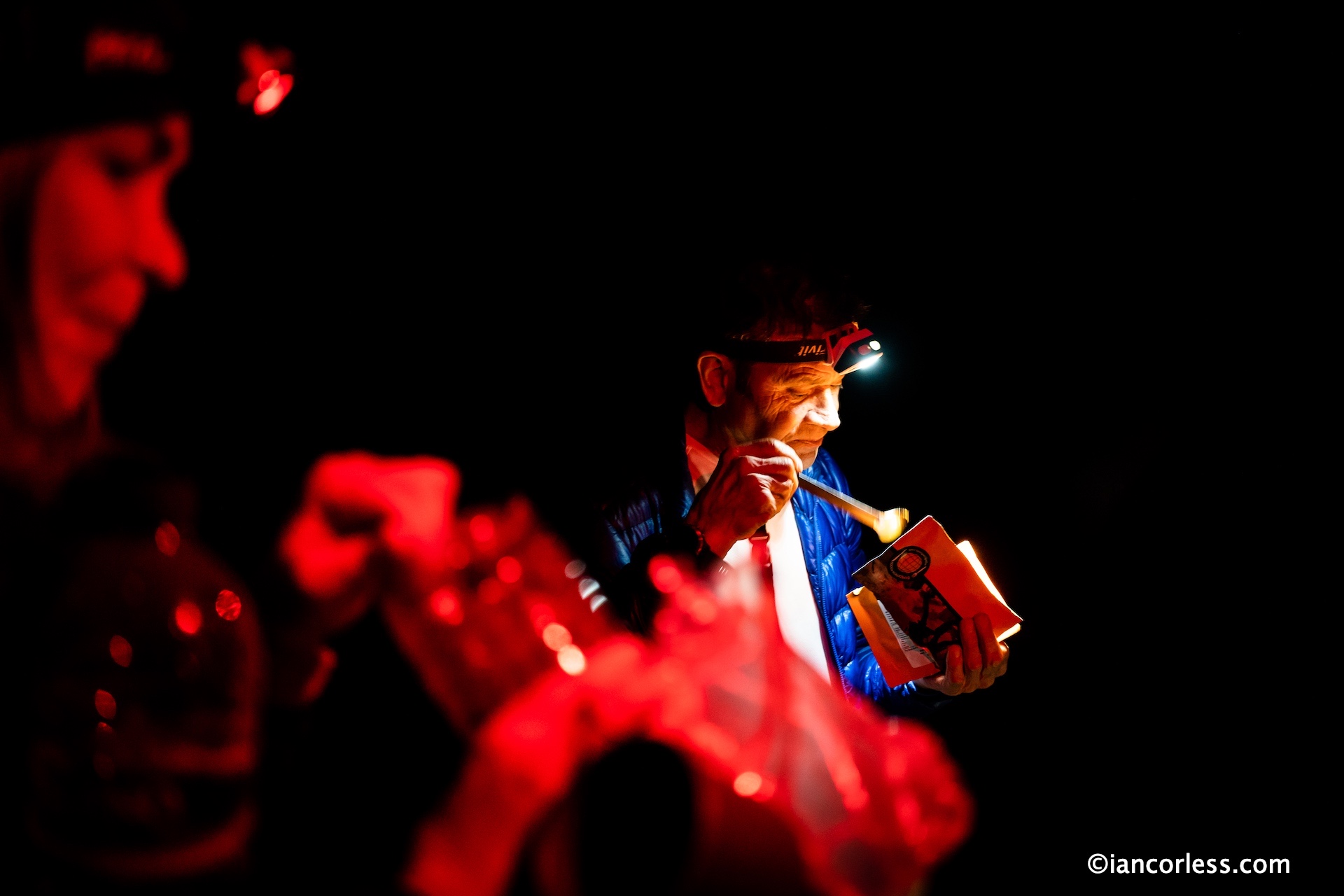
Without doubt you will have long days, and some will go in to the night and through the night. Take time and plan and include a session like this in the ‘Prepare Phase!’ Understand here that this is an opportunity to test kit, not only yourself. Is your head torch bright enough, how do temperatures vary, how does my appetite and requirement for fluid change etc. By doing this in training, you do it in a safe environment. If it all goes badly, you can always make a call and get picked up or get a taxi. You can’t do that in your race or event. Darkness and nighttime can play tricks.
Back-to-back runs may well have featured in your training but running/ walking tired is a skill. However, be careful how you plan this in training. You want adapt body and mind, not break them.
Practice makes perfect.
Perform training with rationed water and race/ event food. You need to learn what works and what doesn’t work. It’s all very well going for a long run and then getting home and eating chocolate and drinking Coca Cola – can you do that in your event? Mentally this can be a real tough challenge – be prepared.
Get a pack that fits perfectly and does not bounce.
Your pack will be with you for the duration of your event. It must be as light as possible and also sturdy enough to last the challenge without breaking. Be minimalist on equipment and purchase the lightest equipment possible. Remember though, lightweight can often mean less durable, less warm, less functional and so on… Better to break or damage equipment in training so that you can make changes ready for the important challenge ahead. Modify and adapt.
Be specific!
Be specific. Snow, mountains, altitude, heat, or cold. Understand the demands that will be placed on you in your challenge and plan for a specific phase (typically in the 2-3 weeks before the event) to help acclimate. This could be a heat chamber, it could be arriving early before an event and adjusting to high altitude, it could be some specific cold, ice or snow training.
Try out food for an adventure in training.
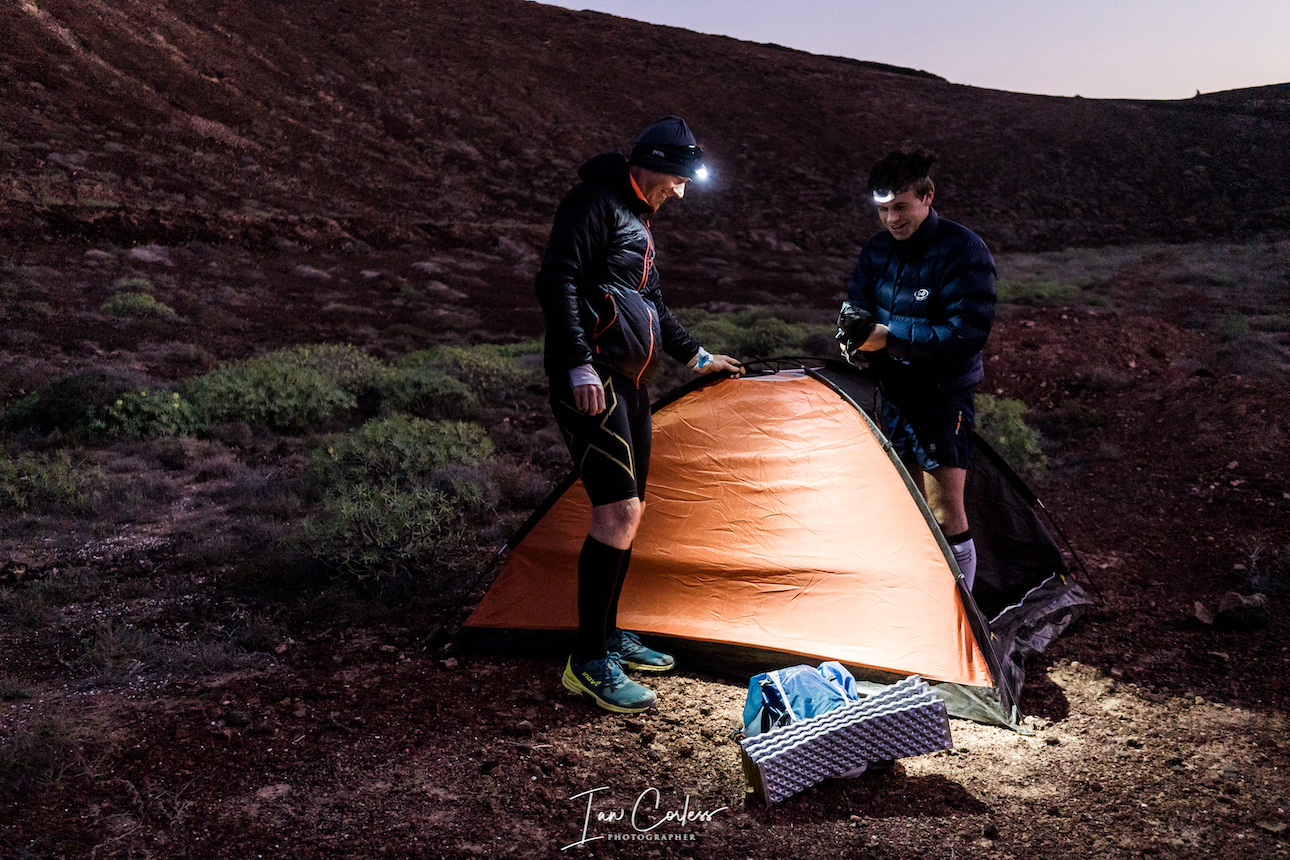
Plan an ‘event simulation’ that will require you to run for a specific distance, be self-sufficient overnight, sleep in a similar scenario/ situation to your event and then get up and run the next day. This can be a key element in understanding what does and does not work. Is your sleeping mat comfortable? Is the sleeping bag warm? Did your food taste good? How easy was it to cook? How about snacks, did they work? How was the pack weight and distribution of contents?
Spend a night out in training to find out what does and does not work.
Train with your pack and add weight, however, be careful NOT to do too much training with too much weight. This can result in injury. In addition, learn how to pack your bag so that it sits comfortably with minimal bounce. Understand where to put snacks so that you can access them on the go.
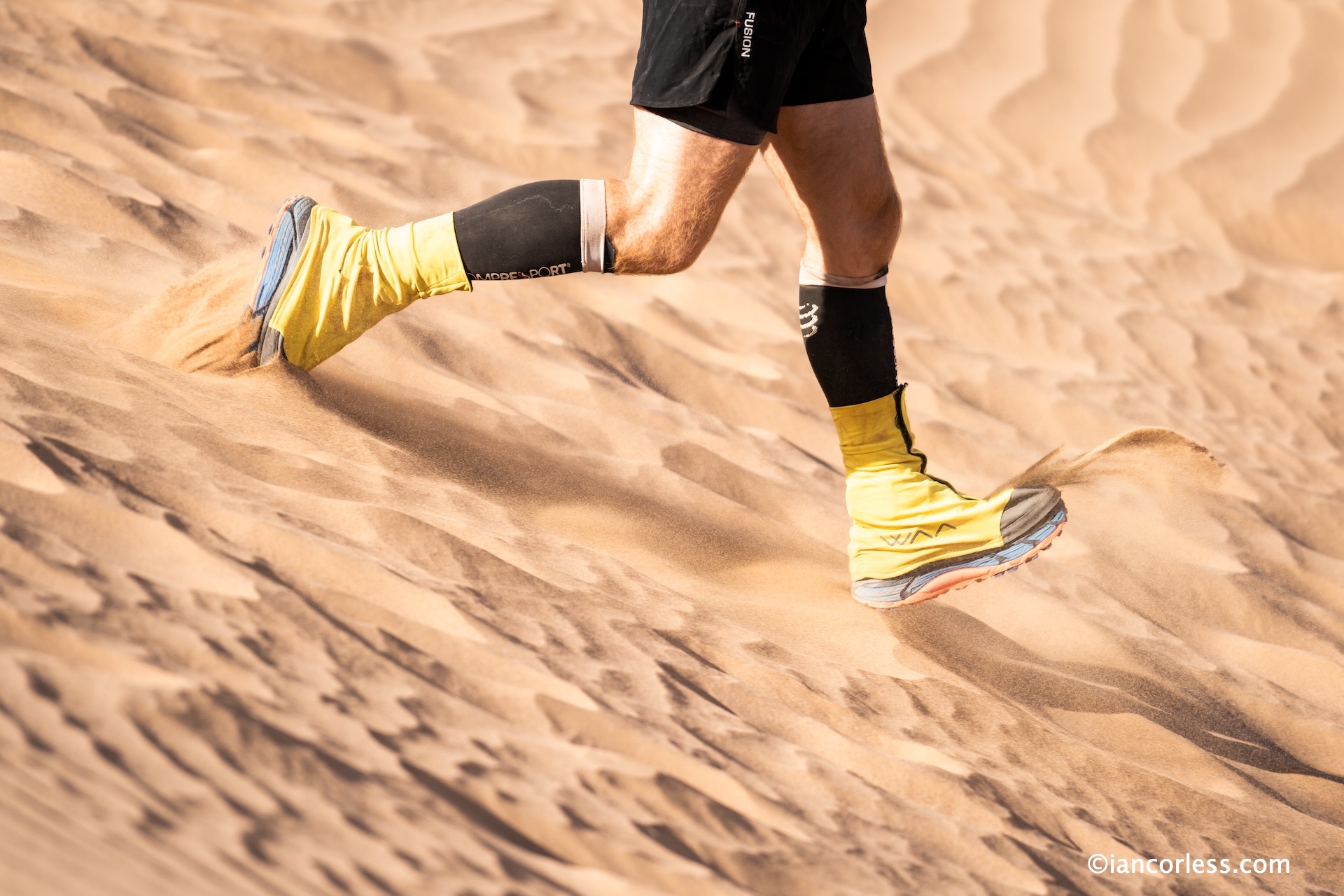
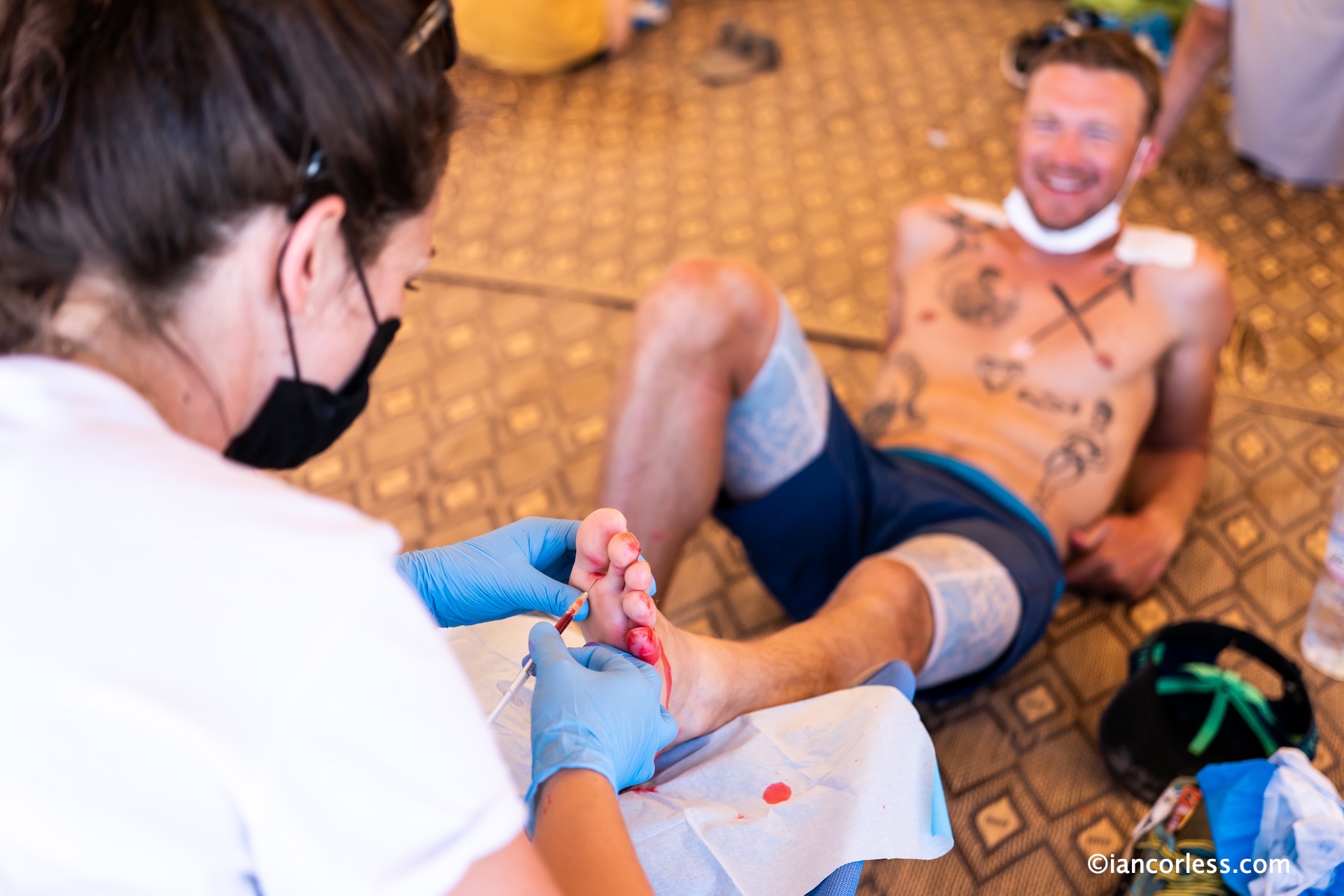
Look after feet – many failures come via poor shoe choice and foot care.
Feet and shoes. Please do not ask. ‘What shoe shall I use for ‘X’ Event?’ Runners are individuals and what works for one does not work for others. Gait, foot shape, foot width, foot length, toe length, run conditions and so on all impact. Read THISarticle on how to find the correct run shoe.
Water and hydration is key to success.
Food glorious food. Calories are essential for an event, so is what they weigh. Understand food and its nutritional values and make sound educated choices that balance fat, protein, and carbohydrate. Also understand that taste changes. Sweet may be ok early on but typically savory is better as time passes. Is beef jerky better than nuts? What food rehydrates quickly or with cold/ warm water? Should I take bars? What about protein drinks? So many questions… They need answering!
Shops are not always available.
You only have to do three things at most multi-day events:
Run.
Eat.
Sleep.
All three impact on each other, so, make sure you have all of them dialed.
Finally, remember, we are all individual. What works for one person, will not work for another. It is your responsibility to take ownership of yourself, the challenge you are undertaking and the challenges it will bring. Ultimately, that is why you signed up, no?
We announced earlier this week that the Lanzarote Multi-Day Training Camp 2023 would have two ’Special Guests’ and this has resulted in a surge of entries for 2023.
Rachid El Morabity the 8x MDS champion will join us Friday to Monday for run sessions and a 2-hour talk/ workshop on MDS, Multi-Day running and ‘What goes in the pack?’ of a champion. ‘Dead Man Running,’
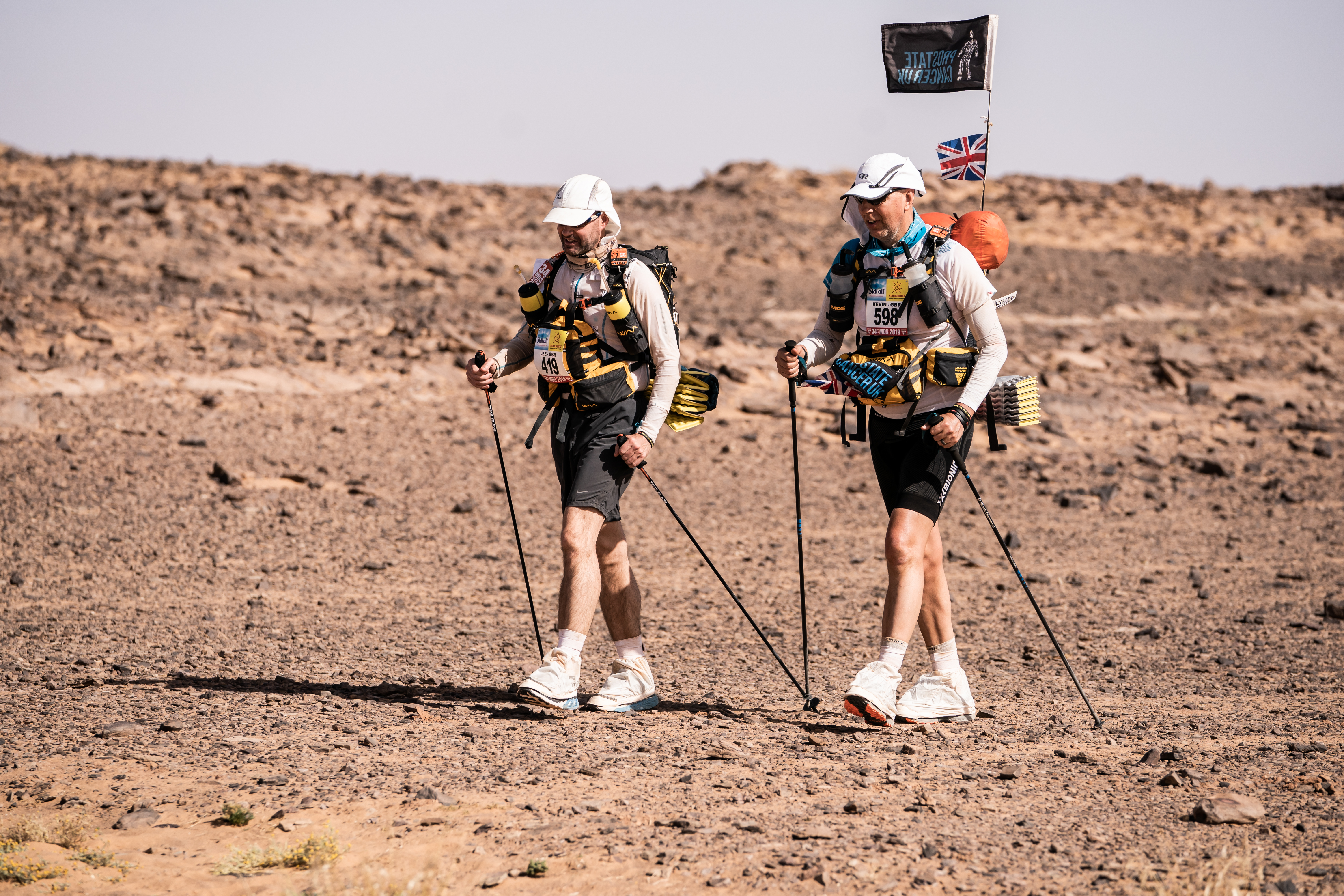
Kevin Webber will join us for the whole week looking after a walking group and providing a 2-hour talk and workshop telling his incredible story of his Prostrate Cancer diagnosis and how he has embraced running and adventure to not only inspire others but to raise money for charity and raise the bar of what is possible as a human.
RECENT NEWS
It has been great to confirm Tom Evans will once again join us. Tom guided on the 2018 Training Camp after placing 3rd at the 2017 Marathon des Sables. It was the start of an incredible story that has resulted in victory at CCC, Tarawera Ultra, and a 3rd place at the iconic, Western States 100-mile race in the USA.
Rab athlete Abelone Lyng should have joined the camp in 2022 but unfortunately had to withdraw late in 2021 due to the pandemic situation and her role in the medical profession. We are pleased to confirm that Abelone will join us for 2023. Abelone has won the Ice Ultra and placed 4th at The Coastal Challenge. An adventurer, ultra, trail and mountain runner, Abelone is a specialist fastpacker who loves to travel solo or with friends.
Pierre Meslet, a physiotherapist, placed 9th at the 2021 Marathon des Sables and joined us in Lanzarote Jan 2022. Pierre provided excellent guiding, a superb talk and the added bonus of offering the 2022 attendees with the option of treatment. A huge success, Pierre returns in 2023.
LATEST INFO Currently, we only have 4-apartments remaining for 2023 which will sold on a first come, first served basis. If you’d like to join us, don’t wait too long…
Latest deal (2 available) – We do have the option to add 3 adults in a 1-Bed apartment (2 single beds and 1 sofa bed) at the price of £875 pp making a saving of £170 pp on the normal ’shared’ occupancy price. Please email if this is an option you are interested in.
Winter running, day or night, is special that provides a very different experience to running in the hopefully warm, dry, sunny and balmy days of Spring, Summer and Autumn. In all honesty, winter running for me and many others is often preferable, just a shame we can’t have the same amount of daylight hours as Summer brings.
All running, particularly in the mountains, remote areas and particularly if going ‘solo’ brings an element of danger that must be managed. Winter and extreme conditions do increase risk from many aspects and this article is designed to help you make the correct decisions even before you start any running adventure.
EXPERIENCE
No two runners are the same and experience and knowledge are a key bonus when it comes to any running, especially in challenging conditions. So, firstly, understand yourself and your level of experience. This will make your enjoyment and comfort on any adventure enhanced. As tip, start with short days and as your experience, knowledge and understanding increases, you can then venture farther and longer. Even contemplating multi-day/ fast packing adventures. Read an article HERE.
Ask:
What am I doing?
Where am I doing it?
When I am doing it?
What are the options exist to cut short my adventure?
How remote will I be?
What are the risks involved?
What weather can I expect?
What is the worst-case scenario?
Preparation is key and assessing what ‘may’ happen on any adventure or run is crucially important to make sure that a day or multiple day’s activity remains safe.
Weather can change in minutes at any time of the year, especially in a mountain environment. In winter the changes can often be far more extreme, a cold dry day can suddenly become wet, windy with sub-zero temperatures. Hypothermia can hit in minutes. Understand this and prepare accordingly.
It’s possible to run across frozen lakes in certain parts of the world.
Solo adventures are invigorating; however, risks are increased significantly in this scenario. Sprain an ankle (or worse) and become immobilized in bad weather and this becomes a high-alert scenario. So, not only should you have equipment and apparel that will help you survive a situation like this, but you should also have technology to make you safe. A mobile phone (with enough battery) is compulsory and a tracking device, such as a Garmin InReach would be a perfect all-scenario safety device that with the press of a button can obtain SOS support. But remember, at all costs, emergency services are not a comfort blanket that allows you to cut corners. Prepare properly.
Running with a friend adds safety and a natural back-up scenario, so consider this. Women in particular may feel far more secure running in company.
When planning routes, think of short cuts, options to deviate to reduce distance/ time and never push on or let ego dictate. The trails and mountains will always be there. Turning back is a strength not a weakness.
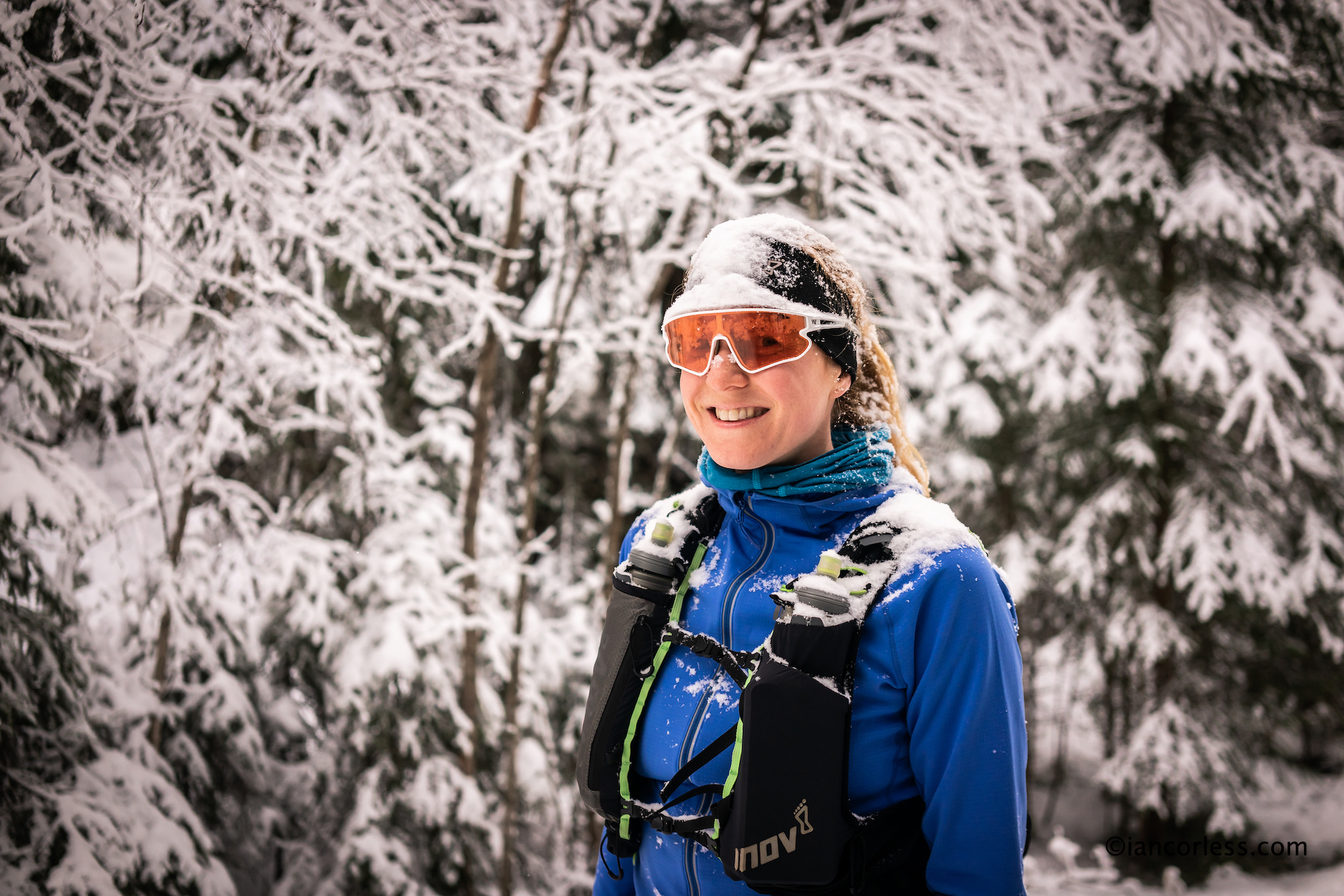
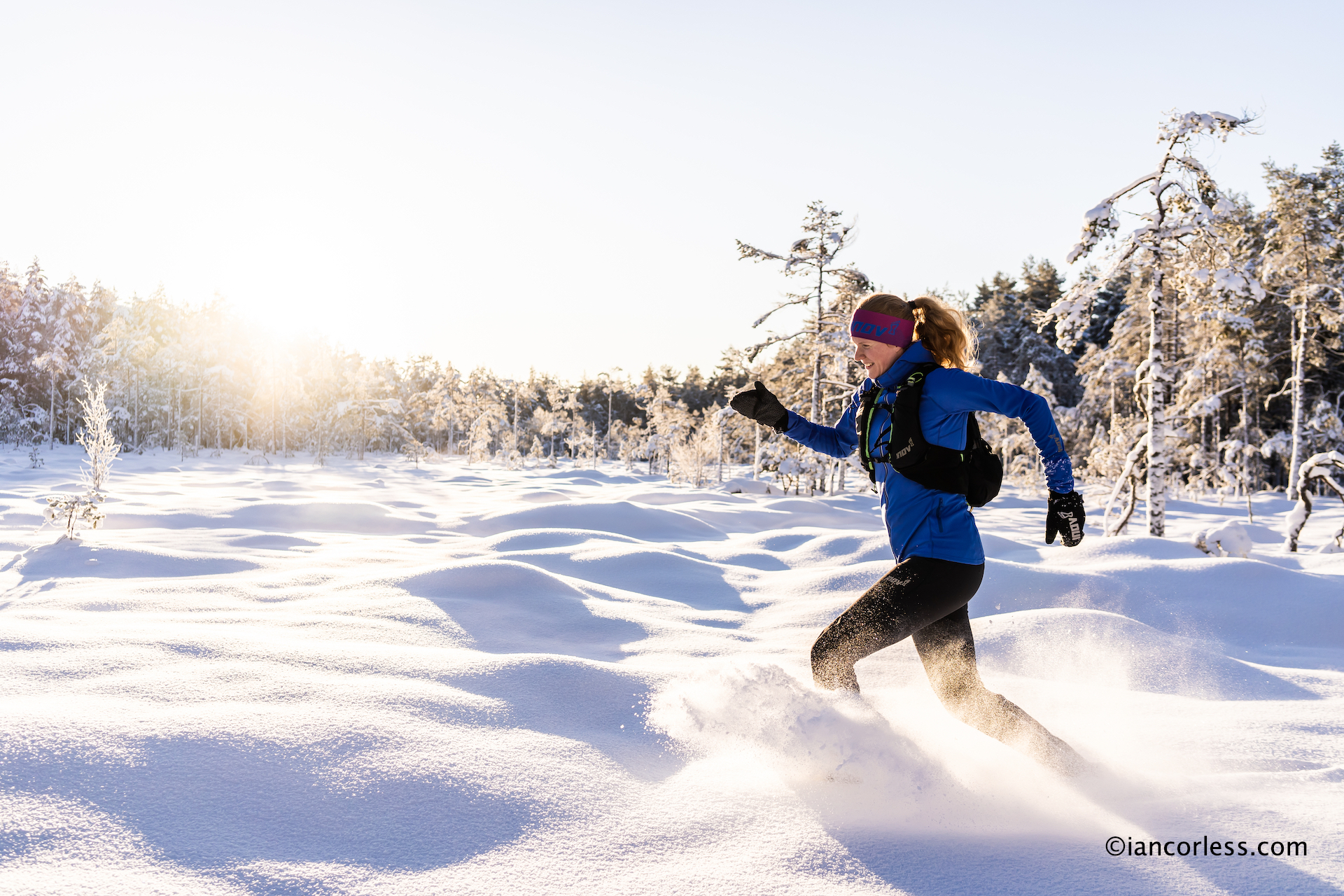
Winter playgrounds are fantastic.
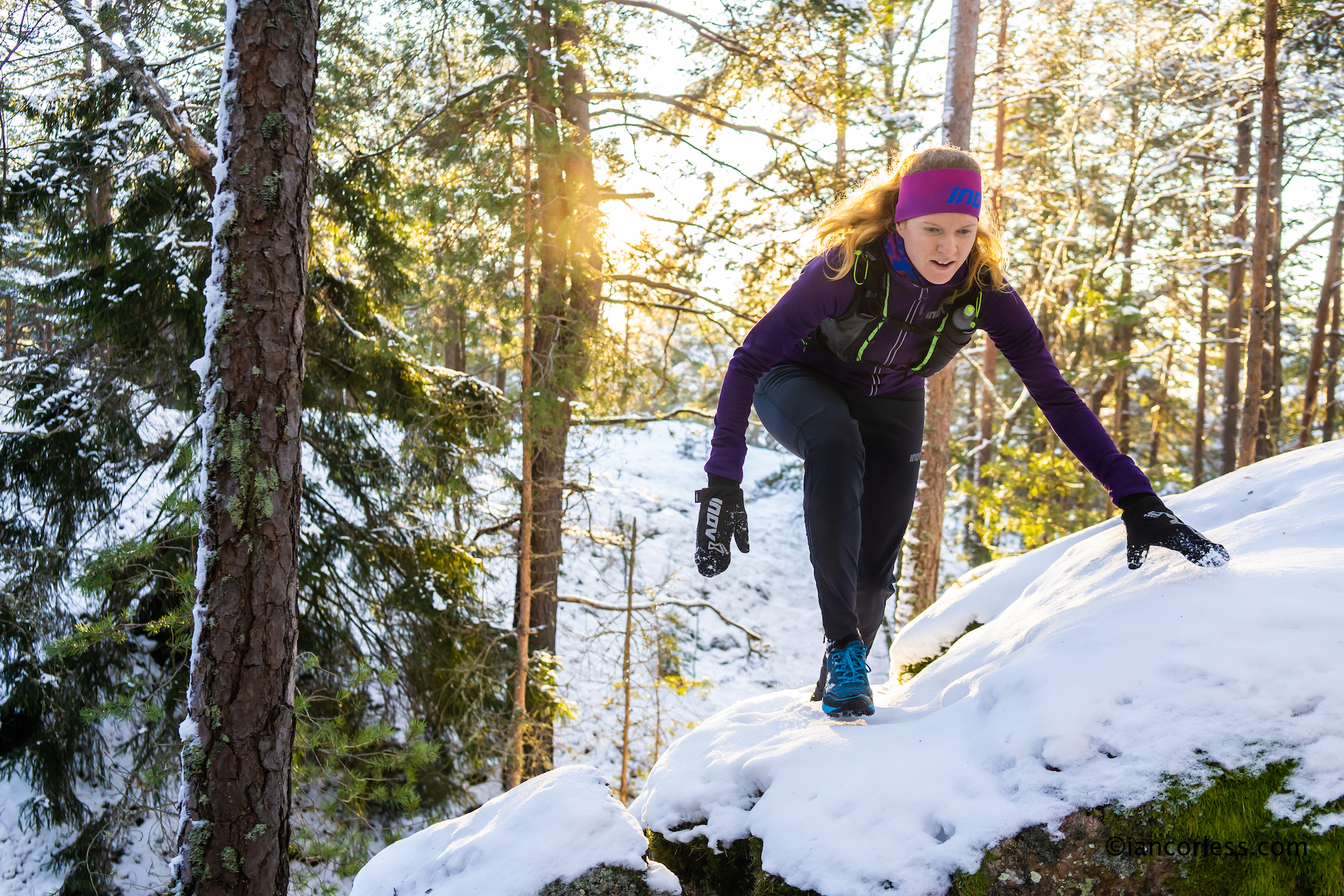
Pace, particularly on longer adventures, will typically be slower in winter due to underfoot conditions and weather conditions. In cold, icy and sub-zero temperatures, sweating is not a friend, particularly should you be forced to move slower or stop, so, think about this and regulate pace to help minimize sweat rates.
Finally, it’s always wise telling family or friends when you are going on adventure, where you are going with proposed route and when you will return. This is a great back-up to have others looking out for you. Of course, this doesn’t need to happen for a daily 5 or 10km run.
EQUIPMENT
The equipment you will use and how much equipment you will take will depend on the type of adventure you are undertaking and how long that adventure will take. This harks back to the ‘experience’ as outlined above. Needless to say, winter will almost always require you to carry more. If running on the road and in public places, make sure you can be seen with reflective items.
Keeping your core warm is essential and without doubt using a merino wool base layer (or similar) with an optional small zip neck for your body is key. Merino wool in particular has an ability to retain warmth, even when wet or damp. Top tip: Take a spare base layer in your pack on runs.
PROTECTION and WARMTH
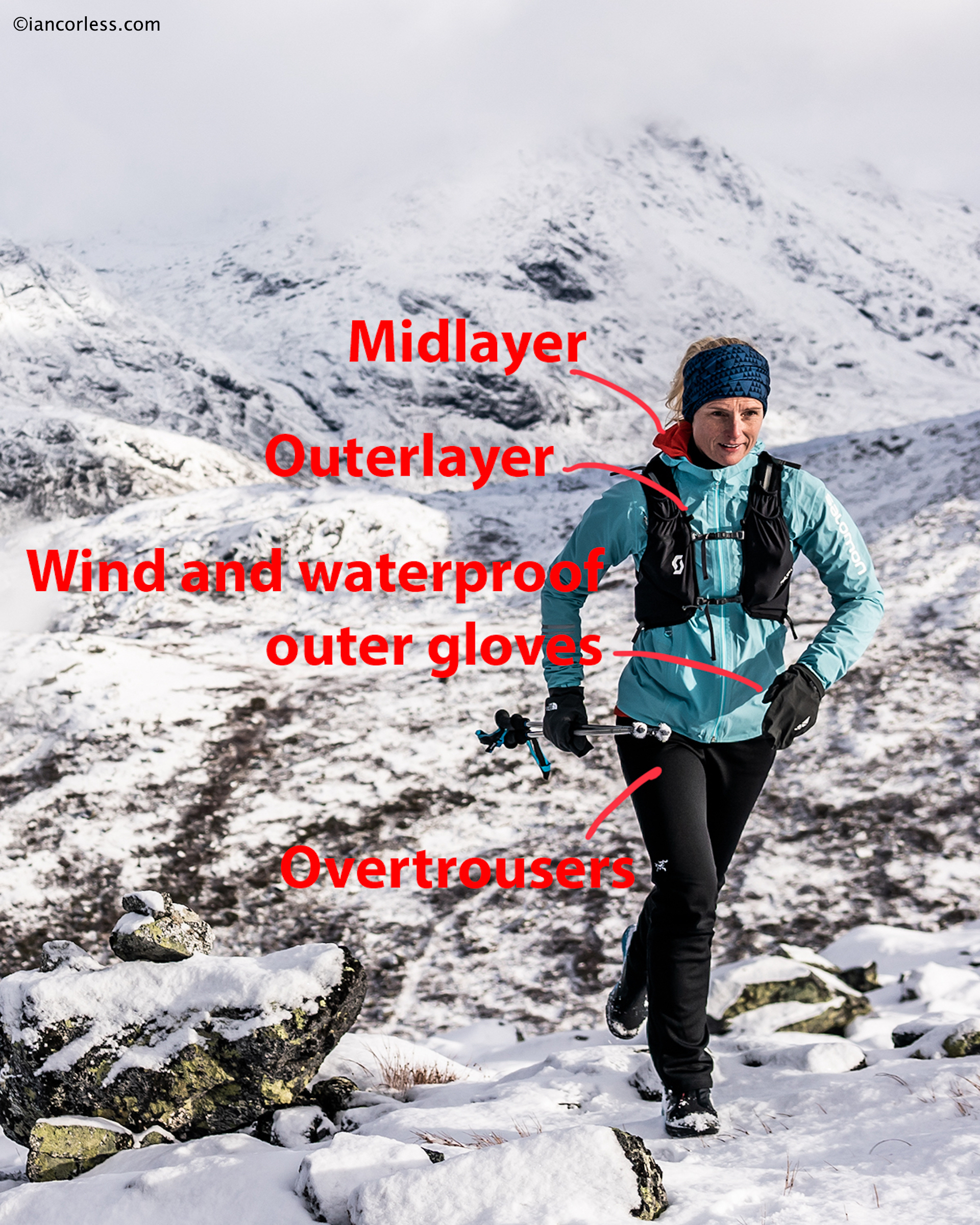
As mentioned in the ‘Getting Layered’ article, you will need to adapt the body layers for the weather you will run in and the weather that you ‘may’ encounter. A mid-layer will provide warm and this can be made of a product like Polartec, Primaloft or Down. Consider balancing warmth, size and weight. On a personal note, I use a Polartec layer as my standard warmth layer and then carry a ‘treated’ Down jacket (this can get wet and still be warm) in my pack as an essential warmth layer. The final layer will be a waterproof with taped seams, this layer will protect from extreme wind and rain. Zips on mid and outer layers add weight but they are essential for being able to regulate temperature.
HEAD
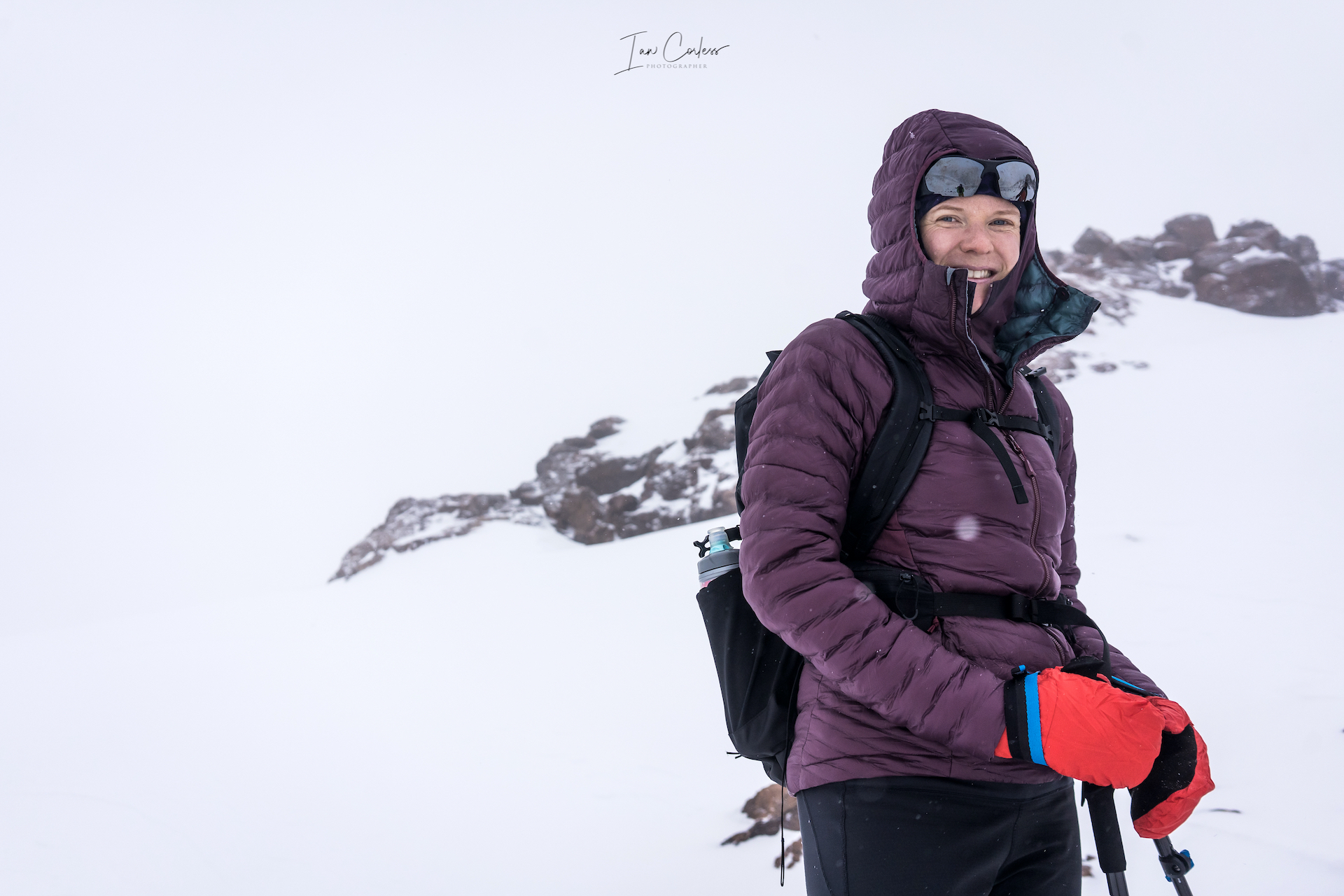
A hat is essential for retaining heat within the body, *“even if the rest of your body is nicely wrapped up, if your head is uncovered, you’ll lose lots of body heat — potentially up to 50% of it — in certain cold-weather conditions.” You can regulate temperature while running by simply adding and removing a hat. Wear a Buff or similar around your neck.
SUNGLASSES
Protect your eyes, particularly in snow. You can get specific lenses designed to enhance vision in winter conditions.
EXTREMETIES
Hands and feet are a huge problem area in winter, particularly if you suffer with Raynaud’s. Keeping your core warm immediately helps keep extremities warmer as the body naturally abandons extremities (hands and feet) to protect vital organs. For feet, just like the core, merino socks are superb starting point for warmth, even if wet. However, if you anticipate feet to get wet repeatedly and in sub-zero temperatures, you will need to think about other options. A good example being neoprene socks that are warm when dry and should you get feet wet, they are designed to retain warmth when wet by insulating the water between foot and sock. You need to be careful of trench foot should feet remain wet for too long. For hands, a merino liner sock is ideal as a starting point and then a mitt over the top adds warmth and insulation. Mitts are always warmer than gloves and if you do not require finger dexterity, they are always preferable for warmth. Consider having multiple mitts of different warmth levels to that you can adapt to the weather. Also consider longer socks that come higher than the ankle, especially important if running in snow. Top tip: Take spare gloves and socks on any run.
LEGS
Shorts are not a good idea in winter, keeping leg muscles warm is essential for comfort and the ability to function properly, so, use tights. Ultimately, you may require multiple tight options starting with a simple Lycra product and moving up to insulated tights with wind blocker. Of course, carrying a waterproof pant with taped seams is also an essential for winter. Add them to your pack and do not compromise, you may not require them for over 90% of your runs, but when you need them you need them.
SHOES
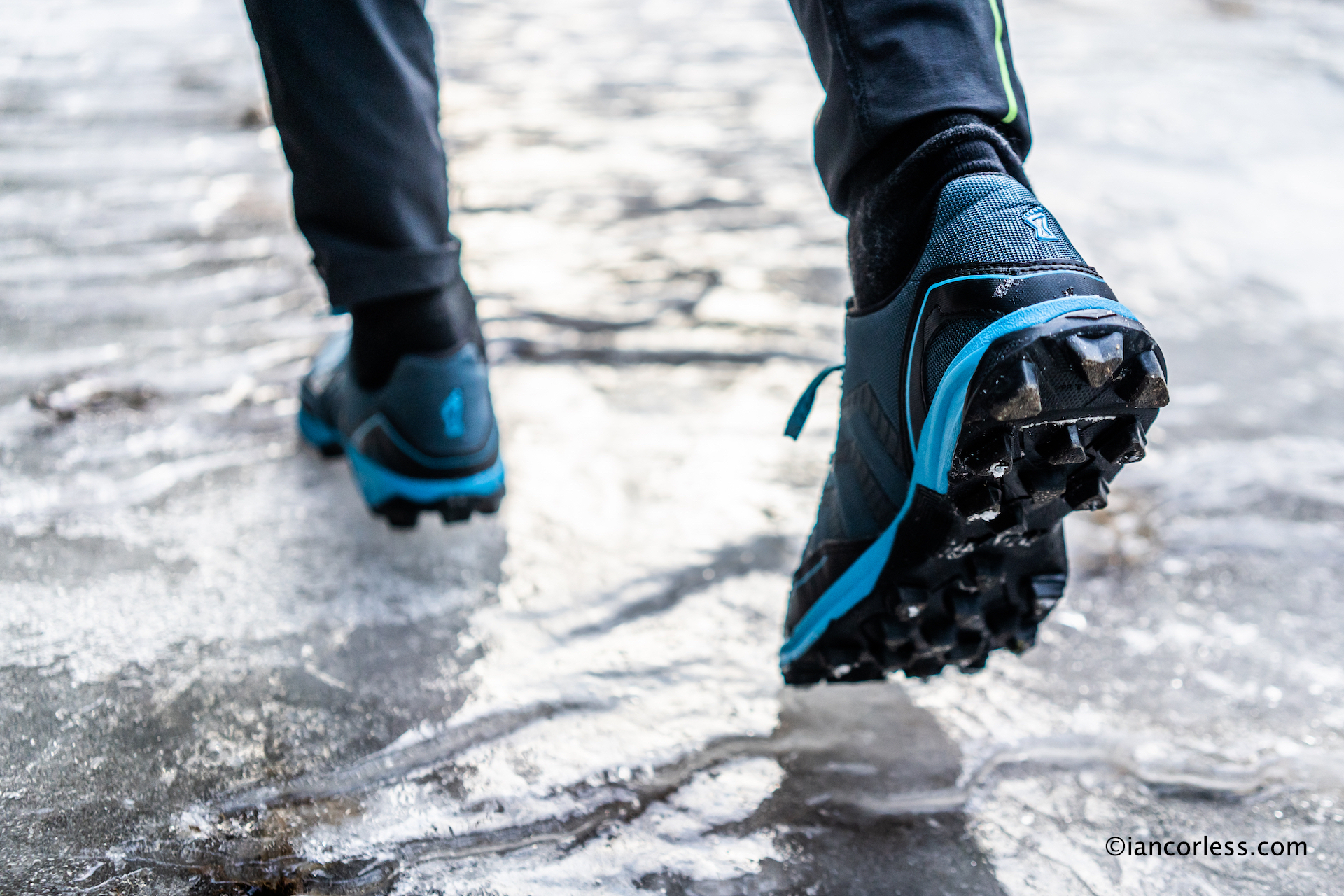
inov-8 Arctic Talon studded winter shoes.
There is no definitive winter shoe and, in many scenarios, the shoe you usually run in will work fine. However, if you have snow and ice, you will almost certainly need to consider other options. There is an in-depth article HERE but for me, a winter ‘stud’ shoe is my go-to for all my runs. In simple terms, it is often a conventional run shoe with metal studs added to provide grip in ice and challenging conditions. They are a game changer. Winter shoes are often insulated so as to keep feet warmer. Top tip: Consider socks and consider that you may wear multiple socks or thicker socks, this may require that you a larger shoe but be careful, particularly in the propulsive phase as this can make the shoe bend differently behind the metatarsals.
PACK
You will almost certainly require a larger pack for winter runs. A 12-15 ltr is probably ideal for long days and if fastpacking, 20-30 ltr would be normal. Top tip: Use dry bags inside to protect key layers and where possible use several that are different coloured, so you know which is an insulating layer and which is an outer layer.
FOOD and HYDRATION
Just like on any run, calories and hydration are essential. Winter and in particular the cold can easily make you forget to drink, make it a habit. Cold and extreme weather will also burn more calories, so, keep the fire stoked. Plan runs that take in a cafe, hut or lodge stop. If you do the latter, you need to balance losing hard earn warmth and then going back out in the cold. This is where carrying a spare base layer can be a great idea. If in remote locations, you need to consider re-supplying. Importantly, streams that provide water in summer may well be frozen in winter. Also, bottles may well freeze if exposed to sub-zero conditions, so, consider insulated bottles, using warm water and maybe keeping bottles in a pack, wrapped in clothing to retain warmth and reduce freezing possibilities.
OTHER ITEMS
The more experience you have, the greater your winter challenge may be. Always have the correct equipment, for example, ice axe, crampons, rope, harness, hand spikes, snowshoes and so on. A Bivvy bag is an essential when in remote locations for safety, in addition, always carry a head torch as a just in case scenario should a run take longer than anticipated.
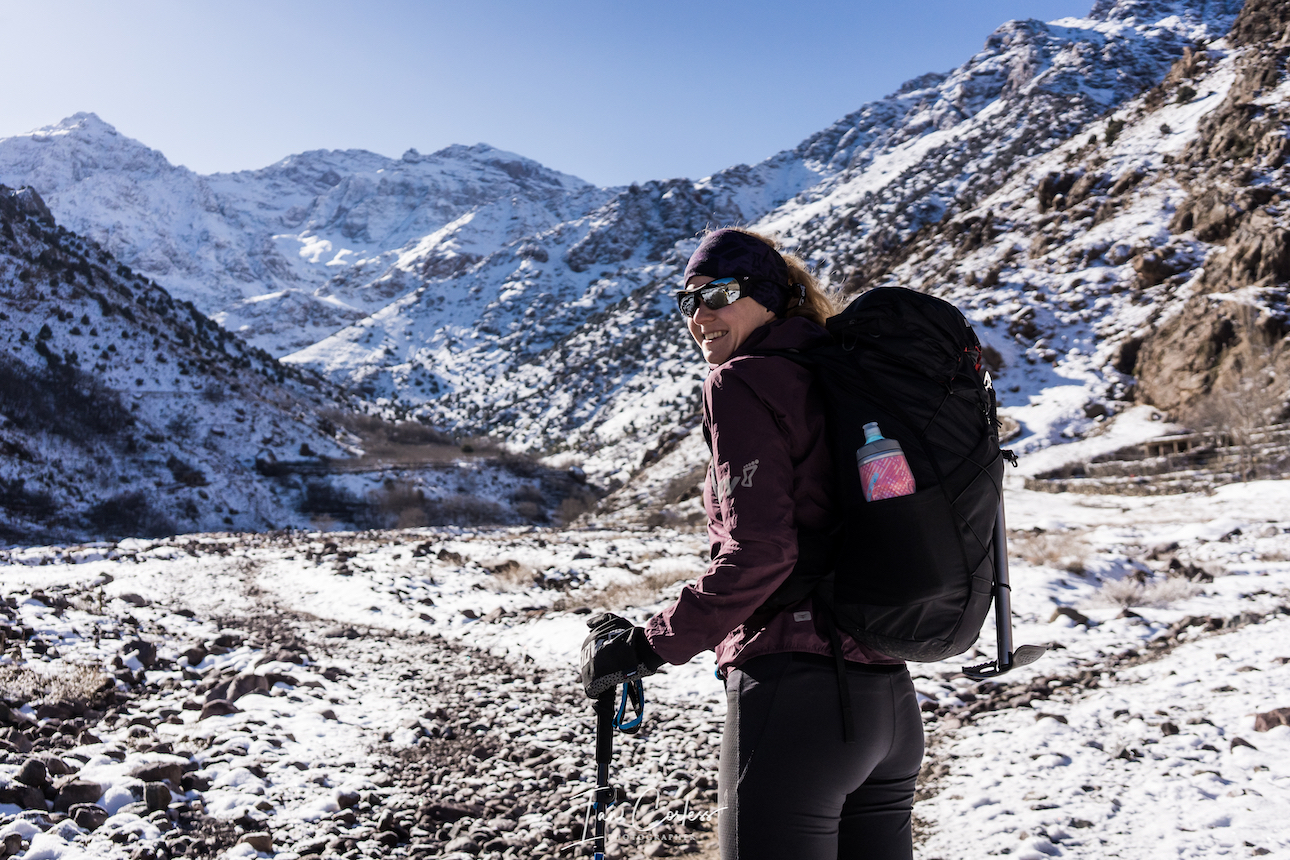
Read about a winter expedition to the Atlas Mountains HERE
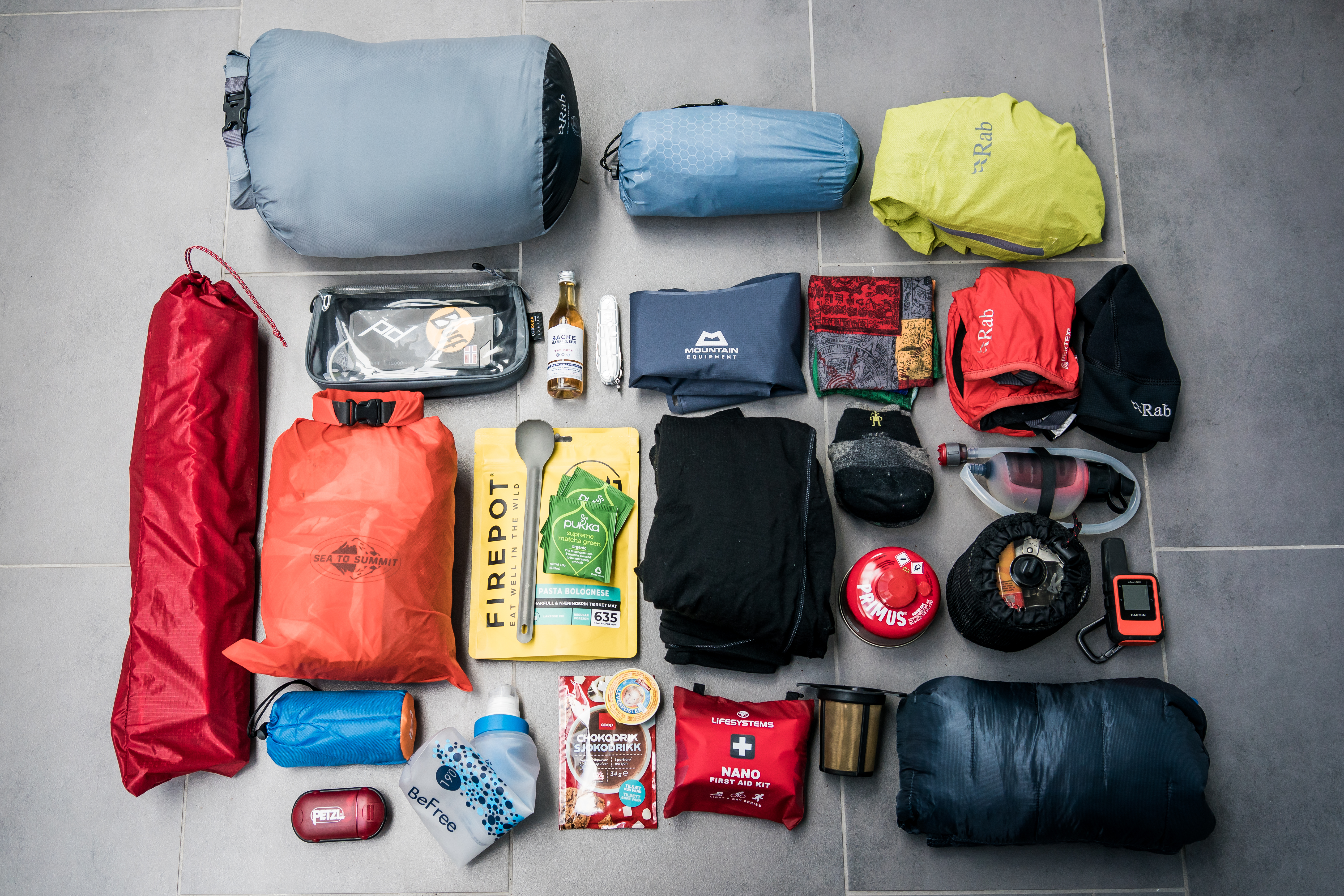
Equipment with tent and sleeping bag.
EXAMPLE EQUIPMENT LIST
As a start point, you will be wearing the following applicable to the conditions:
Base layer.
Mid layer.
Hat
Gloves.
Glasses.
Socks
Appropriate shoes.
In the pack:
Spare base layer.
Spare socks.
Spare gloves.
Insulating layer (down or primaloft)
Waterproof layers, top and bottom.
Headtorch and spare batteries.
Phone.
Tracking device.
First aid.
Bivvy bag/ space blanket.
Food.
Drink.
Battery back-up.
Heat pads for hands and feet.
FINALLY
Embrace winter. It’s a great time of year to explore. Respect the conditions and if you follow the above, you will almost certainly have safer and more enjoyable outings. Accidents do happen at any time of the year, in winter, risks do increase so respect the conditions. Accept that you will go slower in winter.
Please support this website. I believe everyone deserves to read quality, independent and factual articles – that’s why this website is open to all. Free press has never been so vital. I hope I can keep providing independent articles with your help. Any contribution, however big or small, is so valuable to help finance regular content. Please support me on Patreon HERE.





















 IAN CORLESS