New Horizons for the ISF

Another important step marks the rapidly changing face of skyrunning as the ISF takes on the 100-mile distance.

The rule was approved at the ISF AnnualGeneral Assembly which took place in Spain on July 6 during the SkyGames®.   Members representing the 22 countries in person or by proxy attended the meeting, chaired by President, Marino Giacometti.

The new Secretary General was elected in the form of skyrunner Nina Dacanay from the Philippines who no doubt will bring, among her many qualities, competence and efficiency together with a strong passion for promoting the sport.

New blood on the Management Committee includes Evgeny Kolchanov (Russia), Ian Sharman (Great Britain) and Fabio Menino (Italy) – all three runners.   In fact, key runners were elected to stand on the Athletes’ Commission, namely Anna Frost (NZL) Joe Grant (USA) together with Fabio Menino and Ian Sharman.   Their input will be invaluable in the development and strategy of the sport and to represent a voice for runners everywhere.

The athlete has always represented the number one focus for the skyrunning management and, at the beginning of the season, a seminar was held on the island of La Palma, Spain, with a view to gaining insight from the sport’s principal players – what runners really want and how they would like to see the sport develop.  “Less Cloud. More Sky” was the title, emblematic of the new horizons skyrunning aims to explore.

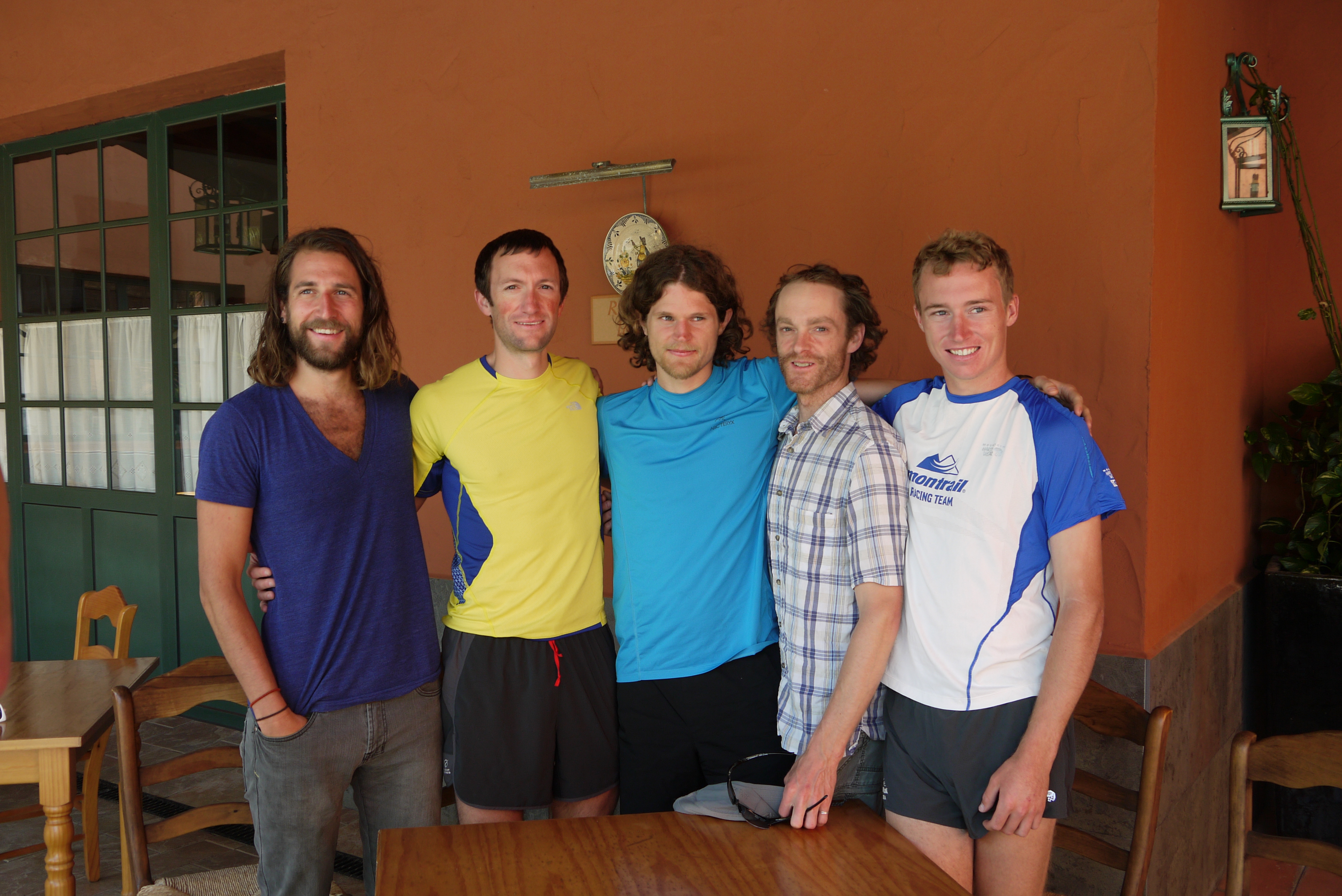
Running legends representing different disciplines, countries and brands attended the three-day seminar from May 14 – 16, together with a number of the most representative media outlets from four continents.

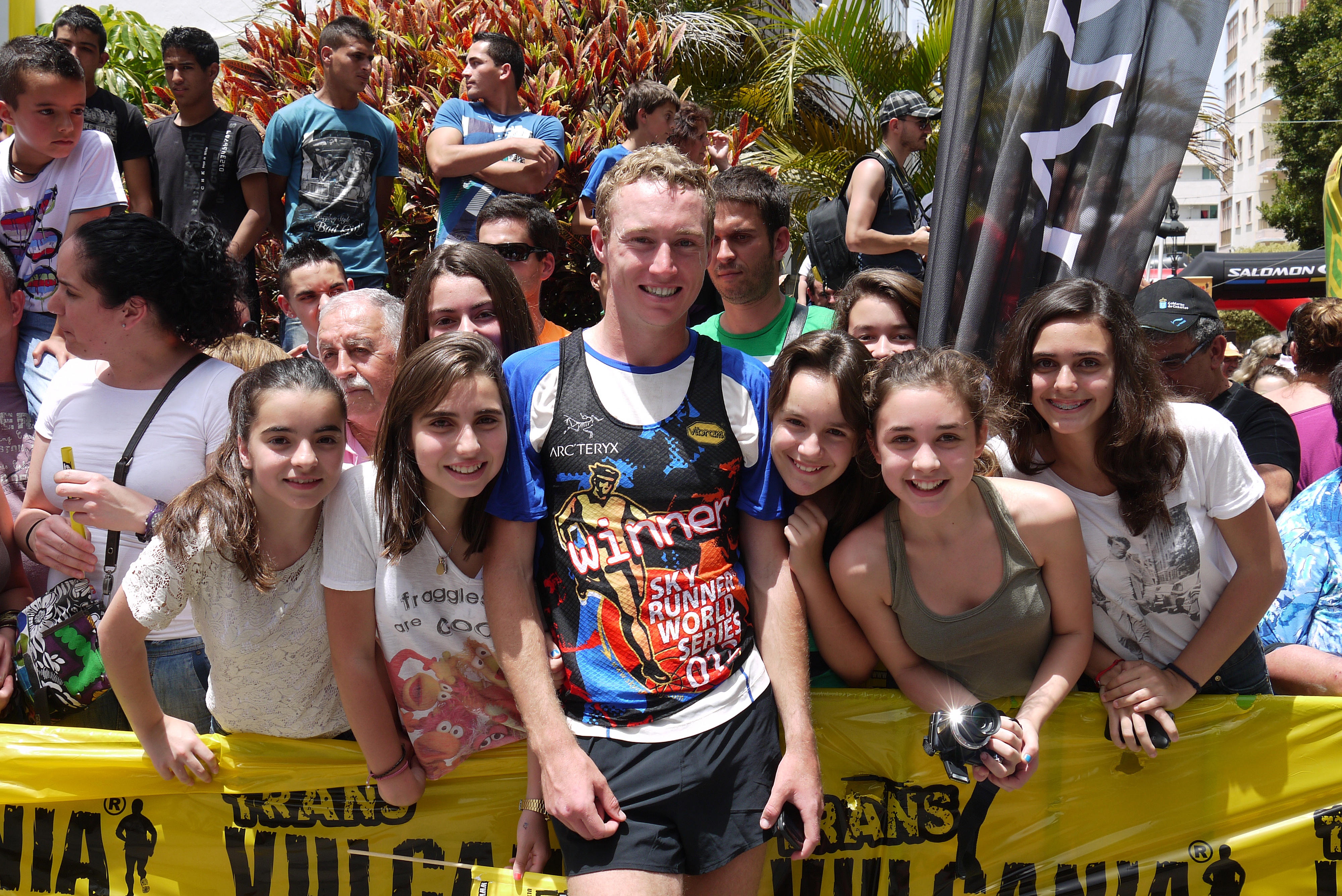
Representing the ISF were president Marino Giacometti and VPs Lauri van Houten and Dr Sergio Giulio Roi.  The superstar athletes attending were: KilianJornet, Iker Karrera, Anna Frost, Seb Chaigneau, Maud Gobert, Francois d’Haene, Thomas Lorblanchet, Florent Troillet, Gustavo Reyes, Csaba Nemeth, GiulianoCavallo and Americans Anton Krupicka, Mike Wolfe, Geoff Roes, Joe Grant, Ian Sharman, Nick Clark, Nikki Kimball, Transvulcania winner Dakota Jones and World Mountain Running champions Max King and Marco De Gasperi…..

For a new generation of runners the skyrunning past, illustrated with slides and videos, was an eye-opener. The topics examined included:  the social media phenomenon, sponsorships and the industry – how these relate to the runners – and back to the industry; why a federation was created; how it interacts with the athletes; and the federation’s spirit and values.

The feedback from runners has proven invaluable in indicating the way forward and, just two months later, in giving runners a place and a voice on the Federation’s Management Committee and Athletes’ Commission.

Thanks to the success of “Less Cloud. More Sky” another seminar is programmed for 2013.

ULTRArunning Magazine – Transvulcania

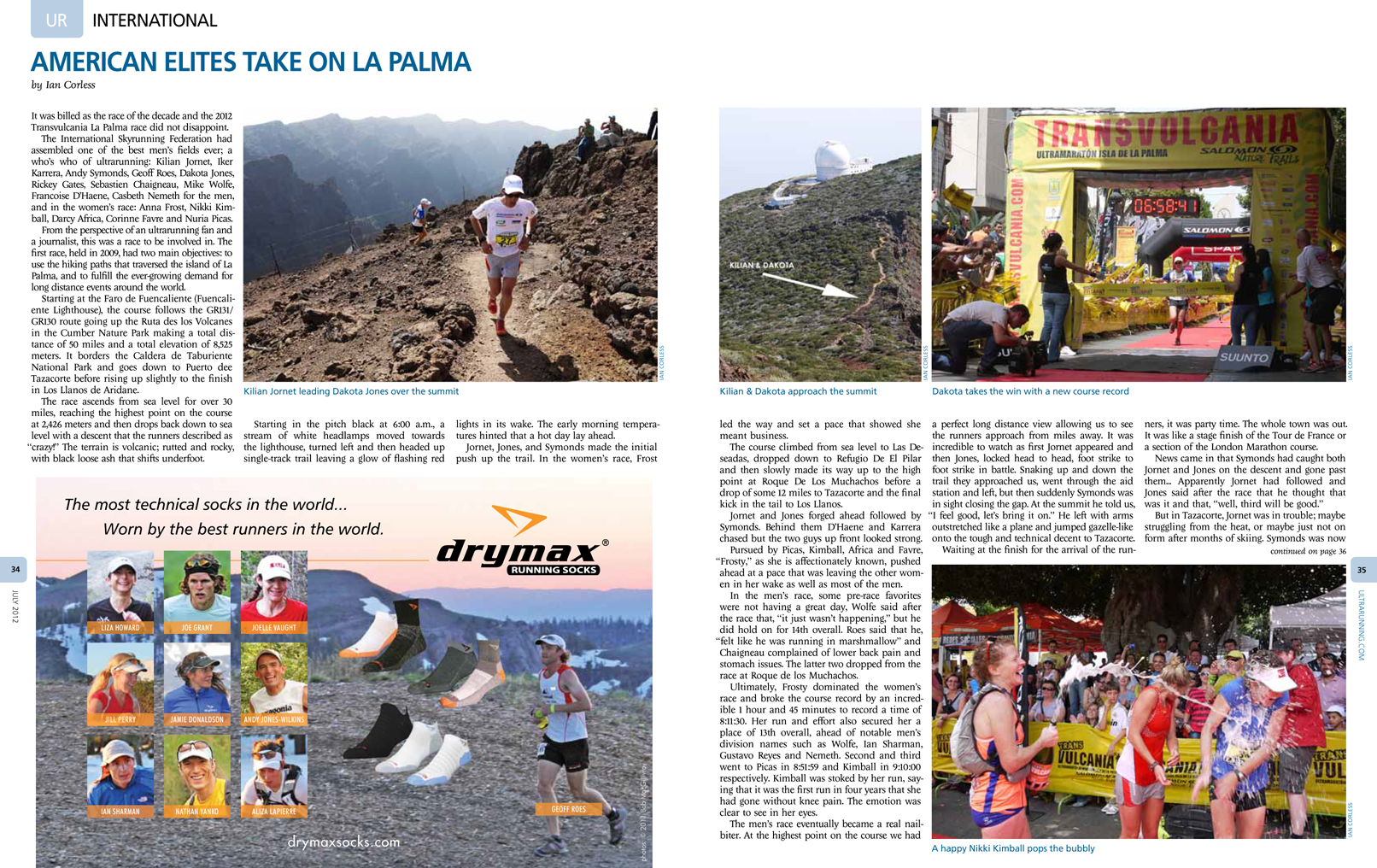
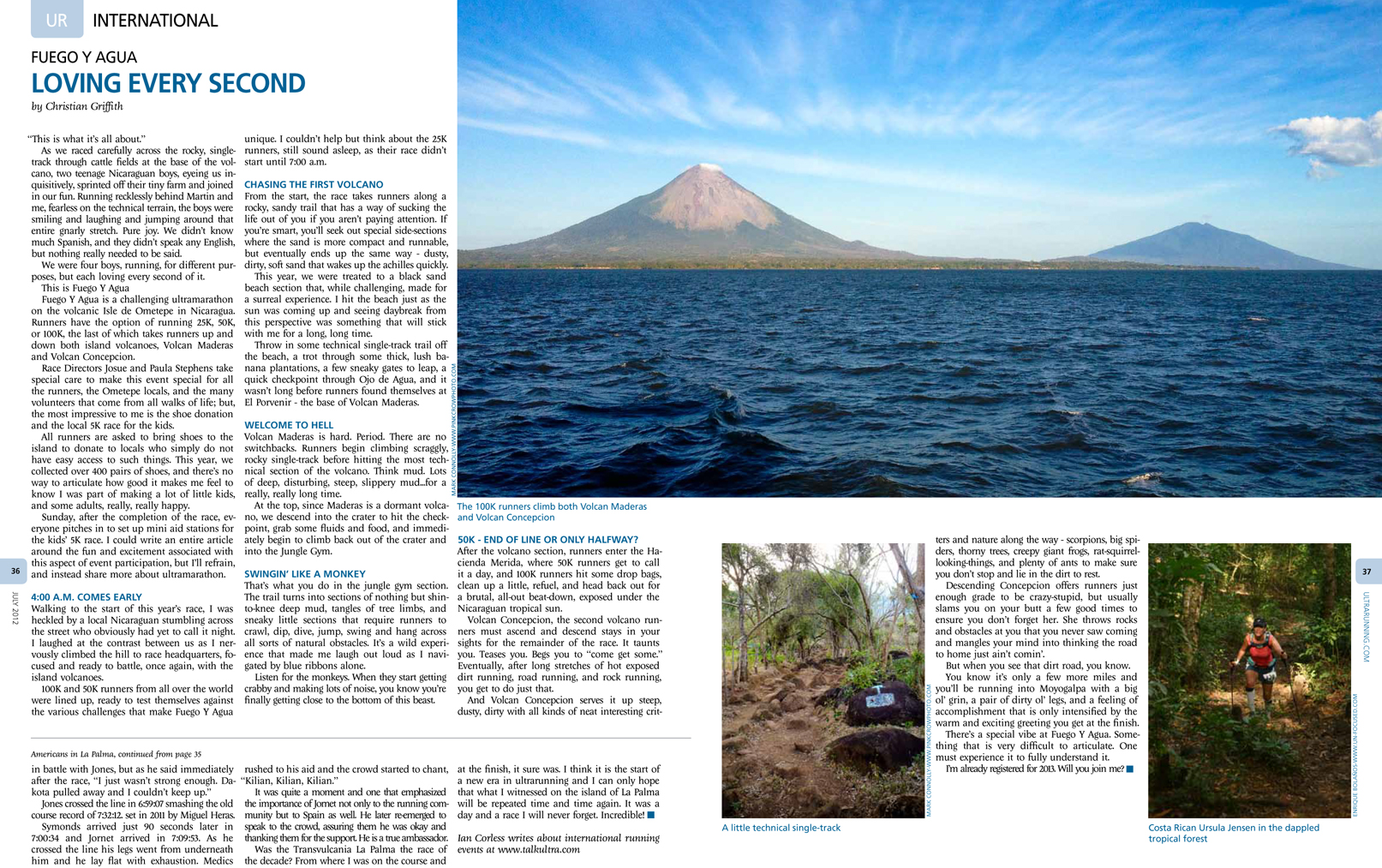
Really pleased today to finally get some proofs from ULTRARUNNING magazine on my article on the Transvulcania La Palma which I attended earlier this year as part of Skyrunning’s new ultra series of races.

Ultra SkyMarathon® Series

*SPAIN:  TRANSVULCANIA ULTRA MARATHON – La Palma – May 12 
USA:  Speedgoat 50K – Snowbird, Utah – July 28
ITALY:  Trofeo Kima UltraSkyMarathon® – Valmasino, Sondrio – August 26
SPAIN:  Cavalls del Vent – Cadi-Moixeró Natural Park – Pyrenees – September 29
FRANCE:  La Course des Templiers – Millau, Grands Causses – October 28

This article is in the July issue. You may download the article HERE

Please go to the website to view and subscribe to the magazine HERE

Kilian’s Quest

Another great video to come out of the island of La Palma and once again filmed by the master, Seb Montaz.

It’s a who’s who of ultra running but I guess showing them in a different light… at play in the lava fields.

Transvulcania La Palma – The Movie


A hard and extreme Ultramarathon, proof that only men of iron and women of steel can overcome, many try, many want to, but only a few will achieve the goal. The body is pushed to extremes in a race that all who participate call spectacular, breathtaking, addictive, and challenging. The 2012 event included a stellar line up with athletes travelling from all over the world to take part. To reach the goal of the finish line is everybody’s dream but the reality is not an easy one… welcome to the fourth edition of the Salomon Transvulcania Nature Trail

Running in the heat

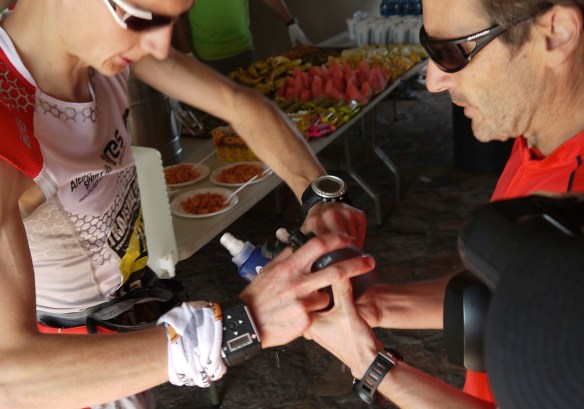
Okay, lets start as we mean to go on! Do you you prefer it on your back, in your hand or maybe you need both hands or maybe you prefer it all centered around your waist… of course I am talking about your method of hydration.

With temperatures rising, the UK in a heat wave and longer lighter days, we can hopefully all get out and run more. But as we all know, or maybe we don’t. We need to consider several things when running in the heat;

  • It’s harder
  • You sweat more
  • You need more fluid

We need to adapt. So what happens when the mercury rises?

Well, the body’s core temperature rises with exercise. In simple terms the more we exercise, or the harder we exercise and this core temperature rises. Unchecked this internal core would exceed boiling point; not a good idea. So, our clever body reduces this core temperature by evaporation (sweat). This process helps cool the body, maintain a manageable core temperature and hopefully allow us to continue exercise.
I say hopefully because the process of evaporation means that we loose liquid (hydration). So the trade off of a cooler core is potentially dehydration.

Dehydration as we all should know is something that does not go well with any sport. It increases heart rate and also adds to core temperature rises. It therefore can become a vicious circle. Initially running will feel much harder, the supply of oxygen to the brain will become impeded as blood is forced to the skins surface to help reduce the internal pressure. Your muscles will start to fail, become heavy and cramp. You may start to have blurred vision in extreme cases and in severe cases you will just stop, potentially collapse and black out. If you need clarification, this is NOT GOOD.
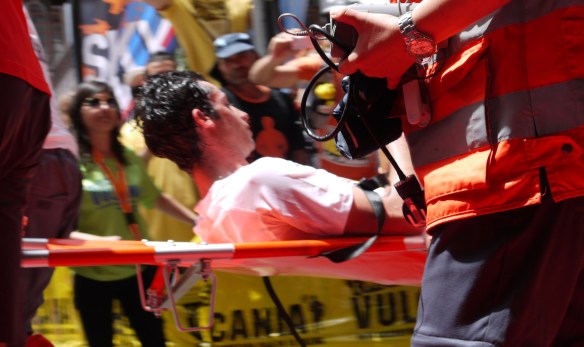
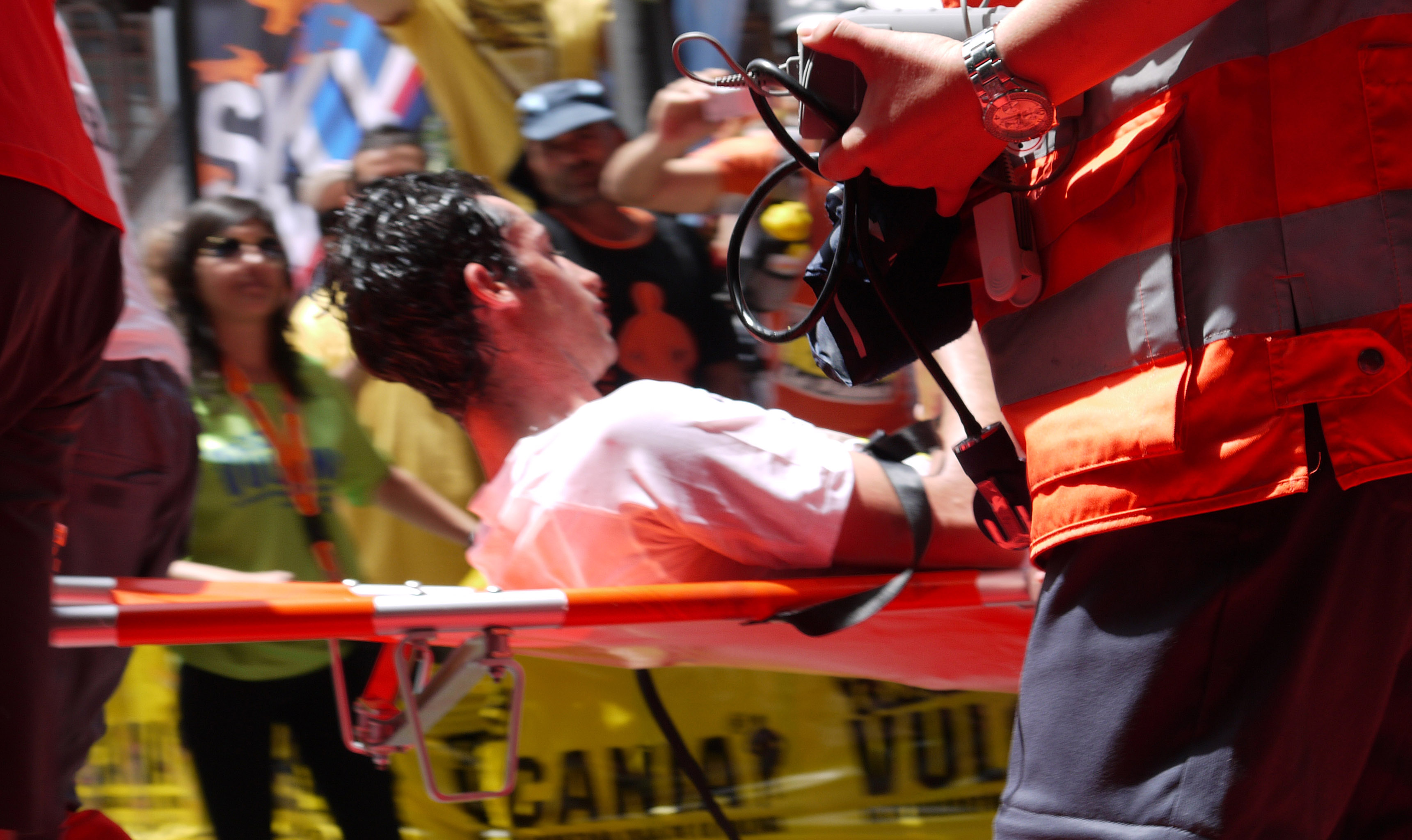
Kilian exhausted at the end of Transvulcania La Palma – dehydration ?

Depending on external temperatures, your ability to withstand heat, your own personal sweat rate and your adaptation to heat it is possible to loose 3-4 litres of fluid in an hour when running. I know, 3-4 litres! Loose more than 2% of body weight and this will impair performance and your mental ability. So, if your looking to perform or if you just want an enjoyable stress free run in the heat, you need to keep on top of hydration.

Hydration is NOT just fluid. Sweating means that we loose key minerals. These minerals keep our body in balance. Therefore you must replace electrolytes (salt) to keep your body in balance. Like your own personal fluid requirements, you salt requirements will also differ to that of your run friends. So take your time to work out what works for you. At the end of a hot run do you have salt marks on your clothes, do you have dried salt on your face? If so, you are more than likely a heavy sweater and your salt needs may very well be double or triple. Plenty of products are now available on the market and they all offer different methods and tastes. For example, Saltstick offer a really handy tablet which works well with bladders or bottles as it means you can keep your electrolyte supply separate and it also means that you can adjust your needs on the fly. However, Nuun offer a very popular flavoured tablet that comes in a handy tube that again can be taken with you on training or racing. This product must be added to your liquid though. Of course other products are available and I use these two reference points as purely as demonstration of what is on offer. It is fair to say that all sports drinks manufacturers now offer a form of electrolyte replacement.
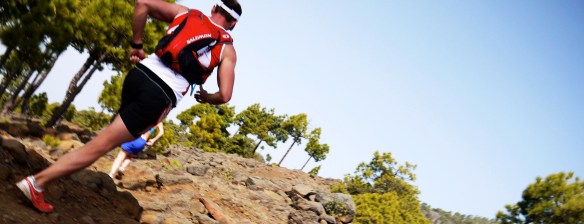
How do you avoid the dreaded dehydration?

First and foremost assess yourself and your abilities. If you live in a hot climate with all year sun and heat you are going to be well adjusted. If you live in the UK and then we suddenly get a heat wave, you are not going to be adjusted. It’s a simple fact that many fail to acknowledge. Running 7 min miles in 10 degrees is much easier than running 7 min miles in 25 deg. As I said previously, you try to run the same pace in much hotter temperatures and only one thing will happen; your core will rise, you will sweat more, you will start to suffer and eventually you will come to a stand still.

Slow down. Accept that the warmer temperatures will mean a slower pace. This will allow you to regulate your temperature and keep on top of your hydration. The longer you spend in the heat, the more you will adjust and eventually you will start to be able to lift the pace for the same effort and sweat rate. In simple terms this is what pro athletes do when they ‘acclimatize’.

  • Start a run hydrated. Your urine colour is a great indicator of how hydrated you are. A light straw colour is best.
  • Keep the sun off your head when running by wearing a white hat with a peak.
  • Wear sunglasses.
  • Wear light clothing that is loose and that will reflect the suns rays.
  • Use waterproof sun cream and be careful around your eyes.
  • Drink regular and often.
  • When possible, pour water on your head to reduce your core temperature.
  • Plan your runs and make allowances for refilling bottles or bladders on long runs using streams or shops (as applicable). You may want to carry some water purification tablets if you are in extreme places.
  • Take some money, mobile phone and ID.

Do a self-check when running:

  1. Do you feel cool? (and I don’t mean in a ‘rap’ way)
  2. Do you feel clammy?
  3. Have you stopped sweating?
  4. Do you feel sick?
  5. Are you dizzy?
  6. Are you fatigued?
  7. Is your heart rate pounding?

Any of the above and you are starting to show signs of dehydration. Don’t wait to be thirsty… it will be too late. Depending on how bad your symptoms are you will need to do one of the following:

  • Reduce your pace to a walk, let your temperature drop and slowly rehydrate – don’t gulp.
  • Stop. Sit down in the shade. Recover and let your temperature drop while drinking slowly to rehydrate.
  • Stop and basically STOP. If you have all or a combination of the above symptoms your best option may well be to stop and recover. Come back another day with lessons learnt

Recovery is key and it is important to rehydrate post training and racing. For every 1kg of weight loss drink 1ltr of water. When your urine has returned to a light straw colour, stop drinking and resume normal drinking… do not over drink.

Hyponatremia

Drink sensibly,  don’t force yourself with water. Research into Hyponatremia has shown that it’s not a lack of salt, which leads to hyponatremia, it’s drinking too much fluid. If you urine regularly and it is clear, you are drinking too much. A bloated stomach is a sign of the onset of the problem, headaches and nausea. During an event just sip and understand your sweat rate and needs. You can always test yourself by wiggling yourself naked pre run, run for 1 hour without drink and then re weigh yourself. The difference will give you an idea of your sweat rate; 1kg = 1ltr. Of course please keep in mind external conditions. Your sweat rate will differ for hot/cold days and depending on how hard or easy you run.

Drinking methods when running?

Do you you prefer it on your back, in your hand or maybe you need both hands or maybe you prefer it all centered around your waist…

How we carry our fluid is very personal and it also does depend on the demands of the training or the race. If you are racing you may need to carry compulsory equipment and this will almost certainly mean waist pack or rucksac is required.

But how we carry the liquid is what counts. The fluid needs to be accessible at all times as this will promote drinking.

Bladder?

Bottles?

Bladder v Bottle

Bladder:

Bladders come in varying sizes. 1ltr to 3ltr, with different methods of distributing the liquid to the runner, ultimately this is a pipe with a mouth valve. Bladders sit on your back or around the waist and offer an easy slurp system that is easy to use. The main issues with them are that they are difficult to clean, you are never quite sure how much you have left and they are more awkward to fill when racing.
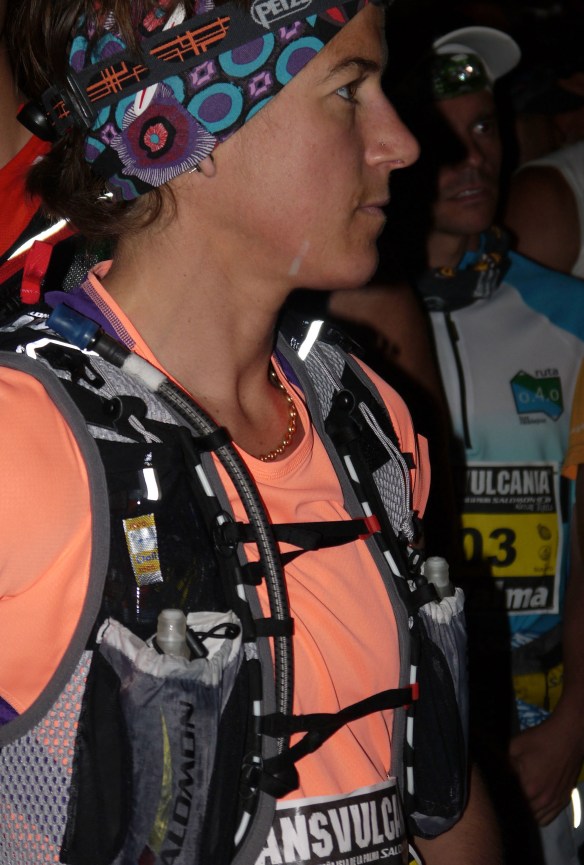
Bottles:

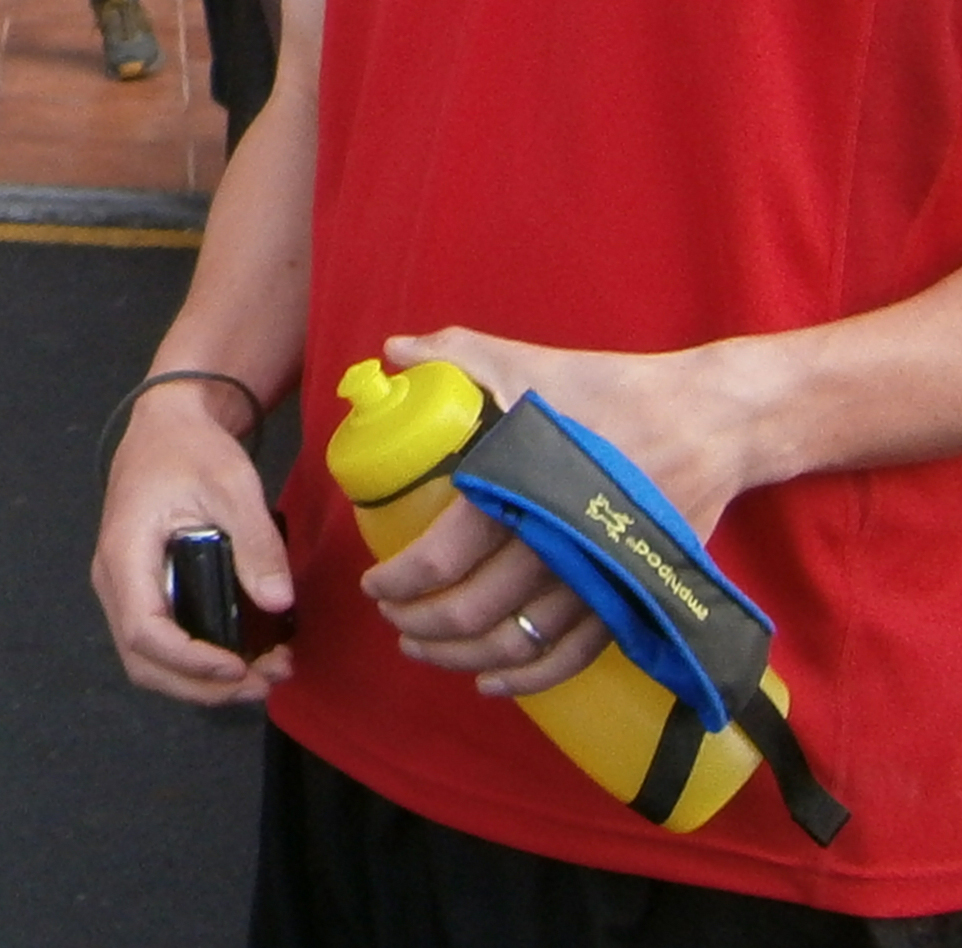
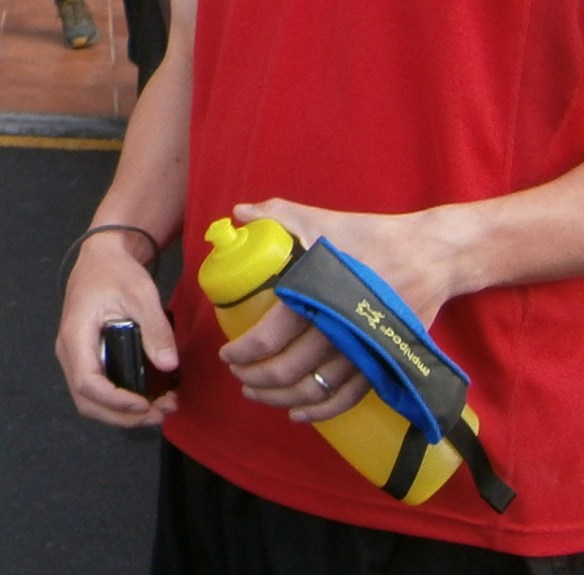
Like bladders they come in varying sizes but 500ml to 1ltr is normal. The size of the bottle may very well depend on your carrying system. For example – handheld bottles, bottles in a waist pack, bottles on a rucksac (at the back) or bottles on a rucksac (at the front). Bottles are easy to fill on the go, easy to clean, cheap to replace.
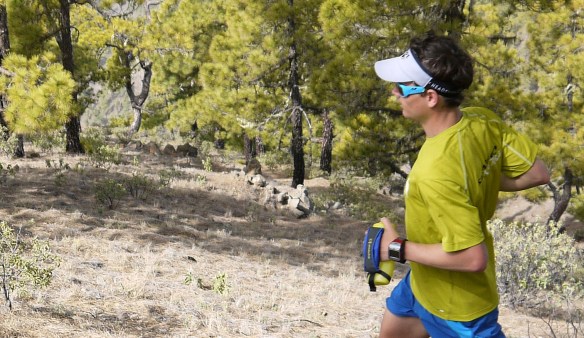
Combination:

Manufacturers realize now that runners needs are increasing and runners are becoming more demanding. Therefore packs such as the S-Lab 12 has allowances for a bladder, bottles on the front and even two large ‘dump’ pockets on the side of the pack that will take bottles. The advantages here are excellent as you can customize your needs for each run.

Putting it into practice

I personally use all of the above.

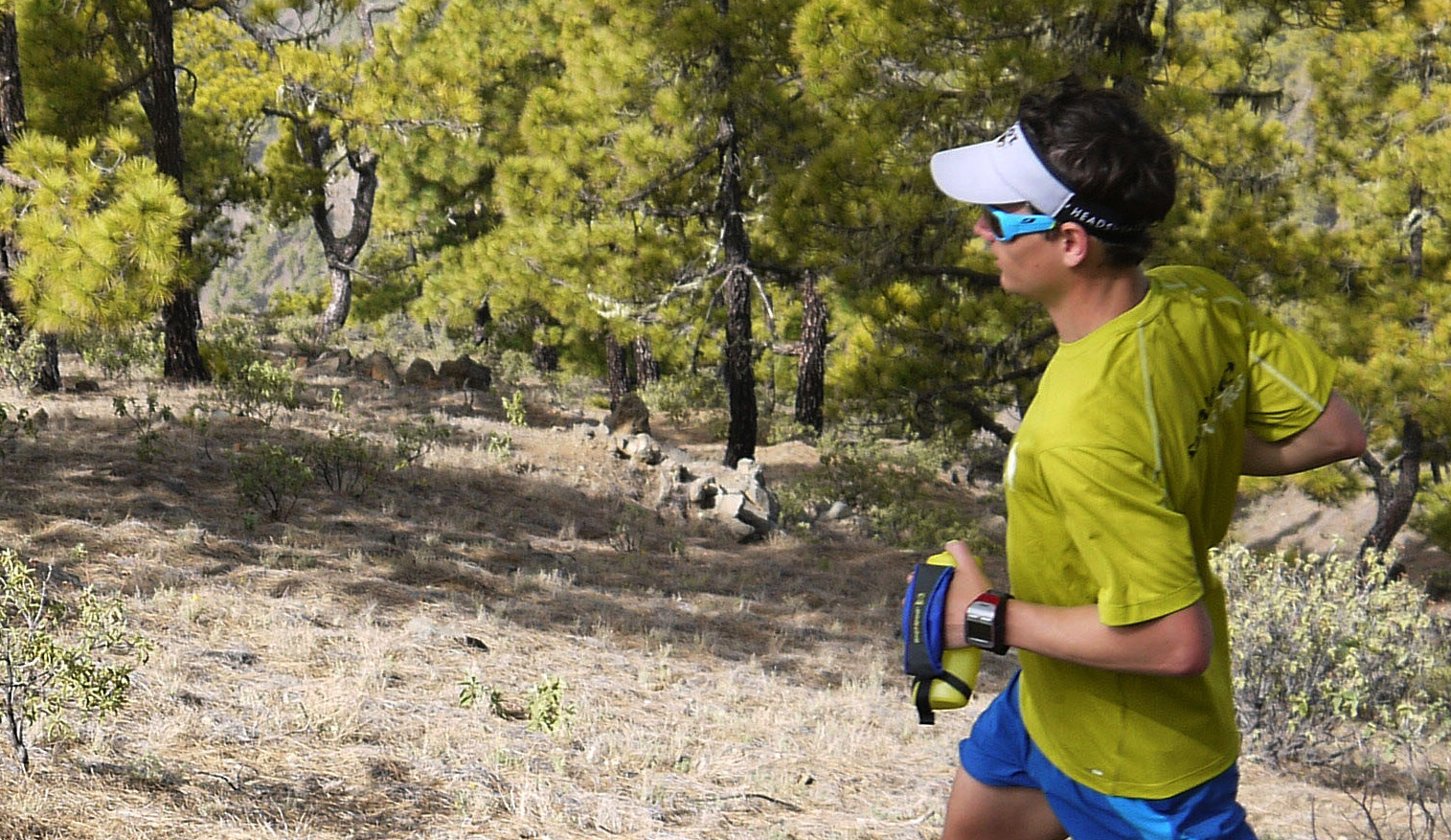
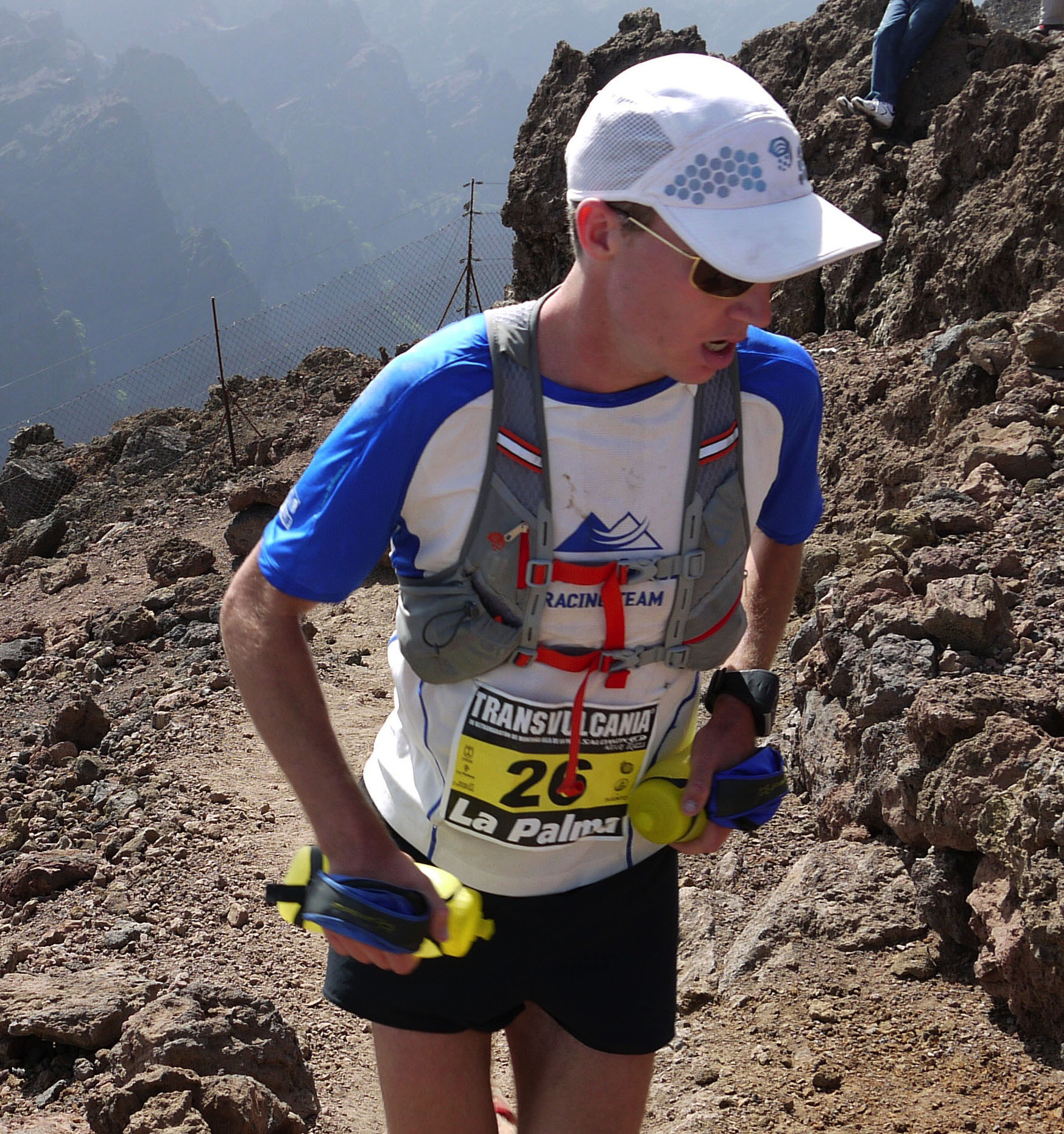
When it is really hot and I am just going for a training run I love just having two hand held bottles (Dakota Style) and running free. It allows for no restriction on my waist it also allows my back to be free and ultimately enables me to remain cooler.
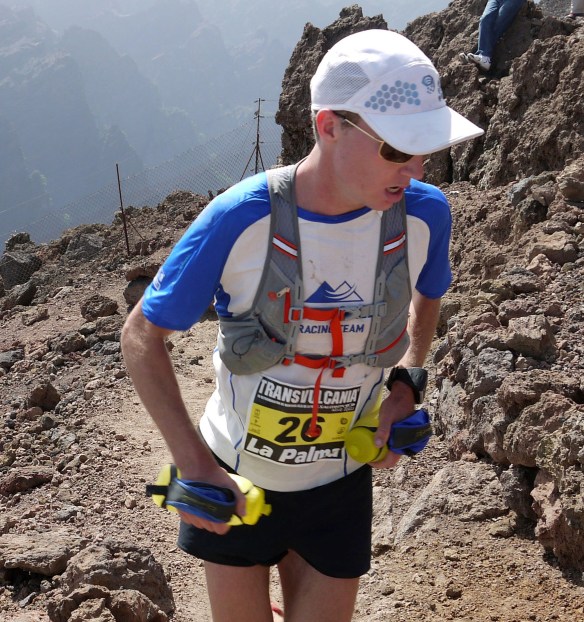
If I need to carry some essentials then I will add a waist pack that will hold just a light jacket, phone, money etc and keep the bottles in my hand.

When the demands are greater I shift to a rucksac allowing me to use a bladder and or bottles with the option to carry other equipment.

I am not a fan of waist bottle belts as they usually become uncomfortable, bounce and rub the skin – but that is my personal feedback.

It’s not rocket science but not putting it into practice is the difference between a great run and a lousy run. More importantly, when racing, it is the difference between potentially winning and not even finishing.

Choose your method and keep hydrated on your next run!

 

The Gap between US & Europe…

Americans on tour

Last weekend I was standing around in the pouring 45F rain in the town square of Zegama in the Basque Country of northern Spain.  Montana mountain runner Mike Wolfe had just crossed the finish threshold of the Zegama-Aizkorri SkyMarathon in 14th place as the top American and was still visibly amped up about the weather, the course, his race.

“I was passing people like crazy on the climbs, and I consider myself comfortable on technical trails, but these guys just go nuts on the downhills.  I’ve never seen people run downhill like that before!”

Hearing that from such an accomplished mountain athlete as Mike helped me realize the true gap that currently exists between long distance mountain races in the U.S. versus those in Europe.

Read the great post in full by Anton Krupicka HERE

Skyrunning South Africa – press release

South African trail running takes to the Sky official press release – 24nd May, 2012

In 1991, an Italian man by the name of Marino Giacometti (pictured left) introduced the world to a brand new concept of running. Traversing some of Europe’s highest peaks including Monta Rosa in northern Italy and Mont Blanc in France, Giacometti’s dream was to create a series of unique and challenging mountain running events that encapsulated the true meaning of “running in the clouds”. A few years later, and with the first high altitude trial hosted on the slopes of Mount Everest, Skyrunning was born.

Twenty years on, and as the interest in Skyrunning continues to grow at a rapid rate in both Europe and in North America, as well as in Asia and New Zealand, South
Africa begins a new chapter in the development of off-road running as this dynamic sport makes its way to our country’s mountain ranges.

In August 2011, the South African Skyrunning Association (SASA) was founded, becoming a voting member of the International Skyrunning Federation (ISF). As part of its mandate, SASA’s goals and objectives include helping with the ISF’s vision of growing and promoting the sport of Skyrunning on a global basis, introducing local South African runners to the idea of competing on a national Skyrunning circuit, and international runners to the opportunity of competing on South African soil.
So what is Skyrunning you ask? The ISF have introduced a unique criteria that defines a Skyrunning event. From specific cumulative altitude gain across the race route profile, to minimum and maximum elevations above sea level, Skyrunning events encompass a wide variety of mountain terrain. Comprising of events such as the Skymarathon®, Skyrace® and Vertical Kilomoeter®, as well as the newly introduced Skytrail, some 35 000 athletes world-wide enjoy National, European and World Series events. The Skygames®, which takes place every four years in the same year as the Olympics, also offers Skyrunners from around the world the opportunity to represent their country in a multi-disciplined format of mountain races.

As one of the primary objectives of SASA, its mandate includes identifying existing trail and mountain running events in South Africa that will be interested in hosting a national Skyrunning circuit event. Coupled with these existing events, the opportunity also lies in the introduction of new mountain running races as part of this national circuit, events that will continue to pioneer this new chapter in the county’s mountain running scene, all gaining recognition as official Skyrunning races. “There are many quality South African races which already exist and qualify to host a national circuit event,” says James Hallett, founder of SASA. “With a landscape that boasts some exceptional mountainous terrain, I feel that South Africa has the potential to become a world class Skyrunning destination.”

For the local runners, it’s an opportunity to join SASA as a registered Skyrunner®, allowing them to enter and compete in these various national circuit events to accumulate points, much like a Formula 1 driver would throughout a racing season, in the hopes of being crowned national Skyrunning Champion.

“We feel that the idea of competing on a national circuit will appeal to both elite athletes and regular runners alike, allowing them to challenge themselves and others each year. This will not detract from them being a regular trail runner, however with the added opportunity of being selected to represent South Africa at a Skyrunning World Series event, or even a Skygames®, it’s something that we feel will encourage runners to join, opening up many avenues for aspiring athletes wanting to perform on the world mountain running stage.” says Hallett.
South African Skyrunning Assocoiation

As part of SASA’s launch campaign, thanks to the ISF and funding from the organisers of one of Europe’s longest standing European Skyrunning Series races, the Sierre-Zinal Skymarathon®, a top South African athlete will be heading to Switzerland in August to compete in the 2011 event.

Linda Doke is one of South Africa’s most accomplished trail athletes, having performed exceptionally well at some of South Africa’s premier trail running events over the past 8 months including the 2011 Salomon Skyrun and 2012 ADDO Elephant Trail Run (victory in the women’s category for both races). Having also recently competed in her 16th Two Oceans Ultra-marathon, as well as having a solid training base behind her as she prepares for her 10th Comrades Marathon in June, SASA has selected Linda not only for her ability as a runner but also as a fitting ambassador to represent South African Skyrunning.

“I’m incredibly excited to have been selected to represent SASA at the Sierre-Zinal in August,” says Doke. “I’m sure that being a part of the Skyrunning World Series, the race will be very tough, as will all the seasoned alpine speedsters I’ll be competing against, so it’s a real privilege

to be a part of it. With the Skyrunning concept having taken Europe by storm, and through the formation of SASA, South Africa has a fantastic opportunity to showcase its most technically challenging trail and mountain races to the world.”

SASA will be hoping to announce the 2013 national Skyrunning circuit later this year, with negotiations having already begun with interested event organisers. Runners wishing to sign up as registered Skyrunners should keep their eyes on the official SASA website for more details as and when they break, including information about the events hosting the national circuit.

Should you wish to find out more about Skyrunning, please visit the SASA website or folllow our social media channels on Facebook and Twitter

You can also contact SASA by emailing skyrunningsa@gmail.com

Money Money Money

Ultrarunning, money and the future?

It’s a big question and one of the things that we spent three days discussing at the ISF Skyrunning Conference in La Palma, the Canaries.

Ultrarunning is without doubt is becoming more popular and more main stream. When you look at the crowds supporting and participating in many European ultras one can see that the sport has only one way to go; up!

By contrast, the sport in America is so much more niche. This was confirmed by the running elite that came over from America. As Dakota Jones said ‘You camp on the start line, roll out of bed and then go run’. Even Western States, the pinnacle 100 miler does not match the European races. Certainly the start has a buzz and of course the finish. But not much happens between the two.

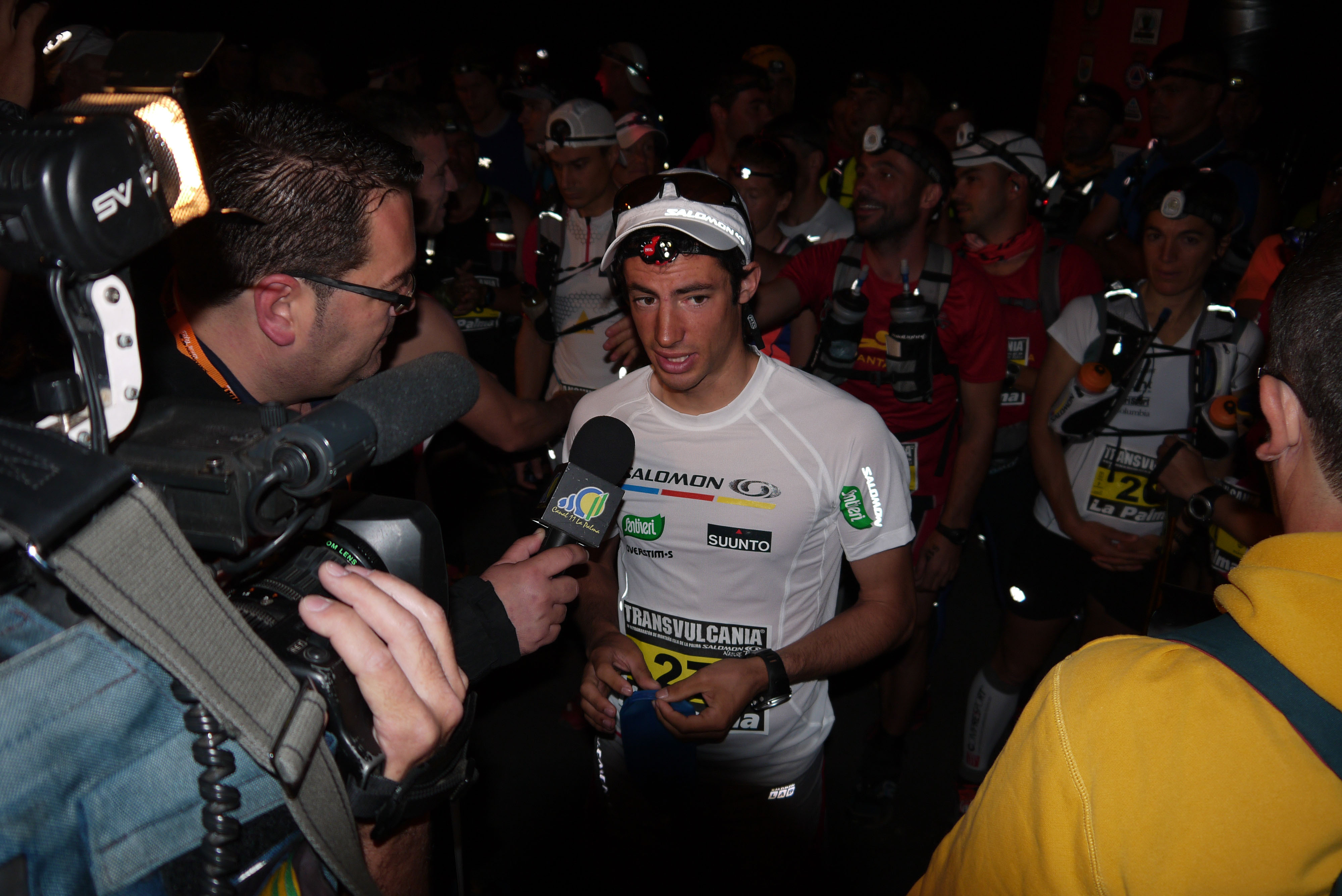
Kilian being interviewed pre Transvulcania La Palma

Transvulcania La Palma and Zegama over the last 10 days had thousands upon thousands of spectators, one would compare it to the Tour de France. They narrow the trail down, cheer and shout at the runners, ring cow bells, blow horns… it’s a party atmosphere and they love the runners.

The sport will progress and the more spectators the races attract, the more the sponsors are likely to invest. Thousands screaming on a start line, all ages, from young girls to old men. Sport has no age criteria and when you get a good looking American finishing in first place you could almost imagine that you are at a rock concert and not an ultra.

Rock Star Dakota

We all love a quiet trail, we all love the isolation of running with one or two friends but the future of racing, particularly if we want more money, money, money will see bigger crowds, more buzz and I guess a sport that will become more media savvy.

What is important and this is one thing that we discussed in La Palma, is that we don’t want the sport to loose what is so good about it. The unity, the friendship and bonding that we all have.

By pure coincidence the Washington Post has had a related article on the subject. You may like to read it:

Washington Post

In the article, Karl Meltzer who has a regular spot on Talk Ultra says:

“Am I making money running races? No,” said Meltzer, who has consistently won some of the biggest trail races each year since 1996. “Even if you win them all, you would still only be making about $30,000 a year. . . . It’s sponsorships that make it possible for the elites to travel to the races and eke out a living at the sport.”

Of course he is right. However some new races are appearing in America such as UROC (Ultra Race of Champions) and Run Rabbit Run which are offering prize money. However, they still don’t have the buzz of European races. A sponsor needs a return!

One thing that is clear is that we live in a digital age. Social media is now imperative if you want to get a message across. Not only do the runners need to Tweet, Blog and Facebook but so do the teams, the sponsors and everyone related to the sport.

In Transvulcana La Palma and Zegama, I combined forces with iRunFar and ULTRA168 and we lit up Twitter and Facebook. We became the outlet and feed of the race. Not only updating the positions of the runners but importantly feeding back how the runners felt, how they looked and sending photos ‘live’ as it happened. It is the way forward.

1,2,3 at Transvulcania

Tony Krupicka said in the article:

“In just the last few years, there have been huge gains made in the media aspect of the sport, mainly via following races on Twitter, and in the production of various films”

It’s early days, the sport although well established is now just being born. It is an infant about to move up to a bigger school.

Let’s keep the bullies away and retain the integrity of the sport while at the same time allowing it to expand so that we can make a living but also still love it for what it is; running!

Ian