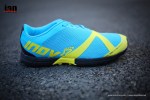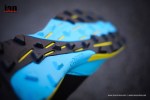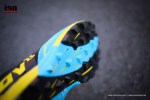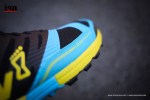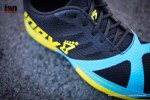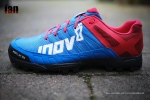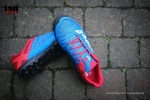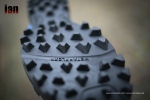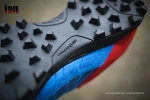
What is the best shoe for Road, Trail, Off-Road or Mountain?

©iancorless.com-3679

What is the best shoe for road, off-road, trail and mountain?

You won’t believe how many times I get asked this question. Of course I can’t answer it. Far too many variables come into play.

  • Drop
  • Cushioning
  • Grip
  • Upper type
  • Lacing
  • Outsole

Taking into consideration all of the above, certain elements are comparable and with 2015 drawing to a close I thought I would take a look back at some of the shoes I have tested and worn in the last 10-months and then put my neck on the line and say, which shoe (for me) is the best.

Shoes to look at:

  • Salomon S-Lab Sense – 4mm drop
  • Salomon S-Lab Sense SG (soft ground) – 4mm drop
  • Salomon Sense Mantra 3 – 6mm drop
  • The North Face Ultra MT – 8mm drop
  • The North Face Ultra Cardiac – 8mm drop
  • inov-8 Race Ultra (2-models) – 4mm and 8mm drop
  • inov-8 Terraclaw (2-models) – 4mm and 8mm drop
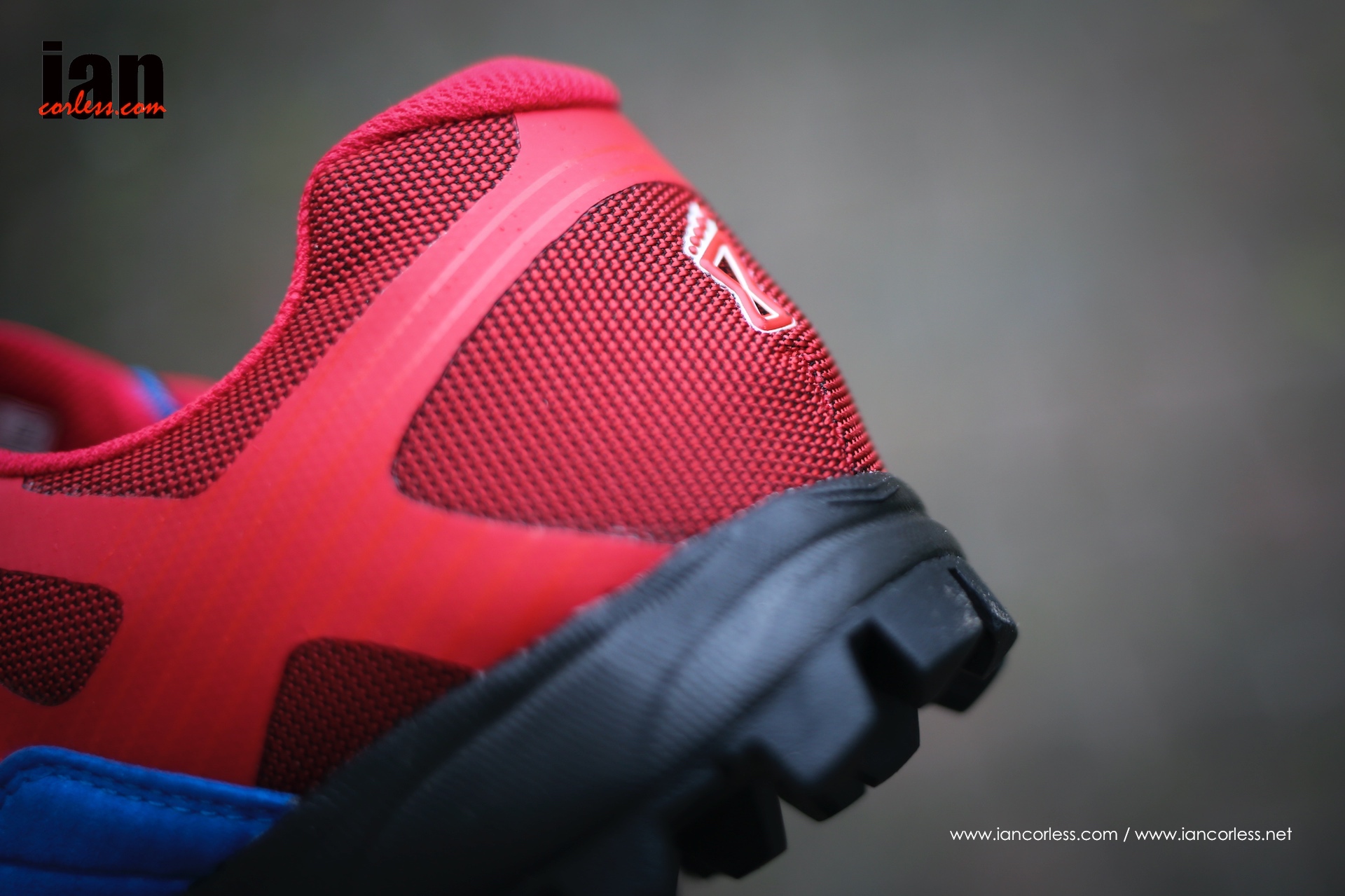
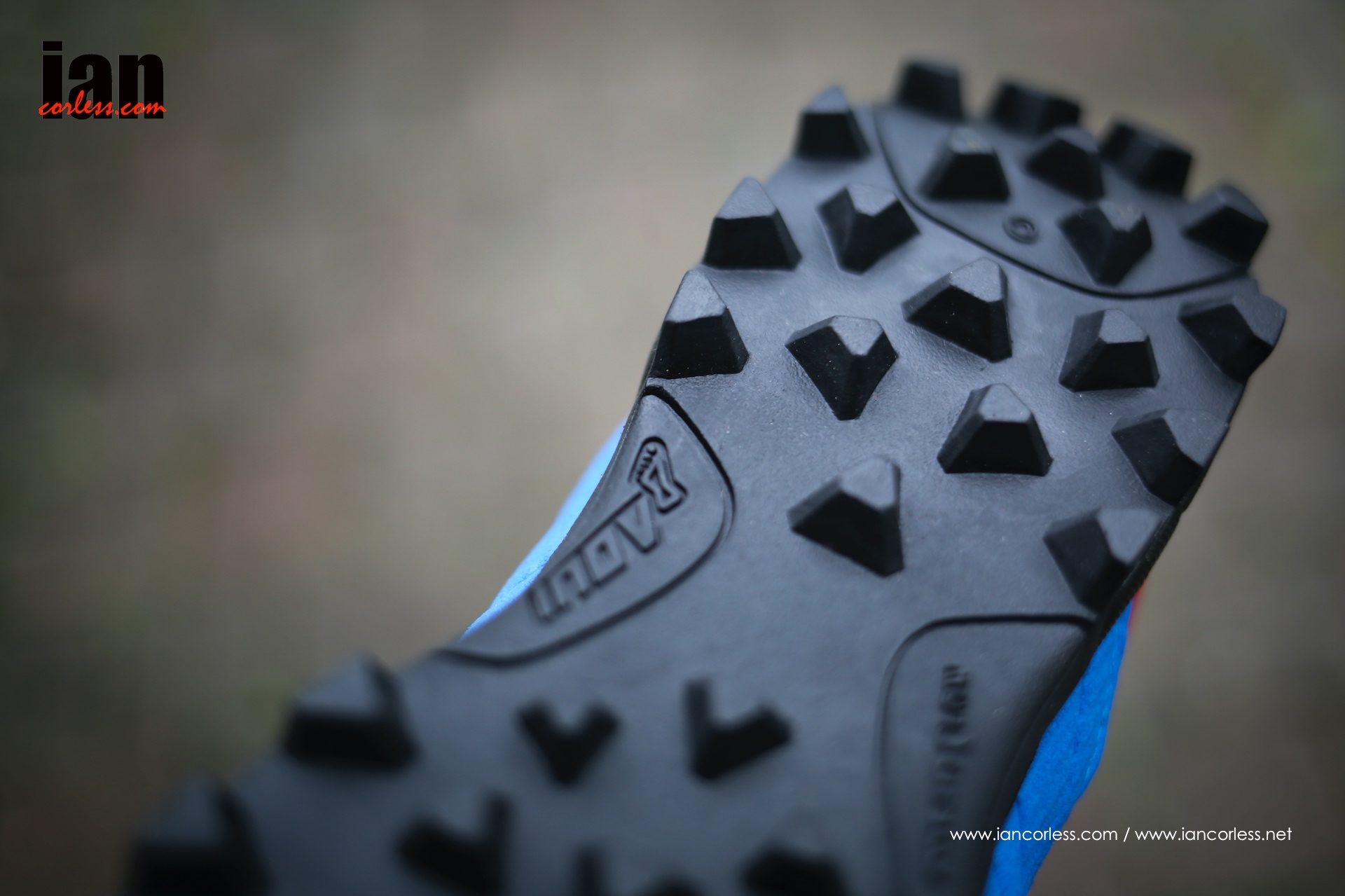
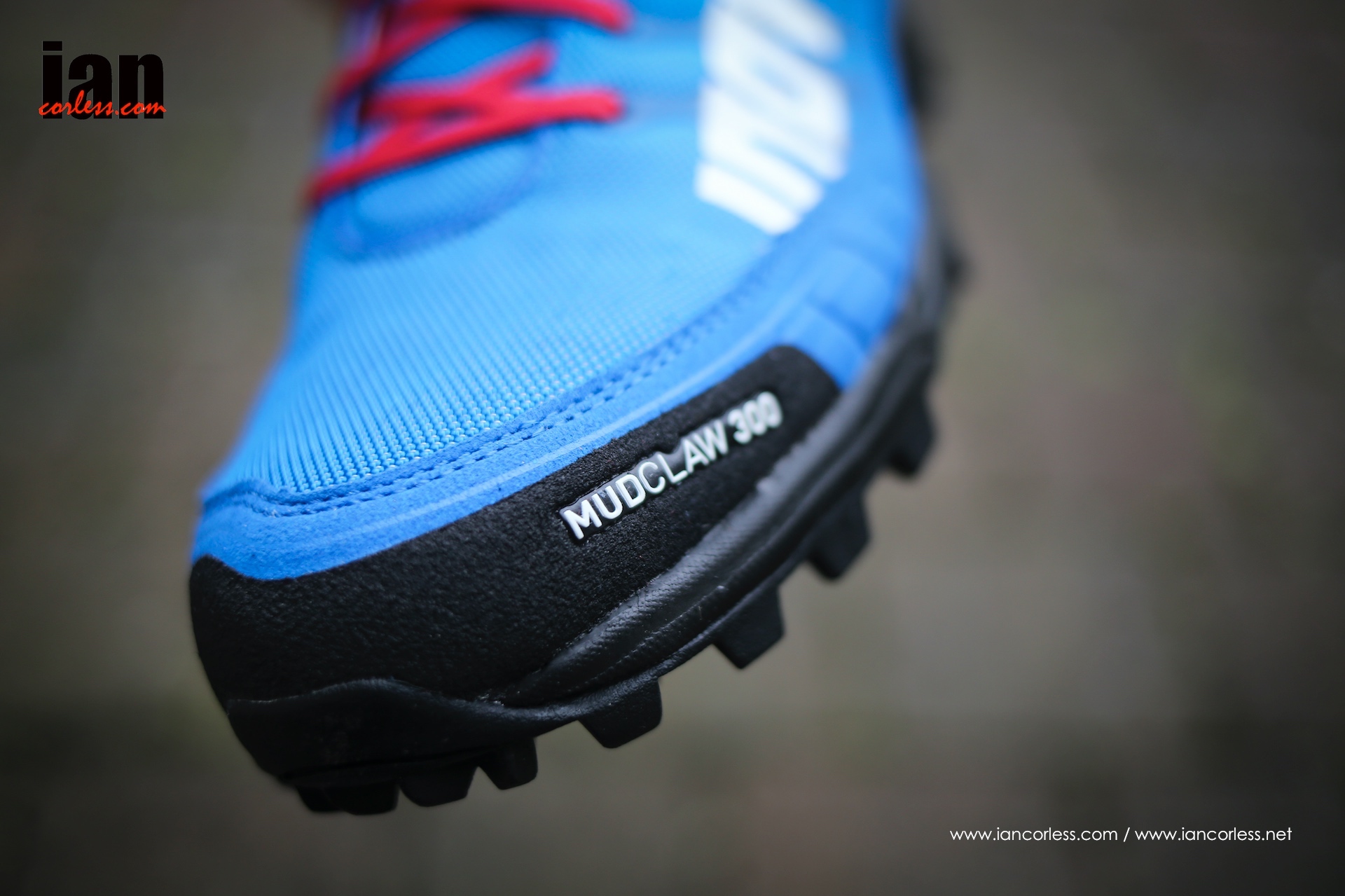
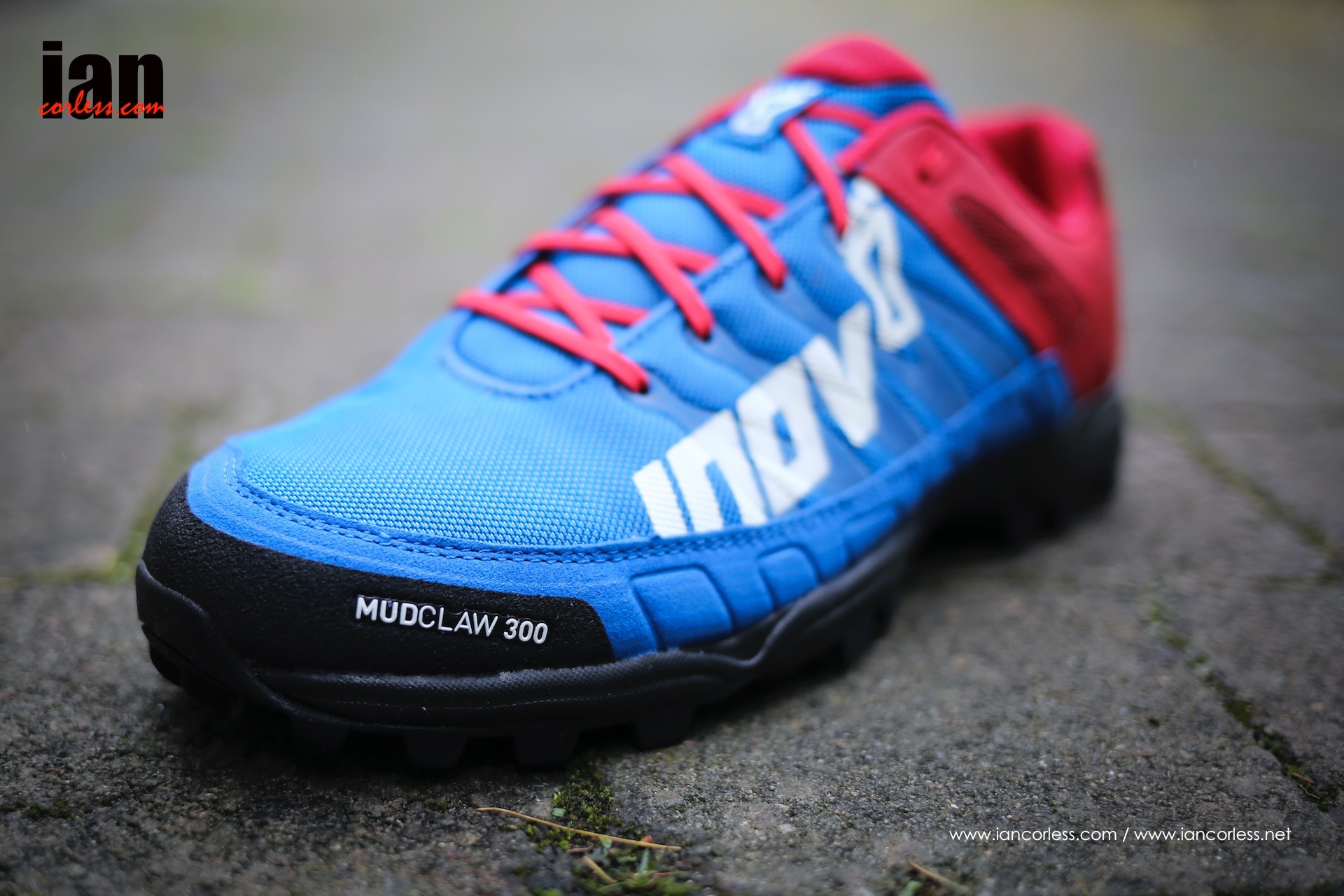
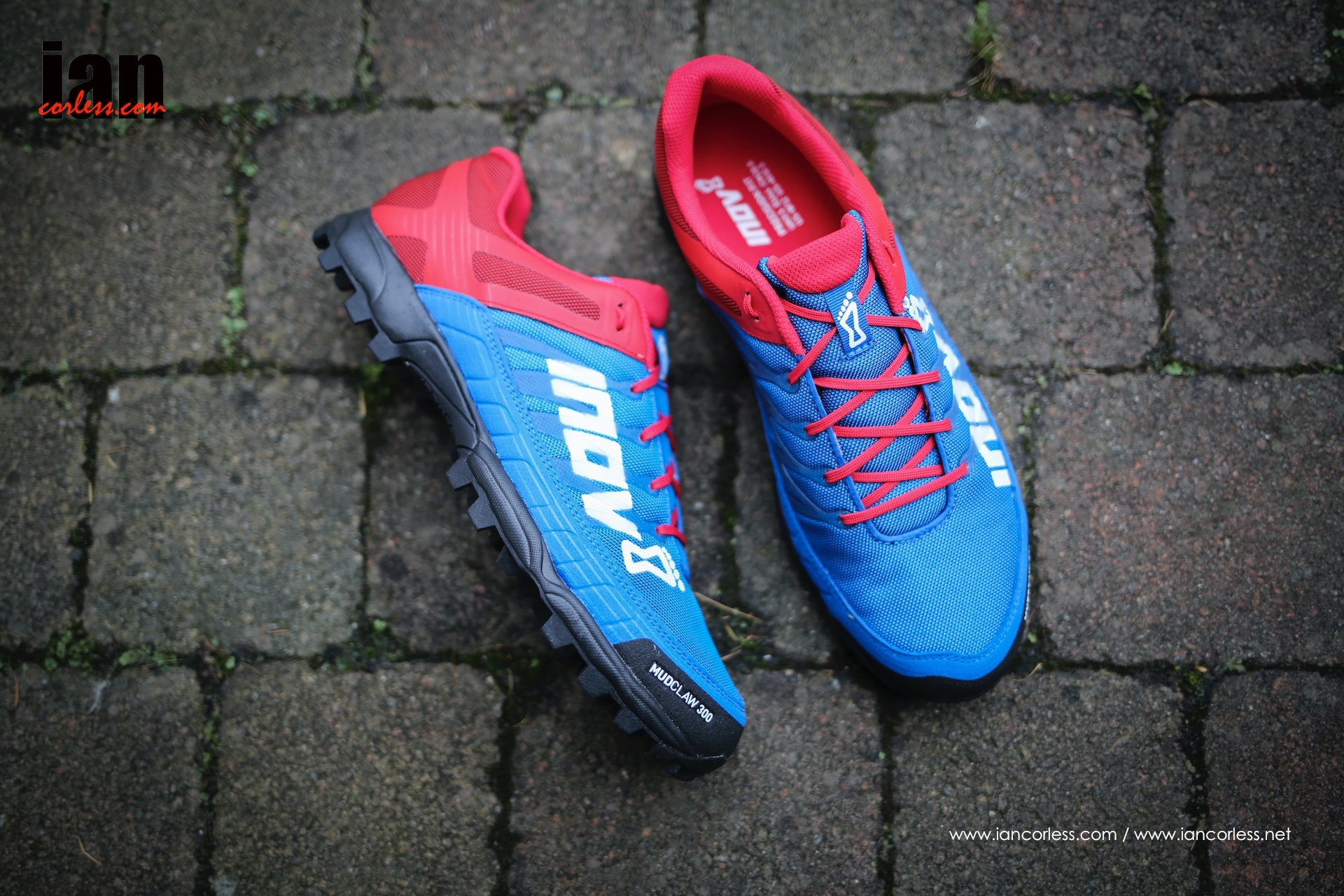
  • inov-8 Mudclaw 300 – 6mm drop
  • Scott Kinabalu 3 – 11mm drop
  • Scott Kinabalu Supertrac – 8mm drop
  • Scott Trail Rocket – 5mm drop

Notice that I have added the drop next to all the the shoes above. Drop has become a very important element when choosing a shoe. What drop you require as a runner is open to debate and to a certain extent; genetics. The book, ‘Born to Run’ inspired many runners to get low and minimal and what followed was carnage and very happy physiotherapists. Please read this post HERE to provide some perspective of my thoughts.

Drop and minimal are two separate issues.

1. Drop is the angle from the heel to the toes that the foot will sit at when parallel to the ground.

2. Cushioning is the amount of ‘soft stuff’ between you and the ground.

To clarify:

  • You can have low drop (typically 4mm) and LOADS of cushioning = Hoka One One
  • You can have low drop (zero) and no cushioning = Vibram
  • You can have a combination of varying drop and varying cushioning = Many of the above shoes.

So, if you want zero drop and no cushioning OR you want lower drop and maximal cushioning; stop reading, this is not the review for you!

If however, you are looking for a shoe that can handle some road, off road or mountain paths then read on; which shoe is a jack of all trades?

Where do I start?

It’s quite daunting taking so many shoes and then saying which pair, in my opinion is the best. So, here is my criteria:

  • Ability to run on road
  • Ability to run on hard trails
  • Ability on dry and wet rocks
  • Grip in mud
  • Climbing
  • Descending
  • Time on feet
  • Fit
  • Lacing
  • Cushioning
  • Outsole
  • Wear and tear
  • Drop
  • Conclusion

©iancorless.com_Sense4SG-9068

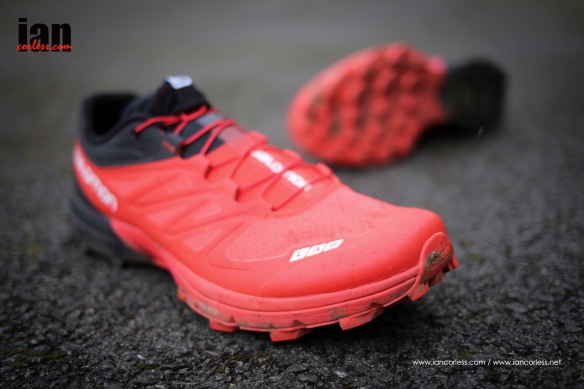
Salomon S-Lab Sense SG – Read full review HERE

Ability to run on road – For a shoe with an aggressive outsole, on road experience is good but as the name suggests, the SG is for Soft Ground.

Ability to run on hard trails – Good. Handles the trail well with comfort.

Ability on dry and wet rocks – On dry rocks, grip is very good. On wet rocks the grip is very compromised and at times sketchy/ scary.

Grip in mud – For such an aggressive outsole, the grip is moderate. The SG sits somewhere in the middle.

Climbing – Shoes feel great. They are flexible, hold your foot snug and you have a feeling of precision. They also handle wet ground well providing it does not get very muddy. Wet rock is hit and miss.

Descending – As above but in mud, or on wet it can be a challenge.

Time on feet – 6mm drop, adequate cushioning and great fit make this shoe very popular. Excellent for 50k and after that it depends on the runner and the runners adaptation.

Fit – Excellent. Endofit and the speed lacing system is the best out there!

Lacing – The best but lacks an ability to tweak or adjust.

Cushioning – Cushioning is good and finds a nice mix that still allows feel and contact with the ground.

Outsole – It’s a soft ground outsole but for me it’s a great outsole for dry terrain with a variety of surfaces and not too much mud.

Toe box – Narrow, precision fit.

Wear and tear – Moderate – 500k – 600k

Drop – 4mm

Conclusion – Great fit, 4mm drop and soft ground outsole. For many this is the ultimate off road, trail and mountain shoe for longer days training or racing. It’s limited in the wet and mud though.
©iancorless.com_Sense4-8534

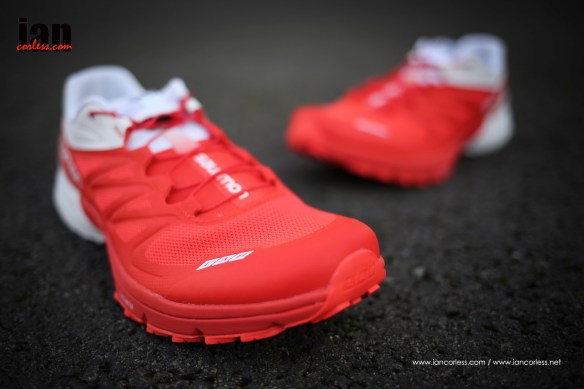
Salomon S-Lab Sense 

Ability to run on road – Excellent. The outsole has a low profile.

Ability to run on hard trails – Excellent. The outsole has a low profile and therefore if the trail is dry, these shoes will fly along.

Ability on dry and wet rocks – On dry rocks, grip is very good. On wet rocks the grip is compromised and at times sketchy. You lack 100% confidence and that makes you go slower.

Grip in mud – Hopeless.

Climbing – Shoes feel great. They are flexible, hold your foot snug and you have a feeling of precision. Not good in the wet or mud.

Descending – As above but in mud, or on wet rock forget it!

Time on feet – This depends on ones adaptation to a more minimal shoe. If you like being close to the ground with a low drop this shoe will be perfect. However, for me I prefer this shoe for shorter runs on dry trails.

Fit – Excellent. Endofit and the speed lacing system is the best out there!

Lacing – The best but lacks an ability to tweak or adjust.

Cushioning – This is a more minimal shoe but it does have cushioning.

Outsole – For dry trails

Toe box – Narrow, precision fit.

Wear and tear – Moderate – 500k.

Drop – 4mm

Conclusion – It’s a racing shoe for dry trails for mid to fore-foot runners. Fit is excellent if you like a precision feel.
©iancorless.com_Mantra3-7562

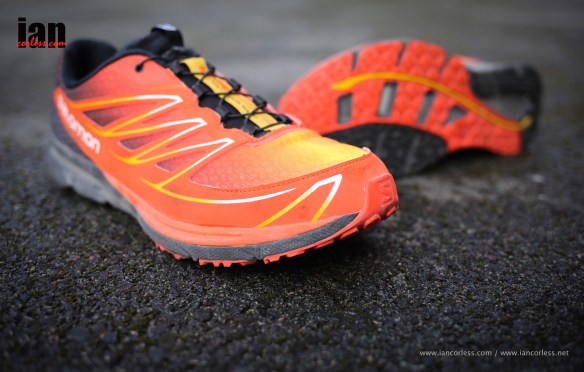
Salomon Sense Mantra 3 – Read full review HERE

Ability to run on road – Excellent. The outsole has a low profile.

Ability to run on hard trails – Excellent. The outsole has a low profile and therefore if the trail is dry, these shoes will fly along.

Ability on dry and wet rocks – On dry rocks, grip is very good. On wet rocks the grip is compromised and at times sketchy. You lack 100% confidence and that makes you go slower.

Grip in mud – Hopeless.

Climbing – Shoes feel great. They are flexible, hold your foot snug and you have a feeling of precision. Not good in the wet or mud.

Descending – As above but in mud, or on wet rock forget it!

Time on feet – This depends on ones adaptation to a more minimal shoe. If you like being close to the ground with a low drop this shoe will be perfect. However, for me I prefer this shoe for shorter runs on dry trails.

Fit – Excellent. Endofit and the speed lacing system is the best out there!

Lacing – The best but lacks an ability to tweak or adjust.

Cushioning – This is a more minimal shoe but it does have cushioning.

Outsole – For dry trails

Toe box – Toe box is generous and for those looking for a Salomon with more room, this is the shoe for you!

Wear and tear – Good 700K

Drop – 6mm

Conclusion – I think the Mantra is a shoe that more people should look at. They often go for the S-Lab Sense because of the S-Lab tag but for me, this is a better all around shoe and far more suited for most runners. It has 6mm drop, wider toe box and more cushioning. If you run long on dry trails this is a great shoe.
©iancorless.com_TNFUltraMT-3637

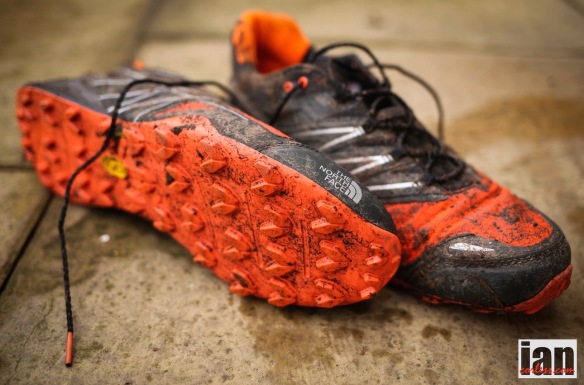
The North Face Ultra MT – Read full review HERE

Ability to run on road – Good considering the outsole but keep it to a minimum.

Ability to run on hard trails – It handles hard and dry trails well but the shoe lacks flexibility and is a little firm.

Ability on dry and wet rocks – On dry rocks, grip is very good. On wet rocks the grip is better than the Salomon due the Vibram sole. Felt far more confident in this shoe.

Climbing – Good but they are not as supple and flexible as others in the test. Grip is goo.

Descending – As above.

Time on feet – The Ultra MT is a relatively firm shoe that excels on softer, muddier and forgiving ground. If you stick to that terrain they are excellent.

Fit – Pretty good, you may need to replace the laces (not great) and tweak how they are laced to get the best fit.

Lacing – Provided laces are average.

Cushioning – It’s a firm shoe and although cushioning is present, it’s not a cushioned shoe.

Outsole – Is Vibram and aggressive. It’s good!

Toe box – Has loads of protection and although not over wide it will work for most people.

Wear and tear – Good 600k but less if you go on the road a great deal.

Drop – 8mm

Conclusion – I was disappointed with the Ultra MT at first. I wanted it to be something else I think! But after several runs I found that they excelled off road when the terrain was forgiving (cushioned) and muddy, wet or slick. It’s a good mountain shoe that protects the foot.
©iancorless.com_TNFUltraCardiac-7006

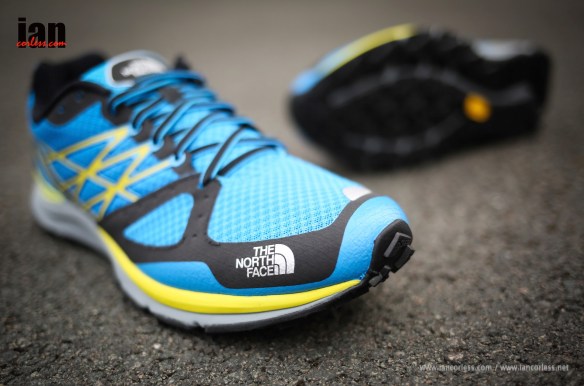
The North Face Ultra Cardiac – Read full review HERE

Ability to run on road – Excellent. The outsole has a relatively low profile.

Ability to run on hard trails – Excellent. The outsole has a low profile and therefore if the trail is dry, these shoes will fly along.

Ability on dry and wet rocks – Good. Confidence in both scenarios.

Grip in mud – Moderate. It’s a great middle ground shoe so does not handle the real muddy terrain well.

Climbing – Shoes feel great. They are flexible, hold your foot snug and you have a feeling of precision. Not good in the wet or mud.

Descending – As above but in mud it’s compromised.

Time on feet – Great. The combination of 8mm drop and good cushioning make this a great long distance trail. mountain or off road shoe for primarily dry conditions. I’d recommend these for 100-miles and multi-day racing.

Fit – Good with a well padded tongue.

Lacing – Standard lacing that you may wish to tweak for the best fit.

Cushioning – Great cushioning but not maximal. Ideal for longer days.

Outsole – Great compromise outsole that can handle road and trail. Okay for mud but not too much!

Toe box – Is average width so if you need a wide toe box you may want to try them.

Wear and tear – The upper lacks durability which is the only downside of the shoe – 500k?

Drop – 8mm

Conclusion – One of the best ‘all-rounders’ in this test that can handle multiple terrains with an 8mm drop that will allow you to run long.
©iancorless.com_RaceUltra270-7533

©iancorless.com_P6100002RaceUltra290

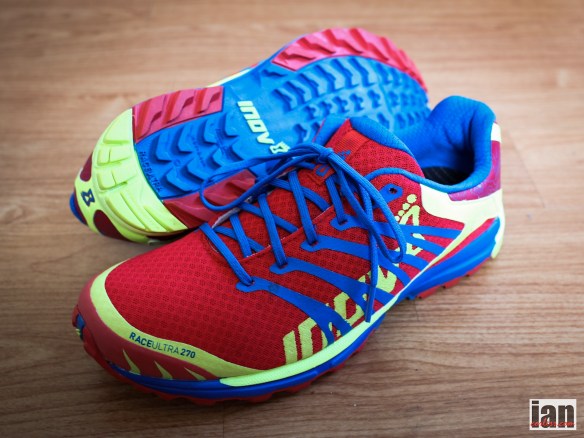
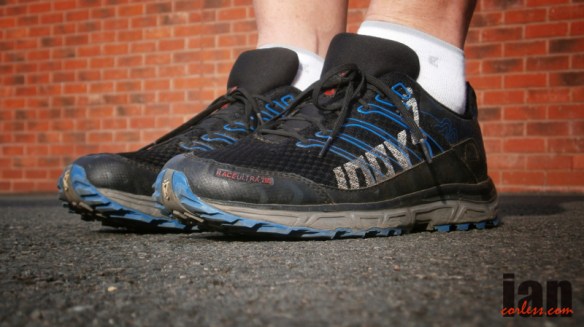
inov-8 Race Ultra 270 (4mm drop) and 290 (8mm drop) – Read full reviews HERE (270) and HERE (290)

Ability to run on road – Good, the outsole has minimal tread and they work well on road.

Ability to run on hard trails – As above, good outsole for hard and dry trails.

Ability on dry and wet rocks – Average grip and terrible when wet.

Grip in mud – Hopeless.

Climbing – If you have really wide feet they will feel ok, if not they feel sloppy, over stiff and lack any true feeling with the ground beneath.

Descending – Toe box is too wide and therefore foot moves around inside the shoe causing friction, toe impact and a lack of control.

Time on feet – A real plus of inov-8 shoes is that they provide you with 2 drops, 4mm and 8mm so that you can get the correct shoe for you. I personally prefer the 8mm drop shoe and the cushioning that goes with it for longer runs.

Fit – If you have wide feet one of these shoes may well be for you. They are roomy! Too roomy for me.

Lacing – Standard lacing and I used a ‘lock-lacing’ method to make both shoes feel more secure on my feet.

Cushioning – In both models is good but lacks feel for me and suppleness.

Outsole – For dry trails only.

Toe box – Wide, very wide.

Wear and tear – Very good 7/800k

Drop – 4mm and 8mm

Conclusion – The Race Ultra shoes look great and have been extremely popular. I personally don’t get along with either model. I can run in them for sure but I wouldn’t if I can choose any other shoe in this list. For me they lack feel for the ground, they are sloppy and stiff.
©iancorless.com_Inov8Terraclaw-7051

©iancorless.com_Inov8Terraclaw-7086

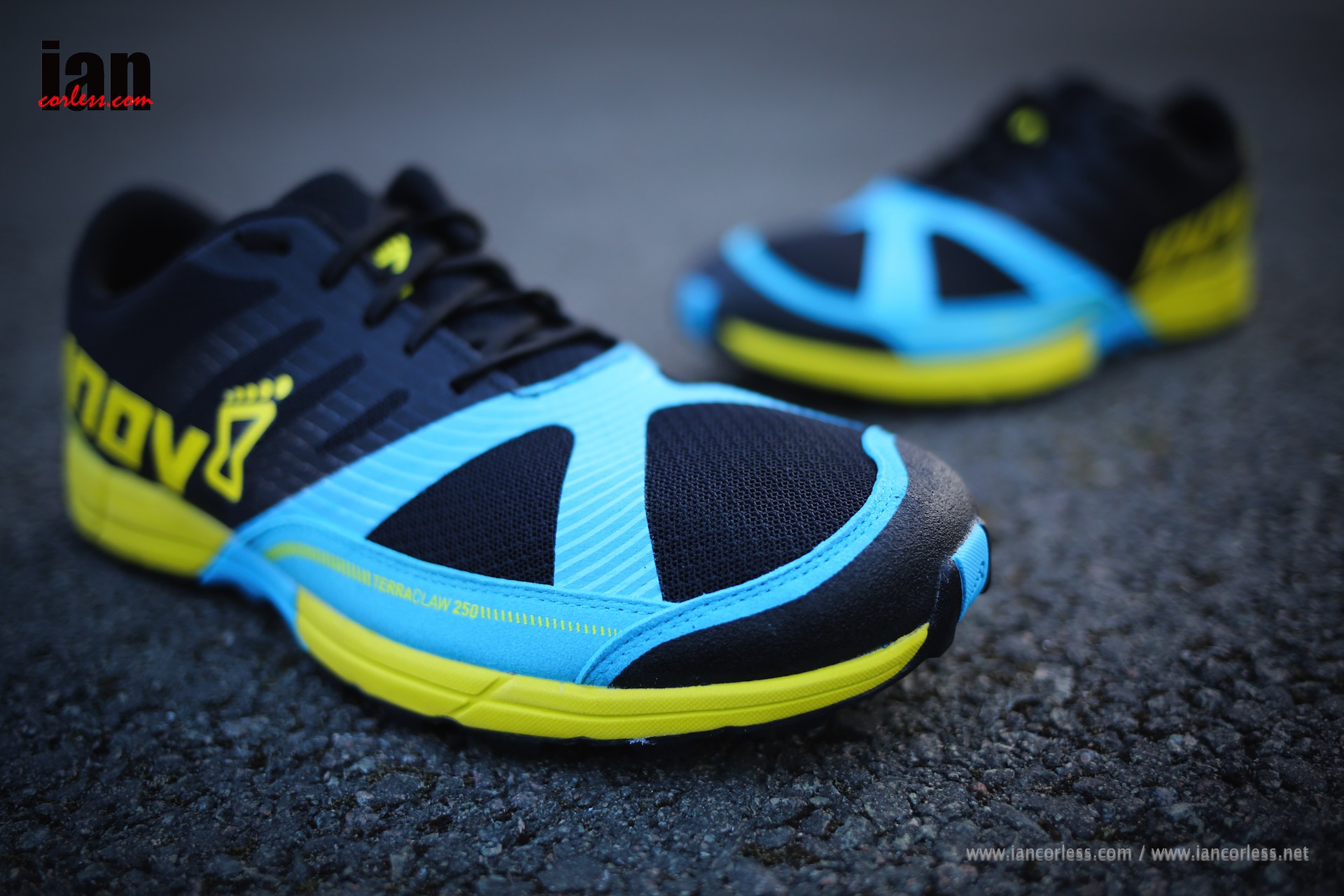
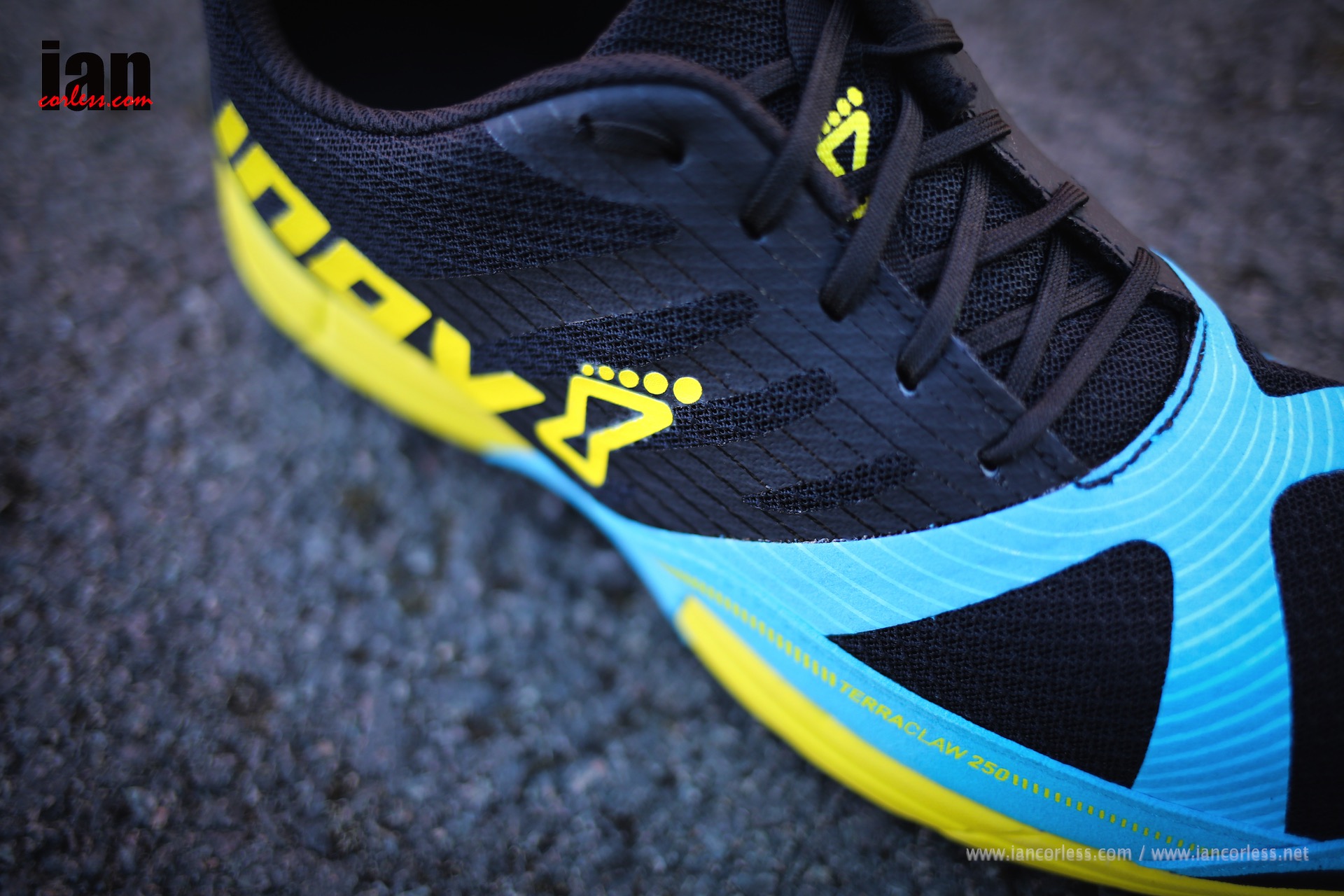
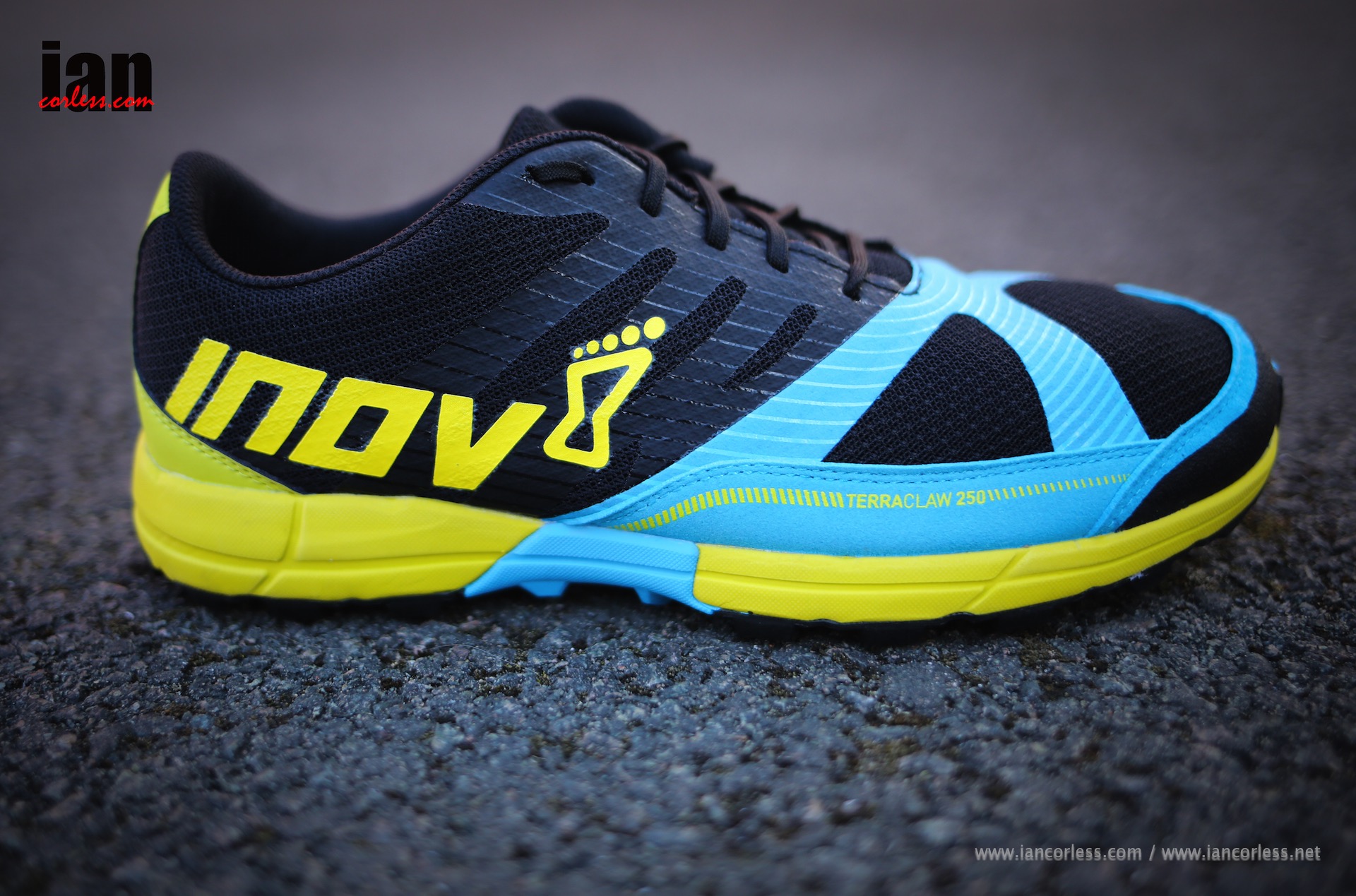
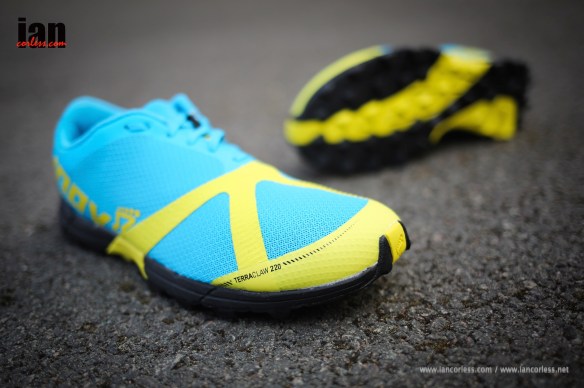
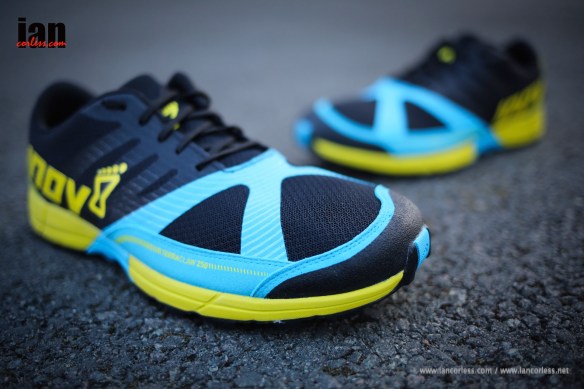
inov-8 Terraclaw 220 (4mm drop) and 250 (8mm drop) – Read full reviews HERE (220) and HERE (250)

Ability to run on road – Both shoes run well on the road with good feedback but be warned, the outsole will wear dowm.

Ability to run on hard trails – Excellent. Plenty of feeling in both shoes and the grip works well.

Ability on dry and wet rocks – On dry rocks, grip is very good. On wet rocks the grip is compromised and at times sketchy. You lack 100% confidence and that makes you go slower.

Grip in mud – If it’s not too muddy they work well. This shoe is trying to be the perfect trail shoe doing all things well. Of course, compromises are made at the extremes: all road or all mud.

Climbing – Shoes feel great. They are flexible, hold your foot snug if laced correctly but the wide toe box lacks precision and makes them feel too sloppy for me.

Descending – As above but in mud grip is compromised and on wet rock you slow down.

Time on feet – This depends on ones adaptation and preference. Two shoes and two options, for me the 250 with 8mm drop is the shoe for longer days but if you are efficient and like low drop, the 220 works great,

Fit – Slipper like feel as the shoe has very little seams. You get a great barefoot feel from the wide toe box and if you lace the shoe as per your needs, they are very comfortable.

Lacing – The 250 laces conventionally and the 220 laces at an angle. I used lock lacing in both models to get a more firm hold of my foot which added security.

Cushioning – Cushioning is good in both but the 250 is for longer runs with more cushioning.

Outsole – Has good grip made from 2 compounds. The sole is aggressive but not too aggressive. You can run on the road in comfort and on the trails. Comprises would be made when the trail gets muddy, you start to loose grip. I also wouldn’t recommend for just road runs.

Toe box – Very wide.

Wear and tear – Good but not great, 6-700k

Drop – 4mm and 8 mm

Conclusion – The Terraclaw is everything the Race Ultra should be. They are comfortable, have great feel for the ground and the grip is great for all around use.
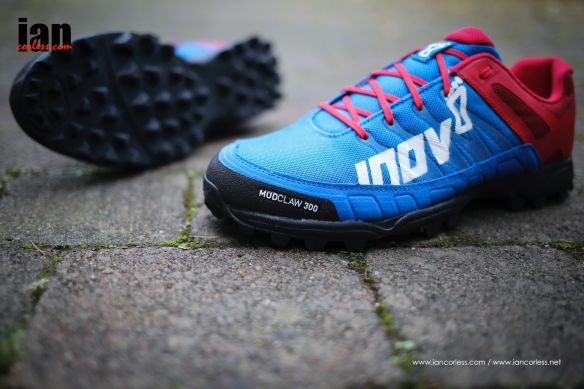
©iancorless.com_Mudclaw300-7440

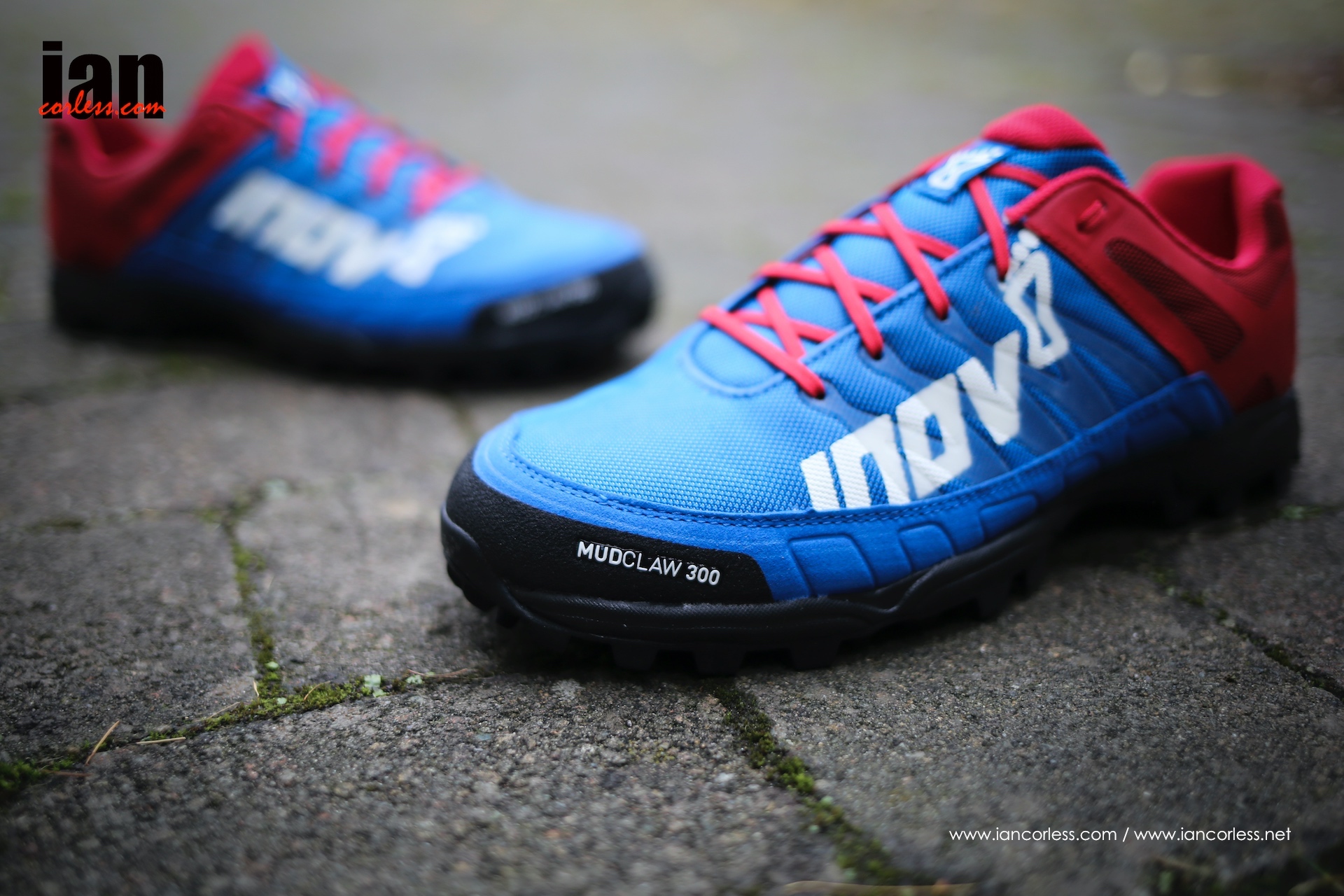
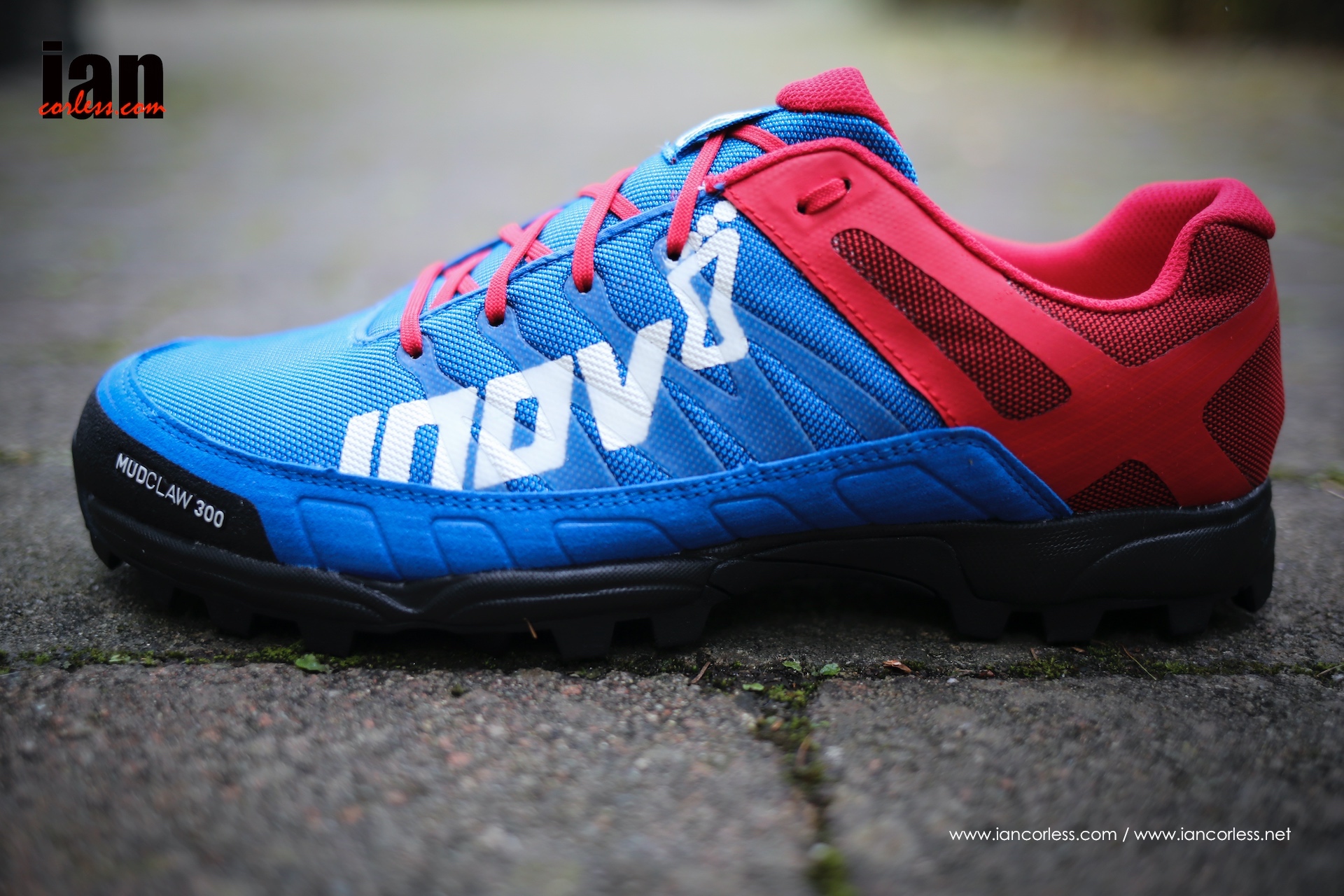
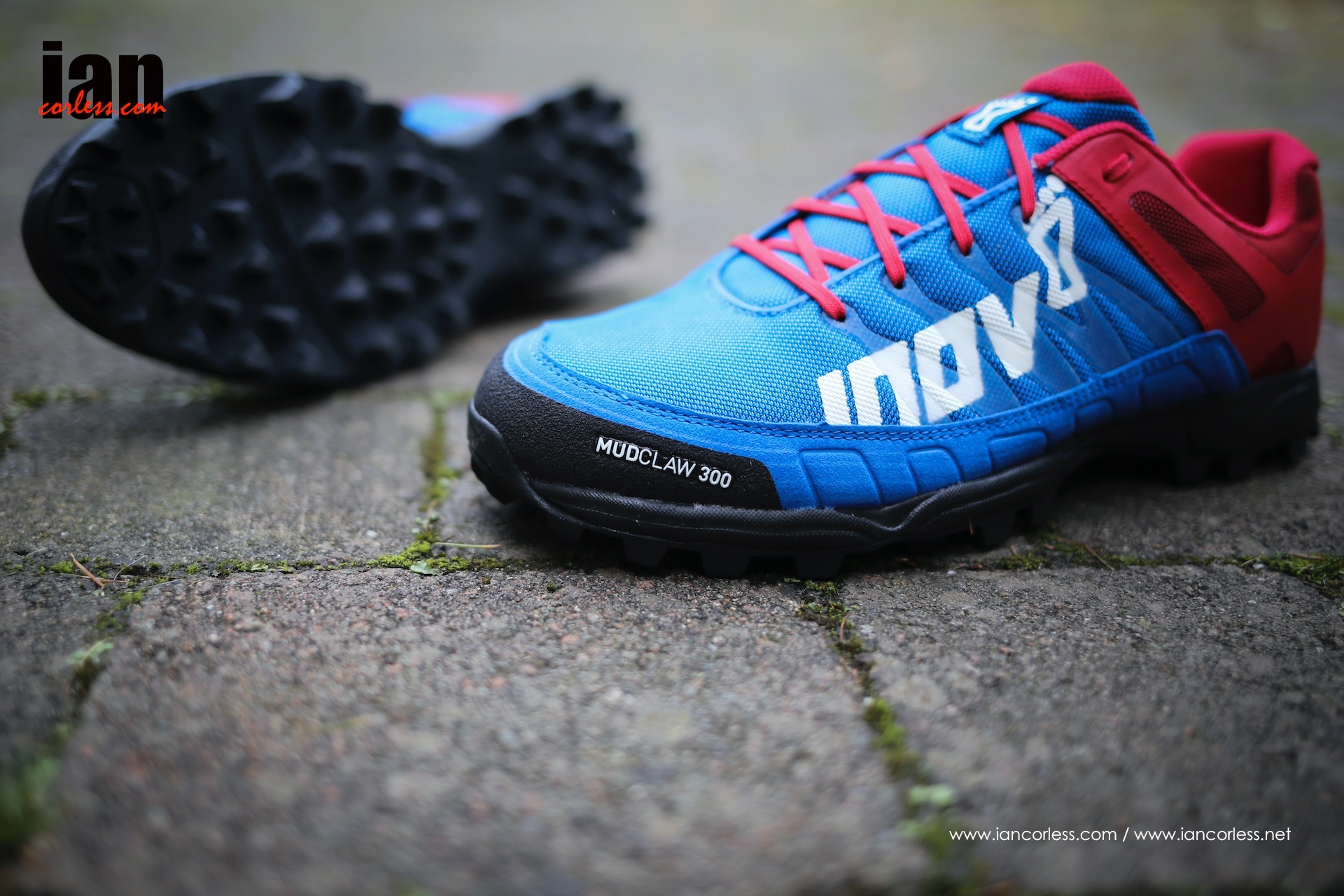
inov-8 Mudclaw 300 – Read full review HERE

Ability to run on road – Surprisingly good considering the outsole but keep it to a minimum.

Ability to run on hard trails – Okay but this shoe is for the soft and muddy stuff as the name implies.

Ability on dry and wet rocks – On dry rocks, grip is very good. On wet rocks the grip is excellent for such an aggressive outsole. I would say the best in this group.

Grip in mud – Excellent. They will take loads of mud, soft grass and give you more security than any other shoe here.

Climbing – Shoes feel great. They are flexible, hold your foot snug and you have a feeling of precision. Although precision fit the toe box has room.

Descending – Excellent. Shoes give you great confidence.

Time on feet – If you are running in mud all day, the 300 has cushioning to go with the grip and I’d say they are one of the better long distance off road/ fell shoes. If you are on hard or dry trails you’ll start to feel it.

Fit – Precision fit shoe designed to hold your foot so that you can run with confidence. Toe box was roomier than expected and I had to lace with a locking method as they have a low heel to reduce problems with the achilles tendon.

Lacing – Standard lacing and I used a lock lacing method to add a more secure feel.

Cushioning – This is a more cushioned fell shoe and therefore it’s great for longer soft ground running.

Outsole – Aggressive for the soft and muddy stuff.

Toe box – Narrow, precision fit.

Wear and tear – On soft ground they will last but add hard trail, gravel and road and they will wear because of the soft rubber outsole.

Drop – 6mm

Conclusion – Brilliant off road shoe with great cushioning and 6mm drop for long days on soft, mountain and boggy terrain. A comprise comes with shoe longevity if you run on road and gravel but then again, the shoes name tells you where you should be using it! Grip is excellent even on rocks when dry and wet.
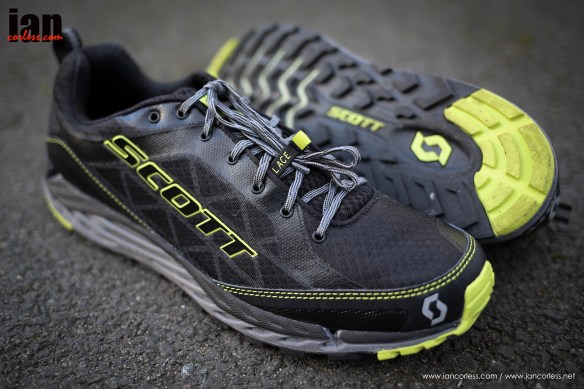
Scott T2 Kinabalu 2015

Scott T2 Kinabalu 2015

Scott T2 Kinabalu 3 – Read full review HERE

Ability to run on road – Excellent. It’s not a road shoe but it runs great on the hard stuff.

Ability to run on hard trails – Excellent. The outsole has a low profile and therefore if the trail is dry, these shoes will fly along.

Ability on dry and wet rocks – On dry rocks, grip is very good. On wet rocks the grip is compromised.

Grip in mud – Moderate, they can handle a little soft stuff but not too much.

Climbing – Pretty good. The shoes are a little more substantial than others in the test and therefore they are a little heavier and a little more rigid.

Descending – Good feel and cushioning but grip is compromised on wet and muddy trail/ rocks.

Time on feet – Great shoe for longer running and a very durable upper with great protection. The shoe has an 11mm drop which is almost unheard of these days. 8mm has become the norm. But Scott use a ‘rocker’ and this does keep you mid to fore-foot and they don’t feel like 11mm drop when running.

Fit – Great fitting shoe that feels comfortable and holds the foot.

Lacing – Standard lacing with ‘lace-locker’ to hold excess lacing after they are tied.

Cushioning – Very good.

Outsole – It’s a road to trail shoe that offers grip similar to the TNF Ultra Cardiac but they have more grip than the Race Ultra, S-Lab Sense and Sense Mantra 3.

Toe box – Standard with good protection

Wear and tear – Very good 800k.

Drop – 11mm

Conclusion – The Kinabalu in it’s 3rd incarnation is a really good shoe, if it was 8mm drop it would be excellent. It’s a great shoe for those who want one shoe to do all things.
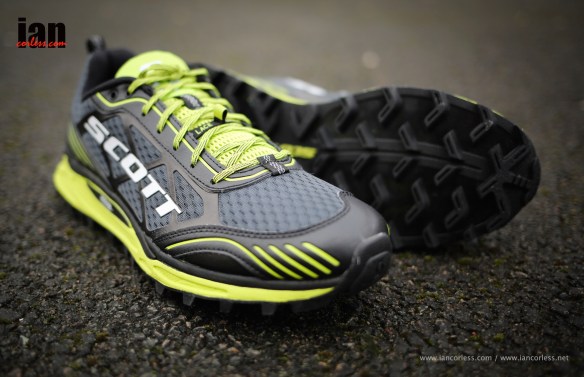
©iancorless.com_ScottSupertrac-5043

Scott Kinabalu Supertrac – Read full review HERE

Ability to run on road – Surprisingly good for an aggressive sole and you can run comfortable for longer periods of time.

Ability to run on hard trails – Excellent. As above.

Ability on dry and wet rocks – On dry rocks, grip is very good. On wet rocks the grip is compromised at times but you have confidence in the shoes.

Climbing – They are heavier shoes with less flex but the combination of grip and firm foothold make them very pleasing to wear.

Descending – Good cushioning and a robust (bomb proof) upper make you feel confident to tackle most terrain.

Time on feet – 8mm drop, good cushioning and a bomb proof upper make these great for long days. The only downside comes with the weight of the shoe. They are a fair bit heavier (340g) than other shoes in this test.

Fit – Great fitting shoes, maybe a little stiff when new but they soften. Toe box has room but not too much room and protection is excellent.

Lacing – Standard with ‘Lace-Locker.’

Cushioning – Excellent

Outsole – Aggressive that works on a multitude of surfaces.

Toe box – Standard with good protection.

Wear and tear – Excellent 800k

Drop – 8mm

Conclusion – This shoe is a real winner that mixes up different surfaces really well in a shoe that gives great cushioning all with an 8mm drop. The downside is the weight.
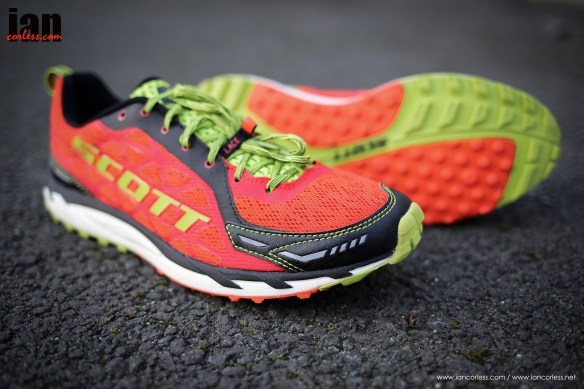
©iancorless.com_Scott-8036

Scott Trail Rocket – Read full review HERE

Ability to run on road – Excellent.

Ability to run on hard trails – Excellent.

Ability on dry and wet rocks – On dry rocks, grip is very good. On wet rocks the grip is compromised.

Climbing – Shoes feel great. They are flexible, hold your foot snug and you have a feeling of precision. Not good in the wet or mud.

Descending – Okay if it is dry.

Time on feet – This depends on ones adaptation to a more minimal shoe. This is a shoe for faster running on dry/ mixed trail.

Fit – Good snug fit with precision feel.

Lacing – Standard.

Cushioning – This is a more minimal shoe for faster running but they are well cushioned.

Outsole – For dry trails

Toe box – Narrow, precision fit.

Wear and tear – Moderate – 5/600k.

Drop – 5mm

Conclusion – Great fitting shoe and the race rocker works well for keeping you mid to forefoot. This shoe compares to the Salomon S-Lab Sene, Mantra 3 or the Race Ultras. It has a specific use.

And the winner is?

Before I say my winner, lets look at my thought process. By ‘best’ shoe I am taking into consideration many things such as: comfort, drop, cushioning, longevity, fit and so on. I am not looking at the colour or the price of the shoe. It may sound flippant but all shoes are around the same price these days and to be honest, if the shoe is what I want and I know it works then I will pay the bucks.

You may well say, ‘But you can’t compare 4mm drop shoes to 8mm drop shoes and shoes with hardly any grip to shoes with loads of grip!’

Yes, I know.

But in some respects, this review or this comparison is all about purchasing one pair of shoes that can do all things well. If I wanted to just run in the mud I would get the Mudclaw 300. If I was just going to run fast hard trail I may well go for the Salomon Sense Mantra 3.

So, here you go:

Scott Kinabalu Supertrac

Surprised?

I am! When I started this process I didn’t think the Scott would come out on top but you know what, it has been a relatively easy decision.

I know it’s a heavy shoe and that is a big down side, especially when you compare it to say the Salomon which are almost 100g lighter; that is huge! But if I could only have one pair of shoes that had to take me along roads, along dry trails, up mud, down mud and along rocks in the wet and dry then the Supertrac would be the ones for me! The combination of 8mm drop, excellent cushioning, bullet proof upper, ‘rocker’ design and the aggressive outsole make them a winner; for me!

On a final note, shoes often have very specific uses and all the shoes above (in most cases) do one thing well! So, if you have the funds and the desire to own multiple pairs of shoes this almost certainly is the best way to go.

Three key shoe choices:

  • Road/ dry trails
  • Trail shoes for mixed conditions
  • Mud/ off-road shoes

The other key choice is drop and cushioning – you know your needs!

What are your thoughts and what shoes have I not tried here that would provide some competition?

inov-8 TERRACLAW 220 – Shoe Review

©iancorless.com_Inov8Terraclaw-7047

The Terraclaw 220 is the stripped down version of the recently reviewed Terraclaw 250 by Niandi Carmont on this website (HERE).

I have been using both the 220 and the 250 for the last 4-months and in all honesty, much of what I have to say applies to both shoes. The biggest and most obvious differences are:

4mm drop in comparison to 8mm drop

220g weight in comparison to 250g weight

Less cushioning in the 220

Different lacing system

If you are new to inov-8 shoes, they always add the weight of the shoe (based on a UK8.5) to the name. In this scenario 220 relates to 220g. I like this, from first glance you get an understanding of where a shoe fits in the big picture. It’s safe to say, the less weight = more minimalist.

©iancorless.com_Inov8Terraclaw-7070

For me, the 220 and the 250 Terraclaw shoes are an extension from the Race Ultra models, the 270 (4mm drop) and 290 (8mm drop). The Race Ultra, as the name implies was designed for longer days running and the shoe had a sole that was good for dry trail and road. A key feature was the wide toe box that would allow the toes to spread out and also allow for swelling. It’s a shoe that had many new features and I must add it proved (and still proves to be) very popular. My initial impressions were good but that is where it stopped for me. I found the Race Ultra in both models lacked feel for the ground, comfort and responsiveness. They just didn’t light my candle.

©iancorless.com_Inov8Terraclaw-7123

So when I received the Terraclaw models I was not over excited to take them out for a run. My preferred shoe drop is usually 8mm so I went out in the Terraclaw 250 (black and blue shoe) first and I was amazed how different this shoe felt. The sloppy feel of the Race Ultra was gone and I found this new shoe more flexible, supple, cushioned, responsive and the feedback with the ground was good. I have gone on to run many miles in the Terraclaw 250 and love them. You can read Niandi’s review HERE and for the most I agree with her thoughts.

However, I do have some other thoughts and they relate to both the 220 and 250 models.

Review

©iancorless.com_Inov8Terraclaw-7076

As mentioned above, the Terraclaw 220 and 250 are almost identical.

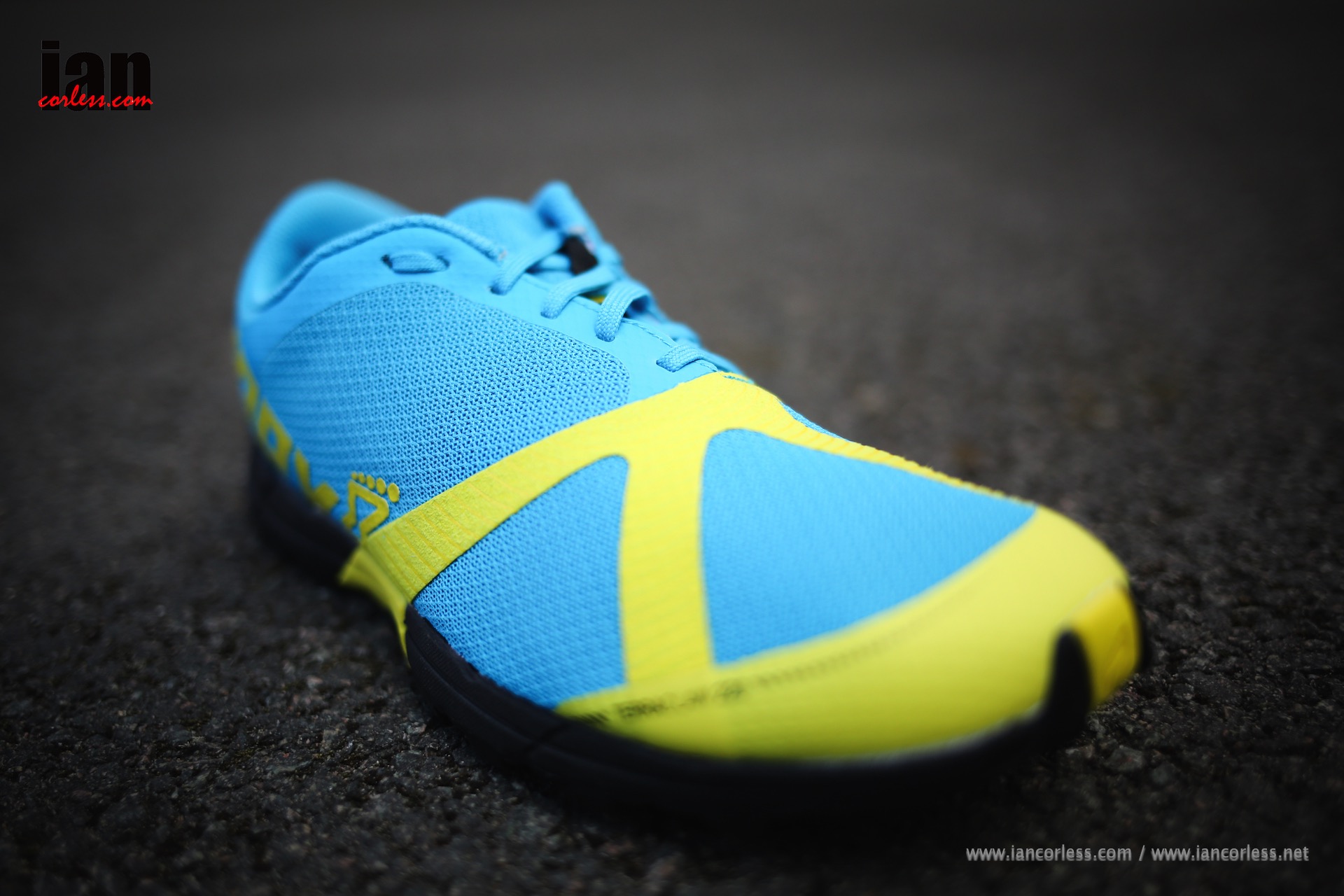
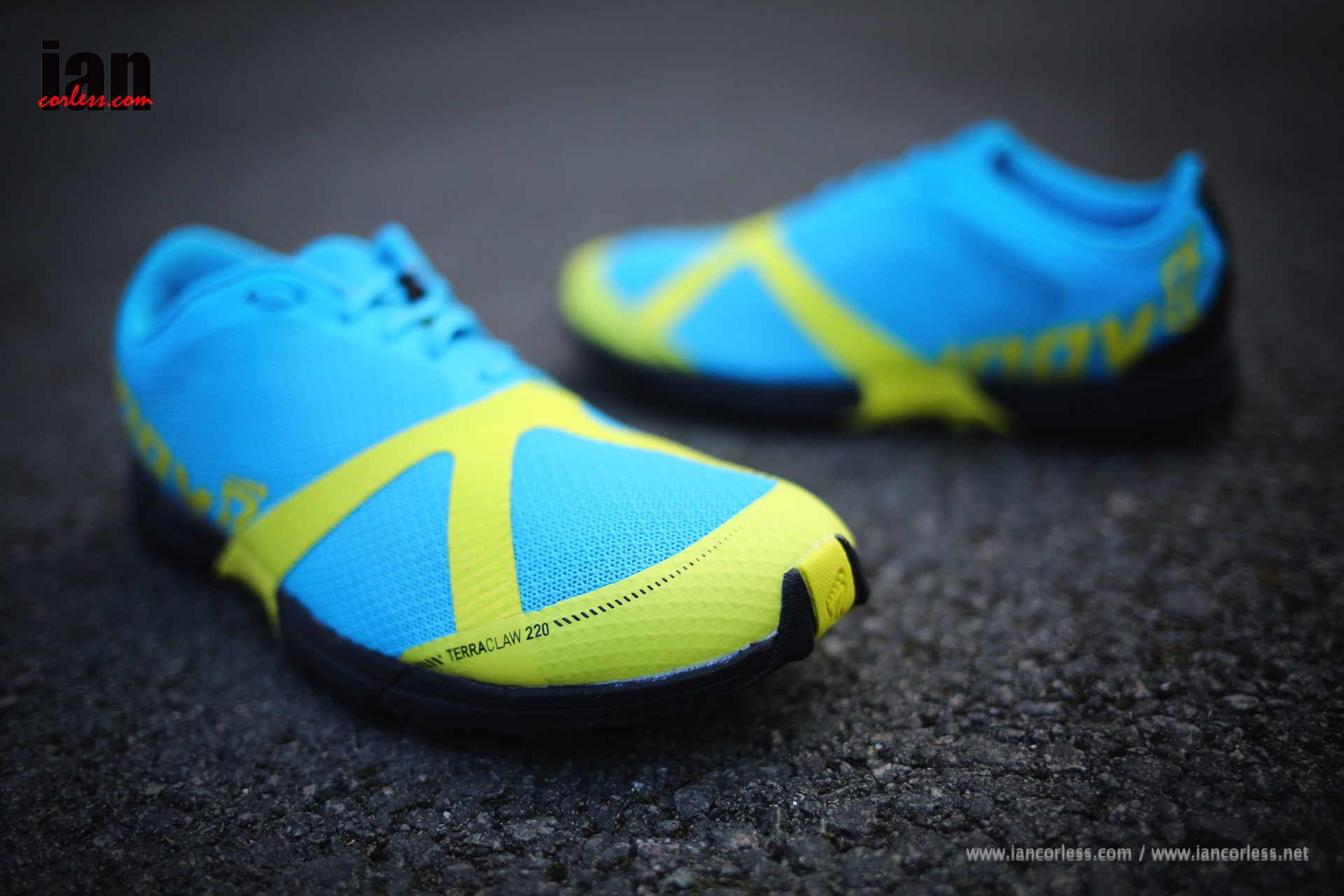
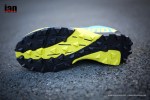
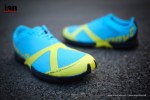
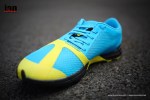
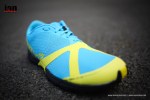
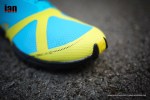
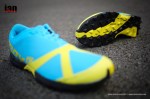
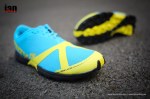
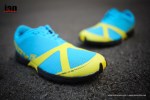
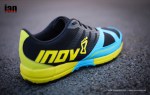
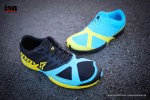
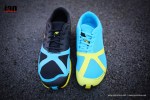
The 250 has a cool colour way of black, yellow and blue and the 220 does not! Oh boy do I hate this pale blue and yellow. I have visions of the first Hoka’s and people saying, ‘why are you wearing clown shoes!’ Of course looks mean nothing in regard to performance but I do like my shoes to look good and I have to say, inov-8 usually do a great job of making shoes look ‘sexy!’ Not in this case, not for me anyway.

©iancorless.com_Inov8Terraclaw-7065

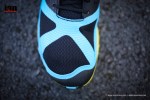
That big ‘X’ that goes over the front of the shoe is ‘X-Lock’ – inov-8 say that is a welded overlay to hold the foot in place. I will admit that the ‘X’ adds some structure to the shoe but it does not hold the foot in place!

Why?
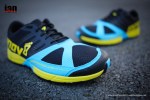
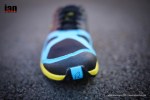
Well this shoe and the 250 is all about foot splay. The toe box has been designed to let the toes splay out, move around and yes, even swell if they need to. It works. Both the 220 and 250 versions give me a ‘barefoot’ feel of movement. However, the ‘X’ adds little structure or hold.

This for me is a real plus and a real negative.

1. If you are running on mixed terrain that involved some road, hard trail, a little mud, soft grass and the profile is relatively flat with a few undulations and descents – the 220 and 250 are great shoes.

2. But if you are running anything technical, running up or running down, the movement within the toe box is way too much (for me). You have no control and your foot slides inside offering no reassurance.

The two comments above are comments that relate to the shoes ‘best practice’ running scenarios. So, if you are intending to run in the number 2 scenario, the 220 or 250 is probably NOT the shoe for you unless you have a foot as wide as a Hobbit. Look at a 212 (HERE) or 300 (HERE) instead.

Niandi needs a wider toe box and this where the needs of one varies to the needs of another. To take a step back and understand the needs of the individual, for me, the wide toe box is too much when I need control but for Niandi it works. We both agree though that the outsole is NOT for muddy or slippery terrain.

©iancorless.com_Inov8Terraclaw-7077

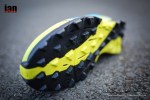
The outsole is an extension of the Race Ultra and I would imagine has come about from all those Race Ultra lovers who wanted more grip. Well they have it now but it has limitations. We must remember here that (for me) inov-8 are trying to create an ‘all-purpose’ shoe that transitions from different surfaces; road to trail? Like I always say, no shoe that compromises will ever do the extremes well. That applies to the 220 and the 250 – they are not as good as a road shoe and they do not offer the grip of an out-and-out fell or soft-ground shoe. BUT if you want a shoe that you can put on everyday and use for mixed terrain, the 220 and 250 are great for that.

©iancorless.com_Inov8Terraclaw-7082

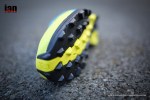
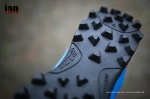
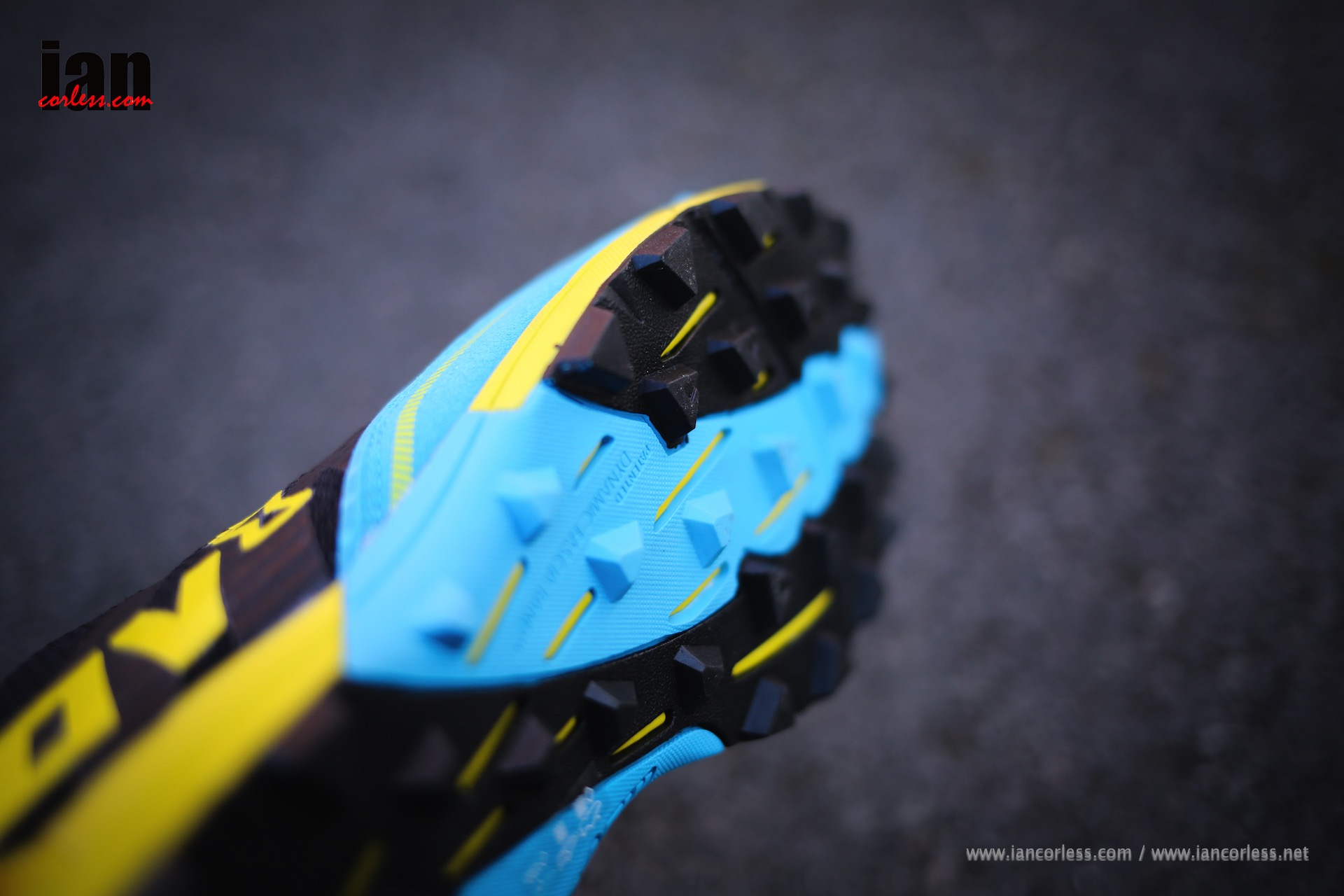
The outsole uses different compounds to provide grip on a multitude of surfaces and the grip is made up of little triangles that provide adequate grip on soft ground but not muddy ground. The spacing of the cleats is supposed to allow debris to release quicker. It made no difference for me; mud is mud and it sucks on to your shoes.

A ‘Dynamic Fascia Band’ has been embedded in the midsole and this provides some propulsion on the ‘lift-off’ phase when running. I would say that I noticed this more on the 220 (4mm drop) shoe but in all honesty, I believe that this comes from me wanting to run better in the 4mm drop shoes. You (or I) need to think more about my run style in a lower drop shoe as the mid to forefoot strike is so much more important. Hence the ‘awareness’ of the DFB working.

©iancorless.com_Inov8Terraclaw-7068

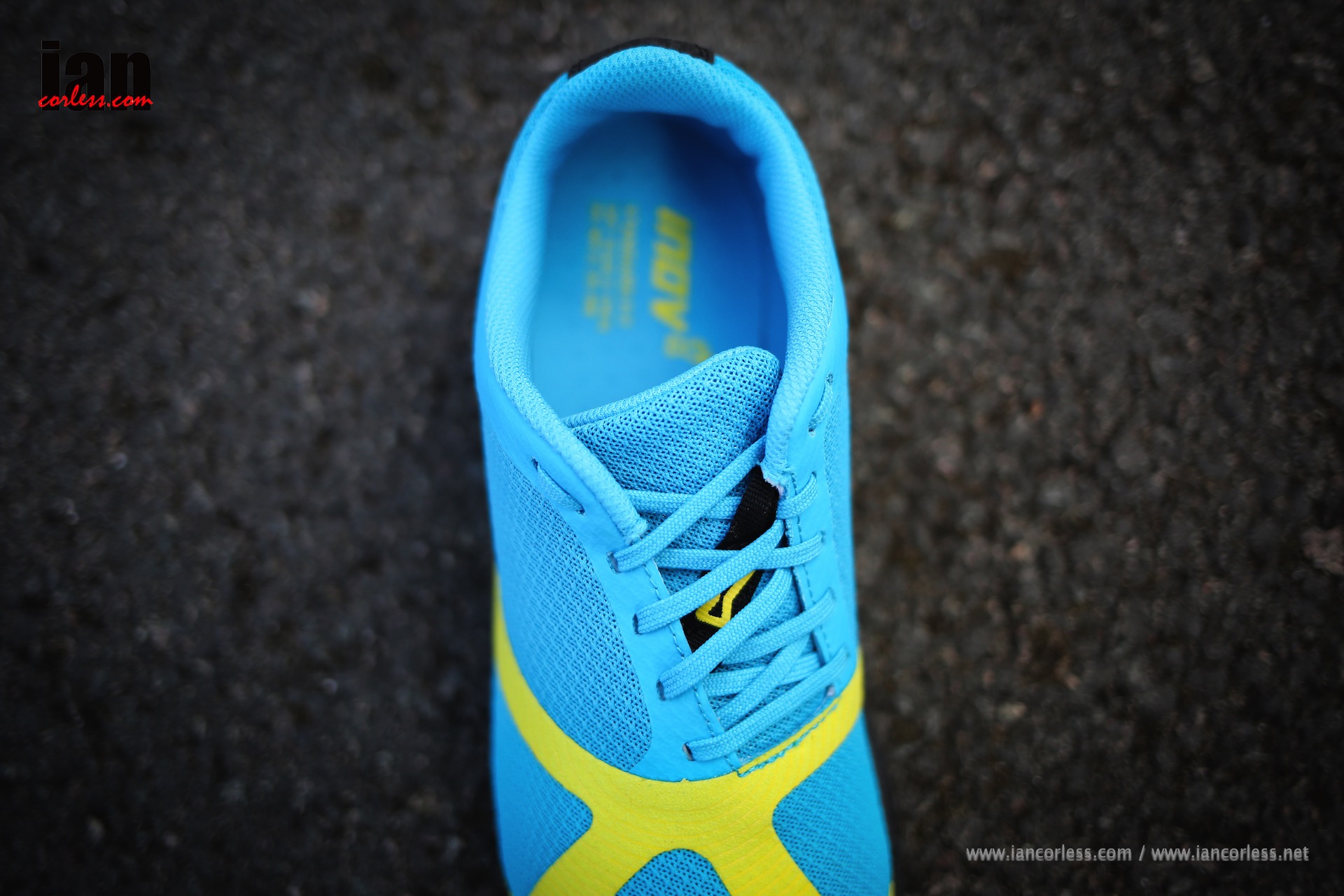
The noticeable difference between the 220 and the 250 is the lacing. The 250 is conventional and the 220 sweeps off to the side. inov-8 call this Ray-Wrap and it’s designed to line with the foot’s first metatarsal. They are not the first shoe company to do this, I seem to remember using a pair of Brooks with a similar system. Ultimately it works. I am not convinced it is any better than normal lacing methods though. I personally like my shoes to hold my foot so in both the 220 and 250 models I use a lacing method like THIS and in the 220 it is a little harder to use because of the offset. The 220 also has less additional support added to the upper around the lacing. The heel box is snug and plush and the shoe fits true to size.

©iancorless.com_Inov8Terraclaw-7064

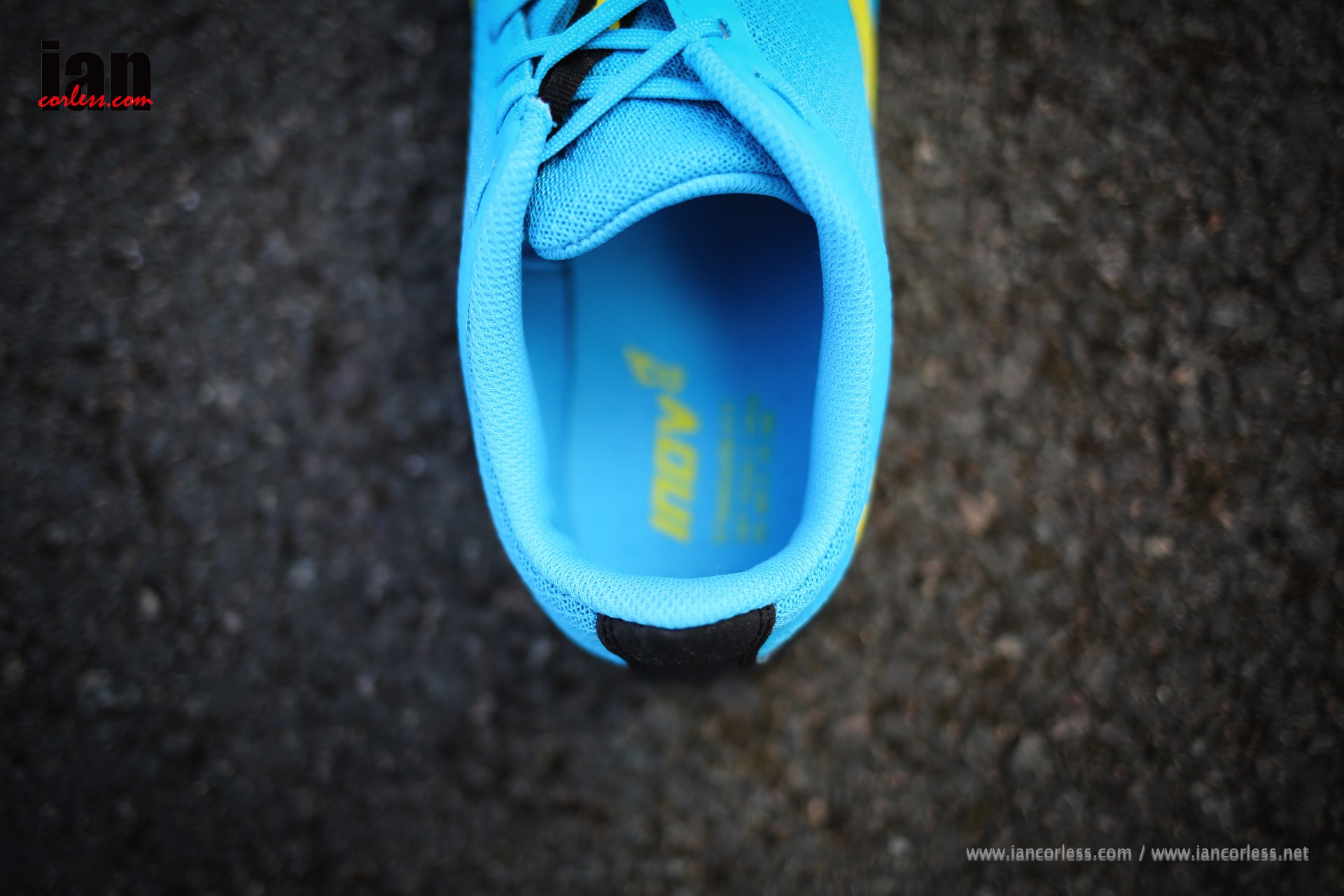
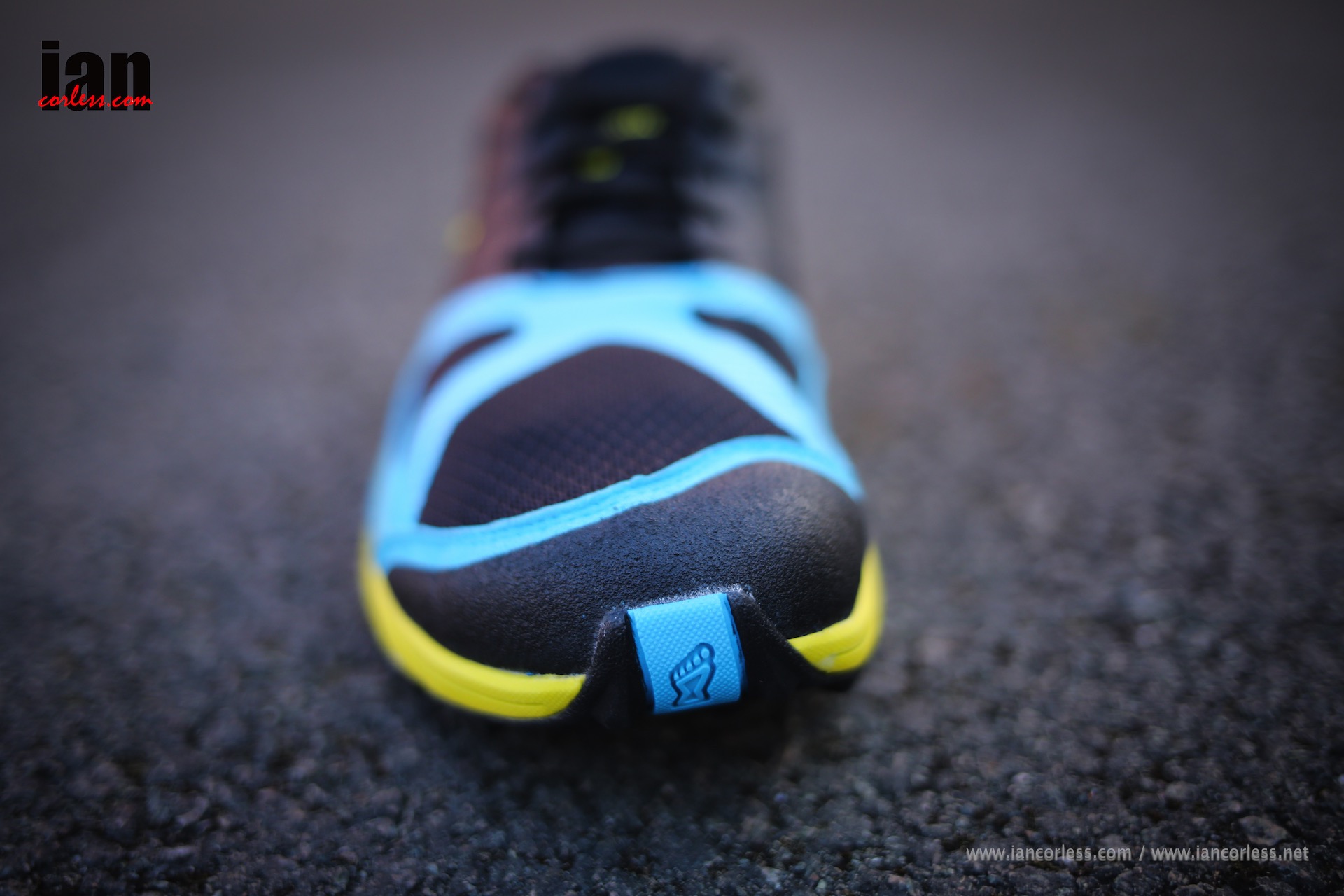
Both shoes feel like slippers when you slide your foot into them and this is due to the lack of stitching. The shoes have little or no seams to cause any issues. The toe box of the 220 has less protection than the 250 and this only an issue if you are planning running on more rocky terrain or terrain with obstacles when the risk of stubbing a toe increases.

©iancorless.com_Inov8Terraclaw-7055

In Use

Although the 220 and 250 are very similar, are they for different runners? The 250 is a great ‘all rounder’ that will appeal to many runners because of the following features:

8mm drop

Good cushioning

Mixed terrain outsole

Wide toe box

Great for longer runs

The 220 though is a much more streamlined shoe and the 4mm drop and less cushioning will appeal to more efficient runners who cover ground quicker with a forefoot/ mid-foot run style. For example, I can see a runner using the 220 for short training sessions, faster training sessions or racing. They then may well use the 250 for longer training runs or longer races. I don’t think that 250 users would necessarily drop down to the 220.

I have enjoyed the 220 for ‘keeping me on my toes’ on runs of up to 60-75 minutes on road, grass, forest trail and canal path. When I have wanted to run longer I have used the 250.

When running on technical trails with more mud, rocks and longer descents and climbs I have always preferred to use a different shoe. Currently the Mudclaw 300 (HERE) as this seems a natural extension of the 250 with a more aggressive outsole, precision fit but good cushioning.

Ultimately, if you need a shoe that will allow you to run on mixed terrain and you need a wider toe box, the 220 or 250 should be on your list of shoes to look at.

Despite misgivings on the lack of support in the upper, I have found the freedom that both shoes provide very liberating and they do give a ‘natural’ feel similar to running barefoot. The outsole has worn well even with road use and they compare well to other shoes on the market.

©iancorless.com_Inov8Terraclaw-7051

Conclusions

I have always admired inov-8 for thinking of runners when they make shoes. Silly thing to say you may think, but how many other brands provide shoe models with varying drop: 3,6, 9 and 12mm or 4 and 8mm and at the same time have offered standard or precision width fittings in certain models. The arrow system on the rear of the shoe in many ways inspired a whole new generation of runners who wanted to get ‘lower’ with drop and inov-8 facilitated that. So, I’m an inov-8 fan. Over time, they have tweaked models and expanded the range. The Race Ultra and now the Terraclaw are shoes that hove come about with the growth of ultra running and the need (or desire) for a wider toe box. They have answered that demand and in doing so, once again they have provided two options in drop to ensure that nearly everyone is happy. If you are in need of a shoe that can handle a mix of terrain (not all road and not all mud) then a 220 or 250 may well answer your needs.

Pros

Wide toe box

4mm drop for the more efficient runner

Fast shoe

Lightweight

Responsive

Cushioned (but not too cushioned)

Great feel

Outsole for mixed terrain

Cons

I’m not convinced on the lacing but then again it caused no issues

Outsole lacks grip on mud, when climbing or descending

Toe box (for me) feels sloppy on technical terrain, when climbing and when descending

Less cushioning than the 250

Upper lacks support when required

Technical Specs

Weight: 220g/ 8oz

Fit: Standard

Footbed: 6mm

Midsole: Compressed EVA

ShankL DFB

Drop: 4mm

Sole: Terraclaw

Outsole: Dual C

What inov-8 say:

inov-8 say:

From single track to steep descents, the TERRACLAW™ performs on the widest range of trails imaginable. Our unique lug design releases debris and grit like no other, delivering optimum grip with every foot strike. At just 220g, the lightest version of the TERRACLAW™ is stripped-back for racing super-fast with a finely tuned balance of performance and protection.

inov-8 TERRACLAW 250 Shoe Review

©iancorless.com_Inov8Terraclaw-7086

Niandi Carmont gets her claws out and test the new inov-8 Terraclaw 250. A shoe that offers a wide toe box, grip, cushioning and an 8mm drop for longer days on mixed terrain.

Please note all photographs in this review are the male colour ways . The ladies version as reviewed is below.

TC250W-BLACKBERRY

TC250W-BLACKBERRY_1

REVIEW

The Terraclaw is a great dual purpose trail shoe for “earthy” mostly dry trail as well as offering enough grip to be used on trail with moderately grassy/ muddy sections. As I’m not an aficionado of technical slippery and extremely boggy terrain, this is definitely the shoe to fit my foot in more ways than one.

©iancorless.com_Inov8Terraclaw-7077

What definitely makes this trail shoe even more attractive for me is the wide toe box or in inov-8 jargon “standard fit” as opposed to the “precision fit”. The roomy toe box allows my toes to splay comfortably as I’m running irrespective of any swelling in hot weather over long distances. This is an absolute must for me as like with many ultra-runners who have been in the sport for some time, I have an issue with a collapsing right arch and thus a wider right foot.  In my case narrower trail shoes usually lead to chafing in between the toes and ensuing blisters.

©iancorless.com_Inov8Terraclaw-7107

Another interesting key feature of this model which attracted me is inov-8’s innovative patented Dynamic Fascia Band™ (DFB) technology. What this means in layman’s terms is that the anatomical position of the plantar fascia ligament is replicated and the function of the human foot’s ability to utilize the “windlass effect” is duplicated. As body weight moves forward onto the metatarsal heads and the toes begin to extend, tension on the inov-8 fascia band™ increases. When the heel leaves the ground, the inov-8 fascia band™ resists elongation of the medial arch and carries the entire body weight of the runner converting the shoe into a rigid propulsive lever. This helps the athlete to run more efficiently, more economically and thus a tad faster. How cool is that for an injured right-foot heel striker with a collapsing arch like me? I certainly feel I’m dragging my right foot less.

©iancorless.com_Inov8Terraclaw-7114

In addition to this the shoe is very breathable with a soft with a slipper-like feel. In fact this model is almost too comfy for a trail shoe! At 250G it is a relatively light shoe yet lightness is not sacrificed at the expense of cushioning. There is enough cushioning in this trail shoe to run on rock, gravel or stony terrain and inov-8 have got the balance just right and so if like me you still like to feel the ground underfoot you won’t be disappointed. The shoe sticks to inov-8 heritage of getting you low to the ground but the lack of a rockplate will allow more irregular rocks or sharper rocks be felt in the foot. It’s no great issue but one you should be aware of.

©iancorless.com_Inov8Terraclaw-7108

If you take a peek at the sole of the shoe, you’ll quickly understand why this shoe offers good grip on most terrain.  Inov-8 have developed 5 distinct outsole compounds to deliver maximum grip on a wide variety of terrains and in changeable weather conditions. The Terraclaw outsole is composed of Dual-C, in other words a mix of medium sticky and hard sticky compound.  This particular technology uses rock climbing rubber technology.

In principle the shoe should therefore also offer a reasonable amount of grip on wet rock. However, I was not convinced after having tested it on the initial section of the Garmin Mourne Skyline race course. Running down the wet stone steps was tricky and a shoe like the inov-8 Mudclaw 300 (HERE) would be more suited to that terrain despite the aggressive outsole.  Personally from having tested the shoe on various terrains and in different seasons and weather conditions, I would say it is more suited to dry trail and trail with short road sections. The shoe transitions well from one to the other. It would perform less well on extremely boggy terrain, very steep and slippery grassy climbs/ descents (fells), stony river and waterfall sections.  I also found the cleats wore away quite rapidly with over-use. I’m on my second pair in the space of 3 months as there is noticeable cleat wear where I heel strike and on the forefoot where the foot lifts off. Of course, if you use the shoe on just soft ground or trail, the outsole will last longer! However, I believe that inov-8 are trying to find a shoe here that does all jobs? The rise of ‘city-trail’ a key indicator why this move from inov-8 makes sense. But whenever you make a compromise, you very often end up with something that does nothing well. Certainly, if you want an out-and-out shoe for wet, muddy and slippery trail this is not the shoe for you: look at the 212 (HERE) or 300 (HERE). Equally, if you want a shoe for just road, this is not the shoe for you. But if you want a shoe that enables you to run road, run trail, have comfort and all with a pleasing drop of 8mm this is definitely worth considering.

©iancorless.com_Inov8Terraclaw-7077

The triangular spaced out lug design of the shoe is interesting too.  The purpose of this is to release debris, grit and small stones. However I found that it was not effective in releasing big clumps of muddy grass which got entangled in the lugs.  On the plus side because of the lug design the shoe is easy to rinse off after muddy trail runs.

©iancorless.com_Inov8Terraclaw-7094

The Terraclaw offers good toe and foot protection in spite of its light weight with a full rand and higher stack height. Like other inov-8 models the 2 Meta-flex grooves on the outsole (pinky-red color on the Ladies shoe) at the forefoot and the heel allow for natural foot flexing making for a smoother run.

©iancorless.com_Inov8Terraclaw-7105

It’s a neutral shoe that fits true to size but be warned, the roomier toe box may make the shoe feel a little ‘sloppy.’ If so, try lacing the shoe using this method HERE, it will hold your foot tight but still allow the freedom for your toes.

©iancorless.com_Inov8Terraclaw-7099

Last but not least – the color is great! Nice and sober – black with a hint of pink and blue. Personally I’m not one for garish bright run shoes which quickly look muddy.

TC250W-BLACKBERRY

TESTING

I have tested this shoe on several types of terrain and in various weather conditions:

  • A 2-day ultra around the Isle of Wight with a total mileage of 117km in hot weather and on dry trail, road sections, grassy coastal trail and some short technical ascents. My conclusion: this shoe is very versatile – I had no issue moving from trail to road sections. The grip on dusty trail is very good.
  • A one-day 42km trail in Lanzarote running on dust roads, through very rocky lava fields, on beach sections in soft sand, on pebbles, on stones, gravel and up and down slippery dusty mountain sections in hot weather. My conclusion: the shoe offered great grip in dry conditions. I tend to be too careful and overly think technical descents but found that I had more confidence with the Terraclaw.
  • Wet muddy trail training runs in the Midlands in rainy cold weather. My conclusion: If the terrain is not too muddy the Terraclaw offers sufficient grip. However, I felt it lacked grip in extreme boggy conditions.
  • Training runs on the West Highland Way. My conclusion: Good shoe for this type of terrain which is not extremely technical and very runnable.
  • Wet training runs on the fells in the Lakelands. My conclusion: Again I feel the shoe does not offer sufficient grip on really boggy and slippery terrain.
  • Training in the Mourne mountains in Northern Ireland. My conclusion: The shoe was great on forest path and trail sections but lacked grip on wet rocky sections on descents and steep grassy descents. The Mudclaw 300 would probably be more suitable for this kind of terrain.
  • Training runs on forest path near Paris. My conclusion: The shoe is very versatile and transitions comfortably from hard road surfaces to softer forest terrain.

CONCLUSION:

PROS:

  • I like it – I’m already on my second pair.
  • The patented Dynamic Fascia Band™ technology favors a more economical and thus more efficient run style.
  • The Dual-C grip is sufficient for moderately wet conditions.
  • This model is extremely comfortable.
  • It is lightweight shoe with ample protection and great cushioning.
  • I love the roomy toe box.
  • Great color
  • Very versatile shoe – an all-rounder

CONS:

  • I’m on my second pair. It lacks durability mainly due to lug wear.
  • It doesn’t offer sufficient grip in more extreme conditions

If you’d prefer the same show with a lower drop (4mm) the 220 version is available with a unique lacing style.

©iancorless.com_Inov8Terraclaw-7123

TECHNICAL SPECS

Weight: 250G / 9OZ

Fit: STANDARD

Footbed: 6MM

Midsole: COMPRESSED EVA

Shank: DFB™

Drop: 8MM

Sole: TERRACLAW™

Compound:DUAL-C

Running a mult-day race? Check out our training camp http://d.pr/f/18cqZ

inov-8 website HERE

Inov8 say:

From single track to steep descents, the TERRACLAW™ performs on the widest range of trails imaginable. Our unique lug design releases debris and grit like no other, delivering optimum grip with every foot strike. The higher mileage version of the TERRACLAW™ range, this shoe delivers extra protection and comfort courtesy of a full rand and higher stack height.

inov-8 MUDCLAW 300 Shoe Review


©iancorless.com_Mudclaw300-7399

C’mon, get a grip! If you run in mud, you will no doubt be familiar with inov-8. For years, inov-8 has provided the ‘go-to’ shoes for running when the ground gets wet, slippery, muddy, gnarly and so on!

The Mudclaw 300 is not a new shoe in the massive inov-8 line up. The 2015 incarnation though does have a wicked and eye grabbing colour way and having used many versions on inov-8 (fave the 212 here) I was keen to put the Mudclaw 300 through its paces. Believe it or not, I am (was) a 300 virgin!

©iancorless.com_Mudclaw300-7436

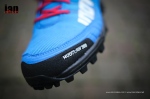
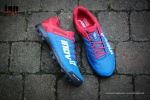
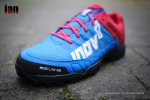
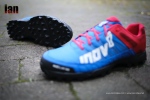
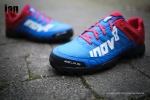
Red, blue and a white logo. Have to say, inov-8 does a great job of getting shoes to jump off the shelf. I love this colour way and yes, it makes me want to wear the shoe. If you have the previous version of the ‘300’ in yellow and black, don’t be fooled into thinking this is the same shoe. It’s not.

©iancorless.com_Mudclaw300-7414

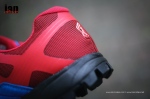
The sole and heel have had a revamp. The previous model really flared up at the rear, the new incarnation (red and blue) sits much closer to the ground, does not flare up and the heel box sits lower so as to cause no problems with the Achilles.

It’s still a 2-arrow shoe, so, 6mm drop.

Drop is a personal thing but I am a firm believer that 6mm/ 8mm drop shoes provide a great middle ground and if you are running longer, a slightly higher drop is kinder on the calf and legs. Of course, this is all down to personal preference. If you don’t know what the drop of the shoes you run in is, it’s worth finding out. Going too low too soon could cause injury.

©iancorless.com_Mudclaw300-7416

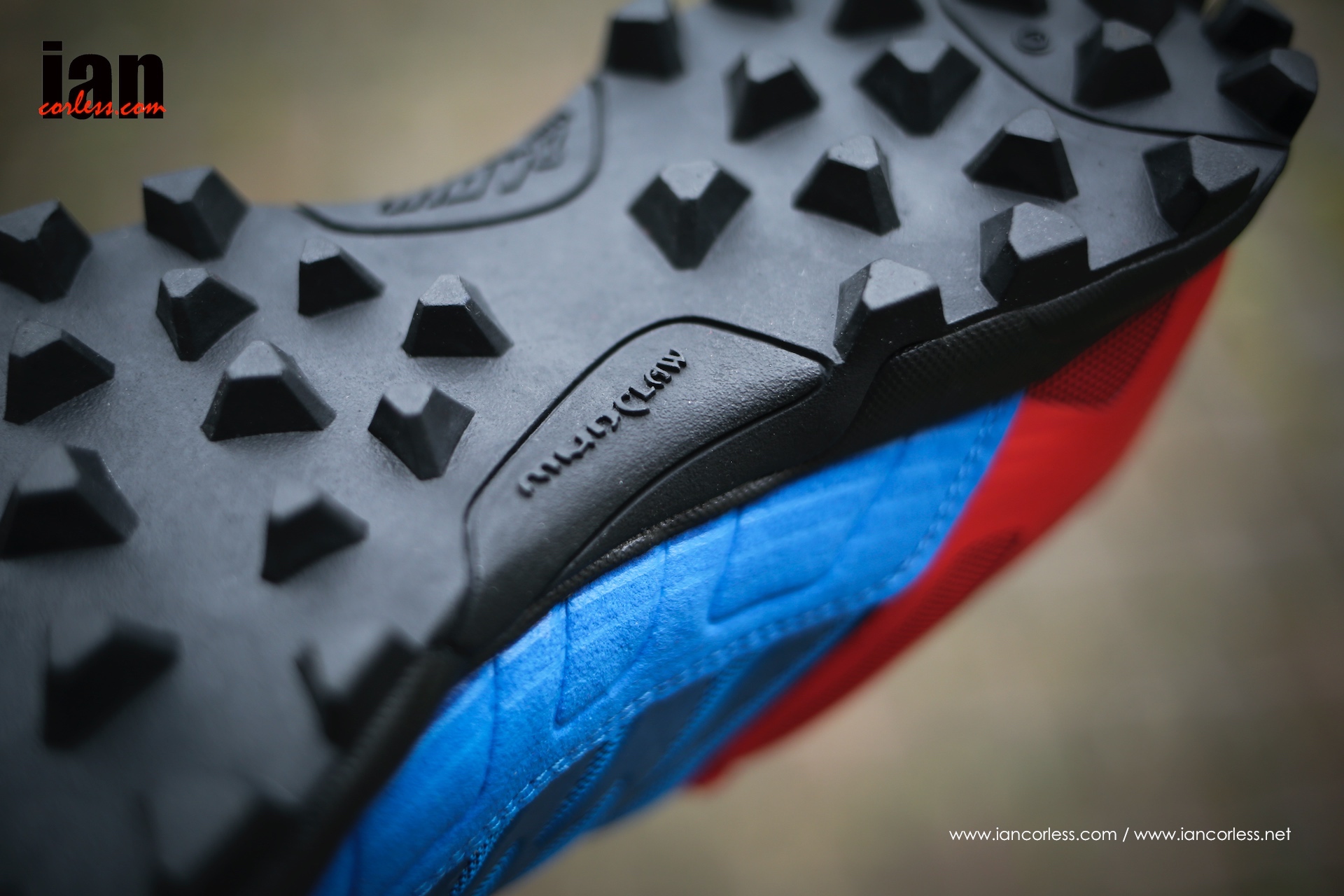
The sole has 8mm lugs. If Wolverine™ wore run shoes he would most likely go for the Mudclaw. Yes, they are grippy buggers. The rubber compound is soft and grippy but be warned, the shoe is called Mudclaw for a reason, you want to keep hard ground and abrasive surfaces to a minimum in these shoes as the sole WILL wear down. My test run includes 1-mile of road before and after the trails and I have to say, this shoe feels wonderfully comfortable on the hard stuff despite its ‘off-road’ pedigree. You can actually hear the sole grip. Sounds weird I know, but it’s very clear and you can feel it. At the front of the shoe, just behind where the toes would sit is a clearing in the sole with a META-FLEX™ this allows the shoe to bend without restriction when running. Works great when climbing!

©iancorless.com_Mudclaw300-7409

As the name suggests, the weight of the shoe is 300g. inov-8 always name the shoes based on the weight of a UK8.5 in case you didn’t know. It’s a pretty cool system actually as you can see at a glance, based on weight, if a shoe may or may not be suitable for you.

©iancorless.com_Mudclaw300-7405

The upper is treated with DWR coating and has a ‘Precision’ fit. Let’s be clear here, inov-8 now makes many shoes in a ‘standard’ and ‘precision’ fit. If you have a wide foot, this is good news because you may now well be able to wear a shoe that you were not able to wear in the past. But for me, the Mudclaw and shoes like it are all about control and precision. A shoe for really muddy and technical conditions should hold your foot and allow no movement. You need that controlled feel. Control gives precision and precision means faster running and less mistakes. Of course I am giving a very personal opinion here but I hope you see the logic? What I am saying is, be careful when choosing a shoe. Precision for my relatively wide foot is great when I need it but I wouldn’t want to be running all day with my toes cramped into a shoe. For me, the Mudclaw although precision in fit still had a relatively roomy toe box and this was great on the technical muddy stuff.

The tongue is held in place by elastic to stop it slipping. It’s a great move. However, the Mudclaw  doesn’t fit as tightly or as snug as say the Salomon S-Lab Sense SG (the perfect fitting shoe for me!) but if laced correctly (try this), pulled tight and double knotted your foot should feel super secure; my feet were!

©iancorless.com_Mudclaw300-7407

Getting lacing right is particularly important as the heel box has been tweaked so that it sits lower on the Achilles Tendon to avoid tension and potential injury problems. On my first run I felt as though my heel was slipping and I was unsure if this was a good move. Once re-laced, tightened appropriately, I can confirm that the lower heel is a good idea.

The rand around the lower part of the upper is now stitched and should in principal last longer and be more durable. Toe protection is relatively minimal.

The sides of the shoe are reinforced with a series of zig-zag support (webbing upper support) to hold the foot in place and these extend to the back of the shoe. They do the job, I had no issues with feeling that I had any lack of support.

©iancorless.com_Mudclaw300-7420

Cushioning for me is one of the key factors of this shoe. I have long been a fan of the 212 (here) but when running longer I found it just a little too minimal. Not so with the 300. The EVA foam, 6mm drop and Meta-Shank all work together to make this a great shoe for longer days out. The stack height is 28mm and therefore considered low but obviously not as low as some. It has average stiffness that works exceptionally well on varied terrain. It has no rock plate but does have a performance last and Met-Cradle.

The shoe is as you would expect in an out-and-out off road/ mud shoe fits NEUTRAL.

In Use

My first run in the shoe was mixed. I found my foot moved around a little and I felt insecure with the lower heel. When I got home I looked at the shoe, re-laced it and then the following day went out and ran the same 8-mile loop. It was a completely different experience.

First and foremost, these shoes grip and really grip. If it’s wet and muddy these are now my go to shoe. I recently ran an uphill and downhill trail in Ireland that was on the Mourne Skyline MTR race route and the trail incorporates many elements – forest path, tree routes, gravel, stone steps, mud, road and it had rained heavily before the run and drizzled whilst running. At no point did I have any question on grip! For a shoe that is designed to keep you secure on muddy trail, I was amazed at the security on wet and slick rock. I can’t emphasize enough how important this is. You need that 100% reassurance so that you can relax, the the Mudclaw 300 gave me this.

Although a precision fit shoe, I found the toe box roomier than my inov-8 212. No bad thing and it certainly caused me no issues. The added cushioning was superb when running longer or when getting off soft ground and on to harder trails. Certainly a shoe I would choose when training or racing longer.

6mm drop for me is perfect and the stack height of the shoe made me feel 100% confident; no rolling! Depending on your experience, preferred distance and ability, the Mudclaw 300 is a perfect training shoe that will keep you happy for many a run. I personally would be more than happy racing in it over any distance. For the more experienced, they may well prefer a slightly lighter shoe? The Mudcaw 265 for example is 35g lighter, has the same outsole and 3mm drop.

©iancorless.com_Mudclaw300-7440

Summary

The Mudclaw 300 is a shoe for when you need grip. It’s comfortable, secure, provides excellent traction and if laced correctly will hold your foot firm. It’s not a shoe for running on the road even though it’s remarkably comfortable. Just keep in mind, the more you run on the hard stuff, the quicker the sole will wear out. My daily training run has 1-mile of road out and back and I have been using the Mudclaw 300 on a regular basis. I currently can see minimal wear after 80-miles. The shoe is true to size. I wear a UK9.5 and the inov-8 fit perfectly in the same size.

Specs:

  • Weight: 300G / 10.5OZ
  • Fit: PRECISION
  • Upper: SYNTHETIC, TPU
  • Lining: MESH
  • Footbed: 6MM
  • Midsole: EVA
  • Shank: META-SHANK™ 1
  • Drop: 6MM
  • Sole: MUDCLAW™
  • Compound: STICKY
  • Gender: UNISEX

What inov-8 say:

The legendary all-terrain animal has undergone a makeover for SS15. Now boasting the same flatter heel unit as the mudclaw™ 265, but still maintaining its 6mm drop, the mudclaw™ 300 also has an improved, more flexible upper. A fully gusseted tongue helps keep any debris out. Its hero-status outsole remains as aggressive as ever, guaranteeing the ultimate grip for mountain, obstacle and adventure racers on the muddiest, steepest terrains. Website HERE

Limone Extreme VK 2015 – Summary and Images

©iancorless.com_Limone2015-7046

Laura Orgue and Remi Bonnet are crowned 2015 Skyrunner® World Series Champions for the VK distance in Limone on the shore of Lake Garda at the 4th edition of the Limone Extreme race.

©iancorless.com_Limone2015-6895

Torrential rain and thunderstorms the previous night and morning of the VK resulted in a course change instigated by the race organisation for safety reasons. The resulting course was very different to the original route and considerably longer at 6km. Less steep, less technical and considerably more runnable. Of course this may very well have changed the dynamic of the race but the usual protagonists for the VK distance still performed at the highest level.

©iancorless.com_Limone2015-7044

VK specialist Urban Zemmer dictated the early pace showing his all around ability to run and drop his hands on his knees and grind out a fast pace on the steeper gradients. However, it was rising star of the sport, Remi Bonnet, who finally made his presence felt at the front. Too many observers this was expected after his recent performances at the RUT in the USA and his most recent victory at Lantau 2 Peaks in Hong Kong. Tromso VK winner, Stian Angermund placed 3rd ahead of Hannes Perkmann VK ever-present Jonathan Wyatt in 5th.

©iancorless.com_Limone2015-7048

In the ladies’ race, Laura Orgue already had the Skyrunner® World Series title sewn up based on previous victories. Despite this, her plan was to run the VK and SKY. However, in the days before the VK, Laura had picked up a virus and decided it was best to miss the distance she loves:

Hard decision today, I need to rest instead of race in the VK. I’m not feeling 100% so I have decided to recover for tomorrow’s SKY race of 23km and 2800m of elevation!”

©iancorless.com_Limone2015-7078

Last minute entrant and VK specialist, Christel Dewalle was the fastest lady on the day and lead from the front constantly trailed by Antonella Confortola, Maite Maiora and Norwegian rising star, Yngvild Kaspersen who moved up to 2nd in the overall rankings.

©iancorless.com_Limone2015-7089

The ladies’ positions remained this way all the way to the line with Spanish runner Oihana Kortazar taking the 5th spot.

©iancorless.com_Limone2015-1

©iancorless.com_Limone2015--2

A total of 296-runners toed the line of the VK which started at the picturesque location of Marconi lakefront on the shores of Lake Garda. The overall elevation gain of the new route was 1200m+ in a distance of 6km.

Attention now turns the SKY race which will start today, Saturday at 1200 local time. This course has also been changed due to Thursday nights and Friday mornings excessive weather. The new route has an additional 800m of vertical gain which makes what was a tough race, exceptionally tough!

RESULTS

1-Christel Dewalle (50’48”)

2-Antonella Confortolla (53’12”)

3-Maite Maiora (53’46”)

4-Yngvild Kaspersen (54’58”)

5-Oihana Kortazar (56’27”)


1-Rémi Bonnet (43’51”)

2-Urban. Zemmer (44′)

3-Stian Angermund. (44’13”)

4-Hannes Perkmann (44’26”)

5-Jono Wyatt (44’43”)


Skyrunner® World Series ranking 2015:

  1. Laura Orgue
  2. Yngvild Kaspersen
  3. Maite Maiora

©iancorless.com_Limone2015-7068

  1. Remi Bonnet
  2. Nejc Kuhar
  3. Ferran Teixido

Limone sul Garda also provided a location for the Skyrunning AGM where the 2014 calendar, 2015 calendar and the future of the sport was discussed.

©iancorless.com_Limone2015-6947

Less Cloud, More Sky!

Lantau 2 Peaks 2015 – Race Summary and Images

©iancorless.com_Lantau2Peaks2015-4482

Hong Kong is a cacophony of noise, colour and experiences. Add heat and high humidity and it provides a very unique setting for the 4th race in the 2015 Skyrunner® World Series.

The race run by Action Asia Events starts and finishes in Tung Chung on Lantau Island and as the name suggests, takes in the 2 peaks; Sunset Peak and Lantau Peak. In just 23km’s the races climbs and drops a total of 3975m. ‘Steps’ offer unique terrain that signifies a Hong Kong race and ones’ ability to go up and down is taken to a new level by this demanding terrain.

Two days of great Hong Kong weather unfortunately deteriorated the day before the race and many of the elite runners’ worst fears came true on race day when rain continued to fall accompanied by gale force winds that were rated as a level-3 typhoon. It’s not that elite runners don’t like running in the rain; not all. However, slick stone steps with a layer of water are a potential accident waiting to happen in any scenario, add ‘racing’ to the max and pushing the pace require a leap of faith. The wind was so strong at times you would be lifted of your feet and thrown like a piece of rubbish on the trail.

Yes, the 2015 Lantau 2 Peaks was one to remember!

The race was ultimately about the rising of two stars; Remi Bonnet and Yngvild Kaspersen. Young guns having some fun with a smile and a passion. They really did show the rest of the field a master-class in running in the extremely tough conditions.

Race Report

Runners had arrived in Hong Kong a couple of days before the race to check out the course, adjust to the humidity and explore a little of what Hong Kong has to offer. Two days of excellent weather unfortunately turned sour the day before the race as storms came in from the sea, torrential rain and the possibility of a typhoon!

The island of Lantau provides a very different race experience to what one can expect in Europe. Stairs (stone steps irregularly placed) provide a key element of the course not only going up but coming down. The wet adds an additional element and one that would test each and every runner on race day.

Starting in Tung Chunk at 0730, the runners had a fast and furious start over 2km’s before the climbing would start to the first peak of the day, Sunset Peak. The predicted typhoon hit in a force 3 making conditions ‘off-the-scale’ as rain flooded down the mountain creating impromptu rivers and waterfalls. Add to this gale force winds that would lift you off your feet and the stage was set for an epic battle.

For the men, Remi Bonnet pushed the pace from the gun ahead of Manuel Merillas and Aritz Egea, in pursuit Tadei Pivk, Marco De Gasperi and the remainder of the elite runners were spread out over the mountain. Yngvild Kaspersen like Remi set a blistering pace at the front, behind Laura Orgue pursued and then Elisa Desco and Maite Maiora.

Over Sunset Peak (3rd highest in Hong Kong) steps provided a sharp and sudden drop to CP1 and the 2nd climb to Lantau Peak at 934m. The hard steps, slick conditions and fierce competition made the course extremely challenging.

Pushing upward to Lantau, the trail closed in, opened up and then intersperses steps once again. The course requires a unique style of running (or hiking) as the irregular height and depth of the steps makes finding a rhythm awkward.

Pre race, Laura Orgue had said, “Hong Kong will be an absolutely different race to what we are used to.” She was correct. The combination of mixed terrain and inclement weather on race day all made for a unique challenge.

Remi Bonnet and Yngvild Kaspersen were leading the respective men’s and ladies’ races with two master-class performances, one could even say they made it look easy! At the summit of Lantau Peak, barring an accident they both would be crowned 2015 champions. But with a huge drop from the summit and slick conditions to contend with, the final rankings were still open.

With 23km’s covered and 1987m of vertical gain and more importantly maybe, 1988m of vertical loss, Remi arrived triumphant at Citygate in Tung Chung, a circular trip completed taking in the Lantau 2 Peaks in a time of 02:14:07. Manuel Merillas fought a hard battle for 2nd and Tadei Pivk took 3rd place ahead of a charging Greg Vollet. Artiz Egea who had run in 3rd place earlier dropped to 5th.

Yngvild Kaspersen won the race for the ladies in 02:42:04 and Laura Orgue held on to 2nd. Maite Maiora in the closing stages overhauled Elisa Desco on the descent and placed 3rd. Stevie Kremer placed 5th having struggled with jet lag having only landed in Hong Kong the night before the race after 24-hours of travel.

Results:

  1. Remi Bonnet 2:14:07
  2. Manuel Merillas 2:24:29
  3. Tadei Pivk 2:26:39
  1. Yngvild Kaspersen 2:42:04
  2. Laura Orgue 2:49:58
  3. Maite Maiora 2:51:19

RANKING

Sky Series ranking provisional results (after Lantau 2 Peaks & US Continental Championships)
Men

1. Tadei Pivk (ITA) Crazy Idea – 366 points
2. Manuel Merillas (ESP) Mammut/Compressport – 332 points
3. Tom Owens (GBR) Salomon- 268 points
3. Ionut Zinca (ROU) Valetudo – 268 points
5. Aritz Egea (ESP)E MF  – 252 points

Women
1. Laura Orguè (ESP) Salomon – 364 points
2. Elisa Desco (ITA) SCOTT Sports/Compressport – 350 points
3. Maite Maiora (ESP) La Sportiva – 322 points
4. Megan Kimmel (USA) Asics – 300 points
5. Stevie Kremer (USA) Salomon – 254 points

Full results HERE

Lakes Sky Ultra 2015 Race Preview

images

Skyrunning UK is booming. Already this year we have had the V3K, Peaks Skyrace and the recent ground breaking Salomon Glen Coe Skyline.

Attention now turns to the True Mountain Lakes Sky Ultra.

A Lakeland course that offers elevated ridgelines, breathtaking exposure, fast travel on technical mountain terrain and some classic Lakeland scrambling. Race directors Charlie Sproson and Andrew Burton say, ‘Fell running on additives. This is Skyrunning™.’

Race date is September 12th and race entries close on September 6th, so you have time to gain a last minute entry in what will be a very special race.

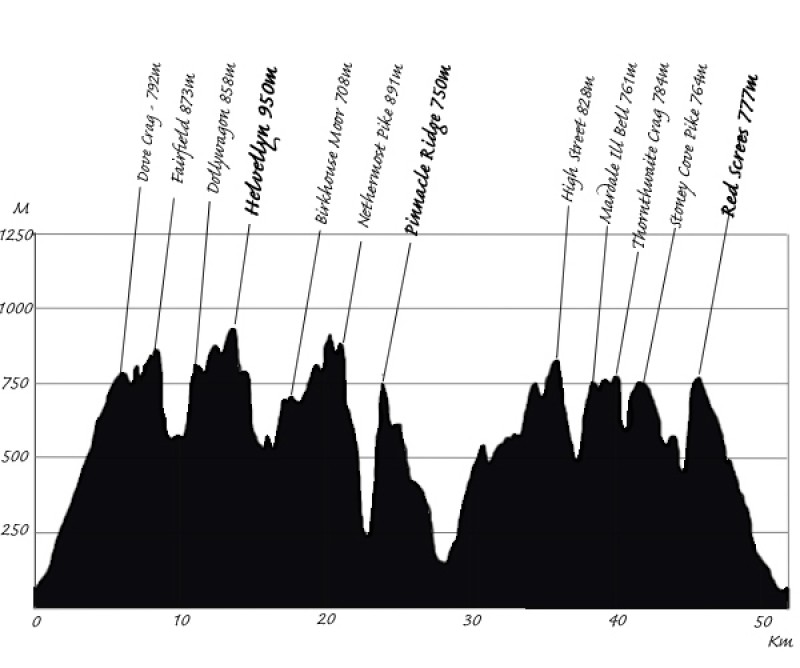
It’s a race route that follows on quite nicely from the Salomon Glen Coe Skyline in that the True Mountain Lakes Sky Ultra has plenty of vertical grind (4300m+), grade 3 scrambling, knife edge arêtes and all over 50km’s of challenging terrain.

LSU_Route_Profile_V2

It’s not a race for the feint hearted and this is reflected by the start list.

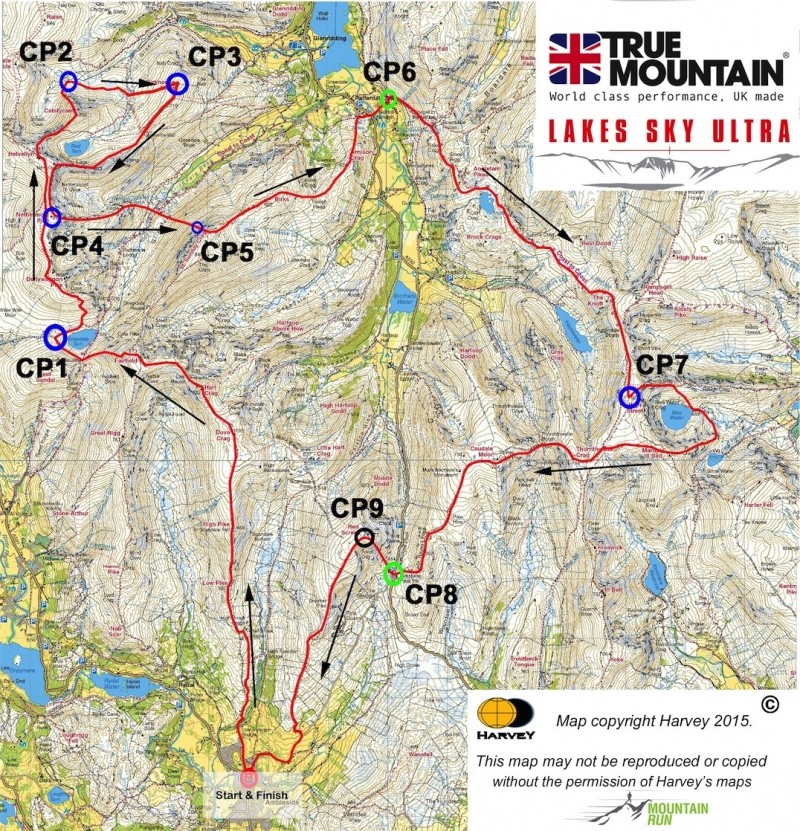
Harveys_Race_Map_Aug_Update-2

Starting on the streets of Ambleside, arguably one of the most important town in the English Lakes, runners will run this challenging course via a fully way marked route.

Who is running?

©iancorless.com_Tromso2015-4645

Eirik Haugsness has been racing the Skyrunner® World Series for several years and he is the 2014 champion of the Tromso Skyrace. His presence in the English lakes is an exciting prospect as he will attempt to do battle against local talent.

©iancorless.com_USM2015-3343

Ricky Lightfoot needs no introduction to Skyrunning and fell running aficionados and without doubt he is a favourite for overall victory on what for him is home soil. Ricky has already had a string of top performances in 2015, can he add the LSU to the list?

©iancorless.com_GlenCoe2015-3526

Es Tressider recently raced the Glen Coe Skyline and ran much of the day in 2nd place. Unfortunately, Es faded in the latter stages of the race and missed the podium. Es’s experience in the mountains is quite incredible and if recovered, we can certainly expect him to mix it up at the front of the race.

©iancorless.com_DragonsBack2015Day1-4396

Damian Hall in 2015 has raced The Spine, The Dragons Back Race and just finished 32nd at UTMB (2nd Brit). LSU only comes 2 weeks after the Mont-Blanc monster so Damian may well be a little tired; we can’t rule him out though!

Ben Bardsley is an experienced fell runner and ski mountaineer. In the past he has raced at classic Skyrunning races such as Zegama-Aizkorri. Ben’s current form is a little unknown but he’s one to watch for sure.

Chris Stirling has had excellent performances at the Langdale Horseshoe, Three Shires, Great Lakes Race and has preparing for LSU for several months. His presence almost certainly will be felt at the front of the race.


In the ladies’ race, V3K winner and 3rd placed lady at Glen Coe Skyline, Sarah Ridgway makes an appearance and if recovered we can expect her to contest the podium once again.

©iancorless.com_DragonsBack2015Day1-4861

But Beth Pascall comes to the race with a set of solid results. She has placed 2nd at Lakeland 100, won The Spine, placed 2nd The Dragons Back Race and for me is the most likely lady to top the podium on the 12th September.

Shiri Leventhal has placed on the podium of multi-day races in the 4 Desert Series and in 2013 was 2nd lady at the Everest Trail Race. This course will provide a test to Shiri but it’s one that she can rise too!

©iancorless.com_GlenCoe2015-2855

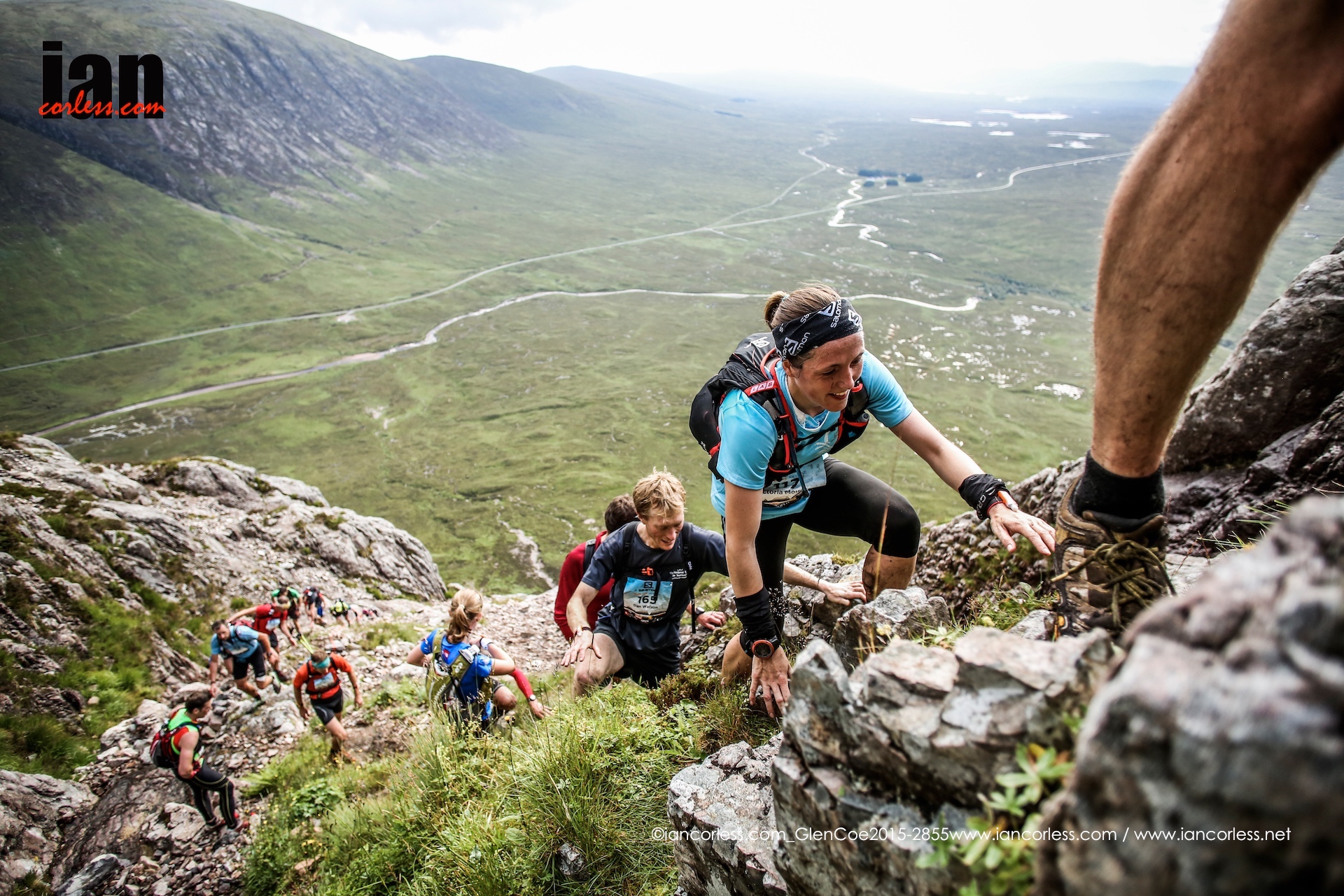
Finally, Victoria Mousley is another hot contender for the top of the podium. Her experience on courses such as The Three Peaks, Tour of Pendle and Scaffell Pike Marathon will set her up nicely for a great run at LSU.

Race details can be viewed here:  HERE

Course map here: HERE

RACE ENTRY HERE (open till September 6th)

HERE

SkyrunningUKlogo

Skyrunning UK at http://www.skyrunninguk.com


Episode 89 – Mangan and Carr : Around the World Special

Ep89

Episode 89 of Talk Ultra is all about running around the world. We speak with Tony Mangan who ran around the world in 4 years covering 50,000km’s and we also speak with Kevin Carr who set the fastest time for running around the world 26,232km in 621 days. We have the News, a Blog,Talk Training, Up & Coming racees and Speedboat Karl.

NEWS

Help Nepal – Nepal images ‘FACES of NEPAL’ – order a print and all funds donated to Nepal charities https://iancorless.org/2015/04/28/nepal-appeal-nepalearthquake/

Comrades

  1. Carloine Wostman 6:12
  2. Charne Bosman 6:33
  3. Elena Nurgalieva 6:40

Ellie Greenwood was 6th

  1. Gift Kelehe 5:38
  2. Mohammed Husien 5:46
  3. Hatiwande Nyamande 5:48

Sage Canaday 15th and Max King 50th

IAU World Trail Champs

  1. Sylvain Court 8:15
  2. Luis Alberto Hernando 8:19
  3. Patrik Bringer 8:21
  1. Nathalie Mauclair 9:30
  2. Caroline Chaverot 9:33
  3. Maite Maiora 9:39

Cayuga Trails 50

  1. Mario Mendoza 6:54
  2. Jared Burdick 7:00
  3. Tyler Sigi 7:08
  1. Amanda Basham 8:11
  2. Jackie Palmer 8:33
  3. Liz Gleason 8:38

Scott Jurek – looking good but being record pace (over 1/4 way)

BRYCE 100

  1. Florent Bouguin 17:58 new CR
  2. Alex Ho 18:59
  3. Zac Marion 21:23
  1. Jennilyn Eaton 23:50
  2. Tonia Smith 26:31
  3. Lee Conner 26:37

RICHTERSVELD WILDRUN read reports HERE

  1. Thabang Madiba 13:55:38
  2. Dayle Wheeler 15:16:24
  3. Filippo Faralla 16:46:25
  1. Katya Soggot 15:26:57 (3rd overall)
  2. Nikki Kimball 16:31:20 (4th Overall)
  3. Karoline Hanks 16:46:19 (5th overall)

Zach Miller back to winning ways at Rothrock 30k after Transvulcania

Ian has a book deal! Read HERE

INTERVIEW

TONY MANGAN website HERE

TALK TRAINING

MARC LAITHWAITE is back talking race day nutrition

INTERVIEW

KEVIN CARR website HERE

UP & COMING RACES

Andorra

Ronda dels Cims | 170 kilometers | June 26, 2015 | website

Ultra mític | 112 kilometers | June 26, 2015 | website

Argentina

Amanecer Comechingón 60 km | 60 kilometers | June 20, 2015 | website

Amanecer Comechingón 80 km | 80 kilometers | June 20, 2015 | website

Australia

Queensland

Nerang State Forest 50 km | 50 kilometers | June 14, 2015 | website

Austria

100km Wien | 100 kilometers | June 13, 2015 | website

50km Wien | 50 kilometers | June 13, 2015 | website

ESPA-Mountain-Marathon | 50 kilometers | June 13, 2015 | website

ESPA-Ötscher-Ultra-Marathon | 72 kilometers | June 13, 2015 | website

Scenic 100 | 100 kilometers | June 20, 2015 | website

Scenic 55 | 55 kilometers | June 20, 2015 | website

Bulgaria

Vitosha 100km Mountain Super Trail | 100 kilometers | June 13, 2015 | website

Canada

Ontario

Niagara Ultra 100 Km | 100 kilometers | June 20, 2015 | website

Niagara Ultra 50 Km | 50 kilometers | June 20, 2015 | website

Chile

Ultra Trail Putaendo – 60 km | 60 kilometers | June 13, 2015 | website

Ultra Trail Putaendo – 80 km | 80 kilometers | June 13, 2015 | website

Croatia

Velebit Ultra Trail 100 km | 100 kilometers | June 20, 2015 | website

Czech Republic

Krakonosova Stovka 100 km | 100 kilometers | June 19, 2015 | website

France

Alpes-Maritimes

La Grande Courasse | 61 kilometers | June 14, 2015 | website

Aube

Team Trail Intermarché | 180 kilometers | June 26, 2015 | website

Troyes à l’aube de l’enfer d’Éric Peters | 180 kilometers | June 26, 2015 | website

Cantal

Ultra-Trail Puy Mary Aurillac | 105 kilometers | June 20, 2015 | website

Drôme

Les Drayes du Vercors 60 km | 60 kilometers | June 13, 2015 | website

Haute-Loire

Le Grand Trail du Saint Jacques | 70 kilometers | June 13, 2015 | website

Le Trail du Gévaudan | 50 kilometers | June 13, 2015 | website

Hautes-Alpes

Trans Écrins | 80 kilometers | June 20, 2015 | website

Haute-Savoie

80km du Mont-Blanc | 80 kilometers | June 26, 2015 | website

AravisTrail – 52 km | 52 kilometers | June 20, 2015 | website

AravisTrail – 70 km | 70 kilometers | June 20, 2015 | website

L’esprit Angolon | 60 kilometers | June 21, 2015 | website

Trail des Crêtes du Chablais – 65 km | 65 kilometers | June 14, 2015 | website

Hautes-Pyrénées

Aneto trail de la Haute – Bigorre | 50 kilometers | June 13, 2015 | website

French Pyrennees Patou Trail | 100 kilometers | June 23, 2015 | website

Hérault

6666 Occitane | 105 kilometers | June 20, 2015 | website

Grand Raid 6666 | 110 kilometers | June 20, 2015 | website

Lozère

Aubrac Circus Trail | 55 kilometers | June 21, 2015 | website

Manche

Défi des Barjos | 57 kilometers | June 20, 2015 | website

Défi des Grands Barjos | 102 kilometers | June 20, 2015 | website

La Barjo | 87 kilometers | June 21, 2015 | website

Raid de l’Archange | 270 kilometers | June 21, 2015 | website

Morbihan

Grand Raid 56 Golfe du Morbihan | 177 kilometers | June 26, 2015 | website

Pas-de-Calais

Trail des Coteaux de l’AA- 55 km | 55 kilometers | June 14, 2015 | website

Pyrénées-Atlantiques

Montan’Aspe : la Piste Noire | 50 kilometers | June 13, 2015 | website

Var

Entre les deux rives | 57 kilometers | June 13, 2015 | website

Grand Tour du Verdon | 83 kilometers | June 13, 2015 | website

Vosges

Le Grand Trail de la Vallée des Lacs | 85 kilometers | June 20, 2015 | website

Le trail de la Vallée des Lacs – Trail Long | 55 kilometers | June 20, 2015 | website

Germany

Bavaria

Salomon Zugspitz Ultratrail – Supertrail | 60 kilometers | June 20, 2015 | website

Salomon Zugspitz Ultratrail – SuperTrail XL | 79 kilometers | June 20, 2015 | website

Salomon Zugspitz Ultratrail – Ultratrail | 100 kilometers | June 20, 2015 | website

Hesse

Rhön-Weser-Challenge | 190 kilometers | June 19, 2015 | website

Rhineland-Palatinate

Eifel Ultramarathon | 51 kilometers | June 14, 2015 | website

Ireland

Connacht

Forest Marathon – 100 km | 100 kilometers | June 13, 2015 | website

Forest Marathon – 50 km | 50 kilometers | June 13, 2015 | website

Italy

Friuli-Venezia Giulia

Magraid | 100 kilometers | June 19, 2015 | website

Puglia

Ultramaratona del Gargano | 50 kilometers | June 14, 2015 | website

Veneto

Dolomiti Extreme Trail | 53 kilometers | June 13, 2015 | website

Lavaredo Ultra Trail | 119 kilometers | June 26, 2015 | website

Norway

UltraBirken | 55 kilometers | June 13, 2015 | website

Philippines

100 km | 100 kilometers | June 12, 2015 | website

50 km | 50 kilometers | June 12, 2015 | website

Portugal

Santana Ultra SkyMarathon Madeira | 59 kilometers | June 13, 2015 | website

Ultramaratona Caminhos do Tejo – 144 km | 144 kilometers | June 12, 2015 | website

Ultramaratona Caminhos do Tejo – 57 km | 57 kilometers | June 12, 2015 | website

Réunion

Grand Raid 97.4 | 100 kilometers | June 13, 2015 | website

Serbia

100 km Run Palic | 100 kilometers | June 14, 2015 | website

Slovakia

Štefánik Trail | 140 kilometers | June 19, 2015 | website

Spain

Canary Islands

Tenerife 0-4-0 | 58 kilometers | June 14, 2015 | website

Catalonia

Volta Cerdanya Ultraresistència – VCUR 122K | 122 kilometers | June 13, 2015 | website

Madrid

Gran Trail Peñalara | 110 kilometers | June 26, 2015 | website

Gran Trail Peñalara 60km | 60 kilometers | June 26, 2015 | website

Oxfam Intermón Spain – Madrid | 100 kilometers | June 20, 2015 | website

Sweden

Jättelångt | 68 kilometers | June 13, 2015 | website

Lapland Ultra | 100 kilometers | June 26, 2015 | website

Switzerland

Berne

100km run Biel | 100 kilometers | June 12, 2015 | website

Neuchâtel

Trail de l’Absinthe | 75 kilometers | June 13, 2015 | website

Ticino

Scenic Trail – 54 km | 54 kilometers | June 13, 2015 | website

United Kingdom

Cambridgeshire

Pathfinder March | 46 miles | June 20, 2015 | website

Cornwall

Endurancelife Classic Quarter Ultra Marathon | 49 miles | June 13, 2015 | website

County Borough of Conwy

V3K Ultra Extreme | 89 kilometers | June 13, 2015 | website

V3K Ultra Marathon | 53 kilometers | June 13, 2015 | website

Cumbria

Lake District’s ULTIMATE Trails Challenge 100 km | 100 kilometers | June 20, 2015 | website

Lake District’s ULTIMATE Trails Challenge 50 km | 50 kilometers | June 20, 2015 | website

The Wall Ultramarathon – Challenger | 69 miles | June 20, 2015 | website

The Wall Ultramarathon – Expert | 69 miles | June 20, 2015 | website

The Wall Ultramarathon – Relay | 69 kilometers | June 20, 2015 | website

Three Rings of Shap | 100 kilometers | June 13, 2015 | website

East Dunbartonshire

West Highland Way race | 153 kilometers | June 20, 2015 | website

East Sussex

South Downs Way 100 | 100 miles | June 13, 2015 | website

Gloucestershire

Cheltenham Circular Ultimate Challenge | 78 kilometers | June 21, 2015 | website

West Berkshire

Thames Ring 250 | 250 miles | June 24, 2015 | website

USA

California

Burton Creek Trail Run 50K | 50 kilometers | June 21, 2015 | website

Canyon Meadow 50 km Trail Run (May) | 50 kilometers | June 20, 2015 | website

Rodeo Valley Trail Run Spring 50K | 50 kilometers | June 13, 2015 | website

San Lorenzo River Trail Run 50 km | 50 kilometers | June 13, 2015 | website

Idaho

River of No Return 108K Endurance Run | 108 kilometers | June 20, 2015 | website

River of No Return 50K Endurance Run | 50 kilometers | June 20, 2015 | website

Maryland

Mason-Dixon Trail Longest Day 100K Challenge | 100 kilometers | June 20, 2015 | website

Massachusetts

Vegan Power 50K | 50 kilometers | June 20, 2015 | website

Michigan

North Country Trail Relay | 63 miles | June 13, 2015 | website

Montana

50K | 50 kilometers | June 20, 2015 | website

50 Mile | 50 miles | June 20, 2015 | website

Waterton Glacier Relay | 100 miles | June 20, 2015 | website

New Mexico

Angel Fire Endurance 100 Mile Run | 100 miles | June 20, 2015 | website

Angel Fire Endurance 50K Run | 50 kilometers | June 20, 2015 | website

Angel Fire Endurance 50 Mile Run | 50 miles | June 20, 2015 | website

New York

Manitou’s Revenge Ultramarathon and Relay | 54 miles | June 20, 2015 | website

Oregon

Mary’s Peak 50K Trail Running Race | 50 kilometers | June 20, 2015 | website

NUT 100K | 100 kilometers | June 13, 2015 | website

Relay | 170 miles | June 19, 2015 | website

Relay | 200 miles | June 19, 2015 | website

Pennsylvania

Chinklacamoose 50K | 50 kilometers | June 20, 2015 | website

Laurel Highlands Ultra’s 50 K Trail Run | 50 kilometers | June 13, 2015 | website

Laurel Highlands Ultra’s 77 Mile Trail Run | 77 miles | June 13, 2015 | website

Rachel Carson Trail Challenge | 34 miles | June 20, 2015 | website

South Dakota

Black Hills 100 Mile | 100 miles | June 26, 2015 | website

Tennessee

Chattanooga Mountains Stage Race | 60 miles | June 19, 2015 | website

Utah

Ragnar Relay Wasatch Back | 192 miles | June 19, 2015 | website

Virginia

Eastern Divide Ultra | 50 kilometers | June 20, 2015 | website

OSS/CIA 50 Mile Night Run | 50 miles | June 13, 2015 | website

Washington

Beacon Rock 50k | 50 kilometers | June 13, 2015 | website

Rattlesnake Ridge Run 50K | 50 kilometers | June 20, 2015 | website

Taylor Mountain 50K Trail Run | 50 kilometers | June 20, 2015 | website

West Virginia

Highlands Sky 40 Mile Trail Run | 40 miles | June 20, 2015 | website

Wisconsin

Ragnar Relay Chicago | 194 miles | June 12, 2015 | website

Wyoming

Bighorn Trail 100 Mile Endurance Run | 100 miles | June 19, 2015 | website

Bighorn Trail 50K Endurance Run | 50 kilometers | June 19, 2015 | website

Bighorn Trail 50 Mile Endurance Run | 50 miles | June 19, 2015 | website

CLOSE

03:27:32

Show Links:

Website – talkultra.com

inov-8 TERRACLAW 220 and TERRACLAW 250 First Impressions

©iancorless.com_Inov8Terraclaw-7124

inov-8 love bringing out new shoes. Not all of them are perfect. I think we can forgive them for that. It’s good to experiment and you can have shoes in a test scenario as much as you like but it’s only when people start paying for them do you really get the true feedback.

I am lucky, I have been fortunate to test many of inov-8’s new shoes. So receiving the latest invention (a shoe that I actually had a first look at in October 2014 at Limone Extreme) the TERRACLAW I was really interested to see what the brand had done with this shoe and what it offered.

©iancorless.com_Inov8Terraclaw-7086

I have the TERRACLAW 220 and the TERRACLAW 250. This is a first impressions article, so don’t expect any great detail on what they are like to run in, that will come later.

©iancorless.com_Inov8Terraclaw-7047

The TERRACLAW 220 is a UK7 so this shoe will be tested by my partner, Niandi. The TERRACLAW 250 is a UK9.5. For simplicity, the blue shoe is the 220 and the black shoe is the 250. They are ‘Standard Fit’ which offers a wide toe box. This allows the toes to splay when running naturally. It also is perfect if you have a wider foot or maybe when running long and you expect your feet to expand. I am usually a UK9.5 in inov-8 but I would be interested to try a size 9. I can definitely run in the UK9.5 but the shoe allows just  a little too much movement in the toes. So, if you are going to purchase online think about this.

They are light!

©iancorless.com_Inov8Terraclaw-7092

inov-8 always name the shoe based on the weight, so a 220 weighs 220g and a 250 weighs 250g. In our scenario, the 220 in a UK7 weighed 219g/ 7oz and the 250 in a UK9.5 weighed 258g/ 9.1oz. Spot on!

The two shoes on face value look the same until you take a closer look. I will come on to that in a moment. A key factor is the drop, the 220 is 4mm and the 250 is 8mm. So before we go any further, the shoes will have a very different feel when running. In addition, cushioning in the 250 is noticeably different to the 220. It all comes down to personal preferences but one could arguably say that the 220 is an out-and-out faster trail shoe for shorter races and the 250 will be better suited to longer races.

©iancorless.com_Inov8Terraclaw-7077

The outsole on both shoes is the same, so there is no compromise between the 220 and the 250. As you can see from the images, the sole is aggressive but not ‘too’ aggressive. Both these shoes sit somewhere between a RACEULTRA in the 270 (4mm drop) and 290 (8mm drop) versions and  a X-TALON and/ or MUDCLAW.

©iancorless.com_Inov8Terraclaw-7112

I think it’s therefore safe to assume that the TERRACLAW 220 and 250 are designed at trail runners who require a shoe with comfort, cushioning and more importantly, grip. The RACEULTRA provides this already but with no grip and the X-TALON and MUDCLAW are out-and-out fell shoes or soft ground shoes. So, if the TERRACLAW performs I am pretty sure it’s going to be a popular shoe in the inov-8 line up.

©iancorless.com_Inov8Terraclaw-7114

The grip on the outsole is really spaced out which will allow grip (similar to a football boot) but in theory will stop the sole clogging up with debris. Several buzzwords appear on the outsole:

  • META-FLEX
  • DYNAMIC FASCIA BAND
  • DUAL C
  • TERRADAPTER

Oh yes, just like many other shoe manufacturers, inov-8 have come up with a whole new wording system to describe some key features.

Meta-Flex allows the foot to bend across the metatarsals, an important feature in any shoe but especially useful for off road running, Many shoes that provide grip can be too inflexible. The Meta-Flex on the 220 and 250 does really add to the feel of the shoe based on just a couple of runs.

Dynamic Fascia Band is in the midsole and is designed to help maintain stride efficiency. The jury is out on this at the moment. It certainly doesn’t seem to harm or damage the feel of the shoe, but equally I am not sure at this stage I feel the benefit?

©iancorless.com_Inov8Terraclaw-7082

Dual C represents the two compounds in the sole. Black and Yellow on the 220 and Black and Blue on the 250. The black area is made of a more durable material and increases protection, the coloured area is softer and stickier for increased grip. If you get a hold of the shoe and press the different compounds you can really feel the difference. I do wonder though if the coloured section is wide enough, only time will tell?

On speaking with inov-8, they say that Dual C compounds negate the need for a rock plate. I am not convinced, soon as you got on hard terrain you feel the ground beneath you. That’s a great thing, I love to feel the ground. But the odd sharp stone or pebble does make it’s presence felt.

The upper is where the two shoes differ quite considerably. Most notably, the lacing!

©iancorless.com_Inov8Terraclaw-7123


The 250’s lace conventionally and the 220’s lace using inov-8’s new RAY-WRAP system which is designed to align with the first metatarsal. In principal this is designed to make a more secure, close and comfortable fit. I have witnessed this before in a pair of Brooks shoes and I enjoyed the comfort and reassurance it offered. However, this does feel quite unusual at first. Niandi has expressed similar concerns with the 220. But lets be clear, it’s too early to tell and and make a judgement on this. The tongue in both shoes is padded well and offers great comfort. The laces are thin but pull tight providing a secure foot hold and if tied in a double not they do not slip.

©iancorless.com_Inov8Terraclaw-7068

©iancorless.com_Inov8Terraclaw-7108

The heel area on both shoes is roomy, plush and holds the foot firm. No issues here from just a couple of runs.

©iancorless.com_Inov8Terraclaw-7062

©iancorless.com_Inov8Terraclaw-7105

The upper on both the 220 and the 250 is light and breathable and both shoes utilise inov-8’s new X-LOCK welded overlay Yes folks, can you see that big yellow X on the 220 and the big blue X on the 250? That is X-Lock!

©iancorless.com_Inov8Terraclaw-7118

X-Lock is designed to hold the foot firm within the shoe. It differs greatly between the 250 and the 220. Just look above. The pattern is completely different. We will feedback on this more with more use. You will also notice in the above image how the 250 (left) has considerably more toe protection than the 220. The 220 has a yellow reinforced soft band, to be honest it offers no protection against rocks. Whereas the 250 has a tougher fabric and just a fraction more protection against rock impact.

©iancorless.com_Inov8Terraclaw-7096

©iancorless.com_Inov8Terraclaw-7065


Let’s be clear, this is a first impressions look at the TERRACLAW and our verdict is impressed! As I have stated on many occasions recently, 8mm drop is for sure a sweet spot in the trail running shoe market and nov-8’s addition of a trail shoe with cushioning and grip is welcome.

For faster and more minimalist runners, they too will have a smile on their faces knowing that they have also been looked after with a 4mm drop.

Time to hit the trails and we will feed back on how these shoes perform, what the comfort is like and importantly do all these new features -‘X’ this, ‘RAY WRAP’ that and ‘DYNAMIC FACIA’ this really work?

The 220 in Images:

The 250 in Images:

220 v 250

The TERRACLAW shoes will be available in September 2015. Check out inov-8 HERE

Ultra SkyMarathon™ Madeira 2015 #USM2015

USM15_logo-01-250

The Ultra SkyMarathon™ Madeira (#USM2015) will take place on the13th and 14th June 2015 on the beautiful island of Madeira, Portugal.

Continuing the growth and expansion of Skyrunning globally, for the first time, USM will see its integration in the Skyrunner® National Series Spain, Andorra & Portugal. A set of 6 ultra distance races, USM will be the only race that takes place in Portugal.

Comprising of three races of different distances, USM will have:

  • Ultra SkyMarathon® Madeira (USM 55 km 4000 m D +)
  • Santana Sky Race (SSR 21 km 1350m D +)
  • and the Mini Sky Race (MSR 13km 400m D +).

It’s going to prove to be an exciting weekend of racing as runners from all over the world will travel to Madeira, not only to race but also to soak up the beautiful scenery, talk with the locals and indulge in the excellent food that only Portugal can offer.

©iancorless.com_Mourne-6734 copy

Stevie Kremer needs no introduction to Skyrunning aficionados and her incredible 2014 and Skyrunner® World Series title has recently been followed up with a great start to 2015 with victory at the Buffalo Stampede in Australia. This lady from Crested Butte is going to take some beating.

Ricky Lightfoot is the 2014 IAU World Trail Champion, winner and course record holder for the ‘Otter’ in South Africa and victor and course record holder for the DoDo Trail in Mauritius. On his day, he is an incredible force in any fell, trail, mountain or Skyrunning event.

©iancorless.com_IMG_6994Ultraks2014_

Zaid Ait Malek burst onto the Skyrunning scene in 2013 with a top placing at Zegama-Aizkorri. His enthusiasm, big smile and huge presence are a great contribution to any race. His victory at Matterhorn Ultraks in 2014 was a highlight and for sure, he will be looking for a podium place in Madeira.

©iancorless.com_IMG_1613Zegama14

Aritz Egea is a ‘Sky’ distance specialist and his ability to climb and descend with equal ability has seen him dominate races all over the world. A consistent top-10 finisher he will be looking to gain valuable points in Portugal.

©iancorless.com-0303Kima2014_

Alessandra Carlini really made a mark on the Skyrunning circuit in the past two years and she has proven, that despite living in the flat lands next to the sea, she has an ability to climb and descend with the best. Her performances improve when the races get longer, so, expect Alessandra to turn a few heads in the 55km race.

It won’t be easy running for Stevie, Ricky, Zaid, Aritz or Alessandra… a plethora of other top runners will toe the line looking for glory in Portugal:

  • Ester Alves (winner at this year’s Madeira Island Ultra Trail)
  • Nuno Silva (Winner, Falcotrail SkyMarathon 2014)
  • Luis Fernandes (winner at this year’s Madeira Island Ultra Trail)
  • Manuel Faria (Winner USM 2014)
  • Unai Santamaria (3rd USM 2014)

It’s not too late to enter any of the races in Madeira and a special discount is available if you enter before the end of April.

What you waiting for? Join some of the worlds best on the beautiful trails of Madeira.

Santana is a northern municipality of Madeira Island, renowned since 2011 as World Biosphere Reserve by UNESCO. It is known by the typical A-thatched houses, symbol of Madeira and Portugal and offers a wide variety of surroundings such as the laurel forest, mountainous areas surrounding Pico Ruivo and São Jorge hills and the outstanding cliffs of the north of the island.

I will be at the event photographing and reporting on the action as it unfolds. You can follow on Facebook and Twitter – @talkultra

Promo video: https://vimeo.com/125025950

Race website HERE

Registration HERE

Race weekend program HERE