Lofoten Stage Run 2025: A Wild Dance with Nature

There are races, and then there’s the Lofoten Stage Run by The Arctic Triple team. What unfolded in May 2025 wasn’t just a footrace; it was a deep, soul-grinding, awe-inspiring journey through one of the world’s most arresting landscapes. Four stages. Two distances, 170 km and 100 km. 
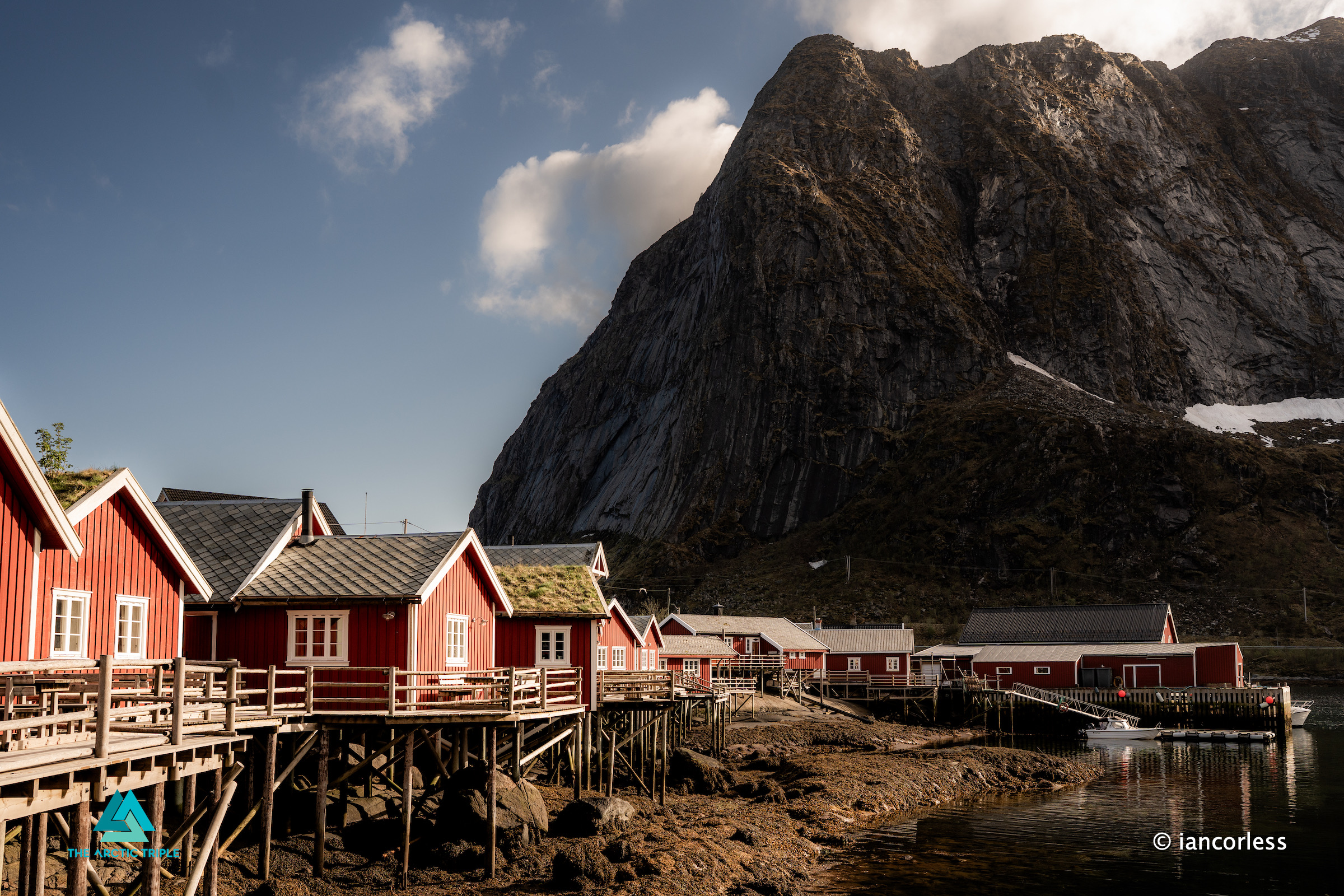
Across wild coasts, knife-edge ridges, fishing villages, and snow-streaked mountains, runners pushed their limits, and often redefined them, surrounded by the raw power and beauty of Norway’s Lofoten archipelago. Sleep came in hytte and seaside rorbuer; rest was fleeting, but memories were burned in.
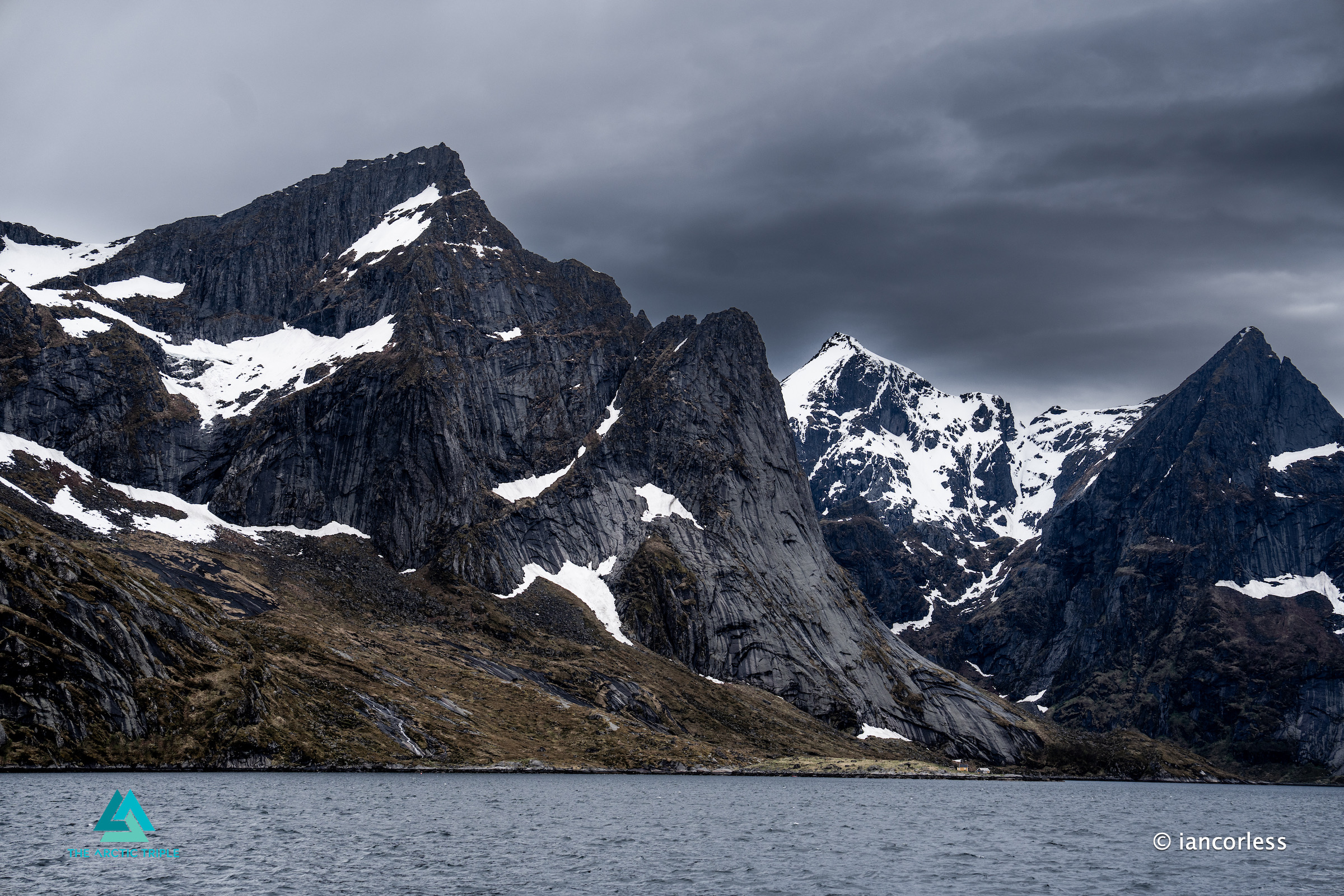
Stage 1: Into the Wild – Kjerkfjorden to Nusfjord (39 km / 20 km)
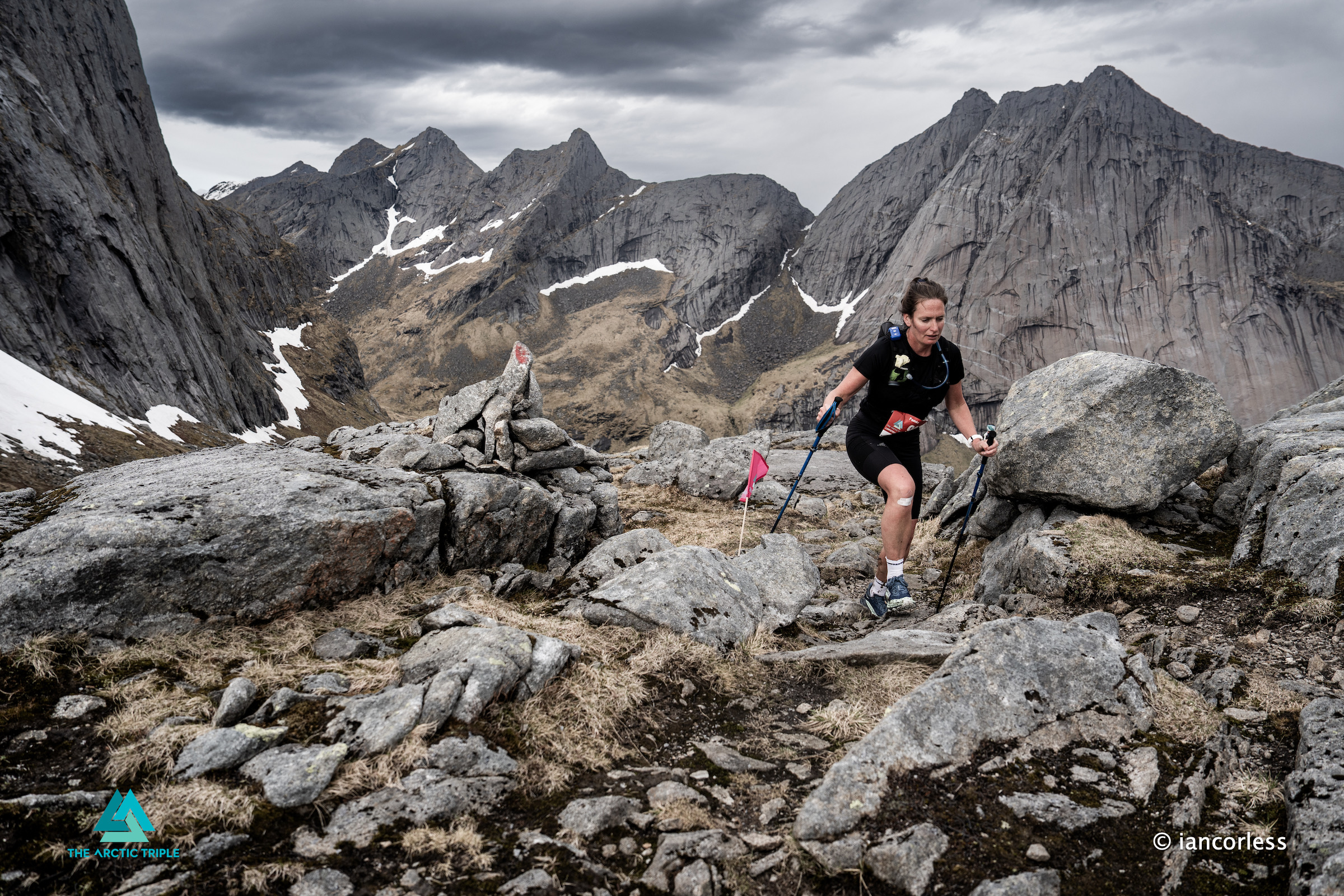
The race began like a dream: a boat ride through cold, steel-blue fjords, cliffs rising on all sides like the jaws of some ancient creature. As runners disembarked at Kjerkfjorden, the silence was broken only by soft footsteps and shallow breaths, nerves on edge, anticipation sharp.
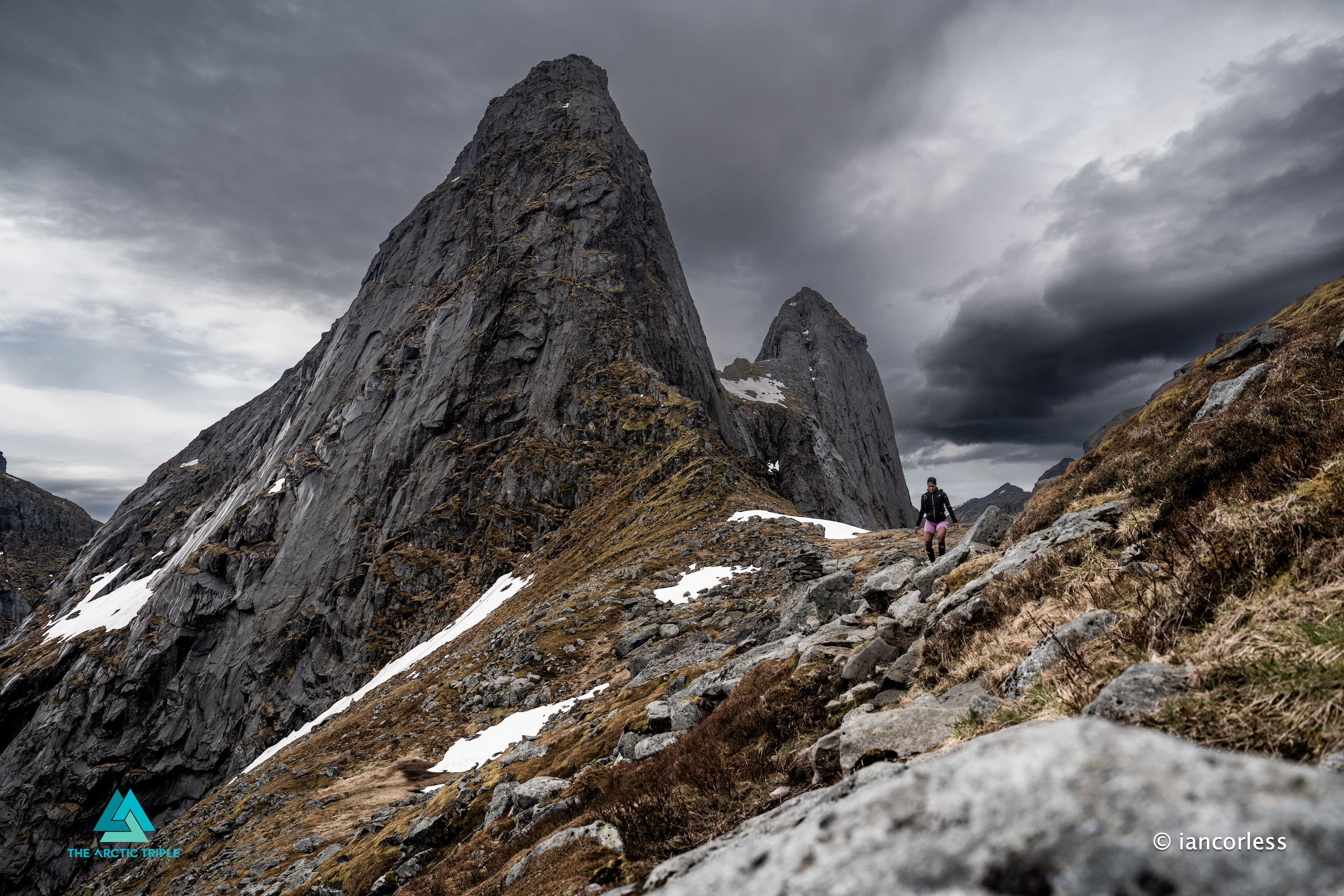
The terrain wasted no time. A steep climb out of the fjord led straight into deep snow patches and slick rock. Then came the surreal beauty of Kvalvika Beach, where sand met snow and the ocean roared its approval. For the 170 km runners, the day stretched long into the day, ending with a technical coastal section into the storybook village of Nusfjord. Legs screamed, but hearts were full.
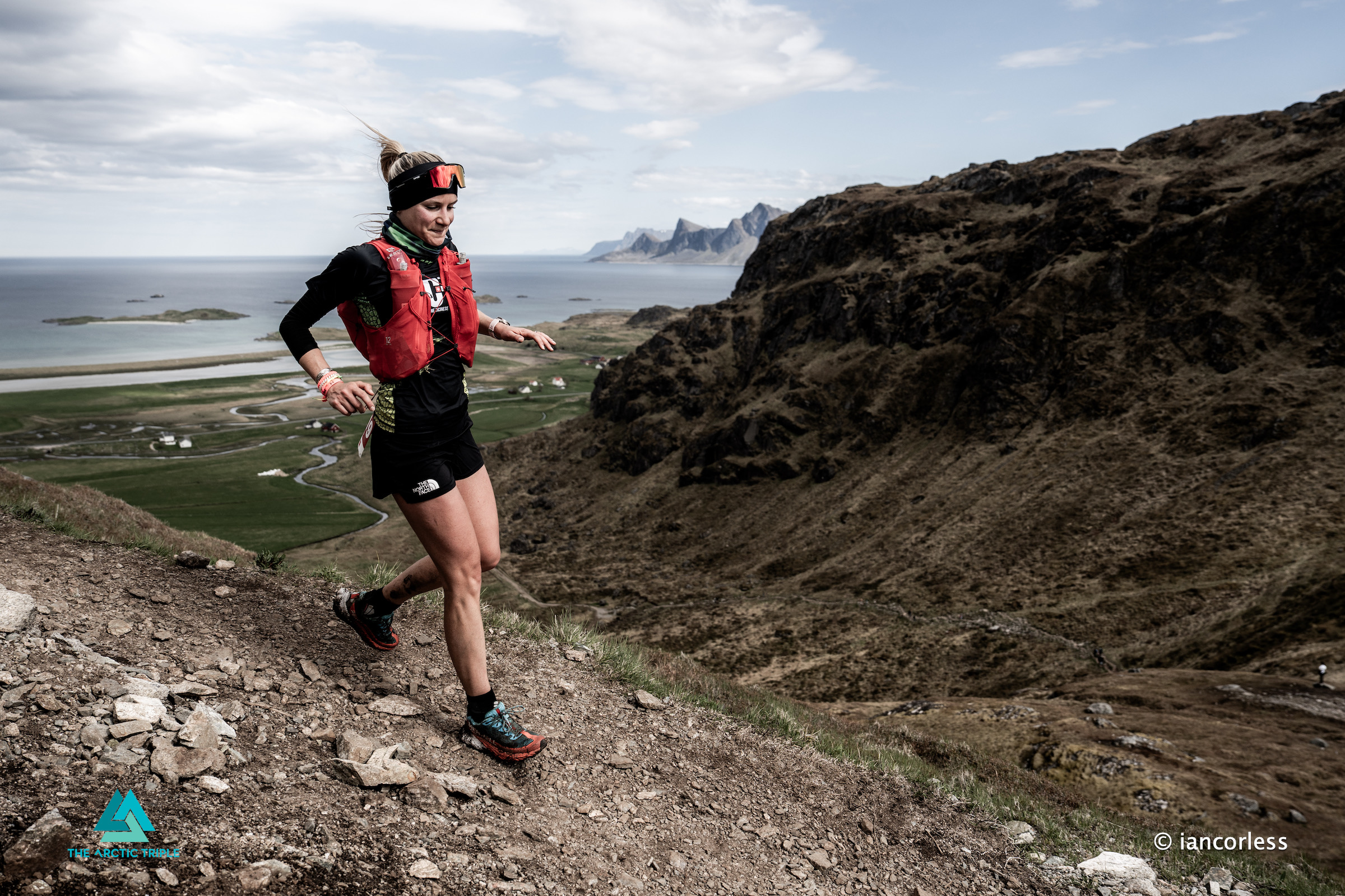
Stage 2: Edge of the Earth – Nusfjord to Leknes (34 km / 17 km)
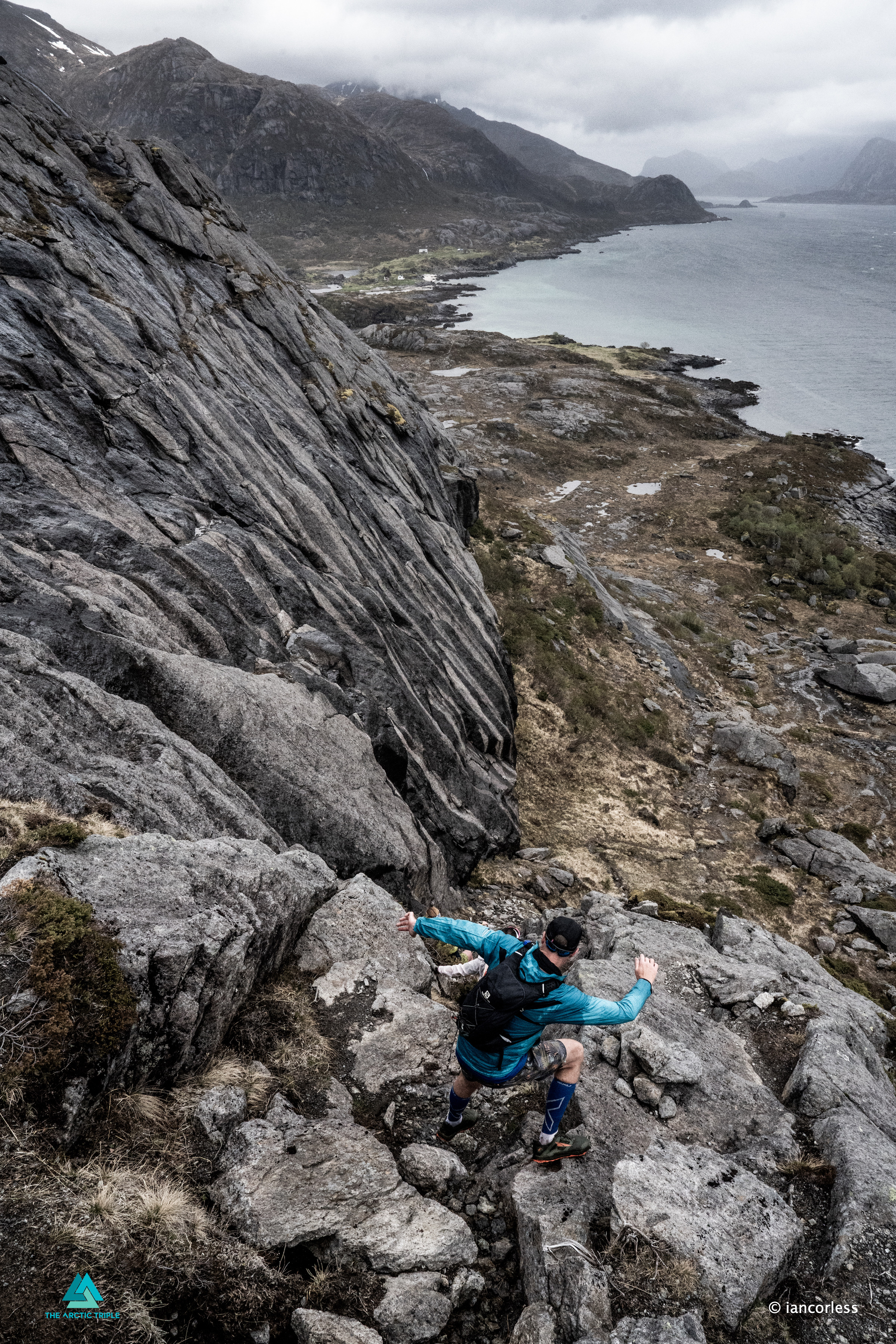
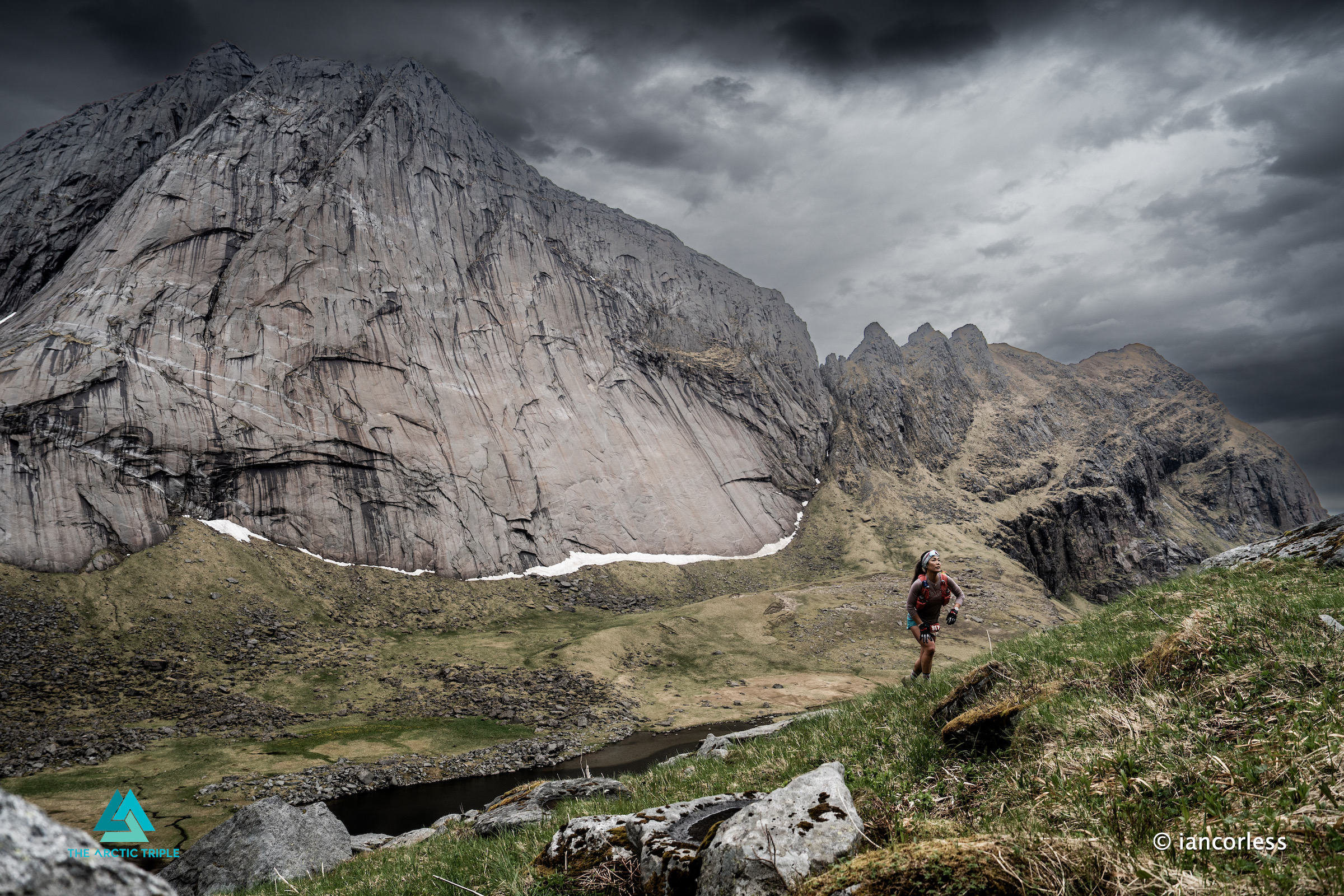
Day two was tougher. Tighter trails, more scrambling. The wind picked up, mist rolling in from the Norwegian Sea like smoke, rain fell, at times, hard and relentless. Between breaths, runners caught glimpses of jagged peaks piercing the sky and turquoise bays far below. This was Lofoten in full cinematic glory, wild, moody, and impossibly vast.
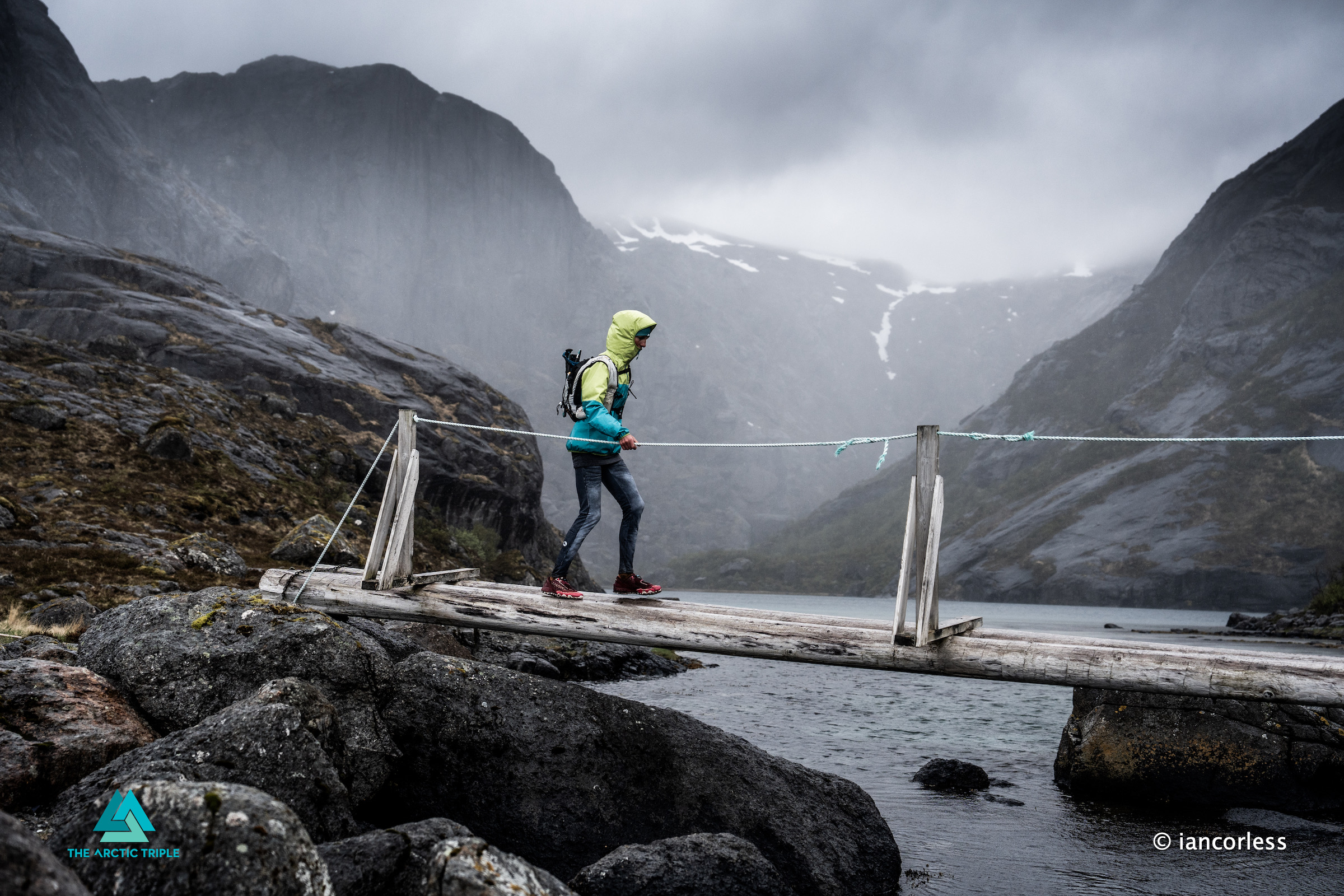
A tunnel under the sea added a surreal twist, legs burning as they climbed out of the darkness and back into the light. Offersøykammen offered panoramic views, but it demanded everything. As runners arrived in Leknes, drenched, scraped, and shivering, you could see it in their faces: wonder, pain, pride.
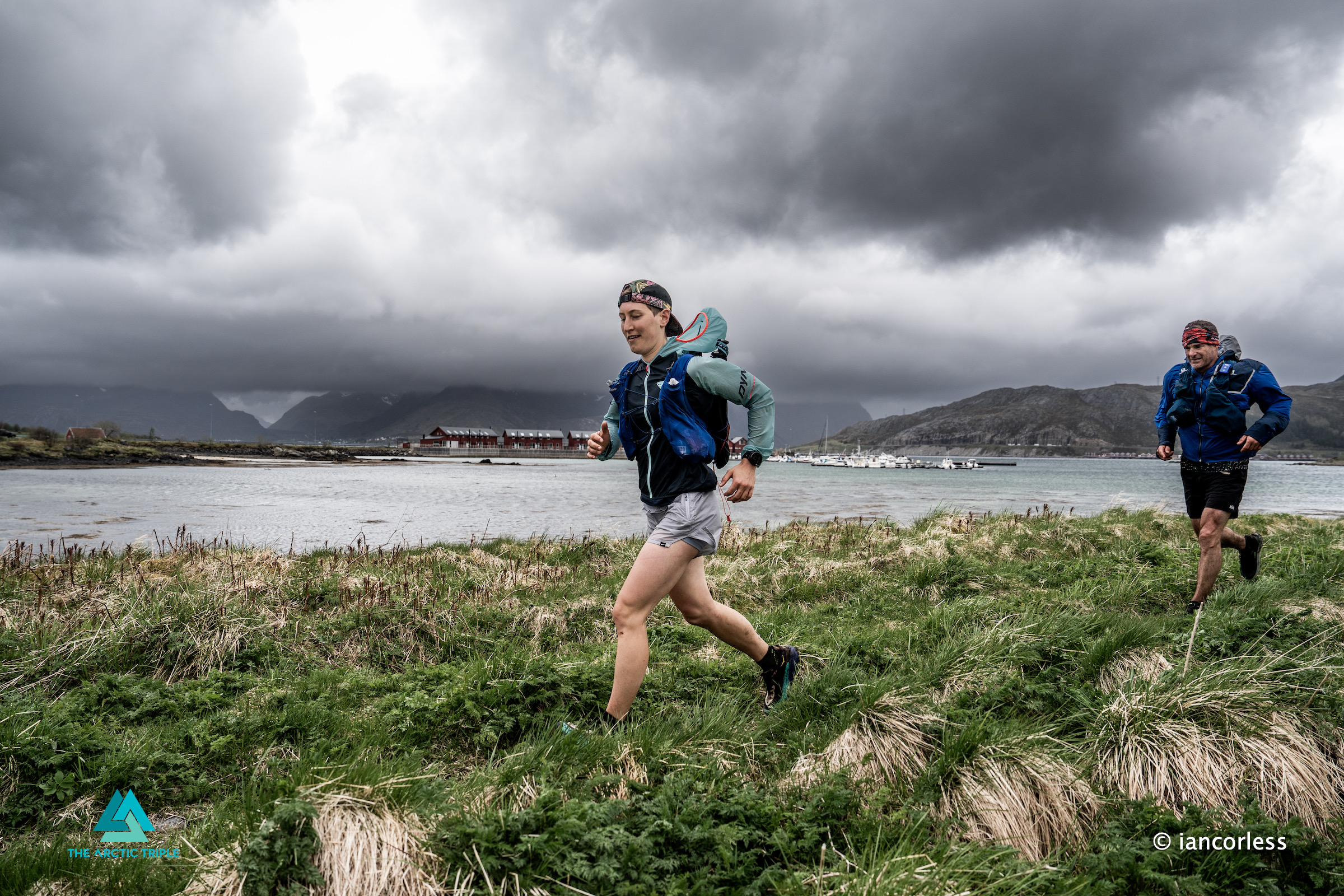
Stage 3: The Long Haul – Leknes to Rolvsfjorden (52 km / 35 km)
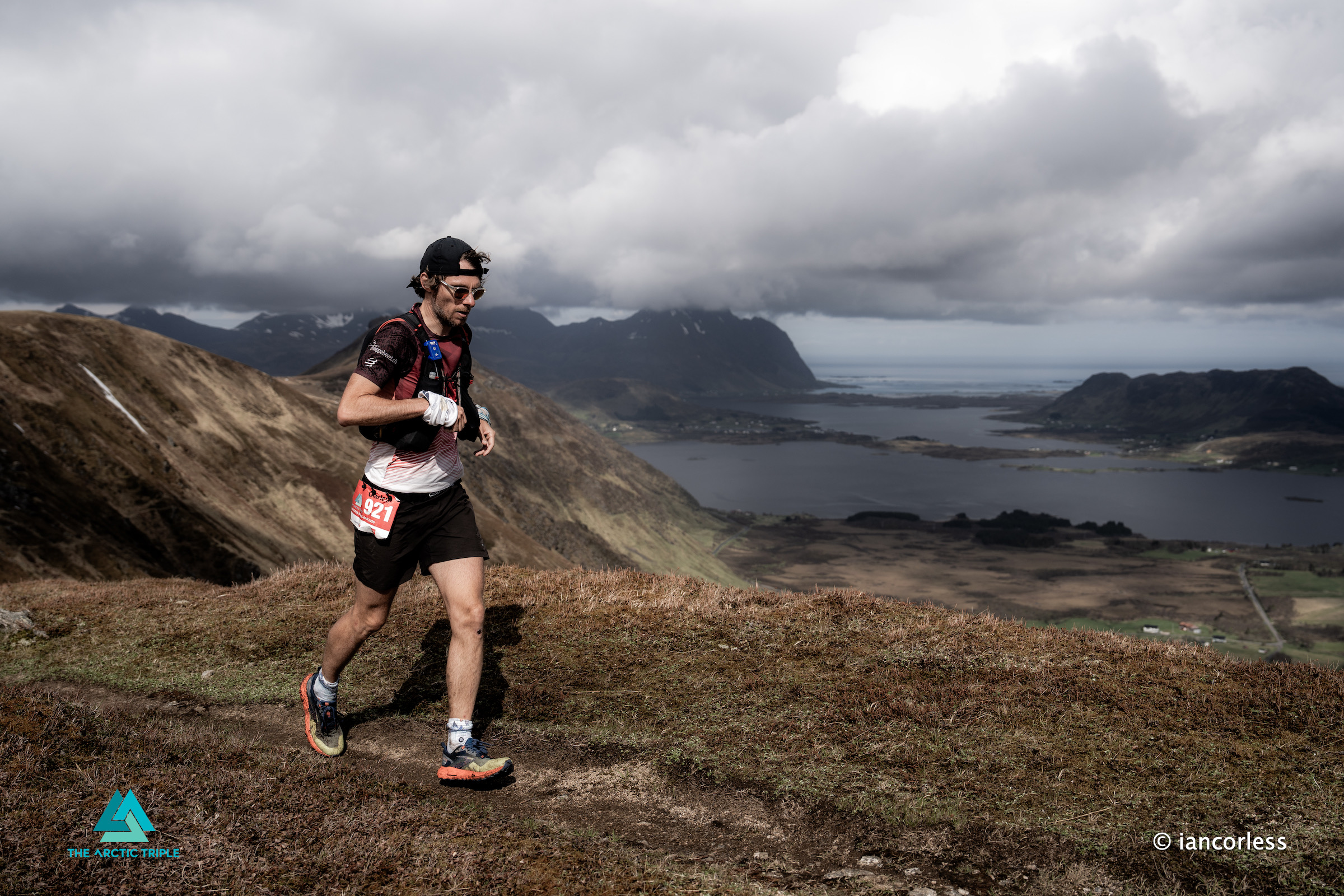
This was the crucible. The longest stage. Bodies were already breaking down, but the terrain opened up, longer runnable sections, smoother single track. The landscape changed too. From rugged coastline to sweeping highlands and serene lakes, this was Lofoten in its gentler form.
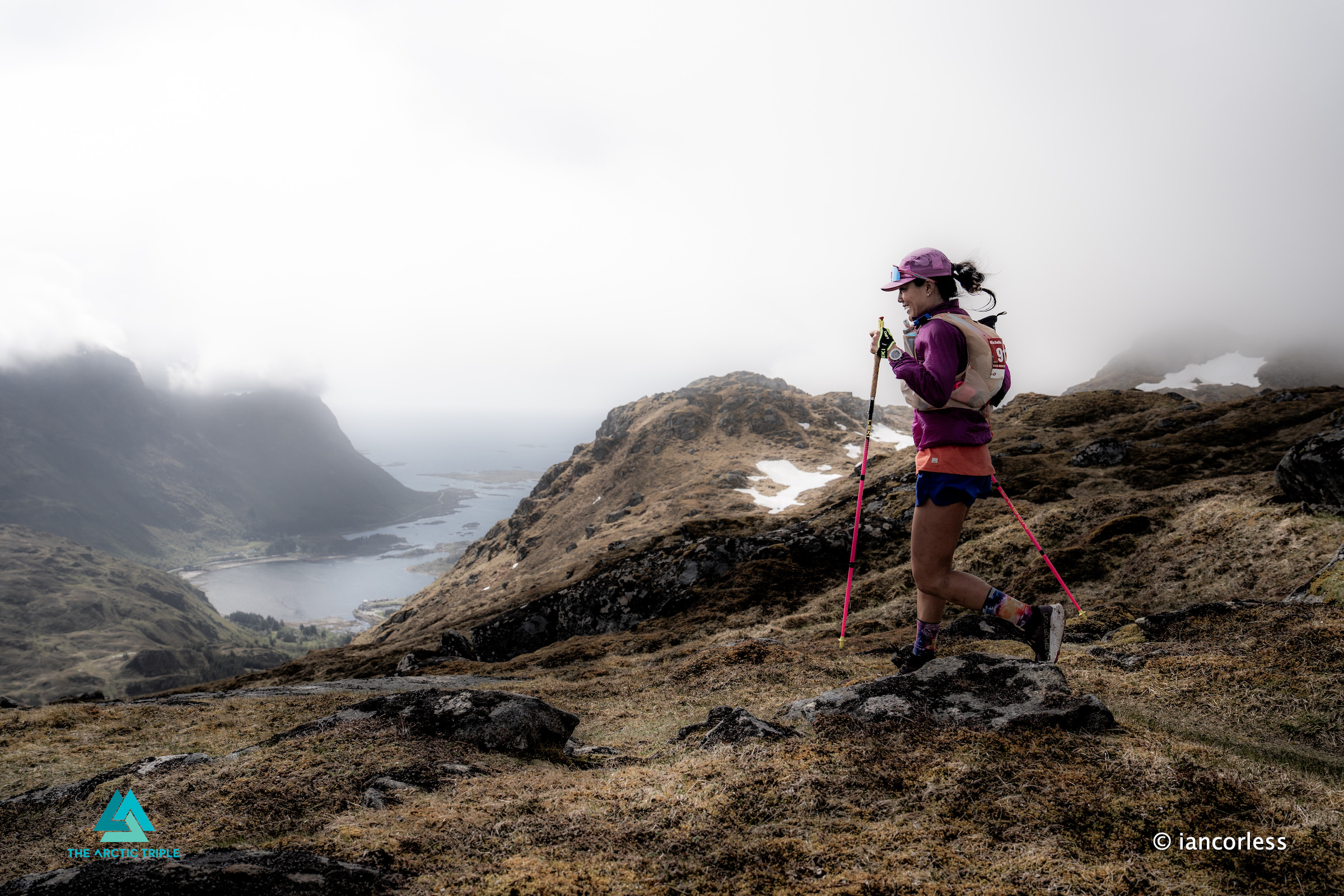
As the finish line at Brustranda Fjordcamping came into view, many had run out of words. “This is insane,” one runner muttered, grinning. “But it’s beautiful.”
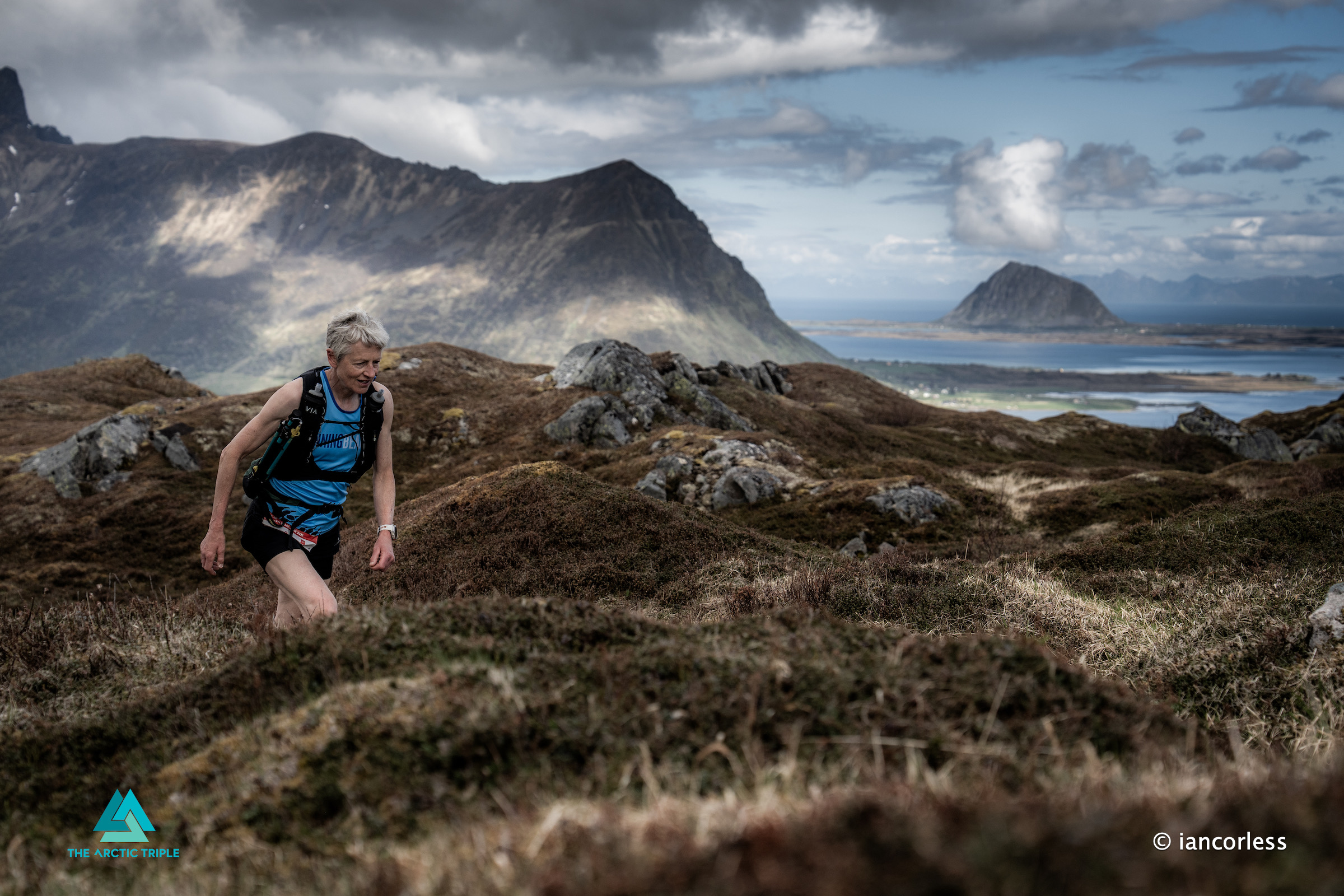
Stage 4: The Final Push – Rolvsfjorden to Svolvær (45 km / 21 km)
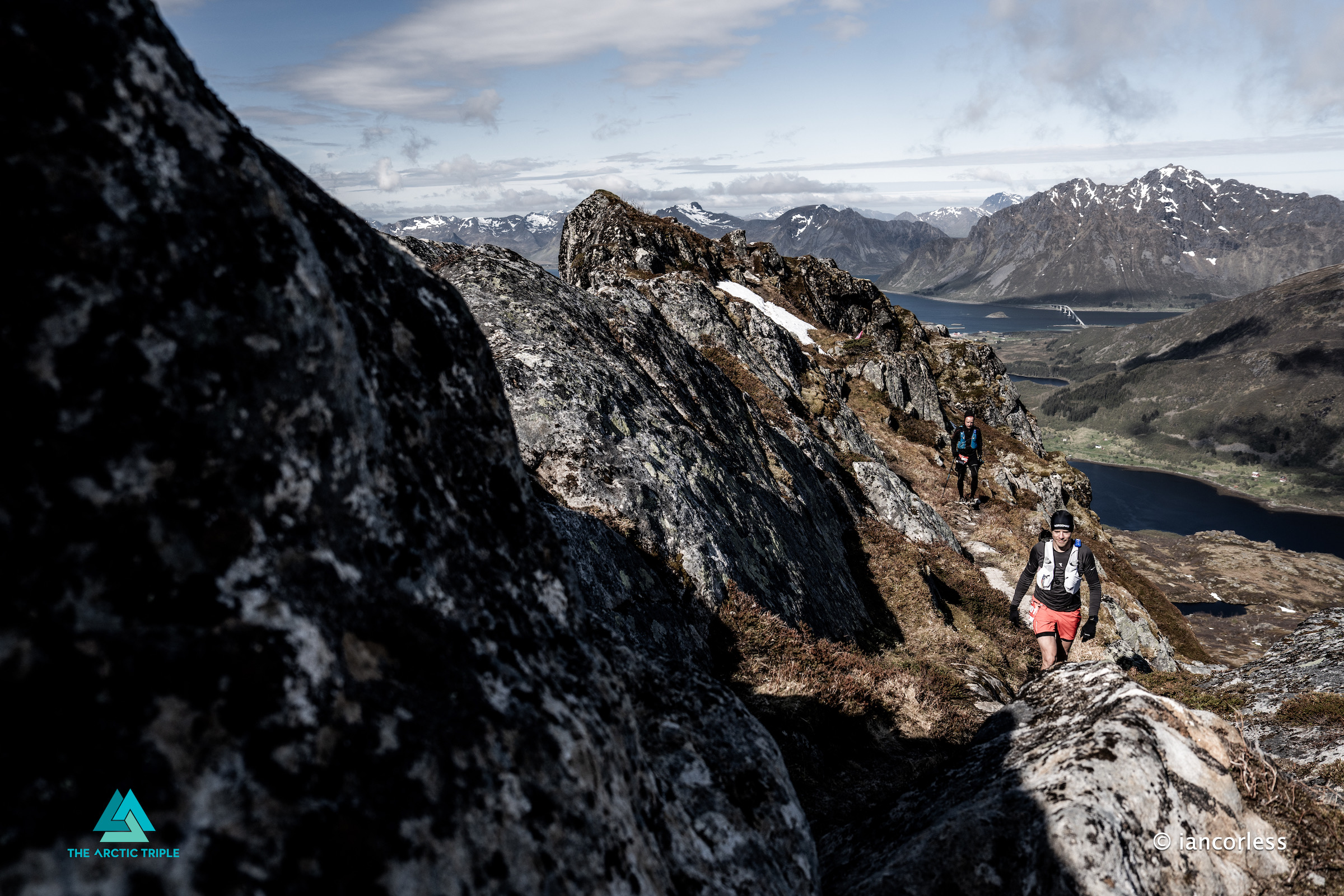
The last day was emotional. Legs were dead weight. Ankles rolled. Minds fogged. But everyone knew what waited: the end, the reward, the moment of elation.

Jordtinden loomed: steep, snowy, relentless. At its summit, clouds lifted like curtains, revealing a 360-degree panorama that stopped runners in their tracks, the ridgeline ahead bringing a sense of awe and fear in equal measure.
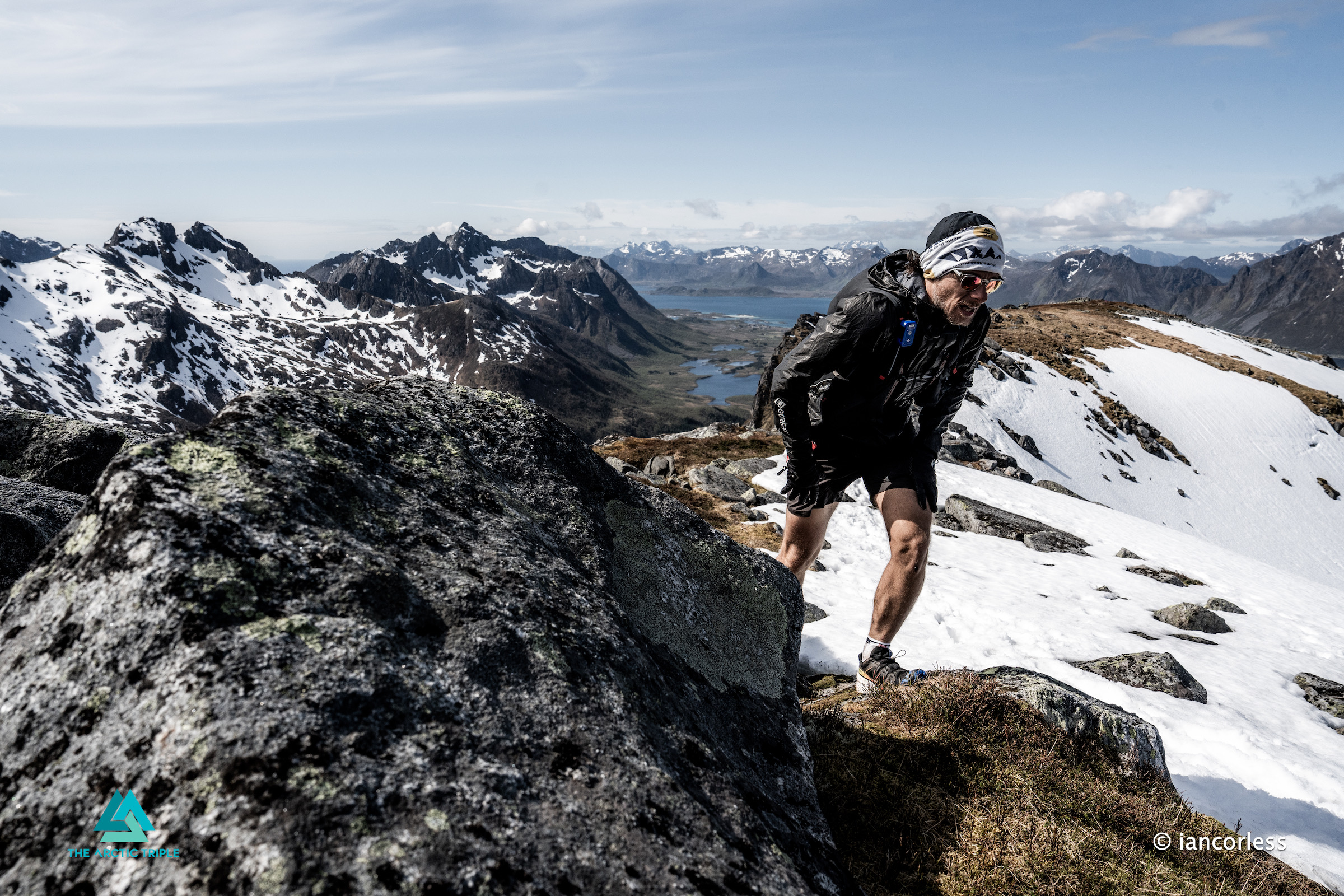
This is the queen stage, the terrain bringing together all that makes Norway and Lofoten unique, marvellous and special.
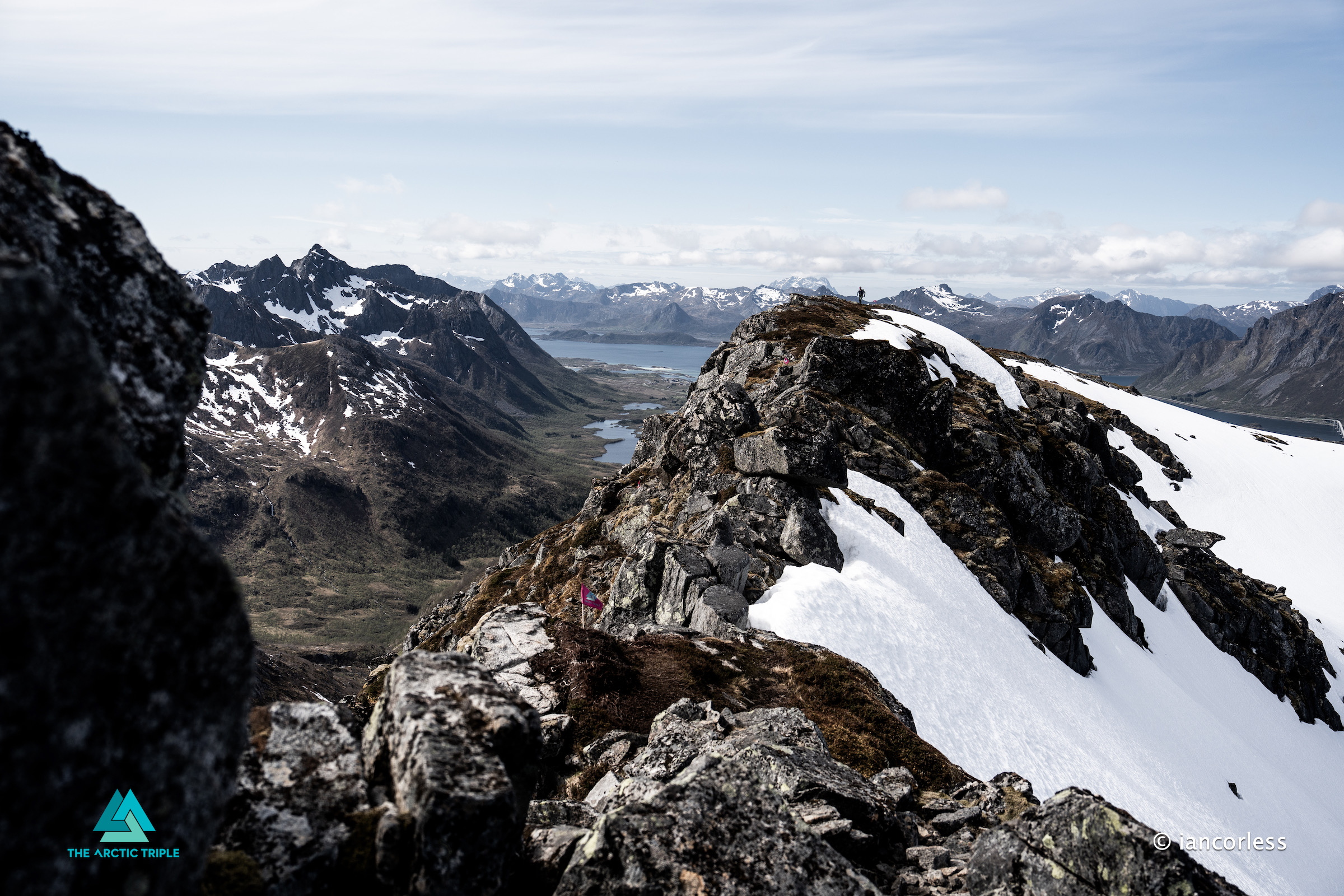
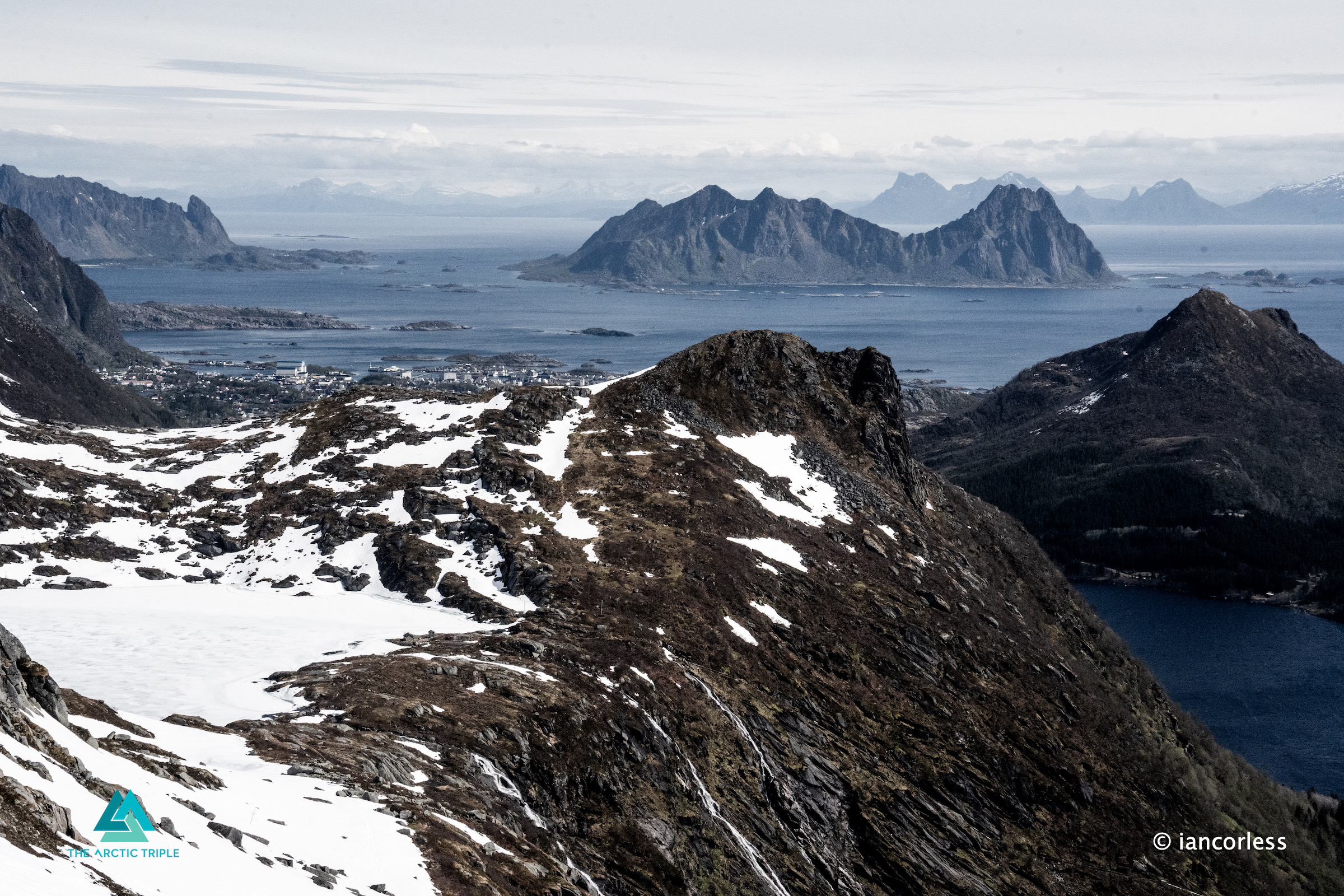
You could see all the way back, mountains, inlets, the journey behind. Some cried. Some screamed. Some just stood there, stunned.
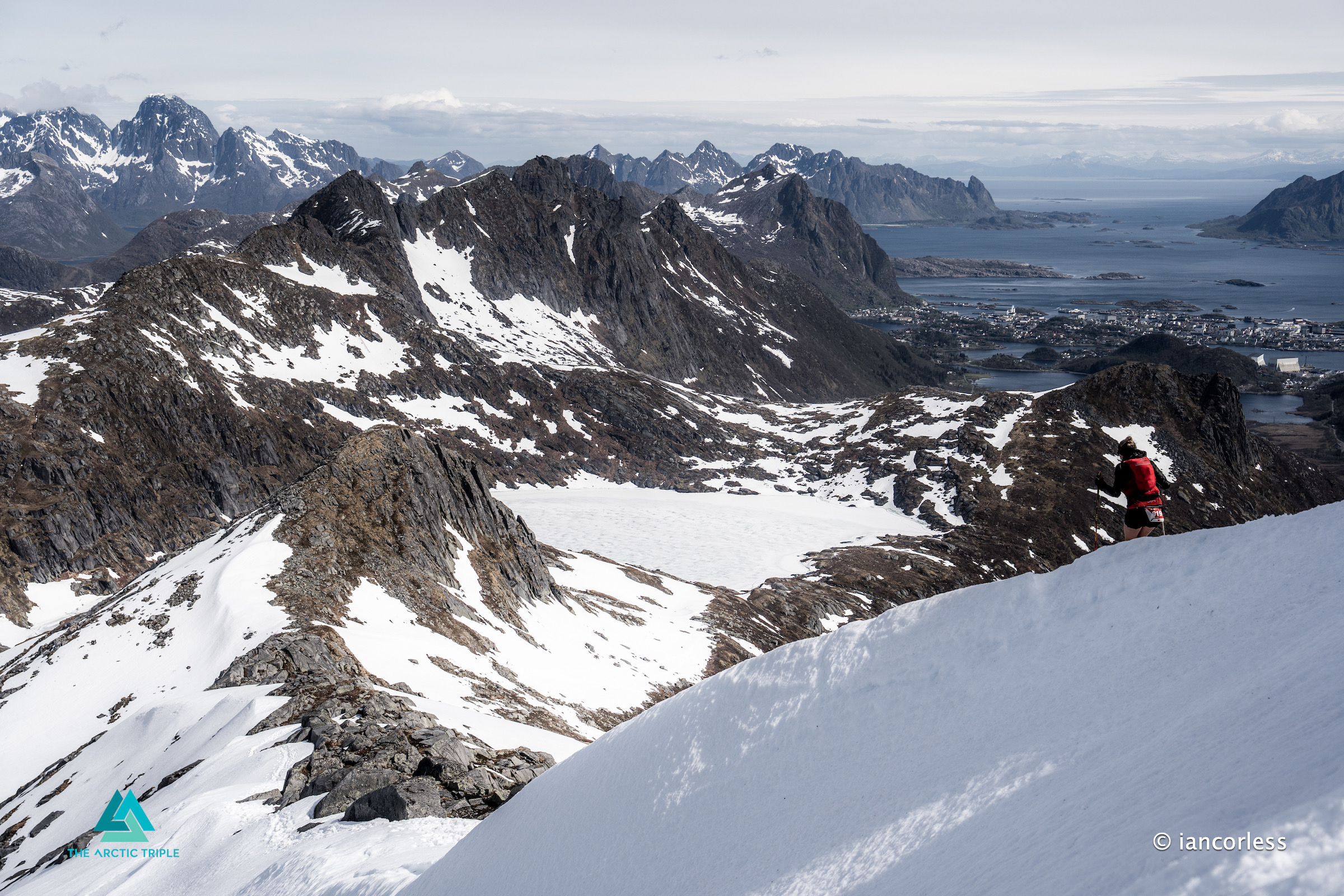
The descent into Svolvær was pure adrenaline, fuelled by joy and relief. The last stretch along the harbour felt like flying. Locals clapped. Teammates waited. People hugged. Some collapsed. Others danced.
More Than KM’s
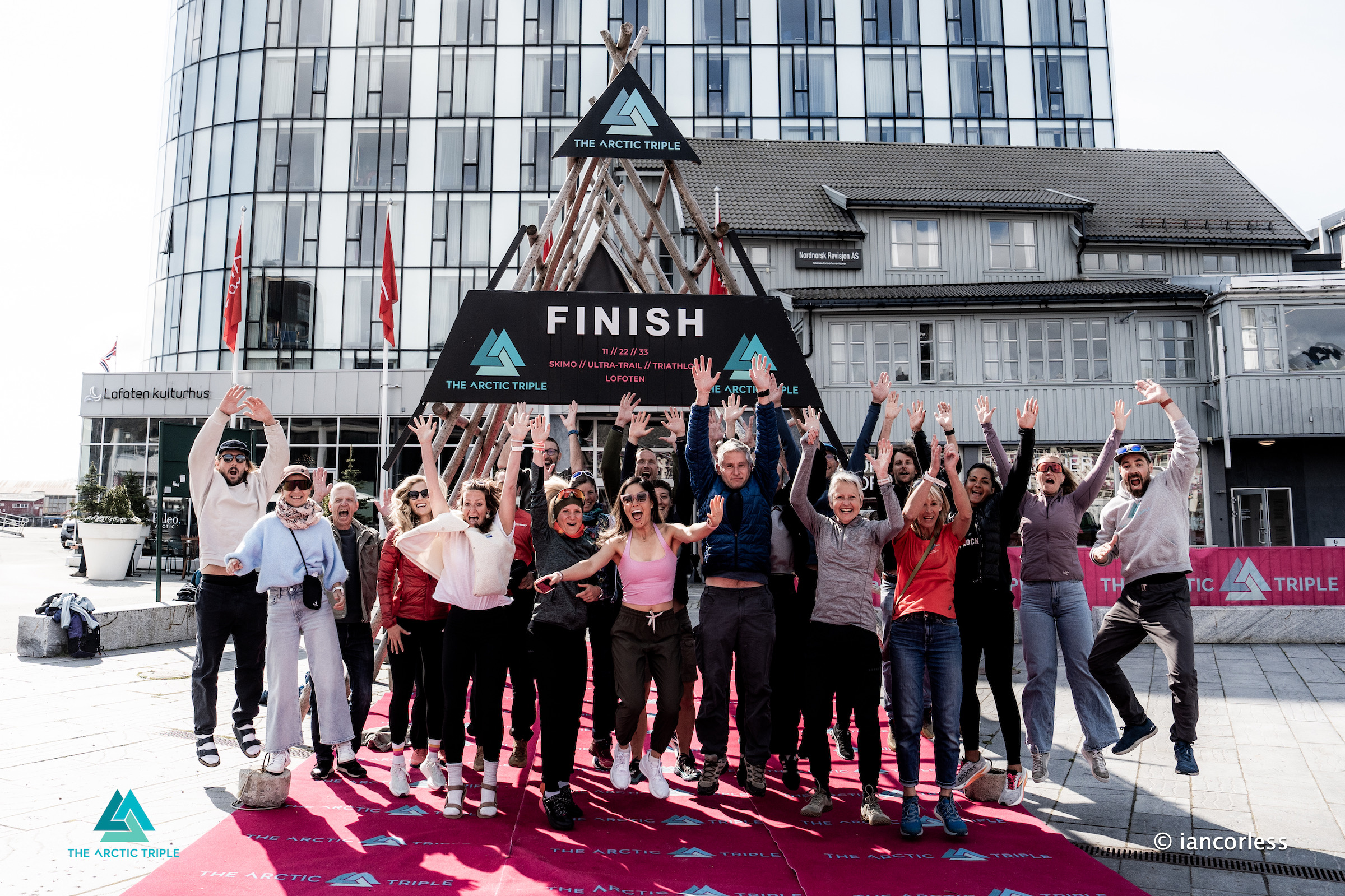
But the Lofoten Stage Run wasn’t just about distance or finish times. It was about the strange intimacy of shared suffering, of strangers becoming friends over bowls of traditional Norwegian food and stories told in cabins. It was the moment you stepped outside at midnight, sun still hanging low over the sea, and realised how small we are.

It was the rawness of the terrain mirrored in every aching limb. It was the magic of Lofoten, weather that shifted like a mood, peaks that stabbed the sky, and a landscape that didn’t just surround you, it swallowed you whole.
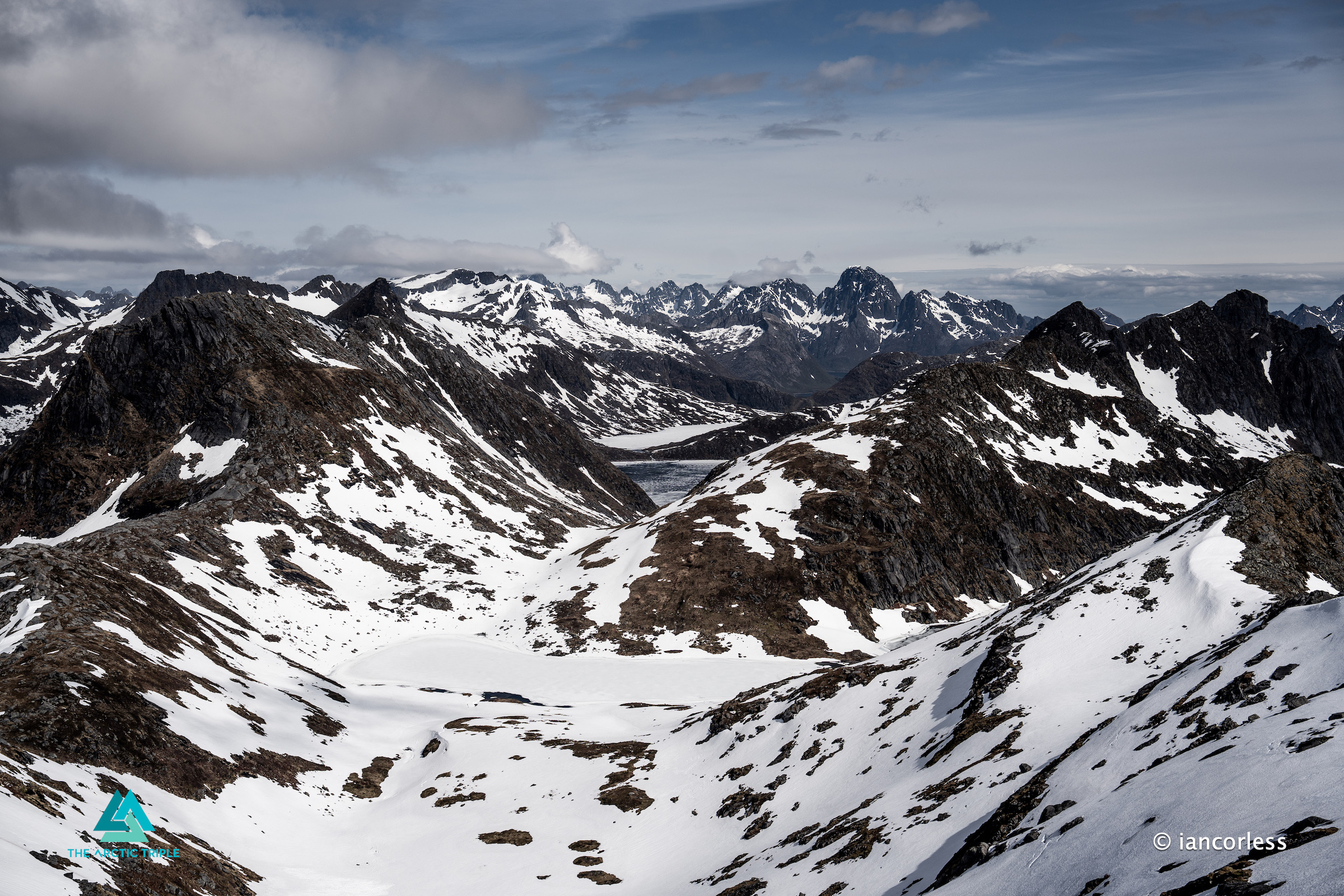
In the end, it wasn’t a race, it never was, the Lofoten Stage Run is an experience, a 360 immersive journey that shocked the mind and the senses and revealed to each and every participant that this route, arguably, is one of the BEST in the world. It was a rite of passage. A storm-chased, mud-caked, heart-thumping reminder that the wild is still out there, and if you’re lucky, it might just let you in.

VIEW THE FULL IMAGE GALLERIES HERE

Follow Ian Corless

Instagram – @iancorlessphotography

Twitter – @talkultra

facebook.com/iancorlessphotography

Web – www.iancorless.com
Web – www.iancorlessphotography.com

TRANSVULCANIA to “recover its essence.”

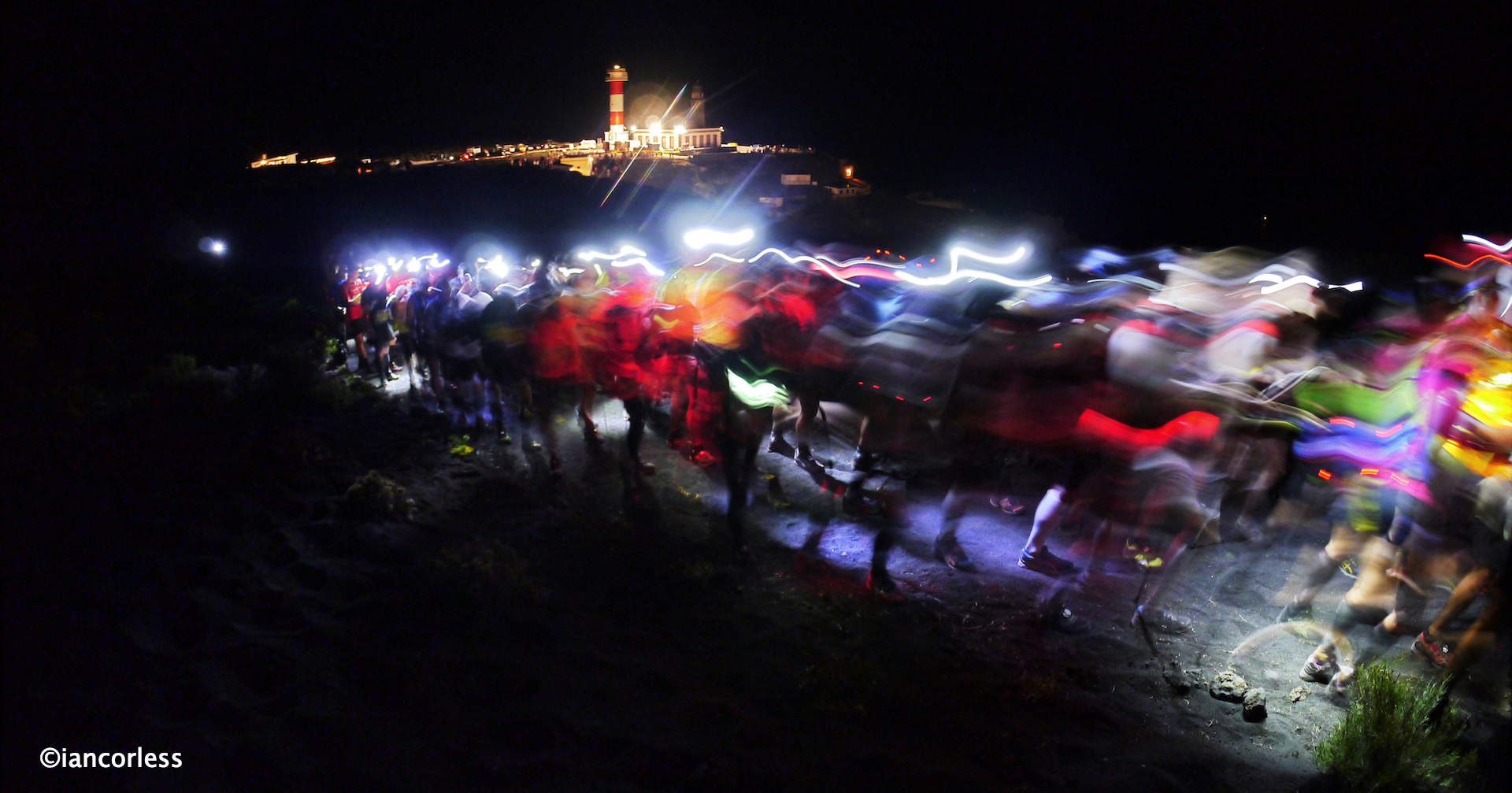
The amazing start from Fuencaliente lighthouse ©iancorless

The beautiful island and people of La Palma have had their share of troubles, the impact of coronavirus, forest fires and of course the devastating volcanic eruption.

Nestled away, a hidden gem, the island was unknown (relatively) until a summit in 2012, ‘Less Cloud, More Sky’ – the idea of Lauri van Houten, Marino Giacometti (International Skyrunning Federation) in conjunction with Julio Carbera on the island; La Palma was elevated to a ‘go to’ place, particularly for runners.

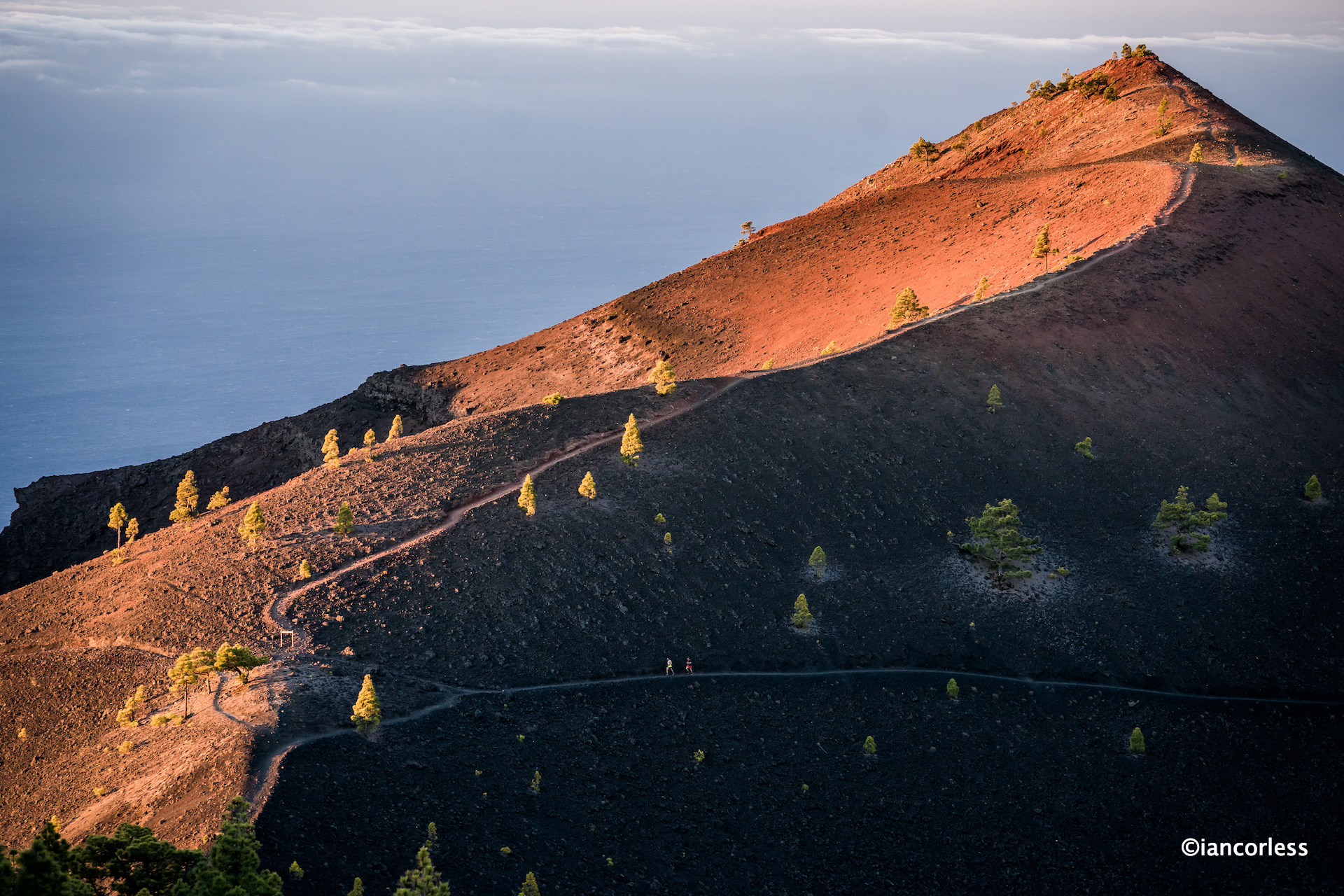
Early morning in the volcano section ©iancorless

Kilian Jornet, Luis Alberto Hernando, Marco De Gasperi, Max King, Dakota Jones, Anton Krupicka, Sebastian Chaigneau, Francois D’Haene, Anna Frost, Nikki Kimball and he worlds best runners assembled on the island to discuss the future of skyrunning and discuss the future of the sport.

They also participated in the 2012 event and the stage was set for it to become one of, if not THE events of the year.

2012, victory went to ‘young money,’ Dakota Jones with Andy Symonds and Kilian Jornet 2nd and 3rd. For the women, Anna Frost dominated ahead of Nuria Picas and Nikki Kimball.

2012 – Anton Krupicka, Mike Wolfe, Joe Grant, Geoff Roes and Dakota Jones

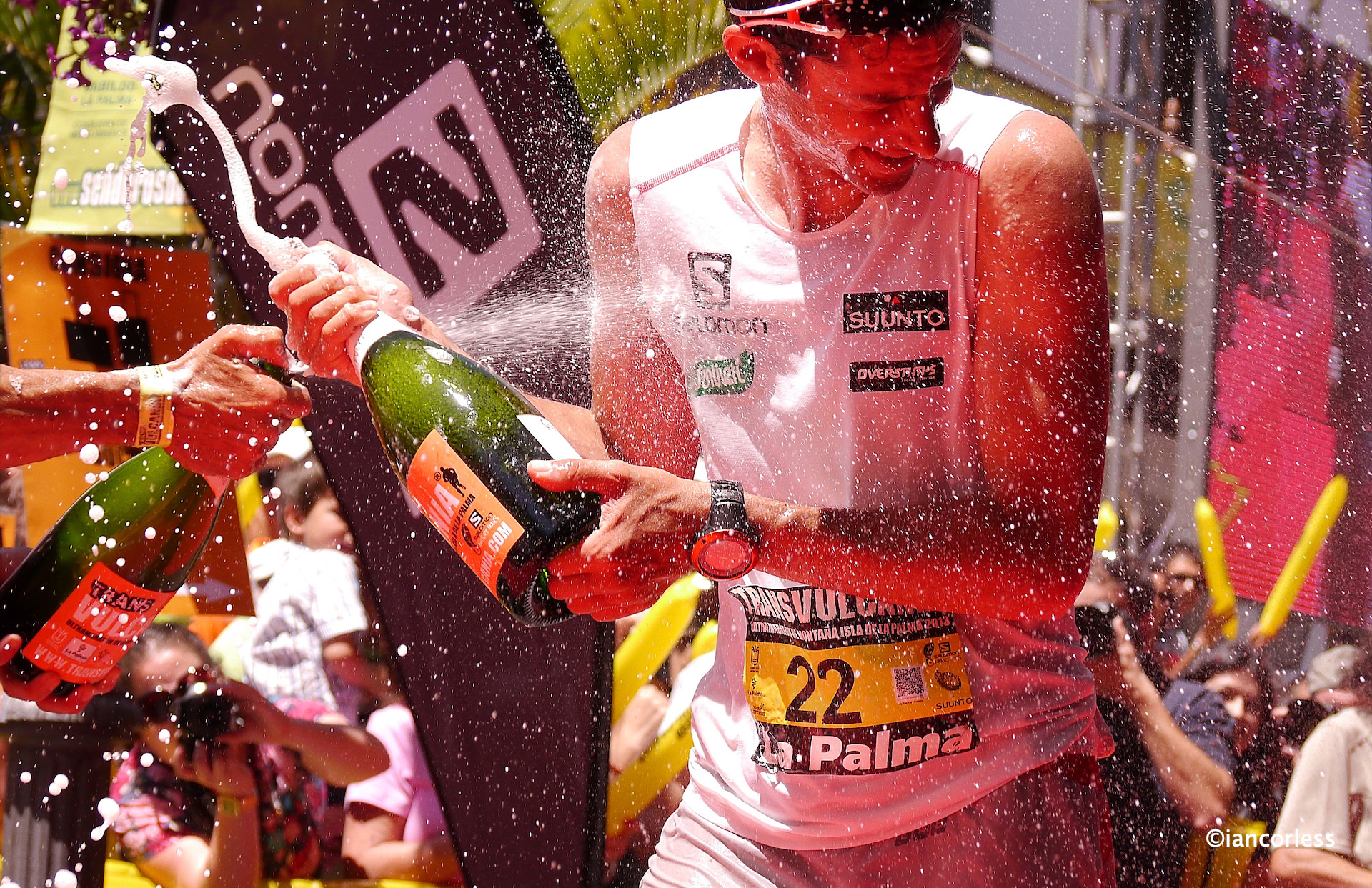
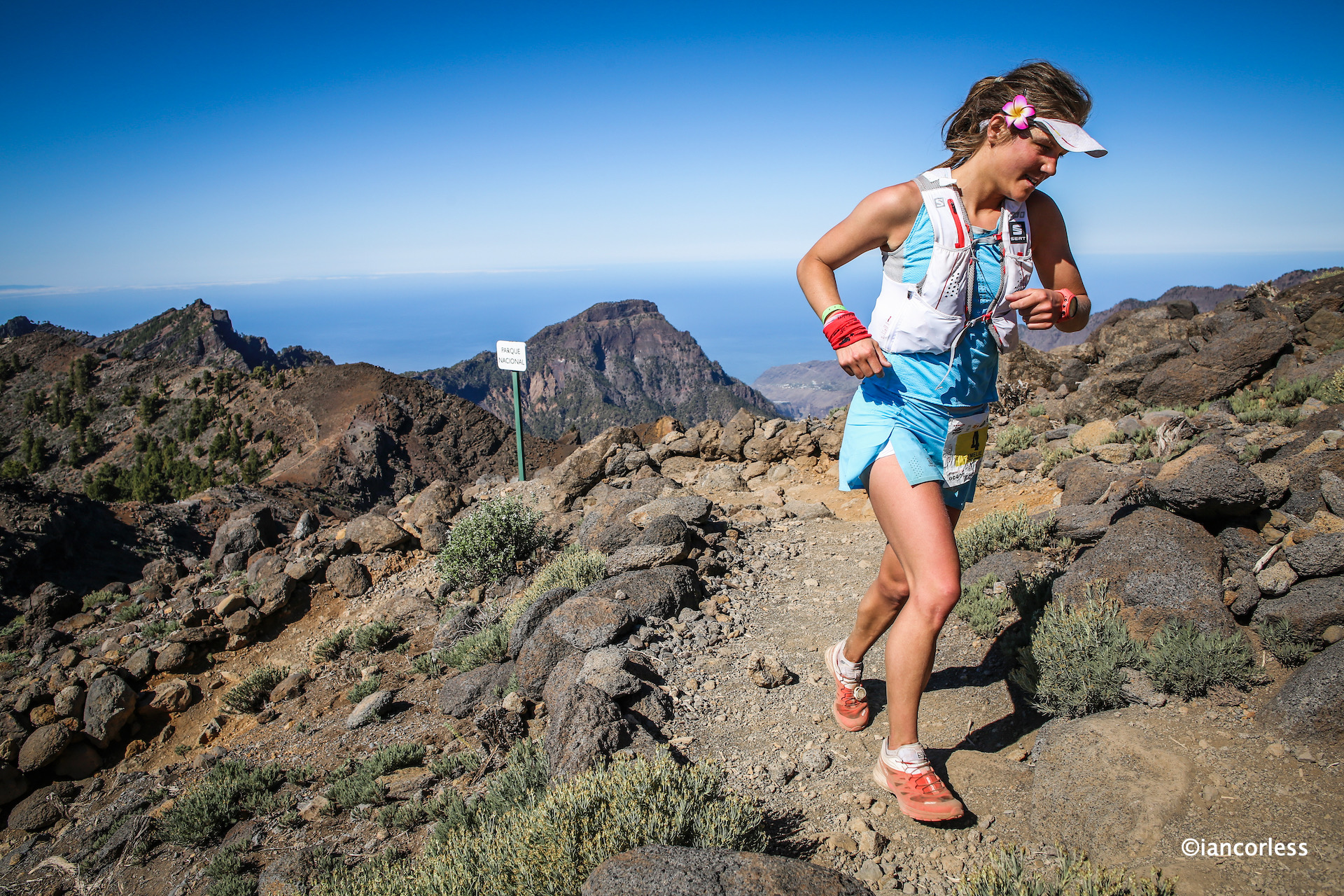
2013, Kilian Jornet, Luis Alberto Hernando and Sage Canaday made 1,2 and 3 and for the women, Emelie Forsberg burst on to the scene ahead of Nuria Picas and Uxue Fraile.

Kilian takes victory in 2013 ©iancorless

2014 Luis Alberto Hernando finally beat Kilian Jornet and once again, Sage Canaday placed 3rd. Frosty (Anna Frost) returned to the top of the podium, this time with a course record 08:10:41 ahead of Maite Maiora and Uxue Fraile.

2015, Luis Alberto Hernando did the double followed by Dani Garcia and Blake Hose. For perspective, the top-10 reads today, in 2023, as a who’s who of trail running: Dakota Jones, 4th, Zach Miller 5th, Dimitrios Theodorakakos 6th, Cristofer Clemente 7th, Pablo Villa 8th, Julien Coudert 9th and Aurélien Dunand-Pallaz 10th. Emelie Forsberg once again topped the women’s podium with Anna Comet and Myriam Guillot placing 2nd and 3rd.

Emelie Forsberg ©iancorless

2016 Luis Alberto Hernando, Nicolas Martin and Sage Canaday. Ida Nilsson, Anne-Lise Rousset and Ruth Croft.

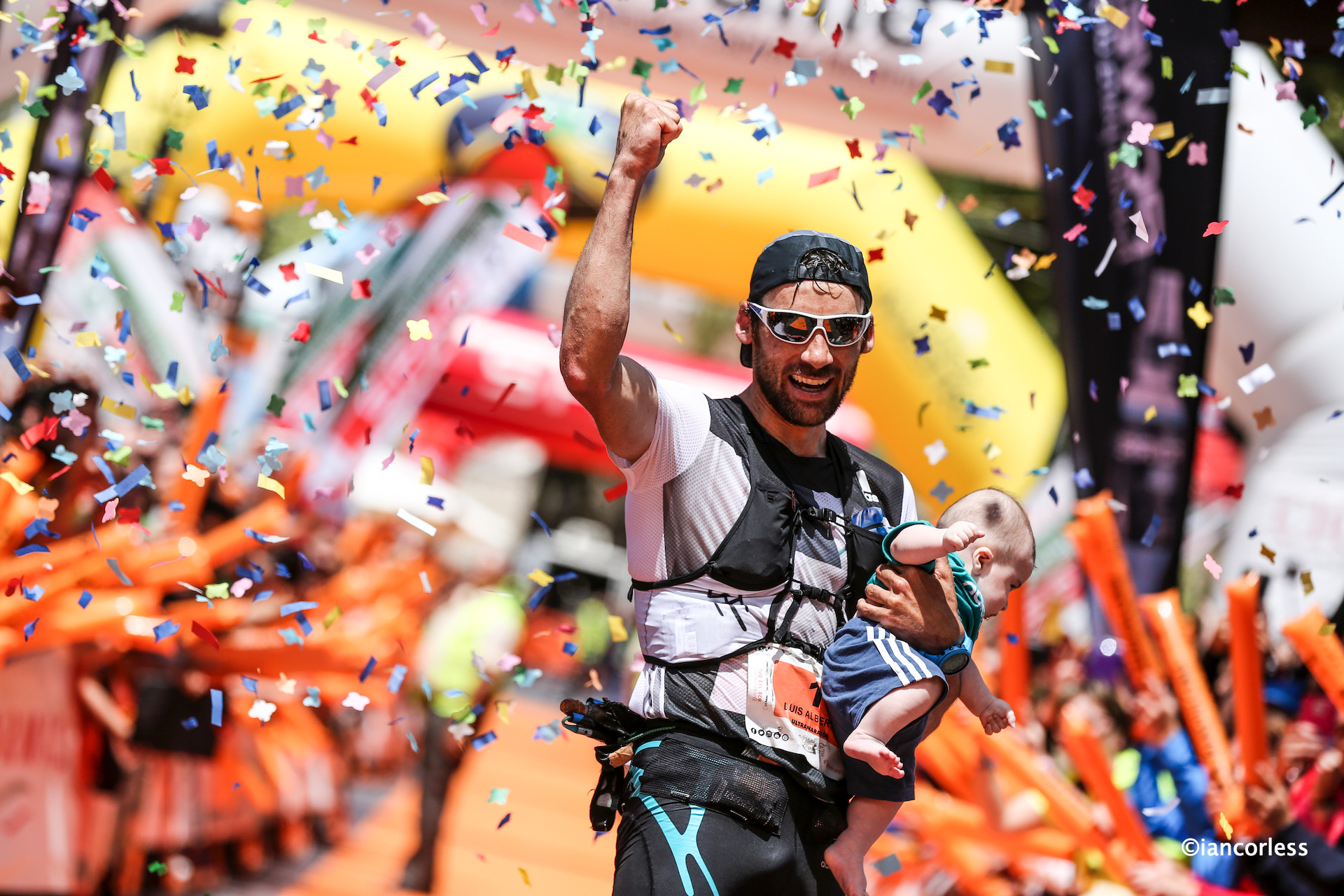
The boss, Luis Alberto Hernando ©iancorless

2017 Tim Freriks, Ludovic Pommeret and Zaid Ait Malek. Ida Nilsson, Anne Lise Rousset and Hillary Allen.

Tim Freriks ©iancorless

2018 Pere Aurell Bove, Dmitry Mityaev and Thibaud Garrivier. Ida Nilsson, Monica Comas and Kelly Wolf.

Ida Nilsson ©iancorless

2019 Thibaut Garrivier, Dmitry Mityaev and Petter Engdahl. Ragna Debats, Anne-Lise Rousset and Megan Kimmel.

Ragna Debats ©iancorless

2020 Coronavirus.

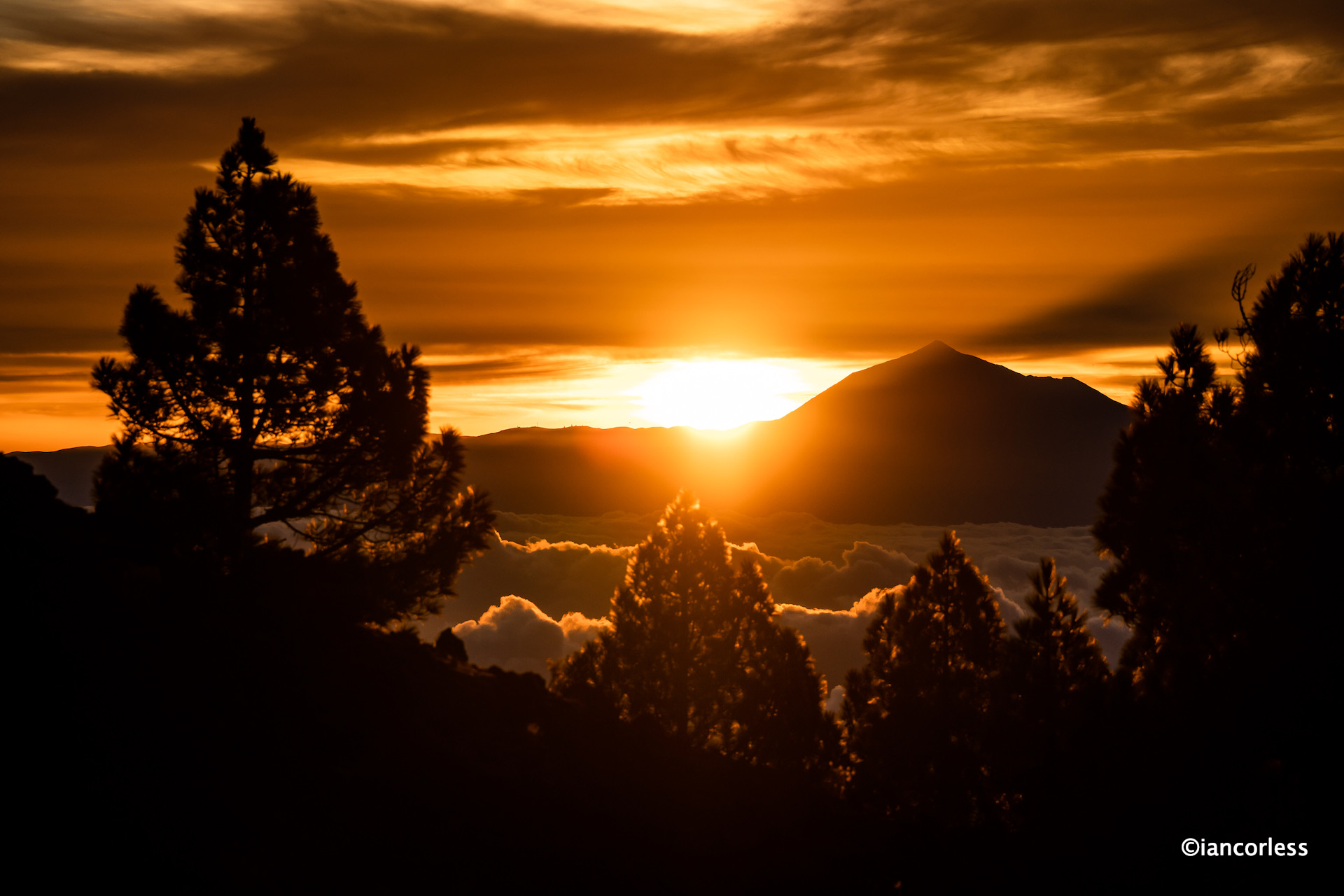
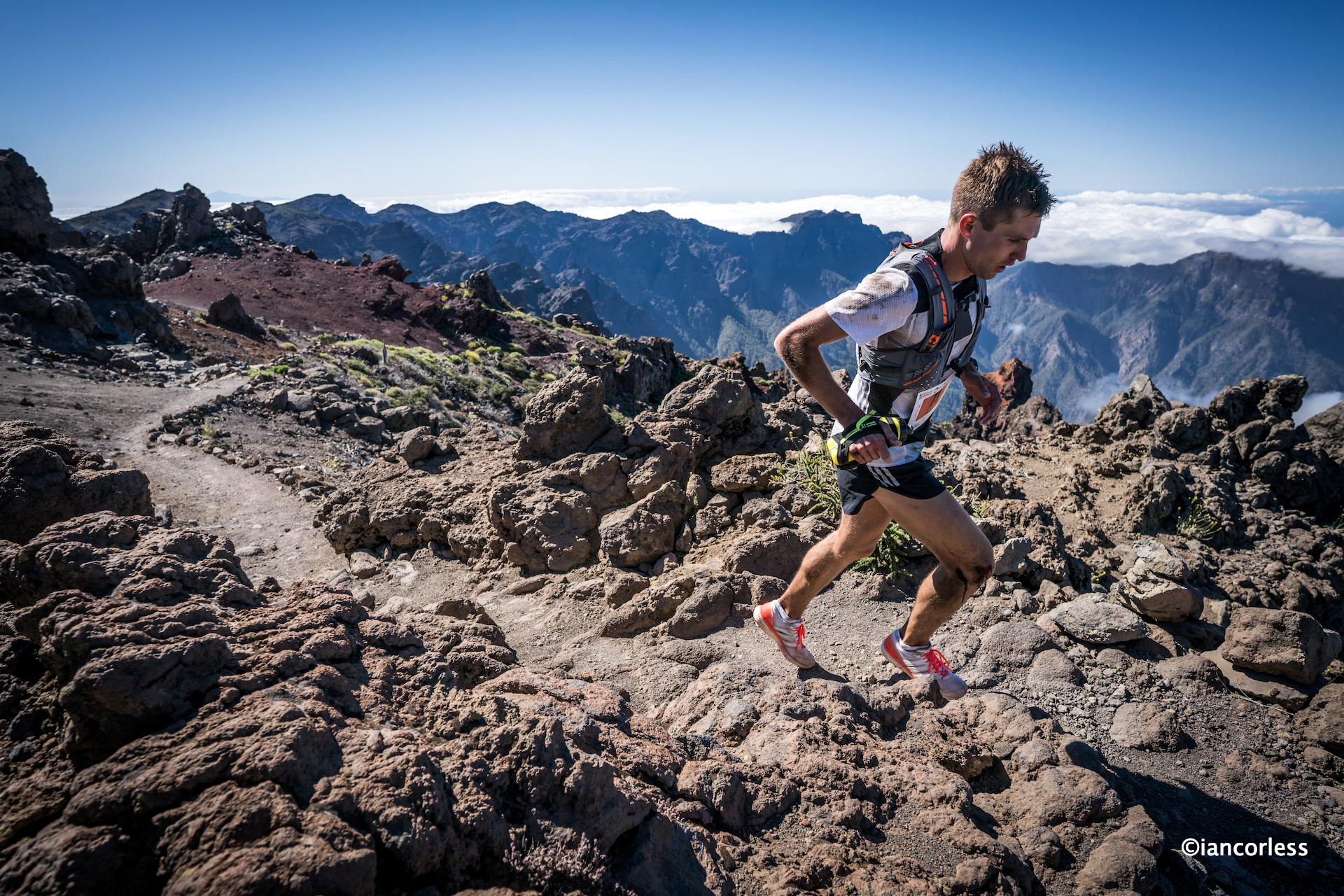
Quite simply, Transvulcania was the bomb.! The stunning route, the sea, to summit and back to sea route personified the essence of skyrunning and the views while running, mind-blowing. Few forget the sunrise in the volcano section on race day.

Unique and memorable ©iancorless

Having travelled all over this island many, many times and having known routes and trails like the back of my hand, the devastation post the volcano was hard to see. What had been familiar was no longer familiar. Houses gone, homes destroyed, and roads eradicated from the landscape. 

Sunrise in the volcano section ©iancorless

Emerging from difficult times, La Palma and it’s people needed a boost.

In February 2022, Transvulcania joined the ‘by UTMB’ and to many, the move did not make sense. The heritage and growth through skyrunning disappeared along with the website and the record of the races history. 

Celebrating its 12th edition, the first since 2019, Transvulcania hoped to return stronger than ever; a poignant edition following the troubles of the 2021 volcano. Petter Engdahl and Abby Hall were crowned champions.

Petter Engdahl ©iancorless

Jump to May 2023 and Dakota Jones and Martina Valmassoi were victorious.

Martina Valmassoi ©iancorless

Despite the razzamatazz, despite the buzz, despite the incredible finish line atmosphere, the event never matched the 2012 to 2019 heyday.

27th September 2023.

An official announcement is made and in the words of President Sergio Rodriguez, Transvulcania will aim to “recover its essence.”

In the mountain, ultra and trail world, the progression of ‘by UTMB’ has become overwhelming for many, at the time of writing, there are 39 events worldwide. The ‘by UTMB’ brand has shown growth in our sport, it has provided opportunities and incentives and has helped elevate trail running on a global level.

But…

For Transvulcania and the people of La Palma, a return to its roots has produced a cheer of acceptance. One quote stands out, “No one like us, the inhabitants of the island of La Palma, to decide how we want our competition for excellence to be,” 

It’s a clear statement that the growth and pressure of ‘by UTMB’ is not welcome in certain places.

Taken from a release on Transvulcania social media (translation by Google):

In this sense, the president of the First Corporation, Sergio Rodriguez, stresses that the project will be reconfigured “to regain its essence”. “We wanted a jewel like the Transvulcania to regain its splendor, to be palm trees again. That’s why we support public and local management, but with a global perspective. “No one like us, the inhabitants of the island of La Palma, to decide how we want our competition for excellence to be,” explains.

And it is that, Rodríguez understands, the Transvulcania, “from its early years, it was a revulsive for companies, and unfortunately in the latest editions it lost a lot of strength.” “We set ourselves as the goal of taking it to the highest level, although without giving up what made us feel like a symbol of our territory. “We pursue that in the streets, weeks before, a festive atmosphere is breathed again; that awakens enthusiasm between locals and foreigners,” adds the island leader.

And the comments are supportive:

Oliver Falcón

I’m very happy with this decision, I have performed the test before and after with the UTMB in the middle and there is no color, before it was a spectacle in every way: organization, treatment with the runner and palm trees as always generous and delivered. Congratulations on the decision made and the great career it is.

David Plasencia

Bring back that Transvulcania of yesteryear.. It will be a matter of returning to the beautiful island and its people. The real protagonists of this great race that fell in love and hooked everyone who ran it.. 2024, signed up to try and get that 6th Palmera ultraMarathon, for me.. the best in the whole world!!

ADrian Rubio Sanchez

Big hit to take the reigns of the race again and give back that Palmero touch that made/is impressive!!! We will come back again 

Fernando Gonz Vñas

I am very glad that it recovered its essence and is again the reference proof of the Canary Islands

“We pursue that in the streets, weeks before, a festive atmosphere is breathed again; that awakens enthusiasm between locals and foreigners,”

The stage is set for a new era.

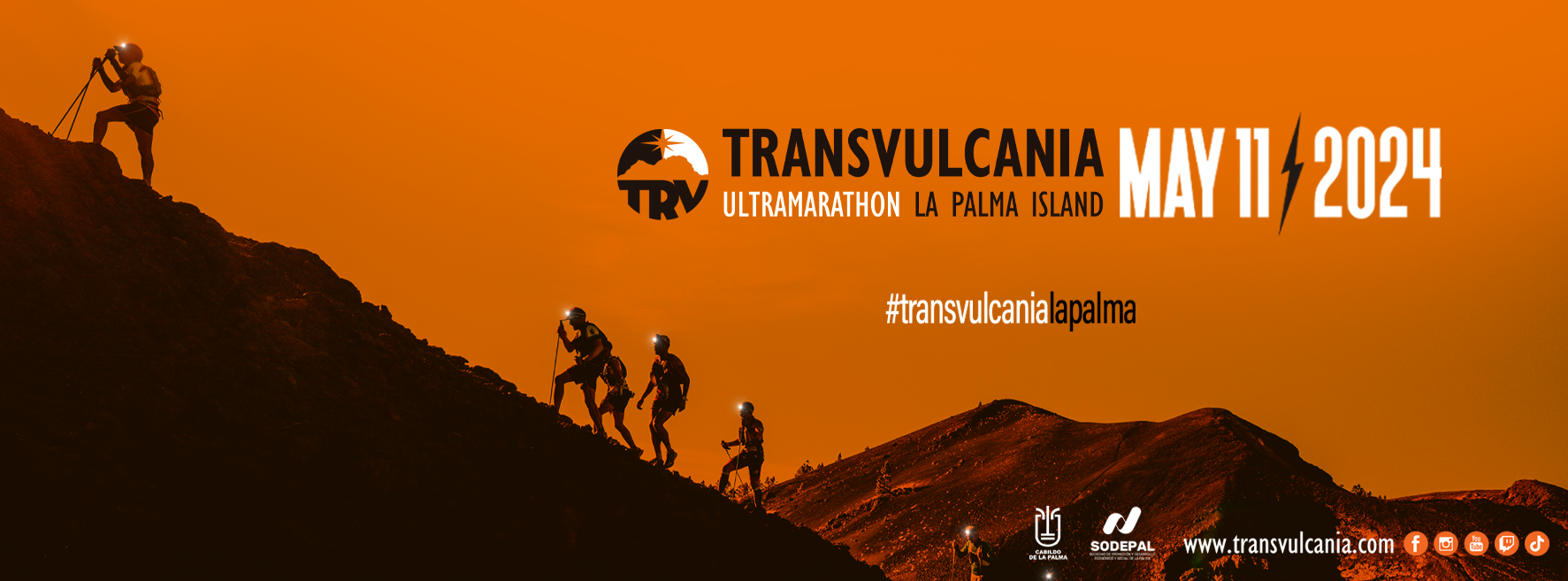
Mark your diaries, May 11th 2024. 

Transvulcania is back!

Follow on:

Instagram – @iancorlessphotography

Twitter – @talkultra

facebook.com/iancorlessphotography

Web – www.iancorless.com
Web – www.iancorlessphotography.com

Image sales –www.iancorless.photoshelter.com

The doping fire has been re-ignited.

Gonzalo Calisto at the 2016 TCC. It was later we found out he had tested positive for EPO at the 2015 UTMB.

Trail, mountain, and ultra-running is booming and it’s clear to see. Circuits have increased, prize money has increased, ‘pro’ runner numbers have increased, and it must be accepted, with the potential rewards both financially and egotistically, there will be some tempted to dope.

Mark Kangogo at Sierre-Zinal an example. And now, Esther Chesang!

Trail running, unlike athletics, be that on the road or track, is unpredictable; tough and varied, with ups and downs, rocks, scree, and technicality, it draws comparisons to mountaineering, not road running. It’s the experience, the doing, the completing that brings the rewards. Take a marathon, on the road you may be able to complete in say 3-hours… On trail, the same distance could take, 4,5, 6-hours or even longer for the same runner. Road running rules don’t apply, a trail runner’s needs are different, except maybe for the sense of fair play, truth, and integrity.

Well, times are a changing

Look at cycling, athletics, and other financially lucrative sports. Doping has been a problem. Trail has been relatively void of positive cases. Note, I say positive cases, not void of doping. It’s fair to assume that doping has happened, but it’s impossible to confirm at what levels. The 2015 case of Gonzalo Calisto testing positive for EPO at UTMB was the writing on the wall. I wrote at length about the case and issues.  Read HERE.

It was a call to awareness with the #cleansport tag being used on social media and many prominent trail runners backed up the call. It all got a little muddy with the blanket of the Quartz Program which effectively was/is as useful as a chocolate teapot.

Now, the iconic Sierre-Zinal has had to suffer and endure two positive tests for the respective male and female winners. Ridiculously, the female positive was announced January 2023! She was confirmed positive in May 2022 after a road marathon! Oh, my word, we have a long way to go.

Is now the time to act, before the sport we love heads in a southern direction? If left alone, we may not be able to turn the tide.

But how prevalent is doping in trail, mountain and ultra?

A research paper published August 2017 (HERE) stated that : ‘estimated prevalence of past-year doping was 43.6%’ (from one event) – from a survey of 2167 athletes at two sporting events. That’s an horrendous statistic. The conclusion, ‘doping appears remarkably widespread among elite athletes, and remains largely unchecked despite current biological testing.’ Now this wasn’t trail running, but, one has to maybe assume, the situation is worse than maybe we think…

Skyrunning in many ways paved the way with testing, admittedly not at all events due to cost. But at key events, World Championships for example, WADA tests were conducted. Here is a quote from 2014:

 “In compliance with the WADA protocol, 11 anti-doping tests were carried out across the three disciplines, which included two for EPO (Erythropoietin). The tests were based in part on arrival order and in part random which included several members of the podium in each discipline. All results were negative.”

UTMB incorporated testing in 2015 and look what happened, Gonzalo Calisto was caught.

Trail runners are effectively hippies. We are on the outside, a weird and wild bunch of adventure and adrenaline seekers who do not want to be confined by rules. This rings true for well over 90% of us, but for those at the top, the pinnacle, who are now becoming professional, this is a business. In any business, corruption can take a hold and doping steals rewards, glory, and recognition.

ITRA, IAAF, WMRA, USATF, Skyrunning and the list goes on. Is it time for trail, ultra and mountain running to be incorporated within one Global Federation where rules and regulations could be imposed? Until now, the answer has been no, the excuse being trail running would lose its freedom and spirit. Many are opposed that a ruling body should not only dictate rules but also profit from ‘our’ sport. Look at the current divisive arguments on the growth of the ‘by UTMB’ and Ironman merger, they only reflect and affirm these thoughts for some. 

Do we want in-competition and out-of-competition rules that includes comprehensive random drug testing?

Pro-runner or not, at the end of the day, I think it’s fair to say that you (we) got into the sport not for rewards, glory, and money but through heart. First and foremost, we had a need for nature, adventure, freedom, and open spaces, this was the motivator, not a podium and a cheque.

Of course, rules do already exist, ‘no doping’ is a rule for all sports, mandatory kit (for some races) is a requirement, and the list goes on. But the list in many cases is left to the RD, race organization and more importantly, budget. There is no one set of rules that should be adhered to worldwide and this can be part of the problem, which is why the IOC had the Lausanne Agreement.

Is it time for this to happen?

The fear of cheating, being ‘found out’ and the ongoing disgrace, public humiliation and shame may well have served as a deterrent in trail, until now.

The IAAF finally stepped in to suppress the ever-growing problems of doping with a set of rules to help control a rising problem. The IOC then took this one step further at the Olympics with one set of codes, rules and regulations that blended all anti-doping restrictions in one with the Lausanne Declaration. This was a pivotal moment and within one year, WADA (World Anti-Doping Association) was created.

WADA oversees testing of several hundred thousand athletic blood and urine samples annually: ‘…of which 1–2% test positive. Measures using the Athlete Biological Passport suggest a higher mean prevalence of about 14% positive tests. Biological testing, however, likely fails to detect many cutting-edge doping techniques, and thus the true prevalence of doping remains unknown.’ – August 2017

It was like the Lord of the Rings – One ring (rule) to rule them all.

Simple huh, WADA produce a list of banned substances. You, as an athlete, look at the banned list and DO NOT use anything that is listed.

Argh, but there is always a loophole. The wonderful TUE – Therapeutic Use Exemption. Amazing how many asthmatic runners are out there. Yes, WADA had to accept that some athletes have a legitimate medical condition that allows the use of a TUE.

The TUE has been used to gain an advantage, no question.

And what about NSAID’s? Read a report HERE about Parkrun. Running 5km is a long way from trail and ultra, but it shows a trend. Now WADA do not list these on the banned list, but, UTMB have gone one step ahead HERE.

Should we just relax? After all, if the winner of Sierre-Zinal takes drugs, it doesn’t really impact on me or you, the slow guy or gal who is out running for fun and adventure, does it?

Well yes, it impacts on the core and the ethos of the sport, the sense of fair play.

So here we are, 8-years on from Gonzalo Calisto at UTMB, a pivotal moment, and now we are once again fuelled by discussion of the two positive cases at Sierre-Zinal. Of course, there have been other positive cases in this interim period.

But the doping fire has been re-ignited.

Update, just hours after this post, Kilian Jornet posted THIS on IG.

There is much talk, opinion, and discussion, for me, it’s time to seize the momentum and move in to 2023 with some new impetus.

Follow on:

Instagram – @iancorlessphotography

Twitter – @talkultra

facebook.com/iancorlessphotography

Web – www.iancorless.com
Web – www.iancorlessphotography.com

Image sales –www.iancorless.photoshelter.com

Goal Setting for a MULTI-DAY Adventure or RACE

Before you start a multi-day, be that a race or a personal challenge, one thing is for sure, NOW is the time to set a goal and focus, fine-tune everything, including training, so that you can be at the start in the best shape possible.

First and foremost, have a complete understanding of the task ahead and set a goal or target. This is key not only in the physical adaptations that are required, but also the mental adaptations. There is a huge difference in doing something supported and in doing something self-sufficient. Marathon des Sables a prime example, understand the nature of the event and set a realistic but challenging goal.

MDS is an extreme event that takes place in the Sahara. The nature of the event is self-management both physically and mentally to endure the challenge, survive and reach the finish line. The weather (heat) is one of those challenges and surviving the weather is integral to the nature of the event. As is the ‘self-sufficient’ nature. Other than rationed water and a bivouac, be prepared to endure and complete this event with no outside assistance. Of course, help is at hand, but that help is and should be a safety element that is required in emergency. Equally, if undertaking a solo multi-day experience, do the research, plan routes, look at back-up options, can you re-supply with food, is water available?

Plan and prepare.

TRAINING

We are all unique and individual. Some of us are faster, some are mentally tough, some have a capacity to go for hours and hours and even days and yes, some runners combine all those elements.

Therefore, a multi-day training plan must be used as a template and framework to provide a structure for you, the individual, to achieve your goal.

Be sensible and adjust training plans so that they fit your ability, aspirations, training history and time available.

Think about when you place rest days, when you do long runs and when you work on hills and faster running. A training plan is like a jigsaw puzzle and managing the pieces and adding them together sensibly is how you make a successful and complete picture.

Any training plan is designed to progressively build strength, endurance, and confidence with gradual load increases. Rest is an important element of any training plan, so, rest with the same intensity that you train. Ultimately, you have decided to undertake this adventure, so, enjoy the process and make it fun.

Be specific. Make sure the training terrain, as much as possible, simulates your target event.

Always focus on the goal. Training plans for me start with the goal date and I then count back in time to a start point. That start point for you may well be before the 12-weeks but once you start the plan, focus on the target, and always make every session is as specific to the goal as possible.

For example, if participating in Marathon des Sables, you already know some key and important information:

  1. It will be hot.
  2. You will need to deal with hard and rocky plateaus, but you will also need to deal
    with soft sand and dunes.
  3. You will be on rationed food/ calories.
  4. You will only be supplied water to drink, and this is *rationed. In extreme weather such as the October 2021 edition, water rations were increased.
  5. Everything (not the tent) will be carried in a pack, on day 1 this will be at a minimum weight of *8kg. (*Minimum pack weight is 6.5kg but you must carry 1.5 liters of water which equates to 1.5kg.)
  6. You will sleep in an open tent, on the floor using a mat and sleeping bag.
  7. The long day comes on day 4 after approximately 90-100km of running, so, you
    need to be able to run for consecutive days and manage your pace and effort.
  8. The long day is (typically) between 70 and 90km and you have one full day, one night and most of the next day to complete it.
  9. After the ‘rest day’ is a marathon.
  10. You can complete the race by covering just 3km’s per hour.
  11. In 2019, the MDS was won by Rachid El Morabity and Ragna Debats in 18:31:24 and 22:33:36 respectively. The last runner was Ka Chun Chan from China in 69:29:16. For perspective, Rachid could have run the race nearly four times in 69:29! We are all individual.
     

Key elements each runner needs for a multi-day like MDS.

  1. You need to be mentally tough.
  2. Physically strong to endure multiple days of back-to-back exercise.
  3. Strong enough to carry a loaded pack and still move at a good pace.
  4. Adapted to function on restricted calories and food choices.
  5. Able to drink only water.
  6. Adapted to perform and function in heat.
  7. You need to be able to walk.
  8. You need to be able to handle un-planned situations.
  9. Have A, B and C goals.
  10. Be self-sufficient.

Multi-day racing and multi-day adventures are unique and particularly self-sufficient ones when you must carry all you need for the duration of the event. In a race, you will carry clothing, sleeping bag, sleeping mat, essential items and food for the duration of the event. At MDS minimum weight is 6.5kg plus water. Just as you prepare physically and mentally, also be meticulous with equipment and food preparation. You ideally need your pack to be 6.5kg and no more… Additional weight is additional stress.

If fastpacking, you may possibly be as above, but you will need to carry your own tent and you will need to re-supply with water en-route either using natural water supplies or utilizing retail outlets.

Be specific and understand the demands of the event you are undertaking and plan accordingly.
 

WHAT SHOULD A TRAINING PLAN LOOK LIKE?

All plans need to be progressive and geared towards the end goal of a multi-day like Marathon des Sables or a fast-packing adventure.

Remember, we are all individual, so while a generic plan may provide a guide and structure from which to work from, it’s important to adapt and tweak to individual needs. For example, the training plan for someone who is trying to be top 100 at a race will vary greatly to someone who hopes to complete and not compete.

Each week will typically have one or two rest days.

A simple strength training structure that can be done at home or in a gym.

Hill sessions and speed sessions (tempo/ intervals/ fartlek) have a place in any training plan, but the quantity and duration will depend on what type of runner you are and what your aspirations are.

Long sessions are essential and most certainly, an element of back-to-back sessions will help adapt the mind and body for the challenge ahead. However, injury risk goes up with any block like this, so, it needs to be placed carefully with adequate rest and recovery.

Learn to walk. There is a huge difference walking with purpose and pace to ‘just’ walking. Except for the top runners, walking is an integral element to a successful completion of a multi-day race or adventure. Many only realise during the event. Get walking dialed in training.

Do some specific work with a pack and weight BUT be careful as it is easy to get injured.

Think of training as blocks of 4-weeks, build for 3-weeks and then rest/ take it easier on the 4th. An example could be as below.

The final phase of a training plan should taper to allow you to be strong and fresh when the start comes, typically this 2 or 3-weeks long. This a perfect time to add specific race adaptations such as heat training, preparing for humidity, preparing for a cold environment and of course fine-tuning equipment and packing.

CONCLUSION

Multi-day running or racing is exciting and adds many more elements to think about than ‘just’ running. Taking time to plan training and working to a goal is a worthwhile and constructive – it gives you something to aim for!

Further reading:

  • MDS 2021 Summary HERE
    The Ultimate Guide to Desert Multi-Day HERE
  • Fuelling for a Multi-Day HERE
  • How to find your Running Shoe size and fit HERE
  • Sleeping Bag for an Adventure HERE
    Ten Top Tips for Multi-Day HERE
  • Top Tips to better Multi-Day Running HERE
  • Multi-Day Running in a Rainforest HERE
  • Fastpacking – A Guide HERE
  • Fastpacking Light – HERE
  • Fastpacking and Camping in Winter HERE
  • Fastpacking in Nepal HERE
  • Poles for Running and Walking HERE
  • Sleeping bags – PHD, Sea to Summit and Rab HERE


Recommended Races:

  • Marathon des Sables, Morocco (self-sufficient)
  • The Coastal Challenge, Costa Rica (supported)
  • Everest Trail Race, Nepal (semi self-sufficient)

JOIN OUR MULTI-DAY TRAINING CAMP IN JANUARY – INFO HERE

Follow on:

Instagram – @iancorlessphotography

Twitter – @talkultra

facebook.com/iancorlessphotography

Web – www.iancorless.com
Web – www.iancorlessphotography.com

Image sales –www.iancorless.photoshelter.com

Scarpa Golden Gate Kima RT – Shoe Review

©iancorless

Ask any experienced mountain or skyrunner, what is the ‘best’ race and route, more often than not, the answer will be ‘Kima!’

Trofeo Kima in Italy has long been the dream of many a runner who loves a challenge at the max level. Taking place every other year, the race really gained notoriety when UTMB was hit by bad weather and a certain Kilian Jornet decided to take a fast exit out of France and stand on the start line of Kima the next day.

History was made, Kilian has returned again and again and, in his words, it is one of ‘the’ best races in the world that mixes running and alpinism – skyrunning!

Therefore, any shoe that is named after this iconic route had better be good!

Enter, the Scarpa Golden Gate Kima RT.

©iancorless

Let me just say, from the start, this may well be ‘one of’ the best mountain running shoes I have ever tried. I place it up there with the best that VJ Sport offers in terms of fit, comfort and grip. Trust me, if you read my shoe reviews, you know I regard VJ as the Holy Grail when it comes to perfect shoes. It also matches the best from La Sportiva.

©iancorless

Scarpa in recent years have gone from strength to strength with shoes and design. A huge contributing factor was the arrival of legendary WMRA and skyrunning champion, Marco de Gasperi. Marco was there on the slopes of Alagna, aged just 16 when skyrunning was born. There are few that know the sport better!

And as for the Trofeo Kima route, he has raced it and in recent years set the FKT (7:53:41) for the completion of the course.

“…mountain lovers who face this technical and very hard route take three days, sleeping two nights in the refuges: a journey that is completed by dancing from rock to rock along with eight alpine passes above 2,500 meters (Barbacan, Camerozzo, Qualido, Averta, Torrone, Cameraccio, Bocchetta Roma and Corni Bruciati) before jumping headlong towards the finish line.”

All of the above can be felt in this remarkable shoe.

I could stop here and just say, go buy them! But at £190.00 a pair, you may take a little more convincing.

The Shoe

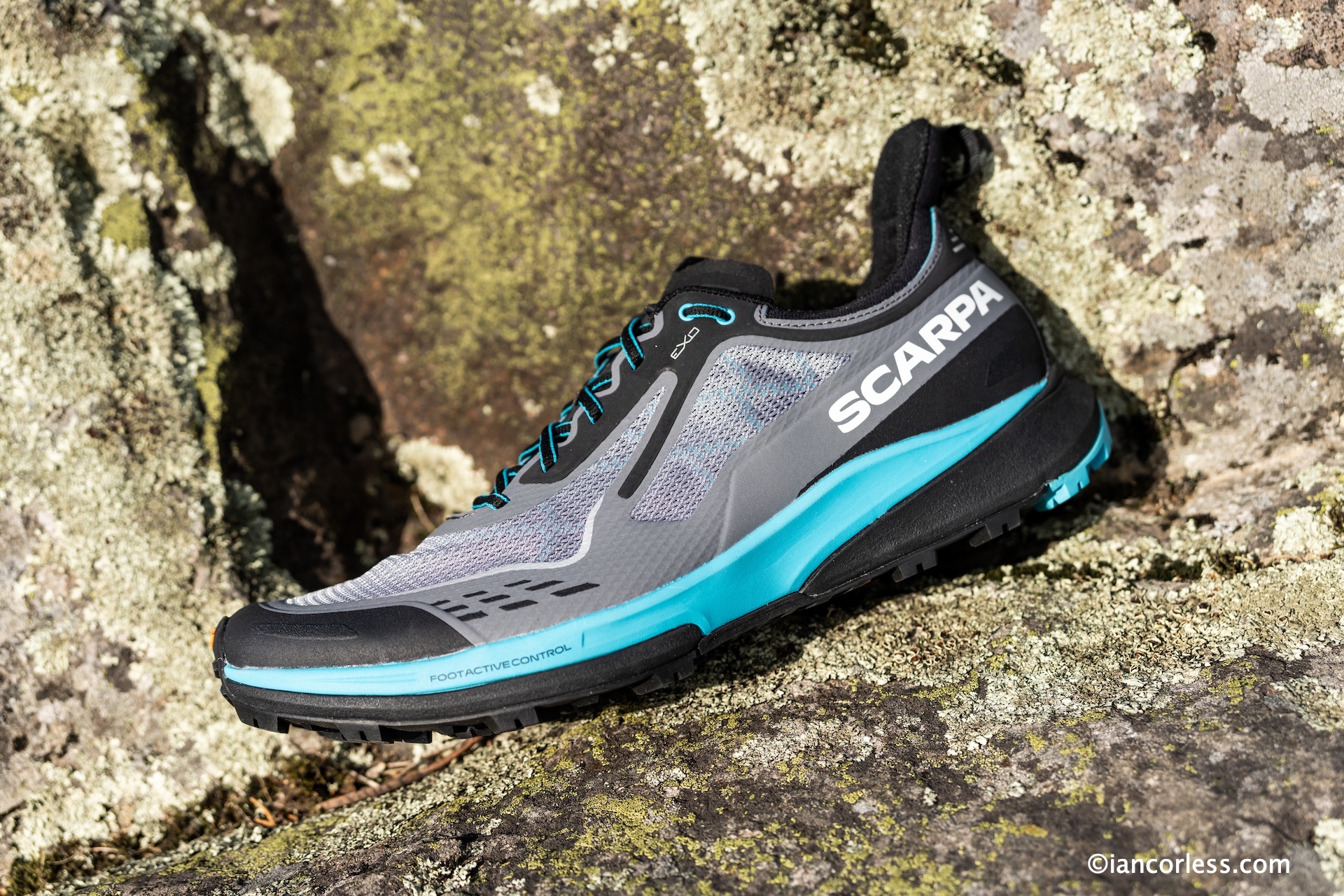
Out of the box, a great looking shoe, a mix of black/blue/grey which Scarpa list as Grey-Azure. The women’s version is light grey/ aruba blue here. They are light, especially for such a robust looking shoe. Noticeable is the toe bumper, the cushioning/ outsole and the high heel area that is designed to protect and support the achilles.

©iancorless

With a 6mm drop, they fit that wonderful middle ground between a 4 and 8mm that will suit most people.

©iancorless

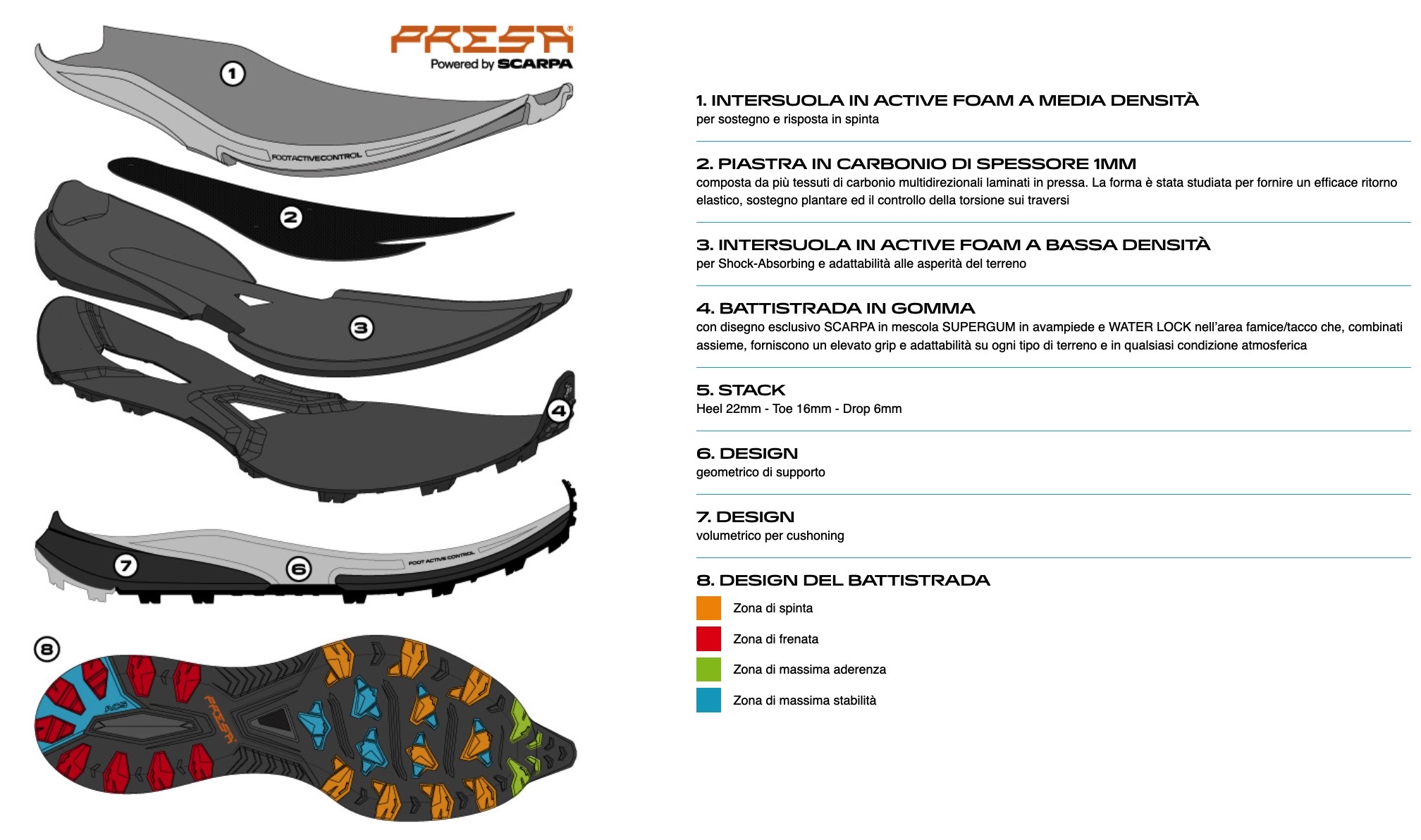
Cushioning is 22mm at the rear, 16mm (women’s 21mm/ 15mm) at the front and the addition of an enclosed carbon plate only makes the 290g (UK8) weight even more unbelievable.

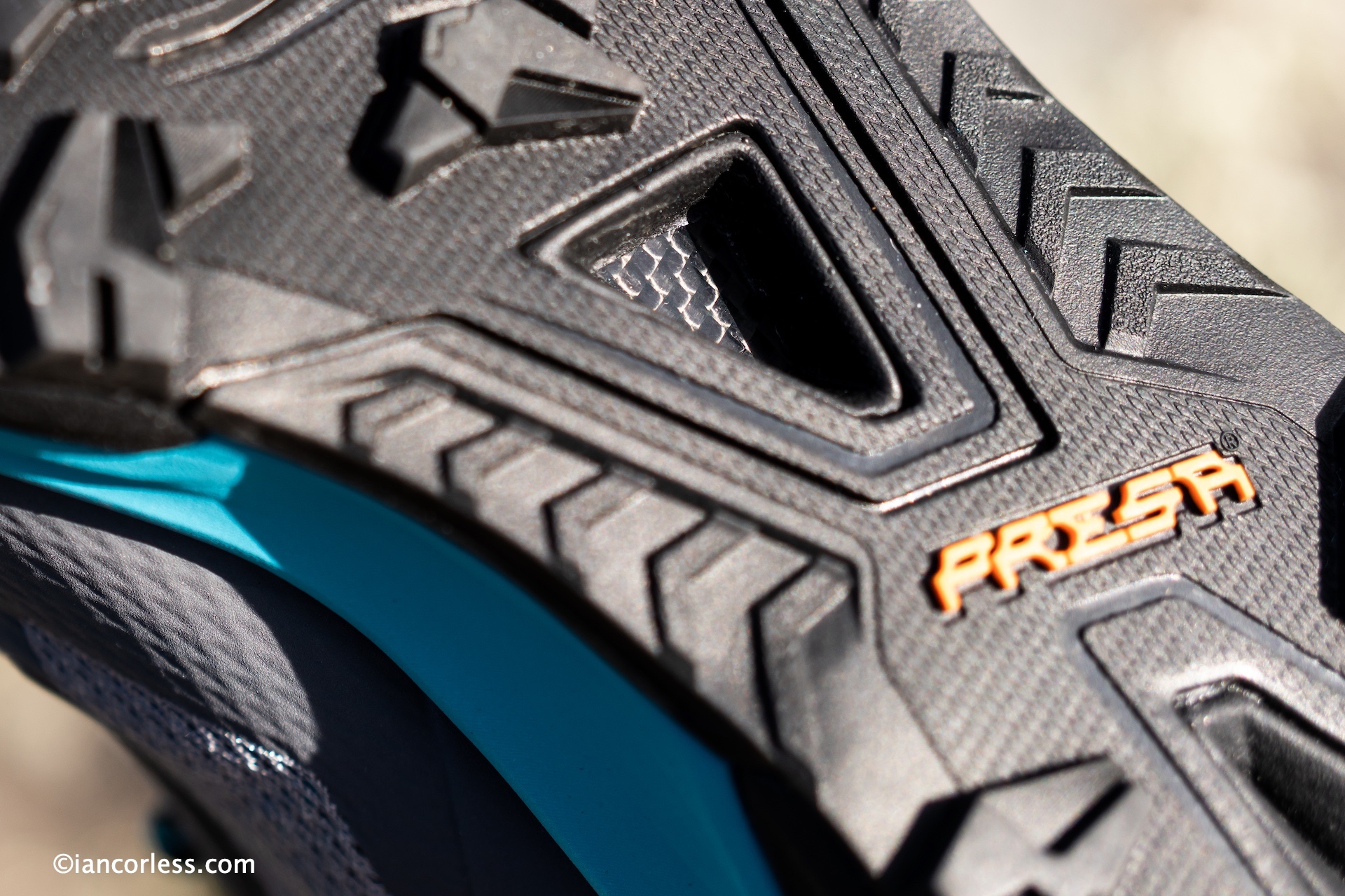
Carbon plate visible in the middle.

When I saw the carbon plate, I flinched a little. My experience so far with carbon plates in trail shoes has not been good – often it has added weight and made for a lifeless feel with little or no flex. Not here in the Golden Gate Kima, on the contrary, I was not aware of the plate until I ran and then two key things were noticeable: 1. There is a return in energy and comfort, particularly on hard, technical trail/ rock. 2. The plate act as a rock-plate offering increased protection. Quite simply, this is the best shoe I have tried with a plate and in all honesty, I am putting it out there now and saying that the Golden Gate Kima is arguably the best mountain shoe I have ever used… A bold statement!

©iancorless

There are so many aspects to this shoe that are so right, that the moment you slip them on, you smile. The fit is just amazing. It has a ‘sock-like’ internal construction which when laced up just holds the foot secure, reassured and comfortable. Everything I want in a mountain shoe. Amazingly, even when laced tight, they manage to avoid hot spots or pressure points.

©iancorless

The heel area is superbly padded and goes high offering the ultimate comfort and protection – a level I have not experienced before in any shoe.

©iancorless
©iancorless

At the front, the shoe opens up in to a wide toe box, which on a scale of 1-5 (1 being narrow) sits at a 4. This is quite unusual for a shoe that is so obviously designed for technical and challenging running. But it works. There is room for those with wider feet and for those with narrower feet, you get toe splay. Normally this would not work for me in a mountain shoe, I like my foot to feel held, secure and un-moveable, this only confirms how good the middle of the shoe is and how the lacing and sock-like fit gives you all the security you need.

©iancorless

The upper has a double construction with structure coming from microfibre and anti-abrasion mesh which adds durability but still allows for breathability.

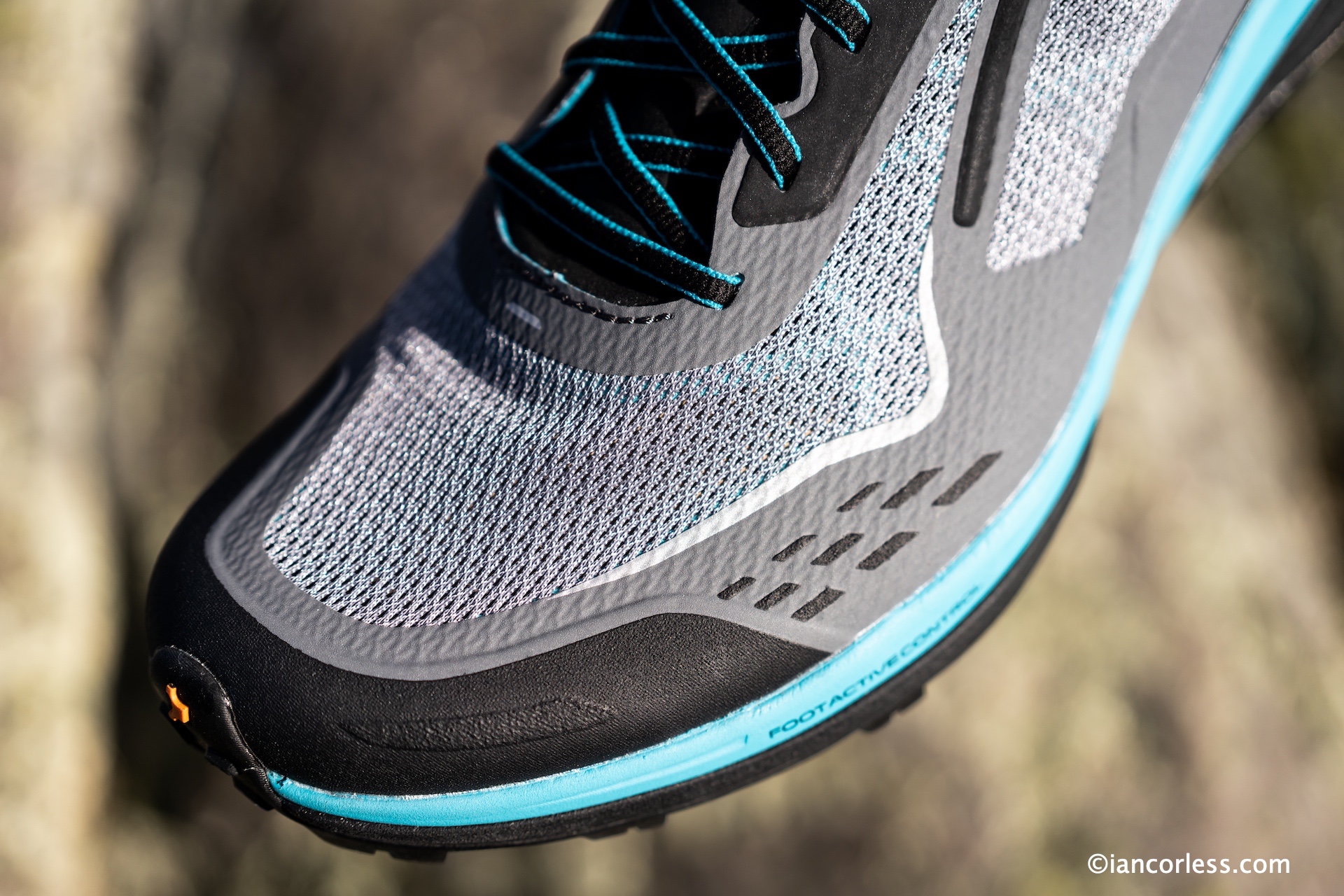
Toe box is superb with arguably one of the most protected front ends I have found in a run shoe.

©iancorless

The outsole is Scarpa’s own Presa which I must be honest and say in past Scarpa shoes has left me perplexed. Not here in the Golden Gate Kima. There has been a significant re-working and the ‘SuperGum’ 4mm lugs are a dream on rock offering stunning grip. However, on wet UK Lakeland rock they were less secure.

©iancorless

Cushioning is unusual. They are neither cushioned or firm but sit somewhere beautifully in the middle offering a superb feel for the ground without being harsh. The cushioning allows for comfort but without being squidgy. The combination of elements, which has double density foam wrapped around a 1mm carbon fiber plate gives an amazingly precise, lightweight, cushioned and reassured ride that adds energy to the run. I don’t know how Scarpa have managed it, but they have! This shoe has ground feel, precision, comfort and energy rebound in a package that feels light and fast. Flex behind the metatarsals is superb, so, the propulsive phase is not compromised. It’s difficult to believe a plate is in the midsole, but it is, you can see it.

©iancorless
©iancorless

In Use

Women’s shoe with 100’s of KM’s and the 65km Transgrancanaria race in them.

It’s one of the best mountain/ skyrunning shoes I have used. The Golden Gate Kima goes head-to-head with VJ Sports XTRM and MAXx and dare I say it, equals them! The VJ’s are the go-to choice for many based on the stunning outsole and superb foot hold. However, many say that VJ are too narrow and are not cushioned/ protective enough. The Golden Gate Kima addresses all those issues and summary provides:

  1. Cushioned comfort without a loss for ground feel or control.
  2. Incredible foot hold with a superb sock-like fit and lacing.
  3. Superb heel protection.
  4. Wider toe box.
  5. Caron plate which adds protection and rebound without compromising ground feel and control.
  6. Lightweight.
©iancorless

I could go on about how great these shoes are. Out of the box and straight in to a 25km run and I was smiling and a little amazed at how Scarpa have upped their game in the shoe world. There was much talk about the Ribelle Run but for me, this Golden Gate Kima places Scarpa at a whole new level.

Hard trail, rock and even some road, the shoes just perform. The compromises coming on muddy ground, the outsole lugs are not long enough and some types of wet rock. This is a mountain shoe designed for hard trail and rocks, be that wet or dry and they perform.

©iancorless

Comfort is superb, energy return excellent and importantly precision and control is top-notch. It’s a shoe that can eat time and miles and most certainly, 6-hours in a shoe like this would not be a problem. Of course, this is personal. If you like Hoka-like squidge, bounce, roll and lack of control, this is not a shoe for you. How long could you run in them? It’s so personal it is hard to say, for me a good mountain day out maxing at 12-hours would be a limit.

Although neutral, there does feel to be a little additional support in the arch of the foot. It is noticeable, but not unpleasant. This is no doubt due to the combination of sock-like fit, dual cushioning and carbon plate.

Conclusion

©iancorless

Buy them! It’s as simple as that… If you are heading to the mountains, running technical trails and want a combination of superb features all wrapped up in a lightweight good-looking shoe, you can’t go wrong with the Golden Gate Kima RT.

I have found it difficult to find fault in the shoe. For some, maybe the cushioning is not enough? But remember, the balance between ground feel, control, precision, and comfort is delicate – these are the best out there that I have found along with VJ. In prolonged runs I got some toe rubbing (2nd toe from the right) on my right foot (only the right) – It is where the toe bumper stops and the upper mesh starts. It may be unique to me, my foot shape etc, but worth noting.

The name ‘Golden Gate’ I find confusing. Scarpa make a shoe called Golden Gate ATR which is highly cushioned and a world away from this Kima RT model. The Golden Gate reference initially made me think it was a development of the ATR model.

It looks as though sizing is whole sizes, EU 40, 41, 42 and so on. This may make a compromise for some. I use EU 44 and they were perfect, true to size for me.

At £190.00 they are not cheap, blame Brexit! Much cheaper in Europe. However, based on how darn good they are, for me, they are worth it.

As always, there are other shoes that offer options and VJ with XTRM or MAXx are definite rivals which maybe get the nod due to the outsole. Also, La Sportiva Akasha are a more robust and cushioned shoe and if I was going longer, wanted more security and more long-term comfort, they would win out. The Goldengate Kima RT is without doubt a shoe that will regularly appear in my shoe rotation.

©iancorless

Follow on:

Instagram – @iancorlessphotography

Twitter – @talkultra

facebook.com/iancorlessphotography

Web – www.iancorless.com
Web – www.iancorlessphotography.com

Image sales –www.iancorless.photoshelter.com

Scarpa Ribelle Run Shoe Review

Ribelle Run GTX
Ribelle Run (not GTX)
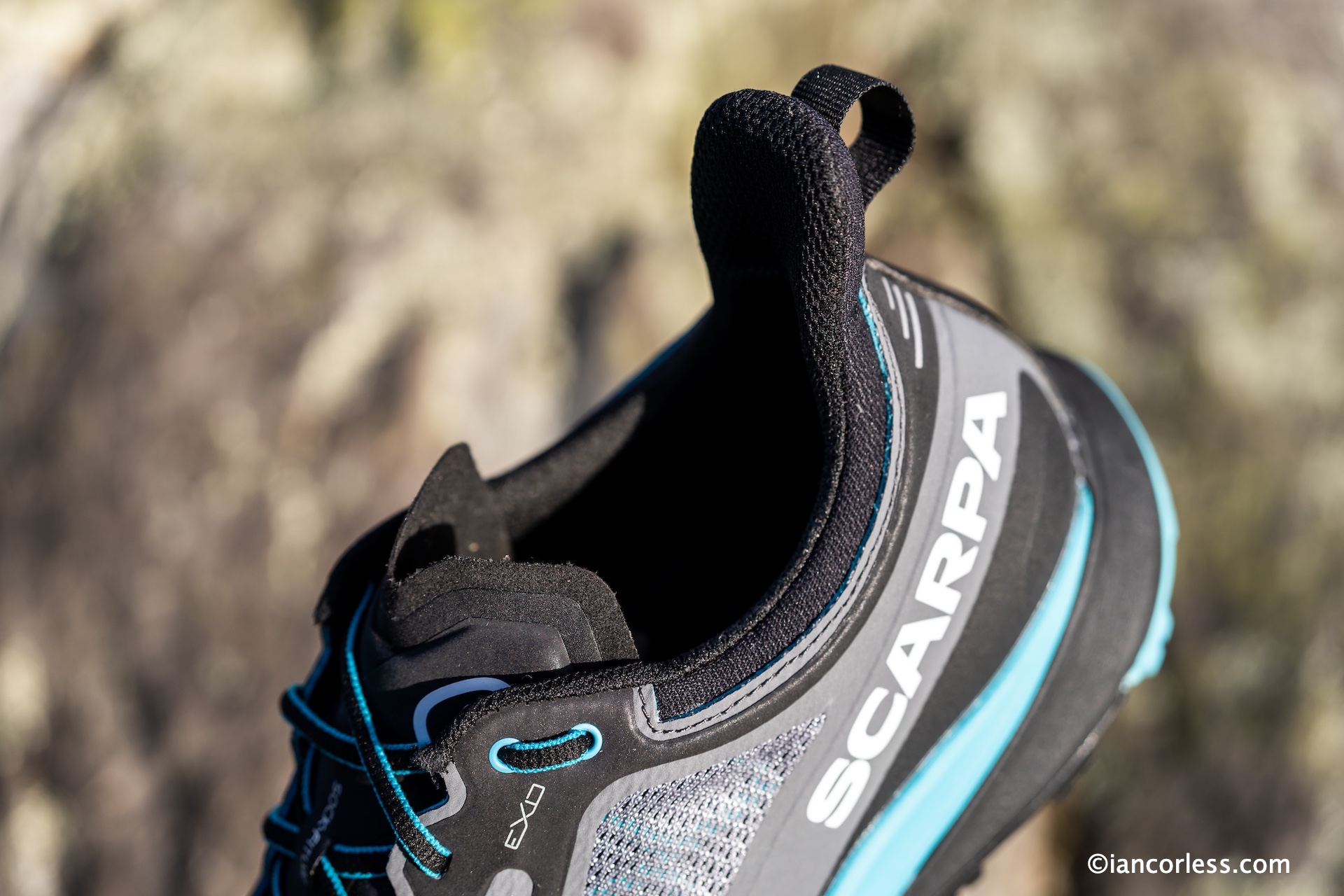
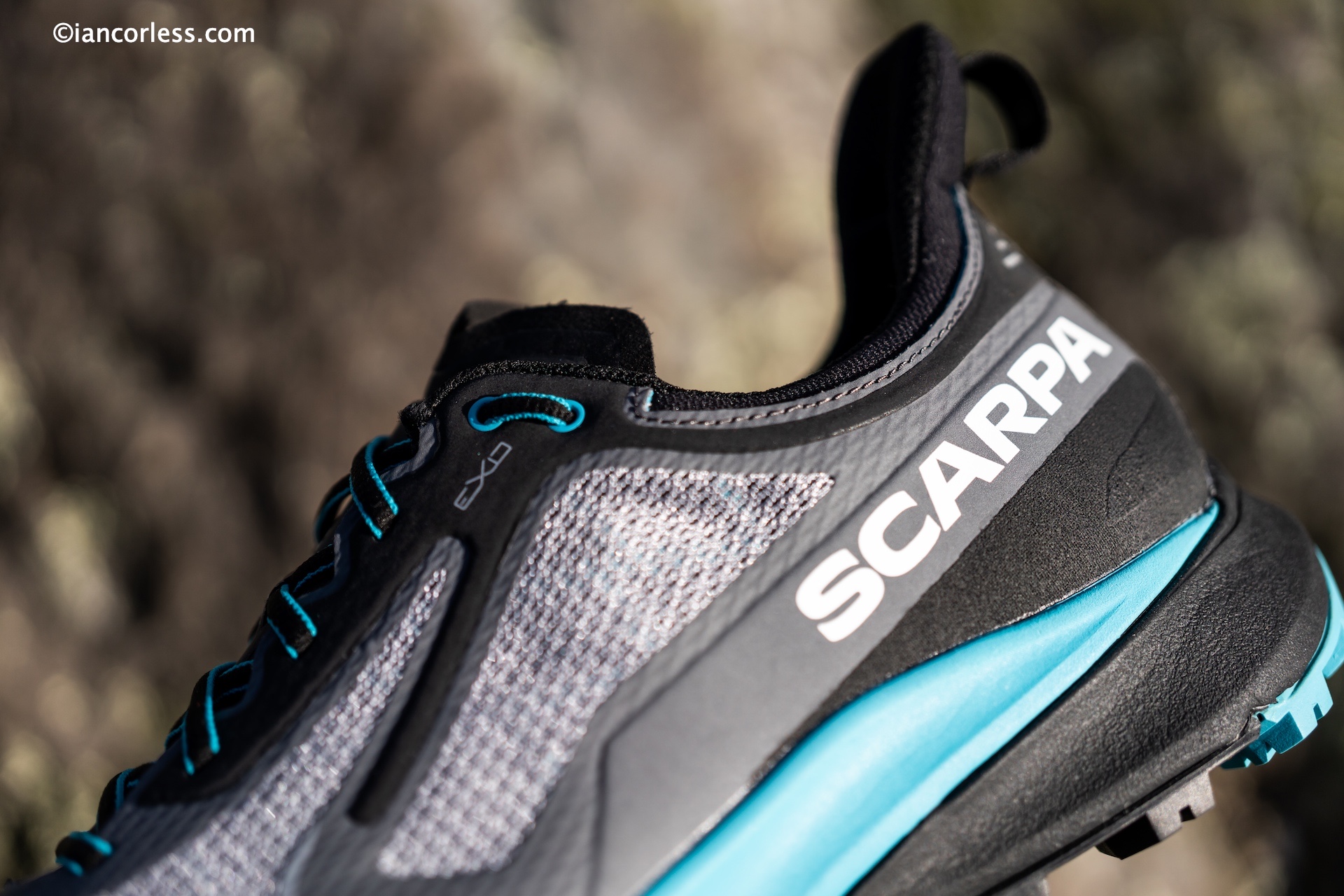
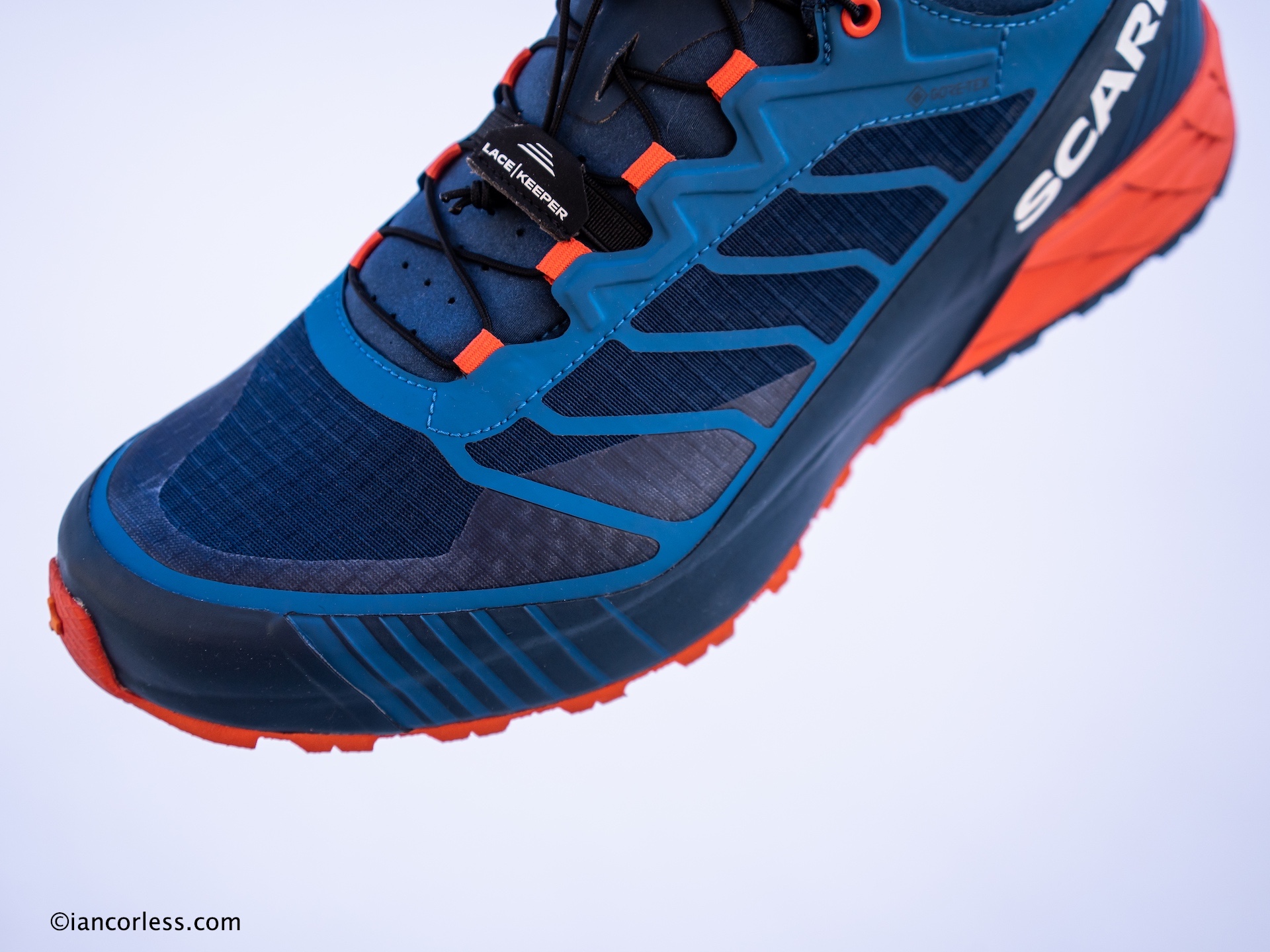
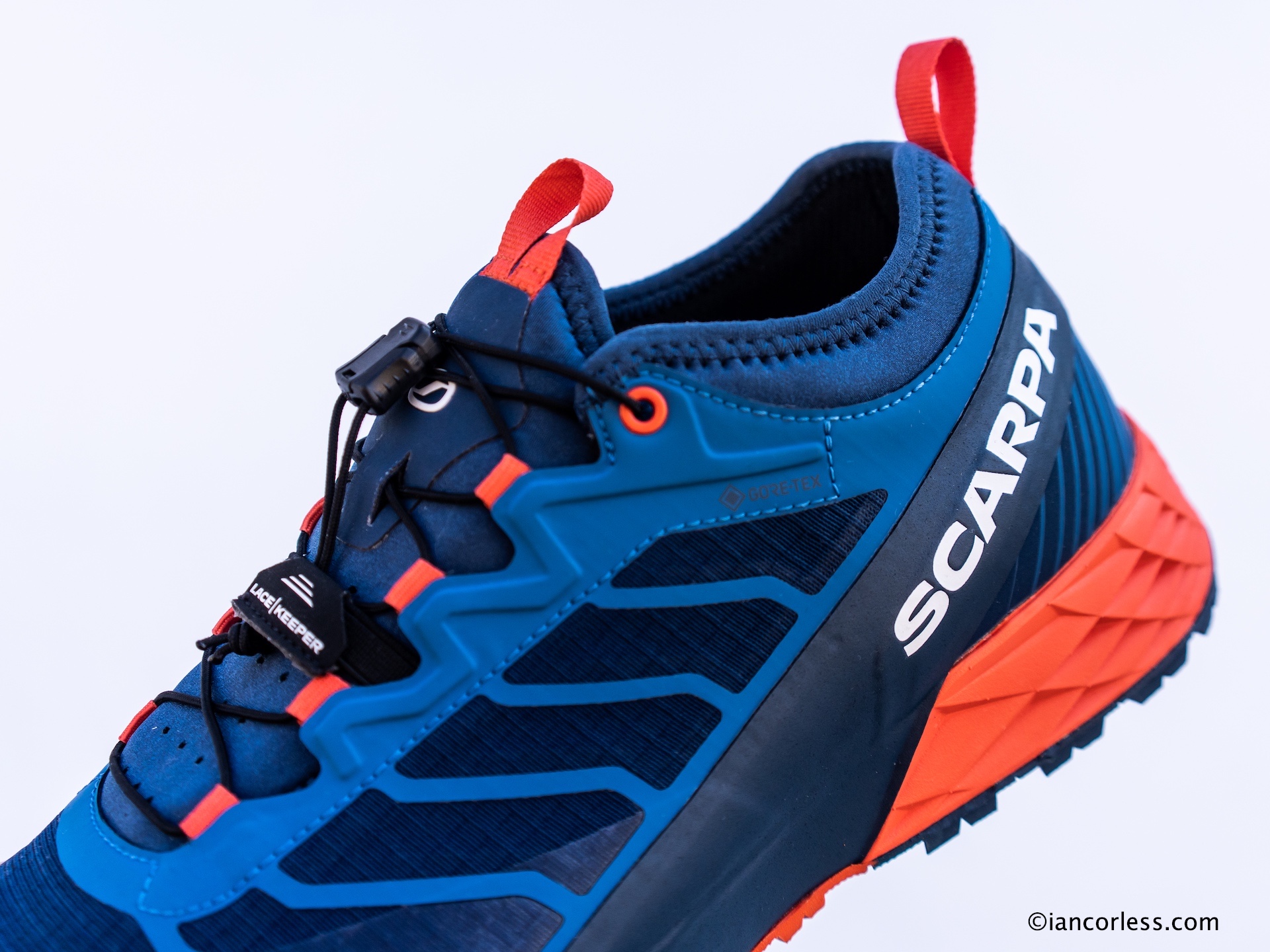
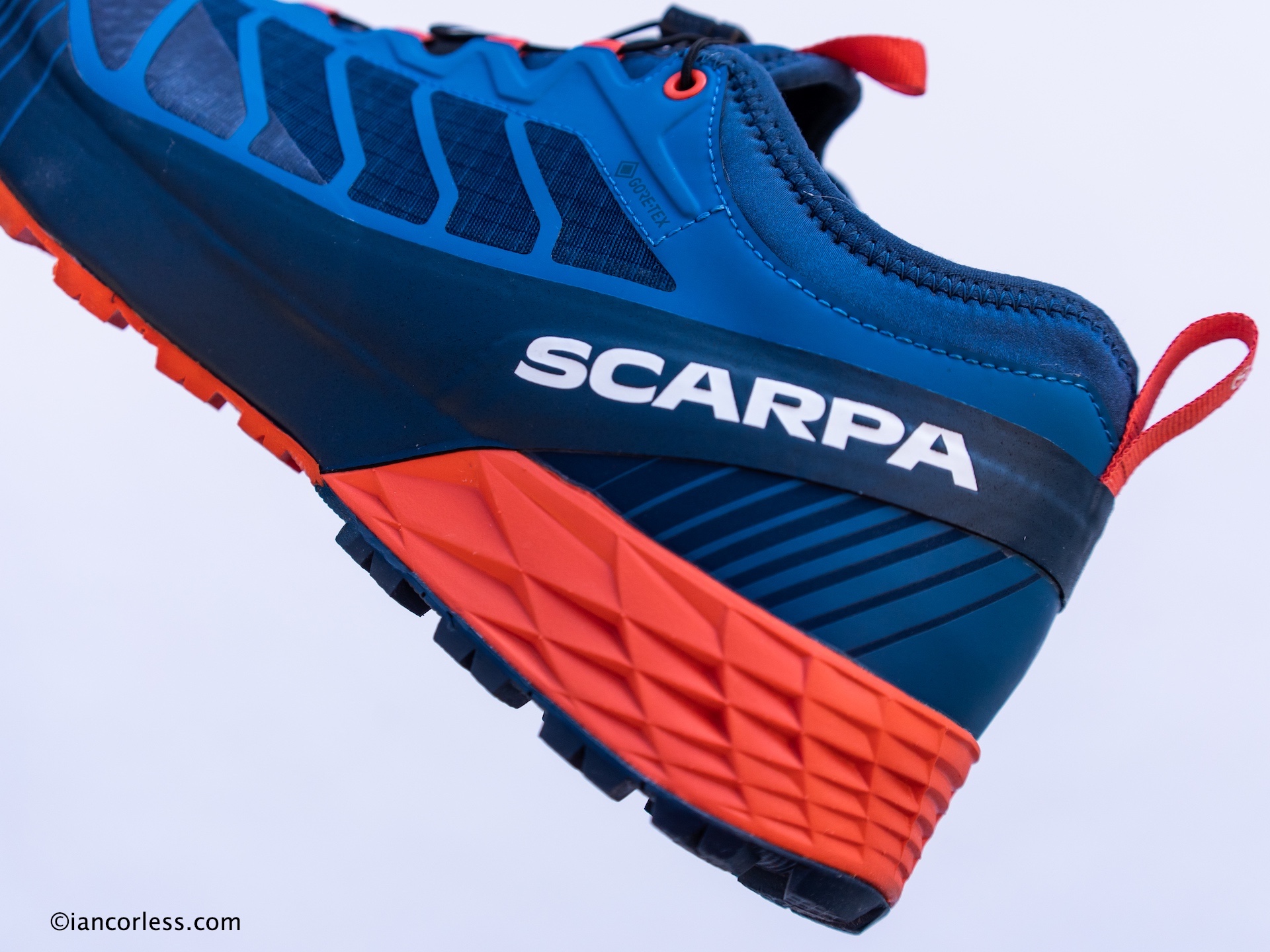
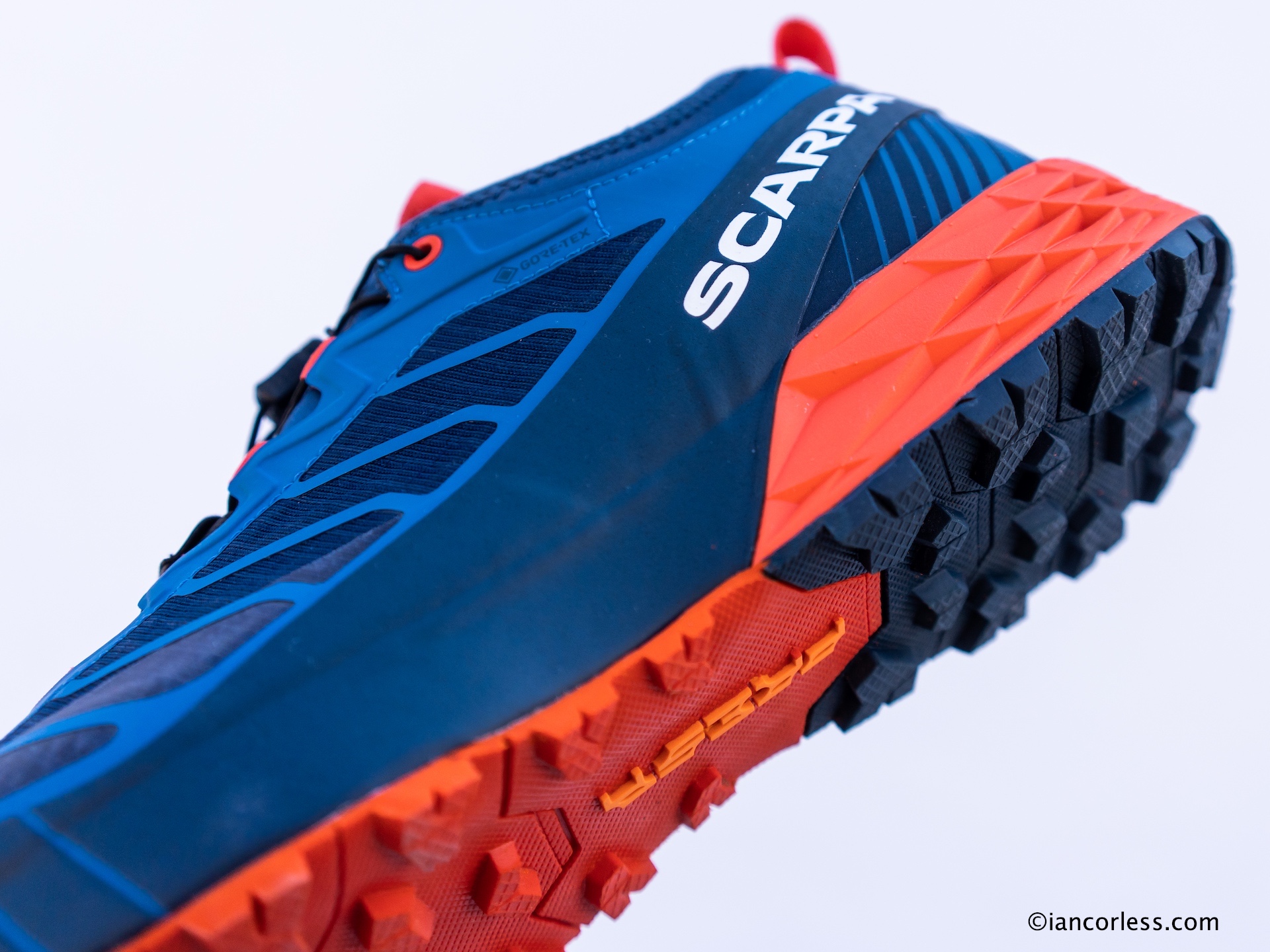
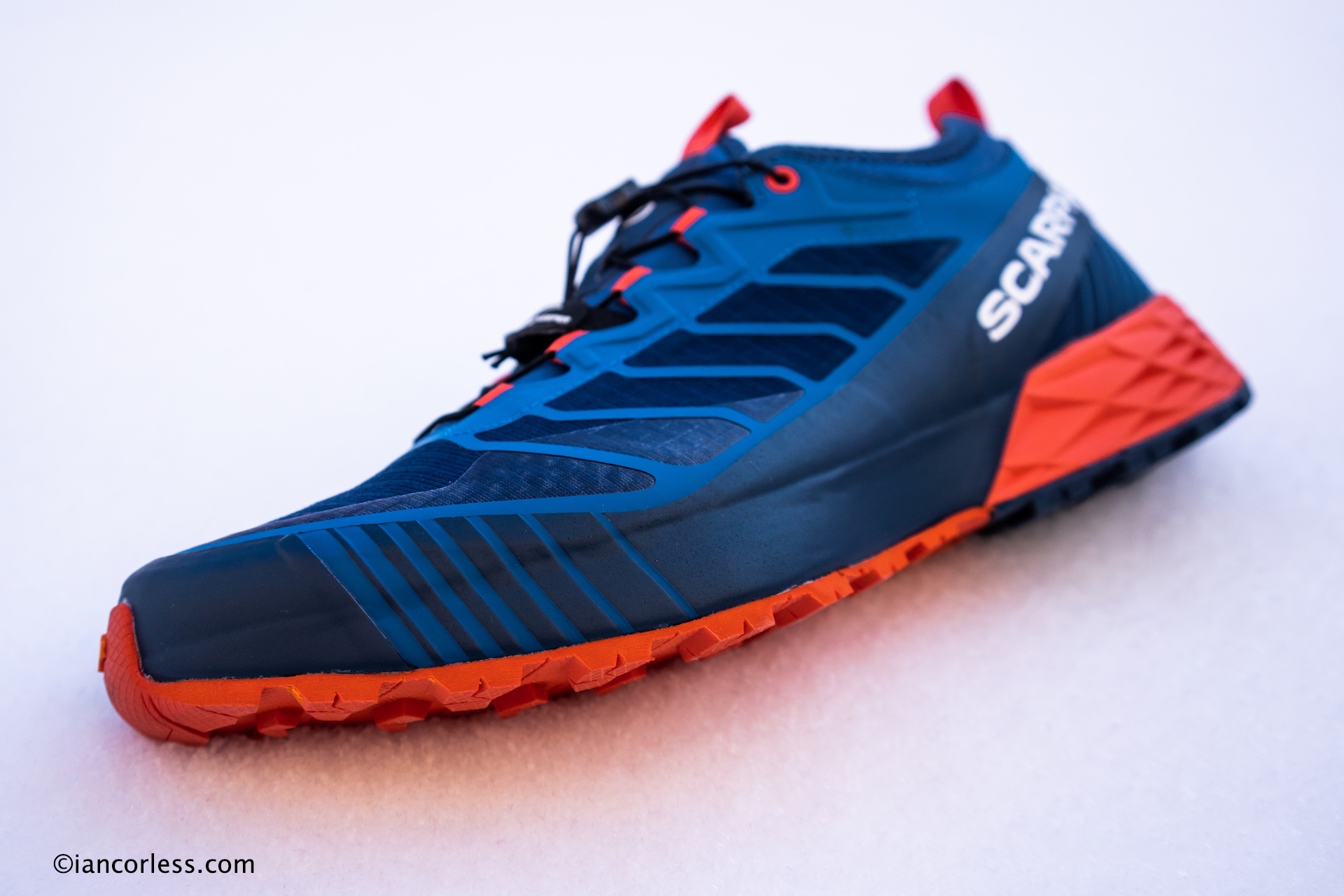
The Scarpa Ribelle Run and Ribelle Run GTX shoes are designed for harsh terrain. They will protect you and keep you safe and secure on a multitude of terrain, be that rock, scree, snow, ice (with micro crampon), ridges, or rocky single-track.

Follow on:

Instagram – @iancorlessphotography

Twitter – @talkultra

facebook.com/iancorlessphotography

Web – www.iancorless.com
Web – www.iancorlessphotography.com

Image sales –www.iancorless.photoshelter.com

See the NEW shoe by VJ Sport before anyone else…

A new shoe by VJ Sport is an exciting thing. I will be clear from the very start, VJ Sport produce, in my opinion, currently the three best shoes for fell, skyrunning, mountain and longer-distance trail/ mountain races. I have said time and time again and I will repeat it here, the iRock 3XTRM and MAXx are a trio of shoes that provide a perfect weapon choice for specific terrain and distance. Although the three shoes are very obviously from the same family, (they look very similar) – They all have ‘Fitlock,’ they all have amazingly durable Kevlar uppers and they all have the amazing Butyl rubber (albeit in different size lugs) outsole that VJ are renowned for, but they do not all fit the same or have the same drop. The iRock 3 is narrower, has more precision and aggressive lugs, the XTRM sits between the iRock 3 and the MAXx and the MAXx has been the more recent shoe offering a wider fit and more cushioning for longer distance trail and mountain races. 

Want to see the NEW offering and get an early review?

Available for Patreon subscribers only until the official announcement.

Please support this website. I believe everyone deserves to read quality, independent and factual articles – that’s why this website is open to all. Free press has never been so vital. I hope I can keep providing independent articles with your help. Any contribution, however big or small, is so valuable to help finance regular content.

Please support me on Patreon HERE.

Follow on:

Instagram – @iancorlessphotography

Twitter – @talkultra

facebook.com/iancorlessphotography

Web – www.iancorless.com
Web – www.iancorlessphotography.com

Image sales –www.iancorless.photoshelter.com

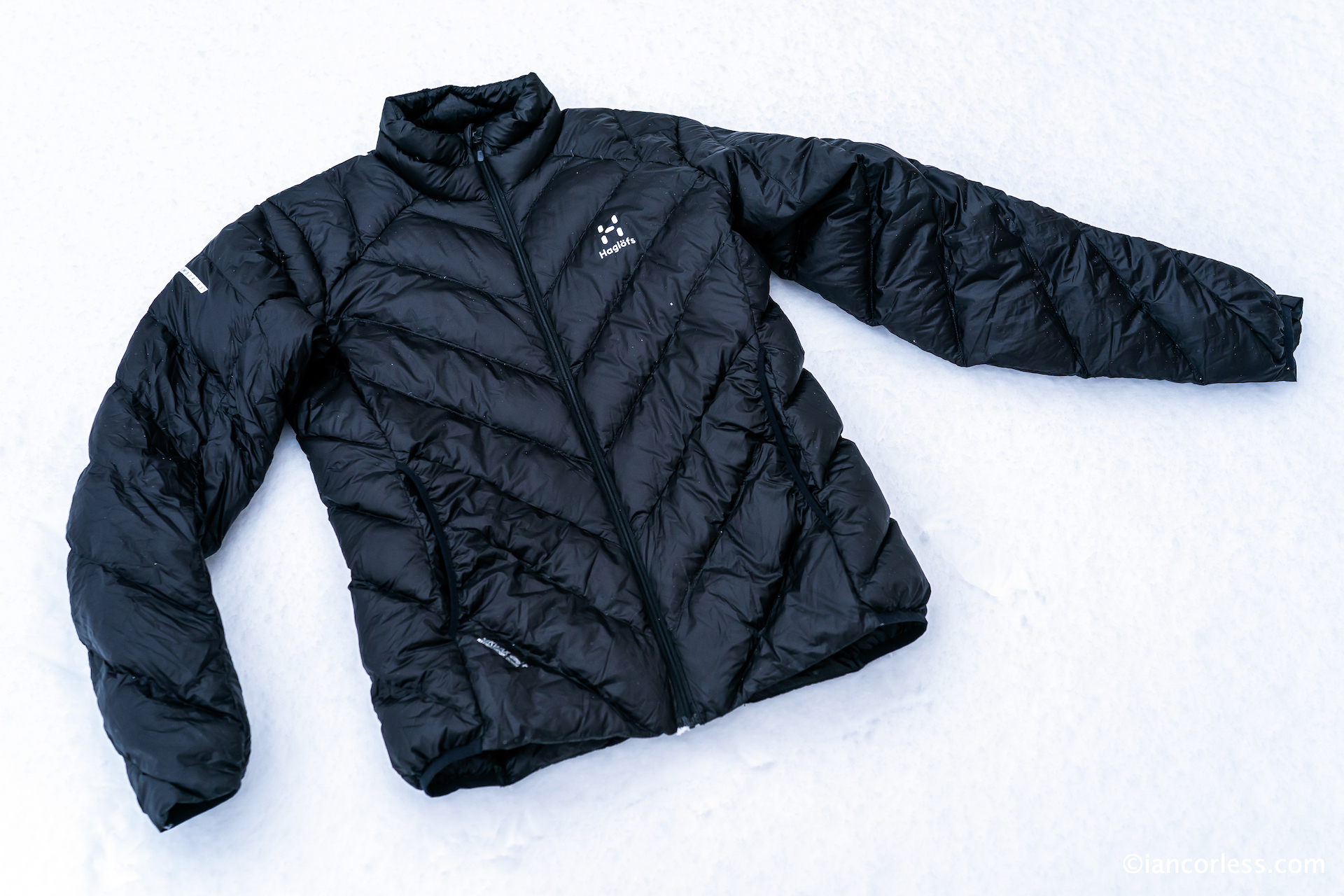
Haglöfs L.I.M Essens Jacket Review

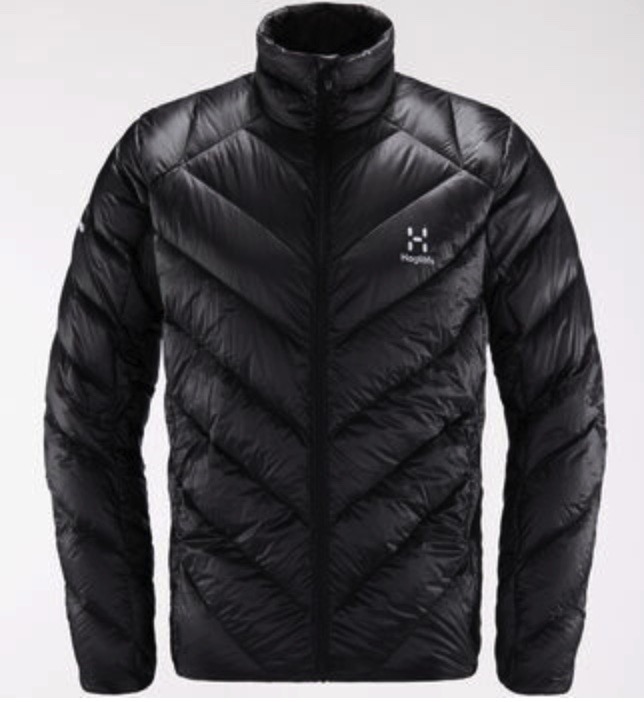
Haglöfs have been a premium brand for more than a century developing outstanding outdoor products that combine a strong sense of Swedish heritage with a commitment to sustainability and innovation. The launch of L.I.M (Less Is More) personified the essence of lightness. In Spring 2020, Haglöfs updated the L.I.M Series – lightweight, high-performance products that deliver uncompromised performance when taken up mountains and into the wilderness, anywhere in the world.

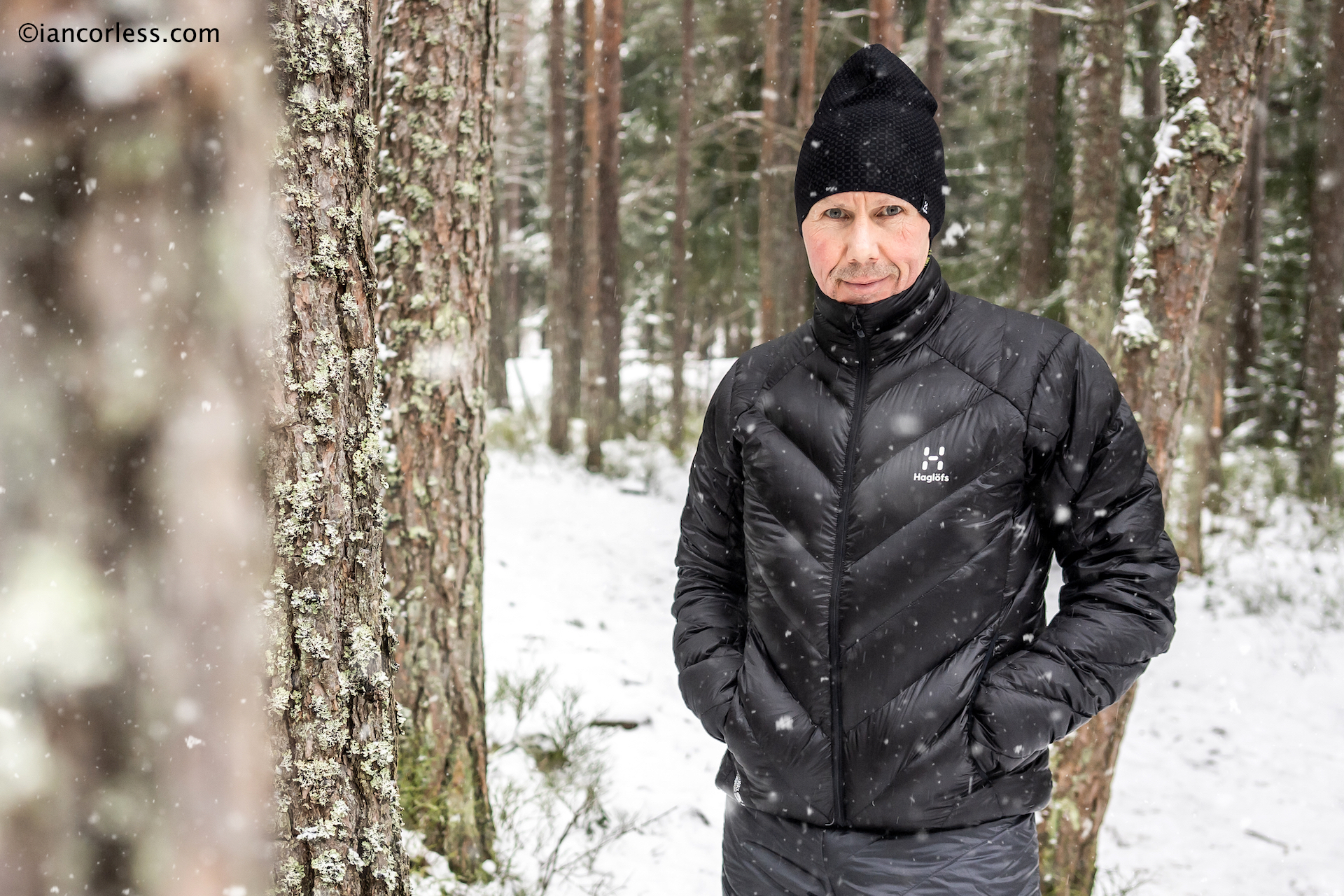
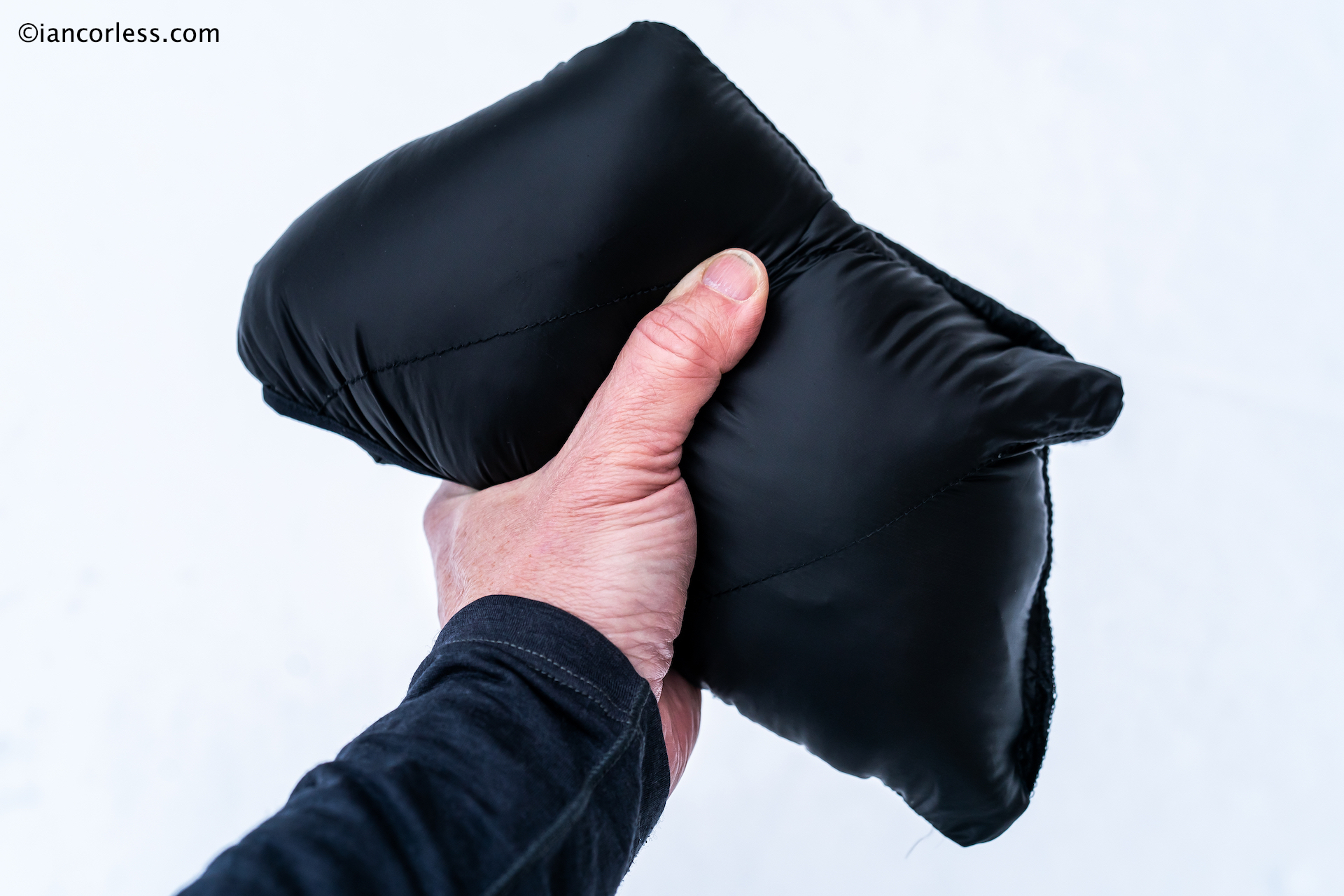
The L.I.M Essens Jacket Men is currently my go-to jacket for any running or mountain adventure, quite simply, it’s the best product I have tried. It combines three key elements perfectly: low weight, small pack size and warmth.

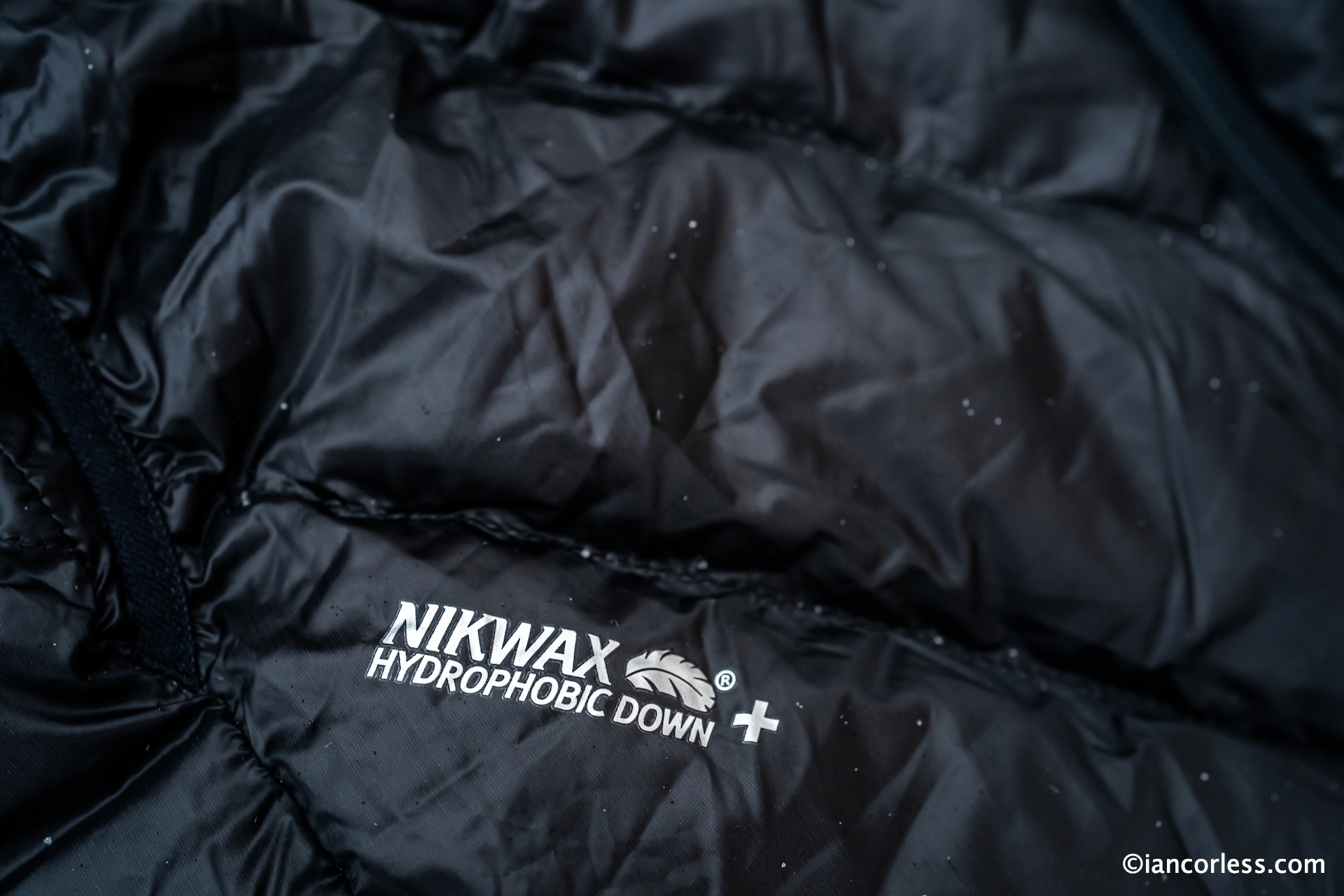
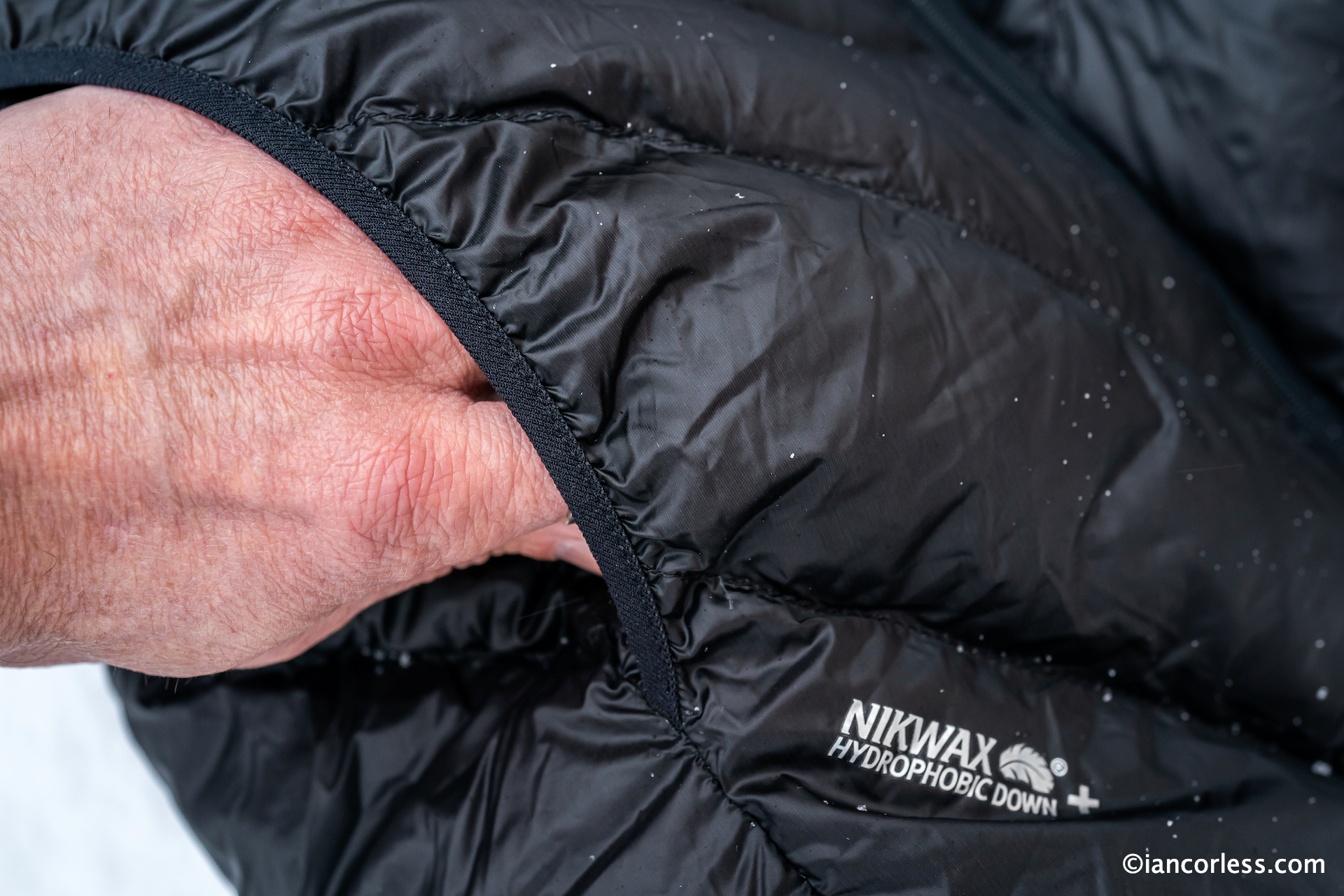
Quite simply, ‘Essens’ is the essence of lightness. The warmth and very low weight is attributed to extremely light and durable material and first-class goose down with 800 CUIN filling. Importantly, the down is treated with fluorocarbon-free DWR which works so well that the filling stays dry for up to 10,000 minutes with exposure to wet conditions. 

This is a game changer… Down has always been known to have the lowest weight and smallest pack size, however, previous incarnations would mean that any wet or damp weather would leave the filling useless.

Now, with fluorocarbon-free DWR, down has all the benefits ans wet weather performance of a synthertic filling such as Primaloft, but with the huge advantages of low weight and packing size of down. The Nikwax Hydrophobic Down can be washed with an appropriate Nikwax (Nikwax Down Wash Direct) product.

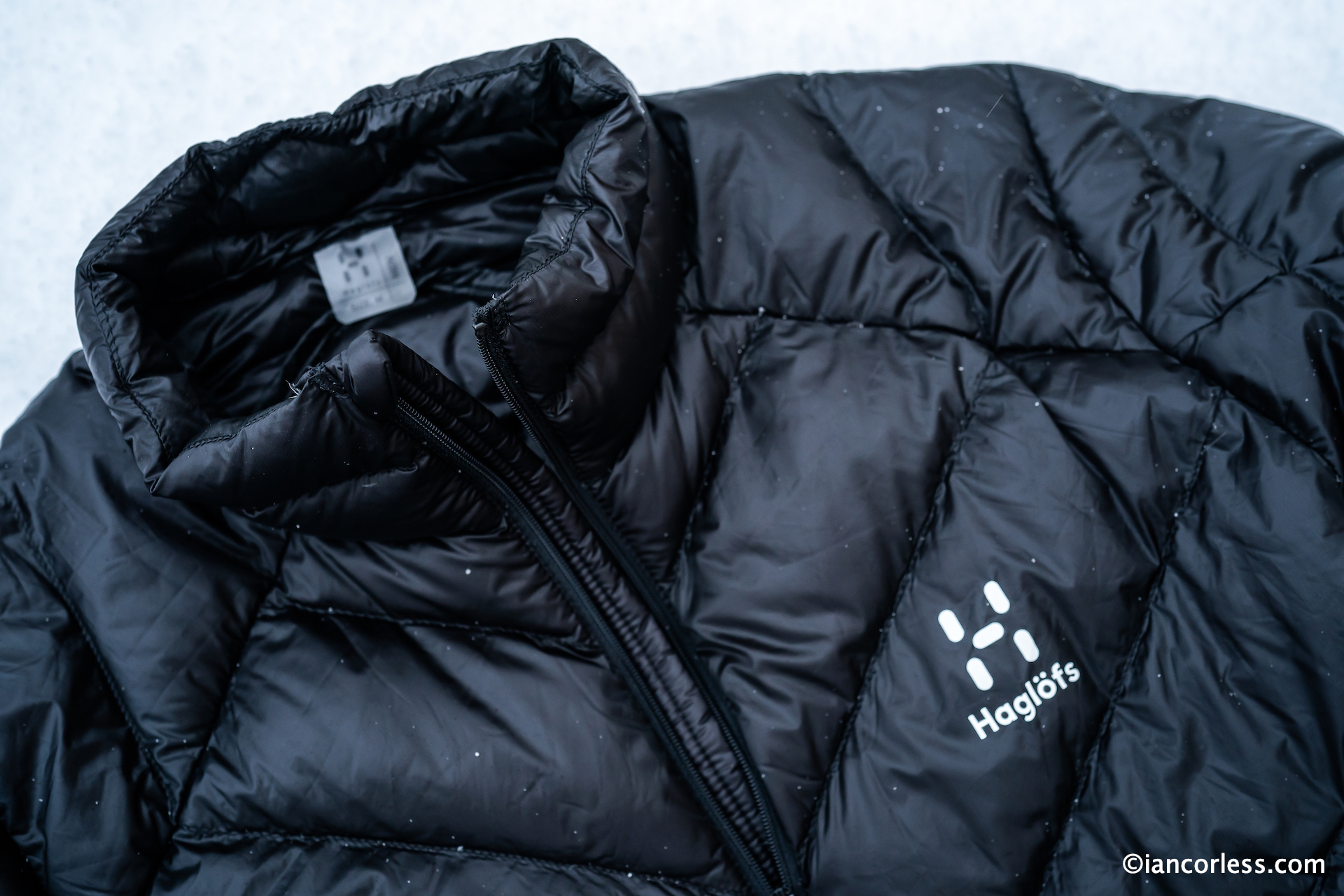
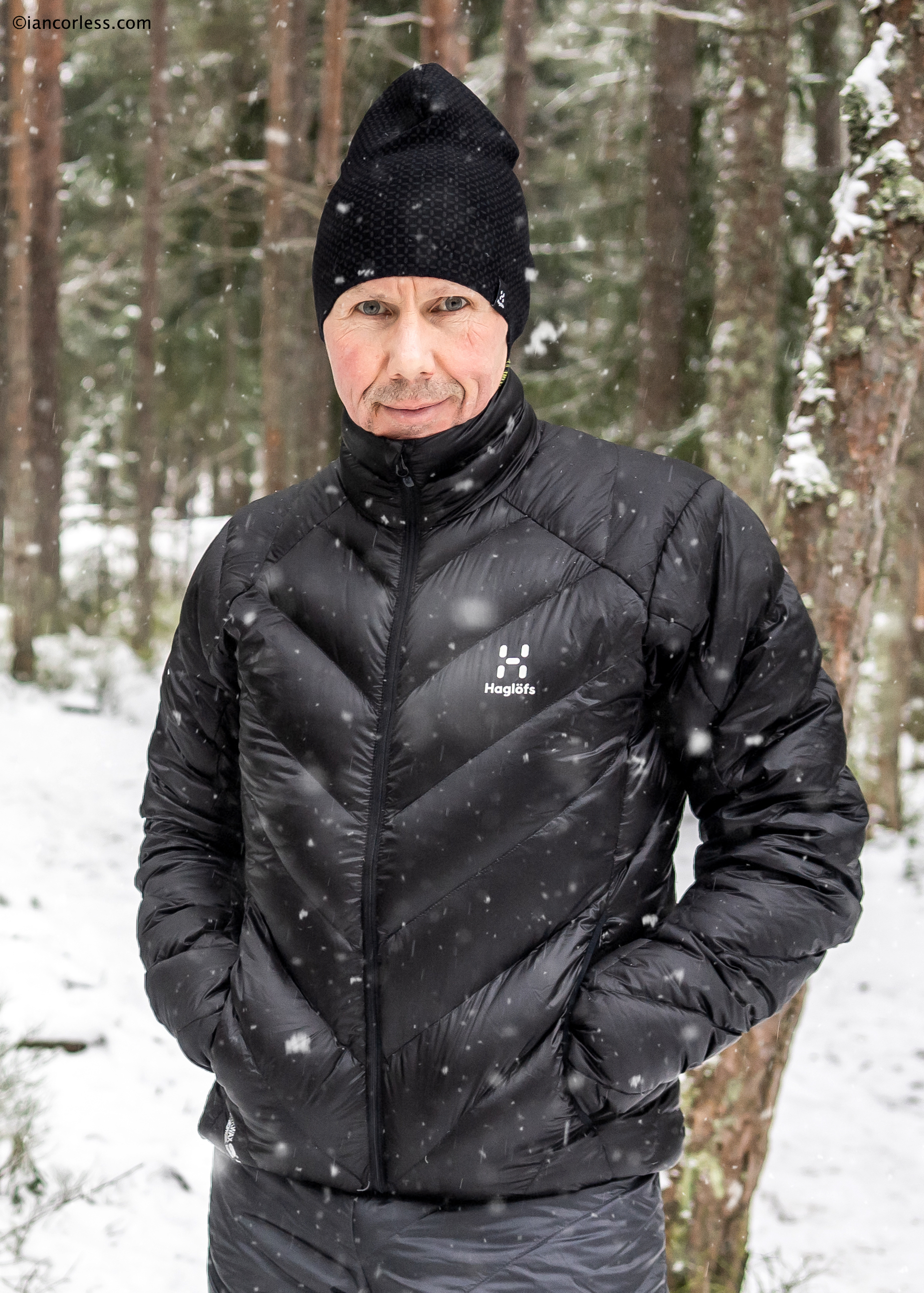
Fit is superb both in female and male versions with excess fabric reduced to a minimum. Features are minimal and notably there is no hood, no chest pocket and two hand pockets with no zips, to save weight.

The jacket will fold and compress in to one of these pockets if required.

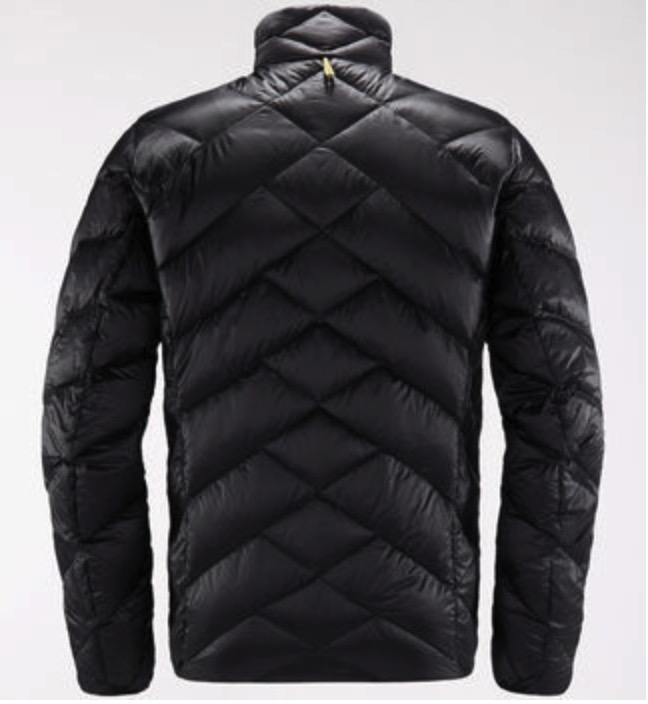
It has a mini-box quilted construction which ensures the down is spread evenly over the jacket leaving no cold spots. The fill is 800 CUIN. The DWR repels water and dirt making the Essens a perfect all-year round insulating layer.

A full-length zipper allows flexibility in regulatimg temperature and for cold conditions it has a high nick with chin guard. The bottom of the jacket and cuffs have a simple elastic construction to reduce drafts and maintain low weight.

IN USE

The Essens jacket has been with me on all my runs since receiving the product. I pretty much always run with a pack and due to the Essens low weight, small pack size and flexibility in all weathers, there has never been a reason not to take it. My male medium weighs 160g which is up there as one of the lightest down jackets available. The ability to maintain loft and insulation irrespective of conditions has been a game changer, be that on a run from home or more notably on a multi-day fastpack when weight v warmth is key. This is a product that works for any adventure, be that in the snowy mountains or for example on stage race like Marathon des Sables in the Sahara desert. Fit is neither slim or spacious, it seems to fit just right with enough flexibility in the arms, the back and sleeve length are optimised for outdoor use. Added to a merino base layer, it provide incredible warmth on cold days. Should you stop for a break, it provides ideal insulation to retain warmth before heading off again. On tough, challenging and wild days, the Essens is a superb insulating layer underneath a waterproof such as Haglöfs L.I.M Jacket which has minimalist design, is easy to pack, light and made from GORE-TEX Paclite® PLUS.

CONCLUSION

There is nothing to dislike in the L.I.M Essens Jacket, in all honesty it is the best I have tried. The warmth and comfort is incredible for such a lightweight jacket. The packing size and weight is difficult to beat. As I said, there is no reason not to take this on any run as it is the perfect insulating layer, irrespective of the weather.

RRP £200 available in 4-colours, sizes XS to XL male and female versions.

To clarify, this is not a paid review.

Please support this website. I believe everyone deserves to read quality, independent and factual articles – that’s why this website is open to all. Free press has never been so vital. I hope I can keep providing independent articles with your help. Any contribution, however big or small, is so valuable to help finance regular content. Please support me on Patreon HERE.

Follow on:

Instagram – @iancorlessphotography

Twitter – @talkultra

facebook.com/iancorlessphotography

Web – www.iancorless.com
Web – www.iancorlessphotography.com

Image sales –www.iancorless.photoshelter.com

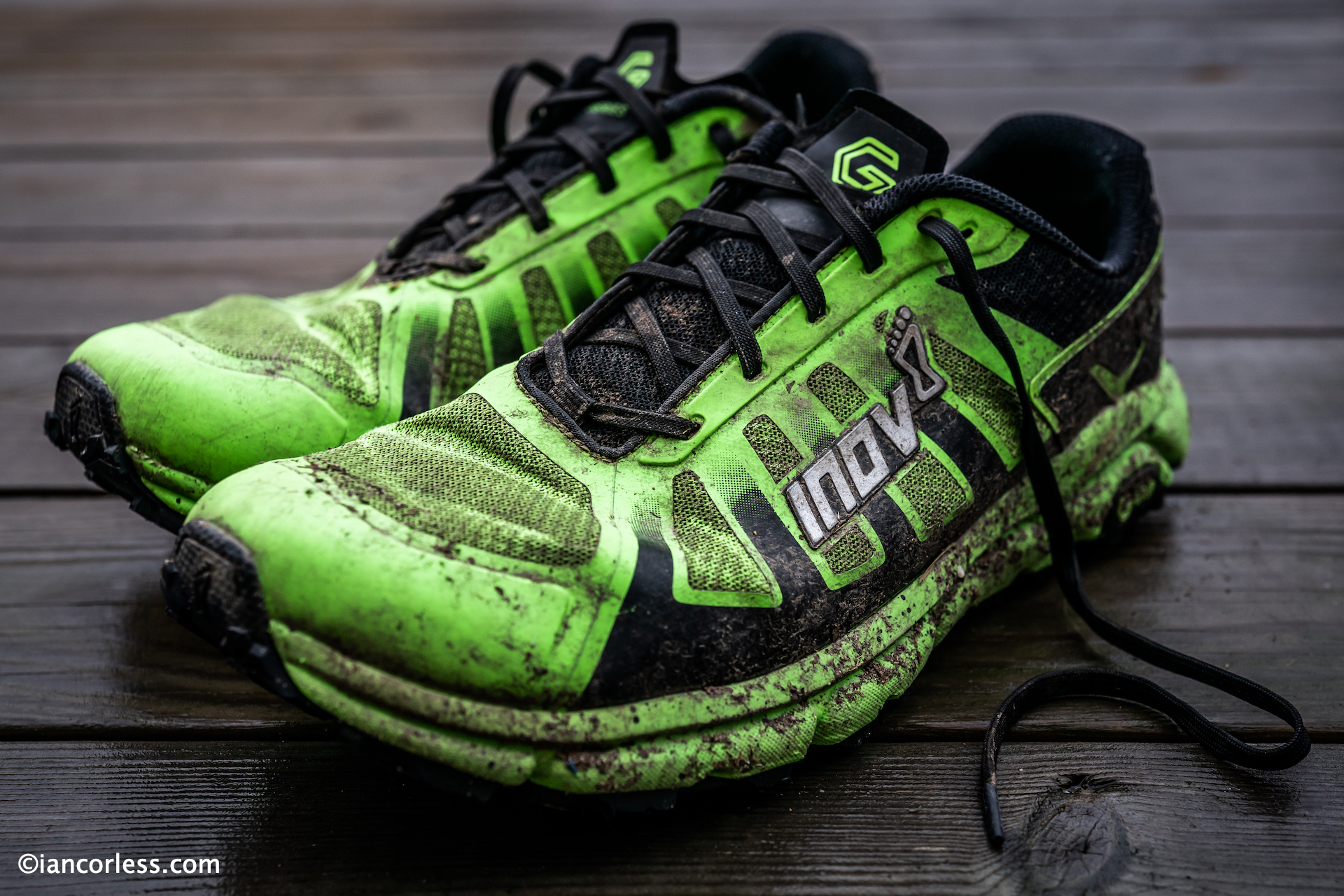
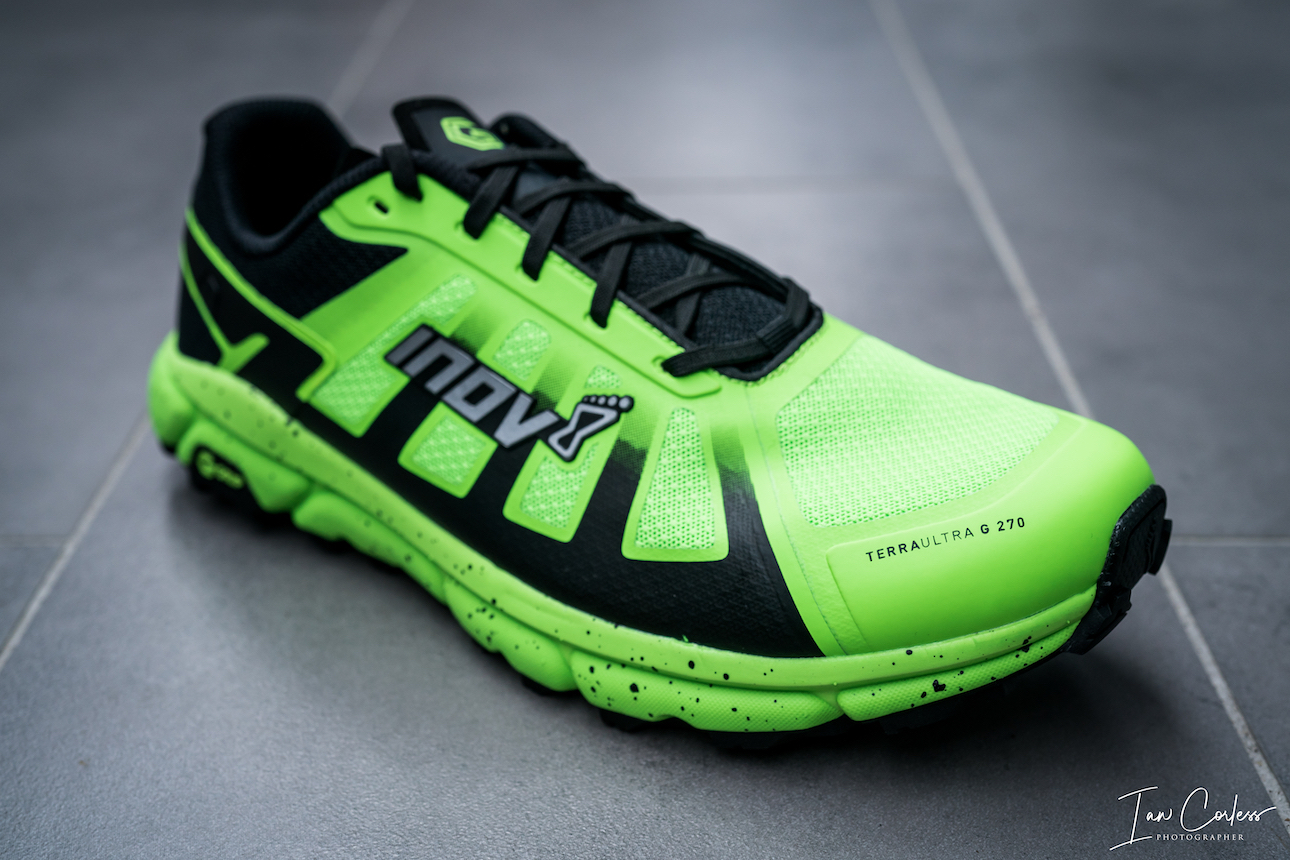
inov-8 TERRAULTRA G270 Long-Term Review

Terraultra G270 with 600km+

Since its release, the inov-8 Terraultra G270 has received acclaim all over the world. Many magazines, reviewers and bloggers hailing it the shoe of 2020. In late July I wrote my review HERE.

Now, with over 600km+ in the shoes it’s time to make a long-term review and assessment.

I am not going into the analysis of the shoe as in a typical post, you have a review linked above that goes through the pros and cons and all the technical jargon. This is a usage review.

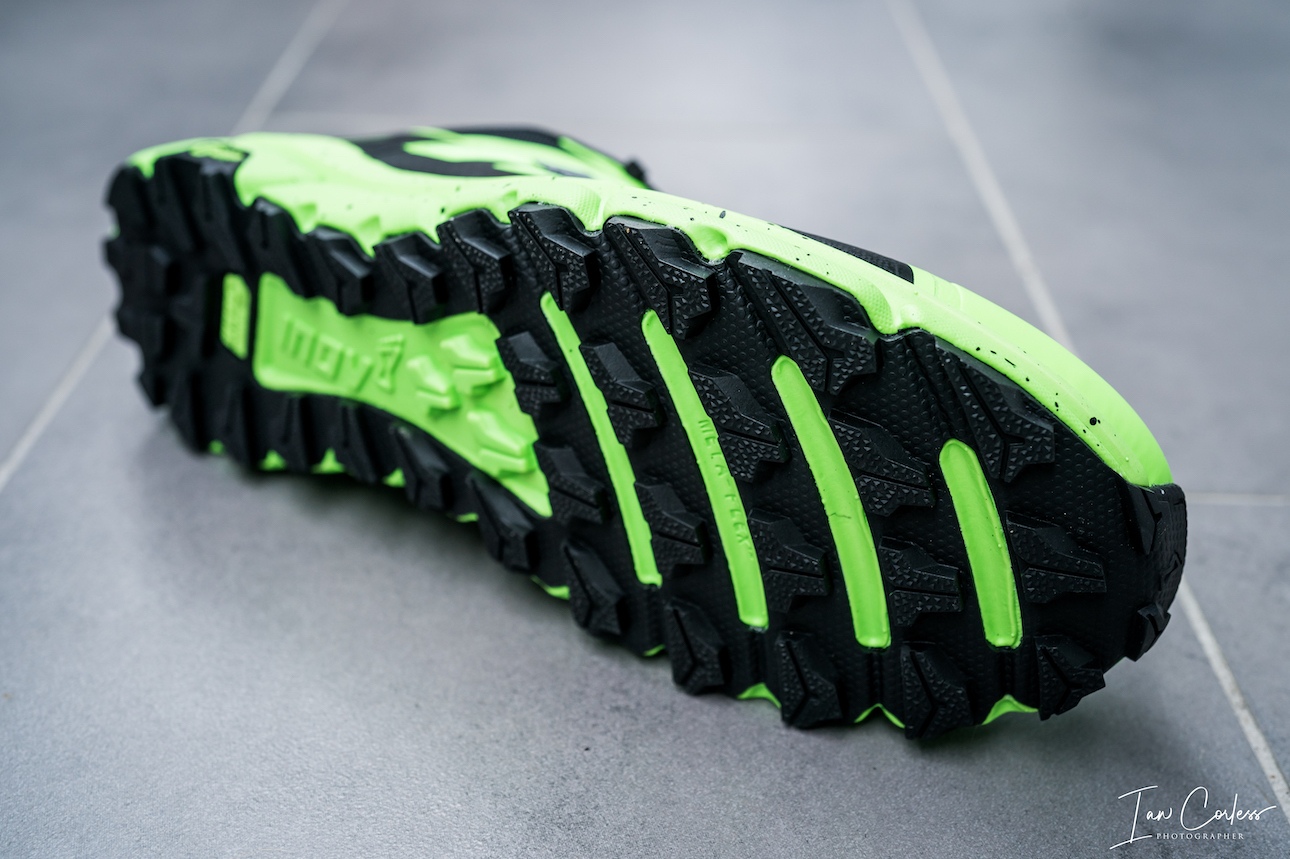
First off, the Graphene outsole and 4mm lugs is a 100% winner. The durability has been superb, the grip incredible and the traction has been without equal. Even in mud, the outsole has performed but of course it is compromised. The lugs are just not aggressive enough to grip in very soft or deep mud, but a thin layer of mud and the G270 really does perform. Wet rock grip has been superb and arguably the most impressive aspect. Many have raved and provided a 5/5 review. I can’t give 5/5 because it is compromised in mud, therefore it gets a 4/5 BUT and this is a BIG but, in all honesty, you should not be using the G270 in mud, there are other shoes for that. So, if reviewing for intended purpose, it would get a 5/5. This may sound a little weird, but the G270 has become my ‘go-to’ road shoe, especially with the arrival of Autumn and Winter, the grip on wet roads, pavement and hard-pack trail has been superb. Although not a ‘hybrid’ shoe (road to trail) it performs like one and I would recommend for that use.

The cushioning has really surprised me. It’s plush without being squidgy. It’s super comfortable without losing that all important feel for the ground. It takes 20km hard trail runs in its stride and still allows legs to feel fresh after. The G270 is designed for longer races and as such, it comes highly recommended. An improvement on the G260. There was a mention of a ‘Boomerang Insole’ in the technical jargon that provides extra energy return, I have no idea if this is resulting in the positive feel of the shoe, but something is definitely working better over the previous G260 incarnation.

Zero drop – you are either going to be for or against. I am fortunate, I test shoes all the time and I am regularly mixing up drops from 0 to 10 and all the steps between. With zero I am usually careful not running too long or too often. The G270 changed that, I have been running regularly 3-4 runs per week since November with total distances of 50-80km (per week) just in the G270 and they have been superb. The days between I have been using 4, 8 and even 10mm drop on the odd occasion. Drop is very personal, so, I just warn against potential problems if zero is not normal for you.

The toe box is wide, and I have really enjoyed the extra space and comfort on long road or hard trail runs. With Injini socks, my toes can really splay for comfort. The G270 would be a great fastpacking shoe or multi-day shoe. I can see it being really popular in races like Marathon des Sables. The wide toe box though is too wide for me on technical trail… I don’t have the control or the precision I need, so, it’s not a shoe for me when running on technical terrain.

A major improvement is the upper. After 600km+ I have no signs of wear. The important ‘bend’ area behind the metatarsals that can often split in the corners is still good and showing no weakness. I mentioned the hold of the foot in my initial review and that has been one of the key pluses of the G270, particularly over the G260. The lacing, ‘Adapterfit’ and hold of the instep is reassuring, particularly important for me with a wider toe box.

All things considered, the G270 is one of the shoe highlights of 2020 without a doubt. It’s not perfect, but then again, show me a shoe that is. If you want zero drop, grip, traction, cushioning and a wider toe box, I think you’d find it hard to find a shoe that compares with the G270.

Please support this website. I believe everyone deserves to read quality, independent and factual articles – that’s why this website is open to all. Free press has never been so vital. I hope I can keep providing independent articles with your help. Any contribution, however big or small, is so valuable to help finance regular content. Please support me on Patreon HERE

Follow on:

Instagram – @iancorlessphotography

Twitter – @talkultra

facebook.com/iancorlessphotography

Web – www.iancorless.com
Web – www.iancorlessphotography.com

Image sales –www.iancorless.photoshelter.com

Episode 197 – Finlay Wild, Speedgoat, Kilian Jornet, Stephen Goldstein and the Covid Interviews

Episode 197 of Talk Ultra brings an interview with Finlay Wild. Speedgoat discusses his 19-years of 100-mile victories. We have a sound bite from Kilian Jornet after his road 10km. Stephen Goldstein talks Covid-19 and we bring you Clay Williams, Ian Radmore, Richard McChesney and Miriam Gilbert with their Covid stories.


Talk Ultra is now on Tunein – just another way to make the show available for those who prefer not to use iTunes – HERE  You can download the Tunein APP HERE


Talk Ultra needs your help! 
We have set up a Patreon page and we are offering some great benefits for Patrons… you can even join us on the show! This is the easiest way to support Talk Ultra and help us continue to create! 
Many thanks to our Patrons who have helped via PATREON
Donate HERE


NEWS

Speedgoat Karl wins his 43rd 100-mile race and completes 19-years, consecutive, of winning a 100!

Kilian Jornet runs 10km on the road in 29:59 read HERE

Listen to Kilian 00:26:50 post the 10km race.

Winter Running HERE

Winter Fastpacking HERE

VJ Sport XANTE winter running shoe HERE


THE COVID INTERVIEWS


00:38:50 CLAY WILLIAMS – In 2017 I was one of the runners in Canada’s first 200 mile trail race. Unfortunately I didn’t finish and was only able to run 150 miles in that event (long story). That DNF planted a seed, and I have had this need to finish a 200 miler ever since. So I registered to run Three Days at the Fair in New Jersey in May. Of course it was deferred from May until September due to Covid. And then I couldn’t cross the border to get there. I’m 60 years old so I can’t keep putting this off, so I made my own arrangements. With local crew support I ran “Three Days in the Park” starting at 9am October 1st. My raced director friend Tony Martin plotted out a one mile course for me, and I ran it at 200 times. It took me 75:46 to finish, and I’m happy with that  As always, I’ll be carrying The Flag (ask me about The Flag), and dedicated the run to the Mood Disorders Society of Canada’s Defeat Depression campaign.  


01:02:50 IAN RADMORE – Going into lockdown back in March had the idea that we should & would support each other, along with building a training program that involved running as well as various workout activities. We looked to do something different every other day so to keep our minds & bodies active. It’s about having the correct attitude & not allowing the four walls of our home to take over. Inspiration was also taken from Captain Sir Tom Moore who before his 100th birthday decided to raise money for the NHS by walking around his garden. If that’s not inspiring I don’t know what is!!Damian Hall who broke the long time standing Pennine Way set by John Kelly. With these in mind they motivated me & drove me on the complete my half marathon training. This I ran on Sunday 4th October 2020 finishing in a respectable time 2hours 44minutes & 58seconds. Then the very next day entered the Inverness/Lockness marathon next October 2021 fingers crossed. 


01:19:40 RICHARD MCCHESNEY – In September, inspired by the recent FTK’s for the Wainwrights, I decided to see how long it would take me to visit all 270 London tube stations on foot.  I’m a walker rather than a runner due to a long term impact related injury, but I managed to complete the 325 mile journey in 5 days and 20 hours.  This has now been recognised by FastestKnownTime.com as the fastest self-supported time for this adventure and sets the bar for someone to try and beat it. Like the people doing the Wainwrights and similar FKT’s, I spent plenty of time mapping out what I thought would be the most efficient/shortest route but I think there is probably still some improvement that can be made here.  I also did about 15-20 bonus miles due to some getting lost and also a tunnel closure.


01:47:20 MIRIAM GILBERT – My experience as a cancer caregiver to my husband Jon after he was diagnosed with stage 4 cancer in March 2018 inspired me to create Ultra Care for Cancer Caregivers, a GoFundMe campaign to benefit cancer caregivers and provide them some joy and respite during their difficult journey as a caregiver. I named my GoFundMe campaign Ultra Care for Cancer Caregivers because I am also an ultra runner. I combined my running ultra miles and fundraising to raise money for cancer caregivers. I kickstarted my fundraising by running the Dawn to Dusk to Dawn 24hr 50K+ Solo Challenge in my neighborhood in May. Then on June 1 I began running the Tip to Tip Great Florida Traverse 128 miler. And I have 161.5 miles to go at the All the Way 901 mile. I am happy to say my husband Jon was declared in remission in May. He joins me on my virtual miles on his ElliptiGo.

02:11:52 INTERVIEW : STEPHEN GOLDSTEIN

02:55:00 INTERVIEW : FINLAY WILD

03:58:43 End

Episode 197

Spotify HERE 

ITunes HERE  

You can listen on iOS HERE, Android HERE or via a web player HERE Libsyn – HERE 

Tunein – HERE 

Website – talkultra.com

Follow on:

Instagram – @iancorlessphotography

Twitter – @talkultra

facebook.com/iancorlessphotography

Web – www.iancorless.com
Web – www.iancorlessphotography.com

Image sales –www.iancorless.photoshelter.com