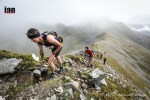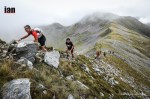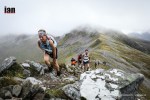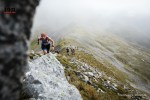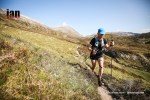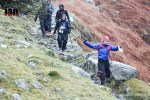
When the Trail Ends: Ourea Events

The statement from Shane Ohly announcing that Ourea Events has ceased trading reads, on the surface, like a simple apology paired with an explanation. But underneath that, it reveals something more complex. It is the end of a business in its current form, the exposure of a fragile economic model, and a moment of uncertainty for everyone tied to these events.

ReadOUREA EVENTS CEASE TRADING – A SAD DAY

For Shane and the company, this marks a decisive turning point. Ceasing to trade is not a pause or a scaling back. It is an acknowledgment that continuing would likely make the financial situation worse.

Regrettably, the current trend in entries for 2026 clearly indicates that the financial situation will only gradually deteriorate further this year. Therefore, it has become evident that continuing to trade is neither fair nor reasonable, as it risks increasing the overall debt owed to creditors, participants, and suppliers.

The reference to “professional advisors” strongly suggests that some form of insolvency process is underway, where financial and legal priorities begin to outweigh personal control. At that stage, decisions are no longer entirely in the hands of Shane, the founder. They are guided by what is fair and lawful for creditors as a whole.

Ourea Events was not a faceless operation. On the contrary. Ourea was built over fifteen years, with a strong reputation in the trail running world and a loyal international following. When something like this ends, it is not just a balance sheet that collapses. The tone of the statement reflects that. It does not read like a defensive corporate message. It reads like someone who knows people have trusted them, financially and emotionally, and feels the impact of that trust being broken. It is identity, relationships, and a sense of responsibility. You only need to turn to social media, you will see the support for Shane and Ourea. Equally, one has to acknowledge, those who have potentially lost money, are far more questioning and scathing.

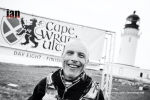
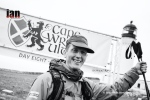
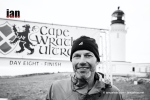
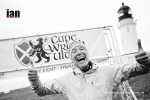
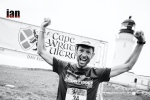
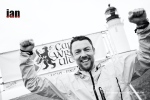
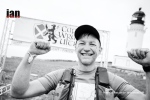
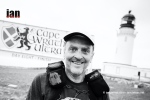
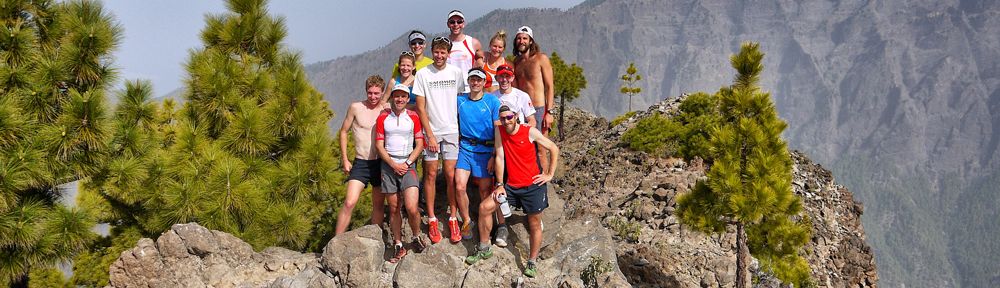
At the same time, this is not necessarily the end of the events themselves. There is a careful but important distinction in the wording. The company is ceasing to trade, but there is hope that the events may continue “under a different structure or ownership.” That suggests that what Ourea created still has value. Races like the Dragon’s Back Race or Cape Wrath Ultra are not easy to replicate. They carry brand recognition, proven demand, and a distinct identity. In practical terms, that means they could be sold, licensed, or revived by another organiser. If that happens, what survives is the idea and the experience, even if the original company does not.

HARD TRUTHS

For participants, however, the situation is far more immediate and uncertain. The key issue is money already paid. Entry fees for these kinds of events are often substantial and are usually paid long in advance. When a company ceases trading under financial distress, those participants effectively become unsecured creditors. That is a technical term, but the implication is simple. They are in line behind any secured lenders, and there is no guarantee of getting their money back. However, if participants have payed by credit or debit card with fees over 100.00 UK pounds, there may be a possibility to recoup payments via “Section 75 of the Consumer Credit Act 1974: This makes the credit card provider jointly liable with the retailer if a purchase goes wrong (e.g., goods not received, faulty, or company goes bust).”

The wording of the statement reflects this reality. It avoids promising refunds and instead speaks about trying to “deliver value.” That choice of language matters. It leaves open a range of outcomes, from partial refunds to the possibility of entries being honoured by a new organiser, or credits toward future events. It also signals that a full refund for everyone is unlikely. Even in the best case, any resolution will take time. These processes do not move quickly, and participants are left in a difficult position, waiting without clear answers.

If another company steps in, there is a chance that existing entries could be recognized in some form. That might mean a transfer, a discount, or priority access. But it depends entirely on whether a deal is reached and what a new organiser is willing to take on. There is no certainty in that outcome.

PerspectiveRunning Races Aren’t Cheap. And That’s the Reality We Need to Accept.

Stepping back, the situation says a great deal about the wider endurance event industry. Ourea’s explanation outlines a sequence of pressures that, taken together, became unsustainable. Before the pandemic, the business was profitable, even if modestly so. Then COVID-19 removed revenue entirely for an extended period while costs and obligations remained. That alone would have been difficult to recover from. But it was followed by Brexit, which significantly reduced international participation, a key part of the customer base. At its peak, half of some events’ participants came from abroad. Losing a large portion of that audience is not a temporary dip. It is a structural change.

On top of that came inflation and the cost-of-living crisis. Event budgets are set far in advance, and prices cannot always be adjusted quickly. When costs rise by around 20 percent but entry fees lag behind, margins disappear. What emerges from all of this is a business model that depends heavily on stability. It relies on predictable demand, steady costs, and a continuous flow of advance payments. When those conditions break, the model struggles to adapt.

The decision to cease trading now, rather than continue and risk accumulating further debt, is significant. It limits the damage, even if it does not prevent it. Continuing in the hope that things might improve can sometimes make the eventual outcome worse for everyone involved, Shane certainly eludes to this in his wording. In that sense, this is a controlled stop rather than a collapse at the last possible moment.

There is also value in the transparency of the explanation, however, for those who have paid money, there is still a great deal to be clarified and there are many questions, particularly when several have referenced a second company – OUREA EVENTS HOLDINGS LIMITED – which has Shane Ohly as Director – eager participants have researched this company, and on appearance, has a balance of 150,000 UK pounds, 31st Dec 2024. Now of course, there is no context here and I have no understanding of the implications of this.

Shane does not shift blame in his statement onto a single factor or avoid the financial reality. Instead, he lays out the combination of events that led here. For participants, that does not replace lost money or cancelled plans, but it does provide context. It makes clear that this was not a sudden failure or a single bad decision, but a gradual tightening of pressure over several years.

Still, the negatives are real and immediate. Participants may lose money, and even if they do not, they lose certainty. Training plans, travel arrangements, and personal goals built around these events disappear overnight. Trust is also affected. Endurance events often depend on participants committing early, sometimes a year or more in advance. Situations like this make people more cautious, which in turn makes the business model even harder to sustain.

There are also ripple effects beyond the runners themselves. Suppliers, local communities, and small partners who depend on these events lose income. Volunteers and staff lose opportunities. What looks like a single company closing is, in reality, a small network being disrupted.

We are especially aware of participants who have already paid race entry fees for our events. By opting to cease trading at this stage, our goal is to maximise the likelihood that the events will continue under a different structure or ownership.

Looking ahead, the most likely outcome is not a simple disappearance, but a reshaping. Could Ourea reappear in 1-year using Phoenixing? – the same business or directors trade successively through a series of companies which liquidate or dissolve leaving debts unpaid – Basically, Shane and Ourea could rise from the ashes – “…cease trading and allow the business to undergo a reorganisation” If that is a plan, it better be handled very, very delicately. “The law allows owners, directors and employees of insolvent or dissolved companies to set up new companies to carry on a similar business. This is as long as the individuals involved are not personally bankrupt or disqualified from acting in the management of a limited company.” – GOV.UK

Some of these events may return under new ownership, potentially at higher prices and with more conservative structures. Others may not come back at all if they are too complex or costly to run sustainably. Across the industry, there may be a shift toward more cautious growth, more realistic pricing, and perhaps a reconsideration of how much risk is placed on participants paying far in advance.

Ourea Events, as it has existed, is likely finished. In the end, this moment sits somewhere between an ending and a transition. But what Shane and Ourea created still has value, and there is a real possibility that parts of it will continue in a different form. For now, though, the dominant reality is uncertainty.

For Shane, it is the closing of a long chapter. For participants, it is a waiting game with no guaranteed outcome. And for the wider community, it is a reminder that even well-loved and well-run events are not immune to broader economic forces.

Follow Ian Corless

Instagram – @iancorlessphotography

Twitter – @talkultra

facebook.com/iancorlessphotography

Web – www.iancorless.com
Web – www.iancorlessphotography.com

Running Races Aren’t Cheap. And That’s the Reality We Need to Accept.

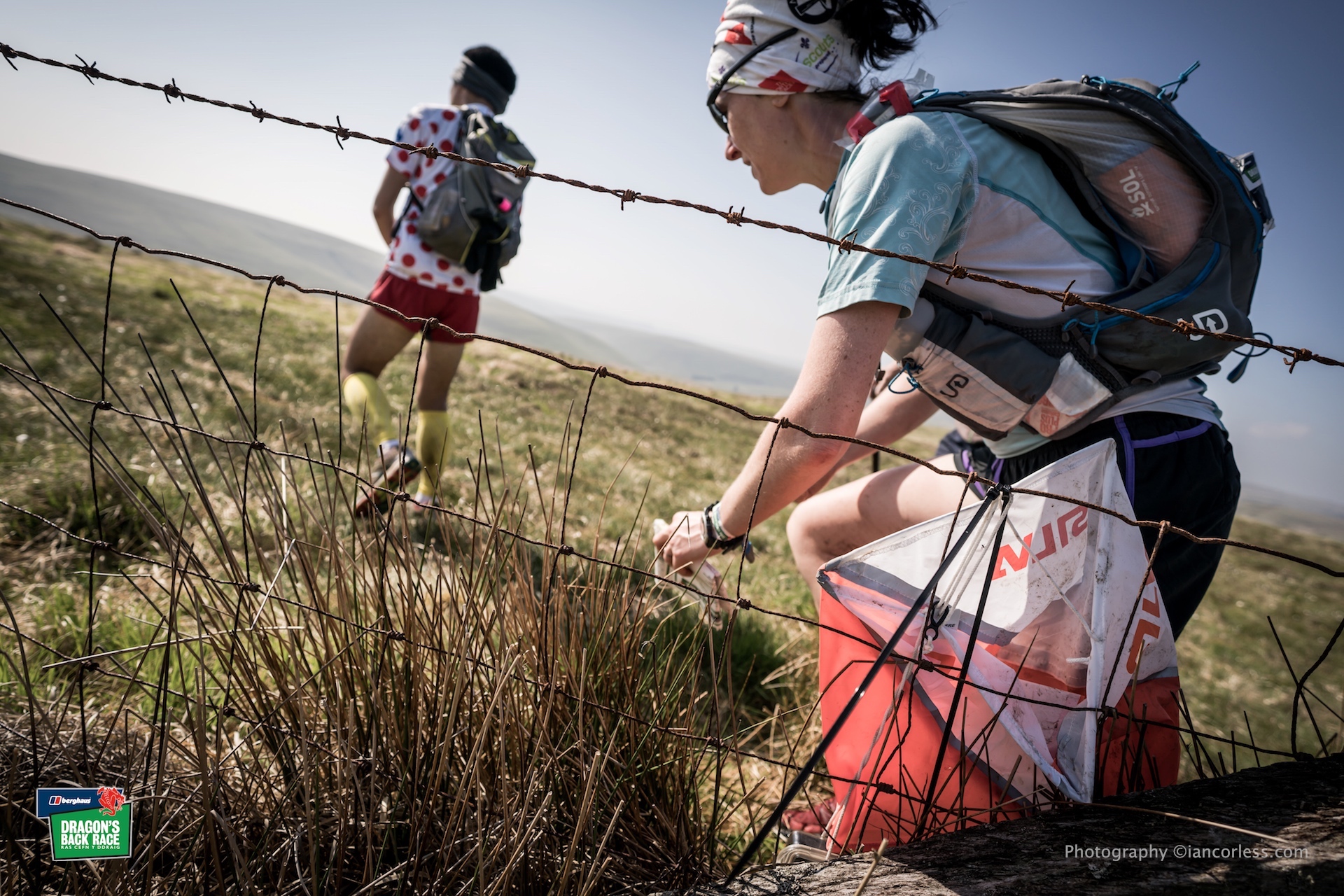
Dragons Back Race

There’s a long-standing idea in the running community that races should be cheap. The logic is simple: running itself is simple. Put on a pair of shoes, head outside, and run. So when people see an entry fee for a trail, mountain, or ultra race that feels high, the reaction is often the same. 

Why does it cost so much?

The truth is that the world those expectations came from barely exists anymore. Years ago, many races were small and local. They were often organised by running clubs or small community groups. The courses were modest. The participant numbers were manageable. Volunteers handled most of the work. Costs were relatively low, and so were entry fees.

Those races still exist in places, but the sport around them has changed dramatically. Trail running, ultrarunning, mountain racing and skyrunning have exploded in popularity. Courses have become longer, more remote and more technical. Participant numbers have increased. Expectations have risen. And alongside that growth has come something unavoidable: responsibility.

Modern race organisation carries real obligations.

If you put hundreds of runners into remote terrain, often in extreme weather and over difficult ground, you cannot simply mark a course and hope for the best. Safety is not optional anymore. It’s a requirement.

That means medical teams. It means coordination with mountain rescue. It means risk assessments, insurance, emergency plans and communications systems. It means trained marshals, sweep teams, and logistics that can respond quickly when something goes wrong.

All of this costs money.

Then there are the physical elements of the race itself. Start and finish areas. Timing systems. Course marking. Aid stations. Equipment transport. Permits. Land access. Environmental management. Insurance. Staffing.

Even a single-day race can involve months of preparation. Often a full year of planning. And that’s before considering the scale of many modern events.

Large trail races now operate almost like temporary cities. Hundreds or thousands of runners, staff and volunteers moving through remote areas across dozens or even hundreds of kilometres. Everything must work. Everything must be safe. None of that is inexpensive.

Now consider multi-day events.

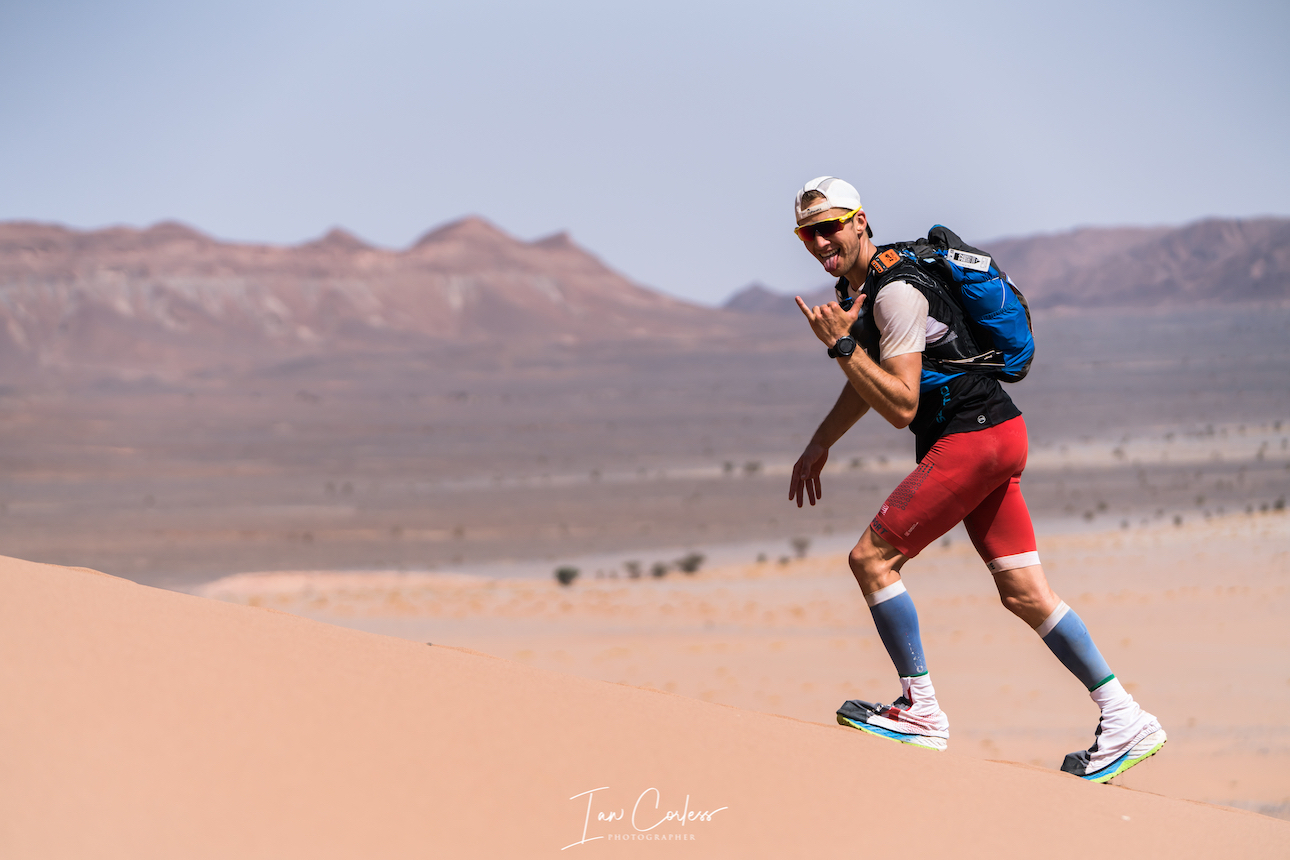
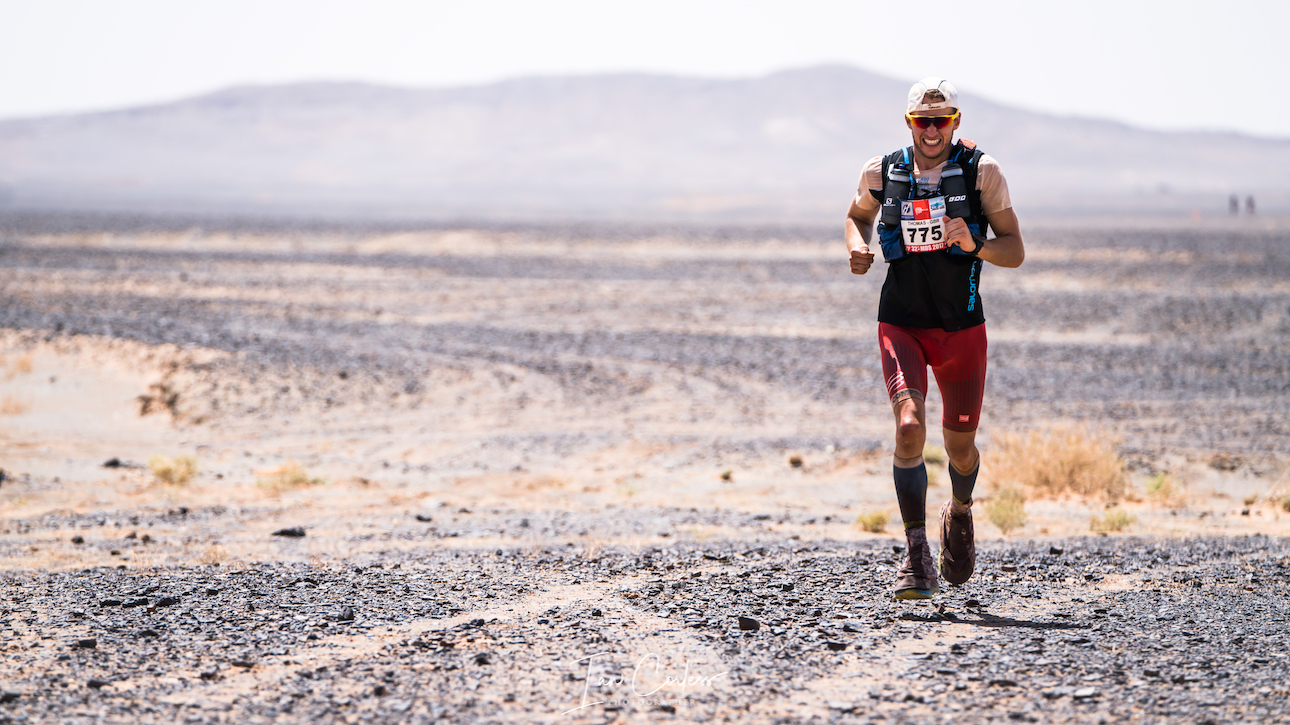
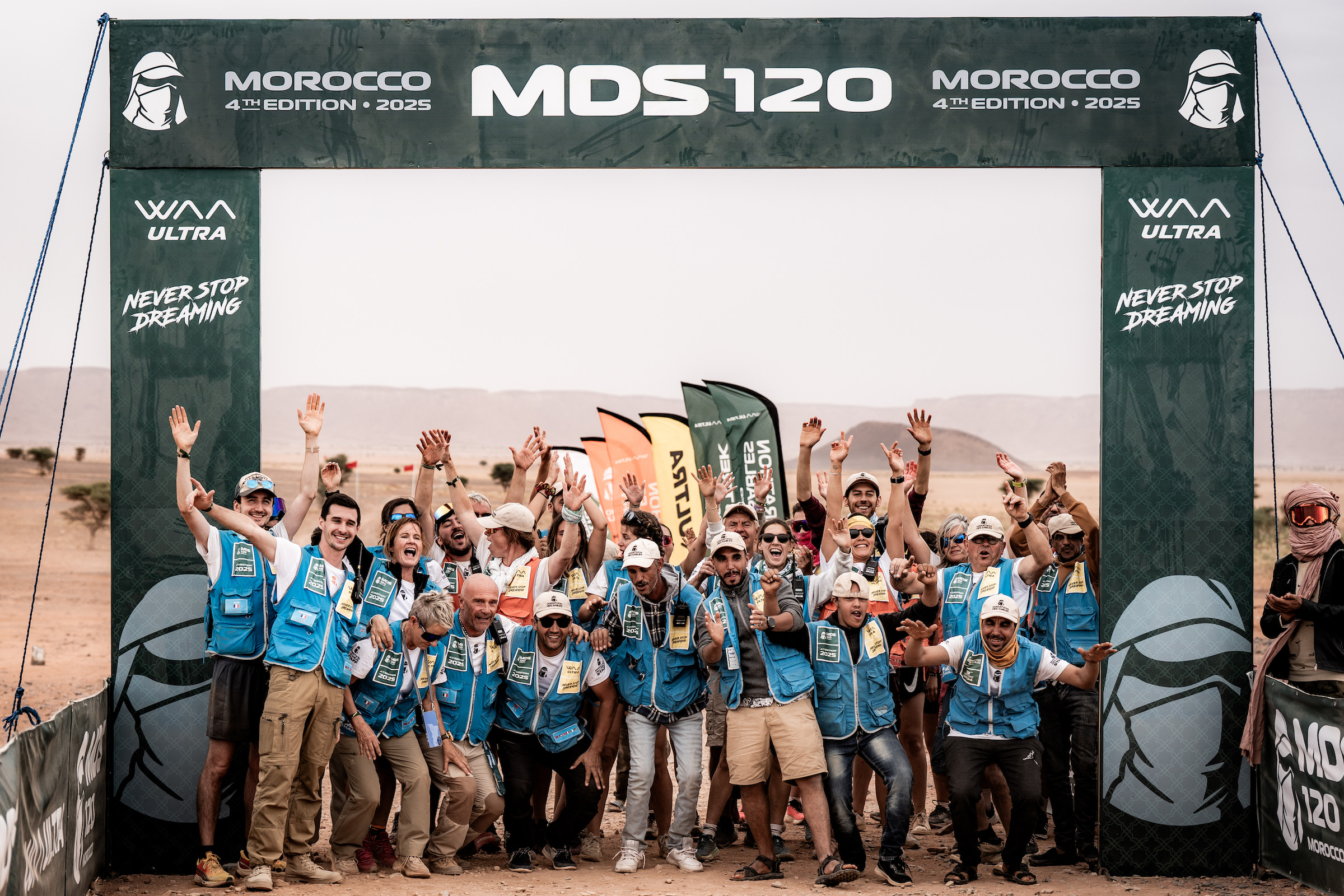
MDS 120 Morocco

Races like the Marathon des Sables or the Dragon’s Back Race take the complexity of a one-day race and multiply it several times over and then add some! Every additional day means more logistics, more transport, more staff, more food, more safety coverage, more accommodation, more contingency planning.

Trofeo Kima – Italy

A week-long mountain race is not just a race repeated seven times. It is an expedition with hundreds of participants. Costs scale quickly. And with that scale comes risk, financial risk.

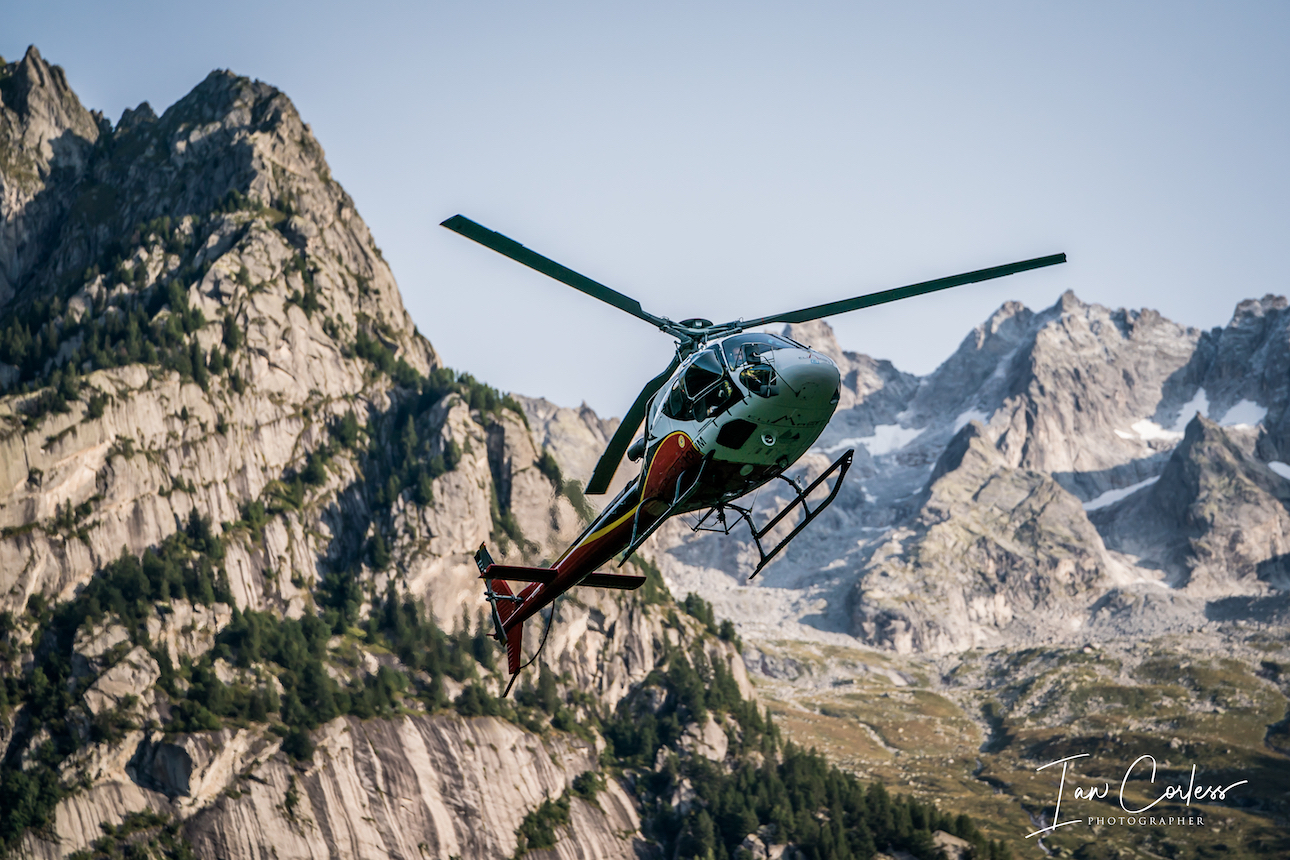
Race organizer’s carry it all – permits, deposits, infrastructure, insurance, tracking, staff contracts, transport bookings, equipment hire, maybe even helicopter cover – most of these costs are committed long before the first runner even registers.

Running races today are not informal club gatherings. They are businesses. That does not mean organisers are making huge profits. In many cases, margins are incredibly tight. Weather can disrupt events. Participation numbers can fluctuate. A single cancellation can create massive financial losses.

Which brings recent events into focus.

Cape Wrath

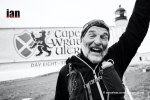
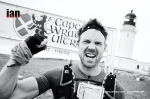
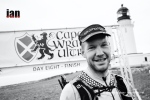
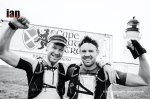
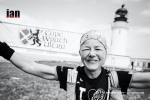
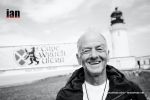
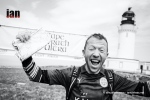
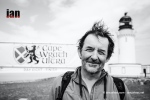
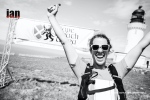
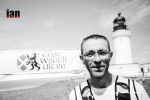
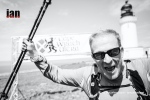
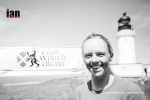
The closure of Ourea Events surprised many runners. Their races, including the Dragon’s Back Race and the Cape Wrath Ultra, were often described as expensive. But when you actually look at what those races involved, the pricing begins to make sense.

Multi-day racing across remote mountains with extensive safety systems, complex logistics, transport of participants and equipment across long distances with camps, food, communications and medical support – this is expensive.

Events like that are extraordinarily complicated to deliver safely. Perhaps the bigger question is not whether those races were expensive. Perhaps the question is whether they were ever truly priced to reflect what they actually cost.

There is often an expectation that race organisers should keep entry fees low, almost as if races are a community service rather than a professional undertaking. But if you organise a race today, especially in remote or mountainous terrain, you are operating a business – you have to be. No business can survive if it consistently prices its product below its true cost.

The running community may need to confront an uncomfortable reality. If we want well-organised, safe, professionally run events with excellent logistics, that comes at a price.

If we want medical coverage in remote mountains, that costs money. If we want reliable course marking, well-stocked aid stations, experienced crews, proper safety oversight and seamless logistics, that costs money too.

None of it appears out of thin air.

Of course, no one is forced to enter a race. And that’s an important point. If a race entry fee feels too high, the trails are still there. The mountains are still there. You can run the same paths any day of the week for free.

But if we choose to participate in organised races, especially the kind that now define modern trail and ultrarunning, we need to understand what it actually takes to create them.

Behind every start line is a year of planning. Behind every finish line is a huge operational effort. And behind every race number is a long list of people, equipment, safety systems and infrastructure working to make sure runners get through the experience safely.

UTMB

Running may be simple.

Organizing a race no longer is.

And perhaps it’s time the community fully recognized that.

Follow Ian Corless

Instagram – @iancorlessphotography

Twitter – @talkultra

facebook.com/iancorlessphotography

Web – www.iancorless.com
Web – www.iancorlessphotography.com

OUREA EVENTS CEASE TRADING – A SAD DAY

The news that Ourea Events has ceased trading lands heavily on the UK mountain and ultra running community. For many of us, this isn’t just the loss of an event company. It feels like the closing of a chapter in the story of British mountain running.

Shane Ohly and his team didn’t just organise races. They shaped a culture.

At a time when the UK ultra scene was still finding its feet, Ourea created events that felt raw, adventurous, and deeply connected to the mountains. These were not simply races measured by split times and finish lines. They were journeys that asked something of you: navigation, resilience, judgement, and a willingness to be uncomfortable for long stretches of time.

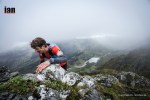
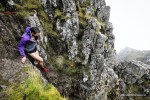
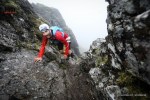
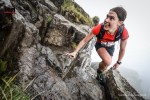
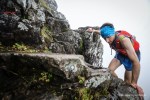
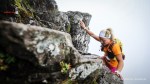
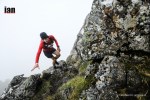
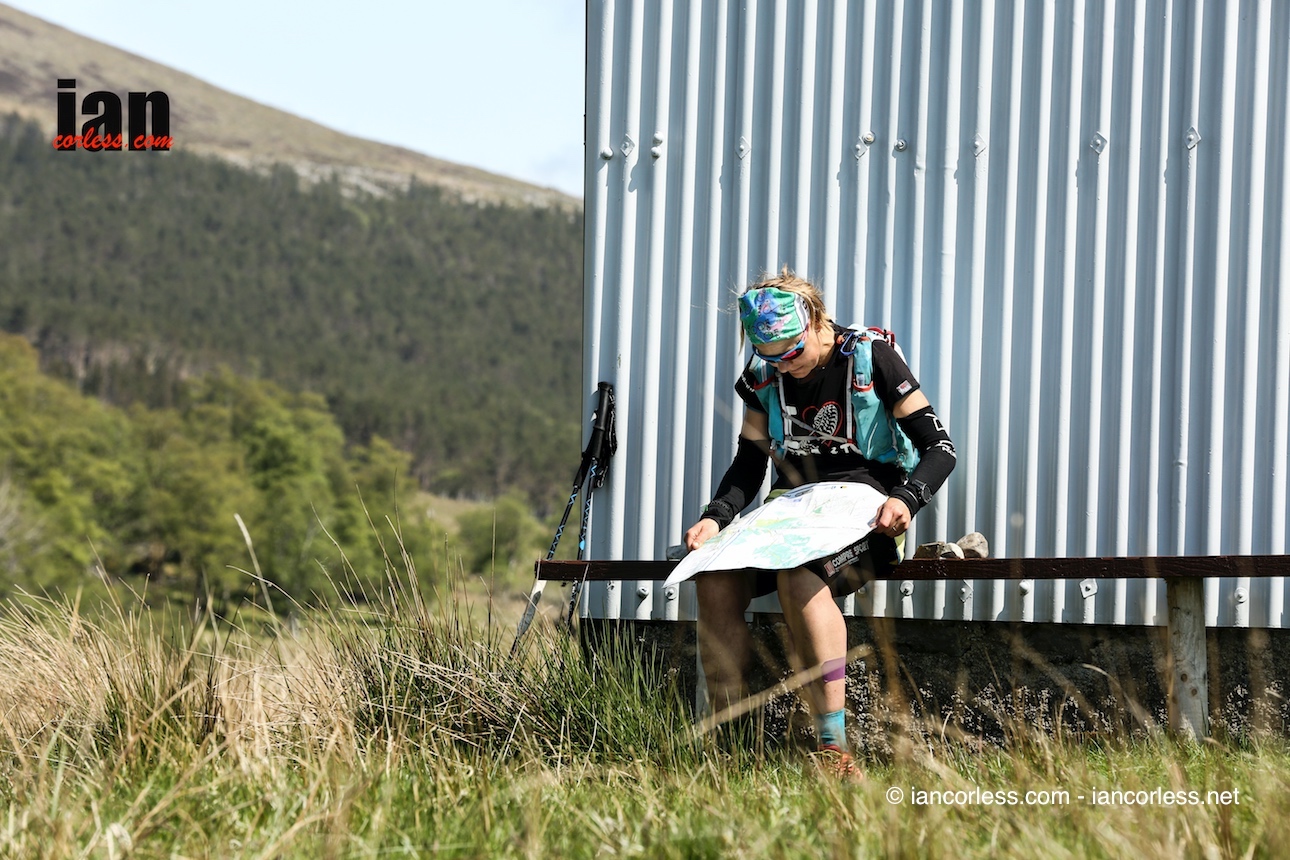
The Dragons Back Race set the tone. For many runners it was their first taste of a true multi-day mountain expedition disguised as a race. Self-navigation with map and compass across the spine of Wales made it feel less like a sporting event and more like an adventure in the purest sense.

From there came a string of events that helped define a generation of UK mountain runners. The Great Lakeland 3 Day, Dark Mountains, the ROC Mountain Marathon and more. Each had its own character, but they all carried the same spirit: serious mountains, thoughtful course design, and an expectation that runners would meet the terrain on its terms.

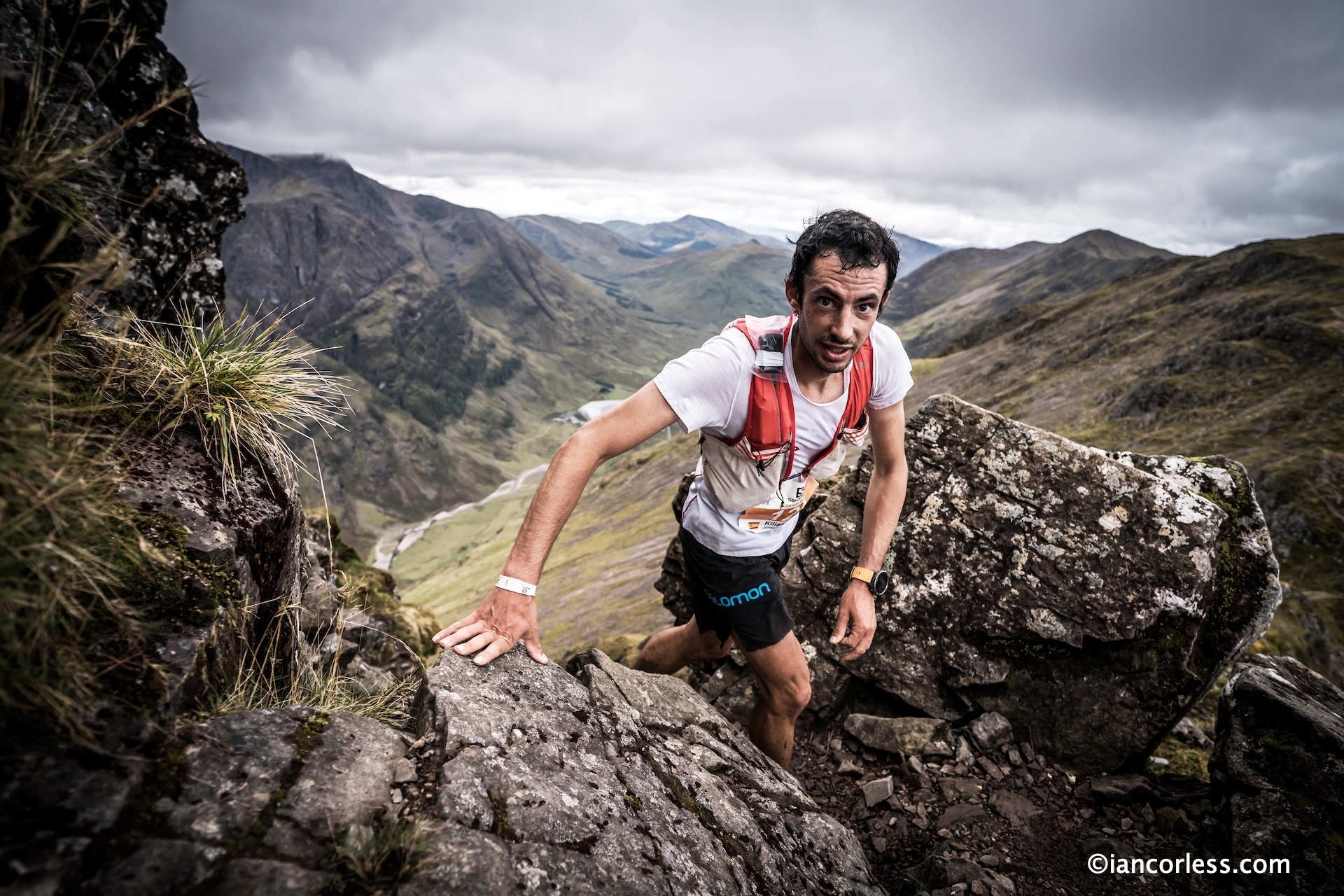
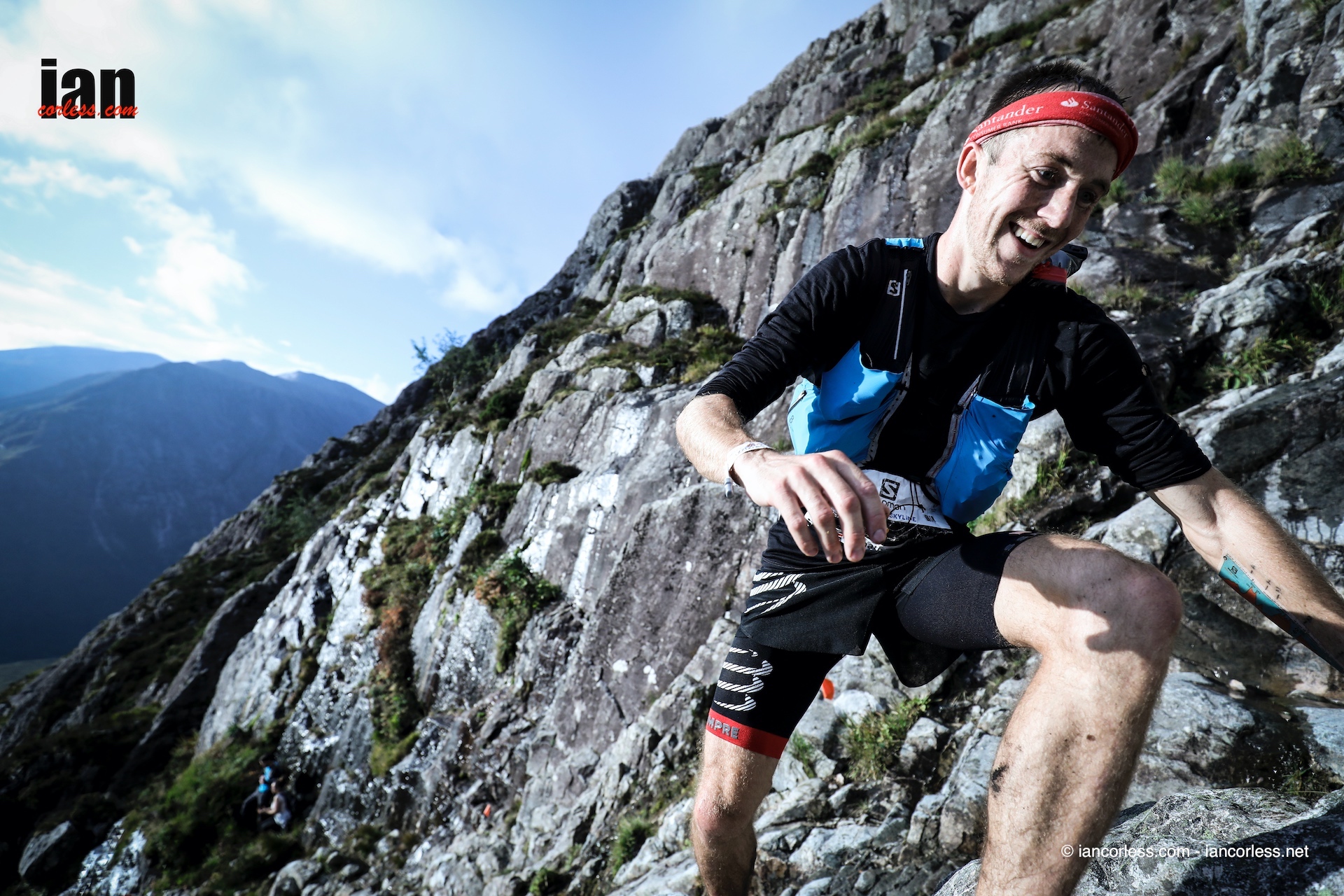
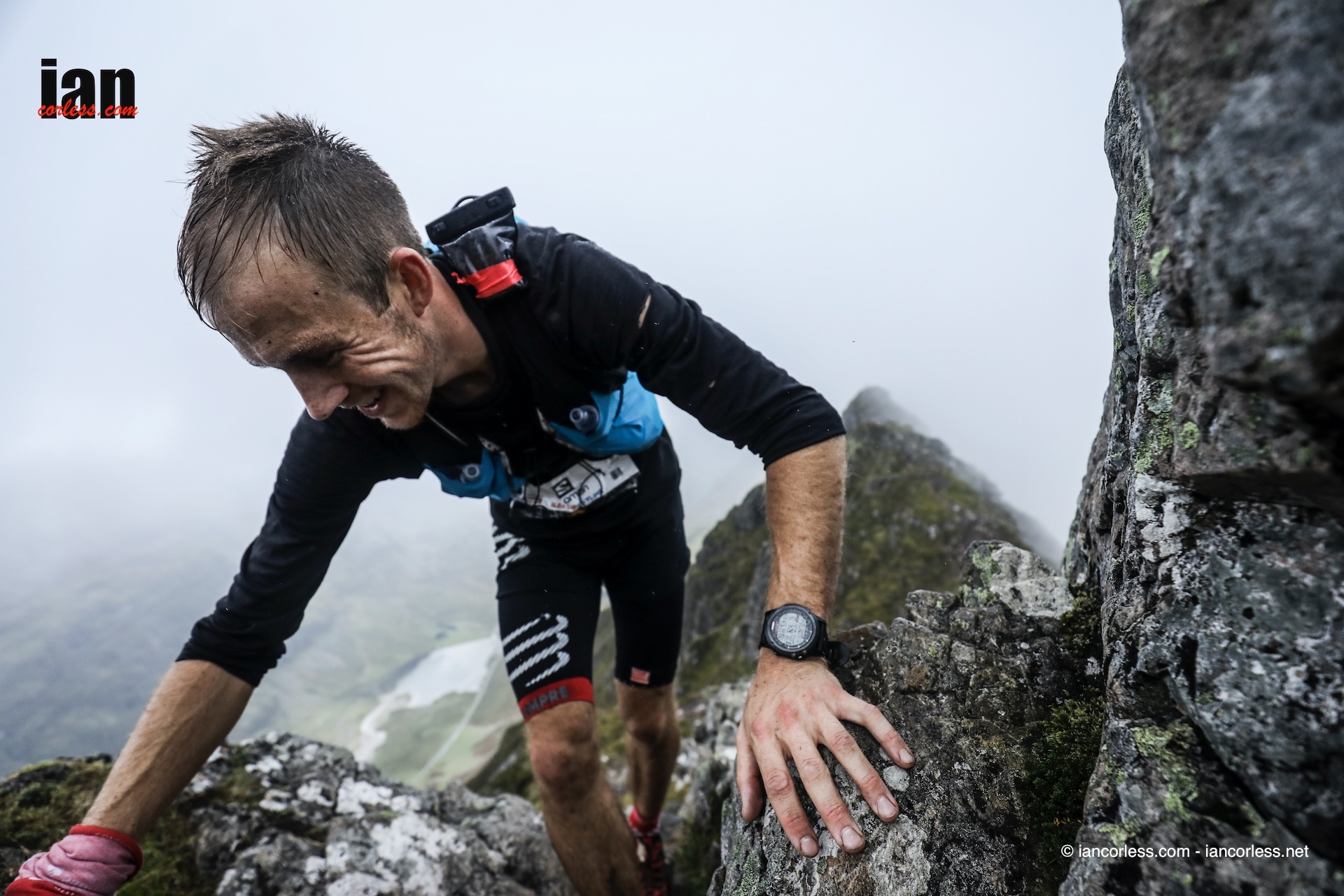
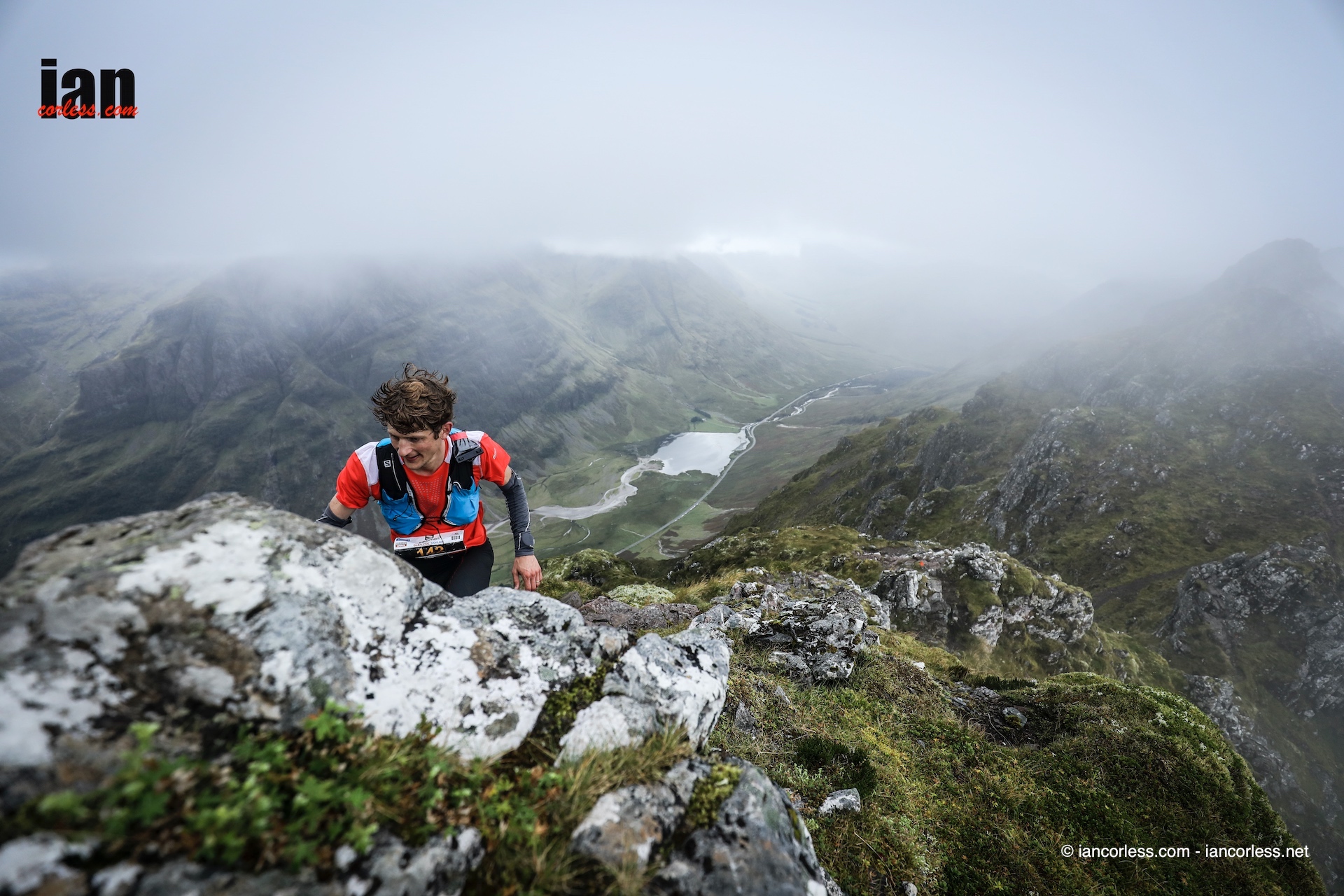
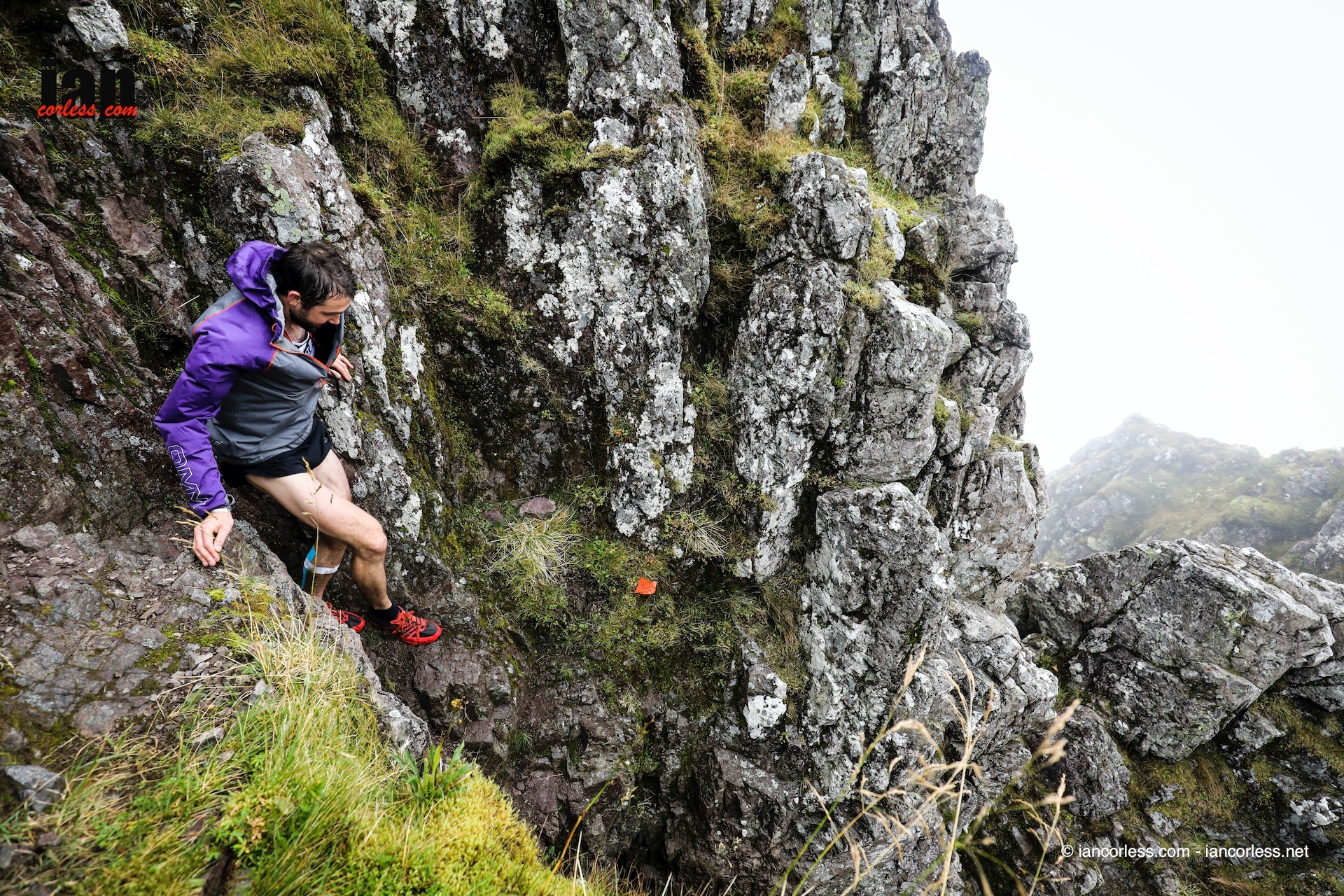
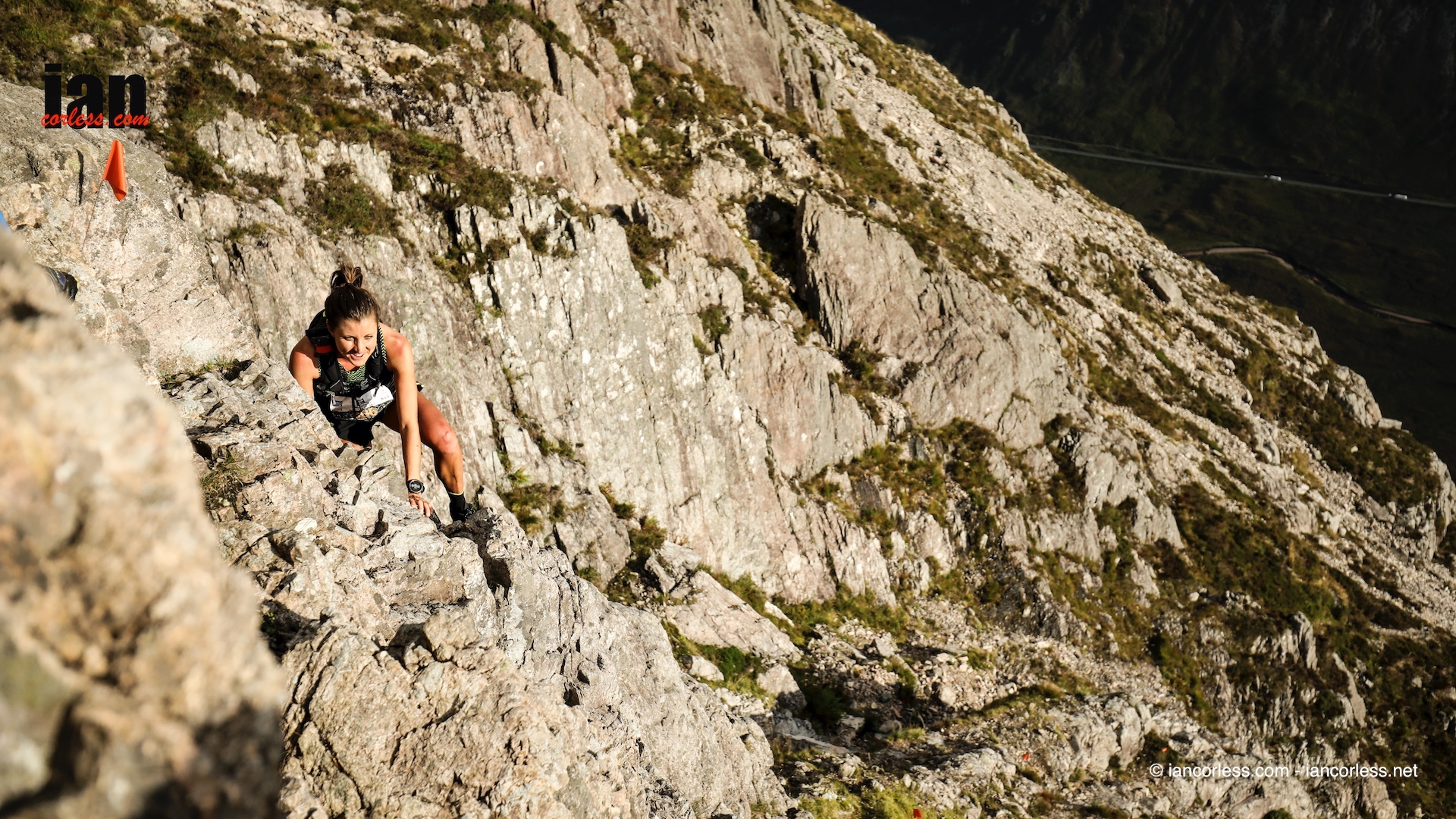
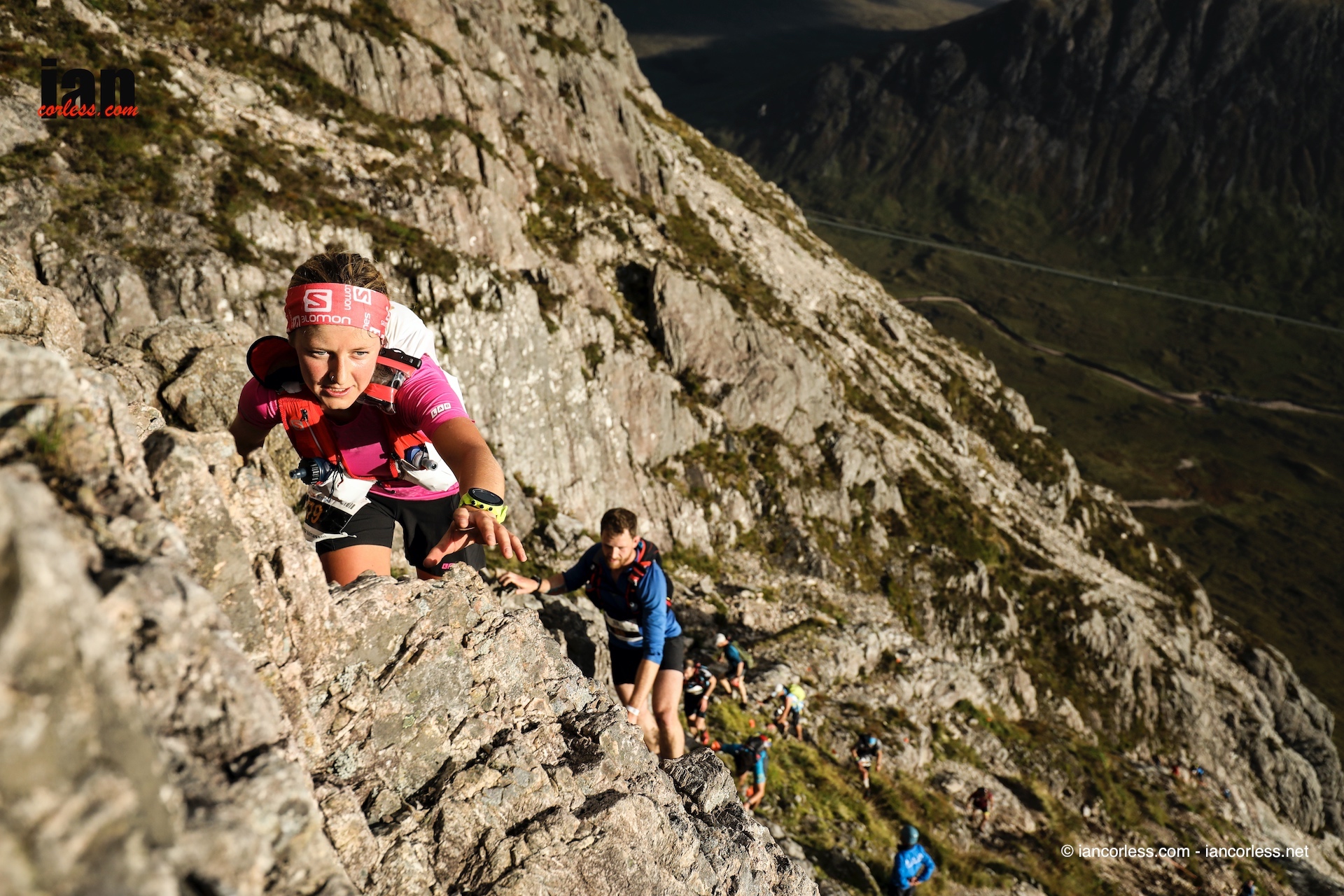
Like many others, I was lucky enough to experience several of these events firsthand. I was there for the first Cape Wrath Ultra. I experienced the return of the Dragons Back. And the moment I’m perhaps most proud of was helping create the Glencoe Skyline as part of Skyrunning UK. That event in particular showed just how far the UK mountain running scene had evolved. Technical, spectacular, and unapologetically demanding, it placed Scottish ridgelines onto the world skyrunning map. We brought the world’s best to Scotland – Kilian Jornet, Emelie Forsberg, Katie Schide, Jasmin Paris, Jon Albon, Marco Degasperi, Henrietta Albon, Tove Alexanderson, Laura Orgue, Hillary Gerardi and the list goes on…. A who’s who of the mountain running world.

So the collapse of Ourea feels deeply personal to many of us.

But it also raises bigger questions.

The last few years have been brutal for independent race organisers. Covid wiped out entire seasons and left financial scars that many companies never fully recovered from. Brexit complicated logistics, staffing, and international participation. Costs across the board have risen sharply.

At the same time, the global trail running landscape has changed. The rise and dominance of UTMB has reshaped the market, pulling attention, sponsorship, and runners toward a global series model. For smaller, independent organisers, competing in that environment is incredibly difficult.

Ourea may have technically survived Covid and Brexit, but survival does not mean recovery. The damage done during those years can take a long time to surface, and sometimes the final collapse comes long after the initial shock.

Right now, the most immediate concern is for runners who have paid entry fees for 2026 events. Hopefully many will be protected through credit or debit card payments and able to recover funds through Section 75 or chargeback claims. But even if that is resolved, the bigger uncertainty remains.

What happens now?

What happens to the UK mountain running scene without one of its most creative organisers?

And what happens to the races themselves?

Events like the Dragons Back, Cape Wrath Ultra, and Glencoe Skyline are more than entries on a calendar. They have become part of the identity of British mountain running. They hold stories, ambitions, and personal milestones for thousands of runners.

In some ways, races are like mountain routes. They can outlive the people who first established them.

So perhaps the real question is whether these events can find new custodians. Whether another organiser can pick up the threads and carry them forward without losing what made them special in the first place. That balance between professionalism and wildness is fragile, and it was something Ourea managed remarkably well.

For now, though, it is simply a moment to pause and recognize what was built.

Many of the most memorable mountain running experiences in the UK over the past decade trace back to the vision and work of Shane Ohly and the Ourea team. They created races that pushed boundaries, respected the mountains, and inspired a generation of runners to go further than they thought possible.

Whatever happens next for these events, that legacy will remain.

And for those of us who stood on start lines in Wales, the Lakes, the Highlands, or deep in the night at Dark Mountains, the memories will always be there.

Follow Ian Corless

Instagram – @iancorlessphotography

Twitter – @talkultra

facebook.com/iancorlessphotography

Web – www.iancorless.com
Web – www.iancorlessphotography.com

Tom Evans – Zero to 100

It was incredible. The preparation. The event. The course. The journey.

The process. The outcome.

I knew I always wanted to challenge myself over 100 miles…I just never expected it to be in this incredible race. I was privileged to have qualified to race so to have a Race Crew and Filming Crew follow my journey over the race to an unexpected end was amazing.

I had the immense pleasure to meet Tom at Marathon des Sables, he was a complete unknown who on day-1 of the race, rocked the apple cart and the Moroccan dominance of the race. Myself, the rest of the media and all the runner’s in the race were asking the question, “Who is Tom Evans?”

By the end of the MDS, we had an answer. He placed 3rd and in the process, the ultra-running world welcomed a new star in the sport. He was without a sponsor and still a captain in the army.

Post MDS, we discussed opportunities and how Tom could achieve his goals. I was fortunate that Tom decided to join me on my annual Lanzarote Training Camp. He joined us as a coach and ambassador.

It was easy to see Tom’s ability. Few on the camp could keep up with him and those that could went on to race well at the following Marathon des Sables. In particular, Gemma Game who made the podium.

Following our camp, Tom joined me in Costa Rica for The Coastal Challenge. I was keen to see him race once again over multiple days and this time without being in a self-sufficient manner. I arrange the elite field and I was determined to give Tom and the rest, a hard race. Hayden Hawks, Timothy Olson and Marcus Scotney amongst others toed the line.

Tom arrived to race and it was clear from the off, he had an agenda. He had researched the race, looked at the stages, checked the times and not only did he have ambitions to win the race, but also set a new course record. Hayden and Tom raced head-to-head day-after-day but victory and the CR was never in doubt, Tom dominated.

It was time to set the goals higher and work to higher objectives. Tom represented his country and placed 3rd at the world championships. He dipped his toe in skyrunning races going head-to-head with skyrunning world champion, Jon Albon. But all along, the big goal was CCC part of the UTMB races.

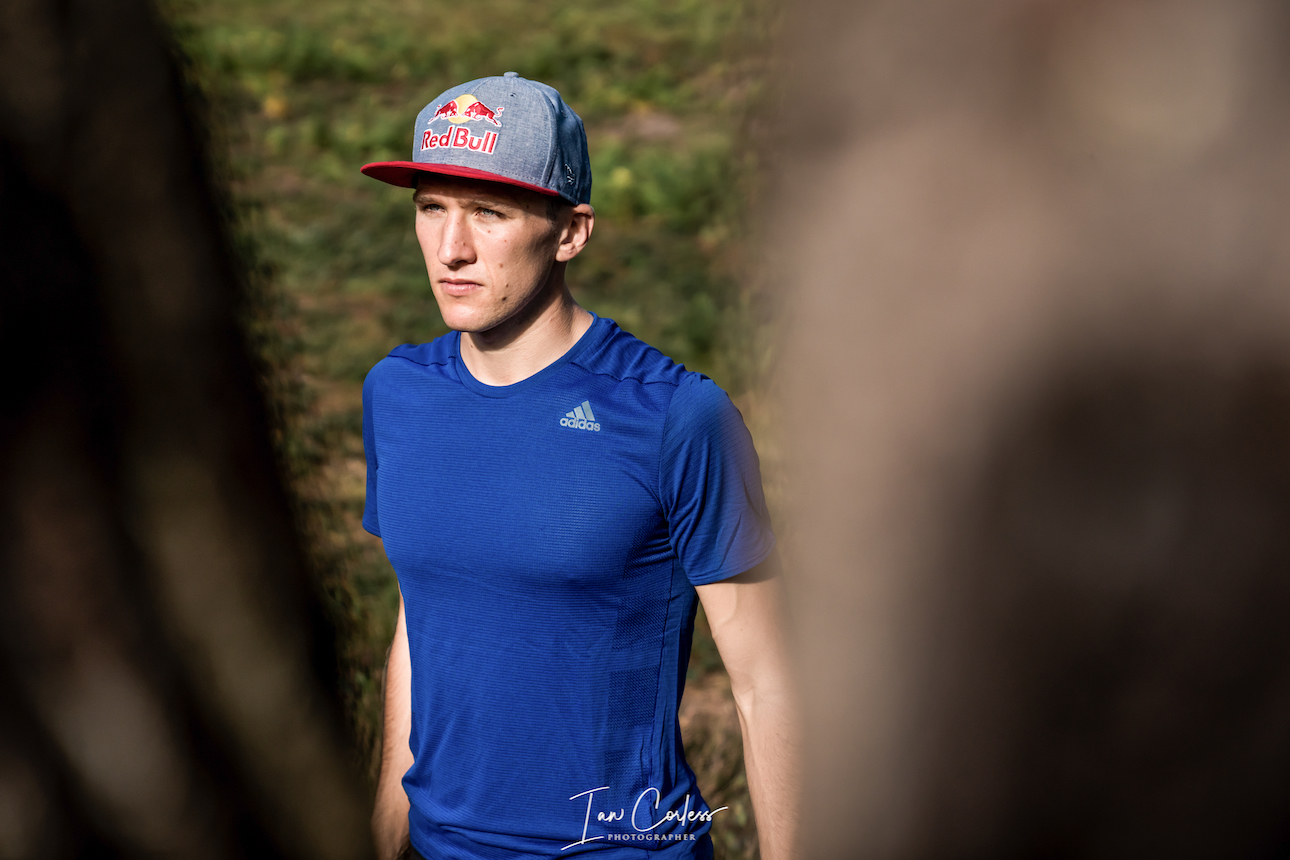
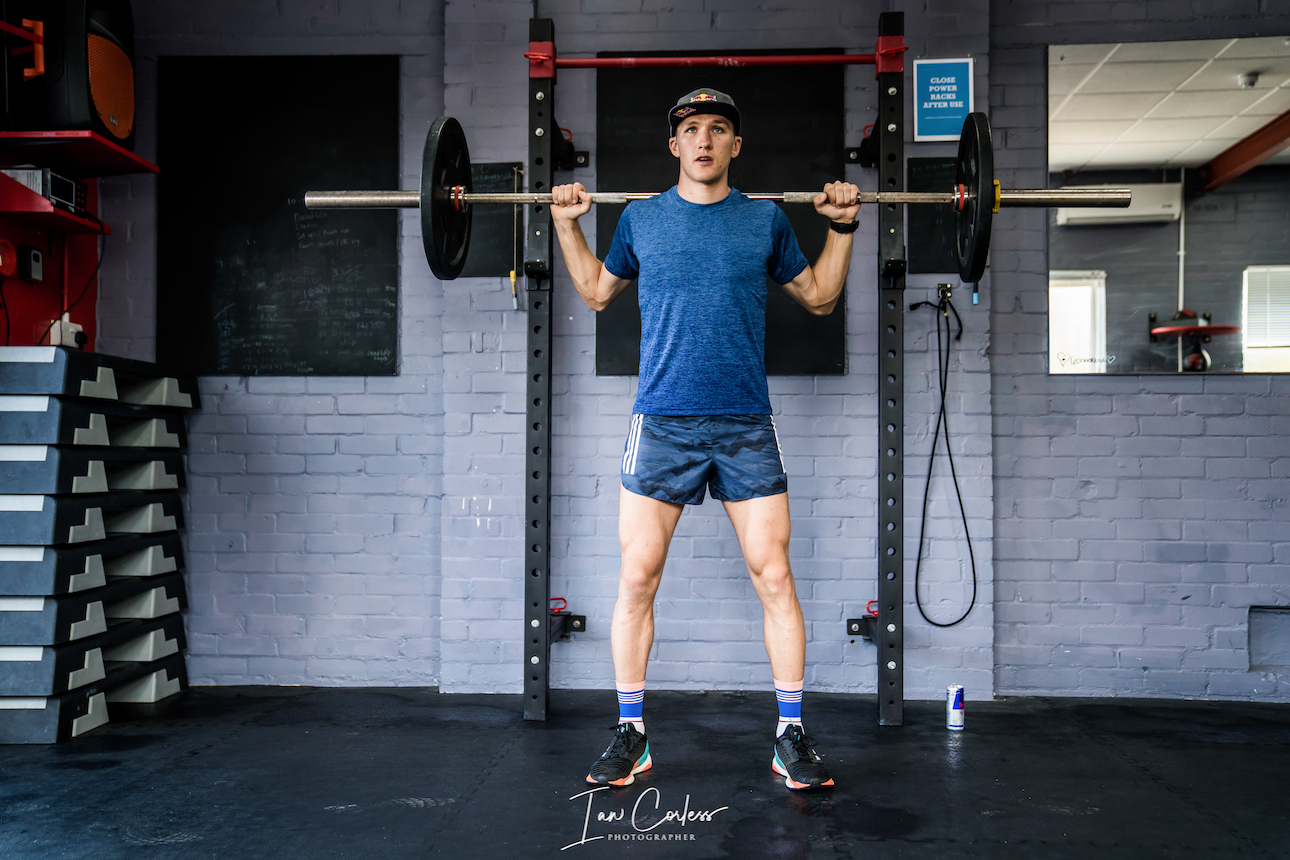
Just prior to CCC, Tom signed a deal with Red Bull. I was fortunate to join Tom at his family home in the UK and document his training.

At CCC, running the perfect race, Tom closed on the lead in the latter stages of the race, forged ahead and won the biggest race of his life. A sponsorship deal with adidas Terrex followed and the dream of Western States started to fall in to place.

Zero to 100 tells the story of Tom’s inaugural 100-mile race, the iconic Western States in the USA. To place in the top-10 here would have been an incredible result, but Tom went on to place 3rd and in the process run under 15-hours. He trained in Ethiopia to prepare and you can listen to the whole process in episode 174 of Talk Ultra listed below.

ZERO TO 100

Process not Outcome

Tom has always discussed his thoughts on training and racing and one element that always runs true is ‘Process not Outcome.’ His ability to focus on the prize, dedicate himself to the task and take running to a higher and higher level is all down to his dedication and professional approach.

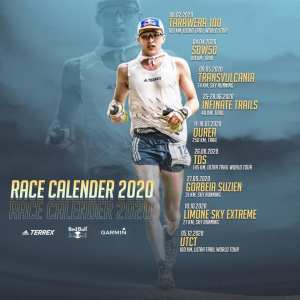
In 2020, Tom will target new races, new goals and new experiences. One thing is for sure, after victory at Tarawera Ultra in New Zealand early in the year, Tom is in the perfect place to fulfil his dreams. I would expect no less…!

2020 calendar subject to change based around Covid-19

Over the past couple of years, I have documented Tom’s progress via my podcast, Talk Ultra, you can listen to the episodes below:

Tom Evans and the 2017 Marathon des Sables HERE

Episode 133 Podcast, Marathon des Sables HERE

Episode 152 Podcast, The Coastal Challenge HERE

Episode 174 Podcast, Western States HERE

Please support this website. I believe everyone deserves to read quality, independent and factual articles – that’s why this website is open to all. Free press has never been so vital. I hope I can keep providing independent articles with your help. Any contribution, however big or small, is so valuable to help finance regular content. Please support me on Patreon HERE.

Follow on:

Instagram – @iancorlessphotography

Twitter – @talkultra

facebook.com/iancorlessphotography

Web – www.iancorless.com
Web – www.iancorlessphotography.com
Image sales –www.iancorless.photoshelter.com
Salomon Glen Coe Skyline 2016 Race Summary and Images – Skyrunner® Extreme Series

iancorless-com_glencoe2016-9454

Extreme! Yes, it was… that was the consensus as the Skyline Scotland’s Salomon Glencoe Skyline drew to a conclusion after only its 2nd edition.

Last year, Skyrunning superstar Emelie Forsberg, travelled to Scotland to take part in the first edition of the race. She placed 2nd overall and won the female category. After the race she said that ‘this’ race truly is one of the best races out there!

Cut to 2016 and Skyline Scotland developed a VK race and SKY race to join the Glencoe Skyline which had gained the approval from the ISF (International Skyrunning Federation) to be one of three races that would make a new ‘SkyExtreme’ category in 2016. This three race series also include Tromso SkyRace and the iconic, Trofeo Kima.
Many had said that Skyrunning in the UK was not possible.

Ask again – not one participant in the 2016 edition of the race would question the legitimacy of how extreme this race was.

Gaining Skyrunner® Extreme Series status also has a huge impact on the participants taking part. It’s fair to say, that the 2016 edition of the race had arguably one of the greatest fields ever assembled for a mountain race.

iancorless-com_glencoe2016-0651

Coming into this edition, Jonathan Albon and Tom Owens were the hot favourites to take away the title of Skyrunner® Extreme Series champion and in the ladies race, Jasmin Paris after victory in Tromso was a likely female champion.
iancorless-com_glencoe2016-0686

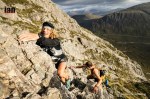
The race played out as expected with Tom Owens and Jon Albon pushing each other throughout the early stages of the race with strong competition coming from Marc Lauenstein, Finlay Wild and Salomon team manager, Greg Vollet. It was Jonathan Albon though that snapped the elastic pulling away for Tom Owens running on home soil. Pre-race predictions were blown out of the water and Jonathan crossed the line first in a blistering 6:33:52. To put this time in perspective, it is over 1-hour faster than the 2015 course with additional distance and vertical gain.

iancorless-com_glencoe2016-0734

Tom Owens suffered with foot issues throughout the race but battled all the time. He finished 2nd in 6:37:21. Zegama-Aizkorri and Matterhorn Ultraks winner Marc Lauenstein, although not competing for the Skyrunner® Extreme Series title was always a potential contender for victory or the podium and he didn’t disappoint in finishing 3rd in 6:54:37. As Marc came to the end of one of the more technical sections of the race, the infamous Aonach Eagach, he said, “This is one seriously technical and challenging race!”

iancorless-com_glencoe2016-0793

Local man and Ben Nevis expert, Finlay Wild placed 4th and Greg Vollet 5th, their times 7:00:57 and 7:10:19.

iancorless-com_glencoe2016-0839

In the ladies’ race, Jasmin Paris lead from the gun and although Ruth Croft did catch her at one point, Jasmin placed her foot on the gas and pulled away becoming not only a convincing Salomon Glencoe Skyline winner but also a Skyrunner® Extreme Series champion. Quite incredible when you consider that just recently she placed 6th at UTMB. Jasmin’s time of 8:15:56 will be considered a CR for this new course.

iancorless-com_glencoe2016-9957

iancorless-com_glencoe2016-1177

Malene Bikken Haukoy ran a savvy race pacing herself in the early stages to move up through the field and eventually place 2nd in the ladies’ race in 8:23:04. Her podium finish in Tromso SkyRace also providing valuable points for the Skyrunner® Extreme Series.

iancorless-com_glencoe2016-1193

Sarah Ridgway is now the leader of the Skyrunning UK Series and her 3rd place on the ladies podium showed incredible consistency, her time 8:44:40.

iancorless-com_glencoe2016-9993

Ruth Croft found today’s course a challenge after placing 2nd at Trofeo Kima recently. Despite difficulties though, Ruth ran a strong race gaining valuable points for the Skyrunner® Extreme Series.

iancorless-com_glencoe2016-0211

Martina Valmassoi rounded out the top 5.

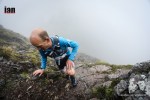
The Salomon Glencoe Skyline route features long and sustained sections of scrambling terrain, which is roughly equivalent to moderate standard rock climbing. In addition, the race traverses high and remote mountainous terrain, which is at times impossible to retreat from and may be subject to severe and rapidly changing weather. The day started in glorious sunshine but as predicted, a weather system arrived late morning making the crossing off the Aonach Eagach a wet one with limited visibility due to clag and mist.

As expected, the race had many dropouts due to the severe course and inclement weather in the latter half of the day. Ultimately though, the feedback and response has been incredible.

2016 was the start of really big things for the UK Skyrunning scene and the Salomon Glencoe Skyline is not only paving the way and setting the benchmark within the UK but also for Europe and farther afield.

RESULTS

  1. Jonathan Albon 6:33:52
  2. Tom Owens 6:37:21
  3. Marc Lauenstein 6:54:37
  4. Finlay Wild 7:00:57
  5. Greg Vollet 7:10:19
  1. Jasmin Paris 8:15:56
  2. Malene Bikken Haukoy 8:23:04
  3. Sarah Ridgway 8:44:40
  4. Ruth Croft 9:10:33
  5. Martina Valmassoi 9:14:37

Extreme Series ranking. Final*
Men
1. Jonathan Albon (GBR) – 208 points
2. Tom Owens (GBR) – 205.6 points
3. Finlay Wild (GBR) – 164.4 points
4. Andew Fallas (GBR) – 143 points
5. Sota Ogawa (JAP) – 128.4 points

Women
1. Jasmin Paris (GBR) – 220 points
2. Malene Haukøy (NOR) – 193.6 points
3. Ruth Croft (NZL) – 172 points
4. Martina Valmassoi (ITA – 152.4 points
5. Natalia Tomasiak (POL) – 127.6 points

Click on an image to view in a gallery

Images available at iancorless.photoshelter.com
Salomon Ring of Steall Skyrace 2016 Results and Images

iancorless-com_glencoe2016-8364

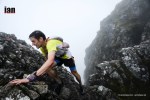
Uncompromising mountain running, ridges, scrambles, steep ascents, boggy ground and a bucket full of technical running made the Salomon Ring of Steall Skyrace™ the UK’s Zegama! Following in the tradition of Skyrunning iconic race, Zegama-Aizkorri, the inaugural Salomon Ring of Steall has been touted by all who run it as one of the toughest 25km’s they have ever run! A sentiment echoed by race winner and Skyrunning World Champion for the VK and SKY distance, Stian Angermund: “That was one incredibly tough and beautiful race. Wow, so technical and relentless. The ridges were long and challenging and the climbing kept coming. It really is an incredible race and one that I loved. I’d love to do more races like this!”

“A variation of the classic ‘Ring of Steall’ ridge-walking route this 25km / 2,500m mountain race has spectacular views of Ben Nevis from the Mamores and includes short sections of easy scrambling.”

iancorless-com_glencoe2016-8402-2

Stian followed up his 2nd place in the previous day’s VK with a stunning win in an incredible 3:25:28. Race predictions stated that a 4-hour race was possible, but more like 4 to 4:15. A true reflection on the talent of the Salomon runner.

iancorless-com_glencoe2016-8465

Mamores VK winner Alexis Sevennec did a role reversal with Stian placing 2nd in3:29:04, also an ‘off-the-scale’ time.

iancorless-com_glencoe2016-7400

Adrien Perret placed 4th in the Mamores VK and today moved one step up to take the final podium place in 4:00:51.

iancorless-com_glencoe2016-8694

In the ladies’ race, Georgia Tindley did the ‘double’ winning the Mamores VK and then backing up with a stunning Ring of Steall victory in 4:39:20.

iancorless-com_glencoe2016-8774

Hollie Orr and Jessica Tullie had a neck-and-neck race for 2nd and 3rd with Hollie ‘just’ taking the 2nd podium slot, their times 4:51:53 and 4:52:29

This Skyrunning race route incorporated two lofty ridges within the Mamores, including the Devil’s Ridge, which provides a thrilling and airy traverse with Glen Nevis visible ahead and as a yawning drop far below, and Ben Nevis beyond and towering above.

The Salomon Ring of Steall Skyrace™ is set to become a classic Skyrunning event.

Race results HERE

More images to follow and images available for purchase HERE

Social Media Logos

Facebook/iancorlessphotography
Twitter (@talkultra)
Instagram (@iancorlessphotography) 

Follow the Skyrunner® World Series on social media platforms

Facebook.com/skyrunning
Twitter @skyrunning_com
Instagram @skyrunning

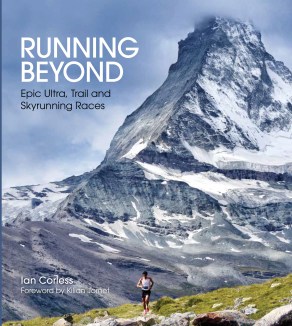
Glen Coe Skyline is featured in my new book, RUNNING BEYOND (information here)

RunningBeyond_JKT

The Cape Wrath Ultra™ 2016 – Day 8 THEY DID IT!

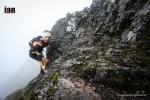
No words, just pictures – 400km, 8 days, from Fort William to Cape Wrath.
The Cape Wrath Ultra™ 2016 concludes

Overall results, final rankings and leaderboard and news about the 2018 Cape Wrath Ultra can be found at http://www.capewrathultra.com

CapeWrathLogo

The Cape Wrath Ultra™ 2016 – Day 6

©iancorless.com_CapeWrath2016-1952

Day 6 was ’just’ 45 miles and what a day – the longest day of the 2016 Cape Wrath Ultra. The early stages were remote and isolated but in the latter stages, the mountains loomed and single-track trail lead the runners into camp. It was another day of wall-to-wall sunshine and many are saying, me included, that we may never come back to Scotland as the weather could never be this good again!

The views, the scenery, the landscape and the mountains have been magical – almost alpine! It has been quite an amazing week and journey. Of course, the race is not yet over.

Day 6 was a long day and not all runners made the finish but those that did were all home by 2100 hours. With over 30 miles tomorrow for stage 5, it is starting to look likely that many who start tomorrow will finish the 2016 Cape Wrath Ultra. But as Shane Ohly says, ‘After this many days running, bodies, minds and legs are tired and stage 7 is a tough day, certainly over the first half!’

Marcus Scotney and Ita Emanuela Marzotto, once again were the male and female 1st placed runners on the day, that is 6 out of 6 for Scotney and in all honesty, he made it look it easy.

Thomas Adams gain ran a strong 2nd and Andrew Biffen/ Stuart MacDonald, for the ladies, Laura Watson finished 2nd and Louise Staples 3rd.

Overall standings after day-6

Marcus Scotney 32:21:17

Thomas Adams 34:22:47

Pavel Paloncy 39:31:48

Ita Manuela Mariotto 49:03:02

Laura Watson 51:18:08

Louise Staples 52:11:49


Follow the Cape Wrath Ultra live on http://www.capewrathultra.com

CapeWrathLogo

Cape Wrath Ultra™ 2016 Preview

CapeWrathUltralogoThe Cape Wrath Ultra™ brought to you by Ourea Events, the team who revived the Dragon’s Back Race are in the countdown days to a once in a lifetime multi-day journey that will test mind and body over 8-days weaving a 400km journey through the Highlands of Scotland.
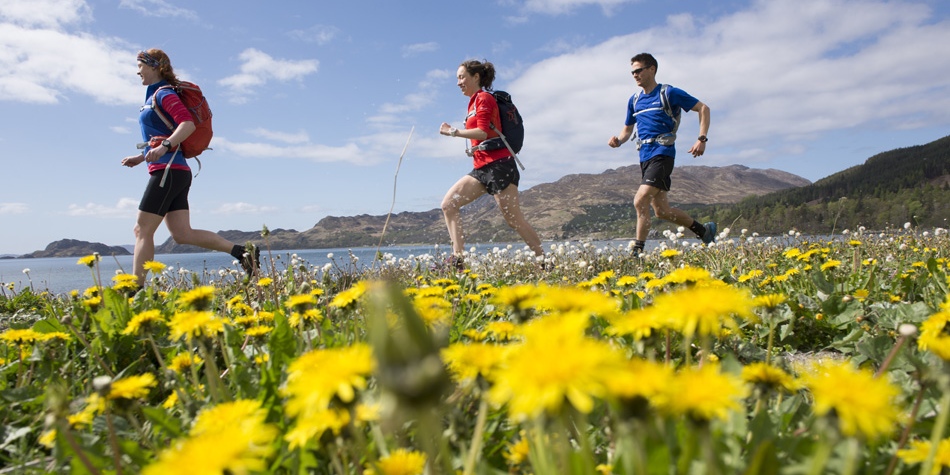
Starting at Fort William on May 22nd, the race will take runners on an incredible journey in a magnificent and remote part of the world that will culminate in the most northwesterly point of the British Isles, Cape Wrath on May 29th.

Cape Wrath Ultra website HERE

Map-Route-31-12-15-Version3

Stunning scenery, remote wilderness, beautiful lochs, glens, towering mountains and the crashing ocean, the Cape Wrath Ultra™ is arguably one of the most stunning multi-day journeys in the world.

A supported expedition, equipment for the competitor’s will be transported day-by-day, tented accommodation and meals will be provided.

In a nutshell, 400km (250-miles) over and through the Scottish Highlands will be the ultimate test for the runners as they navigate via map and compass (GPS are allowed with GPX routes provided by Ourea Events) over 8-days over multiple distances with a variety of terrain and elevation gain. Shane Ohly, race director for the race says:

“The route is not marked in any way and participants must use the event map and/or GPS device to follow the prescribed route. As organisers, we (and friends, family, members of the public and landowners) will be tracking participants in real time using the satellite trackers. We expect participants to stay within 200m of our advised route at all times. In practical terms, for the majority of the time this is very easy as our route generally follows the only path or track on the ground: it is the only logical way. At other times, where there is no visible path on the ground, you will have flexibility to range within 200m of the route so that you should feel little pressure to follow our route precisely at all times and can enjoy the incredible wilderness experience to the full.”


Image © Ben Winston

Image © Ben Winston

Day 1: 23 miles 500m ascent

Day 1 starts with a short ferry trip across Loch Linnhe sea loch onto the shore opposite Fort William. The running opens with a straight-forward warm up on a lovely road, headed South! But this is the key to accessing the remote western sea-board of Scotland, and on this day-end, the famous sights of Glenfinnan.

Day 2: 35 miles 1,800m ascent

From the very start of Day 2 the route ascends into remote territory, and clips the end of Scotland’s two longest dead-ends roads, both at remote sea loch heads. Even when you reach the overnight, you will be far, far away from civilization.

Day 3: 42 miles 2,400m ascent

This day is likely to be the hardest – though it is not the longest. It departs from the edge of Knoydart, passes through the large mountain and glen groups of Kintail, and reaches the wide strath’s (flat glens with big rivers) characteristic of Wester Ross. The Falls of Glomach are the most voluminous waterfalls in the Highlands.

Day 4: 22 miles 1,400m ascent

On this Day 4 you will experience the mountains at their loftiest – all around you, with high rocky passes, and rough underfoot in the latter third. It is one of the only days where you will not be close to the sea.

Day 5: 27 miles 1,400m ascent

Despite the previous days of remote territory, climbing up out of Kinlochewe on Day 5 will not prepare you for the qualities of what lies ahead. Fisherfield’s mountains will steadily reveal themselves to you! And then you will work through great isolated mountain glens, eventually overnighting just short of the port of Ullapool.

Day 6: 45 miles 1,400m ascent

This day escalates into some very remote and rough high ground, but is preceded by significant distances on double-tracks in the glens, and through prime Salmon-fishing country. Day 6 is the longest day, but for all those that have made it this far, this day will unlikely defeat you. (Inchnadamph is the highest overnight camp, at 80m, and one of the few that are noticeably not near sea level).

Day 7: 38 miles 1,600m ascent

One of the longer days, Day 7 gives a great contrast of moor, mountain, and deep inaccessible sea lochs. Eas a Chual Aluinn is the highest waterfall in the UK. At the end of this day is a rare section of road for this journey – but you will remember it as a road that is taking you somewhere amazing, due to the achingly beautiful seaward views.

Day 8: 16 miles 700m ascent

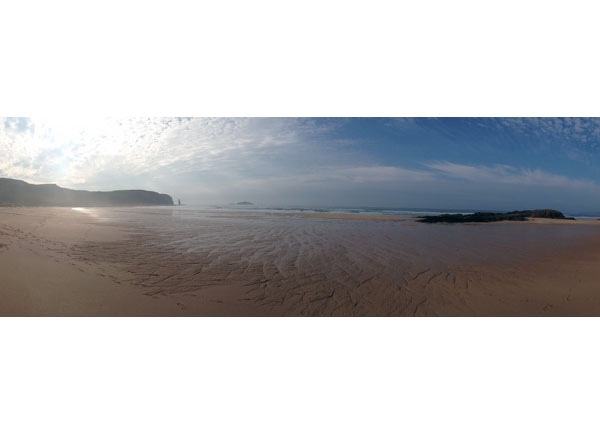
This is the day that takes you along the glorious beach of Sandwood Bay, to The Atlantic Sea proper and on to Cape Wrath and the Lighthouse, the most north-westerly point in the UK: A day to savor. It’s a deliberately shorter day. After finishing here, there will be a gradual minibus and ferry evacuation back to civilization in the village of Durness, 15 miles away, and a fitting sea loch coastal symmetry with the start, 8 days earlier. Once based in Durness, we hope that you have time to visit the beautiful beach just below the campsite, and nearby Smoo cave. In the evening, it’s time to celebrate, and in the morning, time to climb onto coaches and wave goodbye to the far north of Scotland.
©shaneohly

©shaneohly

Like the Dragon’s Back Race, the Cape Wrath Ultra™ is designed to provide a challenge for experienced runners. The Dragon’s Back Race has gained a reputation for its severity and drop out rate, although the Cape Wrath Ultra™ is a first edition, participants can expect an event of equal difficulty, especially when one considers the additional days and additional length of 100km.

Cape Wrath Ultra™ has gained worldwide interest with runners travelling to the UK from as far as Australia, Netherlands, South Africa, America, Sweden, Italy, Germany and more. An entry list is available to view HERE

Runners will travel to Scotland this coming Friday and arrive at Fort William in readiness to register on Saturday morning.

Racing starts on Sunday May 22nd and it will be possible to follow via live tracking HERE.

Daily images and reports will be posted on this website and all relevant social media channels as and when communications allow – we are in a remote part of the world!

Social Media Logos

Instagram @iancorlessphotography HERE

Twitter @talkultra HERE

Facebook.com/iancorlessphotography HERE

Many thanks to Ourea Events for the support

Ourea_Events_Logo(600)

Great Lakeland 3 Day 2016 #GL3D – Day 2

©iancorless.com_GL3D2016-1033

Yesterday I said, ‘The Lakes really are a special place any day, anytime, in any weather… well, almost?’

‘Well almost,’ hit today with some seriously torrential rain, gusting to gale force winds (particularly on the tops and in exposed areas) and at times slippery conditions underfoot. That’s the Lakes for you… the Lord giveth and the Lord taketh away.

Despite the onslaught of the weather, the scenery and the landscape still remained beautiful and spectacular. Despite the odd patch of white at higher levels, the complete blanket of snow that had covered about 500m was gone! It really is amazing the difference a day can make.

©iancorless.com_GL3D2016-0136

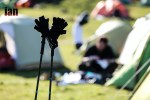
Warmer temperatures overnight certainly made camping a more pleasant experience and for those runners who were up early and packed away by 0615, they will have dry gear and a dry tent to pitch tonight! Anyone who slept in will have a different story to tell. When the rain came, it really did come and although Shane Ohly (race director) had said it was on it’s way, we had all secretly hoped he was wrong.

The forecast was bad and Shane had contemplated running a bad weather course but many runners, even those in the Elite category decided to run the much shorter ‘C’ route. In all honesty, it was a wise decision. The C route although easy navigation had plenty of ups and downs in it and in the conditions, it was far enough.

This was confirmed at the Cafe at Honister Pass which contained a gathering of GL3D competitors throughout the day. They all found solace in some food and a warm drink before pushing on past Buttermere and to the day 2 camp at Loweswater.

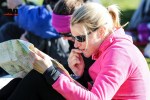
Despite the harsh conditions, temperatures were good. However, wet clothes and serious wind chill did make many a runners journey a tough one – hands in particular were constantly being banged together and rubbed in an effort to bring them back to life.
©iancorless.com_GL3D2016-0927

In the true nature of the GL3D, many of the participants had nothing but smiles and laughter for the conditions, particularly after the picture postcard scenes of day 1. The race did have its casualties though with many participants not completing any of the race categories (they just wanted to be back in camp asap) and others deciding to end the 3 day adventure early; the lure of warm clothes and a bed just too much of a temptation after such a tough day.
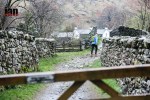
Post race the rain slowly reduced to a persistent drizzle, temperatures were relatively good but the main priority for all was to get out of wet clothes and into dry clothes. I can’t tell you how many times I heard, ‘thank goodness this is not a full self-sufficient mountain marathon!’

©iancorless.com_GL3D2016-0858

Dry bags were opened, tents were pitched and in the safety of one of the large marquees provided by Ourea Events, stories started to be told about the days challenges. Of course, as per the previous day, free cake was consumed and energy levels were topped up with a pint of beer.

Day 3 concludes the 2016 GL3D and the runners will navigate back to the start location via Elite, A, B and C courses. However, I heard someone say the weather forecast is worse for tomorrow; oh joy!

Images available at iancorless.photoshelter.com HERE

Follow on Instagram @iancorlessphotography

OureaEventsLogo(500x500-cropped) copy

GL3D logo