The 2017 and inaugural Marathon des Sables Peru got underway, today, November 26th. With the passing of time, it is a day that will be remembered fondly as all those who are taking part will look back and say, “I was there, I was there at the very first edition!”
Marathon des Sables is over 30-years old and had Patrick Bauer not decided to take a solo-journey, on-foot, through the desert of Morocco, we may well not be talking about MDS Peru.
Bauer pioneered the multi-day racing format and although it has been copied the world over, no other race quite compares to the grand scale of the first and original MDS!
MDS Peru is looking to follow its big Moroccan brother.
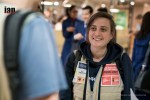
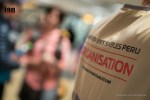
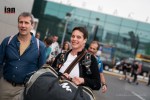
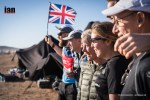
Nearly 500 runners from all over the world arrived in Lima to start their journeys. New journeys! They are pioneers of this new race and as such they will create history.
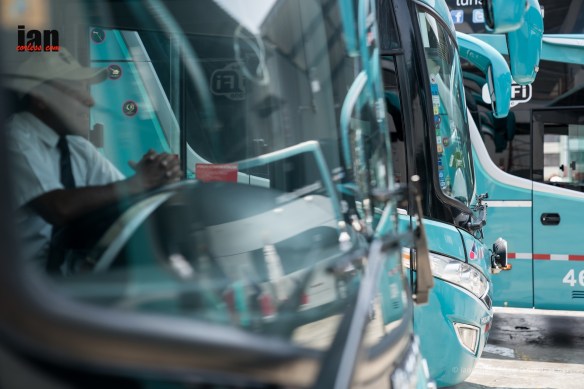
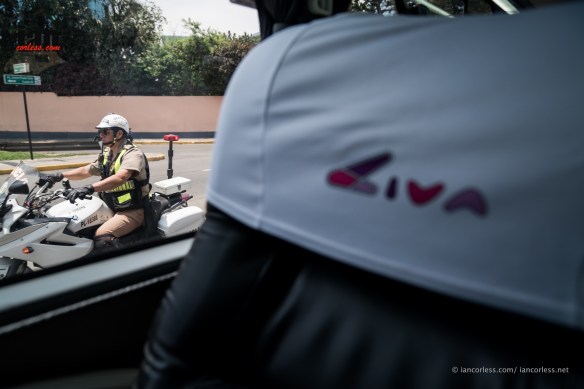
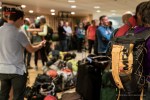
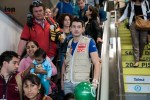
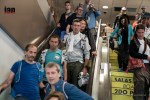
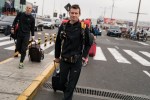
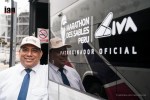
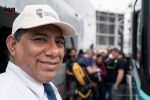
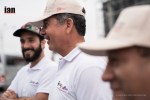
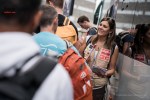
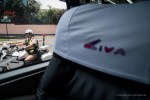
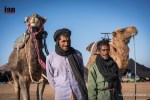
Peru is not a quick trip, for most people, they will have undertaken a minimum 16-hour journey to reach Lima and as they soon found out, the journey didn’t stop there. Boarding luxury CIVA buses, the journey continued for a 9-hour drive south to the ICA desert and bivouac one. A police escort made leaving Lima somewhat faster than on a normal day.
What lies ahead?
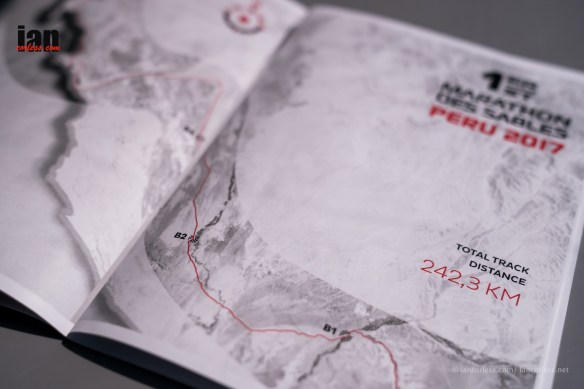
Gigantic dunes, cliffs, oases, canyons, sand and the Pacific Ocean. The race will start cover 240+km from Cahuachi to La Catedral.
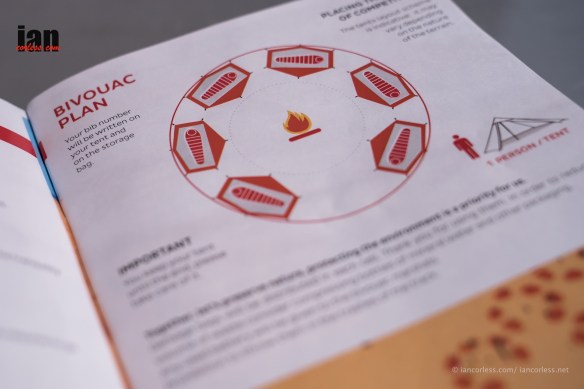
The MDS Peru follows the Moroccan format of 6-days racing of self-sufficiency, the only things provided; a tent and rationed water. Unlike Morocco, the bivouac will be made up of Individual WAA tents grouped in numbers of 6. These tents will be grouped based on the participants country and language. Think of them of little circular communities built around (hopefully) a camp fire.
Day 1 – 26th November is a travel day of approximately 285km south to Cahuachi and bivouac 1. Apart from long travel, made comfortable by luxury coaches, the runners will have a short welcome briefing, dinner provided and a first night under Peruvian stars.
Day 2 – 27th November is an admin day with equipment checks and the deposit of personal belongings. Food will be provided throughout the day. After the evening meal which concludes at 2000hrs, self-sufficiency will begin and the reality will soon hit home that MDS Peru has begun.
THE RACE November 28th to 4th December.
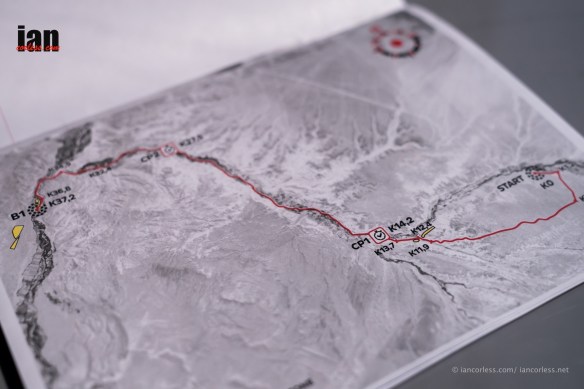
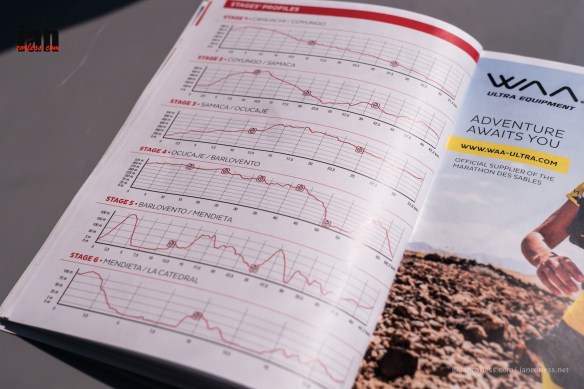
Day 1 starts in Cahuachi and concludes in Coyungo 37.2km later. The day will begin at 0730 and it is a day of pretty much all downhill starting at an altitude of just over 350m and concluding a little higher than sea level.
Day 2 starts in Coyungo and concludes in Samaca 42.2km later. The profile is more challenging than day-1 with a climb starting at 2.5km covered and concluding 10km later. A long 10km descent follows and then a rollercoaster of small inclines and descents follows all the way to the line. It will be a tough day with some steep sections, dunes and the canyon of Rio ICA.
Day 3 starts in Samaca and concludes in Ocucaje 32.7km later. It’s a mixed day of sand, Lunar type landscape, stony terrain and big round shaped dunes. The route climbs just above sea level from the start to around 550m in the first 13km. The remaining 20km stays a move 450m and constantly rolls up and down all the way to the line.
Day 4 starts in Ocucaje and concludes in Barlovento 68.3km later. It’s the long day and the one that often strikes fear in to many of the runners. The first 40km undulates up and down above 400m until the route drops to sea level at around the marathon point before once again climbing back up at 57km to around 63km and then a final drop back to the finish at sea level. It will be a tough day of sand, dunes, hilltops but the incredible Pacific will accompany the runners throughout the day.
Day 5 starts in Barlovento and concludes in Medieta 42.2km later. It is the classic marathon day and all those who finished the long-day will now be smelling the finish line. It’s a day that runs along the coast and arguably may be the most spectacular of the race as the Pacific will always be to the left sending hopefully a breeze off the sea. Beaches, rocks, cliffs, protected archaeological zones, constant up and downs as the route constantly drops to sea-level and climbs back up to around 220m.
Day 6 starts in Medieta and concludes in La Cathedral 19.6km later. Like the day before, it’s another coastal day but easier in regard to elevation gain and terrain: dirt roads, shingles, beaches and small cliffs will conclude the 2017 MDS Peru.
After the conclusion of day 6, runners and staff are transported to Paracas for 2-nights at Double Tree Hotel before flying home on December 6th.
Runners can expect to be surprised, a raw experience, a basic experience and a full immersion in nature deprived of creature comforts. Runners have three simple things to thing about – run, eat and sleep. For 30+ years, MDS has pioneered this return to basics and in 2017 MDS Peru continues and enhances the legacy of Patrick Bauer and the Marathon des Sables.
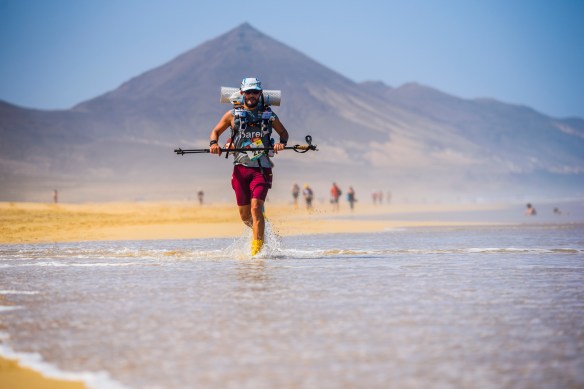
The inaugural Half Marathon des Sables Fuerteventura has just taken place!
Unlike the legendary bigger brother, the race, as the name suggests, is half the distance of the Moroccan counterpart and as such provides a great opportunity for novices to test themselves over multiple days or, it allows experienced runners to race faster and harder.
300 runners toed the line of the first edition, the only thing known before the start of the race that they would need to cover 120km’s over 3-days. Like the bigger brother, the race route was kept secret till just before the race and of course, runners are required to be self-sufficient – only bivouac and water is provided.
A 7km walk to bivouac 1 followed kit-check thus allowing a phase of ‘adaptation’ before the racing kicked-in. It was an opportunity to check apparel, shoes, gaiters and make sure the pack was sitting and fitting well to the body. Of course, all this should have been dialed in before the race!
A few hundred meters from the ocean, bivouac 1 was an oasis of calm. A final full meal, a night under the stars and the arrival of dawn would see the start of stage 1.
Stage 1 25.5km starting at Playa Las Coloradas and finishing at La Pared Isthmus.
It was a hot day, a really hot day of stifling and oppressive sun.
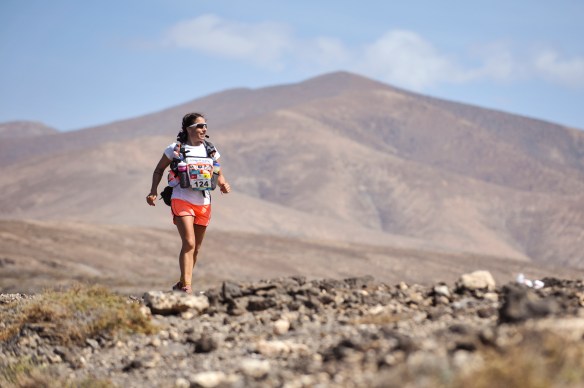
Deep blue ocean, orange rocks and cliffs were contrasted by black volcanic slopes – a trademark of the Canary Islands – as the runners ran the opening miles to Cp1. As one would expect, a long sandy beach followed leading to a technical path and dune decent to Cp2. The final 3 miles were classic Fuerteventura terrain; sand, stony plateaus and dunes to the bivouac.
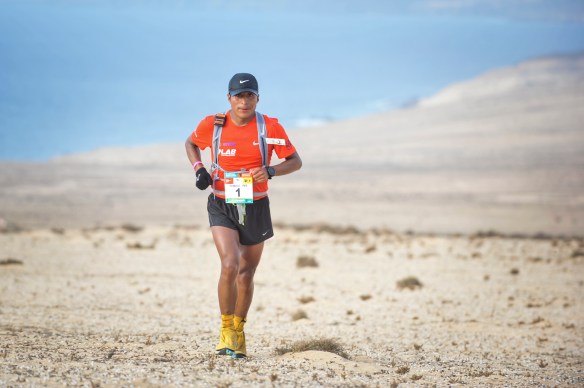
Local runner, Yeray Duran was no doubt a pre-race favourite and he didn’t disappoint on day 1 running with Alejandro Fraguela Breijo. The duo pushed hard from the off but Peru’s Remigio Huaman, who completed the Moroccan race earlier in the year, kept an ever-watchful eye. Duran suffered in the heat placing 3rd and Fraguela Breijo took victory almost 5 minutes clear of the Peruvian. Timings were 2:23, 2:28:09 and 2:30:46 respectively.
“Tomorrow is the long stage,” said Huaman post-race. “I need to keep in contention from the start, watch my food, watch my liquid. I like to run easier early and then speed up!”
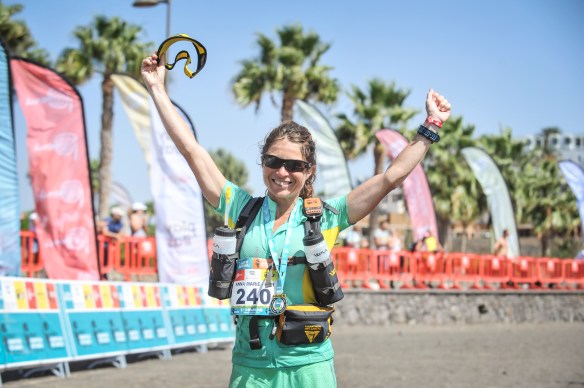
For the ladies, the UK’s Anna-Marie Watson who just week’s earlier placed top-10 at the UTMB had a great first day. She clinched a solid victory of almost 20 minutes ahead of Yolanda Fernandez Del Campo. Kristina Schou from Denmark was 3rd, their times 3:04:03, 3:23:46 and 3:31:51.
Watson post-race discussed how the first ascent was tough and how the temperatures were high. This is coming from a lady who has placed 2rd overall at the Marathon des Sables Morocco in 2015.
“The sand dune before Cp2 was dreadful,” Watson continued. “I had to compose myself and push on. Tomorrow is the long day and that is my preference so I will rest, recover, eat and prepare.”
Stage 2 66.5km starting Aguas Verdes and finishing at La Pared Isthmus.
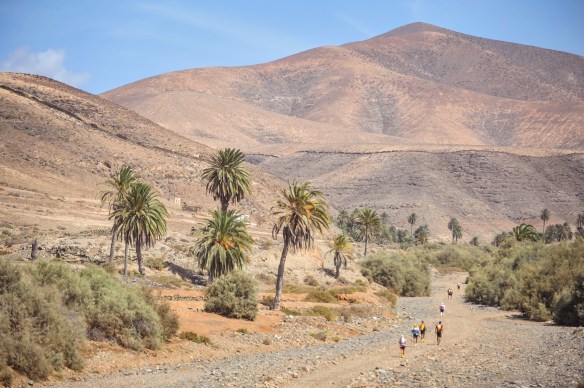
A straight north-south stage of oueds, dirt roads, single-track, dunes and ridges was made unbearable by oppressive heat but the stunning ocean provided company and contrast to the glow of orange. After Cp3, the race crossed the pretty village of Pajara and as the day unfolded volcanoes and the ocean would provide relaxing views to a challenging day. Due to a rock slide, the final miles of the route changed thus saving the runners a little over 3km.
As promised, Remigio Huaman used his ultra-running skills and desert running skills honed in Morocco earlier in the year to stamp his mark on the men’s race. He followed his strategy with a steady start but he upped the pace as early as 8km in the 66.5km stage leaving Hernandez Curbelo and Fraguela Breijo struggling. At Cp2 the gap was 8 minutes and at Cp3 it was 13 minutes. As the finish line came, the gap had opened to 30 minutes – an unbeatable lead going into the final day. Hernandez Curbelo improved his strategy and placed 2nd and Fraguela Breijo placed 3rd. For Duran, it was a bad day and he slipped in the day’s ranking to 5th and out of the top 3 after a time penalty for taking an IV drip due to dehydration.
For the ladies’ it came as no surprise that Anna-Marie Watson used her long-distance skills to school the opposition. With each mile, she pulled away and finally finished with a 14-minute lead over Kristina Shou. Yolanda Fernandez Del Campo placed 3rd.
“I had no strategy but to run on feel and listen to my body,” Watson said. “I ran my race not worrying about the competition. It was a great stage, I loved the cliffs underneath the camp and the sun set was incredible.”
Ranking
Remigio Huaman overall 9:03:08
Jonathan Hernandez overall 9:59:59
Fraguela Breijo 10:18:30
Anna-Marie Watson overall 11:32:22
Kristina Shou overall 12:14:13
Yolanda Fernandez Del Campo overall 12:38:22
Stage 3 21.1km starting Tuineje and concluding at Las Playitas
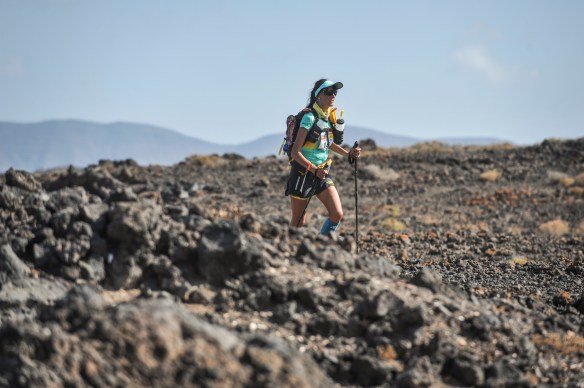
At 10am start at the heart of the island unleashed the runners into the heat of the day and a maximum time of 6 hours to complete the stage. Solidified lava was the terrain of the opening miles followed by dirt roads and the village of Gran Tarajal. Mountains followed with some great climbing and descending before single-track brought the runners home.
Three days, three days racing… There was no easing back or victory lap for the final stage, Remigio Huaman pushed from the front and not only consolidated his lead but extended it averaging over 13.15km per hour for the stage.
“For me, the Half MDS is relatively easy as I am fortunate that I can run quickly,” said Huaman. “I am able to get the stages over, even the long one, quickly. I can eat, rest and recover. However, many of the other runners spend so much time on their feet, they walk long distances, suffer from the heat and suffer from hunger, they are the heroes as are all the staff!”
Duran kept the home crowd happy with 2nd place on the stage and Juan Jose Rodrigues Garcia placed 3rd on the stage ahead of 2nd overall, Jonathan Hernandez Curbelo, the times 1:35:49 for Huaman, 1:39 for Duran and 1:40:30 for Rodriguez Garcia.
Anna-Marie Watson eased off the gas for the last day knowing that victory was secure. This opened a doorway for the Spanish runner Yolanda Fernandez Del Campo to seize an emotional final stage victory in 2:14:03. Watson finished in 2:19:04 and 2nd placed lady overall, Kristina Shou confirmed her consistency with 3rd in 2:20:52.
“My dream started many years ago, 17 actually when I heard of the MDS,” said Watson post-race. “In 2015, I placed 2nd at MDS and in just a few shorts years things have progressed, what a dream!”
As with all multi-day races, the journey of the front-runners is only a very small story of the race. The true race happens behind. Runners fight fatigue, heat, exhaustion and demons just to finish. France’s Mathilde Male sums it up well:
“I am happy the race is over, but I am sad it is coming to an end… My best memory will definitely be the arrival of the long-stage, at around 1am. Staff were cheering and I was with my race partner Christelle, it was magic.”
Captain Tom Evans, placed third at the 2017 Marathon Des Sables in April, it was a complete surprise. Prior to the race, it’s fair to say, Tom had well and truly kept himself under the radar, a skill no doubt honed whilst in the army. British runners have a long history with the MDS and finally, we have one on the male podium!
I caught up with Tom post MDS to find out a little more about his remarkable story.
Ian: Who’s Tom Evans and tell me how this all came about?
Tom: It’s a very surreal experience. I went out with a few small ambitions. My main goal was to go out unknown and see what I could do. There was no pressure on my running so I could just focus on myself, focus on the race. There were no expectations which I think it’s safe to say I managed to achieve. Absolutely no one had any idea who I was on day one.
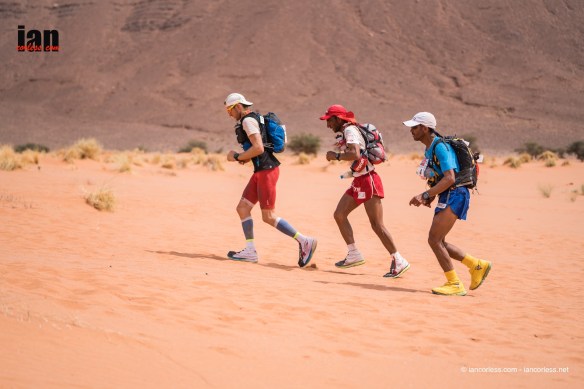
Ian: [laughs] Well, you achieved that completely. I remember, on day one, I was scooting around the dunes in a jeep, trying to find the runners because you were ahead of schedule. I saw this shadow in the distance. I told my driver to stop. I’m running through the dunes. Then, you come past me. I look and I think, “Who is this? I don’t know who this is.” Then behind was Rachid and Mohamed, the duo were working together, a little like they do in cycling taking turns to set the pace.
They were holding you at 100, maybe 200-meters which they did to the end of stage one but we’ll come on to the actual race and how it panned out later. I called you Captain, you’re obviously in the army. You were out with a whole bunch of soldiers and Walking with the Wounded. You had Duncan Slater out there with you. Just from that perspective, with your performance, Walking with the Wounded, Duncan Slater – it has been an epic Marathon Des Sables, hasn’t it?
Tom: Yes, it’s been amazing. The support that the whole team has received, not just from Walking with the Wounded and serving members of the British Armed Forces, but from so many across the world. We’ve been incredibly lucky this year; the Walking with the Wounded team had raised a lot of money. Like you say, the likes of Duncan Slater for the first double amputee to complete the race – amazing.
Then also we had Oscar who’s 16 years old, he competed with his father. Everyone helps during the race. That was very encouraging throughout. But then also, everyone back home really got behind the team which then led to the successes that Walking with the Wounded had in the race.
Ian: Let’s go back because there’s got to be a starting point. Let’s start with you and your running and then the MDS prep. To prepare for Marathon Des Sables and be non-Moroccan and do well, it normally requires all sorts of specific types of training, whether that is being really anal about kit, working out what type of food you’re going to eat, heat adaptation, how you handle dehydration, and all those things. I’d like to talk to you about that. But first, when did you start running?
Tom: My sister was a good athlete at school. I got slightly jealous of her so I decided that signing up to the Athletics Club was a good idea. That was when I was 13. I raced on the track all throughout school – anything from 70, 100 meters to 5k on the track. I realized that I was a decent, good English runner so I just got pulled in to the cross-country teams. Since being in the army, I’ve had an incredibly busy career and running took a back seat.
However, during 2015, I was based at a posting in Kenya for 10-months. I was lucky and spent a week training at the high-altitude training centre which really got me focused again on my running. Getting back to the UK, I carried on as much as I could but with work commitments, it’s always been difficult to be able to plan out a couple of months in advance of which races I wanted to do.
I’ve always been keen on my fitness and played as much sport as I can. But my running has only been specific for the last six months. I was squeezing everything in as much as I could – my preparations have been fairly rushed. I still see myself as relatively untrained…
Ian: I’ve got a feeling that there’s a lot of runners around the world saying to themselves, “If Tom’s really untrained, what’s going to happen?”
Tom: I think I have to find my distance and to find my passion, for now ultra-trail, that’s where I’ll stick. Hopefully, specific training will then lead on to more great results.
Ian: Like I said, you were a complete unknown but there was a great deal of conversations at MDS about you being a 2;18 marathon runner, aiming for an England vest, wanting to run at the Olympics – what is the truth in that story though? What are the aspirations outside? What you’d like to achieve in ultra and trail? What is your marathon time? What are your objectives, maybe in terms of a GB or an Olympian vest?
Tom: I think for the time being, I’m really going to focus on ultras. Certainly, the next 18-months. It’s always been my ambition to race in the Olympics. My marathon is currently at 2:20, but that was a while ago. I’m hoping with the experience that I’m going to gain in the next 6, 12 and 18-months, that my running will really start to improve. For the moment, I’m doing it because I love the sport.
It’s more than running, It’s the whole community, the preparation. It’s being self-sufficient throughout the race and then also, mixing with the other competitors. It’s a very competitive sport but on the start line, you’re mixing with other people from all over the world – Rachid and Mohamed for example. It’s just that relationship that you can forge over a week-long period which really draws me into ultras, especially multi-day.
Having said that, my ultra-running experience is so limited and I’m sure a lot of the followers will be fairly surprised to read that the MDS was my first multi-day race, so it was completely uncharted territory for me. The long stage of MDS was the farthest I’d ever run by 12-kilometers, ity was all so new.
Ian: Wow.
Tom: It’s just such a huge learning project. I’m so new to that. I’ve got so much to learn and will just be learning as much and as much as I can in the sport.
Ian: Yes, okay. I’m getting a sense that maybe the multi-day type experience is where you will place an emphasis but obviously single-day ultras are also going to figure. Being in the army and the way that Marathon des Sables is organised, is the race just like another army training exercise – Is it just like another military campaign?
Tom: There are certain similarities, I think that’s why Marathon des Sables attracts a great deal of serving and ex-military personnel not only from the UK but also from all across the world. It’s self-sufficient element is classic military and replicates doing something hard – be it a long insertion march or similar, plus you must carry weight. Post the run, it’s about getting yourself back into your tent and then starting to look after yourself, looking after your body, doing all of that, the basic administrations, sorting out your feet, stretching, making sure you’re fully hydrated again, getting your nutrition on – classic army!
This is what really draws everyone closer together, you’re going through that together. You are living in a confined space in a tent with 7 other people and the camaraderie that’s built up over a very short period of time is very similar to the military, which I think is absolutely amazing.
Ian: The process of working out how you were going to spend the week in the desert in terms of your kit selection, your food choices, were they just extensions of what you’ve experienced as a soldier or did you specifically pool information and speak to people to find out what type of equipment to use? It can be a daunting task when you think about this whole self-sufficiency thing and the fact that you’ve got to carry everything that you need. The only thing that you’re being given is water and a shelter for the night and it’s all basic.
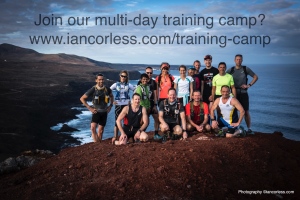
Join Tom Evans, Elisabet Barnes and Sondre Amdahl on our Multi-Day Training Camp in Lanzarote – information HERE.
Tom: Yes, I spent a bit of time speaking to lots of people. I was lucky enough to be around for the MDS Expo in London which was excellent. That was my springboard to start my research really – the kit, the foods, the heat training and the hydration strategy that I was going to implement during the race.
I spent a great deal of time testing different kit, my room at home now is full with different backpacks and different pairs of shorts and socks – it can be expensive!
Ian: [laughs]
Tom: It’s important to be specific, my needs are different to others in the race. For example, I completed the whole race quicker than say someone takes to do just the long stage. That is significant! The demands on ones feet, clothing, time on legs, nutrition and so on can’t be underestimated.
Ian: Absolutely.
Tom: It’s very different. It’s a very, very different experience. I started day one with six and a half kilo pack exactly. I had a few comforts, had a nice a nice warm jacket, a good sleeping bag but no roll mat, my food reserves were weighed out and light weight and I probably didn’t carry as many calories as I would have liked and no stove, all my food was cold. But having said that, because I ended up getting in early during the days, I was able to warm my water up naturally in the sun. It can be a very daunting process, ask a 100-people they’d probably tell you 100 different answers.
It’s important to find out what works for you, what’s comfortable but also assess the race and your goals. Most will walk far more than they anticipate, I was lucky, I ran pretty much the whole race but it’s a very different story once you move out of the top 10%.
Ian: Yes. I’m impressed for a first-timer with the fact that you got your pack down to 6.5kg, that obviously must mean that you weren’t eating much more than two and a half thousand calories per day. You said that you’d been quite a big guy over 80 kgs, I don’t know what you’re racing weight is now, you’ve lost weight so need less calories. Andy Symonds from the UK, he was looking for top-10 and he achieved that but he did say to me that as the week went on, he was just permanently hungry and he wasn’t getting enough calories to function as he wanted.
He could run but he didn’t have the energy to run the pace that he wanted to run. How did you manage that and how did you sustain the pace? Is there anything that you had done pre-race that taught your body to use fat as a fuel?
Tom: I ended up doing a lot of my training early in the mornings before breakfast because I was incredibly busy at work. If I could get 1-2 hours in the morning, it meant that I had more time during the day. I’d have a good meal the previous evening but then 10 hours later, eight hours later I’d be running on an empty stomach, it just got my body used using my fat stores and supply the energy I needed.
During the race you’ve got to make sure you have the right nutrients, the right amount of protein, carbohydrates, and fats in your diet. I’ve got a good friend back home who owns a small supplement company, OG Supplements, who spent a lot of times of going through my diet plan, just looking at the ingredients – I had the right amount of nutrients in my diet.
On the shorter days I would eat 2,300 calories and then on the marathon days, 2,700, and on the long day, 3,100. Lets be clear, you are going to be in a calorie deficit throughout the week but I think it’s being able to space those meal plans out that works. A sizable breakfast in the morning and then throughout the day, every time I got to the checkpoint, I was taking calories on just to try and maintain a level of energy within my body. You need some good calories quickly when you finish, you need to start the repair process asap.
You must make sure that you look after yourself as soon as possible – going back to being serving officer in the British Army, certainly with the Welsh Guard, that is a key lesson that I learned going through my training, it has become second nature.
Ian: I think certainly being in the Army is a huge advantage. It’s that admin, it’s that protocol, it’s that discipline. I often think of a story that a soldier told me of why you make your bed in the morning and you can probably elaborate on this far better than I can but it’s that process of starting the day and having that discipline.
Tom: Yes it is! You can look at it in the short term with the same analogy as making the bed in the morning: Start the day as you mean to go on, exactly the same; start of the week, start of the month. You’ve got to be able to take on that attitude in everything you do. If I’m going to do something, I’m going to do it properly!”
A lot of people say, “Oh, you were very lucky that you get the chances to do these things.” Funny how people who work hard become lucky! Without hard work, none of this is possible. You must delve into the depth of everything and you’ve got to try and cover all bases, looking into to every possible eventuality. I’m a huge believer of visualization and setting goals – short-term, midterm, and long-term.
That brings it much closer to home and making my dreams a reality rather than something that, “Oh, this might be quite nice to do.” It’s the mentality that I use when I go into anything – work, home, training or racing.
Ian: You mentioned about training in the morning and training fasted and the fact that you have a busy working life. What would a typical training week for you look like in the build-up to Marathon Des Sables?
Tom: I have been lucky enough to be training with a group of guys who are training for London Marathon, all guys planning on running a sub 2:20. The majority of my mileage was high-quality miles. I was of the mind-set that I needed to run quality miles. However, when you’re training for ultras, you are doing longer distances, one needs to be specific. If I tried and maintain the same tempo and the same effort in longer sessions I would crumble – all about balance.
I would average 90-miles per week and then in the month before Marathon des Sables, I added two weeks at 120 miles, which was by far the longest that I’d run. My runs would be a real mixture of longer runs, typically back-to-back. I would do a tempo long run on a Saturday and then a slow long run on the Sunday. During the week I’d be on the track once. I woukd join sessions: 4x 8-minutes 10k pace for example, really focusing on speed work and the power. I really think it helped my form for Marathon des Sables.
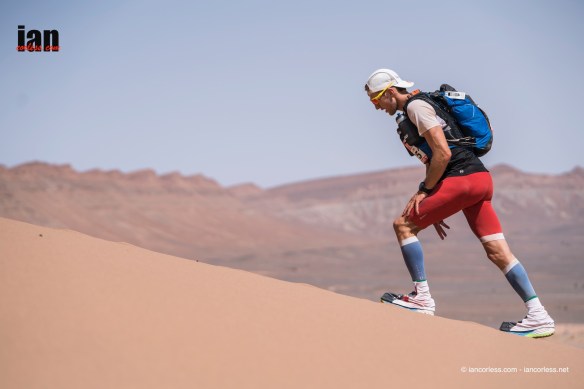
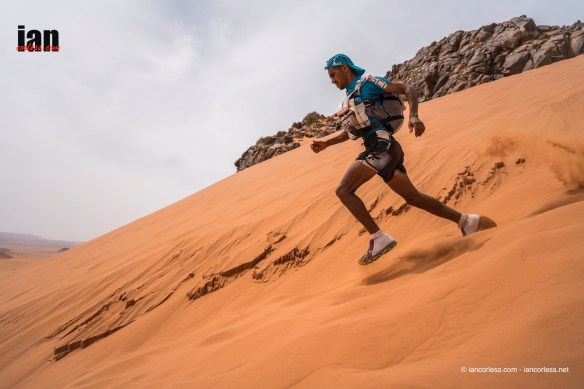
A lot of the race is about speed and about strength – if racing at the front. If you imagine going over the dunes, the quicker that you’re able to get off the dune, the less chance there is for gravity to work against you and the sand to hold you back. I needed to perform at a high level, day-in and day-out. I did a lot of work with my heart rate monitor and I’ve spent time in the lab looking at my VO2 and my lactate threshold.
My training was based on a marathon training program. I have a coach at Lewes Athletics Club and we mixed everything together to try to work it around my schedule at work – it worked well!
In the second part of the interview, we bring you Tom’s thoughts about the race and how his 2017 Marathon des Sables unfolded.
Two start times, 0815 and 1115, the same distance – a gruelling 82.2km of the best of what the Sahara has to offer, incredible views and at times brutal terrain with intense heat.
The route echoed much of the 2016 edition passing early through the oasis of El Maharch, a flat dried up lake before the first couple of climbs of the day starting at 10km. Cp1 offered some refreshment before the climb of Mhadid Al Elahau followed by a high level plateau traverse before a fast and thrilling sandy descent. Heading south a great deal of soft sand took the runners to Cp2 and then climbing a path, the runners came back on themselves through the nest valley. Cp3 to Cp4 was a long sand passage that eventually crossed a Oued. Cp4 to Cp5 and Cp5 to Cp6 were relentless dunes to sap the mind and energy. The push from Cp6 to bivouac via Cp7 was relatively flat but continually sandy – a tough day in Morocco!
The day in many ways unfolded at the front as one may have anticipated with Rachid El Morabity and Nathalie Mauclair taking stage victories. However, the story was not clear cut.
Mauclair took the race to Elisabet Barnes in a last ditch effort for victory. It was expected by everyone, after all, Mauclair is a long distance specialist. Through half the race the gap between the two hovered around 3-4 minutes. From Cp5, Mauclair extended her lead over Barnes but the 2015 Marathon des Sables champion dug in, used her flat running speed and closed on the French lady. Mauclair took victory in 9:39:58 and Barnes crossed the tape in 9:41:16 – job done! With the marathon stage to follow tomorrow, Barnes is in a strong perdition for a 2nd victory at this iconic race. Fernanda Maciel, also a long distance specialist, followed the duo ahead and she finished in 10:00:58. Emilie Lecomte was 4th.
In the men’s race, Rachid ran behind a lead pack that continually changed for much of the day. He never quite looked his fresh self but he pulled it out of the bag as he has done so many times before. He finished in an impressive 8:16:44.
Man of the day was British runner Thomas Evans who set his stall out on day 1 and has played the Moroccans at their own game. He has impressed day-on-day and on the long stage he didn’t sit back and defend, he attacked. At times leading the race. His efforts were rewarded with 2nd in 8:27:46. The margin of time behind him and El Morabity does not reflect a stunning performance! Rachid’s brother Mohamad placed 3rd and then Abdelaziz Baghazza and Remigio Huaman in 8:28:33, 8:41:42 and 8:43:39 respectively.
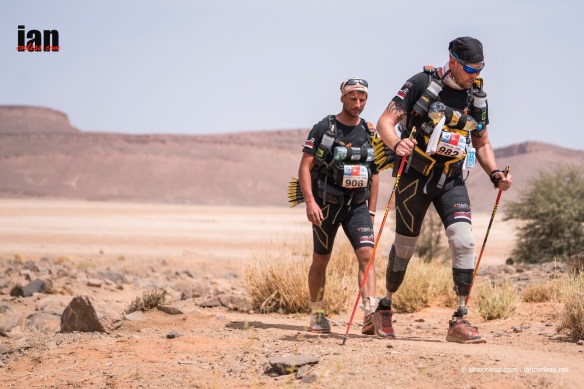
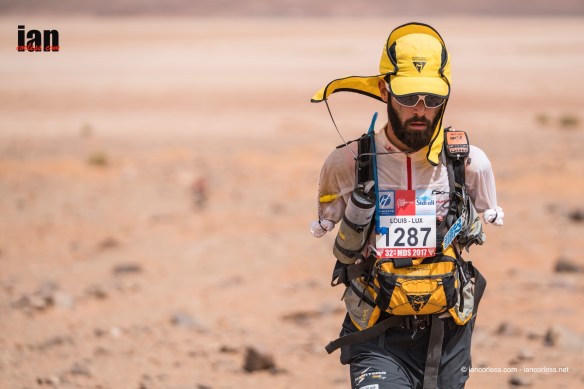
As I write this, runners are still out on the course enduring another day that will test them to the limit. Don’t listen to anyone who says ‘this’ is an easy race – it is not! So many are fighting demons, some fail, but the grit and determination is inspiring. For example, two people have inspired me – Duncan from the UK who is participating with two prosthetic legs and Louis from Luxembourg who has no arms – inspiring!
The fifth stage of the 2017 Marathon des Sables if the classic marathon stage of 42.2km and medals will be awarded on the line. The race is Rachid El Morabity and Elisabet Barnes for the taking – four sections of dunes will not make it easy!
The mood in bivouac on the second morning of the 32nd edition of the Marathon des Sables was one of mixed emotions. Satisfaction on completing day one, a good nights sleep and then the daunting contrast of a ‘tough’ day two and 39km with some significant technical and sandy terrain.
An 0830 start would allow runners a little more time to complete the stage – the cut-off was 11h 30min.
Heading south the early km’s were full of sand, dunes and climbing – Bou Laadam Jebel a significant marker at 5km. A plateau and then a steady sandy climb at 8.5km would lead to Cp1 at 12.8km. The next 12km would follow a southerly direction of sand, hills and dunes. Cp2 would offer some recovery before the push to Cp3. Dunes would sap the runners energy here and then a tough climb would lead to the highest point of the day via a gulley of rock. Elotfal jebel offered stunning views and then a steep sandy descent before the final Cp3 and a flat run to bivouac.
Day 2 was all about Rachid El Morabity and Elisabet Barnes. The duo dominated the day from the front and have well and truly laid a foundation for potential victory in the 32nd edition of the Marathon des Sables. Of course, there is still a long way to go…
El Morabity ran within himself till Cp1 but then opened up a gap leaving the rest to follow. The men’s field was spread throughout the sand, dunes and plateaus of Morocco – El Morabity was having none of the group running of day 1.
Abdelkader El Mouaziz, Mohamed El Morabity and Thomas Evans followed but they were not match for the MDS master. At the line, the gaps were significant. El Morabity crossed in 3:04:52 and then it was 3:12:15, 3:14:31 and 3:14:35 for El Mouaziz, El Morabity (younger brother) and Evans. Aziz Ek Akad placed 5th and Andy Symonds 6th.
In the ladies race, Elisabet Barnes is showing the form that gained her victory in 2015. She looks relaxed, happy and focussed. Last year’s second place Nathalie Mauclair commented on how strong she was running. Barnes lead from the front and never looked back, just as day 1, a way she like to run. She crossed the line in 3:49:04.
Following behind there was a change with Fernanda Maciel returning to form and pipping Mauclair to 2nd, the times 4:00:42 and 4:04:14 respectively. Emilie Lecomte placed 4th, Aziza Jaji 5th and rising star Jennifer Hill 6th.
On the stroke of 0900, the 32nd edition of Marathon des Sables began! The roar of the helicopter followed the runners as they were released from the line with a relatively flat, sandy 30.3km of the Sahara ahead.
Pre race nerves suddenly disappeared and months-upon-months of training and preparation could finally be put to use in the sands of Morocco.
As usual, race director Patrick Bauer warned the runners of how heat, dehydration and the desert brings a very unique challenge.
The route travelled south via a stony plateau and the first 6km were inaccessible by vehicle. A line of dunes followed that took the runners all the way to Cp1. From here, the direction of ESE and the east brought more flat but soft sand. A rolling landscape preceded Cp2 and then small rolling dunes, a rocky plateau and a small sand climb introduced the runners to the highpoint of the day and the sight of bivouac in the distance. A following 2.5km stony plateau resulted in the end of day-1.
The ladies’ race was all about 2015 Marathon des Sables champion Elisabet Barnes. Today she ran strong, confident and looked in incredible shape showing all the ladies a clean pair of heels. As she ran past me she shouted, ‘I feel great and I am loving it!’
Even 2016 second placed lady, Nathalie Mauclair could not keep up. Aziza Raji followed and then Fernanda Maciel, Emilie Lecomte and Melanie Rousset.
At the line, Barnes finished in 02:38:13, Mauclair 2nd in 2:44:57 and Raji 2:54:36.
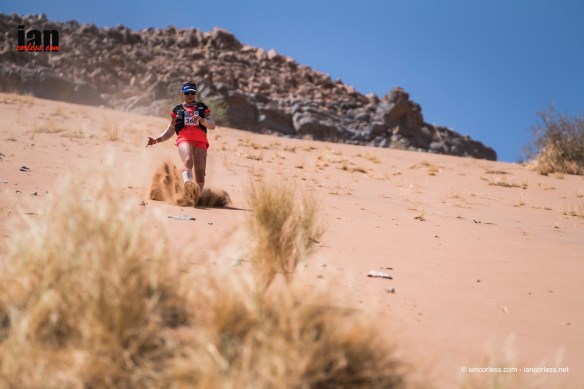
The mens’ race was all about Brit, Thomas Evans. He but the Moroccan quartet of Rachid El Morabity, Mohamed El Morabity, Abdelkader El Mouaziz and Hammou Moudouji under real pressure as they pursued him through the sand and dunes of the 30.3km stage.
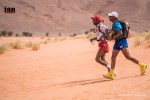
Always holding him in sight, it was like a stage of the Tour de France as the Moroccans took it in turns to pace and hold him at 1-200m. It was in the final kilometre they made a move. 2016 MDS champion Rachid was outsprinted by his brother Mohamad, El Mouaziz placed 3rd and Evans held on for 4th. The times, 2:10:36, 2:10:54, 2:11:17 and 2:11:58 respectively.
The 2017 edition for the race is going to be exciting!
Stage 2 is a tough stage of 39km. The start will be at 0830 and the cut-off is 11h 30mins.
It’s hot… I know it’s the Sahara but today has been hot!
After a day of travel, some 1200 runners arrived in bivouac yesterday and settled to a first night in the Sahara. A meal, some admin and it was an early night. The winds increased with darkness and the general comment in camp the following morning was, “Wow, it got cold last night!”
It caused some last minute anxiety as today is bag drop day and therefore after registration all runners are wearing and carrying everything they need for the week. I could see a few warm layers being taken from cases and added to packs… they can always be thrown away later!
Today is a long day as everyone just wants to run. However, all admin procedures must be undertaken at specified time slots.
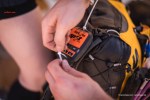
Firstly luggage is left and it will not be seen till after the race. Passport and identity is checked and then an overview of medical forms. Packs are weighed for a minimum 6.5kg and in some scenarios checked for mandatory kit. A Spot tracker is added to the runners packs, numbers are collected, timing chips activated and that’s it. The process takes about 2-hours in the heat of the day.
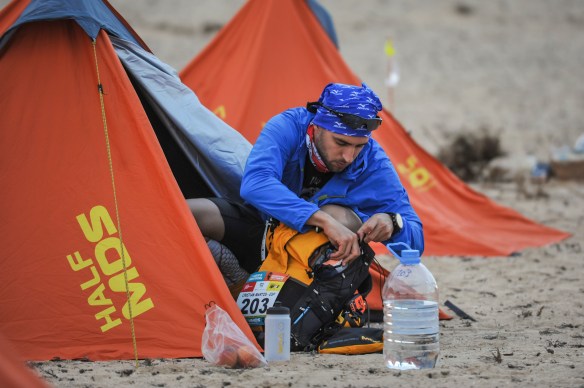
Bivouac is spread over a large area and in each tent, which hold 8-people there is carnage as last minute planning takes place.
As the evening approaches, the last full meal is provided. On waking, self-sufficiency takes over and the runners will start, well and truly, the 32nd edition of Marathon des Sables.
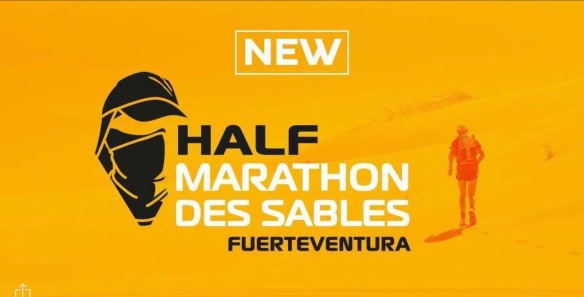
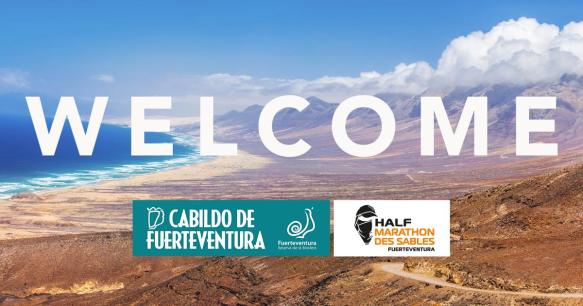
Marathon des Sables, the iconic multi-stage race has finally, after 30-years expanded with a new race for 2017 – HALF MARATHON DES SABLES FUERTEVENTURA.
The event will echo the ethos of the iconic ‘MDS’ race providing a 3-day self-sufficient journey of 120km’s on the Canary island of Fuerteventura.
Pre registration is open and although the event will take place in September, specific dates have not yet been confirmed.
The MARATHON DES SABLES organisation and Fuerteventura present a new challenge: the HALF MARATHON DES SABLES FUERTEVENTURA. This 120 km running race in three steps will be held on September 2017, in Fuerteventura, in the Canaries Islands. As the MARATHON DES SABLES, it will be a food self-sufficiency race.
Unlike the the legendary benchmark multi-stage father figure race, Marathon des Sables, the new ‘half’ edition is designed to provide an entry level race at a much more affordable price. Where families may be able to join a racing father or mother and enjoy what Fuerteventura has to offer while a parent or parents race.
Although not confirmed, it is anticipated that entry per person will be under 1000 euro and places will be limited to 500.
(I must stress, this price and entry places are not confirmed yet)
Inscriptions for the race are HERE and as stated, it is expected that they will be limited.
Join our 2018 Multi-Day Training Camp with Elisabet Barnes and Sondre Amdahl in Lanzarote, January 18th to 25th. Booking and info HERE
This is Episode 110 of Talk Ultra. This weeks show is a Marathon des Sables special with a load of great content from the Bivouac by Niandi Carmont and then a series of post race interviews with Sondre Amdahl, Elisabet Barnes and Elinor Evans. If that wasn’t enough, we have an interview with Jasmin Paris who has just blasted the Bob Graham Round ladies record to a new level.
It’s a different show this week as we concentrate on Marathon des Sables
Marathon Des Sables
It was a win again for Rachid El Morabity and Russian, Natalia Sedykh dominated the ladies race, times were 21:01:21 and 24:25:46 for the 257km. Full results are HERE
Niandi talk from the Bivouac
00:25:32 INTERVIEW from the Bivouac
A selection of interviews of everyday runners doing extra ordinary things
We discussed this race extensively in a couple of podcasts last year, we spoke with Nikki Kimball and Jeff Browning. Jeff won the race and Nikki decided to withdraw from the race as she felt is was too dangerous. Alarm bells were rung. Unfortunately we have had news of a death at the 2016 edition. We have to be clear here that information is still a little sparse but Ellie Greenwood and Kerrie Bruxvoort have both commented on social media at the races apparent disregard for safety. We will have more information on this as and when possible.
A statement on Facebook from Ultra Fijord said:
The second edition of Ultra Fiord has been a very hard experience, marked by an exceptionally hostile climate and dramatic landscape that formed the backdrop of the race route, that was changed and shortened two days leading to the race to accommodate the impending bad weather. While some runners experienced and embraced the forces of nature, others were beyond their comfort zone. What impacted all of us the most was the loss of 100-mile runner, Arturo Héctor Martínez Rueda. Mr Martínez, 57-year-old from Mexico, had unfortunately passed on at an approximate 65km mark that is about 750m above sea level. Although the likely cause of his death was hypothermia, a confirmation can only be made in the following few days. The unfavourable weather has persisted in this mountain area since Friday, so the rescue team, awaits a favourable weather window to execute the evacuation. The race organiser takes responsibility and apologise for the poor communications to the outside world with regards to this tragic incident, simply because it is a step we could not execute without the confirmation of the status and private communications with Arturo’s family. In this difficult time, the organising team sincerely expresses its condolences to the family and friends of Arturo and ask followers for your cooperation to send peace and respect to them too.
01:25:40 INTERVIEW
Elisabet Barnes post MDS
01:57:45 INTERVIEW
Sondre Amdahl post MDS
02:26:49 INTERVIEW
Elinor Evans post MDS
03:11:00 INTERVIEW
Jasmin Parishas just elevated the ladies Bob Graham Round record to a new level coming very close to Billy Bland’s benchmark 1982 record
Is the last edition of the Marathon des Sables always the toughest? It would appear so? You always hear as the race concludes, ‘Wow, that was the toughest race ever!’
Of course many variables come into play when one says it’s the toughest. First and foremost, you most certainly need to have done at least one other edition to be able to compare, but in truth, multiple editions or experiences must count to be able to claim any edition of a race as a toughest. Also, age, fitness, condition, state of mind and so many other variables impact on a decision. It’s not always easy to be objective. I have often considered myself to be fit going into a race, only to find that my fitness is not where I thought it was and therefore a race has appeared harder! Truth is, the race was the same, it’s just that I wasn’t up for it. Let’s be clear, I’m not providing excuses, on the contrary, I am trying to provide perspective.
I’ve been at the MDS for the past 4-years, not as a runner (although I have 30-years of experience) but as a photographer and journalist. I like being on this side of the camera, for sure, there are days when I look at the race (or any race) and I wish that were me, once again fighting the terrain and fatigue to achieve a goal. My goals have now changed and as my good friend and photographer (who sadly has passed away) Mark Gillet used to say, ‘I sometimes think it’s harder working on the race than running it! Perspective once again…
I actually don’t agree with Mark, working on the MDS or any multi-day race is hard, stressful and the long 18-20 hour days do have an impact. Yes, I get out on the course and cover the terrain on foot but I get to change my clothes, I get to eat two times a day and although I sleep in a bivouac, it does usually have sides to it which blocks out the wind.
So with the 31st MDS in the bag, I wanted to reflect on the race and provide an objective overview from the outside looking in of what I consider worked and what didn’t work at MDS and provide some key pointers that anyone can take away and apply for a future MDS or other multi-day race. I must stress, these are my thoughts and on some points you will agree and on other points you won’t. That’s ok! It’s called opinion and we are all entitled to one.
First of all though, lets answer that burning question, ‘Was the 2016 Marathon des Sables ever?’
No!
It was a tough one for sure, it ranks with the toughest but I don’t really think anyone can hand on heart say that any one edition is the toughest.
Each year, Patrick Bauer and his team work a little Sahara magic and as many MDS runners who have participated in previous editions will tell you, the race always covers some familiar terrain. It’s the nature of the Sahara and the complex route of access trails dictate where the race can go and where it can’t due to the huge convoy of vehicles that daily move the ‘circus’ from one place to the next. For example, the 2016 route had much of the 2014 route but in a nod to the tough course, the 2014 route was also considered a tough one with a very big drop out rate on day one.
Having said all of the above, the 31st edition was a serious toughie and here is why:
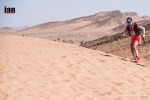
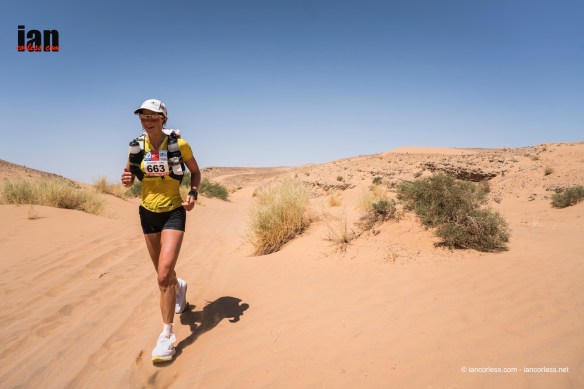
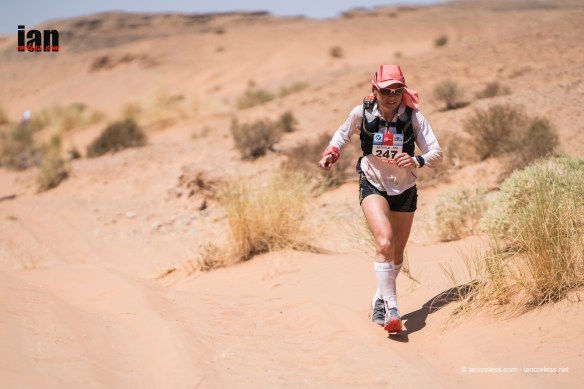
Day 1 kicked of with the huge Mezouga dunes that are tough for any runner, even experienced ones. The day also concluded with a tough section of dunes but to add to the difficulty and complexity, midway during the stage winds increased and increased causing severe sandstorms that hampered navigation, onward progress and resulted with a chunk of DNF’s and those who finished were left exhausted.
At 257km, the race was the longest edition ever making all stages close to marathon distance. This impacts greatly on every runner as recovery time is reduced. The long day was not as long as many anticipated at 84km, especially after the 30th edition 90+km day. However, the long day was a tough one with plenty of climbing and loads of soft sand. The final charity day is usually a jog to the line and a way to exit the Sahara and get back to the buses, this year, the charity stage was 17km – too long!
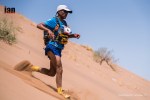
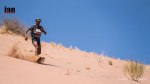
Sand, sand and more sand. I know it’s the Sahara and therefore one would expect sand to be everywhere but in reality, MDS usually only has around about 30% soft sand. This year it was considerably more and that impacted on everyone.
Wind came and went but it’s impact on the racing and bivouac life was notable.
Temperatures rose just in time for the long day and then stayed very high for the remainder of the race.
Day 2 dropout rate was very high which reflected a tough stage but also the knock-on effects from a very tough day 1.
The overall drop out race once the race concluded was over 10%, a sure sign of a tough edition of the MDS.
There you have it, some solid points on why the 31st edition was a tough one and of the many runners who completed the race, I am sure they could add so many more points to my brief synopsis above.
OVERVIEW
It’s funny how everyone is now looking to 2017 and the 32nd edition of the race. Questions are being asked – what, how, why, should I, can I, will I and so on…
MDS is not complicated:
Let’s get one thing clear, Marathon des Sables is a simple race that is over complicated by too much information and too many people saying WHAT SHOULD be done. Let’s hark back to Patrick Bauer’s pioneering days and simplify the process of running the MDS. I interviewed and chatted with many runners in bivouac who had done just that, they had applied simple logic and worked out what would work for them. Yes, they had taken advice, looked at websites, processed information but importantly they had found out what worked for them. They realised early on that they were an individual and as such, they needed a personal approach to MDS and not a generic one. When you break the race down, key things are really important:
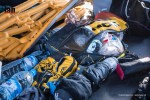
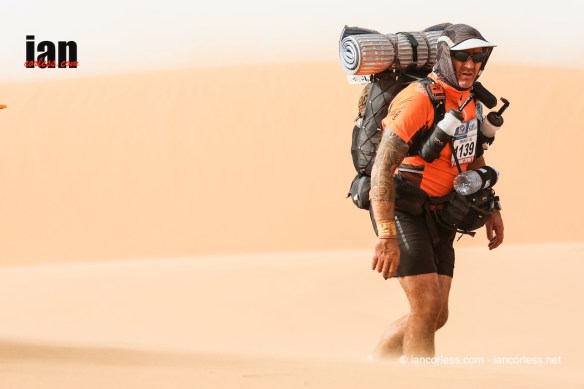
Pack – must fit, have enough room (but not too much) for all your equipment and provide easy access to fluid and you must make sure that your numbers are visible as per race rules. Sleeping bag – lightweight, packs small and warm enough. I would always recommend a sleeping bag and jacket as opposed to a ‘combi’ as it offers more flexibility, reduced weight and reduced pack size. Popular sleeping bags this year were PHD, Yeti and OMM. There is a review on my website that compares all three. The Raidlight Combi was also popular, certainly with a small selection of the British contingent; it worked well and those who used it were happy – all about what works for you! Clothes – you just need what you will run in. However, a spare pair of socks was commonplace and many runners had one or all of the following: a warm base layer, a lightweight down jacket or waist coat, buff and many had lightweight pants. Sleeping Matt – It’s an optional one but a good nights sleep is important and those who hadn’t taken one were wishing they had in most scenarios. Two options exist – inflatable and roll out solid foam. The choice is yours. The inflatable ones offer more comfort, more flexibility in packing but with poor admin, you do run the risk of a puncture. I’ve used inflatable for the past 4-years with no issue. A solid foam Matt will last the week with no risks of problems but they roll large and need to sit outside the pack.
Shoes and Gaiters – Shoes (more below) are personal, just make sure they have a good fit, appropriate drop for your needs and and suit your run style with enough durability for you. I say ‘you’ because Rachid El Morabity will complete the whole race in 21-hours whereas most people won’t even do just the long day in that time – his shoe shoe choice will and can be very different to what most of us need! Get your Velcro sewn on your shoes and make sure that when you get the shoes back the fit has not been altered. Plan in advance, don’t leave this to the last few weeks.
Food – You need a minimum amount of calories per day specified in the race rules and how those calories are made up are up to you. This for many is a difficult one. It raises many questions and yes, it’s good to find out what other people do and use but ultimately, YOU have to eat it. The decision to use a stove is another question mark but it would appear that most runners like that hot water option. Remember though, you can make a fire from twigs, shrub and branches that surround bivouac. Also note here that food choices and what you eat during running varies greatly depending on how fast you run. For example, the top runners are done and dusted on the marathon stage in 3-4 hours and they are using carbohydrate as a fuel, they therefore can get away with 1-2 gels. If however, a typical day for you will be 6, 7, 8, 9 or even longer, gels are not going to be a good choice. Fat and real food are going to be essential. Understand this now and you can start making the necessary adaptations in training so that food choices will work for you. Training on limited calories and getting fat adapted is a key element for a successful MDS for many runners. Food is also the heaviest and most bulky thing you will carry, think about repacking in smaller packs and making everything as small as possible.
Water and Salt Tablets – These are provided by the race and it’s easy really, take the tablets as recommended and drink the water. Dehydration in 2016 once again was a huge issue.
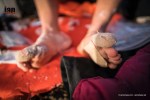
Feet – Look after them, along with dehydration, blistered and damaged feet are a key reason for failure in any multi-day race.
Extras – Mandatory kit is as one would expect, mandatory! So purchase what is on the list. You can save weight by shopping around. Simple rule; the lighter and smaller, the more expensive it will be! Optional extras are very personal and my advice would be take nothing extra other than a MP3 player and earphones. The Apple iPod Shuffle is super small, super lightweight and holds plenty of music for MDS (you can even take two). They cost about £40 and music may well just pull you through when the going gets tough. Anything else is a waste in my opinion. Embrace the isolation, embrace a simple life and you will find you have a new perspective at the end of the race.
Hints and Tips to make your race better
You:
You signed up for the challenge, you wanted to be on the start line and therefore you are responsible for the outcome. Believe me, the you that leaves the Sahara is not the same you that entered. Arguably, you change the moment you pay the deposit, the transformation process begins. Embrace the journey and apply yourself. Most of us can loose a little weight and believe me, pounds shed in training make the race easier. Pointless striving for a 6.5kg pack and then to be carrying an extra 2, 3, 4 or more kg on your body. But keep perspective, the MDS journey is an enhancement of you as a person. It’s easy to become obsessed, ultimately the majority of runners at MDS are enthusiasts, if you keep that in mind the journey will be a complete one.
Training:
Plan ahead, formulate a long term plan and don’t rush. The sooner you start this process, the greater your chance of success and the less chance of injury. Plan stepping stone races and don’t be fooled into thinking that you need to run marathons day-in and day-out. You don’t! Training is about ALL the training you do and not about anyone run.
Walking:
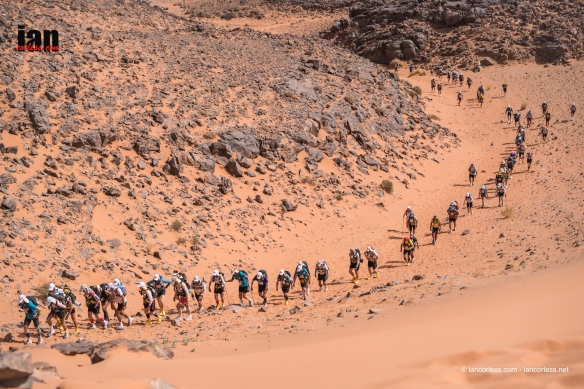
If we exclude the top 50-100 runners (who also walked) the majority of the 1000 strong field spend a huge amount of time walking. Learn to walk! Believe me, it’s a huge tick in the MDS box and rest assured that if you are able to walk at a good consistent pace (barring injury or dehydration) you will finish MDS. The 31st edition at times (from my perspective) seemed almost like a walking race and this can directly be attributed to more soft sand and longer days. Countless runners I spoke to said, ‘If only I had walked more. I trained to run and now I am here, I am finding that running is a luxury.’
Poles:
If you are looking to race MDS, figure in the top 100 and are able to run in ‘most’ scenarios, poles will not help your MDS experience. However, once we get out of the top-100 and in particular, once you start to look at the mid to back of the pack, poles may well provide a huge advantage. They provide stability, momentum, drive and in soft sand, they are a little like 4-wheel drive. My recommendation would be try training sessions with and without poles and see what works for you. Don’t get poles 3-4 weeks before a race and think it will be okay… Poles require technique and yes, they will impact on your shoulder, arms and neck. In 31st edition with so much soft sand, poles were a god send for many. They are like Marmite though, some love them, others hate them. For me, they are something I would take. Just make sure you get good ones that are light and that will fold small so that you can pack them when not needed. A good example of this is the big Jebel climb with ropes at the top, some participants struggled up with poles when in reality they needed both hands free for the terrain.
Shoes:
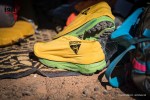
Dare I open this can of worms? Shoes are personal and first and foremost you must consider your own run style – gait, pronation, width, drop and so on. NEVER take advice from anyone online that tells you that ‘X’ is the shoe to wear for MDS unless they know you and your run style. Having said that, certain considerations come into play which help narrow the selection process down. In previous editions of MDS I have seen Hoka One One shoes almost melt with the soft sand, this year, Hoka were one of the most popular shoes and during the race I photographed multiple pairs and saw none of the horror stories from previous year. Brooks have been a popular MDS shoe in recent years and I saw three pairs with horrendous soles that had started to fall apart, however, many runners have commented how well the Cascadia version of Brooks shoes performed. Altra with very low drop and a super wide toe box worked excellently for those who required a minimalist shoe and the re-vamped inov-8 270 (4mm) and 290’s (8mm) had rave reviews from those who used them. Mizuno, adidas and Scott also featured in MDS bivouac amongst others and what was reassuring is how well they all performed. The key here is that runners had found the shoe that worked for them. Make sure you do the same. It’s good to ask for thoughts but ultimately, ask 10-people, you will get 10 view points. Despite all this, there were plenty of foot horror stories. There always will be horror stories and certainly considerable more soft sand added to people’s issues this year. Notably, going back to the walking point, MDS participants often come to MDS prepared to run with shoes that work for running, in some scenarios, these shoes don’t work as well for walking. Think about this and walk in your run shoes! Also shoe size, forget the advice about going up a size or two sizes. It’s a recipe for disaster unless you know that your feet swell? A shoe that is too big will allow your foot to move, a moving for causes friction, friction causes blisters and the rest of the story speaks for itself. General advice is that if you have a ‘thumb nail’ of room at the front of the shoe above the big toe, this generally works. Notice I say ‘generally’ – there are exceptions. One thing that may happen, is your foot may get wider (rarely or never longer) with the heat and additional time on feet, therefore a shoe with a wider toe box often works well for many runners.
Equipment:
Minimum pack weight is 6.5kg plus water, get as close to this as you can. Additional weight is additional stress and just makes the journey harder. Luxuries are ok if they improve the journey and make it easier, music is a good example of an additional extra. I can’t really think of anything else…
Friends:
You are going to share bivouac with 7 other people and you are going to have some serious highs and lows. These tent mates will pull you through and motivate you. They will become friends for life. Ideally find tent mates before you head out to the Sahara.
TheMind:
The legs, lungs, heart and feet will only get you so far. The mind is what will get you to the finish. On the long day I was at CP5 with 54km covered and 30km to go. I stayed there all night from 9pm till the early hours of the morning when the last person left with the camels. I saw broken individuals with bodies in tatters but mentally strong. It was amazing to watch people leave with a smile, hobbling at a snails pace and then to see them cross the line later in the day. Despite the hardships and pain, they embraced the journey and mentally where superior in strength. It was the mind that got them to the line.
Laugh:
If you laugh, you are having fun. Laugh when you hit rock bottom, why not. Laugh when you are going the toilet in a brown plastic bag and most of all laugh with and at your tent mates and fellow runners. The comradeship of MDS is quite unique, embrace it.
Admin and preparation that you may not think of:
Take essentials on the plane and wear your run apparel and shoes. That way, should a baggage disaster happen your chances of racing improve.
Take food with you for the travel and on the plane. If I were running, I wouldn’t eat plane food!
The journey from the airport to bivouac 1 is always lengthy, MDS will provide a picnic and water but I would still have my own supplies.
Night 1 and night 2 in bivouac are NOT self-sufficient so take extras such as an inflatable bed, food and luxuries that you are happy to give away to the berbers. May as well have 2 comfortable nights and a comfortable day before the racing starts.
Food before the race starts in recent editions has been provided by a French catering team. It has always been excellent. For the 31st edition, Moroccan caterers were used for the first 2 nights to provide an ‘authentic’ Moroccan feel and experience. It was potentially food that could increase the chances of going to the toilet. Personally, I’d take food with me that would at least allow me a ‘safe’ option. This is food in addition to your ‘mandatory’ requirement so it can be as much as you require and it can weigh as much as you like.
Admin day was a lengthy multi-hour experience in previous editions, in the 31st it was slick and streamlined and seemed to take most people 30-45mins which was great. Just make sure you take some water and a little snack food.
Keep sun screen on and keep hydrated. No need to drink vast volumes – drink to thirst before the racing starts.
Have additional items such as a base layer, sleeping bag liner and other items that may be on a ‘question’ list for the race. On night 1 and before you go to admin, you can make final decisions of what to and what not to take. Particularly important if you think you may be cold at night.
Remember that after bag drop and check-in you have no access to any additional items, however, you only become completely self-sufficient when you start the race. With that in mind, you can have additional food and luxuries with you until day 1 kick-off, it’s a useful tip and does mean that you can have additional comfort for a good 12-hours.
Conclusions:
Marathon des Sables is a magical and life changing journey as are most if not all multi-day races. It really is a true challenge of mind and body to race over many days, irrespective if you complete the race in just over 20-hours or 60+ hours. It’s a hark back to a more primitive time, a time without clutter and modern technology. Embrace this. Embrace the silence of the surroundings and the simplicity of placing one foot in front of the other, eating, resting and sleeping and then doing it all again.
As I said previously, MDS and other multi-day races are all relatively simple in process, you need a minimum of kit, some food, regular water and a level of fitness to complete the challenge. Yes, it is THAT simple.
Plan ahead, do some research on kit but it’s not rocket science. Just find out what works for you and then pray the the multi-day gods are on your side. Drop out rates are relatively low considering the challenge, however, shit happens that you just can’t plan for.
Ultimately get the mind in the right place and the body will follow. A plan ‘A’ is great but have a plan ‘B’ and ‘C.’
Finally, set yourself a realistic goal (that may just be to finish) so that you manage not only your expectations but pace. Way too many start off too quick and most dropouts come on days 1 and 2.
Join our MULTI-DAY TRAINING CAMP IN LANZAROTE with 2015 Marathon des Sables champion, ELISABET BARNES info HERE
If you need any specialist equipment, Iancorless.com partners and recommends MyRaceKit for expert advice on an multi-day racing equipment requirements.

































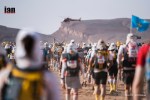

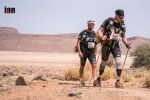
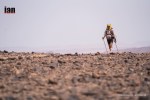
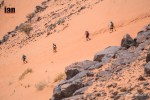

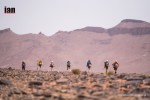







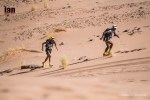
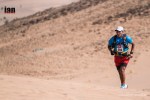
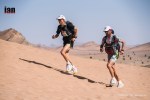
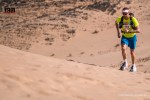
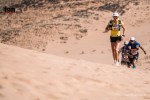
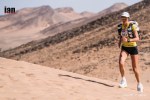

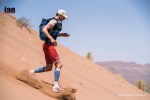
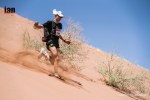
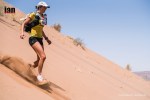



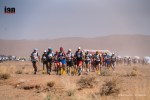


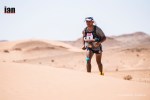

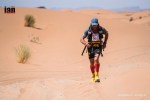


















 objective. I have often considered myself to be fit going into a race, only to find that my fitness is not where I thought it was and therefore a race has appeared harder! Truth is, the race was the same, it’s just that I wasn’t up for it. Let’s be clear, I’m not providing excuses, on the contrary, I am trying to provide perspective.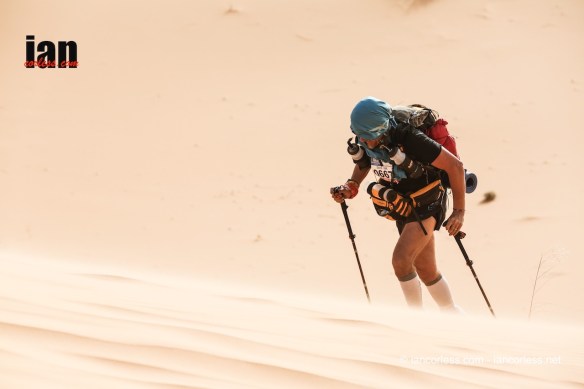
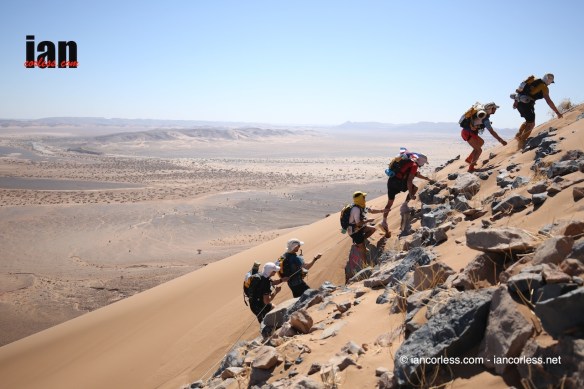
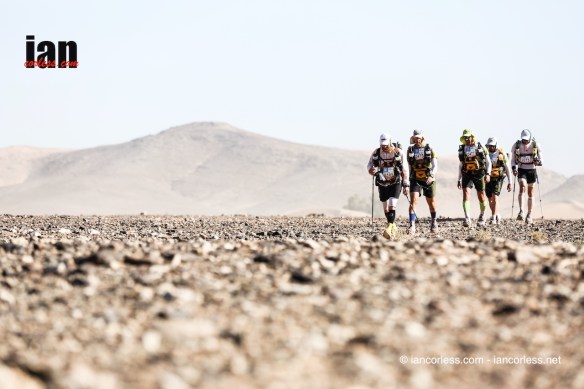
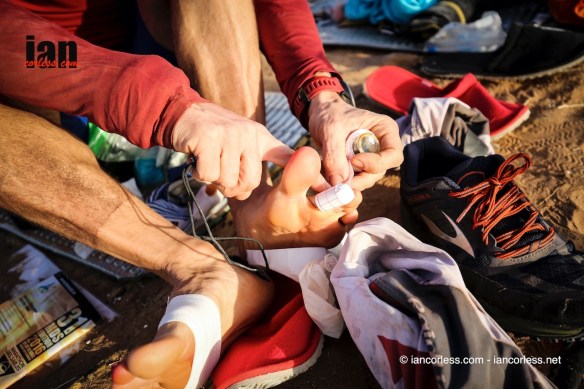
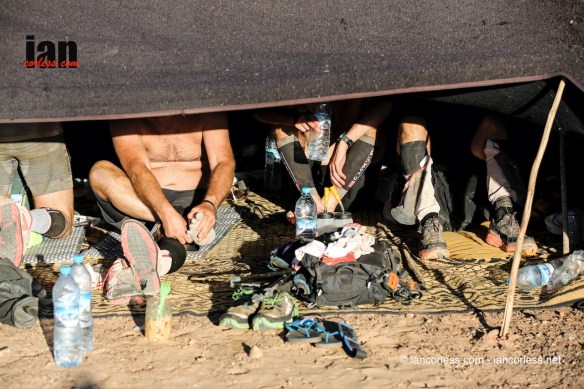

 Food – You need a minimum amount of calories per day specified in the race rules and how those calories are made up are up to you. This for many is a difficult one. It raises many questions and yes, it’s good to find out what other people do and use but ultimately, YOU have to eat it. The decision to use a stove is another question mark but it would appear that most runners like that hot water option. Remember though, you can make a fire from twigs, shrub and branches that surround bivouac. Also note here that food choices and what you eat during running varies greatly depending on how fast you run. For example, the top runners are done and dusted on the marathon stage in 3-4 hours and they are using carbohydrate as a fuel, they therefore can get away with 1-2 gels. If however, a typical day for you will be 6, 7, 8, 9 or even longer, gels are not going to be a good choice. Fat and real food are going to be essential. Understand this now and you can start making the necessary adaptations in training so that food choices will work for you. Training on limited calories and getting fat adapted is a key element for a successful MDS for many runners. Food is also the heaviest and most bulky thing you will carry, think about repacking in smaller packs and making everything as small as possible.
 Water and Salt Tablets – These are provided by the race and it’s easy really, take the tablets as recommended and drink the water. Dehydration in 2016 once again was a huge issue.


 IAN CORLESS