The 2016 Richtersveld Transfrontier Wildrun® became a reality today… runners from all over the world have assembled in the |Ai-|Ais/Richtersveld Transfrontier Park.
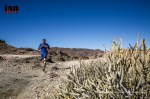
A 200km, five-day foot race from South Africa to Namibia through the ancient arid landscape of the /Ai/Ais-Richtersveld Transfrontier Park. From the crystal fields of Sendelingsdrif in South Africa to the infamous giant boulders of Tatasberg deep in the /Ai/Ais-Richtersveld Transfrontier Park; this unparalleled journey then crosses the Orange River into Namibia and the wild lands of the Fish River Canyon. This is the running experience of a lifetime; this is the Richtersveld Transfrontier Wildrun®.
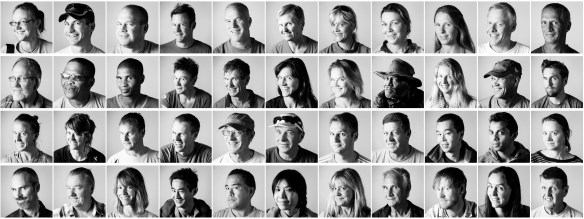
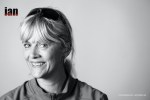
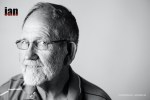
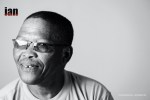
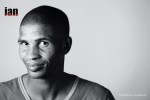
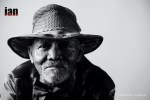
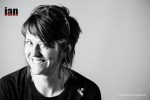
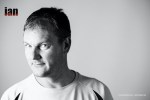
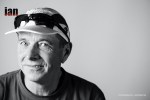
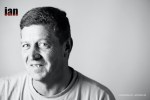
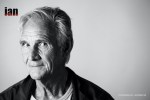
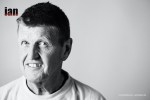
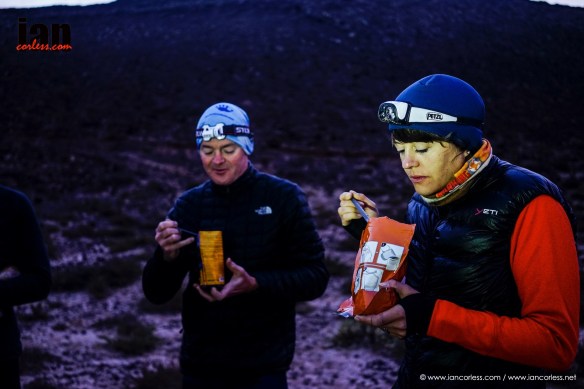
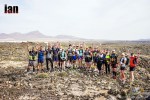
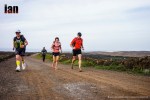
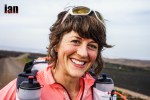
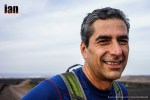
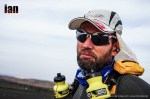
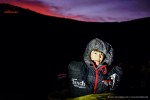
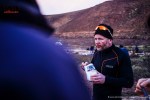
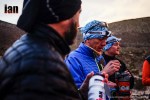
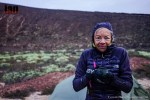
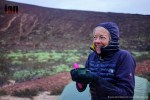
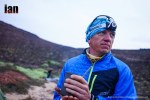
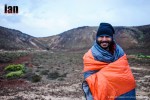
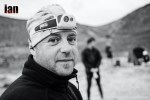
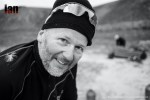
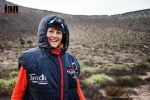
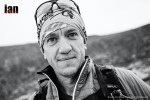
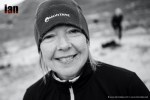
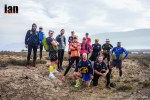
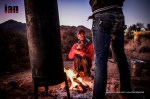
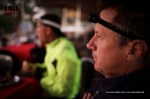
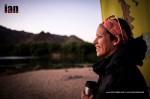
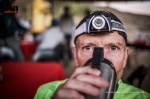
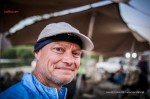
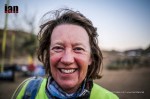
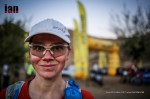
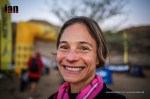
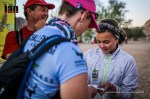
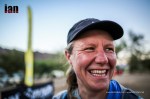
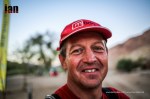
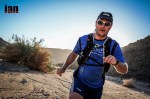
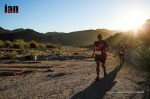
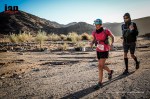
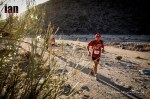
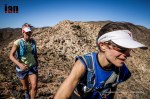
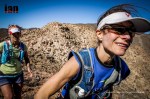
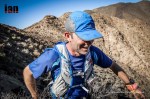
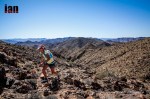
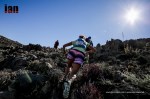
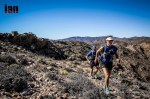
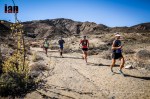
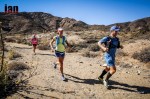
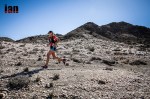
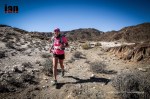
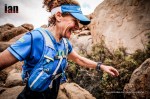
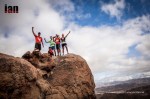
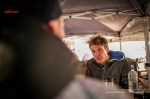
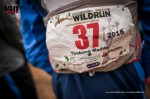
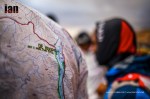
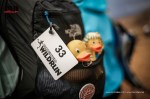
Day 1 starts tomorrow, Monday June 13th at 0800. Before the race gets underway, we feel it’s important you get to see the faces of those taking part.
Day 1
43.64km
Sendelingsdrif to ‘De Koei’
Day 2
32.13km
‘De Koei’ to Hakkiesdoring
Day 3
39.78km
Hakkiesdoring to De Hoop
Day 4
48.32km
De Hoop to Wilderness Hot Springs
Day 5
21.3km
Wilderness Hot Springs to Ai-Ais Hot Springs Resort
Early archaeological evidence tells us that the San inhabited the Richtersveld area thousands of years ago. They hunted game (mountain zebra and klipspringer) and gathered berries and herbs. The first Khoekhoen or pastoral people moved to these regions from Botswana some 2000 years ago. Like the San, they were hunter-gatherers, and only slaughtered animals on rare ceremonial occasions.
In tune with the harsh environment, many of the Richtersvelders today are transhumant pastoralists, moving their livestock between stock posts with the changing of seasons. The rotation of pastures has helped to preserve the land from overuse. This is the last place in South Africa where pastoral people live on communal lands and one of the last remaining examples of the transhumant Nama way of living.
The harsh environment of the Richtersveld has through the years witnessed a story of determined peoples with a strong attachment to the land. Early last century declared a “Coloured Rural Reserve”, the land’s ownership moved in 2002 to the peoples of the Richtersveld. In this pristine land, devoid of mining scars and in harmony with transhumant pastoralists, an area of more than 160 000 ha has been put aside – first to create a Community Conservancy, now proclaimed a World Heritage Site.
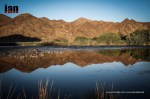
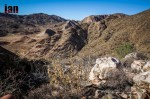
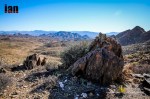
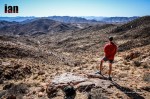
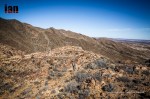
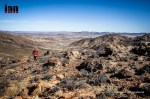
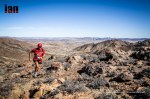
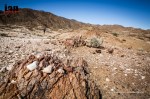
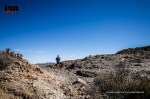
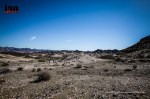
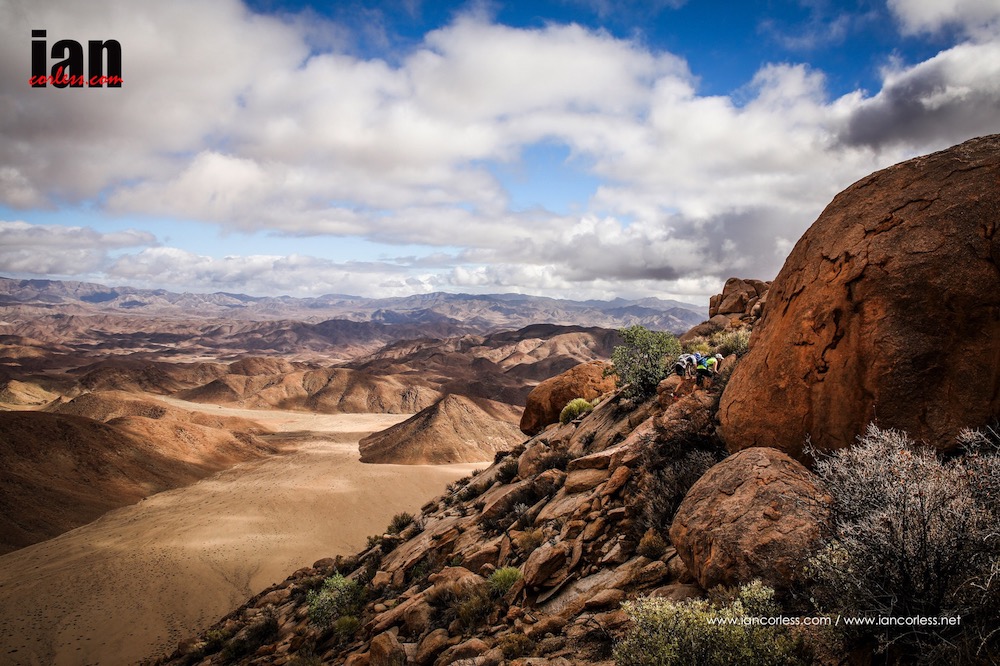
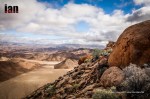
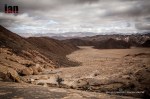
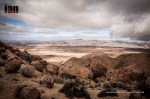
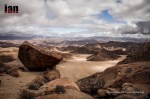
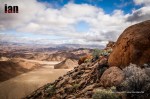
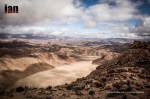
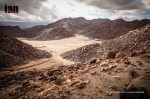
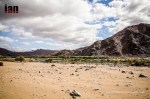
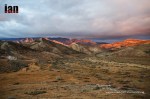
From a distance you can see rugged mountains, sweeping deserts, a giant blue sky and glimpses of the might Orange River creeping along to the sea. On closer investigation you realise that you are standing in one of Africa’s most diverse and rich ecosystems.
The Richtersveld World Heritage Site sits in the heart of what is called the Succulent Karoo Biodiversity Hotspot – an ecosystem with an astounding 4 849 succulent plants, 40% of which are found nowhere else.
To be declared a hotspot, an area must have incredibly high species diversity and a high percentage of endemism. It is quite a unique distinction, as there are only 25 hotspots in the world. Even more unusual is that the Succulent Karoo is a desert and is the only arid biodiversity hotspot on Earth.
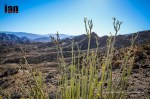
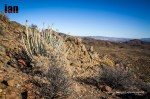
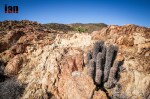
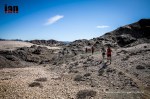
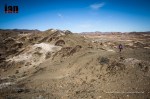
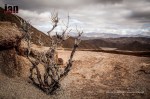
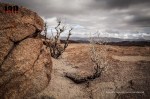
Conjure up a desolate and forbidding landscape, seemingly devoid of life, except for some people dotting along the horizon. Make a startling discovery upon closer inspection when the mirage dissolves into the human-like half-mens (half person) and the harsh environment prove to be a treasure-chest containing the world’s richest desert flora. Miniature rock gardens, perfectly designed by nature, cling precariously to cliff faces. Tiny succulents, mere pinpoints against a backdrop of surreal rock formations, revel in the moisture brought by the early morning fog rolling in from the cold Atlantic Ocean.
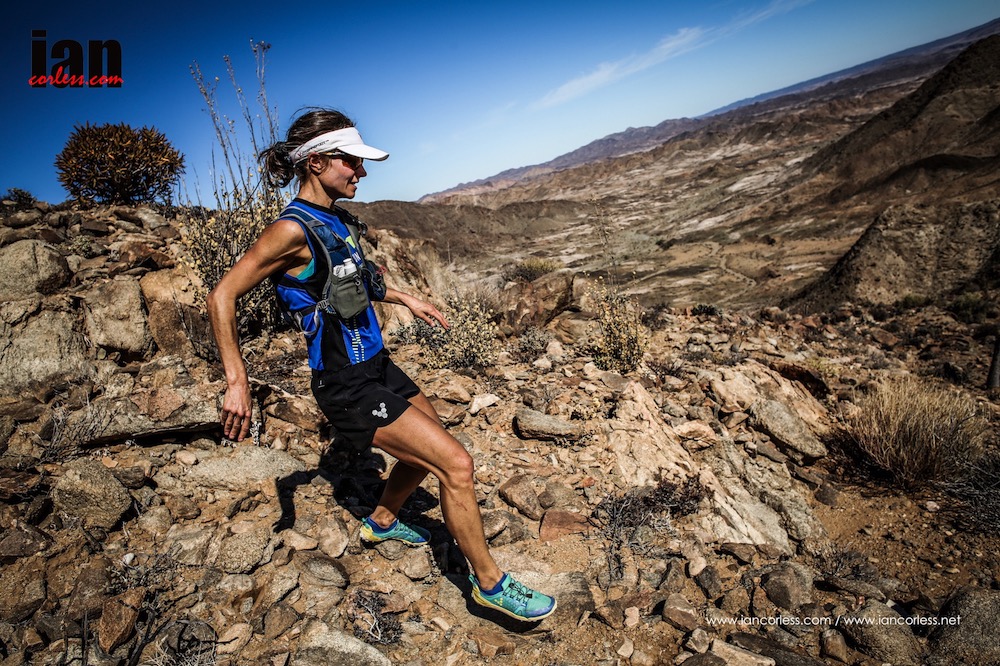
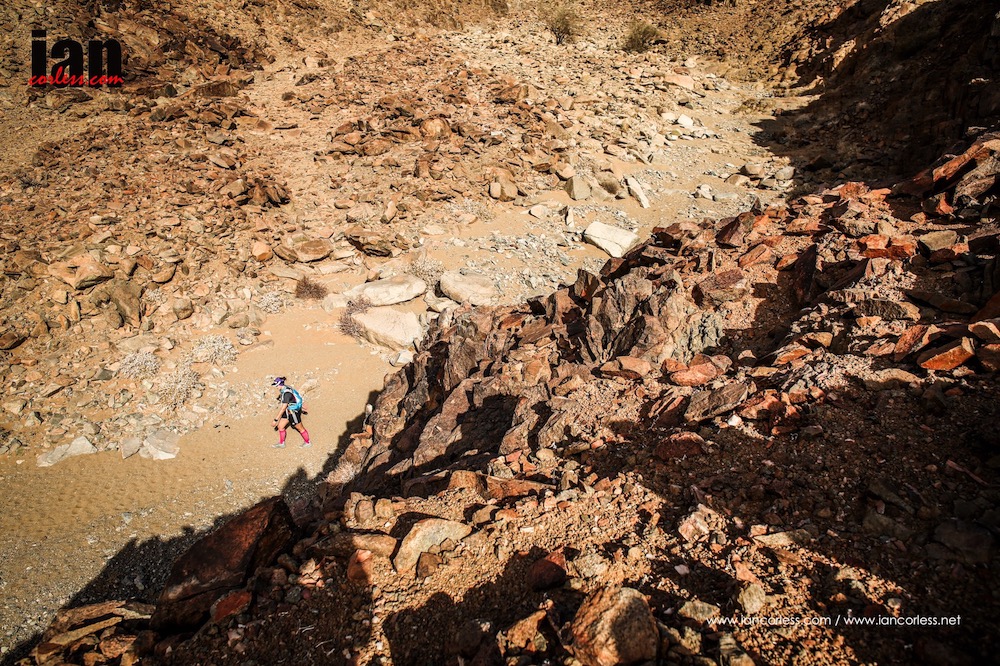
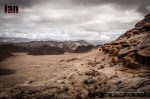
Rugged kloofs, high mountains and dramatic landscapes that sweep away inland from the Orange River divulge the fact that you are now in the vast mountain desert that is the /Ai-/Ais-Richtersveld Transfrontier Park, an area managed jointly by the local Nama people, SANParks and Namibia Parks and Wildlife. This is a harsh and unpredictable land where water is scarce and life-sustaining moisture comes in the form of early morning fog – called ‘Ihuries’ or ‘Malmokkies’ by the local people – which rolls in from the cold waters of the Atlantic Ocean, sustaining a remarkable range of small reptiles, birds and mammals. A staggering assortment of plant life, some species occurring nowhere else, is to be found here, with gnarled quiver trees, tall aloes and quaint ‘half-mens’ keeping vigil over this inscrutable landscape.The Fish River Canyon is the largest canyon in the southern hemisphere, and second only to Arizona’s Grand Canyon in terms of size. 161km long, up to 27km wide and almost 550m at its deepest, the southern part of this canyon is largely untouched by tourists and remains one of the wildest and most remote corners of the world.
The /Ai/Ais-Richtersveld Transfrontier Park is only accessible by means of a 4×4 vehicle, but vehicles with high clearances such as combi’s and LDV’s do travel in the park. Sedan vehicles are not permitted.
June temperatures are likely to be cool at night and comfortable during the day. However, it can get as low as 4-5 degrees Celcius during the night and as high as 35 degrees Celcius during the day.
Each day of this 200km, five-day journey will take you on a rollercoaster ride of geological splendour. From the crystal fields of Sendelingsdrif in South Africa, to the infamous giant boulders of Tatasberg, across the green swathe of the Orange River, and into the wild lands of the Fish River Canyon in Namibia – every kilometer is an experience within itself and will leave you stumped for words to describe your journey.
This is Episode 109 of Talk Ultra. We speak with inspiring adventurer and I2P ambassador Ray Zahab about his amazing Antarctica 2 Atacama expedition. We also speak with an amazing Australian lady, Mina Guli, who ran 40-marathons across 7 deserts on 7 continents in 7 weeks. We also have a little pre-MDS chat and Speedgoat is here.
01:30:00
It’s a different show this week as Ian is in the Sahara at Marathon des Sables and this show was recorded in advance and then programmed for release.
RAY ZAHAB In February 2016, Ray Zahab (CAN), Jen Segger (CAN) and Stefano Gregoretti (Italy) set out on a unique and challenging expedition that spanned 100 degrees celsius on the thermometer. The team journeyed from -50°C (-58F) to +50°C (120F) over 1,500km, on mountain bikes and foot, crossing both Baffin Island in Canadian winter, and the Atacama Desert in Chilean summer. Website HERE
01:53:00 INTERVIEW
MINA GULI From 1 February to 22nd March, 2016 Mina did something nobody in the world that has ever done before – she ran across 7 deserts on 7 continents in just 7 weeks. She did it for one reason – to raise awareness about the water crisis. To show the world in pictures and in images, what the water crisis looks like, and to highlight the fact that left unchanged, our water use will increase unsustainably – to a point where by 2030 we will have a 40% greater demand for water than supplies available. Website HERE
“The simple act of running, placing one foot in-front of the other as a method of transport takes us back to our roots, our basic instincts. In search of a place to sleep, to hunt for food; it is about being in the wild, surviving and fulfilling a primal need.”
Join 2015 Marathon des Sables champion, Elisabet Barnes, South Africa’s unstoppable Linda Doke and the UK’s Tobias Mews in the 2016 Richtersveld Transfrontier Wildrun.
The 2015 edition of the race was an incredible, mind-blowing journey but in 2016, the race goes one step further and becomes ‘Transfrontier.’ The race will now pass over the Orange River and in to Namibia.
Elisabet Barnes 2016 The Coastal Challenge, Costa Rica (2nd place lady).
Known as one of the most scenic and unique trail running stage race events on the South African trail running calendar the Richtersveld Wildrun™ takes a new direction and in doing so become a cross-border trail running event; a worlds first! Extending to a linear 200km race, the five day crossing from South Africa to Namibia goes through the heart of the stunning /Ai/Ais-Richtersveld Transfrontier Park.
“We are absolutely thrilled to have unlocked a truly unique opportunity to experience both sides of such a unique and powerful place – and to finish a long day at a natural hot springs in the middle of the wilderness is unbelievable!”said Owen Middleton,” MD of Wildrunner, the events company behind the Wildrun™ events.
Tobias Mews, The Dragon’s Back Race 2015.
Including the Vyf Susters, Hellskloof Pass, Armmanshoek, the Tswayisberge, Springbokvlakte and the iconic Tatasberg boulders, the new route will maintain the best of the first three days of the original edition but on day 4, the route will veer of its original course and cross the Orange River at De Hoop into Namibia. Yes, the race will go into the untouched southern section of the Fish River Canyon made famous by Ryan Sandes.
It’s no easy addition to the race, runners will need to cover 50km into a wilderness that is completely inaccessible by vehicle. Rich in wildlife, runners will have a once in a lifetime experience with a possibility of seeing Hartmann’s mountain zebra, kudu, gemsbok, springbok, Namibian wild horses and giraffe. It’s the race of a lifetime!
Tobia Mews is no stranger to incredible races, his recent book release called ’50 Race To Run Before You Die’ looks like it will need a new chapter, 51 Races…
“I am so looking forward to this race. For me it’s the epitome of adventure running wrapped up in one of the most stunning places on earth. And it’s partly Ian Corless‘s fault for producing such amazing photos from last year.”– Tobias Mews
After a long, tough day in Namibia, runners will spend the evening in a canyon at a natural hot spring, before taking on the final day of roughly 25km to finish at the /Ai-/Ais Hot Springs Resort and wrap up a powerful and truly unique experience.
Roland Vorwerk, marketing manager of Boundless Southern Africa, one of the driving forces behind the success of the event, said they are very happy to support this new cross-border trail running event.
“This new route contains even more highlights than the original Richtersveld Wildrun™, and promises to give participants a challenging but spectacular trail running experience.”
If you need inspiration, check out the film from 2015 below.
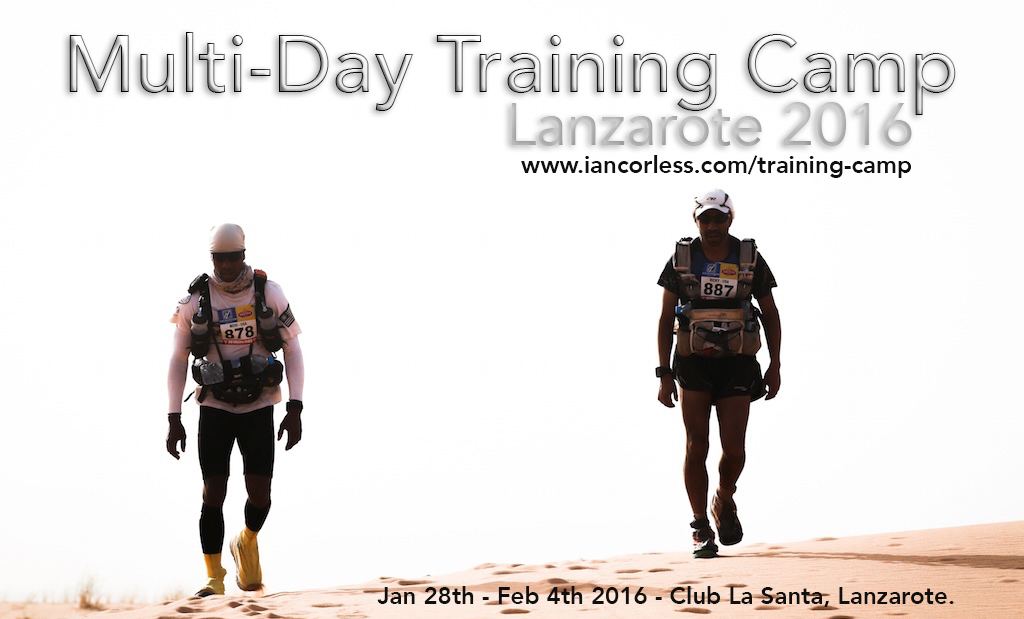
For the participants of the 2016 Lanzarote multi-day training camp, it all got ‘real’ on day 6 and 7 of the camp.
It all started of with blue skies, sun and a 2 hour run without packs so that everyone had an opportunity to work on a little faster running. In most cases it was a great tempo 10-12 miles in the bag.
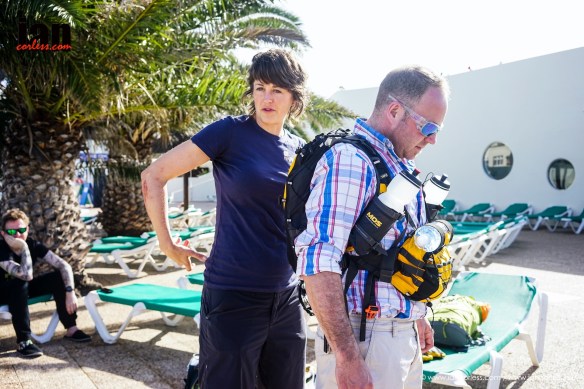
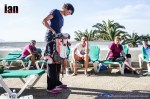
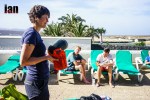
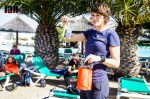
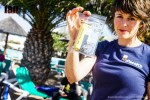
Following this we had a 2-hour talk, demo and an opportunity to test packs from WAA, OMM, Raidlight and Aarn with a very informative and enlightening discussion on bag packing from Elisabet Barnes. It really raised the question; what is and is not an essential item?
Ultimately the day (and night) was all about a medium length run of 2-3 hours and an overnight bivouac.
Heading out along the course, the runners departed in three groups: walking, run/ walking and ‘mostly’ running to a pre-arranged rendezvous on the coast.
Ian Corless moved ahead and set up camp inside an incredible and dormant volcano. Rendezvous time was 1900 and right on cue, the three groups all arrived from different directions within 15-minutes of each other.
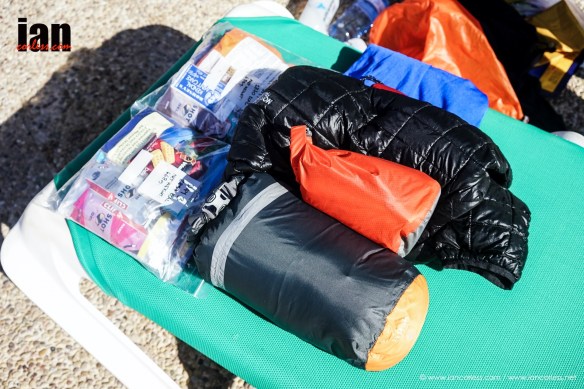
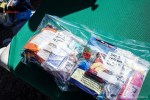
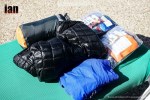
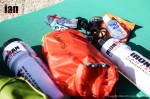
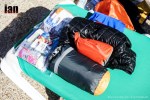
Running with packs, the runners carried all essentials less the additional days food. Food requirements were snack for the run on both days, evening meal and snacks plus breakfast.
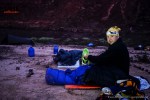
At the overnight bivouac we operated self-sufficiency, water was provided but rationed. The only treat came from 24 beers (alcoholic and non-alcoholic) transported in as a special treat.
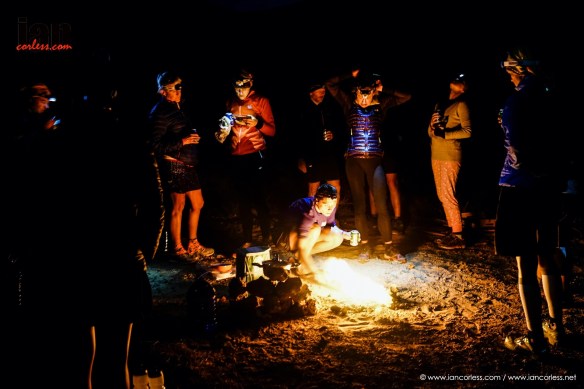
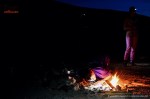
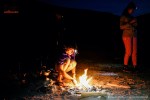
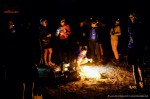
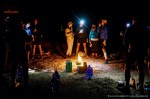
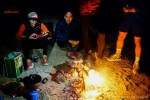
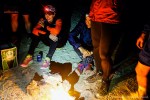
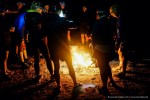
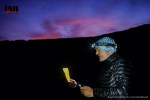
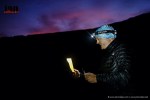
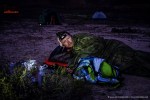
A clear starry sky, camp fire and the illumination of head torches within the stunning setting of an amphitheatre of rock made everyone suddenly realise that it was one of the special moments.
It wasn’t all plain sailing though. One or two runners realised on the run that their chosen pack just wasn’t the one for them. This is the whole reason behind providing a real scenario such as this on a training camp. It’s invaluable to find out these issues before your chosen must-day race.
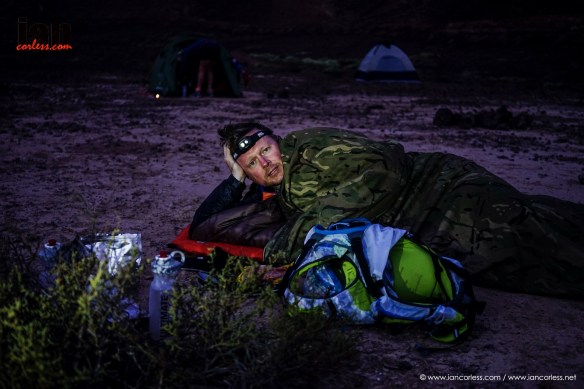
It was lights out, well, head torches out around 9pm and as the warm night drifted past midnight, the temperatures dropped. Unlike races such as Marathon des Sables, the night was damp lowering temperatures even more. One common thread with 0700 wake up call, a cockerel crow by Niandi, was, ‘My sleeping bag is not warm enough!’
Yes, it had been a rough night for some.
Elinor Evans said, “This experience has been incredibly invaluable. I have learnt my packs not right for, my sleeping bag is not warm enough and I need a warmer jacket. Last night was beautiful but also a little harrowing as I got so cold. Better here though than at my race!”
It was a sentiment echoed by Leon Clarance, “I was just cold last night. Despite additional layers, my sleeping bag was not warm enough. I also made the mistake of removing my socks. I woke up with feet of ice.”
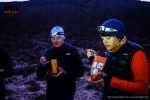
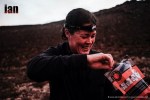
In general though, freeze dried food and peoples selections seemed to hit the spot, apple pieces with custard proving to be a hit with those lucky enough to be carrying it.
The bivouac provided everyone with a very real and practical scenario and valuable lessons were learnt. A bivouac debrief back at Club La Santa will allow everyone to discuss this.
Leaving camp, the sun was getting higher in the sky, a new day and more valuable experiences to follow. But before that debrief, there was another 2-3 hours of running.
It’s been a great two days and night.
If you would like to join our 2017 camp, please go HERE
Many thanks to Raidlight, OMM, PHD, inov-8, Berghaus, Scott Running and MyRaceKit for the support
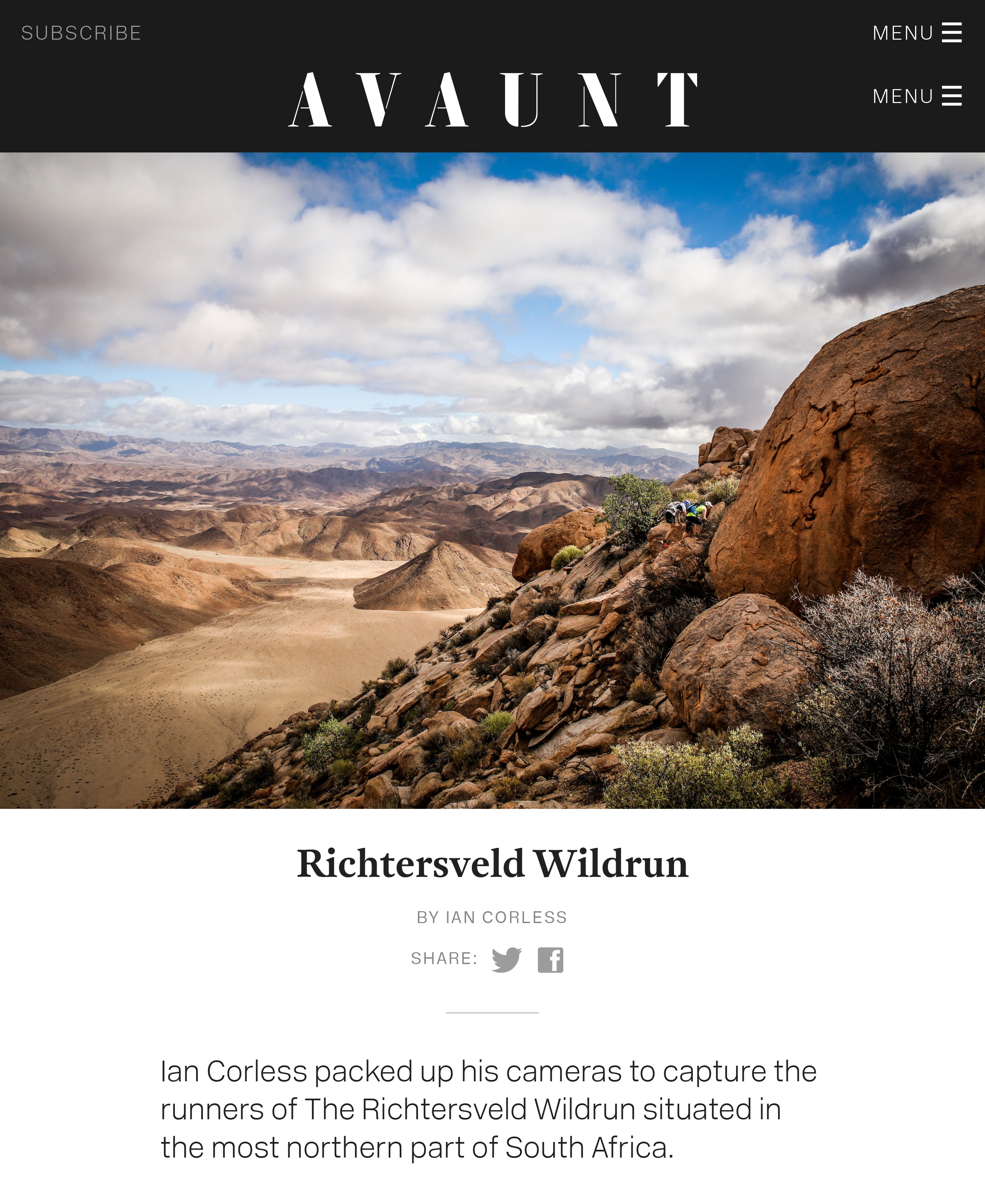
I am fortunate to travel to many races and work as a photographer and journalist. In 2015, I traveled to South Africa with Nikki Kimball and Olympic rower, James Cracknell for the Richtersveld Wildrun.
It was an incredible experience and I have to say, a highlight of my year. I recently wrote in an online article for AVAUNT Magazine (HERE):
“The simple act of running, placing one foot in-front of the other as a method of transport takes us back to our roots, our basic instincts. In search of a place to sleep, to hunt for food; it is about being in the wild, surviving and fulfilling a primal need.”
In 2016, the race goes one step further and becomes ‘Transfrontier.’ The race will now pass over the Orange River and in to Namibia.
After two years the Richtersveld Wildrun™ has become known as one of the toughest, most scenic and unique trail running stage race events on the South African trail running calendar. In 2016 however, this iconic event takes on a new shape to become the first cross-border trail running event in the world; extending to a linear 200km, five day crossing from South Africa to Namibia through the heart of the /Ai/Ais-Richtersveld Transfrontier Park.
“We are absolutely thrilled to have unlocked a truly unique opportunity to experience both sides of such a unique and powerful place – and to finish a long day at a natural hot springs in the middle of the wilderness is unbelievable!”said Owen Middleton, MD of Wildrunner, the events company behind the Wildrun™ events.
The new route will maintain the best of the first three days of the original edition, including the Vyf Susters, Hellskloof Pass, Armmanshoek, the Tswayisberge, Springbokvlakte and the iconic Tatasberg boulders. On day 4, the route will veer of its original course and cross the Orange River at De Hoop into Namibia and the untouched southern section of the Fish River Canyon. This 50km day will take runners into a wilderness that is completely inaccessible by vehicle and rich in wildlife such as Hartmann’s mountain zebra, kudu, gemsbok, springbok, Namibian wild horses and giraffe.
After a long, tough day, runners will spend the evening in the canyon at a natural hot spring, before taking on the final day of roughly 25km to finish at the /Ai-/Ais Hot Springs Resort and wrap up a powerful and truly unique experience.
Race dates are 13-17 June 2016 and entries open midday October 21st
Roland Vorwerk, marketing manager of Boundless Southern Africa, one of the driving forces behind the success of the event, said they are very happy to support this new cross-border trail running event.
“This new route contains even more highlights than the original Richtersveld Wildrun™, and promises to give participants a challenging but spectacular trail running experience.”
If you need inspiration, check out the film from 2015 below.
Episode 90 of Talk Ultra is playing catch up. Yes folks we missed a show… Speedgoat discusses Scott Jurek on the AT. We talk Western States and have an interview with Rob Krar. We have some Richtersveld Wildrun chat from South Africa with Nikki Kimball and Georgina Ayre. We also speak to Stevie Kremer on Ultra Skymarathon Madeira. Talk Training, the News and Niandi co-hosts.
FKT for Gary Robbins – In Washington on the 95-mile Wonderland Trail around Mount Rainier, Gary Robbins ran 18:52 to cut just over two hours from Kyle Skaggs’s previous supported record, which had stood since 2006.
The final day of the 2015 Richtersveld Wildrun concluded today with a course record day for Thabang Madiba and Katya Soggot.
It was a tough final day with technical trail, tough climbs, technical descents and amazing views.
James Cracknell was a no start to day 4, his swollen ankle far too painful to run on. James had handled the previous days mountains in his stride but the flatter 10km of the course was just too much. Reduced to a walk he contemplated undertaking the final day but during the night the pain continued and ultimately he made the correct call. At 38.3km it was a challenging last day that started with a long and steady climb over the first 17.5km to Akkedis Pass and then the fun started. Technical trail, ridge running, single track, slip sliding descents and incredible crystal fields would lead the runners once again to the Orange River and the finish in Sendlingsdrif. For many, it was a day of running together, overall classifications wouldn’t change and in the spirit of running for fun, the whole field embraced the last day and enjoyed it. However, one person decided that a course record was possible.
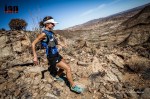
Thabang arrived at the technical ridges at Halfmens Ridge running like a man possessed, shifting from left foot to right foot he made the terrain look easy. He was on a mission and he did it. A final day course record confirmed his incredible skill and ability on this tough, challenging and incredibly beautiful course. Katya Soggot was once again crowned ladies champ and Nikki Kimball secured 2nd place ahead of Karoline Hanks.
Today the Wildrun lived up to expectations and really did become a wild run! The weather cleared, the winds dropped and the rain disappeared and we were all treated to a very special South African day.
Today’s course was special!
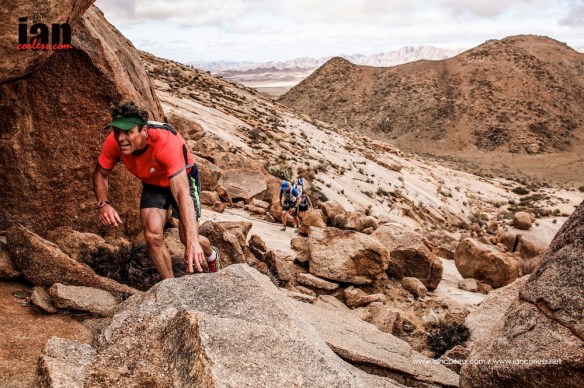
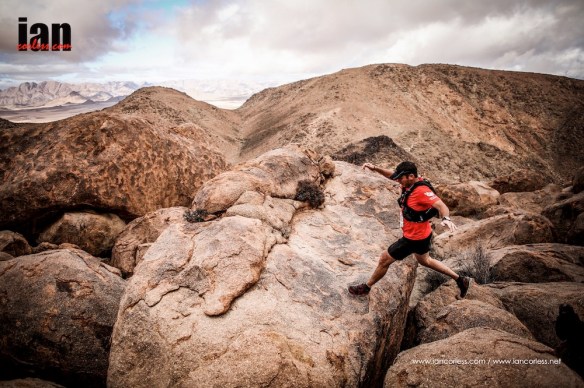
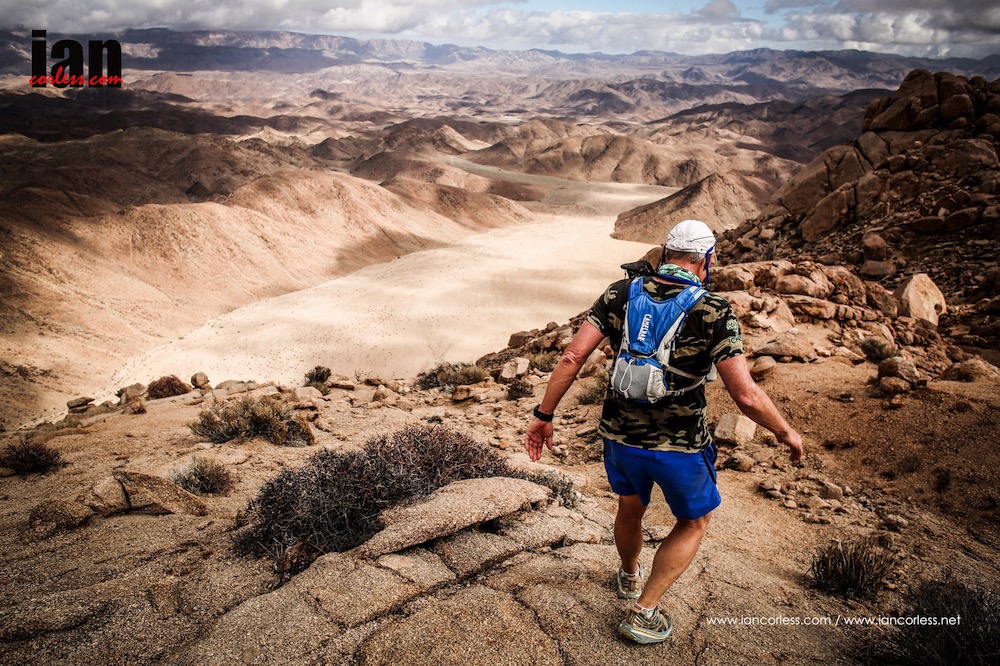
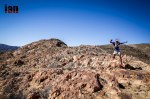
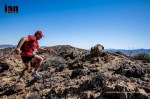
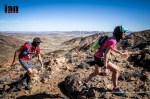
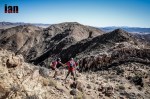
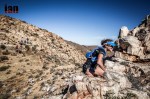
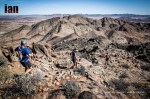
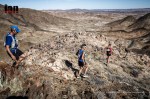
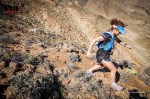
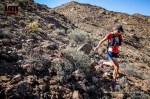
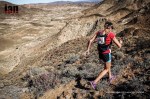
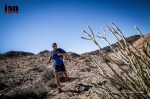
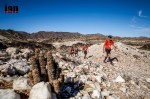
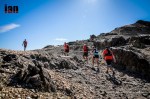
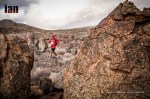
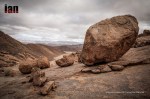
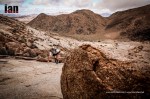
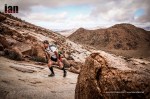
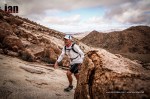
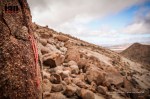
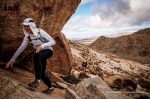
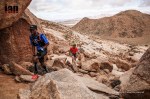
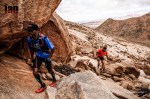
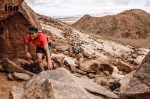
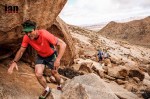
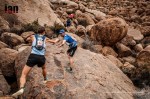
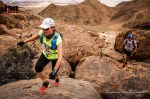
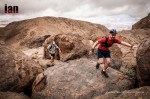
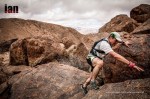
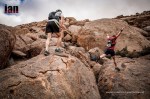
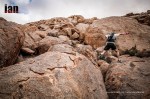
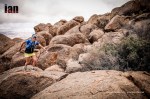
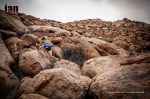
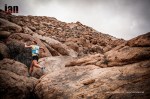
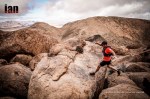
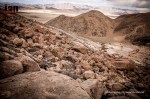
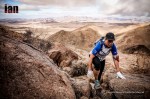
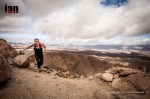
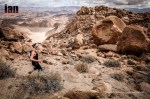
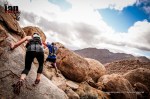
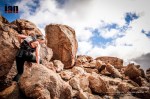
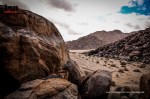
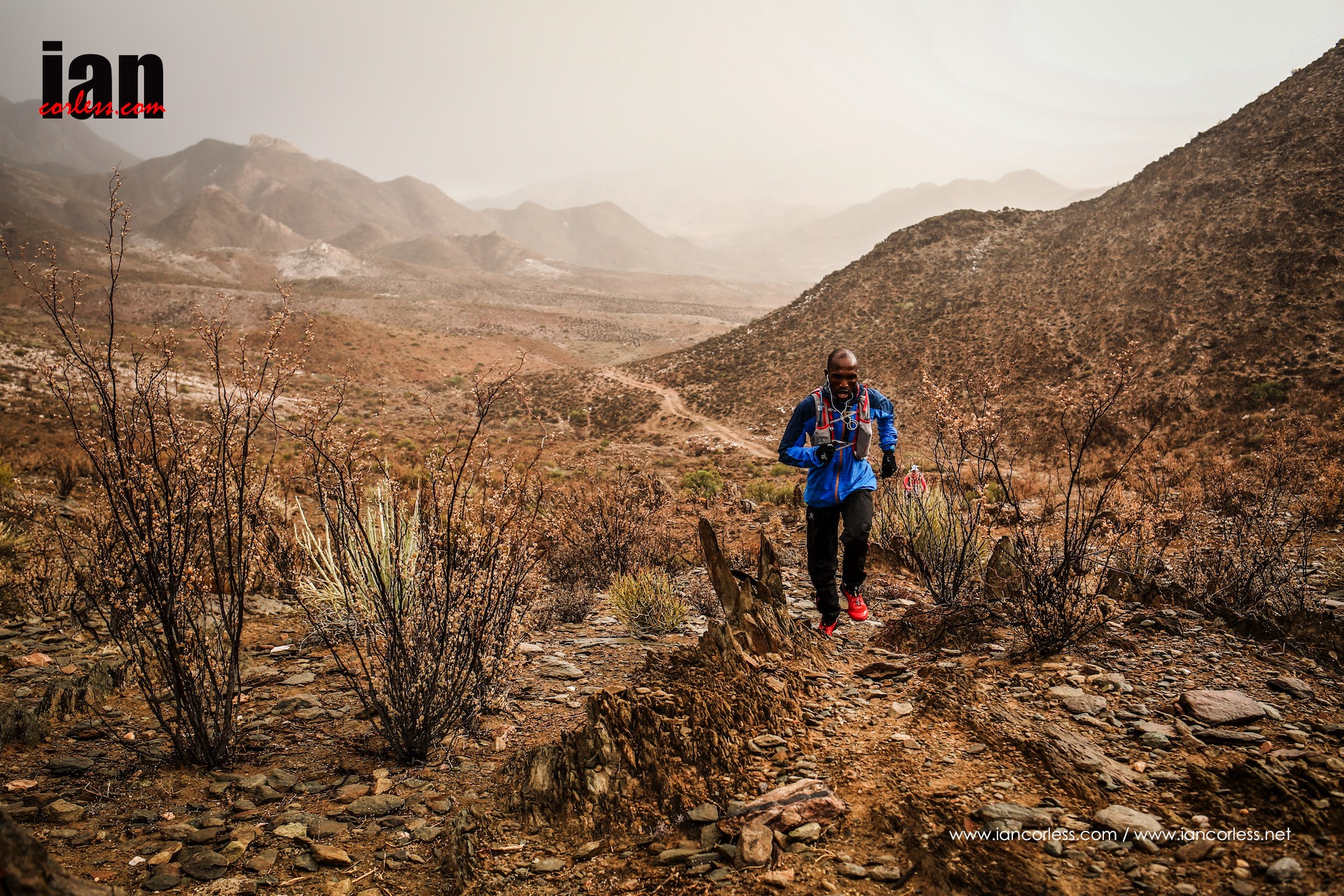
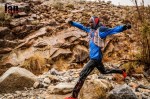
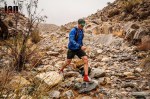
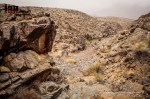
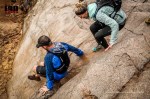
Notably, the Tatasberg Mountain is one of the most impressive sections of ‘trail’ I have ever witnessed. I use the term trail very loosely as it was a combination of scrambling and boulder hopping, not only on the way up but down. It was an intimidating section for some. A fear of heights not recommended. However, in pain, fear or discomfort on the climb was rewarded with incredible views. It was stunning!
Racing started at 0800 with separate waves; 0800, 0830, 0900 and 0930; slower runners starting first and faster runners in the last wave as per the previous day. Early running was relatively easy but the views were stunning. Particularly as early morning cloud cleared.
By the time the runners reached the climb of Tatasberg at approximately 16km, Thabang and all the usual suspects had pretty much caught all the early starters with the exception of 3 people.
Thabang made the boulders look easy as he hopped from one to the next. The other runners used a little more caution and a natural gap opened. Katya Soggot and Dayle Wheeler closely followed James Cracknell as he pursued Thabang, occasionally helping each across the larger boulders. Nikki Kimball trailed a little but only by minutes. At the summit the boulders started to clear providing the occasional opportunity to run.
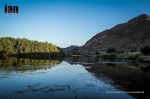
The bottom of the climb opened up to a wide plateau and then a clear zigzag trail lead to the lush Orange River and across the water, Namibia. Lush green vegetation populated the left and right banks. It was a stunning contrast to what had come before. Running along the river banks, the sound of flowing water, birds and the occasional baboon made this day, arguably the best one yet.
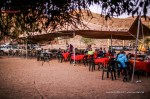
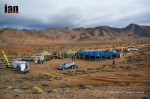
Camp was located next to the river and of course, a braai was prepared for the arriving runners. Thabang Madiba arrived first (once again) closely followed by Katya Soggot, Dayle Wheeler, Karoline Hanks, Nikki Kimball and Filippo Faralla. But today really wasn’t about the racing, it was the course that was the hero. It was the Richtersveld National Park that had completely blown the minds of every runner and every runner on the Richtersveld Wildrun race.
James Cracknell had a tough day, his groin strain and twisted ankle from the previous day reducing him to a frustrating walk. He is currently unsure if day 3 is possible for him. He’s a stubborn and committed competitor and after travelling all this way, once has to think that he will fight his way through the last day even if it is slowly!
Results
Thabang Madiba 3:24:03
Dayle Wheeler 3:32:31
Katya Soggot (1st lady) 3:32:31
Nikki Kimball (2nd lady) 3:49:10
Filippo Faralla (3rd man) 4:04:10
Karoline Hanks 4:04:10
Nikki Kimball has now moved up into 2nd overall, 10 minutes ahead of Karolin Hanks.
What a night! The wind blew, gusted and lifted tents off the ground. We were told yesterday that the last time it rained in the Richtersveld was August 2014. Well believe me, when the weather changes; it really changes!
The excitement continued into the morning and although the rain subsided (for a little while), the wind was going to be with the runners all day. Starting in three separate groups, 0800, 0830 and 0900 the field were split based on finish times from day 1; slower runners starting first at 0800 and faster runners starting last at 0900.
James Cracknell, the 2-time Olympic Gold Medallist for rowing finally joined the race after an epic journey of 48 hours. He departed Poland at 1900 on Sunday after commentating at the Rowing European Championships. He flew back to the UK, then flew to Joburg and followed with a connecting flight to Upington. The journey was finished off with 10 hours in the car to the race day 2 start line.
James arrive at 0800 in camp just giving him 60 minutes to sort out his equipment and get his head ready for a day on South African trails.
As expected, Thabang Madiba showed everyone a clean pair of heels as he slowly pulled away from Katya Soggot, Dayle Wheeler, Nikki Kimball and James Cracknell. Conditions were tough throughout the day and the beautiful Richtersveld landscape was shrouded by mist and permanent rain that varied in intensity.
Climbing and descending to Cp1 the runners once again climbed up and over the pass at Tswayiberg before then dropping down into the technical riverbed that would lead to the finish.
Thabang at this stage was already leading by over 10 minutes, behind Katya Soggot, Nikki Kimball and Dayle Wheeler pursued with James Cracknell not far behind. James was certainly struggling on the slick wet rocks as he slid from left foot to right with the occasional shout of ****ing hell! A groin strain picked up at London Marathon adding to his frustrations.
At the line, Thabang Madiba completed the 36km stage in 3:14:03 with Soggot, Wheeler and Kimball crossing the line together in 3:33:35. Cracknell held on fighting some severe discomfort to finish in 3:41:56.
Georgina Ayre who had run well on day 1 frustratingly repeated Nikki Kimball’s error and made a navigational mistake by taking the wrong riverbed. This mistake was costly, as she finished the day 1 hour behind Soggot and Kimball. Karoline Hanks was 3rd lady on the day in 4:03:23.
As the day came to a close, a break in the weather came and with it the sun, a welcome return! Everyone has fingers crossed for a warm and sunny day 3 at the Richtersveld Wildrun.
It is days before the second Richtersveld Wildrun™ kicks off and anticipation is building for what promises to be a tight race through one of the most biologically diverse regions in the world.
This four day, 150km stage race is one of the most challenging trail runs in South Africa and runners can expect to take on a harsh, mountainous desert as they are tested to the limit. Similar in format o the iconic Marathon des Sables, ‘Wildrun’ is notably different in that runners are not self sufficient: equipment is transported for them and food is provided.
At the front of the field, three of Southern Africa’s top trail runners and an American ultra-running legend will go toe-to-toe as they battle it out for top spot. Bernard Rukadza and Katya Soggot will both return to defend their titles and will come up against the likes of South African long distance trail running champion, Thabang Madiba and three-time Western States 100 mile champion, Nikki Kimball. Both Rukadza and Madiba have been enjoying superb form in 2015 with Rukadza securing his second straight ProNutro AfricanX title in March and Madiba taking second place at the same race and at the Otter African Trail Run in October 2014. Madiba will be hoping to go one better at the Wildrun™ and take first place, but he will be up against it thanks to Rukadza’s form and route experience from the 2014 event. This is also the first time Madiba is taking on a run of this magnitude and he will have to adapt quickly to stay in the hunt.
“Stage racing is one of the races that helps to find your strength in running. You learn to push while in pain and learn techniques to apply to survive all stages. A win will be a big bonus for me but I’m looking forward to give all my best,” said Madiba.
In the ladies field, Katya Soggot will be representing South Africa off the back of a string of victories in the Western Cape, including the Spur Silvermine Mountain XL, Spur Cape Summer Trail Series™, Three Peaks Challenge, Matroosberg Challenge and Jonkershoek and Helderberg Mountain Challenges. She has been virtually unbeatable locally and will relish the opportunity to measure herself against an ultra-runner of Kimball’s calibre. With three Western States 100 titles as well as an Ultra Trail du Mont Blanc and Marathon des Sables title, Kimball is one of the top ultra runners of her time and will be hard to beat, but Soggot’s experience from the 2014 event is sure to come in handy.
“The magnitude of untouched wilderness, the comfort and welcome at every rest camp, and the elves who made it so. My feet touched where angels fear to tread. I never dreamt I would have the privilege to relive such an experience and I am overwhelmed with gratitude to Boundless Southern Africa and Wildrunner for the opportunity,” – Katya Soggot
Since its inception in 2014, the Richtersveld Wildrun™ has had amazing support from Boundless Southern Africa and marketing manager, Roland Vorwerk was equally excited about the quality of racing anticipated.
“The Richtersveld Wildrun™ route includes many of the Park’s most spectacular features, and includes trails that very few people get to traverse. We are looking forward to these runners experiencing the unique natural and cultural landscape of the /Ai/Ais-Richtersveld Transfrontier Park and meeting the communities associated with this innovative event.”
From a British perspective, Olympic rower and all around endurance athlete, James Cracknell was scheduled to race the 4 day Richtersveld Wildrun. However, James already had a commitment in place to commentate for the BBC on a rowing event in Poland. This race commentary was due to finish in time to allow James to travel to South Africa. Unfortunately, the commentating has been extended by one day and although James will still travel to South Africa he will arrive late and miss day one of the race. Needless to say, James is somewhat perturbed by this. Never happy taking the easy option, James and myself are currently looking at doing day 1 of the race at the end. Of course, this would mean a solo run but the team at Wildrunner have confirmed that they can make this happen. So, although James will not be able to compete head-to-head with other runners, we will have an overall time for the 4 day run that we can compare to other competitors.
“What more can be said other than this is going to be one hell of a race! Bernard Rukadza has been on fire in the Cape recently, winning everything from marathons to short Spur Trail Series™ events, but Thabang Madiba comes with the South African long distance trail champion label and arguably more endurance experience. I can’t wait to see these two trail heavy weights going head to head, solo, and in the magical Richtersveld desert,” said Owen Middleton, MD of Wildrunner – the events company behind the Wildrun™.
You will be able to follow the Richtersveld Wildrun through images and words here on this website, via Twitter @talkultra, on Facebook HERE and on Instagram @iancorlessphotography




















































 IAN CORLESS