
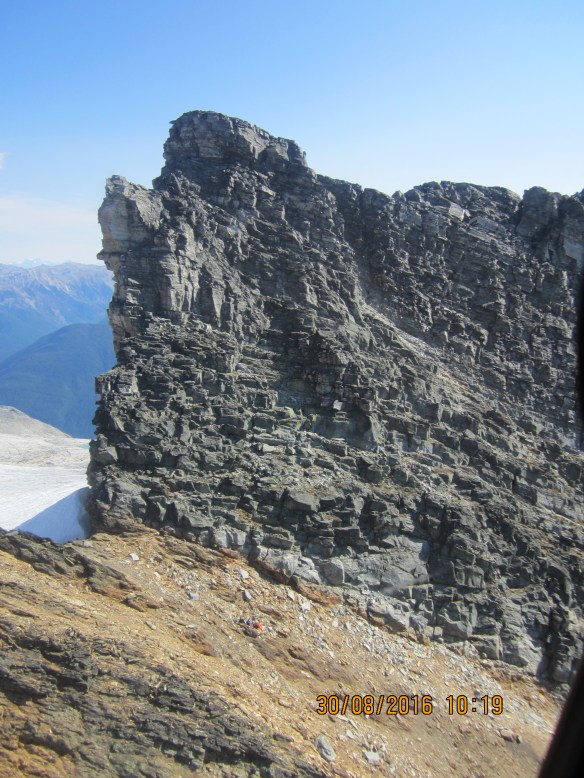
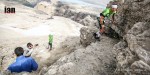
On August 30th 2016, Adam Campbell was attempting a big traverse that had never been completed in a single push before in Rogers Pass, BC. Adam was accompanied by two partners, Nick Elson and Dakota Jones. They were fairly early on in the journey, going up relatively moderate terrain (class 3/4). Adam followed Nick and Dakota up a route matching their steps and actions, Adam pulled on a rock that the previous two climbers had used. This giant rock came loose, broke and away and Adam fell. He tumbled backwards, summersaulting and rag dolling over 200 feet (70-80 meters) down a serious of ledges and sharp rocks.
Adam ended up breaking his back, several vertebrae, breaking his hip, breaking his ankle, damaging his wrists, shoulders and knees and had severe lacerations across my body. His helmet was shattered and has cracks across all of it, It still has blood and hair caked into it. Without it he would have suffered severe head trauma, instead, he just had stitches and a mild concussion.
Adam is alive, not paralyzed and is here to tell his story.
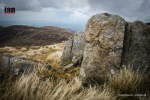
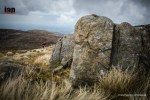
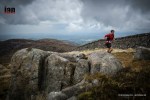
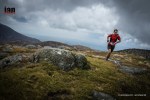
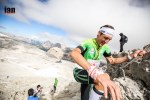
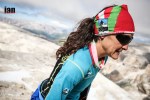
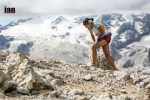
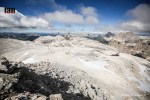
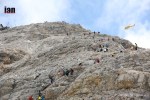
All images ©adamcampbell
Ian: Adam I’m pleased to say is on the road to recovery after a horrendous accident several months ago, and he’s here to talk to me about the incident and maybe about some lessons that we can all learn from spending time in the mountains. Adam, first of all, it’s a great pleasure for you to be here, and I put the emphasis on ‘here!’
Adam: Yes, that’s entirely true. And first of all thanks, it’s great to chat to you, it’s been a while. But I’m really, really lucky, I came very close to having a very different outcome which could have meant paralysis or very, very close to death as well, so I am very lucky to be here speaking to you in the literal sense.
Ian: Yes, absolutely. This is the sort of interview that I don’t want to do, but I’m pleased that you’re here for me to do it. There’s a slight irony in that but you know what I mean.
Adam: For sure, but at the same time, I think it’s important to have these conversations because there are lessons learned and I think after an accident, to a certain degree, I’m a bit of a survivor now and I think talking about it now, analysing it, is really important for my recovery and also hopefully help some other people avoid some of the things that I could have done differently perhaps to avoid ending up in the situation I did.
Ian: It was an awkward one for me because I didn’t know whether to reach out to you and ask you for an interview, because we know each other but that doesn’t really mean a lot in a situation like this because it can be a very fragile thing to talk about, and I sort of, was a little bit plus or minus in the way that I worded the email to you. I’m really pleased to say that you came back because you realize that there are lessons to be learnt for everybody. Let me go back a little bit because if I remember rightly I think the last time that we did an interview together was when you got hit by lightning at Hard Rock.
[laughs]
Adam: Yes, the Hard Rock incident was definitely the first major mountain incident that I had, that one luckily there was no lasting repercussions. Aaron who I was with at the time, he was my pacer at Hard Rock, he came out and visited me in hospital a couple of months ago and I saw him at the weekend. We’re still, really, really good friends and that incident was a little bit different than this one because the outcome was fine, so maybe I don’t analyse it as much, because I walked away from it.
Ian: I think there was an element of, although many of us realized the seriousness of the incident, there was a real comedy element to it and I don’t wish to undermine what happened but it almost became folklore, “Oh, Adam Campbell got hit by lightning”, and of course when Hard Rock came around this year everybody was commenting, “I wonder who’ll get hit by lightning?”, or, “I wonder if there’ll be that sort of incident.” It’s good to see humour in things, but also we do need to be aware of the real life dangers, and we’ll come onto real life dangers but I just wonder, before we talk in depth about your incident, before you went to the mountains on this trip, and I know that you’ve always respected the mountains and the environment but do you think in hindsight you respected them enough?
Adam: Yes, I’d say I would because I have a few friends who had some very, very serious accidents in the mountains and they include losing their life in there, so I think I do have a real respect for it, but I think sometimes you understand the power of the mountain, and the unpredictable nature of them, but I think you understand that in an intellectual level but until you actually experience it in a real tangible way, I’m not sure if the lessons strike quite as deeply, if that makes sense.
I’ve done quite a lot of avalanche courses and, you spend a lot of time talking about these things and reading up on internet sites. If you’re just reading about them and analysing them from a distance they don’t strike you in quite the same way, I don’t think. Although, I’d say, I respected them on a theoretical level, there’s times I’ve been scared up there because you do understand the risk. I think it’s when you’ve actually seen the powers and unpredictable nature of mountains, it’s very hard to fully, fully respect them.
Ian: That makes sense, complete sense. Let’s first of all just provide a little bit of perspective but I think it’s good to just give a little summary. You were going climbing with Nick Elson and Dakota Jones, and you were going to… well, you were on a single push before Rogers Pass in British Columbia. Just give us an insight into what type of climbing terrain this is. What was the purpose of the day out?
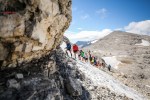
Adam: We were tackling something call the Horseshoe Traverse, which in essence, you’re covering 14 different peaks in Rogers Pass. Rogers Pass is a really beautiful area in Canada and it’s basically the birthplace of mountaineering in Canada, so it’s got a lot of history to it, although Canadian history is not nearly as old as it is in a lot of other places, it’s still a very wild and rugged place with very few people that actually visit it, despite it being somewhat touristy. The specific terrain that we are moving over though is 4th to 5th class terrain, so nothing extremely wild, so we were looking to solo everything.
We did have a couple of ropes with us if we had to repel off some of the backside of mountains as we were down coming, or if the conditions changes drastically on us, but we were looking to solo everything. There was nothing in there that was really at our limit, it was something that was well within our capability of doing. Nobody had done this traverse in a single push before, previous parties had done it, but only a handful of people had done it, and it had taken three or four days, so maybe our initial arrogance was looking to do it in a day but looking at the terrain and the distance and the vertical gain, we figured it was possible to do it in under 24 hours but it was going to be pretty close to that 24-hour mark.
It does involve glacier crossings and some rather complex terrain which slows you down quite a bit.
Ian: To give perspective to this, bearing in mind my audience are runners not climbers, but admittedly heavily influence by Skyrunning and by the adventures of runners like Kilian Jornet, where running ventures into this new area, this sport, that is called Alpine Running. Where does what you were doing fit into this? Was it a run with some climbing, or was it very much climbing with some running?
Adam: It was very much climbing with some running. It was more of a mountaineering outing than anything else.
Ian: Okay, so from a perspective of our audience, you needed to be a competent climber, rather than a competent runner.
Adam: Yes, absolutely yes. There’s a trail that approaches the first peak, and there’s a trail that get you home at the end, so in the 24 hours, or however long it’s going to take us, we probably would have been on trail for all of half an hour.
Ian: Right, okay, okay.
Adam: Very much climbing yes, and I’m not sure how much the audience know about Nick Elson, for instance, but Nick Elson is an incredibly competent mountaineer. He just broke the long-standing Teton Grand Traverse record, which is owned by Rolando Garibotti which is the best known alpinists in Patagonia, and he’s not very, very well-known outside of North America but I would argue that he’s probably the best person in North America at the moment, he’s light and fast, mountain objectives.
He’s incredibly fast, he beat Mike Foote at the Squamish 50 last year by quite a bit which instantly means you’re a very, very competent runner. He finished second at the mountain marathon in Alaska, basically going the same time as Kilian went last year on that course so to give you an idea of his competence level, and he’s also an assistant rock guide, and is a very, very good rock climber. He’s done a lot of things in the coast mountains, he just doesn’t advertise himself at all. Obviously, Dakota needs to introduction with his resume for the audience here.
Ian: Adam if you can be objective on this is, how much does your experience and Dakota’s experience in the mountains as mountaineers compare to say, somebody like Nick or Kilian? I’m just trying to draw a parallel, so the audience can understand your abilities.
Adam: Yes, I know for sure. Dakota, I believe has climbed for quite a long time since he was a teenager. Where he lives in Colorado, very mountainous type of terrain. I think he’s got quite a good history of mountaineering. I did mountaineering for probably the last five years at a pretty decent level, but not Nick and Dakota’s level – they have been doing it their whole lives. I have been moving more and more towards doing these mountain objectives. I was fortunate this summer to get out quite a bit with some of the top guys in the world really. Will Gadd for example, who is one of the best ice climbers in the world. I’ve had some really, really good mentors. Definitely, I would say of the party of three, I was the weak link for sure.
Ian: In terms of what you were doing here, obviously, it was challenging and that’s part of the reason why you’re doing it, and that’s part of the attraction. But in advance of going into it I’m sure the three of you sat down, talked about it. Talked about the speed that you needed to go. Talked about the ability level. Talked about where the difficult sections would be. Did you feel calm, controlled, and relaxed by what lay ahead?
Adam: Absolutely, yes. There’s no single part of it that was outside of our comfort zone. I’ve done several parts of the route myself in individual blocks. I just never linked them together before. I proposed the route to Nick Elson originally. Nick was super keen on it, because he enjoys doing these sorts of big pushes. It’s a challenge. No single part of it is difficult. It’s just linking it all together and try do it fast is where you can add complexity that way. Dakota just happened to be around that weekend, he was spending some time at the Canadian Rockies. When we found that out, we invited him along and he was super keen to come.
Ian: You mentioned earlier about faster and light. Obviously, what you were doing here was going to be a fast and light exercise, because if you’re going to cover that amount of ground, that amount of climbing, you can’t be pulled down and dragged down by lots of equipment. You need to be moving at a pace that will allow you to cover the distance within the safe time. How do you decide how light to go on something like this? What does light look like to the audience?
Adam: We are fortunate that we have some of the top end gear, and top end gear often can be really light. We looked at the route and what the objective dangers are, and what the terrain is like. It’s fortunate that we have got guide books for these things, so you can read what the guide books say. I know a lot of people who live in that area, so I could get some information from them. I’ve actually had some other friends who’ve attempted this traverse before and so we can get some route data from them. I also had done sections of it earlier this year, so I had some first-hand information as well. It gives you a sense of what you need.
From there, we met up in the camp grounds the night before the race. Sorry, not the race… the effort. We just put our gear out and had a look. What we had was crampons – a really lightweight aluminium crampon which just attach on our running shoes for the glacier crossings. We had two sections of 30-meter rope. Our rope was more like a rappel cord. It’s just six millimetres, really lightweight. I was using the Petzl glacier rope. We split that up between two runners. We had a few pieces of gear with us, so just a couple of knots in hand.
In case we had to build a belay anchor or a rappel anchor from, and then we had a couple of slings as well so that we get through over rocks the same thing if we had to do an emergency escape. I also had a small emergency bivy sack with me, which is basically like this baseline kit, but it’s an inflated baseline kit. We each had lamps because of how long we’d be out, and then a light windbreaker, a down jacket because Canadian Rockies can get cold especially at the summit and the weather can roll through. A set of gloves. I don’t think any of us had pants with us, like long pants. But basically from there is more or less what you’d be required to use like UTMB.
We had a little bit of water, a little bit of food, but really not that much. We had enough to stay comfortable while you’re moving, but it would’ve gone uncomfortable to stop moving for a night.
Ian: Yes, and this is the point that I was going to come on to is the great thing about fast and light, is light is great when you’re moving fast. It’s not so great when you’re not moving fast, and you’re going to be able to tell us about what not moving was like.
Adam: For sure. I think there’s a saying in mountaineering that light and fast means “cold, tired, and hungry.”
Ian: [laughs] Yes. I think there’s a real lesson to learn here, because fast and light has become a buzz word. The skyrunning film that came out was called fast and light. I think it’s important. I always try and do a job of making people aware of actually what fast and light means. For you top guys, when you’re moving fast, it’s not really an issue. The problem is that if you fall, if you twist an ankle, if something happens and the weather turns and then you’re stuck. This is when there is a real problem with this type of manoeuvring, but you’re going to be able to provide a perspective of that later on. Let’s cut to the chase.
Let’s talk about the incident… Basically, Nick and Dakota had moved through a section of rock and you were following. There’d been no issues as they moved through, but as you moved through and grabbed hold of a section that had been perfectly safe for the previous two, it moved and came lose, and basically…
…you take over and tell us what happened.
Adam: Yes. I just want to just take one quick set back. The one other part with the light and fast is you want to make sure that you have got the weather. We’re fortunate now with all the forecasting that we have. We made sure that we had a perfect weather window to do this attempt in. We made sure that we had at least 48-hours of good weather predicted, which sort of, adds in element of safety. That means that you can go light and fast, because the weather can change but at least that was one thing that we did account for.
You do have to plan very carefully, because as you say you have very little room for error if things do go wrong. Light and fast also means having just the right equipment for the terrain and route that you’re looking to do.
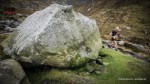
Ok, back to the incident now. We were probably three and a half hours into the run, and we’re moving up towards the fourth peek on the route. We’re moving in fourth class terrains with the big court side blocks of rock. The rock in that area is normally quite solid. All the rock in the Rockies is quite good, but the rock in Rogers Pass is normally very, very solid court side blocks.
Nick and Dakota were just ahead of me, and I was rushing a little bit to move quickly. Often, you’ll check the rock to make sure that everything is stable as you’re going, but if you’re moving quickly and you’re seeing other people go through a zone, I basically pulled on this block which is maybe the size of a small refrigerator. I felt the rock start to move, and I heard it crack. At that point I knew in some way what was going to happen. As a note, we were all wearing helmets as well, because when you’re scrambling like that with people above you, you need a helmet.
The rock just pulled out on me, and I tumbled backwards down a series of ledges about 200 feet, so 70 to 80 meters. I just basically bounced and rag doll down a series of ledges. I was conscious the whole time, which was quite scary. I still have pretty vivid flashbacks of that happening. I ended up face down. I actually remember slowing down at one point. I’m thinking, “Oh my God, I’m alive. I can’t believe I’m alive.” and then starting to fall again, and then I’m like, “Oh crap, I’m dead.” It was probably saltier language than that. I ended up face down at the base of the rock edge, and all I could see was this pool of blood underneath me. But I was like, “Oh my God I’m alive.” I rolled myself over onto my back and waited for Nick and Dakota to come down.
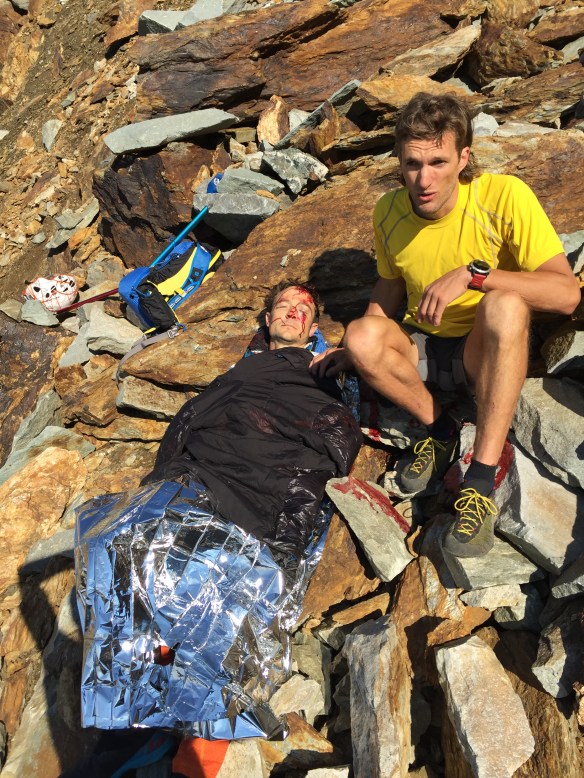
I can’t imagine what they were thinking right now. I’m sure they thought they were coming down to a body. But I was conscious the whole time, and yes, it was quite a horrible feeling. As I was laying there, I did a self-assessment, when I knew something was okay because I was able to push myself up onto my back, which in retrospect may not be the smartest thing to do, but you’re not really thinking that clearly at the time. I knew that I had broken my pelvis. I could feel it, and I knew I had broken my ankle, but I didn’t know what kind of internal damage I had, and I knew that there was a lot of blood around me.
Nick and Dakota came down, ran down probably within minutes of this happening. They just have to make their way down the same terrain, and when they got there, I had a locator beacon on me and reach beacon. I had it in my pack, and I also had a cell phone on me, and so I told them where the beacon was on my back pack, and they simply pressed the SOS button on that. We noticed the previous peak there was cellular service. Nick was able to run up to the previous peak with my cell phone, and was able to call Search and Rescue from there.
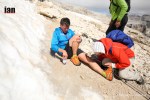
Dakota stayed with me and made sure I stayed calm. He took out my jacket and my emergency space blanket, and put that on me because I was starting to go in a bit of shock at this point and sort of going in and out of consciousness, and trying to stay with it, but at the same time knowing that I was in a lot of trouble. I knew that I needed help to come quickly because you never know what kind of internal damage is going on. Luckily, Search and Rescue were actually doing a training mission in the area, so within half an hour, a rescue helicopter flown by and had located us.
But then they had to fly back in to Revelstoke to go get a pilot who can longline people in, because not all pilots can longline rescuers in. They had to fly back to town which is 80 Kilometres away, get the new pilot, fly back, set the staging area. They did another flyby to assess where we were. Luckily the terrain that we were in wasn’t so technical that they could longline a rescuer in.
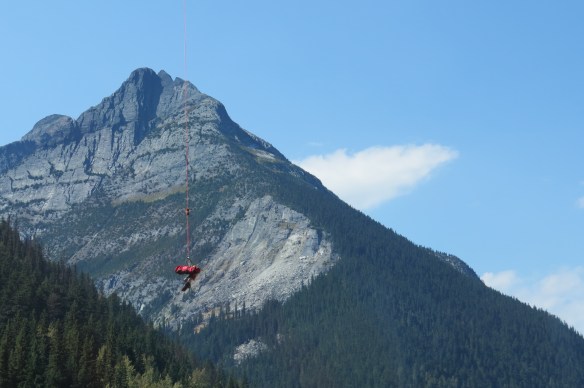
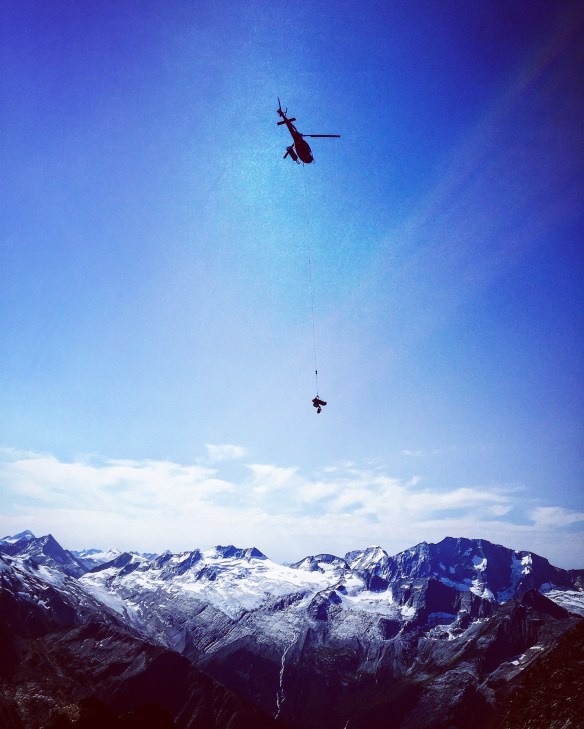
I remember lying there, watching this helicopter, at the base of the glacier, as they were prepping, and I just lay there, staring at the rotor of the plane just there at the helicopter hoping to see it move because I remember they were going to come and get me. Because of where the wind blows off the glacier, they had to do two flybys, to drop the rescuers off, and then from there, they package you, or they bundle you, make sure that your spine is stable, so they put you on a spinal board. Then they flew me out, and then they flew Nick and Dakota home afterwards.
I was flown to this, it’s like a visitor centre in Rogers Pass, and from there, there was an ambulance crew waiting for me, and they worked on me for over an hour stabilizing me, and making sure that my vitals were in place before getting me in a helicopter and flying me an hour to the main hospital, to the trauma centre, where I was able to get into surgery that night, which is quite lucky.
Ian: Wow, you’ve sort of described that with such clarity. I need to clarify here that this is only eight or nine weeks ago. It’s almost giving me goose bumps just listening to you describe it, because I’ve got the images that go with it even though I wasn’t there. It’s quite traumatic to listen to. Do you feel in a way a little bit separated from it, although, you’re fully aware of everything that went on, and your body showing the impact of what went on. But do you feel as almost an out of body experience, because you’re describing it as though you’re looking on?
Adam: Yes, I know, for sure. It definitely was. I think because if you’re going in and out of consciousness at the time, it’s mostly just the shock and blood loss. Yes, perhaps there was a little bit of out of body experience going on for sure. But at the time I was very aware of what was going on, and I was trying to stay calm the whole time, again, you know how important it is to stay calm in those situations. I think Nick and Dakota were incredible. I really couldn’t have had two better people because neither of them panicked, which is the last thing that you want in those situations. Dakota just stayed there, holding my hand, sort of stroking me or just doing whatever I needed to just to get some comfort.
I believe that when I was lying there, if I would move a little bit, I would scream on pain. But I don’t really remember that so vividly, what I do remember is the feeling of falling and this feeling of the rocks breaking against, or just say I get these flashbacks and the sound of the sound of the rocks cracking. I have a really, really vivid image of as I was stumbling, because I was stumbling backwards, like seeing the mountain range turned upside down, and thinking how strange it was to see this range upside down. Just how horrific that was.
I do remember at one-point thinking, “I’m dead, this is it. I’m gone.” But at the same time just accepting that, that was my reality. Which sounds maybe kind of morbid, but that was like I’m dead, this is it.
Ian: I guess at that point when you’re falling, we’ve all been there to really varying extents. Even if it’s just tripping over a curb on the way to the shops. You certainly go in slow motion, don’t you? You see the fall coming, you see the pavement or whatever it is getting closer, and that instantaneous thing just seems to become handfuls of seconds rather than the fraction of second that it actually is, and you do get that opportunity to sort of say “Oh, this is going to hurt.” Or in your case, “Oh my God, I’m going to die.”
The reality of when you got to hospital was, you ended up breaking your back, you had several vertebrae broke, you broke your hip, you broke your ankle, you damaged your wrists, shoulders and knees, you had lacerations all over your body, and you went on to say that had you not been wearing a helmet, then you probably would’ve been toast, you probably wouldn’t have been here because of head trauma.
It is amazing that it is only eight or nine weeks ago because I think myself, and so many other people when we heard of this, well, the instant thoughts were, will you walk again? I’m sure that must have been going through your mind.
Adam: Hell, absolutely. I completely did. I remember being in hospital waiting to go into surgery and wondering this. It’s quite terrifying going into surgery even though, I knew I was around very confident doctors and surgeons. It’s a scary feeling not knowing what’s going to happen to me when I got out of there. Originally they told me I have punctured a lung as well, which didn’t turn out to be true. But yes, you just don’t know what is going to happen.
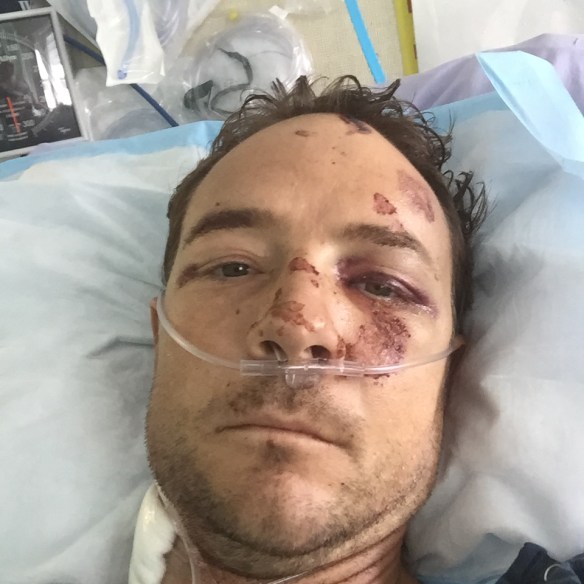
My girlfriend is a doctor and she’s from the town where I was flown to, and so her mother was actually the first person to come see me in hospital. She’s called Laura, so Laura who was working in Calgary at the time, got on a flight straight out there and she actually was able to run up to me right before I went to surgery, which is quite moving to have that. When I came out of surgery my mom had flown out as well.
You’re just lying there, in quite a lot of pain and also in this really heavily drugged state because the ambulance people put me on Ketamine, which is quite a powerful narcotic.
I remember the feeling of being in a helicopter and sort of this strange drugged state and this tremendous amount of pain, and then waking up in the hospital corridors being told I was going into surgery, people asking me all these questions, you don’t really know if you can answer. It’s just, it’s so like so much sensory overload really at that point. Yes, not knowing what was going to happen to me for the rest of my life, and then not knowing… Yes, it’s quite powerful.
Ian: Yes. You had eight hours of surgery, you had pins put in your body and then unfortunately some complications arose after the operation with your digestive system basically shutting down and you had to have ongoing treatment for bowel problems, etc. That lasted 10 days and you said in your email that this was almost one of the worst bits because your body started deteriorating, you started to lose muscle mass.
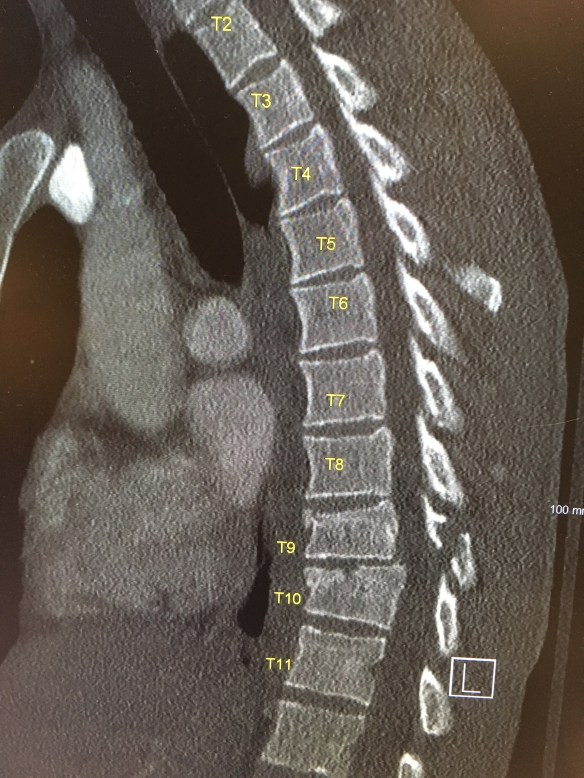
Adam: I broke my T8 to T11. That’s fine so they put pins in there, I broke my iliac crest, so the top of my hipbone sheared right off and then as they said that I had open lacerations which are actually the biggest concern to them because of infection. There’s rock fall in there, but it was down to the bone across all my hip. Which is pretty horrible and the other parts of me were sore but they weren’t as critical.
The one thing that I found after the fact, there is actually two anaesthesiologists who were working at the hospital and one of them thought that all they would work on is my hip to start and then they would come back and do my spine at a later date because it wasn’t critical. The second anaesthesiologist was like no, this person is young and healthy so we’re just going to do both now, he can handle eight hours of surgery.
Because otherwise I would have sat there in the hospital with a broken back for several days until they got back to operate on it and I understand that dilemma is a doctor because you know this is an emergency trauma centre and they likely have somebody else come in and so how much time and resources to put into helping one person. I’m really fortunate. I found out that after the fact is as always, angels are around the hospital looking out for you and giving you all this special care, so in a lot of ways I got lucky like that. I ended up having, it’s called a “stomach ileus” which means your stomach shuts down.
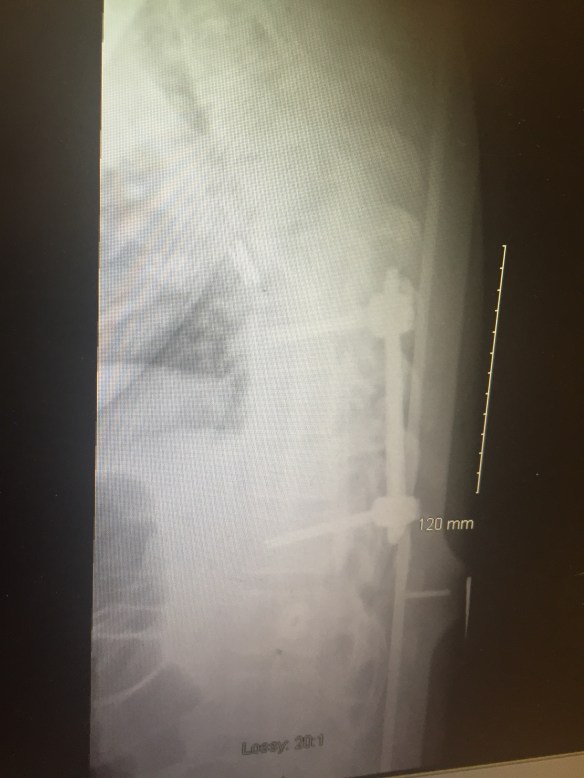
That was just horrific, horrific pain. I had never experienced anything like that. The rest of me was pinned, so it was more or less stable at that point. But all my haemoglobin dropped in my body and so they also swelled up to probably like three times my normal size because your body is not able to process in the fluid. I was just sitting in this hospital room and the person across the hall from me he’d been hit by a semi-truck. The other person right beside me had been in a helicopter crash.
Ian: Oh Jeez.
Adam: – Yep, we were pretty messed up.
Ian: Sounds like a hospital ward for Vietnam or something.
Adam: Yes, it certainly is. I mean, the trauma centres really are something else.
Ian: Yes
Adam: I end up going almost 10 days without eating any food and I lost a ton of muscle mass during that time and just really had to feed in a huge way. But the same time I had swelled up quite bad, this is a bit of a funny state because I was like jello but I was losing my body. I was just cannibalizing through the whole process which is pretty wild. Then I was finally allowed to start eating it made me violently ill after 10-days because I ate too much right off the bat, so I ended up having to reintroduce food very slowly back into my system.
Ian: At what point did they allow you to leave the hospital and go home?
Adam: I left the hospital two weeks later but ended up staying for a few days in this town Kamloops for a couple of days then. It was quite amazing actually. The one thing I need to say is, despite this being a horrific accident, my family is spread out around the world, my father lives in Nigeria, my brother lives in Thailand and they flew out to come see me. My mother and my father are estranged like they haven’t really spoken much in the last 10 to 15 years. Because of that they were brought together, by the end of the trip they were going out for dinners together and talking and were hugging. That was very powerful and my girlfriend and I were able to connect in this like incredibly special way.
It’s quite incredible how trauma and tragedy can actually bring people very close together. I also have a lot of my friends from Vancouver who drove six hours to come see me. Which was also incredibly special to have these people come. Even my boss from work, happened to be in Kamloops, he came and saw me in the hospital. You have this really strong community of people around you which was really, really help get the recovery process.
Ian: It’s so good to be able to see those positives out of something that is potentially so negative. You have mentioned in other places about how that process has been, something that you’ve been able to look on. It’s something that you can be really thankful for, there’s a real positive to come out of something so bad. Also, it’s made you made you face maybe your position within the world and within your life and look at your own vulnerabilities?
Adam: Absolutely. It also just made me question a lot of other my approach to things because as athletes we can also all be very selfish with our time and maybe not spend an extra bit of time calling family here. Just some day to day life, you kind of pretend you get too busy to do it. But it’s not, it’s just a bit of an excuse and you realize how important family is in those circumstances and even friends too. But how you just taking a few extra seconds to call somebody can make a really, really big difference in their life. What really struck home for me is, one of the person who was hit by a truck beside me, the entire time I was there never had a single visitor.
I just couldn’t imagine how lonely that would be and how terrified I would have been if I didn’t have that love and support around me. It really, really adds to the healing process.
Ian: Wow.
Adam: For sure
Ian: Well I mean, we’re speaking now, as I said it’s 8 or 9 weeks after the incident and you know, I’m happily, happily, say I’m amazed at the speed of your recovery and I know when I say recovery it’s an ongoing process but you’ve said or your doctors have said that they believe that your recovery will be a complete one. Is that still the situation Adam? Does it look as though everything is going to be really, really good?
Adam: Yes. It does. It seems to be. I mean, yesterday I went ski trailing for the first time which I can’t believe… I already been back up the mountain. My girlfriend and I went out and did a few laps up in the Rockies and we had some deep powder smell which is incredible. Obviously, my ankle still gives me a lot of grief, I have a lot of soft tissue damage in there and still have some bone fragments there, my hip is incredibly tight, like I’ve got a lot of limited range of motion and if I do too much in a day my body does let me know but I was water running within a two and a half weeks…
Ian: No way.
Adam: Yes. By water running I was like moving slowly in the water but it was slowly starting to come back and just doing anything to get my range in motion back. Doing yoga, doing some strength training and like, physio multiple times a week. The one thing I’m really lucky at is my work has been really understanding and I haven’t had any real pressure to come back to work. I am going back eventually, I’m doing a little bit of work for them but I’ve had the opportunity to really just put all my energy into recovering and into a physio, which I think in those first few months really is critical to your long-term recovery.
Ian: Yes
Adam: I saw my surgeons on the weekend, they gave the green light to start skiing and climbing and going for hikes. I can’t run yet because my ankle still super wonky and my hip is still a little too sore but once those settle down I hope to be able to start jogging again a little bit. Within the next maybe month or so. Which will be amazing and I never would have expected any of this happened so quickly.
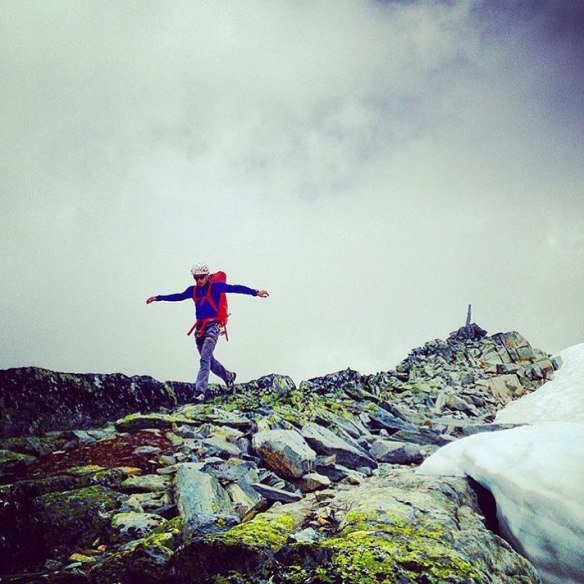
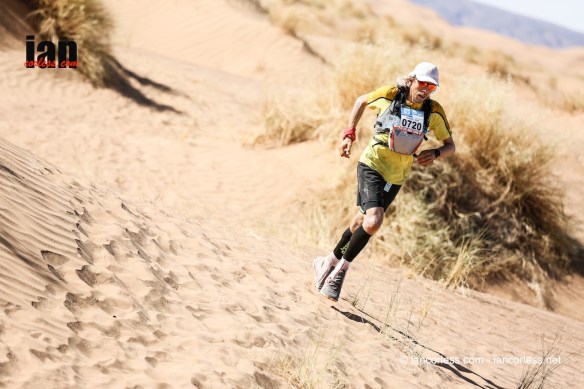
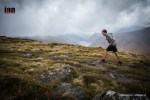
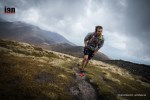
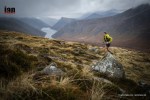
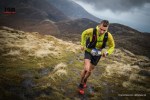
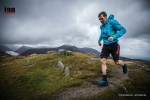
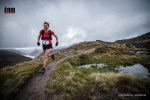
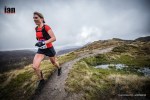
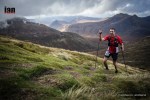
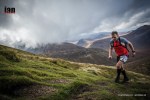
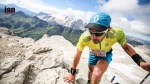
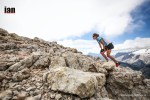
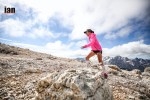
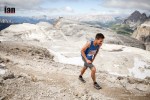
Pic by Kos from the summer. I did my first walk run (all uphill) this week – 4*30sec run many minutes walking between them. I have also done some easy routes in the climbing gym. I am far from light footed, as I appear to be in this image, but it’s all progress – beyond stoked!
Ian: Talk me through this mind process, because I’m fascinated by this. It’s traumatic incident and yes, you’re super thankful that you’re here and you’re alive and so, therefore, you’re going to embrace life. Of course, you are. But that first time that you maybe go for that longer walk or that first time you strap on the skis or that first time you look at the rock face. There’s going to be all sorts of stuff going through your head.
Are you just going to be stubborn and respect that the mountain as you’ve always done but think to yourself no life goes on or is there a real element of inner fear that you’re shielding from me and maybe everybody else but really, it’s there?
Adam: No, of course, there’s a lot of different fears. One, there’s fear to what my ultimate movements going to be like, I don’t know if I am ever going to feel fluid on a run again. Am I ever going to feel smooth and fast? There is fear that… the one thing that really strikes home is that when you have these accidents it doesn’t just impact you it impacts a lot of other people; will I be stressing them too much if I do decide to go climbing again. I don’t know what my comfort level is going to be at. The first time I get to anything with a little bit of exposure, how am I going to feel? Am I going to panic and not want to be there? I don’t know those things yet.
Back to your first question, yes. I remember the first time I had left the hospital, although I was still admitted, stepping aside and feeling the cold breeze rush across my body, I started crying because it felt so good to finally be back outside just feeling the cold wind on my skin. The first few steps I took, I remember the first time I walked, I walked about 10 meters and then the next time, and this was all in hospital with a walker, and then the next time it was 50 meters and then it was can I walk and do a lap of the ward? Then can I do two laps of the ward? Until you set these small little process goals for yourself and you break it down to little chunks and you’re just happy with any little victory you get.
Obviously, there’s going to be setbacks. When I first came back, I was walking a little bit and then the doctors thought that I might have another injury in my foot which basically means, more or less the metatarsal of your foot might be broken and that this can be very, very serious with long-term repercussions. I was told I had to be non-weight-bearing again. All of a sudden I’d gone from walking two kilometres to being back in a wheelchair and mentally struggling with that quite a bit but you also just have to accept the process of what comes. You can’t set too many expectations.
I’ve not once put expectations on myself as to what my recovery should be or what it should look like because it’s very individual and the doctors don’t know. It’s a best guess on their effort based on past experiences but my body’s different from other people. My mind is different. At the same time, also, I just didn’t want the pressure of saying, “I have to be able to run a 5K by January,” and not do it and be disappointed. There’s no purpose in my recovery process. It’s very day-to-day. Some days I wake up and I feel quite good and loose and other days I wake up and I feel like I’m getting hit by a truck because I did too much the previous day or I slept funny the night before, I had a beer too many the night before.
Ian: Enjoy those beers.
Adam: Yes, for sure.
Ian: Obviously, the last nine weeks have given you a real opportunity to look at so many different things but I guess one of the things that you really look back at and analyse was that day or what was going to be a day in the mountains. I’m sure you’ve gone over everything and analysed what you were doing and maybe tried to reassure yourself that what you were doing was correct. What’s the outcome been of that looking back? Are you happy and content that you three guys did all the right things?
Adam: No, definitely not because something happened. I did something wrong. I don’t really believe that bad luck necessarily happens in the mountains. One, you’re putting yourself in a dangerous environment so you’ve obviously taken luck out of the equation in that sense. Something that I probably did wrong at the time was, when we were rushing, we’re going fast, but there’s a difference between moving fast and efficiently and rushing and because Nick and Dakota were ahead of me, I was probably rushing a little bit. Just because they went through somewhere safely doesn’t mean you get to. In retrospect, I probably should’ve tested the rock first, that I pulled on.
The other thing, too, is when you’re moving through that terrain unroped, you don’t really want to be pulling on blocks. You more want to be pushing down on things because if you’re pushing down on things, they’re not going to move. If you’re pulling up, when you’re rock-climbing, roped up, you’re pulling on holds and things. If you are secured to the wall, it’s less likely to be risky.
That’s probably the biggest thing. Don’t rush. The way that you move in the terrain can be very, very significant so I was probably using incorrect technique in that kind of, blocky terrain, but in terms of what we did with the rescue itself, that can have a slight element of luck in that, we had cell service but we also had just enough equipment to keep me comfortable. Like having the emergency space blanket was incredible, having a light down jacket to put on made a huge difference, having the right partners. That can really come into it. If either one of them had panicked, I probably would’ve panicked a little bit as well but going to the mountain with people that you really, really trust and have the experience, Nick and Dakota have a lot of experience, so I was lucky to have those two guys with me.
Ian: I’m sure you’ve had plenty of conversations with Nick and Dakota. What impact has this accident had on them? I did see Dakota very quickly after this incident because he came over to the ‘Rut’ but it wasn’t appropriate to have a chat with him about this incident because he was racing and I didn’t want to affect his thought process, his mind, but I’m sure that both he and Nick have been really shook up by this. Dakota wrote an article on iRunFar and I quote a section, “I don’t think I was scarred from Adam’s accident. Not like him certainly, and not very badly in an emotional way either. But that accident really drove home the seriousness of what a lot of us do on a regular basis, often without considering the possibilities. In that event I was given a very visceral demonstration of what can happen in the mountains. A single misstep, a tiny poor judgement, or simply bad luck, and all of a sudden you’re in a crumpled, bloody heap with the dust of rockfall settling around you. It’s very real, and it’s scary.” article link here
Adam: Definitely. I think they both understand that it’s dangerous moving in that terrain. I’ve had regular contact with Nick and Dakota. They’ve both gone back into the mountain since then and they’ve both gone climbing since then. I don’t see how this doesn’t have impact you in some way. Dakota just went and did a rope safety course for mountain rescue so clearly he was impacted, realizing either it was the limitations of what his knowledge base was or he just, I’m just saying that, the more skills that you have to help, the more likely you are to be able to help in the situation.
Having that wilderness first aid course or any kind of first aid course, just when you’re going out and doing these big objectives is a valuable thing to have. Nick had a bit more experience because he’s done The Apprentice Rock Guide, you’re trained to be an alpine guide at that point. That comes with quite a lot of mountain rescue training and theoretical knowledge but the difference between that and seeing one of your friends actively falling down the side of a mountain. It’d be very traumatic to watch that happen and to think that you’re coming up on a body. I think it would definitely make you think twice in a lot of situations or just reinforce how dangerous those environments can be.
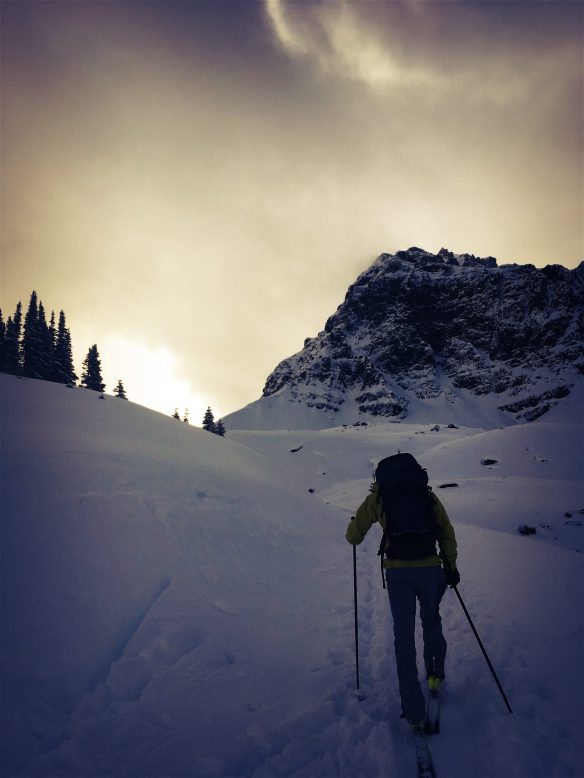
I was rather thrilled to be able to take my skis for a walk in the mountains and actually get in some decent turns with Laura. I am so thankful to my support network for helping me get back into the hills so quickly. I have to continue to be patient and listen to my body, but this was a rather huge step/stride forward
Ian: I’m not going to ask the question of what the future holds because as you’ve said, there’s no point in setting a target for a 5K run. That will happen in its own due course and we just have to hope that all the stepping stones are in the right place. As you say every now and again, there’s going to be a step backwards but the direction is forwards and obviously, myself and the whole community wish you the very best with this Adam. I mean, it’s an amazing story and I’m just glad that you’re here to be able to tell it.
Adam: Yes, thanks so much for the interview and I hope a few people have picked up one or two little tips from this but I guess the biggest takeaway is mountains are dangerous. Going for any little trail run in the woods can be dangerous. We have the ability to move very, very fast as runners into the wilderness and we’re often alone all It only takes is a broken ankle by stepping on the wrong thing then all of a sudden you have a very, very horrible walk home. Especially when you’re going for trail runs. It’s one thing to be lightning fast but make sure that you have just enough gear to survive and bring you home because those things can make a difference. Look at Dave Mackey, for instance…
Ian: I was going to come on to Dave.
Adam: He was going out for an evening run and his life changed on that evening run and in a very, very profound way. He got unlucky in the way that his injury happened. I’d been lucky in that the bones that I’d broke are ones that are basically non-weight-bearing. If I’d fallen a centimetre in a different direction, my outcome could’ve been very different and I’m aware that, there’s not anything that I did special. Knowing it’s in the way that I fell, I broke my back but I didn’t damage my spine in a serious way. I did to a certain degree because I still had some tingling in my feet and hands and things but that should, in theory, go away over time.
These things can happen when you’re outside in the mountains or even just heading out in the woods. An ounce of prevention, an ounce of caution is always a smart thing for sure, really having as emergency blanket with you, having a little bivy sack, having a cell phone, having a light jacket. Even in the middle of summer, if you could go into shock, having a jacket on can save your life. These things, they’re so light these days that we’re able to carry a lot of stuff with us.
Ian: These days, there is no real reason not to carry some of this stuff because it is so light, and as you say, we’ve got all the technology, it’s never been easier to carry this stuff. We have all these amazing packs that fit our body, we have down jackets that way grams, we have windproof, waterproofs, we’ve got spot trackers, in-reach trackers, mobile phones. The technology is really, really there.
Final thoughts?
Adam: I received thousands and thousands of messages, I actually received so many messages that I had to stop going on social media because I just needed to take a big step back from it all, and just focus on myself, and recover for a bit. It was incredibly empowering, and you I just felt the love from everybody, but at the same time, to open your email and just have thousands of messages every time from people is a little overwhelming at that point what with everything I had going on. But it shows you incredible level of support that we have in our little community of people here, which is so touching.
The other thing, in the last two months I’ve actually had two friends or acquaintances die in mountain accidents, and that also really, really struck home, it shows how vulnerable we are. One of them was skiing and the other person was climbing in the Himalayas. It was just very, very touching, and I actually went to one of the funerals and being there and hearing the stories of everybody around this person was very moving. When you know somebody in one context in their life, for example, I knew this girl in a climbing sense, but then you forget just how much depth people have to their life, and how rich they are.
It was a real reminder that everybody has an incredible story, and it’s worth taking time to get to know people because you never know what you can find out from them. There’s always so much complexity to people.
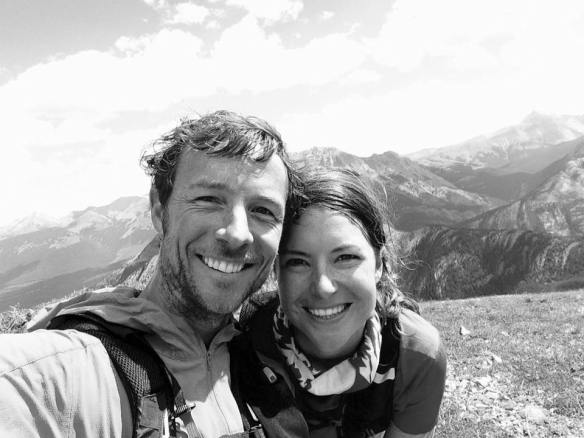
Adam and Laura
And finally….
“Over the past few months this amazing woman has been my rock, she has shown me that true beauty, love and joy can be found in even the most trying of circumstances. That spirit defines her.
She was by my side from the moment I went into surgery and has been there every step from there on forward.
In that time we have laughed, cried, struggled and shared the most incredible journey together, a journey that keeps on getting better and better.
She is the most incredible partner. She is loving, caring, compassionate, adventurous, athletic, curious, smart, passionate, fun and incredibly beautiful and, soon enough, I am proud to announce that I will get to call her my wife. Last week she said “yes” and agreed to share her life with me.
We are beyond thrilled and I am so incredibly lucky, she makes me better in every way.” – Adam Campbell



































































 IAN CORLESS