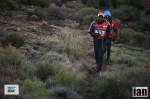
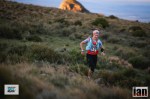
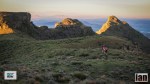
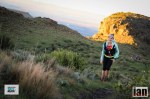
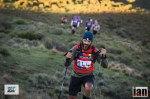
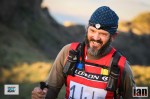
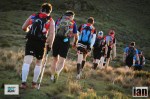
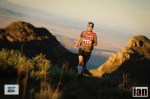
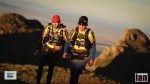
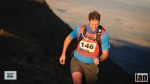
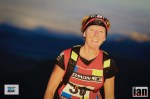
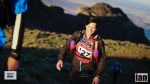
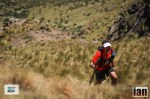
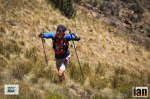
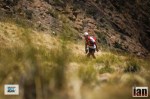
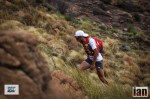
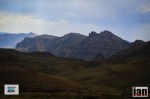
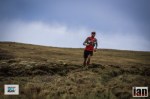
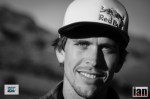
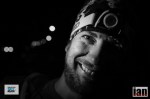
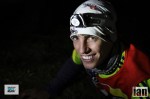
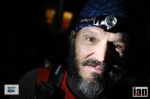
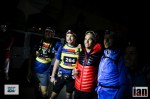
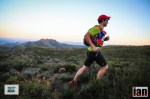
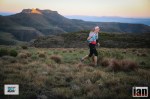
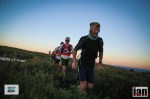
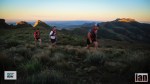
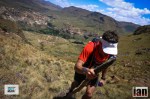
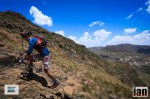
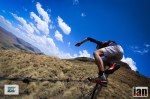
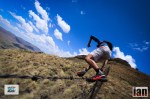
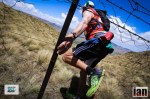
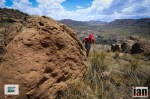
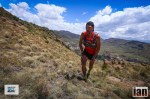
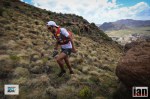
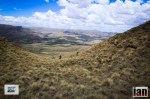
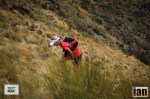
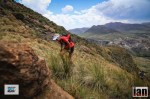
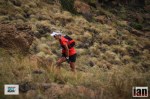
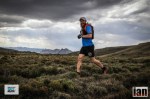
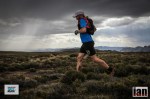
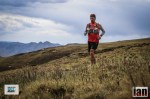
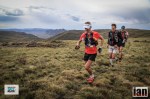
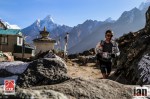
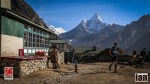
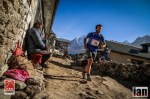
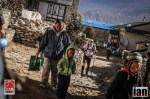
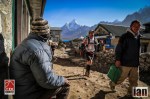
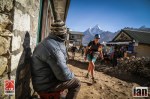
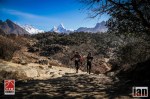
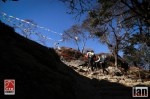
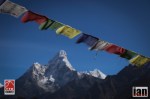
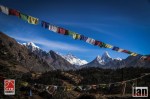
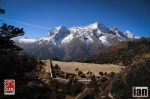
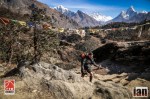
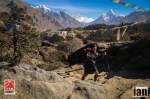
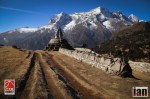
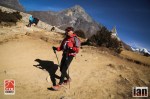
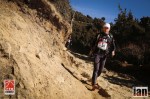
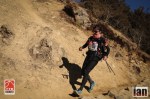
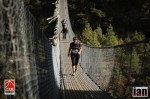
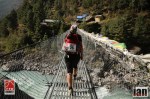
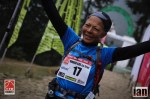
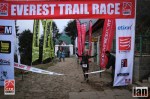
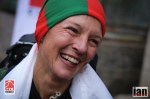
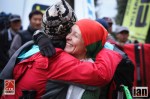
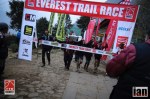
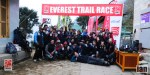
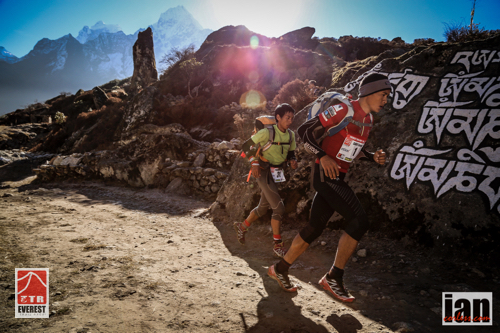
Results top-3 stage 4
- Samir Temsang 3:53:35
- Phudorje Lama Sherpa 2:53:38
- Zigor Iturrieta 4:09:41
- Anna Comet 4:28:18
- Kerry Sutton 5:06:09
- Yangdi Lama Sherpa 5:35:47
RACE SUMMARY HERE
Results top-3 stage 2
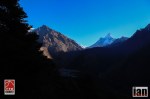
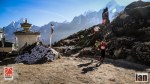
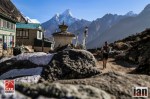
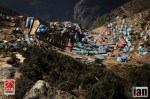
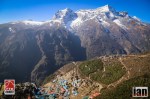
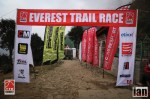
Departing in five 16-seater mini buses, participants of the Everest Trail Race made the long, twisty and at times stressful journey from Kathmandu to Jiri for the start of the 2014 edition. It’s a rollercoaster journey up single -rack roads, a frenetic and constant beeping of horns and a multitude of bends that would leave the most hardened rollercoaster freak with a turning tummy.
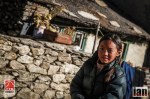
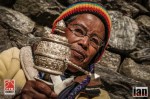
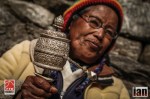
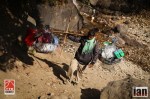
Our lunch stop at Karidunga was a welcome break from the journey. While runners found a space and enjoyed the view of the Himalayas, off into the distance I walked looking for some local colour. You never have to go far, Ladies working in fields, men weaving basket wear and children playing; all have wonderful smiles.
They seem to embrace tourists and actually seem to enjoy the process of having a photo taken. Off course it’s all the more appealing if they receive a ‘token’ for their efforts…
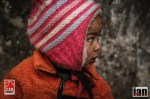
Weathered faces show the lines from years of toil from harvesting crops. Children have round faces, wonderful colour and piercing eyes and a cheeky smile. In all honesty, I could photograph these people all day. They fascinate me.
Back on the buss the toing and froing continued and finally our arrival at Jiri came. We had been on the road 8-hours and the glow of our yellow TNF tents glowing as the day began to loose its light was more than a welcome sight.
Water collection, tent allocation and final preparations underway for tomorrows race day. A mug of hot tea warms as the departing of the sun takes the heat away and the temperature slowly drops… little by little venturing to zero and then suddenly it drops below. ‘Don’t worry’ Pasang Sherpa says, ‘it will only be -3 tonight.’
Day 1 commences at 0900 Thursday 13th November.
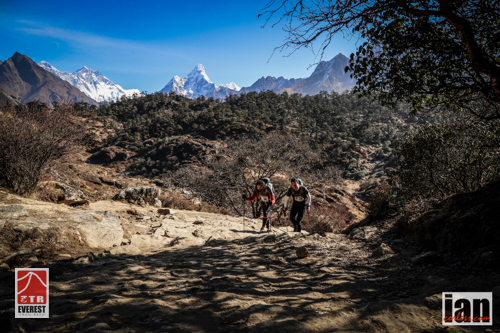
Jiri (1850m) to Bhandar (2050m) – 21.5km 3795m+
The stage has two summits, one at 2400m and the high point of the day at Deurali Pass 2700m before descending to the finish at Bhandar.
Day 2 Preview:
I am very honoured and flattered to be interviewed by corredordemontana.com in an article titled – Ian Corless: El fotógrafo de Skyrunning.
You can read the full interview in Spanish HERE
For my English speaking friends and followers. Here is a transcript in English.
*****
Tells us about how you got involved with Skyrunning reporting
I was invited to Transvulcania La Palma in 2012. The ISF (International Skyrunning Federation) invited media specialists from all over the world to witness what turned out to be a turning point for Skyrunning. It was a key moment. World-class athletes travelled from all over the world and in doing so created what turned out to be a classic race. It elevated Skyrunning to a new level and certainly placed Transvulcania on the ‘to do’ list of many runners.
How long have you been at it now?
I started to work with the ISF as a media partner after Transvulcania in 2012. I went to Zegama-Aizkorri and then followed this by attending many (but not all) Skyrunner® World Series events in 2012. In 2013 I attended most races on the calendar. As you know, the Skyrunner® World Series is made up of five races in each of the categories – VK, SKY and ULTRA. In 2014 I continued this format working on pretty much the whole calendar with the exception of the two races in the USA.
What exactly do you do? Does it take up all your time or do you combine your Skyrunning photography with other jobs?
I work freelance in the world of ultra, mountain and trail running. I work on many other projects and not just Skyrunning. For example in 2014 I worked on The Coastal Challenge in Costa Rica, Marathon des Sables in Morocco and this month I go to Nepal for Everest Trail Race and then South Africa for the Salomon SkyRun. I have a very busy calendar and at my last count, I will have worked on thirty-one races in 2014. Depending on what my clients require will very much depend on what services I provide, however, it usually consists of writing and photography to help promote a race and provide feedback for the ultra, trail and mountain running community worldwide. In addition to all this, I have my podcast, Talk Ultra which is available every two weeks for free on iTunes and via my website.
Your opinion of the state of Skyrunning in 2014 and how things might develop next season
Skyrunning has grown incredibly over the past few years. We have all witnessed the boom! The vision of Lauri van Houten and Marino Giacometti is certainly coming to fruition. They had a vision of what Skyrunning may be… risks taken in 2012 at Transvulcania have paid off. However, many forget that Skyrunning dates back to 1989 when Giacometti first ascended the Monte Rosa. I most definitely believe they were ahead of the time. We are all just catching up… I also believe that Kilian Jornet has been an incredible vehicle for the sport, His rise and dominance has coincided with the growth in Skyrunning.
You will notice that the 2015 Skyrunning calendar has recently been announced and we see some changes. In addition the Skyrunner® World Series we now have the Continental Series. This shows how the sport is growing and how the ISF needs to appeal to a worldwide audience. It’s very exciting.
Any amazing anecdotes to tell from last season?
I am very fortunate to spend a great deal of time working with, photographing and talking to some of the best athletes in the world. I truly feel blessed. I have so many great memories and moments. If I had to pick one surreal moment, I think back to Matterhorn Ultraks. Kilian Jornet didn’t run the race but decided to take photographs and support his Salomon teammates. I had climbed just over 1000m vertical to get to a location that would allow me to photograph runners as they came to me with the Matterhorn in the background. I waited for hours, photographed all the front-runners and I was about to make my way down the long descent to make my way to the finish when I received a text from Kilian asking:
‘Are you making your way down?’
I replied, ‘yes!’
‘I will wait for you,’ Kilian said.
I added my cameras to my large pack (it weighs about 10-12kg) and then I made my way to the long and technical descent. After 10-minutes or so, I saw Kilian waiting. We then ran all the way down to the finish… it was ridiculous. I was following the best mountain runner and definitely the best downhill runner in the world with a huge pack and trying to keep up. However, Kilian was extremely kind and ran well within himself. I however was at my limit! But to follow and see his ability first hand was a highlight of the year.
Do you plan to be present at all ISF race events next season?
The calendar for 2015 is larger as we now have the World Series and the Continental Series, so, it will not be possible to attend all events. However, I will hopefully attending as many as possible and following the series as it unfolds.
How do the logistics work out when you travel to new race locations & have to discover where you need to be for your photos?
It is all about preparation. I usually arrive at a race venue two days before the race. I do my research. I look at maps, talk to staff and race officials and then I plan where I want to be to capture the best images. Longer races are easier as they allow me more flexibility. By contrast, a race like Limone Extreme is just over 2-hours from start to the first finisher, so you need to be 100% prepared. A real plus is that I am able to fulfill my passions for the sport in photography, words and podcasting but also get some exercise. I usually have to climb or hike to many of the locations I work from. Occasionally we are spoilt with a helicopter but that does not happen very often! Trofeo Kima is a perfect example where myself and other photographers/ cameramen are transported all over the course by helicopter. Kima or me is still a favourite race, it is so extreme and visually stunning.
Do you always find the right place to get decent pictures at races? Does it ever not quite work out?
Yes, I always ensure that I am in the correct place. That is my job. However, I may not always get ‘the’ image I want. It is what is so great about our sport and what I do. Nothing is guaranteed and I work on adrenaline to help me maximize my potential.
Tell us about your unfortunate “incident” at the Transvulcania 2014.
2014 has been an interesting year with a couple of incidents that I hope don’t happen again…
In May at Transvulcania La Palma I had photographed the race start and then I was making my way to the mountains to a location I had found to photograph the front-runners. On the coastal road I felt my car twitch and then I lost control. I veered to the right and lost control. A huge concrete block stopped me going over the edge. I was not going too fast but the car was completely written off. I jumped out of the car with no personal damage. I was so lucky! My first priority was that I needed to get to the mountains…
Later in the year I had a second incident. I was in Barcelona transferring to go to a race in Catalonia. I was at a restaurant and I had ALL my camera equipment and computer stolen. It was horrendous as you can imagine. My whole life in my bag: gone! It was a pretty tough two weeks that followed and my insurance only covered two thirds of the cost of all the stolen items. However, I managed to replace everything.
******
“Ascending Scafell before the detour, runners mentioned torrents of water that at times reached waist height in depth”
Read my article on the 3×3 80km on RUNULTRA
The 2015 multi-day The Coastal Challenge gets underway in less than 3-months. Runners from all over the world will arrive in San Jose in preparation for the journey down to the coast to Quepos and the 11th edition of the “TCC.”
After a stellar line-up for the 10th edition, Rodrigo Carazo and the TCC team have once again excelled in providing a top quality elite line up making TCC arguably one of the ‘must-do’ multiple day stage races in the world.
Come race day, elite runners will toe the line in Quepos with everyday runners, with one purpose in mind, to embrace an ultimate challenge in the remarkable Talamancas.
Unlike other multi day races, the TCC is supported. Each day camp is moved ahead and awaits the runner’s arrival at the finish. Running light and fast, runners are able to keep equipment to a minimum and as such, racing is extremely competitive. The 2015 edition of the race is proving to be extremely exciting, particularly when one looks at the line up of runners.
Heading up the ladies field is a trio of hot talent that will without doubt make the race one to remember.
NIKKI KIMBALL
Nikki Kimball is a legend of female ultra running. A multiple winner of the iconic Western States her palmares are longer than my arm… just this year, Nikki won Run Rabbit Run 100 and the 29th Marathon des Sables. Nikki’s presence in Costa Rica is a defining moment for the TCC. It is a confirmation of the credibility of the race and Nikki’s years of experience will be something to embrace, not only for the other runners but all those involved in the experience.
‘I loved MDS and am excited to add TCC to my stage racing experience. I’ve run MDS, Transrockies (3 times), Jungle Marathon and each was very special in its own way. Each experience will help me in my preparation for TCC. Transrockies, like TCC, transported runner gear and set up their tents, which gives me a sense of racing daily with the speed allowed by running without gear. The Jungle Marathon exposed me to rain forest and the accompanying heat and humidity. And MDS gives me a more recent experience of racing in extreme conditions against great competition. I absolutely loved, though occasionally hated, each event. As for direct comparison with MDS, a few points are obvious: I will be exchanging dry oppressive heat, for humid oppressive heat; varied types of sandy surfaces for wet and rocky footing; desert vistas for close forests and ocean views; and nearly full self sufficiency for the relative luxury of camps with food and sleeping supplies I do not need to carry. I recommend MDS very highly to fellow runners, and believe I will finish TCC similarly impressed.’
Running without a pack and all the weight, do you think it will be a fast race?
‘I actually love the challenge of carrying my entire kit for MDS, but am looking forward to the freedom from gear that TCC will give. Yes, the running is much faster without a heavy pack, and TCC will be very fast in places. Hopefully the technical elements will slow the pace down a bit, as I run more on strength, endurance and technical skill than speed. This is particularly true in the winter when nearly all my training is done on skis. I think anyone peaking her running training for TCC will be running quickly.’
How excited are you to race in Costa Rica?
‘As we said growing up in Vermont, I’m wicked psyched! Seriously, running has given me access to parts of the world I would never otherwise see. And I’ve run in Mexico and South America, but never run between the two. I feel I gain so much from playing with other languages, exploring other cultures and environments, and bonding with runners throughout the world. I cannot wait, not only to run in Costa Rica, but to spend a few days before the event picking up a few more Spanish phrases, meeting local people and splashing in the water while knowing that my friends at home are playing on top of a much colder form of water.’
You will be racing against Anna Frost and Samantha Gash amongst others…. does this excite you?
‘I do not know Samantha, but I very much look forward to meeting her. And, like anyone who has spent time with Anna, I absolutely adore her. I love racing with/against anyone, and Anna is certainly a great talent. But more than that, she is a fantastic person with a depth of character that far exceeds her running achievements. I get to hang with Anna for a week, and that is always great. For that matter, every stage and ultra race I’ve been in (and over 16 years there have been many) attracts great people. From volunteers to elite athletes to less experienced racers looking to see what’s possible, the people of this sport keep me doing it. I’m excited by the top end competition and just as excited to hear stories from TCC participants I have yet to meet.’
ANNA FROST
Anna Frost arrived in Costa Rica for the 10th edition but unfortunately couldn’t race due to an injury set back which was really disappointing for the New Zealander. However, Costa Rica was a cathartic process… Frosty followed up her TCC experience with victory and a course record at Transvulcania La Palma, Speedgoat 50k and Bear 100.
‘I gained so much energy and pleasure out of just being in Costa Rica that I came home almost injury free. I cant wait to get back to explore further and see all of the course. The atmosphere is so much fun, great food, wonderful campsites, beautiful beaches and rain forests and HOT weather! IM SO EXCITED!’
The Coastal Challenge is a supported multi-day race and therefore allows runners to run fast and free. Looking at the quality of the ladies field, I asked Frosty about the 2015 race and if she expected it to be fast?
‘There are a lot of fast trails and dirt roads, long flat beach sections and smooth trails. But in between that there is hard, steep, trail-less, muddy, rain forest covered dirt, spiders, noises? and more to keep the challenge high. But luckily the race has many aid stations so you don’t need to carry too much which means you can move as fast as possible through all of that!’
Nikki Kimball has won MDS and WSER and Sam Gash has just run for 1-month all over South Africa, two real solid runners. How excited are you to test yourself over the multi-day format against these ladies?
‘It will be fantastic to share this race with them. They are both super strong girls and also great friends, so it is going to be so much FUN!’
You ran your first 100-miler recently, do you think that will be a benefit in Costa Rica?
‘Definitely. With each race I undertake I am beginning to understand more about myself, my limits, and what challenges me. This process allows me new ways to overcome obstacles. It will be good to put what I have learnt in practice.’
‘Visiting Costa Rica again. The people and places we see along the way are wonderful! And being able to share that with all the other runners in the Coastal Challenge is so awesome!’
SAMANTHA GASH
Samantha Gash is the youngest lady to ever complete ‘The Four Deserts’ and was one of the featured runners in the film, ‘The Desert Runners.’ Just last week, Sam has completed an epic journey…
‘Oh boy I have just been on an adventure of a lifetime, one that took me close to 2 years to prepare for. I ran with Mimi Anderson from the UK and side-by-side we ran an ultra every day for 32-days through some pretty challenging terrain. Our run focused on supporting a South African based initiative, so it was pretty special to run through some incredibly remote & rural locations.’
‘It was great preparation for Costa Rica in the sense that a multi day format suits me. However my run along South Africa was an expedition not a race, so the pace was very different. It’s been less than a week since I’ve finished the biggest physical & mental challenge of my life so I’m looking forward to letting both recover for the month of November. Come December I will evaluate how my body is going & hopefully begin to train for the Coastal Challenge. Once I start training again I will need to put my legs through some serious speed work.’
Kimball and Frost need no introduction. Are you looking forward to racing them?
‘Geez these ladies are of a different caliber to me and I predict they will place at the top of field outright. I’ve met Anna a couple of times so I’m looking forward to catching up again & meeting Nikki too. Just to race with them both will be an absolute pleasure; they have had incredible years. Great to see Anna dominate in her first 100-miler; I had no doubt she would also excel over that distance.’
I recently watched ‘The Desert Runners’ again and I must say I love the film and the experiences that you all had, how significant was that process for you?
‘When I did the 4 deserts it was my first experience to ultra running. I fondly look back on that year (2010) as it started my passion into a sport & lifestyle I never really knew existed. What I love about multi stage racing is the relationships you develop with other competitors & volunteers over the duration. Of course there are moments when you are intensely racing but then there are other moments where you are relaxed and are enjoying banter with people you’ve just met. Some of the closest people in my life are people I’ve met in these types of races. I also like the build up you can have over the days. I tend to start a touch more conservatively to let my body adapt and then work into the longer stages.’
You have been fortunate to travel with racing. Costa Rica will be a new experience for you, are you excited?
‘The setting for the race looks spectacular and Rodrigo seems like a top-notch race director. I am also drawn to the race because it offers variety in terrain – mountains, river crossing, single track, rock and glorious beaches.’
Would you like to join these incredible ladies in Costa Rica?
Entries are open in the UK HERE
or HERE for outside the UK.
Links
Official race website HERE and Facebook HERE
You can view images from previous editions HERE
And race day reports from 2014 and 2013 HERE
This is episode 73 of Talk Ultra and on this weeks show we speak with Skyrunner World Series Champ and Mourne Skyline winner, Stevie Kremer. Kim Collison tells us all about his running and his great 2014 season. Landie Greyling discusses running in South Africa and the up and coming Salomon SkyRun. In Talk Training it is episode 3 of our navigation special with Charlie Sproson, the News, a Blog, Up & Coming races and Speedgoat Karl talks busting quads.
NEWS
Mourne Skyline MTR
INTERVIEW with Kim Collison
Raid de la Reunion
Templiers
Benoit Cori 6:36:49
Sylvain Court 6:39:15
Alex Nichols 6:43:14
Sage Canaday 6:45:00
Zach Miller 6:51:01
Nuria Picas 7:51:46
Juliette Benedicto 8:00:33
Magdalena Boulet 8:02:40
Maud Gobert 8:20:18
Aliza Lapierre 8:20:35
Holly Rush 6th
BLOG
#GirlwhatCycles Niandi Carmont tells us all about her new journey in #CyclingforRunners @girlwhatcycles – HERE
INTERVIEW
Stevie Kremer
INTERVIEW
Landie Greyling
GOOD, BAD & UGLY
TALK TRAINING – Navigation part 3 with Charlie Sproson
UP & COMING RACES
Antartica
Last Desert (Antarctica) | 250 kilometers | November 01, 2014 | website
Argentina
Puna Inca Trail | 200 kilometers | November 04, 2014 | website
Australia
New South Wales
Carcoar Cup Ultra Marathon | 60 kilometers | November 02, 2014 | website
Queensland
Blackall 100 | 100 kilometers | November 08, 2014 | website
Blackall 100 – 50 km | 50 kilometers | November 08, 2014 | website
Run to Paradise Ultra Marathon | 74 kilometers | November 09, 2014 | website
Brazil
60k Aceguá a Melo | 60 kilometers | November 09, 2014 | website
Estonia
Haanja Jala100 – 100 km | 100 kilometers | November 01, 2014 | website
France
Aveyron
Trail des Hospitaliers | 75 kilometers | November 02, 2014 | website
Marne
SPARNATRAIL classique | 55 kilometers | November 09, 2014 | website
Germany
North Rhine-Westphalia
Bottroper Herbstwaldlauf – 50 km | 50 kilometers | November 02, 2014 | website
Hong-Kong
Oxfam Trailwalker Hong Kong | 100 kilometers | November 14, 2014 | website
Salomon LT 70 | 70 kilometers | November 01, 2014 | website
India
Bangalore Ultra Marathon – 100 km | 100 kilometers | November 08, 2014 | website
Bangalore Ultra Marathon – 50 km | 50 kilometers | November 08, 2014 | website
Bangalore Ultra Marathon – 75 km | 75 kilometers | November 08, 2014 | website
Himalayan 100 Mile Stage Race | 100 miles | October 31, 2014 | website
Italy
Tuscany
Eroica Running Ultramaratona | 65 kilometers | November 02, 2014 | website
Jordan
Jordan Running Adventure Race – 190 km | 190 kilometers | November 02, 2014 | website
Jordan Running Adventure Race – 70 km | 70 kilometers | November 03, 2014 | website
Morocco
Trans 333 | 333 kilometers | October 31, 2014 | website
Ultra Runners Race 777+++ | 777 kilometers | October 31, 2014 | website
Namibia
100 km of Kalahari | 100 kilometers | November 08, 2014 | website
Desert Ultra | 250 kilometers | November 14, 2014 | website
Nepal
Everest Trail Race | 160 kilometers | November 09, 2014 | website
Manaslu Trail Race | 212 kilometers | November 11, 2014 | website
NEPAL Action Asia 3 day ultra 100km | 100 kilometers | November 01, 2014 | website
Nepal Action Asia Ultra 3 day marathon 60k | 60 kilometers | November 01, 2014 | website
Solukhumbu Trail | 289 kilometers | October 31, 2014 | website
New Zealand
Queen Charlotte Ultramarathon / Relay | 71 kilometers | November 08, 2014 | website
Taranaki Steelformers 100 mile Around the mountain Solo | 100 miles | November 07, 2014 | website
Taranaki Steelformers 150 km Around the mountain Running and Walking Relay | 150 kilometers | November 08, 2014 | website
The Taniwha – 60 km | 60 kilometers | November 08, 2014 | website
Oman
Oman Desert Marathon | 165 kilometers | November 07, 2014 | website
Spain
Valencian Community
Mondúber Utrail | 80 kilometers | November 08, 2014 | website
Thailand
Zulu W 80 km Run | 80 kilometers | November 02, 2014 | website
United Kingdom
Kirklees
White Rose Ultra 60 Mile | 60 miles | November 02, 2014 | website
Northamptonshire
XNRG Druid Challenge | 84 miles | November 07, 2014 | website
Uruguay
ULTRA Maratón Altas Cumbres Serranas 100K Ultra | 100 kilometers | November 01, 2014 | website
ULTRA Maratón Altas Cumbres Serranas 60K Ultra | 60 kilometers | November 01, 2014 | website
USA
Alabama
Pinhoti 100 | 100 miles | November 01, 2014 | website
Arizona
Javelina Jundred 100 Mile Endurance Run | 100 miles | November 01, 2014 | website
California
Almaden Hills 50K Run | 50 kilometers | November 01, 2014 | website
Chino Hills Spring Trail Series 50K | 50 kilometers | November 08, 2014 | website
CTR Lake Chabot Train Run 50 km (Nov) | 50 kilometers | November 08, 2014 | website
Dirty Dare Trail Run 50 km | 50 kilometers | November 01, 2014 | website
Rio Del Lago 100K | 100 kilometers | November 08, 2014 | website
Rio Del Lago 100M | 100 miles | November 08, 2014 | website
Rio Del Lago 50K | 50 kilometers | November 08, 2014 | website
Two Cities Ultra Marathon | 50 kilometers | November 02, 2014 | website
Georgia
Georgia Sky to Summit 50k | 50 kilometers | November 08, 2014 | website
Illinois
Chicago Lakefront 50K | 50 kilometers | November 01, 2014 | website
Indiana
Owen Putnam State Forest 50K | 50 kilometers | November 08, 2014 | website
Owen Putnam State Forest 50 Miles | 50 miles | November 08, 2014 | website
Maryland
Rosaryville Veteran’s Day 50k | 50 kilometers | November 08, 2014 | website
Massachusetts
Stone Cat 50 Mile | 50 miles | November 08, 2014 | website
Missouri
Ozark Trail 100 Mile Endurance Run | 100 miles | November 01, 2014 | website
Nevada
Bootlegger 50K | 50 kilometers | November 08, 2014 | website
Coyote Springs 100K Trail Run | 100 kilometers | November 01, 2014 | website
Coyote Springs 100M Trail Run | 100 miles | November 01, 2014 | website
Coyote Springs 50K Trail Run | 50 kilometers | November 01, 2014 | website
Coyote Springs 50M Trail Run | 50 miles | November 01, 2014 | website
Ragnar Relay Las Vegas | 195 miles | November 07, 2014 | website
New Hampshire
Ghost Train Ultra Race 100M | 100 miles | November 01, 2014 | website
Ghost Train Ultra Race 45M | 45 miles | November 01, 2014 | website
Ghost Train Ultra Race 60M | 60 miles | November 01, 2014 | website
Ghost Train Ultra Race 75M | 75 miles | November 01, 2014 | website
Ghost Train Ultra Race 90M | 90 miles | November 01, 2014 | website
New Jersey
NJ Trail Series One Day – 50K | 50 kilometers | November 08, 2014 | website
New York
Mendon 50K Trail Run | 50 kilometers | November 01, 2014 | website
Oklahoma
Turkey & Taturs 50K Trail Race | 50 kilometers | November 02, 2014 | website
Oregon
Silver Falls 50K Ultra Trail Run | 50 kilometers | November 01, 2014 | website
Tennessee
Nashville Ultra Marathon 50 K Race | 50 kilometers | November 01, 2014 | website
Nashville Ultra Marathon 50 Mile Race | 50 miles | November 01, 2014 | website
Nashville Ultra Marathon 60 K Race | 60 kilometers | November 01, 2014 | website
Nashville Ultra Marathon 70 K Race | 70 kilometers | November 01, 2014 | website
Upchuck 50K Trail Running Race | 50 kilometers | November 08, 2014 | website
Virginia
Mountain Masochist Trail Run | 50 miles | November 01, 2014 | website
Paris Mountain 50 Mile Ultra | 50 miles | November 08, 2014 | website
Washington
First Call 50K | 50 kilometers | November 08, 2014 | website
First Call Veterans Day 50K | 50 kilometers | November 08, 2014 | website
CLOSE
http://traffic.libsyn.com/talkultra/Episode_73_Kremer_Collison_Greyling.mp3
ITunes http://itunes.apple.com/gb/podcast/talk-ultra/id497318073
Libsyn – feed://talkultra.libsyn.com/rss
Website – talkultra.com
Limone Extreme SKY results:
2010 Skyrunner® World Series titles:
Men
Women
Welcome to CYCLING for RUNNERS in conjunction with Scott Sports
Over the coming months and year, Ian Corless and Niandi Carmont in conjunction with SCOTT SPORTS will bring you CYCLING FOR RUNNERS.
Ian, Niandi and a series of special guests will provide you with a series of articles from a male and female perspective on how cycling can benefit you as a runner.
Providing simple and clear information, we will write about our experiences, we will tell you about equipment, provide hints and tips and most importantly, we will provide you with a series of training plans that you can incorporate week by week, month by month to make you a better runner through cycling.
We know 3-types of runner:
Of course, we joke, but many of you will agree there is some real truth in the joke. Running is not bad for you, however, taken to extremes or if rushed, the impact of repetition can damage and break us. Sometimes a couple of easy days are all we need and then we are able to resume full training. But as often happens, a couple of easy days may not be enough and our eagerness to push and get back to full training causes us to take risks and then the inevitable happens, we break!
Don’t get us wrong. If you want to be a good runner, you need to run. However, we don’t always thing big miles, double day runs or running everyday is necessary. It’s all about balance and ultimately what level we are running at and what our objectives are. As we see it, runners fall into four distinct groups:
We could break the groups down again but ultimately, for the purposes of explanation, these four groups will suffice.
Group 1 runner’s will run typically three times a week (maybe four) and they will run twice in the week and once at weekend. During the week they will train from 20-60min and at the weekend they will extend their running beyond an hour. Mileage will be 30-50 miles per week.
Group 2 are pretty dedicated and savvy accumulating three to four runs during the week and running once or twice at the weekend. Sunday will typically be a long run of 90+ min and on Tuesday and maybe Thursday they will add some speed or strength running. Mileage will be 50-75 miles per week.
Group 3 runner’s are very similar to group 2, however, they are running six days a week, they double up runs on a couple of days and at weekend they may do back-to-back longer runs. Mileage will hover around 80-miles per week.
Group 4 are pushing the envelope, they run twice a day, four to five days a week and run long, fast and high during the weekend. They typically hover around 100-miles per week.
We generalise above and of course we will be able to find extremes in all the scenarios. However, the four groups provide a picture. We think the risk of injury is high for all the groups and relatively equal. Why?
Well, group 1 for example will be less experienced (typically) and will have less run history and therefore although the time on feet is less, the percentage risk is high based on experience.
Group 4 by contrast will have loads of experience, they have been involved in sports for years and they are knowledgeable. Risk comes for them from volume and because they are often on the edge looking for small performance gains.
For us, this is where cycling for runners can come in!
Cycling provides a great low impact exercise that can be done in or outdoors, it can be very controlled and importantly it can be as easy or as hard as you like.
Yes, if you want to be a great runner, you need to run. BUT cycling can add to your running and not take away from it…
Just think, how many of you have said, ‘I am just popping out for an easy run!’
Is there such a thing as an ‘easy run?’
In terms of effort, yes! For sure, you can run slow, easy and controlled keeping your heart rate down, keeping your cadence light and just tick-over. But, you are still in contact with the ground. You are still ‘impacting’ with the surface beneath you and you are still passing your body weight through all your muscles, tendons and joints. Recovery runs are not about fitness, they are about loosening off and in many cases, we use recovery runs just to make us feel better. So, why not incorporate some cycling as active recovery?
Long runs can really impact on your body. Hours of running adapt you to the demands that will be placed on you when you race but sometimes we will run the risk of pushing too far and risking injury. Long bike rides on hilly terrain for example can be used to provide multiple hours of low impact exercise. Hours where you can push harder than running without the risk of damaging knees, muscles and ligaments. If incorporated with long runs, you have a great way to do back-to-back sessions while reducing impact injury risk.
Speed can damage our fragile bodies, particularly our muscles and tendons. However, run speed work incorporated with cycling speed work can stress the aerobic system and it will stretch us physically and mentally in new ways.
Hill reps provide great aerobic stress pushing us to our threshold limits, however, what goes up, must come down. Often, it is the running downhill that causes damage. Of course, we need to train for this in running, it’s important. However, cycling hill reps incorporated into a structured training plan can provide a great stimulus that will progress your fitness level and once again, the impact implications are low.
Finally, cycling can just be a blast. It’s a great way to head out and see a new place; arguably, we can cover more distance in less time on a bike. If nothing else, cycling may well just provide you with a well-earned break from running. Cycling will freshen your mind, it will freshen your body and I guarantee, your running will improve.
Part one of cycling for runners will be released on Wednesday October 1st and we will look at the basics to get you started:
To kick things off, Salomon International athlete, Philipp Reiter will also give us his thoughts on why cycling works for him as a trail, mountain and ultra runner.
Stay tuned.
Join us on STRAVA
Thanks to SCOTT SPORTS for the support and backing
Check out SCOTT HERE
CYCLING for RUNNERS PAGE HERE
Back in the day, I would go to a run store, ask for a neutral shoe and then try several models. I would pick the shoes that felt good and if they all felt good, I would pick by criteria such as brand and/ or colour. Job done. I would then go and run. Initially I played safe (looking back) picking shoes with a little more cushioning. However, as I got fitter and faster, my shoes got lighter. Seemed to make sense. At no point did I know what ‘drop’ the shoes had. I didn’t even know what drop was and in all honesty, I probably only considered drop in 2009/ 2010.
Coming from a cycling background, running was not something that came natural but I improved through triathlon. Eventually ultra running attracted me; I was looking for something new. I wanted something that intimidated me… running long always intimidates me!
I had big legs; plenty of muscles from cycling and triathlon, so, the longer I ran, the more muscle problems I had. Just part of the challenge I thought. Then I saw Hoka One One whilst running races in France and I thought, maybe all that cushioning will help?
I started using Hoka One One way back in 2010. I was using the original Mafate when pretty much nobody in the UK even realised what these shoes existed. I had all the comments, clown shoes, platform shoes, ridiculous and so on.
Of course, most people were correct. They did look somewhat ridiculous but considering I had been introduced to the shoes on ‘local’ terrain (France) I found the acceptance across the Channel more acceptable. Particularly in mountain races when running down long and/ or technical descents was the norm.
The plush ride from maximal shoes was something quite unique. Like running on marshmallow I would say. I loved the feeling and I started using the Bondi B for road runs in addition to the Mafate for trail. Cut a long story short, I sold Hoka One One in the UK and really pushed them. Yes. I loved them that much.
I listened to warnings from minimalist runners and other brands and then one by one, I would see runners switch and then other shoe brands ‘add’ more cushioning to shoes. Hoka One One were ahead of the times…
Ironically, as ‘maximal’ took hold, I defected.
Yes, in 2012 I walked away from maximal and never looked back. For me, it all started with niggling knee injuries. At first it was nothing I could pinpoint. At the time I was racking up the miles and running twice daily. I put it down to ‘just’ run pain. You know, the pain we all get and ignore… I won a race in Turkey (60km) but struggled in the closing stages with severe knee pain and later, when I toed the line at Lakeland 50 (looking for top-10) the knees gave in and from that moment, I stopped racing.
Of course I made a few errors. I didn’t address the issues early enough and I stuck my head in the sand and thought the problems would go away: no!
Stopping running for a while was the only way and in time I addressed many issues and points. My knee issues were caused by running in maximal shoes; the added cushioning, the ‘roll’ and the softness all combined with 100’s of miles in training equalled failure!
Turns out maximal shoes were not for me, or my knees.
Of course, this is a little controversial.
Maximal shoes are a new technology and therefore I don’t think we currently have full feedback on the pros and cons of this type of shoe. I guess I had a 2/3-year head start. The initial benefits touted to consumers were:
The opposition said:
In time, I had to agree. For me, I was in the latter camp. Having said that, had I not had issues, maybe I would still be running in maximal shoes, who knows?
In the past 2-years I have in many ways learnt to run again. Getting a feel for the ground beneath me, trying to run with better technique and I have run considerably less. I am not a minimalist runner… I didn’t go down the Vibram route. But what I did do was use less cushioning. I actually just went back to shoes similar that I used in my running/ triathlon days… I used to call them ‘flats.’
Many people don’t realise, but Hoka One One and other similar brands use ‘low-drop.’ Altra for example use zero drop. So, I was already adapted to low drop running. I wouldn’t say my technique was perfect, but I have always been a mid to forefoot striker so basically I just needed to feel the ground again.
In my opinion, maximal shoes caused 3-key issues FOR ME. And I stress here, for me.
1: The added cushioning didn’t allow me to feel the ground. I therefore was ‘hitting’ the ground harder with every foot strike. Of course the cushioning masked this. So, to get feeling, I hit the ground harder, the cushioning compressed and then recoiled. Think about it, my muscles and my knees were working harder but in a different way. All those foot strikes, all the accumulated minutes, hours and miles.
2: The height and cushioning of the shoes caused me to roll. On flat surfaces the cushioning would compress and I would roll inward. The more cushioning, the more I could roll. Again, times this by all the foot strikes… not an issue for isolated runs but when you run day after day and twice a day, that builds up! On technical terrain, the cushioning offered more protection for sure, but again I was rolling and twisting far more than in a less cushioned shoe. My knees were being taken out of align all the time.
I like to equate the roll to the comparison of an F1 car and a bus. Take an F1 car around a corner at speed and it won’t sway or deviate. Take a bus around a corner and it will lean and possibly tip over. This is how I look at run shoes… or more importantly less cushioning in comparison to more cushioning.
3: I also feel that the cushioning made me a lazy runner. I was carefree because the cushioning masked so much. I also became weaker in my legs… I let the shoes do the work.
I think I could only really appreciate the above once I stopped using ‘maximal’ shoes and returned back to basics. I have spent the last 2-years running in shoes with normal or less cushioning and I have tested shoes with various drop; typically 4mm to 8mm.
Now many of you may question many aspects of what I mention above. That’s good! This article is not meant to give you hard facts. I want you to question and assess your running, your form, your contact with the ground and your running well being.
I am not promoting barefoot, minimalist, low drop or maximal. I am giving you scenarios and experiences that I have accumulated over time.
I could say, ‘do this!’
But ultimately, that is when issues arise. Doing ‘this’ is perfect for one athlete but not another. Sometimes you have to get it wrong to find out if you are doing it right.
Maximal is a current trend. Ironically, I went maximal just when most people went minimal… ‘Born to Run’ has lots to answer for! As Vibram clad warriors ran around me, I bounced along like Tigger.
Was I correct? NO!
Was minimalists correct? NO!
To some extent, we had both followed fads. For many, going minimalist and ‘learning to run again’ over a constructive and gradual period was and may very well be, the best thing they have ever done. But for every converted sole, we have a runner (or maybe multiple runners) who are broken at the side of the trail with stress fractures, damaged calf muscles or achilles problems.
But, going maximal (for me) was no better. I didn’t ease into maximal, I went in head over heels committed myself and the cushioning allowed me to get away with it… for a while!
If I learnt one lesson, GRADUAL is a key word. Be that maximal, minimal low drop or whatever…
Fads will come and go.
This conversation will continue in years to come and without doubt, we will be looking at a new aspect of run technique. It’s the nature of things.
But, running and the ability to run is god given. We are designed to run. So in future, when you have children, maybe nurture your child from the feet up. Start from the ground and let evolution do its work.
In retrospect, Chris McDougall was right, we are ‘Born to Run’ the problem is, we have actually devolved as runners.
Fashion and fads will come and go.
Take your time and if it aint broke… don’t break it! Otherwise it may well take you 2-years to get back on the right trail.
Like me!