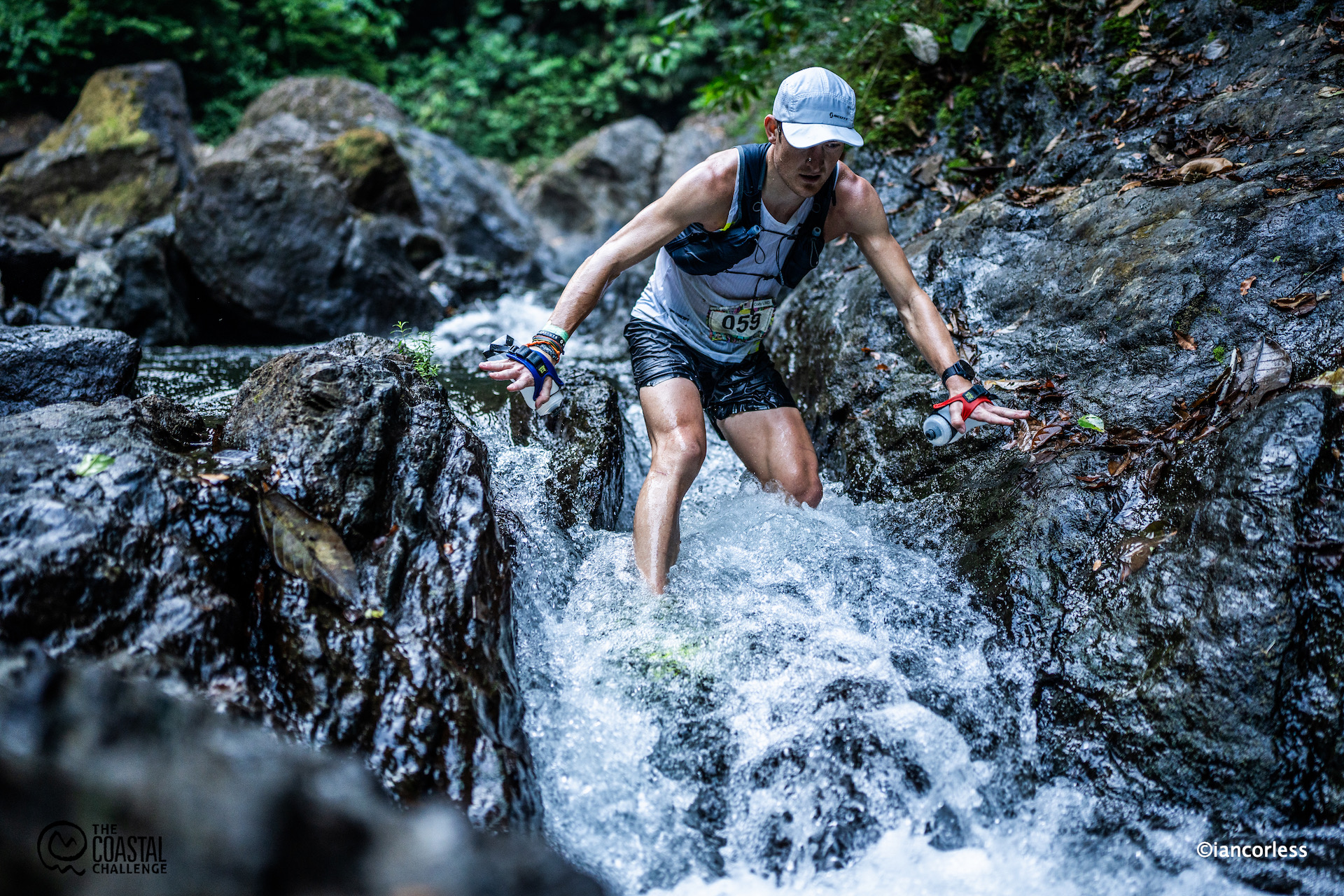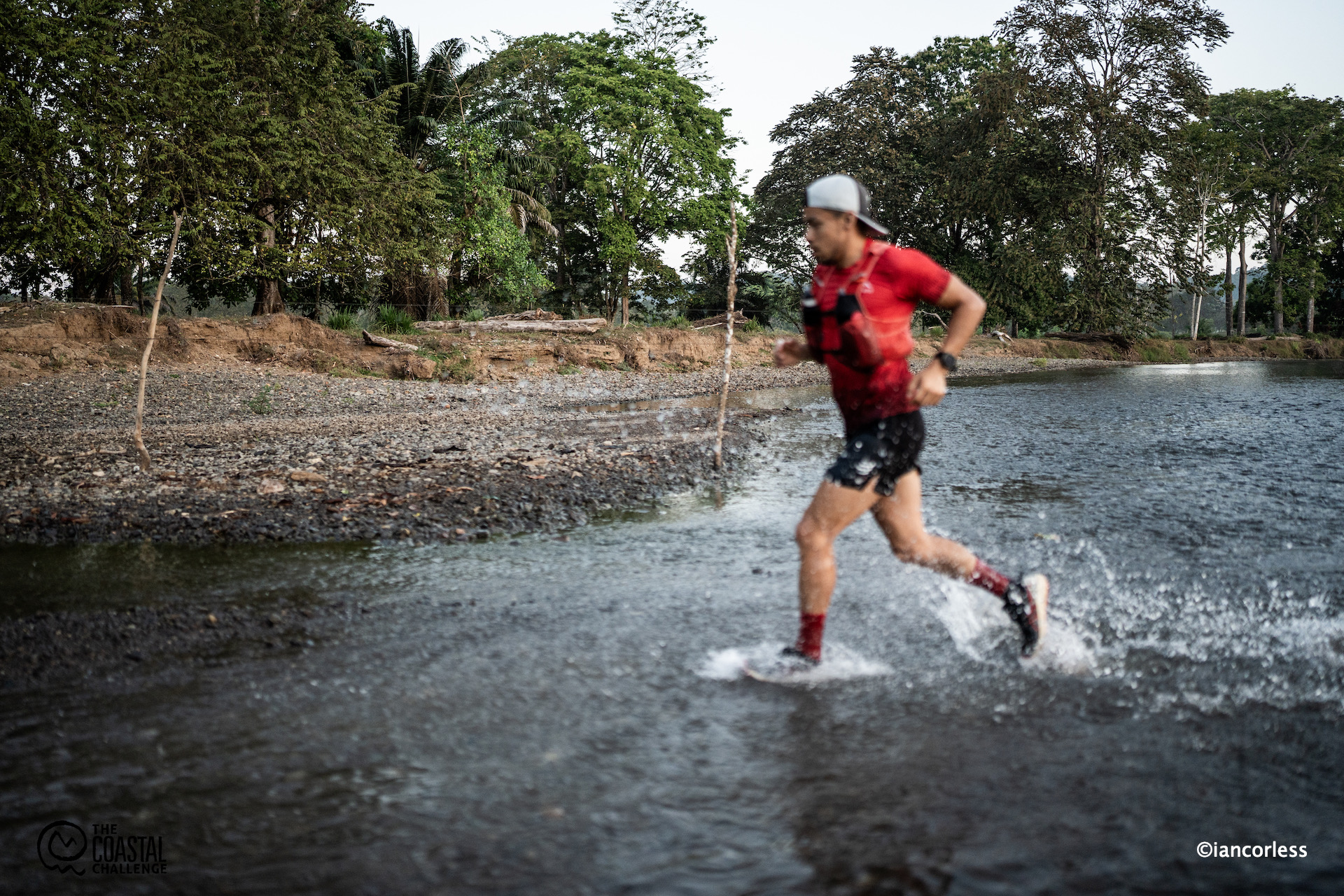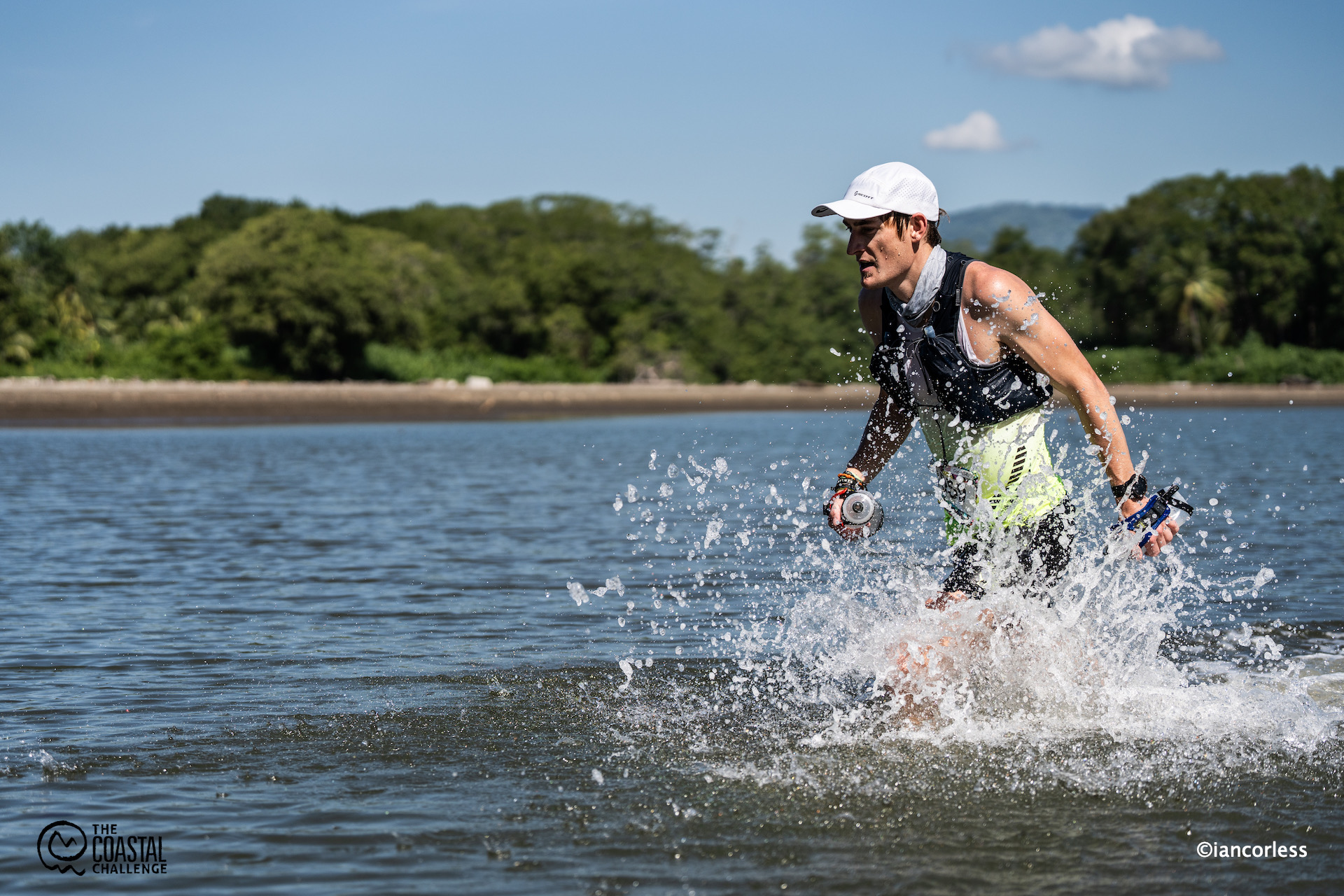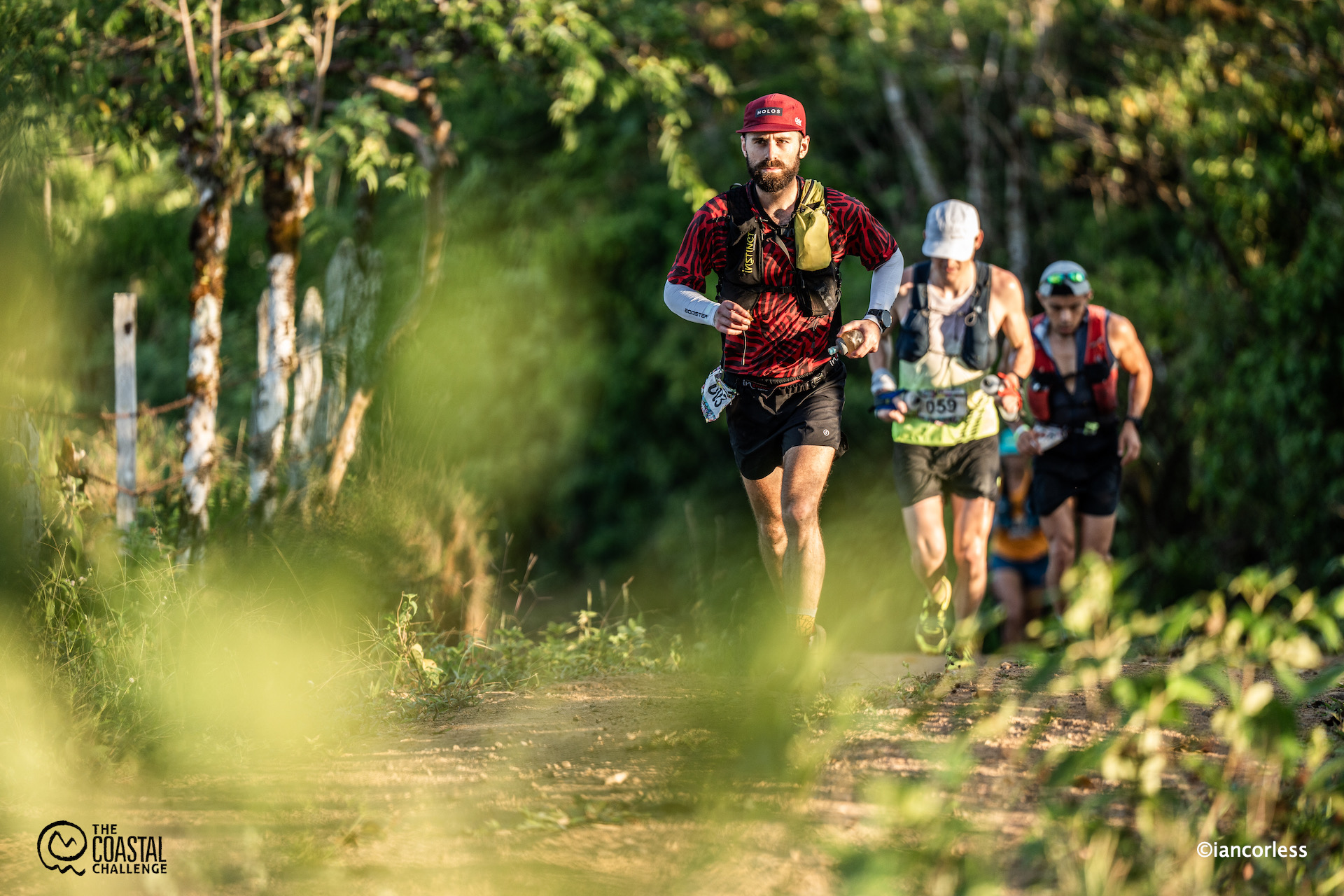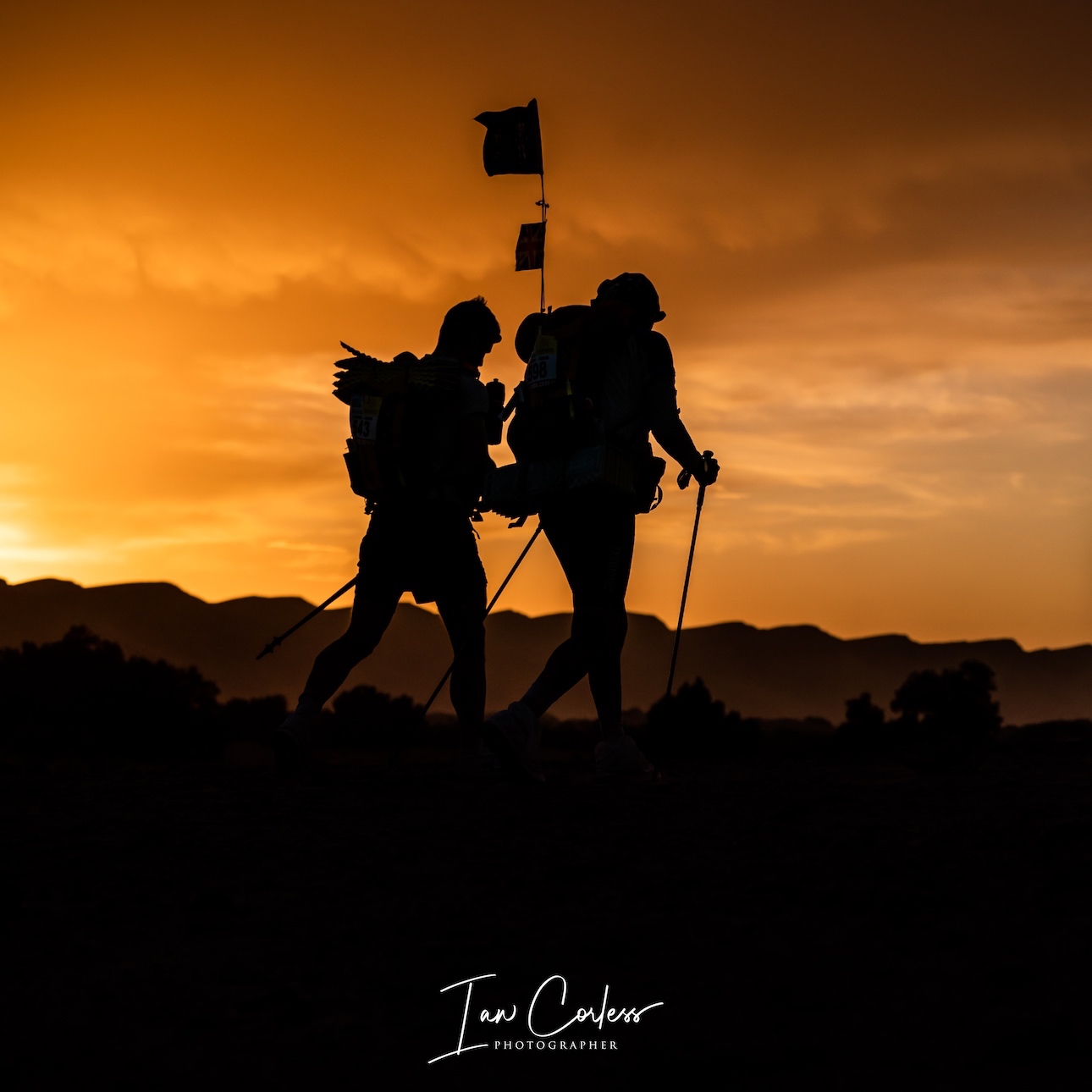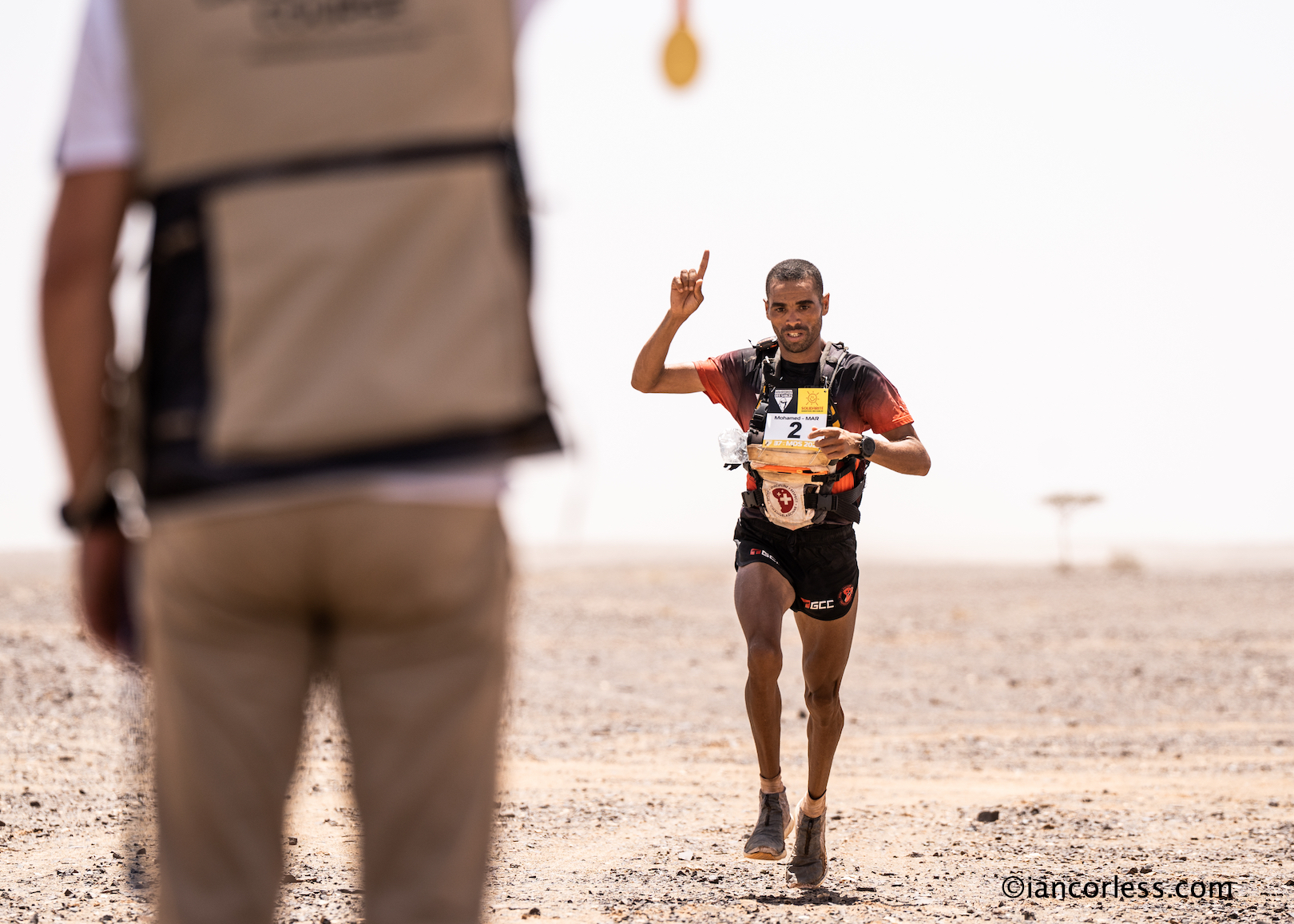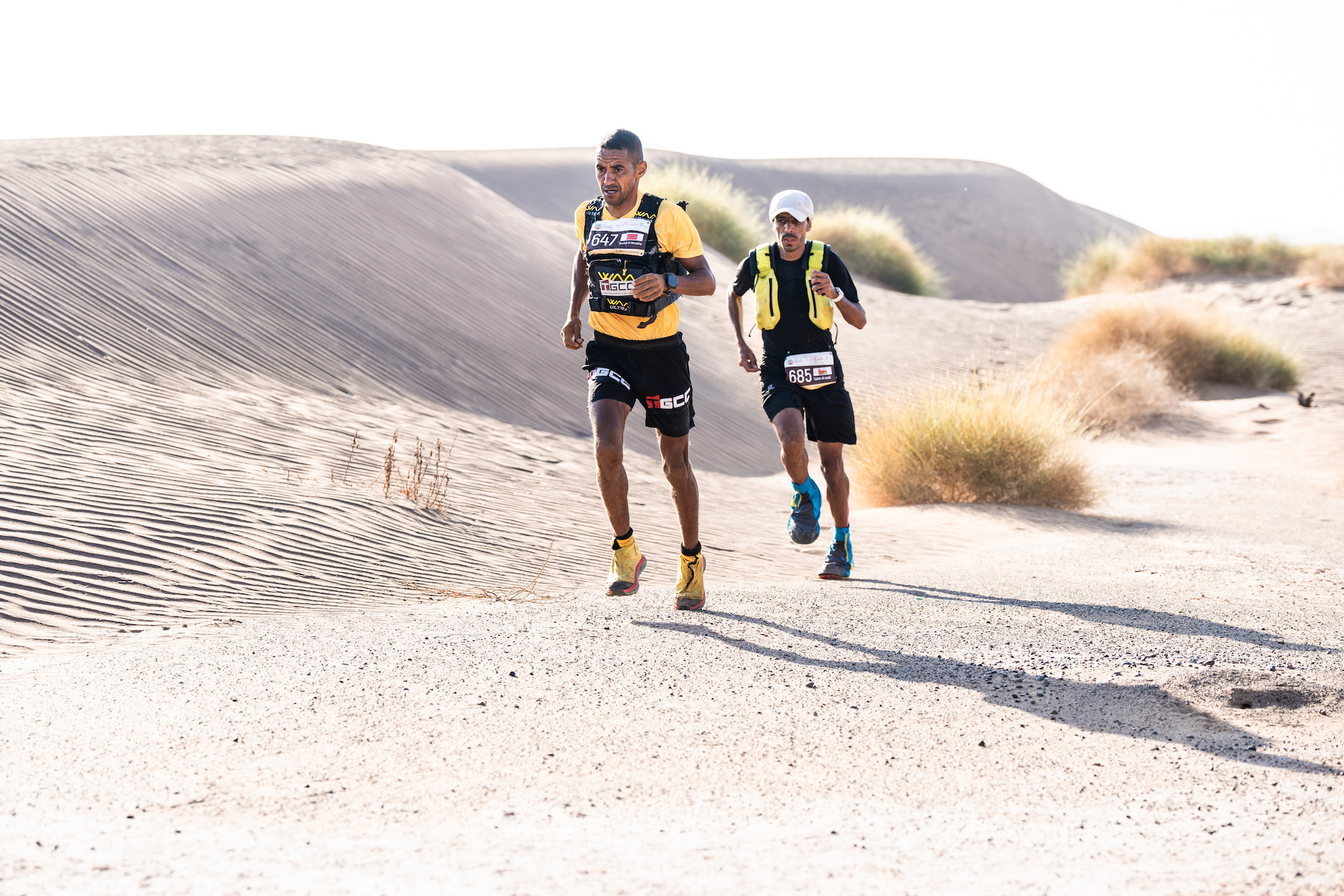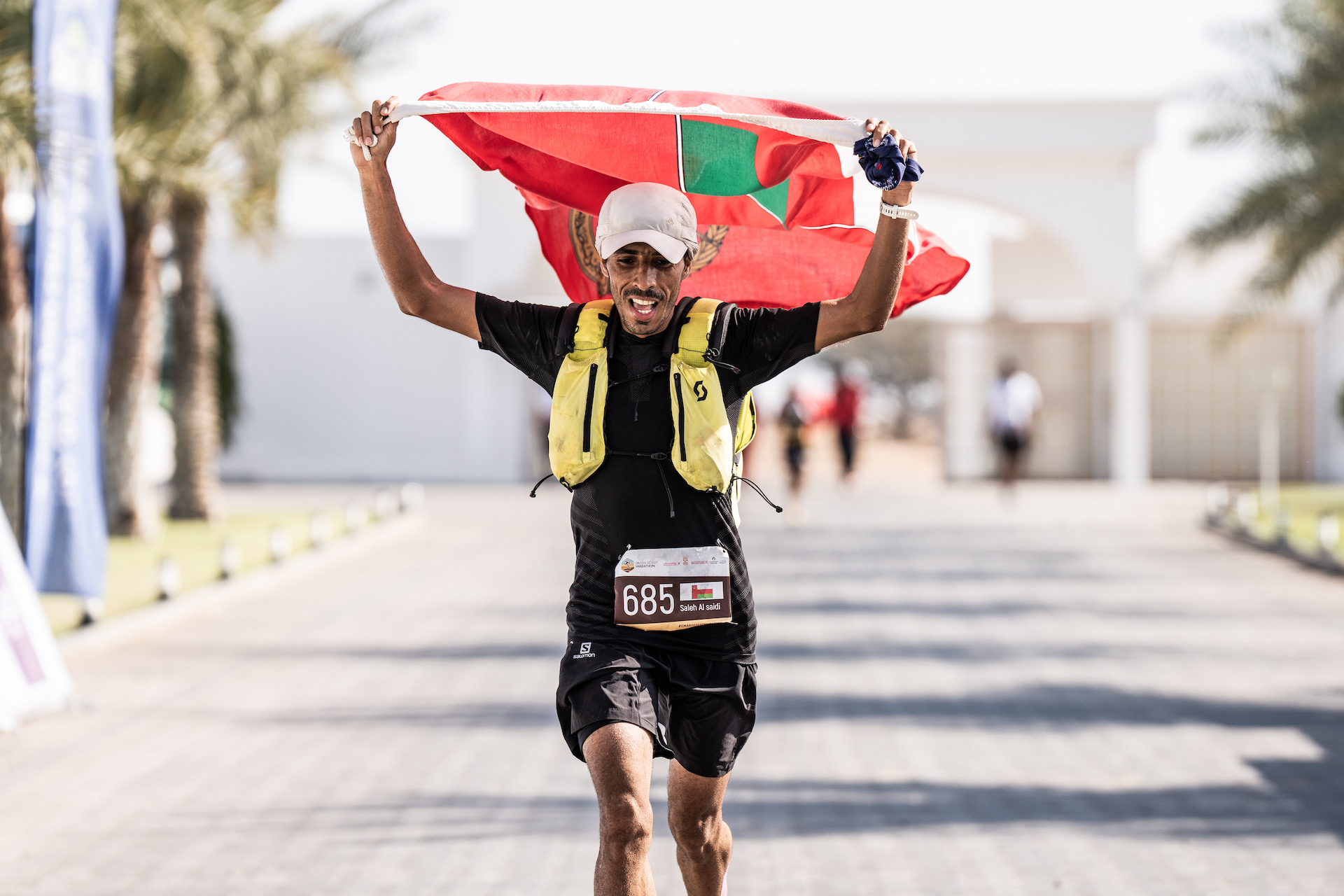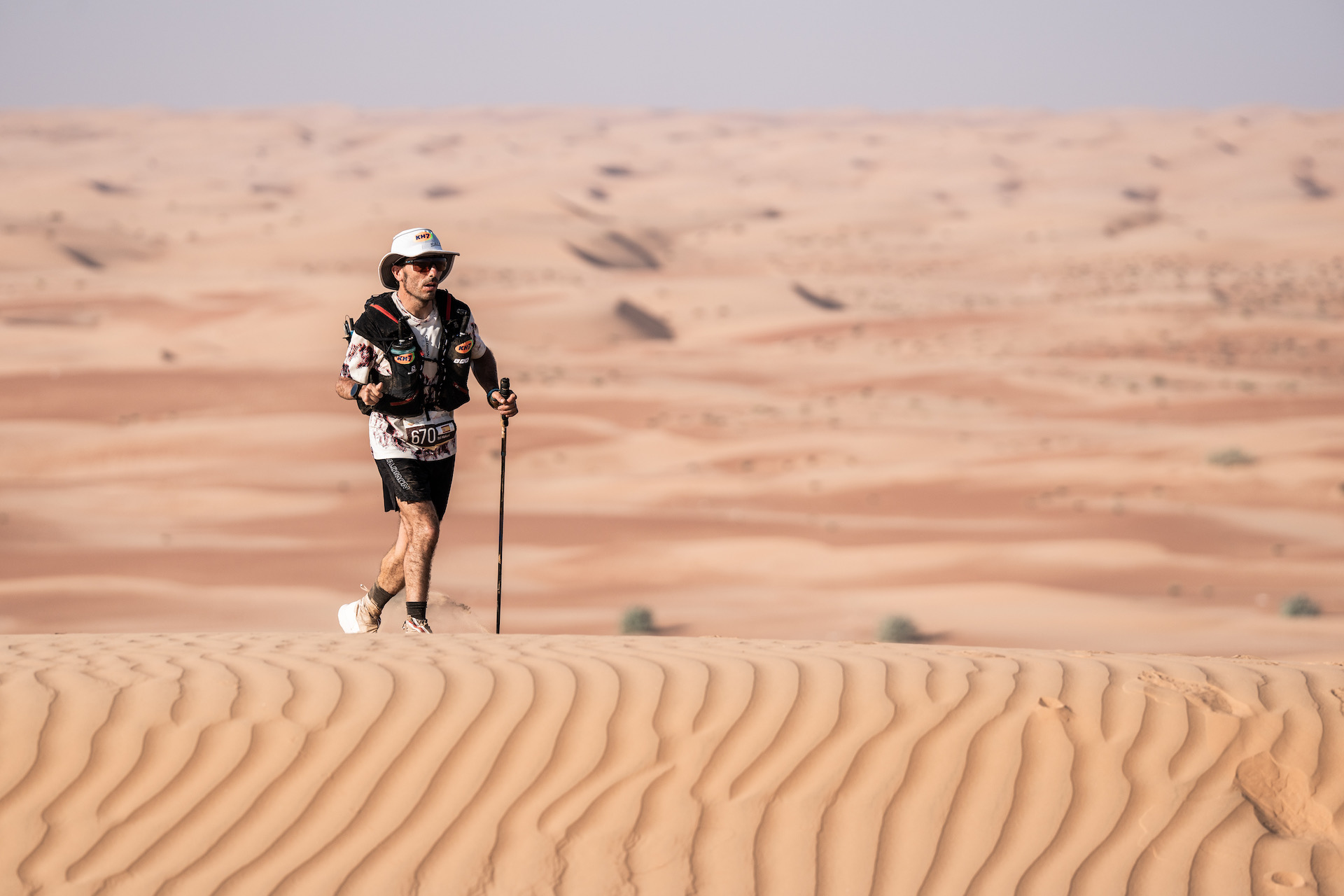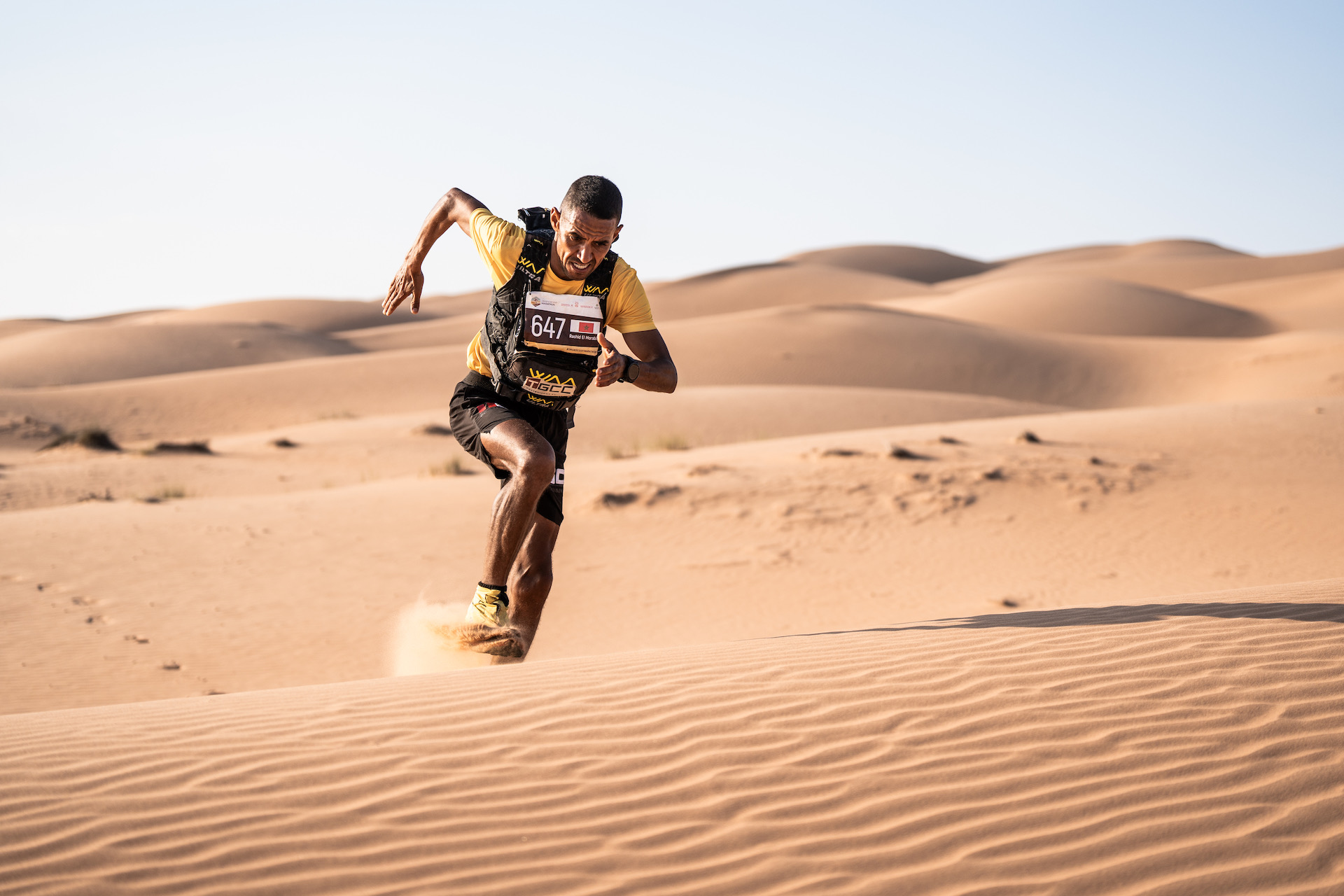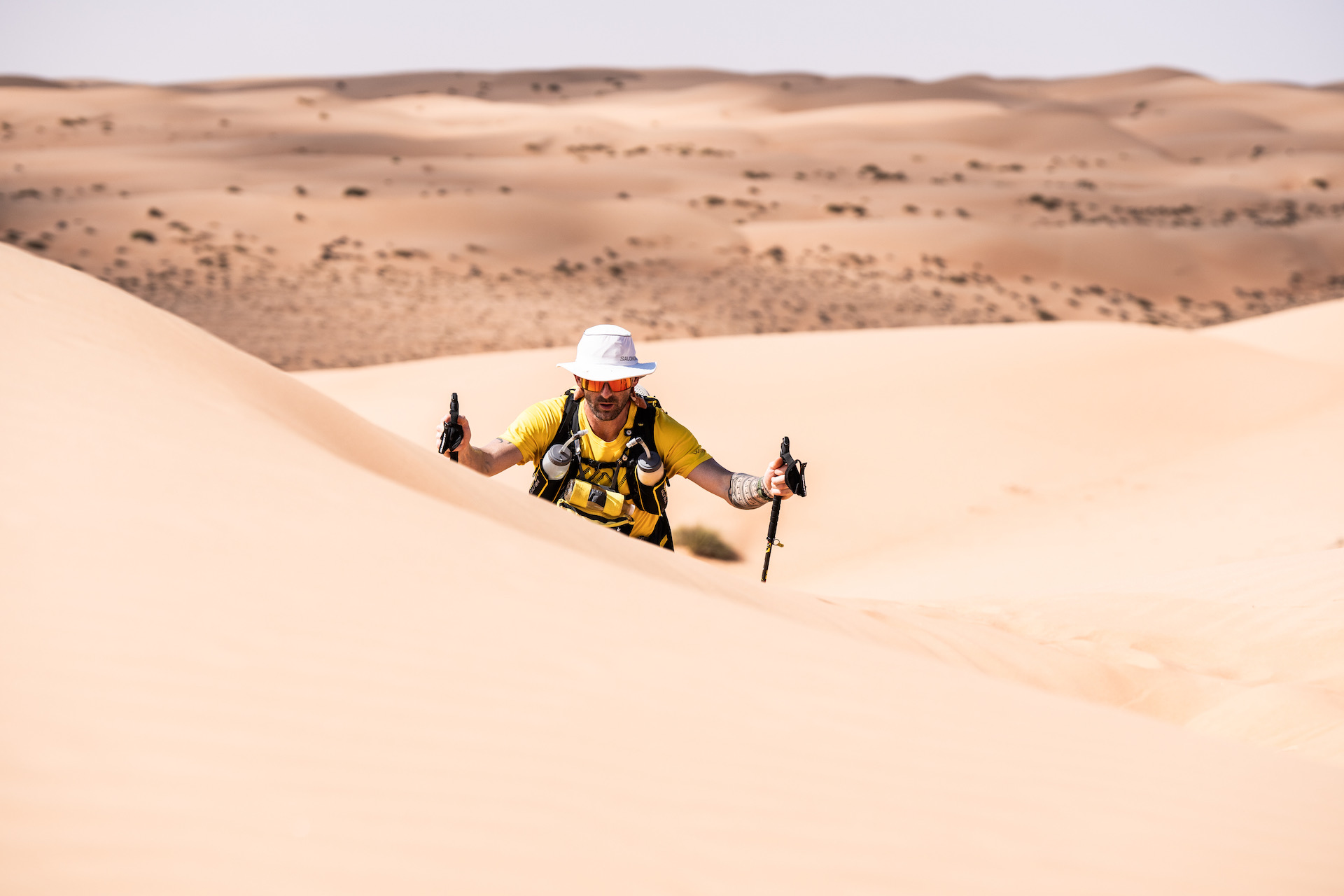
Runner’s got there first night in camp last night. Tired bodies looking to recover and prepare for stage 2 of the 2024 The Coastal Challenge, a 230km, 6-stage journey from Quepos to Drake Bay. Ambiance and atmosphere was high. Stage 1 had certainly taken a toll and surprised many. The combination of route, heat and humidity a wake up call. The impact of day 1 saw 18 participants move from the Expedition race to the shorter Adventure category; a huge number!
But today, starting almost 3-hours early makes a huge difference. The almost vertical climb straight out of camp allows for cooler temperatures and an ability to ease in the day.
A rollercoaster of gravel roads followed by rainforest and more gravel roads lead the race to the coast and finally the ocean.
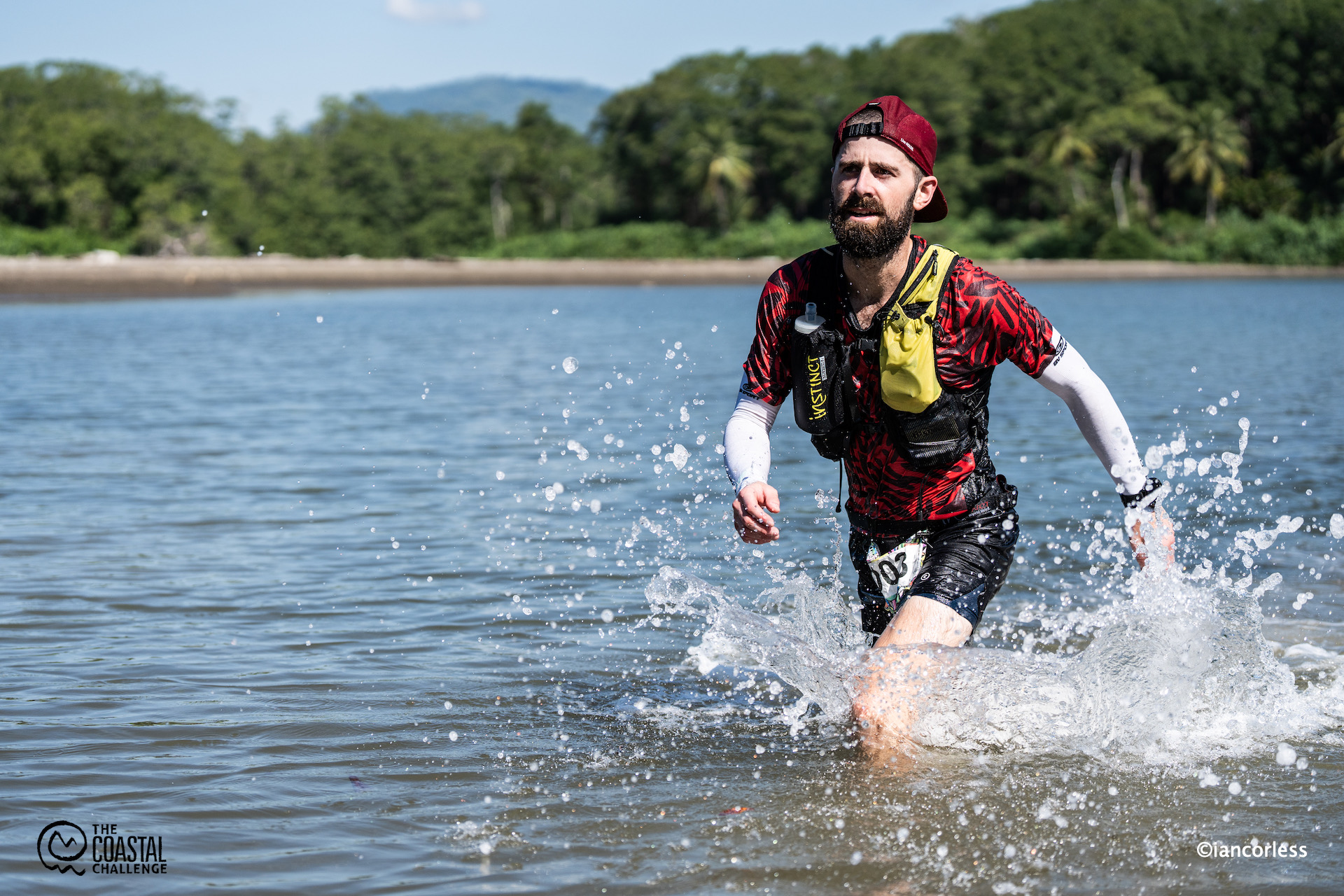
Now the heat of the day takes hold as the the participants navigate a route to the Dominical finish via long stretches of beach.
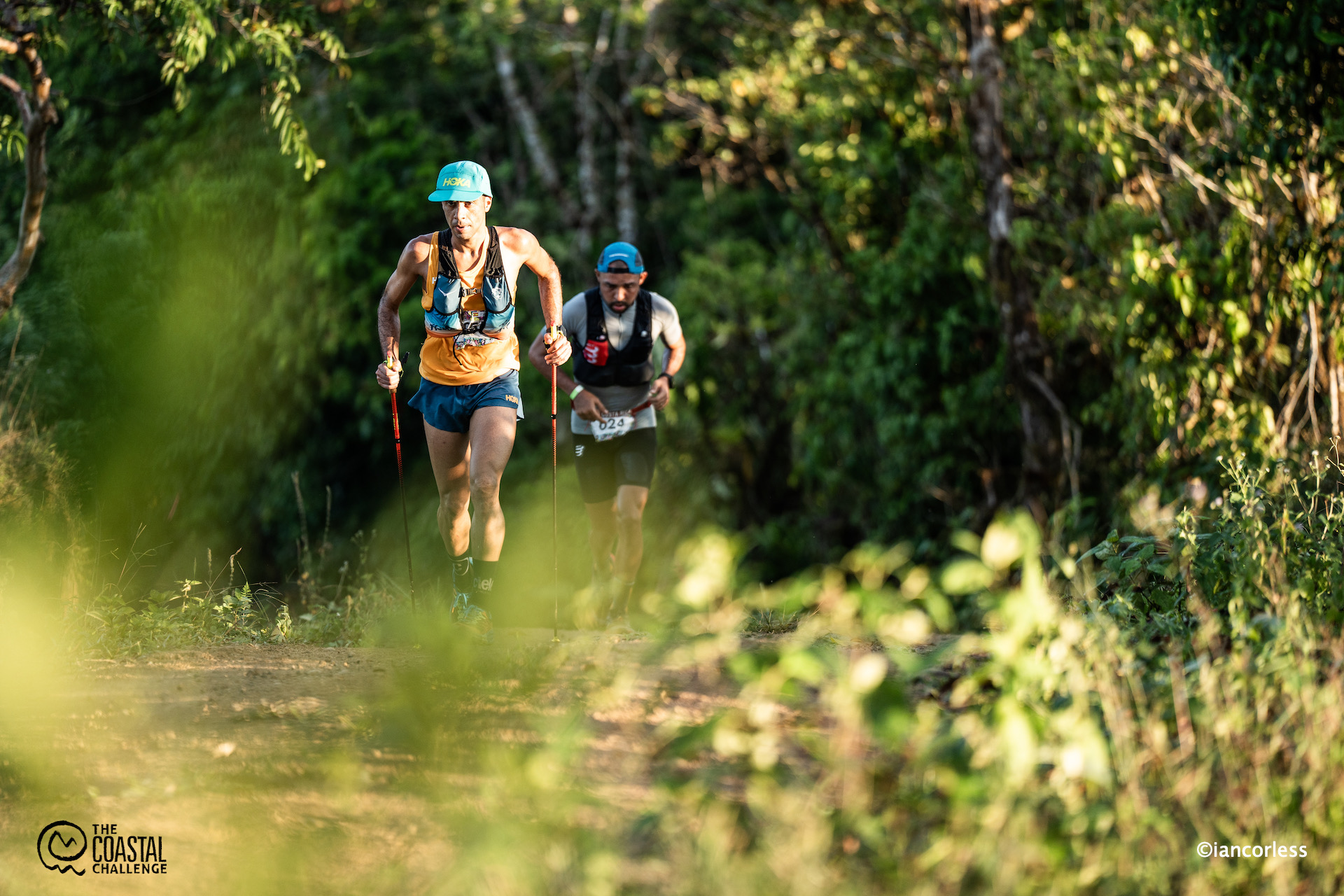
Jean-Francois leading the top men.
There was a very different mood to the start of stage 2. Summed up in one word, respect. The top men ran together lead by Jean-Francois Cauchon. This lead group did not include Cristofer Clemente Mora who ran a short distance behind with Erick Aguerro behind.
Cristofer and Erick
Pierre Meslet made a 3rd group running Lina El Kott Helander.
Pierre and Lina.
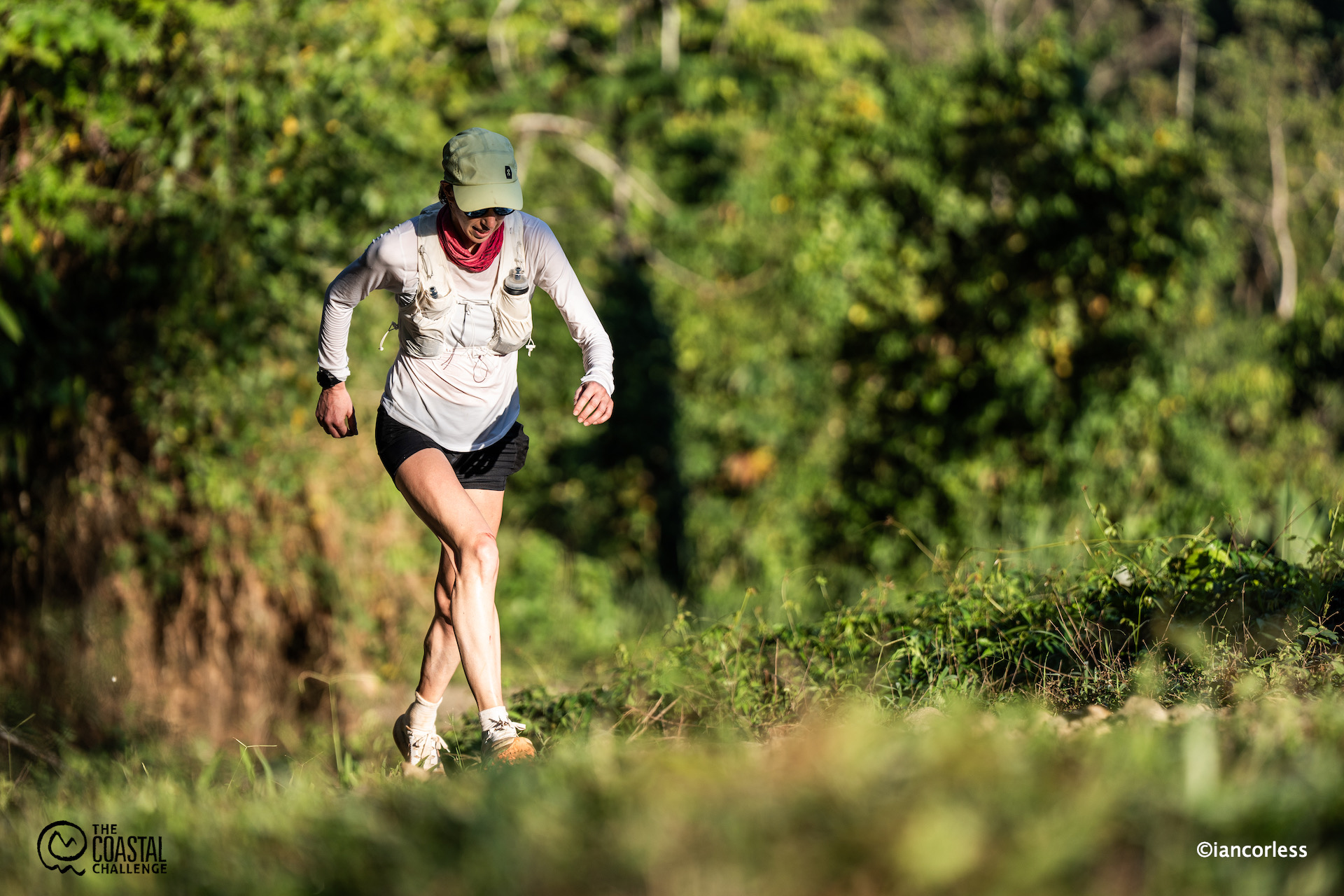
Lina El Kott Helander pushed the pace for the women, this came as no surprise with a steep climb to start the day. The skyrunner no doubt in her element. Behind Katie Young followed with a parmanent smile.
Katie
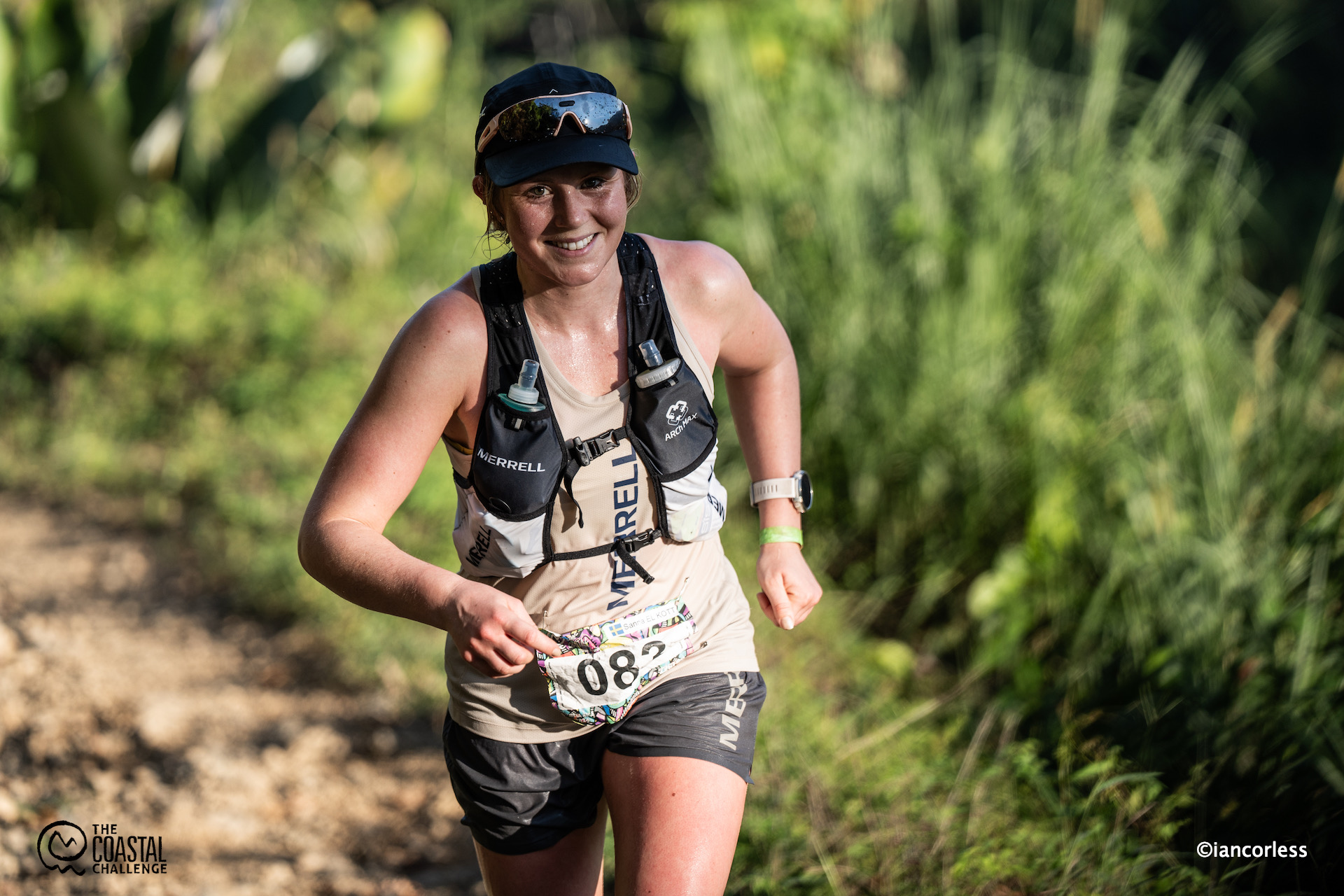
Sanna El Kott Helander, just like her twin sister, enjoyed the early vert to run in 3rd.
Sanna
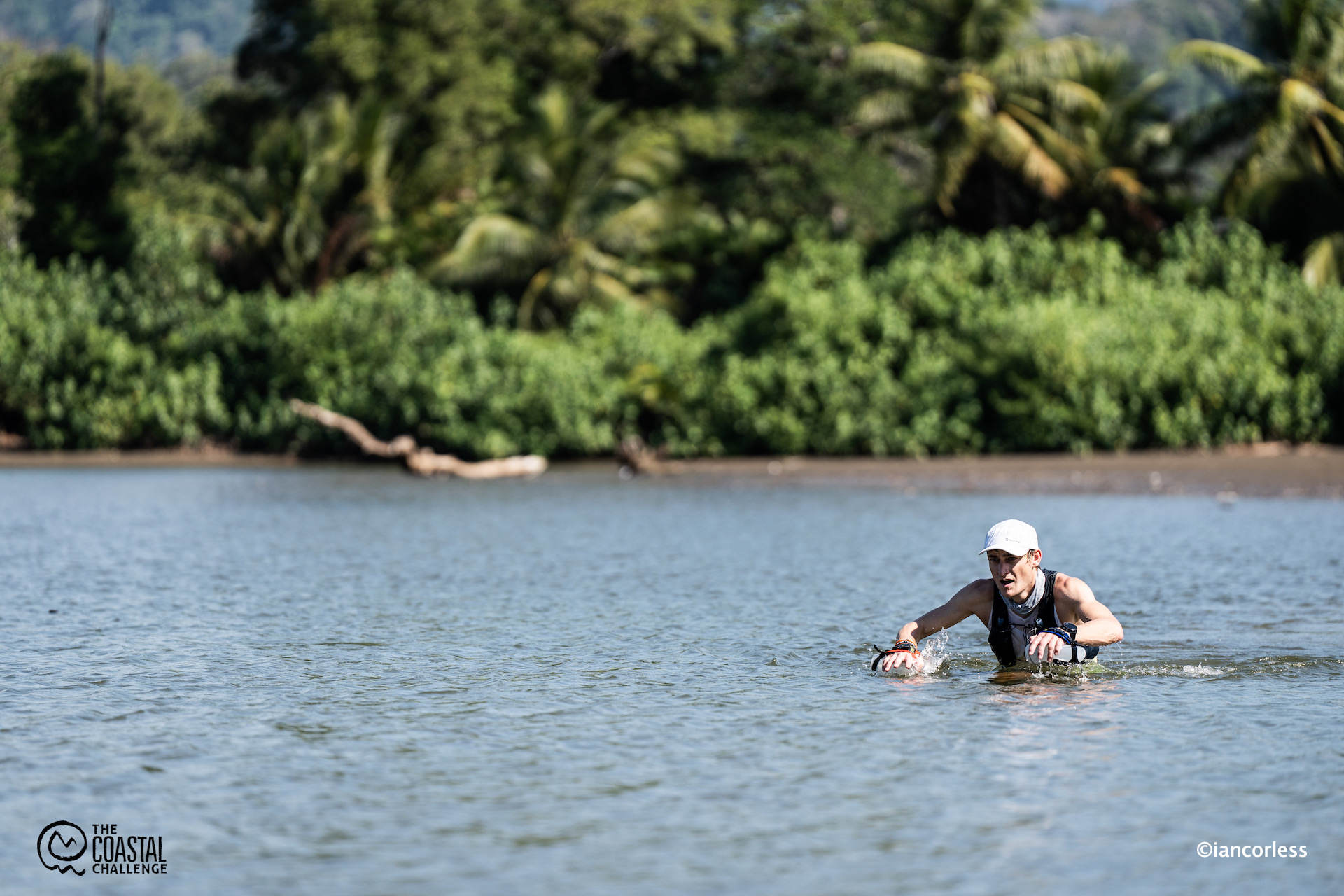
As the runner’s headed to the coast, the race opened up and Cody Lind and Carlos Calvo López were the first to arrive at the estuary leading to the final 5km’s and a long beach section. Cody now in familiar territory from his 2020 victory no doubt relishing the final km’s pushed to take the stage and overall lead with 3:59:13 on the clock.
CodyCarlos
Carlos was expected to finish 3rd but Jean-Francois pushed and not only caught but passed the Costa Rican, 4:00:15 and 4:01:53. Cristofer finished some way back and lost his overall lead by almost 10-minutes and is now in second. We have a race on!
Jean-Francois
Lina continued her strong running all the way to the estuary, she had now opened up a 6-minute lead. Katie arrived looking fresh and full of enthusiasm, with flat running all the way to the line, Katie pushed and closed the gap to under 2-minutes at the line, 5:06:08 and 5:07:58.
Lina
Sanna continued to pull away from Lindsey Ullrich and ran a strong 3rd place in 5:29:05. A very positive run after a troubled ay 1.
Stage 2 was not without drama, Lina took a bad fall and had concerns for a badly damaged arm. More news to follow. Pierre also had troubles with a very badly twisted ankle that saw him require a stick in the early stages.
Tomorrow, stage 3 to Marino Ballena is 46km with 1686m. It’s the toughest stage of the race.
You arrive in Morocco, pass through passport control, wait for your luggage, leave the airport arrivals hall and find a seat on a coach.
The MDS journey is now in full swing.
Waiting in anticipation, the Road Book (the bible) for the next edition of the race is provided and immediately pages turn, running through the mind of each participant:
“How long is the long day?”
Well, the wait is over, I can tell you. For 2024, the long day will be 85.3 km’s.
The MARATHON DES SABLES – The Legendary is breaking silence and today, we announce the daily stage distances for the 2024 edition.
Stage 1 : 31.1 km
Stage 2 : 40.8 km
Stage 3 : 85.3 km (over 2 days)
Stage 4 : 43.1 km
Stage 5 : 31.4 km
Stage 6 : 21.1 km
Total 252.8 km
Marathon des Sables typically takes place in this key area.
Taking place in the southern Moroccan Sahara since 1986; an extraordinary adventure will take place covering 252 km’s, the longest edition in the race history. Lasting 11-days with 9-days in the desert, divided into 6 stages over 7-days, a magical crossing of the Sahara walking or running.
The exact route, with maps, will once again be covered in detail in the road book, which as per usual, will be provided in Morocco whilst on the way to the bivouac one.
This is the first time that the daily distances have been disclosed before arrival in Morocco. Does this change anything? No, not really. I guess there is a reassurance knowing that the long day is not 90+ km’s.
However, with the 2024 edition being 252 km’s and over 6 timed stages, it was my prediction that this race would be a tougher challenge in contrast to those that have gone before. Therefore, to ease minds, the distances have been announced.
Previously, the long day would come on stage 4 (over 2 days) and it would be followed by the marathon stage. It was common thought, “Get the long day done and it’s just a marathon to go!” At the finish of the marathon, the medal would be received; job done.
Now, with the long day coming on stage 3, you still have 3-stages to run totaling 95.6 km’s. This will require a completely different mental and physical approach.
The 2024 Oman Desert Marathon concluded at Jawharat Bidiah Resort, 165km’s travelled over 4-days and Rachid El Morabity and Aziza Raji are the champions covering the total race in 16:06:49 and 23:13:32 respectively.
Going into the last 21km stage, the end result was never in question, both Rachid and Aziza had built 20-minute plus leads and all they had to do was run a calm and measured last day.
However, Saleh Al saidi pushed the pace continuously, maybe, just maybe in the back of his mind he thought he could break Rachid?
In the closing km, Rachid eased back and gave Saleh a final stage victory for the home crowd and the Army Team which he respresents.
In third place, Ghaith Al saidi. The brothers ran an incredible race and at times placed Rachid under pressure, however, Rachid for now is just too strong and experienced.
For the women, the Aziza Team were dominant and after Raji built the lead early on, El Amrany was content to run by her side.
In third place was Veronique Messina who each day consistently covered the km’s with commitment, determination and a smile. A great run in 25:38:53.
In total, thirty participants completed the race from twelve nationalities. With the race almost completely sand, the race is considered considerably harder than Marathon des Sables. This was confirmed by Rachid, “Here it is all sand, it’s slower and more tiring. Only the last day has some easier and harder terrain on which to move quicker and easier.”
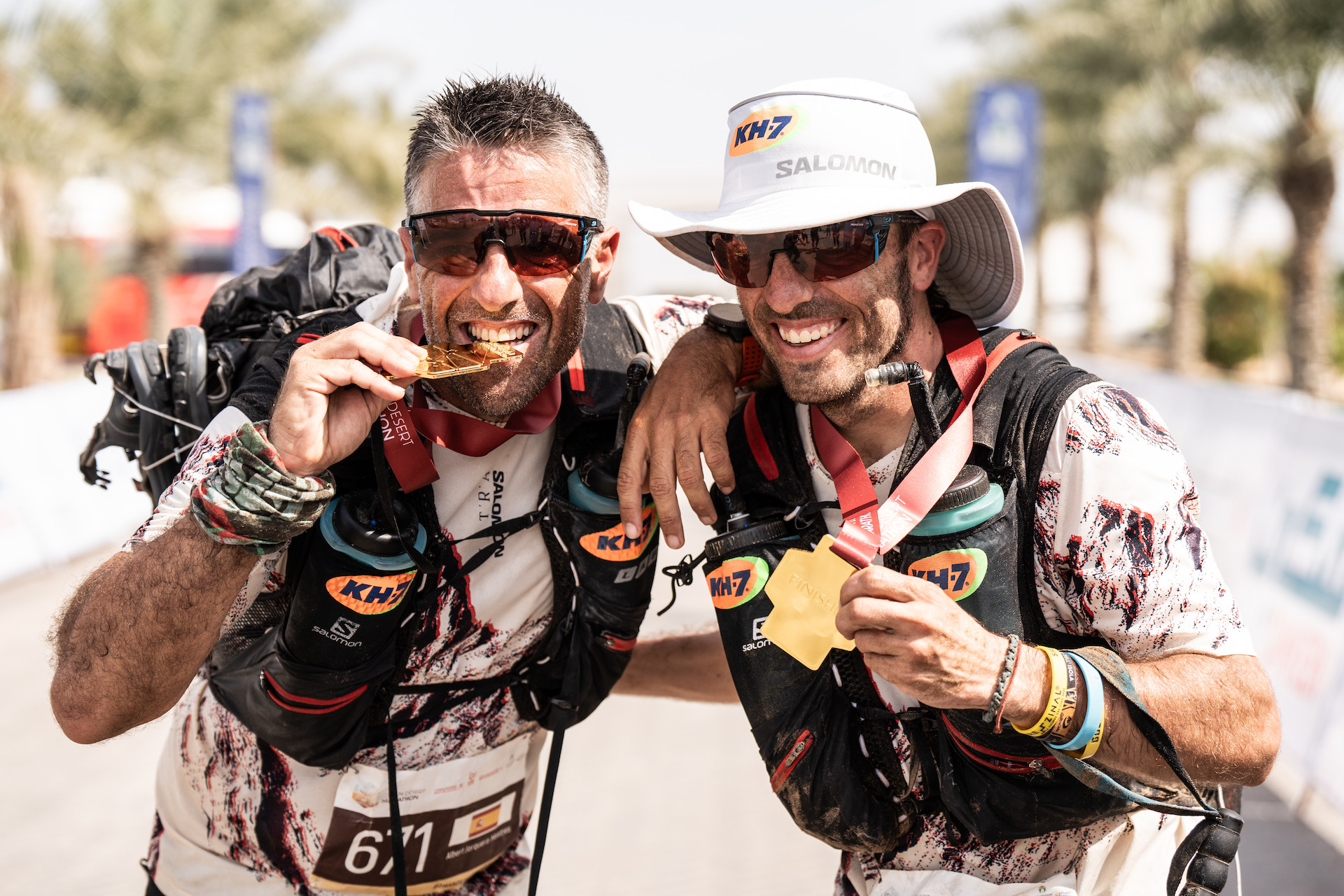
While it is difficult to pick out individuals in such a tough race, Pol Makuri has inspired everyone during the week. His commitment and dedication has been an inspiration. His completion of the event brought tears to many an eye, especially his friend and teammate, Albert Jorquera.
Rachid and Aziza may well have crossed the finish line the fastest, but a winner and champion comes in many forms and Pol Makuri is a prime example.
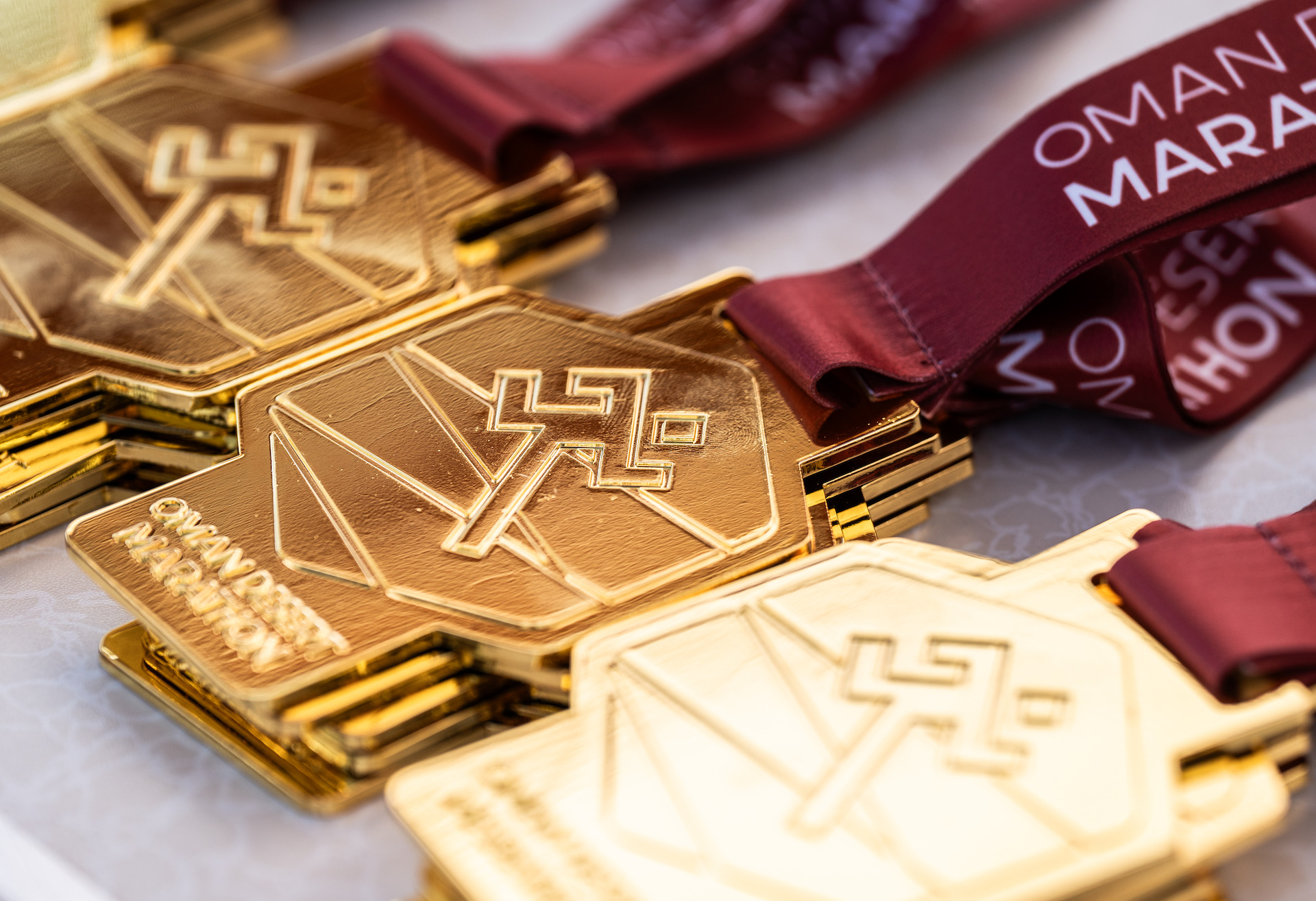
Each medal was hard earned and yes, as in many races some did not reach the finish. However, they were there at the finish line to cheer the others on, no doubt being inspired to return and try again.
Stage 3 of the Oman Desert Marathon has a delayed start to ensure that participants experience the desert at night. With three waves: 10am, midday and 2pm (slower to faster runners respectively) the participants would cover the 47km stage in daylight and then transition to darkness.
Consider by race director, Said, stage 3 would include one of the most spectacular dune sections on the race, timed to coincide with the sun getting lower in the sky and for the lucky ones, maybe sunset would take place as the dune section came to an end.
Coming after the 55km long day, the later starts were welcomed and allowed for additional rest and recovery, however, the fatigue was starting to show on faces and bodies.
As the race got underway, it was clear that the men’s race would have a different approach, with Ghaith Al said pushing hard at the front, while behind, Saleh Al said and Rachid El Morabity ran together. Ultimately, it was an attempt to break Rachid. It didn’t work, but it was a valiant effort and one that rewarded Ghaith with the stage win in 5:03:39.
Behind, Saleh and Rachid ran together and crossed the line 5:10:29 and 5:10:39 respectively.
The women’s race had little drama with Aziza Raji and Aziza El Amrany running together and crossing the line in 6:56:35. The duo looked strong and relaxed. They will be a force to be reckoned with at Marathon des Sables this year.
Behind, once again, Veronique Messina ran a strong 3rd place in 7:49:56.
Albert Jorquera and Pol Makuri had a long day completing in 11:17. They are both very focussed mentally and strong physically. It has been a joy to watch the two of them work together and quite simply. Pol is an inspiration.
The iconic Marathon des Sables is entering a new phase, the past 37 editions have been under the aegis of Patrick Bauer, who, back in 1984, filled up a pack with food and water and trekked off alone into the Algerian Sahara to cover 350km’s on foot in a self-sufficient manner. Little did he know at the time, but this journey was the start of something incredible, the Marathon des Sables, or MDS as it is affectionately known.
Now under new ownership, the 38th edition taking place in April 2024 will see some significant changes while sticking to the main format and principles of the past 37-editions.
It is therefore timely, to update my Ultimate Guide to Marathon des Sables and acknowledge these key changes.
A recent podcast with one of the new co-owners, Cyril Gauthier, can be heard HERE.
Cyril ran the Marathon des Sables in 2009, created the brand WAA and is instrumental in the growth of the HMDS (Half Marathon des Sables) format. Moving forward, the HMDS format will no longer have the ‘half’ title, for example, HMDS Morocco will become MDS Morocco, HMDS Jordan will be MDS Jordan and the key, full distance race of the past 37-years will be called ‘LEGENDARY‘ – The Legendary Marathon des Sables.
Marathon des Sables offers more than just running, it offers a challenge, it offers something quite unique – the Sahara and the MDS strips the runner back to basics and deprives them of all luxuries so that they are stripped raw. Runners find themselves in the desert.
However, this challenge can often daunt a new participant with the challenge that is ahead and therefore, my Ultimate Guide to the Marathon des Sables is provided to settle nerves, provide initial information and provide a level of knowledge that you can use as a base from which to build your own plan and decide on what equipment to purchase and use.
Episode 238 of Talk Ultra – After 37-years, the iconic Marathon des Sables will move ahead with new owners, the legacy of Patrick Bauer is there for all of us to see. With new owners comes change and in this episode of Talk Ultra, we discuss these changes with co-owner and CEO Cyril Gauthier.
This in-depth podcast discusses the history and background of Cyril Gauthier and then organically follows through to discuss the brand WAA, the growth of HMDS and the future and changes for Marathon des Sables.
UPDATE – This was not addressed in my podcast, at the time, I did not have the facts. However, post podcast I have had questions raised by some who had concern about medical support and the Doctor team, so I reached out for an answer, and I quote:
“We will try to do better than with Doc Trotter. I have been contracted with DoK Ever since the beginning of HMDS. They were also the ones who managed MDS Peru. They are among the leaders in Europe and I believe we can increase the quality. We have the same number of doctors, podiatrists and nurses: 60. I am going to modify the management of vehicles by keeping the current system but adding a rapid intervention force with SSVs. Always with the helicopter as back up.” – Cyril Gauthier
It’s suggested you read this article written Jube 2023 in advance of this recording.
New for 2024, Norway’s first multi-day trail running event, the LOFOTEN STAGE RUN brought to you by the team behind The Arctic Triple taking place Week 22 2024 (w/c 27th May)
Located in the stunning and world-renowned Archipelago of Lofoten, The Arctic Triple team will offer two stunning races, the 175km Expedition Run and the 120km Adventure Run, both starting in the iconic, beautiful, and picturesque Reine and concluding in Svolvær.
Travel point-to-point, on foot, experiencing the majesty of Norway. Stunning trails, majestic mountains, resplendent views, and all during the endless daytime of the midnight sun. A fully supported journey over 4-days (6-days in total) and remembered for a lifetime.
The Lofoten Stage Run will bring the best of what Norway has to offer – fjords, fishing villages, beaches, mountains, ridges and of course the world-renowned Hytte experience.
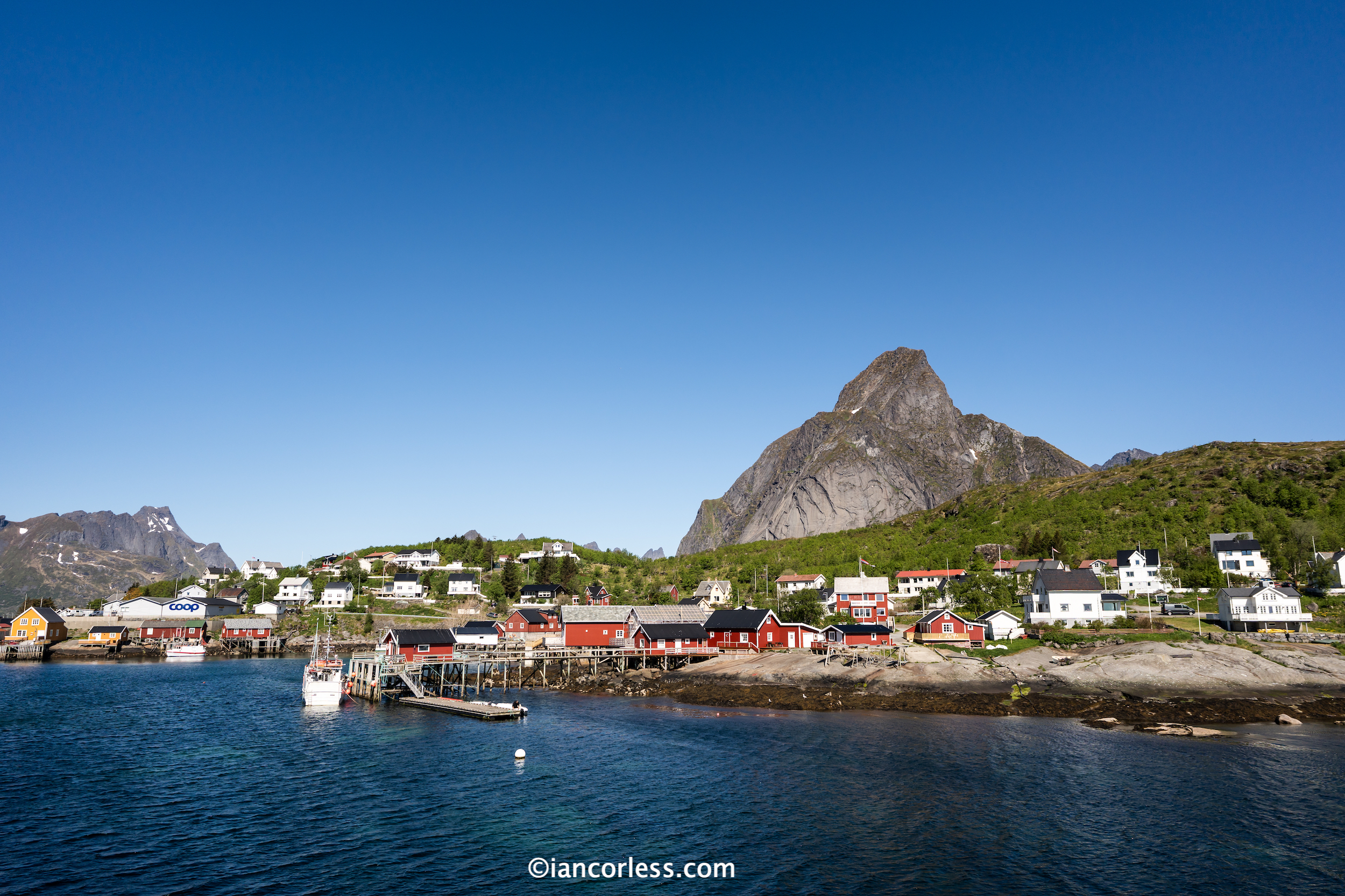
Kristian Nashoug at Reine
“Lofoten Stage Run came about after the 2021 Arctic Triple and the realisation that only the 100-mile runners were getting a full 360 Lofoten experience. Not everyone wants or can run 100-miles in one go, especially here in Lofoten. So, we have created the Lofoten Stage Run which effectively breaks down our 100-mile race in 4-stages and therefore offers a more manageable way to experience all that Lofoten has to offer.”– Kristian Nashoug
The Lofoten Stage Run, either the 175km or 120km versions offer a full day to cover the respective stages and the opportunity to really experience all that this area has to offer. In the evening, runners will meet local hosts, experience local food, have comfortable lodging, and create new bonds and friendships with like-minded people. Lofoten is one of the most ‘desired’ places to visit in the world, what better way to experience it?
This is no ordinary multi-day race!
Stages will consist of 4-days, 39km, 60k, 31km and 45km for the 175km Expedition Run and 39km, 29km, 31km and 21km for the 120km Adventure Run, it’s The Arctic Triple’s aim to make this experience available to all.
Day 3 at Brustranda Fjordcamping in Rolvsfjord, a real gem on the inside of the Lofoten archipelago.
And finally, all races conclude in Svolavær.
Experience Lofoten.
Experience the Arctic Circle.
Experience the midnight sun.
Experience the majesty and beauty of Norway under your own power.
PRICE NOK 32.900 (ca €2950)
What is included? Accomodation 5 nights (one night before and after is also included) Race registration Luggage transport from basecamp to basecamp All meals from when we meet in Svolvær day 1 until breakfast day 6 Start kit The Arctic Triple buff Service stations First Aid Evacuation transport Timing Tracking Warm meal after finish Boat ride to the starting line in Kjerkfjorden Quality Finisher shirt
Episode 235 of Talk Ultra and we speak with Katie (Catherine) Young who placed 6th lady and 1st Brit at the 2023 Marathon des Sables in 34h 21m 18s.
The 2023 Marathon des Sables will go down in the 37-year history of the race as a tough one. With second longest stage in the race history (90km), a tough course and excessive heat, 30% did not make it to the finish.
Katie Young from the UK, running her first stage race had an incredible run placing 6th woman and 1st Brit.
Are you planning on running Marathon des Sables or a similar race in 2024 or beyond? Why not join us in January for our LANZAROTE TRAINING CAMP which runs from the 11th to 18th. More information HERE.
Marathon des Sables 2024 #MDS – The New Features Discussed
2024 Marathon des Sables entries are due to open on June 30th. Moving forward, some changes will be made to the race. Read a summary of points HERE.
NEED A NEW PACK?
Are you looking for a new pack that is suitable for fastpacking and stage racing? We are currently testing the Camelbak Octane 25 and it is proving a real favourite. It’s full of features, has great storage and is extremely comfortable. Check out our first impressions HERE.
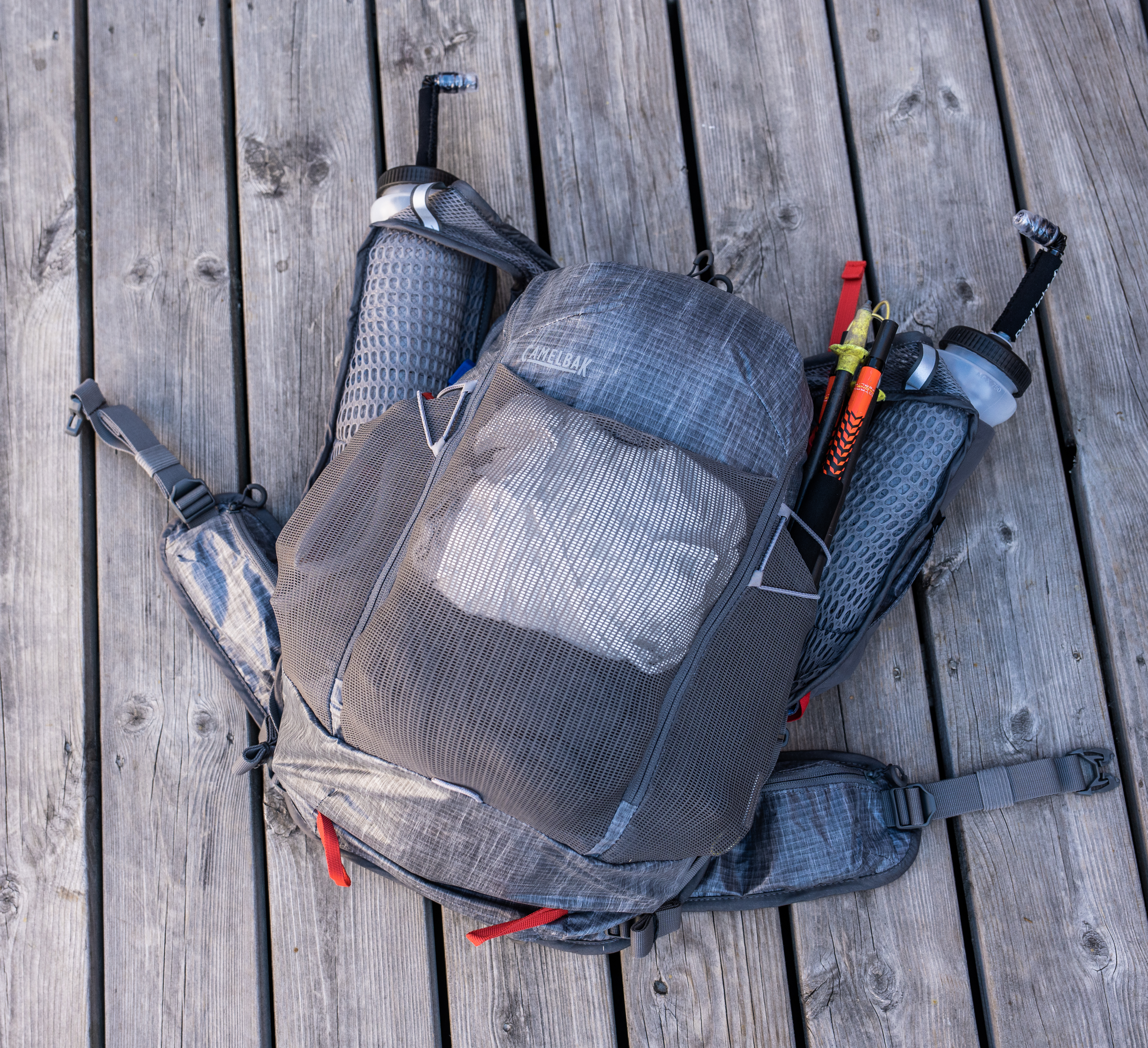
Octane 25 fully packed with tent,sleeping bag, apparel and food for a 1-night fastpack.
Streamlined, lightweight, full of features and storage, CamelBak have brought together the best of both the trail running and hiking worlds with Octane 25 LE.
As you would expect, CamelBak has integrated a system to keep the bladder secure and easy to access, with the hydration hose tucked in and out of the way with secure fixings at the front. For many though, the use of the bladder can be a plus or a minus, so, removal is easy. At the front, there is storage for two large bottles or soft-flasks.
Ultimately, this pack with 25L of storage is perfect for fast packing and multi-day stage events. It is optimised for those who want to stay light and move fast. It is full of features and after packing and testing, this is a piece of equipment that is ideal for a race such as Marathon des Sables.
Key features are:
Belt with two zippered pockets for ‘on-the-go’ snacks.
Trekking pole storage via left or right side.
11 exterior pockets one with zipper and two for bottles/ soft flasks.
8 interior pockets one with zipper and key holder
2 chest straps
A large zipper opens up the pack like a suitcase, therefore adding and removing contents is easy. Inside the pack are multiple small stretchy storage pockets, 8 in total. On the rear insides 5, 2 longer pockets on the sides of the inside. In the lid of the pack is a zipper pocket ideal for wallet, passport with an integrated key holder.
Outside there are 11 exterior pockets and a giant compartment that is dedicated to hold the bladder, or, if doing multi-day, this is a great place to put a sleeping mat or even some clothing. Three large mesh pockets are ideal for external storage that may require quick access, for example, waterproof jacket, pants, hat, gloves, additional liquid and so on. Two elastic straps not only will hold poles in place but also help compress the pack smaller.
Pockets help keep things in place, and the dual chest straps keep it all closely attached to the body. The addition of the waist belt and two zippered pockets only adds to a secure feel and the increased pockets are welcome for ‘on-the-go’ snacks.
To provide perspective I removed the bladder and added a sleeping mat in to the bladder compartment (not shown in the video) and the items you see are as follows:
2 large Raidlight bottles
Big Agnes solo backpacking tent with poles and pegs.
Sea to Summit Sp1 sleeping bag.
Sea to Summit sleeping bag liner.
Merino LS top and bottoms.
Waterproof jacket.
Waterproof pants.
Down jacket.
Warm gloves.
Leki poles.
Merino beanie, neck roll and gloves.
MSR solo cook kit.
Sea to Summit spoon
Knife, matches, hot chocolate sachets, tea, earplugs, blindfold, snacks, and cup.
Firepot food and bars.
Osmo Active.
Phone, passport, and credit card.
To wear, the pack hugs the body, is comfortable and if adjusted correctly provides a run with minimal bounce. Made from ultralight sail cloth, the Octane 25 feels very durable. 3D vent mesh helps comfort and breathability.
While not one of the obvious choices for a multi-day or stage race, this pack is proving hard to beat. The features, the storage capacity and the fit against the torso is superb. It really is one of the best, if not the best, we have tried. Coming in one size, smaller or larger individuals would need to try on and make sure fit and comfort works. The side adjustments do compensate for many sizes and the waist belt adds to a secure feel and it helps spread the carry load.
Is there a downside? The only possible problem could be the zip. Zips can break, particularly when under pressure from holding in contents or from harsh environmental conditions, such as sand. However, this is just a thought process that needs considering, there is nothing in testing that would suggest there to be a problem.
Ultimately, one of the best fast packing and multi-day packs I have tried and one that I am using on all adventures for the foreseeable future.
The 37th was a tough one from many perspectives, heat, sandstorms, route and a very long, long day at 90km. You can read my summary HERE.
30% did not make the finish, the second highest in the race history, the highest coming in 2021.
Now, all eyes, look ahead to the next edition, the 38th in 2024. Many were looking to register in May, however, Marathon des Sables communicated a delay in registrations opening till the end of June. Of course, delays are never good and of course, questions get asked.
There has been many rumours if the 37th edition would be Patrick Bauer’s last? There has been no communication on this and no confirmation, equally, for clarity, there has been no official communication of new ownership. This, I assume, will be communicated in due course.
In recent days, Marathon des Sables has communicated in multiple languages to notify of significant changes that will take place for the 38th MDS. There are 3 key points:
Words as provided by Marathon des Sables.
Point 1:
The 38th MARATHON DES SABLES will take place over 5 stages instead of 6 previously. The total distance, around 250 km, does not change, and this will only slightly change the distance of each stage:
Stage 1 from 28 to 35 km
Stage 2 from 28 to 39 km
Stage 3 from 28 to 39 km
Stage 4 (The Long One) from 75 to 85 km (over 2 days)
Stage 5 (Marathon Stage) of 42.195 km
The removal of the sixth stage will allow everyone to celebrate obtaining the Finisher medal at the end of the Marathon stage: no more stress about the ten kilometers of the sixth stage! This will also allow us to offer a more substantial Solidarity program associated with this same Marathon stage, which will strengthen support for the Solidarity MARATHON DES SABLES association.
Point 2:
The MARATHON DES SABLES is contested in food self-sufficiency: only water, in limited quantities but sufficient to cover the needs of an athlete evolving in the desert, is provided to you each day. You must take along for your entire stay in the desert everything you need to eat and prepare to eat (freeze-dried meals, semolina, cereal bars, stove, etc.). This self-sufficiency will include for this 38th edition the day of your arrival in the desert, and the day of control preceding the race. These first two days will allow you to test yourself in real desert conditions, and to reduce sanitary risks.
Point 3:
To offer you more flexibility, and to reduce the carbon footprint of the event, we will charter fewer planes than in previous years. Only 400 places will be available from Paris, and 200 from London. As usual, we will of course take you from OUARZAZATE airport to the first bivouac, in the heart of the desert. And for those who wish, free shuttles will be set up from MARRAKECH to allow you to easily reach OUARZAZATE. You will thus have the possibility of anticipating or extending your stay, or of being joined by your family, much more simply than before.
SUMMARY AND THOUGHT PROCESS
The Marathon des Sables is loved and it’s fair to call the participants, staff and volunteers a family. Without doubt it’s a community that is 37-years in the making. So, when changes come, they are often taken with a sense of held breath. Some will dislike them, some will like them, some will be indifferent and if you are new to Marathon des Sables, you will probably be no wiser as you have nothing to compare to.
For perspective, Marathon des Sables has gone through many changes in its 37-years.
In 1989 participation increased to 170. I am sure competitors from previous years did not like the increase.
In 1991 the Gulf War impacted on the race and sponsors.
In ’92’ the establishment of regulation regarding equipment and food were implemented.
’94’ Doc Trotters arrives.
In ’99’ a mobile hospital becomes part of MDS.
Internet arrives in 2000.
In 2001, the ‘long day’ originally called §The 70’ exceeds 80km.
2006 146 DNF due to heat and humidity.
In 2008 Solidarité MDS is created.
Flooding at MDS in 2009.
For the 25th edition, 1013 participants.
In 2013 the final “Charity” stage sponsored by UNICEF is introduced.
2020 Coronavirus.
2021 and D&V sweeps through MDS and causes the highest DNF rate.
2023 heat impacts on the race with 30% DNF.
Quite simply, if anything can be learned from the above, change and changes happen, planned or not. So, let’s look at the new 3 changes and see the pros and cons.
The charity stage has always been a discussion point, from my perspective, having been at the past 10-editions is that the stage has been pointless. The race is over, so, it just drags out the agony for one more day.
But the counter argument is that it provides this great opportunity for a ‘tent’ to spend the time together, in the desert as a moment of celebration.
For 2024 this stage will go. Give MDS one or two editions and I don’t think it will be missed.
The downside may well be the impact on the charity and fund raising, however, the communication says, ‘…offer a more substantial Solidarity program associated with this same Marathon stage…’ So, this addresses this point.
The race will be 5-Stages. This is no different to what has happened since 2013. The race has been 5-stages and the medal is provided at the end of the ‘marathon’ stage, stage 5. However, the release outlines the following:
Stage 1 from 28 to 35 km
Stage 2 from 28 to 39 km
Stage 3 from 28 to 39 km
Stage 4 (The Long One) from 75 to 85 km (over 2 days)
If we take the longest distance from the above, 35, 39, 39, 85 and 42.195 this provides a total distance of 240.195km.
If we take the shorter distances, 28, 28, 28, 75, and 42.195 this provides a total distance of 201.195km.
So, moving forward, the Marathon des Sables has the potential to be as long as 240.195km (a significant way from 250km) and potentially as short as 201.195km and an average distance of 220km.
In fairness, the potential to have a shorter distance race could reflect or compensate for a very difficult route, for example, a great deal of soft sand, dunes, climbing and technical terrain. And by contrast, a longer route could reflect an ‘easier’ more runnable route.
For the race to live up to ‘The Toughest Race on The Planet’ and the tag of 250km or 6 marathons may/ will need to be addressed.
One of the key attractions and challenges of MDS is the self-sufficiency. It makes the race exceptionally difficult, and this is why the race is so hard. Carrying all one requires, food, clothing and equipment is THE Marathon des Sables, and this has been copied worldwide.
This self-sufficiency is manageable as before the race, one is not self-sufficient and post-race, one is NOT self-sufficient, just ask any hotel, restaurant, or cafe in Ouarzazate!
So, the new point 2, ‘Self-sufficiency will include for this 38th edition the day of your arrival in the desert, and the day of control preceding the race. These first two days will allow you to test yourself in real desert conditions, and to reduce sanitary risks.’
The above has some pros and cons.
PROS: Ironically the mention of ‘sanitary risks’ does make one ask what element of food poisoning or similar took place in 2021? Certainly, reducing any outside risk does improve one’s chance of making the stage 1 starting line without a problem, so, being self-sufficient and relying on one’s own food addresses this.
CONS: You should NOT be testing your food strategy in the two days before the race, this should have been done before! Catering by MDS took away stress and worry, getting dinner on arrival day and then breakfast, lunch, and dinner the following day offered an opportunity to fill up on calories and dine with tent mates and others, to remove this IMO it will be seen as a negative. BUT, if you haven’t been to MDS before, you will not know difference!
My initial reaction to the removal of catering was negative. The more I have thought on it, I have started to appreciate some of the benefits. But my conclusion is that the removal of catering impacts on the MDS experience, especially for those who have been before and experienced it.
POINT 3:
Quite simply, if you are someone who likes or needs a more ‘package’ holiday experience and you are French or English, you need to enter early to make sure you are one of the 200 or 400 who will have a flight included.
Outside of this, once you enter the race, you would need to arrange your own travel. For perspective, this has always been the case for anyone outside the UK and France, flights were chartered because entries made a charter possible.
PROS: The option to arrange one’s own travel offers flexibility, such as arrive early and or depart late. You may be able to get better prices. MDS are offering free shuttles to Ourzazate from Marrakech, it roughly takes 6-hours. Carbon footprint will be saved as charter planes fly out full of runners and then home empty. They would then fly out empty and return full back to UK or France.
CONS: With only 400/200 flight options for French and UK participants, this may will impact on those ‘who want’ this option and cannot have it, maybe they will not enter? Meet point in Ouarzazate will mean increased costs as it will require a hotel stay. It’s also a 6–8-hour drive to bivouac 1 the following day. For the past few years, planes have flown to Errachidia requiring only a short drive to B1 and no hotel stay.
One point not addressed is the option to meet at Bivouac 1. This would make more sense, particularly if one is arranging one’s own travel. I personally would fly to Marrakech, then fly to Errachidia and then taxi to B1.
PRICES:
The prices for the MARATHON DES SABLES 2024 are as follow:
Offer with flight included from Paris: 3,990€/person for an individual registration and 4,090€ for a team registration (priority to the participants with French residency; then reservation has to be requested by email for other countries according to the availabilities). This offer is limited to 400 people. It includes the round trip flight from Paris to Ouarzazate.
Offer without flight: 3,540€/person for an individual registration and 3,640€ for a team registration This offer does not include flight. Participants will meet at the airport in Ouarzazate on April 12.
The prices for participants living in Great Britain, Ireland and the British Islands are as follows (different service):
Offer with flight included from London: 5,280€/person for an individual registration and 5,380€ for a team registration This offer is limited to 200 people. It includes the return flight from London to Ouarzazate.
Offer without flight: 4,680€/person for an individual registration and 4,780€ for a team registration This offer does not include a flight. Participants will meet at Ouarzazate airport on April 12.
CONCLUSION
Change is always difficult. Runners who been before may not be happy, but can they learn to accept the change? If not, they may well never enter MDS again. For those who have never done the race before, they will have nothing to compare it to, so, it will be the norm! For them, it will still be an amazing experience and one that they will prepare for based on the rules.
In regard to prices: “In the history of the MARATHON DES SABLES, many crisis have affected the organization and endangered the sustainability of the event. The Covid-19 crisis is not the least, and yet, since 2018, our rates have only increased by €90 (for an individual participant taking our planes from Paris). At the same time, the costs related to the organization of the event exploded (transport, equipment, security, etc.). The increase between the 37th and 38th editions therefore acts as a rebalancing to ensure the future of the legendary desert event. And that’s without counting on the novelties, like this famous gala evening which will close the event in style! We are fully aware that this registration fee can make it difficult for some people to participate, and we will do everything to help you make your dream come true (payment in several times, advices in your sponsorship process, etc.).”
As I was told, this is evolution, not revolution. Do you agree?