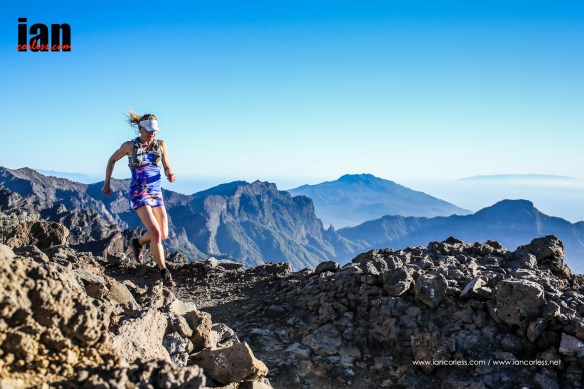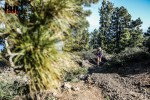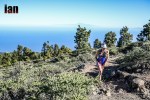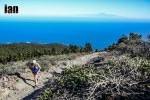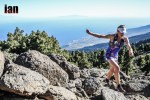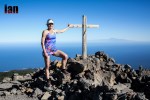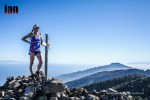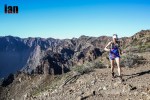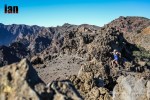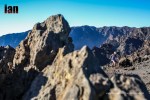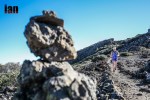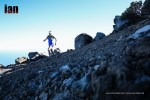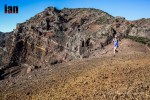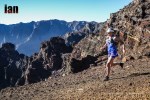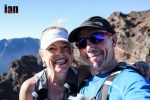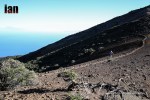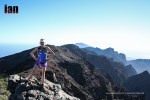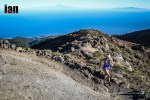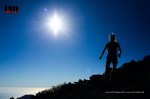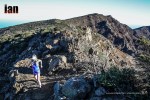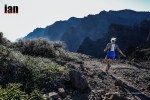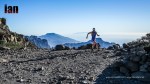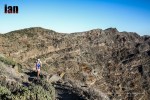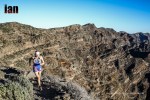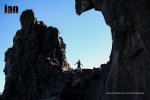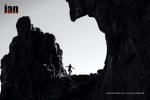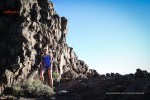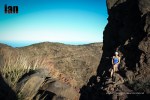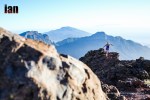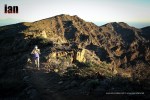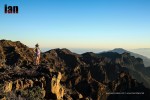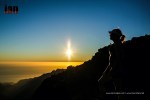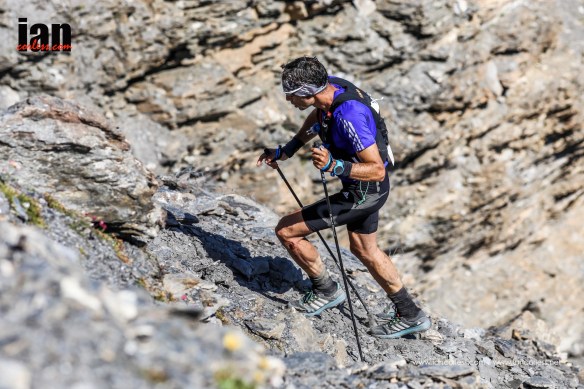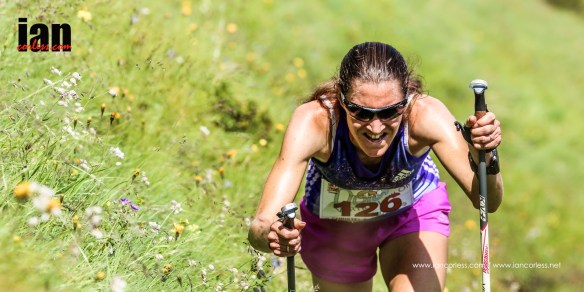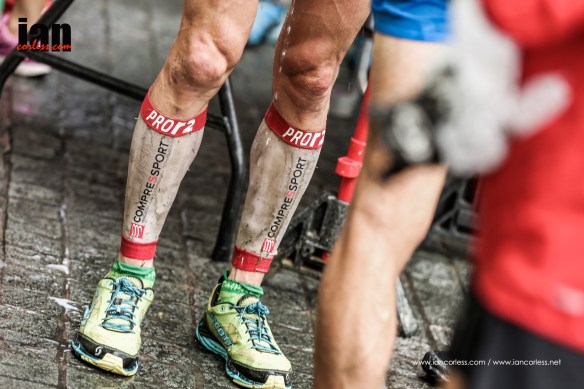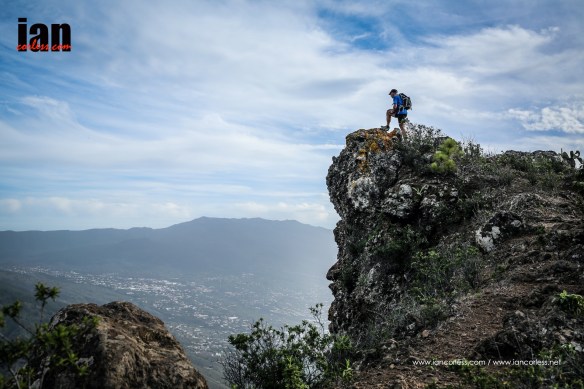
Roques de los Muchachos, La Palma – Transvulcania Ultramarathon

©iancorless.com_LaPalma2015-2160

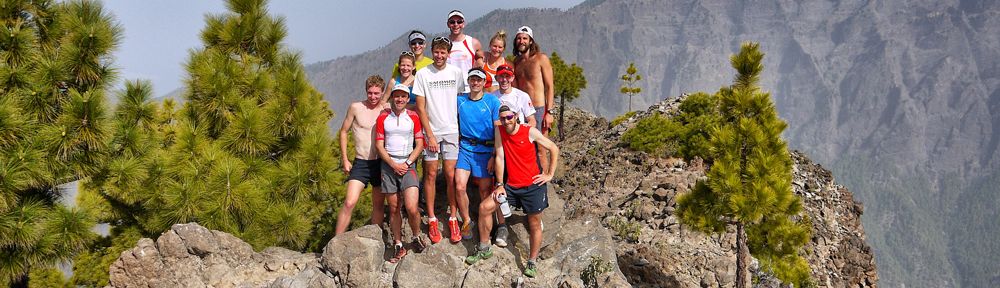
The island of La Palma has always ticked many boxes for me, it’s a quiet island that lacks tourism, it has incredible all-year round weather and of course it hosts the Transvulcania Ultramarthon.

I’ve been coming here since 2012; it never disappoints. This year I’m here to find some quiet time to write content for my book, Running Beyond. But I am also here for a long overdue holiday, to spend time with Niandi (who gets neglected with all my travel) but also to get back to some regular time on the trails.

Notice I said, ‘time on the trails’ and not running. To be honest, I’ll take the running if the body will allow, it’s not important though, I just need the head space and the isolation the trails out here bring.

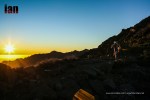
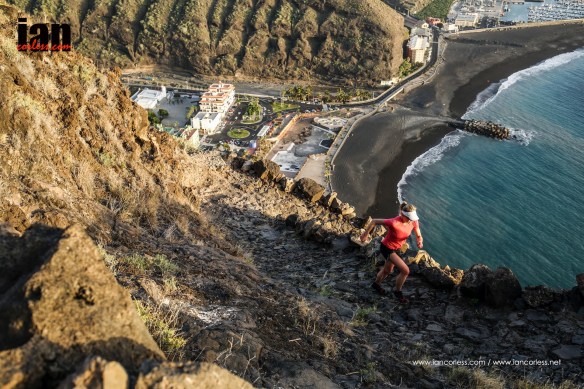
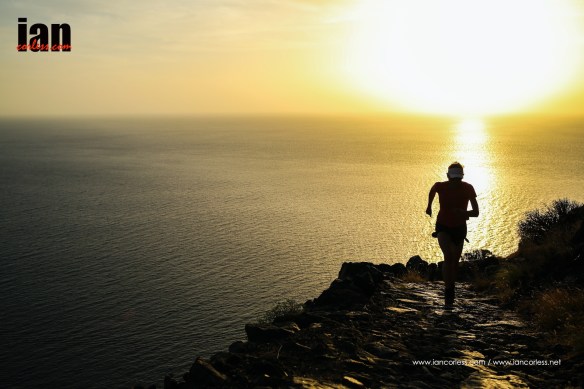
We have no plans other than to work and get objectives done each day and then spend the rest of time doing what makes us happy. Yesterday, I was up early and decided I wanted to be finished with work by midday. My plan was to head up into the mountains and run/ walk/ hike around the rim of the Caldera de Taburiente. In the Transvulcania Ultramarathon, this is often referred to as Roques de los Muchachos but actually Roques is the end of the section where the observatories are located and then the long 18km drop and descent to Tazacorte Port.

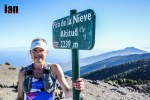
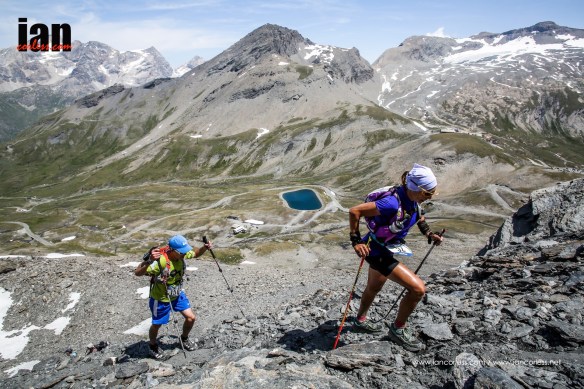
It’s an incredible place and one of the key sections of the Transvulcania Ultramarthon due to its elevation of 2400+m and the stunning views it provides to the east and the west. In the east one can see the islands of TenerifeEl Hierro and La Gomera and they are visible in the photos. The terrain here varies greatly from technical rocky sections of jagged and irregular rock to sandy and dusty trail. Although the trail goes up and down, in real terms most of the climbing is done by the time you reach Pico de la Nieve at 2232m.

Niandi and myself accessed the GR131 (Transvulcania route) at Pico de la Nieve as a trail, the PR LP 3 comes in from the main access road (LP4).

From the road it’s a 20-30min hike in to the GR131 and then it’s possible to follow the Transvulcania route on an out-and-back to Roques de Los Muchachos (approx 10km, 20km round trip).

Needless to say it’s a stunning section of trail and I have to say, one of my favourites in the world. Key sections are Pico de la Cruz, Piedra a Llana, Marro Negro, Pico de la Cruz and Fuente Nueva before arriving at Roques de los Muchachos.

If you are a runner, hiker, walker or basically someone just looking for an inspirational day on trail with stunning views, I can’t recommend this enough.

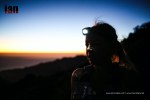
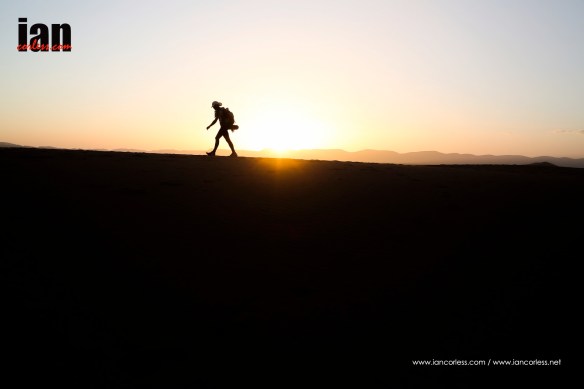
Yesterday for me was one of those special days; from early afternoon, through to sunset and then finishing off in the dark with just a headlight, the moon, the stars and Niandi for company.

Niandi and myself didn’t worry about pace, time, or anything for the that matter. We just moved, stopped, took photographs and soaked in a magical place.

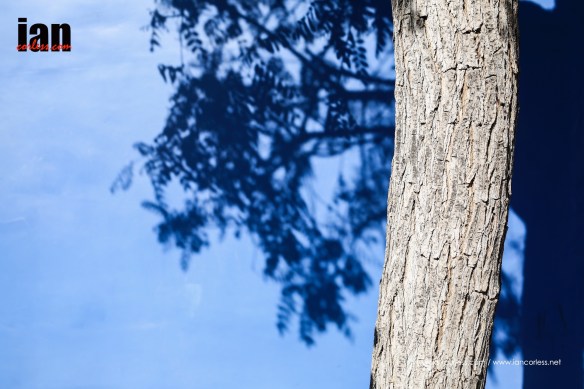
So magical, I wanted to share the journey in images.

Walking, Running and Climbing with Trekking Poles

©iancorless.com_ITT2015-9516

Recently I wrote an article about the benefits of including walking in a training plan to become a better runner, ultra runner and climber. Read HERE.

Of course, if you are able to complete a race without any walking, that is by far the best strategy should a fastest time or higher ranking position by an objective.

The reality (for many) is that the longer we go the chances of walking increases. Equally, when in the mountains, walking is very much a key element of a successful day training or racing. So, it is important to train as a walker so that you become fast, effective and efficient.

The use of poles in recent years has boomed and now they are common place particularly in tough, long arduous events such as UTMB, Tor des Geants and many mountain races.

Poles have been used in France, Italy and Spain for sometime. In recent years, runners in the UK have slowly but surely adapted and accepted them, particularly in events like the Lakeland 100 and even American based runners have started to accept them at events such as Hardrock 100.

JOIN OUR YEARLY MULTI-DAY TRAINING CAMP IN LANZAROTE – HERE

©iancorless.com_ITT2015-0384

Nordic Walking (“Sauvakävely”) was first introduced in Finland in the 80’s to help boost the nations declining health. As you can expect, its roots are founded from skiing and it was formally defined in a book called “Hiihdon lajiosa” (“A part of cross-country skiing training methodic”) by Mauri Repo. This book dates back to 1979.

The poles used in the early days were in one piece and the technique was used as off-season ski-training. Over the years fixed length poles were continually used and it was in 1999 when US based company Exel termed the phrase Nordic Walking.

Of course Nordic Walking is a sport in its own right and the technique, compared to regular walking, involves applying force to the poles with each stride. This therefore provides a more ‘all over’ body workout and for example, ones triceps, biceps, shoulders, abdominals, chest, core and so on gets a greater workout. This is why as a runner, you MUST train and adapt to using poles.

Imagine going to the gym and working out with weights having done no strength training. Lets say for an example you do 45-minutes of exercises on the upper body. I guarantee the next day you will feel it. Using poles is no different. Your arms, shoulders, lower back and core will all feel the impact of using poles to gain forward momentum.

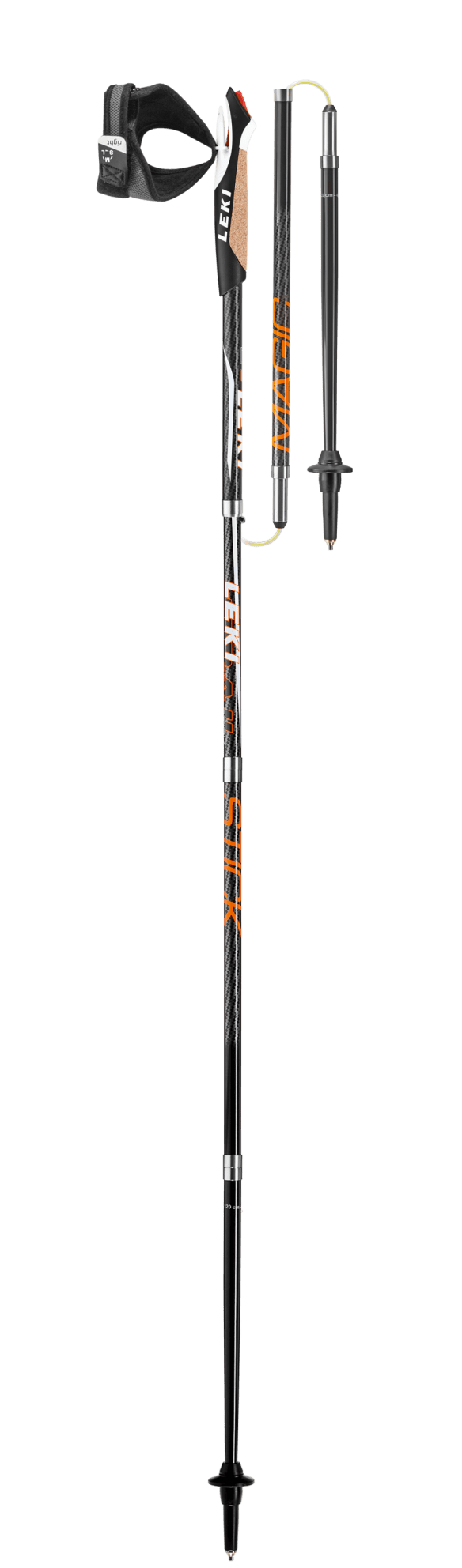
In recent years, companies like Black Diamond and Leki (amongst others) have specifically created poles based around the needs and demands of runners. Original Nordic Walking Poles were of fixed length so it was important to purchase the correct length as this could not be adjusted. Telescopic poles were then created allowing more flexibility and the opportunity to adjust height based on your own personal needs and also this would potentially allow other people to use your poles.

112176_CARB_DistanceCarbonFLZ_Open_web

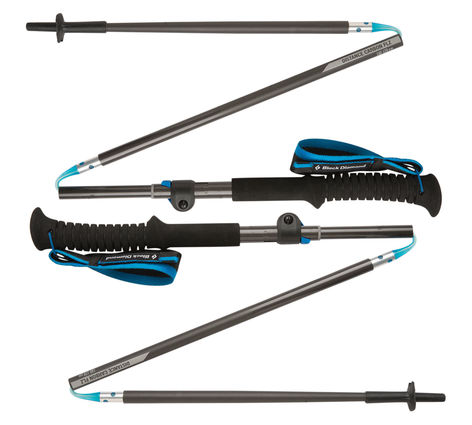
However, poles used for running now fold.

These new folding poles (in general) fold in three sections and provide a fixed length pole. So again, it’s important to purchase the correct length pole. We will come on to that later. The new poles by Black Diamond “Distance Carbon FLZ’ has taken this folding process one-step further providing a folding three section pole but with an adjustable section at the top. This allows adjustment of 15cm. The poles still need to be purchased at a specific length but the adjustment option is a great addition if you wish to share poles with another person who may be taller/ smaller, but the poles are heavier. Always choose a specific pole over adjustable when possible.

What length pole do I need and what type?

©iancorless.com_DolomitesVK2015-0139

Walking poles are shorter than cross-country ski poles and as a rule you want a well balanced pole that is elbow height. I say as a rule as this can vary depending on your intended use and preference. As a starting point, elbow height is a good place to begin. Another method is multiplying your height in cm by .68 and then rounding this down to the nearest 5cm. However, variables come in to play.

Variables:

  1. As you get used to poles and as your technique improves you may find that your stride lengthens, if so, a longer pole may be better.
  2. If you are climbing a great deal, a pole at elbow height or shorter may be preferable.
  3. If you are doing just *VK’s (Vertical Kilometers) a shorter pole is almost certainly required.

*Black Diamond Distance Carbon FLZ are able to reduce the pole height when participating in a VK and then increase height when running, walking and climbing on mixed terrain. But a fixed pole length is always lighter.

TIP: If in doubt, purchasing an adjustable pole may well be a good idea initially so that you can fine tune your needs before purchasing a fixed length three section folding pole.

Light is best but don’t compromise on quality. Cheap poles are just not up to the job and you want a pole you can rely on that is stiff, strong, light and reliable.

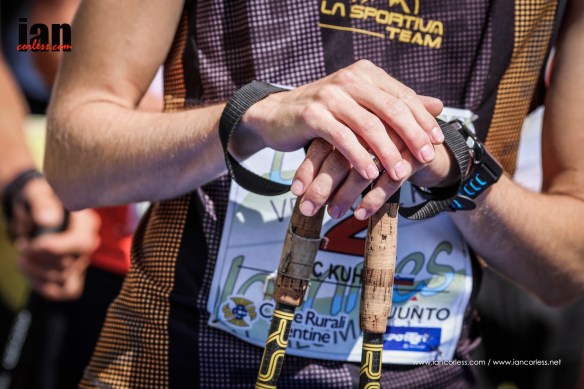
The hand grip section is also a key consideration. Handles are typically slim and designed not to interfere with the wrist action when snapping the pole through at the end of the push through phase. A strap will be attached to the handle and this should be close, comfortable and provide a snug fit so that the recovery phase is easy. Many straps are a loop that you slide your hand into, however, companies like Leki provide a glove like system that clips in and out of the pole using a trigger system. This for me is my preferred system as it offers great flexibility.

The Technique.

Legs, body and arms need to work together as one in a rhythmic motion to gain the most from using poles. The range of arm movement, regulates the length of the stride, this is why pole length is key. However, this does vary when climbing particularly on steeper and technical terrain as a shorter pole may well be better. For runners, our demands are different to a pure Nordic Walker as we may run with poles for added stability and security, at times we may be striding out on flat terrain and then we may well be climbing or descending.

©iancorless.com_MDS2015Day3-6862

Using poles is a very individual thing but there are tried and tested techniques. This video (although a little funny to watch) provides a good guide HERE.

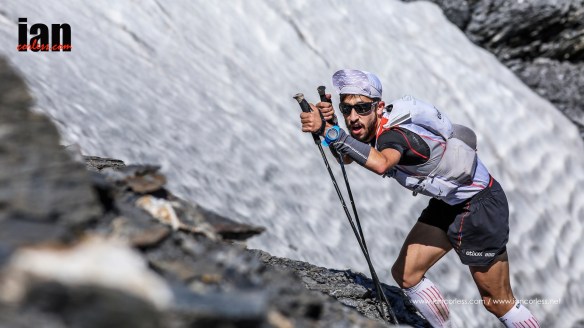
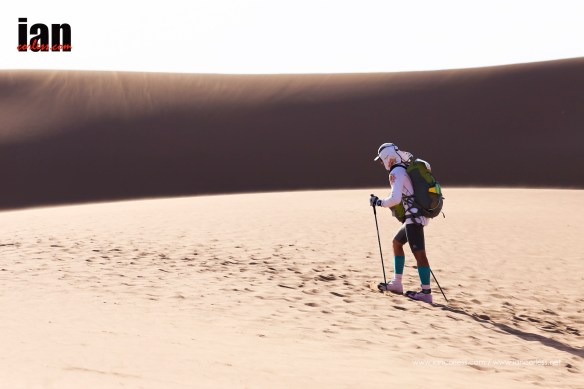
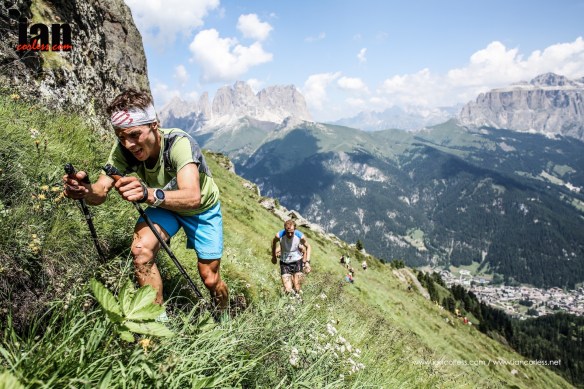
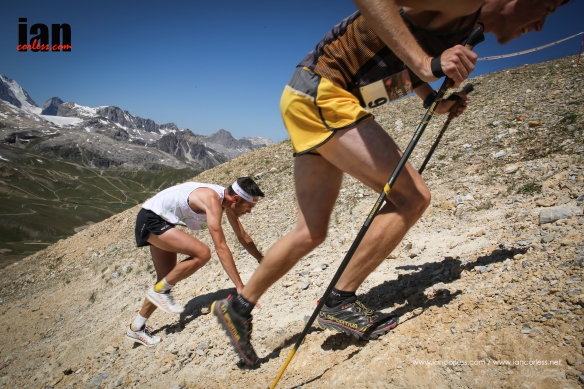
I personally use different techniques, at times I grip that handle somewhat firmly (steep uphill terrain) and at other times I do not grip the handle at all allowing the pole to move freely only connected to the body via the hand strap. In general, the poles should not go in-front of you as this makes a brake. The poles should always be behind you so that you can PUSH forward. Pole technique is in time with your stride and the greater benefits come when getting in a rhythm. You can use single pole forward or double pole forward technique. I often switch between the two but on the flat I prefer single pole and on steep climbs I use double pole.

©iancorless.com_DolomitesVK2015-1100

Severity and technicality of terrain will dictate what technique you use. The PUSH phase is obviously still incredibly important if moving quickly but just as I mentioned in my previous walking article, instead of placing your hands on your knees to climb, using poles acts in the same way; It’s like four wheel drive.

Other considerations:

  • Added stability on technical terrain such as water crossings.
  • Downhill stability if used correctly.
  • Relieve stress on quads and knees when climbing and descending.
  • Aid balance.
  • Provide an opportunity to get into a rhythm.

Do poles give an advantage?

Poles used to be called cheating sticks and in some circles they still are. Do they give an advantage? I actually don’t think it is easy to give a clear and definitive answer on this, I personally would say, that if you have the technique and know how to use them, then yes, they provide an advantage for you the user.

Luis Alberto Hernando for example uses poles all the time when racing. His technique is superb and when you watch him on a climb he is like a machine. However, he wouldn’t use poles on the flat as he is able to run. For him, they are purely a means for climbing faster.

©iancorless.com_ITT2015-9250

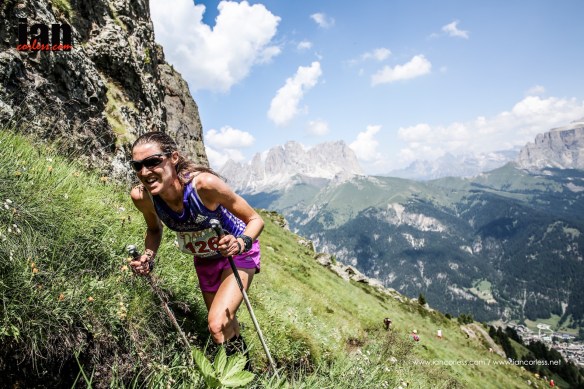
In skyrunning, poles are used regularly when allowed and the cross over from ski mountaineering is clear to see. However, Kilian Jornet for example very rarely uses poles even though he is a ski mountaineering world champion. I have actually only seen him use poles at the Dolomites VK as the gradients are close to 50% and the terrain is extremely slippery.

©iancorless.com_DolomitesVK2015-0685

Therefore, your choice and decision to use poles must be assessed base on your need and demands. I personally feel that poles provide a great security blanket and aid. They allow me to climb with added strength, descend with security (with care) and when I use them on the flat they provide me with a great rhythm that allows me to move faster.

You will only be faster with poles if you know how to use them.

Any disadvantages?

  • Yes, for sure. Go to UTMB when the trails are full of thousands of runners and poles are going in all directions. You can lose an eye for sure.
  • Poles occupy your hands so simple tasks like feeding, map reading and so on can be laboured.
  • You can’t use hand bottles.
  • Downhill they can be a real trip hazard if not used correctly.

Conclusion:

Finally, please remember that some races do not allow poles. So, make sure you train with and without. Don’t become reliant on them. As I stated in my previous article, learning to walk efficiently is a key attribute and the ability to climb with hands-on-knees is a great skill to hone. Given the choice though, if I could, I would use poles.

Interesting fact based on data to balance the pros and cons:

Reference: Howatson et al. Sci Sports Exerc 2011; 43: 140-5

37 volunteers made the ascent and descent of Mount Snowdon with a day pack having either poles or no poles. The group having poles had significantly less rating of perceived exertion (RPE) during the ascent, showed attenuation of reductions in maximal voluntary contraction immediately after and 24 and 48 h after the trek, delayed onset muscle soreness (DOMS) was significantly lower at 24 and 48 h after the trek, and creatinine kinase (CK) was also lower at 24 h after the trek. Link HERE

Strength Training for Endurance (Part 2) by Marc Laithwaite

©iancorless.com_Lantau2Peaks2015-8463

Missed part 1? Read HERE first

Last week we discussed joint stability and core training, specifically how you can improve your economy by developing a stable platform. I said last week that joint stability comes forst, before you start adding resistance to the major muscles, so if you missed the blog, go back to the menu above, click ‘The Endurance Blog’ and scroll down to last week’s article (Part 1).

So this week, we’re looking at strength exercises for swimming,cycling and running. Before we start, I’d like to make it clear that the advice is my personal view, based on research I’ve read, what I’ve observed as a coach and what I’ve used as an athlete. I think it’s correct and have clear reasons for that, your opinion may vary and you may have read different advice, but I can live with that. Take from it whatever you feel beneficial and feel free to question me by reply.

Cycling

I wrote a blog a few weeks ago titled ‘why runners can’t cycle’. The title sounds a bit harsh, but it very much relates to strength training for cyclists. We’ve tested hundreds of cyclists and amazingly, we seen a clear correlation between how far they can get during an 8-10 minute aerobic ramp test (increase the resistance every minute until they reach VO2 max) and how much power they can produce in a 5 second sprint. This means that is you can’t produce a high amount of power in a 5 seconds sprint, your cycling performances from 25 miles up to Ironman will also be limited. As unbelievable as that may sound, that’s what the test results show.

Distance runners tend to have poor leg strength as it’s not required to the same extent as cycling. Female runners tend to be worse than male runners. We often find that these people lack basic leg strength and find it difficult to make the transition to cycling (tend to be better on long hills, poor on the flat and short hills). For this reason, general leg strength is a key requirement for cycling and should be assessed as an indicator of performance. If it’s poor, then general strength exercises such as squats and deadlift, with low reps and high weights can have a real benefit to performance. Older athletes have greater problems with strength, they tend to be ok with long and slow, hence they prefer longer events as they feel they are more able to compete.

Aside from the leg strength exercises, a general core and upper body routine can benefit the rider for the purposes of stability (sitting still and providing a stable platform to drive from). If you want to read the runners can’t cycle blog in full GO HERE

Running

Squats and Deadlift are very useful exercises for muscle health and performance. Long distance running is catabolic in the sense that it ‘breaks down’ tissues. Conversely strength training is anabolic and help tissues to grow and perform optimally. I’ve rarely seen a distance runner ‘bulk up’ by doing strength work, but lots of runners are needlessly scared of weight gain.

Like all forms of training, strength should be periodised. Learn the exercises, increase the load whilst holding form and then progress to more specific exercises. For running, the most effective form of strength training is ‘plyometrics’. At it’s most simple, this is jumping, hopping and bouncing exercises. These ‘bouncing’ exercises teach the muscles and tendons to store elastic energy and act as if they were springs. The reality is that ‘great runners bounce’.

Plyometric exercises have been show to improve economy (remember last week we said economy is how much oxygen you need to exercise). In simple terms, if your tendons and muscles use elastic energy, allowing you to bounce, your effort is reduced. Elastic energy is FREE energy. If you can’t bounce, you have to rely on the muscles to work more, so oxygen and heart rate go up. Tendons and tissues which bounce don’t need to use oxygen, it’s free, so it feels easy.

Key things:

1. You can’t go straight into plyometrics and skip general strength, you will get injured.

2. As you get older, stored elastic energy becomes a major issue so you bounce less. Strength is therefore of much greater importance, the older you are.

A general core and upper body routine is critical for runners. You need to have a solid chassis which will not collapse as your foot strikes the ground. Sitting down and collapsing into your stride will mean you have no chance at all of bouncing back off the road or trail, all energy will be lost. The pelvis and torso should be rock solid and hold posture at point of impact.

Swimming

A strength routine for the whole body will benefit any swimmer, in terms of both performance and injury prevention. Stability and strength is important throughout the body, for example:

1. At the shoulders as the hand enters the water and catches the water, shoulder stability is critical for a firm catch, from which to pull. Overhead exercises assist with shoulder stability, e.g. single arm dumbell press.

2. General strength in the arms, chest and back will allow more pressure to be applied during the pull phase. This is more relevant for swimmers who are particularly weak.

3. Core stability is important for balance, although I’ve never seen a swimmer with ‘low legs’ resolve the issue by doing the plank in the gym. I have however see plenty of people who can ‘plank like there’s no tomorrow’ but they have low legs when they swim. The core stability and balance required to raise the legs is much more effectively resolved by kicking work in the pool, with and without fins.

Now we’ve covered the 3 sports and how they differ in terms of demands, next week we will produce a sample strength routine which you can follow throughout the winter period. You’ll need access to some kettlebells or dumbells and you’ll also need access to a free weights bar for exercises such as squats. You’ll find these in any gym. As we discussed last week, winter is the perfect opportunity to start a strength programme. You should commit to it, even if it means dropping or reducing your swim, cycle and run. You can phase those sessions back into your routine from February onwards and feel faster and stronger for it!!

*This article was originally posted on theendurancestore.com here

About Marc:

Sports Science lecturer for 10 years at St Helens HE College.

2004 established The Endurance Coach LTD sports science and coaching business. Worked with British Cycling as physiology support 2008-2008. Previous Triathlon England Regional Academy Head Coach, North West.

In 2006 established Epic Events Management LTD. Now one of the largest event companies in the NW, organising a range of triathlon, swimming and cycling events. EPIC EVENTS also encompasses Montane Trail 26 and Petzl Night Runner events.

In 2010 established Montane Lakeland 50 & 100 LTD. This has now become the UKs leading ultra distance trail running event.

In 2010 established The Endurance Store triathlon, trail running and open water swimming store. Based in Appley Bridge, Wigan, we are the North West’s community store, organising and supporting local athletes and local events.

Check out the endurance store HERE

Endurance Store Logo

Getting your head in the right place!

©iancorless.com_LaPalma2015-0535

Getting your head in the right place is something that we all need to do. I am in La Palma, the home of Transvulcania Ultramarathon. It’s a place that I have been coming back to since 2012. It holds a special place for me, especially at this time of year.

The days are a little longer, the weather is perfect and the island is beautiful.

I’m writing a book called, Running Beyond which will be published late in 2016. In real terms it is a photography book with words. However, after a year on the road I realised the only way I was going to get the words written was by getting myself, or should I say my head in the right place.

The plan is to get back to some regular time on the trails and split my days 50/ 50.

I’ve been here since Friday, so only 4-days but I can already feel it working.

©iancorless.com_LaPalma2015-0145

The writing process is taking place and I seem to be slowly but surely making my way through the list of things I need to do. Plus Niandi and myself have had some time to relax, taking in sights at local towns and we have been on the trails; hiking, jogging and at times, running!

©iancorless.com_LaPalma2015-9776

On day 1 we went to Los Llanos, the finish of the Transvulcania race. Its a beautiful place of cobbled streets and pastel coloured buildings. In the late afternoon we went up and down the VK route from Tazacorte Port; always a favourite. We timed it just right as the sun was setting as we made the final descent.

©iancorless.com_LaPalma2015-0287

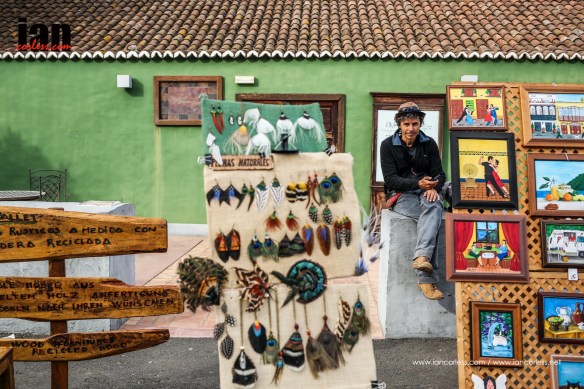
The following day, Sunday,  we visited a local market at Argual. It is a place I have visited many times before but the people and some of the sights are always interesting. We followed this with a run from El Pilar, taking in an out-and-back route through the Volcano route. It was a little cloudy and windy along the tops but it is always stunning. Back at our car we had the best Tuna Bocadillo ever; the simple things huh?

©iancorless.com_LaPalma2015-0489

Monday I did a 90-minute run alone. It was the end of a long day of writing and I needed an outlet and a release. Run? it was actually a hike up and a run down. Nothing special but it helps get my head in the right place. I even took a selfie!

©iancorless.com_LaPalma2015-0535

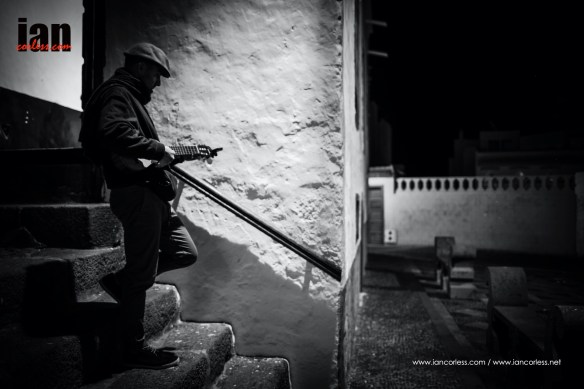
Last night, (this morning) – I walked the streets of Santa Cruz from 3am with Niandi and Divino San Francisco, a group of singers who move from house-to-house and sing traditional Christmas songs. My good friend Angel, is one of the singers and it was he who told me about this. For 9-days (not always at 3am I must add) in the lead up to Christmas they sing every night to represent the 9-months of pregnancy.

©iancorless.com_LaPalma2015-0578

It was something quite special! Quiet lonely streets with just string instruments and stunning voices to welcome in a new day. It was so special; it made me realise why I was here, to get my head in the right place.

Despite a night of no sleep, today I can feel the positive vibes from a stunning night. It’s a night that Niandi and myself won’t forget. Families opened their doors to us in the early hours, they welcomed a large group of musicians in and then proceeded to feed them and provide drinks, it made me realise what this time of year is about.

We all need to get our heads in the right place. Make sure you make it a priority to find your place, I guarantee 2016 will be better because of it.

©iancorless.com_LaPalma2015-0263

Episode 101 – Mal Law, Jo Meek, Lucja Leonard

A_GRAVATAR

This is Episode 101 of Talk Ultra. We speak with Jo Meek who is back in form after almost a year of injury. Mal Law talks about HIGH FIVE-0 and Lucja Leonard talks all about weight loss in Talk Training. Dare I say it, but the PED debate has started in ultra, trail and mountain running and we discuss what is happening! Speedgoat is here.

00:01:31 Show Start

00:08:30 NEWS

Help Nepal – Nepal images ‘FACES of NEPAL’ – order a print and all funds donated to Nepal charities HERE

TRAINING CAMP in Lanzarote with Elisabet Barnes 28th Jan to Feb 4th HERE

DRUGS, PEDs, EPO are becoming a reality in our sport READ HERE and your thoughts.


TNF50

1 – Zach Miller 6:12

2 – Dylan Bowman 6:20

3 – Ryan Bak 6:26

1 – Megan Kimmel 7:13

2 – Ellie Greenwood 7:23

3 – Larisa Dannis 7:25

MSIG LANTAU

1 – Francois D’Haene 5:42

2 – Eirik Haugsness

3 – Upendra Sunuwar

1 – Maud Gobert 7:08

2 – Marie McNaughton

3 – Rebecca Nakuwa

VULCANO ULTRA TRAIL 100k

1 – Cristofer Clemente 12:31 held off Joe Grant for the win

2 – Manuela Vilaseca 15:48 ran away with the ladies race ahead of Veronica Bravo

SAINT E LYON France

Benoit Cori (Templars winner) finished with Nicolas Martin joint 1st 5:07 and Corali Bugnare took out the ladies wins 6:32

HARDROCK 100 entries HERE 

WSER entries HERE

00:55:55 INTERVIEW with JO MEEK HERE

01:37:19 TALK TRAINING this week Lucja Leonard tells us how loosing weight and running changed her life HERE

02:04:09 INTERVIEW with MAL LAW and the HIGH FIVE-0 Challenge HERE

UP & COMING RACES

Australia

New South Wales

Coast to Kosciuszko | 240 kilometers | December 11, 2015 | website

Queensland

Kurrawa to Duranbah and Return – 50 km | 50 kilometers | December 13, 2015 | website

Narawntapu 50 km | 50 kilometers | December 13, 2015 | website

Victoria

Duncan’s Run-Hundred | 100 kilometers | December 19, 2015 | website

Duncan’s Run-Hundred – 50 km | 50 kilometers | December 19, 2015 | website

Belgium

Wallonia

53 km | 53 kilometers | December 19, 2015 | website

Costa Rica

Moonrun Monteverde Ultra Trail | 62 kilometers | December 12, 2015 | website

French Guiana

100 Bornes du Père Noël | 100 kilometers | December 18, 2015 | website

Germany

Baden-Württemberg

Eisweinlauf | 65 kilometers | December 12, 2015 | website

Lower Saxony

  1. Lauf PSV Winterlaufserie 100 KM| 100 kilometers | December 12, 2015 | website
  2. Lauf PSV Winterlaufserie 50 KM| 50 kilometers | December 12, 2015 | website
  3. Lauf PSV Winterlaufserie 100 KM| 100 kilometers | December 13, 2015 | website
  4. Lauf PSV Winterlaufserie 50 KM| 50 kilometers | December 13, 2015 | website
  5. Lauf PSV Winterlaufserie 100 KM| 100 kilometers | December 19, 2015 | website
  6. Lauf PSV Winterlaufserie 50 KM| 50 kilometers | December 19, 2015 | website
  7. Lauf PSV Winterlaufserie 100 KM| 100 kilometers | December 20, 2015 | website
  8. Lauf PSV Winterlaufserie 50 KM| 50 kilometers | December 20, 2015 | website

India

Haryana

Running And Living – 105.5 km | 105 kilometers | December 14, 2015 | website

Running And Living Marathon and a Half – 63.3km | 63 kilometers | December 14, 2015 | website

Madagascar

Nosy Be Trail – 60 km | 60 kilometers | December 12, 2015 | website

Sweden

Blåfrusen Ultramarathon | 70 kilometers | December 13, 2015 | website

USA

Arizona

Desert Solstice 100 Mile Run | 100 miles | December 19, 2015 | website

Desert Solstice 50K Run | 50 kilometers | December 19, 2015 | website

California

Malibu Canyon Trail Run 50 km | 50 kilometers | December 12, 2015 | website

Rodeo Beach 50 km | 50 kilometers | December 12, 2015 | website

Woodside Ramble 50K | 50 kilometers | December 13, 2015 | website

Colorado

Sawmill 50K+ | 34 miles | December 12, 2015 | website

Florida

50K Ultra Marathon | 50 kilometers | December 12, 2015 | website

Ancient Oaks 100 Mile Race | 100 miles | December 19, 2015 | website

Deer Dodge 50K | 50 kilometers | December 12, 2015 | website

Deer Dodge 50 Miler | 50 miles | December 12, 2015 | website

Tallahassee Ultra Distance Classic 50K | 50 kilometers | December 12, 2015 | website

Tallahassee Ultra Distance Classic 50M | 50 miles | December 12, 2015 | website

Indiana

HUFF 50K Trail Run | 50 kilometers | December 19, 2015 | website

Massachusetts

Seth’s Fat Ass 50 | 50 kilometers | December 12, 2015 | website

Ohio

Bigfoot 50K | 50 kilometers | December 12, 2015 | website

First Day of Winter 50K | 50 kilometers | December 20, 2015 | website

Oregon

Frozen Trail Runfest 50K | 50 kilometers | December 12, 2015 | website

Tennessee

Bell Ringer 50k | 50 kilometers | December 12, 2015 | website

Lookout Mountain 50 Mile Trail Race | 50 miles | December 19, 2015 | website

Texas

Brazos Bend 100 Miler | 100 miles | December 12, 2015 | website

Brazos Bend 50 Miler | 50 miles | December 12, 2015 | website

Houston Running Festival 100K | 100 kilometers | December 19, 2015 | website

Houston Running Festival 100 Mile | 100 miles | December 19, 2015 | website

Houston Running Festival 50K | 50 kilometers | December 19, 2015 | website

Houston Running Festival 50 Mile | 50 miles | December 19, 2015 | website

Texas Trail 50K Run | 50 kilometers | December 12, 2015 | website

Texas Trail 50 Mile Run | 50 miles | December 12, 2015 | website

Virginia

Hellgate 100K | 100 kilometers | December 13, 2015 | website

Seashore Nature Trail 50K | 50 kilometers | December 19, 2015 | website

Washington

Deception Pass 50K | 50 kilometers | December 13, 2015 | website

03:01:20 CLOSE

03:04:20

ITunes http://itunes.apple.com/gb/podcast/talk-ultra/id497318073

Libsyn – feed://talkultra.libsyn.com/rss

Website – talkultra.com

Training to walk for ultra, trail and mountain running

©iancorless.com_MDS2015Day5-9253

You can talk the talk, but can you walk the walk?

On occasion when talking to a runner or coaching client, I have asked the question, ‘what would you consider is a successful outcome from your next race?’

I have been and always am still gobsmacked when I hear the reply, ‘I want to run all of it… I don’t want to walk!’

Does that mean that they would be happy not finishing providing that they ran all the way to the DNF?

Walking is often perceived as a weakness, yes, even a failure. However, if you are going to run longer, on challenging terrain and/or on multi-days, walking is an absolute essential part of a successful plan.

For many though, walking is not practiced or anticipated. Therefore, when walking starts in a race, it becomes a negative. The head drops, the shoulders hunch and instead of striding out and making a good pace, the runner (now walker) becomes a shuffler; not good!

Lets face it, even the elite runners know when it’s time to transition from running to walking. Watch them! Admittedly, this may well come on technical or hilly terrain but the purpose and speed that they cover ground does not come by accident, this is something that they have worked on in training. Hands move to the knees (when applicable) and they hunch over and power up a climb. In many scenarios, they move considerably quicker than those who try to remain in a jog.

“Everyone has an opinion on this, and there is no ‘right’ answer. However, believing that walking in a marathon is not a ‘real’ marathon means when Bill Rodgers won the 1975 Boston marathon in 2:09:55, it was not a ‘real’ marathon as he stopped five times. That does not make sense to me. The goal of the race is to complete the distance as fast as possible. If it is faster to walk/run than to run, that is the optimum strategy. If the race has a long enough cut off to allow walking the whole race, then the walkers are fulfilling the rules of the race and are just as valid.”

– ©fellrnr

If you are experienced in ultra or long distance running, I am sure you are already aware of the benefits of a good walking plan/ strategy. However, we can all learn something new, so please read on.

JOIN OUR YEARLY MULTI-DAY TRAINING CAMP IN LANZAROTE  – HERE

Why walk?

The longer you go, the more chance of walking increases. Equally, the higher you go or the more technical the terrain, the chances of walking increases. So, practice. There is a difference between walking on the flat and walking uphill, so first and foremost be specific. If you are heading to UTMB for example, work on climbing up hill and maximising pace and effort. By contrast, if you are doing a relatively flat 100-mile race, think about the terrain and walk in a way that replicates this. Mix walking and running.

I made the mistake in my first ultra, I had done no walking in training, of course in the race I eventually had no option but to walk. I was hopeless. I shuffled along feeling dejected and hopeless. In addition, my muscles, legs and feet didn’t like the change; they argued with me! Walking uses different muscles and therefore you need to train them.

“This might be a difficult concept to grasp, but yes – learning to walk during long runs is not only okay in ultra-marathon training, but also recommended (at least for those new to ultra-marathons). A lot of ultra-marathons take place over mountainous and technical terrain, at times forcing runners to slow to a walk in order to safely move forward. Alternatively, ultra-runners tend to take frequent walk breaks anyway, due to sheer exhaustion. It’s necessary therefore to train your body to recover quickly from walk breaks by comfortably transitioning back to running. The best way to do this is to practice on your long runs.” – ©breakingmuscle.com

Climbing

©iancorless.com_ITT2015-0301

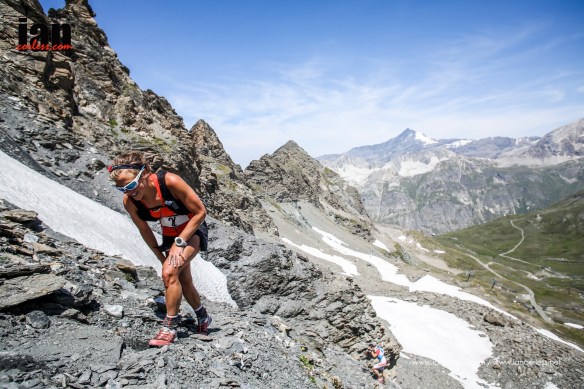
When the terrain steepens, the effort required to run increases along with heart rate and fatigue. You will burn energy, become exhausted and eventually grind to a halt if you try to push on. Walking or stopping is then the only option. However, if you go into a race knowing full well that you have trained your body and mind for the task ahead, the process will become a positive one. Think about technique:

  1. Hands-on-knees: This may not be the prettiest to look at but it is effective and it is a technique you will see in many mountain races such as Skyrunning. The technique is simple; you lower your centre of gravity by crouching over, you put your hands on your knees which helps in the push phase and then you take small controlled steps with a higher cadence.
  2. Folded hands behind the back: You may well see this technique on long gradual climbs where it is possible to get into a rhythmn. Basically your left hand (or right) sits in the other hand at the base of your back. This feels particularly comfortable if wearing a pack.
  3. Poles: Poles were considered by many to be ‘cheating stick’ but slowly but surely they have become more and more popular. To use them is a little like 4-wheel drive. You need to practice with them and find the technique, once you have, you will love the process. Be careful though, in some races they are not allowed.

Pacing is critical and this will depend on the individual, fitness levels, ability to tolerate discomfort, length of the climb and importantly the length of the race. Consistency is key and you should be looking for an equal effort for the duration with as few peaks and troughs as possible. Of course, if the gradient changes, your pace and stride should adjust accordingly; steeper equals slower, flatter equals faster.

In training you may very well be restricted with the length of climbs available to train on, so, you will need to do repeats. This is standard in a good training plan. However, if you are heading to a pure mountain race with long climbs that may well last a hour or more, try to be specific and plan some specific weekends away training on like-for-like terrain.

©iancorless.com_ITT2015-9272

“I was about 2.5 miles in to my first 50k when we hit the first major hill. Before the runners ahead of me took more than 3 steps up the hill, they all started walking. I couldn’t believe it. Walking? Just over two miles into a race? I zoomed right past them and ran up the hill. Take that, slow pokes. It didn’t take more than 10 miles to realise that walking, or hiking, during an ultramarathon is a big part of any proper pacing strategy. And my strategy was terrible. Walking is often more efficient than running up steep inclines, so runners power hike up those hills to save energy for the rest of the race. When all those runners I passed at mile 2.5 flew past me further into the race, I know I had made a mistake.” – ©nomeatathlete

Focus

©iancorless.com_DolomitesVK2015-1132

The mind is a really important weapon when running. Arguably, many say it is the most important weapon when running long. Train it and get it prepared for the challenge. Walking can be perceived as a negative; no, make it a positive.

For example, find a hill that say is 1-mile long and then walk up it relaxed and casual making sure you time yourself.

Now repeat that 1-mile rep but focus on cadence, effort and being consistent over the distance. Compare the times.

It will be self explanatory. Focused walking is considerably quicker. You want to repeat this when racing and therefore you must train for this.

Strategy

Many incorporate a fixed walking strategy when racing and others allow for a more organic approach. For me a couple of key factors are important:

  1. The terrain.
  2. Are you racing or are you completing?

The terrain will dictate your walking strategy, so, for example if you are taking part in a flat 100-mile race you could (from the start) run 20-minutes and walk 10-minutes. This may well be something that you can sustain for the whole event. If your are running an undulating race you may well incorporate a 20/10 strategy but  then walk all the climbs and run all the downhills.

What is key is understanding who you are as a runner/ walker and then coming up with a strategy that works for you.

If you are racing, you obviously want to walk as little as possible. So understand your strengths and weaknesses and make walking fast and powerful and consider a strategy that will allow you to loose as little time as possible.

Technical walking

©iancorless.com_USM2015-5844

Sometimes you are forced to walk not through fatigue but because the terrain is so technical that you cannot run. Again, this all comes down to practice, practice and practice. Be specific, find challenging terrain and then learn how to get across it is fast and as efficiently as possible. Importantly learn how to incorporate jogging or running with the walking to maintain a faster pace.

Indoor training

A gym or indoor training provides some great opportunities to work on many aspects that will make you a stronger and faster walker:

  1. Treadmill: This is a no brainer, use a treadmill at specific speeds to teach you to cover ground faster and more efficiently.
  2. Vertical Treadmill: Some gyms have treadmills that will go to a 30% incline. These are brilliant for practicing technique and gaining prolonged sessions at a steep gradient.
  3. Stepper: Stepper or stair machines can be used for strength and technique.
  4. Core Stability: An important element, don’t neglect it.
  5. Weights: A well structured strength training plan will make you more efficient and more endurant.

Conclusion

©iancorless.com_USM2015-2699

Walking is a key element of ultra and mountain running. Train yourself to become efficient.

Ultimately be specific and understand what type of walking you need to work on. If you are unsure, work on all the elements; after all at some point you are going to encounter flat, hilly or technical terrain.

Enjoy the process.

“My take away from the countless hours of reading scientific studies is that power hiking or walking are ways to effectively conserve energy and delay muscle fatigue during ultra marathons and, in some cases, can net a faster ultra marathon. If running the first 50 miles of a 100 miler in 11 hours reduces to you walking 20 minute miles for the last 50 you’ll finish in 27.5 hours. But if you power hike at 3.75 mph (16 minute pace) you would finish in 26.5 hours.” – ©MKREUZER

Read the follow on articles HERE and HERE

Fancy using poles? Here are my two favourites. In particular, the new Black Diamond poles are adjustable in height in addition to folding.

Black Diamond (HERE)

112176_CARB_DistanceCarbonFLZ_Open_web

Leki (HERE)

Leki

References

PHOTOGRAPHERS wake up!

photo-credit-graphic

You may remember a previous post of mine. It’s not hard to forget as I was ranting. I seem to be getting good at ranting. If you can’t remember the post, refresh your mind HERE

The above post dates back to February this year. At the time, the post gained great momentum and plenty of social media time. People in the creative industry could relate to my plea. I would say since that post, things have improved. Of course, that may well be because those looking for a freebie shouldn’t contact me!

However today, I had one of those emails. And I quote:

“Hi Ian. I’m a contributor for **********, and I’m working on a winter running post with *********. I noticed you have a beautiful shot of her atop a mountain. Wondering if you would be willing to provide that image un-watermarked in exchange for a full credit and direct link to your site. ***** is part of a massive national network of action-sports publications, so the play is potentially big. Would love to talk to you about other images for the future, too! LMK what you are comfortable with.”

It is easy to think on first reading, wow, ******* want to use MY image on TV and in articles. But hold on a minute. They want an unbranded image for free?

“so the play is potentially big”

What, so big that you can’t pay me to use my image?

I replied:

Hi *****,

Many thanks for the email and interest in my photography/ work.
I don’t supply images for credit and for free. I make a living at this and without payment, I can’t go to the stunning locations to capture the images you like. This post puts my thoughts into perspective HERE.
I am more than happy to work with you and to come up with a working relationship moving forward. 
If ****** is as big as you say, I am sure money for great photography can’t be too demanding.
Yours in sport,
Ian
In other words; don’t take the piss! Photographers, designers, magazines, anyone in the industry and other industries, please take note.
FUCKING WAKE UP!
I received a reply:
Duly noted. As a fellow freelancer it is always awkward for me to ask for something for free. Unfortunately too many good photographers are giving it away, as you know, which has created a spiral effect. ***** actually used to pay for images and even full photo collages, but I guess the good stuff came too cheap and they moved away from that model. I will certainly keep you in mind for paid gigs going forward, as you obviously have an eye and we are in a similar area for content. Cheers!
This is my job! I am not playing at this. I don’t want sympathy, I want photographers and those who work in this industry to WAKE UP and stop giving work away for free.
YOU ARE KILLING OUR PROFESSION
Rant over. If you agree, sympathise, like what I and those like me produce, then please share. Without our work, content, images, writing and stories, what will you have? You will have bland free content that all merges into mush. That is not good for me, for those like me and it is certainly not good for you, the consumer, who has to look at and read shit!
Apologies for the rant!

Strength Training for Endurance (Part 1) by Marc Laithwaite

©iancorless.com-9494

Strength training for endurance athletes, really?
The first thing to overcome, is the relevance of strength work for endurance athletes. We’ve all read articles which quote reduced injury and various other benefits, but realistically, the ‘runner within us’ tells us that run training is far more relevant to performance and strength training is less important.

We treat strength as a suppliment to our usual training regime. A runner who completes 60 miles per week will most likely do a couple of 20 minute strength workouts at best (if they do any). Strength training is an ‘add on’ for most and it’s not a ‘key session’ in the week. If we’re short of time, the strength training will be dropped rather than the run session. Strength training is not at the top of the priority list.

If you’re going to commit to strength training, then you need to approach it as you would your other swim/cycle/run disciplines. You should be completing 2-3 sessions per week and setting aside an hour each time to do a structured routine. If you need to drop your swim/cycle/run sets to get the strength done, then so be it. At this time of year, racing is limited and most are developing a base foundation, so now is the perfect time. You could just do the same as last year, but will it work? If you don’t see much change year on year or you are getting slower, it’s definitely time to try something new.

Strength…. what does it mean?

Strength is the maximum amount of force you can produce in a single contraction. It’s the biggest weight you can lift once. The main issue with ‘strength’ is in the definition of the word and it’s true meaning. We frequently use the word strength out of context, for example:

Long runs don’t give you ‘strength’ in the final miles of the marathon, that’s endurance. Hill reps don’t give you strength either, that’s endurance. Cycling in a big gear for 5 minutes doesn’t develop strength, that’s muscular endurance. Doing the plank for 60 seconds isn’t technically core ‘strength’, that’s muscular endurance also. Lifting the biggest thing you can for 1-2 repetitions, that’s strength.

What’s muscular endurance?

Muscular endurance can be best described as the ability of your muscles to keep working over a specific period of time. Doing lots of repetitions in the gym with light/moderate weights is muscular endurance’ and to some extent, muscular endurance is needed for swim/cycle/run to repeatedly turn the pedals and pull on the water. Core ‘strength’ is also muscular endurance, as you will hold positions or repeat multiple actions for a period of time, e.g. hold plank for 1 minute.

So what exactly should I be doing??

That really depends upon your sport and your personal abilities. Some people are already naturally strong and others are weaker, that would influence your decision to start a strength programme. We will often meet rugby players who have retired and taken up cycling. They are always strong enough, but their aerobic endurance is their weak link. By contrast, runners who take up cycling very rarely have the leg strength required for cycling. This demonstrates that whilst swim/bike/run are all endurance sports, some ‘endurance sports’ require strength more than others. You can see why strength training is a confusing subject!

Let’s categorise strength into useful areas and list the benefits:

CORE TRAINING

Core training generally involves holding positions for a period of time, such as the plank exercise and is generally designed to strengthen your middle region (abs/lower back/sides). We consider CORE training to mean ‘CENTRE’ and therfore aimed at abdominals.

JOINT STABILITY

Here’s where the CORE confusion starts. Core exercises are often designed to stabilise hip joints, knee and ankle. Doing a single leg squat to strengthen glutes and stabilise hips will get thrown into the CORE routine. Exercises which help shoulder stability might also get thrown into the CORE category.

In simple terms, we do certain exercises to control stability in our joints and certain parts of our body. The stability exercises which target our middle, we refer to as core exercises.

Why do them?

Muscles can be split into 2 categories, those which generate the movement and those which stabilise whilst the others generate the movement. As an example, consider cross country running. You plant your foot on the ground and then use the larger leg muscles to drive your foot back and propel yourself forwards. Unfortunately whilst you are trying to do this, your foot is sliding around in the mud so you don’t have a solid platform to drive from.

Specific muscles will stabilise the leg and foot, giving a solid base from which to generate movement in a forwards direction. Joint stability is extremely important, you need a solid base to ‘drive off’ if you want to run quickly through the mud. There are 2 things going on here, the first is to keep your foot still and planted on the ground, the second is to then drive forwards off that foot.

The same can be said for ‘core stability’. If your chassis is collapsing every time you try and run, then you have no chance of performing well. Your pelvis is propped up by both legs, acting as pillars underneath. As soon as you lift a leg, a pillar is removed the pelvis collapses on that side. Holding the pelvis and torso in position is critical for performance. It’s the same for sitting still and driving the pedals on your bike, it’s the same for stabilising your shoulder so you can catch and pull on the water when swimming. You need stability first, then you apply the power.

What about injury?

Who cares?? Seriously… who cares?? Who has ever read an article which outlines how to reduce your injury risk and immediately started to do it? We all know that exercises to prevent injuries are only done when you’re injured. When the injury goes away, you stop doing them. Strength training will make you a faster runner, swimmer and cyclist. If it reduces injury risk at the same time, that’s a bonus! Don’t think that injury prevention is the main attraction, it’s not…. strength training will make you faster.

So how exactly does ‘stability’ make me faster?

Core / Joint stability holds things in place. Your torso and pelvis will stay firm, your joints will be more stable and as a result your actions will be much more economical. Economy is the term given to how much energy you use to swim/bike/run at any speed. If you are not very econimical, you use more calories, require more oxygen to break down those calories and therfore you will have a higher heart rate and breathing rate. If you’re training with a friend and you work harder than they do to keep us, it’s because you’re less economical.

We said earlier than some muscles are stabilising and others producing the movement. When you run, both groups of muscles will require energy. If the stabilising muscles are rubbish and working extra hard, they’ll need more energy. You’ll be wasting your energy trying to hold things together rather than driving yoruself forwards.

Every time your chassis collapses, the muscles which propel you forwards will have to work harder due to the unstable platform. Every time your muscles try to push on the pedals or propel you forwards, something ‘gives’ or ‘slips’ and the energy is wasted.

Let’s recap

So far most of the stuff we’ve talked about has been centred around core and joint stability to make us more economical. So if we complete a thorough exercise routine which makes us ‘rock solid’ in our core and joints. If we have a stable/solid platform, the next step is to develop the ‘prime movers’, the muscles which produce movement. If you can hold yourself rock solid, then lets start applying some power through the thighs and hamstrings to turn the pedals or propel you forwards. It’s important that chassis comes before propulsion, you need to make yourself solid first, before training the major muscles to generate your power.

So what happens next then?

Well, we then move to major exercises to help develop that strength / muscular endurance which will propel us forwards at a faster pace. The issue is that swim/bike/run all require different elements of strength and different exercises to improve performance, so the plot thickens further.

Next Week Part 2: The best strength exercises and routines for swim, bike and run
Final Week Part 3: We’ll show you a video of the routine and how to progress over winter

The main question to ask, is are you willing to give it a go? Are you willing to make it your focus for the winter period and commit to those 2-3 sessions each week without fail?

If so, we’ll see you next week. Who knows, it might even make you faster!

*this post was originally posted theendurancestore.com here

About Marc:

Sports Science lecturer for 10 years at St Helens HE College.

2004 established The Endurance Coach LTD sports science and coaching business. Worked with British Cycling as physiology support 2008-2008. Previous Triathlon England Regional Academy Head Coach, North West.

In 2006 established Epic Events Management LTD. Now one of the largest event companies in the NW, organising a range of triathlon, swimming and cycling events. EPIC EVENTS also encompasses Montane Trail 26 and Petzl Night Runner events.

In 2010 established Montane Lakeland 50 & 100 LTD. This has now become the UKs leading ultra distance trail running event.

In 2010 established The Endurance Store triathlon, trail running and open water swimming store. Based in Appley Bridge, Wigan, we are the North West’s community store, organising and supporting local athletes and local events.

Check out the endurance store HERE
Endurance Store Logo

Can of worms! Desco, EPO, PEDs and TNF50

©iancorless.com©iancorless.com-3401

It is the TNF50 this weekend in San Francisco. iRunFar as per usual did a race preview and what a line up! The $10,000 prize money a huge incentive to attract top runners for a last big push before a well earned end of season rest.

The iRunFar article was updated on Nov 27th with a last minute entrant: Elisa Desco from Italy.

I firmly believe that many in the San Francisco race would not know who Elisa was unless they followed WMRA (World Mountain Running) or Skyrunning. Elisa in recent years has performed exceptionally well in Skyrunning and in 2014 was crowned Skyrunning World Champion for the SKY distance in Chamonix.

iRunFar went on to say:

[Added November 27] Italian mountain runner Elisa Desco was just added to the entrants list. I don’t believe she’s raced longer than 46k before, I do think this is her first race in the U.S., and I know this will probably be the flattest trail race she’s participated in, but she is a likely podium favorite. She’s been a regular on the international Skyrunning circuit for years, and this year she finished third in the Sky division of the Skyrunner World Series, including a win of the just-over-a-marathon’s-distance Matterhorn Ultraks. From 2010 to 2012, Elisa served a two-year ban from the IAAF after she tested positive for EPO at the 2009 World Mountain Running Championships.

I was well aware of Elisa’s positive test and lets be clear here, since 2012 I have spent a great deal of time with Elisa and her husband, Marco De Gasperi. De Gasperi himself a 6x WMRA champion and legend in the world of mountain and Skyrunning.

Many a long night talking with Marco discussing the positive test. (I would like to be clear here and state that I am being as impartial as I possible can.) It’s a story of how Marco tried to fight to clear Elisa’s name, a story of what he considered major flaws with the testing procedure and a fight for honour. One that he eventually had to give up on. He wrote an article in 2011 on his own website. I provide a Google translation of that article, obviously this is not a perfect translation but you get the gist! HERE

From a USA perspective, Facebook exploded with a series of very angry posts. Ethan Veneklasen in particular commented on multiple channels:

I am DEEPLY disappointed to see that Elisa Desco (Italy) was added last week to the start list for this weekend’s North Face Endurance Challenge and is widely considered a favorite for the podium. From 2010-2012, Desco served a two-year ban from the IAAF for testing positive for EPO at the 2009 World Mountain Running Championships.

For the last several years, we have speculated about whether doping has arrived in our beloved sport. If there was any question before, let me be clear…that day has arrived! This is VERY, VERY sad indeed. 

On a related note, I am delighted to see that US Skyrunning is taking proactive steps to move the International Skyrunning Federation toward enforcing lifetime ban for convicted dopers.

The can of worms was well and truly opened. No bad thing! It’s good to get the PED debate out in our sport and ensure at this very early stage that PED’s are not tolerated or accepted in our sport.

I 100% agree that I do not and will not tolerate drugs in any sport and of course, in particular the sport I love, watch, follow and photograph.

However, is Elisa getting a fair deal? Has this turned into a witch hunt?

The facts are when Elisa tested positive, no lifetime ban existed for doping. She was sentenced for 2-years, she did her time and she is now back. This of course does pose the question, ‘should runners be allowed back?’

Elisa has been drug tested 2-times in the last 18-months (maybe more) and both tests were clean. To clarify, one of those tests were made at the Skyrunning World Championships in Chamonix where she was crowned world champion.

Elisa may very well have taken PED’s? The ban would suggest so but Marco and Elisa 100% say not! Of course, Lance did the same and look how good a liar he was.

Should athletes receive lifetime bans? Yes, if we are 100% sure that they cheated, then yes! But I would want those tests to be 100% secure. I am not sure that is always the case and this has been discussed elsewhere. Questions have been raised about Elisa’s positive test! This is not a post to fight for Elisa, not at all. It’s a post to say that we sometimes need to take a step back and this case provides a great opportunity for debate and a catalyst for change.

Today, 5th December, Runners World have posted an article HERE and the headline says:

Ultrarunners Want Convicted Doper Out of Weekend Race

Powerful headline and some of the contents in the article make for interesting reading. 2014 race winner, Magdalena Boulet says: “I guess the kind way to say it is that I’m disappointed that the race organization allowed her into the elite field,” This was followed up with, “I don’t care if a doper served their ban and are technically eligible to race. If they still want to run for the love of the sport, they are welcome to, but I guarantee that they would slowly go away,”

Fellow podcaster, Eric Shranz commented, “For a sport that values camaraderie and inclusiveness, Desco will be on the outside of that group due to her past, and that’s a place she’s earned,” Schranz said. “But then again, maybe we need her to podium this weekend to really force an honest conversation about how we want to grow as a sport and how we’ll handle the PED problem.”

On publication of the Runners World article, Ethan Veneklasen who was very vocal on social media said via his Facebook page, “Very glad to see Runners World covering this important issue! Thanks to all who have contributed to helping get this discussion going. ‪#‎cleansport‬

I agree. This is a discussion that almost certainly needs to take place. Elisa unfortunately is now at the centre of this debate. Her presence in San Francisco is now compromised and should she decide to run, I can’t help but think it will result in an early withdrawal. This debate and all the negativity will have a huge impact on her and many reading this will say; good!

Four points are raised:

  1. Are The North Face making a mistake in allowing Desco to run? (TNF50 does not have drug testing or a policy re convicted dopers.)
  2. Should a positive test, irrespective of when that happened, mean that a runner should be banned of life?
  3. How do we confirm that a positive test is 100% positive?
  4. The ultra community have a voice, they are saying in this scenario, “Sure the rules say 2yrs and back in, but the community doesn’t!”

I often tell a story, when I was cycling at elite level. Caffeine was a banned substance. If I had too many espressos or too much Coke, I could run the risk of being positive in a test so I had to be careful. Now caffeine is okay and even gels are rammed with the stuff. You can take as much as you like and it does boost performance. But it’s legal now. What is okay and what is not ok becomes cloudy; my advice is stick to the rules. The athletes who really want to perform/ win will always look for an advantage. I just want that advantage to be a legal one. Of course in Elisa’s case the drug in question is EPO, you don’t accidentally take EPO! It would require planning, deception and money. Ultimately this is a completely different story and I firmly believe why the reaction has been so severe.

The positive test is what everyone jumps on, I get that. A definitive proof that Elisa doped!

Like I said, we all make mistakes and I get the ‘one strike and out’ scenario. However, my bank took £22 out of my account years ago. I told them they were wrong in no uncertain terms. ‘No!’ they relied. “It’s not possible for us to make this mistake.’ I battled on for 3-months. It wasn’t the money that was important, it was the principal. Eventually I had a letter from the bank confirming an error had been made due to an ‘anomaly.’

In the above scenario it was just £22. With drugs in sport and PEDS it may well be a ruined career and life ban. Of course, if we can 100% confirm that someone was cheating, lets ban them. I just want a ban to be 100% – are we there yet?

Ian Sharman, race director for the U.S. Skyrunner Series, is pushing for life bans for convicted dopers for all Skyrunning events globally: “This isn’t a reaction to an individual, but a response to the widespread doping uncovered recently in athletics in general. We can’t change our rules at this point without the rules being changed for the entire International Skyrunning Federation, so that’s where we’re aiming to make the change so we can send a clear signal that cheating isn’t acceptable,”

Anthony Forsyth commented on a Facebook in response to a comment I made:

“From my perspective the frustration is not towards Elisa, who is doing what she can, but towards TNF that are allowing her to race. There is a general consensus that we want a clean sport – on this we agree. But there is also a general consensus that those who have cheated, who have stolen prize money and results from other athletes, have had their opportunity to be a part of our sport, of our family, and have crapped with contempt on that opportunity. They are no longer welcome. The term witch hunt refers to the guessing of guilt. Guilt has been proven. Sure the rules say 2yrs and back in, but the community doesn’t. As I said, my vent is with TNF. In allowing her to race they have misunderstood our sport, our family and our values. They need to educate themselves. And people need to stop buying their stuff until they do.”

The above is a powerful statement and one that I get. Anthony is clearly saying here this has nothing to do with if ‘doing the crime, so do the time!’ It is so much more, it’s about how the community are not prepared to accept back someone into the sport even though they may now be clean. It is very much the scenario, one strike and you are out!

On a final note to add fuel to the fire. On December 2nd CONI posted:

The Public Prosecutor’s office of NADO ITALY defers 26 athletes and asks for two years of disqualification. Dismissal is suggested for another 39 cases

Read the article HERE

Dismissal for 39-cases including

DE GASPERI Marco for the disputed accusations (art. 2.3 and art. 2.4 of the Anti-Doping Sport Code);

DESCO Elisa for the disputed accusations (art. 2.3 and art. 2.4 of the Anti-Doping Sport Code);

What are your thoughts? Would love to hear them.

Read THIS by Scott athlete, Andy Symonds. He nails it for me!

UPDATE 18th December, ELISA DESCO speaks with competitor.com HERE

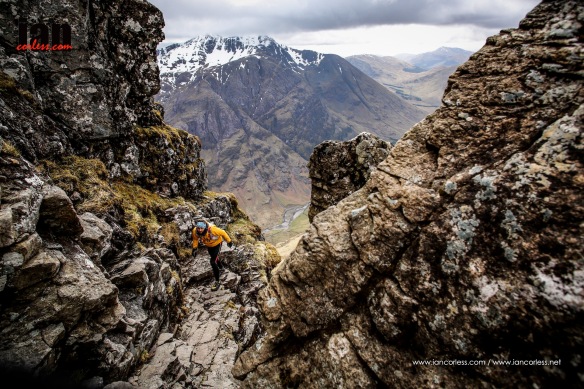
Glen Coe Skyline goes EXTREME and makes Skyrunner World Series 2016

©iancorless.com_GlenCoeMay2015-6295

The International Skyrunning Federation is pleased to announce that the Skyrunner World Series calendar will have a new addition to VK, SKY and ULTRA for 2016 and future years. See the full release and calendar HERE.

They are going Extreme!

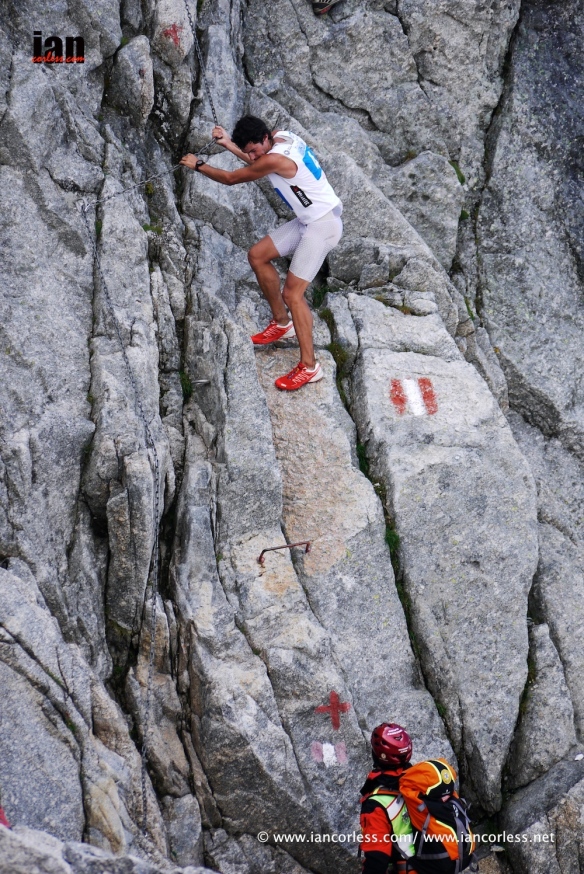
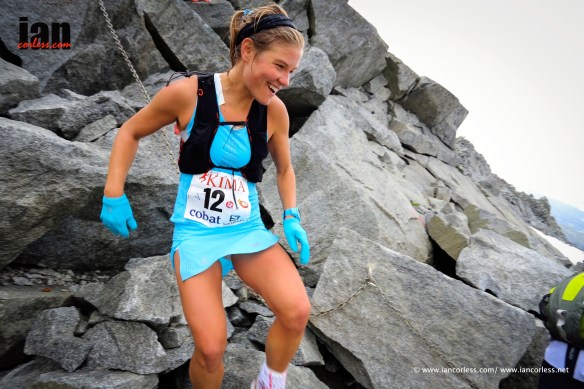
Trofeo Kima has long been a pinnacle race for Skyrunning enthusiasts worldwide. A jewel in the Skyrunning crown and the words of Kilian Jornet sum it up so well:

“Picture a mountain terrain that has no paths, amidst glaciers; it is all crests, rocks, stretches of via Ferrata and all over a course that stretches 50-km. Kima is not athletics, it is mountaineering; pure Skyrunning!”

Kilian_TrofeoKima

The bi-annual race returns in 2016 and due to increasing demand for adventurous and demanding courses, the ISF have created a new series called SKY EXTREME.

Three countries, three awesome races, a real opportunity to embrace the ethos of where earth meets sky!

The series will start in Norway with the TROMSO SKYRACE in August, we will then move to Italy for TROFEO KIMA in late August and then the final race will be in the UK with Scotland’s GLEN COE SKYLINE in September.

Although it will be possible to race each race in its own right, to qualify for the series you will be required to run two races.

The rewards? Skyrunner World Series Extreme Champion 2016.

“My vision of so many years ago is finally coming full circle,” said ISF President, Marino Giacometti. “I was ahead of my time! After our first records and races restricted to athletes-climbers on the summit of Monte Rosa and Mont Blanc, Trofeo Kima become the symbol of Skyrunning. Kima has always been for a select few but the growth and demand for more challenging races is now finally coming to fruition with the inspiration that Kilian Jornet and Emelie Forsberg have provided. Tromso Skyrace and Glen Coe Skyline are great additions to the Skyrunner World Series and Sky Extreme is a new and exciting step for Skyrunning! ” 

Needless to say, the addition of EXTREME to the Skyrunner World Series is great news for a UK audience and UK based runners.

“I had a dream 2-years ago when Skyrunning UK was launched in the UK that in 3-years we would host a SWS event. That dream is now a reality and with it the worlds best will come to Scotland in September to race in the mountains of Glen Coe!”– Ian Corless, Skyrunning UK Director.

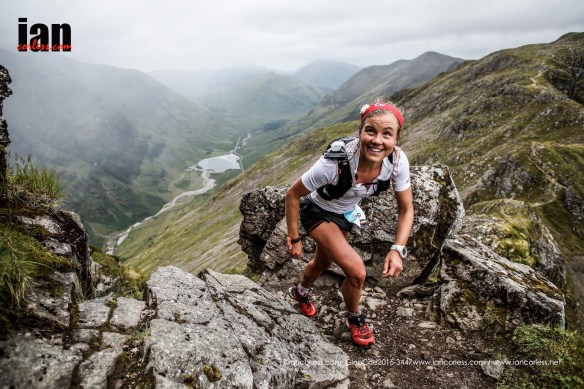
©iancorless.com_GlenCoe2015-3447

You can follow Skyrunning on line HERE and HERE
You can follow the Skyrunning UK Series HERE and HERE
You can view the three Sky Extreme Races via the following links:

TROMSO HERE

TROFEO KIMA HERE

GLEN COE SKYLINE HERE

©iancorless.com_Tromso2015-4865