Imagine an Island in the Indian Ocean: mountains, rainforest..a population passionate about trailrunning, a race going on it’s 20th edition. We are on the Island of La Réunion, A Trail Running Island – enjoy !
Salomon Running TV S2 E13
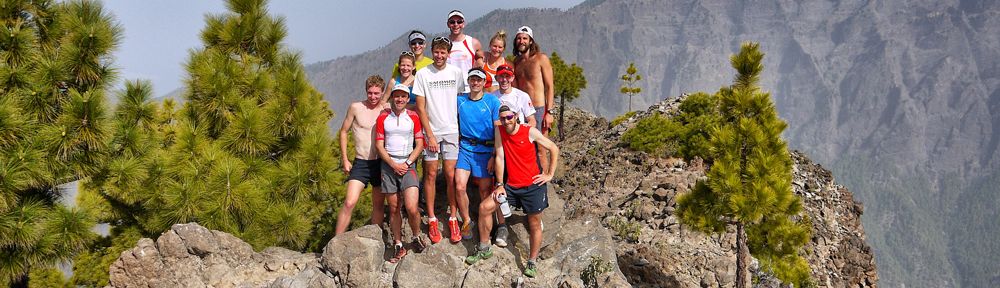
Imagine an Island in the Indian Ocean: mountains, rainforest..a population passionate about trailrunning, a race going on it’s 20th edition. We are on the Island of La Réunion, A Trail Running Island – enjoy !
Salomon Running TV S2 E13
Creativity shaped by the mountains….
“In the High Country” is a super-exciting mountain running film starring Anton Krupicka. Filmed and Produced by Joel Wolpert with the support of Ultimate Direction, this film will take you where you’ve never been before.
Anton Krupicka’s running has evolved from trails to mountains to free-soloing. Filmed over a season “In the High Country” — thin air, river baths, and itinerant mountain living. A new short film from the Wolpertinger coming Summer 2013.
Film by Joel Wolpert
Produced by the Wolpertinger – thewolpertinger.com
Made possible by Ultimate Direction – ultimatedirection.com
With additional support from – runningtimes.com , shoefitr.com , newbalance.com
Music
‘Seeding’ by Tyler Keene
logacrossthewasher.bandcamp.com
“Rim of the Well’ by Rim of the Well
stevemullinsmusic.com/bands/the-rim-of-the-well
Color Grading and Titles by Coat of Arms
coatofarmspost.com
Andy Symonds and Ricky Lightfoot very much pioneered the Salomon Fellcross, as the inside of the shoe says ‘Designed in the Alps‘. They tested the shoe and made tweaks to the design that would ensure that a shoe came to the market that was perfect for the job!

In 2013, a Fellcross 2 is certainly on the cards but fresh from the Outdoor Retail Show in the US the Salomon Fellraiser has emerged. Due SS 13?
Low to the ground? The Fellraiser is lower to the ground and apparently more flexible than previous models in the Salomon range. A 7mm drop (tbc) with a supposed12mm of cushioning at the front and 19mm at the back, this shoe will certainly become popular on muddy and gnarly trail. It has aggressive traction and a contragrip outsole with a fast drying and lightweight upper.An EVA midsole should provide great feel and enhance quick transition from one foot to the other.
UPDATE 1st Feb
Many thanks to Gripmaster who has been testing these shoes, he has confirmed the ‘drop’ at 6mm with forefoot cushioning at 6mm and rear cushioning at 12mm. He says “the new profile is quite cool, better on rock than the fellcross 1, so more usable in the alps that way..”
Is this ‘the new‘ Speedcross? Who knows… it certanly seems as though it is an offering in the ‘Speedcross’ arena. Certainly, the lower drop, if confirmed, will be appealing. But I have already seen new colourways of the Speecdross 3 for 2013 so this almost certainly will be an addition to the Salomon range.
It’s also lightweight, current stats are showing 230g for a UK8.5 (tbc)
Of course until I get my hands on a pair of shoes, look at them and test them, I can provide no more information. Rest assured, news will soon follow.
Salomon Website HERE
Copyright Jez Bragg and team
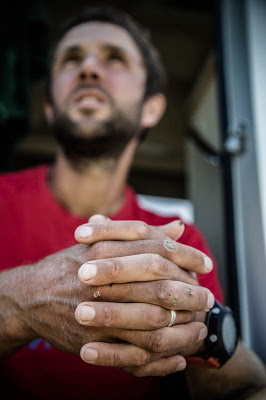
“So with those two big back to back days complete, I’m now just a smidgen over 250 kilometres from Bluff. I’d be lying if I said I wasn’t thinking about the finish now. I’m starting to visualise the end, and think about the day I wake up and don’t need to run. That is starting to appeal more and more. This has been quite some journey, and my body is starting to get rather weary.”
Yes, Jez has just 250km to go to set a new record for covering ‘The Long Pathway‘ in New Zealand, Teararoa.
Despite some sickness he has battled through and as he says above, the end is in sight.
Many congratulation Jez on what has been an epic journey.

I’m starting to visualise the end, and think about the day I wake up and don’t need to run.
Make sure you read his blog HERE
Copyright Ian Corless
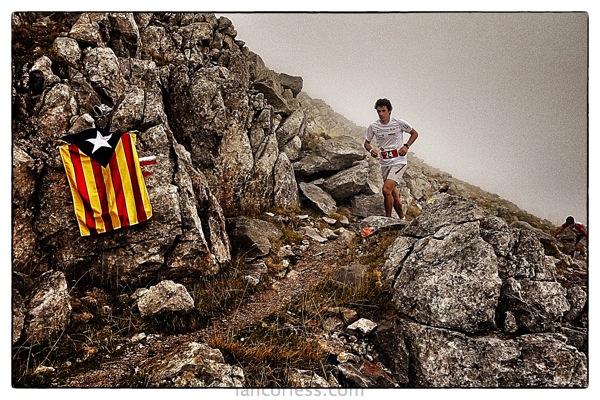
I remember it well, two days before Cavalls del Vent in 2012 I was in the race hotel in Berga having dinner with Terry Conway, Emelie Forsberg and Philipp Retier.
Midway through the meal, Kilian Jornet joined us. Just the day before he had been in Barcelona for testing.
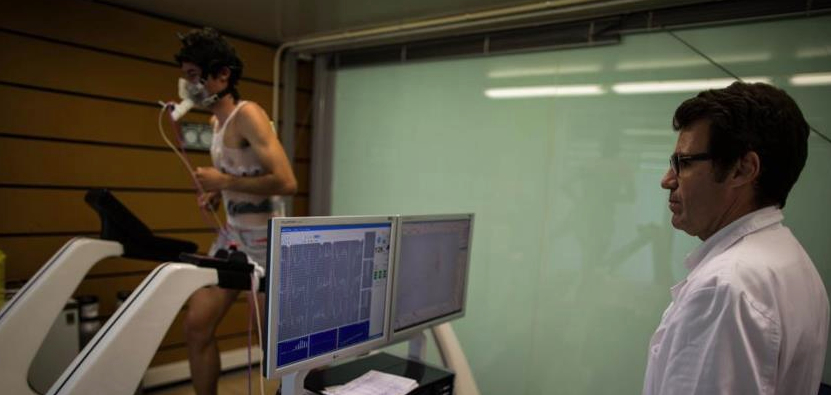
If you have seen the recent Summits of my Life movie, ‘A Fine LIne‘ you will see Kilian undertaking part of this test.
We discussed over food how this test had gone… Kilian seemed happy, he said that he had managed to last longer than previous tests. An improvement! You can see the results here:
Copyright Kilian Jornet/ Seb Montaz
Spirometry
Lung capacity: 5.3 L
VEMS: 4750
Tiffenneau: 88.28
PEFR: 10,63
Morphology:
weight: 58kg
hight: 171cm
% grass: 8,72
% muscle: 46,1
% bone: 21.01
Test bruce:
max: 12km/h – 24% inclination
sat o2: 94%
VO2 max: 90 l/min/kg
RR: 1.10
FC: 199 b/min
Lactate: 13 (5′) mM/L
recovery 1 min: 110p/min
recovery 3 min: 85 p/m
Anaerobic threshold: 95%

Transgrancanaria is a race that has been held on the island of Gran Canaria since October 2003. In the Transgrancanaria participants must cross the island on foot passing through several aid stations where they can replenish their water and food supplies, also giving the organisation a chance to monitor the competitors’ progress.
The Transgrancanaria is the pioneer of this kind of event in the Canary Islands. Arista, the organizer of the race, have placed Transgrancanaria as one of the main highlights on the national , European and now, the World stage.
The Transgrancanaria is held in the first week of March and has four different races, making accessible to everyone:
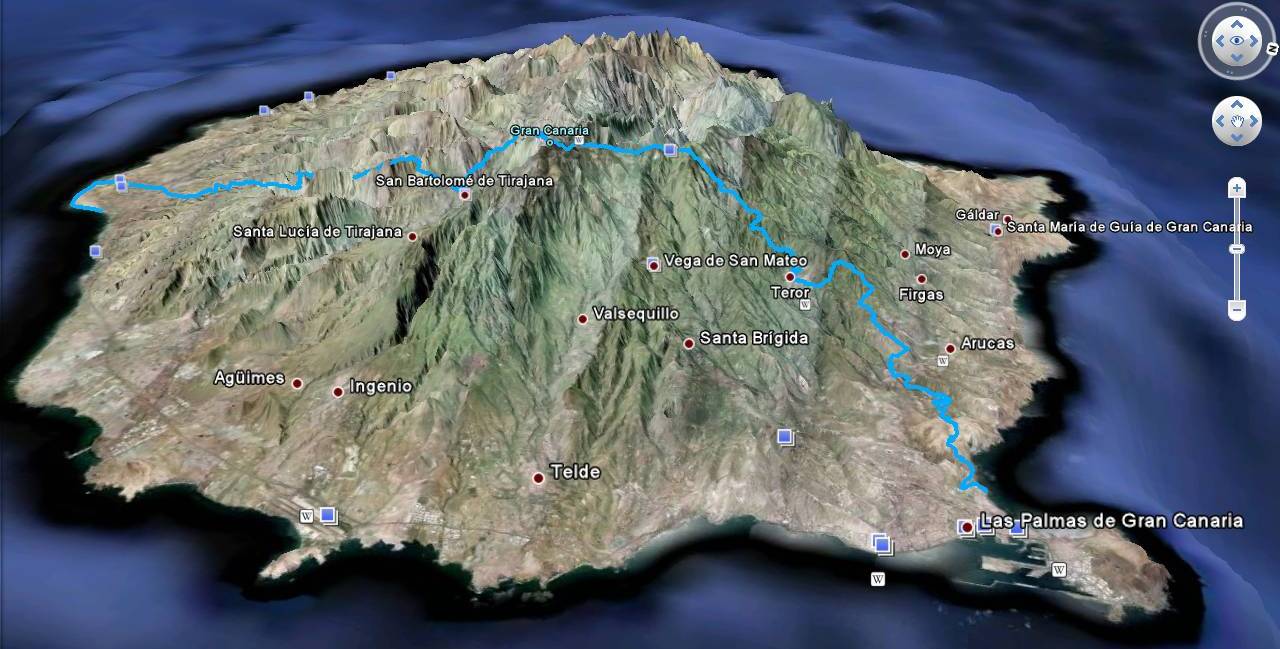
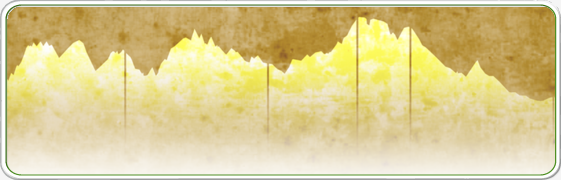
The first edition of Transgrancanaria in October 2003 had a total of 65 participants, and over the years has grown to more than 1400 athletes, walkers, joggers and nature lovers from more than 20 countries that have decided to take the challenge of crossing the island on foot in less than 31 hours. On this route participants can find rain, sun, mud, dust … but above all they will enjoy direct contact with nature. The course is the same for everyone and will be fully marked to avoid errors.
The Transgrancanaria not intended only to test the elite, but is an event for everyone, which is why you have 31 hours to do it. The first competitors will finish in daylight and the last will finish in darkness, however all will pass through the aid stations ensuring the competitors’ safety and comfort.
Copyright Protected – http://www.altissima.org
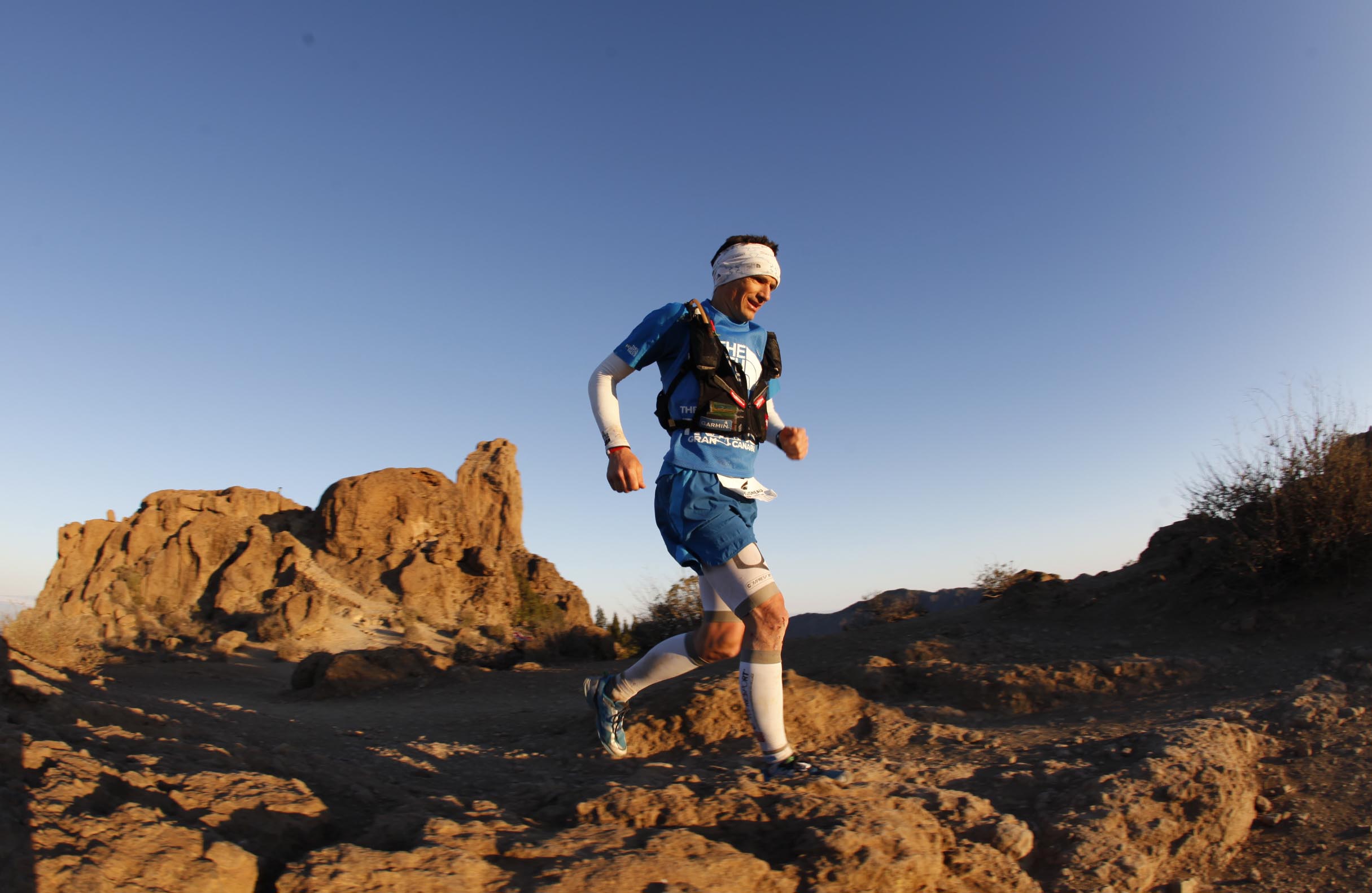
The North Face Transgrancanaria 2013 will be on 1st, 2nd and 3rd of March and will have four races: Starter, Marathon, Advanced and Transgrancanaria. The main race (Transgrancanaria) being one of the highlights in the national and European racing calendar.
The North Face athlete, Sebastien Chaigneau 3rd in 2011 and winner in 2012 with a time of 12:54:19 will be returning in 2013 to hopefully dominate on this rough and tough course. He will have some competition though from Salomon athletes Ryan Sandes and ‘wonder kid’ Philipp Reiter.
The ladies race will have returning champ and The North Face athlete Lizzy Hawker (**updated 18th Feb Lizzy Hawker will no longer be racing, she is still recovering from a stress fracture) and Julia Boettger fighting for the win. UPDATE – Emelie Forsberg has now confirmed that she will be racing (17th Feb 2013)
Taken from http://www.corredordemontana.com link HERE
Although some elite runners are still to be confirmed , just over a month before the start of the race, some of the most internationally renowned professionals shave secured an entry for March 2nd in Gran Canaria. Sebastien Chaigneau and other runners such as Ryan Sandes, John Tidd, Zigor Iturrieta or Portuguese Carlos Sa, are favorites to win the test.
Also included in the participation of the race is ultra legend, Italian Marco Olmo, who at 64 is still running in the most demanding tests and competing at the highest level. Like other elite runners as Aitor Leal, Llorens brothers, Philipp Reiter, Armando Teixeira, Fernanda Maciel, Nerea Martinez, Lizzy Hawker (not racing), Julia Boettger and Emelie Forsberg.
Published on Mar 20, 2012
Join us in celebrating 1st place wins for The North Face®athletes Sebastien Chaigneau and Fernanda Maciel at the 123km ultra-race of The North Face® Transgrancanaria – Gran Canaria, Spain, 2nd-4th March, 2012.
I will provide an elite start list for the mens and womens race as soon as possible. I am just waiting for this information from the race officials.
Check out the race website HERE
Registrations HERE
The North Face HERE

OMM began the discipline of mountain marathon as the KIMM way back in 1968. Over the years little has changed about the core event and the challenge it represents. Pairs pit their fitness and navigation skills against the course, other competitors and the elements to race across the wild areas of the UK over two days whilst being self sufficient.
The core event continues to be the largest of its type in existence and will again take place in the final weekend in October in Wales. Stu Hamilton, Events Director, said, “This time of year helps set the character of the event. No matter where we are you just don’t know what the conditions may bring. The teams therefore have to be ready for anything.”
In order to appeal to the rapidly growing community of up and coming adventurers and those who find road races, triathlons, ironmen etc yesterdays news OMM have launched a number of supporting events in the UK as well as a couple of truly inspirational international events.
2013 sees the arrival of OMM Lite and OMM Bike in the Peak District on the weekend 18th May,
In order to protect the environment and the experience for the competitors the places are unfortunately limited. Entries for all events will be open by 31st Jan. If you are up for the challenge then go to the website www.theomm.com.
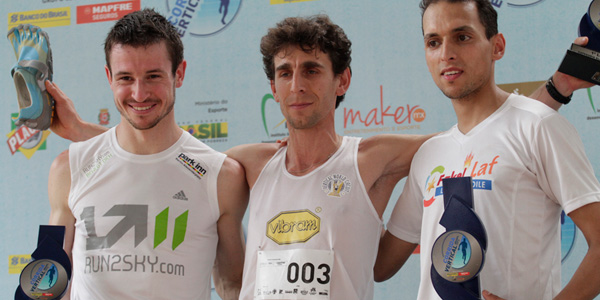
| Thomas Dold once again confirms his prowess as the world’s number one skyscraper racer, despite his second place in the VWC final in Brazil won by Italian Fabio Ruga. Australia’s Suzy Walsham wins the race and takes the title.The King of skyscraper racing, German Thomas Dold, was crowned Vertical World Circuit Champion for the fourth time, despite coming a close second to Italian Fabio Ruga in the Corrida Vertical in Sao Paolo, Brazil on January 25. The ladies’ winner, Australian Suzy Walsham, also took the World Champion title based on ranking points scored in the eight-race Circuit.
Ruga, the man who beat the seemingly invincible Dold by a mere two seconds, reached the summit of the 140 metre builing in 3’04”, Dold was second in 3’06” and third, Belgian Omar Bekkali in 3’16”. The women’s times were 3’45” for winner Suzy Walsham, and Brazilians Criastina Marcia was second in 4’40’ and Alnmeida Ligia, third in 5’19”. Race winner Fabio Ruga, together with three hundred runners, raced up the 672 steps and 29 floors wearing a pair of Vibram® FiveFingers® – the “barefoot sports shoes”, winning Friday’s Vertical World Circuit final outright. January 25th was the date chosen by the Corrida Vertical to celebrate Saõ Paolo’s foundation in 1554. On the same day, an annual “Skyrunning Day” has been introduced to create awareness of the health benefits of tower running to the sports-loving Brazilians.
Skyscraper racing, governed by the International Skyrunning Federation, is becoming increasingly popular: last year more than 7,000 runners from 30 countries took part in the Vertical World Circuit which unites some of the world’s most iconic skyscraper races in eight major cities across four continents – from the Americas to the heart of Europe and the Far East. Look out for the 2013 Vertical World Circuit to be announced shortly by the ISF, where Brazil aims for a repeat performance as one of the major venues. 2012 VWC ranking: Men 1. Thomas Dold (GER) – 494 points 2. Fabio Ruga (ITA) – 450 points 3. Omar Bekkali (BEL) – 428 points Women 1. Suzy Walsham (AUS) – 520 points 2. Cristina Bonacina (ITA) – 294 points 3. Kristin Frey (USA) – 224 points See http://www.corridavertical2012.com.br and www.verticalrunning.org for full information. |

December 20th, 2012
Question – “Ian, are you free the first 10 days of February?”
Answer – “I leave Spain today and I am back in the UK late tonight. I have a busy morning on Saturday and I have some interviews to do Saturday afternoon but I will be free around midday to chat if you are? Alternatively drop me an email. Hope you are well? February should be okay, lets discuss.”
Reply – “Great, so you can go to Costa Rica for the multistage ‘Coastal Challenge'”
Answer – “Erm, yes! of course”
So, with just 4 weeks to prepare I was suddenly thrust into a week in the jungle. A whole new experience for me but one that I am so excited about! The Coastal Challenge.
I would normally be thinking to myself this is awesome. I get to go to Costa Rica, take part in a 6 day multistage, take photos, write an article and of course get some interviews. Unfortunately my long term knee injury is going to stop that… 225km over 6 days will just be too much and of course, I am not fit! Well, not race fit.
But as I said to my client and the RD, I think it is important to go these events and see it from both sides. If I am taking part, I wont see what is happening at the front of the race. I wont see ‘the race’ for the win. I also wont see the logistics and planning that go into a race like this. My trip is all about understanding every aspect of this race. So I am happy. I plan to dip in and dip out of stages but ultimately report on and bring back a whole series of images and stories that I can relate back to readers and listeners worldwide.
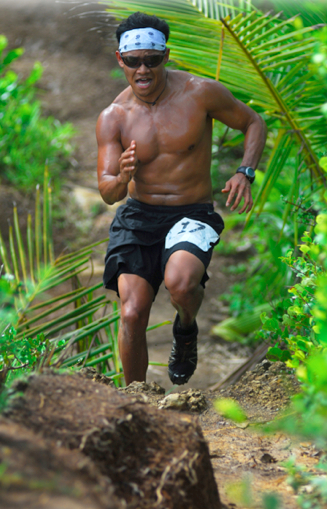
The first question I had was, can I die?
Heat Illness and Dehydration
Individuals who are not well conditioned traveling in hot, humid environments are susceptible to both heat illness and dehydration. Heat illness includes both very benign conditions such as heat rash as well as life threatening conditions including heat stroke. Participants should carry enough liquids to ensure hydration during the event. It is important to eat and drink appropriate amounts of liquids with electrolytes during the event to reduce the incidence of hyponatremia. Water has not been an issue in previous Coastal Challenge’s, however, this year portions of the race will be through agricultural areas that will require purification before drinking.
Plants and Animals
There are 135 species of snakes in Costa Rica with 17 being considered dangerous. Mostly these are members of the Viper, Coral and Boa families. The best prevention is watching your path and being aware.
Water Safety
While the water in Costa Rica is generally considered among the safest in Central America, traveler’s diarrhea does occur. It is advised that any water be treated prior to drinking unless its safety can be guaranteed. Speak to your Family Physician about treatment issues (Pepto Bismol, Antibiotics, etc.)
Sun
February is considered the dry season so expect warm temperatures with average highs of 20-25C/70-85C depending on altitude. Furthermore the race will be going through some of the driest areas of Costa Rica. Proper sunscreen is essential (SPF 15 or greater) with enough to last multiple daily applications for the entire race.
Okay okay, that sounds okay… the chances of survival are pretty good. So then, what is The Coastal Challenge?
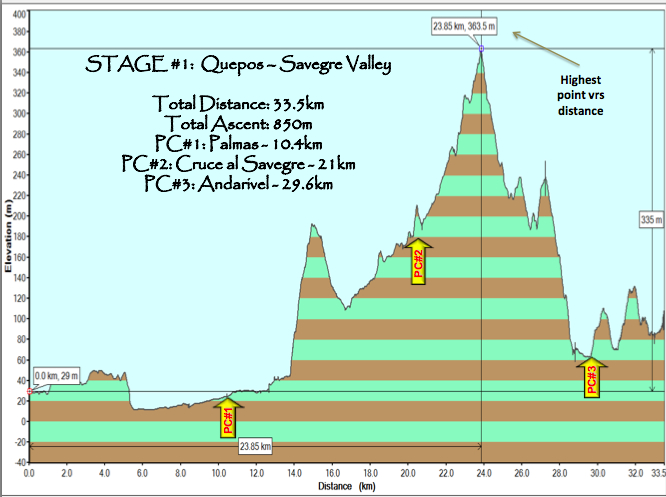
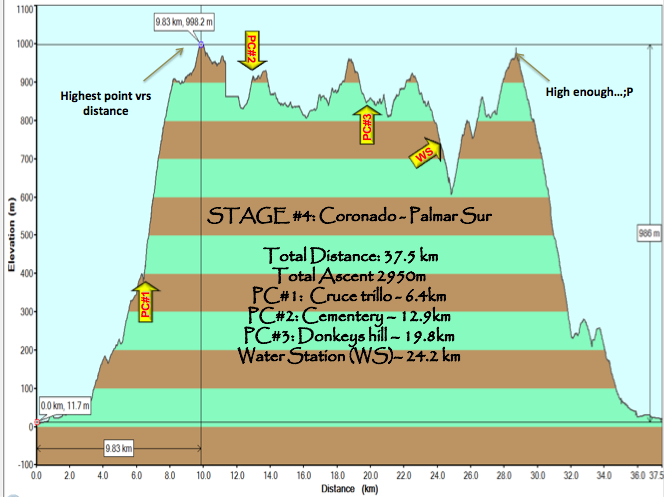
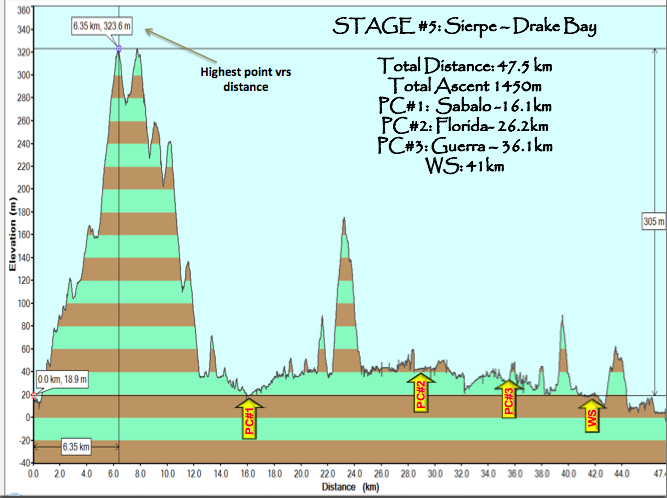
The “Rainforest Run” promises to be spectacular and challenging. The course has been designed to emphasize point-to-point racing, which will put the “finish line” at or near camp at the end of each day’s race. The course is measured and will be marked. You will be given accurate course measurements and maps (Google Maps, Nat Geo maps) with route profiles for terrain, approximate distances and elevation gain or loss.
Set along Costa Rica’s tropical Pacific coastline and weaving into the Talamancas, a coastal mountain range in the southwest corner of Costa Rica. The race finishes near the border of Panama in a small and serene fishing village that until recently was only accessible by fishing boat.
Mountain, trail, rainforest, single track, across ridges, highlands and coastal ranges. We will run along beaches, rocky outcrops, reefs, river estuaries and the race finishes in the Corcovado National Park, one of the premier rainforest experiences in the world. A Unesco World Heritage site it defies description.
The course has a total elevation gain of more than 34,000 feet.
What is a Rainforest?
Rainforests are forests characterized by high rainfall, with definitions based on a minimum normal annual rainfall of 1750–2000 mm (68-78 inches). The monsoon trough, alternatively known as the intertropical convergence zone, plays a significant role in creating the climatic conditions necessary for the Earth‘s tropical rainforests.
Around 40% to 75% of all biotic species are indigenous to the rainforests.[1] It has been estimated that there may be many millions of species of plants, insects and microorganisms still undiscovered in tropical rainforests. Tropical rainforests have been called the “jewels of the Earth” and the “world’s largest pharmacy“, because over one quarter of natural medicines have been discovered there.[2] Rainforests are also responsible for 28% of the world’s oxygen turnover, sometimes misnamed oxygen production,[3] processing it through photosynthesis from carbon dioxide and consuming it through respiration.
The undergrowth in a rainforest is restricted in many areas by the poor penetration of sunlight to ground level. This makes it easy to walk through undisturbed, mature rainforest. If the leaf canopy is destroyed or thinned, the ground beneath is soon colonized by a dense, tangled growth ofvines, shrubs and small trees, called a jungle. There are two types of rainforest, tropical rainforest and temperate rainforest.
Logistics
The race is supported. This makes a big big difference. Although the race has a similar format to the Marathon des Sables, the big difference is that you do not need to carry your kit whilst running. This multistage is very much a race from the sense that the runners can race light and fast. The top runners will keep it minimal, hand bottles or a small pack. However, for most participants they will carry a pack with some ‘essentials’ and of course a bladder or bottles.
Base camp is set up by the race team. They transport the participants baggage to the finish of each day. Runners can sleep in a hammock or tent.They provide food (apparently excellent) and they also provide a series of check points and feed stations during the race.
After asking several questions, I was told by Rodrigo Carazo the following:

TNF Mica 1 Tent
The Mica 1 tent will be excellent as I can pitch just the ‘inner’ allowing me to potentially remain a little cooler in the ridiculously hot and humid climate.

Arc’teryx

Race Schedule



One’s to watch
Footnotes
FEET CARE by John Vonhof
Conditioning Your Feet
In the same way you train your legs and cardiovascular system, you need to condition your feet for the rigors 150 miles of The Coastal Challenge in Costa Rica. In short, that means training your feet in simulated race conditions. Train on somewhat similar terrain—sand, rocks, trails, hills, and in water. Knowing in advance how your feet will respond to these conditions will help you anticipate problems before they occur. Strengthening your ankles will help prevent sprained ankles common to uneven terrain and trails. Add in some walks or runs of longer amounts and vary your distance. The more miles you can get on your feet the stronger your feet will be.
Shoes
When selecting shoes, make sure your toes have wiggle room and your heels are snug with little up and down movement. Shoes with mesh may be cooler but tend to allow trail debris and sand into the shoe. Don’t start the race with worn out shoes. Make sure the shoes fit well and have space for swollen feet and toes.
Socks
Athletes should wear moisture-wicking socks. Try a few types of socks and decide whether a single sock, a thin liner with an outer sock, or two socks are the best for your feet. Remember if wearing more than one pair, more space is required inside your shoes so be sure your shoes are sized big enough. Plan on several changes of socks. The Injinji toe socks place each toe into its own little sock and might be a good move if you are prone to toe blisters.
Gaiters
Gaiters keep sand, grit and gravel, and trail debris out of your shoes and socks. There are many commercially made gaiters available to purchase or make your own. Those with a breathable material are preferred. Styles which attach to the shoe’s upper are preferred over those with the strap under the shoe since they make it easier to change socks.
Skin Preparation
The most beneficial step you can take to prevent problems is to reduce your calluses. Treating blisters under calluses is difficult and sometimes impossible. Use a callus file after showering or use callus remover creams to soften the skin.
Toenail Preparation
Untrimmed nails catch on socks putting pressure on the nail, causing blisters and black toenails, and cut into other toes. Toenails should be trimmed regularly, straight across the nail. Leave an extra bit of nail on the outside corner of the big toe to avoid an ingrown toenail. After trimming, use a nail file to smooth the top of the nail down toward the front of the toe and remove any rough edges. If you draw your finger from the skin in front of the toe up across the nail and can feel a rough edge, the nail can be filed smoother or trimmed a bit shorter.
Blister Prevention
If stopping to rest on the trail, take your shoes and socks off to air your feet, elevating them if possible. If near water, cool your feet with a quick soak. Use a silicone-based lubricant, like Hydropel or Sportslick which helps drive moisture away from your skin and reduces friction between your feet and shoes. Empty your socks of rocks and debris that can cause blisters, sores, abrasions, and cuts. If prone to blisters, consider taping your feet before problems develop.
Blister Treatment
Attend to hot spots when they develop to prevent them from turning into blisters. Cover these with tape to eliminate friction. Blisters should be drained and covered with Spenco 2nd Skin, Blister Block, or Compeed, and then tape. Your feet must be cleaned of all lubricant and oils for the patch to stick. If using a pin to drain the blister make several holes. If using a small scissors, make two small “V” cuts. Make the holes or cuts at a
point where foot pressure will expel any additional fluid build-up. Try to keep the skin on the roof of the blister. After applying a patch, roll your socks on and off to avoid disturbing the patch. Practice applying blister patches on areas of your feet most prone to problems.
Your Foot Care Kit
Wise competitors carry a small foot care kit in their packs. It doesn’t have to be big but it has to be right for your feet and small enough to fit in a Ziplock bag. I’d recommend a small container of Zeasorb powder or BodyGlide lubricant, alcohol wipes to clean oils off the skin before applying a blister patch, tincture of benzoin wipes, a small Ziplock bag with 1-inch Spenco 2nd Skin patches, a sewing needle and thread to drain blisters, and at least two yards of Leukotape wrapped around a small pencil. Duct tape can be substituted for Leukotape if you prefer. Of course it goes without saying that carrying a blister kit is useless if you don’t know how to use the materials. Use the time between now and the race to learn how to patch blisters and tape your feet before an event.
Foot Care at the End of the Day
After each day’s segment, proper care of your feet can help prepare you for the next day.
Using lightweight flip-flops around camp will allow your feet time to air and heal. If possible, soak your feet in cool water. Elevate your feet when resting. Rotate your socks to keep your feet as dry as possible and wash dirty socks. If your feet swell, you may have to remove your insoles. Use Super Salve, Bag Balm, Brave Soldier Antiseptic Healing Ointment, or a similar ointment to keep your feet as healthy as possible.
John Vonhof – Fixing Your Feet: Prevention and Treatments for Athletes, 3rd edition, June 2004 www.footworkpub.com
Essential Medical Kit
Finally….

The Coastal Challenge chose the spiral symbol because of its simple and transcendent beauty. Many of the most universally recognized meanings attached to the spiral seem relevant to the adventure in which you are about the take part. To many cultures the circular motif signifies centeredness, tranquility and balance.
Also a basic element in Western ideography, the clockwise spiral is strongly associated with water, power, life, the earth or sun, time, a journey, independent movement, and migrations of tribes, all things that will most definitely shape your life over The Coastal Challenge
Visit the race website HERE
I will be updating my blog daily with a report and photos. Also check the Talk Ultra Facebook page and Twitter feed for any updates as they happen…..
Providing I can get a signal in the rainforest.
Yes, I openly admit I work for Skyrunning and I attend the events that they organize. I love the philosophy, the courses and the people.
To be honest, I love our sport. Don’t we all?
The WMRA – World Mountain Running Association, are once again making sure that WE understand what Mountain Running is and I guess what Mountaineering, Orienteering and Skyrunning is…
Taken from the WMRA website – link HERE
Mountain Running is Athletics. Differences with Mountaineering, Orienteering and Skyrunning.
To distinguish the sport of mountain running from mountaineering or orienteering or skyrunning we can look at the philosophy of each sport.
The philosophy of mountaineering is based on contact with and challenge to nature. The time factor is only important in relation to our planning and safety. Climbers seek their adrenalin rush climbing on rock faces, looking for new routes and overcoming the danger inherent in their sport. A considerable amount of technical equipment, (ropes, pitons, etc) is needed. It is a question of combat between man and nature.
The philosophy of orienteering is to work out the quickest router between two points. Speed is important but it is useless without map-reading, compass, and route finding skills. In a few competitions, orienteering moves out of the forest, its natural habitat, and onto the mountains but its philosophy is still distinct from that of mountain running.
The philosophy of skyrunning seems to be an adventure on the mountain, trying extreme difficulties: in fact skyrunning is the discipline of running in the mountains above 2.000 meters, where the incline exceeds 30% and the climbing difficulty does not exceed II° grade. Ski poles and hands may be used to aid progress.
The philosophy of athletics, in our case mountain running, is based on the time factor, how to reach the finish taking the defined way as fast as possible. This is the objective of those who take part in competitive mountain running. Courses are designed to eliminate danger. No equipment is needed, no ropes, no compass. Athletes find their challenge in matching their speed against that of other runners, a competition between man (woman) and man (woman).
Are we clear?
Just to make sure:
 WMRA Council: definition of mountain running for IAAF Rule Book WMRA Council: definition of mountain running for IAAF Rule Book
During the final day of meetings for the WMRA Council in Monte Carlo, the definition of mountain running was discussed at length which resulted in proposed language for a new rule to appear in the IAAF rule book: this new rule numbered 251 could replace actual rule 250.10. |

 IAN CORLESS