As UTMB week draws to a closure on August 29th, the Pyrenees Stage Run 2021 will start. The 2020 edition, like most races was cancelled due to the Coronavirus pandemic, however, the PSR is back!
Fourteen different nationalities will take part in this epic 7-day journey covering 240km and over 15000m of vertical gain. The Netherlands, Belgium and the United Kingdom will be the most represented countries as participants take on the challenge in teams of two or three.
The PSR can be followed live through the website of the race, https://psr.run, and every day a video and photographs of the stages will be published on their social networks.
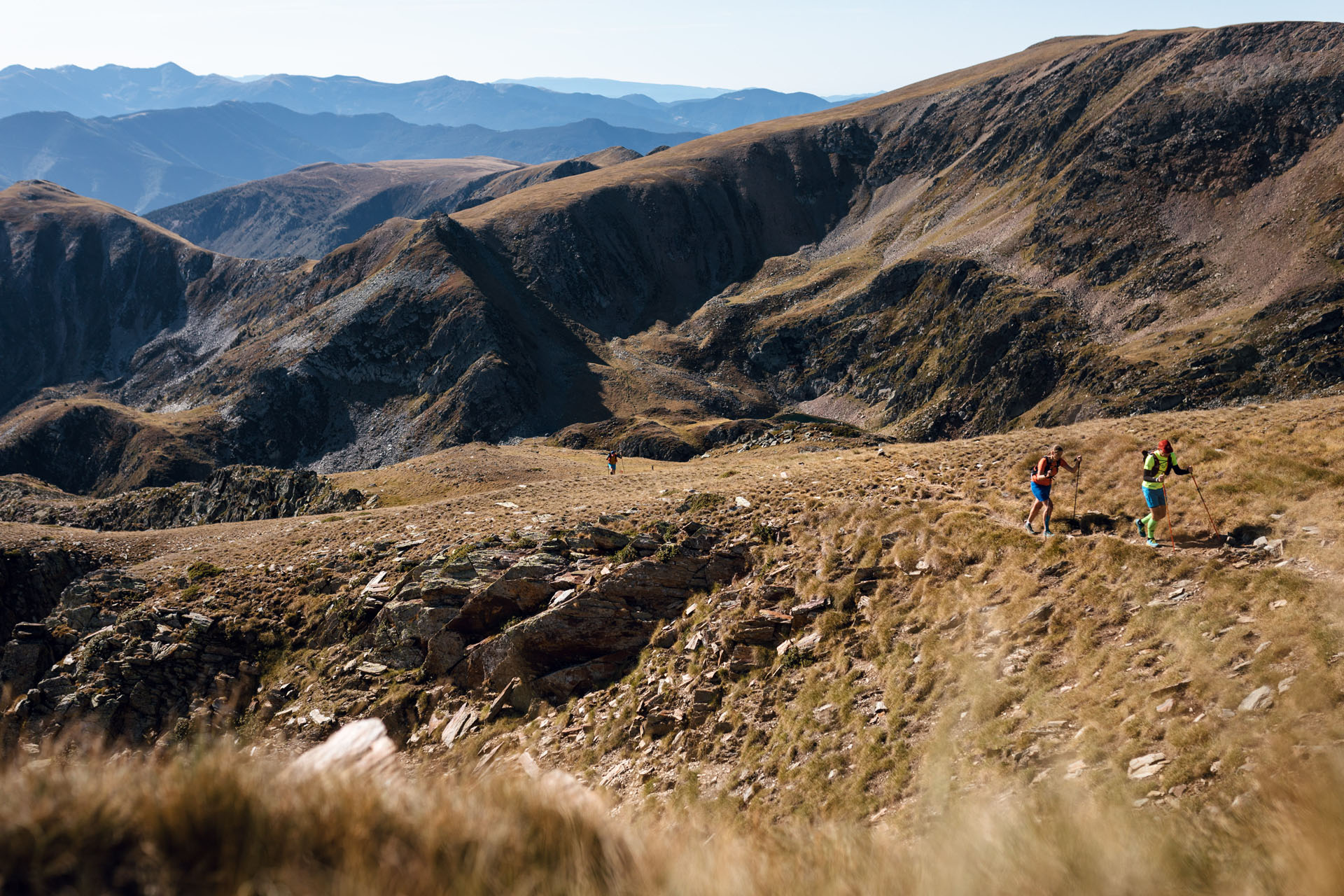
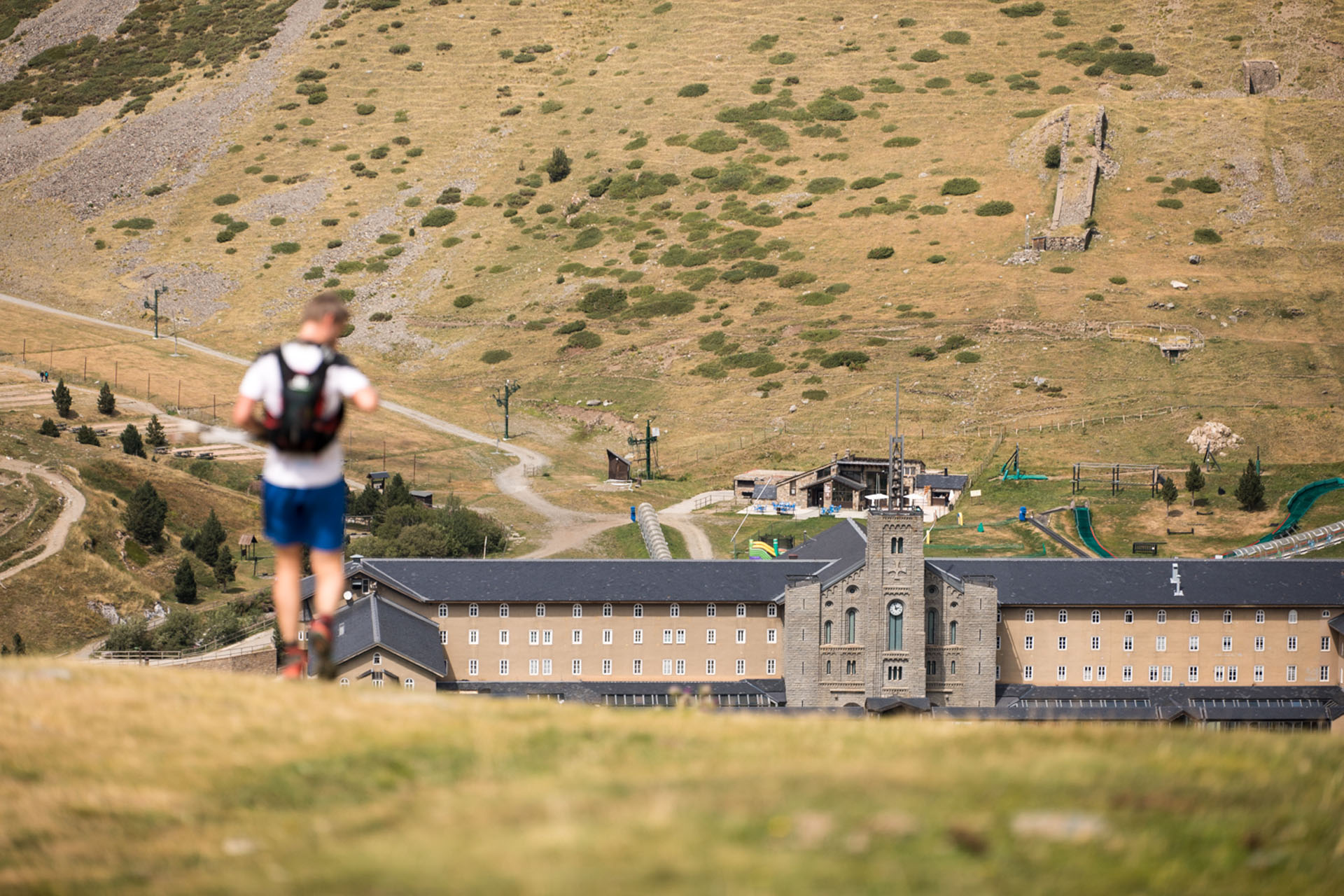
Starting in Ribes de Freser and finishing in Salardú with two stages in Andorra, the PSR offers the possibility to cross a section of the Pyrenees following the classic GR11 and going through places that you will never forget.
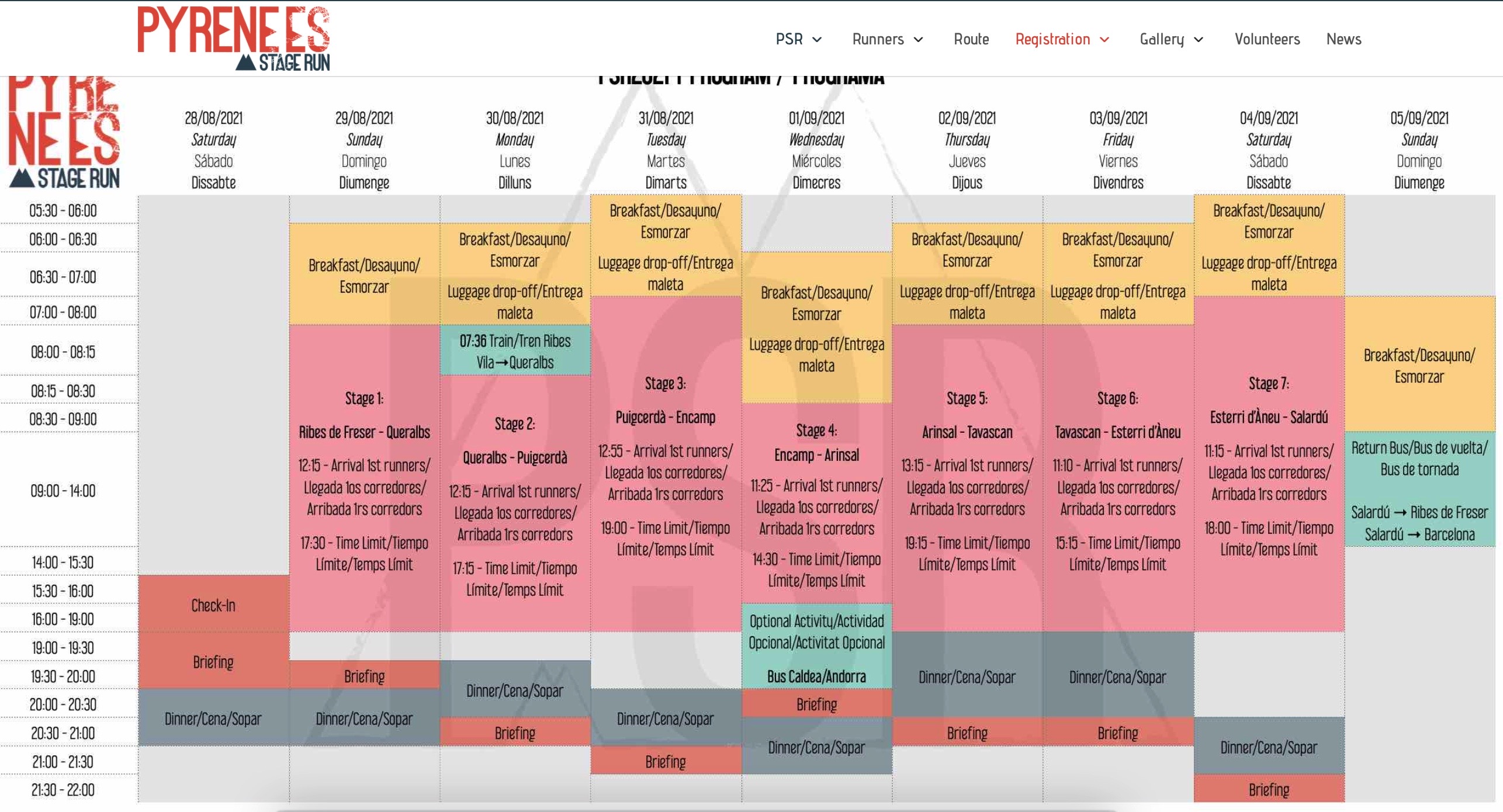
Program for the week.
An adventure, the route will be undertaken as a team, sharing the experience being a key consideration not only for enjoyment but safety. The GR11 is way marked but also GPX routes will be followed.
Daily, all will have dinner altogether and an award ceremony of the day, a briefing of the next stage and a presentation of the photos and videos will be given.
It is possible to view a Race Book to get an oversight of the PSR but dune in daily to this website for updates, summaries, images and stage-by-stage results as the 2021 PSR gets underway.
Please support this website. I believe everyone deserves to read quality, independent and factual articles – that’s why this website is open to all. Free press has never been so vital. I hope I can keep providing independent articles with your help. Any contribution, however big or small, is so valuable to help finance regular content. Please support me on Patreon HERE.
Welcome to ‘The Chamonix Tapes’ an inside look at the adidas Terrex Team during the 2021 UTMB.
Starting on Tuesday August 24th and running through to Sunday August 29th, there will be a daily podcast release for your audio pleasure. In The Chamonix Tapes 1, we speak with the adidas Terrex Team manager, Robert Muecke.
“We are not working together with robots. We are working with humans and a team and a team structure is based on human beings. We are here to support humans to their potential. It’s so much more than winning one race, it’s a process that is set up over years.”
Episode 212 has an interview withBeth Pascall who won the iconic Western States 100-mile. The show is co-hosted by Abelone Lyng.
Talk Ultra needs your help! We have set up a Patreon page and we are offering some great benefits for Patrons… you can even join us on the show! This is the easiest way to support Talk Ultra and help us continue to create! Many thanks to our Patrons who have helped via PATREON Donate HERE
NEWS
Firstly, apologies for the lack of a show recently. It’s been one of those periods when life and travel have taken over and after the rollercoaster of the last 18-months, I personally decided to go with the flow and not force anything. Abelone, who is co-hosting with me, has joined me on many and adventure recently and we have enjoyed the disconnect and trail time. We have run many miles, climbed many mountains, fastpacked, camped wild and soaked in the best of what Norway has to offer… July has been a good month to re-connect. I also started to travel again with races, a stunning trip to Lofoten for The Arctic Triple, a race in Hardanger, a four day (the UT4M) in France and just recently, the Stranda Fjord Trail race and this weekend, as the show is released, the Rondane 100.
Next week I head to Chamonix for build up to UTMB and some news on that to follow later in the show.
Scott Jurek is back on the Appalachian Trail and Speedgoat Karl is with him. Scott is once again taking on the 2190-mile journey travelling south looking to set an FKT for the second time, he departed August 4th at 0730. Scott set the record in 2015 travelling north. Karel Sabbe holds the fastest time of 41-days, 7-hours and 39-minutes. *Update, news came in after recording that Scott had to stop after injury.
Talking of FKT’s, Timmy Olson set a new record on the Pacific Crest Trail, 51-days, 16-hours and 15-minutes for the 2653-mile journey. Supported by his family, Krista his wife heavily preganant, this journey was far more than just running. From the outside looking in, it was a truly inspirational journey. We hoe to chat with Tim soon!
Simen Holvik set a new record for the Norg Pa Langs (road) in Norway, 25-days 15-hours and 20-minutes.
Kilian Jornet once again the legendary Sierre-Zinal for the 9th time. 31km, 200m of vert in 2:31, the dude is a GOAT. Huge shout to the UK1s Robbie Simpson in 2nd and Cesare Maestri in 3rd. Maud Mathys won the women’s race (already a 2x champ) in 2:46 ahead of Nienke Brinkman and Anais Sabre.
Tromso Skyrace was won by Therese Arvik and Lars Olaf Haaheim, the race usually has excellent competitors from outside Norway, however, the ongoing Covid restrictions impacted on an international field.
Abelone and myself were in Stranda, Norway, for the Stranda Fjord Trail Race – I focussed on the 100km but there was a 48km and 25km. This course needs to be experienced – it is stunning! Please read the race report and view the images.
TransRockies in Colorado was won by Cody Reed and Grace Staberg, the duo running the 6-day solo in 15:59 and 18:35.
Next week the build up to UTMB starts and Talk Ultra is going to be providing in-depth content, behind the scenes of the adidas Terrex Team. We are going to be discussing many subjects and although the full line up of interviews are not confirmed, you can expect chat with the team manager, in-depth chat with one of the shoe designers, emphasis on women in trail running, chats with legends of the sport and of course, chat with up and coming stars.
La Sportiva CYKLON shoe review HERE listen to Episode 208 of Talk Ultra is a special show with DANIEL FEENEY and Jonathan Wyatt discussing the collaboration between BOA and La Sportiva for the new, Cyklon shoe.
Please support this website. I believe everyone deserves to read quality, independent and factual articles – that’s why this website is open to all. Free press has never been so vital. I hope I can keep providing independent articles with your help. Any contribution, however big or small, is so valuable to help finance regular content. Please support me on Patreon HERE.
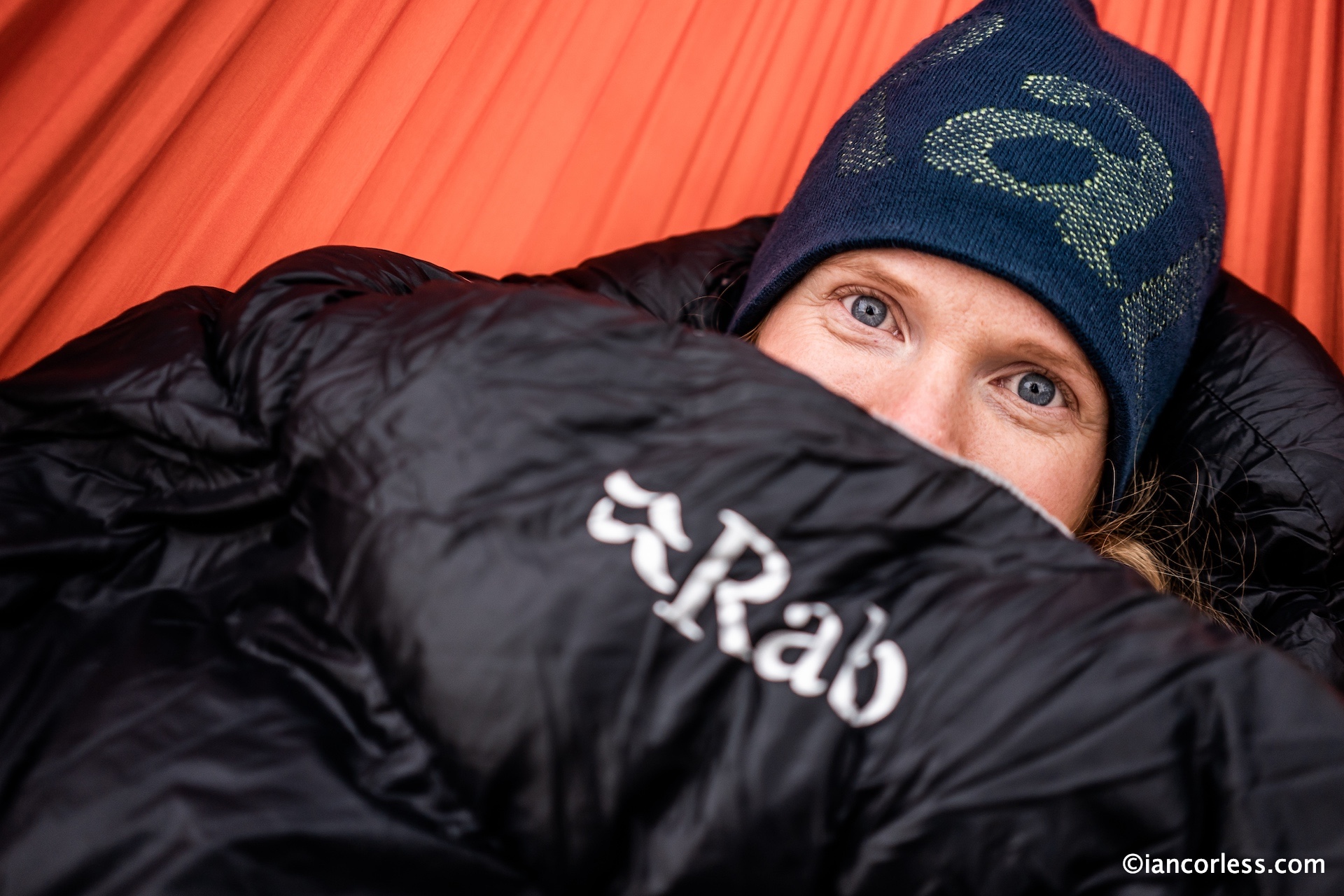
RAB have produced two state of the art sleeping bags in the Mythic Ultra 180 and Mythic Ultra 360 sleeping bags. Utilising the same technology, both bags offer low weight, small pack size, Hydrophobic Down and the ground-breaking TILT technology – Thermo Ionic Lining Technology. The TILT in real simple terms brings elements of an emergency space blanket incorporated into the design of the bags.
Offering best performance at weight for any comparable bag, both the 180 and 360 have been my ‘go-to’ bags since early in 2020.
Quite simply, amazing levels of warmth for low weight.
The RAB Mythic 180 has 180g of 900+ fill power Hydrophobic down and a comfort limit of 0 degrees and a weight of 390g. It’s a perfect bag for warmer weather and any adventure when low weight, small pack size and warmth are important. Perfect for multi-day racing for Marathon des Sables or similar and, is brilliant for fastpacking adventures when travelling in a self-sufficient manner.
The RAB Mythic 360 has 360g of 900+ fill power Hydrophobic down and a comfort limit of -8 degrees and a weight of 620g. This bag utilises all the same technology of the 180 and quite simply is warmer and heavier. Just like the 180, it’s the perfect bag for racing and fastpacking adventures in colder and more challenging conditions.
The recent 18-months have allowed me more time outdoors than ever before and almost weekly I have ventured outside on multi-day fastpacking adventures or overnight trips. The 360 and 180 have been on most of these trips offering low weight, small pack size and incredible warmth.
I am lucky, based in Norway, I get to fully experience the cold of winter and in summer, warm and comfortable nights.
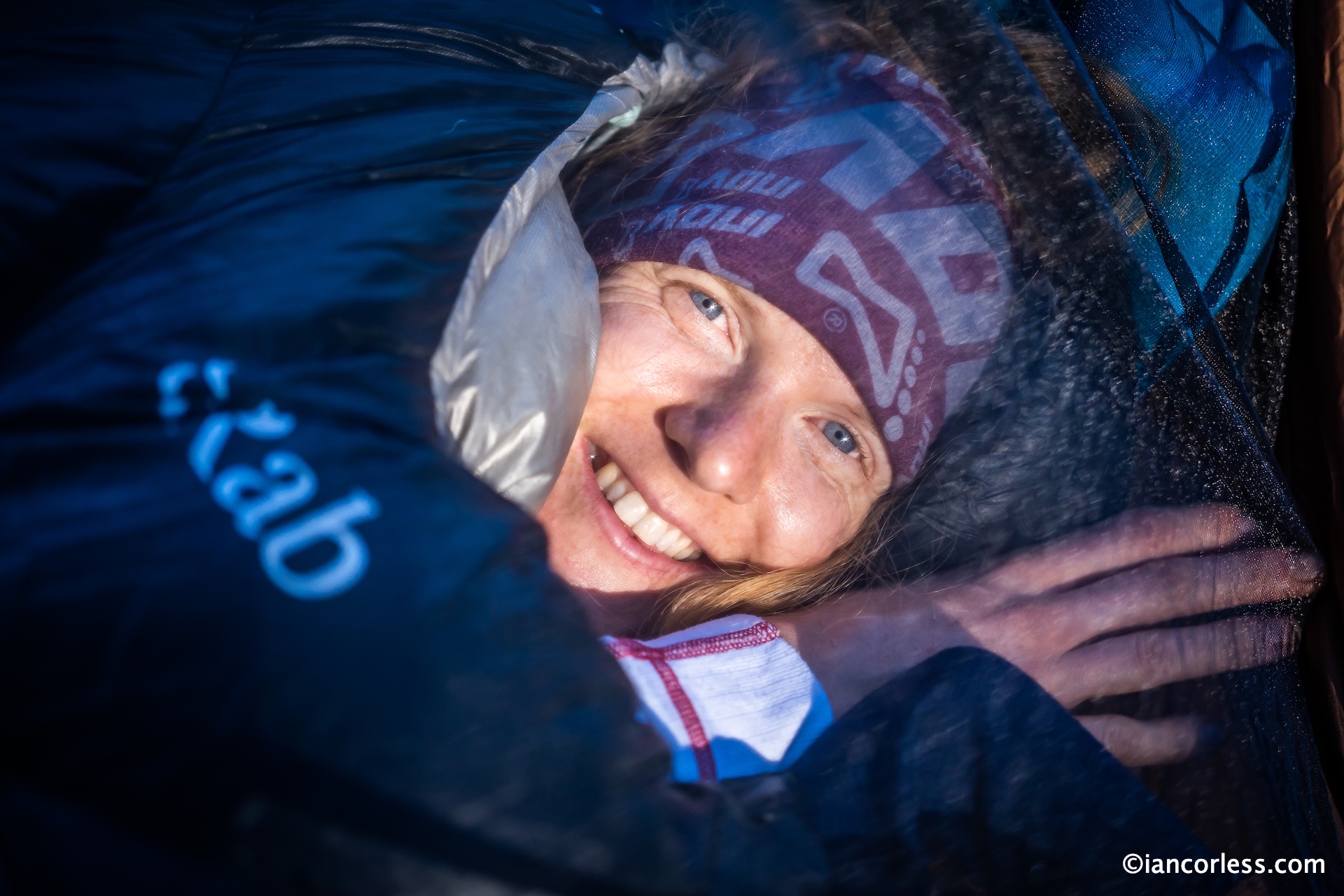
An overnight fastpack in February and I was camping in -18 degrees on snow in a small one-man tent. The Mythic Ultra 360 with a comfort rating of -8 was not going to be enough for a cold night, however, I had planned accordingly carrying Merino base layers, down pants, and down jacket. When all combined inside the Mythic Ultra 360 I was cozy warm. This was an extreme test of the 360 and importantly, I think it’s important to understand how layering is an important element to the use of any sleeping bag. It offers incredible flexibility.
But the true test of the 360 has come on regular trips in Autumn and Spring when the temperatures are hovering around +5 to -5. In these situations, the bag has performed flawlessly providing low weight and incredible warmth all in a small package. The groundbreaking TILT really does perform and as mentioned earlier, it’s like adding a space blanket inside the bag. It’s heat reflective and therefore increases the internal warmth for minimal extra weight.
I consider the bag a game changer for its weight v performance but of course, this comes at a price. Expect to pay around £700 for this technology.
Using 7D ripstop nylon, TILT and excellent design, the Mythic Ultra 360 has been the most comfortable bag I have ever used. One would potentially think that just 360g of down would not be enough, especially for a -8 bag, but that is where the technology kicks in and that is why the price goes up. It’s the perfect bag alpinists, adventurers, and runners.
It has boxwall construction and trapezoidal baffles which allows the down to loft reducing cold spot risk. It has an ergonomically designed collar and hood that closes in around the head and neck reducing cold getting inside the bag and therefore allowing the warm air inside the bag no opportunity to escape. An anti-snag zip guard, angled foot box and short zip are additional features.
As you would expect, internal space is compromised, after all, this helps keeps the weight down. So, this may be a consideration, it’s suitable for someone up to 6-foot tall with comfort. After that, it would come down to personal comfort and needs. Shoulder width is 27 inches, hip width 21 inches and the foot width 16 inches.
FEATURES
The bag comes with a large cotton sack so you can store without compressing the down, it is also supplied with a compression dry bag. It has a ½ length zip on the left only. The down is Hydrophobic, so, it can get wet and retain warmth, an important feature. 7D Ripstop fabric and importantly the TILT technology is a USP to boost warmth thereby facilitating lower bag weight. Tested to EN1357:2016 standards, the Mythic Ultra 360 has comfort of -2, Comfort limit of -8 and an extreme limit of -27 (but I wouldn’t want to be in that situation!)
CONCLUSION
This is a high-performance bag and state of the art. If the cost is no problem and you require small size, low weight, and warmth, the RAB Mythic Ultra 360 should be on your list. It’s an amazing bag!
Mythic Ultra 180
At £550 the 180 has all the features of the 360 above and it has the same measurements: Suitable for someone up to 6-foot tall with comfort. After that, it would come down to personal comfort and needs. Shoulder width is 27 inches, hip width 21 inches and the foot width 16 inches.
It also has all the same features including the cotton storage bag, dry bag, 7D ripstop, TILT, 900+ Hydrophobic down and same great construction.
Quite simply, the Mythic Ultra 180 is a stripped down 360 designed for warmer temperatures and thus bringing even lower weight and pack size.
At 400g, it is perfect for racing or fastpacking when temperatures at night are expected to be 0 degrees or above, as such, it’s a perfect bag for Marathon des Sables or similar multi-day adventures. It’s also ideal for Mountain Marathon events and summer alpinism.
All the pros and cons listed above for the 360 are directly transferable for the 180.
FEATURES
The bag comes with a large cotton sack so you can store without compressing the down, it is also supplied with a compression dry bag. It has a ½ length zip on the left only. The down is Hydrophobic, so, it can get wet and retain warmth, an important feature. 7D Ripstop fabric and importantly the TILT technology is a USP to boost warmth thereby facilitating lower bag weight. Tested to EN1357:2016 standards, the Mythic Ultra 180 has a comfort limit of 0 degrees.
CONCLUSION
Low weight, amazing warmth and small size, the Mythic Ultra 180 is a bag for warmer temperatures when price is no issue and features are paramount. It’s a perfect bag for racing and fastpacking adventures and the Hydrophobic down gives peace of mind in poor weather conditions.
FINAL THOUGHTS
The RAB Mythic Ultra 180 and 360 bags are state of the art and work together with each other offering low weight and warmth for any adventure. I am fortunate to have both and therefore can switch between 180 or 360 based on weather conditions. However, all sleeping bags have greater flexibility when one adds layers. The 360 can be used in much colder temperatures with Merino and down layers. You could argue that this adds extra weight to the overall pack, but, if you are out in in -10 or lower, you will be carrying these layers anyway for day use.
The 180 is a lighter bag and again, adding a layer or multiple layers when inside will increase warmth. A prime example being a race like MDS, many take a very light down jacket for when sitting around, add this inside the bag and the warmth increases.
However, here in the RAB Mythic Ultra, remember the TILT works by reflecting heat, so, one would need to test and try what method provides the best warmth.
Ultimately, if you need a sleeping bag the 180 and 360 offer two great starting points and they should be a consideration.
Please support this website. I believe everyone deserves to read quality, independent and factual articles – that’s why this website is open to all. Free press has never been so vital. I hope I can keep providing independent articles with your help. Any contribution, however big or small, is so valuable to help finance regular content. Please support me on Patreon HERE.
Kristian Aalerud arriving at the first summit at 0500 hours.
The words epic, beautiful and brutal get used a great deal in ultra-running and I get it. For many of us, any journey can entail all those things on a personal level and that is why you toe the line…
However, here in Stranda Fjord, Møre go Romsdal, Norway, one of the most truly spectacular experiences is waiting for you to toe the line.
Missing in 2020 due the Coronavirus pandemic, the Stranda Fjord Trail Race returned with three races, 25km, 48km and the new 100km distance. The latter offering a full and immersive 360 experience of what this magical area of Norway has to offer.
Let’s be honest, Norway as a location is arguably one of the most beautiful places in the world, and as a runner or outdoor enthusiast, the options and possibilities are endless, be that in the south or north.
Stranda, part of the Sunnmøre region, is a small place located on one of the west Norwegian fjords. Often accessed via ferry from Liabygda, it can also be accessed by road from Grodås. In proximity to Alesund, Åndalsnes, Loen and others, it’s a wonderful and magical area to explore.
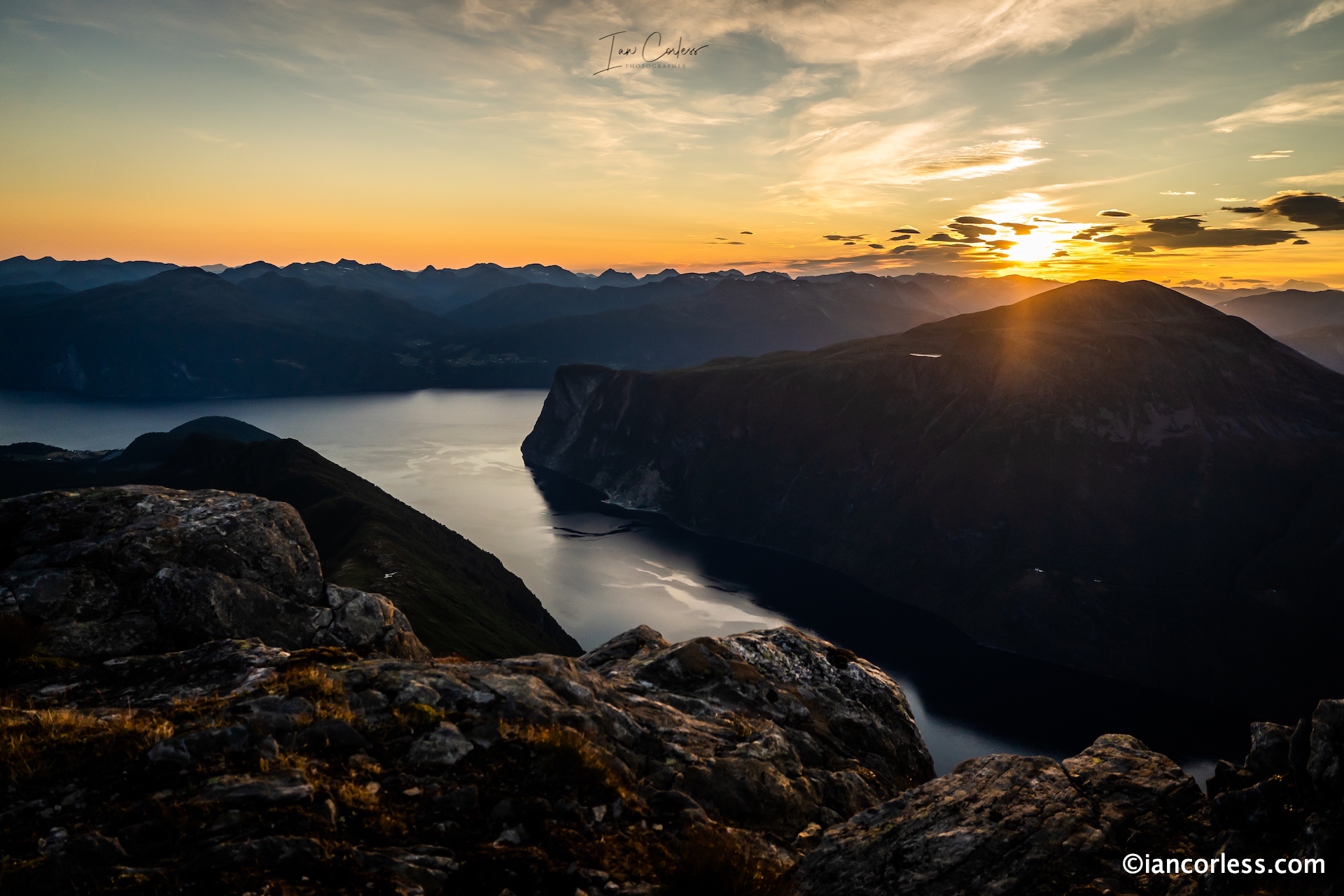
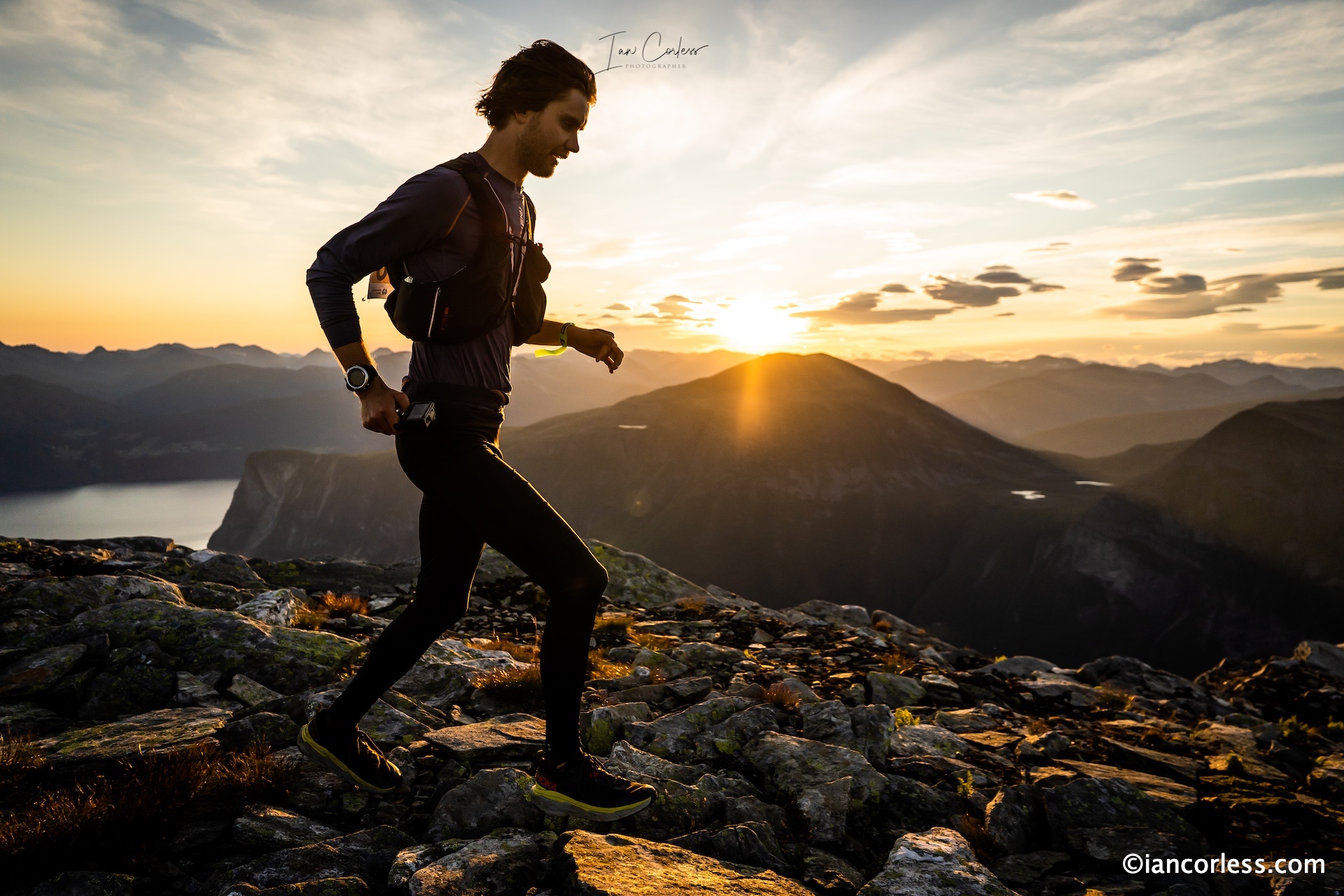
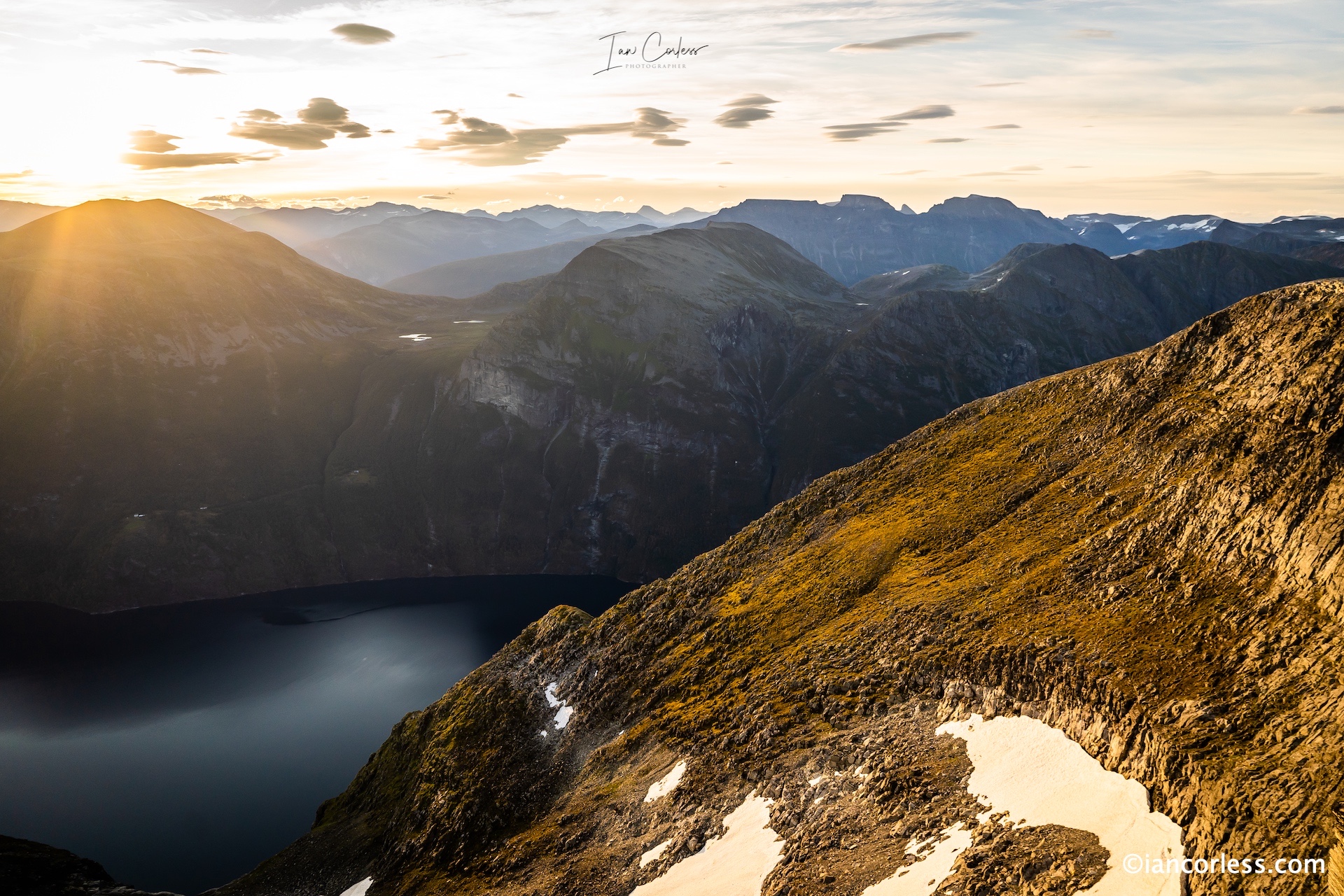
No better place for sunrise!
The 25km and 48km races use much of the opening miles of the 100km route, however, after reaching the summit of Fremste Blåhornet at 1478m they return to Stranda via Heimste Blåhornet, Løfonnfjellet and Rødesthornet. The 25km then concludes in Stranda and the 48km continues for another loop summiting at Roaldshornet at 1230m and then following on to Blåfjellet and Skurdahornet before descending all the way down to the finish line. Both races are tough, challenging, and demanding and should not be underestimated. There is little easy running here, the climbing is hard, the descents can be tricky, and the terrain varies in technicality, at times harsh on the body and mind, the only easy running is in the final sections of road to the finish line. This is reflected in the winning times, Jack Kosky 6:16:21 and Sara-Rebekka Færø Linde 7:14:34 taking top honours in the 48km and Anders Haga and Anita Iversen Lilleskare winning the 25km in 2:31:01 and 3:12:17 respectively.
Øystein Røen
The main event of the weekend, the 100km race. Is for many only a dream. To say it’s tough would not do the course justice, it’s mind blowing in the challenge. Beautifully brutal as one runner said. Offering a 360 clockwise experience of this stunning area of Norway, the Stranda Fjord Trail Race 100km route is quite simply, one of the most stunning routes I have experienced.
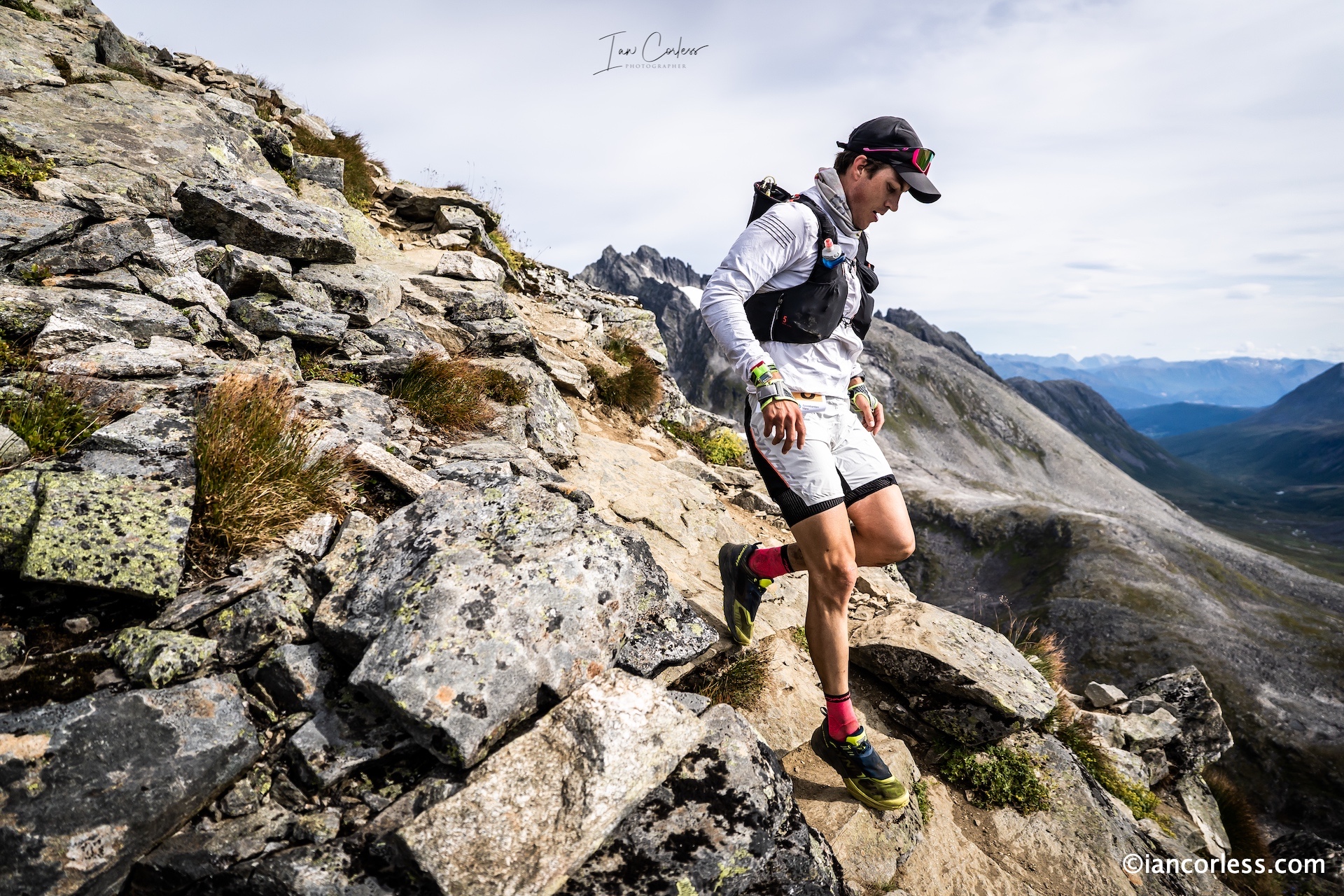
Relentless is the only way to describe. The course does contain some areas where you can switch off and just run, but they are few and far between. The opening miles maybe offering many a false illusion of the severity to come. The hard work starts to really kick in with approximately 20km covered at Liavarden. What follows are walls of grass, rock, scree, stone slabs, technical ridges, vertical climbing and challenging descending.
The race is truly a hands on experience.Linda Hovde had lead the race early on, probably starting to hard.
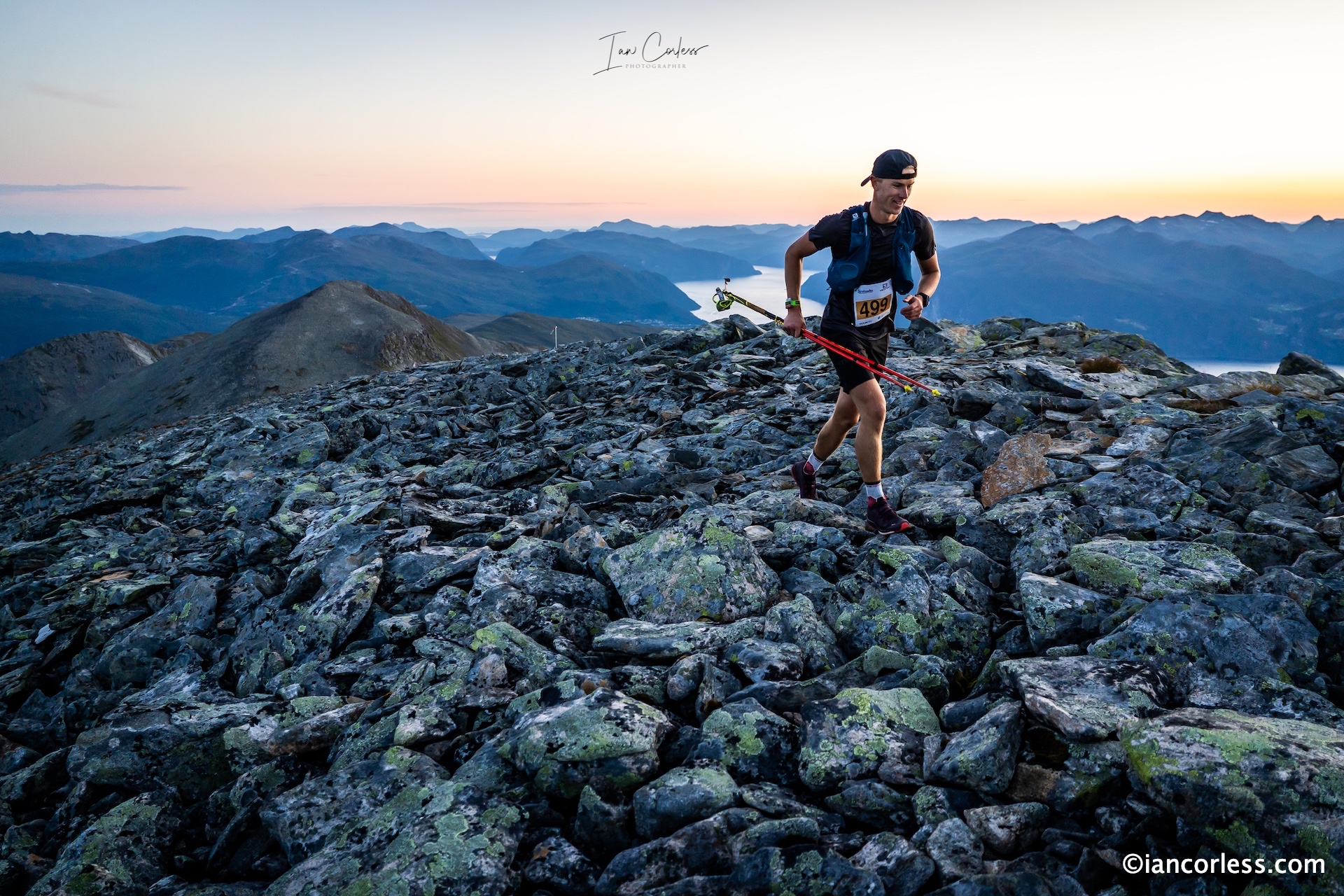
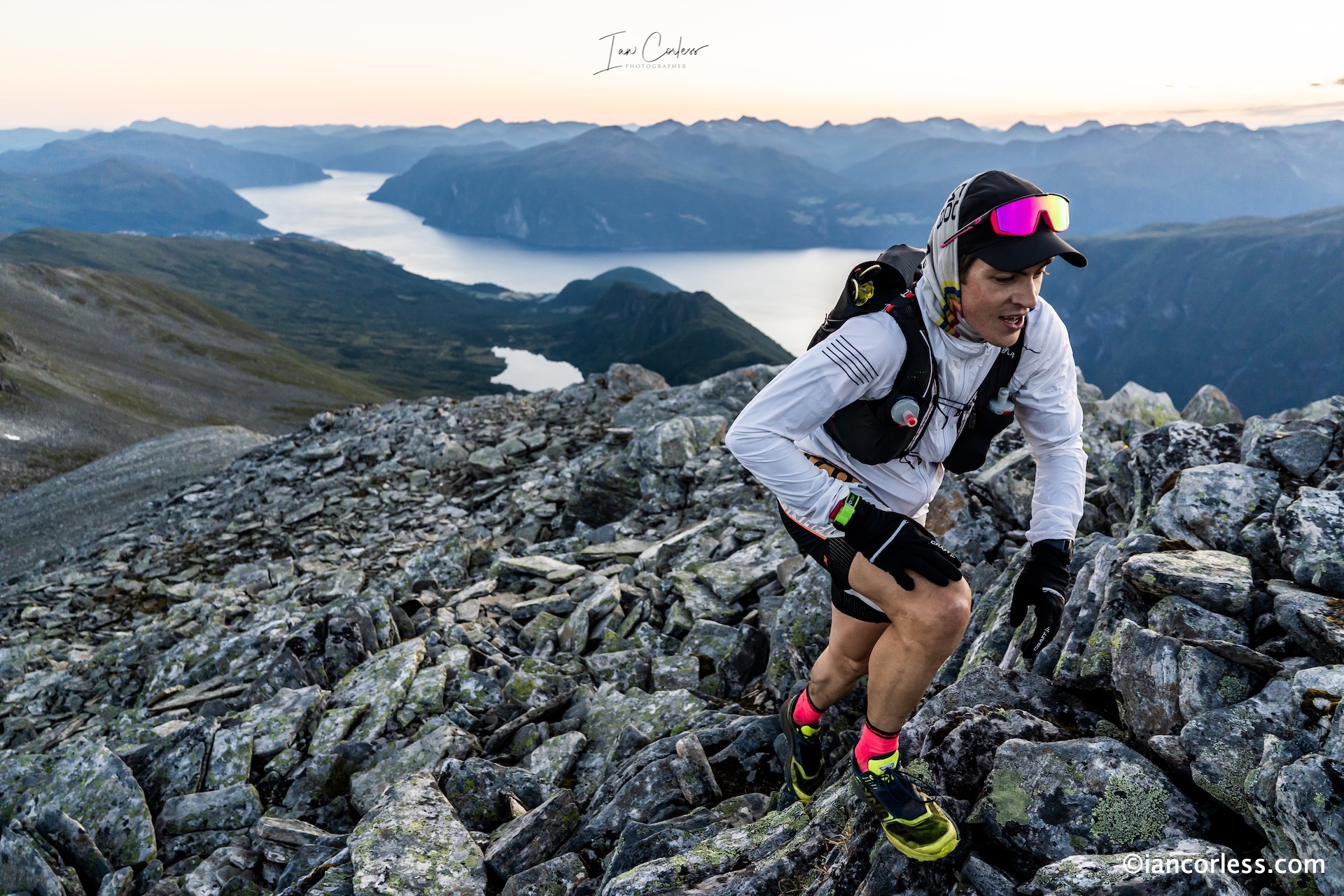
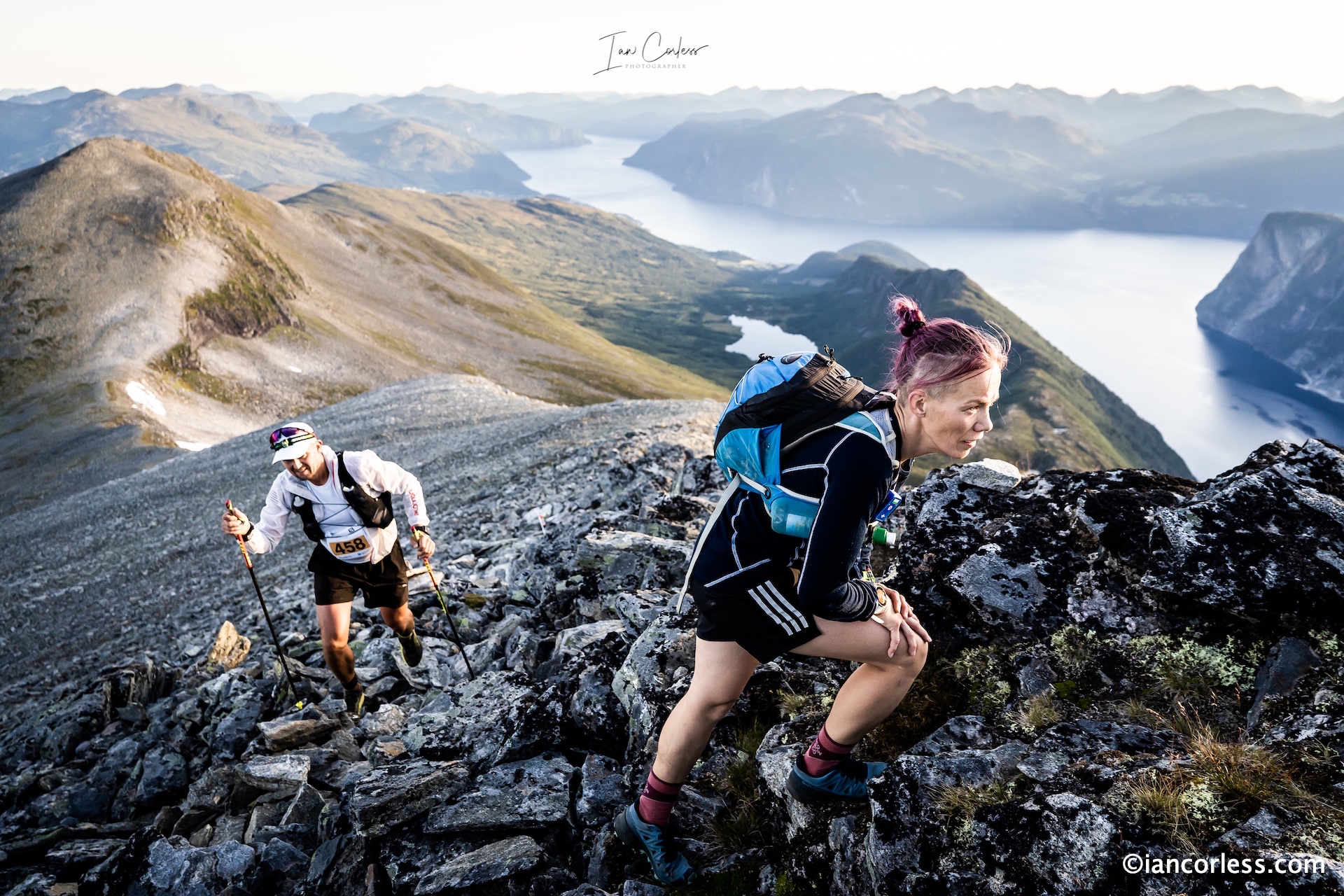
Reaching the summit of Fremste Blåhornet at 1478m, 23km covered, and every runner was under no illusion of the challenge ahead. The terrain rocky, slow and hard, the panoramic views at sunrise quite simple stunning. Following on to Lissje Blåhornet and a technical ridge section offered exposure and scrambling before dropping down to the valley and easier running to the aid station on the road of Dalevegen and 28km distance.
Descending Slogen
A short section of road was followed with more climbing, an out-and-back to another peak and then the Liasætra aid station.
Easy running before Slogen.
Valley running to Patchellhytta DNT cabin and then the relentless out-and-back climb to the iconic Slogen at 1564m. This climb being one of the highlights of the route offers a challenge, especially near the top when hands-on-knee climbing turns to scrambling and easy climbing.
The final push to Slogen summit.The view from Slogen.
The summit offering a stunning panorama but there is little time to enjoy the view. Descending via the way you came, eventually you turn left in the valley and make your way to Velleseter, Brunstadsætra, Storevatnet, and then the road section that leads to the final section of the course, 80km covered.
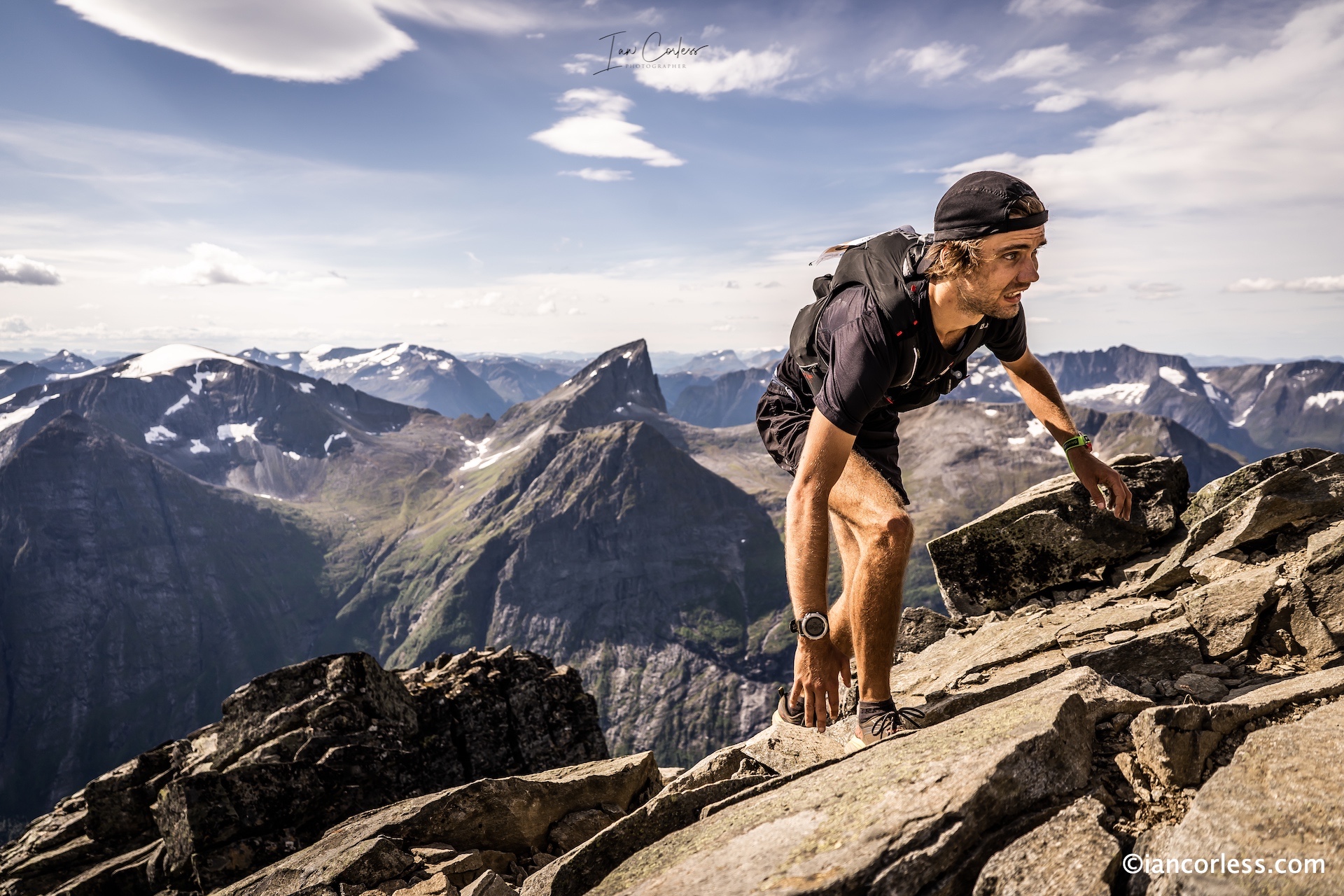
Felix Weber approaching Roaldshornet.
The climb to summit Roaldshornet at 1230m is long, the summit at 86km and it would be easy to think it’s all downhill from here. Considering what has gone before, it’s fair to say that it is. Eventually the 100km joins with the final section of the 48km track and the run in to the finish is welcome and hard earned.
Rocks and more rocks.
Be warned, this route is tough!
Kristian Aalerud set a hard pace at the start of the race and while nobody really knew how long this 100km would take, best estimations were 17-hours for the winning time. Kristian crossed in 15:49:31. A spectacular time.
Øystein Røen for much of the day had run in 2nd place, however, Felix Weber moved ahead to take the 2nd podium spot, Øystein settling for 3rd, 17:03:12 and 17:25:38 respectively.
Ida Jahren Herud ran a smart race
Ida Jahren Herud ran a smart race, easing in to the day and eventually taking over the lead to finish in 22:25:12. Linda Hovde had lead the race early on, probably starting too hard she slipped down the field and eventually finishing in 28:29:34 in 2nd place. They were the only two women to complete the course!
In total, 20 completed the distance reflecting the severity of the challenge. It’s also important to note that the start list was drastically reduced to ongoing restrictions from the Covid pandemic.
One thing is for sure, running 25km, 48km or 100km in this area of Norway is not easy, ask anyone who toed the line of the respective distances.
There is something truly magical here, I can only encourage and emphasise that you ‘need’ to add Strand Fjord Trail Race to your bucket list.
Beautiful and Brutal!
You will not be disappointed with the experience of racing here, BUT come prepared, you are going to earn that finish medal.
Please support this website. I believe everyone deserves to read quality, independent and factual articles – that’s why this website is open to all. Free press has never been so vital. I hope I can keep providing independent articles with your help. Any contribution, however big or small, is so valuable to help finance regular content. Please support me on Patreon HERE.
Having avoided Hoka One One shoes since 2012 (long story, but insight here) I was tempted to try the Torrent 2 based on the number of recommendations and discussion telling me that ‘this’ is the least ‘Hoka’ like shoe out there… Basically that meant, less cushioning, less stack height and a more conventional run shoe feel.
I was impressed. The Torrent 2 really was a revelation and over recent months has become a shoe I have used on a regular basis, be that for road, trail, or fastpacking trips. At the time of writing the Torrent 2 review, I was aware of the ‘ZINAL’ and the pre-release articles mentioning that it would be Hoka One One’s lightest shoe with an emphasis on agile and fast. It was shoe designed around the iconic Sierre-Zinal race that takes place in August each year – A fast mountain race that requires athletic speed but mountain ability.
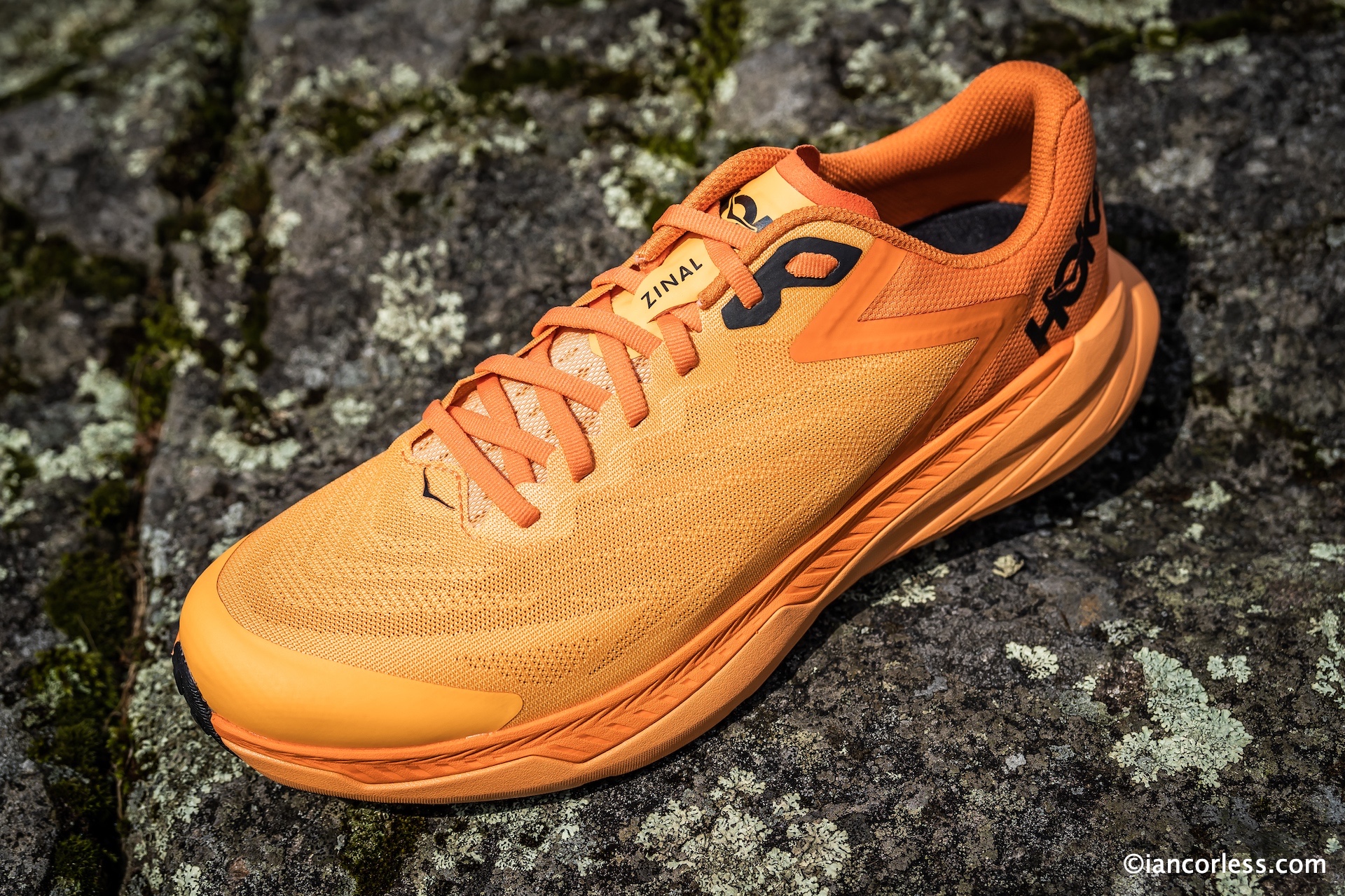
The arrival of the ZINAL confirmed all the PR. Light and low-profile with an obvious intention to run fast but with some comfort.
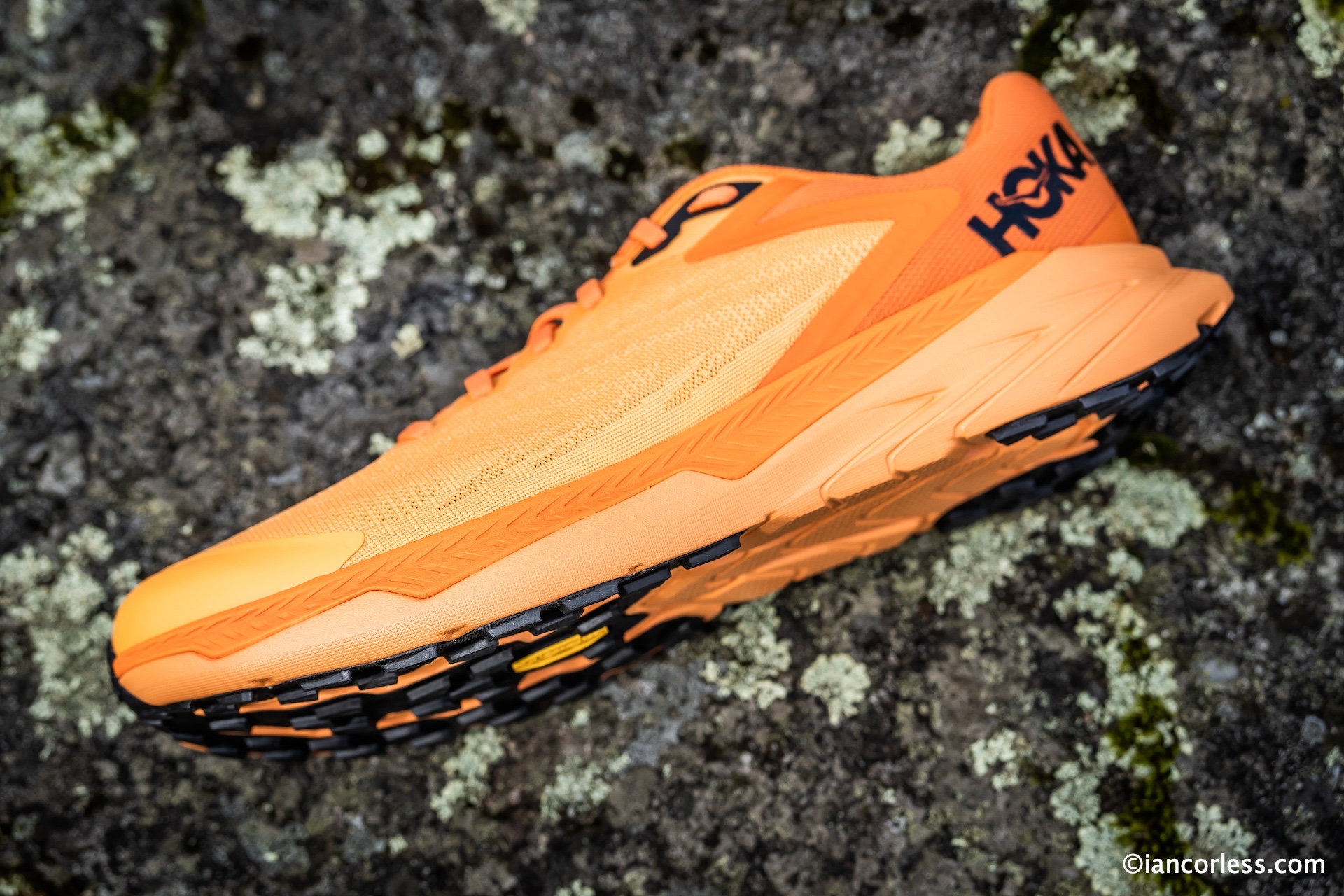
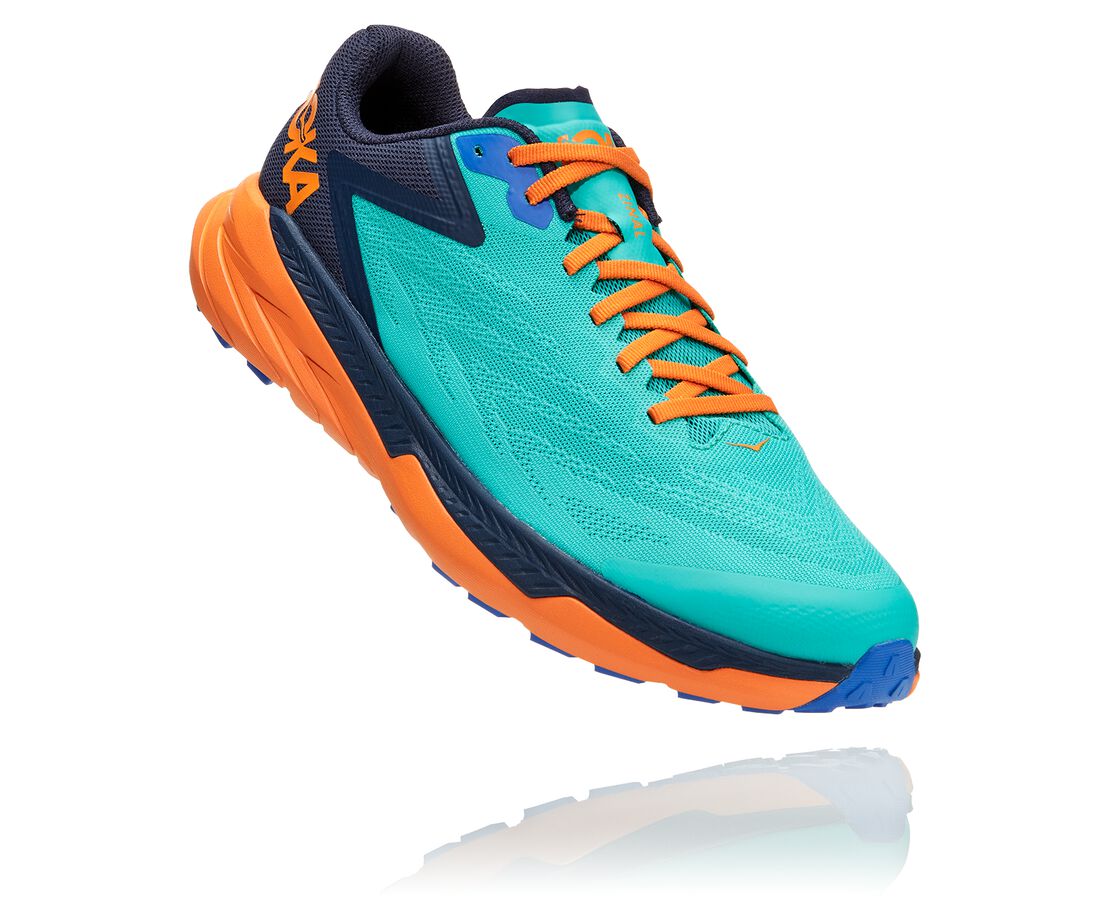
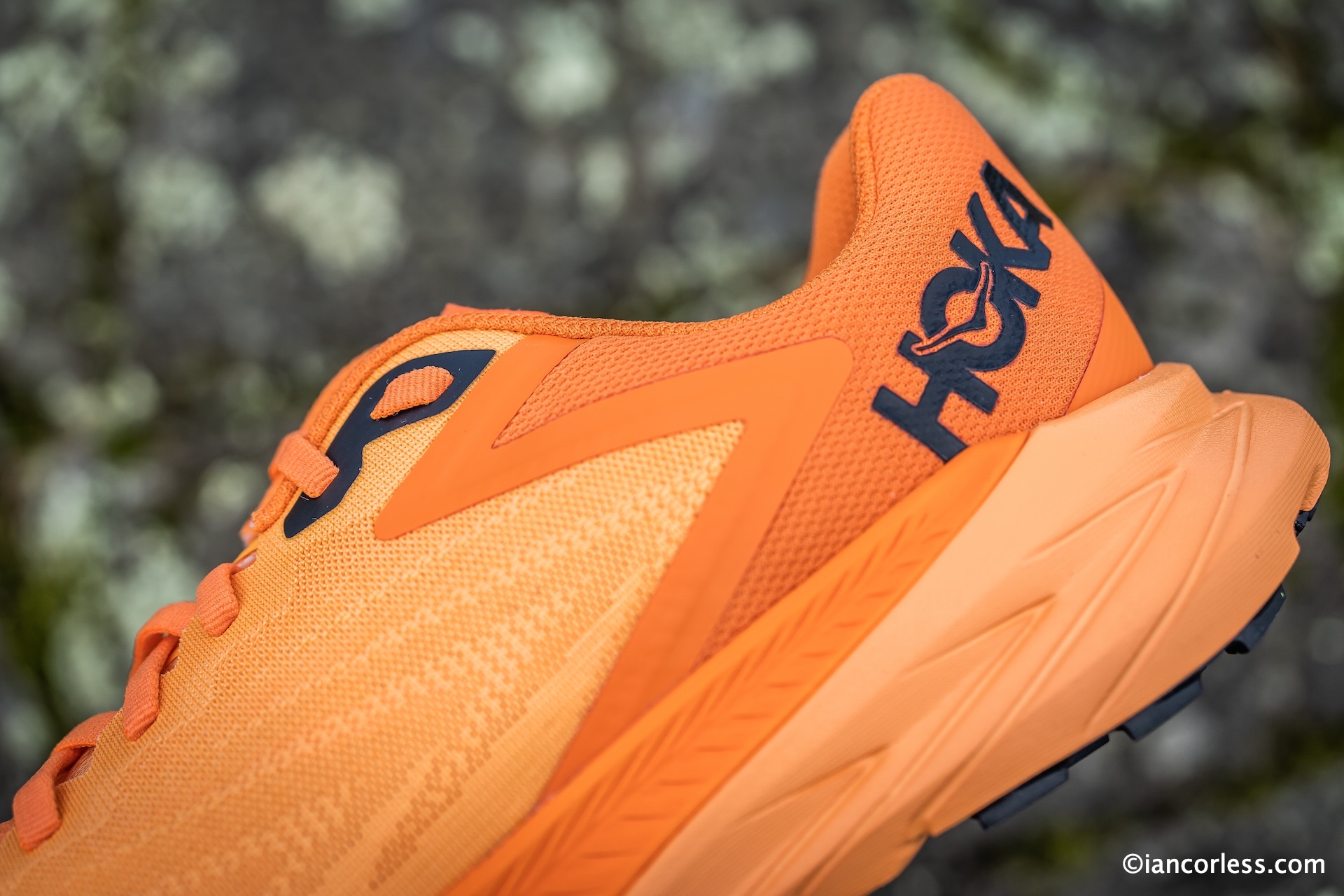
I have to say, the ‘Blazing Orange’ would not be my colour way of choice, but hey, it’s only a colour, the ‘Atlantis/ Outer Space’ option is far more appealing.
Atlantis/ Outer Space’ option is far more appealing.
At £140 the pricing is maybe a little on the expensive side, but in all honesty, run shoes these days all hover around this mark. Using recycled materials and boasting a Vegan tag, the ZINAL also ticks some very important boxes.
THE SHOE
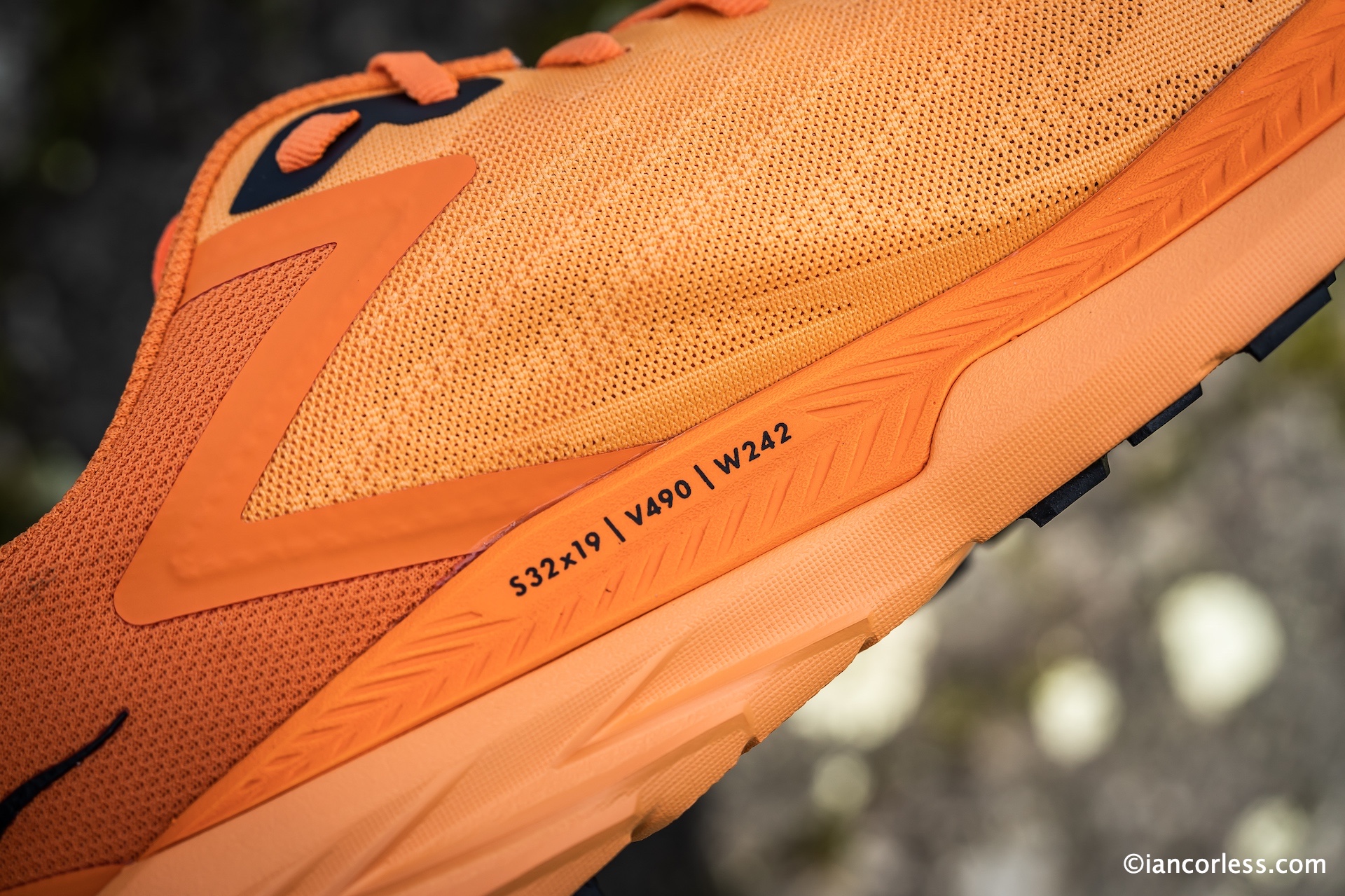
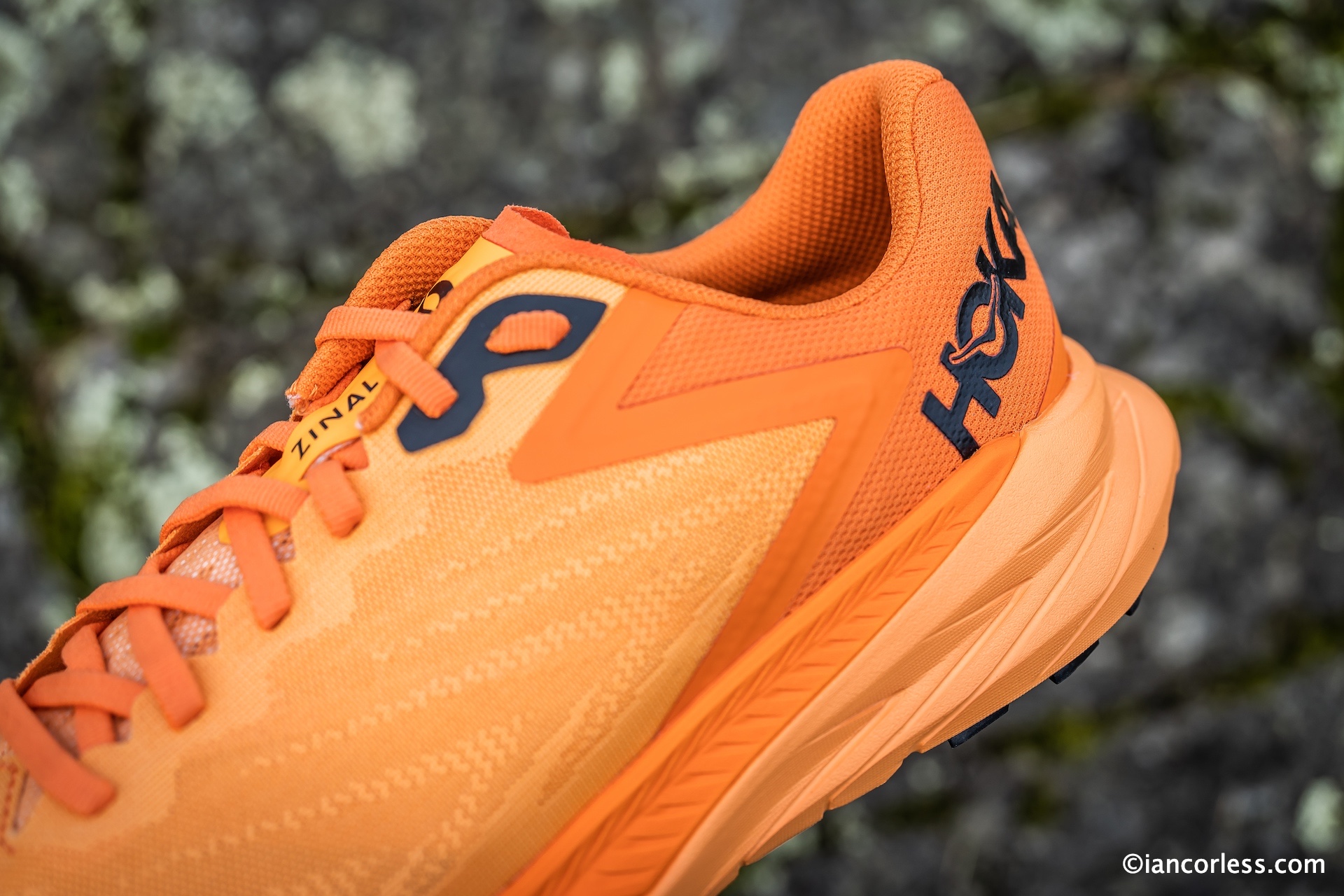
The ZINAL is floaty light with a weight of 242g for the standard UK8/EU42 size. It’s neutral, responsive and has a 5mm drop. The side of the shoe boasts some statistics – S32x19|V490|W242. These stats refer to: Spring Measurement, Volume and Weight. While it’s not new to see stats on a shoe, volume and spring measurement are new on me and while I could understand volume, I did wonder what the spring measurement would mean?
Spring measurement is, ‘Curvature of the shoe, measuring how high the heel and toe are off the ground.’ So, for the ZINAL, this means 33mm at the rear and 19mm at the front. Don’t get confused here with drop, this does not mean a 14mm drop!
Volume relates to the total amount of foam in the midsole.
One would assume that the higher the volume number, the more cushioned or plush the shoe would be, but that is not the case. Here in the ZINAL, the shoe has a lower profile keeping you, the runner, closer to the ground and the cushioning is firmer to provide a more efficient and speedier propulsion in the transition phase. When I wrote about the Torrent 2, the thing I liked and others liked was a firmer ride; less Hoka like, by that I mean less plush and bouncy. Here in the ZINAL that is taken one step farther and the ride is firmer. So, it’s fair to assume that plush ride Hoka fans will find the ZINAL less appealing. Whereas, by contrast, runners who prefer a more conventional shoe who have wanted to try Hoka, will find the ZINAL appealing.
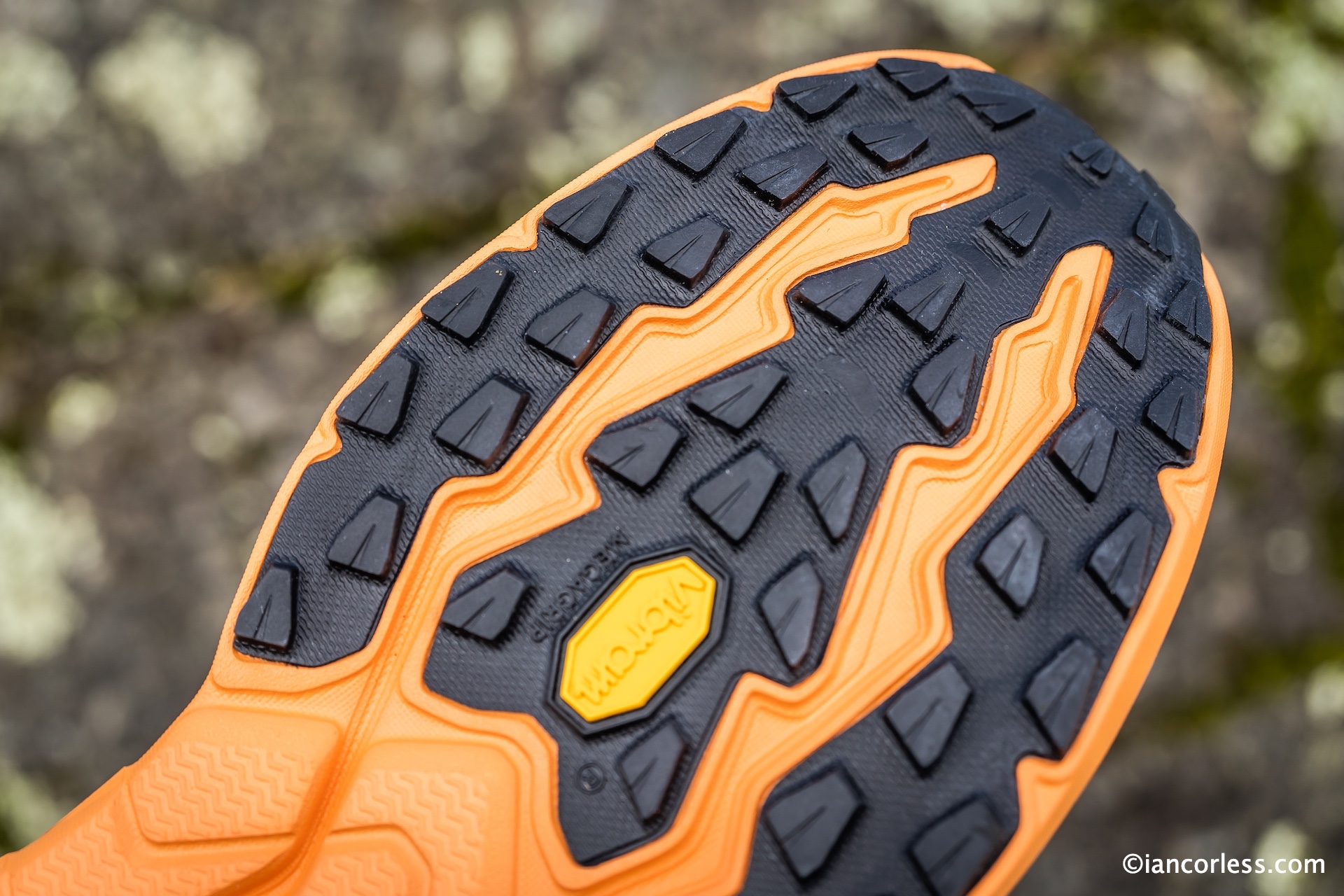
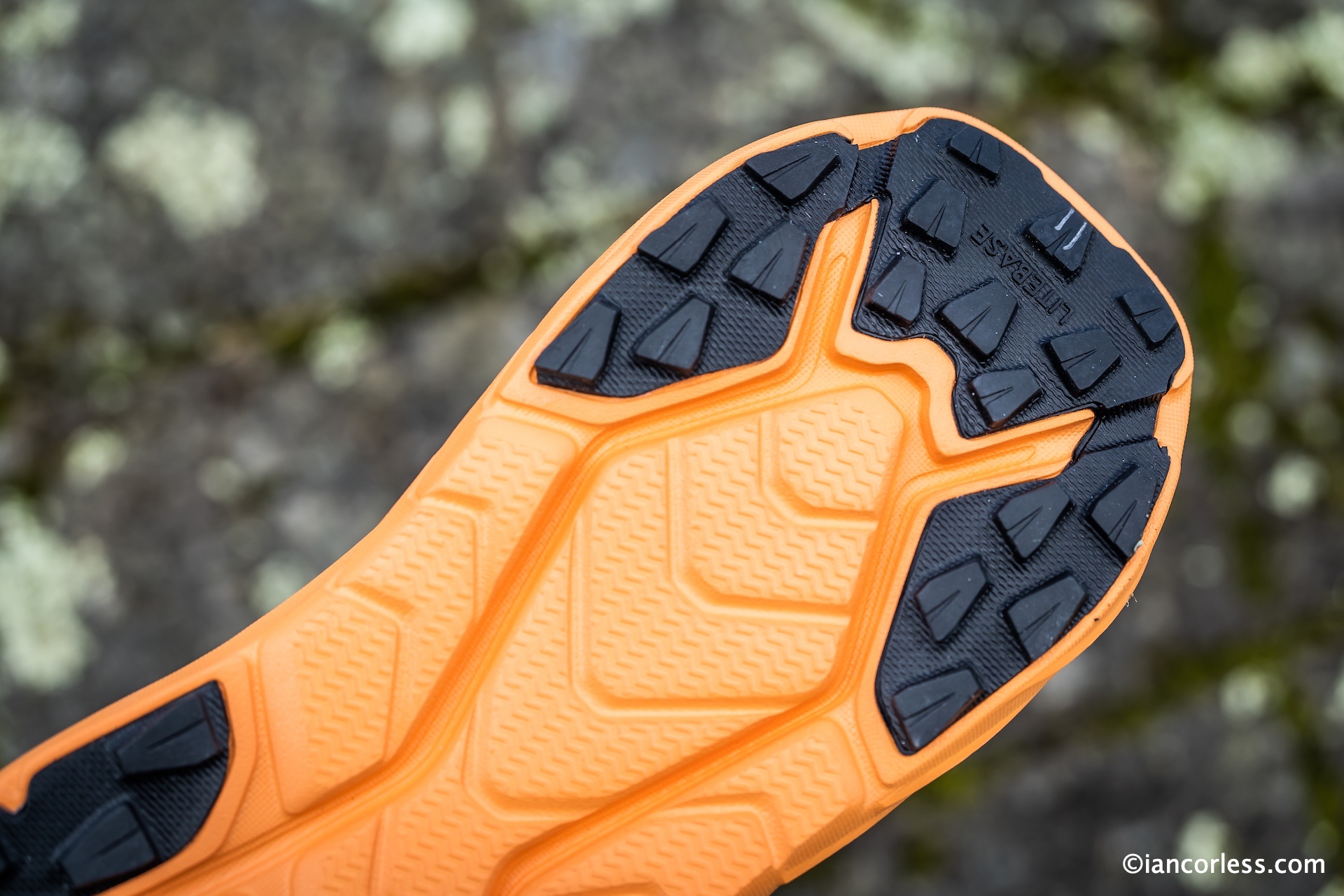
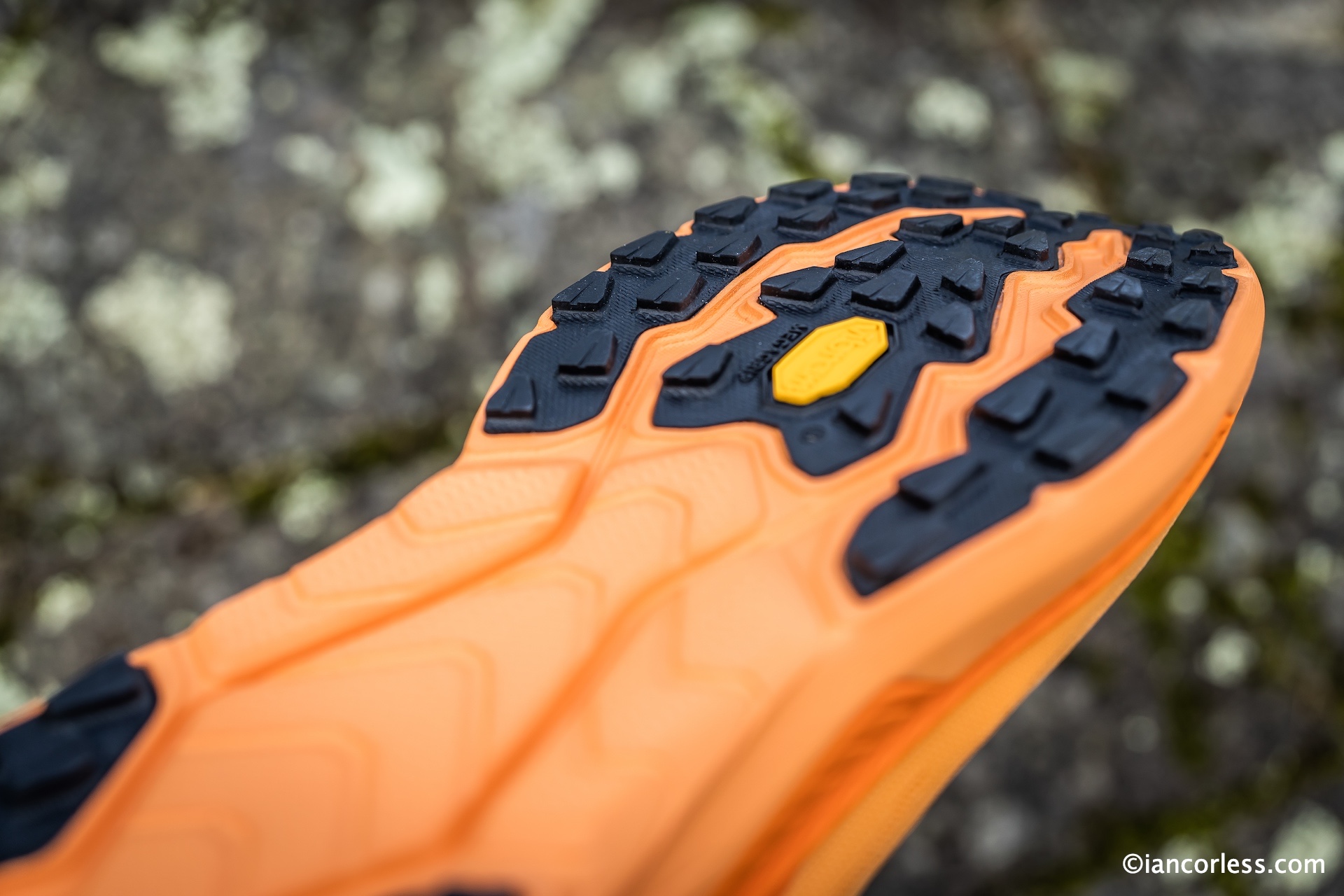
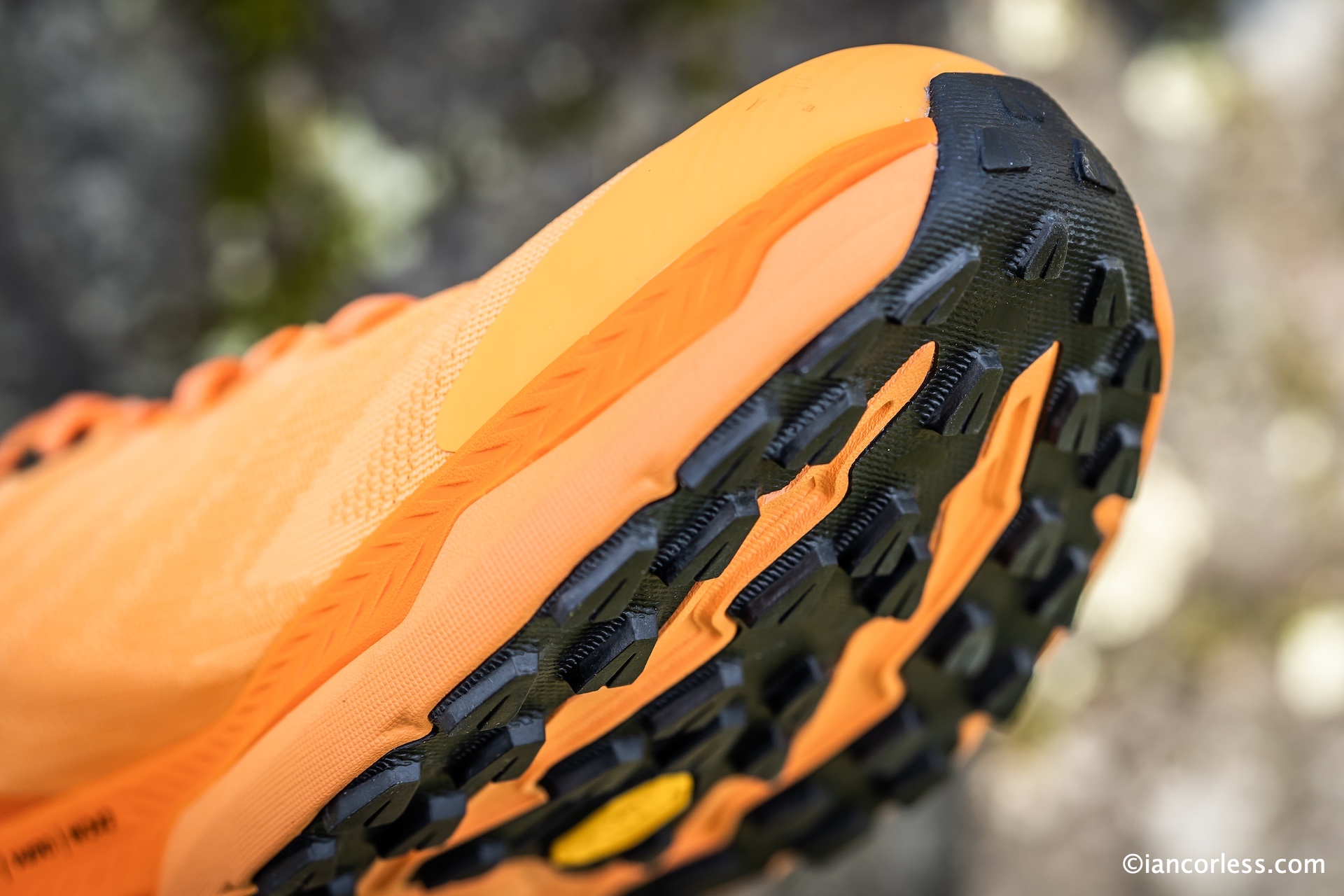
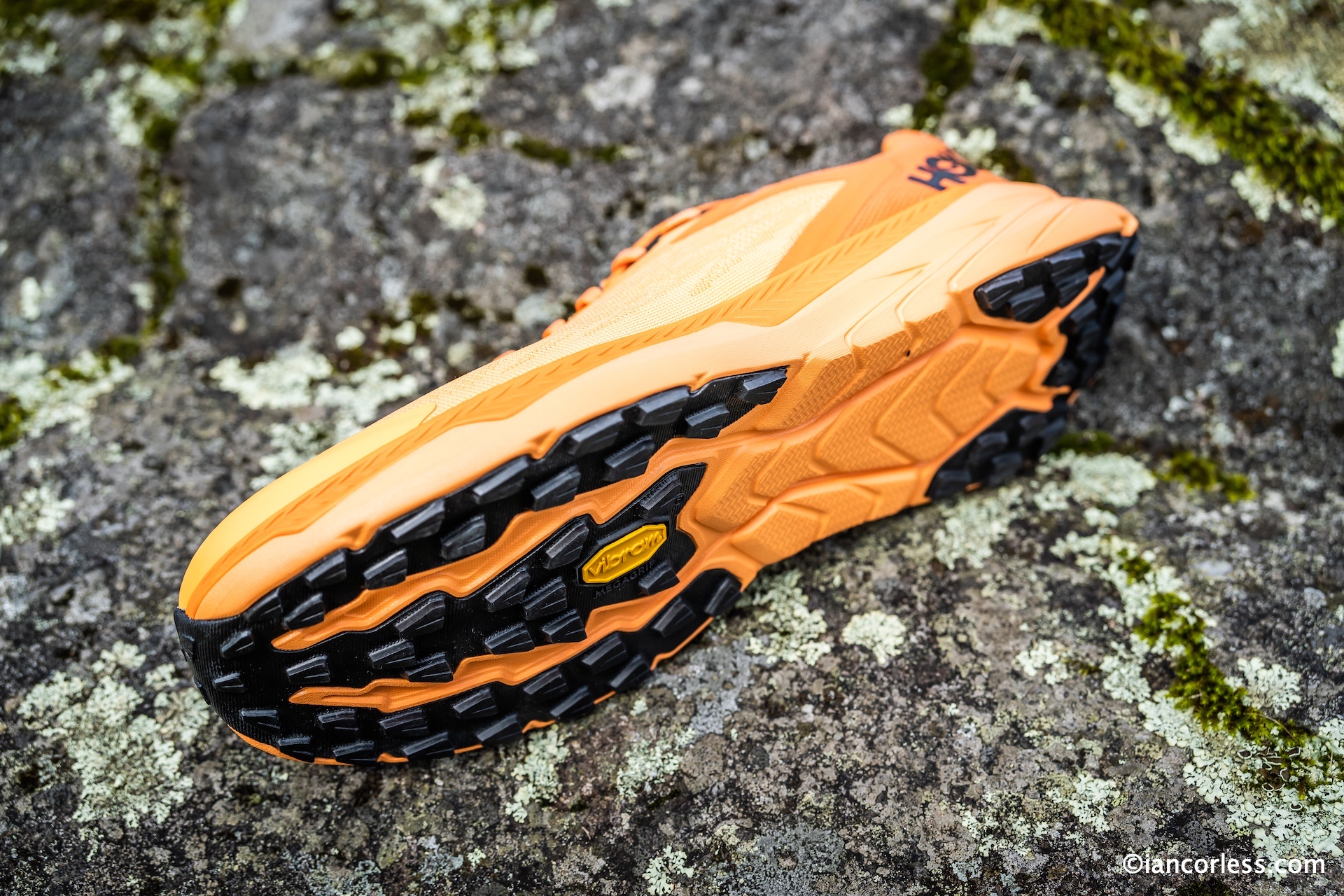
Designed to be minimalist, the ZINAL has very much a race shoe feel. It has enough cushioning and protection from PROFLY but not any extra that would add weight or bulk. Turning the shoe over, this is reflected in the outsole, it has the tried, tested, and loved by many, Vibram Megagrip 4mm lugs, BUT this version does not go the full length of the shoe. It protects the front and the rear. This is called ‘Litebase’ and quite simply it’s lighter because there is less of it.
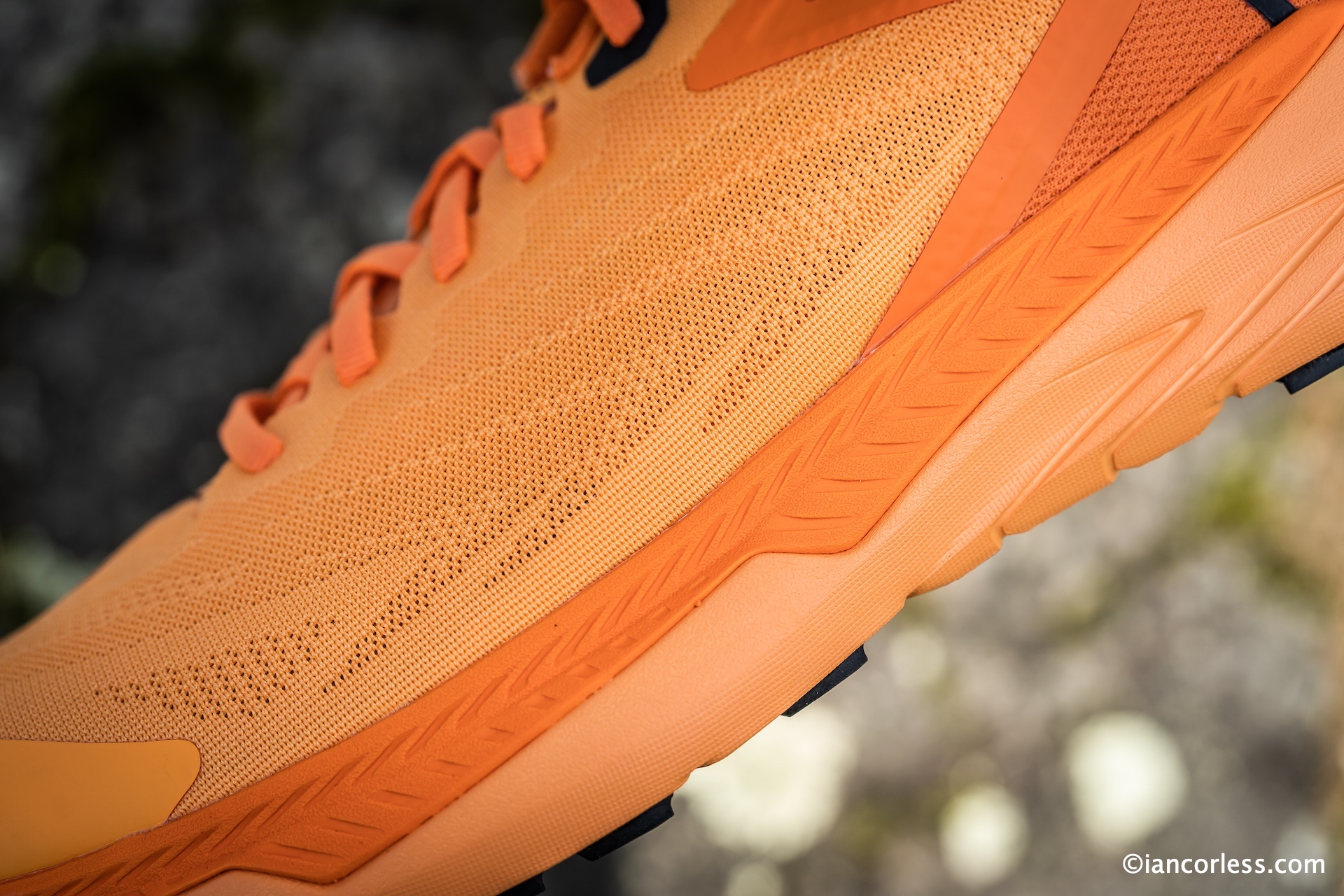
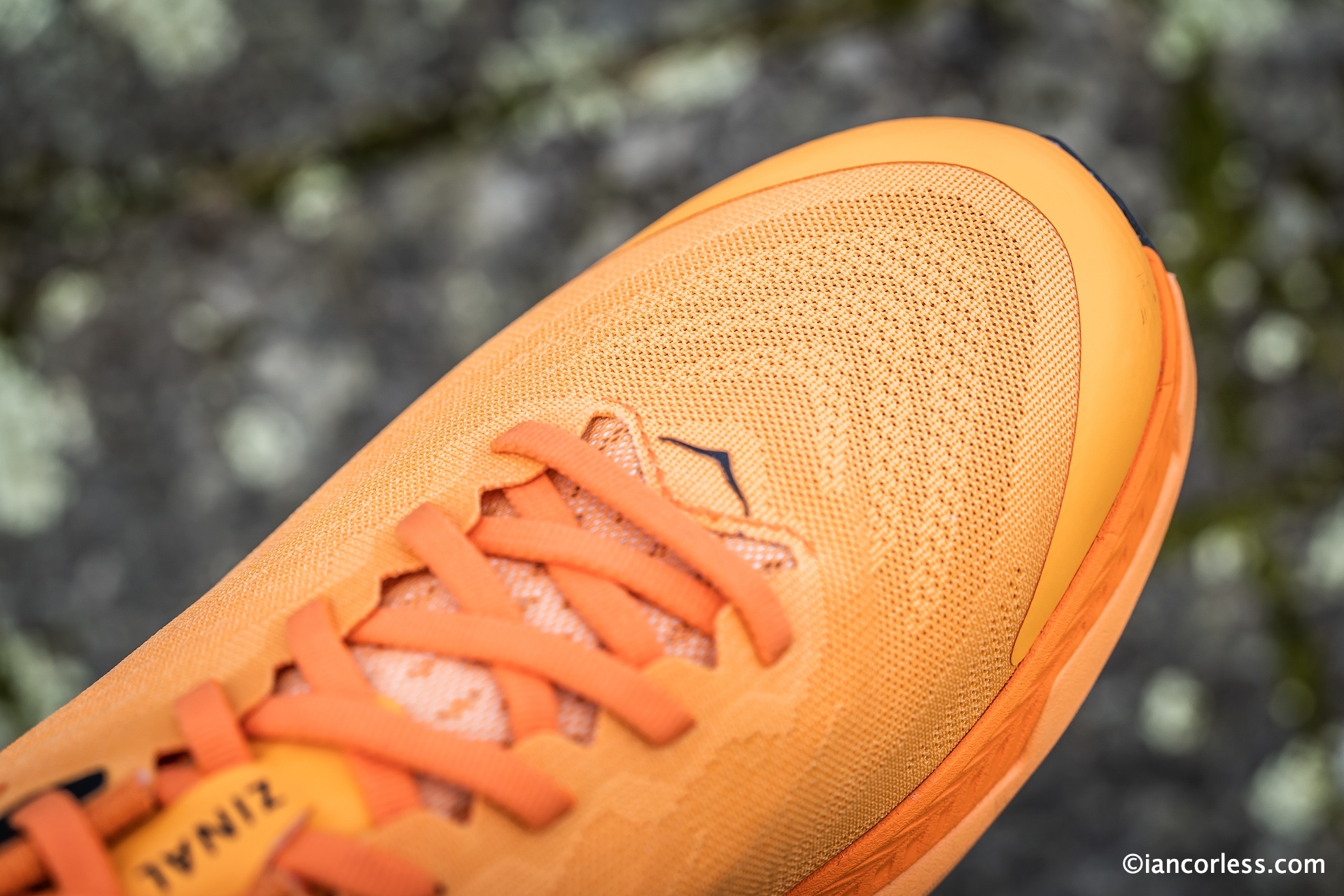
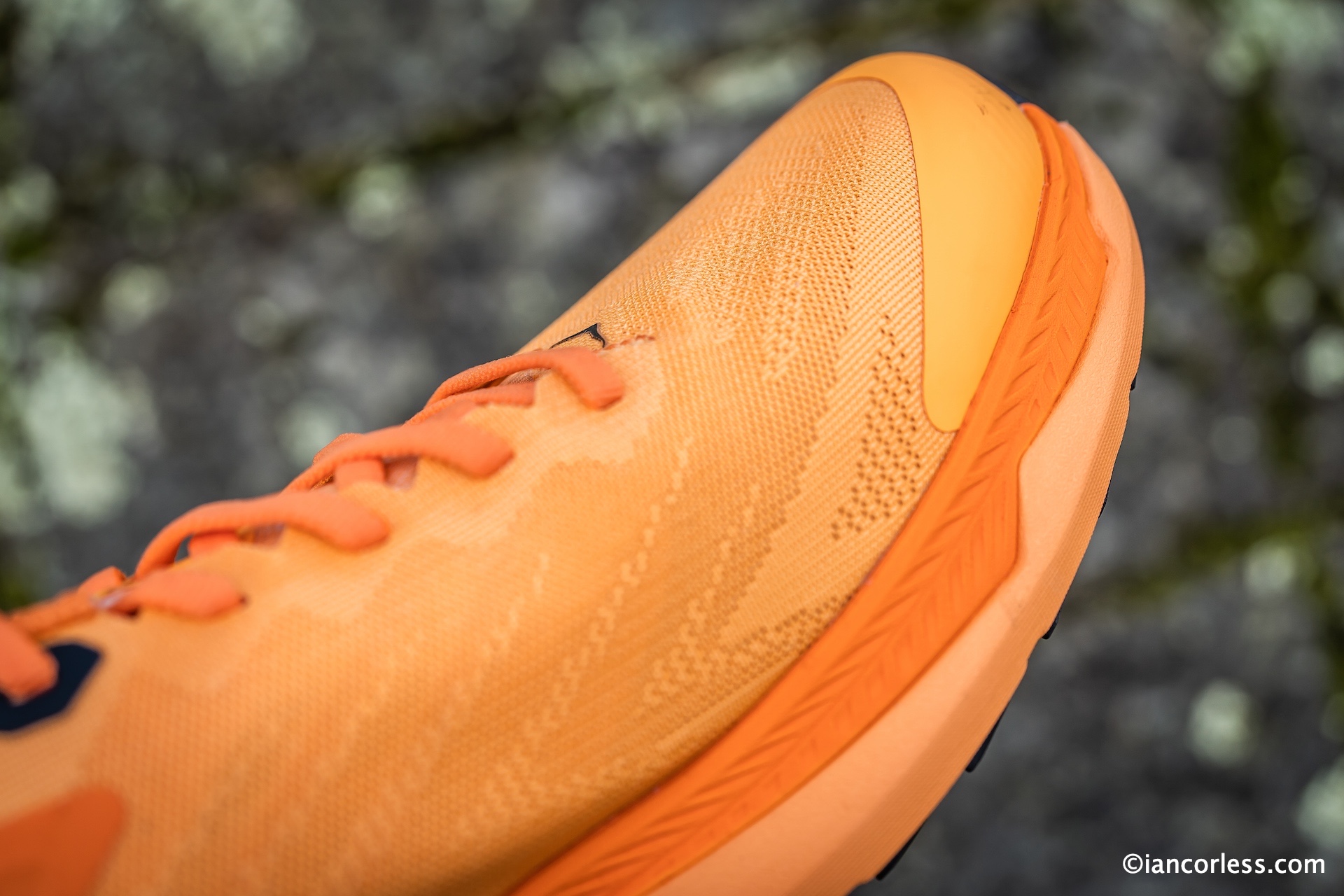
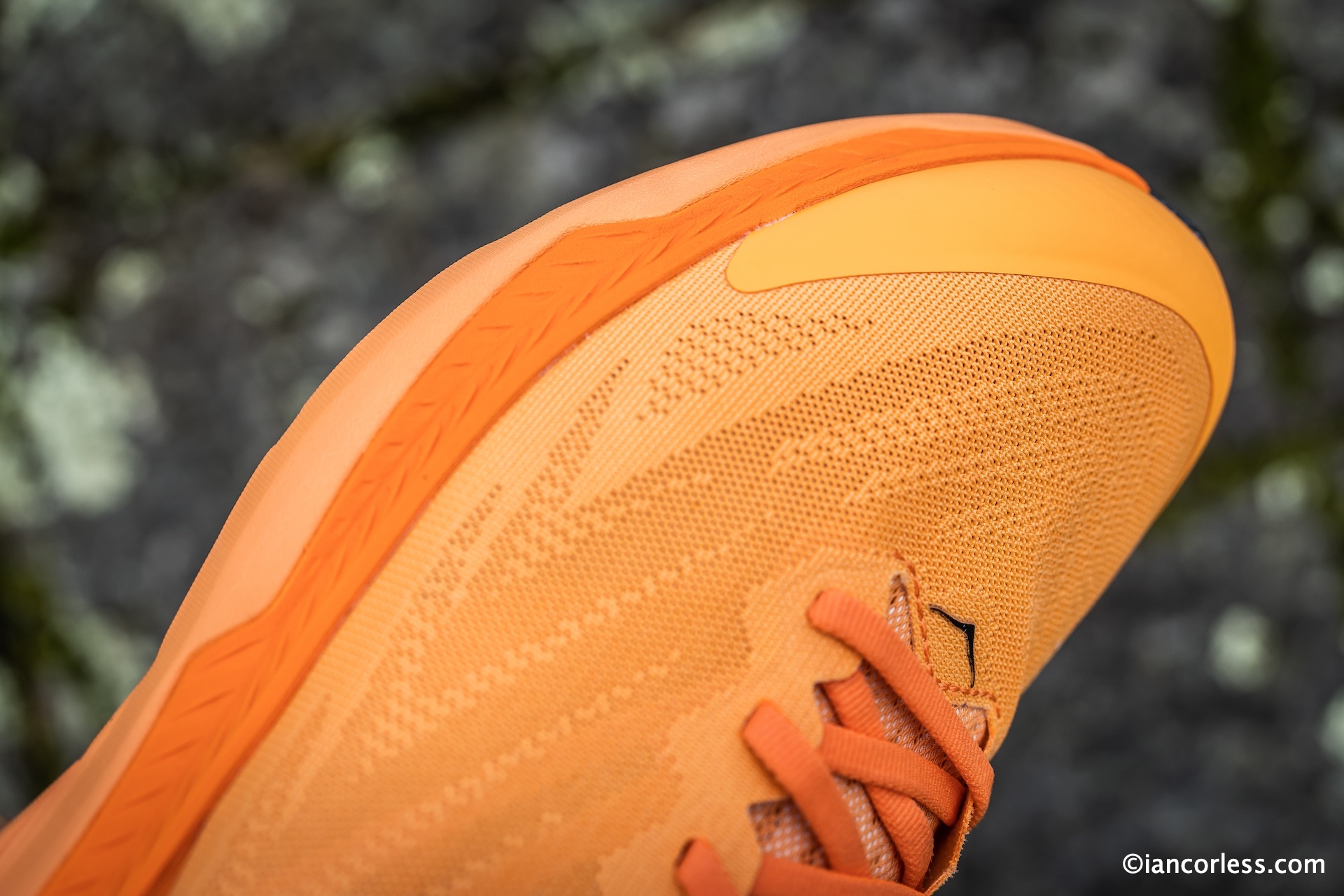
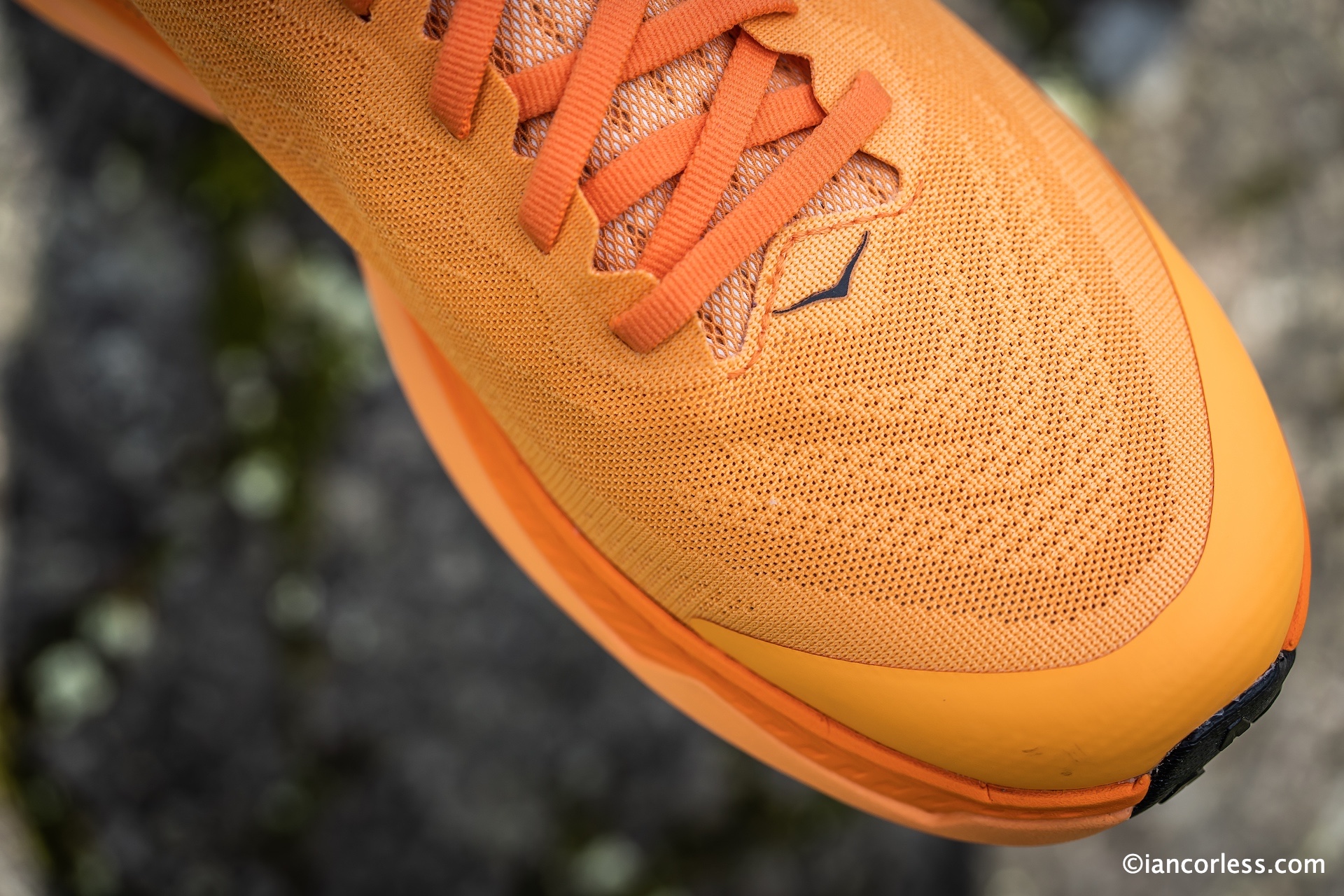
The mesh upper is similar in many ways to the Torrent 2 and is very breathable and light but at the same time durable. Made from recycled content, it ticks the eco box.
Toe box is a 3 on a 1-5 scale, 1 being precision and 5 being wide. For me it’s ideal and in keeping with a faster shoe. There is a little toe protection from a bumper, but it is minimal.
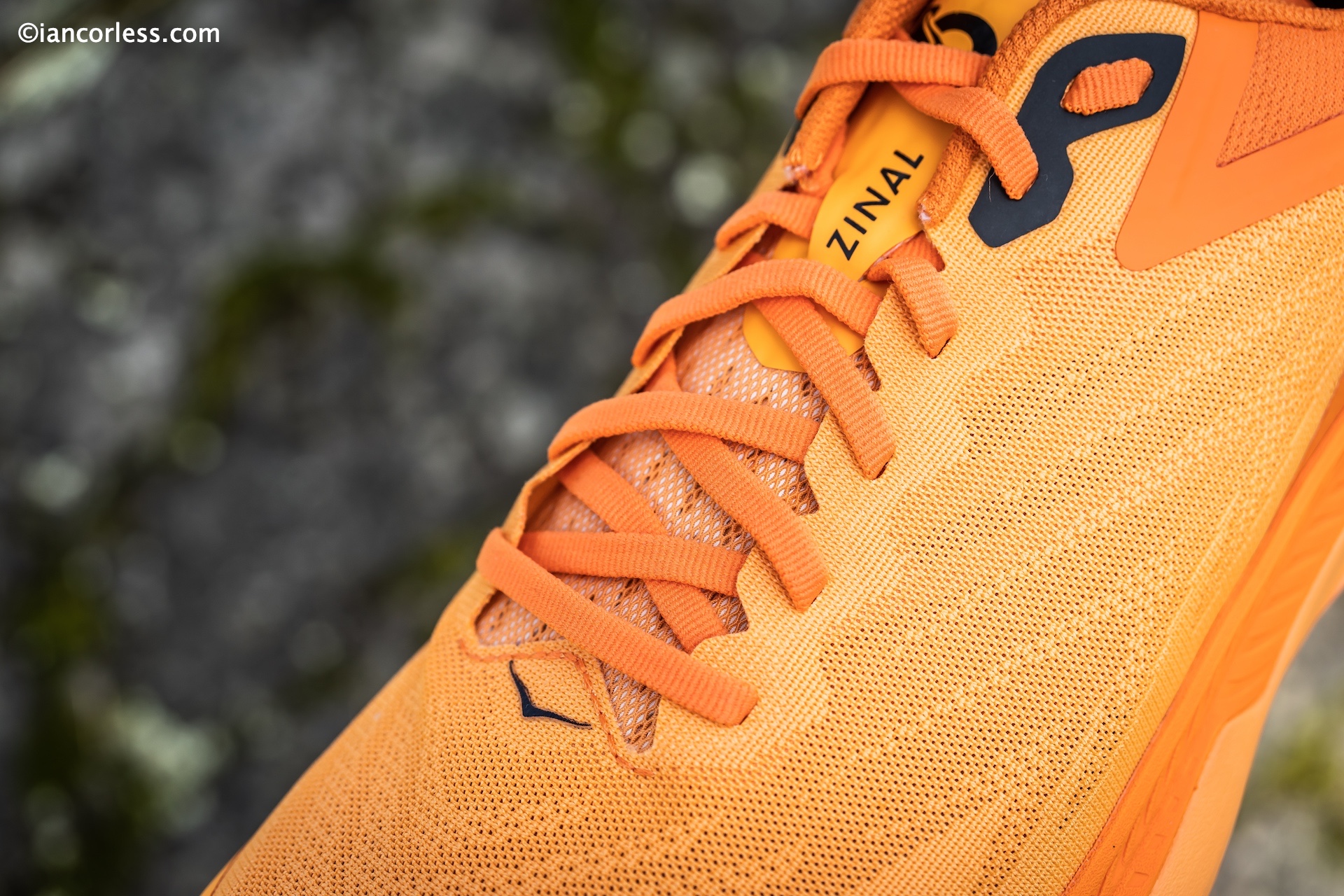
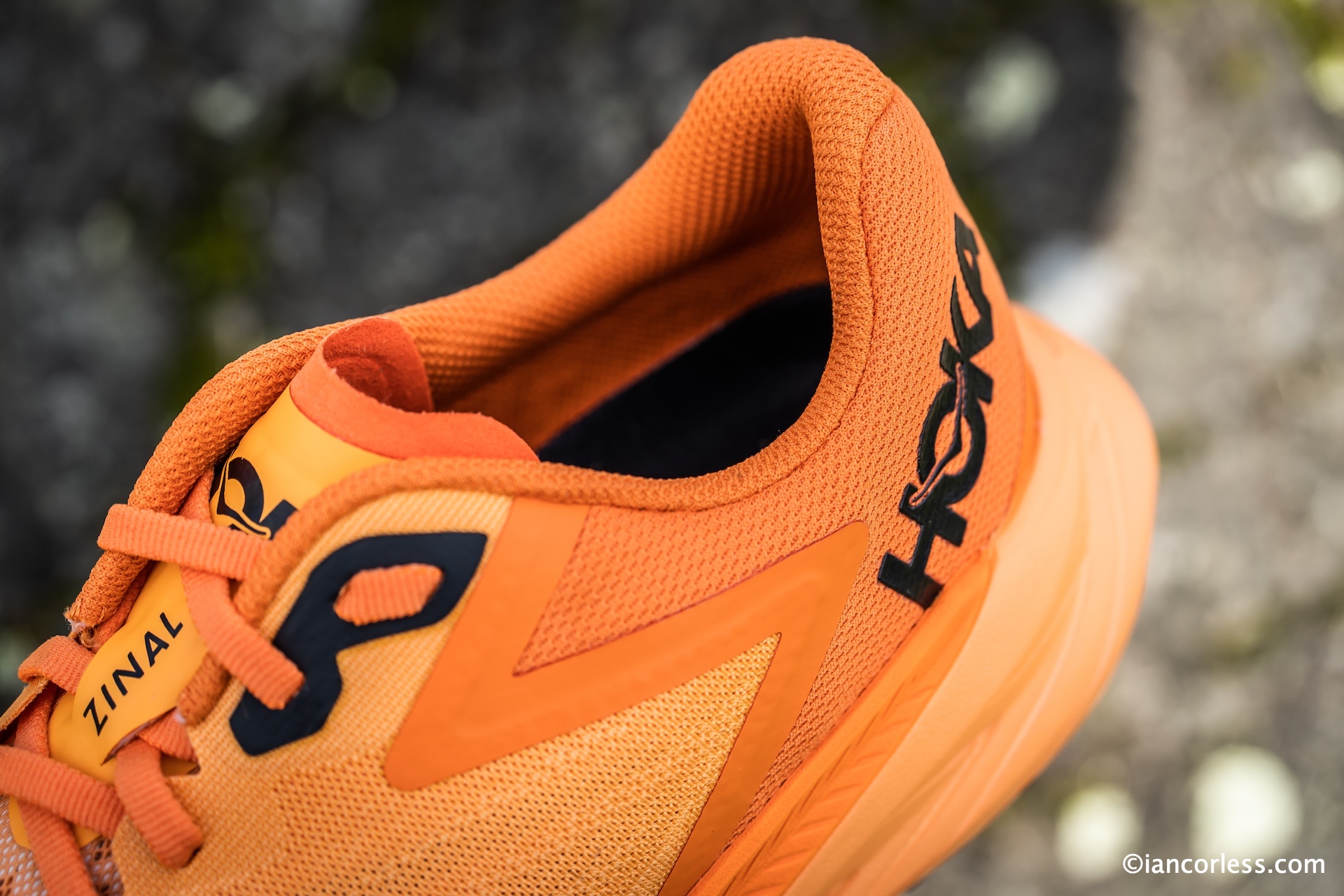
A gusseted tongue and molded EVA sock liner give a nice firm hold of the foot around the instep which for me is very important, especially when running faster on trails. You want the shoe to hold you with little or no unwanted movement. The heel box is snug and secure.
IN USE
Sizing for me was true to size, I use an EU44/ UK9.5 for all my shoes and the ZINAL slipped on perfectly, however, they do fit different to the Torrent 2 by way of comparison. There seems to be just a little extra length. So, make sure you try them on, a 0.5 size smaller may possibly be better for you?
The low stack height is obvious immediately, and they feel like a normal cushioned shoe, considerably less Hoka like.
The upper is noticeably durable but light and breathable. At times I felt as though there is a little too much shoe, almost too much fabric. It’s hard to pinpoint, but all shoes fit differently and here in the ZINAL I felt there was more internal shoe volume, particularly in comparison to the Torrent 2.
The sock liner and gusseted tongue work well and pulling the laces tight, they give a secure and firm hold of the foot. For me, based on the comment above, I tightened my shoe a little more than normal, however, I did not have the need to lock lace – gladly the additional eyelets are available should that be required.
The tongue is protective but minimal.
The outsole as mentioned has 4mm Vibram Megagrip lugs which are tried and tested, but they are only at the front and the rear of the shoe. The middle of the outsole has no protection or grip and therefore, if running on technical trails such as tree roots or rocks, this can be noticeable as often the whole grip of an outsole can be required, so, this is a consideration. Most definitely, the ZINAL is designed for fast running on trails (and even road) of a less technical nature, just like you would see at the Sierre-Zinal race. When running faster with a mid to forefoot strike, the ZINAL works wonderfully and the Megagrip does its job just as you would want and expect.
The PROFLY cushioning is firm, and noticeably firmer than the Torrent 2. On my first run, I was surprised at how firm this shoe felt. But, when you pick up the pace, that firmness kicks back and propels you forward in the propulsive phase. This is just like how carbon works in carbon shoes – you get nothing for free, the speed and extra propulsion comes from you investing in the shoe with energy and cadence. The spring measurement on the side of the shoe, 33×19, I am still not sure what it means and how I equate those measurements to the feel of the shoe when running? Again, by way of example, on the Torrent 2, this figure was 33×16.
Volume of the ZINAL V490 and again, by comparison, the Torrent 2 is V395 – I have some confusion here as my understanding of shoe volume related to the following: “If your foot has a medium to wide width and/or a high arch, you have a high-volume foot. If you have a narrow, slender foot and a flat arch, you have a low-volume foot.”
I do wonder sometimes that we can be given too much information. The volume and spring measurement are new on me, and I have been testing shoes for 10-years. I have never worried about these measurements but now I have them, I want to know what they mean and how I should read them so that I can relay back to you…. It’s left me perplexed. Am I over thinking it? Ultimately is the shoe good? Is it fast? Is it light? Is it responsive?
Spring and volume confusion aside, the ZINAL is light and responsive with an excellent ground feel and the 5mm drop works well with the shoe’s intentions. It’s a shoe that wants to go faster and most certainly, the faster you go, the better the shoe feels.
Based on the above, for me, the ZINAL is not an everyday shoe. It’s a shoe for those faster tail runs when you want to push the pace, either in shorter training sessions or if doing intervals or hill work. Of course, the ZINAL will excel in trail races (that are not too technical) when long-term comfort is sacrificed for speed. So, for many, this would be a great shoe for up marathon distance. Beyond that, would depend on the runner, their needs, their run style and so many other factors. For example, Hoka One One athlete, Camille Herron, toed the line at Western States 100 in a pair of ZINAL.
It’s too early for me to comment on the longevity of the shoe, I have no reason to think that the upper will have any issues, my Torrent 2 have had 400km+ and are still going well. However, the stripped back outsole by Vibram may well not last as long? If you take the ZINAL on rough and technical trails, I most definitely can see potential issues with the middle of the outsole and its lack of protection. I will feedback on this.
CONCLUSION
The ZINAL is a notable shoe for Hoka One One and a welcome step in a different direction for the brand who has a reputation for plush ride, arguably, the Torrent 2 paved the way. This is a shoe that is designed for fast (faster) running and as such, it’s not an everyday shoe, at least for me it’s not! The cushioning or lack of it (for some) causes me no issues, actually, the ZINAL for me is still one of the most cushioned shoes I am using, many of my other shoes have considerably less.
The outsole restricts the ZINAL use, and it is most definitely a shoe for groomed trail, smooth single-track and road. A good road to trail shoe! It can handle some technical trails, but I do believe that this will greatly impact on the life of the shoe, particularly from the outsole perspective. Avoid mud, it just would not be able handle it!
A fun shoe, a fast shoe, a light shoe that brings a smile to your face when pushing the pace or when racing. But, if you want a shoe with many ZINAL similarities and more flexibility, the Torrent 2 is worth looking at IMO. Ultimately, the Torrent 2 and ZINAL would work well together and for me, I’d have the Torrent 2 as an everyday shoe and the ZINAL for sessions and racing.
Please support this website. I believe everyone deserves to read quality, independent and factual articles – that’s why this website is open to all. Free press has never been so vital. I hope I can keep providing independent articles with your help. Any contribution, however big or small, is so valuable to help finance regular content. Please support me on Patreon HERE.
Can you ever have enough tents? I think the answer, most definitely for me, is no! Recently, I was looking for a lighter, smaller packing 1-person tent. The Nordisk Lofoten answered all my requirements particularly on weight and pack size BUT a compromise was going to be made on comfort, living space and storage space.
A recent purchase of a Big Agnes Tiger Wall UL2 ‘Bikepack’ tent for 2-people has been a revelation – packs real small, has low weight and is just perfect when out on adventure providing incredible space and storage for one person, or a comfortable relaxed space for 2 with excellent vestibules for storage and individual entry for 2.
2 person Tiger Wall UL2 Bikepack Tent
I was so impressed, the Tiger Wall urged me to look at the Big Agnes brand and low and behold I found the new for 2021, Big Agnes Fly Creek HV UL 1. Check out options on Big Agnes. A one person tent with lower weight and pack size but excellent living space has been on my wish list for a long time.
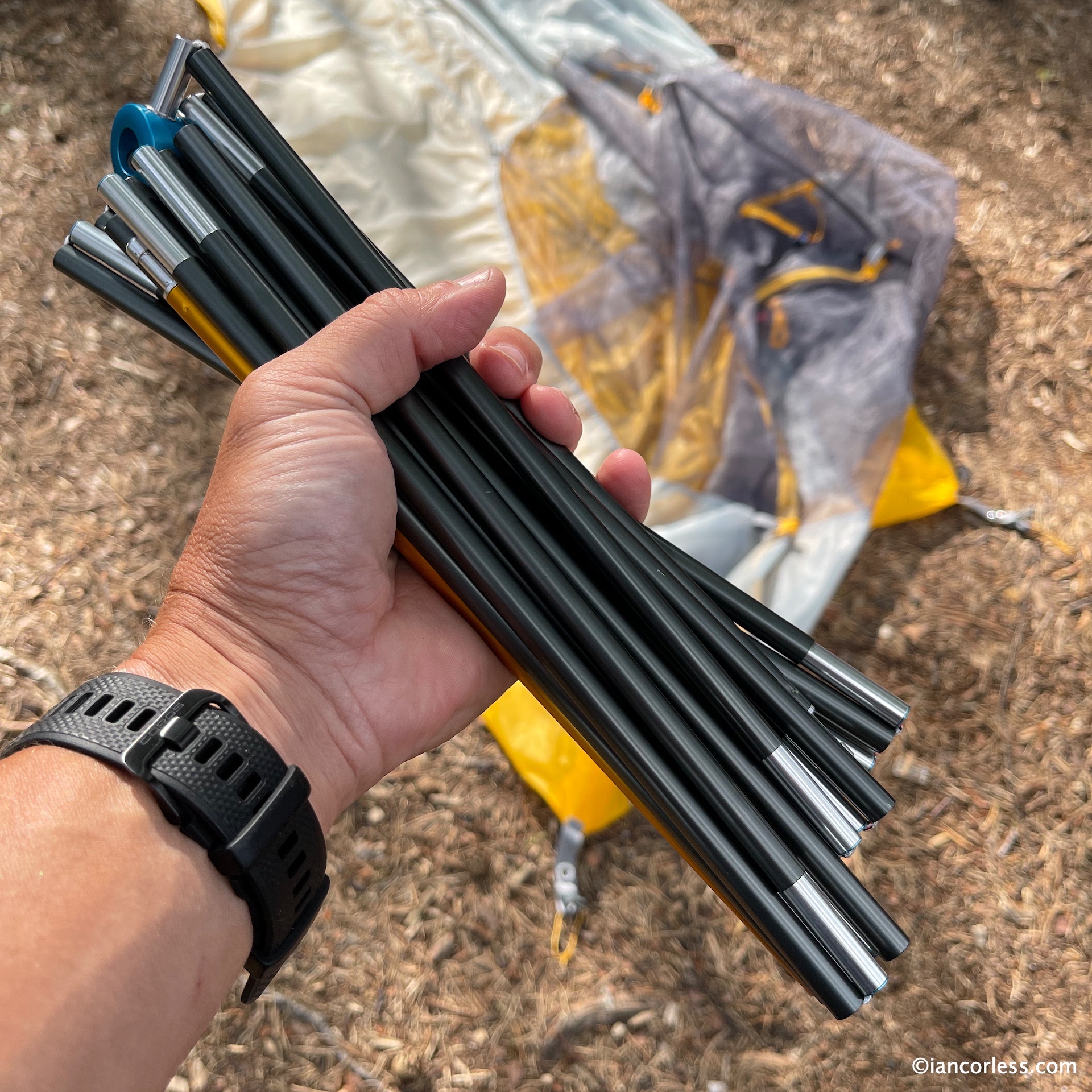
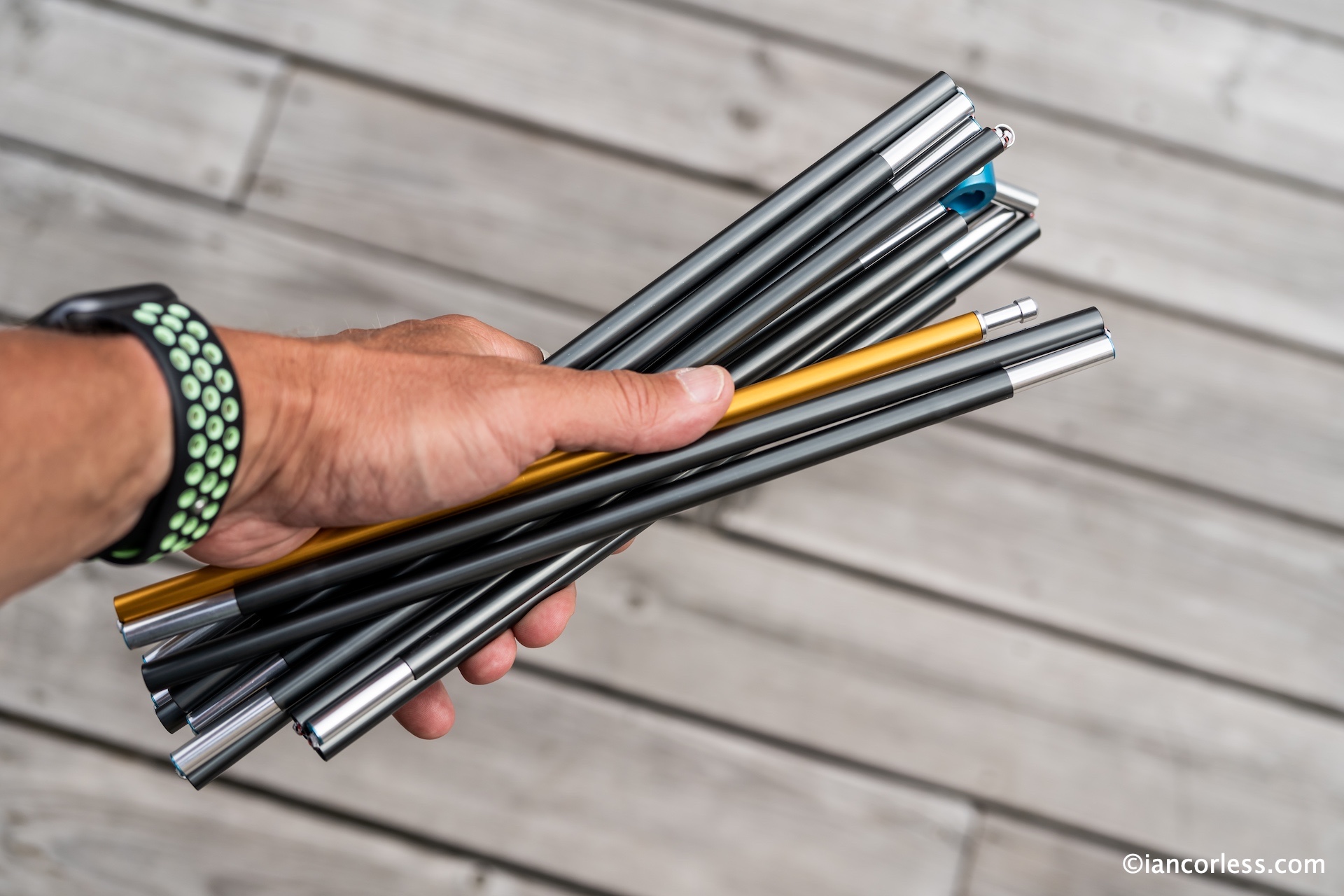
To clarify, I am not going bikepacking, BUT, bikepack tents use smaller poles, typically 12-inches, and trust me, once you have had the option to pack and fastpack with 12″ poles you will be completely sold on them. Ultimately, they were designed to fit across the handlebars of a bike, but equally, they will fit inside pretty much any run pack – a winner!
So, I was sold on smaller poles, but my other two criteria were ‘low weight’ and ‘good living space’ and by living space, I mean the option to sit up inside the tent.
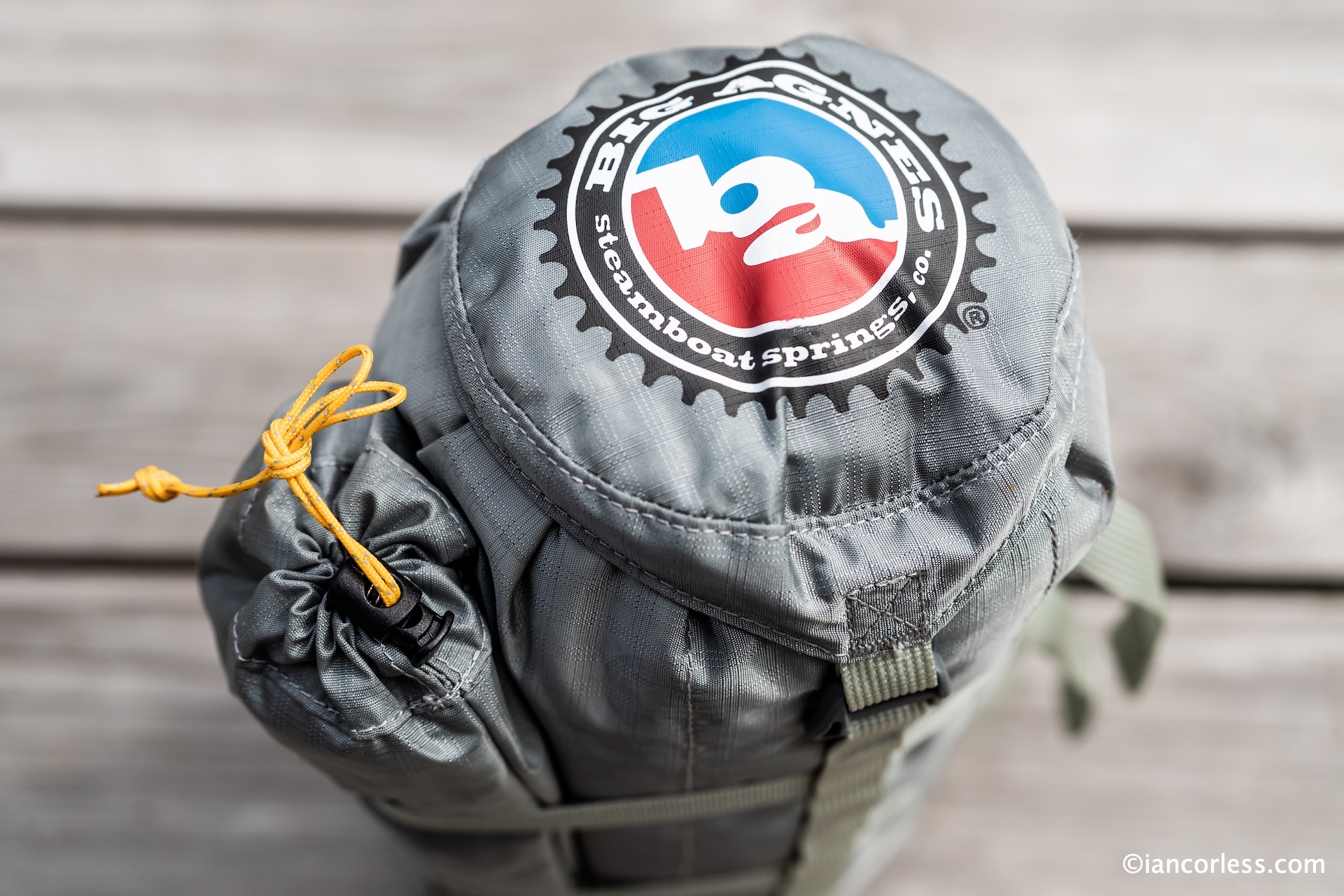
The Big Agnes Fly Creek HV UL 1 arrived and first and foremost, the storage bag for the tent and poles are designed for going on a bike, therefore they are robust, a little heavy but well designed.
If like me you are fastpacking or going hiking/camping, you just don’t need these storage bags and you will immediately make a considerable weight saving by not using them.
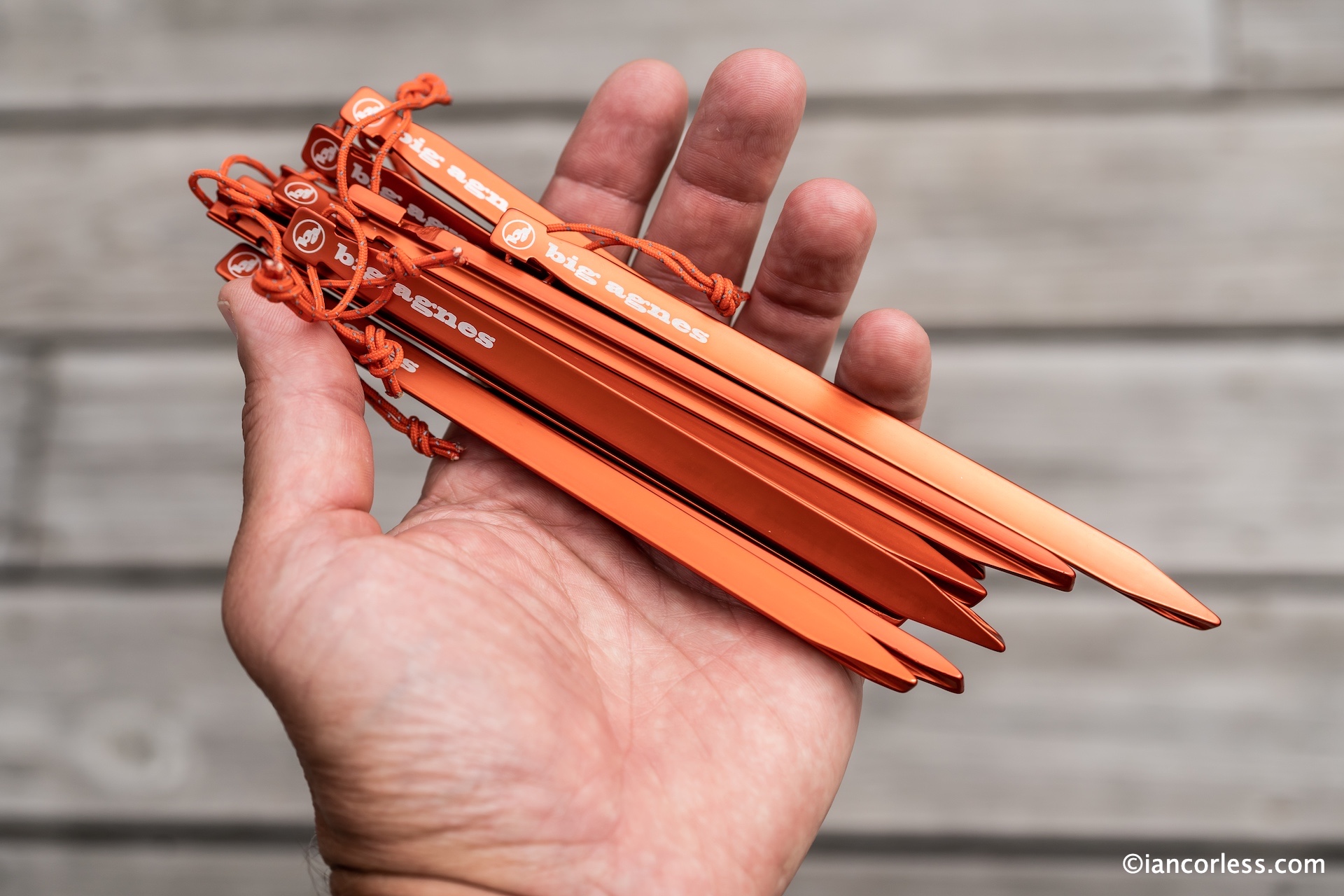
The tent weighs just over 900g with all the bags but stripped down to a minimum, poles, light pegs, fly and inner, I got the weight to just over 800g which for me, is perfect. It is possible to go lighter with some other brands, the Nordisk an example, but you don’t get the features, storage, living space and proper 2-layer tent that the Fly Creek offers. It’s a winner!
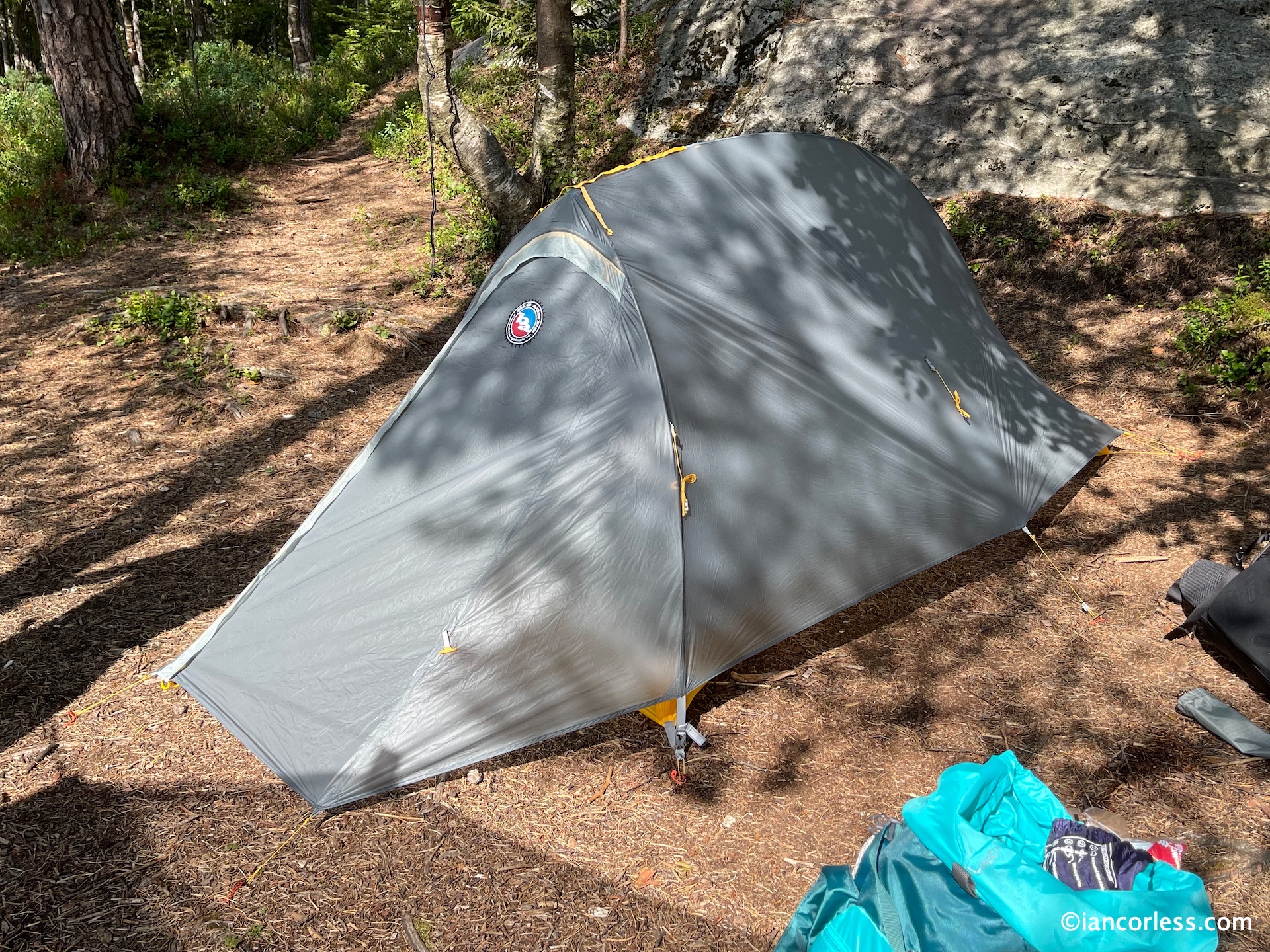
The 12″ poles are impressive and there is just one that attaches to the tent inner at three key points, two at the front, one at the rear which is colour coded. The inner attaches to the poles with simple clip buckles and you have a *free-standing inner tent for hot conditions. When I say *free-standing, to maximise space at the foot end, you ideally need to peg out the two corners that increase space. Also, to ensure the tent does not blow away, it makes sense to also add pegs at the three pole attachment points. It is also possible to use the flysheet as a tarp covering with no inner providing ultimately flexibility and the option to travel extremely light based on your needs and weather conditions.
IN USE
Pitching the tent takes minutes. Lay out the inner and peg the bottom two corners, this helps stop the inner blowing away (just in case) and allows for easier pitching. Attach the pole at three points and peg out tight, start at the rear. Peg out the two rear corners after pegging out the front corners. Throw the fly over the inner, remember to attach the inner Velcro fastenings to the poles and then ‘clip’ the outer to the inner, one at the rear, two at the front. The two rear corners are designed to utilise the two pegs that peg out the inner – handy on saving weight. Peg out the two cords at the front of the tent. In the middle of the sides there is a cord on either side, with these pegged out, you increase the internal volume of the tent. Make sure you look under the fly as there are two internal attachment points that link the fly to the inner that help increase internal space. On the fly itself, there are four additional ‘cord’ points, two at the front, two on the middle (one on either side) that offer more stability and security in bad weather.
The inner has one zippered access point at the front that has plenty of space to sit without being obstructed. Of course, if you are over 6-foot tall, some compromises will be made! With the outer fly zipped up, you have enough vestibule space for pack storage, shoes, and other items.
Inside the tent, it tapers quickly and there is an excellent storage space for clothes, I managed to fit a jacket, base layers, waterproof, hat, and gloves with no problem. On either side near the door entrance, there is a pocket for small items – phone, keys, glasses, headlamp, batteries etc….
There are several features specifically for cycling, for example, a helmet attachment point and on the outer, loops are attached so you can add items without losing them. This is perfect for attaching socks, t-shirt, shorts etc after a day on the trail and allowing them to air and dry out.
Worth pointing out that for 2021, Big Agnes have redesigned many tents, the Fly Creek being one of them and they are using solution-dyed fabric which ecologically reduces water and energy consumption.
THE GOOD
The 12″poles are brilliant as I can pack them pretty much anywhere. They are DAC Green Poles, poles so very durable and strong.
The steep architecture of the tent allows for excellent space at the front which really does allow one to sit up.
Internal and external storage is superb with some really great features.
Pitching is fast, easy, and secure and importantly you have three options: 1. Full tent with inner and outer. 2. Inner only. 3. Outer only. The use of TipLok Tent Buckles makes things very easy especially with the secure pole tip catcher and pre-cut guy lines.
Weight will always be crucial for me and a sub 800g tent with so much space ticks all the boxes, especially with no compromise on durability and features.
The vestibule offers great storage, easy access and has a two-way zipper.
Lots of reflective additions to the tent which makes pitching in the dark easier.
THE BAD
The interior space in the tent does taper off quickly but it is a minor niggle as you obviously need all the space where your head will go, however, for some it may feel claustrophobic.
I am used to side-entrance doorways/ vestibules and having used the Fly Creek with a front door, my preference would be a side-door. I think you get more usable space and potentially a better, more protected area for cooking with a side option. BUT this normally would increase the footprint of the tent and then that would mean additional weight, SO, I am more than happy with the front-door here.
The buckles make attaching the fly to the inner super easy. But if one breaks… attaching the fly, particularly at the front would be a real problem. I have no reason to think that they would break, but the possibility always exists.
MEASUREMENTS
Internal height 38″ at the front.
Length 86″ with 24″ vestibule.
Width 38″ at the front entrance and 28″ at the rear. With the door closed, the front door width is 26″
Packed weight 980g
Stripped down weight 800g
Fly only weight 620g
CONCLUSION
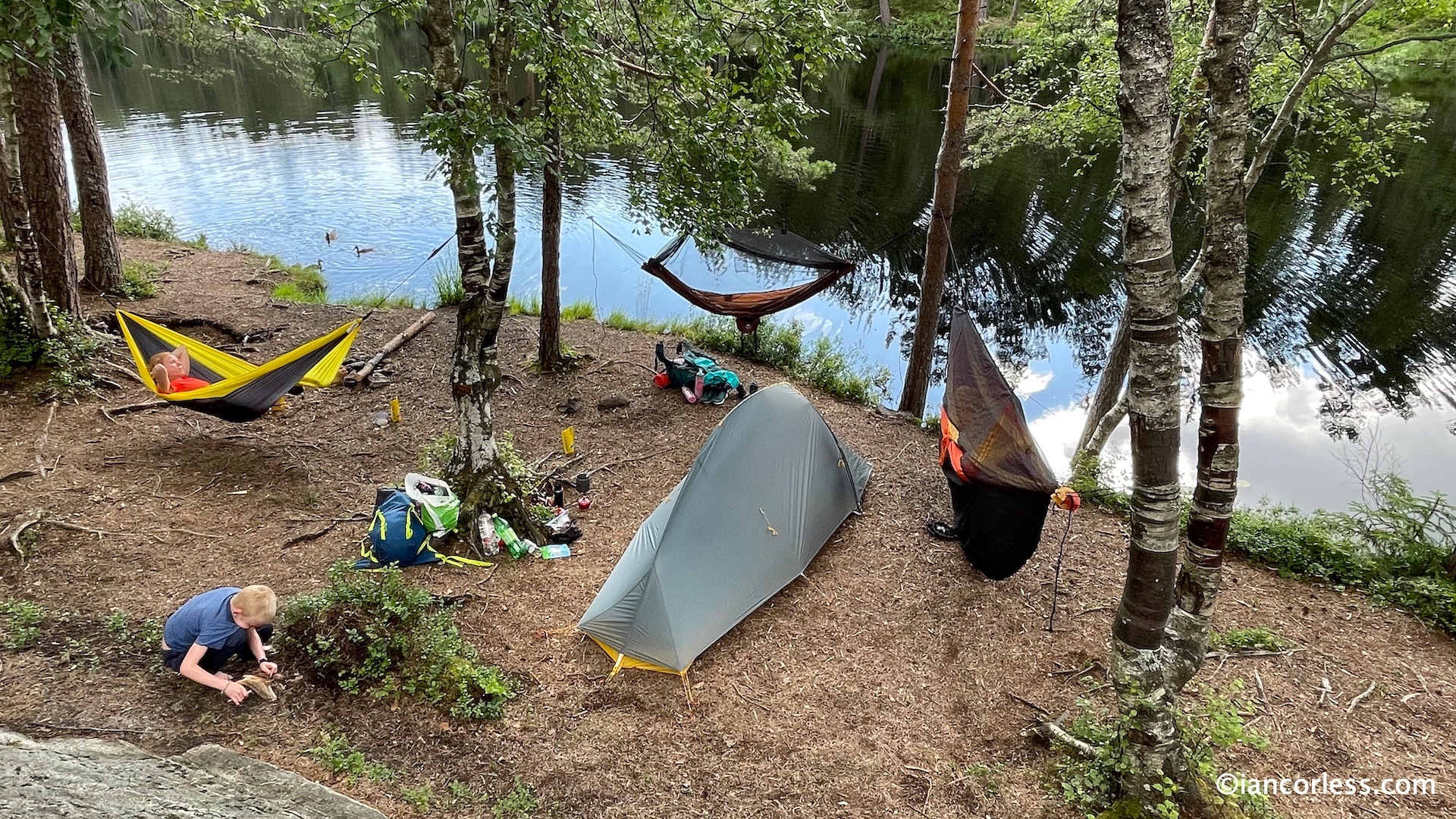
Here on a Summer family camp, the Big Agnes is lighter than hammock, bug net and tarp.
As solo tents go, Big Agnes Fly Creek HV UL 1 is not the lightest out there but is still amazingly light! The features, internal space, resilience to weather conditions and small pack size make this a serious contender for any trip. The Nemo Hornet does come close as a comparison with a little more space, less features, additional weight (approx 200g) and I personally feel less protection in harsher weather. At the lighter end, the Nordisk Lofoten is lighter, smaller pack size, considerably less features and compromised living space and storage. Ultimately, when choosing, you need to decide what works for you. Having lived with the Big Agnes Fly Creek HV UL 1 it will now be my ‘go-to’ tent for solo adventure. It just ticks all the boxes with little or no negatives. It really is a superb offering at a good price, 350 dollars / 350 pounds.
Ultimately, the tent has received a significant update over the previous one, it has new environmentally friendly fabrics, larger internal space, wider opening access and a range of tweaks and upgrades that make it ideal for 3-season use when travelling fast and light.
Please support this website. I believe everyone deserves to read quality, independent and factual articles – that’s why this website is open to all. Free press has never been so vital. I hope I can keep providing independent articles with your help. Any contribution, however big or small, is so valuable to help finance regular content. Please support me on Patreon HERE.
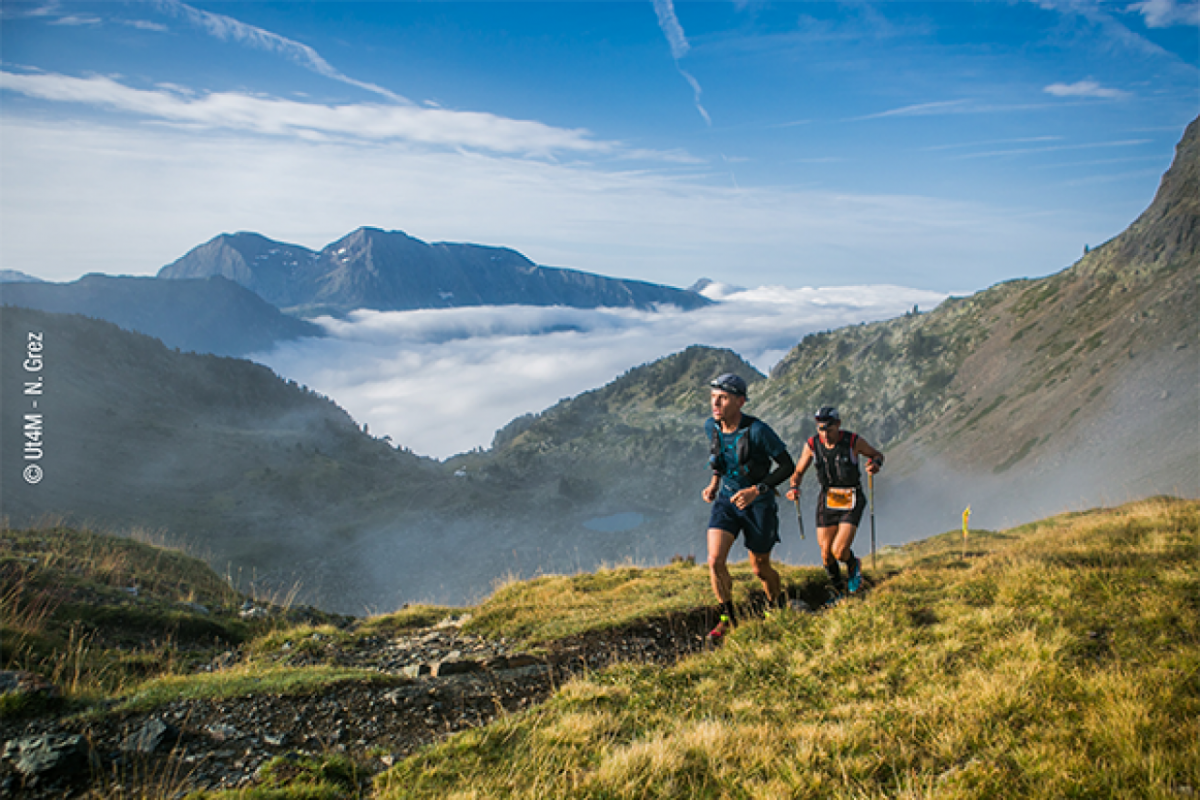
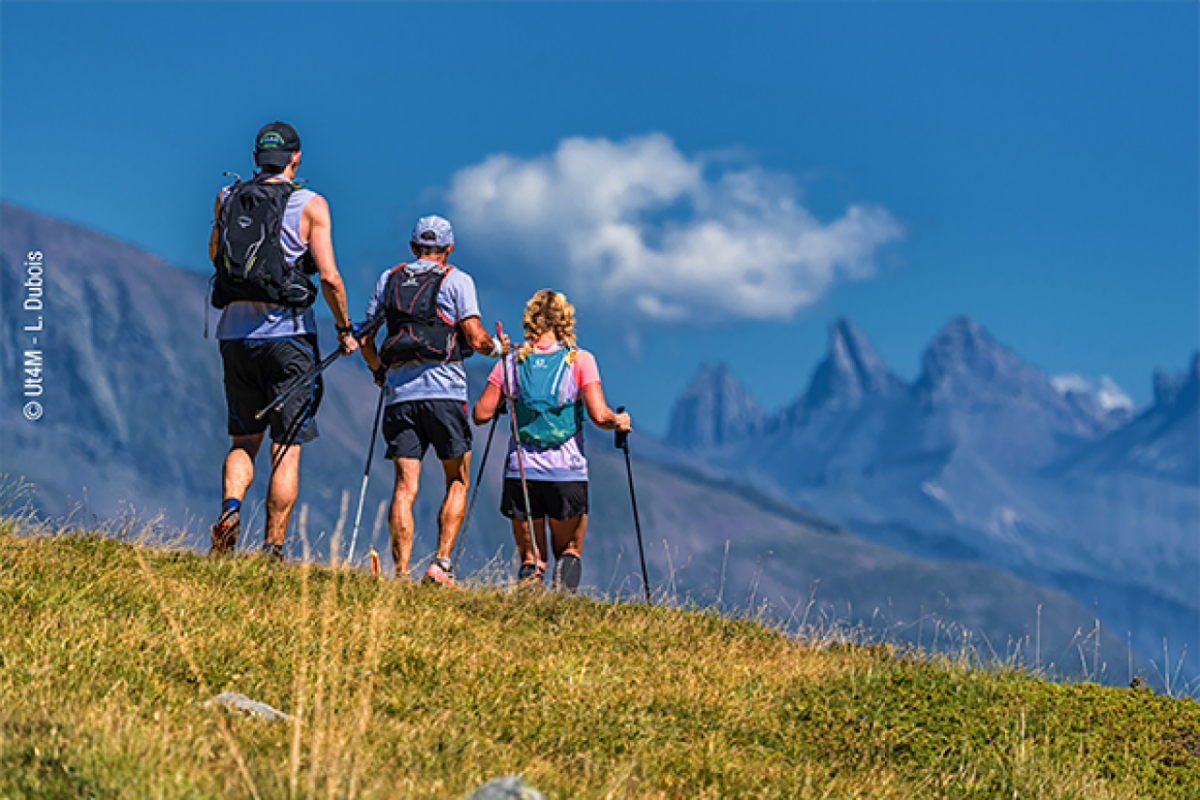
The 9th edition of the Ut4M (Ultra Tour Des 4 Massifs) will take place in July 2021, 15th – 18th after missing the 2020 edition due to the Coronavirus pandemic.
The Alpine Trail based in and around Grenoble, just 1-hour from Lyon has the tagline, ‘where the magic happens’ and no doubt there will plenty of magic as runners participate in one of the 13-races on offer over an incredible 4-days.
The main event is the 160km which has two options and in many ways, sets the stage for all the other events that take place, as the shorter event utilise sections of the 160km route.
As the name suggests, the 160km route takes in the complete Ultra Tour Des 4 Massifs either in one go, starting at 1600hrs on July 16th or over 4-days, starting at 0800 on July 15th. The remaining 3-stages utilise the same routes as the Ut4M 40 (4 days and 4 races) routes.
Also on offer Ut4M Master 100km, the Ut4M 80 Challenge, the Ut4M 20 challenge comprised of 4-races and finally, the Ut4M 10.
Synopsis:
Ut4M 160 solo and 4-day challenge encompasses all that is on offer in the stunning area of France and provides a full 360 all encompassing experience. Departing from Seyssins and in the first section, Pic Saint Michel, Vif and Uriol will be experienced.
Connex is the start of the second massif and the Pas de la Vache is the highpoint of the whole route before Rioupéroux concludes this section.
Croix de Chamrousse in the heart of the Belledonne massif is welcomed in the third Massif, here, it is high mountain terrain with rocks, akes and snowfields. The Pra refuge will be expreinced and the Col du Loup at 2400m.
The final massif starts with the Manival, then the Faita pass followed by Chamechaude, the highest peak of the Chartreuse massif. Sappey-en-Chartreuse, Col de Vence, Mont Rachais and finally the Bastille before the arrival in Grenoble.
Ut4M Master is a classic 100 km long distance that encourages trail runners to t0 spend a night in the heart of the mountain! First, the Belledonne massif known for its steep trail and technicality. Then the Chartreuse massif with its dense forest that in bad weather will test everyone.
Ut4M 80 Challenge is a new challeneg that begins with the Vercors massif and a long climb towards Moucherotte and descent towards Lans-en-Vercors. Pas de la Vache and then a vertical kilometre climb will test all. The finish in the Chartreuse massif passing by the St-Eynard fort offers an exceptional night view of Grenoble and its metropolis.
Ut4M 40 Series breaks down the Ut4M 160 route to 4-stages that may be taken individually or, they make up the Ut4M 4-day challenge.
Ut4M 20 Series offers 4 races in the Vercors, Taillefer, Belledonne and Chartreuse – A perfect way to discover either part of a mountain range or a distance for novices in trail running. Each of these races allows different profiles: ascending or descending, day or night, rocky or single track.
Ut4M 10 starts and concludes in Grenoble. An event for anyone, young or old.
Statistics:
The Ut4m 160 covers 172km with 11330m of vertical gain. The 4-day races starts at 0800 on July 15th along with the Ut4M participants and then follows the daily timings of the Ut4M 40 races.
The Ut4m 160 solo event starts 16th July at 1600 hours.
The Ut4M Master has a total distance of 98.9km, 5930m of vertical ascent and starts July 17th at 6am.
The Ut4M 40 races start at 0800 15th July along with the Ut4M 160 4-stage race and then each day, 16, 17th and 18th at 0700. Distances are 42km per stage and ascent of 2700-3400m.
The Ut4M 20 series has 600 to 1900m per stage over 20kms and they start at 10am on the 15th, 0900 on the 16th, 1000 on the 17th and at midnight on the 18th.
The Ut4M 10 has 300m of ascent and depart July 17 at 1400 hrs.
Please support this website. I believe everyone deserves to read quality, independent and factual articles – that’s why this website is open to all. Free press has never been so vital. I hope I can keep providing independent articles with your help. Any contribution, however big or small, is so valuable to help finance regular content. Please support me on Patreon HERE.
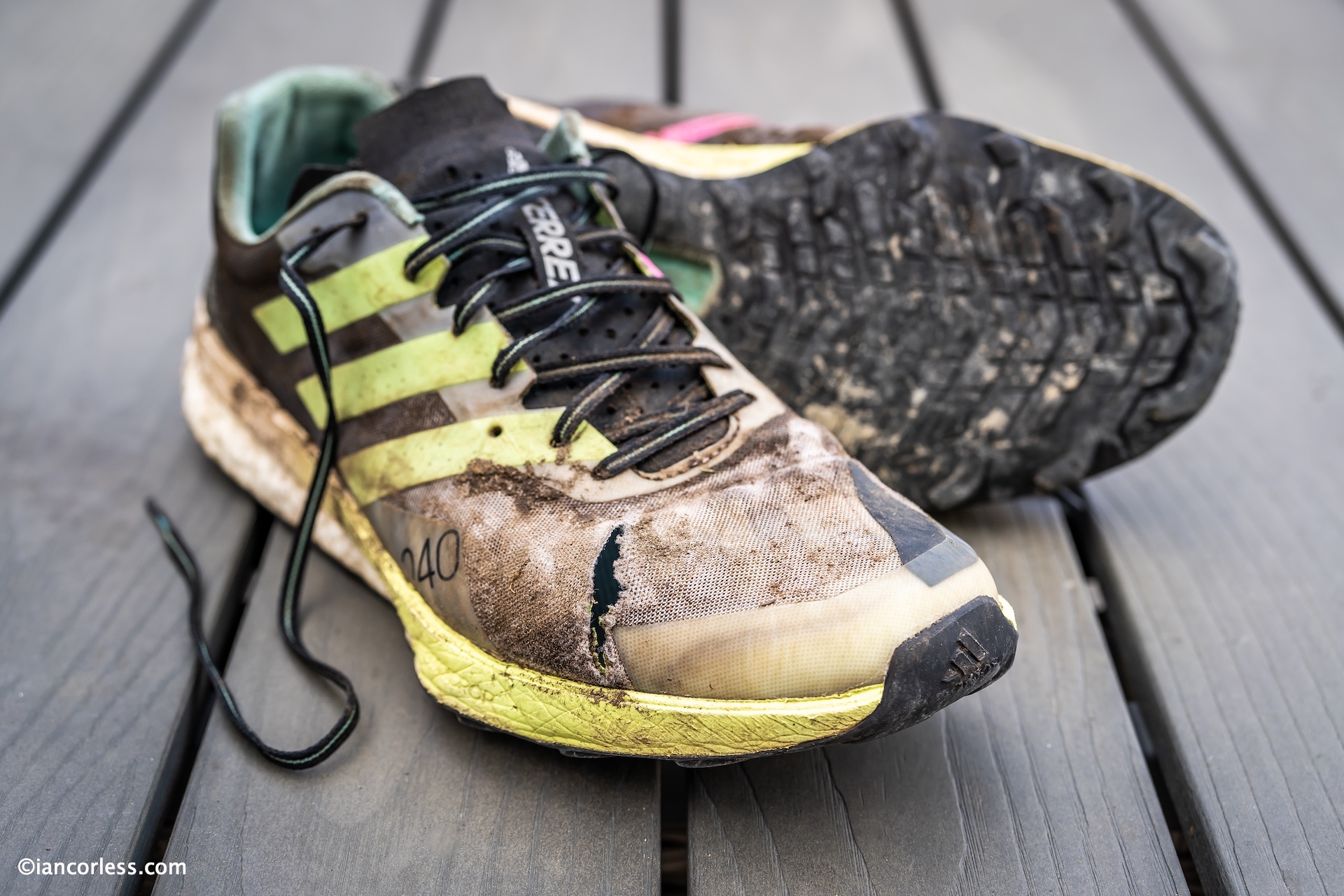
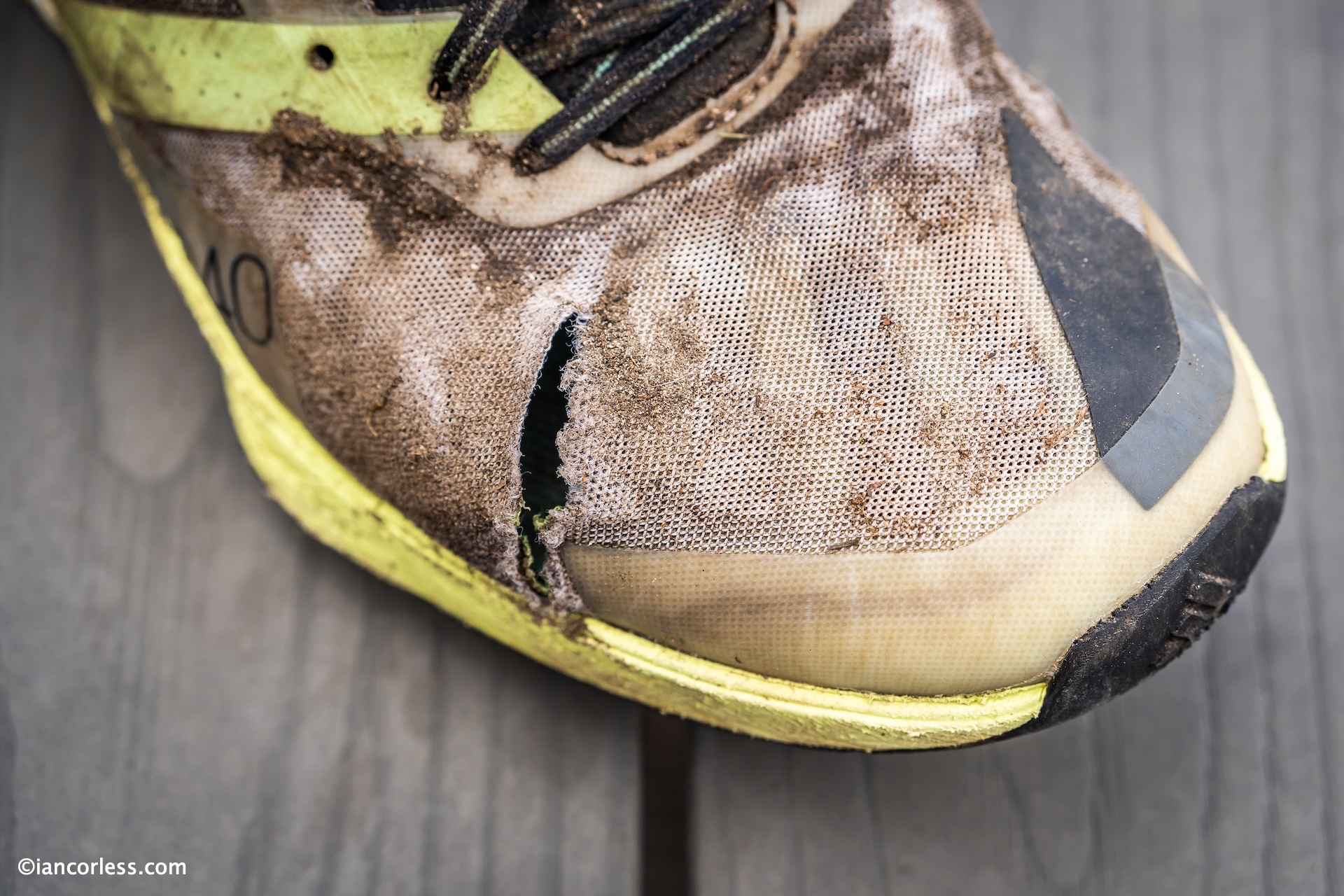
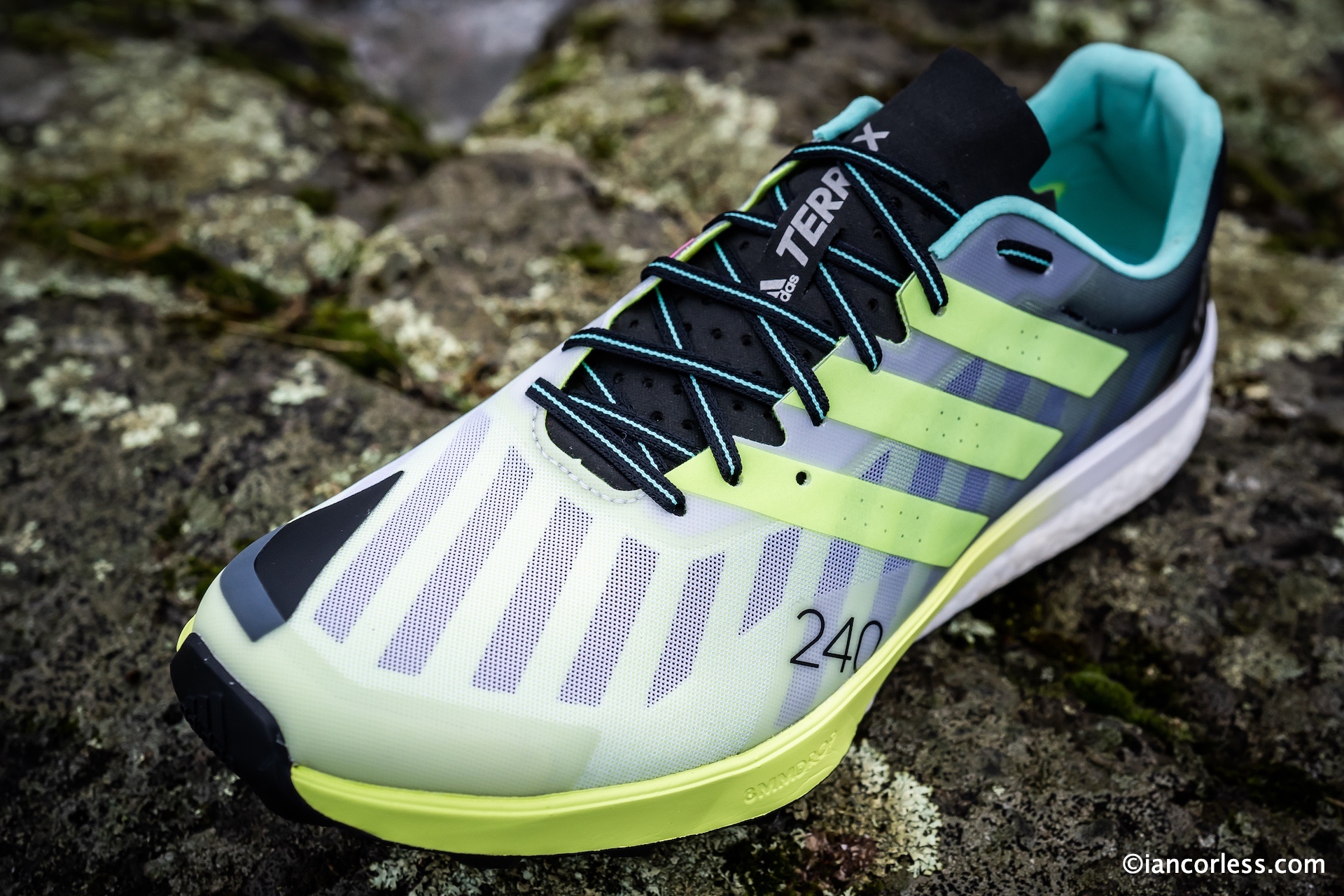
I have just retired my adidas Terrex Speed Ultra shoes…. Looking at the photo above, you may well be thinking that this is going to be a harsh look at how the shoe has lasted long term! For perspective, please read my adidas Terrex Speed Ultra shoe review first.
Look different when new – adidas Terrex Speed Ultra
I received my Terrex Speed Ultra in February and now 4-months on and 834km later they have given up! A recent 5-day trip to the mountains of Jotunheimen in Norway and 168km of rocks, snow, ice, mud and harsh terrain pushed them to the limit and over. Even on the final day of 33km with the right upper torn, the shoes performed perfectly.
Recent fastpacking trip to Jotunheimen, Norway – Perspective on the terrain.
I am reluctant to retire them!
Without doubt, the Speed Ultra have not only been a highlight shoe of 2021, but they are a highlight shoe in my collection of run shoes, and trust me, I have many, many pairs.
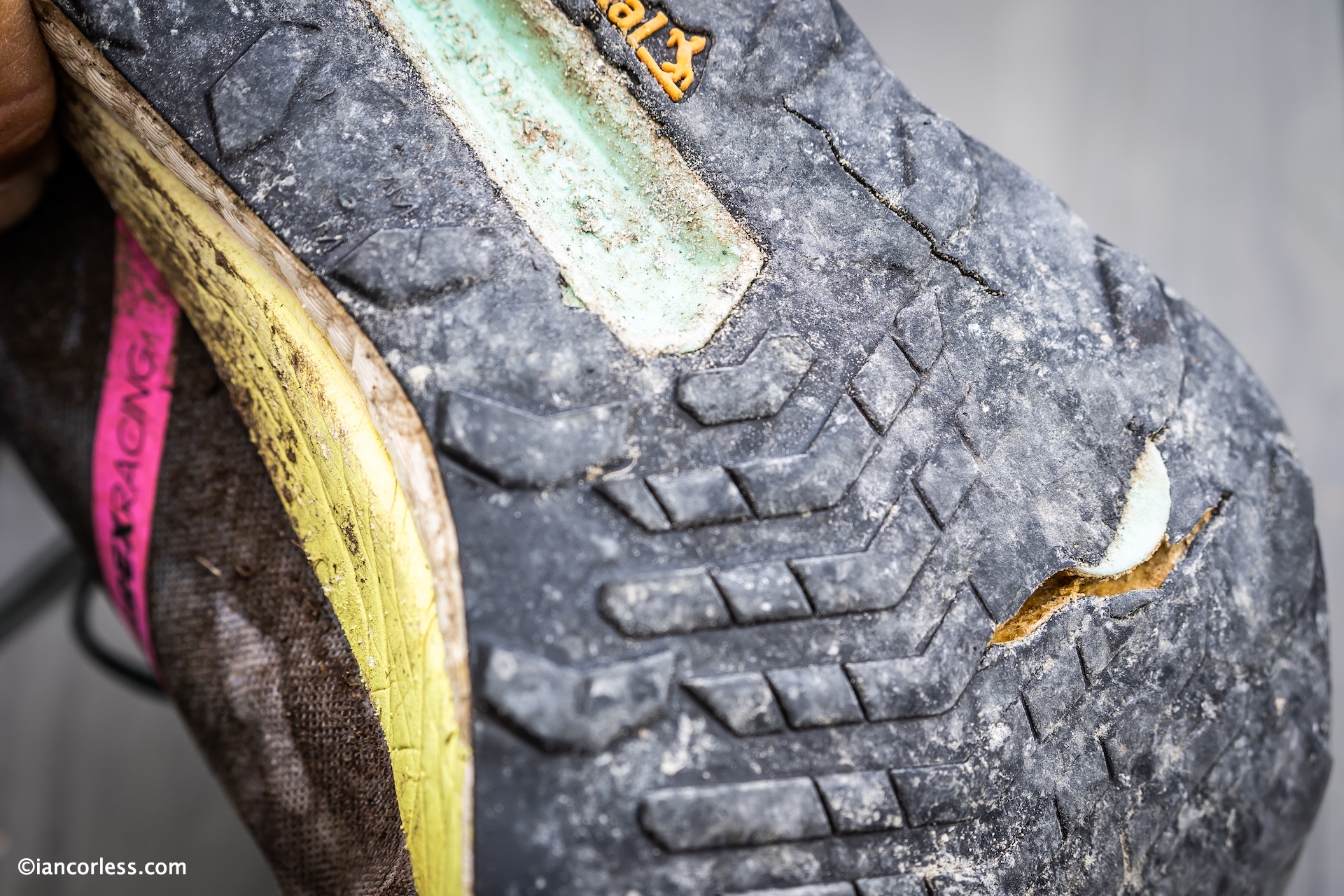
Until the recent run trip, the Speed Ultra was holding up really well, the upper showed little deterioration and the Continental outsole, while showing wear on key strike points, was still good.
Outsole after 800+ km
Some may say that they want more life out of shoes than 800km. Not me, I am super happy with 800km and especially when the ride and feel is as good as it is in the Terrex Speed Ultra.
Terrex Speed Ultra in action
I have not found a shoe yet that comes close to the Terrex Speed Ultra that manages to combine grip, comfort, flexibility and pure enjoyment. No matter what terrain, this shoe has been awesome.
On road, they have excelled. Modelled on the Boston 9 road shoe, you can feel the adidas road shoe experience here, but, I would go as far to say that on road, I have preferred the Speed Ultra over the Boston. Alternating them, the Speed Ultra gave me more fun and more bounce – a real winner.
On trails, the Continental grip has been superb offering secure confidence on rocks, roots, and hard trail in the wet or dry. It’s not an aggressive outsole, so if you encounter lots of mud, there is a compromise to be made.
The toe box was wide allowing for toe splay but it did not compromise precision and this is no doubt due to how well the Speed Ultra holds the foot via the lacing and excellent fit. The 8mm drop is just superb for comfort, and the cushioning of 18/26 was perfect in managing long-term comfort with no loss for a feel for the ground.
The upper was extremely breathable and as such allowed feet to remain cool, allows water to disappear quickly, however, running through snow and water, I certainly had less insulation.
GOOD and BAD
GOOD
The Terrex Speed Ultra been a joy to use and without doubt are my favourite shoe. So much so that I have now ordered two pairs to replace the sadly retired test pair. Comfort, grip, great design and a shoe that makes you want to run longer, farther and faster.
BAD
After a complete smashing up, the upper has torn and the outsole has split. However, both these failures came at the shoes life expectancy end and on some of the most harsh terrain and conditions you can put a shoe through. I really have thrown everything at this shoe, plenty of road miles to wear down the Continental grip and then mud, snow, ice and rocks. In all honesty, I used the Speed Ultra for the last fastpack as I knew at the end of it I would be saying goodbye. While the upper and outsole tearing could be seen as bad, I see it as just the end of the shoes. However, had this come early, then without doubt I would be asking questions about life/ durability.
Conclusion
The adidas Terrex Speed Ultra is my shoe of 2021 so far and the shoe I want to use on a daily basis, irrespective of the conditions. Light, responsive, fun, fast and great grip. I want nothing more from a shoe and yes, they look pretty darn good too!
Please support this website. I believe everyone deserves to read quality, independent and factual articles – that’s why this website is open to all. Free press has never been so vital. I hope I can keep providing independent articles with your help. Any contribution, however big or small, is so valuable to help finance regular content. Please support me on Patreon HERE.
Episode 211 has an interview with John Stocker who ran more than 337 miles in 81 hours at the Suffolk Backyard Ultra to set a new WR ahead of Matt Blackburn who pushed him all the way to the line.
Talk Ultra needs your help! We have set up a Patreon page and we are offering some great benefits for Patrons… you can even join us on the show! This is the easiest way to support Talk Ultra and help us continue to create! Many thanks to our Patrons who have helped via PATREON Donate HERE
La Sportiva CYKLON shoe review HERE listen to Episode 208 of Talk Ultra is a special show with DANIEL FEENEY and Jonathan Wyatt discussing the collaboration between BOA and La Sportiva for the new, Cyklon shoe.
Please support this website. I believe everyone deserves to read quality, independent and factual articles – that’s why this website is open to all. Free press has never been so vital. I hope I can keep providing independent articles with your help. Any contribution, however big or small, is so valuable to help finance regular content. Please support me on Patreon HERE.


















 IAN CORLESS
