
Okay, lets start as we mean to go on! Do you you prefer it on your back, in your hand or maybe you need both hands or maybe you prefer it all centered around your waist… of course I am talking about your method of hydration.
With temperatures rising, the UK in a heat wave and longer lighter days, we can hopefully all get out and run more. But as we all know, or maybe we don’t. We need to consider several things when running in the heat;
- It’s harder
- You sweat more
- You need more fluid
We need to adapt. So what happens when the mercury rises?
Well, the body’s core temperature rises with exercise. In simple terms the more we exercise, or the harder we exercise and this core temperature rises. Unchecked this internal core would exceed boiling point; not a good idea. So, our clever body reduces this core temperature by evaporation (sweat). This process helps cool the body, maintain a manageable core temperature and hopefully allow us to continue exercise.
I say hopefully because the process of evaporation means that we loose liquid (hydration). So the trade off of a cooler core is potentially dehydration.
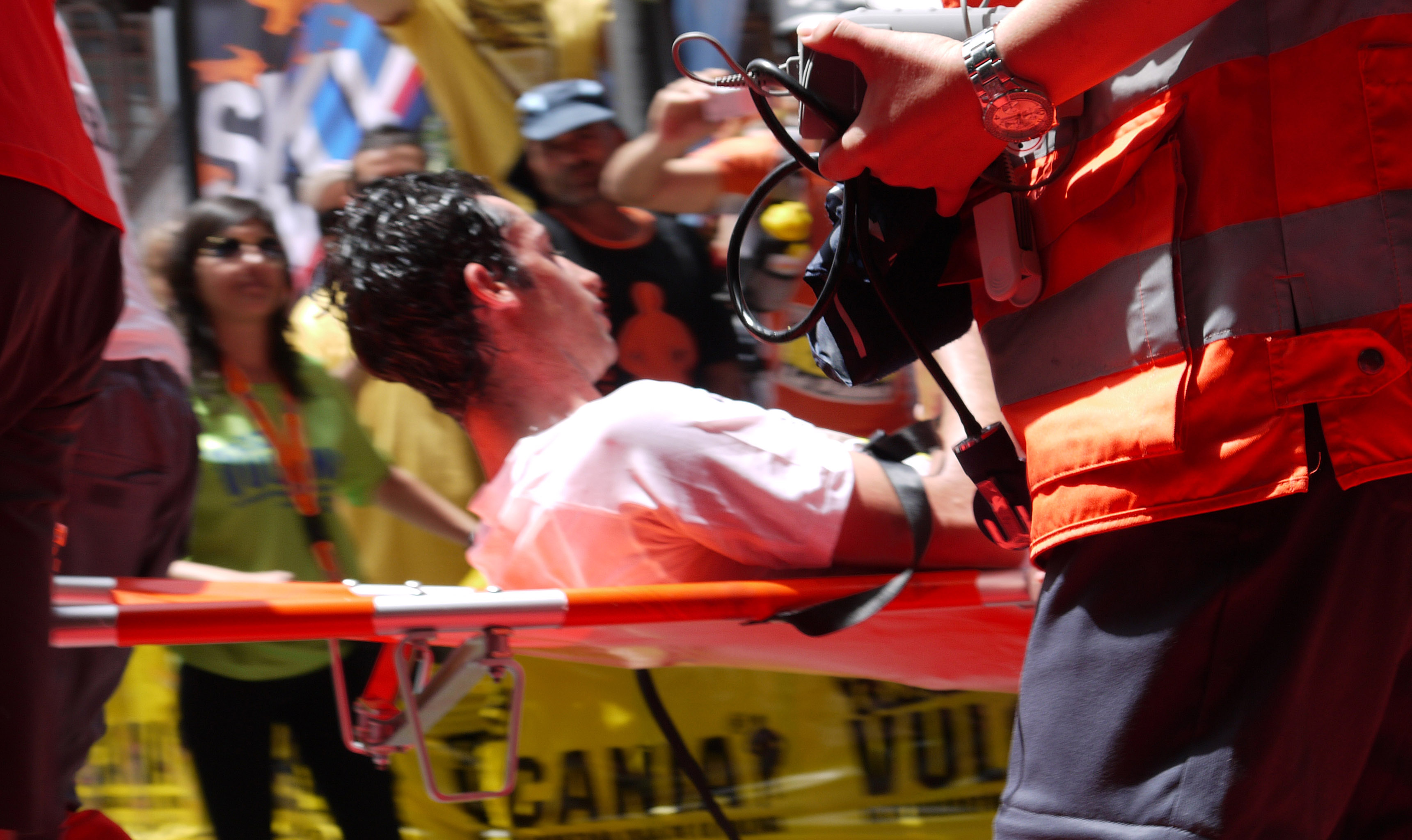
Dehydration as we all should know is something that does not go well with any sport. It increases heart rate and also adds to core temperature rises. It therefore can become a vicious circle. Initially running will feel much harder, the supply of oxygen to the brain will become impeded as blood is forced to the skins surface to help reduce the internal pressure. Your muscles will start to fail, become heavy and cramp. You may start to have blurred vision in extreme cases and in severe cases you will just stop, potentially collapse and black out. If you need clarification, this is NOT GOOD.
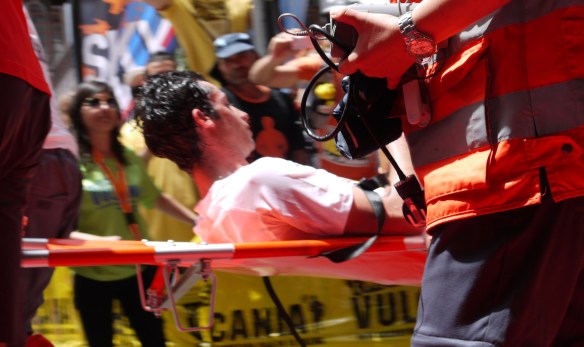
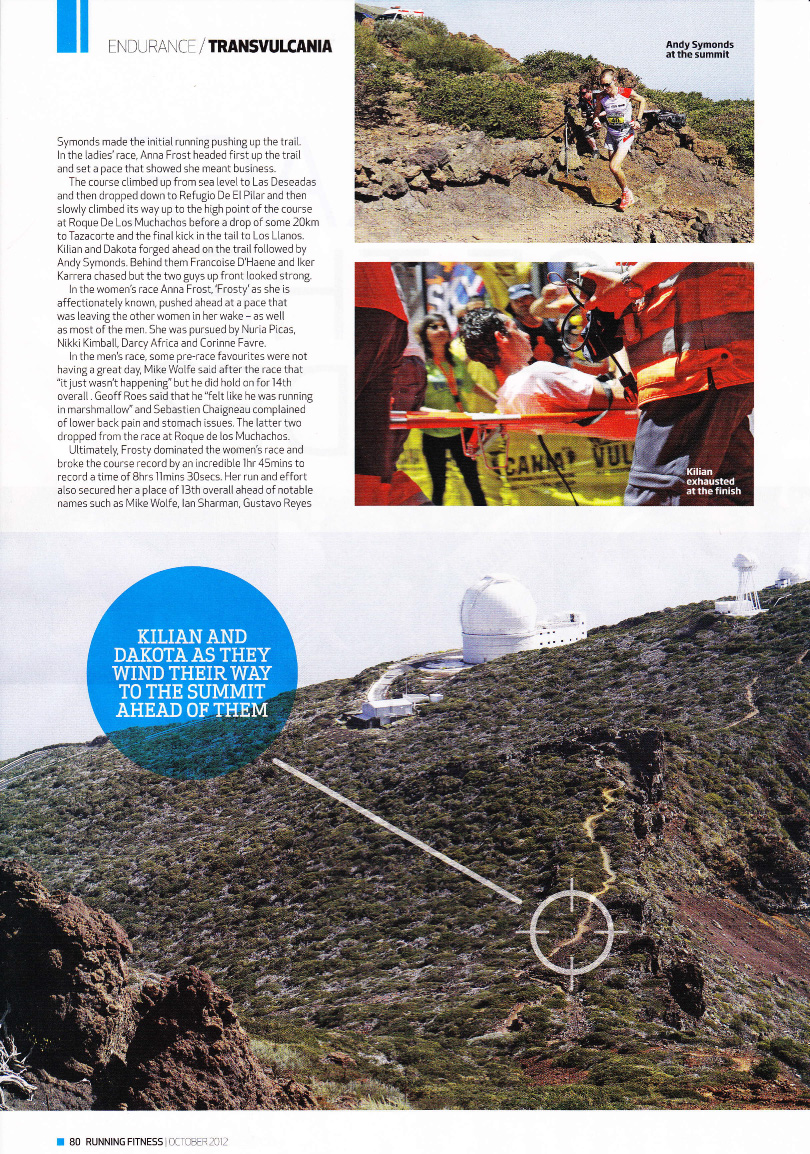
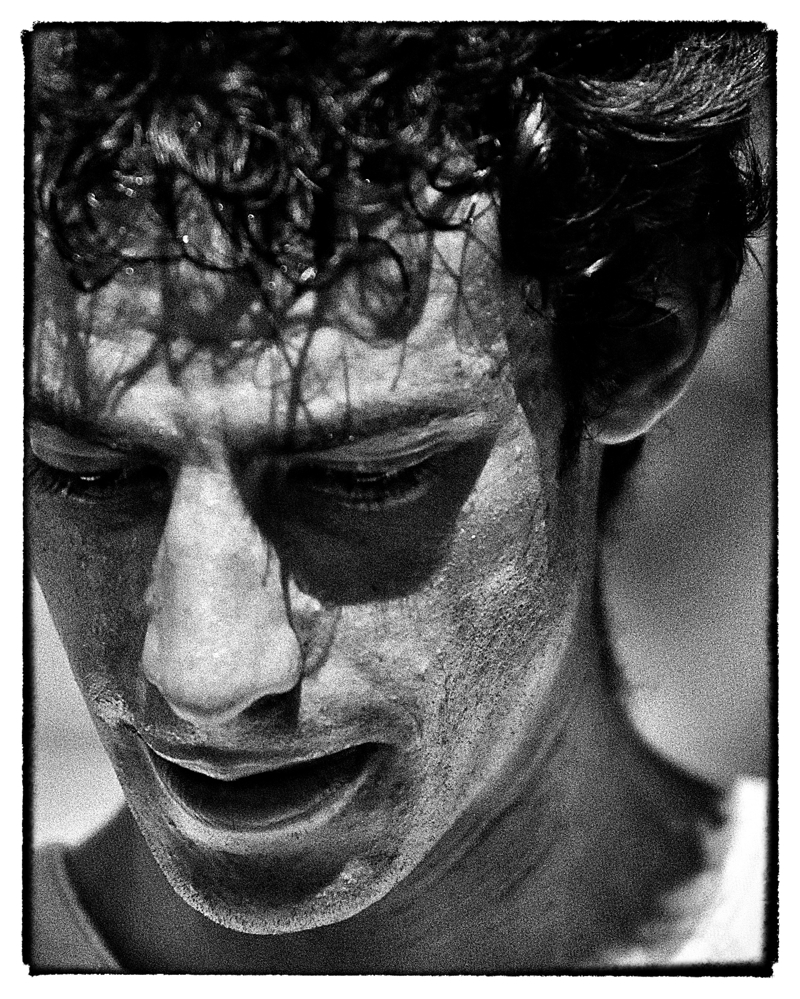
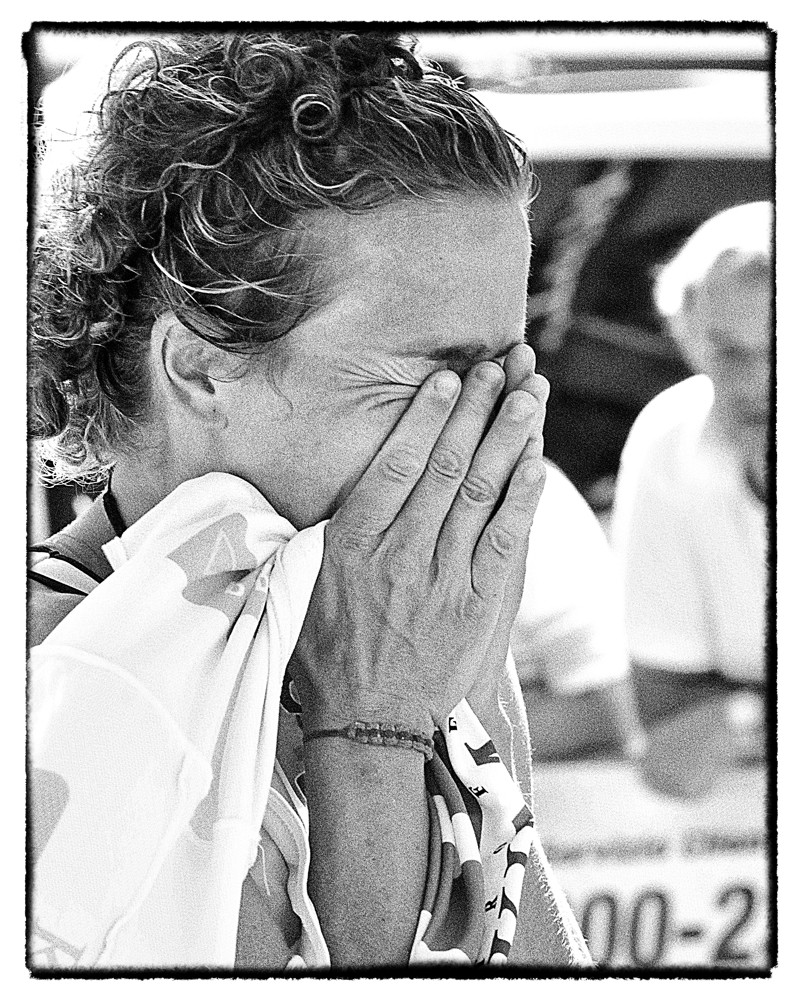
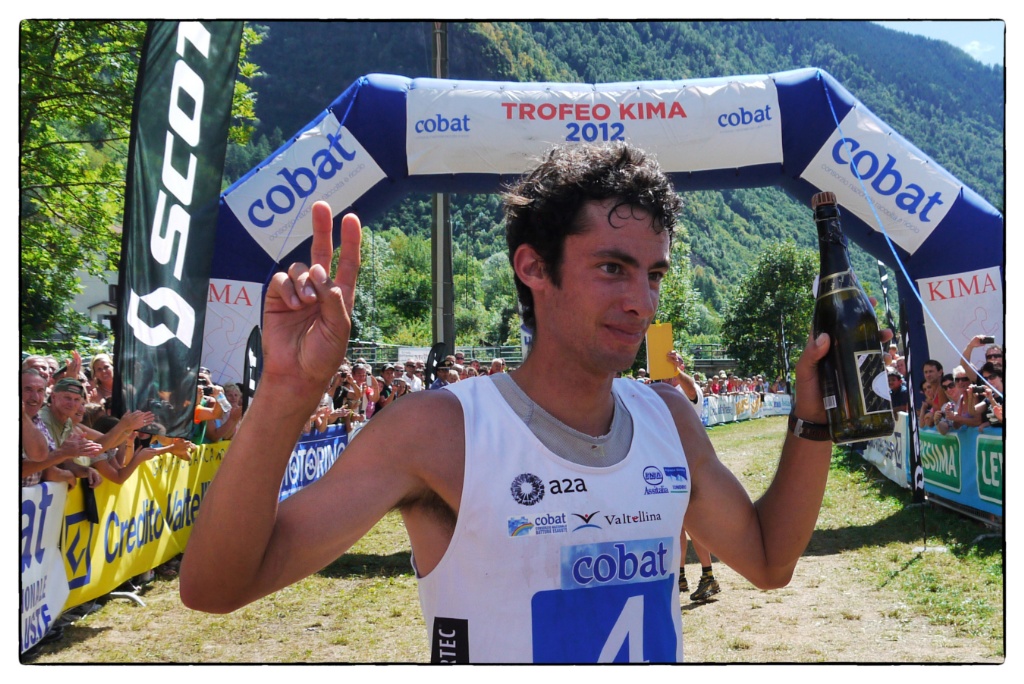
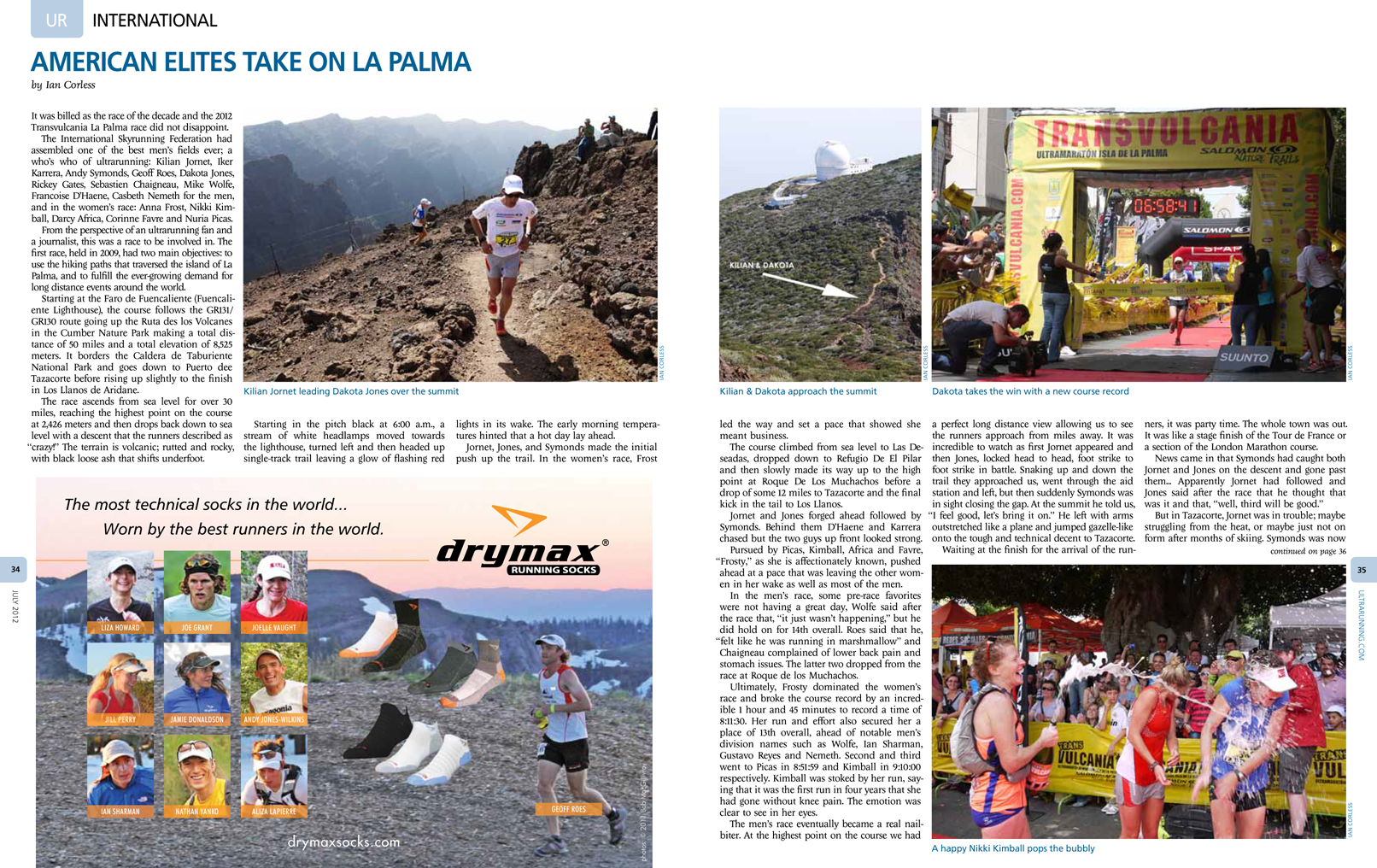
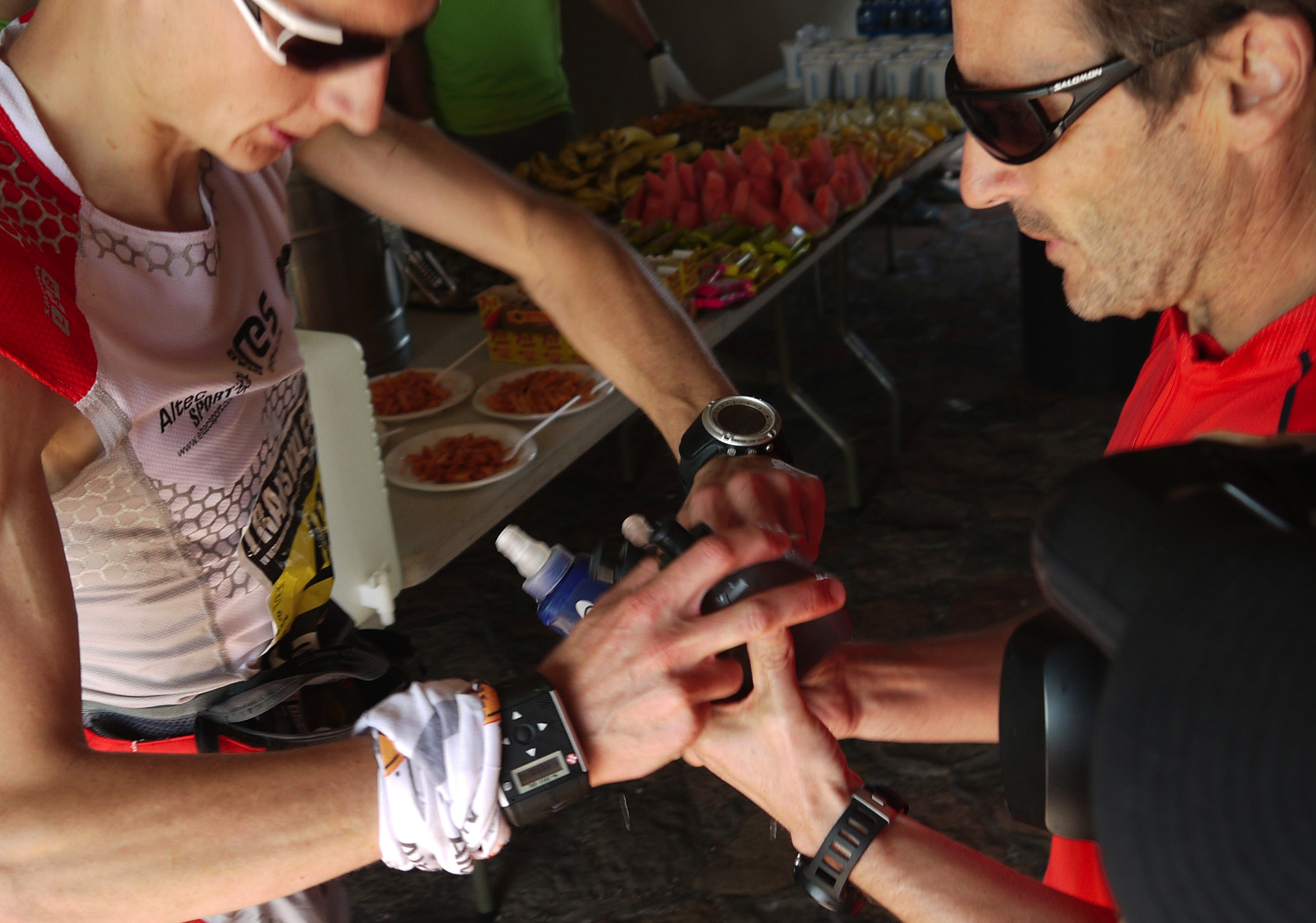
Kilian exhausted at the end of Transvulcania La Palma – dehydration ?
Depending on external temperatures, your ability to withstand heat, your own personal sweat rate and your adaptation to heat it is possible to loose 3-4 litres of fluid in an hour when running. I know, 3-4 litres! Loose more than 2% of body weight and this will impair performance and your mental ability. So, if your looking to perform or if you just want an enjoyable stress free run in the heat, you need to keep on top of hydration.
Hydration is NOT just fluid. Sweating means that we loose key minerals. These minerals keep our body in balance. Therefore you must replace electrolytes (salt) to keep your body in balance. Like your own personal fluid requirements, you salt requirements will also differ to that of your run friends. So take your time to work out what works for you. At the end of a hot run do you have salt marks on your clothes, do you have dried salt on your face? If so, you are more than likely a heavy sweater and your salt needs may very well be double or triple. Plenty of products are now available on the market and they all offer different methods and tastes. For example, Saltstick offer a really handy tablet which works well with bladders or bottles as it means you can keep your electrolyte supply separate and it also means that you can adjust your needs on the fly. However, Nuun offer a very popular flavoured tablet that comes in a handy tube that again can be taken with you on training or racing. This product must be added to your liquid though. Of course other products are available and I use these two reference points as purely as demonstration of what is on offer. It is fair to say that all sports drinks manufacturers now offer a form of electrolyte replacement.

How do you avoid the dreaded dehydration?
First and foremost assess yourself and your abilities. If you live in a hot climate with all year sun and heat you are going to be well adjusted. If you live in the UK and then we suddenly get a heat wave, you are not going to be adjusted. It’s a simple fact that many fail to acknowledge. Running 7 min miles in 10 degrees is much easier than running 7 min miles in 25 deg. As I said previously, you try to run the same pace in much hotter temperatures and only one thing will happen; your core will rise, you will sweat more, you will start to suffer and eventually you will come to a stand still.
Slow down. Accept that the warmer temperatures will mean a slower pace. This will allow you to regulate your temperature and keep on top of your hydration. The longer you spend in the heat, the more you will adjust and eventually you will start to be able to lift the pace for the same effort and sweat rate. In simple terms this is what pro athletes do when they ‘acclimatize’.
- Start a run hydrated. Your urine colour is a great indicator of how hydrated you are. A light straw colour is best.
- Keep the sun off your head when running by wearing a white hat with a peak.
- Wear sunglasses.
- Wear light clothing that is loose and that will reflect the suns rays.
- Use waterproof sun cream and be careful around your eyes.
- Drink regular and often.
- When possible, pour water on your head to reduce your core temperature.
- Plan your runs and make allowances for refilling bottles or bladders on long runs using streams or shops (as applicable). You may want to carry some water purification tablets if you are in extreme places.
- Take some money, mobile phone and ID.
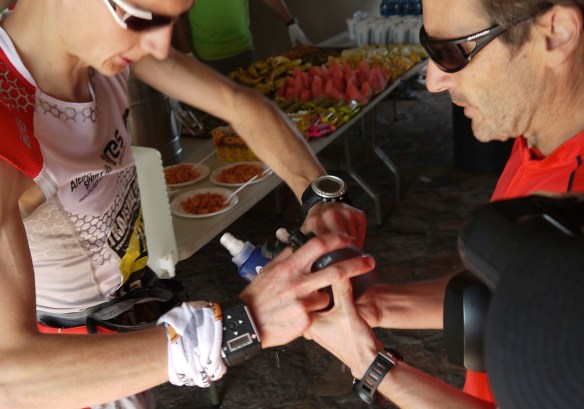
Do a self-check when running:
- Do you feel cool? (and I don’t mean in a ‘rap’ way)
- Do you feel clammy?
- Have you stopped sweating?
- Do you feel sick?
- Are you dizzy?
- Are you fatigued?
- Is your heart rate pounding?
Any of the above and you are starting to show signs of dehydration. Don’t wait to be thirsty… it will be too late. Depending on how bad your symptoms are you will need to do one of the following:
- Reduce your pace to a walk, let your temperature drop and slowly rehydrate – don’t gulp.
- Stop. Sit down in the shade. Recover and let your temperature drop while drinking slowly to rehydrate.
- Stop and basically STOP. If you have all or a combination of the above symptoms your best option may well be to stop and recover. Come back another day with lessons learnt
Recovery is key and it is important to rehydrate post training and racing. For every 1kg of weight loss drink 1ltr of water. When your urine has returned to a light straw colour, stop drinking and resume normal drinking… do not over drink.
Hyponatremia
Drink sensibly, don’t force yourself with water. Research into Hyponatremia has shown that it’s not a lack of salt, which leads to hyponatremia, it’s drinking too much fluid. If you urine regularly and it is clear, you are drinking too much. A bloated stomach is a sign of the onset of the problem, headaches and nausea. During an event just sip and understand your sweat rate and needs. You can always test yourself by wiggling yourself naked pre run, run for 1 hour without drink and then re weigh yourself. The difference will give you an idea of your sweat rate; 1kg = 1ltr. Of course please keep in mind external conditions. Your sweat rate will differ for hot/cold days and depending on how hard or easy you run.
Drinking methods when running?
Do you you prefer it on your back, in your hand or maybe you need both hands or maybe you prefer it all centered around your waist…
How we carry our fluid is very personal and it also does depend on the demands of the training or the race. If you are racing you may need to carry compulsory equipment and this will almost certainly mean waist pack or rucksac is required.
But how we carry the liquid is what counts. The fluid needs to be accessible at all times as this will promote drinking.
Bladder?
Bottles?
Bladder v Bottle
Bladder:
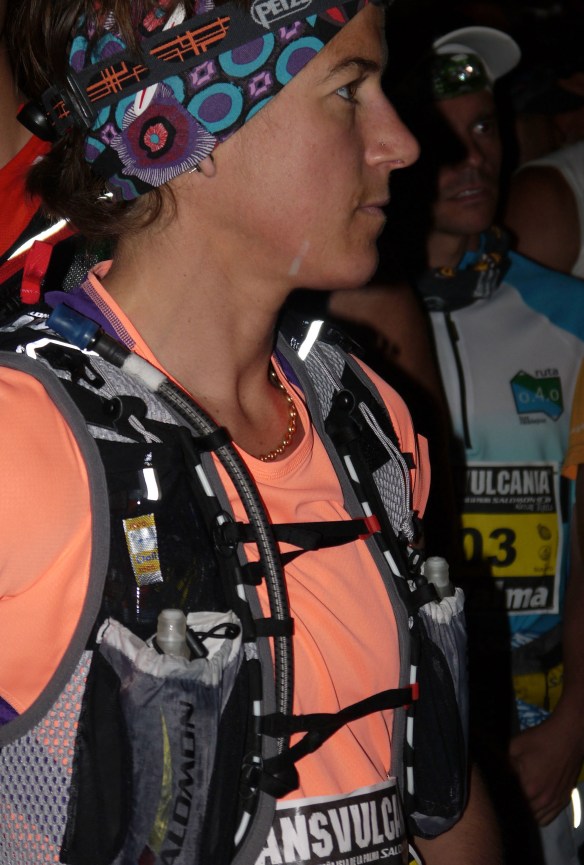
Bladders come in varying sizes. 1ltr to 3ltr, with different methods of distributing the liquid to the runner, ultimately this is a pipe with a mouth valve. Bladders sit on your back or around the waist and offer an easy slurp system that is easy to use. The main issues with them are that they are difficult to clean, you are never quite sure how much you have left and they are more awkward to fill when racing.
Bottles:
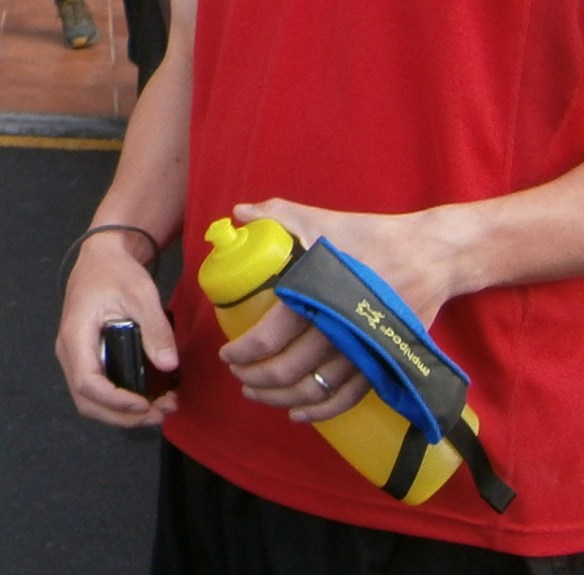
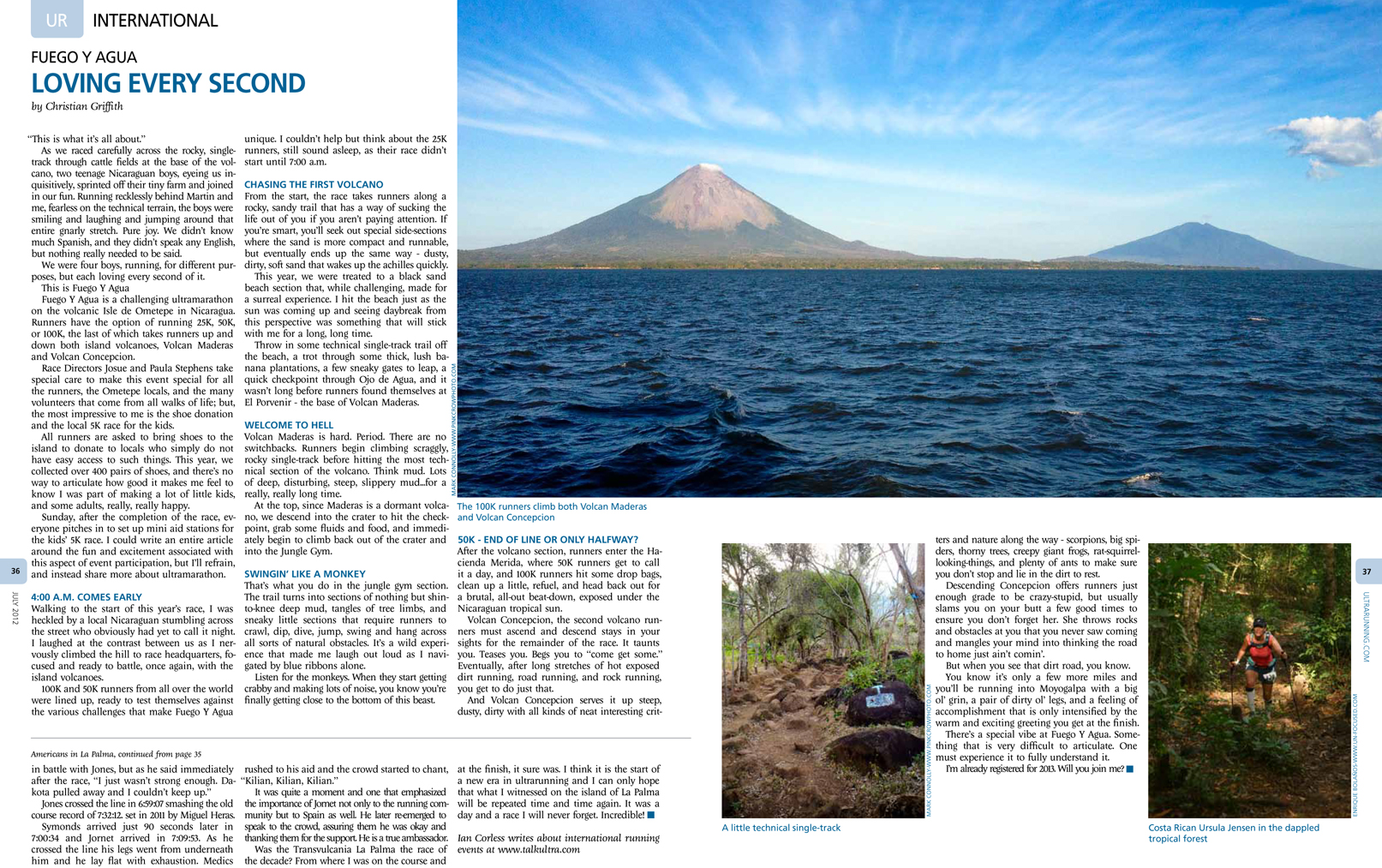
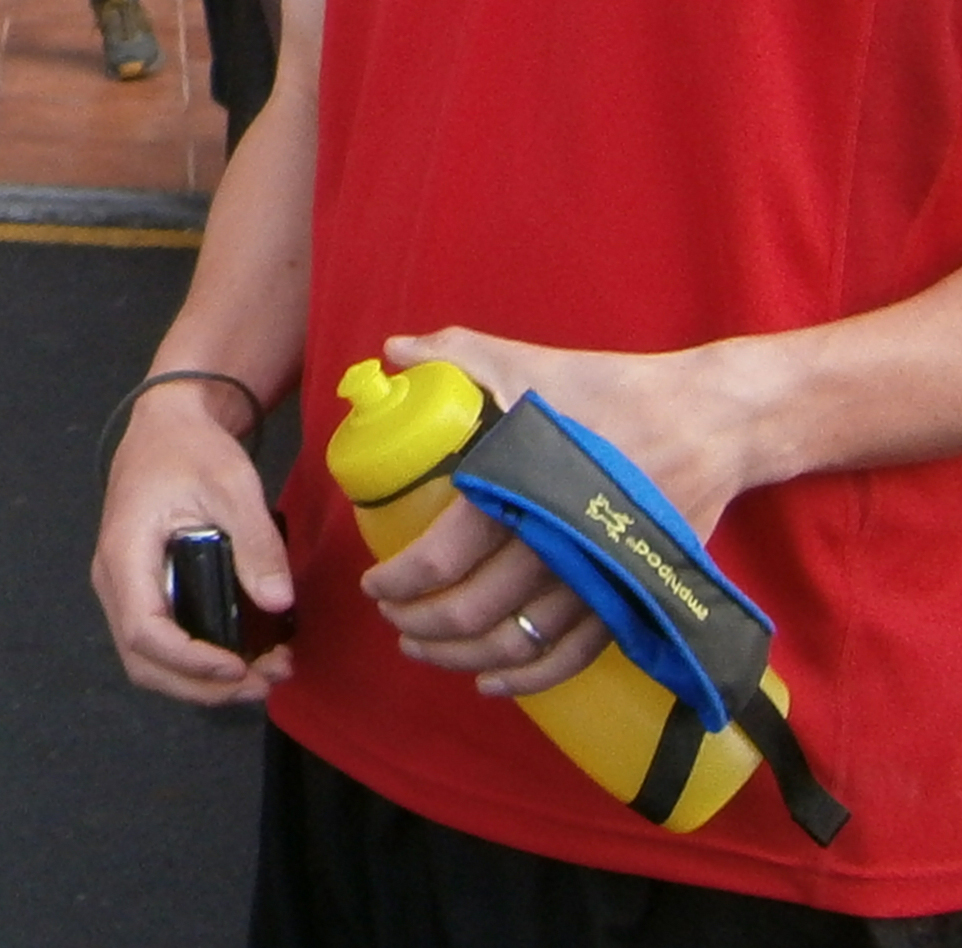
Like bladders they come in varying sizes but 500ml to 1ltr is normal. The size of the bottle may very well depend on your carrying system. For example – handheld bottles, bottles in a waist pack, bottles on a rucksac (at the back) or bottles on a rucksac (at the front). Bottles are easy to fill on the go, easy to clean, cheap to replace.

Combination:
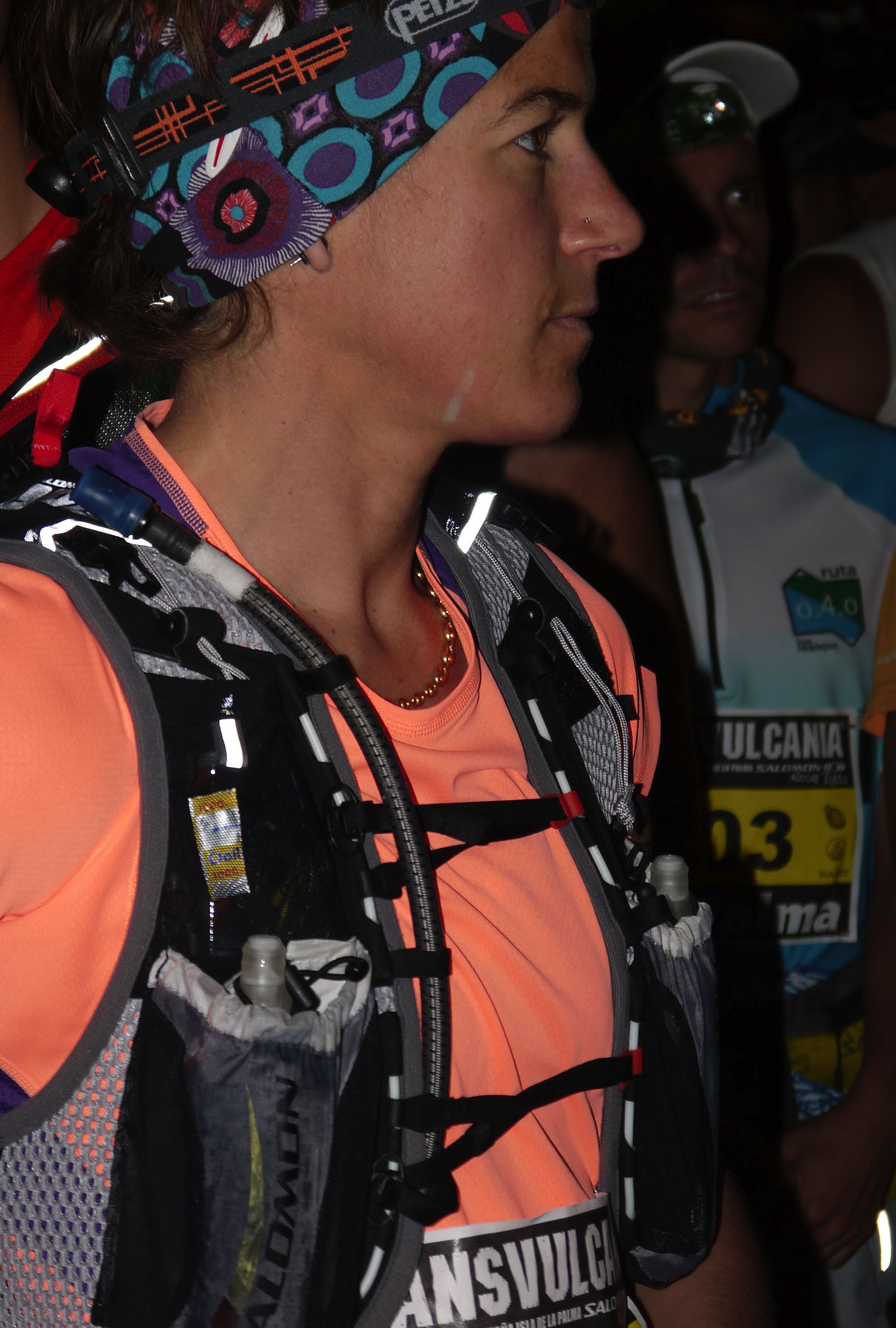
Manufacturers realize now that runners needs are increasing and runners are becoming more demanding. Therefore packs such as the S-Lab 12 has allowances for a bladder, bottles on the front and even two large ‘dump’ pockets on the side of the pack that will take bottles. The advantages here are excellent as you can customize your needs for each run.
Putting it into practice
I personally use all of the above.
When it is really hot and I am just going for a training run I love just having two hand held bottles (Dakota Style) and running free. It allows for no restriction on my waist it also allows my back to be free and ultimately enables me to remain cooler.

If I need to carry some essentials then I will add a waist pack that will hold just a light jacket, phone, money etc and keep the bottles in my hand.
When the demands are greater I shift to a rucksac allowing me to use a bladder and or bottles with the option to carry other equipment.
I am not a fan of waist bottle belts as they usually become uncomfortable, bounce and rub the skin – but that is my personal feedback.
It’s not rocket science but not putting it into practice is the difference between a great run and a lousy run. More importantly, when racing, it is the difference between potentially winning and not even finishing.
Choose your method and keep hydrated on your next run!






























 IAN CORLESS