Lofoten Stage Run by the team at The Arctic Triple – Is the world’s most beautiful stage run, a rare kind of race that feels less like an event and more like a journey.
From 26 to 31 May 2026, a small group of just 30 runners will cross one of the most dramatic landscapes on the planet, moving step by step through mountains, fjords, beaches, and fishing villages under the returning light of the Arctic summer.
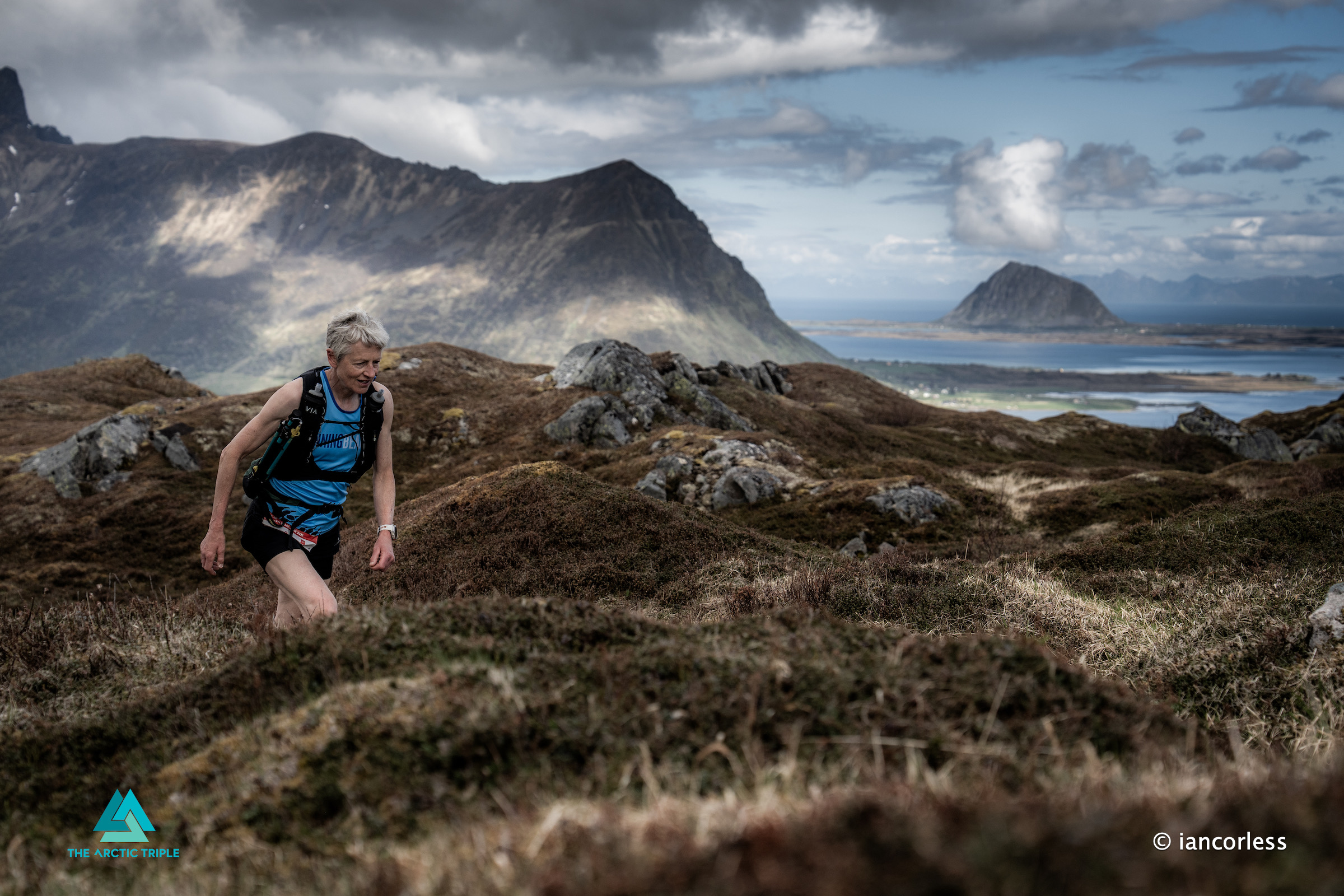
Set in Lofoten, Norway, this is a real multi-day adventure race spread over six days and four stages. The archipelago rises straight from the sea, with sharp granite peaks, narrow coastal trails, and open horizons in every direction. Late May is when the midnight sun begins to settle in, stretching the days and bathing the landscape in soft, golden light that never quite fades. You’ll run when the sun hangs low above the water, when shadows move slowly across the mountains, and when time feels different.
The race offers two distances. The 170 km Expedition Run covers four demanding stages between 34 and 52 kilometres, designed for runners who want a deep, physical immersion in the terrain. The 100 km Adventure Run follows the same spirit across four stages between 17 and 35 kilometres, offering a shorter but equally powerful experience. Both routes blend runnable sections with technical trails that require focus, respect for the landscape, and a steady rhythm rather than speed alone.
What sets Lofoten Stage Run apart is the way everything is woven together. From the moment we meet in Svolvær the day before race day, the experience is fully taken care of. Accommodation is comfortable, meals are generous and rooted in local flavors, and your luggage moves seamlessly from basecamp to basecamp. You run light, recover well, and wake up ready for the next stage. Every detail is designed so you can stay present in the experience rather than worry about logistics.
Each day on the trail brings something new. A climb that opens onto a wide fjord. A quiet stretch along white sand with turquoise water at your side. A remote valley where the only sounds are your breath and the wind. One stage begins with a boat ride into the heart of the landscape, delivering you to the start line in Kjerkfjorden, surrounded by steep walls of rock and sea. These are the moments that stay with you long after the race is over.
Evenings slow the pace. Warm dinners are shared around the table, stories traded between tired legs and smiling faces. With such a small field, the atmosphere stays personal and welcoming. You don’t disappear into a crowd. You become part of a temporary community moving together through a wild place. There is time to rest, to talk, to look out over the water and realise how far you’ve come.
The entry fee includes the entire package: five nights of accommodation, including the night before the race and the night after finishing, race registration, luggage transport, all meals from the first day in Svolvær until breakfast on day six, start kit, The Arctic Triple buff, service stations, first aid and evacuation transport, timing and tracking, warm dinner every night, the boat transfer to the starting line, and a quality finisher award. Everything is included so the focus stays where it should be, on the running and the place.
Lofoten Stage Run is not about crowds, noise, or chasing records. It’s about long days on epic trails, running beneath the midnight sun, and experiencing Norway at its most raw and beautiful. This is a race for runners who want more than a finish line, who are drawn to wild landscapes, shared effort, and the quiet magic that happens when movement, nature, and light come together.
Only 10-places remain for the 2026 edition, be quick!
It’s a common question, ‘What does it cost to run a MDS event?’
Of course, there is no one definitive answer, however, i’s easy to provide a breakdown of costs and then make adjustments from there, so here is a summary.
RACE ENTRY
In simple terms, Marathon des Sables have two event formats, The Legendary, which is the 6-stage event 0f 250km’s which in 2026 will be 40-years old, and, MDS events which are 3-stages over 4-days with the option of 70/100 or 120km’s. MDS Trek while following the classic MDS format (70/100/120) does vary a little and has extra days-
Entry Costs:
Legendary 4000,00 euro +/-
MDS 2150 to 2650 euro+/-
TRAVEL COSTS
Photo by Ian Corless
Legendary or MDS events do not include travel to the country destination. Considering the variety of locations, the price here varies considerably. For example, Morocco and Fuerteventura have many flight options from many countries and they are facilitated, often, by budget airlines such as Easyjet.
By contrast, Jordan, Namibia and Peru require much more complicated and expensive travel often with connecting flights. A word of caution, the cheapest option here is not always the best option. Read the small print. I would also advise, planning to arrive at least one day earlier than required by the MDS organisation. This allows for delays or cancelled flights.
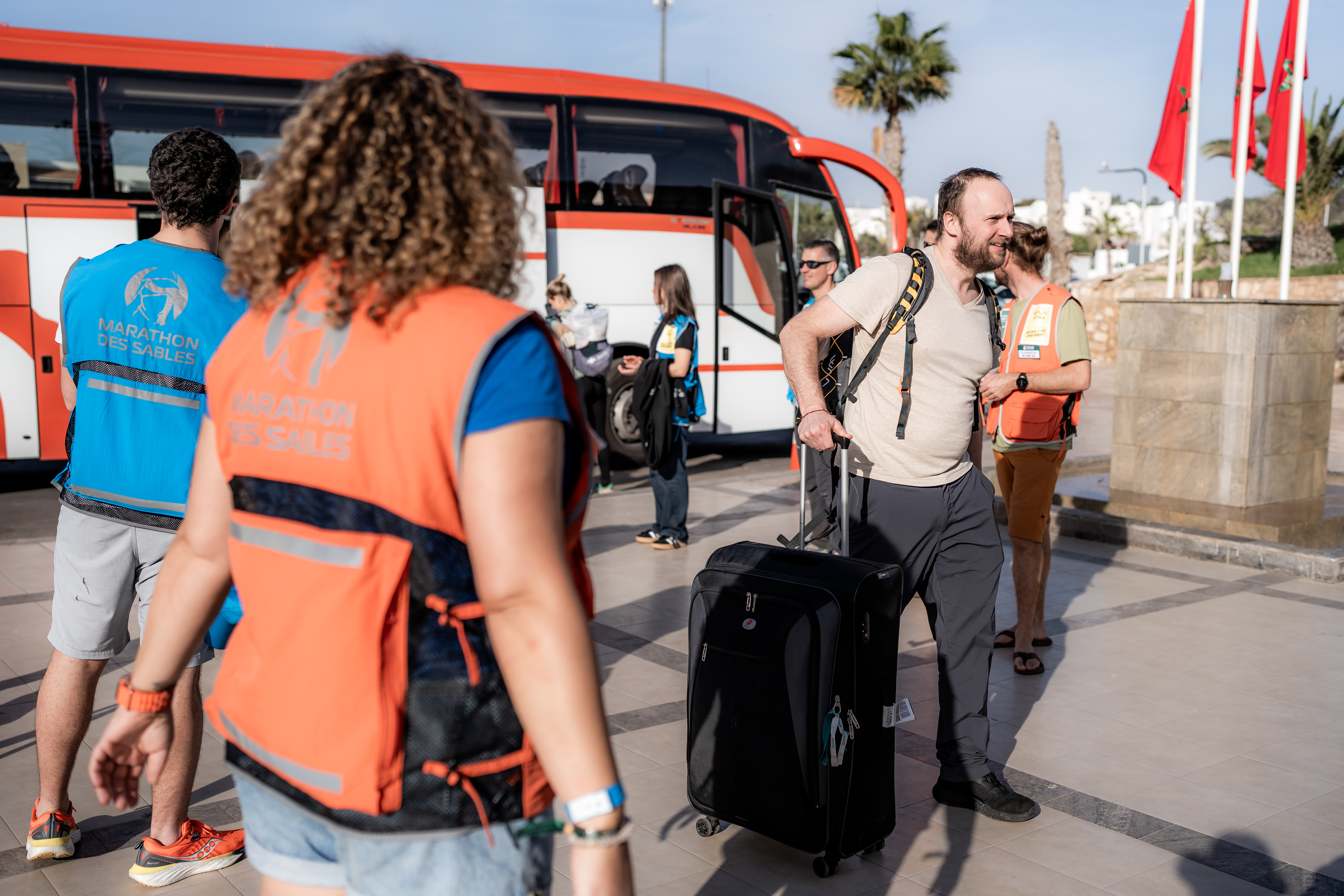
Also consider transfer costs to and from your departure airport. When on the ground in your race country, MDS provide transfers to and from the race hotel which are included in the race entry package.
HOTELS
Photo by Ian Corless
The Legendary and MDS packages include hotels as part of the event package. What is available does vary from event to event. For example, with Legendary the meet up point is Ouarzazate airport with a direct transfer to bivouac one. MDS events typically have 1 or 2 nights hotel before stage 1 of the race.
All events transfer to a hotel after the finish for typically 2 nights.
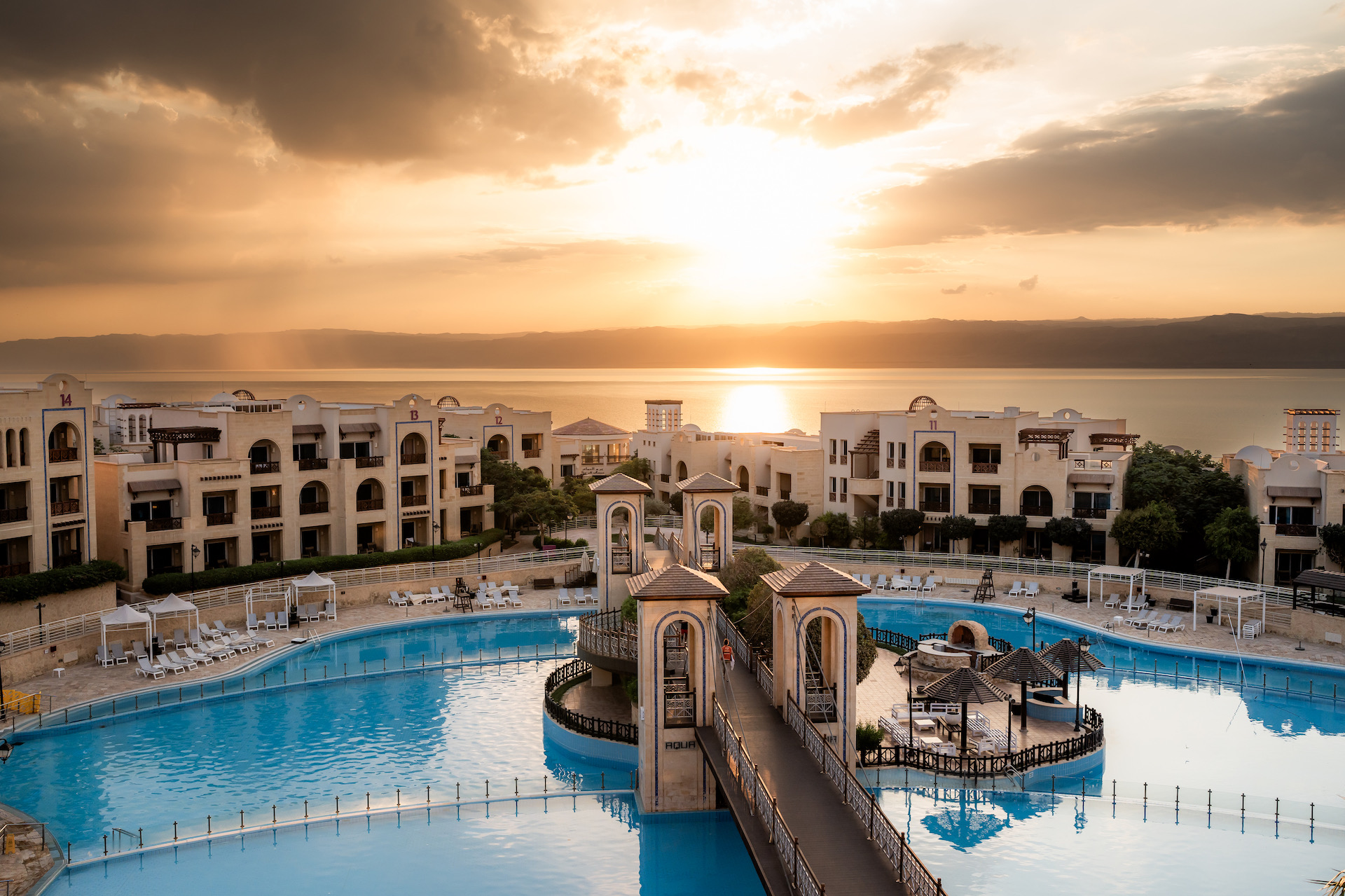
So, if you plan to arrive early or stay on after, these hotel costs will be for you to pay, anticipate a budget of around 150 euro +/- per night with food.
This is often a hidden cost that many don’t consider. You may enter Legendary one year advance, think about all the elements that will come in to play when preparing. Below is an idea of things to consider:
Running shoes
Clothing for varying temperatures
Gym membership
Coaching/ Training Plan
Physiotherapy/ massage
Training camp.
Heat training
The above list provides a guideline of items to consider. At a minimum, its fair to assume that you should set aside at least 2000 euro for the above each year.
Of course, if you have a coach, weekly massage, gym membership, love apparel and shoes, you will easily spend considerably more than 2000 euro.
A good protocol is to set aside 250 euro per month.
MDS EQUIPMENT
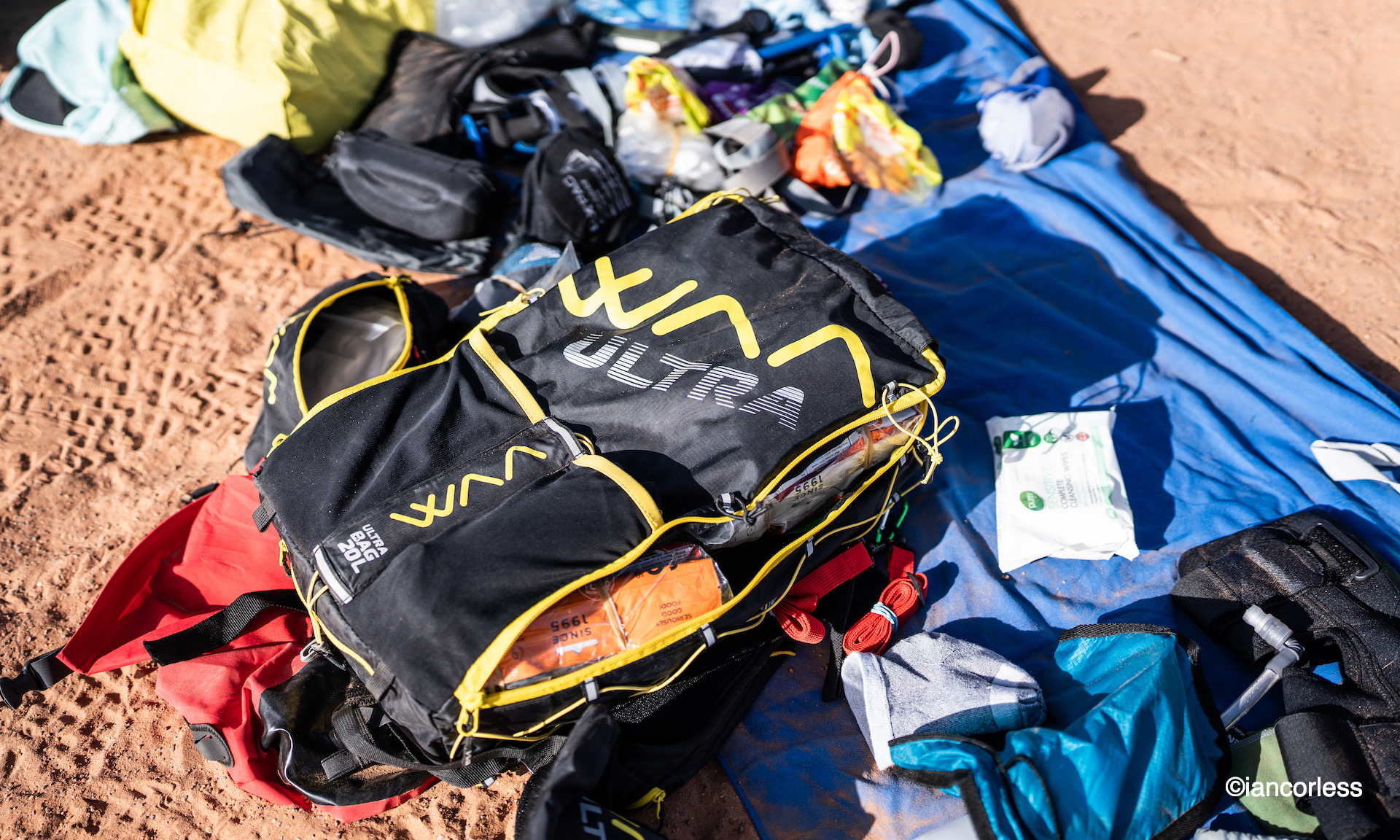
There is often much discussion about equipment for an MDS event. Take a deep breath. It is not complicated, actually, it’s very simple.
The first and most important point, just because you have entered an MDS event, there is no need or requirement to go and purchase all new equipment. If you have apparel that is comfortable and causes no irritation, there is no need to change it. If you have trail shoes that work, are comfortable and importantly cause no blisters, there is no need to change shoes BUT there are things to consider with shoes – readhereand here.
You could actually follow on the links above and you’d have the perfect MDS kit. You would just ned to make considerations for any climatic changes for the race destinations and also consider how many days you need food for. Remember, with Legendary, you are self-sufficient before the race too!
1949.00 euro +/-
It’s fair to assume that on average, a first time MDS participant will spend approximately 2000 euro to equip him or herself for an MDS. There are variables of course based on individual needs and the quality of items you purchase. My top tip is get the best you can afford, it will last longer and ultimately save you money. Based on experience, I would consider an absolute minimum budget to be 1250 euro.
The plus side of all this, once you have done an MDS event, the next event is considerably cheaper.
NOTE: The above list is considered to be the minimum equipment requirement. Oyher things to consider: poles, GPX watch, mp3 player… etc
HIDDEN COSTS
No matter how much you plan and prepare, there will be hidden costs. A great example being equipment… You will buy items and maybe they just don’t work for you and you need to replace them.
Other MDS participants will recommed X or Y product which places a question in your mind and then you purchase because you were curious.
You may get injured and require treatment and rehab with a great deal of additional costs.
Plan for the unplanned.
INSURANCE
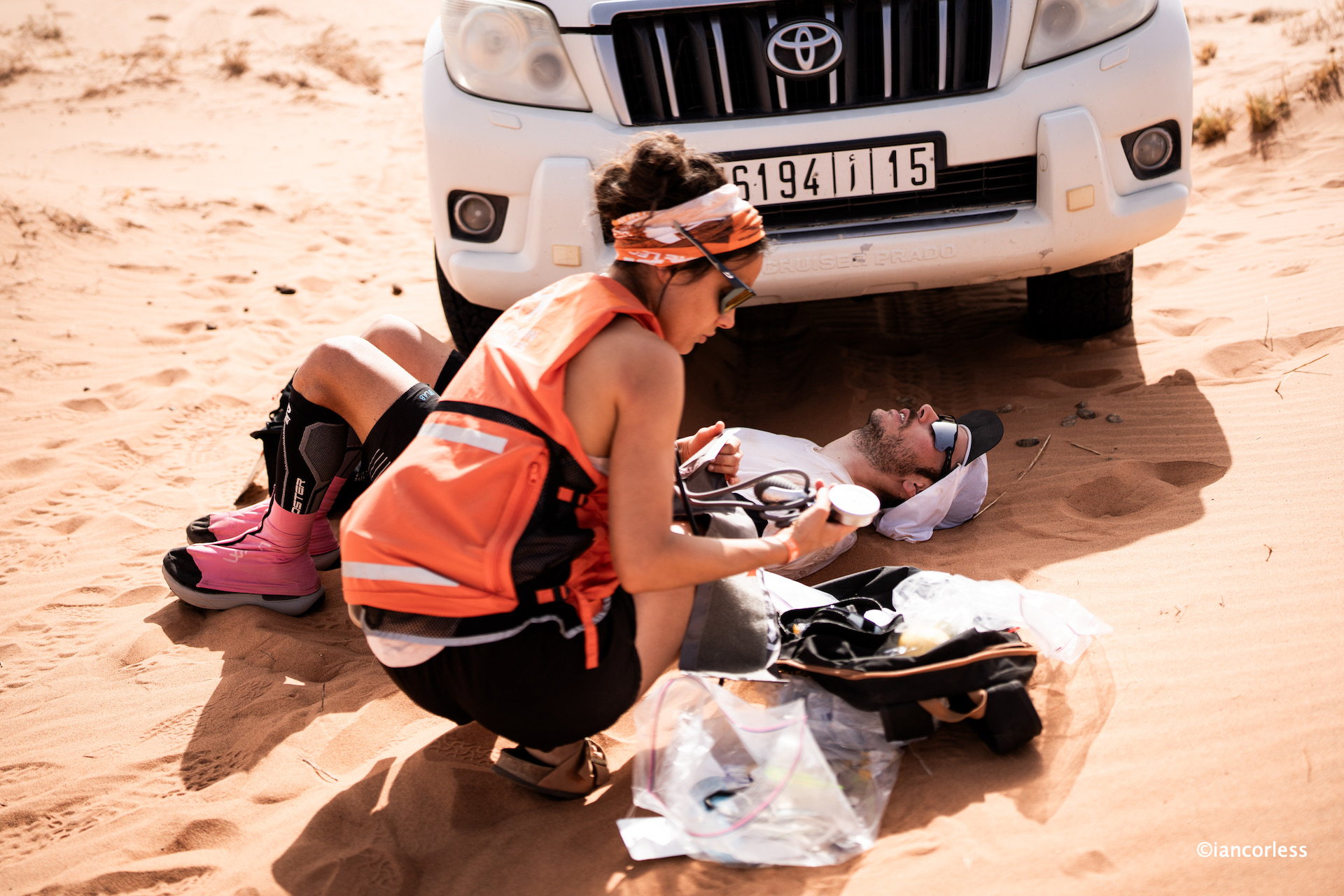
Get insurance that covers you comprehensively for all eventualities. Do this the moment you sign up for a MDS event. You would not believe how many runner’s do not make it to the start line, for a multitude of reasons, only to find out that they were not covered by insurance.
MDS do offer free postponement and the opportunity to cancel free of charge. However, this is not open ended and conditions do apply. Make sure you understand what those conditions are and please note, they vary from event to event.
Look at Dogtag, BMC, Global Rescue, World Nomads, Sports Cover Direct etc – Make sure you speak with an agent and fully explain the event you are doing and what cover you need and require.
How long is a piece of string…? The above is designed to provide an outline of costs broken down so that you can see, roughly, what an event will cost.
LEGENDARY
If you are taking part in Legendary, one you add entry, flights, training time (and the costs), purchasing a full equipment list and having insurance, you are looking at a staring cost of 8000 euro +/-
MDS
MDS events require all the same equipment as Legendary, however, entry fee is less and the race days are less. A starting budget would be 4000 euros +/-
CONCLUSION
Taking part in any endurance sport is never cheap. However, life is short and adventures are to be lived. Marathon des Sables offer adventures all over the world in stunning locations. What you get is superb organisation and safety – that comes at a price. When you arrive at a race, you immediately see how your race entry fee is spent, be that the welcome at the airport, the transfers, the hotel, the transfer to the desert, bivouac, on course route planning and safety, the gala dinner and awards ceremony – MDS offer a full 360 experience that has been fine tuned to make your race the most memorable experience of your life.
Photo by Ian Corless
Interested in an MDS event in 2025?
A full calendar of dates and destinations are available HERE
The inaugural 2024 Lofoten Stage Run paved the way for what is Norway’s premiere multi-stage running event. Taking place over 6-days (4-days running,) the LSR event was inspired by the 170km solo event taking place under the umbrella of events titled The Arctic Triple – ski mountaineering, trail running and triathlon.
2025 will see the 2nd edition take place and once again two distance options will be available, 170km ‘Expedition‘ and the 100km ‘Adventure‘ run.
While 100km may seen extremely manageable over 4-days, one must take into account the challenging terrain the race takes place over and the vertical climb and descent. This is not an easy option.
There is no better way to fully immerse oneself and experience that magic that Lofoten offers by moving under ones own power, running or walking. Lofoten is considered one of the most desireable places to visit in the world.
The Lofoten Stage Run has the added bonus of taking participants to hidden places, often only experienced by the most adventurous tourist.
After a tough day on the trails, each stage concludes with a typical Norwegian Hytte experience with excellent local cuisine, a shower and of course a comfy bed. Participants luggage is transported each day, so, while running, you can travel lighter and faster.
The Lofoten Stage Run is designed to be a running holiday, however, do not be fooled, those cozy and comfortable evenings are worked for. The terrain and weather in Lofoten is challenging; a mixture of all terrains and elements that can bring for many, the ultimate challenge.
THE EXPERIENCE
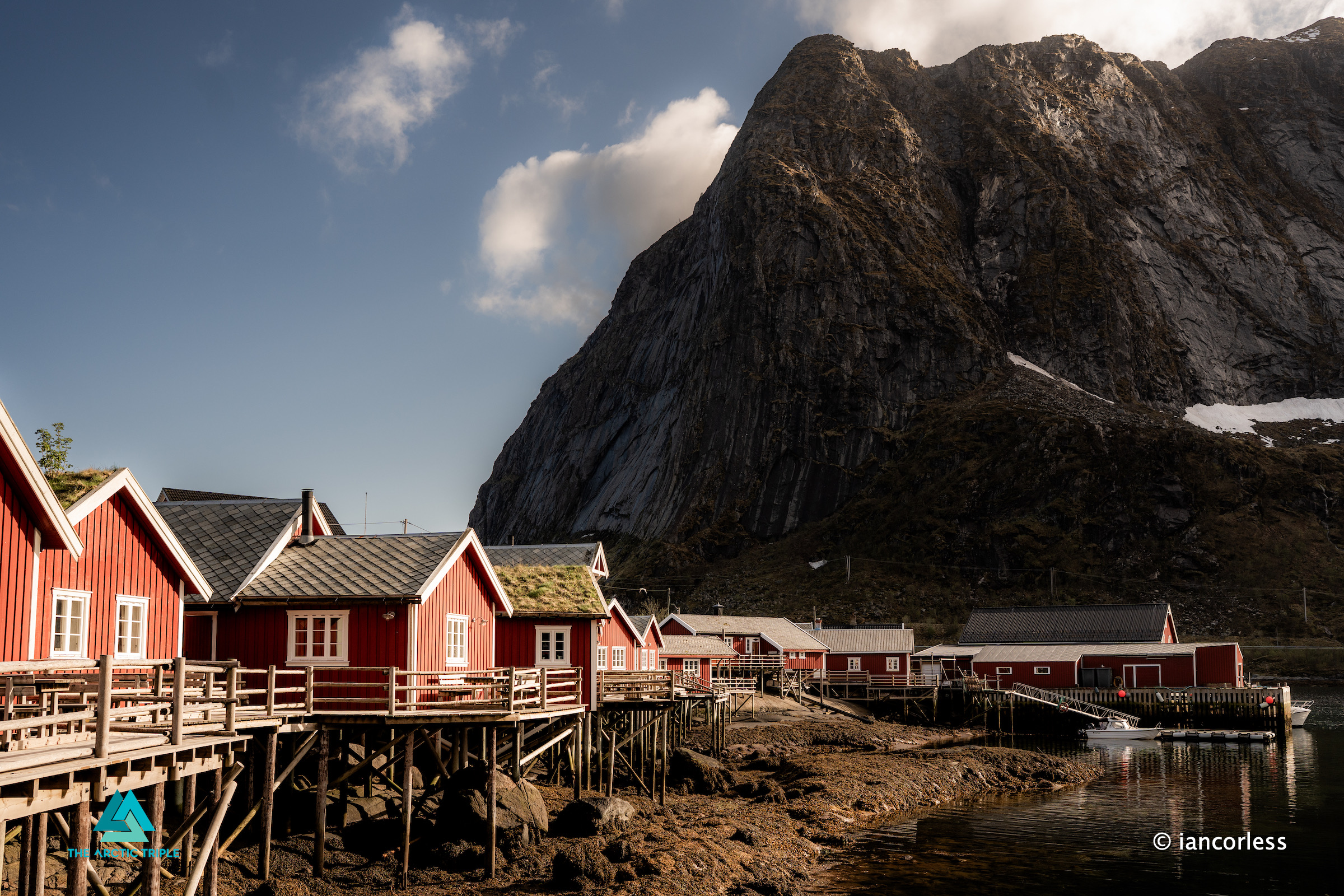
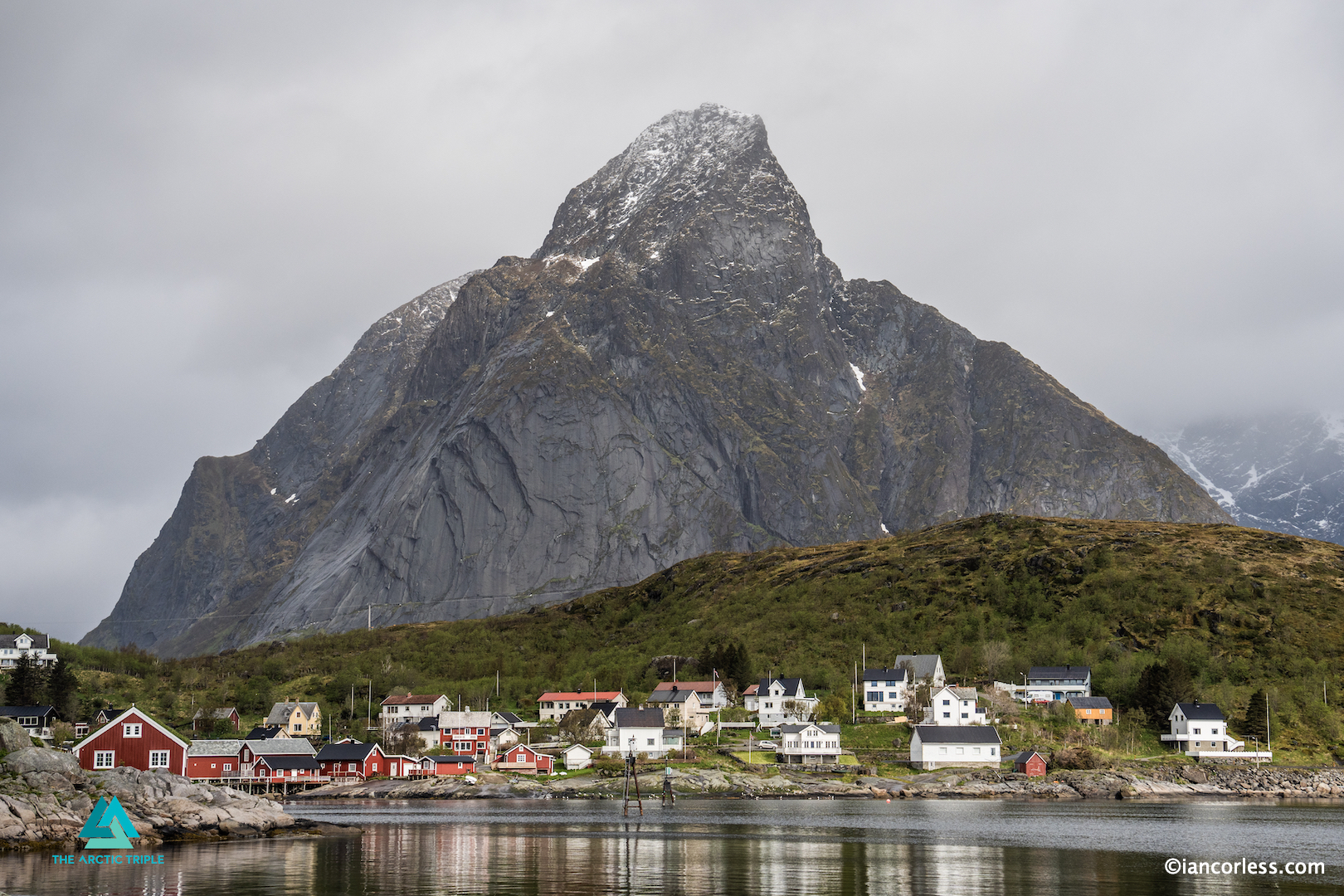
Taking place during week 22, participants need to be in Svolvær on May 27th for a transfer to Reine and a stay at Reine Rorbuer. Located in the western part of Lofoten, at the entrance to the Reinefjord, lies the stunning fishing village, considered one of the most beautiful in Norway.
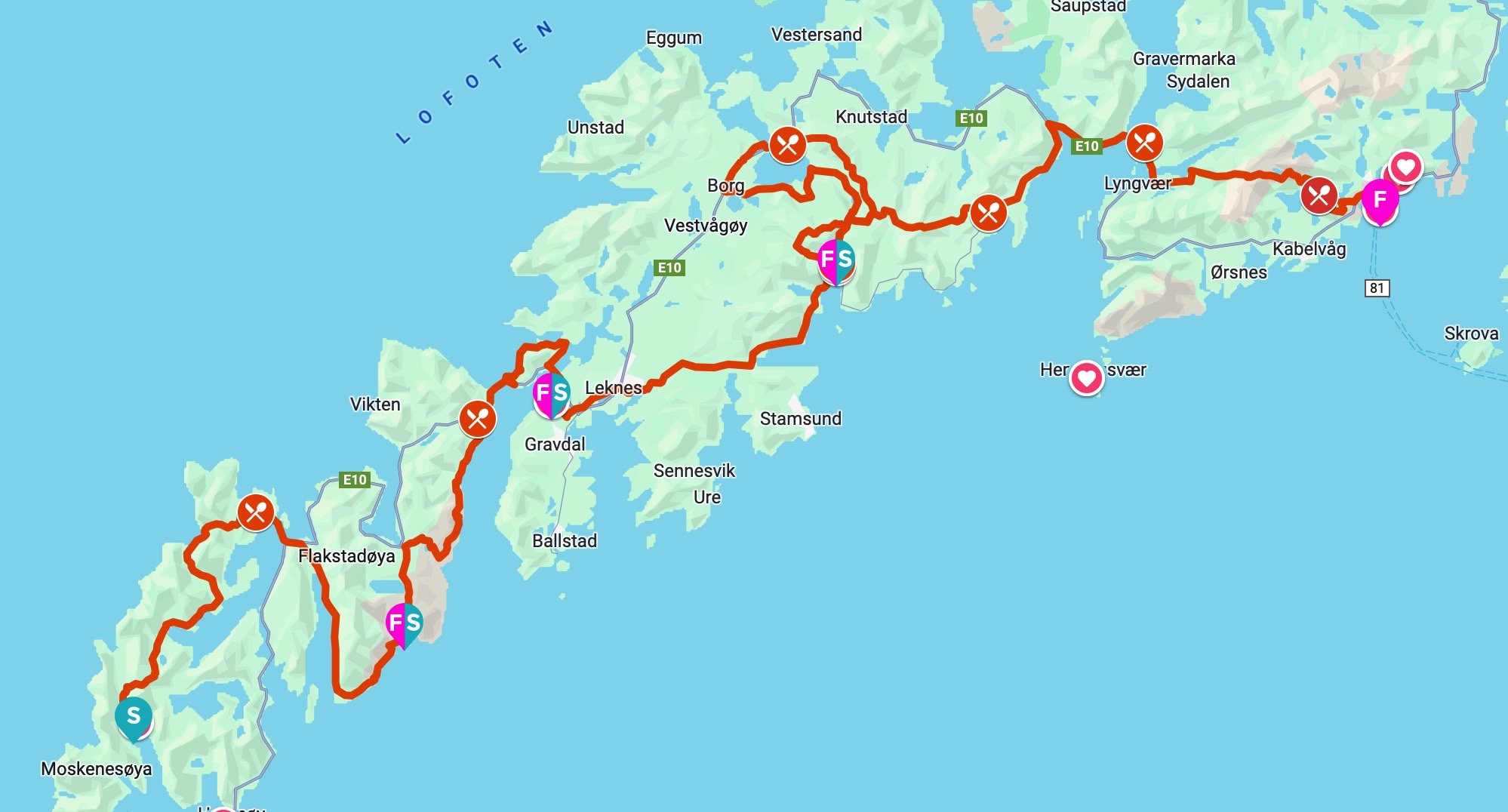
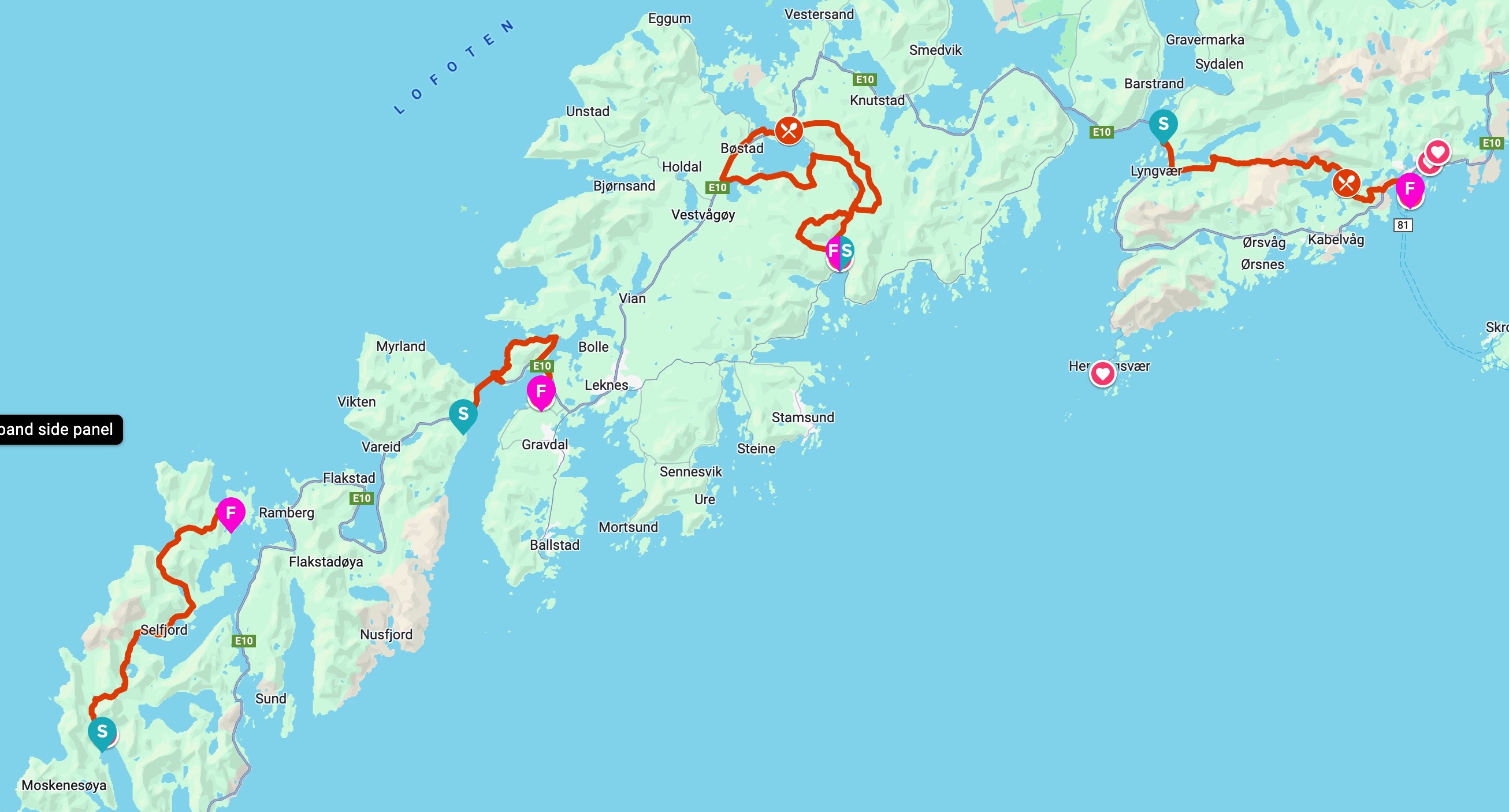
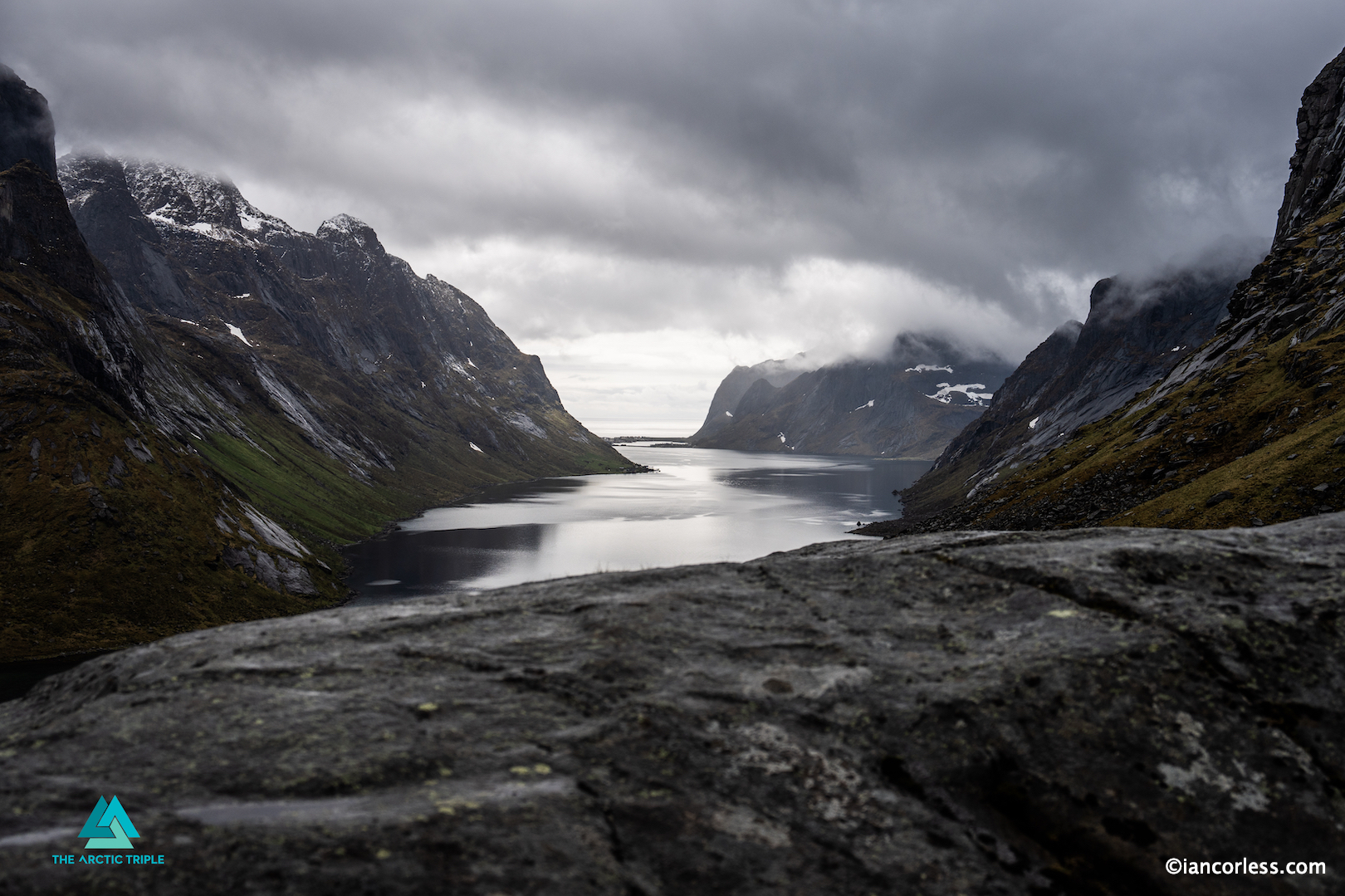
Wednesday, stage 1, starts with a boat trip from Reine to Kjerkfjorden. The route ahead, 39km’s for 170km race and 20km for the 100km. The opening 10km’s a real challenge with tough climbs, technical terrain, snow sections and soft/ boggy ground. Kvalvik beach offers some opportunity for flat terrain before a steep climb and eventually a descent to Fredvang and checkpoint. Here the 20km distance stops. A road section leads to Nesland for the 170km runner’s and the final technical trail sections before arriving in the picture postcard, Nusfjord and the Nusfjord Arctic Resort– a tough day!
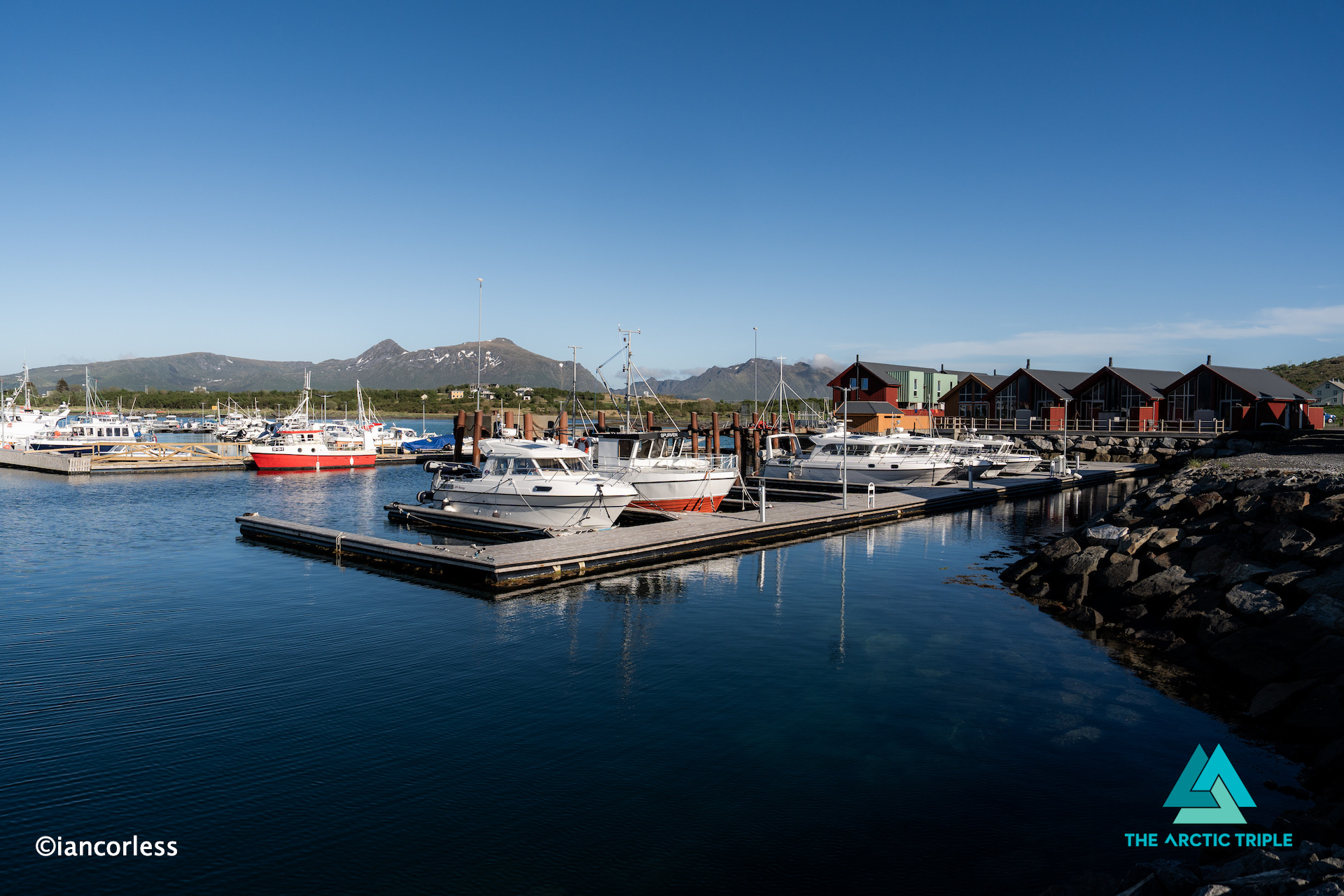
Stage 2 at 34km’s (17km for the 100km starting at Napp) concludes at Lofoten Rorbuutleie another amazing location surrounded by sea and mountains. The early route to Napp bringing many a challenge, technical trails and mild hands-on scrambling sections before sweeping single-track with stunning views. Road gives way to coastal trail and another road section before arriving at Lilleeidetholmen marina, the buildings are located with water on both sides and direct access to quays and floating docks.
Stage 3 for 170km Expedition runner’s is the long day, covering 52km’s with arguably the most ‘runnable’ terrain of the whole week. For the 100km it is also a long day at 35km starting at Rolvsfjorden.. Technical aspects are reduced and much of the route is single-track interspersed with some road. The finish at Brustranda Fjordcamping once again offering a wonderful Norwegian hytte experience of cabin surrounded by water and mountains.
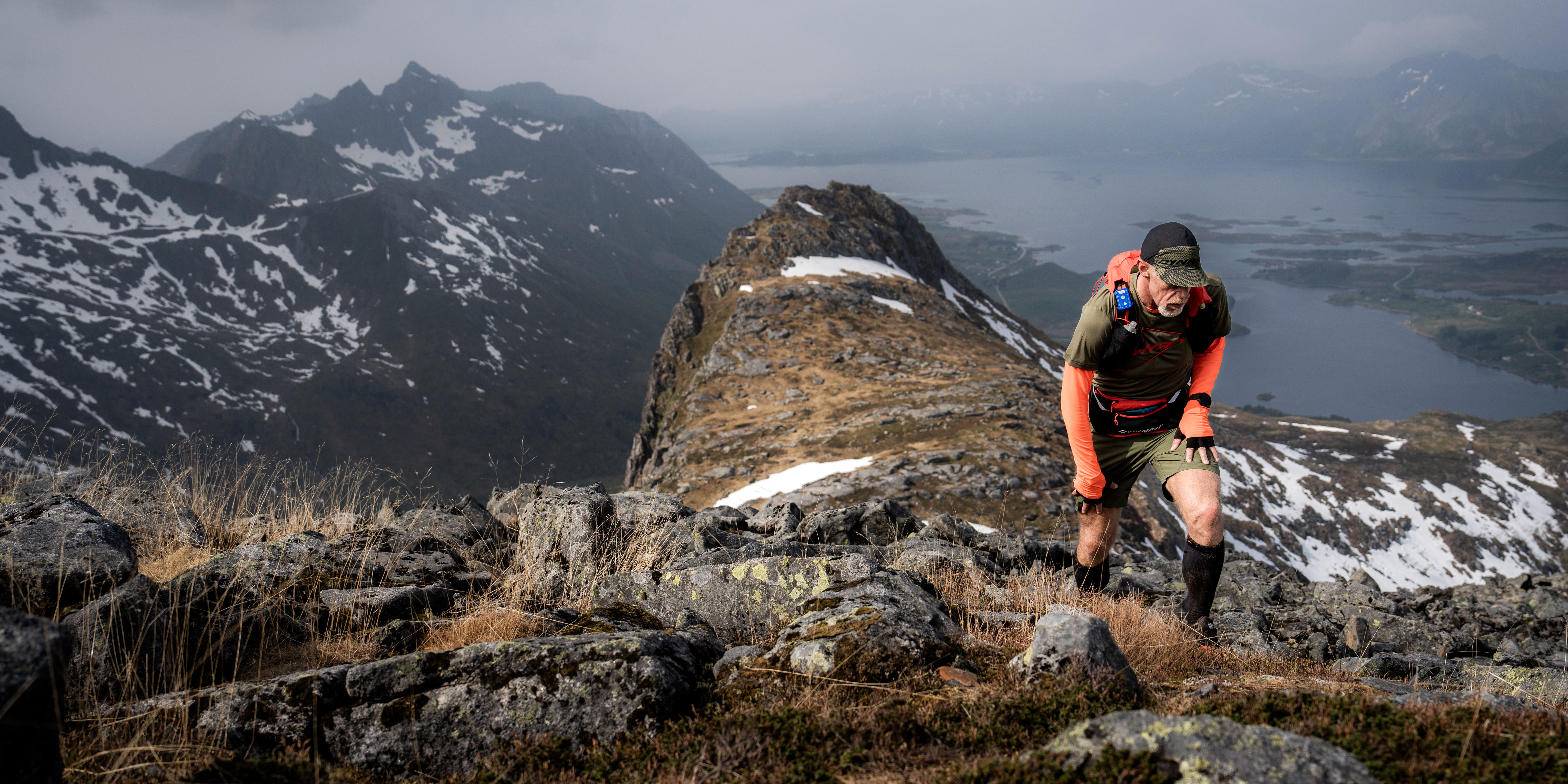
Stage 4, the final day at 45km’s brings some of the most technical terrain of the whole Lofoten Stage Run experience, especially the climb to Jordtinden and the ridge that follows with some exposure form an ‘airy’ single-track, snow fields and at times, challenging terrain. The final peak of Tjeldbergtinden a final challenge before the run in to Svovær and the conclusion of four magical days. For the 100km runner’s they cover the last 21km starting at Kleppstad, and yes, they get to experience Jordtinden, the ridge and the final summit of Tjeldbergtinden – it is the highlight section of the whole Lofoten Stage Run.
After the race, a meal at the event hotel, Thon Hotel Lofoten, where the focus is some of the best local food from the area. A perfect evening to share new and old stories with your new friends and relive the magic of Lofoten and the Lofoten Stage Run.
THE RUN
170km or 100km, one thing is for sure, running in Lofoten is tough and challenging. Terrain constantly switches from demanding and technical sections to easy flowing single-track. Experience, excellent endurance and an ability to handle technical and challenging terrain is required for those who sign up for the 170km.
The same requirements apply for the 100km distance, however, the shorter distance does allow for a considerably slower pace and more walking. Rest assured, the 100km is not an ‘easy’ option, it is a real Norwegian mountain experience, especially the 21km on the last day.
The Lofoten Stage Run is all about enjoyment and experiencing the best of Norway, not only its magical terrain but its hytte and food.
It is no coincidence that this is called a run and not a race, the ultimate relaxed trail running experience that brings so much more than just running. Traveling point-to-point, on foot, experiencing the magnificence of Norway. Stunning trails, majestic mountains, resplendent views, and all during the endless daytime of the midnight sun. It gets no better!
Experience Lofoten.
Experience the Arctic Circle.
Experience the midnight sun.
Experience the majesty and beauty of Norway under your own power.
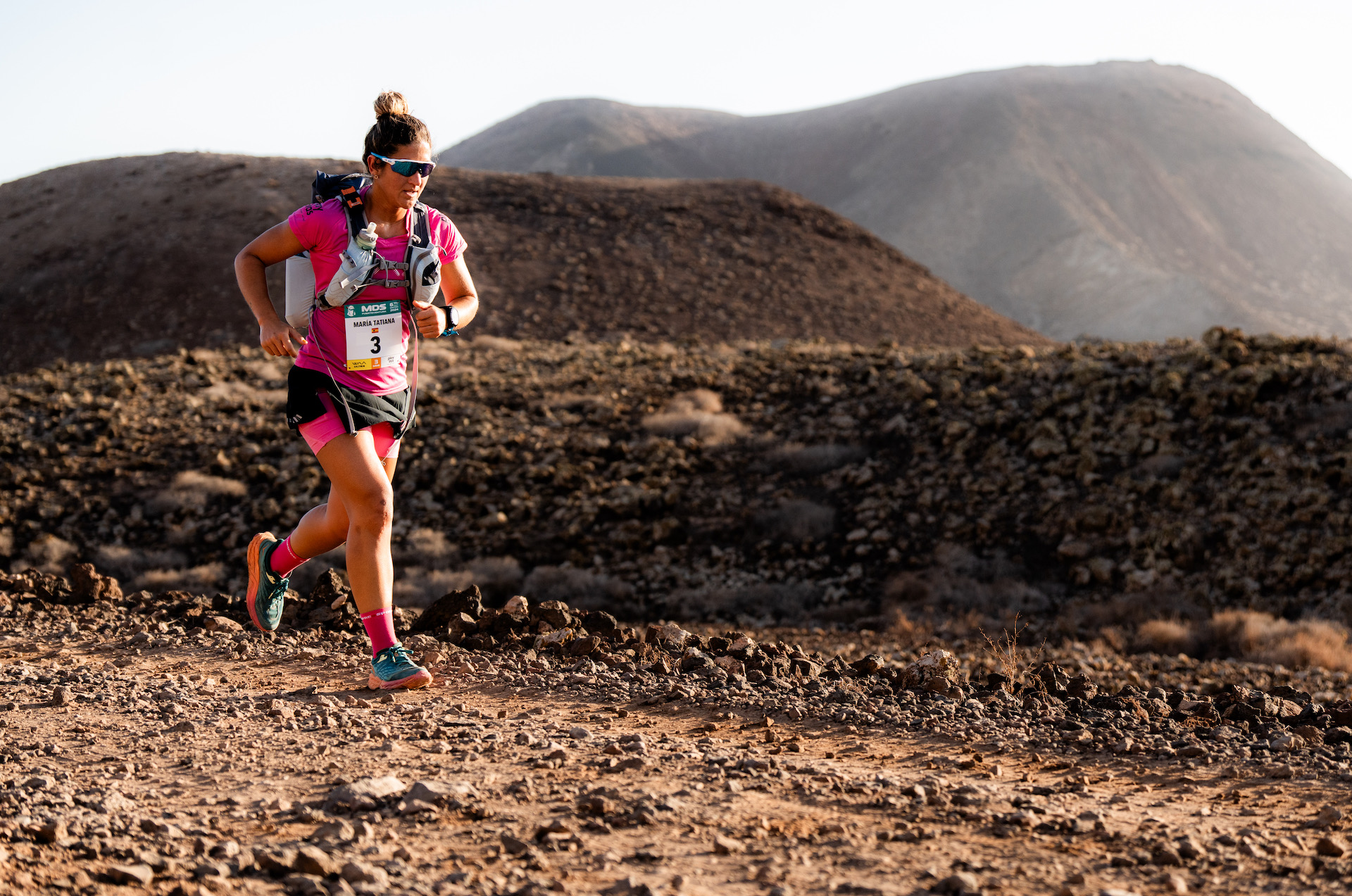
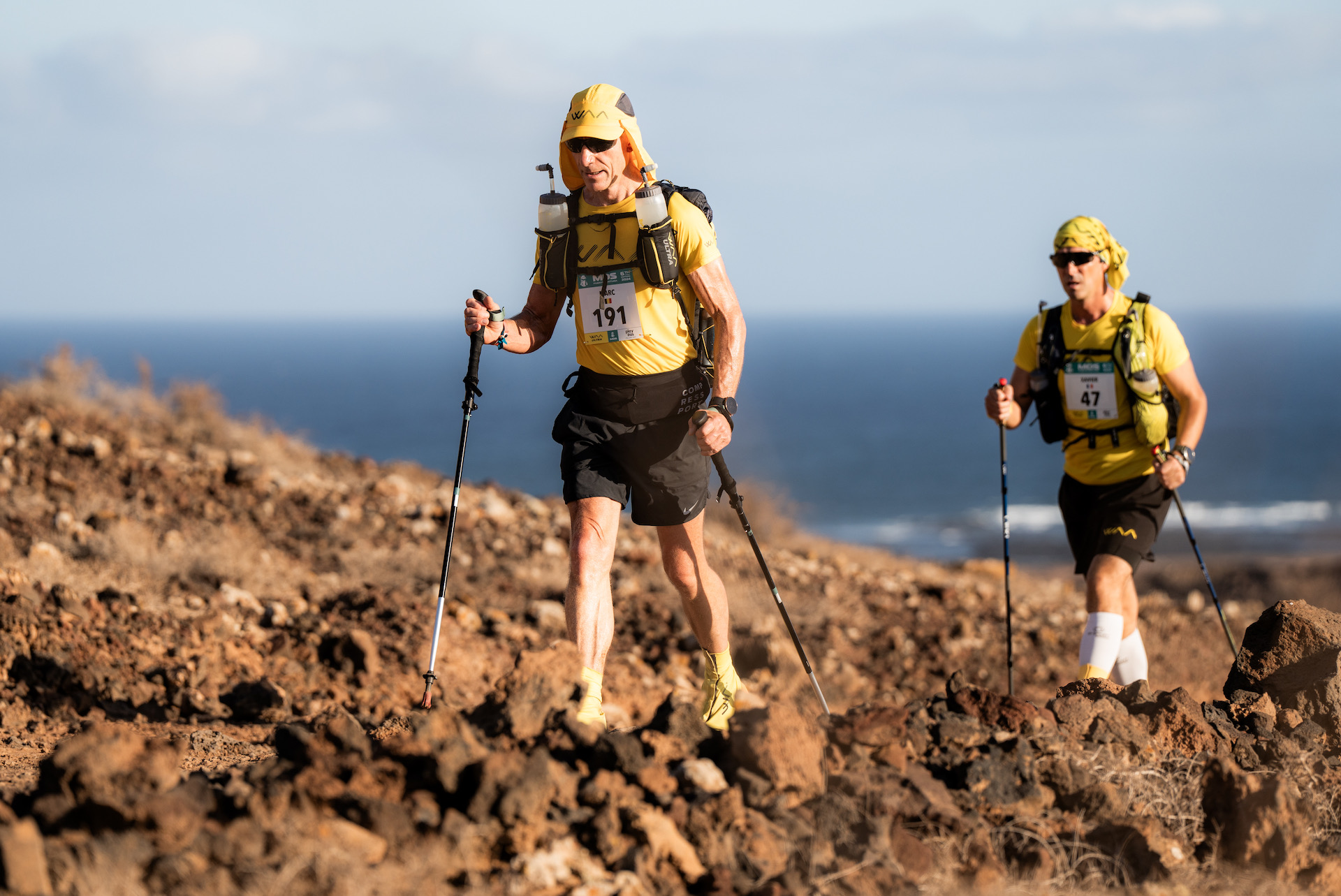
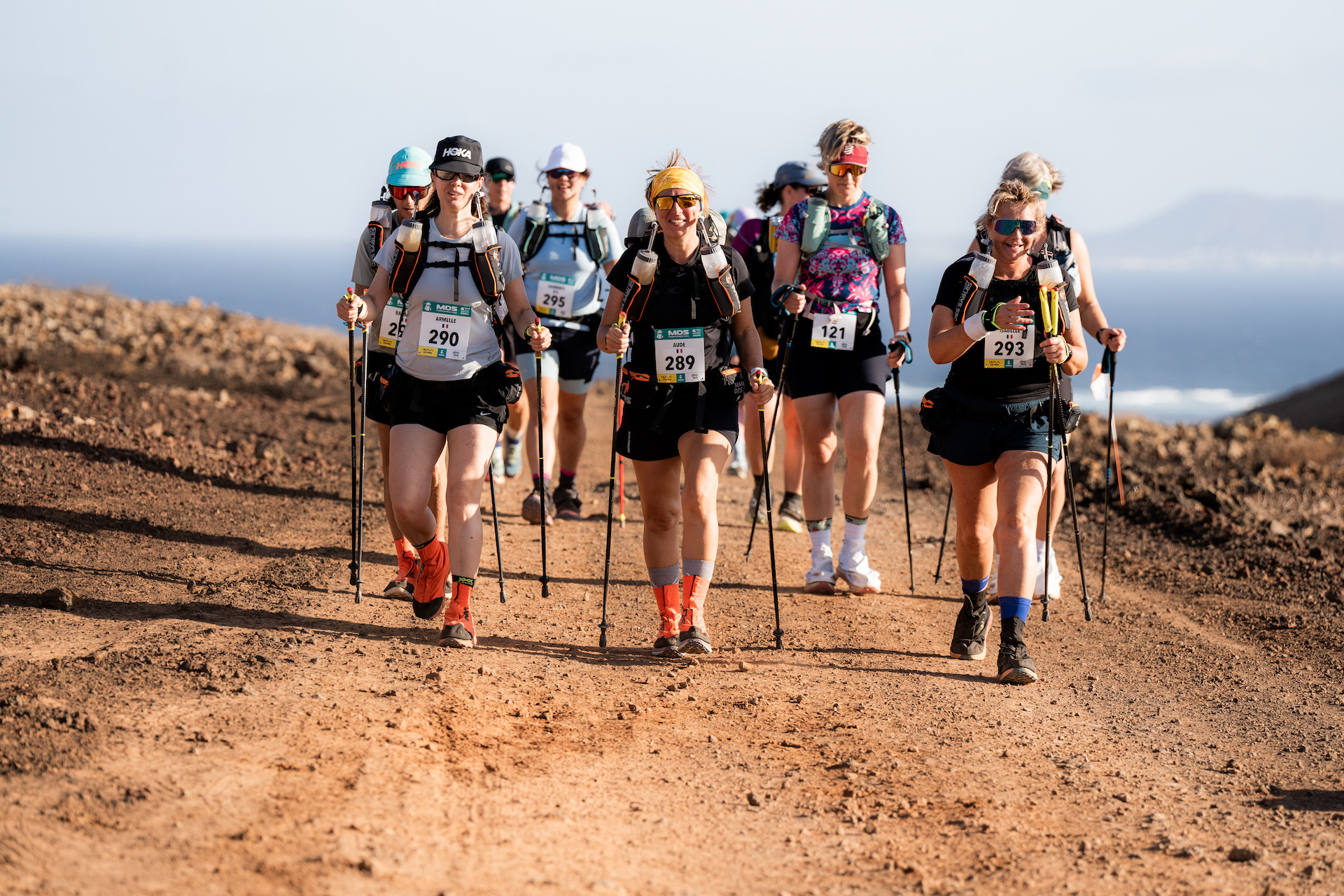
Stage 1 of the 2024 MDS Fuerteventura got underway today, 33.6km and 444m+
It was a 90-minute drive from Play Itas Resort to the northern coastal location of Manjanicho Beach.
A climb from the ocean to start the day
A day that offered a little of everything, starting and concluding next to the ocean, the track was mad up mostly of gravel/sand path, approximately 20% soft-sand and just a tiny amount of road crossings.
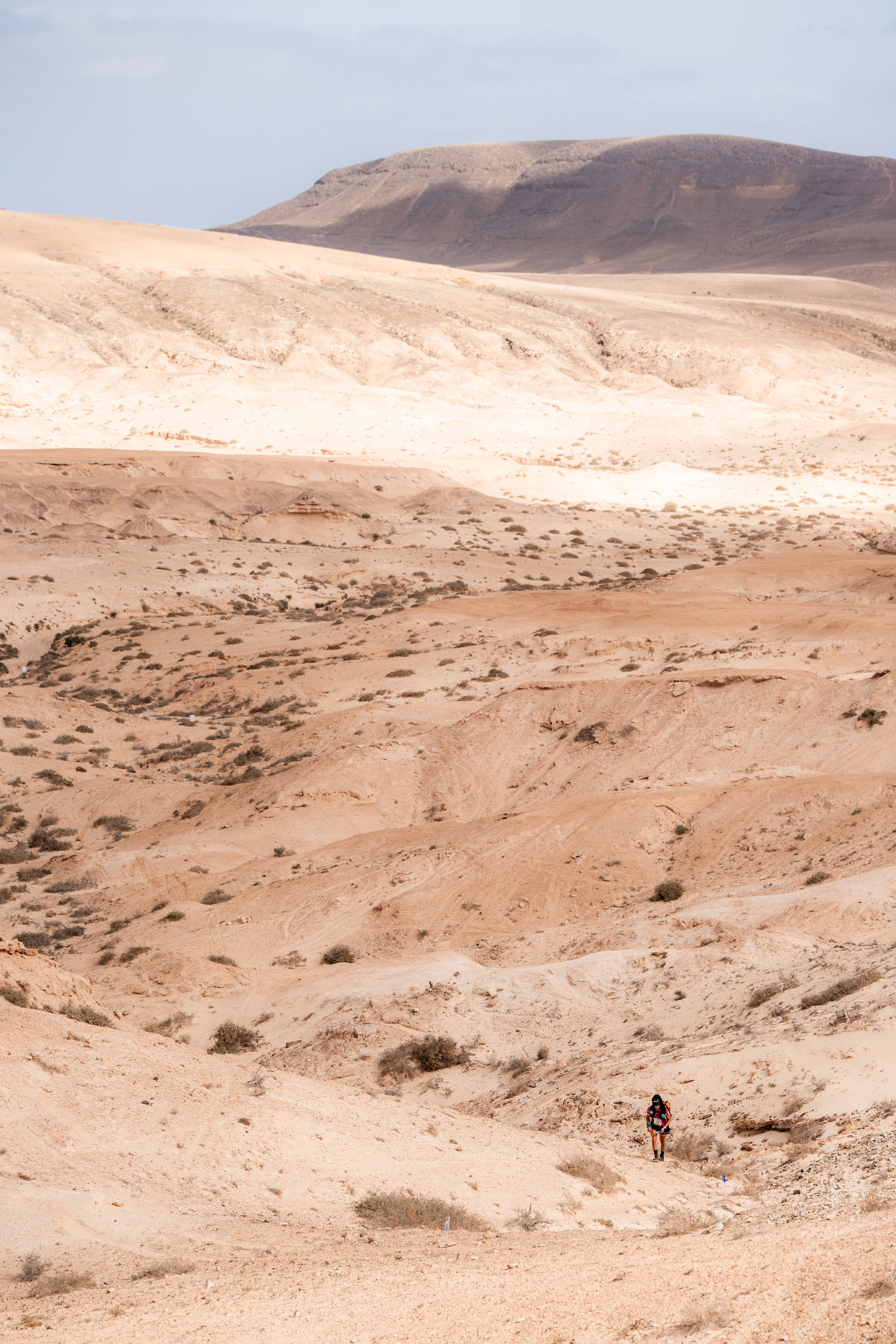
The unique landscape of Fuerteventura
Wind was present throughout the day, making the highest temperature of 28-degrees feel manageable.
Expansive landscape
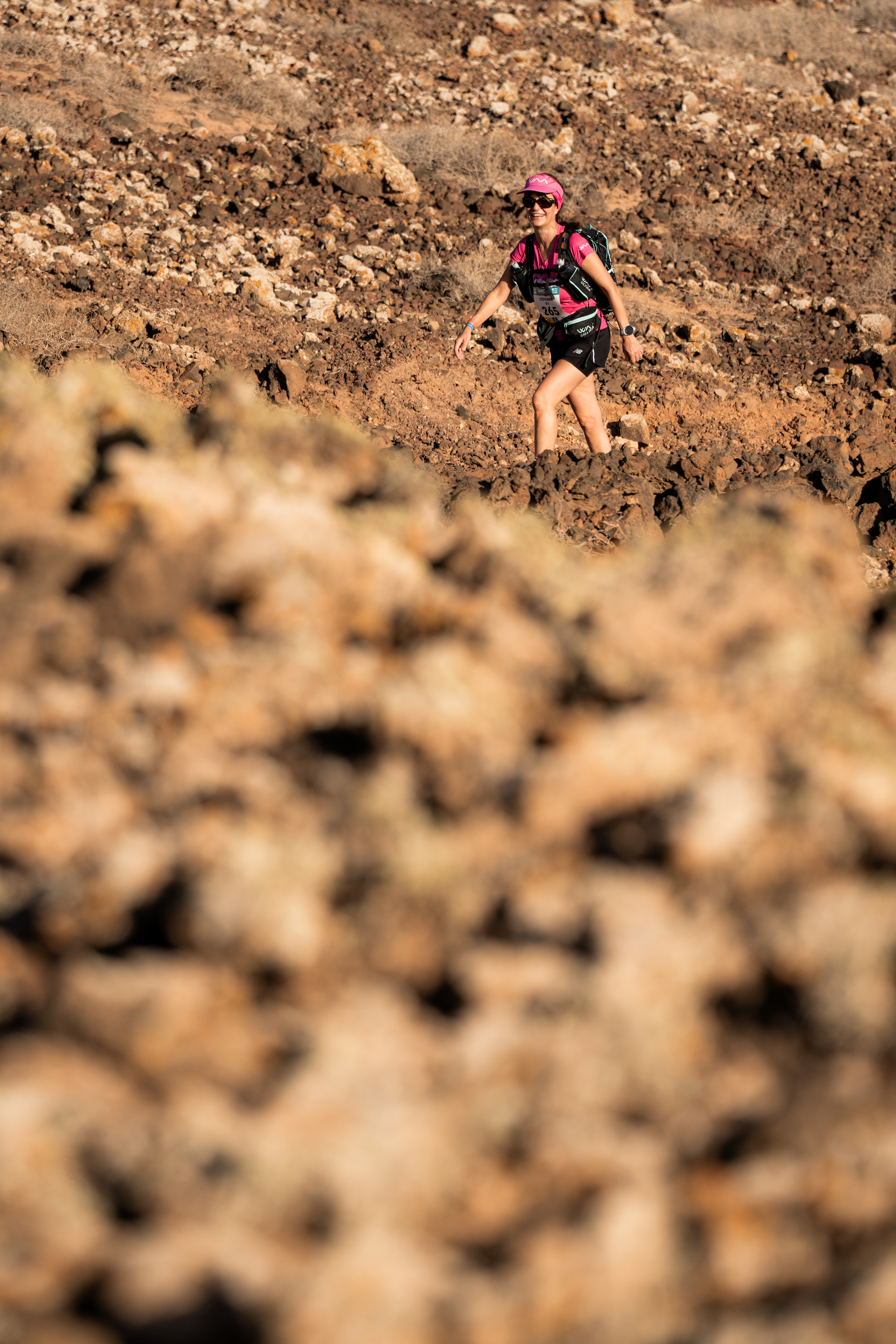
With 300 participants and record 58% women, the 6th edition of MDS Fuerteventura was highly anticipated.
Here for the women’s race
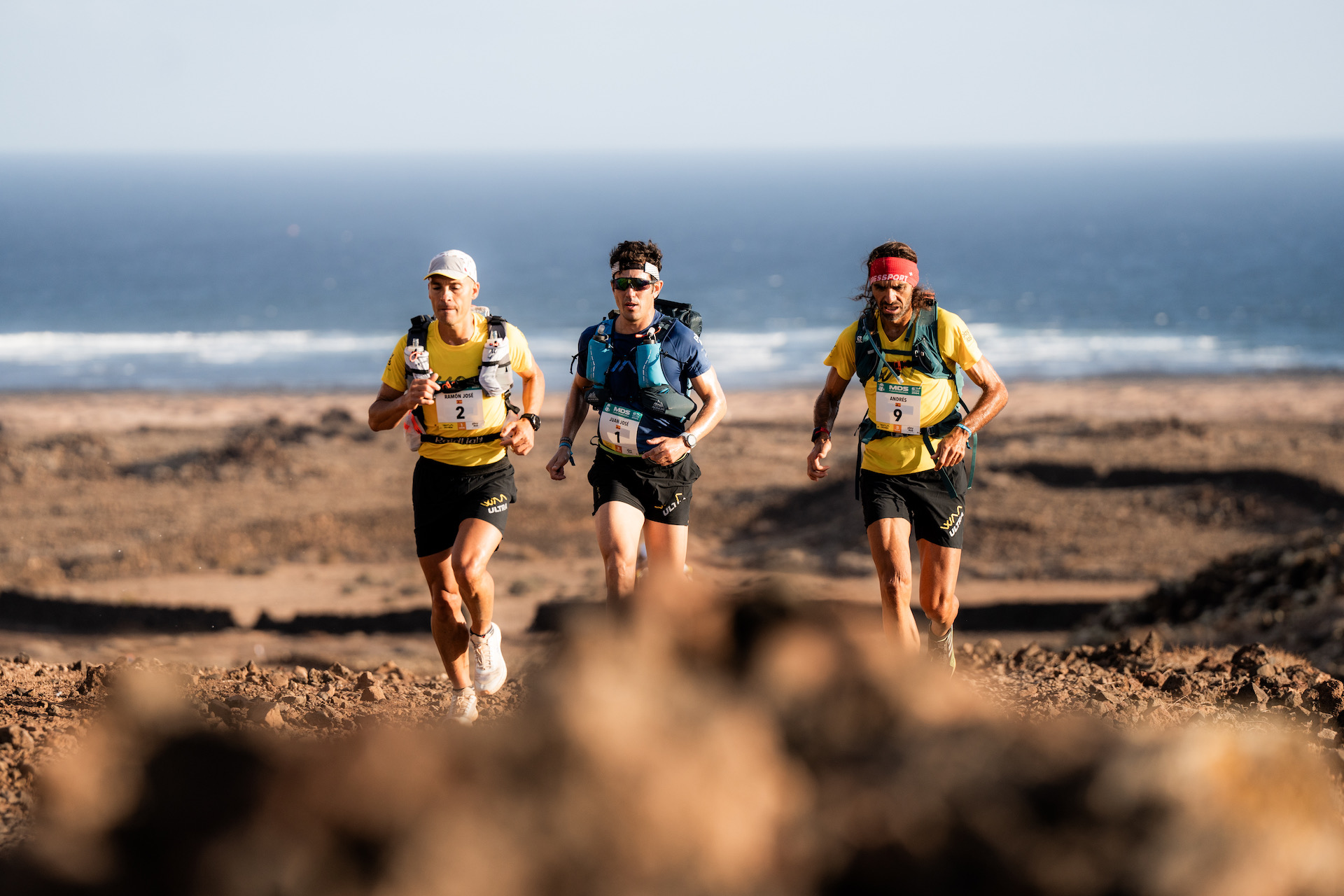
The race upfront was dominated by Juan SANTANA FERNÁNDEZ, ROGER PÉREZ and FOULQUIÉ PADILLA, the trio setting an incredible pace in the 120km race, with SANTANA FERNÁNDEZ taking the victory ahead of ROGER PÉREZ and FOULQUIÉ PADILLA placing 3rd, 2:32:18, 2:33:48 and 2:34:15 respectively.
The lead trio
For the women, MUJICA GONZÁLEZ ran the race solo for a time trial effort and victory in 3:37:37. Behind, BOLLENGIER, and DEL RIO VALLES ran a close race for 2nd, the duo crossing in 3:52:50 and 3:53:10 respectively.
It is important to remember, MDS events offer 3-distances, 120km, 100km and 70km, stage 1 is the same for all races and then the difference comes on stage 2 when participants for MDS Fuerteventura will choose which loop to run, option 1 17.8km, option 2 40.5km and option 3 56.7km.
Volcano backdrops with 3rd place DEL RIO VALLES
Bivouac remains the same for each stage, the final stage (stage 3) the exception when the finish line brings an nd to the race and the participants return to Play Itas Resort.
With stage 1 being a longer first day, we may well see participants change options for stage 2, if they considered day 1 a little hard, they may well choose an easier option for stage 2, the choice is for them.
Stage 2 starts at 0600 and based on the distance chosen, the cut-off times for finishing will vary, midday for the short race, 1910 for the middle distance and for the long, 12:50am the following day.
Gladly for the participants, they will then have a rest day.
Since 1986, the MARATHON DES SABLES has crossed the world’s most stunning deserts with several unique concepts: the MARATHON DES SABLES THE LEGENDARY (252 km in the Sahara Desert in Morocco), the MARATHON DES SABLES (70, 100, or 120 km spread over 3 stages), and the new 2024 concept, the MDS TREK (4 stages with a total distance of up to 120 km), offering an accessible adventure with optimal comfort. These international events have seen over 50 editions in various countries such as Morocco, Fuerteventura Island, Peru, Jordan, Turkey, and offer adventures that combine running/hiking in the desert with tourism.
The inaugural 2024 Lofoten Stage Run has just concluded, two experiences, the 170km Expedition Run and the 130km Adventure Run brought to you by The Arctic Triple team. Six days and four stages inspired by the Lofoten Ultra-Trail 100 Miles solo race, the Lofoten Stage Run brings the same route broken down into manageable chunks.
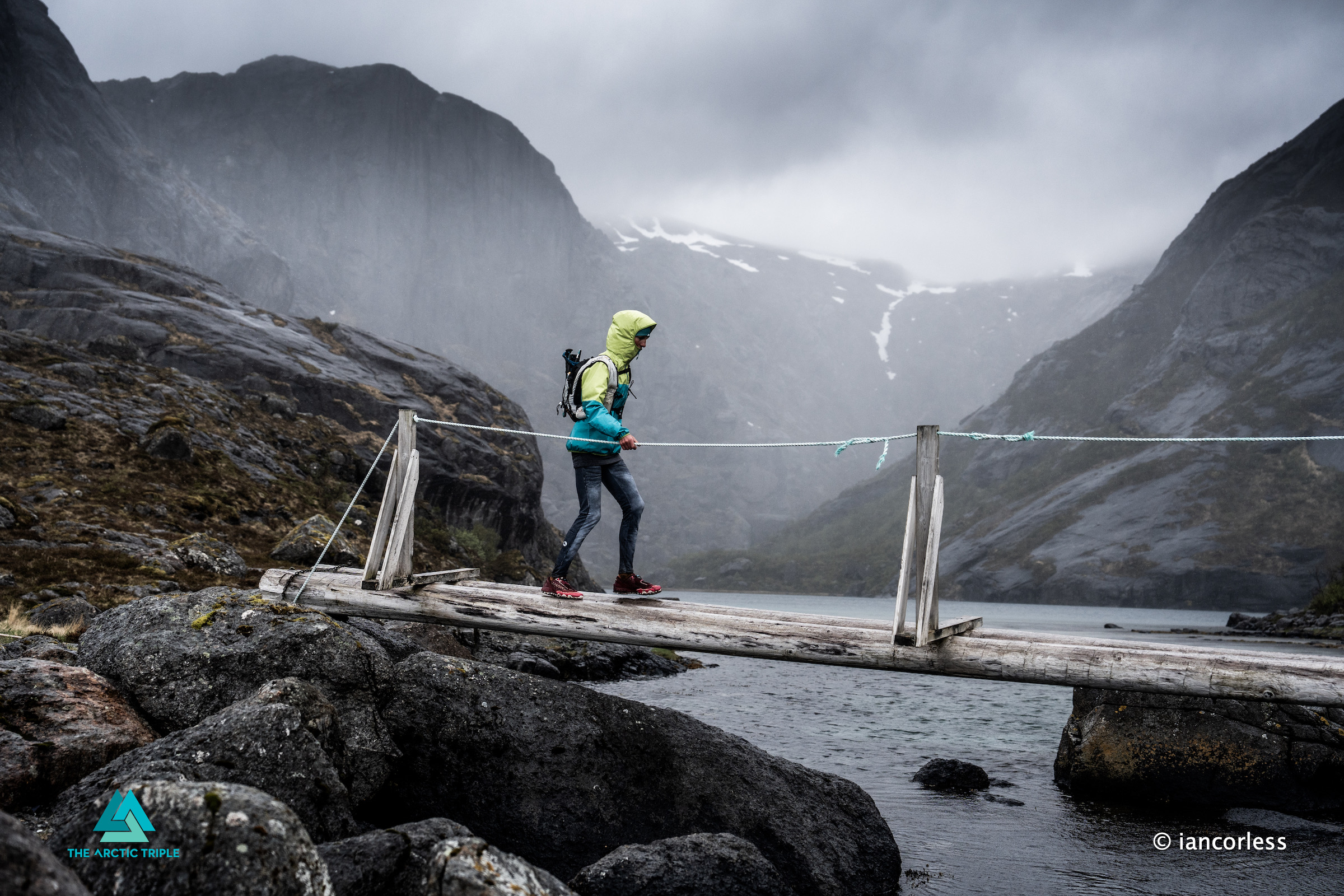
Epic landscape and views
There is no better way to fully immerse oneself and experience that magic that Lofoten offers. The routes journey to hidden places, often only experienced by the most adventurous tourist. Each day concluding with the Norwegian Hytte experience and local cuisine.
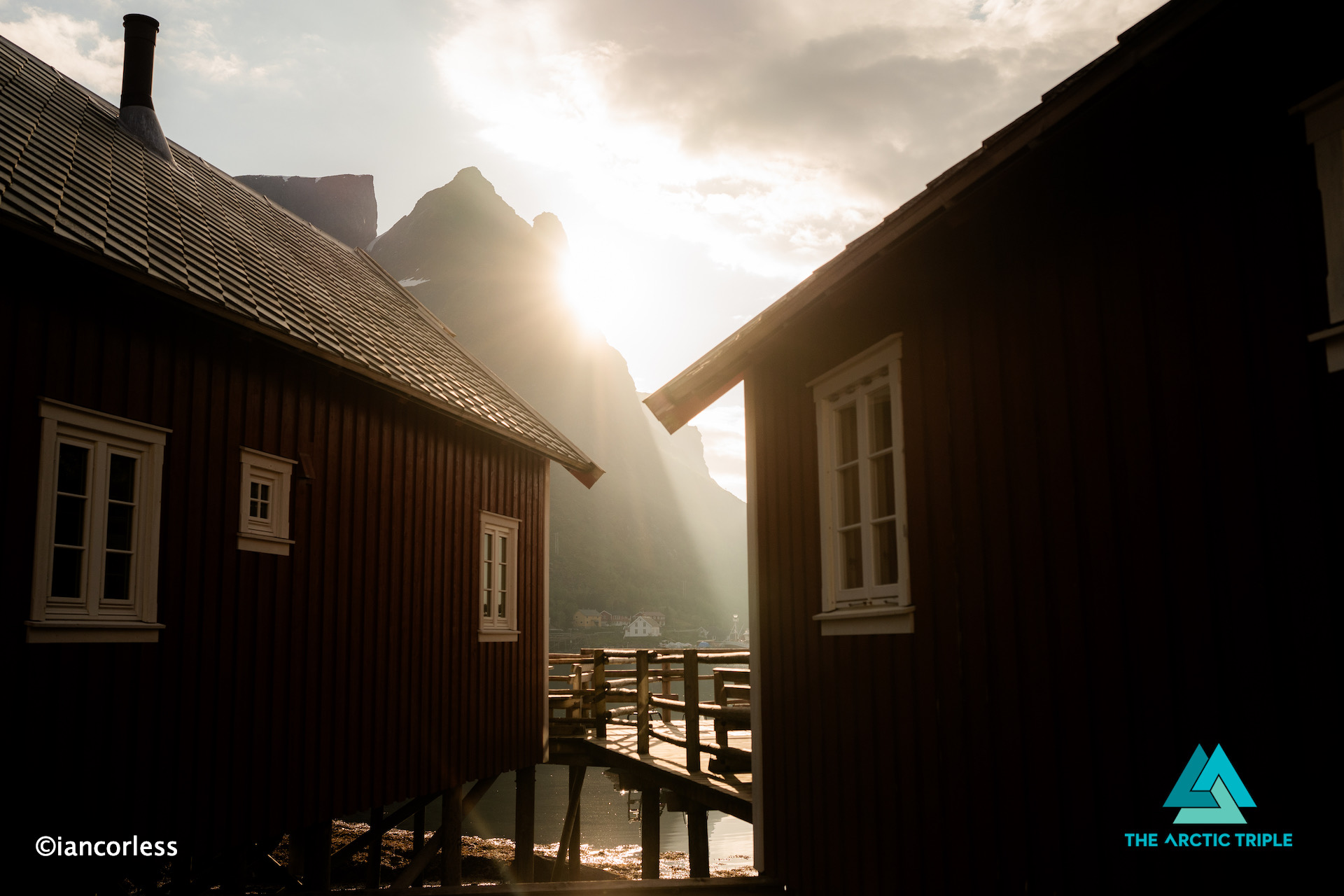
Norwegian Hytte – Reine Rorbuer
Designed to be a running holiday, however, do not be fooled, those cozy and comfortable evenings are worked for. The terrain here in Lofoten is challenging; a mixture of all terrains and elements that can bring for many, the ultimate challenge.
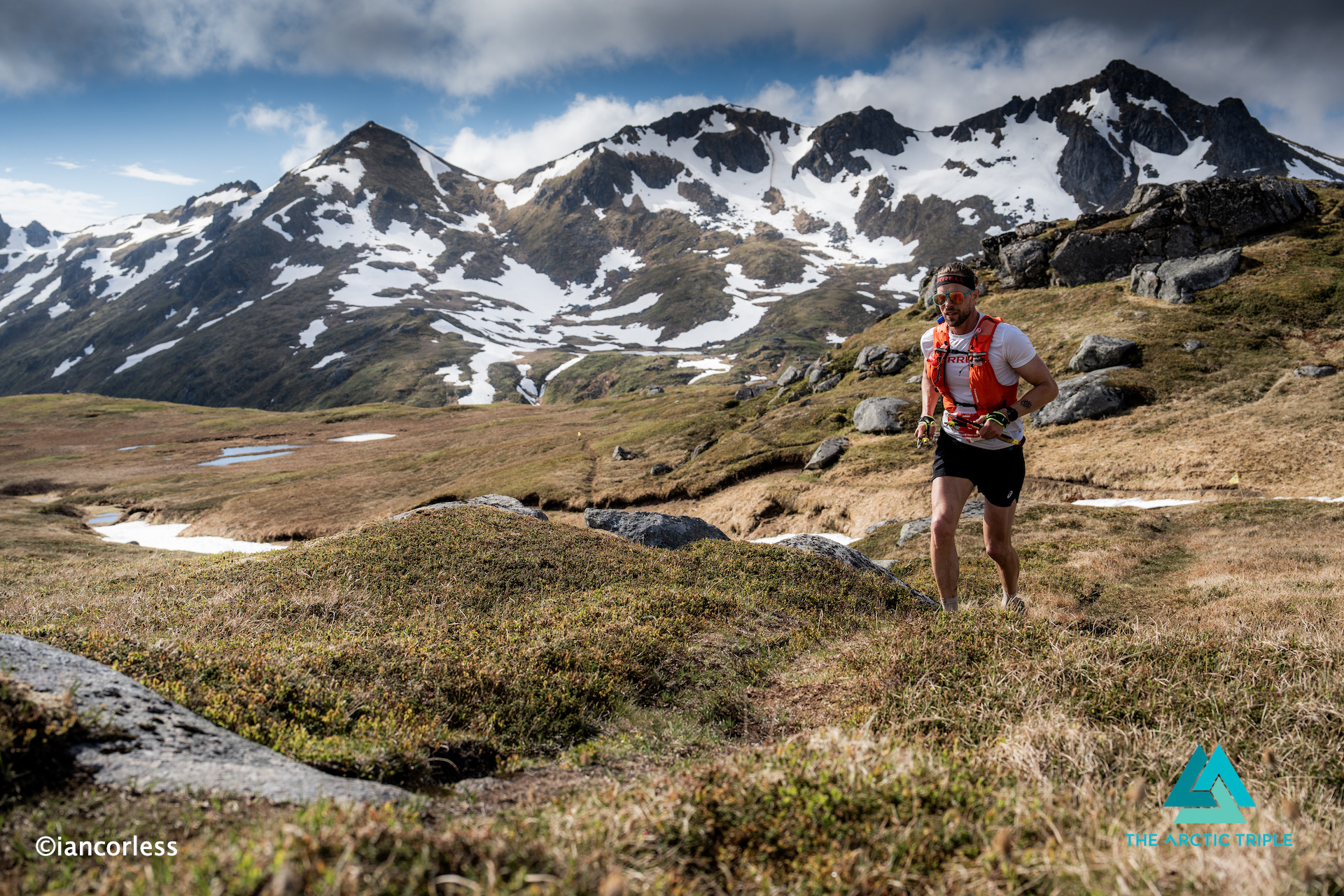
Mountains, snow, single-track and amazaing views with Johan Cajdert.
THE EXPERIENCE
Arriving in Svolvær on Tuesday May 28th, participants were transported to Reine, considered by many to be the most beautiful village in Norway. It is certainly iconic.
Reine Rorbuer
Staying in an authentic fisherman cabin in Reine Rorbuer, the 2024 experience kicked-off with a race briefing and then dinner.
Race briefing
Wednesday, stage 1, started with a boat trip from Reine to Kjerkfjorden.
What a way to start a journey.
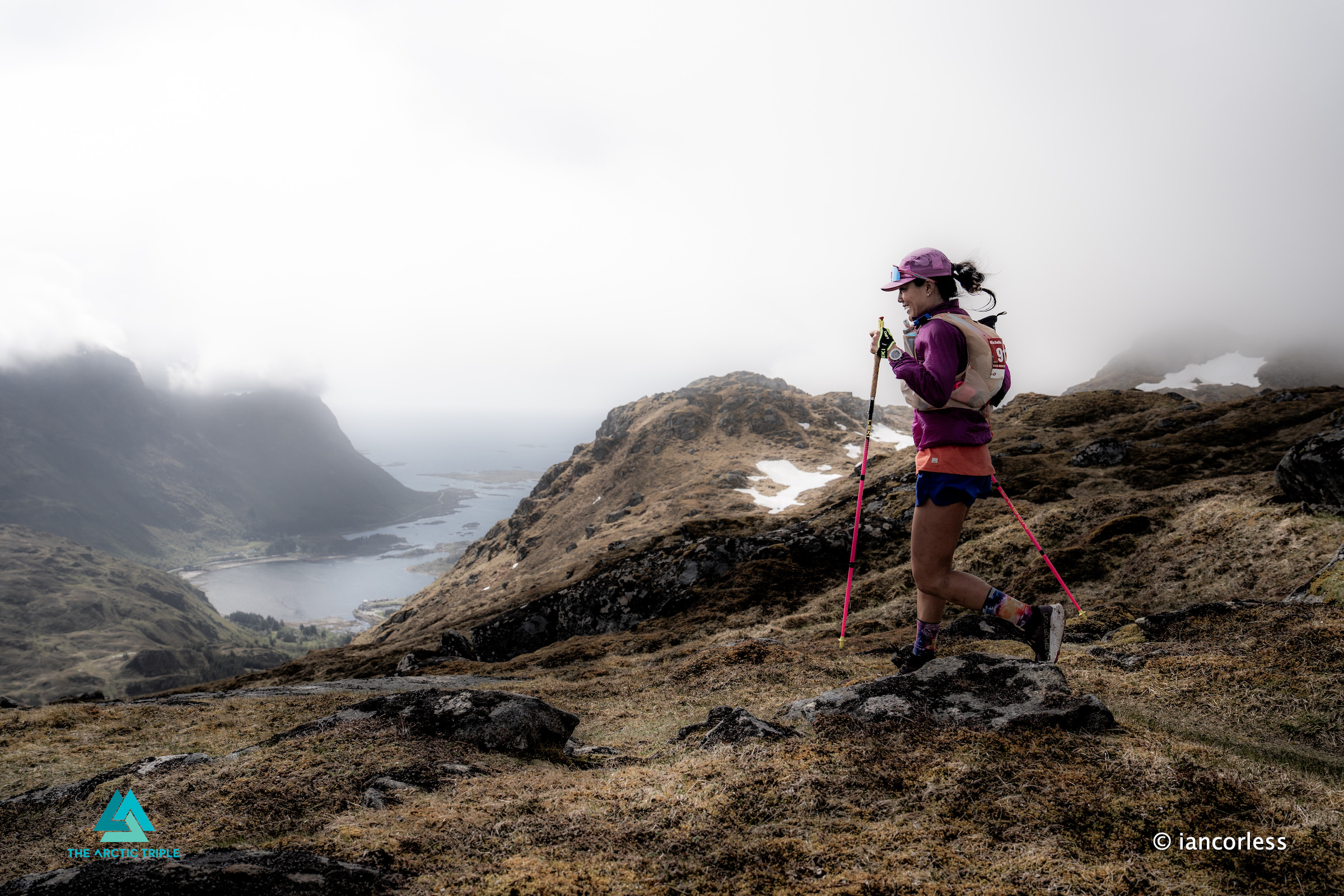
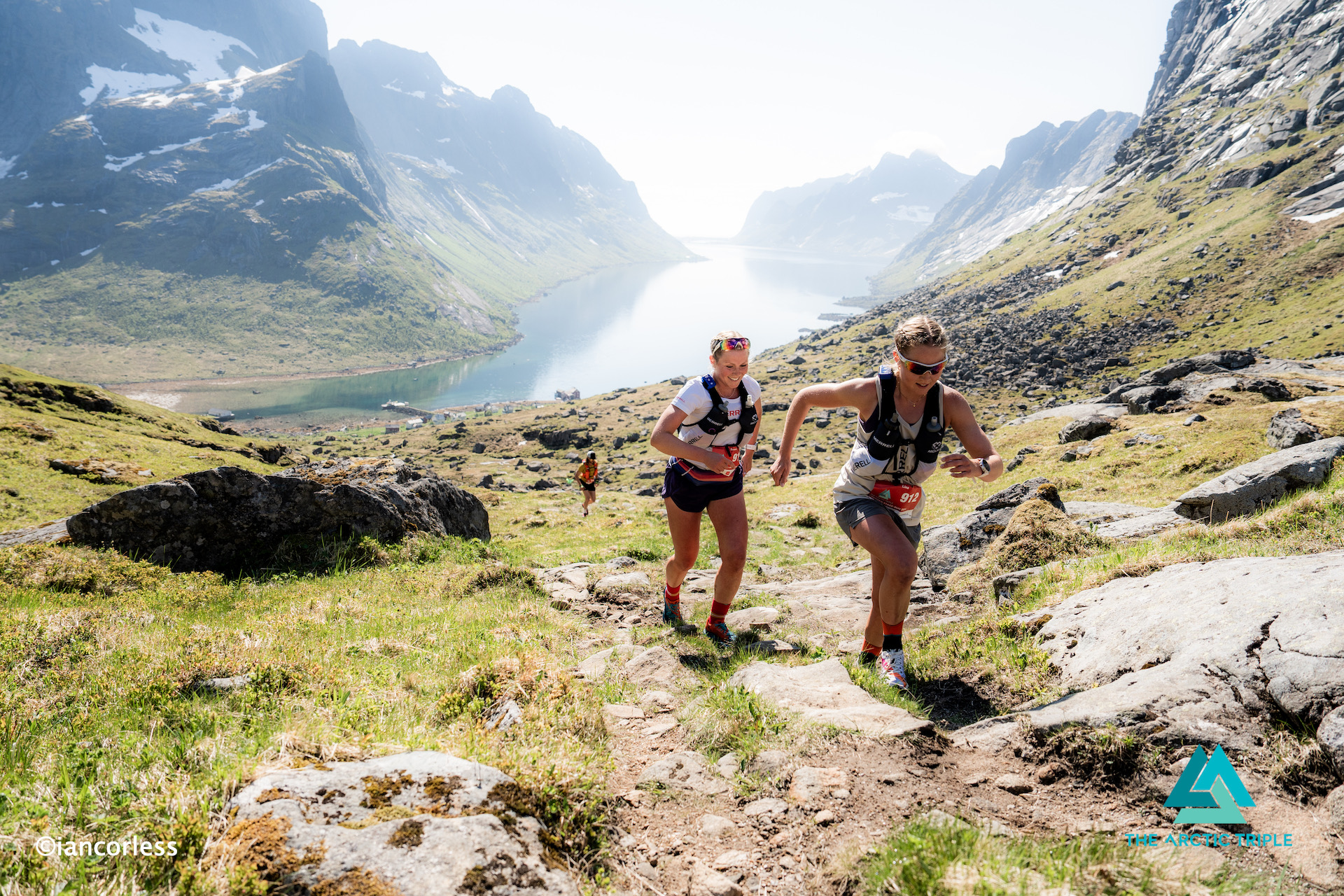
The route ahead, 39km’s. The opening 10km’s a real challenge with tough climbs, technical terrain, snow sections and soft/ boggy ground.
Lina and SannaRock, trail, grass and snow.
Kvalvik beach offers some opportunity for flat terrain before a steep climb and eventually a descent to Fredvang and checkpoint.
It’s more than just running.
A road section leads to Nesland and the final technical trail sections before arriving in the picture postcard, Nusfjord – a tough day!
Tzvetie at the end of stage 1Twin power finishing in Nusjford
Stage 2 at 34km’s concludes at Lofoten Rorbuutleie another amazing location surrounded by sea and mountains.
Early miles of stage 2 and epic viewsClimbing to coastal trails
The early route to Napp bringing many a challenge, technical trails and mild hands-on scrambling sections before sweeping single-track with stunning views.
Hands-on scramblingMagical terrainRoad sections provide some easy running and link the key trails
Road gives way to coastal trail and another road section before arriving at Lilleeidetholmen Marina, the buildings are located with water on both sides and direct access to quays and floating docks.
Lilleeidetholmen Marina
Stage 3 for 170km Expedition runner’s is the long day, covering 52km’s with arguably the most ‘runnable’ terrain of the whole week.
Between a rock and a hard placeSnow fields add to the experience
Technical aspects are reduced and much of the route is single-track interspersed with some road.
Johan Cajdert
The finish at Brustranda Fjordcamping once again offering a wonderful Norwegian hytte experience of cabin surrounded by water and mountains.
This is Lofoten
Stage 4, the final day bringing some of the most technical terrain of the whole Lofoten Stage Run experience, especially the climb to Jordtinden and the ridge that follows with some exposure form ‘airy’ single-track, snow fields and at times, challenging terrain.
Graeme Murdoch at Jordtinden.On the way down the ridge.The twins dominated each stage
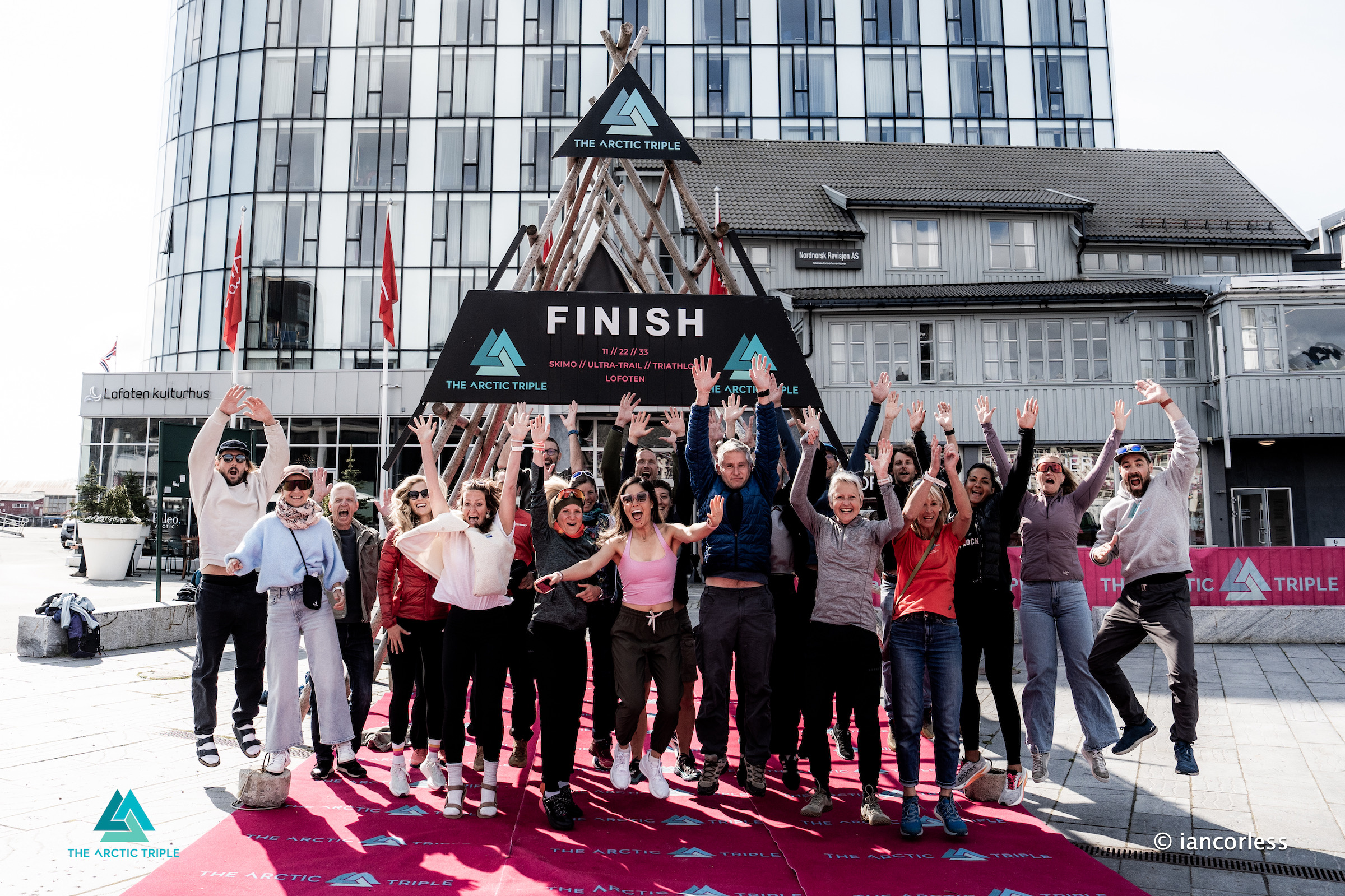
The final peak of Tjeldbergtinden a final challenge before the run in to Svovær and the conclusion of four magical days. After the race, a meal at the event hotel, Thon Hotel Lofoten, where the focus is some of the best local food from the area. A perfect evening to recap from the race and share new and old stories with your new friends.
Great food a feature of the experience
THE RUN
Run, walk or hike.
170km or 130km, one thing is for sure, running in Lofoten is tough and challenging. Terrain constantly switches from demanding and technical sections to easy flowing single-track. For sure, day 1 was a surprise to many and a warning of the challenge that would be ahead to complete the 4-day experience.
Always some snow throughout each stage
Despite schedules for the 170/130km runs, this journey was all about enjoyment and experience, therefore, participant requests for shorter days, or even rest days were accommodated. The Lofoten Stage Run is as explained, a running holiday and therefore it should provide the right experience for the individual.
Reiner completed the 170km mixing walking and running
What was key was the unified enjoyment through the whole group of participants, key to this was the evening hytte experience and the sharing of a meal together.
Hytte in great locations
Of course, racing did take place, and Lina and Sanna Elkott Helander were the stand out champions of the 170km distance along with Johan Cajdert.
The twins!
Graeme Murdoch and Tzvetie Erohina lead the way for the 130km.
Graeme and Tzvetie
Results though don’t tell the story, the Lofoten Stage Run was a relaxed trail running experience that brought so much more than just running.
Wow
The weather played ball and provided not only pleasurable temperatures but also allowed Lofoten to be visible, this really is a truly magical landscape. Traveling point-to-point, on foot, experiencing the majesty of Norway. Stunning trails, majestic mountains, resplendent views, and all during the endless daytime of the midnight sun. It gets no better!
Episode 128 of Talk Ultra is here and what a show… we speak in-depth with the incredible Michael Wardian after his record breaking World Marathon Challenge. We speak to star in the making, Hayden Hawks and Niandi Carmont brings us her first female ‘one-to-one’ interviews with Pushpa Chandra. We have the news, chat, gossip and of course Speedgoat co-hosts.
New Year and Talk Ultra needs your help!
We have set up a Patreon page and we are offering some great benefits for Patrons… you can even join us on the show! This is the easiest way to support Talk Ultra and help us continue to create!
Many thanks to our January Patrons
Rene Hess, Daniel Weston, Dan Masters, Kerstin Palmer, Sarah Cameron, Neil Catley, Sam Wilkes, Melissa Bodeau, Lindsay Hamoudi, Aaron Aaker, Simon Darmody, Philippe Lascar, Rohan Aurora, Mathew Melksham, Brian Wolfkamp, Thomas Mueller, Mark Moromisato, Jamie Oliver, Rand Haley, Ron van Liempd, Mike Hewison, Steve Milne and Rupert Hitzenberger.
It was our 2017 Lanzarote Training camp and I have to say what a huge success it was. We had 40-clients who came from as far afield as Canada to take part in our 7-days of fun. It really was special and so great to get so much awesome feedback. I will post a link to images and audio feedback in our show notes.
We had some inspiring people attend and in future shows we will have audio following some of the incredible stories. To kick it off and following on from my discussion with Niandi in our last show. Niandi brings you the very first of female ‘one-to-one’ interviews with Pushpa Chandra.
00:27:30 INTERVIEW with Pushpa Chandra
01:12:28 NEWS
World Marathon Challenge
Well, the big news is Mike Wardian ran 7-marathons on 7-continents in 7-days. Wow. He ran 2:54 in Antarctica, 2:45 in South America, 2:42 in North America, 2:37 in Europe, 2:45 in Africa, 2:49 in Asia, and 2:45 in Australia. In the process he set a new world record average time of 2:45.
01:22:54 INTERVIEW with Michael Wardian
Women’s winner, Chile’s Silvana Camelio ran 4:14 in Antarctica, 3:45 in South America, 3:58 in North America, 4:08 in Europe, 4:10 in Africa, 4:34 in Asia), and 4:37 in Australia. The last result almost gave away her overall victory but she held on by just 6-minutes That 4:37 in Australia left her just six minutes ahead of China’s Guoping Xie.
The Spine
Carol Morgan blasted around the tough course in 109-hours 54-minutes – unbelievably, 43-hours quicker than the previous ladies best.
In the men’s race it looked to be a battle between two previous winners, Pavel Paloncy and Eugeni Rosello Sole but Tom Hollins came from behind and clinched victory in 99-hours 25-minutes. Tom won the 2016 edition of The Challenger, the Spines ‘fun run’ race! We hope to have an interview with Tom in the next show.
Coming up…
The Coastal Challenge in Costa Rica has a super stacked field with Chema Martinez, Tom Owens, Sondre Amdahl, Jason Schlarb and so many more in the men’s race.
For the ladies we have to previous champions, Veronica Bravo and Ester Alves heading up strong competition from Elisabet Barnes and Anna Cometi.
In the US it’s the Sean O’Brien 100k.
RUNNING BEYOND BOOK
This week I will be in Amsterdam on Feb 3rd, 4th and 5th for a Trails in Motion event and Running Beyond book signing with Mud Sweat and Trails
We are going to have Running Beyond Event which will take place 3, 4 and 5th March in London, plans are progressing for that… watch this space.
I will be also going to Sofia in Bulgaria on the 17th, 18th and 19th March for a trail, mountain and Skyrunning expo
We say this every show, but Talk Ultra is nothing without downloads and listeners so please help us spread the word.
Share us on Facebook
Tweet us on Twitter
And use good old word mouth.
Importantly, go to iTunes and subscribe so that you automatically get our show when it’s released we are also available on Stitcher for iOS, Android and Web Player.
Our web page at www.iancorless.com has all our links and back catalogue.
As one season comes to an end the planning of a new season starts and today we are pleased to announce the calendar for the Skyrunner® World Series and Continental Championships 2015.
In less than three years, Skyrunning has grown to a new level and today, the announcement of the 2015 calendar signifies a significant expansion of the sport and it truly becomes a world series with the addition of the Continental Championships.
It is a very exciting time and in conjunction with the growth of the National Series, it has never been a better time to be a Skyrunner…
Lauri van Houten, executive director for the ISF today provided the details of the new series and lists the full calendar for 2015.
The big news for 2015 is that the Series goes global – more races, more places and, now, the chance to count an extra race in the ranking. The successful 5 SKY/5 ULTRA/ 5 VK formula stays where three results out of five are scored, but now you can choose a fourth race from the Continental Championships of your choice.
Twenty-seven races in nine countries stretch across five continents. Africa, Australia and China make their first appearance together with the rugged mountains north of the Arctic Circle in Norway.
New Skyrunner® National Series will be announced throughout the year, so skyrunning closer to home becomes a tangible reality in: Africa, North & South America, Canada, Czech Republic, France, Greece, Italy, Oceania, Poland, Portugal, Russia and Spain.
Benefits in the Series and Championships include 1,700 race slots, 450 free entries, 250 accommodation and 80 travel slots. The Series final $ 25,000 is redistributed and additional prizes – not just for the winners – are on the way.
We are proud to reconfirm and thank our our partners Salomon, Active Patch 4U, Compressport, Scott Sports, inov-8, Arc’teryx and La Sportiva for their support and look forward to announcing new ones for 2015.
2015 SKYRUNNER® WORLD SERIES & CONTINENTAL CHAMPIONSHIP
IMPORTANT please note re scoring:
Points will be available in 3 Skyrunner® World Series races + 1Continental Championship race for each discipline.
2015 SKYRUNNER® WORLD SERIES
SKY
July 19 – Dolomites SkyRace® – 22 km, Canazei – Italy
August 22 – Matterhorn Ultraks 46K – Zermatt – Switzerland
September 5 – The Rut 25K – Montana – USA
October 4 – Suunto Lantau 2 Peaks – 21 km, Hong Kong – China
October 18 – Skyrunning Extreme – 23 km, Limone Sul Garda – Italy
ULTRA
May 9 – Transvulcania Ultramarathon – 75 km, La Palma – Spain
June 27 – Mont Blanc 80K – Chamonix – France
August 2 – Tromsø SkyRace® – 45 km, Tromso – Norway
September 6 – The Rut 50K – Montana – USA
September 19 – Ultra Pirineu – 103 km, Bagà – Spain
VK
July 10 – Kilomètre Vertical Face De Bellevarde, Val D’Isère – France
July 17 – Dolomites Vertical Kilometer®, Canazei – Italy
August 1 – Tromsø Vertical Kilometer®, Tromso – Norway
September 4 – Lone Peak Vertical Kilometer®, Montana – USA
October 16 – Vertical Kilometer® Crèste de la Mugheira, Limone Sul Garda – Italy
CONTINENTAL CHAMPIONSHIPS
EUROPE
May 17 – SKY Maratòn Alpina Zegama-Aizkorri – 42 km, Zegama – Spain
July 12 – ULTRA Ice-Trail Tarentaise – 65 km, Val d’Isère – France
June 26 – VERTICAL KM Vertical, Chamonix – France
AFRICA
July 18 – SKY Ti DoDo Trail – 25 km, Black River Gorges – Mauritius
July 18 – ULTRA Xtreme DoDo Trail – 50 km, Le Morne – Mauritius
ASIA
February 7 – SKY Sai Kung – 26 km- Hong Kong – China
February 7 – ULTRA Sai Kung – 50 km, Hong Kong – China
N AMERICA
July 19 – ULTRA Power of Four Trail – 50 km, Aspen – Colorado
October 3 – SKY Flagstaff SkyRace® – 39 km, Flagstaff – Arizona
October 4 – VERTICAL Flagstaff Vertical Kilometer®, Flagstaff – Arizona
OCEANIA
11 April – ULTRA Buffalo Stampede Ultra SkyMarathon®– 75 km – Australia
12 April – SKY Buffalo Stampede SkyMarathon® – 41 km – Australia
INFO:
SKYRUNNER® WORLD SERIES PRIZES
US $25,000 will be awarded to each Series M/F champion.
Medals and titles will be awarded in each discipline to M/F champions.
RANKING POINTS
* Scoring: 3 Skyrunner® World Series results + 1Continental Championship in each discipline
Ranking points in the final races of all three Series will be increased by 20%.
Ranking points breakdown: 100-88-78-72-68-66-64-62-60-58-56-54-52-50 down to 2 points to 40thposition for men and 15thposition for women.
TEAM POINTS
The Team & National ranking system is based on the individual points scored by the first three men and the first women of the same team obtained in all SWS races.
Are there really any differences when it comes to racing in Europe & America? Runners from both sides of the Atlantic have their say about trail running on both continents.
When Michel Poletti, president of ITRA, spoke recently at the presentation of the Spain Ultra Cup about what type of international race organizations would de targeted for future membership, he affirmed that the ITRA would be particularly hoping to attract “organisations with long-distance races taking place in natural scenery“. Although this definition may sound a little vague, it is in fact quite difficult to find a common denominator that might aptly describre races taking place on both sides of the Atlantic.
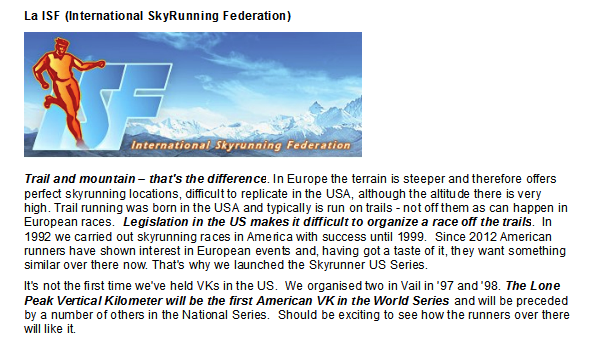
Are we talking about the same kind of race on both continents? It doesn’t seem that way from what some of our top runners have to say. In any case, surely the “variations on a theme” are what make this sport so appealing, right? What are the differences anyway, between trail running & mountain running? According to the ISF, “The difference lies in the terminology itself: trail & montain“.
We’ve asked some of the top runners about what it is that makes racing different on both sides of the Atlantic. Here are their answers, together with our conclusions:
American races, much faster
The main difference, which everyone seems to agree on, is the greater technical difficulty of races in Europe and the faster speed of races run in the US.
As Tòfol Castanyer points out, this means that“American races are more runnable” suggesting that faster ultra-distance racers have the advantage, as opposed to mountain running specialists.
This difference has already been discussed in our article in Spanish, la diferencia entre trail running, fell running y carrera de montaña. In the US the sport is called “trail running“, whereas in Europe, terms such asmountain running, skyrunning or fell running (UK) are used. The term “trail running” obviously refers to the kind of track or path followed, whereas in Europe it’s all about “mountains“. Whereas “trail running” doesn’t necessarily imply elevation gains.
“In Europe the elevation gains are usually greater“says Miguel Heras,“I think that this difference is motivating for us Europeans when we go there, as it is for the Americans when they come over to Europe to compete.
Stricter rules in the US
Many of the races held in the US run through national parks, which follow a stricter legislation than we’re used to in Europe, regarding how hikers & runners should use the footpaths or trails. All these measures are imposed with the greater benefit of protecting the lanscape & natural habitat of the species found in the parks. This means that anyone wondering off the trail will be sanctioned (usually with disqualification), something that Europeans are simply not used to.
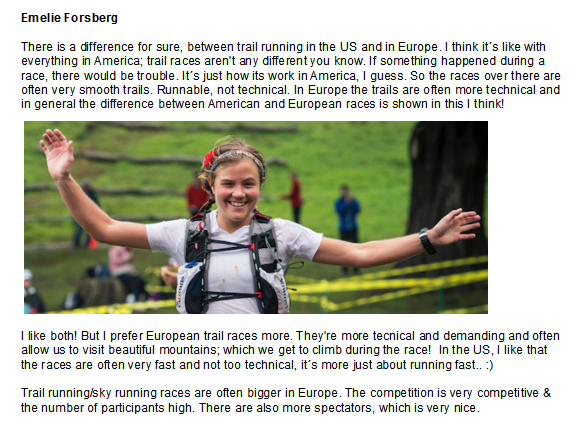
As Emelie Forsberg jokes, “I think it´s like with everything in America; trail races aren’t any different you know“. Rules are rules!
In Europe, things are very different, where, in most cases,the race course simply follows the most direct route across the mountain.
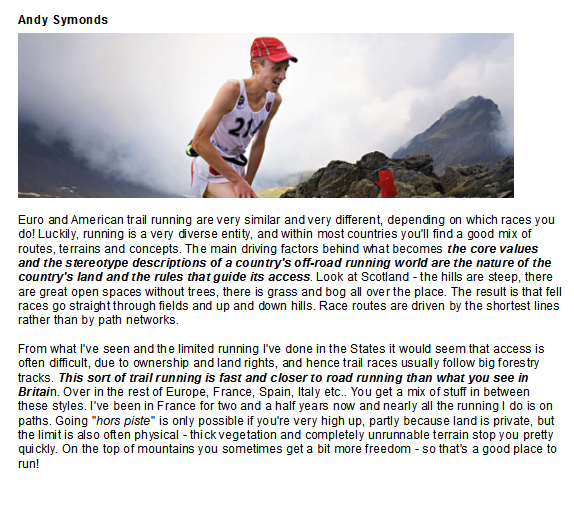
“In Scotland“, for example, says Andy Symonds,” the hills are steep, there are great open spaces without trees, there is grass and bog all over the place. The result is that fell races go straight through fields and up and down hills. Race routes are driven by the shortest lines rather than by path networks”.
Consecuently, European trail runners find that they have to change their whole approach to racing, as Silvia Serafini states, “I know that in the US there are very strict rules about ‘shortcuts‘. You are out of the race if you don’t follow exactly the signed trail“. Kilian Jornet can testify to this, as he was stripped of his prize money and course record, in last year’s Speedgoat 50k for cutting switchbacks.
In Europa, it’s more competitive
So what’s Dakota Jones take on the subject? He interestingly points out that “ In America,trail running came out of a culture of hiking and mountain climbingthat has its roots in solitude and escape“. Whereas, “Europeans accept mountain running more and are allowed to have more people in their races, so the scene is much more professional than anywhere else”. ” When Americans race, they are almost afraid to say they are racing, because they don’t want to betray traditional values about the purity of the sport“.
Sportswear
In an episode of Kilian´s Quest we can see how the young Catalonian runner meets up with running legend, Pablo Vigil. It’s interesting to compare how the two are dressed; Kilian with his specialized gear –Suunto GPS heart rate monitor, Salomon technical shorts & training shoes, while Pablo Vigilcan be found wearing the traditional runners sorts and a pair of Nike road trainers. Although this is a simple anecdote, it does undeline the point that, in general, European runners seem to get moredressed up for the occasion!
Anna Frost comments that “Clothing differs…with fashion and trends. Euro wearing more technical lycra and USA wearing looser fitting comforts.
What’s in common? People, volunteers, the spirit of racing
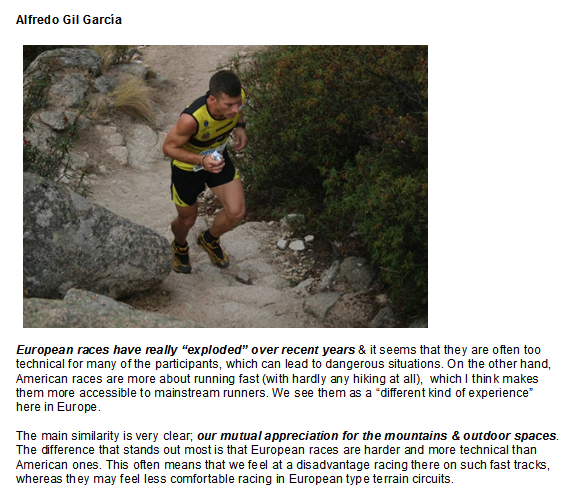
There seems to be a common agreement among runners that there is one characteristic to be found on both sides of the Atlantic: the spirit of running, be it trail running in the US or fell running (UK), mountain running or skyrunning in Europe, “our mutual appreciation for the mountains & outdoor spaces”, says Alfredo Gil, Spain’s national champion. “I think we all have that in common“.
American, Stevie Kremer, also emphasises this point & recognizes the efforts of all the people, behind the scenes, who support the races: “both have incredible supporters and volunteers, without which these races would never be successful!”
It seems that, as more and more runners make the jump, from one continent to another, things are changing. As Jonathan Wyatt observes, ” We see a lot of North American runners who have learnt a lot from the European style of trail running and they are excited to bring some of these elements to North America including the more technical running trails“.
Finally, let’s just remember the words of Silvia Serafini, who defines the atmosphere of our sport perfectly, “I can’t really choose which I like most, racing in America or in Europe. I love the atmosphere, the welcome of the people, which I have found on both continents“.
This article is a re post from : corredordemontana.com
It is reproduced with the full approval of corredordemontana.com and Nigel John Wilson and has not been altered or adjusted in anyway. The original article is available HERE should you wish to view it.
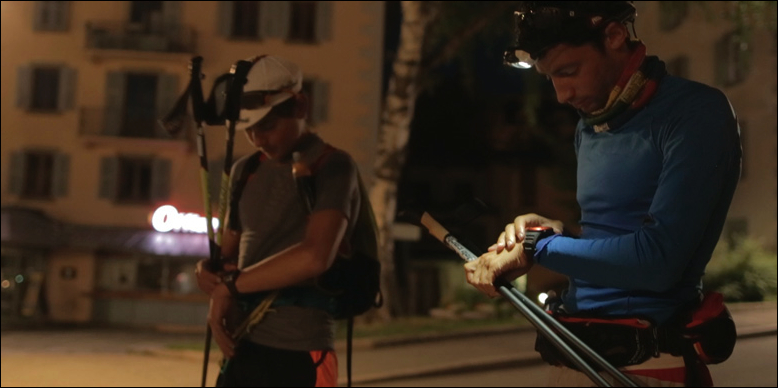
Mathéo and I synchronised our watches, switched on the stopwatch and gave each other five for luck before starting to run. It was 4:50 am, and it wasn’t cold in the church square in Chamonix. We were in shorts and thermal T-shirts, but nerves and excitement probably did not let us think about anything other than the challenge ahead. Mont Blanc, as majestic as ever, was just waking up and, from the square, we could spot the headlamps of those who had spent the night at the mountain refuge and were now preparing to reach the summit.
We are ascending well, within the estimated time. Upon arriving at the crack of Grands Mulet, we rope together for safety reasons as large amounts of snow have accumulated there this year. Halfway up, we spot Seb and Vivien, who have come to give us support and to film us. The sun is barely rising and the scenery is breathtaking. We are both using sticks to help us to climb and move faster. The marks we gouged into the ground a few days ago have lasted, and we follow them, so we can move fast and carry on with the ascent.


































 IAN CORLESS