
NSAID (Non-steroidal anti-inflammatory drug) and Sport
How many of you have gone for a run with a Non-Steroidal Anti-Inflammatory Drug in your pocket for that ‘just in case’ scenario? Maybe you have taken a tablet before going for a run/ race to avoid potential issues? Or possibly you have taken a tablet post run to reduce swelling and inflamation?
It’s a common scenario and one that I am aware off continually when running and racing. I have done it myself… I remember racing and going through pain so I took an Ibuprofen only to be hit by stomach issues later in the race.
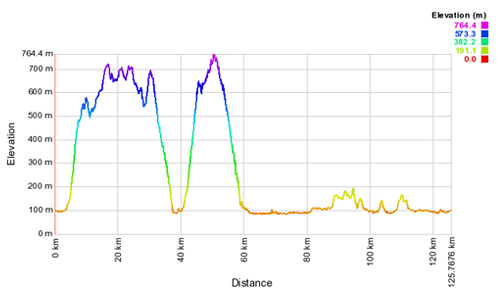
Earlier this year, Montane athlete, Marcus Scotney had severe issues post a great run at Iznik Ultra in Turkey. A situation that was potentially life threatening.
In an attempt to provide some clear information, I caught with the UK’s key specialist on kidney function, Dr Richard Fluck to find out what we should and shouldn’t do.
******
IC – NSAIDs what are they?
RF – They are a class of drug that you can purchase over the counter. They are commonly used to treat pain and inflammation. The most common is Ibuprofen but others are available. They are anti-inflammatory.
IC – Let’s remove the sport element. What are the pros and cons of NSAIDs?
RF – Any tablet, has risk and benefit. We need to weigh up the balances. A medical approach to medication is that any drug must be tested, assessed for safety and so on. NSAIDs are really used for arthritis and so on. They have been increasingly used as a method of pain relief. In more recent times, particularly in the UK, you can now buy these drugs over the counter. We are bombarded by adverts on the TV telling us how good they are. So, the tablets are there for a reason. The question is, are you taking them appropriately? NSAIDs are well studied and they have side effects, anyone who takes them needs to be aware of this.
IC – From a runner’s perspective, I am pretty sure we all know someone who has taken Ibuprofen before a race, during a race or post a race to reduce inflammation. Are any of those scenarios ok?
RF – We need to know individual scenarios to be specific, however, I would say all the above scenarios bring a risk. Endurance sport and NSAIDs interfere with the normal regulation of your body. For me as a kidney expert, my concern is with the kidneys. What do NSAIDs do to the kidneys? Kidneys allow us to pass urine, they regulate the water in our body and they regulate salt, particularly sodium and potassium and they regulate toxins that come from everyday life. Of course the kidneys do have other functions… they look after your bones in regard to vitamin D, they regulate blood pressure via hormonal systems and they stimulate bone marrow to boost red blood cells. If the kidneys go wrong it is usually the first category that fails first, so, liquid and salt/ toxin regulation. Now, lets take an individual, I was listening to a chat re football and football players playing in hot climates. It was a chat about regulating salt and water. It can be tricky to judge and get this right. So, the peril for an individual is that they get it wrong one way or the other. It’s particular more of a problem for slower runners. The tendency is not to drink enough or drink too much. For example, Hyponatremia (people over drinking) and not thinking of electrolytes.) So, our kidneys work to help with dehydration or over hydration. The kidney kicks in and helps control this. It’s about regulating salt and water. This is where NSAIDs come in as they can inhibit this. So, if a runner pre loads, takes during or after running and the kidney needs to work then the action can be blocked! So, the danger is that you hang on to fluid, hang on to salts or in fact you increase fluid loss (you pass more urine.)
IC – Lets talk about some scenarios that we can relate to.
RF – So, I told you about fluid… lets talk about salt (sodium and potassium.) So, Hyponatremia (low sodium) is more common in people who take NSAIDs. It’s a real danger. Potassium is less known about, it has low levels in the blood as most is stored in our cells. Potassium for example will know it is in bananas. Potassium is important. NSAIDs can block the kidneys function in controlling potassium levels. I have treated runners in endurance situations where runners have become dehydrated, the kidneys have not worked and potassium levels are high. High potassium can stop your heart! So, I am not trying to terrify anyone but you have important issues to consider.
IC – What are the implications in an ultra event? For example, an event that lasts so much longer than a marathon; hours-and-hours of running. It is possible to pop a NSAID every 4-hours?
RF – The recommendation (RDA) is 400mg 3-times a day! However, I have heard scenarios where people double this dose, for example at Marathon des Sables. That is really going to suppress hormonal mechanisms. If you are a 4-hour runner, you may get away with it but 4-hour does seem to be a cut off point. Obviously, anyone who is out for 4-hours plus has a much greater opportunity to cause issues and problems in regard to salt/ water balance. This risk increases if you bring NSAIDs into the scenario.
IC – I read some research about Western States and it showed that frequent use of drugs caused colonic seepage, what does that do/ mean? Read HERE)
RF – It’s more about the gut! It is interesting because one of the national papers in the UK discussed a scenario about a runner who died on a course. It was a problem with the bowel. I concentrate on kidneys but NSAIDs have wider actions for the whole of your body. NSAIDs can cause ulcers, indigestion and all sorts of mayhem and impact on your bowel. The other interesting thing is that in chronic usage they have an impact on the heart. So, you may be aware of public interest in side effects in some of the newer drugs. How that is mediated I wouldn’t wish to go into it here but one needs to be aware of these things, in particular blood pressure and heart. You know, if you take a tablet a day I wouldn’t recommend it.
IC – What about animal studies that show that NSAIDs can hamper muscle regeneration? (Read HERE)
RF – I need to concentrate on the kidneys. It is my specialisation. Interesting you raise muscles though… if you do a simple search on the web, you will find many cases were people describe kidney failure in ultras. I remember a guy (a runner) who mentioned runners at Western States in the 90’s and his story of acute renal failure is typical of the very severe (but rare) cases were people have total kidney shut down for days or weeks. It can lead to continual problems for example with blood pressure. And that comes about from a combination: First they may be running in unusual circumstances, climate and weather for example. It may be that they are not prepared and they get muscle pain and so they take a NSAID. What happens is that muscle breakdown occurs and that releases a protein into the body called Myoglobin. Our kidneys work by filtering our blood. Myoglobin goes around the body in blood circulation. The kidneys try to eradicate this but it can’t because it isn’t designed to do that! The kidney clogs up and blocks. This is a really dangerous situation.
IC – This is the situation that happened with Montane athlete, Marcus Scotney at Iznik Ultra. He raced a 130km race and I believe he took six NSAID during the race. When he returned to the UK, he felt rough. He went to the doctors and then was submitted to hospital. He had Myoglobin in his kidneys. How serious is that?
RF – It can be life threatening! For example, if Myoglobin is present your urine may well look like Coca Cola (dark brown or black.) Ironically, the kidneys will not have any pain, well, they will give pain but at a very late stage. At this point, your kidneys are just not functioning so you can get into serious trouble particularly if eating and drinking in normal way. I have a scenario of one gentleman who had 50-pints of liquid in his body… this liquid went to his lungs and he couldn’t breathe. He was drowning internally! You can end up in intensive care. The potassium side of things, remember potassium is stored in the cells. Myoglobin is reduced into the blood so potassium levels can become very high, very quickly and I am afraid that can lead to sudden death with no warning.
IC – In Marcus’ case. He was in hospital would they have used dialysis?
RF – I am sure Marcus had great treatment; he may have needed temporary dialysis. I remember a story of a soldier who was on a march with a heavy pack, minimal liquid and so on… he ended up on dialysis.
IC – We have built up a picture here of fear! Is this doom and gloom correct? Do scenarios exist when an NSAID is okay?
RF – I have painted a picture of terrible scenarios. I have given you the worse case scenario. Please keep in mind that most people do sensible distances for running. The kidney is very forgiving as is the rest of our body. For example, I have taken a NSAID on a run… I have been careful on my drinking, I have been careful that I have passed urine and I have monitored urine colour. These basics can help. The question is; why are you taking the NSAID? Professionals for example can have experts and experience around them; this is very different to an everyday runner. If you are on a very long race, Paracetemol is a safer drug if used sensibly and within RDA guidelines. However, caution is required! However, Paracetemol address mechanical pain and not inflammation.
IC – Interesting that a kidney specialist has taken a NSAID when running. How do you justify that?
RF – I would not pre load with NSAIDs. No evidence that this works. If you have mechanical pain, Paracetemol is better taken sensibly. However, post race if you have inflammation a NSAID may be sensible but you need to monitor urine and keep within RDA. If you feel unwell, you need to seek attention; sooner than later. Be sensible and prepare for a run/ race accordingly. Weighing yourself is actually a good thing for monitoring fluid.
IC – Races like Western States still weigh runners during the race.
RF – That is a reasonable strategy to consider.
IC – Final point I would like to consider, we looked at the doom and gloom scenario and then we have said that knowledge is paramount. But my reaction is, don’t take anything. Ultra runners are not the most clear thinking individuals at 10, 15 and 20+ hours into a race. I remember Marcus saying that he urinated dark urine in the race but still pushed to the finish line… Other than weighing a runner is there anything we can do?
RF – We are getting into medical testing now. That is not practical or sensible for racing. We would need to blood test, we would need to test urine and so on. It just wouldn’t work. You are quite right, we need to take personal responsibility and assess risk against benefit. But do this within an envelope of understanding. I look at my own body and what I can tolerate. Be sensible! Also, other runners need to look after other runners. We need corporate responsibility when running or racing.
More reading:
Read about NSAIDs at Western States HERE
Ibuprofen administration during endurance training cancels running-distance-dependent adaptations of skeletal muscle in mice. HERE
When is it ok to take a NSAID?
During the first 2 to 3-days of an acute injury, taking a NSAID is advised but once you exceed this window, general advice is let your body do the work! It will naturally heal.
Niggling injury pre training or racing? Worried about ‘possible’ pain while running or racing? No evidence shows that a NSAID will be a benefit you and as discussed above, a NSAID may very well hinder your run or race.
Be sensible and keep running or any sport you do natural… a NSAID shouldn’t be required to get you to the finish line!
******

Who is Dr Richard Fluck?
Richard Fluck trained at Trinity Hall, Cambridge and the London Hospital Medical College, qualifying in 1985. Early training was undertaken in the East London area before moving into research at St Bartholomew’s Hospital. He was appointed a British Heart Foundation fellow whilst exploring the link between cardiovascular disease, calcium signalling and abnormalities of calcium metabolism in chronic kidney disease. He returned to the Royal London Hospital as Lecturer and honorary Senior Registrar in Nephrology.
In 1996 he took up post at Derby City Hospital as a single-handed nephrologist. Over the next decade, the department expanded, developing a strong clinical research and safety programme. It has interests in cardiovascular consequences of CKD and dialysis, infection and vascular access. He is involved in the coordination of two cohort studies looking at CKD in primary care (RRID) and the consequences of AKI (ARID). More recent projects include the development of PROMs for renal patients and developing home therapies for patients on dialysis.
Within the acute trust he was clinical lead for renal disease for 15 years and clinical director for medicine, then clinical lead for the East Midlands Renal Network and worked with the DH and HPA on infection in renal disease. He was also the clinical lead for the Kidney Care National audit on vascular access and transport in the haemodialysis population. He was appointed NCD (Renal) April 2013.
He is the immediate past president of the British Renal Society, chair of the Kidney Alliance, on the UK Renal Registry Board, is the UK country co-investigator for the Dialysis Outcomes and Practice Patterns Study (DOPPS) and is on the editorial board of Nephron. In 2007, the unit won the Renal Team of the year award, given by Hospital Doctor and the following year received the Health and Social care award for safety in patient care.
******
NSAID – Non-steroidal anti-inflammatory drug
The term nonsteroidal distinguishes these drugs from steroids, which, among a broad range of other effects, have a similar eicosanoid-depressing, anti-inflammatory action. As analgesics, NSAIDs are unusual in that they are non-narcotic and thus are used as a non-addictive alternative to narcotics.
The most prominent members of this group of drugs, aspirin, ibuprofen and naproxen, are all available over the counter in most countries. Paracetamol (acetaminophen) is generally not considered an NSAID because it has only little anti-inflammatory activity. It treats pain mainly by blocking COX-2 mostly in the central nervous system, but not much in the rest of the body.
NSAIDs inhibit the activity of both cyclooxygenase-1 (COX-1) and cyclooxygenase-2 (COX-2), and thereby, the synthesis of prostaglandins and thromboxanes. It is thought that inhibiting COX-2 leads to the anti-inflammatory, analgesic and antipyretic effects and that those NSAIDs also inhibiting COX-1, particularly aspirin, may cause gastrointestinal bleeding and ulcers. For this reason, the advantages of COX-2 selective inhibitors may be indicated. ©wikipedia
Read about NSAIDs HERE
Hyponatremia – is defined as a low sodium concentration in the blood. Too little sodium in the diet alone is very rarely the cause of hyponatremia, although it can promote hyponatremia indirectly and has been associated with Ecstasy-induced hyponatremia. Sodium loss can lead to a state of low blood volume, which serves as a signal for the release of anti-diuretic hormone (ADH). ADH release leads to water retention and dilution of the blood resulting in a low sodium concentration.
Exercise-associated hyponatremia (EAH) is common in marathon runners and participants of other endurance events.13% of the athletes who finished the 2002 Boston Marathon were in a hyponatremic state, i.e. their salt levels in their blood had fallen below usual levels.
Sodium is the primary positively charged ion in the environment outside of the cell and cannot freely cross from the interstitial space into the cell. Charged sodium ions attract up to 25 water molecules around them thereby creating a large polar structure that is too large to pass through the cell membrane. Normal serum sodium levels are between approximately 135 and 145 mEq/liter (135 – 145 mmol/L). Hyponatremia is generally defined as a serum sodium level of less than 135 mEq/L and is considered severe when the serum sodium level is below 125 mEq/L.
Many conditions including congestive heart failure, liver failure, kidney failure and pneumonia are commonly associated with a low sodium concentration in the blood. This state can also be caused by over hydration from drinking too much water due to excess thirst (polydipsia). Contents ©wikipedia







































































































































































































































































































































































 IAN CORLESS