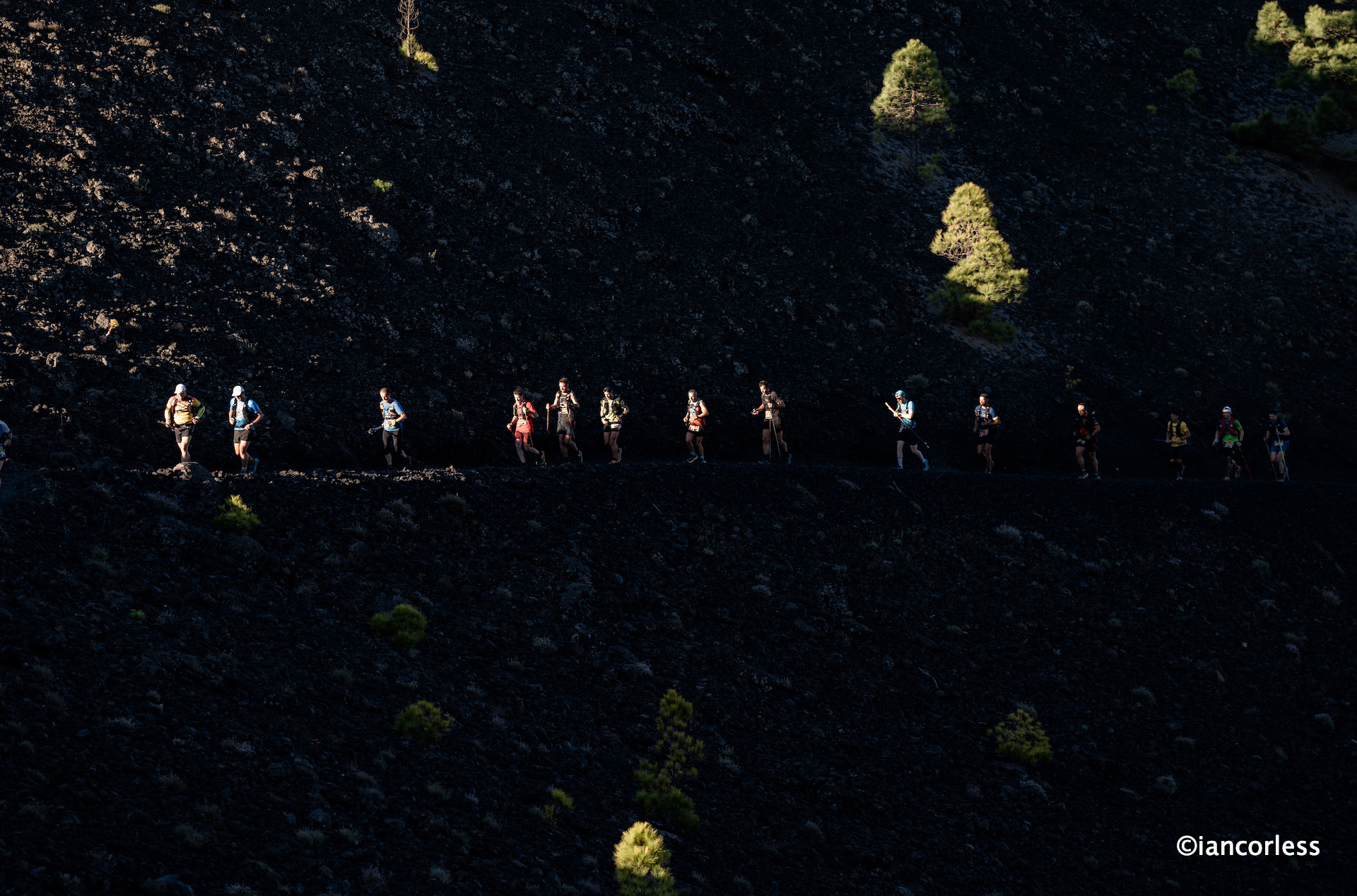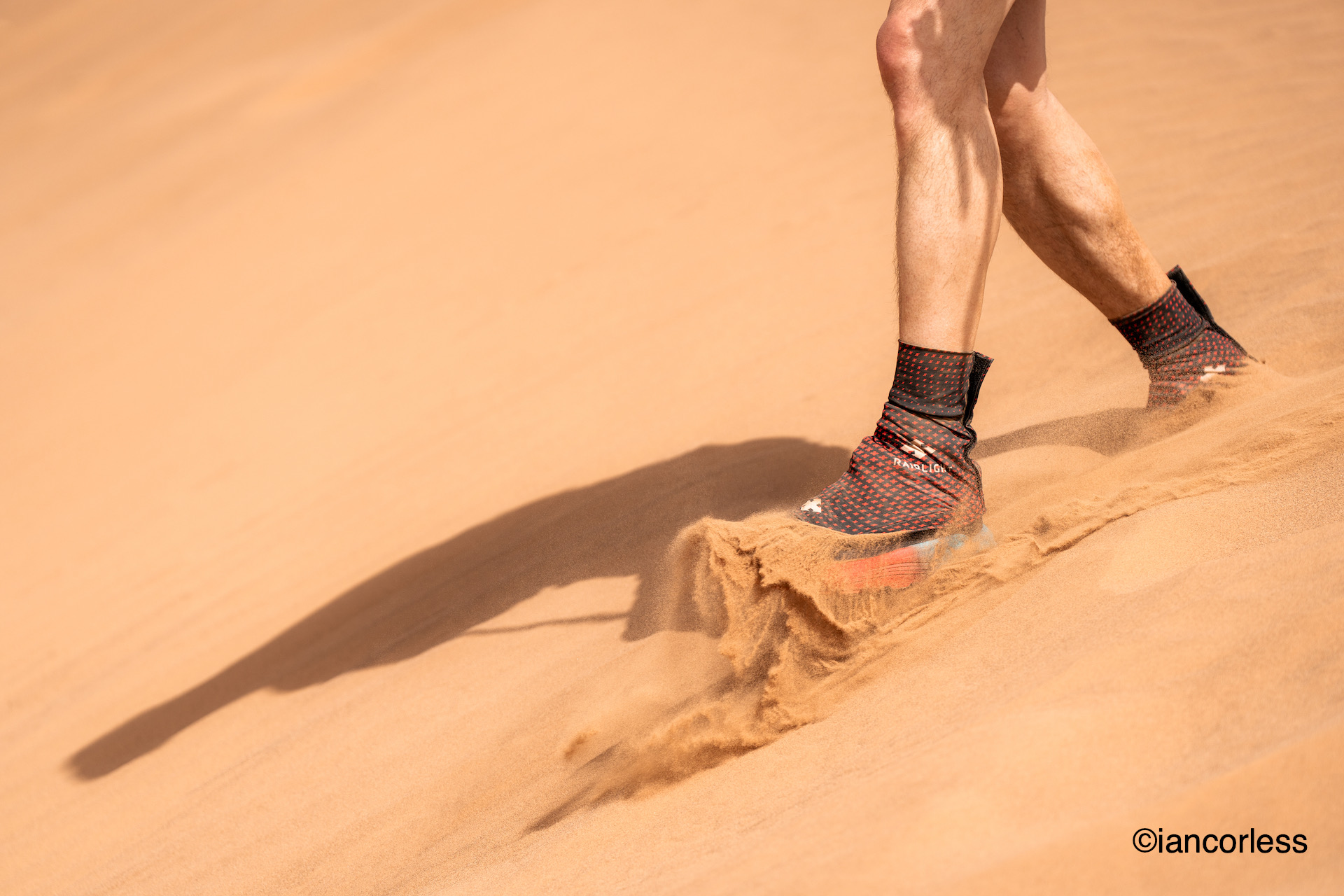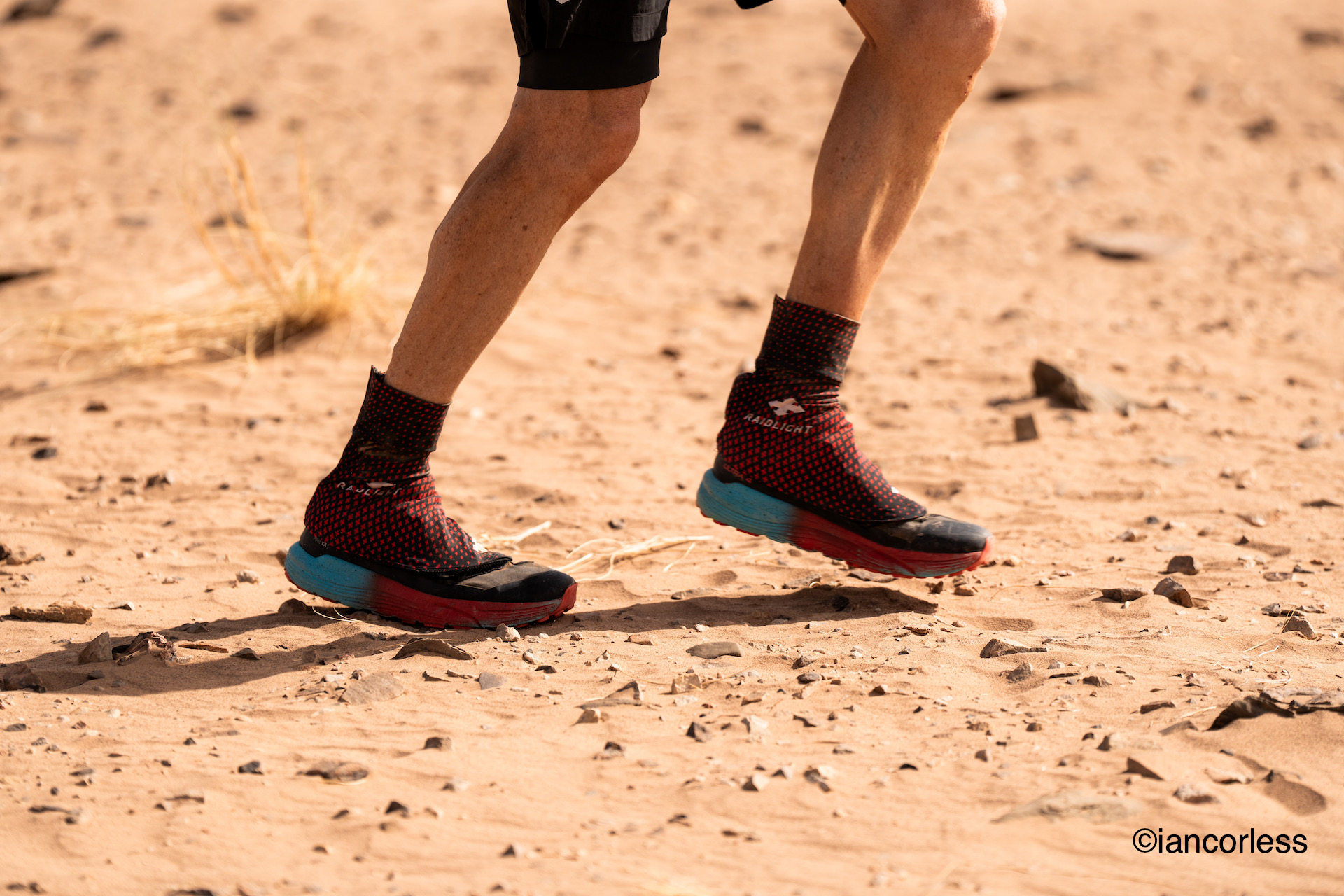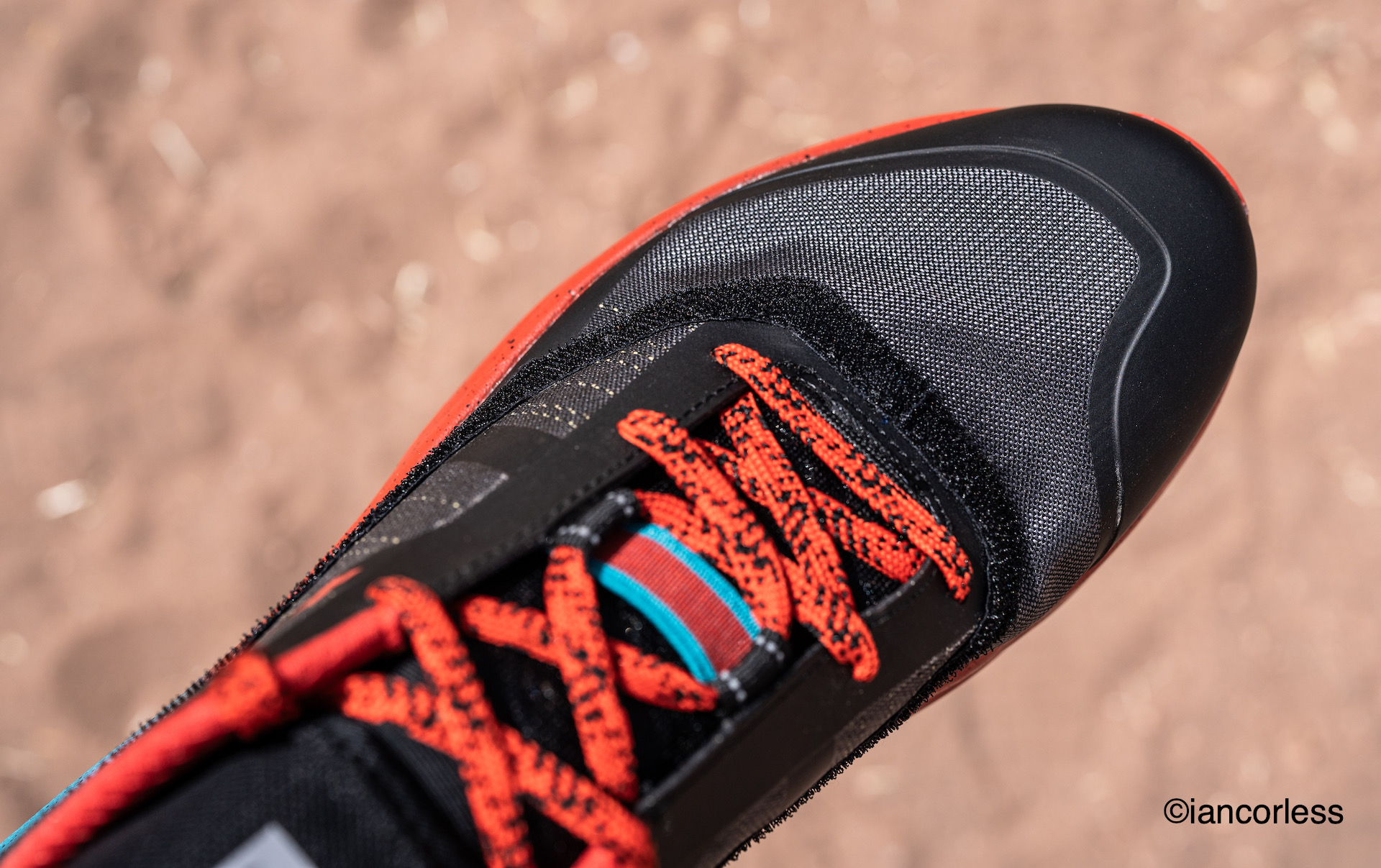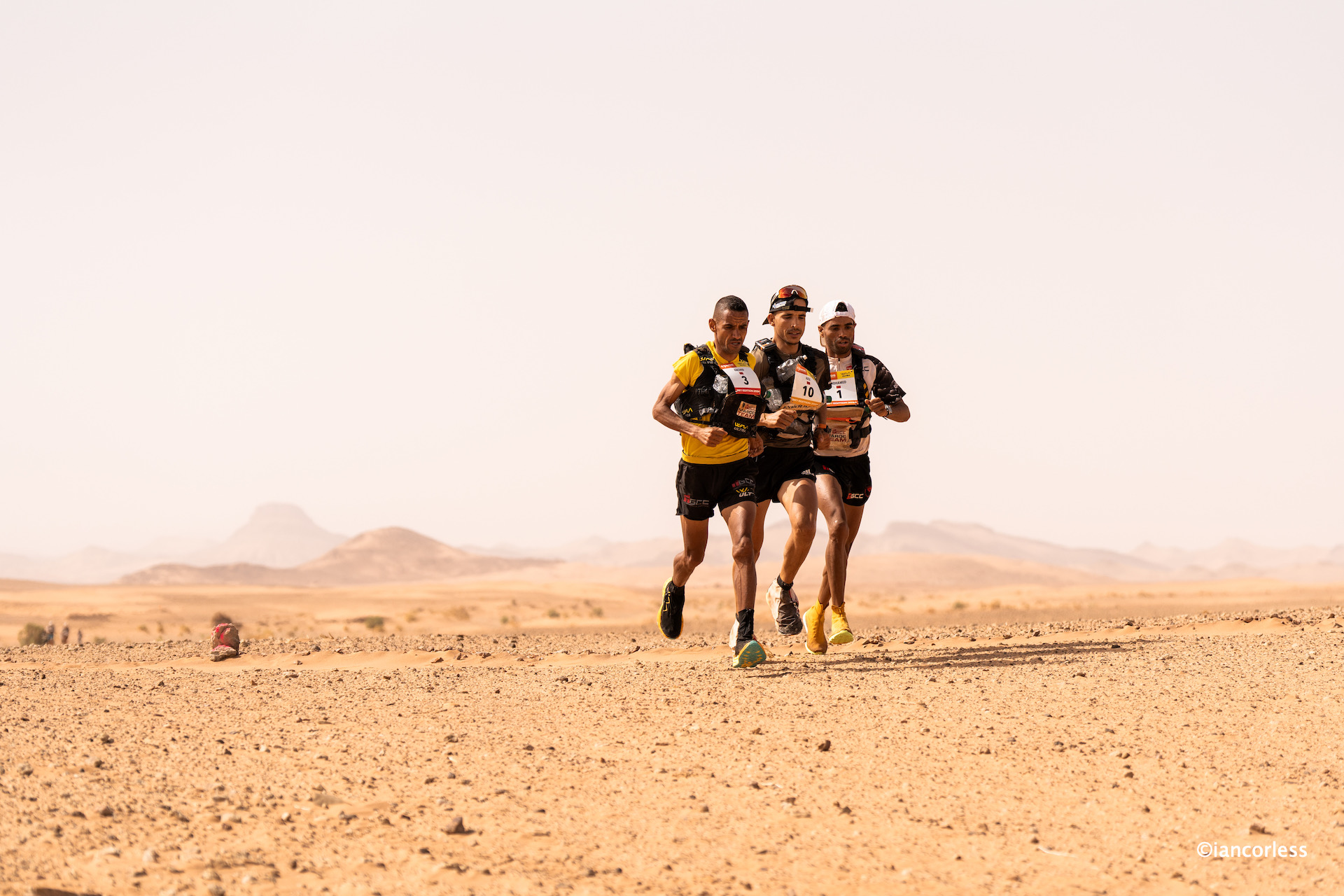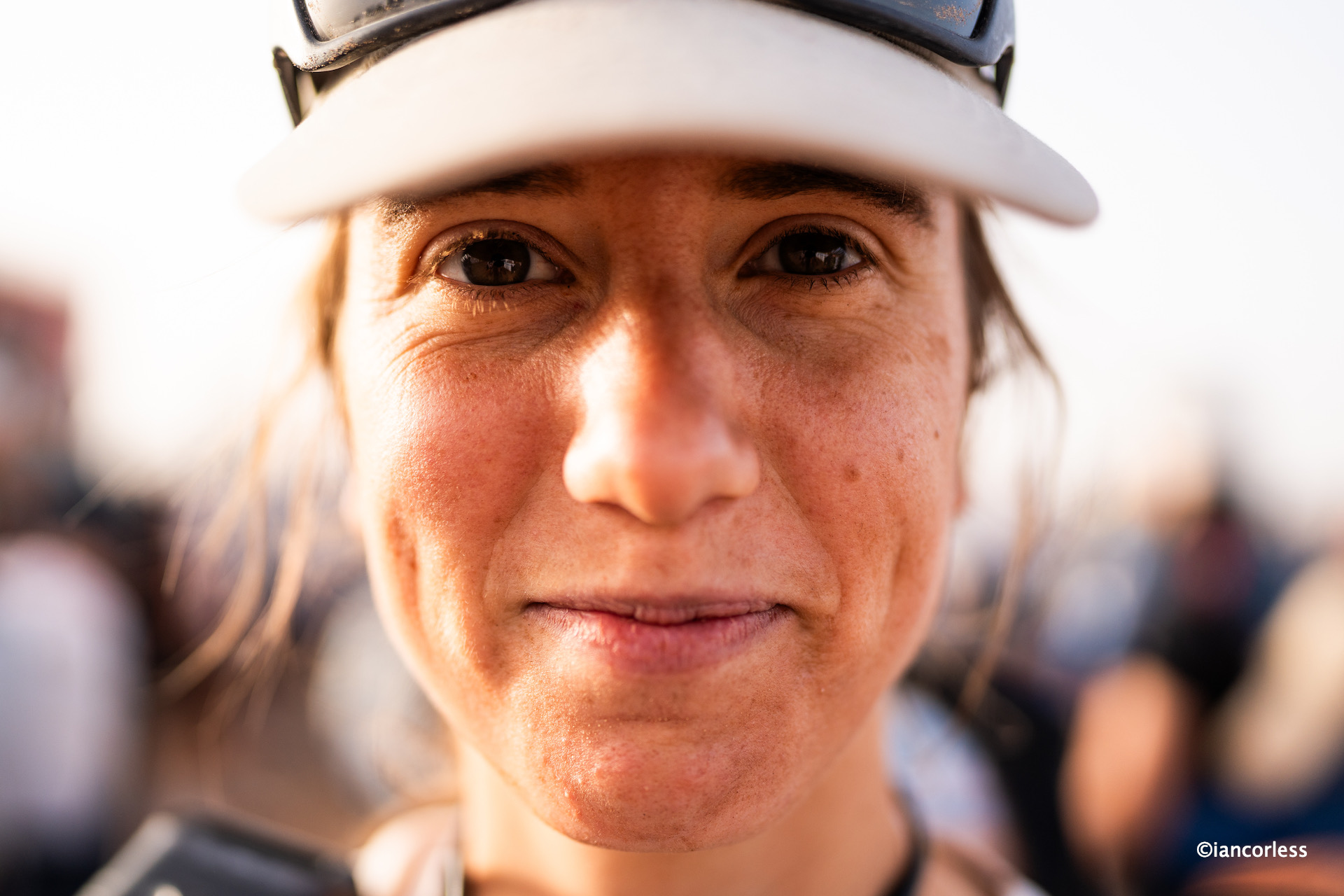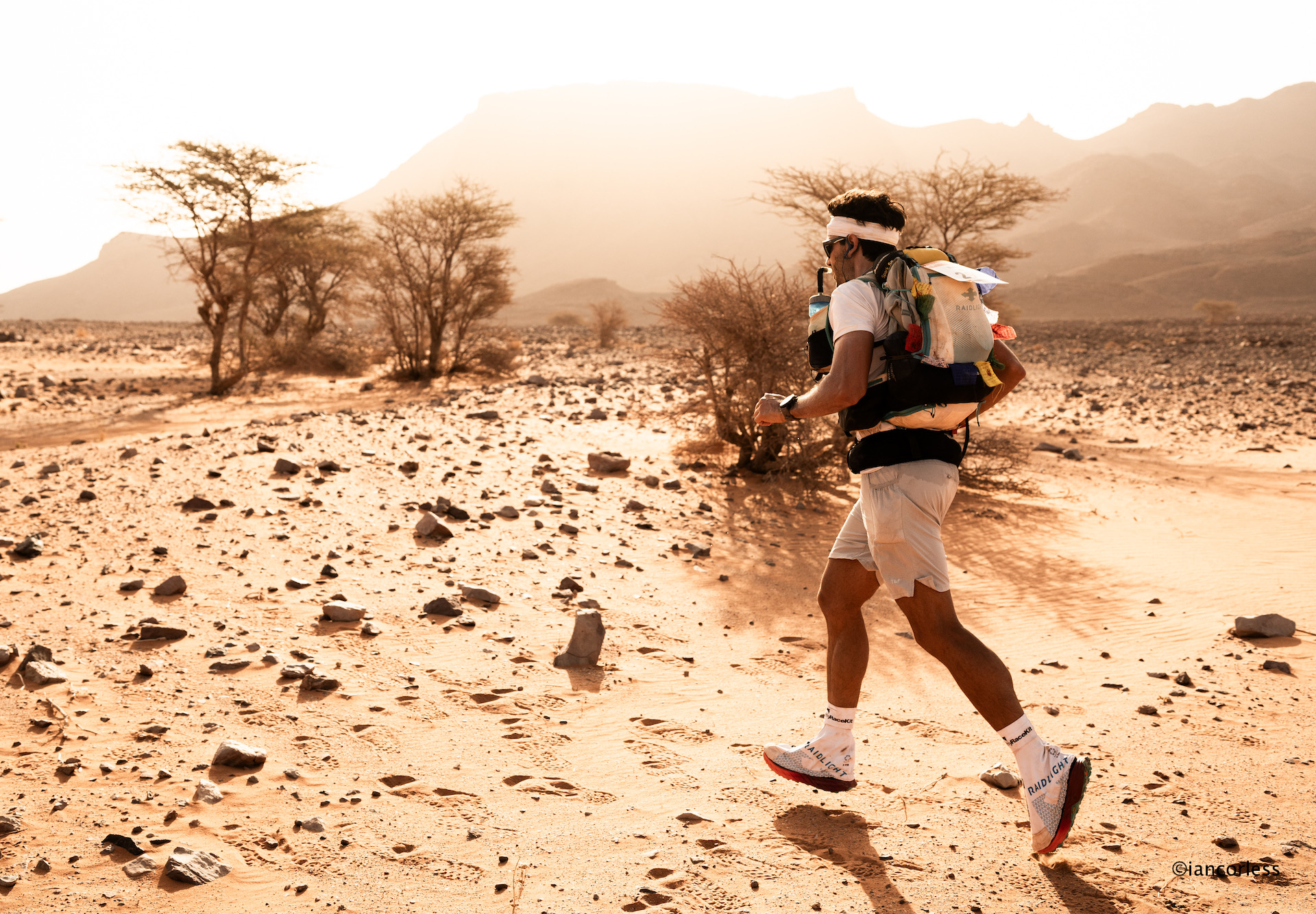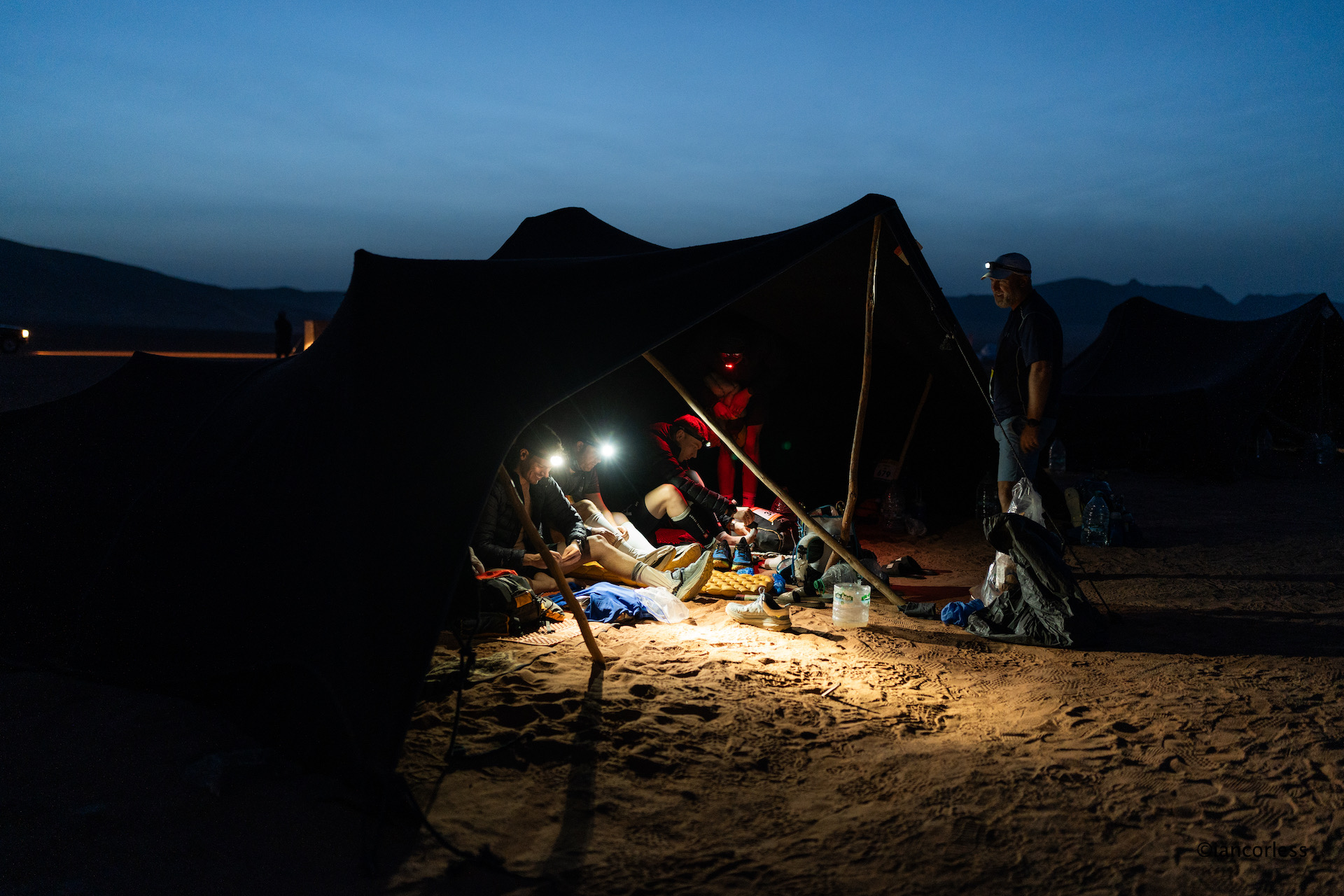
The day starts by crossing the Sierpe River via ferry, ahead one of the most ‘runnable’ days with an abundance of gravel road interspersed with technical trails.
The crossing
It’s an iconic stage where a boat crossing is required in the final 5km’s transporting runners from one land section to another before the run in towards the iconic Drake Bay.
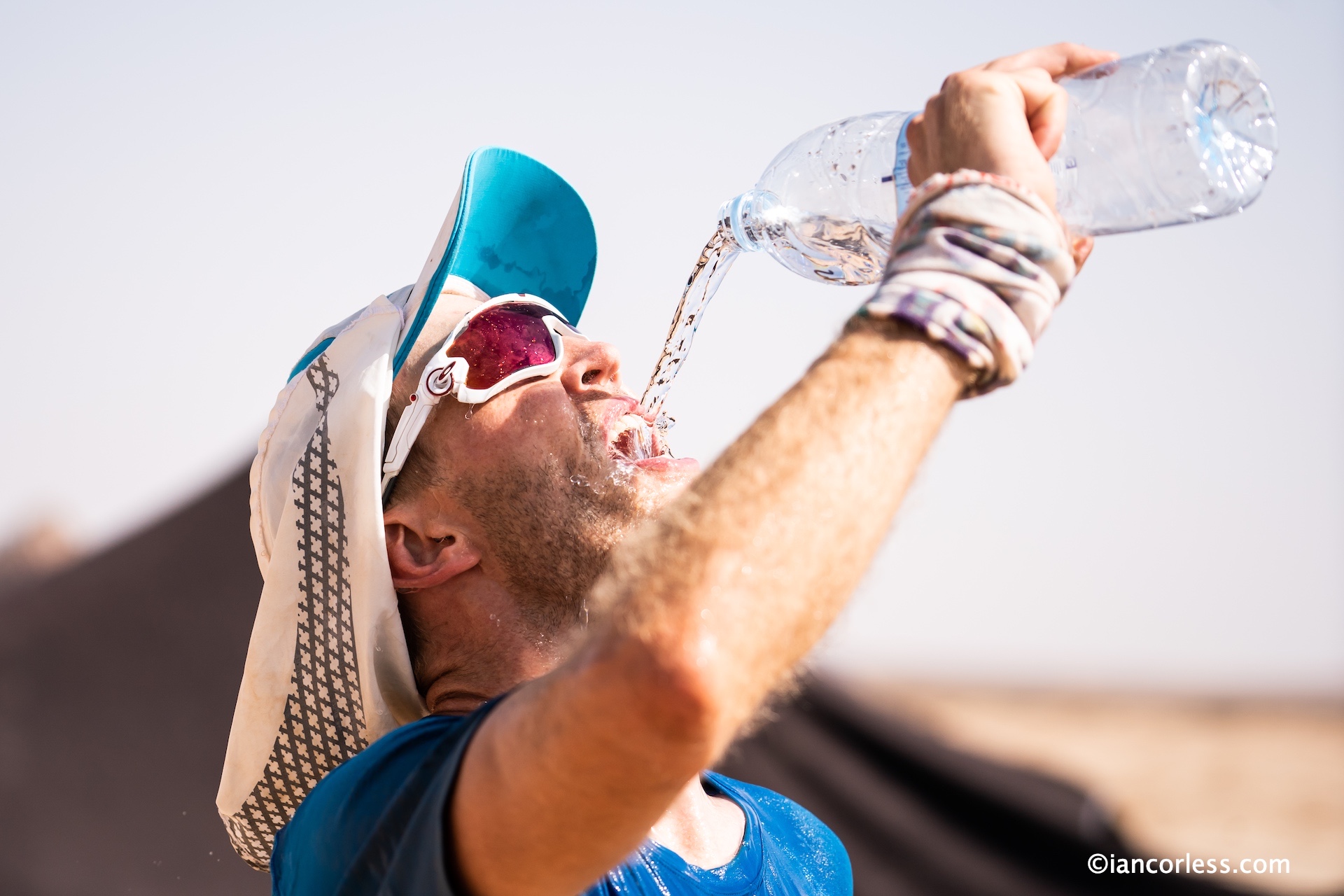
Cody cooling off
A delayed start due to problems with the ferry meant the runner’s started 1-hour late. Sometimes, situations happen and there is nothing to do than say, Pura Vida and carry on.
Pierre
Once underway, the race split at the front with Pierre Meslet deciding no matter how bad the ankle, let’s give it a go. Cristofer Clemente Mora followed and then Cody Lind and Jean Francois Cauchon.
Cody and Jean-Francois
It was only a matter of time before Cody and Jean-Francois took control of the race and the duo finished together in 4:28 (time tbc due to a delay at the boat crossing).
Cody, Jean-Francois and Cristofer
Cristofer finished 3rd.
Katie
For the women, Katie Young well and truly sealed the 2024 TCC with an outstanding performance in 5:55. All day, she smile, ran fast and smooth and dare I say, made it look easy! This TCC is a breakthrough performance for Katie, especially coming after a top-10 at MDS in 2023.
Katie
Lina El Kott Helander finished 2nd in 6:14. Lina could very easily have pulled out of the race early in the week after damaging her right arm. She has fought on and impressively so, chapeaux!
LinaMarlene
Marline Côté finished just ahead of Sanna El Kott Helander, 6:33 and 6:41 respectively. But it was Janina Beck from Germany who finished 3rd in 6:31.
Pierre Meslet full of life
The racing is now done! Stage 6 tomorrow and it would take an absolute disaster to change the ranking, so, expect a victory loop. And let’s face it, a fun loop is well deserved, despite the fact not many would call 35.9km an easy loop…
Runner’s got there first night in camp last night. Tired bodies looking to recover and prepare for stage 2 of the 2024 The Coastal Challenge, a 230km, 6-stage journey from Quepos to Drake Bay. Ambiance and atmosphere was high. Stage 1 had certainly taken a toll and surprised many. The combination of route, heat and humidity a wake up call. The impact of day 1 saw 18 participants move from the Expedition race to the shorter Adventure category; a huge number!
But today, starting almost 3-hours early makes a huge difference. The almost vertical climb straight out of camp allows for cooler temperatures and an ability to ease in the day.
A rollercoaster of gravel roads followed by rainforest and more gravel roads lead the race to the coast and finally the ocean.
Now the heat of the day takes hold as the the participants navigate a route to the Dominical finish via long stretches of beach.
Jean-Francois leading the top men.
There was a very different mood to the start of stage 2. Summed up in one word, respect. The top men ran together lead by Jean-Francois Cauchon. This lead group did not include Cristofer Clemente Mora who ran a short distance behind with Erick Aguerro behind.
Cristofer and Erick
Pierre Meslet made a 3rd group running Lina El Kott Helander.
Pierre and Lina.
Lina El Kott Helander pushed the pace for the women, this came as no surprise with a steep climb to start the day. The skyrunner no doubt in her element. Behind Katie Young followed with a parmanent smile.
Katie
Sanna El Kott Helander, just like her twin sister, enjoyed the early vert to run in 3rd.
Sanna
As the runner’s headed to the coast, the race opened up and Cody Lind and Carlos Calvo López were the first to arrive at the estuary leading to the final 5km’s and a long beach section. Cody now in familiar territory from his 2020 victory no doubt relishing the final km’s pushed to take the stage and overall lead with 3:59:13 on the clock.
CodyCarlos
Carlos was expected to finish 3rd but Jean-Francois pushed and not only caught but passed the Costa Rican, 4:00:15 and 4:01:53. Cristofer finished some way back and lost his overall lead by almost 10-minutes and is now in second. We have a race on!
Jean-Francois
Lina continued her strong running all the way to the estuary, she had now opened up a 6-minute lead. Katie arrived looking fresh and full of enthusiasm, with flat running all the way to the line, Katie pushed and closed the gap to under 2-minutes at the line, 5:06:08 and 5:07:58.
Lina
Sanna continued to pull away from Lindsey Ullrich and ran a strong 3rd place in 5:29:05. A very positive run after a troubled ay 1.
Stage 2 was not without drama, Lina took a bad fall and had concerns for a badly damaged arm. More news to follow. Pierre also had troubles with a very badly twisted ankle that saw him require a stick in the early stages.
Tomorrow, stage 3 to Marino Ballena is 46km with 1686m. It’s the toughest stage of the race.
You arrive in Morocco, pass through passport control, wait for your luggage, leave the airport arrivals hall and find a seat on a coach.
The MDS journey is now in full swing.
Waiting in anticipation, the Road Book (the bible) for the next edition of the race is provided and immediately pages turn, running through the mind of each participant:
“How long is the long day?”
Well, the wait is over, I can tell you. For 2024, the long day will be 85.3 km’s.
The MARATHON DES SABLES – The Legendary is breaking silence and today, we announce the daily stage distances for the 2024 edition.
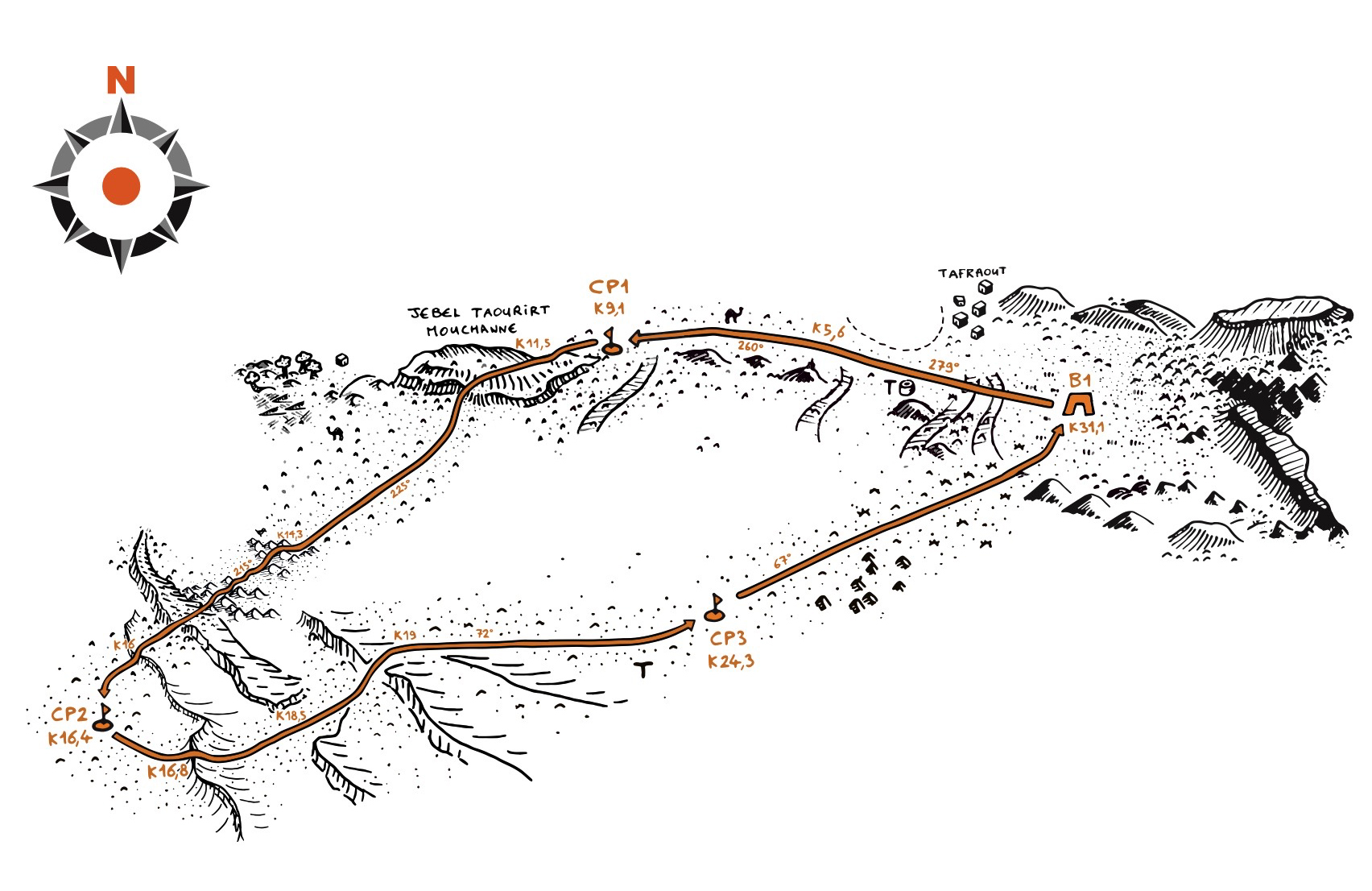
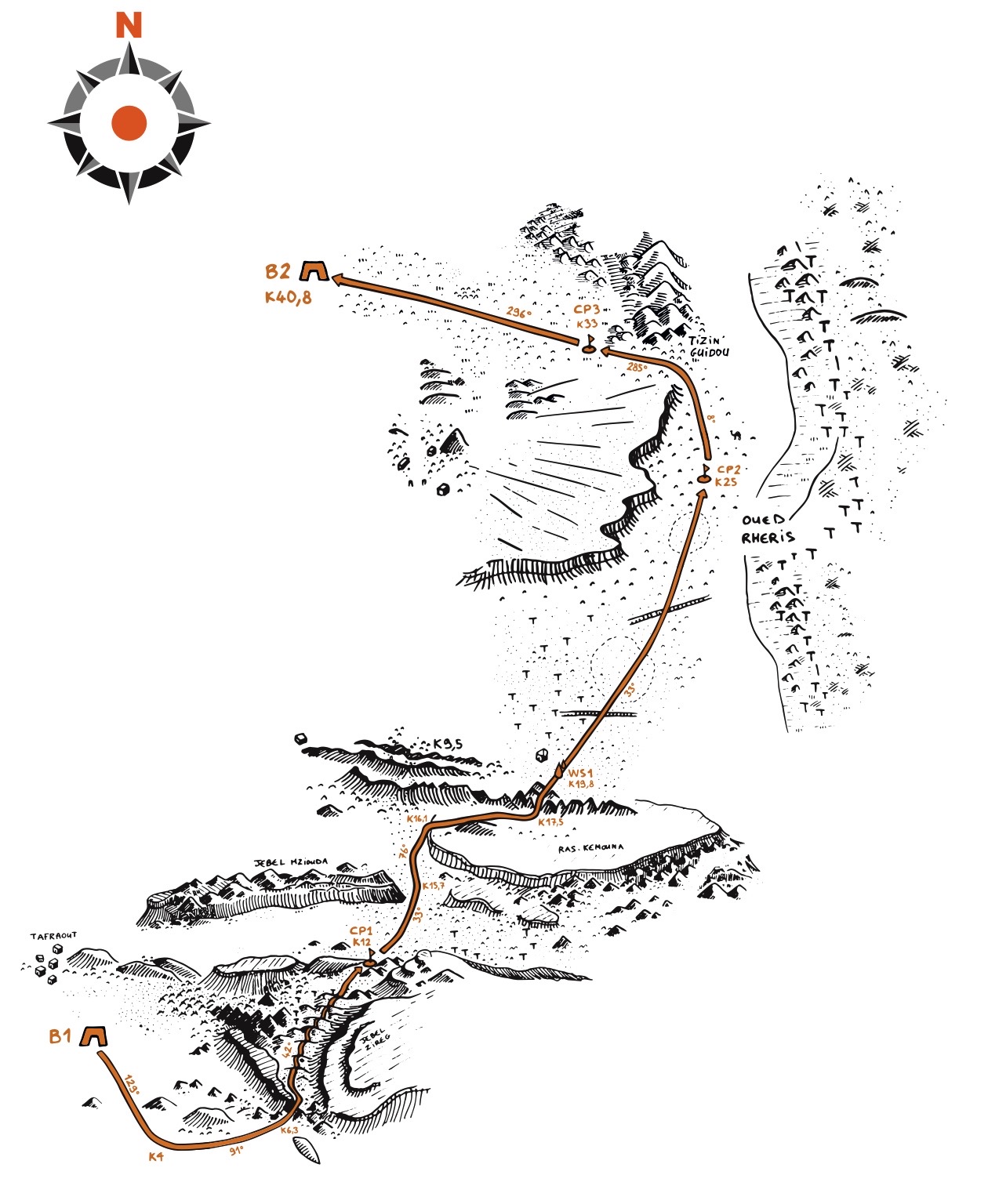
Stage 1 : 31.1 km
Stage 2 : 40.8 km
Stage 3 : 85.3 km (over 2 days)
Stage 4 : 43.1 km
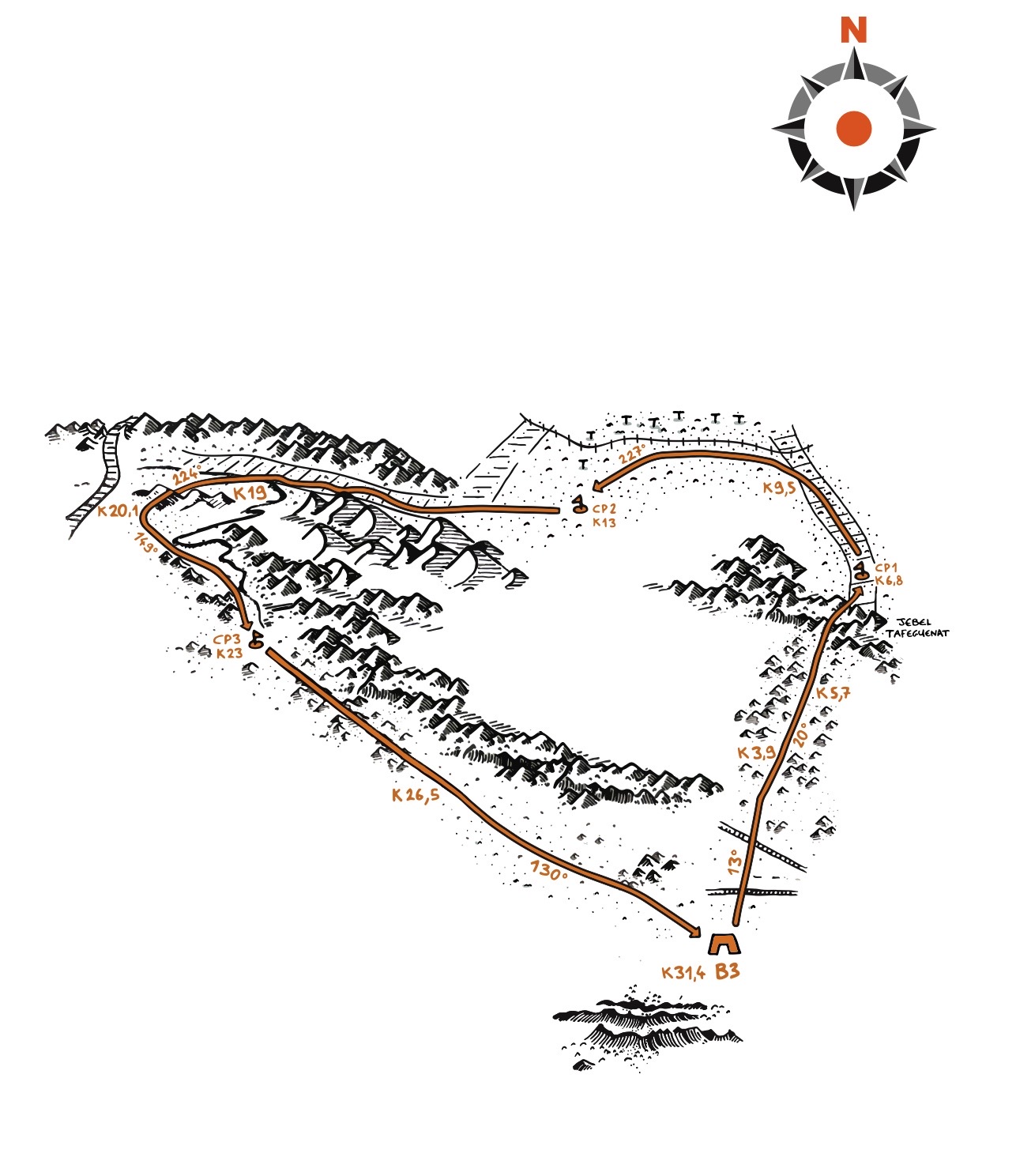
Stage 5 : 31.4 km
Stage 6 : 21.1 km
Total 252.8 km
Marathon des Sables typically takes place in this key area.
Taking place in the southern Moroccan Sahara since 1986; an extraordinary adventure will take place covering 252 km’s, the longest edition in the race history. Lasting 11-days with 9-days in the desert, divided into 6 stages over 7-days, a magical crossing of the Sahara walking or running.
The exact route, with maps, will once again be covered in detail in the road book, which as per usual, will be provided in Morocco whilst on the way to the bivouac one.
This is the first time that the daily distances have been disclosed before arrival in Morocco. Does this change anything? No, not really. I guess there is a reassurance knowing that the long day is not 90+ km’s.
However, with the 2024 edition being 252 km’s and over 6 timed stages, it was my prediction that this race would be a tougher challenge in contrast to those that have gone before. Therefore, to ease minds, the distances have been announced.
Previously, the long day would come on stage 4 (over 2 days) and it would be followed by the marathon stage. It was common thought, “Get the long day done and it’s just a marathon to go!” At the finish of the marathon, the medal would be received; job done.
Now, with the long day coming on stage 3, you still have 3-stages to run totaling 95.6 km’s. This will require a completely different mental and physical approach.
The Coastal Challenge 2024 is upon us. An event 20-years in the making, this will be a special year! A gruelling multi-stage race, participants will cover 240km’s with 10,000m+ of vertical over 6-stages. The ‘Adventure Run’ covers 145km’s.
An adventure for all, TCC is the ultimate experience and an incredible way to explore Costa Rica. Starting in Quepos, the journey follows the Pacific Coast backed by the Talamanca mountains as participants weave in and out of rainforest, navigate gravel roads, endure long stretches of beach with no shade and of course, climb, descend and scramble rocks, riverbeds and waterfalls. The journey concludes in the Unesco Heritage Site of Drake Bay, a truly remarkable location even for the well travelled.
What can the runners expect?
Stage 1
Runners depart San Jose early morning (around 0500) for a 3-hour drive to Playa Del Rey, Quepos. Arguably the toughest day of the race, not because of the terrain or distance, but because of the start time! It’s a day for caution! The 34.6km is very runnable with little vertical and technicality, it welcomes the runners to Costa Rica.
Stage 2
An early breakfast, around 0400, the race starts with the arrival of the sun! The only way is up from the start with a tough and challenging climb. It’s a tough day with an abundance of climbing and descending and a final tough flat stretch on the beach, just as the heat takes hold.
Stage 3
Tough with 25km of climbing topping out at 800m followed by a drop to sea and a final kick in the tail before the arrival at camp. For many, this is a key day and maybe one of the most spectacular.
Stage 4
A tough and steep climb to start, but once at 900m the route is a roller coaster of relentless small climbs and descents, often littered with technical sections, rain forest, river crossings and boulders. At 30km, it’s a short drop to the line and the finish at 37.1km.
Stage 5
The long day but what a beauty! Tweaked a couple of years ago and now has become iconic with tough trails, plenty of climbing, sandy beaches and yes, even a boat trip. The finish just before Drake Bay offers a calm relaxation with a stunning backdrop and amazing sunset.
Stage 6
The victory lap! For many, this stage is the most beautiful and memorable. It is now a longer day due to the start and finish not being in Drake Bay. However, the experience is not diminished. The loop manages to contain a little of all that has gone before.
“TCC is a unique race and one that we are passionate about. We celebrate 20-years in 2024 and that alone is an incredible achievement and one that we are proud of. The race travels via dense forest trails, river crossings, waterfalls, long stretches of golden beaches backed by palm trees, dusty access roads, high ridges and open expansive plains, we created this race to show of Costa Rica and this beautiful coastline.”
TCC is proud of the elite line-up that has experienced this magical multi-day journey.
Here is the past 10-years winners:
2023: Didrik Hermansen – Katie Schide
2022: Hayden Hawks – Giuditta Turini
2021: Timothy Olson – Felicitas Charpin
2020: Cody Lind – Kaytlyn Gerbin
2019: Pere Aurell Bove – Ida Nilsson*
2018: Tom Evans* – Ragna Debats
2017: Tom Owens – Anna Frost
2016: Iain Don-Wauchope – Ester Alvez
2015: Iain Don-Wauchope – Veronica Bravo
2014: Michael Wardian – Jo Meek
2013: Dave James – Gemma Slaughter
Course records: Tom Evans 21:44:12 and Ida Nilsson 23:36:04
Ones to watch in 2024
2020 champion, Cody Lind returns to celebrate 20-years of TCC. With past experience, he know what to expect from Costa Rica. His ability as skyrunner work well on the demanding and technical trails, in addition, his speed for pure running grounded at Western States (2021, 2022 and 2023) transfers well to the gravel roads and beaches that this route brings.
Cristofer Clemente, an experienced skyrunner and trail runner, he won the 2016 Syrunner World Series for the ultra distance and in 2017 he took a silver medal at the IAU Trail World Champs. He has recently won Tenerife Blue Trail, Ultramaraton Guatemala and Puerta Vallarta Mexico by UTMB. He is without doubt a hot contender for overall victory.
Pierre Meslet placed 6th and 9th at Marathon des Sables, so, is no stranger to multi-day running. TCC will provide a different challenge, while the racing is still over 6-days, this time there is no self-sufficiency, no carrying a pack, just intense heat and humidity.
From Costa Rica, we have Erick Aguero and Carlos Calvo. Erick is arguably one of the most experienced TCC competitors with countless participations and podium places.
Lina and Sanna El Kott Helander (the El Kott twins) are grounded in adventure racing, skyrunning and mountain running. They are an adventure duo that push boundaries. In 2023, they both undertook the PTL; a 300km journey during the UTMB week. The duo are perfectly matched for Costa Rica and the terrain and challenges on offer.
Ester Alves won TCC in 2016 and return this year with a contingent of runners from Portugal. I am sure Ester will say that she is in Costa Rica for the journey and experience in 2024. However, Experience, skill and ability is never lost.
Katie Young will be an unknown name to many, however, in 2023 she was my hot tip for Marathon des Sables and she proved me correct placing 6th. TCC will be a new experience for Katie but watch this space…
Lindsey McElroy Ulrich from the USA joins the TCC party with a long list of ultra results that date back to 2014 on Ultrasignup. In 2022, Lindsey tackled the Marathon des Sables, so, she comes to Costa Rica with multi-day experience. No stranger to long distance, she was also 20th at UTMB.
In addition to the above, we have a wealth of Costa Rican talent who will toe the line
Schedule:
February: Saturday 10th to Saturday 17th, 2024
Official registration & poolside reception for competitors in San José: February, Saturday 10th
Race start: February, Sunday 11th
Race finish: February, Friday 16th
Race length: 6 days
Distance: Expedition Run 240km | Adventure Run 145km
As we countdown to the 2024 edition of the Marathon des Sables – The Legendary, we will be providing a series of monthly updates, articles, interviews and podcasts.
The 2024 Marathon des Sables – The Legendarywill be the longest edition in the 37-year history of the race. At 252km, the event will now take place over 6-stages/ 7-days and not 5-stages/ 6-days as announced in late 2023.
It was clear initially that the 6th stage charity stage would disappear, however, on reflection, the new organisation have decided to continue with 6-stages but this time, all stages will be timed. The charity stage in previous editions was not timed.
The infamous long day which typically took place on stage 4 will now move to stage 3 for 2024, this will be day 3 and day 4 of the race as it has an extended time allowance due to the distance.
What does the above mean for the runner?
252km’s is a long way, but the race has always been advertised as 250km’s, so, although the race has fluctuated in distance over the years, the 252km should not come as any great surprise.
The timed stages now numbering 6 and not 5 will make a big difference, especially with the long day coming on stage 3. This will mean that stage 4, stage 5 and stage 6 will need to approximately cover 100km. This makes for a tough end to the week. In past editions, the long day was feared but on completion, many had the mindset, ‘It is just a marathon to go!’ Now it will be significantly more.
The daily distances are typically never disclosed before the race and the jury is out if the distances will be announced pre arrival in Morocco, watch this space! However, it is pretty easy to guess on approximate distances.
Historically, distances for the stages are listed as follows:
Stage 1 from 28 to 35 km
Stage 2 from 28 to 39 km
Stage 3 from 28 to 39 km
Stage 4 (The Long One) from 75 to 85 km (over 2 days)
Stage 5 (Marathon Stage) of 42.195 km
Stage 6 Charity
We know the 2024 edition will be 252km, so, as a guess and guide the following will provide a good estimation, the daily figures are +/-, for example, stage 1 could be 30km and stage 2 40km.
Stage 1: 32km (day 1) running total: 32km
Stage 2: 38km (day 2) running total: 70km
Stage 3: 83km (day 3 and 4) running total: 153
Stage 4: 42km (day 5) running total: 195km
Stage 5: 36km (day 6) running total: 23km
Stage 6: 21km (day 7) running total: 252km
Total: 252km
With the above information, you now have at least a template and guide for which to plan around.
OTHER KEY CHANGES
Salt Tablets
As I announced in 2023, it was my expectation that salt tablets would not be provided for the 2024 race. The new revised mandatory requirement for the race requires 14 broth cubes – these cubes are known to be salty. You have no choice here, you must have them. However, it will be your decision if you use them? My advice is to plan a strategy that works for you. Listen to my podcast with Andy Blow from Precision Hydration HERE. Remember, this is a self-sufficient race, so, be prepared to be self-sufficient and have a plan/ strategy that works for you.
Water Capacity
Another key change was the requirement for ‘A minimum capacity of 3 litres of water’ in the form of bottles, bladder etc. This has now been revised and we go back to 1.5 ltr capacity. This is a good move. Cp’s will be increased so that runner’s will only need to carry 1.5 liters. However, on the long day, an additional 1.5 ltr bottle of water will be provided either at the start or at cp1 (making 3 ltr to carry) therefore the capacity to carry 3 litres on the long day between cp’s is recommend. It is important that you think HOW you will carry this extra 1.5 ltr. Maybe you will have a bladder in or on your pack, maybe two additional 750ml bottles at the rear or if you have the front pack, you can slide the 1.5 bottle on top. It’s not recommended to run with a 1.5 ltr bottle in you hand, so, be prepared…
Water
Water during the stage will not be provided via 1.5 ltr bottles as in past editions. Water will be provided from a series of tables and manned staff with jugs to decant water to your empty bottles. Importantly, there had been concerns about where the water will come from, to clarify: 5L Bottles on CP -> Served in 2L jugs -> Served by staff in the runners’ bottles.
The exception being on the long day as mentioned above when a 1.5 ltr bottle will be provided at the start or cp1 and at the end of each stage when a 5 ltr bottle per participant is provided. This 5 ltr bottle will cover the evening after the stage, the morning of the next day and the required 1.5 ltr capacity starting the next stage to cp1. So, if you had planned to cut down a 1.5 ltr bottle to use as a bowl for dinner and breakfast, this will not be possible. You will now need a suitable pot or similar.
Checkpoints
Will be typically 2 to 7 per stage. On the long day, it is therefore a good assumption that checkpoints will be +/- 12km’s apart and hence the need to require 3 ltrs.
Mandatory Equipment
I will list here the mandatory equipment to avoid any confusion:
Pack such as WAA Ultra Bag 20L
Minimum capacity of 1.5 liters of water*
Sleeping bag
Head torch and spare batteries (you can have a charger/ solar charger)
10 safety pins
Compass with 1 or 2 deg precision
Lighter
Whistle
Knife
Topical disinfectant
Venom pump*has now been removed
Signal mirror
Survival blanket
14 cubes of broth***
Sun cream
200 euro or 2000 dirhams
Passport or ID card
ECG and medical
* new change but consider the long day when you will have 3 ltr.
** new change
*** to replace salt tablets
Food Requirement
You need 14,000 calories of food as a minimum, 2000 calories per day. You can of course carry more than this, but 14,000 is the minimum. You must be able to prove the calories, so, if you decant food into lighter or different packaging, make sure you keep the nutritional information.
You
In addition to the above you personally will need:
Keep the pack weight as close to the minimum 6.5kg as possible, additional weight is additional stress that you do not need.
Keep luxuries to a minimum, they only add weight. A super light Mp3 player (with good battery) and earphones is the only luxury I would consider.
Accept that this is a tough challenge, you will be stripped back to a survival mode. You will not wash, you will get dirty, you will get smelly. Accept it.
Start slow and ease into the race.
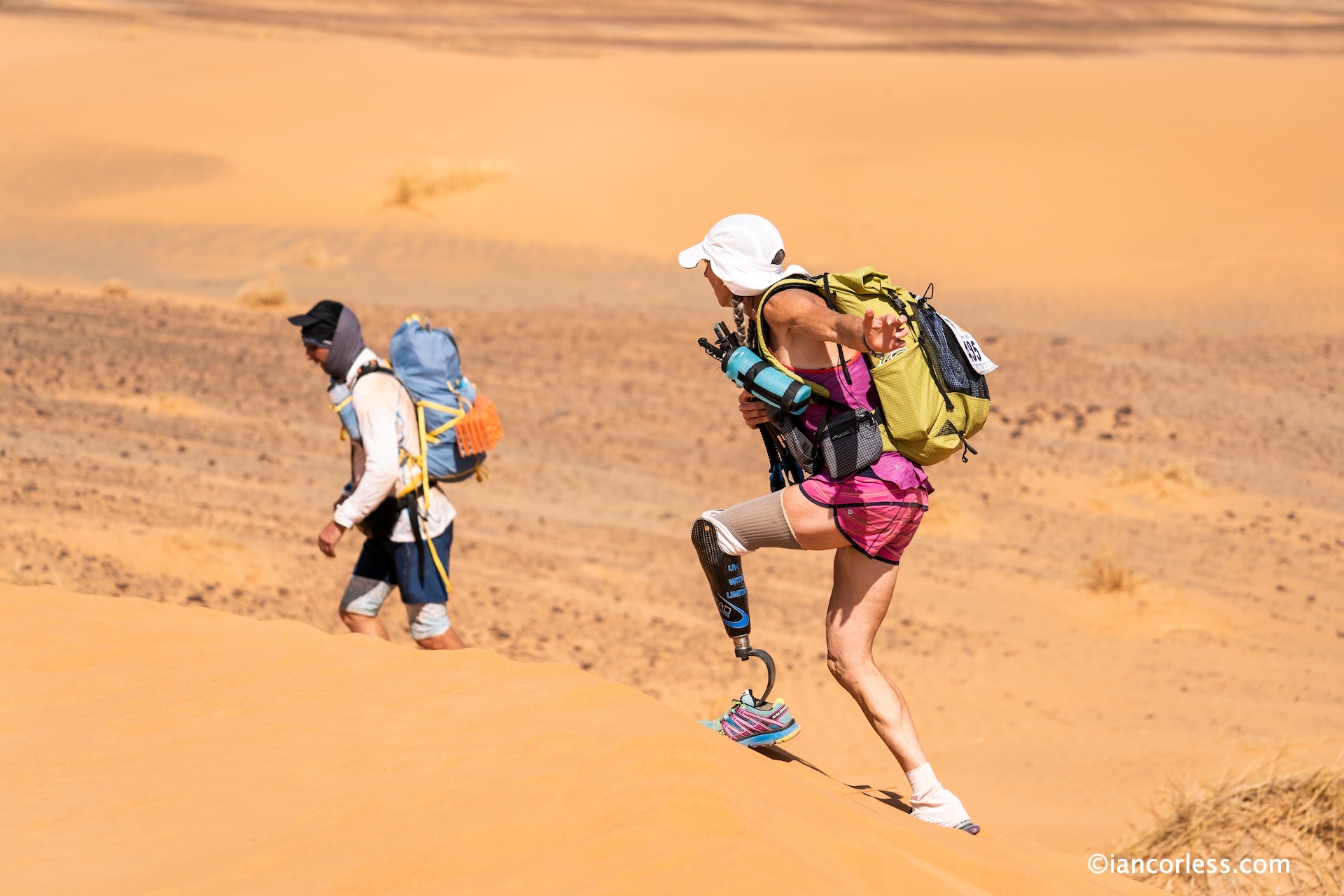
Poles can be a lifesaver and I recommend them but you must learn to use them. Those at the front do not need poles, they can run.
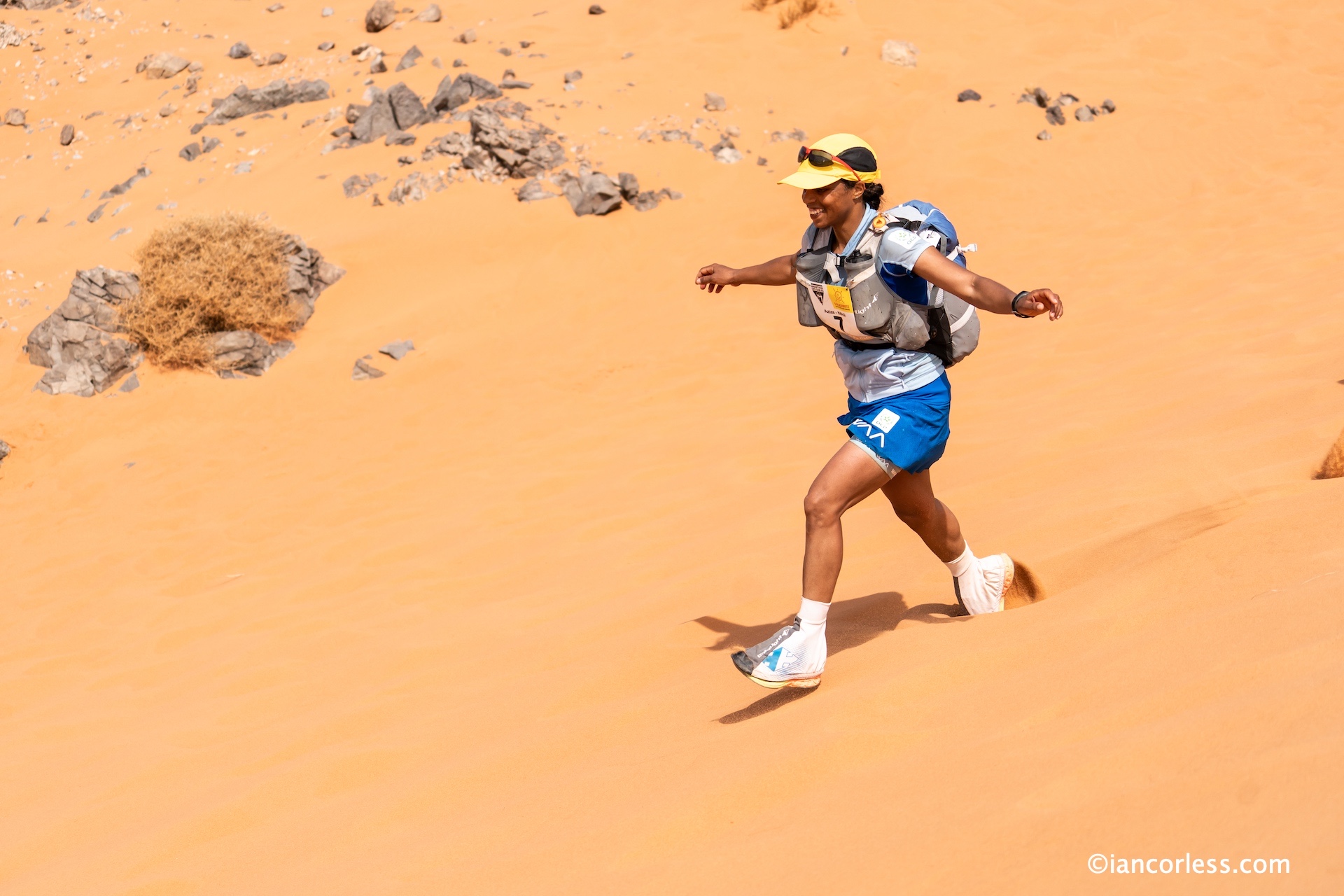
Learn to walk, walk and walk. Many go to the desert with the expectation of running 80% and walking 20%. The reality is it will be the other way around.
Look after your feet and start with the correct shoes for you.
Take a sleeping mat or pad. You only need to do three things: run, eat and sleep. Sleep and comfort is important for recovery.
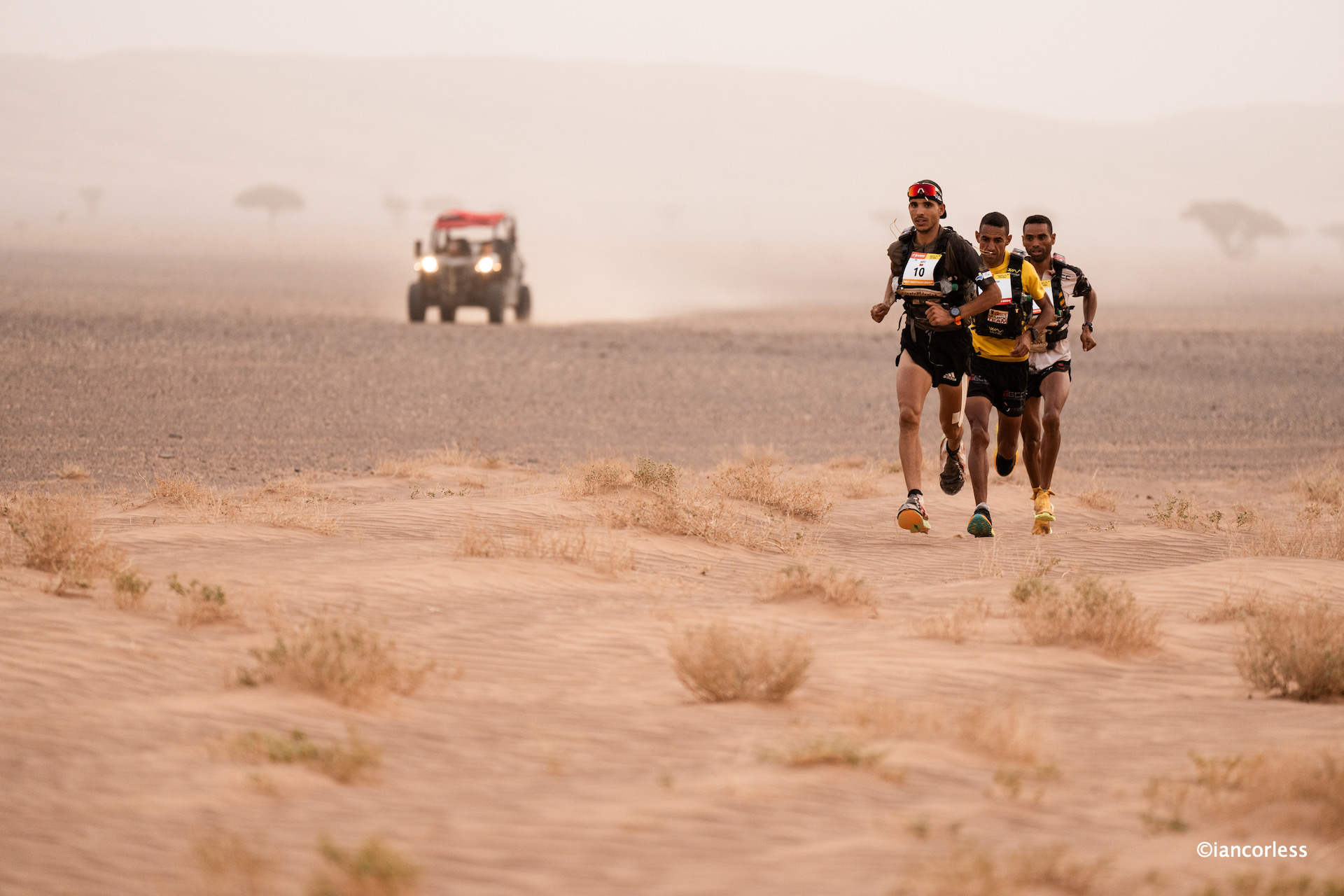
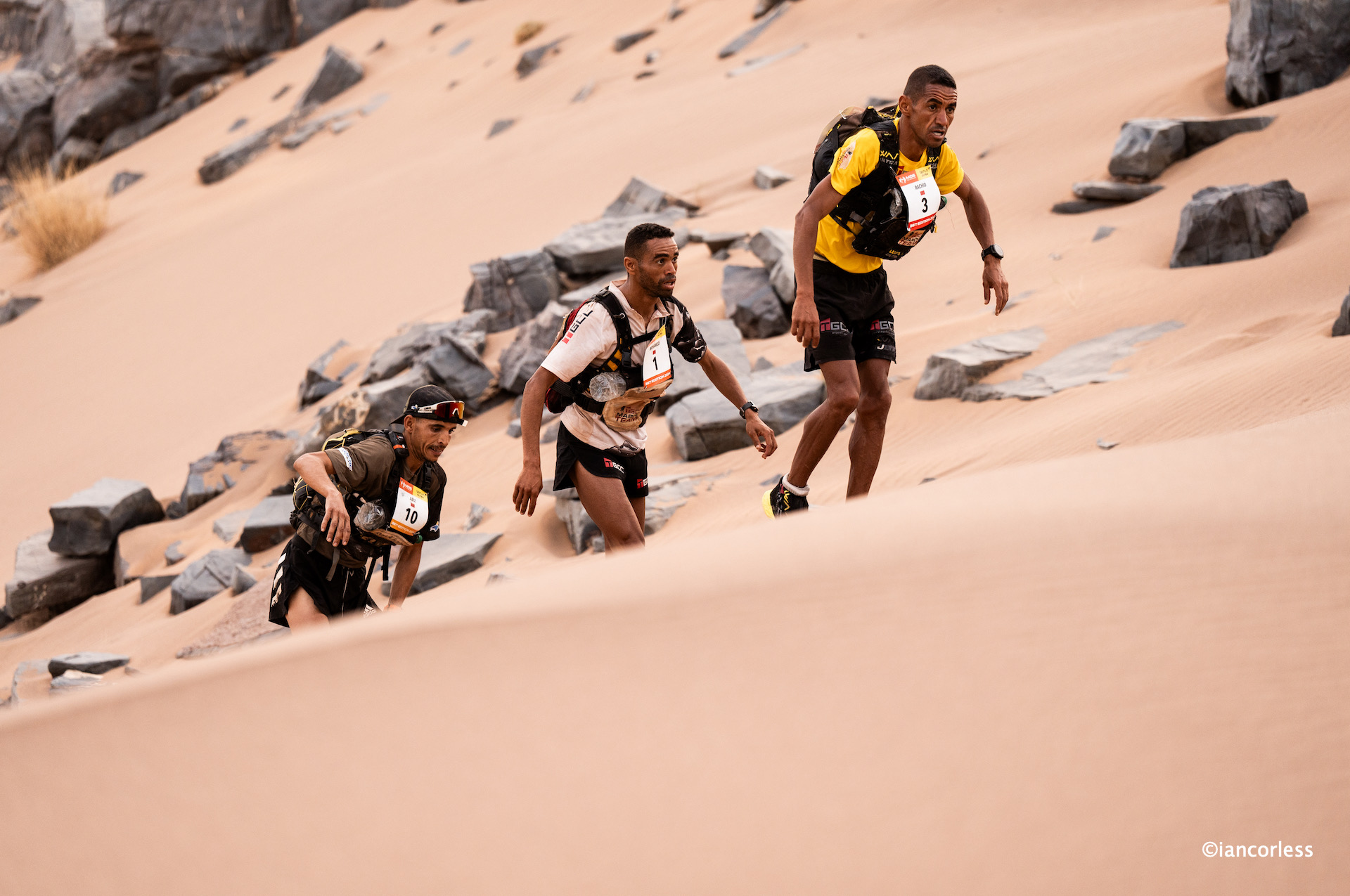
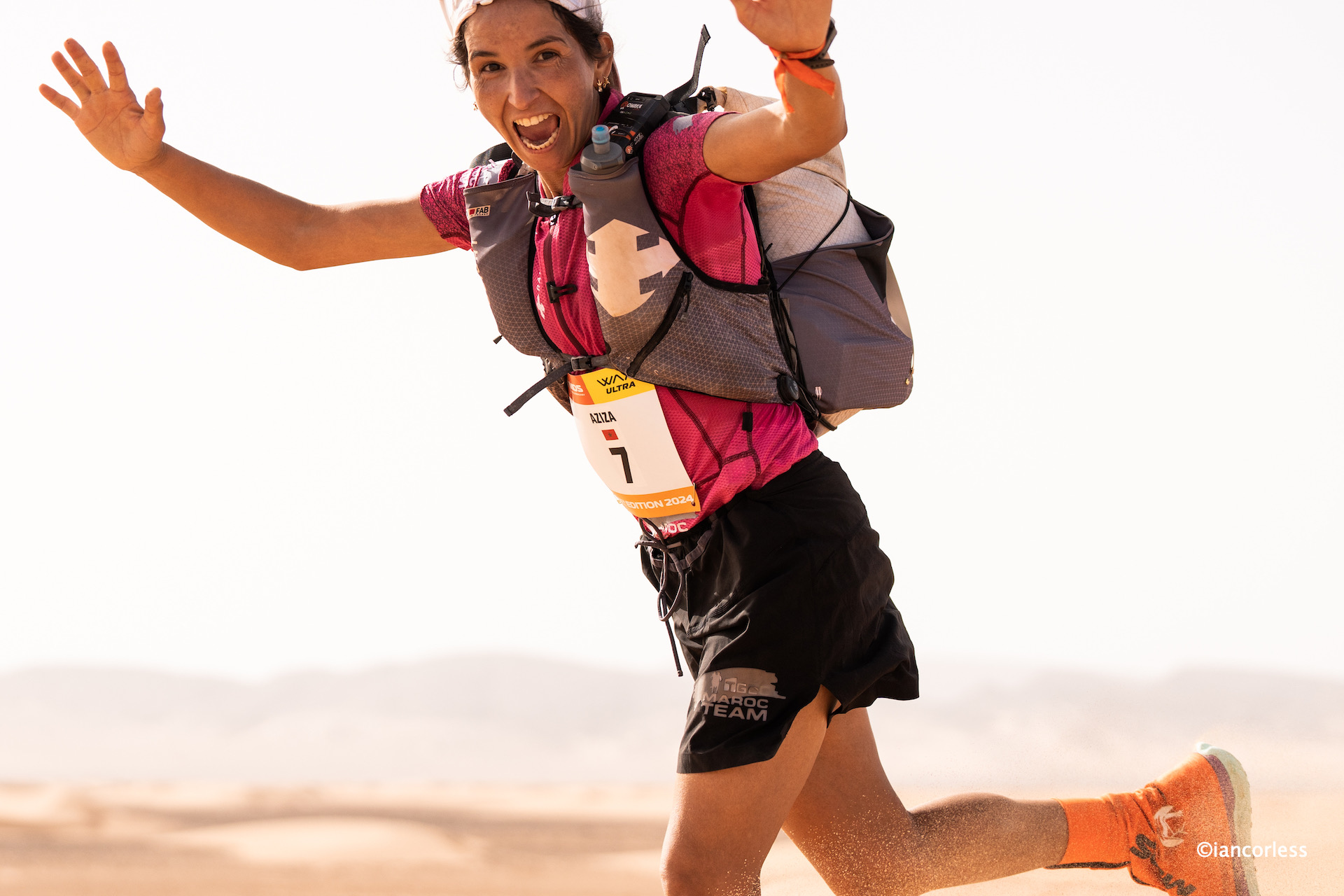
The 2024 Oman Desert Marathon concluded at Jawharat Bidiah Resort, 165km’s travelled over 4-days and Rachid El Morabity and Aziza Raji are the champions covering the total race in 16:06:49 and 23:13:32 respectively.
Going into the last 21km stage, the end result was never in question, both Rachid and Aziza had built 20-minute plus leads and all they had to do was run a calm and measured last day.
However, Saleh Al saidi pushed the pace continuously, maybe, just maybe in the back of his mind he thought he could break Rachid?
In the closing km, Rachid eased back and gave Saleh a final stage victory for the home crowd and the Army Team which he respresents.
In third place, Ghaith Al saidi. The brothers ran an incredible race and at times placed Rachid under pressure, however, Rachid for now is just too strong and experienced.
For the women, the Aziza Team were dominant and after Raji built the lead early on, El Amrany was content to run by her side.
In third place was Veronique Messina who each day consistently covered the km’s with commitment, determination and a smile. A great run in 25:38:53.
In total, thirty participants completed the race from twelve nationalities. With the race almost completely sand, the race is considered considerably harder than Marathon des Sables. This was confirmed by Rachid, “Here it is all sand, it’s slower and more tiring. Only the last day has some easier and harder terrain on which to move quicker and easier.”
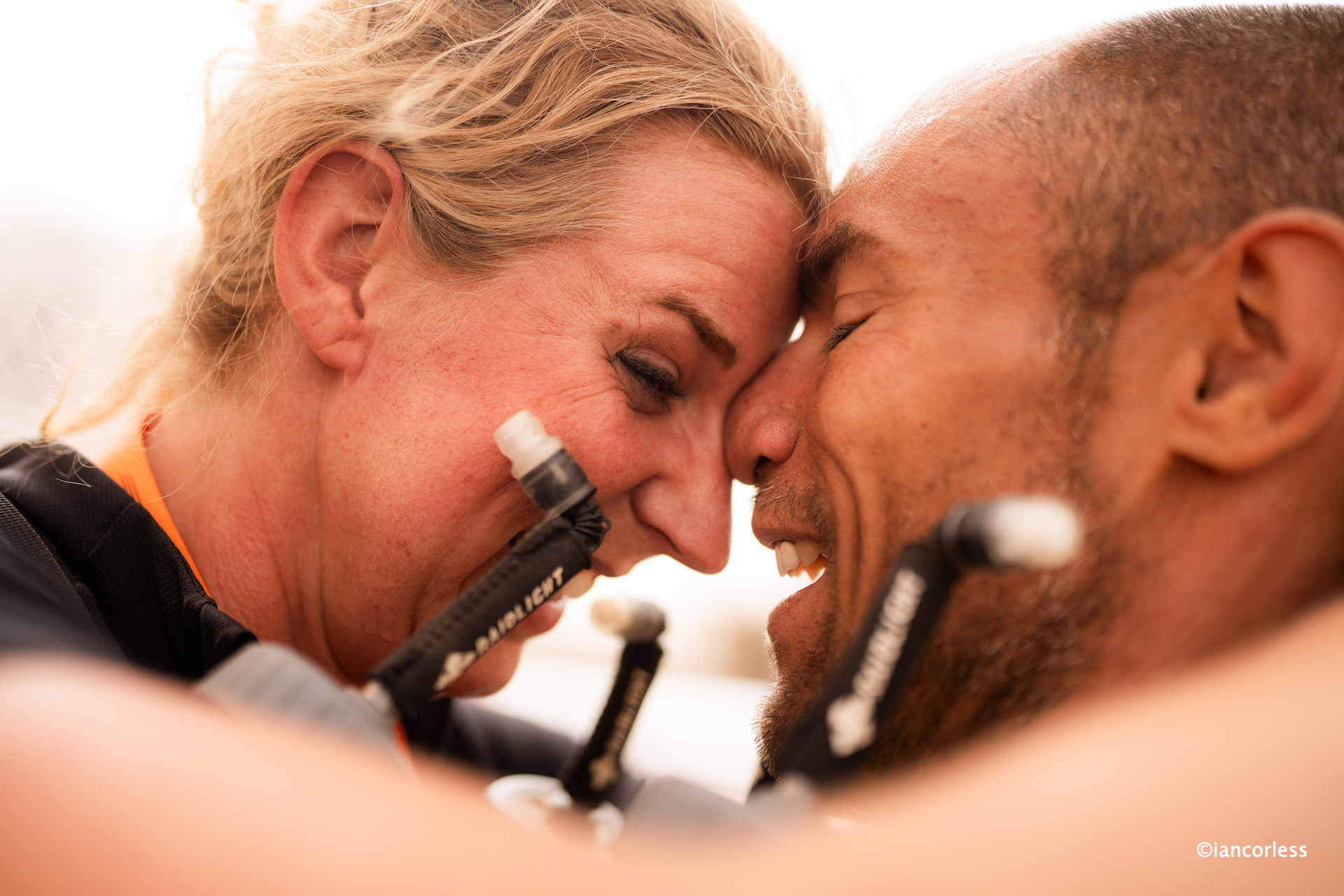
While it is difficult to pick out individuals in such a tough race, Pol Makuri has inspired everyone during the week. His commitment and dedication has been an inspiration. His completion of the event brought tears to many an eye, especially his friend and teammate, Albert Jorquera.
Rachid and Aziza may well have crossed the finish line the fastest, but a winner and champion comes in many forms and Pol Makuri is a prime example.
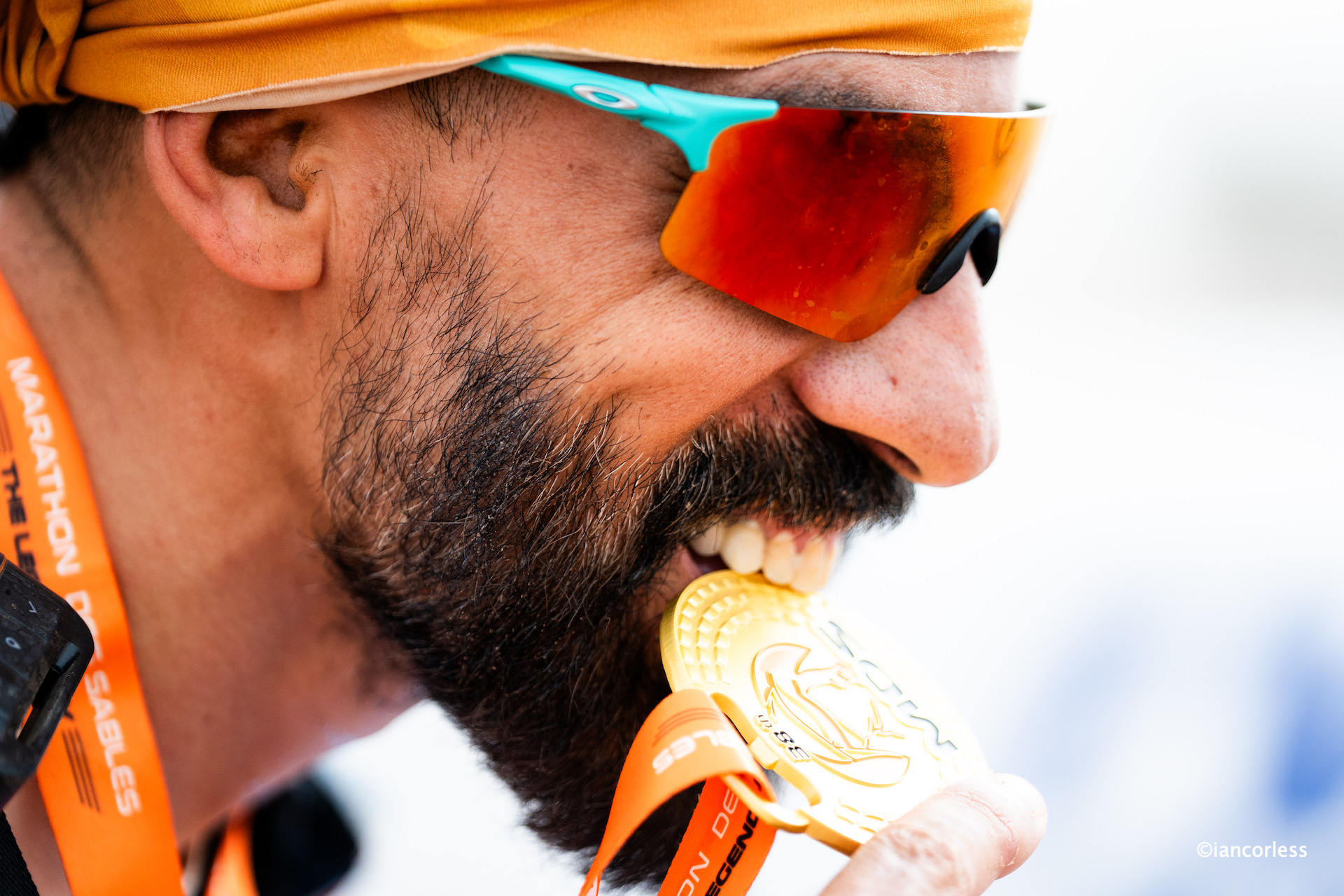
Each medal was hard earned and yes, as in many races some did not reach the finish. However, they were there at the finish line to cheer the others on, no doubt being inspired to return and try again.
Stage 3 of the Oman Desert Marathon has a delayed start to ensure that participants experience the desert at night. With three waves: 10am, midday and 2pm (slower to faster runners respectively) the participants would cover the 47km stage in daylight and then transition to darkness.
Consider by race director, Said, stage 3 would include one of the most spectacular dune sections on the race, timed to coincide with the sun getting lower in the sky and for the lucky ones, maybe sunset would take place as the dune section came to an end.
Coming after the 55km long day, the later starts were welcomed and allowed for additional rest and recovery, however, the fatigue was starting to show on faces and bodies.
As the race got underway, it was clear that the men’s race would have a different approach, with Ghaith Al said pushing hard at the front, while behind, Saleh Al said and Rachid El Morabity ran together. Ultimately, it was an attempt to break Rachid. It didn’t work, but it was a valiant effort and one that rewarded Ghaith with the stage win in 5:03:39.
Behind, Saleh and Rachid ran together and crossed the line 5:10:29 and 5:10:39 respectively.
The women’s race had little drama with Aziza Raji and Aziza El Amrany running together and crossing the line in 6:56:35. The duo looked strong and relaxed. They will be a force to be reckoned with at Marathon des Sables this year.
Behind, once again, Veronique Messina ran a strong 3rd place in 7:49:56.
Albert Jorquera and Pol Makuri had a long day completing in 11:17. They are both very focussed mentally and strong physically. It has been a joy to watch the two of them work together and quite simply. Pol is an inspiration.
Day 2 of the Oman Desert Marathon and after day 1, there was some anxiety. At 55km’s long, the stage was set to be tough. A planned 0630 start with sunrise, would provide participants with extra time in daylight. However, the weather had different plans. An inversion came in during the night and early morning reducing visibility in the valley to zero, the start was delayed 1-hour.
At approximately 0730, the runners were on the way despite some lingering mist. However, the mist was guaranteed to disappear quickly and it did. While it lasted, it gave an eerie feeling to the desert.
Sadly, Mohammed El Morabity was a DNS today. He was tired and feeling under the weather after long delayed travel and a tough first day. Although sad to see a competitor leave, I am sure Salah Al Saidi and Evgenii Glyva were somewhat happy to have one less El Morabity brother to deal with.
Having run a very strong stage 1, Salah Al Saidi took the race to Rachid pushing the pace. As always, Rachid started easy and looked relaxed while following and Evgenii was pushing to hold the pace.
For the women, Aziza Raji must have felt very confident after her stage 1 performance and huge gap. By contrast, Aziza El Amrany was probably wondering how she could pull back any time? Kathleen Leguin who was a pre-race favourite had suffered with sickness on stage 1 but started the day feeling better and the trio ran together with Veronique Messina behind.
Despite 55km’s, stage 2 was billed as a more runnable and easier day, it wasn’t. There was a great deal of soft-sand, several dune section and lots of heat. It was all too much for Kathleen and sadly she withdrew from the race at cp3.
It is never easy to tell if Rachid is suffering, but today there seemed some signs of fatigue and tiredness at cp3. He left with Saleh but looked happy to hold back and let the pace be dictated.
However, in a typical Rachid move, he finally applied pressure and opened a gap crossing the line in 5:47:24 to Saleh in 6:07:43. Evgenii finished 3rd in 6:23:13.
The two Aziza’s were playing truce today and duo ran together all day, Raji happy not to loose anytime to El Amrany and at the same time share the desert with a friend.
With Kathleen out of the race, Veronique finished 3rd, the times of the top 3 8:31:06 and 8:31:07 for El Amrany and Raji, 9:04:37 for Veronique.
Results HERE and GC ranking HERE.
Albert Jorquera and Pol Makuri were battling the day and due for an early evening finish, in darkness.
A long stop at cp3 allowed Pol to get some treatment for his feet and recharge ready for the push to the line; he’s one tough guy!
Tomorrow is stage 3, the night stage. The runner’s will start in two waves. The first around midday, the second early afternoon and they will go in to the night over roughly a marathon distance.
Navigating a different route to the 2023 Oman Desert Marathon, stage 1 of the 2024 edition proved to be a tough challenge and one that saw the lead change in the latter stages to provide victory for Aziza Raji and Rachid El Morabity.
Starting in Bidiyah with a gala presentation of local dignitaries and local music, the event had a mass start for the 4-stage race, marathon, 21km, 10km and 5km.
The main event, the 4-stage 165km race navigating an almost circular route back to Bidiyah was initially lead with a charge from last year’s champion, Mohamed El Morabity with Khalid Al Jabri and Evgenii Glyva.
For the women, an in-form Aziza El Amrany forged away at the front looking very strong and focused.
As per usual, Rachid El Morabity paced himself with a relatively slow start keeping the other three protagonists in sight.
Behind Aziza, Aziza Raji and the French lady, Kathleen Leguin were both looking strong and relaxed.
The opening 25km, post-race, was considered to be ‘easy’ in comparison to the tough and challenging terrain that followed; relentless soft-sand, dunes and rollercoaster terrain that sapped the body of strength, especially as the heat of the day came.
It was here that Aziza El Amrany relinquished the lead to Aziza Raji who looked much more relaxed in the challenging terrain.
Kathleen was also suffering, climbing a steep dune she had continuous moments of sickness and at the summit, she sighed, just 9km to go.
Rachid had now made his move and behind Mohamed El Morabity was fighting hard to hold a very strong Salah El Saidi, no doubt hampered by long travel and a very late arrival before race day.
The 2023 champion could not match the pace and finished 3rd, 3:39:20, 3:39:54 and 3:41:29 separated the men, making for an exciting stage 2.
Aziza Raji was super strong in the latter stages of the day and crossed the line in 5:22:36. Aziza El Amrany arrived in a surprising 5:49:18 and Kathleen was overtaken by Veronique Messina to finish 3rd in 6:18:55.
While the fast raced at the front, as in every race, stories begin to form behind. A notable one, Albert Jorquera who raced here in Oman in 2023, who this year runs with Pol Makuri who has Cerebral Palsy in the right side of his body. An inspiration to watch!
The duo finished the day in a brilliant time of 7:41.49, 19th and 20th.
As darkness arrives, the battle for the line continues. It’s been a tough first day here in Oman.
On a recent work trip I had a run shoe disaster. To cut a long story short, I was left with no run shoes.
Dropping in to the best run store I could find, I was rest assured with a great selection of trail shoes and gladly, they had options from which to choose. It would have been easy to purchase shoes I have already owned used and liked, and in all honesty, had they had a pair of Hoka Torrent I would have got them; a great all-rounder.
I needed a shoe with cushioning, protection, and a good outsole.
As it happens, I had three excellent choices and none of the shoes I had used before, a NNormal Tomir (23/31), a Hoka Speedgoat 5 (29/33) and a Merrell Agility Peak 5 (25/31), based on stack heights, three very comparable shoes. Interestingly the NNormal with 8mm drop, the Hoka with 4mm drop and the Merrell sitting in the sweet spot of 6mm.
I will be honest, I was instantly drawn to the NNormal, I had been waiting to test a pair for sometime and in my head, before trying any of them on, I had already made up my mind. I am getting the NNormal.
However, slipping them on, they just didn’t make me smile. The lacing was less than optimal, foothold was kinda ok but the overall feel was lifeless. The Hoka Speedboat 5 by contrast had life, had great foothold and was just solid. That’s it, I will get the Speedgoat…
But then the assistant said, you should really try on the Merrell, particularly if you like the Hoka.
So, I slipped the Agility Peak 5 on whoa, what a revelation. Foothold superb, heel comfort excellent, toe box space great and there was a bounce and life not present in the other two. The addition of Vibram Magagrip added to the package, to be fair, this was on the other two shoes too, but here on the Agility Peak 5 it was aggressive and with 5mm lugs.
I purchased the Merrell.
MERRELL
I had heard a great deal about Merrell shoes, nearly all of it positive, so, I don’t really know why it had taken me so long to eventually get a pair. Certainly trying on against the NNormal and Hoka only confirmed that my decision was coming too late, I had been missing out!
Superb cushioning 25mm front, 31mm rear.
A great looking shoe that means business. The side profile, the outsole and 5mm lugs, a visible rock plate, it’s clear that this is shoe is for the rough stuff.
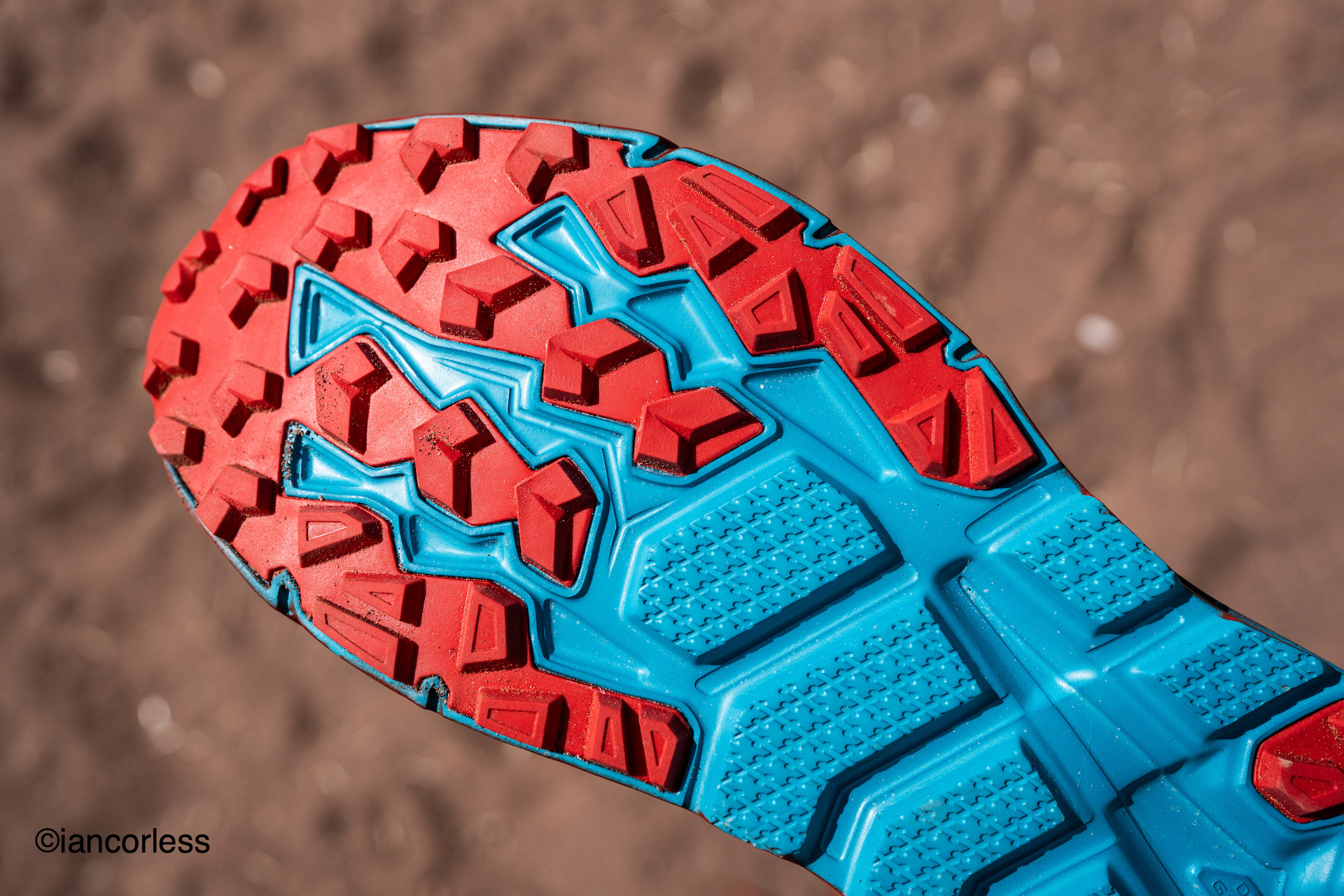
Red rock plate showing through the Vibram MegaGrip outsole.
When a shoe is in version 5, I always get a little nervous. The plus side is this is a shoe that works and is loved, otherwise Merrell would not adapt, change and make a new version. But sometimes, the ‘need’ to make new version can sometimes spoil what was good about the previous ones. Having not tried an Agility Peak before, I was a blank canvas – a good thing!
THE SHOE
With reduced weight, increased rocker, increased heel grip and comfort, this shoe on paper was ticking all the boxes.
A breathable upper, excellent lace placement, gusseted tongue, a toe cap protection, EVA foot bed, FloatPro foam midsole, rock plate, a Vibram Megagrip outsole with 5mm traction lugs.
5mm lugs by Vibram MegaGrip.
A D-ring gaiter attachment at the front and velcro attachment at the rear,
Velcro tab at the rear for gaiter.
The Agility Peak 5 is a feature packed shoe. A 6mm drop with cushioning 25mm at the front and 31mm at the rear makes this a shoe ideal for long days out in gnarly terrain.
Slipping the shoe on I had an instant comfort factor that made me smile, I knew immediately I was going to like this shoe.
Great lacing and D-ring for gaiter.
Lacing up, foot hold was superb without any nasty pressure on the navicular bone. Holding the rear of the shoe.
Lifting my foot, there was no slippage and the gusseted tongue just added to the cozy comfort factor.
Spacious toe box.
The toe box is spacious, a 3, maybe a 4, on a scale of 1-5 with 5 being wide and spacious.
Standing up, there was a definite bounce and life as I moved backwards and forwards, up and down.
IN USE
I was committed and out-of-the-box I went straight in to a gnarly coastal run over very rocky and abrasive terrain, 37km and 1531m+. It was a great test! The Agility Peak 5 excelled.
The notable takeaways were all-day comfort and protection.
I never had to adjust the laces, my foot was held secure all day. The cushioning allowed for great ground feel but not at the compromise of comfort, especially with the rock plate protecting from all the sharp rocks and obstacles.
At 25/31mm in cushioning, I was concerned that maybe I would be a little too high from the ground, but this shoe has a wide footprint and this compensates for the additional stack height wonderfully. I had no rolling issues at all.
Notably, when walking and hiking, the bounce and comfort at the rear of the shoe was superb. When running, the flex behind the metatarsals was ideal giving a great propulsive phase. The toe box allowing enough space for toe splay but not at the compromise of precision. When climbing, my foot was secure, no movement, a combination of the new heel cup and the rear sling lock.
The outsole by Vibram is tried and tested, MegaGrip appears everywhere, but this is the first time I have used or seen the 5mm lug version and it is brilliant. The grip was superb. I have yet to try in the wet!
Was there a downside? In all honesty, no. It’s arguably the most complete shoe I have tried in a very long time and if I was to be picky, for a shoe that is so obviously designed for rough stuff, the toe bumper could maybe be a little more protective.
Despite the mean business looks, the Agility Peak 5 has plenty of life, speed and comfort for those wonderful single-track runs with little or no technicality. The rocker helping to propel you forward with excellent comfort.
Fitting true to size, this shoe is one of the best I have tried and tested.
CONCLUSION
Shoe technology gets better all the time and now there are sooooo many good shoes, it’s often difficult to pick a best one. Of course, this is a great position to be in. I have countless shoes that I would be happy to run in on any given day. But, some shoes have very specific uses. If I wanted guaranteed mountain grip in wet and dry, I would choose a VJ MAXx. I I wanted a fast shoe for single-track, I’d go for an Adidas Speed Ultra. If I wanted a just one shoe that could do all things and do them well, my choice has normally been a Hoka Torrent, that is until the Merrell Agility Peak 5 cam along.
The rock plate and grip is excellent.
This shoe has been a revelation. All day comfort, great grip, great foot hold, fast when you need them to be, secure when the terrain demands it and all wrapped up in an excellent good looking package.
The Agility Peak 5 is my shoe of 2024! A shoe that has balanced cushioned comfort with speed and versatility for all running, be that on trail or mountain terrain.