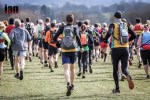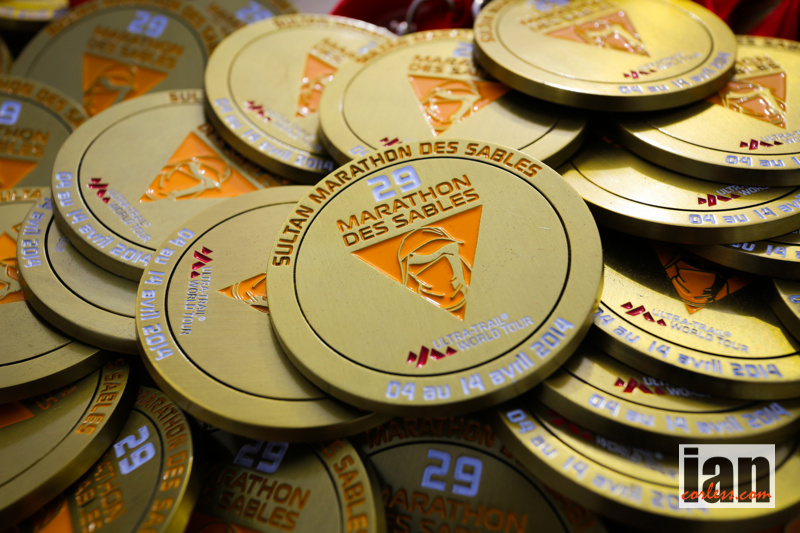
Marathon des Sables 2015 (30th Edition) – RACE PREVIEW

©iancorless.com.IMG_4307MDS2014

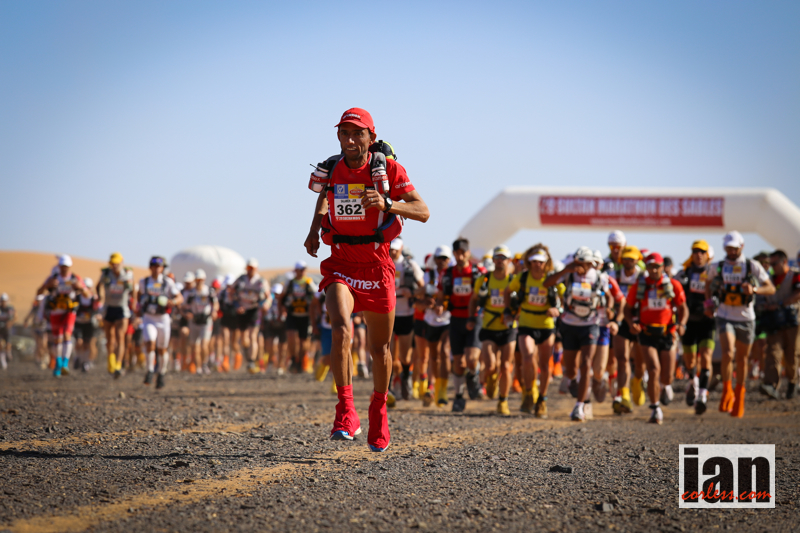
MDS, Marathon des Sables, The Toughest Race in the World… whatever you want to call it, the 30th edition is just around the corner. Think about it, 30-years. It’s quite incredible how this race has grown and has become ‘the’ multiday race to do irrespective of experience. It was the first and arguably is still the best offering an ultimate adventure for novice and experienced runner.

Many a runner has started a passion for running at MDS and as such; the race will always be an important landmark for many. But it’s more than a race. It’s an experience, it’s escape and it’s a challenge.

©iancorless.com.IMG_9980MDS2014

The combination of self-sufficiency, life in bivouac and running 250-km’s through the heat of the Sahara is something that those that have experienced it will never forget. It is the story of life, a story of men and women who have come to the heart of the desert to rid themselves of the superficial to keep only the essentials and get in touch with their true selves.

For the past three decades, some 18,000 runners have signed up for this experience, so, with the imminent running of the 2015 edition, it’s fair to say that race will see a great number of participants returning to ‘celebrate’ a very important birthday.

©iancorless.com.IMG_9544MDS2014

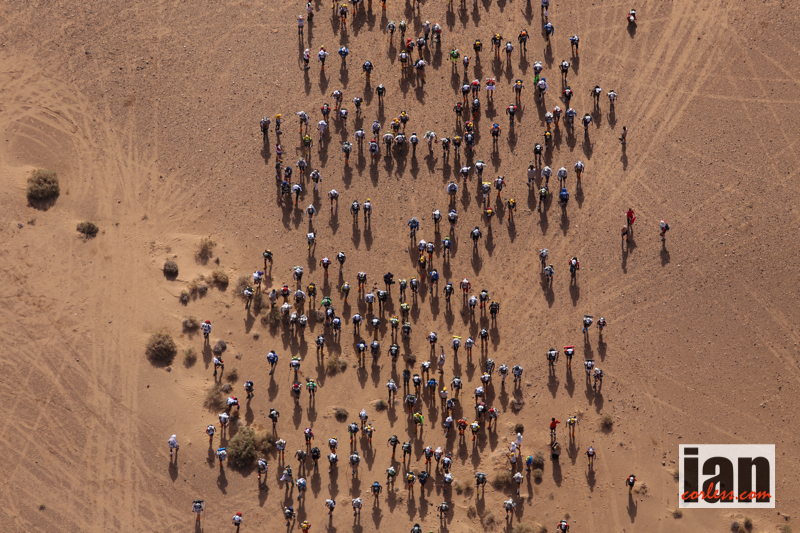
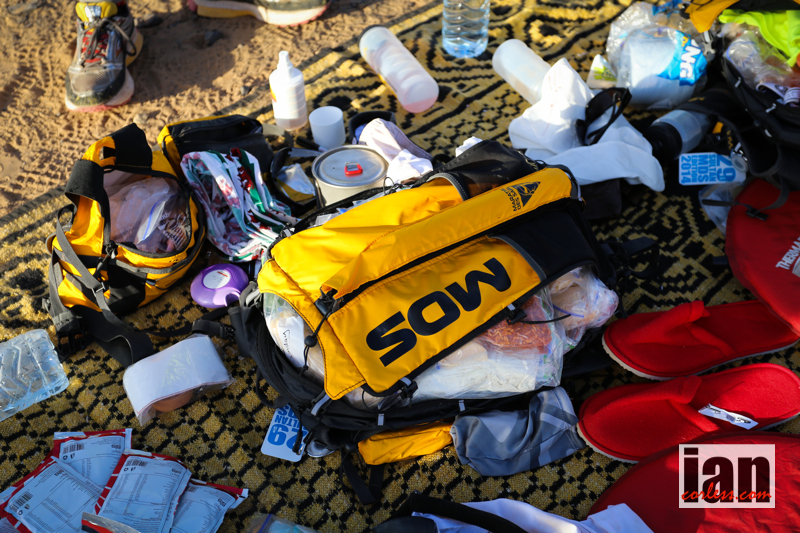
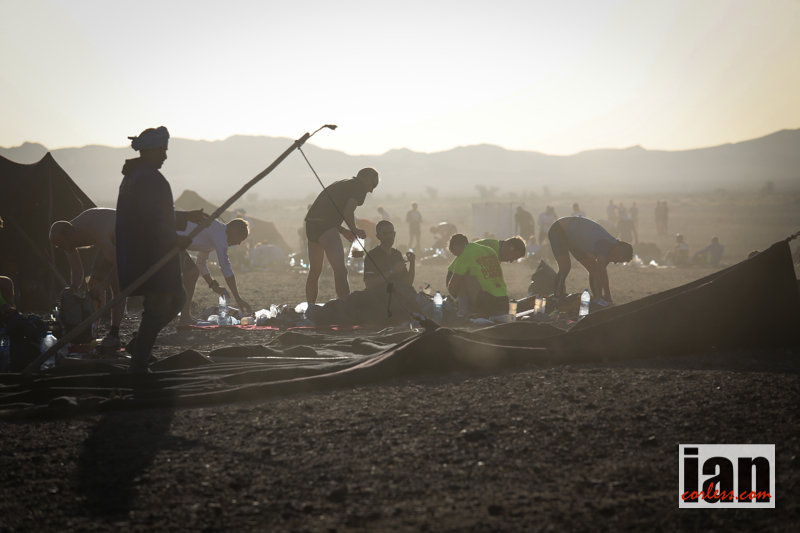
Lasting six days participants must be self-sufficient carrying everything they need in a pack. Water is provided but rationed and a tent (bivouac) is provided each evening that must be shared with seven other participants.

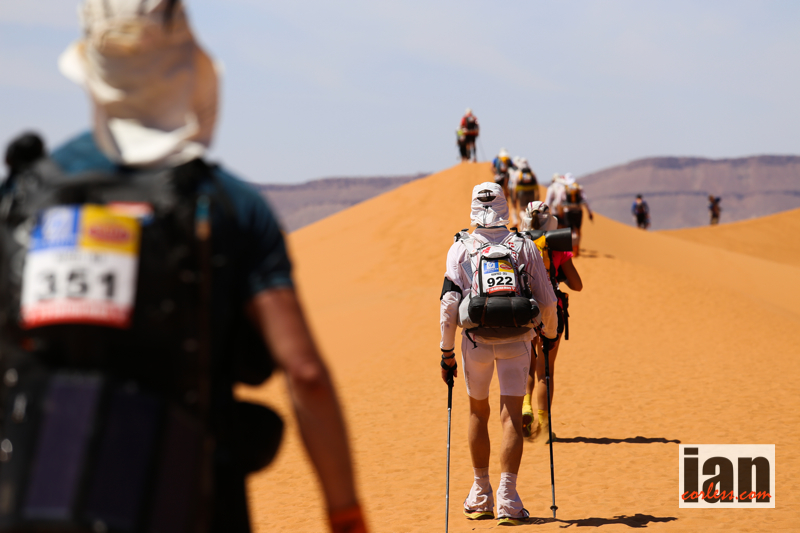
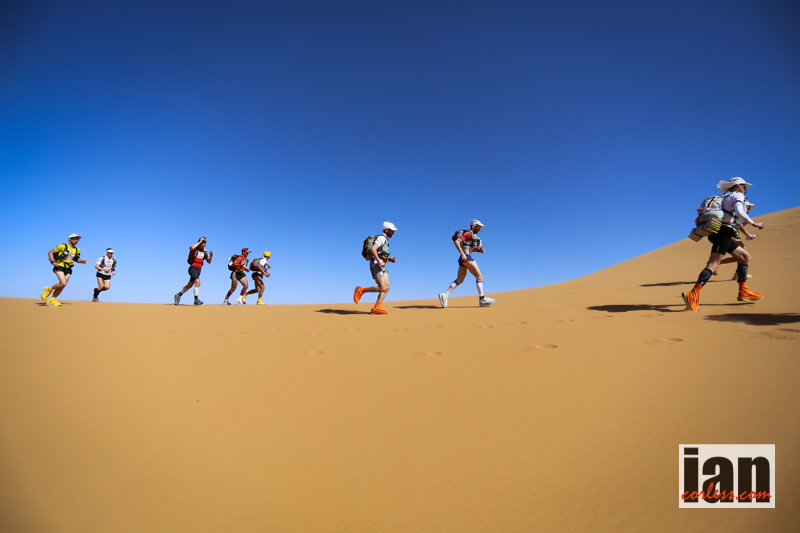
The 2015 edition of the race will be 250-km’s offering a series of challenges that will test the mind and body in equal measure. Dunes, djebels, ergs and dried-up lakes offer a stunning backdrop that must be traversed. Battling against sand, heat and above all the mind completing the 30th edition of the Marathon des Sables will be a dream come true for those who toe the line.

©iancorless.com.IMG_3173MDS2014

THE ROUTE for 2015

Stage 1 – Sunday 5th April

Here we have a very uneven playing field and a sufficient number of kilometers to make their presence felt. Competitors will have to run, avoid the obstacles and climb the surrounding uphill sections. The first dunes are between CP1 and CP2. It is fair to say that day-1 of the 30th MARATHON DES SABLES will be a long one.

Stage 2 – Monday 6th April

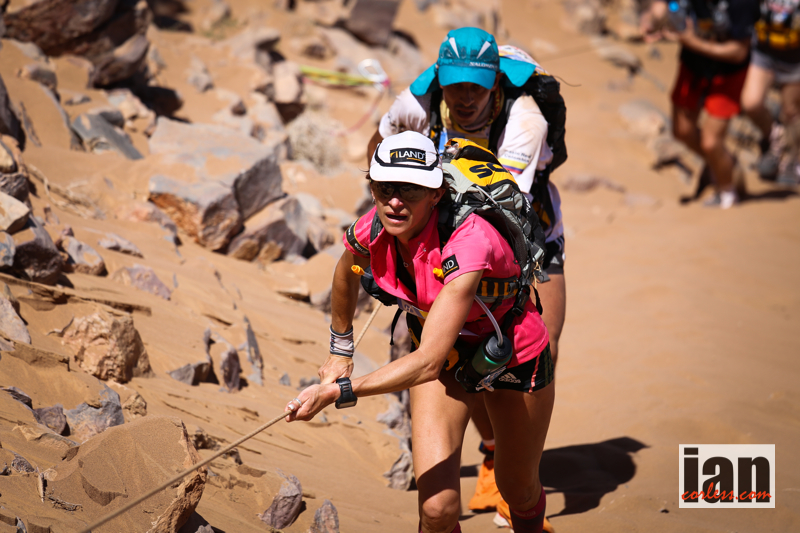
Those who imagine the desert to be flat are in for a surprise. Three steep little climbs form this second leg, with gradients reaching 30%… A new kind of roller-coaster ride which will open up landscapes that will be a sight to behold.

Stage 3 – Tuesday 7th April

Sand will be omnipresent today with some stony sections and some dried-up lakes. There will be a little something for everyone with some uphill sections here and there.

Stage 4 – Wednesday 8 / Thursday 9 April

A tough initial climb will hurt the legs, especially as it’s going to be a long day. Indeed this particular day will be the longest leg in the history of the MDS. And if that wasn’t enough, a climb of nearly a kilometer up a djebel awaits. At the summit runners will have 360° panoramic views. As for the descent, well it’s steep! After that, runners then traverse dunes, dried-up lakes and more dunes!

Stage 5 – Friday 10 April

Today’s route has a mixture of terrain that are hallmarks of the MDS, it’s a classic day!

Stage 6 -Saturday 11 April – SOLIDARITY UNICEF legs

For the majority of the participants, this leg is
a time for reflecting on the experience of this fine human adventure and is a united show of awareness before returning to civilization.

RUNNERS TO WATCH

©iancorless.com_Transgrancanaria15-6213

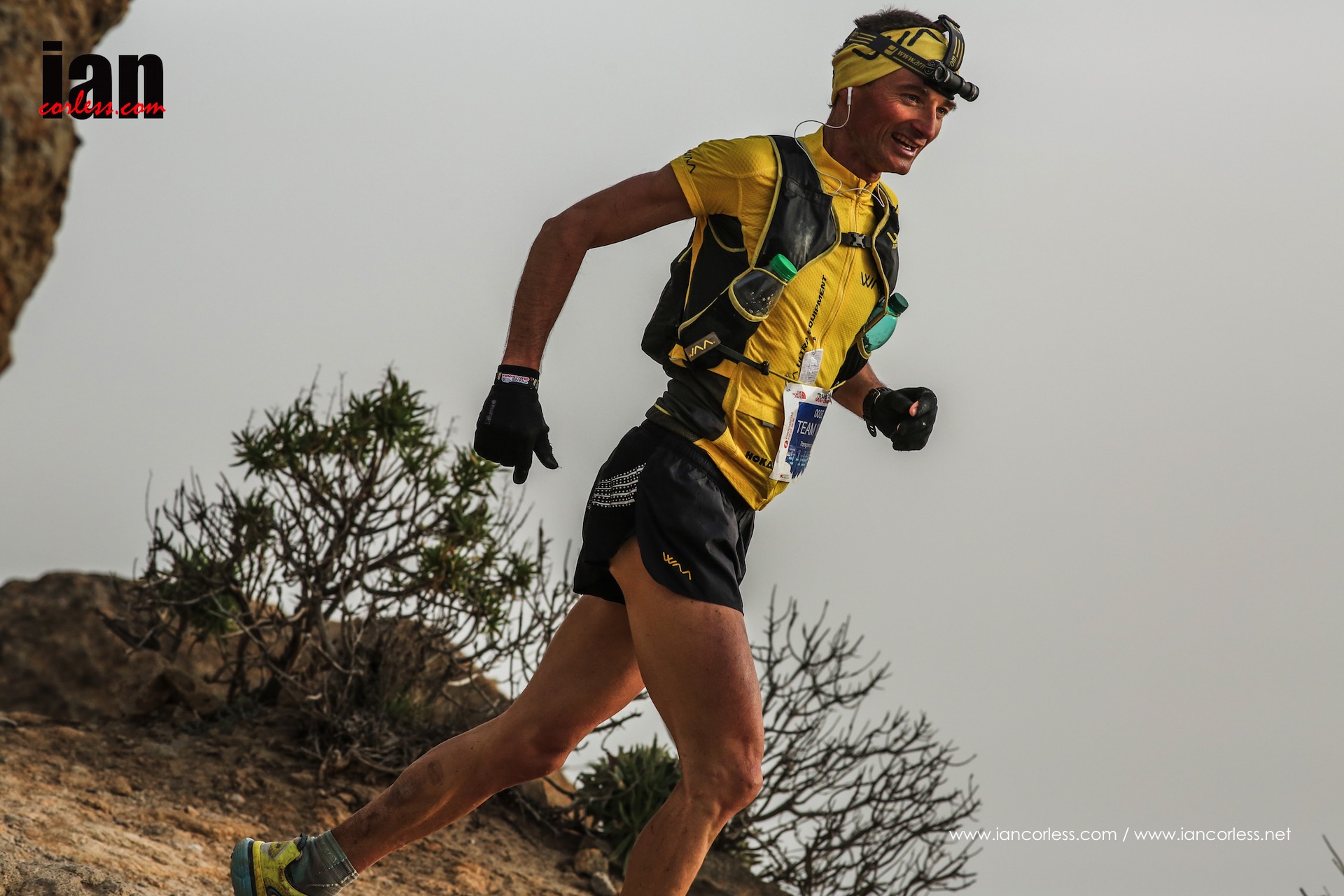
Antoine Guillon was second three times, third once and fourth three times in the Diagonale des Fous in addition, he is always well placed in the UTMB. Offered a place by the UTWT, Antoine will try his luck in the 30th MDS for the first time. Antoine just placed 3rd at Transgrancanaria, so his form is good. Can he recover in time?

©iancorless.com.IMG_2599MDS2014

Christophe Le Saux never seazes to amaze me with his relentless racing calendar, he was 10th in 2014, 9th in 2013, 6th in 2012.

©iancorless.com.IMG_8126MDS2014

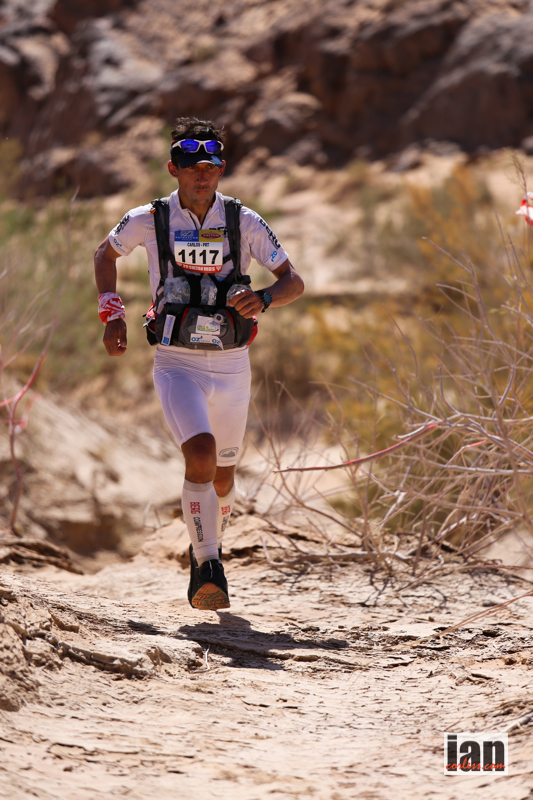
Carlos Sà is a regular at MDS and has a wealth of talent and experience to excel. He was 4th last year’s, 7th in 2013. 4th in 2012 and 8th in 2011.

Dave Mackey has been one of the top American ultra runners for many years and he has excelled at the 100-km distance. His participation at MDS marks a new departure for him and it will be interesting to see how he handles racing over multiple days.

Javier Teixido Marti-Ventosa is the 2014 winner of the Andorra Ultra-Trail Ultra-Mitic (112km).

©iancorless.com.IMG_7135MDS2014

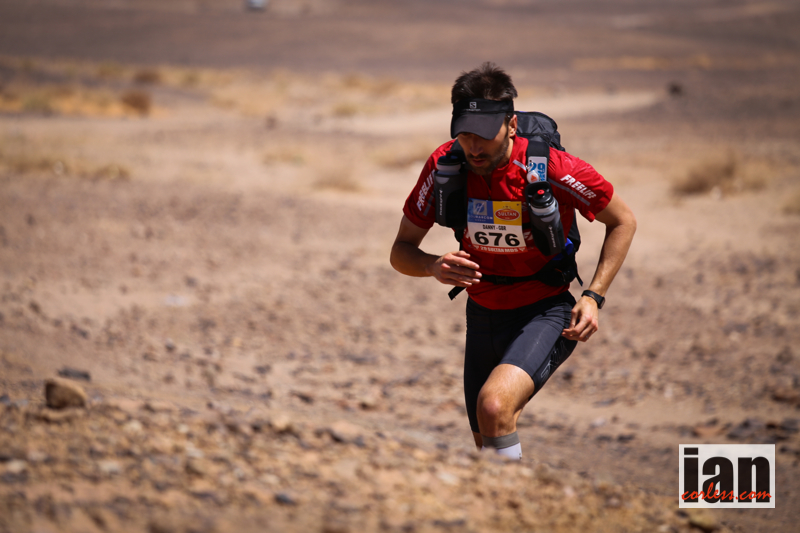
Danny Kendall gets a nod from a UK perspective. He placed 5th last year and we can only hope that he moves up the rankings with a podium place. He knows the race, he knows the conditions and he understands survival in the Sahara; he just needs to bring it all together once again.

All six will be attempting to topple the Moroccan and Jordanian supremacy by keeping a close eye on the following:

©iancorless.com.IMG_8102MDS2014

Mohamad Ahansal like his brother, Lahcen needs no introduction. He has 15 participations in the MDS, which includes 5 victories. He has been 2nd no less than 9 times and 3rd in 2014.

Abdelkader El Mouaziz placed 7th in 2014 on his first participation, he will be looking to improve in 2015.

Samir Akhdar has had several participations at MDS placing 6th in 2011 and 7th in 2009. 
©iancorless.com.IMG_8009MDS2014

Salameh Al Aqra is always smiling and a great presence in the race, he was 1st in 2012, 2nd in 2008, 2010, 2013 and 2014 and placed 3rd in 2009 and 2011.

In the female contingent:

©iancorless.com.IMG_0482MDS2014

Laurence Klein targets her 4th victory after making the podium in 2014 and 2013.

©copyright .iancorless.com.P1020570

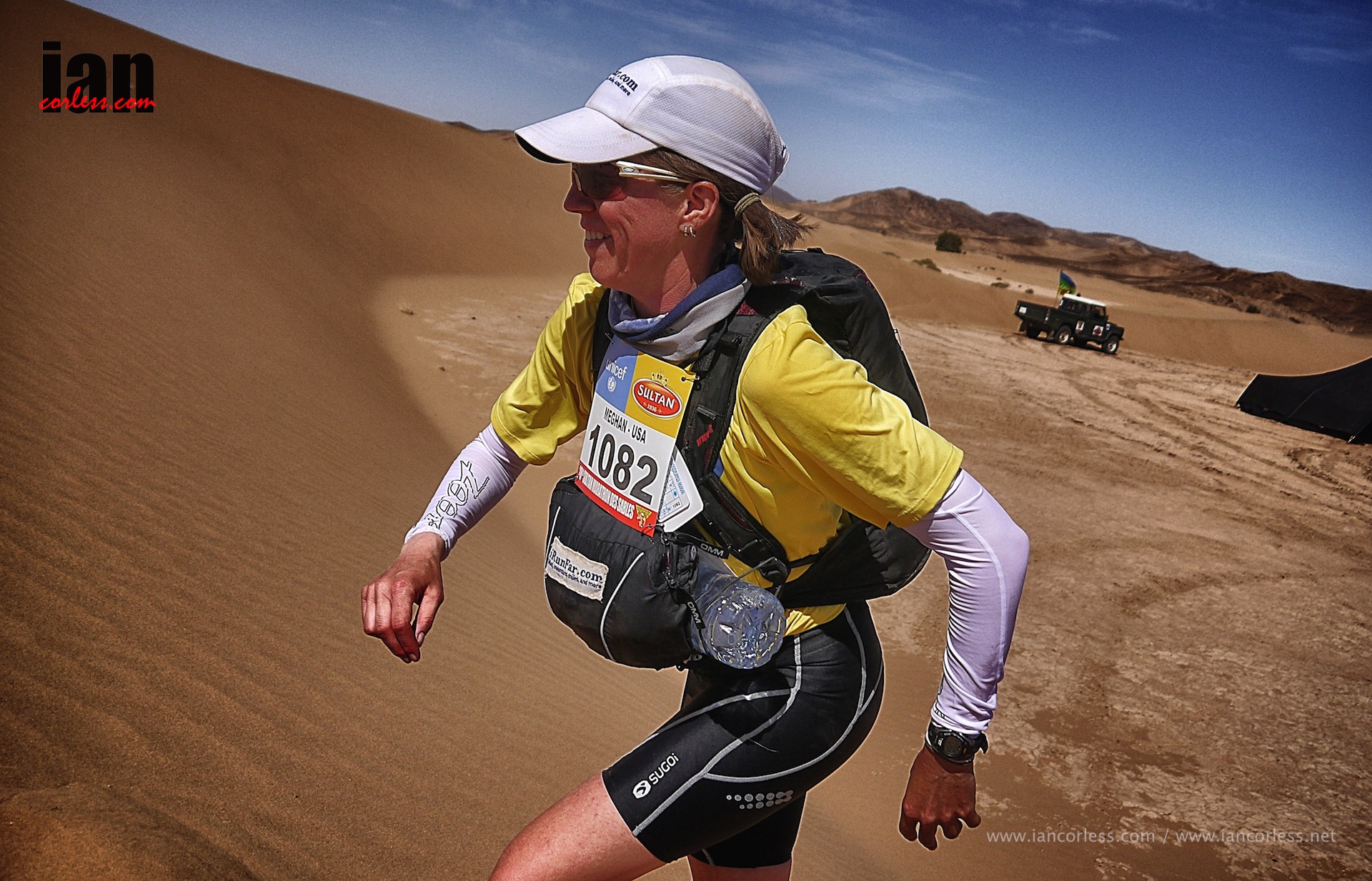
Meghan Hicks champion in 2013, missed 2014 through injury and will be setting her sights on a 2nd win.

Liza Howard is the holder of a number of 100-mile race records and American champion over 100km and 50 miles in 2011, should have what it takes to treat the United States to a third crown in a row after Nikki Kimball and Meghan Hicks.

Jolanda Linschooten gets a heads up from my friend Jeroen Krosse and he says, ‘one to watch’ for sure. So I agree, she is one to watch. Jolanda has been 2nd and 4th before!

Claire Morrisey is the British hope who returns after placing 7th in 2014.

INSPIRING STORIES:

Moroccan Lahcen Ahansal, ten-time winner of the
MDS between 1997 and 2007 is
making a comeback this year after six years
absence. “I wanted to hook back up with this race through
a goal that isn’t purely competitive, but also human”, admits
the athlete who has agreed to act as a guide to the partially
sighted German runner, Harald Lange. “After pulling off the
challenge of securing 10 victories, I now want to rack up 20
participations. And why not be around for the 40th and 50th
editions too?” It should be said that Lahcen has not forgotten
his encounter with this legendary race, which has transformed his life. “I looked on with curiosity and amazement as the 23 athletes took the start of the first edition in 1986. From then on, I constantly dreamt that I, a nomadic child, would participate in this race. It has spurred on my life and created in me such a strong desire for sporting and human emancipation that I moved mountains to make my dream a reality some seven years later. It’s thanks to this race that I’ve become the man I am today.” Also of note, is the fact that another blind runner will participate in this edition as Didier Benguigui is returning with his guide, Gilles Clain, to celebrate his 11th edition.

The “4 Dinosaurs MDS” team comprises two French runners, Christian Ginter and François Cresci, one Moroccan, Karim Mosta and one Italian, Paolo Zubani, none of whom wanted to miss the 30th anniversary of the SULTAN MARATHON DES SABLES. Between them, these four passionate runners already boast a total of 105 participations, which amounts to 27 out of 29 editions for the restaurant owner-chef Christian Ginter and 26 for the other three. “The idea of creating a team of veterans came about in the tent last year”, beams Karim Mosta, the cheerful leader of this group of friends, who wouldn’t miss this key stage

The famous British explorer, Sir Ranulph Fiennes, is embarking on a new adventure at 71 years of age. After earning the title of first man to reach the North and South Poles via land, the first person to traverse the Antarctic entirely on foot and the oldest Briton to climb Everest at 65 years of age, he now wants to become the oldest Briton to etch his name on the list of SULTAN MARATHON DES SABLES 2015’ medalists.

At 83 years of age, Joseph Le Louarn will be the most senior participant in this 30th edition. “I said that I’d stop in 2012, at 80, but with the energy drummed up by this anniversary, I couldn’t resist,” smiles the runner who has always loved ‘ambitious projects’. Indeed some three years ago he was quoted as saying “Card games and meals for retired people aren’t for me. I need to move; I need goals. I want to stay fit for as long as possible.”

A native of Luxembourg, Simone Kayser Diederich, 3-time champion of the MARATHON DES SABLES (2002, 2004 and 2005), will take the start of this 30th edition to celebrate her 60th birthday and her 14th participation. It’s a similar scenario for Moroccan Nadia Dadoun, 56, who will celebrate her 16th participation in this SULTAN MARATHON DES SABLES 2015, which is a record number of entries among the event’s female contingent.

 ©iancorless.com.IMG_4448MDS2014

CRAZY STATS:

  • 150 volunteers to supervise the race,
  • 450 general support staff,
  • 120,000 liters of bottled mineral water,
  • 300 Berber and Saharan tents,
  • 120 all-terrain vehicles and trucks,
  • 2 Squirrel helicopters and 1 Cessna plane,
  • 8 Transavia ‘MDS special’ commercial planes,
  • 30 buses,
  • 4 dromedaries,
  • 1 incinerator lorry for burning waste,
  • 5 quad bikes to monitor race environment and safety,
  • 72 medical staff,
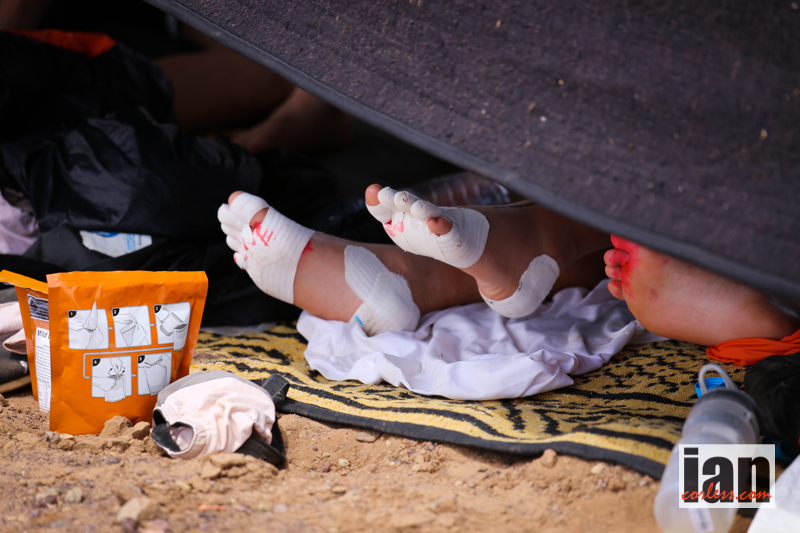
  • 2.3kms of Elastoplast,
  • 12,200 compresses,
  • 6,000 painkillers,
  • 150 liters of disinfectant,
  • 1 editing bus,
  • 5 cameras,
  • 1 satellite image station,
  • 10 satellite telephones,
  • 30 computers, fax and internet,
  • 18,000 competitors since 1986
  • 30% returning competitors, 70% international, 30% French, 
17% women, 45% veterans, 
30% in teams, 
10% walkers, 
90% alternate walking and running,
  • 14 km/hr.: average maximum speed, 3 km/hr.: average minimum speed,
  • 15 years of age for the youngest competitor and the oldest, 83!

©iancorless.com.IMG_9865MDS2014

QUOTES

  • “The MARATHON DES SABLES is the United Nations. The runners come from all over the world, share the same emotions and help one another. All the boundaries are erased. We should take inspiration from it.” – Kirk McCall (United States)
  • “This event isn’t just a sporting activity. It’s a mental and philosophical process. In the desert, nature puts us back in our place at the heart of this environment. The MARATHON DES SABLES opens up new perspectives to us. People often think we’re crazy, but maybe they’re the crazy ones!” – Fernando Jose Castro Cabral (Brazil)
  • “The MARATHON DES SABLES represents Mecca. I come here for an annual pilgrimage. It purifies me.” – Amine Kabbaj (Morocco)
  • “Running in the desert purges me and enables me to empty my mind. I want to discover the desert by experiencing it from the inside. Each day, I recite a poem along the course. To think about poetry whilst running is a fantastic mental luxury. To run and be elsewhere through your thoughts… The sobriety of the desert is a source of inspiration.” – Duc Le Quang (Vietnam)
  • “In the MARATHON DES SABLES, you learn to rediscover and appreciate the simple pleasures. On top of that there is this solidarity between the runners. You run and you come across someone from Colombia, Portugal or China. You don’t know them but you share a moment with them. These encounters are worth all the money in the world.” – Nicolas Esterhazy (Belgium)

©iancorless.com.IMG_4110MDS2014

Twenty-Nine years of victories.

Here is a who’s who of those 29-years.

1986 – Michel GALLIEZ (FRANCE) – Christiane PLUMERE (FRANCE)

1987 – Bernard GAUDIN (FRANCE) – Marie-Ange MALCUIT (FRANCE)

1988 – Bernard GAUDIN (FRANCE) – Marie-Ange MALCUIT (FRANCE)

1989 – Hassan SEBTAOUI (FRANCE) – Marie-Claude BATTISTELLI (FRANCE)

1990 – Hassan SEBTAOUI (FRANCE) – Claire GARNIER (FRANCE)

1991 – Hassan SEBTAOUI (FRANCE) – Monique FRUSSOTE (FRANCE)

1992 – Mohamed BENSALAH (MOROCCO) – Monique FRUSSOTE (FRANCE)

1993 – Mohamed BENSALAH (MOROCCO) – Irina PETROVNA (RUSSIA)

1994 – André DERKSEN (RUSSIA) – Valentina LIAKHOVA (RUSSIA)

1995 – André DERKSEN (RUSSIA) – Béatrice REYMANN (FRANCE)

1996 – André DERKSEN (RUSSIA) – Anke MOLKENTHIN (GERMANY)

1997 – Lahcen AHANSAL (MOROCCO) – Rosanna PELLIZZARI (ITALY)

1998 – Mohamad AHANSAL (MOROCCO) – Rosanna PELLIZZARI (ITALY)

1999 – Lahcen AHANSAL (MOROCCO) – Lisa SMITH (USA)

2000 – Lahcen AHANSAL (MOROCCO) – Pascale MARTIN (FRANCE)

2001 – Lahcen AHANSAL (MOROCCO) – Franca FIACCONI (ITALY)

2002 – Lahcen AHANSAL (MOROCCO) – Simone KAYSER (LUXEMBOURG)

2003 – Lahcen AHANSAL (MOROCCO) – Magali JUVENAL (FRANCE)

2004 – Lahcen AHANSAL (MOROCCO) – Simone KAYSER (LUXEMBOURG)

2005 – Lahcen AHANSAL (MOROCCO) – Simone KAYSER (LUX)

2006 – Lahcen AHANSAL (MOROCCO) – Géraldine COURDESSE (FRANCE)

2007 – Lahcen AHANSAL (MOROCCO) – Laurence KLEIN (FRANCE)

2008 – Mohamad AHANSAL (MOROCCO) – Touda DIDI (MOROCCO)

2009 – Mohamad AHANSAL (MOROCCO) – Touda DIDI (MOROCCO)

2010 – Mohamad AHANSAL (MOROCCO) – Monica AGUILERA (SPAIN)

2011 – Rachid EL MORABITY (MOROCCO) – Laurence KLEIN (FRANCE)

2012 – Salameh AL AQRA (JORDAN) – Laurence KLEIN (FRANCE)

2013 – Mohamad AHANSAL (MOROCCO) – Meghan HICKS (USA)

2014 – Rachid ELMORABITY (MOROCCO) – Nikki KIMBALL (USA)


RACE SCHEDULE 2015


  • 3 April 2015 – Leave country of residence/Morocco – Arrival in Ouarzazate, bus transfer to 1st bivouac
  • 4 April 2015 – Administrative, technical and medical checks – Day to acclimatize 
  • From 5 to 10 April 2015 – Race in progress (The self-sufficiency begins from breakfast on the 1st leg)
  • 11 April 2015 – Solidarity UNICEF leg – (end of dietary self-sufficiency) – Transfer to Ouarzazate
  • 12 April 2015  – Day of relaxation
  • 13 April 2015 – Return to country of residence

©iancorless.com.IMG_3309MDS2014

Marathon des Sables – A history in brief

 ©iancorless.com.IMG_0882MDS2014

1984: At 28 years of age, Patrick Bauer decided to make for the Sahara to try to traverse a 350km expanse of uninhabited desert, on foot, alone, where he wouldn’t come into contact with a single village, oasis or watering place. Totally self-sufficient, with a rucksack weighing 35kg and containing water and food, he set off on a journey that was to last 12 days. It was the starting point of what was to become the MARATHON DES SABLES.

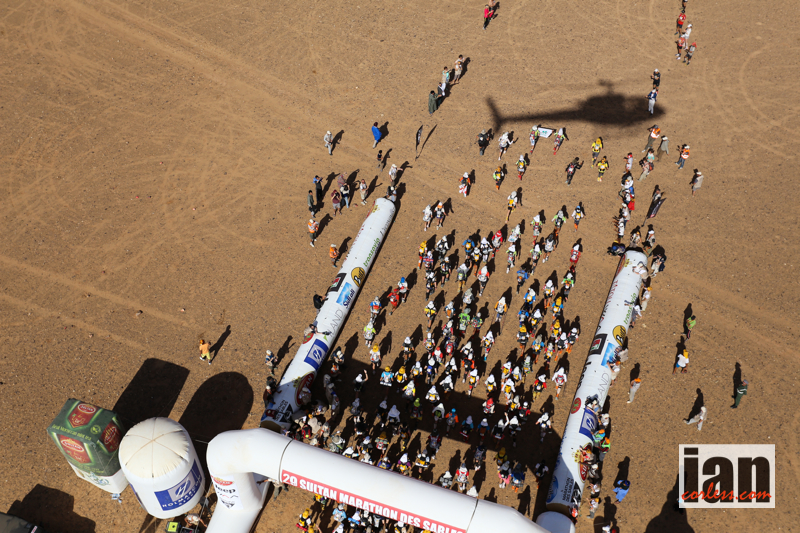
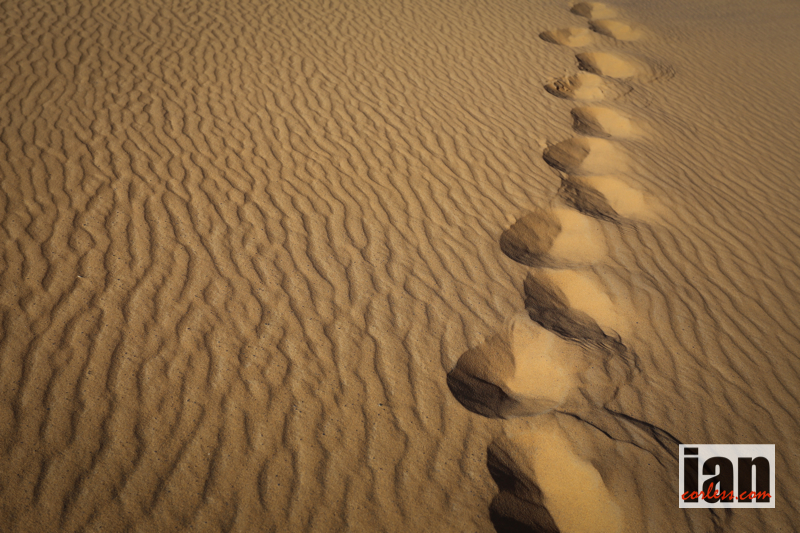
1986: The creation of the first MDS in the Moroccan Sahara. The 23 pioneers who took the start never imagined that their footprints would mark the start of a legendary event, which has today become a must among the major adventure sport meets. The creation of a non-mechanical competition in the Moroccan sands offers adventure runners a wealth of new prospects.

©iancorless.com.IMG_6123MDS2014

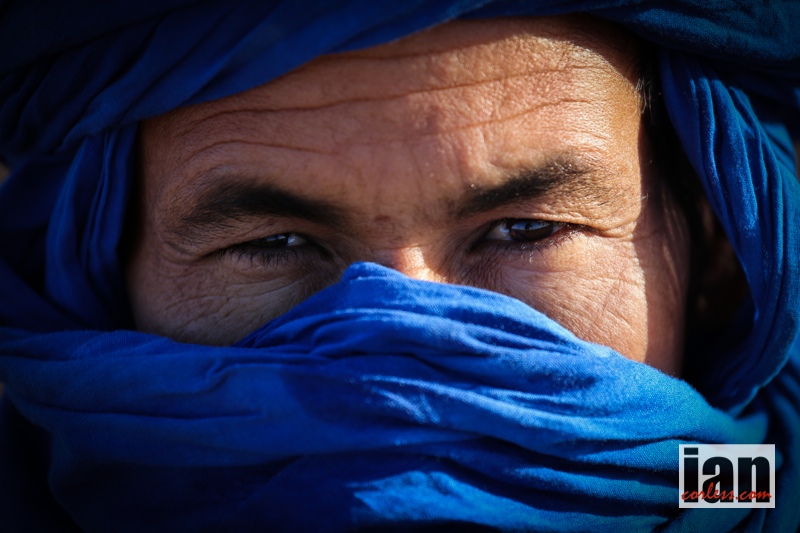
1987: Creation of the MDS logo: the face of a runner covered by a keffiyeh, the eyes protected by a pair of sunglasses and the pipette from the runner’s water container clenched between the teeth.

1989: 170 competitors take the start of the race.

1991: The gulf drama puts the MDS at a disadvantage and the financial partners withdraw. Fortunately some runners answer the call. For these competitors, the true victory lies in meeting athletes from different backgrounds and their communion in the desert around the same goal. Sport proves once again that it can bring people together and create bonds.

©iancorless.com.IMG_6041MDS2014

1992: One and the same regulation for everyone. This year sees the establishing of unexpected draconian tests, to ensure that each participant properly transports all his or her gear from one end of the course to the other. A 30-point charter is drawn up.

First participation by the Moroccan Lahcen Ahansal

1994: Arrival of the Doc Trotters at the event.

©iancorless.com.IMG_1738MDS2014

1995: 10th anniversary. Since the start, over 1,500 men and women have left their footprint and their passion in the desert. Installation of water-pump for the inhabitants of the village of Ighef n’rifi (South of Er-Rachidia) – an idea by competitor Gilles Flamant and backed by Rolland Barthes and Patrick Bauer. Its success is to be repeated again and again

1996: First participation by Mohamed, a younger sibling of Ahansal. The two Moroccan brothers set off together and rank 4th and 5th respectively.

1997: This year heralds the start of the Ahansal saga. Morocco is honored with Lahcen’s first victory. He beats his two pursuers by nearly 30 minutes, despite them being international long-distance running champions.

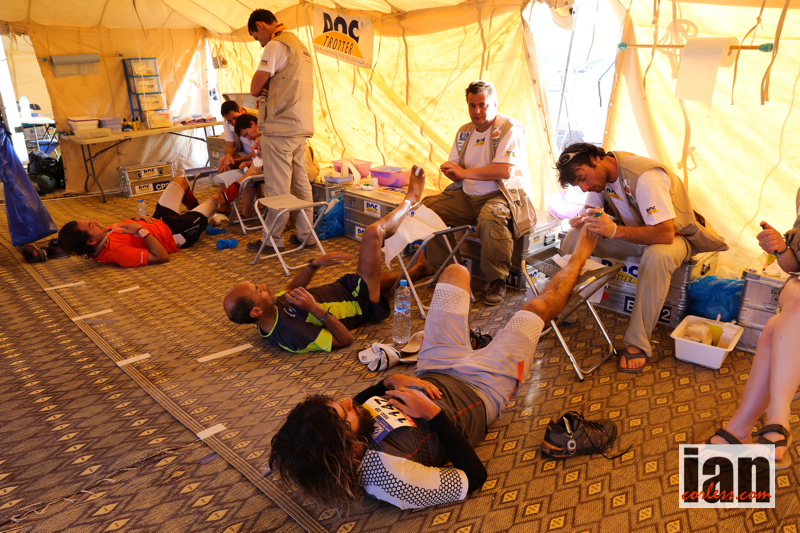
1999: A mobile hospital on the MDS comes into being. There are around thirty practitioners on the ground, with doctors and nurses joining the caravan. A dedicated helicopter and ten all-terrain vehicles track the competitors each day. On- board these vehicles there are doctors of course, as well as high-tech equipment. The village boasts a genuine field hospital.

©iancorless.com.IMG_0977MDS2014

2000: Internet puts in an appearance in the large MDS village. The organization decides to broadcast the texts and photos of the race live, day after day. The competitors can communicate with their nearest and dearest and receive messages of encouragement.

2001: For the first time the long leg, traditionally called “The 70”, exceeds the 80km barrier to reach 82km. The threshold of 240km is also surpassed since the 16th MARATHON DES SABLES spans 243km. Another first relates to the fact that there are no Moroccans on the podium this year.

2002: This edition is punctuated by a sandstorm, involving headwinds, which lasts the entire week. The doctors invent a machine for ‘low pressure cleansing’ to rinse out the runners’ eyes. Despite the difficult conditions, there are few retirements to report as the wind considerably reduces the temperature.

2005: The Luxembourg runner Simone Kayser is the first woman to win 3 MARATHON DES SABLES. For this 20th edition, the total number of runners exceeds 700 for the first time, with no fewer than 777 runners taking the start.

©iancorless.com.IMG_1007MDS2014

2006: A drying wind and very high humidity levels cause damage to the runners’ bodies. Despite additional allocations of water, a whole series of retirements ensues. There are a total of 146 retirements ultimately, which equates to double that of the previous record… Race management decides to shorten the long leg by over 10km given how tired the runners seem.

2008: The Solidarité MDS association is created. The aim: to develop projects to assist children and disadvantaged populations in the domains of health, education and sustainable development in Morocco. 

2009: MDS is disrupted by flooding and the 1st and 6th stages are not able to take place. To avoid the flood zones, the organization is obliged to improvise new legs on a day-to-day basis. In this way, the edition goes down in legend for its 3rd leg, which is the longest ever contested: 92km of sand, loose stones and rocks… The leg even sees the retirement of Lahcen Ahansal… At the prize giving the 2 winners admit to having competed in their hardest MDS. However, it was also the shortest: 202km.

©iancorless.com.IMG_0884MDS2014

2010: For its 25th edition, the number of participations reaches a record high of 1,013 participants. It is to be the longest MARATHON DES SABLES. It spans 250 kilometers with a course considered by former entrants to be the most difficult ever organized.

2012: A dramatic turn of events on the longest leg as the then leader in the overall standing, Rachid El Morabity (MAR) injures himself one kilometer from the finish. Medical examinations reveal a serious muscular lesion in the quadriceps. After over five years on the 2nd or 3rd step of the podium, Jordanian Salameh Al Aqra secures the title.

2013: 1,027 competitors on the start line make this a new participation record. New feature: a final “Charity” stage sponsored by UNICEF and traversing the Merzouga dunes round off the race. Sportswise, Mohamad Ahansal and Megan Hicks are the champions of the 231.5km event. On a human level, all of the finishers pull off their crazy bet.

©iancorless.com.IMG_6561MDS2014

2014: 2011 winner, Moroccan Rachid El Morabity (MAR) wins the overall ranking and takes Mohamad Ahansal’s crown. In the women’s category, another American stamps her mark, Nikki Kimball. The French revelation is one Michaël Gras, 22 years of age, 8th overall and top Frenchman. A major athletics star, Moroccan Hicham El Guerrouj lines up to take the start of Saturday’s Unicef Charity leg.

Content and information provided by ©marathondessables

FOLLOW THE 2015, 30th EDITION on this WEBSITE in words and images.

©iancorless.com.IMG_4947MDS2014

Who is Karl Egloff? – Part one

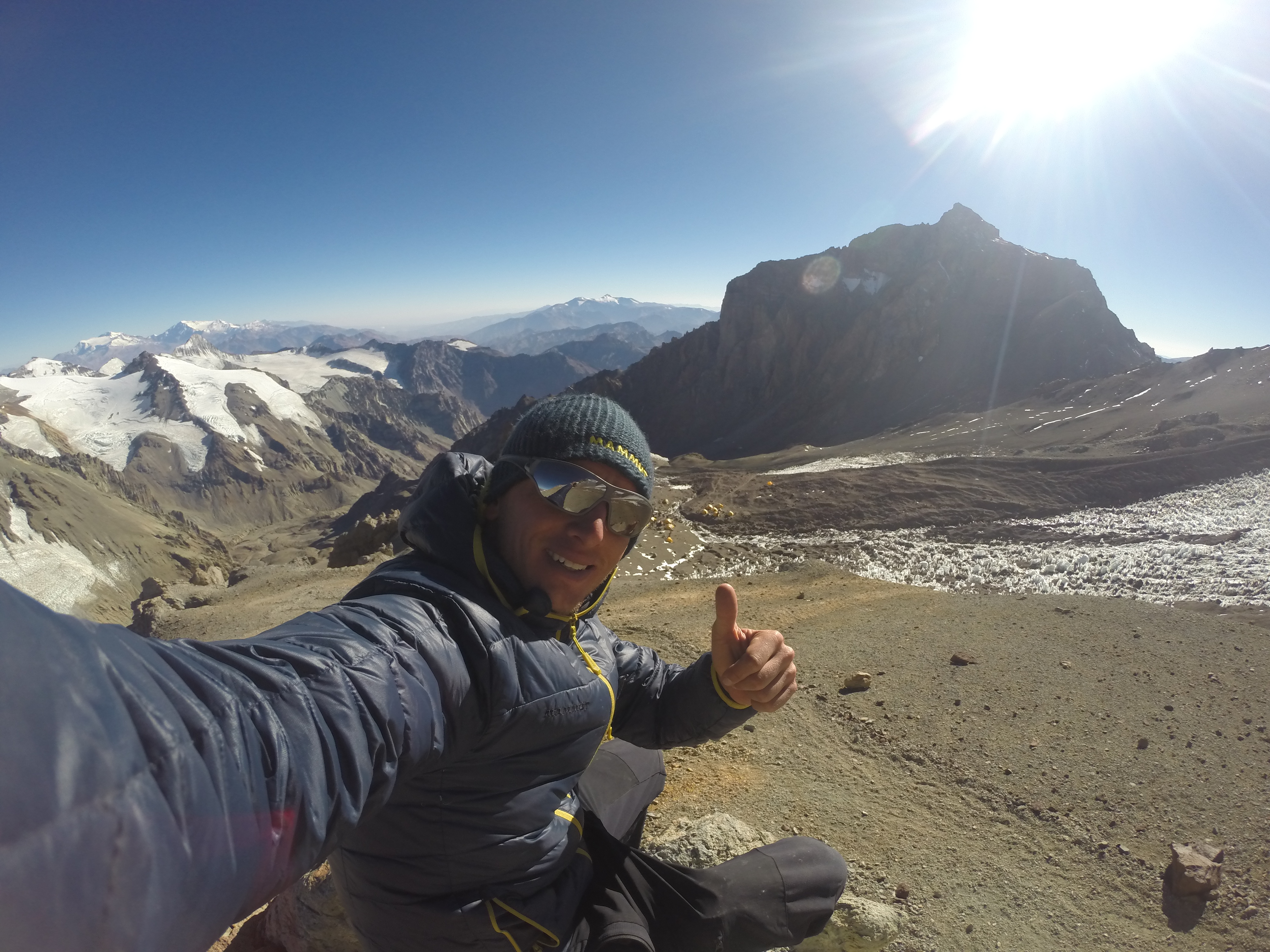
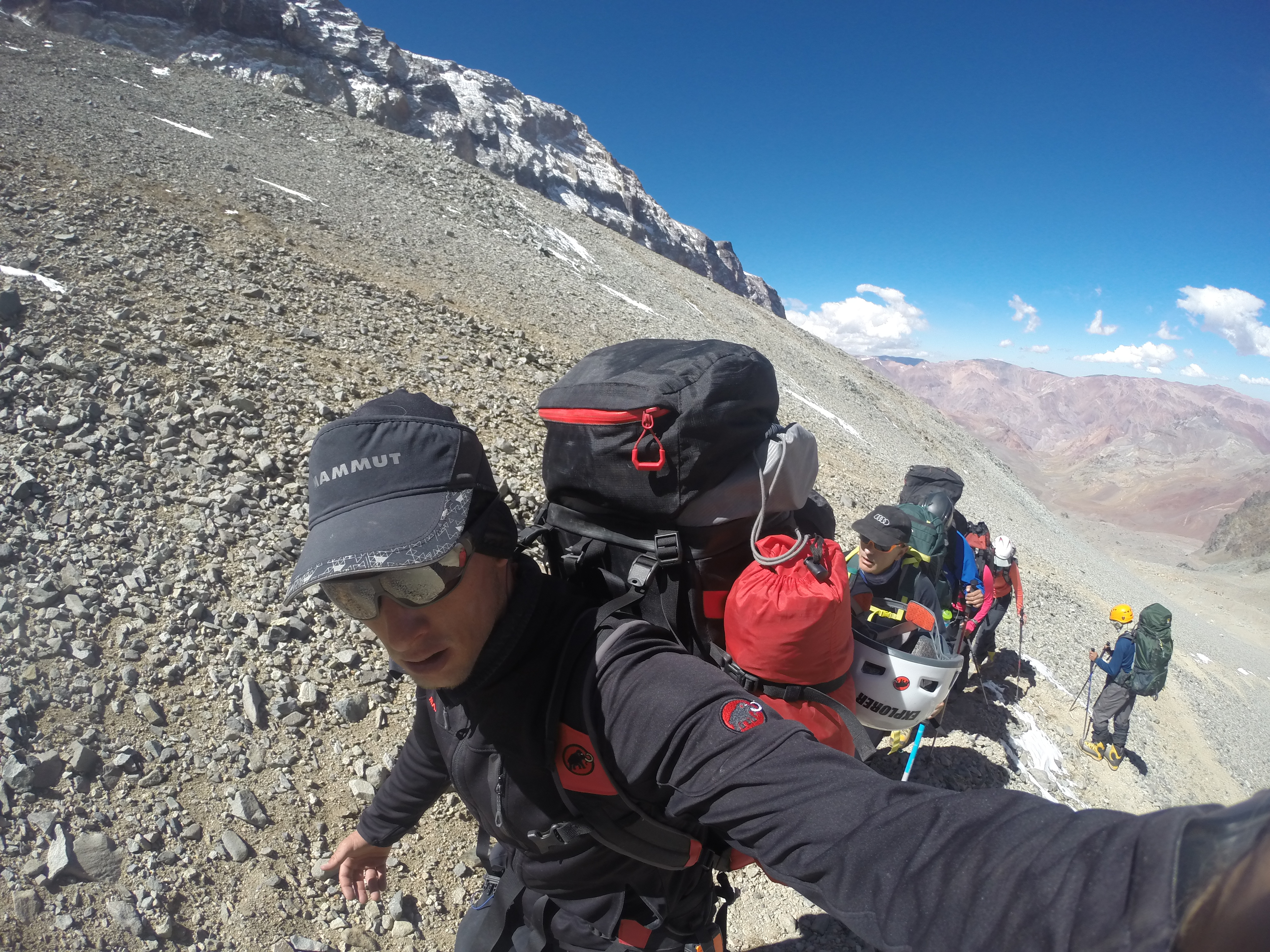
CAF_3060Many of you will be familiar with the mountain Aconcagua, primarily because of Kilian Jornet and his recent record set in December. Well recently Karl Egloff, 33 from Ecuador has broke Kilian Jornet’s record with a time of 11:52 (57-minutes quicker than Kilian) I like many others wondered, who is Karl Egloff?

READ HERE

I caught up with Karl just days after his impressive record on Aconcagua. I discussed in-depth his background, home life, sporting background and how he may now be considered a speed-climbing phenomenon.

This week we bring you part one of this two-part interview

*****

KE: I’m so happy I just came back a couple of days ago from Argentina, I feel good and I’m happy, there are a lot of things going around right now and I’m happy to talk to you guys.

IC: It’s great to have you here and I really do appreciate you finding the time to talk to us. Before we talk to you about Aconcagua, a lot of people all around the world are saying who is Karl? Who is he? What his background? I said that you are 33 and you were born in Ecuador. Your father was a mounting guide if I’m correct?

KE: Yes he is and yes, I’m 33. I was born here in Quito, its very high here actually 2000+ metres. My mother was half Ecuadorian half Swiss, she met my father during studies and they made the decision to move to Ecuador and make their lives here, we three kids where all born here. My father is a mountain guide and he took me to the mountains at a very early age. He even took me as a baby in a large backpack.

I went up to the huts of our big mountains here in Ecuador and if he was climbing with a client up to around 1000 metres, I would go too… I got a in the mountains pretty young and as soon as I could talk I would just discuss mountains about mountaineering. My mother was not very happy about that, she was always telling me not to choose the mountain guide career; she was a little bit worried about it. She said it’s very difficult to be at home and to have a family, its difficult because it has the seasons. She was always telling me about other professions, but it’s kind of impossible being a son of a mountain guide. I had homework about beautiful mountains all over the world and I was always asking so much he used to say please Karl stop asking me.

DCIM999GOPRO

When I was 15 I got the chance for the first time to climb with him the first glacier here in Ecuador. My father told me, “when you are 15 I will take you because you are at an age where you can realise what you’re doing.” Finally when I did it I was standing up on the summit and he said,

“Son, you have really a lot of energy so I think you should help me with guiding from now on.”

I guess that when things really started for me, I was guiding with him almost every weekend up to 6000 ft.

Unfortunately my mother died when I was 17, so us three kids decided to go study, I went to Switzerland. I was living in Zurich for around 8-years and during my studies I went up to the mountains every time I could; to snowboard, to go jogging and to go trekking.

I finally returned to Ecuador at 26-years old, I actually tried to be a professional football player because here in Ecuador you grow up with football, it’s much more of ‘the’ sport it’s like in the UK. Football is a religion. .

IC: Before you tell me about your football, let’s go back a little bit and talk about your father being a mountain guide and the way that you were brought up, your story is so similar to Kilian Jornet. His father worked in the mountains, his father and his family lived at a refuge, and really from babies they were just born and bred on the mountains, and of course it’s that lifestyle, that permanent lifestyle that adapts you to be maybe an athlete that not only performs exceptionally well in many sports but particular high altitude sports.

KE: I read Kilian’s book and when I was reading it, it seemed like I was reading my story and especially regarding the altitude he was at, I was living at the 2400 metres and we used to go up with my father into the mountains and down into the valley, While reading I found a similarity when Kilian said he used to go out at night without the lights and sit with the nature. I did those things with my father too. I was with nature a great deal. I was always following the paths of different animals and I constantly asked many questions to my father.

When I got bored and the clients were tired I would go to my father at night and ask, “Why isn’t the sun up already/” I was impatient but he told me,

“It’s dangerous on the mountains and you can die up there.”

I would say no, no everything is ok…

When I got older my father used to give me some slack. I could go up to the summit or climb the path for the next days trek. I had already climbed the mountains. My father would just followed me with binoculars and show me whether to go, to the left or right with his hands. So yes pretty similar as Kilian.

IC: Yeah very similar. And of course Kilian a little bit like yourself didn’t start out as a trail runner or an alpinist, he started out in ski mountaineering and skiing and you were just telling us that football was a passion for you.

KE: Yes, definitely. Football is like a religion in Ecuador, you do nothing else but soccer at school, everyone is asking for the teams. No other sport exists. So actually for me the way I feel free is to do sports; it’s like a drug That is why I used to do my homework quickly so in the afternoon I had enough time to organise another soccer game or another competition at home and so yes definitely football for me became everything. When my mother asked me what I want to do when I leave school I said, ‘I want to be a professional football player,’ and she said forget it, sports won’t get you anywhere.

My coaches said have the energy and the talent, but my mother being from South America was very conservative. Before she died she said I don’t care what you do just don’t become a mountain guide or a sportsman, now here I am, 10-years later and I am both. I tried really hard to please my mother, so I started academics. I started in Switzerland, I tried to work in other places too but I was never happy, this is the most important thing; you must follow your happiness! When I returned back to Ecuador I really had to have a year off before starting a new business and starting my new tourism agency and in those days I started to go biking.

I used my bike to go to and from the gym. There is a very funny story where a guy said to me, ‘I heard you have a lot of energy Karl, would you like to join me as a bike partner in the most important mountain bike race in Ecuador?’ I said, yes but I didn’t have any experience in competing on the bike, I lacked the technique. He just said, ‘Don’t worry come with us.’

So eventually I went with him to the mountain bike race and when I waited on the start I asked him about all the cyclists who looked so professional? His reply was so funny, ‘Professionals? Yes, this is the most important race here in Ecuador and all the international professional mountain bike racers are here.’

I was too eager but I had a great race. After a sponsor came and said, ‘Karl we want to sponsor you.’ It was great news, it was my first race and I felt under qualified but they told me not to worry and come to the office on Monday!

IC: Wow perfect, that’s nice!

KE: Yeah it was, I was 26 and I said ok, So I started to train and train and train and after 2 years I started to travel with the national team to different competitions and to championships and then finally I qualified for the world cup in 2011 in Italy as the first Columbian mountain biker. A year later I qualified for the next world cup in France and then I got invited to the professional team. I started actually to be a good biker…

IC: So it was a really exciting time to just test yourself in sport but while this was going on while you were involved in mountain biking were you still mountain guiding?

DCIM999GOPRO

KE: I was yes, exactly. I started in 2007 at my first agency and then 5-years later I started my own company. Biking was also a big part of my life, I was really happy with biking but there is a point where it costs a lot of money, you have to go for International championships and you need to live somewhere else. So we had a family decision, we sat down and discussed my options. I was 31-years old, which is relatively old in mountain biking, so I decided to quit!

IC: It’s interesting that you say at the age of 31 there’s no future for you in biking, you were obviously very good at it and carried over fitness and strength from trekking and as a tour leader. 31 is quite young to think that there’s no possible future. Do you think back now with your running success and think you made the wrong decision?

KE: Yes of course, I think the main point here is that we live in a very conservative country were sports is not a future, you don’t grow up here with your parents saying yeah go play tennis… become professional and so on. I was criticised by my family, they said sports would not get me anywhere. I had an opportunity to work for a Swiss mountain guide company and they gave me the chance to work as a mountain guide in Kilimanjaro and a few other places. It was a great opportunity, I was getting a salary but they wanted me to focus on the job so I could manage all business here in Ecuador.

IC: So it was a career decision, a business decision and family ties to the mountain. I guess it didn’t really feel like you were giving up sport but just changing disciplines.

KE: Exactly, I was always jogging I was always training but I never competed as I never saw it as a competition. Nobody thought about running here before but now it’s the second biggest sport after football. In 2012 I quit the biking and focused on the job and in 2013 really focused on guiding and a lot of doors opened for me. I was in Nepal and other countries and I was earning for the first time in my life. For me it was like, oh finally I have money I can get a car and grow up with the company; this is why I slowed down but I never stopped completely.

IC: Cool so let me come to Kilimanjaro. That is when I first became aware of your name and funnily even though you broke kilian’s record on Kilimanjaro it still didn’t really get much recognition. It was reported in several places but it didn’t get worldwide exposure, it was a bit under the radar. But I can see now knowing your history why you would make an attempt on Kilimanjaro. With your background is the seven summits now on your mind?

KE: Exactly it all started in 2012. My friend Nicolas who is now part of my team asked me to’ rabbit’ him up to a summit; actually one of the highest mountains we have here in Ecuador. It is almost the same altitude as Kilimanjaro. We were stood in the car park and he said to me, let’s go for the record! It’s funny, I had never run on the mountain and he said that’s why I have brought you here to help me on the mountain and make you faster. I wondered if I was fast enough or if I was any good? When I reached the summit I realised I had broke the record by 25-minutes. On the way down I met Nicola and I said I was sorry for leaving him behind but he just laughed and said, ‘Don’t worry, this was the only way I could get you to realise how good you are at this.’

I continued down and broke the world record and it became big news here in Ecuador. A lot of people criticised as they said the mountain was dangerous and that people can die on the mountain. But I am a mountain guide so I know how dangerous it is.

DCIM999GOPRO

*****

Tune in next week for part two.

How does Karl prove and verify his records?

Read about Karl’s Kilimanjaro record and read how he managed to knock 57-minutes off Kilian Jornet’s Aconcagua record.

all images provided by Karl Egloff ©

You can ‘HEAR’ the full interview on episode 82 of TALK ULTRA published on iTunes March 6th. The show is available for free – please subscribe!

SCOTT KINABALU SUPERTRAC – First Impressions

©iancorless.com_ScottSupertrac-5082

Spring is here and new run shoes are a plenty. Christmas takes place in December but I have to say, if you are a runner, February is stepping up to be a great month for a few surprise presents. Recently I have had new shoes from The North Face (Ultra MT, Cardiac and TR2, the Salomon S-Lab Sense 4 is due to arrive any day and several weeks back I looked at the Scott Trail Rocket and mentioned the Kinabalu.

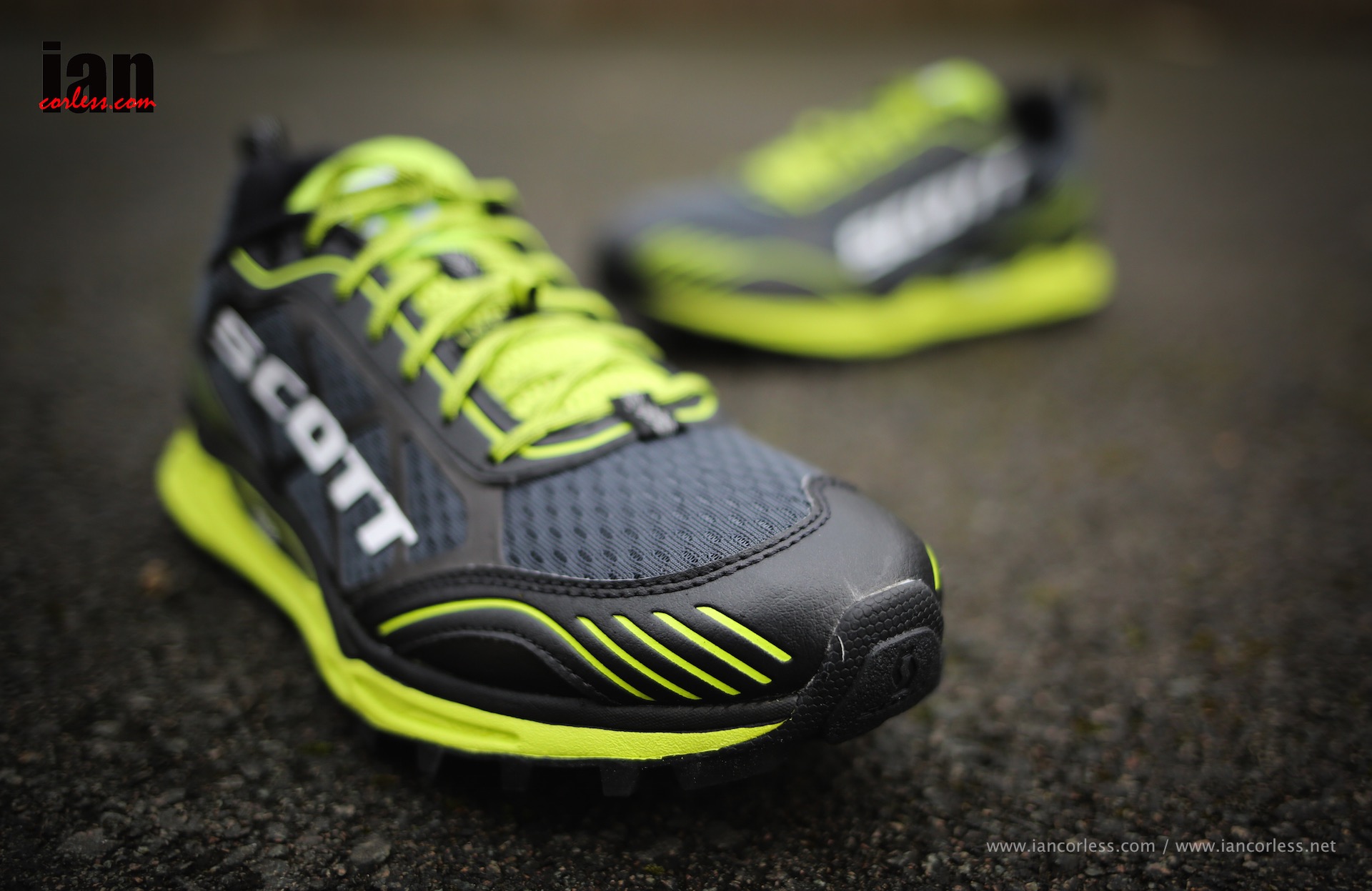
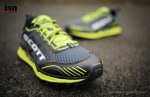
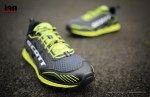
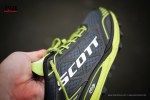
Today we are taking a look at a new shoe from SCOTT, the KINABALU SUPERTRAC.

This is a shoe I asked Scott to make some 12-18 months ago! Having used and loved the Kinabalu (Here) I pleaded with them to come up with an 8mm drop shoe with a more aggressive sole. They have only gone and done it!

©iancorless.com_ScottSupertrac-5043

This shoe is a winner!

Looking at current shoe trends, Scott like The North Face, Salomon and other key brands have realised that a lower drop is the way forward. For many companies, 8mm provides that sweet middle ground. New Balance, TNF and now Scott have confirmed this while Salomon pave a way with 4mm and 6mm drop shoes.

As mentioned previously, if you are after a fast trail shoe (for dry conditions) and with a lower drop (5mm), you can’t go far wrong with the Scott Trail Rocket. But if you are after a shoe that can handle mud and a multitude of different conditions then the 8mm drop, Kinabalu Supertrac may be for you!

©iancorless.com_ScottSupertrac-5053

Carrying over many of the characteristics of the Kinabalu, the Kinabalu Supertrac in summary :

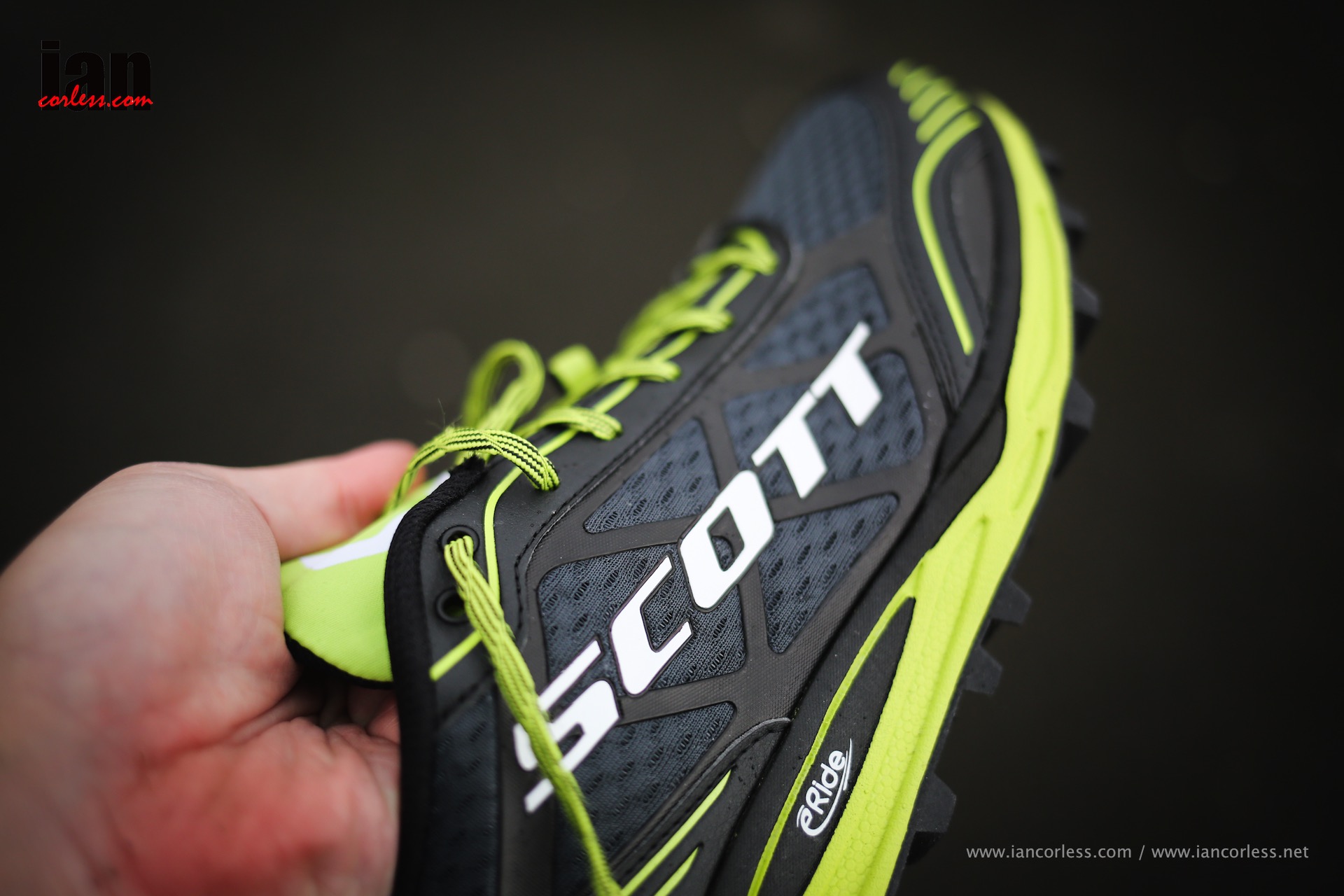
Fits like a glove, laces up nice and tight, hugs the heel without rubbing, the toe box provides a secure hold of your foot with a precise feel and grip is AGGRESSIVE!

©iancorless.com_ScottSupertrac-5061

In Detail

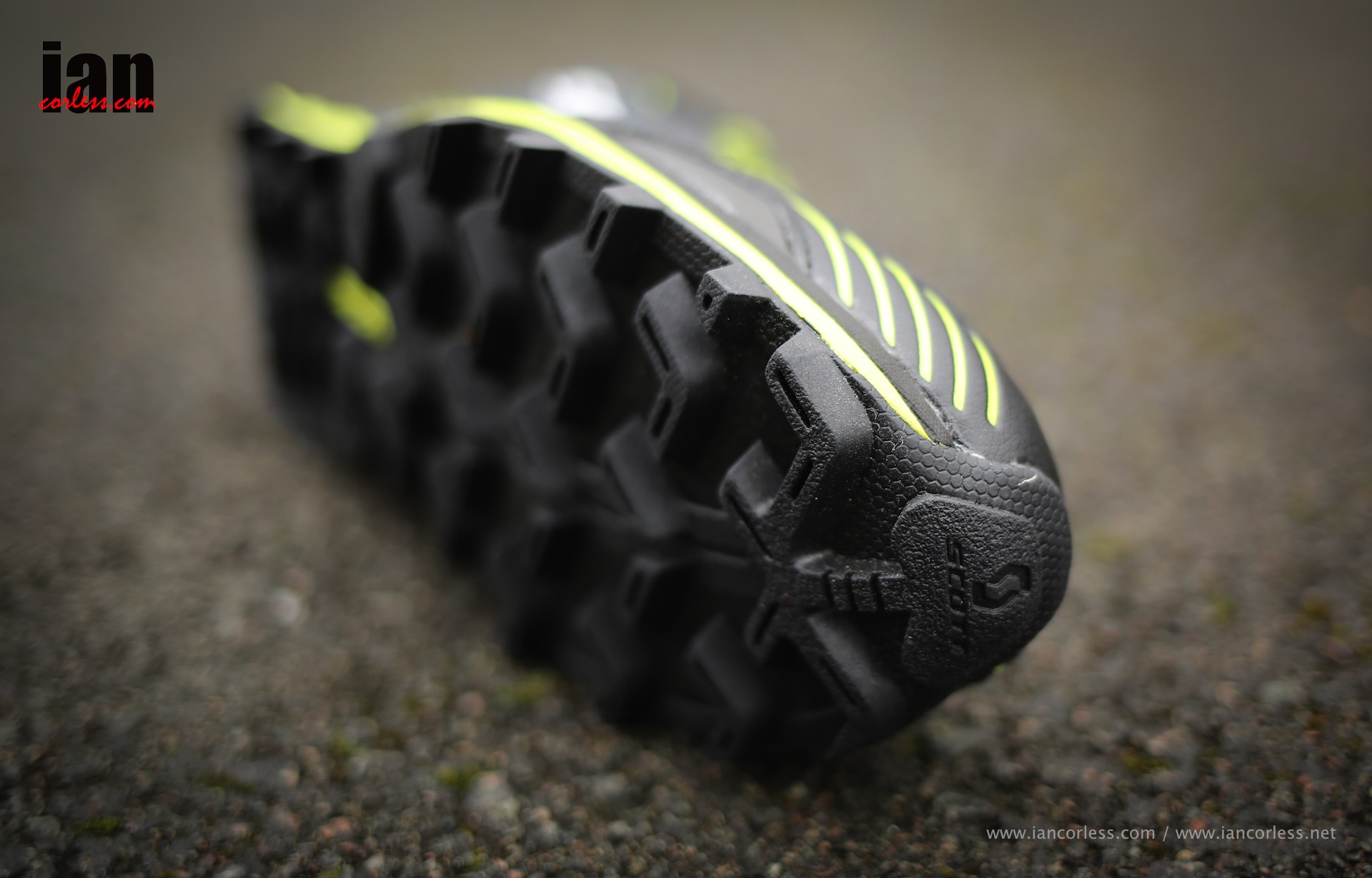
The Kinabalu Supertrac introduces a new level of technical shoe and a completely new concept of superior grip. The shoes are designed to match the needs of trail and mountain runners in the most extreme conditions : mud, snow, rock and mountain! Delivering great traction on soft and rough surfaces and all within a shoe that provides great comfort, cushioning and with an 8mm drop.

It comes as no surprise to me really. As I said previously, I loved the Kinabalu. I just wanted more grip and lower drop. Scott have that now provided me with that, so this can only mean one thing: happy runner!

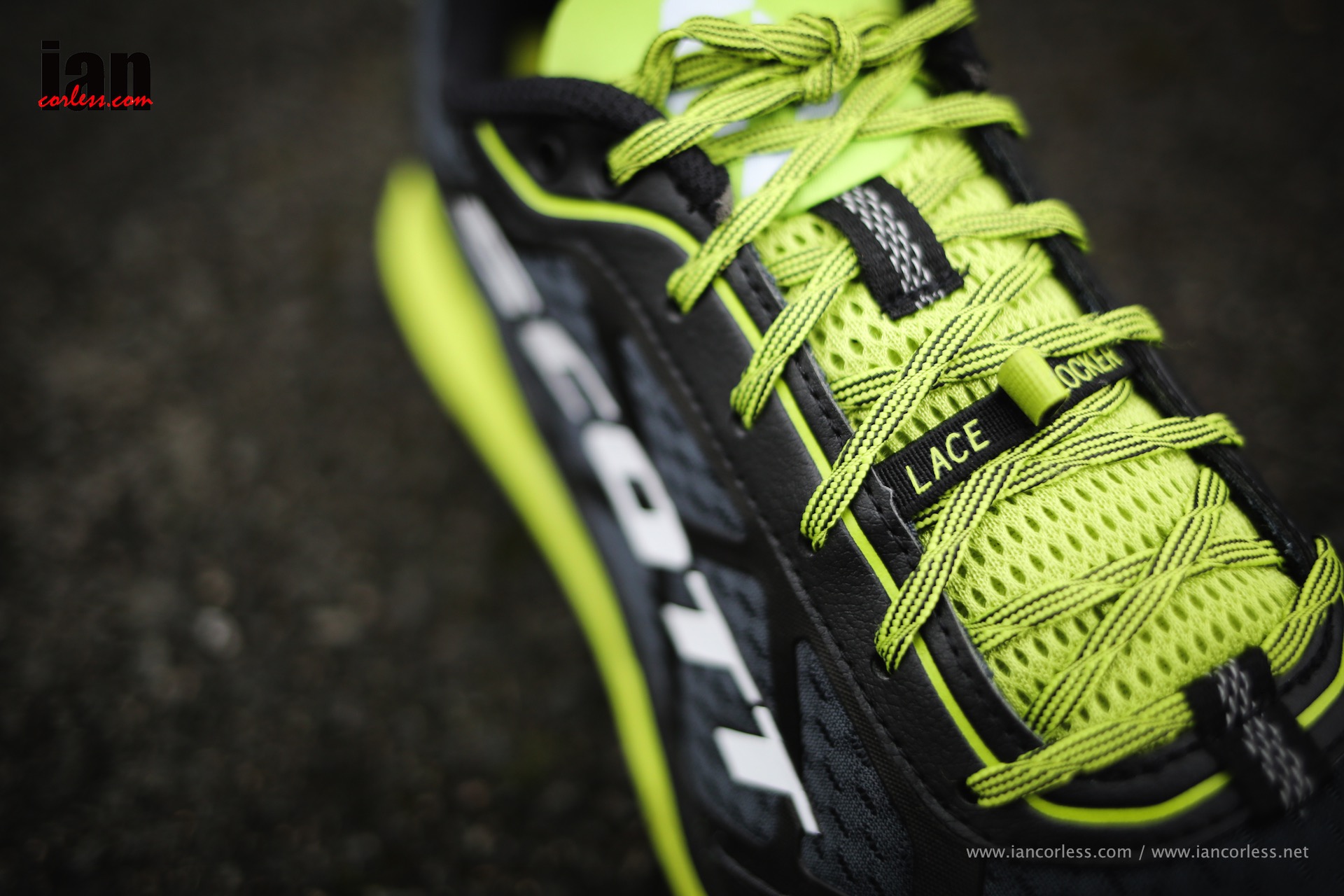
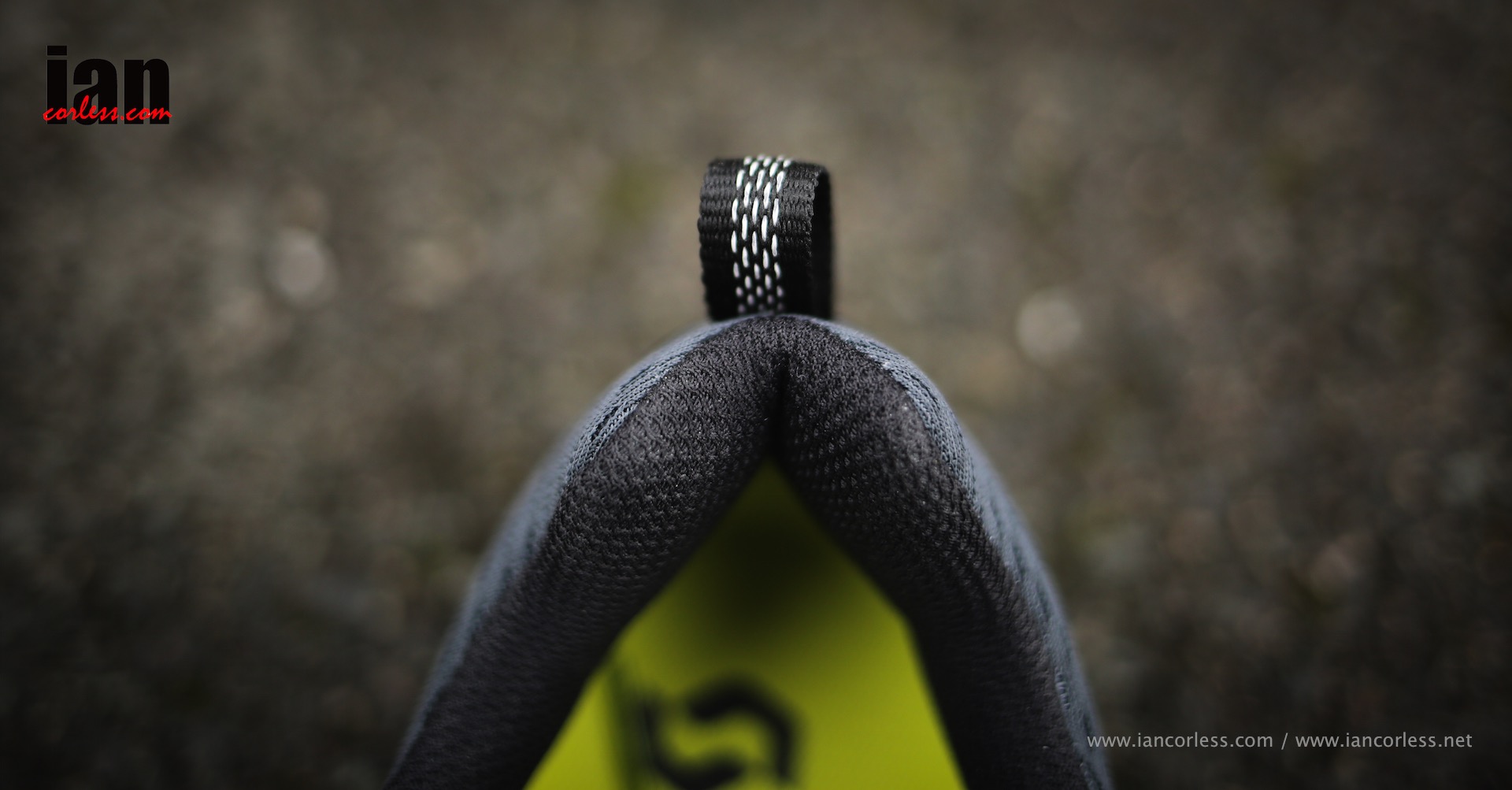
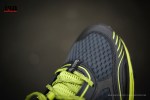
If you are familiar with the Kinabalu, this ‘Supertrac‘ version will feel familiar. The tongue is padded, extremely comfortable and the laces are thin and textured. Importantly, the laces stay tight when tied. Scott’s ‘Lace Locker‘ is present and this provides a no nonsense simple solution to store loose laces.

©iancorless.com_ScottSupertrac-5070

The shoes are neutral fitting and cushioned using AeroFoam+ which provides additional cushioning, increased durability and great rebound. The upper is breathable mesh with synthetic overlays and the lower part of the shoe is constructed from EVA and rubber.

©iancorless.com_ScottSupertrac-5088

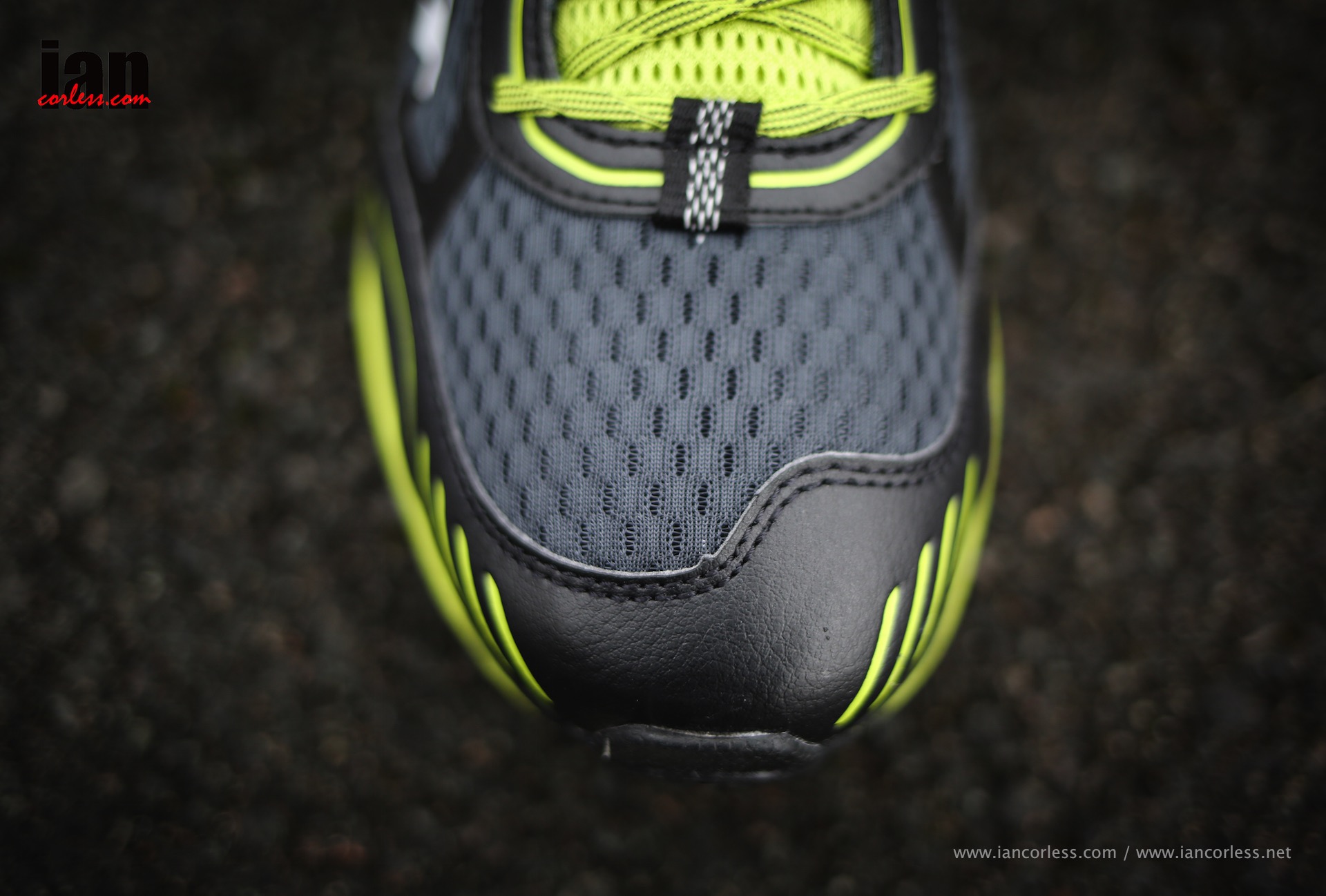
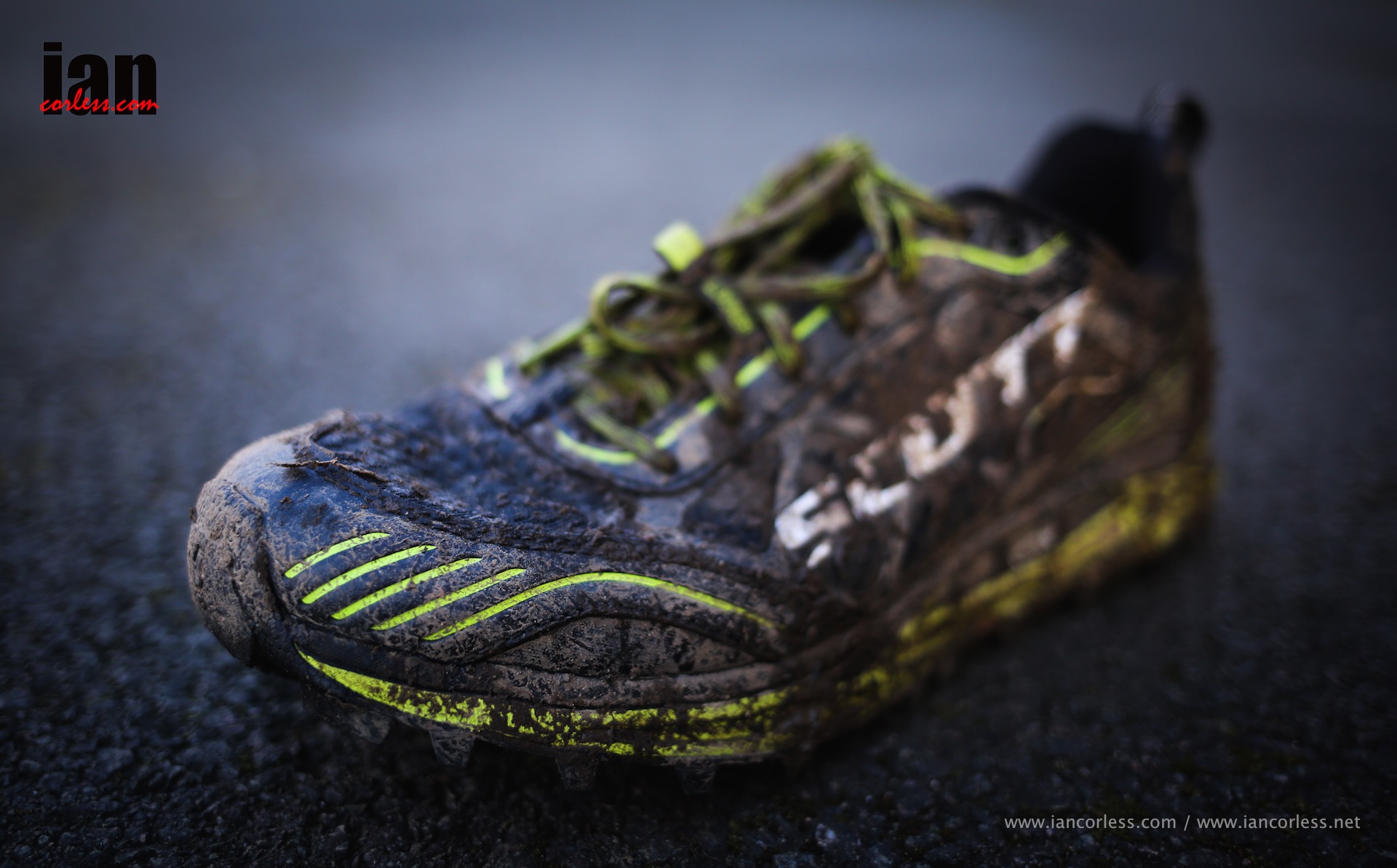
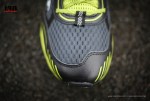
The toe box is reinforced extremely well and will withstand some serious contact with rocks or unwanted obstacles. I usually prefer a wider shoe and the Supertrac allows for this but still holds my forefoot firm and without hot spots.

©iancorless.com_ScottSupertrac-5073

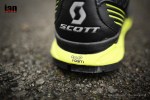
The heel is injection moulded, plush, soft has no harsh contact points and provides a secure firm grip irrespective of when running on the flat, descending or going uphill. I had no movement at all.

©iancorless.com_ScottSupertrac-5075

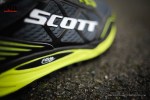
As one would expect, Scott carry over many features that we have seen on other shoes in the range. The eRIDE is a ‘rocker’ platform that is designed to guarantee a more efficient foot strike. If you already strike mid to forefoot, this may be less noticeable. However, if you are heel striking, the rocker really does roll you forward on to your toes.

©iancorless.com_ScottSupertrac-5094


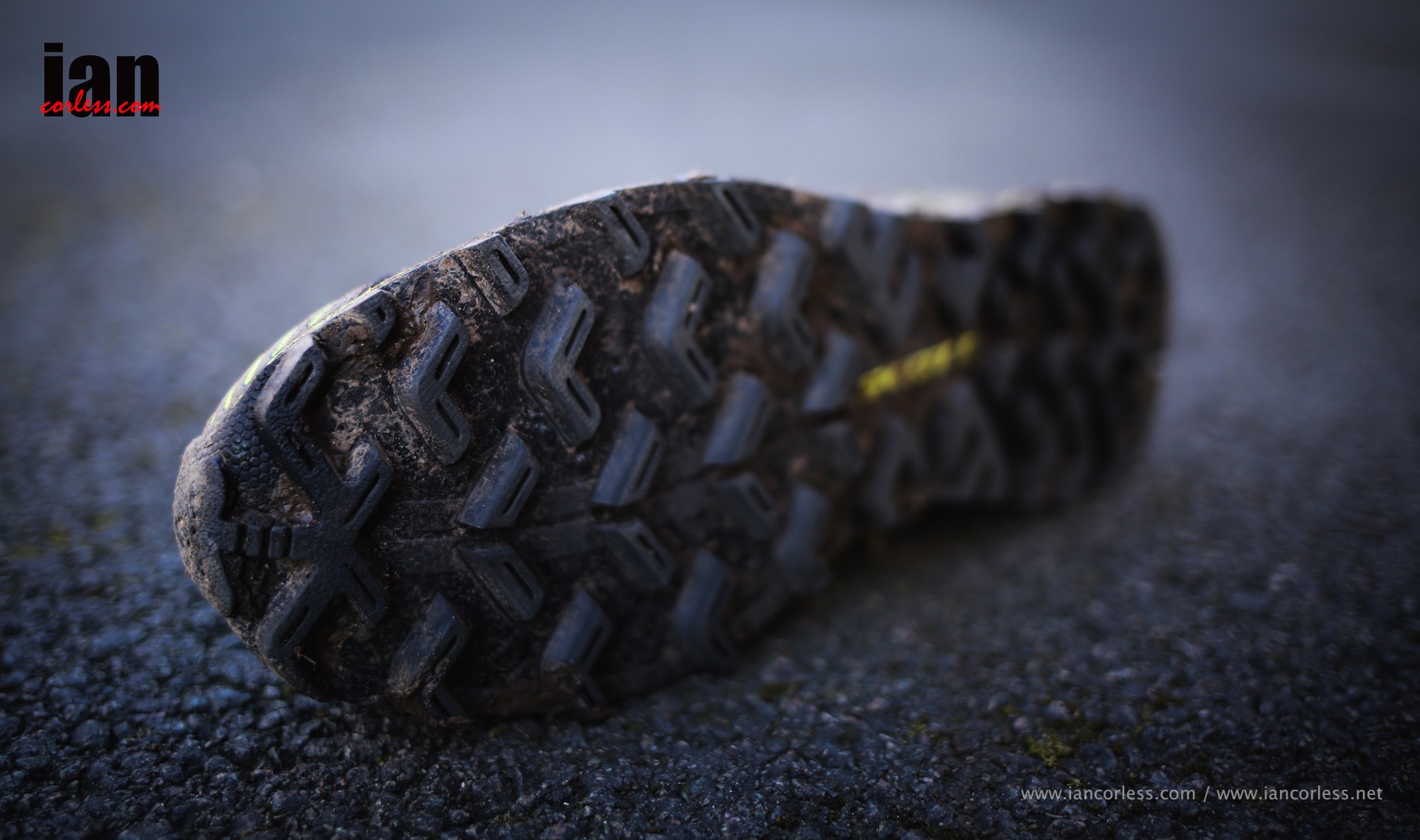
The most noticeable aspect of the shoe is the GRIP! I can’t write about the GRIP without putting it in capital letters. Boy do they GRIP…

©iancorless.com_ScottSupertrac-5061

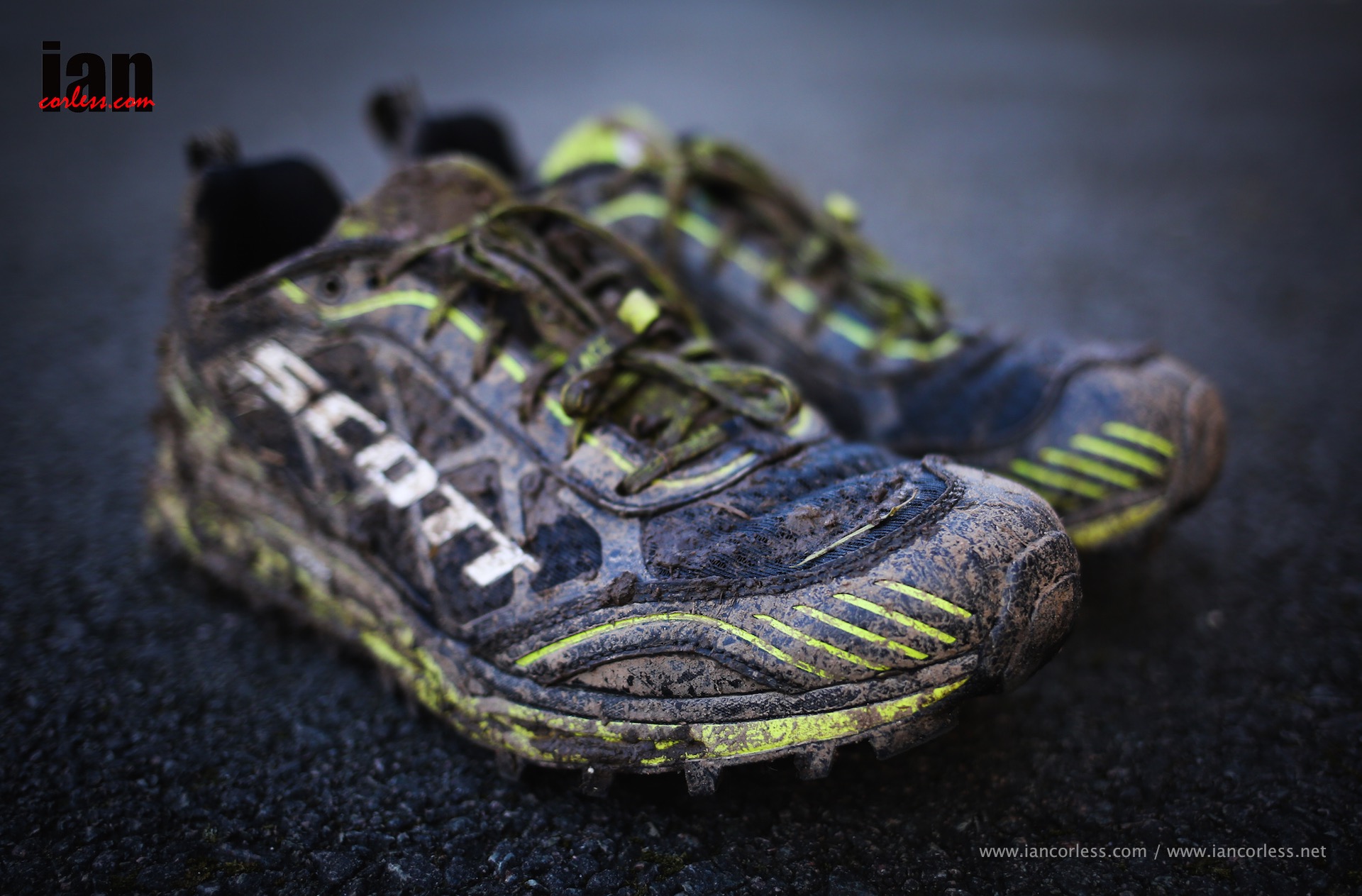
Think JCB meets running shoe. The outsole is extreme and made from a superior wet traction rubber compound that works really well on a multitude of surfaces. I am really impressed with just three to four runs*.

Conclusion

If you are looking for an out-and-out trail beast with great cushioning, 8mm drop and a comfort rating that will least all day, the Kinabalu Supertrac is going to be a serious contender. It has very quickly become my ‘go to’ when heading out on my local muddy trails.

Expect to see Marco De Gasperi, Elisa Desco and Joe Gray using this on the trails and mountains of Europe and the USA.

Pros:

  • GRIP
  • Cushioned
  • Spacious toe box with protection
  • True to size fit

Cons:

  • Not the lightest shoe

Details:

RRP £105

Available SS2015

Technology:

  • Lace bungee
  • Wet traction rubber
  • eRIDE Platform
  • AerFoam+
  • Self cleaning lugs
  • Upper: Mesh/ synthetic overlay
  • Lower: EVA/ Runner
  • Drop: 8mm
  • Weight: 340g (UK8)
  • Sizes: US7-14

#noshortcuts

©iancorless.com_ScottSupertrac-5096

©iancorless.com_ScottSupertrac-5104

©iancorless.com_ScottSupertrac-5107

*I will provide an updated review after 1-month and plenty of nice muddy shots to show the shoe’s durability in the upper and outsole

The 2015 11th edition of The Coastal Challenge on RUNULTRA

TCC 2015

“Anything can happen in a race that lasts multiple days and believe me, The Coastal Challenge provided more than its fair share of excitement. But as a battle raged at the front, behind, the story was one of survival, perseverance and enjoyment in equal measure.”

Read the full article  and view a selection of images from the 2015

The Coastal Challenge

HERE

A full selection of images are available HERE

And you can read daily reports with images from the race here:

Day 1 HERE

Day 2 HERE

Day 3 HERE images HERE

Day 4 HERE images HERE

Day 5 HERE images HERE

Day 6 HERE

run-ultra-logo

Episode 81 – Murphy Polyakova Zahab Laithwaite

Ep81

Episode 81 of Talk Ultra is out… Mike Murphy talks about pushing to the limits (and beyond) at The Coastal Challenge, Elena Polyakova talks about ultra running in Turkey and the up and coming Cappadocia Ultra Trail and Ray Zahab fills us in on his last expedition. Marc Laithwaite return for Talk Training and we discuss Maffetone. A Blog, Up and Coming Races, the News and Speedgoat Karl co-hosts.

00:17:09 NEWS
 
Sean O’Brien 100k
Ryan Smith 8:41
Seth Swanson 8:57
Jorge Pacheo
Magdalena Boulet 9:51
Anita Ortiz 10:40
Silke Koester 11:11
Tarawera 100k
Dylan Bowman 7:44 CR
Jorge Maravilla 8:01
Yoshikazu Hara 8:12
Ruby Muir 9:02 CR
Ruth Croft 9:14
Nuria Picas 9:40
 
MSIG Sai Kung 28k
Dai Matsumoto 2:49
Elisa Desco 3:41
 
MSIG Sai Kung 50k
Samir Tamang 4:48
Mira Rai 5:39
 
The Coastal Challenge
Iain Don Wauchope 22:29:08
Ashur Youseffi 26:09:54
Roiny Villegas 26:23:53
Veronica Bravo 29:35:20
Nikki Kimball 32:31:50
Maria Rivera 34:07:13
00:39:29 INTERVIEW
 
MIKE MURPHY pushed things to the limit at the 2015 The Coastal Challenge, in this interview we discuss his experiences in-depth.
 
Black Canyon 100k
Ford Smith 8:31 (18 years old)
Dave Mackey 8:33
Ryan Ghelfi 8:40
Caroline Boller 10:05
Angela Shartel 10:55
Gina Lucrezi 11:51
 
Red Hot 55k
Alex Nichols 3:48
Rob Krar 3:51
Jim Walmsley 3:54
Ashley Erba (19 years old) 4:29
Kara Henry 4:44
Kerrie Bruxvoort 5:03
 
Susitna 100
David Johnston 21:29
Rachel Gano 29:34
01:48:18 INTERVIEW
 
ELENA POLYAKOVA has pioneered ultra running in Turkey. In this interview we discuss her experiences and the up and coming TNF Cappadocia Ultra Trail 
 
02:20:12 INTERVIEW
 
RAY ZAHAB is no stranger to adventure, earlier this year he ventured into Patagonia. We hear all about it.
 
02:53:04 BLOG
Iain Don Wauchope writes about The Coastal Challenge – HERE
 
02:53:37 TALK TRAINING
 
Marc Laithwaite talks Maffetone
References:
 
Maffetone for Better Endurance HERE
Paleo, Maffetone and the Method HERE
03:28:23 UP & COMING RACES
 

Australia

New South Wales

Wild Women on Top Sydney Coastrek 100 km Team Challenge | 100 kilometers | March 06, 2015 | website

Wild Women on Top Sydney Coastrek 50 km Team Challenge Day: Party All Night | 50 kilometers | March 06, 2015 | website

Wild Women on Top Sydney Coastrek 50 km Team Challenge Day: Sun, Sand, Surf | 50 kilometers | March 06, 2015 | website
Victoria

Dendy Park Urban Trail 50K | 50 kilometers | March 01, 2015 | website
Cayman Islands

Off the Beaten Track | 50 kilometers | March 01, 2015 | website
Finland

Lapland

Rovaniemi 150 | 150 kilometers | February 20, 2015 | website
France

Ille-et-Vilaine

Endu’Rance Trail des Corsaires | 64 kilometers | February 28, 2015 | website
Loire-Atlantique

Le Trail du Vignoble Nantais – 50 km | 50 kilometers | March 01, 2015 | website
Puy-de-Dôme

Ultra trail de Vulcain | 81 kilometers | March 01, 2015 | website
Germany

Hesse

Lahntallauf 50 KM | 50 kilometers | February 28, 2015 | website
Hong-Kong

Rotary HK Ultramarathon | 50 kilometers | March 01, 2015 | website
Italy

Tuscany

Terre di Siena 50 km | 50 kilometers | March 01, 2015 | website
Malaysia

TITI 200KM | 200 kilometers | March 06, 2015 | website
Mexico

Ultra Caballo Blanco | 50 miles | March 01, 2015 | website

New Zealand

Bedrock50 | 53 kilometers | February 21, 2015 | website
Taupo 155 km Great Lake Relay | 155 kilometers | February 21, 2015 | website
Taupo 67.5 km Great Lake Relay | 67 kilometers | February 21, 2015 | website
Waiheke Round Island 100 km Relay | 100 kilometers | February 28, 2015 | website
Peru

North Face Endurance Chalenge Peru 50K | 50 kilometers | February 28, 2015 | website
North Face Endurance Chalenge Peru 80K | 80 kilometers | February 28, 2015 | website
Philippines

Davao50 | 50 kilometers | February 22, 2015 | website
Luneta to Tagaytay(LU2TA) Midnight Ultramarathon 60km | 60 kilometers | February 21, 2015 | website
Portugal

Trail Terras do Sicó | 50 kilometers | March 01, 2015 | website
Ultra Trail Terras do Sicó – 100 km | 100 kilometers | February 28, 2015 | website
Senegal

Raid Téranga 250 | 250 kilometers | February 22, 2015 | website
South Africa

South African Addo Elephant 44 km Trail Run | 44 miles | February 28, 2015 | website
South African Addo Elephant 76 km Trail Run | 76 kilometers | February 28, 2015 | website
Three Cranes Challenge | 106 kilometers | February 26, 2015 | website
Spain

Andalusia

Ultra Trail Sierras del Bandolero | 150 kilometers | March 06, 2015 | website
Canary Islands

Transgrancanaria | 125 kilometers | March 06, 2015 | website
Catalonia

UT les Fonts | 120 kilometers | March 06, 2015 | website
United Kingdom

Essex

St Peters Way Ultra | 45 miles | March 01, 2015 | website

Northumberland

Coastal Trail Series – Northumberland – Ultra | 34 miles | February 28, 2015 | website

Telford and Wrekin

Millennium Way | 38 miles | March 01, 2015 | website

USA

Alabama

Black Warrior/Phillip Parker 50k Trail Run | 50 kilometers | February 21, 2015 | website

Mount Cheaha 50K | 50 kilometers | February 28, 2015 | website

Alaska

Chena River to Ridge Endurance Race 45 Mile | 45 miles | February 28, 2015 | website

Iditarod Trail Invitational 1000 mile | 1000 miles | March 01, 2015 | website

Iditarod Trail Invitational 350 mile | 350 miles | March 01, 2015 | website

Arizona

Elephant Mountain – 50K | 50 kilometers | February 21, 2015 | website

Ragnar Relay Del Sol | 200 miles | February 20, 2015 | website

Ultra Adventures Antelope Canyon 100 Mile | 100 miles | February 21, 2015 | website

Ultra Adventures Antelope Canyon 50 Mile | 50 miles | February 21, 2015 | website

Ultra Adventures Antelope Canyon 55K | 55 kilometers | February 21, 2015 | website

Arkansas

LOVit 100k | 100 kilometers | February 21, 2015 | website

LOVit 100 Mile | 100 miles | February 21, 2015 | website

Sylamore Trail 50k | 50 kilometers | February 21, 2015 | website

California

Chabot Trail Run 50K | 50 kilometers | February 21, 2015 | website

FOURmidable 100K | 100 kilometers | February 21, 2015 | website

FOURmidable 50K | 50 kilometers | February 21, 2015 | website

Lake Natoma 50K | 50 kilometers | March 01, 2015 | website

Montara Mountain 50K Trail Run | 50 kilometers | February 21, 2015 | website

Orange Curtain 100K | 100 kilometers | February 28, 2015 | website

Orange Curtain 50K Afternoon | 50 kilometers | February 28, 2015 | website

Orange Curtain 50K Morning | 50 kilometers | February 28, 2015 | website

Razorback 100K Endurance Race | 100 kilometers | February 28, 2015 | website

Razorback 100 Mile Endurance Race | 100 miles | February 28, 2015 | website

Razorback 125 Mile Endurance Race | 125 miles | February 28, 2015 | website

Razorback 50K Endurance Race | 50 kilometers | February 28, 2015 | website

Razorback 50 Mile Endurance Race | 50 miles | February 28, 2015 | website

Run for Amma 50K | 50 kilometers | February 28, 2015 | website

Run for Amma 50 Miler | 50 miles | February 28, 2015 | website

Salmon Falls 50K | 50 kilometers | February 28, 2015 | website

Sycamore 100k | 100 kilometers | February 28, 2015 | website

West Coast 50K | 50 kilometers | February 22, 2015 | website

Colorado

Headless Horsetooth Fat Ass 50K | 50 kilometers | February 21, 2015 | website

Florida

Everglades 50K Trail Race | 50 kilometers | February 21, 2015 | website

Everglades 50 Mile Trail Race | 50 miles | February 21, 2015 | website

Manasota Track Club 50K Ultra | 50 kilometers | February 21, 2015 | website

Louisiana

Q50 50M Ultra | 50 miles | February 28, 2015 | website

Maryland

Frozen Heart 50 km | 50 kilometers | February 21, 2015 | website

Hashawha Hills 50 km Trail Run | 50 kilometers | February 28, 2015 | website

New Jersey

Febapple Frozen Fifty – 50K | 50 kilometers | February 21, 2015 | website

Febapple Frozen Fifty – 50M | 50 miles | February 21, 2015 | website

New Mexico

Race Across New Mexico – Alien Encounter (4 Marathons) | 100 miles | February 27, 2015 | website

Race Across New Mexico – Heart of New Mexico (4 Marathons) | 106 miles | February 24, 2015 | website

North Carolina

Mount Mitchell Challenge | 40 miles | February 28, 2015 | website

Oklahoma

Tulsa Running Club Post Oak Lodge 50K Trail Run | 50 kilometers | February 28, 2015 | website

Texas

A2B2: Alamo To Border 2 | 162 miles | February 27, 2015 | website

Cowtown Ultra Marathon | 50 kilometers | March 01, 2015 | website

Cross Timbers Trail Runs 50M | 50 miles | February 21, 2015 | website

Race Across Texas – Border to Border (22 Marathons) | 587 miles | March 04, 2015 | website

Race Across Texas – The Wild West (4 Marathons) | 106 miles | March 06, 2015 | website

Virginia

The Reverse Ring | 71 miles | February 21, 2015 | website

Washington

Lord Hill 50 Km | 50 kilometers | February 22, 2015 | website

03:31:56 CLOSE
03:35:27

Links:

ITunes http://itunes.apple.com/gb/podcast/talk-ultra/id497318073

Libsyn – feed://talkultra.libsyn.com/rss

Website – talkultra.com

William Sichel planning on getting HIGH!

3100.3

Orkney-based ultra marathon runner, William Sichel (61) has announced his race programme for 2015 which includes races as short as 40 miles and as long as 6 days in duration, but nothing as long as the 3100 mile race he finished in August last year. Read my interview HERE

One of the most eye-catching of his races will be his attempt to complete the World’s Highest Ultramarathon – ‘The High’ – in the Himalayas in August. With an average altitude of 14,500 feet/4400 metres and with two mountain passes to tackle at 18,000 feet/5500 metres, that’s almost 3½ miles high, it will require very special preparation if William is to have any chance of success.

“This event will take my right out of my comfort zone as I have never trained or competed at any kind of altitude before. There will be a lot to consider with regards to health and performance at heights like that. I will need to prepare very carefully and seek advice from those with previous experience. I’ll need to be on top of my game to complete that one.”

William will open his season by returning to the Barry 40 Mile track race in South Wales on March 8th, a race he last attempted 12 years ago. Then follows a two week warm weather training spell in Lanzarote followed by the World 6 Day Trophy in Balaton, Hungary from May 6th to the 12th – an event William won in 2011.

August will see William head east to the Himalayas for ‘The High’ – 222kms/134 miles over the mountains of Ladakh in India.

“My main event after the high altitude race in India will be the new indoor 48 hour race in Oslo in November which will provide some new record opportunities for me. This year is a very challenging schedule of races following an epic 2014 when I managed to complete the World’s Longest Footrace – 3100 miles in New York.”

You can follow and find out more about William HERE

MSIG Sai Kung 50 & Skyrunning Asian Championships: pre-race interviews

Hong Kong is certainly a place of contrasts. A pre-breakfast run along the waterfront this morning saw the whole city shrouded in a thick, yellow smog which softened the outlines of the masses of skyscrapers and high-rise apartment blocks. People bustle along the pavements whilst taxis and buses fill every meter of the chaotic roads. Even the water between the mainland and the island is crammed with boats of all sizes ferrying people or freight around seemingly 24 hours a day. Not really a promising place for a Skyrunning race then…

But an hour out of the city and Sai Kung is a leafy, charming place with a vibrant sea port and – more importantly perhaps – towering forest covered hills rising from the sea shore to the sky. Suddenly the potential for a challenging Skyrunning race and the Asian Championships is revealed.

Just after lunch Simon had a chance to catch up with a few of the elite athletes looking to make an impact on this race early in the season:

Tom Owens

Screen Shot 2015-02-06 at 22.12.27After a ruptured ankle tendon in 2013, Tom was actually happy with how he raced in 2013 and enjoyed including some long races that the surgically repaired ankle dealt with without a problem. When I asked Tom why he chose to race the Sai Kung race, he said that he had already planned on taking some time off in February to go on a warm weather training camp, to get away from the freezing temperatures that he has been enduring in Scotland all winter. As soon as the opportunity to race in Hong Kong came up, Tom changed his plans to be here.

Tom also said that after a winter of cyclo-cross and cross country racing, he thought that tactically, getting a Skyrunning race under his belt early in the season would give him an advantage later in the year.

Simon asked Tom about how cyclo-cross has played a part in his training and Tom admitted that although he really enjoys it, he is technically not as strong as he’d like to be having only taken up the sport in the last couple of years. But Tom thinks that it has given him a physical and psychological edge that he needed after his surgery.

Martin Gaffuri

Screen Shot 2015-02-06 at 22.12.45Martin is a French resident although he is soon moving to Switzerland for work, so coming to Hong Kong for a race is a great opportunity to escape the snow and run in relatively warm conditions.

The Sai Kung race also represents a chance for Martin to return to the sport he loves after a hiatus in 2014. He feels that his best result last year was in Tarawera, but around racing the 80km World Champs in Chamonix, where he came 17th, Martin lost motivation for his running and took time off, only really returning to the sport towards the end of the season with a tilt at the Rut where he took a tumble off the trail.

With his new full-time job about to start, Martin is looking forward to having some structure, aiming for more quality over quantity. This makes the 28km race in Sai Kung a perfect chance to test his legs on a relatively shorter course.

Elisa Desco

Screen Shot 2015-02-06 at 22.13.31Elisa told Simon that this is her first season Skyrunning. In fact until last year she had not raced more than 20km. She said that Zegama was a fantastic new experience for her and that, along with her brilliant run at the World Championships in Chamonix, have surprised her and given her added motivation to train and race.

Looking ahead Elisa is racing the shorter Skyrunning series in 2015 and then thinks that she might start to consider tackling some longer races. But for now she thinks that her speed on relative short distances – her road marathon debut was a very impressive 2:36 – will mean that she can compete with the best of them on the trails in the hills.

Marco De Gasperi

Screen Shot 2015-02-06 at 22.13.18On reflection Marco believes that he may have been over-trained in 2014. He told Simon that for a few crucial months in the middle of the year he felt very tired and weak. Thankfully now he has fully recovered and has trained consistently – ensuring that he isn’t over-training – so that he is ready for the Sai Kung event, which Marco sees as a significant race and a great way to start the Skyrunning season.

Sat in Sai Kung town in a cafe today, Marco looked remarkably relaxed and told Simon that whilst he is wary of the other elite athletes on the start line tomorrow, he is also not stressed and is looking forward to the trails.

Marco has an eye on races beyond the Sai Kung event. He wants to be in best possible share to race Zegama later in the year and he knows that he needs to measure out his efforts so that he can get the best from himself at the right moments.

The action starts at 7am in Hong Kong and Simon will be on the course following events. You can keep up-to-speed on twitter and check back for a race report soon.

SALOMON S-LAB SENSE ULTRA SET and SALOMON S-LAB SENSE SET

©iancorless.com_Salomon-7704

A new year and new products! Nothing is more eagerly awaited than a new offering from Salomon and today I take a look at two new race vests from the French brand, the S-LAB SENSE ULTRA SET and the S-LAB SENSE SET.

Race vests have become the norm in racing now and it’s east to see why. When the product works (and some don’t) they fit like a piece of clothing, they don’t move, they cause no chaffing and they provide easy and immediate access to everything you need while still pushing the pace. I honestly don’t know who first came up with the ‘vest’ concept, what I do know is I always remember Kilian Jornet finishing and winning UTMB and holding his vest above his head!

Salomon vests and the S-LAB ADV SKIN HYDRO 12 SET can be seen in long distance races all over the world. Tweaked from one model to the next and the current incarnation has moved away from using a bladder to front mounted soft flasks. With a huge capacity, it’s often considered as one of the most ideal packs to hold all mandatory kit for a long distance race. The pack is lighter and utilises all the key features that one needs including that snug form fitting hold on the body. However, 12L capacity is not needed for shorter and faster races.

Enter the S-LAB SENSE ULTRA SET and the S-LAB SENSE SET.

It’s unusual in a review that I would review two packs at once, however, these two packs are so similar that a separate review is not necessary. So, I am reviewing the SENSE ULTRA SET and I will note comments and changes as appropriate for the SENSE SET.

So what is the difference? Simple: weight and capacity. The SENSE ULTRA SET has a 3L capacity and weighs a  110g. The SENSE SET has a capacity of 1L and weighs 90g. I am pleased to say that my two test packs are different colours, the 3L is black and the 1L is red. That’s going to make things easier.

©iancorless.com_Salomon-7741©iancorless.com_Salomon-7796


Both packs are identical at the front and differ at the back. This is where capacity is removed or added, so, let’s look at the front first.

©iancorless.com_Salomon-7704


This is a really sweet pack! The layout is great, comfort is awesome and the capacity is ideal for any run when mandatory kit is minimal.

Key features:

Two 500ml soft flasks in two stretch pockets.

©iancorless.com_Salomon-7704

Two dump pockets (open ended but elasticated at the top) at the bottom of the soft flasks

©iancorless.com_Salomon-7720

Two zipper pockets (on each side) with large capacity made from a stretch fabric.

©iancorless.com_Salomon-7722 ©iancorless.com_Salomon-7724

Open ended stretch pocket on the left shoulder strap above the bottle.

©iancorless.com_Salomon-7711


Zipper pocket on the right shoulder strap above the bottle.

©iancorless.com_Salomon-7710


Adjustable fitting system (left to right) with three upper and lower settings.

©iancorless.com_Salomon-7713

Whistle.

©iancorless.com_Salomon-7707

In Use

I have the M/L fit and it’s quite simply the most comfortable pack I have ever worn. The pack hugs the body, it does not rub and importantly under the armpits and around the neck area the cut is wide to avoid any nasty rubbing.

The soft flasks sit on the chest and do not bounce. You can drink from the bottles without removing them when required, however, I haven’t been able to do that running. I need to stop, lean over, bite the bottle, take a drink and then push on…  Soft flasks and tight fitting stretch pockets make for a tricky combination. The soft flasks and the way they fit on the body are perfect, but trying to add a full bottle back to the pocket can be tricky. With practice it does get easier and a tip is to blow back into the bottle once you have taken a drink. This inflates the bottle and makes it more rigid. I personally have always preferred bottles over bladders and soft flasks and Salomon’s positioning make this combination the best I have tested.

©iancorless.com_Salomon-7756

The upper zipper pocket will fit a phone or a gps device. I personally use and old style waterproof phone when racing and that fits perfectly. However, on training runs I have taken an iPhone 5 in a waterproof casing. So, capacity is ideal. The pocket is tight and stretchy and therefore whatever you put in is held tight with no bounce, another plus!

©iancorless.com_Salomon-7775

On the opposite side the open ended stretch pocket is also large enough to hold a phone but is ideally suited for maybe food items or a music player.

©iancorless.com_Salomon-7772

The two open ended dump pockets on either side of the pack below the bottles are large enough to hold multiple gels and bars and/ or items such as gloves, hat, buff or anything similar. To give you an idea of capacity, I could fit a beanie and gloves in one side and four/ five gels or bars on the other side. Ultimately it means you have plenty of room for energy when racing. Access is dead easy. Just put your hand in and pull the items out.

©iancorless.com_Salomon-7779

The two zipper pockets are the secret weapon on both packs. I am amazed at how spacious these pockets are. Depending on the race you are doing and also dependant on your own personal preferences; the zipper pockets will actually hold a taped seam waterproof jacket in one side and taped seam waterproof trousers in the other side!

©iancorless.com_Salomon-7832 ©iancorless.com_Salomon-7836


Salomon provided me the  S-LAB HYBRID JACKET and S-LAB HYBRID PANTS (both medium) to test (review to follow later) and these items folded up and fitted in both packs perfectly.

©iancorless.com_Salomon-7847

Considering the SENSE SET pack is only 1L capacity, this is remarkable. Lets just look at the facts, you can fit in:

  • Jacket
  • Trousers
  • Phone
  • 1L of fluid
  • 4-10 bars or gels
  • Hat and gloves
  • and then other extras such as Mp3, space blanket or other small items.

The SENSE ULTRA SET adds extra capacity at the rear in the form of two pockets. The SENSE SET is just a highly breathable and lightweight pack with no extras.

©iancorless.com_Salomon-7793

A ‘kangaroo pocket’ on the on the lower third of the rear of the pack provides an easy access open ended pocket that can be added to or taken from whilst moving. The pocket is quite small and would take a windproof jacket or food items.

©iancorless.com_Salomon-7732


The mesh back panel is actually two layers and makes an open ended deep pocket that can actually be accessed without removing the pack. It’s surprisingly roomy and should you decide not to add a jacket and trousers to the zipper pockets, this pocket can hold both items. Yes, it’s that roomy!

When running, it was easy to reach over, place my hand in the pocket and pull out my jacket. Of course, it was easier to do this if I stopped BUT this vest is very much designed about moving fast and light. It’s a performance product and as such, should you have the need to be quick… this product will allow you that comfort!

©iancorless.com_Salomon-7748

©iancorless.com_Salomon-7729

I have reviewed many products and last year I reviewed the stripped down inov-8 race vest (review here). This for me was a great product. I loved the feel of it, I loved the capacity and I loved its usability when running. For me though, Salomon have upped the game with the SENSE ULTRA SET and the SENSE SET and produced two sublime products that are a joy to wear and use.

Considering the minimal differences between the two vests, I would almost certainly recommend that the SENSE ULTRA SET is the ideal purchase. From Salomon’s perspective, it almost feels an indulgence to have a 1L and 3L version. The added cost and added capacity of the 3L makes far more long term sense for me and lets face it, if you are running really long races, you will probably have the 12L product (or similar) anyway.

On a final note, I am seriously impressed with the capacity of both packs. The SENSE SET at 1L holds a ridiculous amount of kit for something so minimal that I question if 1L capacity is correct? The SENSE ULTRA SET wouldn’t hold all the required items for a race like UTMB but it wouldn’t come far off if you were keeping items to a minimum. That said, the SENSE ULTRA SET makes a perfect and ideal pack for racing any distance (even 100-miles) when all you need is some liquid, food, jacket, trousers, hat, gloves, space blanket, phone and a few other small items. It’s arguably the perfect pack!

Pros:

  1. Soft flasks are a dream
  2. Capacity on the front of both packs is incredible
  3. Zipper pocket is great for valuable items
  4. Open ended dump pockets great for items that you need all the time – food, hat, gloves and so on.
  5. Zipper pockets have amazing capacity
  6. You could wear the products against your skin
  7. On the SENSE ULTRA SET the rear capacity is superb and a real eye opener
  8. Weight is amazing
  9. Price is good £100 for SENSE ULTRA SET and £85 for SENSE SET

Cons:

  1. Soft flasks can be tricky to get back in the open ended pockets
  2. I am not sure how the pack would fit for lady users. The bottles would potentially sit in just the wrong place?
  3. The ‘kangaroo’ pocket on the SENSE ULTRA SET is small
  4. These are lightweight products and durability ‘may’ be an issue?

Conclusion:

I love these two packs. They actually make wearing a pack a pleasure rather than a chore and that is a real bonus. Capacity is quite mind blowing in both products and the SENSE ULTRA SET makes the most logical purchase choice as it provides more usage options. I actually found it difficult to come up with ‘cons’ for these packs they are that good!

Check out Salomon HERE


Salomon LogoSALOMON S-LAB SENSE ULTRA SET

©iancorless.com_Salomon-7704

Ultra-lightweight running pack designed by Salomon Athletes. The Salomon S-LAB Sense Ultra Set weighs in at 110g and is designed to carry the bare essentials in absolute comfort with a 3L capacity.

  • Motion fit trail
  • Sensifit
  • Soft twin link
  • 2 zippered pockets
  • 1 chest pocket
  • 2 soft flask
  • Zipper phone pocket
  • 2 stretch pockets
  • Back compartment
  • Kangaroo pocket
  • soft rim
  • Reflective
  • Whistle

SALOMON S-LAB SENSE SET

©iancorless.com_Salomon-7759

Ultra-lightweight running pack designed by Salomon Athletes. The Salomon S-LAB Sense Set weighs in at under 100g and is designed to carry 1L of the absolute bare essentials.


  • Motion fit trail
  • Sensifit
  • Soft twin link
  • 2 zippered pockets
  • 1 chest pocket
  • 2 soft flask
  • Zipper phone pocket
  • 2 stretch pockets
  • soft rim
  • Reflective
  • Whistle

Hernando, Jones and Olson for Transvulcania La Palma 2015

©iancorless.com.IMG_8491Transvulcania14

It’s only January and already the world of Skyrunning is hotting up with the announcement that 2014 Transvulcania La Palma champion and Skyrunning Ultra Distance World Champion, Luis Alberto Hernando will return to the island to defend his crown.

Luis Alberto Hernando had an incredible 2014 and his return to Transvulcania is eagerly anticipated. A true champion, the tough and challenging course is one that he relishes, however, Luis will not have things his own way!

©iancorless.com.IMG_7531Transvulcania14

Salomon Running new signing, Dakota Jones won the race in 2012 and he is back once again to test himself. Dakota raced in 2014 but had a disappointing race (his words) placing 10th. With a new team and definite plan to race theSkyrunner® World Series and Skyrunner® Continental Series, I think it is fair to say that the American will push Luis all the way to the line.

©iancorless.com.IMG_8884Transvulcania14

Timothy Olson loves the trails on the island of La Palma. In the past couple of years he has made the island his families home as he prepares meticulously for the race. Timothy is very clear, a podium place is a main objective. He came close in 2013 with 4th place and last year he placed 8th.

More athletes will be announced in the coming weeks and months as we all anticipate the 2015 Skyrunning Transvulcania La Palma.

 Check out the Skyrunner® World Series calander HERE

Check out the Skyrunner®  Continental Series 2015 HERE

Check out Skyrunning HERE

Transvulcania La Palma website HERE

Sir Ranulph Fiennes to run the 2015 Marathon des Sables – Interview

sir_ranulph_fiennes_bigussiue.com

sir_ranulph_fiennes_bigissue.com

Ranulph Fiennes (March 7th 1944)

 Sir Ranulph Fiennes has been called, ‘The World’s Greatest Living Explorer.’ It’s a difficult statement to argue. Sir Ranulph’s list of achievements is quite incredible. 

Born in ‘44’ he was educated at Eton, served in the Royal Scots Greys for eight years and progressed to the Special Air Service (SAS) where he specialized in demolitions. In 68’ he joined the Army of the Sultan of Oman where he was decorated for bravery after leading several raids deep into rebel territory.

Sir Ranulph Fiennes Portrait 2012_militaryspeakers

Sir Ranulph Fiennes Portrait 2012_militaryspeakers

Sir Ranulph married his first wife, Virginia (Ginny) in 1970 and between them they lead expeditions all over the world. Ginny was awarded the Polar Medal in ’87.’ Sir Ranulph has raised incredible sums of money for Marie Curie Cancer Charity as his wife, mother and sister all died from the disease within 18 months of each other (2004.)

Currently, Sir Ranulph is the only person alive to have to have travelled around the Earth’s circumpolar surface. Continually a pioneer, Sir Ranulph is ever present at pushing boundaries.

The first explorer to cross the Antarctic Continent unsupported, Sir Ranulph has come a long way since leading a British Expedition on the White Nile in ’69.’

Ran, as he likes to be known, may perhaps be best known after travelling to the North Pole unaided. Dr Mike Stroud has figured heavily in Ran’s career and amongst many expeditions, two stand out! A 97-day trek across Antarctica in ‘93’ and running seven marathons in seven days on seven continents (2003.) The latter was undertaken just four months after a triple heart bypass.

In 2000, Ran attempted to walk solo to the North Pole but his sled fell through thin ice. Exposure to the ice-cold water resulted in severe frostbite and some months later, the famous ‘finger’ incident.

Having been to both Poles and participated in over 30 major expeditions, Ran summited the Eiger in 2007 and at the age of 65 (2009) he pushed the boundaries once more to be the oldest Briton ever to climb Everest after two failed attempts in 2005 (he had a heart attack) and in 2008 when he ‘went a little too quickly’ and exhaustion foiled his attempt.

After 5 years of planning, in 2012, Sir Ranulph set off on his latest expedition, ‘The Coldest Journey’ leading the first team on foot, across Antarctica during the southern winter. The expedition was brought to a sudden halt for Ran when in training he removed a glove to attend to a ski binding. Ran was evacuated for frostbite and treatment but the expedition continued without him.

In 2015, Ran will attempt the 2015 Marathon des Sables.

*****

Ranulph Fiennes Interview undertaken by Niandi Carmont at ‘The Druid Challenge’ 2-day race in November 2014. An event both Niandi and Sir Ranulph were using as preparation for Marathon des Sables in 2015.

NC: Welcome Sir Ranulph

RF: Many thanks for the invite and showing an interest.

NC: You hold multiple records, I am a little overwhelmed. You were in the army for many years, did that ignite a passion for adventure?

RF: Well when I was in Germany it was the Cold War. We had 60 70-ton tanks facing the German border waiting for the Soviets to attack… but they never did attack. So the soldiers got bored. So, we were made to run, canoe or whatever it may be. I was told I would be the running officer. I wasn’t asked, I was told! I became an expert in a week. I started to train 600 soldiers. We got to be 5th best regiment out of about 80 regiments after 4-years. All the races were 6miles though.

NC: Wow an interesting beginning and somewhat unique. What was it like to be the first person to visit both poles?

RF: Well, it was my late wife Ginny (married 38-years) who motivated me. Before we married we had done various hot expeditions in the Sahara, the Nile and Arabia. In the 70’s the British press were no longer interested in media for hot expeditions. So, no sponsorship equals no expeditions. Ginny decided we should go to cold environments. We looked at a globe and we decided that nobody had gone vertically between the poles. There was only one route!

NC: How long did this take?

RF: It took 7 years to get sponsorship. We had 1900 sponsors and raised 29 million pounds. This was in the 70’s! Nobody paid us to get sponsors so we had to work at weekends in pubs to make a living. Eventually Jennies dream was ready to go… we had a team of 52-people who had given up everything. Engineers and so on… we got a 40-year old Norwegian vessel and set off from Greenwich and arrived back 2.5 years later. We were the first to go around the earth surface vertically around the world ever and nobody else has repeated this. More people have been on the moon! So in all, 10 years!

NC: Amazing that the record still stands. So remarkable! You were the first person to cross Antarctica on foot?

RF: That was the Antarctic Continent? Antarctica changes all the time… I did coastline to coastline: Atlantic to Pacific. We completed the first crossing in ‘79’ but we used skidoos, nonetheless the first crossing side-to-side. But when we crossed the Continent that was 20-years later and that was unsupported. So, what we carried on day-1 was enough for 2000 miles without resupply. That was somewhat problematic but we did do it and we were in a bad way at the end!

NC: Problematic?

RF: We ran out of food! I started at 15.5 stone, at halfway I was 9-stone despite eating 5000 calories a day. So we had a daily deficiency of 3500 calories per day. So, we were officially starving. Mike Stroud thought this was fascinating… he is Europe’s top physiologist studying in starvation and muscle cannibalisation, so he was able to study this first hand. It had only been possible to study something like this previously at Auschwitz!

NC: You had frostbite. Many have heard the stories about you cutting your fingers off. Are they true?

Fiennes_standard.co.uk

RF: I got frostbite on a solo expedition to the Arctic Ocean. If I had had a doctor with me he would have pulled me out and got the tent out with a cooker on and avoided the frostbite. As it was, because I was alone by the time I had got out of the water… the damage was done. I was too cold too pitch a tent, start a cooker and so on. It was -48. Think about it, it was pitch black on a semi frozen sea, so I went back to the start to find land again and sent a radio message. An amazing Canadian ski pilot landed in the dark on the edge of the coast and he saved me. I was taken to hospital. I had special pressure treatment for 60-hours to lengthen the living part of the fingers on one hand. They cut off about 2-inches of the five fingers on one hand. The other hand recovered. My insurers refused to pay unless the operation was in the UK. I tried to find someone in the UK who knew something about frostbite. Navy divers are susceptible to the bends and apparently they can lose fingers. Apparently they don’t amputate until after 5-months to allow for some recovery. Five months is a long time. Every time you touch something with mummified fingers it hurts… after 2 months my wife and I decided to cut them off. We went to the garden shed. We got a Black & Decker workbench and micro saw. It took 2 days and lots of tea. Apparently a physio in Bristol said I did a great job but my surgeon was less pleased.

NC: Did it take courage and did it hurt?

RF: No, if it hurt or started to bleed I just moved further away and just made sure the bit I was cutting off was dead. It doesn’t hurt!

NC: In 2009 you summited Everest at the age of 65-years; what impact did age have on you if any?

ranulph-fiennes_mpora.com

RF: This was my 3rd Everest attempt. My 1st attempt had been somewhat risky from the Tibet side and I had a heart attack on the last night after 2-months of acclimatizing. Bad timing eh but I survived! I said I would never go back… but I was told that was a rubbish idea and that I should go from the other side.

So my 2nd attempt was from the Nepal side; which is easier. But we still failed as we passed a load of bodies including the father of my Sherpa. We passed a Swiss climber too who had summited without Oxygen but died on the way down with hypoxia.

In 2009 it was easy… I guess I understand why I had failed the first and second times. I had been trying to catch up with my British guide the second time. Competitiveness can be a bad thing. When you have had a heart attack you must obey your surgeons advice and not exceed 130bpm. So, in 2009 I took it easy and it all came together.

NC: You are obviously endurant and resilient?

RF: When I was in my 50’s I enjoyed running a great deal and I had success. In my 60’s running was no longer an option… I was jogging until about 69-years of age and that was okay, not that I ever went in for races in that decade. Jogging became shuffling and that is very annoying! Avoid geriatric status at all costs.

NC: I agree 100%. You have a great collaboration with Mike Stroud – 26-years?

RF: Mike comes up with all the ideas. For the last 5-years we have been working on an idea that involved Antarctica. Mike unfortunately had a hip problem. In the last couple of years his other hip went, it wasn’t as easy as the first one so Mike took on all the scientific side. In many ways this is more difficult and that is what he is in charge of now. We are still doing things. There was a time when Mike and I didn’t do expeditions; this was after the Antarctic crossing. We did running races. Mike led an Eco-Challenge team, which must have been one of the first in British Columbia in the Whistler Mountains. That was very enjoyable… it was a team of five and it included Rebecca Stephens the first the British lady to summit Everest, his Father who was over 70-years, the editor of Runners World and an SAS man, David Smith. Mike put the team together and introduced all of us back to running in 1995. We have also done many events as a pair such as the 7-marathons on 7-continents.

NC: He is also a friend, It’s more than running surely?

RF: You don’t choose people for expeditions because they are friends. We chose Mike Stroud in the very beginning because I was already in the Arctic. The man I was with was recalled to London and I was left with nobody. I rang my wife in England and said, ‘I need someone in 3-days who is completely ‘polar’ trained.’ Dr Mike Stroud had been a reserve on another expedition and had only just returned from Antarctica after 1-year away. Somehow he pulled it off… he managed to come away on a 3-day turnaround.

NC: You obviously relied on your wife a great deal.

RF: Absolutely! Since my wife has passed away, Mike has taken on the ‘idea’ role.

NC: Can we discuss the 7-marathons in 7-days on 7-continents?

RF: Mikes’ idea again! The New York marathon club considered themselves the best marathon club in the world. The only non New Yorker as part of this group was Dr Mike Stroud. They swore him to silence that they thought it may be possible to run 7-marathons on 7-continents in 7-days. Mike kept his word and 2-years later, Mike approached American Airlines and they said they couldn’t schedule the flights. (You need jumbo jets and 5-hours in each continent.) Delta said they couldn’t do it. United said they couldn’t do it and now 6-years had passed. It was 2003 and Mike had still kept the secret. I called Mike in 2003 about another expedition. He said great, I’ll ask the boss. They told him he could only have 1-week’s holiday as he taken so much time already. Mike phoned me and said, I can’t do your expedition but I want you to do mine! So, Mike asked me to contact British Airways and within 2-months they phoned back and said they had cracked it! They said we had to finish with New York and not Asia. Asia would need to be in the middle. Also, if we were a minute late ever they would fly without us. They wouldn’t keep passengers waiting. So, they provided 2 free first class beds and food (this was our only opportunity to rest) and yes, it was all systems go! It all went well to Argentina. We were suppose to be running on King George Island (Shetland), the night before we were due to run the ‘Argies’ blocked the landing on King George with their own planes. So we had a team meeting, Mike and myself, BBC news, a reporter from The Times and a photographer: 6-people in total. When we suddenly arrived the whole thing had been cocked up, the BBC bloke said, “I’ve got a very good friend in Santiago, I will ring him now and get him here and he will fly us to one of the other Antarctic Islands.” So we had to run one of the South American marathons locally. That night we ran a marathon and we had officials to make sure we ran an official marathon in 3:45, which was extremely stupid. The next morning we get on this plane without a worry of which island we would go to. Apparently the only island to run on would be the Falklands. You may know, but you are not supposed to fly from Argentina to the Falklands without 6-months notice. So we slept on the plane. Mike woke me up and we looked out of the plane window. We had two Tornado jets on either side of us… they made us do a force landing on a military airstrip on the Falklands. We were marched to the CO who was furious. He told us we had no permission and that we could all face prison. At this point, one of the reporters went forward and said, “Did they realise that the news and the papers would make this not look good for the army!” There was a fairly quick turnaround…

“You can run your 26. something miles locally and we will watch them every step of the way,” The CO said.

They never saw us off. Funny really.

NC: This seems extremely stressful. Running, logistics, last min changes and so on.

RF: The BBC and The Times did all that for us.

NC: Yes, but it must have been stressful.

RF: The 7x7x7 challenge was sponsored by Land Rover and they did everything for us. It was incredible. They did all the work for us and they had cars waiting for us at anytime. Land Rover and British Airways made this all possible. They had the contacts.

NC: Before the 7-challenge you had a heart attack and a double bypass. It’s amazing that you would undertake this.

RF: I was on a drip for 3-days and nights, they decided to cut me open and do a double bypass. They just decided to do this! It took 13 attempts to revive me after they sewed me up. When I woke up my late wife said, “Ran you had a heart attack 3-days ago” but I still can’t remember anything!

NC: You aborted your most recent expedition, is that the end of cold journeys for you now?

RF: We aborted the crossing but we kept the team (all 5 of them) not Mike and not me through frostbite, but we kept all the team for 8-months at 11,000 feet above sea level doing scientific work on each other. It has delighted the Royal Society and all the scientists, we raised 2.3 million dollars for blindness in Bangladesh and I went with Joanna Lumley to Bangladesh to see what they were doing with the money. For £19 they could remove cataracts from babies. Quite remarkable! For £9 they could provide spectacles to children. This means they can go to school and have opportunities in the future. We really need charity PR people to get behind us, the more money we make, the more people we can benefit.

NC: What does the future hold for you?

RF: Well, I am not allowed to talk about this until I get the nod, but I will be going to Marathon des Sables in 2015. And I am also writing another book. One book actually came out last week.

Marie Curie Logo

Get involved and support Sir Ranulph! Text RUN and a message of support to 70007 to donate £5, or you can visit his Just Giving page here:http://bit.ly/1xUB298

Find out more about Sir Ranulph and his Marathon des Sables challenge:http://bit.ly/1wvffi8

NC: Can you tell me about Agincourt, your most recent book?

Agincourt


Book on Amazon HERE

RF: A historian would normally write a book like Agincourt… but it turns out that I am related to Robert Fiennes from the village of Fiennes in the Pas de Calais.

NC: What an amazing story?

Niandi speaks French to Sir Ranulph and he is taken aback. He also speaks French and they enter into a short dialogue. 

Sir Ranulph comments that he could hear an accent in Niandi’s voice but not French! Niandi explains that she is South African born…

NC: So you lived in South Africa?

RF: Yes, my relatives live in South Africa. I spent the first 12-years of my life in SA.

Anyway, we digress. I decided to go to Fiennes and find my French cousins. They were wiped out at the battle of Agencourt and I found out how. One of them was part of an 18-strong commando group with the specific aim of killing King Henry V in the battle. One of them, maybe not Robert Fiennes, got to knocking the crown of his head… Two of King Henry V’s generals, one was a sheriff of Kent in Sussex. He was corrupt man; so corrupt that Henry V1 made him into the Chancellor of the Exchequer. When soldiers came back from France, 20,000 of them attacked London. The King gave the Chancellor of the Exchequer to the mob and they killed him… nasty business!

NC: I guess we are going to have to read the book. Sounds like a fascinating story. Looking at modern day adventurers, what are your thoughts on Uli Steck and Kilian Jornet?

RF: Uli is amazing, incredible… I do not understand how you can go up the Eiger in 2-hours or something ridiculous like that. He is unbelievably amazing. Both of them are just incredible.

NC: And what about your new book, what is it called?

RF: My new book will be called HEAT. Nice contrast to my other book, COLD.

“Physically I’m going to be a wreck pretty quickly.” But these challenges are fought in the mind, he says. “There’ll be a voice in my head saying I’ll have a heart attack, I’ll get hyperthermia, I’ve got a family, it’s stupid to carry on. That sort of wimpish voice tries to appear logical, finding reasons for stopping. You have to fight it. I’ve had it so many times.”

-BBC News, Tom de Castella


Cold

On Amazon HERE

Sir Ranulph Fiennes will participate at the 2015 Marathon des Sables. An announcememt will be made on January 8th. We hope to have follow up interviews with Sir Ranulph to help document this exciting journey.

*****

AWARDS

In 1970, Fiennes received the Sultan’s Bravery Medal.

He has also been awarded a number of honorary doctorates, in 1986, 1995, 2000, 2002, 2005, 2007 and 2011

Fiennes received the Royal Geographical Society’s Founder’s Medal.

Fiennes was appointed Officer of the Order of the British Empire in 1993 for “human endeavour and for charitable services”

In 1986 Fiennes was awarded the Polar Medal for “outstanding service to British Polar exploration and research.”

In 1994 he was awarded a second clasp to the Polar Medal, having visited both poles.

In 2010 Justgiving named Fiennes as the UK’s top celebrity fundraiser, after raising more than £2.5 million for Marie Curie Cancer Care.

In September 2011 Fiennes was awarded an honorary Doctorate in Science from Plymouth University and

In July 2012 he was awarded an Honorary Fellowship from the University of Glamorgan.

In October 2014 it was announced that Fiennes would receive an honorary Doctorate of Science, from the University of Chester, in recognition of “outstanding and inspirational contribution to the field of exploration”. 

*****

Links and credits:

‘I am not a madman’

http://www.theguardian.com/theguardian/2007/oct/05/features11.g21

Fiennes climbs to Everest summit

http://news.bbc.co.uk/1/hi/uk/8060649.stm

Ranulph Fiennes pulls out of Antarctic journey

http://www.usatoday.com/story/news/world/2013/02/25/ranulph-fiennes-antarctic-journey/1946571/?AID=10709313&PID=6156889&SID=w7wk81lnnmpn

The world’s greatest living explorer

http://www.militaryspeakers.co.uk/speakers/sir-ranulph-fiennes.aspx

Interview with TIME

http://content.time.com/time/world/article/0,8599,1900969,00.html?imw=Y

Ranulph Fiennes – Wikipedia

http://en.wikipedia.org/wiki/Ranulph_Fiennes

Who, What, Why: Is it harder to run in the Sahara Desert or the North Pole?

http://www.bbc.co.uk/news/blogs-magazine-monitor-30716727