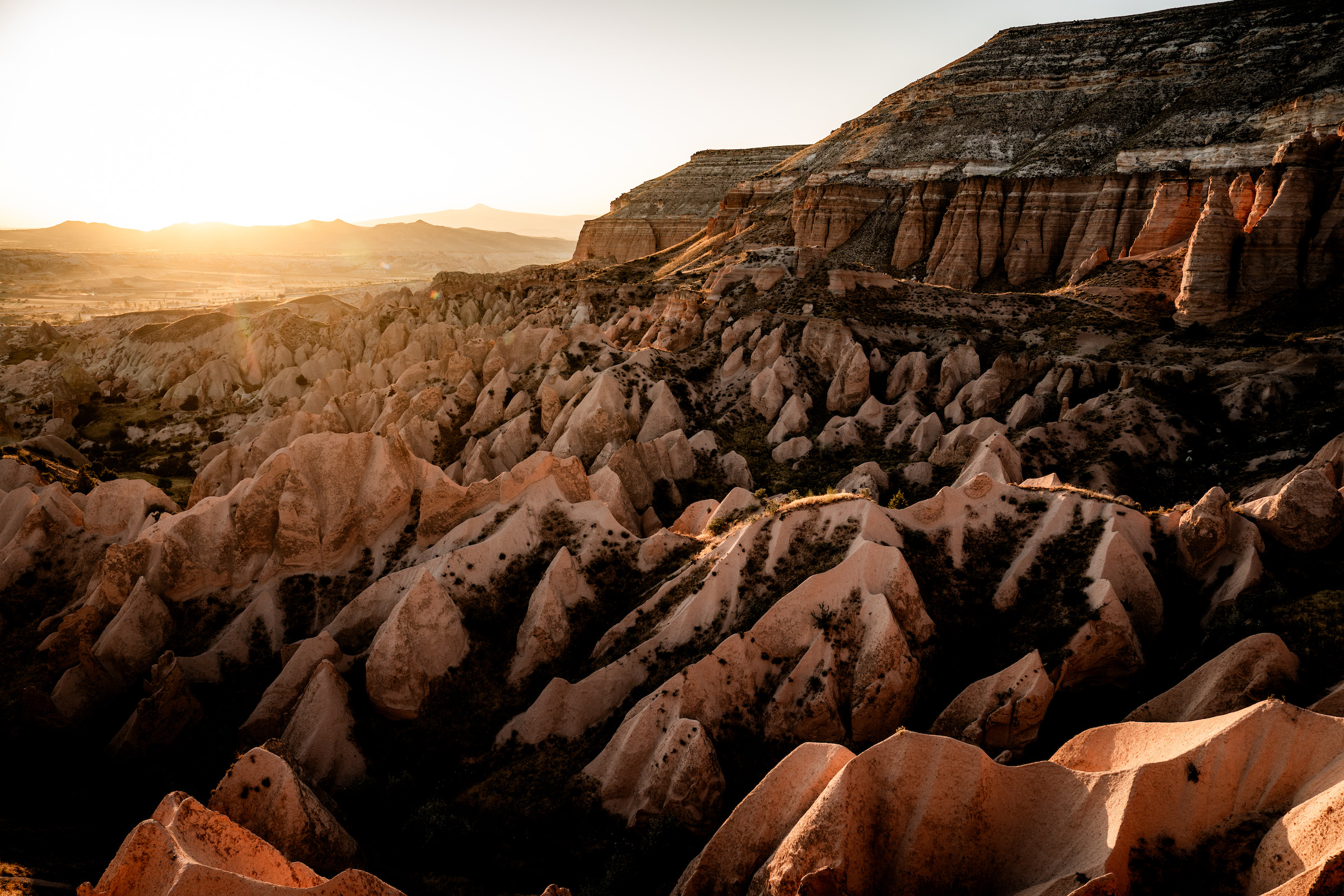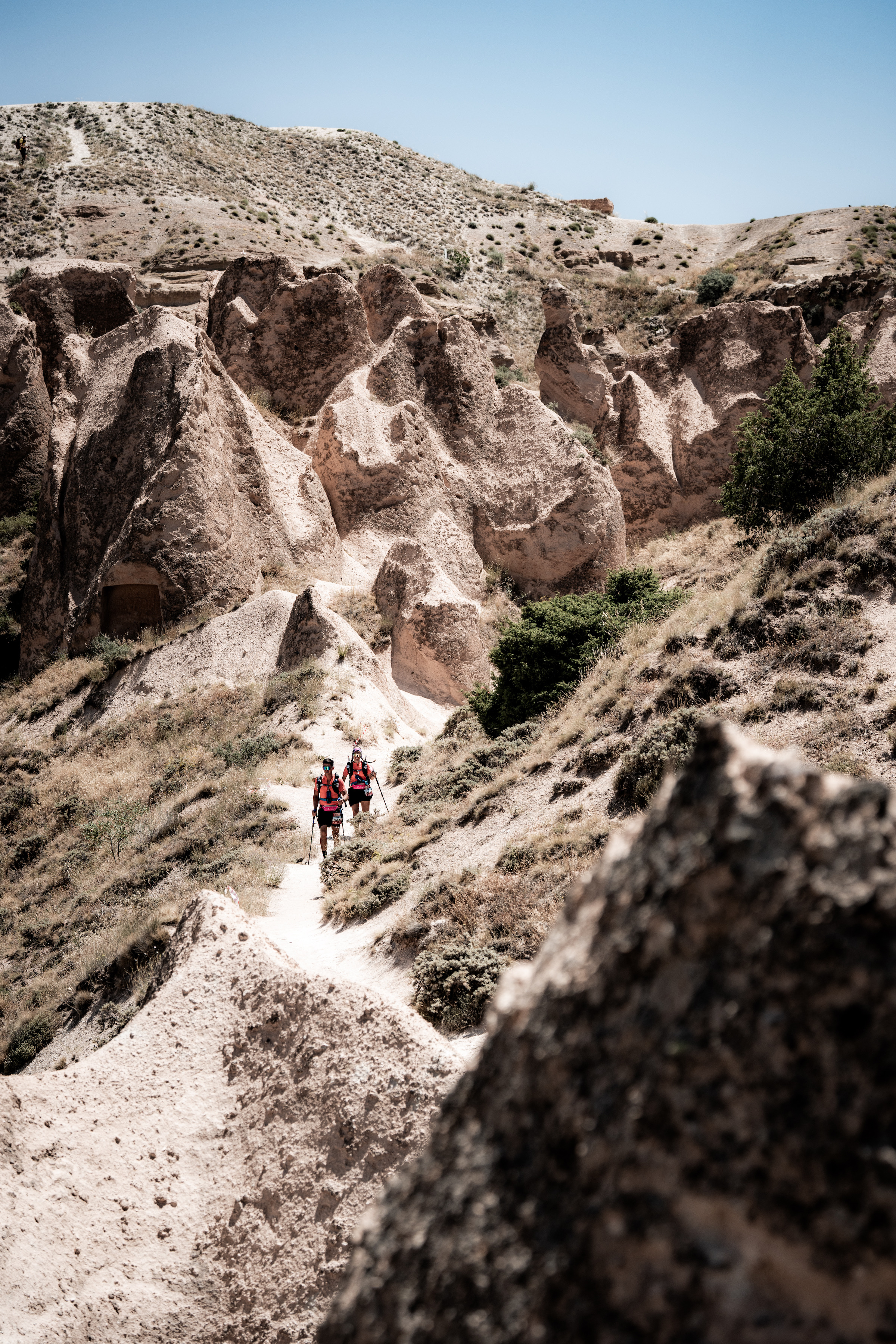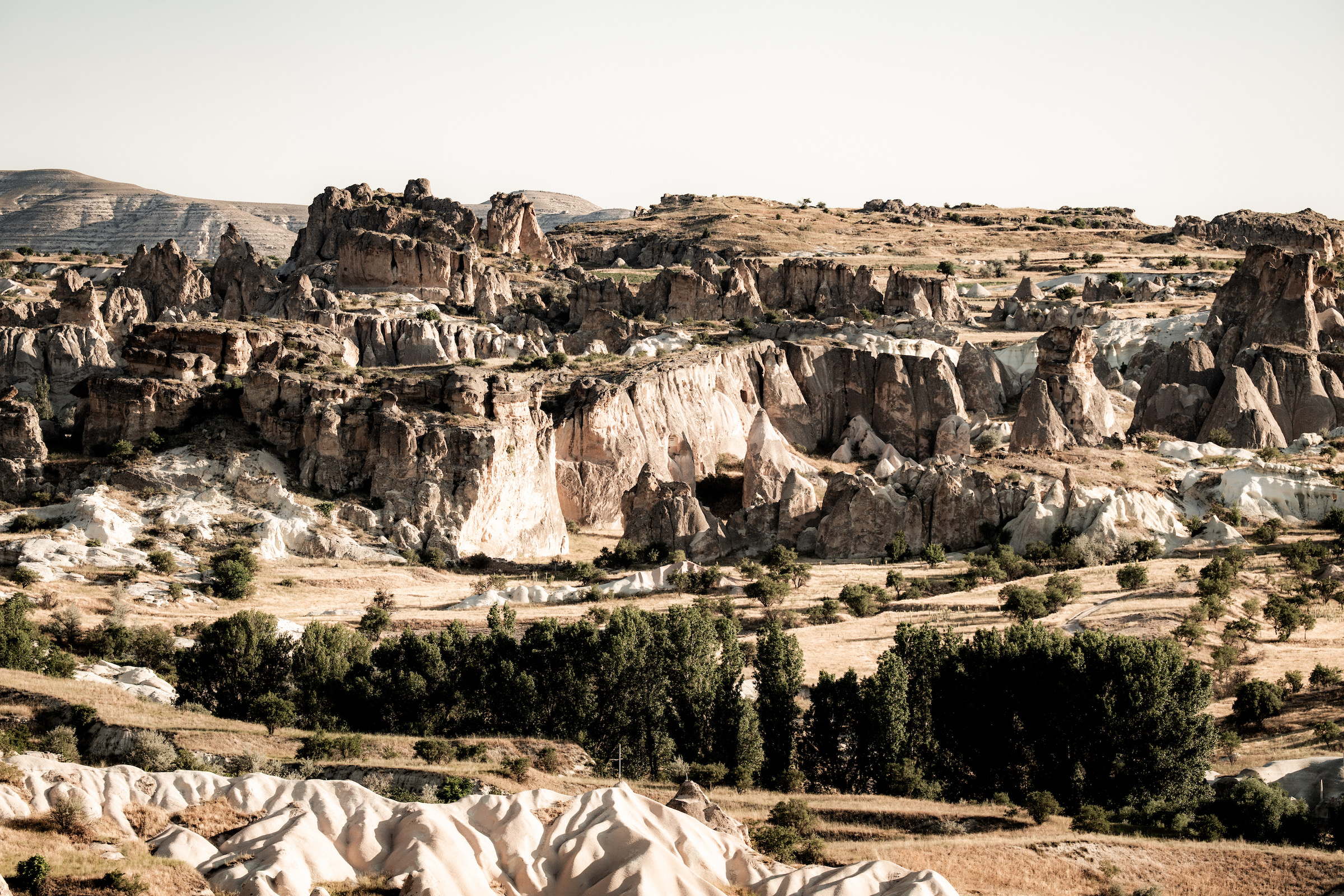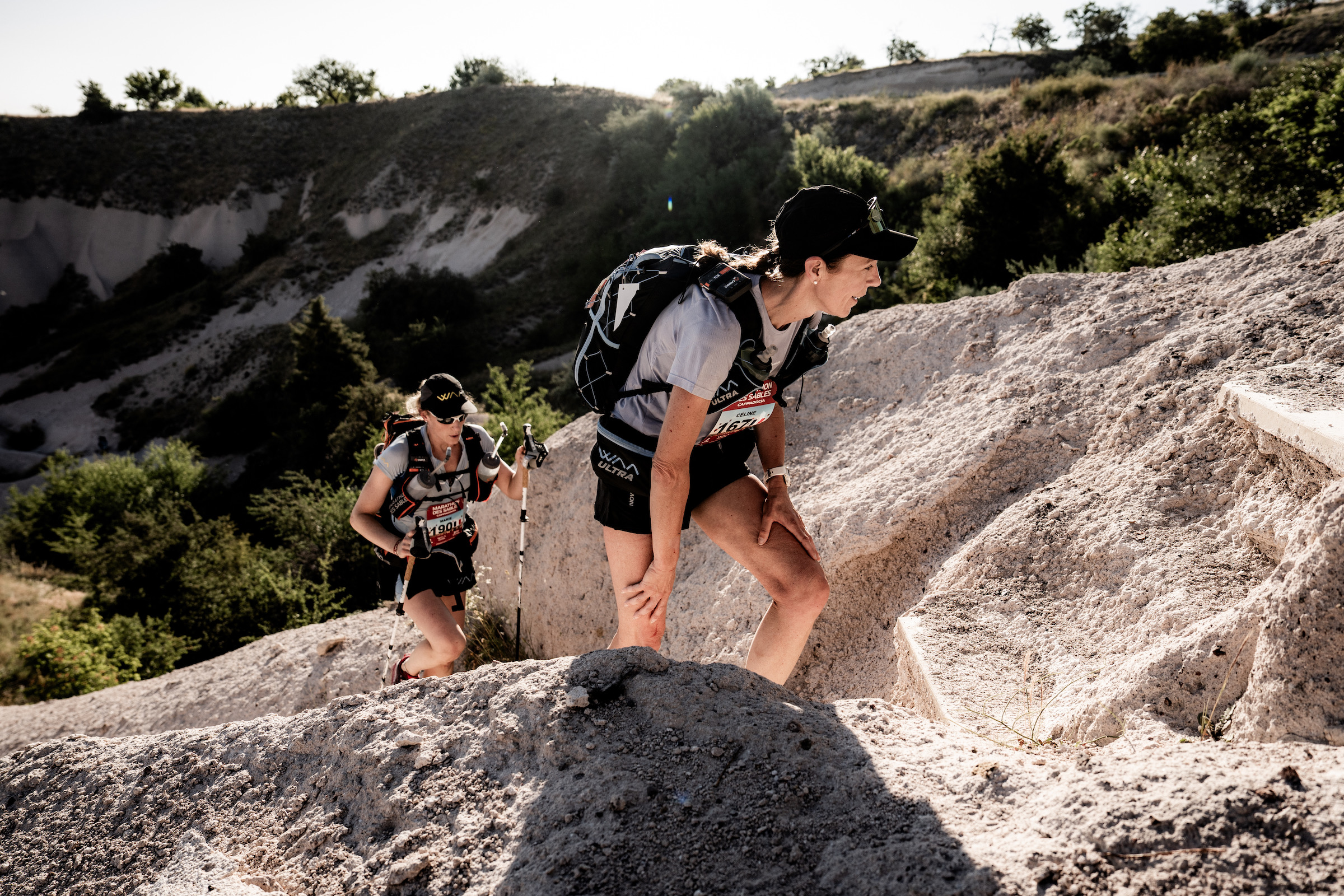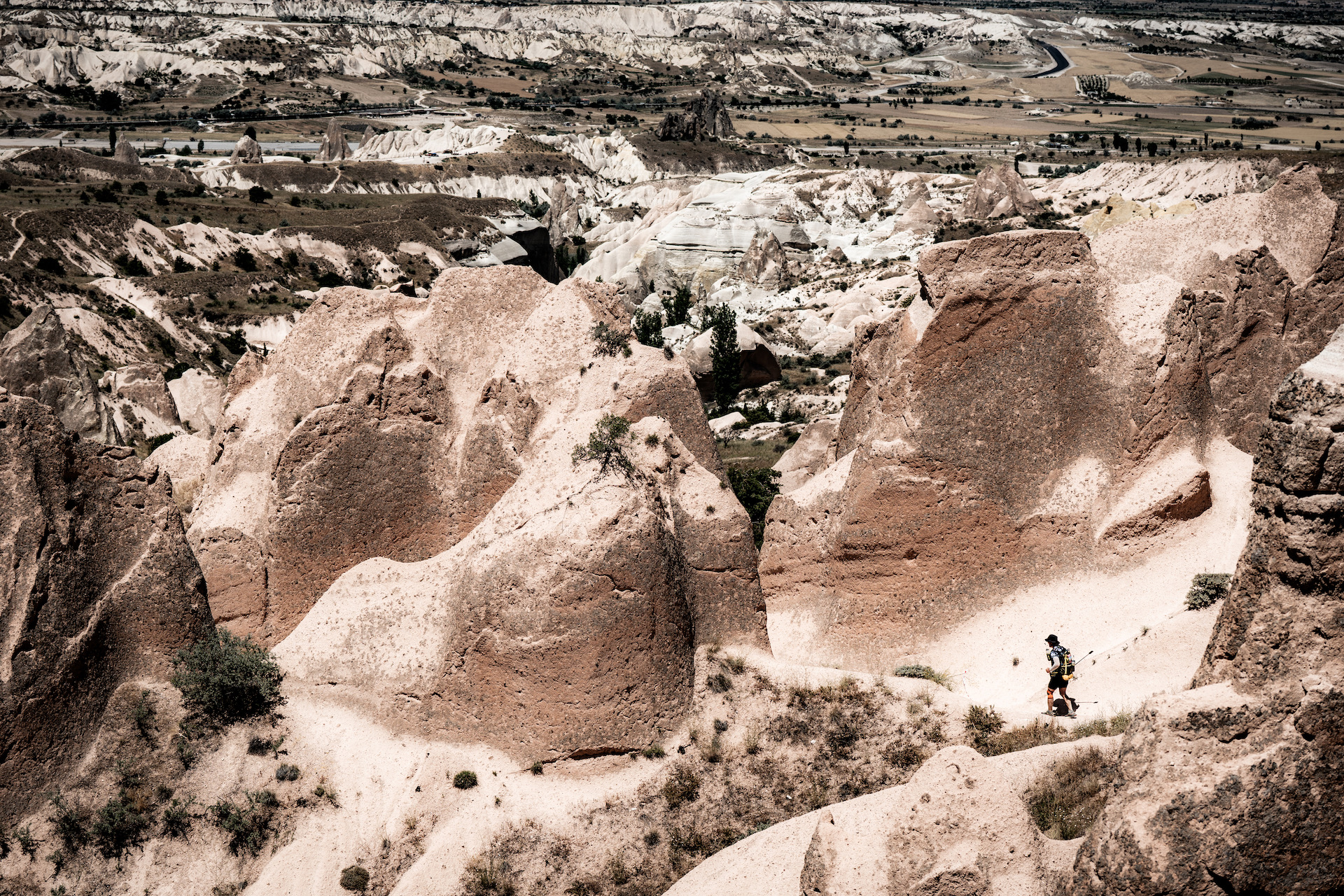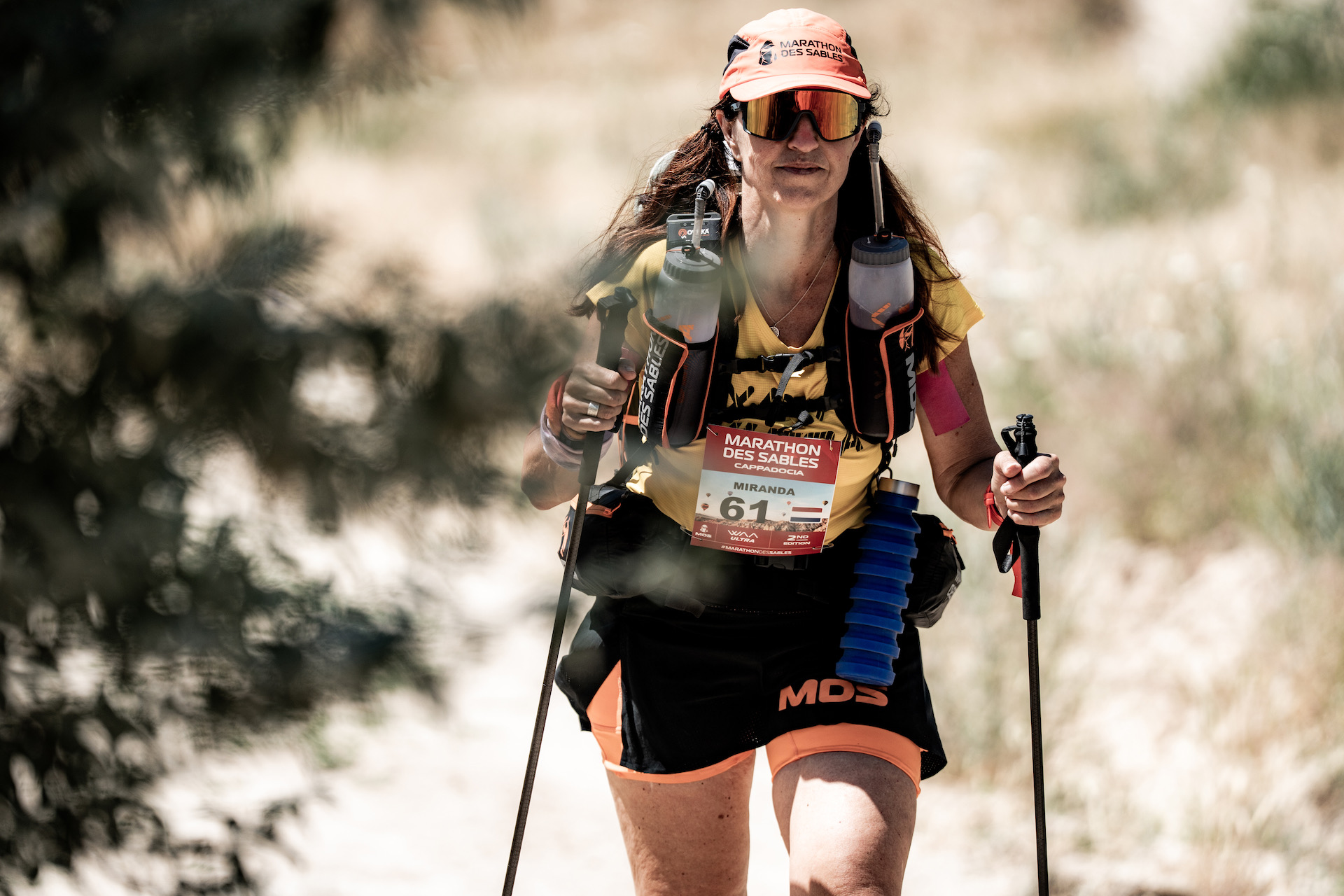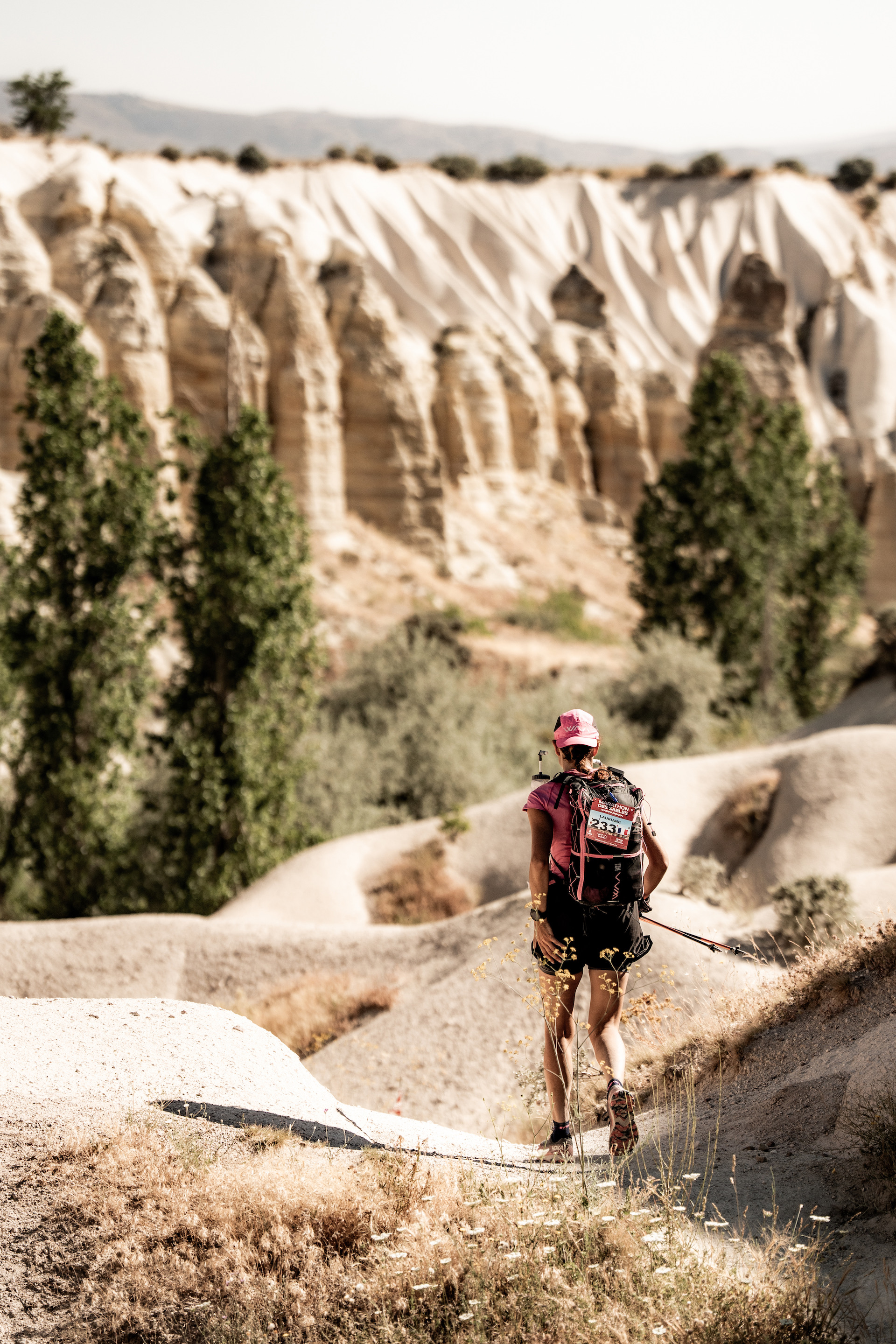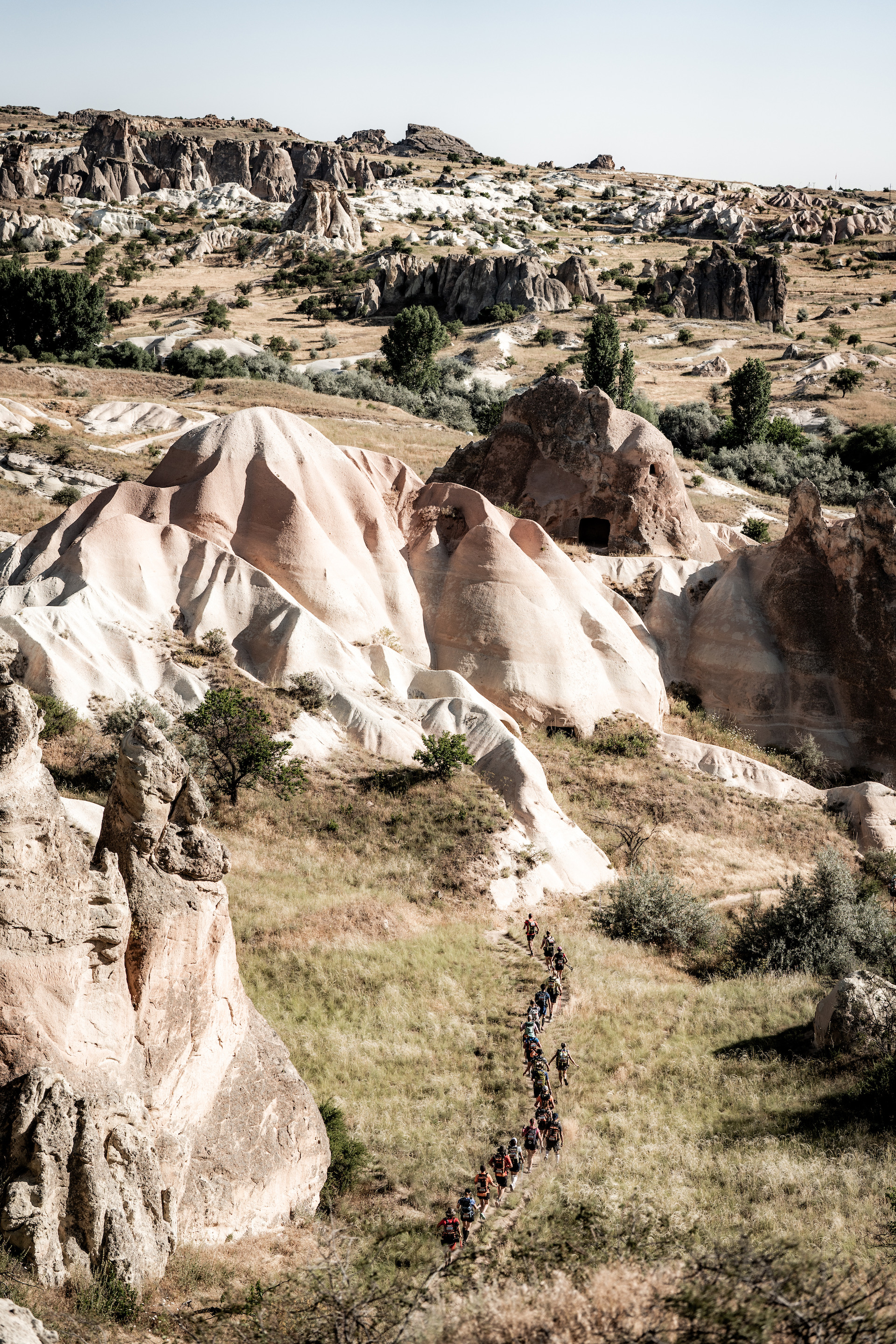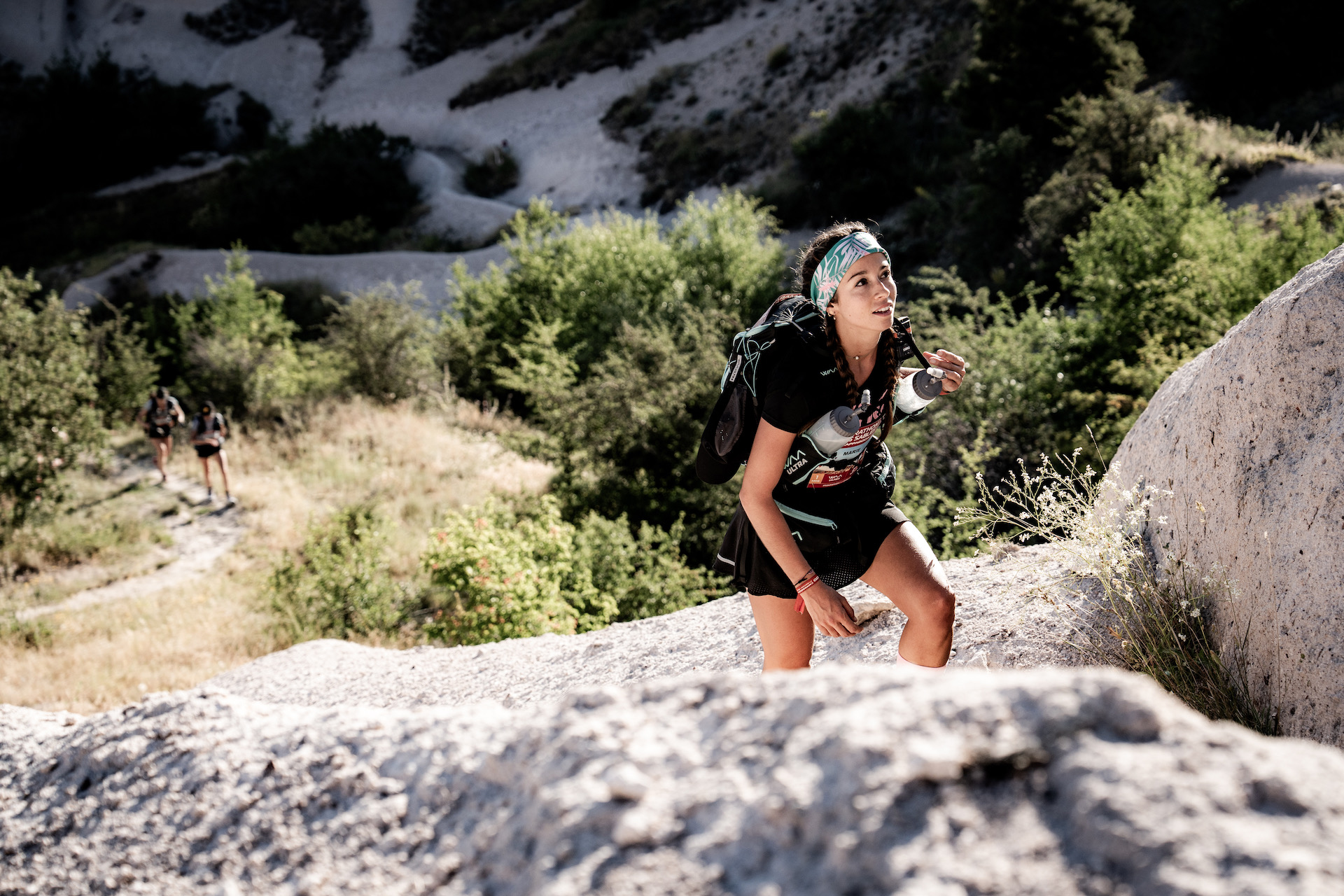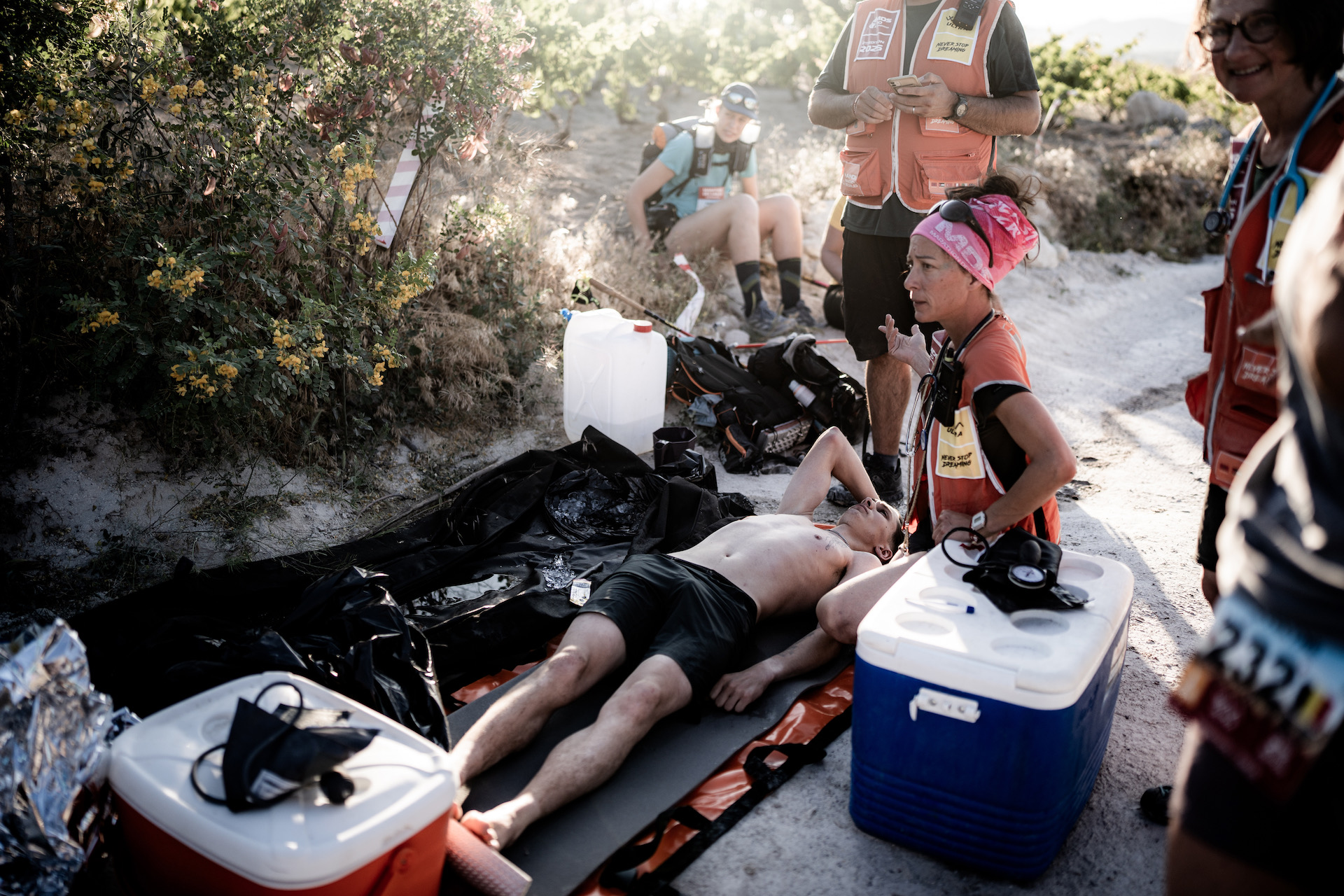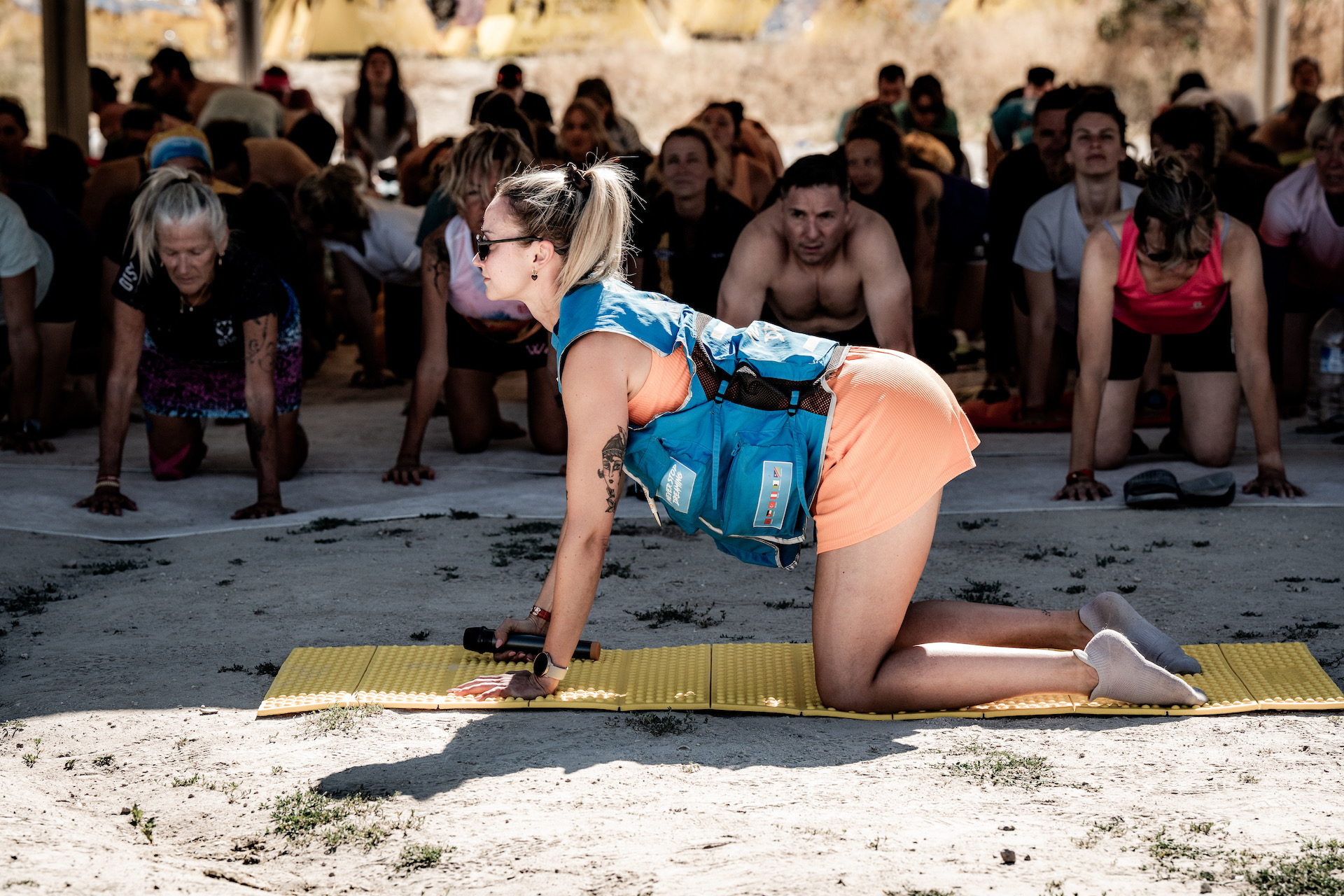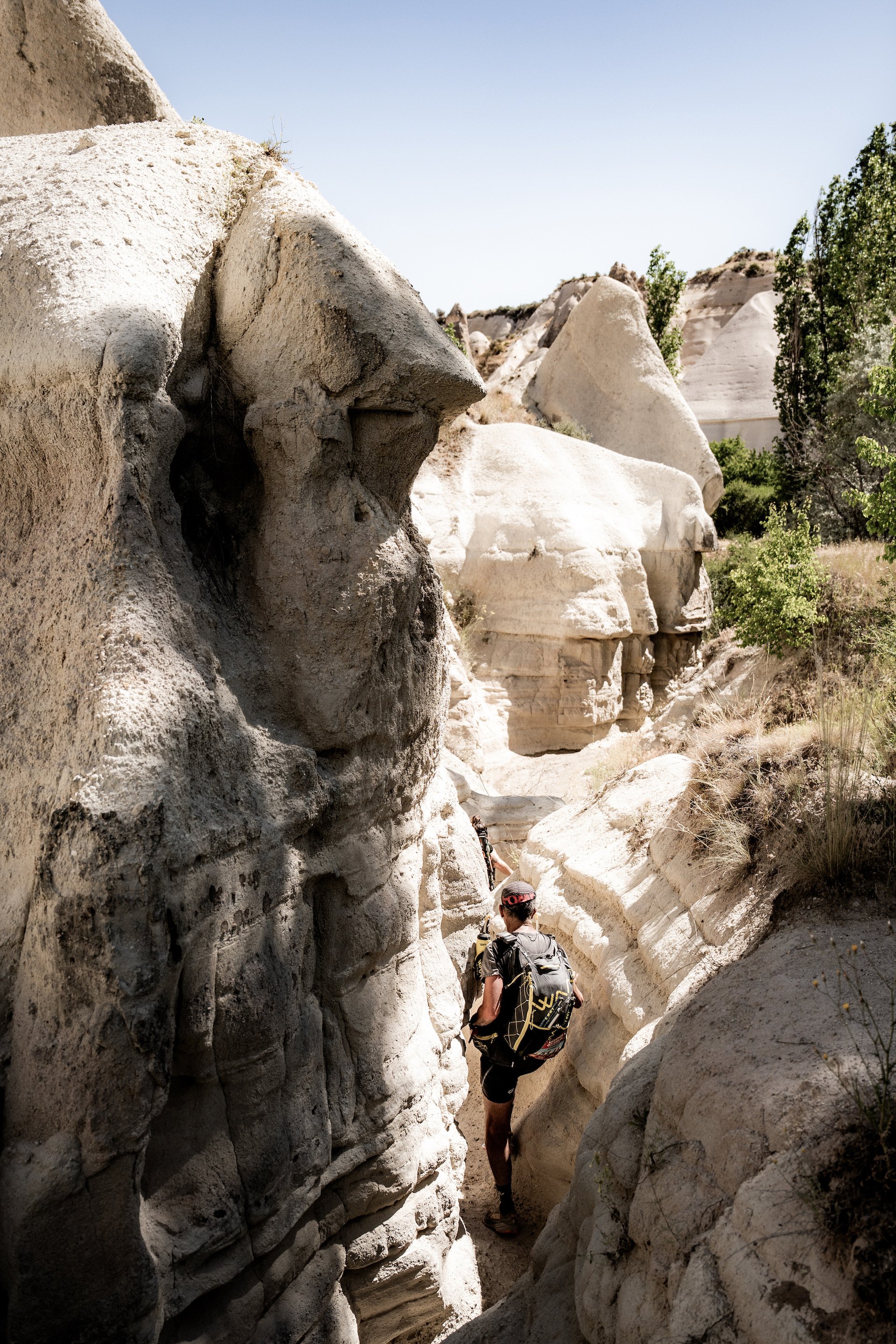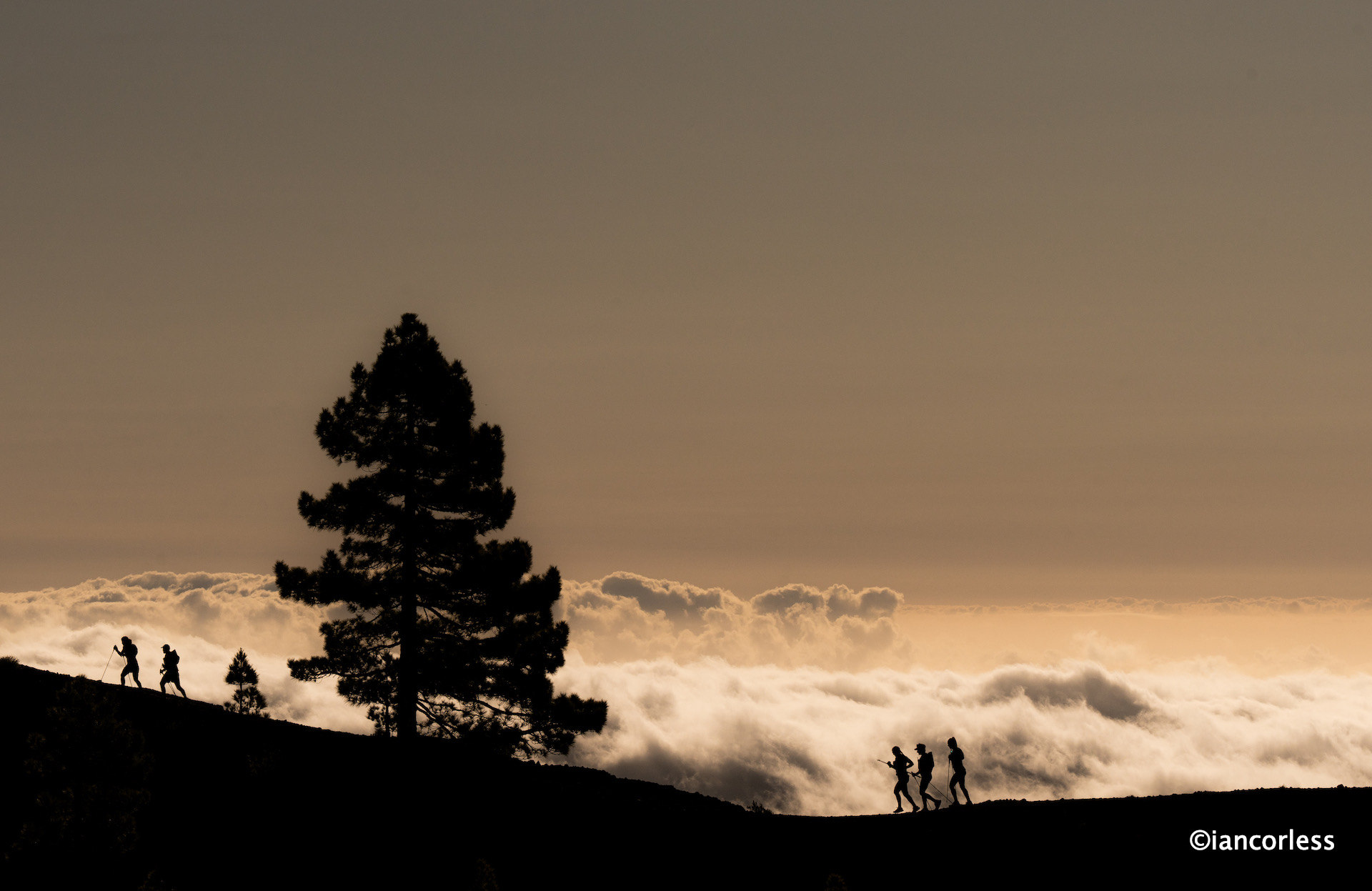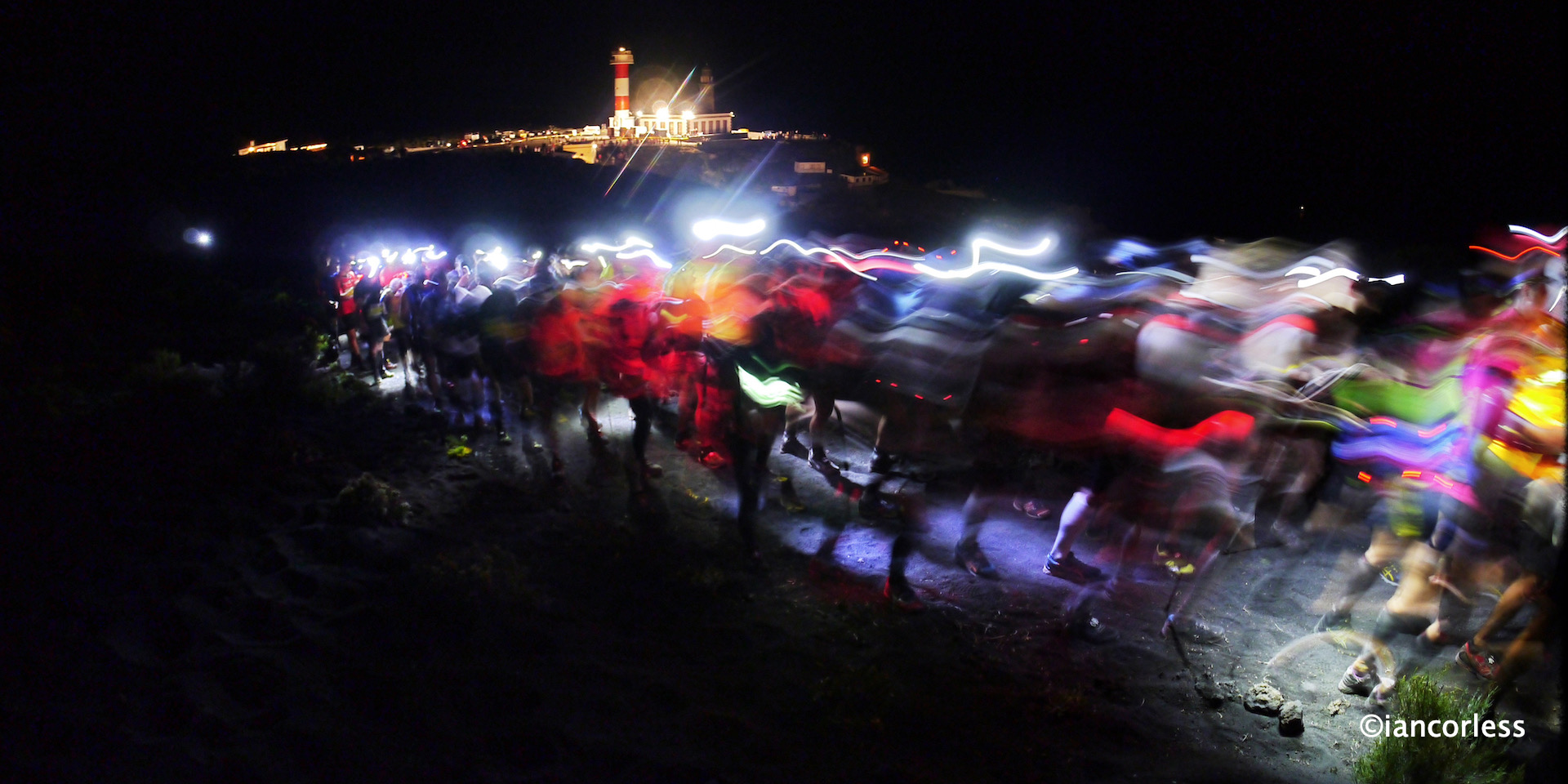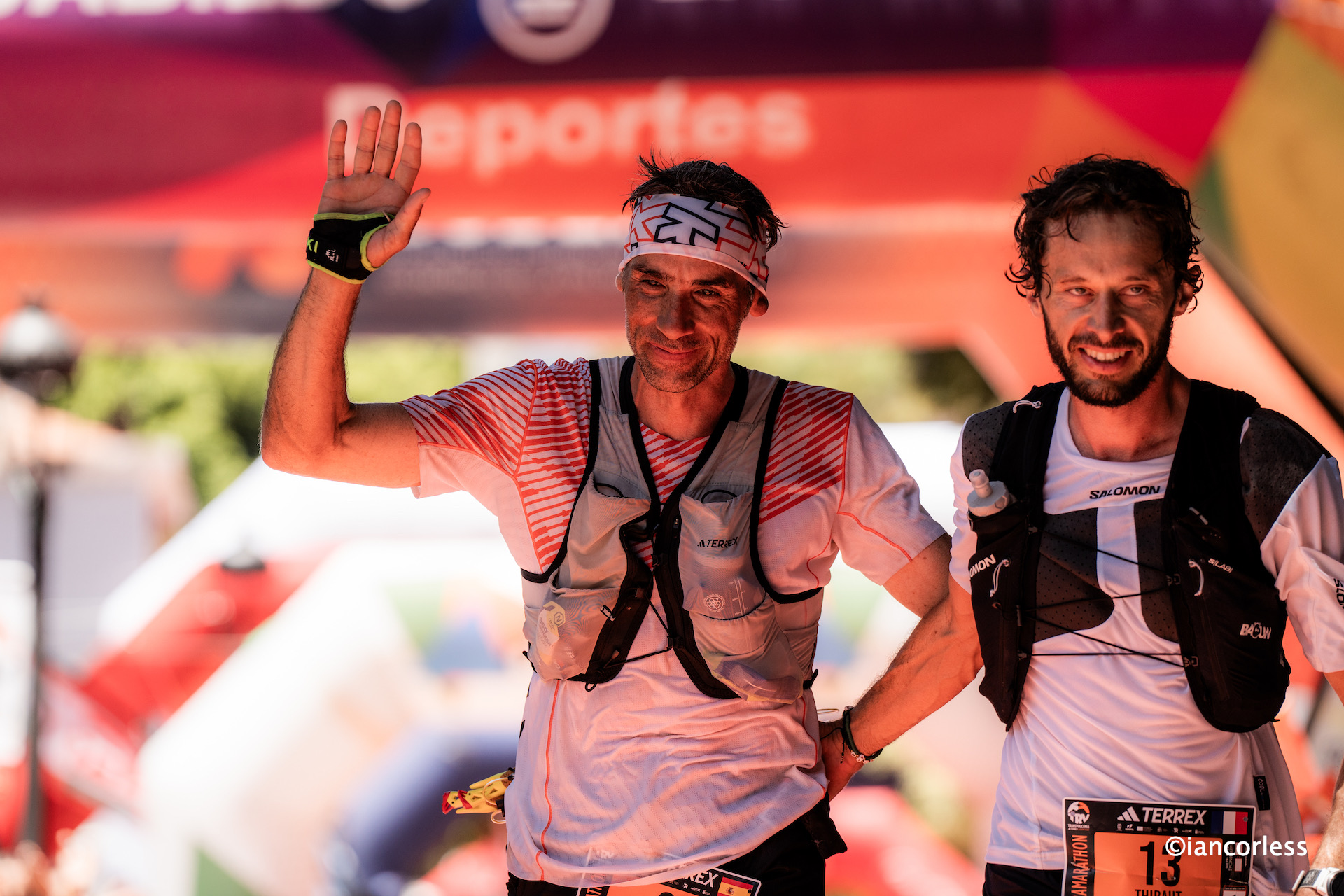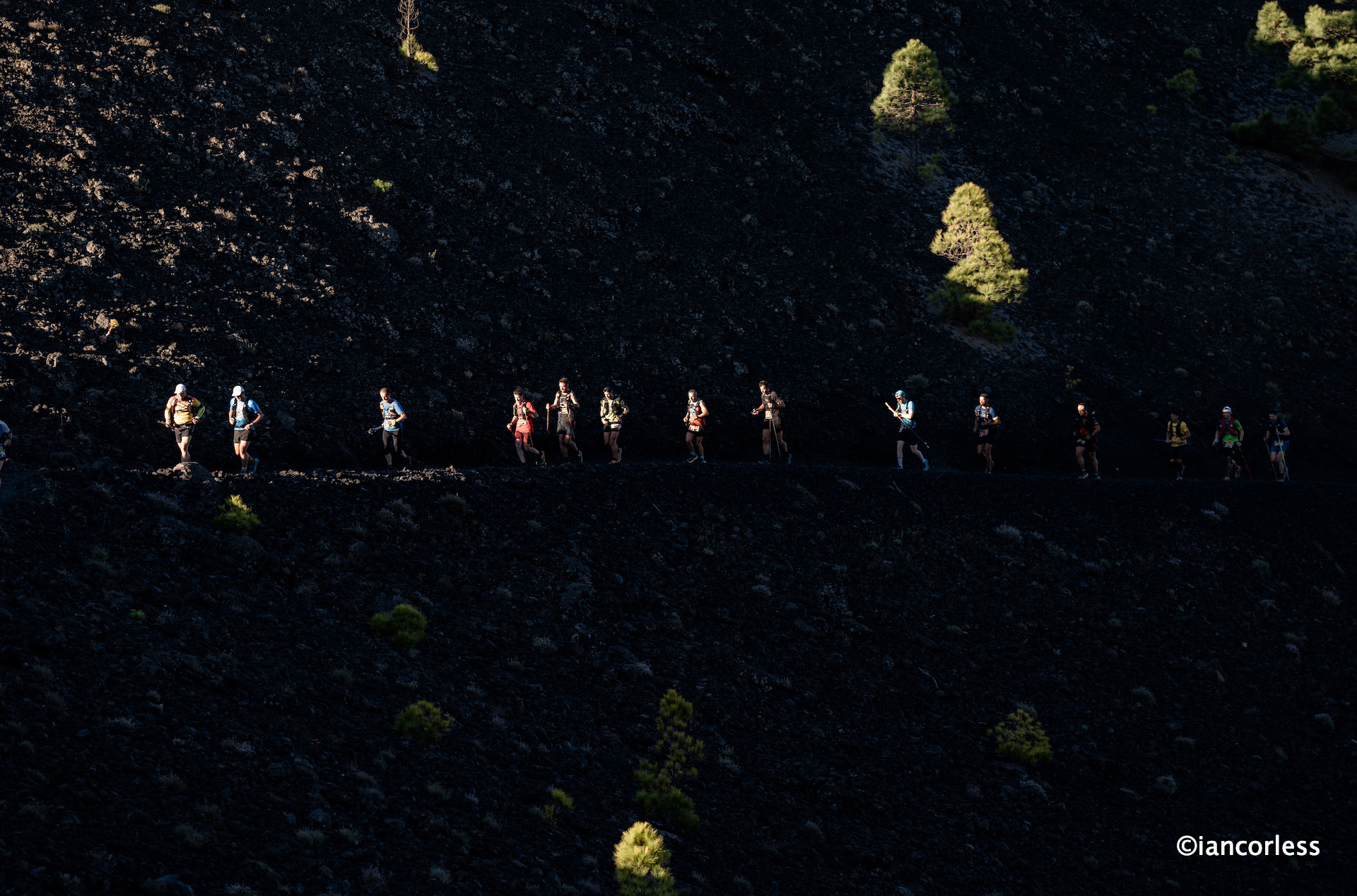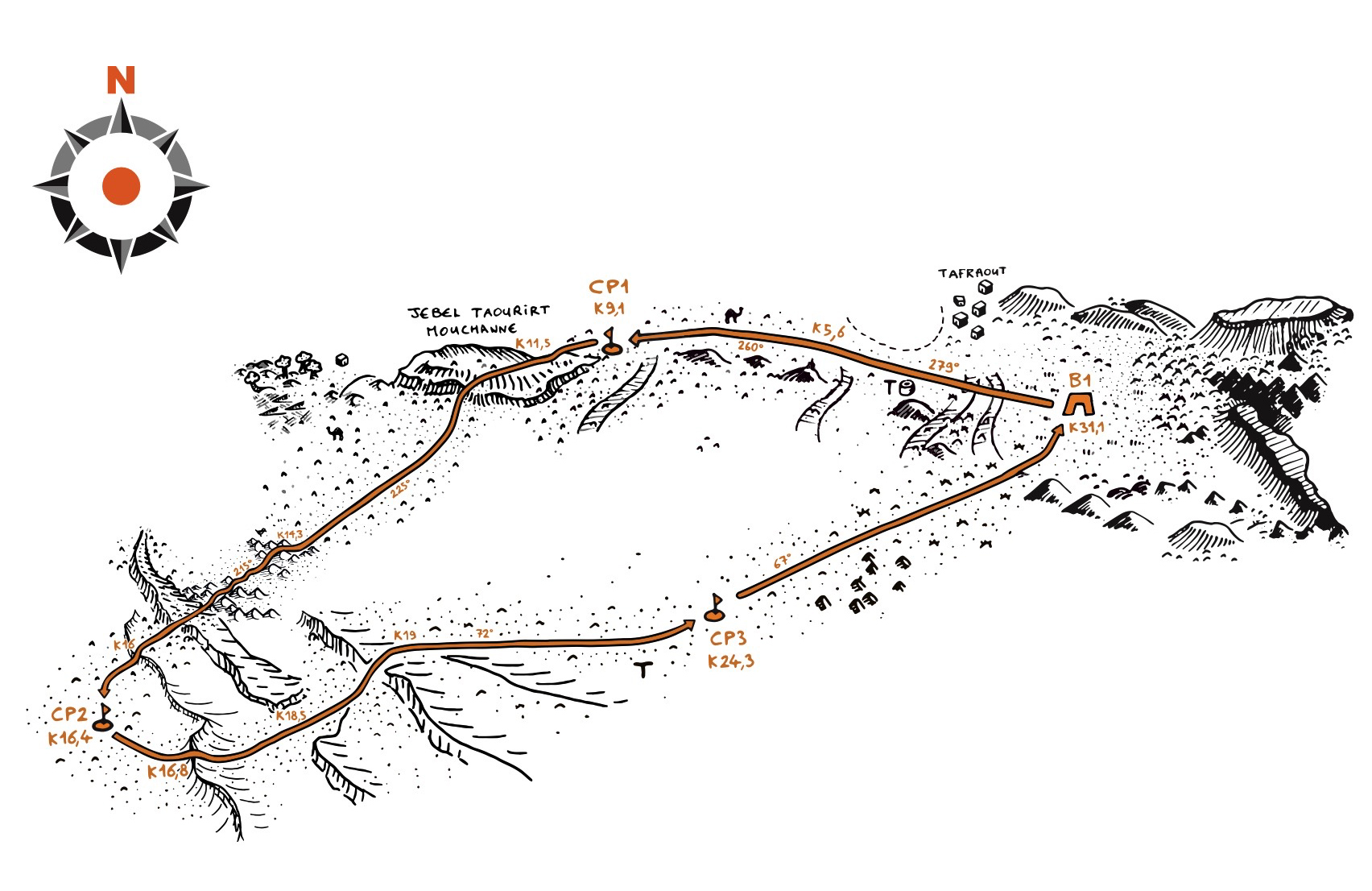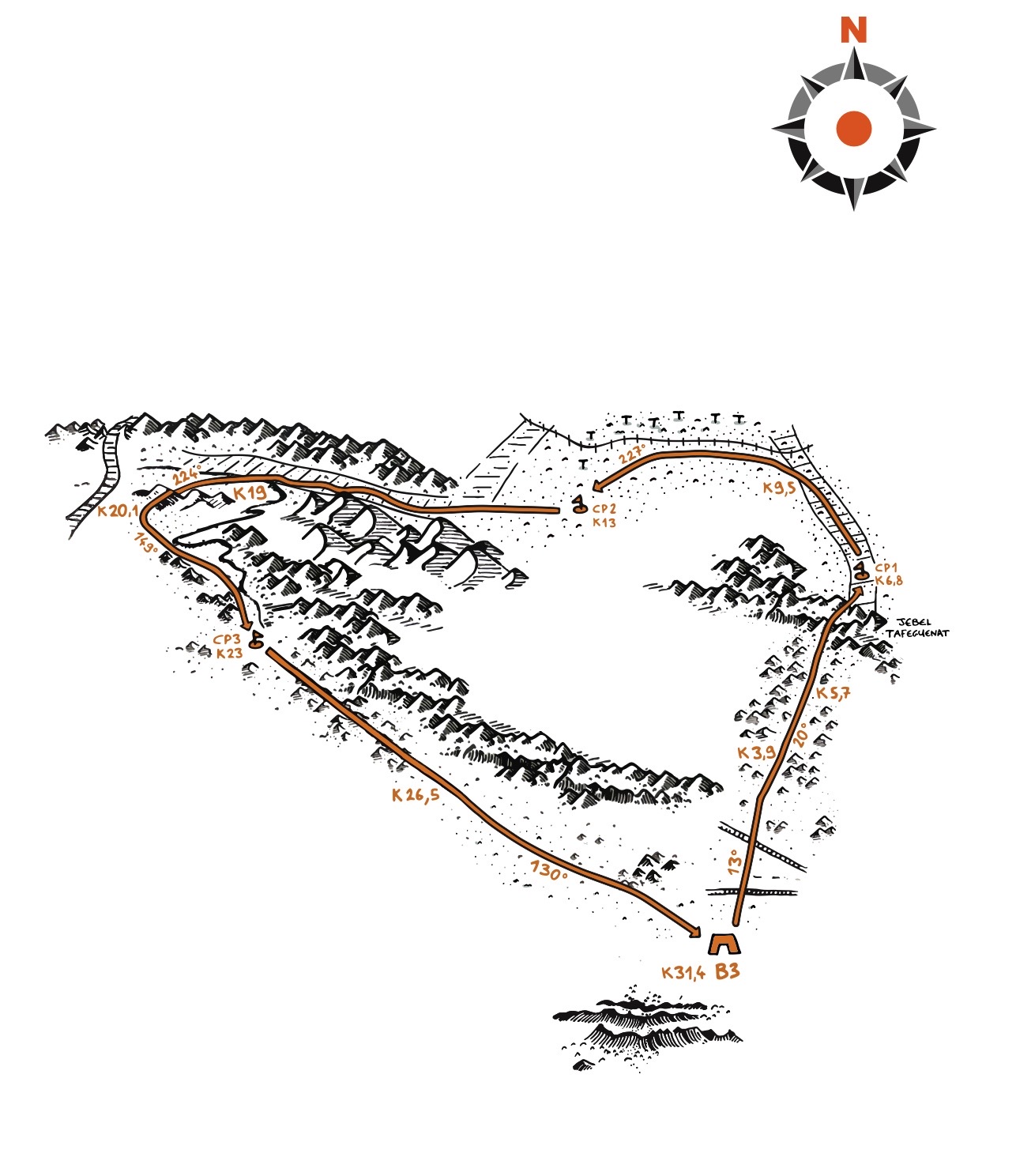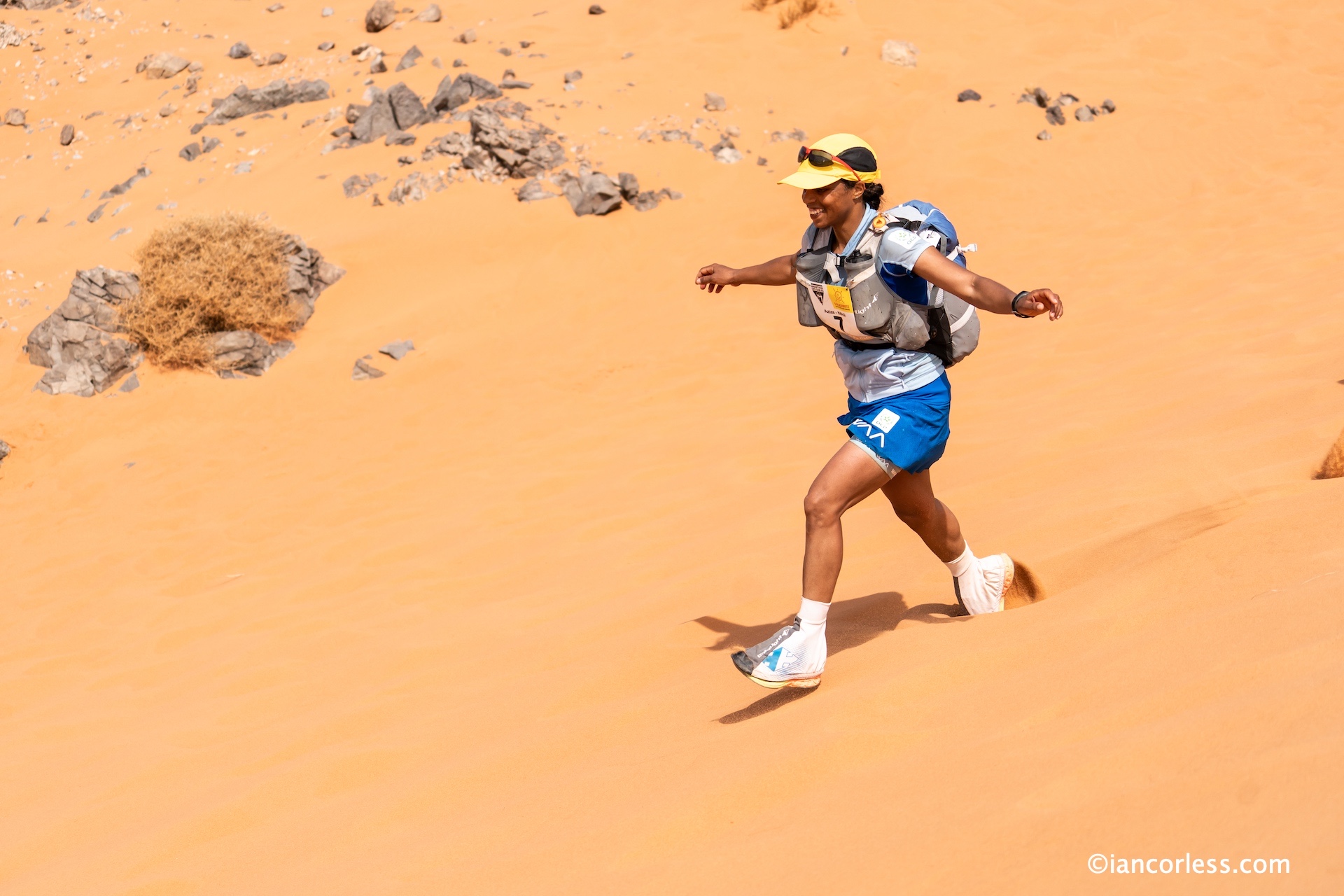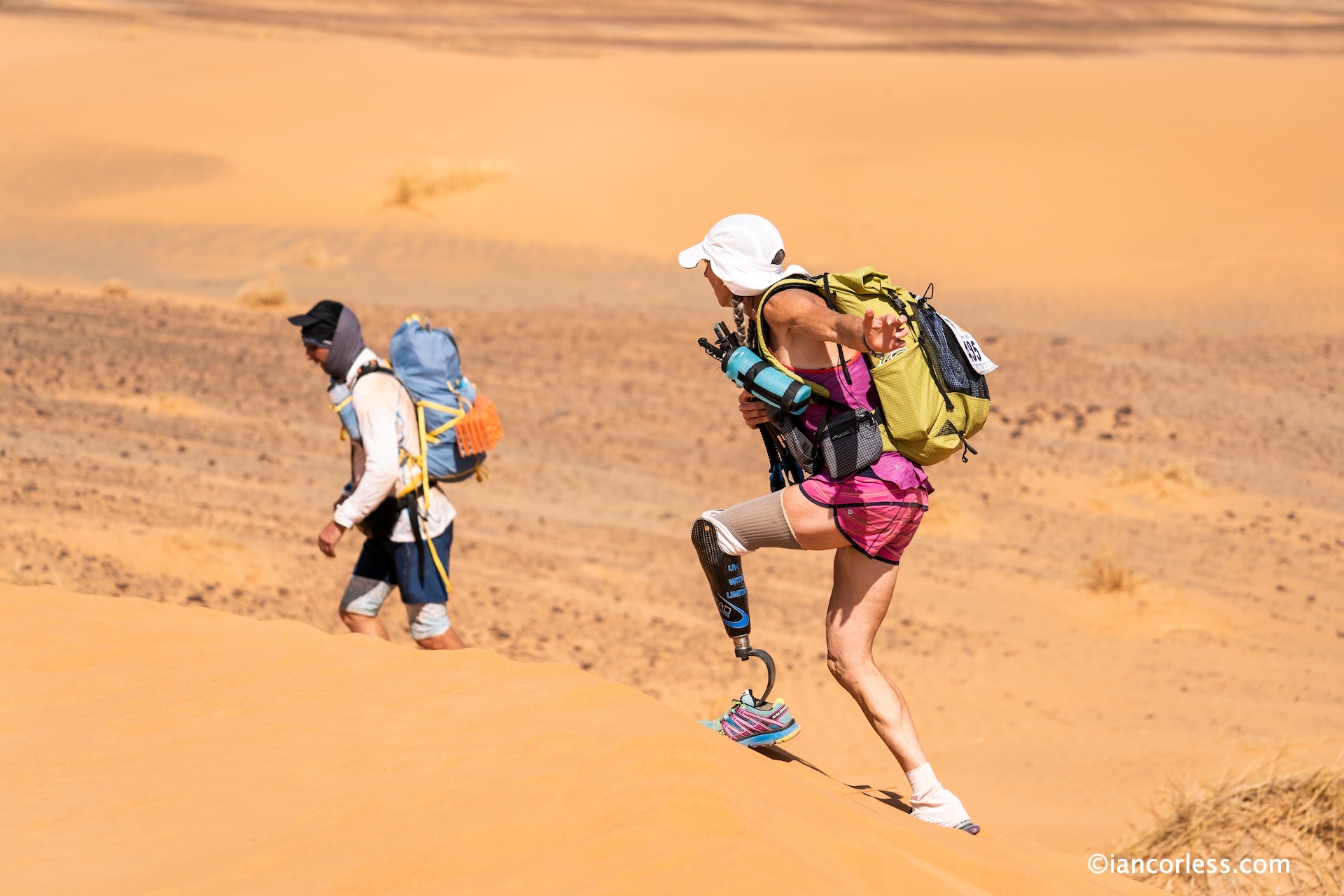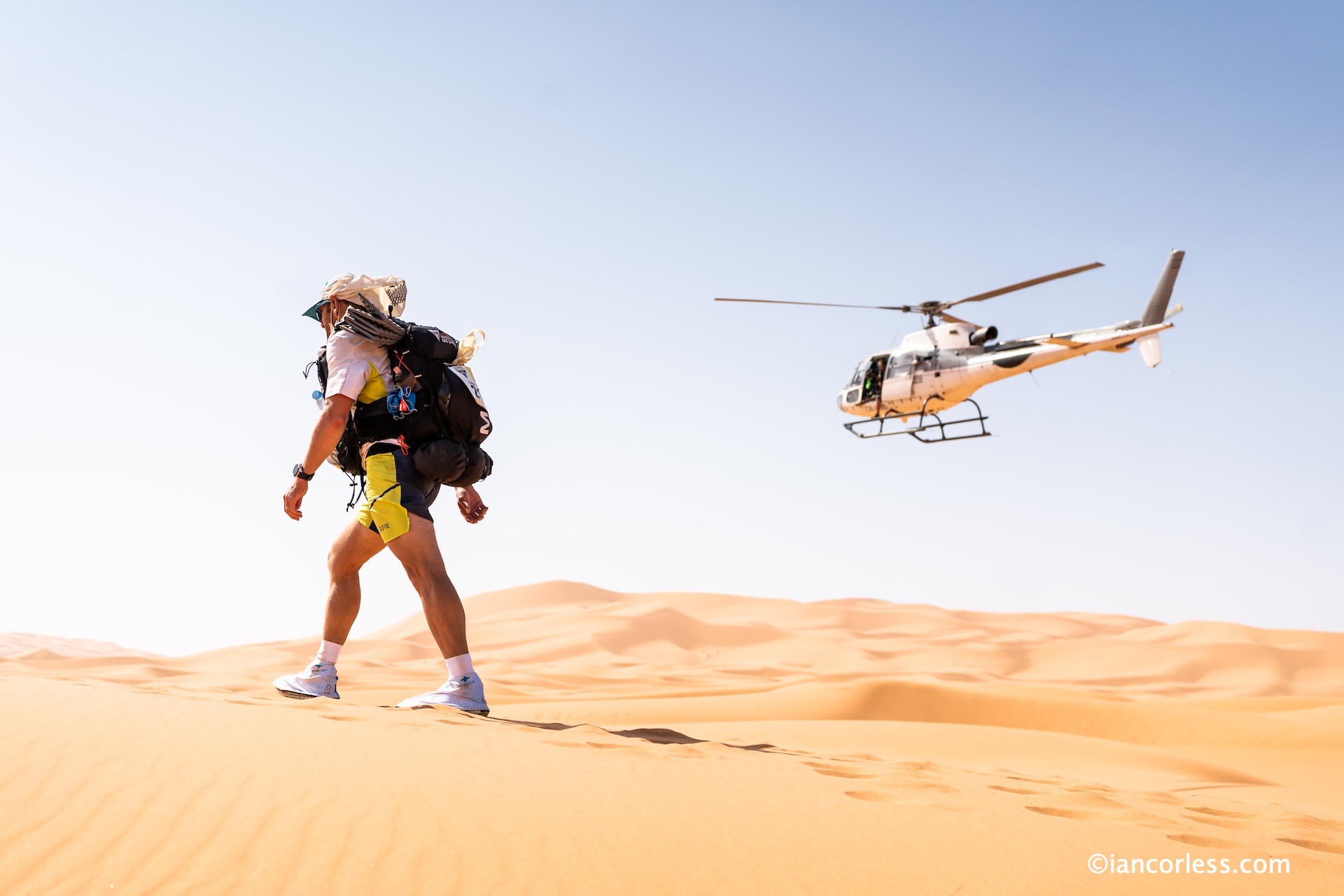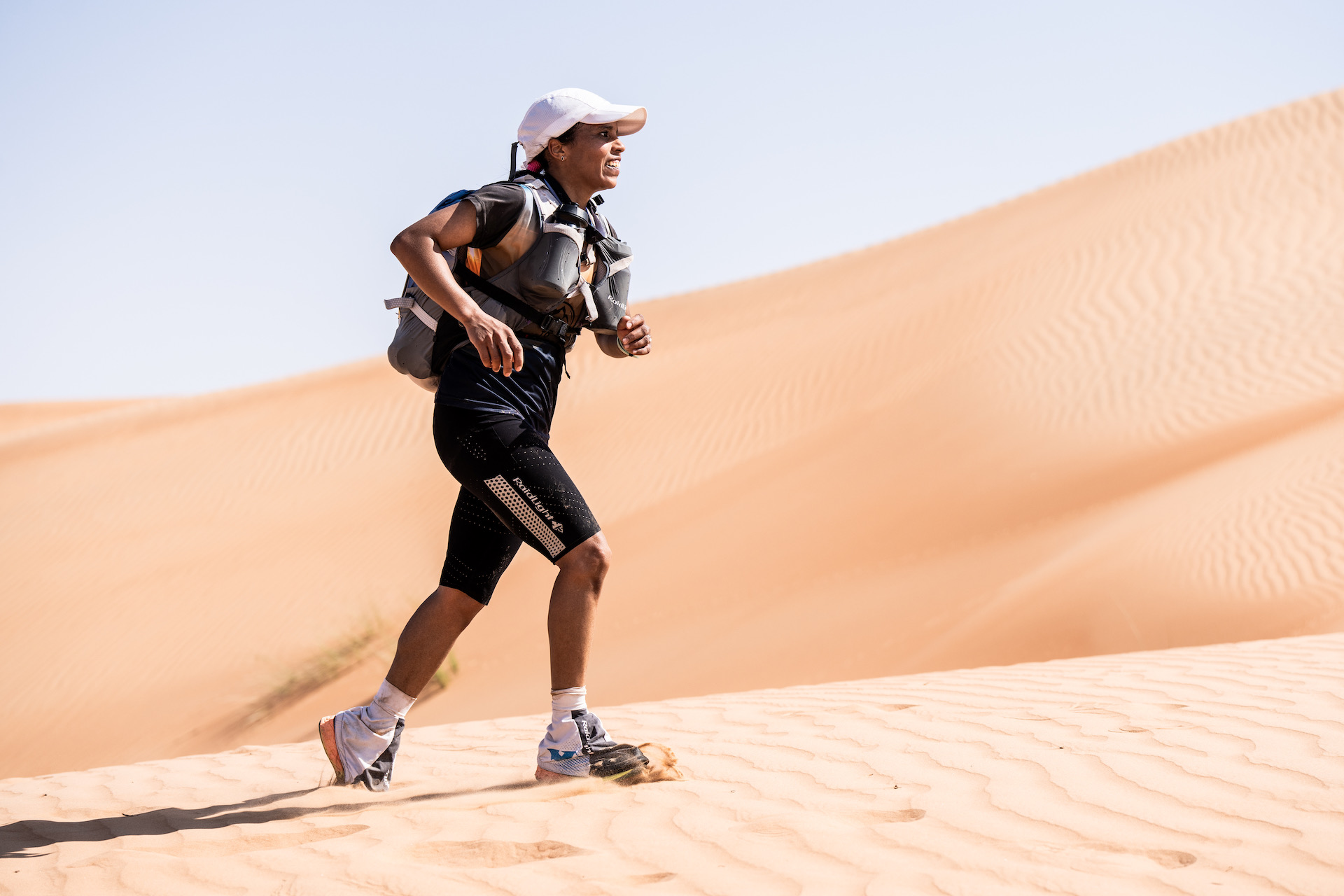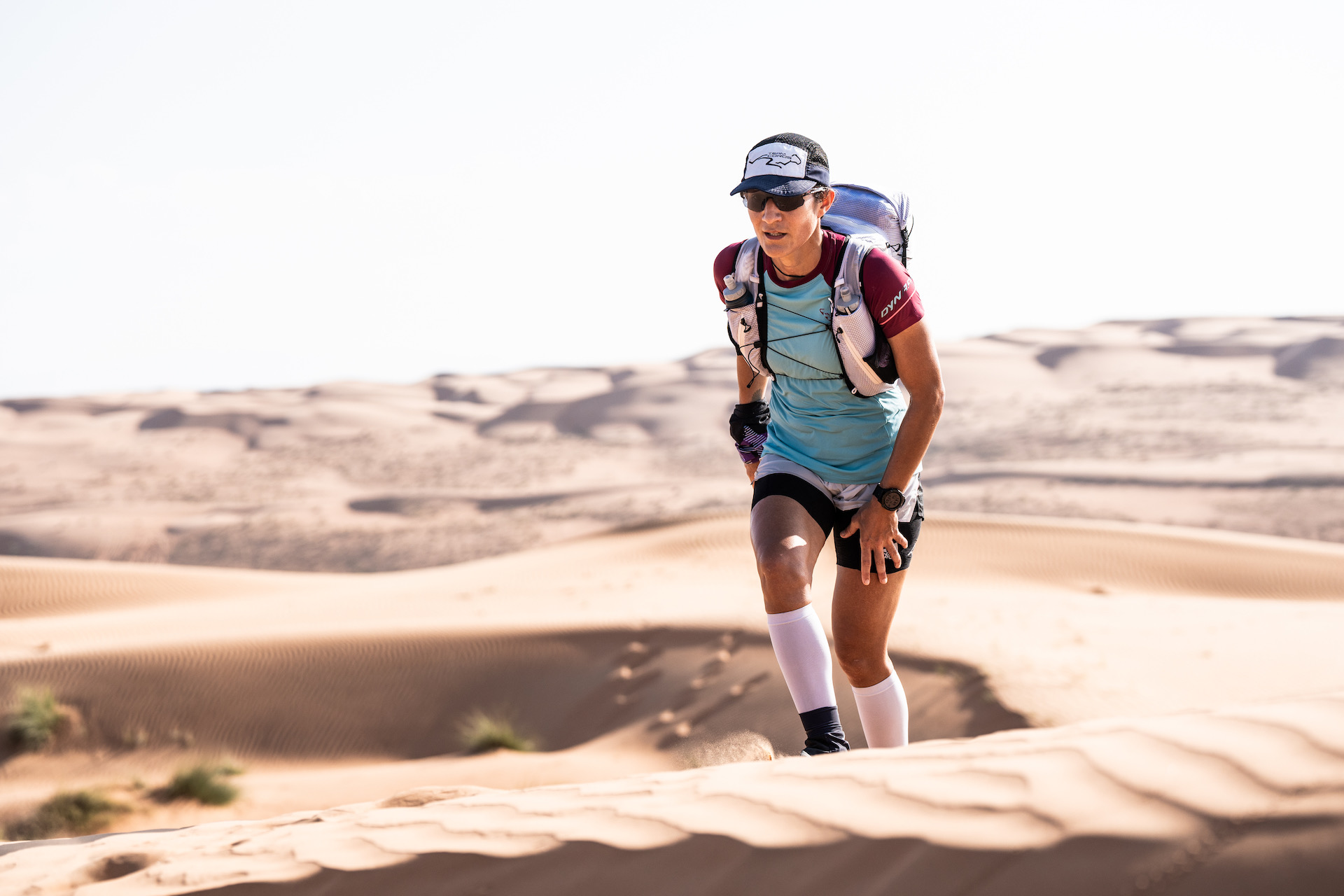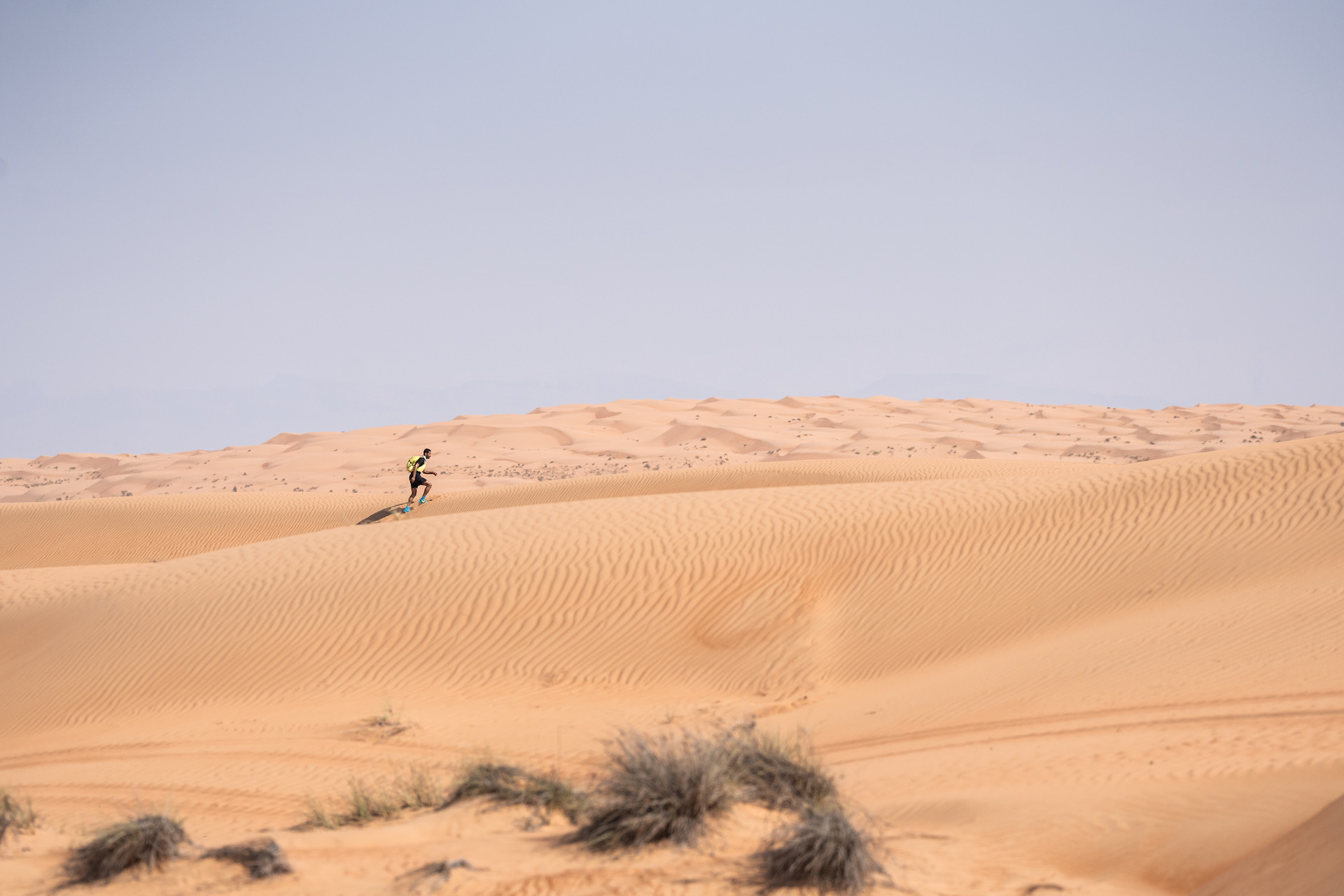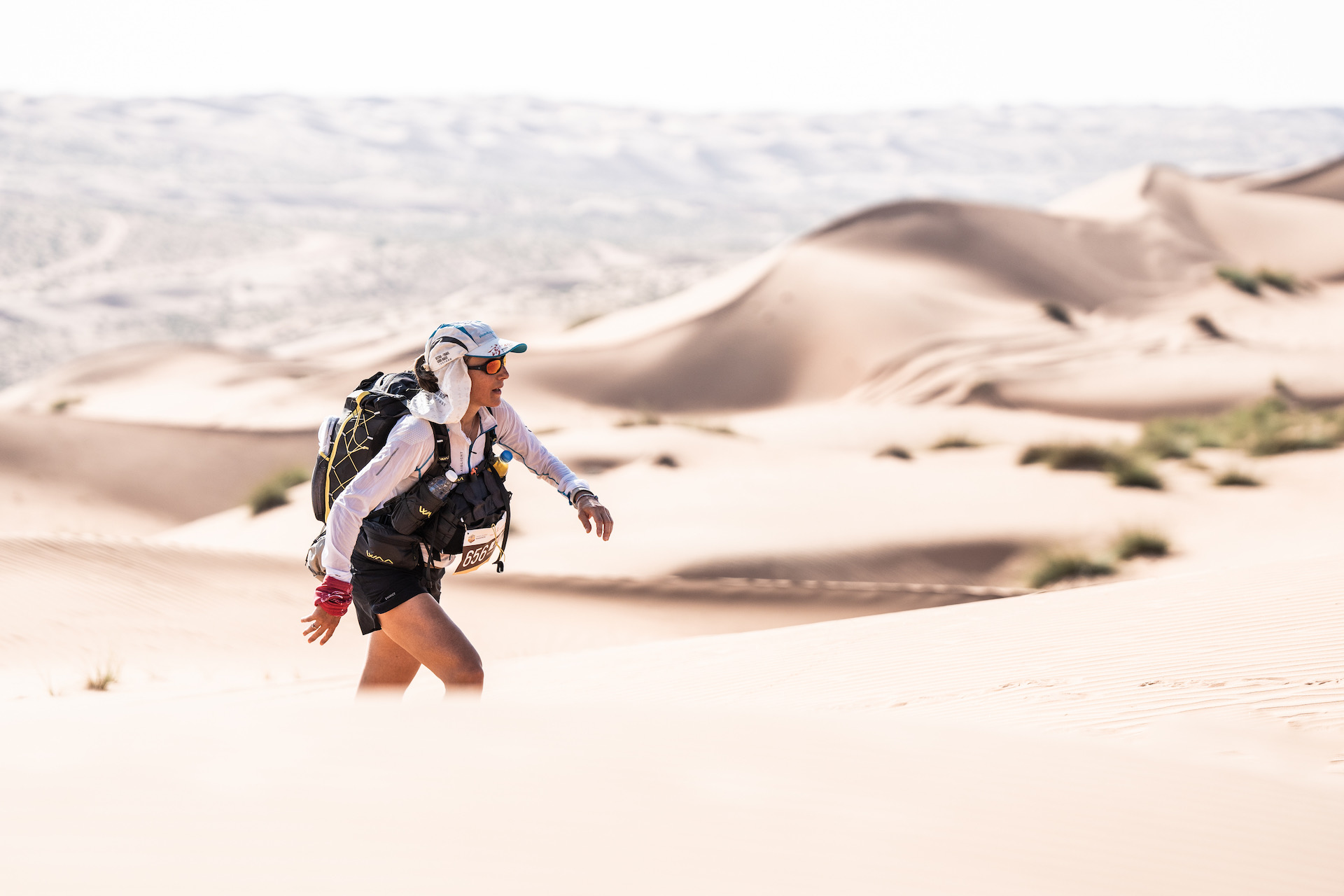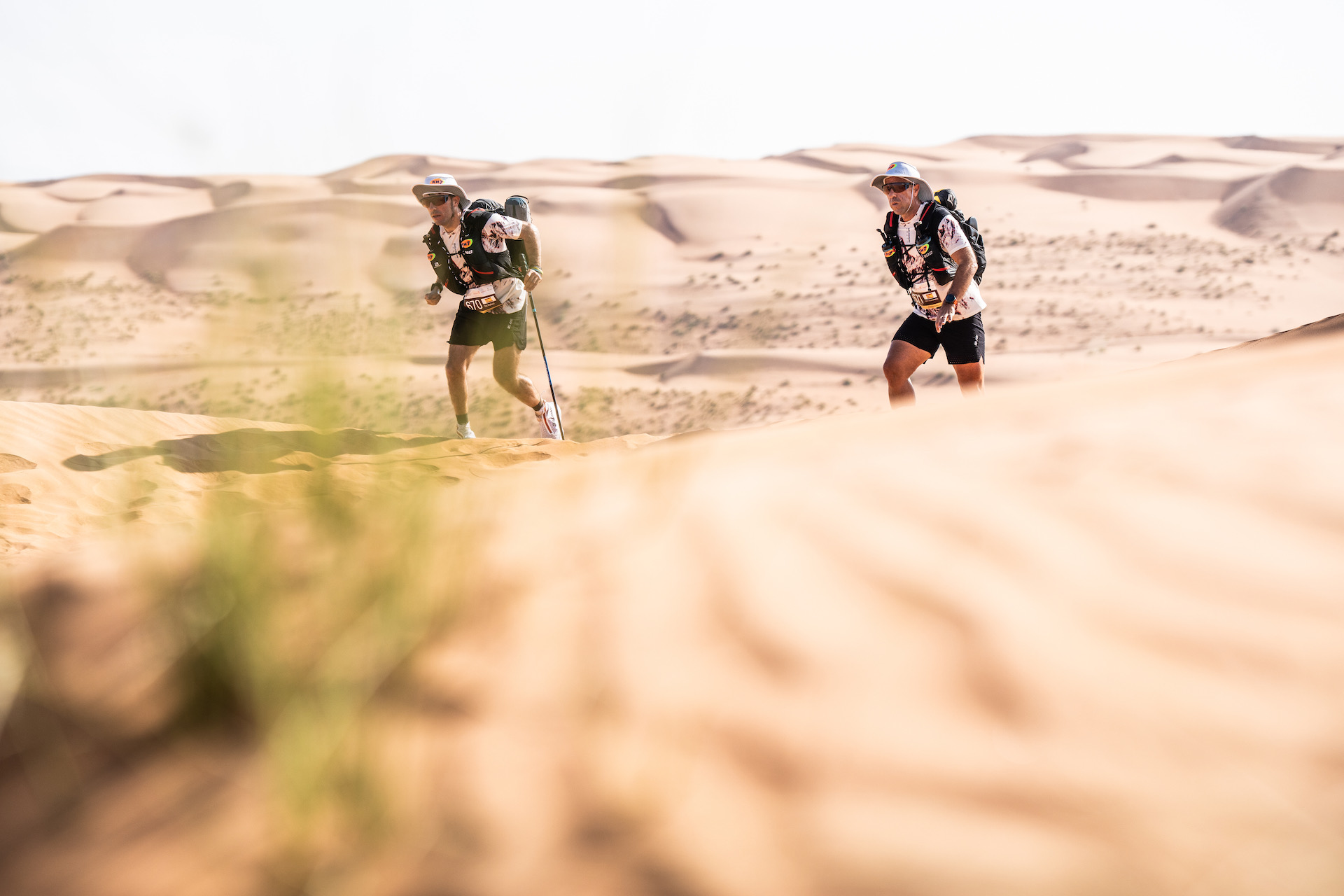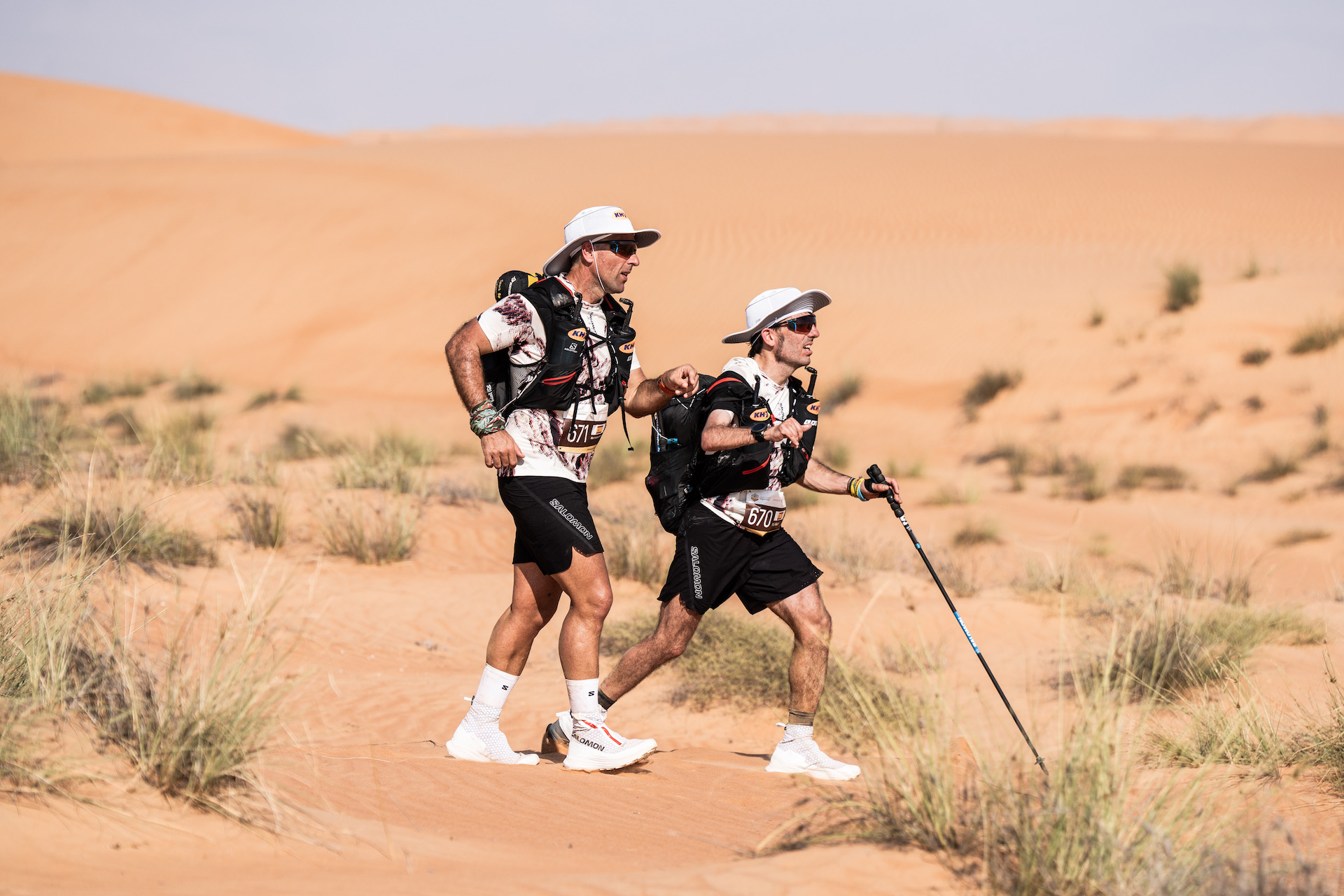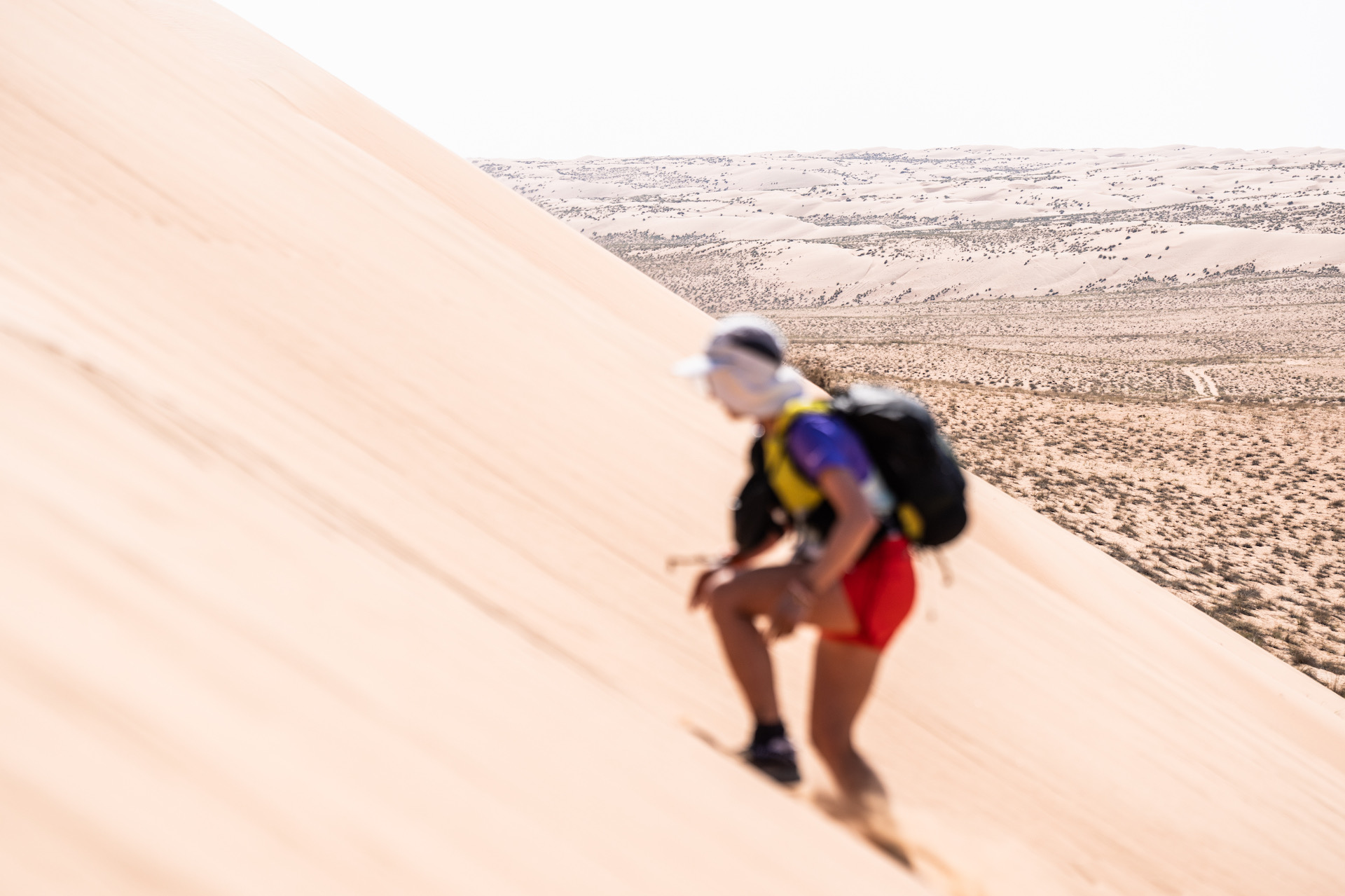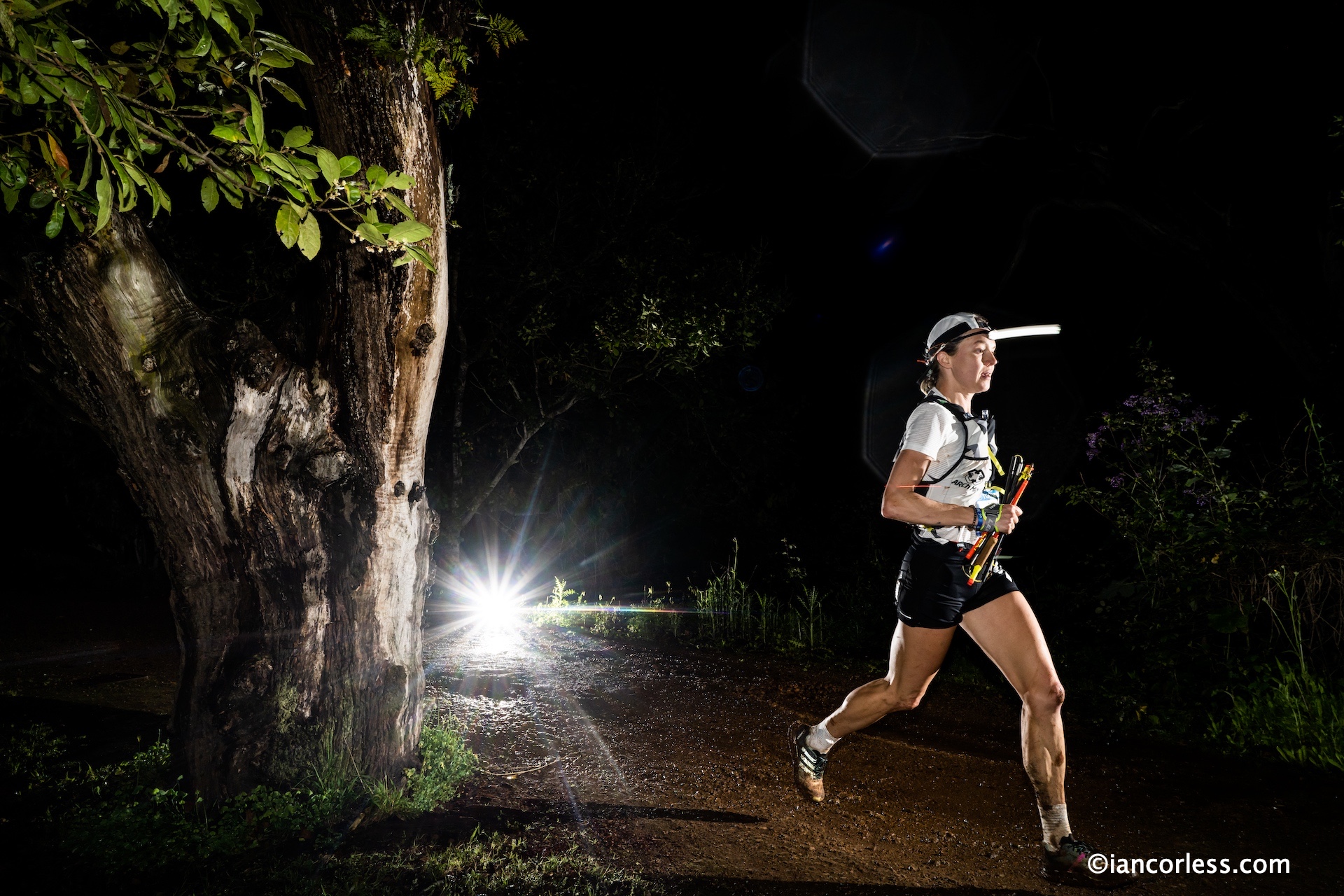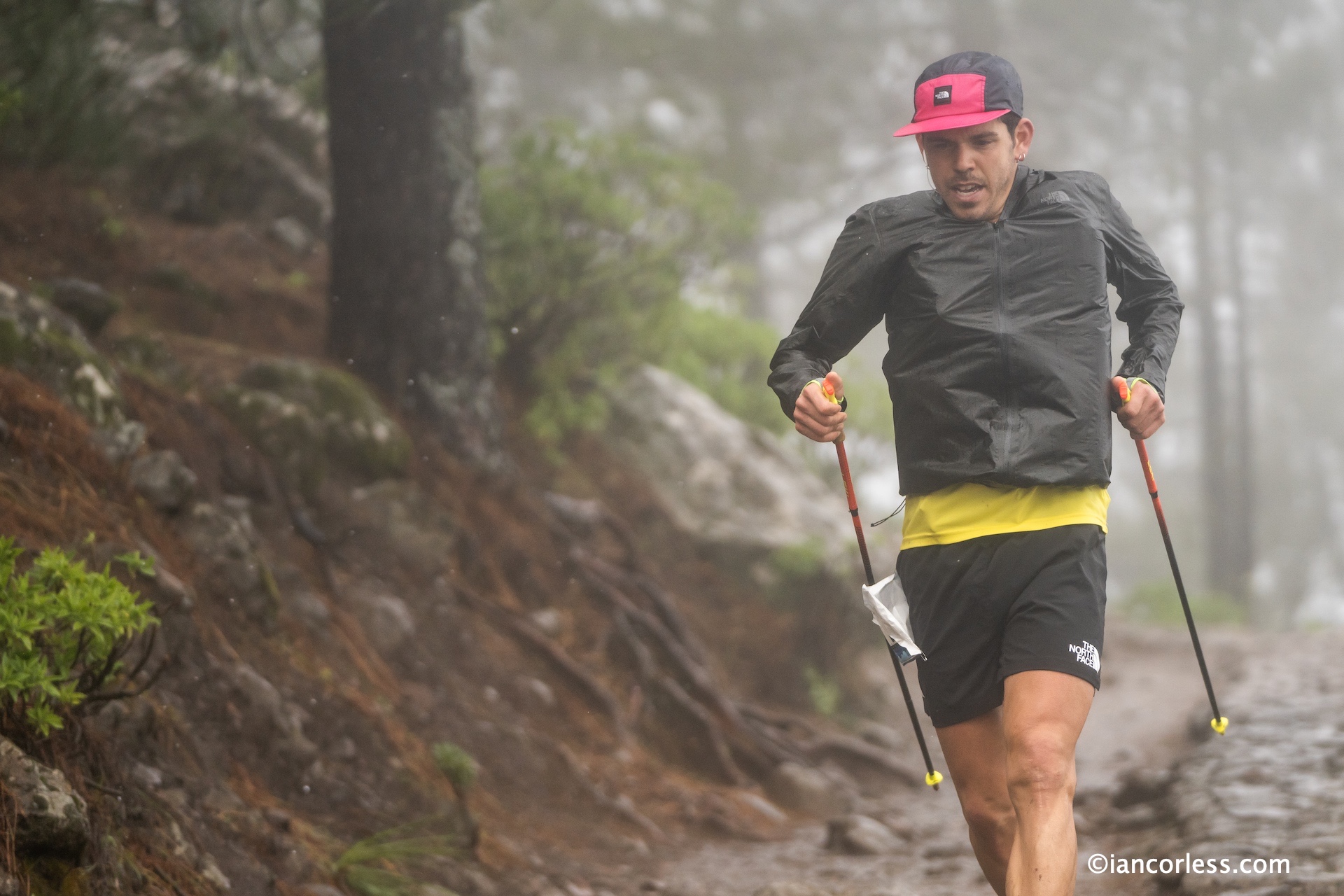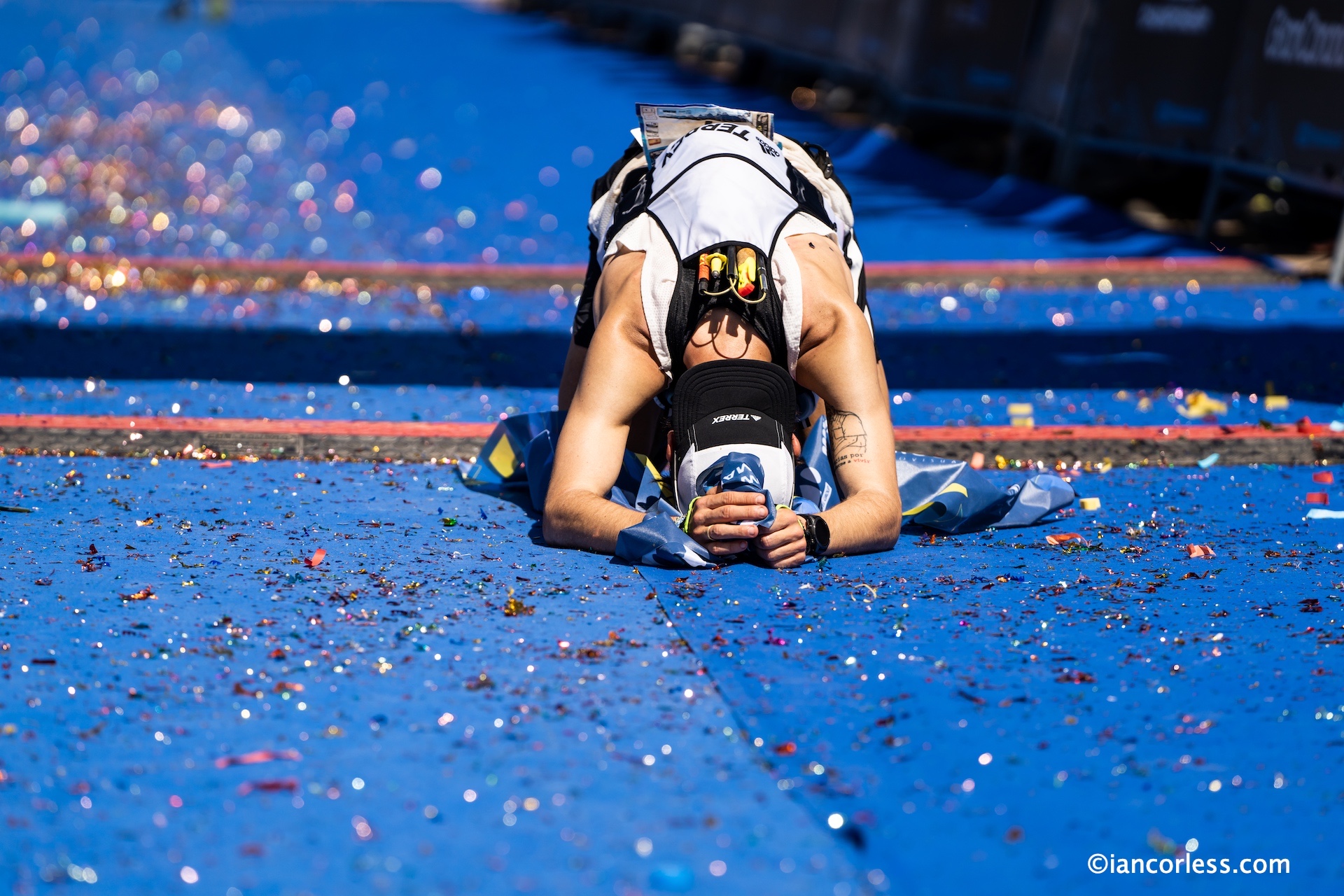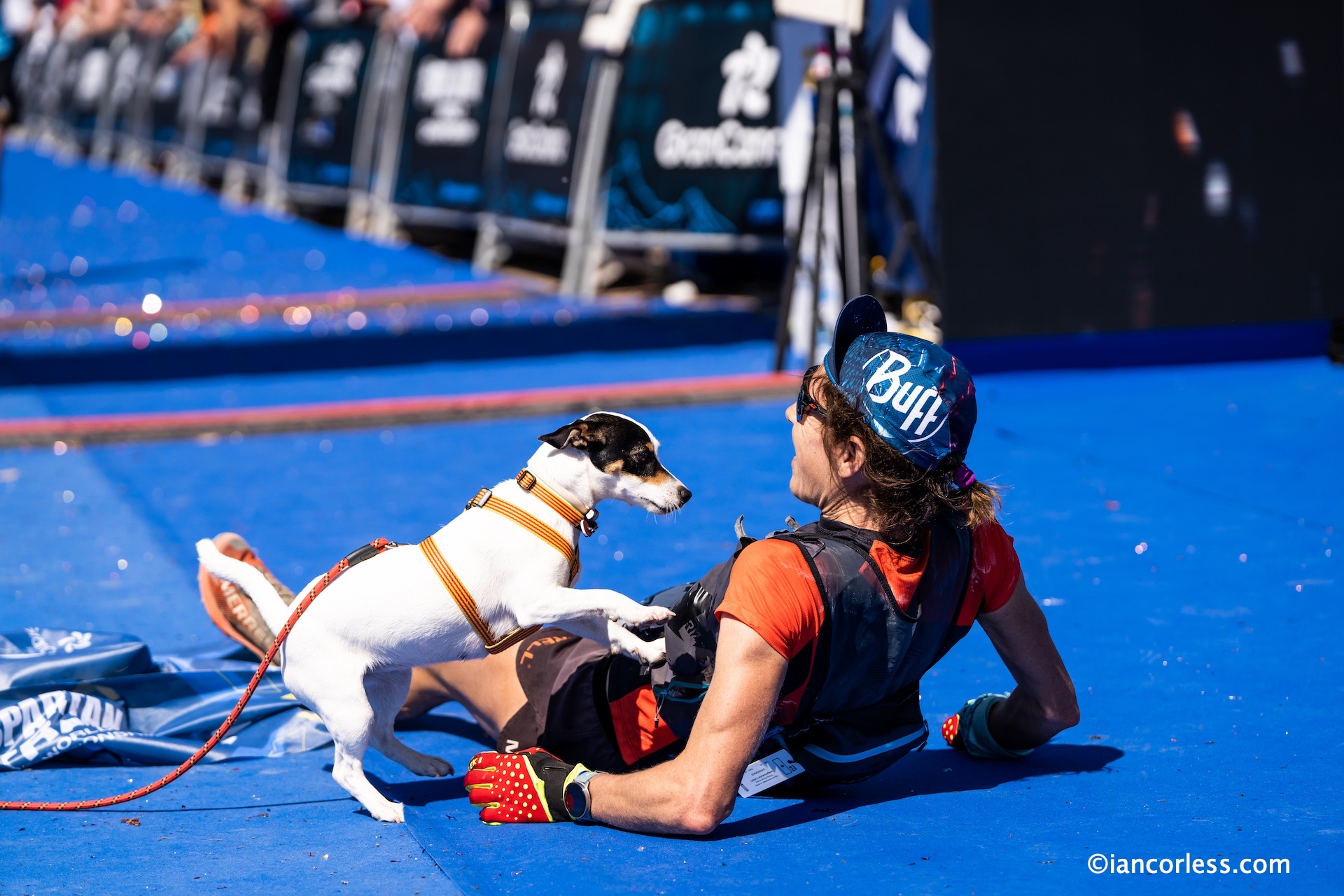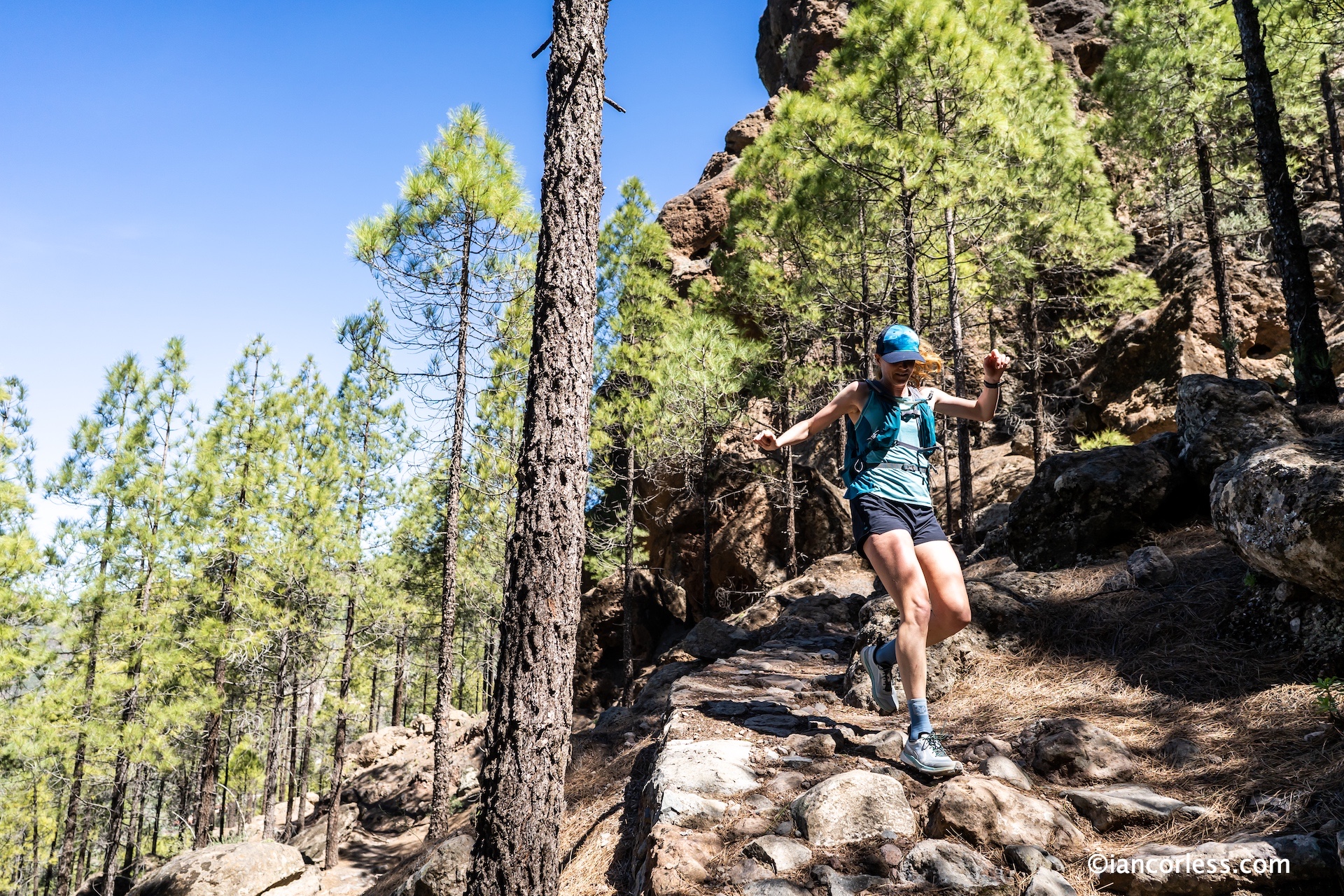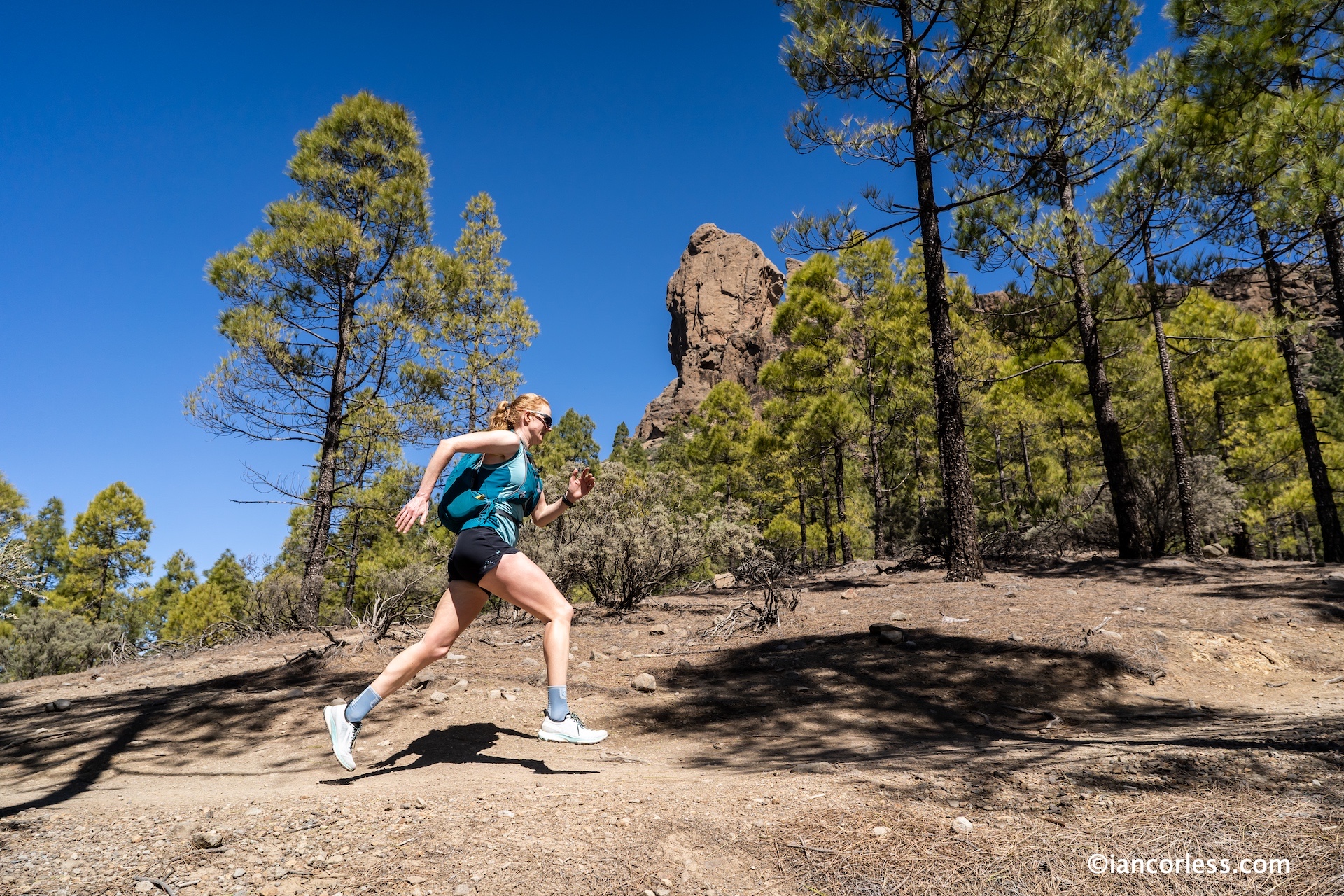
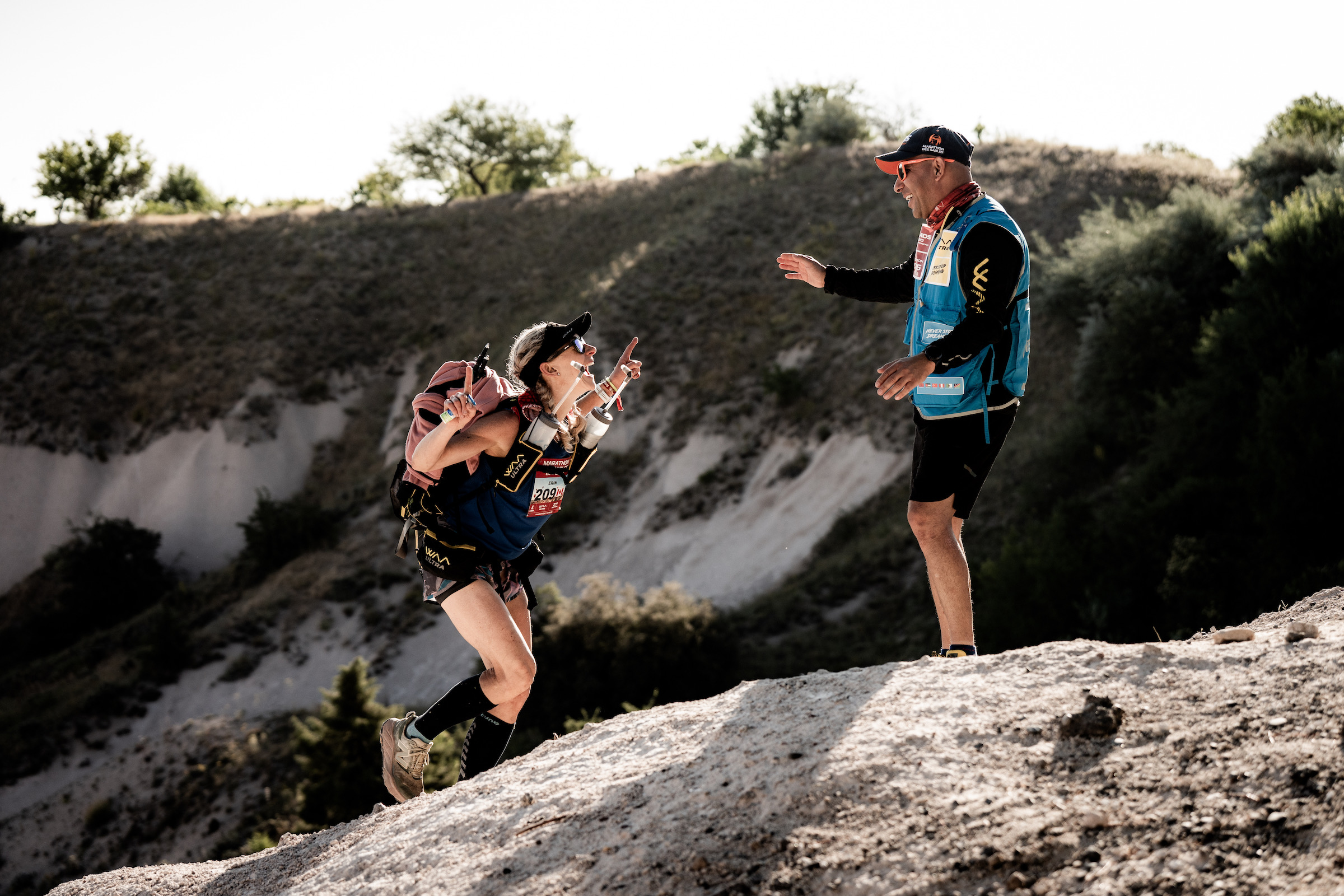
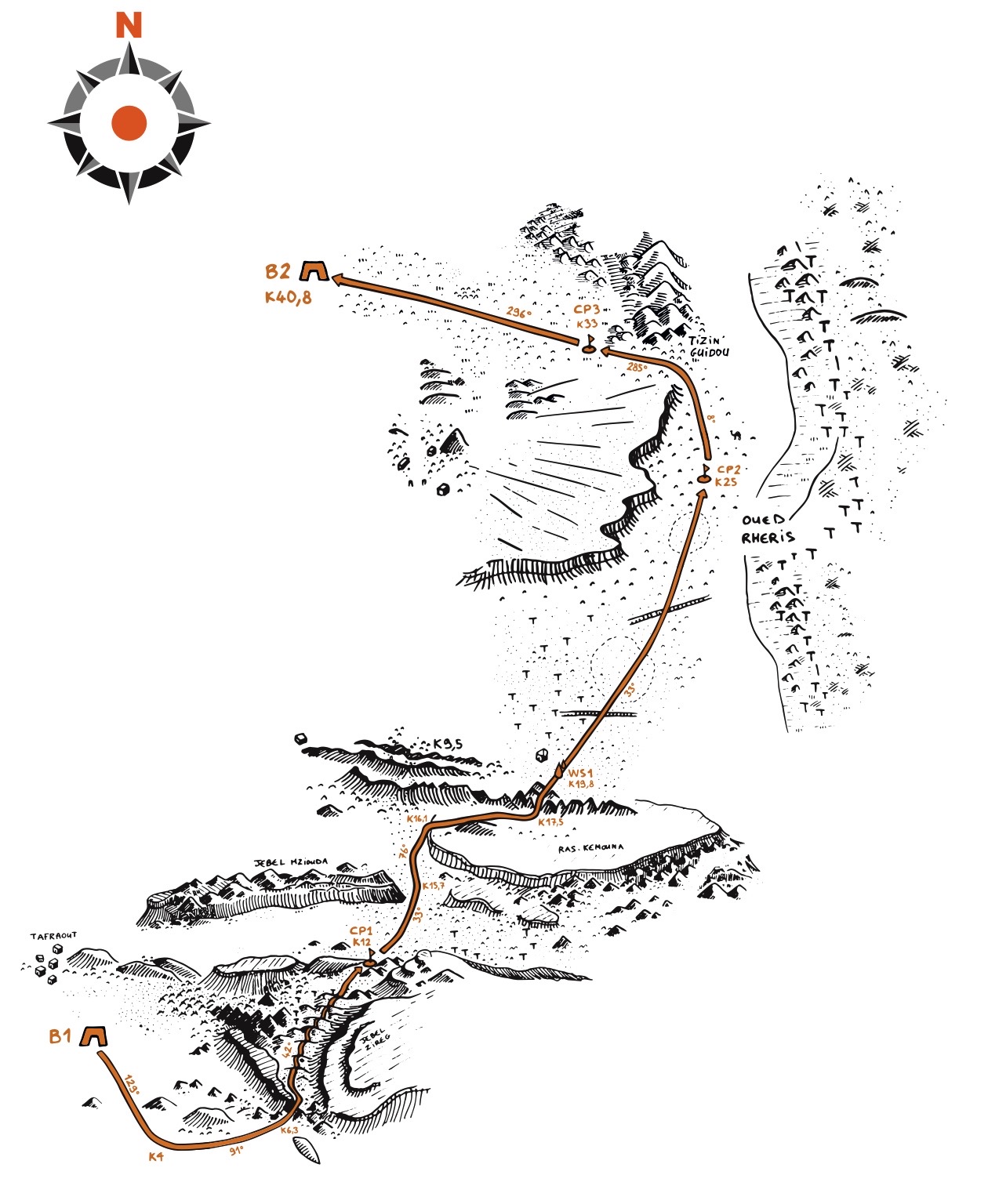
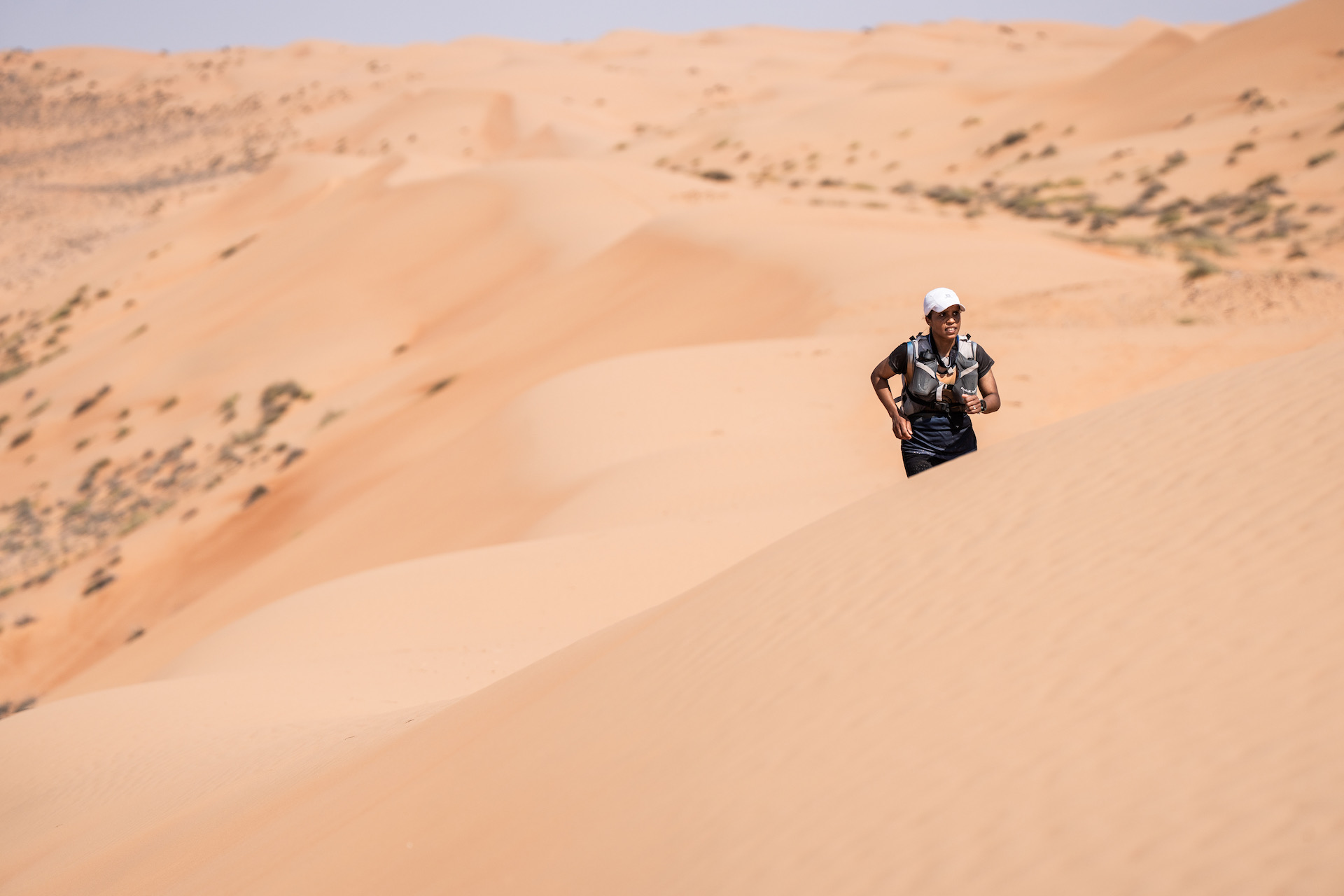
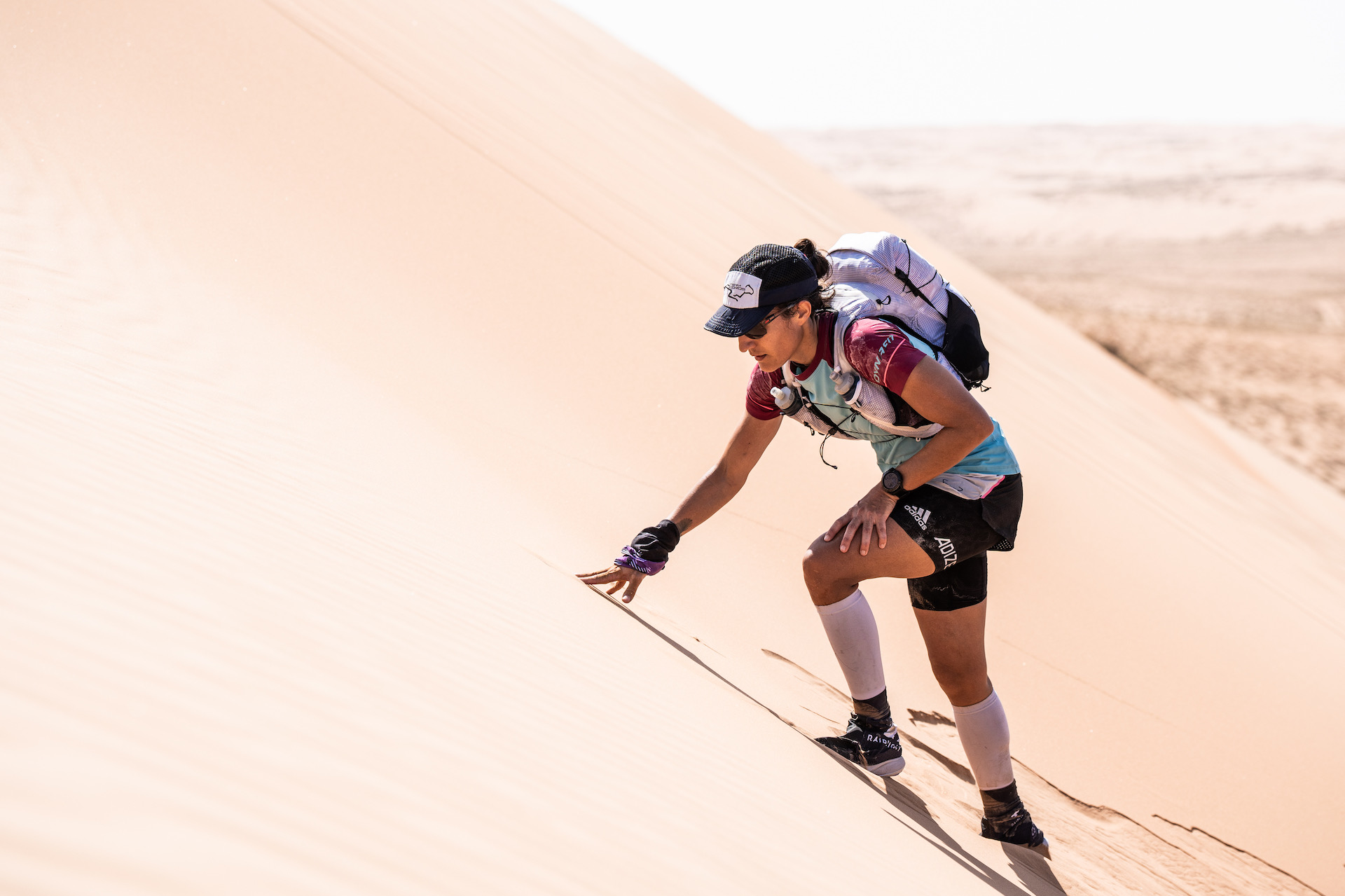
Navigating a different route to the 2023 Oman Desert Marathon, stage 1 of the 2024 edition proved to be a tough challenge and one that saw the lead change in the latter stages to provide victory for Aziza Raji and Rachid El Morabity.
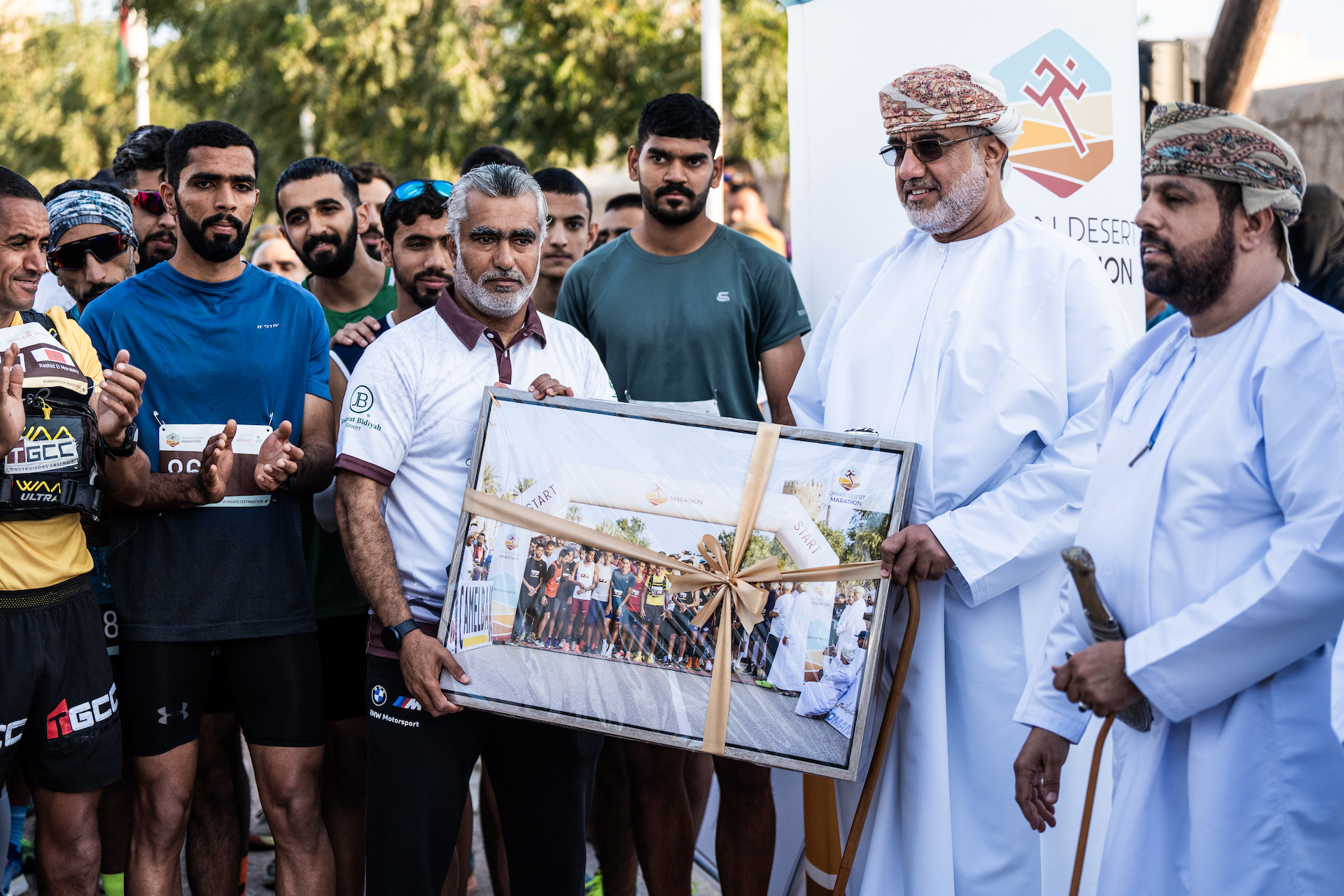
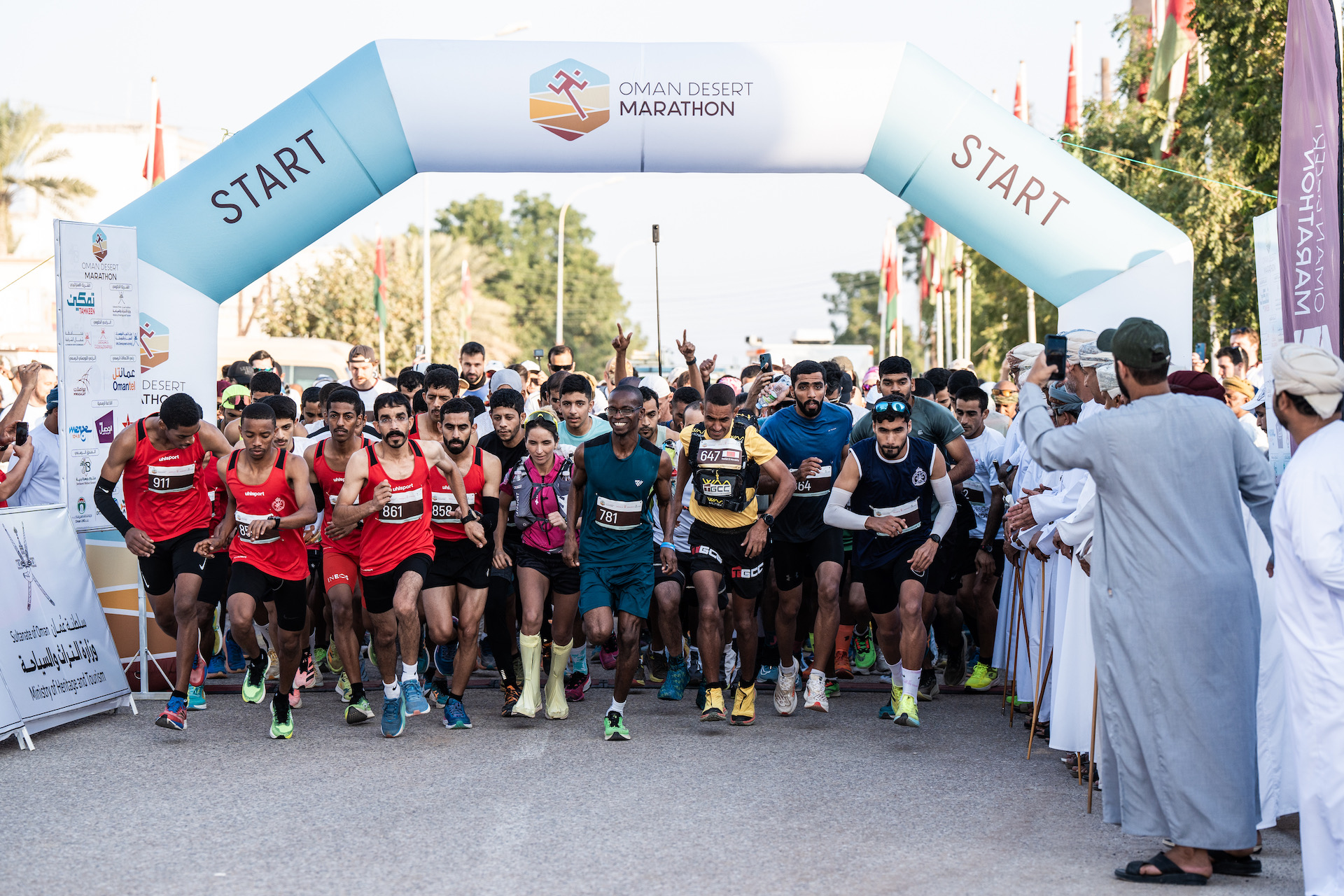
Starting in Bidiyah with a gala presentation of local dignitaries and local music, the event had a mass start for the 4-stage race, marathon, 21km, 10km and 5km.
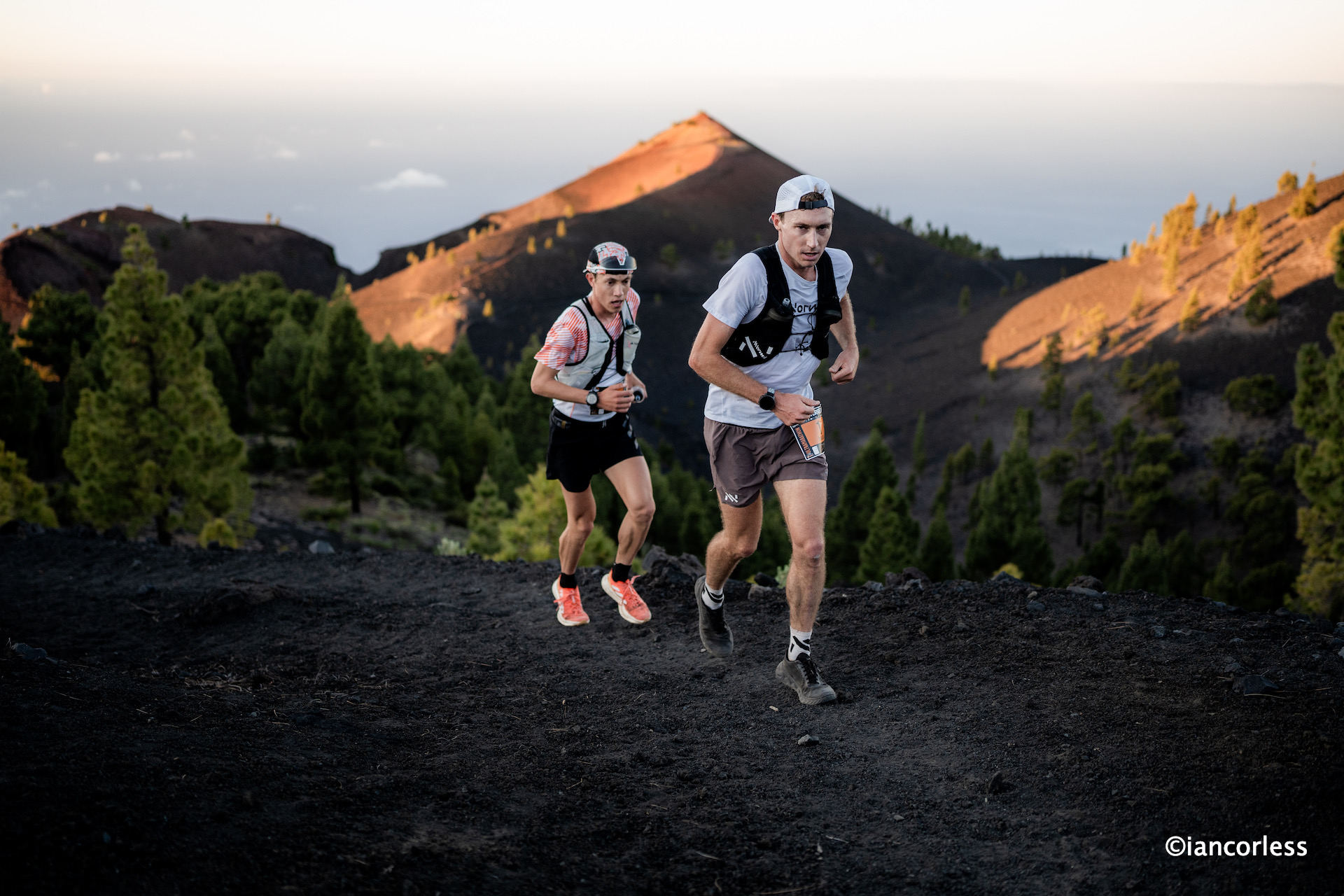
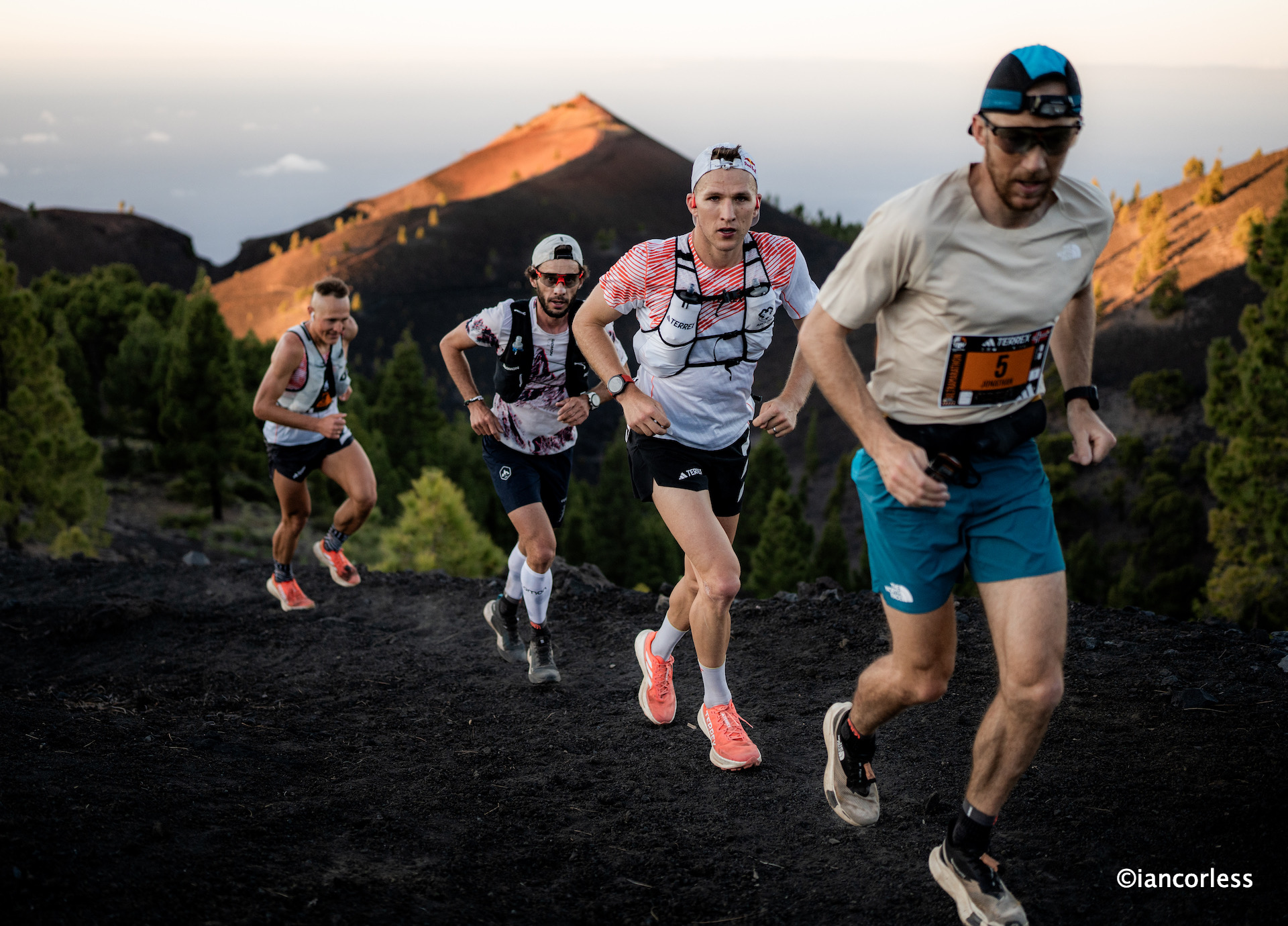
The main event, the 4-stage 165km race navigating an almost circular route back to Bidiyah was initially lead with a charge from last year’s champion, Mohamed El Morabity with Khalid Al Jabri and Evgenii Glyva.
For the women, an in-form Aziza El Amrany forged away at the front looking very strong and focused.
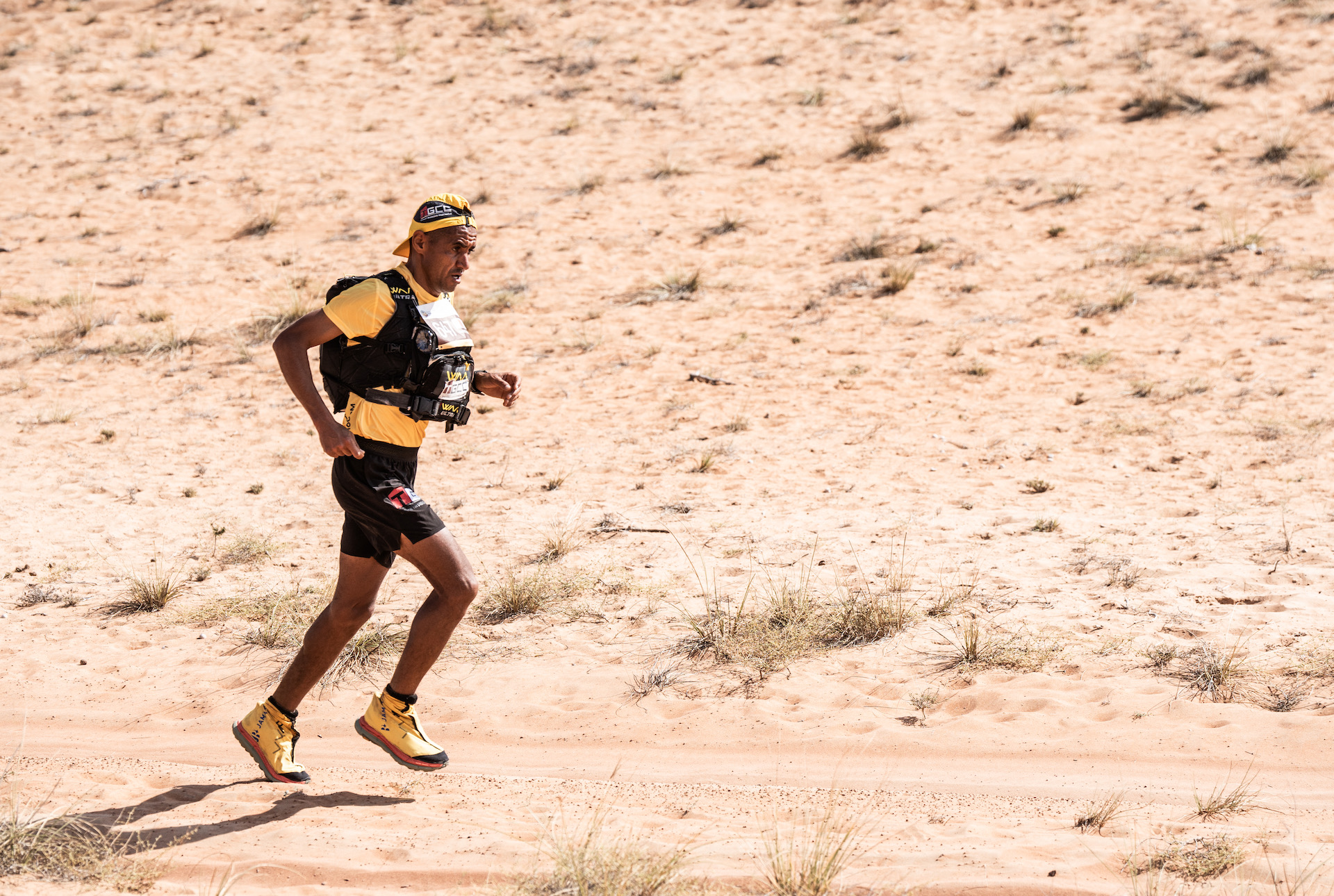
As per usual, Rachid El Morabity paced himself with a relatively slow start keeping the other three protagonists in sight.
Behind Aziza, Aziza Raji and the French lady, Kathleen Leguin were both looking strong and relaxed.
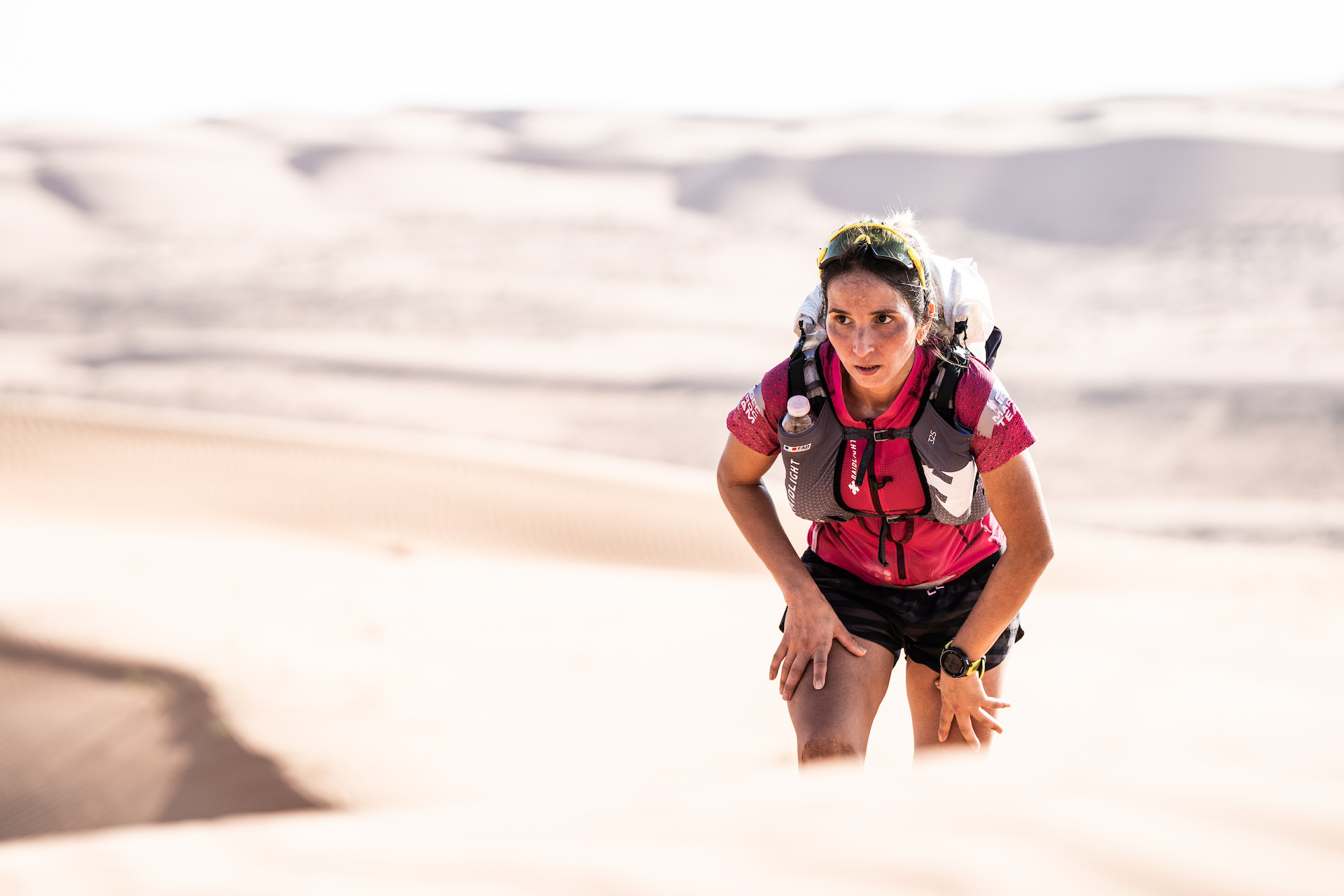
The opening 25km, post-race, was considered to be ‘easy’ in comparison to the tough and challenging terrain that followed; relentless soft-sand, dunes and rollercoaster terrain that sapped the body of strength, especially as the heat of the day came.
It was here that Aziza El Amrany relinquished the lead to Aziza Raji who looked much more relaxed in the challenging terrain.
Kathleen was also suffering, climbing a steep dune she had continuous moments of sickness and at the summit, she sighed, just 9km to go.
Rachid had now made his move and behind Mohamed El Morabity was fighting hard to hold a very strong Salah El Saidi, no doubt hampered by long travel and a very late arrival before race day.
The 2023 champion could not match the pace and finished 3rd, 3:39:20, 3:39:54 and 3:41:29 separated the men, making for an exciting stage 2.
Aziza Raji was super strong in the latter stages of the day and crossed the line in 5:22:36. Aziza El Amrany arrived in a surprising 5:49:18 and Kathleen was overtaken by Veronique Messina to finish 3rd in 6:18:55.
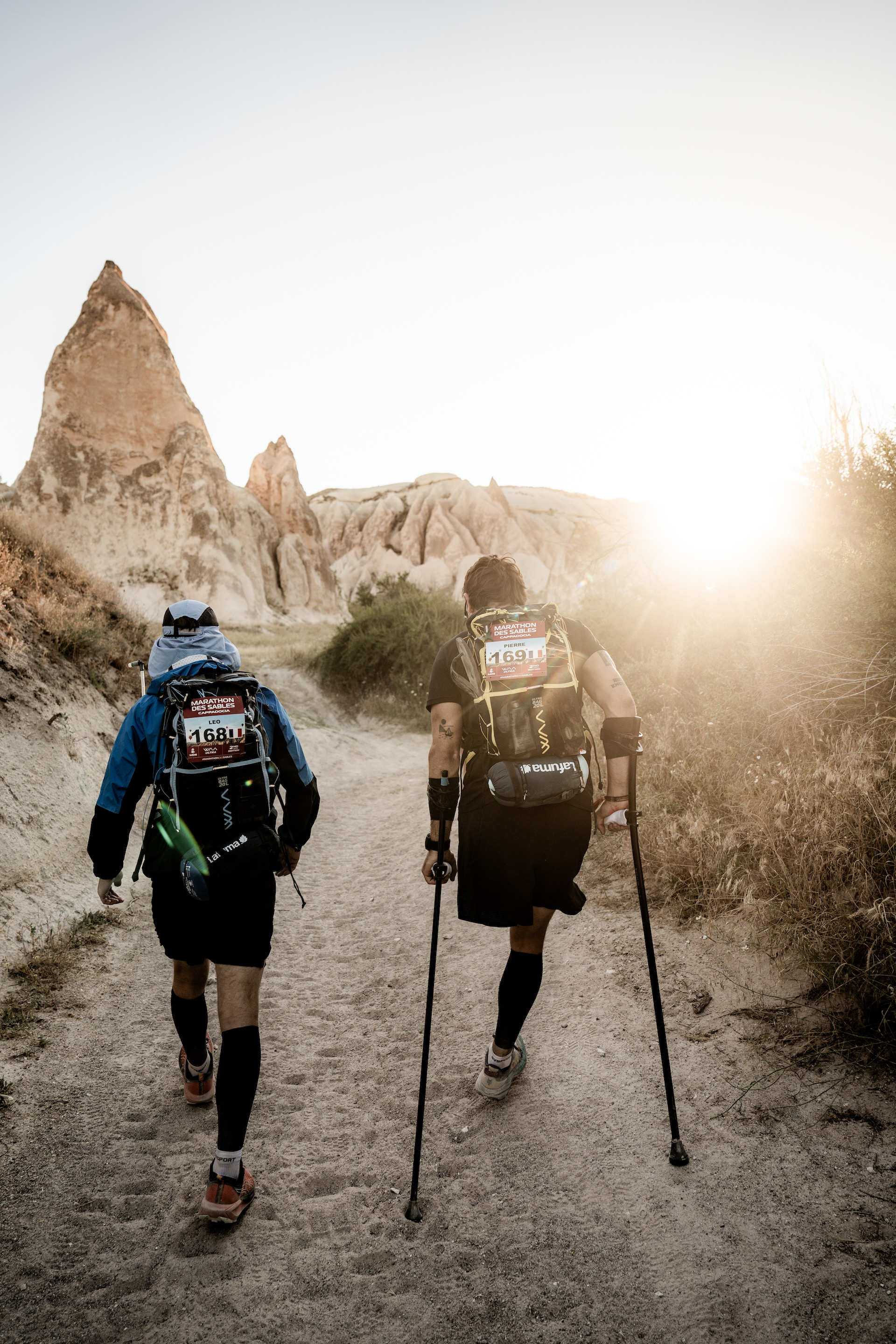
While the fast raced at the front, as in every race, stories begin to form behind. A notable one, Albert Jorquera who raced here in Oman in 2023, who this year runs with Pol Makuri who has Cerebral Palsy in the right side of his body. An inspiration to watch!
The duo finished the day in a brilliant time of 7:41.49, 19th and 20th.
As darkness arrives, the battle for the line continues. It’s been a tough first day here in Oman.
On a recent work trip I had a run shoe disaster. To cut a long story short, I was left with no run shoes.
Dropping in to the best run store I could find, I was rest assured with a great selection of trail shoes and gladly, they had options from which to choose. It would have been easy to purchase shoes I have already owned used and liked, and in all honesty, had they had a pair of Hoka Torrent I would have got them; a great all-rounder.
I needed a shoe with cushioning, protection, and a good outsole.
As it happens, I had three excellent choices and none of the shoes I had used before, a NNormal Tomir (23/31), a Hoka Speedgoat 5 (29/33) and a Merrell Agility Peak 5 (25/31), based on stack heights, three very comparable shoes. Interestingly the NNormal with 8mm drop, the Hoka with 4mm drop and the Merrell sitting in the sweet spot of 6mm.
I will be honest, I was instantly drawn to the NNormal, I had been waiting to test a pair for sometime and in my head, before trying any of them on, I had already made up my mind. I am getting the NNormal.
However, slipping them on, they just didn’t make me smile. The lacing was less than optimal, foothold was kinda ok but the overall feel was lifeless. The Hoka Speedboat 5 by contrast had life, had great foothold and was just solid. That’s it, I will get the Speedgoat…
But then the assistant said, you should really try on the Merrell, particularly if you like the Hoka.
So, I slipped the Agility Peak 5 on whoa, what a revelation. Foothold superb, heel comfort excellent, toe box space great and there was a bounce and life not present in the other two. The addition of Vibram Magagrip added to the package, to be fair, this was on the other two shoes too, but here on the Agility Peak 5 it was aggressive and with 5mm lugs.
I purchased the Merrell.
MERRELL
I had heard a great deal about Merrell shoes, nearly all of it positive, so, I don’t really know why it had taken me so long to eventually get a pair. Certainly trying on against the NNormal and Hoka only confirmed that my decision was coming too late, I had been missing out!
Superb cushioning 25mm front, 31mm rear.
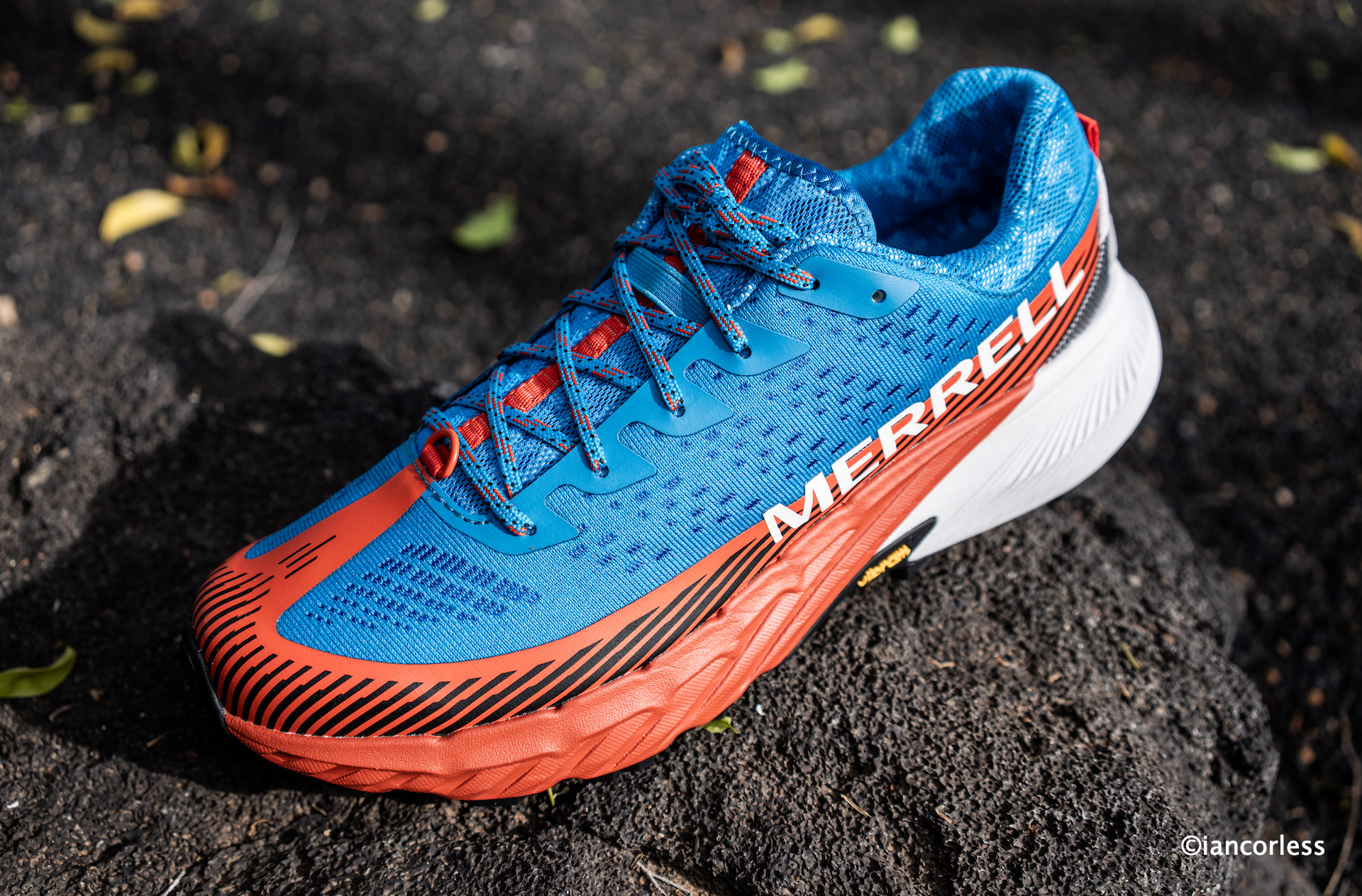
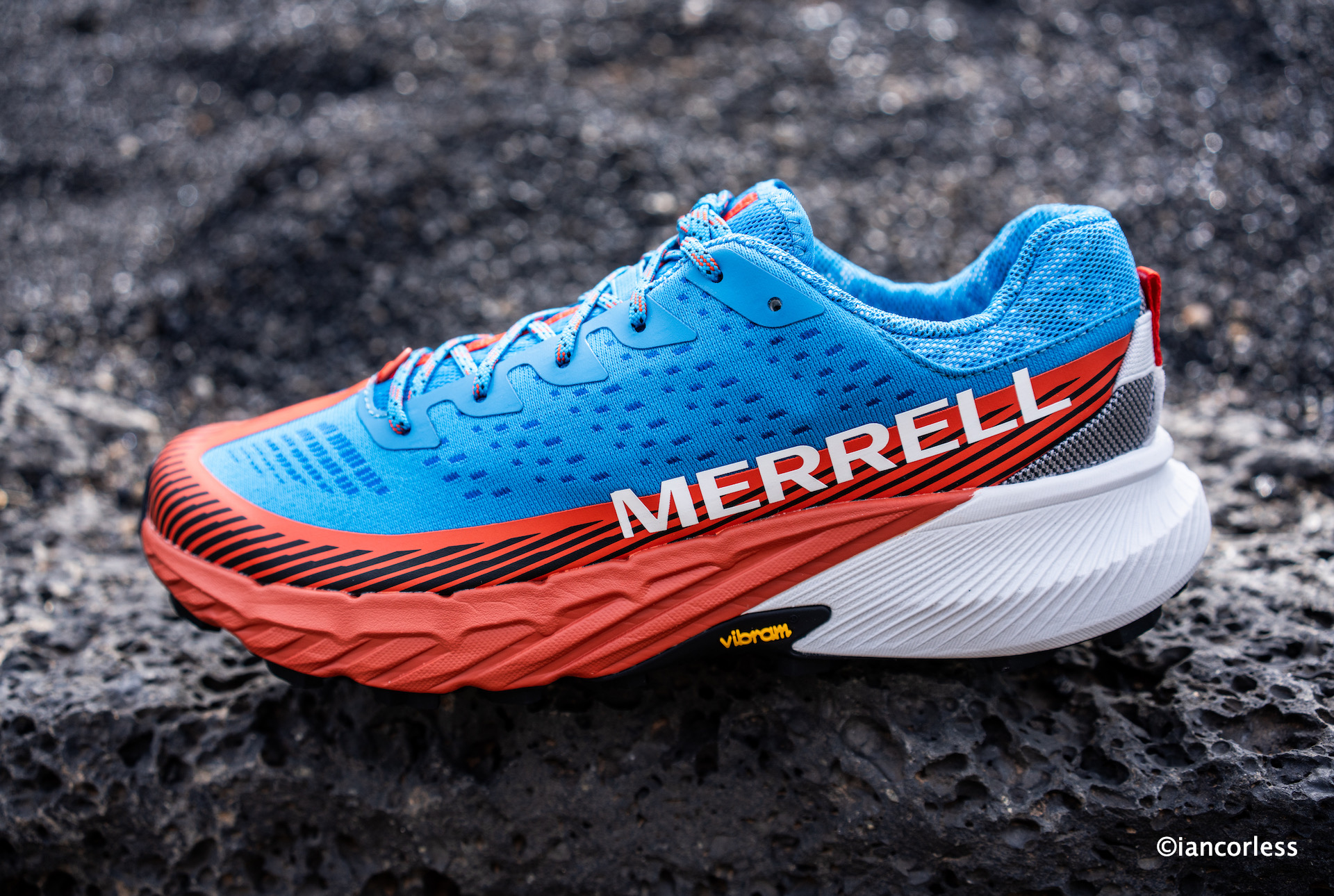
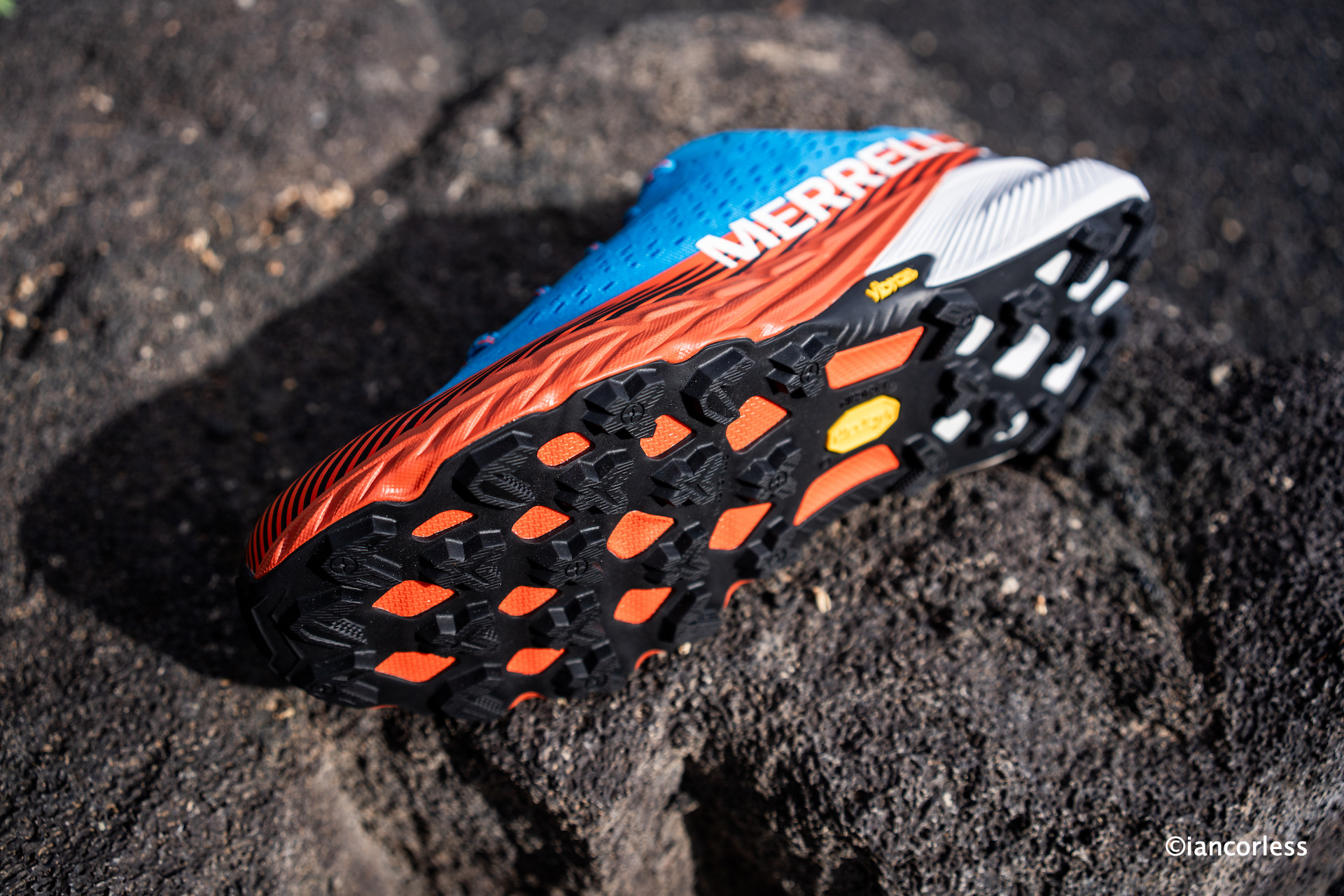
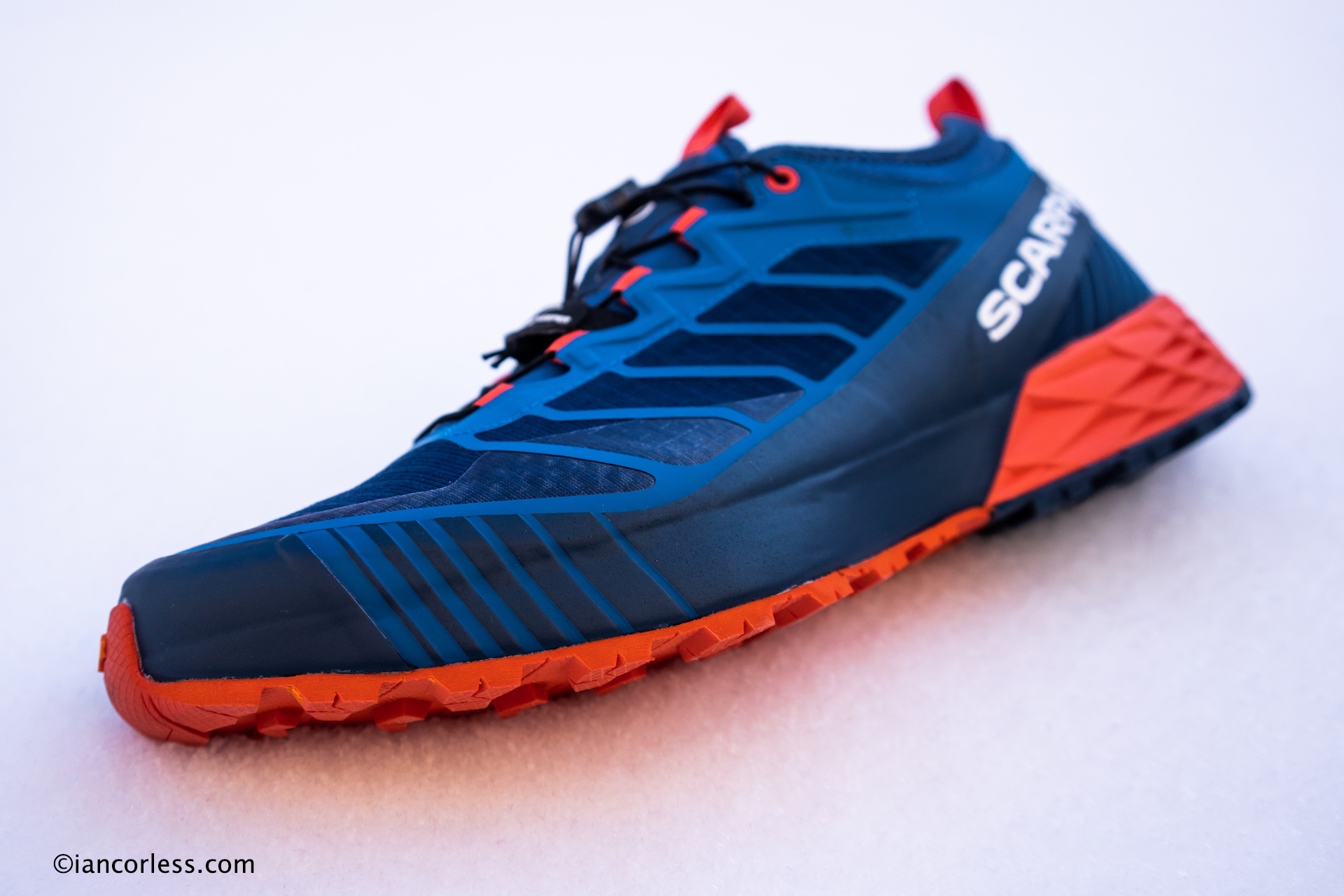
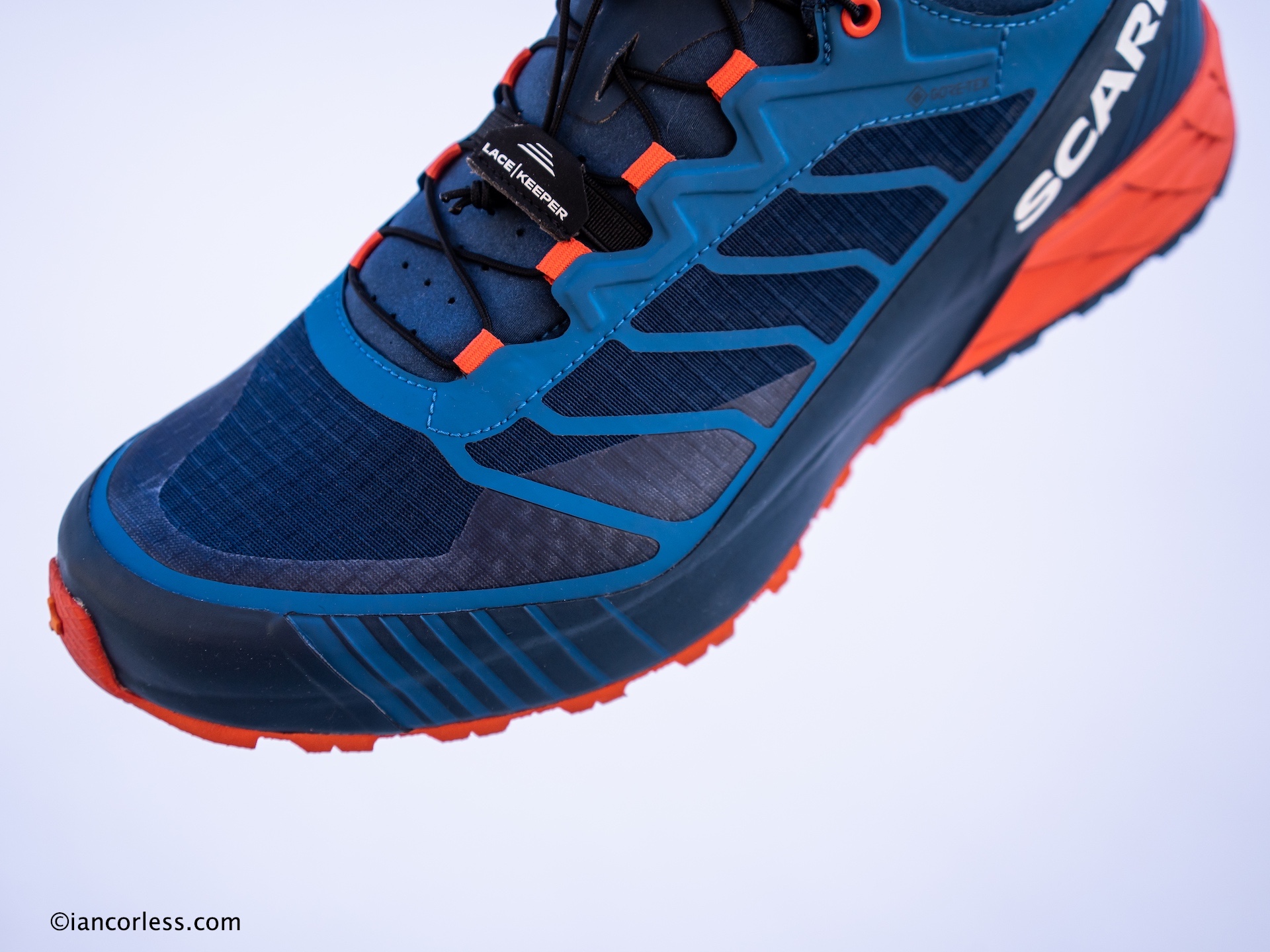
A great looking shoe that means business. The side profile, the outsole and 5mm lugs, a visible rock plate, it’s clear that this is shoe is for the rough stuff.
Red rock plate showing through the Vibram MegaGrip outsole.
When a shoe is in version 5, I always get a little nervous. The plus side is this is a shoe that works and is loved, otherwise Merrell would not adapt, change and make a new version. But sometimes, the ‘need’ to make new version can sometimes spoil what was good about the previous ones. Having not tried an Agility Peak before, I was a blank canvas – a good thing!
THE SHOE
With reduced weight, increased rocker, increased heel grip and comfort, this shoe on paper was ticking all the boxes.
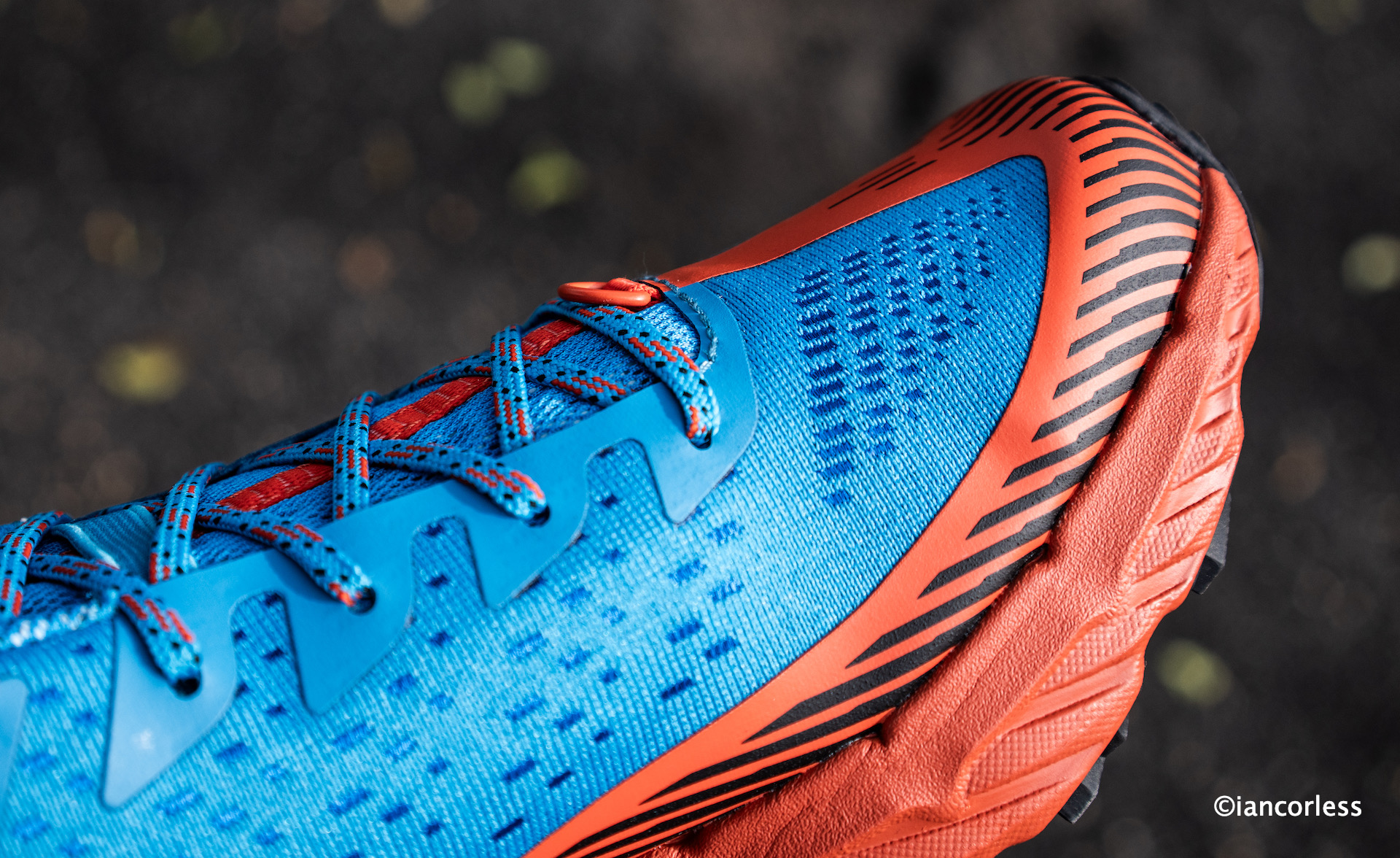
A breathable upper, excellent lace placement, gusseted tongue, a toe cap protection, EVA foot bed, FloatPro foam midsole, rock plate, a Vibram Megagrip outsole with 5mm traction lugs.
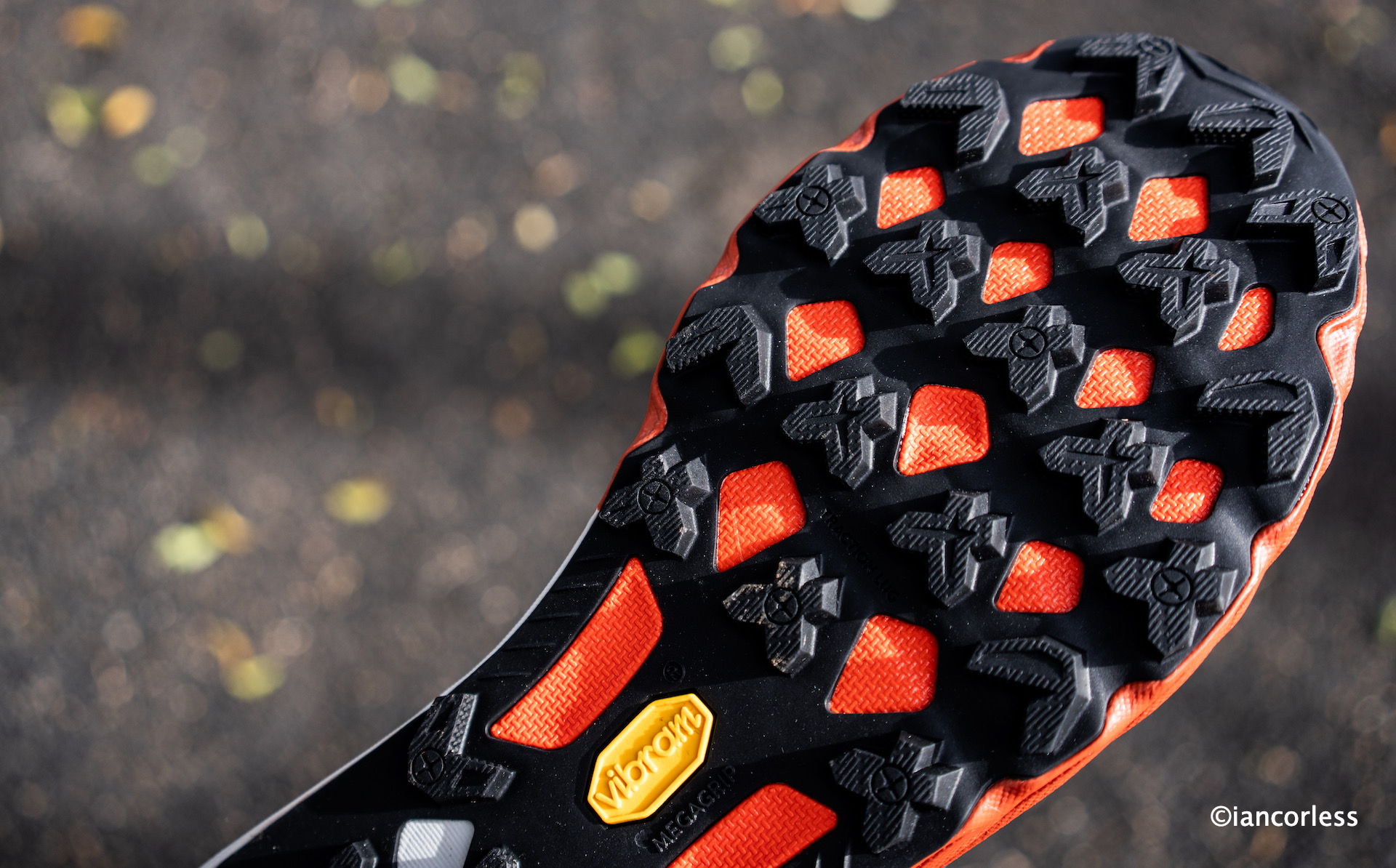
5mm lugs by Vibram MegaGrip.
A D-ring gaiter attachment at the front and velcro attachment at the rear,
Velcro tab at the rear for gaiter.
The Agility Peak 5 is a feature packed shoe. A 6mm drop with cushioning 25mm at the front and 31mm at the rear makes this a shoe ideal for long days out in gnarly terrain.
Slipping the shoe on I had an instant comfort factor that made me smile, I knew immediately I was going to like this shoe.
Great lacing and D-ring for gaiter.
Lacing up, foot hold was superb without any nasty pressure on the navicular bone. Holding the rear of the shoe.
Lifting my foot, there was no slippage and the gusseted tongue just added to the cozy comfort factor.
Spacious toe box.
The toe box is spacious, a 3, maybe a 4, on a scale of 1-5 with 5 being wide and spacious.
Standing up, there was a definite bounce and life as I moved backwards and forwards, up and down.
IN USE
I was committed and out-of-the-box I went straight in to a gnarly coastal run over very rocky and abrasive terrain, 37km and 1531m+. It was a great test! The Agility Peak 5 excelled.
The notable takeaways were all-day comfort and protection.
I never had to adjust the laces, my foot was held secure all day. The cushioning allowed for great ground feel but not at the compromise of comfort, especially with the rock plate protecting from all the sharp rocks and obstacles.
At 25/31mm in cushioning, I was concerned that maybe I would be a little too high from the ground, but this shoe has a wide footprint and this compensates for the additional stack height wonderfully. I had no rolling issues at all.
Notably, when walking and hiking, the bounce and comfort at the rear of the shoe was superb. When running, the flex behind the metatarsals was ideal giving a great propulsive phase. The toe box allowing enough space for toe splay but not at the compromise of precision. When climbing, my foot was secure, no movement, a combination of the new heel cup and the rear sling lock.
The outsole by Vibram is tried and tested, MegaGrip appears everywhere, but this is the first time I have used or seen the 5mm lug version and it is brilliant. The grip was superb. I have yet to try in the wet!
Was there a downside? In all honesty, no. It’s arguably the most complete shoe I have tried in a very long time and if I was to be picky, for a shoe that is so obviously designed for rough stuff, the toe bumper could maybe be a little more protective.
Despite the mean business looks, the Agility Peak 5 has plenty of life, speed and comfort for those wonderful single-track runs with little or no technicality. The rocker helping to propel you forward with excellent comfort.
Fitting true to size, this shoe is one of the best I have tried and tested.
CONCLUSION
Shoe technology gets better all the time and now there are sooooo many good shoes, it’s often difficult to pick a best one. Of course, this is a great position to be in. I have countless shoes that I would be happy to run in on any given day. But, some shoes have very specific uses. If I wanted guaranteed mountain grip in wet and dry, I would choose a VJ MAXx. I I wanted a fast shoe for single-track, I’d go for an Adidas Speed Ultra. If I wanted a just one shoe that could do all things and do them well, my choice has normally been a Hoka Torrent, that is until the Merrell Agility Peak 5 cam along.
The rock plate and grip is excellent.
This shoe has been a revelation. All day comfort, great grip, great foot hold, fast when you need them to be, secure when the terrain demands it and all wrapped up in an excellent good looking package.
The Agility Peak 5 is my shoe of 2024! A shoe that has balanced cushioned comfort with speed and versatility for all running, be that on trail or mountain terrain.
Arrival in to the Sahara for many was harsh, with strong and relentless sand storm lasting several hours, gladly they subsided for Patrick Bauer’s welcome to the desert.
Saturday, is admin day. Each runner passes through protocols of equipment checks, health checks, bib collection and once dinner has been completed, self-sufficiency begins.
It has been a good first day with a great deal of apprehension, positivity, excitement and of course, an urge to ‘get underway!’
Stage 1 covering 36km with 2 aid stations is split in to 3 distinct sections. The early section is flat with a passing through Jebel Mech Irdane followed by soft-sand and Oued Rheris. Cp1 is followed by harde, faster terrain and small rolling hills that leads to dunettes and the arrival of Cp2. From here in, the running is good and fast to complete a potentially challenging first day of the 2023 MDS.
Episode 233 of Talk Ultra – YES we are back! With Speedgoat Karl co-hosting and an in-depth interview with Courtney Dauwalter.
It has been a long time, and we can only apologise. Life, family and extensive travel had an impact on available time and while it’s always possible to ‘find some time’ somewhere, the podcast had to be sidelined for the beginning of 2023.
Lanzarote Training Camp, Oman Desert Marathon, The Coastal Challenge, Black Canyon Ultra, a photoshoot for adidas and lastly Transgrancanaria, it was a hectic start to ’23!’
Importantly, go to iTunes and subscribe so that you automatically get our show when it’s released we are also available on Stitcher for iOS, Android and Web Player and now Tunein. We are also on Spotify too.
Our web page at www.iancorless.com has all our links and back catalogue.
Please support Talk Ultra by becoming a Patreon at www.patreon.com/talkultra and THANKS to all our Patrons who support us.
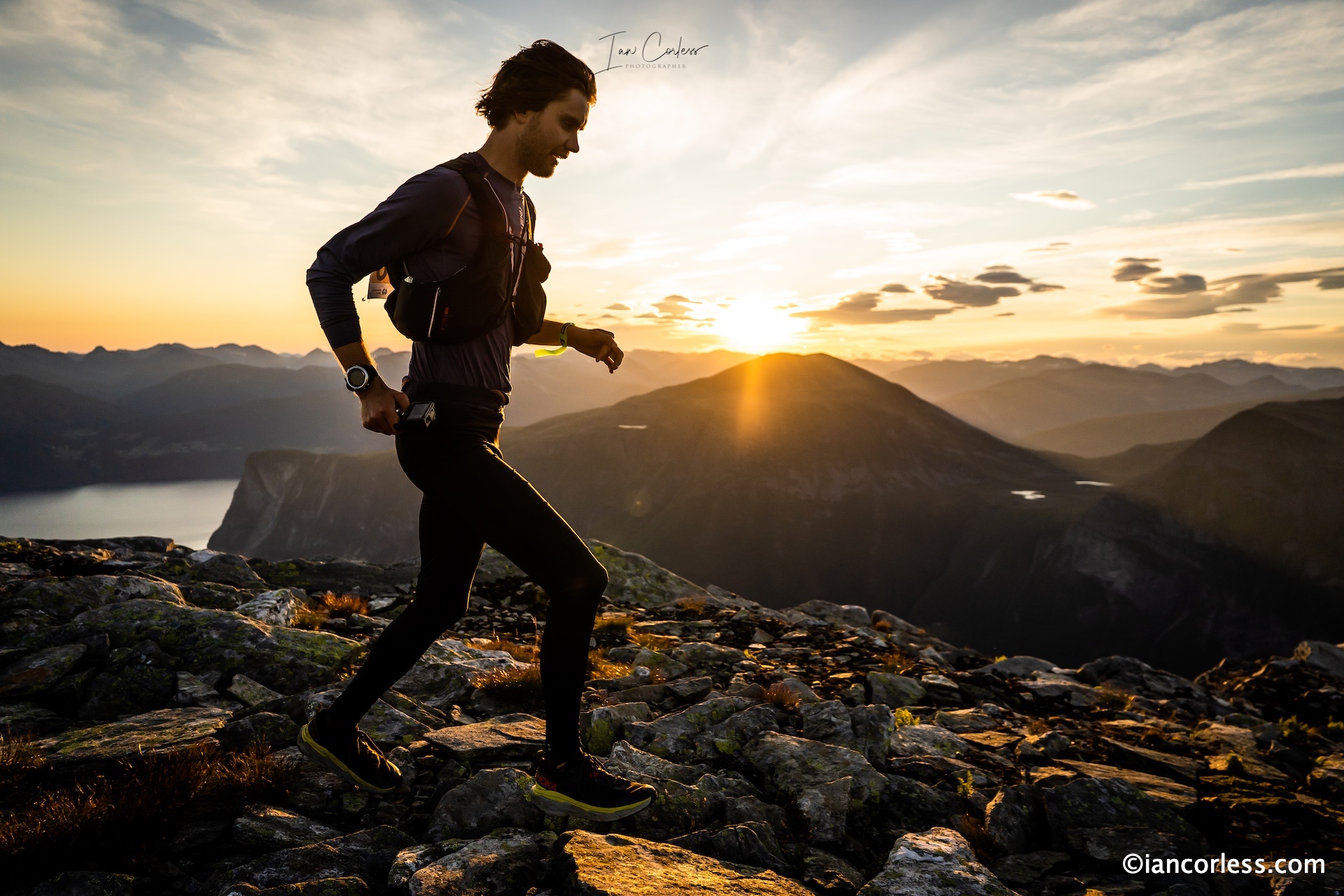
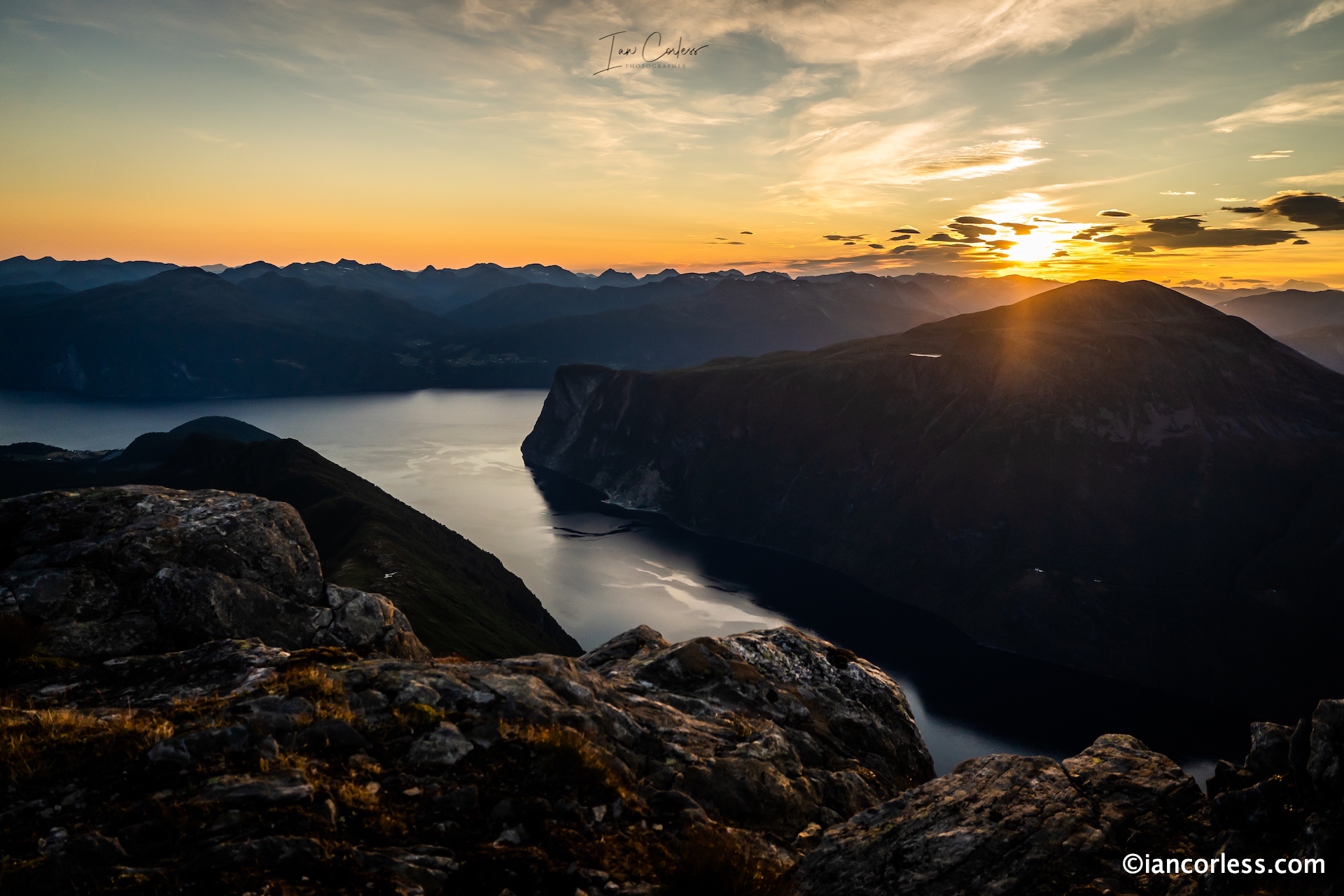
It was burned in my memory, waiting at Fremste Blåhornet at 0430, daylight was already arriving, but the sun had not risen, there was just a promise of what was to come. The first runner arrived quite literally as the sun peaked over the mountains and a glow of orange started to come illuminating Stranda Fjord, the mountains ahead and the runner. It was one of ‘those’ days you wish for as a runner and photographer.
Sunrise 2021
The 2021 Stranda Fjord Trail Race and, the 100km event was truly magical. Norway, Stranda, Slogen and the whole route has never looked so good.
Jump ahead one year and the 2022 edition was a completely different story. Ahead of race day, the weather forecast was greatly discussed both by runner’s and race team. A decision was made, the 48km and 25km races would go ahead as planned but the 100km event would have two key sections removed, the technical and airy ridge after Fremste Blåhornet would be removed and the out-and-back to the summit of Slogen – both considered too risky and dangerous in the expected weather.
With all the attention on the Golden Trail Series 25km event, the 100km was very much a secondary event. Starting at 0200, the 100km race would have already been going for 9-hours before the start of the GTS race. Yes, the 100km event is THAT tough.
Epic, beautiful and brutal are three words that sum up the racing and route here in Stranda, that is in good weather. In bad weather… Well, you can work it out. The physical and mental challenge is huge.
However, the Stranda Fjord Trail Race located in Møre go Romsdal, is one of the most truly spectacular experiences. The 100km distance offering a full and immersive 360 experience of what this magical area of Norway has to offer.
The 25km, 48km and 100km races are tough, challenging, and brutal and should not be underestimated. There is little easy running here, the climbing is hard and steep, the descents even on a dry day can be horrendous, in the wet, they are as one person said, “Terrifyingly slippery despite what shoes you use!’
Let’s be honest, Norway as a location is arguably one of the most beautiful places in the world, and as a runner or outdoor enthusiast, the options and possibilities are endless, be that in the south or north.
Stranda is located on one of the west Norwegian fjords, part of the Sunnmøre region, often accessed via ferry from Liabygda. It can also be accessed by road via Lom. For most, the easiest way to travel is to fly to Ålesund and then travel 50km by bus.
2022 was significant with the 25km being a stage of the Salomon Golden Trail Series, this event alone brought in more than 600-participants and many of the world’s best mountain and trail runners. The 4000 population of Stranda increased by approximately 30% over race weekend, an amazing boost for the local community. GTS brought a European razzamatazz to the event with live broadcasts, commentary, interviews, group runs and huge social presence – it was arguably the biggest promotion of trail running in Norway since the inception of the Tromso SkyRace which ironically was taking place on the same day further north.
There was huge anticipation of how the racing would go, key favourites such as Sara Alonso and Manuel Merillas would have a hard job of beating ‘local’ favourites of Jon Albon (Brit living in Norway) and Emelie Forsberg (Swedish) who has been living and running in Norway for many years. The inclement weather, challenging conditions and brutally slippery rock only played into the hands of those with local knowledge.
Jon Albon won the race in a new course record – amazing in the challenging conditions. Manuel Merillas (Esp) and Bart Przedwojewski (Pol) placed 2nd and 3rd ahead of Frederic Trancard (Era) and Davide Magnini (Ita)
For the women, we saw the rise of Sophia Laukli (USA) who won the event ahead of Elise Poncet (Fra) and Emelie Forsberg. Blandine HIrondel (Far) placed 4th and Sara Alonso 5th.
The stories post-race was truly mud, sweat and tears. Arguably the most challenging and technical race of the GTS and what a way to shine a light on Norway and its incredible landscape. I am sure there are many runners now thinking and planning future adventures in this epic playground.
The 48km race, a big challenge but considerably more achievable than the 100k uses much of the opening miles of the 100km route, however, after reaching the summit of Fremste Blåhornet at 1478m returns to Stranda via Heimste Blåhornet, Løfonnfjellet and Rødesthornet. The route passes through Stranda start/ finish and continues on another loop summiting at Roaldshornet at 1230m and then following on to Blåfjellet and Skurdahornet before descending all the way down to the finish line.
Lasse Aleksander Finstad placed first ahead of Tolga Rambovski Olcay and Torbjørn Breansœter, 6:34, 6:50 and 7:07 respectively.
Mirjam Saarheim placed 7th overall and clinched female victory in 7:26. Jingling Tang and Anna Louise Astand Sørlie ran 7:50 and 8:02 to round out the podium.
Offering a 360 counterclockwise experience of this stunning area of Norway, the 100km route is a beast. It is quite simply stunning, even in bad weather. However, the physical and mental tenacity required to complete the race cannot be fully explained. This is reflected in only 33 participants finishing.
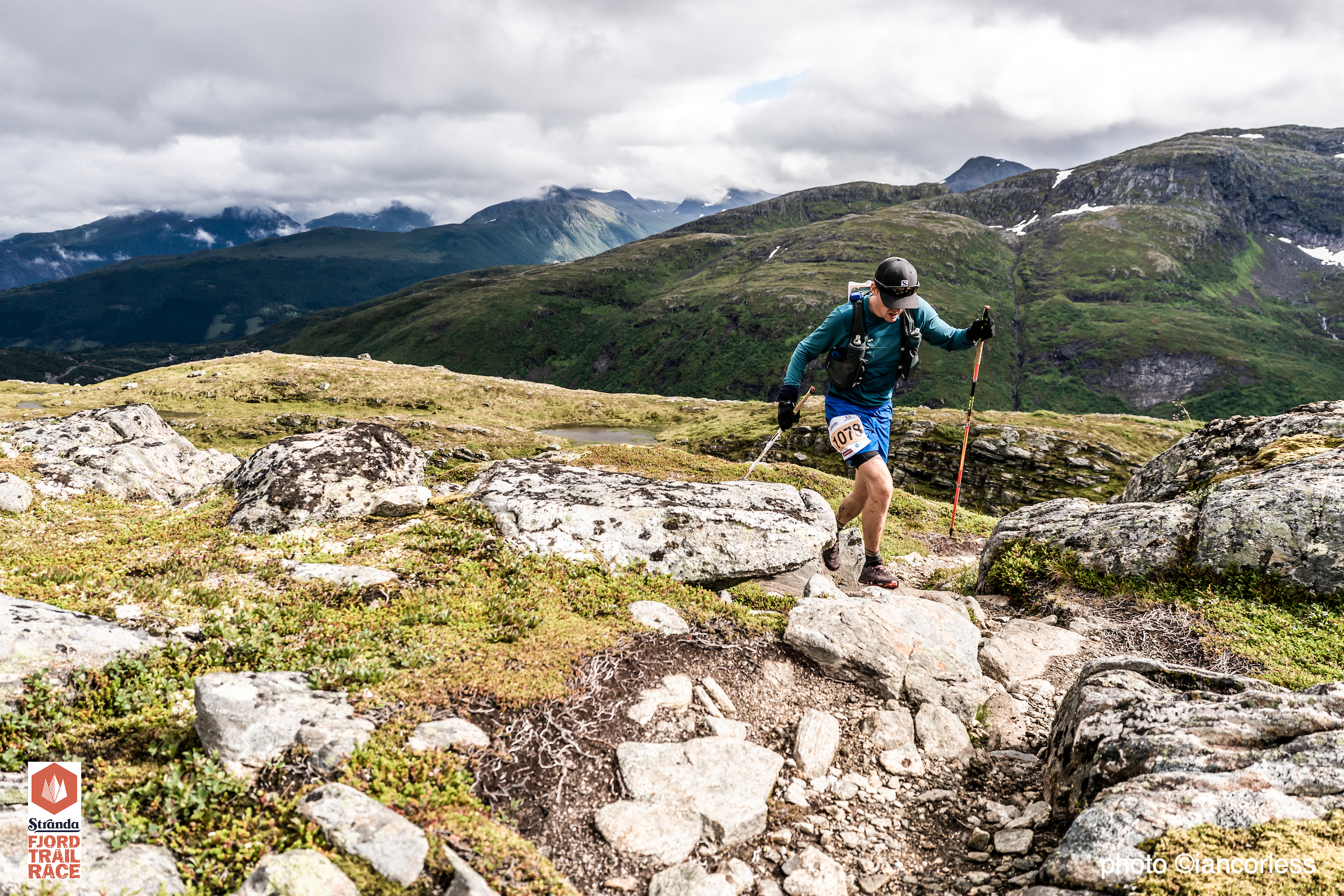
The course does contain some areas where you can switch off and just run, but they are few and far between. The opening miles may offer an illusion of the severity to come. The hard work starts to really kick in with approximately 20km covered at Liavarden. What follows are walls of grass, rock, scree, stone slabs, technical ridges, relentless vertical climbing, and challenging descending.
Reaching the summit of Fremste Blåhornet at 1478m and 23km the route was changed to avoid a technical ridge. The terrain that followed was rocky, slow, and brutal especially in the persistent rain and cold temperatures.
The aid station on the road of Dalevegen at 28km distance was followed by easy running before an extremely steep and challenging out-and-back climb to Storhornet at 1309m.
Liasætra aid station followed and then easy trail running to Patchellhytta DNT cabin. Here, the out -and-back to the summit of Slogen was removed – a shame but absolutely the correct call in the conditions.
Left in the valley and runners make their way to Velleseter, Brunstadsætra, Storevatnet, and then the road section crossing and aid station that leads to the final section of the course, 80km covered.
The climb to summit Roaldshornet at 1230m is long and relentless, the summit at 86km and it would be easy to think it’s all downhill from here. Considering what has gone before, it’s fair to say that it is. Eventually the 100km joins with the final section of the 48km track and the run in to the finish is welcome and hard earned.
Mathis Dahll Fenre battled with Vermund Upper Garden for victory, the duo separated by just 1-minute, 16:00 and 16:01 respectively. Thomas Wallin-Andersen placed 3rd in 16:59.
For the women, Wenfei Lie had led the early sections of the race ahead of Alexandra Narkowicz and although the duo was together on the climb to the final summit at Roaldshornet, Alexandra had more reserves to take victory in19:13 to 19:55 for Wenfei. Margrethe Fjetland rounded the podium.
One thing is for sure, running 25km, 48km or 100km in this area of Norway is not easy, ask anyone who toed the line of the respective distances. There is something truly magical here, 2021 opened up this area of Norway to the world, 2022 has elevated Stranda as a ‘must go’ location. I can only encourage and emphasise that you ‘need’ to add Stranda Fjord Trail Race to your bucket list. You will not be disappointed with the experience, BUT come prepared, you are going to earn that finish medal.
Imagine starting in the far north on a volcanic island and travelling to the southern tip by foot. During a night, a day and maybe even another night, it is possible to cross mountain peaks, run through deep valleys, past incredible rock formations, through pine forest and along dry riverbeds taking in the flagship race that makes the Transgrancanaria ‘Classic’ race – now 20-years old.
“I love Transgrancanaria because it’s the ultimate race. It has everything. Technical paths, flow paths, heat, running through the night and both terrain and time of day change. The atmosphere is top notch, both among the runners and those who cheer.” – Margrethe Fjetland Løvold
A rollercoaster, both mentally and physically, the trip will require you to dig deep, but in the process create unforgettable memories. Night trails to Teror and Artenara. The village of Tajeda. Sunrise at Roque Nublo. The steep climbing and descent to San Bartolomé de Tirajana and then the dusty, rocky and sandy trails that lead to the finish in Maspalomas.
“Transgrancanaria is a race I have dreamed of for several years. Standing on the starting line with 700 other like-minded ultra-runners in an insane mood is difficult to describe. There are people everywhere on the trail, at all hours of the day, cheering you on. One of my highlights as an ultra-runner!” – Frode Wiggen
This is Transgrancanaria! A point-to-point race that allows one to experience some of the best trails that Gran Canaria has to offer. The race is world famous and attracts thousands of runners from around the world. Here the elite gather to compete for the honor and glory in Europe’s first big race of the season.
Abby Hall in the night to Teror.
It’s a race for all, not just the elite. The 2022 edition was won by Pablo Villa and Ragna Debats, but most who start just dream of a finish. Winning in 13-hours for the 128km race is far removed from those who will battle one day and two nights to finish in under 30-hours. No matter what time, the welcome is incredible.
Pau Capell fights the cold.
The 2022 edition will be remembered for a wild and challenging night – cold temperatures, strong winds, rain and even snow. It was a challenge for all! But soon after Roque Nublo, dropping below the cloud, the weather changed and warm sun and blue skies welcomed participants. It was unbelievable to witness and no doubt challenged each runner as they tried to adapt.
Pablo Villa – happy!
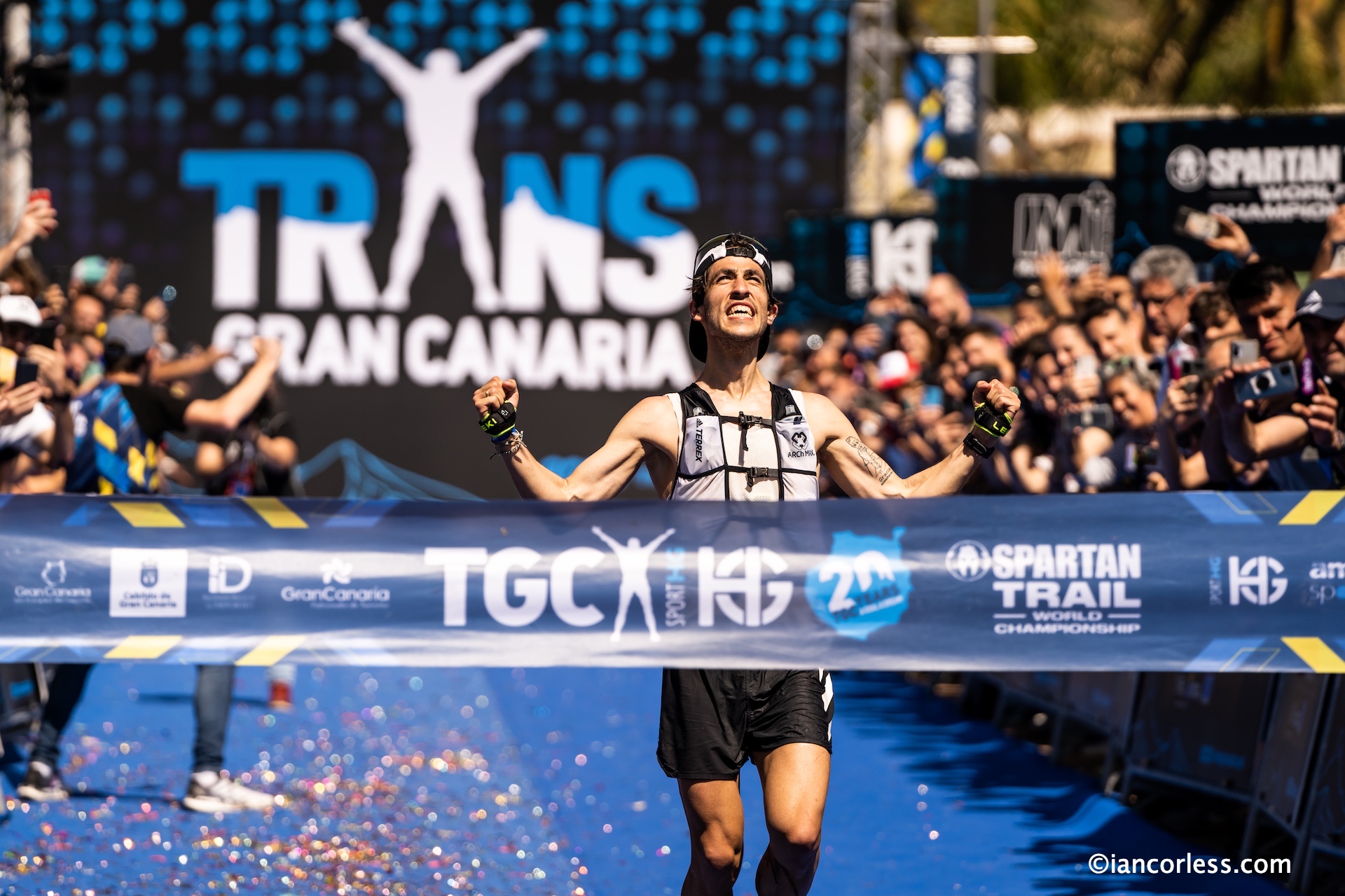
Pabo Villa paced himself through the night and took a convincing lead as daylight arrived. He was pursued by Pau Capell – the duo finished side-by-side in 2020. However, Pablo was too strong and he took an incredible win ahead of Pau and Pere Aurell.
Ragna Debats
For the women, Abby Hall lead the way through the night feeling very strong. However, Ragna Debats eventually caught the adidas athlete and passed her to forge ahead for victory in 16:21:29, a lead of 21-minutes over Abby. Claudia Tremps completed the podium.
Tom Evans – what a victory!
In the Advanced race, Tom Evans had one of those classic stories that you read in many magazines… Plagued by injury, he had some serious operations in 2021, started a long rehabilitation process and then returned to a big race and won! What a story. Aritz Egea pushed the adidas athlete but in the end, Tom was too strong, Aritz finished 10-minutes later. Matthieu Delpeuch finished 3rd.
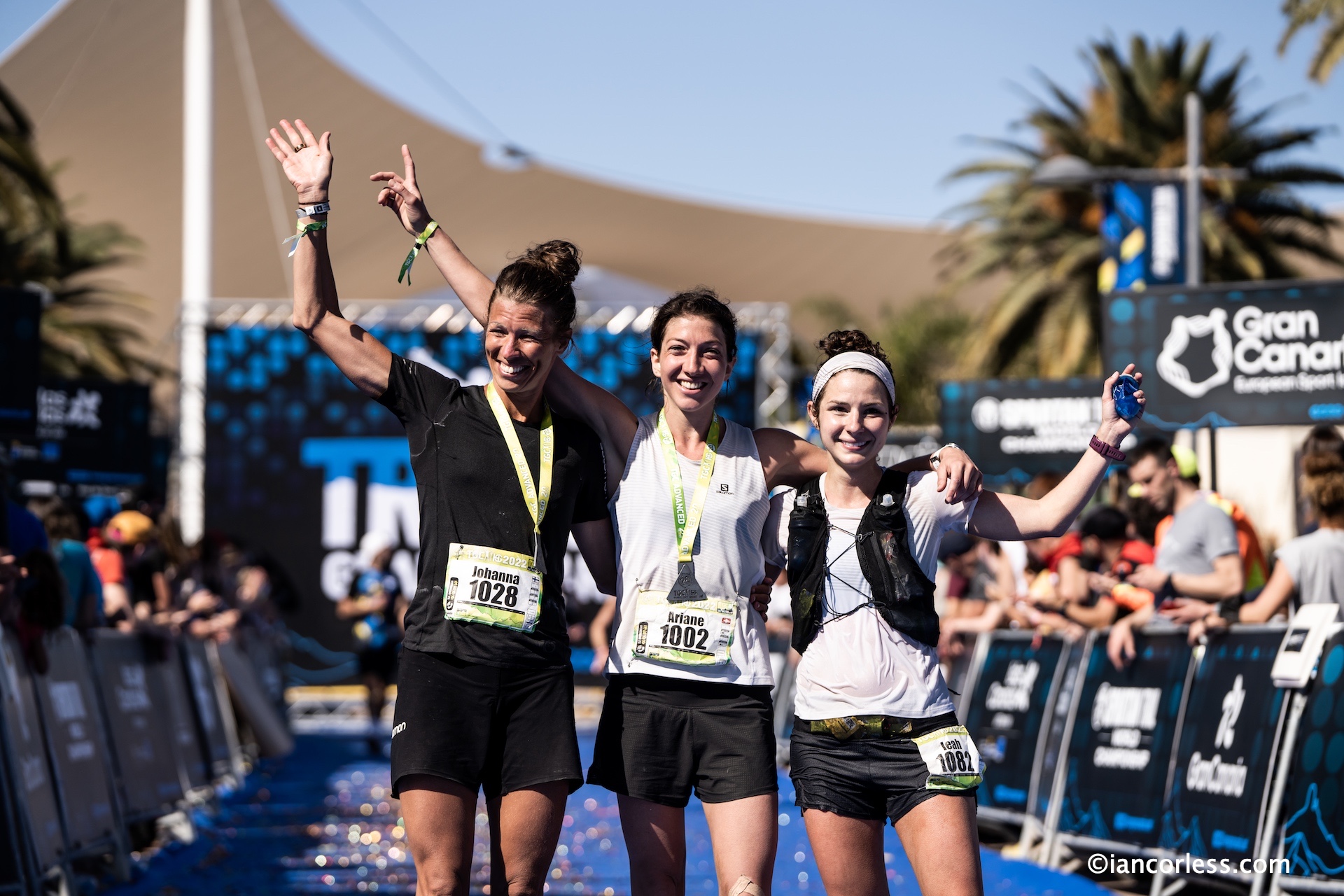
Advanced women’s podium.
Ariana Wilhem finished ahead of Johanna Antila and Leah Yingling for a closely fought female Advanced podium.
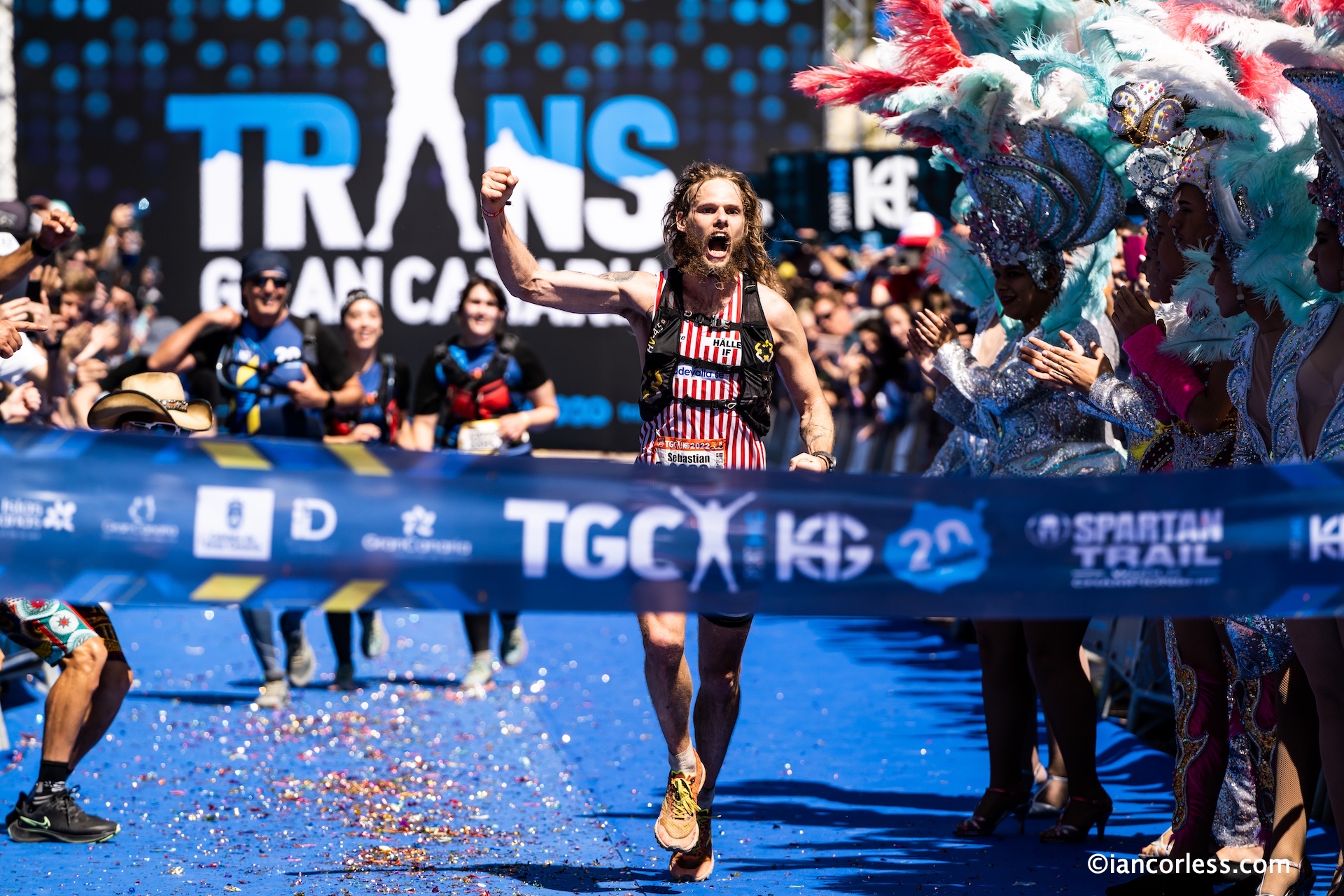
Sebastien Ljungdahl – A surprise win!
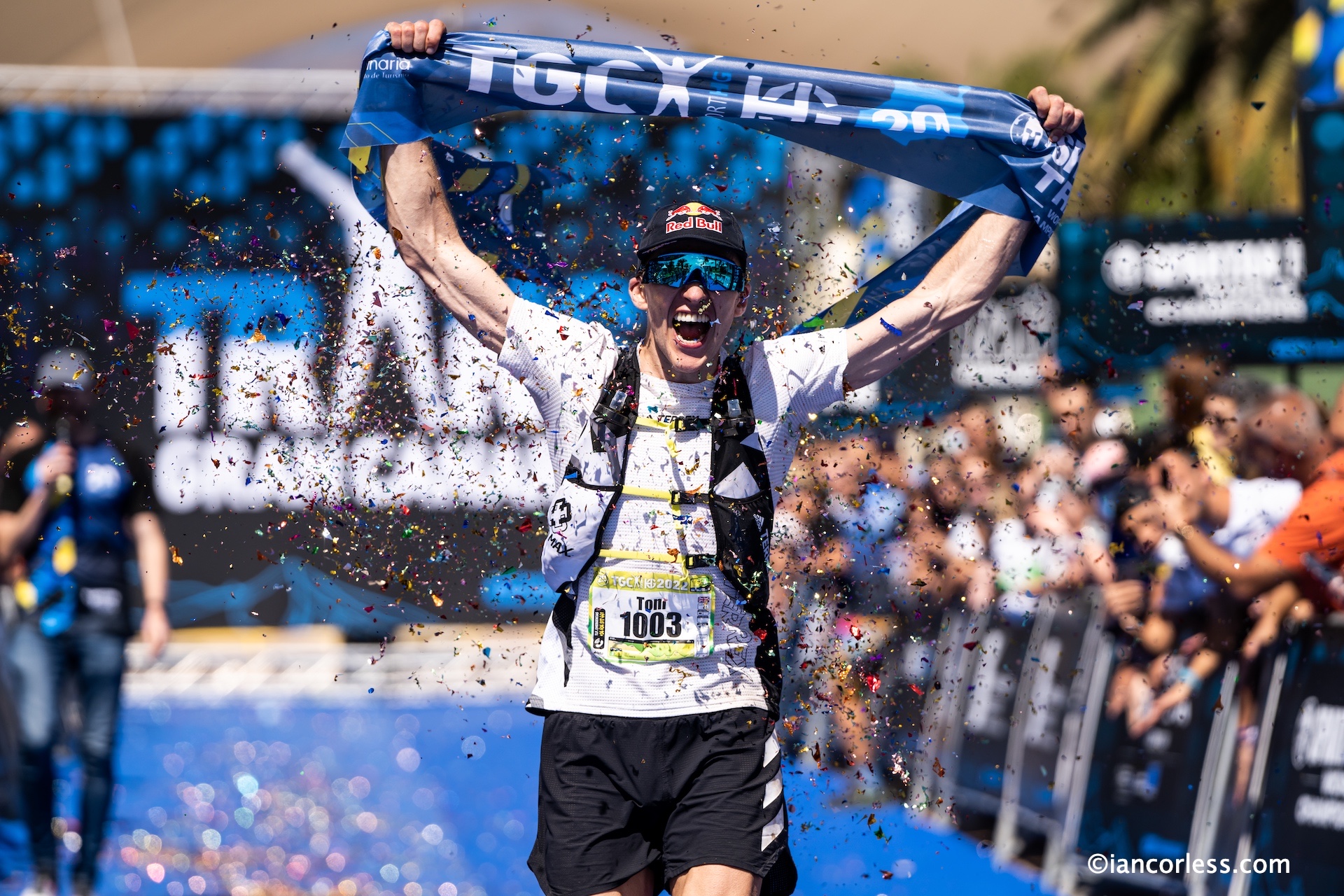
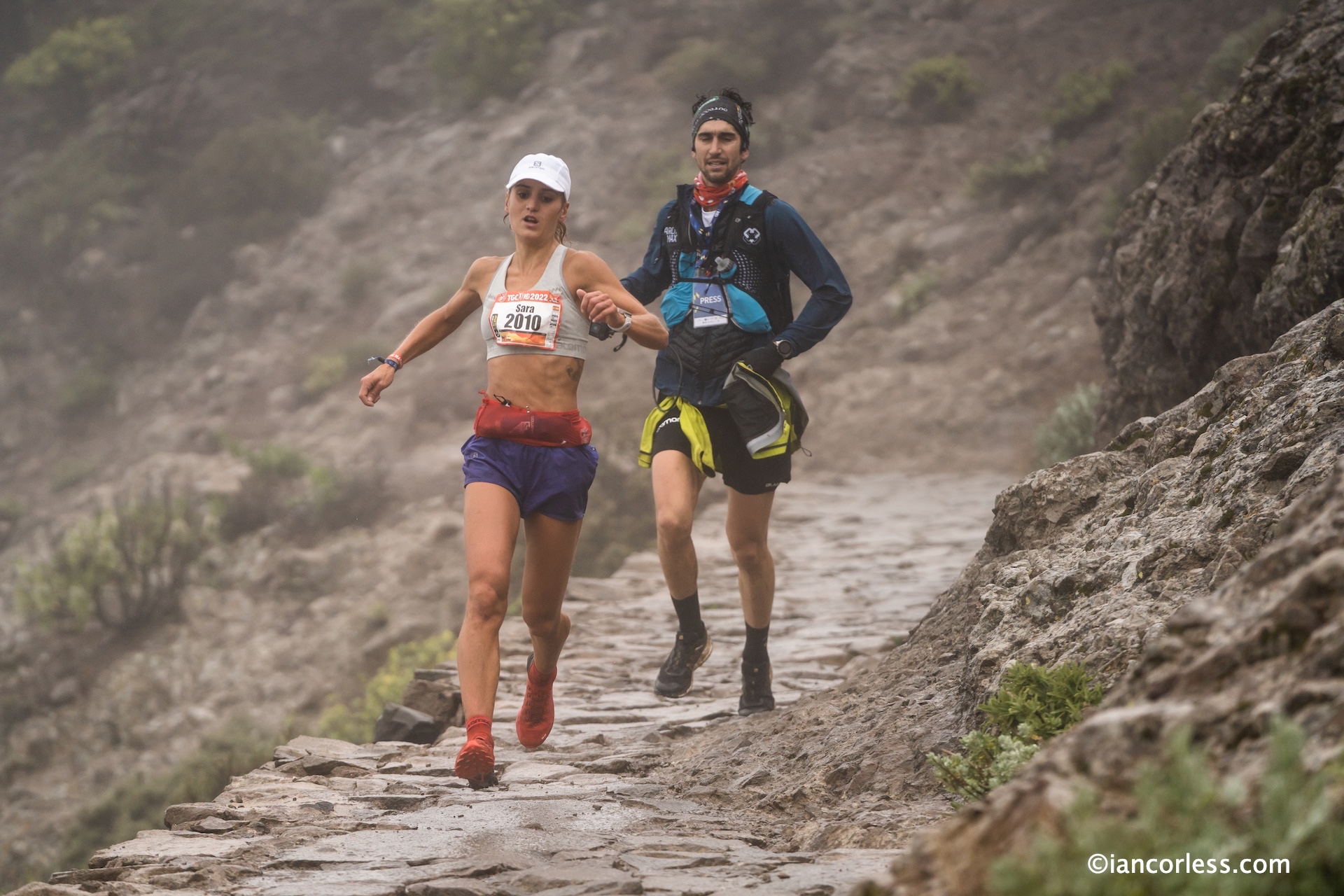
In the marathon, Sebastian Ljungdahl and Sara Alonso ran too incredible and fast performances to take victory. Sara’s performance a course record. Despite the speed, they were close races with Marten Boström and Antonio Martínez completing the men’s podium. For the women, Toni McCann had a great first race in Europe placing 2nd and Anna Comet placed 3rd.
Sara Alonso
Full results listed below.
The Classic and the Marathon races feature in the Spartan Trail World Championships.
Transgrancanaria has distances for every runner, the organization realise that a north-to-south journey is too much for many. Therefore, they offer multiple options: Advanced (62km), Marathon (43km), Starter (26km) or Promo (15km) – all taking place on sections of the full route.VK El Gigante, new for 2022, is a great 1000m climb starting from San Pedro in the Ageate area of the island.
Abelone Lyng
Experienced ultra and mountain runner, Abelone Lyng toed the line of the Advanced race after a full-on week pre-race, exploring the island.
“The weather was wild in the first 30 km with gusts of wind that almost blew me over a couple of times. We had mud and believe it or not, snow! But the last half of the race was cloudless skies and scorching sun. I liked the trail after Roque Nublo, it was steep and technical.”
The iconic Roque Nublo – a stunning backdrop.
With stunning beaches, sea, stunning weather, trails and mountains, this island in the Canaries is one of ‘the’ go-to places for racing or training. It’s no coincidence that Transgrancanaria is now in its 21st year – a clear example of why this island is a Mecca for trail and mountain runners. So, what are you going?
Coronavirus pretty much wiped out the 2020 racing calendar and unfortunately, UTS was a casualty at the 11th hour. Gladly, UTS returns for 2021 bigger and better than ever… Supported by Hoka One One® and now part of the Ultra-Trail® World Tour, UTS is the UK’s answer to other big European ultras! Learn more about the Ultra-Trail® World Tour HERE.
Michael Jones of Apex Running Co is a runner himself, so, he has understood the need and desire to race, but also abide by government guidelines and provide a safe race – a thankless task for anyone. Michael has been positive though, always looking ahead, planning and working within government guidelines to bring a safe and stunning weekend of racing to Wales.
Three events that show Snowdonia at its best. The 50km has a 14-hour cut-off, the 100km 33-hours and the 165km a whopping 50-hour limit. Needless to say, 3 very tough events in a tough and challenging part of the world. Covering an area of 827 square miles and established in 1951, Snowdonia is the second largest National Park in the UK and home to the highest peaks in the UK outside of Scotland. From its 37 miles of beautiful beaches where you can surf, to rugged, ridge-laden mountain peaks and an array of pristine lakes inbetween: there is something to please every outdoor enthusiast here! Keen to learn a bit more about beautiful Snowdonia? A great place to start is the Snowdonia National Park Authority website HERE.
The 165km event is the main event of the weekend starting at 11am on Friday 10th September. A route that starts and finishes in Capel Curig, it’s a monster of a challenge.
Each distance features 3300/6700/10,000m+ elevation gain, on predominantly technical mountain trails. This makes UTS one of, if not THE toughest Ultra-Trail® events in the world. UTS isn’t just challenging for the sake of it though. With routes that explore Snowdonia’s most scenic valleys, rugged peaks and epic landscapes, these race routes are truly the most beautiful in the UK!
Entry lists are available to viewvia the UTS website. While most entrants are from the UK, there is a multinational feel with Poland, Sweden, Norway, South Africa, Ireland, Italy, Lithuania, New Zealand, Portugal, Czech Republic, Australia, Spain, USA, Germany, Netherlands and more… listed on the start sheets.
The UTS 165 is the stand-out and flagship event offering a stunningly brutal and beautiful tour of the Snowdonia National Park. Starting in Capel Curig, the route takes in the most notable peaks of north Wales.
UTS 100 has technical trails, epic views and is a highlight tour of north Wales.
Arguably, the UTS 50 is an entry level race but still requires respect for the challenges that Wales and its mountains can bring.
It was the penultimate day of the 2021 Pyrenees Stage Run, 26.6km with 1820m+ starting in Tavascan and concluding in Esterri d’Àneu.
Crossing the last part of the Pallars Sobirà region to face Vall d’Aran, past participants had enthusiastically proclaimed that this was a spectacular day, and they were correct.
The early 6km of climbing to La Pleta del Prat (1720m) were mostly on forest trails, however, from the ski station, the landscape opened up offering stunning views of the surrounding mountains. The highlights of the day were the lakes of Estany de Mascarida and Collada dels Tres Estanys.
The highpoint of the day coming at 2646m and with it scree slopes, rope sections and after Collada dels Tres Estanys some small chained sections.
It was a wow day, the landscape truly spectacular.
Pont de Graus and Unarre broke up the long 16km downhill to the finish that would sap tired legs.
Parc Naturel de L’Ailt Pirineu gave way to Parc Nacional d”Aigüestortes I Estany de Sant Maurici and the finish in Esterri d’Àneu was a welcome conclusion to a beautiful day.
Tomorrow, stage 7 will conclude the PSR and while the runners bodies will welcome the conclusion of a tough 240km journey, there is already a hint of sadness that this experience is coming to close.
The PSR is most definitely a run experience that gives an all encompassing run journey through a remarkable part of the world. Of course, there are those who will finish first, but this 7-day journey feels much more like a run than a race.
The PSR can be followed live through the website of the race, https://psr.run, and every day a video and photographs of the stages will be published on their social networks.
The Pyrenees Stage Run would not be possible without the main sponsorship of Turga Active Wear, Garmin, Puigcerdà, Encamp (And) Vall del Madriu-Perafita-Claror and bifree sports.
Please support this website. I believe everyone deserves to read quality, independent and factual articles – that’s why this website is open to all. Free press has never been so vital. I hope I can keep providing independent articles with your help. Any contribution, however big or small, is so valuable to help finance regular content. Please support me on Patreon HERE.
Welcome to ‘The Chamonix Tapes’ an inside look at the adidas Terrex Team during the 2021 UTMB.
Starting on Tuesday August 24th and running through to Sunday August 29th, there will be a daily podcast release for your audio pleasure. In The Chamonix Tapes 5, we speak with Robbie Simpson.
“I have always like road and I think there is a place for that… But, I am keen to move towards trail and longer distance events. That feeling of running up a mountain on a smooth or technical trail is magical.”