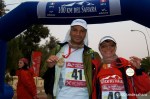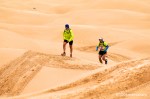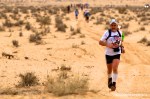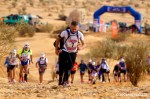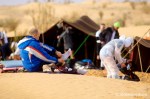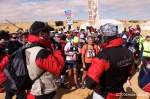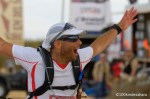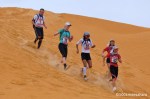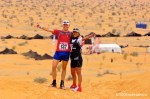
CAPE WRATH ULTRA™ – SCOTLAND’S EXPEDITION RACE – MAJOR NEW ULTRA-RUNNING EVENT ANNOUNCED

CapeWrathLogo
From the team that revived the inspirational Dragon’s Back Race™, an extraordinary new adventure has just been announced for June 2016 called the Cape Wrath Ultra™.
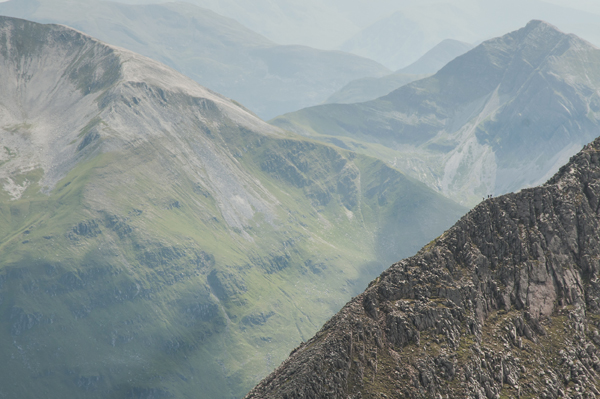
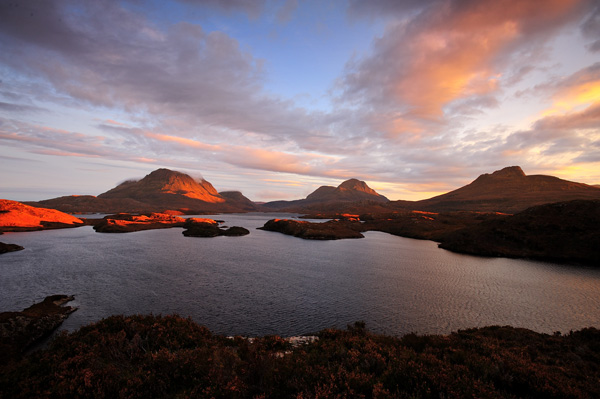
Billed as a once in a lifetime ultra-running expedition race, the Cape Wrath Ultra™ will weave 400km through the Highlands of Scotland. Starting in Fort William, the race promises to take competitors on an incredible journey linking ancient footpaths and remote tracks to the furthest northwesterly point of the British Isles, Cape Wrath.
©BenWinston

©BenWinston 

Race organiser, Shane Ohly from Ourea Events, describes the route. “Winding through the beautiful lochs, glens and mountains of the Scottish Highlands, the Cape Wrath Ultra™ is an ultra-running expedition through some of the World’s most inspirational landscapes, including Morar, Knoydart, Kintail, Torridon, Assynt and Sutherland”.
The new race is based on the Cape Wrath Trail, which is considered to be the toughest long distance backpacking trail in the UK. It crosses rugged landscapes, genuine wilderness and has great distances between support points. Hikers usually take at least 20 days to complete the trail and a new Cicerone guidebook published in 2013 has sparked renewed interested in this unofficial long distance footpath.
©DaveCuthbertson

©DaveCuthbertson

Shane Ohly continued. “Our Cape Wrath Ultra™ route will be similar to the Cape Wrath Trail but with some important variations as we mold the journey for an ultra-running perspective. Detailed planning has begun and Gary Tompsett has been appointed as the Race Director and Planner”.
Gary Tompsett is the logical choice for the role, having planned the 2007 Adventure Race World Championships in the same area and having previously worked with Shane Ohly at Rat Race Adventure. Shane Ohly explained, “Living near the Highlands of Scotland, Gary has a deep knowledge of various route options, the terrain, the weather, and the endless possibilities for a rich experience”.
©GaryTompsett

©GaryTompsett
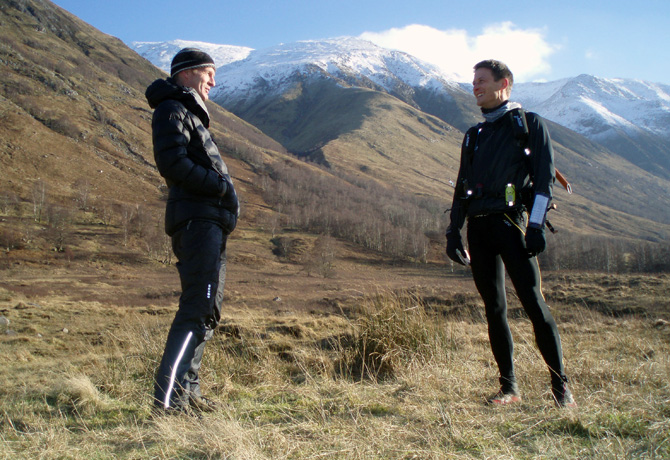
Two previous winter Charlie Ramsay Round record holders together: Gary Tompsett (left) and Shane Ohly (right). The photo is taken moments before Shane Ohly sets off on his epic 2012 record attempt.

 The race is described as a supported ultra-running expedition, in which competitors’ equipment will be transported each day and tented accommodation and all meals provided. This is the same successful formula that Ohly employed when he revived the Dragon’s Back Race™ in 2012.
Ourea Events claim that the Cape Wrath Ultra™ will be the supreme ultra-running trail race. With a 400km canvas through the Scottish Highlands and Ohly and Tompsett’s pedigree – they are both former winter Ramsay Round record holders – in delivering iconic, adventurous and challenging events, who would want to argue!
Entries open in January 2015.
Date: June 2016

Scott T2 Kinabalu Review – Ladies Shoe

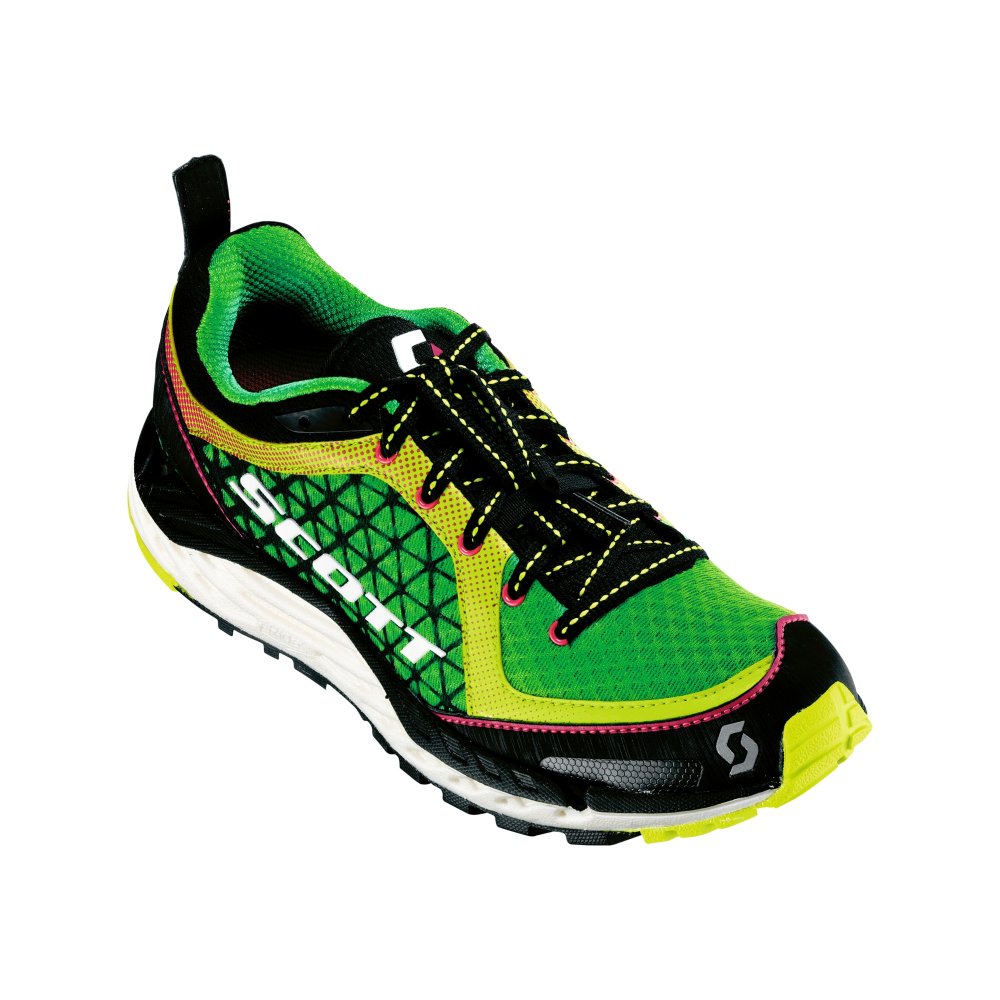
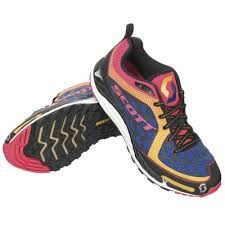
Scott T2 Kinabalu Ladies ©scottrunning

Scott T2 Kinabalu Ladies ©scottrunning

Review by Niandi Carmont

When Scott asked me to test the Women’s T2 Kinabalu, I was very excited to try out a brand of shoe that is not as well known to UK and French trail runners… ‘Scott make bikes don’t they?’ was a typical comment!

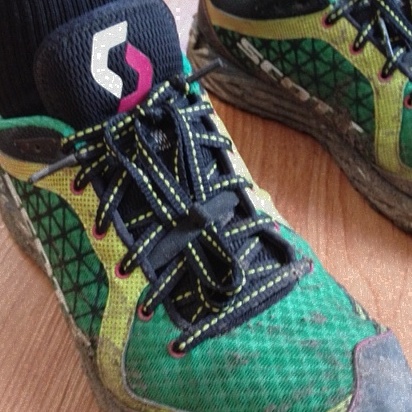
Love at first sight… Like most female trail runners, I like a run shoe to look good and admittedly on the outside it’s a sexy shoe – bright green, sporty and light-weight.

But what about the technical and practical specs which are equally important? Well, after having tested the shoe on 200km of intense rocky mountainous terrain in France over one week, I can definitely confirm it is:

•      Durable

•      Comfortable

•      Lightweight

•      Energy efficient

•      Stable

The above qualities were exactly what I was looking for and all my expectations were met.

Durability, stability and eRide™ Technology

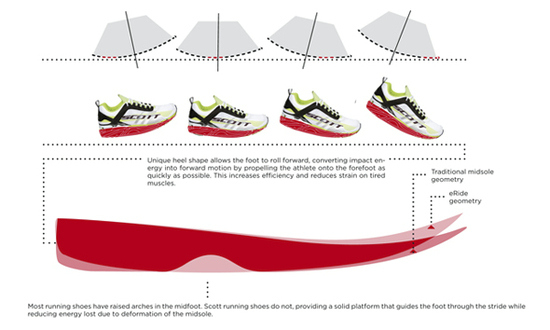
Scott eRide

Usually after intense weeks on hard trail terrain like that, my trail shoes “have done their time” but I was surprised to find that the soles were hardly worn.  I have an atypical and asymmetrical running gait, which means I heel strike heavily on one foot and the wear shows after only a few runs on my trail shoes. Not the Scotts though. But then the Scott shoe is built using the patented and scientifically-researched SCOTT’s eRide™ Technology – that unique rocker shape creating a very stable midstance which heel strikers like me strive for. Initially it took a few runs to get used to but I quickly felt the benefit of the rocking motion provided by the shoe and it meant I was heel-striking less and running more efficiently.

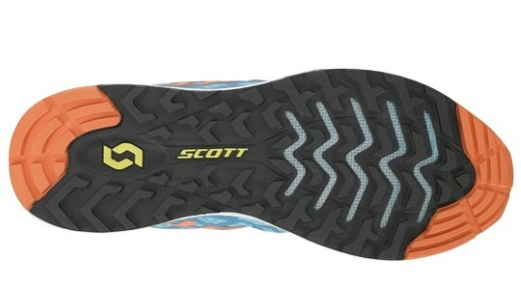
Scott T2 Kinabalu Sole

The shoe has an 11mm drop; in this current climate of ‘low drop is best’ it may mean the T2 will be snubbed by many! Don’t be too hasty. In use, this shoe feels like a much lower drop shoe, primarily due to the eRide™ (rocker). It keeps you on your forefoot with good technique. They are a pleasure to run in.

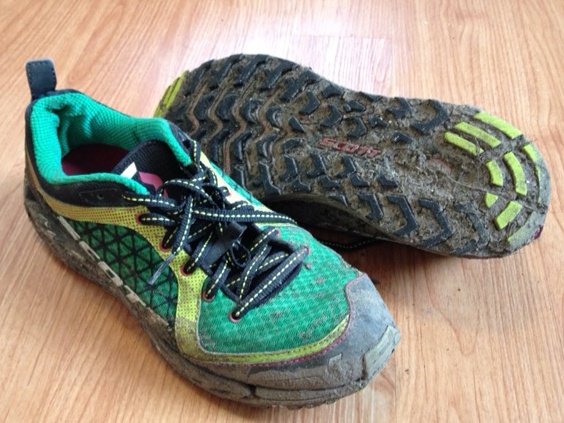
After the week on rock French trail my soles had hardly worn.  My podiatrist who is an avid cyclist took one look at them and said “this is true Scott quality, great grip, rolling resistance, durability and ride quality”.

photo 4

Shortly after that I departed on a 10-day multi-stage event to Northern India, Rajasthan and as I had luggage restrictions, was faced with the dilemma of taking only one pair of run shoes.  I knew I would be doing a mix of trail, desert, tarmac and dirt road. No hesitation, my multi-purpose, train-adaptable Scotts were in my luggage. Although a winter shoe, they were perfect on all types of terrain. I had no issues transitioning from the Thar Desert to the tarmac road leading to the Taj Mahal. Conditions were hot and humid and as much as the shoes kept my feet dry and warm on muddy, wet British towpath and boggy fells, the breathable mesh upper equally kept my feet cool in Rajasthan. And although I didn’t use gaiters as the desert/dune stages were not too long, I had very little sand in my shoes.

Lightweight

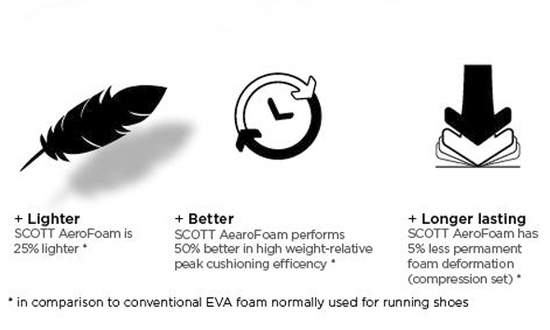
Scott Aerofoam

The shoe features an Aerofoam midsole for reduced weight and it’s definitely lightweight at 265g (UK8) a bonus for me, especially over long ultra-distances or long training sessions. More importantly – it is lightweight but not at the expense of durability or stability. After several runs the midsole ‘bedded’ in and started to mould to my foot providing additional comfort. The sock liner is perforated and the midsole has ‘drainage’ ports to allow water to escape; great for water crossings or wet weather running.

Comfort and adaptability to varied terrain.

Comfort with a capital “C”. This is an important criterion for me whatever the shoe ….but even more so if I’m going to be running long distances on arduous, rocky terrain. Not a blister or hot spot and no chafing. I ran in mud, on dry dusty rocks, shingle, slippery descents – the shoe adapted to all the changes in terrain and weather.  Not surprising as the shoe features wet traction rubber and a water-drainage system. The grip in muddy terrain is great and much appreciated by runners like me who prefer a drier terrain. I felt as in control tackling muddy, British bog as I did on dusty and slippery rocky mountainous French trail or even running down shingly, stony descents.

I also liked the bungee lacing system (elastic on the front of the shoe to stow laces) – extra security for a runner like myself who doesn’t want to be tripping over loose laces on a tricky, technical descent.

photo 2

All in all, this is definitely a great winter shoe with great protection and traction at minimal weight.

Female-specific

Needless to say Scott thinks about us ladies too, not only as far as the colour is concerned but also the female-specific fit. By the way, I opted for the bright green colour but the shoe comes in a trendy girly pink too!

Scott T2 Kinabalu Pink

Conclusion

Love them! And I get noticed to:

“Are you wearing Scotts? Didn’t know they made trail shoes!” I get asked.

“Well you bet! And pretty damn good ones at that!” I quickly reply.

Specs

  • Weight 260g for UK8
  • Drop 11mm
  • eRideComposite push-through plate
  • AeroFoamWet traction rubber
  • Lace bungy
  • Upper: Mesh/Synthetic Overlays
  • Lower: EVA/rubber

Scott T2 Kinabalu Men’s Review HERE

About the reviewer – Niandi Carmont

Niandi

Niandi is South African born, a former resident of Paris, she now lives in the UK. A runner for over 20-years; Niandi has completed Comrades Marathon 13-times, Washie 100 2-times and has finished well over 100 marathons and ultras  all over the world. Currently residing in the UK, Niandi splits her work life between the UK and France.

Ultimate Direction, Ultra Vesta by Jenny Jurek – new ladies products

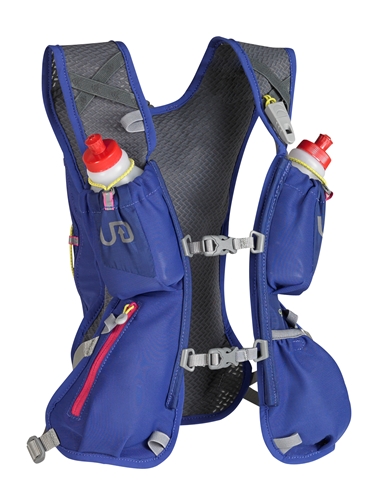
Ultra Vesta ©ultimatedirection

Ultra Vesta ©ultimatedirection

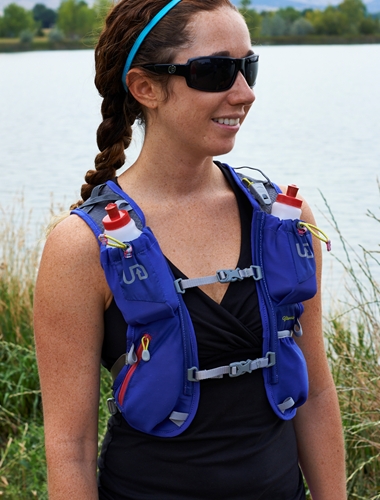
Designed by Jenny Jurek with help from the Women’s Collective, the Ultra Vesta is ergonomically shaped to fit perfectly and perform flawlessly. The plan was to select the best features from all the Signature Series vests, combine them into one great product, then re-design the shape to specifically fit women.

Jenny Jurek in the English Lakes, 2013

Jenny Jurek in the English Lakes, 2013

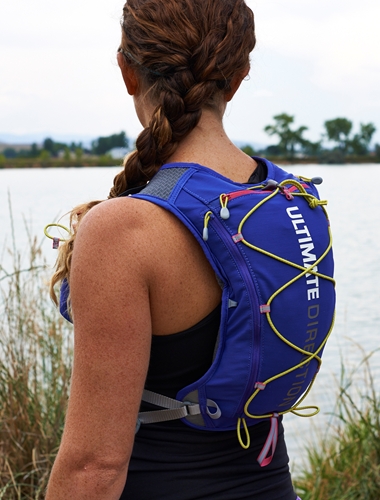
The result is front strap-mounted holsters that offer quick, immediate access to twin 10 ounce water bottles, which are concave against the body, are positioned higher on the chest, and can be folded flat when not in use. The larger volume pockets located low in the front keep your phone, camera, salt tablets, or gels within easy reach while on the move. The main compartment will accommodate a 2L bladder and plenty of gear, and there is an additional horizontal pocket in the rear for quick organization of special items. External and internal bungee cords stabilize the load while the two sternum straps and side adjustment straps give you a customized fit and eliminate bouncing. Moisture-wicking Air Mesh keeps you dry, provides support, and is soft to the touch for all-day comfort. Also included are an ice axe loop, two trekking pole loops, and reflective accents for low-light visibility.

Ultra Vesta Front ©ultimatedirection

Ultra Vesta Front ©ultimatedirection

Ultra Vesta Rear ©ultimatedirection

Ultra Vesta Rear ©ultimatedirection

Specs and Details:

Features (Front):

  • Two 10 oz. bottles are ergonomically positioned
  • Bottle pockets fold flat when not in use or accommodates a camera or phone
  • Large storage pockets are located below the bottles for phone, gels, ect.
  • Two sternum straps slide for custom fit
  • Cool Wick Air Mesh wicks away moisture and is soft to the touch
Features (Back):
 
  • Side adjustment straps allow for customized fit
  • Two vertical zippered pockets in the rear, plus a third horizontal pocket offers ample storage
  • Easily accommodates a 2 liter reservoir or any bottle
  • Ice axe (1) and trekking pole loops (2)
  • External and internal bungee cords stabilize varying capacities
  • Reflective accents for easy visability
Sizing At Chest (Women’s):
 
  • XS/SM: 26 – 38 in. / 66 – 97 cm
  • M/L: 32 – 41 in. / 81 – 104 cm
  • Measure wearing the clothes you intend to wear
  • A vest full of gear will fit smaller

Specs:

  • Volume Capacity: 245 in/ 4L
  • Fluid Capacity: 2 x 10 oz. bottles / 2 x 295 mL
  • Weight: 9 oz. (11 oz. with bottles) / 255 g (312 g with bottles)
  • Height: 11.75 in. / 30 cm
  • Width: 8 in. / 20 cm
  • Depth: 2.5 in. / 6 cm

Materials/Design:

  • Cool Wick Air Mesh: Wicking mesh is lightweight and breathable for optimal ventilation and moisture management
  • 150D Rip Stop: Lightweight fabric provides durability and protection
  • Power Stretch Mesh: Provides versatility with a supportive stretch material that expands for variable capacity

All content ©ultimatedirection – Review to follow

Website HERE

Getting the Wally Hayward record by Johan van de Merwe

©iancorless.com.DSCN0518


Introduction

It was in October 2012 when I first heard about Wally Hayward’s indissoluble records. At that stage I was in the prime and peak of my running career. I was set on challenging the 24 hour race record that was uncontested for the past 60 years. Wally Hayward set the South African record of 256.4 km in London on the 21st of November in 1953. On paper the record seemed fully reachable and even undemanding. With the collaboration of my co-club members at the Pietersburg Road Runners and with the added financial aid of Digit Vehicle Tracking we hosted the first 24 hour race within our local community. The race took place on the 31st of March, 2013 and the purpose thereof was to ultimately improve the 24 hour South African record. It was however not as trouble-free as it initially seemed. Even after my best efforts I still missed the record with approximately 3km. I was extremely disheartened, saddened and disenchanted. Hosting the race proofed to be very pricey and I felt as though I disappointed all my family, friends and supporters. As a consequence, I under duress tried to forget about improving the record.

In order to deal with my setback I participated in numerous elongated races. During April to September 2013 I took part in a 6-day race in Hungary where I completed 516km. I furthermore ran the Comrades Marathon and finished it with a time of 7h28. In addition I also did three hundred milers, the Washie Race (13:18:02), the Golden Reef Race (14:41:45) and the Capital Classic Race (14:33:08). My results far exceeded my expectations but it still did not relief my utter sense of dissatisfaction.

Who is Wally Hayward?

©www.wally.org.za

©www.wally.org.za

Wallace (“Wally”) Henry Hayward (10 July 1908 – 28 April 2006) was a South African endurance athlete with a 60-year career. Wally won the Comrades five times and completed the distance of around 90 km the last time just before his eighty-first birthday.

He was born and died in Johannesburg. In 2006 just a few days before the annual Wally Hayward Marathon, Wally passed away.

Comrades Marathon

He won the race for the first time on his first attempt in 1930 at age 21 (the youngest runner at that stage). Only twenty years later he competed again and won it from 1950 to 1954, except for 1952 when he choose to rather represent South Africa at the 1952 Summer Olympics. He finished tenth in the Olympic Marathon event.

In 1951 and 1953 (first athlete under 6 hours) he broke the down-run record, and in 1954 he broke the up-run record and became the oldest man to win the race at age 45 (later overtaken by Vladimir Kotov in 2004). In 1988 he returned once again to participate. He beat half the finishers with a time of 9h44m. Wally’s most dramatic moment came the following year, in 1989, when he completed the down run at the age of 80. There was hardly a dry eye in the stadium as he staggered across the line in an obviously distressed state, making the cut-off time by a mere 1min 57sec, after which he finally quit the race for good. To this day, he has the distinction in the record books of being the oldest finisher in the history of the Comrades Marathon.

Other records

In 1953 he established records in the London to Brighton Marathon, the Bath to London 100-miler and the 24-hour track race. At the 1938 Empire Games in Sydney he won the bronze medal in the 6 miles competition. In the 3 miles contest he finished fourth. Hayward fought in North Africa and Italy during World War 2 and in 1942 earned the British Empire Medal for bravery for his actions near El Alamein in Egypt.

Family

Married Gladys Catto in December 1934 and had one daughter, Gwenolyn in October 1935. In 1957 Wally and Gladys divorced. In 1971 Wally married his second wife, Bertha Bland.

Contoversy

In 1953 he accepted a small donation towards his traveling while competing in the UK. The South African Athletics and Cycling Association declared him a professional, banning him from all amateur events. The ban was finally lifted in 1974.

Wally Hayward Wikipedia - http://en.wikipedia.org/wiki/Wally_Hayward

DECISION

©iancorless.com.IMG_2106

On the 4th of October, 2013 I came across a list of international races. I was interested in determining the amount of 24 hour races that was still to be hosted throughout 2013. At that time I occupied the seventh position for the international 24 hour races. I reflected back over 2013 and realized that there were no races that I was particularly proud of. I wanted to conclude 2013 on a high note but had no idea how to accomplish my goal. It was already October. My body felt fatigued and worn-out and an exceptional achievement seemed utterly impracticable and idealistic. I browsed the internet and discovered a 24 hour race that was scheduled for the 7th of December. The race was to take place in Taipei, Taiwan. While looking at the previous years’ results I realized that the race was a high standing sports event. I later learned that it was classified as a “gold labelled event” according to the International Association of Ultra runners.

I decided to travel to Taipei in order to participate in the race. It was particularly difficult for me to attempt again to improve the South African record only eight months after my setback. It felt as though I was not in the best physical condition so as to take on the challenge. With all the long races in which I participated in during 2013 I never focussed on just training effectively for any race. I mainly focussed on tapering for and recovering after a race. My legs ached incessantly, my muscles felt stiff and I was just not able to practice adequately. I had to decide whether or not my desire to improve the record was stronger than my physical condition.

GAME PLAN

During the first 24 hour race I ran on the 31st of March 2013 I learned a few essential things. I henceforth decided to concentrate solely on the three mistakes I made while preparing for the race in Taipei. My first mistake was that I started much too fast. The second mistake was that I did not eat and the third detrimental mistake was that I tended to pull my body weight to the right side and as a result it affected my overall balance. In October and November I focused on practicing on the racing track without the use of my GPS watch with the intention of establishing a proper pace and the most suitable eating pattern for every five laps.

THE UNKNOWN

Taiwan is a rather unfamiliar and foreign country with its indefinite culture and peculiar eating habits. My greatest concern was that my body would not be able to deal with the outlandish food, eccentric aromas and odd tastes. We decided therefore to take South African food with us on our journey. I specifically packed cheddar cheese, salami, biltong and pvm energy bars. We arrived four days prior to the race in Taiwan with the aim to adjust to their climate. To furthermore prepare adequately I researched all the contestants and studied their unique profiles. The contenders were all world class athletes against whom I had to compete. I harboured mixed emotions of excitement and apprehension. Some of the participants included athletes like the 2013 – 24 hour world champion, The USA’s 100 mile and 12 hour record holder John Olsen, the eight time race champion, Asia’s 24 hour record holder, Ryoichi Sekiya and Asia’s 12 hour, 100 miler and 100 km record holder Yoshikazu Hara, the 24 hour woman record holder Mami Kudo, the Italian 24 hour record holder and the two-time Spartathlon champion Ivan Cuddin.

RACE

©iancorless.com.DSCN0587 copy

I only truly comprehended the magnitude of the race a day before it commenced. It was amazing to witness how the track transformed into an Olympic type of arena. Enormous tents, medical facilities, banners, cones and an impressive platform for introductions and entertainment were erected within a short span of time. I felt rather anxious once the athletes were being formally introduced to the media and while meeting all the various champions and record holders. I was fully aware of the enormity of the race. I was faced with the reality that I had to really do my best in order to compete with my commendable opponents. Shortly before the race started the athletes were introduced to the public and to their personal lap-counters. Each international athlete had the opportunity to write inspirational, encouraging words with their signatures on a big gold label board. I wrote “God will give me strength” not knowing how true it would prove throughout the duration of the race.

A particular doctor was employed to see to the needs and physical welfare of each athlete. All athletes were weighed in, in order to monitor their wellbeing throughout the race. Every single one was weighed on a fourth hour basis when the direction of the race was changed. I was rather shocked to weigh-in on 65.5 kg as I usually only weigh between 60 to 62 kg. I was in mint condition in 2012 just before the Washie race when I only weighed 59.5 kg. The extra weighed had me rather concerned.

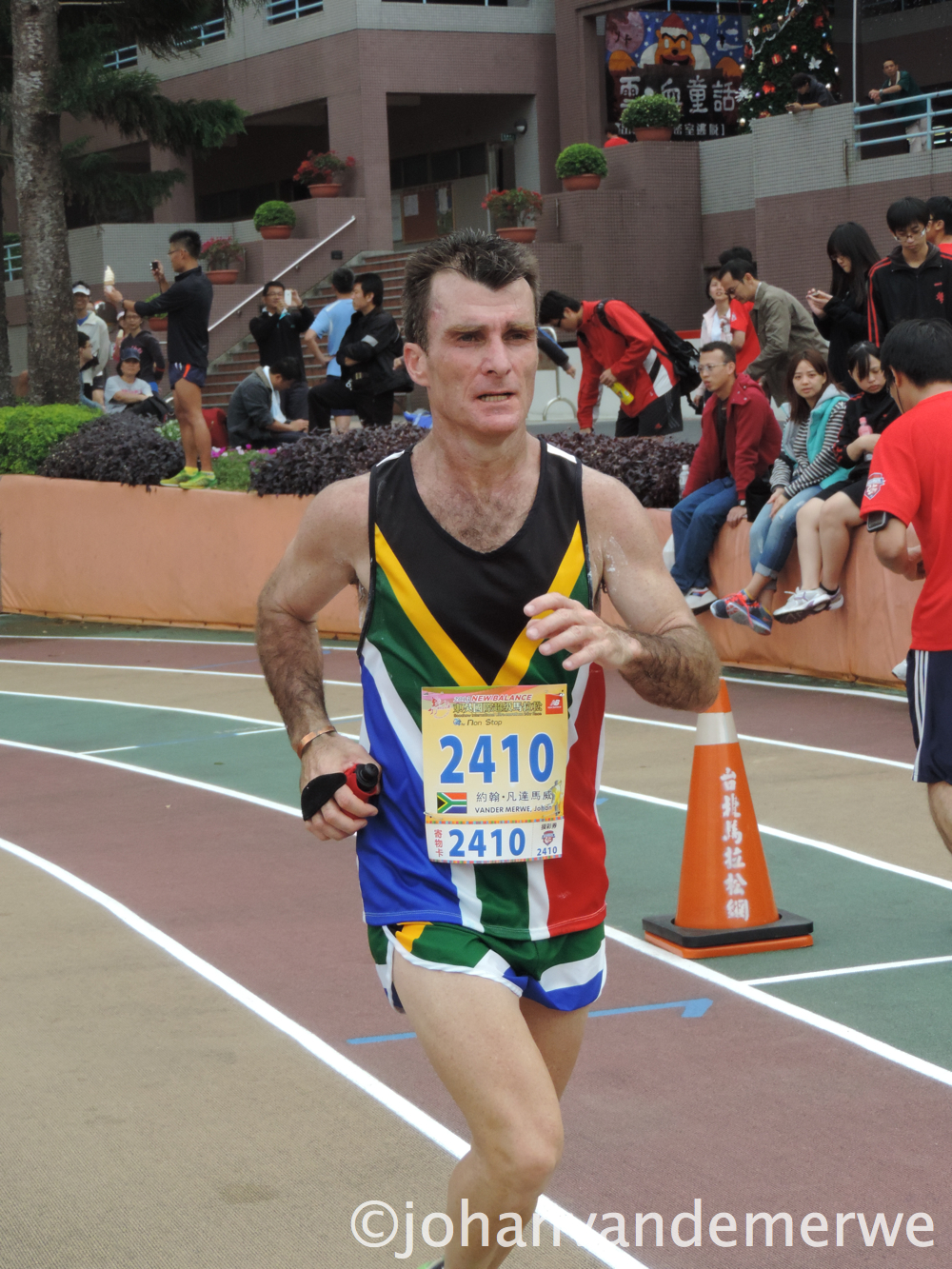
The race commenced at exactly 9h00. I was clothed in my full South African attire that reflected our country’s national colours. The starting gun announced the beginning of the race and I was faced with the moment of truth. All participants was at first hesitant to take the lead. After a few frustrating and exasperating laps I however decided to take the lead. After every fifth lap I took the time to eat something. My wife provided me with various snacks that consisted of cheese, salami and pvm energy bars. I mostly drank 32 GI, water, rehydrate and Sprite. After every 60km I also drank a recovery drink as well as an addition magnesium tablet. After the first three hours I yet again realized that I started too fast. I was still in the lead of approximately 40.8 km, more or less 1km ahead of the Japanese, Hara. Even though I was still running comfortably I was concerned that I was yet again making the same mistakes as I did previously. I felt so poised that I even played cat and mouse games with Oslen and Cudin.

After the first fourth hour the direction of the race changed and the athletes were weighed in. My weight shockingly decreased to 61.5kg. I lost a staggering 4kg within the first hours of the race. The doctor spoke to my wife and informed her that if I lost any more weight that he would be obligated to take me out of the race. I was petrified and tried to make various plans in order to pick up weight. My wife ordered a Mc Donalds burger, but I felt awfully nauseas after the first bite. The last thing I wanted was to throw up during the race. I knew from experience that one can easily loose all your strength within a blink of an eye when you dehydrate. I was fearful and decided to conceal something in my pants in order to ensure that my weight was not less than the previous weigh-in. My wife moreover found two-minute noodles that I was able to eat. I determined to go to a different scale to be weighed. I weighed 62.5kg – it was a great relief. I instinctively decided to stop chasing kilometres and to exclusively focus on improving the record time.

©iancorless.com.DSCN0589

I set a few milestones for myself in the race in order to obtain my goal. I just did not want to make the same mistakes as those I made in Polokwane. On twelve hours however I completed exactly the same kilometres as I completed previously – 145.2km.  I realized that my attempt might be in jeopardy and I set an objective for the 100 mile mark. My 100 mile time was 6 minutes slower than it was in Polokwane. My self-confidence was shot. My time was 13:38 far removed from my expected time of 12:45. Wally completed his 100 miler split during his 24H race in 1953 in a time of 12:47.

I apprehended just how difficult it would be to improve the record time. I knew that it was imperative for me to maintain the correct posture and to proceed regardless of how I felt. My position fell from first to third. My body played tricks on me and I continuously ran to the bathroom without any avail. When looking back it might have been a way for my body to rest. My wife realized what was happening and she kept a close eye on me. She encouraged me not to waste any time.  She warned me before the race that she was going to be rather stern in order to keep me in line. At 22 hours I realized that the record of 256.4 km was well within my reach if I kept my focus. It required a lot of exertion and determination. My body did not want to take in any food or fluids at that stage.

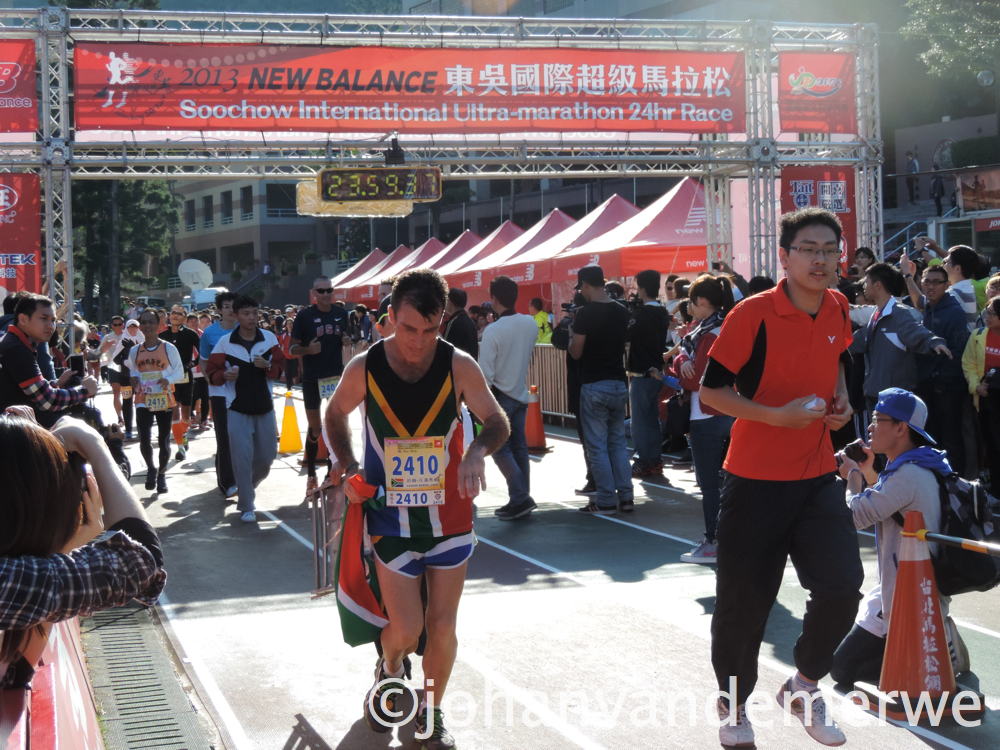
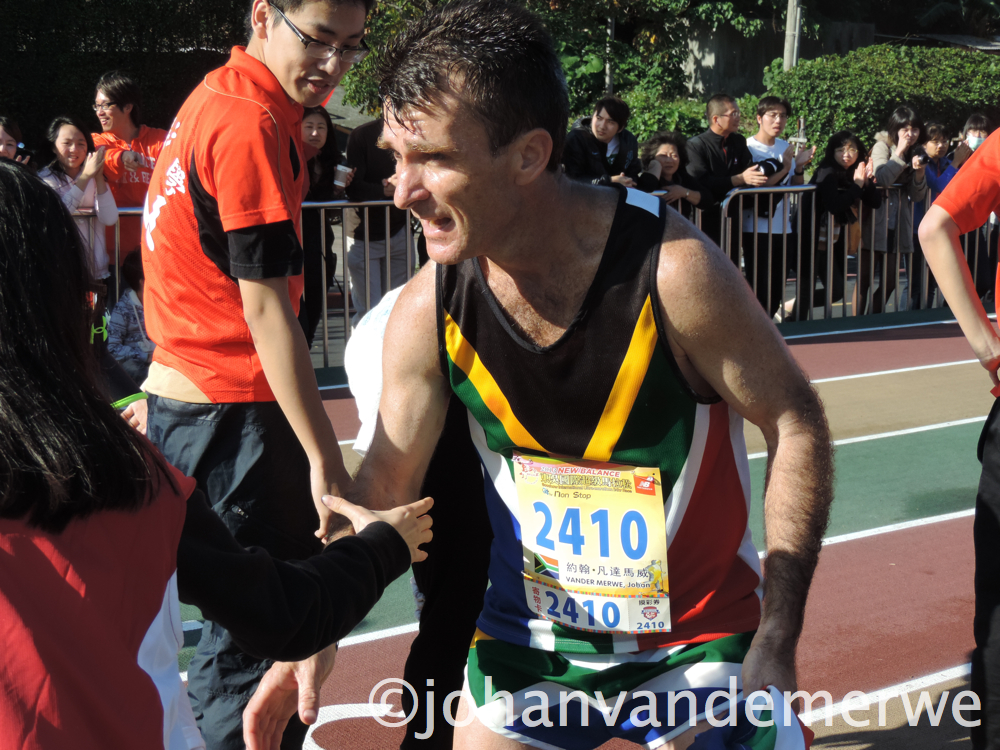
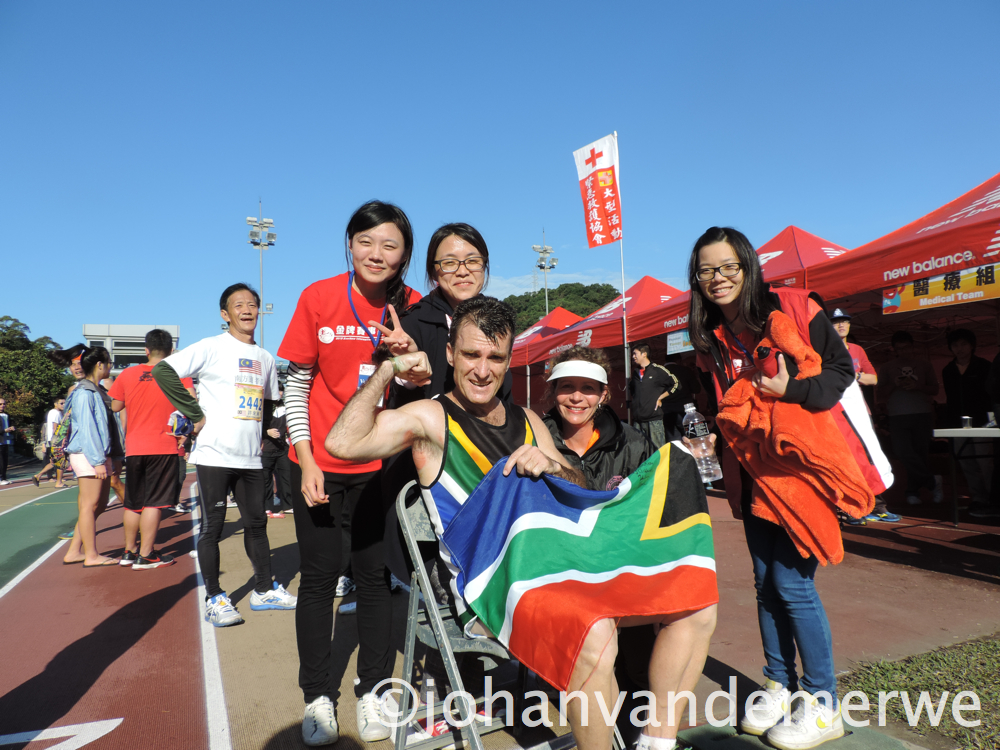
On 23 hours my personal lap counter indicated that I have completed 249km. I still had to do 7.4 km in order to improve the record. I knew I had to step up and increase my pace. I eventually completed the race and improved the record with a total distance of 258.064km.  The South African flag waved proudly above my head as I crossed the finish line.

It is almost anomalous and strange to be without a goal currently. It feels as though I am growing stronger and stronger despite my age. It is imperative for me to set a goal that will serve as my focus point for the next two years. I have my sights set on the 48 hour as well as the 6 day records that seem attainable on paper. The only record that might be within reach is the demanding, arduous SA 100 miler record that was set in 1972 by Derek Kay with a time of 11:56:56.

My biggest rule in running is that you must at all times believe in yourself when you participate no matter how unattainable and gruelling your goal seems. If I work hard and prepare adequately none of my goals will be unfeasible and beyond my reach.

©iancorless.com.DSCN0598


Many thanks to Johan van de Merwe for providing this report and images.

Johan will be interviewed for a future episode of Talk Ultra.

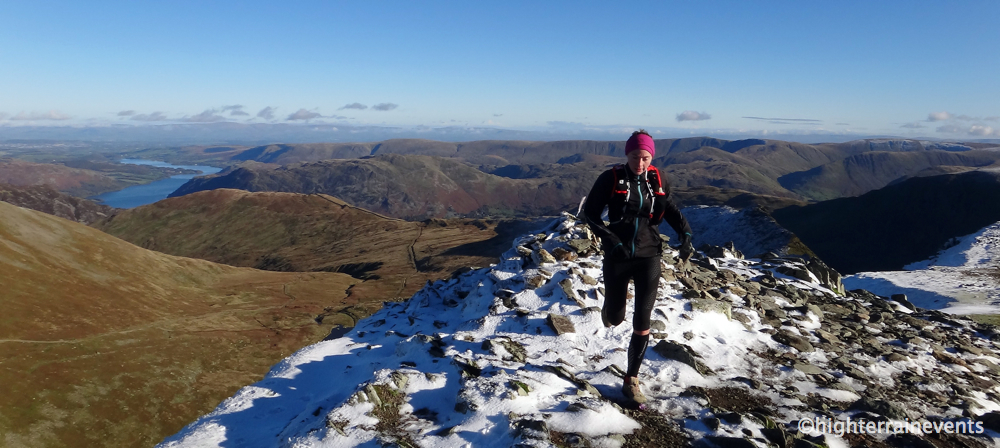
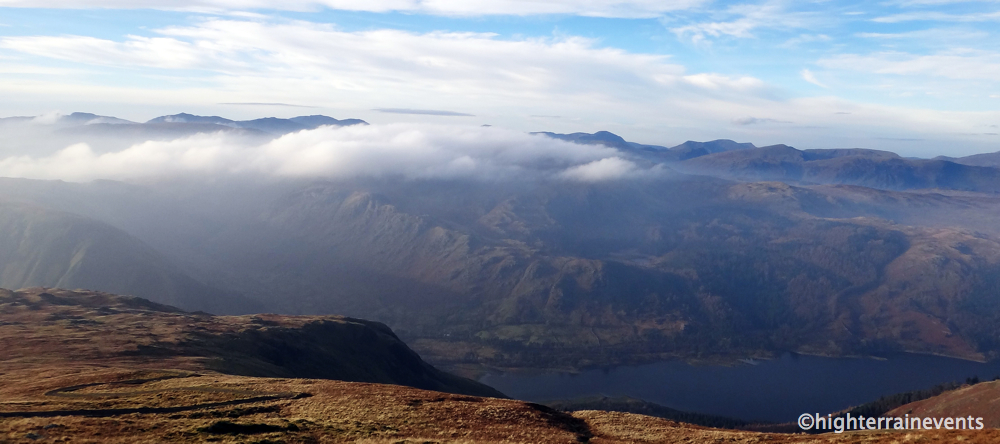
Skyrunning UK announce the 3x3ULTRA

High-Terrain-Banner-Skyrunning

A new year and what better way to start than with the announcement of the first race in the new Skyrunning UK ‘Skyrunner® National Series’ – the ‘3x3ULTRA’ by High Terrain Events.

Skyrunninguk logo

Over 4000m (13,000ft) of ascent await participants of the 3x3Ultra. “It’s an opportunity to cover three classic Lakeland peaks in an accumulative distance of 80km’s”, says High Terrain Events race director, Ian Mulvey.

3x3ultra_highterrainevents_iancorless.com

Salomon athlete, Ricky Lightfoot (IAU World Trail Champion 2013 and Otter course record holder) has been instrumental in combining his skills and knowledge in designing a course that will bring Skyrunning UK an event that ultimately will create the perfect flagship for the Skyrunner® National Series (SNS) within the UK.

Based on the classic ‘Lakes 3000’s’ the 80km route will include Scafell Pike, Helvellyn and Skiddaw. An amazing circular route over the best mountains available within the UK, it promises to be a tough challenge.

Lauri van Houten, executive director for the International Skyrunning Federation (ISF) has been instrumental in providing the backing and support to enable Skyrunning UK to become a reality. When asked about Skyrunning in the UK, Lauri had this to say:

“Some of the world’s top athletes come from the UK! Andy Symonds, Tom Owens, Ricky Lightfoot, Robbie Simpson, Tessa Hill, Anna Lupton and past SWS (Skyrunner® World Series) Champions Angela Mudge and Rob Jebb… British races are known for being tough and challenging. Skyrunning captures the spirit and tough technical challenges runners are looking for today. That’s the ‘feel’ we’d like to bring to the UK.”

3x3ultra_highterrainevents_iancorless.com

3x3ultra_highterrainevents_iancorless.com

The race route combines all the elements of a classic Lakeland run with aspects of European racing. “Skyrunning UK offers a great opportunity, we already have the main ingredients; technical terrain, beautiful mountains and hillssaid Tom Owens (UK based Salomon athlete) “The UK has brilliant and committed athletes who love racing. We may not have the required altitude that a Skyrunning race would require in Europe but this is compensated for with the amount and steepness of climb that we can accumulate over distance, the 3x3Ultra is a great example of this.”

3x3ultra_highterrainevents_iancorless.com

No stranger to Skyrunning, Salomon International athlete, Andy Symonds has performed with the best-of-the-best all over Europe, his podium finish at Transvulcania La Palma in 2012 a particular highlight also offered his approval of the 3x3Ultra:

“Skyrunning is about running high up on rough ground. Getting up, over and along big mountains with big views. The 3x3Ultra does just that and it’s great to see it finalized on the all new Skyrunning UK calendar, it’s an exciting time”.

3x3ultra_highterrainevents_iancorless.com

National Series Logo

The Skyrunner® National Series will bring a new race series to the UK. Made up of five races in each category (Sky and Ultra), runners will accumulate ranking points by competing in at least three out of five races over the SkyRace® and Ultra SkyMarathon® distances. Respective male and female winners of the ‘SNS’ in 2015 will be rewarded with the ultimate prize; not only they will they be crowned champions of the ‘SNS’ but they will also receive the opportunity to race in the final of the Skyrunner® World Series.

3x3ultra_highterrainevents_iancorless.com

Ian Corless, director for Skyrunning UK has been working for months in conjunction with the ISF Athlete Commission to bring this moment to fruition, “It’s about progression and development. Having witnessed Skyrunning from every level for the past 2-years and seen the growth, the excitement, the opportunities; to not be part of this in the UK would be a shame. The sport is growing at all levels. In time I hope we will have a series of UK based Skyrunning teams similar to the model that inov-8 have created. A Skyrunner®  National Series will provide not only a great structure for the sport but it will also provide a springboard for UK athletes to race in other countries but equally, we hope to attract foreign athletes to race on home soil. The announcement of the 3x3Ultra clearly states our intentions for what a Skyrunning event should be in the UK.”

3x3ultra_highterrainevents_iancorless.comLauri van Houten continues, “The only setback has been the difficulty in finding the right person to represent Skyrunning in the UK and bring it in line with other countries. It’s been hard to find a replacement but Ian Corless has embodied that and with his contacts and know-how we’re confident he’ll pull a great movement together.

The stage is set for the 3x3Ultra.

Ian Mulvey, race director for the 3x3Ultra explained his thoughts and vision:

“It will showcase what we have to offer in the UK and hopefully attract international runners enabling the top UK athletes to race against the world’s best on their home terrain.”

When asked about the benefits Skyrunning will bring to the UK race circuit, Ian replied:

“Having raced in Europe I can see the potential of bringing Skyrunning to the UK. In terms of raising the profile of UK ultra running, I think this will take ultra running to the next level and give us recognition on an international scale. Now is the perfect time for this type of event, runners are looking for tougher challenges to strive for. Being part of the Skyrunning UK series I hope will raise the profile of the event & attract international athletes.”

3x3ultra_highterrainevents_iancorless.com

Seize the opportunity now and sign up for what will become an iconic Skyrunning UK event.

Enter online here: https://www.sientries.co.uk/event.php?elid=Y&event_id=1222

Details:

Get involved with Skyrunning UK

← Back

Thank you for your response. ✨

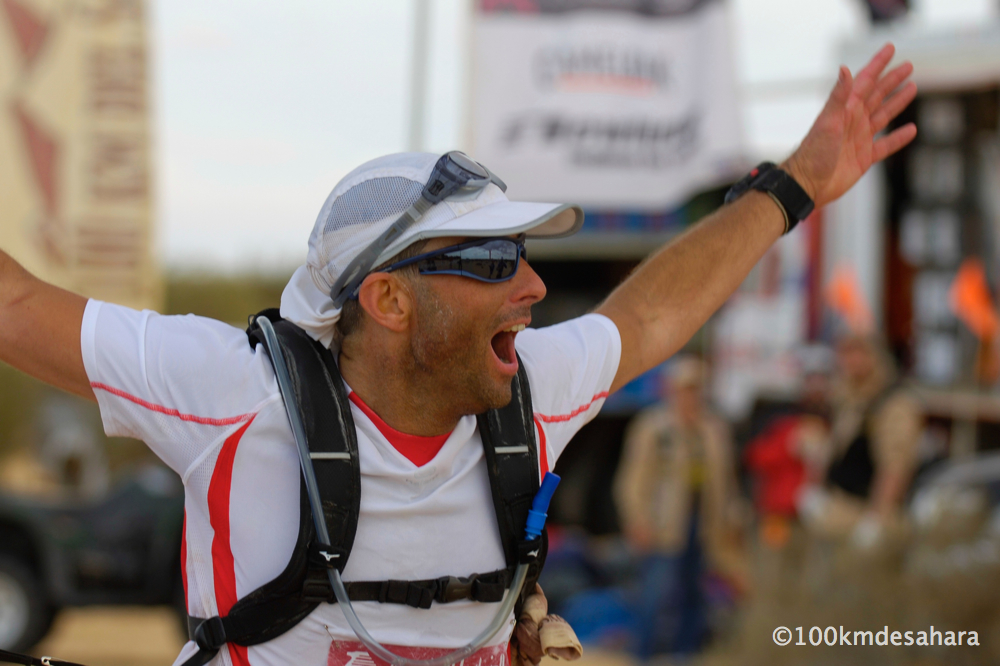
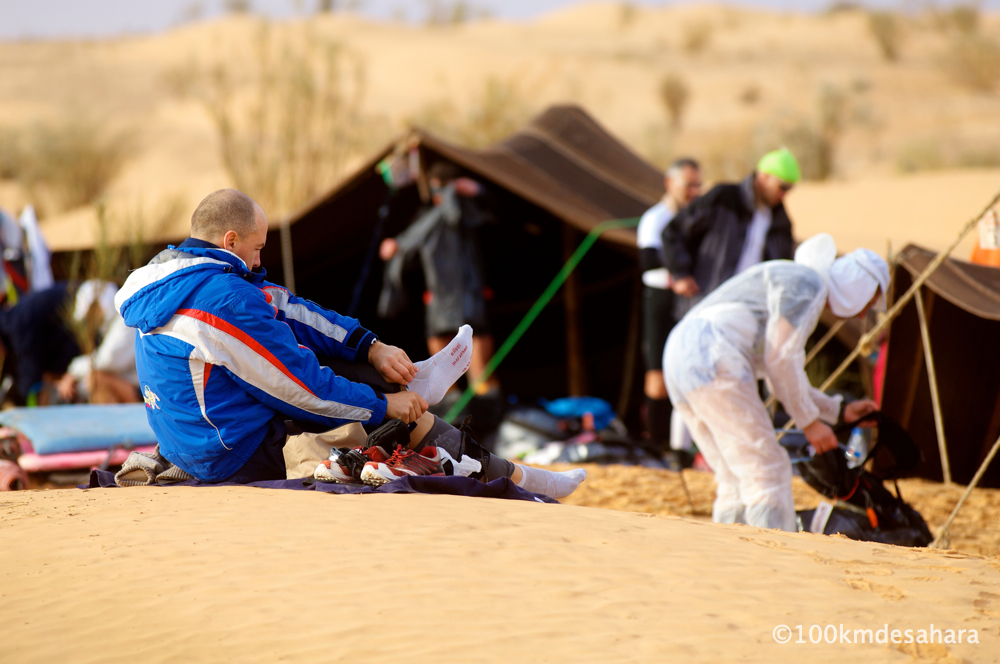
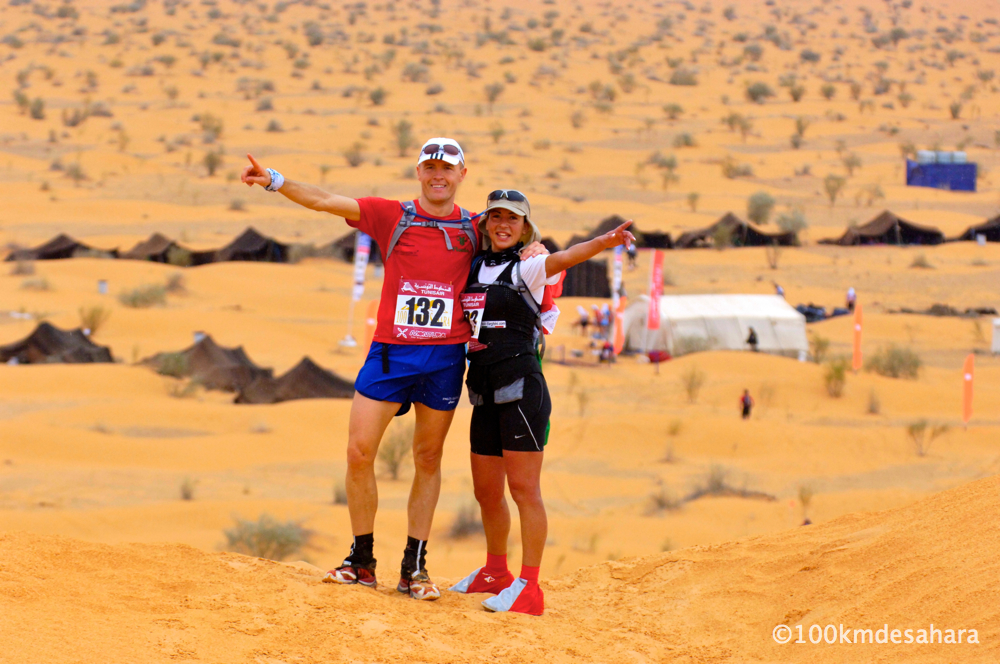
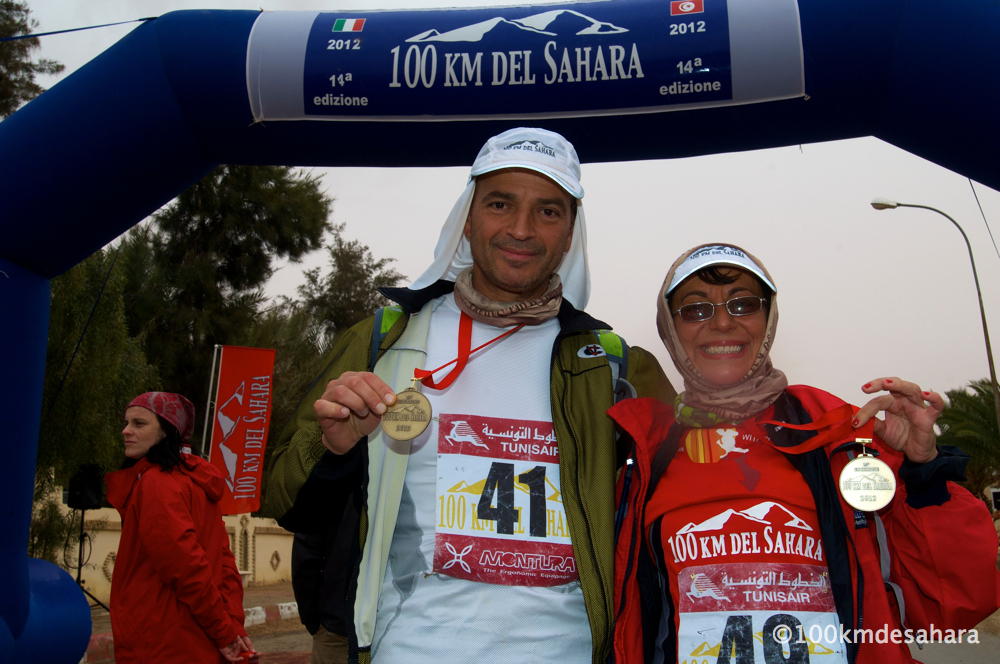
100km del Sahara, April 2014

Logo

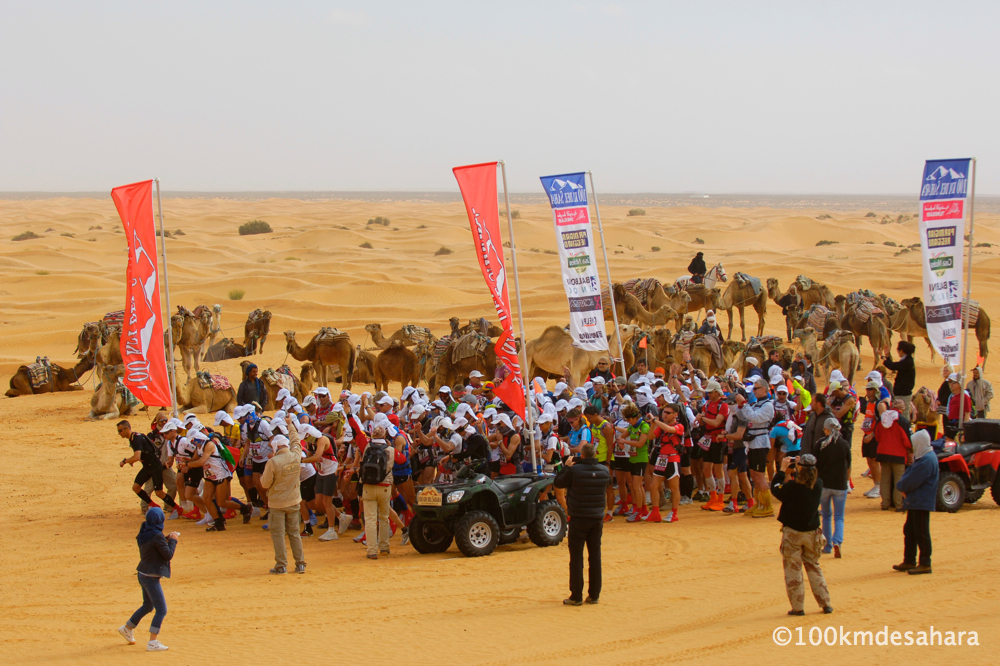
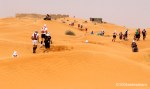
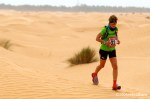
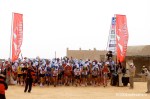
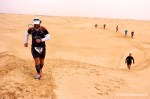
An adventure, an experience, a stepping stone to something else… the 100km Sahara is multi-day race that will introduce you to a whole new world. Join the journey in April, 2014. 

©copyright.iancorless.com._BEN2717

Irrespective of your experience, the 100km of the Sahara will provide every participant a definitive sporting accomplishment. For some it may well provide the ultimate challenge, while for others, it may become a launching pad for continued participation in highly demanding extreme running races. The spirit of the race combines many elements; travel, adventure, excitement and ultimately a challenge.
 Pursue your dreams, pursue your passions and let the 100km of the Sahara provide you with a gateway to a new world.

©copyright.iancorless.com._MC23589

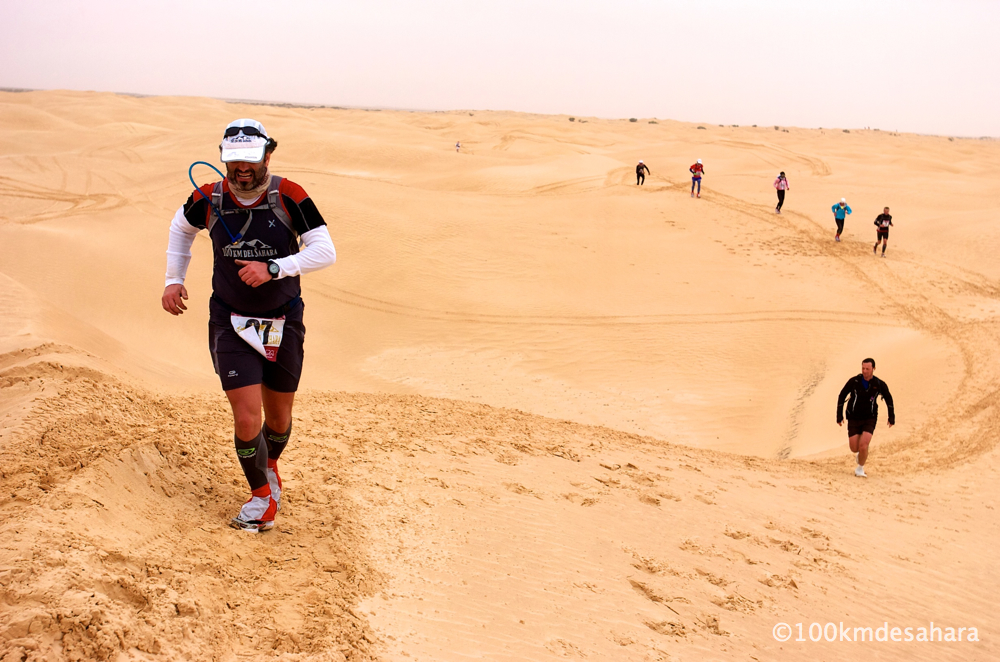
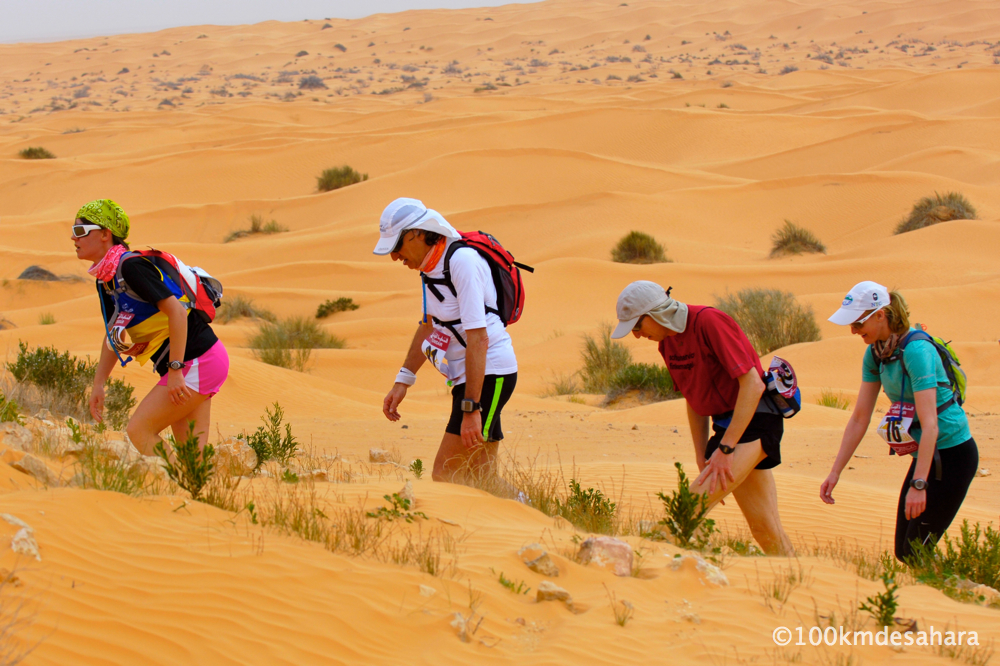
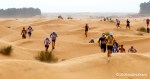
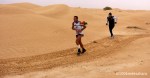
An annual race taking place over multiple days, participants test themselves against the challenge of running against the desert, while accepting the minimal assistance that is needed. The Sahara is fascinating, however it is one of the least suitable environments for running. If it was easy, anyone would do it… take yourself to a new level, add a new stimulus to your running. The Sahara will not only test your physical parameters but your capacity to control your mind.

Achieve your finish line!

©copyright.iancorless.com._BEN5048

DETAILS:

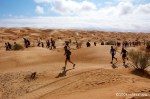
The “100 km of Sahara” maintains a departure from the oasis of Ksar Ghilane, in the great Eastern Erg for the 2014, 16th edition of the race. The arrival; the mythical oasis of Douz will be achieved after travelling 100 km’s in 4-stages with 3-nights undertaken in a tented camp.

©copyright.iancorless.com._MCA2074

The race itinerary is 7 days 6 nights. This competition is designed to bring out the spirit of challenge for those who create their own adventure. The race will have all the necessary ingredients of the extreme, but provides a race structure and format that is accessible to all. It’s a tough race but a race that is possible for all levels of ability!

©copyright.iancorless.com._BEN2939

The 100 km of Sahara is a qualifying race for the UTMB Race and will count for 2 points.

CourseQualificative2014_EN

Capacity, 150-people.

  • Program flight included € 1.840 Milan or Rome
  • Program without flight € 1.640 
  • Single supplement (3 nights in hotel) € 100

The participation fee includes:

  • Flight to and from Djerba from Italy (only in the program with flight),
  • Transfers by bus and by 4×4 cars,
  • Full board for the whole week,
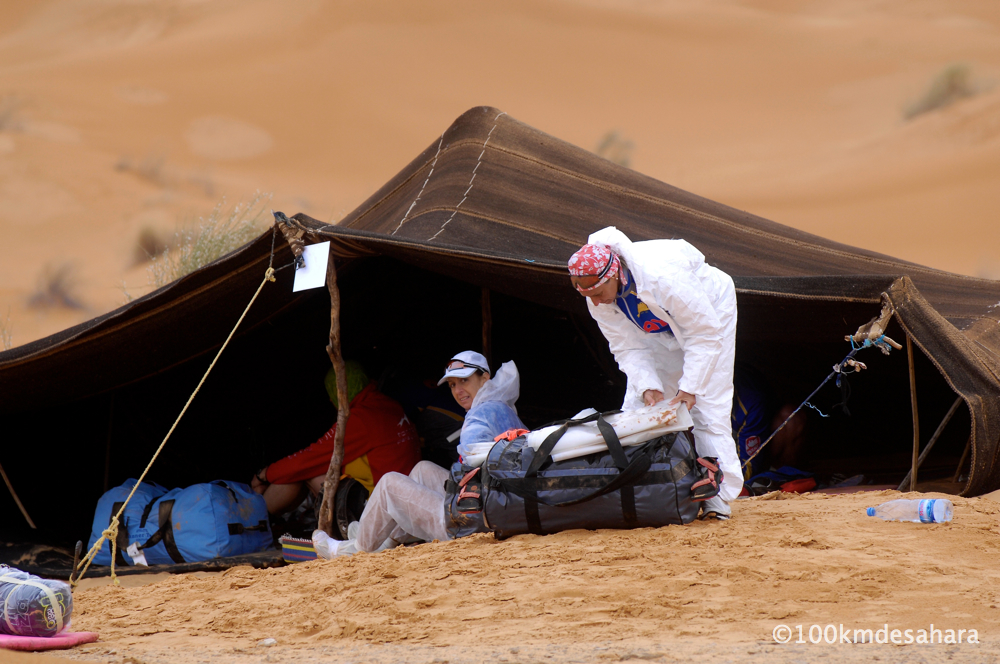
  • 3 nights in hotel and 3 nights in tents (6 people each),
  • Medical assistance during the race,
  • Tourist assistance,
  • Insurance.

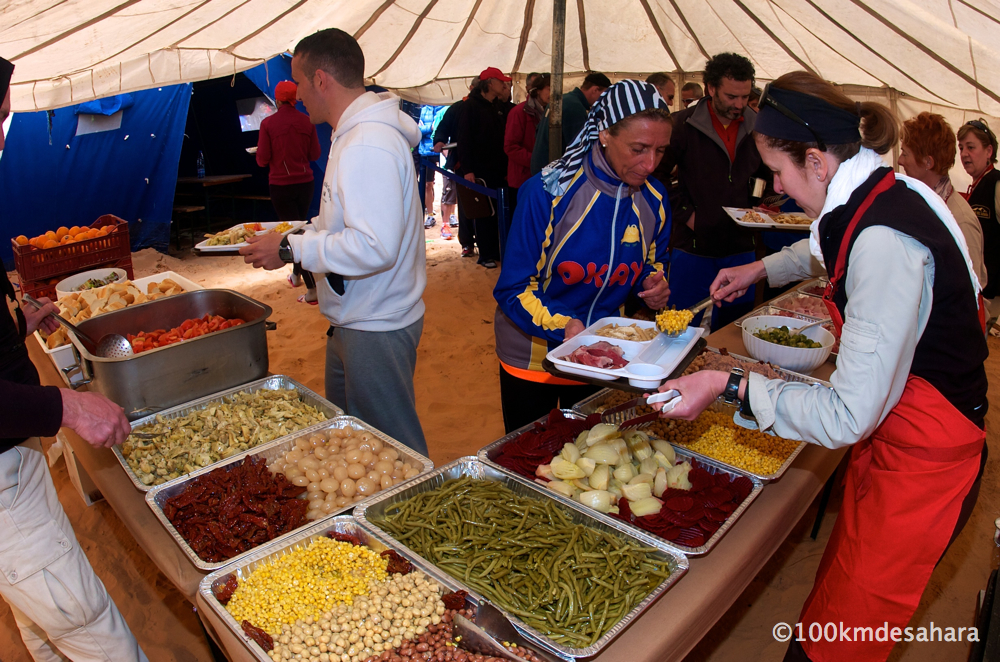
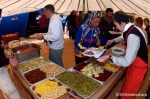
During the race, a catering service provides food for all participants. All produce comes from Italy with the exception of fresh fruits and vegetables; they will be sourced locally in Tunisia. The menu will be balanced and based around runner’s needs and requirements.

©copyright.iancorless.com._MC22832

  • Breakfast: 
Coffee, tea, milk, cookies, cakes, fresh bread, jam, honey, muesli, cereals, eggs, cooked ham, cheese, fruits
  • Light lunch: 
Pasta or rice, hot or cold dish of meet, hot or cold side dish, salami and cold pork meat, Parmesan cheese, tuna, tomato salad, fruits
  • Dinner: 
Appetizers, pasta, rice, vegetable soup and broth, hot dishes of meet, hot or cold side dishes, tomato salad, Parmesan cheese, fruits, dessert, wine on the table.

What is not included?

  • Drinks and beverages at the hotel and in the oasis of Ksar Ghilane.
  • Airport tax.

WALKERS

©copyright.iancorless.com._BEN2769

Max number of participants: 20

A new addition to the race is a walking category. Just 20-places are available, allowing an opportunity to explore the emotions and landscape of the Sahara in a more relaxed way. A special program has been arranged and will be independent of the running race but will run in parallel.

Walkers will be accompanied with a guide, dromedaries and 4×4 vehicles. Dromedaries will carry small personal luggage and the vehicles will provide security and reassurance for all walkers.

©copyright.iancorless.com._MC22935

The treatment for walkers will be the same as for the runners; night accommodation will be nomadic tents with personal sleeping bags; breakfast, lunch and dinner will be provided in the camp with the entire group of participants.

©copyright.iancorless.com._MCA9737

ITINERARY

Sunday, April 27th, 2014

  • Flight Milan or Rome-Djerba
  • Transfer to the Hotel ****, dinner and overnight in hotel
  • It will be possible to leave the extra baggage in the hotel; it’s MANDATORY for all the participants to put everything you need in just one bag. Exceptions will not be allowed.

Monday, April 28th, 2014

  • Wake up at 7.30 am, breakfast in the Hotel and transfer to Ksar Ghilane by bus for the opening ceremony
  • Arrival in the oasis, accommodation in the tent camp equipped with common
  • Rest rooms and showers
  • Lunch at the camp with local food specialties
  • 3.00 pm opening of the shop “merchandising 100 km del Sahara”
  • 5.00 pm designation of race bib numbers and assignment of tent
  • groups.
  • 6 people per tent
  • Dinner made by the Zitoway staff and overnight stay in the tent of the oasis

Wednesday, April 30th, 2014 – 2nd and 3rd stage 26km + 9km (night stage)

  • 7.00 am breakfast and baggage delivery
  • 7.30 am start of walkers
  • 8.30 am start of the 2nd leg
  • Arrival at the camp, open lunch, relax in the afternoon
  • 7.00 pm dinner at the camp
  • 9.00 pm start of the night leg
  • Overnight at the camp

Thursday, May 1, 2014 – 4th stage marathon 42km

  • 6.00 am breakfast and baggage delivery
  • 6.30 am start of walkers
  • 7.00 am start of the 1st group
  • 8.00 am start of the 2nd group
  • 9.00 am start of the 3rd group
  • Arrival at the Hotel****Sahara Douz, end of the race
  • Lunch by the hotel restaurant
  • Relax in the afternoon

Friday, May 2, 2014

  • Wake up and breakfast
  • Transfer to Djerba, lunch at the hotel
  • Afternoon in relax by the pool
  • 8.00 pm dinner in the hotel and slide show of the race/li>
  • Overnight in hotel

Saturday, May 3, 2014

  • Wake up and breakfast
  • Transfer to the Airport of Djerba, on the way free lunch
  • After lunch transfer in airport for the flight back
THE FOLLOWING PROGRAM MAY CHANGE AND IS SUBJECT TO FINAL CONFIRMATION

PRACTICALITIES:

BAGGAGE

The backpack will be the only hand luggage on the plane, which should contain just what is necessary for the race – running shoes, shorts, t-shirt, and survival kitWe have already had an incident where someone’s personal luggage was in delay and they were at risk for not being able to participate in the race. If you have the necessary items in your backpack, you can run with no problem until your baggage arrives.

REQUIRED DOCUMENTS

  • I.D. is required to go in Tunisia for Italian people.
  • A valid passport is required and no vaccinations are needed at this time. It’s always recommended to check with your Embassy for any travel advisories.
  • A medical certificate issued by a sports medical center facility with a test of physical efforts confirming that the athlete is physically fit for this race is absolutely MANDATORY. Without this certificate, you will not be allowed to participate.
  • No certificate is required for walkers.

RACE CLOTHES

  • Shoes should be suitable for off road running, and should be a little oversized to allow for sore and swollen feet.
  • It is advisable to use gaiters for the sand, but make sure they are good quality and don’t impede performance.
  • If you tend to burn easily in the sun, it is not advisable to wear a singlet or tank top during the race.
  • T-shirts should be made of a suitable anti-sweat material like dryfit, etc.
  • It’s strongly recommended  to bring a Saharan scarf, called a “cechès”, that can be useful to protect nose and mouth in case of wind or sand storm as well as motorcycle glasses.

RACE BACKPACK

For safety reasons it is MANDATORY that participants have a race backpack that contains the following items:

  • A minimum of 1-litre of water (inside the backpack or in flasks around the waist), salt tablets, survival blanket, whistle, lighter and chemical light .
  • A hat, sunglasses, protective sun lotion, a small knife and some Compeed plasters are also recommended.
  • The mandatory equipment may be verified at any moment and if an item is missing a penalty will be immediately applied per regulations.
  • The survival kit can be purchased from the Organisation.

MEDICAL CERTIFICATE

  • A medical certificate issued by a sports medical center facility with a test on physical efforts confirming that the athlete is physically fit for this race is absolutely MANDATORY.
  • No certificate is required for walkers.

SAFETY KIT

For safety reasons it is MANDATORY that participants have a race backpack

that must contain the following items:

  • A minimum of 1-litre of water
  • Salt tablets
  • Survival blanket
  • Whistle and lighter
  • Chemical light
  • Hat
  • Sunglasses
  • Protective sun lotion
  • Small knife
  • Compeed plasters

The mandatory equipment may be verified at any moment and if an item is missing a penalty will be immediately applied per regulations.

Test yourself!

If it was easy, anyone would do it… take yourself to a new level, add a new stimulus to your running. The Sahara will not only test your physical parameters but your capacity to control your mind.

Achieve your finish line!

More information or booking here:

← Back

Thank you for your response. ✨

GALLERY:

Organisation:

ZITOWAY Sport & Adventure
P.I. 02510760362
Tel. +39 059 359813
Fax +39 059 2920013
Port. + 39 337 573662
Skype: Adrizito

We’re unlikely to keep our New Year Resolutions, says new study.

©TomTom

©TomTom

 A global report by TomTom into attitudes towards achieving fitness goals shows Britain is trailing in the exercise league.  The study, across eight Western countries, reveals that fewer Britons set targets than any other country – just 61 per cent.  It means nearly four in 10 people in the UK never plan a new exercise regime.

 Of those who do set fitness goals, just six per cent ‘always’ achieve them and only another 17 per cent claim they ‘almost always’ do. 

 The research showed that 48 per cent of Brits may make New Year Resolutions about improving their fitness levels in January, but few will manage to stick to them.  Over half of Britons (54 per cent) give up an exercise regime within six months – or have never even had one in the first place.

 TomTom looked at exercise and ambitions in the UK, US, France, Spain, Holland, Italy, Sweden and Germany.  Britain emerged poorly from the study of 1,000 people in each country.  It showed that, not only do many people not exercise at all, but more than one in ten (11 per cent) plan to do less exercise in the future.

Corinne Vigreux, TomTom consumer managing director said: “With people now thinking about their New Year Resolutions, understanding the goal and the motivation is the first step to achieving them – which is why we have launched our new range of GPS Sport Watches to help runners, swimmer and cyclists hit their fitness targets”.

 Across the countries surveyed, an average of 72 per cent of people set fitness goals.  While nearly a third (29 per cent) claim to hit their target most of the time, five per cent always fail.

 Good intentions seem to lag well behind actual behaviour.  Four in 10 (39 per cent) of Brits polled claim they will increase exercise in the coming year.  Yet only a quarter (26 per cent) say they have actually done so over the past 12 months. 

 When asked which exercise goals people had set for themselves in the last 12 months, just 44 per cent of British respondents cited getting fitter in general compared with the survey average of 54 per cent.  40 per cent of Brits wanted to lose weight versus 44% elsewhere;  and only 11 per cent had a specific performance goal (such as beating a certain time or being ready for a race event) as against the global average of 16 per cent.

 The study showed that nearly a quarter of people in the UK (23 per cent) exercise two to three times a week, while 11% do so at least once a day but 22 per cent never take any exercise at all.

 Americans lead the fitness league, exercising 135 days a year compared with a global average of 112, while Britons exercise for an average of just 108 days a year.

Losing weight, a sense of accomplishment and how much fun an activity is were the biggest motivators to keep exercising for 75% of people across the study – whilst improving their looks and making sure they had the right equipment to train effectively also ranked highly.

Weight loss is the biggest motivator for women to exercise, spurring on 41% – but just 28% of men.  Twice as many women (33%) worried about how they looked in certain clothes compared with men (16%).

Table 1

Average number of days exercise/participation in sport per year (average 112 days)

US 135 days

Spain 131

France 116

Sweden 115

UK 108

Germany 101

Italy 96

Holland 93 

Table 2

Percentage of people setting an exercise related goal in the past 12 months (average 72%)

Spain 82%

Italy 81%

US 75%

Sweden 75%

France 70%

Germany 70%

Holland 62%

UK 61%

Note:

One thousand people were interviewed in each of eight countries – US, UK, France, Germany, Sweden, Italy, Spain and Holland, with 8000 respondents in total.

Article provided by ©TomTom – Julian Speed at Starfish Communications

Get Involved:

  1. Have you set New Year resolutions in the past? If so, dod you stick with them?
  2. Will you set a resolution for 2014?
  3. What is your resolution?
  4. Do resolutions work and if so, why?

Trail running in America & mountain races in Europe

Are there really any differences when it comes to racing in Europe & America? Runners from both sides of the Atlantic have their say about trail running on both continents.

When Michel Poletti, president of ITRA, spoke recently at the presentation of the Spain Ultra Cup about what type of international race organizations would de targeted for future membership, he affirmed that the ITRA would be particularly hoping to attract “organisations with long-distance races taking place in natural scenery“. Although this definition may sound a little vague, it is in fact quite difficult to find a common denominator that might aptly describre races taking place on both sides of the Atlantic.

Are we talking about the same kind of race on both continents? It doesn’t seem that way from what some of our top runners have to say. In any case, surely the “variations on a theme” are what make this sport so appealing, right?  What are the differences anyway, between trail running & mountain running? According to the ISF, “The difference lies in the terminology itself: trail & montain“. 

ISF

We’ve asked some of the top runners about what it is that makes racing different on both sides of the Atlantic. Here are their answers, together with our conclusions:

American races, much faster

The main difference, which everyone seems to agree on, is the greater technical difficulty of races in Europe and the faster speed of races run in the US.

Tofol

As Tòfol Castanyer points out, this means that“American races are more runnable” suggesting that faster ultra-distance racers have the advantage, as opposed to mountain running specialists.

This difference has already been discussed in our article in Spanish, la diferencia entre trail running, fell running y carrera de montaña. In the US the sport is called “trail running“, whereas in Europe, terms such asmountain runningskyrunning or fell running (UK) are used. The term “trail running” obviously refers to the kind of track or path followed, whereas in Europe it’s all about “mountains“. Whereas “trail running” doesn’t necessarily imply elevation gains.

Heras

In Europe the elevation gains are usually greatersays Miguel Heras,I think that this difference is motivating for us Europeans when we go there, as it is for the Americans when they come over to Europe to compete.

Stricter rules in the US

Many of the races held in the US run through national parks, which follow a stricter legislation than we’re used to in Europe, regarding how hikers & runners should use the footpaths or trails. All these measures are imposed with the greater benefit of protecting the lanscape & natural habitat of the species found in the parks. This means that anyone wondering off the trail will be sanctioned (usually with disqualification), something that Europeans are simply not used to.

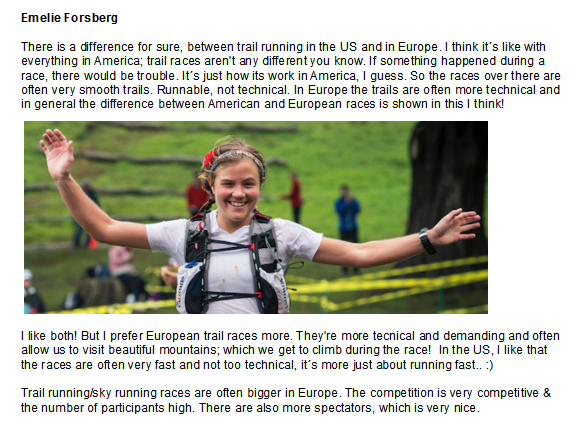
Emelie

As Emelie Forsberg jokes, “I think it´s like with everything in America; trail races aren’t any different you know“. Rules are rules!

In Europe, things are very different, where, in most cases,the race course simply follows the most direct route across the mountain.

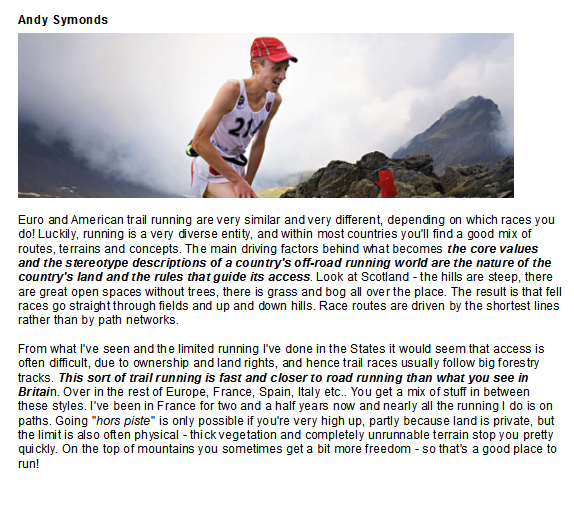
Andy

In Scotland“, for example, says Andy Symonds,” the hills are steep, there are great open spaces without trees, there is grass and bog all over the place. The result is that fell races go straight through fields and up and down hills. Race routes are driven by the shortest lines rather than by path networks”.

Consecuently, European trail runners find that they have to change their whole approach to racing, as Silvia Serafini states, “I know that in the US there are very strict rules about ‘shortcuts‘. You are out of the race if you don’t follow exactly the signed trail“. Kilian Jornet can testify to this, as he was stripped of his prize money and course record, in last year’s Speedgoat 50k for cutting switchbacks.

In Europa, it’s more competitive

So what’s Dakota Jones take on the subject? He interestingly points out that “ In America, trail running came out of a culture of hiking and mountain climbing that has its roots in solitude and escape“. Whereas, “Europeans accept mountain running more and are allowed to have more people in their races, so the scene is much more professional than anywhere else”. ” When Americans race, they are almost afraid to say they are racing, because they don’t want to betray traditional values about the purity of the sport“.

Dakota

Sportswear

In an episode of Kilian´s Quest we can see how the young Catalonian runner meets up with running legend, Pablo Vigil. It’s interesting to compare how the two are dressed; Kilian with his specialized gear  –Suunto GPS heart rate monitor, Salomon technical shorts & training shoes, while Pablo Vigilcan be found wearing the traditional runners sorts and a pair of Nike road trainers. Although this is a simple anecdote, it does undeline the point that, in general, European runners seem to get moredressed up for the occasion!

Anna Frost comments that “Clothing differs…with fashion and trends. Euro wearing more technical lycra and USA wearing looser fitting comforts.

Frosty

What’s in common? People, volunteers, the spirit of racing

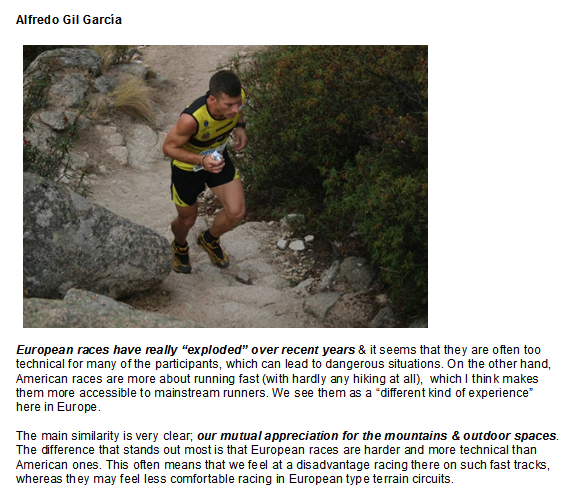
There seems to be a common agreement among runners that there is one characteristic to be found on both sides of the Atlantic: the spirit of running, be it trail running in the US or fell running (UK), mountain running or skyrunning in Europe, “our mutual appreciation for the mountains & outdoor spaces”, says Alfredo Gil, Spain’s national champion. “I think we all have that in common“.

Alfredo

American, Stevie Kremer, also emphasises this point & recognizes the efforts of all the people, behind the scenes, who support the races: “both have incredible supporters and volunteers, without which these races would never be successful!”

Stevie
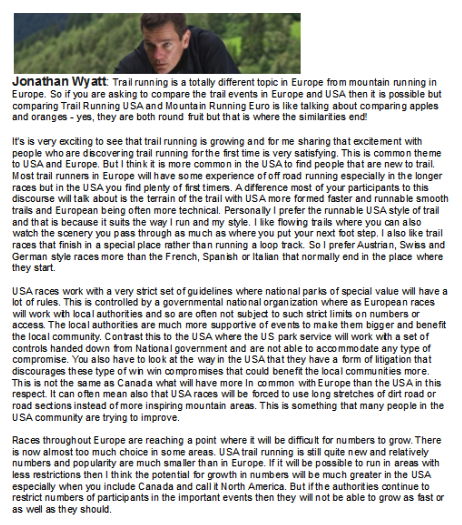
It seems that, as more and more runners make the jump, from one continent to another, things are changing. As Jonathan Wyatt observes, ” We see a lot of North American runners who have learnt a lot from the European style of trail running and they are excited to bring some of these elements to North America including the more technical running trails“.

Jono

Finally, let’s just remember the words of Silvia Serafini, who defines the atmosphere of our sport perfectly, “I can’t really choose which I like most, racing in America or in Europe. I love the atmosphere, the welcome of the people, which I have found on both continents“.

Silvia


LINKS & CREDIT:

© Escrito por Nigel John Wilson / David Clavera / Pablo Cantó

This article is a re post from : corredordemontana.com

It is reproduced with the full approval of corredordemontana.com and Nigel John Wilson and has not been altered or adjusted in anyway. The original article is available HERE should you wish to view it.

It is also available in Spanish HERE

All content (inc images) ©corredordemontana.com


Episode 51 – Bitter, Yates, Frost, Catmur

Episode 51 of Talk Ultra ©iancorless.com

Merry Christmas! Episode 51 of Talk Ultra is our longest show yet… yes, 4hours and 30mins of ultra chat to help you survive the Christmas period and New Year. We speak with the new 100-mile and 12-hour record holder (on a track) Zach Bitter. We have a full and in-depth interview with female ultra runner of the year (?) Michele Yates. Anna Frost provides an insightful interview on a troubled 2013 and finally we catch up with Ed Catmur who has been setting the pace on the UK ultra scene. It’s a full show! Speedgoat and Ian review the year, we have possibly the best Talk Training of 2013 with Marc Laithewaite and we catch up with Amanda in a Year in the Life of! A big thank you for all the amazing support and downloads in 2013 and we thank you in advance for your support in 2014.

Interview – Anna Frost
 
NEWS
 
The 240km Coast 2 Kosciusko r!
 
1st Ewan Horsburgh 25:56:00
2nd Ian Gallagher 26:34:00
3rd Mathieu Dore 27:21:15
 
1st Jess Baker 30:04:27
2nd Sabina Hamaty 32:25:20
3rd Sharon Scholz 33:02:03
 
Johan Vd Merwe Johan this weekend broke the SA 24-hour record. He was the first to thank God and his wife Corine, for “without them, he just wouldn’t be able to break the 60-year old record set by Wally Hayward in 1953” – 258km
 
Barcelona 24, 12 and 6 hour results:
 
6 HOUR RACE RESULT:
1st Jyrki Kukko 82.775 km
2nd David Sanmiguel Cervera 73.006 km
3rd Jose Mauel Riesgo Fernández 66.361km
 
Rebecca Cox first Brit, 6th overall 60.093 km
 
12h HOUR RACE RESULT:
1st Olivier Foissac 136.56 km
2nd Steven Sleuyter 125.62 km
3rd Irina Batyreva 19.93 km
 
24 HOUR RACE RESULT:
1st Pedro Sena Lopez 230.701 km
2nd Dario Sanmiguel Cervera 225.818 km
3rd Jen Salter (GB) 217.753 km
 
Karen Hathaway 8th
Mark Woolley 19th
Andrew Saville 23rd
 
Zach Bitter just run 11:59:15 for 101.66 miles (163.6km) at the Desert Solstice by Aravaipa Running – 100 miles in 11:47:21 http://www.aravaiparunning.com/desert-solstice/
 
Pam Smith sets a World Record 14:11:26
 
Review of 2013
Races:
Transvulcania
TNF50
WSER
Skyrunning
Zegama
Grand Slam
Mont Blanc
Raid de la reunion
 
People:
Rob Krar – Rim-to-Rim, WSER, UROC and TNF50
 
Michele Yates – RRR, UROC and TNF50 one of the highlights of 2013 and without a star… I caught up with Michele and we discussed her running, her history and did you know, she was Miss Figure Colorado in 2008? – http://www.dreamliverun.com/index.html
 
Jon Olson – 100m record – at least for a short while
Zach Bitter – 100m record
Timmy Olson – WSER repeat win
Sharman and Clark – The Grand Slam
Rory Bosio – UTMB
Seb Chaigneau – Hardrock and Transgrancanaria
Pam Smith – WSER and 100m record
Kilian Jornet – everything! But maybe the Matterhorn record a highlight?
Emelie Forsberg – everything!
Stevie Kremer – everything!
Nickademus Hollon – Barkley and Tor des Geants
Sage Canaday
Zach Miller
 
Read the Highlights of 2013 HERE
 
A YEAR IN THE LIFE OF – Amanda Hyatt
 
Looking ahead to 2014:
 
Skyrunning USA and UK, Australia, South Africa… growth continues
UTWT
Hardrock 100 
Any other anticipated excitement?
 
INTERVIEW
 
Ed Catmur
 
 
TALK TRAINING – Do’s and Don’ts at Christmas Parties with Marc Laithwaite
 
INTERVIEW


MELTZER MOMENT
GOOD 
BAD 
UGLY 
 
RACES
 
Australia
New South Wales
Narrabeen All Nighter 100 km | 100 kilometers | January 04, 2014 | website
 
Chile
Ultramaratón Licanray – Villarrica | 70 kilometers | January 05, 2014 | website
 
Germany
Bavaria
Chiemsee-Ultramarathon Dezember | 108 kilometers | December 30, 2013 | website
Lower Saxony
6. Lauf PSV Winterlaufserie 100 KM | 100 kilometers | January 04, 2014 | website
6. Lauf PSV Winterlaufserie 50 KM | 50 kilometers | January 04, 2014 | website
 
Netherlands
Limburg
SMU-Loop | 58 kilometers | December 28, 2013 | website
 
South Africa
Festival of Running 100 Mile Race | 100 miles | December 31, 2013 | website
 
Tunisia
Evasion Trail à Tataouine | 60 kilometers | December 29, 2013 | website
 
USA
Alabama
Recover from the Holidays | 50 kilometers | December 31, 2013 | website
Florida
Croom Zoom 100 Km Run | 100 kilometers | January 04, 2014 | website
Croom Zoom 50 Km Run | 50 kilometers | January 04, 2014 | website
Indiana
HUFF 50K Trail Run | 50 kilometers | December 28, 2013 | website
Maryland
PHUNT 50K | 50 kilometers | January 04, 2014 | website
Michigan
Yankee Winter Trail 50K | 50 kilometers | January 04, 2014 | website
New Jersey
Watchung Winter Ultras Trail 50k | 50 kilometers | January 04, 2014 | website
North Carolina
Neusiok Trail 100K | 100 kilometers | January 04, 2014 | website
Neusiok Trail 43 Miles | 43 miles | January 04, 2014 | website
Salem Lake Shore Frosty Fifty | 50 kilometers | January 04, 2014 | website
South Carolina
Harbison 50K | 50 kilometers | January 04, 2014 | website
Tennessee
Pistol Ultra Run – 100K | 100 kilometers | January 04, 2014 | website
Pistol Ultra Run – 100 Mile | 100 miles | January 04, 2014 | website
Pistol Ultra Run – 50K | 50 kilometers | January 04, 2014 | website
Virginia
Boyers Furnace | 40 miles | December 28, 2013 | website
Redeye 50 km | 50 kilometers | January 01, 2014 | website
Washington
First Call 50K | 50 kilometers | January 01, 2014 | website
West Virginia
Frozen Sasquatch Trail 50k | 50 kilometers | January 04, 2014 | website
Wisconsin
Tuscobia Winter Ultramarathon 150 Mile Run | 150 miles | December 27, 2013 | website
Tuscobia Winter Ultramarathon 35 Mile Run | 35 miles | December 28, 2013 | website
Tuscobia Winter Ultramarathon 75 Mile Run | 75 miles | December 28, 2013 | website
 
CLOSE

Links:

The Apocalypse is coming : 100-miles and 50-miles

apoc 100 banner

The Apocalypse is coming. Conquest, Famine, War and Death.

It arrives on May 17th 2014.

Ultra running is going through a boom. Statistics show that ultra races are popping up all over the world at an alarming rate. The UK is no different, apparently, some 200 races now exist on the calendar and that is just in the UK.

The 100-mile distance by many is considered to be the Holy Grail in ultra running. To that end, Richard Weremiuk from Beyond Marathon has now added a new event to take place on May 17tt 2014.

In a partnership with ultra marathon pioneers, Racing the Planet and The National Trust, Richard and his team plan to send you on an epic journey around the Shropshire hills over 100 or 50-miles.

Are you ready to face 50 or 100 miles on an awesome new course?
Apoc100 full

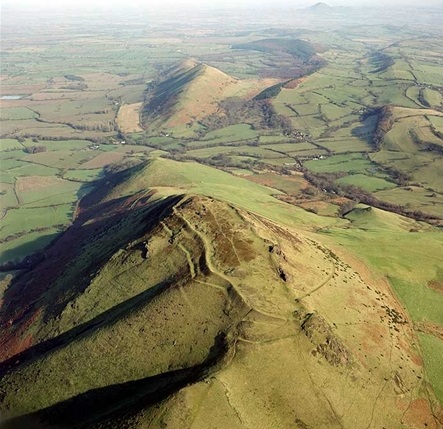
River valleys, farmland, woods and rolling hills; Shropshire provides a landscape that is rich in wildlife and geology. It’s a tranquil place that is embraced by visitors and locals as a place that provides a quality environment to walk, run or just spend time outdoors.

The varied geology of the Shropshire hills provides a link between the Welsh Mountains and the Midlands. The terrain is a trail runners playground, moorland plateaus, craggy stiperstones, quarries, woods, forests and the valleys of the Long Mynd will test each and every participant as they journey to beat the riders of the Apocalypse.

Church Stretton, the race HQ, was called Little Switzerland in the late Victorian and Edwardian period due the surrounding landscape and its development as a health resort. Nestled within an area of outstanding beauty (ANOB), The area incorporates some of the oldest rocks in England. Carding Mill Valley provides a hub for the local area and as such is a great location for the race HQ.

The Race
Church-Stretton

“Any 100 mile race is a personal challenge, a chance to test your limits. This 100 miler is no exception. The race features over 5 km’s of vertical ascent and descent” says Richard Weremiuk.

With 4700m of vertical ascent and descent, only the Lakeland 100 (UTLD) appears to have more vertical gain than the Apocalypse 100 in the UK. This will be one tough challenge. But Richard always brings something unique to his races.

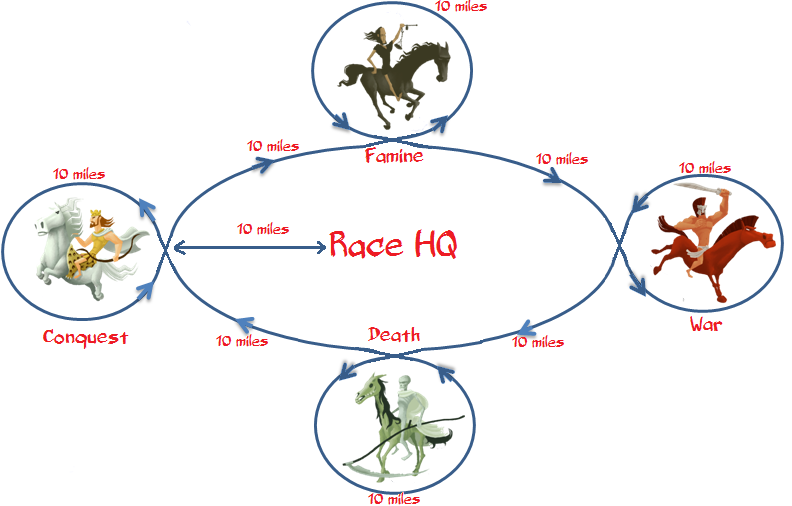
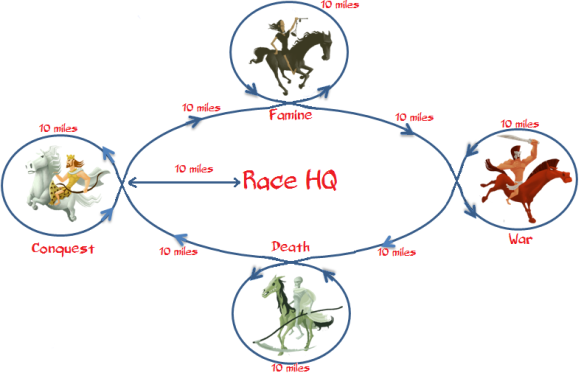
“The course has been ingeniously designed. It is a single complete circle, but with independent 10 mile loops at each compass point featuring the names of the four riders of the Apocalypse; Conquest, Famine, War and Death.”

Death! Now that is an ominous way to finish a 100-miler… but knowing Beyond Marathon, they do have an enthusiasm to inject some fun and humour, even a little dark humour at times.

The four 10-mile loops have been chosen for course or checkpoint characteristics and as such, they have been named appropriately.

image001


Beyond Marathon HERE

Beyond Marathon have a reputation for providing quality races that keep costs low with no compromise on quality. Despite low entry fees (£31 for the 50 and £44 for the 100) and a restricted race entry of just 60-people, participants will get quality administration and support.

“We are keeping our ethos inline with our other races: Dusk till Dawn (day and night versions), The 12 Labours of Hercules, The Gritstone Grind, and next year we will bring you those events as well as The Millennium way ultra marathon, and Double or Nothing. It is simple; Low cost and great value for money says Richard.

If you feel a 100-miles is too far, Beyond Marathon are offering a 50 mile option which would see you head out to tackle Conquest and Famine before heading due South back to race HQ.

Note:

Navigation skills will be required, though we provide custom maps to every participant and also files in various GPS and electronic map formats.  Though the course is not officially marked, we always try and help out with some markers in tricky areas. We have endeavored to make the second half of the 100 easier to navigate, as nights are dark in Shropshire! That said the moon is almost full on May 17th, so nature may lend a helping hand. The race has great support from The National Trust and our other partners, and look forward to introducing more UK runners to the mystical Shropshire hills.

RACE WEBSITE HERE

THE ROUTE

The event begins at The National Trust centre in Carding Mill Valley, Church Stretton.

Heading west, participants climbing out of the Valley on Marches Way. Continuing West to Cross The Shropshire Way on Adstone Hill. Skirting around Black Rhadley to reach checkpoint 1 at mile 10.

Embarking on the West loop, the first 10-mile section confronts the runners. A climb of Corndon Hill and then Lan Fawr must be tackled before heading south to Todleth Hill, turning in an Easterly direction CP2 awaits at mile 20.

Running the length of the famous Stiperstones, passing The Devil’s chair on the way.  No time to sit down, you continue on the Shropshire Way and then head to Habberley and Longden Common to reach CP3 at mile 30.

The North loop is an easy and fairly flat section in and around Pontesbury, which will give all an opportunity to recover, though there is a small climb before you reach CP4 at mile 40.

Heading South East through Dorrington and Longnor, after The Lawley, Easthopewood is CP5 at Mile 50.

The East loop sees you head over Wenlock Edge and join the Shropshire Way and Jack Mytton Way before heading back to Easthopewood. A superb ridge run and a 10-mile trip down Wenlock Edge to reach CP7 in Moorwood.

Two very sharp climbs are on the Southern loop. Once through Craven Arms you scale Norton Camp, descend into Norton and Head uphill from Medley Park to Hanging Wood all the way to the tower on Callow Hill before heading to CP8 at Mile 80.

Wistanstow and then onto Horderley are the two next focal points and then a route direction change, heading North to climb Church Moor Hill to Cross the Shropshire Way and head steeply down into Asterton. North West to Wentnor, Norbury then along side Linley Big Wood CP9 at Mile 90.

Just 10-miles now to go on familiar terrain and the race is over. A final descent into Carding Mill completes the journey.

The course profile is shown below. It features over 15,500ft  (4700 m) of ascent and descent).

Elevation Profilev2

Race route: http://beyondmarathon.com/apocalypse-100/apocalypse-100-route/
 USE THE FORM BELOW FOR A REDUCTION ON RACE ENTRY

← Back

Thank you for your response. ✨

SOURCES: