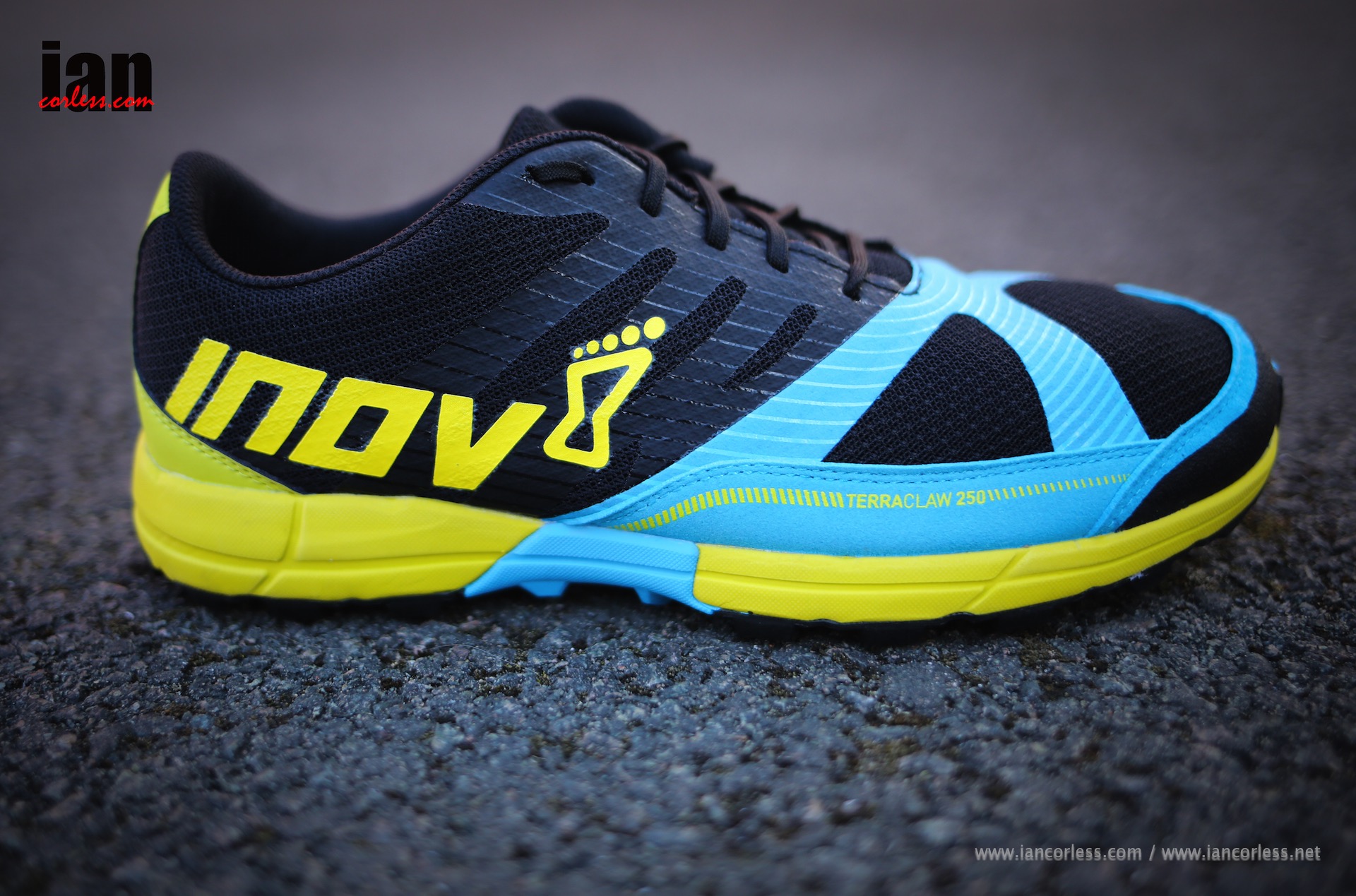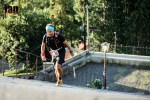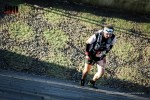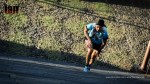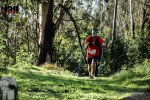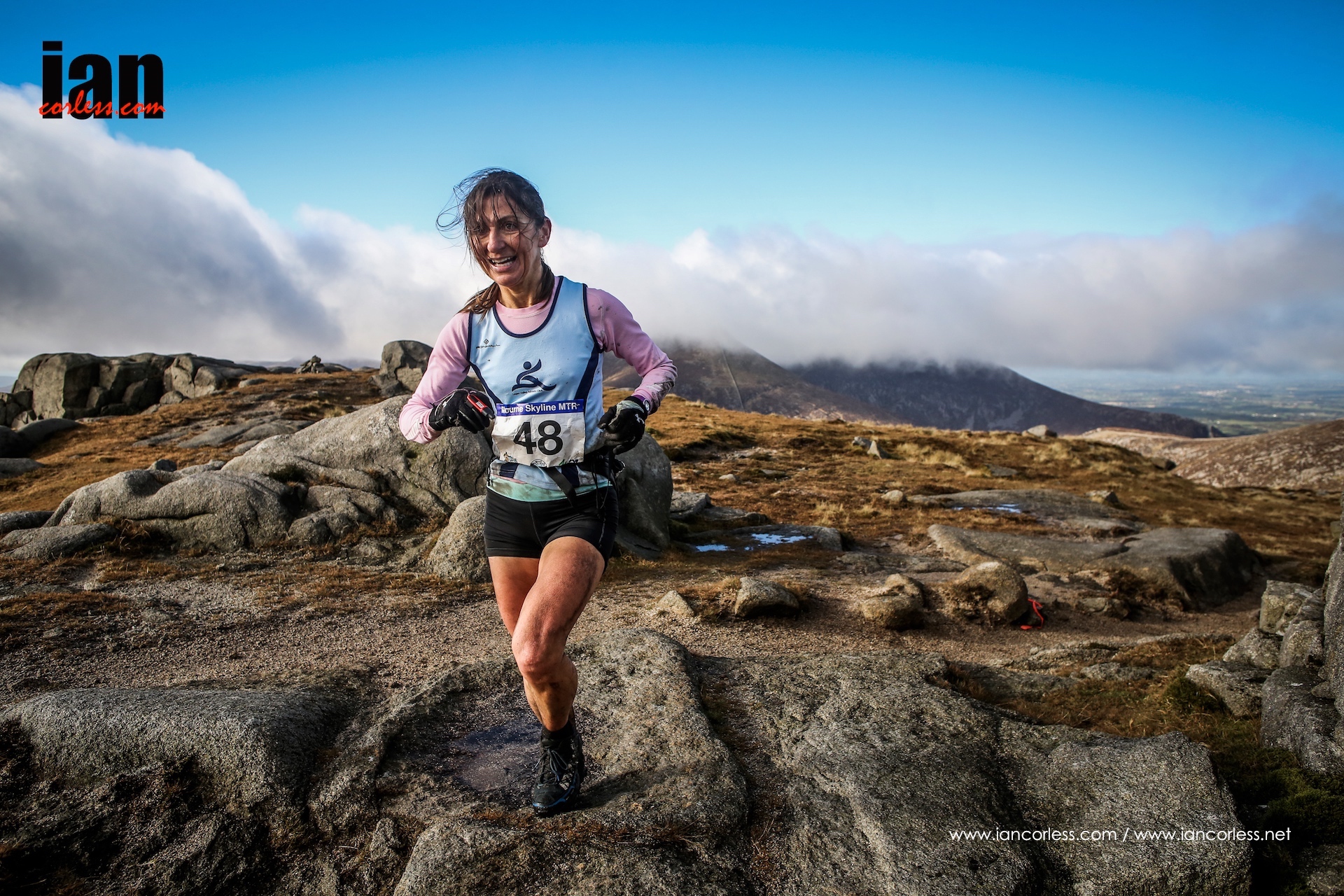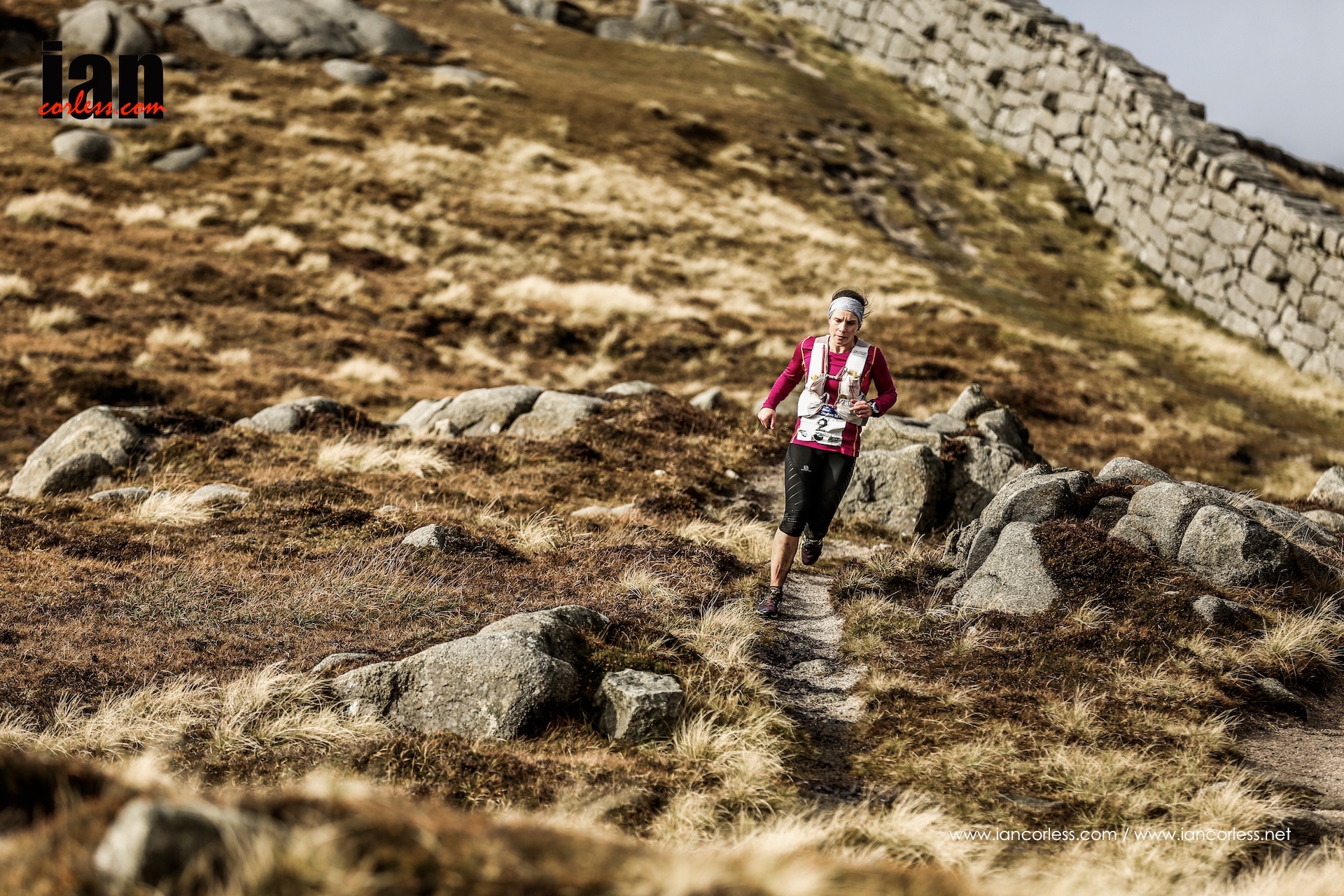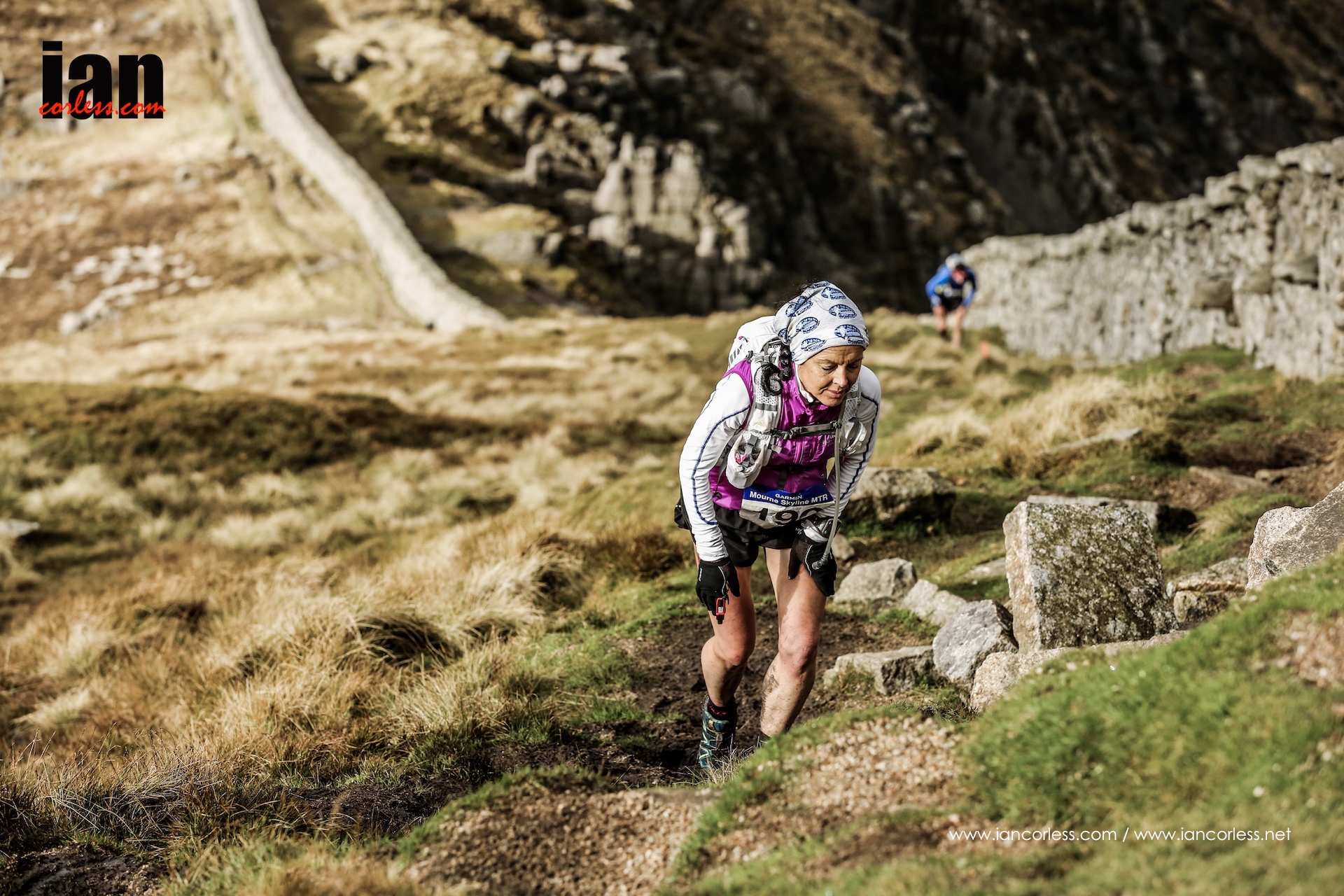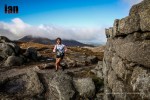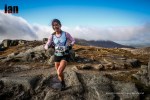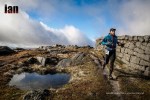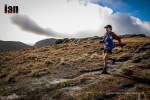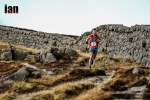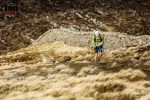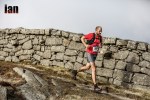
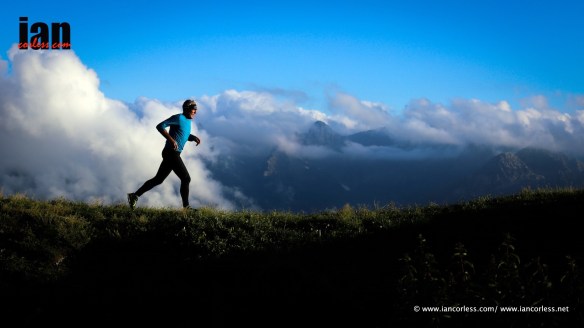
What is the best shoe for Road, Trail, Off-Road or Mountain?

©iancorless.com-3679

What is the best shoe for road, off-road, trail and mountain?

You won’t believe how many times I get asked this question. Of course I can’t answer it. Far too many variables come into play.

  • Drop
  • Cushioning
  • Grip
  • Upper type
  • Lacing
  • Outsole

Taking into consideration all of the above, certain elements are comparable and with 2015 drawing to a close I thought I would take a look back at some of the shoes I have tested and worn in the last 10-months and then put my neck on the line and say, which shoe (for me) is the best.

Shoes to look at:

  • Salomon S-Lab Sense – 4mm drop
  • Salomon S-Lab Sense SG (soft ground) – 4mm drop
  • Salomon Sense Mantra 3 – 6mm drop
  • The North Face Ultra MT – 8mm drop
  • The North Face Ultra Cardiac – 8mm drop
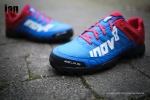
  • inov-8 Race Ultra (2-models) – 4mm and 8mm drop
  • inov-8 Terraclaw (2-models) – 4mm and 8mm drop
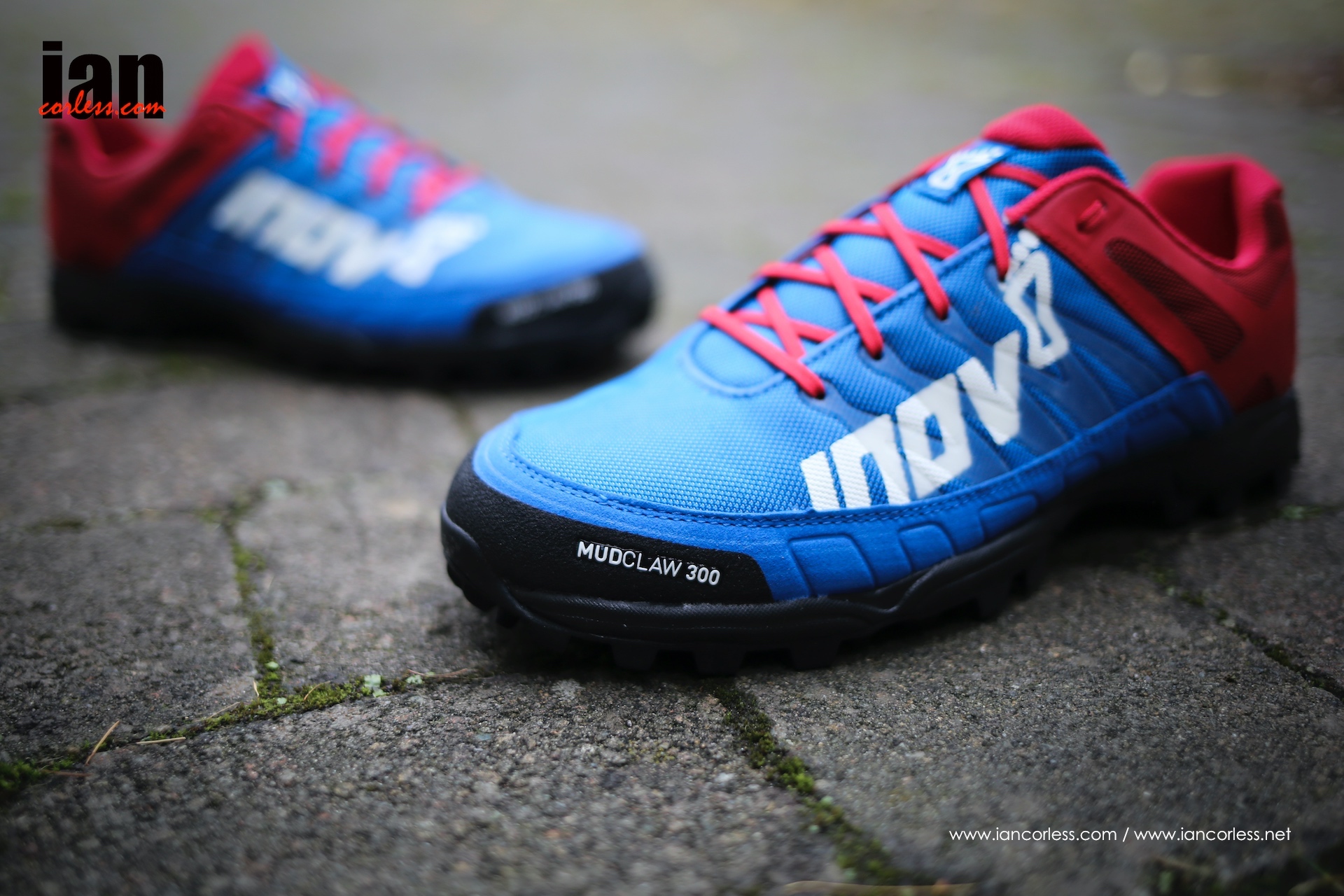
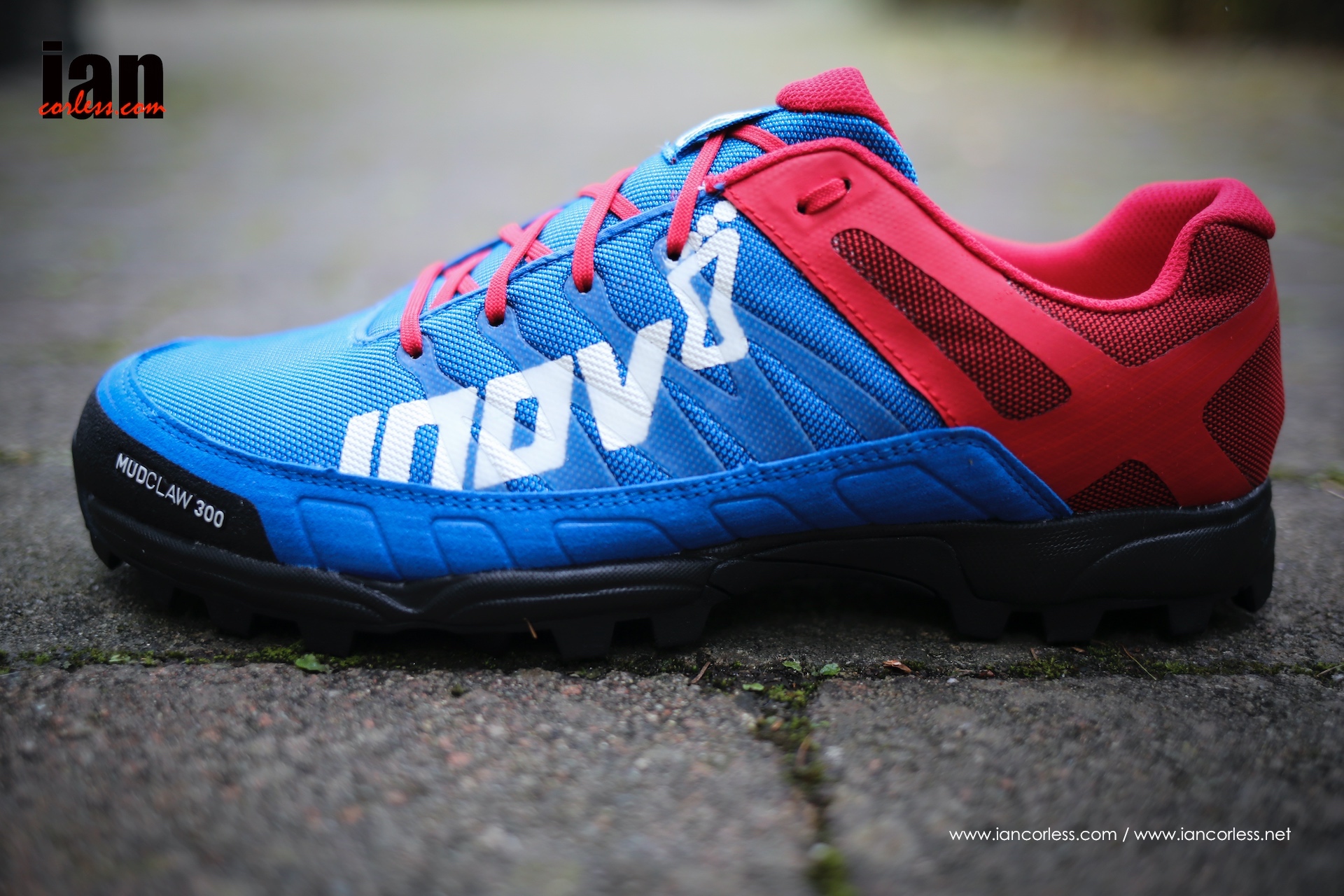
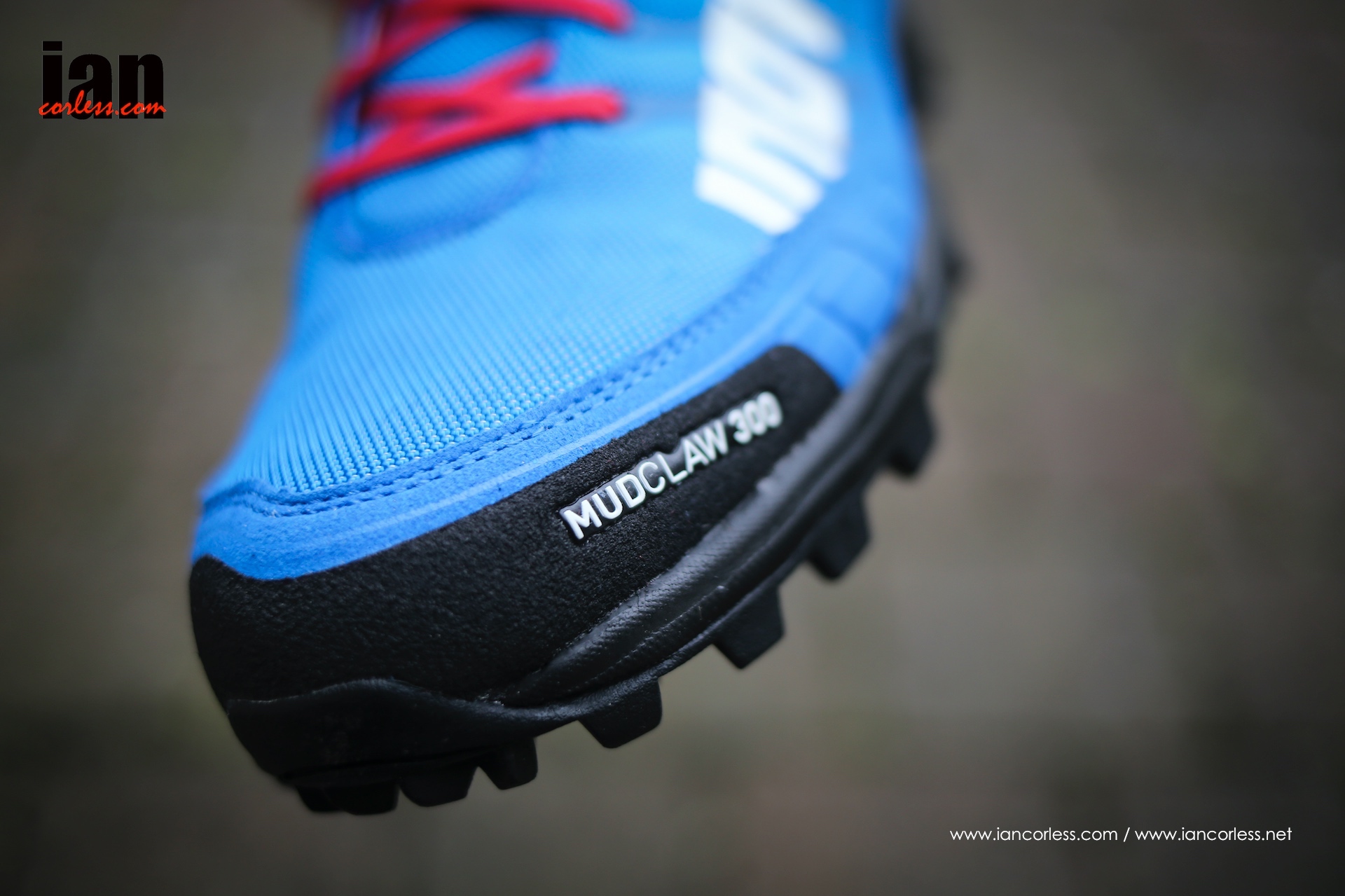
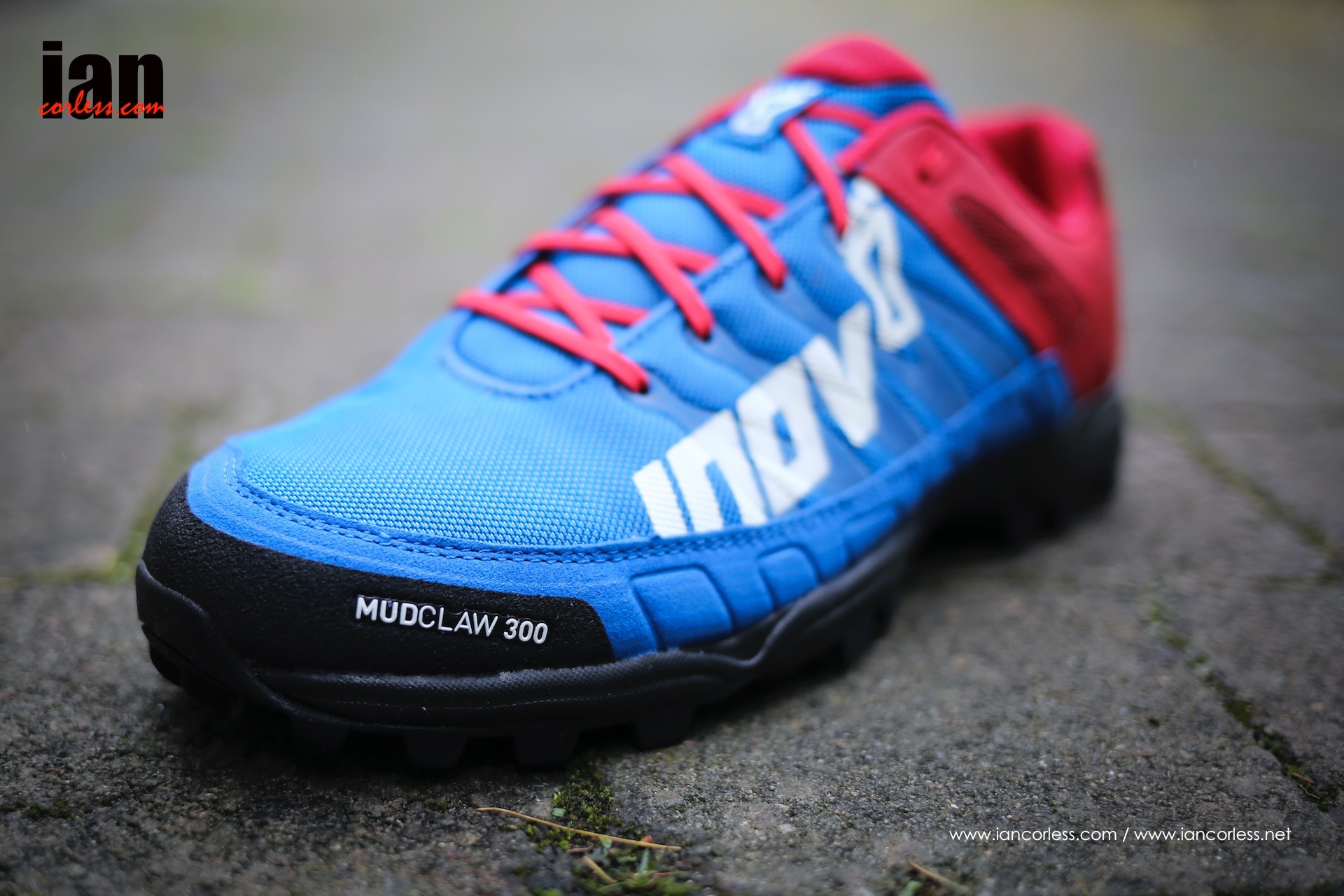
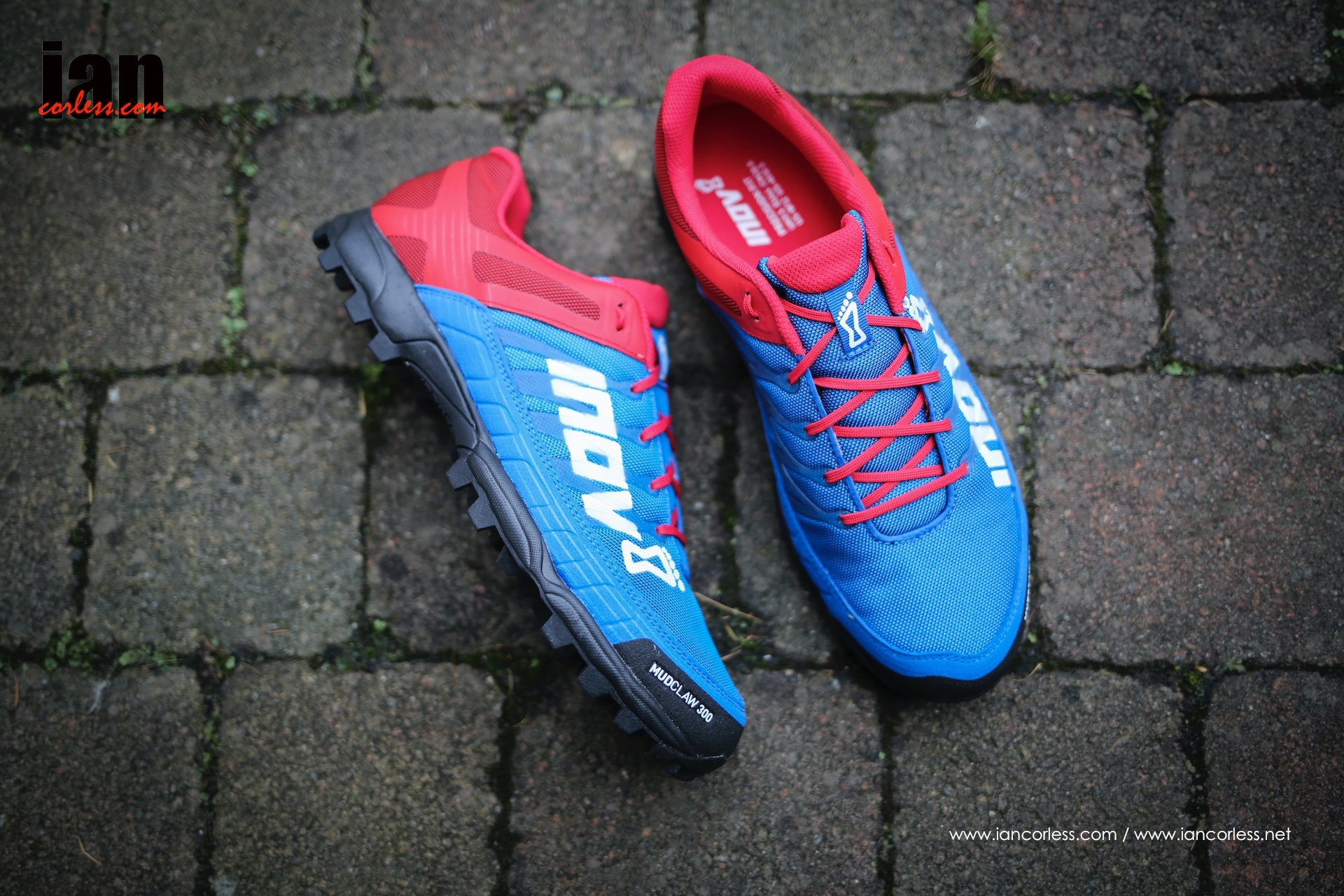
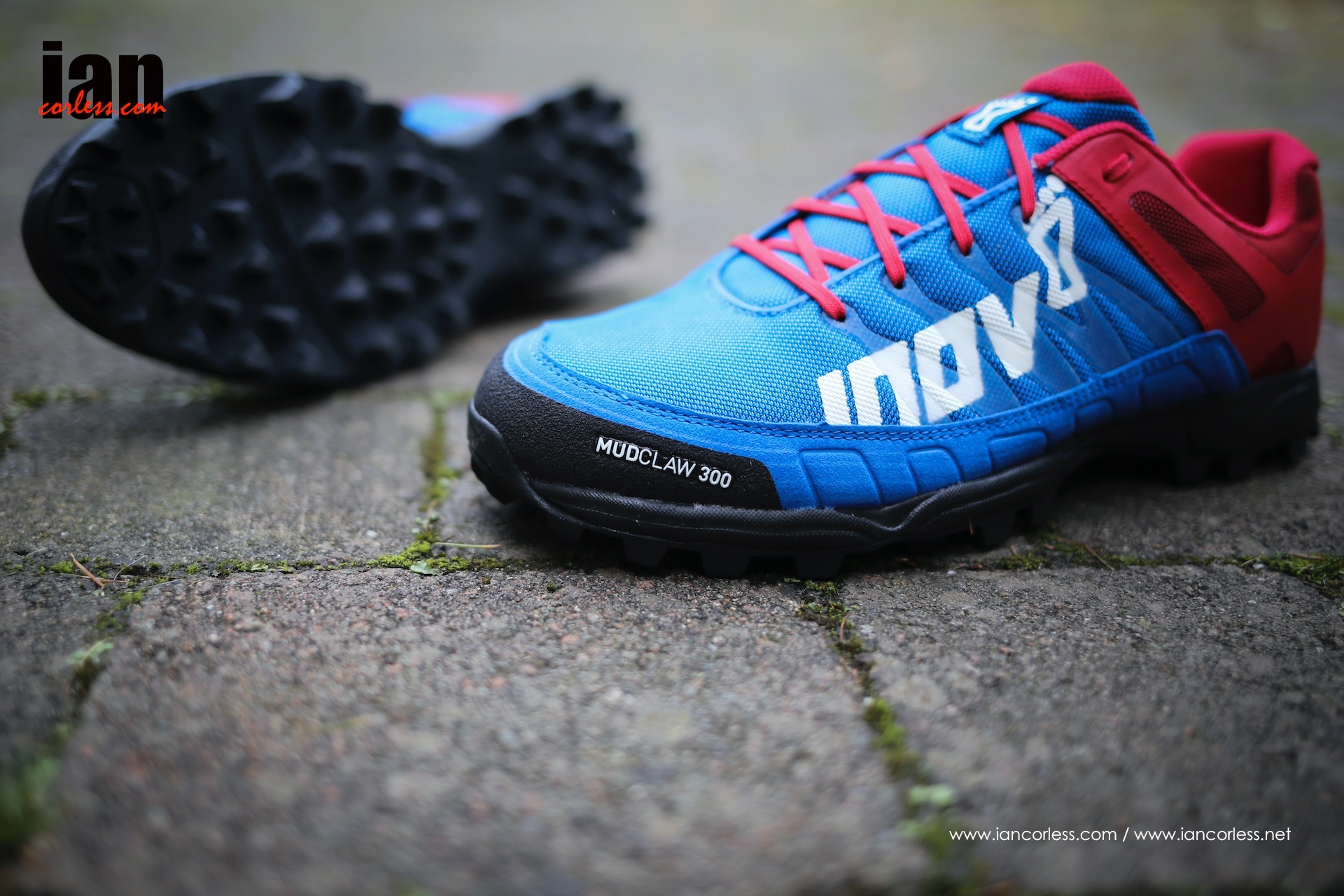
  • inov-8 Mudclaw 300 – 6mm drop
  • Scott Kinabalu 3 – 11mm drop
  • Scott Kinabalu Supertrac – 8mm drop
  • Scott Trail Rocket – 5mm drop

Notice that I have added the drop next to all the the shoes above. Drop has become a very important element when choosing a shoe. What drop you require as a runner is open to debate and to a certain extent; genetics. The book, ‘Born to Run’ inspired many runners to get low and minimal and what followed was carnage and very happy physiotherapists. Please read this post HERE to provide some perspective of my thoughts.

Drop and minimal are two separate issues.

1. Drop is the angle from the heel to the toes that the foot will sit at when parallel to the ground.

2. Cushioning is the amount of ‘soft stuff’ between you and the ground.

To clarify:

  • You can have low drop (typically 4mm) and LOADS of cushioning = Hoka One One
  • You can have low drop (zero) and no cushioning = Vibram
  • You can have a combination of varying drop and varying cushioning = Many of the above shoes.

So, if you want zero drop and no cushioning OR you want lower drop and maximal cushioning; stop reading, this is not the review for you!

If however, you are looking for a shoe that can handle some road, off road or mountain paths then read on; which shoe is a jack of all trades?

Where do I start?

It’s quite daunting taking so many shoes and then saying which pair, in my opinion is the best. So, here is my criteria:

  • Ability to run on road
  • Ability to run on hard trails
  • Ability on dry and wet rocks
  • Grip in mud
  • Climbing
  • Descending
  • Time on feet
  • Fit
  • Lacing
  • Cushioning
  • Outsole
  • Wear and tear
  • Drop
  • Conclusion

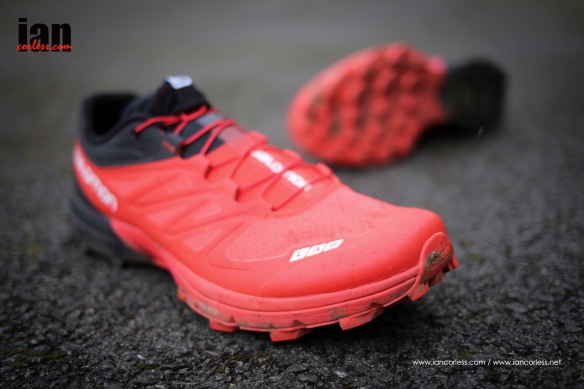
©iancorless.com_Sense4SG-9068

Salomon S-Lab Sense SG – Read full review HERE

Ability to run on road – For a shoe with an aggressive outsole, on road experience is good but as the name suggests, the SG is for Soft Ground.

Ability to run on hard trails – Good. Handles the trail well with comfort.

Ability on dry and wet rocks – On dry rocks, grip is very good. On wet rocks the grip is very compromised and at times sketchy/ scary.

Grip in mud – For such an aggressive outsole, the grip is moderate. The SG sits somewhere in the middle.

Climbing – Shoes feel great. They are flexible, hold your foot snug and you have a feeling of precision. They also handle wet ground well providing it does not get very muddy. Wet rock is hit and miss.

Descending – As above but in mud, or on wet it can be a challenge.

Time on feet – 6mm drop, adequate cushioning and great fit make this shoe very popular. Excellent for 50k and after that it depends on the runner and the runners adaptation.

Fit – Excellent. Endofit and the speed lacing system is the best out there!

Lacing – The best but lacks an ability to tweak or adjust.

Cushioning – Cushioning is good and finds a nice mix that still allows feel and contact with the ground.

Outsole – It’s a soft ground outsole but for me it’s a great outsole for dry terrain with a variety of surfaces and not too much mud.

Toe box – Narrow, precision fit.

Wear and tear – Moderate – 500k – 600k

Drop – 4mm

Conclusion – Great fit, 4mm drop and soft ground outsole. For many this is the ultimate off road, trail and mountain shoe for longer days training or racing. It’s limited in the wet and mud though.
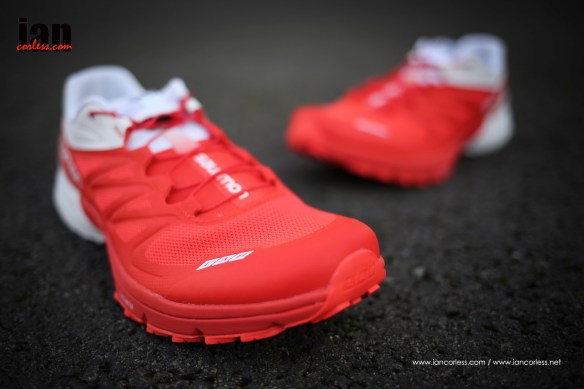
©iancorless.com_Sense4-8534

Salomon S-Lab Sense 

Ability to run on road – Excellent. The outsole has a low profile.

Ability to run on hard trails – Excellent. The outsole has a low profile and therefore if the trail is dry, these shoes will fly along.

Ability on dry and wet rocks – On dry rocks, grip is very good. On wet rocks the grip is compromised and at times sketchy. You lack 100% confidence and that makes you go slower.

Grip in mud – Hopeless.

Climbing – Shoes feel great. They are flexible, hold your foot snug and you have a feeling of precision. Not good in the wet or mud.

Descending – As above but in mud, or on wet rock forget it!

Time on feet – This depends on ones adaptation to a more minimal shoe. If you like being close to the ground with a low drop this shoe will be perfect. However, for me I prefer this shoe for shorter runs on dry trails.

Fit – Excellent. Endofit and the speed lacing system is the best out there!

Lacing – The best but lacks an ability to tweak or adjust.

Cushioning – This is a more minimal shoe but it does have cushioning.

Outsole – For dry trails

Toe box – Narrow, precision fit.

Wear and tear – Moderate – 500k.

Drop – 4mm

Conclusion – It’s a racing shoe for dry trails for mid to fore-foot runners. Fit is excellent if you like a precision feel.
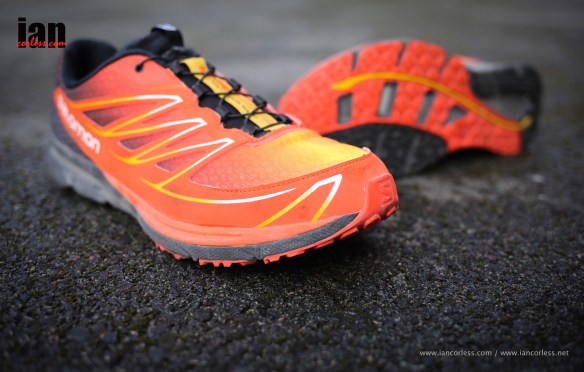
©iancorless.com_Mantra3-7562

Salomon Sense Mantra 3 – Read full review HERE

Ability to run on road – Excellent. The outsole has a low profile.

Ability to run on hard trails – Excellent. The outsole has a low profile and therefore if the trail is dry, these shoes will fly along.

Ability on dry and wet rocks – On dry rocks, grip is very good. On wet rocks the grip is compromised and at times sketchy. You lack 100% confidence and that makes you go slower.

Grip in mud – Hopeless.

Climbing – Shoes feel great. They are flexible, hold your foot snug and you have a feeling of precision. Not good in the wet or mud.

Descending – As above but in mud, or on wet rock forget it!

Time on feet – This depends on ones adaptation to a more minimal shoe. If you like being close to the ground with a low drop this shoe will be perfect. However, for me I prefer this shoe for shorter runs on dry trails.

Fit – Excellent. Endofit and the speed lacing system is the best out there!

Lacing – The best but lacks an ability to tweak or adjust.

Cushioning – This is a more minimal shoe but it does have cushioning.

Outsole – For dry trails

Toe box – Toe box is generous and for those looking for a Salomon with more room, this is the shoe for you!

Wear and tear – Good 700K

Drop – 6mm

Conclusion – I think the Mantra is a shoe that more people should look at. They often go for the S-Lab Sense because of the S-Lab tag but for me, this is a better all around shoe and far more suited for most runners. It has 6mm drop, wider toe box and more cushioning. If you run long on dry trails this is a great shoe.
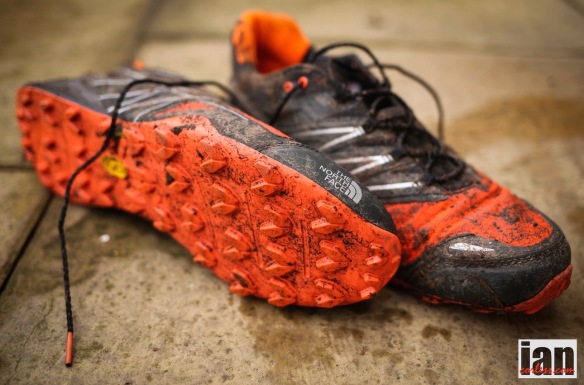
©iancorless.com_TNFUltraMT-3637

The North Face Ultra MT – Read full review HERE

Ability to run on road – Good considering the outsole but keep it to a minimum.

Ability to run on hard trails – It handles hard and dry trails well but the shoe lacks flexibility and is a little firm.

Ability on dry and wet rocks – On dry rocks, grip is very good. On wet rocks the grip is better than the Salomon due the Vibram sole. Felt far more confident in this shoe.

Climbing – Good but they are not as supple and flexible as others in the test. Grip is goo.

Descending – As above.

Time on feet – The Ultra MT is a relatively firm shoe that excels on softer, muddier and forgiving ground. If you stick to that terrain they are excellent.

Fit – Pretty good, you may need to replace the laces (not great) and tweak how they are laced to get the best fit.

Lacing – Provided laces are average.

Cushioning – It’s a firm shoe and although cushioning is present, it’s not a cushioned shoe.

Outsole – Is Vibram and aggressive. It’s good!

Toe box – Has loads of protection and although not over wide it will work for most people.

Wear and tear – Good 600k but less if you go on the road a great deal.

Drop – 8mm

Conclusion – I was disappointed with the Ultra MT at first. I wanted it to be something else I think! But after several runs I found that they excelled off road when the terrain was forgiving (cushioned) and muddy, wet or slick. It’s a good mountain shoe that protects the foot.
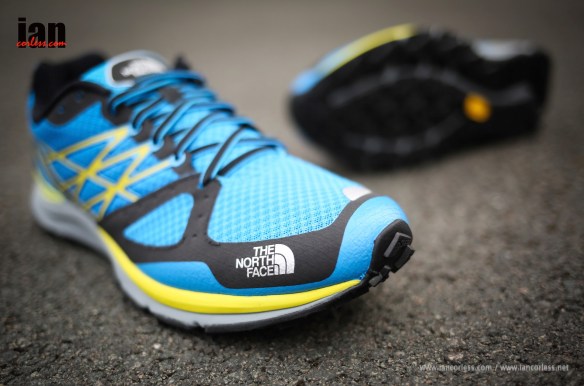
©iancorless.com_TNFUltraCardiac-7006

The North Face Ultra Cardiac – Read full review HERE

Ability to run on road – Excellent. The outsole has a relatively low profile.

Ability to run on hard trails – Excellent. The outsole has a low profile and therefore if the trail is dry, these shoes will fly along.

Ability on dry and wet rocks – Good. Confidence in both scenarios.

Grip in mud – Moderate. It’s a great middle ground shoe so does not handle the real muddy terrain well.

Climbing – Shoes feel great. They are flexible, hold your foot snug and you have a feeling of precision. Not good in the wet or mud.

Descending – As above but in mud it’s compromised.

Time on feet – Great. The combination of 8mm drop and good cushioning make this a great long distance trail. mountain or off road shoe for primarily dry conditions. I’d recommend these for 100-miles and multi-day racing.

Fit – Good with a well padded tongue.

Lacing – Standard lacing that you may wish to tweak for the best fit.

Cushioning – Great cushioning but not maximal. Ideal for longer days.

Outsole – Great compromise outsole that can handle road and trail. Okay for mud but not too much!

Toe box – Is average width so if you need a wide toe box you may want to try them.

Wear and tear – The upper lacks durability which is the only downside of the shoe – 500k?

Drop – 8mm

Conclusion – One of the best ‘all-rounders’ in this test that can handle multiple terrains with an 8mm drop that will allow you to run long.
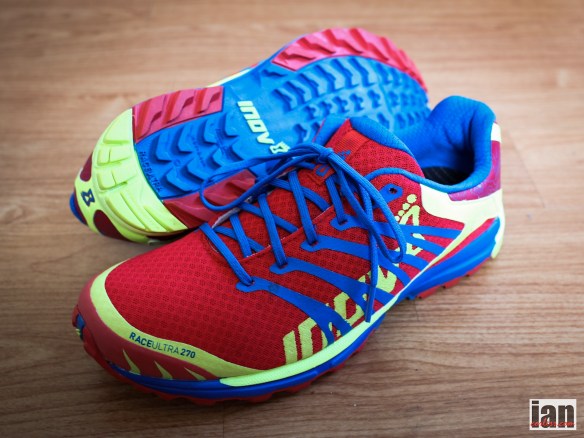
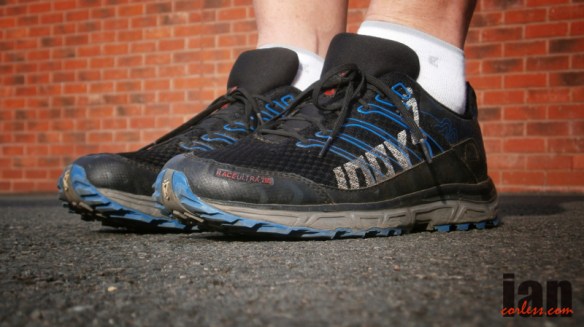
©iancorless.com_RaceUltra270-7533

©iancorless.com_P6100002RaceUltra290

inov-8 Race Ultra 270 (4mm drop) and 290 (8mm drop) – Read full reviews HERE (270) and HERE (290)

Ability to run on road – Good, the outsole has minimal tread and they work well on road.

Ability to run on hard trails – As above, good outsole for hard and dry trails.

Ability on dry and wet rocks – Average grip and terrible when wet.

Grip in mud – Hopeless.

Climbing – If you have really wide feet they will feel ok, if not they feel sloppy, over stiff and lack any true feeling with the ground beneath.

Descending – Toe box is too wide and therefore foot moves around inside the shoe causing friction, toe impact and a lack of control.

Time on feet – A real plus of inov-8 shoes is that they provide you with 2 drops, 4mm and 8mm so that you can get the correct shoe for you. I personally prefer the 8mm drop shoe and the cushioning that goes with it for longer runs.

Fit – If you have wide feet one of these shoes may well be for you. They are roomy! Too roomy for me.

Lacing – Standard lacing and I used a ‘lock-lacing’ method to make both shoes feel more secure on my feet.

Cushioning – In both models is good but lacks feel for me and suppleness.

Outsole – For dry trails only.

Toe box – Wide, very wide.

Wear and tear – Very good 7/800k

Drop – 4mm and 8mm

Conclusion – The Race Ultra shoes look great and have been extremely popular. I personally don’t get along with either model. I can run in them for sure but I wouldn’t if I can choose any other shoe in this list. For me they lack feel for the ground, they are sloppy and stiff.
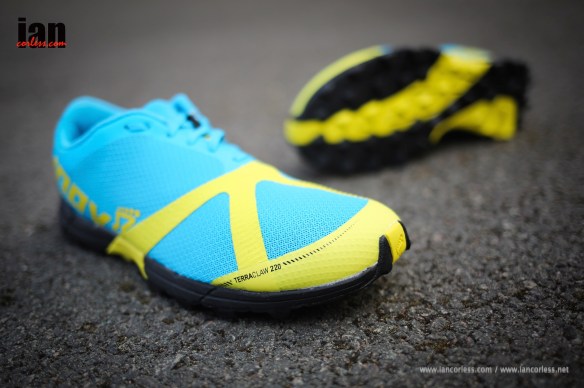
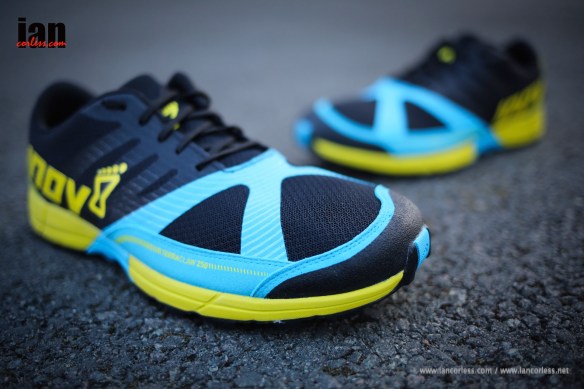
©iancorless.com_Inov8Terraclaw-7051

©iancorless.com_Inov8Terraclaw-7086

inov-8 Terraclaw 220 (4mm drop) and 250 (8mm drop) – Read full reviews HERE (220) and HERE (250)

Ability to run on road – Both shoes run well on the road with good feedback but be warned, the outsole will wear dowm.

Ability to run on hard trails – Excellent. Plenty of feeling in both shoes and the grip works well.

Ability on dry and wet rocks – On dry rocks, grip is very good. On wet rocks the grip is compromised and at times sketchy. You lack 100% confidence and that makes you go slower.

Grip in mud – If it’s not too muddy they work well. This shoe is trying to be the perfect trail shoe doing all things well. Of course, compromises are made at the extremes: all road or all mud.

Climbing – Shoes feel great. They are flexible, hold your foot snug if laced correctly but the wide toe box lacks precision and makes them feel too sloppy for me.

Descending – As above but in mud grip is compromised and on wet rock you slow down.

Time on feet – This depends on ones adaptation and preference. Two shoes and two options, for me the 250 with 8mm drop is the shoe for longer days but if you are efficient and like low drop, the 220 works great,

Fit – Slipper like feel as the shoe has very little seams. You get a great barefoot feel from the wide toe box and if you lace the shoe as per your needs, they are very comfortable.

Lacing – The 250 laces conventionally and the 220 laces at an angle. I used lock lacing in both models to get a more firm hold of my foot which added security.

Cushioning – Cushioning is good in both but the 250 is for longer runs with more cushioning.

Outsole – Has good grip made from 2 compounds. The sole is aggressive but not too aggressive. You can run on the road in comfort and on the trails. Comprises would be made when the trail gets muddy, you start to loose grip. I also wouldn’t recommend for just road runs.

Toe box – Very wide.

Wear and tear – Good but not great, 6-700k

Drop – 4mm and 8 mm

Conclusion – The Terraclaw is everything the Race Ultra should be. They are comfortable, have great feel for the ground and the grip is great for all around use.
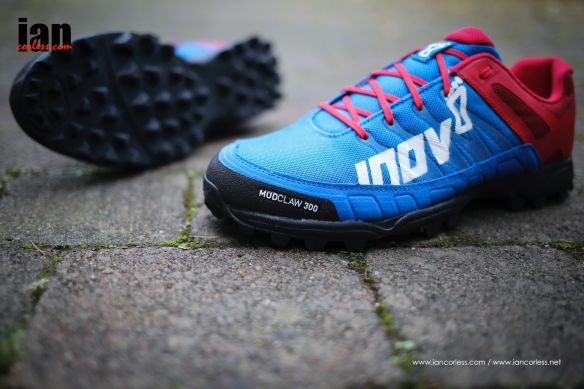
©iancorless.com_Mudclaw300-7440

inov-8 Mudclaw 300 – Read full review HERE

Ability to run on road – Surprisingly good considering the outsole but keep it to a minimum.

Ability to run on hard trails – Okay but this shoe is for the soft and muddy stuff as the name implies.

Ability on dry and wet rocks – On dry rocks, grip is very good. On wet rocks the grip is excellent for such an aggressive outsole. I would say the best in this group.

Grip in mud – Excellent. They will take loads of mud, soft grass and give you more security than any other shoe here.

Climbing – Shoes feel great. They are flexible, hold your foot snug and you have a feeling of precision. Although precision fit the toe box has room.

Descending – Excellent. Shoes give you great confidence.

Time on feet – If you are running in mud all day, the 300 has cushioning to go with the grip and I’d say they are one of the better long distance off road/ fell shoes. If you are on hard or dry trails you’ll start to feel it.

Fit – Precision fit shoe designed to hold your foot so that you can run with confidence. Toe box was roomier than expected and I had to lace with a locking method as they have a low heel to reduce problems with the achilles tendon.

Lacing – Standard lacing and I used a lock lacing method to add a more secure feel.

Cushioning – This is a more cushioned fell shoe and therefore it’s great for longer soft ground running.

Outsole – Aggressive for the soft and muddy stuff.

Toe box – Narrow, precision fit.

Wear and tear – On soft ground they will last but add hard trail, gravel and road and they will wear because of the soft rubber outsole.

Drop – 6mm

Conclusion – Brilliant off road shoe with great cushioning and 6mm drop for long days on soft, mountain and boggy terrain. A comprise comes with shoe longevity if you run on road and gravel but then again, the shoes name tells you where you should be using it! Grip is excellent even on rocks when dry and wet.
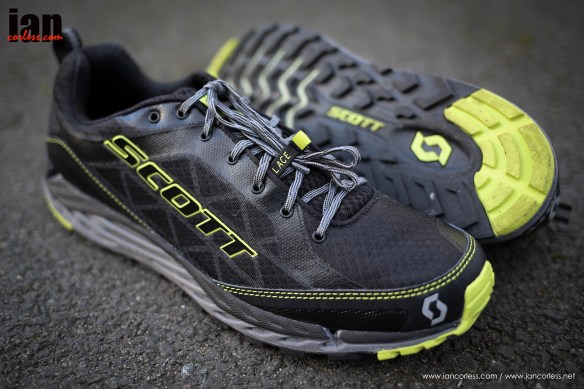
Scott T2 Kinabalu 2015

Scott T2 Kinabalu 2015

Scott T2 Kinabalu 3 – Read full review HERE

Ability to run on road – Excellent. It’s not a road shoe but it runs great on the hard stuff.

Ability to run on hard trails – Excellent. The outsole has a low profile and therefore if the trail is dry, these shoes will fly along.

Ability on dry and wet rocks – On dry rocks, grip is very good. On wet rocks the grip is compromised.

Grip in mud – Moderate, they can handle a little soft stuff but not too much.

Climbing – Pretty good. The shoes are a little more substantial than others in the test and therefore they are a little heavier and a little more rigid.

Descending – Good feel and cushioning but grip is compromised on wet and muddy trail/ rocks.

Time on feet – Great shoe for longer running and a very durable upper with great protection. The shoe has an 11mm drop which is almost unheard of these days. 8mm has become the norm. But Scott use a ‘rocker’ and this does keep you mid to fore-foot and they don’t feel like 11mm drop when running.

Fit – Great fitting shoe that feels comfortable and holds the foot.

Lacing – Standard lacing with ‘lace-locker’ to hold excess lacing after they are tied.

Cushioning – Very good.

Outsole – It’s a road to trail shoe that offers grip similar to the TNF Ultra Cardiac but they have more grip than the Race Ultra, S-Lab Sense and Sense Mantra 3.

Toe box – Standard with good protection

Wear and tear – Very good 800k.

Drop – 11mm

Conclusion – The Kinabalu in it’s 3rd incarnation is a really good shoe, if it was 8mm drop it would be excellent. It’s a great shoe for those who want one shoe to do all things.
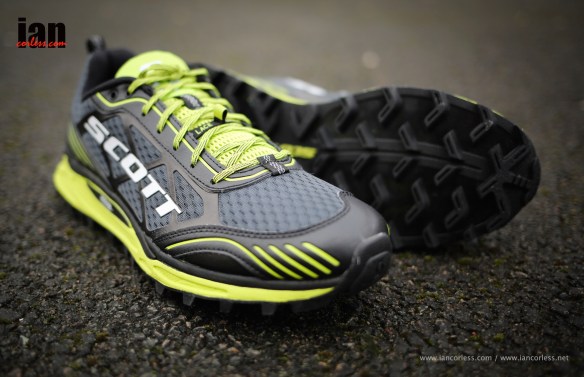
©iancorless.com_ScottSupertrac-5043

Scott Kinabalu Supertrac – Read full review HERE

Ability to run on road – Surprisingly good for an aggressive sole and you can run comfortable for longer periods of time.

Ability to run on hard trails – Excellent. As above.

Ability on dry and wet rocks – On dry rocks, grip is very good. On wet rocks the grip is compromised at times but you have confidence in the shoes.

Climbing – They are heavier shoes with less flex but the combination of grip and firm foothold make them very pleasing to wear.

Descending – Good cushioning and a robust (bomb proof) upper make you feel confident to tackle most terrain.

Time on feet – 8mm drop, good cushioning and a bomb proof upper make these great for long days. The only downside comes with the weight of the shoe. They are a fair bit heavier (340g) than other shoes in this test.

Fit – Great fitting shoes, maybe a little stiff when new but they soften. Toe box has room but not too much room and protection is excellent.

Lacing – Standard with ‘Lace-Locker.’

Cushioning – Excellent

Outsole – Aggressive that works on a multitude of surfaces.

Toe box – Standard with good protection.

Wear and tear – Excellent 800k

Drop – 8mm

Conclusion – This shoe is a real winner that mixes up different surfaces really well in a shoe that gives great cushioning all with an 8mm drop. The downside is the weight.
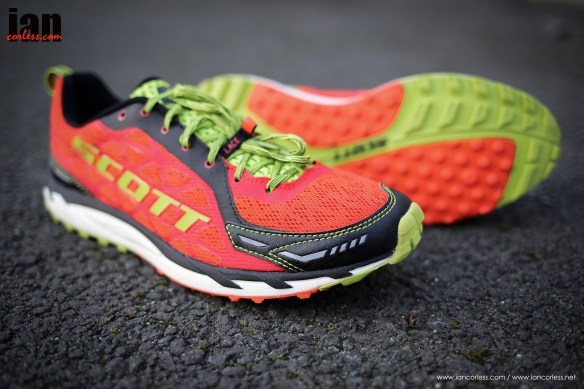
©iancorless.com_Scott-8036

Scott Trail Rocket – Read full review HERE

Ability to run on road – Excellent.

Ability to run on hard trails – Excellent.

Ability on dry and wet rocks – On dry rocks, grip is very good. On wet rocks the grip is compromised.

Climbing – Shoes feel great. They are flexible, hold your foot snug and you have a feeling of precision. Not good in the wet or mud.

Descending – Okay if it is dry.

Time on feet – This depends on ones adaptation to a more minimal shoe. This is a shoe for faster running on dry/ mixed trail.

Fit – Good snug fit with precision feel.

Lacing – Standard.

Cushioning – This is a more minimal shoe for faster running but they are well cushioned.

Outsole – For dry trails

Toe box – Narrow, precision fit.

Wear and tear – Moderate – 5/600k.

Drop – 5mm

Conclusion – Great fitting shoe and the race rocker works well for keeping you mid to forefoot. This shoe compares to the Salomon S-Lab Sene, Mantra 3 or the Race Ultras. It has a specific use.

And the winner is?

Before I say my winner, lets look at my thought process. By ‘best’ shoe I am taking into consideration many things such as: comfort, drop, cushioning, longevity, fit and so on. I am not looking at the colour or the price of the shoe. It may sound flippant but all shoes are around the same price these days and to be honest, if the shoe is what I want and I know it works then I will pay the bucks.

You may well say, ‘But you can’t compare 4mm drop shoes to 8mm drop shoes and shoes with hardly any grip to shoes with loads of grip!’

Yes, I know.

But in some respects, this review or this comparison is all about purchasing one pair of shoes that can do all things well. If I wanted to just run in the mud I would get the Mudclaw 300. If I was just going to run fast hard trail I may well go for the Salomon Sense Mantra 3.

So, here you go:

Scott Kinabalu Supertrac

Surprised?

I am! When I started this process I didn’t think the Scott would come out on top but you know what, it has been a relatively easy decision.

I know it’s a heavy shoe and that is a big down side, especially when you compare it to say the Salomon which are almost 100g lighter; that is huge! But if I could only have one pair of shoes that had to take me along roads, along dry trails, up mud, down mud and along rocks in the wet and dry then the Supertrac would be the ones for me! The combination of 8mm drop, excellent cushioning, bullet proof upper, ‘rocker’ design and the aggressive outsole make them a winner; for me!

On a final note, shoes often have very specific uses and all the shoes above (in most cases) do one thing well! So, if you have the funds and the desire to own multiple pairs of shoes this almost certainly is the best way to go.

Three key shoe choices:

  • Road/ dry trails
  • Trail shoes for mixed conditions
  • Mud/ off-road shoes

The other key choice is drop and cushioning – you know your needs!

What are your thoughts and what shoes have I not tried here that would provide some competition?
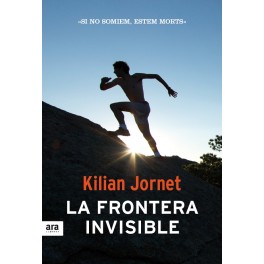
Kilian Jornet’s new book – The Invisible Border

Kilian Jornet

“Three men and a mountain, three men and an impossible adventure. An expedition to the most untamed Nepal, that of distant horizons and most remote peaks, with improbable climbs, intrepid descents, challenges, risks, dangers and life and death decisions. An expedition that is both an investigation, an escape and a reunion, where emotions and feelings are multiplied and feeling under the skin; where words, silences and memories acquire new depths.”


With humility and simplicity, Kilian Jornet invites us on his second book to run, to go further and to dare to explore the invisible border that separates sadness to happiness, life and death.

“This second book is more of a personal quest in search of both physical and emotional boundaries.”

The book is available (HERE) in Catalan, Spanish and French. Unfortunately no English version is available yet. It is possible to sign up for news here

On Amazon HERE

the-invisible-border

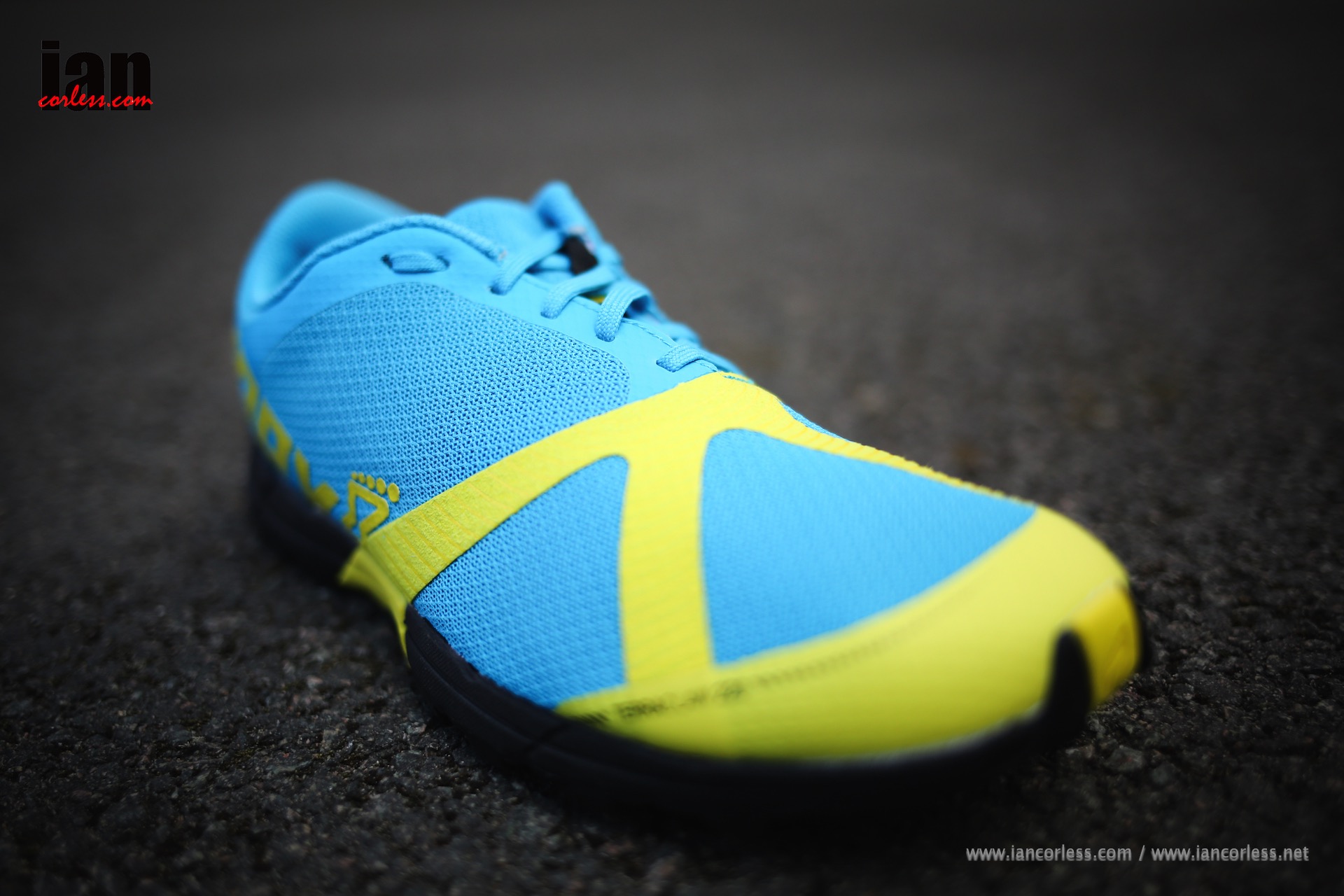
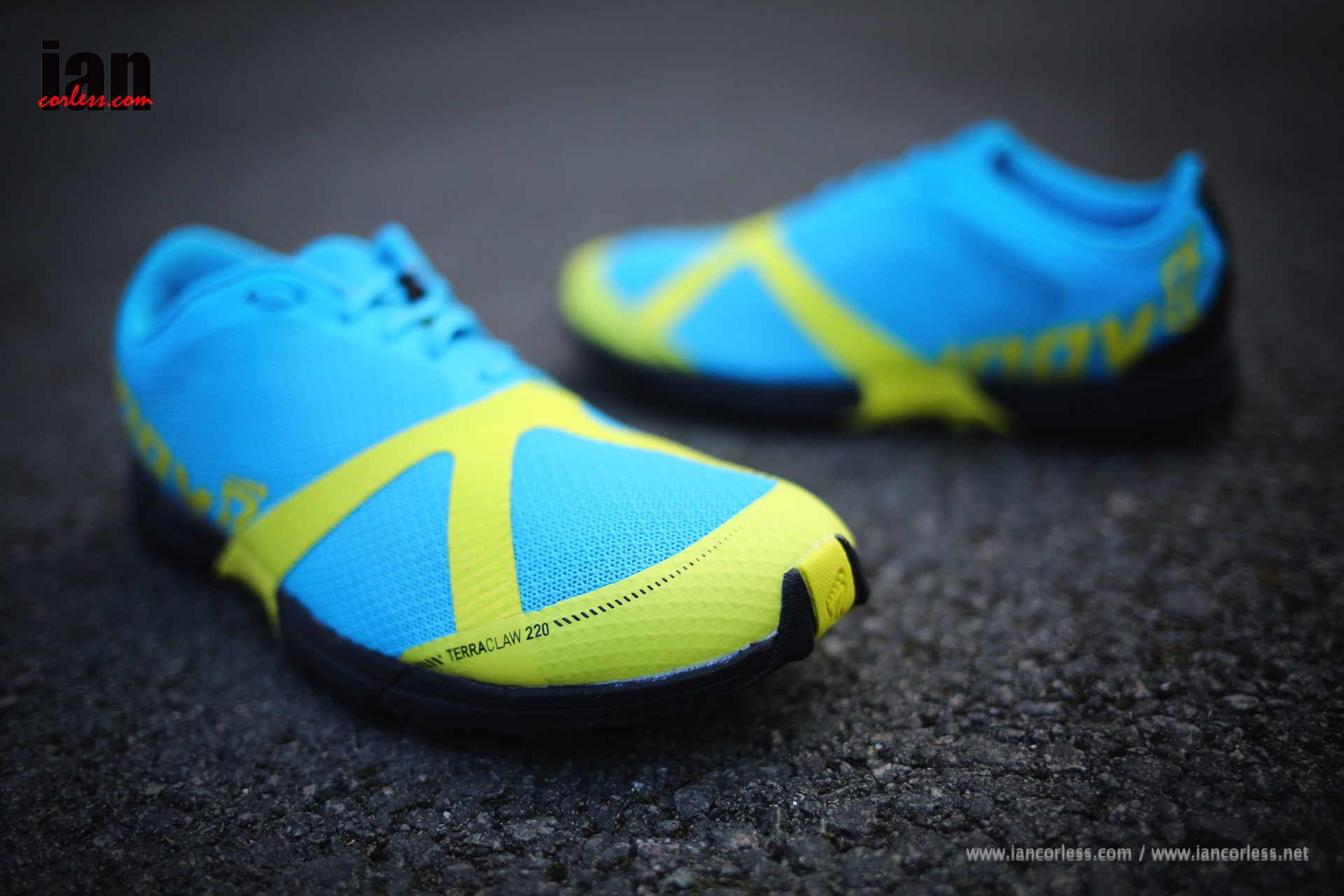
inov-8 TERRACLAW 220 – Shoe Review

©iancorless.com_Inov8Terraclaw-7047

The Terraclaw 220 is the stripped down version of the recently reviewed Terraclaw 250 by Niandi Carmont on this website (HERE).

I have been using both the 220 and the 250 for the last 4-months and in all honesty, much of what I have to say applies to both shoes. The biggest and most obvious differences are:

4mm drop in comparison to 8mm drop

220g weight in comparison to 250g weight

Less cushioning in the 220

Different lacing system

If you are new to inov-8 shoes, they always add the weight of the shoe (based on a UK8.5) to the name. In this scenario 220 relates to 220g. I like this, from first glance you get an understanding of where a shoe fits in the big picture. It’s safe to say, the less weight = more minimalist.

©iancorless.com_Inov8Terraclaw-7070

For me, the 220 and the 250 Terraclaw shoes are an extension from the Race Ultra models, the 270 (4mm drop) and 290 (8mm drop). The Race Ultra, as the name implies was designed for longer days running and the shoe had a sole that was good for dry trail and road. A key feature was the wide toe box that would allow the toes to spread out and also allow for swelling. It’s a shoe that had many new features and I must add it proved (and still proves to be) very popular. My initial impressions were good but that is where it stopped for me. I found the Race Ultra in both models lacked feel for the ground, comfort and responsiveness. They just didn’t light my candle.

©iancorless.com_Inov8Terraclaw-7123

So when I received the Terraclaw models I was not over excited to take them out for a run. My preferred shoe drop is usually 8mm so I went out in the Terraclaw 250 (black and blue shoe) first and I was amazed how different this shoe felt. The sloppy feel of the Race Ultra was gone and I found this new shoe more flexible, supple, cushioned, responsive and the feedback with the ground was good. I have gone on to run many miles in the Terraclaw 250 and love them. You can read Niandi’s review HERE and for the most I agree with her thoughts.

However, I do have some other thoughts and they relate to both the 220 and 250 models.

Review

©iancorless.com_Inov8Terraclaw-7076

As mentioned above, the Terraclaw 220 and 250 are almost identical.

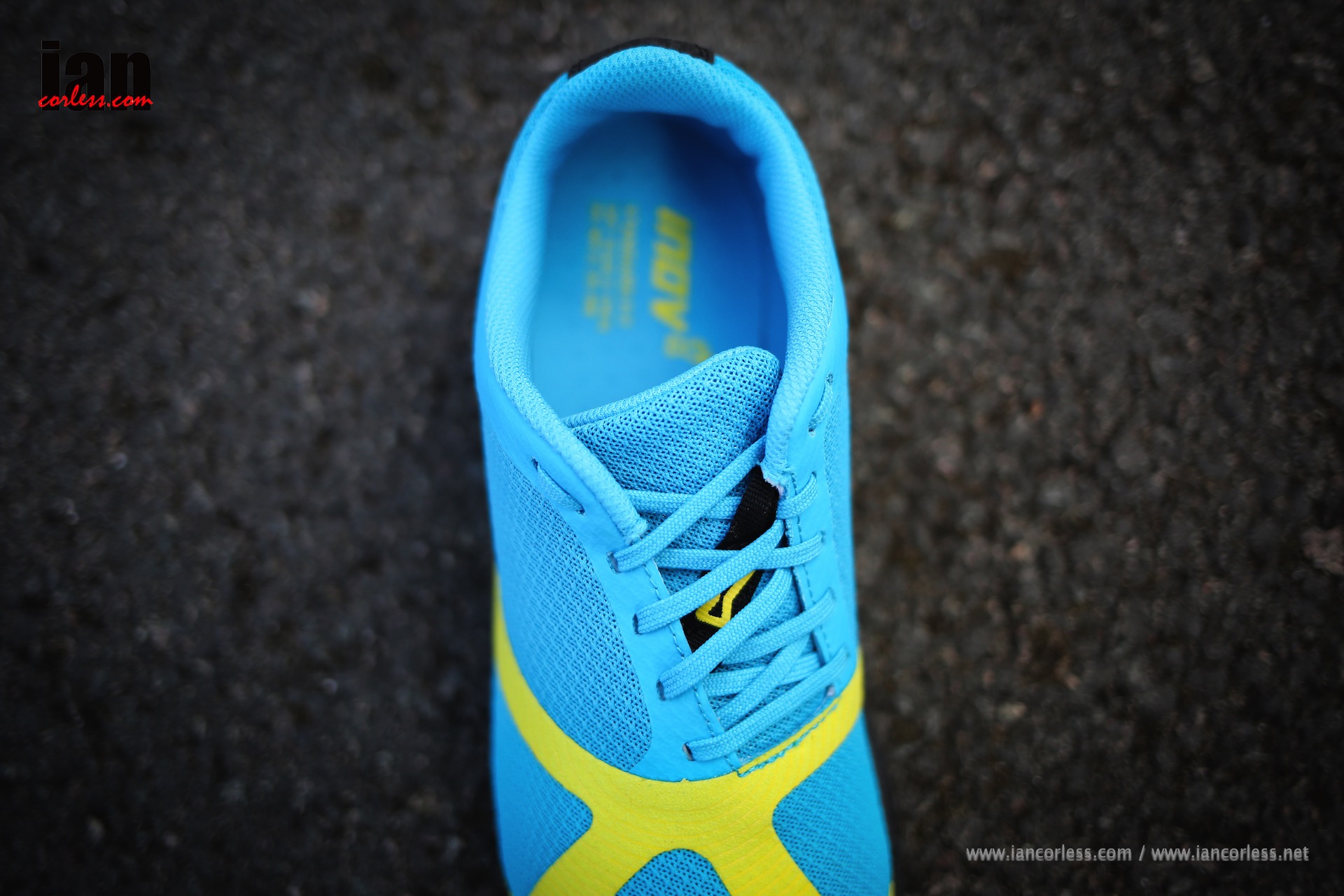
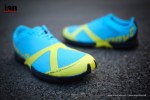
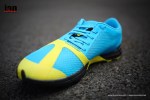
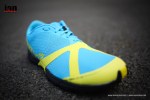
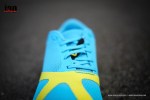
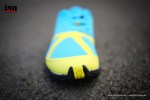
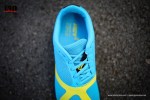
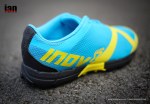
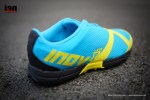
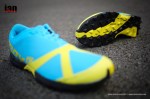
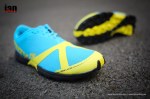
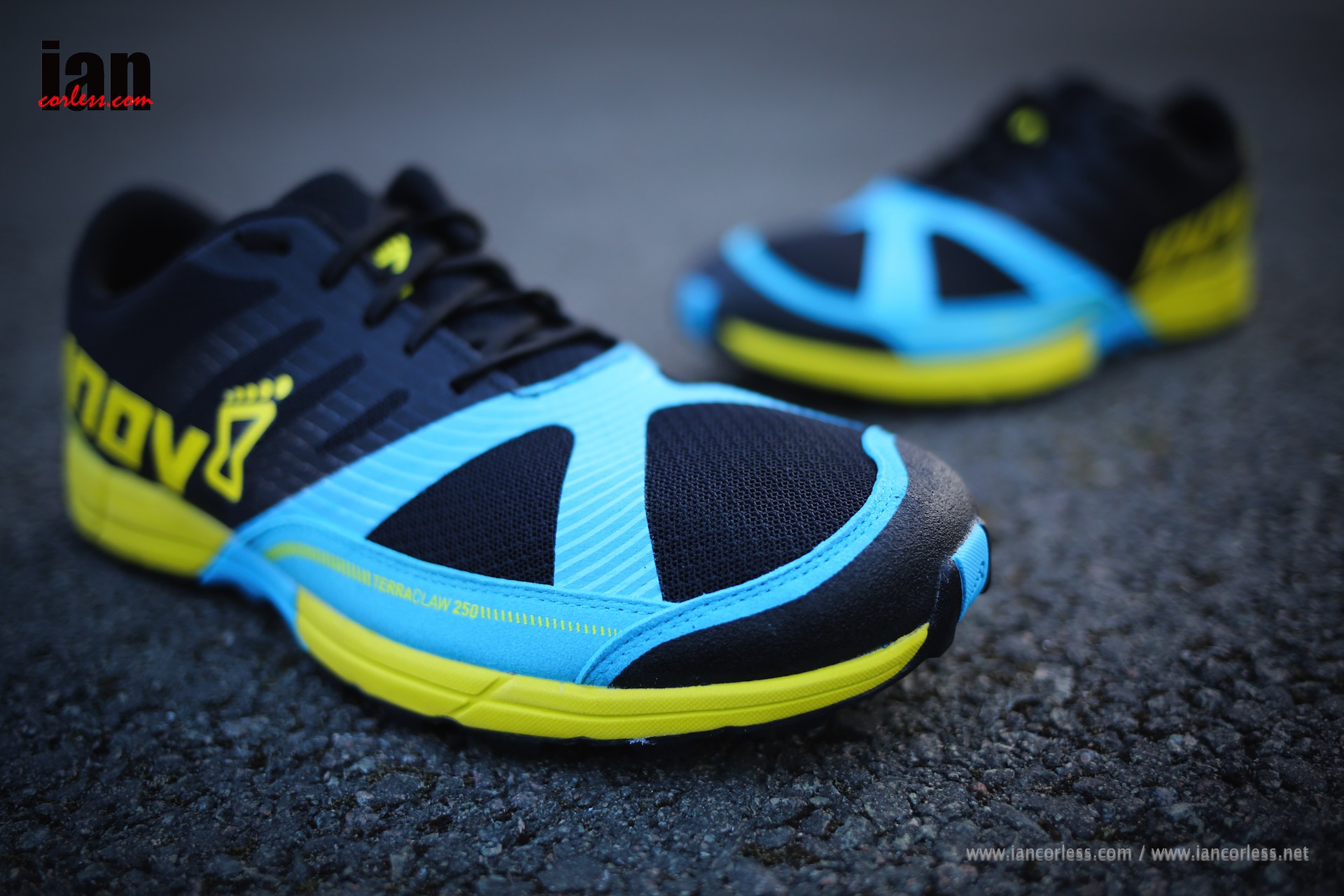
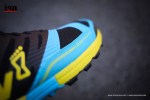
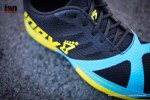
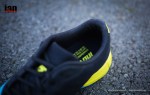
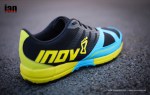
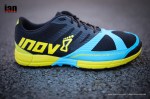
The 250 has a cool colour way of black, yellow and blue and the 220 does not! Oh boy do I hate this pale blue and yellow. I have visions of the first Hoka’s and people saying, ‘why are you wearing clown shoes!’ Of course looks mean nothing in regard to performance but I do like my shoes to look good and I have to say, inov-8 usually do a great job of making shoes look ‘sexy!’ Not in this case, not for me anyway.

©iancorless.com_Inov8Terraclaw-7065

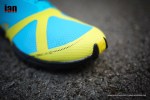
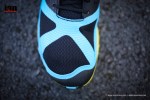
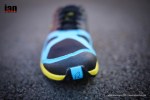
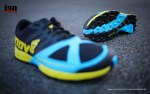
That big ‘X’ that goes over the front of the shoe is ‘X-Lock’ – inov-8 say that is a welded overlay to hold the foot in place. I will admit that the ‘X’ adds some structure to the shoe but it does not hold the foot in place!

Why?
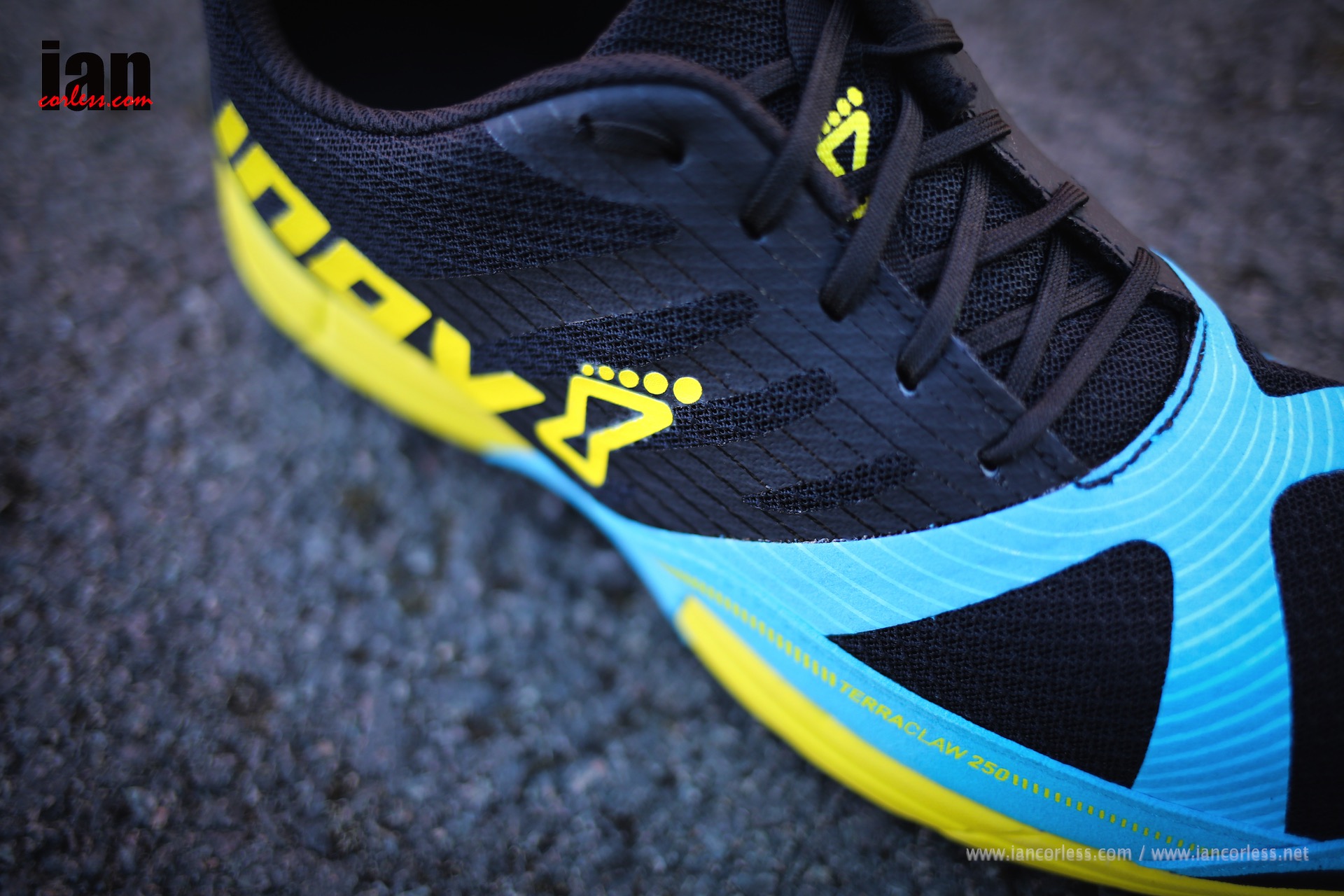
Well this shoe and the 250 is all about foot splay. The toe box has been designed to let the toes splay out, move around and yes, even swell if they need to. It works. Both the 220 and 250 versions give me a ‘barefoot’ feel of movement. However, the ‘X’ adds little structure or hold.

This for me is a real plus and a real negative.

1. If you are running on mixed terrain that involved some road, hard trail, a little mud, soft grass and the profile is relatively flat with a few undulations and descents – the 220 and 250 are great shoes.

2. But if you are running anything technical, running up or running down, the movement within the toe box is way too much (for me). You have no control and your foot slides inside offering no reassurance.

The two comments above are comments that relate to the shoes ‘best practice’ running scenarios. So, if you are intending to run in the number 2 scenario, the 220 or 250 is probably NOT the shoe for you unless you have a foot as wide as a Hobbit. Look at a 212 (HERE) or 300 (HERE) instead.

Niandi needs a wider toe box and this where the needs of one varies to the needs of another. To take a step back and understand the needs of the individual, for me, the wide toe box is too much when I need control but for Niandi it works. We both agree though that the outsole is NOT for muddy or slippery terrain.

©iancorless.com_Inov8Terraclaw-7077

The outsole is an extension of the Race Ultra and I would imagine has come about from all those Race Ultra lovers who wanted more grip. Well they have it now but it has limitations. We must remember here that (for me) inov-8 are trying to create an ‘all-purpose’ shoe that transitions from different surfaces; road to trail? Like I always say, no shoe that compromises will ever do the extremes well. That applies to the 220 and the 250 – they are not as good as a road shoe and they do not offer the grip of an out-and-out fell or soft-ground shoe. BUT if you want a shoe that you can put on everyday and use for mixed terrain, the 220 and 250 are great for that.
©iancorless.com_Inov8Terraclaw-7082

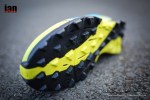
The outsole uses different compounds to provide grip on a multitude of surfaces and the grip is made up of little triangles that provide adequate grip on soft ground but not muddy ground. The spacing of the cleats is supposed to allow debris to release quicker. It made no difference for me; mud is mud and it sucks on to your shoes.

A ‘Dynamic Fascia Band’ has been embedded in the midsole and this provides some propulsion on the ‘lift-off’ phase when running. I would say that I noticed this more on the 220 (4mm drop) shoe but in all honesty, I believe that this comes from me wanting to run better in the 4mm drop shoes. You (or I) need to think more about my run style in a lower drop shoe as the mid to forefoot strike is so much more important. Hence the ‘awareness’ of the DFB working.

©iancorless.com_Inov8Terraclaw-7068

The noticeable difference between the 220 and the 250 is the lacing. The 250 is conventional and the 220 sweeps off to the side. inov-8 call this Ray-Wrap and it’s designed to line with the foot’s first metatarsal. They are not the first shoe company to do this, I seem to remember using a pair of Brooks with a similar system. Ultimately it works. I am not convinced it is any better than normal lacing methods though. I personally like my shoes to hold my foot so in both the 220 and 250 models I use a lacing method like THIS and in the 220 it is a little harder to use because of the offset. The 220 also has less additional support added to the upper around the lacing. The heel box is snug and plush and the shoe fits true to size.

©iancorless.com_Inov8Terraclaw-7064

Both shoes feel like slippers when you slide your foot into them and this is due to the lack of stitching. The shoes have little or no seams to cause any issues. The toe box of the 220 has less protection than the 250 and this only an issue if you are planning running on more rocky terrain or terrain with obstacles when the risk of stubbing a toe increases.

©iancorless.com_Inov8Terraclaw-7055

In Use

Although the 220 and 250 are very similar, are they for different runners? The 250 is a great ‘all rounder’ that will appeal to many runners because of the following features:

8mm drop

Good cushioning

Mixed terrain outsole

Wide toe box

Great for longer runs

The 220 though is a much more streamlined shoe and the 4mm drop and less cushioning will appeal to more efficient runners who cover ground quicker with a forefoot/ mid-foot run style. For example, I can see a runner using the 220 for short training sessions, faster training sessions or racing. They then may well use the 250 for longer training runs or longer races. I don’t think that 250 users would necessarily drop down to the 220.

I have enjoyed the 220 for ‘keeping me on my toes’ on runs of up to 60-75 minutes on road, grass, forest trail and canal path. When I have wanted to run longer I have used the 250.

When running on technical trails with more mud, rocks and longer descents and climbs I have always preferred to use a different shoe. Currently the Mudclaw 300 (HERE) as this seems a natural extension of the 250 with a more aggressive outsole, precision fit but good cushioning.

Ultimately, if you need a shoe that will allow you to run on mixed terrain and you need a wider toe box, the 220 or 250 should be on your list of shoes to look at.

Despite misgivings on the lack of support in the upper, I have found the freedom that both shoes provide very liberating and they do give a ‘natural’ feel similar to running barefoot. The outsole has worn well even with road use and they compare well to other shoes on the market.

©iancorless.com_Inov8Terraclaw-7051

Conclusions

I have always admired inov-8 for thinking of runners when they make shoes. Silly thing to say you may think, but how many other brands provide shoe models with varying drop: 3,6, 9 and 12mm or 4 and 8mm and at the same time have offered standard or precision width fittings in certain models. The arrow system on the rear of the shoe in many ways inspired a whole new generation of runners who wanted to get ‘lower’ with drop and inov-8 facilitated that. So, I’m an inov-8 fan. Over time, they have tweaked models and expanded the range. The Race Ultra and now the Terraclaw are shoes that hove come about with the growth of ultra running and the need (or desire) for a wider toe box. They have answered that demand and in doing so, once again they have provided two options in drop to ensure that nearly everyone is happy. If you are in need of a shoe that can handle a mix of terrain (not all road and not all mud) then a 220 or 250 may well answer your needs.

Pros

Wide toe box

4mm drop for the more efficient runner

Fast shoe

Lightweight

Responsive

Cushioned (but not too cushioned)

Great feel

Outsole for mixed terrain

Cons

I’m not convinced on the lacing but then again it caused no issues

Outsole lacks grip on mud, when climbing or descending

Toe box (for me) feels sloppy on technical terrain, when climbing and when descending

Less cushioning than the 250

Upper lacks support when required

Technical Specs

Weight: 220g/ 8oz

Fit: Standard

Footbed: 6mm

Midsole: Compressed EVA

ShankL DFB

Drop: 4mm

Sole: Terraclaw

Outsole: Dual C

What inov-8 say:

inov-8 say:

From single track to steep descents, the TERRACLAW™ performs on the widest range of trails imaginable. Our unique lug design releases debris and grit like no other, delivering optimum grip with every foot strike. At just 220g, the lightest version of the TERRACLAW™ is stripped-back for racing super-fast with a finely tuned balance of performance and protection.

Skyrunning is Booming! article on RUNULTRA

Skyrunning is Booming!

The recent Fast and Light film provides a great insight into Skyrunning and shows how the sport has grown worldwide; the UK has also seen interest grow in a sport where earth meets sky.

Shane Donnelly is a 26-year old runner from Ireland who has had his imagination captured by the sport.

In 2015 alone, he has raced the Tromso SkyRace in Norway, the Glen Coe Skyline in Scotland and the Mourne Skyline MTR in Northern Ireland.

Three challenging races but it’s the Glen Coe event in Scotland that is currently making runners turn their heads and wonder, ‘can I do that?

Let’s face it, the 2015 first edition of the race had Skyrunning World and European Champion, Emelie Forsberg take part and post race she said:

“Waow! Seriously the best race in this distance. Super technical ridges and gullies (think Trofeo Kima but no via ferrata!) and some parts are very runnable on nice but tricky trails. Glen Coe I’m thrilled to have run this race. Thanks for the amazing organization. Even though it was hard all of the nature and the course made me go fast.”

 You can read the full story on RUNULTRA.co.uk HERE

run-ultra-logo


inov-8 TERRACLAW 250 Shoe Review

©iancorless.com_Inov8Terraclaw-7086

Niandi Carmont gets her claws out and test the new inov-8 Terraclaw 250. A shoe that offers a wide toe box, grip, cushioning and an 8mm drop for longer days on mixed terrain.

Please note all photographs in this review are the male colour ways . The ladies version as reviewed is below.

TC250W-BLACKBERRY

TC250W-BLACKBERRY_1

REVIEW

The Terraclaw is a great dual purpose trail shoe for “earthy” mostly dry trail as well as offering enough grip to be used on trail with moderately grassy/ muddy sections. As I’m not an aficionado of technical slippery and extremely boggy terrain, this is definitely the shoe to fit my foot in more ways than one.

©iancorless.com_Inov8Terraclaw-7077

What definitely makes this trail shoe even more attractive for me is the wide toe box or in inov-8 jargon “standard fit” as opposed to the “precision fit”. The roomy toe box allows my toes to splay comfortably as I’m running irrespective of any swelling in hot weather over long distances. This is an absolute must for me as like with many ultra-runners who have been in the sport for some time, I have an issue with a collapsing right arch and thus a wider right foot.  In my case narrower trail shoes usually lead to chafing in between the toes and ensuing blisters.

©iancorless.com_Inov8Terraclaw-7107

Another interesting key feature of this model which attracted me is inov-8’s innovative patented Dynamic Fascia Band™ (DFB) technology. What this means in layman’s terms is that the anatomical position of the plantar fascia ligament is replicated and the function of the human foot’s ability to utilize the “windlass effect” is duplicated. As body weight moves forward onto the metatarsal heads and the toes begin to extend, tension on the inov-8 fascia band™ increases. When the heel leaves the ground, the inov-8 fascia band™ resists elongation of the medial arch and carries the entire body weight of the runner converting the shoe into a rigid propulsive lever. This helps the athlete to run more efficiently, more economically and thus a tad faster. How cool is that for an injured right-foot heel striker with a collapsing arch like me? I certainly feel I’m dragging my right foot less.

©iancorless.com_Inov8Terraclaw-7114

In addition to this the shoe is very breathable with a soft with a slipper-like feel. In fact this model is almost too comfy for a trail shoe! At 250G it is a relatively light shoe yet lightness is not sacrificed at the expense of cushioning. There is enough cushioning in this trail shoe to run on rock, gravel or stony terrain and inov-8 have got the balance just right and so if like me you still like to feel the ground underfoot you won’t be disappointed. The shoe sticks to inov-8 heritage of getting you low to the ground but the lack of a rockplate will allow more irregular rocks or sharper rocks be felt in the foot. It’s no great issue but one you should be aware of.

©iancorless.com_Inov8Terraclaw-7108

If you take a peek at the sole of the shoe, you’ll quickly understand why this shoe offers good grip on most terrain.  Inov-8 have developed 5 distinct outsole compounds to deliver maximum grip on a wide variety of terrains and in changeable weather conditions. The Terraclaw outsole is composed of Dual-C, in other words a mix of medium sticky and hard sticky compound.  This particular technology uses rock climbing rubber technology.

In principle the shoe should therefore also offer a reasonable amount of grip on wet rock. However, I was not convinced after having tested it on the initial section of the Garmin Mourne Skyline race course. Running down the wet stone steps was tricky and a shoe like the inov-8 Mudclaw 300 (HERE) would be more suited to that terrain despite the aggressive outsole.  Personally from having tested the shoe on various terrains and in different seasons and weather conditions, I would say it is more suited to dry trail and trail with short road sections. The shoe transitions well from one to the other. It would perform less well on extremely boggy terrain, very steep and slippery grassy climbs/ descents (fells), stony river and waterfall sections.  I also found the cleats wore away quite rapidly with over-use. I’m on my second pair in the space of 3 months as there is noticeable cleat wear where I heel strike and on the forefoot where the foot lifts off. Of course, if you use the shoe on just soft ground or trail, the outsole will last longer! However, I believe that inov-8 are trying to find a shoe here that does all jobs? The rise of ‘city-trail’ a key indicator why this move from inov-8 makes sense. But whenever you make a compromise, you very often end up with something that does nothing well. Certainly, if you want an out-and-out shoe for wet, muddy and slippery trail this is not the shoe for you: look at the 212 (HERE) or 300 (HERE). Equally, if you want a shoe for just road, this is not the shoe for you. But if you want a shoe that enables you to run road, run trail, have comfort and all with a pleasing drop of 8mm this is definitely worth considering.

©iancorless.com_Inov8Terraclaw-7077

The triangular spaced out lug design of the shoe is interesting too.  The purpose of this is to release debris, grit and small stones. However I found that it was not effective in releasing big clumps of muddy grass which got entangled in the lugs.  On the plus side because of the lug design the shoe is easy to rinse off after muddy trail runs.

©iancorless.com_Inov8Terraclaw-7094

The Terraclaw offers good toe and foot protection in spite of its light weight with a full rand and higher stack height. Like other inov-8 models the 2 Meta-flex grooves on the outsole (pinky-red color on the Ladies shoe) at the forefoot and the heel allow for natural foot flexing making for a smoother run.

©iancorless.com_Inov8Terraclaw-7105

It’s a neutral shoe that fits true to size but be warned, the roomier toe box may make the shoe feel a little ‘sloppy.’ If so, try lacing the shoe using this method HERE, it will hold your foot tight but still allow the freedom for your toes.

©iancorless.com_Inov8Terraclaw-7099

Last but not least – the color is great! Nice and sober – black with a hint of pink and blue. Personally I’m not one for garish bright run shoes which quickly look muddy.

TC250W-BLACKBERRY

TESTING

I have tested this shoe on several types of terrain and in various weather conditions:

  • A 2-day ultra around the Isle of Wight with a total mileage of 117km in hot weather and on dry trail, road sections, grassy coastal trail and some short technical ascents. My conclusion: this shoe is very versatile – I had no issue moving from trail to road sections. The grip on dusty trail is very good.
  • A one-day 42km trail in Lanzarote running on dust roads, through very rocky lava fields, on beach sections in soft sand, on pebbles, on stones, gravel and up and down slippery dusty mountain sections in hot weather. My conclusion: the shoe offered great grip in dry conditions. I tend to be too careful and overly think technical descents but found that I had more confidence with the Terraclaw.
  • Wet muddy trail training runs in the Midlands in rainy cold weather. My conclusion: If the terrain is not too muddy the Terraclaw offers sufficient grip. However, I felt it lacked grip in extreme boggy conditions.
  • Training runs on the West Highland Way. My conclusion: Good shoe for this type of terrain which is not extremely technical and very runnable.
  • Wet training runs on the fells in the Lakelands. My conclusion: Again I feel the shoe does not offer sufficient grip on really boggy and slippery terrain.
  • Training in the Mourne mountains in Northern Ireland. My conclusion: The shoe was great on forest path and trail sections but lacked grip on wet rocky sections on descents and steep grassy descents. The Mudclaw 300 would probably be more suitable for this kind of terrain.
  • Training runs on forest path near Paris. My conclusion: The shoe is very versatile and transitions comfortably from hard road surfaces to softer forest terrain.

CONCLUSION:

PROS:

  • I like it – I’m already on my second pair.
  • The patented Dynamic Fascia Band™ technology favors a more economical and thus more efficient run style.
  • The Dual-C grip is sufficient for moderately wet conditions.
  • This model is extremely comfortable.
  • It is lightweight shoe with ample protection and great cushioning.
  • I love the roomy toe box.
  • Great color
  • Very versatile shoe – an all-rounder

CONS:

  • I’m on my second pair. It lacks durability mainly due to lug wear.
  • It doesn’t offer sufficient grip in more extreme conditions

If you’d prefer the same show with a lower drop (4mm) the 220 version is available with a unique lacing style.

©iancorless.com_Inov8Terraclaw-7123

TECHNICAL SPECS

Weight: 250G / 9OZ

Fit: STANDARD

Footbed: 6MM

Midsole: COMPRESSED EVA

Shank: DFB™

Drop: 8MM

Sole: TERRACLAW™

Compound:DUAL-C

Running a mult-day race? Check out our training camp http://d.pr/f/18cqZ

inov-8 website HERE

Inov8 say:

From single track to steep descents, the TERRACLAW™ performs on the widest range of trails imaginable. Our unique lug design releases debris and grit like no other, delivering optimum grip with every foot strike. The higher mileage version of the TERRACLAW™ range, this shoe delivers extra protection and comfort courtesy of a full rand and higher stack height.

EcoTrail Funchal 2015 – Madeira

©iancorless.com_EcoTrailMadeira2015-5747

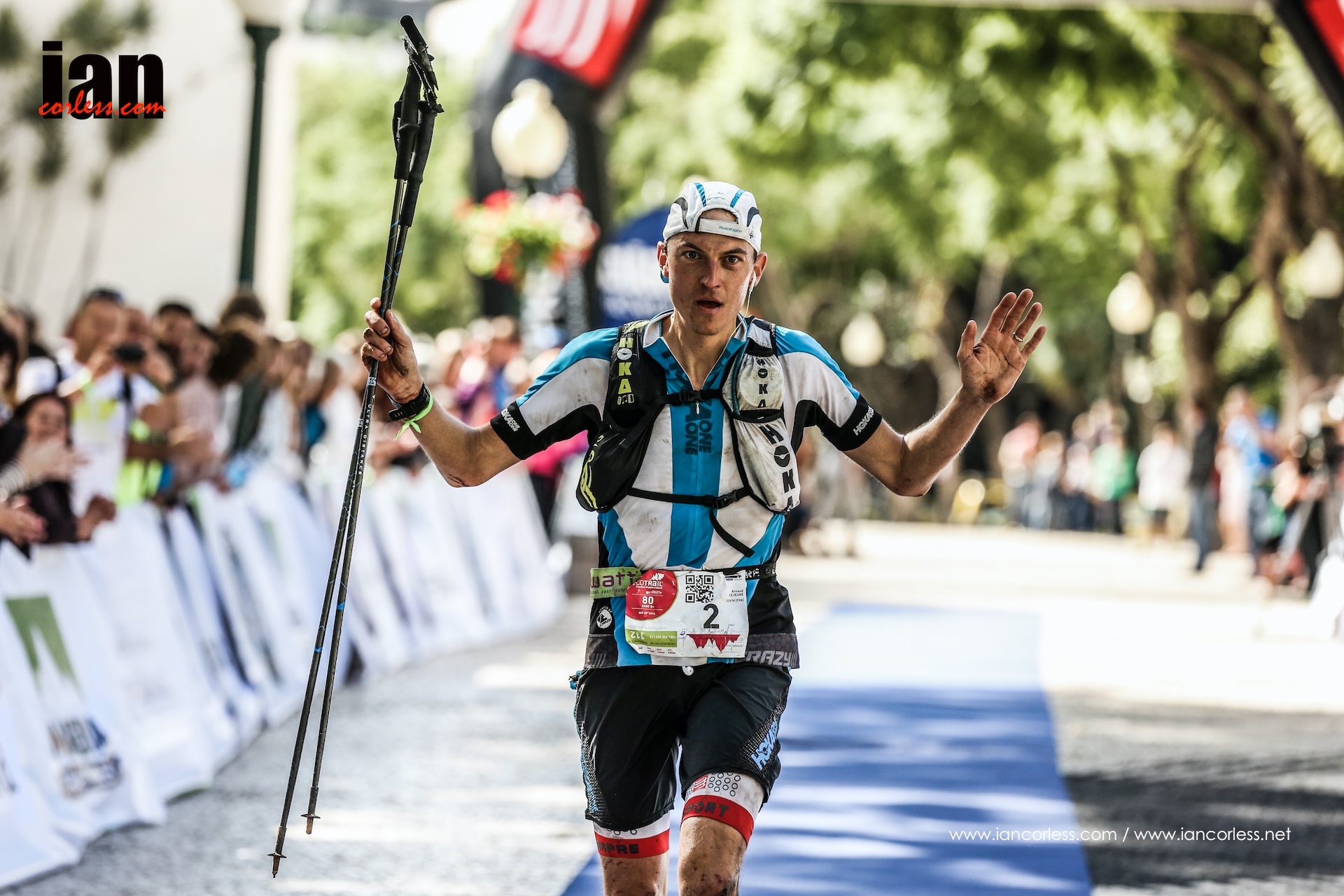
Arnaud Lejeune winning the 80km

The first edition of the ECOTRAIL Funchal took place today on the stunning island of Madeira.

For those who know, they will say, Madeira? wow, that is a hilly island for a race. I agree! It’s a very hilly island for a race.

Three events, 600+ people and community united are the key statistics from this inaugural edition.

Starting at 0600m the main event of the day, the 80km race (5400m of elevation gain) departed the centre of the town and under the illumination of head lamps the runners set out for what was without doubt a tough day and for many, night, on the trails of Funchal.

At 0900 the 40km event with 2500m of elevation gain departed from Algeria (Alegria) and finally at 1100, the 17km event with just 250m of vertical gain departed from Bico (PICO) de Barcelos.

Madeira is known for it’s great all year climate but race day proved to be a mix of glorious sunshine, cloud and light rain. However, the conditions for runners were perfect enabling the majority to run in conditions that were neither to hot or cold.

First edition races seldom have high quality fields but here in Madeira three world-class French runners toed the line:

Arnaud Lejeune – recent 2nd place at the Ultra Trail Mt Fuji

Julien Chorier – Champion of the Madeira Island Ultra Trail in 2014 and 6th at Western States in 2015.

Fabien Antolinos – 6th at UTMB 2015

Although Lejeune and Antolinus dominated the 80km event and Chorier won the 40km race, the ECOTRAIL Funchal is much more than elite names racing and setting records. The race is all about motivation and inspiration. This was reflected in the 17km event where local people arrived in their hundreds to take part and support

The race, the people and the island rely on tourism and without doubt, the ECOTRAIL race adds a great boost.

©iancorless.com_EcoTrailMadeira2015-8591

The 80km and 40km races

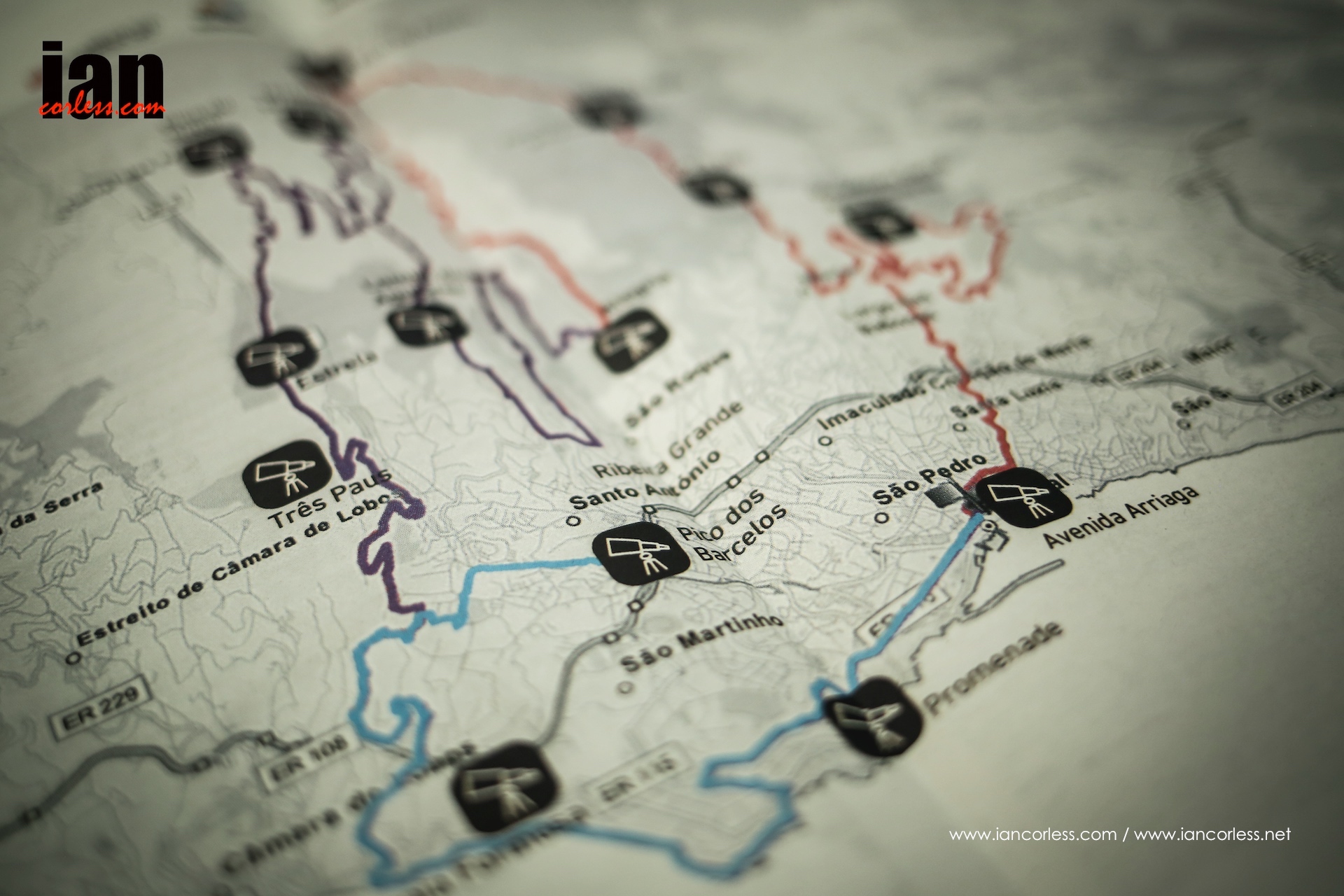
The race started by following the main streets of the town heading east and then up to Curral dos Rameiros and Monte. Following trails, technical at times they head to the 1800m summit at Pico do Arieiro and then drop like stones to Allegria (this is the 40km start). Navigating through suburban streets a brutal uphill follows and then a descent to Ribeira Grande, Santo Antonio. At Levada Negra another steep climb awaits, unfortunately this is the nature of Madeira trails; they go up and down! From Pico de Buxo they drop downhill towards the sea and stunning views of Funchal. Following trails and paths they navigate to the finish in Funchal with a final stretch running along the coast and the finish in  Avenida do Infante.

17km

Starts from Pico de Barelo and takes in the final sections of the 80km and 40km events to finish on the Avenida do Infante in Funchal.

Race Results

In the 80km race, Arnaud Lejeune lead from the front and had a stunning day on the trails of Madeira. Despite a fall, he arrived in Funchal looking strong. Fabien Antoninus played the bridesmaid and as the latter stages of the race unfolded he obviously decided to take his foot of the gas and save some energy.

  1. Arnaud Lejeune 8:30:09
  2. Fabien Antoninus 8:49:46
  3. Leonardo Diogo 9:51:17

Ana Conclaves was the ladies winner in 12:43:24

All 80km results are HERE

In the 40km race, Julien Chorier raced in 2nd place for most of the day behind Marco Silva but at around 34km, he pulled away and took a strong victory on a course that he said was, ‘very tough challenging and technical!’

  1. Julien Chorier 4:29:55
  2. Marco Silva 4:33:57
  3. Virgilio Ornelas 4:46:07


All 40km results are HERE

The 17km race was all about fun and in many scenarios it provided a first race opportunity for many locals. No doubt, they will be inspired to look ahead to 2016 and maybe move up to the 40km distance.

  1. Marten Bostrom 59:36
  2. Francisco Freitas 1:03:39
  3. Jorge Pimenta 1:06:01

All 17km results HERE

At the time of writing results are slowly but surely coming in as all races have not finished. We will update this post with information as and when available.

You can check the ECOTRAIL Funchal website HERE

Logo EcoTrail Funchal Madeira

All images ©iancorless.com – all rights reserved

Registration and pre-race click on an image and view the gallery

The early hours click on an image and view the gallery

Race images 1 click on an image and view the gallery

Race images 2 click on an image and view the gallery

Finish 1 click on an image and view the gallery

Finish 2 click on an image and view the gallery

Episode 98 – Wolfe Leventhal Cameron

A_GRAVATAR

Episode 98 of Talk Ultra is a packed show, we speak with Mike Wolfe about his epic Crown of Continent Traverse with Mike Foote. Shirt Leventhal, ladies winner of Atacama talks about racing multi-day races and Sarah Cameron tells us how cycling made her a excel at running. The News, Up and Coming Races and Niandi co-hosts.

00:01:35 Show Start

00:10:21 NEWS

Help Nepal – Nepal images ‘FACES of NEPAL’ – order a print and all funds donated to Nepal charities HERE

TRAINING CAMP in Lanzarote with Elisabet Barnes 28th Jan to Feb 4th HERE

TEMPLIERS

1 – Ellie Greenwood 7:58

2 – Jasmin Nunige 8:04

3 – Anne Lise Rousset 8:24

1 – Benoit Cori 6:44

2 – Nicolas Martin 6:47

3 – Tofol Castanyer 6:48

RAID DE LA REUNION

1 – Antoine Guillon 24:17:40

2 – Sebastien Camus 24:41:50

3 – Freddy Thevenin 25:17:48

1 – Nuria Picas 28:11:14

2 – Emelie Lecomte 28:12:32

3 – Andrea Husser 28:38:53 and on the last show we mentioned that she won UTAT

MOURNE SKYLINE MTR report and images HERE

1 – Ian Bailey 3:51:22 new CR

2 – Dan Doherty 4:04:07

3 – Eoin Lennon 4:07:45

1 – Diane Wilson 4:33:26

2 – Helen Brown 4:42:12

3 – Shilled O’Kane 4:50:19

UTWT 2015 Ranking

1 – Antoine Guillon

2 – Gediminas Grinius

3 – Freddy Thevenin

1 – Nuria Picas

2 – Dong Li

3 – Nathalie Maculair

AUTUMN 100 in the UK 

1 – James Elson 14:35:40

2 – Chris Brookman 15:06:53

3 – Duncan Oakes 15:19:29

1 – Sarah Morwood 16:13:58

2 – Sally Ford 18:11:31

3 – Melissa Arkinstall 18:51:14

ENTRY FOR WESTERN STATES

Golden ticket races

BANDERA 100K

SEAN O’BRIAN 100K

BLACK CANYON 100K

GEORGIA DEATH RACE

GORGE WATERFALLS 100K

LAKE SONOMA 50K

UTMB

New points system 2016 will accept old and new but from 2017 new system only – http://ultratrailmb.com/fr/page/87/Liste%20des%20courses%20qualificatives.html

In summary old system required 9-points from 3-races for UTMB, new system will be 15-points from 3 races. CCC/ TDS was 3 from 2 and now 7 from 2 and OCC was 1 from 1 and now 3 from 2.

00:24:28 INTERVIEW 

SHIRI LEVENTHAL

01:13:30 TALK TRAINING

with SARAH CAMERON check out Cycling for Runners HERE

01:56:40 INTERVIEW

MIKE WOLFE

CROWN OF THE CONTINENT TRAVERSE

Mike Wolfe and Mike Foote run an incredible 600-mile FKT from Missoula to Banff. We will have both Mike’s on the next Talk Ultra to tell us all about it. Read HERE

UP & COMING RACES

Argentina

Noroeste Argentina Trail – 100 km | 100 kilometers | November 03, 2015 | website

Noroeste Argentina Trail 50 km | 50 kilometers | November 03, 2015 | website

Puna Inca Trail | 200 kilometers | November 05, 2015 | website

Australia

New South Wales

Carcoar Cup Ultra Marathon | 60 kilometers | November 08, 2015 | website

Queensland

Run to Paradise Ultra Marathon | 74 kilometers | November 01, 2015 | website

Canada

Ontario

50 km | 50 kilometers | October 31, 2015 | website

Colombia

North Face Endurance Challenge Columbia – 50 km | 50 kilometers | November 01, 2015 | website

North Face Endurance Challenge Columbia – 50 km | 50 kilometers | November 01, 2015 | website

North Face Endurance Challenge Columbia – 50 km | 50 kilometers | November 01, 2015 | website

North Face Endurance Challenge Columbia – 50 km | 50 kilometers | November 01, 2015 | website

North Face Endurance Challenge Columbia – 80 km | 80 kilometers | November 01, 2015 | website

North Face Endurance Challenge Columbia – 80 km | 80 kilometers | November 01, 2015 | website

North Face Endurance Challenge Columbia – 80 km | 80 kilometers | November 01, 2015 | website

North Face Endurance Challenge Columbia – 80 km | 80 kilometers | November 01, 2015 | website

Estonia

Haanja Jala100 – 100 km | 100 kilometers | October 31, 2015 | website

France

Aveyron

Trail des Hospitaliers | 75 kilometers | November 01, 2015 | website

Marne

SPARNATRAIL classique | 55 kilometers | November 08, 2015 | website

Germany

Lower Saxony

KILL 50 | 50 miles | November 07, 2015 | website

North Rhine-Westphalia

Bottroper Herbstwaldlauf – 50 km | 50 kilometers | November 08, 2015 | website

Hong-Kong

Salomon LT 70 | 70 kilometers | October 31, 2015 | website

India

Karnataka

100 km | 100 kilometers | November 07, 2015 | website

50 km | 50 kilometers | November 07, 2015 | website

75 km | 75 kilometers | November 07, 2015 | website

West Bengal

Himalayan 100 Mile Stage Race | 100 miles | October 30, 2015 | website

Indonesia

Bromo Tengger Semeru 102K | 102 kilometers | November 06, 2015 | website

Bromo Tengger Semeru 170K | 170 kilometers | November 06, 2015 | website

Bromo Tengger Semeru 70K | 70 kilometers | November 06, 2015 | website

Martinique

Le Défi Bleu | 58 kilometers | November 07, 2015 | website

TransMartinique | 133 kilometers | November 07, 2015 | website

Morocco

150 km | 150 kilometers | November 05, 2015 | website

90 km | 90 kilometers | November 05, 2015 | website

Namibia

Desert Ultra | 250 kilometers | November 13, 2015 | website

Nepal

Everest Trail Race | 160 kilometers | November 08, 2015 | website

Manaslu Trail Race | 212 kilometers | November 10, 2015 | website

Solukhumbu Trail | 289 kilometers | October 30, 2015 | website

New Zealand

60 km | 60 kilometers | November 07, 2015 | website

Taranaki Steelformers 100 mile Around the mountain Solo | 100 miles | November 06, 2015 | website

Taranaki Steelformers 150 km Around the mountain Running and Walking Relay | 150 kilometers | November 07, 2015 | website

Oman

Oman Desert Marathon | 165 kilometers | November 06, 2015 | website

Peru

Amazon Race Forest 65k | 65 kilometers | November 08, 2015 | website

Portugal

Azores Triangle Adventure | 103 kilometers | October 30, 2015 | website

Trail Europe Croisière | 90 kilometers | November 04, 2015 | website

Sweden

Markusloppet | 50 kilometers | October 31, 2015 | website

United Kingdom

Derbyshire

Dusk’til Dawn Ultra | 50 miles | October 31, 2015 | website

Kirklees

White Rose Ultra 60 Mile | 60 miles | November 01, 2015 | website

Northamptonshire

Druids Challenge Ridgeway Multistage Ultra | 84 miles | November 06, 2015 | website

Stirling

Glen Ogle 33 Ultra | 33 miles | November 07, 2015 | website

Uruguay

ULTRA Maratón Altas Cumbres Serranas 100K Ultra | 100 kilometers | November 08, 2015 | website

ULTRA Maratón Altas Cumbres Serranas 60K Ultra | 60 kilometers | November 08, 2015 | website

USA

Alabama

Pinhoti 100 | 100 miles | November 07, 2015 | website

Arizona

100K | 100 kilometers | October 31, 2015 | website

Javelina Jundred 100 Mile Endurance Run | 100 miles | October 31, 2015 | website

California

CTR Lake Chabot Train Run 50 km (Nov) | 50 kilometers | November 07, 2015 | website

Rio Del Lago 100M | 100 miles | November 07, 2015 | website

Two Cities Ultra Marathon | 50 kilometers | November 01, 2015 | website

Florida

Regular Team (3-6 runners) | 50 miles | November 07, 2015 | website

Ultra Team (2 runners) | 50 miles | November 07, 2015 | website

Georgia

Georgia Sky to Summit 50k | 50 kilometers | November 07, 2015 | website

Illinois

Chicago Lakefront 50K | 50 kilometers | October 31, 2015 | website

Indiana

Owen Putnam State Forest 50K | 50 kilometers | November 07, 2015 | website

Owen Putnam State Forest 50 Miles | 50 miles | November 07, 2015 | website

Kansas

Kingman Kong Runathon 50K | 50 kilometers | October 31, 2015 | website

Massachusetts

Stone Cat 50 Mile | 50 miles | November 07, 2015 | website

Missouri

Ozark Trail 100 Mile Endurance Run | 100 miles | November 07, 2015 | website

Nevada

Bootlegger 50K | 50 kilometers | November 07, 2015 | website

Ragnar Relay Las Vegas | 195 miles | November 06, 2015 | website

New Jersey

NJ Trail Series One Day – 50K | 50 kilometers | November 07, 2015 | website

New York

Mendon 50K Trail Run | 50 kilometers | November 07, 2015 | website

Oklahoma

Turkey & Taturs 50K Trail Race | 50 kilometers | November 08, 2015 | website

Turkey & Taturs 50K Trail Race | 50 kilometers | November 08, 2015 | website

Oregon

50K Ultra | 50 kilometers | November 07, 2015 | website

Tennessee

Nashville Ultra Marathon 50 K Race | 50 kilometers | November 07, 2015 | website

Nashville Ultra Marathon 50 Mile Race | 50 miles | November 07, 2015 | website

Nashville Ultra Marathon 60 K Race | 60 kilometers | November 07, 2015 | website

Nashville Ultra Marathon 70 K Race | 70 kilometers | November 07, 2015 | website

Texas

50K | 50 kilometers | October 31, 2015 | website

Big Cedar Endurance Run 100 Miler | 100 miles | October 30, 2015 | website

Big Cedar Endurance Run 50K | 50 kilometers | October 30, 2015 | website

Big Cedar Endurance Run 50 Miler | 50 miles | October 30, 2015 | website

Muleshoe 50K | 50 kilometers | November 07, 2015 | website

Virginia

Mountain Masochist Trail Run | 50 miles | November 07, 2015 | website

Washington

First Call Veterans Day 50K (November) | 50 kilometers | November 07, 2015 | website

Vietnam

120 km | 120 kilometers | November 10, 2015 | website

70 km | 70 kilometers | November 10, 2015 | website

02:30:15 CLOSE

02:36:03

ITunes http://itunes.apple.com/gb/podcast/talk-ultra/id497318073

Libsyn – feed://talkultra.libsyn.com/rss

Website – talkultra.com

inov-8 MUDCLAW 300 Shoe Review


©iancorless.com_Mudclaw300-7399

C’mon, get a grip! If you run in mud, you will no doubt be familiar with inov-8. For years, inov-8 has provided the ‘go-to’ shoes for running when the ground gets wet, slippery, muddy, gnarly and so on!

The Mudclaw 300 is not a new shoe in the massive inov-8 line up. The 2015 incarnation though does have a wicked and eye grabbing colour way and having used many versions on inov-8 (fave the 212 here) I was keen to put the Mudclaw 300 through its paces. Believe it or not, I am (was) a 300 virgin!

©iancorless.com_Mudclaw300-7436

Red, blue and a white logo. Have to say, inov-8 does a great job of getting shoes to jump off the shelf. I love this colour way and yes, it makes me want to wear the shoe. If you have the previous version of the ‘300’ in yellow and black, don’t be fooled into thinking this is the same shoe. It’s not.

©iancorless.com_Mudclaw300-7414

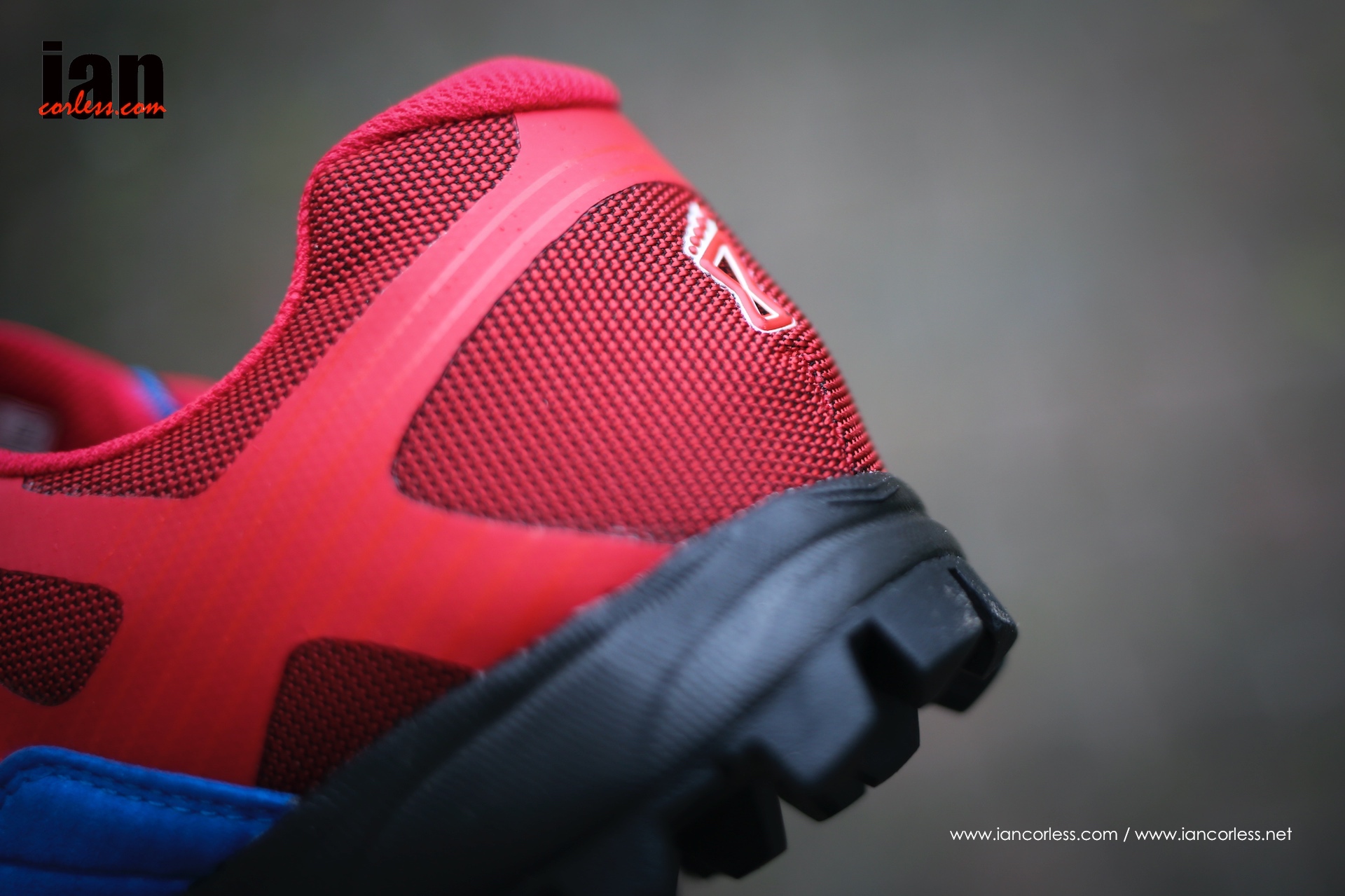
The sole and heel have had a revamp. The previous model really flared up at the rear, the new incarnation (red and blue) sits much closer to the ground, does not flare up and the heel box sits lower so as to cause no problems with the Achilles.

It’s still a 2-arrow shoe, so, 6mm drop.

Drop is a personal thing but I am a firm believer that 6mm/ 8mm drop shoes provide a great middle ground and if you are running longer, a slightly higher drop is kinder on the calf and legs. Of course, this is all down to personal preference. If you don’t know what the drop of the shoes you run in is, it’s worth finding out. Going too low too soon could cause injury.

©iancorless.com_Mudclaw300-7416

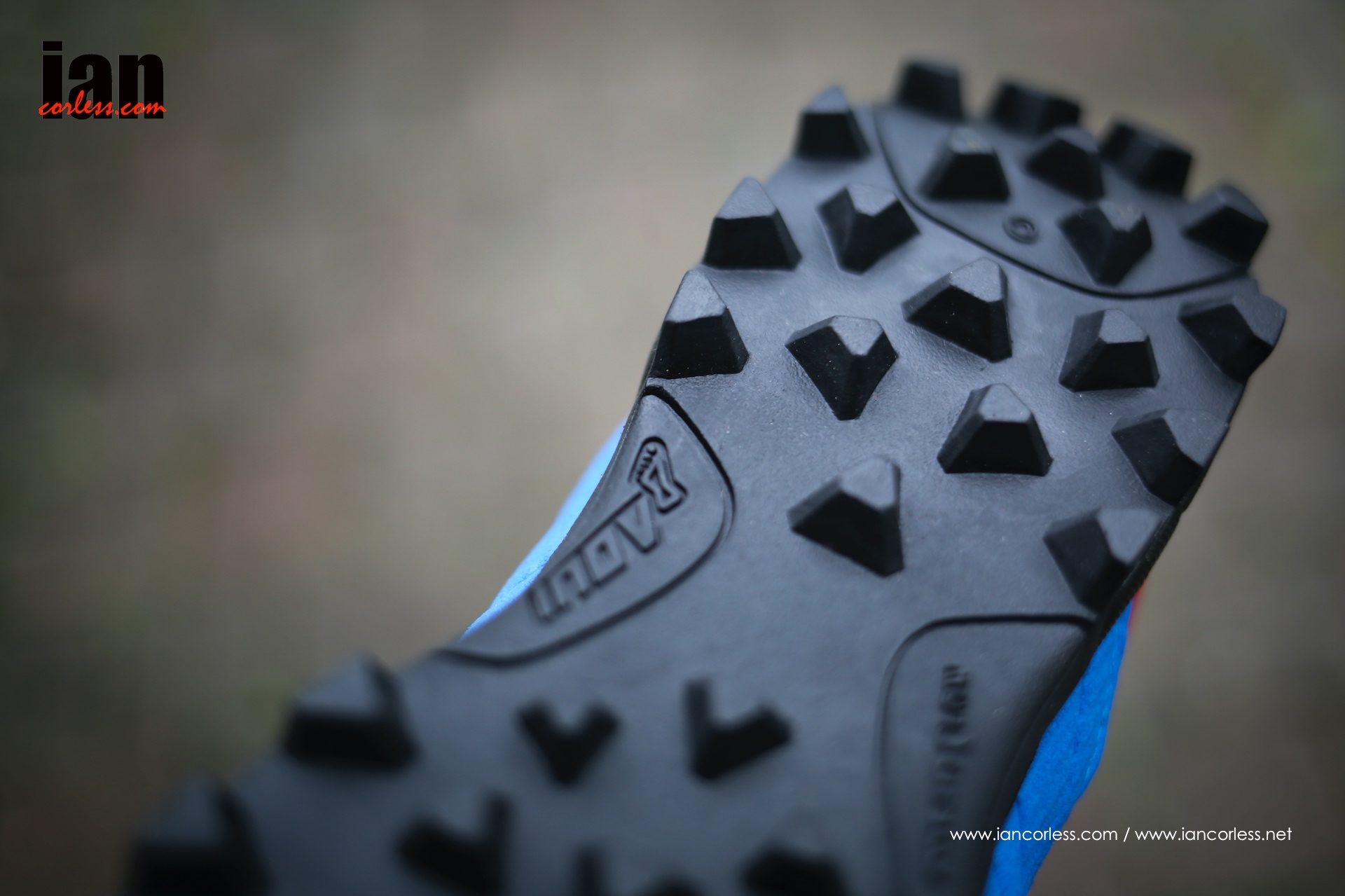
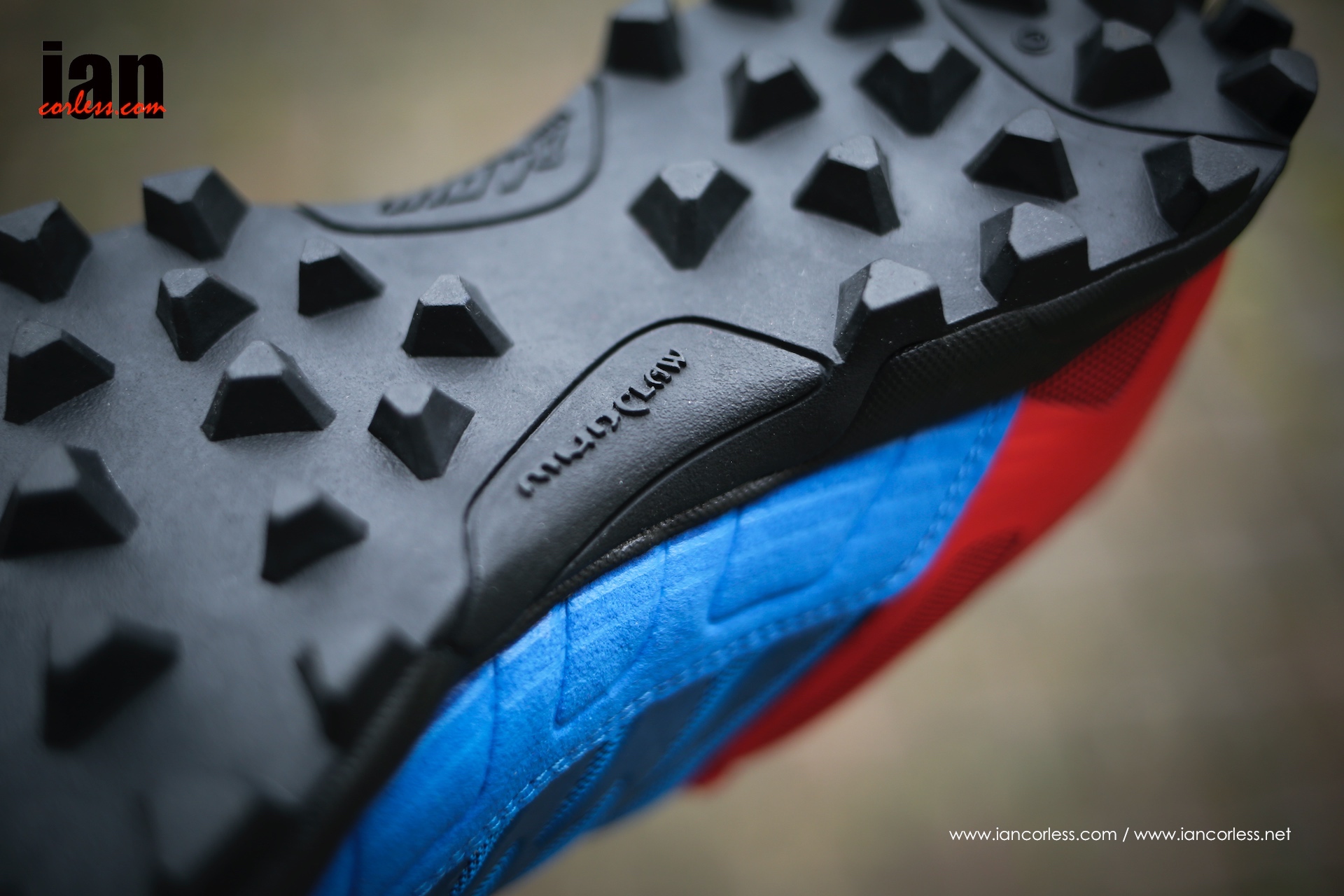
The sole has 8mm lugs. If Wolverine™ wore run shoes he would most likely go for the Mudclaw. Yes, they are grippy buggers. The rubber compound is soft and grippy but be warned, the shoe is called Mudclaw for a reason, you want to keep hard ground and abrasive surfaces to a minimum in these shoes as the sole WILL wear down. My test run includes 1-mile of road before and after the trails and I have to say, this shoe feels wonderfully comfortable on the hard stuff despite its ‘off-road’ pedigree. You can actually hear the sole grip. Sounds weird I know, but it’s very clear and you can feel it. At the front of the shoe, just behind where the toes would sit is a clearing in the sole with a META-FLEX™ this allows the shoe to bend without restriction when running. Works great when climbing!

©iancorless.com_Mudclaw300-7409

As the name suggests, the weight of the shoe is 300g. inov-8 always name the shoes based on the weight of a UK8.5 in case you didn’t know. It’s a pretty cool system actually as you can see at a glance, based on weight, if a shoe may or may not be suitable for you.

©iancorless.com_Mudclaw300-7405

The upper is treated with DWR coating and has a ‘Precision’ fit. Let’s be clear here, inov-8 now makes many shoes in a ‘standard’ and ‘precision’ fit. If you have a wide foot, this is good news because you may now well be able to wear a shoe that you were not able to wear in the past. But for me, the Mudclaw and shoes like it are all about control and precision. A shoe for really muddy and technical conditions should hold your foot and allow no movement. You need that controlled feel. Control gives precision and precision means faster running and less mistakes. Of course I am giving a very personal opinion here but I hope you see the logic? What I am saying is, be careful when choosing a shoe. Precision for my relatively wide foot is great when I need it but I wouldn’t want to be running all day with my toes cramped into a shoe. For me, the Mudclaw although precision in fit still had a relatively roomy toe box and this was great on the technical muddy stuff.

The tongue is held in place by elastic to stop it slipping. It’s a great move. However, the Mudclaw  doesn’t fit as tightly or as snug as say the Salomon S-Lab Sense SG (the perfect fitting shoe for me!) but if laced correctly (try this), pulled tight and double knotted your foot should feel super secure; my feet were!

©iancorless.com_Mudclaw300-7407

Getting lacing right is particularly important as the heel box has been tweaked so that it sits lower on the Achilles Tendon to avoid tension and potential injury problems. On my first run I felt as though my heel was slipping and I was unsure if this was a good move. Once re-laced, tightened appropriately, I can confirm that the lower heel is a good idea.

The rand around the lower part of the upper is now stitched and should in principal last longer and be more durable. Toe protection is relatively minimal.

The sides of the shoe are reinforced with a series of zig-zag support (webbing upper support) to hold the foot in place and these extend to the back of the shoe. They do the job, I had no issues with feeling that I had any lack of support.

©iancorless.com_Mudclaw300-7420

Cushioning for me is one of the key factors of this shoe. I have long been a fan of the 212 (here) but when running longer I found it just a little too minimal. Not so with the 300. The EVA foam, 6mm drop and Meta-Shank all work together to make this a great shoe for longer days out. The stack height is 28mm and therefore considered low but obviously not as low as some. It has average stiffness that works exceptionally well on varied terrain. It has no rock plate but does have a performance last and Met-Cradle.

The shoe is as you would expect in an out-and-out off road/ mud shoe fits NEUTRAL.

In Use

My first run in the shoe was mixed. I found my foot moved around a little and I felt insecure with the lower heel. When I got home I looked at the shoe, re-laced it and then the following day went out and ran the same 8-mile loop. It was a completely different experience.

First and foremost, these shoes grip and really grip. If it’s wet and muddy these are now my go to shoe. I recently ran an uphill and downhill trail in Ireland that was on the Mourne Skyline MTR race route and the trail incorporates many elements – forest path, tree routes, gravel, stone steps, mud, road and it had rained heavily before the run and drizzled whilst running. At no point did I have any question on grip! For a shoe that is designed to keep you secure on muddy trail, I was amazed at the security on wet and slick rock. I can’t emphasize enough how important this is. You need that 100% reassurance so that you can relax, the the Mudclaw 300 gave me this.

Although a precision fit shoe, I found the toe box roomier than my inov-8 212. No bad thing and it certainly caused me no issues. The added cushioning was superb when running longer or when getting off soft ground and on to harder trails. Certainly a shoe I would choose when training or racing longer.

6mm drop for me is perfect and the stack height of the shoe made me feel 100% confident; no rolling! Depending on your experience, preferred distance and ability, the Mudclaw 300 is a perfect training shoe that will keep you happy for many a run. I personally would be more than happy racing in it over any distance. For the more experienced, they may well prefer a slightly lighter shoe? The Mudcaw 265 for example is 35g lighter, has the same outsole and 3mm drop.

©iancorless.com_Mudclaw300-7440

Summary

The Mudclaw 300 is a shoe for when you need grip. It’s comfortable, secure, provides excellent traction and if laced correctly will hold your foot firm. It’s not a shoe for running on the road even though it’s remarkably comfortable. Just keep in mind, the more you run on the hard stuff, the quicker the sole will wear out. My daily training run has 1-mile of road out and back and I have been using the Mudclaw 300 on a regular basis. I currently can see minimal wear after 80-miles. The shoe is true to size. I wear a UK9.5 and the inov-8 fit perfectly in the same size.

Specs:

  • Weight: 300G / 10.5OZ
  • Fit: PRECISION
  • Upper: SYNTHETIC, TPU
  • Lining: MESH
  • Footbed: 6MM
  • Midsole: EVA
  • Shank: META-SHANK™ 1
  • Drop: 6MM
  • Sole: MUDCLAW™
  • Compound: STICKY
  • Gender: UNISEX

What inov-8 say:

The legendary all-terrain animal has undergone a makeover for SS15. Now boasting the same flatter heel unit as the mudclaw™ 265, but still maintaining its 6mm drop, the mudclaw™ 300 also has an improved, more flexible upper. A fully gusseted tongue helps keep any debris out. Its hero-status outsole remains as aggressive as ever, guaranteeing the ultimate grip for mountain, obstacle and adventure racers on the muddiest, steepest terrains. Website HERE

Garmin Mourne Skyline MTR 2015 – Race Summery and Images

©iancorless.com_Mourne2015-3752

Iain Bailey and Diane Wilson were the 2015 champions for the 2nd edition of the Mourne Skyline MTR, the 6th and final race in the Skyrunning UK calendar.

Considered by many to be Northern Ireland’s toughest and most challenging race, the Mourne Skyline MTR covers 35km’s with a whopping elevation gain of 3370m. Starting and finishing in the seaside resort of Newcastle, the race is now considered to be a highlight not only of the Skyrunning UK calendar but also the racing calendar in Northern Ireland.

The first edition of the race was made especially difficult with gale force winds that at time lifted runners off their feet and ‘helped’ them along the course. It looked like a repeat day was in store for the 150-runners who would tackle the 2015 edition when overnight wind and rain battered the coastline.

©iancorless.com_Mourne2015-7464

At 0800 leaving the promenade of Newcastle, the cold temperatures, strong winds and light rain certainly added to the trepidation of a tough day in the mountains. From the off, Dan Doherty dictated the men’s race but he was closely followed by the day’s main protagonists of Eoin Lennon, Ian Bailey, Jayson Cavill and Ally Beaven. For the ladies, Shileen O’Kane pushed the early pace ahead of Lizzie Wraith and Diane Wilson.

©iancorless.com_Mourne2015-7641

At the col between Slieve Donard and Slieve Commedagh, with 6.6km covered, the action started to unfold as the runners headed out on the more demanding sections of the course. Climbing the rocky and technical Slieve Meelmore, the real race started to take place but at all times the main protagonists jockeyed for position.

©iancorless.com_Mourne2015-7913

Iain Bailey and Diane Wilson took the respective race leads for the men and the women and this coincided with the skies clearing and the arrival of the sun. Finally, it was possible to see out across the stunning Mourne Mountains and take in the beauty this area has to offer. The sea glistened in the distance and the yellow and amber colours of the terrain provided a stunning backdrop to hard, tough and technical racing.

Overnight rain had made the course exceptionally difficult under foot and many runners commented post race how challenging it was to remain upright while descending.

©iancorless.com_Mourne2015-7703

Slieve Bearnagh offered one of the toughest climbs of the day and then a drop down to Hare’s Gap where the ever-present Mourne Wall then guides the runners to Slievenaglogh, Slieve Commedagh and then final push of the day up and over Slieve Donard (2788ft) before dropping all the way down from the summit to the finish line in Newcastle.

©iancorless.com_Mourne2015-7685

Pre race favourite Dan Doherty went to through a bad patch in these sections as he chased Iain Bailey who had a convincing lead of well over 5-minutes, “I am lacking energy and feeling tired,” Doherty shouted as he ran past hotly pursued by Ally Bevan, Eoin Lennon and Jayson Cavill. One would have thought that Doherty would not hold on to 2nd but he found the energy from somewhere!

©iancorless.com_Mourne2015-7656

Bevan, Lennon and Cavill contested the final podium place and it was a close battle before Lennon found that extra few percent to open up a gap. Bevan looked secure for 4th but a charging Cavill looked like he may well have upset that as he raced for the line. Bevan held off for 4th by just 7-seconds.

©iancorless.com_Mourne2015-8022

Pre race favourite Diane Wilson never looked back after taking over the front of the race and ran a well paced and controlled run to take victory, behind Helen Brown held off early leader Shileen O’Kane for 2nd and GB athlete Lizzie Wraith finished 4th ahead of Jaqueline Toal. “I had completely wrong shoes today,” said Wraith post race, “the descents were so slippery that I just couldn’t push the pace. I am happy though!”

©iancorless.com_Mourne2015-4244

Although the start of the day was a tough one many commented that the conditions after a couple of hours of running were considerably kinder than the 2014 edition when the gale force winds battered the runners, this was reflected in a new course record by Iain Bailey of 3:51:22.

©iancorless.com_Mourne2015-4434

A notable mention must also go to Garmin who for the first year sponsored the Mourne Skyline MTR and the input of the GPS watch brand was instrumental and securing a 30-minute program on the race for channel 4 TV. Needless to say this will be a great boost for the race, running in Northern Ireland and Skyrunning UK.

The program will be televised in November and we currently have a possible date of 8th.

Mourne Skyline MTR concluded the 2015 Skyrunning UK calendar. Just 2-years old, this series of races is now firmly becoming one of the most exciting race circuits. 2016 will see the series grow with points awarded for each race, prize money at every race and some special prizes on offer for the 2016 SKY and ULTRA champions, make sure you keep an eye on www.skyrunninguk.com


RESULTS

  1. Iain Bailey 3:51:22 new CR
  2. Dan Doherty 4:04:07
  3. Eoin Lennon 4:07:45
  4. Ally Beaven 4:10:21
  5. Jayson Cavill 4:10:28
  1. Diane Wilson 4:33:26
  2. Helen Brown 4:42:12
  3. Shileen O’Kane 4:50:19
  4. Lizzie Wraith 5:04:12
  5. Jacqueline Toal 5:25:03


Race images are available at iancorless.photoshelter.com

All of the images below are copyright protected. You can share on social media but do not crop, adjust or modify and no commercial use. If you don’t wish to purchase images, consider a donation here

Mourne Skyline MTR website HERE

Garmin Mourne Skyline MTR – First Images

©iancorless.com_Mourne2015-7641

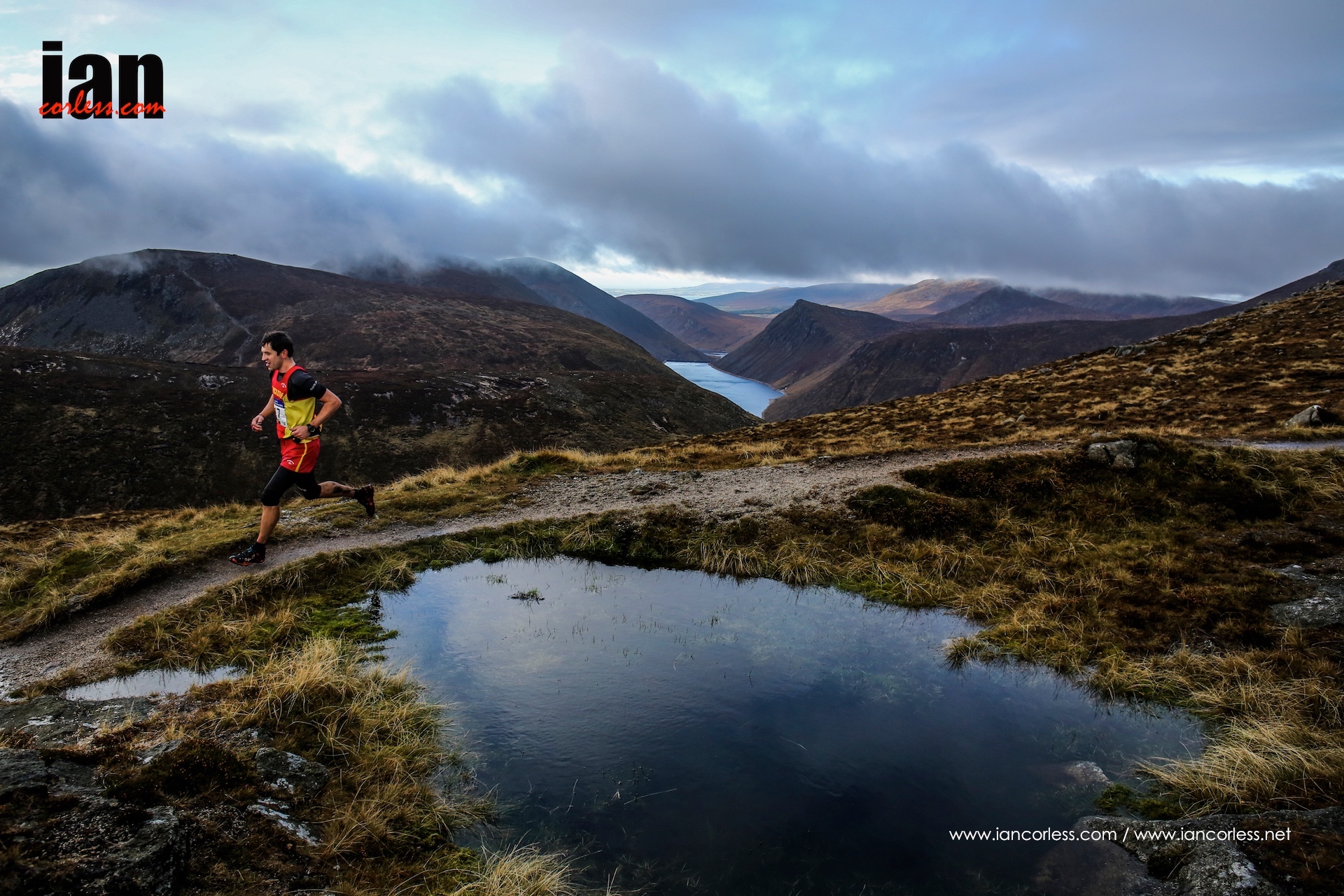
Absolutely stunning and tough day in the Mourne Mountains, Northern Ireland, for the 2nd edition of the Mourne Skyline MTR and the 6th and final race in the 2015 Skyrunning UK calendar.

Garmin Mourne Skyline MTR logo

Race report, results and full set of images to follow.

Here is a preview of the days action