
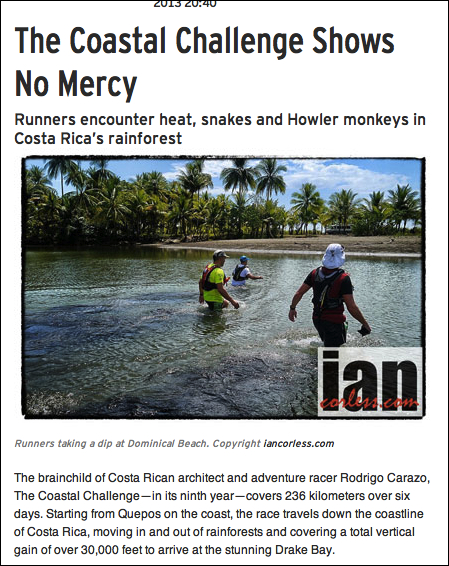
You can read the full article The Coastal Challenge at TrailRunner online HERE
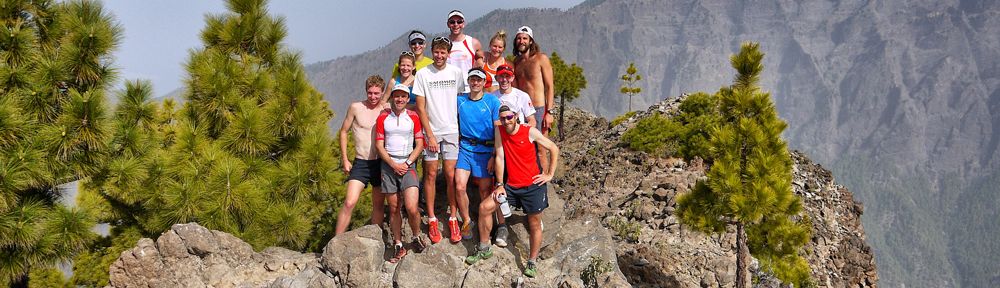
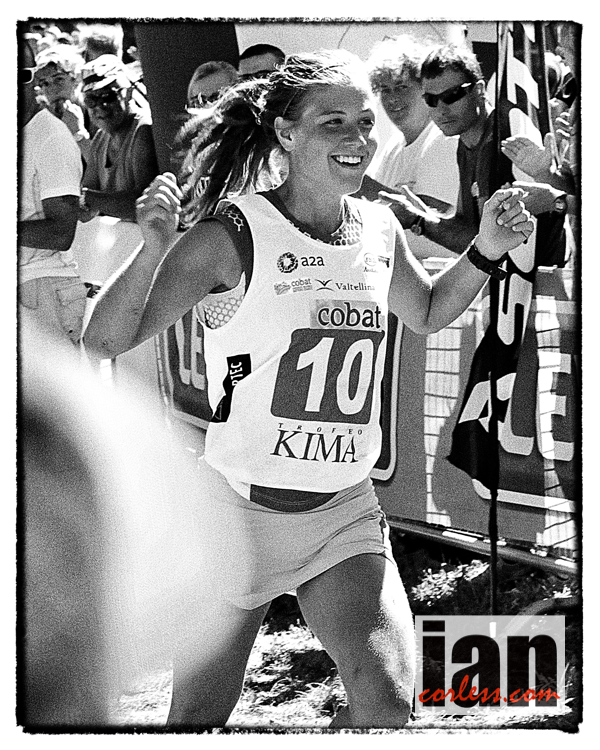
Trofeo Kima copyright Ian Corless
Emelie Forsberg, Team Salomon Running.
Emelie burst onto the running scene in 2012 with a 2nd place at the Three Peaks in the UK. Throughout 2012, taking one step at a time, Emelie progressed through the Skyrunning calendar with consistent top 3 placing’s. She crowned her 2012 season off with a Skyrunning World Championship and a stunning win at San Francisco 50. Speaking from her home in Sweden, I catch up with her just before her 2013 run season starts. Cinnamon buns are in the oven and the hot chocolate is steaming on the table…
IC Welcome to Talk Ultra
EF Thank you Ian.
IC We all have followed your progress in 2012 and it has been a quick progression in the sport, but many ask, what were you doing before?
EF I have been a student for some years. Whilst studying I have lived and worked in Swedish and Norwegian mountain resorts.
IC You have mentioned work, I’m interested. By work I am assuming you don’t mean skiing or running?
EF Baking. I am a baker. In fact, I am actually baking bread right now.
IC So this is why you always post photos of you and food on Facebook. You have a secret passion.
EF (laughs) I love good bakery!
IC You love bakery but you also love Nutella if my memory serves me well?
EF Yes, I love Nutella too.
IC So you are a baker but you also worked in hotels too, I assume you must have been doing sport during this time. You are an accomplished skier, is that your sporting background?
EF Skiing is my sport as well as climbing and some running. But I only started running in the last 4 years. I run mainly in the mountains. I love being outside.
IC What was it at the end of 2011 that made you decide that you would come away from your home and start to basically to race around the world.
EF It was my Swedish brand ambassador for Salomon who asked if I would join the Swedish Salomon Team initially and then Greg Vollet, Salomon Team Manager, asked if I would join them for a weeks training? After that a decision was made that I should try some international races. I have just progressed. I wanted to take each race at a time. I didn’t want to put too much pressure on.
IC It has been a meteoric rise for you, Three Peaks was a low-key start in the UK and you got 2nd place. At Zegama, it was your first proper mountain race against an international field. You had no hiding place. But despite that pressure, you performed tremendously in what was a new experience for you.
EF Yes, a new experience. Actually, I was a little disappointed. I hadn’t run much before Three Peaks and Zegama. Of course I was happy to do well but I could have done so much better. I learnt I need to start running before racing.
IC Funny, you say you should run before racing. Seriously, you did no running before Three Peaks? What had you been doing?
EF I had a weeks running in April with the Salomon Team but when home I was doing SkiMo (Ski Mountaineering) or I just ran a couple of miles to University each day. So I wasn’t doing much. Certainly not to race. I do ski with heavy ski’s to add resistance and that really gets you fit and strong.
IC One thing that becomes apparent with mountain runners is that SkiMo plays a big part in winter prep. For example Kilian Jornet, Nuria Picas, and Philipp Reiter amongst others spend months during the winter doing this. Skiing really does transfer across well. Is it just great endurance training or does is provide other strengths.
EF Endurance is key. It is great uphill training too and the speed in SkiMo is great. The speed going downhill is great for downhill running. You learn not to be afraid, it builds confidence.
IC What is apparent is that you can go downhill really quickly. You have already gained a reputation for this. You put this to great use at Pikes Peak when at the summit you had a 10 min deficit but you pulled it back on the descent and got the win! What is that enables you to run downhill so quickly?
EF I love the speed and freedom. I love fast! You don’t need great power. During my life I have always been moving in technical terrain, which gives me confidence to recognize different kinds of trails and decide the correct route. I am not afraid. It’s a combination of no fear and confidence.
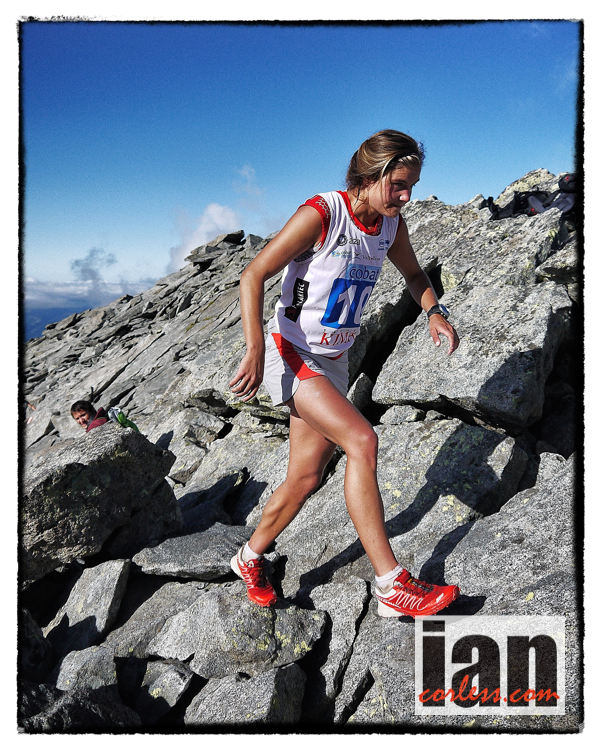
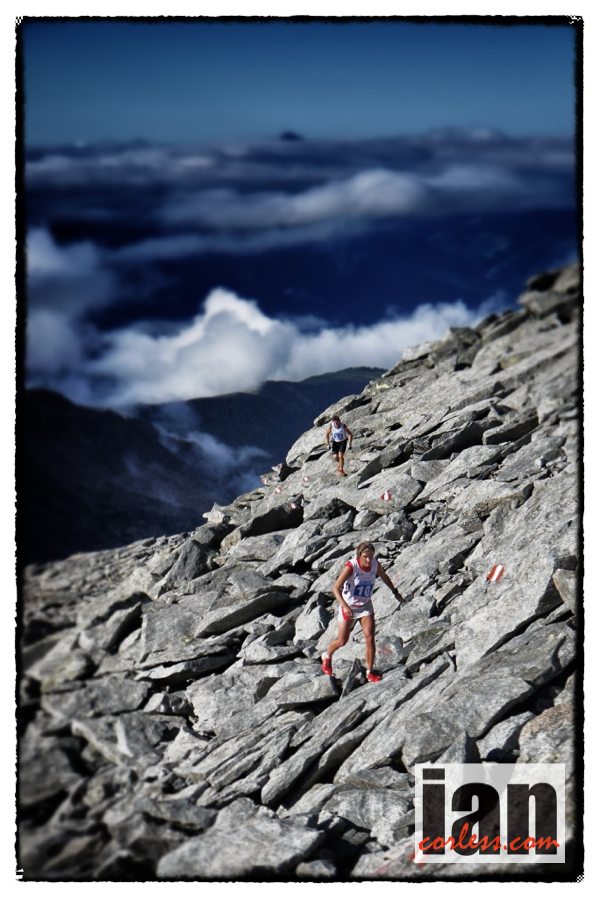
Trofeo Kima 2012 copyright Ian Corless
IC I think back to Trofeo Kima in 2012, you said before the race that you wanted to just have fun! You even took sandwiches…. On one of the toughest courses in the Skyrunning calendar!
EF I did
IC Admittedly you didn’t get time to eat them… the course was too hard. But I love the mentality. You wanted to enjoy it. I love that balance that you bring to your sport. You want to do well but ultimately you want to have fun. You have struck that balance so well. At Trofeo Kima you ran with Nuria Picas and then Nuria pulled away but you weren’t bothered, however, that competitive edge came in at the end when you could sprint for 2nd place. You put the ‘speed’ you love to good use then.
EF It’s a combination for sure. I want to have fun and I like to win. Running is great fun, for sure, my life is running. It’s liberating, it’s a big part of me. I must enjoy it. I need to enjoy what I do. Competition is great, I love to feel strong and I do love to race. Winning is great and once you have won, you think, I would like to win more but I need to keep balance.
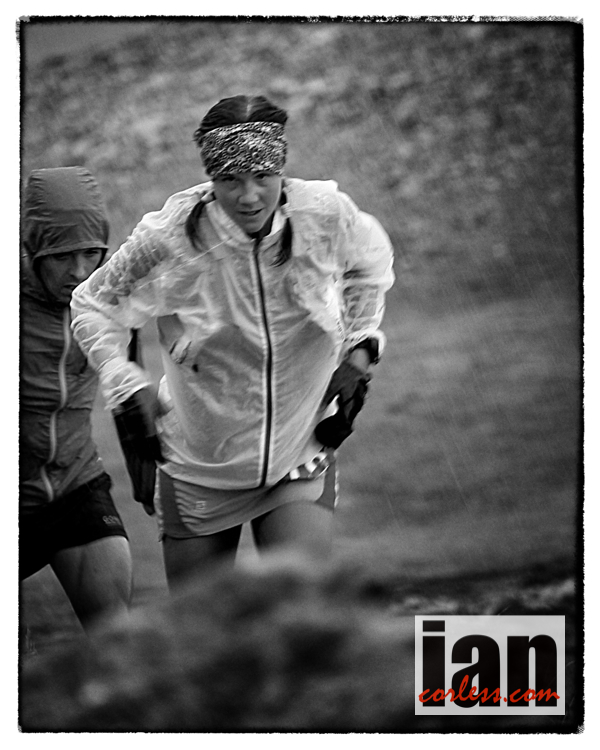
IC I feel fortunate to have witnessed most of your races in 2012, the exception San Francisco when you won. I saw you on multiple podiums. But I also saw both sides of you… the fun person and the racer. For me, the race of the year was Cavalls del Vent. You are great friends with Nuria and Frosty and pre race you three hang out together. You laugh, giggle, drink coffee and even when racing you are great friends having a laugh. At Cavalls, all three of you battled in tough conditions. As it turned out Nuria won and Frosty was 2nd but for you 3rd was not a disappointment. It was your first long race. Did you feel intimidated by the distance?
EF I wanted to try a longer race. If you have never tried then you don’t know what it feels like. I needed to push myself. I actually started at Cavalls quite fast and I lead for almost half the race. I felt super strong. I could eat, I could drink, it was cold but I could manage it. In the end when Nuria and Anna passed me, I was mentally tired. Just super tired in my brain. I couldn’t push even though I wasn’t tired. Running uphill with Anna I couldn’t go with her. It was very unusual. We probably only had 40 mins to the finish of the race and Anna screamed at me “Come on Emily, push”. But I was just tired. I learnt something in that race.
IC What did you learn, what did you take away from Cavalls?
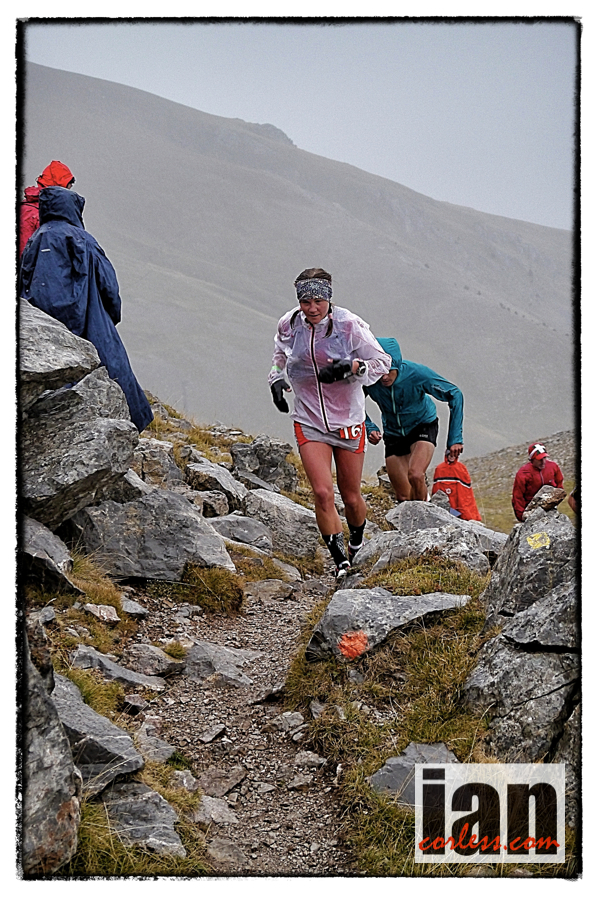
Cavalls del Vent copyright Ian Corless
EF I think I need to work on my mind and my physical. I need to connect them and I need to be stronger. It was my first long race and it was much longer than I had ever run before. To be honest, it is good to run with others too. I learnt that maybe running with others is better than running alone.
IC It is interesting what you say about running with others and talking. That is one thing that Kilian likes. I noticed it at Cavalls, he always seemed as though he wanted some company. In that race it was Anton Krupicka. Of course when it comes to the end, he runs away for the win. I guess time passes so much easier and quickly with company…
From Cavalls you went to La Templiers in France, which starts in Millau. It’s a big race in France. You raced Nuria and Lizzy Hawker. Nuria once again won. But you really gritted your teeth and outsprinted Lizzy for 2nd.
EF Yes it was satisfying but that race was problematic. I had stomach issues and I had to stop six or seven times. So that took energy. Plus I couldn’t eat. I felt I could have done so much better. I could have run with Nuria but I don’t know if I could have won? At the end I almost felt rude sprinting past Lizzy…
IC Racing is racing Emelie and Lizzy would have done exactly the same so don’t feel guilty.
Lets move to the final of 2012. Ultimately your best race, not only a stunning victory but a nice payday too, eh! (First prize in the Ladies race was $10,000)
EF Yes! a nice payday.
IC San Fran, funny, so many races have had difficult and tough with bad weather. It was no different here. Do you perform better when the conditions are like this?
EF Maybe not better but I am used to harsh conditions and I don’t worry.
IC San Fran was a great win. Talk me through it. Pre race I actually predicted you wouldn’t win because I thought you maybe had a little too much time skiing after Templiers. However, you proved me wrong, I hang my head in shame; I should have had more confidence in you. Talk me through it.
EF I wanted to start with Lucy and Maud Gobert. They are famous for being fast starters. I tried to keep up with them but very early on I thought I can’t go this fast… I was a little scared. Normally it is ME that starts fast. I slowed down. I felt confident and I was feeling okay and then two American girls passed. I then thought, wow, have I not run enough and have I had too many buns and hot chocolate (laughs) After about 20k I could see them again and I started to reel them in. I passed Lucy; she wasn’t having a good day. When the American girls picked up pacers I passed them too, this was about 30k into the race.
IC Early on then?
EF Yes, I still felt confident. I was not tired and I was looking forward to keeping on running at the same pace. Just before I picked up Anna Frost, my pacer, I passed Maud Gobert who was leading the race. I was now in the lead! I thought, I can do it… I had started the race slower and it was working. It was a great confidence boost. Anna was such a great pacer. We had such fun. She kept telling me “you can win”. It was great to be at the front, leading. It was fantastic. At the finish I was almost nervous, I had never won a long distance race before. When you think you can win, you really want it and then the nerves strike. I had a perfect day out.
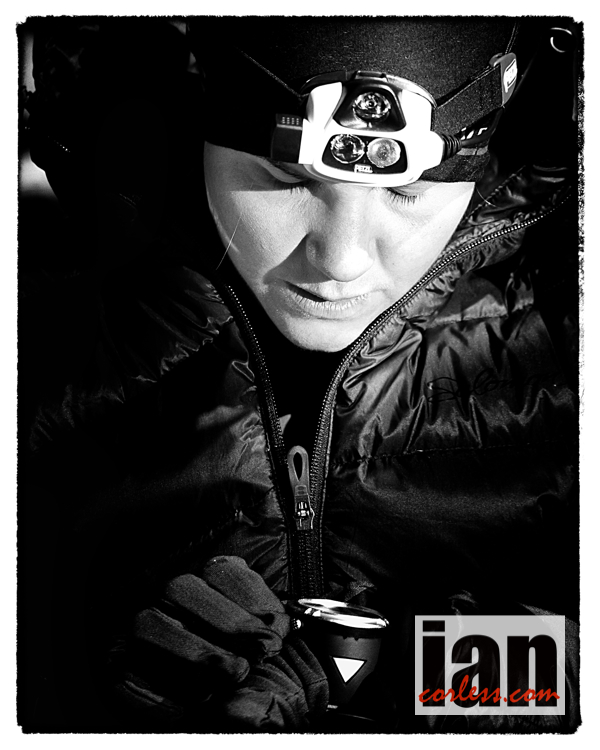
IC It was a stunning win and a great way to end an incredible 2012. Can I ask, you say you started slower, it payed dividends in the latter stages, do you think that is something you will now transfer to other races? Maybe patience is good and you should hold back?
EF Yes and no. Sometimes I just want to run the way I feel like and not have tactics. I wonder to myself if can go fast all race without slowing, so why start slow (Laughs) Greg Vollet would not agree! He thinks I should start slower.
IC Shhhh we wont tell Greg. Greg, if you are reading this, she didn’t say that!
EF (Laughs)
IC I understand, lets say for example you are racing Nuria and Anna; you would rather be with them instead of watching them run away. Better to be with them and then you can adjust your pace accordingly, it may well be that you are running easy?
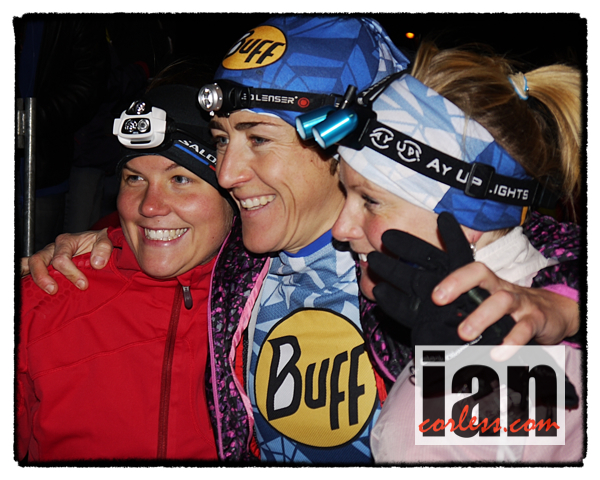
EF Yes, maybe.
IC What is on your 2013 calendar? Tarawera kicks off the year but that will be a low-key start as you are doing a relay. So will Transvulcania be the first big race?
EF Yes, I am not ready for 100k at Tarawera yet. I have planned to do some run coaching holidays and then I will go to Transvulcania La Palma. Transvulcania will be my first ‘proper’ race of 2013.
IC Superb, it’s a wonderful course and it will be great to see you racing Frosty and Nuria and some other great competitive ladies. Another classic battle lies ahead. After that, where do you go? Zegama?
EF Yes, Zegama.
IC Zegama is two week later and is a Sky marathon so will the remainder of the year be decided after these two races or do you already have 2013 planned out.
EF It’s almost planned out but I need to be flexible and I need to listen to my body. So I will change races if I need to
IC Can you tell us what your plans are?
EF I have several races in Sweden, mainly half marathons. Then I want to do Mont Blanc Marathon and the Vertical Kilometer, I will follow these two races with the European Champs (Skyrunning), I may even do Ice Trail Tarentaise.
IC Will you do UROC for the final of the Skyrunning Ultra champs?
EF Yes, I hope so. It will be my first 100k. It will be more distance than I have run before, so, I need to feel good but if I do, I will run.
IC An exciting year ahead and all those races are pretty much Skyrunning events. Exciting.
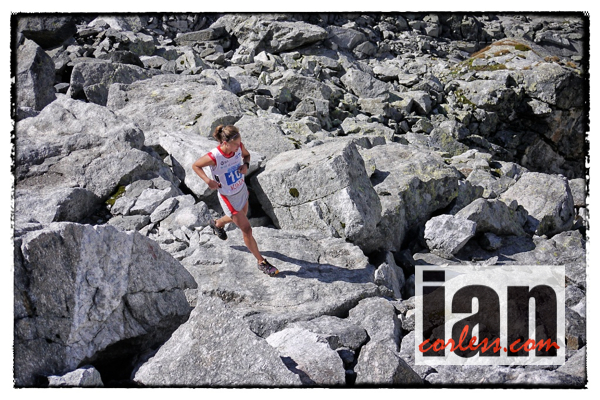
Trofeo Kima copyright Ian Corless
I have some questions from fans for you, is that okay?
EF Sure
IC James Stewart asks, “Have you had a VO2 test?”
EF No, I have not. I’m not interested. Maybe some day.
IC I guess in principal a VO2 test doesn’t matter, you are running well and you can run quickly. That is all we, and you need to know.
Cavalls del Vent copyright Ian Corless
IC Who would you like to race in the future?
EF I would love to race against so many, I enjoyed racing Lucy at San Francisco. Maybe it would be nice to race more of the American runners. They are very good and they have a different approach. I’d also love to race Ellie Greenwood.
IC If you do some races in the US, particularly Speedgoat and UROC then that wish may come true. I think Ellie is doing Speedgoat 50k.
Daniel Caulderon asks, “What is your nutrition plan?” Not sandwiches at Trofeo Kima and not cinnamon buns with hot chocolate.
EF I don’t have a nutrition plan. I recommend that you listen to your body. I always eat what I want. But I do eat lots of vegetables, beans and salad. But I love hot chocolate and cinnamon buns too!
IC Jill Suarez says, “I want the recipe for Nutella Brownies”
EF Shall I tell you the recipe now?
IC No, email me and we will add it afterwards.
RECIPE
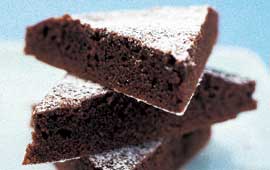
2 eggs
2 dl (0.2 l) sugar
5 big spoons of kakao
A small spoon of vanilla sugar
Very little salt
100 g butter
1 dl (0.1 l) Wheat
A little coffee
Stir the and the eggs and sugar very gently ( no whisking!)
Things to add in the cake: everything you like! I prefer nutella, walnuts, m&m´s or chocolate pieces.
Then add all the ingredients, put it in the owen at 175 Celsius. 15-20 minutes depending how you like the consistent to be like!
Enjoy!
This was what I eat during my first mountain marathon! Nyam nyam!
Apparently best served with Almond Milk….
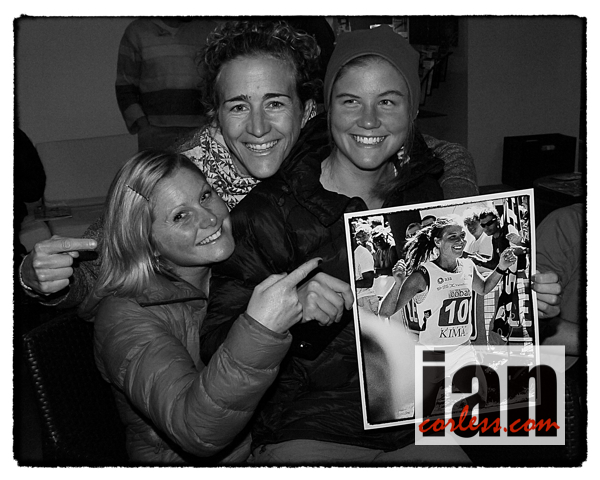
Emelie, I want to finish and once again thank you for your time. It’s a pleasure to spend time with you. You are one of the most ‘smiley’ people on the ultra scene. What you do in racing is reflected in your smile. You love it and that is great to see. Have a fantastic 2013 and I am so looking forward to catching up with you in the mountains during the coming year.
EF Thank you so much Ian.
Read more SKYRUNNING interviews HERE
The North Face Ultra Trail Mont Blanc are emphasising early the need to be prepared for the challenge that will undertake all participants in 2013.
Do not underestimate this course!
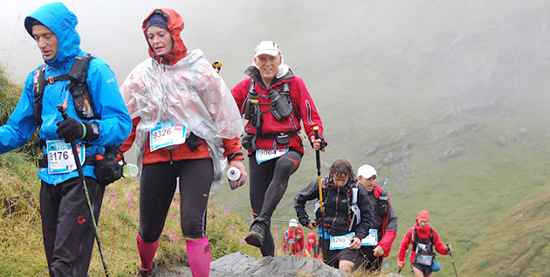
copyright TNFUTMB
The last three years have largely shown that in the mountains, even in summer, it can be very cold, it can rain or snow and temperatures can drop below -10 degrees.
In brief conditions even if not extreme can make an event a lot more complicated than if it were taking place in good weather. Over the years, we have tried to progress in an attempt to make certain that you are always safe, and that you will find all along the route teams of doctors, nurses and general assistance should you need them. However nothing replaces your aptitude to avoid or overcome dangerous situations. You are the first and most important element as far as own safety due to your preparation, your experience and the equipment which you carry with you.
The North Face® Ultra-Trail du Mont-Blanc® is a trail which will lead you to spend more than 24 hours in the mountains including at least one entire night.
Be prepared!
Obligatory material
* The windproof jacket does not replace the mandatory waterproof jacket with hood
Patrick Bauer has a passion and a love for the Marathon des Sables that the passing of the years has not suppressed. Back in 1984 he ventured into the Algerian Sahara to cover 350km’s alone in a self sufficient manner. Little did he know that his journey would not only change his life but also so many lives of so many others…
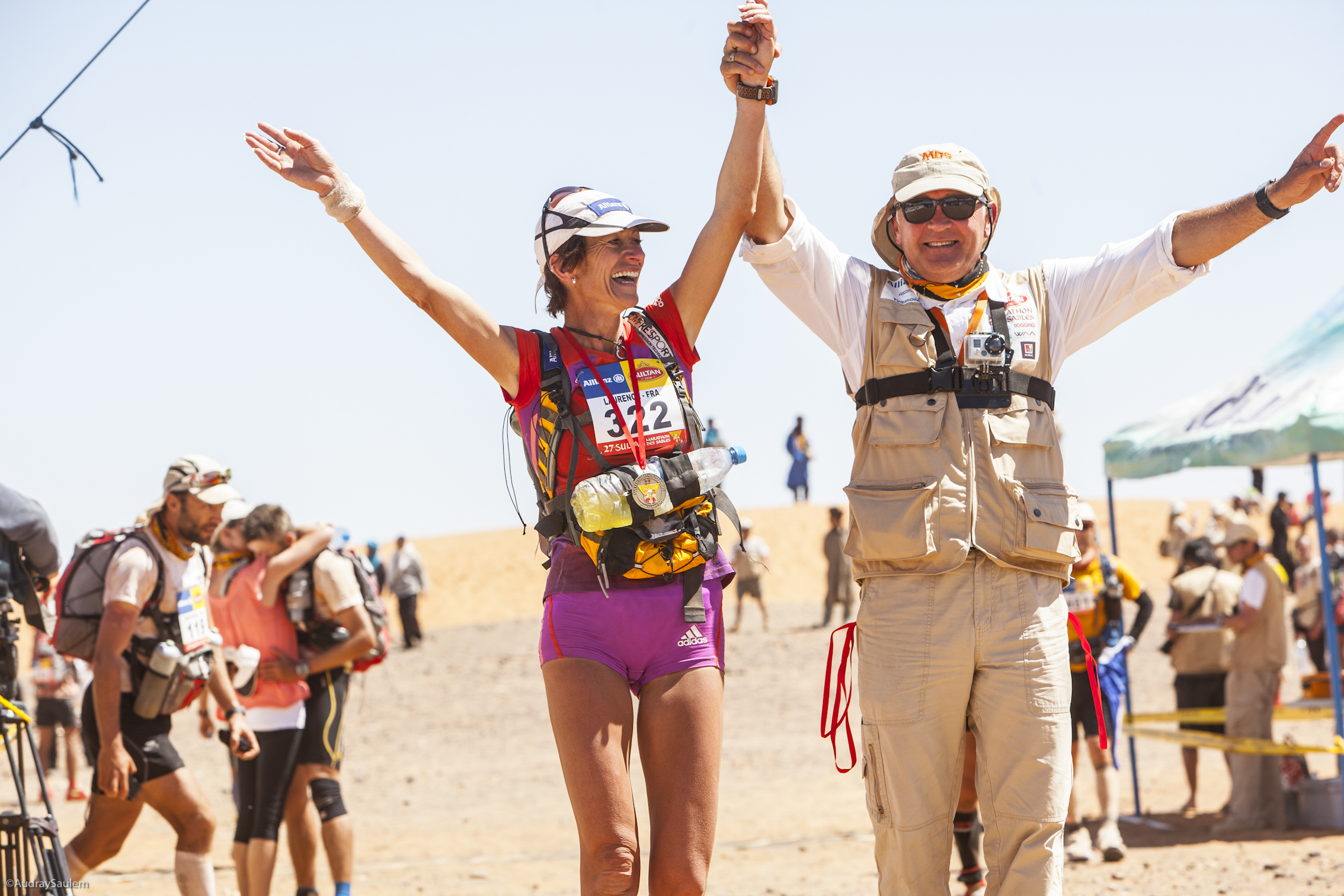
IC Patrick, welcome. In 1984 you took a solo journey across the Algerian Sahara. Why, what inspired you?
PB In 1984 I decided to take a self-sufficient journey of 350km. It took me 12 days; because of my self-suffiency my pack weighed 35 kilos. I needed enough food water for the whole journey. I had no help. It was an incredible undertaking.
IC What was the motivation, It must have taken some planning?
PB I had lived in West Africa for two years. I was employed to sell Encyclopedias to teachers and books on medicine to doctors and pharmacists. Returning to France was difficult. I had no desire to stay… I just wanted to leave again. During my 2 years in Africa I had crossed the Sahara five to six times by car but I wanted to cross on my own, on foot. I remember it well, I had returned to France, I had no apartment so I returned to my parents. I was back sharing a room with my brother. I woke up one morning and said
“I am going to cross the Sahara on foot”
My brother said, “Ok, go to sleep… you had a nightmare”
I said to my brother you must help with a camera and sponsors. Just three weeks later I left to take the journey.
IC That journey influenced the rest of your life but importantly it changed your immediate life in the mid 80’s. In 1986 you decided to share that experience and create Marathon des Sables. What gave you the confidence to create such a race? How did you know you would have a market?
PB I realized when I did a presentation to my village. I had friends and sponsors present. It was a thank you but I had awoken curiosity and interest. Local runners did not want to make the journey alone, so, I decided to organize it. No other event compared, maybe Paris-Dakar. It was a ground breaking moment.

IC In the early years, was participation mainly French?
PB Yes, French with the exception of one Moroccan. We had 23 runners at the first edition. It took 24 months to plan and create. Little did those 24 know that they would be the pioneers of one of the most beautiful stories that will soon be 30 years old?
IC In the early 1990’s you contacted ‘The Best of Morocco’ to introduce British and Irish runners, was this a long term plan to expand the race?
PB We already had contact with this agency (Best of Morocco) but by 1990 I had already done 5 editions of the Marathon des Sables. I wanted to expand internationally and I wanted as many countries present as possible. We started in a tentative way and today we have as many English runners as French and potentially more in the future.
IC British entries have reached 250+. The race is known worldwide. Did you know it would become so big?
PB I would never in my wildest dreams have imagined it would be what it is today. When a race is over, I start immediately on the next year. I have a passion and I don’t think about it all the time. I want to be more strategic with my long-term vision. 2015 is the 30th edition; I like to plan 3 years ahead so I already anticipate higher demand for 2015.
IC What is it that makes the race so special. You appeal to novices and experienced runners. It is a difficult balance but you do it so well.
PB I think it is the concept. The cocktail of the desert, running and the self-sufficiency. Nobody at the beginning thought it would be possible to run with a pack. The expedition was an extra bonus…. You need to manage everything; calories, water, clothing, rest etc. All these elements combine to create the ultimate experience. It was new! Today we have additional security. Runners tell us that the safety element is key. Believe it or not, the average age is 40yrs+. These participants have families and children so risk is not negotiable. We want to offer security and safety for all these participants. We have helicopters, planes and insurance to make sure everyone is protected. Finally, it is about testing your limits; in our busy lives we find going back to basics a wonderful experience. Under the stars with friends, sat around a campfire, simple conversation and no luxuries. It is primal. It brings out true values that we may have forgotten. Because the desert facilitates all that is around us, the stars, the universe, you don’t need a book to tell you that ultimately we are all insignificant.

IC What is it that makes runners that go back year after year?
PB Yes, we have some people returning for the 22nd or 23rd time. But it is not the same for all. If everyone came back we would have the same race, this would not be good. But we have a faithful family that we have created from the start. We have affinity and we love to find each other in the desert. We are also happy to find new friends. Maybe we have people return years later to celebrate a key moment such as a 50th birthday. We have a fraternity side, we share values. We have a respect for difference and other countries. All the languages that are spoken. These are the experiences that make the event. It is the combination of so many elements that make it great. We have an edge I think and that brings people back.
IC What is the future of the race? Will the race become bigger with more runners?
PB Yes, I think we will have more participants in 2013. We will have 350 from the UK. We had a meeting with worldwide representatives some time ago and it was decided that we would all work together on a communication strategy and we discussed the 30th edition. We have had great demand; we have refused more than 2,000 entries. I get messages about the 30th edition asking if it will be 300km as the 25th edition was 250km. Because of the worldwide economic crisis we may need to take more entries so that we can ensure the quality of the race such as safety. This is why we prepare 3 years ahead.
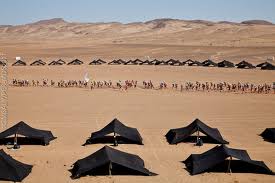
IC As a race director can you give us an insight into the Marathon des Sables?
PB The advise to the runners is repeated every morning, like, hydration, protecting your head, sun block and more specific advice concerning the course. Storms can just arrive and then last a half-day or even 4-5 days. A few years ago we had floods… that year we had to plan from day-to-day. It wasn’t easy. The biggest problems are usually weather related. For the rest of us, it is a safe country. We have government backing should we have a problem, for example we have military assistance. We have trucks and soldiers who transport the tents everyday and we have 400 people who work on the event. If you add journalists, drivers, volunteers etc. then we have more like 450 people. I have 110 people who directly report to me.

IC It is so impressive, the tents, the staff, and the helicopters. A circus!
PB It is a little like the circus. Up and down, load up and move. I am always impressed. It is fantastic.
IC Since the beginning can you pinpoint any highlights?
PB The feeling you get from every event. We have an extraordinary experience. We share values with participants and it creates a bond. Some say ‘never again’ and then two years later we see them again. We all strive for equilibrium to balance the experience and we all strive for positive thoughts. If we have them then we can share beautiful things.
IC In 2005 you had an Opera singer to sing before the start. A magical experience.
PB Yes, for the 20th anniversary we had a spectacular start with an Opera singer and musicians. She was Japanese. It was a moving experience. Classical music is in harmony with the desert. At the beginning the runners are still fresh so they can enjoy the experience.
IC What do you think of Olympian James Cracknells performance at Marathon des Sables, he is not your ‘typical’ desert runner?
PB He was an excellent champion, a top-level athlete who understood how to test the limits. So I think he had a new experience in the Sahara. He asked himself what he was doing at the race several times I think. Discovery Channel did a documentary on him. He demanded respect as an athlete. As a man I did not get to know him but as a sportsman I am sure he has great values.
IC Has the race become easier over time or have you made adjustments to make the experience more challenging?
PB The race is not easier. The distance has increased over the years but water can be a key issue and we now have great water supplies which was not so in the past. In the past water was an issue. But we all have short memories. We forget the hardships. Every year has new demands. We now have more positive incline. We used to spend time in the valleys.
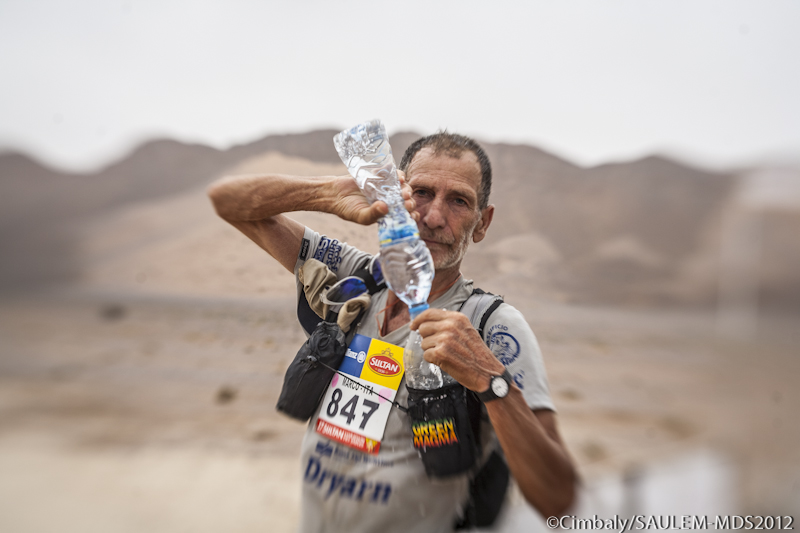
IC True, we all forget hard times very quickly. We always remember the good times and they are our memories.
PB At the end you have sore feet and blisters… but your mind is selective. We filter the negative to retain the good. The human and sport experiences. We forget the soreness and remember the positive.
IC Do you still run, do you have the time?
PB Yes, I run after the sponsors, I run after my planes, I run after my trains… I started cycling a little and I do a little running. It’s not a good time for me. But then again, I always have an excuse. It is difficult but I am motivated to try to be more regular with my own exercise.
IC Patrick, it really has been excellent to get an insight into such an iconic race. Thank you so much.
PB Merci beaucoup
2013 RACE PREVIEW HERE
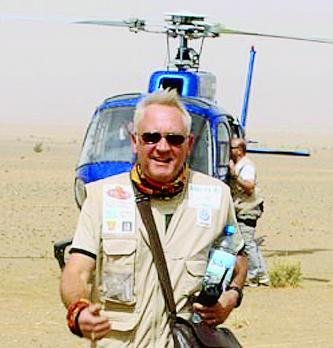
Patrick Bauer, Marathon des Sables copyright http://www.lest-eclair.fr
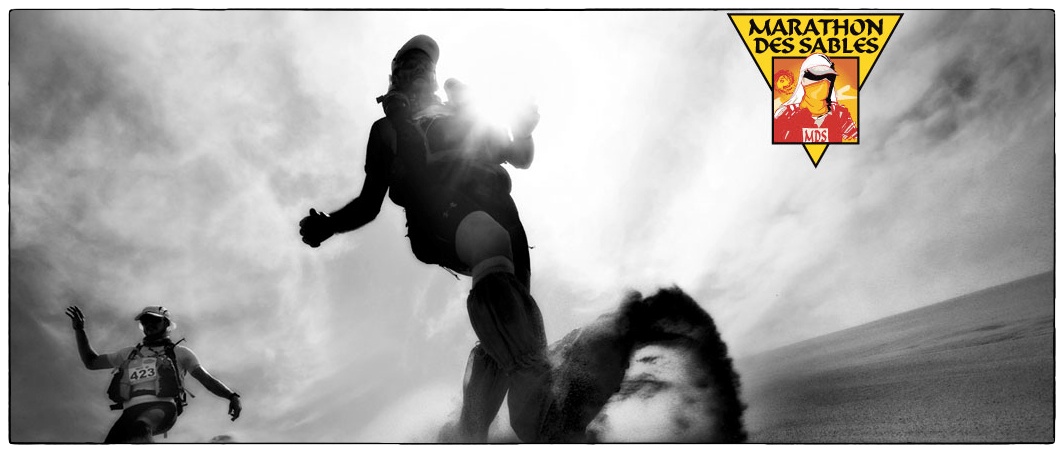
copyright Marathon des Sables
MARATHON DES SABLES 2013
The 2013 edition of the Marathon des Sables is a self-sufficient race in the South of the Moroccan desert, the event will take place from 5th to 15th April 2013. For the 18th consecutive year, it will be run under the patronage of his Majesty King Mohammed VI.
Since its creation in 1986, the Marathon des Sables has attracted over 13,000 competitors over 27 editions. From humble beginnings, the race is now the most prestigious multi-stage race in the world.
The 2013 Marathon des Sables will see 1,091 entrants toe the line. With 45 different nationalities and a strong presence from France and the UK, the 28th edition will be a memorable one.
Taking place in South Morocco, in the provinces of Errachidia and Tinghrir the race will cover 223.8km over 5 stages. It will encompass some of the most beautiful terrain in the Moroccan desert. Eagerly awaited by one and all, the dunes, ergs and dried-up wadis will delight the thousand or so entrants from the fifty plus countries across the globe.
Race Programme:
5 April 2013: Leave country of residence for Morocco (UK entrants leave on the 4th) – Arrival in Ouarzazate, bus transfer to the 1st bivouac.
6 April 2013: Administrative, technical and medical checks – Day to acclimatise.
From 7-12 April 2013: Race in progress. (The self-sufficiency begins from breakfast on the 1st leg).
12 April 2013: Prizing ceremony in desert.
13 April 2013: Charity leg for UNICEF– Transfer to Ouarzazate.
14 April 2013: Day of relaxation, festivities.
15 April 2013: Return to country of residence.
Race Logistics
Patrick Bauer affectionately describes the Marathon des Sables as a big circus. It’s like moving a city everyday… just look at what is involved.
Race management : This team comprises more than 100 people including a race HQ, race marshals, controllers, timekeepers and ranking compilers. Since 2010, the official ranking has been achieved using a “transponder” for all the competitors.
Supervision : 400 people: technical, logistical and medical skills, 100 vehicles, 2 helicopters, 1 CESSNA plane, 4 dromedaries… and the active support of the Royal Armed Forces: 21 lorries (6×6) and 40 men to supervise logistics.
Medical Assistance : A team of 50 people under Dr Frédéric COMPAGNON, DOC TROTTER supervises the runners as much on a medical level (care of feet, resuscitation…) as a mental level, both of which fail sometimes in front of the toughness of the event and the hostility of the climate.
In the 27th SULTAN MARATHON DES SABLES, 3 tonnes of gear was transported and the medical team used : 5km of Elastoplast, 2,700 second-skin patches, 125 litres of disinfectant, 230 litres of drip solutions, 15,000 compresses, 2,800 pairs of surgical gloves,…
The Team
Patrick Bauer interview available HERE
1984 : At the age of 28, Patrick Bauer decided to make a journey into the Sahara. His objective was to traverse 350km’s of uninhabited desert, on foot, alone and without any possibility of encountering a single village, oasis or watering place. Totally self sufficient, Patrick entered the desert with a pack weight of 35kg containing all his water and food. The journey lasted 12 days and it was the starting point of what has now become the MARATHON DES SABLES.
Patrick Bauer, Marathon des Sables copyright http://www.lest-eclair.fr
1986 : The creation of the first MARATHON DES SABLES in the Moroccan Sahara. The 23 pioneers who took the start never imagined that their footprints would mark the start of a legendary event, which today has become unmissable on the schedule for major adventure sport meets.
1989 : 170 competitors take the start of the race and the rest is history.
I caught up with Patrick Bauer at the MDS UK expo in late 2012. You can listen to that interview (lasts 13 minutes):

LISTEN HERE
The 2013 Race – who will be taking part?
1,090 competitors aged 20 to 76 are expected to take the start (definitive number on 6 April following administrative and medical checks) representing 45 different nationalities: Algeria, Argentina, Australia, Austria, Belgium, Bulgaria, Canada, China, Costa Rica, Czech Republic, Denmark, England, Finland, France, Germany, Holland, India, Ireland, Italy, Japan, Jordan, Kuwait, Latvia, Luxembourg, Morocco, New Zealand, Norway, Poland, Portugal, Republic of El Salvador, Romania, Russia, Saudi Arabia, Scotland, Singapore, Slovakia, Slovenia, South Africa, South Korea, Spain, Sweden, Switzerland, Turkey and the United States.
The participants are men and women with various and varied profiles (Doctors, farmers, coppersmiths, pilots, builders, chefs, servicemen and women, students, professional athletes and retired persons…).
The 2013 MDS Challengers for the overall win

The Female contenders for the overall win :
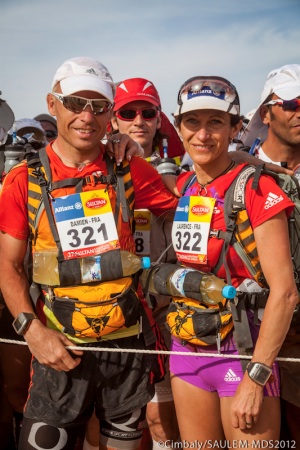
Laurence Klein 2012 MDS
The Male contenders for the overall win :
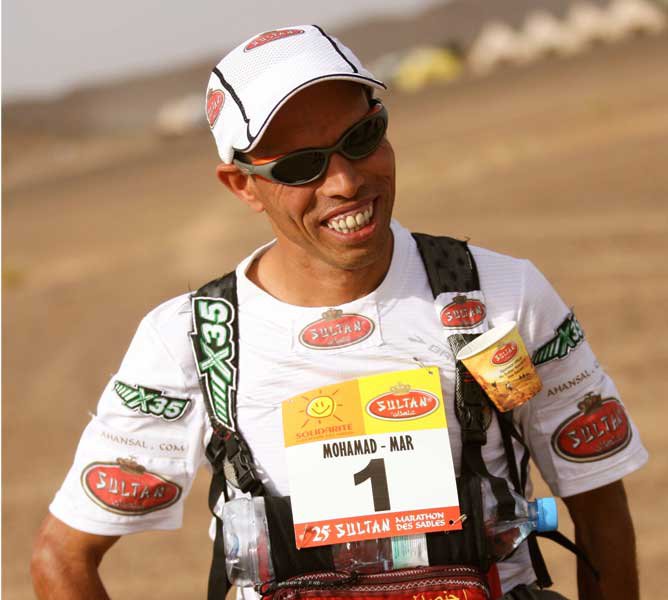
Mohamad Ahansal
In 2013 I followed two runners in the build up to the 2013 Marathon des Sables. Tobias Mews placed 21st overall in the 2010 race and Stuart Rae is toeing the line for the first time in 2013. Each interview alternated on episodes of Talk Ultra but they have been joined together in one episode (lasts just under 1 hour)
LISTEN HERE
2012 results (for reference)
1st : Salameh Al Aqra (JOR) in 19h59’21’’ 2nd : Mohamad Ahansal (MAR) 21’02’’ behind 3rd : Aziz El Akad (MAR) 1h38’56’’ behind
1st : Laurence Klein (FRA) in 26h15’40’’ 2nd : Meryem Khali (MAR) 1h19’38’’ behind 3rd : Karine Baillet (FRA) 1h31’07’’ behind
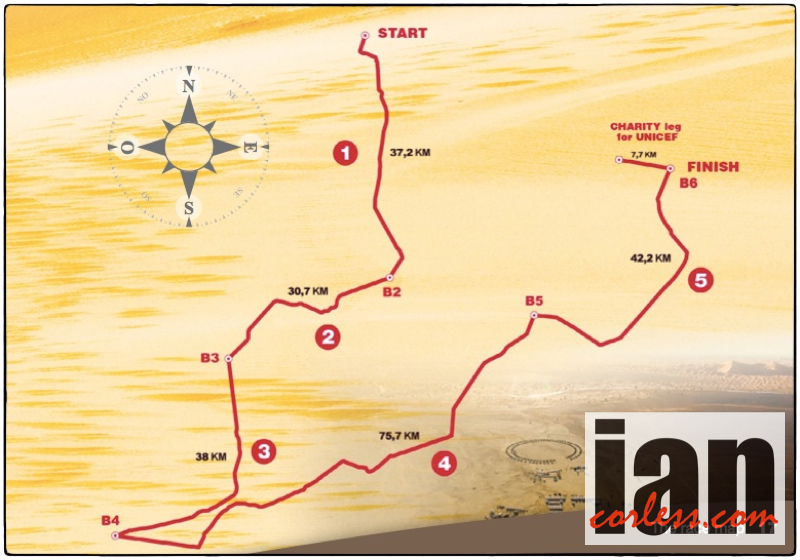
The 2013 race route
Mandatory Kit
One of the key aspects of the Marathon des Sables is what kit to take? Here is a list of ‘mandatory’ kit. Of course, you need to add to this food requirements, cooking equipment and any additional luxuries.
I will be reporting from the 2013 event as the race unfolds and providing I am able to gain adequate access to internet, I will update my website, Facebook and Twitter with reports and images as often as possible. So please keep checking!

Sage Canaday, Marco De Gasperi, Ian Sharman and Joe Gray amongst others are utilising the benefits of the new Scott range of run shoes, you may very well want to take a more in-depth look at the 2013 offerings yourself?
I did a review of the Scott eRide Grip 2 some time ago, I used the shoe extensively on the trails out in La Palma on the Transvulcania La Palma course. In summary, the shoe really impressed me. It had the combination of factors that makes a shoe great to wear. You can read the review HERE

copyright Ian Corless
Impressions
I have now had the Scott T2 Kinabalu for a couple of months. The design of this shoe has had great input from legendary mountain runner Marco De Gasperi and the T2 Kinabalu shows that all the great features of the Scott eRide Grip 2 have been transferred to the T2 Kinabalu but in a lighter more streamlined shoe. Sizing was true to size and the drop is 11mm.
From the moment I first put the shoes on, adjusted the laces and stepped out of the door and headed of for a one hour run the T2 Kinabalu put a smile on my face. A mile of road to my local trails felt comfortable and the shoes offered grip, cushioning and a wonderful ‘return’ of energy to the next foot strike. I bounced along. On trail the grip was secure and reassuring. I did find that my heel was moving a little initially but I re-laced the shoe differently and suddenly my foot was held secure and tight.
I have been through thick mud, snow, ice, hard trail, rocks, mountains and water crossings and have accumulated some 400+ miles in these shoes. Here are my thoughts.
Upper
At the front of the shoe, protection runs around the toe area providing adequate protection should you strike rocks or roots. The toe box is wide providing plenty of room but not so much room that they become loose. Your toes are able to spread and help provide feel and contact with the ground. At the rear your heel is held firm with no hot spots. The upper is light, breathable and colourful! I like the colour and the boldness of the shoe but some may very well find them a little OTT. It all comes down to personal taste. Within the upper is a support structure (synthetic overlay) that helps hold the foot in place. The laces are not as ‘stretchy’ as those on the Grip 2 but they have a texture too them that ‘grips’. This holds the laces firm and once adjusted I have had no need to tighten them when running. A nice touch is the elastic bungee on the front of the shoe that allows you to pass excess lace underneath so that it does not flap around. It’s not as fancy or extravagant as the ‘Salomon Lace Garage’ but it does the job well.
Midsole
The midsole has ‘Aero Foam’ which is Scott’s own technology and for a more minimalist shoe it provides great cushioning and feel for the ground. After several runs the midsole ‘bedded’ in and started to mould to my foot providing additional comfort. The sock liner is perforated and the midsole has ‘drainage’ ports to allow water to escape. A real plus in wet weather or water crossings. The platform of the shoe is wide and offers great grip, it has no cut away for the arch or any additional features that cut into the sole, so, what you have is great platform that creates maximum contact with the ground. You can really feel it. Without doubt the shoe is neural and low to the ground. It has all the feel and benefits of a minimalist shoe or racing flat but with cushioning.
eRide
One of the great aspects of this shoe is the eRide sole. As I explain below, the eRide technology is designed to make you a more efficient runner. By efficient, I mean striking the ground with a mid to fore-foot toe off. But an 11mm ‘drop’ normally would not promote this run style… step in eRide. Strike the ground with your heel and you feel the shoe propel you forward. Now I am a mid-foot striker but going downhill I felt the shoe throw me forward all the time, encouraging me to make the most of the hill and encouraging me to save my quads by stopping me braking.
Sole
Grip is not as severe as the eRide Grip 2 model but its greater than many shoes in it’s class and provides excellent traction on hard trail, rocks, ice, snow and wet ground. On muddy ground it provides some traction but not as much as the Grip 2. What I love about the T2 Kinabalu is its ability to transfer between all types of terrain providing great feel and comfort. These features are transferred even to road or pavement and I would have no problem running long stretches of road in the T2 Kinabalu.
Summary
I have been testing many pairs of shoes recently and I now use the T2 Kinabalu as my benchmark shoe. It has everything in one package; cushioning, light weight, great feel with the ground, comfort, security and most importantly the ability to handle a multitude of different terrains. If I was only allowed one pair of shoes, the T2 Kinabalu would be it.
A recent shoe test in ‘Trail Runnning‘ magazine also appointed the T2 Kinabalu as “Best In Test’ in the April 2013 edition.

T2 Kinabalu Information and Statistics
The T2 Kinabalu is the ultimate lightweight trail machine according to Scott. Maximum protection and traction with minimal weight. An ideal balance of lightweight materials, cushioning, protection and quick response thanks to eRide Technology. Shaped for smooth transition whether you are striking on the heel, mid foot or forefoot to adapt to the varied terrain. Our lightest trail shoe with uncompromised traction and protection, featuring an AeroFoam midsole, which is 50% lighter than traditional EVA foams.

copyright Ian Corless

eRIDE
Get that fleet-footed feeling with our eRide range. The unique rocker shape creates a very stable midstance, promoting the faster and more efficient running style that runners strive for. You`ll be rocking as the miles roll by.


copyright Ian Corless
The benefits:
1. Healthier body position
2. More energy efficient
3. Natural midfoot strike
4. Lower profile heel
5. Smoother ride
6. Minimal and lighter weight
Aero Foam
Working with our athletes, we always hear that they would like to run in lighter shoes, but are not willing to sacrifice any cushioning performance. So, we found an alternative to the EVA foam used in most running shoes. SCOTT Aero Foam combines lightweight materials with a wear resistant compound, resulting in shoes that are lighter, have more cushioning and last longer than traditional running shoes.


Specs
Scott Website HERE
March 29th 2013 – Press Release
Constitution of five working groups with the aim of the creating the
International Trail-Running Association
The world of trail running has evolved very fast. New demands are constantly being made in this rapidly expanding sport. The stakes are more and more important for all the players: organisers, athletes, equipment manufacturers, teams… The organisation of an international association for the discipline, gathering the largest number of participants as possible and recognised by all, seems to be necessary, so as to federate them all with a common policy and shared values, so as to collaborate with and influence the decisions of the IAAF (International Athletics Federation)
Act 1 – The International Trail-Running Conference
On September 3rd, last year, in Courmayeur (Italy) the first International trail-running conference was held, the objective of which was a discussion with all the actors of the discipline, which is in full evolution, and to try to determine in the shorter or longer term the convergent policies.
It brought together people from different aspects of the discipline: federations, brands, runners, media, race organisers, a total of 150 people from 18 different countries. It was the first time that so many players in the field of the trail had met to express their points of view.
It gave all the participants the chance to discover all the diverse points of view, and the necessity for trail-running to be organised as a full discipline. It also highlighted the need to take in to account the approach taken by the American, Asian and Oceanic continents even if the initiative was introduced on a European scale.
The organisation of 5 working groups was proposed so as to pursue the discussions.
Act 2 – Constitution of five working groups
Today fifty players in the world of trail running coming from 13 countries* and 4 continents realised the implementation of five working groups which had been defined and then set to work for 2 months. They are equipment manufacturers (Hoka, Salomon, The North Face®, Garmin…) race organisers (Western States 100 mile, TNF Lavaredo Ultra-Trail, Olympus Marathon, Tor des Géants®, Eco-Trail® de Paris, Ultra-Trail du Mont-Blanc® ), specialised media (ultrarun.es, Irunfar.com, Spiritotrail…), association for anti-doping, high calibre athletes, coaches, statisticians… The French Athletics Federation (FFA), the International Association of Ultrarunners (IAU), the National Committee for Trail-Running in South Africa, the Portuguese Trail-Running Association, and the Belgian Royal League of Athletic’s Trail-running commission all participated in these working groups.
* Belgium, China, France, Germany, Great Britain, Greece, Italy, Portugal,, South Africa, Spain Switzerland, Turkey, United States of America.
The five working groups themes:
– Definition of trail – objective: to draft a definition of trail-running for runners and the public in general so that everybody understands the characteristics of this sporting discipline. This definition will respect the practice of trail-running all over the world and in all diverse natural environments (plains, sea, mountains, desert…). They will organise the categories taking in to account the distances without judging the value.
– Ethical charter – objective: to draft an ethical charter which expresses the values of trail-running shared by all the players in the field.
– Management of high calibre athletes – objective: to develop recommendations for the relationship between organisers, top athletes and equipment manufacturers regarding the parity of premiums, whether for engagement, commitment or performance, offered by the organisers to the runners etc.
– Health policy and anti-doping – objective: to propose a « Health Policy » to protect, to the maximum, the good physical health of the participants in trail-running events, applicable and financed by the organisers of these sporting events.
– International Ranking – objective: to put an international ranking in place based on the system devised by Didier Curdy*. This group is examining the reliability of the system, sporting regulations, categories, legal aspects and funding, and all other aspects involved.
(*) Didier Curdy is a trail runner who is passionate about statistics; he has been working on this project for several years.
Act 3 – Working methods
These working groups have a web-site http://www.trail-running-association.org on which five private forums were created. These pages are exclusively reserved for the working groups so that the members of the groups may work peacefully together and express their points of view freely from the four corners of the globe. One person from each group is responsible for regularly posting a synopsis of their group’s work on the forum so as to inform internet users so that they also may express their points of view.
Act 4 – The next step: the creation of the International Trail-Running Association
The 5 working groups will continue to work throughout March.
The work of these groups will serve as the basis on which to create, this spring, the International Trail-Running Association which will be open to all players in the field of trail-running and will aim:
– to develop and promote trail-running as a complete sport, accessible to all;
– to promote its sporting ethic;
– to represent its members at an international level;
– to maintain constructive relationships and collaborate with the national associations of trail-running and the national and international federations;
– to promote the organisation of continental or world trail-running championships
– to contribute to the safety and health of the participants.
A forum on the web-site: http://www.trail-running-association.org has already been created to allow everybody to express their points of view.

copyright – lifeproof.com
The Apple iPhone (amongst other smart phones) has become the regular accessory for many runners. Lets face it, it has a great camera, video and a multitude of ‘Apps’ that will allow us to track, plot, follow and record our runs if required. When you add to that you can listen to music and even make a call with it, one has to admit that it is almost the ultimate accessory for your daily run.
Many races now insist that a phone is part of the compulsory equipment that you take when racing, so, do you really want to take a phone that costs in the region of £500/600 out on the trails, particularly when it could be wet, cold, muddy or even worse, you could drop and break it.
Step in lifeproof.com
Other models of protective case have been available for some time, but the Lifeproof model seems to have taken the ‘case’ one step ahead!
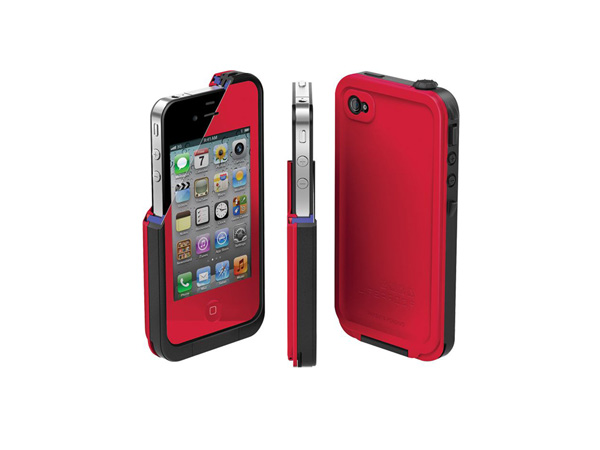
copyright life proof.com
It’s not as bulky as others on the market, which is a great plus. To give you confidence to go everywhere with your LifeProof case they water test each and every case they make. Not only that, after the test an independent agent performs additional testing and even puts randomly selected cases through a second water test. You have a guarantee then when you purchase a case it has been tested. In addition to this, they have a range of accessories and replacement parts to ensure your case lasts the life of the phone and beyond.
Each case has IP-68, the most rigorous classification in this specification. The first characteristic number describes protection from solid foreign objects. An enclosure with a characteristic number of 6 can withstand exposure to circulating talcum powder for 8 hours with no dust ingress after that period. The second characteristic number describes protection against water. An enclosure with a characteristic number of 8 exceeds all other water protection levels and is specified by the manufacturer. For LifeProof, number 8 signifies LifeProof cases will withstand immersion in water to a depth of 2 meters / 6.6 feet for 30 minutes.
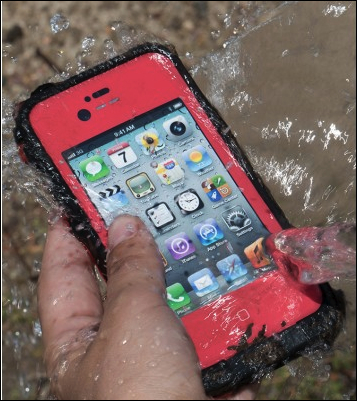
copyright life proof.com
MIL STD 810F-516 standard requires that the item can physically and functionally withstand the relatively infrequent, non-repetitive shocks encountered in handling, transportation, and service environments.


Perfect protection against WATER, DIRT, SNOW and SHOCK a Lifeproof Case may very well be that perfect accessory for your daily companion on the trails and when racing. Have to say, I love mine and my phone has been out in all conditions.
Specs for IPhone 5
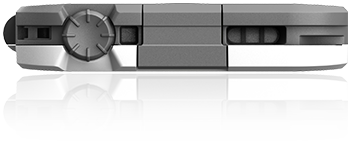
A range of accessories are also available so that you can maximise your user experience:
Armband, Bike Mount, Life Jacket, Suction Cup Mount and Belt Clip view HERE

copyright life proof.com
Price from £50
RECOMMENDED !
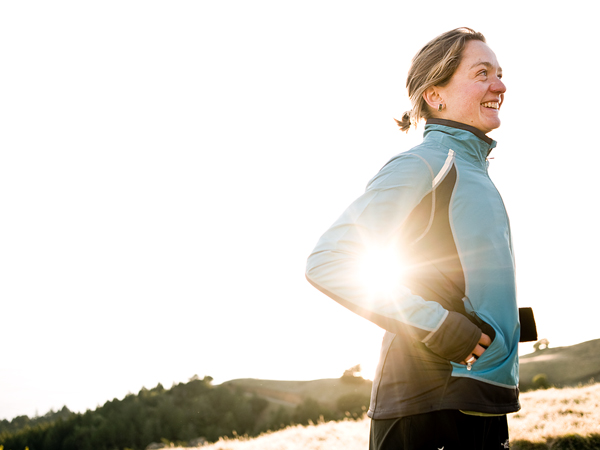
Image copyright National Geographic – Tim Kemple – The North FaceUltrarunner Lizzy Hawker
ULTRARUNNER – LIZZY HAWKER
Ultra trail runner and adventurer Lizzy Hawker wins the holy grail of epic trail races for the fifth time.
When Lizzy Hawker first entered the famed Ultra-Trail du Mont-Blanc (UTMB), a staggering 103-mile race with 31,168 feet of uphill running—more than the equivalent of running up Everest—through the mountains of France, Italy, and Switzerland, it was a simple afterthought to a ten-day climbing vacation. Just ten days before the race, she decided it would be wise to purchase trail running shoes.
“It was my first mountain race,” says the 36-year-old Brit, who now lives in Switzerland. “When I entered in 2005, I had absolutely no idea whether I would even finish. I’d never done anything like that before.”
She did more than finish. She won. Since then, Hawker has won the UTMB an unprecedented five times—a feat that no man or woman has done in a sport where it is difficult to stay uninjured and continually run at the highest levels.
You can read the full post HERE
 National Geographic HERE

 IAN CORLESS