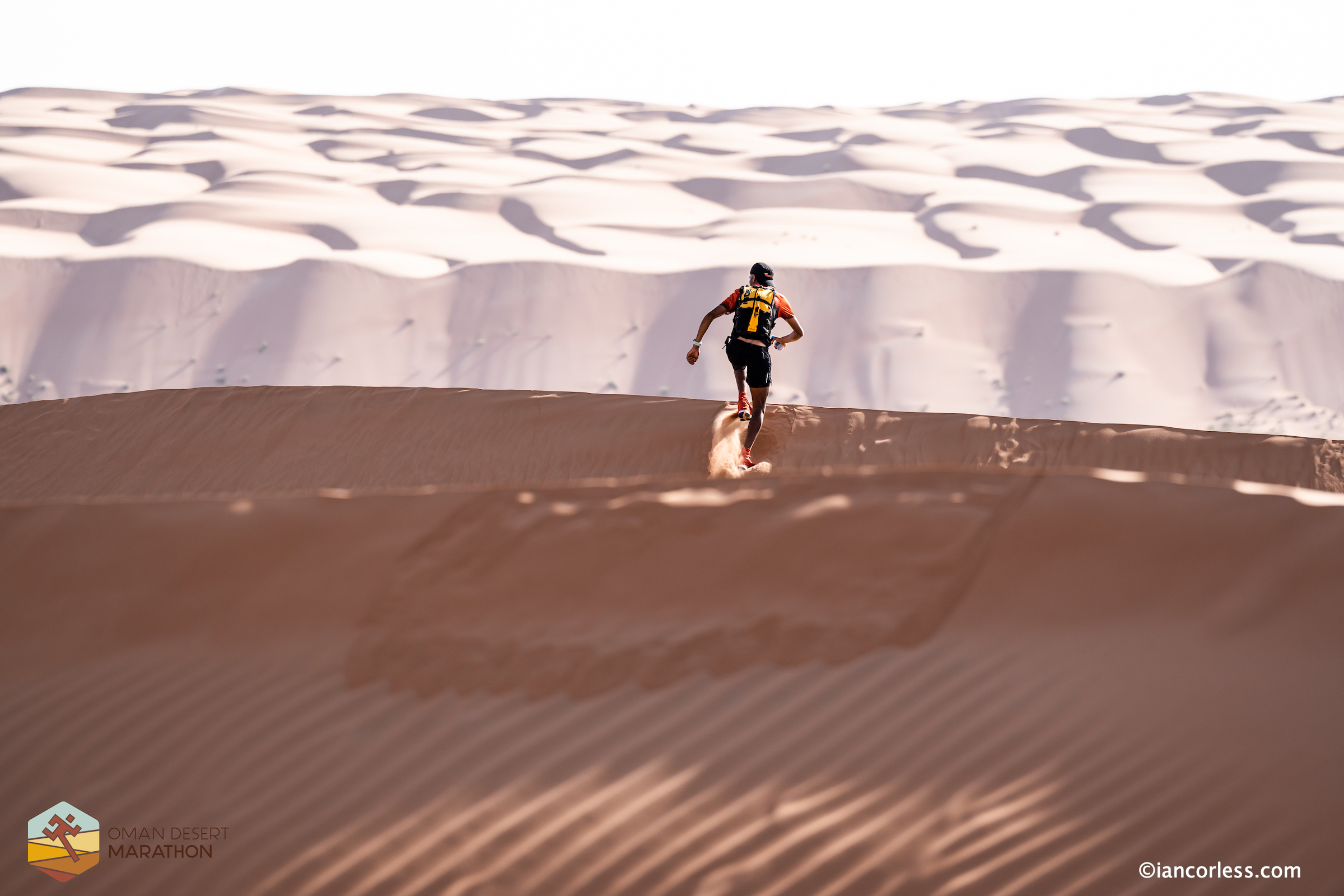
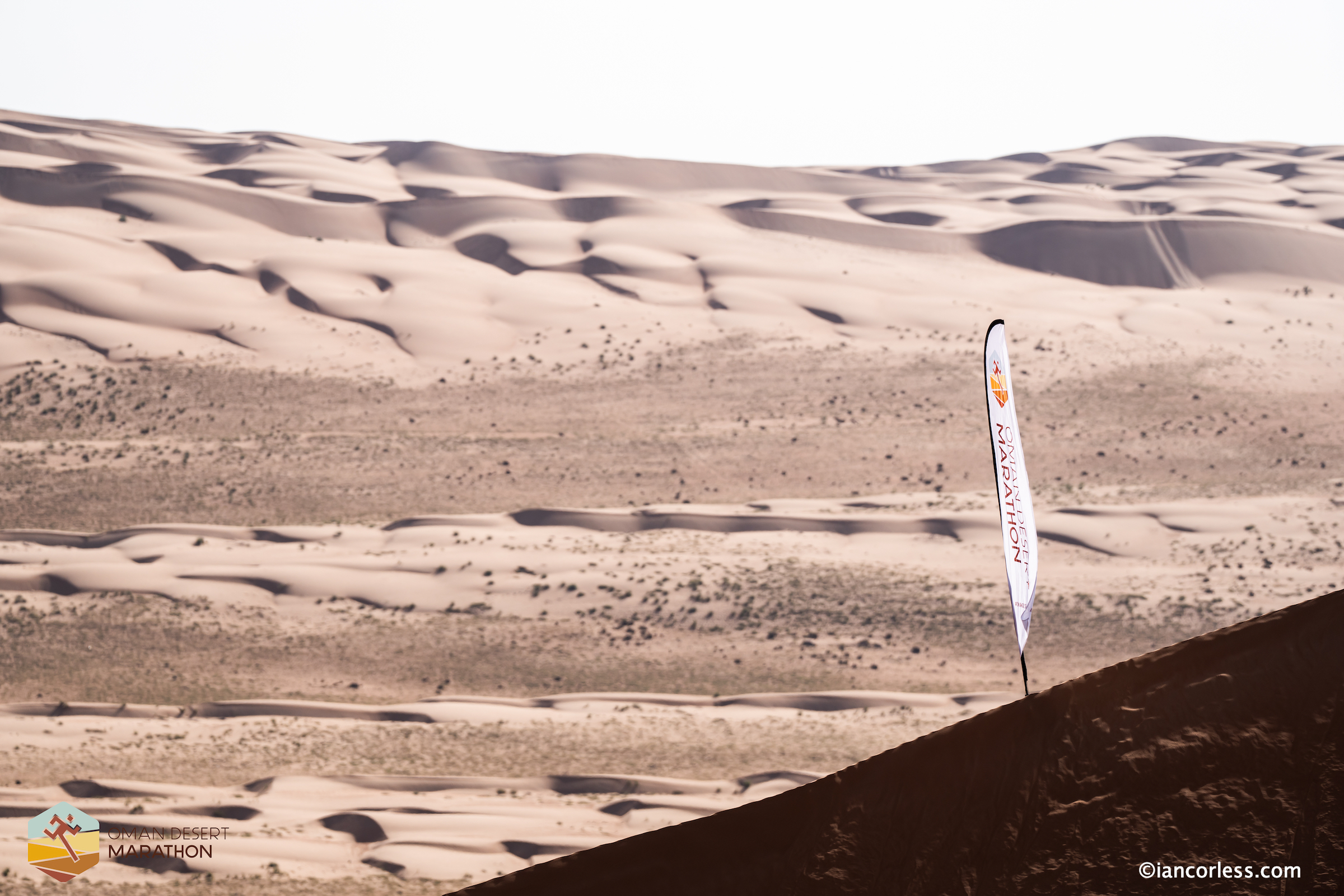
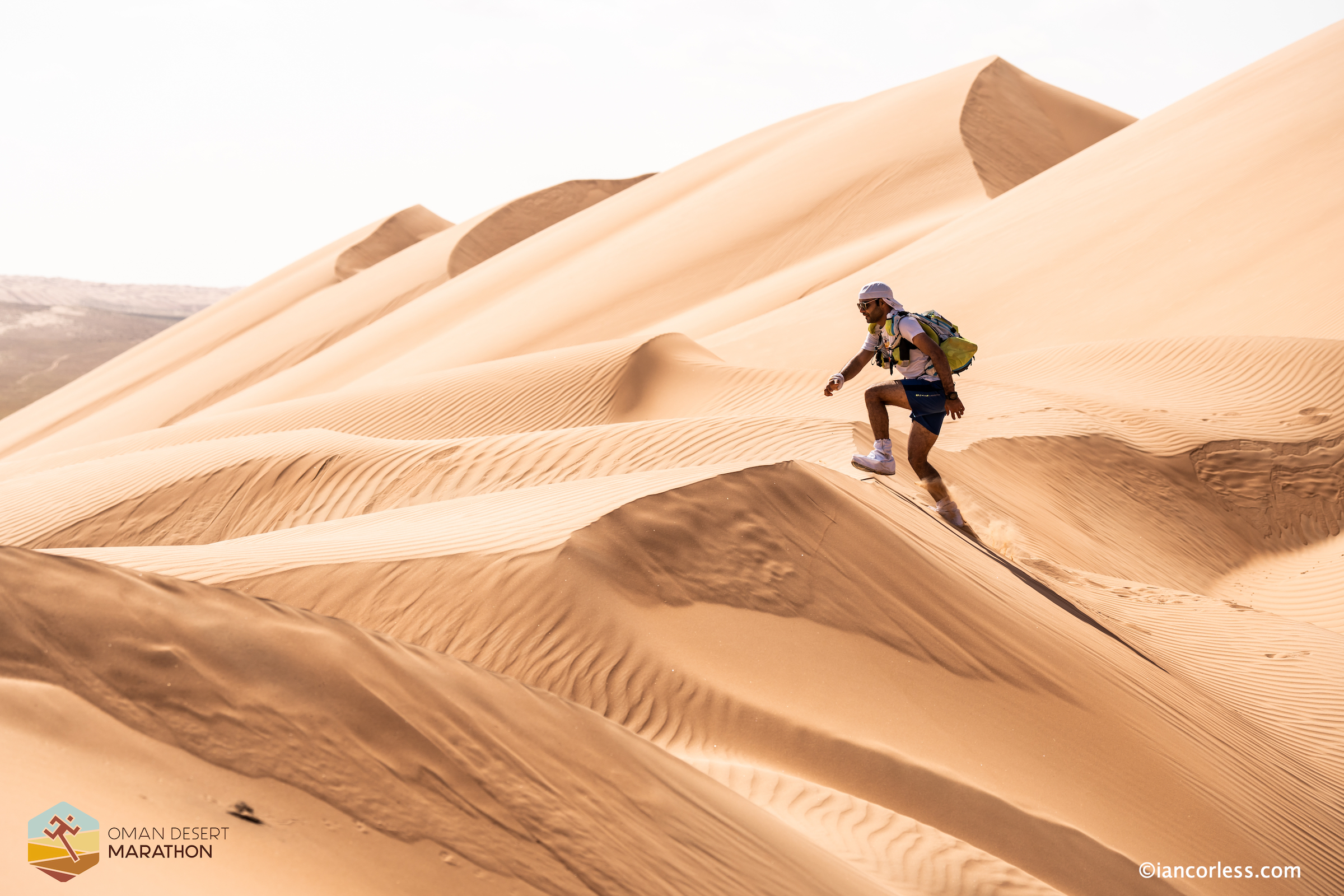
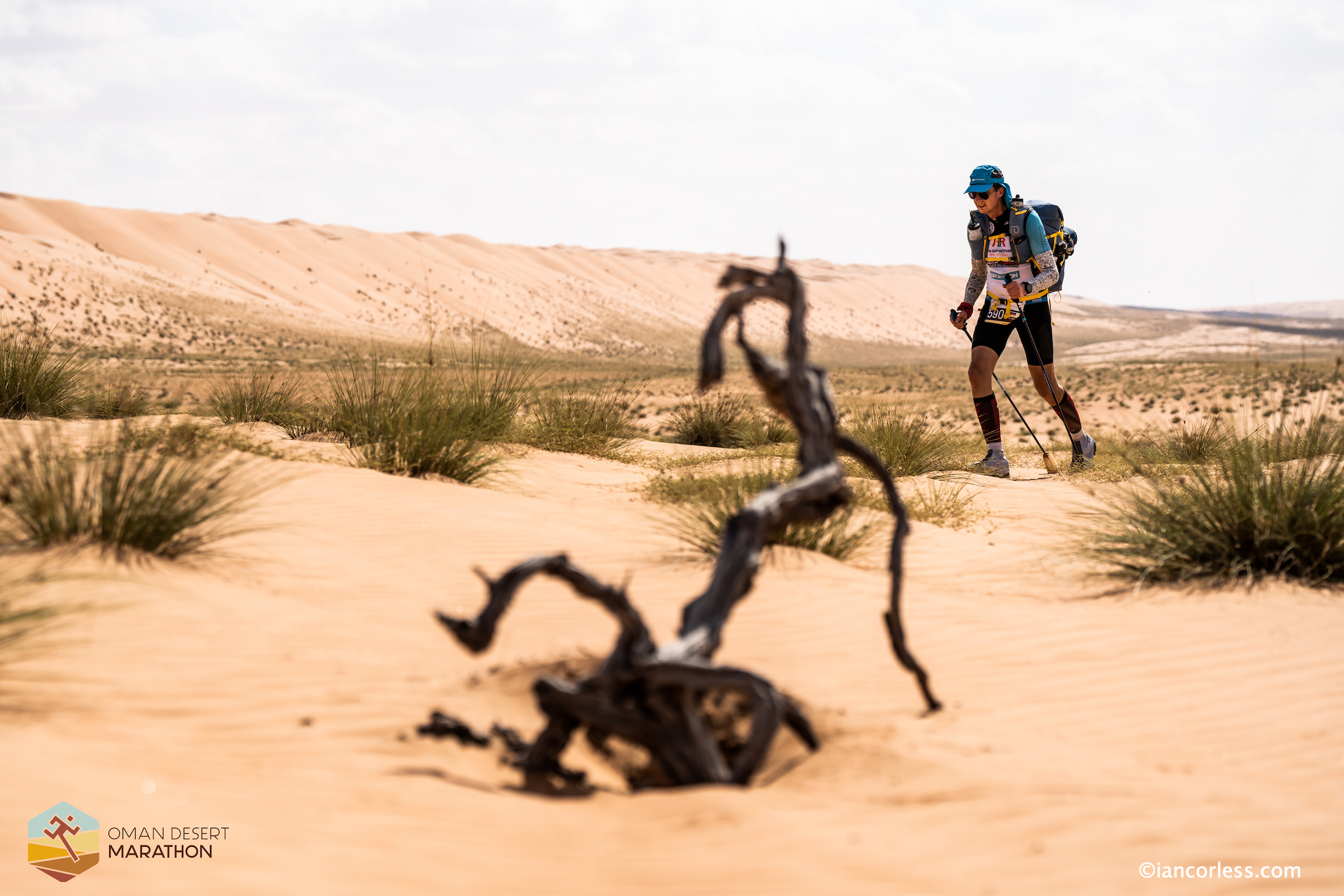
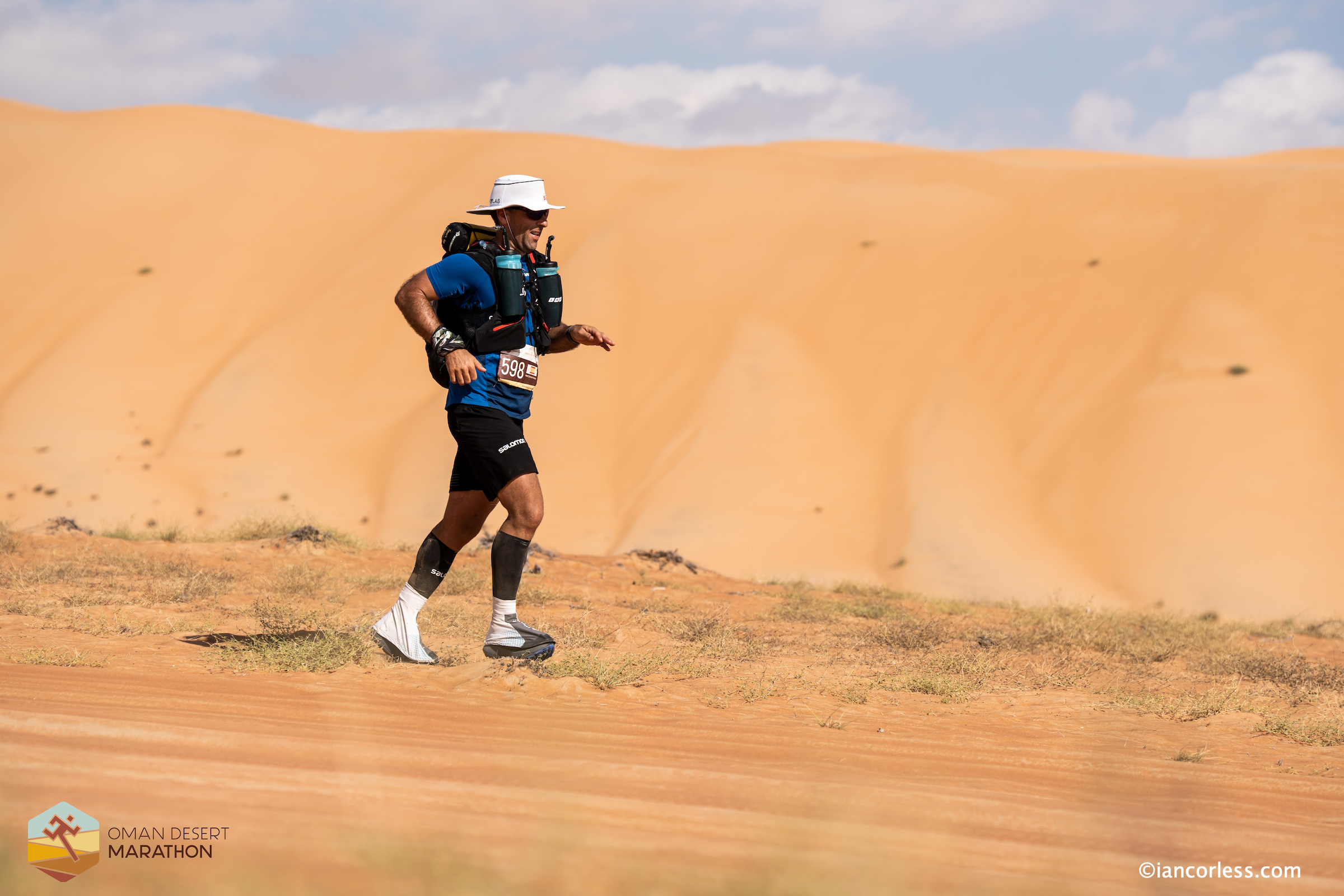
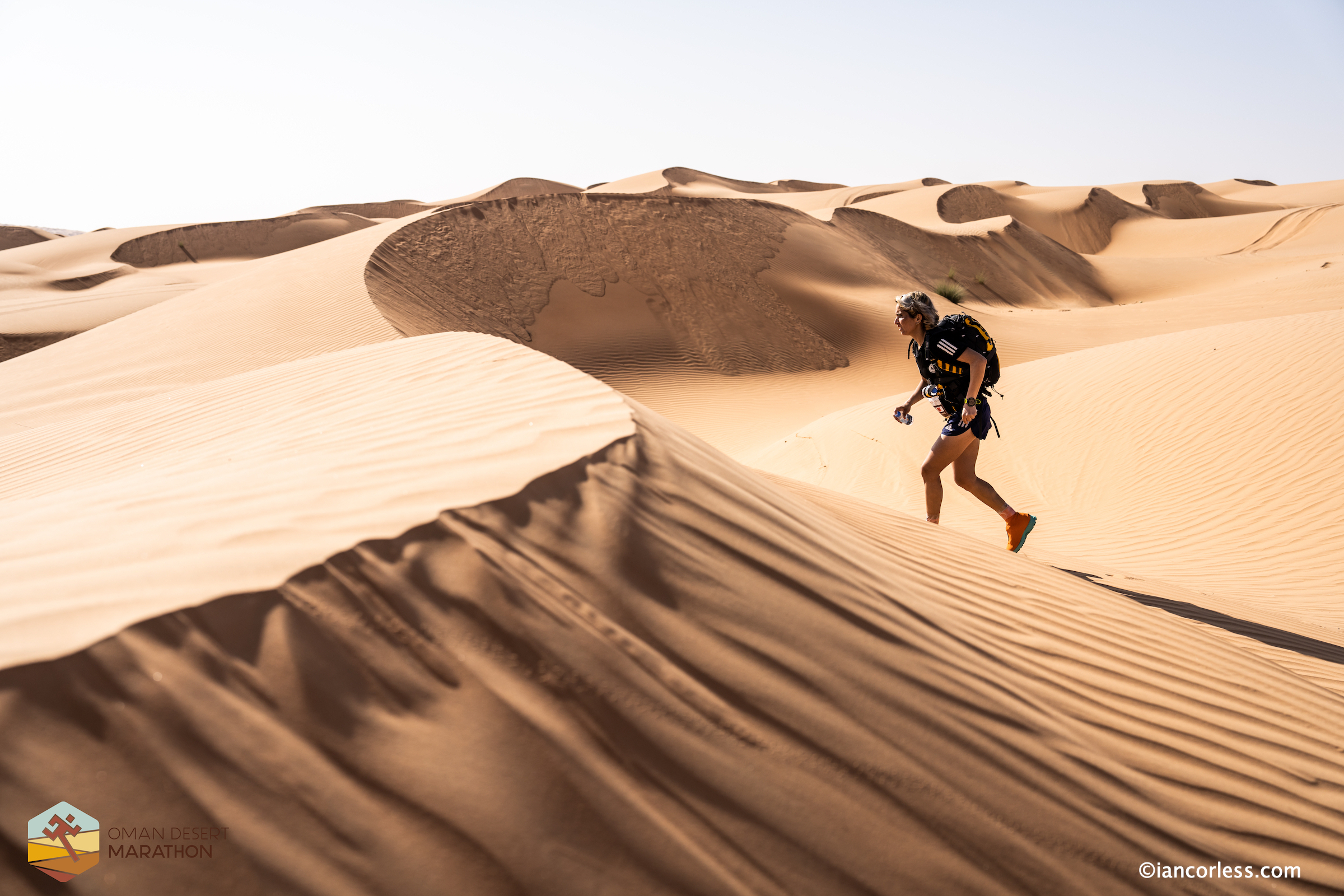
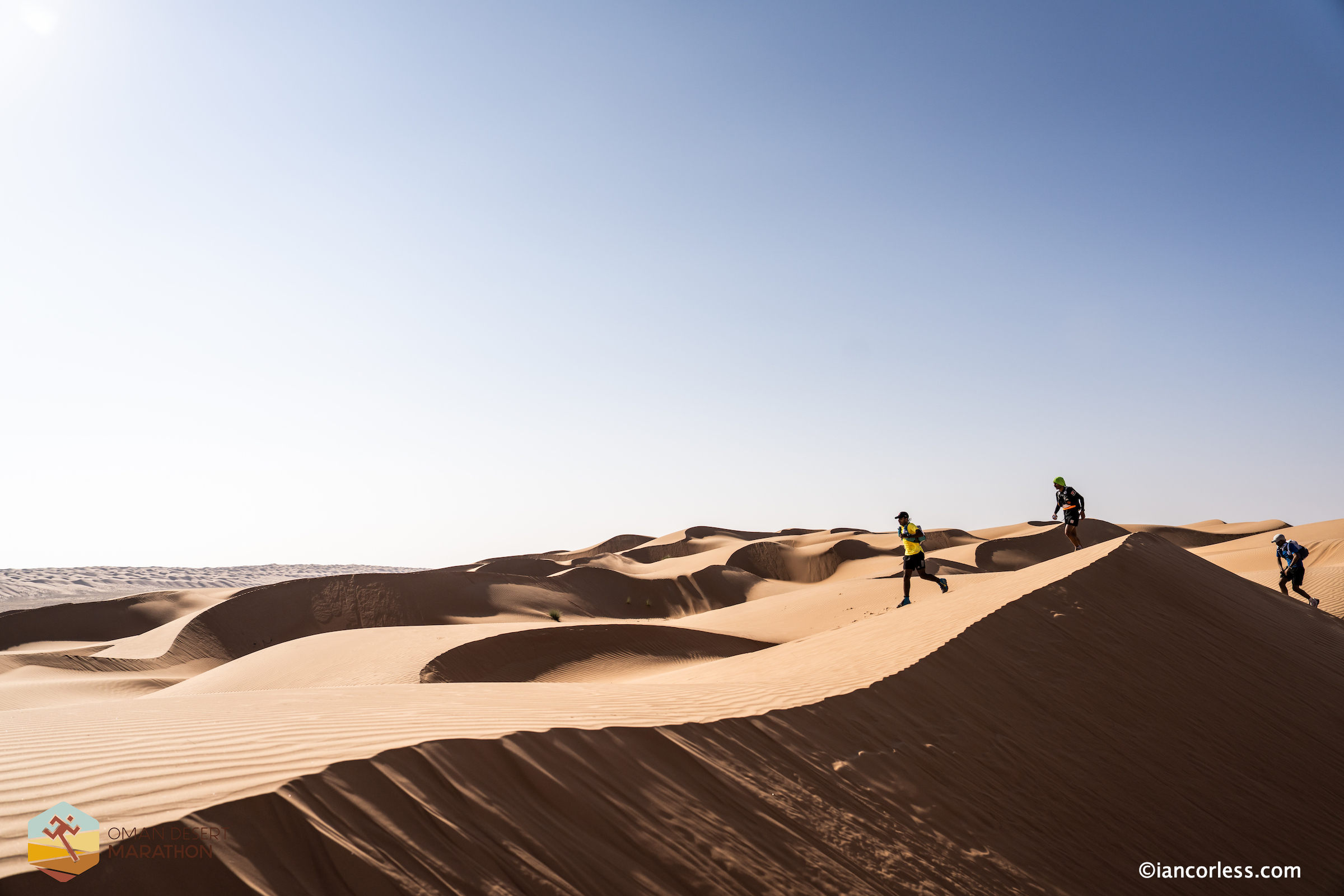
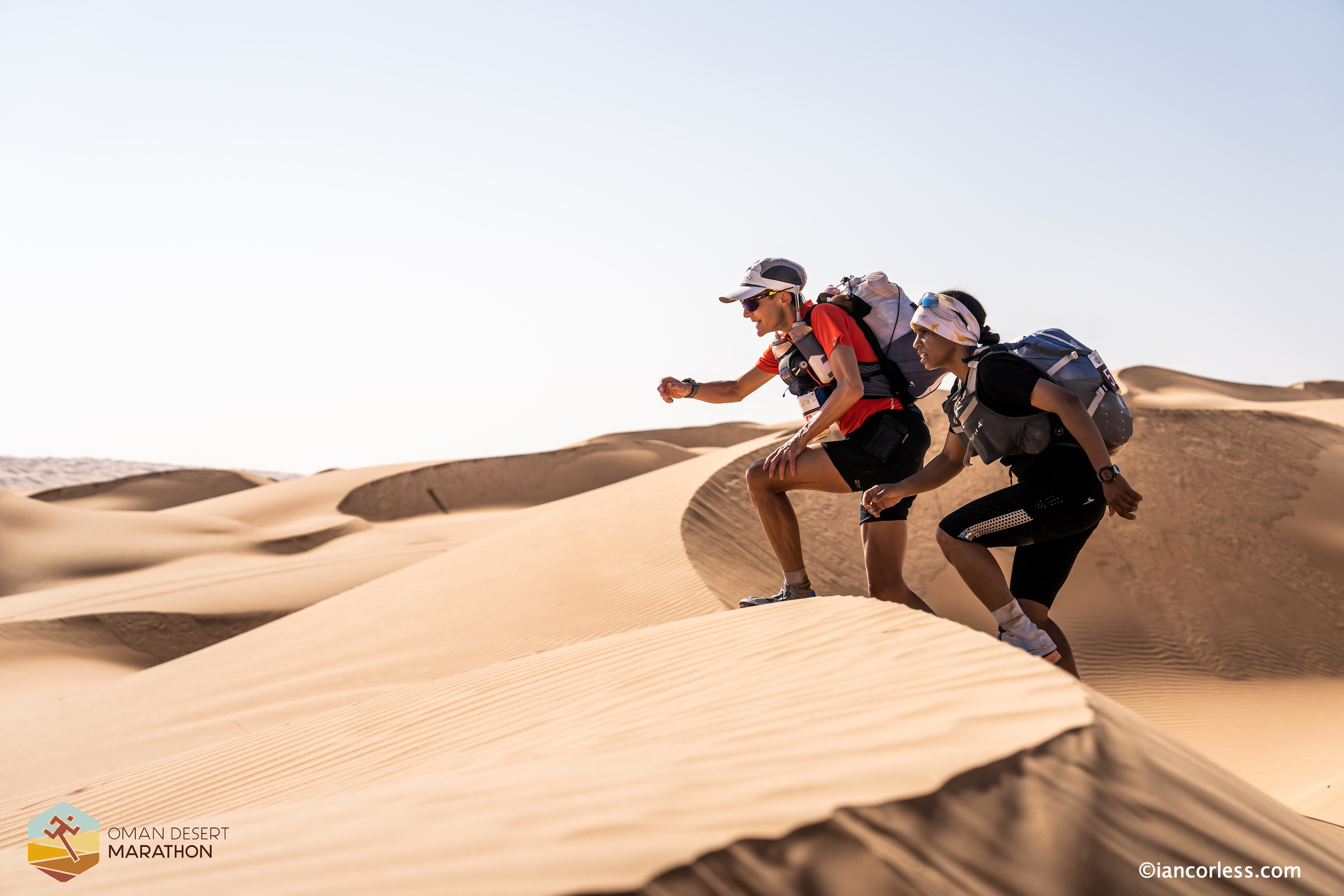
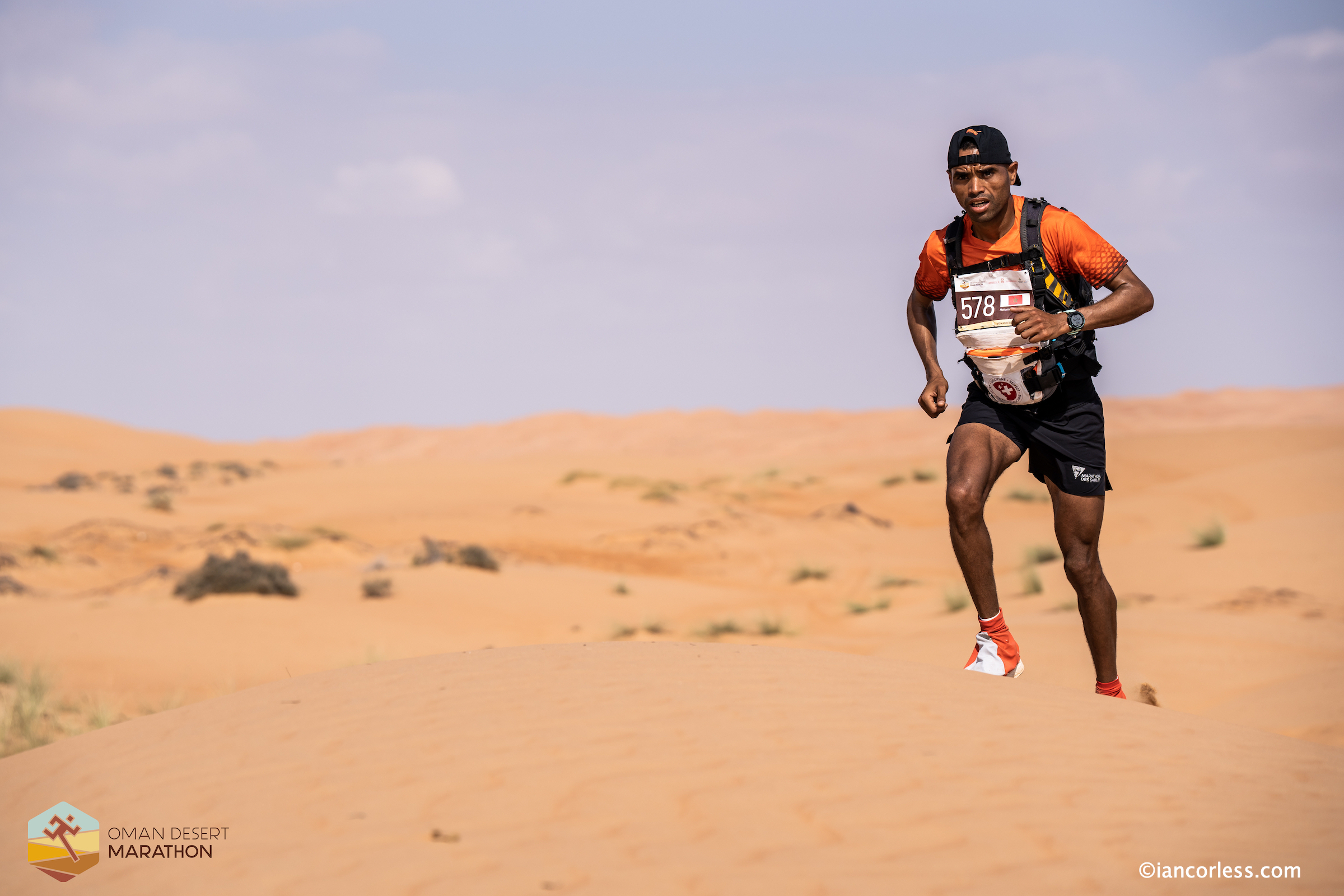
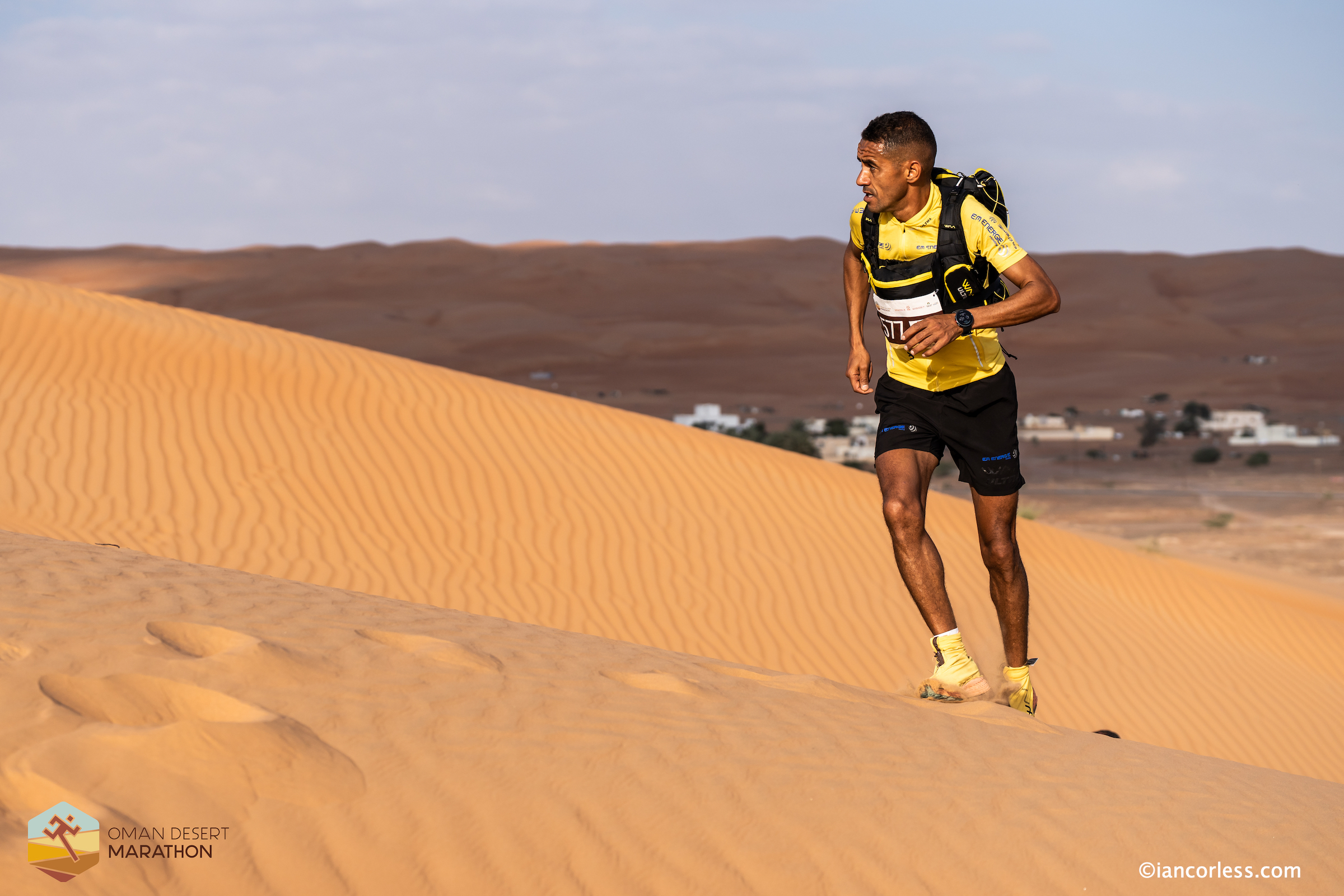
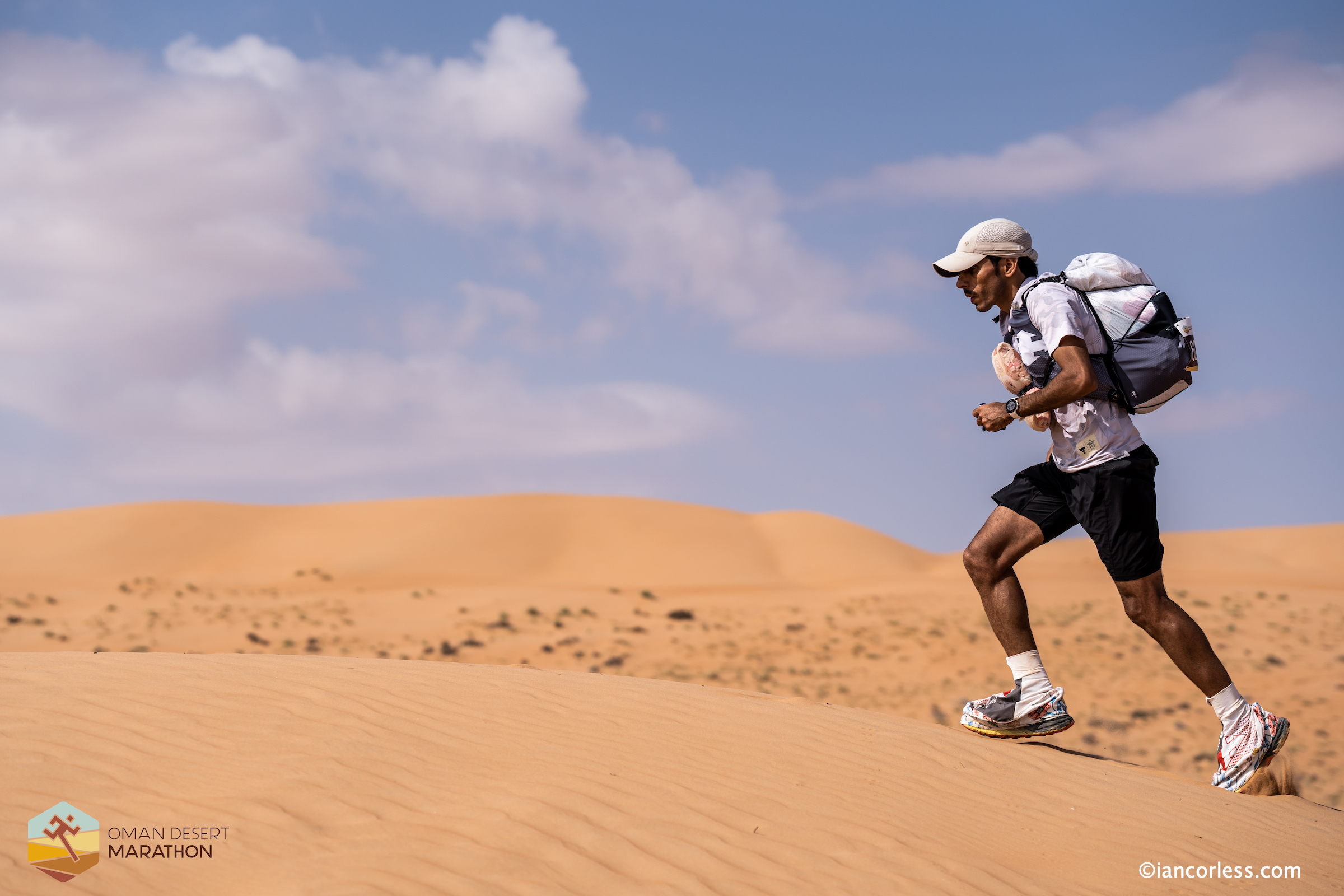
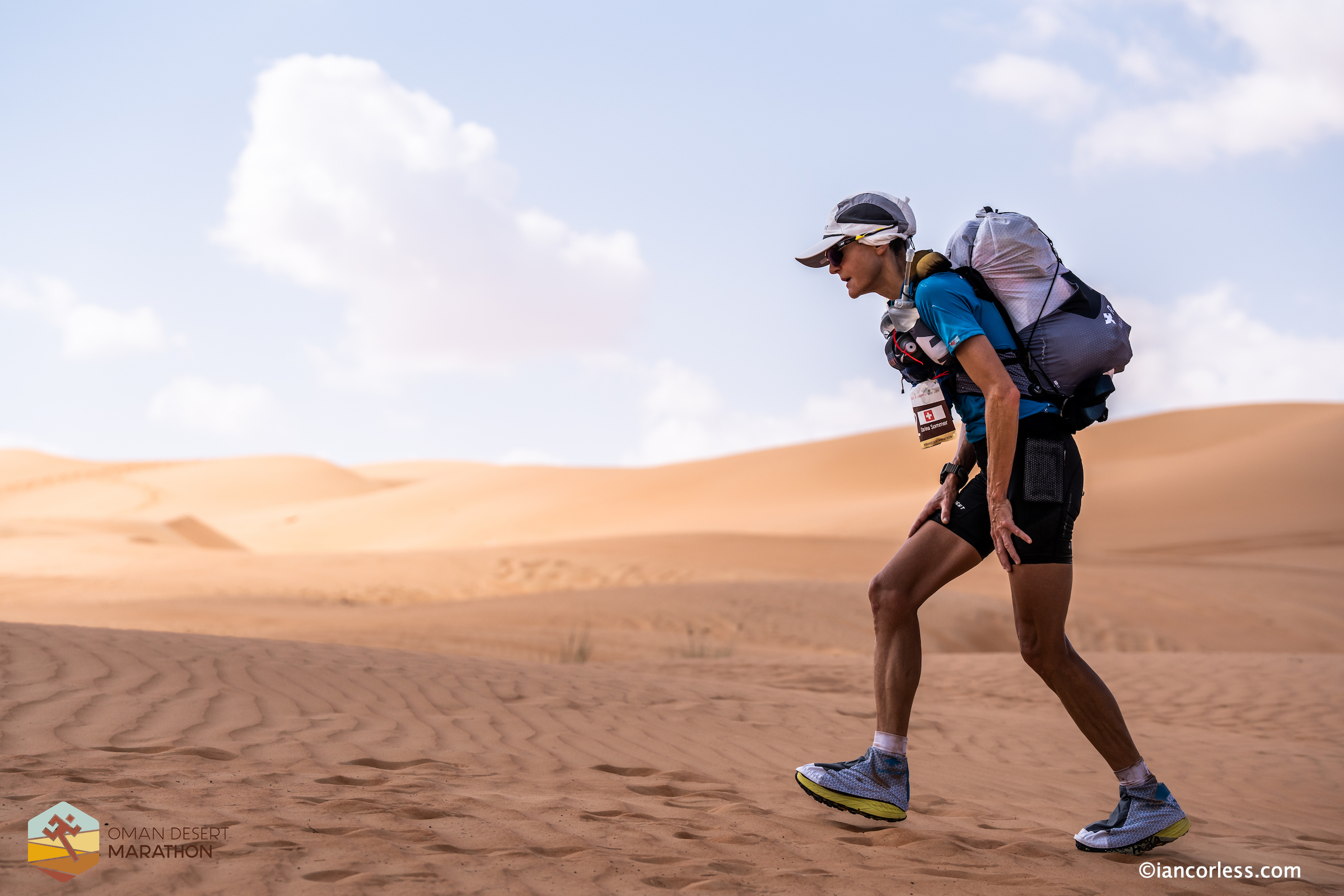
From here, the big dunes waited and what a magnificent sight they are. Stretching far and wide, they are a relentless rollercoaster of torture for the participants.
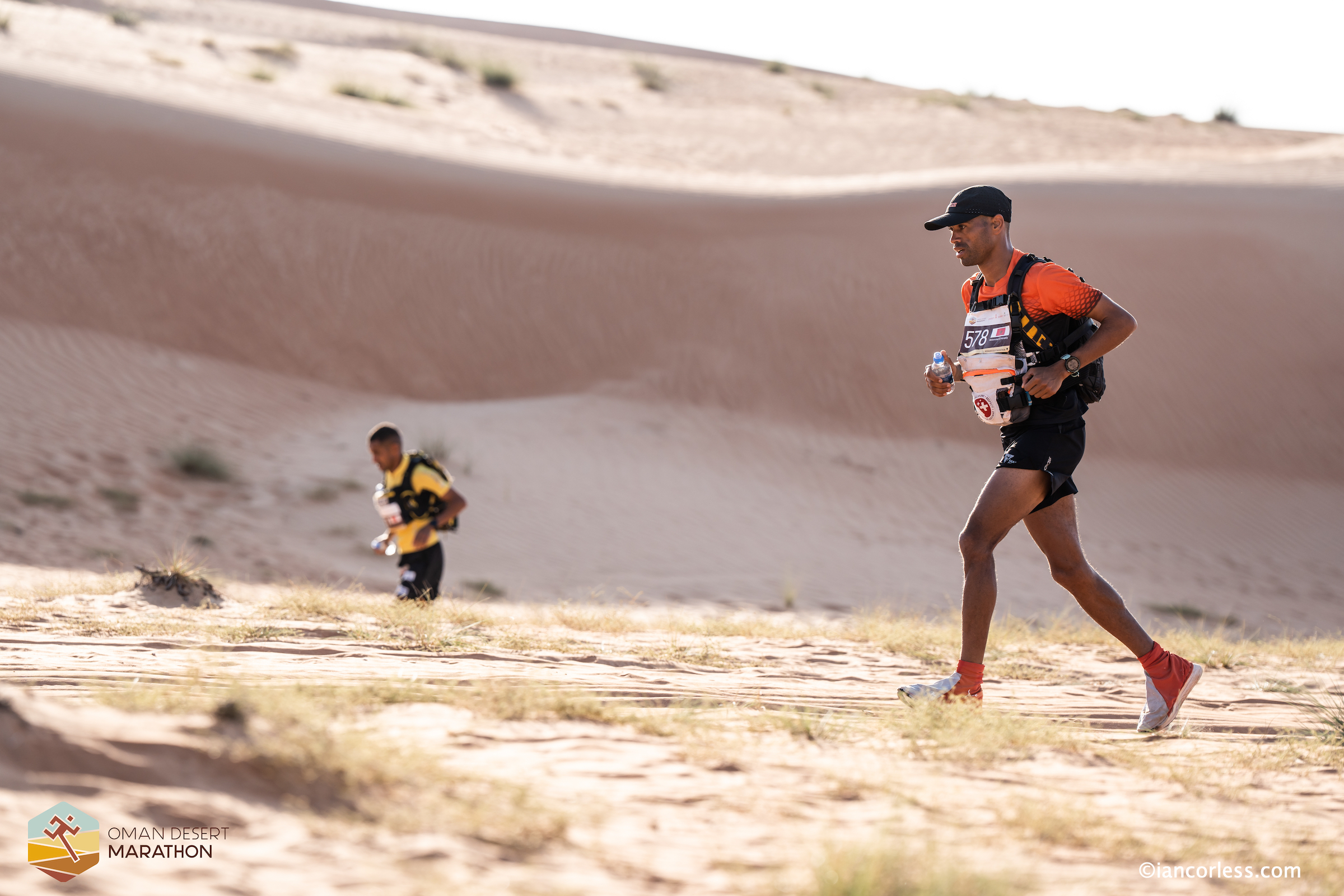
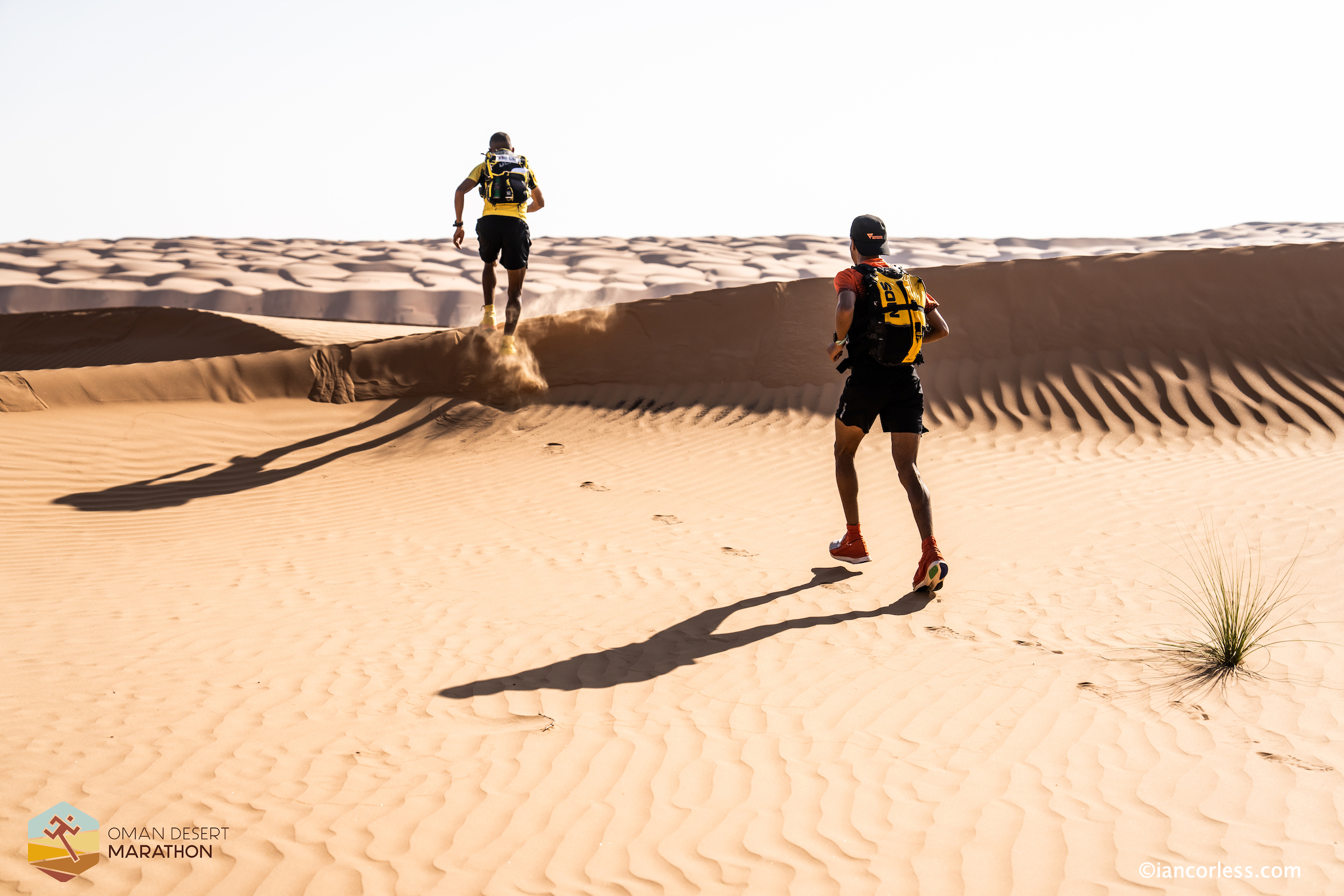
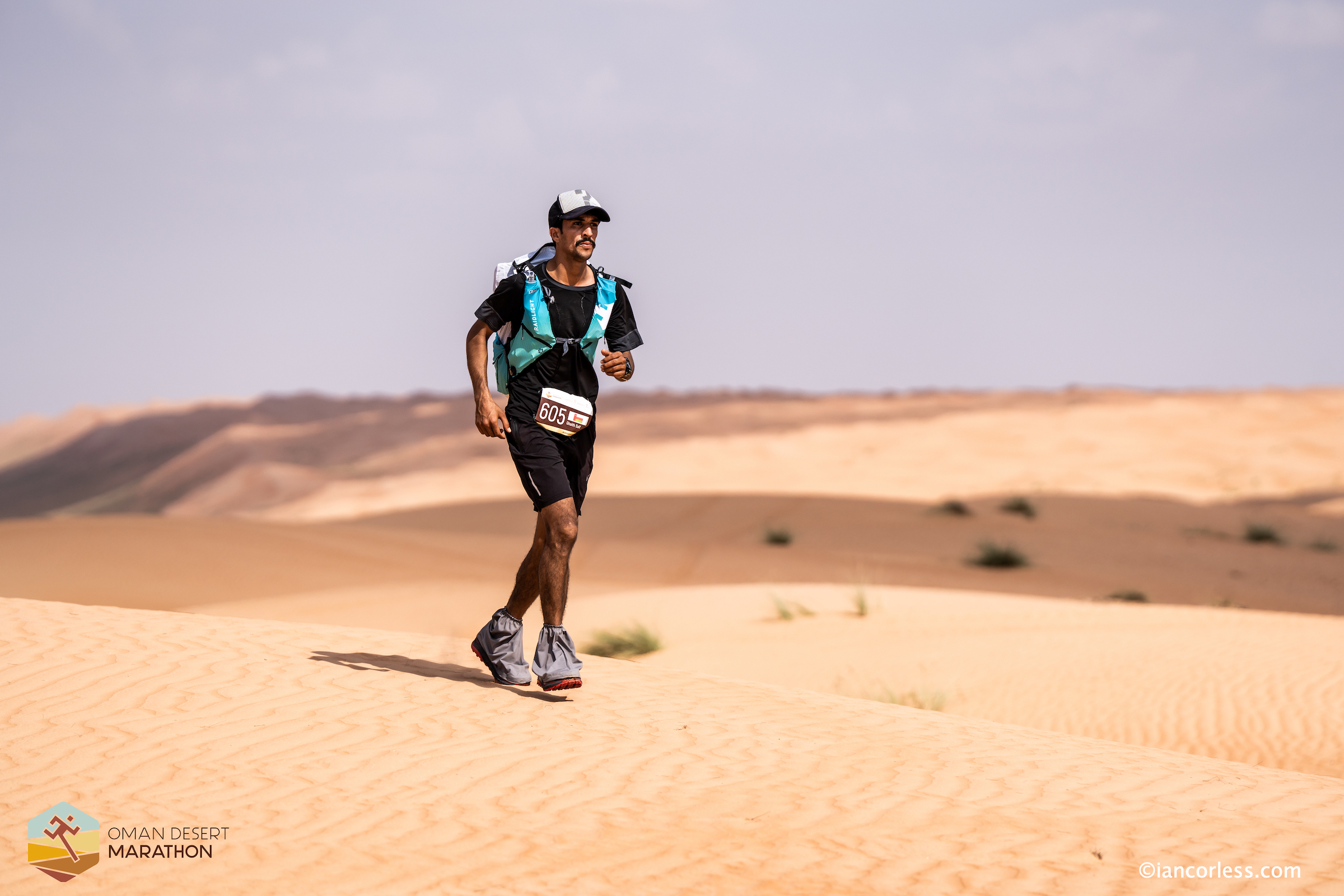
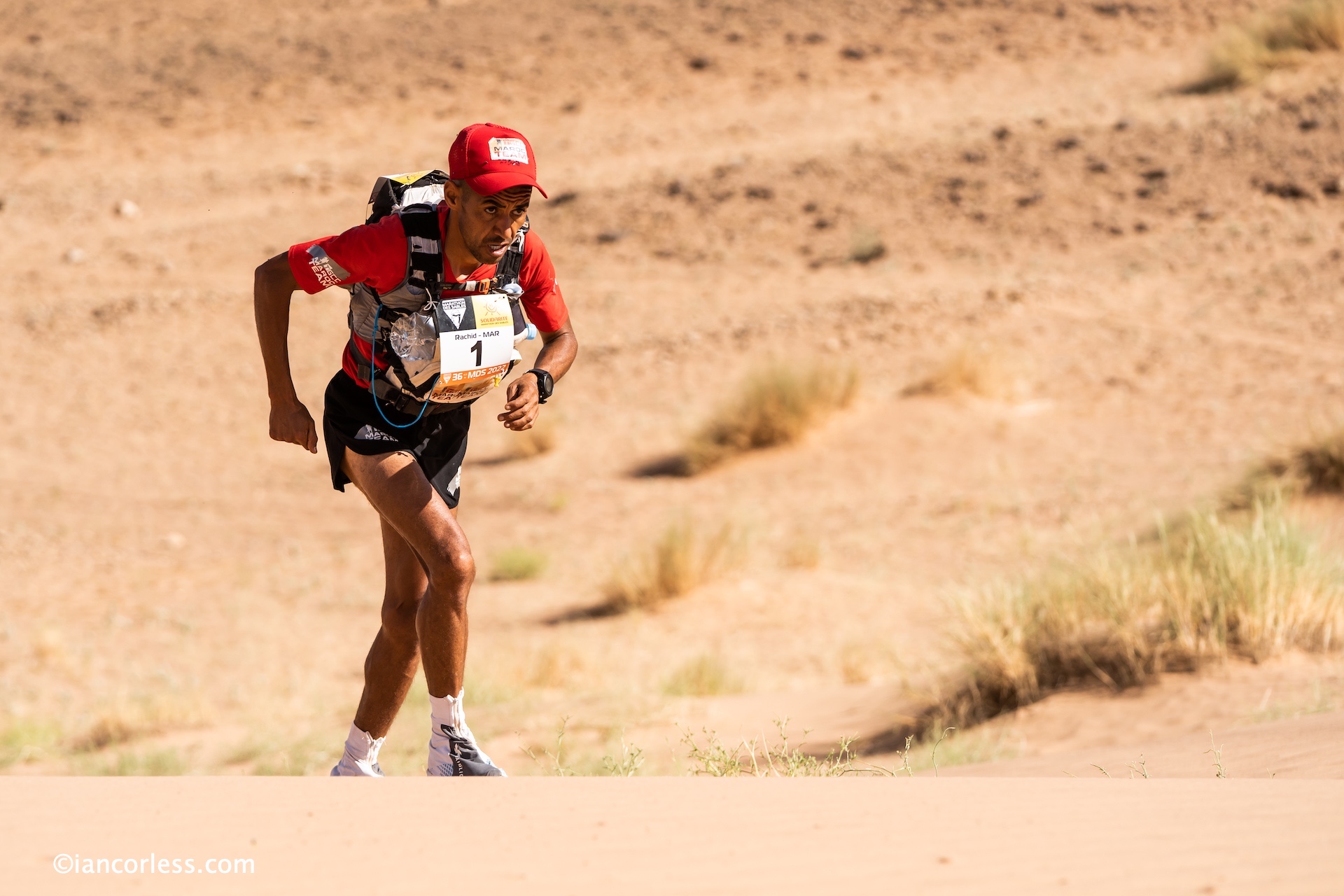
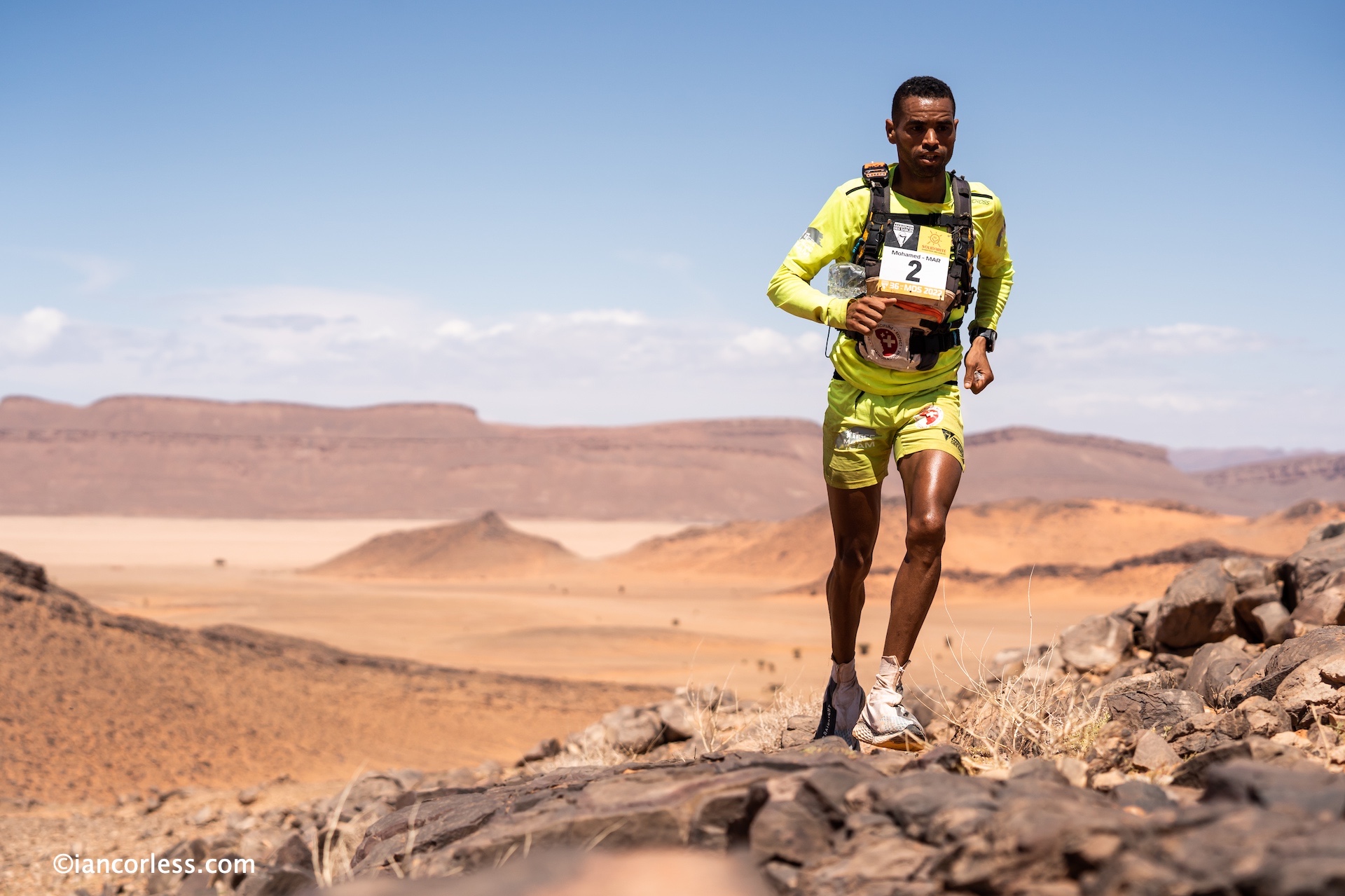
Rachid and Mohamed, not surprisingly, dictated the pace from the start, often running side-by-side and chatting. They are true masters of this terrain and they make it look ridiculously easy.
In many resects, the writing was on the wall and it was once again Mohamed who beat Rachid to the line, this time, just by seconds. For the Alsadai brothers, Saleh finished 3rd and secured his 3rd overall on GC.
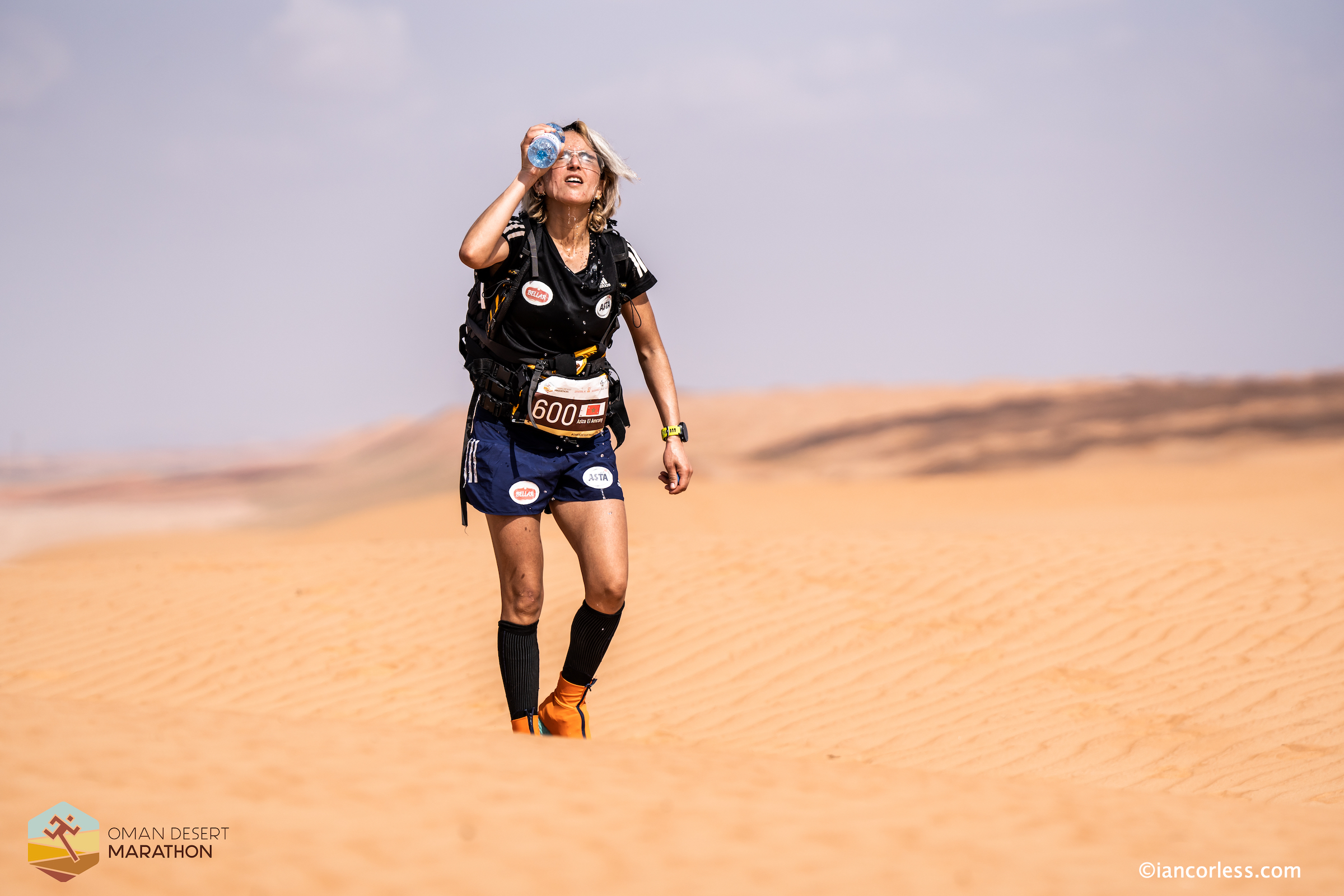
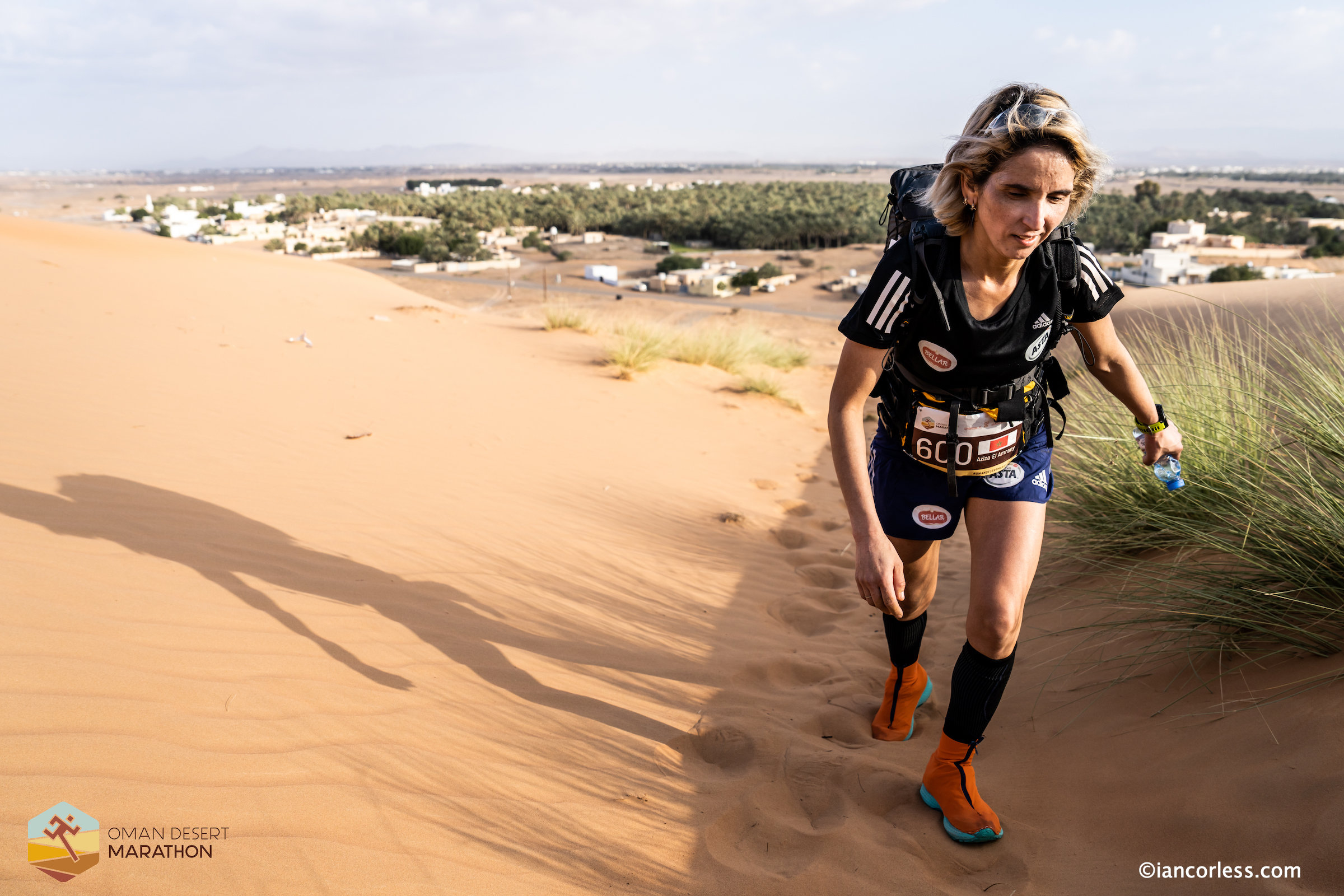
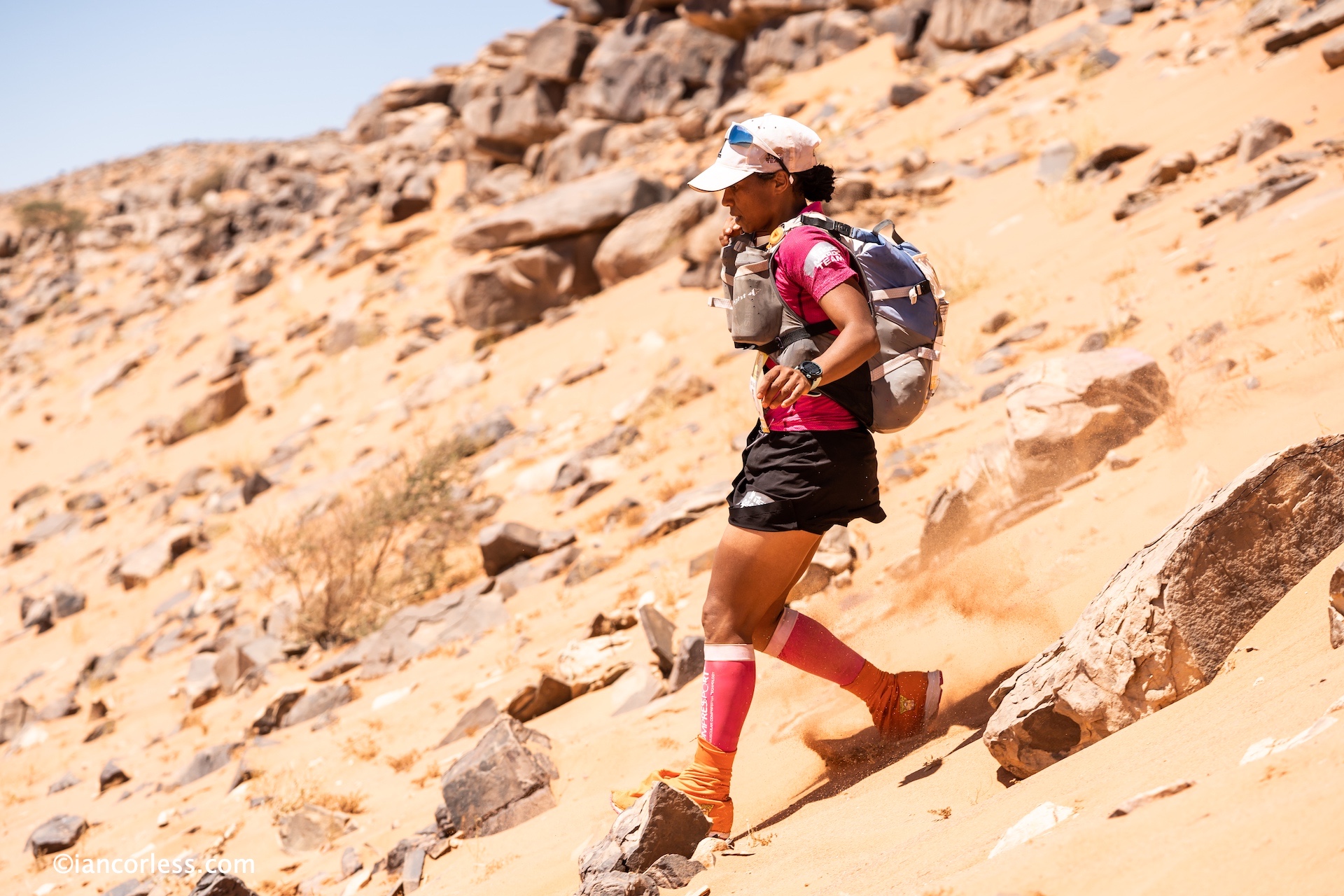
Aziza was too strong for the chasing duo and took another victory. This time, Corina broke away from Raji and managed to claw back over 4-minutes for the GC.
The 4-stage, 165-km, 2023 Oman Desert Marathon started today with a challenging 47-km stage.
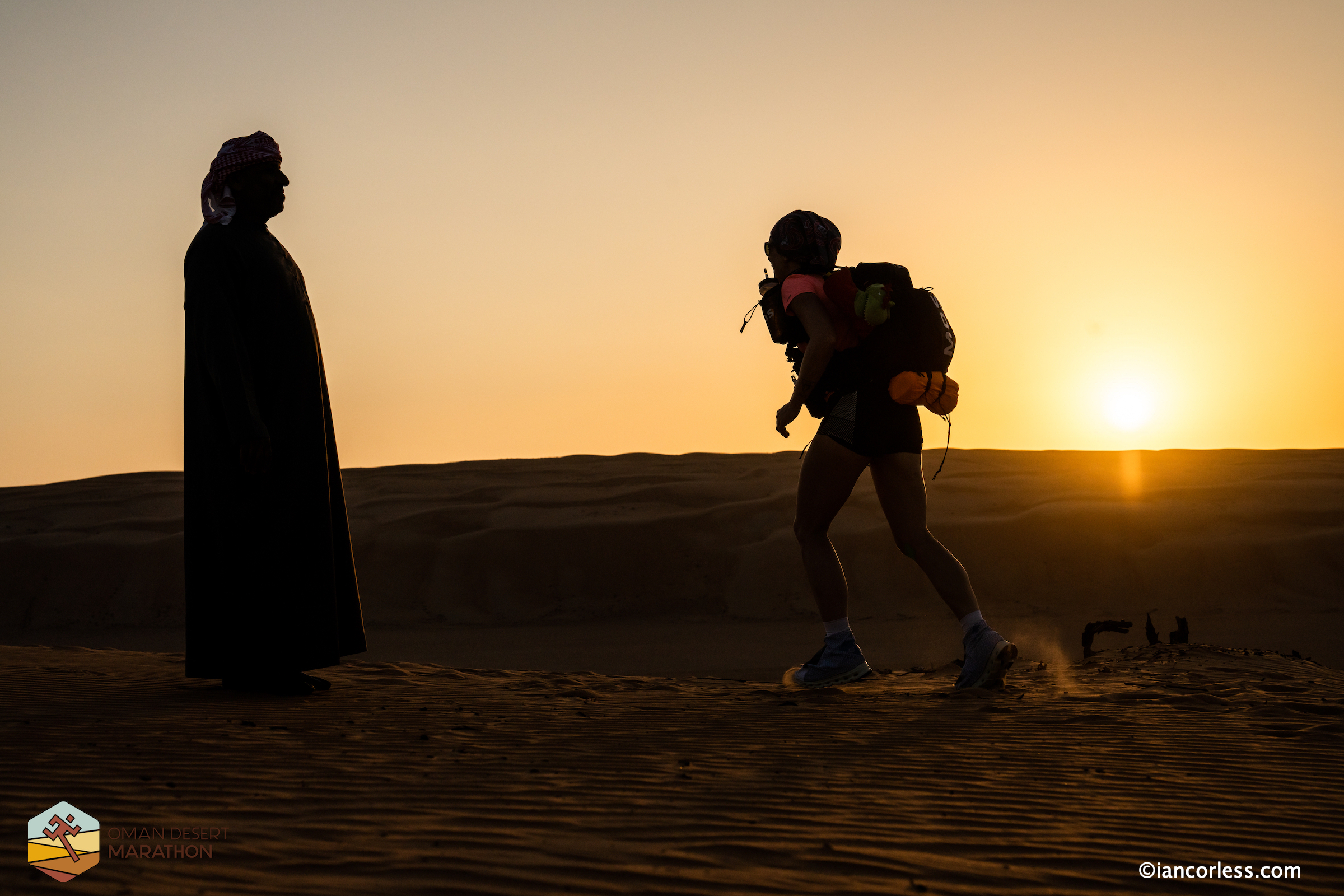
After a 3-year hiatus due to the Covid Pandemic, it was once again a pleasure to see runner’s travelling through the Oman Desert in self-sufficiency. The only items provided to participants is water and a place to sleep at the end of each day.
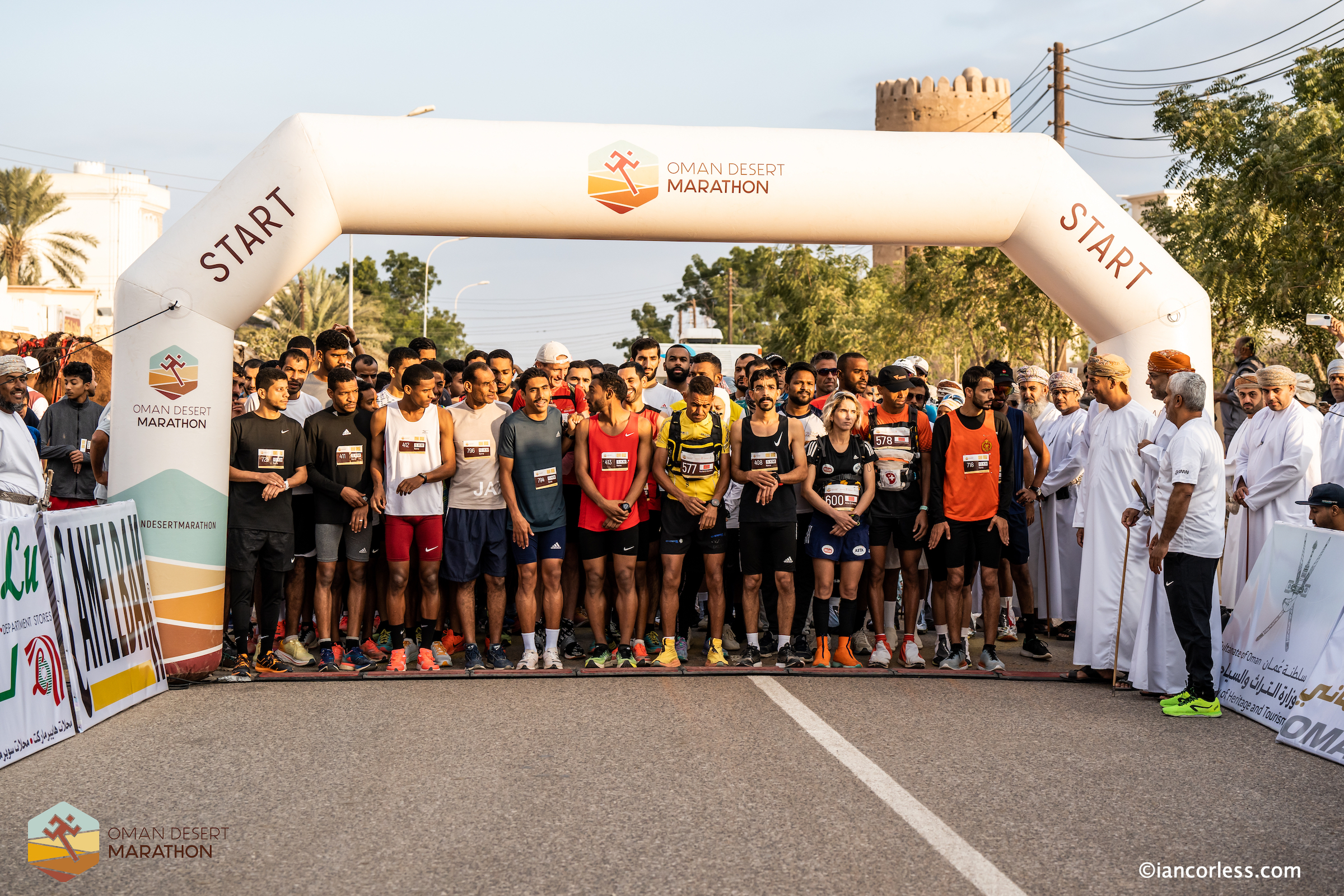
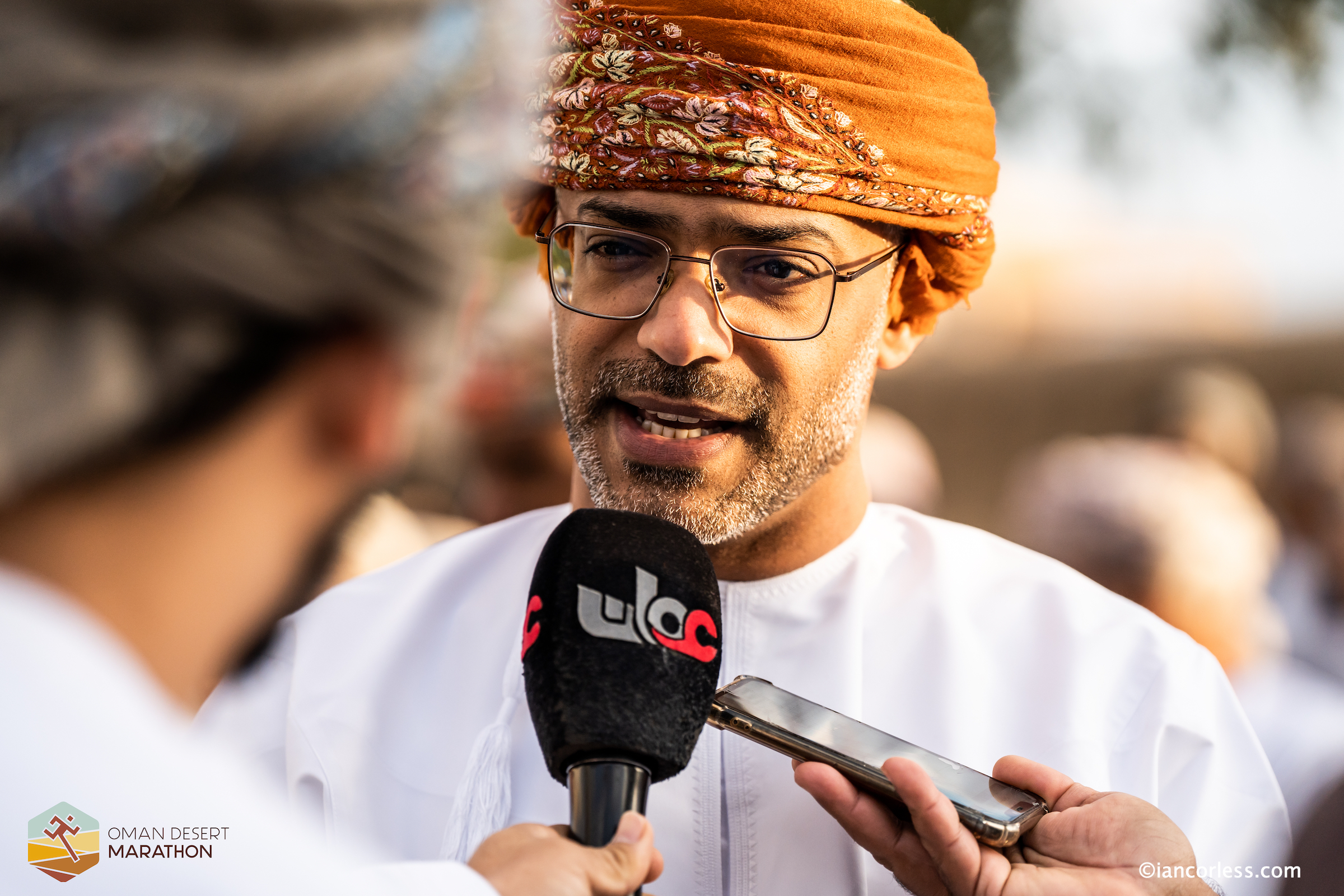
The atmosphere at the start was one of celebration with local vip’s present and many locals who would participate in the ‘free’ 10km, 5km and a 2km kids race.
Rachid and Mohamed played cat an mouse but in the last significant dune section, with just over 10-km’s to go, Mohamed opened a gap which he held to the line crossing in 3:53:31. Rachid surprisingly came in over 7-minutes later. The earlier hard pace set by Sami Alsaidi took it’s toll and it was Saleh who finished 3rd.
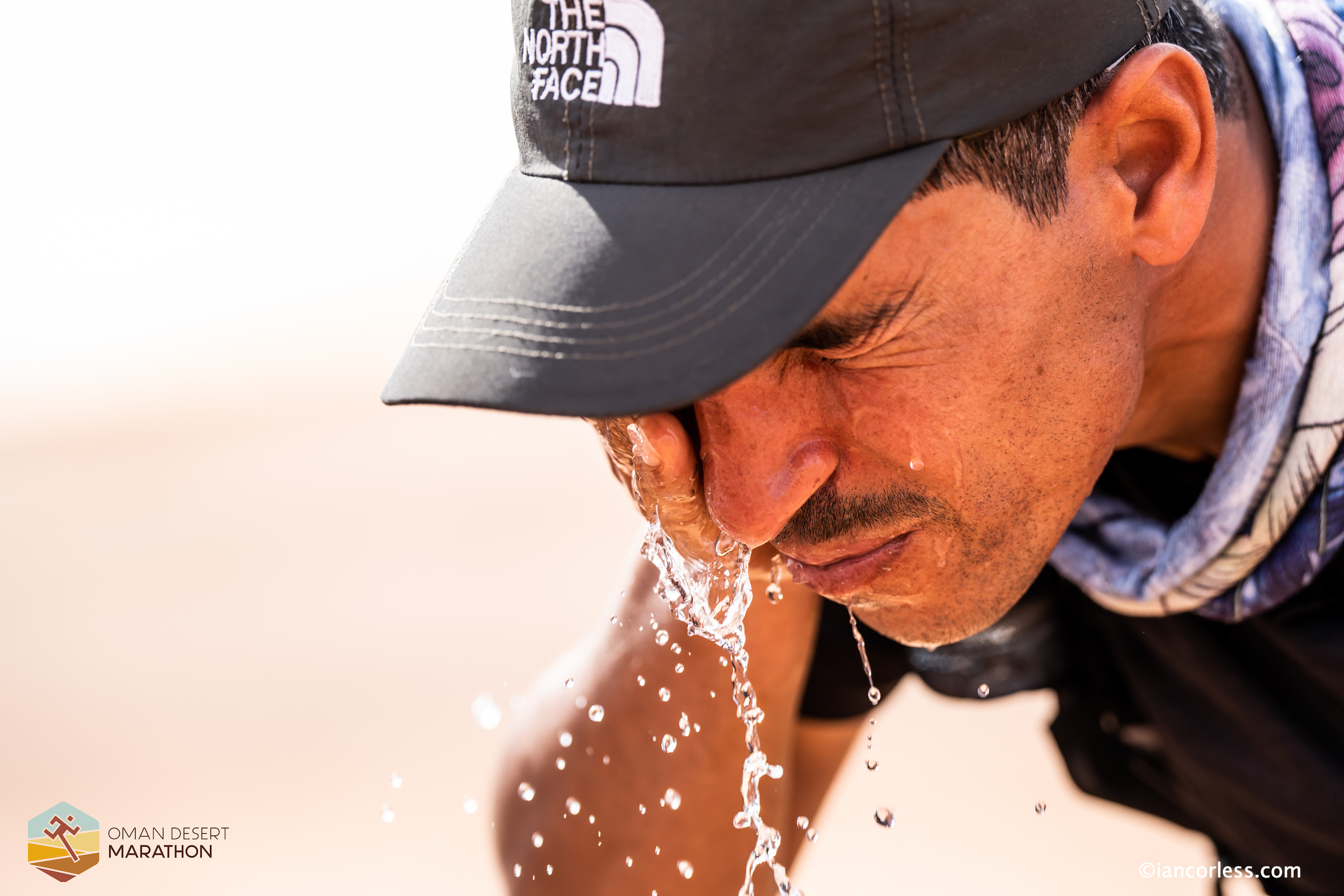
Aziza El Amrany looked very strong for the first two-thirds of the day but later looked to be suffering in the heat. She never lost her lead though and finished in 5:31:29. Despite Corina looking strong all day, Aziza Raji played the waiting game and pounced in the latter third of the day taking 2nd place in 5:37:53 to 5:45:57 for the Swiss.
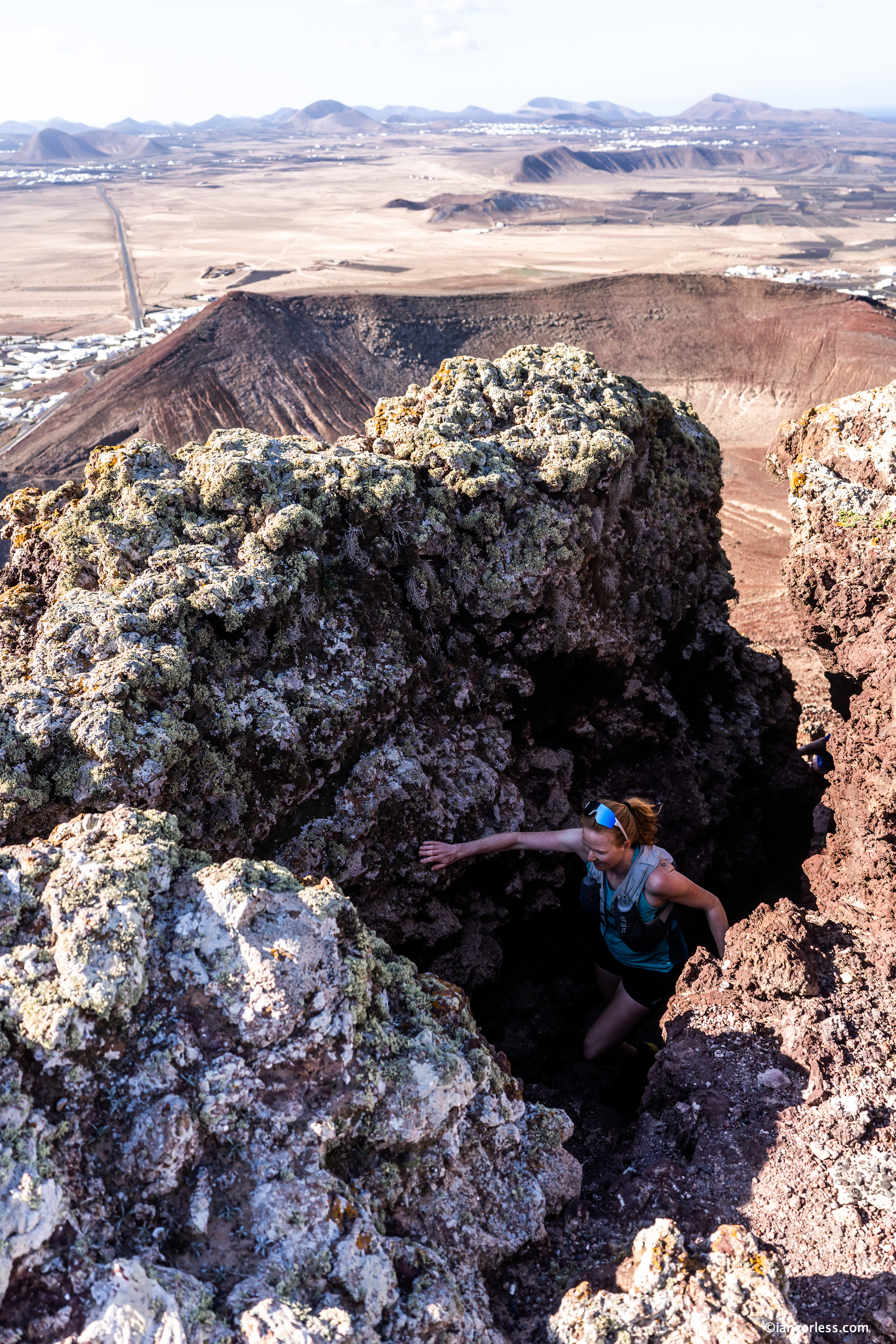
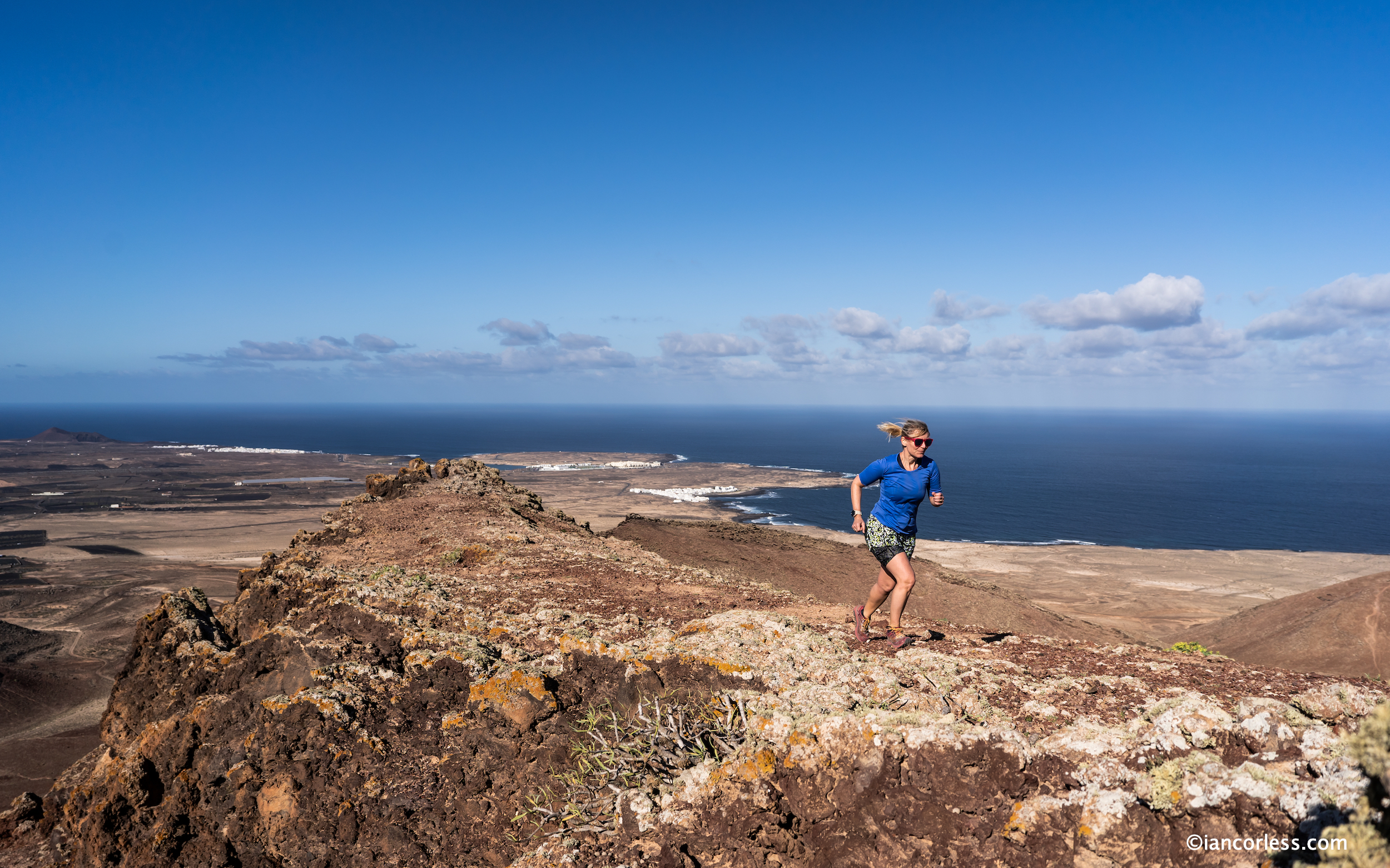
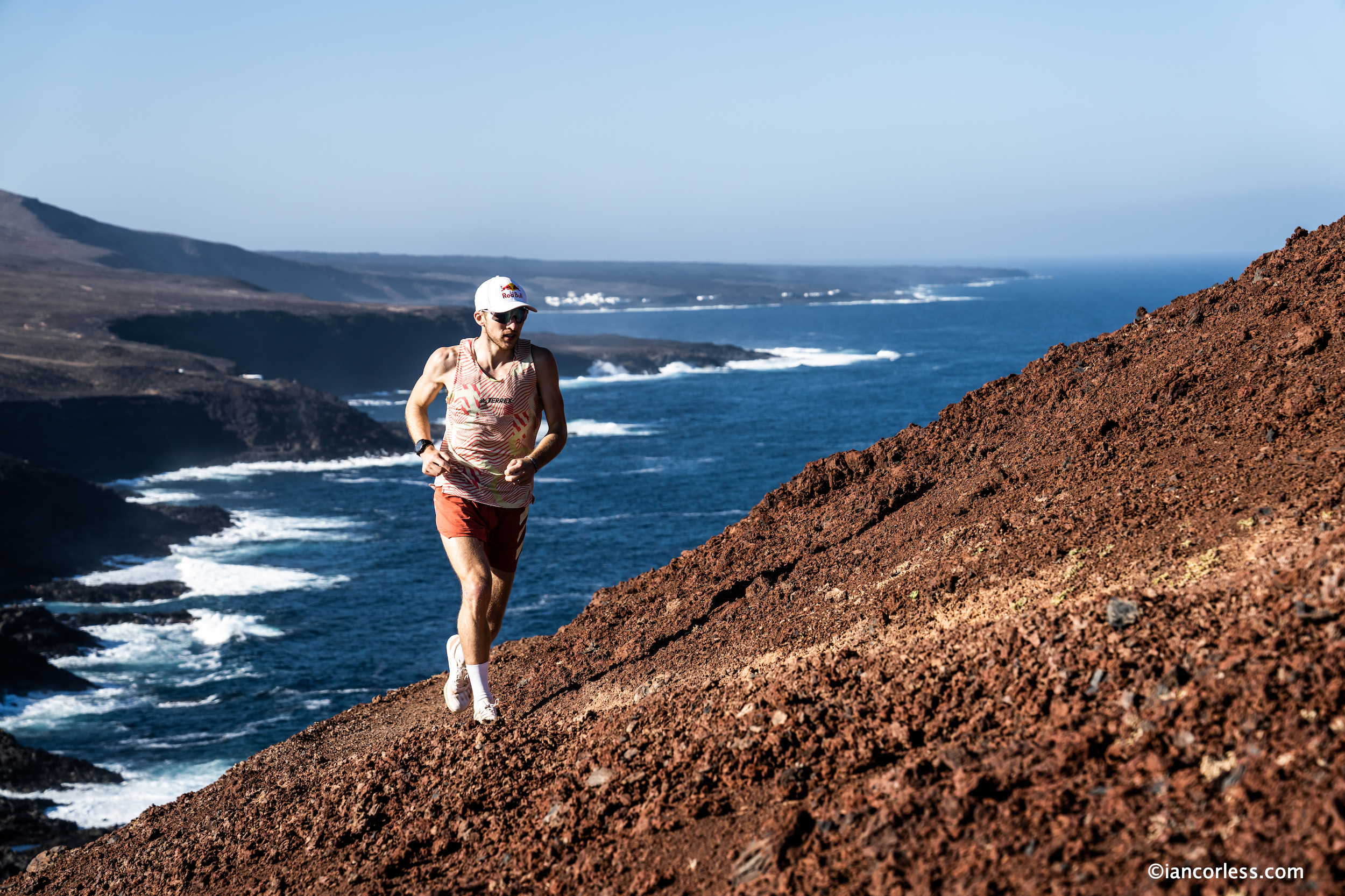
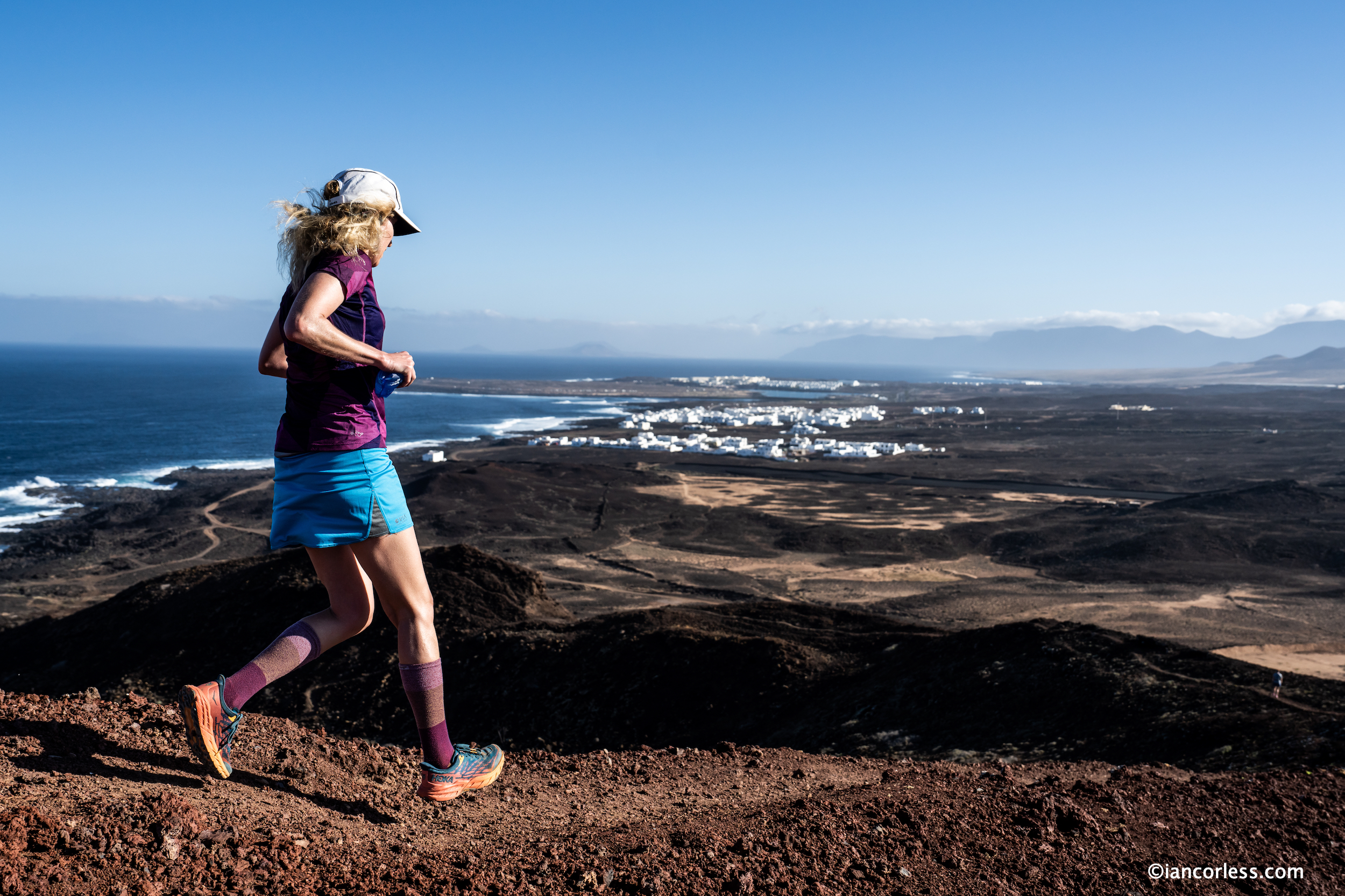
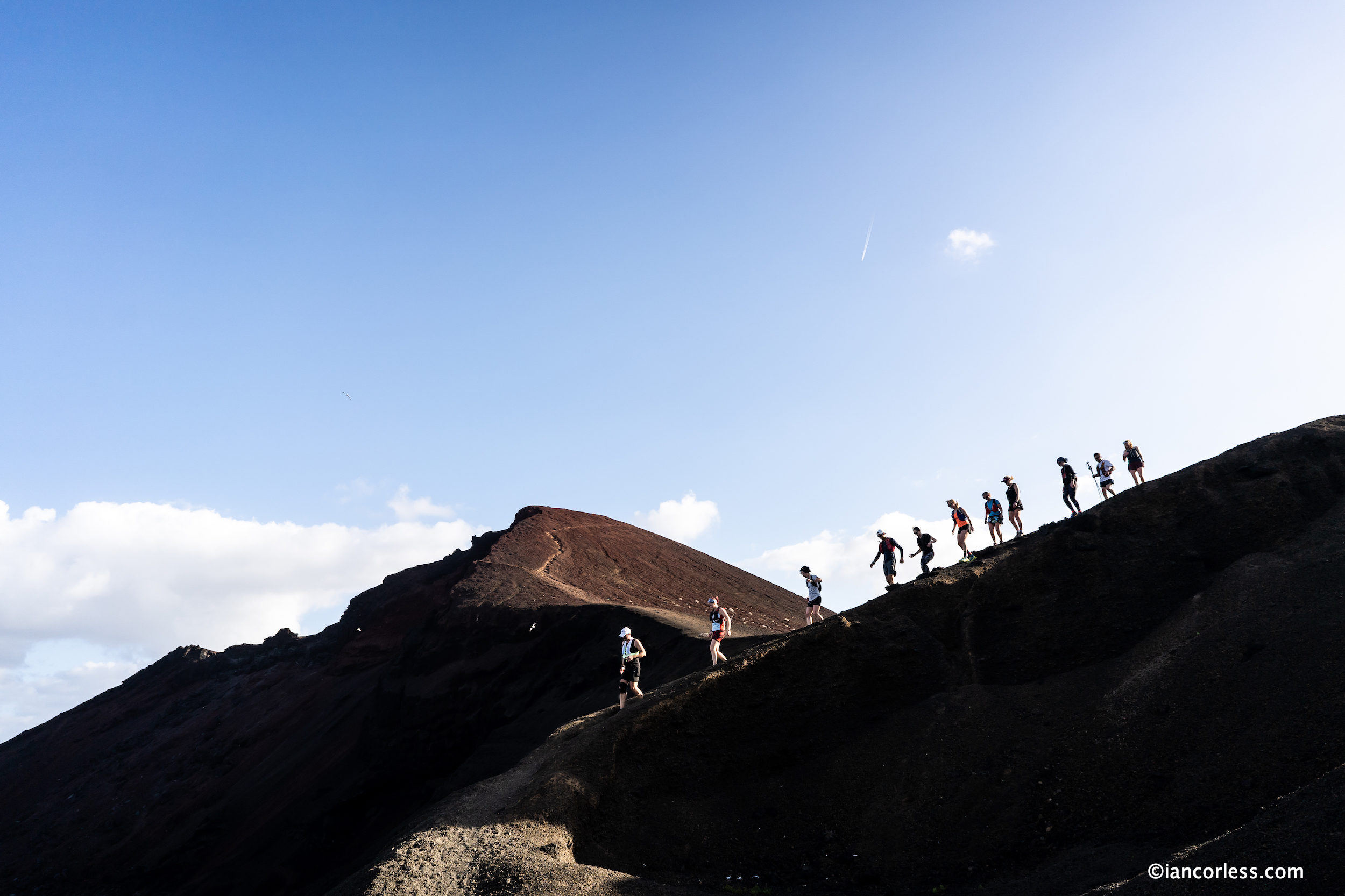
Caldera Trasera is a wonderful loop from our base location, Club La Santa. It provides a short and hilly technical route that more ‘more’ exposure than many are used to. The Lanzarote Multi-Day Training Camp is all about pushing boundaries and learning.
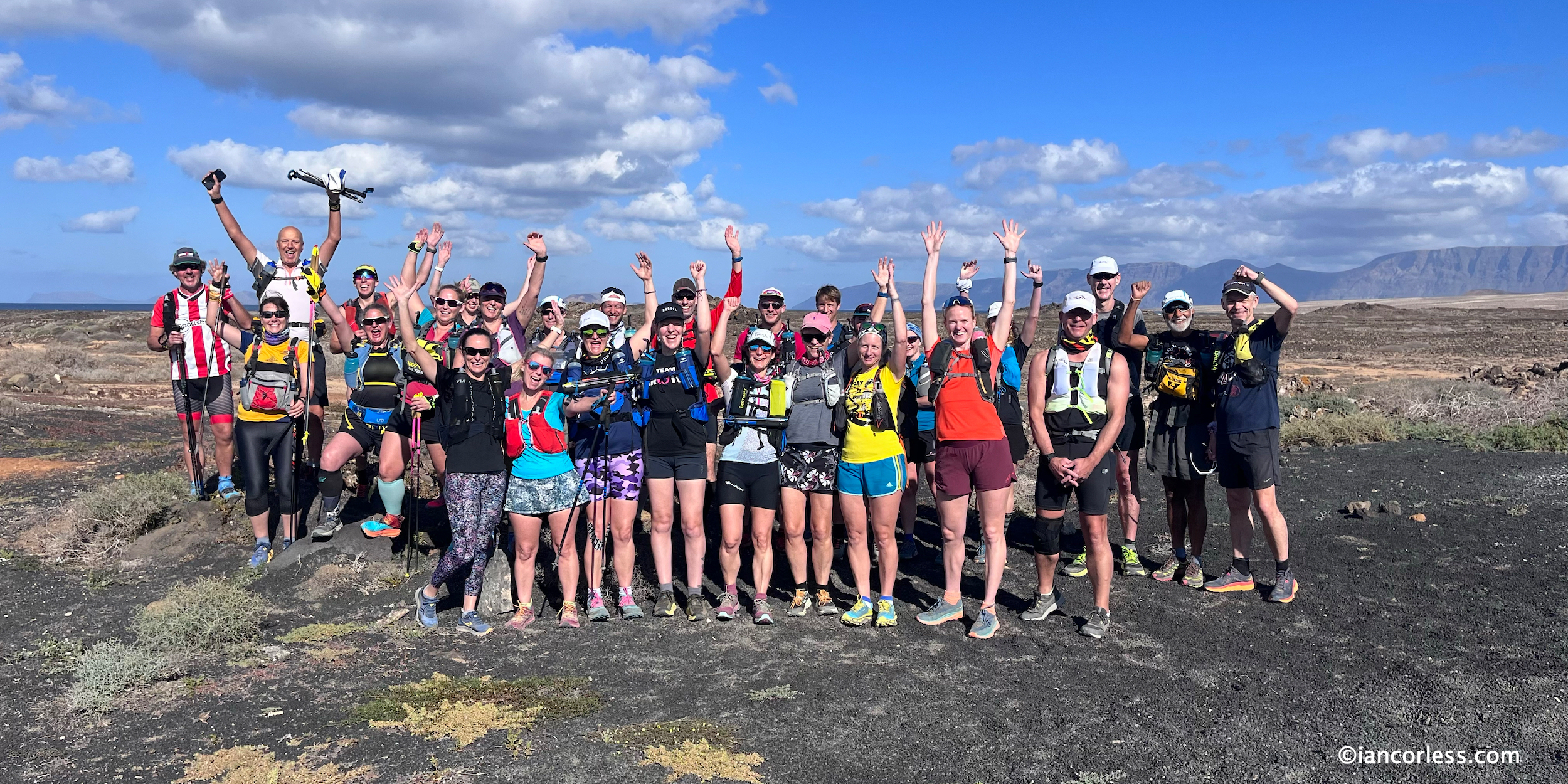
Hands-on action provided some mega smiles, especially when the summit was reached. The level of comradeship was superb, everyone supporting each other to achieve their goal.
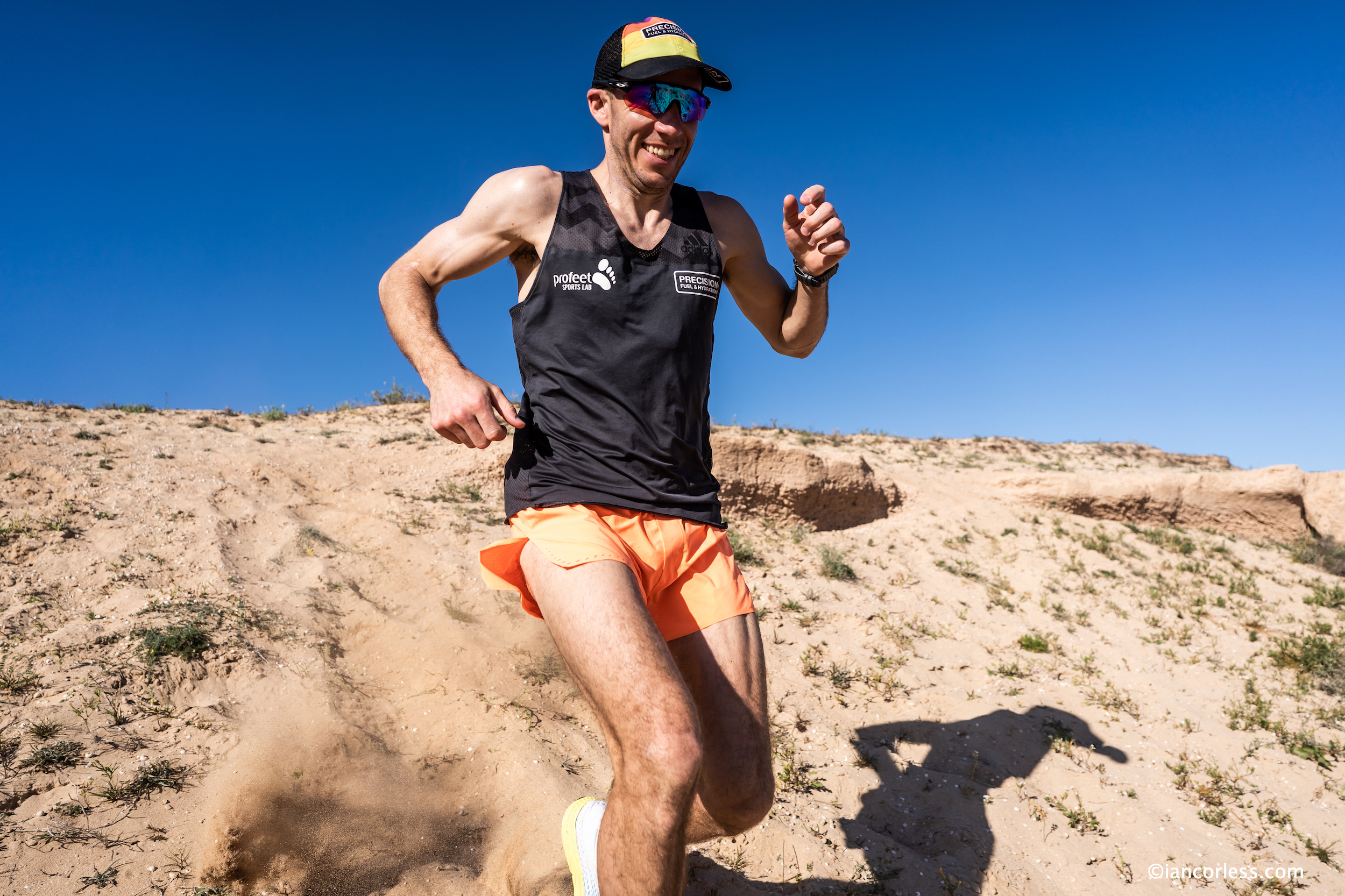
Day 3 of the Lanzarote Multi-Day Training Camp and a long run that included soft sand practice. It was a perfect day… Clear skies, hot temperatures and an opportunity to understand how to run up , down and across soft sand.
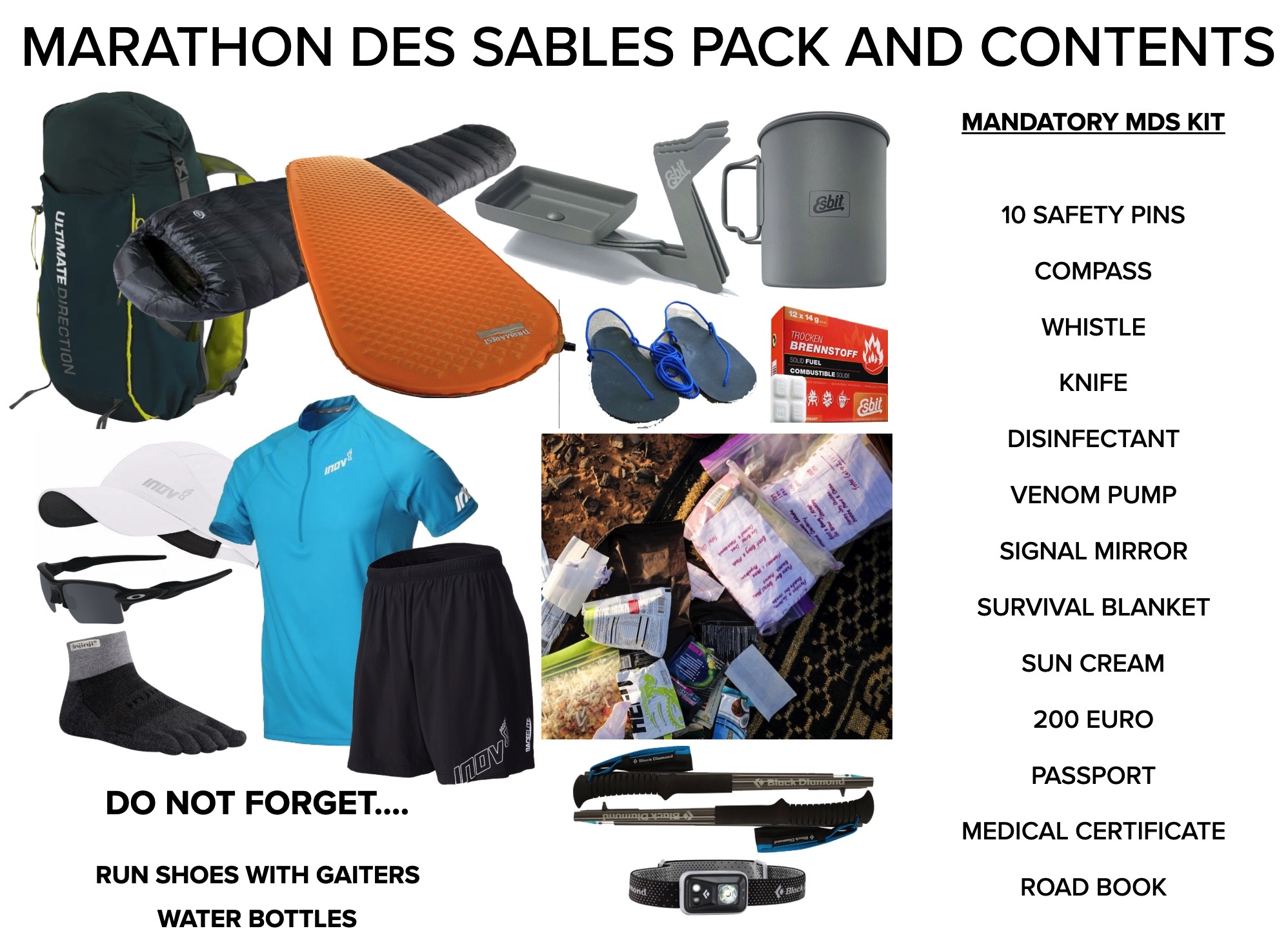
After a break, the afternoon session on ‘Fast and Light’ provided an insight on Fastpacking by Ian Corless and Abelone Lyng. While an emphasis was placed on Marathon des Sables, other races and environments were considered, such as rainforest, mountain and snow/ ice.
MDS Kit
Once again a short recovery run concluded the day.
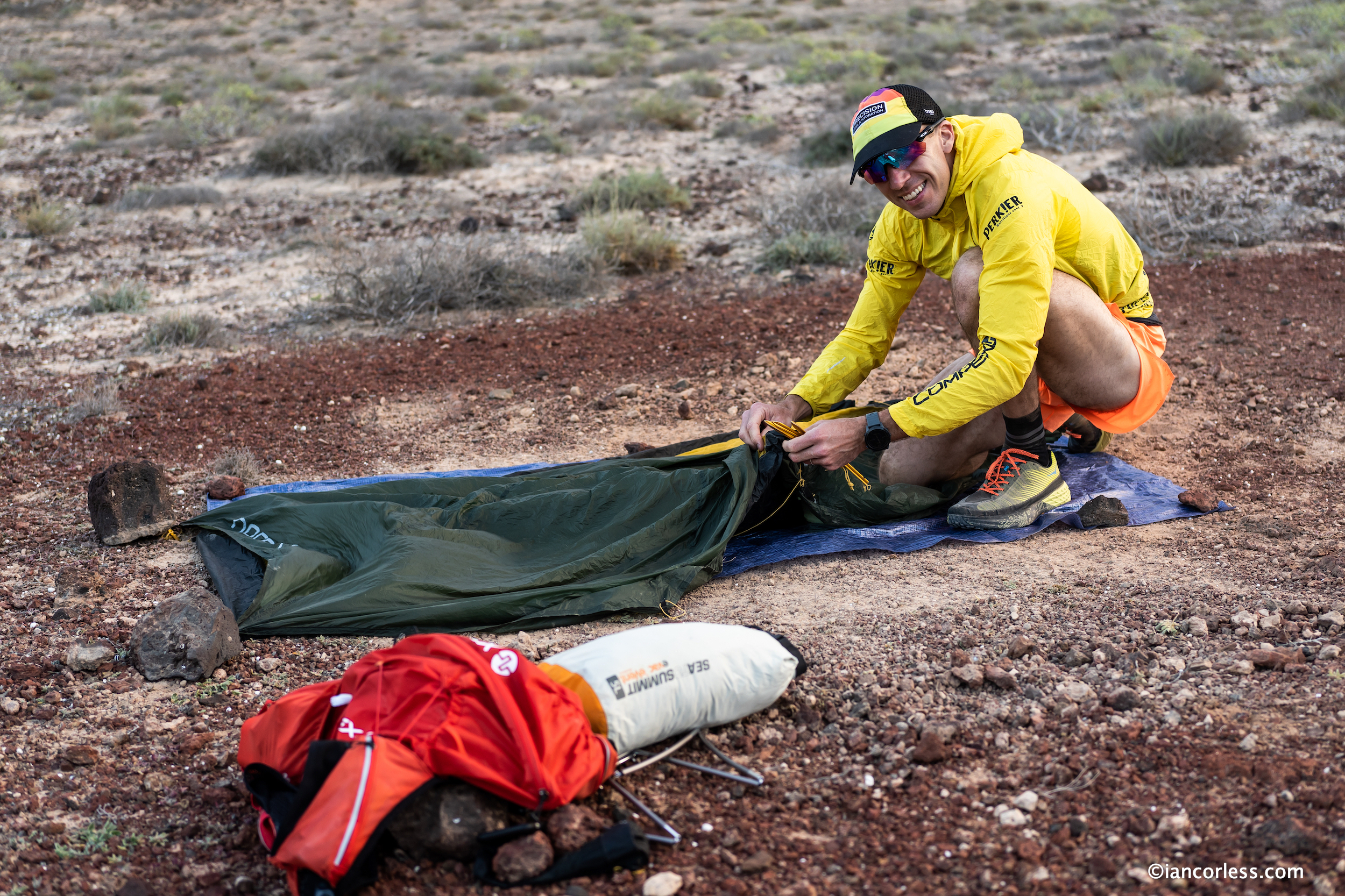
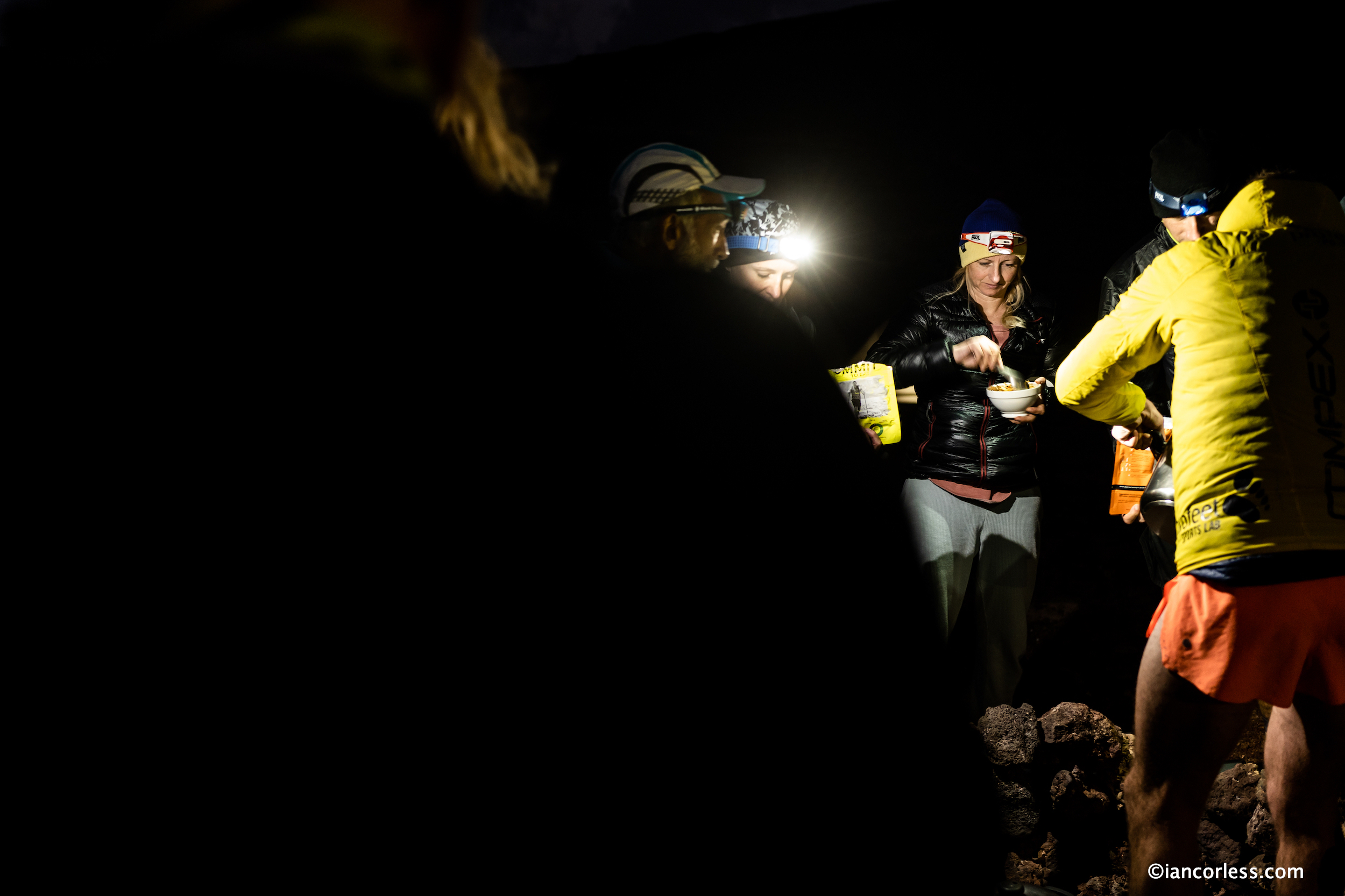
Tomorrow, participants will spend a night under the stars, in bivouac, fine-tuning their self-sufficient skills in a real environemnt, with rationed water and just a tent provided.
Interested in joining us? 2024 is open for booking HERE
At just 70 (ish) meters of vertical, the route may well not seem to hard, however, when you repeat it enough times, it becomes very tough. The target was 10-reps, of course it varies what each individual can achieve…
The decent is a single-track trail of loose stone and gravel and the ‘recovery’ phase is a flat gravel road back to the start. It’s always a great session.
The day concluded with a short recovery session of 30-minutes as the sun set over the lagoon and sea that surrounds Club La Santa. It was a perfect day and stunning weather. Tomorrow, soft-sand.
Interested in joining us? 2024 is open for booking HERE
It was day-1 of the 2023 Lanzarote Multi-Day Training Camp and what a perfect day! The rain from ‘arrival’ day disappeared leaving a perfect sunny and windy day.
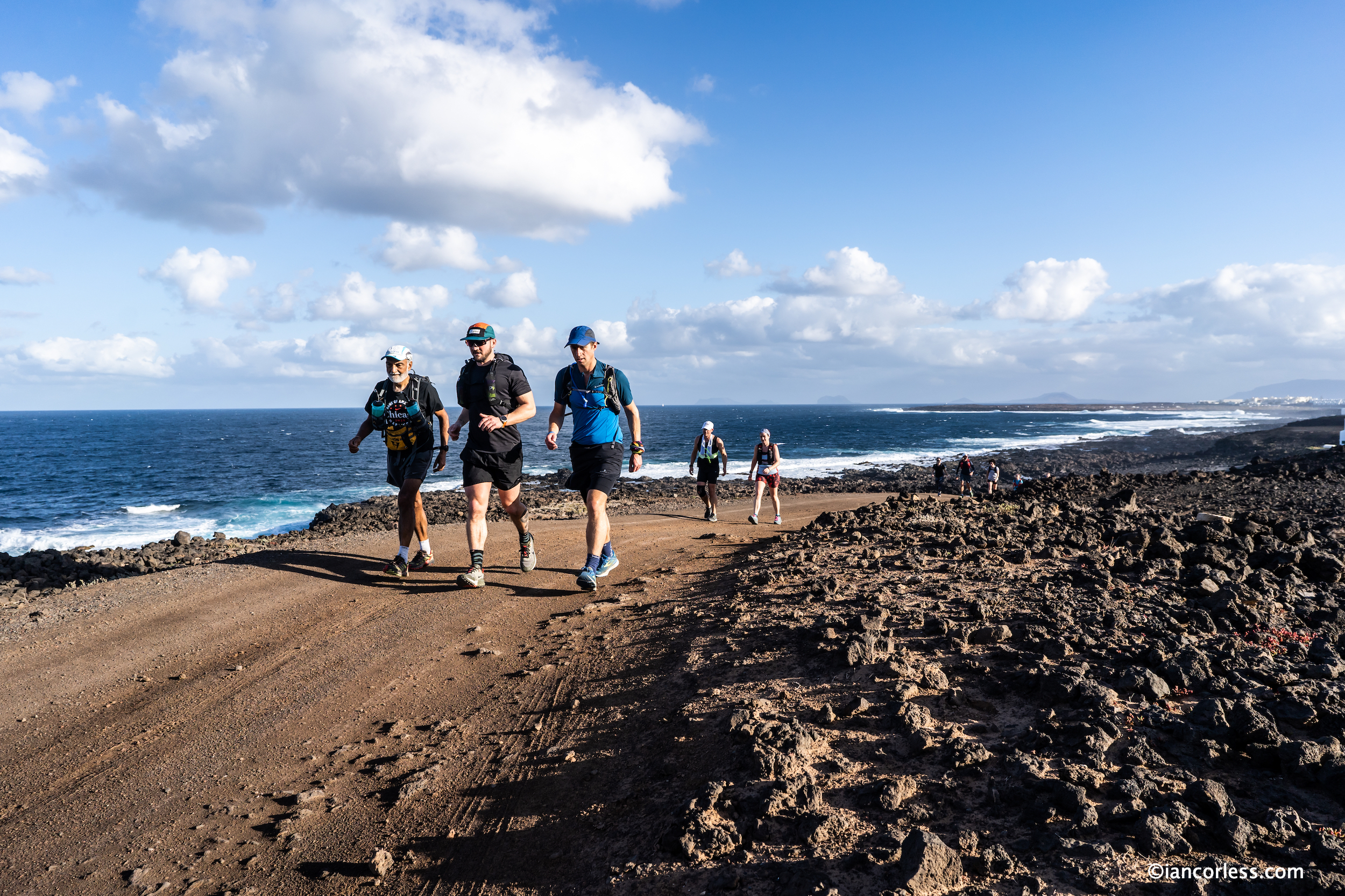
The morning was a 24km ‘Coastal Run’ that had over 50-participants moving along some wonderful, technical single-track on the outward route and easier gravel trails for the run home.
Spilt in to three main groups, Tom Evans and Pierre Meslet guided the faster runners, Ian Corless and Abelone Lyng the middle group and Inge Nijkamp, Kevin Webber and Steve Diederich guided the run/ walker and walkers.
The trails here a stunning and the backdrop superb. Technical trails are compensated with easier non-technical trails but the group bonding, chats and views help the km’s fly past…
After a lunch break, the afternoon was taken up with two talks: the inspirational Kevin Webber told his story of his Prostrate Cancer diagnosis and Steve Diederich (UK agent for MDS) gave an informative talk around MDS logistics.
A 5km recovery run conclude the activities of the day and then relaxation was the order of the day, with some good food, as plans were made ready for day-2.
Interested in joining us? 2024 is open for booking HERE
It’s countdown time to the 2023 Oman Desert Marathon.
Now in its 8th edition, the Oman Desert Marathon will take place January 21st to 24th. A self-sufficient race, the race takes place over 4-stages with a total distance of 165-kms.
January offers excellent conditions for a desert adventure, with highs anticipated and 25-degrees and lows of 17-degrees.
A unique race, the route provides participants the opportunity to explore and discover untouched sands and the highest dunes of Oman while running 47, 55, 42 and 21km.
“The OMD, changed my perspective on ultra-marathon running for the better. The desert is magical and beautiful, but will test you mentally and physically to your limit, but you will be a better person from it. The OMD event should be on every runner’s calendar.” – Adam May.
Arrival in Oman will be on January 20th with transfers to Al Jawharat Resort in Bidiyah. The afternoon will taken up with admin protocols and a race dinner.
Stage 1 – 47km
Satge 2 – 55km
Stage 3 – 42km
Stage 4 – 21km
Daily start times fluctuate and interestingly, Stage 3 has three starts, 1200, 1400 and 1600.
Stage 4 has an 0800 start with the race concluded by 1300 at the Al Jawharat Resort in Bidiyah resort. In the evening, an award ceremony and prize giving will take place.
The Runner’s
While Omani runner’s will make up the majority of the field, there are participants from Spain, France, Ukraine, Italy, Germany, Poland, Britain, Belgium, Switzerland and not surprisingly, Morocco will have the main contenders for overall victory.
King of the desert, Rachid El Morabity, 9x winner of the Marathon des Sables will once again lead the field and he is without doubt, the hot favourite for overall victory.
Mohammed El Morabity
Rachid’s brother, Mohammed, will be his main contender and should Rachid have a bad day, his brother will be able to pounce.
Aziz Raji
For the women, desert specialist, Aziz Raji, also a winner of Marathon des Sables, will be the main protagonist not only for the female victory, but quite possibly, a highly-ranked overall placing.
How to follow:
Daily reports and images will be issued on this website (connection allowing) each evening and a full and detailed race summary will follow after January 24th. On IG, @iancorlessphotography and @marathonoman
We look forward to welcoming you to the Oman Desert Marathon experience.
Gonzalo Calisto at the 2016 TCC. It was later we found out he had tested positive for EPO at the 2015 UTMB.
Trail, mountain, and ultra-running is booming and it’s clear to see. Circuits have increased, prize money has increased, ‘pro’ runner numbers have increased, and it must be accepted, with the potential rewards both financially and egotistically, there will be some tempted to dope.
Mark Kangogo at Sierre-Zinal an example. And now, Esther Chesang!
Trail running, unlike athletics, be that on the road or track, is unpredictable; tough and varied, with ups and downs, rocks, scree, and technicality, it draws comparisons to mountaineering, not road running. It’s the experience, the doing, the completing that brings the rewards. Take a marathon, on the road you may be able to complete in say 3-hours… On trail, the same distance could take, 4,5, 6-hours or even longer for the same runner. Road running rules don’t apply, a trail runner’s needs are different, except maybe for the sense of fair play, truth, and integrity.
Well, times are a changing
Look at cycling, athletics, and other financially lucrative sports. Doping has been a problem. Trail has been relatively void of positive cases. Note, I say positive cases, not void of doping. It’s fair to assume that doping has happened, but it’s impossible to confirm at what levels. The 2015 case of Gonzalo Calisto testing positive for EPO at UTMB was the writing on the wall. I wrote at length about the case and issues. Read HERE.
It was a call to awareness with the #cleansport tag being used on social media and many prominent trail runners backed up the call. It all got a little muddy with the blanket of the Quartz Program which effectively was/is as useful as a chocolate teapot.
Now, the iconic Sierre-Zinal has had to suffer and endure two positive tests for the respective male and female winners. Ridiculously, the female positive was announced January 2023! She was confirmed positive in May 2022 after a road marathon! Oh, my word, we have a long way to go.
Is now the time to act, before the sport we love heads in a southern direction? If left alone, we may not be able to turn the tide.
But how prevalent is doping in trail, mountain and ultra?
A research paper published August 2017 (HERE) stated that : ‘estimated prevalence of past-year doping was 43.6%’ (from one event) –from a survey of 2167 athletes at two sporting events. That’s an horrendous statistic. The conclusion, ‘doping appears remarkably widespread among elite athletes, and remains largely unchecked despite current biological testing.’ Now this wasn’t trail running, but, one has to maybe assume, the situation is worse than maybe we think…
Skyrunning in many ways paved the way with testing, admittedly not at all events due to cost. But at key events, World Championships for example, WADA tests were conducted. Here is a quote from 2014:
“In compliance with the WADA protocol,11 anti-doping tests were carried out across the three disciplines, which included two for EPO (Erythropoietin). The tests were based in part on arrival order and in part random which included several members of the podium in each discipline. All results were negative.”
UTMB incorporated testing in 2015 and look what happened, Gonzalo Calisto was caught.
Trail runners are effectively hippies. We are on the outside, a weird and wild bunch of adventure and adrenaline seekers who do not want to be confined by rules. This rings true for well over 90% of us, but for those at the top, the pinnacle, who are now becoming professional, this is a business. In any business, corruption can take a hold and doping steals rewards, glory, and recognition.
ITRA, IAAF, WMRA, USATF, Skyrunning and the list goes on. Is it time for trail, ultra and mountain running to be incorporated within one Global Federation where rules and regulations could be imposed? Until now, the answer has been no, the excuse being trail running would lose its freedom and spirit. Many are opposed that a ruling body should not only dictate rules but also profit from ‘our’ sport. Look at the current divisive arguments on the growth of the ‘by UTMB’ and Ironman merger, they only reflect and affirm these thoughts for some.
Do we want in-competition and out-of-competition rules that includes comprehensive random drug testing?
Pro-runner or not, at the end of the day, I think it’s fair to say that you (we) got into the sport not for rewards, glory, and money but through heart. First and foremost, we had a need for nature, adventure, freedom, and open spaces, this was the motivator, not a podium and a cheque.
Of course, rules do already exist, ‘no doping’ is a rule for all sports, mandatory kit (for some races) is a requirement, and the list goes on. But the list in many cases is left to the RD, race organization and more importantly, budget. There is no one set of rules that should be adhered to worldwide and this can be part of the problem, which is why the IOC had the Lausanne Agreement.
Is it time for this to happen?
The fear of cheating, being ‘found out’ and the ongoing disgrace, public humiliation and shame may well have served as a deterrent in trail, until now.
The IAAF finally stepped in to suppress the ever-growing problems of doping with a set of rules to help control a rising problem. The IOC then took this one step further at the Olympics with one set of codes, rules and regulations that blended all anti-doping restrictions in one with theLausanne Declaration. This was a pivotal moment and within one year, WADA (World Anti-Doping Association) was created.
WADA oversees testing of several hundred thousand athletic blood and urine samples annually: ‘…of which 1–2% test positive. Measures using the Athlete Biological Passport suggest a higher mean prevalence of about 14% positive tests. Biological testing, however, likely fails to detect many cutting-edge doping techniques, and thus the true prevalence of doping remains unknown.’ – August 2017
It was like the Lord of the Rings – One ring (rule) to rule them all.
Simple huh, WADA produce a list of banned substances. You, as an athlete, look at the banned list and DO NOT use anything that is listed.
Argh, but there is always a loophole. The wonderful TUE – Therapeutic Use Exemption. Amazing how many asthmatic runners are out there. Yes, WADA had to accept that some athletes have a legitimate medical condition that allows the use of a TUE.
The TUE has been used to gain an advantage, no question.
And what about NSAID’s? Read a report HERE about Parkrun. Running 5km is a long way from trail and ultra, but it shows a trend. Now WADA do not list these on the banned list, but, UTMB have gone one step ahead HERE.
Should we just relax? After all, if the winner of Sierre-Zinal takes drugs, it doesn’t really impact on me or you, the slow guy or gal who is out running for fun and adventure, does it?
Well yes, it impacts on the core and the ethos of the sport, the sense of fair play.
So here we are, 8-years on from Gonzalo Calisto at UTMB, a pivotal moment, and now we are once again fuelled by discussion of the two positive cases at Sierre-Zinal. Of course, there have been other positive cases in this interim period.
But the doping fire has been re-ignited.
Update, just hours after this post, Kilian Jornet posted THIS on IG.
There is much talk, opinion, and discussion, for me, it’s time to seize the momentum and move in to 2023 with some new impetus.
Mathieu shot to fame after the 2022 UTMB when he traded blows with Kilian Jornet, finally placing 2nd. However, Mathieu is not the new kid on the block… His results go back to 2016 with podium placings in his home of Canada at Quebec Mega Trail and Ultra Trail Harricana de Charlevoix.
The rise in the sport has been steady and planned, in 2018 for example, Mathieu placed 13th at UTMB, in 2019 10th at CCC, and in 2021 he showed the promise of victory with 3rd at UTMB.
Mathieu leading 9x MDS champion, Rachid el Morabity
While he may be considered a single-day specialist, Mathieu dipped his toes in stage racing with participation in the 2021 Marathon des Sables – an edition that has now become infamous due to the heat and sickness bug that swept through the race. Mathieu was primed to stir the race up on the long day, sadly, the sickness hit him and he went in to survival mode. He still managed 5th overall.
Now The Coastal Challenge awaits; heat, humidity and the prospect of running along the coast and in and out of the mountains for a week.
The view from camp 3
TCC is the ultimate Costa Rican multi-day adventure. Hugging the coastline of the tropical Pacific, the route weaves in and out of the Talamancas; a coastal mountain range in the Southwest corner of this Central American country. Ever-changing terrain challenges each participant, from wide, dusty and runnable fire trails to dense and muddy mountain trails. River crossings, boulders, swimming through rivers, passing under waterfalls, surviving long and relentless beaches. Finally, the finish in the incredible Corcovado National Park, a Unesco World Heritage site, with a stunning final loop around Drake Bay before departing for their journeys home via speedboat.
The Everest Trail Race (ETR) finally was all systems go after an extended break due to the Coronavirus situation. Needless to say, the return was welcome, not only by ETR staff but all the runner’s, many who had postponed entries for 12 or even 24-months.
Nepal is a magical place and to be back in the magic was special.
ETR organisation had not been dormant between 2020 and 2022, the opposite. With the ever expansio of gravel roads leading toward Lukla, it was important to return ETR to more isolated and raw trails, so, in comparison to pre-2020, the 2022 race would be a new experience, particularly over stages one to four with stages five and six remaining roughly the same to 2019.
Travel is coordinated so all participants meet in Istanbul for an onward red-eye flight through the night to arrive in Kathmandu mid morning. During the Covid period, Kathamandu has not stood still either. There have been major improvements to the airport and what was a very painful arrival and immigration procedure is now considerably less painful if you have the relevant documents, photos and cash to pay for an entry visa.
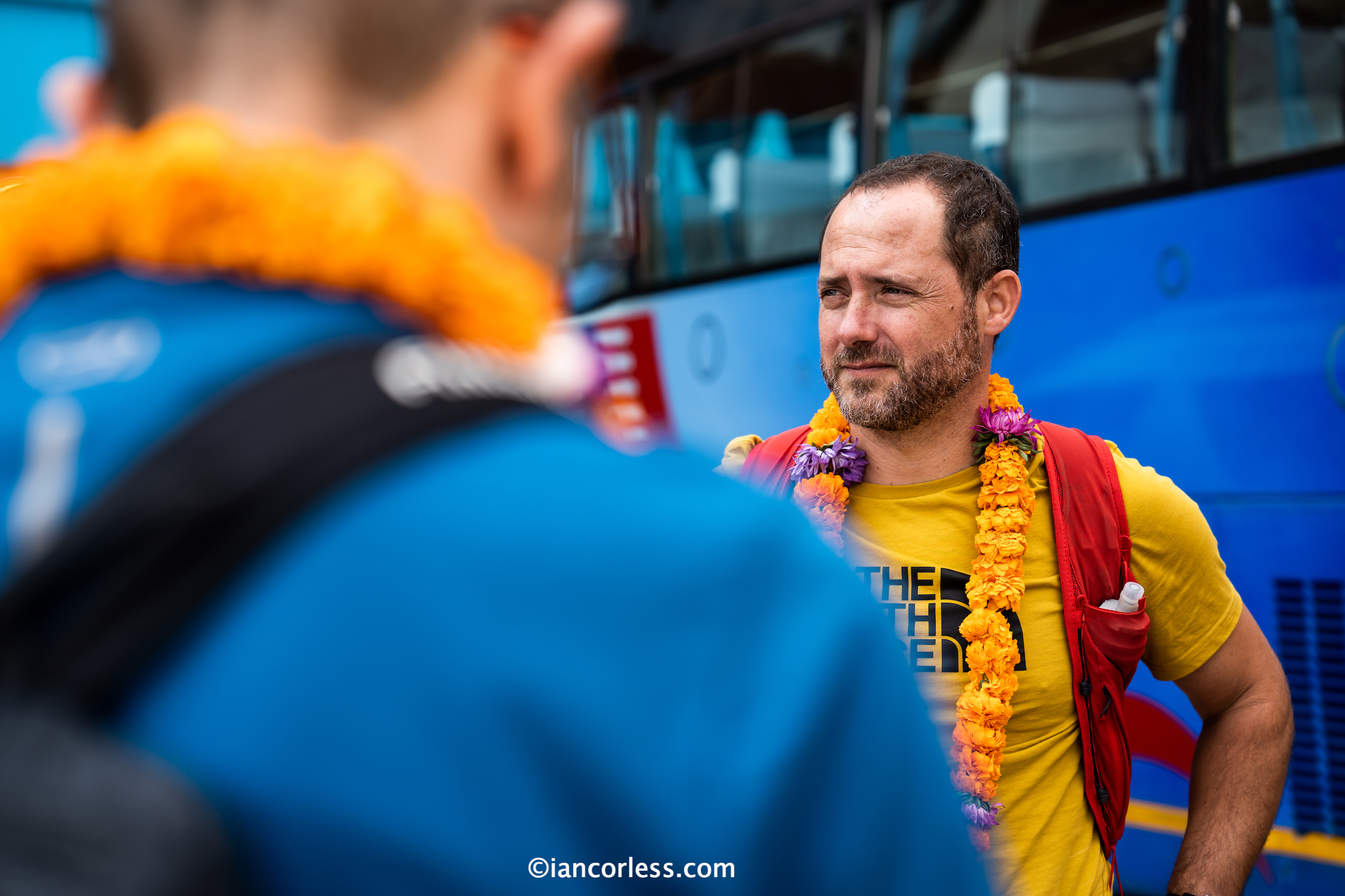
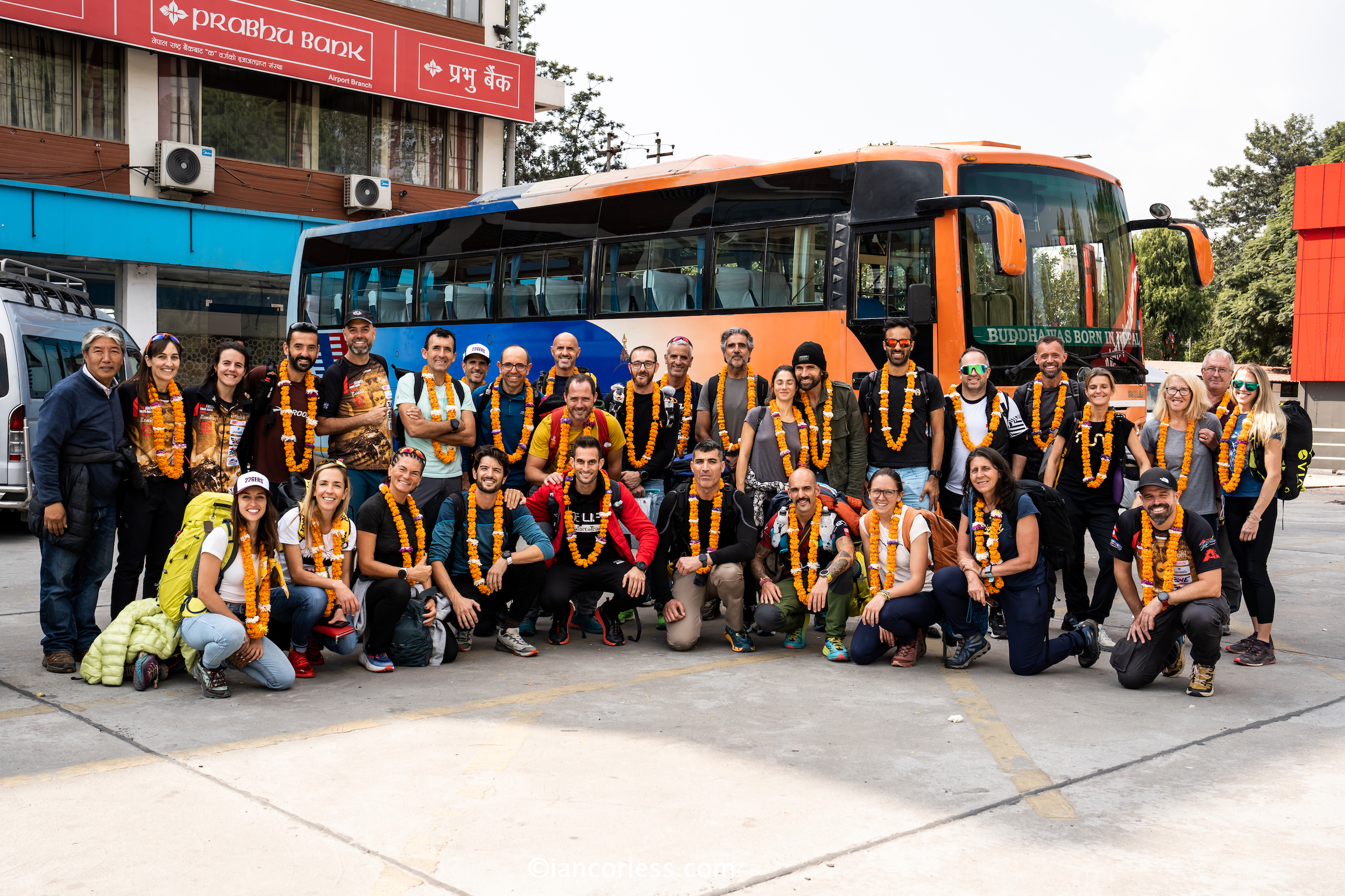
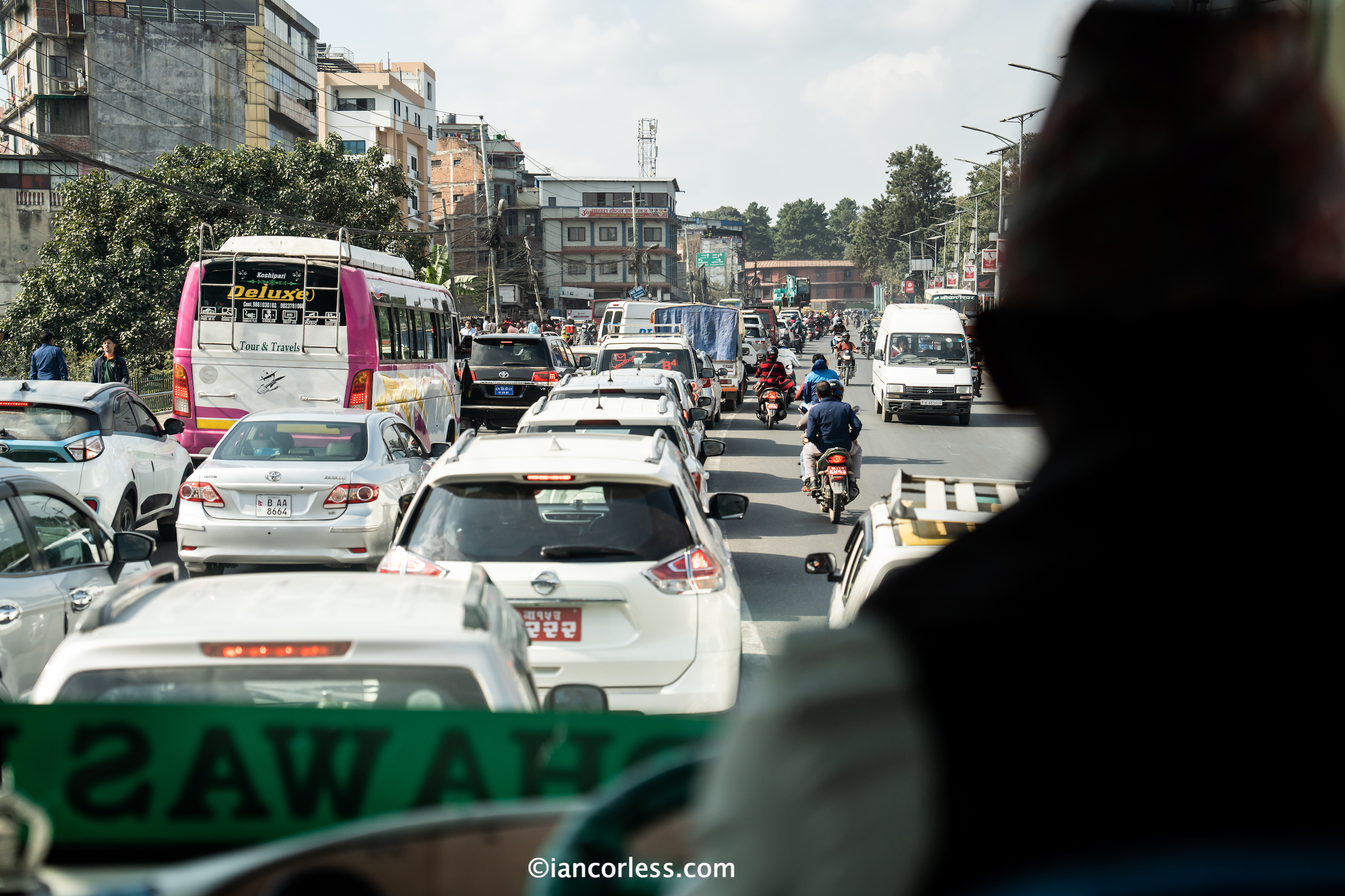
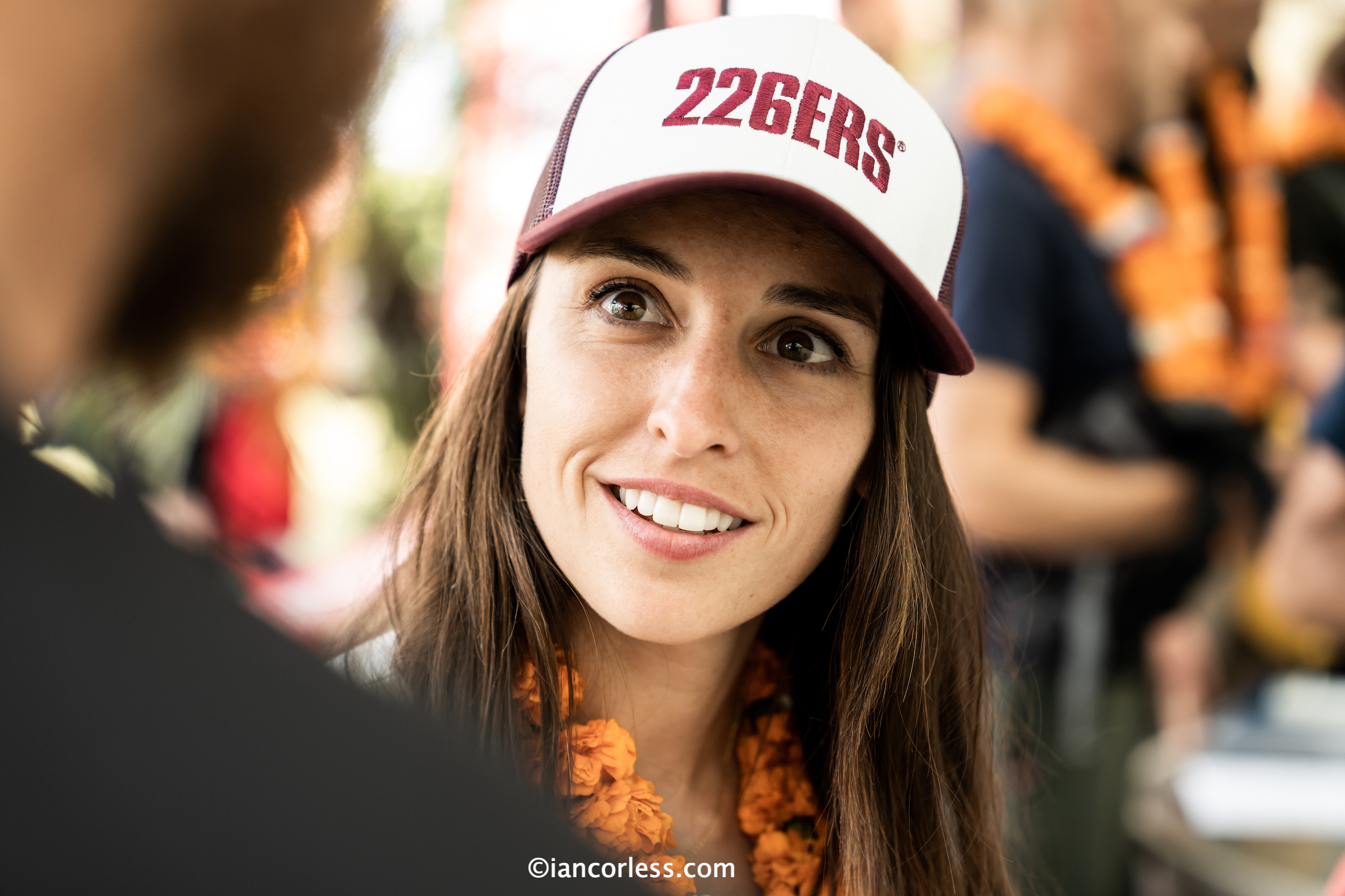
Everyone is welcomed at the airport with a traditional garland and then it’s transfer time to the hotel which will be home for the next two days. For those who have not been to Kathmandu before, the driving is always somewhat of a shock. Organised chaos is the easiest way to explain it.
Arrival at Hotel Shanker, a calm and hidden oasis in noise and craziness of Kathmandu is welcome. Everyone is greeted and then it’s straight into initial race admin before relaxation time after long travel.
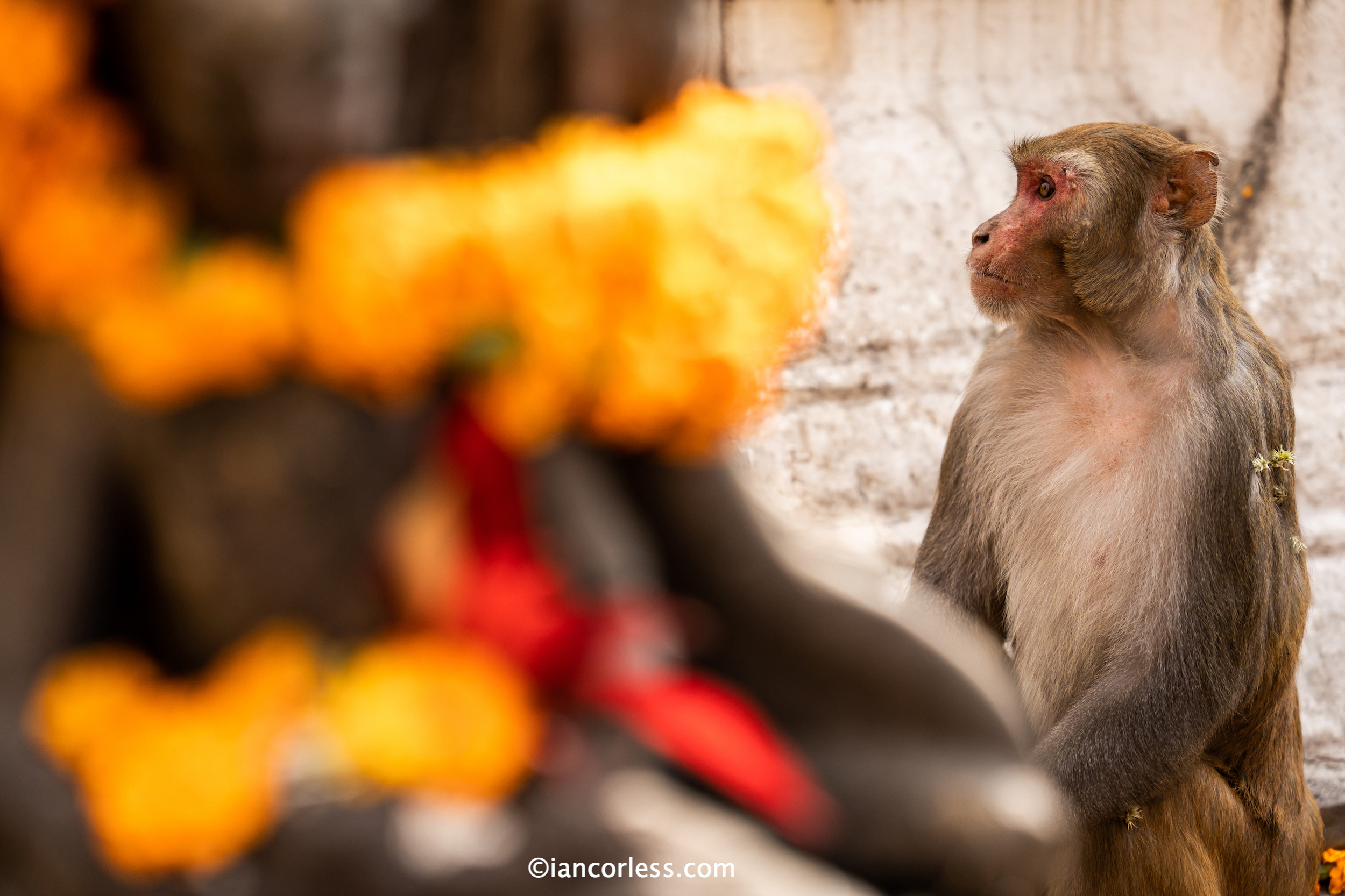
Day 1 morning is a group excursion to the Monkey Temple and Patan. The Monkey Temple for 2022 was considerably busier than other years due to timing of an important religious festival. It was rammed with people but that only added to the atmosphere.
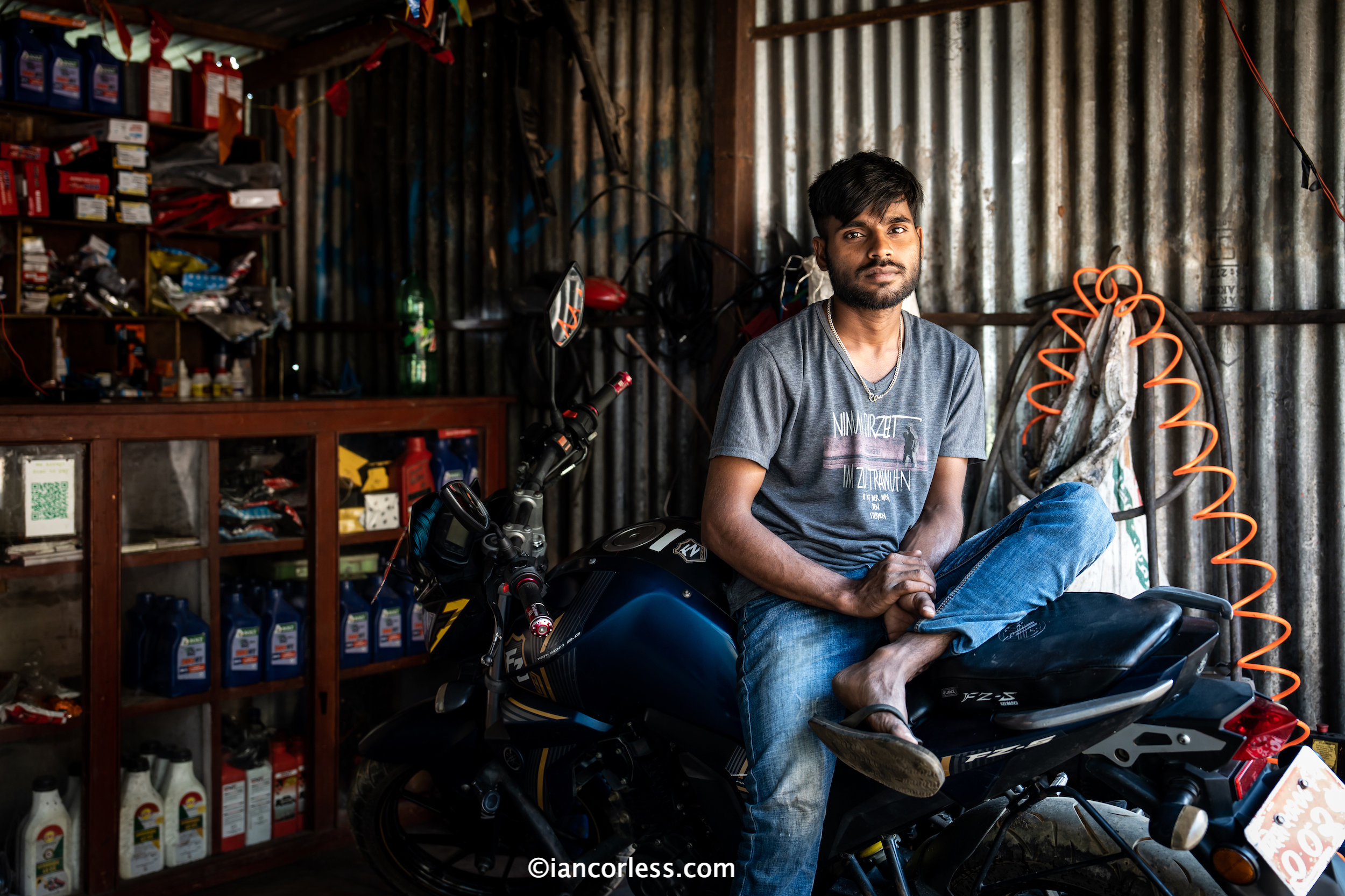
Of course, it’s always an eye-opener to experience a place like this. No matter how many times you visit, there is always something new and of course, it’s a popular place for beggars who hope to monetise the charity of the visitors.
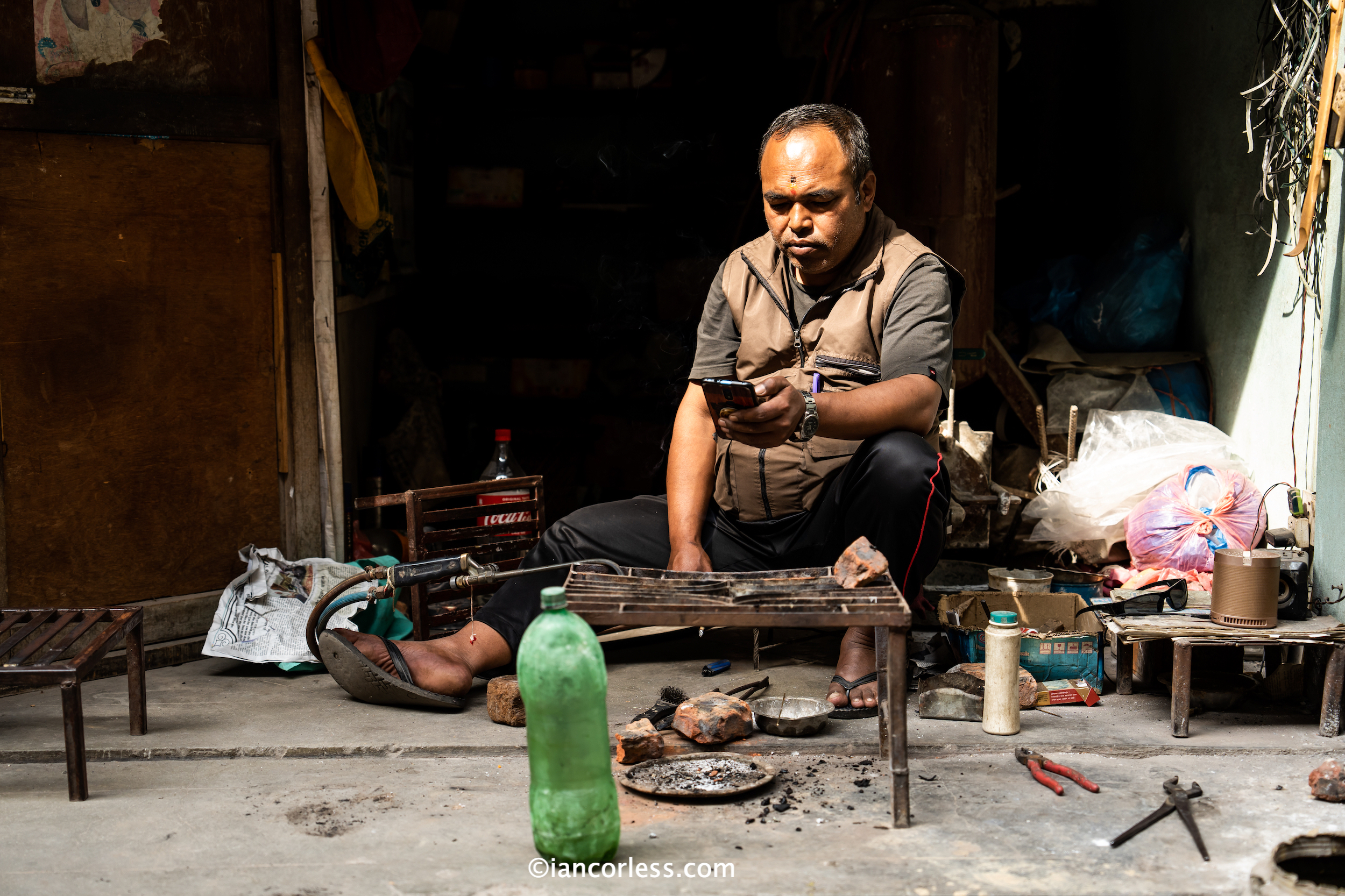
From the Monkey Temple to historical Patan. *Patan, also known as ‘Lalitpur’, the city of artisans, lies 5 km southeast of Kathmandu, and is home to the valley’s finest craftsmen who have preserved such ancient techniques as the repoussé and lost wax process used to produce exquisite sculptures. The city retains much of the old charm with its narrow streets, brick houses and multitude of well-preserved Hindu temples, Buddhist monasteries (vihars) and monuments. (*https://ntb.gov.np/patan).
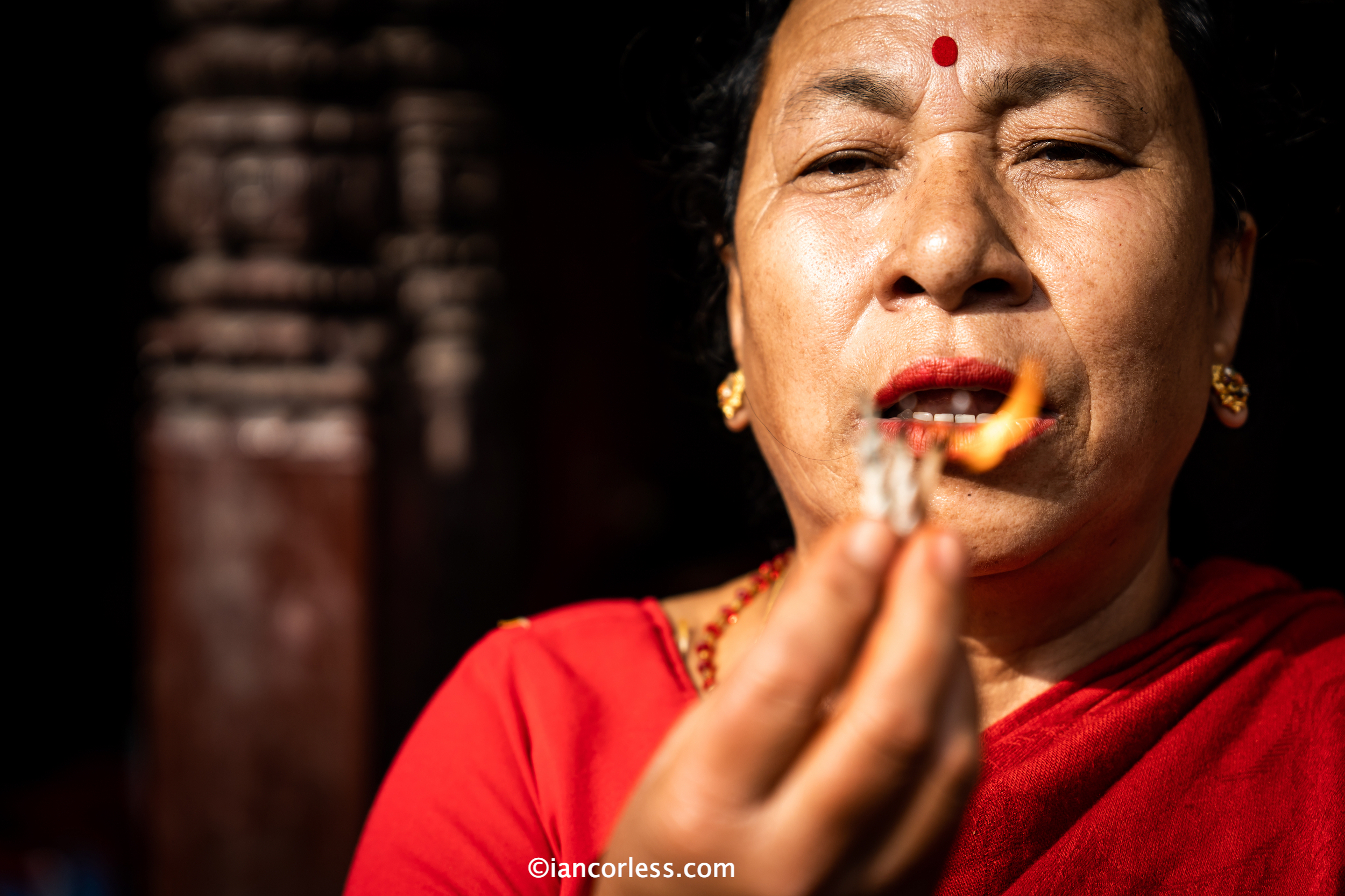
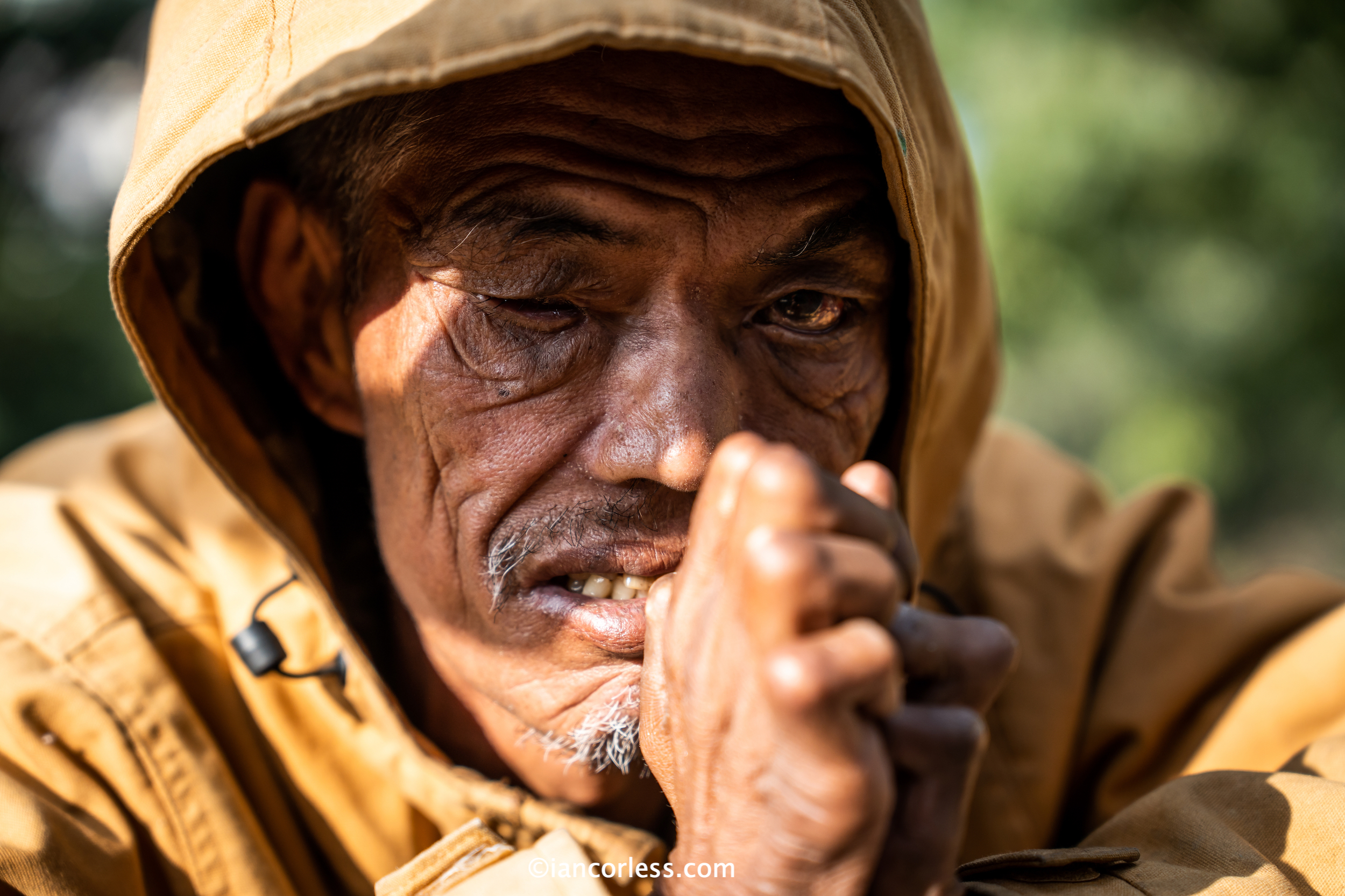
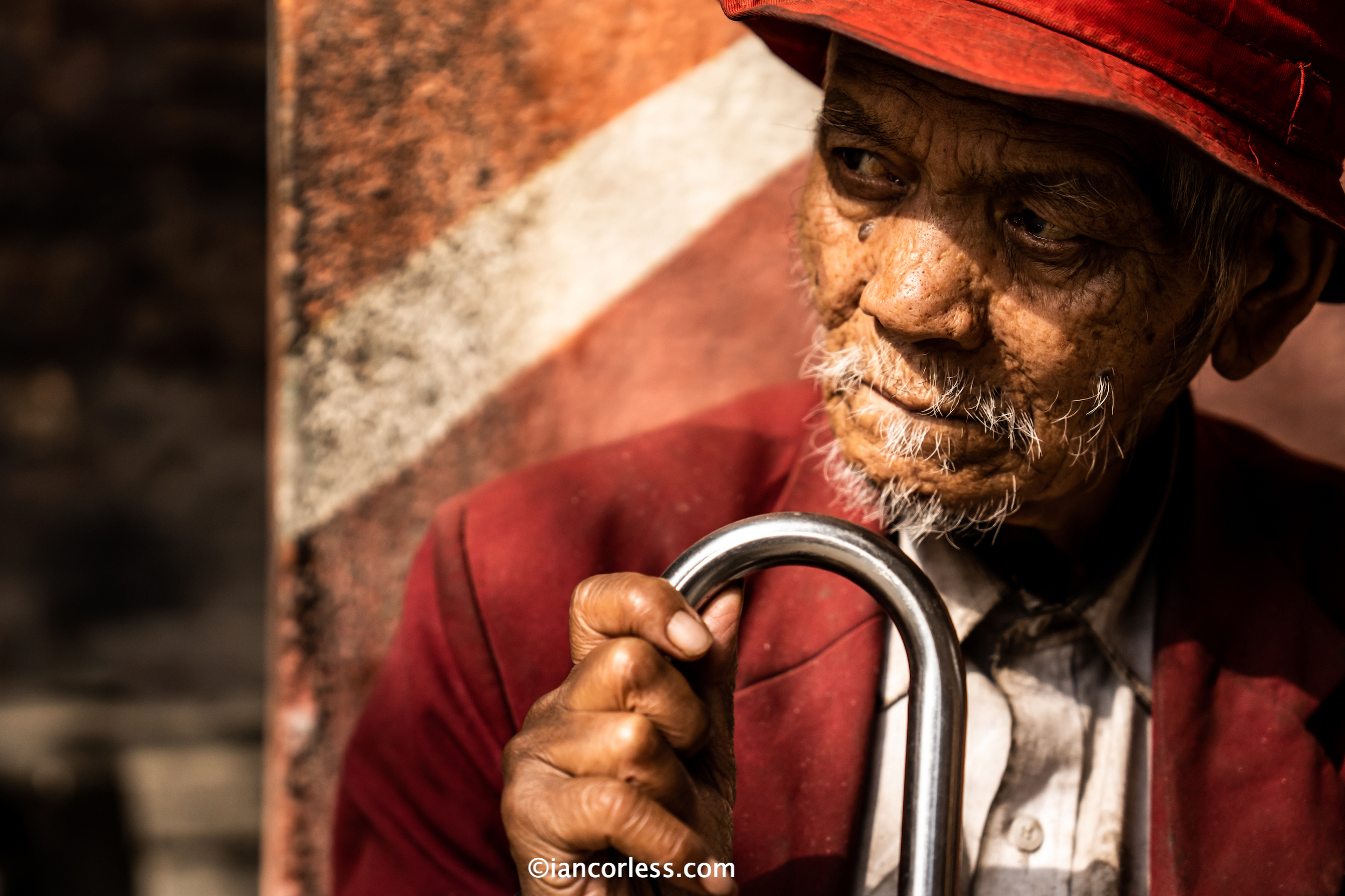
The buildings, the winding streets, the noise and colour – always special. But for many, the people are what is interesting… So many characters full of life, history and colour.
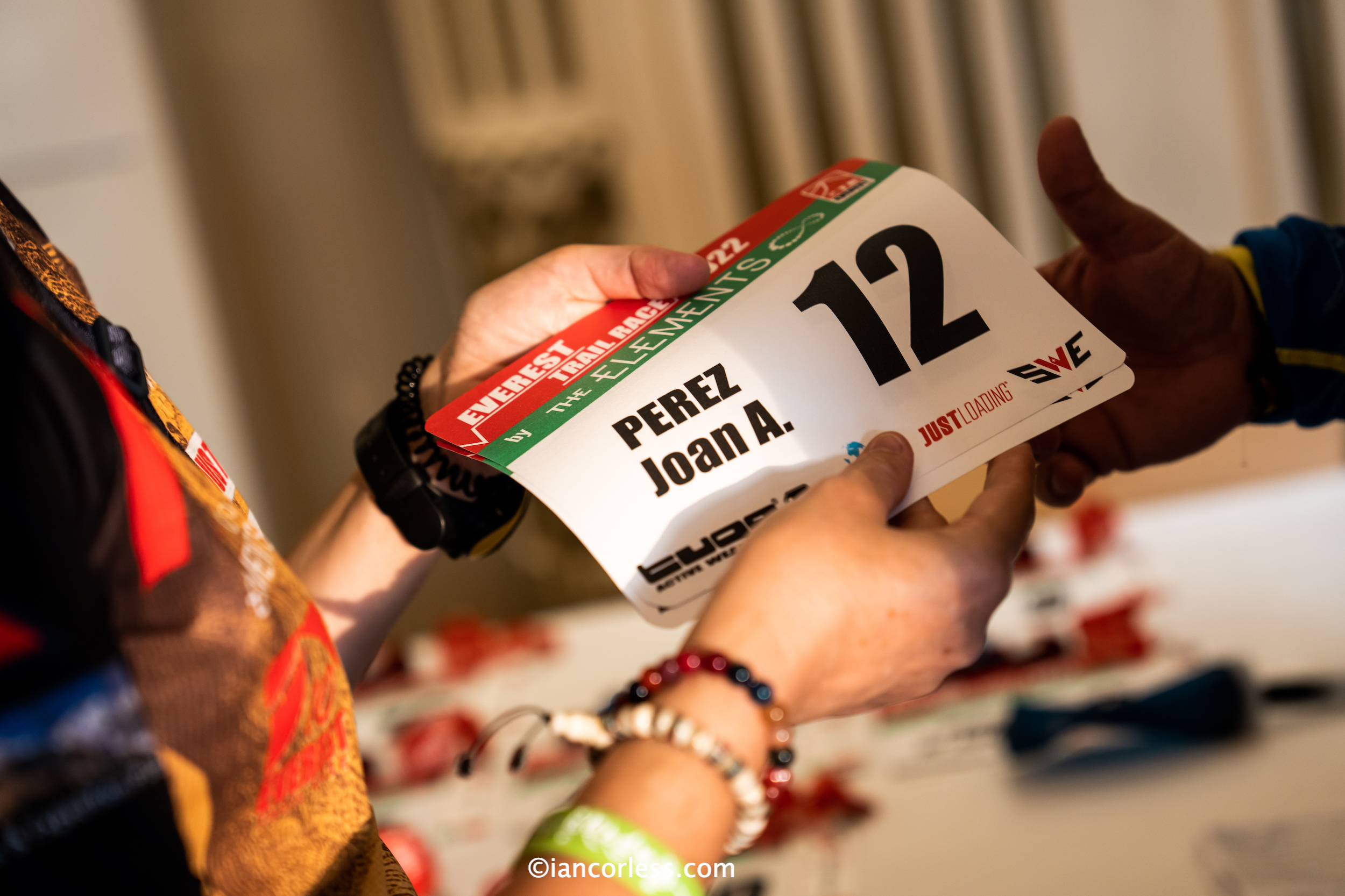
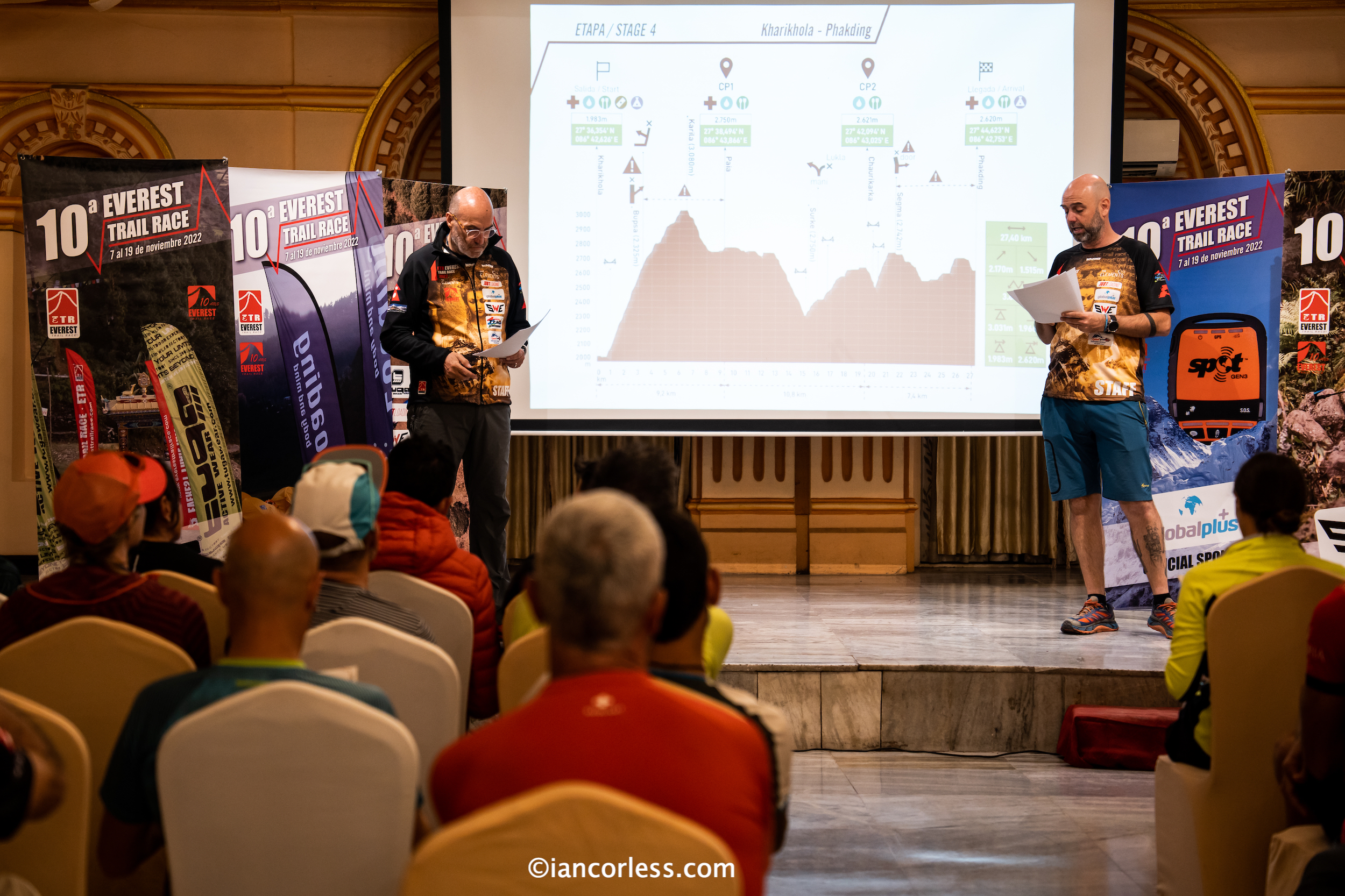
After a morning of relaxation and sightseeing, late afternoon is taken up with pre-race admin checks, number collection, medical checks and onwards to the evenings welcome dinner and race briefing.
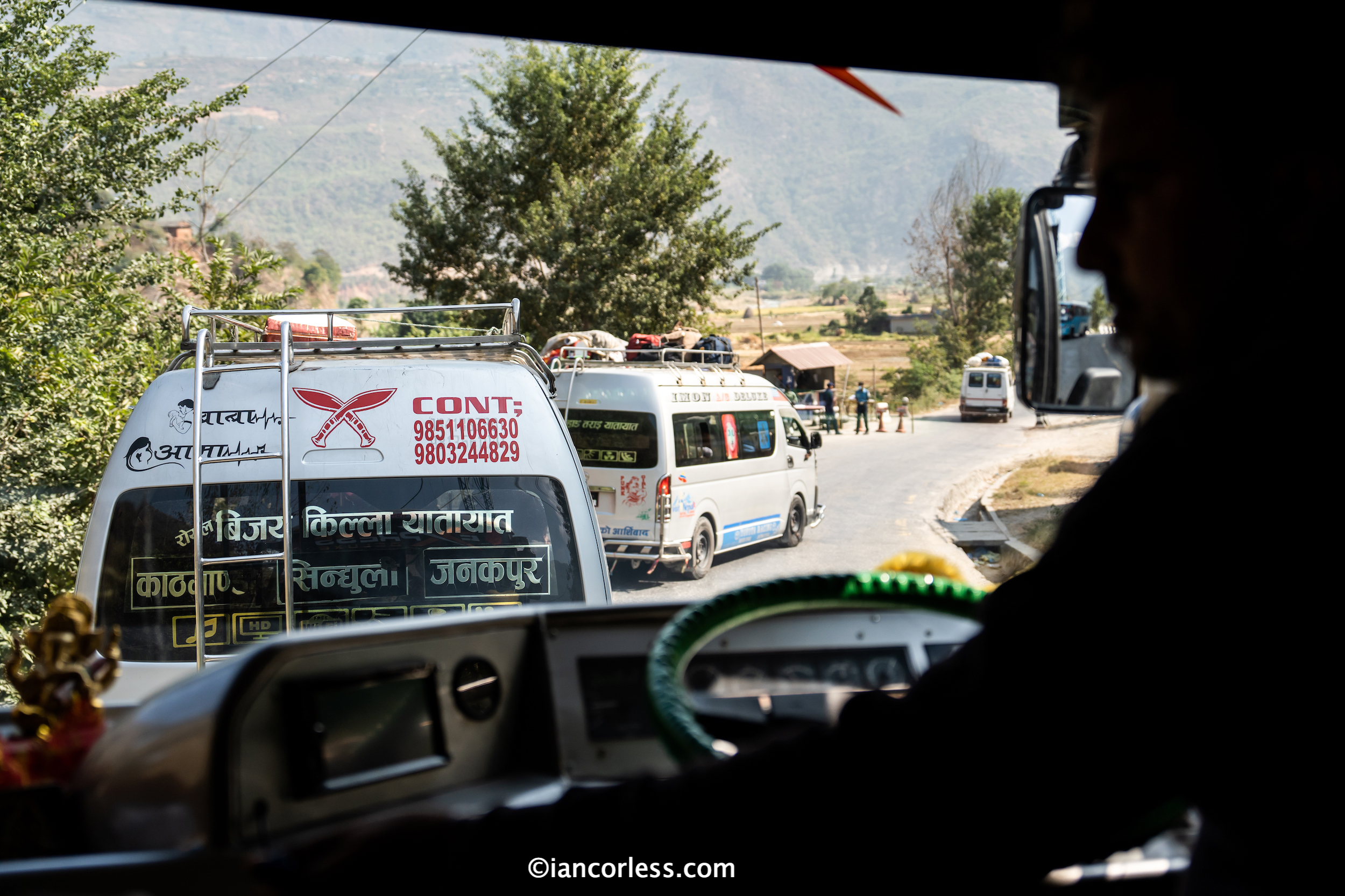
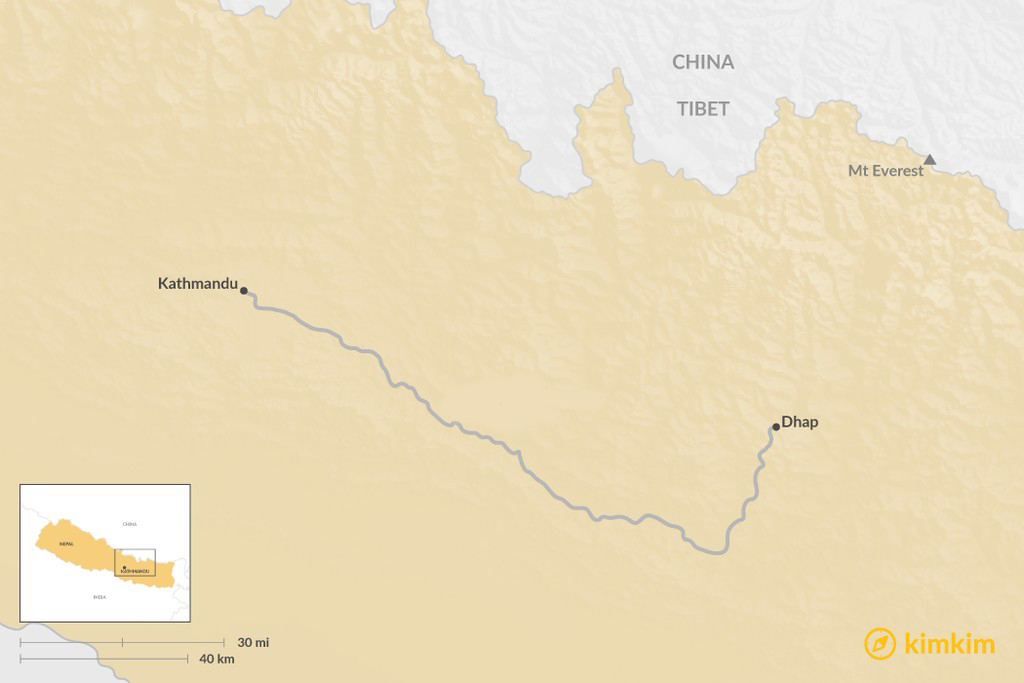
Travel to camp 1 in Dhap is via bus and it’s a long and lengthy journey of 8 to 12-hours.
Of course regular stops break up the journey and there is an opportunity to see local colour and character on the way, one of the real benefits of travel via road in comparison to taking internal flights.
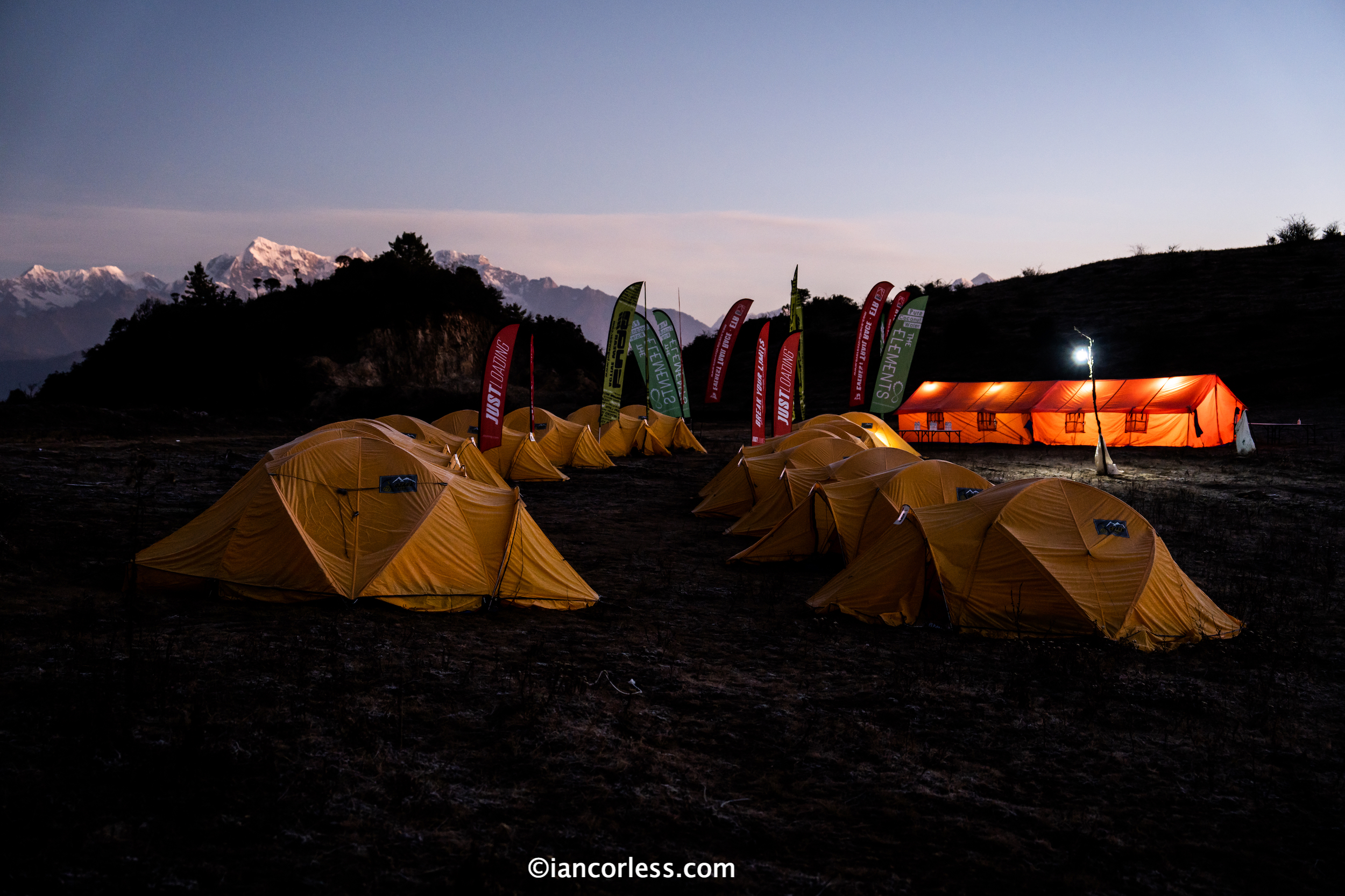
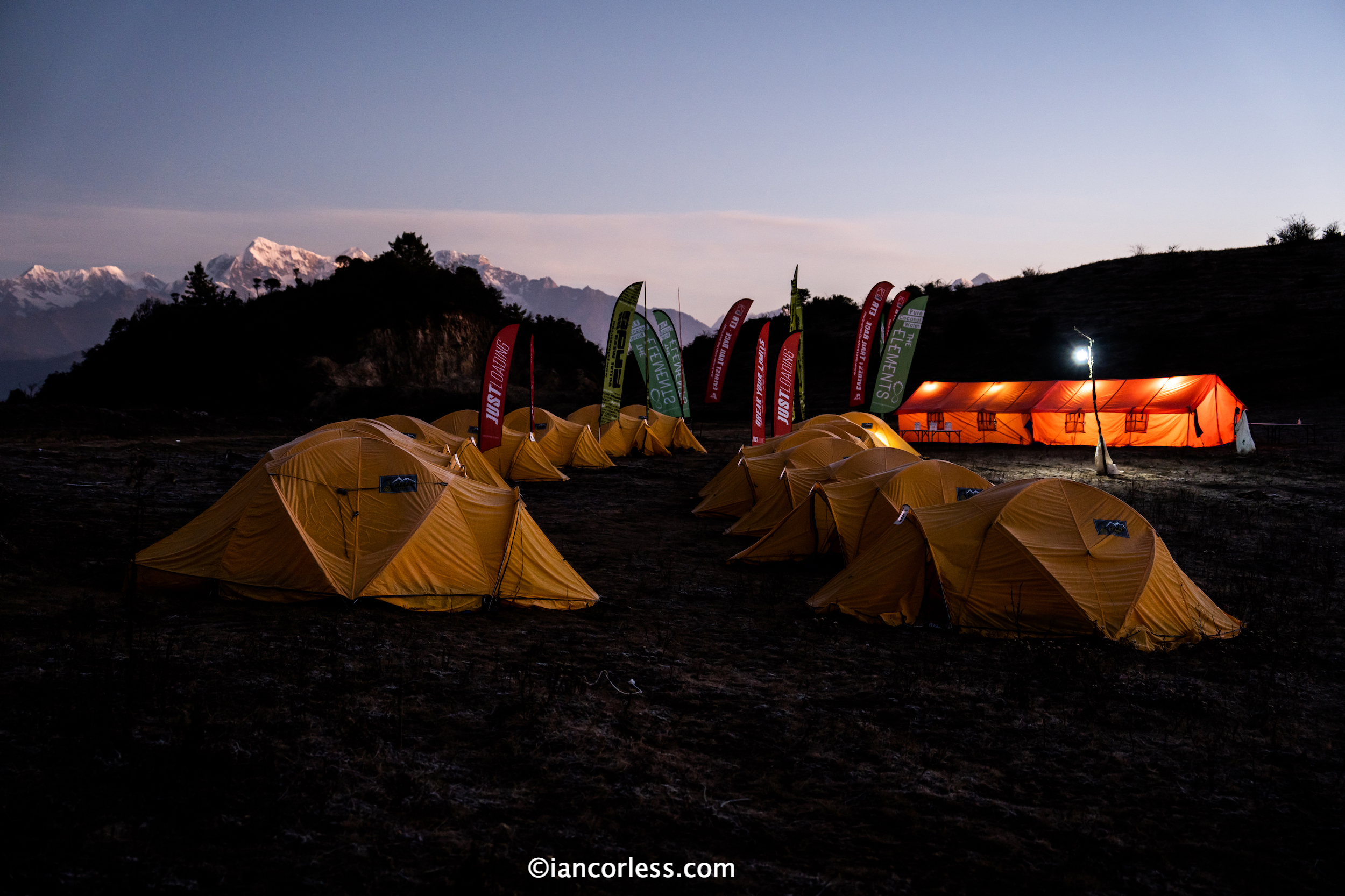
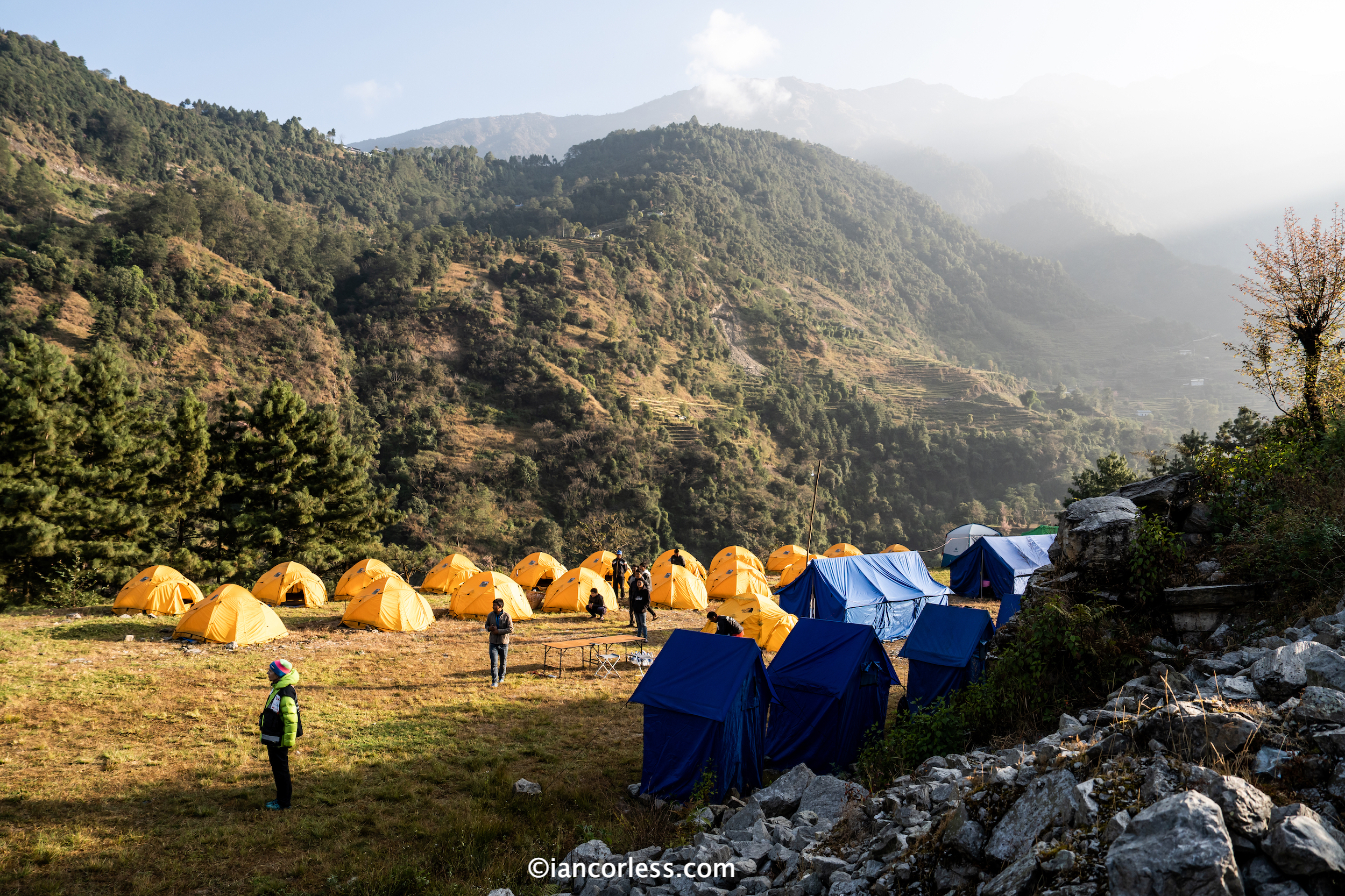
Arrival at camp 1 eventually comes. Camp is set up in advance and the glow of lights and yellow tents suddenly makes the whole experience come to life. Now, the ETR finally begins and everyone spends a first night in a tent.
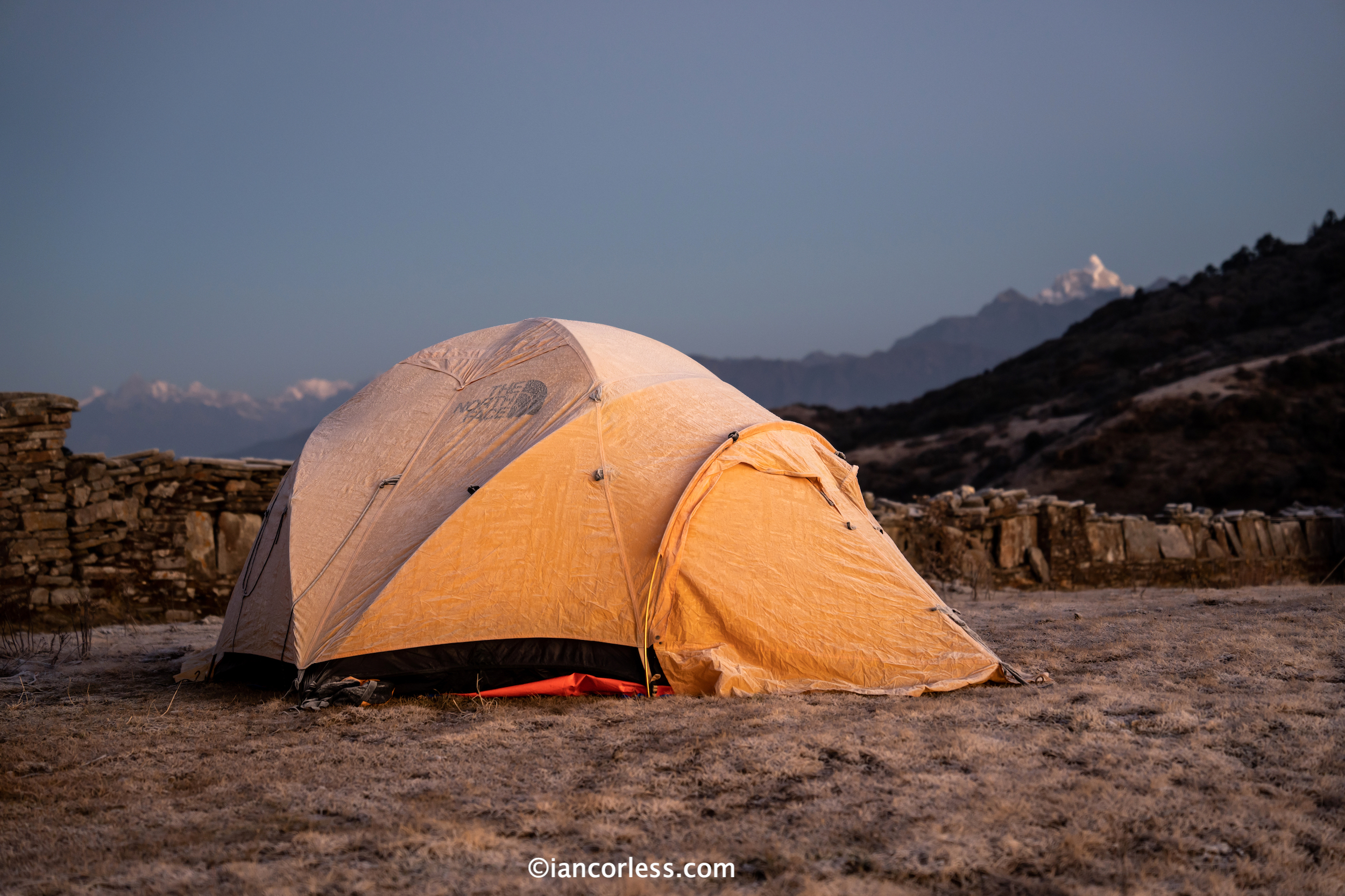
A first night under the stars and by Nepal standards in November, it was a relatively mild despite the layer of frost on all the tents and on the ground.
Participants were undecided if it had been cold or not, basically this came down to how good and warm their sleeping bags were. If a runner felt cold last night, the omens are not good for how well they will sleep in the coming days.
Warm sweet tea is a great way to start a day, especially while relaxing in a sleeping bag. But despite that luxury, breakfast called and the need to add layers and absorb calories for the day ahead was an immediate priority.
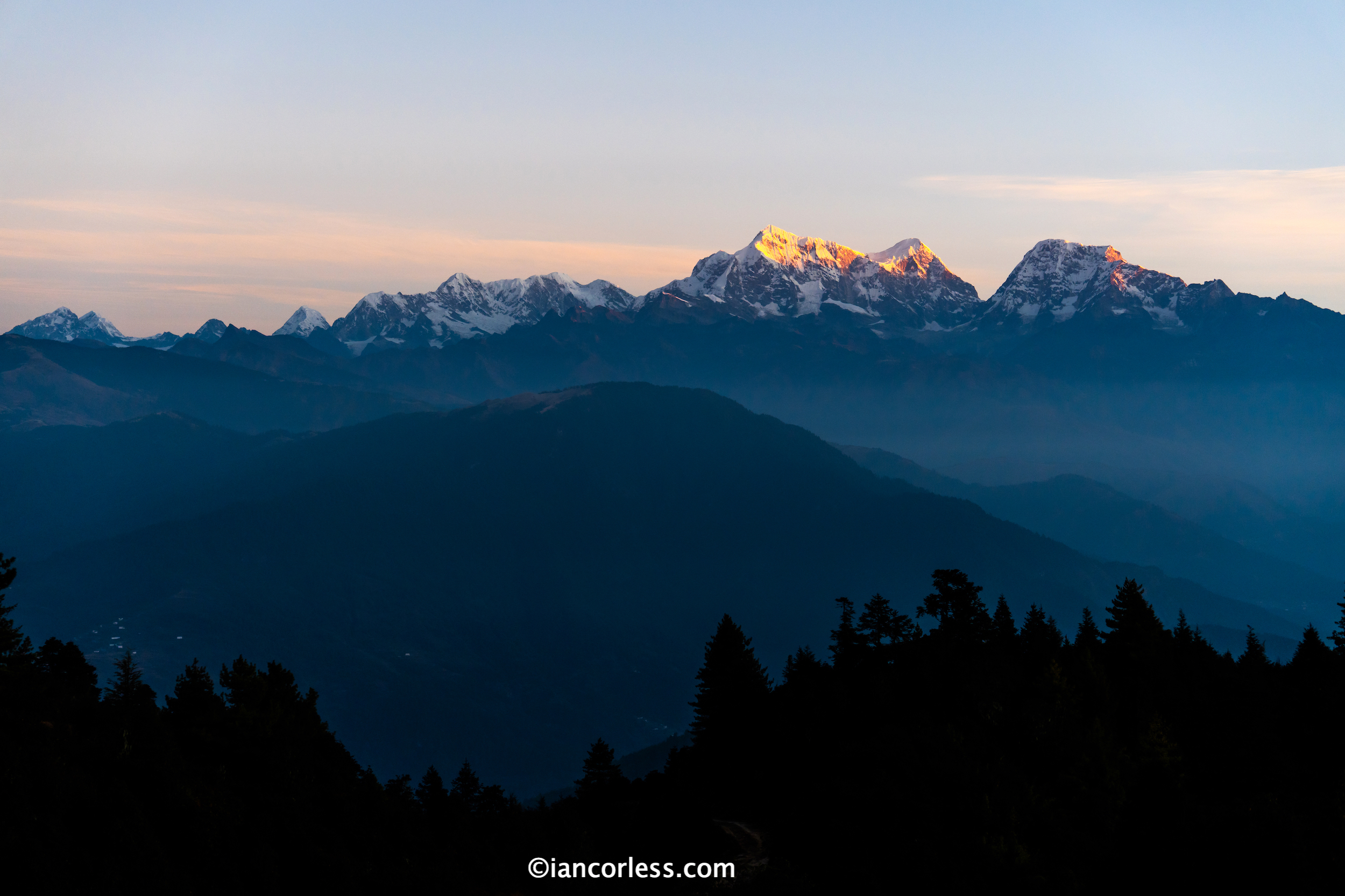
The sun came and with it warmth. The glow of head torches replaced, bags were packed and racing apparel was made ready.
Rationed water, gels and bars were provided and at the stroke of 0830 the runner’s departed for Stage 1 of the 2022 Everest Trail Race.
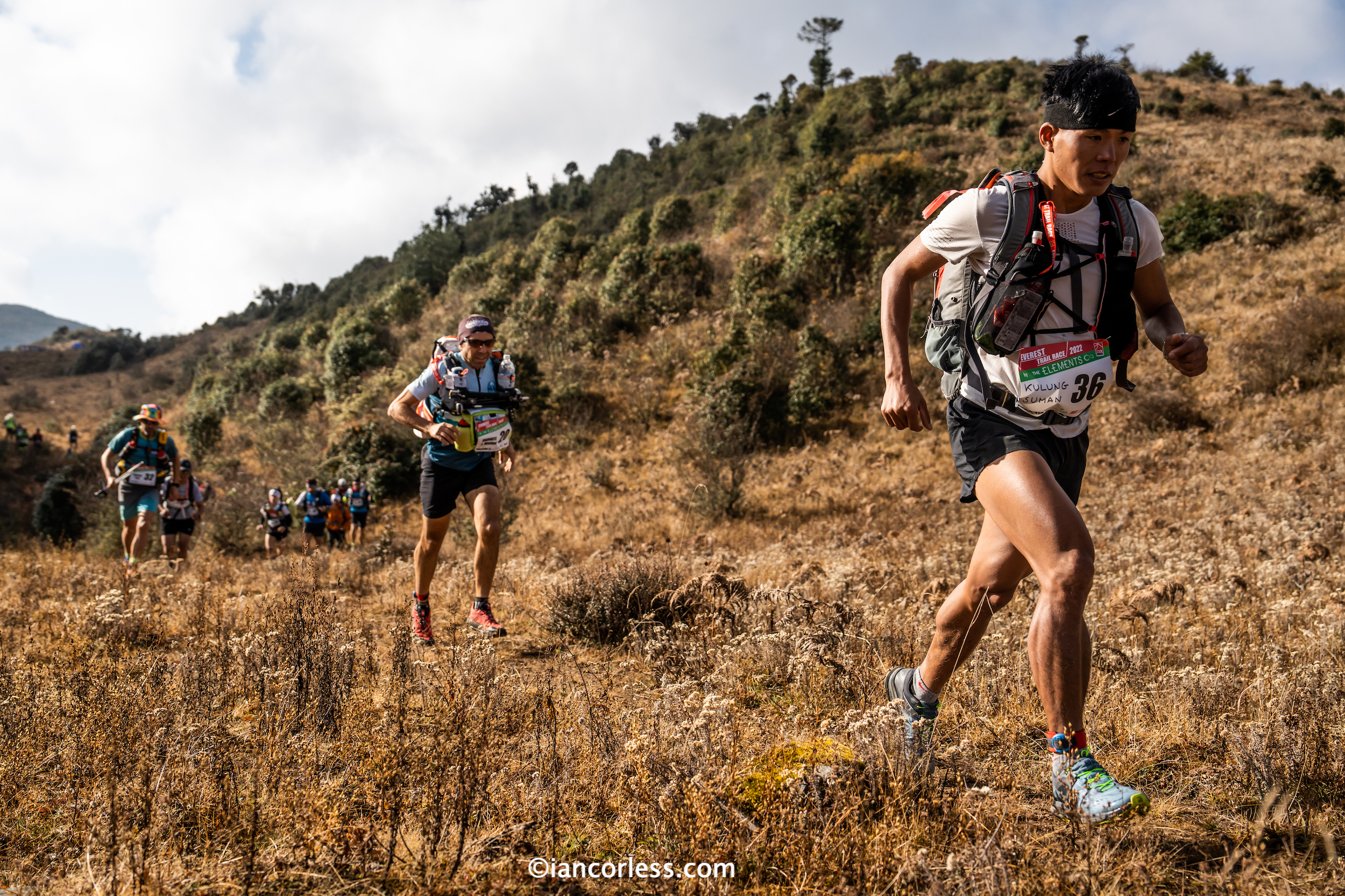
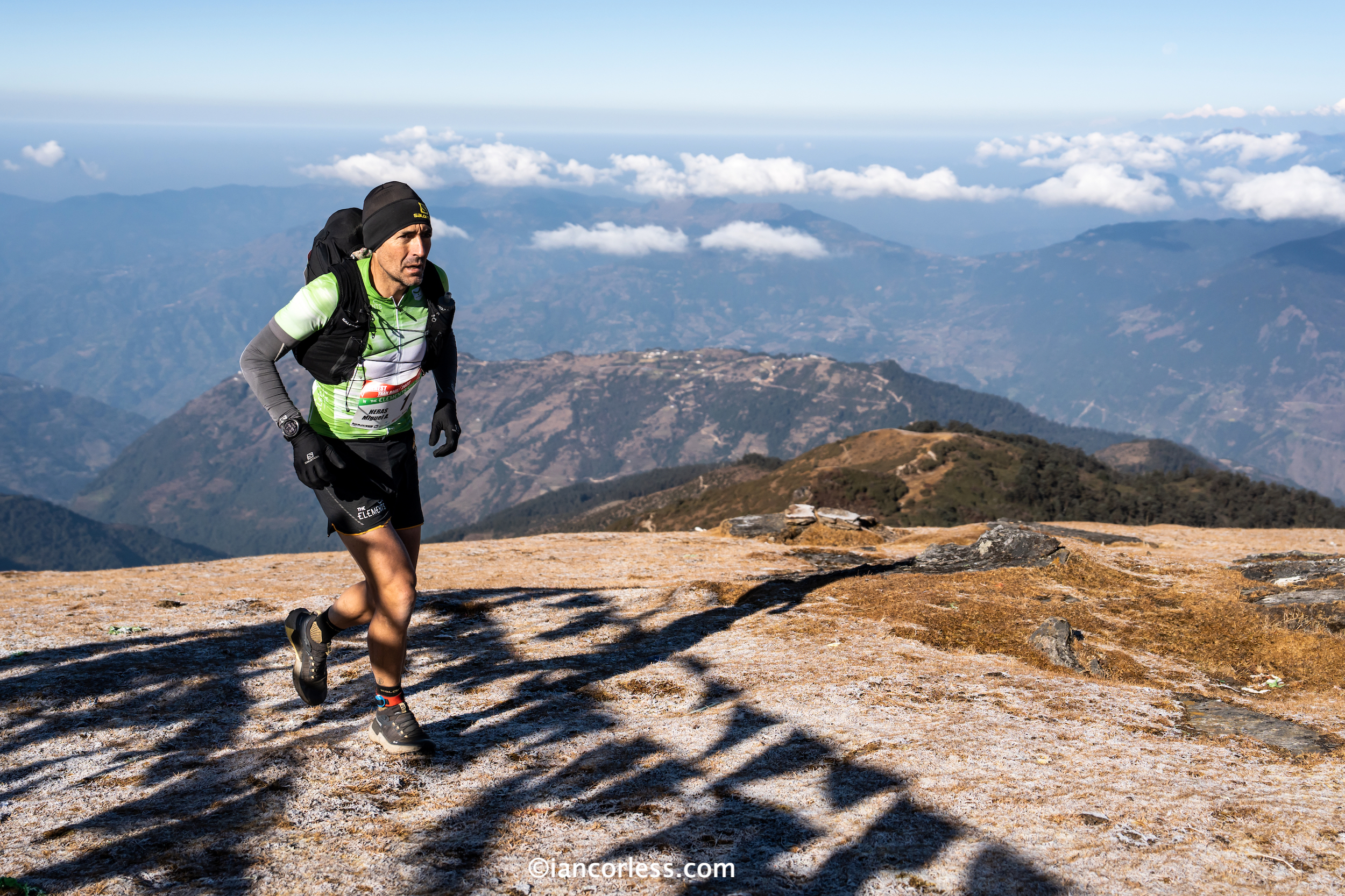
At 23.08km with 1551m+/ 1012m- the day was expected to be completed quickly by the front-runners. Miguel Heras did not disappoint crossing the line at exactly 1100am, behind, the 2019 ETR Suman Kulung finished just a couple of minutes later with the 2018 ETR champion, Jordi Gamito, finishing 3rd off the pace.
Miguel explained how he had made a silly mistake immediately after Cp2 whilst eating at not concentrating, he missed a marker and went off course. The mistake cost him first place and many minutes… He chased, caught Suman, and still obtained victory; a great run. However, he did say, “There are 5-days to go, anything can happen!”
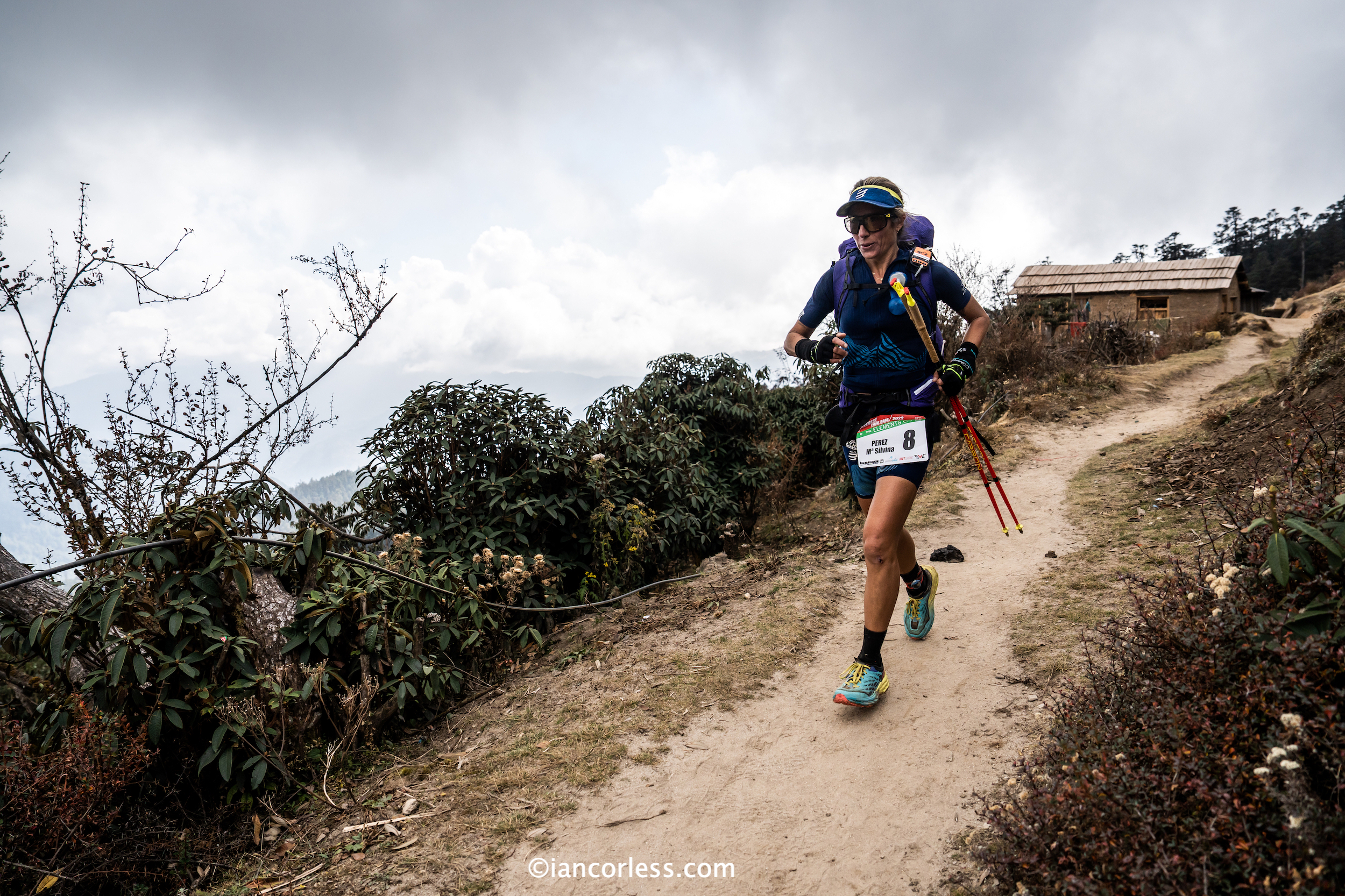
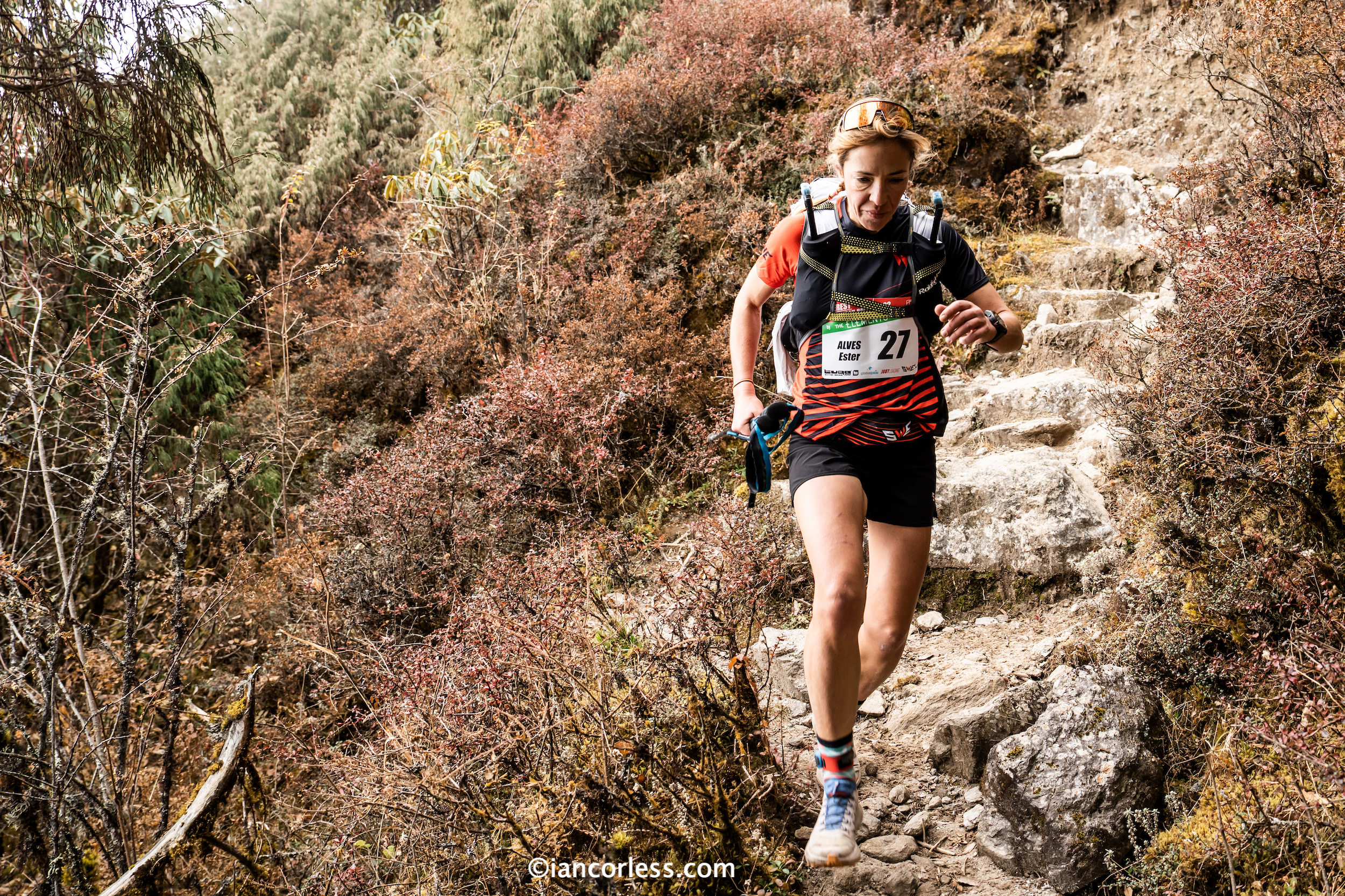
For the women, Silvina Perez ran a strong stage ahead of Nepali, Ang Furba Sherpa. Ester Alves from Portugal finished 3rd ahead of pre-race favourite, Caroline Turner, who summed her day up with a simple summary, “The altitude and the last climb kicked my ass!”
It was a successful day-1 with all participants completing the course before 1700hrs.
It was a cold night at 3500m. The wind and cloud adding to the chilly temperatures. For those who have raced light, today is the day that they understand the importance of layers and a warm sleeping bag. A lack of sleep with a tired body is not pleasant, even warm tea and a hot breakfast could not lighten the mood of some. After day-1, based on finish times, ETR operates two starts for stage, 0700 and 0800, thus allowing slower competitors additional time to complete the stage.
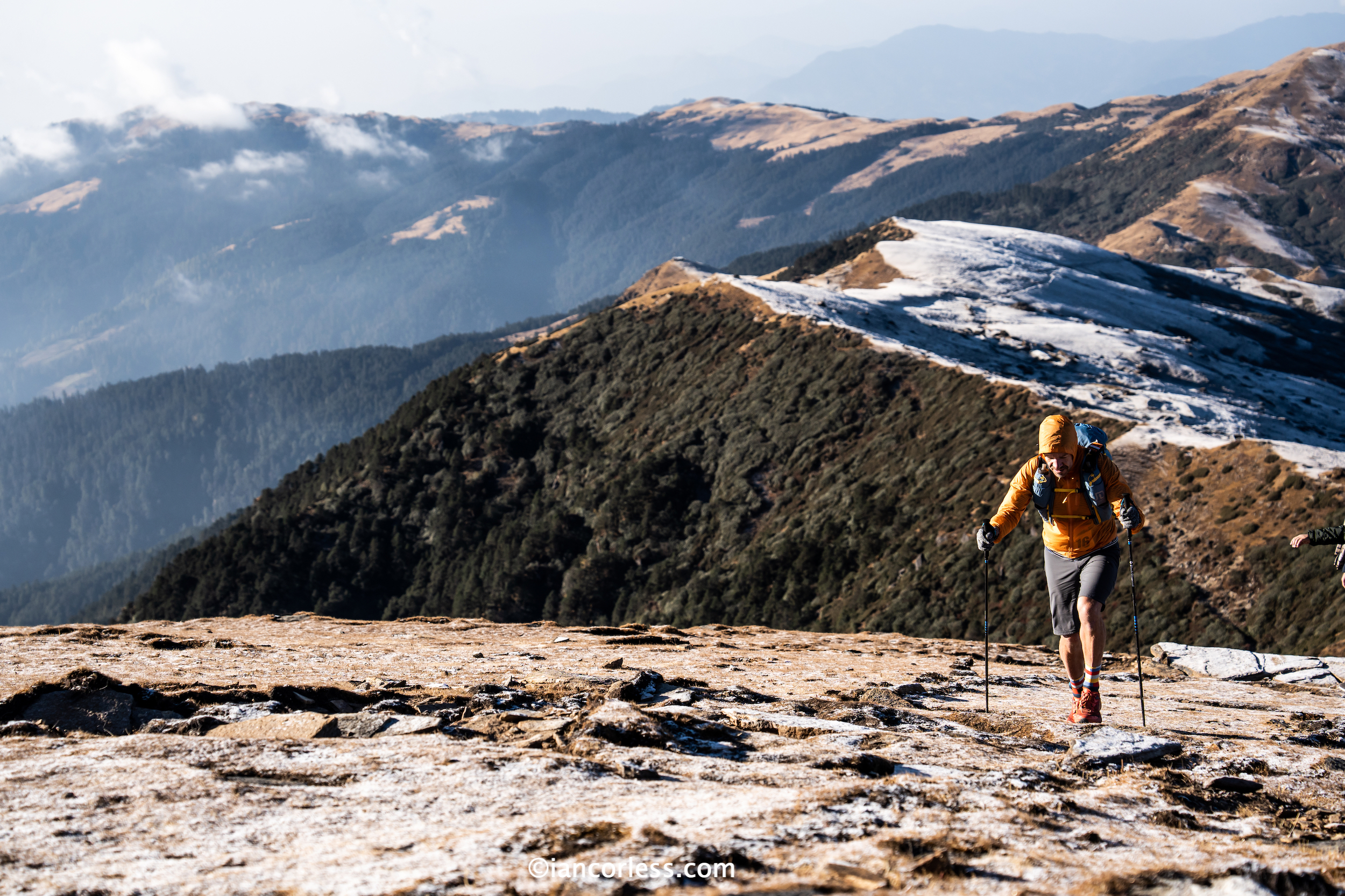
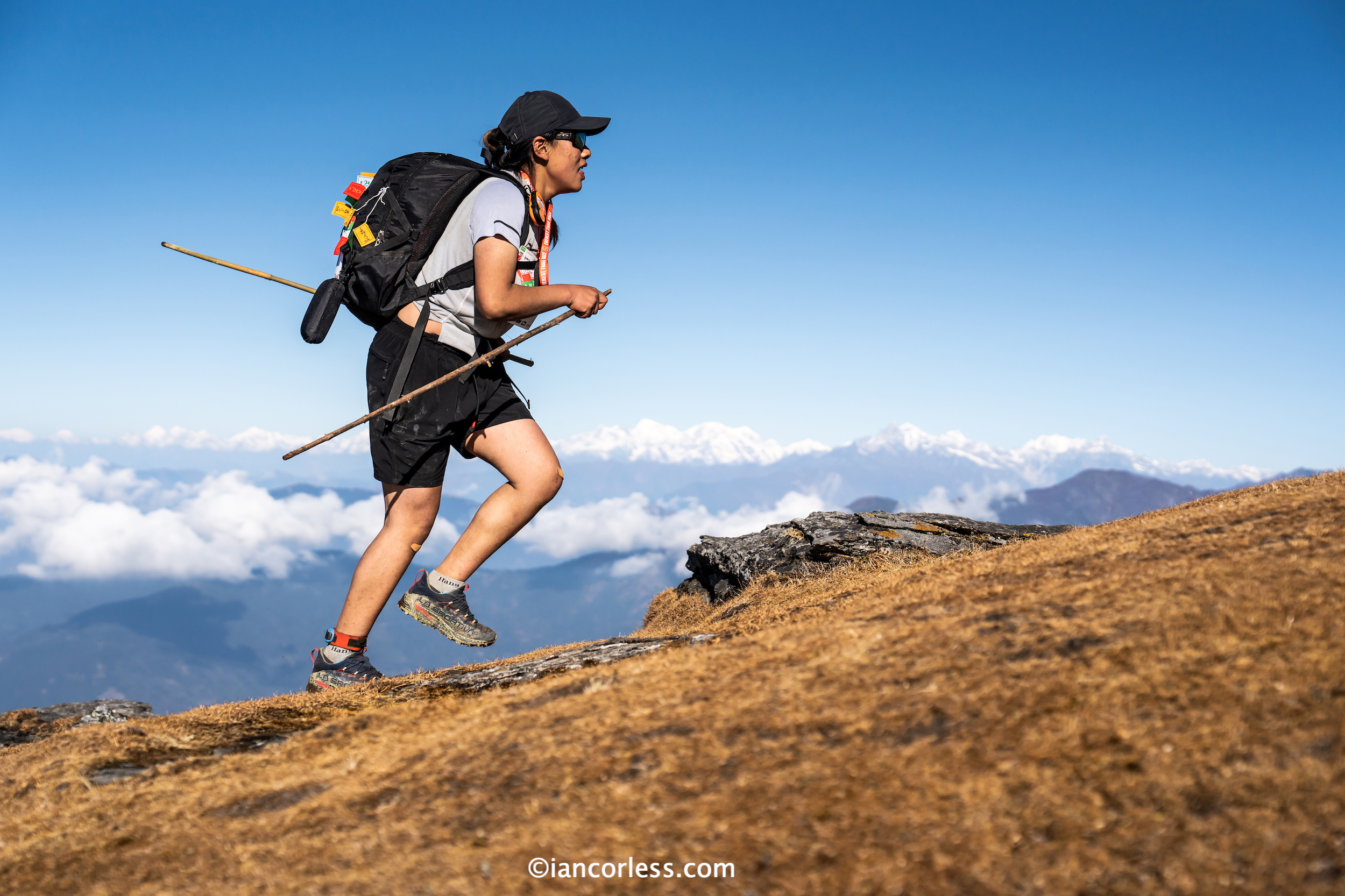
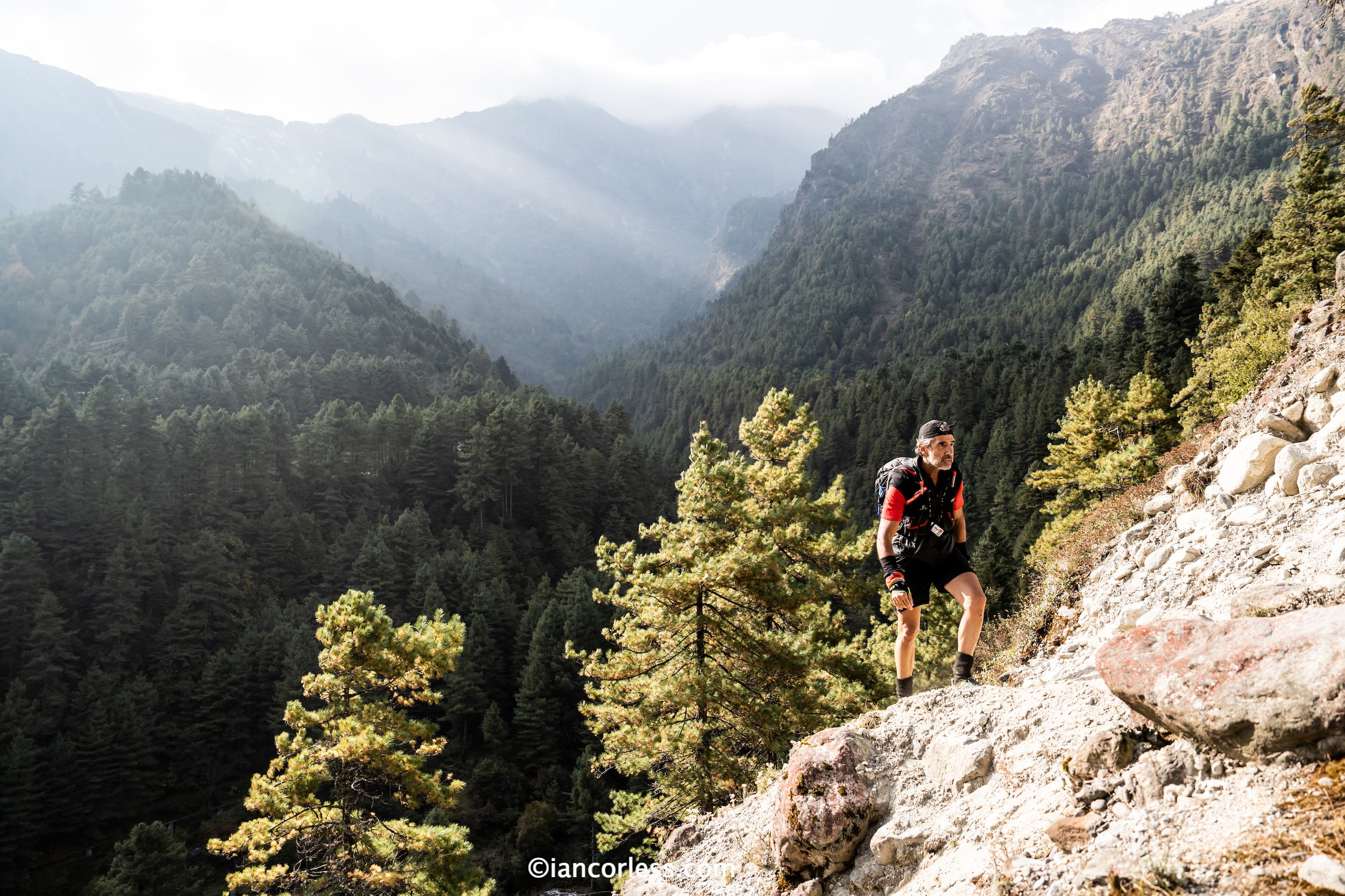
The day started with a 500m climb to the summit of Pikey Peak at 4041m. From here a twisting and technical descent to Jase Bhanjyang (3510m) and the Lamjura Pass towards Langate Peak and onward to Pungmuche and Thumptencholing. From 20.5km another climb to 24.5km, and then a tough finish with a long climb, descent and then a final short climb to the camp at Rinmo.
Everyone was unanimous, it was a seriously tough day and although we missed a peak due to landslide, it added distance, many recording between 34-36km.
The race at the front was intense and today, with so much altitude and added distance, Nepali Suman had the advantage over Miguel Hera, Jordi Gamito once again placing 3rd.
Nothing better than starting a 30km day with a 1200m climb to just under 4000m through forest trails. The downside, depending on viewpoint and preferences, was the 2700m of descent that followed via steep, technical, challenging and rocky trails. And then just when you think it’s all over, you finish the day with 500m of vert followed by another short decent to camp. It was a tough day!
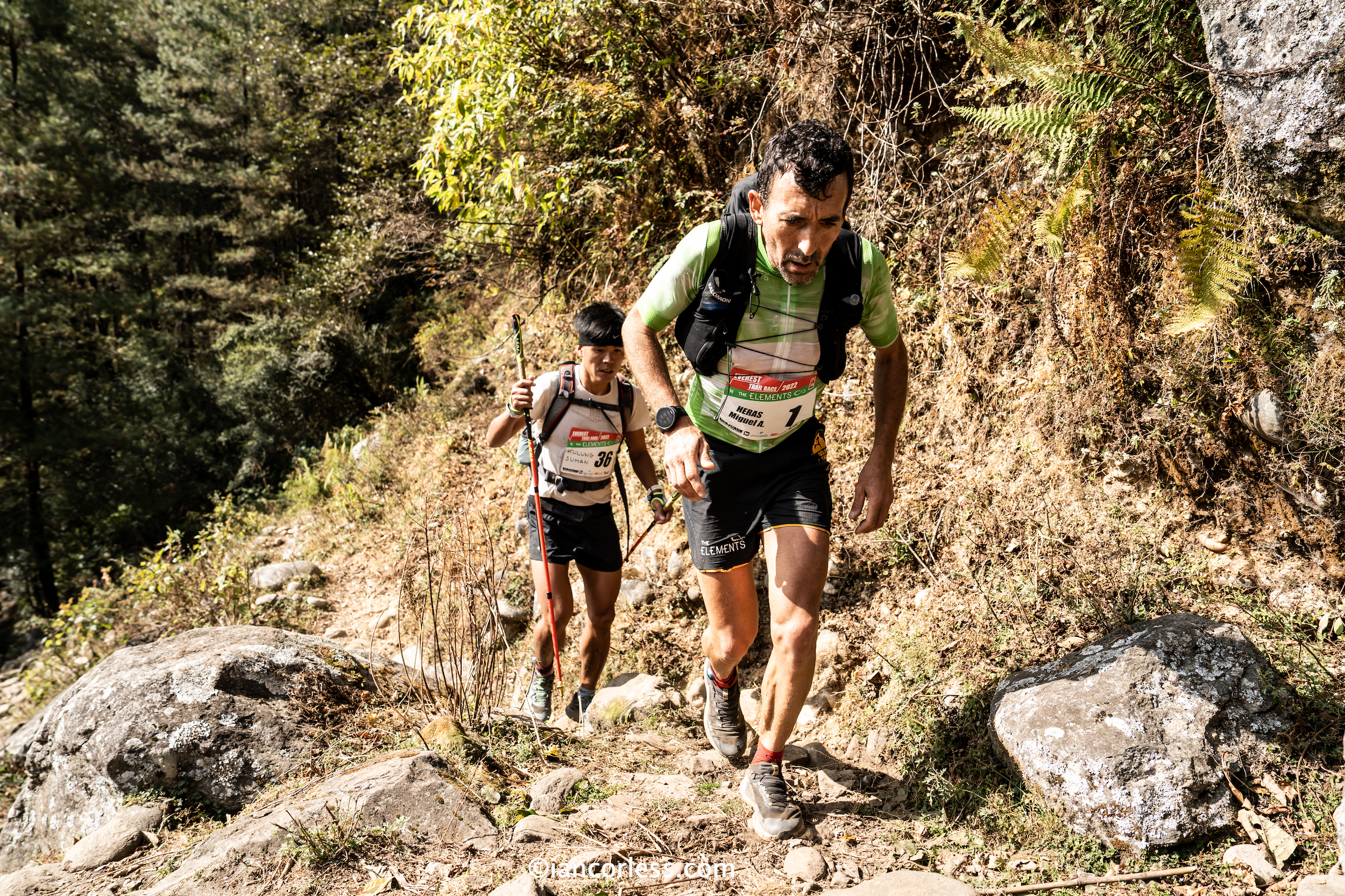
The action started early with Miguel Heras and Sumun Kulung setting a harsh pace up the first climb, they were inseparable. Event the relentless descent could not break them. It was at the last checkpoint, with approximately 5km to go, 500m of vert, that Miguel put the hammer down and opened up an 11min gap over the Nepali. Quite incredible.
Purwha Lhamu Sherpa certainly has settled in to women’s race and once again took victory. Ester Alves, equally has found her comfort on the Nepal trails and today relished the relentless downhill trails to finish second. Day 1 victor, Silvina Perez, finished third.
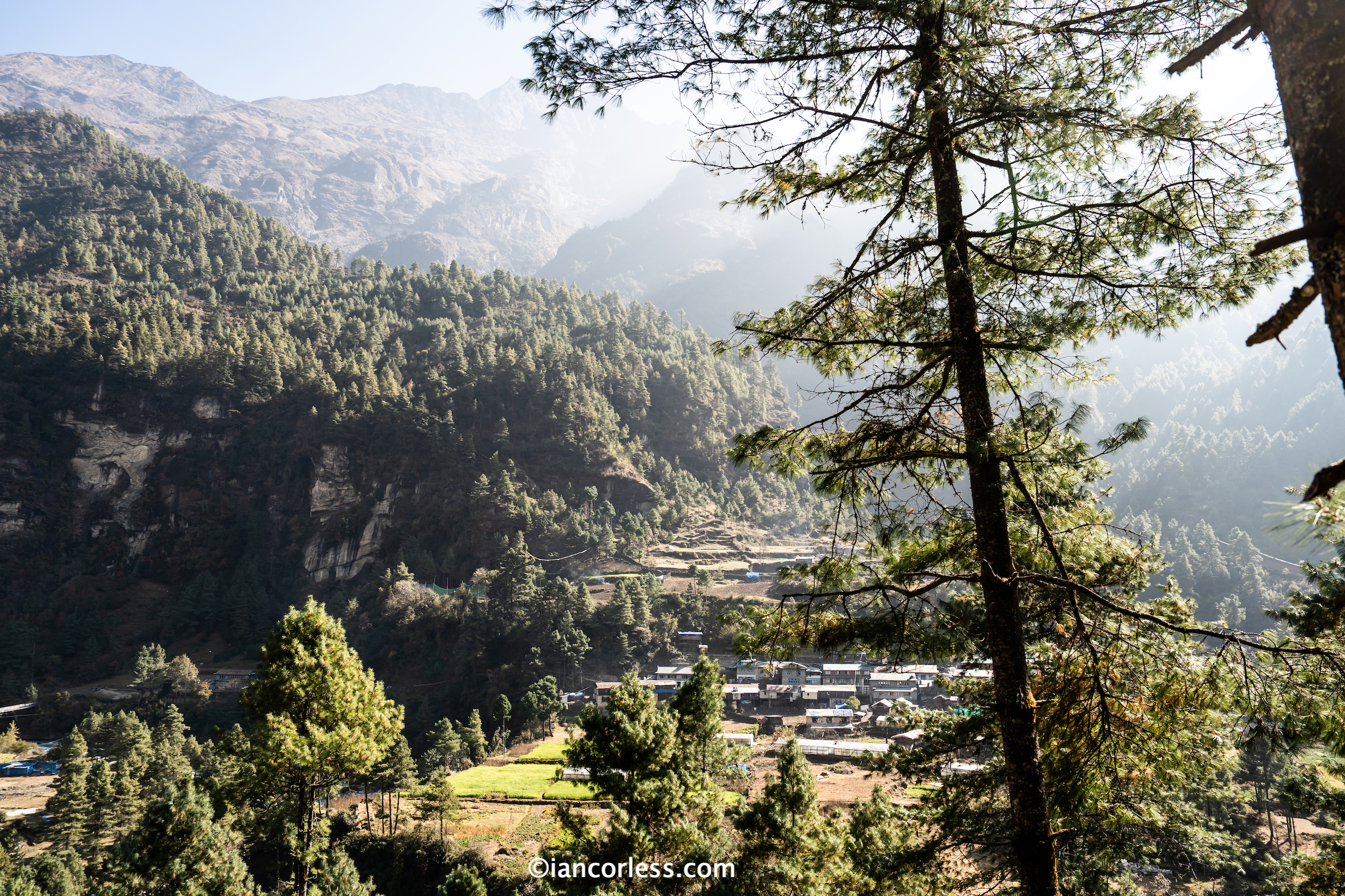
Mood in the camp was positive after the stage, these trails are quiet and remote. It was only in the final 5km, the climb to Kharikola, that it was possible to see homes and locals working the fields.
KhariKola has been the stage 3 camp, day 4 start for many years. However, for 2022, the ETR no longer camped at the monastery but a little lower down in an isolated spot. Temperatures were mild for the night, just dipping below zero. So, runner’s were refreshed for the start of day 4 with a good nights sleep.
A tough 1000m climb kicked off the day to Karila at 3080m and then technical rocky trails to the lowest point of the day, Surke at 2300m. From here, a climb to Chaurikara (2621m) a steep descent and then a steep climb to Segma at 2742m. The ETR is now on new trails on the opposite side of the river all the way to the Phakding finish.
Once again it was the Miguel and Suman show at the front, the duo running together, again at a relentless pace. With the longest and arguably the toughest day of the race tomorrow, they crossed the line together, just a 1-second apart, no doubt saving some reserves.
Jordi Gamito finished third, quite a long way behind the leading two, his overall position is safe and he is no doubt just running a smart race now.
The women’s race was different today, with all three women running extremely close together, separated by just minutes. Today, the glory went to Ester Alves who gets better with each day, In the final km’s, Silvina Perez caught a fading Purwha Lhamu Sherpa to place second.
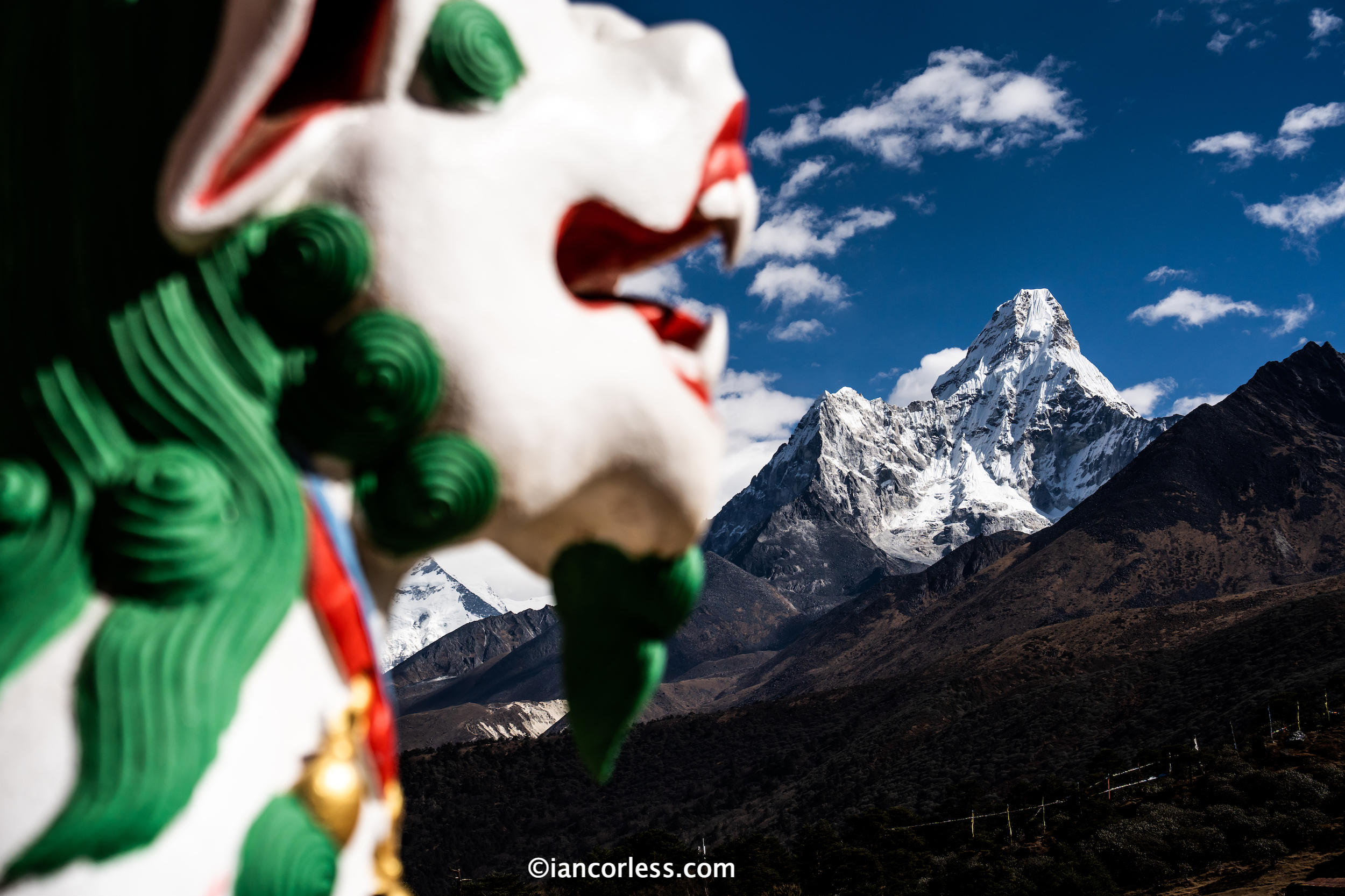
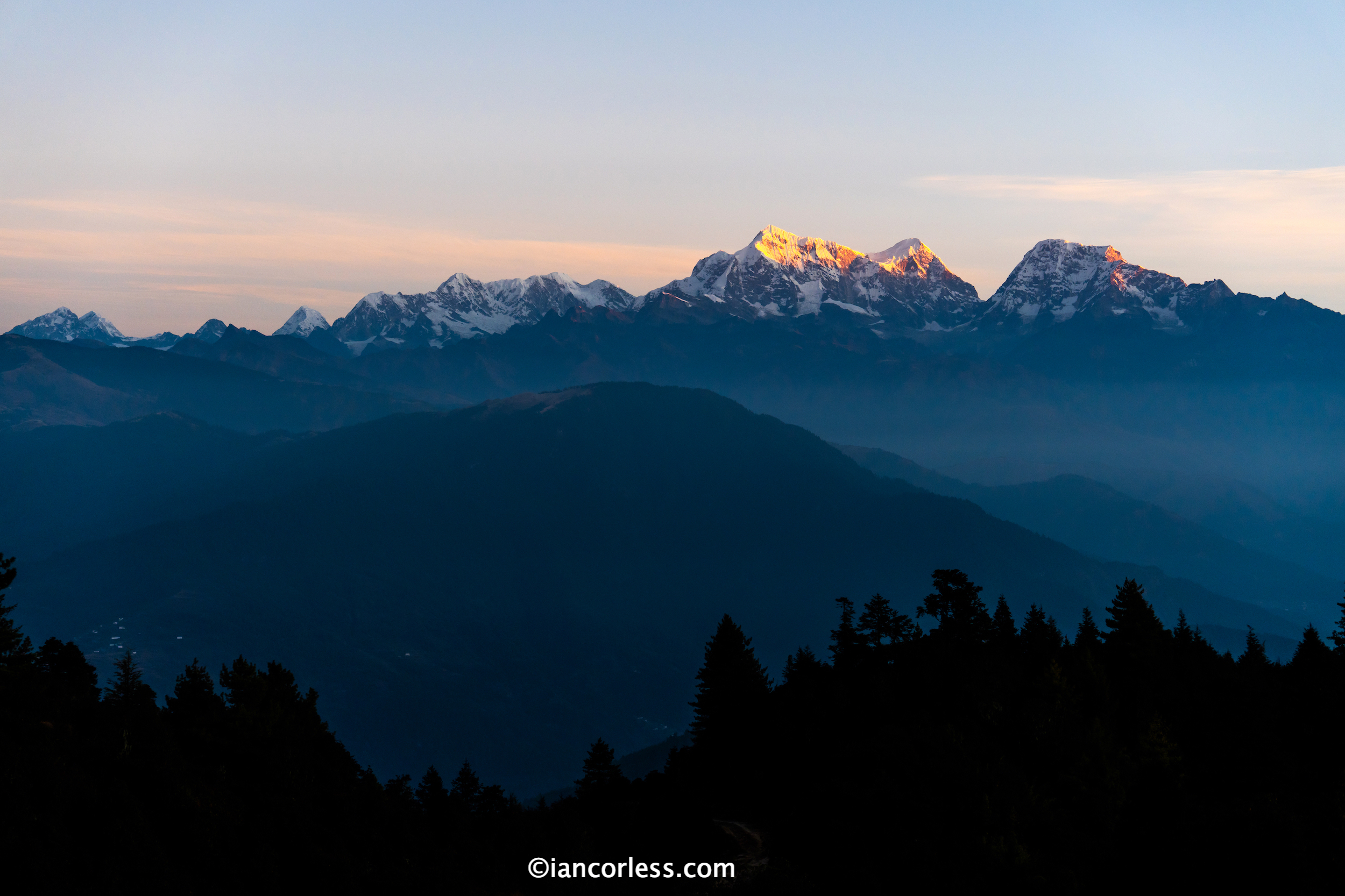
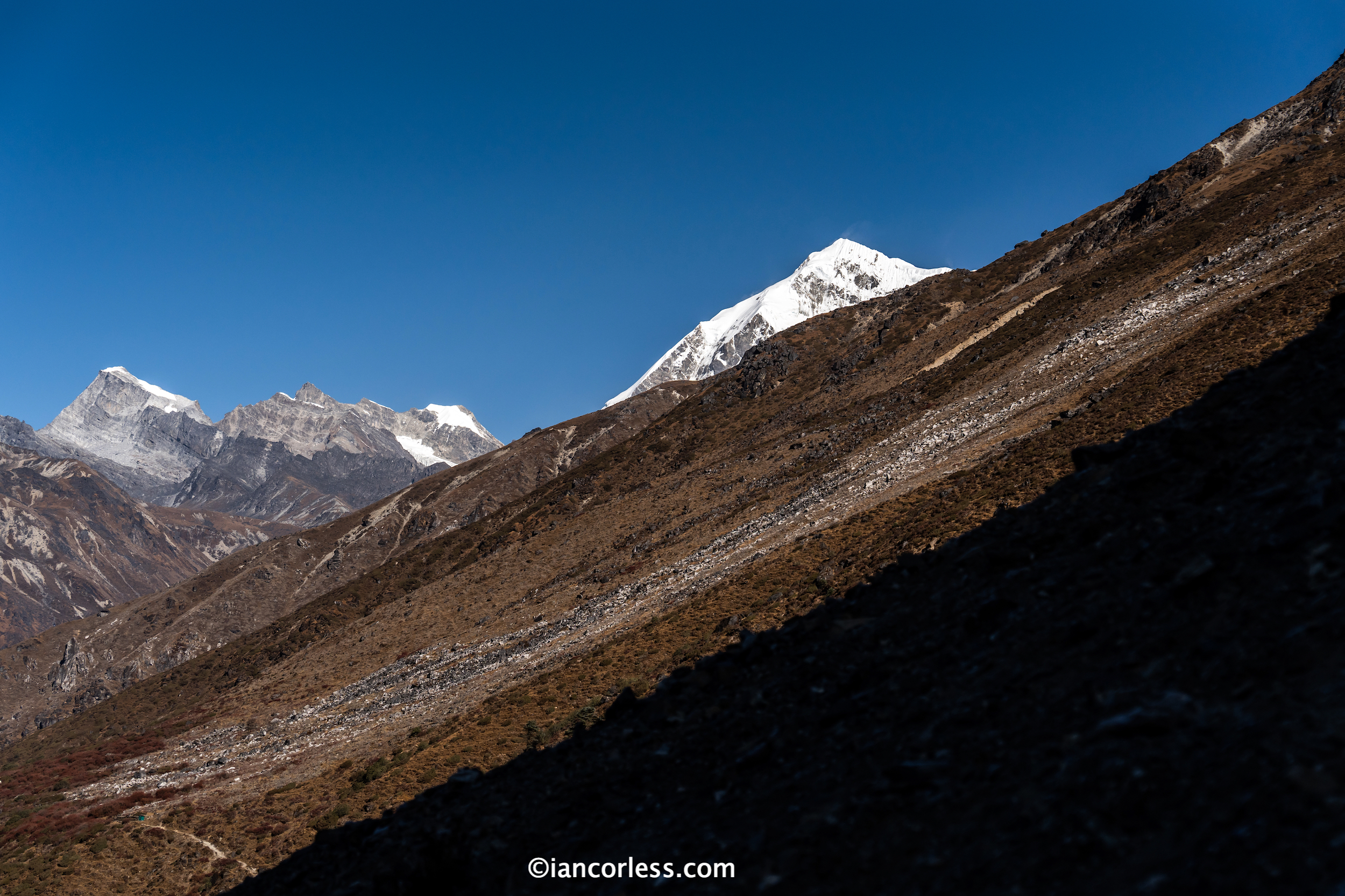
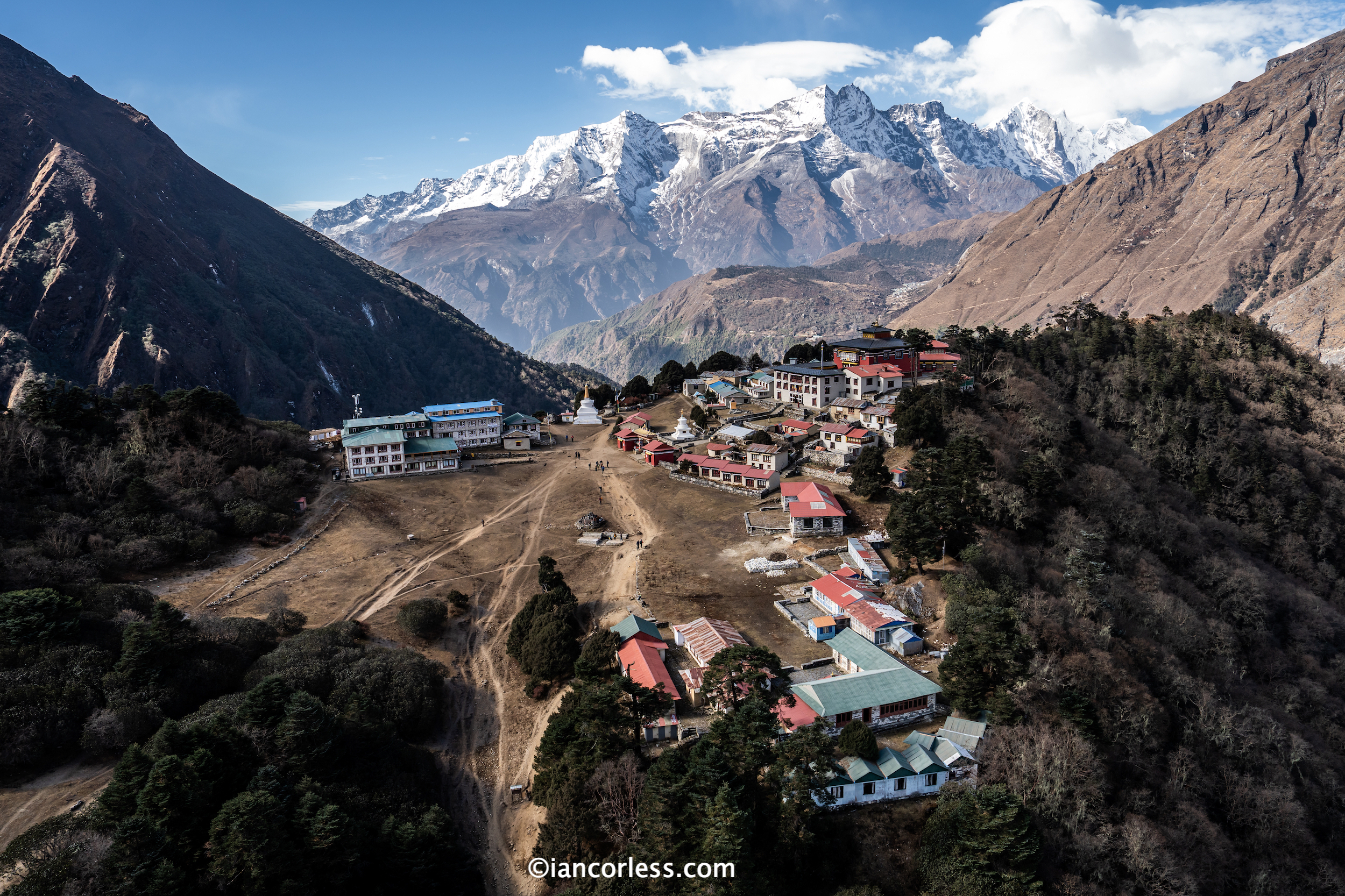
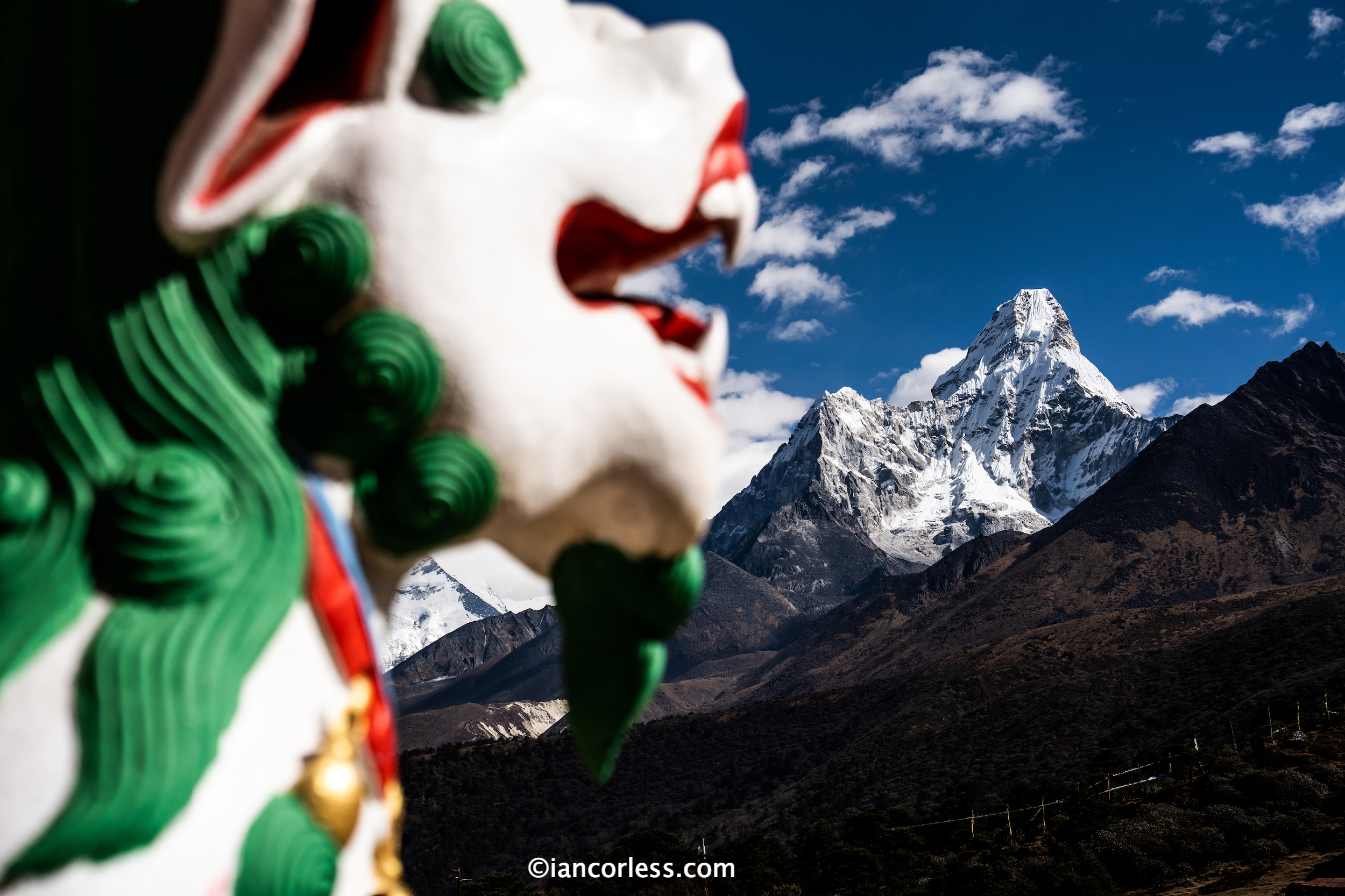
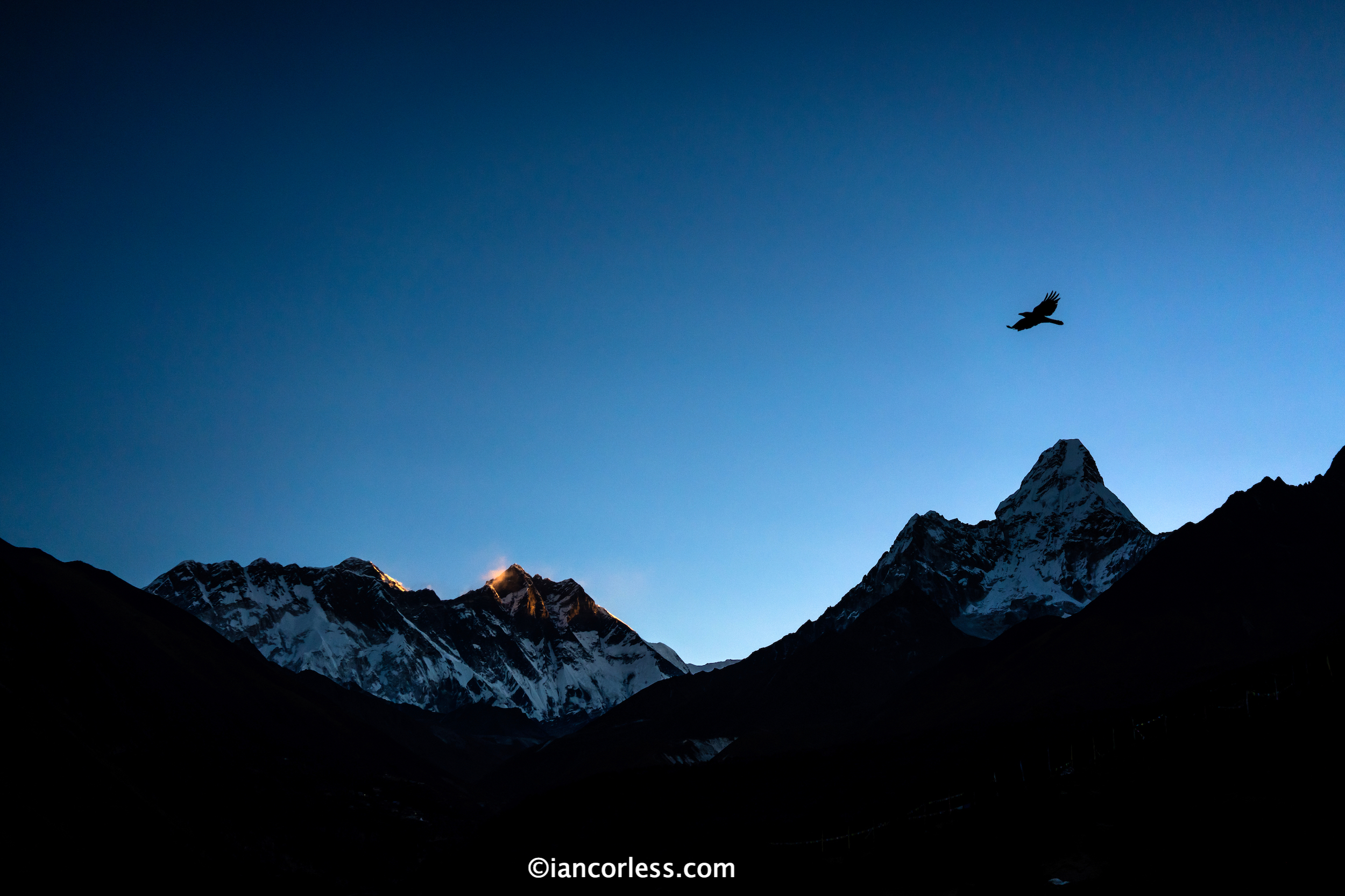
With much of the day above 3800m, it’s a brute, but the compensation is the magnificent backdrop of Everest, Lohtse, Nuptse and the stunning and iconic Ama Dablam.
Starting in Phakding, it’s up, up and up to Namche and then onwards to Syangboche at 3760m. From here, a descent to Kumjung and then a climb to Mong La, 3973m. Phortse and a stunning single-track trail to Pangboche with amazing views is the cream on the Himalayan cake as the route travels at 4000m. Finally a descent to Debuche, 3741m, and then the climb to the finish at Tyangboche at 3875m.
The day held no surprises with Miguel and Suman running together and at tge line it was red-line effort from the Spaniard to take the stage win. Jordi Gamito once again placing third.
Purwha Lhamu Sherpa for the women took the stage with a truly gritty performance. With one ankle heavily taped and carrying an injury, she still managed a stellar performance, the altitude no doubt being an advantage. Ester Alves finished second, exhausted, expressing, “One of the hardest things I have ever done!’ Once again, Silvina Perez placed 3rd.
The final stage back to Lukla. At 29km with 1770m+/ 2802m- it is by no means and easy day or chilled day and that was reflected in Miguel and Suman pushing hard all the way to the line finishing well under 3-hours and in course record for the stage. Miguel Heras was the 2022 ETR champion.
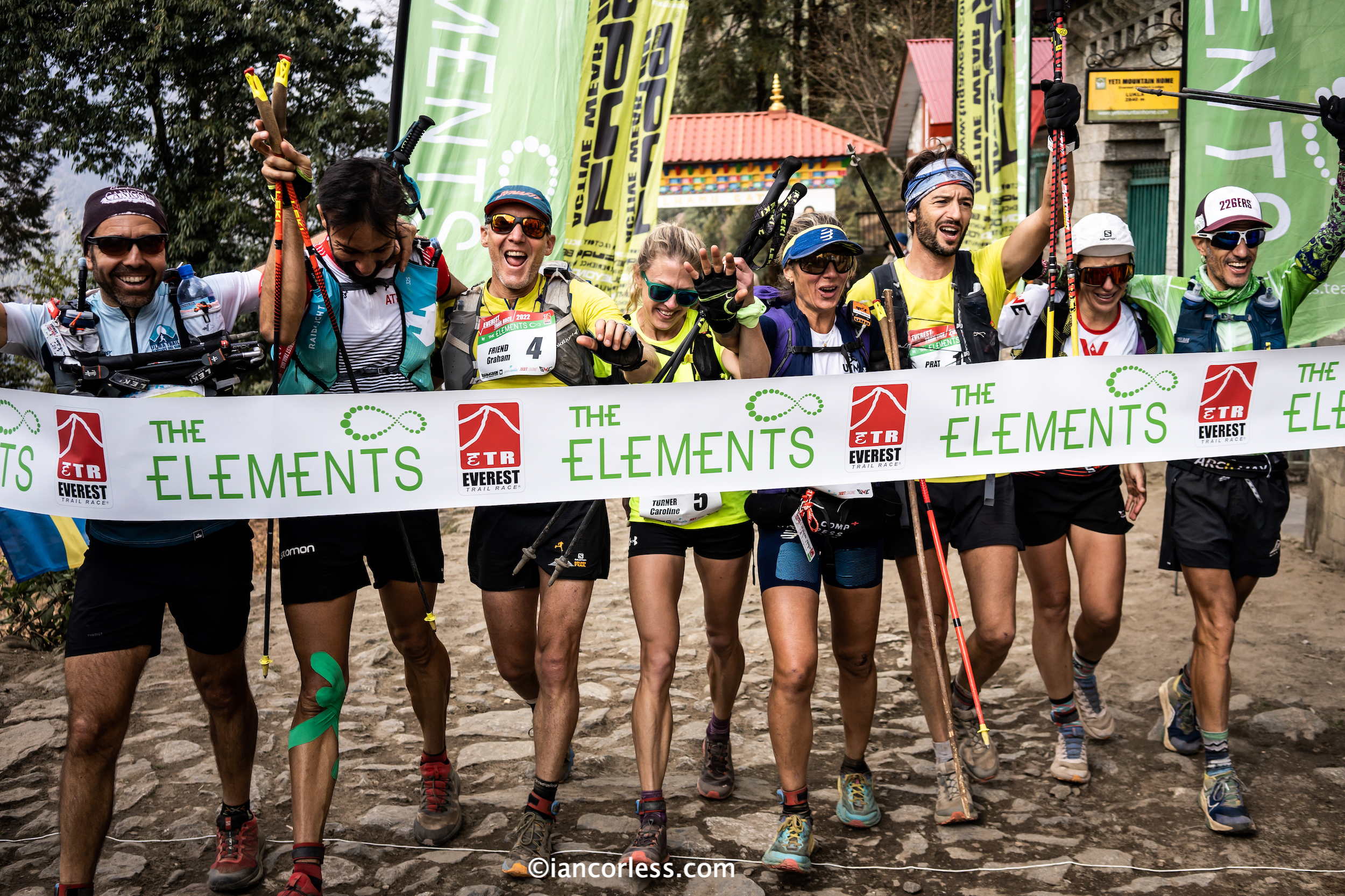
For the rest of the participants, the day was one of victory, the finish line providing the completion of an epic journey. The top women and a group of others, decided to enjoy the day and they all finished together.
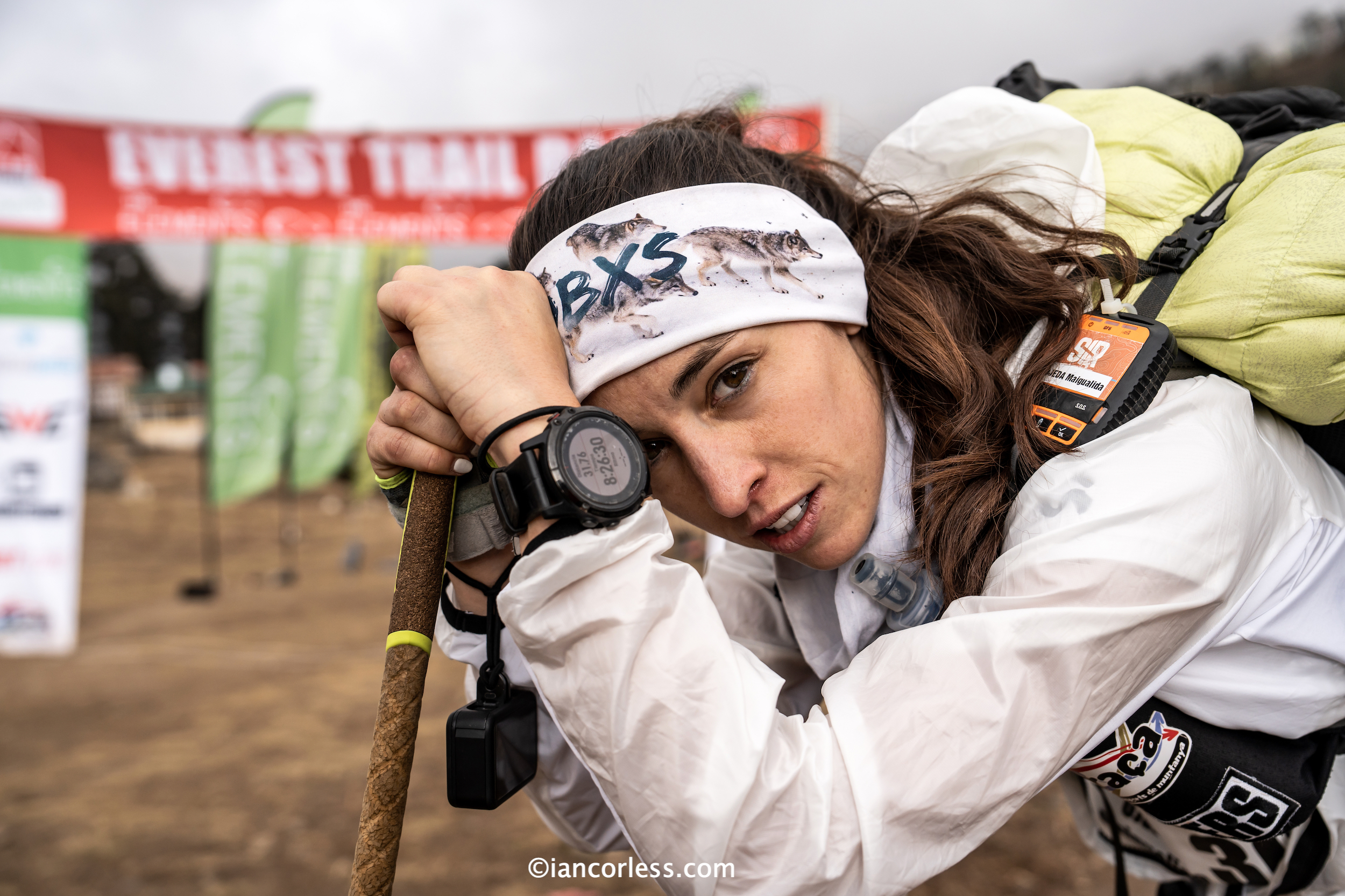
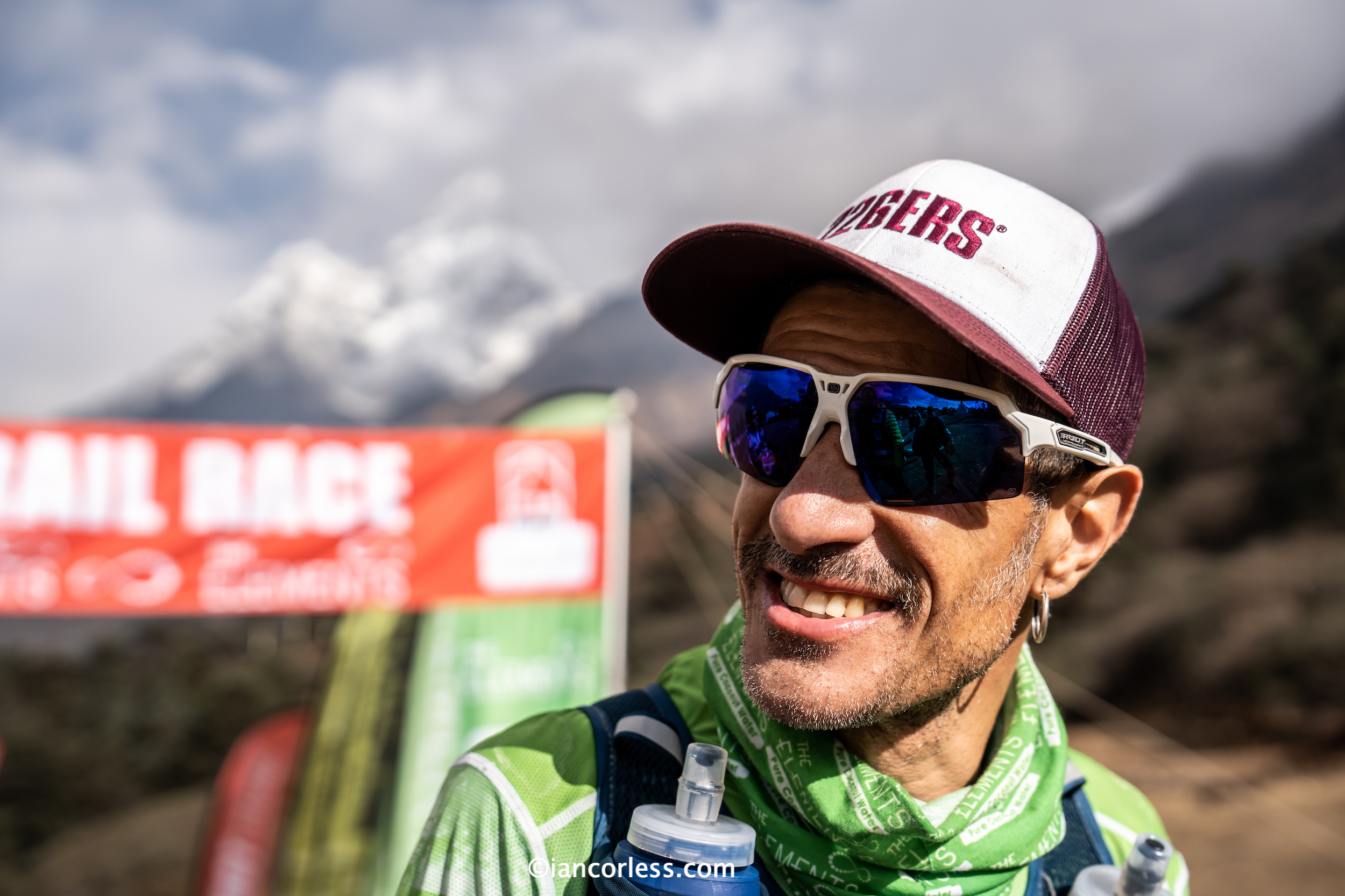
Lukla provided an end to the 2022 ETR and the mood was high. For many, the experience had been a tough one. The altitude, climbing and descending providing a much harder and more challenging experience than other multi-day adventures.
“MDS is a walk in the park in comparison to the ETR. MDS may well be self-sufficient, but the terrain here is so much harder, add the altitude and cold nights, the challenge is considerably harder.”
Now attention turn to 2023 and the next edition of the ETR. It really is one of the ‘must-do’ races not only for the challenge but for the immersive beauty and experience that Nepal brings.



















 IAN CORLESS