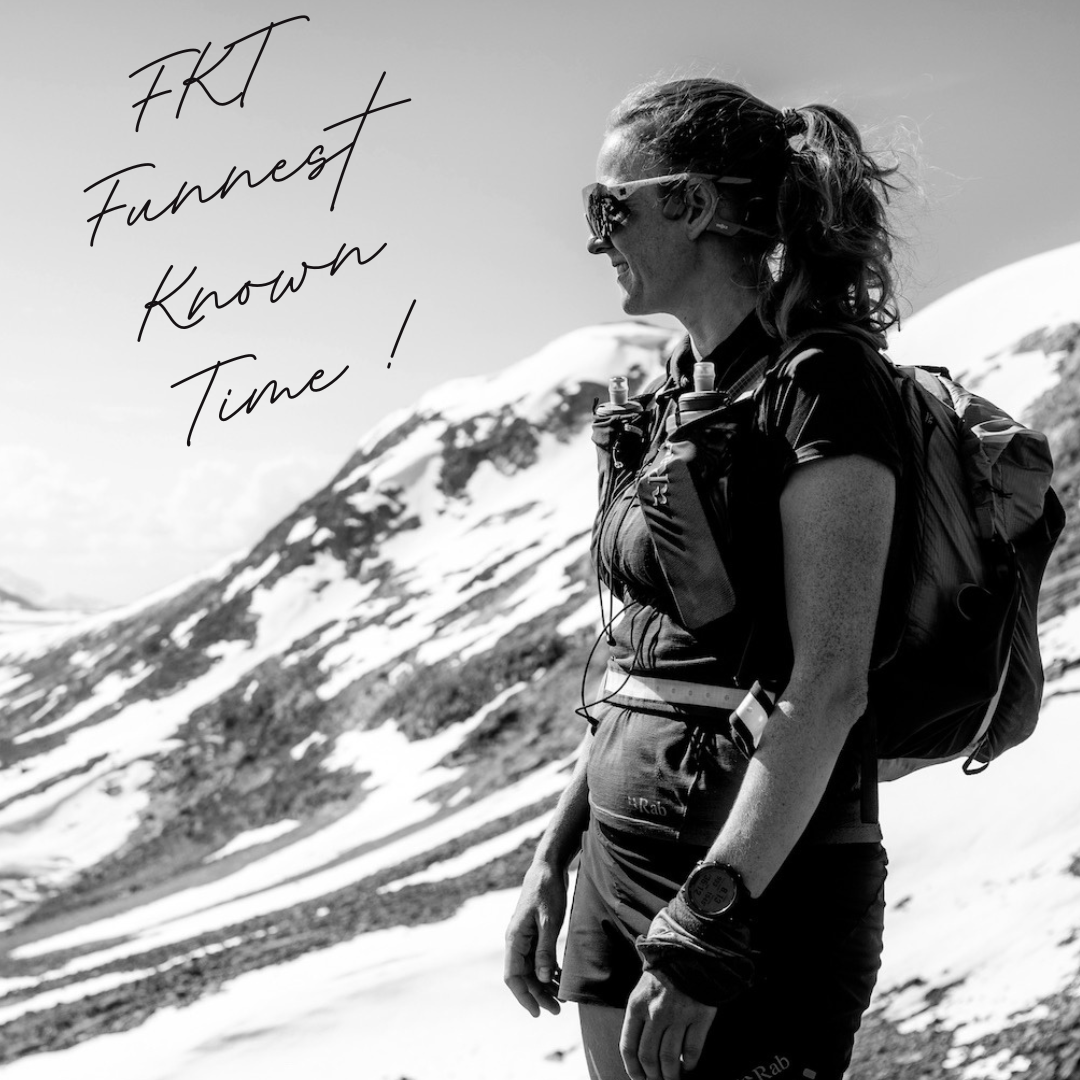
You may assume it’s all about speed and pressure. Not this time. Norwegian runner, Abelone Lyng, put her own spin on the legend that is the DNT MASSIV TRAIL
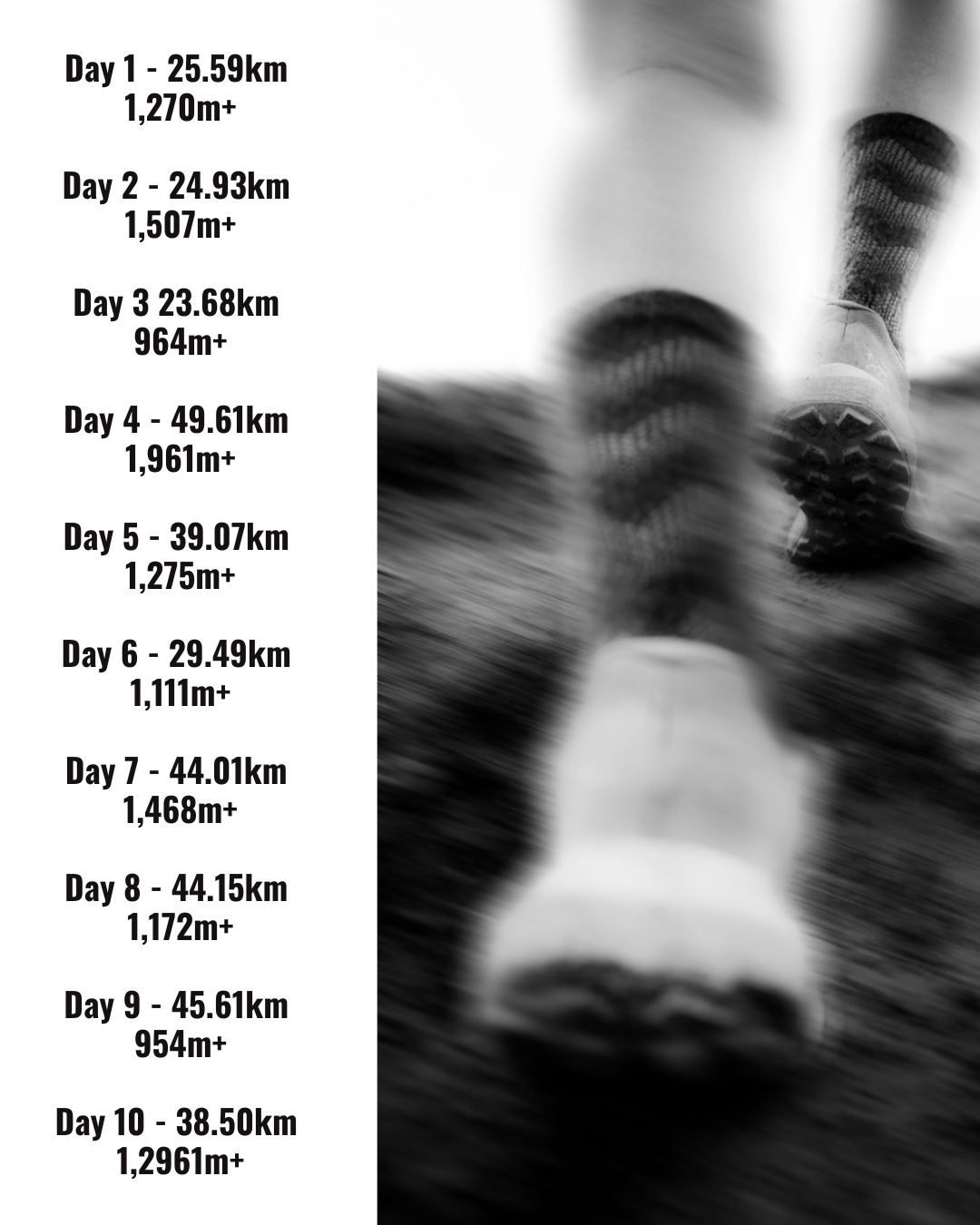
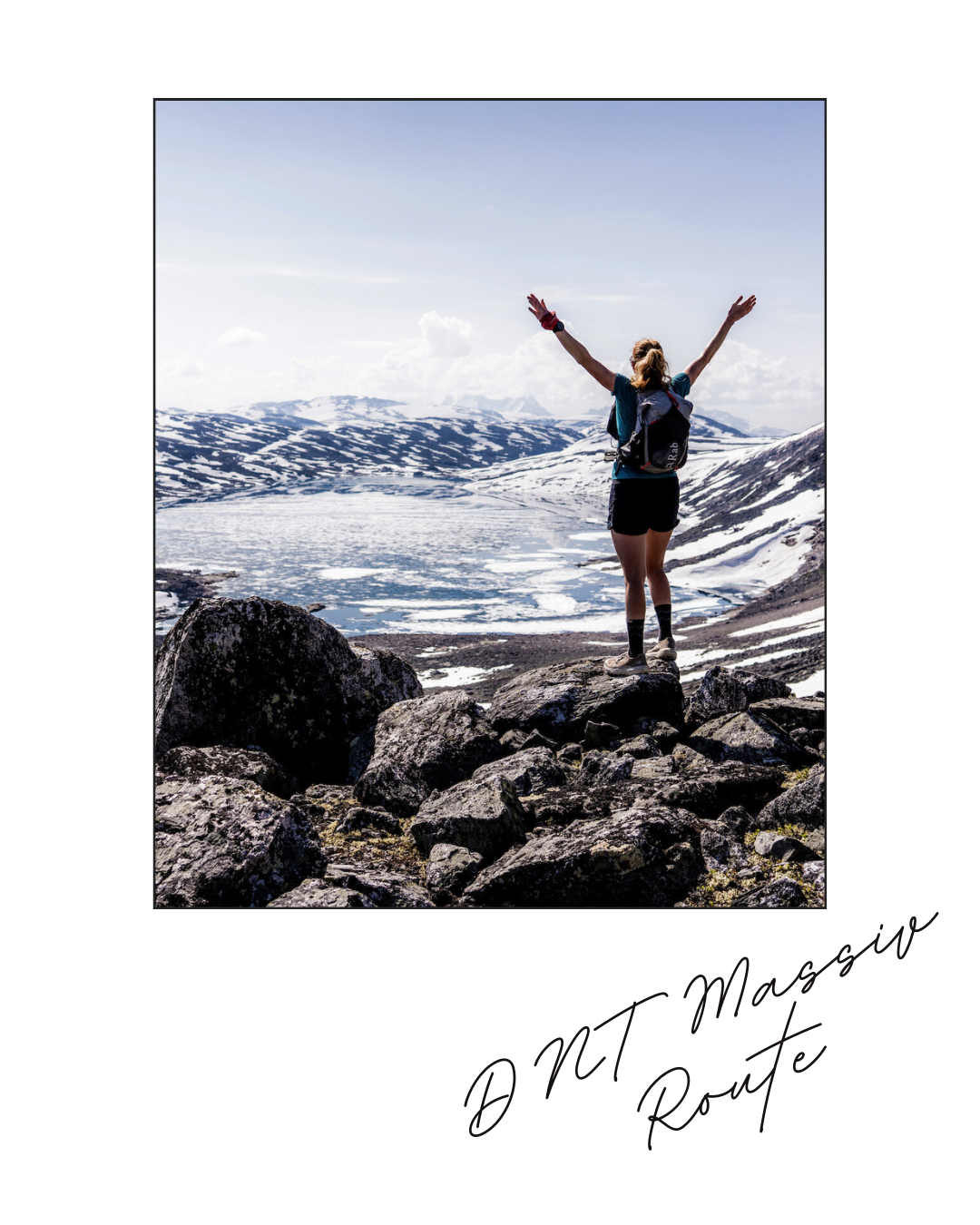
A 364 km journey, and just under 13,000 m vertical gain across four national parks in Norway
Breheimen, Jotunheimen, Skarvheimen, and Hardangervidda.
In just 10-days, Abelone moved fast and light, unbroken, solo, yet utterly connected.
She didn’t chase a formal FKT.
She chased what she coined a “Funnest Known Time.”
Shoes are personal. Run shoes are very personal. Quite simply, we are all unique and our needs when running vary greatly depending on the distance we are running, the terrain we are running on and how long we will be out for. It is why so many shoes exist.
Last year I said my shoe of the year was the Merrell Agility Peak 5. It is a shoe that ticked all the boxes, comfort, great foot hold, excellent grip and a fantastic all rounder for trail and mountain running. If I was only allowed one trail shoe, the Agility Peak 5 would be my choice.
It’s fair to say, that Merrell are still fighting an uphill battle to be taken seriously in the run world, especially when compared to the giants like Hoka, adidas, Brooks, Asics, Salomon and so on… Take note, Merrell should definitely be on your consideration list.
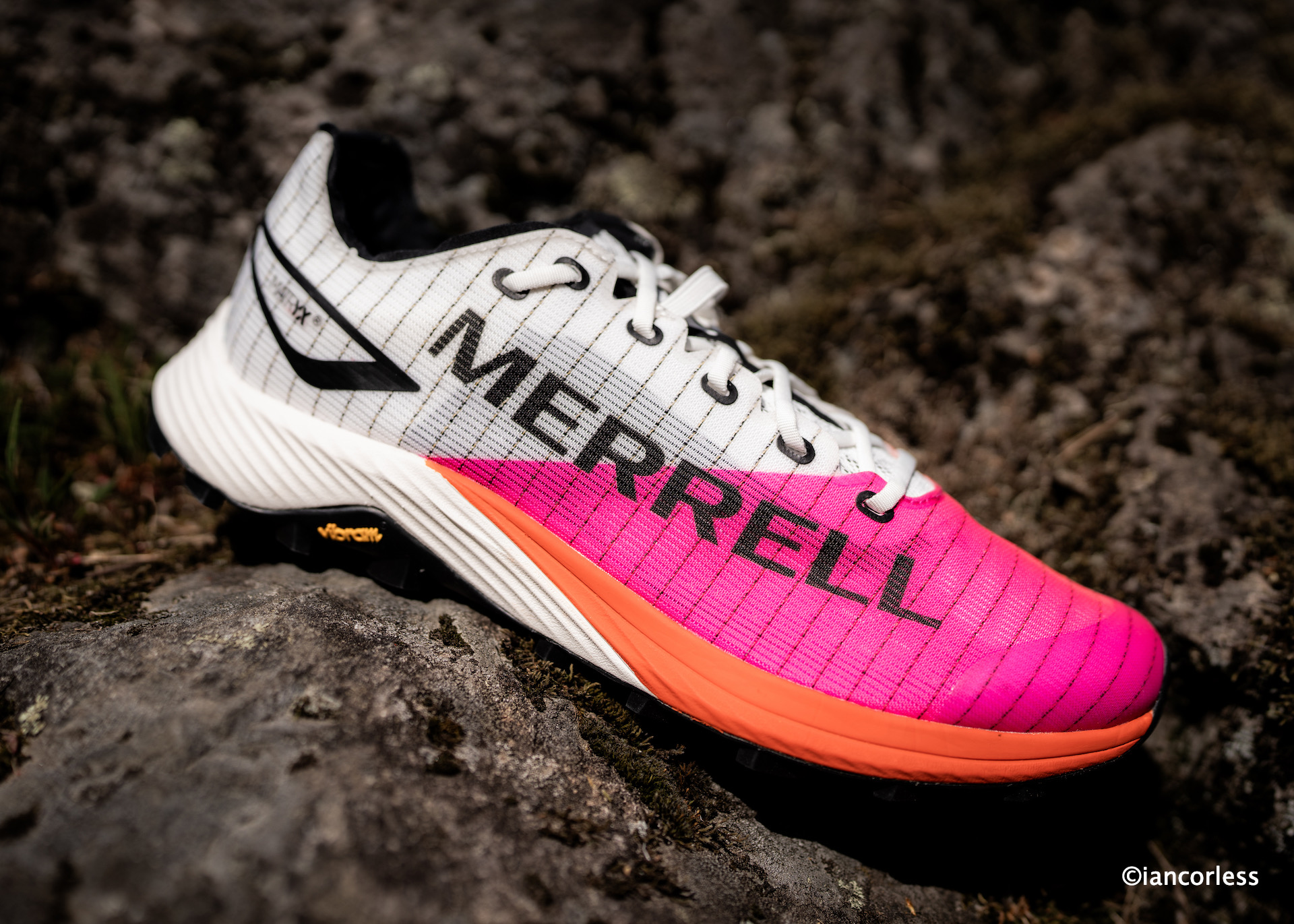
With the announcement of the MTL Long Sky 2 Matryx and my love for the Agility Peak 5, I was very keen to give this new incarnation plenty of testing.
In contrast to the Agility Peak 5, the MTL Long Sky 2 Matryx is a completely different beast. Less cushioning, lower weight, lower profile and lower drop. It’s a very specific shoe.
To draw a comparison, the Agility Peak 5 is like an everyday car for the family, plenty of room, comfort and great for a full day out. The MTL Long Sky 2 is much more a 2-seat sports car that is has a very specific use and some comfort is missing in exchange for speed.
So, although the name has ‘Long’ in the title, don’t be fooled in to thinking this is a long distance shoe. It is not. The most relevant part of the shoes name is ‘Sky’ and the reference to skyrunning which takes place in tough, challenging and technical terrain and mostly over shorter distances between 20 and 50km.
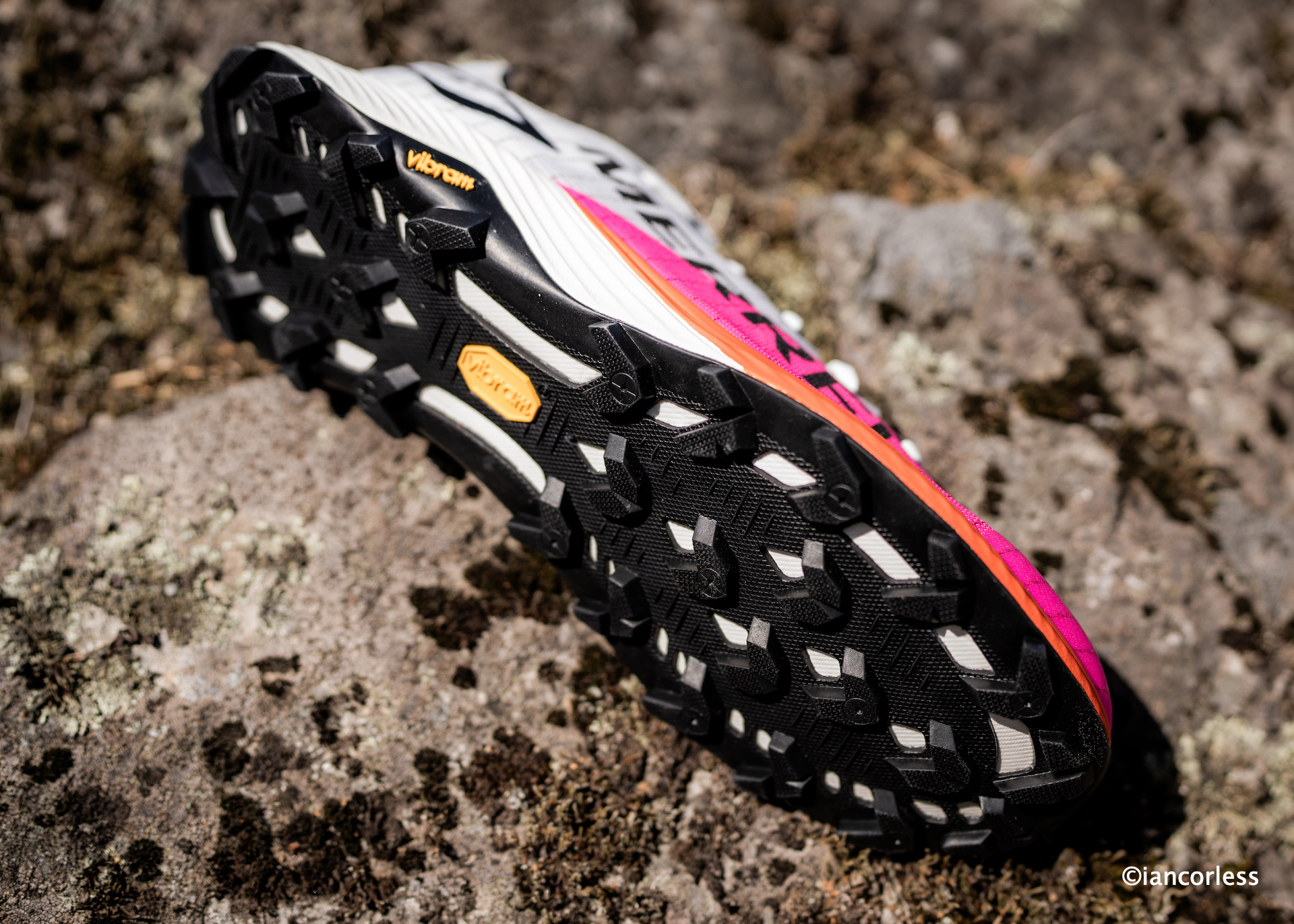
A neutral shoe, in comparison to the previous model (the Long Sky) the drop has been reduced from 8mm to 4mm. This is significant is it gives a much greater contact with the ground and control. Cushioning is 19.5mm at the front and 23.5mm at the rear. The outsole is Vibram MegaGrip with 5mm lugs.
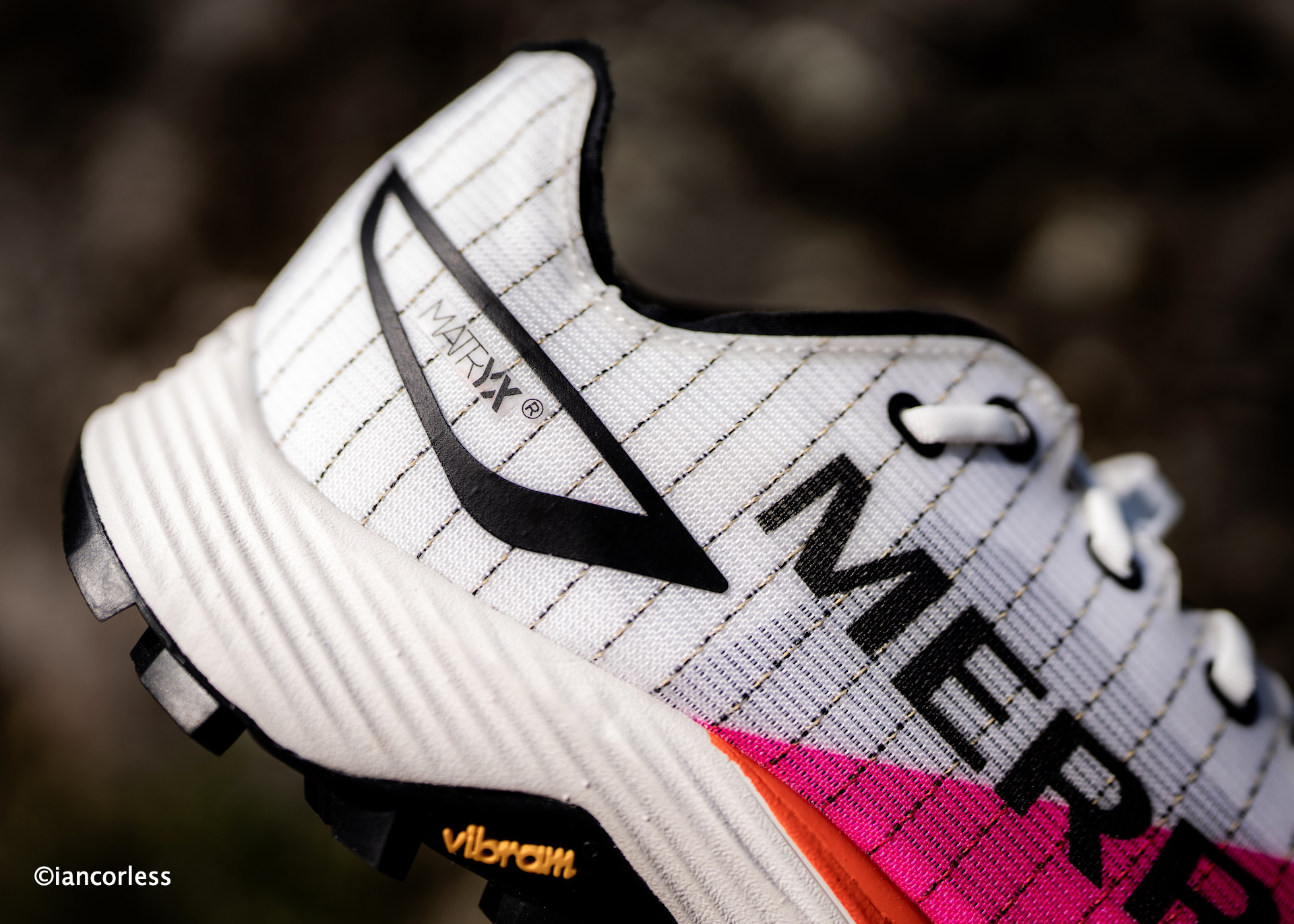
A key feature is the new MATRYX upper which has more durability and is designed to keep the foot cooler with greater wicking.
They have a gusseted tongue for excellent foot hold. Cushioning is via EVA foam insole and dual FloatPro Foam.
There is a temperature regulating footbed. A UK9/ EU44 is 259g and sizing is true to size. The shoe is 15% lighter than the previous model
THE SHOE
It’s a great looking shoe and one that immediately says speed. The white to multi fade orange and pink is striking.
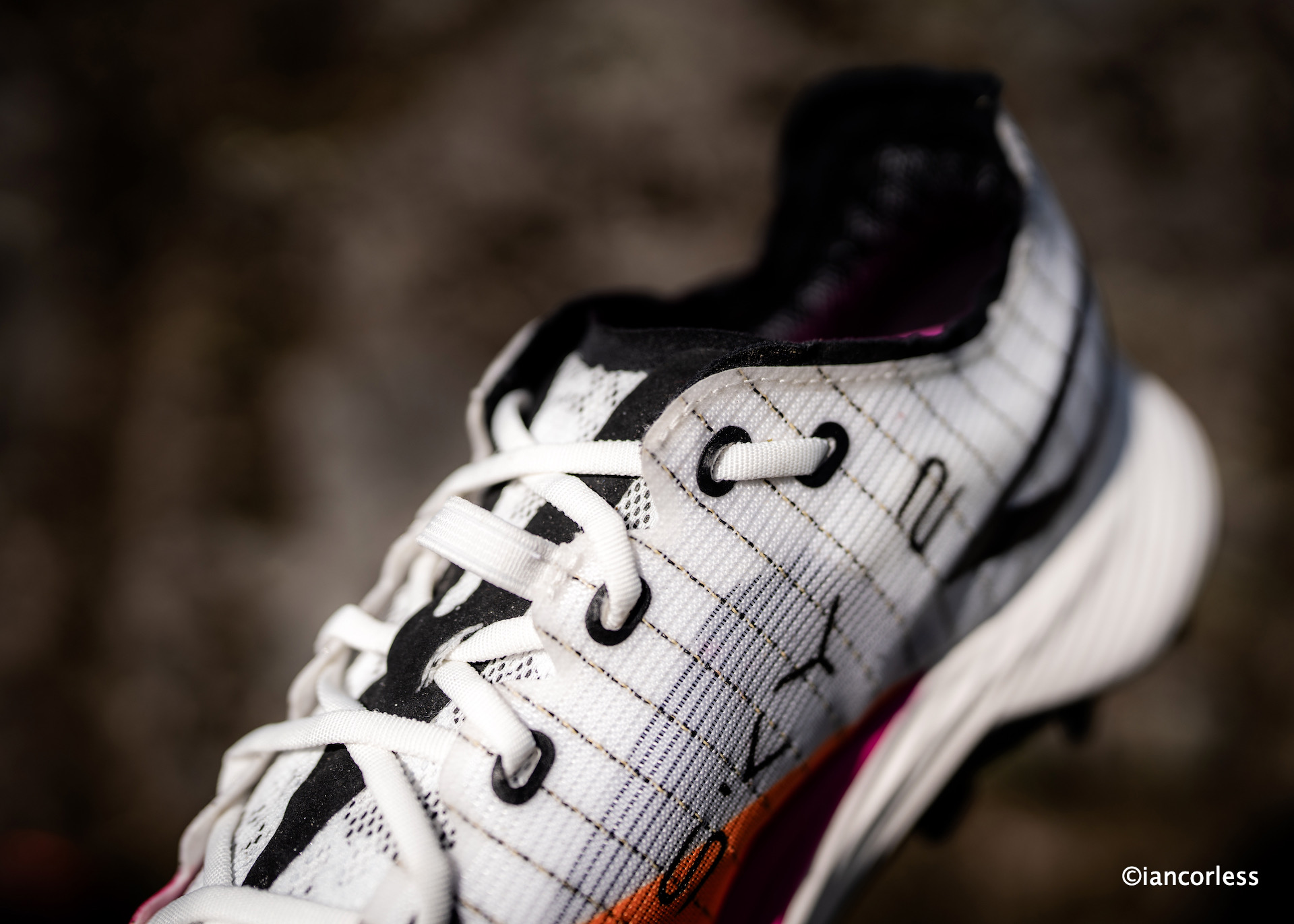
Slipping the shoe on, the foot hold is immediately noticeable and with the laces adjusted and the sock-like fit, there is no movement at all. Exactly what you want from a shoe that will handle mountainous and technical terrain. The heel area is very minimal and there is a raised padded area inside that is designed to grip and hold – it certainly does, arguably they are the most secure shoe I have experienced in this area. The front of the shoe opens up to provide enough width for toe splay, but not too much room so that you would lose control when precision is required.
With a 19.5/23.5mm cushioning, this shoe is designed to provide a compromise offering cushioning but not losing ground feel and control. As mentioned before, the ‘Long’ in the name is relative and for most people, this is not a long distance shoe.
The upper construction is minimal and notably so at the front, there is token toe protection. Don’t be fooled though, this MATRYX upper is tough and durable.
The shoe immediately feels comfortable when you put them on. I strongly suggest you play around with socks to find out what works best for you, I noticed a huge difference in feel between a lightweight sock and a slightly thicker merino sock.
Merrell say the shoe is good for up to 50km. For sure, yes, 50km is possible, but this depends on the runner and the speed they are going. A top elite mountain runner may tick off 50km in 4 to 5 hours, whereas, someone else may take 10-hours, so, use caution.
The MTL Long Sky 2 Matryx is designed to be agile and nimble, they are! But this comes at a price on comfort and protection. I had expected more protection and ultimately, for me, that just wasn’t there. I could feel stones, rocks and tree roots through the shoe which did surprise me. They feel thin!
They are very flexible and the propulsive phase is very good. On the correct feet, this is a fast shoe.
The biggest problem for me was the heel area. In one area they are brilliant, the hold is fantastic, they are secure and there is no slipping. However, this hold comes from the raised cushioned area with the heel, no matter what I did or tried, this just rubbed and caused blisters on both feet. I must caveat here, I never get blisters. So, this just made the MTL Long Sky 2 Matryx unwearable for me.
The outsole is Vibram MegaGrip with 5mm lugs. Ideal for technical terrain providing grip when required on rock, gravel, light mud and varying terrain. I am still not 100% convinced or confident of Vibram on wet rock, especially when compared to VJ Sport or the Continental grip on adidas shoes.
Conclusion
There is a great deal to like in the Merrell MTL Long Sky 2 Matryx and if you are looking for something light, nimble, fast with ground feel for short mountain days or racing, this is for you. However, this all comes at a price. It’s a specific shoe for a specific task, just like a Formula One car. This is not the only shoe to have or use. It’s too specific for everyday runs, so, the MTL Long Sky 2 Matryx should be added to an already existing shoe collection and they should be reached for and used on special days. Given that Merrell sponsor the Skyrunner World Series, it’s unsurprising that this shoe is designed to specifically perform on this terrain.
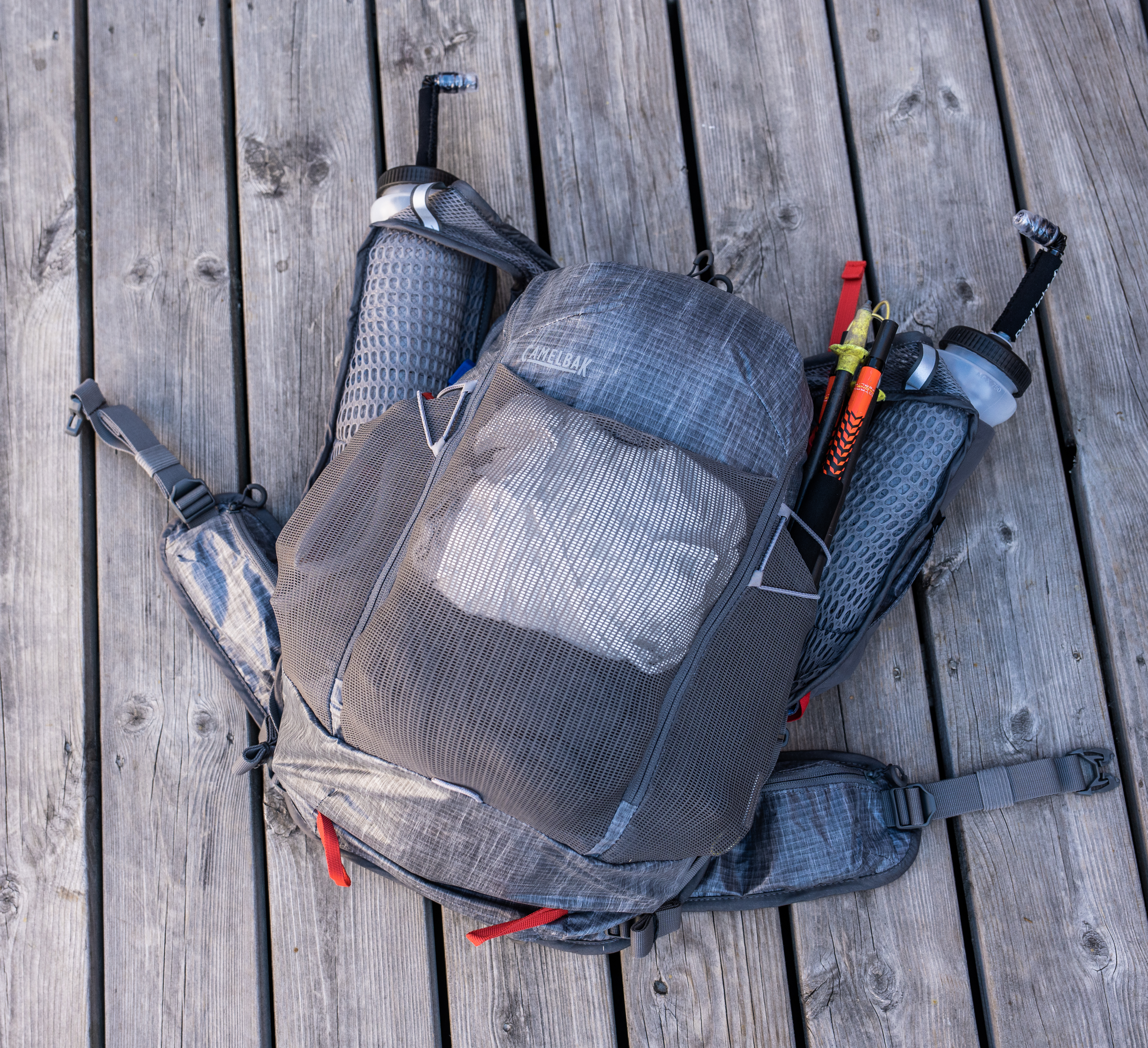
Octane 25 fully packed with tent,sleeping bag, apparel and food for a 1-night fastpack.
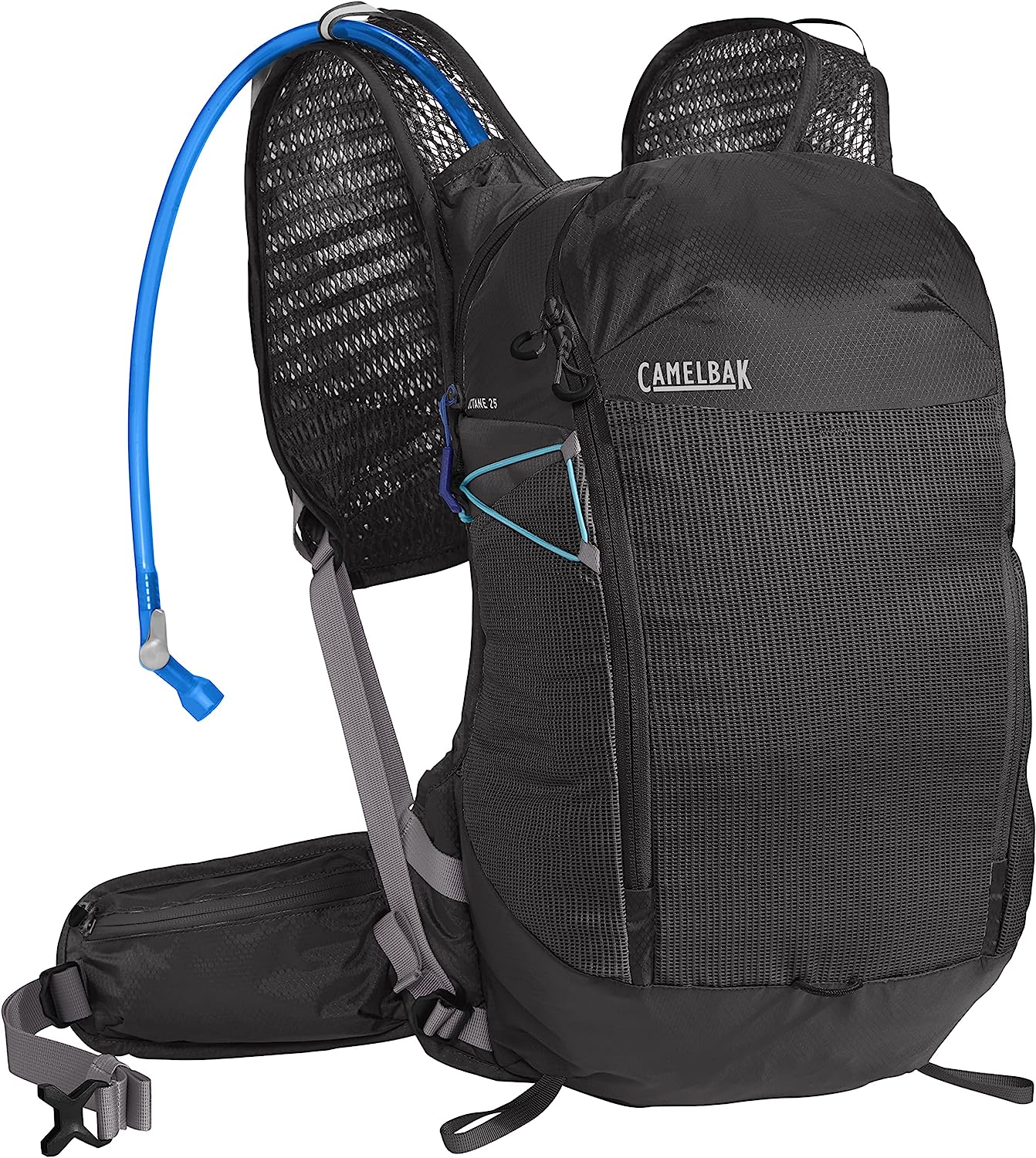
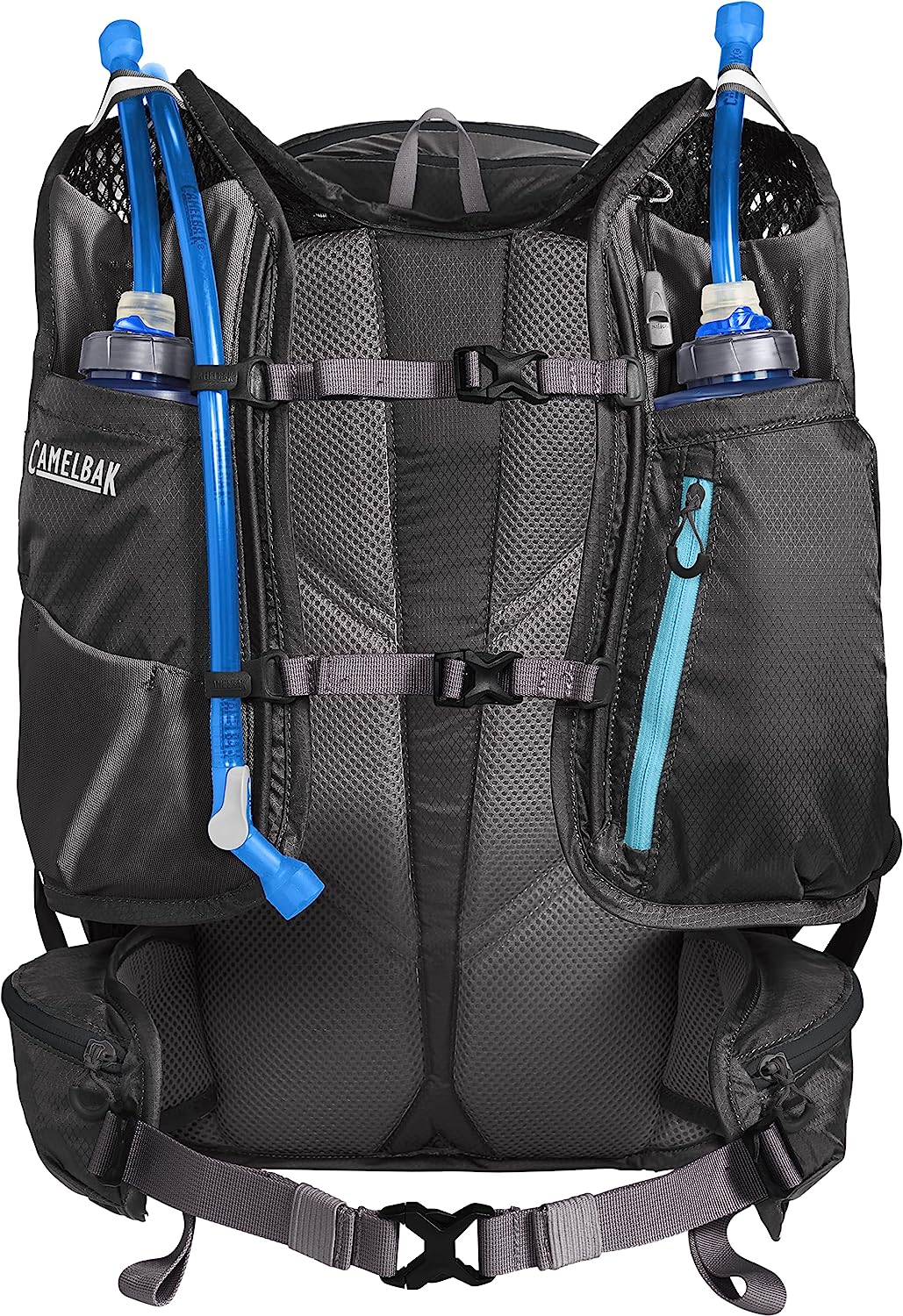
Streamlined, lightweight, full of features and storage, CamelBak have brought together the best of both the trail running and hiking worlds with Octane 25 LE.
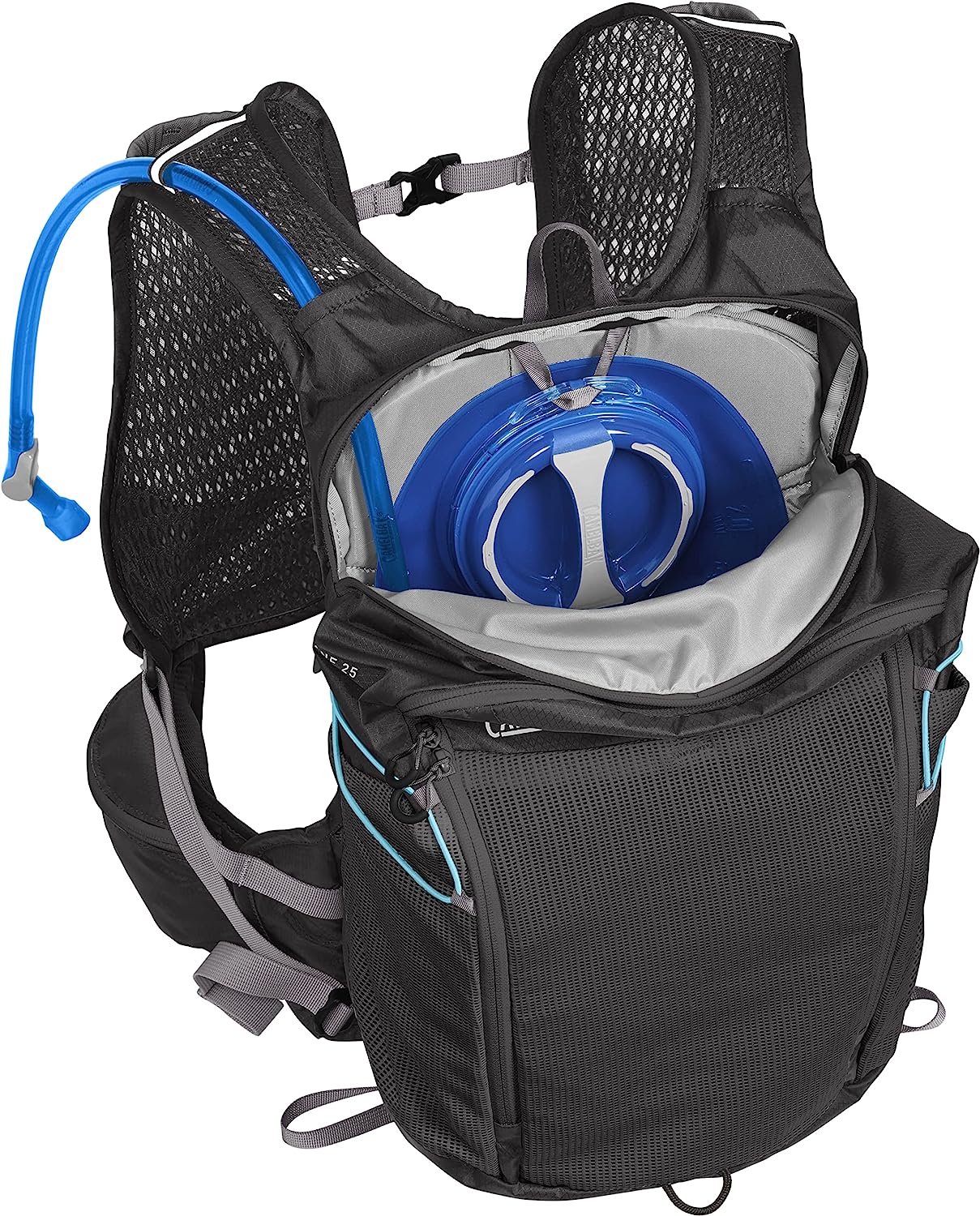
As you would expect, CamelBak has integrated a system to keep the bladder secure and easy to access, with the hydration hose tucked in and out of the way with secure fixings at the front. For many though, the use of the bladder can be a plus or a minus, so, removal is easy. At the front, there is storage for two large bottles or soft-flasks.
Ultimately, this pack with 25L of storage is perfect for fast packing and multi-day stage events. It is optimised for those who want to stay light and move fast. It is full of features and after packing and testing, this is a piece of equipment that is ideal for a race such as Marathon des Sables.
Key features are:
Belt with two zippered pockets for ‘on-the-go’ snacks.
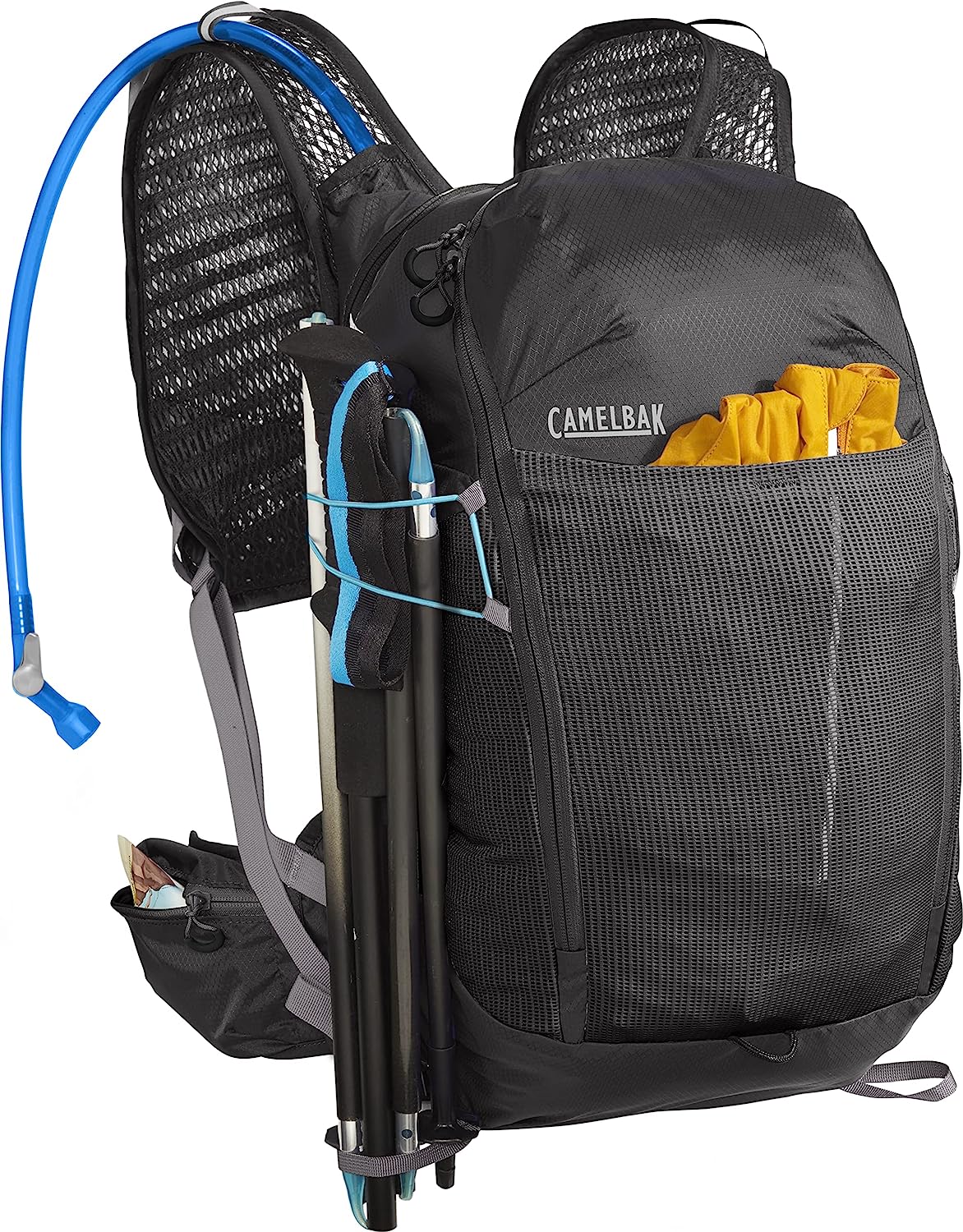
Trekking pole storage via left or right side.
11 exterior pockets one with zipper and two for bottles/ soft flasks.
8 interior pockets one with zipper and key holder
2 chest straps
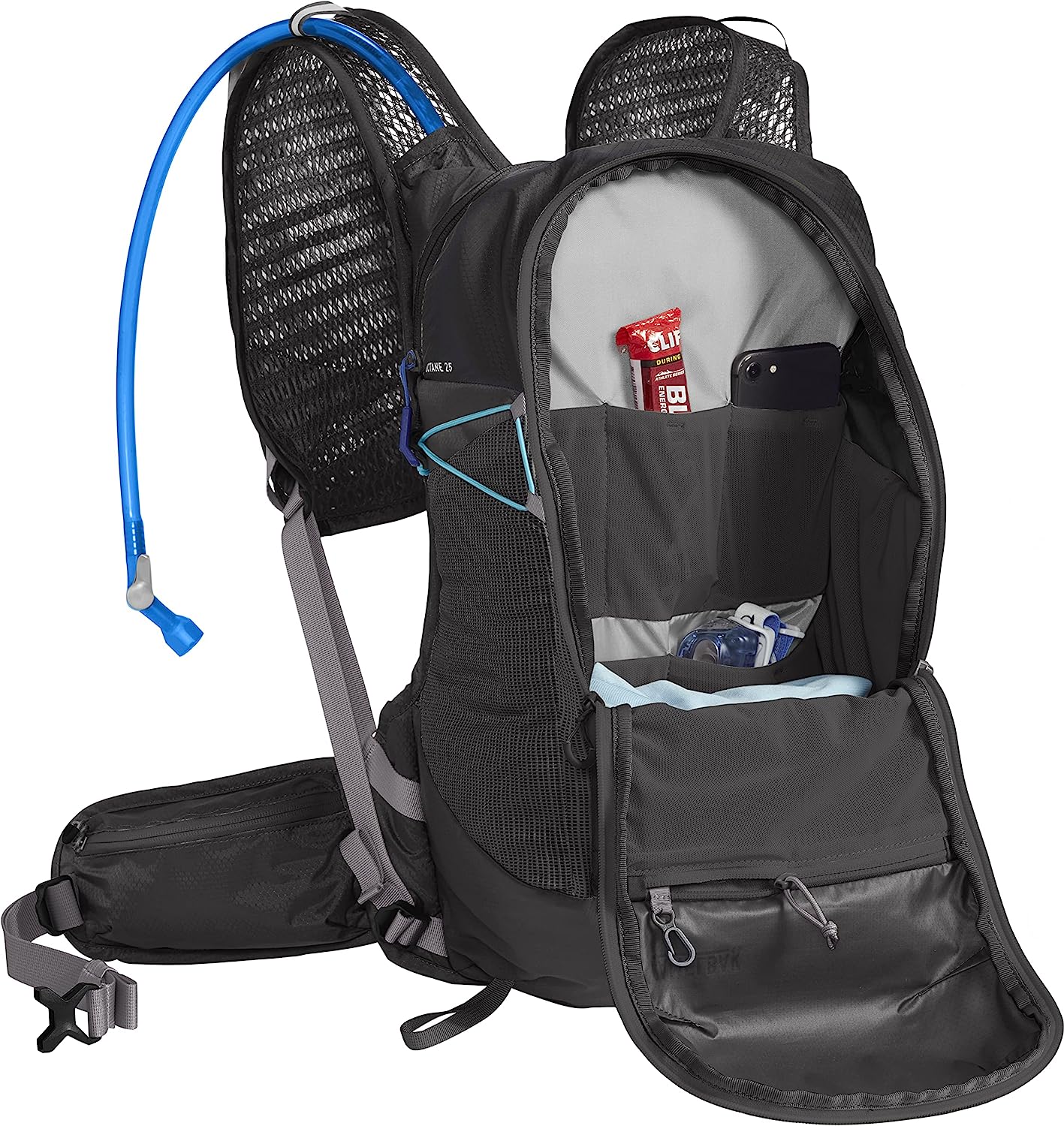
A large zipper opens up the pack like a suitcase, therefore adding and removing contents is easy. Inside the pack are multiple small stretchy storage pockets, 8 in total. On the rear insides 5, 2 longer pockets on the sides of the inside. In the lid of the pack is a zipper pocket ideal for wallet, passport with an integrated key holder.
Outside there are 11 exterior pockets and a giant compartment that is dedicated to hold the bladder, or, if doing multi-day, this is a great place to put a sleeping mat or even some clothing. Three large mesh pockets are ideal for external storage that may require quick access, for example, waterproof jacket, pants, hat, gloves, additional liquid and so on. Two elastic straps not only will hold poles in place but also help compress the pack smaller.
Pockets help keep things in place, and the dual chest straps keep it all closely attached to the body. The addition of the waist belt and two zippered pockets only adds to a secure feel and the increased pockets are welcome for ‘on-the-go’ snacks.
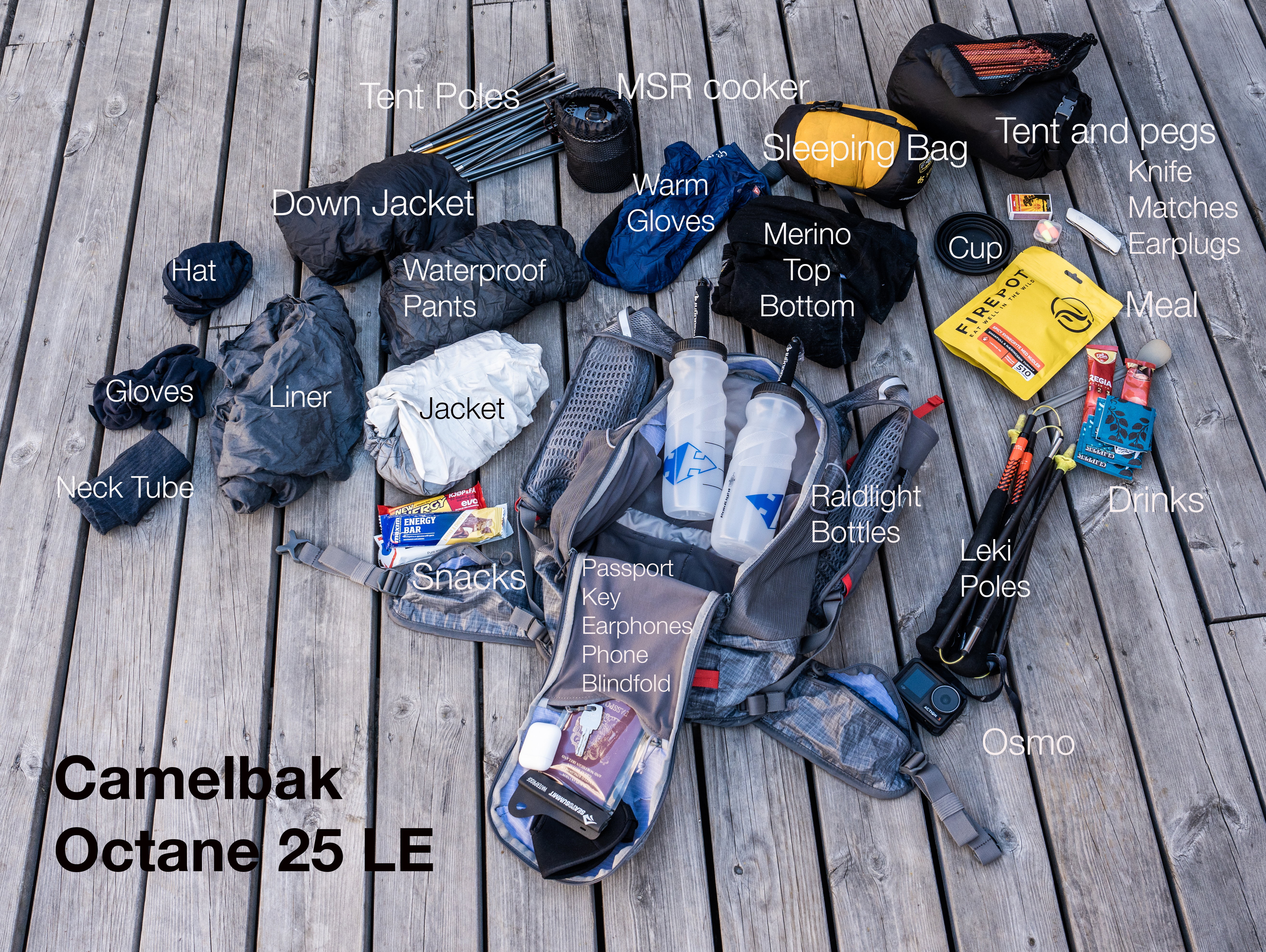
To provide perspective I removed the bladder and added a sleeping mat in to the bladder compartment (not shown in the video) and the items you see are as follows:
2 large Raidlight bottles
Big Agnes solo backpacking tent with poles and pegs.
Sea to Summit Sp1 sleeping bag.
Sea to Summit sleeping bag liner.
Merino LS top and bottoms.
Waterproof jacket.
Waterproof pants.
Down jacket.
Warm gloves.
Leki poles.
Merino beanie, neck roll and gloves.
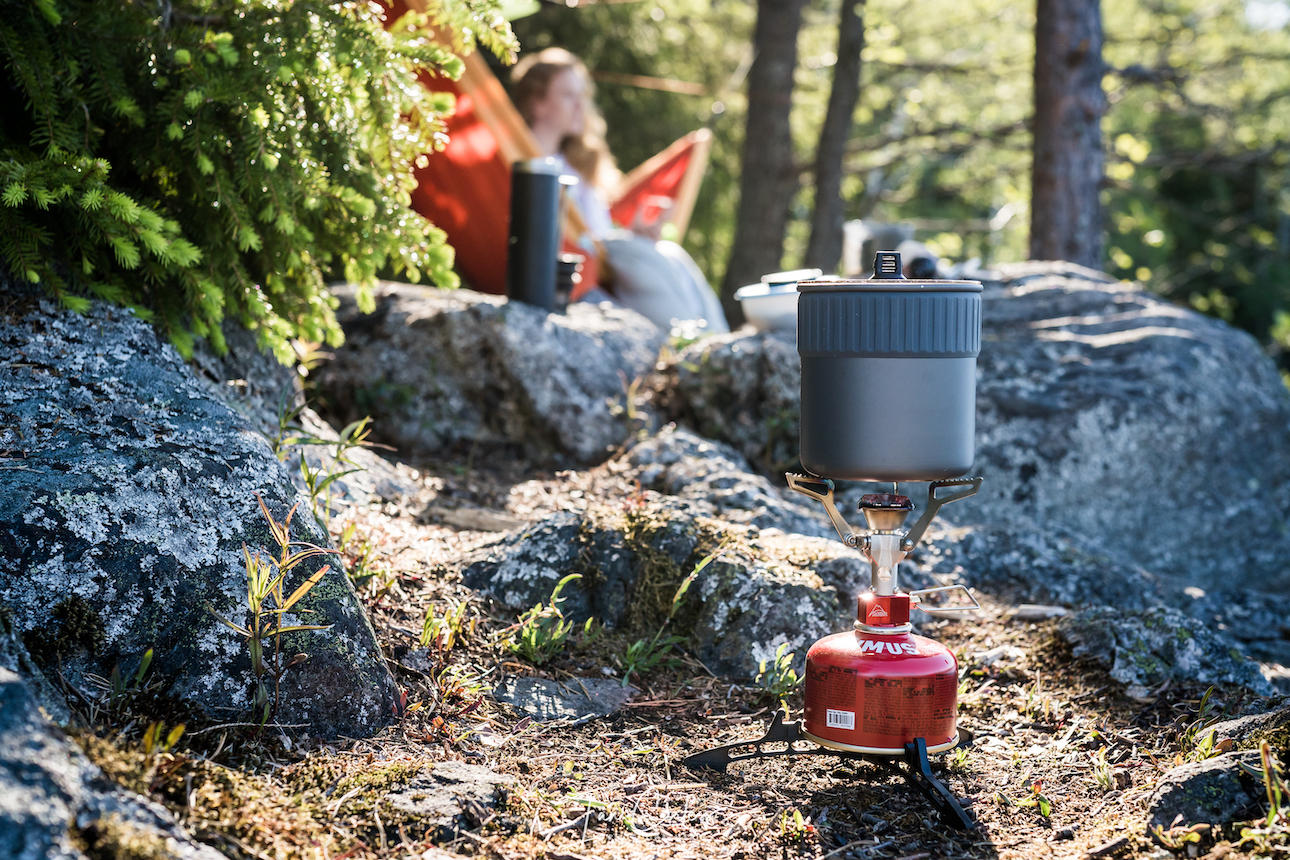
MSR solo cook kit.
Sea to Summit spoon
Knife, matches, hot chocolate sachets, tea, earplugs, blindfold, snacks, and cup.
Firepot food and bars.
Osmo Active.
Phone, passport, and credit card.
To wear, the pack hugs the body, is comfortable and if adjusted correctly provides a run with minimal bounce. Made from ultralight sail cloth, the Octane 25 feels very durable. 3D vent mesh helps comfort and breathability.
While not one of the obvious choices for a multi-day or stage race, this pack is proving hard to beat. The features, the storage capacity and the fit against the torso is superb. It really is one of the best, if not the best, we have tried. Coming in one size, smaller or larger individuals would need to try on and make sure fit and comfort works. The side adjustments do compensate for many sizes and the waist belt adds to a secure feel and it helps spread the carry load.
Is there a downside? The only possible problem could be the zip. Zips can break, particularly when under pressure from holding in contents or from harsh environmental conditions, such as sand. However, this is just a thought process that needs considering, there is nothing in testing that would suggest there to be a problem.
Ultimately, one of the best fast packing and multi-day packs I have tried and one that I am using on all adventures for the foreseeable future.
Can you ever have enough tents? I think the answer, most definitely for me, is no! Recently, I was looking for a lighter, smaller packing 1-person tent. The Nordisk Lofoten answered all my requirements particularly on weight and pack size BUT a compromise was going to be made on comfort, living space and storage space.
A recent purchase of a Big Agnes Tiger Wall UL2 ‘Bikepack’ tent for 2-people has been a revelation – packs real small, has low weight and is just perfect when out on adventure providing incredible space and storage for one person, or a comfortable relaxed space for 2 with excellent vestibules for storage and individual entry for 2.
2 person Tiger Wall UL2 Bikepack Tent
I was so impressed, the Tiger Wall urged me to look at the Big Agnes brand and low and behold I found the new for 2021, Big Agnes Fly Creek HV UL 1. Check out options on Big Agnes. A one person tent with lower weight and pack size but excellent living space has been on my wish list for a long time.
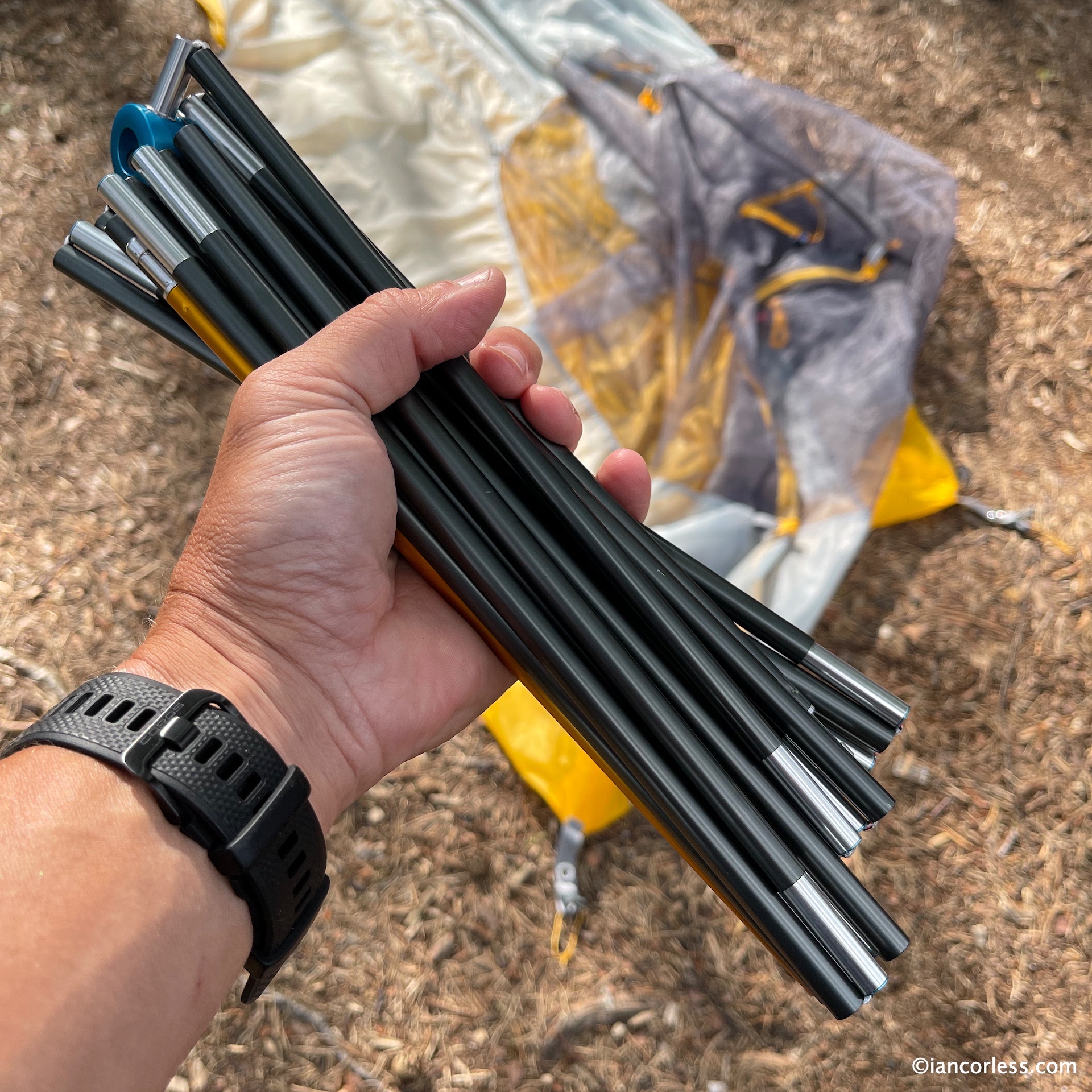
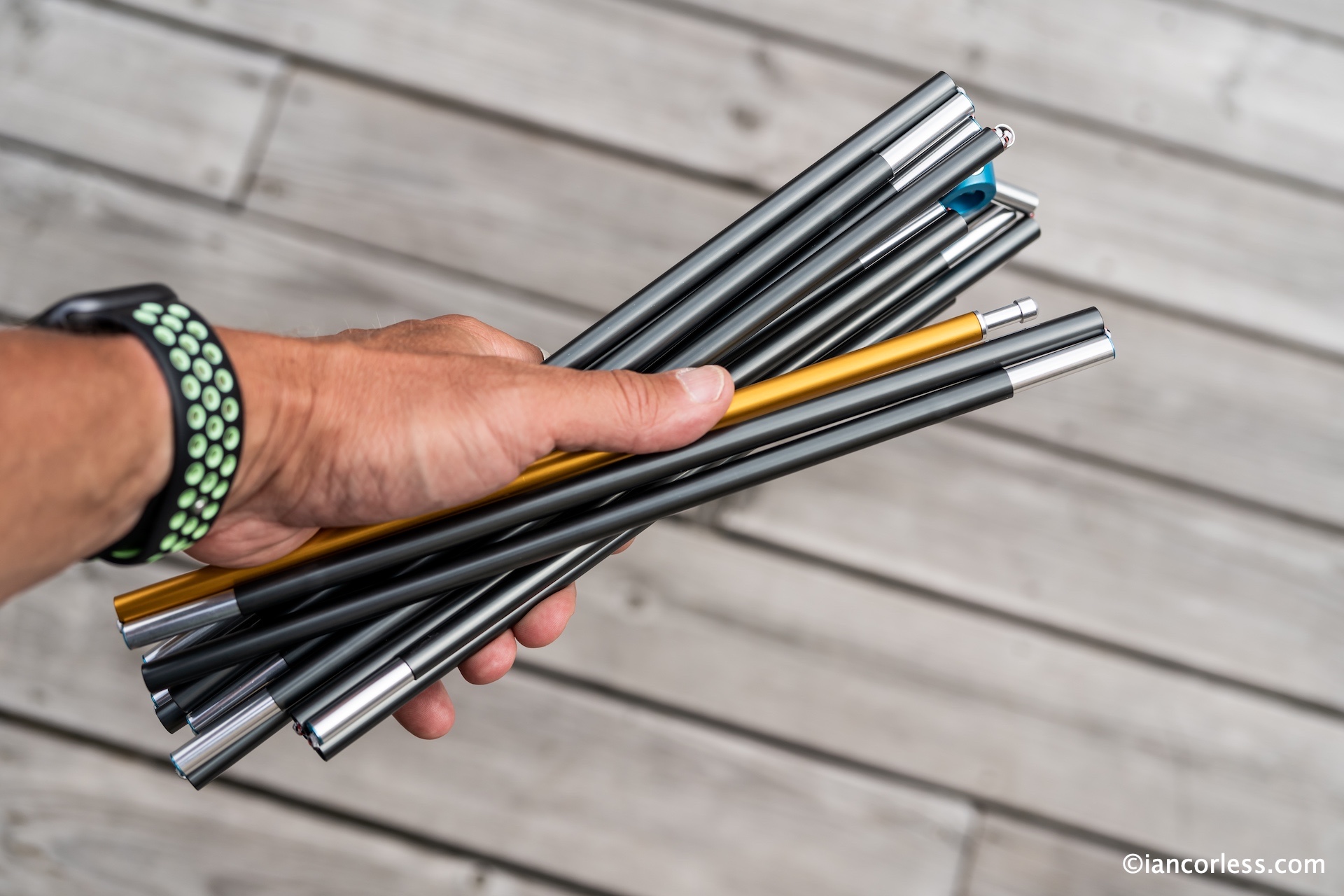
To clarify, I am not going bikepacking, BUT, bikepack tents use smaller poles, typically 12-inches, and trust me, once you have had the option to pack and fastpack with 12″ poles you will be completely sold on them. Ultimately, they were designed to fit across the handlebars of a bike, but equally, they will fit inside pretty much any run pack – a winner!
So, I was sold on smaller poles, but my other two criteria were ‘low weight’ and ‘good living space’ and by living space, I mean the option to sit up inside the tent.
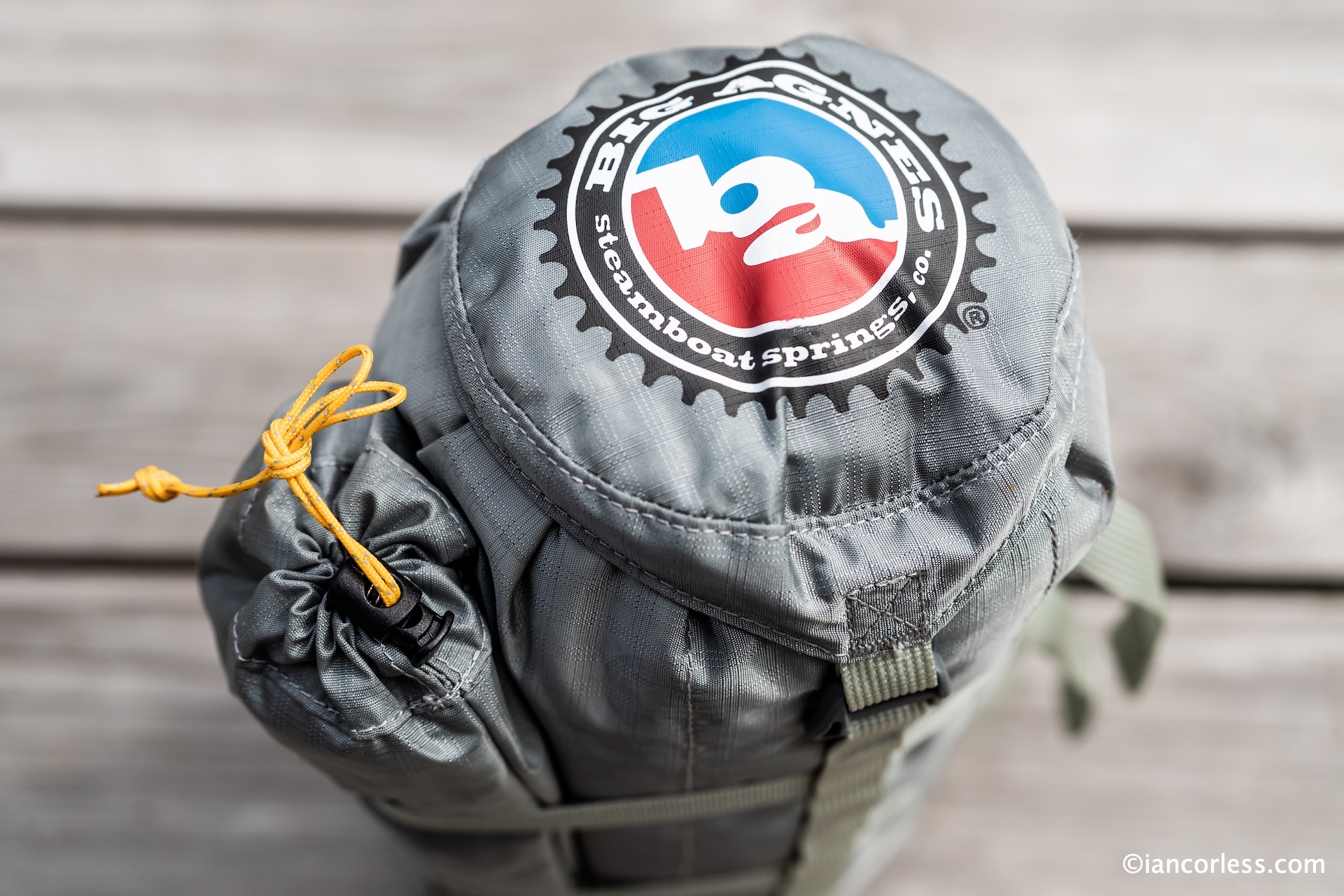
The Big Agnes Fly Creek HV UL 1 arrived and first and foremost, the storage bag for the tent and poles are designed for going on a bike, therefore they are robust, a little heavy but well designed.
If like me you are fastpacking or going hiking/camping, you just don’t need these storage bags and you will immediately make a considerable weight saving by not using them.
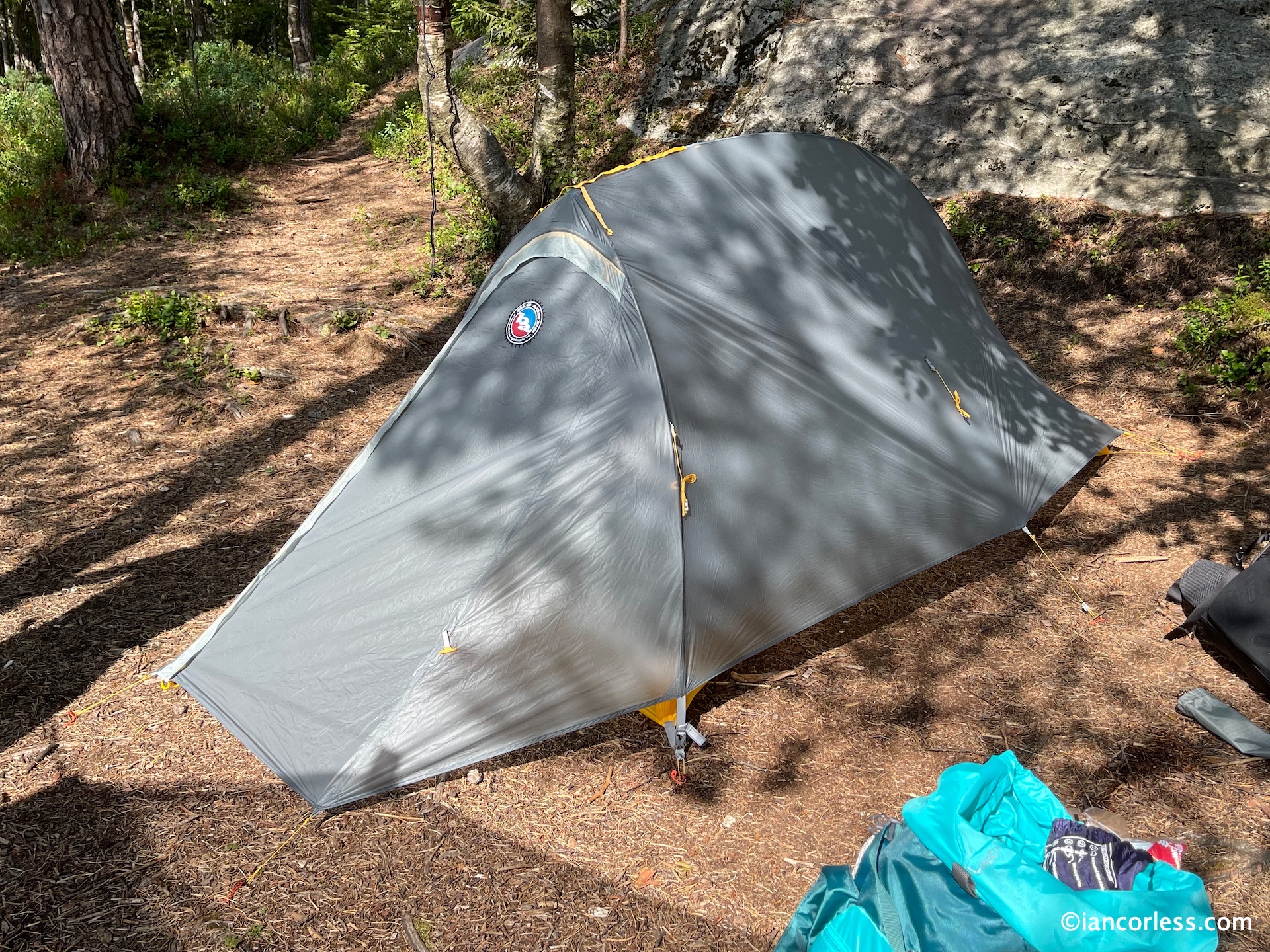
The tent weighs just over 900g with all the bags but stripped down to a minimum, poles, light pegs, fly and inner, I got the weight to just over 800g which for me, is perfect. It is possible to go lighter with some other brands, the Nordisk an example, but you don’t get the features, storage, living space and proper 2-layer tent that the Fly Creek offers. It’s a winner!
The 12″ poles are impressive and there is just one that attaches to the tent inner at three key points, two at the front, one at the rear which is colour coded. The inner attaches to the poles with simple clip buckles and you have a *free-standing inner tent for hot conditions. When I say *free-standing, to maximise space at the foot end, you ideally need to peg out the two corners that increase space. Also, to ensure the tent does not blow away, it makes sense to also add pegs at the three pole attachment points. It is also possible to use the flysheet as a tarp covering with no inner providing ultimately flexibility and the option to travel extremely light based on your needs and weather conditions.
IN USE
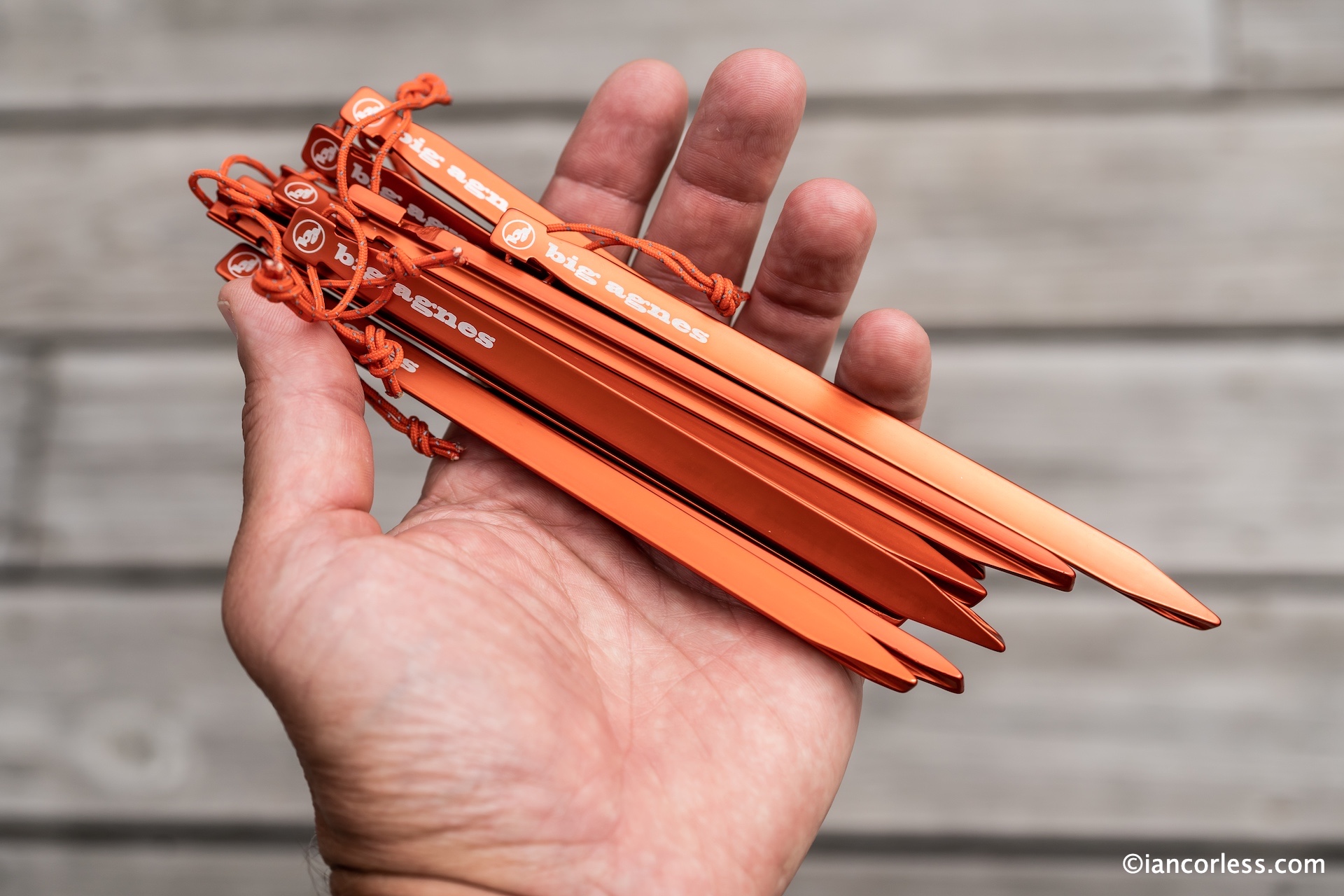
Pitching the tent takes minutes. Lay out the inner and peg the bottom two corners, this helps stop the inner blowing away (just in case) and allows for easier pitching. Attach the pole at three points and peg out tight, start at the rear. Peg out the two rear corners after pegging out the front corners. Throw the fly over the inner, remember to attach the inner Velcro fastenings to the poles and then ‘clip’ the outer to the inner, one at the rear, two at the front. The two rear corners are designed to utilise the two pegs that peg out the inner – handy on saving weight. Peg out the two cords at the front of the tent. In the middle of the sides there is a cord on either side, with these pegged out, you increase the internal volume of the tent. Make sure you look under the fly as there are two internal attachment points that link the fly to the inner that help increase internal space. On the fly itself, there are four additional ‘cord’ points, two at the front, two on the middle (one on either side) that offer more stability and security in bad weather.
The inner has one zippered access point at the front that has plenty of space to sit without being obstructed. Of course, if you are over 6-foot tall, some compromises will be made! With the outer fly zipped up, you have enough vestibule space for pack storage, shoes, and other items.
Inside the tent, it tapers quickly and there is an excellent storage space for clothes, I managed to fit a jacket, base layers, waterproof, hat, and gloves with no problem. On either side near the door entrance, there is a pocket for small items – phone, keys, glasses, headlamp, batteries etc….
There are several features specifically for cycling, for example, a helmet attachment point and on the outer, loops are attached so you can add items without losing them. This is perfect for attaching socks, t-shirt, shorts etc after a day on the trail and allowing them to air and dry out.
Worth pointing out that for 2021, Big Agnes have redesigned many tents, the Fly Creek being one of them and they are using solution-dyed fabric which ecologically reduces water and energy consumption.
THE GOOD
The 12″poles are brilliant as I can pack them pretty much anywhere. They are DAC Green Poles, poles so very durable and strong.
The steep architecture of the tent allows for excellent space at the front which really does allow one to sit up.
Internal and external storage is superb with some really great features.
Pitching is fast, easy, and secure and importantly you have three options: 1. Full tent with inner and outer. 2. Inner only. 3. Outer only. The use of TipLok Tent Buckles makes things very easy especially with the secure pole tip catcher and pre-cut guy lines.
Weight will always be crucial for me and a sub 800g tent with so much space ticks all the boxes, especially with no compromise on durability and features.
The vestibule offers great storage, easy access and has a two-way zipper.
Lots of reflective additions to the tent which makes pitching in the dark easier.
THE BAD
The interior space in the tent does taper off quickly but it is a minor niggle as you obviously need all the space where your head will go, however, for some it may feel claustrophobic.
I am used to side-entrance doorways/ vestibules and having used the Fly Creek with a front door, my preference would be a side-door. I think you get more usable space and potentially a better, more protected area for cooking with a side option. BUT this normally would increase the footprint of the tent and then that would mean additional weight, SO, I am more than happy with the front-door here.
The buckles make attaching the fly to the inner super easy. But if one breaks… attaching the fly, particularly at the front would be a real problem. I have no reason to think that they would break, but the possibility always exists.
MEASUREMENTS
Internal height 38″ at the front.
Length 86″ with 24″ vestibule.
Width 38″ at the front entrance and 28″ at the rear. With the door closed, the front door width is 26″
Packed weight 980g
Stripped down weight 800g
Fly only weight 620g
CONCLUSION
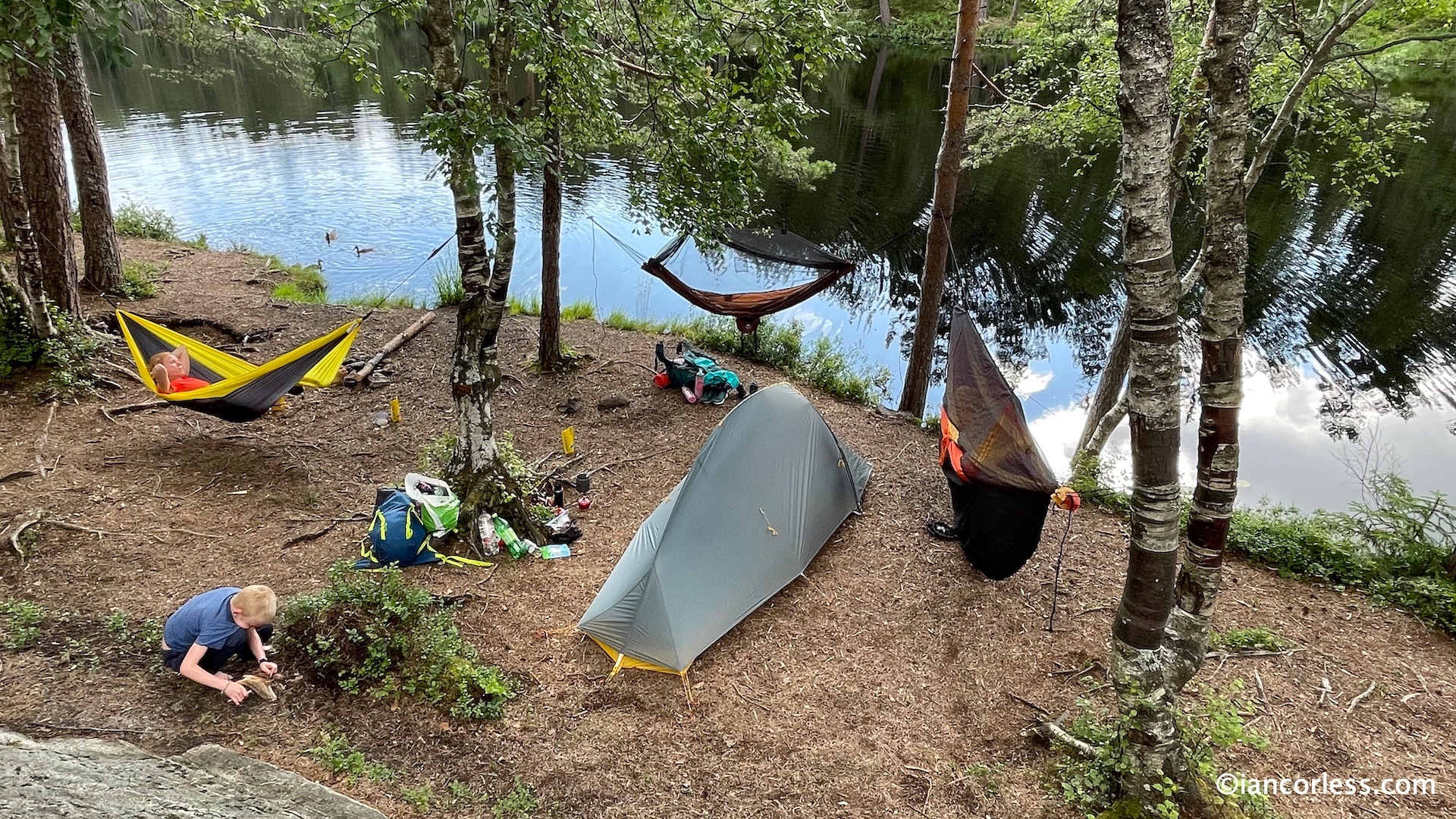
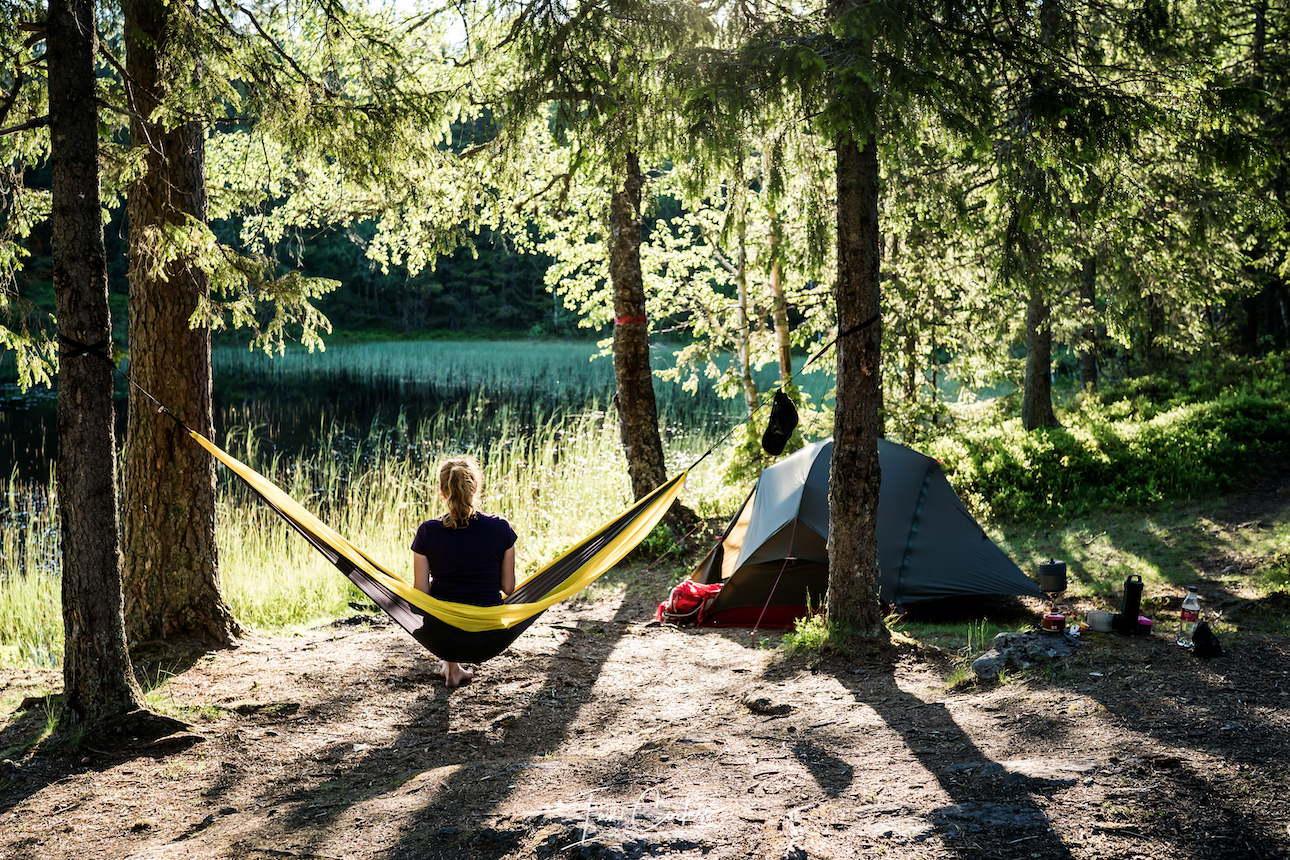
Here on a Summer family camp, the Big Agnes is lighter than hammock, bug net and tarp.
As solo tents go, Big Agnes Fly Creek HV UL 1 is not the lightest out there but is still amazingly light! The features, internal space, resilience to weather conditions and small pack size make this a serious contender for any trip. The Nemo Hornet does come close as a comparison with a little more space, less features, additional weight (approx 200g) and I personally feel less protection in harsher weather. At the lighter end, the Nordisk Lofoten is lighter, smaller pack size, considerably less features and compromised living space and storage. Ultimately, when choosing, you need to decide what works for you. Having lived with the Big Agnes Fly Creek HV UL 1 it will now be my ‘go-to’ tent for solo adventure. It just ticks all the boxes with little or no negatives. It really is a superb offering at a good price, 350 dollars / 350 pounds.
Ultimately, the tent has received a significant update over the previous one, it has new environmentally friendly fabrics, larger internal space, wider opening access and a range of tweaks and upgrades that make it ideal for 3-season use when travelling fast and light.
Please support this website. I believe everyone deserves to read quality, independent and factual articles – that’s why this website is open to all. Free press has never been so vital. I hope I can keep providing independent articles with your help. Any contribution, however big or small, is so valuable to help finance regular content. Please support me on Patreon HERE.
Runner’s strive for the best of all worlds in one shoe – lightweight, feel for the ground, cushioning, support, lack of support, grip in mud, grip on rock, low drop, high drop, grip in the wet and the list goes on and on. The reality is, there are few run shoes that will be a ‘one stop’ package and this why so many variables exist.
When possible, we choose specific shoes for a specific task.
Boots are not something that a runner would usually look at unless going on a specific hike. Even then, if moving fast and light, a good durable run shoe is usually preferable.
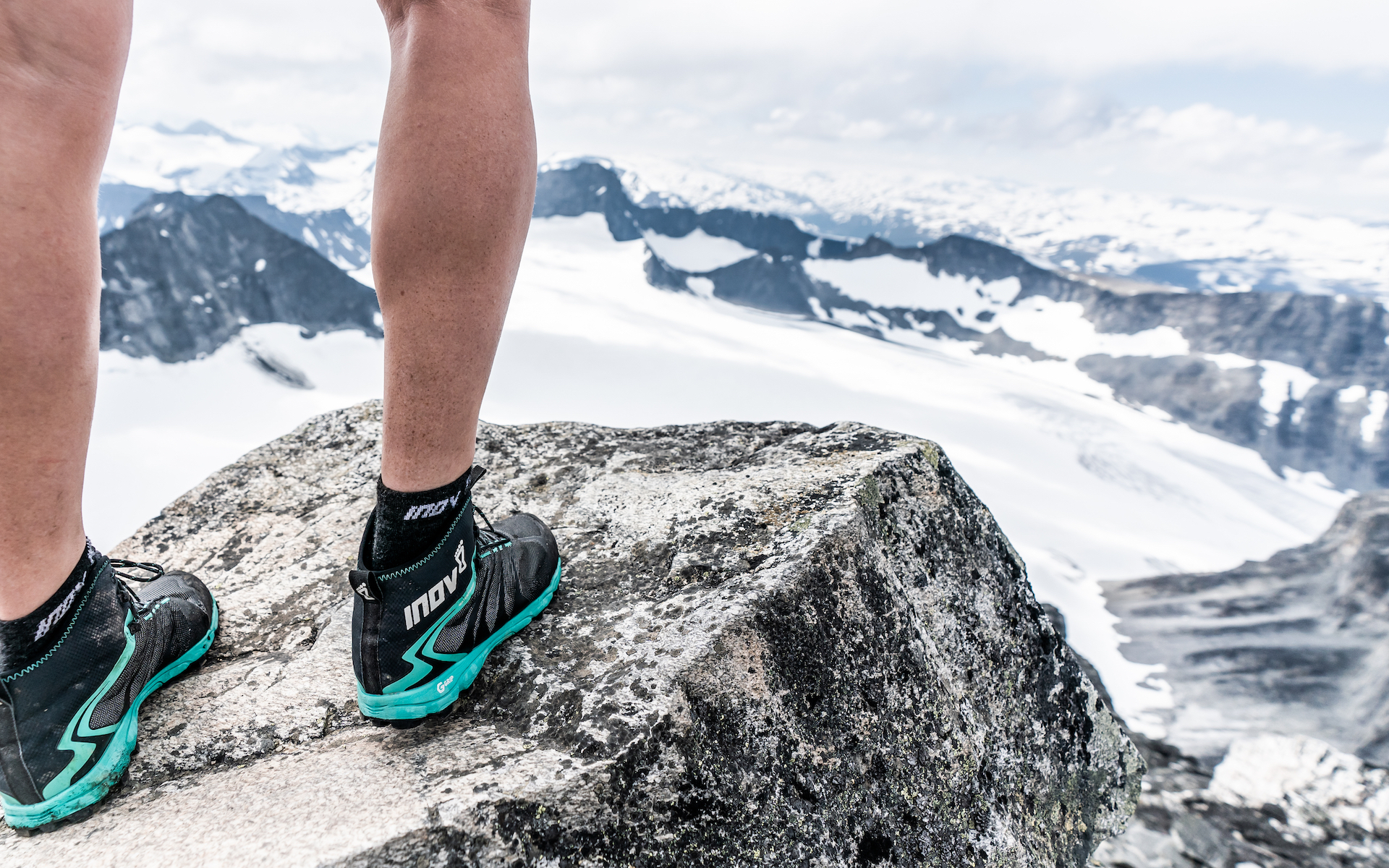
G370 boot at the summit of Galdhøpiggen, Norway.
In 2018, I was once again planning a fastpacking trek in the Himalayas but this time, my journey would take place in December. Previous trips had taken place in November and more often than not I had used the inov-8 Trail Talon which was perfect for long days. December in the Himalayas and I knew I would encounter snow and on occasion would need to use micro-crampons. I was reluctant, very reluctant, to use a boot, especially for long days… Too heavy, too cumbersome, too stiff and the list goes on.
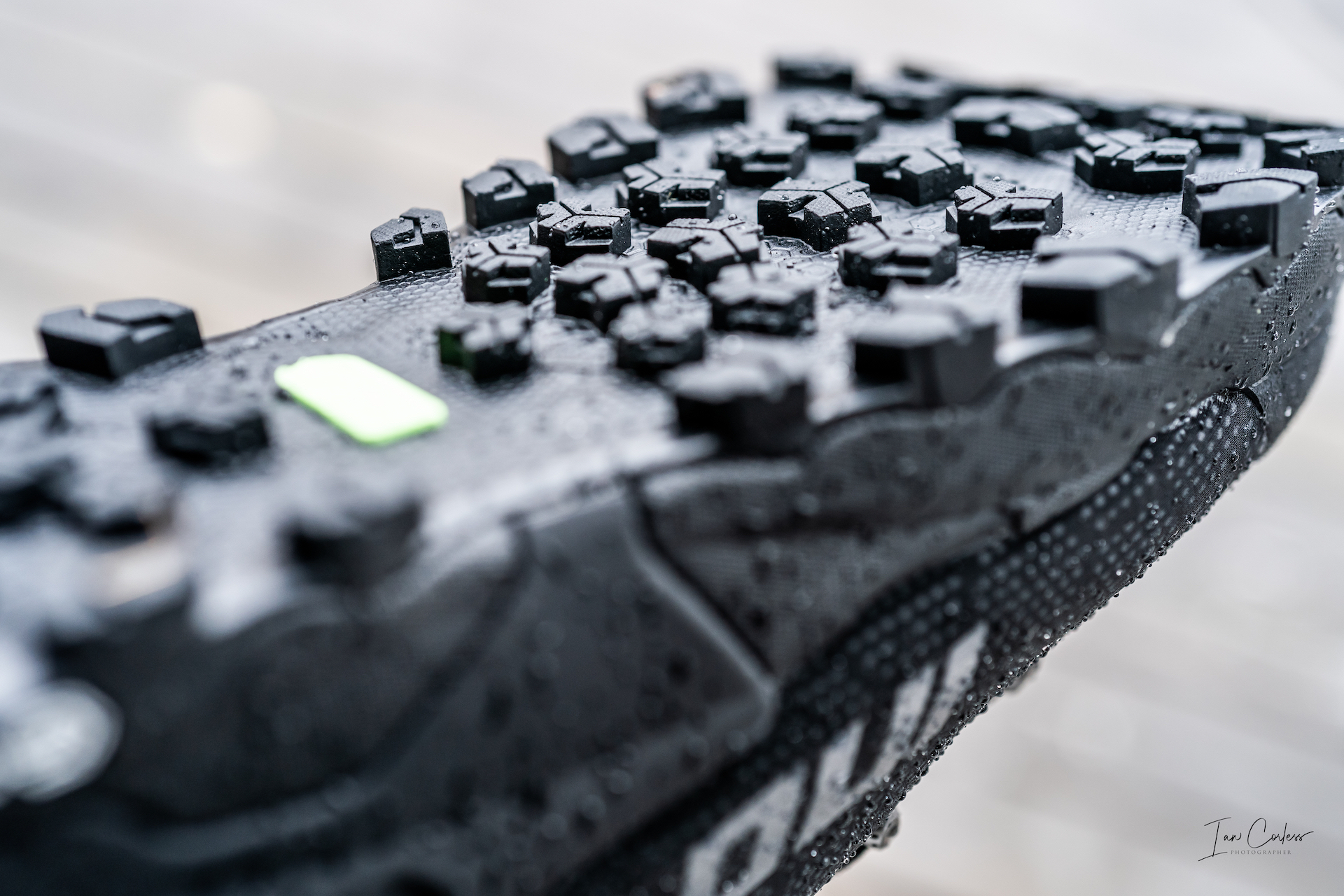
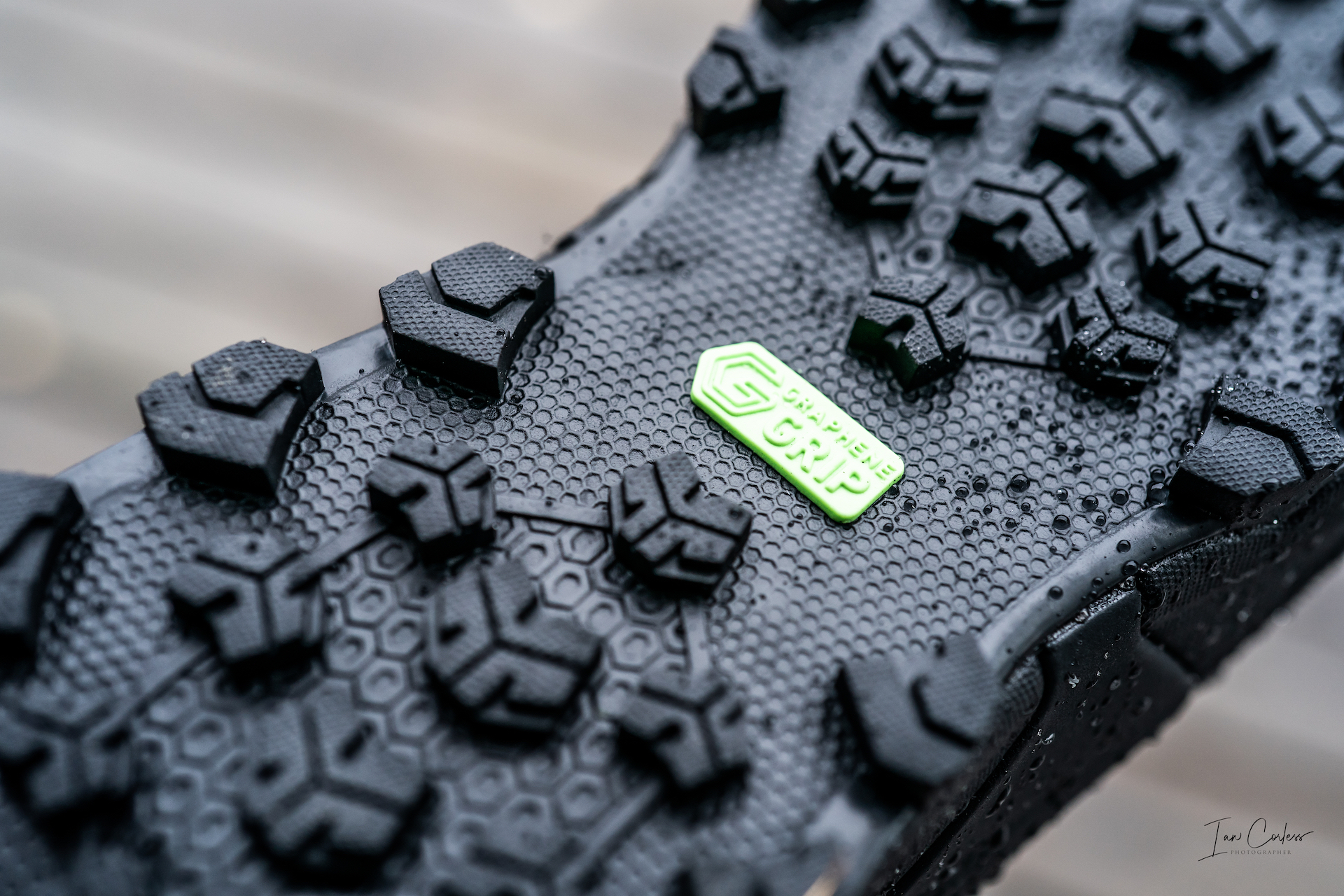
I was introduced the Roclite 345 GTX with Graphene grip and the 325 GTX boot. These boots were a revelation providing all the feel, grip and upper of a conventional run shoe but with the addition of ankle support that was designed in a way that would facilitate running with very little compromise.
In 2019 and in 2020 I have been using the Roclite G370 for specific trips, by way of example, the Himalayas in November, Toubkal in Morocco (January) and the mountains of Norway for occasional trips when snow and tough conditions would challenge. A prime example being the highest summit of Norway, Galdhøppigen at 2469m with snow conditions. With 6mm studs, 9mm drop, 9/18mm cushioning front and rear and only weighing 388g for an EU44.5 (I went 0.5 size bigger than usual to allow for winter socks.) These have proven to be great boots when I needed more warmth, grip and comfort in extreme conditions without compromising a run shoe feel. They are highly recommended!
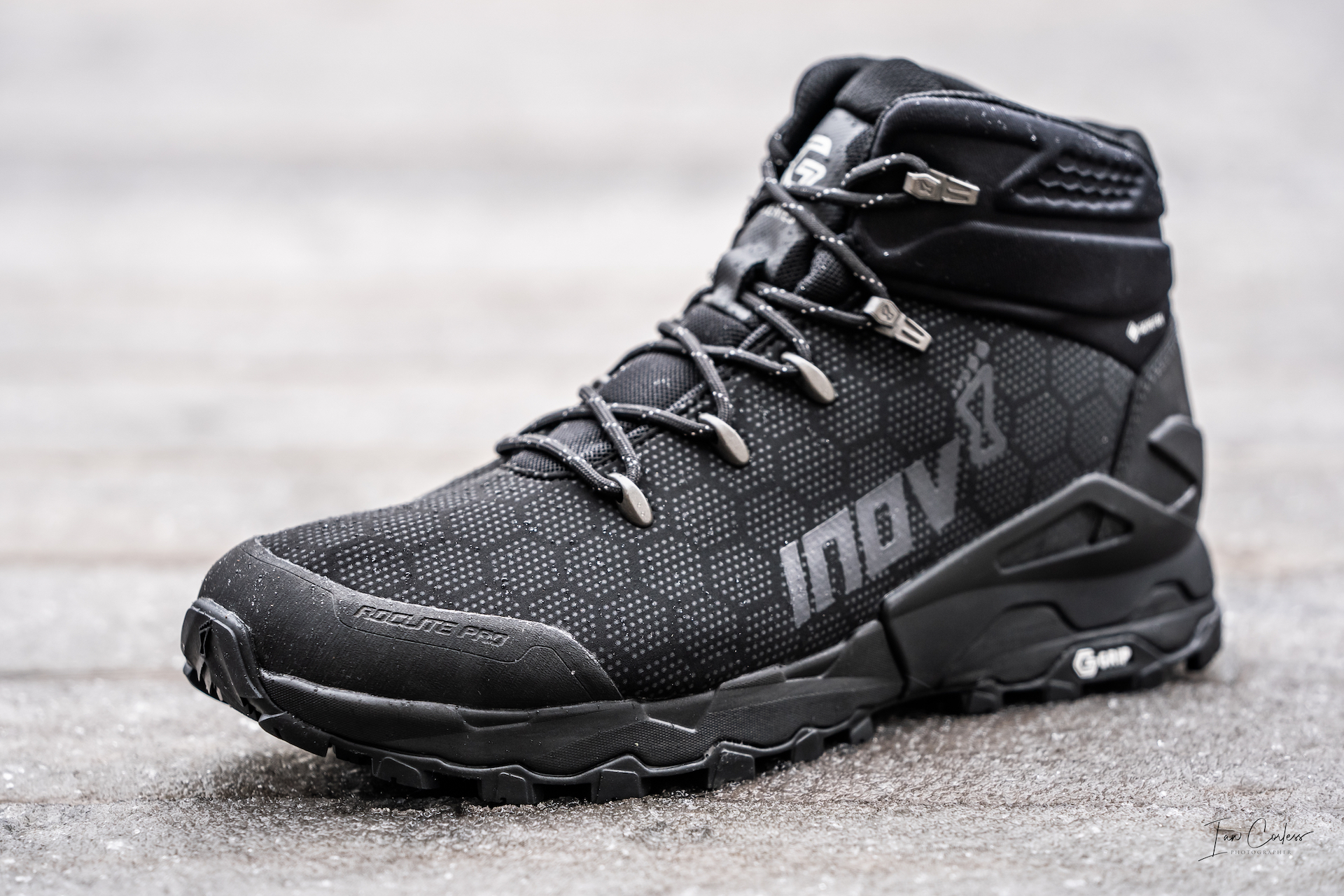
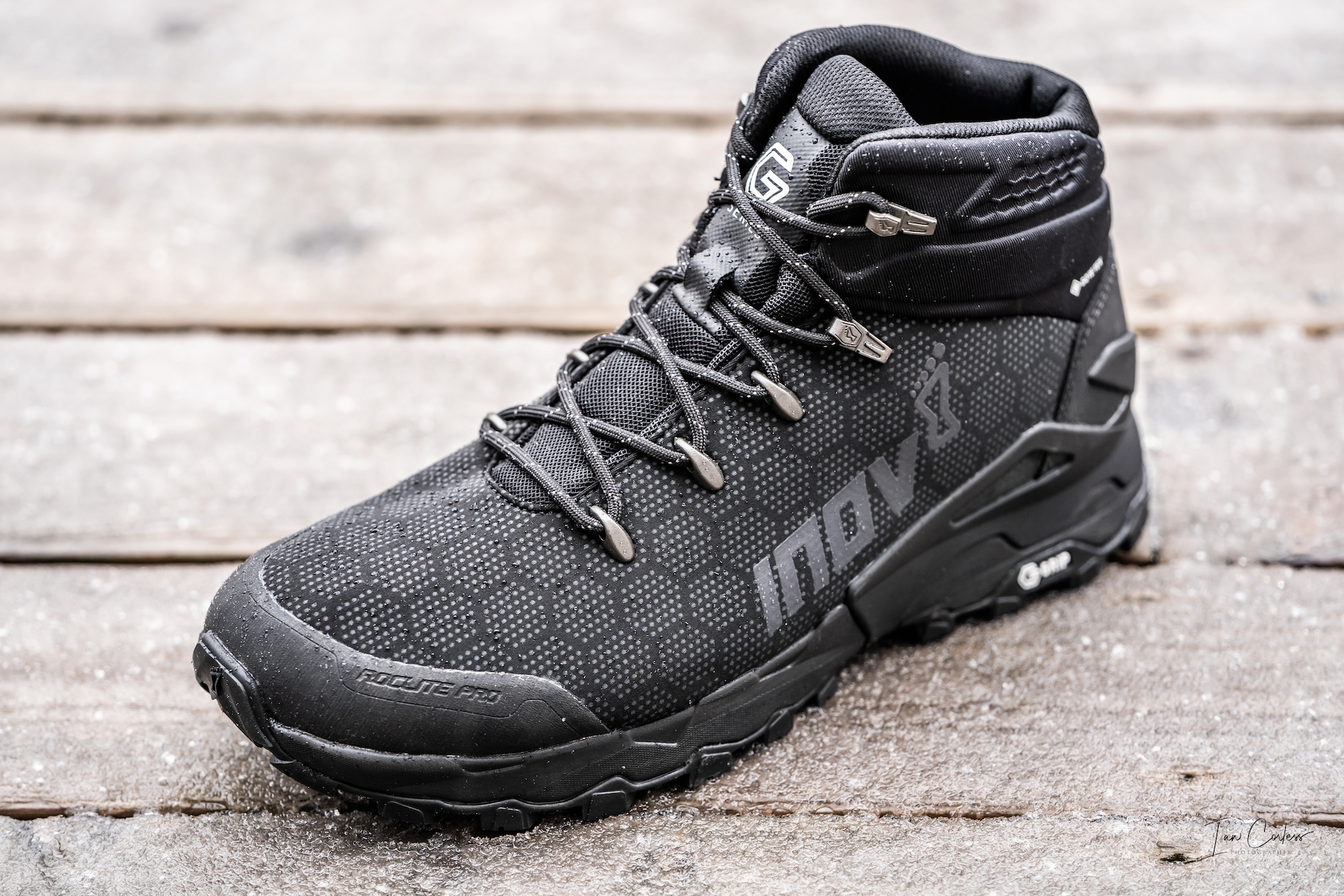
When I heard about the Roclite Pro G 400 I was immediately interested.
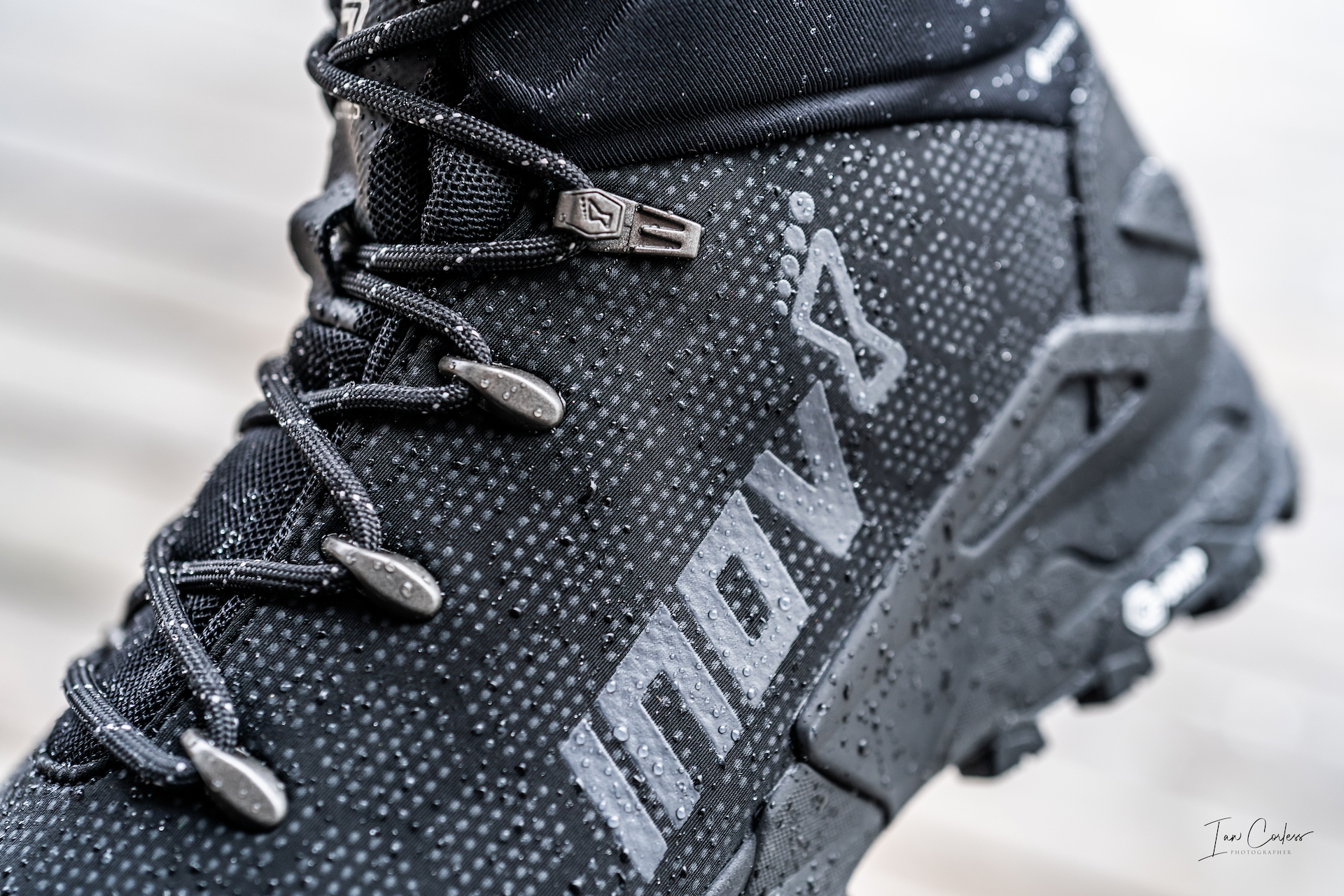
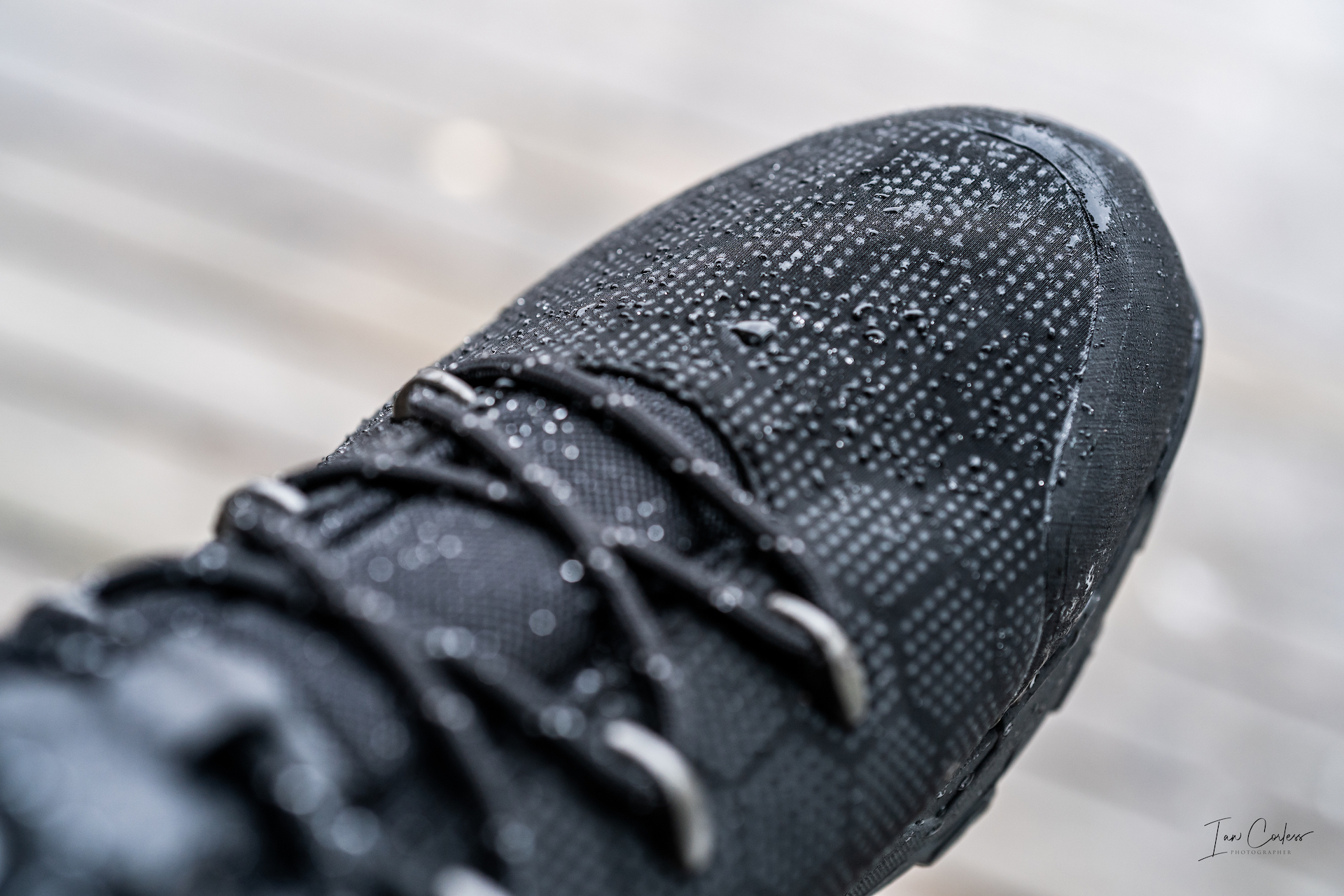
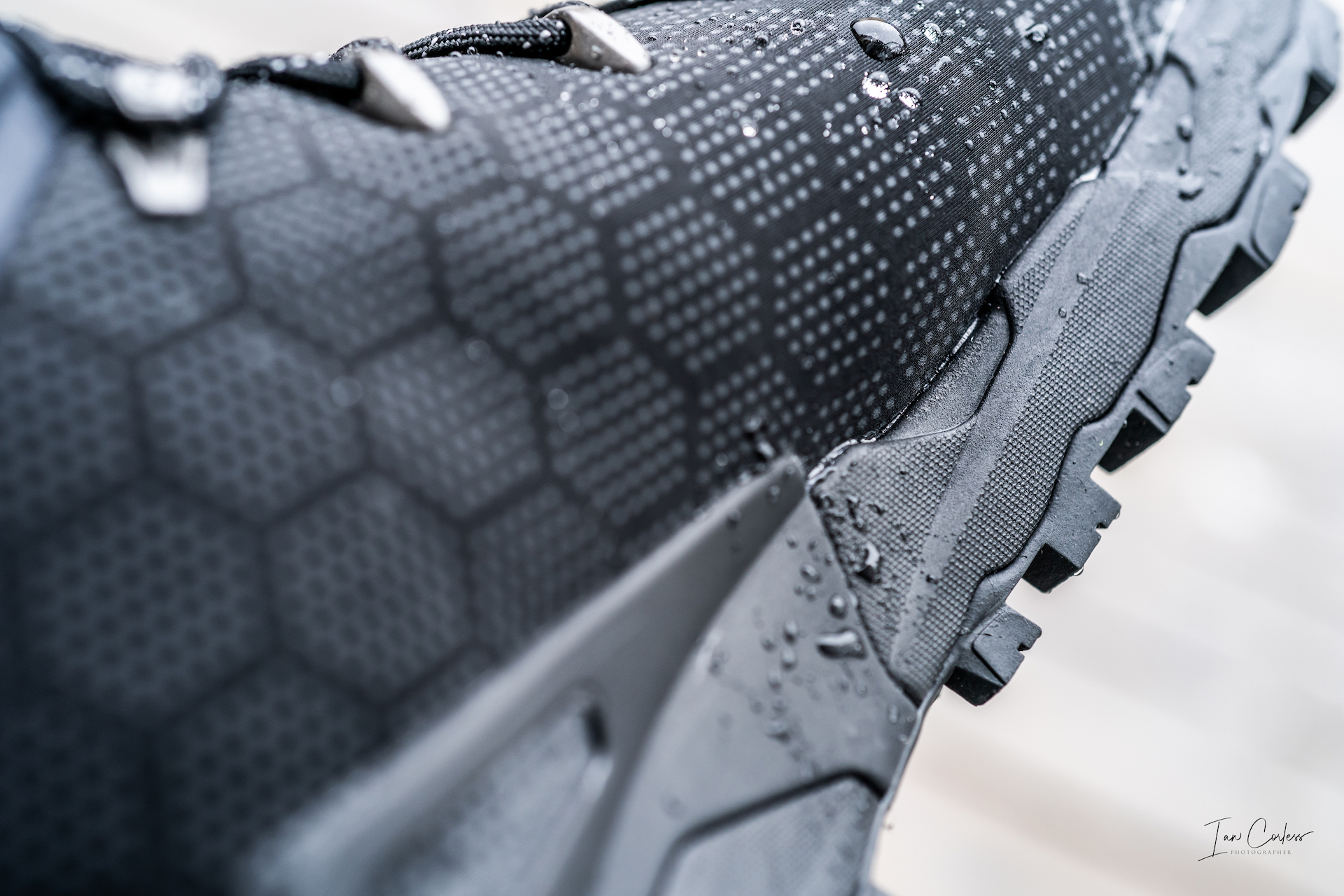
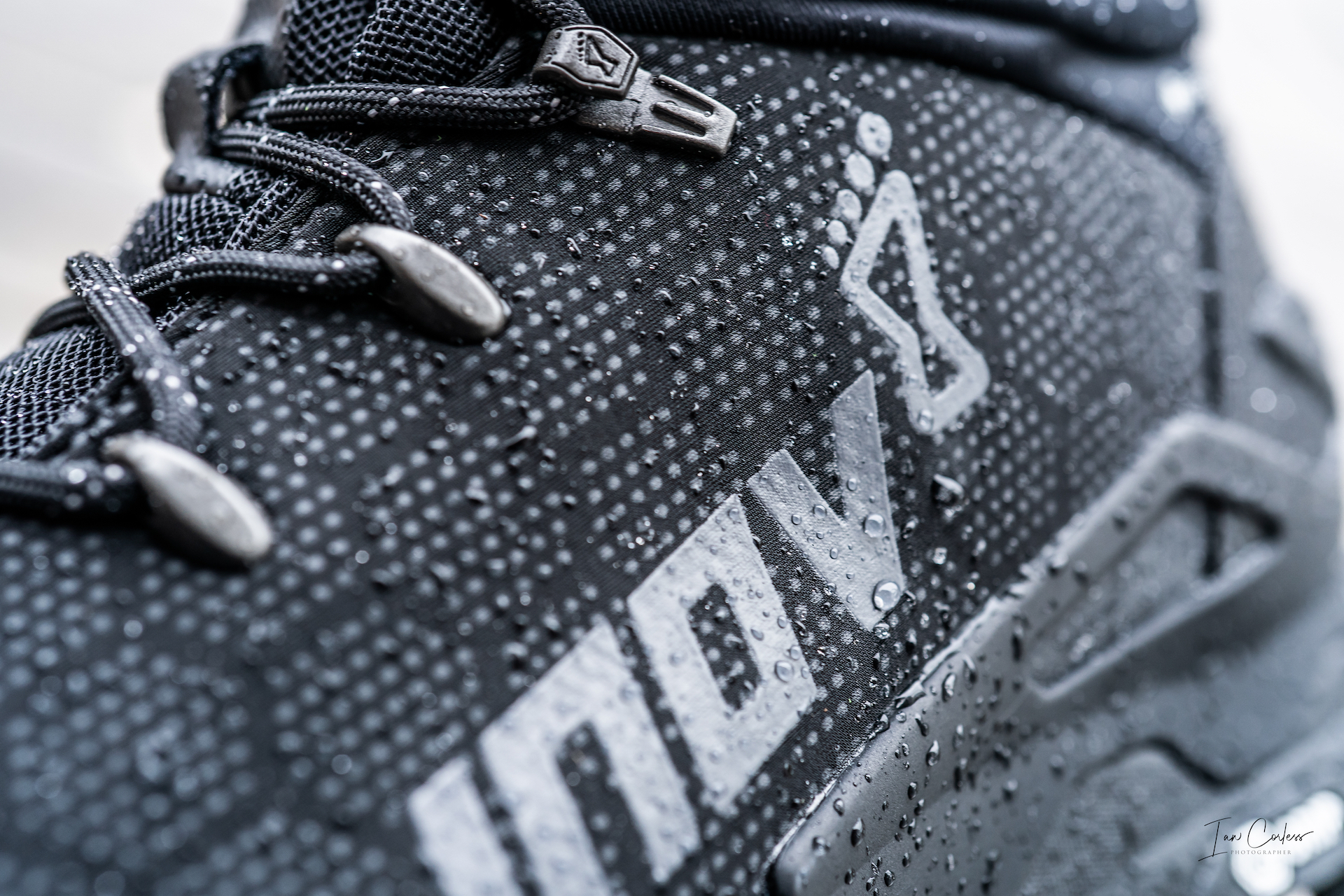
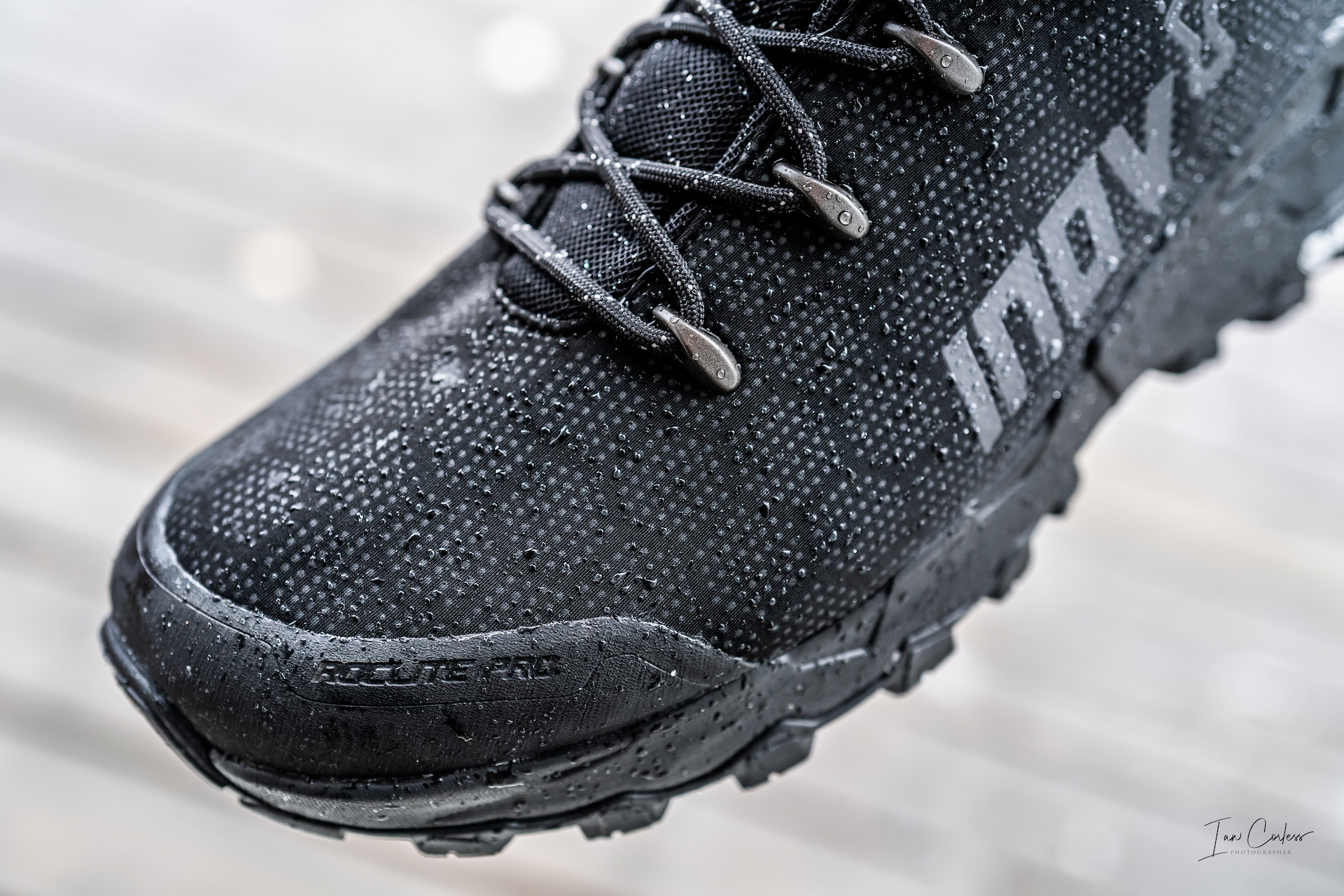
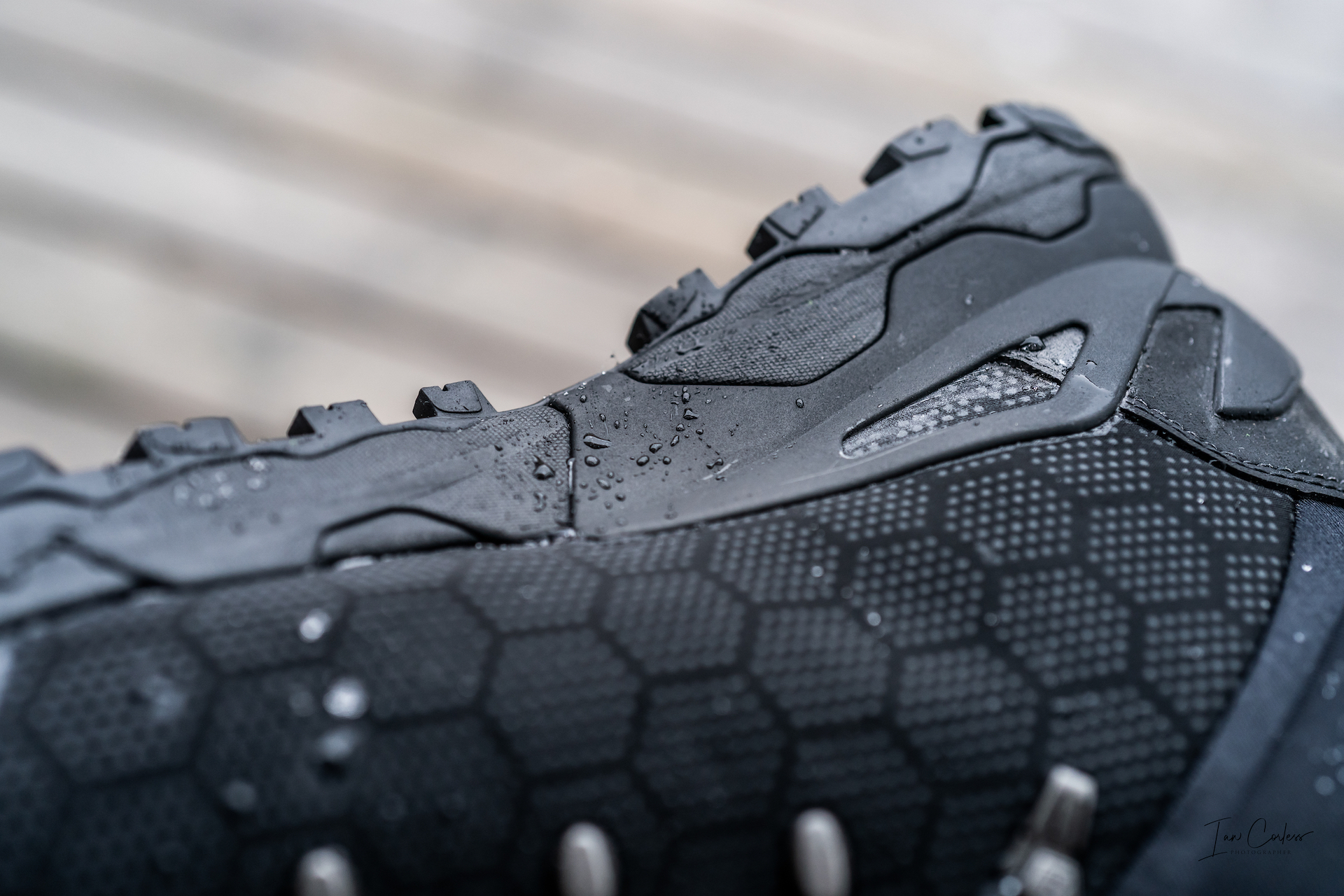
On first impressions this version of the Roclite does not look like any previous Roclite that has come before, the look and feel is completely different, especially in the stealth black look. Almost looks like a boot for the SAS or Special Forces.
Weighing in at 421g for an EU44 the boot is also more substantial than previous incarnations. But I need to clarify here that the new Roclite Pro G 400 is designed for a different purpose in my opinion. It is much more akin to a normal hiking boot but at a fraction of the weight.
The fit scale is 4 just like the Roclite G 370 listed above, however, I would disagree here. The G370 is more of a 3 fit and the new G 400 a 4. There is a distinct difference in feel between the two boots, the G400 most definitely allowing for more toe splay.
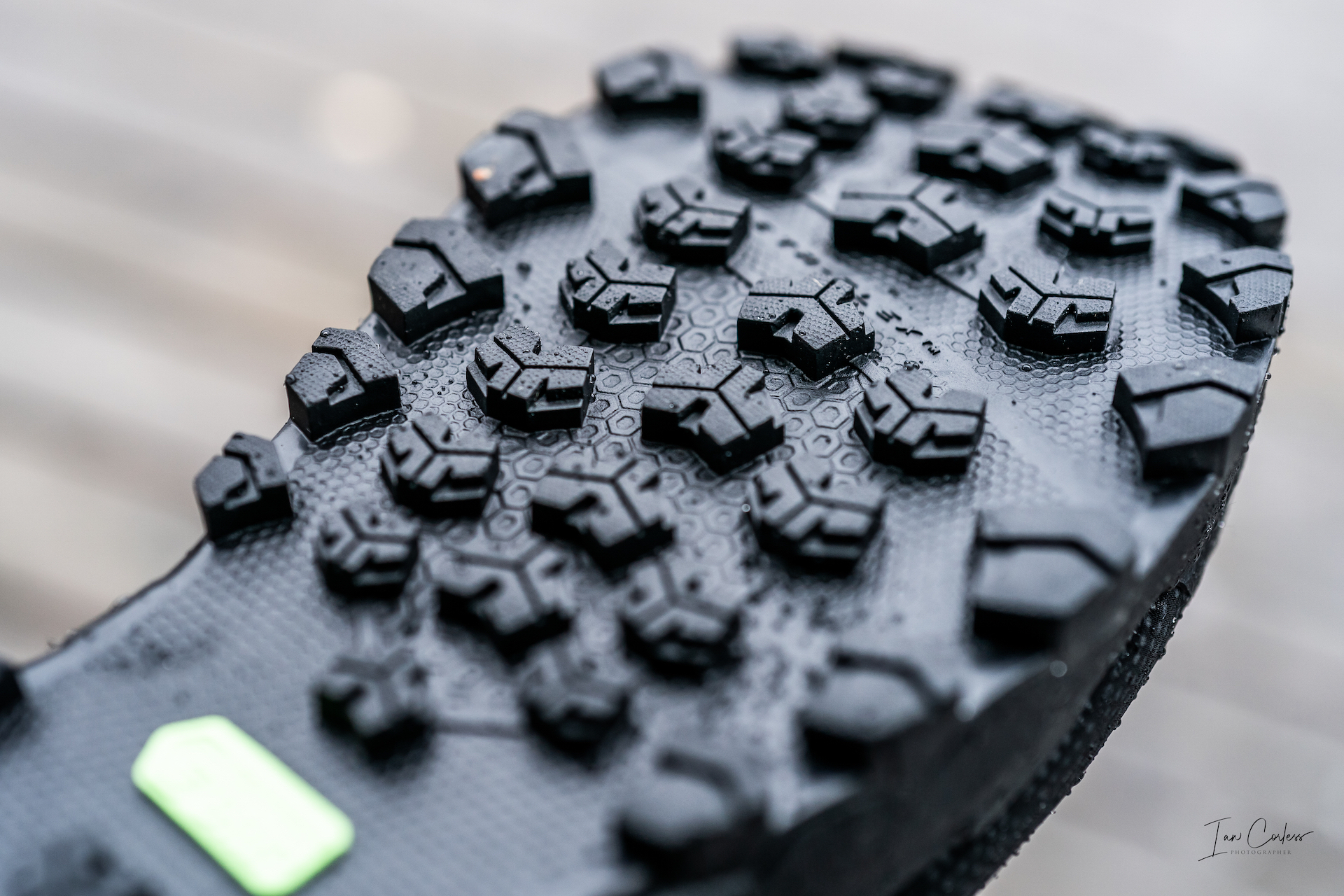
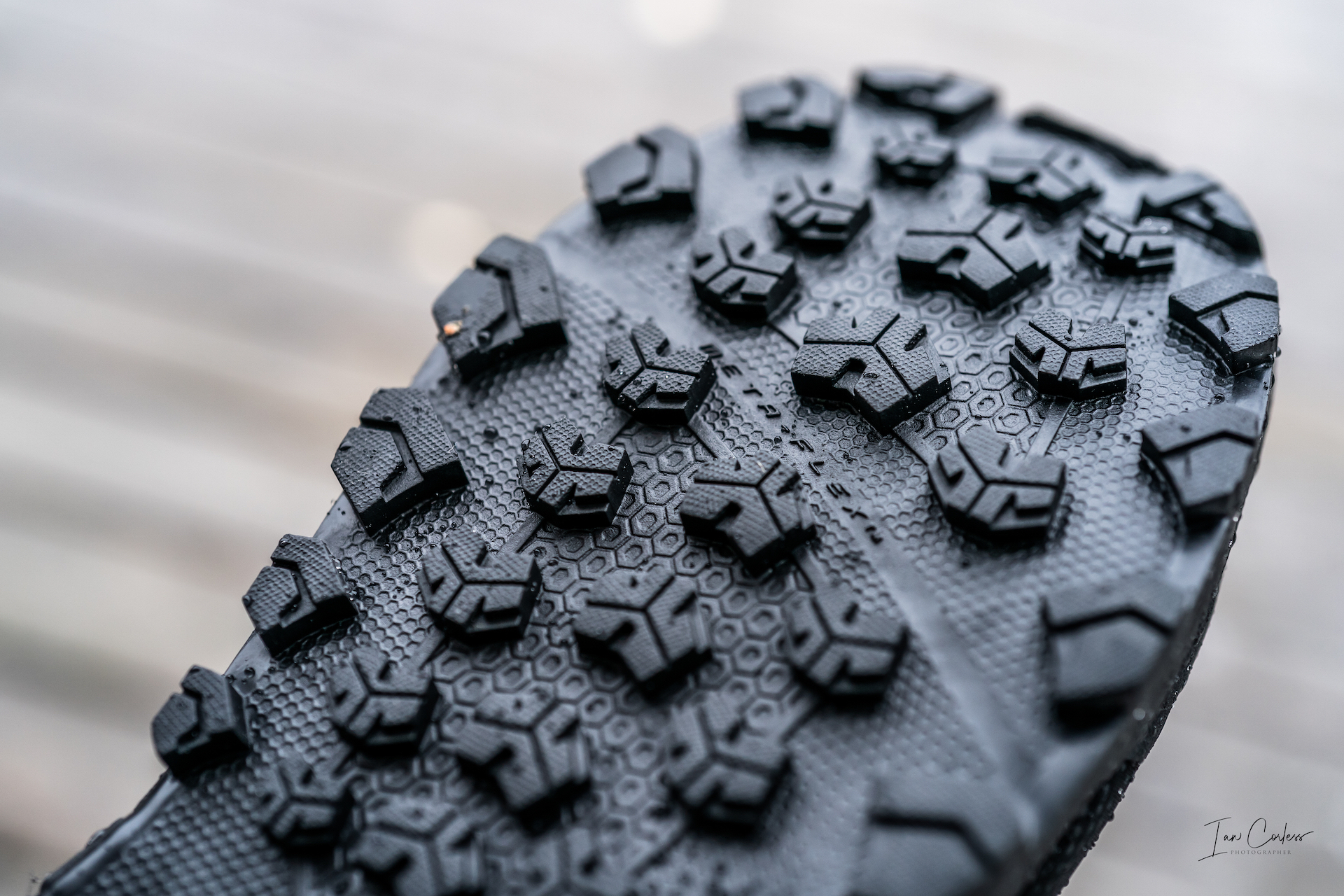
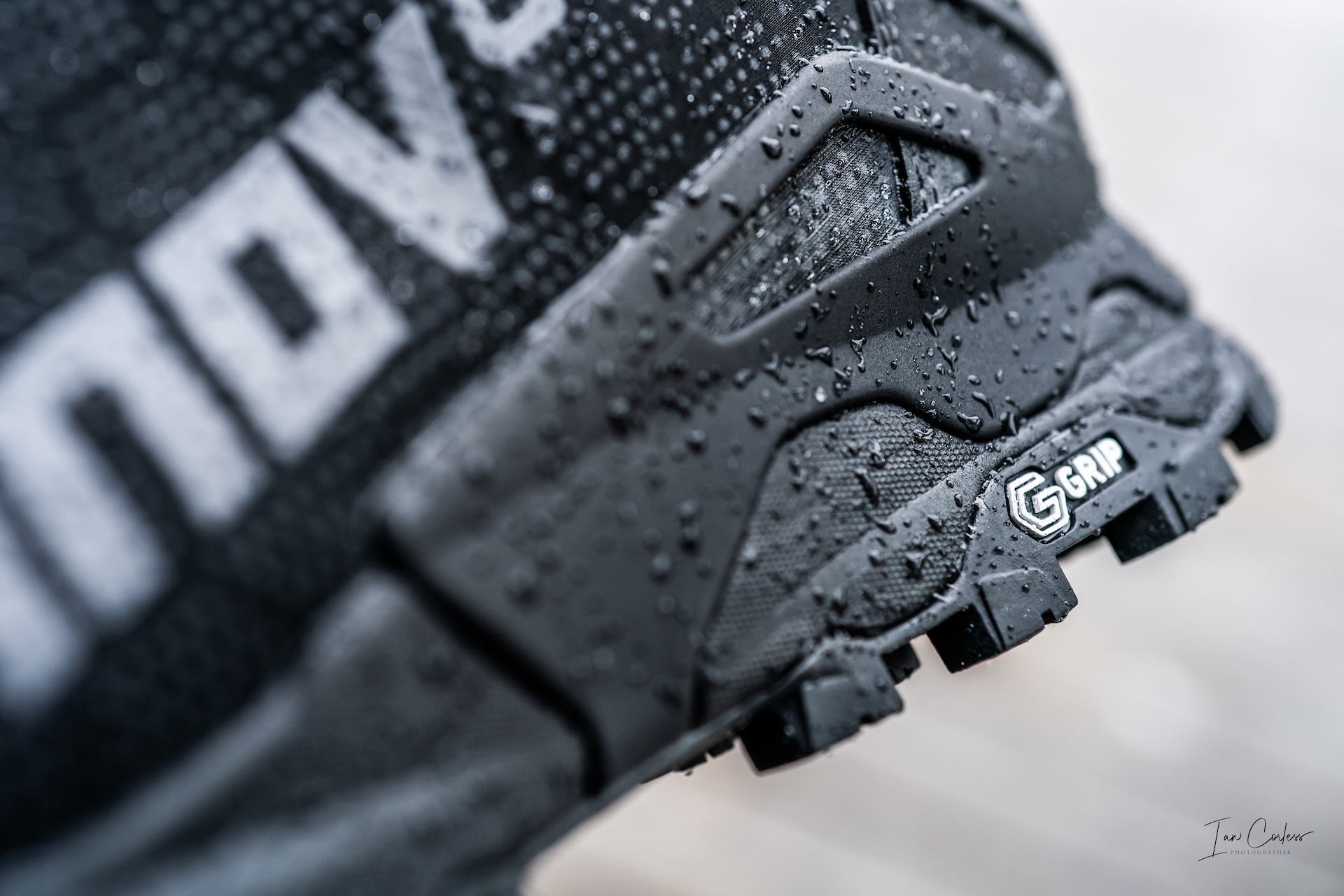
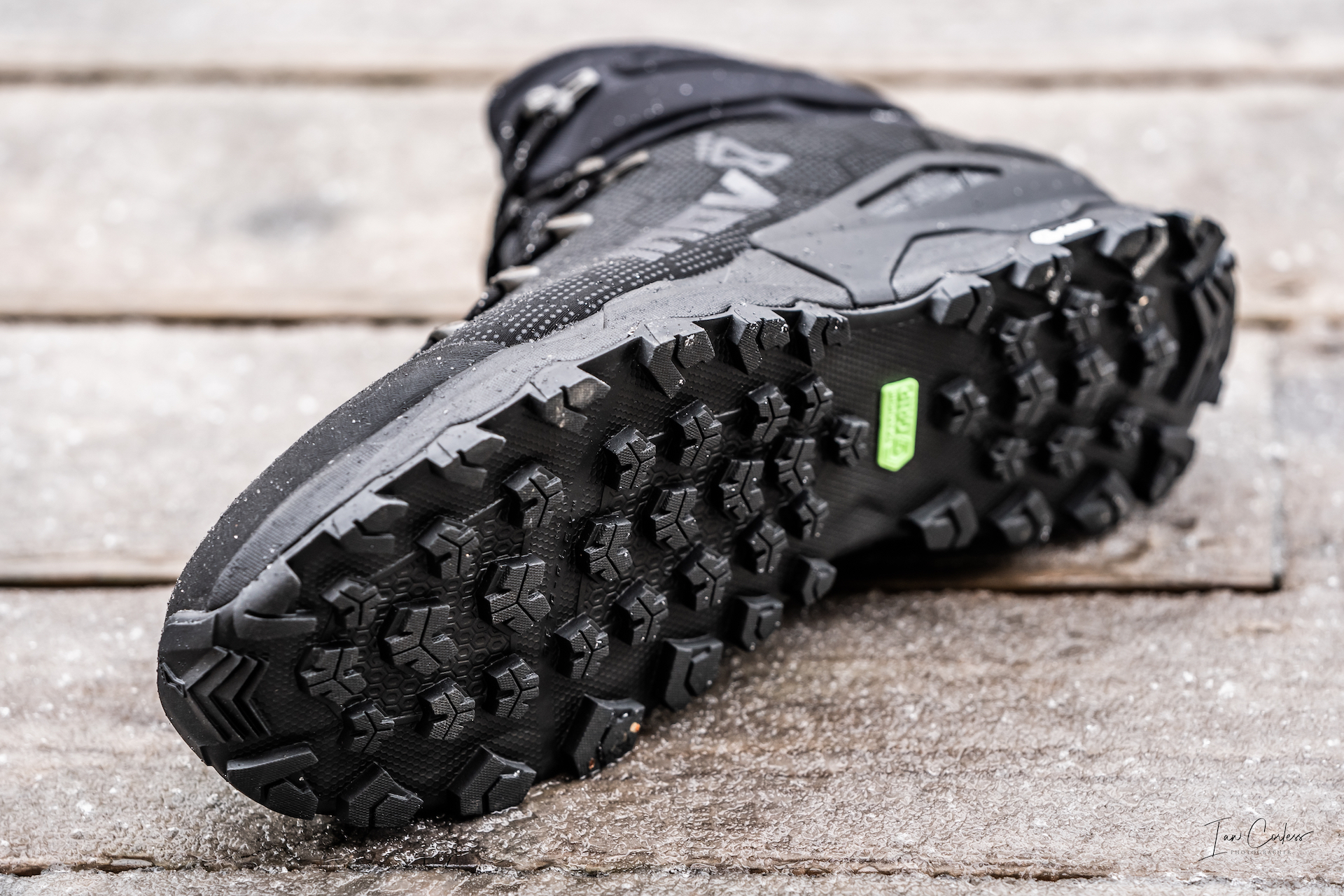
Drop is 8mm which is ideal for long days, the lugs are 6mm which provide great grip on a multitude of surfaces, especially with the addition of Graphene which extends outsole longevity. Cushioning is notably plush with 12mm at the from and 20mm at the rear.
Like the G 370, the G 400 is Gore-Tex and this does a great job of protecting against the elements, especially wet, mud and snow. The weak point is always where the shoe stops and quite simply, if water or snow goes over the top of the shoe, you will get wet feet. This is where Gore-Tex can be a problem; there is no way for the water to escape! Therefore, a key recommendation, from experience, is to use Merino socks that manage to retain heat and warmth when wet. Use Nylon socks and you risk cold/ wet feet. Merino wicks sweat excellently too… Also, a risk with a Gore-Tex product as they are obviously warmer.
The upper uses Schoeller® ceramic-coated fabric which is an abrasion-proof, heat resistant fabric which sees ceramic particles – said to be as hard as diamonds – coated onto polymers for applications in the likes of protective, outdoor and military apparel. In simple terms, this fabric is incredibly durable to the wear and tear that one would encounter in extreme and harsh environments.
NOTABLE POINTS
There are many notable differences in comparison to the G370 and like I said previously, I see the two boots having different uses with some crossovers.
The G370 for me still feels like a run shoe. It laces up like a run shoe, feel for the ground is like a run shoe and the overall structure is more shoe like – there is less shoe if you know what I mean.
The G400 is considerably more robust in key areas:
The toe bumper is harder and more substantial.
The laces start higher up the shoe keeping the all-important flex area behind the metatarsals free.
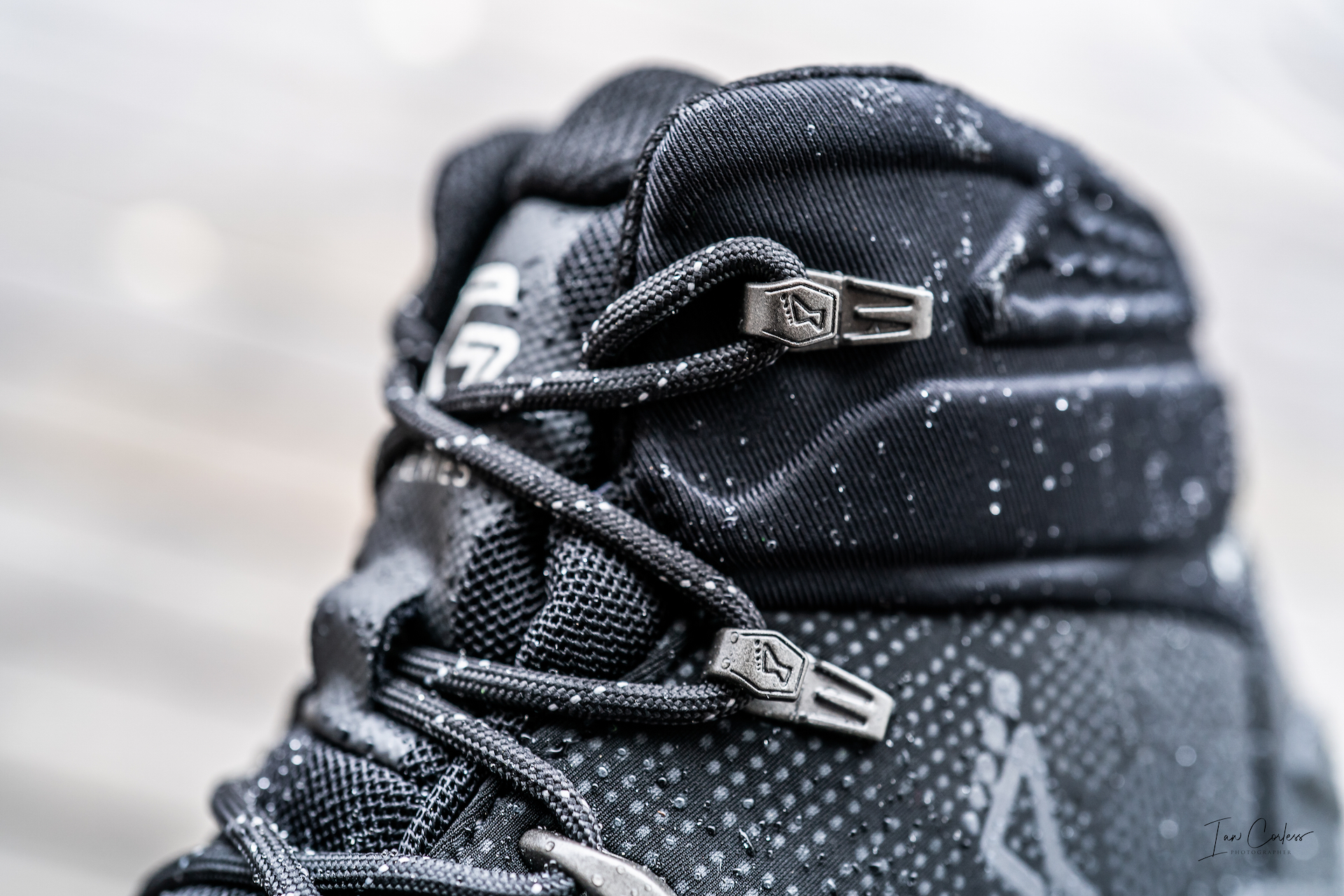
The lace eyelets are solid/ robust metal with 5 on each side, the upper 2 have the inov-8 foot on, a nice touch!
The tongue is gusseted and maybe(?) a little more padded.
The heel protection is more substantial and padded.
Support for the heel area is considerably more reinforced and spreads down the left and right side of the shoe.
Cushioning is increased.
The outsole is completely different.
The G400 is a lightweight hiking boot that manages to combine all the great features of the previous models and then beef them up in a more robust package.
IN USE
The G400 works alongside one of the other Roclite boot models, be that the G 286, G 335, G 345 or the G 370 but does not replace them. Important to consider that the choice provided (G 286, G 335, G 345 or the G 370) all have different drops, fit, uppers and cushioning, so, that is also an important factor.
The G 400 is just a great all-round boot that is light enough for fast hiking, fastpacking, daily jaunts and day-to-day adventures. It manages to combine all the features and support of a boot double the weight. By way of example, I have a pair of lightweight Haglofs which are still over 100g heavier per shoe without the level of protection the G 400 offers.
I have been using the zero drop Terraultra G270 run shoe and although the outsole configuration is different, the grip is comparable with comprises coming in very sloppy mud – the lugs are just not aggressive enough for these conditions and I would not expect them to be. This outsole needs to perform on a multitude of surfaces, and it does that exceptionally well.
The cushioning is very notable and on a couple of long days this proved to be really welcome, especially with the 8mm drop.
The shoe has ‘Meta-Flex’ which is designed to allow the front of the shoe to bend behind the metatarsals for that all-important propulsive phase. In the G 370 this works really well with plenty of flex. The G 400 less so. The sole is much stiffer, and it is here that there is a notable difference between say the G370 and the G 400 and why the G 370 feels more like a run shoe and the G 400 like a boot.
Sliding one’s foot into the shoe, it feels plush and the room in the toe box is notable. The lacing is fixed for the first 3 eyelets and the top 2 are open allowing ease for tightening, loosening or different lacing configurations. With the laces pulled tight and adjusted around the ankle, the foothold is spot on and the padding is superb. The back of the shoe drops away slightly avoiding risk of irritation on the achilles.
The back end of the shoe is beefy with a great deal of support to help reduce ankle roll. This is really noticeable to the G370 which has minimal additional support. Again, this is the run shoe v boot comparison.
CONCLUSIONS
The G 400 is a really great boot that is absolutely ideal for long mountain days when you need all the support and features of a traditional boot but in a considerably lighter package. It has great grip, durable upper, great comfort and superb weight. It’s hard to find a fault, especially when one compares to the competition.
Despite all of the above, the G 400 would not replace my G 370’s which feel lighter, faster and more like a run shoe.
Quite simply, I am in the fortunate position to have both and I can gladly mix between the two.
So, if you can only buy one, which should you go for?
If you are primarily a runner looking for a durable winter solution for all elements that will allow you to still run and cover ground fast, then one of the G 286, G 335, G 345 or G 370 models will more than likely be preferable. Make sure you check cushioning, drop and other key features.
If you are a hiker or fastpacker who will do a little running, the G400 would be a better choice and serve you for a multitude of uses.
Ultimately, whichever way you go you will win. The inov-8 boots have worked well for me for the last 2-years and the new G 400 is working exceptionally well now alongside my G 370’s.
Please support this website. I believe everyone deserves to read quality, independent and factual articles – that’s why this website is open to all. Free press has never been so vital. I hope I can keep providing independent articles with your help. Any contribution, however big or small, is so valuable to help finance regular content. Please support me on Patreon HERE
Fastpacking is all the rage at the moment. Runners and hikers all over the world are heading off for mini or extended multi-day adventures in a semi of fully self-sufficient manner.
I wrote an intro to Fastpacking HERE and then followed up with a more in-depth approach to Fastpacking Light HERE.
Due to requests, I have now put a video together talking through my pack and the items I use. I did forget to mention take a map and compass, so, add that to the list!
Hope you find the information useful and I know you will have your own tricks and weight saving secrets, so, let me know what they are….
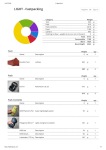
Need help with packing? Lighterpack is great tool for collating information and monitoring weight. HERE is mine based on contents in the video article.
You can view them below.
In summary, pack with food for 1-day and night inc 600ml water with tent, summer sleeping bag, sleeping mat and additional warm layers 4362g.
Please support this website. I believe everyone deserves to read quality, independent and factual articles – that’s why this website is open to all. Free press has never been so vital. I hope I can keep providing independent articles with your help. Any contribution, however big or small, is so valuable to help finance regular content. Please support me on Patreon HERE.
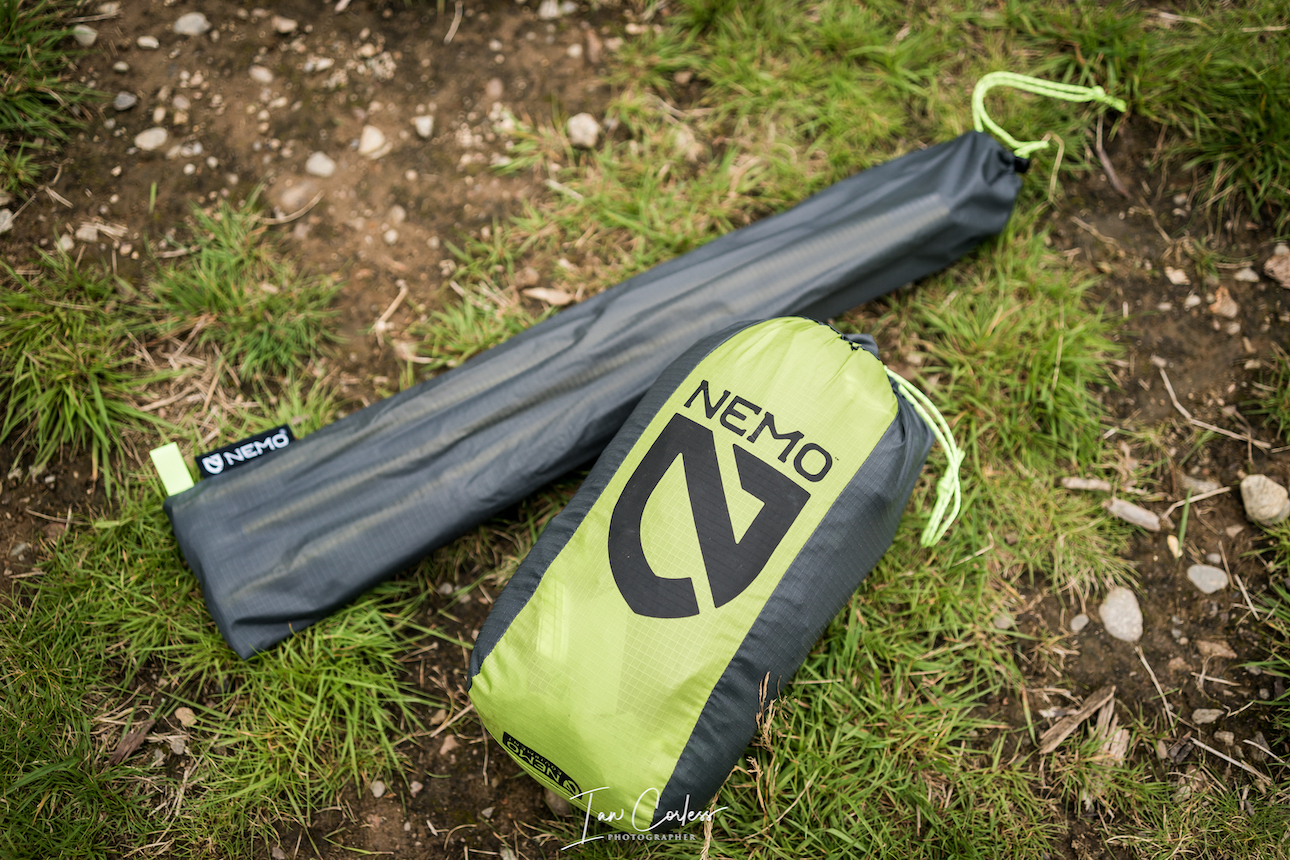
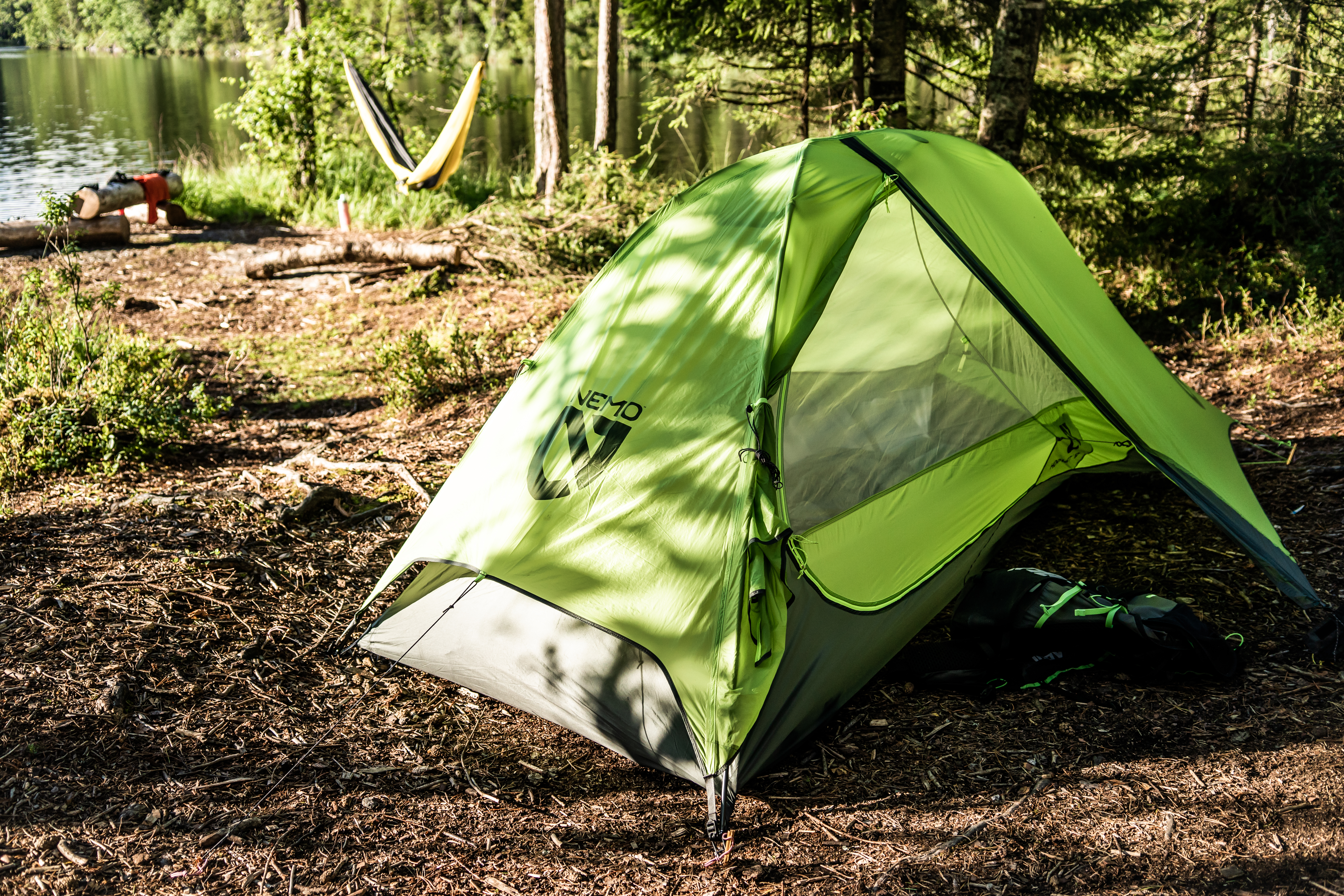
Better wind and weather protection than a bivvy bag, the Nemo Hornet 1P is an ultralight double-wall tent that only weighs 731g. Ideal for solo fastpacking or bikepacking!
Sized for one person, the Hornet 1P will fit two people, yes it will be snug, but two people definitely can sleep with compromised comfort in this tent.
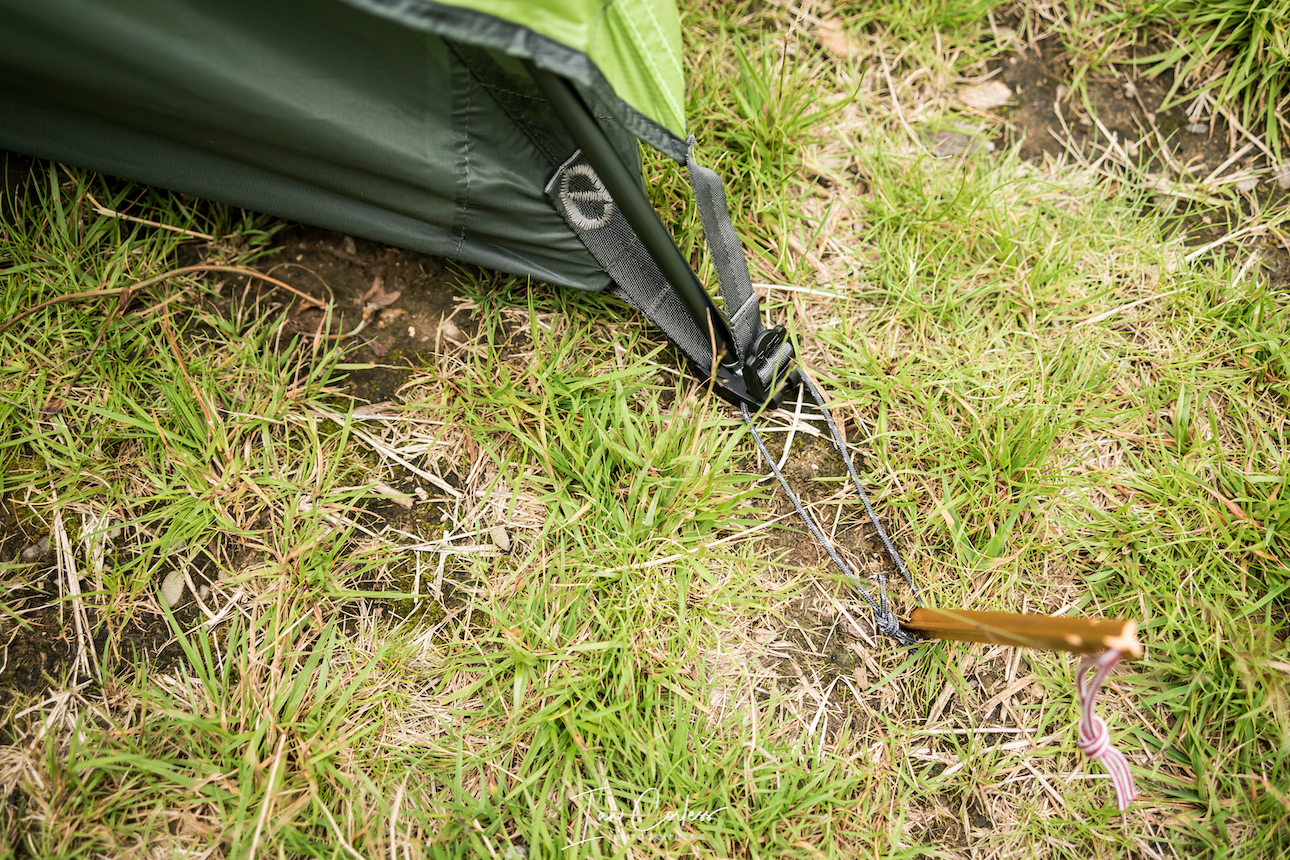
Supplied with a single Y shaped pole (DAC poles) of supreme quality alloy, connection to the inner tent is made at three points, two on the corners of the top (head) end and one in the middle of the bottom (foot) end of the tent.
While these three arms are enough to hold up the inner tent in free standing scenario, you still need to stake out the four corners of the inner tent to stretch it out and make the full living space.
Top tip: Make sure you stake at least one corner first, especially in wind, before inserting the poles.
The head end of the tent connects with a ‘ball and socket’ (called Jake’s foot`) connection which is a clever design, the foot end is a simple metal protected hole. At the top of the tent, Nemo use a ‘Flybar’ which creates additional headspace with minimal weight.
The inner uses ’No-See-Um-Mesh’ on the sides for privacy. On the upper the mesh is black, so, for those warm and barmy nights when you can pitch inner only, lie back and gaze at the stars in comfort.
Join our Multi-Day Training Camp in Lanzarote HERE
A mesh pocket on the inner, near the door is ideal for wallet, glasses, phone or other essential items. One overhead pocket is designed for a headlamp and it uses a white semi-translucent fabric that diffuses light to create a soft lighting. Of all the solo tents I have looked at and used, headroom is excellent and sitting up relaxing or cooking is a pleasure. It is a roomy solo tent and will accommodate two for a cozy night!
There is one door, which opens into a vestibule providing excellent room and space to store your pack, extra gear and space to cook. The inner can also (optionally) connect to the fly on both sides of the tent to increase inner space. Ventilation is good due to the fly sitting high off the floor. A high bathtub protects from cold.
The rain fly is nylon ripstop 10D Sil (1200mm,) it is lightweight as one would expect and provides good privacy. The fly connects to the four staked corners of the inner tent and requires two additional tent pegs for the front vestibule and on the other side, the Hornet 1P is clever in reducing clutter and maximising tent pegs for dual use.
A central door zipper is protected against rain with a storm flap. Both the inner and outer door roll back and are secured with simple fastening systems.
Extra guylines are provided to secure the tent which secure to webbing loops that are attached to the tent. In windy weather, most definitely use them.
CONCLUSION
I am really impressed with the NEMO Hornet 1P. It’s a clever design, spacious, has loads of headroom and comfortable living space and all in a compact and lightweight package.
When weight and small volume are a priority, the Hornet comes highly recommended, especially for extended multi-day adventures. We can all compromise comfort for a night or two, but for extended trips, the Hornet’s living space and storage is a real plus.
Easy to set up, the Hornet is a real winner. However, it’s not perfect. The fly sits high off the ground which is great for ventilation and air flow, however, in bad weather, it will allow increased air flow and the tent is most certainly not as warm as others.
The fly and inner are just over 500g. That is incredible for a tent that offers this much living space. The pole system is simple and quick. The tent pegs provided are far too heavy for a tent of this nature and I can only assume that Nemo provide them because they are cheaper and that helps keep the cost down to the consumer. When you purchase the tent, make sure you get some lightweight tent pegs too.
731g for a solo tent is excellent and the NEMO Hornet 1P comes highly recommended.
*****
“For those looking for an ultralight shelter with greater volume, Hornet™ offers the ultimate in livability and comfort. Top shelf fabrics and a minimal pole structure shave every ounce possible, while our latest updates and new patent-pending Flybar™ volumizing clip add even more room without adding any weight.” – Nemo
Please support this website. I believe everyone deserves to read quality, independent and factual articles – that’s why this website is open to all. Free press has never been so vital. I hope I can keep providing independent articles with your help. Any contribution, however big or small, is so valuable to help finance regular content. Please support me on Patreon HERE.
My recent article on Fastpacking (here) gained a great deal of attention. In many respects, I am not surprised, I think mini or extended semi or selfi-sufficient journeys are extremely popular and only on the increase.
The above post was in-depth and provided an overview of options that are available to make a fastpack trip effective. In some cases, coffee being a prime example, I did not go with the lightest possibilities available. The main reason for that? Comfort usually comes with a little more weight.
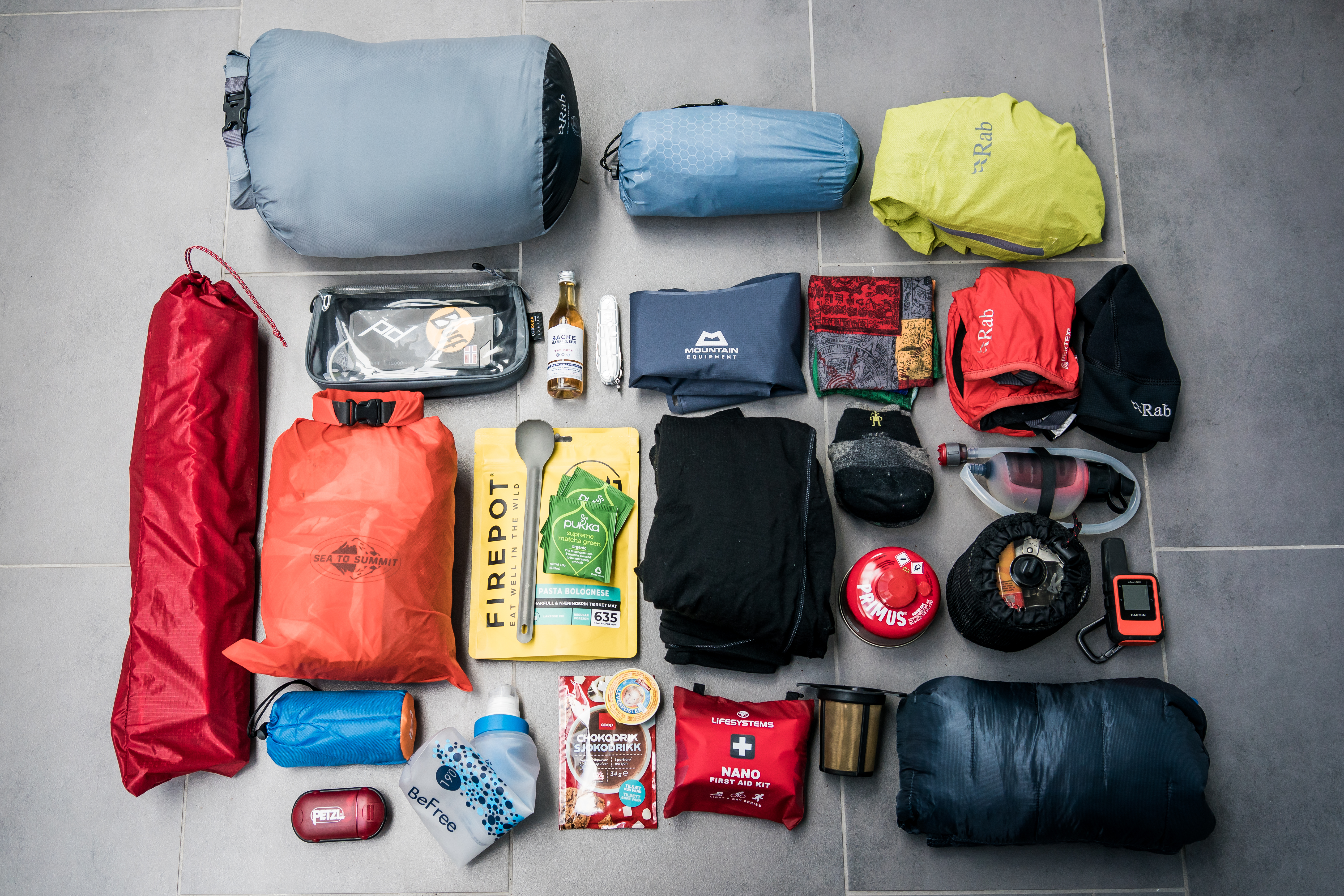
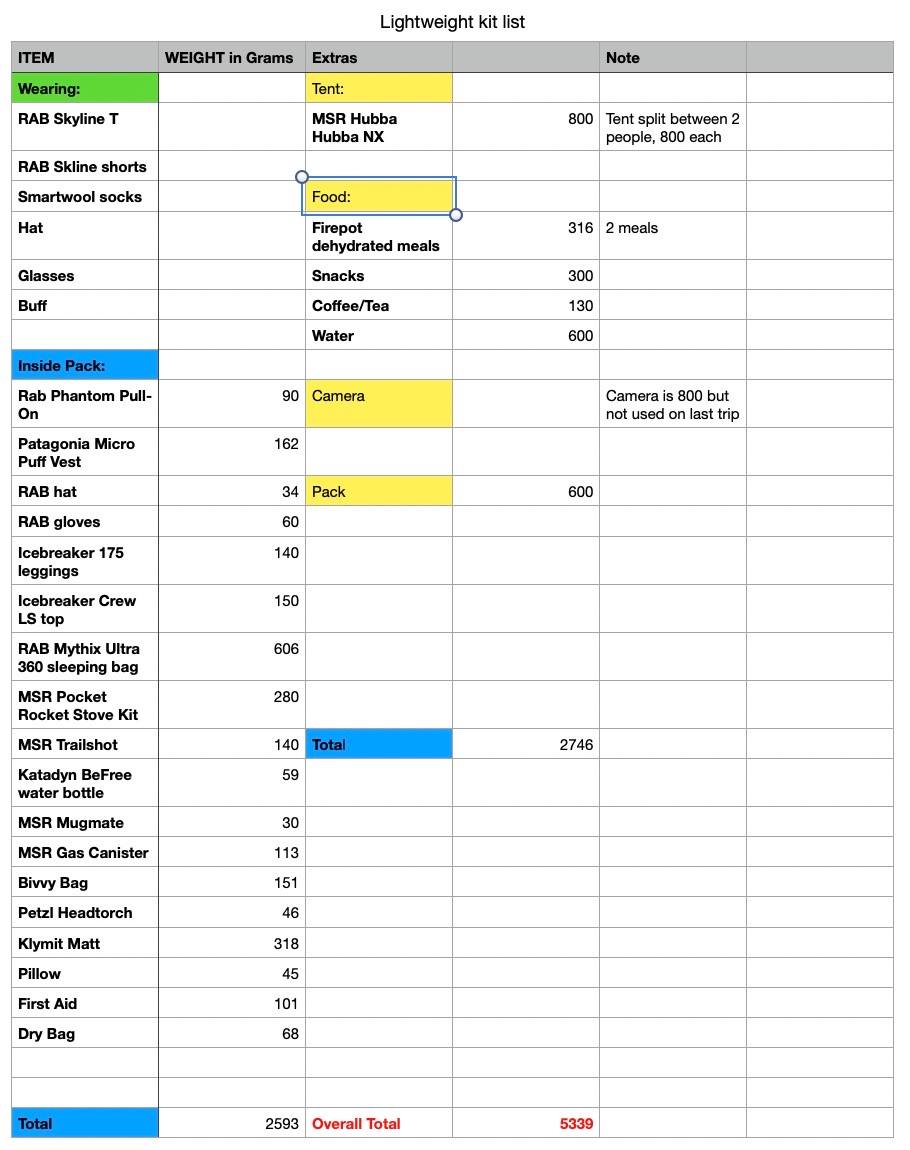
After a recent fastpack trip (just one-night wild camping,) I posted a photo of my pack contents and it created some interest as the weight was 5.4kg including pack, food, water, tent and all my essential items.
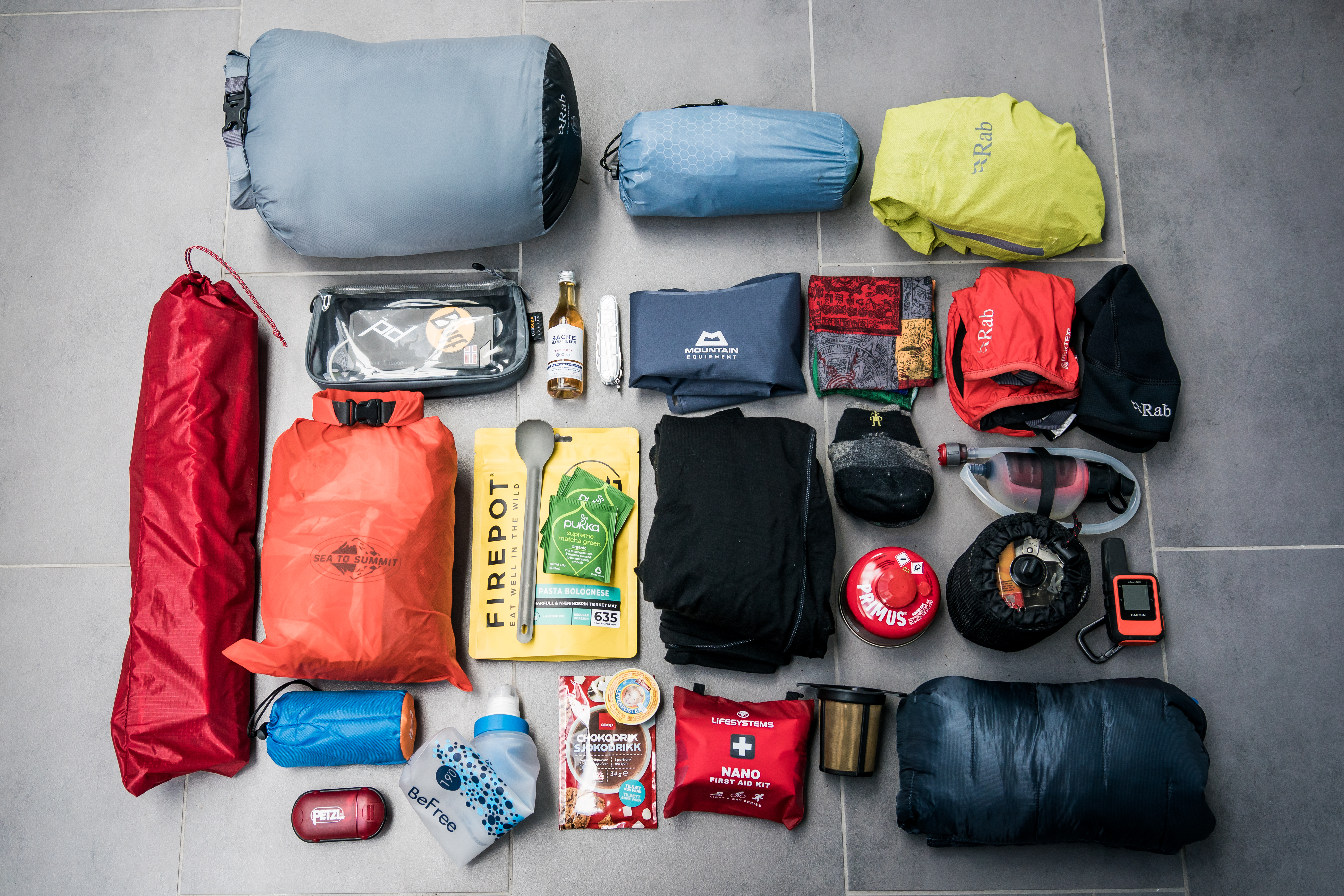
I received countless messages for more information, so, here goes. A detailed breakdown and description of the items and why I use them or more importantly, why I take them! Gladly, some of the items I do not need to use but need to have, just in case.
Below is a video, in-depth, where I discuss all the items listed below.
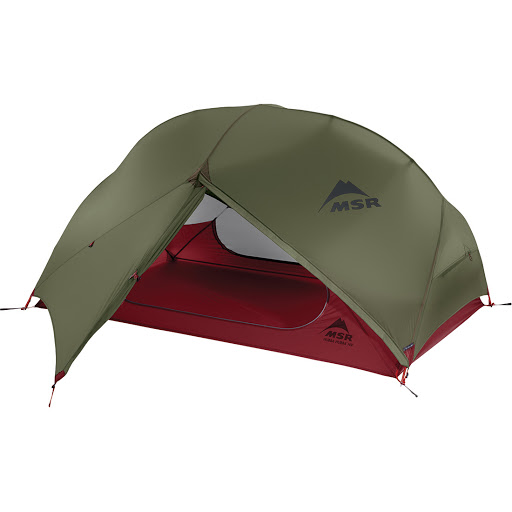
My go to tent is a MSR Hubba Hubba NX tent (here) which is 1600g which is 2-person tent. It has loads of space both in width and height, it has two access doors with room to store pack, shoes and an area to cook in if required. It is free-standing, can be pitched inner or outer only. Split between 2-people, it is 800g each.
Current favourite solo tent is the Nemo Hornet 1P (review HERE) which has loads of space and comfort and all coming in at 731g.
NEMO Hornet 1P
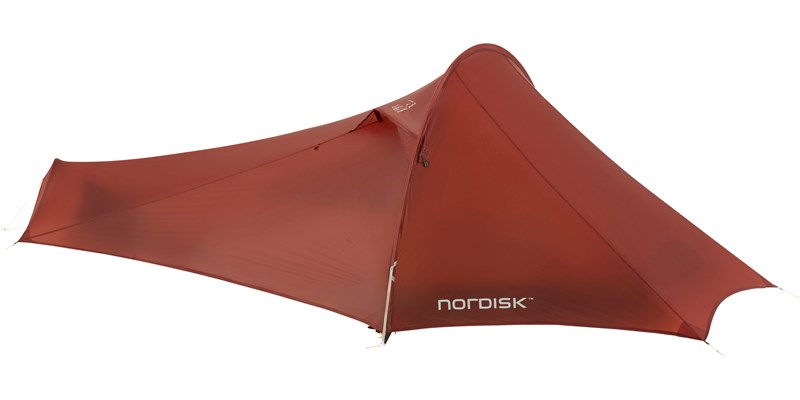
If I was solo fastpacking and wanted the lightest and smallest possible, I would change the tent to a Nordisk Lofoten 1 LW (here) which is arguably the lightest and smallest packing tent in the world (still with comfort and stability) weighing just 490g and is the size of a bottle of water, 11cm x 22cm. It’s a two-layer tent which still provides an area for gear storage, with a height of just 70cm, sitting space is compromised. However, if fast, light are priorities, this takes some beating. Also, you can use the 2-man inner inside the same fly-sheet, with obviously less storage option.
Do you need a 12-week and/ or 24-week Multi-Day Training Plan perfect for a multi-day adventure or a race like Marathon des Sables? They are designed to provide you with a structured weekly plan culminating in a target event.
View a sample week HEREfrom the 12-week plan. Purchase HERE. (£14.50 pw)
View a sample week HERE from the 24-week plan. Purchase HERE. (£12 pw)
Wearing:
I don’t add the clothes I am wearing to my overall fastpack weight, but it is worth looking at options and variables. I was surprised when comparing run shorts how weights varied. For example, I had shorts with an inner (like cycling shorts,) they weighed 157g, considerably heavier than my RAB Skyline.
RAB Skyline shorts – 96g
RAB Skyline Tee – 84g
Smartwool socks – 45g
Hat – 45g
Glasses – 30g
Buff – 36g
Scott Supertrac RC2 shoes – 290g
Pack:
inov-8 25ltr fastpack 619g – This is actually a prototype pack, specifically made for athletes on the inov-8 team. It’s a really great pack, one of the best I have used. It has a vest like fit, waist belt, comfortable strapping and loads of extra mesh pockets that make it a joy to use. I have recently encouraged inov-8 to bring this to production.
Pack Contents:
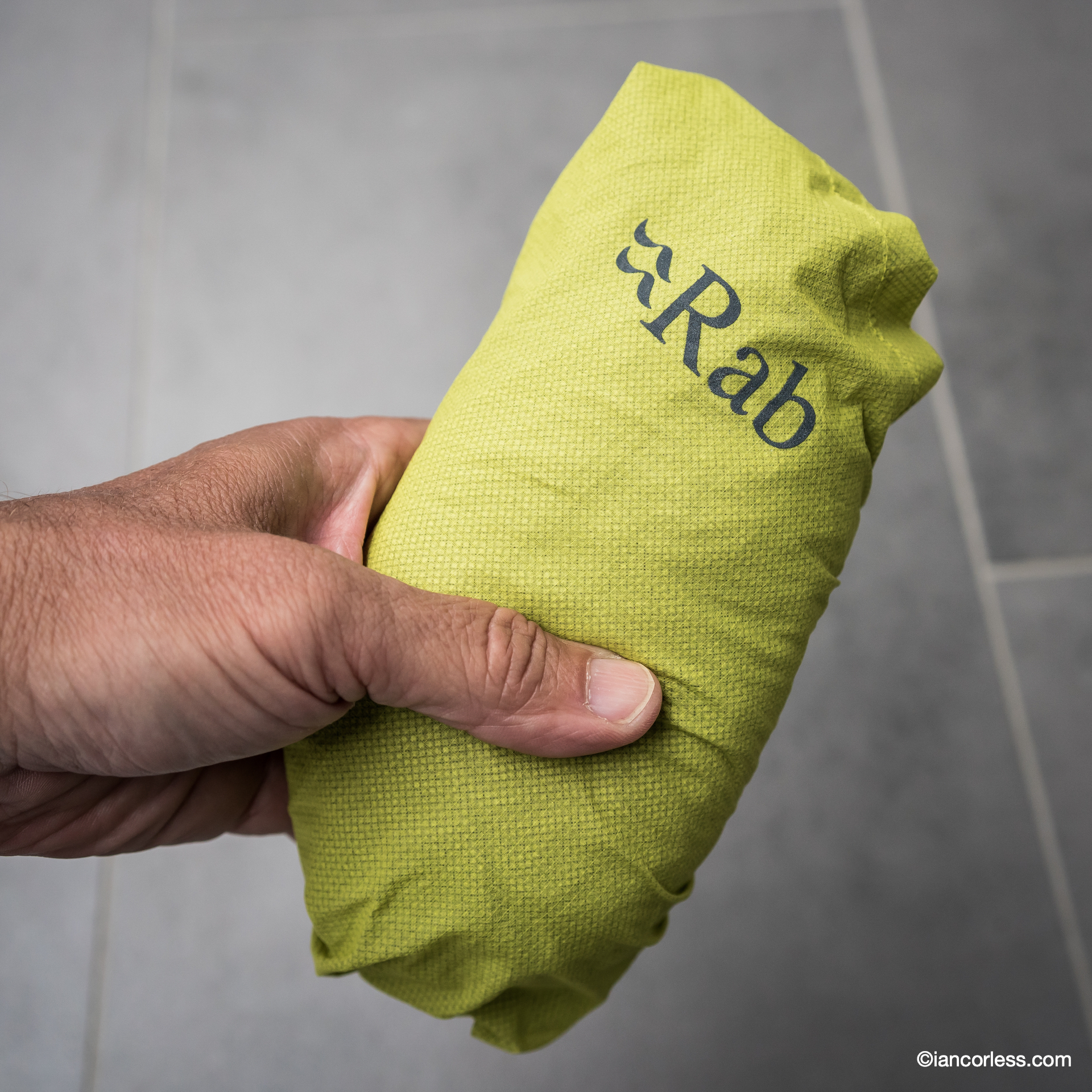
Rab Phantom Pull-on 90g – One of the lightest and smallest waterproof shells I have used.
RAB Phantom
Patagonia Micro Puff Vest (synthetic with ripstop Pertex Quantum) 162g – Synthetic filling but weight and small packing just like down. The perfect compromise. This warms the body and core and saves weight over a jacket. Obviously, you need to asses conditions, a jacket may be better. If so, I use a RAB Kaon which weighs 260g.
Patagonia Micro Puff Vest
RAB Hat 34g
RAB Gloves 60g
Icebreaker 175 leggings 140g – Merino providing warmth on the trail (if required) and warmth when stopping for the day and sleeping.
Icebreaker 175 top 150g
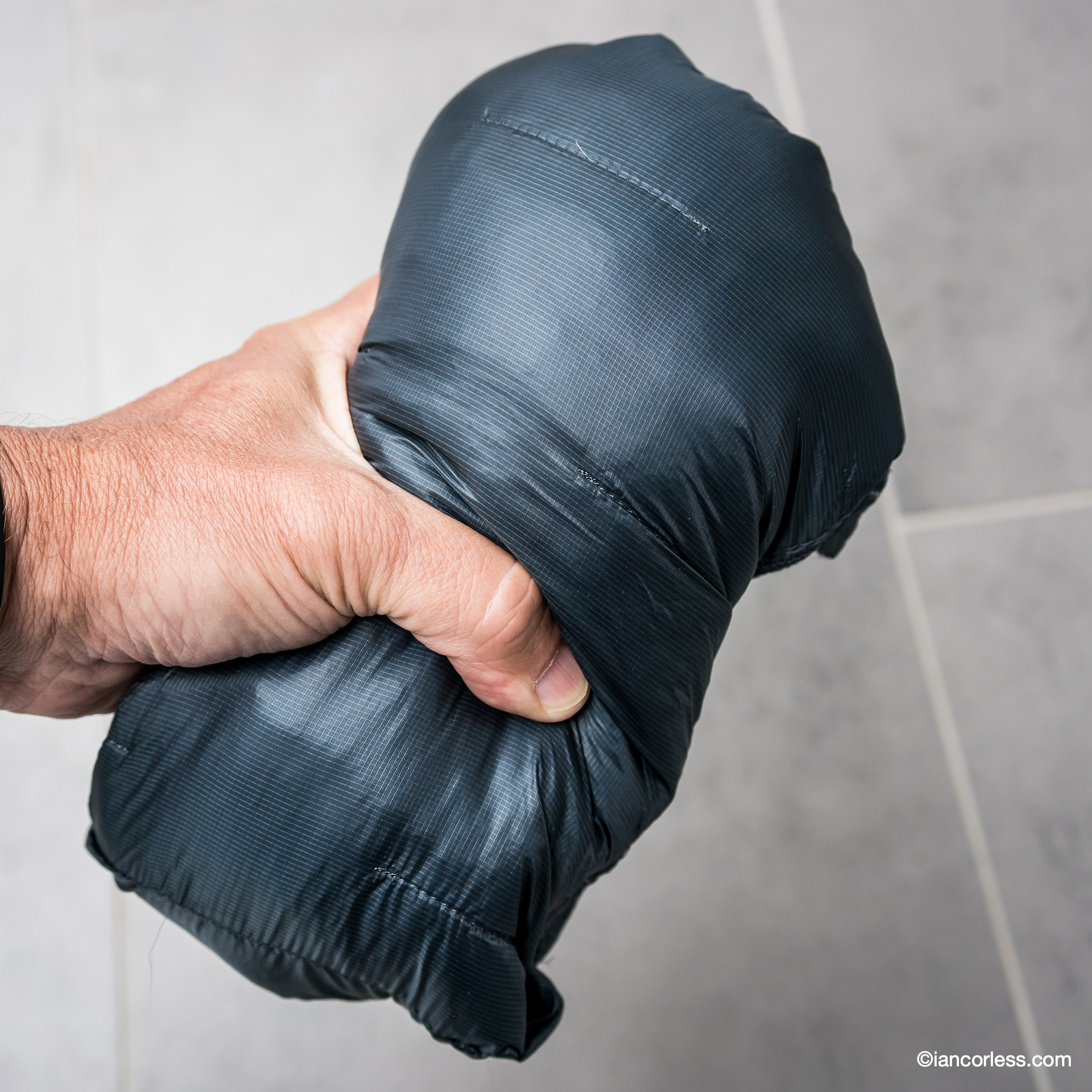
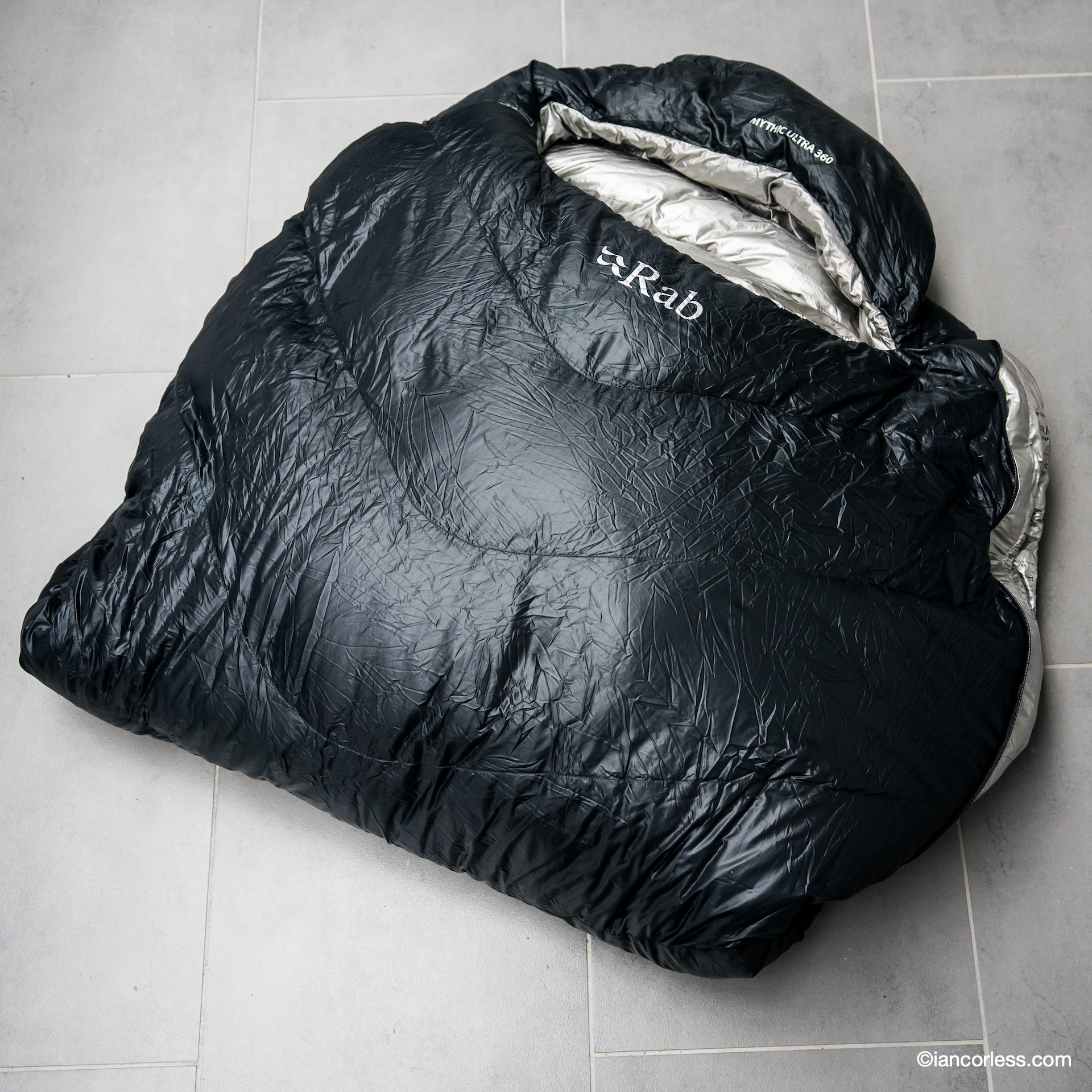
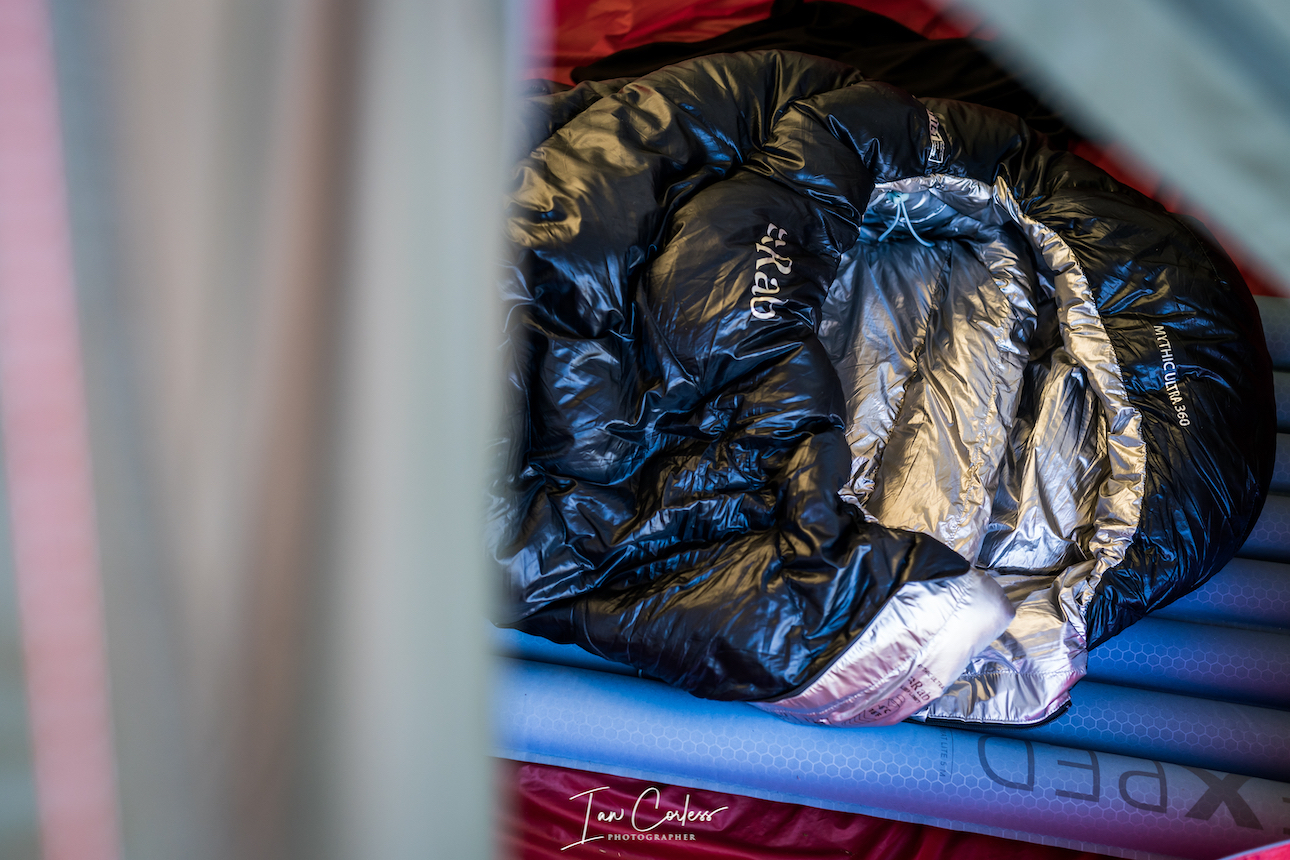
RAB Mythic Ultra 360 sleeping bag 606g – State of the art sleeping bag with groundbreaking technology. Two versions are available, and this is the warmer one. The Mythic Ultra 180 provides a saving of 200g (weight 400g) and is perfect for warmer weather fastpack and/ or warm sleepers.
RAB Mythic Ultra 360 sleeping bag
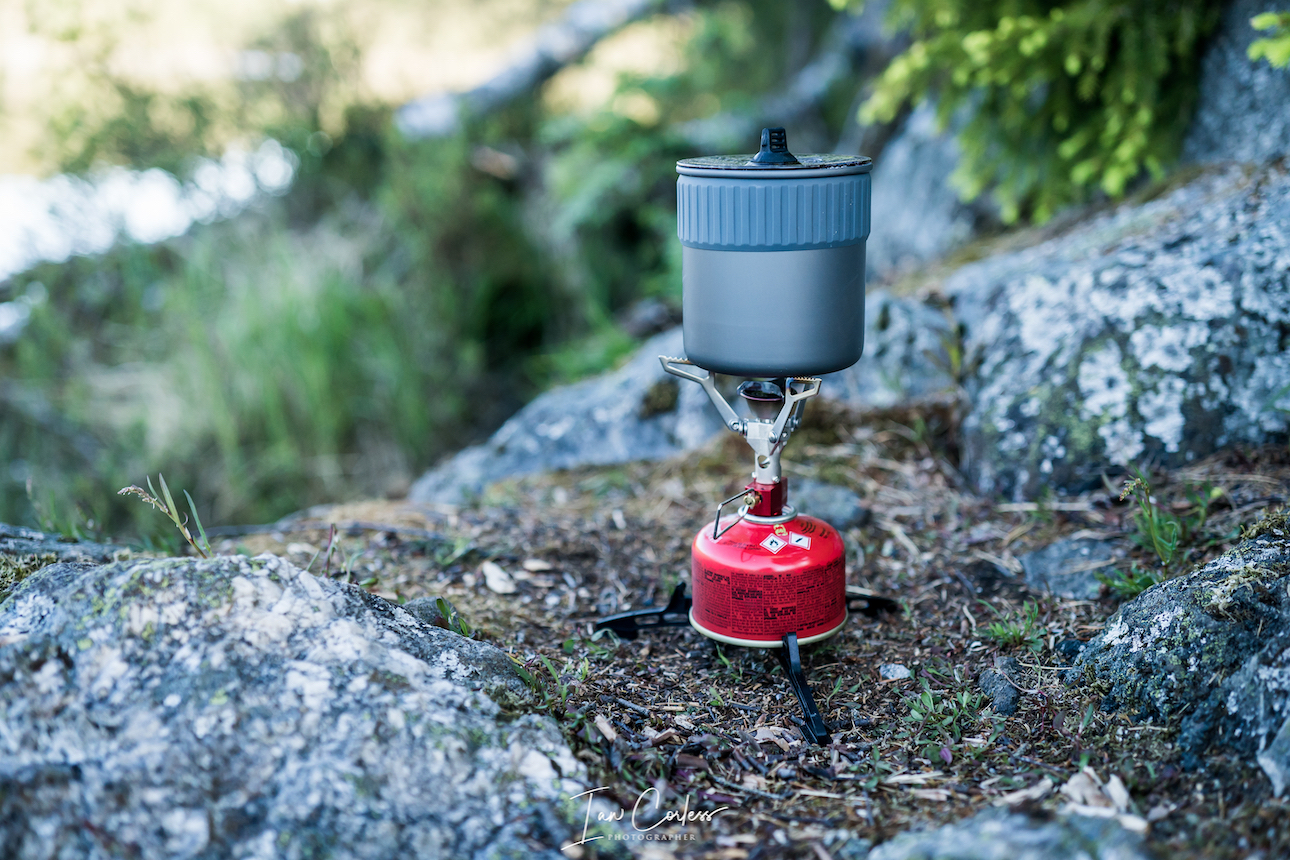
MSR Pocket Rocket Stove Kit 280g – Small, compact, lightweight and the gas canister can be stored inside. Perfect minimalist solution.
MSR Pocket Rocket Stove Kit
MSR Trailshot 140g – A small and lightweight water filter system that guarantees water that one can drink and cook with.
MSR Trailshot
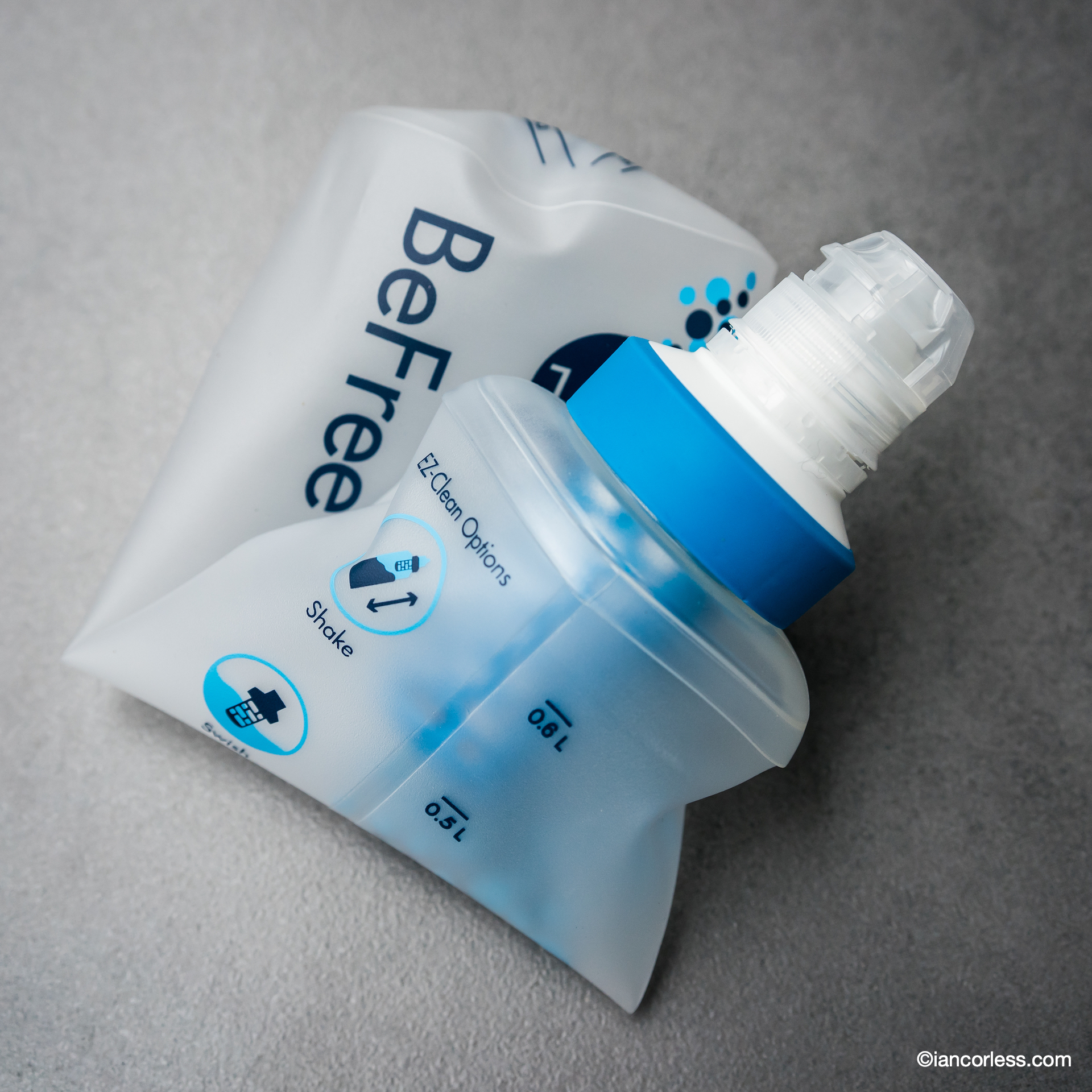
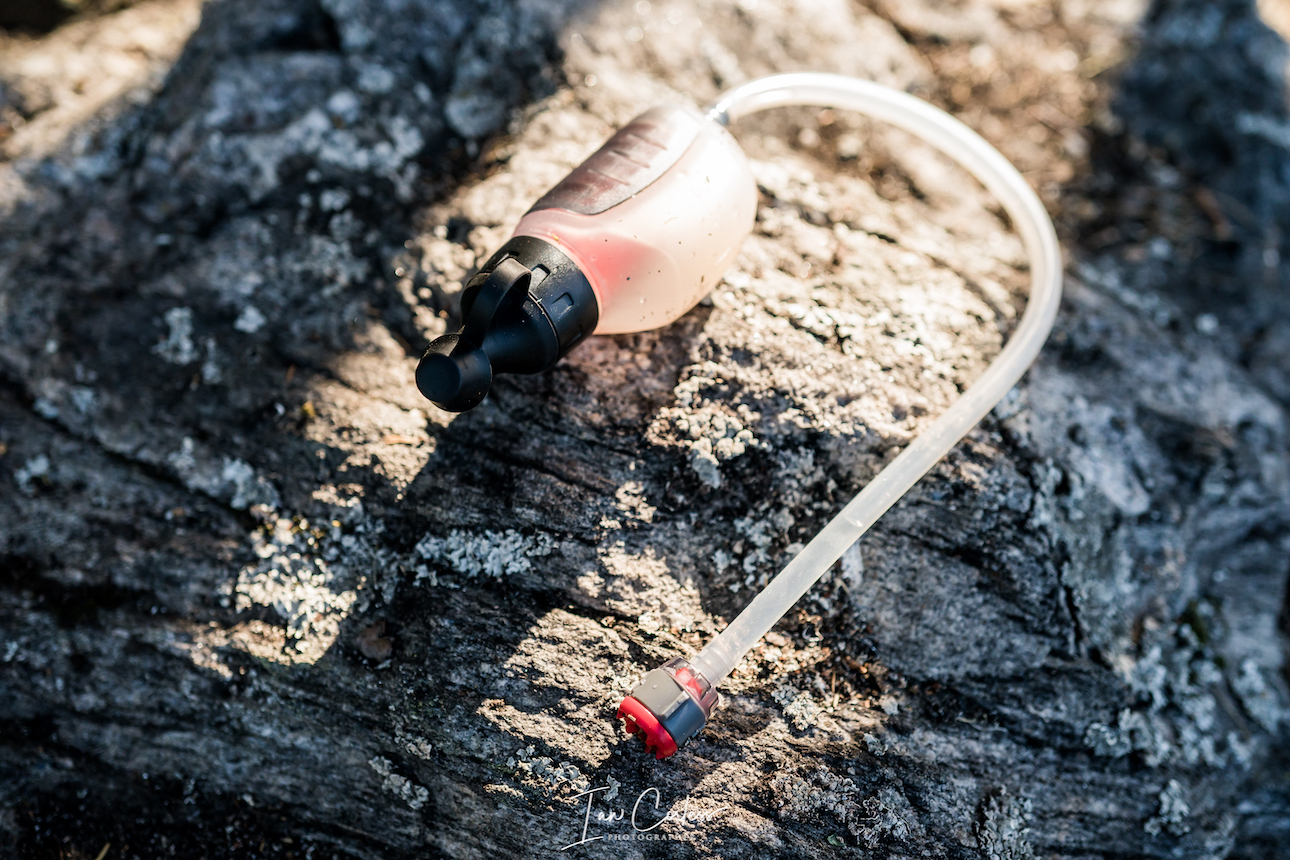
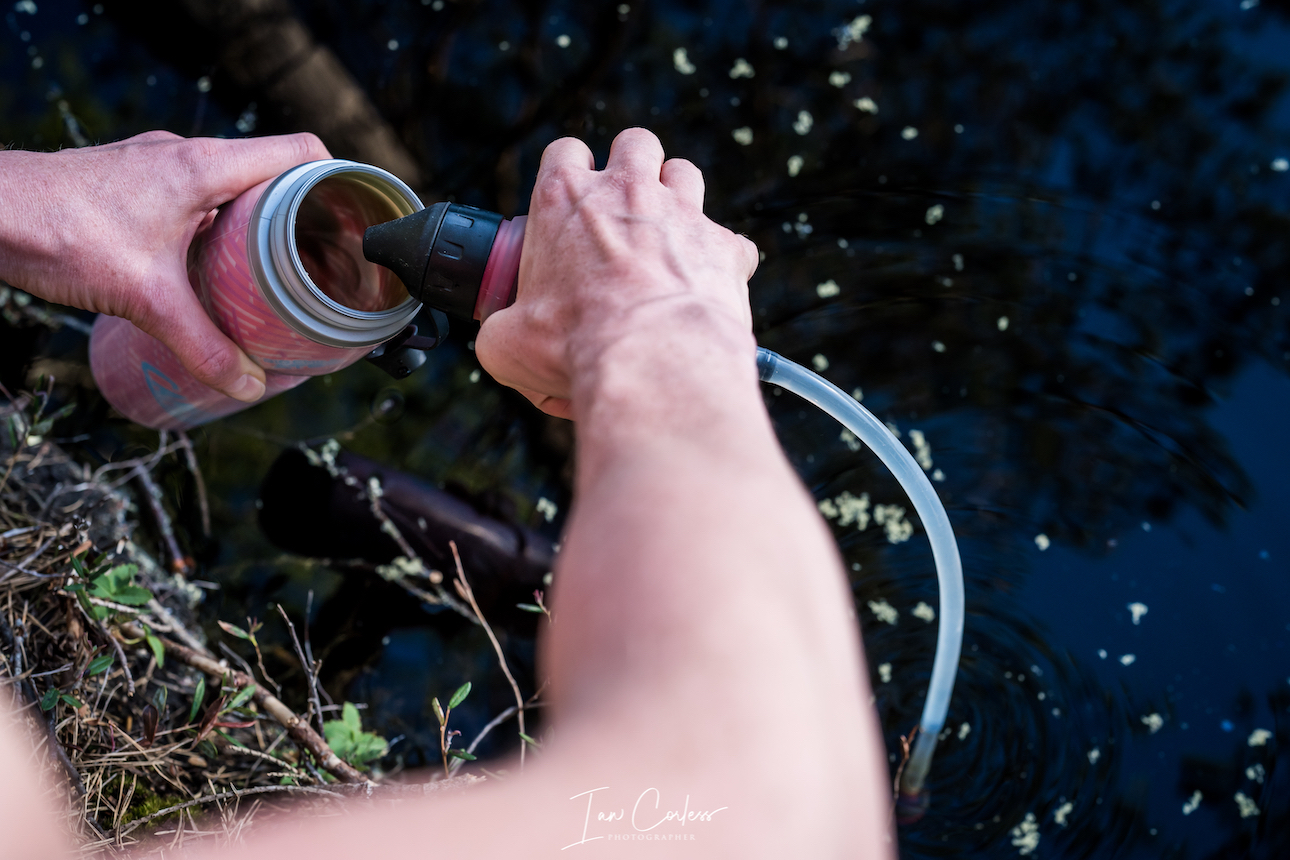
Katadyn BeFree Water Filter bottle (0.6L) 59g – This is a 600ml soft-flask with water filter inside. It allows for minimal weight and the ability to get water anywhere on the trail and drink on the go.
Katadyn BeFree Water Filter bottle
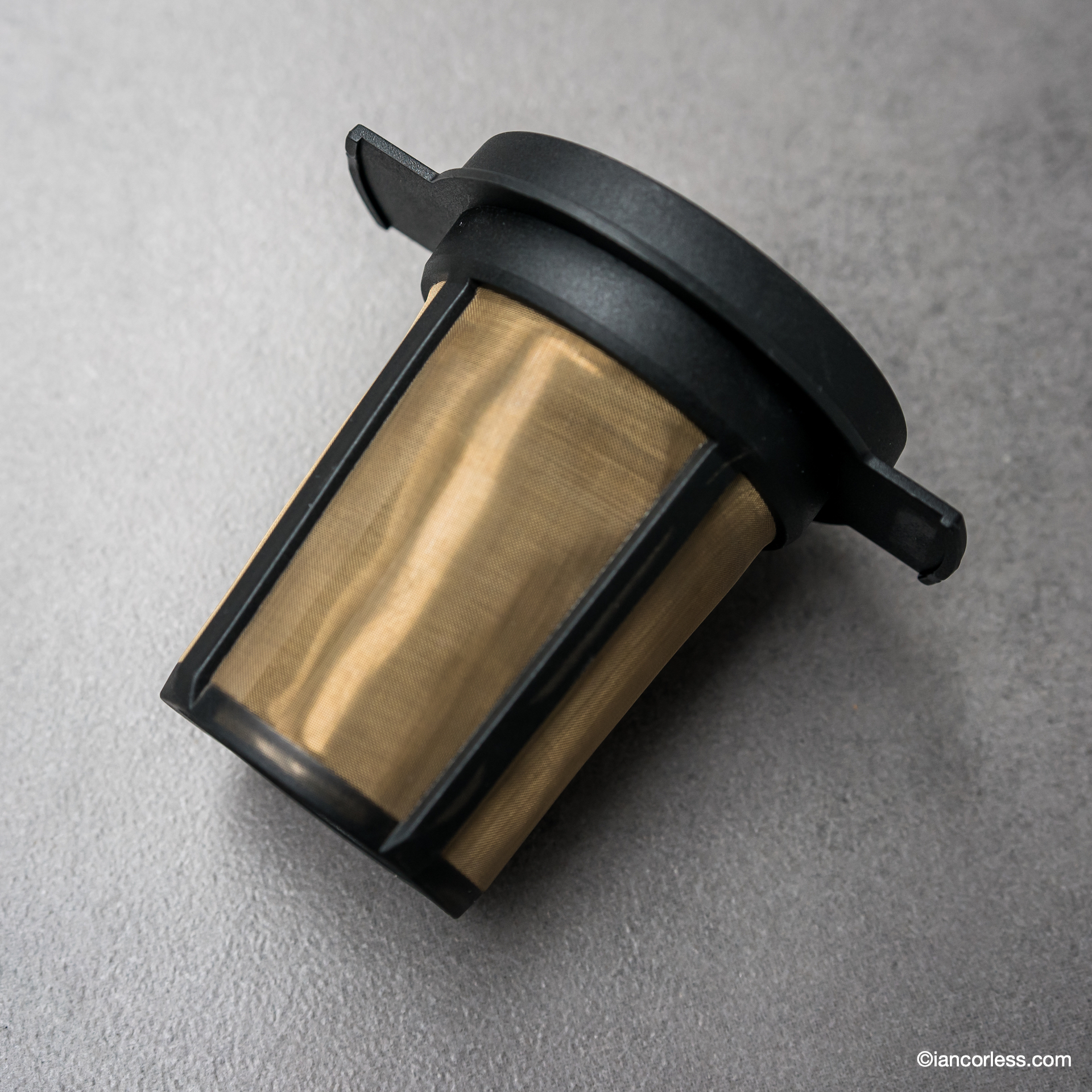
MSR Mugmate Coffee/ Tea Filter 30g – An ingenious small coffee/ tea filter that provides a lightweight solution for the coffee addict. Just pop it into a cup!
MSR Mugmate
Gas canister 113g
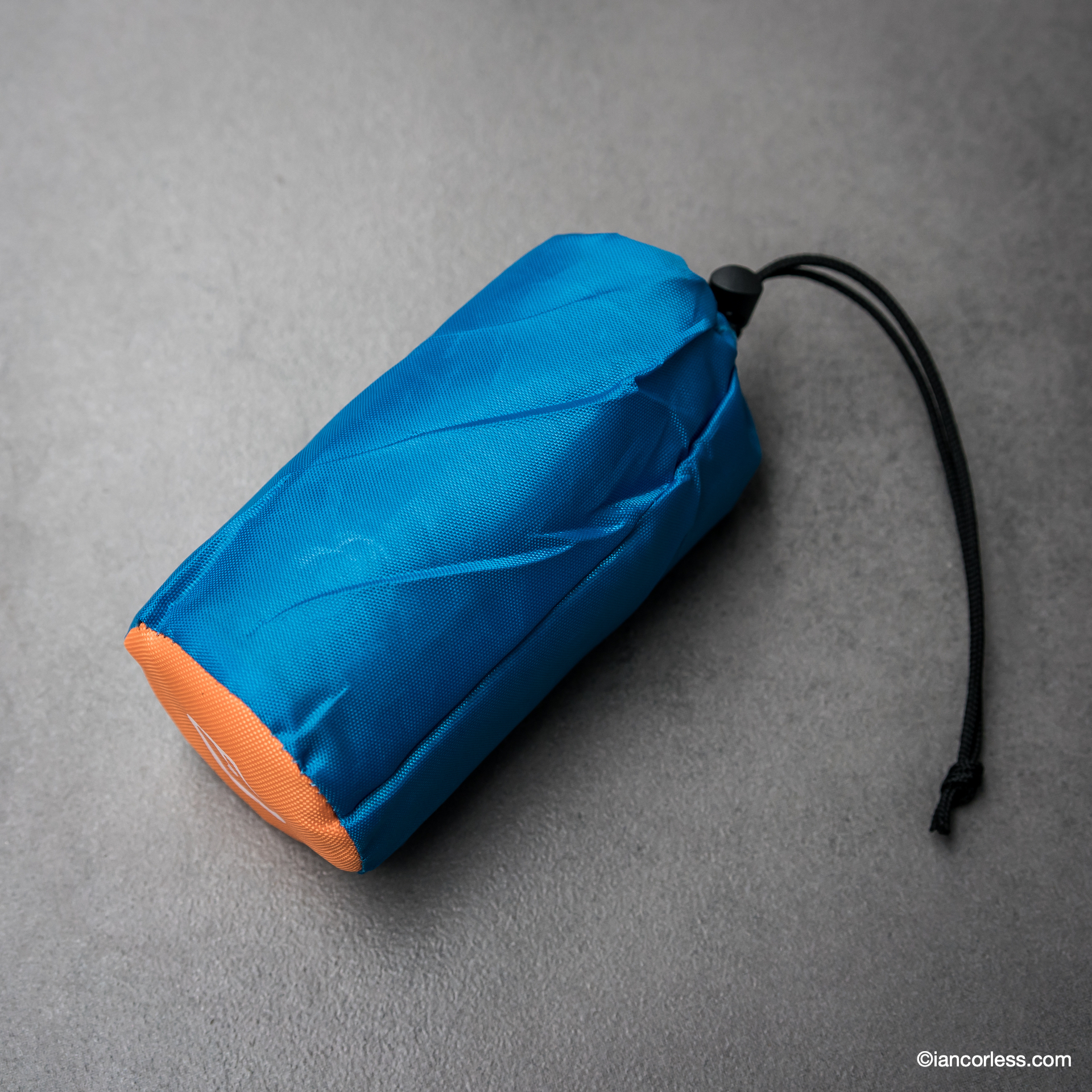
Bivvy bag 151g – Great back up for added warmth should something unplanned happen.
Bivvy bag
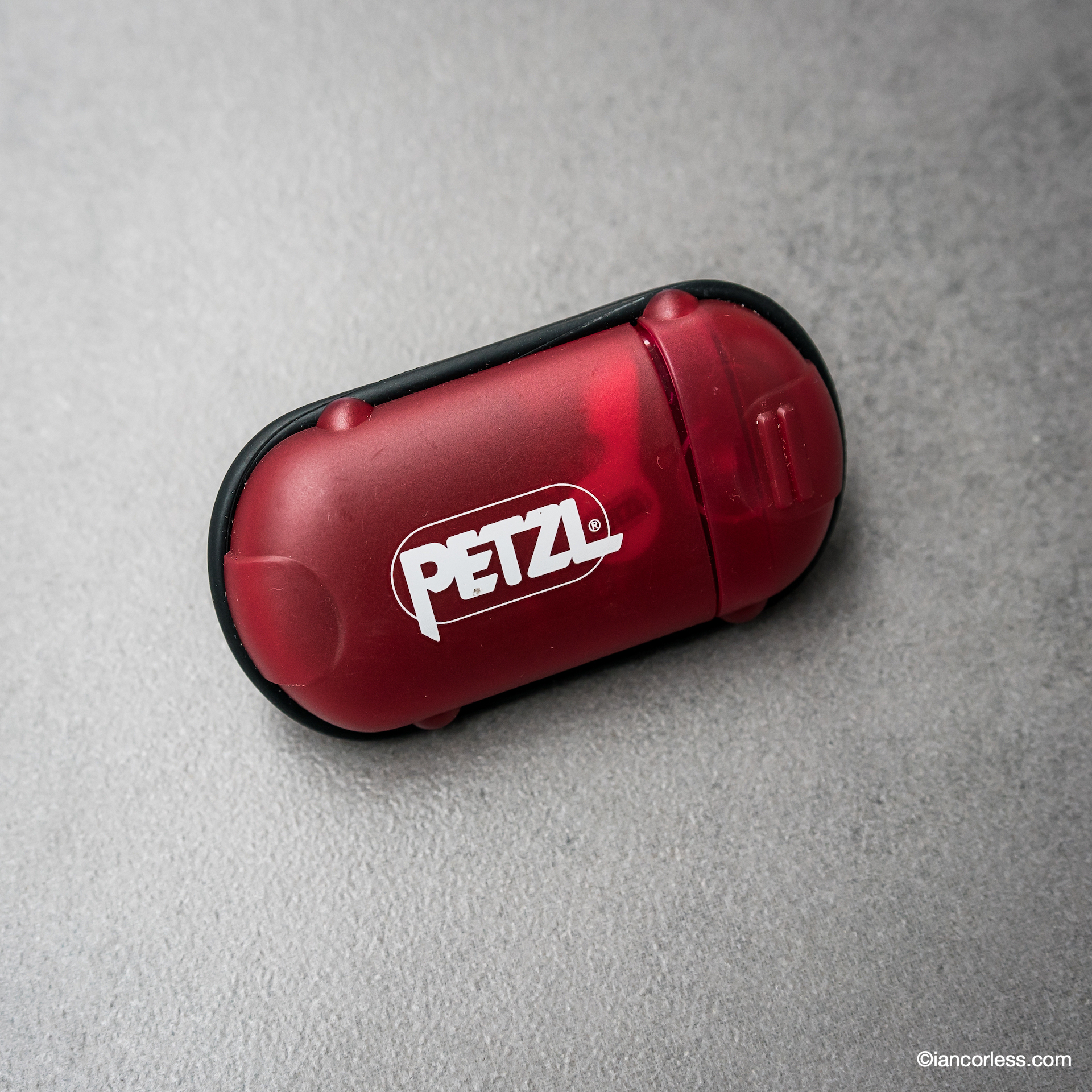
Headtorch 46g – The Petzl e+LITE is one of the smallest and lightest around. Perfect when camping to provide light for reading and cooking. However, if you need light to run/ walk this is not the best option.
Petzl e+LITE
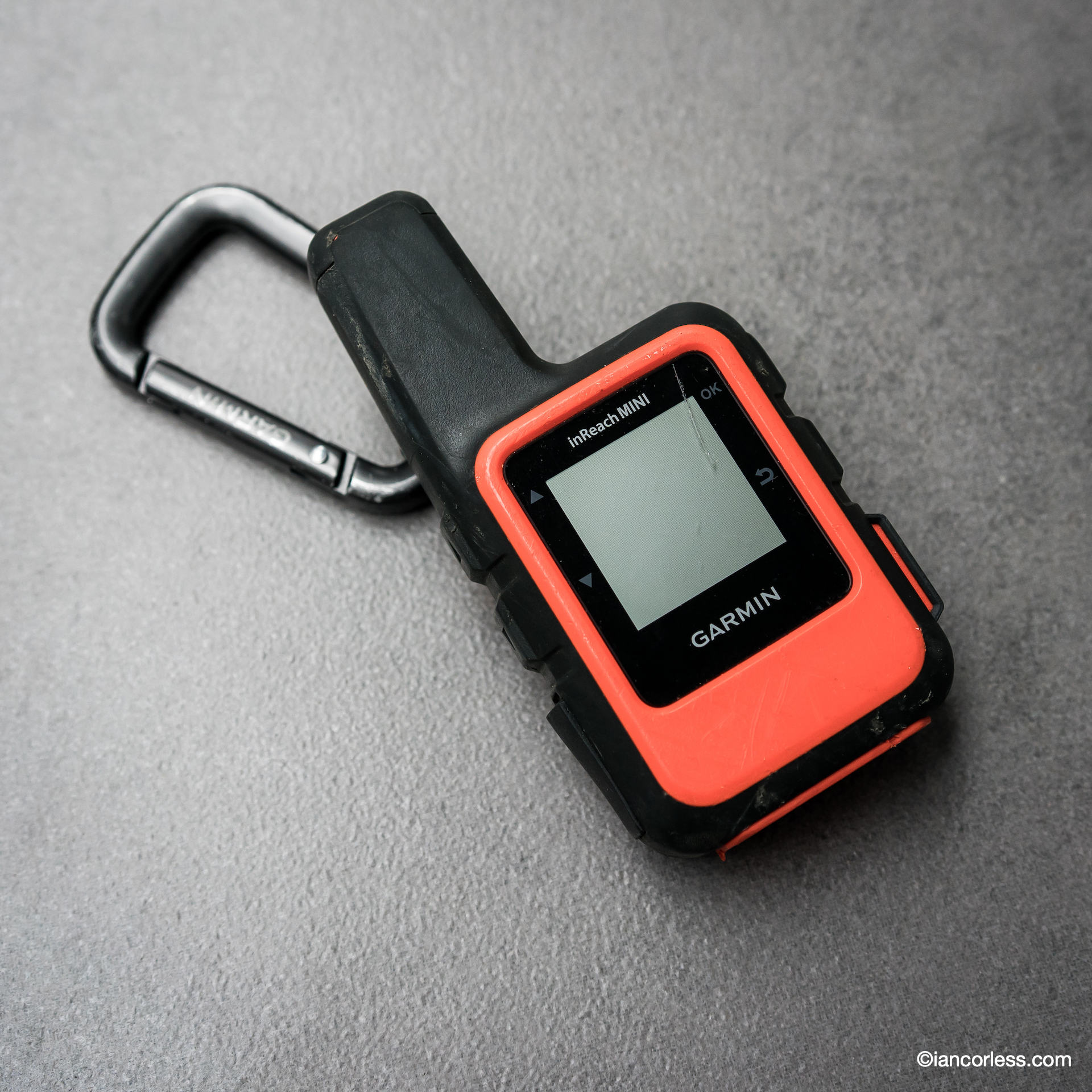
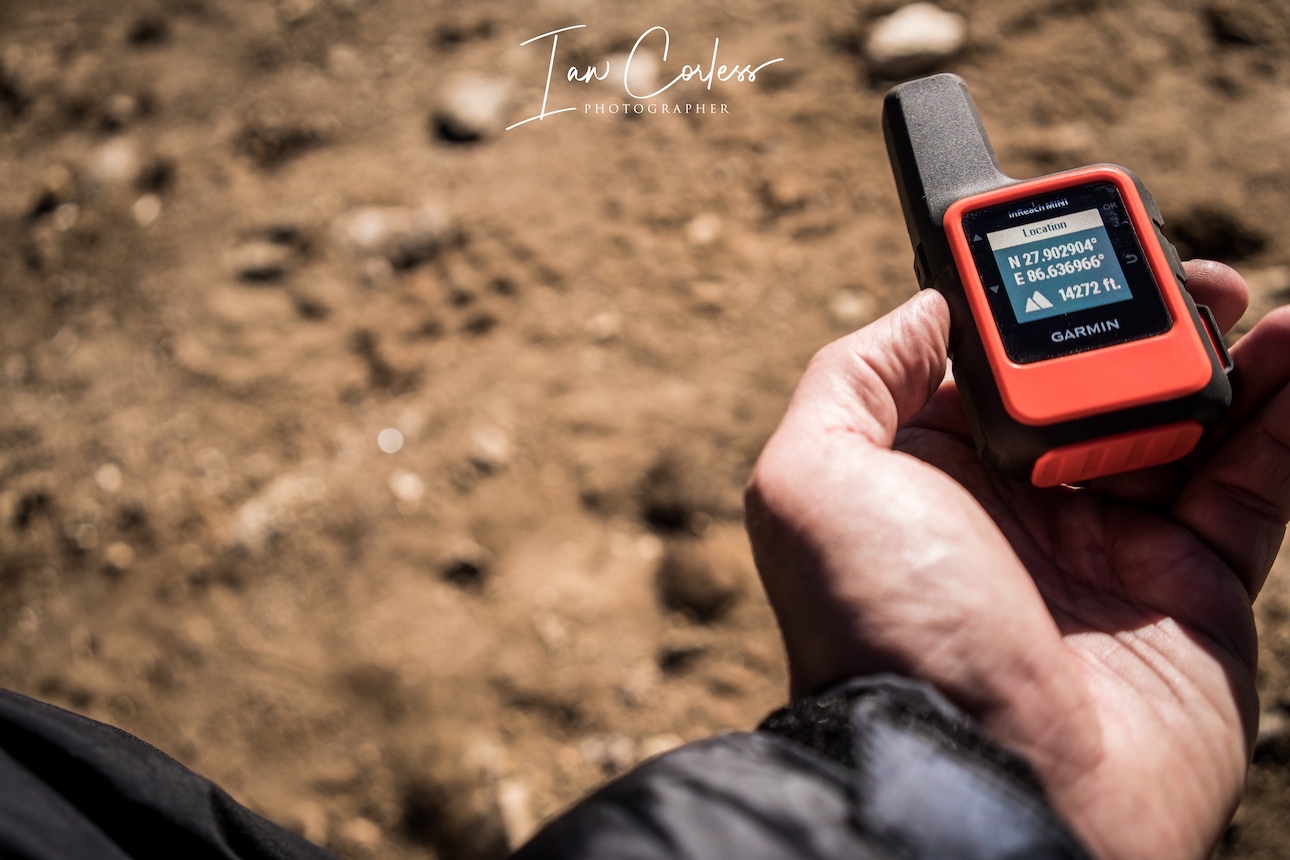
Garmin InReach mini 114g – I take this on all adventures. Ideal back-up and safety with an emergency button.
Garmin InReach mini
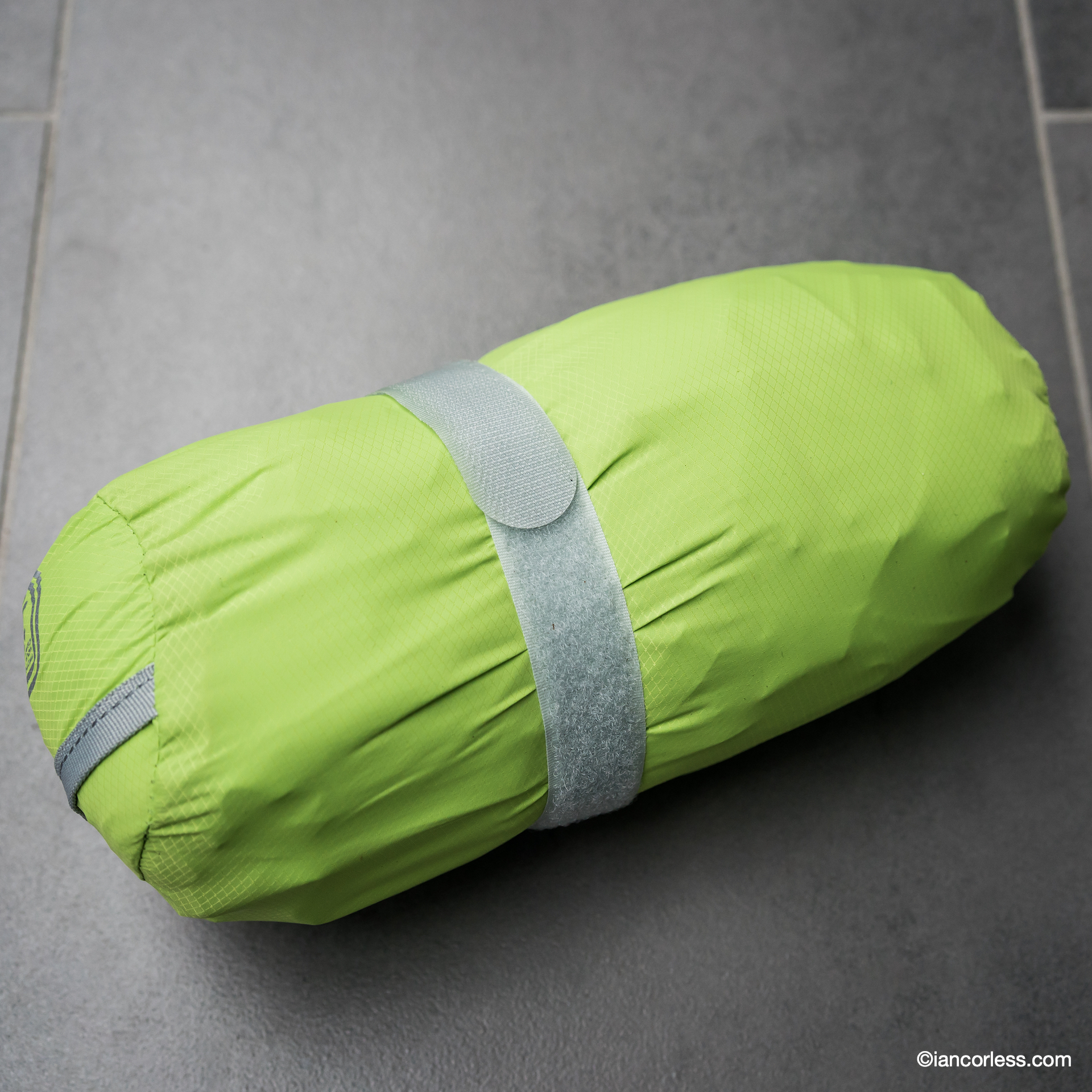
Mattress 300g* – Klymit V Ultralite SL (here) is full length, small pack size and very comfortable. *Photo is not the Klymit.
Pillow 50g – You can always use a dry bag with clothes inside as an alternative?
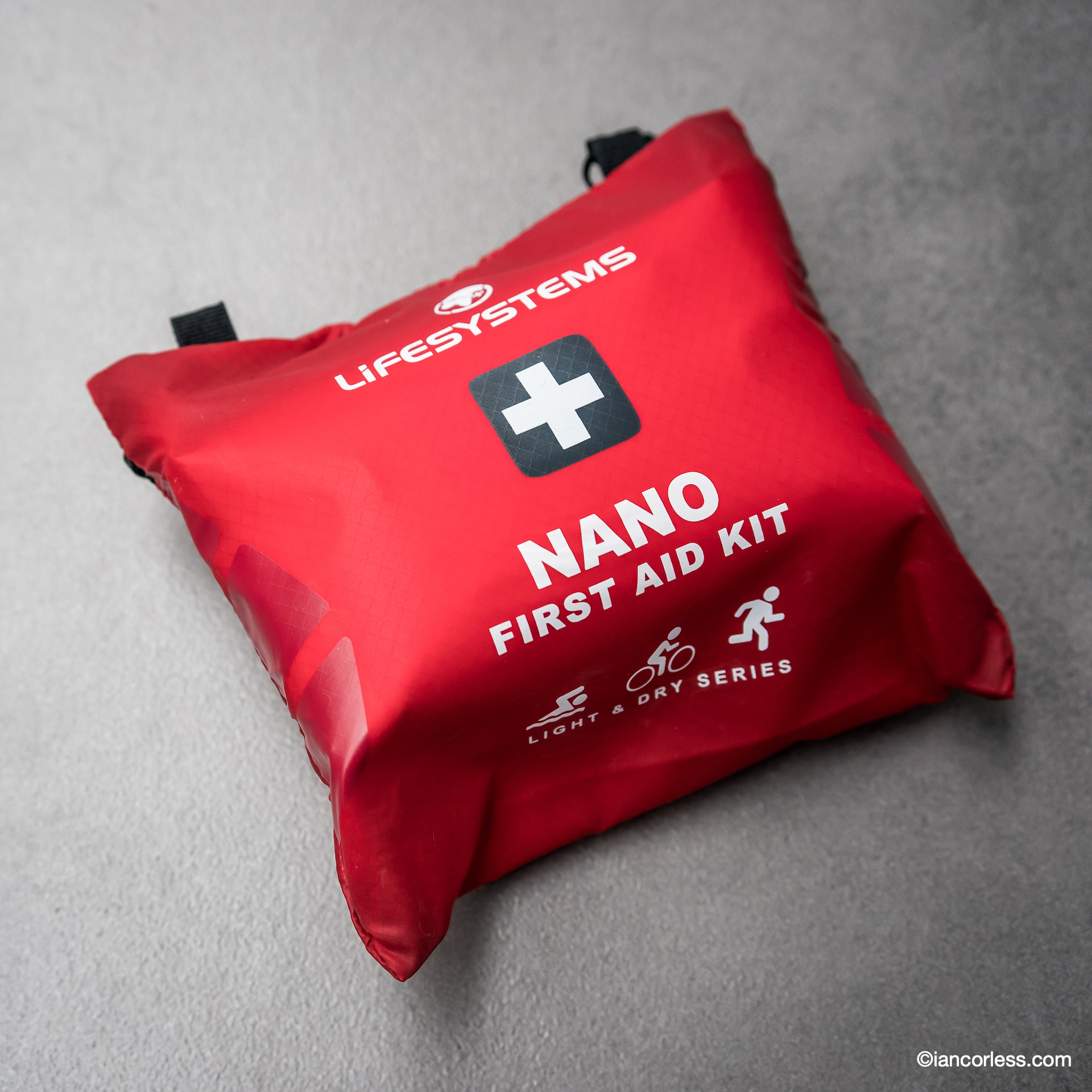
First Aid 101g – Simple system by Lifesystems in a waterproof bag.
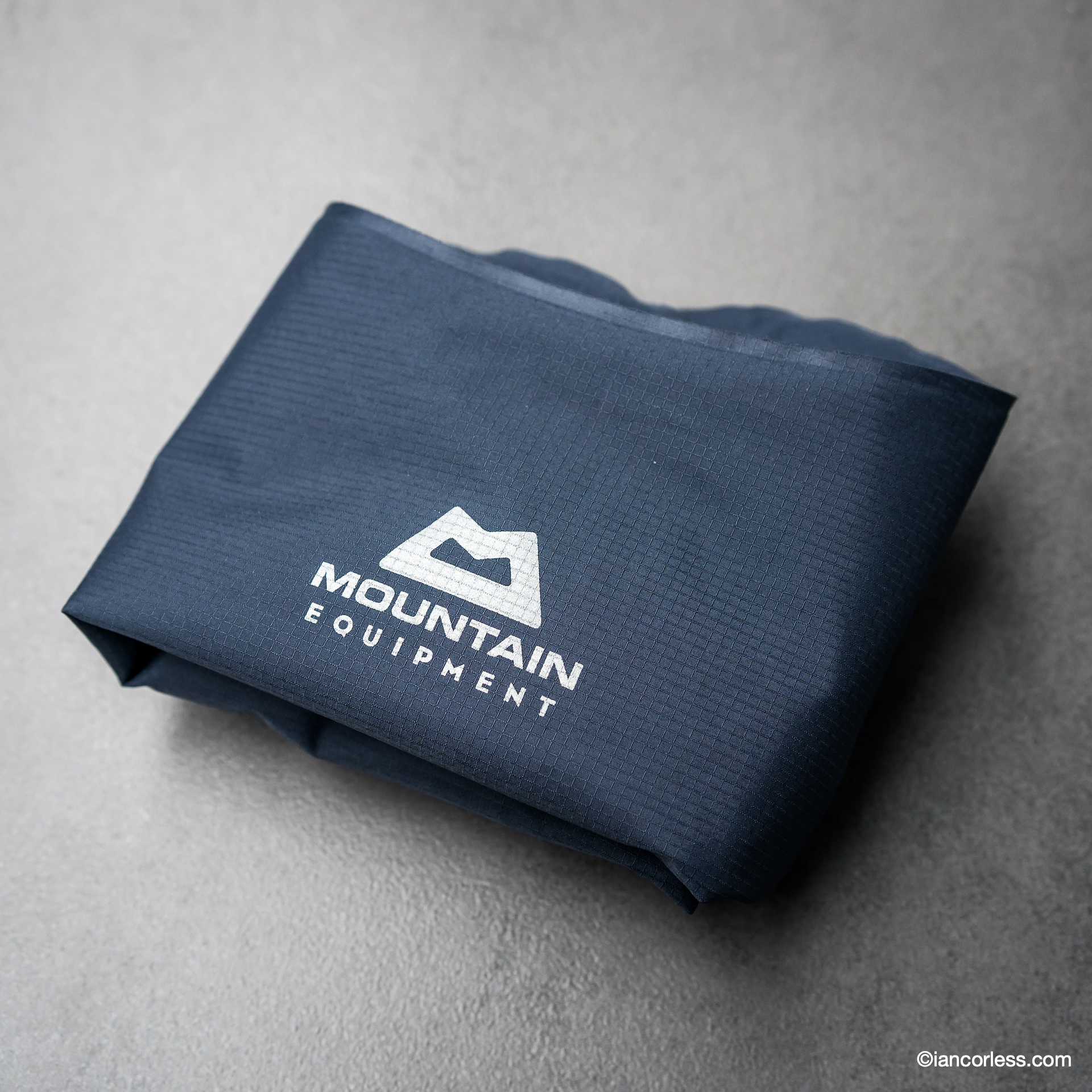
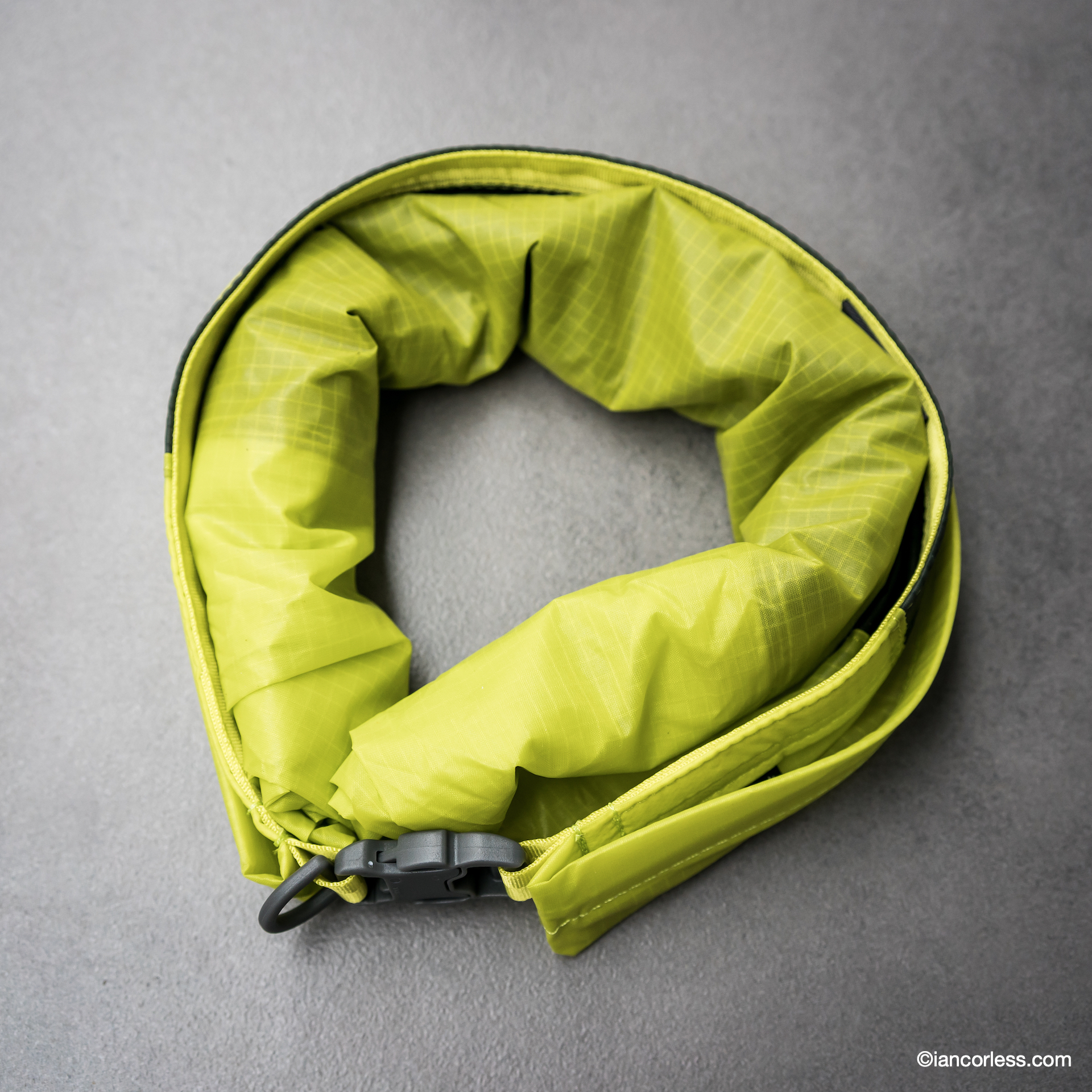
Dry Bag 68g – I use a 30ltr and use it is a liner for the pack. I find it easier to push everything in one place.
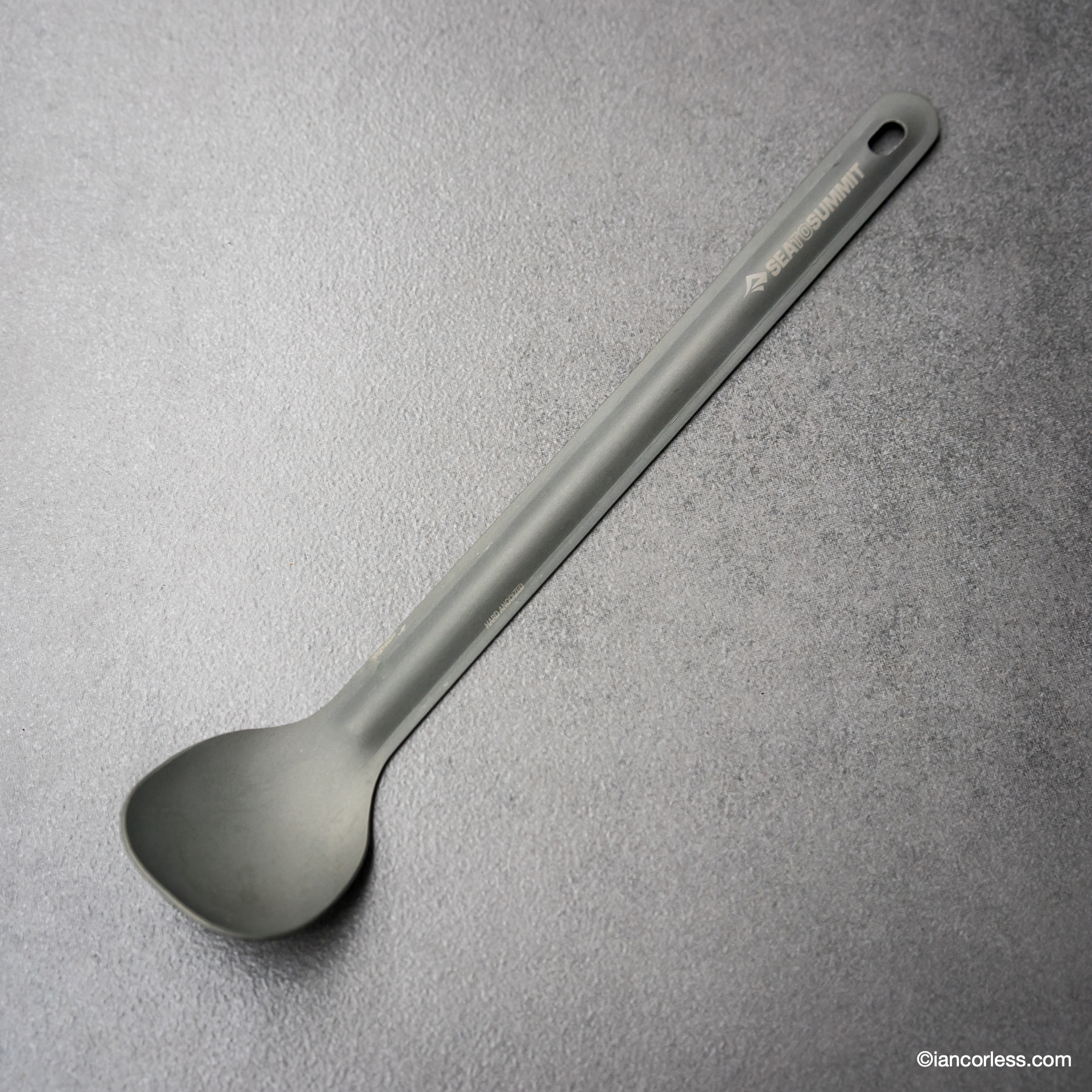
Sea to Summit spoon 12g – Sea to Summit with a long handle designed so that you can eat out of dehydrated food packs.
GoalZero Flip10 charger 75g – Good enough for one, maybe two phone charges.
Food:
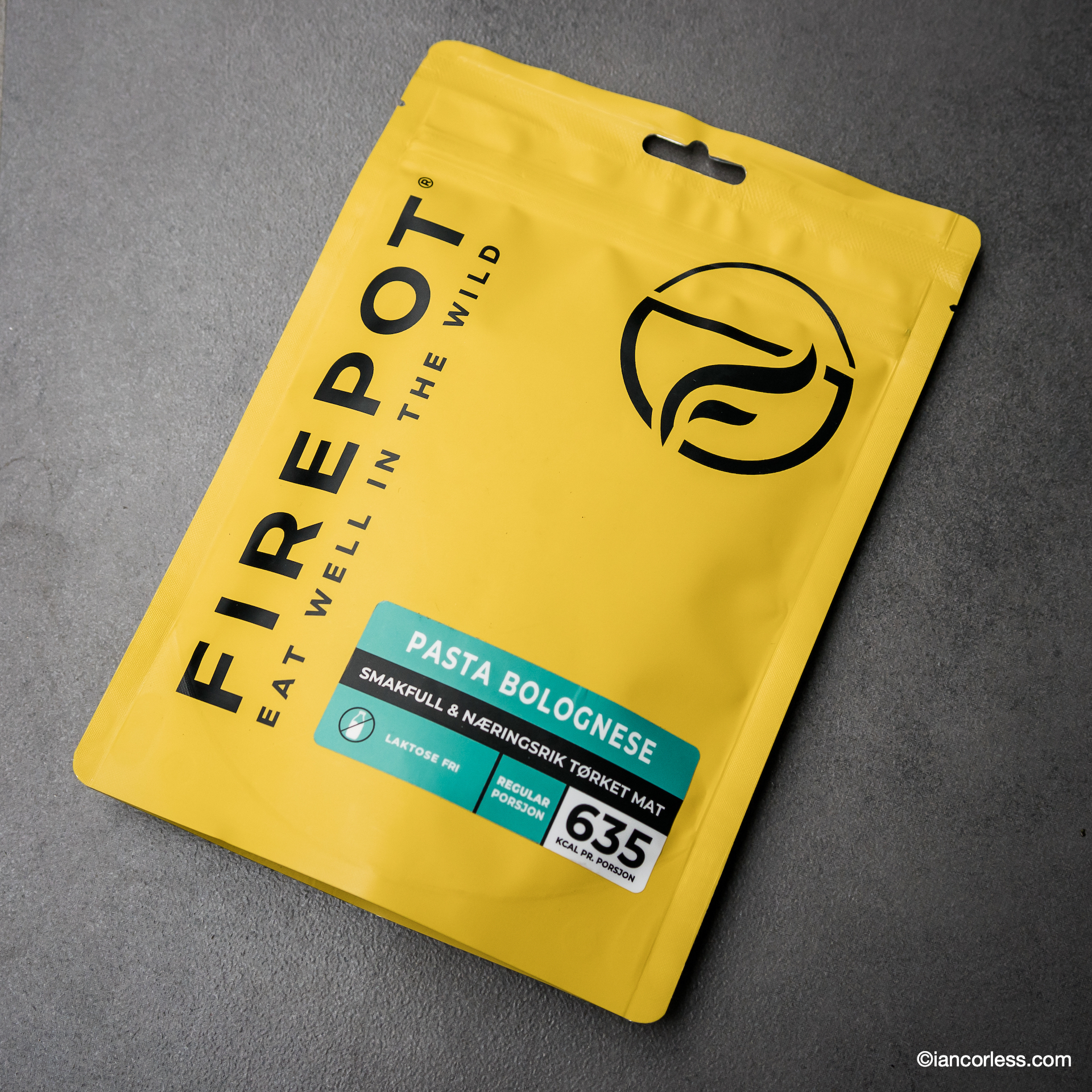
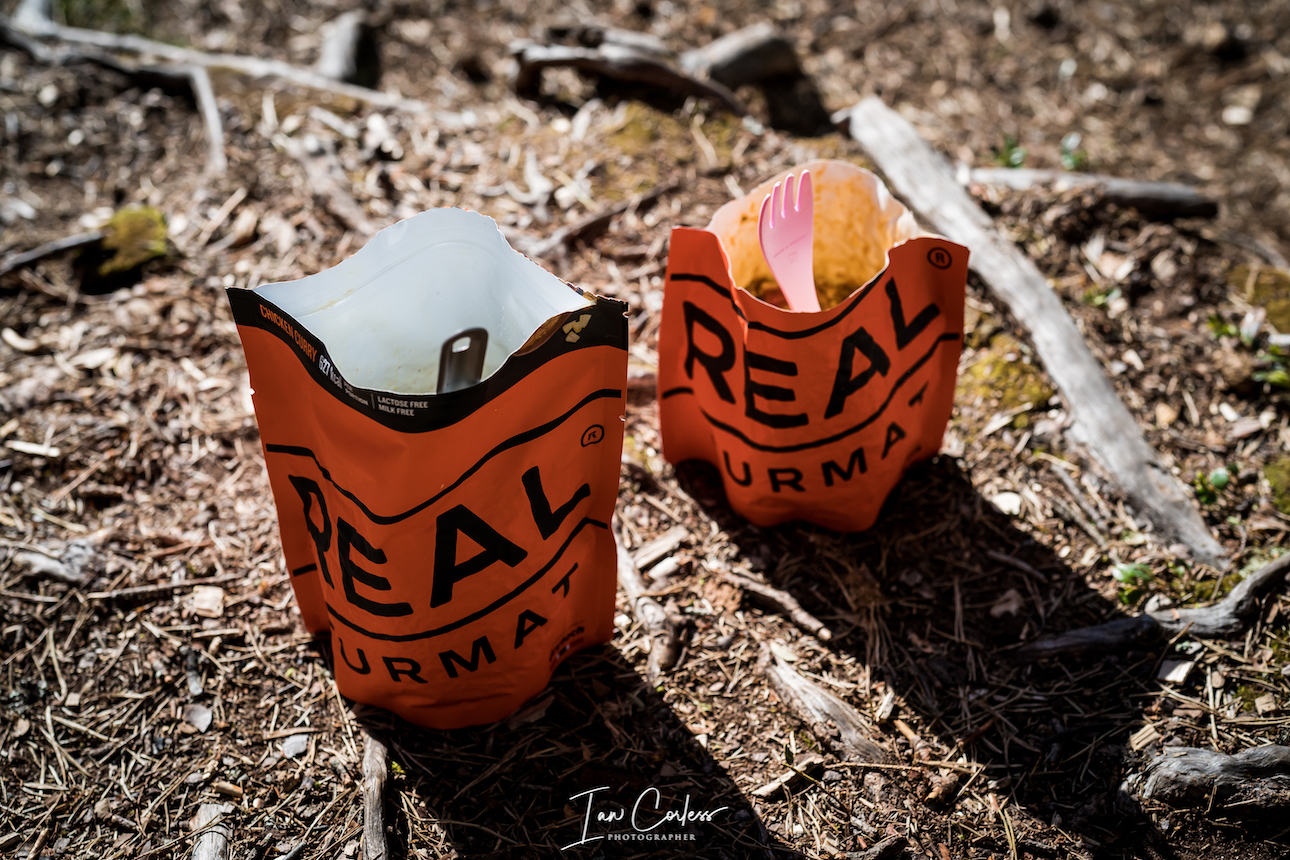
Firepot dehydrated meal 158g (per meal) – Dehydrated medals are a go-to solution for a meal when on the trail. Firepot have good calories, great taste and a good selection available.
Water 600g – This is the weight of water in the 600ml soft-flask.
Camera: (obviously optional)
Sony A9 with 35mm f2.8 pancake lens 800g – I am a photographer, so, this is my serious luxury item and it comes with a weight penalty.
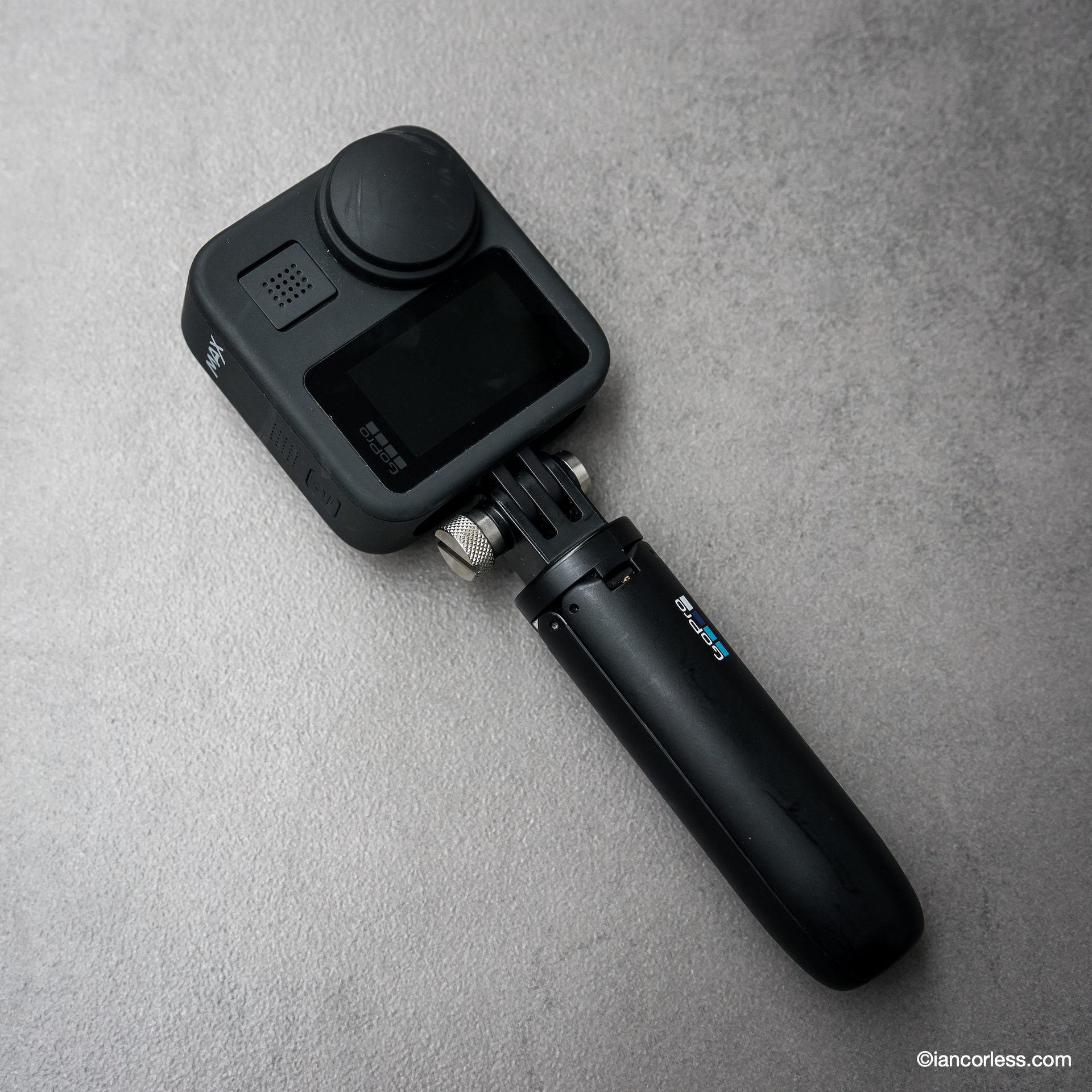
GoPro Max 231g
SUMMARY
Travelling light is great fun. It allows you to move faster with less strain. However, it is essential you travel light for the conditions. Too light and you may well get in trouble. So be careful and attentive. Light does not mean you will be uncomfortable, but you must accept a compromise comes from being minimal.
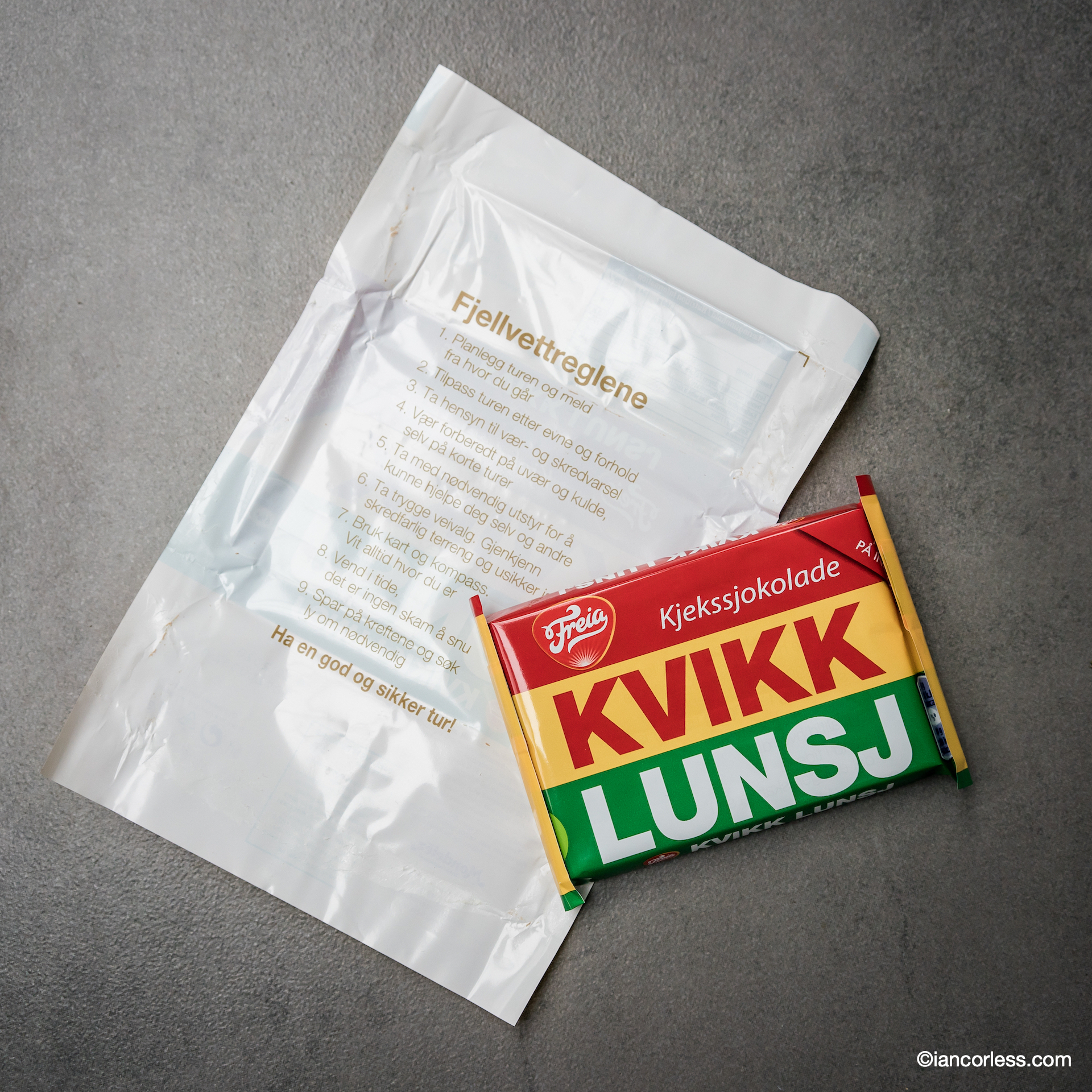
In Scandinavia, Kvikk Lunsj is an ‘essential’ for the trail. The chocolate consists of four rectangular wafers covered in milk chocolate, with thinner layers of chocolate between the wafers in order to break the chocolate into pieces easier. The chocolate has been advertised as a “hiking chocolate”, and it is often associated with skiing trips in Norwegian culture. Freia began printing the well-known Fjellvettreglene (Norwegian: the mountain code) on the inside of the packaging.
There is much relevance to the points below and a great reminder for all.
1. Plan your trip and inform others about the route you have selected. Plan your trip based on the group’s abilities, and always include alternative options. Obtain current information about the area and the weather conditions. Listen to the advice of seasoned mountaineers where possible. Ensure you have sufficient knowledge and practical skills to complete this trip. Respect the natural environment. Plan ahead and do not leave any litter behind you. Arrange meeting points during the trip that don’t require mobile coverage or accurate timing. Is your planning sufficient to guarantee an enjoyable trip no matter what?
2. Adapt the planned routes according to ability and conditions. Assess the conditions continuously and adjust your plans accordingly. Respect the weather! Travelling with others is safer and means you will have someone to share your experiences with. If you’re travelling alone, exercise caution. Do not embark on a long trip without sufficient experience. You must be able to take care of yourself as well as the others in your group. Be considerate of other hikers. Make sure you have read The Right of Access and its requirements. Make sure your group maintains an open and direct line of communication at all times. Can you complete the trip under these conditions and with this group?
3. Pay attention to the weather and the avalanche warnings. Always check the weather forecast and avalanche warnings to see what impact they have on the area. Follow the advice and choose a gentler terrain when conditions are too demanding. Check the conditions on yr.no, storm.no and varsom.no. Monitor the development of the weather and avalanche conditions along the way. Bear in mind that plans may need to be adjusted.
4. Be prepared for bad weather and frost, even on short trips. Dress appropriately for the weather, and the terrain. Remember that the weather changes quickly in the mountains. Bring extra clothing, and the equipment your route and terrain requires. Extra food and drink can help save lives, if the trip takes longer than planned or you have to wait for help. Is your group equipped to deal with a sudden change in weather?
5. Bring the necessary equipment so you can help yourself and others. In the winter, you need a windsack/bivvy sack, sleeping pad, sleeping bag and a shovel so that you can spend the night outdoors if you have to. A windsack can save lives. Bring a high-visibility vest or a headlight, that will make it easier to find you if necessary. Bring a first aid kit so you can help yourself and others. Always use a transmitter/receiver and have an avalanche probe and a shovel if you are traveling in avalanche prone terrain. Pack smart! Packing lists for different tours can be found at ut.no. Mobile phones can be a useful tool but remember that they do not work in all situations and areas. If an accident occurs, alert the police at 112, go for help or try to notify someone with other means. Are you able to take care of yourself and help others?
6. Choose safe routes. Recognize avalanche terrain and unsafe ice. Take an active decision to avoid terrain that is prone to avalanches and plan your route well. Be aware that avalanches can start in drops higher than five meters and steeper than 30 degrees. Even if you walk in flat terrain, you can trigger an avalanche on the mountainside above you. An avalanche dropout zone can be three times the height of the drop. Avoid terrain traps, such as narrow gorges. Consider what will happen if there is an avalanche. Be aware that a cornice can break off when you walk on a mountain ridge. Be aware of ice conditions when you walk on regulated lakes and rivers. Can an avalanche happen where I plan to go? What will the consequence be?
7. Use a map and a compass. Always know where you are. A map and compass are an essential basic equipment that always work. Pay attention to the map even when hiking on a marked trail. Knowing where you are on the map, makes for a better hiking experience. GPS and other electronic aids are helpful, but make sure you have extra batteries. Do you know where you are?
8. Don’t be ashamed to turn around. Evaluate your route continuously and if conditions are becoming difficult, choose your best alternative long before you or group members become exhausted. Have the circumstances changed? Should you turn around? Is anyone in your group have problems completing the route? Should the group turn around? Enjoy the hike for its own sake and remember that there will be other opportunities if it is too challenging today.
9. Conserve your energy and seek shelter if necessary. Adjust your hiking speed to the weakest member of the group, and make sure that everyone can keep up. Remember to eat and drink frequently. When you exert yourself, your body needs more fluids than you may feel you need. Don’t wait until you are exhausted before you seek shelter. Strong winds will tire you out quickly. Use your windsack or dig a snow cave before it’s too late. Are you able to get back to your base? Do you know where the nearest shelter is?
Please support this website. I believe everyone deserves to read quality, independent and factual articles – that’s why this website is open to all. Free press has never been so vital. I hope I can keep providing independent articles with your help. Any contribution, however big or small, is so valuable to help finance regular content. Please support me on Patreon HERE.
Runner’s and particularly ultra-runners have this wonderful ability to cover distance under their own power with very little needs or requirements. Some water, some food, a warm jacket and waterproofs and adventure awaits.
However, you can only go so far without the eventual need to return home.
Fastpacking manages to encompass the world of backpacking and running to create a different adventure, fast and light! Backpackers tend to carry a plethora of equipment and move at a slower pace, happy to adventure for days and weeks at a leisurely pace.
Fastpackers, arguably are runners or hikers looking for the need to travel for multiple day’s but still cover good distances and not be excessively slowed down by weight and excess equipment. The crux though is often the balance of weight and one’s ability to still run/ fast hike.
“Fastpacking isn’t for every outing though. Sometimes you want to take it easy, set up camp, and enjoy a particular area. That’s when backpacking shines. Sometimes you just want to crush through a workout. That’s when you want to go for a really fast run.” Says Simoni, adding that he opts for Fastpacking, “when I want to tag multiple mountain summits in an area at one time, without needing to take multiple trips. If you’re squeezed for time, Fastpacking can really help maximize an adventure. I find it very rewarding to cover so much distance with minimal gear.” – Justin Simioni via La Sportiva
One could arguably say that races like Marathon des Sables, which is 35-years old in 2020, have paved the way for Fastpacking bringing a ‘fast and light’ scenario to a race format allowing participants to cover 250km’s in a self-sufficient manner.
However, Fastpacking has been around for many, many years. Long before MDS, and long before the term Fastpacking. But in recent years, the sport has developed into something else, no doubt boosted by the growth and popularities of FKT’s and lighter, more functional equipment.
It’s important to clarify, that Fastpacking is what you make it. Personally, I enjoy a lighter pack, moving fast (but not running) and being self-sufficient. This allows me to carry a little more weight, travel for longer, enjoy the process and still cover over a marathon per day. You though may prefer to be more minimalist, look at micro/ mini adventures of 2-4 days and aim to run for much of the way. There are no rules to the speed or distance you go.
It’s also important to consider many other factors that come into place:
Location and environment – There is a big difference to Fastpacking in Nepal to say the Alps.
Time of year – Winter conditions require more equipment and more specific equipment.
Weather conditions – Check weather and be prepared.
Access to water – Streams, rivers and lakes
Access to external help – If you are going remote, be responsible and plan accordingly.
It’s easy to see from the above, there is no one definitive kit list, but there are crossovers that apply to both.
Route Plan
Plan the route in advance, understand the terrain and understand what possibilities exist to obtain water. Importantly, carry a system that will ensure that you can drink water that is available from any source. Work out how long a planned route will take and then plan for contingency should something go wrong. Note that vertical ascent, descent and technical terrain will require moving slower. It’s not unusual to sometimes only cover 2km’s in 1-hour. Make sure you inform family or a friend of your planned trip, start day and end day. That way you have a backup and someone checking out for you. It may sound alarmist, but should something happen, you may well not be able to call for help. Contact and research with local authorities and ascertain current conditions on the trails and be aware of any restrictions.
Do you need a 12-week and/ or 24-week Multi-Day Training Plan perfect for a multi-day adventure or a race like Marathon des Sables? They are designed to provide you with a structured weekly plan culminating in a target event.
View a sample week HEREfrom the 12-week plan. Purchase HERE. (£14.50 pw)
View a sample week HERE from the 24-week plan. Purchase HERE. (£12 pw)
The Pack
Typically, a Fastpacker will look for something between 20 and 40 liters. For summer and short adventures, it is possible to go lighter and smaller. In winter, one will need more equipment that is often heavier and bulkier. Quite simply, the heavier the pack, the harder it is to run. So, if the plan is to run as much as possible, you need to go as minimal as possible whilst keeping safe. Make sure when testing and trying a pack that you add weight and understand how it feels when moving. Many brands are now producing packs specifically for Fastpacking. Personally, I like my pack to have a waist belt as this helps distribute the load and make the pack more secure. I would say that a minimum pack weight will be 6.5kg (14.3lbs) with water. Where possible, you would not want a pack to exceed 10kg (22lbs).
On a personal level, I would always go with a tent as I personally feel that it will offer more flexibility, especially if one shops in a clever way. My go to tent is an MSR Hubba Hubba NX (1/ 2 and 3 person versions available).
Things to look for in a tent:
Weight
Flexibility
How many season use?
Space
For example, the above MSR is a free-standing tent, so, it can be pitched inner only. If you know you are Fastpacking in ‘guaranteed’ good warm weather, you could travel without the fly sheet and basically sleep in a lightweight and bug proof shelter. Equally, if you know that you are fast packing in a bug free (mosquito) environment, you could leave the inner at home and just travel with the flysheet. This then provides a secure waterproof shelter, and, in this scenario, it acts just like a tarp but with more protection.
Tarps offer a light solution that can be used with trekking poles and if one is going very minimal and fast, they provide a very simple answer for overnight protection. It all comes down to comfort and what one is prepared to accept as ‘comfort’ whilst Fastpacking. Big Agnes make the Onyx which comes in at under 200g. A Tarp is a compromise if you will have bugs such as mosquitos whilst on your adventure.
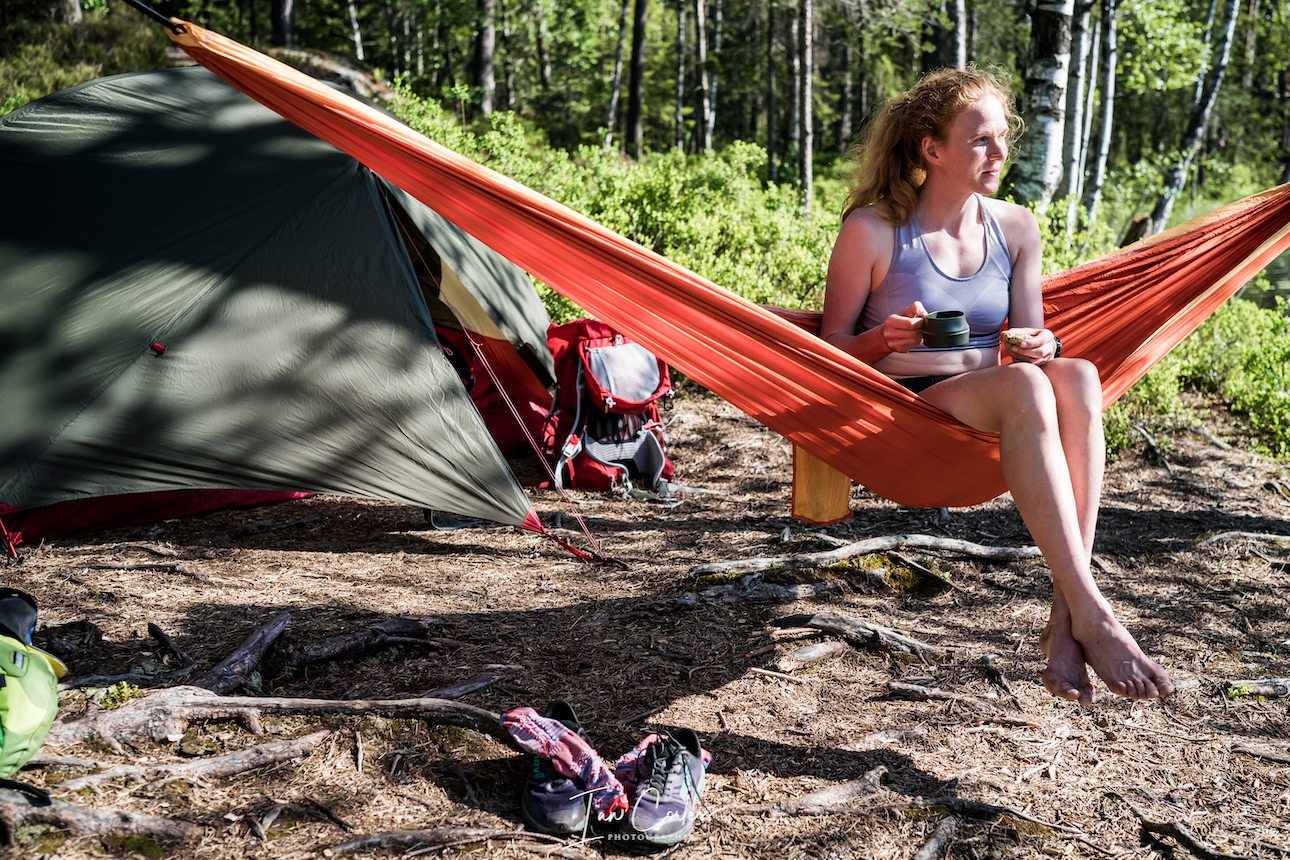
Hammocks are also an option providing one has trees to secure against. But if you add a bug net and tarp, in my opinion, a tent is a much better option. But a hammock can be a great addition to any Fastpacking kit, I use an Amazonas (here)
Sleeping Bag
A sleeping bag is essential for any adventure but firstly you need to ask some very specific questions before purchasing. I would say that ideally, one potentially could need several sleeping bags based on time of year and weather conditions. Remember, that any sleeping bag can be made warmer with layers. Add a hat, gloves and down jacket, suddenly the sleeping bag is considerably warmer.
Down is by far the lightest and smallest packing size, however, down cannot get wet! So, if you think you will encounter damp and wet conditions, you should consider a bag with a synthetic filling. Weight and pack size are important and with sleeping bags, the more you pay, usually, the lighter and smaller it will be.
Be careful on the ‘comfort’ rating of the sleeping bag.
Upper limit – the highest temperature the average male can expect to have a comfortable night’s sleep at without too much sweating.
*Comfort – the temperature at which the average adult woman can expect to have a comfortable sleep. *This is the ideal for most people choosing
Lower limit – the temperature at which the average adult male can expect to have a good night’s sleep in a curled position.
Extreme – the lowest temperature at which the average adult woman can survive. This rating comes with caution and additional consideration should be given if you plan to sleep in temperatures this low.
Recommendations:
PHD – Make sleeping bags and jackets to order, I am a long time fan here
Yeti – Passion One and Passion Three are a good start point here
Rab – The new Mythic Ultra is a personal favourite, available in 180 and 360 here
OMM -The Mountain Raid 160 is a great bag if you need synthetic filling here
Sea to Summit – The ‘Spark’ range have been getting rave reviews here
The minimalist Fastpacker will go with no matt or a very simple and small pad that provides just enough coverage for one’s hip if sleeping on one’s side. Personally, a good night’s sleep is essential, and a good/ light matt is an essential element to a fast and light kit.
Also, one should consider that in winter/ snow conditions, a matt will be essential for insulation.
Another consideration is potential problems from a puncture. Many inflatable matts become super light by using extremely light material. Be careful when using and make sure any potential sharp objects are removed before sitting or sleeping!
Matts very considerably but a personal favourite is the Klymit V Ultralite slim which offers full length body comfort all for 316g. It also packs very small. There are lighter matts and I list them below:
Thermarest NeoAir Uberlite 158g
Klymit Inertia X 258g
Nemo Insulated Short 278g
Sea to Summit Ultralight 294g
Exped AirMat HL 304g
Ultimately, the matt you choose may come down to a tradeoff between price/ packing size and weight. Be careful, some matts can be noisy when you move. Ok of going solo but really irritating if you are in close proximity of someone else.
Cooking System
For me, the MSR PocketRocket Deluxe (here) or 2 (here) kit is perfect. It has all one needs in a very small pack size and weight. I use the PocketRocket 2 kit that allows me to place a gas canister inside the 278g kit + a 4oz canister.
Another consideration would be JETBOIL Micromo Cooking System (here) which is the lightest system they do and if you just need to boil water, this is perfect!
Food
Dehydrated food is probably the most obvious option here and there are many varieties on the market. They are a one-stop option that requires water to hydrate and if you wish to be extremely minimal, some options exist that do not require hot or boiling water. A personal favourite is Lyo (here) and Real Turmat (here) – It may sound crazy but they both make foods that I would consider eating when not fast packing. They also do Vegan and Vegetarian options.
Check out Chicken Tikka Masala, Nettle Curry, Penne alla Bolognese and if Vegan, Organic Chilli and Barley Risotto. Breakfasts such as Mexican Scrambled Eggs and Organic Millet Porridge.
For any adventure, I work on a breakfast and a dinner and then carry snacks for during the day, this can be energy bars or if on a long Fastpack, I will even consider carrying another main dehydrated meal. Typical weights are 132g with approx 600 cals.
For me, Fastpacking is fun and adventure. I am not looking for FKT’s and therefore I do allow myself one or two luxuries. Coffee for me is an essential part of any trip and I mean good coffee. I could just take some coffee sachets and have a combined weight of grams.
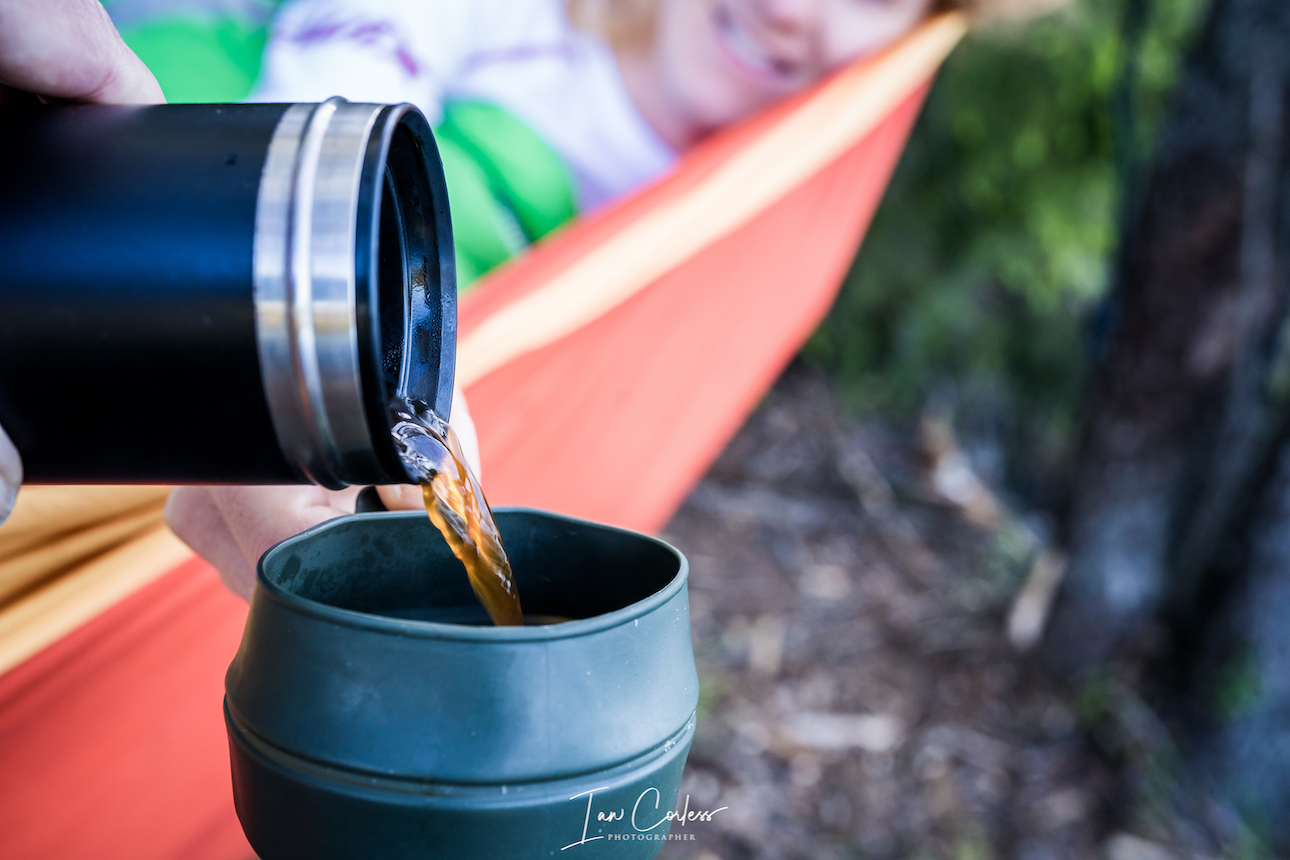
No! For me, I take fresh ground coffee in a sealed tub and I use one of two coffee presses.
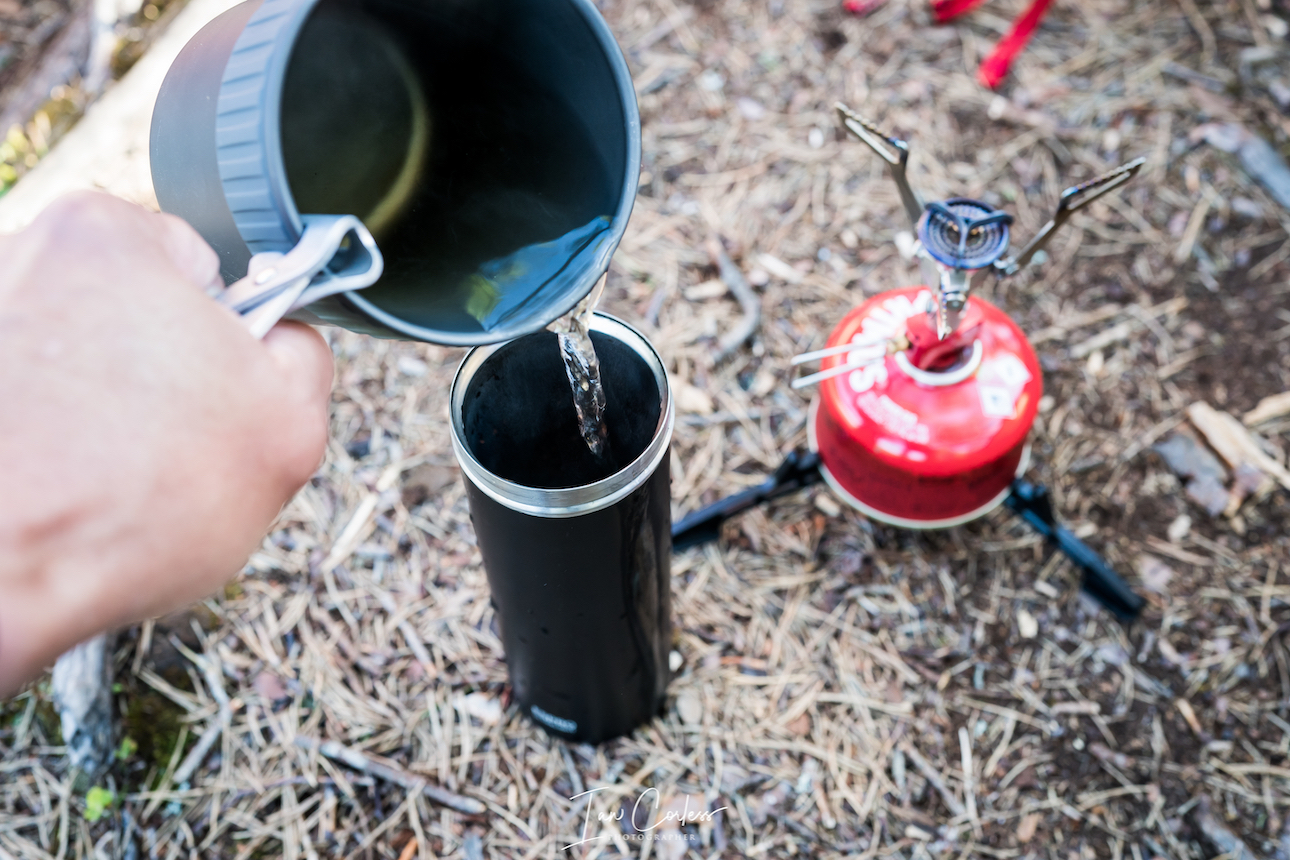
The Espro is my favourite as it acts as a flask/ drinking canister too. But it does come at a weight and size cost.
I fully appreciate that if going fast and light, the above is a complete no, no! But for me, that smell of fresh coffee each morning is worth it.
Water
You are going to be self-sufficient for multiple days, so, you need to find water and plan to obtain water from the route you will take. You can use purification tablets, I take the MSR TrailShot pocket sized filter (here) which meets U.S. EPA drinking water standards* and NSF protocol P231 for removal of bacteria (99.9999%), protozoa (99.9%), and particulates.
Clothing
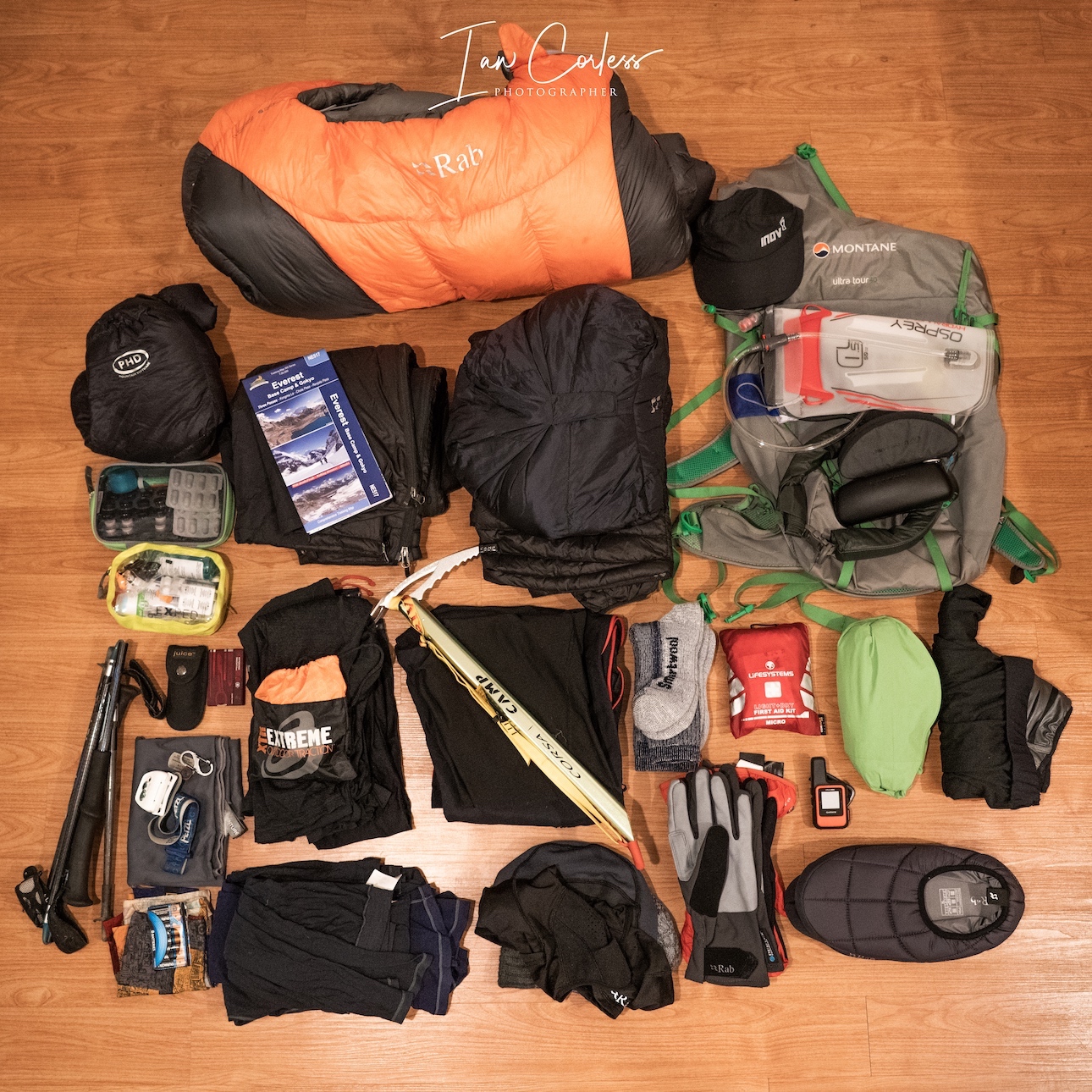
Clothing requirements depend on the time of the year, the weather you will encounter and the duration of the Fastpack. Needless to say, one has to accept that changing clothes, taking a shower and feeling wonderfully fresh daily is not what Fastpacking is about. Layering clothing is essential to allow for fluctuations in temperature. Do your research, check weather forecasts and plan accordingly. The above photo is my equipment for a Fastpack in Nepal. Make sure you have a ‘Drybag’ to make sure all contents of the pack are protected from the weather, Sea to Summit (here) for example.
A good start point is as follows:
Short sleeve T
Long sleeve shirt
Shorts
Underwear x2?
Socks x2?
Hat with peak
Warm hat
Gloves
Merino base layer, top and bottom – I use Icebreaker here
Lightweight waterproof jacket – I use RAB Charge here
Lightweight down/ Primaloft jacket – I use RAB Kaon here
Buff
Bivvy bag
The above, for most, would be a start point and based on where and when Fastpacking, you could maybe add or takeaway certain items.
If going to more extreme and cold environments, the demand on clothing and what one takes will increase. I wrote an article on Fastpacking in Nepal (here) and this is a worthwhile read. Please note in Nepal, one can use tea rooms, so, one saves on tent/ tarp weight immediately if required.
Tracker/ Beacon
I use a Garmin InReach Mini (here) and it is superb. Small, light, has SOS button and allows for 2-way messaging anywhere in the world. I do not go on any adventure without it now. In conjunction with a mobile phone and associated App, functions become easier to use. Subscription services can be changed monthly and therefore one can add or takeaway facilities as required.
Another option to consider is a SPOT device.
Essential Extras:
Water purification
Toilet paper/ wet wipes
Hand sanitizer
First-aid kit
Sunscreen
Bug repellent
Headlamp and batteries
Lighter/ matches
Whistle
Map
Compass
Earphones
Optional Extras:
Trekking poles – to be honest, for most of my Fastpacks, poles are an essential and especially if one is using a Tarp or similar.
Battery pack for recharging.
Conclusion
Fastpacking for me, is one of the most pleasurable ways to travel by foot. The ability to cover distance, usually in a point-to-point way under ones own power and being self-sufficient is extremely rewarding. You can move as fast or as slow as you like, take as long as you wish and fully immerse yourself in the surroundings and environment.
Please support this website. I believe everyone deserves to read quality, independent and factual articles – that’s why this website is open to all. Free press has never been so vital. I hope I can keep providing independent articles with your help. Any contribution, however big or small, is so valuable to help finance regular content. Please support me on Patreon HERE.
When it comes to mountains and outdoor terrain, UK brand RAB have been a ‘go-to’ for any outdoor enthusiast, whether that be for the Himalayas, mountaineering, trekking, climbing or a leisurely walk in the outdoors.
2020 will see RAB launch a series of new products under the heading of SKYLINE a range of products made up of ultra-lightweight clothing that does not compromise on protection. Intended for ‘fast and light’ days that blur the line between running and technical scrambling.
It’s a significant movement for the brand and as a firm RAB fan, the SKYLINE range has already gained my attention and no doubt, it will grab the attention of anyone who likes to move faster in the mountains.
I will be introducing element of the new SKYLINE range over the coming weeks, notably, the SONIC SHORT SLEEVE TEE, PACER JACKET, CHARGE JACKET and PHANTOM PULL ON.
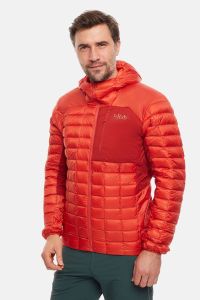
The new KAON jacket personifies and sets out the stall of the new direction and although it does not come under the SKYLINE banner, it certainly ticks all the boxes offering minimal insulation with low-weight and packing size. Balancing lightweight, warmth and protection, the KAON uses a combination of 800 fill Goose Down and Synthetic Status insulation. Concentrating on the core, the Kaon retains warmth where it is needed, while ‘Pertex Quantum Air’ allows complete freedom of movement under the arms.
The Kaon offers zoned insulation allowing a balance between warmth without compromising movement. It mixes down for the core and ‘Stratus’ synthetic fill on the shoulders, hood and cuffs.
The down in the core is 800FP hydrophobic down (70g in the men’s and 65g for the women.) This is significant as down, while warmer and lighter, cannot get wet – it loses warmth! However, hydrophobic down is treated with a durable water repellent that allows for quicker drying and the ability to resist water for longer. In a nutshell, it makes the Kaon far more usable in a variety of situations.
The Stratus synthetic fill is significant as it allows the jacket to be more breathable, dry out faster and is 20% less absorbent to other rival insulation. Synthetic is effective at keeping one warm, even when wet, so, it is ideal for damp/ wet conditions. RAB have added this to key areas of stress, either from the weather or equipment or a combination of the two. For example, on the shoulders, synthetic insulation will be far more durable with pressure from rucksack straps. Also, when compressed, it retains warmth, unlike down which requires loft.
The Atmos outer shell will still allow for loft while reducing down leakage making a perfect combination of warmth v weight.
Under the arms and down the side of the torso, Pertex Quantum Air is used which allows heat to escape and therefore allowing for body temperature regulation, always a difficult balance when moving fast and light.
IN USE
The KAON is a wonderful crossover jacket for mountain runs and alpinists who want to move fast and light but be prepared for any potential inclement conditions that the mountains can throw at you.
On first look, it is a simple jacket with a full-length zip, hood (that will allow for a helmet), high collar for warmth, one chest pocket, no side pockets and the sides and under arms use a different more flexible and breathable fabric. It has stitch through construction that provides a small square look to the jacket which ensure the insulation stays put.
The fit is slightly tailored, RAB say ‘slim’ but it is not super tight. Movement is not compromised. The arms are a normal length with a simple elasticated cuff. The jacket length sits just below the waist and for me, covers my backside. When zipped up, the neck goes nice and high and sits just below the chin keeping out drafts. The hood fits perfectly and has no adjustment – as mentioned, you can wear a helmet if required.
Needless to say, it is very light (240g +/-) and packs small and comes with its own stuff sack.
It is available in 3 colours, ebony (blue), firecracker (red) and dark sulphur (yellow).
I normally wear medium and medium is perfect in the KAON, size options are XXS to XXL.
Having used the jacket as we transitioned from Winter to Spring, I have found it perfect or everyday use. On chilly days I start with it on and then remove when my core is warm. It packs away small and fits in the side pocket of my Osprey Talon 11 pack (to provide an example.) On warmer days, I have added the KAON to my pack in the assurance that should the weather change, I have an excellent light layer that will work. In conjunction with a lightweight jacket, such as the PACER (here) – I have warmth and waterproof for well under 500g.
SUMMARY
The KAON is one of those essential kit items when going to the mountains. It’s size and weight make it a ‘mandatory’ item for me – there is no reason not to take it! Warm, lightweight and packs small = perfect.
Please support this website. I believe everyone deserves to read quality, independent and factual articles – that’s why this website is open to all. Free press has never been so vital. I hope I can keep providing independent articles with your help. Any contribution, however big or small, is so valuable to help finance regular content. Please support me on Patreon HERE.

































 IAN CORLESS