UTWT – Ultra Trail World Tour analysis

“We could make runners stash their own gatorade bottles (glass) and run with the horses, but it’s not 1974.” Craig Thornley, Western States race director.

It’s a good place to start. The world of trail, mountain, road ultra running is changing. In recent years we have seen rapid growth. Runners, elite and non elite want to test themselves on ever demanding courses and ultimately test themselves against each other and see who comes out on top.

However, ultra running is not quite like any other sport. It places extreme demands on the body. Pushed too hard and the body breaks… ask Geoff Roes what he thinks.

So, although an Ultra Trail World Tour sounds attractive caution is needed. But before we worry about those aspects, we first need to look at what this UTWT entails.

The UTWT was launched on September 1st amidst the Ultra-Tour du Mont-Blanc. The fact that the race was not over and that many runners were still trying to get to the finish line may well have been a touch of bad timing. Admittedly though, many press leave immediately after the event so this may very well have been a logistical issue.

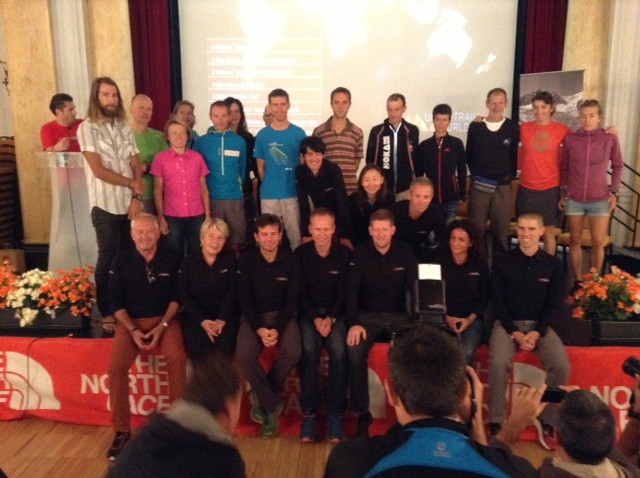
One by one, the initial races were announced and with them a representative from each race came to the stage.

2014 confirmed races are as follows:

  • January 18th Vibram Hing Kong 100
  • March 1st The North Face Transgrancanaria
  • March 15th Vibram Tarawera 100km
  • April 4th to 14th Marathon des Sables
  • April 25th Ultra Trail Mt Fuji
  • June 27th The North Face Lavaredo Trail
  • June 29th Western States
  • August 29th The North Face Ultra-Trail du Mont-Blanc

So, this takes us up to August and apparently other races have been asked to participate and we can expect confirmation of these, on or before September 15th.

Of course, alarm bells initially ring at the presence of Western States. Secondary alarm bells ring at the presence on Marathon des Sables but I will come onto that later.

How does it work?

The UTWT will propose an international competitive circuit in partnership with the International Trail Running Association. The events should already be open to the widest public and will offer ‘everyone’ a unique chance, throughout each year, to participate. Question: How does that relate to Western States with limited capacity and demand far outweighing places available? Also, Marathon des Sables… UK entrants for example are on a three year waiting list.

In each race points are awarded to every runner and therefore at the end of the year, a male and female UTWT world champion will be announced. To attract elite athletes, certain events will have Ultra Trail Series status and these will offer more important weighting in the ranking. (I assume this will be for races like Western States?)

Runners will be presented with a Passport. This can be ordered online before the end of the year, it was not made clear if these passports need to be paid for? When you complete a race, you are awarded a visa, this is added to your passport and shows your completion.

The minimum race distance will be 100km, races must have had two previous editions to qualify and already have 500 minimum participants (again, Western States has less than 400). A minimum of twenty countries will be represented and be emblematic venues.

So, how do you become World Champ?

All finishers in every race will be awarded points according to his performance. These points will be added to the International ranking and updated after each race. This ranking will be available on line at the UTWT website. The circuit will be an International competitive circuit in partnership with the ITRA (International Trail Running Association).

As mentioned, a limited number of races will be called Ultra Trail Series and you may only use two best performances from these races in building up points for the world title. In total, three races score, so, you could have two UTS races and one other.

A world champion lady and male will be announced each year.

ANALYSIS

Okay, first and foremost, we don’t have the complete picture, so, you will need to be patient.

The press conference was slick, enticing and all was going well until a call for questions came. I jumped in and asked about Western States…

It’s not just ‘any’ race, it has a limited field, it’s a desirable race, what is the impact and so on a and so on.

The answer was vague and very unconvincing. In actual fact it was embarrassing. One comment that came from the stage was, “it’s early days and we haven’t worked these things out yet”. Not a good start.

One journalist asked several questions:

Will you have doping control? YES

Will you have prize money? EACH INDIVIDUAL RACE CAN HAVE PRIZE MONEY, IT’S UP TO THE RACE. We did not have clarification though if the world title had a prize, other than the ‘title’ of world champ.

What will the elites get? ELITE 1 RUNNERS WILL GET TRAVEL AND HOTELS PAID FOR. But they never clarified if that is open to all elite 1. Lets say 50 want to do Western States, will they all get hotels and travel?

The series very much seems like the Skyrunning concept, is this competition or are you offering something different?. THE RACES WILL BE 100km OR MORE AND ON VARIED TERRAIN, SKYRUNNING WORK TO A SPECIFIC FORMAT AND WITH THE ODD EXCEPTION, ALL RACES ARE UNDER 100k. I agree, the UTWT is very different to Skyrunning, it is taking some principles from the Skyrunning ethos, for example, a series of races, three qualify out of five and the winner is world Skyrunner champion but the terrain is varied. Skyrunning look at altitude and technical.

At this point, the stage participants could feel more and more questions were coming and the conference was drawn to a close quite quickly.

Overall, it started well and ended badly. It certainly appears that the UTWT team wanted to maximise the UTMB as a platform to launch but they had far too many question marks and lack of answers to leave me feeling reassured or convinced.

POINTS TO CONSIDER

I have to say, I like a championship that includes mixed terrains and distances. That will provide a true rounded athlete. However, the UTWT never specified how runners enter, so, for example, to qualify, do you have to do one 100k, one 100m and one stage race? Do you have to do one on sand, one in the mountains and one jungle for example? Without this specified, I could maybe do three 100k races on fast trail and get maximum points if that is what I was best at? We need clarification.

World destinations, iconic races are great. I can see the beauty and excitement of going to New Zealand, Hong Kong and so on, BUT these races already exist and to be honest, if I went to one it would be highly unlikely I would go to another. Far too expensive for the average pocket.

Travel and hotels for elites are all well and good but who is paying? Surely that is what sponsorship from a team is about. I am we’ll aware that places are offered and expenses paid already exists but this is very much in conjunction with a race, the RD and the athlete. Blanket travel and hotels need to be paid for and by someone and that will come down to the everyday runners and the races themselves who I am assuming are paying a yearly fee to be part of the UTWT. Transparency is needed here. Many figures have been mentioned that ravces are paying 15,000 to 30,000 euro to be part of UTWT. I believe this to be speculation.

The UTWT title needs additional incentives. Prize money! However, that has no bearing on all the other runners. I can’t help but think that only a small few (who are rich enough) will travel to several continents to experience the world tour.

What will the races get out of it? Well, recognition and exposure for one. But, I know I go back to Western States, does that race need more exposure… Does it need more entries, does it need more PR? Same applies for UTMB, you already have to get points and enter a lottery, so, if you get a ‘Passport’ does it mean you get automatic entry in a UTWT event? Confusing!

MDS is a completely different race to all the others, to have just one stage race and no others would be long term problematic. In addition, I am not even sure it should be in this series. A great race but is a unique race.

We also need to think about the runners, all the runners. The calendar is increasingly becoming larger with more and more choice. Do we really need to insist that participants run three races over 100k to be a world champion? In addition, for this to be a true championship, one of those three races would need to be a 100-miles.

Ultra is not always better when longer. I wonder if some races under 100k should be allowed?

Why not have an Ultra World Tour and include road? Comrades is an iconic race for example and surely a true ultra world champ should be able to run road too?

Are we seeing the creation of an ‘Ironman’ for trail or is this ‘just’ a series of races with quite simply a world title?

I’d like to know who is beyond this with clear transparency. I have experienced many things in the last twelve months that I have questioned and now suddenly they all add up. For example, late 2012 WAA (What an Adventure) became the official pack for MDS. At the 2013 MDS, Catherine Poletti was present at the finish in the Sahara and then WAA became the official supplier of the blue UTMB bag. Also, I believe that Catherine Poletti visited Western States to view the event… So, is the UTWT an extension of the UTMB organisation and what does it mean? Is this good or bad? I merely ask the question.

At this stage we do not have any answers. Paul Charteris from Tarawera ultra was prepared on Sunday at the press conference, although he did not attend he was online and responded to my tweets. He also had a press release ready and he has been open and transparent. Equally, Transgrancaria have been proactive and the team at Lavaredo I spoke with personally. They all want the races to be valued, increase in size and stature and be part of something bigger. I think Craig Thornley and team are having a harder time. Western States is the holy grail and change here will be difficult and in many cases not welcome. The sport must move on and grow and that means all the sport, Craig in many ways is correct when he tweeted, “We could make runners stash their own gatorade bottles (glass) and run with the horses, but it’s not 1974.”

So what do YOU think?

I don’t have the answers and I will have missed many points. Please provide some input.

*Please note, for reasons of clarity, I do work alongside the ISF Skyrunning Federation and my thoughts and comments in this posting are impartial and with the pure objective of what is the best for our sport.
Ultra Trail World Tour announcement (UTWT)

Ultra-Trail® World Tour: bringing together the most emblematic trails (of 100km or more) in the World.

Chamonix, 1st September 2013
The organizers of:

– The Western States 100 Mile Endurance Run
– Marathon des Sables
– The North Face® Ultra-Trail du Mont-Blanc®
– The North Face® Transgrancanaria
– The North Face® Lavaredo Ultra-Trail
– Vibram® Tarawera 100km Ultramarathon
– Vibram® Hong Kong 100
– Ultra-Trail® Mont. Fuji

have today announced at Chamonix their participation in the 2014 Ultra-Trail® World Tour.

International circuit, shared values
The races in the Ultra-Trail® World Tour, in their specific natures, illustrate all the diversity of trail: steep paths of the Alps, California trails, hills and beaches of Hong Kong, Moroccan desert…
The races’ many different formats will present participants with a real adaptation challenge .

Between The North Face® Lavaredo Ultra-Trail and the Vibram® Tarawera 100km Ultramarathon, between the Ultra-Trail Mont Fuji and The North Face® Transgrancanaria, participants will need very different qualities to win, or simply to become a finisher.

While being fundamentally different, the Ultra-Trail® World Tour races will have common values, which they are proud to share and to promote. Ethics, equality in sports, self-respect, respect for others, for the Environment…
Taking part in the Ultra-Trail® World Tour will be the opportunity, throughout the years, to discover cultural and sporting differences. Every continent will be visited: Africa, America, Asia, Europe, Oceania… providing opportunities to enhance their sporting culture, create new friendships, and to feed on emotions in order, one day perhaps, to be a “finisher” in all the events!

Simple criteria of eligibility

Long distance trail running races of at least 100km.
Emblematic venues.
Popular races (around 500 runners minimum).
International events (a minimum of 20 countries represented).
Minimum 2 realized editions
An annual ranking for the award of the title of champion of the Ultra-Trail® World Tour
Any “Finisher”, according to his performance, will be assigned a number of points and be integrated into the international ranking , updated for each race, and available online at http://www.ultratrailworldtour.com site.
The Ultra-Trail® World Tour will propose an international competitive circuit, in partnership with the International Trail Running Association (http://www.i-tra.org).

With the goal of bringing together top athletes, a limited number of races will be labelled «Ultra-Trail® Series». Only the 3 best results should be taken in consideration, with a maximum of 2 “Ultra-Trail® Series”.

At the end of the year, after the last race, the titles of “Ultra-Trail® World Tour 2014” champion, male and female, will be awarded.
Who will win? Encourage your favorites!

A passport for all races
By the end of 2013, all runners planning to participate in one or more stages of the Ultra-Trail® World Tour can order their “Ultra-Trail® World Tour” passport on the http://www.ultratrailworldtour.com site.
Whenever they are “finishers” in a racing circuit, they receive a visa to stick in this passport.
Participation in one of these circuit races will automatically imply integration in the rankings for the Ultra-Trail® World Tour of the given year .

2014, a year full of promise
For its very first year, the Ultra-Trail® World Tour will be present on all the continents, with a dozen venues spaced out throughout the year.
The following have already been confirmed:
– January 18th: Vibram® Hong Kong 100 (Hong Kong, China)
– March 1st: The North Face® Transgrancanaria (Spain)
– March 15th: Vibram® Tarawera 100km Ultramarathon (New Zealand)
– April 4th to 14th: Marathon des Sables (Morocco)
– April 25th to 26th : Ultra-Trail Mt.Fuji® (Japan)
– June 27th to 29th : The North Face® Lavaredo Ultra Trail (Italy)
– June 29th: The Western States 100 Mile Endurance Run (USA)
– August 29th: The North Face® Ultra-Trail du Mont-Blanc® (France, Italy, Switzerland)

Other emblematic races will soon be confirming their participation.

Many questions were left unanswered at the press conference. It felt as though the organisation wanted to monopolise on the media presence available for the UTMB and spread the UTWT news.

Importantly, when I asked questions directly about Western States the answer was less than reassuring. I can’t help but think all those who love WSER will be asking serious questions.

I will update more on this but please respond? Make your points here.

For in depth live coverage from the press conference go to @talkultra twitter feed and follow by blow-by-blow comments from 0930 French time. Or use #UTWT and follow the thread.

More to follow

photo 5

Ronda dels Cims – Awards Ceremony and Summary

©copyright .iancorless.com.P1130093


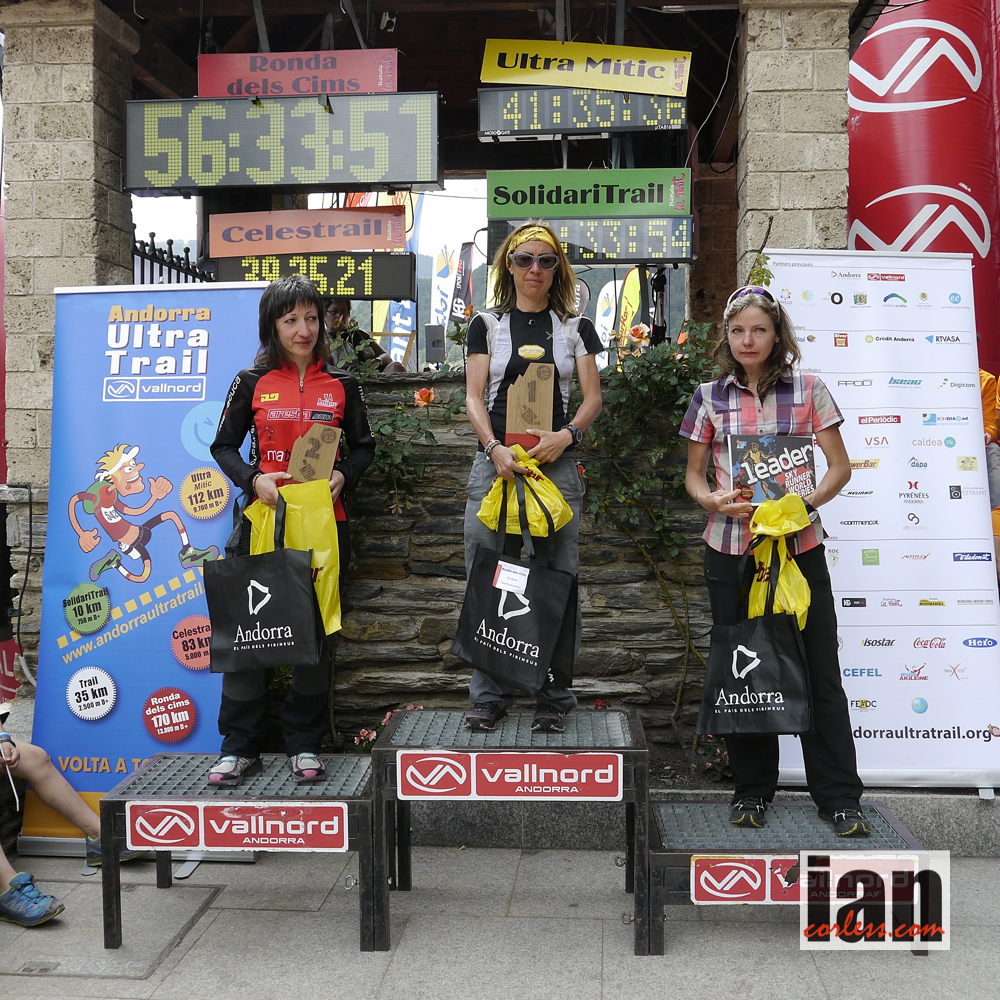
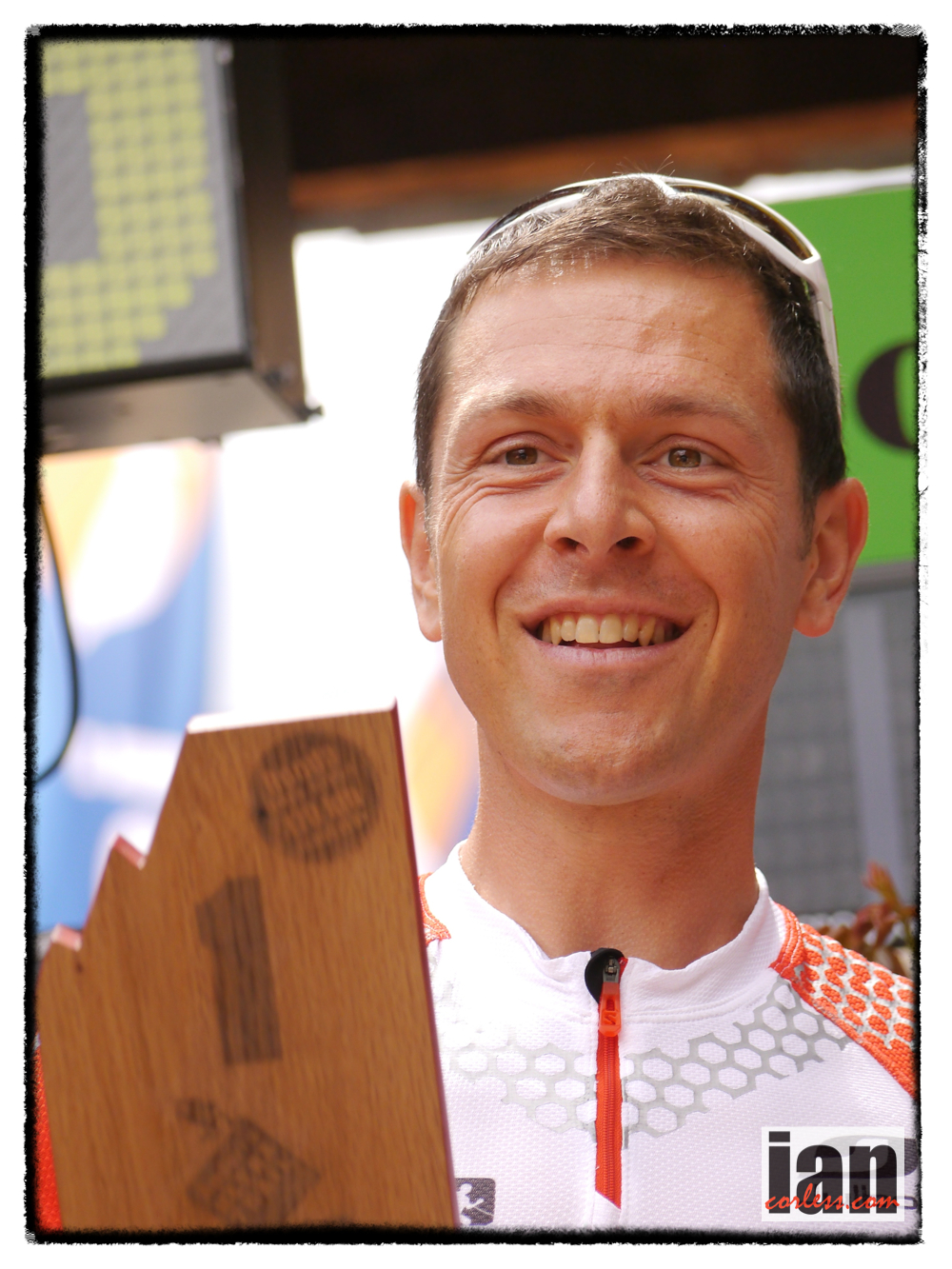
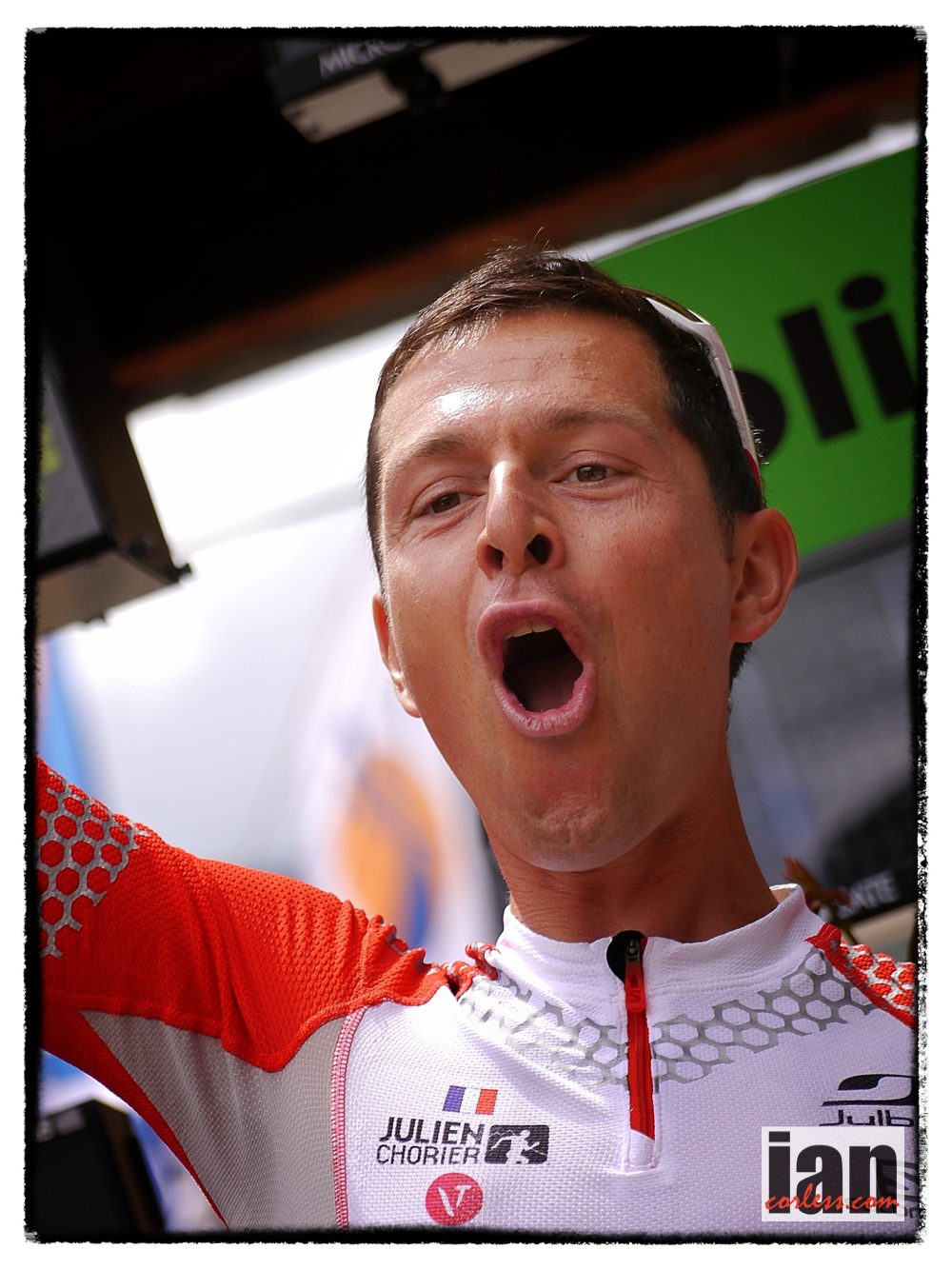
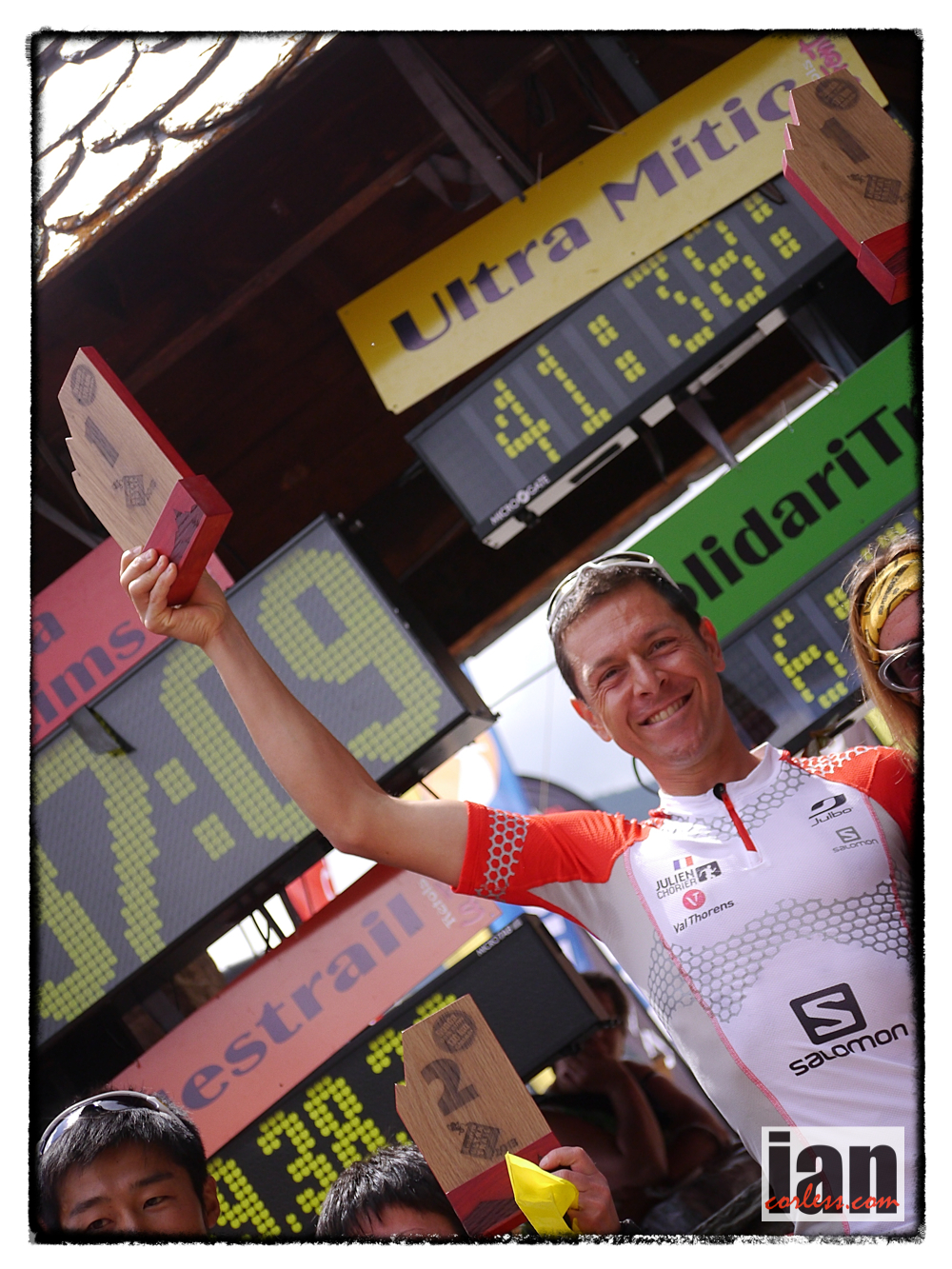
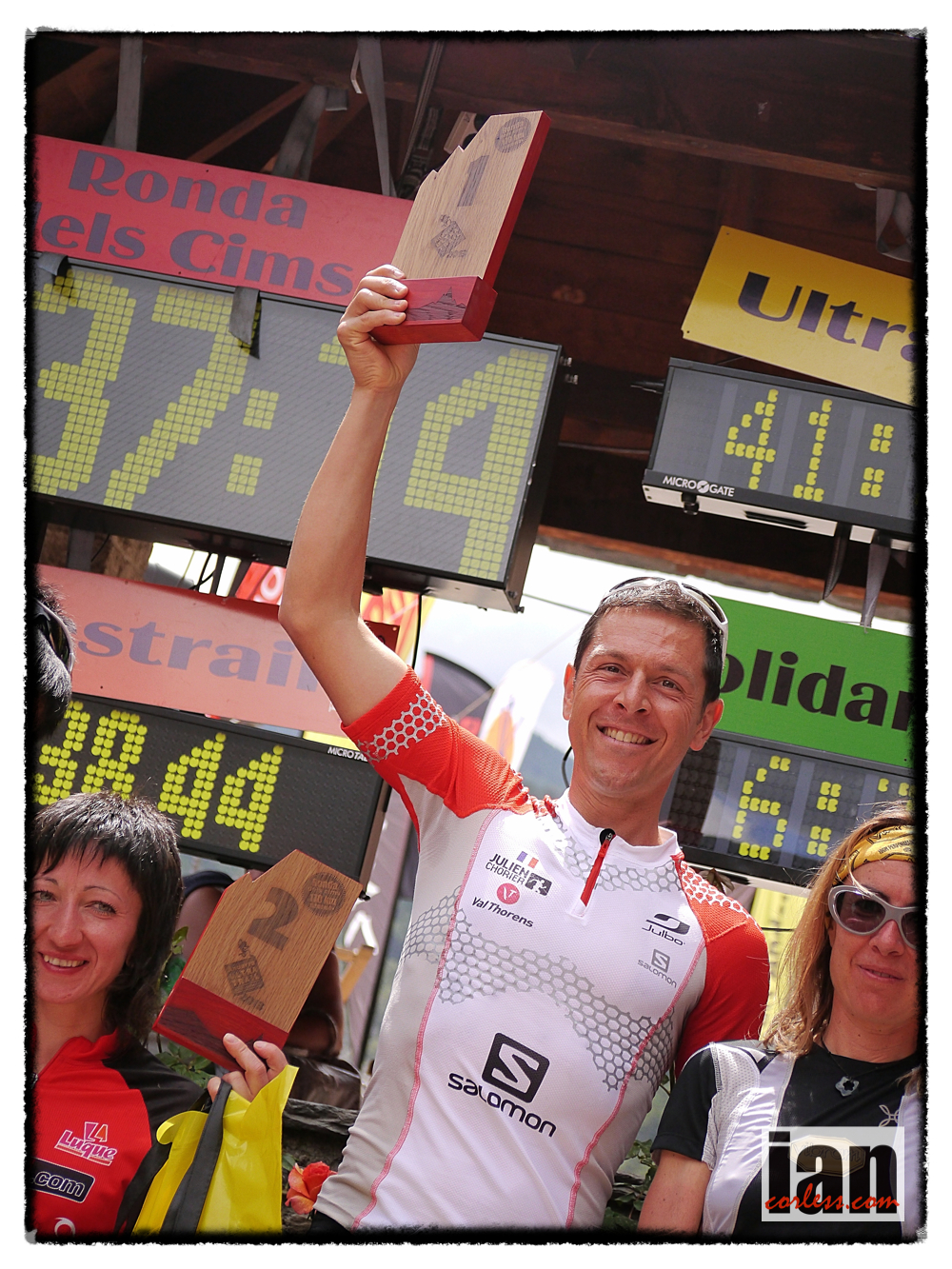
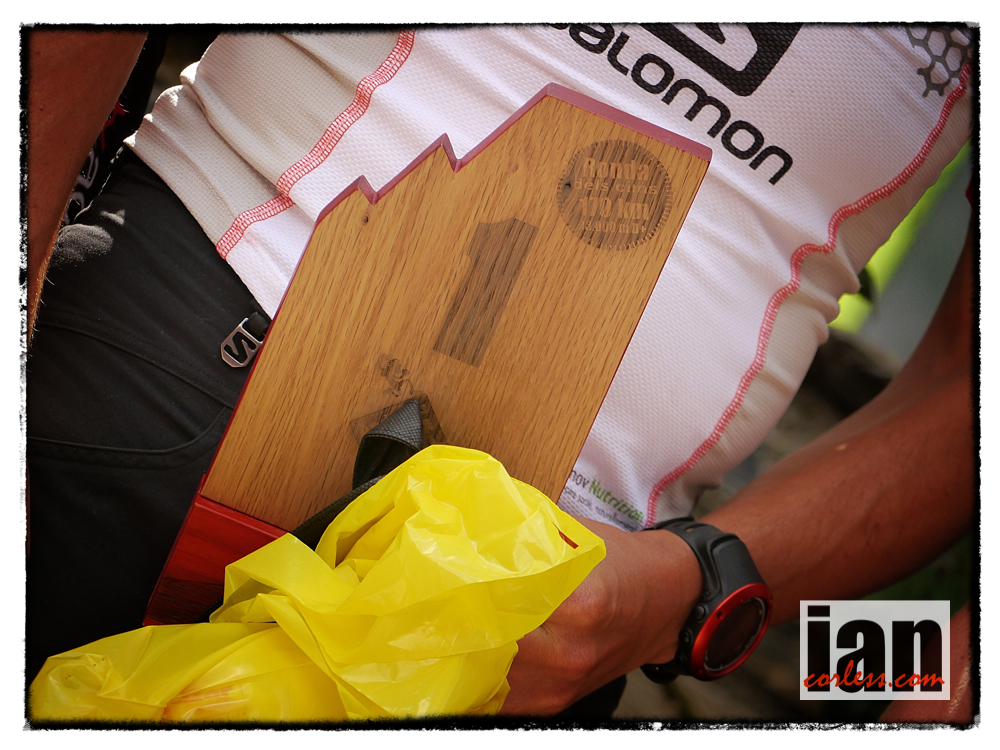
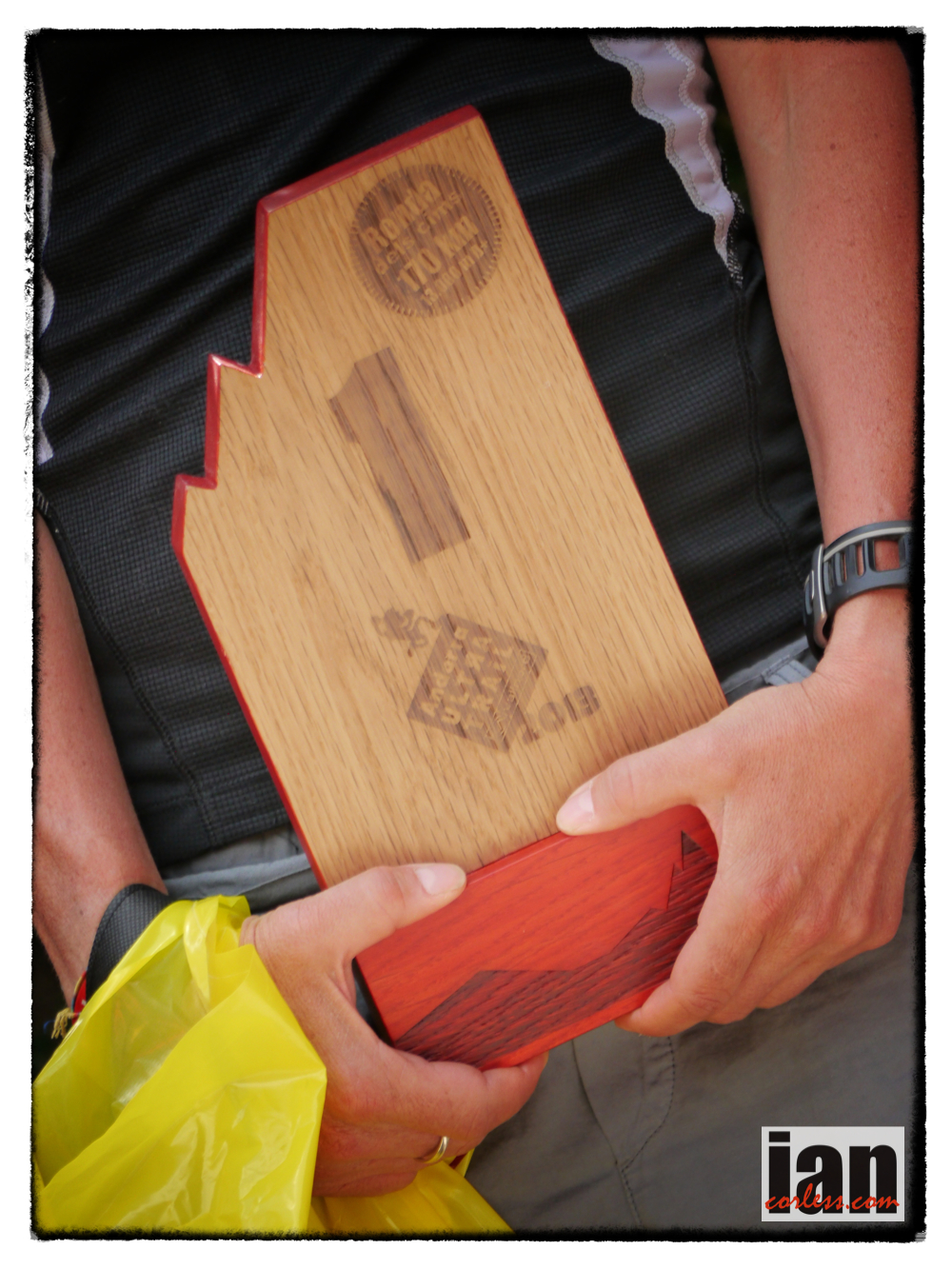
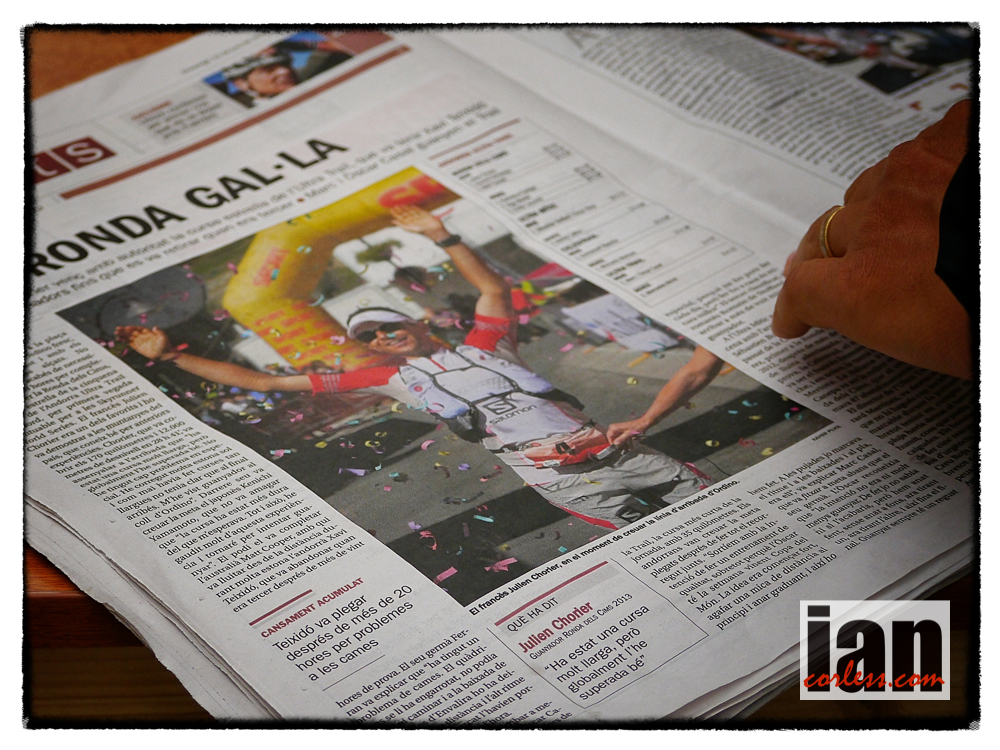
Julien Chorier and Francesca Canepa dominate the 177km 2013 Ronda dels Cims.the second race in the Skyrunning Ultra series.

It was without doubt an incredible and dramatic race in Andorra. Due late season snow and potential storm risk on Friday night, certain safety measures had been made and the course was modified to ensure runners safety. It did mean a little less elevation, however, this was compensated for by additional km’s, making the final distance 177km and a total elevation gain of 12,200m.

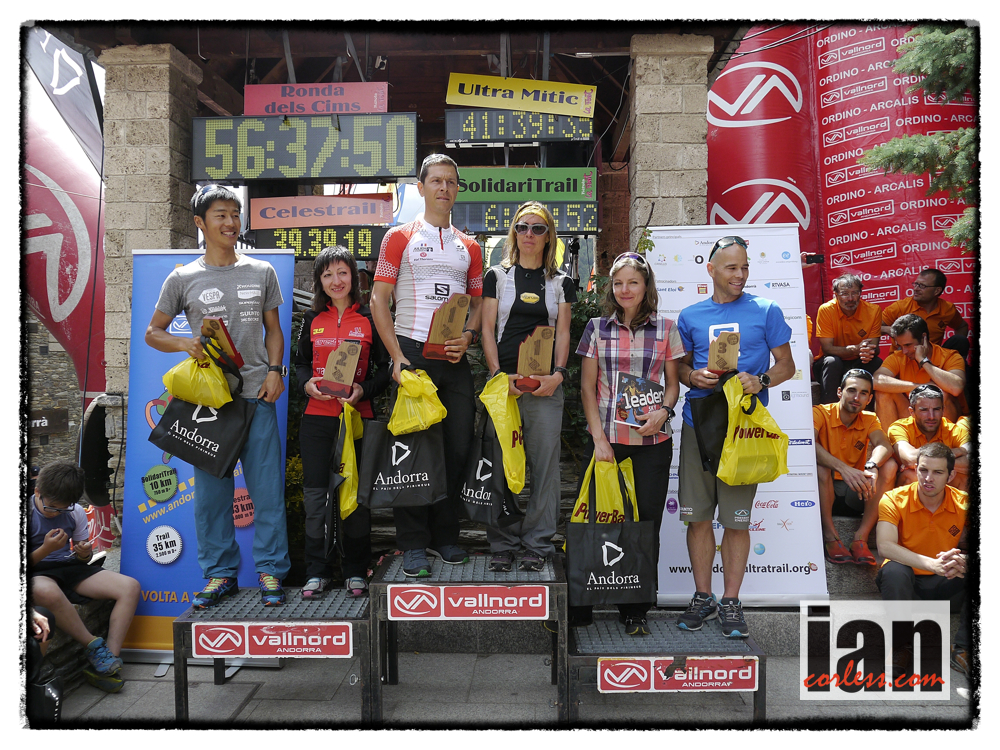
Described as one of the hardest 100+ mile races in the world, it did not disappoint. An International field lined up in Ordino on Friday for the 0700 start. The awards ceremony on Sunday afternoon affirmed the International representation with five different nationalities on the podium.

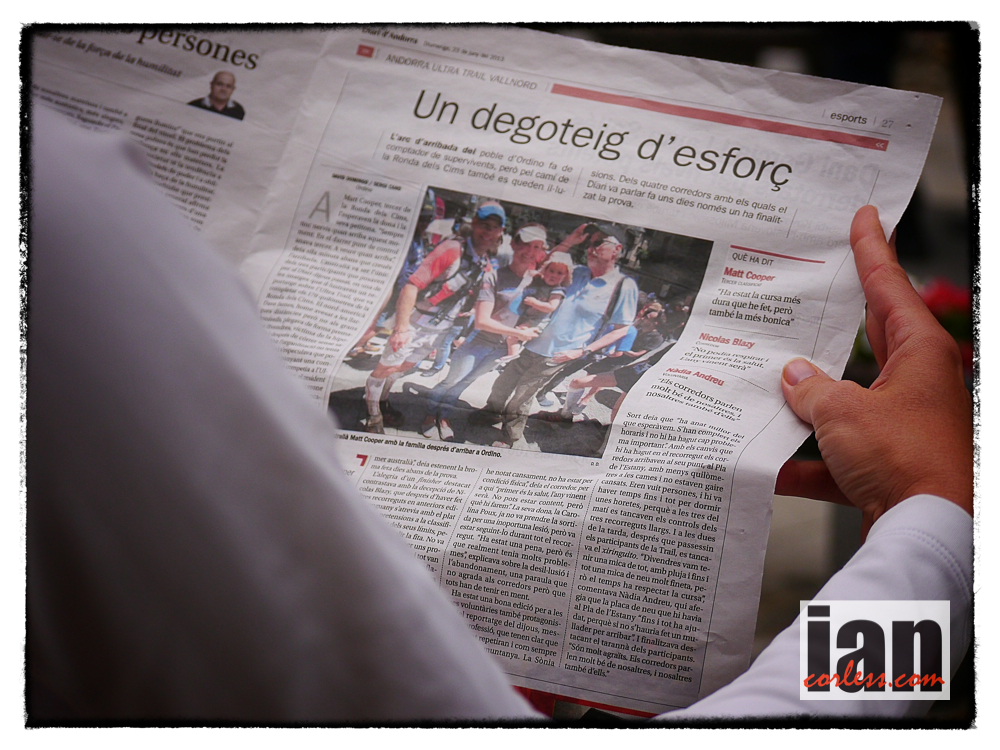
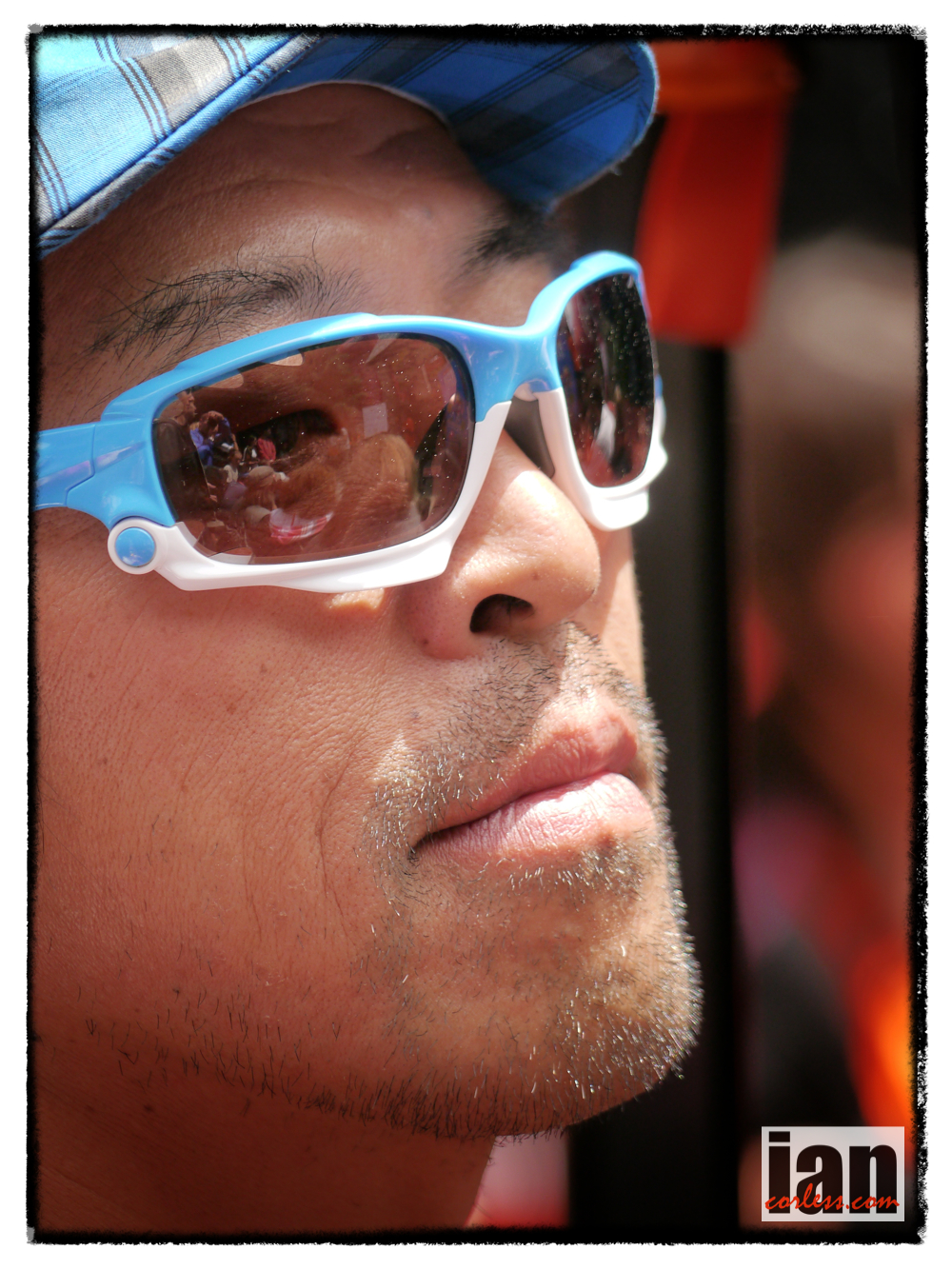
Frenchman Julien Chorier dominated the race from the front and I have to say, it is possibly one of the most impressive performances I have been fortunate to witness. He looked so calm, relaxed and focused. Kenichi Yamamoto from Japan placed second and along with his impressive entourage of photographers and camerman proved not only his ability to run but also how popular he is with the crowds and supporters. Matt Copper from Australia completed an impressive podium and produced a really solid run. He had been at the front of the race over the initial twenty kilometers and then settled in third, however, a fall into a stream during the night meant extended time at a refuge to warm up, this saw him loose a couple of places and drop to fifth. However, as daylight broke his batteries became recharged and he pushed as hard as he could to gain places and eventually finish third.

For the ladies, Francesca Canepa from Italy dominated after 65km’s and never looked back. She is a specialist in long distance races such as TNF UTMB and Tor des Geants, so, a top performance was expected here; she didn’t disappoint. She did say after the race that it was the hardest race she has ever done!. A late surge by Olga Mankò from the Ukraine elevated her to second on the podium and Emilie Lecomte, from France, after leading the race over the first 35% of the race faded but bravely battled for a hard won final podium place.

Please Note:

Talk Ultra will have interviews with Francesca Canepa (1st), Matt Cooper (3rd), Jared Campbell (7th) and Ty Draney (8th) on the next show, out Friday 28th June.

Men

1. Julien Chorier (FRA) – Salomon – 28h41’06”

2. Kenichi Yamamoto (JAP) – Houdini) – 31h12’00”

3. Matt Cooper (AUS) – Salomon – 31h24’54

Women

1. Francesca Canepa (ITA) – Montura-Vibrio – 36h18’55”

2. Olga Mankò (UKR) – 38h19’47”

3.  Emilie Lecomte (FRA) – Quechua -39h30’14”

©copyright .iancorless.com._1040475 ©copyright .iancorless.com._1040486 ©copyright .iancorless.com._1040489 ©copyright .iancorless.com._1040493 ©copyright .iancorless.com.P1130086 ©copyright .iancorless.com.P1130092 ©copyright .iancorless.com.P1130093 ©copyright .iancorless.com.P1130095 ©copyright .iancorless.com.P1130097 ©copyright .iancorless.com.P1130109 ©copyright .iancorless.com.P1130110 ©copyright .iancorless.com.P1130140 ©copyright .iancorless.com.P1130148 ©copyright .iancorless.com.P1130150 ©copyright .iancorless.com.P1130154 ©copyright .iancorless.com.P1130182 ©copyright .iancorless.com.P1130193 ©copyright .iancorless.com.P1130205 ©copyright .iancorless.com.P1130206 ©copyright .iancorless.com.P1130222 ©copyright .iancorless.com.P1130243 ©copyright .iancorless.com.P1130245 ©copyright .iancorless.com.P1130250 ©copyright .iancorless.com.P1130254 ©copyright .iancorless.com.P1130261 ©copyright .iancorless.com.P1130269 ©copyright .iancorless.com.P1130271 ©copyright .iancorless.com.P1130275

Episode 34 – Hollon, Hicks, Davies & Stephenson

TU34

On this weeks show we speak to 22 year old Nick Hollon who just recently finished the infamous Barkley Marathon. We catch up with Natalie White who tells us all about the future plans for UK based Inov-8 who are 10 years old in June. We have chat with Ozzies Brendan Davies and Shona Stepehenson who placed 5th and 2nd respectively at UTMF in Japan. In Talk Training we speak to Mitch from Stride UK. We also speak to Chris Mills in 15 mins of fame. We have a blog, the news, up and coming races and of course, Speedgoat.

00:00:00

00:00:45 Start

00:09:50 News

Evesham Ultra

Robbie Britton 6:47:17, Mark Davies 07:11:58, Mark Denby 07:12:04

Hayley Stockwell 8:47:51, Joan Clarke 8:57:08, Sandra Goldsack 9:12:54

Lizzy Hawker

once again continues to inspire, she recently broke her own speed record from running Everest Base Camp to Kathmandu – 319km in 63hr 8min.

She is now pack in Nepal to do the Mustang Mountain Trail Race – multi stage 277k in 8 days

Iznik Ultra

130km

1  Mahmut Yavuz 13:52 2 .Aykut Çelikbas 14:15 3 . Mustafa Poyraz 15:14

1. Elena Polyakova 15:00 2. Muazzez Özçelik 19:53 3. Bakiye Duran 22:55

80km

1. Tanzer Dursun 8:13 2  Ahmet Zeren 8:19 3  Özgür Tetik 8:2

1.Amy Sproston 7:12 2.  Alessia De Matteis 9:29 3  Sirin Mine Kiliç 9:55

Leona Divide

50k

Yassine Diboun 4:03:33, Jeremy Humphrey 4:09:59 and Aaron Keller 4:33:19

Rachel Lipman 5:21:56, Gwendolyn Ostrosky 5:30:59 and Ruth McCoy 5:41:43

50m

Robert Krar 5:53:51, Jason Wolfe 6:43:10 and Jason Schlarb 6:44:54

Melanie Peters 7:30:47, Jenny Capel 7:59:23 and Kristina Folcik 8:31:05

UTMF 

1. Hara 19:39 2. Chorier 19:48 3.Chaigneau 19:50 4. Gary Robbins 20:20 5. Brendan Davies 20:38

1. Krissy Moehl 24:35:45 2. Shona Stephenson 25:56:52 3. Hitomi Ogawa 26:15:25

IAU – 100km European Championships on April 27th

Asier CUEVAS 6:53:14 Michaël BOCH 6:56:49 José Antonio REQUEJO 6:57:02

Irina ANTROPOVA 7:42:52, Sue HARRISON 7:48:12 and Sophia SUNDBERG 7:53:21

http://www.5000mileproject.org – British couple, David and Katherine are  running 5000m across South America in 1 year! They started on July 28th. I have had some email chats with David and we hope to hook up within the next month or so.

Zion 100

Pierre Loic Deragne 17:52:10, Andy Pearson 17:55:12, Matt Cecill 18:42:22

Jennifer Benna (and 5th overall) 19:01, Larisa Dannis 20:22:23, Pam Reed 24:09:23

Hoka Highland Fling

Lee Kemp 7:02:50 (new CR), Ricky Lightfoot 7:09:30 and Matt Williamson 7:21:51

Tracy Dean had a real battle to the line with a calf injury but held on to win by just over 1 min ahead of Fionna Cameron 9:12:21. Third was Sandra Bowers in 9:17:02

00:2415 Brendan Davies – Brendan recently raced at Tarawera ultra in New Zealand. Part of the Inov-8 international team, he recently raced at the Ultra Trail Mt Fuji in Japan. He says it is the hardest race he has ever done… he was 5th. We caught up with Brendan just days after the race. Website HERE

00:36:37 Back to News

00:38:30 Shona Stephenson – Shona, a personal trainer and mum of two girls also raced at the Ultra Trail Mt Fuji. Like Brendan, she is also part of the Inov-8 international team. Shona secured an impressive second place behind US based Krissy Moehl, we caught up with Shona when she arrived back home in Australia. Website HERE

00:56:08 Back to News

01:05:10 Meghan Hicks – has raced at Marathon des Sables several times before. However, in 2013 she returned with several objectives. Her main priority was to make the podium but her ultimate goal was to win the race…. we caught up with Meghan at her home in Utah, less than 14 days after the iconic 28th edition of the MDS. Website HERE

01:43:10 Blog – Anton Krupicka is back…. he always writes a very detailed daily post. Here is a highlight:

Sat-AM: 6:59, 11,500′ ~ Grand Canyon Double Crossing

Used the standard South-North Kaibab route and clocked a 6:59:24 roundtrip, which was a 17min PR for me and I think ~30sec under Mackey’s previously 2nd-fastest time (but still 6min short of Dakota’s FKT). I didn’t know if I was going to go particularly quick today, but thought I’d just see how the legs were feeling. After getting down to the river pretty quickly (despite being slowed a minute or two by a descending mule train), I decided to keep going steady and see how things shook out. Felt pretty solid all the way to the North Rim, hiking a fair bit above the Supai Tunnel, but then on the way back down I was definitely already getting pretty tired by time I made it back to the residence water spigot. Things got progressively worse on the run back to Phantom Ranch (stiff, achey, tired legs), but I pounded three bottles of water there (spending 4min at the spigot) and then climbed quite strongly all the way to Tip-Off, but above there things got pretty weak/queasy as I ran out of water about half-way up. At Tip-Off I thought there was a really good chance I could still get Dakota’s record–even take 5min or so off of it–but in the end I was just psyched to sneak in under 7hr. Great run, and a good confidence boost going into TV, as I know I still have a lot of running fitness to gain. Had another 12min of running on the day, getting to and from the South Rim. Splits: River, :46; Phantom Ranch, :53-54; Cottonwood, 1:54; Residence, 2:09-10; Bridge, 2:42; Supai Tunnel, 2:56; North Rim, 3:22; Supai Tunnel, 3:35; Bridge, 3:43?; Residence, 4:04-6; Cottonwood, 4:16; Phantom, 5:08-12; River, 5:19; Tip-Off, 5:49; Skeleton Pt, 6:14; Cedar Ridge, 6:37; South Rim, 6:59:24.

01:45:10 Talk Training – this week we introduce Mitch to Talk Training. Mitch is based in the UK and has a practice called STRIDE UK (http://www.strideuk.com). In our first episode we touch on the importance of flexibility and stretching.

01:59:45 Natalie White Inov-8 – UK based company Inov-8 have a reputation for making some of the best running shoes available. They have made some iconic products such as the famous ‘Mud Claw’. In 2013 they are introducing a new clothing range to the brand, they have created an inter nation racing team and they also celebrate a 10th birthday in June. Website HERE

02:17:45 Nickademus Holllon – Barkley ultra marathon is infamous. It strikes fear into any runner. So difficult is this iconic ultra that finishers are few and far between, Nick Hollon not only completed the race in 2013 but at the age of 22 he also became the youngest ever winner. We caught up with Nick to hear all about how he achieved a finish and also to find out how started in running… he has a great story. Believe me, he doesn’t like to make things easy! Website HERE

03:09:45 Back to Karl

03:14:00 Meltzer Moment – Speedgoat gives us his Good, Bad and Ugly.

03:18:40 15 min of fame – this week we speak to Chris Mills (24fifty.com). Chris is just an ordinary guy. He actually hasn’t run an ultra…. yet! But I am sure when you listen to him, you will find his story inspiring.

03:3210 Races – the up and coming races for the next two weeks.

03:40:05

Links

Ultra Trail Mount Fuji preview

Asia’s answer to the TNFUTMB is the UTMF 100, a mountain 100 miler that circumnavigates the ancient volcano of the title name. It has over 9000 metres of elevation gain so it is not for the feint hearted.

utmf_map

The ULTRA-TRAIL Mt. FUJI is an unparalleled event that challenges the human spirit through the outdoor sport of trail running. By connecting mountain trails, local footpaths and forest roads around the foothills of Mt. Fuji, this 161km course allows participants to enjoy majestic 360 degree views of Mt. Fuji while experiencing the stunning natural beauty and culture of this region.

Tsuyoshi Kaburaki has been instrumental in this race and after his experiences at the TNFUTMB, he was sure that Mt Fuji was the only place in Asia possible to offer a race on a par with the iconic 100 miler that has its home in Chamonix. In actual fact, TNFUTMB race director, Michel Poletti is toeing the line at UTMF just two weeks after finishing the 28th edition of the Marathon des Sables.

2012 review

The 2012 and inaugural edition of the UTMF had initially had an incredible start list that had included Scott Jurek, Mike Wolfe, Sebastien Chaigneau and Tracy Garneau. However, all mentioned did not turn up and race. This opened up the race and Salomon athlete, Julien Chorier topped the podium in a time of 18:53:12. Running his first 100 miler, Arc’teryx athlete, Adam Campbell placed 2nd (listen to Adam on the latest Talk Ultra episode HERE) and Kenichi Yamamoto placed third.

The 2012 ladies race was dominated by Salomon athlete Nerea Martinez Urruzola in 24:05:04 with Hiroko Suzuki second almost three hours later and Nora Senn third.

What does 2013 have in store?

MEN

Well, from a European and Australian perspective we will see a quality race at the head of the race. The success of the 2012 UTMF has encouraged Julien Chorier, no1 to return and defend his title.

Sebastien Chaignea TNFUTMB copyright Ian Corless

Sebastien Chaignea TNFUTMB copyright Ian Corless

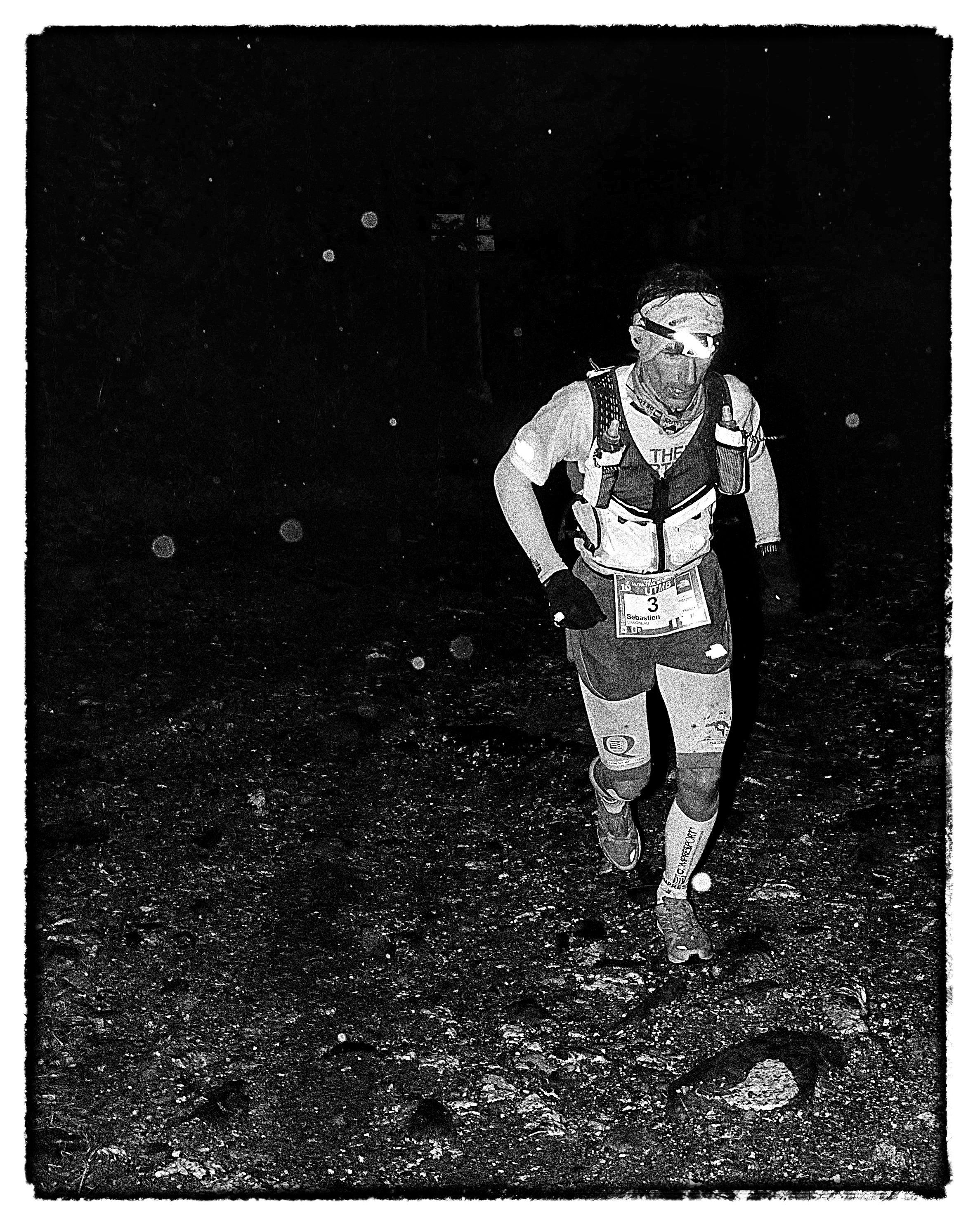
Certainly Julien is the pre race favourite, he has knowledge of the course, understands the demands required and of course he is the title holder. However, TNF athlete, Sebastien Chaigneau will almost certainly have a different outlook on how the race unfolds… he had a mixed 2012 and ultimately it was a year to forget by his standards. He came into 2013 motivated and his stunning performance at Transgrancanaria will mean Julien will need to be looking over his shoulder or maybe even ahead of him for this race.

Gary Robbins, no 102 (Salomon) from Canada is also going to be flying and ready for this race. Gary has an incredible story (listen to his interview on Talk Ultra HERE) and after being sidelined for almost two years, he returned in the latter half of 2012 and not only dominated but set a new CR at Hurt 100. He has a new outlook on his racing… he is going to race less, but when he races, he will make it count. Definitely my hot tip for the win.

Brendan courtesy of Inov-8

Brendan courtesy of Inov-8

Inov-8 athlete Brendan Davies, 1061 fresh from Tarawera ultra will be confronting the 3,776 m Mount Fuji and he will revel in the task ahead of him. Brendan has plenty of speed but will he have the climbing legs to be up at the front. He has said on his blog that he his in the form of his life. (listen to Brendan Davies interview HERE).

Christophe Le Saux - MDS 2013 copyright Ian Corless

Christophe Le Saux – MDS 2013 copyright Ian Corless

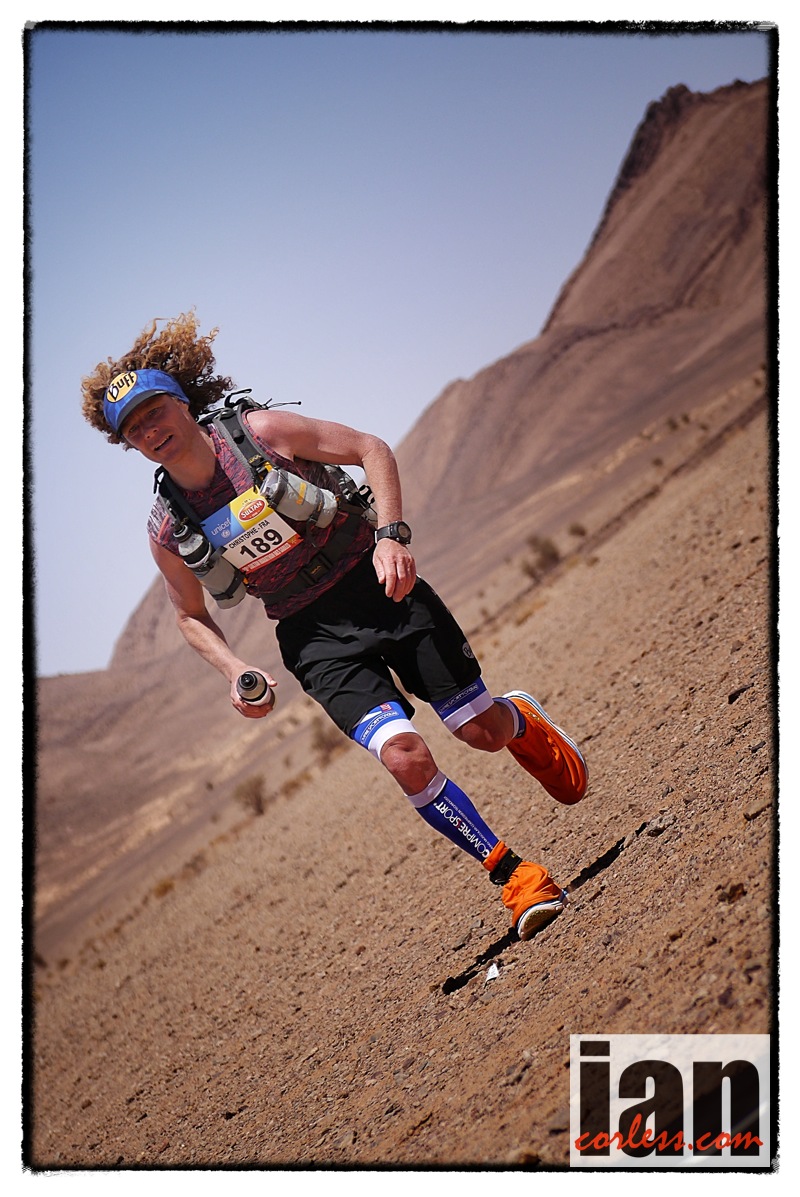
Christophe Le Saux, 1099 (Hoka One One) only last week finished in the top ten of the Marathon des Sables. He will be lining up to test himself. Logic says that fourteen days between ‘MDS’ and UTMF is not enough, but, Christophe loves the hard, technical and gnarly courses as he has proved at Tor des Geants in the past.

In addition to the above, Grant Guise, 108 from Australia, Jeremy Ritcey, 111 a Canadian who lives in Hong Kong and of course many of the local Japenese runners will figure.

LADIES

Nerea Martinez Urruzola is not returning to defend her title, so, this does mean the ladies race is wide open… arguably though, the competition has greater depth for the second edition of the race.

Krissy Moehl, 1106 (Patagonia) from the USA needs no introdction to the ultra world. Her reputation is well established and as such, her twelve years in the sport and her TNFUTMB win will all come into play in helping her make the top of the podium here. She was fourth at the renowned Hardrock 100 in 2012 and of course this will set her up perfectly for the 9000m of vertical at UTMF.

Hong Kong based Brit, Claire Price, 173 (Salomon)will have a great perspective of what is required on this demanding course. She recently won Hong Kong 100 and although this is the first time racing in Japan, the distance may be her stumbling block. She will need to respect the distance and the terrain. She finished Western States in 2012 but didn’t have a great race.

Shona - image courtesy of Inov-8

Shona – image courtesy of Inov-8

Finally, Inov-8 athlete Shona Stephenson, 1062 will be racing in her first international 100 miler ahead of what is a daunting year of races. She has already raced at Tarawera and Northburn 100 and will be racing at TNFUTMB and also participating in the Skyrunning ultra series in 2013. Shona has trained in the Blue Mountains and although she has great speed, will this lack of high mountains allow her to perform to her best in and around Mount Fuji?

Of course, local competition will have an advantage on this course. So expect some surprises!

STATISTICS

DATE Friday, April 26, 2013. Starting at 3:00 pm.
DISTANCE 161km
CUMULATIVE ALTITUDE GAIN 9,000m
TIME LIMIT 46hours
# OF RACERS 800
START / FINISH Yagisaki Kouen, Kawaguchiko, Fujikawaguchiko-cho, YamanashiPrefecture

Race website: HERE

MARATHON DES SABLES 2013 Preview

copyright Marathon des Sables

copyright Marathon des Sables

MARATHON DES SABLES 2013

The 2013 edition of the Marathon des Sables is a self-sufficient race in the South of the Moroccan desert, the event will take place from 5th to 15th April 2013. For the 18th consecutive year, it will be run under the patronage of his Majesty King Mohammed VI.

Since its creation in 1986, the Marathon des Sables has attracted over 13,000 competitors over 27 editions. From humble beginnings, the race is now the most prestigious multi-stage race in the world.

The 2013 Marathon des Sables will see 1,091 entrants toe the line. With 45 different nationalities and a strong presence from France and the UK, the 28th edition will be a memorable one.

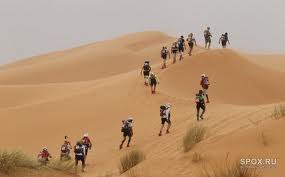
Taking place in South Morocco, in the provinces of Errachidia and Tinghrir the race will cover 223.8km over 5 stages. It will encompass some of the most beautiful terrain in the Moroccan desert. Eagerly awaited by one and all, the dunes, ergs and dried-up wadis will delight the thousand or so entrants from the fifty plus countries across the globe.

MDS LOGO

Race Programme:

5 April 2013: Leave country of residence for Morocco (UK entrants leave on the 4th) – Arrival in Ouarzazate, bus transfer to the 1st bivouac.

6 April 2013: Administrative, technical and medical checks – Day to acclimatise.

From 7-12 April 2013: Race in progress. (The self-sufficiency begins from breakfast on the 1st leg).

12 April 2013: Prizing ceremony in desert.

13 April 2013: Charity leg for UNICEF– Transfer to Ouarzazate.

14 April 2013: Day of relaxation, festivities.

15 April 2013: Return to country of residence.

Race Logistics

Patrick Bauer affectionately describes the Marathon des Sables as a big circus. It’s like moving a city everyday… just look at what is involved.

Race management : This team comprises more than 100 people including a race HQ, race marshals, controllers, timekeepers and ranking compilers. Since 2010, the official ranking has been achieved using a “transponder” for all the competitors.

Supervision : 400 people: technical, logistical and medical skills, 100 vehicles, 2 helicopters, 1 CESSNA plane, 4 dromedaries… and the active support of the Royal Armed Forces: 21 lorries (6×6) and 40 men to supervise logistics.

Medical Assistance : A team of 50 people under Dr Frédéric COMPAGNON, DOC TROTTER supervises the runners as much on a medical level (care of feet, resuscitation…) as a mental level, both of which fail sometimes in front of the toughness of the event and the hostility of the climate.

In the 27th SULTAN MARATHON DES SABLES, 3 tonnes of gear was transported and the medical team used : 5km of Elastoplast, 2,700 second-skin patches, 125 litres of disinfectant, 230 litres of drip solutions, 15,000 compresses, 2,800 pairs of surgical gloves,…

The Team

  • 115 volunteers on the course itself
  • 400 support staff overall
  • 120 000 litres of mineral water
  • 270 berber and saharan tents
  • 100 all-terrain vehicles
  • 
2 “Squirrel” helicopter and 1 “Cessna” plane
  • 6 “MDS special” commercial planes
  • 23 buses
  • 4 dromedaries
  • 
1 incinerator lorry for burning waste
  • 4 quad bikes to ensure environment and safety on race
  • 
52 medical staff
  • 6.5 kms of Elastoplast, 2 700 Compeed, 19 000 compresses 6 000 painkillers, 150 litres of disinfectant
  • 4 editing stations, 5 cameras, 1 satellite image station
10 satellite telephones, 30 computers, fax and internet

Marathon des Sables

Marathon des Sables – how did it start?

Patrick Bauer interview available HERE

1984 : At the age of 28, Patrick Bauer decided to make a journey into the Sahara. His objective was to traverse 350km’s of uninhabited desert, on foot, alone and without any possibility of encountering a single village, oasis or watering place. Totally self sufficient, Patrick entered the desert with a pack weight of 35kg containing all his water and food. The journey lasted 12 days and it was the starting point of what has now become the MARATHON DES SABLES.

Patrick Bauer, Marathon des Sables copyright www.lest-eclair.fr

Patrick Bauer, Marathon des Sables copyright http://www.lest-eclair.fr

1986 : The creation of the first MARATHON DES SABLES in the Moroccan Sahara. The 23 pioneers who took the start never imagined that their footprints would mark the start of a legendary event, which today has become unmissable on the schedule for major adventure sport meets.

1989 : 170 competitors take the start of the race and the rest is history.

I caught up with Patrick Bauer at the MDS UK expo in late 2012. You can listen to that interview (lasts 13 minutes):

talkultra.com

LISTEN HERE

The 2013 Race – who will be taking part?

1,090 competitors aged 20 to 76 are expected to take the start (definitive number on 6 April following administrative and medical checks) representing 45 different nationalities: Algeria, Argentina, Australia, Austria, Belgium, Bulgaria, Canada, China, Costa Rica, Czech Republic, Denmark, England, Finland, France, Germany, Holland, India, Ireland, Italy, Japan, Jordan, Kuwait, Latvia, Luxembourg, Morocco, New Zealand, Norway, Poland, Portugal, Republic of El Salvador, Romania, Russia, Saudi Arabia, Scotland, Singapore, Slovakia, Slovenia, South Africa, South Korea, Spain, Sweden, Switzerland, Turkey and the United States.

The participants are men and women with various and varied profiles (Doctors, farmers, coppersmiths, pilots, builders, chefs, servicemen and women, students, professional athletes and retired persons…).

The 2013 MDS Challengers for the overall win

DRAYMDS2012-04-08-7945-1

The Female contenders for the overall win :

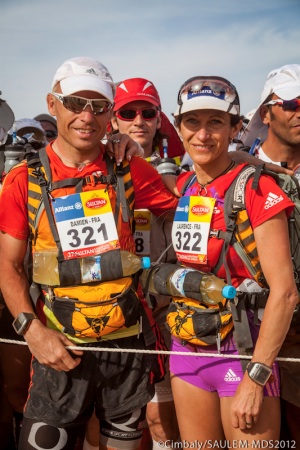
Laurence Klein 2012 MDS

Laurence Klein 2012 MDS

  • Laurence KLEIN (FRA) – 1st woman in 2007, 2011 and 2012, European 100km Champion.
  • Meryem KHALI (MAR) – 2nd woman in 2012. N°1082:
  • Megan HICKS (USA) – 2nd woman in 2009.
  • Simone KAYSER (LUX )– 3 victories in the MDS.


The Male contenders for the overall win : 

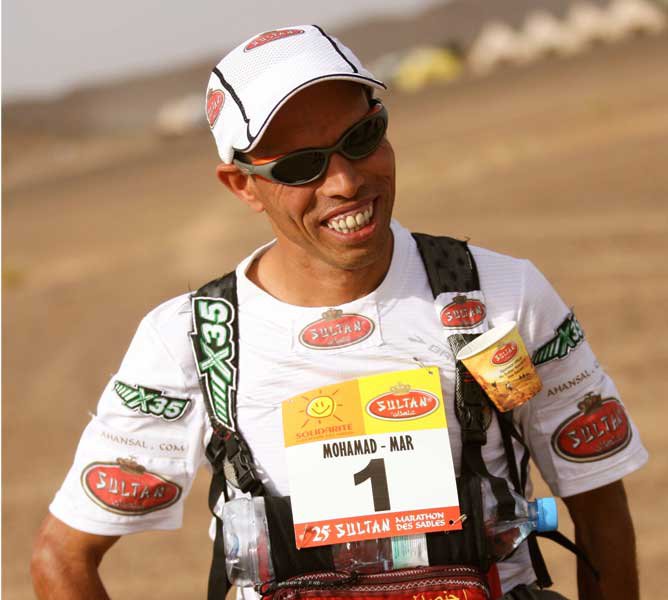
Mohamad Ahansal

Mohamad Ahansal

  • Salameh AL AQRA (JOR) – 1st in 2012, 2nd in 2008, 2010, 3rd in 2009, 2011.
  • Mohamad AHANSAL (MAR) – 4 victories and 2nd place 9 times.
  • Samir AKHDAR (MAR) – 6th in 2011, 7th in 2009.
  • Rachid EL MORABITY (MAR) – 1st in 2011.
  • Aziz EL AKAD (MAR) – 2nd in 2009 and 3rd in 2008 and 2012.
  • Christophe LE SAUX (FR) – 6th in 2012, 1st Guyan’trail 2011 and 2012.
  • Anton VENCELJ (SLO) – 4th in 2010, 8th in 2012.
  • Abdelaaziz TAYSS (FR) – French Cross-Country champion 2008 and 2011
  • Vincent DELEBARRE (FR) – 9th in 2005, 1st UTMB, Réunion, Templiers, etc
  • Martin FIZ (SP) – World Marathon Champion in 1995.
  • Carlos GOMEZ DE SA (POR) – 4th 2012 and 8th in 2008, 4th UTMB 2012.
  • Marco OLMO (ITA) – Top 10 in the MDS, 2 UTMB victories.
  • Antonio Filippo SALARIS (ITA) – 7th in 2012.

In 2013 I followed two runners in the build up to the 2013 Marathon des Sables. Tobias Mews placed 21st overall in the 2010 race and Stuart Rae is toeing the line for the first time in 2013. Each interview alternated on episodes of Talk Ultra but they have been joined together in one episode (lasts just under 1 hour)

talkultra.com

LISTEN HERE

2012 results (for reference)

1st : Salameh Al Aqra (JOR) in 19h59’21’’
 2nd : Mohamad Ahansal (MAR) 21’02’’ behind 3rd : Aziz El Akad (MAR) 1h38’56’’ behind

1st : Laurence Klein (FRA) in 26h15’40’’ 2nd : Meryem Khali (MAR) 1h19’38’’ behind 3rd : Karine Baillet (FRA) 1h31’07’’ behind

iancorless.comscreenshot_217

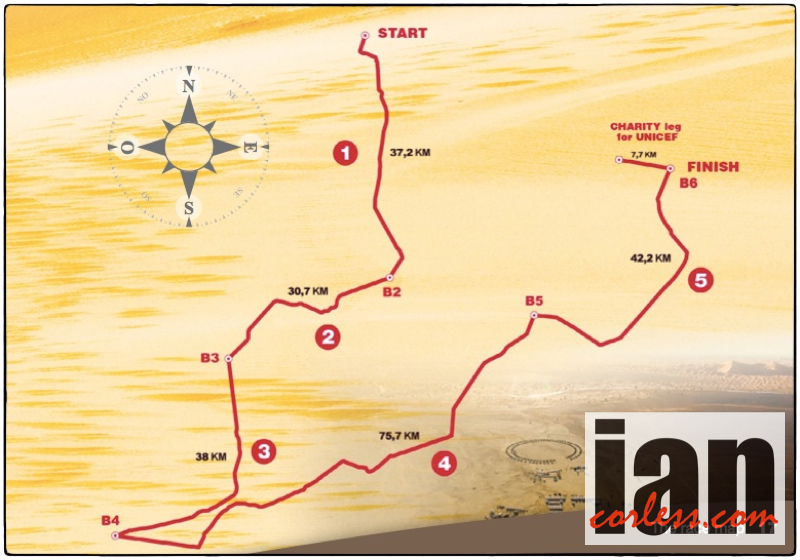
The 2013 race route

  • 1st leg – 37.2k Undulating terrain, interspersed with small ergs representing 5km of small dunes (dunettes).
  • 2nd leg – 30.7km 3 djebels with 10 to 25% gradients – exceptional panoramic views.
  • 3rd leg – 38km 2 djebel sections, 2 dried-up lakes and lots of sand.
  • 4th leg – 75.7km a total of 13km of dunes and around 30km of sandy terrain.
  • 5th leg – 42.2km the final leg is a marathon with ergs, regs, a dried-up lake and wadi beds…
  • Total Distance – 223.8km

Mandatory Kit

One of the key aspects of the Marathon des Sables is what kit to take? Here is a list of ‘mandatory’ kit. Of course, you need to add to this food requirements, cooking equipment and any additional luxuries.

  1. Distress flare: For use in the event of an extreme emergency. A range in excess of several dozen metres once activated.
  2. Knife: Equipped with a metal blade, it’s obviously useful in the bivouac and it can be of service when useful in the bivouac and it can be of service when running too.
  3. Compass: Surpassing both intuition and signposting, the compass is the marathon runner’s signposting.
  4. Whistle: Slowed by problems with your health or astray of the initial route, it enables other competitors or the organisation to be alerted to your whereabouts.
  5. Lighter: An important ally after a day’s running, whenit’s time to make a fire to heat up your meal.
  6.  Anti-venom pump: Even though it’s rare to have an unpleasant encounter with a snake, the anti-venom pump is compulsory and can enable action to be pump is compulsory and can enable action to be taken quickly.
  7. Antiseptic: As the days go by, all kinds of injuries can crop up, even during the race sometimes. So whilst awaiting assistance from a Doc Trotter, antiseptic can be important prior to linking up with the medical team.
  8. Sleeping bag: To be carried for seven days, ideally it shouldn’t exceed 400g and should be suitable for temperatures of between 5°C and 10°C. Indeed, the nights are cold in the desert.
  9. Survival blanket: In the event of serious problems, the survival blanket enables you to protect yourself from both the cold and sun. It weighs in at no more than 60g.
  10. Signalling mirror: If lost, someone competing in the Marathon des Sables will want to signal his or her presence. Playing with the sun and a mirror may be an alternative prior to using a distress flare.
  11. Salt tablets: Not exactly pleasant tasting, they are nonetheless essential for avoiding dehydration.
  12. Glow sticks: The perfect marker during the long leg.
  13. Headtorch: once night falls or when wandering around the bivouac, the headtorch is essential.

I will be reporting from the 2013 event as the race unfolds and providing I am able to gain adequate access to internet, I will update my website, Facebook and Twitter with reports and images as often as possible. So please keep checking!

The North Face Single Track Hayasa

TNF Single Track Hayasa

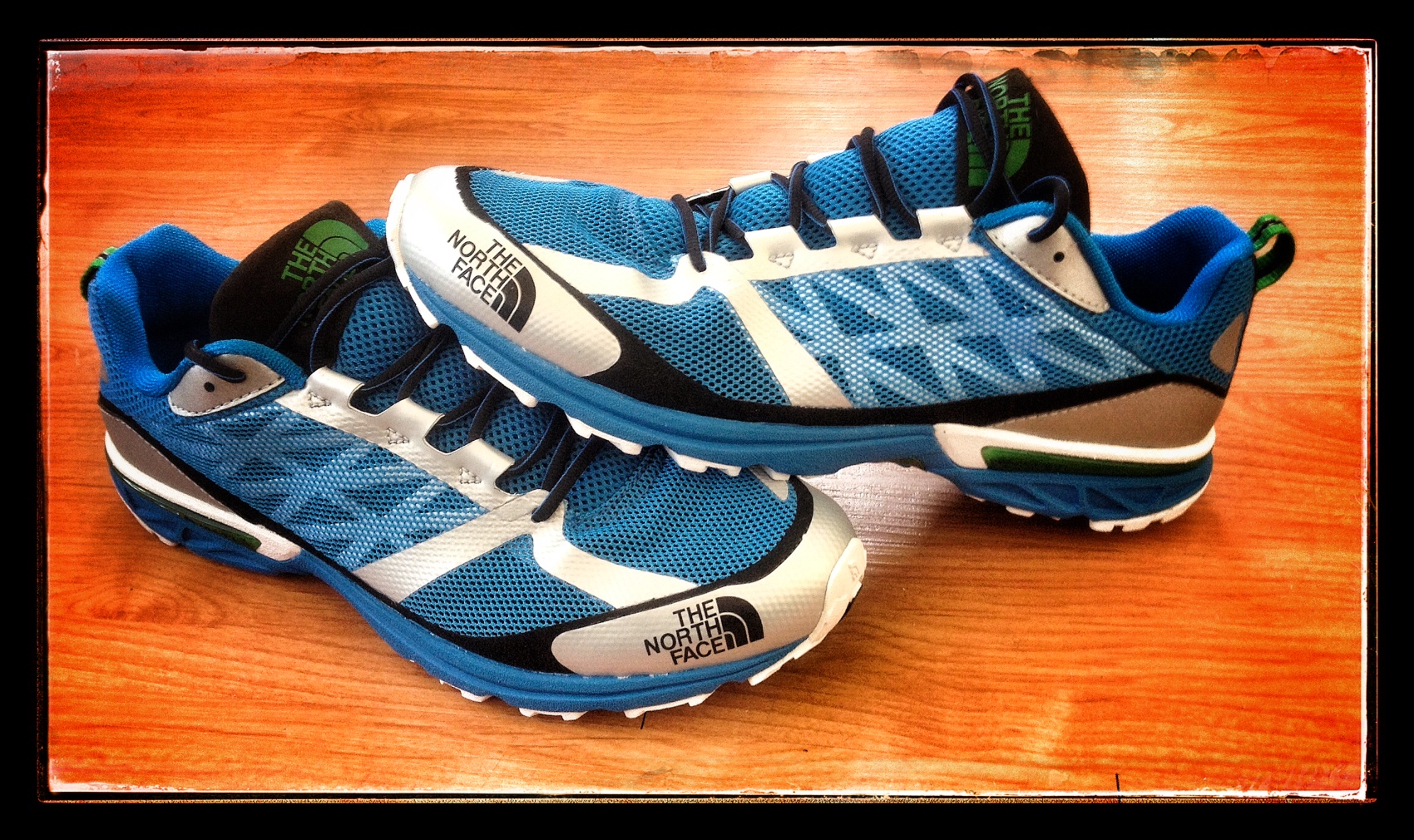
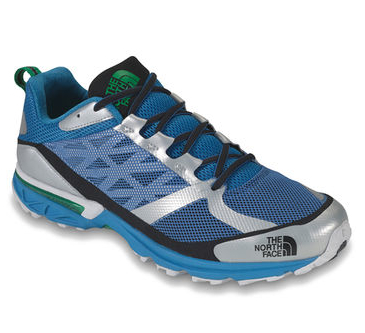
Fresh out of the box, The North FaceSingle Track Hayasa‘. I am a real fan of TNF products, the ‘Flight Series‘ in particular offers a great range of products that transfer to so many disciplines. Light, functional, well fitting, breathable and ultimately great quality. It’s nice to remove them from the packaging, put them on knowing that they will do the job.

In regard to run shoes, The North Face I guess are still ‘newbies’ and in the past they have received mixed reviews about the footwear they have created. I have to say I had the original ‘Single Track’, you know, the really great looking shoe… black, red & white. Not only did it look good but it felt good.

The ‘Single Track Hayasa‘ is a shoe designed for speed. Greatly influenced by TNF athlete  Tsuyoshi Kaburaki from Japan, Hayasa actually means ‘Speed’ in Japenese.

Tsuyoshi Kaburaki

Tsuyoshi Kaburaki

It is a shoe ready for racing and as such sits low to the ground with a 10mm heel to toe drop (8mm toe /18mm heel). Weighing in at just over 8 oz for such a lightweight shoe protection has not been compromised.

At the front of the shoe we have a puncture resistant toe cap and on the tip of the shoe, you do have additional rigidity. This will add some protection from kicking rocks etc. But in real terms and in comparison to other brands the toe bumper is relatively small. When we move to the rest of the upper, we can see that there is basically a lot of mesh. The shoe will drain really well and breathability will be excellent as you might expect.

TNF Single Track

Seams are extremely low in the upper and the TNF have used welded seams. The lace loops attach to an internal cage (see the silver/white). This fabric is on both sides of the shoe. When you lace up, it pulls on the fabric in and it wraps around your foot to create support.
The shoe when on with laces adjusted feels very snug and the tongue is gusseted and attached to the upper. It is very padded and in conjunction with a plush heel box the shoe is a pleasure to wear.

The toe box is wide and has plenty of room. Maybe too much room for some so it would be wise to check on sizing to ensure that you get the correct feel. I personally went a half size larger but I do wonder if I may well have been better going ‘true to size’.

TNF Hayasa

Starting just behind the toes and going to the back of the shoe is the ‘Snake Plate‘ (green). The snake plate is an alternative method to the standard ‘rock plate’ that you find in many trail shoes. Instead of one large plate, as the name suggests this one snakes in and out. The idea being increased flexibility. Ultimately, protection and flexibility combined that also means a saving in overall weight. The rear of the shoe has a ‘cradle‘. The cradle is created, like a bucket I guess for your foot to sit in. It provides stability and security. I have to say this is one key feature I initially like. Just walking around you immediately notice a firm hold.
Without doubt a neutral shoe with a 10mm drop. You have 8mm of foam at the front and 18mm at the rear of the shoe. In this ‘low drop’ and ‘minimalist’ environment 10mm may very well be snubbed by many but this shoe sits low to the ground and as such provides a very natural feel with protection and cushioning.

My initial concerns with this shoe are with the outsole. It has low profile lug which is ideal for road, hard pack trail and/ or rocky trail but in any mud they will be pretty much useless.  The front of the shoe has directional grip so when going uphill you have traction as and when required. In the heel the lugs are reverse facing which will add grip when going downhill (if required). The middle of the sole is void of grip.

Testing?

Well, that is to come.

I have been provided with these shoes to test in a Jungle environment so please keep an eye on my blog for an update in February. Until then I will be running on some road, hard trail and even some mud to see how the Hayasa perform before heading deep into a rainforest…

SPECS

Upper:

  • Lightweight, minimal upper construction
  • TPUwelded support overlays
  • Lightly protective toe cap
  • Perforated EVA Northotic™ footbed

Bottom:

  • TPU and EVA CRADLE™ heel-cushioning and stability technology
  • 18 mm/8 mm heel/forefoot heights
  • Dual-density, compression-molded EVA midsol
  • Blown rubber forefoot
  • High-abrasion rubber heel
  • TPU Snake Plate™ forefoot protection

Shoe Technologies:

NorthFit: The mission of NorthFit™ is to scientifically provide the outdoor athlete with the most precise fit between the human foot and a footwear last, as they both relate to the demands of the specific activity for which the shoe is worn

Snake Plate: The Snake Plate™ consists of a plate that winds back and forth in the forefoot, allowing the foot to flex in a natural manner while delivering protection and rigidity.

Northotic: Biomechanically engineered Northotic™: The North Face® has taken the conventional footbed and elevated it to a superior level with enhanced stability, support and cushioning.

Cradle: The North Face® CRADLE™ technology is engineered to naturally absorb impact, stabilise the foot and promote an anatomically correct stride by supporting the perimeter of the heel and ensuring the fatty tissues under the bursa are biomechanically positioned. CRADLE™ achieves the perfect balance of protection, control and comfort to inspire confidence for any foot on any terrain.

Tenacious Grip: Tenacious™ Grip is a high-abrasion, sticky rubber designed for maximum off-trail traction that will also withstand the rigors of rough off-trail surfaces.

X-Dome: X-Dome™ functions as a heel-cushioning and propulsion mechanism that propels the foot from heel-strike into the subsequent stride stages.