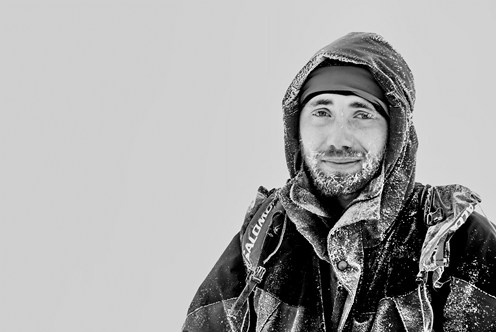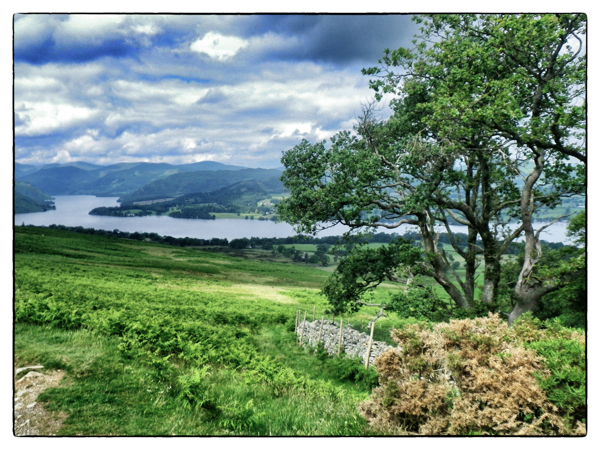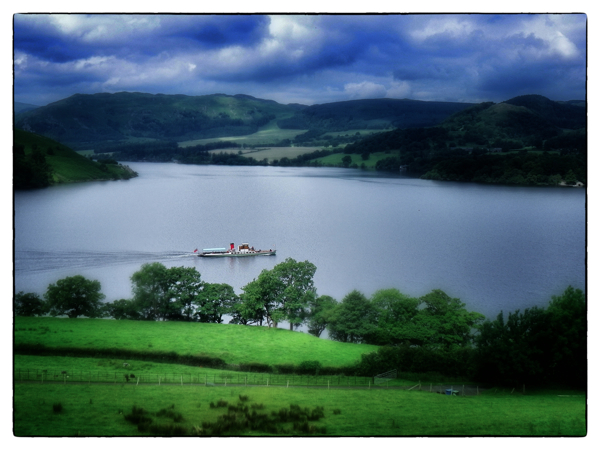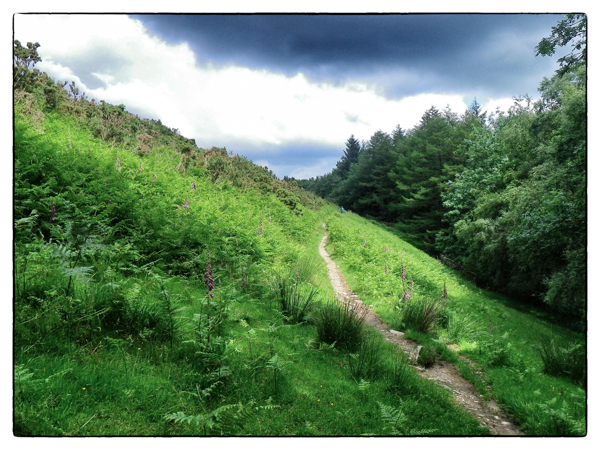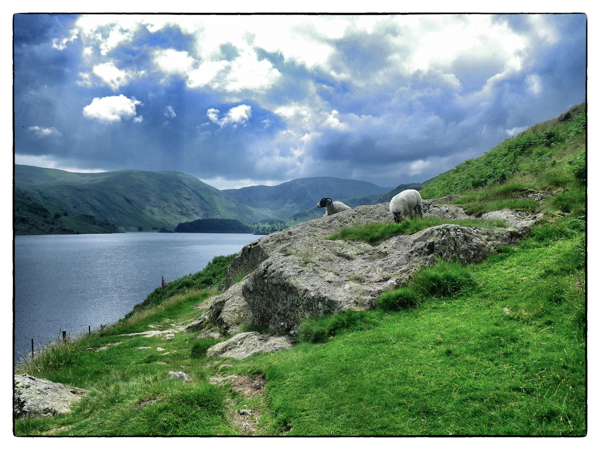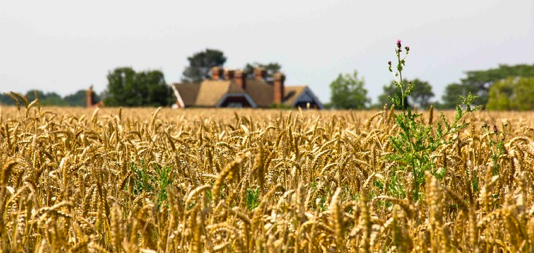
Pavel Paloncy wins the 268-mile Montane Spine Race

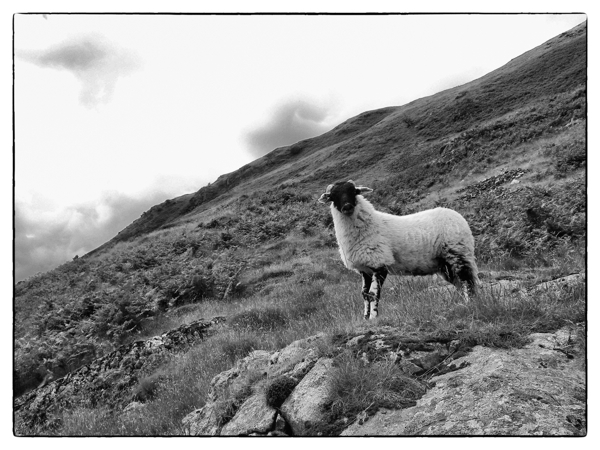
Image ©pavelpaloncy

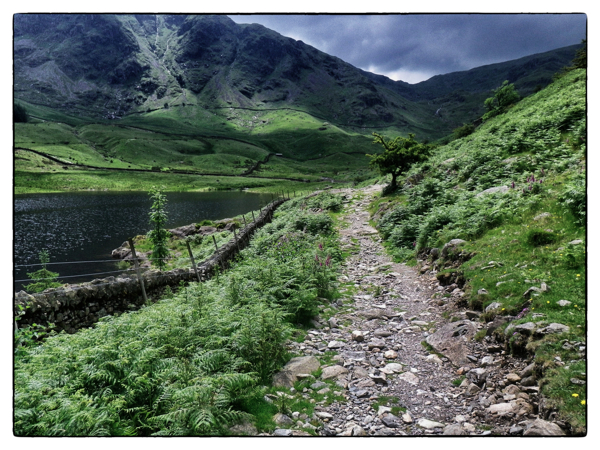
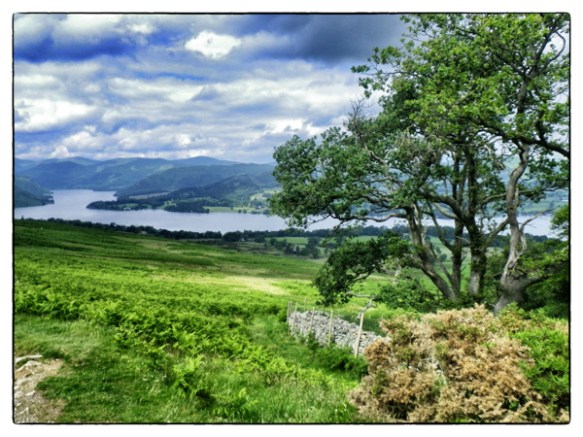
Image ©pavelpaloncy

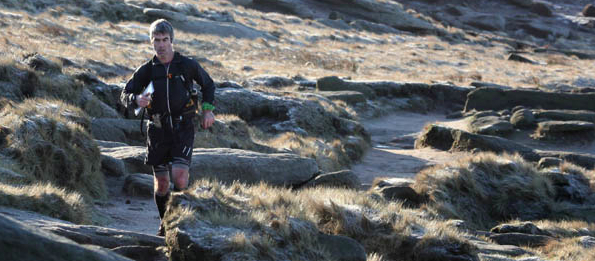
Pavel Paloncy from the Czech Republic has just finished the Montane Spine Race; billed as the toughest race in Britain.

Pavel has covered the 268-mile journey fighting fatigue, sleep deprivation and some horrendous weather to not only secure victory in the 3rd edition of The Spine but also in the process set a new course record.

Montane_Spine_Logo

His finish at Kirk Yetholm has yet to have a confirmed official time, however, we have an estimation of 4 days and 14 hours 45 min (110h 45m tbc). The previous record set by Eugeni Rosello Sole of 5 days 4 hours and 52 minutes has been blown out of the water. However, we should note that conditions in a race of this length can vary so much that results and times should be assessed year-to-year. Pavel’s performance is quite remarkable!

Needless to say, Pavel is going to be looking forward to getting warm, relaxing and putting his feet up… I would guess for at least another 5-days!

Pavel has produced an incredible and outstanding performance, however, currently the race still has 35-runners out on the course. Matt Davis is in 2nd-place and has passed Bryness. Third place, Steve Holyoak has also passed Bryness and looks to be less than 2-hours behind Matt. It could all change for 2nd and 3rd. At this stage of the race, anything can happen.

*update 16th Jan 8000 : Matt Davis 119h 26m and Steve Holyoak finished 119h 28m, 2nd and 3rd respectively.

Leading lady and 8th overall is Debbie Brupbacher, however, she still has a long way to go. Her last check-in was at Alston.

Montane Spine

Since the race start on Saturday, 40-runners have withdrawn from the race including last years defending champion. Although the race has had considerably less snow and ice than 2012 and 2013, conditions have been extremely harsh with low temperatures, rain, wind and snow on the high ground.

The Spine is more than a race… far more. Each and every participant should feel extremely proud for even contemplating the challenge.

As for Pavel, he isn’t human!

Who is Pavel Paloncy?

Pavel is an outdoor and sport photography specialist. He is also an adventure racer and ultra endurance sportsman. He is used to low comfort and working under extreme conditions. He is able to photograph and work in remote areas, hard to get to locations and under extreme conditions. Sounds as though he had the perfect preparation for The Montane Spine Race.

Image credit – http://www.warmpeace.cz ©pavelpaloncy

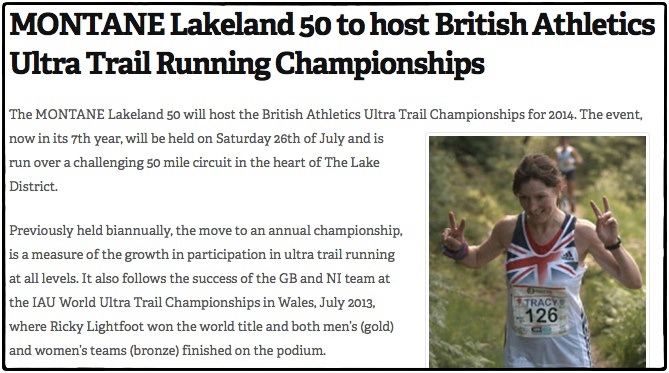
Montane Lakeland 50 – British Athletics Ultra Trail Championships

screenshot_480


The Montane Lakeland 50 route has been chosen as the course for the British Athletics Ultra Trail Championships.

This is obviously great news not only for the Montane Lakeland 50 but also the runners who will participate.

Without doubt, the 50 and 100 routes are arguably two of the most desirable routes within the UK for trail running. It will be great to see how the race unfolds… will Ben Abdelnoor’s and Tracy Dean’s records fall?

An interesting point will come in regard to the course route. The UTLD100/50 have always been noted as ‘navigation’ events with no route marking. Of course, pretty much everyone who races (or plans to race) recces the route in advance of racing to ensure they are able to run fast (or as fast as possible) come race day… the inclusion of the event in the BAUTC does beg the question; will the course be marked to provide all runners a level playing field?

You can read the full post HERE

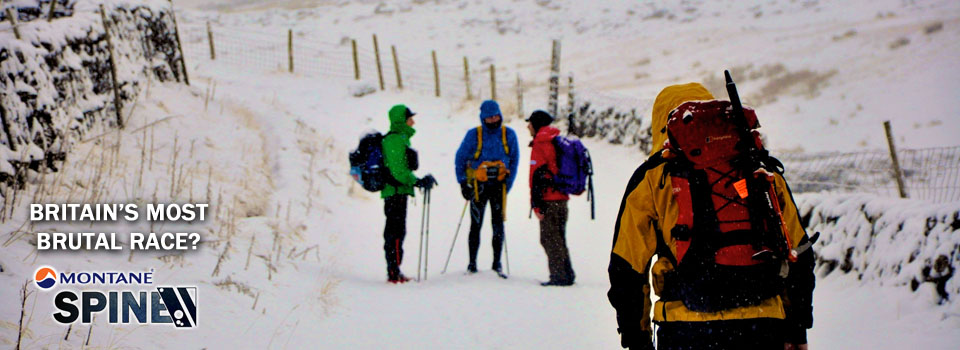
The Spine sponsored by Montane – Britain’s most brutal race

Montane_Spine_Logo

January 11th – 18th 2014

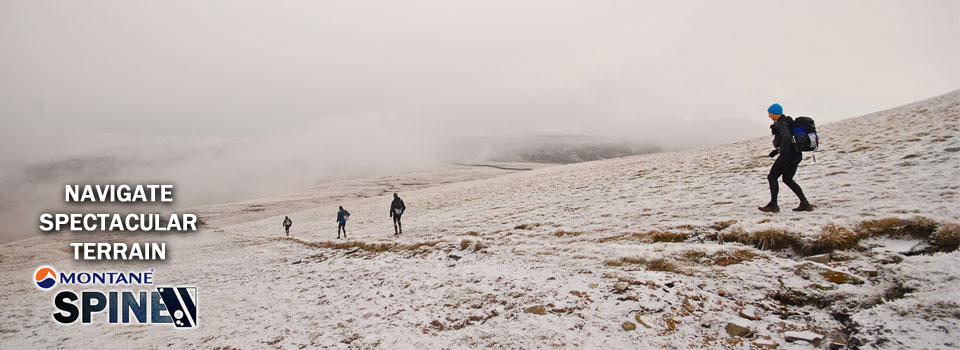
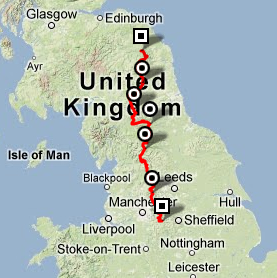
The Spine Race is a 268 mile, non-stop, winter mountain marathon encompassing the entire Pennine Way. Widely recognised as the most demanding National Trail in Britain, the Pennine Way crosses some of the most beautiful, difficult and challenging terrain found in England, including; the Peak District, Cheviots, Yorkshire Dales and Northumberland National Park – finishing on the Scottish Borders.

Competitors have 7 days to complete the race, cut-off 168-hours.

Spine

Ironically, the UK has had a very mild, if not wet and windy, October, November and December. But with this weekend, just as The Spine is set to leave Edale the weather looks to be on the change; temperatures are looking to drop with lows of -6 deg and highs of 7 deg. It most certainly looks like a different race to last years extreme cold, ice and snow. Will the conditions make the race faster?

At 268 miles this is not a multi stage race in a Marathon des Sables style format, this race has a start and a finish. Quite simply, the first one to reach the end wins the race. So this is all about managing your effort and minimising your time resting or sleeping.

The Spine Race was first attempted in January 2012; they witnessed many courageous attempts to finish the 268 mile course. Three athletes would eventually finish. The race was won jointly by Gary Morrison and Steve Thompson, closely followed by Mark Caldwell.

In dramatic circumstances the 2013 Dare 2b Spine Race was won by Eugeni Roselló Sole in an incredible 5d 4h 52m setting a new bench mark for the race and the distance in extreme Arctic conditions. Annabel Gates completed the race as 1st Female in 7d 4h 59m.

2013 finishers:

  • Ian Bowles
  • Jin Cao
  • Mark Cooper
  • Gregory Crowley
  • Paul Dickens
  • Thomas Emke
  • Annabel Gates
  • Richard Lendon
  • Gary Morrison
  • Brian Mullen
  • Eugeni Roselló Sole

Who is running?

The Spine Race is open to anyone with appropriate experience who wishes to test themselves and compete in a truly brutal race.

As Scott Gilmour (RD for the race) says, “Runners will face the most extreme weather conditions England has to offer in a gruelling non-stop, 7 day race from Edale to Kirk Yetholm. It’s not just the conditions that are against you – your own body could become your worst enemy with tiredness, fatigue, sleep deprivation and exposure playing havoc with your performance. To finish runners must be prepared and willing to push themselves harder than ever before.”

Ones to watch in 2014 (alphabetical order):

  • Mimi Anderson – multiple world record holder and really experienced at long distances. Mimi will test the men in the field and push them all the way. “I’m under NO illusions about the difficulty of this event.  I’m looking at it as an adventure rather than a race as it’s about managing yourself properly, getting enough sleep but keeping yourself moving.”
  • Anthony Bethell – relatively new to ultra running but Anthony finished Tor des Geants and is an accomplished fell and mountain runner with a recent top placing at the Tour of Helvellyn.
  • Neil Bryant – Neil is somewhat of an endurance machine. He loves long distances and has won the Viking Way ultra and completed Trans Euorope. Now living in Chamonix he has become used to the cold, snow, ice and mountains. He will do well at the Spine.
  • Annie Garcia – regular long distance competitor with plenty of grit and determination.
  • Mark Hines – Possibly one of the most experienced athletes in the field and plenty of cold weather experience. He knows how to put his head down and keep moving forward. His experiences in the Yukon will put him at a great advantage at the Spine if the weather turns particularly bad.
  • Richard Lendon – Third time at the Spine for Richard. He finished in 2013 and knows what is required to get the job done.
  • Moses Lovstad – Moses finished Hurt100, Transgrancanaria and Tor des Geants in 2013. That puts him in a great place for the Spine.
  • Andy Mouncey – Raced at the Spine in 2013 but DNF’d, pretty sure he is going to be at this years race with more focus. He said on his blog, “This one’s been twelve months in the making, I think I’ve got the leverage this time, but the only way to know is to do.”
  • Eugeni Roselló Sole – last years winner. Enough said!
  • Charlie Sharpe – Another regular competitor at all distances. Moved up a level with his Lakeland 100 performance in 2013 but this race will be a new challenge and test.
  • Charles Sproson – Montane athlete, Charlie is very accomplished and has some notable achievements that will put him in a great place for the Spine. He’s completed the OMM multiple times, done the Bob Graham solo and more importantly completed the Dragons Back in 2012.
  • Others?

Full entrants THE SPINE HERE

Full entrants THE CHALLENGER HERE

The route

Nav

The Montane Spine Race is a 268 mile, non-stop, winter mountain marathon encompassing the entire Pennine Way. Widely recognised as the most demanding National Trail in Britain, the Pennine Way crosses some of the most beautiful, difficult and challenging terrain found in England, including; the Peak District, Cheviots, Yorkshire Dales and Northumberland National Park – finishing on the Scottish Borders.

There are 5 checkpoints that you must visit along the route to complete the race. The CP’s are distributed evenly along the course and it is here you will receive hot food and water, resupply, beds and showers (available at 4 of 5 CP’s) and medical attention should you require it. These checkpoints run from the start to the completion of the event. The CP’s are staffed 24/7 to provide as little disruption to your race as possible. They provide a haven from the sometimes hostile weather.

Checkpoints are located at:

  • Hebden Bridge
  • Hawes
  • Middleton-in-Teesdale
  • Alston
  • and Bellingham

A resupply/ drop bag is moved by the RD for you to the next CP as you progress through the race.

Spine Map

The longest day on the race is the second day. This is the longest section of the course between CP’s (approx. 60 miles). In 2012 the average completion time for this section was between 22 and 30 hours. Most competing athletes withdrew at this point of the race.

The Spine Team also monitor the course 24/7 to ensure competitor safety and our support vehicles carry additional hydration for competing athletes (minimum 2 litres per athlete per day). Along with the course monitoring you are permitted the use of a personal support team.

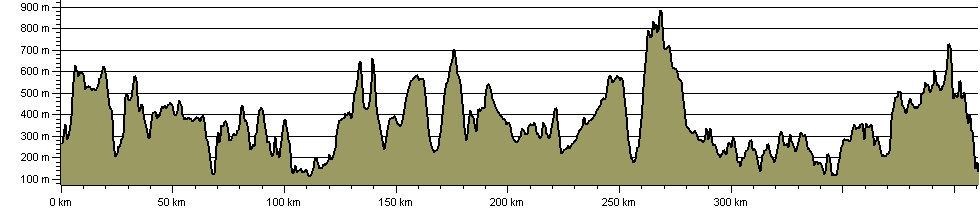
Route Profile

410.5 – 431 Km (255.1 miles – 268 miles dependent on route)
11,195 m (36,729 ft) ascent
890 m (2,920 ft)  maximum height

Spine Profile

Entrants & Updates

You are able to see a list of entrants and follow the leader board HERE

Live Tracking HERE

Additional Race – Spine Challenger

The Montane Spine Challenger is a 108 mile, non-stop, 60 hour, winter mountain marathon between Edale and Hawes. This challenging and extremely technical section of the Pennine Way is not just the baby brother to the Spine Race – it is a physically and psychologically demanding route that demands concentration and respect.

The Spine Challenger is a wickedly difficult event. From appearances 60 hours looks like ample time to easily complete this course; however, appearances can be deceptive. The rugged and very technical nature of this race is mentally taxing as you have to constantly be aware of foot placement. Coupled with the limited daylight hours, and the necessity to run in the dark, you can start to build a very clear picture as to why we had only 1 official Challenger finisher in 2012.

  • RACE WEBSITE available HERE
  • Follow on Twitter @thespinerace

About Montane

MONTANE-2

For over 18 years now Montane® has worked closely with serious mountain professionals working in hostile conditions across the globe as a proving ground for garment design. From the British Antarctic Survey to Langdale Ambleside Mountain Rescue, the busiest Mountain Rescue team in the UK. Professionals who demand tough credentials from their clothing equipment choose Montane®.

Everest Trail Race – A journey begins

screenshot_404

I had a dream, like any boy, I had a dream of what might be. Majestic mountains and blue skies; coloured flags draped on string and spread across the trail. Nepal and the Himalayas, it’s sometimes quite difficult to convey an emotion… Nepal stirs an emotion.

screenshot_406

You see, I have had a vision; a vision of what this region will hold for me. Visual delights that can fulfill the photographic passion of even a novice cameraman, to be in this region of the world, yes, near the ‘rooftop’ of the world is something that I never thought would happen.

I have experienced many wonderful things, particularly in the last two years. I have been extremely fortunate, extremely blessed and extremely thankful of the opportunities.

I have witnessed the rainforests of Costa Rica at The Coastal Challenge, the dunes of the Sahara at Marathon des Sables and the vermillion cliffs of the Grand Canyon at the Grand To Grand, but today, I depart on a journey, a journey 46-years in the making to the rooftop of the world. I am finally going to experience the majesty and the awe-inspiring wonder of the Himalayas at the Everest Trail Race.

To synthesize my emotions and thoughts are almost impossible. My expectations are high and I am sure that as soon as I experience my first sights and sounds of Kathmandu, all will fall into place. My camera will convey the images, emotions and beauty of what I see.

The Everest Trail Race is a multi-day journey that will test each and every participant in a way that they have not been tested before. A total elevation gain of over 25,000m with a minimal altitude of 3,000m will mean that breathing alone will be difficult.

screenshot_407

Set against one of the most awe inspiring backdrops, the race will last for six days covering a total distance of 160km. Daily distances are on the face of it relatively easy at; 22, 28, 30, 31, 20 and 22km, however, daily altitude difference goes from 3000m to almost 6000m. It is a demanding race and although each participant is required to be self-sufficient during each day, food, water and an evening camp are provided by the race organization. Daily temperatures can vary from -10c to +18c and the terrain will offer incredible variety; frozen earth, snow and rocks of varying color. Without doubt, the ETR is a challenge, why else would you do it?

My purpose and aim will be to document the journey in words and images providing a daily story that will portray the journey of all involved. Wild beauty, people, cultural encounters all encompassed in a harsh environment. The ETR will bring sharing and ultimately friendship for all. This race will be so much more than ‘just’ a physical effort; it will be a life affirming journey and one that will almost certainly change each person who has the opportunity to experience it.

This will be a race of human values, collective experiences and I for one can’t wait to experience the journey not only from the outside looking in but from within the race looking out.

Nepal and the altitude will be a new experience for me. It excites me but also intimidates me. Will I be able to handle the altitude? In addition to making the 160km journey, I need to work. I am going to need to travel light but also function on a professional level. Sometime ago I changed my heavy Nikon DSLR cameras to the compact micro four/third Panasonic G cameras and without doubt they will be worth every penny of investment on this race. I am able to carry three cameras and lenses for the comparable weight of one Nikon body and lens. My computer is the small and light MacBook Air, I will have an iPad mini, solar charger and I will be using mobile recording equipment such as the Zoom H2N.

Camera kit iancorless.com

Camera kit iancorless.com

I am equipped and well prepared for every race I attend, however, the ETR and it’s part self-sufficient nature not only means that I need lightweight and effective clothing but it needs to pack small. I have to give a big thank you here to UK based company, MONTANE. They have provided me with all the equipment I need (inc luggage) and in addition, I have some new products to test, such as a Montane Sleeping Bags that will be available on the market in 2014.

Everest Trail Race - Montane kit - ©iancorless.com

Everest Trail Race – Montane kit – ©iancorless.com

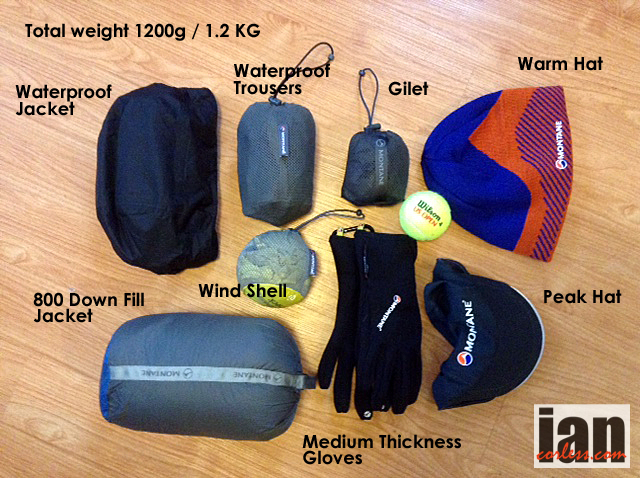
The above has my daily kit that I will need for safety. Waterproof layers, down jacket, sleeping bag (in case of emergency), windproof shell and gilet, medium gloves/ warm gloves, warm hat and peaked hat. All weighing in and including the pack at 2.93kg.

Everest Trail Race - Montane kit - ©iancorless.com

Everest Trail Race – Montane kit – ©iancorless.com

The above is a stripped down version of equipment with no sleeping bag and just medium gloves weighing in at 1.2kg.

Apparel as supplied by MONTANE:

Montane day clothing ©iancorless.com

Montane day clothing ©iancorless.com

Montane warm layers clothing ©iancorless.com

Montane warm layers clothing ©iancorless.com

Montane outer clothing ©iancorless.com

Montane outer clothing ©iancorless.com

Montane run clothing ©iancorless.com

Montane run clothing ©iancorless.com

Montane pack and luggage ©iancorless.com

Montane pack and luggage ©iancorless.com

So that’s it for now. I leave Heathrow and join the team in Istanbul, we then depart for Kathmandu.

Reports and images will be posted on my website here, I hope on a daily basis, however, communications above 3,000m may well be limited.

Watch this space!

NAMASTE.

Finally, a word from Jordi Abad, ETR director.

” If this was only a pure and hard competition, it would be a nonsense; environment gives its hardness but not the competitiveness itself. We are here to share and to help each other. It is possible to make the effort running any city marathon in the world, but the sensations, the environment and the feelings are to share them with friends, to know new people with whom laughing and weeping. This is what remains in the end and what makes it an unique experience for all”.

ETR website in the UK HERE

Information on Nepal:

It is located in the Himalayas and bordered to the north by the People’s Republic of China, and to the south, east, and west by the Republic of India. Specifically, the Indian states of Uttarakhand, Uttar Pradesh, Bihar, West Bengal, and Sikkim border Nepal, while across the Himalayas lies the Tibetan Autonomous Region. Nepal is separated from Bangladesh by the narrow Indian Siliguri corridor. Kathmandu is the nation’s capital and largest metropolis.

The mountainous north of Nepal has eight of the world’s ten tallest mountains, including the highest point on Earth, Mount Everest, called Sagarmatha in Nepali. It contains more than 240 peaks over 20,000 ft (6,096 m) above sea level.[11] The southern Terai region is fertile and humid. Lumbini, the birthplace of Lord Gautam Buddha, is located in this region. Lumbini is one of the holiest places of one of the world’s great religions, and its remains contain important evidence about the nature of Buddhist pilgrimage centres from as early as the 3rd century BC.  

Content taken from Wikipedia©

Equipment list supplied by Montane 

  • Montane Beanie 50g
  • Montane Aero Cap 55g
  • Montane Bionic Long Sleeve Crew Neck base layer 160g
  • Montane Bionic Long John 175g
  • Montane Featherlite Gilet 105g
  • Montane Featherlite Smock 105g
  • Montane Featherlite Down Jacket w/ Hood 405g
  • Montane Minimus Mountain Jacket (waterproof) 232g
  • Montane Minimus Tousers (waterproof)  125g
  • Montane Terra Pants 320g
  • Montane Tee Shirt 195g
  • Montane Powerstretch Gloves 55g
  • Montane Sabretooth Gloves 112g

Run Kit

  • Montane Sonic Ultra T 150g
  • Montane Trail Tights 207g
  • Montane Trail Shorts 140g

Sleeping Bag

  • Montane Direct Ascent (sample product) 1055g

Pack

  • Montane Ultra Tour 22 ltr 545g

Holdall

  • Montane Transition 100 

Total weight 4186g minus holdall

Episode 41 – Kremer, Clark, Mills, Whitehead

TU41

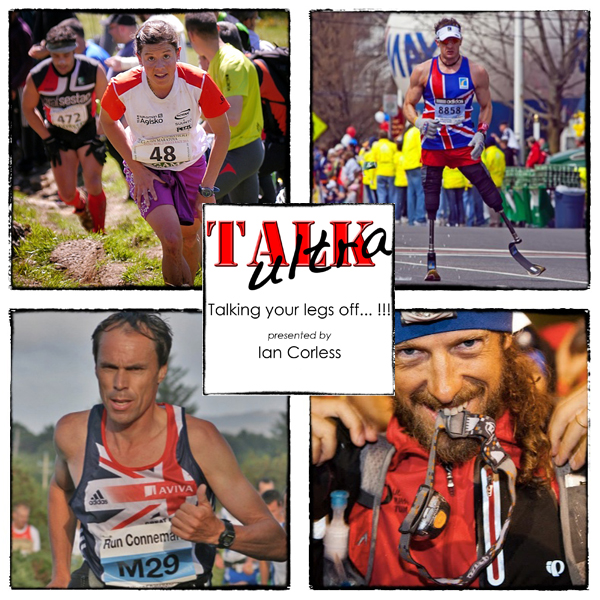
Episode 41 of Talk Ultra – We speak to Stevie Kremer 12 months on after she burst on the Skyrunning scene with a 2nd at Sierre-Zinal. We have 15 mins of fame with double leg amputee, Richard Whitehead. An interview with Lakeland 100 winner, Stuart Mills. A catch up with Nick Clark on the Grand Slam of ultra. Smiles and Miles with Emelie Forsberg. The news, a blog, up and coming races. Marc is back for Talk Training and of course, Speedgoat co hosts!

00:07:30 NEWS

Speedgoat 50k

  1. Sage Canaday  5:08:07
  2. Anton Krupicka  5:09:36
  3. Jason Schlarb 5:19:34
  4. Max King 5:29:02
  5. Justin Yates  5:42:24
  6. Luke Nelson  5:47:09
  7. Timothy Olson  5:47:10
  8. Jason Loutitt  5:49:35
  9. Michael Barlow  5:53:37
  10. Ryan Smith  5:53:51
  1. Stephanie Howe  6:17:02 
  2. Jodee Adams-Moore  6:18:06
  3. Ruby Muir   6:25:54
  4. Emma Roca  6:41:21
  5. Krissy Moehl  6:43:54
  6. Becky Wheeler  6:48:43
  7. Silke Koester  6:52:16
  8. Erica Baron  6:55:46
  9. Anita Ortiz 7:02:18
  10. Francesca Canepa  7:05:14

Stockholm 100k

Steve Way 6:40:14, Linus Holmsater 7:24:18 and Frijof Fagerlund 7:29:01

Trans D’Havet

Men

  1. Kilian Jornet (Spain) 08:59:47
  2. Luis Alberto Hernando (Spain) 08:59:49
  3. Casaba Nemeth (Hungary) 09:43:25

Ladies:

  1. Emelie Forsberg (Sweden) 10:21:32
  2. Nuria Picas (Spain) 10:33:34
  3. Uxue Fraile (Spain) 10:34:20

Lakeland 100

  1. Stuart Mills 22:17:50
  2. Charlie Sharpe 23:02:45
  3. Ed Batty 23:07:40
  1. Lizzie Wraith 24:15:06 (smashed old CR)
  2. Debbie Martin Consani 26:02:00,
  3. Julie Gardner 28:16:47

Lakeland 50

  1. Ben Abdelnoor 7:39:26
  2. Riichard Ashton 8:20:58
  3. Robin Houghton 8:33:30
  1. Katherine Brougham 9:44:10
  2. Alice Briscoe 10:35:42
  3. Rachel Ball 10:43:43

WMRA – 10. WMRA World Long Distance Mountain Running

Mitjia Kosovelj won Andrew Davies from Wales 2nd and Ionut Zinca 3rd

Antonella Confortola won Omella Ferrara 2nd and Anna Celisnska 3rd. Have to give a shout out to Claire Gordon from Scotland who was 4th and Anna Lupton from England who was 5th

Hal Koerner and Wolfe – FKT on JMT –HERE 

Ann Trason to run a 100 in September – Idaho Mountain Trail Ultra Festival – HERE

Now the iconic Sierre-Zinal is coming up this weekend. I remember being at this race last year… pre race I got chatting to this shy girl who just seemed a little uncomfortable being surrounded by some of the best in the world. Needless to say, this shy girl performed out of her skin and finished second on the podium. One year on, I catch up with Stevie Kremer and find out what the last 12 months have been like and what the future holds.

00:42:38 INTERVIEW Stevie Kremer

01:16:20 BLOG

We have given Stuart Mills, the Lakeland 100 winner plenty of coverage this week with a long interview, however, his interview does go very much hand-in-hand with his blog… so, this weeks blog is ultrastu.blogspot.co.uk

You can read his very unique and in-depth analysis of how he races. Word of warning… make yourself a coffee. It’s a long one!

Blog HERE

01:17:00 15 MIN OF FAME with Richard Whitehead – http://www.richardwhiteheadrunsbritain.com/

HERE

01:32:40 TALK TRAINING – Marc Laithwaite is back after a busy couple of months. Not only has he been training for an Ironman but also he is the RD for the Lakeland 50 and 100.

01:57:55 SMILESandMILES with Emelie Forsberg – smilesandmiles@yahoo.com

02:20:40 INTERVIEW

This week’s interview is with Brit, Stuart Mills. Stuart as you will hear has a very unusual approach to running… or should I say, training and racing. Without doubt it works! Just the other week, Stuart once again won the Lakeland 100 for a second time. In this in-depth interview we discuss everything. I am sure you will find it fascinating.

03:23:30 MELTZER MOMENT – It’s good, good, good this week

03:29:52 CLARKY’S CORNER – It’s two down and two to go for Clarky and the other ‘Slammers’. Leadville is just around the corner. We catch up with Nick, discuss how Vermont went and what lies ahead…

03:44:22 RACES

Belgium

Trail des Fantômes – 50 km | 50 kilometers | August 17, 2013 | website

Canada

British Columbia

Arc’teryx Squamish 50 | 50 miles | August 10, 2013 | website

Arc’teryx Squamish 50K | 50 kilometers | August 10, 2013 | website

Ontario

Iroquoia Trail Test – 50K | 50 kilometers | August 17, 2013 | website

Quebec

XV de la Vallée- Trans Vallée | 66 kilometers | August 16, 2013 | website

Denmark

Hovedstaden

Ultra Marathon Bornholm | 100 kilometers | August 11, 2013 | website

France

Hautes-Pyrénées

Grand Raid des Pyrénées – l’Ultra | 160 kilometers | August 23, 2013 | website

Isère

Ultra Tour des 4 Massifs | 160 kilometers | August 23, 2013 | website

Ultra Tour des 4 Massifs – 90 km | 90 kilometers | August 23, 2013 | website

Savoie

Tour de la Grande Casse | 62 kilometers | August 18, 2013 | website

Trail du Galibier | 55 kilometers | August 18, 2013 | website

Germany

Bavaria

Allgäu Panorama Ultra Trail | 69 kilometers | August 18, 2013 | website

Berlin

100MeilenBerlin | 100 miles | August 17, 2013 | website

Ireland

Ulster

Quadrathon | 169 kilometers | August 15, 2013 | website

Kenya

Kenya Highlands Race | 75 kilometers | August 10, 2013 | website

Mongolia

Mongolia Sunrise to Sunset 100K | 100 kilometers | August 17, 2013 | website

Sweden

Björkliden Arctic Mountain Marathon 50 km | 50 kilometers | August 16, 2013 | website

Björkliden Arctic Mountain Marathon 70 km | 70 kilometers | August 16, 2013 | website

Trans Scania | 246 kilometers | August 10, 2013 | website

Switzerland

Grisons

Swiss Irontrail T141 | 136 kilometers | August 23, 2013 | website

Swiss Irontrail T201 | 201 kilometers | August 23, 2013 | website

Swiss Irontrail T71 | 66 kilometers | August 23, 2013 | website

Trail Marathon 70 KM | 70 kilometers | August 10, 2013 | website

Obwald

MOUNTAINMAN full | 80 kilometers | August 17, 2013 | website

Vaud

Ultra Trail du Barlatay | 81 kilometers | August 17, 2013 | website

United Kingdom

England

ashmei 33 Mile Trail Run | 33 miles | August 18, 2013 | website

North Downs Way 100 | 100 miles | August 10, 2013 | website

USA

Alaska

Resurrection Pass 100 Mile Ultra Trail | 100 miles | August 09, 2013 | website

Resurrection Pass 50 Mile Ultra Trail | 50 miles | August 10, 2013 | website

California

Rattlesnake 50K Ultramarathon | 50 kilometers | August 17, 2013 | website

Run-de-Vous 100M | 100 miles | August 17, 2013 | website

Run-de-Vous 50M | 50 miles | August 17, 2013 | website

Run on the Sly 50K Trail Run | 50 kilometers | August 18, 2013 | website

Colorado

GORE-TEX TransRockies Run – Run3 | 59 miles | August 13, 2013 | website

GORE-TEX TransRockies Run – TRR6 | 120 miles | August 13, 2013 | website

Leadville Trail 100 Run | 100 miles | August 17, 2013 | website

Michigan

Marquette Trail 50 Kilometer | 50 kilometers | August 17, 2013 | website

Marquette Trail 50 Mile | 50 miles | August 17, 2013 | website

Minnesota

Ragnar Relay Great River | 200 miles | August 16, 2013 | website

Nevada

Extraterrestrial Full Moon Midnight 51 km | 51 kilometers | August 17, 2013 | website

New Jersey

Wildcat Ridge Romp 100k | 100 kilometers | August 10, 2013 | website

Wildcat Ridge Romp 50k | 50 kilometers | August 10, 2013 | website

Wildcat Ridge Romp 50M | 50 miles | August 10, 2013 | website

New York

Beast of Burden Summer 100 Miler | 100 miles | August 17, 2013 | website

Oregon

Where’s Waldo 100k Ultra | 100 kilometers | August 17, 2013 | website

Utah

Kat’cina Mosa 100K Mountain Challenge Run | 100 kilometers | August 10, 2013 | website

Vermont

100on100 Heart of Vermont Relay | 100 miles | August 18, 2013 | website

Washington

Angels Staircase 50K | 50 kilometers | August 11, 2013 | website

Angels Staircase 60K | 60 kilometers | August 11, 2013 | website

Wyoming

El Vaquero Loco 50K | 50 kilometers | August 10, 2013 | website

03:46:44 CLOSE

03:51:01

LINKS

ITunes http://itunes.apple.com/gb/podcast/talk-ultra/id497318073

Website – talkultra.com


Stuart Mills – Lakeland 100

iancorless.orgIancorless020

By 2013 race winner, Stuart Mills

The MONTANE® Lakeland 100 is widely regarded as the ‘premier’ ultra trail race in the UK.  2013 was the event’s sixth year and the third time that I had run it.  On my first attempt in 2010, I managed to win in a time of 24:10:54.  When I returned in 2012, although I ran twenty five minutes quicker, finishing in 23:45:48, the standard of UK ultra trail racing during the two year gap had improved significantly and I only managed to finish in fifth place.  So coming into this year’s race, although I was satisfied with my preparation and was therefore expecting to race quicker than 2012, what my finish position would be was totally unknown.

#The variety of pacing strategies adopted by ultra trail athletes during a 100 mile race is huge.  Some prefer to start slowly, progressively working their way through the field.  Others adopt a consistent pace approach and attempt to run steady throughout the entire race.  Me?  I have a simple pacing approach; “Run as fast as I can, while I can!”  I therefore start extremely fast while I am fresh and feeling strong and then simply try to ‘hang on’ and not let too many runners overtake me.  This approach was therefore implemented at 6:00pm on Friday 26th July 2013, as the race commenced at Coniston in warm, sunny conditions.  Take a look at the data in the image gallery above this report which illustrates the amazingly large variation in pacing strategies adopted by the leading runners.
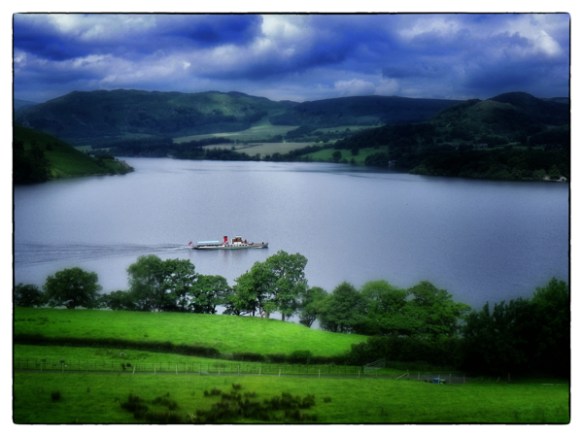
iancorless.orgIancorless045#Although the race is called the MONTANE® Lakeland 100, it is actually 105 miles in length, split into fifteen legs, where one is able to refuel and rehydrate at the checkpoint at the end of each leg.  Even though I was running probably ‘ridiculously’ fast, I arrived at the first checkpoint at Seathwaite in second place around one minute behind the lead runner, Ken Sutor.  Following a short stop where within an instant I had consumed a cup of water at the checkpoint, the two of us left together and continued to run extremely fast, especially when taking into account that we still had a little less than one hundred miles to go.  We reached the checkpoint at the end of leg two, located at Boot, pretty well together.  I again passed through the checkpoint very quickly and continued on to leg three, now running on my own, as Ken spent more time refuelling.

#My fuelling strategy for this race was slightly different to previously.  As there is a large range of food available at each checkpoint, previously I had tended to consume probably only one or two gels during the entire race and get the majority of my fuel by eating the checkpoint food.  Earlier this year I discovered TORQ Gels.  Apparently they have been available for nearly ten years, but tend to be used mainly by mountain bikers or triathletes.  They are awesome!  So this year, the plan was to take on one gel every 45 minutes.  I therefore started the race carrying fourteen gels, which would fuel me to the Dalemain checkpoint, where I would be able to pick up more gels to get me to the end of the race from my drop bag.  I also decided that I would be very strict on myself in consuming one gel every forty five minutes.  In some of my previous races I perhaps had not taken on board enough fuel, so I didn’t want to make the same mistake again.  The evidence from scientific literature suggests that probably one gel every 20 – 30 minutes is ideal for endurance performance, but the research is not carried out on 100 mile running events, where “the normal limits do not apply”! So I decided every 45 minutes should be plenty.

iancorless.orgIancorless093#During the next two legs, as I ran through Wasdale Head, then over the two tough climbs of Black Sail Pass and Scarth Gap, the surrounding scenery was unbelievable, with a sunset creating amazing colours to light up the landscape.  As I approached checkpoint four at Buttermere, I had no idea how far ahead of the other 273 runners I was.  Whilst I am racing I try to focus on what I am doing and try to ignore what others are doing.  I can’t control their pace, so I try not to pay my competition much attention.  I run hard and fast in order to get to the finish line as quickly as possible, therefore let my actual finish position ‘look after itself’!

iancorless.orgIancorless101#I started leg five (over Sail Pass to Braithwaite) and although night had fallen, it wasn’t actually that dark.  There was an amazingly bright moon within a clear night sky.  On occasions the headtorches of the chasing runners behind me attracted my attention and reminded me that I was in a highly competitive ultra trail race.  However, I reminded myself to focus on the present moment, not to worry about what other runners were doing, to enjoy the amazing journey that I was on and appreciate just how fortunate I was that I was fit and healthy enough to experience this truly amazing challenge that I was part way through.  The night time just seemed to ‘fly past’ and it became daylight as I reach checkpoint eight located at Dalemain, having completed 59 miles since leaving Coniston.

At each checkpoint, in addition to taking on food and drink, one also has to ‘dib’ into an electronic timing box.  This information is then automatically loaded onto the race website, enabling all my family and friends to track my progress from anywhere in the world, including my brother tracking my progress in New Zealand.

Having dibbed 1st at seven consecutive checkpoints, I reflected on how my family and friends would be reacting to my good progress and found myself getting excited about the prospect of holding onto my lead for the remaining 46 miles and getting back to Coniston to record the win!  At that point it was nine hours since I had seen another runner, way back at checkpoint two, however at the last two checkpoints I was informed of the time gaps to the following runners – 14 minutes at the end of leg six, but only 10 minutes at the end of leg seven.  I found myself wondering what may happen during the upcoming legs; would they catch me?  When might they catch me?  Would I be able to keep in contact with them? Etc. Fortunately, I managed to snap myself out of this potential performance inhibiting thought process and reminded myself to take one leg at a time and most of all just enjoy every moment, during that moment!
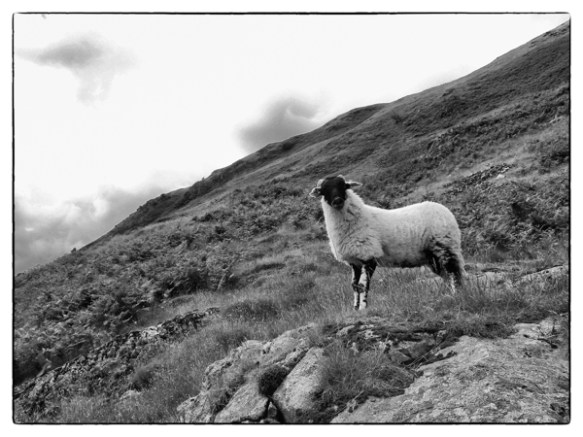
iancorless.orgIancorless104#As I completed legs nine and 10, that took me first to Howtown and then over High Kop (the highest point of the route at 670m) and onward to Mardale Head, the heat from the sun on another glorious day was making its presence known.  It was getting pretty hot!  Having lived in Britain for over twenty years since emigrating from New Zealand, the one thing I have learnt to deal with is the contrasting British weather, often being colder than one would like.  So at that point, with the British weather finally coming right for a decent summer, the last thing I was going to do was to complain about it.  As the sun seemed to get brighter and more powerful, making me feel hotter, I was absolutely loving it.  “Yes, give me heat!  Yes, give me more!” I was chanting out loud, knowing that other runners may be reacting less positively to this beautiful hot summer’s day.

From Mardale Head, there were still five legs to complete totalling 29.4 miles, however, there was an overarching feeling that one is now on the ‘home straight’, not that the route is flat.  No, there were plenty of tough climbs to get over including Gatesgarth Pass on leg 11 and then Garburn Pass on leg 12, before reaching checkpoint 12 at Ambleside.

#Whether it was the effects of the heat, or the tough climbs, or the technically challenging underfoot conditions of loose boulders/gravel, or simply that I had run non-stop overnight for over 18 hours (I don’t really know), getting through legs 11 and 12 had been pretty challenging.  So when I was told at Ambleside that I was being chased down, not just by Ed Batty, who had been in 2nd place at around 10 – 20 minutes for the previous 15 hours, but also by two other runners, Charlie Sharpe and Richie Cunningham, who are known for adopting the ‘start slow / burst through the field and finish strong’ strategy, I wasn’t really surprised.  But the key issue was, how was I going to respond to being hunted down?
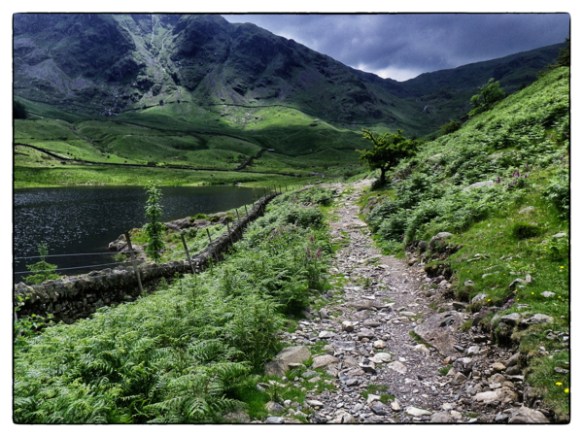
iancorless.orgIancorless121I’ve highlighted that I attempted to focus on myself and disregard my competitors.  But by now, having been in the lead for now nearly 18 hours, the thought of winning was getting strong – the desire to win, the anticipated satisfaction of crossing the finish line first…  The thought of losing the lead at this late stage, as at Ambleside there was only 15.6 miles to go, would be ‘heart breaking’, it would be devastating, it wouldn’t be fair!  Was I going to simply let it happen?  No!  I decided that if they were going to beat me, they were going to have to work extremely hard.  So I started on leg 13 with a really determined mind-set, which resulted in a substantial increase in my running pace.

#The section of the route during leg 13 that travels through Elterwater to Chapel Stile is simply ‘picture postcard’.  Therefore whilst maintaining my determination, I also had to remind myself continually to ‘take it all in’, enjoy this amazing moment, during this present moment.  Although I was working really hard and finding it pretty ‘tough’, this section of the race was probably the most enjoyable, the most satisfying.  I was extremely pleased with myself and the way that I had responded to the news of being chased down at Ambleside.  I was also happy with the substantial increase in my running speed since Ambleside.  Although ‘suffering’ I was really ‘buzzing’!

As I reached checkpoint 13 I interrogated one of the volunteers – what was my time gap now?  How far behind were they?  How much time had they gained during the last leg?  He informed me that the gap had been further reduced!  I couldn’t believe it.  How could that be?  I had been running really well for the last five miles, but they had still gained time on me.

As you may have gathered, with it now being nearly 20 hours since the race had started, my mind wasn’t functioning correctly.  The time gap the volunteer was referring to was the time gap change from checkpoint 11 to checkpoint 12.  Not leg 13 that I had just run strongly over.  I didn’t really take this on board, so I panicked even more.  Right, let’s now give it everything.  I just can’t get overtaken now!  Some supporting runners who I knew were doing their best to try to calm me down, but I wasn’t really listening to them.  I took off on the penultimate leg knowing that even more effort was required!
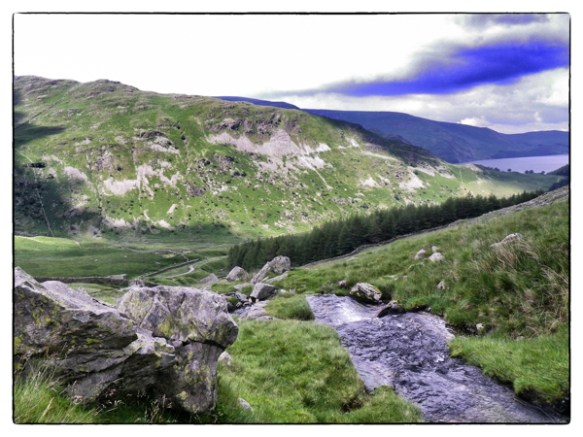
iancorless.orgIancorless127#In what seemed like barely a few minutes, but was in fact one hour and thirty minutes, I reached the final checkpoint at Tilberthwaite.  Although the leg had been tough, it also had been extremely satisfying.  I had run well.  In fact comparing this leg time to my leg 14 times from my two races in 2010 and 2012, I had run it 25 and 24 minutes quicker respectively!

The last leg involved one final tough climb before dropping down to the finish at Coniston.  I worked hard up the steep incline and then as I reached the summit I asked two runners who were watching to have a good look back along the track to see if they could view those runners that had been ‘haunting’ me, chasing me down for the last few hours.  They were nowhere to be seen!  The watching runner wanted to shake my hand to congratulate me, as I crested the summit.  I refused as I hadn’t yet won the race, but at that moment in time I knew I would win the MONTANE® Lakeland 100 for the 2nd time. This realisation drained all of my focus.  All of my energy immediately vanished.  I therefore absolutely struggled on the steep descent, struggled along the gravel road and then struggled even more along the final half mile of smooth road as I ran through Coniston to reach the finish line.

I crossed the finish line having completed the most amazing clockwise journey of the Lake District in 22:17:50.  Nearly one and a half hours quicker than my 2012 finish time.  There was a large crowd cheering me which I tried to take on board, but not only is the body pretty shattered, the mind is also not fully functioning.  However, over the next hour or so, I gradually recovered and enjoyed welcoming and chatting to the other runners as they finished their equally challenging but amazing journey of the Lake District.

Although the time gap had only been 13 minutes at my ‘panic attack’ at checkpoint 13 at Chapel Stile, the huge increase in focus, effort, intensity I put in following this point resulted in the gap increasing to 45 minutes at the finish line, with Charlie Sharpe finishing 2nd (23:02:45), having managed to overtake long time 2nd place holder Ed Batty during the final leg, for Ed to finish 3rd in 23:07:40.  The wait for the 1st women to finish wasn’t long, with Lizzie Wraith winning in the time of 24:15:06, finishing in 8th place overall; an outstanding performance.

Over the next 16 hours there was a continuous stream of weary runners crossing the finish line.  As the 40hour cut-off time passes, the final two competitors to complete the 105 miles, Steve Harvey and Paul Brown, cross the finish line in the time of 40:21:58 in 123rd and 124th place.

Out of the 274 runners that had taken on the challenge of the 105 mile journey of the Lake District, 150 of them were unable to successfully complete it.  There are many reasons for such a high non-completion, which equates to a 55% drop-out rate, however, no matter what the end result, every runner that stepped up to the start line to take on the amazingly demanding challenge of the MONTANE® Lakeland 100 is in essence a winner. Some may be disappointed with their performance; however I would imagine most, like myself, are feeling a real sense of pride at having really challenged and extended themselves.  Each runner will have their own individual story, but if their story is anything like mine, the end result is that they are a stronger and richer person.

Thanks to absolutely everyone that was involved in making the MONTANE® Lakeland 100 the most fantastic successful event one could ever do.  Thanks to everyone that helped me on my journey in both the preparation for and the accomplishment of it.  Your support is really, really appreciated, and I know one thing for sure, I would not have been able to achieve such a successful performance without this support.  A huge thank you.

Original post on – Montane Website HERE

All photography copyright iancorless.com
Hole in the bucket!

Aagh, the bucket list! Is it a good thing or is it a bad thing? Some runners get so obsessed at ticking the races off and working through a list that they actually forget the most important thing; the experience.

I would much prefer to run for a lifetime with targets, goals and a ‘to do’ list than get it all over and done within five years and maybe not be able to run again through an injury.

So, to that end ‘findarace’ asked me what I considered to be the five best ultras in the UK. Now of course I am potentially opening a can of worms here. What one runner likes, another doesn’t. So, instead of trying to second-guess and be politically correct I am going to list five that I would choose.

To clarify, it’s all about experiences, views and challenges for me, so, you are not going to see a road ultra in this list as I don’t think we have anything in the UK that could compete with Comrades. Had London to Brighton still been a road run, it would have almost certainly made the list. Also, your not going to see the GUCR (Grand Union Canal Race) at the risk of some abuse from those who ‘love’ this race I just personally think life is too short to run for hours and hours on a canal tow path. Also, distance isn’t everything. I am not a distance snob and therefore for me, a good race is a good race, 30 miles, 50 miles or 100(+) miles makes no difference.
Here goes in chronological order:

January – The SPINE 268-mile non-stop across the Pennine Way HERE

Having said that distance isn’t everything and then here I go with a ridiculous 268-mile race that takes place in January. yes, January. So, if distance wasn’t enough you have to contend with cold weather, ice, snow, wind and whatever else the UK can throw at you. The appeal? Well this race is non-stop so it brings in a real element of tactics, endurance, planning and basically leave your brain at the door challenge.

Taking place on the entire Pennine Way it is arguably the most demanding National Trail in Britain. Beautiful, difficult and challenging it includes the Peak District, Cheviots, Yorkshire Dales and Northumberland National Park – finishing on the Scottish Borders.

Open to anyone with appropriate experience who wishes to test themselves and compete in a truly brutal race. The first edition was in 2012 and only 3 finished.

April – HIGHLAND FLING 53 miles HERE

The Highland Fling Ultra, is a trail race over the southern section of the famous West Highland Way Path (you can cover the full 95 miles in August in the West Highland Way race) Starting in Milngavie (close to Glasgow) and finishing in the scenic village of Tyndrum.  The route is almost entirely on trails and thus traffic-free. Varied terrain and stunning scenery makes this a truly enjoyable experience.

In addition to the solo runners, there are club competitions, and a four-person relay race. All runners must be 21 years old or over (18 for the relay). 53 miles you must cover the distance within the 15-hour time limit and you must run unsupported, however, you are allowed drop bags at checkpoints.

June – UTSW 100 miles, 60 miles and 100m relays HERE

The UTSW is a brute… offering two distances at 60 and 100 miles believe me you are no wimp choosing the 60-mile option. The 100-mile race starts in Charlestown in the southwest corner of Cornwall. Heading east on the South West Coast Path crossing the beautiful Fowey estuary by ferry before continuing on to the to the quaint fishing town of Looe. Here you will leave the South West Coast Path for a while and head inland mostly following the Smugglers Way. Continuing north you will come to the famous Jamaica Inn. Bodmin Moor is the next obstacle.

If you plan on the 60-mile option, Bodmin is your start point.  Brown Willy the highest point in Cornwall is the next landmark and then you have a cross county trek which comes to an end at Boscastle. Here you head west along the South West Coast Path to Tintage. Now heading west you will hit the Camel Estuary where a ferry will transport you across to Padstow. Padstow to Watergate Bay are the final 20 miles with a finish at the Watergate Bay Hotel. Don’t underestimate this race! This course is brutal, beautiful and challenging.

July – Lakeland 100 and 50 HERE

For me, the Lakeland 100 and 50 is everything that an ultra should be. A challenging course, beautiful course, great organization and an iconic race. In it’s short history the race has become possibly the premier 100 miler in the UK. Taking in a circular route of the English Lakes the race starts and finishes in Coniston. It is a navigation event but you are provided with a detailed route book and you are allowed GPS. For many participants, regular ‘recces’ are essential to ensure that race day runs smoothly. The 50-mile option starts half way around the 100-mile route and is a wonderful race it it’s own right. In actual fact, I would almost tip my head towards the ‘50’ as it can be raced and ultimately a more enjoyable experience may be obtained. It depends what you are after?

The route encompasses the whole of the Lakeland fells, it includes in the region of 6300m of ascent. The route is almost entirely on public bridleways and footpaths but does have one or two small sections of road to make connections with trail. The route takes in the Dunnerdale fells, Eskdale, Wasdale and Buttermere before arriving in Keswick. From here the route heads to Matterdale and continues over to Haweswater before returning via Kentmere, Ambleside and Elterwater to the finish at Coniston.

August – North Downs Way 100 and 50 HERE

The race begins in Farnham at the Western end of the North Downs and works its way through some of the best of the English countryside.

Key landmarks are: Puttenham, Guildford, Ronmore Common, Box Hill, Reigate Hill, Merstham, Oxted, Knockholt Pound, Wrotham, Holly Hill, Medway Bridge, Detling, Hollingbourne, Harrietsham and Charing before dropping down into Wye and the finish.

Organized by Centurion Running this race is part of a ‘Grand Slam’ based around the American system of 4 x 100 mile races in 1 year. The addition of 50 mile options makes this a great series of races and in comparison to UTSW and the Lakeland courses this is an ideal opportunity to tackle 50 or 100 trail miles over an ‘easier’ course.

Notable others:

  • West Highland Way (June) 95 miles
  • Ring of Fire (August) 131 miles in 3 days
  • Ridgeway (August) 85miles
  • Dragon’s Back (September) 200 ‘ish’ miles

And I could go on……

Ultra Trail 26 – Montane

We are excited to announce the Montane UltraTrail26 series coming soon to a venue near you. Dates are November 18th 2012, with events to follow March 24th 2013 and May 26th 2013 and the series will take place across the North of England. The 26 mile trail events are designed to provide the perfect opportunity for runners to step up to longer trail distance events and provide great training opportunities for the Montane Lakeland 50 and 100 mile events.


Grizedale

The opening event of the UltraTrail26 series takes place from Grizedale Forest Visitor Centre, close to Hawkshead in the Lake District. Grizedale is a popular location for both trail runners and mountain bikers, due to the varied trails and great scenery throughout the forest.

The route will largely take place on forest trails with some minor sections of road to link the trails together. It offers great views of both Coniston Water and Lake Windermere. If you think the route will be flat.. think again. Grizedale Forest and surrounding areas provide challenging hills and rolling trails throughout the route. This course is a great opener.

TO ENTER THE EVENT GO HERE

Rivington

Event 2 of the UltraTrail26 series moves to Rivington, Lancashire. The event starts and finishes at Rivington High School and takes place on a variety of track and trails. The Lancashire moorland includes landmarks such as Great Hill, Rivington Pike and Darwen Tower and offers a variety of terrain and scenery.

Rivington is perhaps one of the less visited trail running areas in the North West, which is why, for event number 2, we chose to move away from Cumbria. The course is challenging, includes some hard climbing and moorland can be boggy underfoot. It’ll certainly be one to remember.

TO ENTER THE EVENT GO HERE

Howgills

The final event of the UltraTrail26 series takes place in the Howgills, which are ‘just about’ on the Yorkshire side of the Yorkshire and Cumbria Border. The event starts and finishes at Sedbergh School, in the town of Sedbergh, gateway to the Howgills.

The Howgills offer amazing running terrain and are infrequently visited by tourists. The fact that the Howgills are a collection of large, grassy hills, make all the climbs runnable. The fact that many of the climbs are steep and persistent, outweigh the grassy surface underfoot. The views are stunning and the trail running even better. This is a great way to end the series.

TO ENTER THE EVENT GO HERE