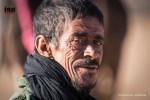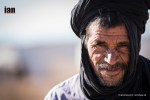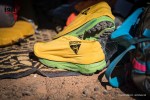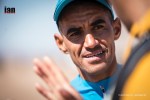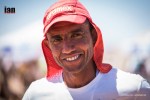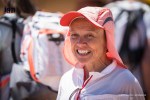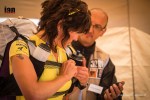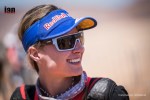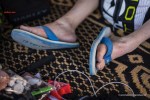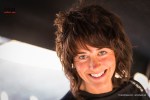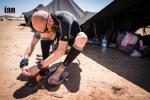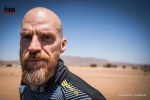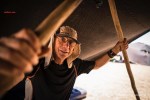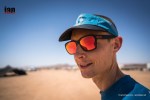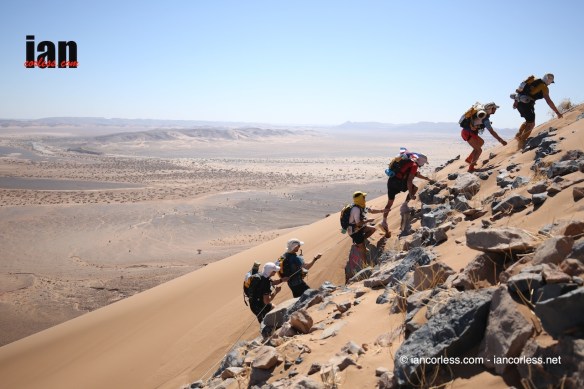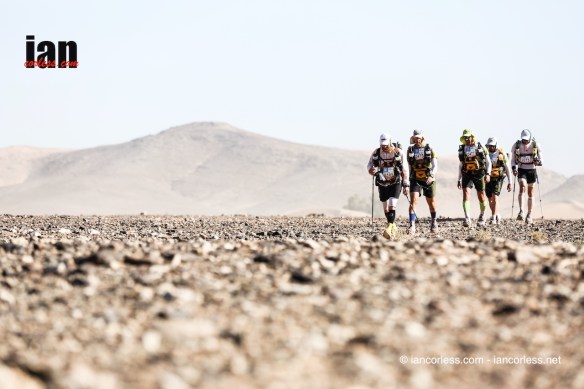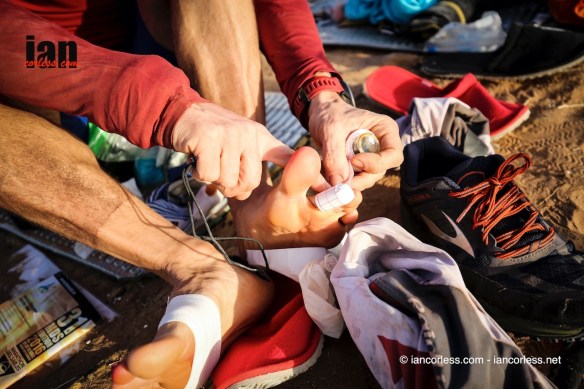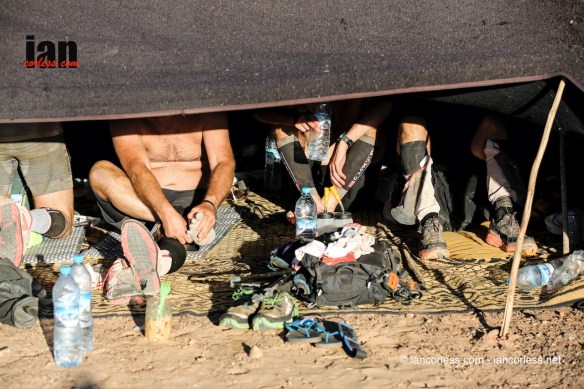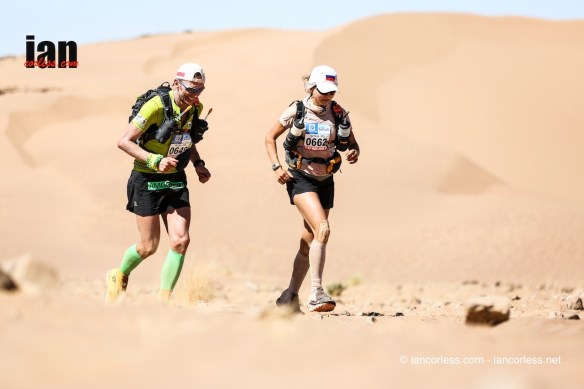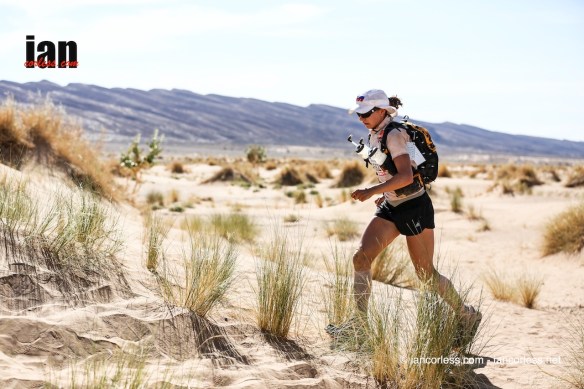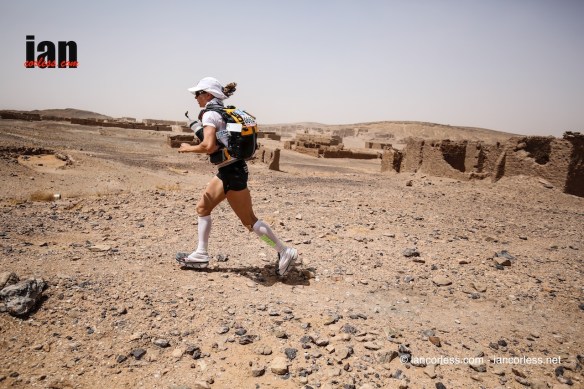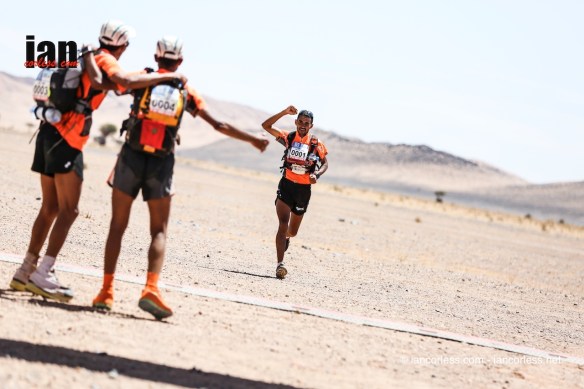
Marathon des Sables 2017 #MDS – Registration Day

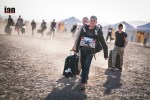
It’s hot… I know it’s the Sahara but today has been hot!

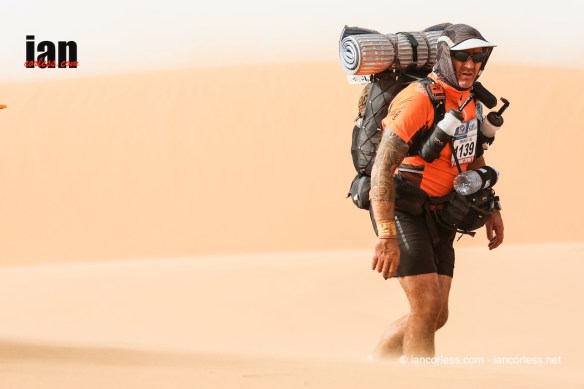
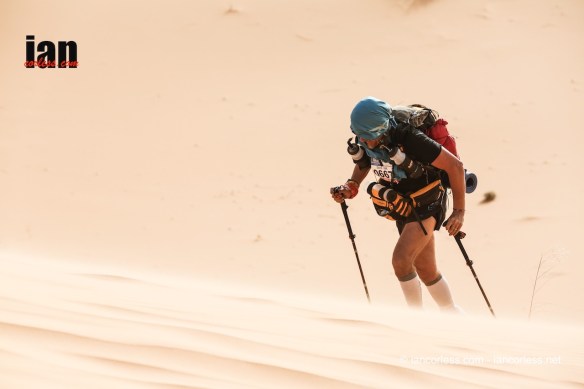
After a day of travel, some 1200 runners arrived in bivouac yesterday and settled to a first night in the Sahara. A meal, some admin and it was an early night. The winds increased with darkness and the general comment in camp the following morning was, “Wow, it got cold last night!”

It caused some last minute anxiety as today is bag drop day and therefore after registration all runners are wearing and carrying everything they need for the week. I could see a few warm layers being taken from cases and added to packs… they can always be thrown away later!

Today is a long day as everyone just wants to run. However, all admin procedures must be undertaken at specified time slots.

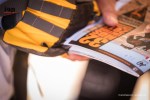
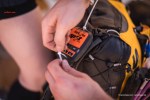
Firstly luggage is left and it will not be seen till after the race. Passport and identity is checked and then an overview of medical forms. Packs are weighed for a minimum 6.5kg and in some scenarios checked for mandatory kit. A Spot tracker is added to the runners packs, numbers are collected, timing chips activated and that’s it. The process takes about 2-hours in the heat of the day.

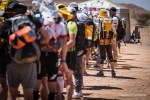
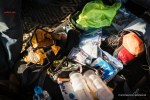
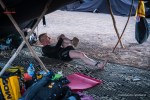
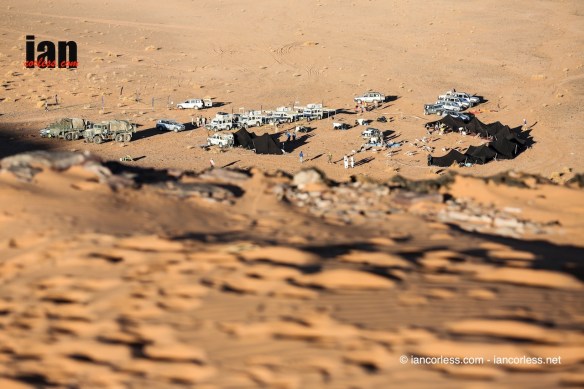
Bivouac is spread over a large area and in each tent, which hold 8-people there is carnage as last minute planning takes place.

As the evening approaches, the last full meal is provided. On waking, self-sufficiency takes over and the runners will start, well and truly, the 32nd edition of Marathon des Sables.

Day 1 is 30.03km with a 10-hour cut-off time.

Follow on

facebook.com/iancorlessphotography

Twitter @talkultra

Instagram @iancorlessphotography


The 2017 32nd Marathon des Sables Preview #MDS

The 32nd MARATHON DES SABLES draws near and as usual, we take a look at several of the main contenders who will toe the line looking to place on the podium of this iconic race. We look at some of the impressive statistics and we preview at the route the runners will need to cover.

Since 1986, over 20,000 participants have raced at the Marathon des Sables and over 1200 are registered for 2017. Of the 52 Nationalities represented, the British are the largest contingent followed by the French.

2017 ROUTE SUMMARY

The 32nd edition will cover 250km in five timed stages and one compulsory charity stage. Daily distances will vary from 30km to 90km. The only provision to runners is rationed water and a bivouac each night which must be shared with seven other runners. The race requires self-sufficiency and everything a runner needs must be carried for the duration of the race.
Day 1 – A relatively flat stage with small dunes, lots of sand and a slight climb to the finish. It’s a day when many runners go too fast. Tip: Ease into the race.

Day 2 – Will be a tough stage that is long with a great deal of sand. You will climb a gorge and run down a very steep descent. Tip: Tough day, keep focused, watch your pace and keep hydrated.

Day 3 – A climb starts the day and it is followed by rollercoaster terrain taking runners up and down. One section is very steep with technical passages. If that wasn’t enough, this stage contains the first ‘real’ dunes of the 32nd edition. Tip: One foot in-front of the other and remember the big day is tomorrow.

Day 4 – The long one: a feared and formidable stage. A lot of sand and some pitfalls for the feet. Two start times: 8.15 a.m. for most people and 11.15 a.m. for the first 50 men and the first 5 women. It’s a day of much sand and difficult terrain underfoot – be careful not to fall! Two passages through small gorges, a climb up a djebel, a roller coaster through the sand, and a technical descent add to a tough day. Tip: Watch out for the heat and manage the night carefully! Get your head in the right place.

Day 5 – Two start times: 7 a.m. for the majority and 8.30 a.m. for the first 200 runners. Dunes at the start and then no major difficulties, however, be prepared for a hot stretch over a long plateau… Tip: If you finished the long day, the race is in the bag. Smile!

Day 6 – Compulsory charity stage.


THE TOP MEN AND WOMEN
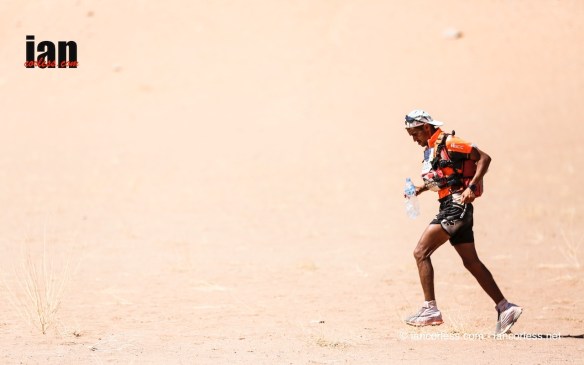
Rachid El Morabity returns and is without doubt, once again, the host favorite for male victory. Russian Natalia Sedyh, who won the race in 2016 has decided not to return in 2017 and this leaves the door open for 2015 MDS champion Elisabet Barnes but it will be no easy run – 2017 is arguably one of the strongest female line-ups the race has seen.
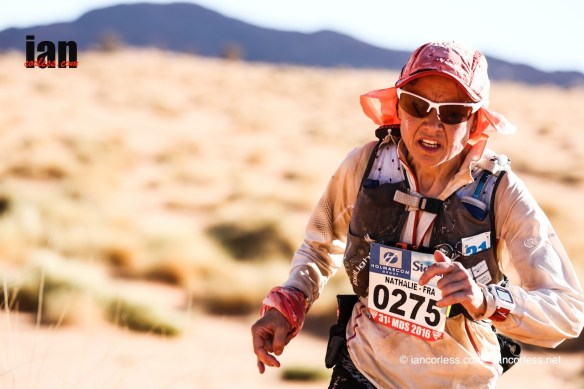
THE WOMEN RACE
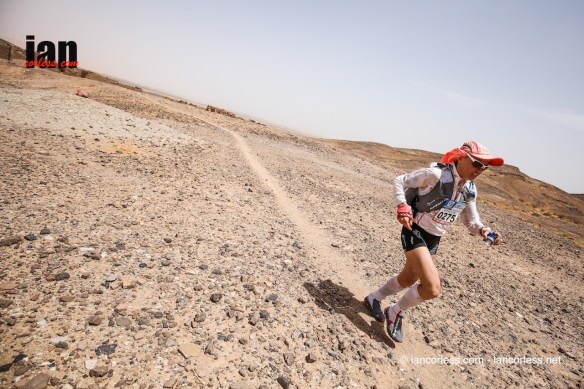
Nathalie Mauclair placed 2nd in 2016 and Fernanda Maciel placed 3rd, with Natalya not returning, could victory go to one of these very strong ladies? Of course, yes! They both now know the race better, they will have adjusted their training and equipment and will arrive prepared. Nathalie has won Diagonale des Fous twice and has been trail World Champion twice – this combination of speed and endurance is just what is required in the Sahara.
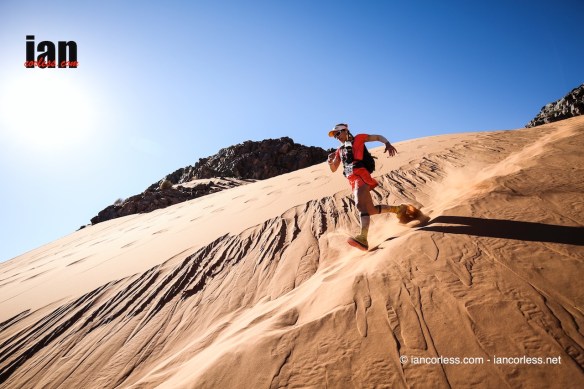
Fernanda Maciel, like Nathalie, is a powerhouse on trails. A regular competitor on the UTWT she brings incredible experience to the race and a tenacity to push to the line.
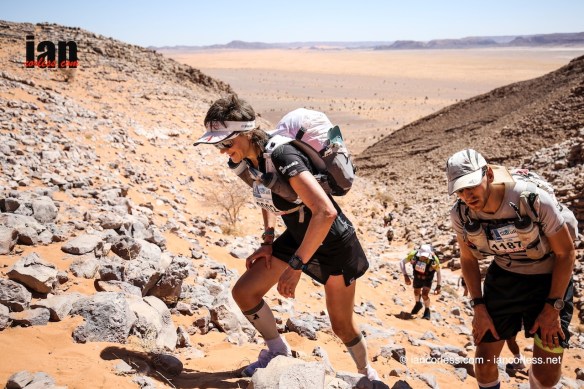
Elisabet Barnes won MDS in 2015 and what has followed is a string of world-class performances in multi-day races all over the world – Australia, South Africa, Costa Rica, USA and so on. Elisabet loves the Sahara and this year has stepped up her training and prepared meticulously for the 32nd edition.

Emilie Lecomte will run MDS for the first time in 2017 but last year, pipped Elisabet Barnes to victory at the Grand To Grand in the USA. Emilie is a specialist in long races and the multi-day format suits her. She still holds the FKT for the GR20 in Corsica and like Nathalie has won the Diagonale des Fous.
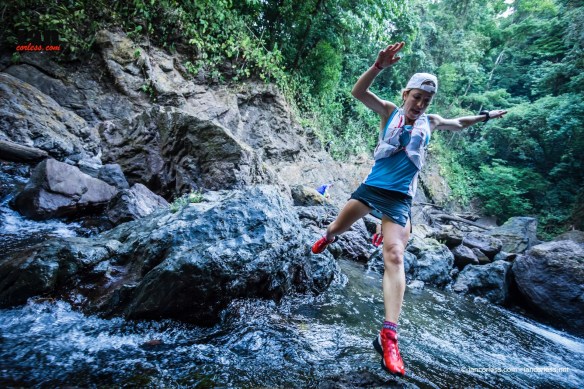
 

Ester Alves from Portugal won The Coastal Challenge in 2016 and this year placed 3rd. Like the ladies’ above she is a fierce competitor and although this is her first foray into the Sahara, I have a feeling we will see her contend for the top 5, if not the podium.

Our women’s top ten to watch:

Aziza Raji is the Moroccan hope. She won the race in 2008 and 2009 but the speed of the race has increased and she is unlikely to contend with the other top elites.

Lizzie Wraith from the UK is a strong runner who will be under the radar here in the Sahara – watch out, she may surprise many people! Lizzie made the podium at the UK’s tough, Dragons Back Race.

Mélanie Rousset is attempting MDS for the first time but has a string of top-10 results at Diagonale des Fous and UTMB.

Nahila Hernandez San Juan from Mexico placed 8th at MDS in 2009 and was 5th at Badwater 135 in 2013.

Marie Eve Trudel a newcomer to ultra but placed 4th at the Grand To Grand in 2015.

Amy Costa winner of the Badwater 135 in 2013.

Kerri Kanuga 6th at Badwater in 2016.
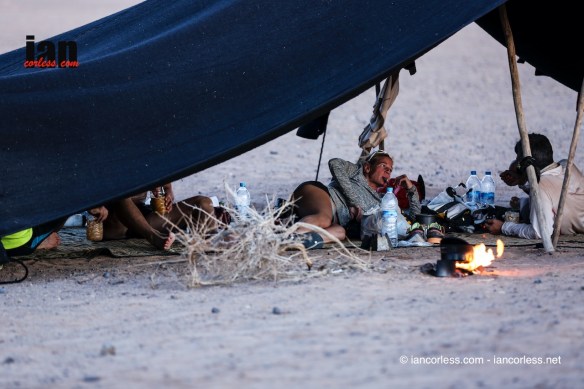
THE MEN RACE
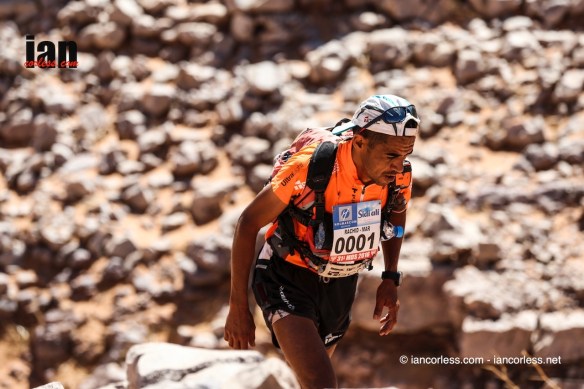
Rachid El Morabity, Samir Akhdar, Aziz El Akad and Abdelkader El Mouaziz are the strong men on this 32nd MARATHON DES SABLES. Rachid has won the race in 2011, 2014, 2015 and 2016 – do you want to bet against him?
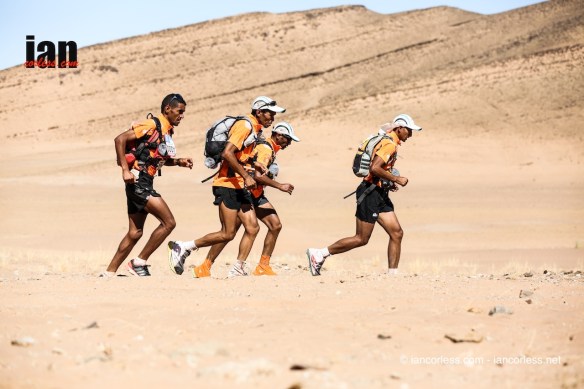
Samir Akhdar is a MDS regular but his best result came in 2015 when he placed 4th. In 2017, he has the potential for 2nd or 3rd. Equally, Aliza El Akad although he is getting on in years, his seven completions at MDS and all within the top-5 would suggest he will continue that consistency.

This year the race does not have Chema Martinez from Spain or Danny Kendall from the UK. Therefore, the great European hope comes with a trio of Brits.
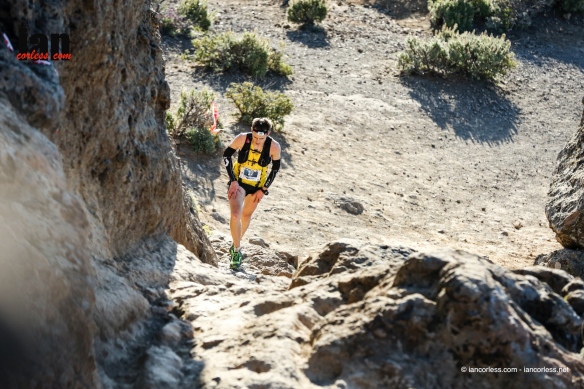
Andy Symonds is a world-class runner who has made the podium all over the world in iconic ultras. Although this is his first MDS he has the running skill to be up there! It all depends if he has adapted to the pack and the additional weight.

Nathan Montague is coming to the race with clear intentions to do well and ideally be the first Brit and hopefully that highest placed Brit ever. He’s a fast runner with some impressive times for 50km and 100km.

Damian Hall has been top-20 at UTMB and placed on the podium at The Spine. He raced in Costa Rica in 2016 with an excellent performance against a world-class field. Like Andy, Damian is on a MDS learning curve but he has the potential to do well.

Moroccans may well provide the competition for the other Moroccans. Abdelkader El Mouaziz is a 2:06 marathon runner and has won London Marathon in 1999 and 2001. He may well be slower now with the passing of the years but class is permanent. His highest placing at MDS is 2nd – one to watch!
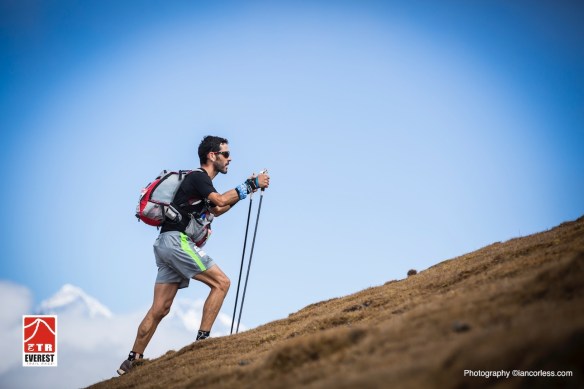
Miguel Capo Soler was 3rd at MDS in 2013 and is the most experienced non-Moroccan who will potentially contend the top-10 placing. In recent years, he has run at The Coastal Challenge and Everest Trail Race.
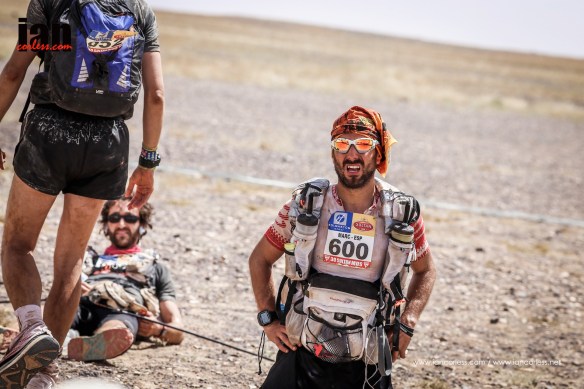
Our men’s top ten to watch:

Mustapha Ait Amar finished MDS 13-times and was 12th in 2012.

Andrew Fargus placed 11th at MDS in 2013.

Luca Papi is a novice MDS runner but brings a wealth of experience.

Marco Olmo is a legend of ultra-trail and MDS – he will not contend the podium but he will be up around the top-20. Not bad for a 68-year old!

Notable mentions for blind runner Didier Benguigu who aged 67 will participate in his 13th MDS.

Also, Duncan Slater from the UK who lost both legs during a mission in Afghanistan. He did not complete in 2016 due to medical complications – he’s back this year for the medal!

Finally…

1216 runners will toe the line and the youngest male is Oscar Daglish from the UK who is just 16-years old. He will be running with his father who has already completed MDS.

The youngest female is Emily Rolfe, also from the UK. Emily will also run with her father.

Claude Leonardi from France is the oldest male runner. The 32nd edition will be his 5th time on the race, not bad for 80-years old!

Edda Hanna Bauer got into sport late, she ran her first marathon and 60. Now aged 72 she has made up for it clocking up 26 marathons and 63 ultra-marathons.
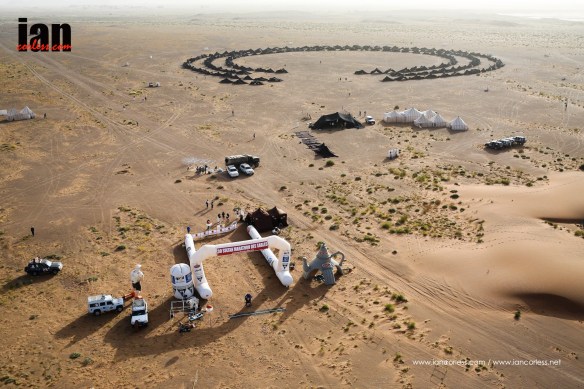
Crazy Statistics of the MDS

“The logistics are a big headache and we organize every detail in advance! We’re a village of 2,000 people that must be set up and dismantled every day. We need to be self-sufficient in energy, food, water and fuel. As one of my friends says, ‘Let’s expect the worst because the best will never surprise us!’ We also benefit from the infallible support of the Royal Moroccan Army, which makes available about 25 6WD military trucks to transport all of our equipment.” – Patrick Bauer

You must see Marathon des Sables t appreciate the size and scale of the event. It’s like the largest moving circus you will ever see and it’s impressive to witness.
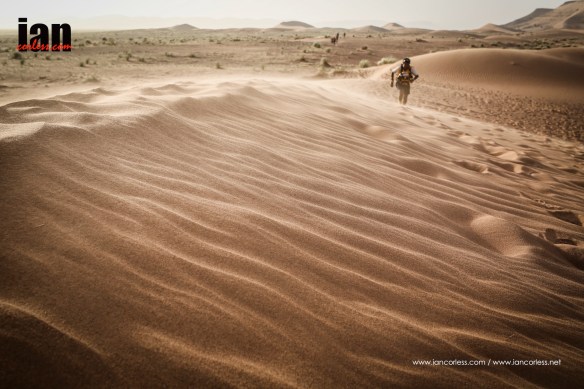
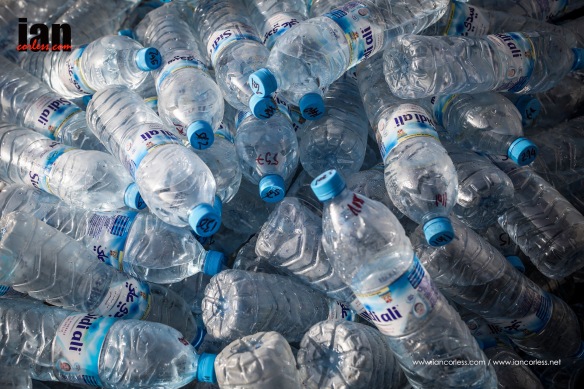
Following statistics provided by the Marathon des Sables office:

▪      150 volunteers to supervise the race,

▪      450 general support staff,

▪      120,000 liters of bottled mineral water,

▪      300 Berber and Saharan tents,

▪      120 all-terrain vehicles and trucks,

▪      2 Squirrel helicopters and 1 Cessna plane,

▪      8 Transavia ‘MDS special’ commercial planes,

▪      30 buses,

▪      4 dromedaries,

▪      1 incinerator lorry for burning waste,

▪      5 quad bikes to monitor race environment and safety,

▪      72 medical staff,

▪      2.3kms of Elastoplast,

▪      12,200 compresses,

▪      6,000 painkillers,

▪      150 liters of disinfectant,

▪      1 editing bus,

▪      5 cameras,

▪      1 satellite image station,

▪      10 satellite telephones,

▪      30 computers, fax and internet,

▪      20,000 competitors since 1986

▪      3 runners aged 10-20, 108 aged 20-30, 314 aged 30-40, 491 aged 40-50, 299 aged 50-60, 66 aged 60-70 and 13 aged 70-80 years.

▪      14 km/hr.: average maximum speed, 3 km/hr.: average minimum speed,

▪      15 years of age for the youngest competitor and the oldest, 83!
30 Years of the MDS

1986 – Michel GALLIEZ (FRANCE) – Christiane PLUMERE (FRANCE)

1987 – Bernard GAUDIN (FRANCE) – Marie-Ange MALCUIT (FRANCE)

1988 – Bernard GAUDIN (FRANCE) – Marie-Ange MALCUIT (FRANCE)

1989 – Hassan SEBTAOUI (FRANCE) – Marie-Claude BATTISTELLI (FRANCE)

1990 – Hassan SEBTAOUI (FRANCE) – Claire GARNIER (FRANCE)

1991 – Hassan SEBTAOUI (FRANCE) – Monique FRUSSOTE (FRANCE)

1992 – Mohamed BENSALAH (MOROCCO) – Monique FRUSSOTE (FRANCE)

1993 – Mohamed BENSALAH (MOROCCO) – Irina PETROVNA (RUSSIA)

1994 – André DERKSEN (RUSSIA) – Valentina LIAKHOVA (RUSSIA)

1995 – André DERKSEN (RUSSIA) – Béatrice REYMANN (FRANCE)

1996 – André DERKSEN (RUSSIA) – Anke MOLKENTHIN (GERMANY)

1997 – Lahcen AHANSAL (MOROCCO) – Rosanna PELLIZZARI (ITALY)

1998 – Mohamad AHANSAL (MOROCCO) – Rosanna PELLIZZARI (ITALY)

1999 – Lahcen AHANSAL (MOROCCO) – Lisa SMITH (USA)

2000 – Lahcen AHANSAL (MOROCCO) – Pascale MARTIN (FRANCE)

2001 – Lahcen AHANSAL (MOROCCO) – Franca FIACCONI (ITALY)

2002 – Lahcen AHANSAL (MOROCCO) – Simone KAYSER (LUXEMBOURG)

2003 – Lahcen AHANSAL (MOROCCO) – Magali JUVENAL (FRANCE)

2004 – Lahcen AHANSAL (MOROCCO) – Simone KAYSER (LUXEMBOURG)

2005 – Lahcen AHANSAL (MOROCCO) – Simone KAYSER (LUX)

2006 – Lahcen AHANSAL (MOROCCO) – Géraldine COURDESSE (FRANCE)

2007 – Lahcen AHANSAL (MOROCCO) – Laurence KLEIN (FRANCE)

2008 – Mohamad AHANSAL (MOROCCO) – Touda DIDI (MOROCCO)

2009 – Mohamad AHANSAL (MOROCCO) – Touda DIDI (MOROCCO)

2010 – Mohamad AHANSAL (MOROCCO) – Monica AGUILERA (SPAIN)

2011 – Rachid EL MORABITY (MOROCCO) – Laurence KLEIN (FRANCE)

2012 – Salameh AL AQRA (JORDAN) – Laurence KLEIN (FRANCE)

2013 – Mohamad AHANSAL (MOROCCO) – Meghan HICKS (USA)

2014 – Rachid EL MORABITY (MOROCCO) – Nikki KIMBALL (USA)

2015 – Rachid EL MORABITY (MOROCCO) – Elisabet BARNES (SWE)

2016 – Rachid EL MORABITY (MOROCCO) – Natalya SEDYH (RUSSIA)

A brief history of the MDS:

1984: At 28 years of age, Patrick Bauer decided to make for the Sahara to try to traverse a 350km expanse of uninhabited desert, on foot, alone, where he wouldn’t come into contact with a single village, oasis or watering place. Totally self-sufficient, with a rucksack weighing 35kg and containing water and food, he set off on a journey that was to last 12 days. It was the starting point of what was to become the MARATHON DES SABLES.

1986: The creation of the first MDS in the Moroccan Sahara. The 23 pioneers who took the start never imagined that their footprints would mark the start of a legendary event, which has today become a must among the major adventure sport meets. The creation of a non-mechanical competition in the Moroccan sands offers adventure runners a wealth of new prospects.

1987: Creation of the MDS logo: the face of a runner covered by a keffiyeh, the eyes protected by a pair of sunglasses and the pipette from the runner’s water container clenched between the teeth.

1989: 170 competitors take the start of the race.

1991: The gulf drama puts the MDS at a disadvantage and the financial partners withdraw. Fortunately, some runners answer the call. For these competitors, the true victory lies in meeting athletes from different backgrounds and their communion in the desert around the same goal. Sport proves once again that it can bring people together and create bonds.

1992: One and the same regulation for everyone. This year sees the establishing of unexpected draconian tests, to ensure that each participant properly transports all his or her gear from one end of the course to the other. A 30-point charter is drawn up.

First participation by the Moroccan Lahcen Ahansal

1994: Arrival of the Doc Trotters at the event.

1995: 10th anniversary. Since the start, over 1,500 men and women have left their footprint and their passion in the desert. Installation of water-pump for the inhabitants of the village of Ighef n’rifi (South of Er-Rachidia) – an idea by competitor Gilles Flamant and backed by Rolland Barthes and Patrick Bauer. Its success is to be repeated again and again

1996: First participation by Mohamed, a younger sibling of Ahansal. The two Moroccan brothers set off together and rank 4th and 5th respectively.

1997: This year heralds the start of the Ahansal saga. Morocco is honored with Lahcen’s first victory. He beats his two pursuers by nearly 30 minutes, despite them being international long-distance running champions.

1999: A mobile hospital on the MDS comes into being. There are around thirty practitioners on the ground, with doctors and nurses joining the caravan. A dedicated helicopter and ten all-terrain vehicles track the competitors each day. On- board these vehicles there are doctors of course, as well as high-tech equipment. The village boasts a genuine field hospital.

2000: Internet appears in the large MDS village. The organization decides to broadcast the texts and photos of the race live, day after day. The competitors can communicate with their nearest and dearest and receive messages of encouragement.

2001: For the first time the long leg, traditionally called “The 70”, exceeds the 80km barrier to reach 82km. The threshold of 240km is also surpassed since the 16th MARATHON DES SABLES spans 243km. Another first relates to the fact that there are no Moroccans on the podium this year.

2002: This edition is punctuated by a sandstorm, involving headwinds, which lasts the entire week. The doctors invent a machine for ‘low pressure cleansing’ to rinse out the runners’ eyes. Despite the difficult conditions, there are few retirements to report as the wind considerably reduces the temperature.

2005: The Luxembourg runner Simone Kayser is the first woman to win 3 MARATHON DES SABLES. For this 20th edition, the total number of runners exceeds 700 for the first time, with no fewer than 777 runners taking the start.

2006: A drying wind and very high humidity levels cause damage to the runners’ bodies. Despite additional allocations of water, a whole series of retirements ensues. There is a total of 146 retirements ultimately, which equates to double that of the previous record… Race management decides to shorten the long leg by over 10km given how tired the runners seem.

2008: The Solidarité MDS association is created. The aim: to develop projects to assist children and disadvantaged populations in the domains of health, education and sustainable development in Morocco. 

2009: MDS is disrupted by flooding and the 1st and 6th stages are not able to take place. To avoid the flood zones, the organization is obliged to improvise new legs on a day-to-day basis. In this way, the edition goes down in legend for its 3rd leg, which is the longest ever contested: 92km of sand, loose stones and rocks… The leg even sees the retirement of Lahcen Ahansal… At the prize giving the 2 winners admit to having competed in their hardest MDS. However, it was also the shortest: 202km.

2010: For its 25th edition, the number of participations reaches a record high of 1,013 participants. It is to be the longest MARATHON DES SABLES. It spans 250 kilometers with a course considered by former entrants to be the most difficult ever organized.

2012: A dramatic turn of events on the longest leg as the then leader in the overall standing, Rachid El Morabity (MAR) injures himself one kilometer from the finish. Medical examinations reveal a serious muscular lesion in the quadriceps. After over five years on the 2nd or 3rd step of the podium, Jordanian Salameh Al Aqra secures the title.

2013: 1,027 competitors on the start line make this a new participation record. New feature: a final “Charity” stage sponsored by UNICEF and traversing the Merzouga dunes round off the race. Sports wise, Mohamad Ahansal and Megan Hicks are the champions of the 231.5km event. On a human level, all the finishers pull off their crazy bet.

2014: 2011 winner, Moroccan Rachid El Morabity (MAR) wins the overall ranking and takes Mohamad Ahansal’s crown. In the women’s category, another American stamps her mark, Nikki Kimball. The French revelation is one Michaël Gras, 22 years of age, 8th overall and top Frenchman. A major athletics star, Moroccan Hicham El Guerrouj lines up to take the start of Saturday’s Unicef Charity leg.
You can follow the 2017 Marathon des Sables on this website.

On Facebook – Facebook.com/iancorlessphotography

On Instagram – @iancorlessphotography

On Twitter – @talkultra
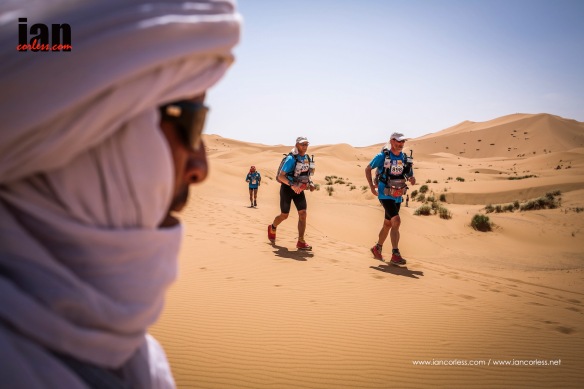
 

Please remember, communications in the Sahara will be sporadic and we will upload content as and when possible.

Fuerteventura hosts the Half Marathon Des Sables 

The race will be held from September 25-30 and it will have a maximum of 500 runners.

This morning, Fuerteventura hosted the official presentation of the Half Marathon des Sables, a spectacular stages race which will take place between the 25th and the 30th of September 2017.

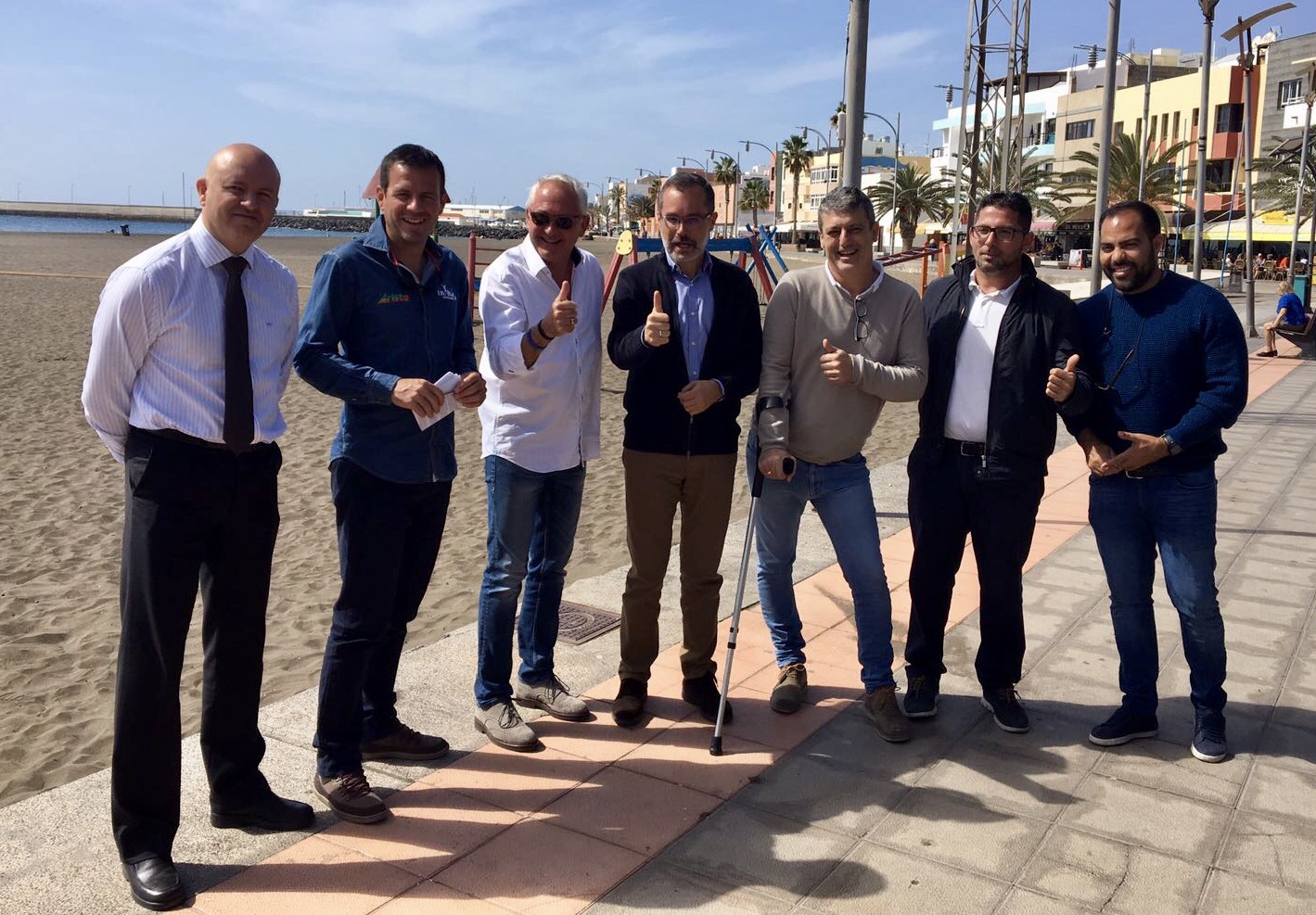
The president of the Cabildo de Fuerteventura, Marcial Morales, the race’s directors, Patrick Bauer and Fernando González, and Mario Valle in behalf of Playitas Resort assisted to the act.

The legendary Marathon des Sables has been held in Morocco since 1986, and it is one of the most famous stage races all over the planet. It will now expand to Europe and America. Fuerteventura has been the selected place for it, as Marcial Morales explained: The European edition will be in the South of Fuerteventura, which gathers the required conditions for an international, self-sufficiency race as this one. This will mean an enormous boost for the island as sports destinations”.

This first edition will have a maximum of 500 runners coming from all over the World, who will be the best promoters of Fuerteventura’s beauties and its perfect conditions as a destination for this sport which has experimented such an enormous growth in the last years.

The sandy and desert-like landscapes in Fuerteventura will be essential for this kind of event. This is one of the reasons why Patrick Bauer, the race’s founder, chose this place in the Canary Islands for it.

Patrick Bauer wanted to thank the collaboration of all the administrations which will make the Half Marathon des Sables Fuerteventura possible. He described the island as wild, with a unique nature and with similar weather conditions as Morocco.
Bauer revealed that the event will take place from the 25th to the 30th of September 2017. The race will have the the same philosophy as the original one: a multi-stage event, in self-sufficiency where you fight against yourself in a desert like landscape.

The total distance will be of 120 kilometres, divided in a yet undefined number of stages. The race will have a couple of basecamps during the course, starting from the South of Fuerteventura and ending in Gran Tarajal.


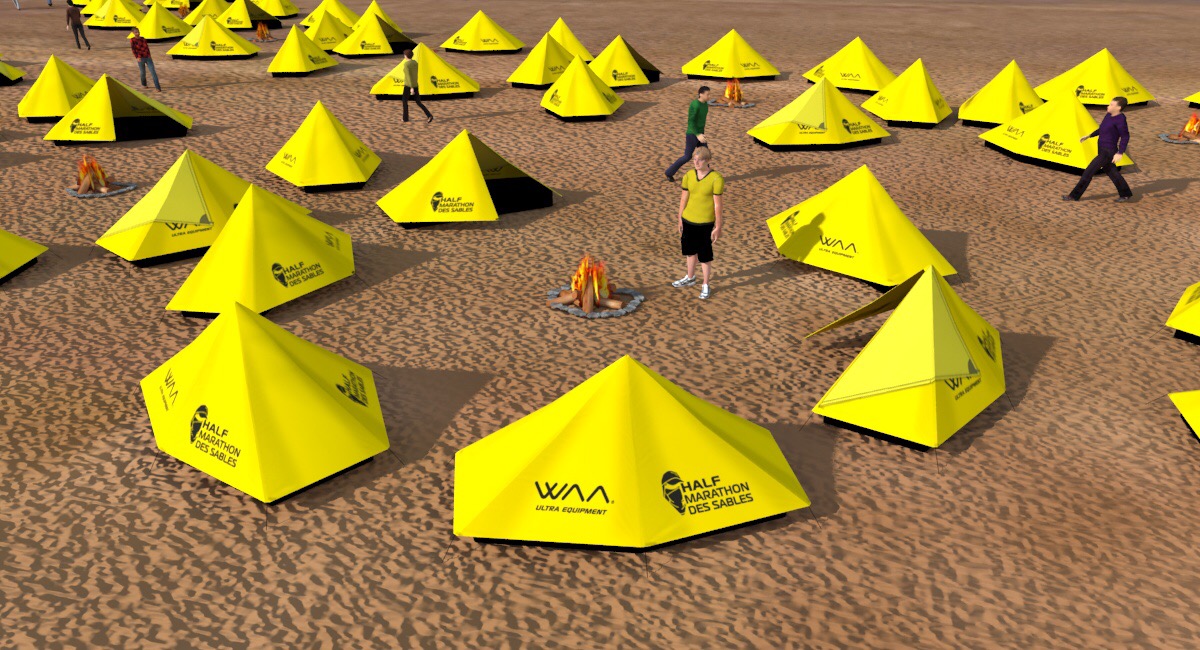
All the runners who are accepted for the challenge will receive a specific WAA tent, where they will be able to sleep during the race, as well as some carbon hiking poles.

Bauer wanted the presence of Arista Eventos in the direction of this prestigious multi-stage event. Thus, Fernando González and David Déniz, managers of the company in charge of races such as Transgrancanaria HG or Haría Extreme Lanzarote, were both present in the presentation. Amongst other tasks, Arista will handle the logistics of this massive event. To learn about the philosophy of the race, they will assist to Morocco in April to live the African event.


Mario Valle, in behalf of Playitas Resort, was also in the presentation as they will also collaborate with the event. “We’ve been promoting the sports and high quality tourism, and that is why we will support the celebration of the Half Marathon des Sables in Fuerteventura, in collaboration with the Cabildo de Fuerteventura with the only goal of having a successful event”, he stated.

Fred Streatfield – The Community Of Running

iancorless-com_lanza2017-03885

Fred Streatfield has been running all his life. You could say that running defines him. However, Fred is so much more than a runner, he’s a husband, a father, a grandfather, great grandfather a builder and in April 2017, he has set himself the challenge of running the Marathon des Sables.

‘MDS’ as it is known within the running community, is for many a dream goal. It’s been billed as the ‘Toughest Race on Earth’ and while we all know that it’s not, the multi-day Saharan adventure does bring its own set of unique problems and difficulties to encounter.

The race is over 30-years old and has without doubt paved the way for all modern day, multi-stage races. It’s format of self-sufficiency has been copied time and time again. In the early days, it was tens of runners who toed the line. Now it’s 100’s of runners and in recent years, with the growth of ultra-running, more than 1000 stand within the dunes of Morocco every April for what will be, for them, the ultimate experience

When you’ve been running for as long as Fred, you’d think this Moroccan adventure would be a walk in the park, or should I say, the dunes for him. But no, despite 49-years of running, Fred is intimidated for this new venture in his life.

A race like this is intimidating, it should be, after all it’s why you do it, no? Fred is no different than any other when signing on the line and paying the deposit. He wanted his run experience to be made whole, with something alien to him, something that would completely take him out of his comfort zone. Little did he know that when he signed up, his challenge would become something so much more than running…

iancorless-com_lanza2017-03570

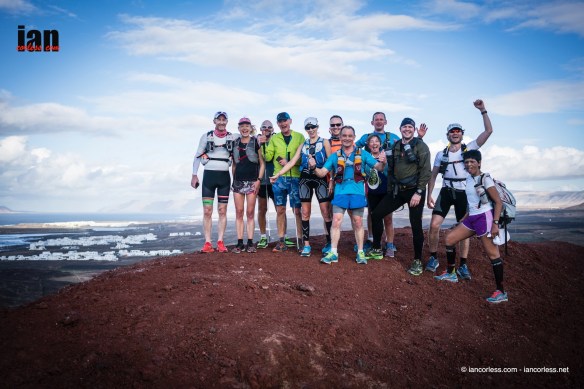
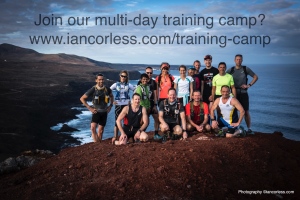
Niandi Carmont caught up with Fred after a training camp in Lanzarote. It was a camp specifically tailored for those undertaking a multi-day race of any type. Among the 40-participants on the camp, Fred became somewhat of hero.

It’s a simple way to start any conversation about a future race, direct is best sometimes, “Do you feel prepared Fred?’

“Well, yes. Yes and no really. I feel I now need to do more training but in all honesty, I don’t stop – I do need to do more long runs though.”

iancorless-com_lanza2017-03365

Fred had arrived in Lanzarote feeling a little worried that he would be isolated, little did he know that he was leaving one family behind to be joined by another.

“The training camp was absolutely just beyond belief really. The volume of running we did and the guys I ran with… It was amazing, they were all young whippersnappers, and me, I’m an old boy! But I did keep up with them.”

Keep up with them Fred did. He’s an old-school road runner, a little obsessed with running fast. Too fast at times, particularly when you consider his 65-years. We had a phrase when I was younger and you’d see an older runner, ‘fit as a butcher’s dog’ and yes, Fred is as fit as a butcher’s dog. On day 1 it was a shakeout run of just 60-minutes, Fred by his own admission says that he’s not used to technical terrain – too many years running on the road! Forty minutes into the run he hit the deck, it looked a bad fall. His arm was bruised, is elbow bleeding and he was holding his ribs. We imagined the worst. He bounced up, brushed himself off and pushed on. The next day, the first day of the camp was a long run, Fred didn’t hold back and placed himself in the fast group.

iancorless-com_lanza2017-03171

”Yes. I went with the first group, with the fast group. Last year I ran The Great North Run with Mark Scott (also on the camp) and I beat him by about three minutes. We were running for Macmillan charity. In the race, Mark came in after me, we exchanged niceties, shook hands and then we met again on the camp. As I was waiting for the run to start, Mark came and said, “Come on, Fred. Come on. Come on. You belong in this group.” which was the fast group. I said, “No, no, Mark, I’ll go with a slower group”. He went, “No, no. You go into this fast group.” Anyway, I stuck with him for 40-minutes, the run was going to be about a 20 to 23 plus miles. I thought to myself, if I continued at this pace I may not finish. It would have done me in. Ian was with me at the time so we eased off with another runner, Paul Allum and then joined your group Niandi.”

Niandi was of course flattered, it was just 1-day into the camp and already Fred was getting a fan club. Niandi’s group was pretty much running all the time but it was a slightly slower pace than the group up front lead by Elisabet Barnes, 2015 Marathon des Sables ladies champion.

Fascinated by stories and people, Niandi knew Fred had a story, we all have a story, but Niandi had that intuition, that sixth sense that told her that there was more than meets the eye. It started simply, ”Tell us a little about what motivated and inspired you to decide to do MDS and how it all started?”

iancorless-com_lanza2017-03060

“Well, it goes back quite a way. There is a nice little story attached to this. I saw the race on the internet and how it posed the question of challenging one’s self. I was attracted to it but I dismissed it and moved on. Then a few weeks later, I went on to a website and it popped up again. My initial thoughts were about it looking really tough and I wondered if I could do it, after all, I am getting on!”

Niandi laughed, she’d heard rumors that there was more to the story. She probed, “Tell my how your wife was involved the entry process?”

“I went off into town with my wife. I left her and went to get some information on the desert running. I hadn’t told her though. I bumped into a friend of mine and he said, “What are you doing?”  I was on the spot so I told him that I was thinking that I may be tempted to run in the Sahara and I was getting some information. I told him though, whatever you do, don’t tell the wife!”

I am sure you can fill the gaps but the inevitable happened. The following day they bumped into each other once again and how did the friend great Fred?

“How’s the desert coming on?”

“Have you entered?” my wife said. “No, but I’ve been considering it”

The ice was broken. Fred entered the race and never looked back. His wife supported him every step of the way. But elation and excitement turned to loss, sadness and questions if the race would ever happen.

iancorless-com_lanza2017-05200

“I think it was December 10th, it was the registration day. That was 2015. We waited for the entry for 2017 to open. I am not computer savvy and she had offered to help me fill out the forms. Technology and me don’t go together. Anyway, we checked in and we paid the deposit and that was the start. At the same time, we were in the process of moving house, always a big thing. The move happened and then 5-weeks later she passed away.”

It’s a moment like this that a life can fall apart, imagine it, married for so many years and then suddenly a void. Fred was all set for throwing in the towel but this is the power of running and the community connected with the sport.

”There was a closed website group just for the people who are running the MDS in 2017,” Fred continued. “They all said, “No, no, no. Don’t give up. She wouldn’t want you to.” So, I decided to carry on. It’s been difficult and it’s still difficult now. That’s one of the reasons I’m running. II am also running for Macmillan Cancer Charity. It’s important to help the charity too.”

No words needed. What feels like minutes is only seconds and Niandi picks up the conversation. “That’s a very noble cause, Fred. You’ve had a lot of support from the running community and from the people at the Lanzarote Training Camp, but it’s also due to your personality because you’re very outgoing. You’re very positive. You’re very bubbly. You’re very communicative and you’re really fun to be around.”

There’s silence and then a, “Thank you.”

******

iancorless-com_lanza2017-05235

“I can’t remember my first race. But I was running at school. That’s where it all started but a key moment was when I had started work. Some guy just walked up to me. He went, “You look fit. In the car park, over here, every Saturday morning, be there. You will want to bring some running stuff.” I didn’t get any backing from my parents or anything like that and I really appreciated it so I started to go, I still have those old plimsoles.”

Simple beginnings and picture starts to form of Fred, his background, his history, his dedication to work hard and graft.

“I got some old shoes and some old shorts and then just went running. It just went from strength-to-strength really. I was about 15 or 16 and I have never looked back – I have met some amazing people. Obviously, they were not with us anymore, but they kept me going and helped me and nurtured me through. Even in the early days, the running community helped me.”

Community, bonds, friendship, values, Fred found all these in Lanzarote and it confirmed to him all that is good about running and although the decision to continue after the passing of his wife was a tough one, he now knows it was the correct one.

”Words fail me really, everyone on the training camp has been so incredible. It’s been tough. they’re so nice. It was really tough, II didn’t say anything on the camp but while I was there it coincided with the anniversary of my wife’s funeral.”

“I think there was a very strong bond between everybody and people knew what you’d gone through and I think that they felt the vibes,” Niandi responded. “Family is also very important to you. I also got that impression because you come from a very close family. Well, maybe you could tell about your family, about your daughters.”

”Yes, my daughters have been strong for me. Also, I don’t know how they’ve coped losing their mom. But anything I want, anything, they are there for me. They cook me my food and they take turns to have me as a guest at weekends – just so that I don’t starve. I’ve got four children myself and each of my four children have got four children.”

”That is 16 grandchildren?”

”Yes, 16 grandchildren and one of my granddaughters who is now 20, she’s not the oldest, she’s just had a little baby girl, six months ago!”

“You’re a great-grandfather?”

“I think that shocked some of the guys in Lanzarote. They looked at me and said, “How many grandchildren you got?” I said, “I’ve got one great-granddaughter.” I don’t think they could believe it.”

iancorless-com_lanza2017-2-20

Married for 44-years, his wife was 18 and he 19. Through thick and thin, as Fred quite rightly says, “It wasn’t all roses.” But who’s story is. They battled the tough times, enjoyed the good times. “She was my best friend. She helped me, she made me who I was and she was a very strong person and a really nice person as well.”

Part man, part robot, Fred has held back some other vital information. “You also have to keep a check on your health,” Niandi asks. “Because you’ve had a few health issues?”

“Yes. I’ve got a pacemaker. It’s all checked, it’s all monitored, and it’s good to go. In 2012, when I had a problem, they said I would never run again. At the time, I was looking at the MDS and I thought my chance had gone. But since then, everything is working out and I am fine. I’ve done just over 200 runs and races. I’m pretty fit.”

The finish line of the 2017 Marathon des Sables will be a special one. Red ribbon will pass through the fingers of race director Patrick Bauer. Attached to the ribbon will be a large disc of gold. As Fred crosses the line and the prize is placed around his neck, I have a real feeling that there will be more than just Fred’s tears shed on the finish line. This simple man embodies the race. He is a personification of the values the race holds true.

iancorless-com_lanza2017-03910

*****


Fred’s typical training week:

  • Monday – Swimming
  • Tuesday – Run club night which is usually a sat 8km-10km.
  • Wednesday – Cycling 2-hours indoors.
  • Thursday – Run club hill sessions or fartlek. Followed by 1-hour swimming.
  • Friday – Rest.
  • Saturday – Park Run in the morning and then a 10km to half-marathon run.
  • Sunday – Usually 9 to 15-miles.

On MDS:

I’m sure I’ve got everything that I need. The Lanzarote trip helped with this, there might be a couple of little bits that I need, but nothing really. I think I need to slow down a little bit when running, think about the long game. I’m under no illusion that it’s going to be tough. Believe it or not, I’ve joined a sauna club. I’m hoping to spend a few hours in the sauna. I don’t know if I’ll be able to take my running stuff, though. I run in Lanzarote with my pack and that worked, I didn’t have full weight in it but it was good. I need to test out my food now and I am good to go.

Would you like to join our 2018 Multi-Day Training Camp, if so, go HERE

iancorless-com_lanza2017-2-25a


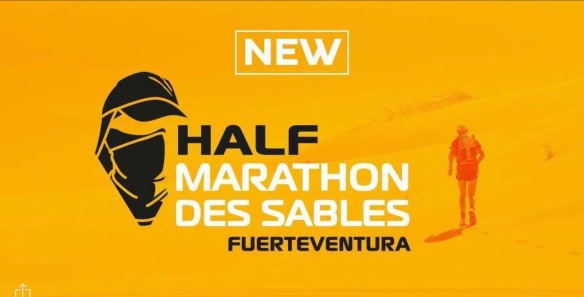
Half Marathon des Sables Fuerteventura – New Event

fullsizerender

Marathon des Sables, the iconic multi-stage race has finally, after 30-years expanded with a new race for 2017 – HALF MARATHON DES SABLES FUERTEVENTURA.

The event will echo the ethos of the iconic ‘MDS’ race providing a 3-day self-sufficient journey of 120km’s on the Canary island of Fuerteventura.

Pre registration is open and although the event will take place in September, specific dates have not yet been confirmed.

halfmds

The MARATHON DES SABLES organisation and Fuerteventura present a new challenge: the HALF MARATHON DES SABLES FUERTEVENTURA. This 120 km running race in three steps will be held on September 2017, in Fuerteventura, in the Canaries Islands. As the MARATHON DES SABLES, it will be a food self-sufficiency race.

Unlike the the legendary benchmark multi-stage father figure race, Marathon des Sables, the new ‘half’ edition is designed to provide an entry level race at a much more affordable price. Where families may be able to join a racing father or mother and enjoy what Fuerteventura has to offer while a parent or parents race.

Although not confirmed, it is anticipated that entry per person will be under 1000 euro and places will be limited to 500.

(I must stress, this price and entry places are not confirmed yet)

Inscriptions for the race are HERE and as stated, it is expected that they will be limited.

Half MDS Marathon des Sables

Join our 2018 Multi-Day Training Camp with Elisabet Barnes and Sondre Amdahl in Lanzarote, January 18th to 25th. Booking and info HERE

iancorless-com_lanza2017-2-25a

Episode 128 – Michael Wardian, Hayden Hawks and Pushpa Chandra

A_GRAVATAR

Episode 128 of Talk Ultra is here and what a show… we speak in-depth with the incredible Michael Wardian after his record breaking World Marathon Challenge. We speak to star in the making, Hayden Hawks and Niandi Carmont brings us her first female ‘one-to-one’ interviews with Pushpa Chandra. We have the news, chat, gossip and of course Speedgoat co-hosts.

New Year and Talk Ultra needs your help! 

We have set up a Patreon page and we are offering some great benefits for Patrons you can even join us on the show! This is the easiest way to support Talk Ultra and help us continue to create! 

Many thanks to our January Patrons

Rene Hess, Daniel Weston, Dan Masters, Kerstin Palmer, Sarah Cameron, Neil Catley, Sam Wilkes, Melissa Bodeau, Lindsay Hamoudi, Aaron Aaker, Simon Darmody, Philippe Lascar, Rohan Aurora, Mathew Melksham, Brian Wolfkamp, Thomas Mueller, Mark Moromisato, Jamie Oliver, Rand Haley, Ron van Liempd, Mike Hewison, Steve Milne and Rupert Hitzenberger.

Donate HERE

support_patreon

It was our 2017 Lanzarote Training camp and I have to say what a huge success it was. We had 40-clients who came from as far afield as Canada to take part in our 7-days of fun. It really was special and so great to get so much awesome feedback. I will post a link to images and audio feedback in our show notes.

We had some inspiring people attend and in future shows we will have audio following some of the incredible stories. To kick it off and following on from my discussion with Niandi in our last show. Niandi brings you the very first of female ‘one-to-one’ interviews with Pushpa Chandra.

00:27:30 INTERVIEW with Pushpa Chandra

01:12:28 NEWS

World Marathon Challenge

Well, the big news is Mike Wardian ran 7-marathons on 7-continents in 7-days. Wow. He ran 2:54 in Antarctica, 2:45 in South America, 2:42 in North America, 2:37 in Europe, 2:45 in Africa, 2:49 in Asia, and 2:45 in Australia. In the process he set a new world record average time of 2:45.

01:22:54 INTERVIEW with Michael Wardian

Women’s winner, Chile’s Silvana Camelio ran 4:14 in Antarctica, 3:45 in South America, 3:58 in North America, 4:08 in Europe, 4:10 in Africa, 4:34 in Asia), and 4:37 in Australia. The last result almost gave away her overall victory but she held on by just 6-minutes That 4:37 in Australia left her just six minutes ahead of China’s Guoping Xie.

The Spine

Carol Morgan blasted around the tough course in 109-hours 54-minutes – unbelievably, 43-hours quicker than the previous ladies best.

In the men’s race it looked to be a battle between two previous winners, Pavel Paloncy and Eugeni Rosello Sole but Tom Hollins came from behind and clinched victory in 99-hours 25-minutes. Tom won the 2016 edition of The Challenger, the Spines ‘fun run’ race! We hope to have an interview with Tom in the next show.

Coming up…

The Coastal Challenge in Costa Rica has a super stacked field with Chema Martinez, Tom Owens, Sondre Amdahl, Jason Schlarb and so many more in the men’s race.

For the ladies we have to previous champions, Veronica Bravo and Ester Alves heading up strong competition from Elisabet Barnes and Anna Cometi.

In the US it’s the Sean O’Brien 100k.

RUNNING BEYOND BOOK

This week I will be in Amsterdam on Feb 3rd, 4th and 5th for a Trails in Motion event and Running Beyond book signing with Mud Sweat and Trails

We are going to have Running Beyond Event which will take place 3, 4 and 5th March in London, plans are progressing for that… watch this space.

I will be also going to Sofia in Bulgaria on the 17th, 18th and 19th March for a trail, mountain and Skyrunning expo

02:36:50 INTERVIEW with Hayden Hawks

UP & COMING RACES

Australia

Queensland

Caboolture Historical Village Dusk to Dawn 100km | 100 kilometers | February 11, 2017 | website

Caboolture Historical Village Dusk to Dawn 50km | 50 kilometers | February 11, 2017 | website

Tasmania

The Cradle Mountain Run | 82 kilometers | February 04, 2017 | website

Belgium

Wallonia

65 km | 65 kilometers | February 04, 2017 | website

Canada

Yukon

Yukon Arctic 100M | 100 miles | February 05, 2017 | website

Yukon Arctic 300M | 300 miles | February 05, 2017 | website

Yukon Arctic 430M | 430 miles | February 05, 2017 | website

Chad

Half TREG | 90 kilometers | February 12, 2017 | website

TREG | 180 kilometers | February 12, 2017 | website

Chile

60K | 60 kilometers | February 11, 2017 | website

Costa Rica

Adventure Category | 155 kilometers | February 10, 2017 | website

Expedition Category | 236 kilometers | February 10, 2017 | website

Finland

Lapland

66° North Ultra Race | 66 kilometers | February 17, 2017 | website

Roavve Polar Ultra 300 | 308 kilometers | February 17, 2017 | website

Rovaniemi 150 | 150 kilometers | February 17, 2017 | website

Rovaniemi 300 | 300 kilometers | February 17, 2017 | website

Rovaniemi 66 | 66 kilometers | February 17, 2017 | website

France

Aude

Gruissan Phoebus Trail | 50 kilometers | February 12, 2017 | website

Côtes-d’Armor

Défi Glazig (45 + 18) | 63 kilometers | February 04, 2017 | website

Germany

Lower Saxony

Brocken-Challenge | 86 kilometers | February 11, 2017 | website

India

Gujarat

135 Miles | 135 miles | February 10, 2017 | website

160 km | 160 kilometers | February 10, 2017 | website

50 km | 50 kilometers | February 10, 2017 | website

Run the Rann 101 km | 101 kilometers | February 10, 2017 | website

Run the Rann 161 km | 161 kilometers | February 10, 2017 | website

Ireland

Kildare

Donadea 50K | 50 kilometers | February 11, 2017 | website

Italy

Marche

Maratona sulla sabbia – Ultra maratona | 50 kilometers | February 12, 2017 | website

Kenya

Kimbia Kenya 100 km | 100 kilometers | February 03, 2017 | website

Kimbia Kenya 50 km | 50 kilometers | February 03, 2017 | website

New Zealand

Tarawera 100K Ultramarathon | 100 kilometers | February 11, 2017 | website

Tarawera 60K Ultramarathon | 60 kilometers | February 11, 2017 | website

Tarawera 85K Ultramarathon | 85 kilometers | February 11, 2017 | website

Oman

Wadi Bih Run | 72 kilometers | February 03, 2017 | website

Spain

Canary Islands

Marathón ‘Isla del Meridiano’ – 86 km | 86 kilometers | February 04, 2017 | website

Region of Murcia

100 km | 100 kilometers | February 11, 2017 | website

Thailand

100 km Run | 100 kilometers | February 04, 2017 | website

50 km Solo | 50 kilometers | February 04, 2017 | website

66 km | 66 kilometers | February 17, 2017 | website

75 km Run | 75 kilometers | February 04, 2017 | website

Jungle 100 | 100 kilometers | February 17, 2017 | website

United Kingdom

Cornwall

Arc of Attrition | 100 miles | February 10, 2017 | website

Devon

Coastal Trail Series – South Devon – Ultra | 34 miles | February 04, 2017 | website

Oxfordshire

Thames Trot 50 | 50 miles | February 04, 2017 | website

Surrey

The Pilgrim Challenge North Downs Way Multistage Ultra | 66 miles | February 04, 2017 | website

USA

Arizona

50K | 50 kilometers | February 04, 2017 | website

Pemberton Trail 50K | 50 kilometers | February 11, 2017 | website

Arkansas

White Rock Classic 50K | 50 kilometers | February 04, 2017 | website

California

American Canyon 50K Ultramarathon | 50 kilometers | February 04, 2017 | website

Fort Ord Trail Run 50K | 50 kilometers | February 04, 2017 | website

Jed Smith Ultra Classic – 50K | 50 kilometers | February 04, 2017 | website

Jed Smith Ultra Classic – 50 Miler | 50 miles | February 04, 2017 | website

Ordnance 100K | 100 kilometers | February 04, 2017 | website

Sean O’Brian 100K Trail Run | 100 kilometers | February 04, 2017 | website

Sean O’Brian 50K Trail Run | 50 kilometers | February 04, 2017 | website

Sean O’Brian 50-Mile Trail Run | 50 miles | February 04, 2017 | website

Florida

110 With Donna Ultra Marathon | 110 miles | February 12, 2017 | website

Iron Horse 100 km | 100 kilometers | February 11, 2017 | website

Iron Horse 100 Mile | 100 miles | February 11, 2017 | website

Iron Horse 50 Mile | 50 miles | February 11, 2017 | website

Lost 118 | 118 miles | February 11, 2017 | website

Massachusetts

50 km | 50 kilometers | February 04, 2017 | website

North Carolina

Uwharrie 40-Mile Mountain Run | 40 miles | February 04, 2017 | website

Oregon

Bristow 50K Trail Run | 50 kilometers | February 04, 2017 | website

South Carolina

Mill Stone 50K | 50 kilometers | February 11, 2017 | website

Rut Rogue 40s – 40 Mile 3-5 Person Relay | 40 miles | February 04, 2017 | website

Rut Rogue 40s – 40 Mile Run | 40 miles | February 04, 2017 | website

Texas

100K | 100 kilometers | February 11, 2017 | website

100K Relay | 100 kilometers | February 11, 2017 | website

100 Mile | 100 miles | February 11, 2017 | website

100M Relay | 100 miles | February 11, 2017 | website

50K | 50 kilometers | February 11, 2017 | website

50 mile | 50 miles | February 11, 2017 | website

Piney Woods TrailFest 50K | 50 kilometers | February 04, 2017 | website

Rocky Raccoon 100 Mile | 100 miles | February 04, 2017 | website

Rocky Raccoon 50 Mile | 50 miles | February 04, 2017 | website

Virginia

The Wild Oak Trail 100 | 100 miles | February 11, 2017 | website

Washington

Orcas Island 50K | 50 kilometers | February 04, 2017 | website

Wisconsin

John Dick Memorial 50K | 50 kilometers | February 04, 2017 | website

Venezuela

Ultra Laguna de Urao | 65 kilometers | February 04, 2017 | website

03:16:20 Close

03:21:44

We say this every show, but Talk Ultra is nothing without downloads and listeners so please help us spread the word.

Share us on Facebook

Tweet us on Twitter

And use good old word mouth.

Importantly, go to iTunes and subscribe so that you automatically get our show when it’s released we are also available on Stitcher for iOS, Android and Web Player.

Our web page at www.iancorless.com has all our links and back catalogue.

Please support Talk Ultra by becoming a Patron at www.patreon.com/talkultra 

He is Karl Meltzer and I’m Ian Corless

Keep running

ITunes http://itunes.apple.com/gb/podcast/talk-ultra/id497318073

Stitcher You can listen on iOS HEREAndroid HERE or via a web player HERE

Libsyn – feed://talkultra.libsyn.com/rss

Website – talkultra.com

Wardian nails the World Marathon Challenge

©worldmarathonchallenge

©worldmarathonchallenge

Michael Wardian needs no introduction. The dude has been blowing our minds for years with a stunning display of running. Only recently I wrote an article for IRUN4ULTRA (here) about Wardian’s incredible 2016.

Well, ‘The Running Man’ has kicked off 2017 in fine style with the World Marathon Challenge. Yes, 7-marathons on 7-continents in 7-days.

Ask anyone, running 7-marathons back-to-back is a tough challenge but doing them with just 16-hours sleep and all at an average pace of a new world record 2:45:56 sets the mark to a whole new level The fastest marathon was in Miami where Wardian clocked 2:37:56 – he said it was a tough day!

The challenge began in Antarctica on Jan 23rd and concluded in Sydney, Australia just 7-days later. Argentina, Miami, Madrid, Morocco and Dubai filled the gap.

The previous record of 3:32:25 held by Dan Cartica was blown off the scale by Wardian who in his interview for Talk Ultra podcast discussed how tough, physically and mentally this challenge was.

The World Marathon Challenge was the brainchild of Richard Donovan (Ireland). He himself completed the challenge twice, the first time for a charity, GOAL and the 2nd time in 2012 when he lowered the elapsed record to 4-days, 22-hours and 3-minutes. The first ‘official’ challenge took place in 2015.

You can listen to a 1-hour special with Michael Wardian on Talk Ultra podcast released Friday 3rd February on this website.

Top Tips To Better Multi-Day Running

©iancorless.com_MDS2016-8007

Is the last edition of the Marathon des Sables always the toughest? It would appear so? You always hear as the race concludes, ‘Wow, that was the toughest race ever!’

Of course many variables come into play when one says it’s the toughest. First and foremost, you most certainly need to have done at least one other edition to be able to compare, but in truth, multiple editions or experiences must count to be able to claim any edition of a race as a toughest. Also, age, fitness, condition, state of mind and so many other variables impact on a decision. It’s not always easy to be ©iancorless.com_MDS2016-2441objective. I have often considered myself to be fit going into a race, only to find that my fitness is not where I thought it was and therefore a race has appeared harder! Truth is, the race was the same, it’s just that I wasn’t up for it. Let’s be clear, I’m not providing excuses, on the contrary, I am trying to provide perspective.

I’ve been at the MDS for the past 4-years, not as a runner (although I have 30-years of experience) but as a photographer and journalist. I like being on this side of the camera, for sure, there are days when I look at the race (or any race) and I wish that were me, once again fighting the terrain and fatigue to achieve a goal. My goals have now changed and as my good friend and photographer (who sadly has passed away) Mark Gillet used to say, ‘I sometimes think it’s harder working on the race than running it! Perspective once again…

I actually don’t agree with Mark, working on the MDS or any multi-day race is hard, stressful and the long 18-20 hour days do have an impact. Yes, I get out on the course and cover the terrain on foot but I get to change my clothes, I get to eat two times a day and although I sleep in a bivouac, it does usually have sides to it which blocks out the wind.

So with the 31st MDS in the bag, I wanted to reflect on the race and provide an objective overview from the outside looking in of what I consider worked and what didn’t work at MDS and provide some key pointers that anyone can take away and apply for a future MDS or other multi-day race. I must stress, these are my thoughts and on some points you will agree and on other points you won’t. That’s ok! It’s called opinion and we are all entitled to one.

©iancorless.com_MDS2016-8110

First of all though, lets answer that burning question, ‘Was the 2016 Marathon des Sables ever?’

No!

It was a tough one for sure, it ranks with the toughest but I don’t really think anyone can hand on heart say that any one edition is the toughest.

Each year, Patrick Bauer and his team work a little Sahara magic and as many MDS runners who have participated in previous editions will tell you, the race always covers some familiar terrain. It’s the nature of the Sahara and the complex route of access trails dictate where the race can go and where it can’t due to the huge convoy of vehicles that daily move the ‘circus’ from one place to the next. For example, the 2016 route had much of the 2014 route but in a nod to the tough course, the 2014 route was also considered a tough one with a very big drop out rate on day one.

©iancorless.com_MDS2016-0946

Having said all of the above, the 31st edition was a serious toughie and here is why:

Day 1 kicked of with the huge Mezouga dunes that are tough for any runner, even experienced ones. The day also concluded with a tough section of dunes but to add to the difficulty and complexity, midway during the stage winds increased and increased causing severe sandstorms that hampered navigation, onward progress and resulted with a chunk of DNF’s and those who finished were left exhausted.
At 257km, the race was the longest edition ever making all stages close to marathon distance. This impacts greatly on every runner as recovery time is reduced. The long day was not as long as many anticipated at 84km, especially after the 30th edition 90+km day. However, the long day was a tough one with plenty of climbing and loads of soft sand. The final charity day is usually a jog to the line and a way to exit the Sahara and get back to the buses, this year, the charity stage was 17km – too long!
Sand, sand and more sand. I know it’s the Sahara and therefore one would expect sand to be everywhere but in reality, MDS usually only has around about 30% soft sand. This year it was considerably more and that impacted on everyone.
Wind came and went but it’s impact on the racing and bivouac life was notable.
Temperatures rose just in time for the long day and then stayed very high for the remainder of the race.
Day 2 dropout rate was very high which reflected a tough stage but also the knock-on effects from a very tough day 1.
The overall drop out race once the race concluded was over 10%, a sure sign of a tough edition of the MDS.

There you have it, some solid points on why the 31st edition was a tough one and of the many runners who completed the race, I am sure they could add so many more points to my brief synopsis above.

©iancorless.com_MDS2016-2799

OVERVIEW©iancorless.com_MDS2016-8488

It’s funny how everyone is now looking to 2017 and the 32nd edition of the race. Questions are being asked – what, how, why, should I, can I, will I and so on…

©iancorless.com_MDS2016-3382

MDS is not complicated:
Let’s get one thing clear, Marathon des Sables is a simple race that is over complicated by too much information and too many people saying WHAT SHOULD be done. Let’s hark back to Patrick Bauer’s pioneering days and simplify the process of running the MDS. I interviewed and chatted with many runners in bivouac who had done just that, they had applied simple logic and worked out what would work for them. Yes, they had taken advice, looked at websites, processed information but importantly they had found out what worked for them. They realised early on that they were an individual and as such, they needed a personal approach to MDS and not a generic one. When you break the race down, key things are really important:

Pack – must fit, have enough room (but not too much) for all your equipment and provide easy access to fluid and you must make sure that your numbers are visible as per race rules.
Sleeping bag – lightweight, packs small and warm enough. I would always recommend a sleeping bag and jacket as opposed to a ‘combi’ as it offers more flexibility, reduced weight and reduced pack size. Popular sleeping bags this year were PHD, Yeti and OMM. There is a review on my website that compares all three. The Raidlight Combi was also popular, certainly with a small selection of the British contingent; it worked well and those who used it were happy – all about what works for you!
Clothes – you just need what you will run in. However, a spare pair of socks was commonplace and many runners had one or all of the following: a warm base layer, a lightweight down jacket or waist coat, buff and many had lightweight pants.
Sleeping Matt – It’s an optional one but a good nights sleep is important and those who hadn’t taken one were wishing they had in most scenarios. Two options exist – inflatable and roll out solid foam. The choice is yours. The inflatable ones offer more comfort, more flexibility in packing but with poor admin, you do run the risk of a puncture. I’ve used inflatable for the past 4-years with no issue. A solid foam Matt will last the week with no risks of problems but they roll large and need to sit outside the pack.

©iancorless.com_MDS2016_Day4_0116

Shoes and Gaiters – Shoes (more below) are personal, just make sure they have a good fit, appropriate drop for your needs and and suit your run style with enough durability for you. I say ‘you’ because Rachid El Morabity will complete the whole race in 21-hours whereas most people won’t even do just the long day in that time – his shoe shoe choice will and can be very different to what most of us need! Get your Velcro sewn on your shoes and make sure that when you get the shoes back the fit has not been altered. Plan in advance, don’t leave this to the last few weeks.

©iancorless.com_MDS2016-2288Food – You need a minimum amount of calories per day specified in the race rules and how those calories are made up are up to you. This for many is a difficult one. It raises many questions and yes, it’s good to find out what other people do and use but ultimately, YOU have to eat it. The decision to use a stove is another question mark but it would appear that most runners like that hot water option. Remember though, you can make a fire from twigs, shrub and branches that surround bivouac. Also note here that food choices and what you eat during running varies greatly depending on how fast you run. For example, the top runners are done and dusted on the marathon stage in 3-4 hours and they are using carbohydrate as a fuel, they therefore can get away with 1-2 gels. If however, a typical day for you will be 6, 7, 8, 9 or even longer, gels are not going to be a good choice. Fat and real food are going to be essential. Understand this now and you can start making the necessary adaptations in training so that food choices will work for you. Training on limited calories and getting fat adapted is a key element for a successful MDS for many runners. Food is also the heaviest and most bulky thing you will carry, think about repacking in smaller packs and making everything as small as possible.
©iancorless.com_MDS2016_Day0_0003Water and Salt Tablets – These are provided by the race and it’s easy really, take the tablets as recommended and drink the water. Dehydration in 2016 once again was a huge issue.

©iancorless.com_MDS2016_Day4_0123

Feet – Look after them, along with dehydration, blistered and damaged feet are a key reason for failure in any multi-day race.

Extras – Mandatory kit is as one would expect, mandatory! So purchase what is on the list. You can save weight by shopping around. Simple rule; the lighter and smaller, the more expensive it will be! Optional extras are very personal and my advice would be take nothing extra other than a MP3 player and earphones. The Apple iPod Shuffle is super small, super lightweight and holds plenty of music for MDS (you can even take two). They cost about £40 and music may well just pull you through when the going gets tough. Anything else is a waste in my opinion. Embrace the isolation, embrace a simple life and you will find you have a new perspective at the end of the race.

Hints and Tips to make your race better

©iancorless.com_MDS2016-3394

You:
You signed up for the challenge, you wanted to be on the start line and therefore you are responsible for the outcome. Believe me, the you that leaves the Sahara is not the same you that entered. Arguably, you change the moment you pay the deposit, the transformation process begins. Embrace the journey and apply yourself. Most of us can loose a little weight and believe me, pounds shed in training make the race easier. Pointless striving for a 6.5kg pack and then to be carrying an extra 2, 3, 4 or more kg on your body. But keep perspective, the MDS journey is an enhancement of you as a person. It’s easy to become obsessed, ultimately the majority of runners at MDS are enthusiasts, if you keep that in mind the journey will be a complete one.

Training:
Plan ahead, formulate a long term plan and don’t rush. The sooner you start this process, the greater your chance of success and the less chance of injury. Plan stepping stone races and don’t be fooled into thinking that you need to run marathons day-in and day-out. You don’t! Training is about ALL the training you do and not about anyone run.

©iancorless.com_MDS2016-9288

Walking:
If we exclude the top 50-100 runners (who also walked) the majority of the 1000 strong field spend a huge amount of time walking. Learn to walk! Believe me, it’s a huge tick in the MDS box and rest assured that if you are able to walk at a good consistent pace (barring injury or dehydration) you will finish MDS. The 31st edition at times (from my perspective) seemed almost like a walking race and this can directly be attributed to more soft sand and longer days. Countless runners I spoke to said, ‘If only I had walked more. I trained to run and now I am here, I am finding that running is a luxury.’

©iancorless.com_MDS2016-0923

Poles:
If you are looking to race MDS, figure in the top 100 and are able to run in ‘most’ scenarios, poles will not help your MDS experience. However, once we get out of the top-100 and in particular, once you start to look at the mid to back of the pack, poles may well provide a huge advantage. They provide stability, momentum, drive and in soft sand, they are a little like 4-wheel drive. My recommendation would be try training sessions with and without poles and see what works for you. Don’t get poles 3-4 weeks before a race and think it will be okay… Poles require technique and yes, they will impact on your shoulder, arms and neck. In 31st edition with so much soft sand, poles were a god send for many. They are like Marmite though, some love them, others hate them. For me, they are something I would take. Just make sure you get good ones that are light and that will fold small so that you can pack them when not needed. A good example of this is the big Jebel climb with ropes at the top, some participants struggled up with poles when in reality they needed both hands free for the terrain.

Shoes:
Dare I open this can of worms? Shoes are personal and first and foremost you must consider your own run style – gait, pronation, width, drop and so on. NEVER take advice from anyone online that tells you that ‘X’ is the shoe to wear for MDS unless they know you and your run style. Having said that, certain considerations come into play which help narrow the selection process down. In previous editions of MDS I have seen Hoka One One shoes almost melt with the soft sand, this year, Hoka were one of the most popular shoes and during the race I photographed multiple pairs and saw none of the horror stories from previous year. Brooks have been a popular MDS shoe in recent years and I saw three pairs with horrendous soles that had started to fall apart, however, many runners have commented how well the Cascadia version of Brooks shoes performed. Altra with very low drop and a super wide toe box worked excellently for those who required a minimalist shoe and the re-vamped inov-8 270 (4mm) and 290’s (8mm) had rave reviews from those who used them. Mizuno, adidas and Scott also featured in MDS bivouac amongst others and what was reassuring is how well they all performed. The key here is that runners had found the shoe that worked for them. Make sure you do the same. It’s good to ask for thoughts but ultimately, ask 10-people, you will get 10 view points. Despite all this, there were plenty of foot horror stories. There always will be horror stories and certainly considerable more soft sand added to people’s issues this year. Notably, going back to the walking point, MDS participants often come to MDS prepared to run with shoes that work for running, in some scenarios, these shoes don’t work as well for walking. Think about this and walk in your run shoes! Also shoe size, forget the advice about going up a size or two sizes. It’s a recipe for disaster unless you know that your feet swell? A shoe that is too big will allow your foot to move, a moving for causes friction, friction causes blisters and the rest of the story speaks for itself. General advice is that if you have a ‘thumb nail’ of room at the front of the shoe above the big toe, this generally works. Notice I say ‘generally’ – there are exceptions. One thing that may happen, is your foot may get wider (rarely or never longer) with the heat and additional time on feet, therefore a shoe with a wider toe box often works well for many runners.
©iancorless.com_MDS2016-0541

Equipment:
Minimum pack weight is 6.5kg plus water, get as close to this as you can. Additional weight is additional stress and just makes the journey harder. Luxuries are ok if they improve the journey and make it easier, music is a good example of an additional extra. I can’t really think of anything else…

Friends:
You are going to share bivouac with 7 other people and you are going to have some serious highs and lows. These tent mates will pull you through and motivate you. They will become friends for life. Ideally find tent mates before you head out to the Sahara.

©iancorless.com_MDS2016-7694 copy

The Mind:
The legs, lungs, heart and feet will only get you so far. The mind is what will get you to the finish. On the long day I was at CP5 with 54km covered and 30km to go. I stayed there all night from 9pm till the early hours of the morning when the last person left with the camels. I saw broken individuals with bodies in tatters but mentally strong. It was amazing to watch people leave with a smile, hobbling at a snails pace and then to see them cross the line later in the day. Despite the hardships and pain, they embraced the journey and mentally where superior in strength. It was the mind that got them to the line.

Laugh:
If you laugh, you are having fun. Laugh when you hit rock bottom, why not. Laugh when you are going the toilet in a brown plastic bag and most of all laugh with and at your tent mates and fellow runners. The comradeship of MDS is quite unique, embrace it.

Admin and preparation that you may not think of:

  • Take essentials on the plane and wear your run apparel and shoes. That way, should a baggage disaster happen your chances of racing improve.
  • Take food with you for the travel and on the plane. If I were running, I wouldn’t eat plane food!
  • The journey from the airport to bivouac 1 is always lengthy, MDS will provide a picnic and water but I would still have my own supplies.
  • Night 1 and night 2 in bivouac are NOT self-sufficient so take extras such as an inflatable bed, food and luxuries that you are happy to give away to the berbers. May as well have 2 comfortable nights and a comfortable day before the racing starts.
  • Food before the race starts in recent editions has been provided by a French catering team. It has always been excellent. For the 31st edition, Moroccan caterers were used for the first 2 nights to provide an ‘authentic’ Moroccan feel and experience. It was potentially food that could increase the chances of going to the toilet. Personally, I’d take food with me that would at least allow me a ‘safe’ option. This is food in addition to your ‘mandatory’ requirement so it can be as much as you require and it can weigh as much as you like.
  • Admin day was a lengthy multi-hour experience in previous editions, in the 31st it was slick and streamlined and seemed to take most people 30-45mins which was great. Just make sure you take some water and a little snack food.
  • Keep sun screen on and keep hydrated. No need to drink vast volumes – drink to thirst before the racing starts.
  • Have additional items such as a base layer, sleeping bag liner and other items that may be on a ‘question’ list for the race. On night 1 and before you go to admin, you can make final decisions of what to and what not to take. Particularly important if you think you may be cold at night.
  • Remember that after bag drop and check-in you have no access to any additional items, however, you only become completely self-sufficient when you start the race. With that in mind, you can have additional food and luxuries with you until day 1 kick-off, it’s a useful tip and does mean that you can have additional comfort for a good 12-hours.

Conclusions:

Marathon des Sables is a magical and life changing journey as are most if not all multi-day races. It really is a true challenge of mind and body to race over many days, irrespective if you complete the race in just over 20-hours or 60+ hours. It’s a hark back to a more primitive time, a time without clutter and modern technology. Embrace this. Embrace the silence of the surroundings and the simplicity of placing one foot in front of the other, eating, resting and sleeping and then doing it all again.

As I said previously, MDS and other multi-day races are all relatively simple in process, you need a minimum of kit, some food, regular water and a level of fitness to complete the challenge. Yes, it is THAT simple.

Plan ahead, do some research on kit but it’s not rocket science. Just find out what works for you and then pray the the multi-day gods are on your side. Drop out rates are relatively low considering the challenge, however, shit happens that you just can’t plan for.

Ultimately get the mind in the right place and the body will follow. A plan ‘A’ is great but have a plan ‘B’ and ‘C.’

Finally, set yourself a realistic goal (that may just be to finish) so that you manage not only your expectations but pace. Way too many start off too quick and most dropouts come on days 1 and 2.

©iancorless.com_MDS2016-6744

Join our MULTI-DAY TRAINING CAMP IN LANZAROTE with 2015 Marathon des Sables champion, ELISABET BARNES info HERE

If you need any specialist equipment, Iancorless.com partners and recommends MyRaceKit for expert advice on an multi-day racing equipment requirements.

David Loxton – Marathon des Sables #MDS2016. It’s easier if you laugh.

©iancorless.com_MDS2016-2332

British humour, it’s a wonderful thing! Dry, witty and at times it can be difficult to tell if a joke is really being told… David Loxton personifies this and in all honesty, it’s this humour that got him and his tent mates through the 31st edition of the Marathon des Sables. Niandi Carmont picks up the story from within the bivouac.

*****

Nothing like a touch of humour to help your tent mates get through a challenging event like the MDS. Humour is a natural pain-killer …

David Loxton has just finished the marathon stage and joined the ranks of finishers over the 31 editions of the MARATHON DES SABLES. He is relaxed in his tent, a bit grubby as can be expected but grinning from ear to ear. His tent mates look happy too. And no surprise as they are in good company – David is a laugh and a gaffer too.

So how did it go I ask?

“I’ve got no blisters, I’ve got very tough feet and I’ve been very quick most days, apart from the long day where I wasn’t quite as quick.  What else? I hate sand, I hate sunshine …”

His tent mates crack up laughing.

Seriously, I ask if he feels he’s got in enough preparation or was the event tougher than he expected?

“Nobody told me about preparation so I thought I’d just pitch up and do it.” More laughter. “Well I did do a training camp in Lanzarote to train for this in January.”

I ask him if he had any moments of doubt during the event.

“On day 1 actually I did. I thought I can’t do this for the next 5 days. It hurts. Beyond that it was OK.  Apart from day 2 and a few moments of day 3 and most of day 4. Day 5 was good apart from the bad bits.”

I ask him if he would do anything differently if he had to do it again.

“I would probably search online for some tent mates. Probably do some more work on the fitness and definitely pack before the Thursday night. We flew to Morocco on Friday.”

I know he’s not serious but he’s funny anyway and his mates seem to be enjoying his self-depracating humour.

“I’d also bring some business cards for the ladies.”

I ask him if he met some interesting people.

“I met some of the people from the training camp in January. I made myself unpopular with the Helpful Heroes tent by accidently stealing some of their water flavours, the French guys have been good and the Japanese guys too. I’ve loved every moment of it but once is maybe enough for me.”


Is he looking forward to getting back to wet, windy and cold UK?”

 “No I’m married.”

And has he learnt anything from his experience? Suddenly David takes on a more serious air, this time he’s not joking, he’s more philosophical.

“In terms of fitness it is surprising what you can do, how far you can push yourself. Sometimes your mind can overrule your body. The guys here have got some pretty horrific blisters and they’ve worked through it and they found more within themselves than they expected.”

When you are back in Ouarzazate and back in civilisation, what is the first thing you will treat yourself to?

“Apart from beer? The first thing will be beer, the second thing will be beer, the third thing will be beer …and after that I will phone home.”

And I lift my glass to David who deserves that long-awaited beer after keeping his mates going with his very special priceless sense of humour!

©iancorless.com_MDS2016-1050

Read Niandi’s interview with ladies 2016 MDS champion HERE

Read a summary and view images of the 31st edition HERE

MDSlogo

Natalia Sedykh – FROM RUSSIA WITH LOVE #MDS2016

©iancorless.com_MDS2016-1323

Niandi Carmont writes from within the bivouac of the 2016 Marathon des Sables, a series of insightful profiles that brings to life the highs, the lows and the inspiration from the worlds most inspiring multi-day race. Lets kick off these interviews with ‘From Russia with Love’ the 2016 ladies champion, Natalia Sedykh.

©iancorless.com_MDS2016-6960

The Russian rocket takes us by surprise …

I peep under the bivouac and ask for Natalia SEDYKH. The girl sitting there indicates that it is her. She invites me to sit down. She’s a little distant. She looks calm and composed, not like an athlete who has just completed the long stage of the MARATHON DES SABLES. But then I was expecting that – her race management has been exemplary. She’s paced herself regularly winning every single stage apart from the long one. She’s gained 45 min over her closest rival and is 11th in the overall general.

She relaxes and starts chatting about what got her running and her life in Russia.

“I was in love with a boy when I was 16 and he did 100m hurdles and I wanted to see him every day. So I decided to do track. Initially I couldn’t run consecutive 400m laps because I when I was a child I was told not to run because of my health issues. But I persevered and gradually increased my distance. Since then I’ve trained really hard. If you can dream it, you can do it.”

©iancorless.com_MDS2016-6986

She initially concentrated on sprint, then longer distances but she admits to being more of a track athlete. Her PB over 10km is 33min54s.

“I don’t like extreme events. Life in Russia is extreme as it is.”

Her big break came 5 years ago when a coach Serguei Popov discovered her potential. At the time she was still a sprinter. After a period of injury, she stopped for 2 years. She set herself the objective of running her first marathon.

“I am not a professional runner. I’m a professional coach so I coached myself.”

Her marathon PB is 2.46 last year. Her half marathon PB was on slippery ice with -25C. Not exactly your typical MDS temperatures! We talk a little about her life, it’s not easy living in Russia, you need determination, commitment, strength and most of all, willpower.

“I am an ordinary woman. I want to travel, keep fit, maybe get married, have a family and cook nice soups. My father is a train driver and my mother a seamstress. The standard of living in Russia is low. I hope to save and help my parents financially. They believe in me – I need to do my best for them.”

©iancorless.com_MDS2016-6313

So back to the subject of MDS. How did she train?

“I did a lot of preparation for this race. Last year I got a penalty so I decided to come back and settle a score. Last year I didn’t get in a lot of preparation. I was a tourist.” She laughs. “I was living in Russia. It was sub-zero, icy, a lot of snow.”

Needless to say the conditions were not the same.

“In addition to that I was overworked. I was working in a fitness club and worked long days.”

She then goes on to explain that she’s been in Dubai for 2 months and is still coaching – novice runners this time.

©iancorless.com_MDS2016-5864

I wonder if the past 2 months have allowed her to be heat-adapted?

“In March I missed 2 weeks of peak training as I wasn’t used to the heat. In Dubai you need to get up very early at 5am or 6am to go training because of the humidity.”

I ask her if training in Dubai is complicated?

“Women run with veils. They are very health-conscious. I do my training sessions early or in the desert so I don’t attract attention.”

It’s getting dark and she has to prepare for the next day. I leave her and wonder if this girl who doesn’t like extreme will be back to defend her title in 2017.

Time will tell …

©iancorless.com_MDS2016-8177natalia

Words by Niandi Carmont for the Marathon des Sables media team ©marathondessables

Images ©iancorless.com

Natalia went on to dominate the 2016 Marathon des Sables. It was an outstanding performance. As Niandi questions, will Natalia return in 2017? Part of me things not, but then again, who knows… One thing is for sure, Natalia has set a benchmark for all the other ladies to follow, just as Elisabet Barnes did in 2015 by winning every stage. Natalia is the first lady to make the top-10 overall. A remarkable achievement.

Read a 2016 race summary HERE

MDSlogo