Marathon des Sables – The Legendary : News Seven – RACE ROUTE REVEALED

©iancorless

THE 2024 MDS THE LEGENDARY ROUTE

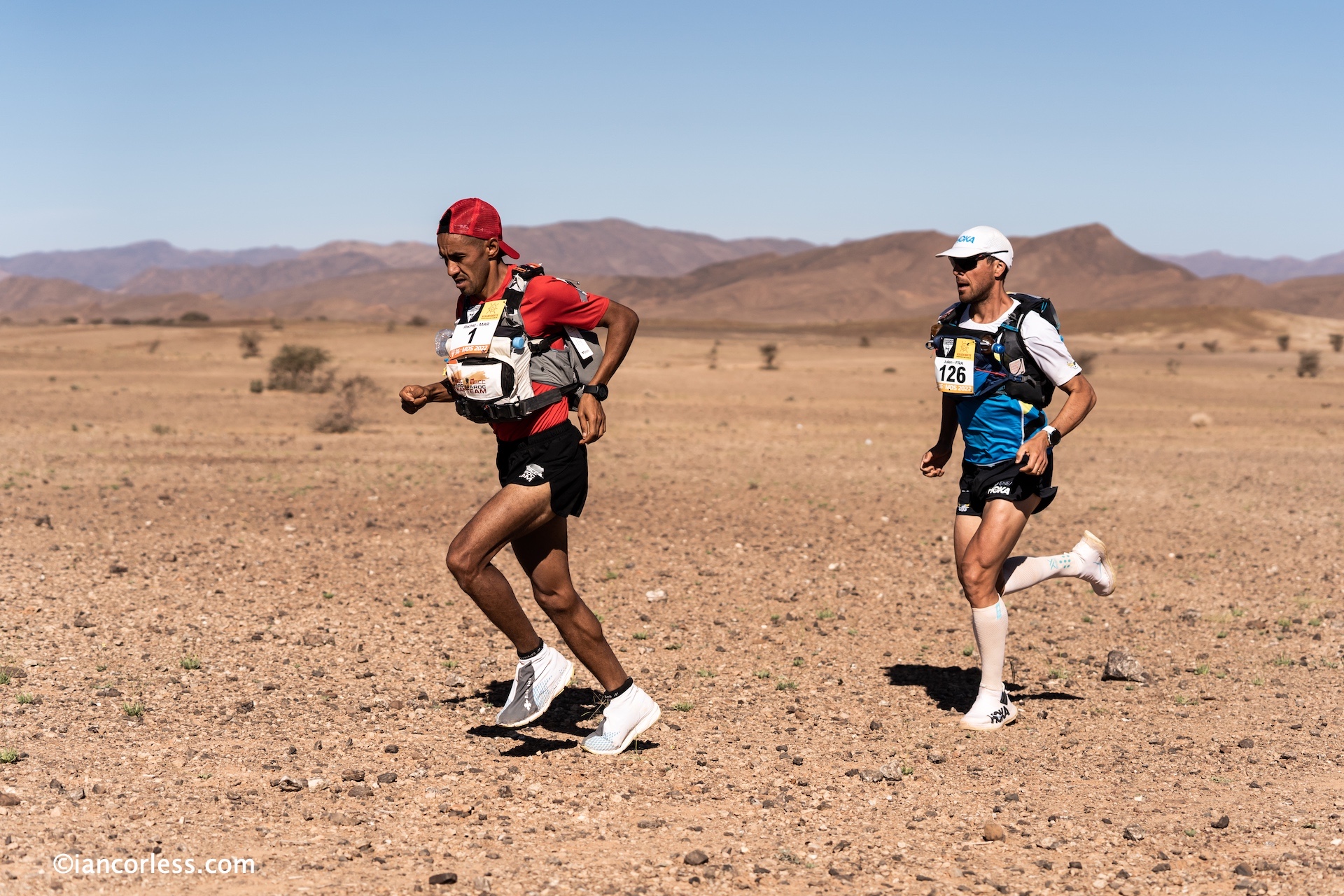
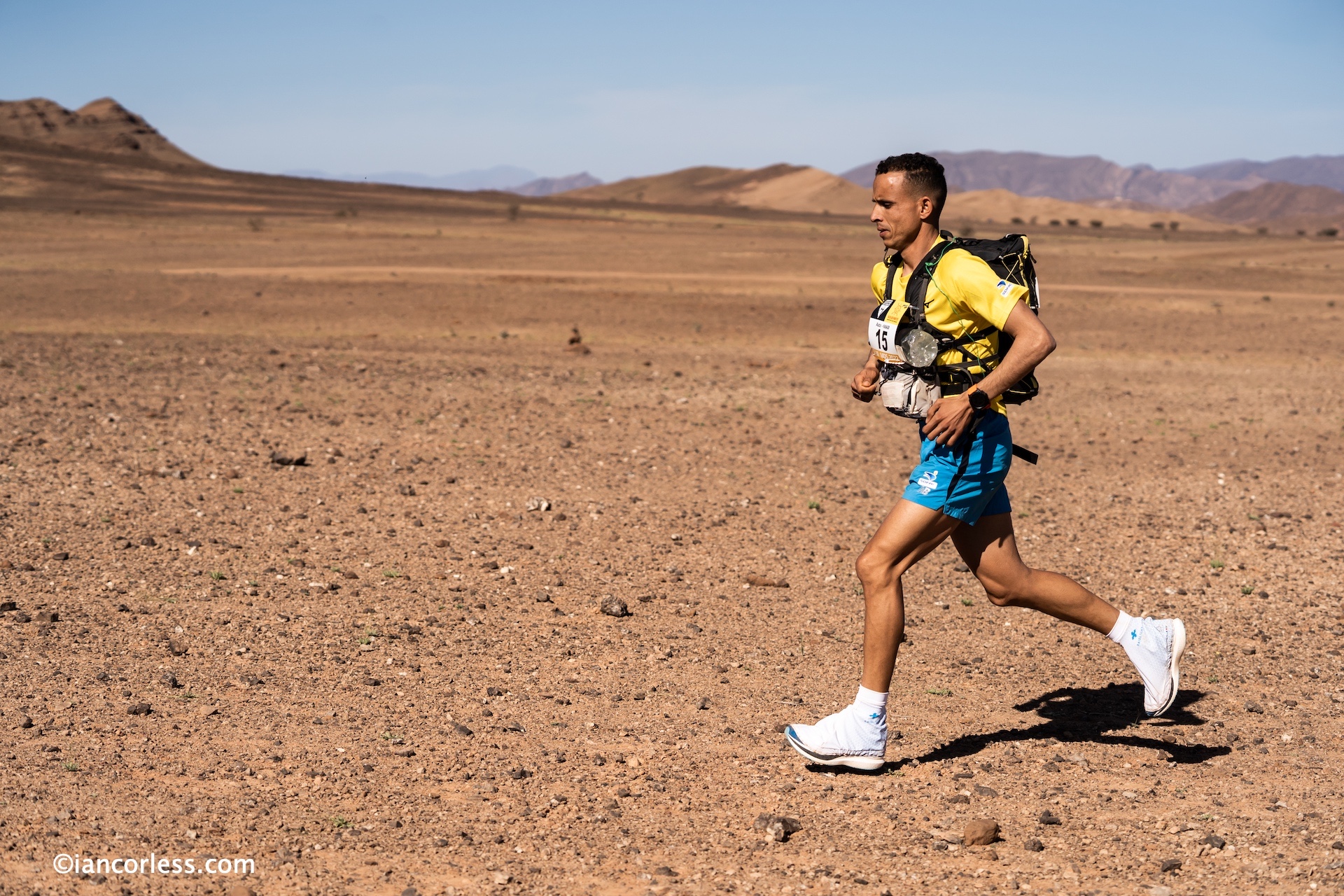
RACHID LOOKING FOR A 10TH

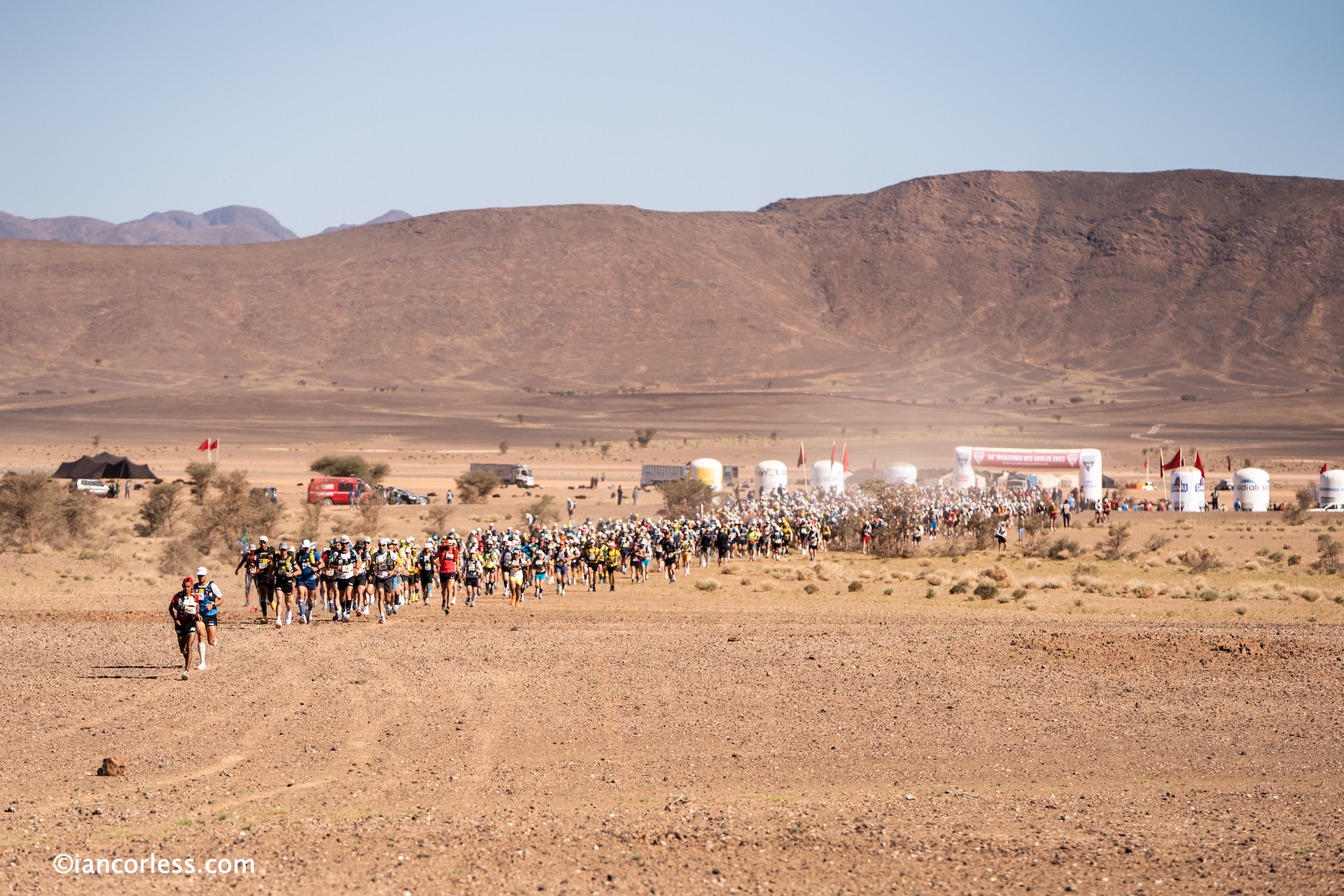
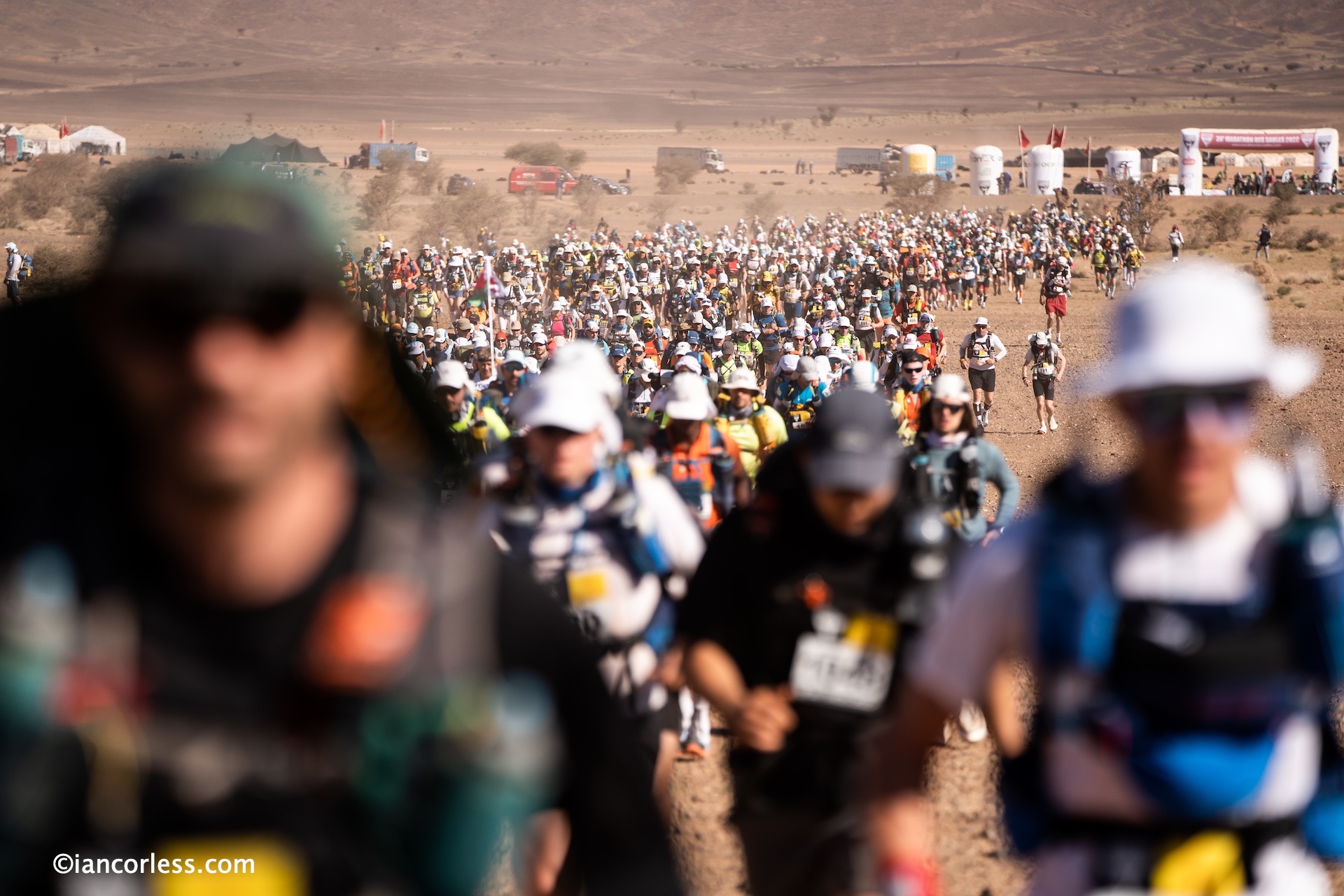
The 2024 and 38th edition of Marathon des Sables is here! MDS The Legendary, the longest edition in the history of the race, 252km’s over 6 timed stages. 

Close to 900 participants will toe the line, exact numbers will be confirmed at bivouac 1. With 60 countries represented, France and the UK lead the with 267 and 178 participants respectively. 

From the 900 starters, 27% are women; a record. The youngest participant will be Lionel Schneider (16) and the oldest, Harry Hunter who has just turned 75 on April 15th.

Runner’s will arrive in Morocco on April 12th for a transfer to the desert. 

Saturday 13th is admin day and then the race schedule is as follows:

April 14 – STAGE 1 – Departure 0700 31.1km and 282m+

April 15 – STAGE 2 – Departure 0700 40.8km and 550m+

April 16 – STAGE 3 (The Long day which will go through to April 17) – Departure 0600 and 0730 for the top 50. 85.3km and 1154m+

April 18 – STAGE 4 – Departure 0630 and 0800 43.1km and 390m+

April 19 – STAGE 5 – Departure 0700 31.4km and 252m+

April 20 – STAGE 6 – Departure 0630 and then transfer back to Ouarzazate 21.1km and 160m+

April 21 – Ouarzazate

April 22 – Home travel

THE ROUTE

Unlike previous editions of MDS, the 2024 route will concentrate on one key area of the Sahara. It makes sense, it is the most beautiful. Therefore the race will not be a point-to-point but a series of journeys and participants will stay in the same bivouac on multiple occasions.

Importantly, Jebel El Otfal, Jebel Joha Baba Ali and the oasis of El Maharch will feature on the ‘long day’ however, there will be no Merzouga dunes during the race.

In summary:

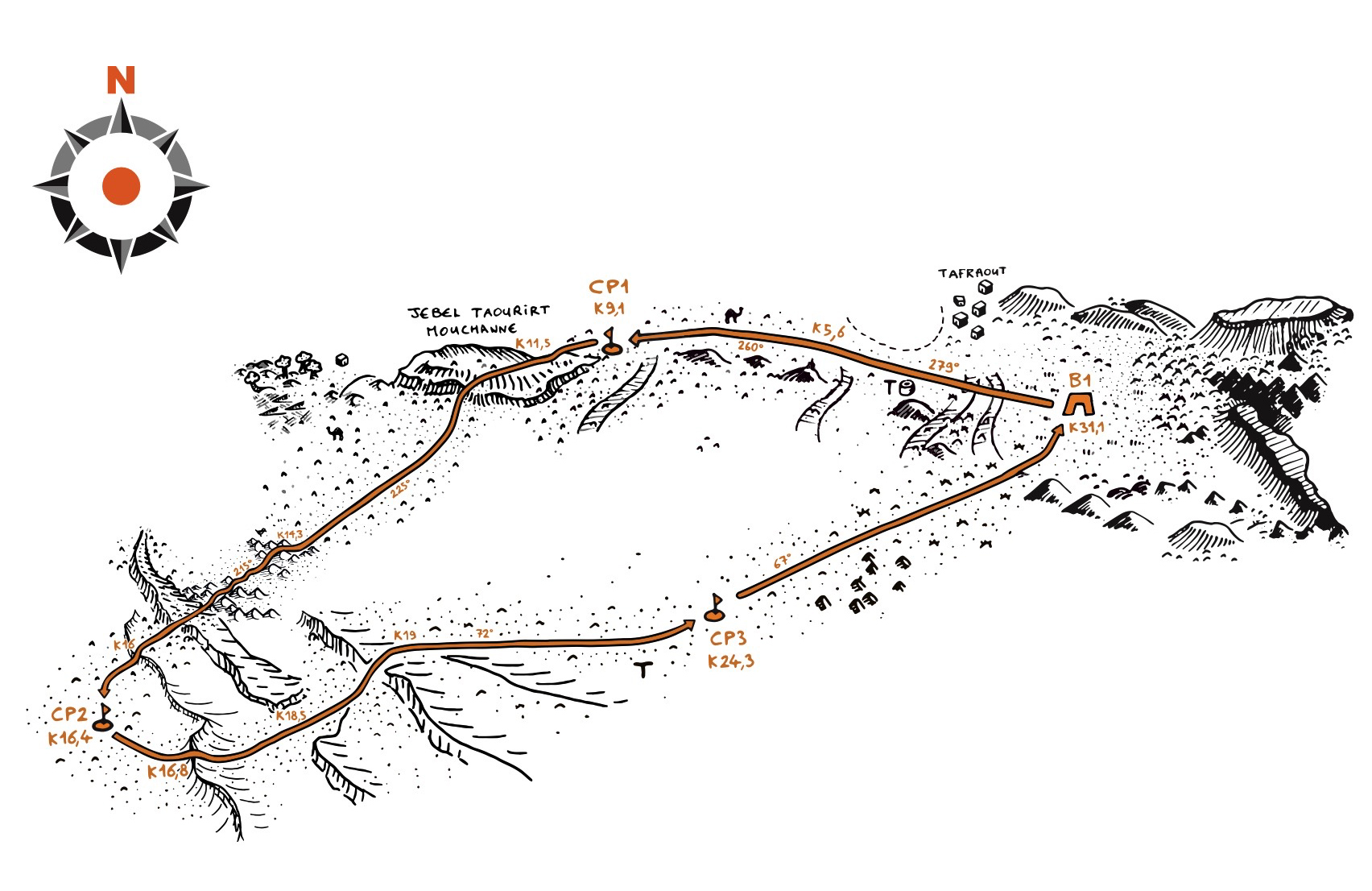
Stage 1 B1 to B1 31.1km and 282m+
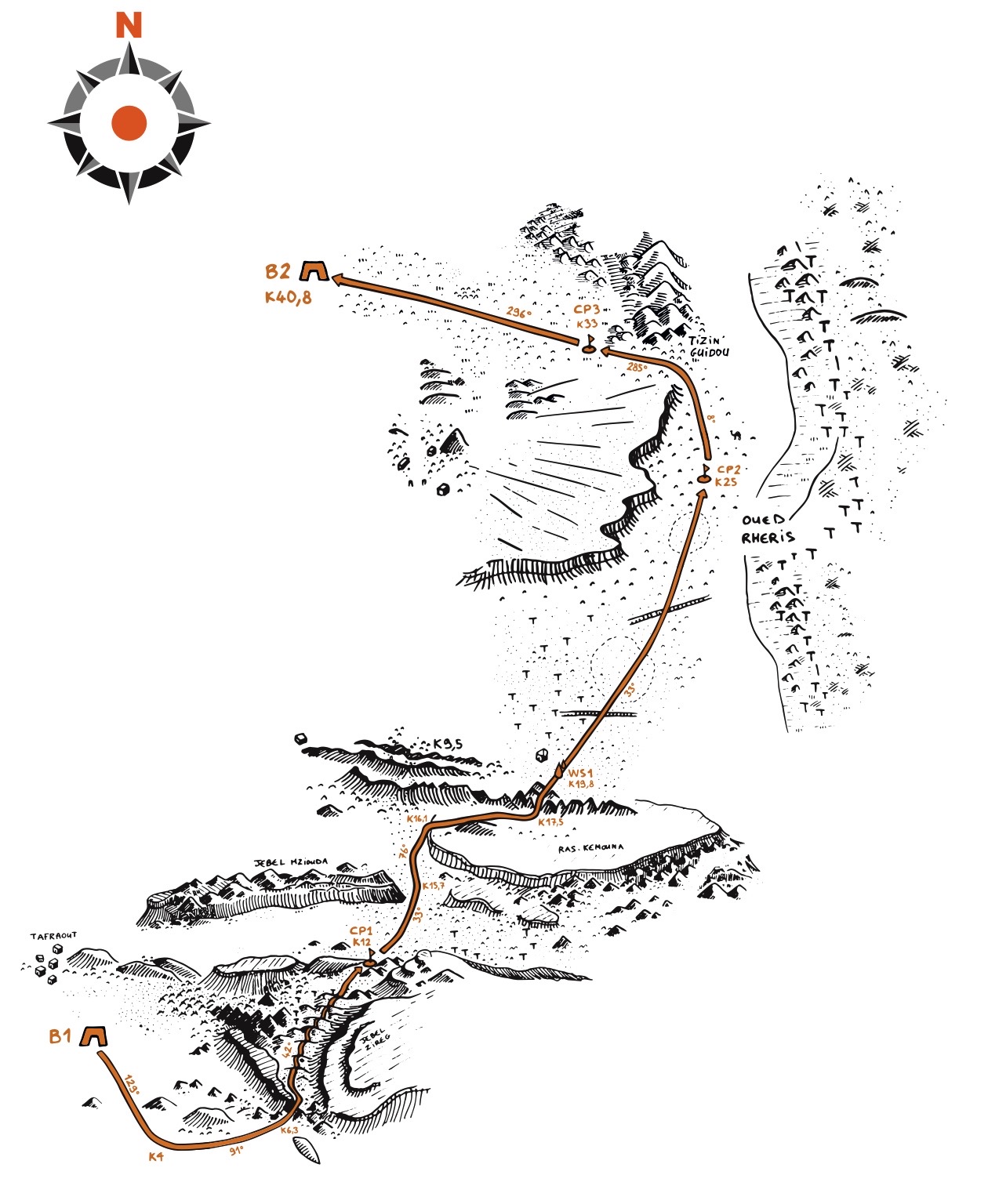
Stage 2 B1 to B2 40.8km and 550m+
Stage 3 Is an elaborate series of tracks, B2 back to B2 85.3km and 1154m+

Stage 4 B2 to B3 43.1km and 390m+

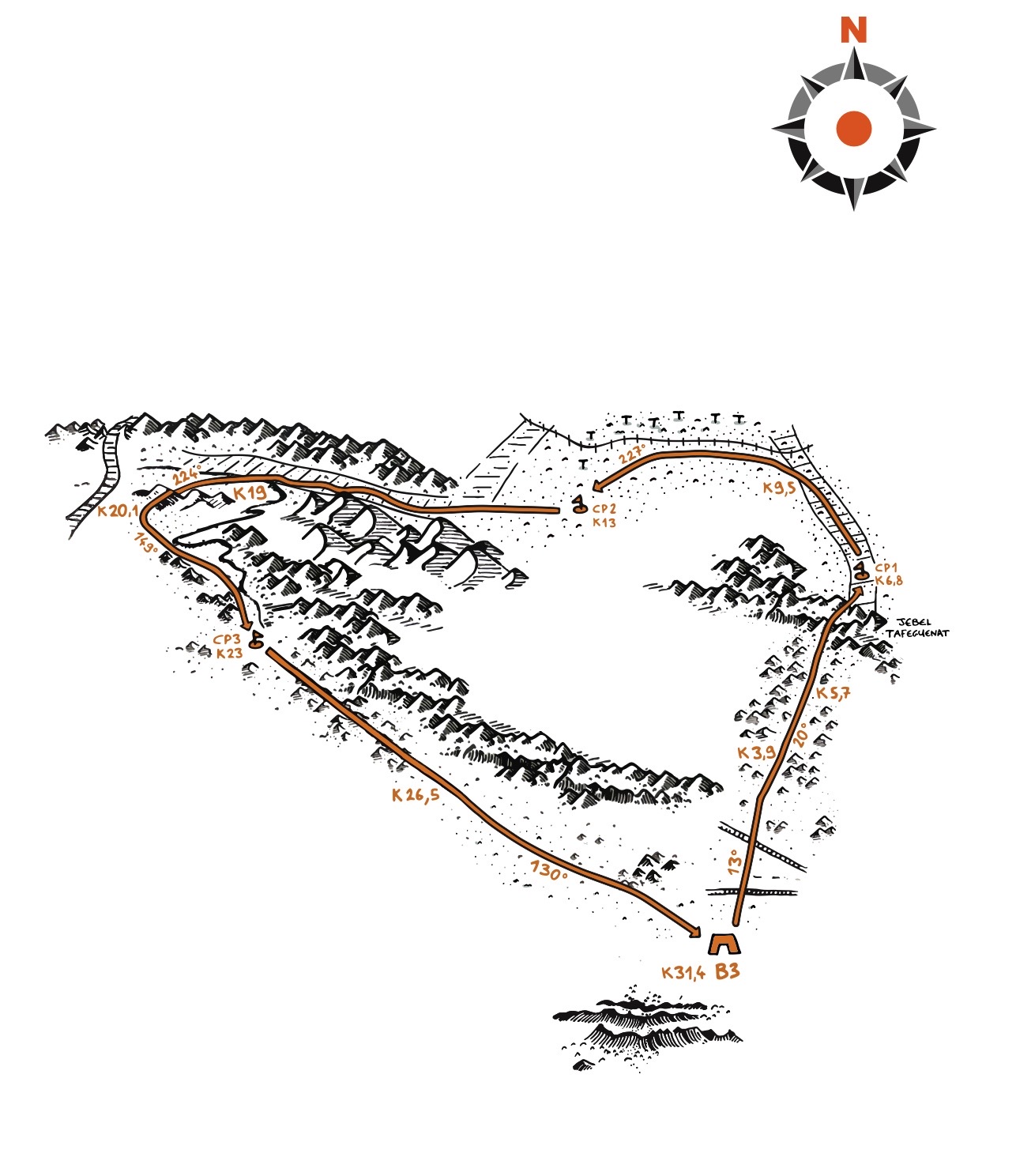
Stage 5 B3 to B3 a looped route that makes a heart shape 31.4km and 252m+
Stage 6 B3 to finish 21.1km and 160m+

ONES TO WATCH

MEN

MOHAMED EL MORABITY

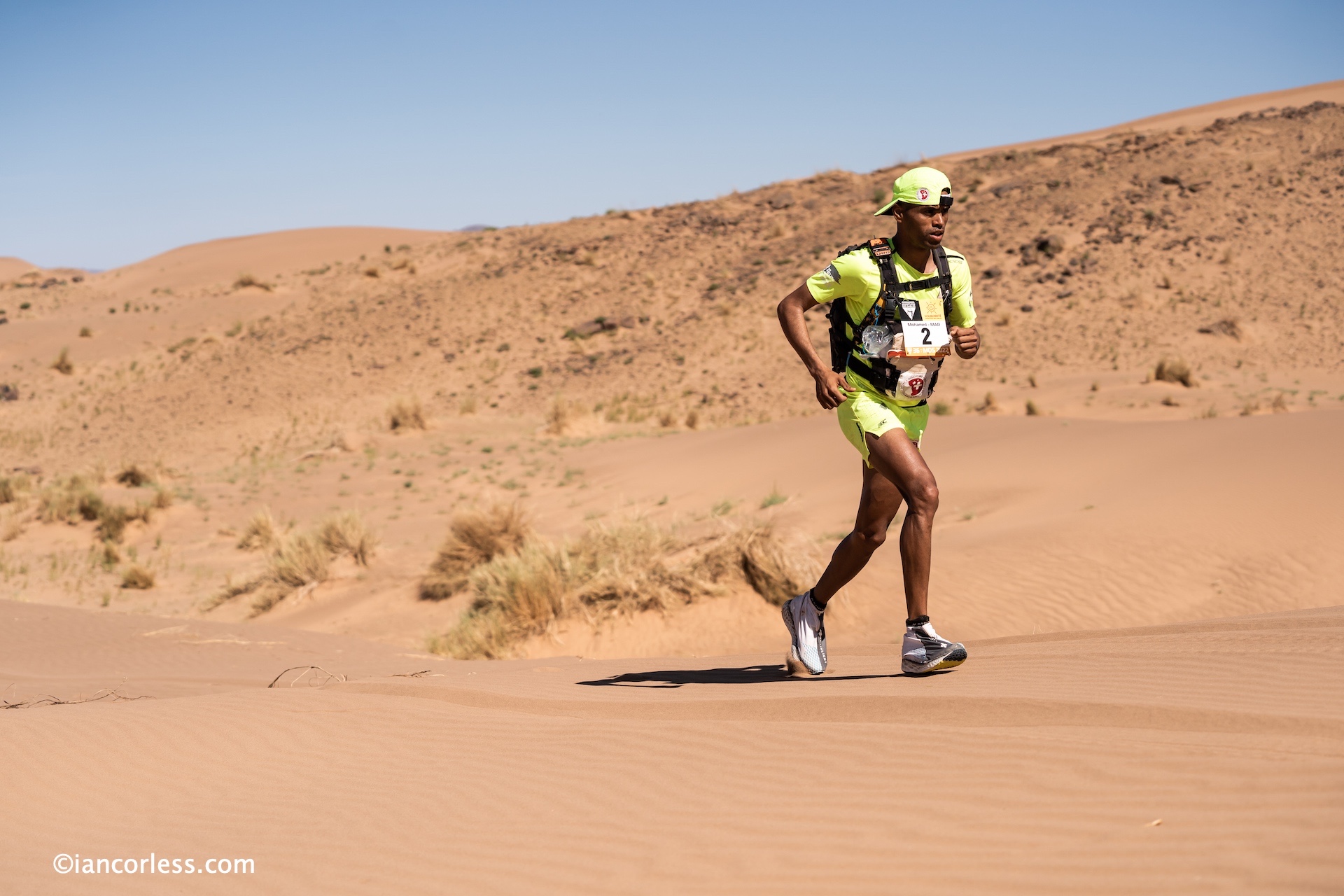
As in any MDS, there are the front contenders who will do battle for overall honours, in the men’s category, three obvious names are stand out: Mohamed El Morabity, Rachid El Morabity and Aziz Yachou. All eyes will be on Rachid, he is looking for a 10th MDS title and after the disaster in 2023 when he received a 2-hour time penalty, Rachid will be looking to make amends and make history. Mohamed, Rachids brother took the reigns in 2023 and won, but will this be allowed in 2024? Aziz Yachou gets stronger and stronger every year, he has a battle against the brothers though.

Petter Restrop, Yoann Stuck, Roberto Mastrotto, James Miller, Alessio Zambon, Ahmed Ouikhalfen, Stéphane Ricard,Mérile Robert, Hamid Yachou, Anthony Ginter, Romain Laguigner Abdelhadi Elmoustahli are also ranked as the top contenders, as always, there will be surprises.

WOMEN
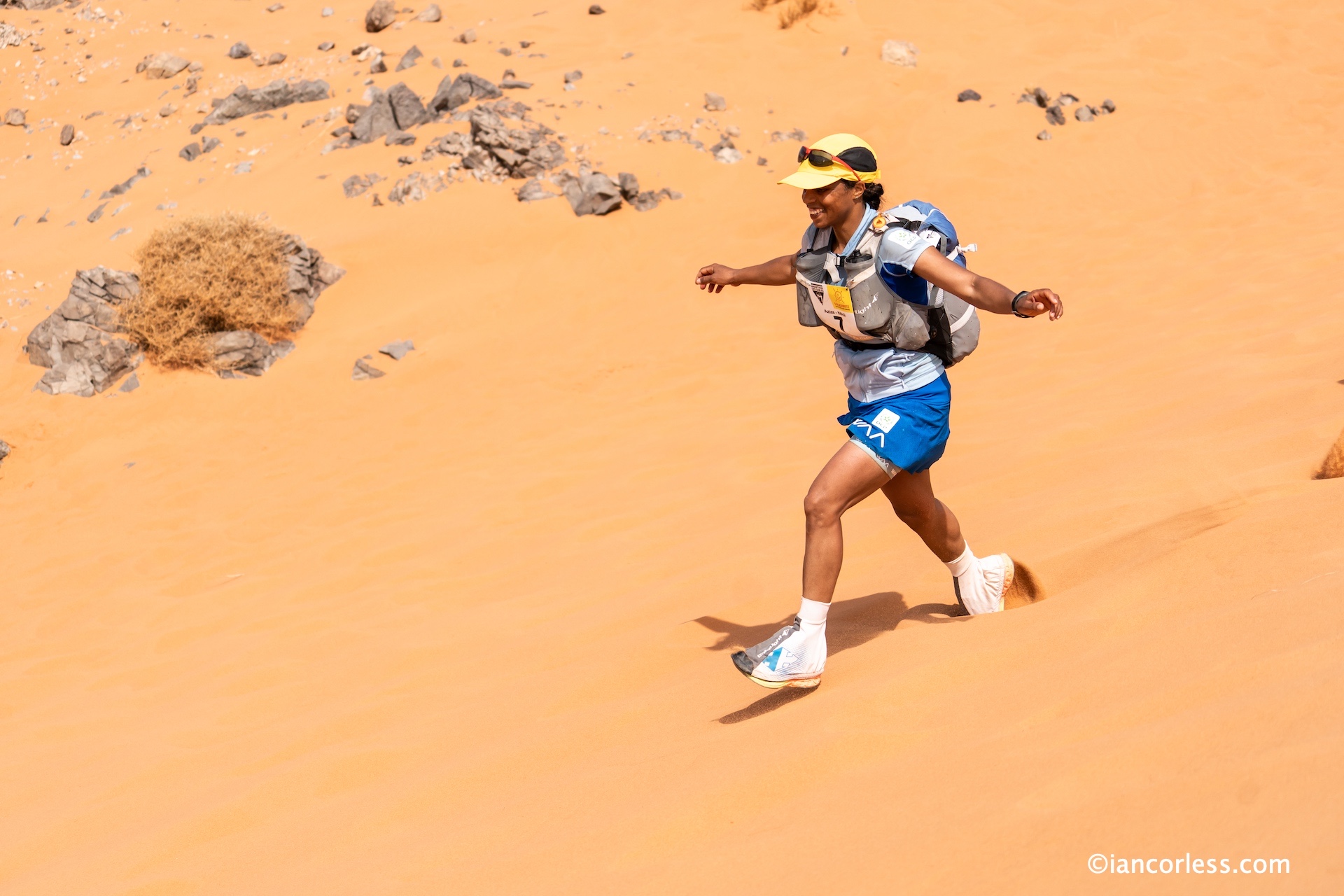
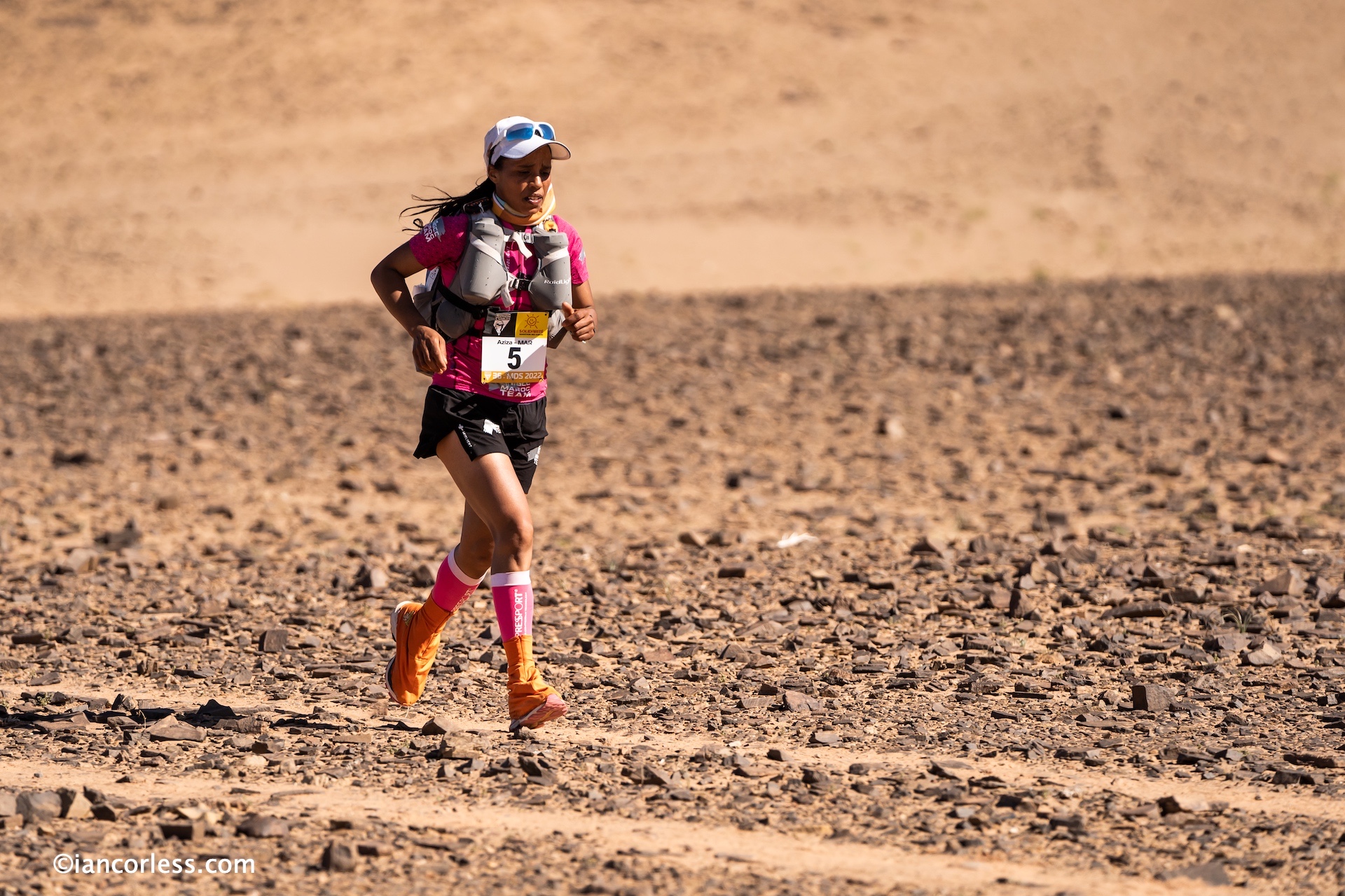
AZIZA RAJI

Aziza Raji and Aziza El Amrany fly the Moroccan flag and are of course, top contenders for the podium. The UK’s Gemma Game is returning, she has placed 3rd twice in 2018 and 2019 – is this the year?

Lai King Chan, Adriana Moser, Saskia Plaucheur, Marie Houdusse, Amélie Ginter, Ninette Banoun, Magdalena Kalus, Alexandra Bailly, Annę Godefroy, Nina Stein and Katherine Beckingham are all in with a shout of top-10 and maybe the podium.

STORIES
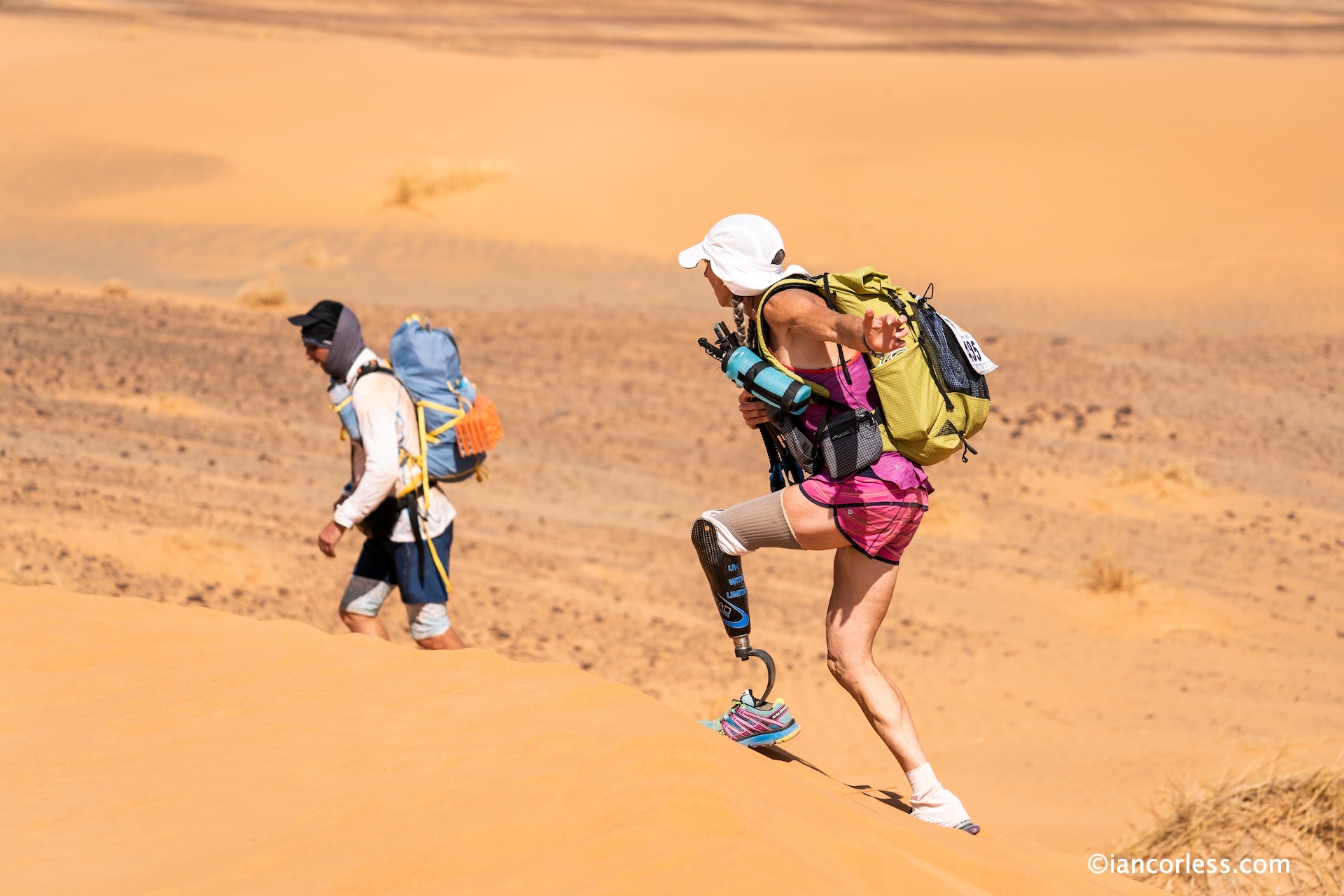
AMY PALMIERO WINTERS

The MDS is always a place for stories, challenges, inspiration and adventure and the 38th edition will be no different. Often, these stories unfold as the race happens. 

Mr MDS, Christian Ginter is back for his 36th edition, yes, his 36thRory Coleman from the UK return for his 16th and in and amongst these two highlight names, we will have new stories to follow and inspire us.

INTERESTING FACTS
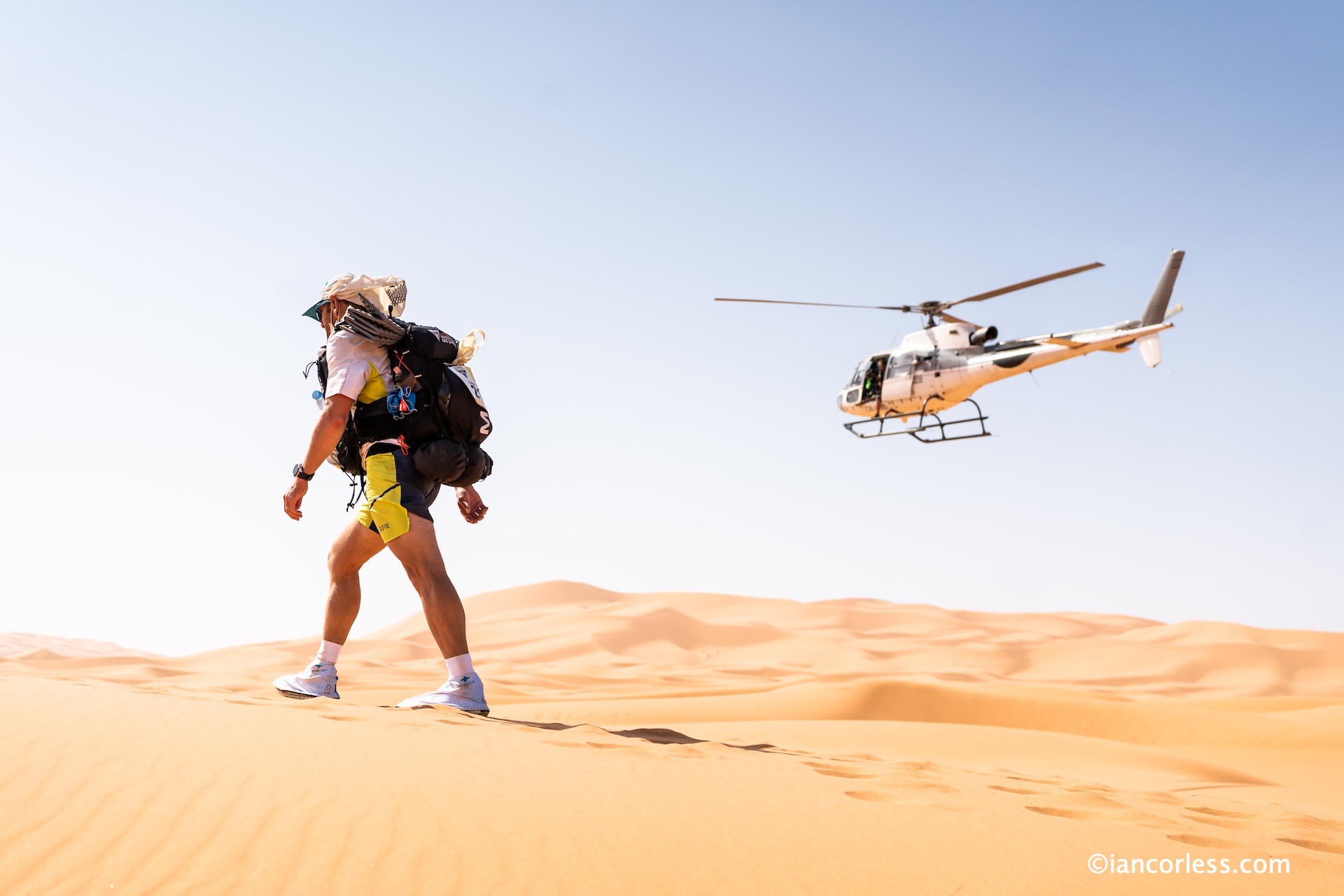
In an effort to reduce the environmental impact of such a huge race, the MDS has taken some key measures.

In 2023 50 lorries were used, for 2024 this will be 20. In 2023 157 4×4 vehicles have been reduced to 78. A helicopter as per usual will be available for emergency use only. This equates to a 47% reduction I carbon emissions.

In addition, chartered flights were reduced to just 3 planes with an encouragement for participants  to choose commercial options.

The use of local services has been increased using local staff, vehicles, trophies made in Morocco, and the catering team for staff will be all Moroccan with 100% of produce local and a reduction in chicken and beef.

In addition, checkpoints will have solar power and all communication relays utilise solar too.

Waste management has been improved and a key move has been to eradicate 1.5ltr bottles and replace with 5ltr.

Safety has always been a key concern and for 2024 there is an increase in medical staff, 65 up from 56, there 9 SSV rapid response vehicles, up from 4 in 2023. There will be 9 4×4 vehicles and new for 2024, 3 MTB riders and 9 runner’s who will participate on the race route offering immediate medical response. A medical point will be in the centre of bivouac so that immediate attention can be given if required.

ADVENTURE AWAITS

The 38th edition is now waiting to unfold. It’s a new era for the race. Let the adventure begin, MDS The Legendary makes history.

You can receive daily updates and reports on this website. Follow on IG @iancorlessphotography and @mdslegendary

You can also follow ‘live’ at owaka.live

Follow on:

Instagram – @iancorlessphotography

Twitter – @talkultra

facebook.com/iancorlessphotography

Web – www.iancorless.com

Web – www.iancorlessphotography.com

Image sales –www.iancorless.photoshelter.com

The Coastal Challenge 2024 – #TCC2024 – Stage 6

Katie Young 2024 Champion

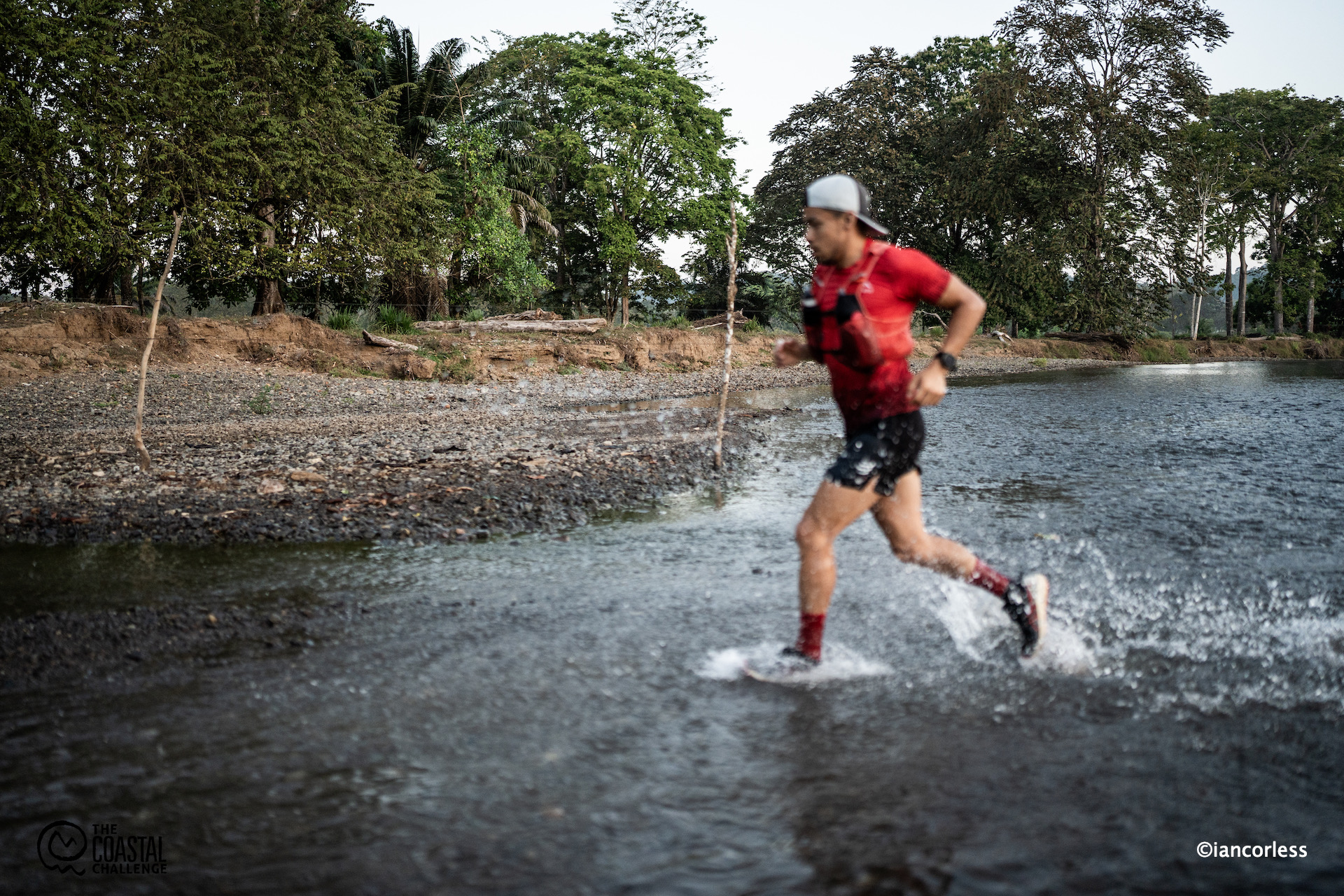
The victory loop. This stage personifies all that has gone before and arguably, is the most beautiful stage. The whole of TCC is compressed in to the 37km’s with gravel roads, river running, waterfall crossing, rainforest, coasteering and long pristine beaches.

It’s a day for celebration and one to soak up all that has been gone before. At the end, a hard earned medal. However, racing did not stop and Cody Lind and Katie Young sealed TCC 2024 with final stage wins, 3:14:42 and 4:44:32 respectively.

Cody Lind was on fire today, 2020 and 2024 champion.

There are outright winners, of course, and congratulations go to Katie Young and Cody Lind the 2024 TCC champions. But as race director, Rodrogo Carazo says, today, everyone is a winner.

Rodrigo Carazo awards the finisher medal

Emotions are released, tears are shed and finally, it’s time to kick-off run shoes and fully relax and appreciate the magnitude of the journey and the experiences that have gone before.

Carlos

It’s no mistake or act of chance that has allowed TCC to last 20-years. Costa Rica, the route, the people, the wildlife, the Pura Vida approach makes this race special and unique.

Emotion on the line

Tomorrow, competitors leave Drake Bay via speedboat, a final magical experience to confirm that TCC is one of the ‘must do’ races in the world.

The 2024 bling!

Final Result:

Jean-Francois Cauchon 2nd
  • Cody Lind 25:57:00
  • Jean-Francois Cauchon 26:32:58
  • Cristofer Clemente Mora 27:38:18
Lina El Kott Helander 2nd
  • Katie Young 35:30:40 (8th overall)
  • Lina El Kott Hekander 36:41:42
  • Sanna El Kott Helander 38:11:15

Pura Vida!

Pierre cooling off

Follow on:

Instagram – @iancorlessphotography

Twitter – @talkultra

facebook.com/iancorlessphotography

Web – www.iancorless.com

Web – www.iancorlessphotography.com

Image sales –www.iancorless.photoshelter.com

‘What I Wish I Knew When I Started Photography’ with Ian Corless

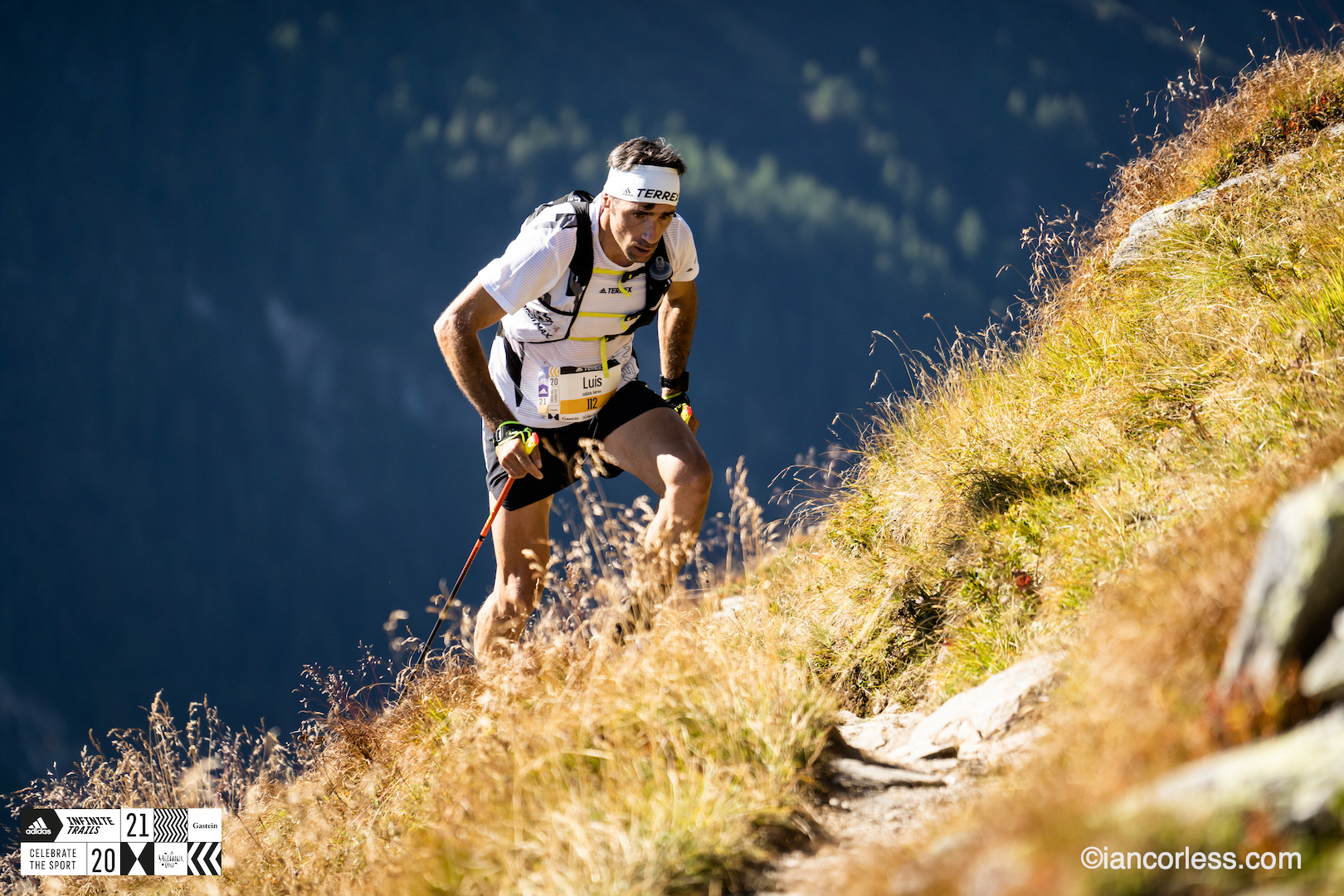
Luis Alberto Hernando, adidas Terrex ©iancorless

Article by Christian Bessey

As I get deeper into my love for photographey, I want to speak to those whose work is not only technically profound but unique. Being unique is the key to unlocking a world of opportunities and experiences that others can learn from and see what is possible. That is why I reached out to connect with Ian Corless.

Photography enthusiasts, if you’ve ever scrolled through Ian Corless’s Instagram feed, you’ll understand why I was eager to connect with him. His extraordinary work stands out, but it’s not just his talent that sets him apart. Ian’s remarkable willingness to engage and network, both with clients and during this interview, is a testament to his character. He takes photography to the extreme, whether it’s capturing high-profile commercial assignments, scaling a mountainside for a passion project, or sharing as much knowledge with the photography community as he can. Check out his work and the words he shared with me about his journey in photography.

READ THE FULL ARTICLE HERE

Trail Menorca – Camí de Cavalls 2023 Countdown

©iancorless

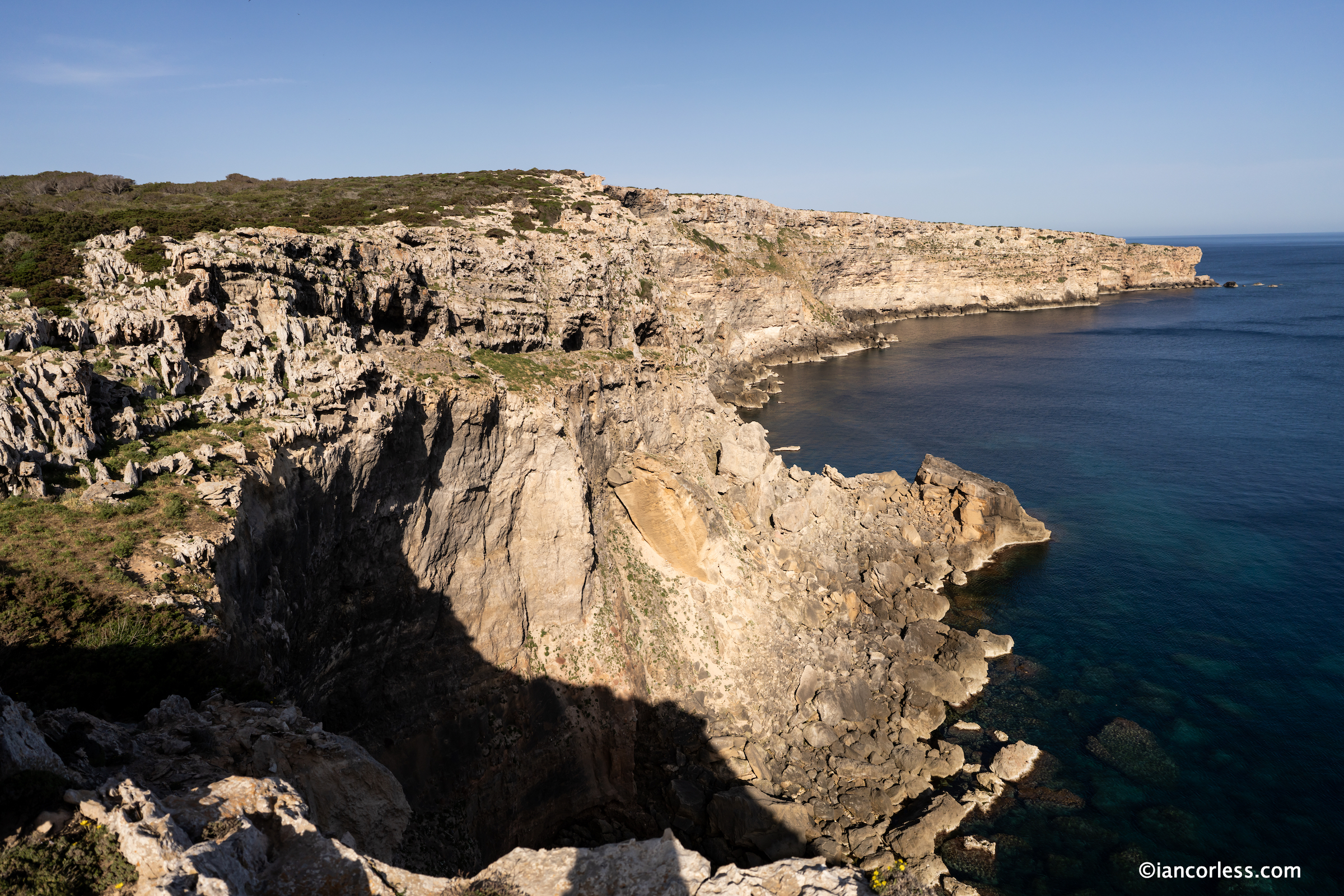
Located in the Mediterranean Sea, the Balearic Island of Menorca has long been a more low-key holiday location, in contrast to its immediate neighbours of Ibiza and Mallorca. With an area on just 700 km square, Menorca is a small island full of endless beaches, pine trees, turquoise water, rugged coastline, and a winding network of trails. Mahon is the capital and Ciutadella de Menorca is the second largest centre on the opposite side of the island, both filled with narrow streets and wonderful architecture. There is a great deal to love and appreciate in Menorca.

©iancorless

With a highest elevation point of 358m (Monte Torro), Menorca is essentially flat. However, if you journey around the coastline, you soon realise that the rollercoaster of trails that continually take you up and down make a circumnavigation of the island, a challenge.

©iancorless

Designated a UNESCO Biosphere Reserve (1993) the island is a paradise for botanists, especially in spring when meadows are carpeted with wildflowers. Calm, peaceful, rest and relaxation, Menorca is, without doubt, not the party destination as associated with its nearest rivals. Culture, gastronomy, local products and produce, places of interest, Menorca is waiting to be explored.

Many ask, what is the best way to see the island of Menorca? The immediate answer, is nearly always, rent a car and go explore…

©iancorless

Ask a trail runner, and the answer is clear, ‘Enter Trail Menorca!’

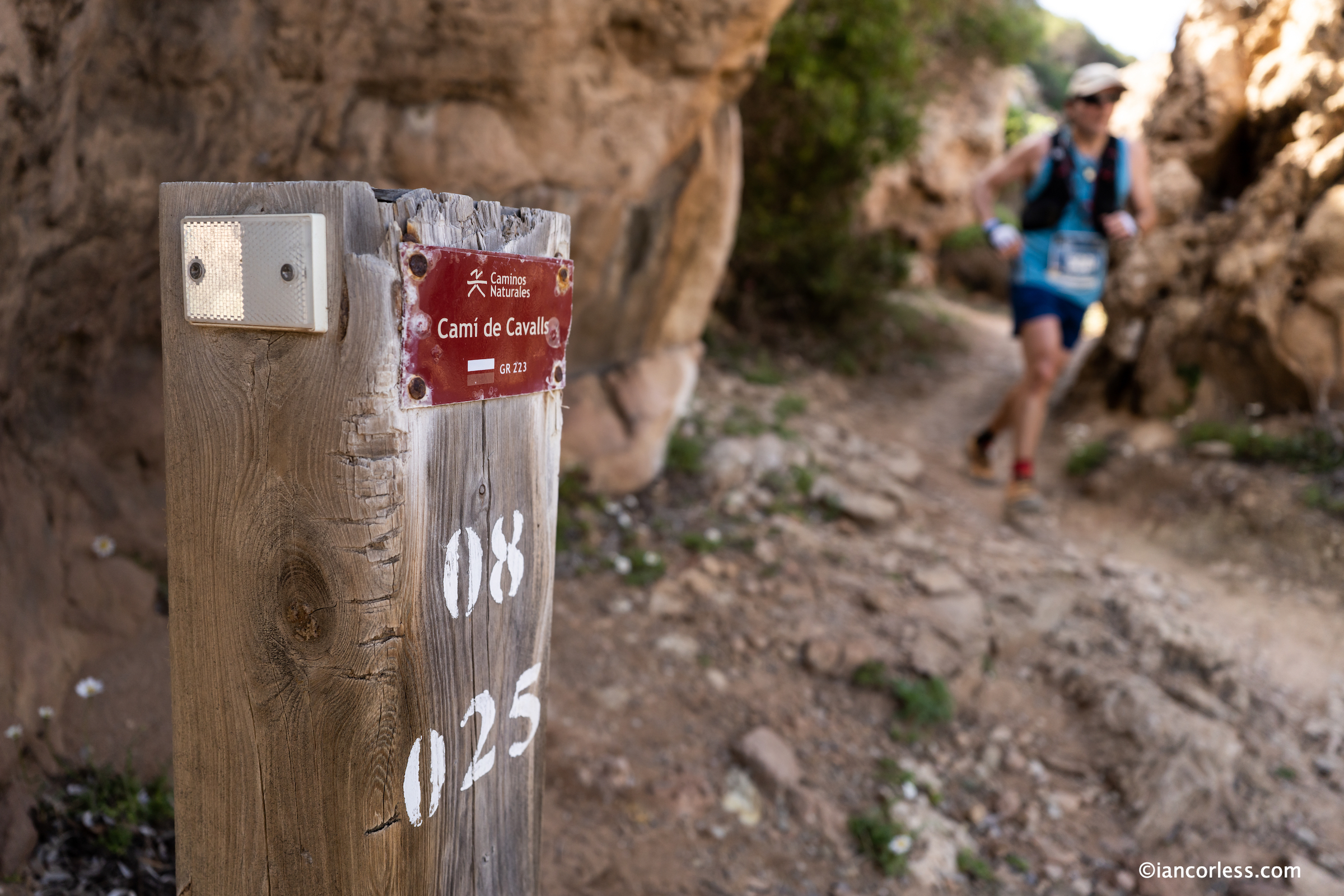
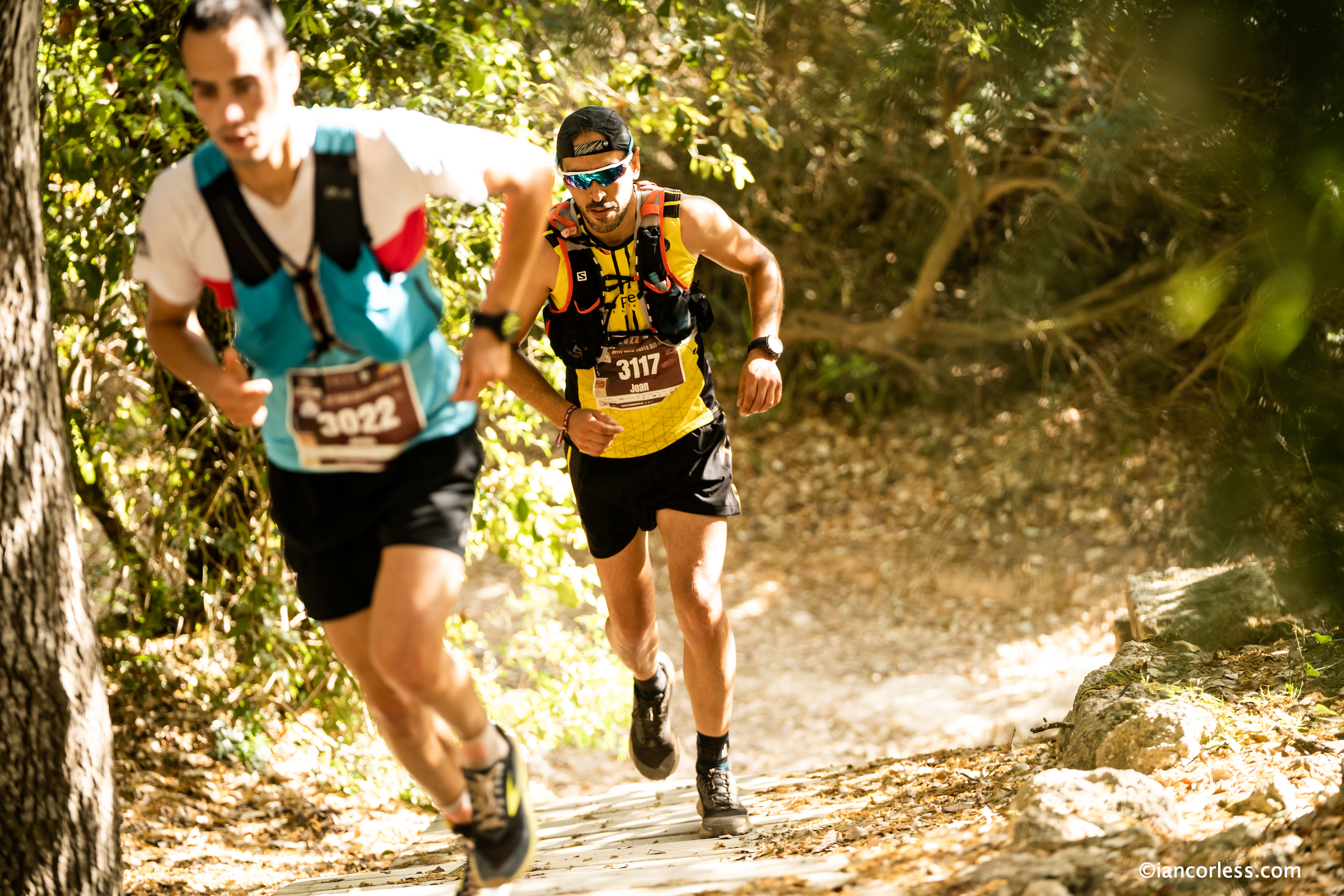
Trail Menorca, created 10-years ago utilizes the ‘Camí De Cavalls’ GR223 route to journey around the island either in entirety (185km,) or in sections broken down as 100km, 85km, 58km, 45km, and 27km. North or south, Menorca has a great deal to offer, there is no better way to explore than by running or walking this hidden gem of the Mediterranean. As the race says, 7 adventures, 1 legend.

©iancorless

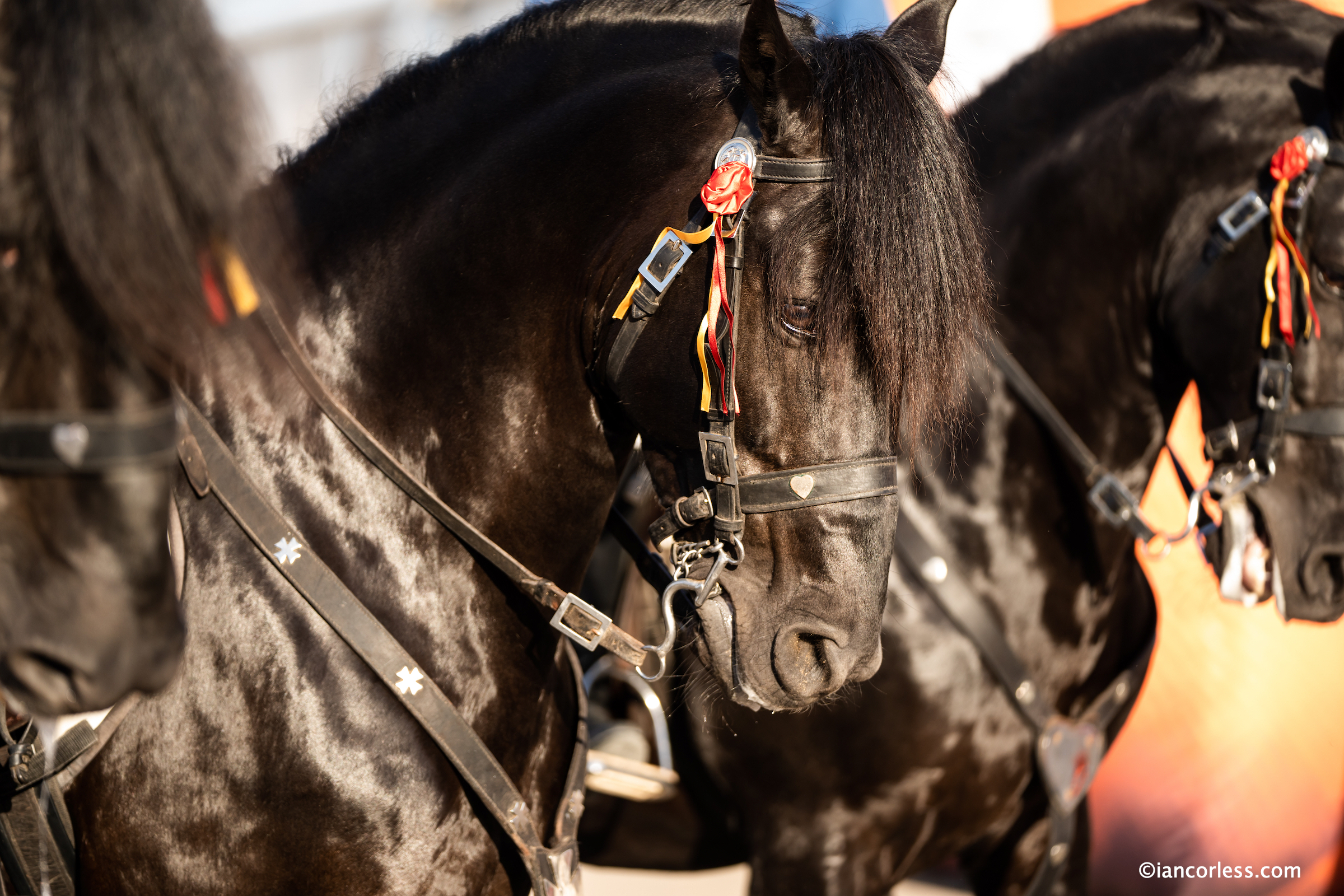
The Camí de Cavalls (way of the horses) according to some sources goes back to the 14th century. Named after the ‘Cavalleries’ (knights) who were charged with defending the perimeter of the island from invading forces – pirates! The 360-degree route that weaves around the island with watch towers and trenches randomly located for protection; both still in existence to this day were created by the British who marked the path to defend against the constant sieges of invaders.

©iancorless

In the 1990’s, after long and lengthy protests, much of the Camí de Cavalls which had been closed for decades, was once again made accessible. Finally, some of the most pristine landscape and coastline of the Mediterranean was once again available to be explored. With 185kms of marked trail, 130 bays and coves, desert like beaches, dense woodland, rugged, harsh and rocky terrain, the GR223 became a reason to journey to Menorca for an active holiday. For many, the journey takes at least one week to complete the circular route, while 10-14 days is more normal. Off limits to cars, a journey must be undertaken on foot, by bike or horse; or maybe a combination of all 3!

©iancorless

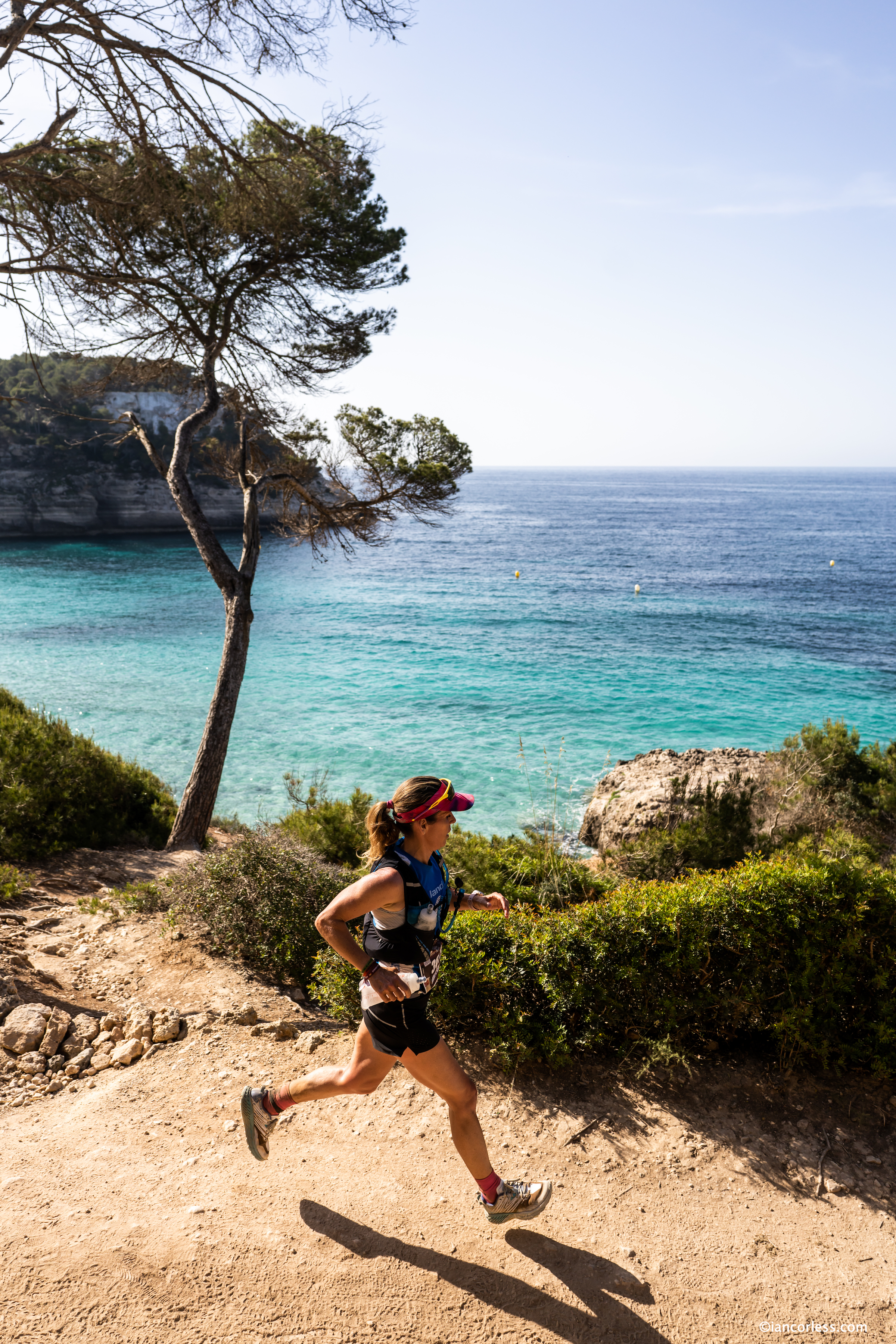
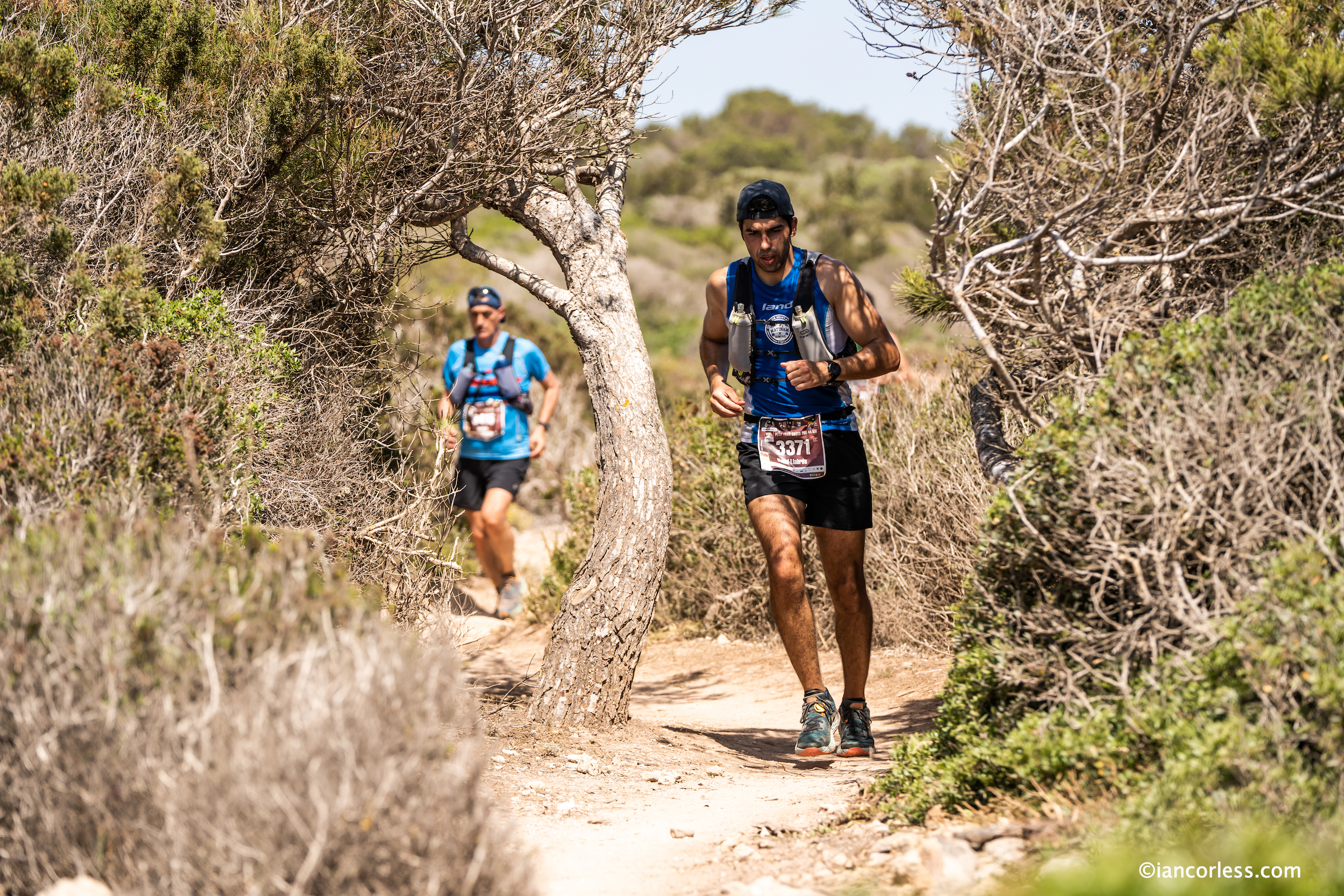
However, in May every year, Trail Menorca provides the opportunity to experience the Camí de Cavalls over a stunning weekend of racing. Breaking the island down in to north and south sections, runners can decide a distance and direction. The north being more rugged, exposed, and rough. The south more groomed, tranquil, and picturesque with the turquoise Mediterranean as a backdrop.

©iancorless

The 185km route (TMCdC) starts in Ciutadella and travels clockwise providing a full, immersive and difficult 360-degree journey. The other routes all conclude in Ciutadella but start in different areas of the island and then either travel clockwise or anti-clockwise to return to the finish.

The TMCN 100km starts at 0100am in Maó and travels north winding through rugged coastline of exposed and harsh terrain.

The TMCS 85km starts in Es Castell and weaves its way through the full length of the south coast and its incredible coves and beaches.

The PTCN 58km starts in Fornells and concludes in Ciutadella taking in the final sections of the TMCN route.

The PTCS 45km starts in Es Migjorn Gran and arguably provides the most beautiful and picturesque journey of the whole GR233 route.

Finally, the STCN 26km, which starts in La Vall provides an entry level distance travelling the final section (or opening sections, depending on direction) of the GR233. Enough to whet the appetite to return the following year and take on a longer distance.

©iancorless

The beauty of Trail Menorca is that you can quite easily race year-on-year and never have the same race experience as it is possible to run north or south sections over multiple distances. Perfect for those who consider the full 185km route a step too far!

Menorca may not have high mountains, but what it does have is unique and special. There is an incredible beauty and calm in Menorca. Racing is just one attraction, the opportunity to chill, relax, recuperate, and enjoy the islands gastronomy post-race makes this Balearic gem an essential to-do list location.

©iancorless

JOIN THE 2023 EVENT

Race website HERE

The 2023 edition is already close, but it is not too late to join Trail Menorca!

‘Trail Menorca Camí de Cavalls is an opportunity to discover what is hidden on this wonderful island, jewel of the Mediterranean, beyond its fantastic beaches. Running on tarmac, road, track, rocks, forest trails and depending on the race and distance, experience a night illuminated by stars. Come and immerse yourself in the beauty of Menorca.’

©iancorless

Follow on:

Instagram – @iancorlessphotography

Twitter – @talkultra

facebook.com/iancorlessphotography

Web – www.iancorless.com

Web – www.iancorlessphotography.com

Image sales –www.iancorless.photoshelter.com
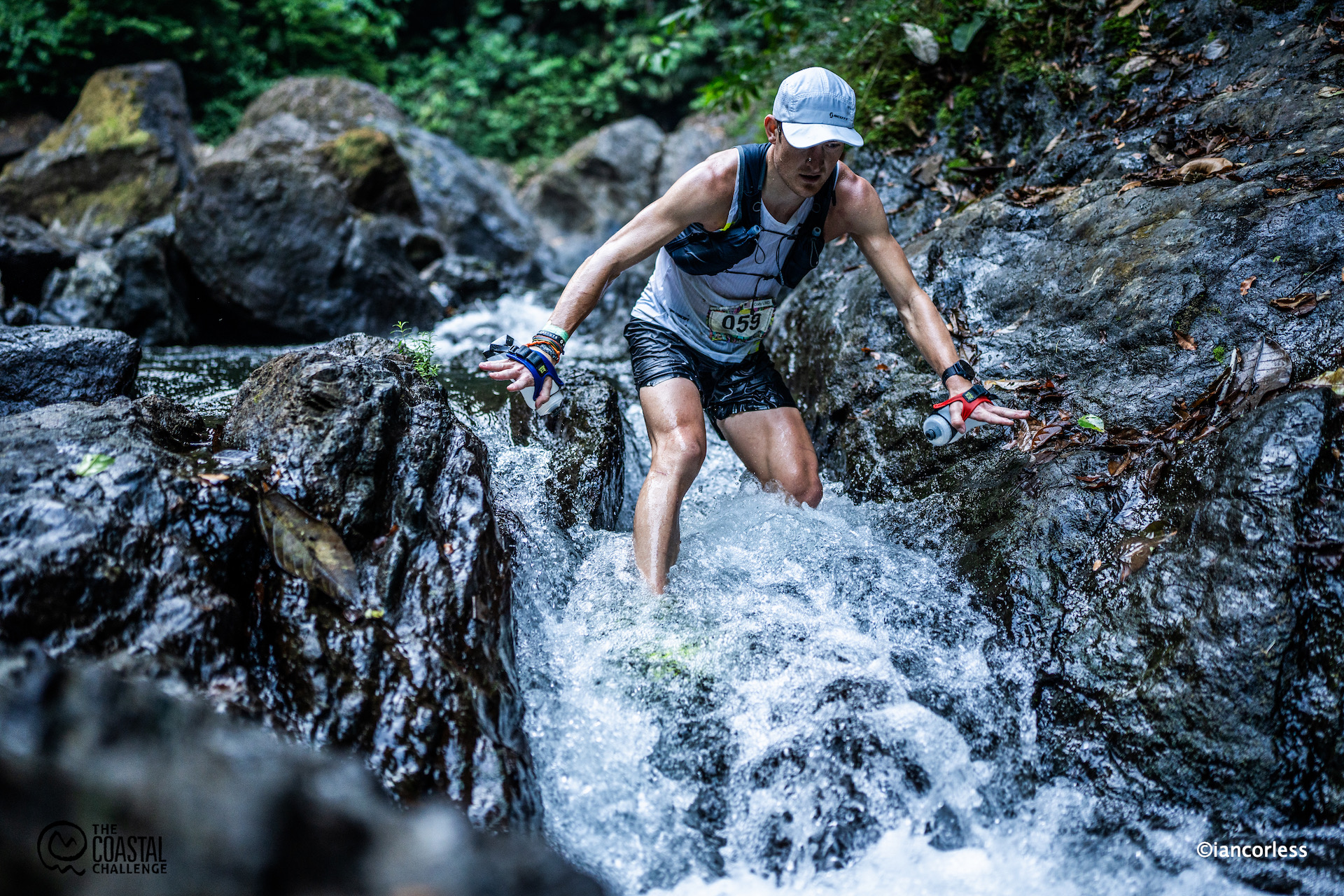
Goal Setting for a MULTI-DAY Adventure or RACE

Before you start a multi-day, be that a race or a personal challenge, one thing is for sure, NOW is the time to set a goal and focus, fine-tune everything, including training, so that you can be at the start in the best shape possible.

First and foremost, have a complete understanding of the task ahead and set a goal or target. This is key not only in the physical adaptations that are required, but also the mental adaptations. There is a huge difference in doing something supported and in doing something self-sufficient. Marathon des Sables a prime example, understand the nature of the event and set a realistic but challenging goal.

MDS is an extreme event that takes place in the Sahara. The nature of the event is self-management both physically and mentally to endure the challenge, survive and reach the finish line. The weather (heat) is one of those challenges and surviving the weather is integral to the nature of the event. As is the ‘self-sufficient’ nature. Other than rationed water and a bivouac, be prepared to endure and complete this event with no outside assistance. Of course, help is at hand, but that help is and should be a safety element that is required in emergency. Equally, if undertaking a solo multi-day experience, do the research, plan routes, look at back-up options, can you re-supply with food, is water available?

Plan and prepare.

TRAINING

We are all unique and individual. Some of us are faster, some are mentally tough, some have a capacity to go for hours and hours and even days and yes, some runners combine all those elements.

Therefore, a multi-day training plan must be used as a template and framework to provide a structure for you, the individual, to achieve your goal.

Be sensible and adjust training plans so that they fit your ability, aspirations, training history and time available.

Think about when you place rest days, when you do long runs and when you work on hills and faster running. A training plan is like a jigsaw puzzle and managing the pieces and adding them together sensibly is how you make a successful and complete picture.

Any training plan is designed to progressively build strength, endurance, and confidence with gradual load increases. Rest is an important element of any training plan, so, rest with the same intensity that you train. Ultimately, you have decided to undertake this adventure, so, enjoy the process and make it fun.

Be specific. Make sure the training terrain, as much as possible, simulates your target event.

Always focus on the goal. Training plans for me start with the goal date and I then count back in time to a start point. That start point for you may well be before the 12-weeks but once you start the plan, focus on the target, and always make every session is as specific to the goal as possible.

For example, if participating in Marathon des Sables, you already know some key and important information:

  1. It will be hot.
  2. You will need to deal with hard and rocky plateaus, but you will also need to deal
    with soft sand and dunes.
  3. You will be on rationed food/ calories.
  4. You will only be supplied water to drink, and this is *rationed. In extreme weather such as the October 2021 edition, water rations were increased.
  5. Everything (not the tent) will be carried in a pack, on day 1 this will be at a minimum weight of *8kg. (*Minimum pack weight is 6.5kg but you must carry 1.5 liters of water which equates to 1.5kg.)
  6. You will sleep in an open tent, on the floor using a mat and sleeping bag.
  7. The long day comes on day 4 after approximately 90-100km of running, so, you
    need to be able to run for consecutive days and manage your pace and effort.
  8. The long day is (typically) between 70 and 90km and you have one full day, one night and most of the next day to complete it.
  9. After the ‘rest day’ is a marathon.
  10. You can complete the race by covering just 3km’s per hour.
  11. In 2019, the MDS was won by Rachid El Morabity and Ragna Debats in 18:31:24 and 22:33:36 respectively. The last runner was Ka Chun Chan from China in 69:29:16. For perspective, Rachid could have run the race nearly four times in 69:29! We are all individual.
     

Key elements each runner needs for a multi-day like MDS.

  1. You need to be mentally tough.
  2. Physically strong to endure multiple days of back-to-back exercise.
  3. Strong enough to carry a loaded pack and still move at a good pace.
  4. Adapted to function on restricted calories and food choices.
  5. Able to drink only water.
  6. Adapted to perform and function in heat.
  7. You need to be able to walk.
  8. You need to be able to handle un-planned situations.
  9. Have A, B and C goals.
  10. Be self-sufficient.

Multi-day racing and multi-day adventures are unique and particularly self-sufficient ones when you must carry all you need for the duration of the event. In a race, you will carry clothing, sleeping bag, sleeping mat, essential items and food for the duration of the event. At MDS minimum weight is 6.5kg plus water. Just as you prepare physically and mentally, also be meticulous with equipment and food preparation. You ideally need your pack to be 6.5kg and no more… Additional weight is additional stress.

If fastpacking, you may possibly be as above, but you will need to carry your own tent and you will need to re-supply with water en-route either using natural water supplies or utilizing retail outlets.

Be specific and understand the demands of the event you are undertaking and plan accordingly.
 

WHAT SHOULD A TRAINING PLAN LOOK LIKE?

All plans need to be progressive and geared towards the end goal of a multi-day like Marathon des Sables or a fast-packing adventure.

Remember, we are all individual, so while a generic plan may provide a guide and structure from which to work from, it’s important to adapt and tweak to individual needs. For example, the training plan for someone who is trying to be top 100 at a race will vary greatly to someone who hopes to complete and not compete.

Each week will typically have one or two rest days.

A simple strength training structure that can be done at home or in a gym.

Hill sessions and speed sessions (tempo/ intervals/ fartlek) have a place in any training plan, but the quantity and duration will depend on what type of runner you are and what your aspirations are.

Long sessions are essential and most certainly, an element of back-to-back sessions will help adapt the mind and body for the challenge ahead. However, injury risk goes up with any block like this, so, it needs to be placed carefully with adequate rest and recovery.

Learn to walk. There is a huge difference walking with purpose and pace to ‘just’ walking. Except for the top runners, walking is an integral element to a successful completion of a multi-day race or adventure. Many only realise during the event. Get walking dialed in training.

Do some specific work with a pack and weight BUT be careful as it is easy to get injured.

Think of training as blocks of 4-weeks, build for 3-weeks and then rest/ take it easier on the 4th. An example could be as below.

The final phase of a training plan should taper to allow you to be strong and fresh when the start comes, typically this 2 or 3-weeks long. This a perfect time to add specific race adaptations such as heat training, preparing for humidity, preparing for a cold environment and of course fine-tuning equipment and packing.

CONCLUSION

Multi-day running or racing is exciting and adds many more elements to think about than ‘just’ running. Taking time to plan training and working to a goal is a worthwhile and constructive – it gives you something to aim for!

Further reading:

  • MDS 2021 Summary HERE
    The Ultimate Guide to Desert Multi-Day HERE
  • Fuelling for a Multi-Day HERE
  • How to find your Running Shoe size and fit HERE
  • Sleeping Bag for an Adventure HERE
    Ten Top Tips for Multi-Day HERE
  • Top Tips to better Multi-Day Running HERE
  • Multi-Day Running in a Rainforest HERE
  • Fastpacking – A Guide HERE
  • Fastpacking Light – HERE
  • Fastpacking and Camping in Winter HERE
  • Fastpacking in Nepal HERE
  • Poles for Running and Walking HERE
  • Sleeping bags – PHD, Sea to Summit and Rab HERE


Recommended Races:

  • Marathon des Sables, Morocco (self-sufficient)
  • The Coastal Challenge, Costa Rica (supported)
  • Everest Trail Race, Nepal (semi self-sufficient)

JOIN OUR MULTI-DAY TRAINING CAMP IN JANUARY – INFO HERE

Follow on:

Instagram – @iancorlessphotography

Twitter – @talkultra

facebook.com/iancorlessphotography

Web – www.iancorless.com

Web – www.iancorlessphotography.com

Image sales –www.iancorless.photoshelter.com

Marathon des Sables 2022 #MDS2022 – Stage 1 30.3km

Stage 1 36th edition start

The 2022 Marathon des Sables got underway today, the 36th edition coming quickly after the 35th which took place in October 2021.

Conditions in March are very different to those encountered in 2021 with cool nights and relatively mild daily temperatures for the Sahara.

Patrick Bauer

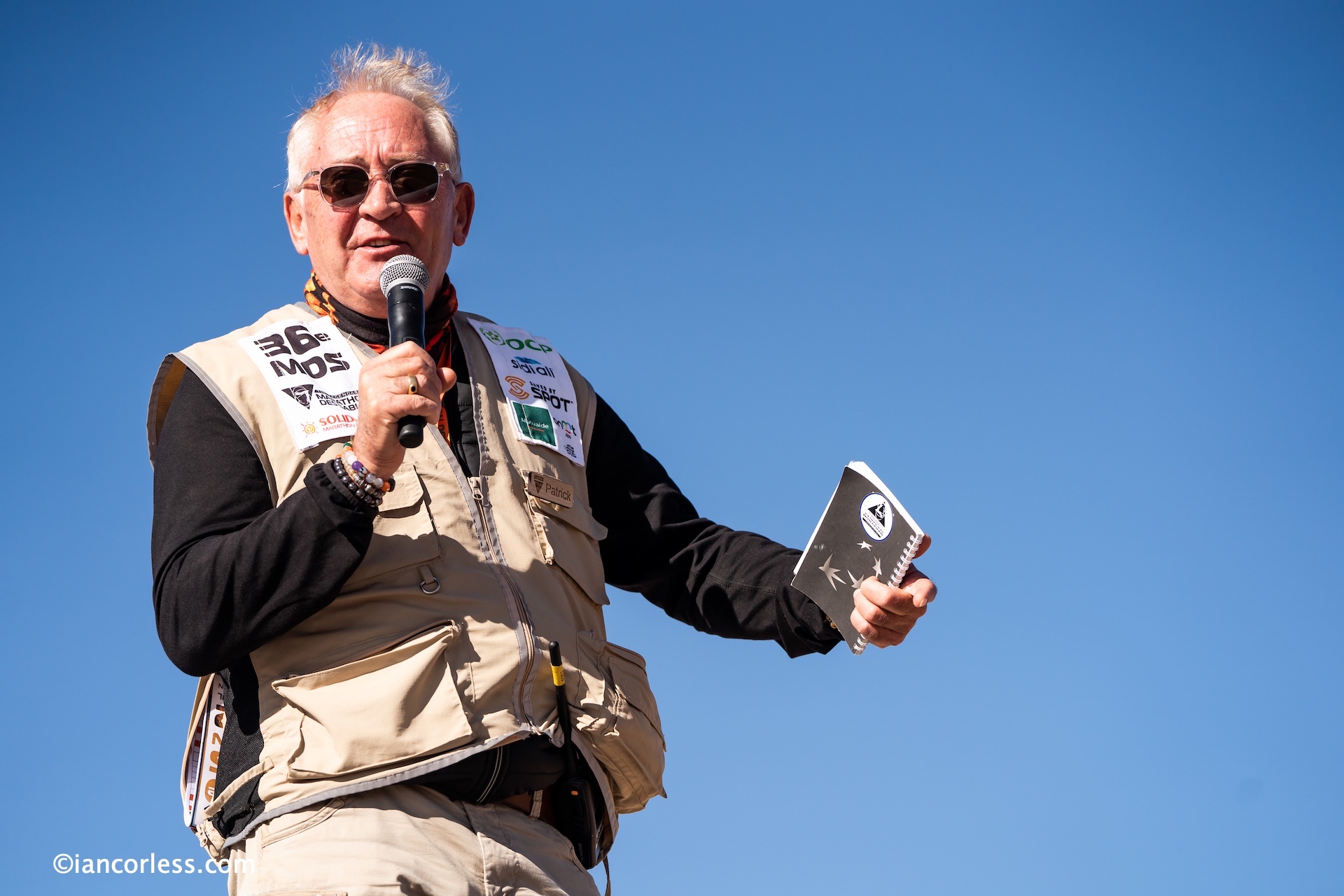
Of course, anticipation was high in bivouac, a mixture of excitement and nerves. However, Patrick Bauer, as per usual, calmed everyone from the roof of his Land Rover with his daily morning introduction to the day. The race was underway at 0900 as planned.

The march forward

Unusually, Rachid El Morabity went to the front and set the pace. He meant business! He was followed by Julien Chorier and within 400m they had already opened a gap… This was a very unusual Rachid tactic. He usually bides his time, eases in to the day and the slowly speeds up; not today.

Rachid and Julien

Rachid started as he meant to go on and won the day! But why did he start so hard? Quite simply, in my opinion, he knows he has a race on his hands this year with Aziz Yachou who pushed him last year and had he not had a time penalty, the result just may have been different?

Aziz Yachou

After the fast start, Aziz pursued and at the line had closed the gap, Rachid 2:04:16 and Aziz 2:04:37. So close!

Mohammed El Morabity

Julien Chorier faded to 5th in 2:16:12 and Mohammed El Morabity after a slow start moved in to 3rd 2:10:16 with Cédric Fleureton 4th in 2:14:40.

One thing is for sure, Rachid will need to work his year and it is clear that he knew this before the start. He looked leaner and fitter, not that he has ever looked any different. But pre-race there was a different look. It’s subtle. The cheeks just a little gaunt and his legs more defined.

Anna Comet Pascua

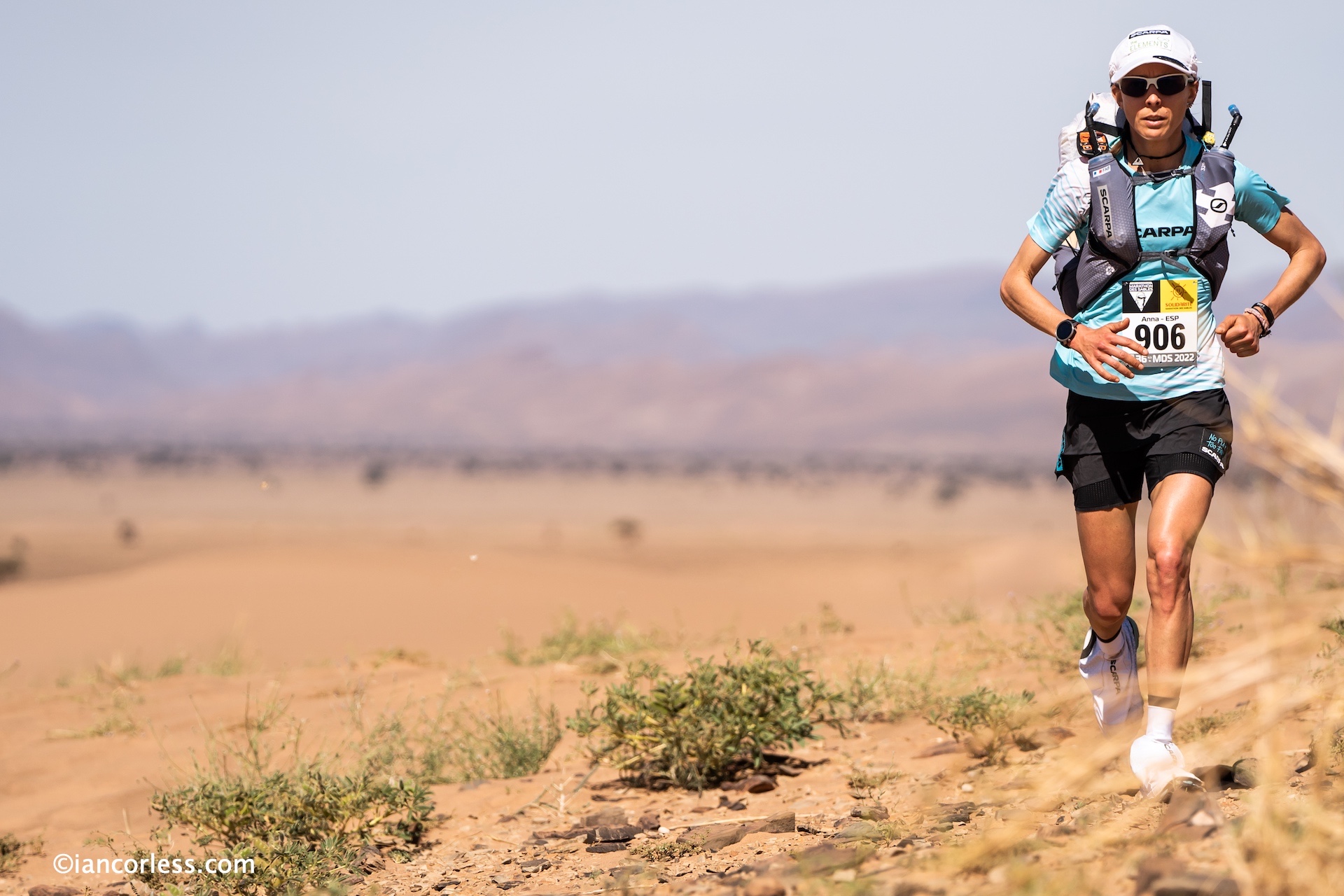
The women’s race was a different story with a more gradual start to the day with a clear strategy forming. Anna Comet Pascua came here to with the race and although she had run with others in the opening km’s, by Cp1 she had taken the lead and she went on to win the stage in 2:52:20.

Sylvaine Cussot

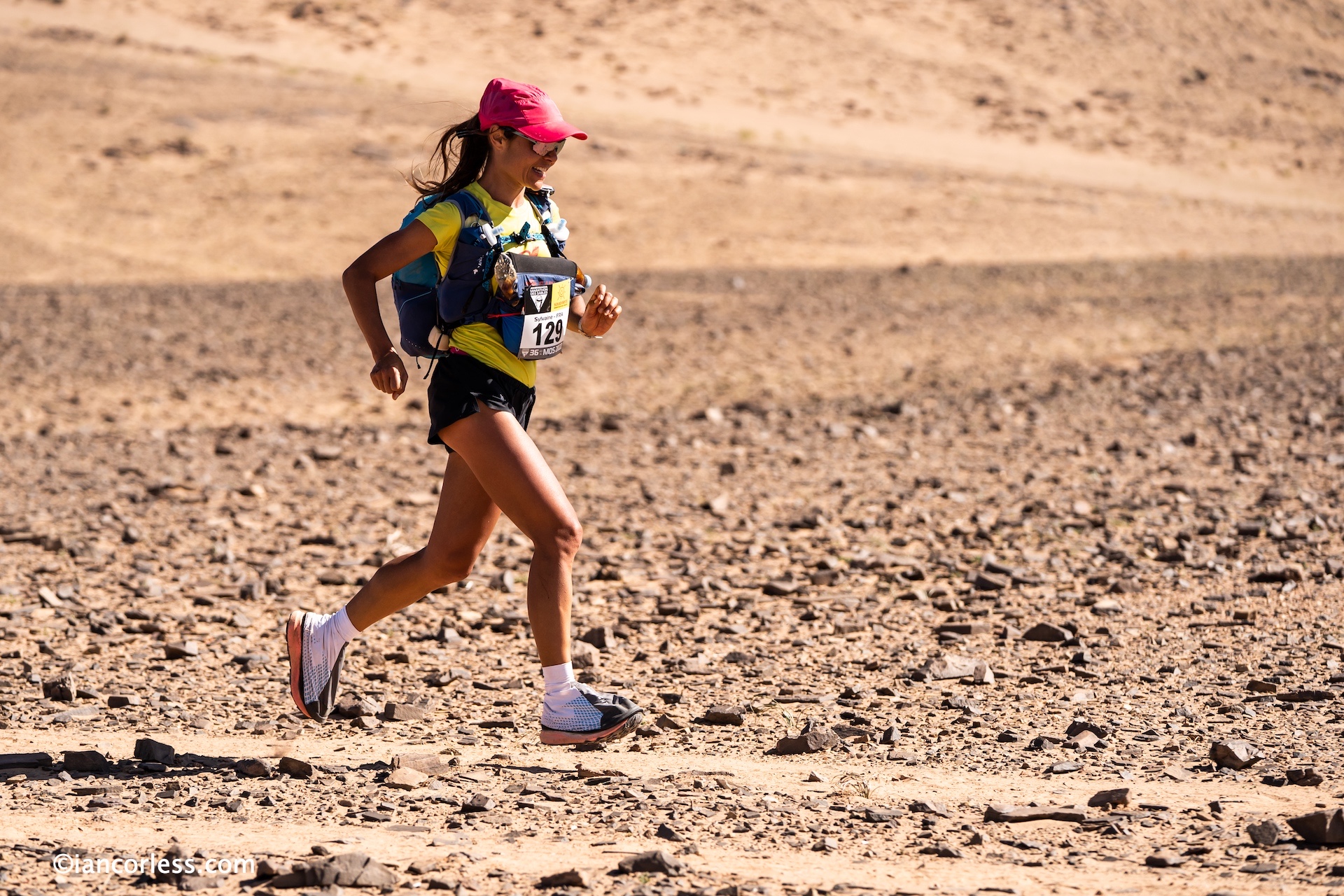
Sylvaine Cussot finished 2nd in 2:56:25 and the 2021 champion, Aziza Raji finished 3rd in 2:59:41. Amelia Culshaw from the UK was 4th ahead of multi MDS champion, Laurence Klein, 3:06:10 and 3:13:01 respectively. The women’s race is set for an exciting battle as the terrain becomes more challenging and the distances increase.

Anna and Aziza
Aziza 2021 champion

The stage one route was just over 30km’s, flat but had plenty of soft sand and several small hills and dunes but nothing substantial to make the day difficult. It was a good day 1 for all to ease in and for the top men and women, a fast one! Rachid’s time was incredible… We are in for a fast men’s race.

The impressive MDS!

Follow on:

Instagram – @iancorlessphotography

Twitter – @talkultra

facebook.com/iancorlessphotography

Web – www.iancorless.com

Web – www.iancorlessphotography.com

Image sales –www.iancorless.photoshelter.com
adidas INFINITE TRAILS 2021 Summary

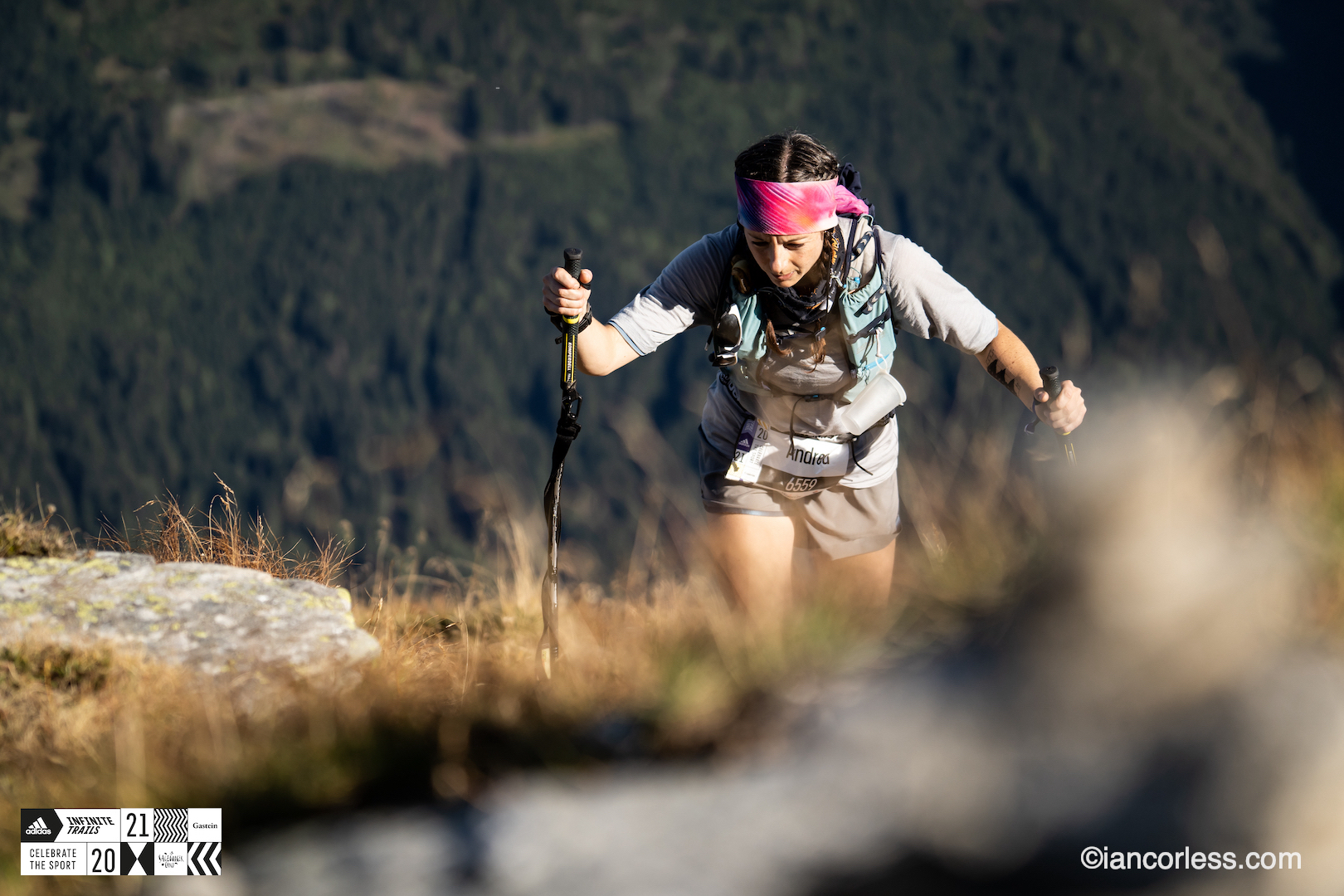
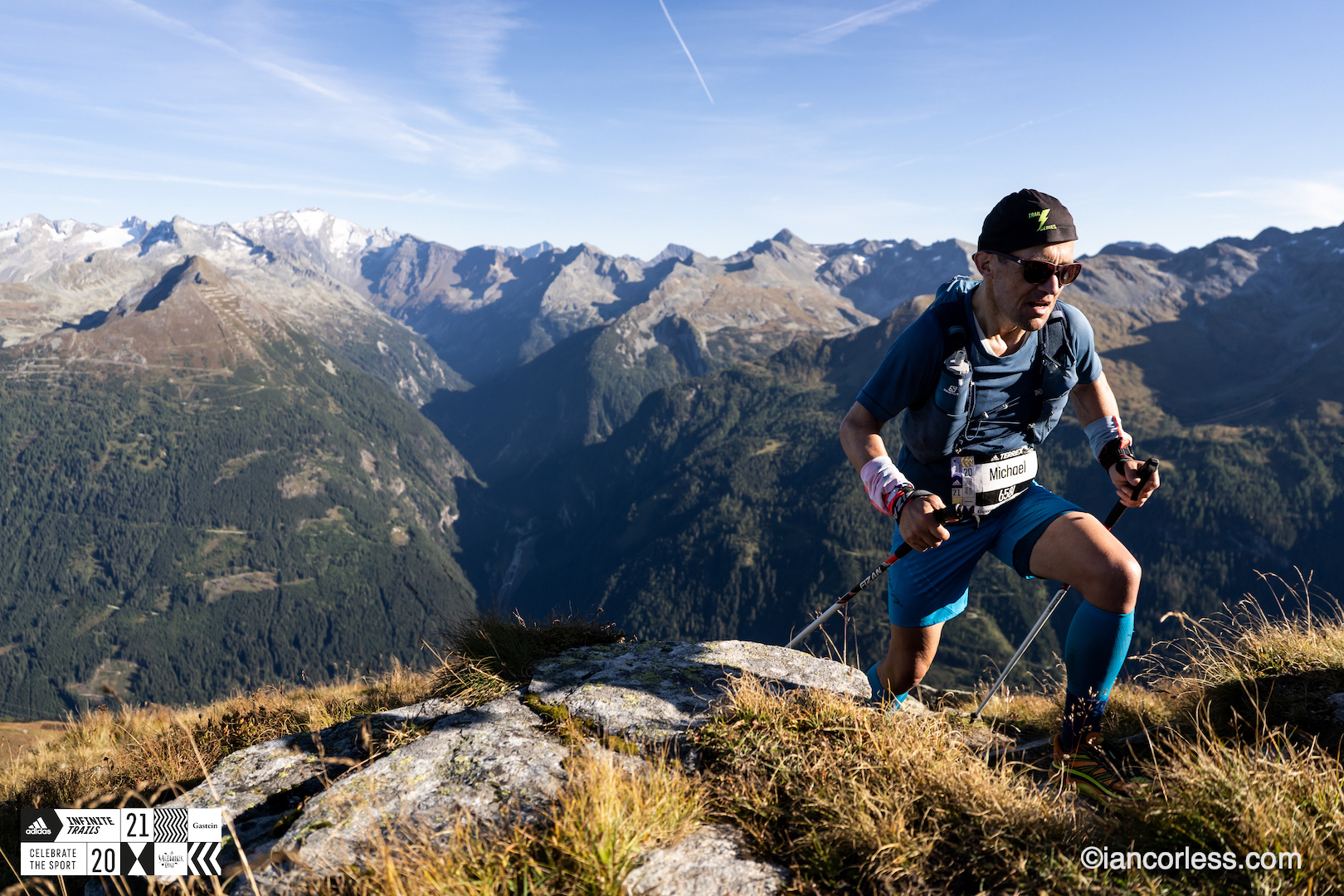
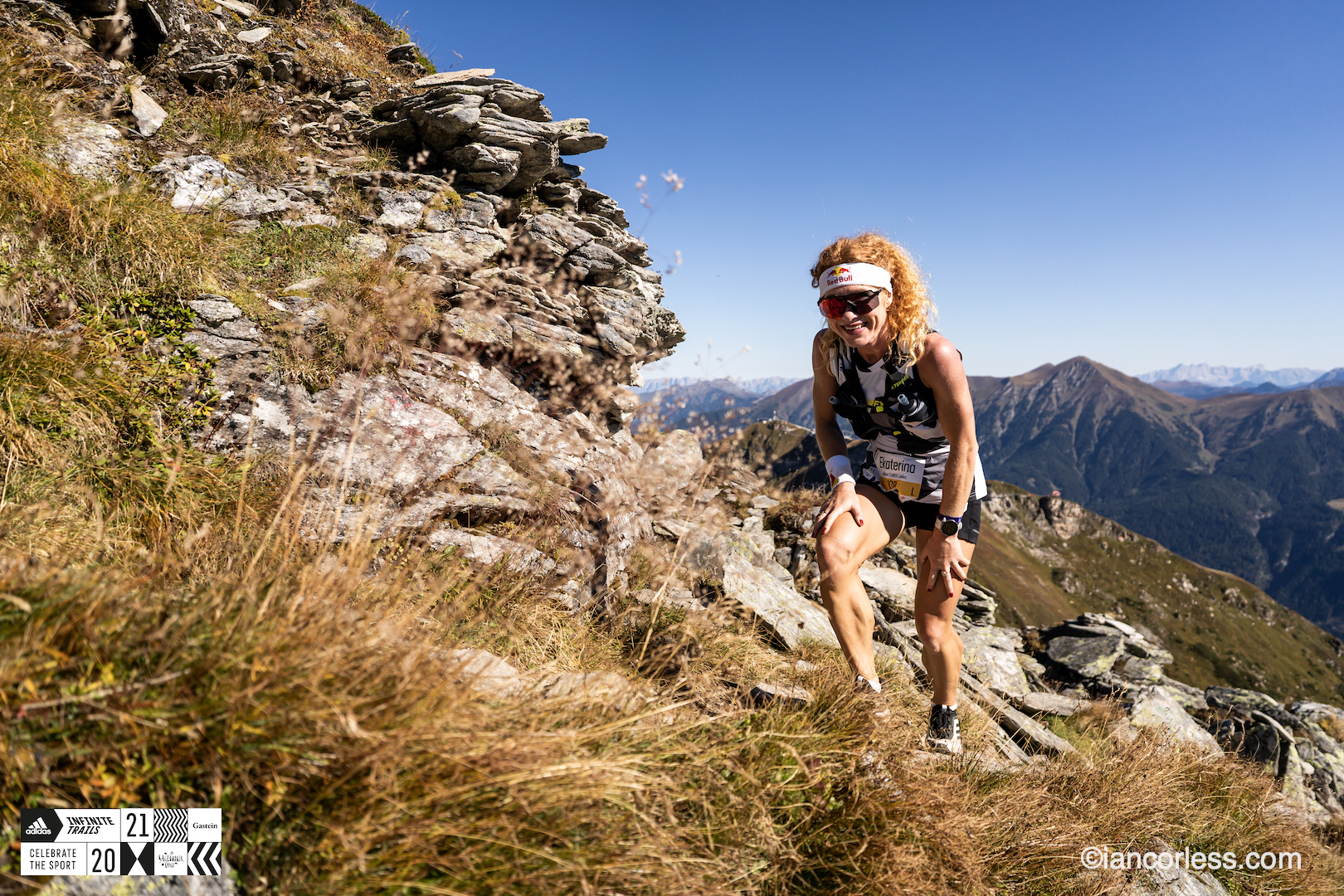
Three runners. Three loops. One Team. The concept of the adidas Infinite Trails is a bold one. Take three run routes of varying distance, take three runners, each running their own loop varying in distance from 15km to 40km. Quite simply, add the three individual finishing times together to see who the fastest team can be.

Now in its third edition, 2018 being the first followed by a hugely successful 2019 edition that elevated the event to a whole new level. As such, 2020 was hugely anticipated edition rolling on from the growth of 2019, unfortunately, a certain pandemic changed those plans.

Working within very specific parameters, the 2021 edition had less runners, new loops for the relay race of 20, 30 and 40km, a new solo 65km/15km race and a smaller athlete village. It would be easy to think that the 2021 version would be disappointing… Not at all! Mike and Sonja of Planet Talk, with the help of a truly dedicated team, once again managed to pull off an event that sets the benchmark for all running events.

Incredible organization and planning are at the hub of adidas Infinite Trails and it’s why the event is a success. No stone is left unturned, every eventuality is looked at and planned for. It’s a dream event to run and work on. 

The weekend started with a very controlled registration process meeting COVID guidelines. Race briefing was done digitally, and one has to wonder if race briefings in the future will always be done this way? It’s time efficient and arguably more thorough.

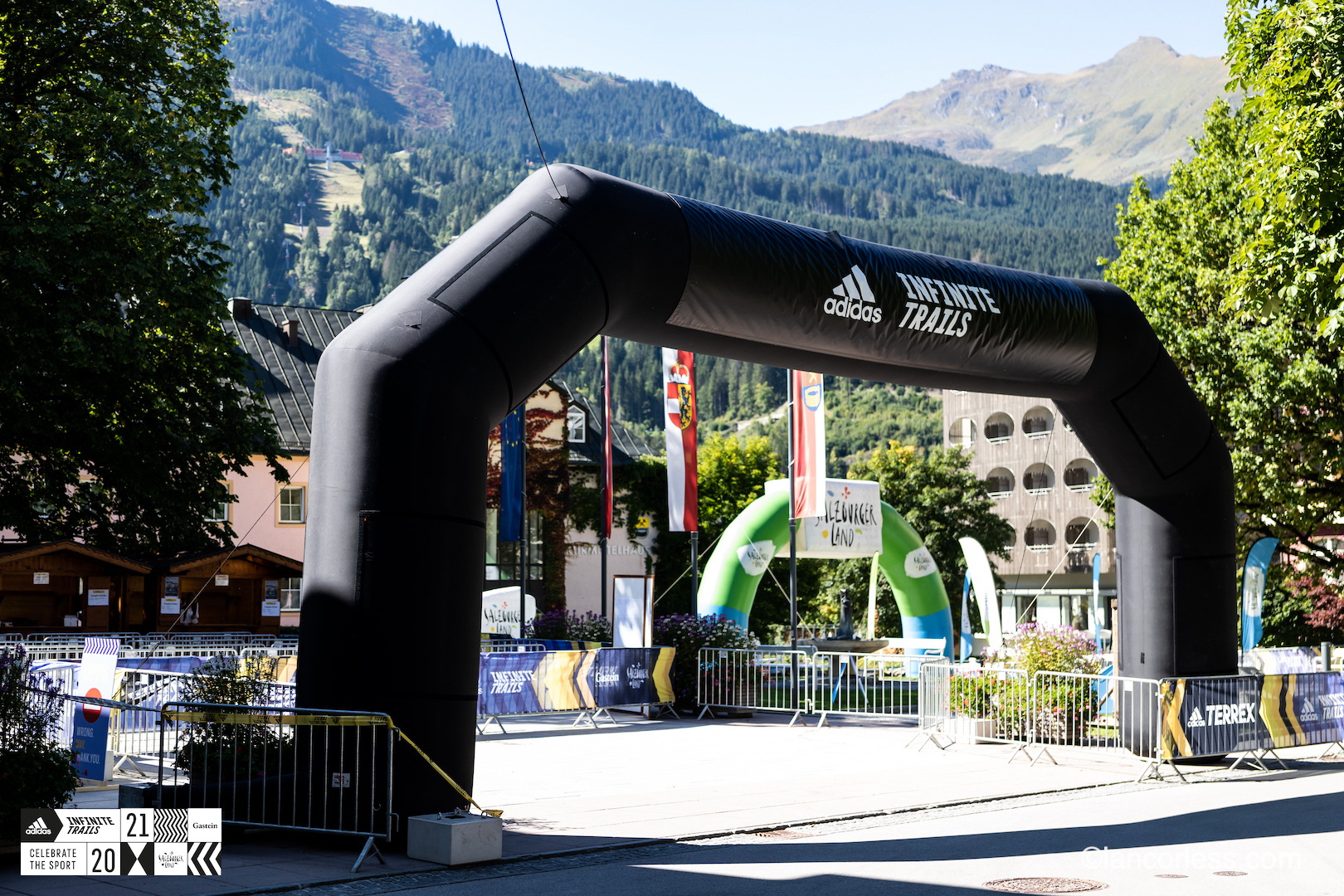
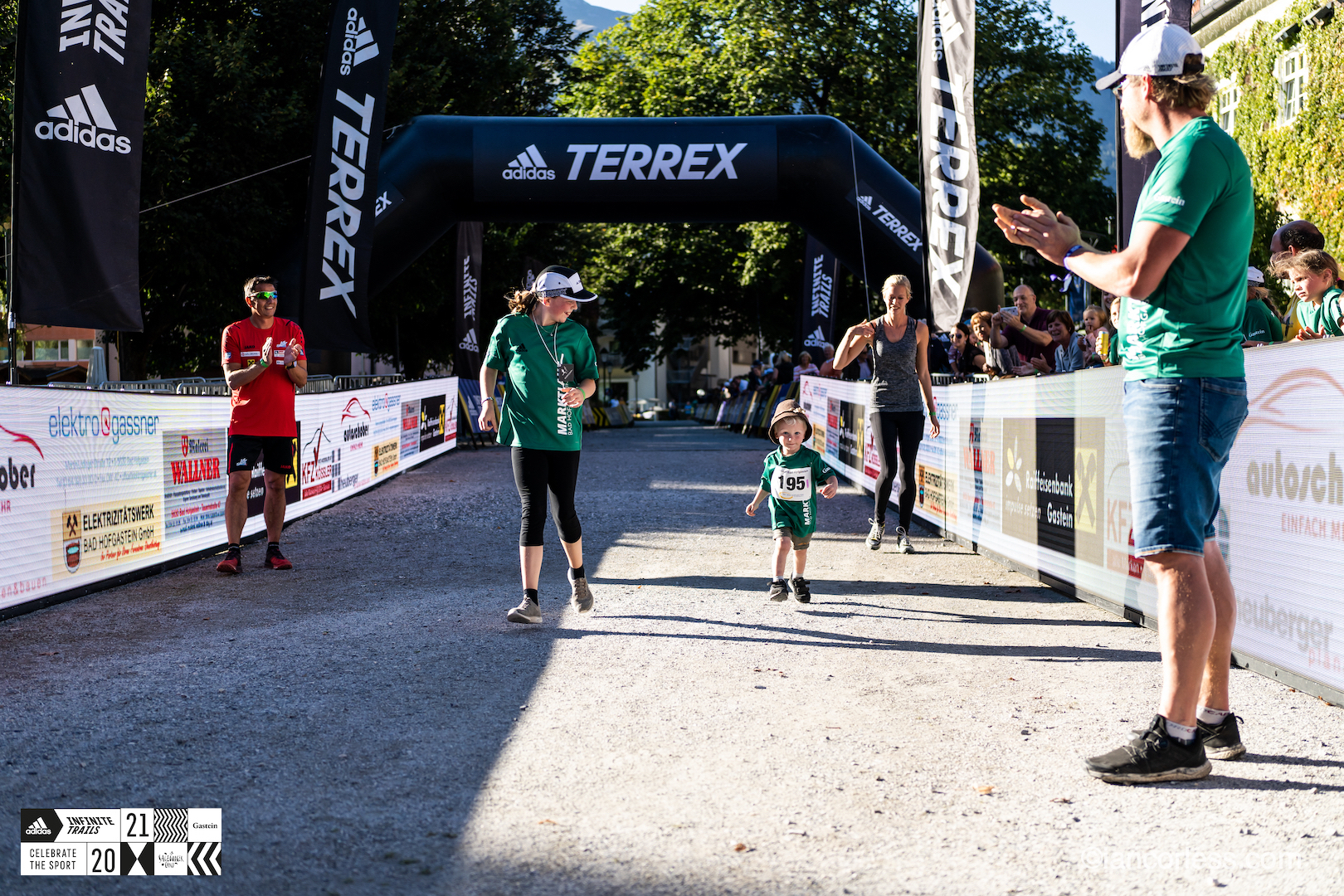
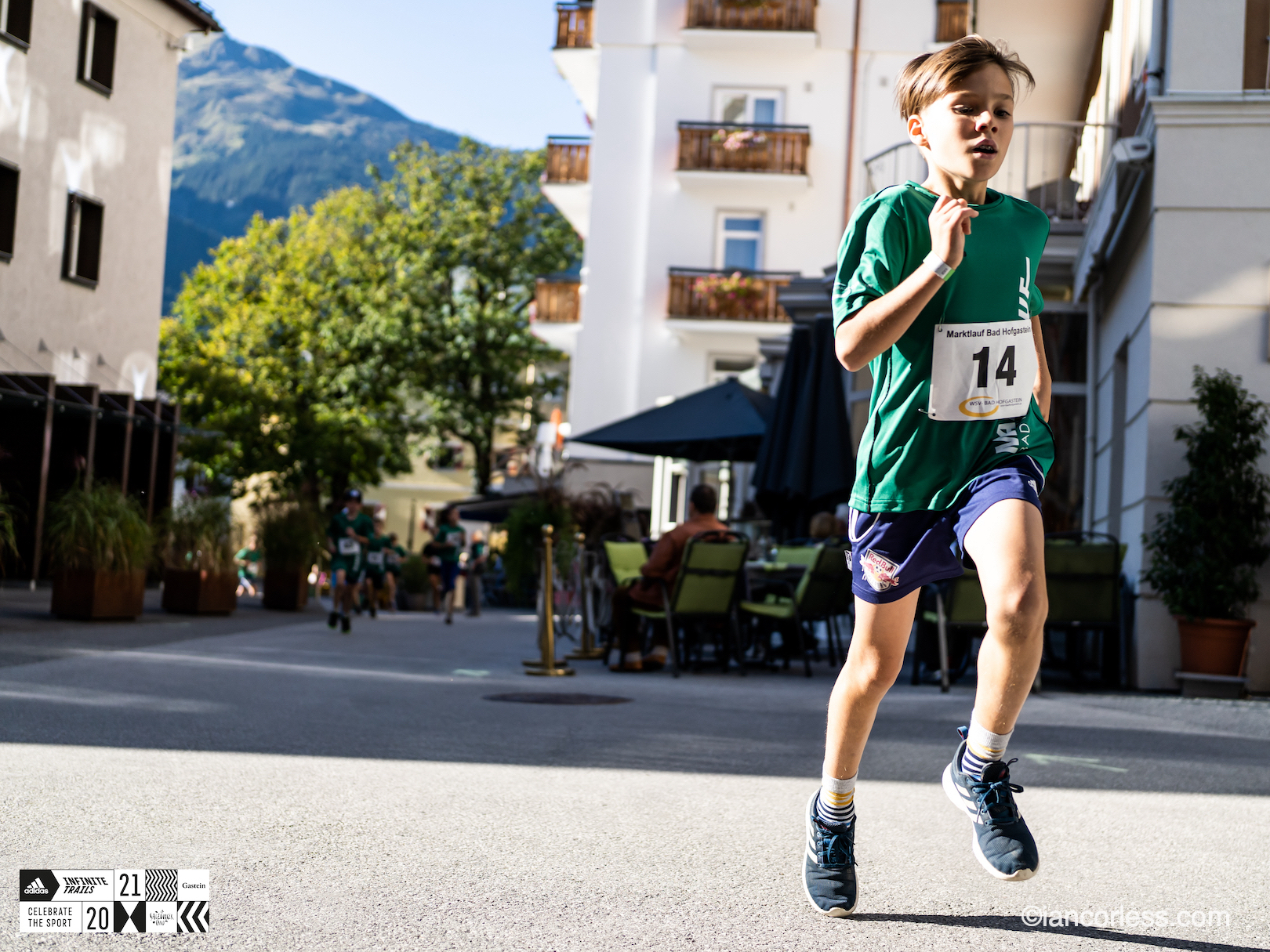
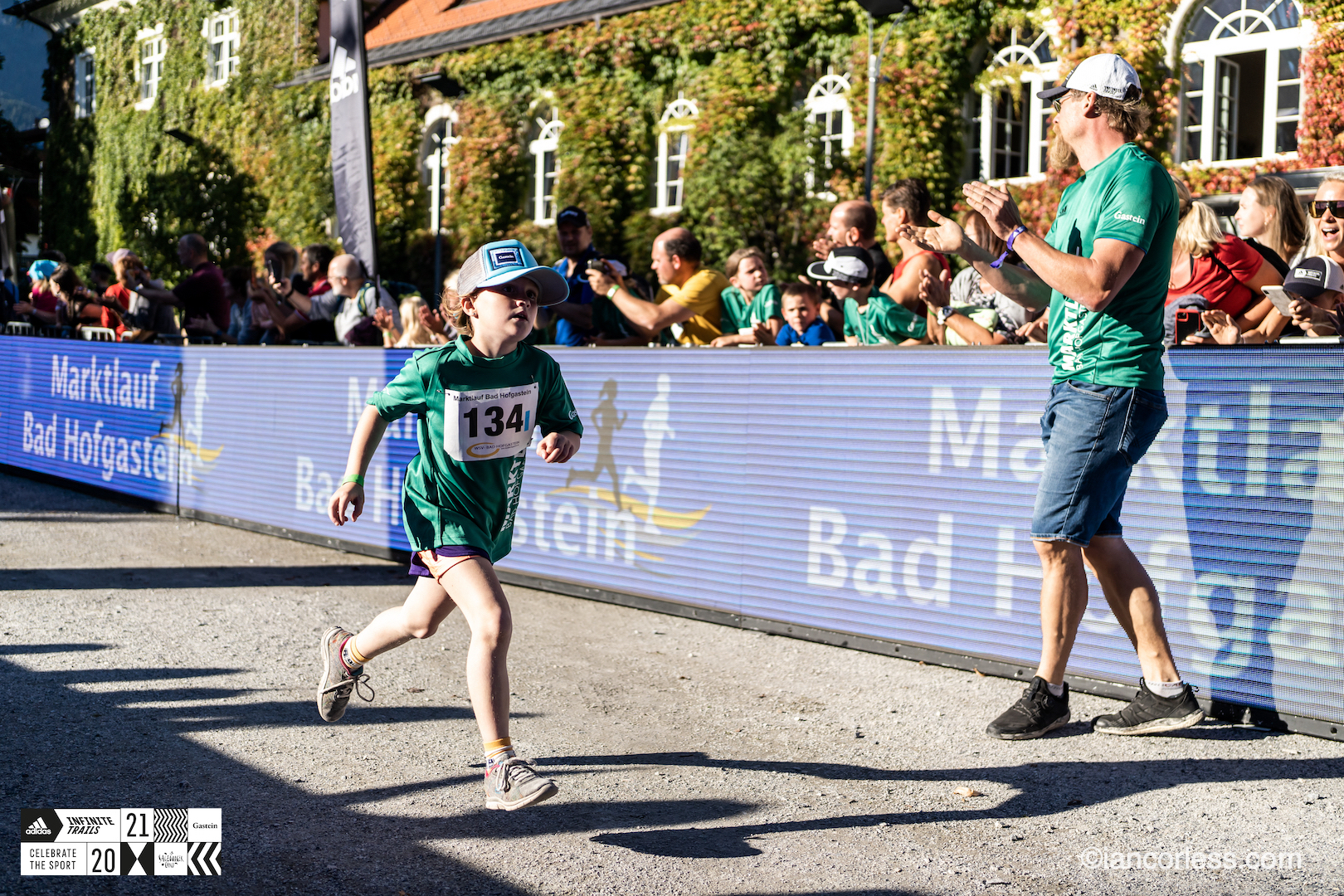
The ‘Market Run’ started in the afternoon and with it, racers of all ages tackled shorter distances around Bad Hofgastein. Of course, the highlight was the children. It’s so special to see kids run and run fast with no thought of pace. 

Saturday was race day and this is where the format changed to previous editions. In 2019, runners ran the first loop only first and then passed the timing chip to their teammate on completion at the finish. The second runner would then go on their own loop of a new distance to repeat the process once again. The third loop would follow the same process and the conclusion at the start/finish area would provide a total accumulative time. 

For 2021, all loops started at the same time with the three team members lining up and then departing on their respective loops at 0700.  The 65km solo loop started 30 minutes earlier, the solo 15km starting at 0900. The format worked extremely well and provided a plethora of finishes starting firstly with the 15km loop and lastly with solo runners arriving at darkness for the 65km loop. 

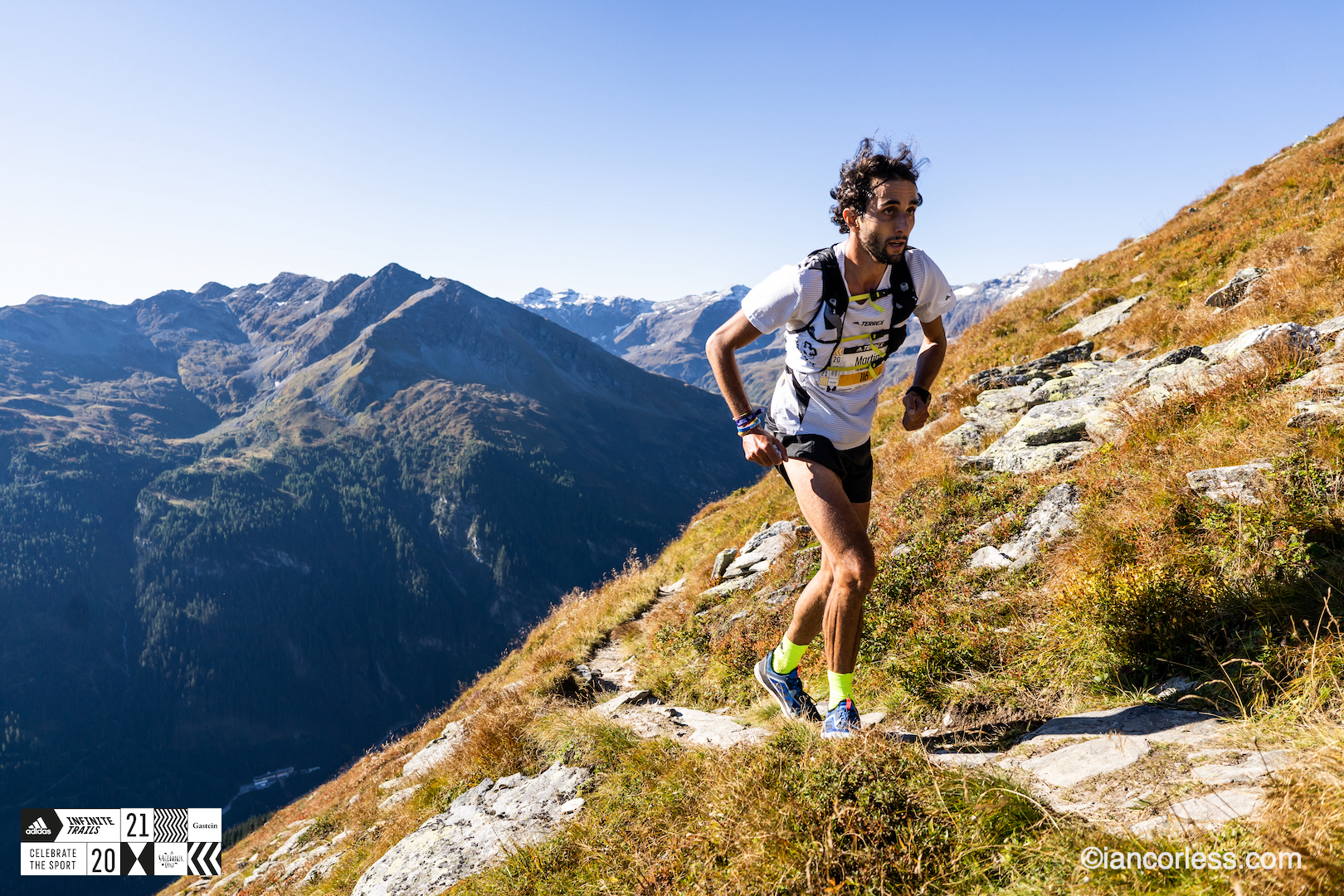
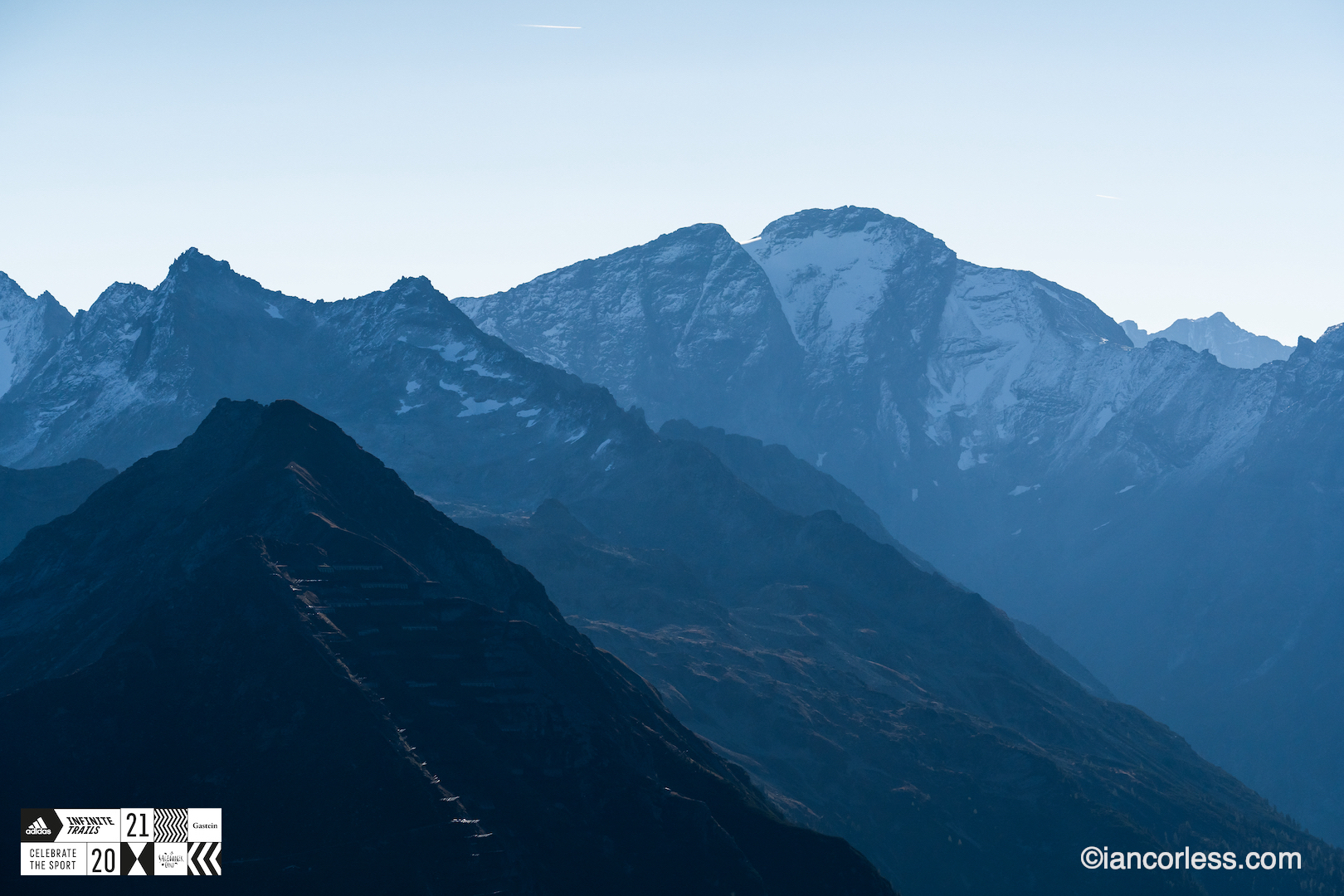
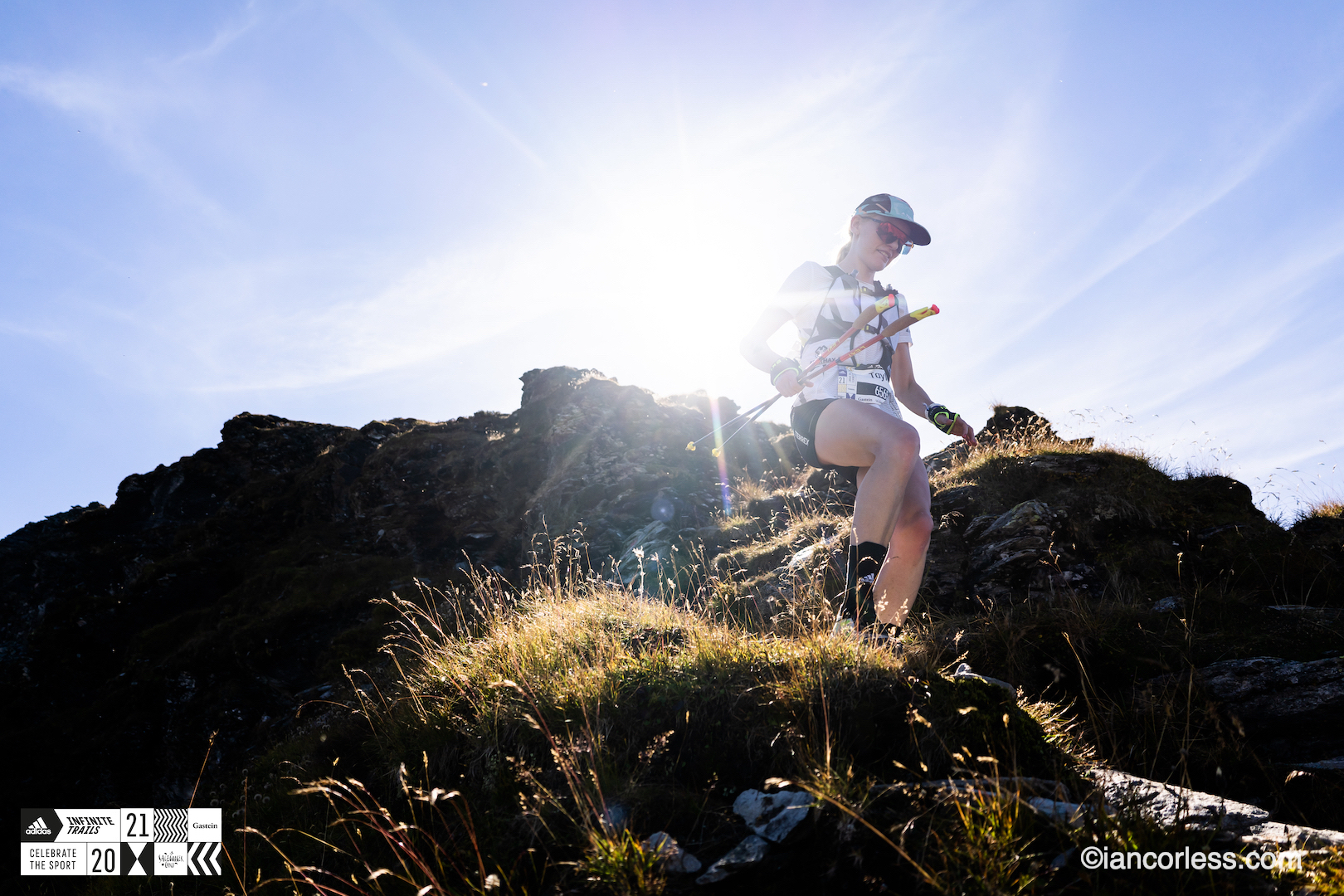
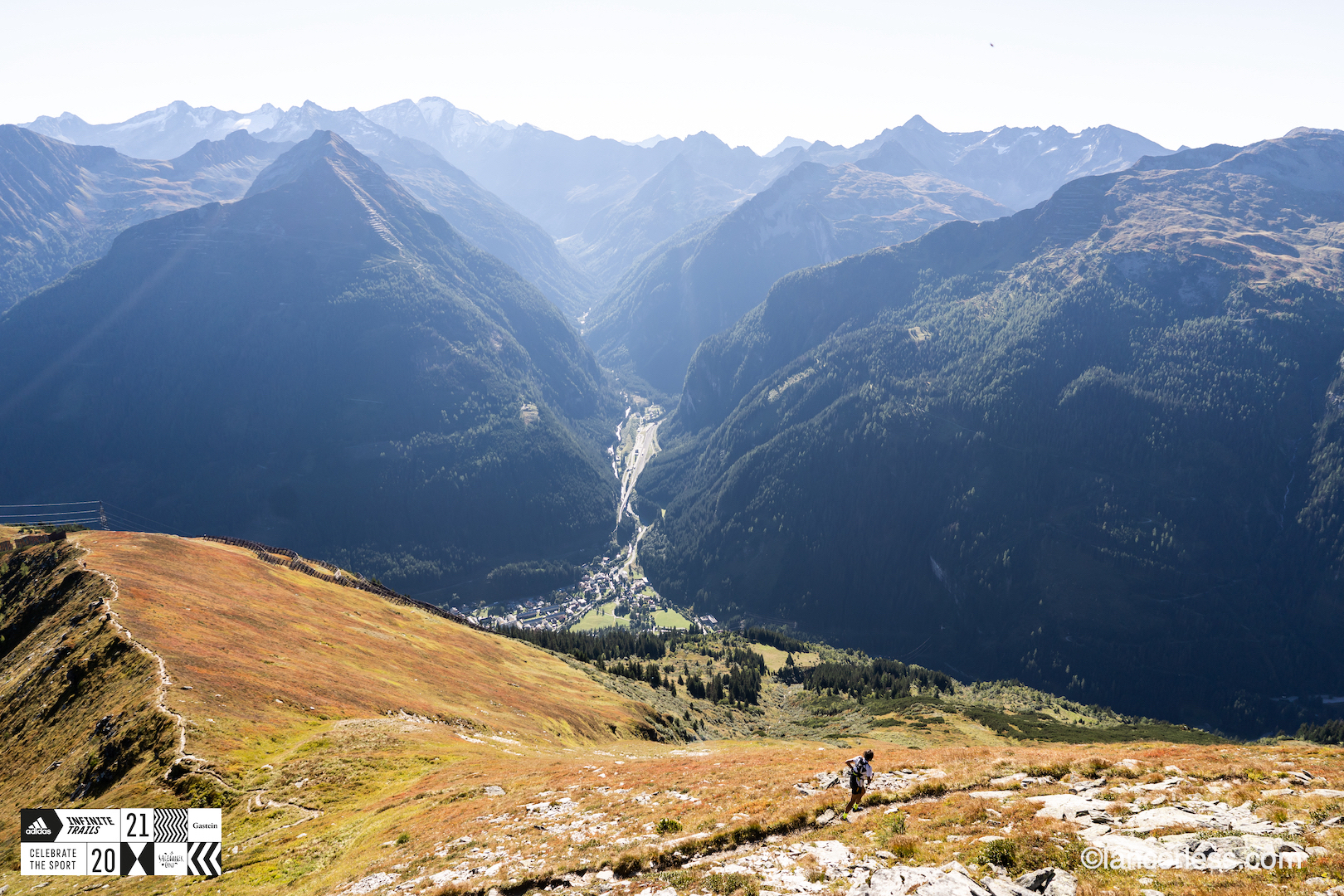
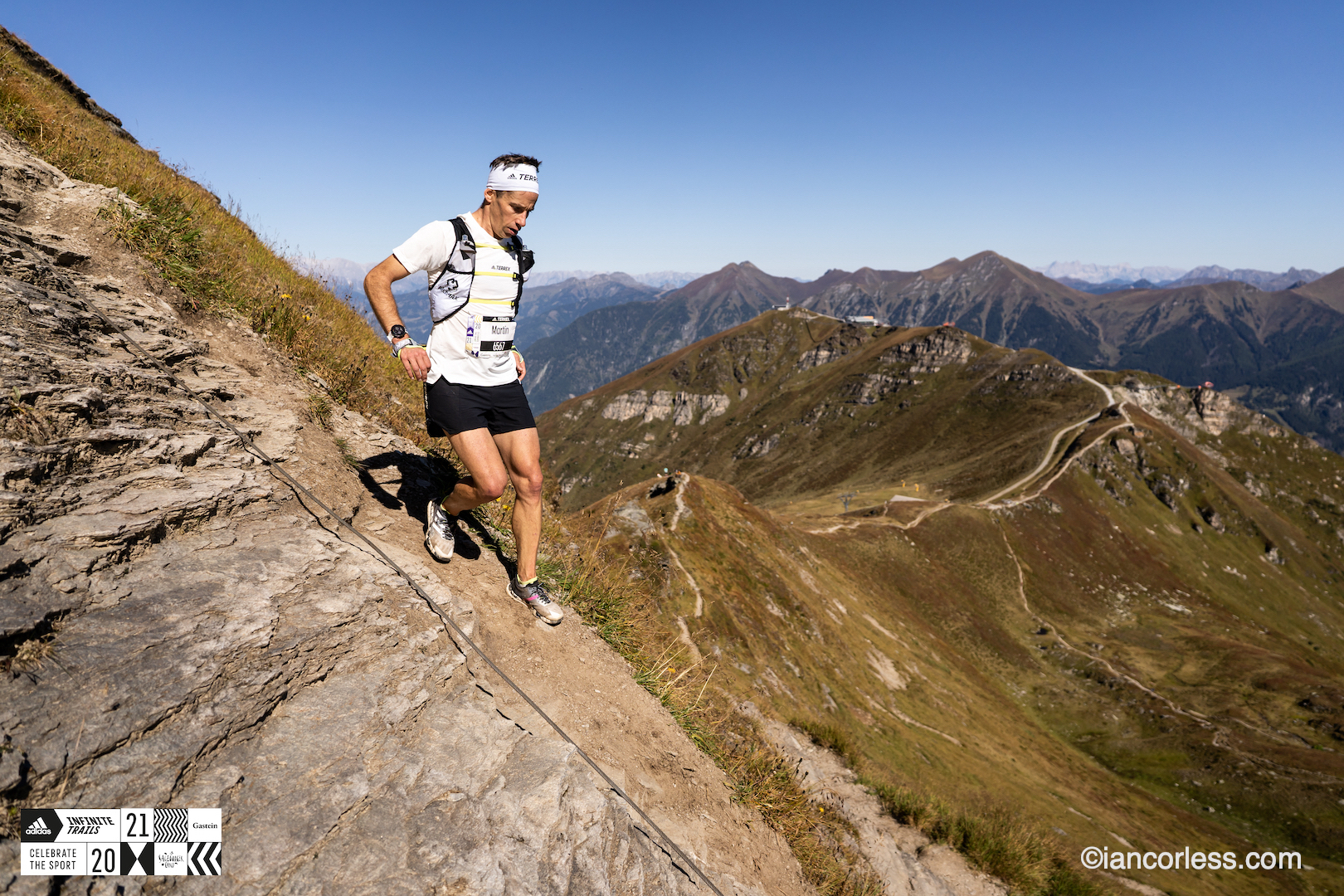
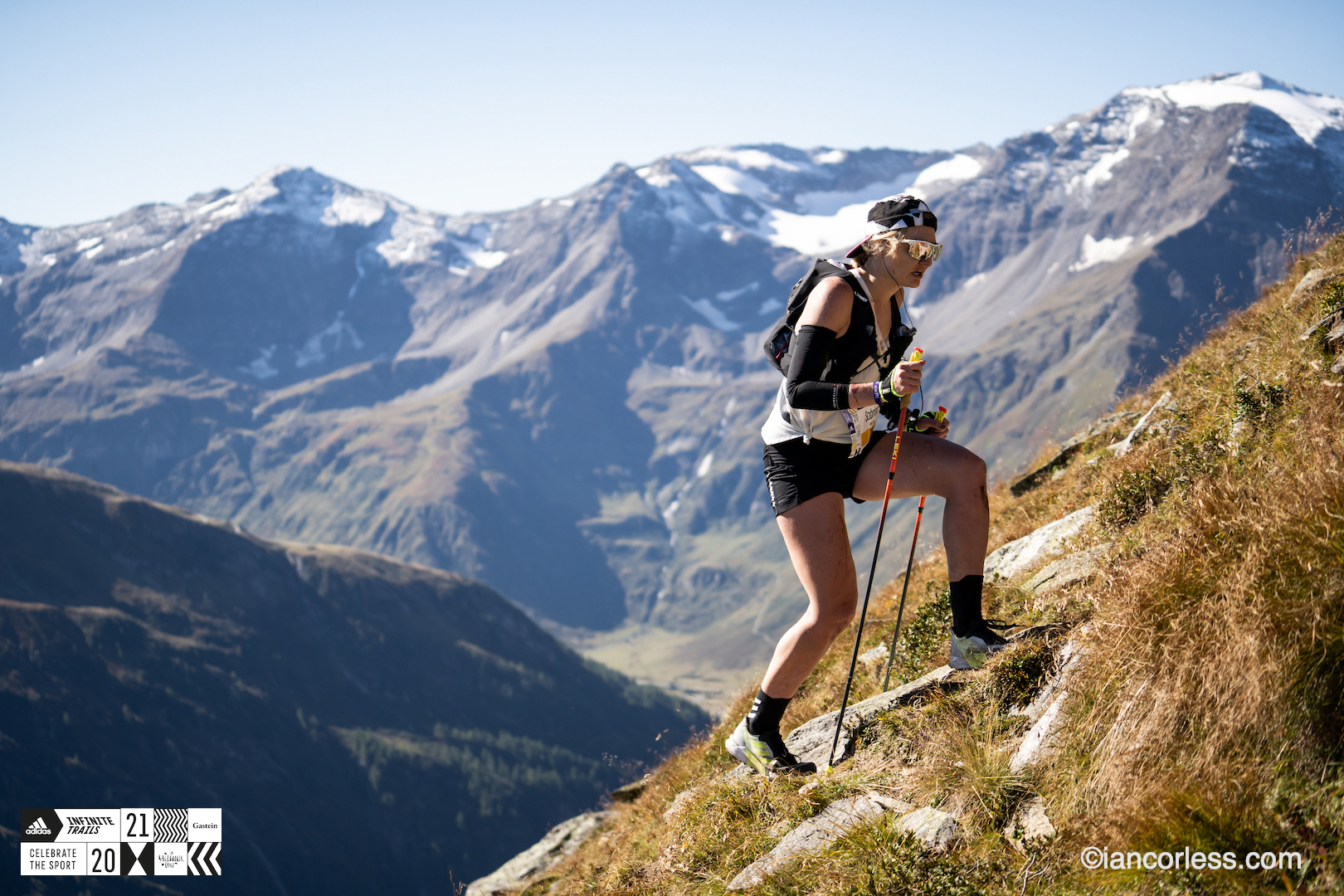
Austria and Gastein is a playground for trail runners, the three loops providing a perfect showcase for the highlights of the area. Only the 65km loop provided a full 360 journey including the highlights of Gamskarkogel, Graukogel and Tischkogel.

Races within a race bring an exciting element to adidas Infinite Trails. There is individual accolade as each runner passes their own finish line, but it’s only at the end that three runners will know if they have won the event; the three individual times added together to bring one finish time. 

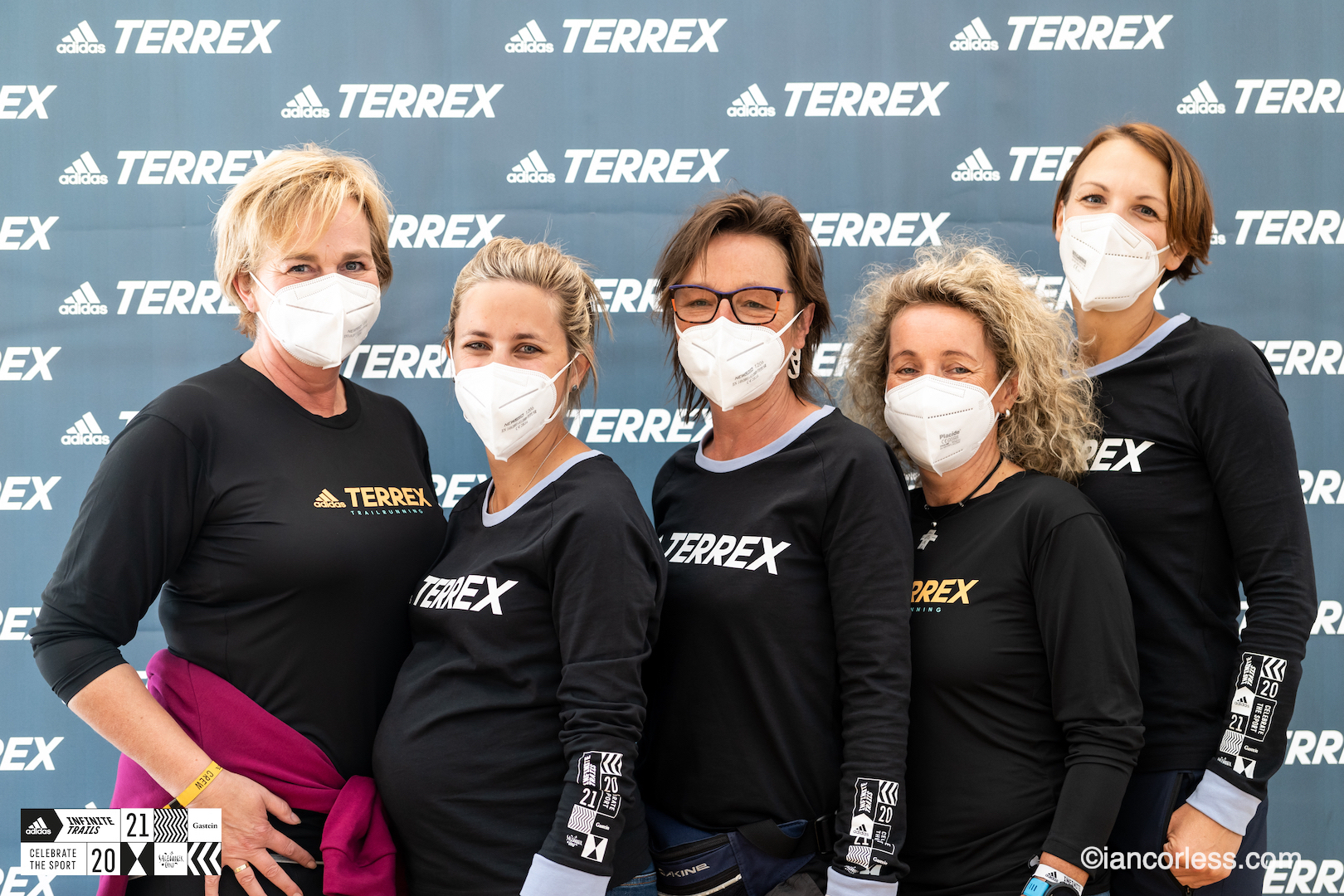
The adidas Terrex Team fielded a star-studded line up, even more impressive coming so soon after hard efforts at UTMB. As always, the #oneteam ethos was paramount and for those who would not race, they would crew and support the others. 

Importantly though, the 2021 edition was all about inclusion and participation, of course, there were individual and team winners, but importantly, there were no losers. The adidas Infinite Trails was full of achievement, happiness, and pride. It was good to all come together again, enjoy the trails, a great atmosphere, and all glory in a combined stunning weekend of running joy, very much the #oneteam ethos working for a whole community of likeminded people who wanted to celebrate the sport!

Bad Hofgastein provided a perfect hub for a weekend like this and the after party achieved a whole new level of awesomeness as it moved to the Alpentherme for water, music, drinks, and food. 

2021 may well have been a transition year for the adidas Infinite Trails, one thing is for sure though, we all received a resounding confirmation that the race is here to stay. Something this good should be a must for all. 

I said this in 2019, but I’d love to see other brands field teams to go head-to-head to see who the best with three runners over three loops can be. And you? Plan now, find two friends, create a team name and join us in Bad Hofgastein next year for the adidas Infinite Trails. Or if you fancy the full and immersive 360 journey, why not contemplate the 65km solo run, it’s a toughie, but very rewarding. 

Race website HERE

Please support this website. I believe everyone deserves to read quality, independent and factual articles – that’s why this website is open to all. Free press has never been so vital. I hope I can keep providing independent articles with your help. Any contribution, however big or small, is so valuable to help finance regular content. Please support me on Patreon HERE.

Follow on:

Instagram – @iancorlessphotography

Twitter – @talkultra

facebook.com/iancorlessphotography

Web – www.iancorless.com

Web – www.iancorlessphotography.com

Image sales –www.iancorless.photoshelter.com

Ultra Trail Snowdonia 2021 Summary #UTS

Josh Bakker-Dyos

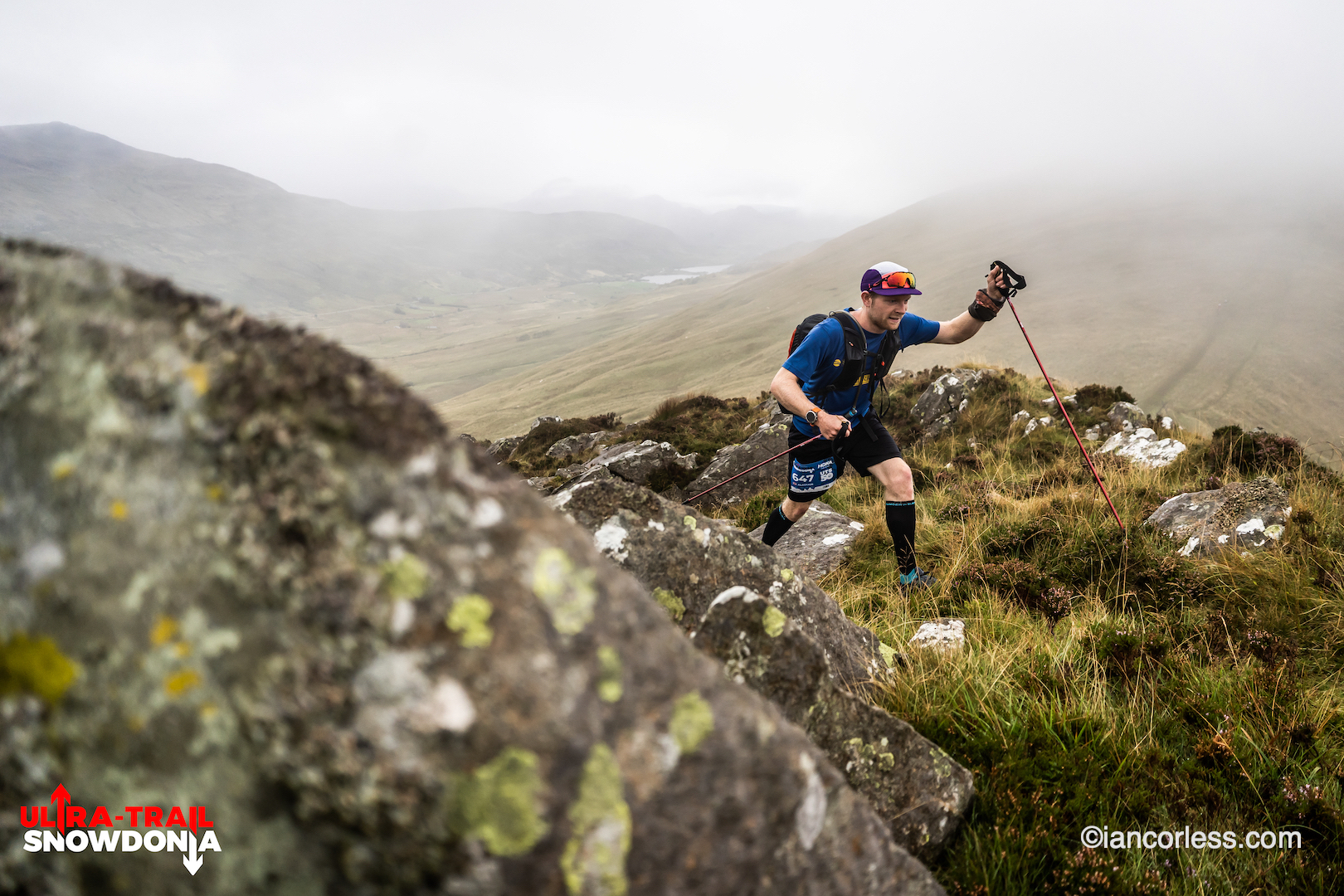
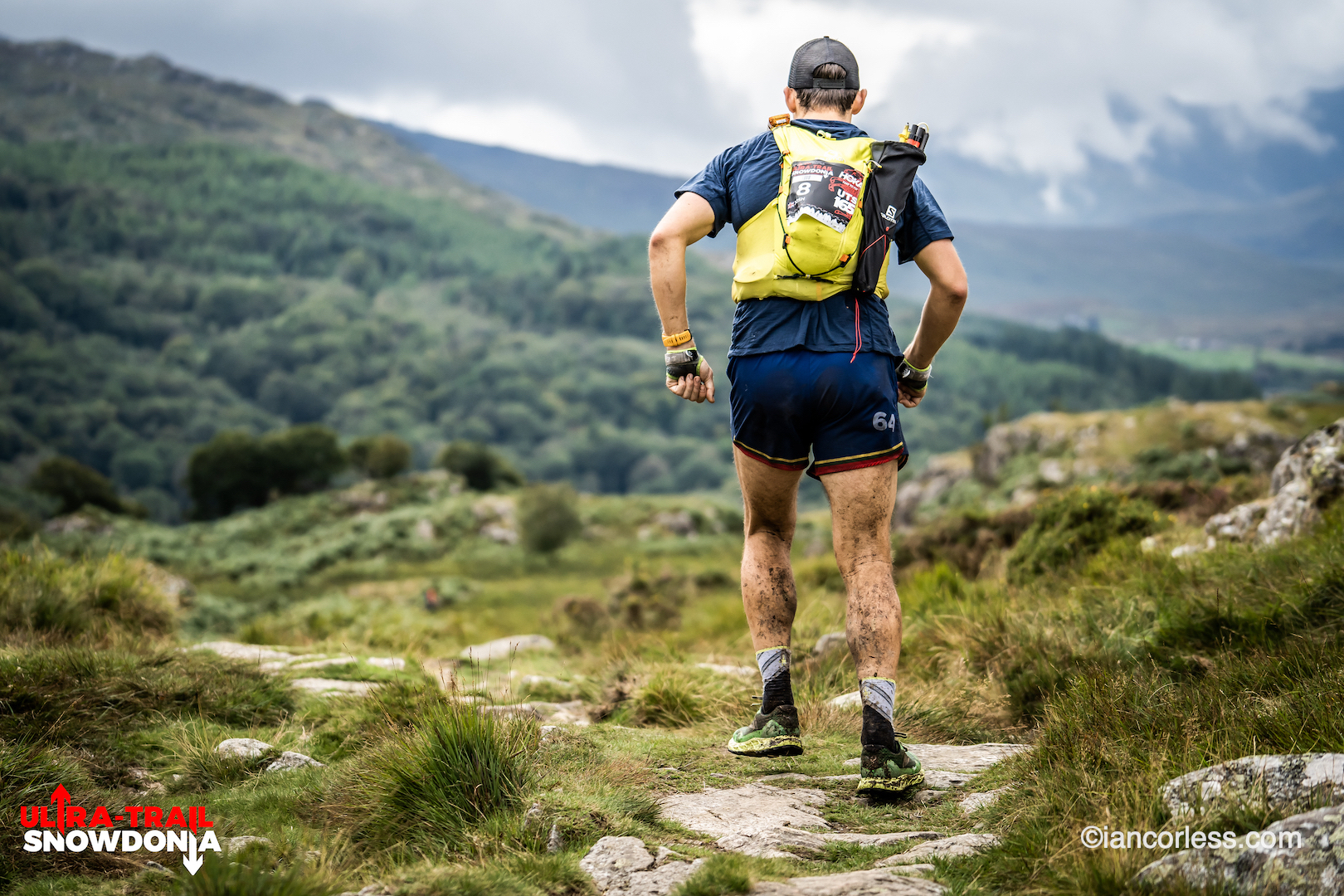
Persistent rain, low cloud, poor visibility, mud, bogs, wet rocks, climbs and descents that made even the most adapted legs scream in pain, yes, that was Ultra Trail Snowdonia 2021.

Missing in 2020 due to the dreaded ‘C’ word, the UTS returned in 2021 to Capel Curig as part of the Ultra Trail World Tour and supported by Hoka One One to confirm the dream of Michael Jones of Apex Running – A big UTMB style weekend of racing in the heart of Wales.

VIEW THE IMAGE GALLERY

With distances of 50km, 100km and the whopping 165km, one word was touted pretty much everywhere all weekend, brutal! And it was… A savage weekend of racing but as Michael says, ‘beautifully beyond belief, savage beyond reason.’

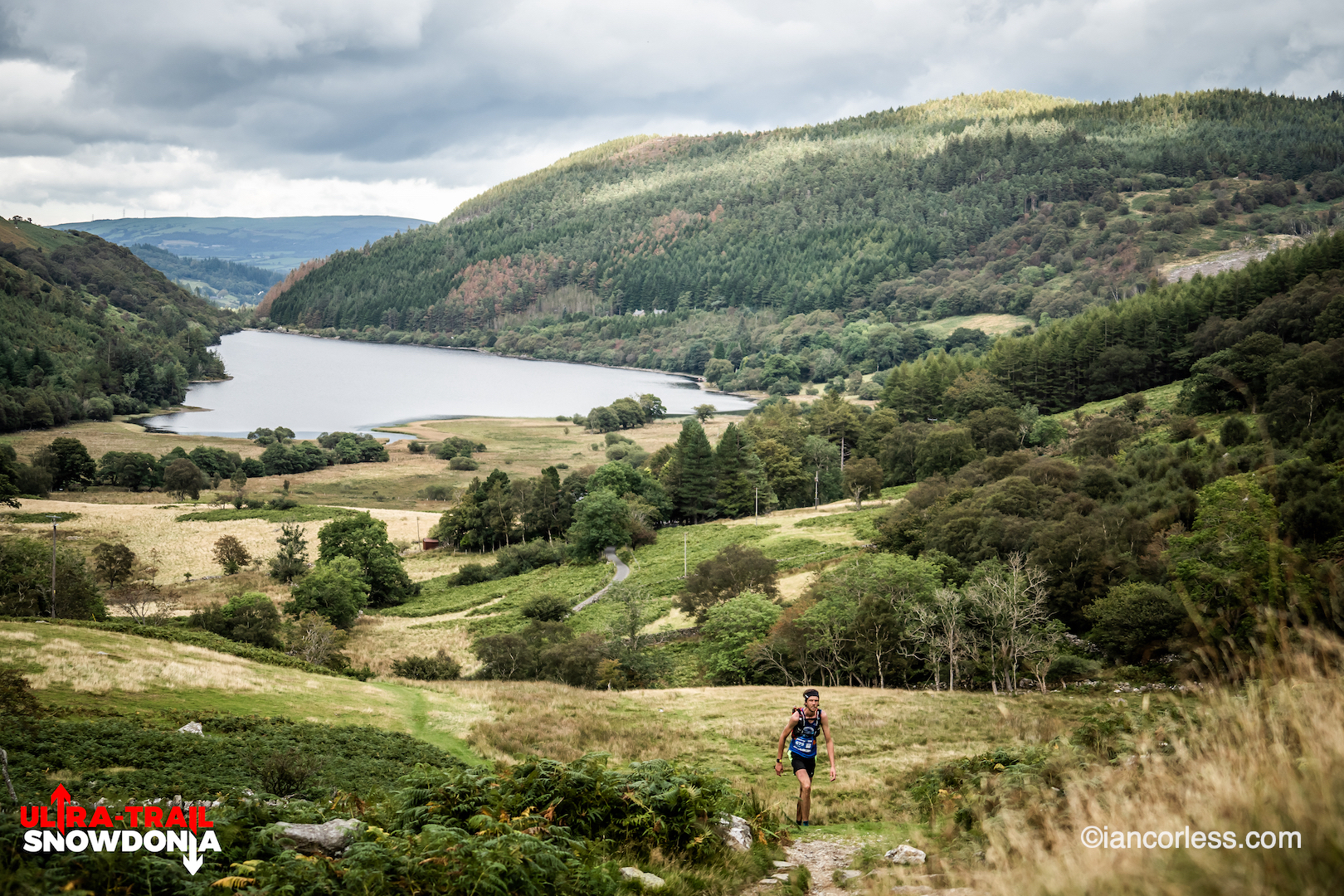
Despite the rain, despite the lack of views, Wales was a stunning playground for trail running. Let’s be clear here, there is no ‘easy’ running at UTS. The 50km is a wonderfully challenging route that may well have surprised many with some of its technical challenges, particularly the climb from Ogwen up to Carnedd Dafydd, compensated for what could be then considered a ‘relatively’ easy run in to the finish via Lyn Cowlyd and Blaen-Y-Nant.

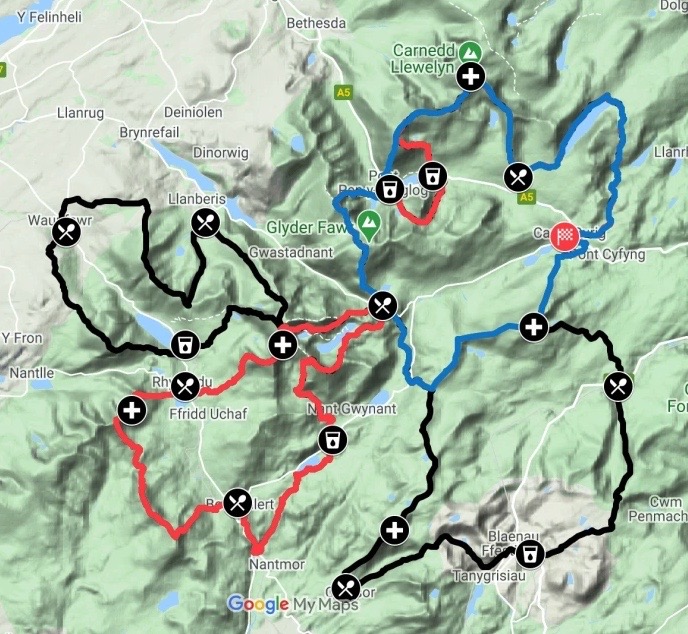
The 100km route followed the early miles of the UTS50 all the way to Pen-Y-Pass but then headed along the Miners’ Track for an extended loop to return via the Pyg Track heading off to Y Garn, a loop around Tryfan and then head up to Carnedd Dafydd via a different route to the 50km and then follow the same run in to the finish.

The 165km is well, just a monster! As expected, it created carnage amongst the competitors. It’s a relentless beasting of mind and body that passes through the whole of Snowdonia. The 100km and 50km routes all utilizing sections of this all-encompassing journey but only the 165km giving the full perspective of how beautiful and hard the Welsh mountains are. As with all races at UTS, it started and concluded in Capel Curig. Heading off to Blaenau Ffestiniog, Croesor it then picked up the 50km and 100km routes to Pen-Y-Pass. Nantmoor, Moel Hebdog, Llyn-y-Gadair and then after Yr Wyddfa it followed the Snowdon Ranger Path for an extended loop before returning via the Snowdon Massif and Pyg Track to Pen-y-Pass. From here, the 100km and 165km routes were identical all the way back to Capel Curig.

Tremayne Dill Cowdry summed it up:
“45 hours to do just over 100 miles and every minute of that was a hard slog.
Mountains, bog, wet rock, tough nav on a marked course, sleep deprivation, mist, rain and the terrain!! Very little was even runnable. I can’t imagine a 100 miler more difficult than that. Easily the hardest I’ve done and definitely the hardest in the UK. I was going ok although I would have happily dropped given the chance but my feet succumb to the permanent wet and I had to hobble the last 20-ish miles…

Stunning landscape

As with all races, someone has to cross the line first, and of course there was stunning performances all weekend. However, the real sense of achievement came firstly from toeing the line and being in with a chance of completing a journey. The second came from completing the journey. Every medal was hard earned.

Josh Bakker-Dyos

In the 165km event, Josh Bakker-Dyos lead from the start and while many expected him to blow up, so fast was his pace, he never did. He was relentless and consistent crossing the line in 28:51:43. It was easy to say, ‘he made it look easy!’ But for every other runner who crossed the 165km line, it was very clear, there was nothing easy on this route! Toby Hazelwood was less than 60-minutes behind in second, 29:45:17, another stunning run! Adam Jeffs rounded the podium with 34:09:54. Alice Sheldon and Becky Wightman were the only female finishers, 45:09:55 and 47:41:06 their hard-earned efforts stopping the clock – a brutal two nights and days out in the Welsh mountains. Only 32 completed the race.

Mark Darbyshire

The 100km route was won, but not dominated by Lakeland 100 champ, Mark Darbyshire ahead of Josh Wade and Jack Scott. Mark crossed in 14:25:47 with 14:33:36 going to second. It was 16:02:05 elapsed before the third crossed the line. Sarah Stavely (21:41:03) won the women’s race with Kajsa Holgersson and Julie Finn in second and third, 22:28:49 and 22:44:53.

Lauren Woodwiss

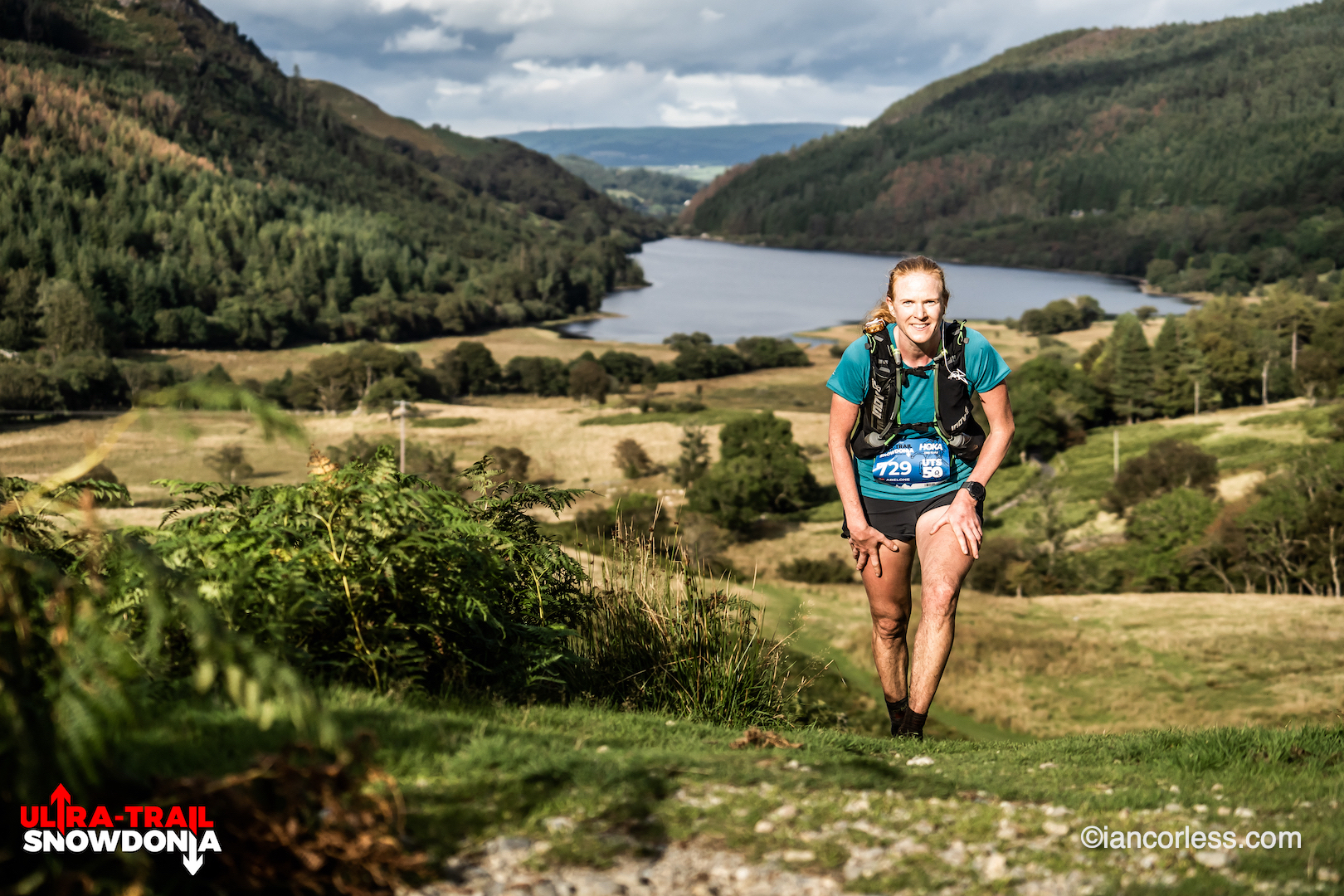
Harry Jones flew around the UTS 50 route and looked as strong at the finish as when he started, his 6:13:33 a stunning time. It was 6:56:54 elapsed before second place Will Simmons crossed ahead of Spencer Shaw in 7:14:53. Lauren Woodwiss, like Jones, lead from the start dictating an excellent pace over the 50km route and completed her journey in an excellent 7:54:18. Celia Waring placed second in 8:36:18 and Abelone Lyng from Norway, moved up from outside the top-10 women to eventually finish third in 8:43:16 after sprinting for the line ahead of Jenna Shail who was just 13-seconds behind.

VIEW THE IMAGE GALLERY

Abelone Lyng

As Capel Curig slowly returned to some normality on Sunday, it was easy to see that the UTS will become one of the ultimate trail running events not only in the UK but the world. It may not have all the glamour and glitz of Chamonix and the UTMB. It’s a much more grass roots event, some would say a ‘true’ trail running event. Ultimately though, Wales was the hero of the weekend offering stunning routes. This landscape combined with the vision of Michael Jones of Apex Running and a team of dedicated volunteers and supporters will make UTS a ‘one to do!’ However, if you are thinking about the 165 event? Think long hard and without doubt, train hard, it’s a beautifully brutal beast.

‘beautifully beyond belief, savage beyond reason.’

Please support this website. I believe everyone deserves to read quality, independent and factual articles – that’s why this website is open to all. Free press has never been so vital. I hope I can keep providing independent articles with your help. Any contribution, however big or small, is so valuable to help finance regular content. Please support me on Patreon HERE.

Follow on:

Instagram – @iancorlessphotography

Twitter – @talkultra

facebook.com/iancorlessphotography

Web – www.iancorless.com

Web – www.iancorlessphotography.com

Image sales –www.iancorless.photoshelter.com

Stranda Fjord Trail Race 2021 Race Summary

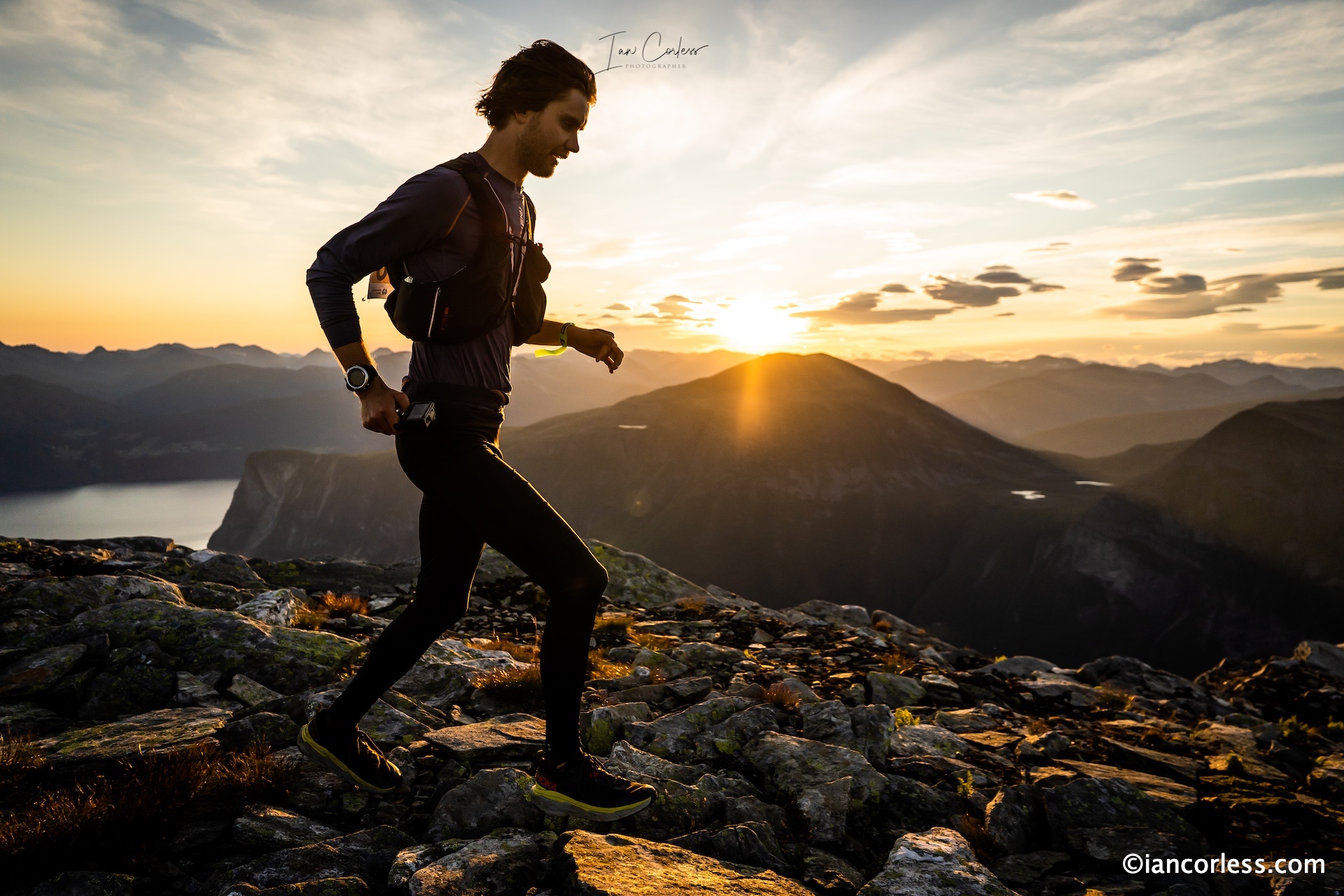
Kristian Aalerud arriving at the first summit at 0500 hours.

The words epic, beautiful and brutal get used a great deal in ultra-running and I get it. For many of us, any journey can entail all those things on a personal level and that is why you toe the line…

However, here in Stranda Fjord, Møre go Romsdal, Norway, one of the most truly spectacular experiences is waiting for you to toe the line.

Missing in 2020 due the Coronavirus pandemic, the Stranda Fjord Trail Race returned with three races, 25km, 48km and the new 100km distance. The latter offering a full and immersive 360 experience of what this magical area of Norway has to offer.

VIEW THE IMAGE GALLERY HERE

Let’s be honest, Norway as a location is arguably one of the most beautiful places in the world, and as a runner or outdoor enthusiast, the options and possibilities are endless, be that in the south or north.

Stranda, part of the Sunnmøre region, is a small place located on one of the west Norwegian fjords. Often accessed via ferry from Liabygda, it can also be accessed by road from Grodås. In proximity to Alesund, Åndalsnes, Loen and others, it’s a wonderful and magical area to explore.

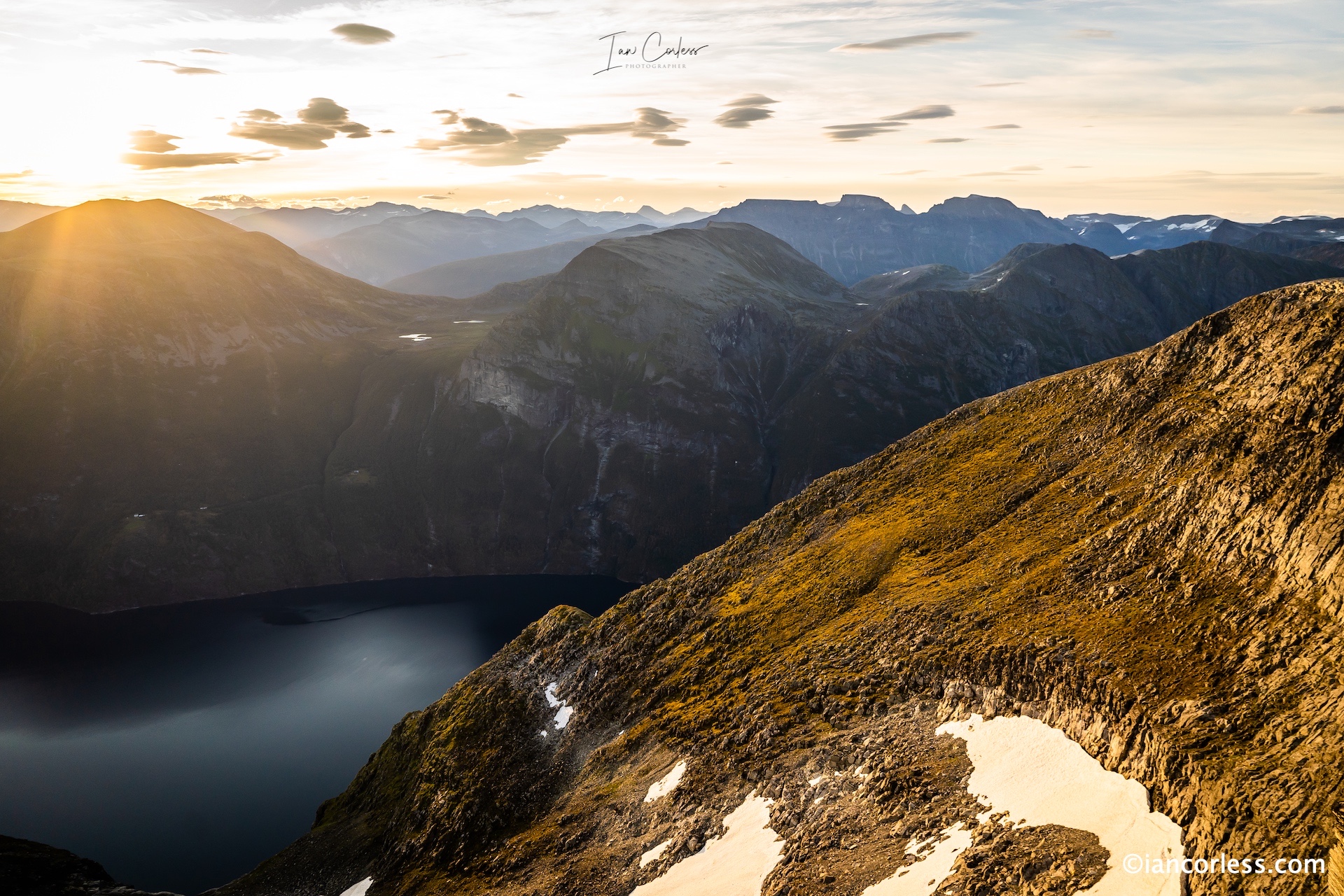
No better place for sunrise!

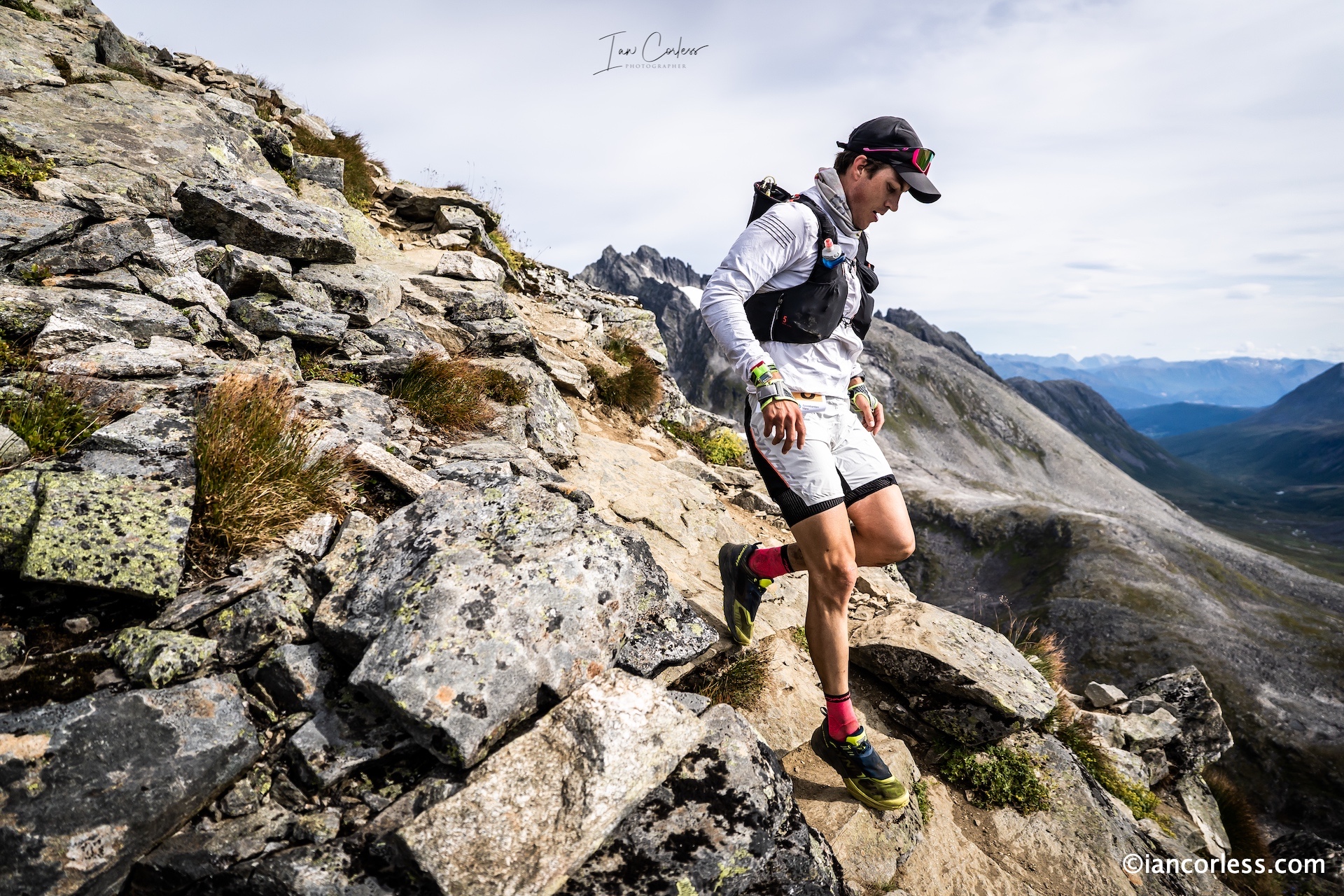
The 25km and 48km races use much of the opening miles of the 100km route, however, after reaching the summit of Fremste Blåhornet at 1478m they return to Stranda via Heimste BlåhornetLøfonnfjellet and Rødesthornet. The 25km then concludes in Stranda and the 48km continues for another loop summiting at Roaldshornet at 1230m and then following on to Blåfjellet and Skurdahornet before descending all the way down to the finish line. Both races are tough, challenging, and demanding and should not be underestimated. There is little easy running here, the climbing is hard, the descents can be tricky, and the terrain varies in technicality, at times harsh on the body and mind, the only easy running is in the final sections of road to the finish line. This is reflected in the winning times, Jack Kosky 6:16:21 and Sara-Rebekka Færø Linde 7:14:34 taking top honours in the 48km and Anders Haga and Anita Iversen Lilleskare winning the 25km in 2:31:01 and 3:12:17 respectively.

Øystein Røen

The main event of the weekend, the 100km race. Is for many only a dream. To say it’s tough would not do the course justice, it’s mind blowing in the challenge. Beautifully brutal as one runner said. Offering a 360 clockwise experience of this stunning area of Norway, the Stranda Fjord Trail Race 100km route is quite simply, one of the most stunning routes I have experienced.

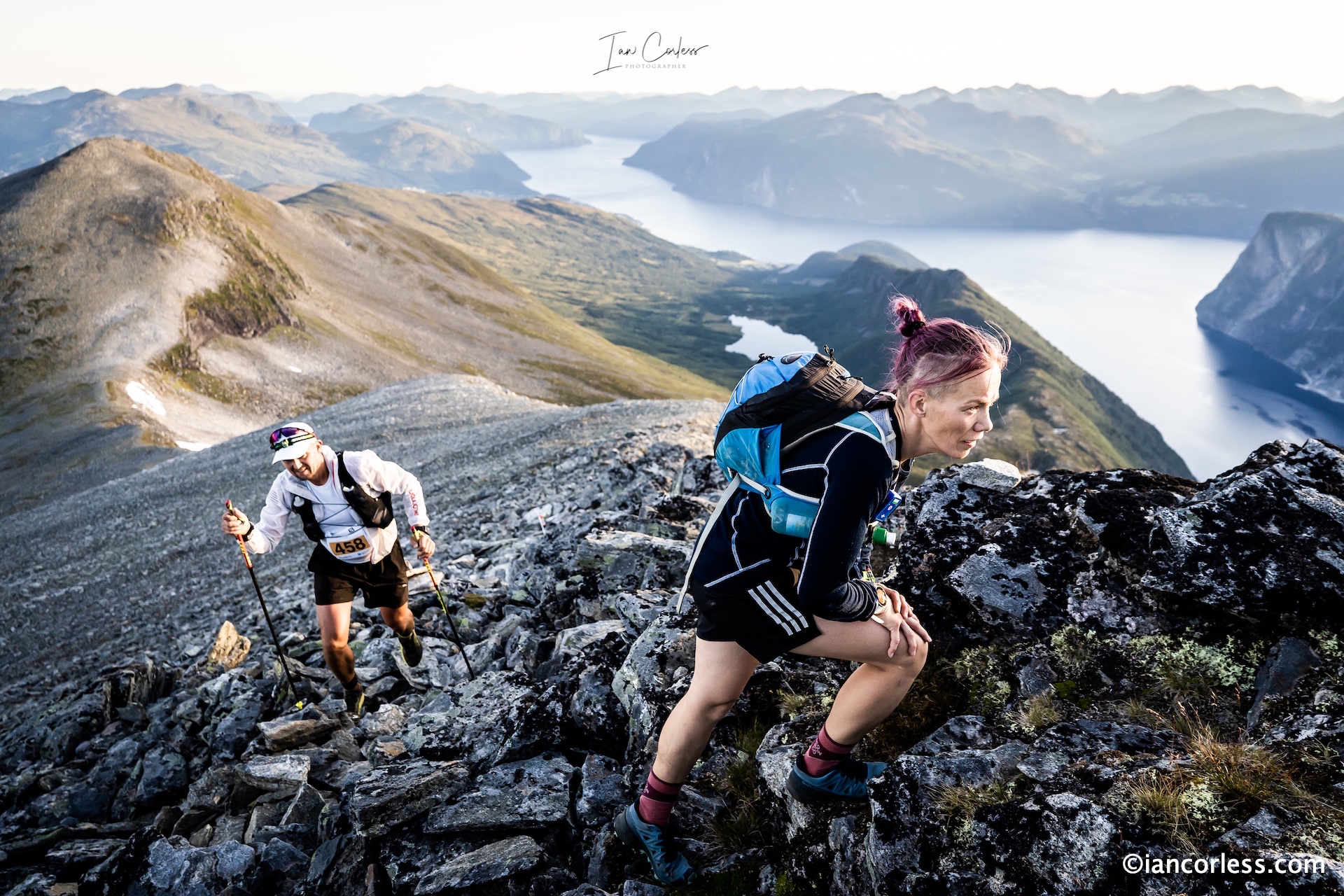
Relentless is the only way to describe. The course does contain some areas where you can switch off and just run, but they are few and far between.  The opening miles maybe offering many a false illusion of the severity to come. The hard work starts to really kick in with approximately 20km covered at Liavarden. What follows are walls of grass, rock, scree, stone slabs, technical ridges, vertical climbing and challenging descending.

The race is truly a hands on experience.
Linda Hovde had lead the race early on, probably starting to hard.

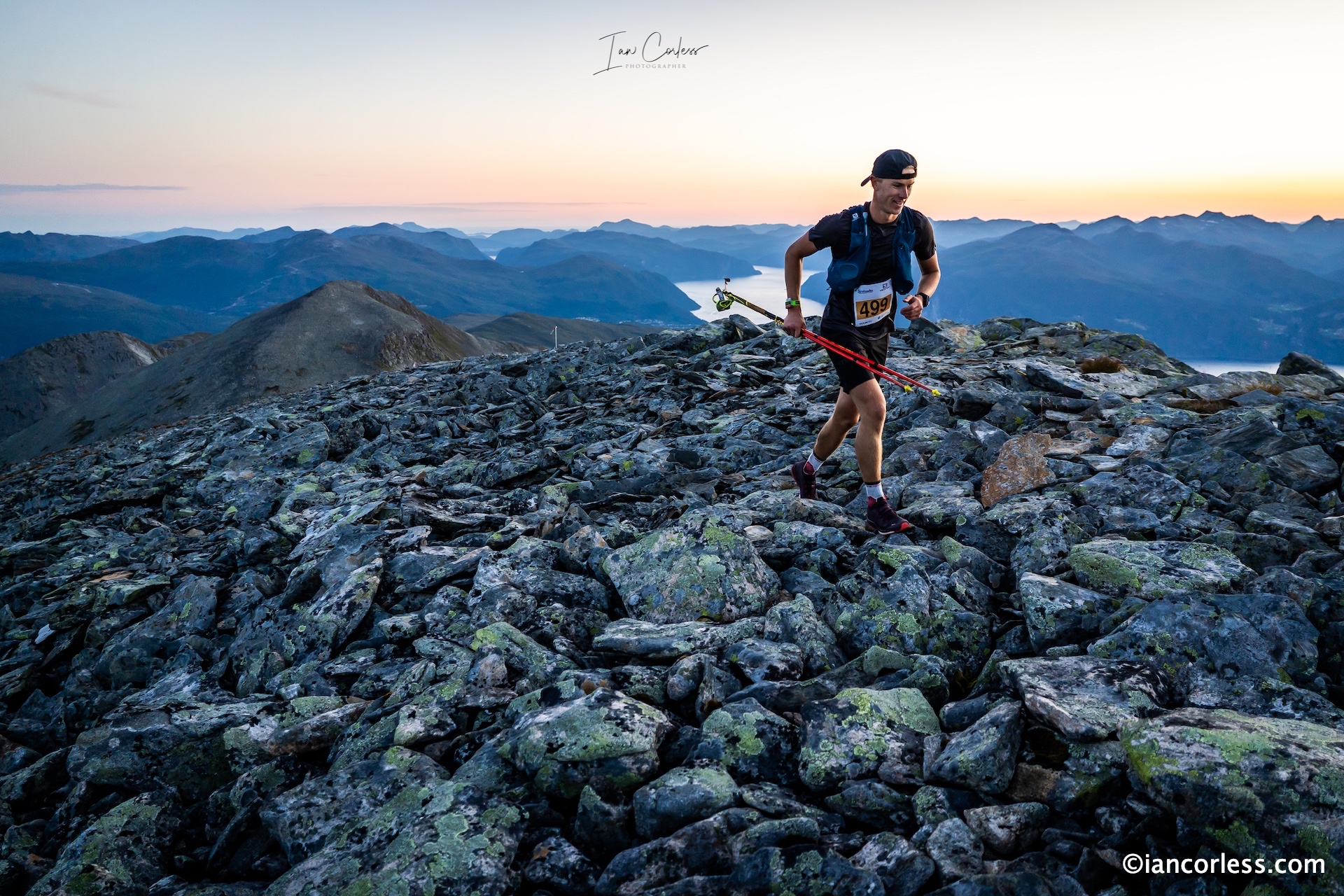
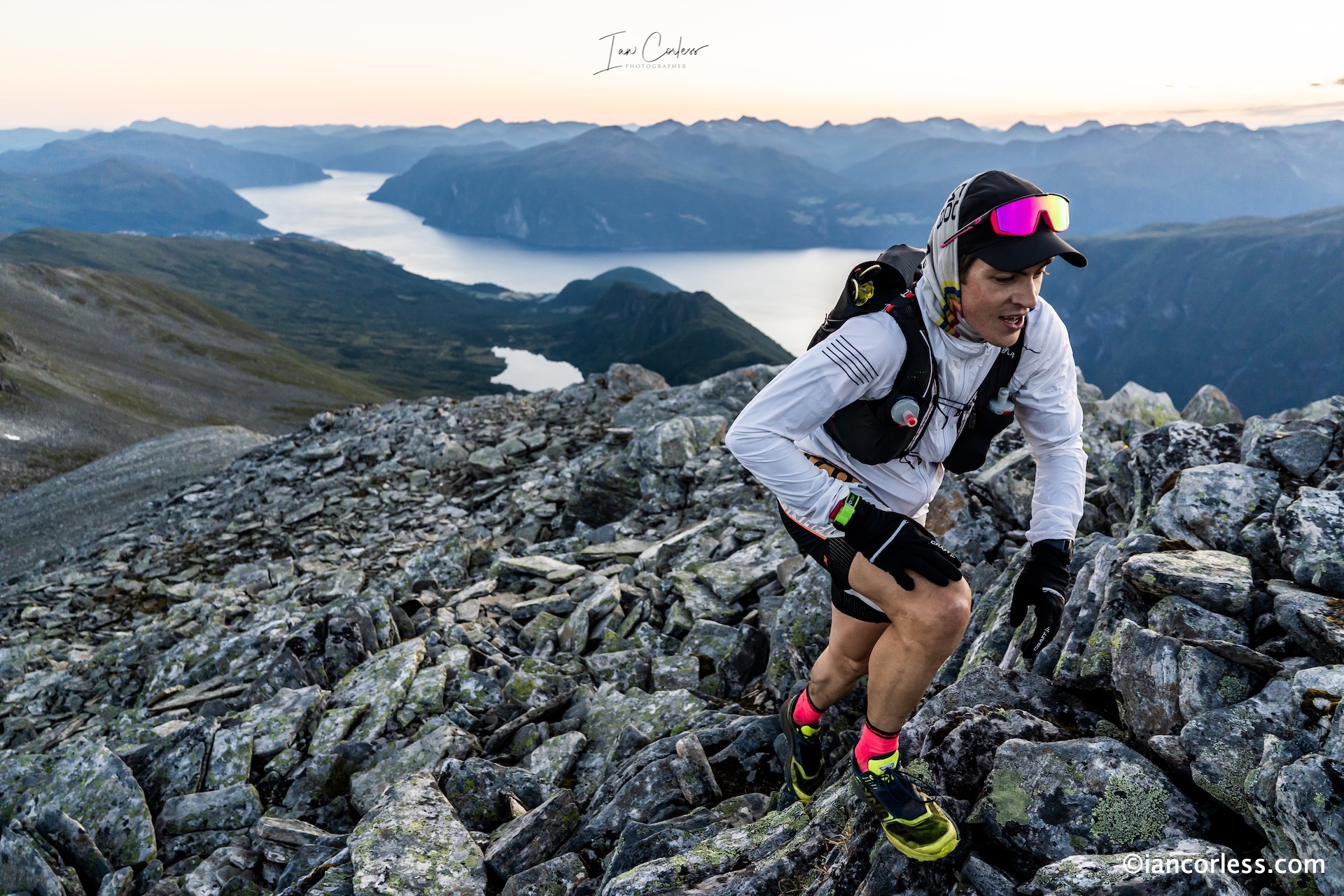
Reaching the summit of Fremste Blåhornet at 1478m, 23km covered, and every runner was under no illusion of the challenge ahead. The terrain rocky, slow and hard, the panoramic views at sunrise quite simple stunning. Following on to Lissje Blåhornet and a technical ridge section offered exposure and scrambling before dropping down to the valley and easier running to the aid station on the road of Dalevegen and 28km distance.

Descending Slogen

A short section of road was followed with more climbing, an out-and-back to another peak and then the Liasætra aid station.

Easy running before Slogen.

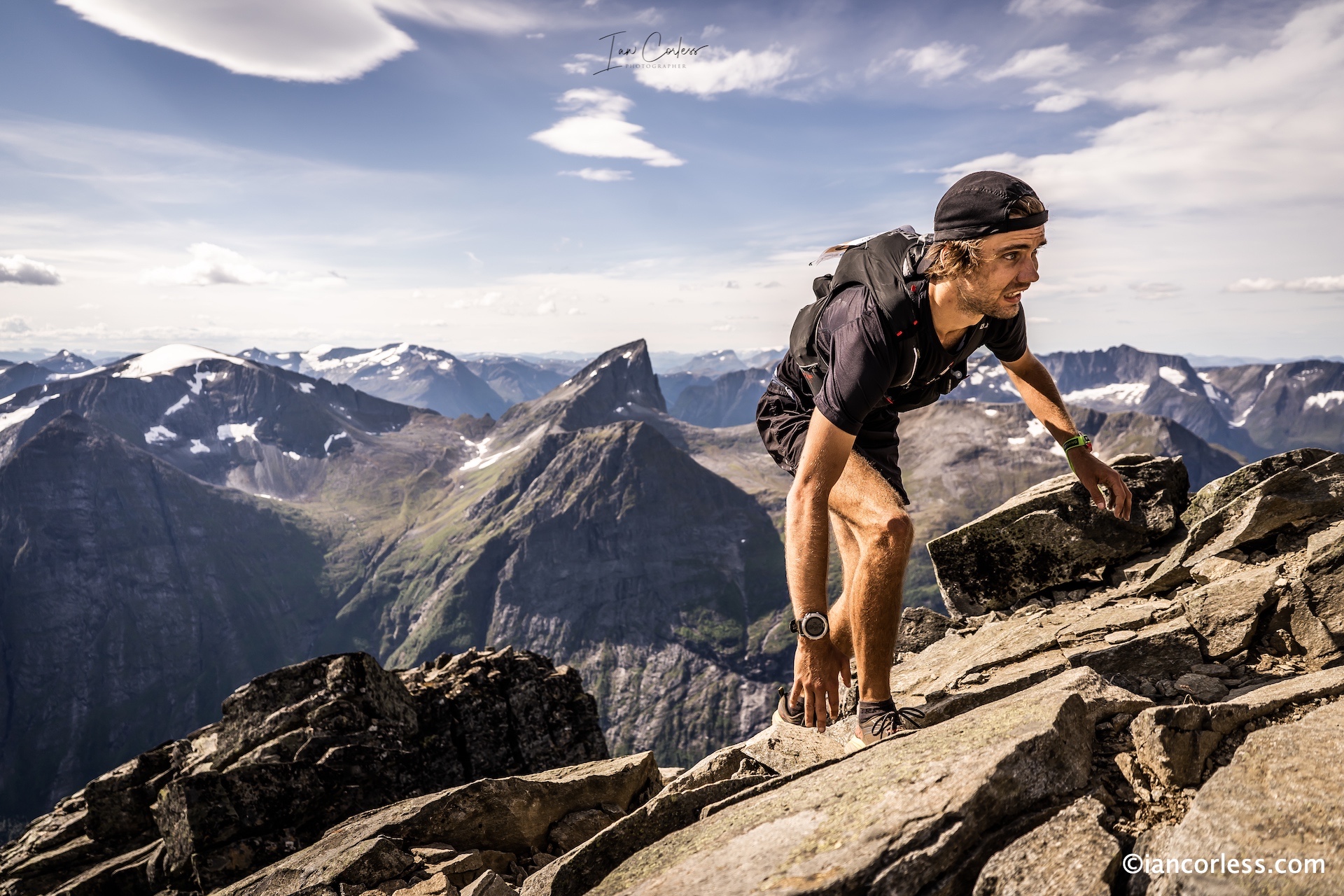
Valley running to Patchellhytta DNT cabin and then the relentless out-and-back climb to the iconic Slogen at 1564m. This climb being one of the highlights of the route offers a challenge, especially near the top when hands-on-knee climbing turns to scrambling and easy climbing.

The final push to Slogen summit.
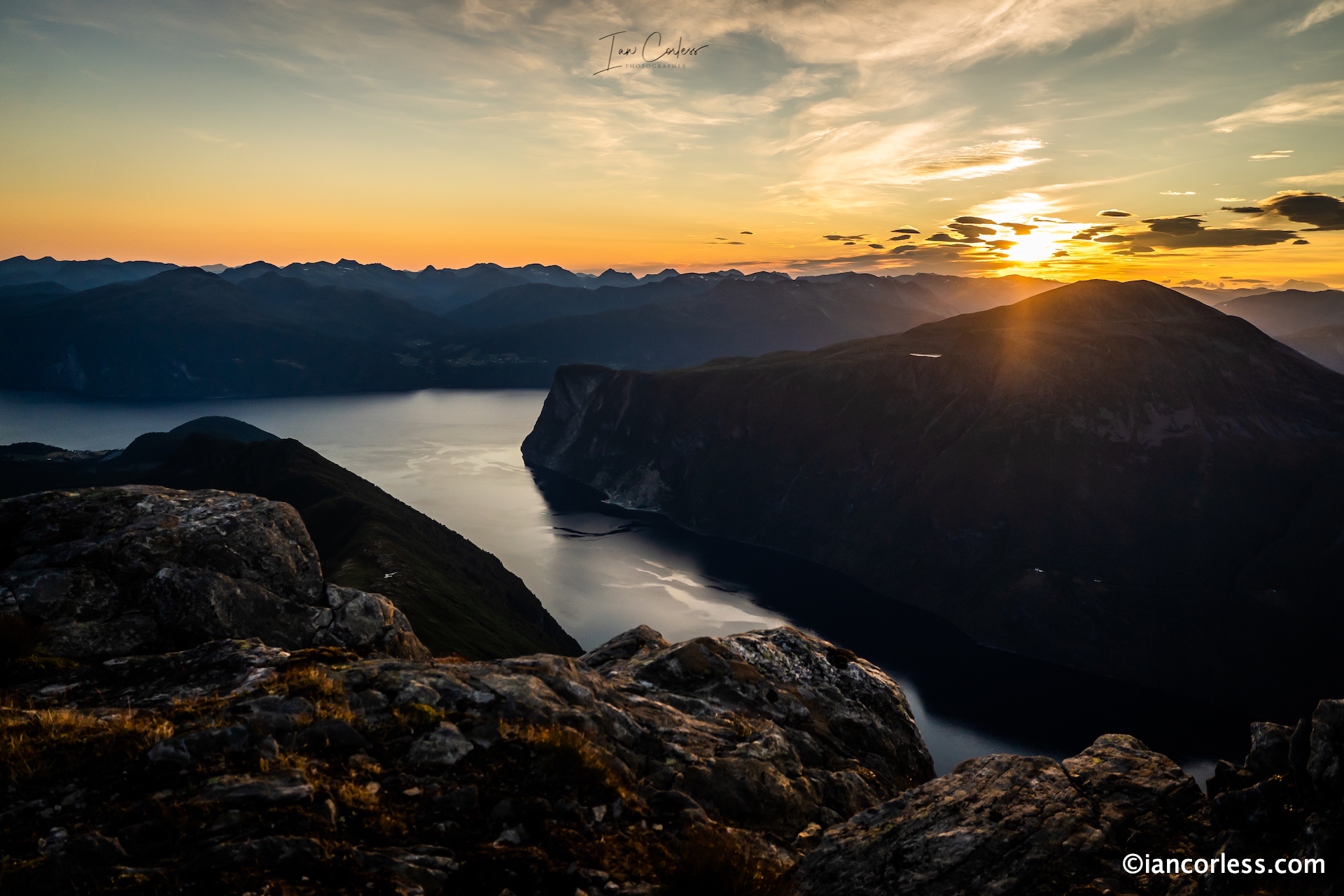
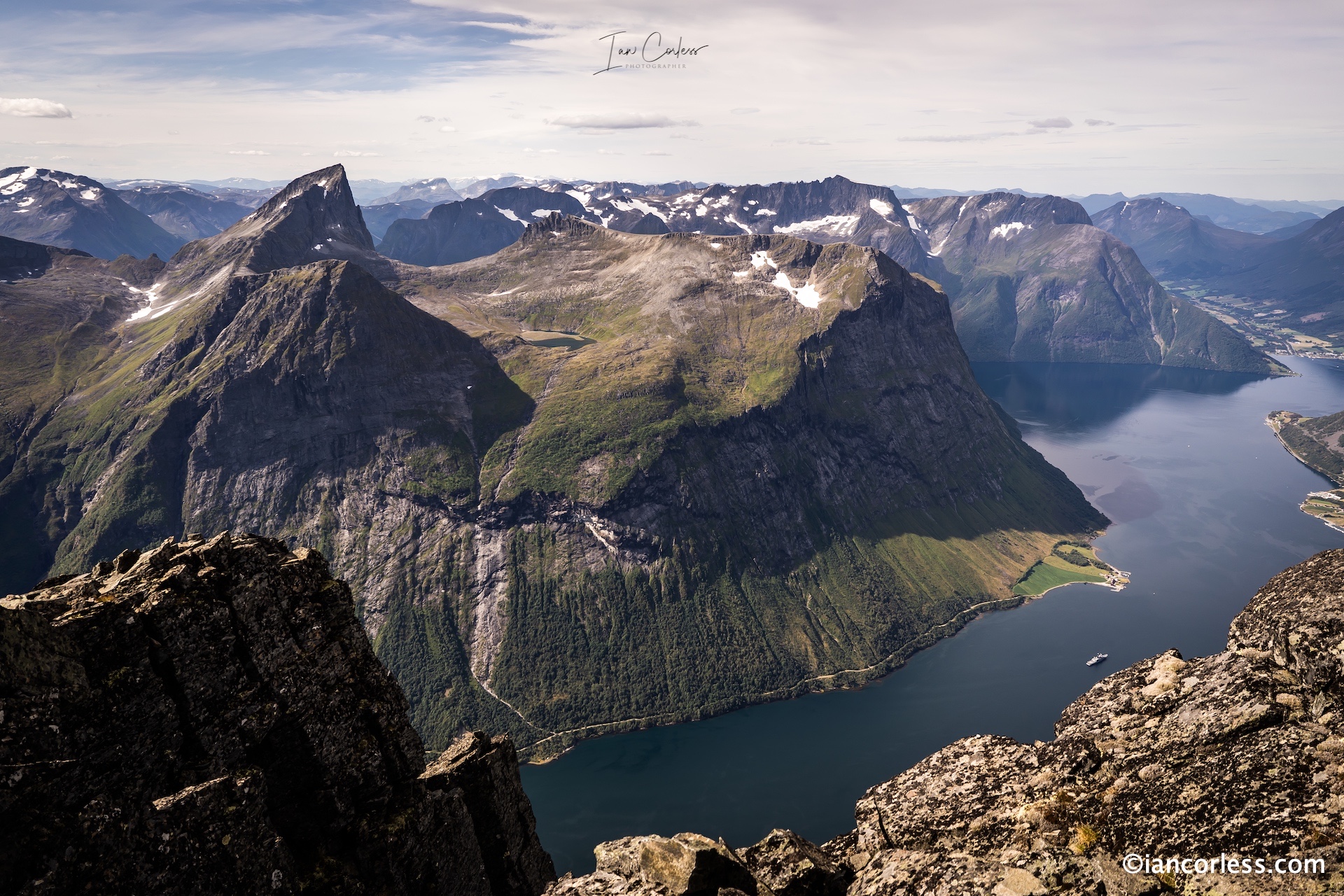
The view from Slogen.

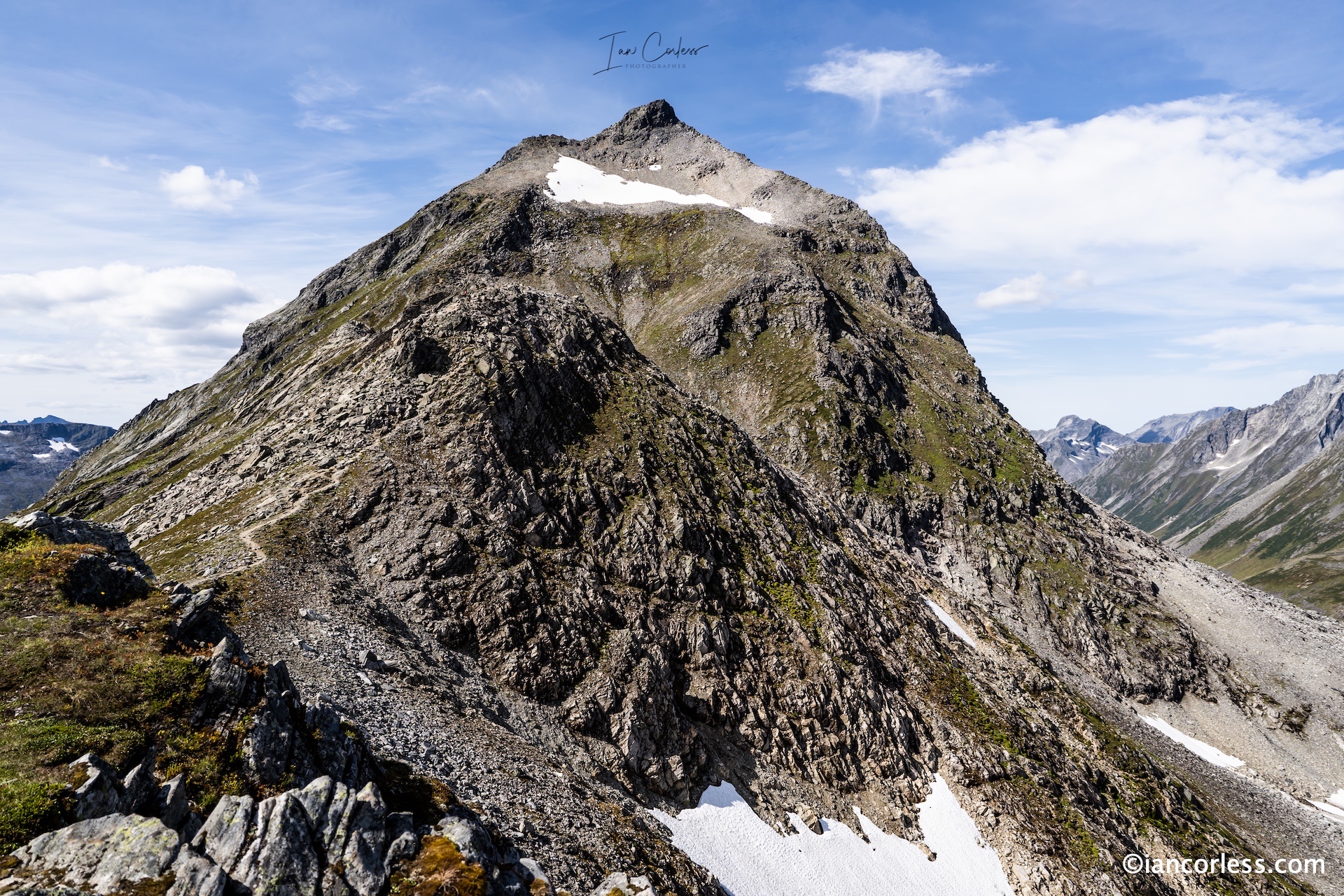
The summit offering a stunning panorama but there is little time to enjoy the view. Descending via the way you came, eventually you turn left in the valley and make your way to Velleseter, Brunstadsætra, Storevatnet, and then the road section that leads to the final section of the course, 80km covered.

Felix Weber approaching Roaldshornet.

The climb to summit Roaldshornet at 1230m is long, the summit at 86km and it would be easy to think it’s all downhill from here. Considering what has gone before, it’s fair to say that it is. Eventually the 100km joins with the final section of the 48km track and the run in to the finish is welcome and hard earned.

Rocks and more rocks.

Be warned, this route is tough!

Kristian Aalerud set a hard pace at the start of the race and while nobody really knew how long this 100km would take, best estimations were 17-hours for the winning time. Kristian crossed in 15:49:31. A spectacular time.

Øystein Røen for much of the day had run in 2nd place, however, Felix Weber moved ahead to take the 2nd podium spot, Øystein settling for 3rd, 17:03:12 and 17:25:38 respectively.

Ida Jahren Herud ran a smart race

Ida Jahren Herud ran a smart race, easing in to the day and eventually taking over the lead to finish in 22:25:12. Linda Hovde had lead the race early on, probably starting too hard she slipped down the field and eventually finishing in 28:29:34 in 2nd place. They were the only two women to complete the course!

In total, 20 completed the distance reflecting the severity of the challenge. It’s also important to note that the start list was drastically reduced to ongoing restrictions from the Covid pandemic.

One thing is for sure, running 25km, 48km or 100km in this area of Norway is not easy, ask anyone who toed the line of the respective distances.

There is something truly magical here, I can only encourage and emphasise that you ‘need’ to add Strand Fjord Trail Race to your bucket list.

Beautiful and Brutal!

You will not be disappointed with the experience of racing here, BUT come prepared, you are going to earn that finish medal.

RACE WEBSITE HERE

Slogen

Please support this website. I believe everyone deserves to read quality, independent and factual articles – that’s why this website is open to all. Free press has never been so vital. I hope I can keep providing independent articles with your help. Any contribution, however big or small, is so valuable to help finance regular content. Please support me on Patreon HERE.

Follow on:

Instagram – @iancorlessphotography

Twitter – @talkultra

facebook.com/iancorlessphotography

Web – www.iancorless.com

Web – www.iancorlessphotography.com

Image sales –www.iancorless.photoshelter.com

Hypothermia – Be Prepared!

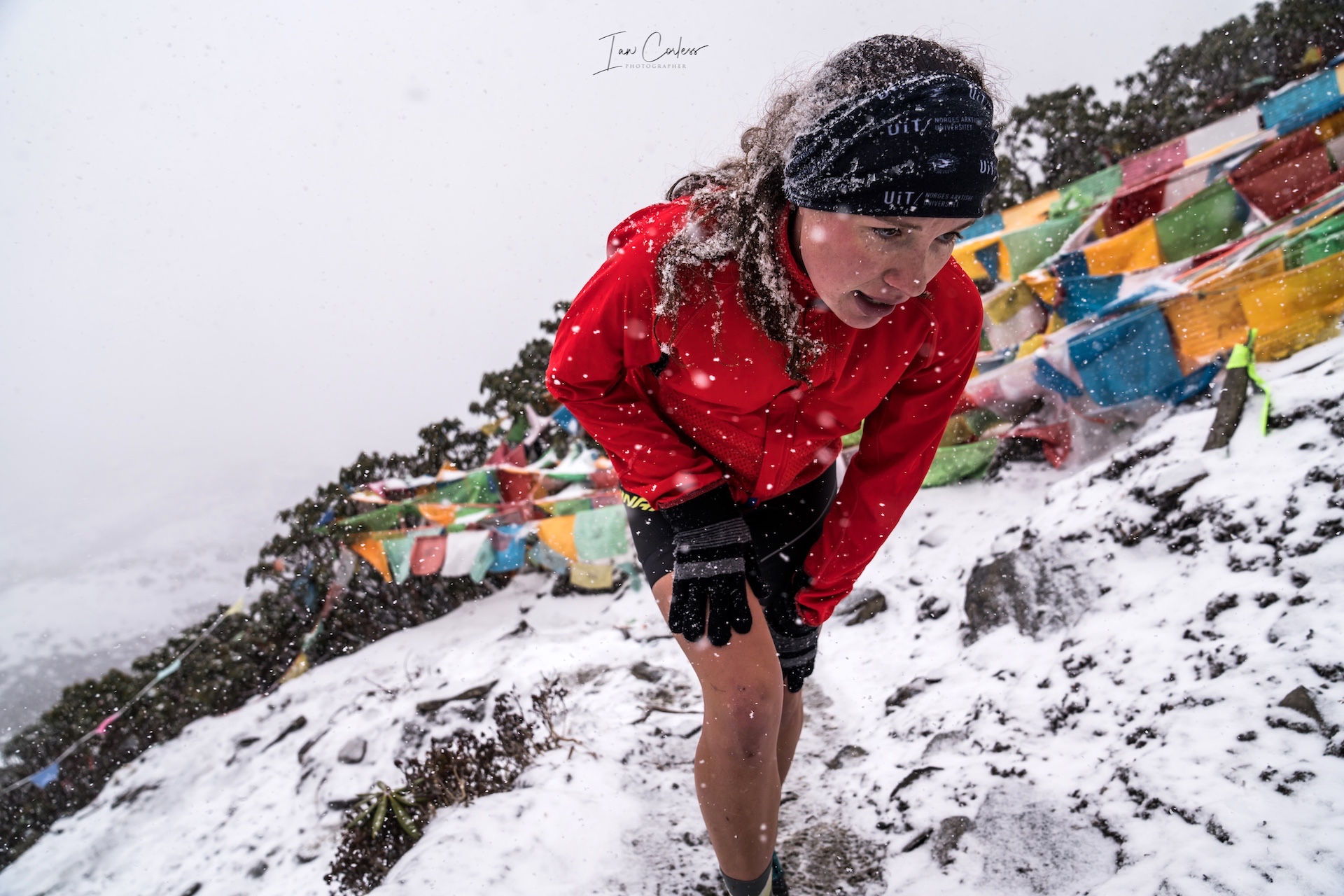
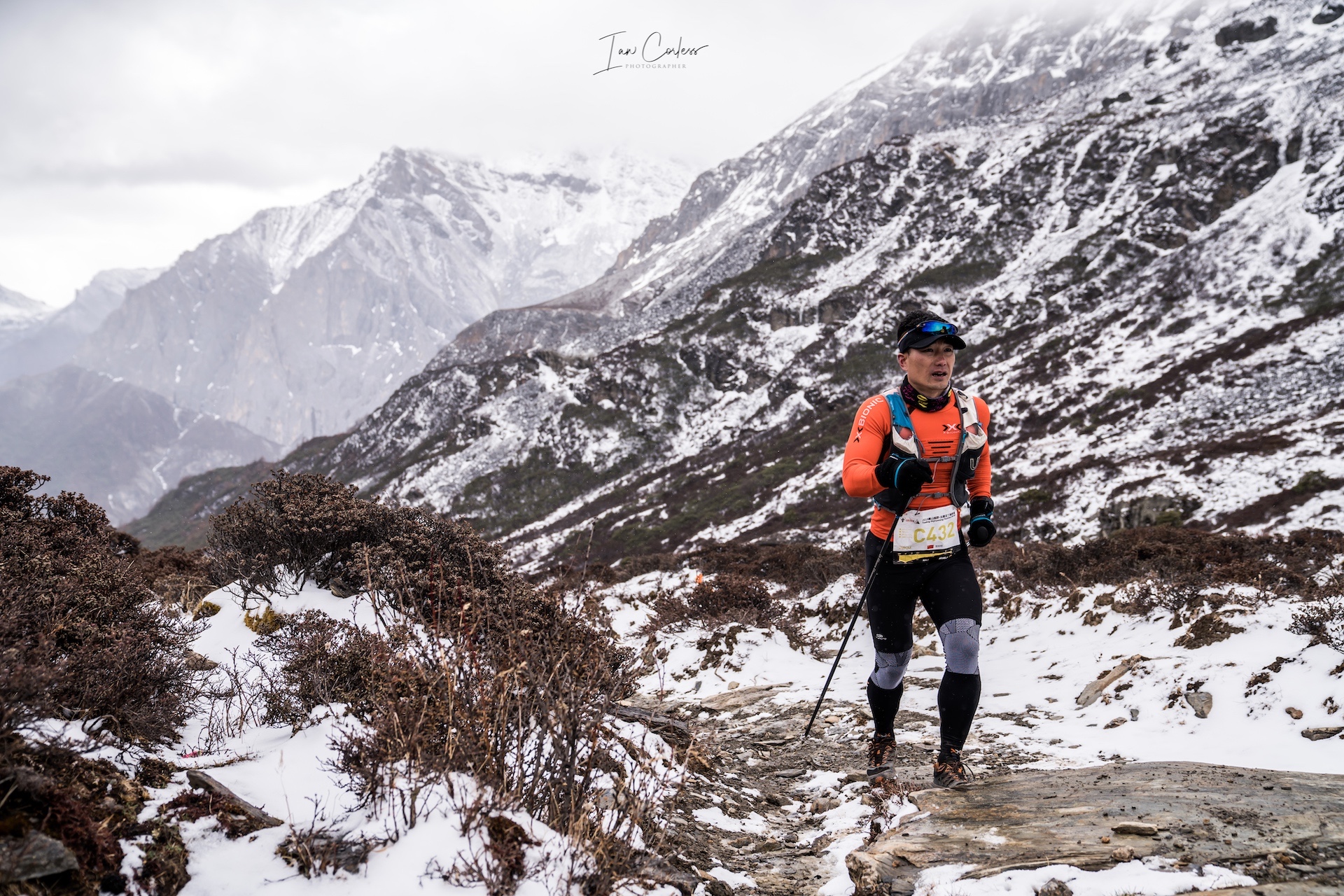
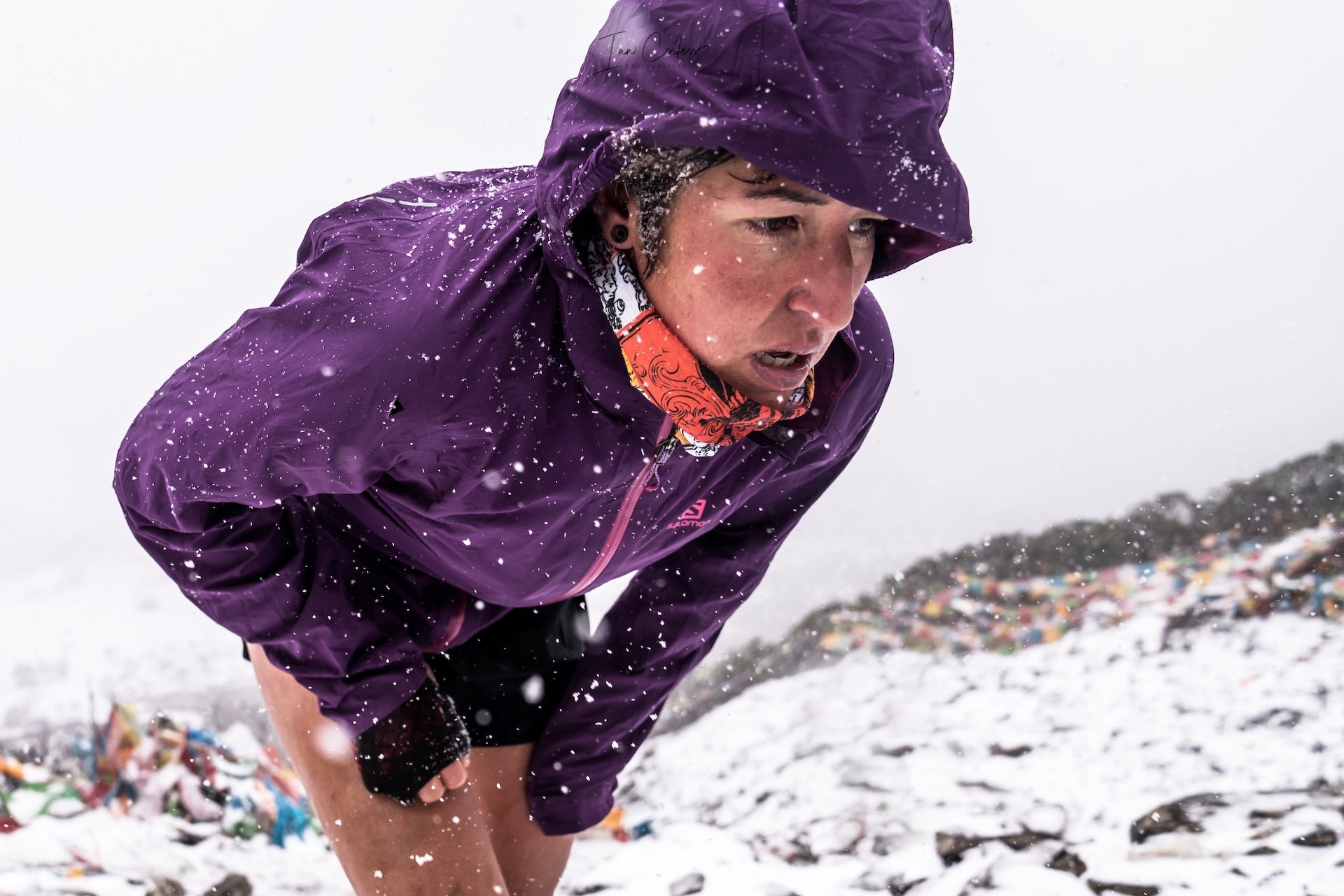
Yading SkyRace China, 2018.

Hypothermia and Hyperthermia

They sound the same, don’t they? But don’t be confused. In the following two articles we will clearly explain the differences and do our best to inform you how to avoid it and what to do should it happen.

This article will be about Hypothermia but before we begin, lets provide an initial explanation to avoid confusion.

Hypothermia – Refers to the cooling of the human body which in severe cases can result in death.

Hyperthermia – Refers to the elevated temperature of the human body due to a failure of thermoregulation and in severe cases can result in death.

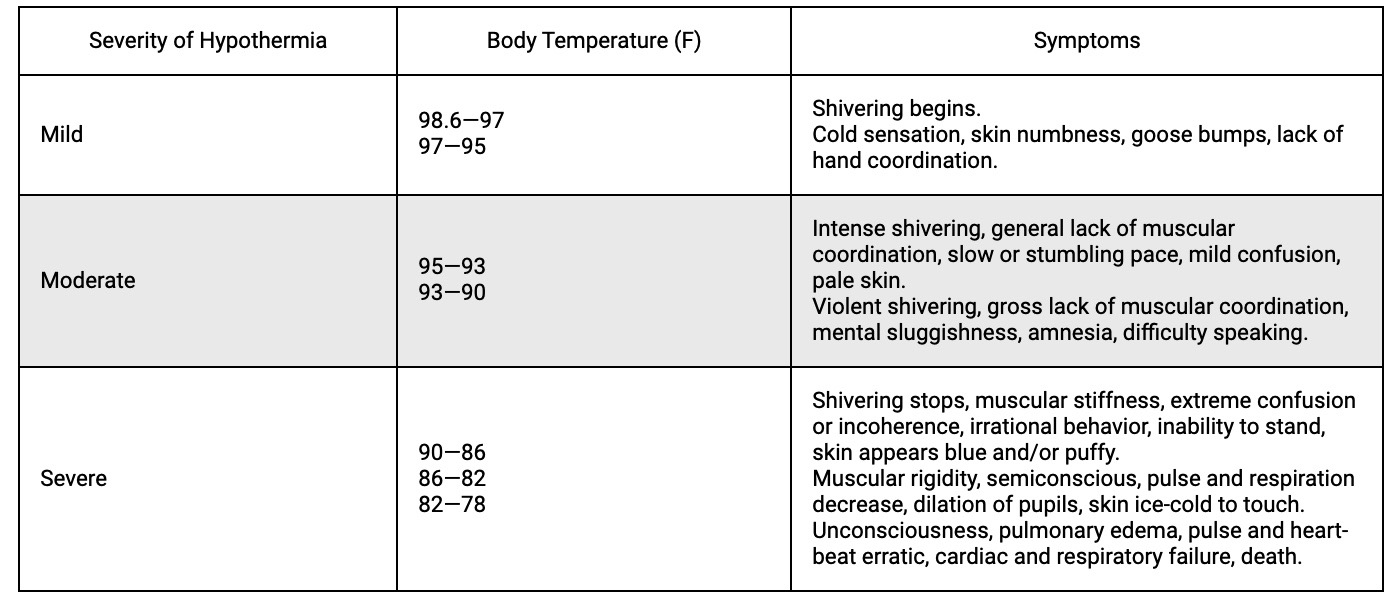
The bodies core temperature is normally around 37 deg C. When the core temperature drops, Hypothermia starts to set in. A drop of below 35 deg C signifies mild conditions whereas anything below 33 deg C is considered severe.

“Hypothermia occurs when an individual’s core body temperature decreases to a level where muscular and cerebral functions become impaired. The most common cause of this loss of body temperature is exposure to cold and/or wet conditions. When exposed to cold conditions, the body can lose heat through a variety of routes. These include conduction (contact with cold or wet objects, such as snow or wet clothing), convection (heat being carried away from the body by wind, i.e., wind chill) and evaporation (sweating and respiration). Once the body’s core temperature begins to drop, the symptoms of hypothermia will begin to appear.”

Grainger.com
Let’s be clear here, conditions on the trail, fell or mountain don’t necessarily need to be bad for Hypothermia to set in. Running and moving fast creates heat and a runner can generate a great deal of heat in a short space of time. Imagine a scenario where you are moving fast, and you have been travelling this way for say 2-hours. You are warm, no hot! You are a little fatigued, hungry, a little dehydrated and then disaster happens…. you fall and twist an ankle.

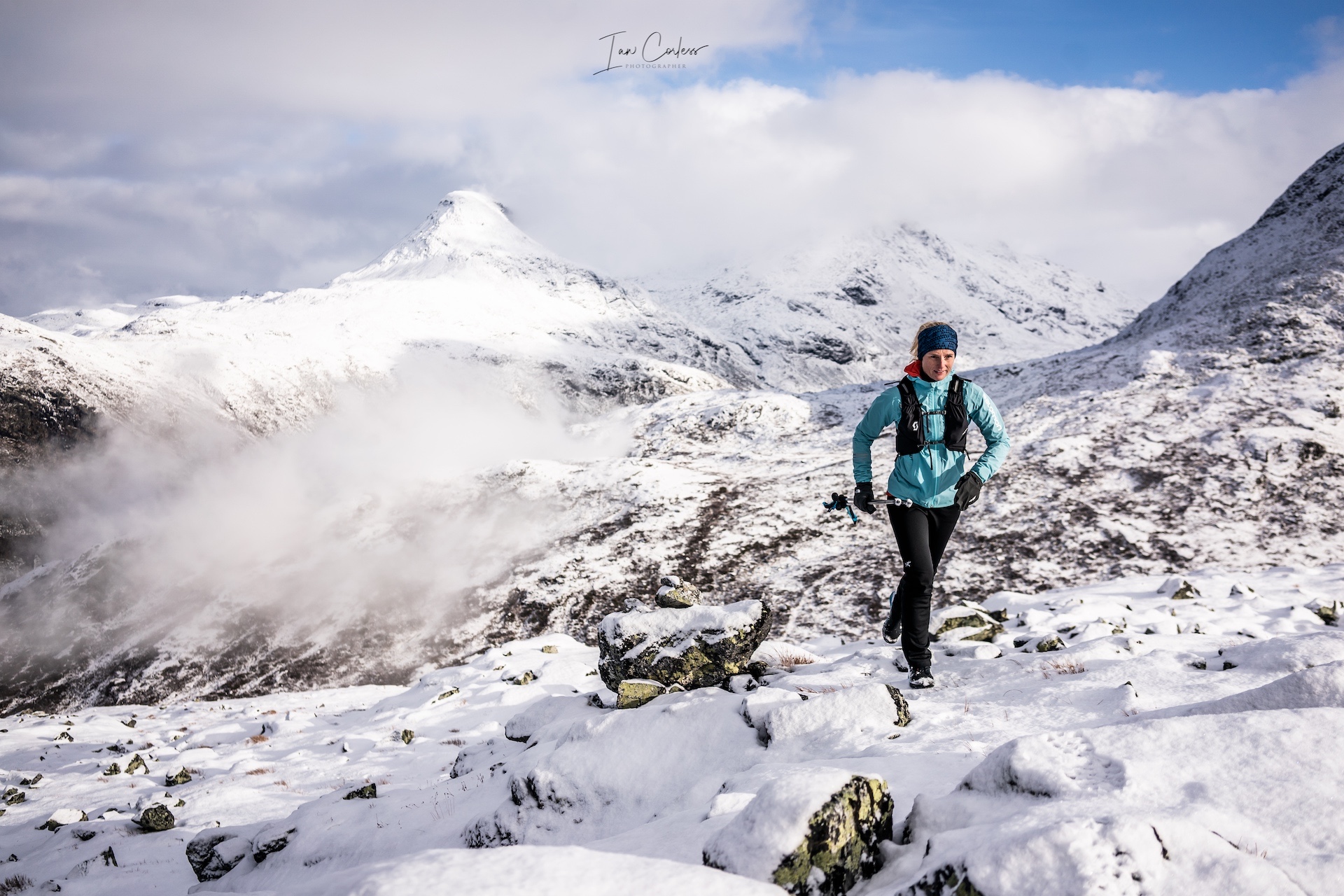
Wear the correct layers to keep warm. Protect the extremities, hands, feet and head.

Suddenly moving becomes impossible and you start to cool.

I probably don’t need to elaborate too much here as it’s very easy to see and visualize the scenario that follows.

Low blood sugar, low energy a cooling body and mild Hypothermia starts to set in. Conditions do not need to be bad or inclement for this to happen! However, bad weather only adds to the situation and can speed up any decline. Imagine the scenario where conditions are bad – rain, wind, snow, ice, windchill and so on. The Hypothermia process is then escalated and speeded up rapidly requiring much faster action from the individual who is impacted by the conditions and those around who can provide help.

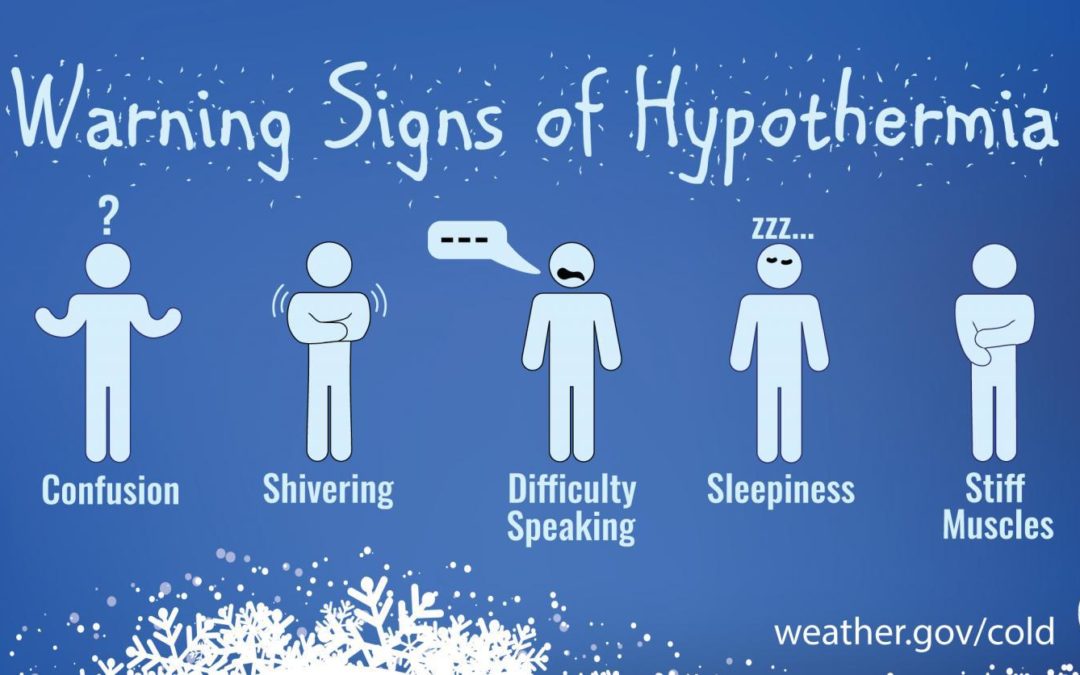
As the body cools, certain things start to happen and in mountain running we always warn runners of the possible signs of Hypothermia – Mumbles Grumbles and Stumbles.

A good water poof layer with taped seams and hood is essential.

Look out for:

An inability to make decisions.

Shivering.

Confusion.

A reduction of consciousness.

Slurred words.

Unusual behavior.

In severe cases any shivering may well stop and you will see visual signs of change such as blue lips.

A space blanket is an essential item for any kit list.

ACT QUICKLY

Grainger.com
  • Speed is of the essence with Hypothermia as mild conditions can spread quickly and before you know it, they can become severe and critical quite quickly.
  • If you have additional clothing (you should have, see a post on mandatory equipment) put as many layers on as possible including hat, gloves, warm base layer and windproof. If you or the person are wet from rain, ideally you would remove wet layers and replace with dry.
  • Ideally eat sweet foods. Avoid coffee, tea, and alcohol, If the victim can swallow without danger, give him/her warm, sweet liquids to drink.
  • Place warm objects and add heat/ layers next to the victim’s head, neck, chest, and groin.
  • If possible, get off the mountain or out of the bad conditions as soon as possible. If this is not possible, try to find shelter. If you are unable to move add as many layers as possible and seek assistance from the emergency services. A personal tracker such as Garmin InReach is a great addition to a mobile phone when out in remote and isolated environments.
  • Keep a potential Hypothermia case awake if you are looking after someone. If you are suffering from Hypothermia, do everything possible to avoid losing consciousness.

Of course, the above is not a comprehensive and fool-proof guide as mountain conditions and the condition of the casualty should indicate what action to take.

Do not try to evacuate a severe on unconscious casualty. Seek the services of the professionals with an emergency call.

weather.gov

All the above can be avoided with good mountain practice and skills.

The recent trend and desire to move fast and light is all well and good providing that you can move fast. However, when you can’t move fast, that is when problems arise. Personal responsibility, self-awareness and an understanding of the challenge, terrain, and weather, at minimum, requires you take stock of the situation before departing on any adventure and always think of the worst-case scenario.

Ask, ‘Do I have enough items with me should I become immobilized in bad weather and need to wait for rescue or help?’ If the answer is no, you need to reassess your equipment.

Mandatory kit should be something that you take with you on all your adventures, particularly on mountain journeys when in remote and isolated places, be that in training or racing. The more extreme the terrain, conditions or risk of adversity, the more equipment you should take.

Also remember that altitude and going high can impact in multiple ways. For example, it may be warm and sunny in the valley, but the higher you go, weather systems can change completely. For every 100m of elevation gain, temperature can drop by 0.65 (+/-) degrees. 1000m of elevation gain could see 10 degrees cooler temperatures, add wind and other inclement conditions and suddenly, without the right equipment, you are in a difficult situation. Be prepared!

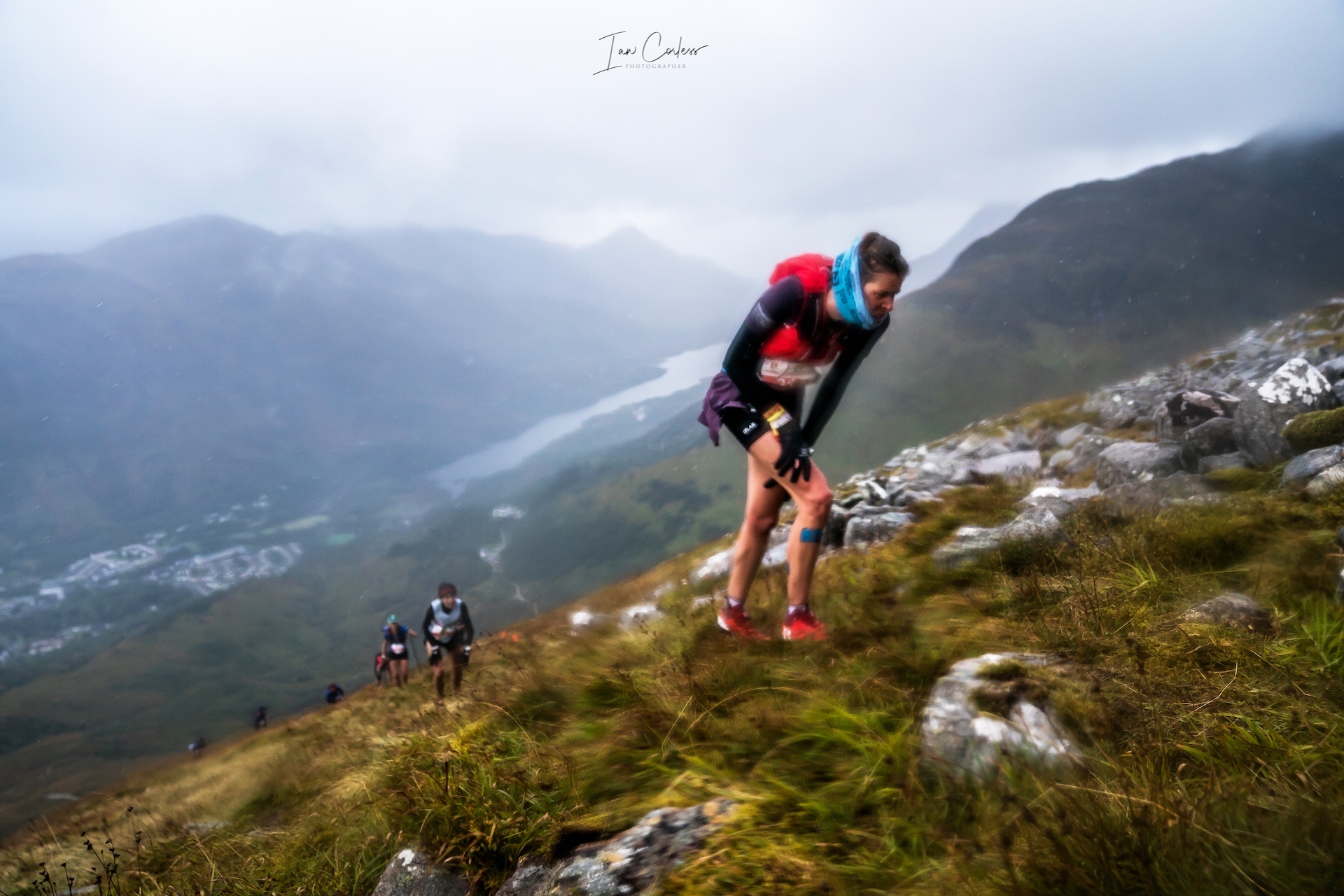
Mamores VK Scotland

As a minimum carry with you: Read winter kit list.

  • A pack that can carry at least 1ltr of liquid with capacity for mandatory kit
  • Waterproof jacket and trousers to protect from the elements
  • A base layer Top and bottom) ideally merino wool.
  • A down or primaloft jacket that will retain heat/ warmth in wet conditions.
  • Hat
  • Gloves
  • Buff
  • Space Blanket
  • Liquid
  • Compass (know how to use it)
  • Map (know how to read it)
  • Whistle
  • Mobile phone
  • Spare food – energy bars or similar.

for more extreme conditions, consider the following:

  • Bivvy bag
  • Sleeping bag
  • Spot tracker or similar
  • Stove such as a Jetboil
  • Dehydrated meal

The above to some of you may sound extreme, believe me, when you need the above, you will really need them, and you will be more than thankful that you have them with you. Also understand clothing, how it works, how to layer, what garments are best in what conditions. Educate yourself on the pros and cons.

Good Practice

Be prepared!

Ideally always go to the mountains or remote challenging locations with company – buddy up!

Check the weather and make a sensible decision based on you, your ability, your objectives, and skill level.

Know the route that you are taking and tell a friend or family member where you are going, when you are going and when you anticipate returning.

Have a contingency plan with options to shorten or abort a route with quick and easy escape routes.

Have a mobile phone that is charged and contains relevant contact numbers for emergency services.

Can you read a map, take a bearing or do you have a phone or GPS device that will give you a location? This will be essential when requiring help. If you can provide a grid reference you will be rescued far quicker when a rescue party that needs to search for you. what3words is a phone app for this and is better then nothing in an emergency. OS Locate possibly a better option as it provides grid reference.

Look after each other and look after others on the mountain.

Know whistle signals – six blasts every minute signifies an emergency.

Hypothermia can happen to anyone, even the most experienced runners or mountaineers. However, if you are sensible, have the necessary equipment and understand your ability and the ability of those around you, the risk of Hypothermia should be reduced greatly.

In the next article we will look at Hyperthermia.

Please support this website. I believe everyone deserves to read quality, independent and factual articles – that’s why this website is open to all. Free press has never been so vital. I hope I can keep providing independent articles with your help. Any contribution, however big or small, is so valuable to help finance regular content. Please support me on Patreon HERE.

Follow on:

Instagram – @iancorlessphotography

Twitter – @talkultra

facebook.com/iancorlessphotography

Web – www.iancorless.com
Web – www.iancorlessphotography.com
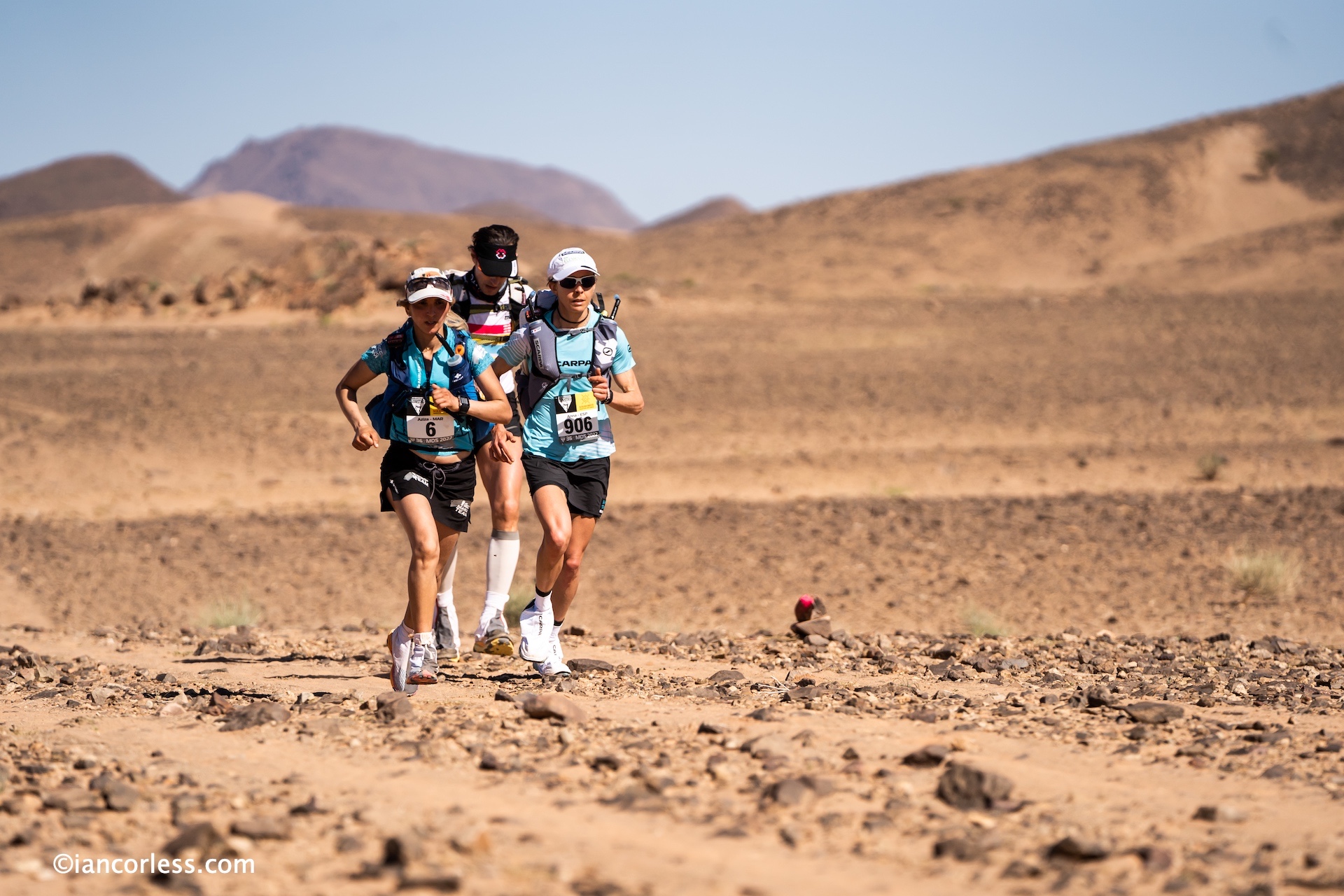
Image sales –www.iancorless.photoshelter.com