Let’s get one thing clear, multi-day racing is simple, it is often over complicated and this creates too many questions and too much confusion.
Let’s hark back to Patrick Bauer’s pioneering days and simplify the process, just like he did. Over the years I have interviewed and chatted with many runners in bivouac and after racing who have done just that, they had applied simple logic and worked out what would work for them.
Yes, they had taken advice, looked at websites, processed information but importantly they had found out what worked for them. They realized early on that they were an individual and as such, they needed a personal approach to multi-day racing and not a generic one. Not all multi-day races are the same, some are completely self-sufficient, some are semi self-sufficient and others are supported where all you need is transported for you.
When you break a race down, particularly a self-sufficient race, key things are really important:
Pack
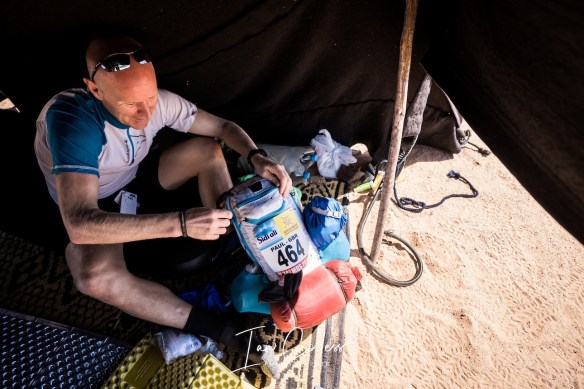
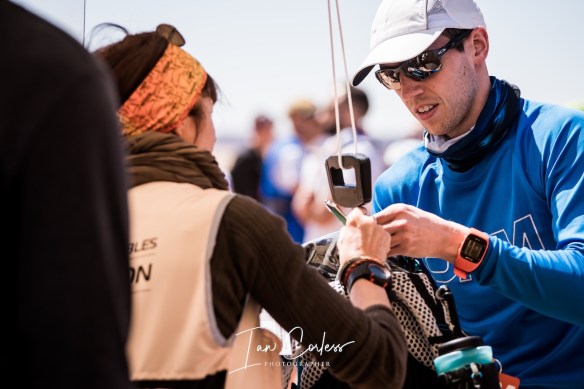
Must fit and be comfortable when loaded. Have enough room (but not too much) for all your equipment and provide easy access to fluid. You must also make sure that your race number is visible as per race rules. Think about additional pockets, such as a waist belt for snacks.
Sleeping Bag
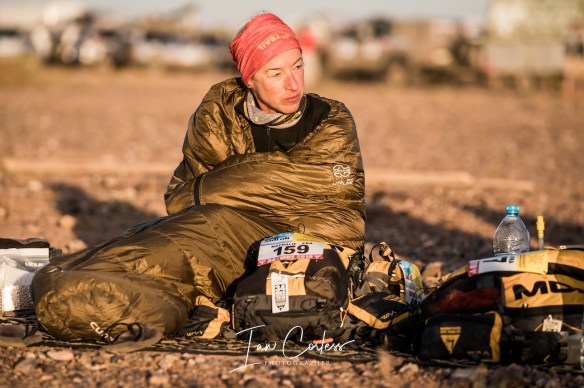
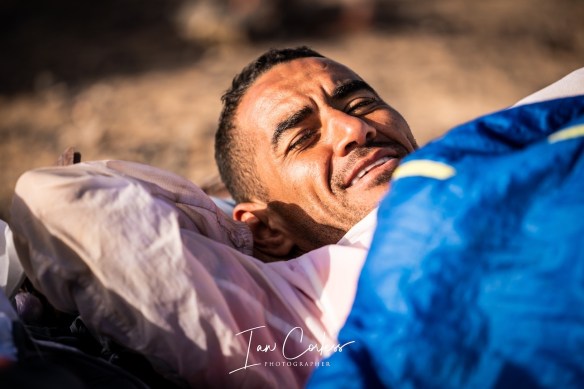
Lightweight, packs small and warm enough. I would always recommend a sleeping bag and jacket as it offers more flexibility, reduced weight and reduced pack size. Popular sleeping bags year-on-year are PHD, Yeti and OMM. Read HERE on how to choose a sleeping bag.
Clothes
You just need what you will run in. However, a spare pair of socks is often commonplace and many runners have one or all of the following: a warm base layer, a lightweight down jacket or waist coat, buff and maybe long lightweight pants. Remember, you have to carry everything, so, it’s all about getting the pack as close to minimum weight. At MDS that is 6.5kg plus water.
Sleeping Mat
It’s optional but a good nights sleep is important and usually those who do not take one wish they had. It provides comfort and importantly an insulating layer between you and the ground. Two options exist – inflatable and roll out solid foam. The choice is yours. The inflatable ones offer more comfort, more flexibility in packing but with poor admin, you do run the risk of a puncture. I’ve used inflatable for many years with no issue. A solid foam Matt will last the week with no risks of problems but they roll large and need to sit outside the pack.
Shoes and Gaiters
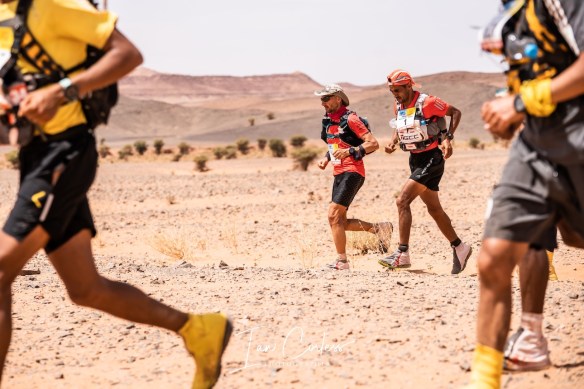
Shoes (more below) are personal, just make sure they have a good fit, appropriate drop for your needs and suit your run/walk style with enough durability for you. I say ‘you’ because someone like Rachid El Morabity can complete the whole of MDS race in say 21-hours whereas most people won’t even do just the long day in that time – his shoe shoe choice will and can be very different to what most of us need!
Runners all over the world, week in and week out add ‘A Long Run’ to their training. One question that I am often asked is, ‘How long should my long run be?’
Now of course, there is no one answer and before you can even begin to answer that question, you need to ask two important questions:
What am I training for? (This will usually be a race or target event)
What date is the event in question 1?
When you know the answers to 1 and 2, you can start to formulate a plan and this then will begin to give a better understanding to ‘the long run’ question. It is also very important to consider experience and running history.
If you are used to running 5km and 10km events, a long run for you may well be 75-90 minutes. If you are a marathon runner, your long run will typically be 21/22 miles or 3 to 3.5-hours. If you are running an ultra, mmmmm, well, this is where it gets tricky.
WHY DO WE RUN LONG?
In summary, we put an emphasis on three key points:
Efficiency to use fat as a fuel.
Muscular and physical adaptation.
Mental strength.
If you never run for more than one hour in training, then three hours on your feet just feels like a really long time so you need to adapt for the challenge ahead both from a physical and mental perspective.
Have you had sore legs from running?
We have all been there, it comes from running fast and hard and building up lactic acid or it comes from running long and fatigue. Muscle soreness will come for everyone, however, we can train to reduce the impact or delay the process. This why we ‘train,’ we train to get better! Progressively running longer with recovery periods allows our muscles to adapt to the stress and become stronger. The term DOMS refers to the ‘Delayed Onset of Muscle Soreness’. You may well feel muscle pain during a training event or race but it’s usually in the 24/48/72-hour period after that the soreness really kicks in. By running long in training we adapt to delay or reduce the DOMS.
You need fuel to do anything, even a shopping trip. Our bodies can only store so much carbohydrate and once those stores are used up we have only two options left: top them up or slow down and maybe even stop if they have got very low. As an endurance athlete we need to tap into our almost unlimited fat stores. We do this by ‘teaching our body’ to use fat as a fuel in the long run. The more efficient you become at this, the longer you can run and the longer you can maintain a pace. Ultimately it means the whole race/training experience will be better and more enjoyable.
THE RUN
Let us be clear here, running longer requires a slower pace, especially if we want to ‘turn on’ fat burning. Think of long runs in terms of time and not distance. Distance adds some confusion and also as runners we get stressed and worried by mileage and minute per mile pace. Mileage does not always tell us the full story too… Time on feet takes into consideration the terrain we are running on, for example in three hours on the road you may well cover 20-miles, but on the trails or in the mountains you may only cover 12-miles.
This brings in another very important and key point, make long runs specific and in line with your objectives. No point doing three hours on the road if you are doing a 50 mile mountain race with 4000m of vertical gain.
Slow down! Many runners run the long run too hard which impacts on the following days’ training and it also impacts on the long run session. Maybe use a heart rate monitor or GPS to keep on top of this and don’t worry about walking. Walking is a key element in completing ultra distance events. I am a huge fan of RPE – Rate of Perceived Exertion. Long runs (mostly, there are exception) should feel easy and on a scale of 1-10, that means a 5.
HOW LONG SHOULD THE LONG RUN BE?
Short distance runners often run over distance in training. Think about it, a 10km runner may run a long slow half marathon to build endurance. A half marathon runner may run a long and slow steady 16 miles in preparation for a fast race.
This all falls apart when we go to the marathon and beyond. How often have you heard in marathon training that the long run should be 21/22 miles or 3 hours and 30 minutes in preparation for a race.
So how do you run long in ultra training?
Long runs and adapting for an endurance run such as an ultra comes from not one run but a combination of all runs. It’s about your accumulative run history. They all add up to make you an endurance machine.
First and foremost, consistency is key and long runs should be progressive and based on ability and experience. A long run should test you but not break you.
Let’s use a 12-week scenario based on a runner who can currently run two hours in a long run. I am not looking at base training here, but the specifics of a long run and how to make the long run longer. I’m a big fan of building over three weeks and recovering for one week, I call this 3/1.
Example:
Month 1
Week 1 – Sunday 2:30hrs
Week 2 – Sunday 2:45hrs
Week 3 – Sunday 3:00hrs
Week 4 – Sunday 2:00hrs
Month 2
Week 1 – Sunday 2:45hrs
Week 2 – Wednesday 90min / Sunday 3:00hrs
Week 3 – Wednesday 90min/ Sunday 3:15hrs
Week 4 – Sunday 2:30hrs
Month 3
Week 1 – Wednesday 90min/ Sunday 3:00hrs
Week 2 – Wednesday 1:45hrs/ Sunday 3:30hrs
Week 3 – Wednesday 2:00hrs/ Sunday 4:00hrs
Week 4 – Wednesday 60min/ Sunday 3:00hrsh
The above scenario provides a structured example on how to build up from running two hours comfortably to four hours. But remember the above scenario is 12 weeks with over 37 hours of running, just in the long runs! That is huge and a great place to start for any endurance challenge.
BUT MY RACE IS 50 MILES?
As mentioned above, it’s not wise or sensible to run too long in anyone session (for most people, there are always exceptions.) But the 12-week plan above on a 3/1 scenario shows you how it’s possible to build time and confidence. As you gain more experience you can look at doing back-to-back sessions and plan long training weekends all as part of a long term plan. Ultimately though, running too long in terms of distance or time is something that should be very carefully planned.
You will always here about runners who can do 200 mile weeks or 50-mile training runs; they are exceptions and not the norm. Don’t be lulled into a false sense of security and don’t feel inadequate, we are all individuals and this is maybe the most important aspect.
Training should be about preparing you to tackle the challenge, but it will never FULLY prepare you. There’s always going to be a bit of extra and a bit of unknown on the day of the event…
Surely that’s why you’ve entered the race or event?
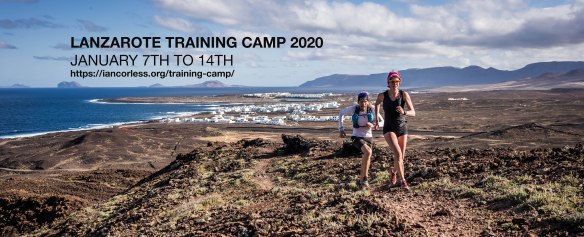
Why not join our TRAINING CAMP with 2x MDS champion, Elisabet Barnes, on the stunning island of Lanzarote? Information HERE
Recently I have produced several articles that have been created to help runners formulate a plan for a new year of racing and training. The articles have been as follows:
Recently I was involved in a series of discussions about the Marathon des Sables. One thing that became very clear is the panic and apprehension many runners feel about a goal that may well be a ‘one-off’ or lifetime goal.
Experienced runners will know how to goal set, they will know how to periodise and plan their training so that they hopefully arrive at a target event in peak form. This was discussed in Planning a Running and Racing Year (HERE). However, goals that go beyond one macrocycle (one year) require a much greater perspective and overview. If you are new to running, well, it can be just terrifying.
A great deal of advice can be extremely counter productive as it makes many runners feel inadequate, inexperienced, lacking confidence and in the worse scenarios even questioning if they should even go ahead with the race.
Let’s be clear. Everyone is an individual, I have yet to find two runners who need the same training plan or structure. However, certain scenarios work for all and it is with this in mind that I am writing this post.
Long term goals provide incredible motivation to step out of the door and to train. You will have heard the saying, ‘if it was easy, everyone would do it!’
To that end, iconic races such as UTMB and Marathon des Sables, are races that for many are the ultimate race, they are races to be built up to and therefore a macrocycle is not enough time to prepare; hence long term goal setting.
Irrespective of experience, two key words come in to play when setting a long term plan: Structured and Progressive.
In this scenario, I am using goal setting for Marathon des Sables.
STRUCTURE
A macrocycle is one training year and this is broken down into mesocycles. It may sound like a fancy word but a mesocycle is a series of blocks of training that make up one macrocycle. For purposes of explanation, let’s assume that you are running the Marathon des Sables which takes place in April 2020.
I always recommend getting a year planner so that you get a big picture of what lies ahead. Fourteen months may seem like a long way off, it is, no need to panic, but also don’t become complacent. What’s important here is experience. I am therefore going to have two runners.
Please Note – This guide below is geared towards someone who aims to run as much as possible at MDS. Very few run all of MDS and most walk considerably more than they think. For me, walking is a key element to a very successful training plan. The structure below still applies, the sessions would adjust accordingly.
Runner A has run a marathon, runs to keep fit and has set the lifetime goal of Marathon des Sables. Priority is completion.
Runner B has been running for years, eats marathons for breakfast, races ultra races regularly and is going to Marathon des Sables as a challenge, to test him or herself and plans to compete over complete.
You don’t need to be a rocket scientist to work out that runner A and runner B need completely different training plans and strategies. Keeping in mind that A has less experience, more insecurities and a great deal of anxiety about the big target, I will talk through the possible planning cycle for A.
Let’s break down the macrocycle. As I said, we have twelve months (+/-) to play with, so a schedule may look like this:
Phase 1: Apr, May with C race objective (half-marathon).
Phase 2: June, July, Aug with B race objective (marathon to 50km).
Phase 3: Sep, Oct, Nov with A race objective (multi-day race)
Phase 4: Dec, Jan with B race objective and/ or specific warm weather training camp.
Phase 5: Feb, Mar.
Phase 6: Apr – A race.
Phase 1
Is all about consistent and regular running based on available time, ability and commitments. Set yourself a C race target for the end of this period. It could be a half marathon. It’s always good to have intermediate targets to work to and we often use C and B races as stepping stones to an A race, in this scenario, Marathon des Sables.
Be realistic here, it’s important. Ask yourself a couple of key questions:
How many days can I train?
How many hours a week can I train?
We are going to assume that running three/four days is possible every week with a fourth/ fifth day for cross training and strength work. A microcycle (week) in phase 1 may well look like:
Tuesday – key day
Thursday – key day
Saturday – Cross training
Sunday – key day
In phase 1 we want to just walk, run or walk/ run and build a base of fitness from which to build. No need to rush in and panic. Be sensible and progressive. A safe way to do this is build for three weeks and on the fourth week rest and recover, Yes, rest and recovery is just as important as running.
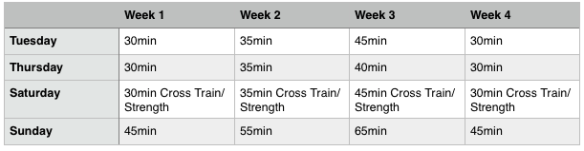
Use the 10-20% rule and never add more time than this to each run. An example for the first month may look like:
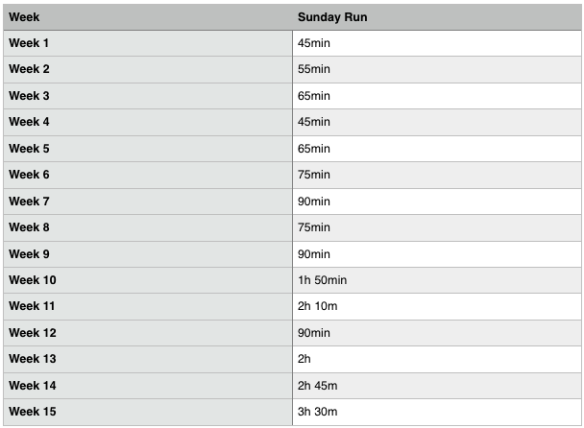
Over this phase, you would eventually cap the length of time for the Tuesday and Thursday runs at 60 to 90-minutes and the Sunday run would progress to 3-hours 30-minutes as follows:
Use this system in phase 1 building week on week over four months to lay a great foundation of progressive miles and time on feet. If you have built progressively, your Sunday long run will have progressed to over three hours which puts you in a great place for a C run target.
A marathon would be a good C target at the end of phase 1. You wouldn’t taper for a race like this, it would be a training run that would be added to your plan.
Phase 2
You have phase 1 under your belt and the confidence of completing a C target. Phase 2 now builds and at the end of this phase you will have a B race target as a goal. This race should be challenging but not so challenging that it becomes intimidating or breaks you. If you ran a half marathon as a C race, then your B race could be a marathon. If your C race was a marathon, then your B race may be a marathon or 50km race if you feel that training is going very well?
It’s also important now to think ahead to Phase 3 and an intermediate A race target that will motivate you and boost your confidence for phase 4, 5 and 6.
Also think about planning and booking heat chamber sessions or equivalent for the final build up phase just before the race; this usually takes place in the final 2-3 weeks and sessions go quickly.
In the UK, a race takes place in November called the Druids. It’s a three day race where runners take on a marathon for three consecutive days. It’s a perfect ‘mini’ Marathon des Sables scenario and a great opportunity to test clothing, pack, fitness and build confidence.
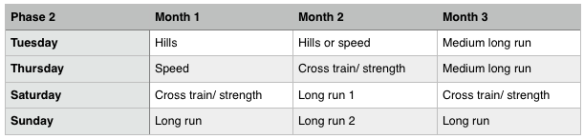
Assuming that four days training are still possible and that you have had no injury issues or problems, we can now progress training building on endurance in the long runs and adding some faster/ strength sessions during the week.
A week may look like this:
Tuesday – Hills.
Thursday – Speed
Saturday – Cross training and strength.
Sunday – Long run.
As in phase 1, progression is really important and the plan would actually change and evolve over this period with each month looking different.
The above plan is a guide and this is where a run coach can step in and provide structure and remove the guess work away from how the plan is put together. It’s all about placing the right emphasis at the right place and at the right time.
You will see how month 3 changes from months 1 and 2 so that it is specific to the B target at the end of this mesocycle.
Phase 3
You have just completed your longest run in a B race, be that 50k, 50m or somewhere in-between and your confidence is sky high. You now have an A race on the horizon (November) that involves three back-to back marathons and suddenly your appreciation of what is required is much clearer. You respect the Marathon des Sables target but now it is less intimidating as you have moved your way up through logical and incremental steps.
Another three month phase of training that allows is to fine tune and hone in on the racing skills required.
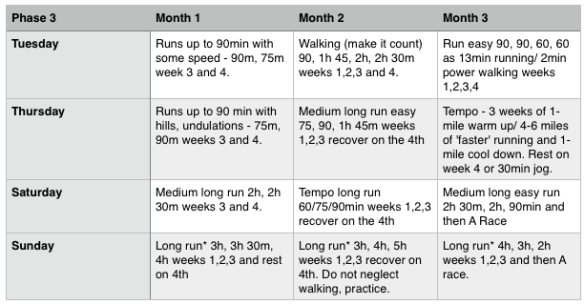
As you may expect, phase 3 starts with recovery from your B race target. You will need to cross train or just run easy for 3-4 days. By the time the weekend comes around, you will feel as though recovery is well on the way, don’t rush. Take your time and the following week run easy Tuesday and Thursday for up to 60-minutes and then do 60 and a 90-minute run on Saturday and build on the Sunday run. An example of phase 3 is below. Please remember, YOU are an individual with specific needs and what I provide below is a possible structure leading to an A race in November.
The A race at the end of November provides a significant marker in your training. The experience will allow you an opportunity to find out what worked, what didn’t work, how your kit worked, what was good, what was bad and so on.
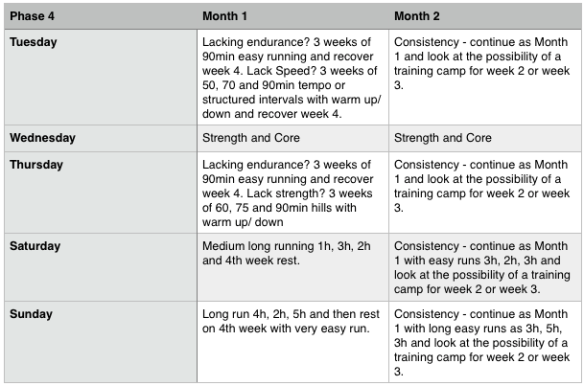
December is now upon you and Phase 4 is an opportunity to look at weaknesses and work on them so that you are in great shape to take on Phase 5 which is the final period before your key race.
1. If you lacked endurance in your November A race, keep working on consistency and build endurance with time on feet.
2. If you lacked speed and want to run faster, December is a perfect opportunity to cut back on distance and long runs and add some speed work.
3. Due to the demands of running with a pack, running long and all the associated fatigue, make sure that you incorporate a strength and core routine to make you a stronger runner. It’s easy to say here, ‘I don’t have the time!” You do, cut down your run time on a Tuesday and Thursday and free up time for strength and core. Maybe you can even find an extra day in your week (Wednesday) to allow you to work on this. Alternatively, work on strength and core at home maybe while watching television? The time is there, you just need to find it and be creative.
4. Practice walking. Effective and fast walking is a key weapon to a successful race in any long ultra or multi-day race.
With a new year coming, April and the heat of the Sahara looms on the horizon. January provides a perfect opportunity for a warm weather training camp just as the weather is wet, miserable and cold in Europe.
Fancy a Training Camp?
I run a week long camp in Lanzarote that provides the perfect opportunity to test everything in a real situation. We even provide a bivouac experience. You can listen to client feedback below and info HERE.
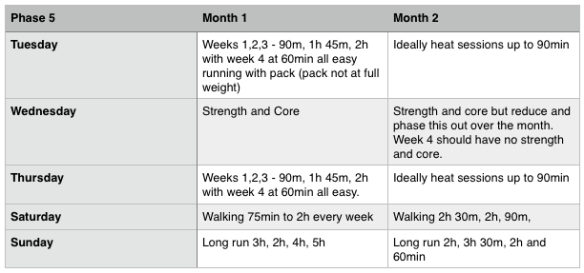
Phase 5 is the last phase and ultimately you have 6 weeks to get prepared and ready for your key race. If you attended a training camp you will now have a full appreciation of everything that you need to do. That may be changing kit, more time on feet, looking at nutrition or even a combination of all elements
Now is the time to make sure you have all your admin sorted – insurance, medical, compulsory kit and so on.
Don’t leave anything to chance now. If in doubt about equipment, contact MyRaceKit, they are able to provide expert advice in regard to everything that you will need.
Think about heat and how you will adapt. With luck, back in phase 2 or 3 you will have thought ahead and booked time in a heat chamber. Ideally this will take place in the final 2-3 weeks before the race. No sessions booked? Train in a gym with additional layers, take a sauna, do Bikram Yoga etc
Again, consistency is key here. You have been training for this long term goal for sometime, don’t do anything silly, don’t do a long run that is really long; you up your chances of injury risk. Remember, training is about ALL the sessions you have done and not just one session
Pack weight is a consideration and get it as close to 6.5kg as possible. On day-1, when you add water it will be 8kg. BE CAREFUL training with too much weight, it is a guaranteed route to injury. For sure, do some sessions with weight, be progressive and slowly build up. Just do one session per week in the final phase and only do 1 or 2 sessions with pack at 8kg and do not go too long.
Phase 6 is race time.
Be organised, be prepared, think of everything and have the race of your life.
It’s in this final phase when you are so close that little things can go wrong. Be prepared as best as you can. You can’t account for the unexpected but reduce chances of anything going wrong by taking no risks.
The information provided above is designed to provide an outline and a guide on how to plan for a long term goal. Although you may be able to take this plan away and use it, please be sensible and assess your own experience, fitness and goals. Importantly, the scenario provided is with a multi-day race in mind, you would need to tweak and adjust this for a single stage race or a mountain ultra for example.
I can’t emphasise enough that we are all individual, so you need to find out what works for you.
Good luck.
If you enjoyed this article, think about becoming a Patron and supporting Talk Ultra podcast and this website on Patreon HERE
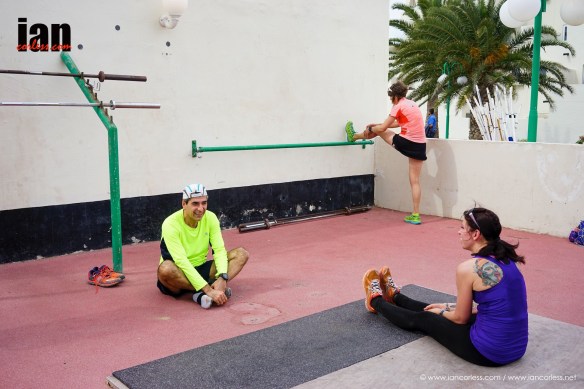
Day 2 and 3 at the Lanzarote Training Camp have been full-on. Shane Benzie of Running Reborn has been looking at everyones run technique and providing guidance for improvement in group and one-to-one sessions – Shane has been a huge hit with everyone and his advice invaluable.
On day 2 we took all groups for a long 5-6 hour walk at a fast pace. Over the years on the training camp we have understood that a key element of successful multi-day race is an ability to walk with ease and at pace.
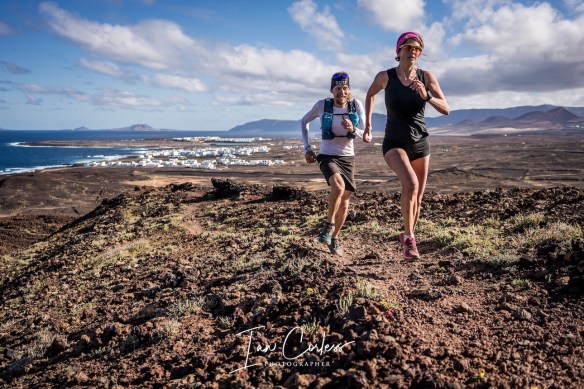
Day 3 started with glorious sunshine and our famous or infamous volcano hill reps. They are always a hit! The sun came out, we had blue skies and fluffy clouds.
In the afternoon, we had a run out to our bivouac location, inside a volcano. An opportunity for many to test out dehydrated food, sleeping bags, sleeping mats and also their packs with weight. It is always a fun night and this year even more special with gale force winds and rain – quite the experience. It really was brilliant!
A glorious morning was followed by a windy and chilly afternoon but Lanzarote put a smile on every clients face as they arrived in 15-degree temperatures after leaving a -5 London behind.
It was an admin day as everyone checked in, stocks up on supplies, relaxed and then at 1700-hours it was an introduction to the terrain and conditions they will encounter for the next 7-days.
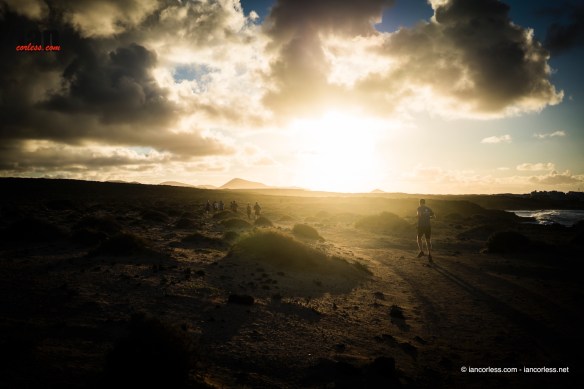
It was a stunning end to the day as we ran for 60-minutes in three ability based groups. The sun accompanied us and as we returned back to La Santa we were provided with one of this magical sunsets that made everyone realise in an instant, why they are here.
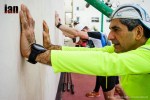
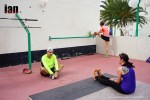
Light stretching followed the run and then in the evening it was casual drinks and a group meal.
Day 4 starts at 0800 with a full-on run that will see most participants on the trail for 4 to 6 hours.
Elisabet Barnes dominated the 2015 Marathon des Sables by winning every stage of the race against a high quality field of competitors. What followed was a series of races and victories – a win and course record at Trail Menorca and victory (and everyday stage wins) at Oman Desert Marathon.
2016 kicked off with a multi-day training camp (here) and in February, Elisabet placed 2nd at Costa Rica’s The Coastal Challenge.
I caught up with Elisabet just two days before she flies out to Morocco to discuss how she feels, how 2016 will be different to 2015 and how life gets in the way of ‘just’ training.
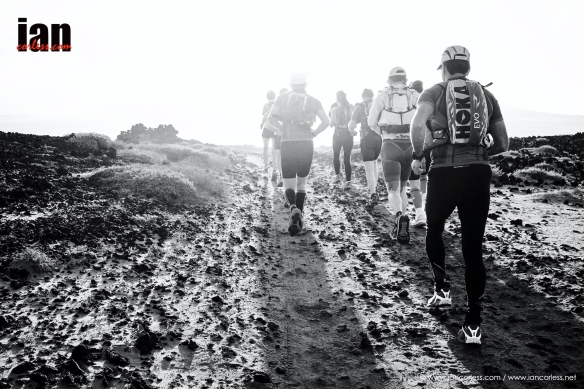
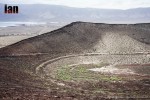
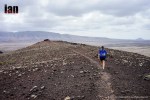
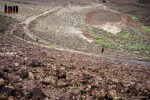
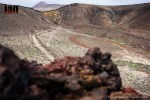
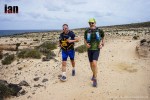
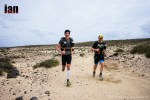
The 2016 Lanzarote multi-day training camp really got underway today with a full day of activity. This morning was a 4-hour run or hike over some very specific terrain that provided every participant a full-on appreciation of what terrain they may encounter at a race such as Marathon des Sables.
Mitch Keene, on the training camp with his wife, said post run:
“It was great to experience the sort of terrain that we are likely to come across when we get to the real event. To understand what it is like to run in some deep sand. It was also great camaraderie on the run. It’s good to know that there is going to be people around you who are in the same sort of position as you are and learning from them. And then there is just some basic stuff like understanding that wearing very short socks is a bad idea when running in the sand. So really simple stuff that you think you know when you set off but don’t. The whole learning experience is phenomenal out here and I really enjoyed it.”
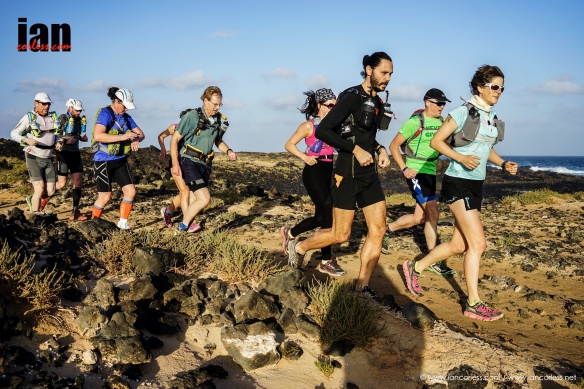
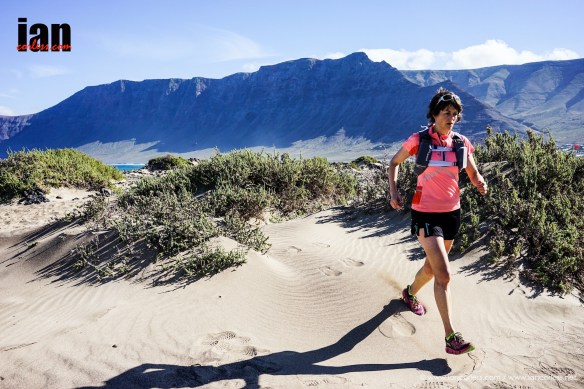
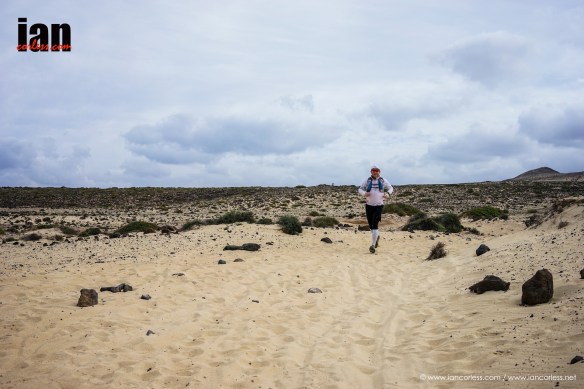
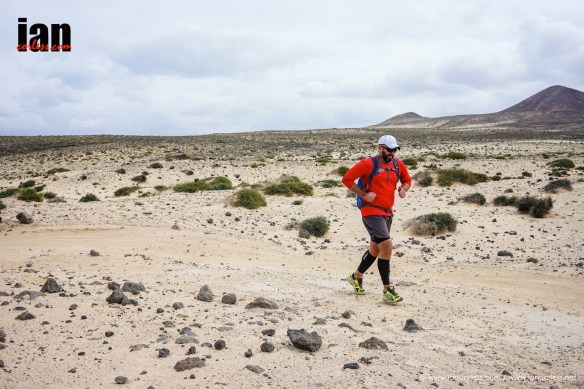
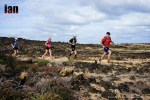
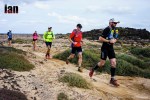
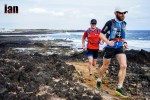
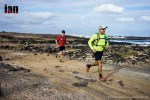
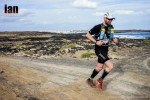
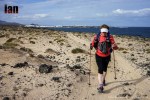
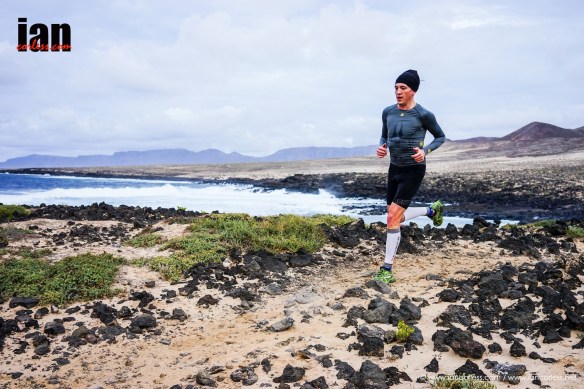
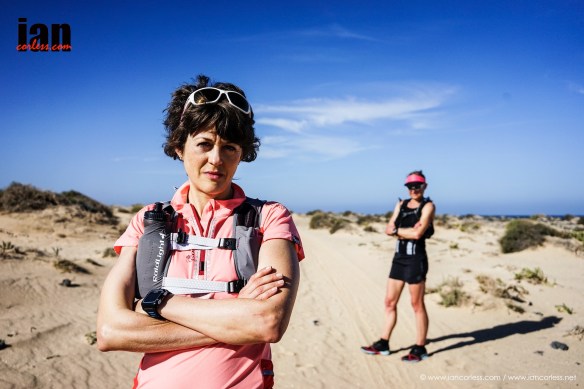
The morning session took a relatively flat run out over very mixed terrain (sand, rock, lava, dunes) in three groups. Elisabet Barnes leading the runners who are able to hold a faster and more consistent pace. Niandi Carmont leading the runners who will run and occasionally walk and then Marie-Paule Pierson leading a small group who intend to walk the whole event. Ian Corless moved from one group to the next.
“It’s nice meeting people who actually want to talk to you while you are running. I have found it quite difficult taking up running again on my own and going to events on my own,” said Leon Clarance. “People are usually polite but today people were actually chatting about their own experiences and it was nice to meet some likeminded people.”
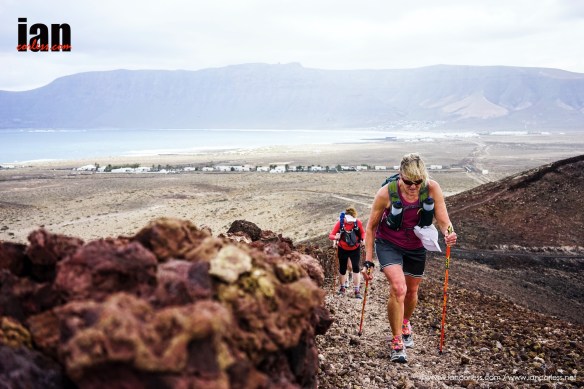
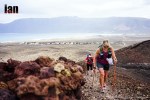
At the coastal resort of Famara, everyone turned 180-deg and the re-traced along the coastline but this time taking in the small mountains and hills that back on to the sea in this area. At times rocky and technical, everyone had a real insight into the complex terrain that one may encounter in a multi-day event. At the summit, one or two runners experimented with foot care and treatment; a key element of successful multi-day competition.
“It’s ben a real eye opener,” said Alan Guthrie. “I have been behind with my training and today I managed my longest session for some time in some very specific terrain that directly relates to my chosen event; Marathon des Sables. It’s been a tough session but I have loved every minute of it.”
Post run stretching relaxed tired muscles and 2-hour break was followed with a talk and discussion called, ‘What goes in the Multi-Day Pack?’
And just when the runners thought it was time to relax and chill-out an ‘optional’ 20-30min shake out run fired everyone up for one last effort, making the day a very successful and tiring one. Evening drinks, relaxing chat and good food was extremely welcome. Tomorrow we have a structured group walk in the Timanfaya National Park in a series of volcanoes followed with a talk on nutrition and hydration.
Many thanks to MyRaceKit, Raidlight, OMM, PHD, inov-8, Scott Running and Berghaus for the support.
If you would like to take part in a multi-day training camp like this, dates have been set for 2017 and it’s possible to book HERE
The Lanzarote 2016 multi-day training camp got underway today with an easy 1-hour run along the coastal trails of La Santa to Famara.
In total, we have a group of 27 runners with a broad range of 2016 objectives such as Marathon des Sables (Morocco), The Coastal Challenge (Costa Rica), Big Red Run (Australia), Cape Wraith Ultra (UK) and the Everest Trail Race (Nepal).
It’s always great to see so many runners of mixed ability come together with one goal in mind; completion of a challenging multi-day race!
Tomorrow, 4-hours of classic desert terrain awaits the runners as they depart in three groups lead by Elisabet Barnes, Niandi Carmont and Marie-Paule Pierson. Ian Corless, camp co-ordinator and planner, will move through the groups, running out-and-back to ensure that everyone is on track and comfortable.
In the afternoon, a group talk and discussion followed with an easy 30-60 min run.
Lanzarote, situated off the coast of Morocco provides the perfect environment to simulate many of the conditions that runners will experience in a classic multi-day race; wind, sand, rocks, tough terrain, climbs and maybe even a little scrambling.
If you are interested in a multi-day training, dates for 2017 have been set and you can view HERE
Many thanks to the following brands for helping with this camp:
MyRaceKit, OMM, inov-8, Berghaus, PHD, Raidlight, Scott Running
Day 1 in Lanzarote for the 2016 multi-day training camp. It’s all about scouting courses, checking out terrain and looking for some specific routes that will put our 26 clients through their paces that will help simulate classic multi-day races like Marathon des Sables, Atacama, The Coastal Challenge and more…
MDS 2015 champion, Elisabet Barnes is here and just recently she has secured a three year sponsorship deal with Raidlight. Lanzarote is not only an opportunity to test new Raidlight apparel and packs but also to train and pass on Elisabet’s experience to those who may well be undertaking a multi-day race for the first time.
Our other coaches, Niandi Carmont and Marie-Paule Pierson will also be passing on their own wisdom from their own multi-day experiences. Niandi in particular has been racing ultras for approximately 20-years, anything from 50k, 100k, 100-miles and of course multi-day races such as Marathon des Sables and The Coastal Challenge,
Our clients arrive tomorrow, Thursday. It will be a settle in day with an easy run late afternoon and then all the action starts on Friday with a coastal run that includes mixed terrain, soft sand, some scrambling and of course great weather and great views.
Thanks to OMM, inov-8, Scott Running, Raidlight, Berghaus and PHD of the support on this camp.
In recent posts, we’ve been talking about enhancing fat burning to boost endurance. This week’s post was due to focus upon pacing strategy for training and competing and specifically how pacing interacts with the types of fuel you use when exercising. However, as we’ve been discussing Maffetone in recent weeks, I’ve had a few messages stating that I’ve contradicted myself. The reason for this is that I am a believer in the importance of short and high intensity workouts for endurance performance. In the past I have outlined the danger of too much low intensity riding and running, specifically how it makes you slower. I understand why this may be seen as contradictory, so let me explain…
If you are competing in Ironman, one of the things you need to consider is your estimated time and pacing strategy on the bike section. To calculate your ‘race pace’ a simple and popular test is the cp20. During this test, the rider is required to sustain the highest power output for a 20 minute period and from the results, you can calculate your ‘functional threshold’. Some of you may have heard these strange terms before but in simple terms your ‘functional threshold’ is the output you should feasibly be able to manage for an hour. The calculation is simple, look at the average power for the 20 minute test and 95% of that figure is your functional threshold
Using functional threshold you can guess the amount of power that in theory you can sustain for all distances up to the Ironman 112. For example, 70% of your functional threshold is a reasonable target for Ironman. The critical thing here is that the power you can hold for only 20 minutes (a very short period of time) predicts Ironman pace. So, if you cannot ride quickly for 20 minutes, you will undoubtedly be riding slowly in Ironman over a distance of 112 miles, as 70% of ‘slowly’ is ‘even slower’. A common mistake people make when training for long distances is that they focus on endurance only and ride lots of slow miles. They ‘get it in their heads’ that Ironman is all about ‘the distance’ so ride long and slow. As a result of doing so much slow riding, their 20 minute power output is reduced to a score potentially even lower than when they started! Subsequently, their Ironman pace (70% FTP) is therefore also reduced.
So the solution is simple, just train to produce the highest power output for 20 minutes by doing short and high intensity riding and you’ll PB in Ironman? Unfortunately not… The test dictates your Ironman pace from the amount of power you can produce within the 20 minutes. However, the critical part is that the test also presumes that you have done the mileage, so therefore have the endurance to support your performance.
The same applies to running and training for a marathon. Let’s say as a ‘guess’ that if you double your 10k time and add 4-5 minutes, you’ll be close to your half marathon time. Now double your half marathon time and add 10 and you’ll get your predicted marathon time. You’ve probably heard that formula before, it’s been around for many years. The key thing to point out is that when using that formula, your 10k time is therefore dictating your marathon time. As with our cycling example, if you can’t run quickly for 10k, you can’t run a fast marathon.
However, the formula of double 10k and add 4-5 minutes or double half marathon and add 10 presumes that you have ‘done the mileage’. You can’t just train for 10k racing and expect to run a great marathon. Your 10k time will ‘predict’ your running speed in the marathon, but without the mileage in your legs, you won’t be able to hold that pace for the entirety of the race.
So let’s look at it this way:
The 20 minute test in cycling or the 10k time in running tells you how quickly you are capable of riding or running Ironman or marathon.
Whether you have done the long distances in training will determine whether you are actually capable of maintaining that speed and reaching the finish line in your target time.
As a quick summary, ‘how fast can you go and can you keep it going?’
The simple lesson to learn here is that both long-term endurance and maximal output over shorter distances are equally important for performance. If you choose one but not the other, you’ll either manage the distance ‘comfortably but slowly’ or you’ll go quickly at the start and die a painful death at the end. Don’t dismiss either of these key factors if you want to hit your target time.
To finish, I’ll go back to something, which I mentioned 3 weeks ago, when writing about the Maffetone formula. Each training intensity, level or zone has it’s own benefits and purpose. Too frequently athletes do their easy stuff too hard and their hard stuff too easy, as a consequence the sessions merge into one grey area of moderate intensity. When riding or running in zone 1, there are specific benefits, which are lost when you push too hard. When attempting a high intensity interval workout you will not gain the specific benefits of that session if you do not push hard enough.
Training is like baking, you need to put lots of different, but high quality ingredients together or you’ll find that on race day the whole thing will just taste a bit bland.
Go forwards endurance students, train well and practice burning the fat
– Marc Laithwaite
About Marc:
Sports Science lecturer for 10 years at St Helens HE College.
2004 established The Endurance Coach LTD sports science and coaching business. Worked with British Cycling as physiology support 2008-2008. Previous Triathlon England Regional Academy Head Coach, North West.
In 2006 established Epic Events Management LTD. Now one of the largest event companies in the NW, organising a range of triathlon, swimming and cycling events. EPIC EVENTS also encompasses Montane Trail 26 and Petzl Night Runner events.
In 2010 established Montane Lakeland 50 & 100 LTD. This has now become the UKs leading ultra distance trail running event.
In 2010 established The Endurance Store triathlon, trail running and open water swimming store. Based in Appley Bridge, Wigan, we are the North West’s community store, organising and supporting local athletes and local events.



































































































































































































































































































 IAN CORLESS