JEZ and the DRAGON

Jez and the Dragon

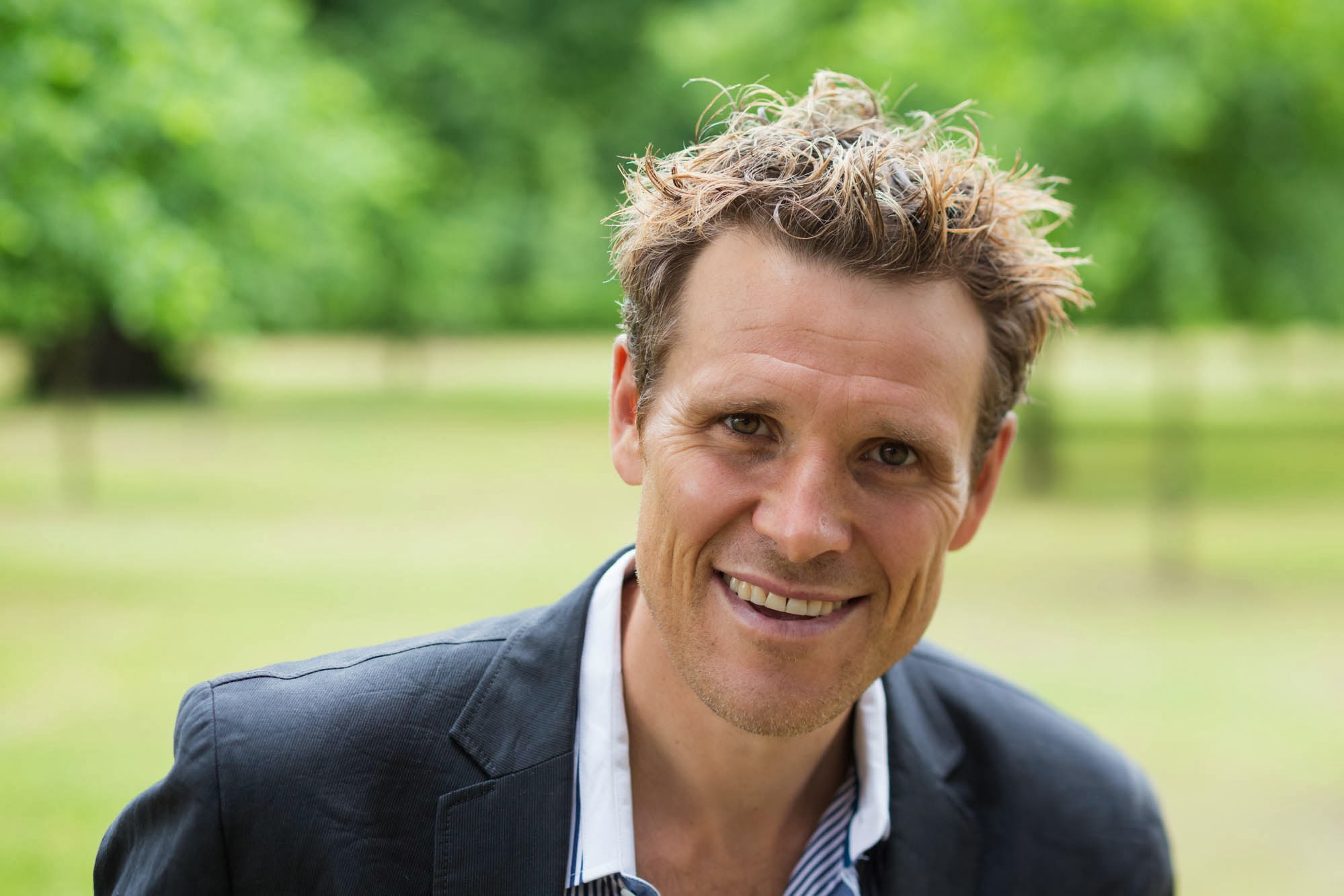
“…it kind of draws upon my all around hill skills really. My ability to look after myself in tricky weather situations, navigate my way between checkpoint stations and just generally manage myself and be safe. Whilst it is a race there’s a kind of survival element, there’s definitely a lot of appeal in all that. I think that UK ultra-running traditionally drew upon all those skills with mountain marathons and similar events. It’s nice to go back and do a big event based on those elements and test myself in different ways. It brings excitement and gets my adrenaline going.” – Jez Bragg


You can read the full article on Jez Bragg on RUNULTRA HERE

run-ultra-logo

The Berghaus Dragons Back Race™

The legendary Dragon’s Back Race™ follows the mountainous spine of Wales from Conwy Castle to Carreg Cennen Castle. This incredible 5-day journey is approximately 300 kilometres long with 17,000 metres of ascent across wild, trackless, remote and mountainous terrain. It is not a trail race.

The original Dragon’s Back Race™ happened in September 1992 and ever since, it has been whispered about with a mix of awe and trepidation. Its reputation had reached legendary status with fell, mountain and ultra runners the World over by September 2012 when the second Dragon’s Back Race™ happened.

The Dragon’s Back Race™ is one of the hardest mountain races in the World.

The next race will be the 22nd-26th June 2015. If you are considering entering or just want to experience the awesome challenge offered by the Dragon’s Back Race™ we strongly recommend that you watch the multi award winning film of the 2012 race.

Potential competitors should read the information here>>>.

Shane Ohly
Race Director

LAKES SKY ULTRA – new race for 2015

lakesskyultra

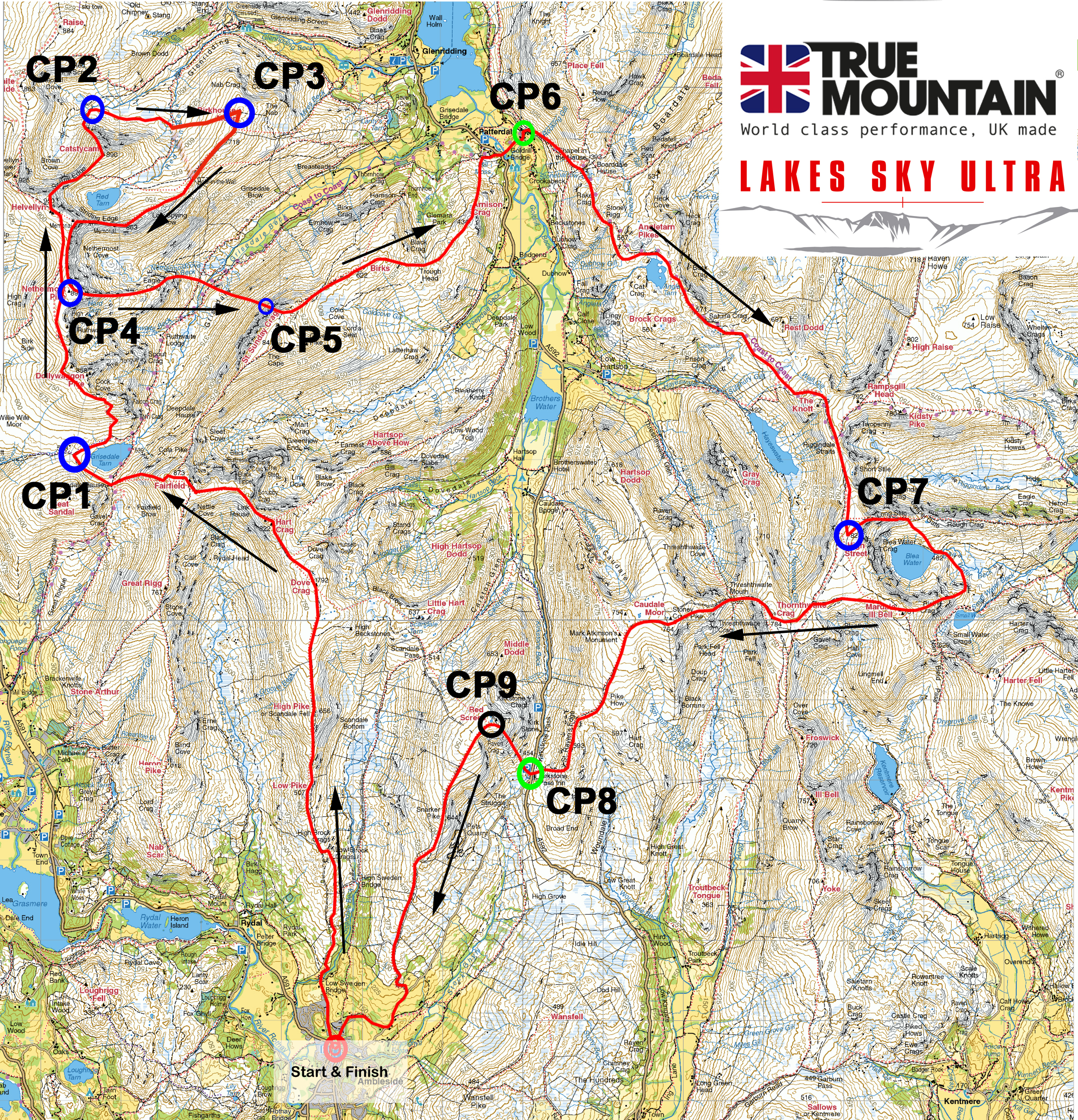
Skyrunning UK is pleased to announce a new race for 2015, the LAKES SKY ULTRA™. A 50km+/- course with 4300m+/- ascent that includes soaring ridgelines, rock scrambling and a course that will test the most experienced competitor. Starting and concluding in the iconic Lakeland village, Ambleside: the LAKES SKY ULTRA will look to bring a European feel and ambiance to Skyrunning in the UK.

Ben_Abdelnoor_Sky_Race

Created by Charlie Sproson (Mountain Run) and Andrew Burton, the LAKES SKY ULTRA™ will follow on from the recently announced Glen Coe Skyline in providing competitors from the UK and overseas with an opportunity to test themselves on a course that harks back to the late 80’s and early 90’s when ISF President, Marino Giacometti went fast and light to the summit of Monte Rosa.

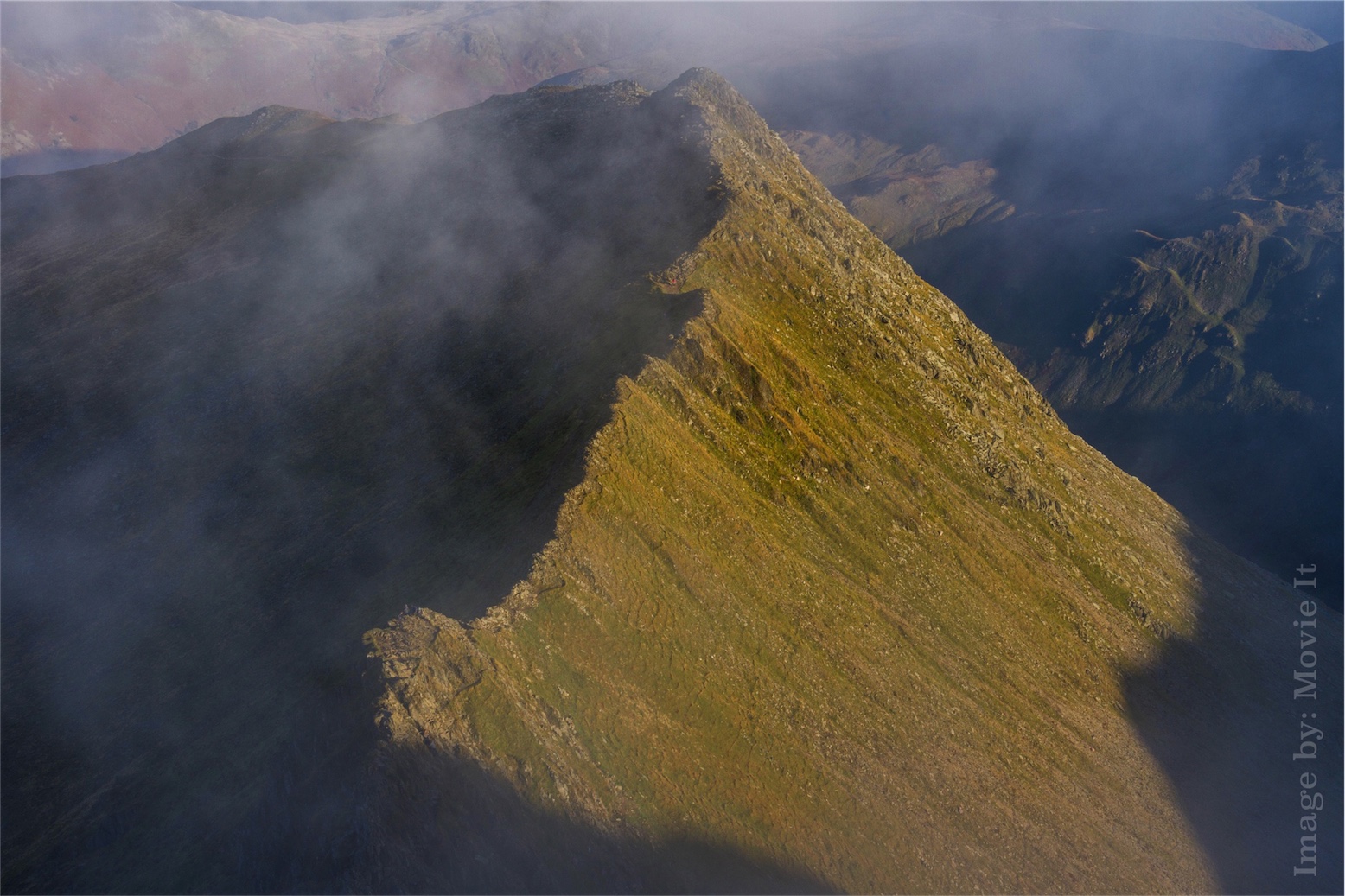
We may lack altitude in the UK but we have a strong history and heritage founded in the traditions of fell and mountain running. The LAKES SKY ULTRA™ will combine a series of graded scrambles: 0.5 at Swirral Edge, grade 1 at Striding Edge and grade 3 at Pinnacle Ridge to offer a unique racing experience but it is not for the feint hearted…

Sky-Race-Map-from-Ambleside-_LSU-version

“We have so much great scenery and courses in the UK; we certainly have exposure and technical terrain. We have a sense of high mountains even though we lack altitude. Throw in British weather and our course will be a challenge. No question. We are offering an opportunity to explore from a different perspective.”

Andrew and Charlie have had some great days out planning routes and have therefore created a course with added spice. It will be a test and the route will inspire those who like a challenge. They have pulled together something quite special. Soaring ridgelines in the sky… Skyrunning!”

“We have some very technical parts on this course but we also have plenty of simple running. The route has three graded scrambles so foot and hand placements are going to be important. We have elements of not just running but hands-on rock fun to be had!”

In year one the LAKES SKY ULTRA™ will only have 100-places available and this race will require a certain type of runner. Participants will need to provide a list of past experience when applying. Just being an ultra runner won’t cut it. Charlie and Andrew quite clearly state, “We need scrambling and rock climbing experience. However, we are planning a mountain skills course in August to help those interested to gain experience… but this will not guarantee race entry!”

Striding_Edge_LSU

Safety is key in any race, however, Skyrunning races of this style are designed to challenge… so, although Charlie and Andrew are looking at safety, a course of this nature does bring risk and ultimately, that is part of the attraction; hence the vetting procedure. “If a runner is asking, ‘I wonder if I have the correct experience?’ they probably don’t!” says Andrew.

Charlie Sproson on a recce day. Image ©steveashworth MovieiT

Charlie Sproson on a recce day. Image ©steveashworth MovieiT

The LAKES SKY ULTRA ™ course is designed to have an element of danger, however, no compromises are being made in regard to the safety of everyone.

“We will have manned checkpoints at high level sections of the course, electronic checkpoints and a cut-off at Patterdale.” Charlie explains. “We will also have evacuation routes should they be required due to danger or injury. An appointed safety officer, Joe Faulkner from Nav4 will look at the course and will provide safety without taking away the excitement… for example, on the grade 3 scramble we may have a fixed rope? Many of these elements are yet to be decided but we are looking at all aspects.”


Make a date in your diary, 12th September 2015.

The LAKES SKY ULTRA™ is coming.

http://www.lakesskyultra.uk/

Email Charlie Sproson: charlie@lakesskyultra.uk

“The Helvellyn range is one of the most iconic massifs in the Lake District. The combination of this spectacular mountain and a series of scrambles make the LAKES SKY ULTRA™ route a real highlight within the UK. We have fantastic edge running from Riggindale Straights to Kirkstone pass with some amazing scenery. You can look over Ambleside from Red Screes… this course has it all. Mountain scenery, splashed with lakes and technical terrain make this a True Mountain™ experience.”

The race will start and finish in Ambleside and Skyrunning UK sincerely hope over time that the race will mimic some of the experiences that have been encountered in some of the top European races. Think Zegama-Aizkorri or the Dolomites Sky Race. A town center race start and finish includes everyone: families, shops, restaurants, tourists, supporters and of course the race can interact with everyday life. It’s going to be incredible to bring this experience to an iconic Lakeland town. We want people with cowbells, whistles and cheering. A carnival of Skyrunning!

Images all ©MovieiT

Pacing while racing – Marc Laithwaite

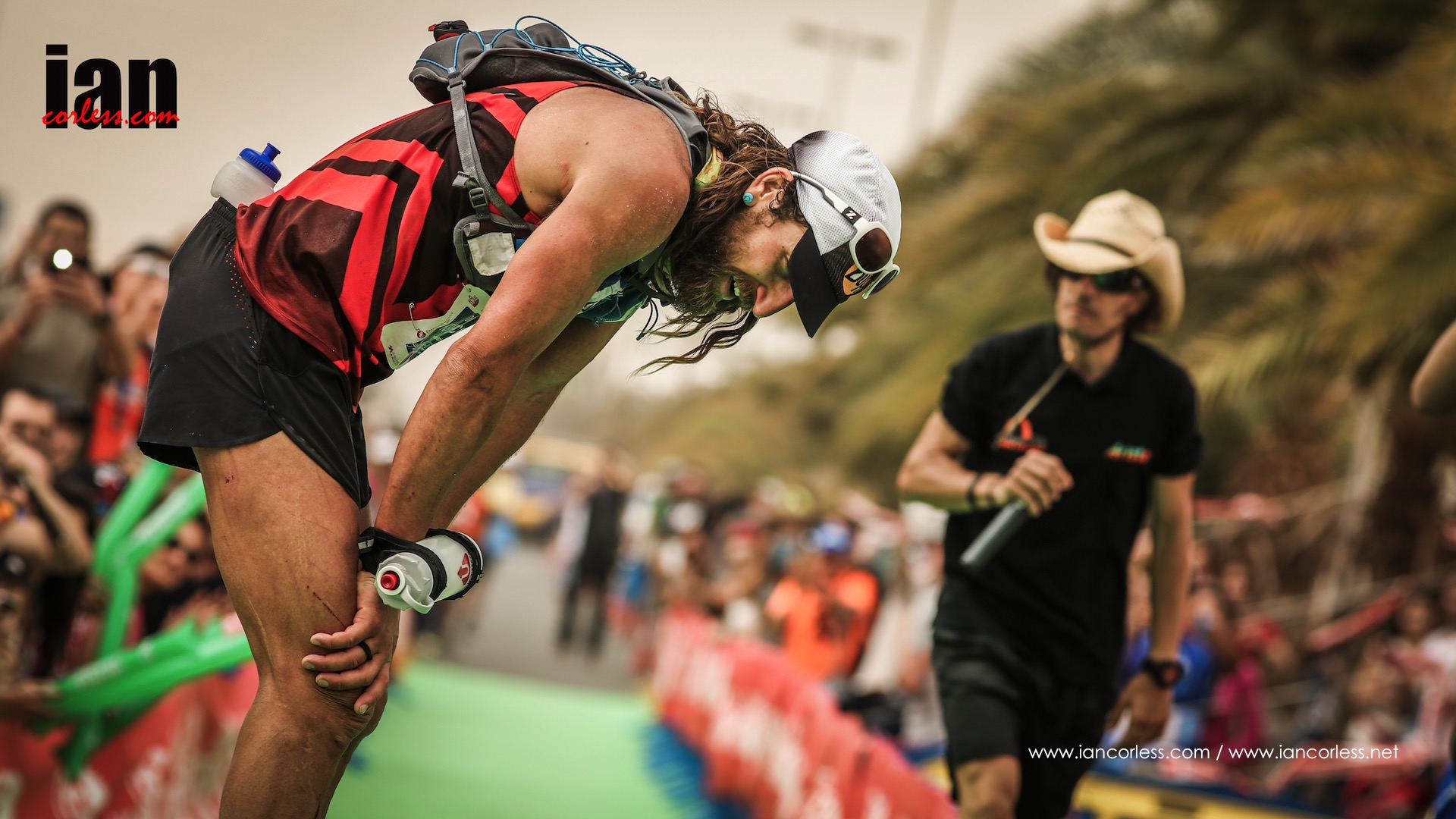
©iancorless.com_Transgrancanaria15-7079

So last week we discussed training at the correct intensity during long, endurance sessions. This week, we are following a similar theme but we are focusing more on race strategy and how to pace yourself during an event. Many of the things we’ve discussed in the past weeks are critical not just for training but also during competition, so let’s complete an overview of past topics and how they relate to race pacing:

  1. For longer events, fat utilisation is critical to prevent glycogen stores depleting quickly. You should have optimised this in training beforehand, but during your race, riding and running at the correct intensity is critical. If your race pace is too quick, then you are in danger of running your glycogen stores low, resulting in a poor performance.
  1. Maintain a constant intensity and avoiding spikes is also critical. If you push hard on uphills and recover on the downhills, your intensity will vary greatly throughout the race. Remember, when you pick your intensity for any event, average figures (average heart rate or average power) or pretty useless as a guide. You need to hold the intensity constant, with little change in intensity. If you aim to ride or run at a heart rate figure of 130 beats per minute, then set yourself a tight range of 125-135 for the duration of the event. Slow on the uphills and hold pace on the flat and downhills.
  1. Avoid the fast start or you’ll suffer later in the event. It’s very clear watching ironman races, marathon and ultra races that at least 90% of the field start at a quicker pace than they finish. There are 3 main reasons for this: The first is that you are fresh, so going hard feels easy. Coupled with this, you have an adrenaline shot at the start, so this exaggerates how good you feel. The killer shot is the fact that everyone else feels the same, so they all go too quick and it takes a very brave person not to react and follow everyone else!

There is an element of sheer panic for many people during the first hour of an event, when riders and runners are streaming past them at a quicker pace. From a psychological standpoint, this is incredibly difficult to handle, so we inevitably end up going with the flow of traffic and picking up our pace.

Here’s the thing, most of those people passing you in the early hours of an ironman bike course, or the opening miles of an ultra race, will be walking huge chunks of the event in the latter stages. If your better pacing means that you are still running in the latter stages, any time losses now will be erased and reversed without any issues whatsoever. In fact, many of them might actually drop out and not even finish!! This is the most important race of the year for you, having spent 12 months preparing, are you going to blindly follow someone who is pacing the event badly? Knowing deep inside that you’re riding or running at the wrong pace, are you going to chase them, only to ‘blow up’ in spectacular fashion later in the day and destroy your chances of a great performance? Sound stupid? Well that’s how a lot of people race.

Focus on the process and not on the outcome

Let’s make this very simple. In a long distance endurance event, you can only go at the pace that YOU are able to sustain for the duration of the event, what everyone else does, should not affect your race strategy. Prior to your event, you should have a pre-set intensity that you are intending to sustain. You may have a power meter on your bike to measure watts or you may have a heart rate monitor to gauge how hard you are working. Once you have that pre-set intensity, you should stick to it and ignore all other competitors. This concept is termed ‘process orientated’ as opposed to ‘goal orientated’ racing.

What’s the difference?

Goal orientated is simple, you set a target of 12 hours for your event and you swim, ride or run as fast as required to achieve that 12 hour time. It doesn’t matter if you’re going quicker than you can handle, you simply chase the pre-set time. Process orientated refers to you focusing on the process of swimming, cycling and running at the right pace. Following a nutrition plan and doing all the things you’ve trained to do beforehand. You focus on the process only and ultimately, when you reach the line, the finish time is whatever the finish time is. What’s key, is that is you focus well on the processes, your finish time will be the best you are capable of on that day.

Process orientated racing works best in longer events as tactics play less of a role. You can’t control who enters the event and you can’t control how well those people race. As a consequence, you cannot control your finish position at the end of the day. The only thing you CAN control is your own pacing and race strategy, to give you the best possible chance of achieving the finish time you hoped for.

Live in the here and now

Ultimately, whilst you will have a pre-set pacing plan, you will have to be flexible on the day. Your pacing strategy and other actions should be based on the ‘here and now’. You should be making regular checks and asking yourself how you feel at that moment in time and whether there is anything you need to do as a consequence. For example, if you had planned to run at 5 minutes per Km pace and you feel that pace slowing, then you should not panic. Instead, think about what you need to do at that time to solve the problem. Do you need to eat and drink? Do you need to slow a little? Be flexible, don’t just continue in a blind manner trying to hold the same pace or it will result in a major collapse.

One of the key things to remember when competing in long distance events such as Ironman or ultra running is that energy can fluctuate. In a simple marathon race, you tend to feel ok at the start and then gradually get worse as the event progresses. In an Ironman marathon or ultra race, you can have patched where you have to walk because you feel so low, but 5 miles later, you may be running at a strong pace.

When you have a drop in energy, don’t lose focus and don’t lose your head. That’s the point where lots of people just give up, start walking and never start running again. Focus on the here and now, what do you have to do to solve the problem and get back to the plan? Whatever happens, you can only be as good as you can be on that particular day. If you focus on the processes, you’ll know that when you cross that line, that’s as good as you are, for today at least.

– Marc Laithwaite

About Marc:

Sports Science lecturer for 10 years at St Helens HE College.

2004 established The Endurance Coach LTD sports science and coaching business. Worked with British Cycling as physiology support 2008-2008. Previous Triathlon England Regional Academy Head Coach, North West.

In 2006 established Epic Events Management LTD. Now one of the largest event companies in the NW, organising a range of triathlon, swimming and cycling events. EPIC EVENTS also encompasses Montane Trail 26 and Petzl Night Runner events.

In 2010 established Montane Lakeland 50 & 100 LTD. This has now become the UKs leading ultra distance trail running event.

In 2010 established The Endurance Store triathlon, trail running and open water swimming store. Based in Appley Bridge, Wigan, we are the North West’s community store, organising and supporting local athletes and local events.

Check out the endurance store HERE

Endurance Store Logo

Gediminas Grinius – Transgrancanaria 2015

Gediminas_inov8

Gediminas Grinius took a few people by surprise at the 2015 Transgrancanaria… not me I am pleased to say!

In my pre-race preview I went on to say:

 “Gediminas Grinius had a stunning 2014 with 3rd, 5th and 4th places at Lavaredo, UTMB and Raid de la Reunion. Three tough races! Based on these performances, Gediminas has all the potential to podium once again and should all things align, he may even win.”

Win he did and he set a new course record beating Ryan Sandes 2014 time and over a longer course.

This week on TALK ULTRA podcast (released Friday 20th March) we have a full and in-depth interview Gediminas and he has quite a story… in the meantime, read about his journey on the inov8 website:

HERE

inov-8 logo

all images ©iancorless.com – all rights reserved

Salomon Sense Mantra 3 – Review

©iancorless.com_Mantra3-7562

When Salomon signed Ellie Greenwood and Max King (just ran 2:17 for Olympic qualifier) for 2015 sponsorship, the two current 100km champions, it was a clear statement that the brand wants to make some headway on the road as well as trail.

The new S-Lab X Series (Here) is an out-and-out road shoe but Salomon are also very keen to capture all of hose runners that run on road, trail, road, trail and then road… but not necessarily in that order. The birth of CITYTRAIL. It’s not rocket science but if in doubt, CITYTRAIL shoes combine the best of a road shoe and then mix it up with a trail shoe.

©iancorless.com_Mantra3-7568

The original Salomon Mantra (2012) was ground breaking. However, the shoe has come a long way from its original incarnation and although the new Mantra 3 does hold some of the original traits, it’s fair to say that the Sense Mantra 3 is a completely new shoe.

Imagine taking the much loved S-Lab Sense, breeding it with the original Mantra and in many ways you have the Sense Mantra 3.

©iancorless.com_Mantra3-7559

Do you like the S-Lab Sense in either normal or soft-ground versions? If so, you are almost certainly going to like the Mantra 3.

The shoe has all those wonderful S-Lab characteristics that we have all come to love:

  • Sensfit
  • Endofit
  • Lace pocket
  • Quicklace
  • OS Tendon
  • Ortholite
  • Profeet Film

So many buzz words but in brief they all add up to…  awesome!

©iancorless.com_Mantra3-7577

Okay, I fully appreciate that here I am again waxing lyrical about another pair of shoes and arguably another pair of Salomon’s that are a joy to wear. But I only tell it like it is… I loved the Sense 3 SG and I loved the Sense Pro, so, combine those two shoes and you arguably have the Sense Mantra 3. BUT the shoe has some significant differences.

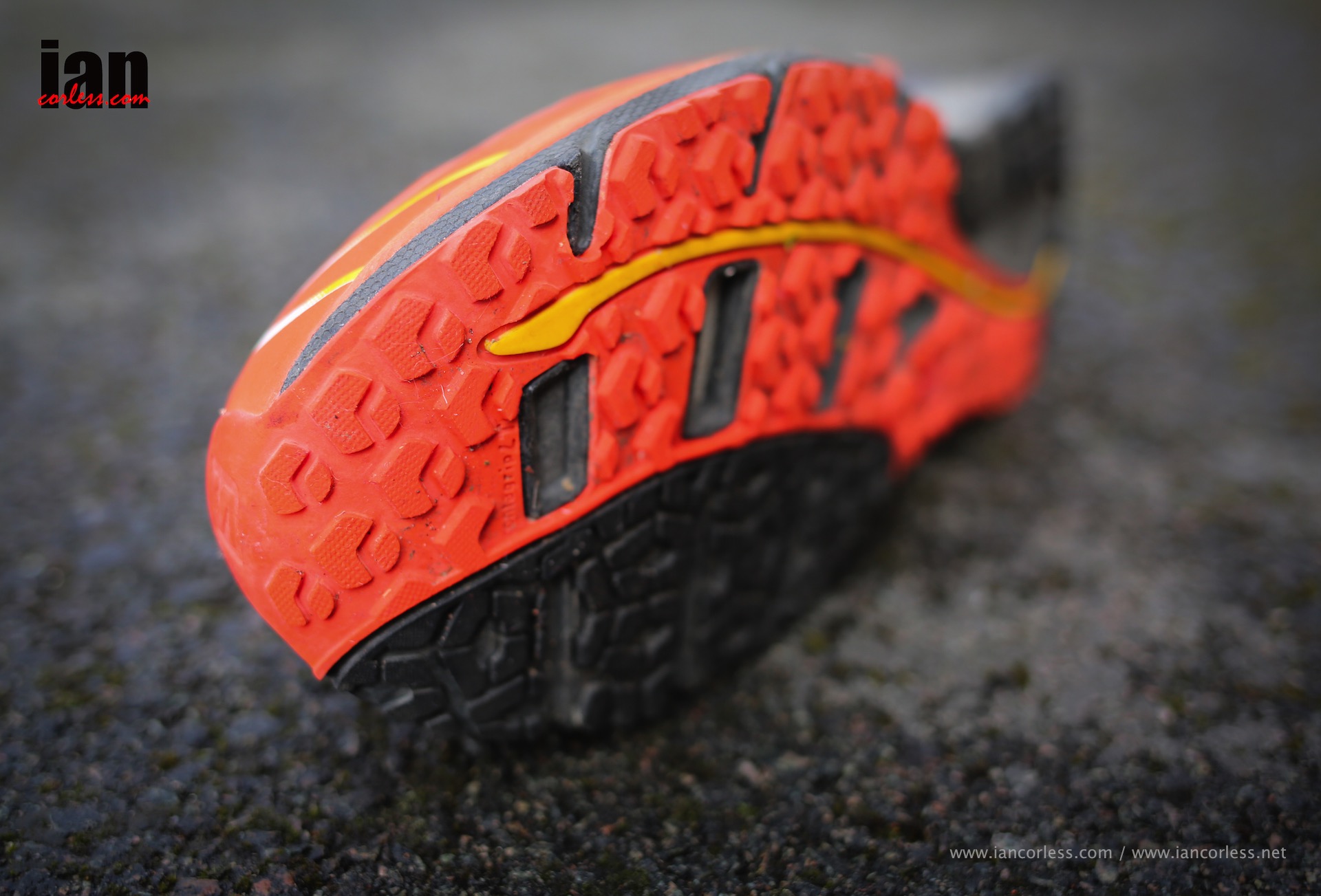
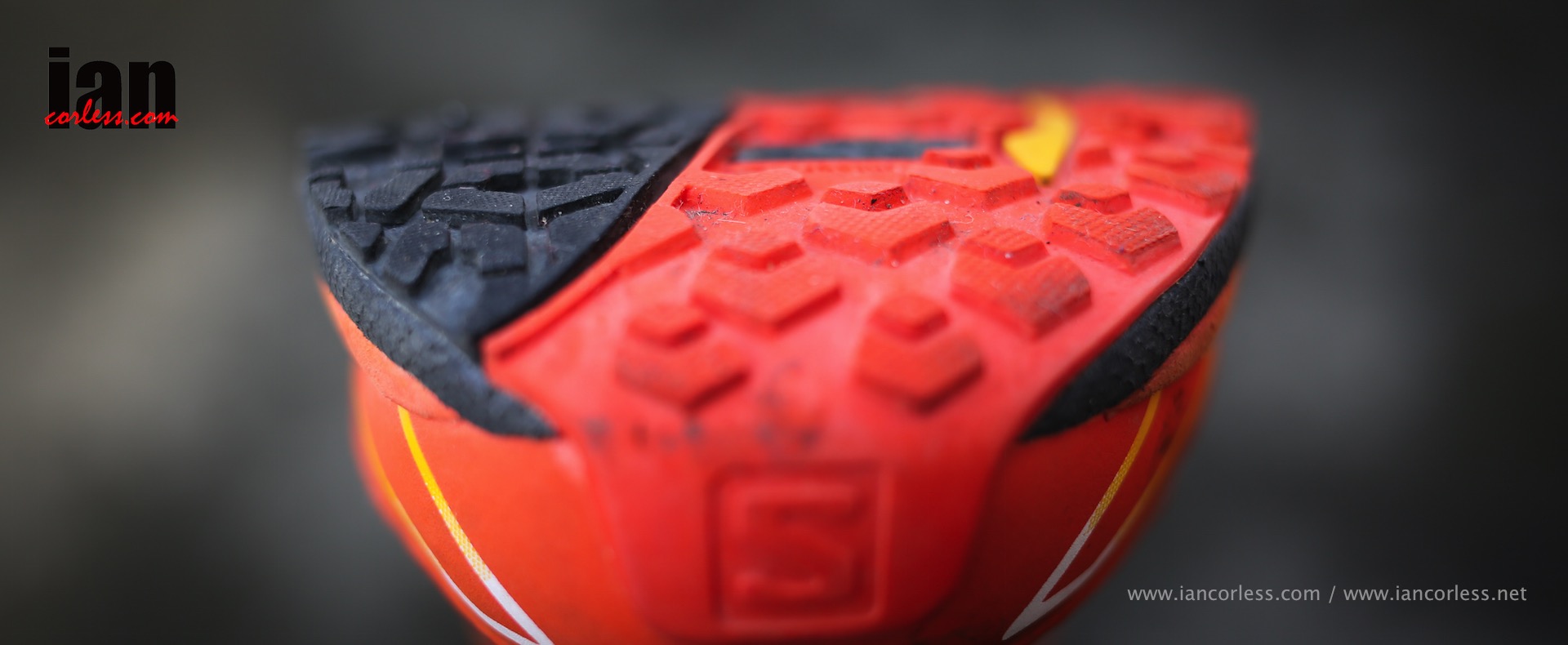
©iancorless.com_Mantra3-7596First and foremost, the sole of the shoe has been redesigned and it has a completely new look. Need a shoe for soft or muddy ground? Look elsewhere. But if you are mixing road, hard trail, rocks and anything in and around that scenario, the Mantra 3 is a dream.

©iancorless.com_Mantra3-7565 The shoe feels very cushioned and plush. This almost certainly comes from Endofit. Lets face it, once you have used Endofit; other shoes feel a little sloppy. Endofit holds the foot snug, secure and as such provides great feel and security. Basically it’s a wrap for your foot.

©iancorless.com_Mantra3-7571

The Mantra 3 has 15mm cushioning at the rear and 9mm at the front. I was a little surprised by those stats. The shoe feels a little more cushioned than that but I don’t mean that in a negative way. You still have plenty of feel, loads of response and arguably the 6mm drop provides an ideal sweet spot.

Weight is awesome at 275g (UK8) and the shoe feels light. Flexibility is great and when out running, the shoe actually makes you want to increase your cadence and pick up the pace. I loved that feeling… I just wish my lungs and heart could keep up with the shoes.

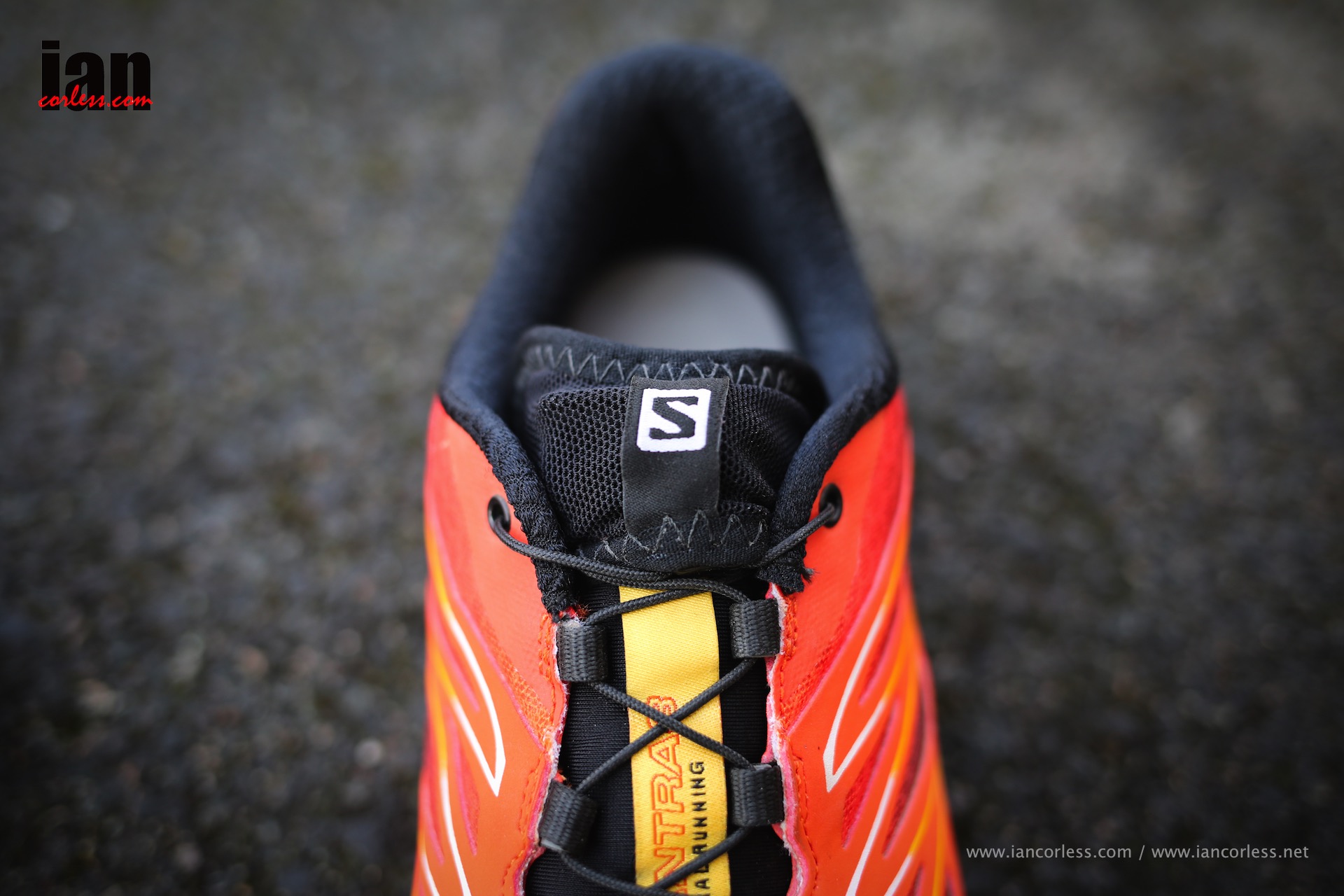
©iancorless.com_Mantra3-7573Lacing is legendary and the ‘Quicklace’ system works flawlessly. I have no problems with this system but it is fair to say that if you like to tweak your laces and loosen them in places, that is difficult to do here. Excess lace is stored in the equally legendary ‘Lace Pocket.’

I personally found that my shoes sized a little small. I use UK9.5 in Sense 3, Sense 3 SG and Sense Pro but I found that I needed a UK10 for the Mantra 3. Of course this may just be a one off? However, if ordering online, keep this in mind.

©iancorless.com_Mantra3-7593 The noticeable difference in the Mantra 3 is the toe box! It is without doubt considerably wider and roomier than any other Salomon shoe I have used. So much so that I found myself tweaking the tightness of my laces to compensate. I know only too well how many people complain that Salomon shoes are too narrow. Well, this may well be a shoe for you to try. I thought the Sense Pro had a wider toe box but the Mantra 3 is definitely wider. This all may be part of Salomon’s new strategy as the S-Lab Sense 4 and Sense 4 SG have a slightly wider toe box too. Depending on how you run and what your preferences are, the wider toe box can be a negative as much as a positive. Having used both versions of the Sense 3 and the Sense Pro (and loved them) I found that at times I had a little ‘too’ much movement in the toe area on the Mantra 3, which didn’t give me the precision feel I am used to. We have to remember here that the Mantra 3 is a hybrid shoe, so this additional freedom is intentional. Certainly on longer runs this additional area was welcome should your feet swell and expand.

©iancorless.com_Mantra3-7585The heel area of the shoe is plush, holds the foot tight and has no friction. Toe protection at the front of the shoe is minimal, so, should you get on some really rocky terrain, be careful of your toes.

©iancorless.com_Mantra3-7600

The outsole as I mentioned has been redesigned and I have to say that if you keep to hard trail, rocks or road the grip is great. Equally I had full confidence in wet conditions. If you are heading out into the mud, this is not the shoe to take… look at the Sense 4 SG, Speedcross or Fellcross.

As mentioned, the Ortholite/ Sensifit combination provides a plush and cushioned feel and the addition of a Profeet Film adds security and protection from the road and/or trail surface.

In summary, the Mantra 3 is a great shoe for someone who mixes up road running and trail running on a daily basis. But don’t be put off by this ‘compromised’ approach. For me, the Mantra 3 is a great dry trail shoe or a great road shoe, I would have no problem running for extended periods on either surfaces. The 6mm drop is ideal for many providing a sweet middle ground and the cushioning is ideal for long runs. It is arguably a perfect long distance dry trail shoe. If I was running a race similar to Western States, I personally think the Mantra 3 would be my preference over the S-Lab Sense 4. The additional cushioning, roomier toe box and extra height on the drop for me make this shoe a winner for ultra runners.

Pros

  • Endofit
  • 6mm drop
  • Weight
  • Cushioning
  • Wide toe box
  • Lacing
  • Lace pocket

Cons

  • Toe box may be too wide for some
  • Sizes a touch small (for me anyway)
  • No good in mud

Specs

  • Weight 275g
  • Drop 6mm
  • Cushioning 9mm/ 15mm
  • RRP £90.00
  • Available early 2015

Salomon really are extending the CITYTRAIL range in terms of shoe range and clothing. Take a look HERE

Salomon Logo

JAMES CRACKNELL to run Richtersveld Wildrun in South Africa

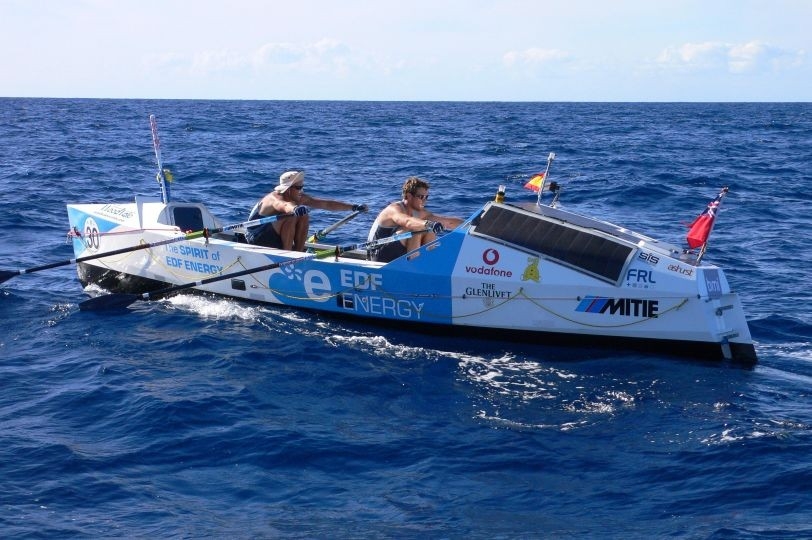
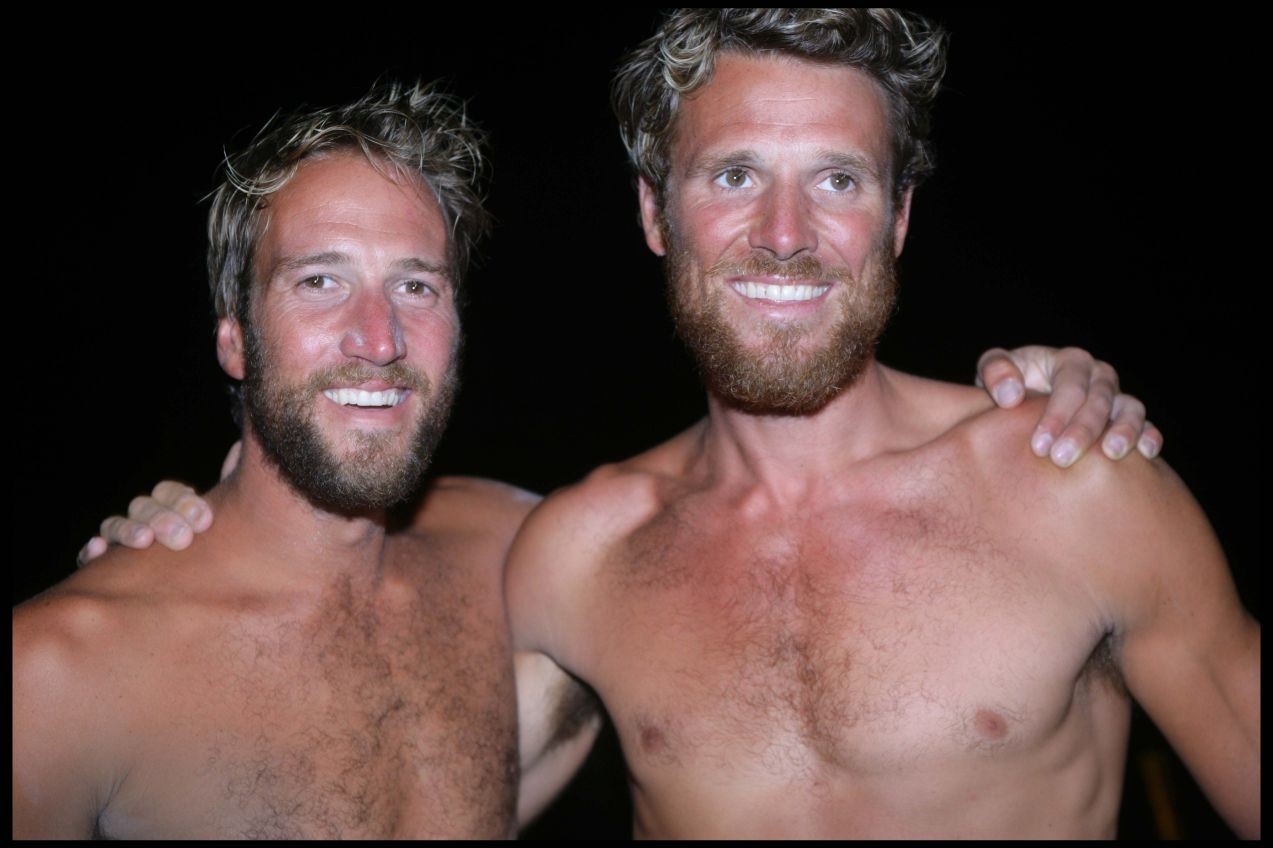
Mens Four Medal CeremonyIn a previous life, James Cracknell spent too much time mucking about in a boat with big blokes wearing too much Lycra.  He was lucky enough to win gold medals at the Sydney and Athens Olympics.  After that he stupidly rowed across the Atlantic and did a race to the South Pole (both filmed by the BBC).

Atlantic start

After Antarctica he decided the cold wasn’t for him and entered the Marathon des Sables where he did okay (his words) and came 12th… at the time that was the highest place a Britain had ever come until Danny Kendall upstaged the Olympian.

MDS2010 James’s MDS progress was filmed by the Discovery Channel and this was followed with another film documenting a journey from LA to New York: cycling from LA to Death Valley running through Death Valley then remounting and cycling Route 66 to Lake Erie, rowing Lake Erie then cycling to New York and finally swimming to the Statue of Liberty.

GD7A7944-1

Unfortunately James didn’t complete this journey. While cycling in Arizona, James was hit on the head by a passing fuel truck. Without doubt his helmet saved him but it was touch-and-go. Placed in a coma and a two-month stay in a Phoenix hospital, James was close to the edge. It’s been a long journey and one that is ongoing.

However, in 2015 James is coming back!

richtersveld-page_0Firstly, James will head to South Africa and join elite ultra runner, Nikki Kimball (read HERE) at the Richtersveld Wildrun and should all things go well, James will return to Death Valley, the place of his horrific accident and put the experience well and truly behind him by tackling the Badwater 135. 

In an exclusive interview, I caught up with James, discussed his past, discussed his eagerness to push himself and asked why Richtersveld Wildrun?

“MDS was the only multi-day race I have done, so I’d like to know if it was a flook? I am also interested to see where I am. How am I after the accident? Am I recovered? I’m interested to see how I am day-after-day and I’m keen for preparing. I like the fact that I will have a focus, something to aim for.”


“I have been for sport post apartheid. SA is a perfect place for sport. I have been to the Drakensberg and Cape Town. It’s a phenomenal place…. Mountains, plains, safari, surf breaks and incredible people. A great place to be!”

The 150km Richtersveld Wildrun™ takes place in the /Ai/Ais-Richtersveld Transfrontier Park over four days from 2 to 5 June. Starting and finishing at Sendelingsdrif, runners will get to experience a world of geological splendour. From the heights of Hellkloof pass, to the granite slabs of Tatasberg, the green swathe of the Orange River, the gargoyles of Halfmens Ridge and the crystal fields of the Sendelingsdrif plateau – every kilometre is unforgettable and participants are sure to leave the Richtersveld changed people.

“I haven’t been to the Northern Cape. But I relish the opportunity to see it on foot.”

Unsure of his current physical state (I am sure he is fit) I ask him about the terrain: rocks, climbing and running a marathon a day.

“Mmmm climbing? That is a little worrying! I am seeing this race as a stepping stone and I hope it will prepare me for an attempt at Badwater 135.”

It’s been a tough time for James, but he is not a person to give in. Ever the fighter, ever the one looking to push new boundaries, this experience is just one more obstacle to get over.

“It will be nice to go back to Death Valley and put some demons to rest… I need to square the circle and move on. I don’t want my life to be defined by winning two gold medals. I don’t want my life to be defined by being the guy who got hit on the head by a truck! I refuse, I will choose my path and I will not be Pigeon hold. I will create my path.”

And on that note, we conclude our chat. You can follow James and his experiences in the build up to Richtersveld Wildrun on this website in words and images. In addition, I will be following James on each and every step of his journey in South Africa. Needless to say, it’s an opportunity of a lifetime.

If you would like to join James and Nikki on this incredible experience. Limited places are available! Please use the contact form at the bottom of this post.

Atlantic BF and JC end

Credits: Images provided by James Cracknell and Mark Gillett all ©

About the Richtersveld Wildrun™ 

The 150km Richtersveld Wildrun™ takes place in the /Ai/Ais-Richtersveld Transfrontier Park over four days from 2 to 5 June 2015. Wildrun™ stage races have become known as some of Southern Africa’s premier multi-day trail running events, and Owen Middleton, founder and managing director of the organising company, Wildrunner, is proud to see the interest in Wildrun™ events shaping up internationally, particularly with top-class runners such as Kimball and James Cracknell.

Where /Ai/Ais- Richtersveld Transfrontier Park, Northern Cape, South Africa
When Annually in June (2-5 June 2015)
Route Sendelingsdrift to ‘Die Koei’ to Hakkiesdoring to De Hoop to Sendelingsdrift
Total distance 150km
Daily distances 38.8km, 36km, 36.3km, 38.3km
Terrain Desert, rocky, climbing
Number of events One per year
Number of entries available Restricted to 80 runners yearly
Entries open 3 July 2014
Cost R 13 395.00
Challenges Sandy terrain, heat, climbing, remoteness
Records Overall male record: 13:30:36 – Bernard Rukadza (2014)
Overall female record: 18:04:56 – Katya Soggot (2014)
Cut-off times Yes – See Rules & Regulations

Go back

Your message has been sent

Warning
Warning
Warning
Warning

Warning.

FOOD for THOUGHT – What freeze-dried food for multi-day racing?

All Food 3

Article ©Niandi Carmont

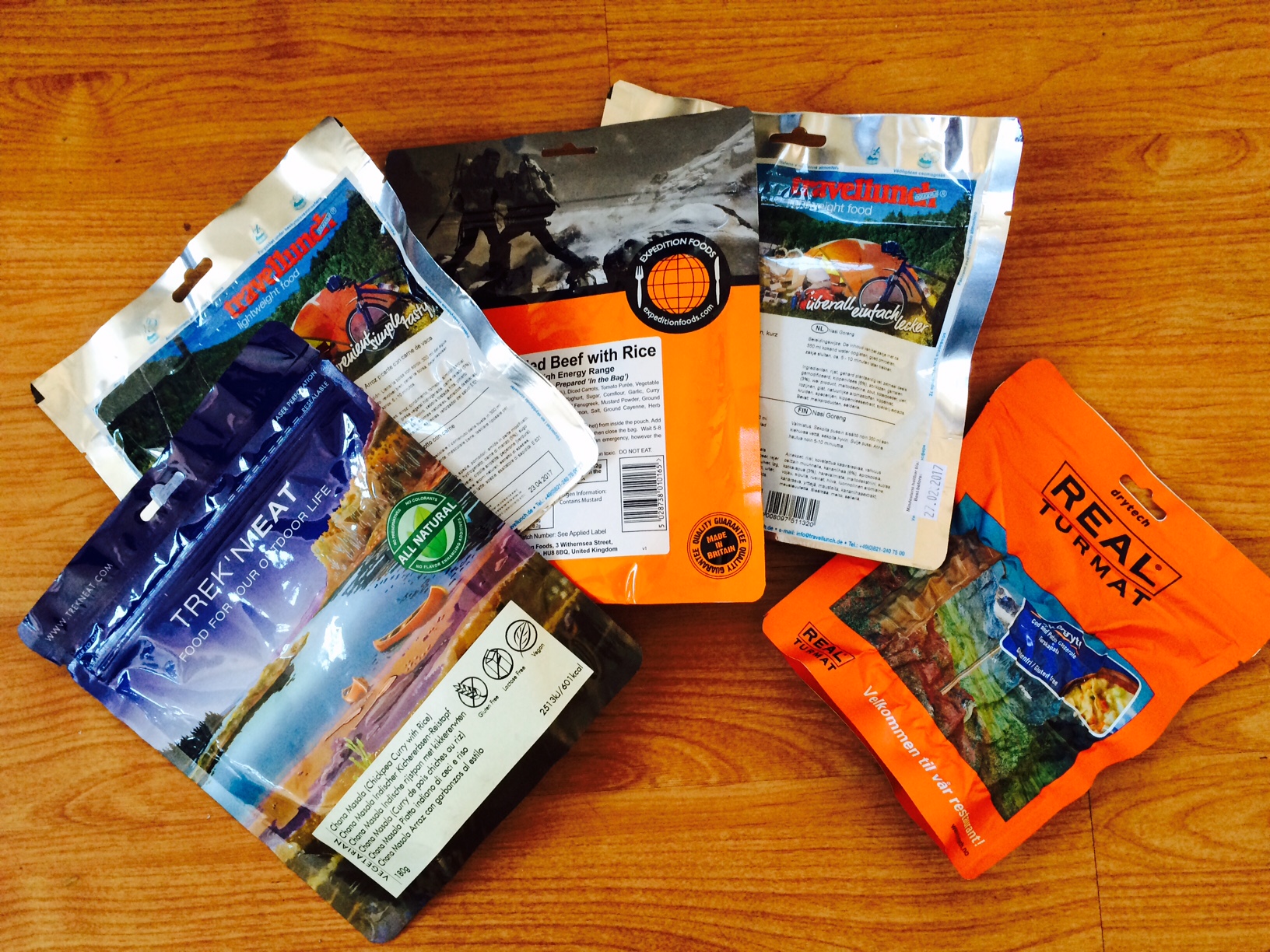
Niandi Carmont is taking on the 30th edition of the Marathon des Sables. No stranger to endurance events, Niandi regularly competes in ultras all over the world. However, it has been 10-years since she last toed the line at MDS and although an occasional freeze-dried meal has been consumed on some weekend fast-packing, eating out of a packet or packets for a whole week was going to take some getting used to! It’s a no brainer to test food in advance of a race, particularly one as expensive as MDS. You don’t want to ruin your race with poor food choices…

Running a mult-day race? Check out our 2016 training camp http://d.pr/f/18cqZ

Niandi had always planned to take ‘real’ food such as Billtong, Parmesan Cheese, nuts and other similar portable and high calorie foods. However, Niandi’s main meal of the day will be a freeze-dried option. The question of hot food or cold food is a dilemma that you will each need to work out. Needless to say, all these food options can be eaten with hot or cold water.

FREEZE DRIED FOOD REVIEW 

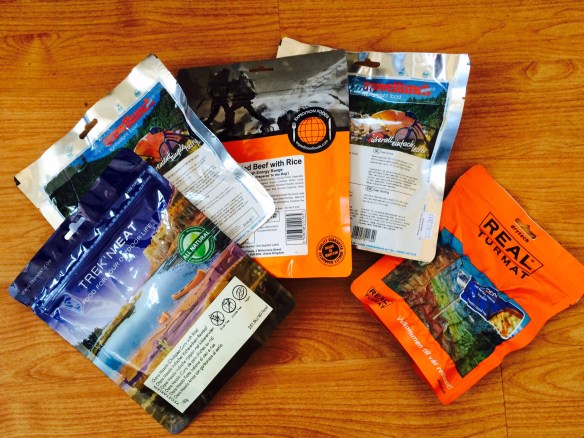
I recently discovered a great site specializing in freeze-dried foods for outdoor and endurance events. I am taking part in MDS 2015, a multi-stage self-sufficiency event and therefore I need high calorie food in lightweight packages. I contacted LYOPHILISE.COM to test 5 of the dishes on the menu!

My choice was limited to:

  • Evening meals as I will be taking some of my own favorite snacks during the day. Having said that, this site also provides breakfasts, desserts, snacks, MDS packs, drinks and so on… all for the adventure/ multi-stage and/or endurance athlete.
  • High calorie to weight ratio. I want to limit the weight of my pack to the minimum requirement of 6.5kg and so my selection was based on high calorie/ low weight foods.
  • Preferably gluten-free options.

Well after a weekend spent subjecting my palate to 5 freeze-dried haute gastronomie dishes, here’s my feedback:

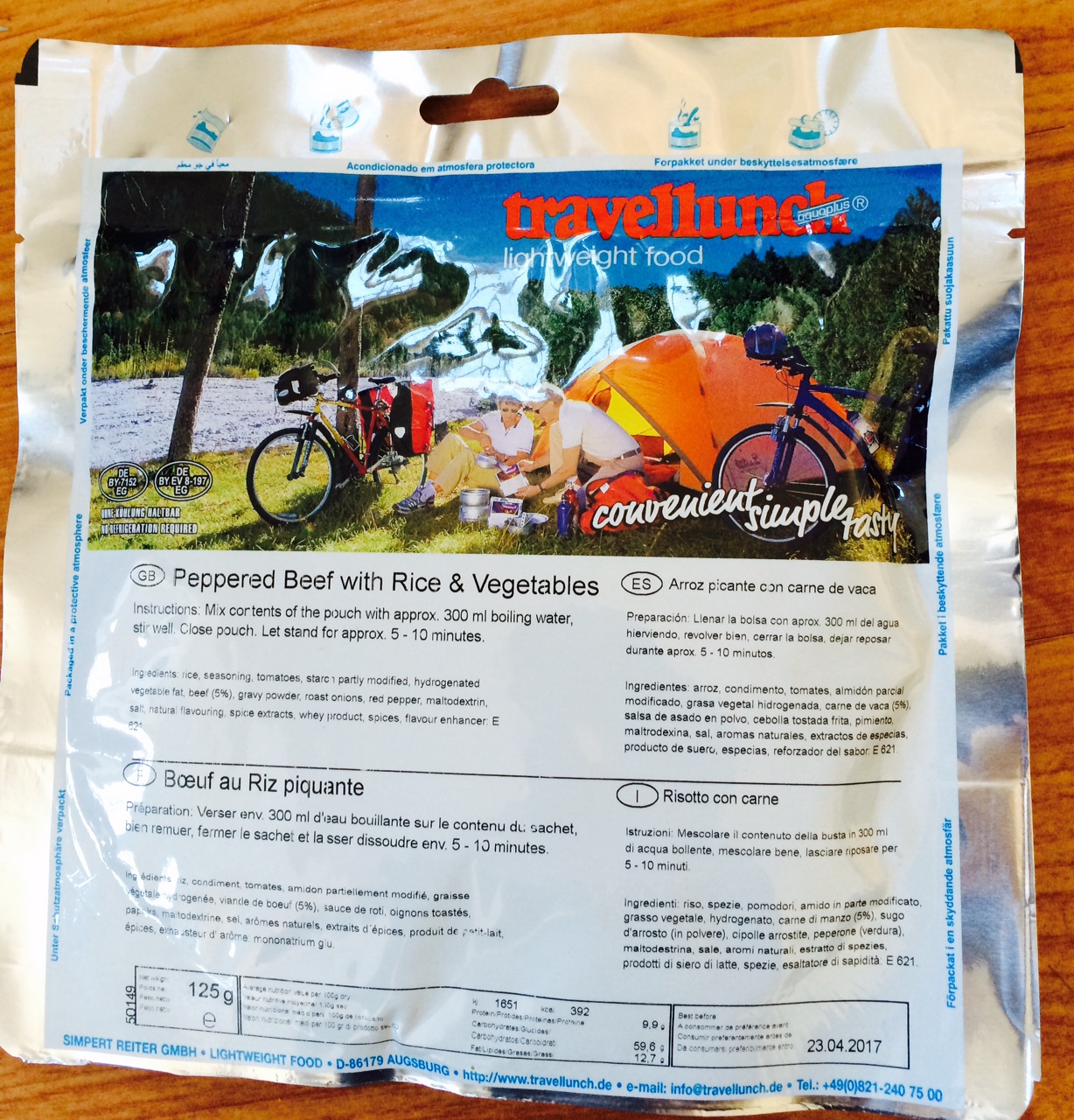
Peppered Beef with Rice & Vegetables by Travellunch €4.95/€8.90
Peppered Beef

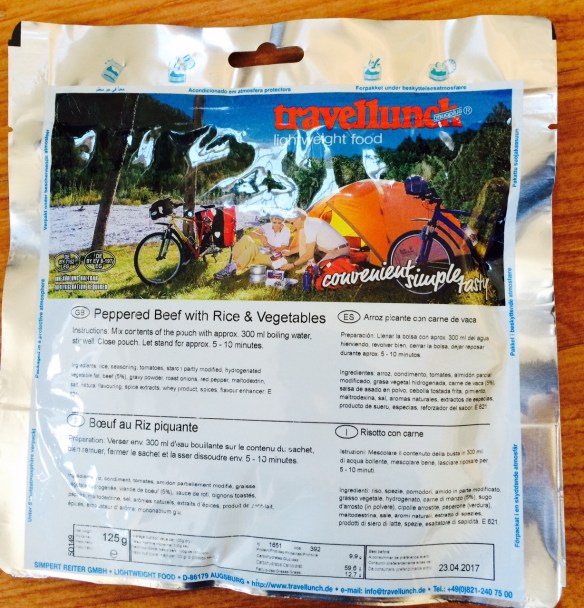
This meal comes in 2 formats. A single portion or a double portion; I really liked this dish. Very tasty and very morish, I could easily eat this as a meal replacement. The texture is great. The rice absorbs all the water and provides the dish with just the right texture – it’s not soggy, soupy or gooey like so many freeze-dried dishes. And it is seasoned with just the right amount of pepper and spices. What I like too is that all the flavorings are natural and guys, who usually need more calories, can have double portions as this dish comes in 2 formats. The dish is relatively high in carbs so perfect fuelling before the long stage especially if you consume a double portion. Or alternatively it can be used as replenishment after the long stage when you are running low on carbs. What I liked less was the packaging – Travellunch could make their packets easier to open. When you’re in a self-sufficiency event you really want something that’s easy to cut open and reseal. It’s also great value for money compared to some of the other brands at 4.45€ for a single portion. I’ll be taking 3 of these to MDS.

Peppered Beef Before

Nutritional Values:

Energy value in Kcal per 100 g (dry product) 392
Energy value per 100 g (kJ) 1651
Energy value per product (Kcal) 980
Energy value per product (kJ) 4127,5
Protein per 100 g 9.9
Protein per bag (g) 24.75
Carbohydrates per 100 g 59.6
Carbohydrates per bag (g) 149
Fats per 100 g 12.7
Fats per bag (g) 31.75

Ingredients:

Rice, tomatoes, beef (5%), roast onions, red pepper, natural flavorings

Rating:

  • Price: *****
  • Taste: *****
  • Energy/Weight ratio: ****
  • Nutritional Value: ****
  • Convenience: ***

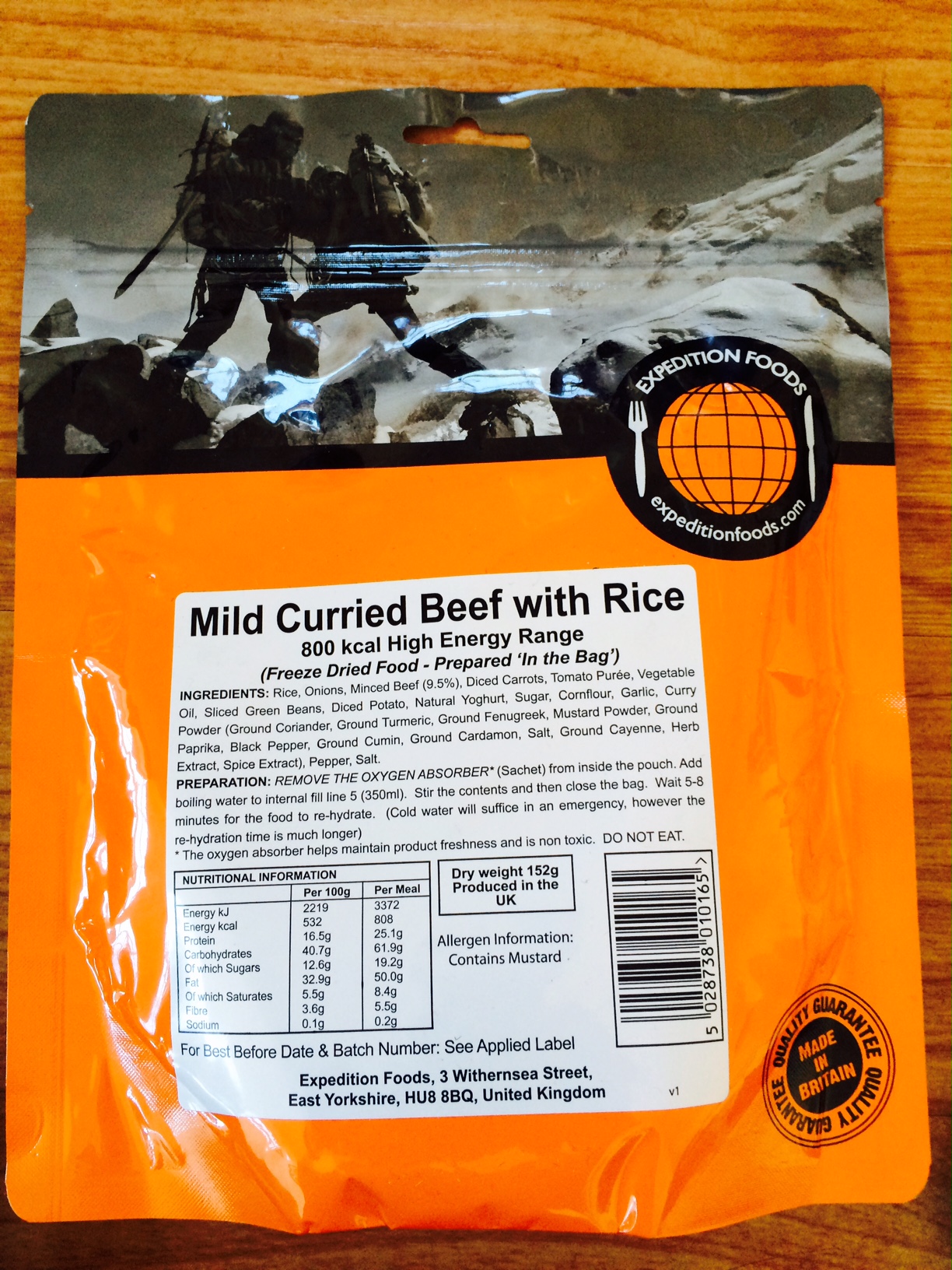
Mild Curried Beef & Rice by Expedition Foods €8.95
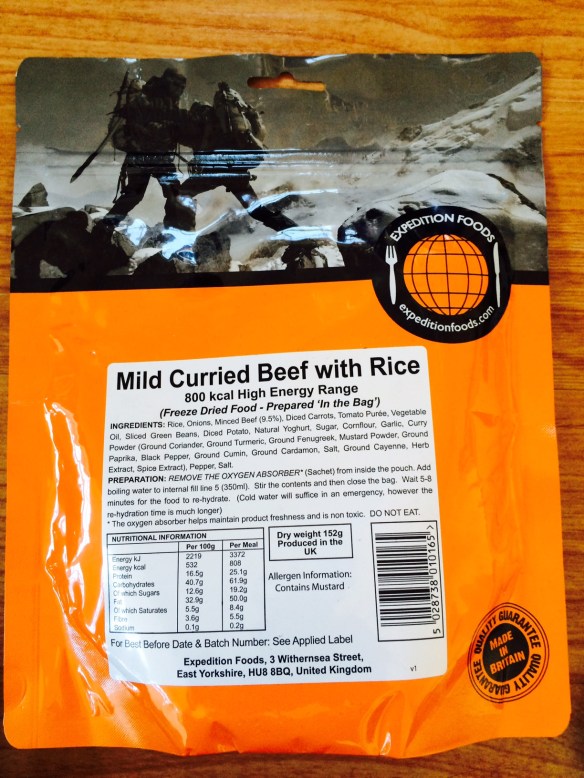
Curried Beef Rice

This is another of my favorites and I’ll be taking a couple of these to MDS too! Of all the meals I tried this was definitely the tastiest. Again this is a meal I would happily eat as a meal replacement. It’s mildly spicy and although it is a curry dish it is not hot. It’s very palatable. The diced and sliced vegetables are a great little touch to this dish. The texture is great too – nothing soggy and watery or bland about this dish – with a little imagination I could be sitting in the local curry house….In comparison with the previous rice & beef dish, this one has a considerably higher fat content and is lower in carbs. The bag is really easy to open and reseal so very practical. What’s great about this dish is that you can also prepare it with cold water so if you feel like a meal during the long stage at night you can just whip this out and add some water – bear in mind that the re-hydration time will be much longer.

FullSizeRender (3)

Rating:

  • Price: **
  • Taste: ****
  • Energy/Weight ratio: *****
  • Nutritional Value: *****
  • Convenience: *****              

Nutritional Values:

Energy value in Kcal per 100 g (dry product) 532
Energy value per 100 g (kJ) 2218
Energy value per product (Kcal) 808
Energy value per product (kJ) 3372
Protein per 100 g 17
Protein per bag (g) 25,1
Carbohydrates per 100 g 41
Carbohydrates per bag (g) 61,9
Fats per 100 g 33
Fats per bag (g) 50

Ingredients:

Rice, onions, minced beef (9,5%), tomato puree, carrots, vegetable oil, green beans, potato, yoghurt, sugar, cornflour, garlic, curry powder, salt, pepper,


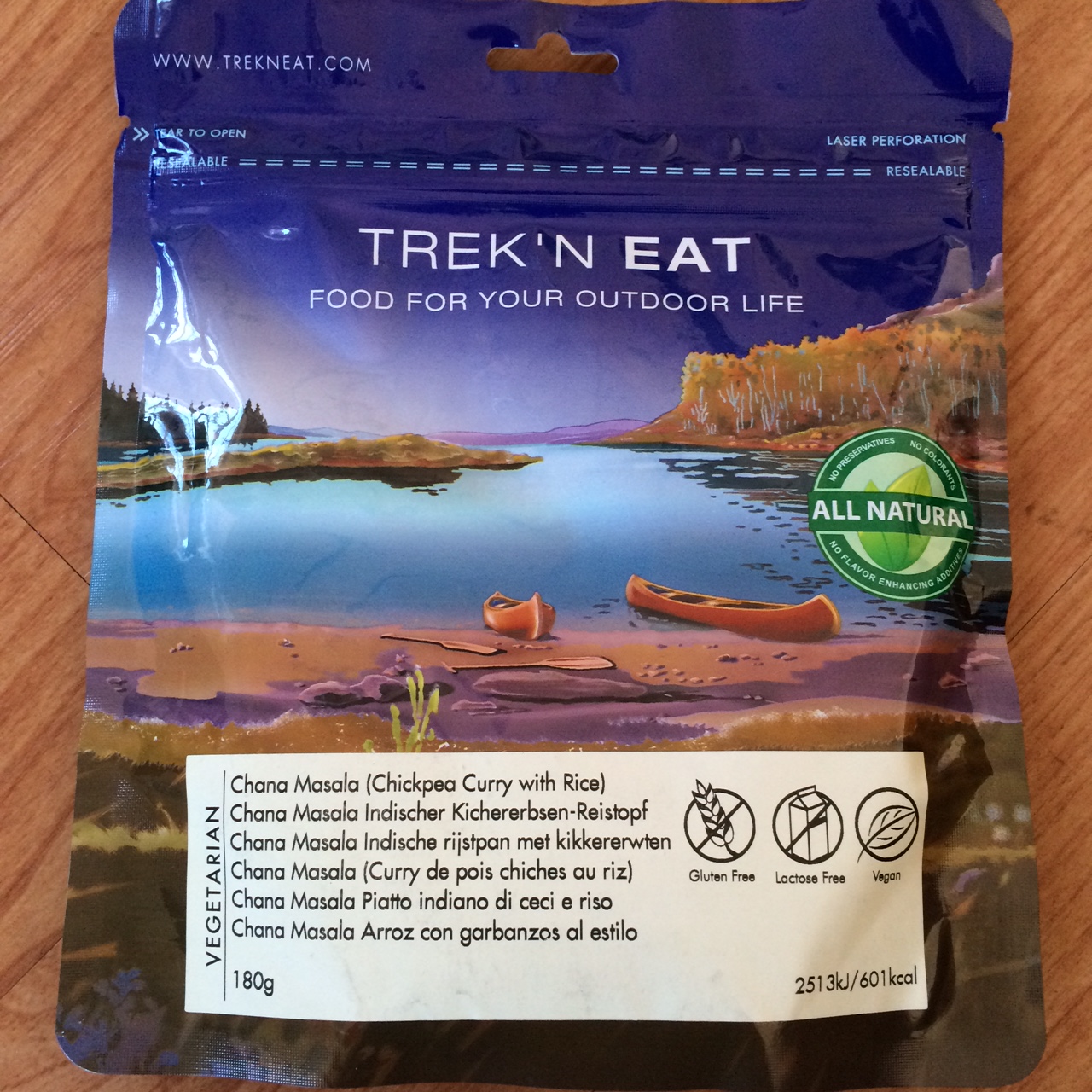
Chickpea Curry with Rice by Trek ‘n Eat €6.95
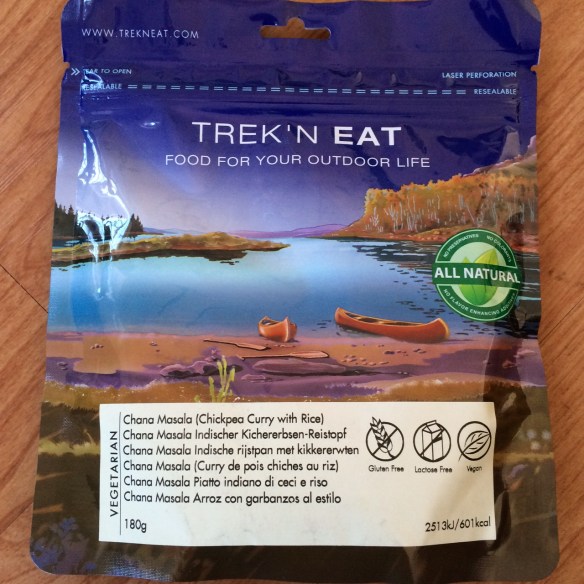
Chickpea Curry Packet

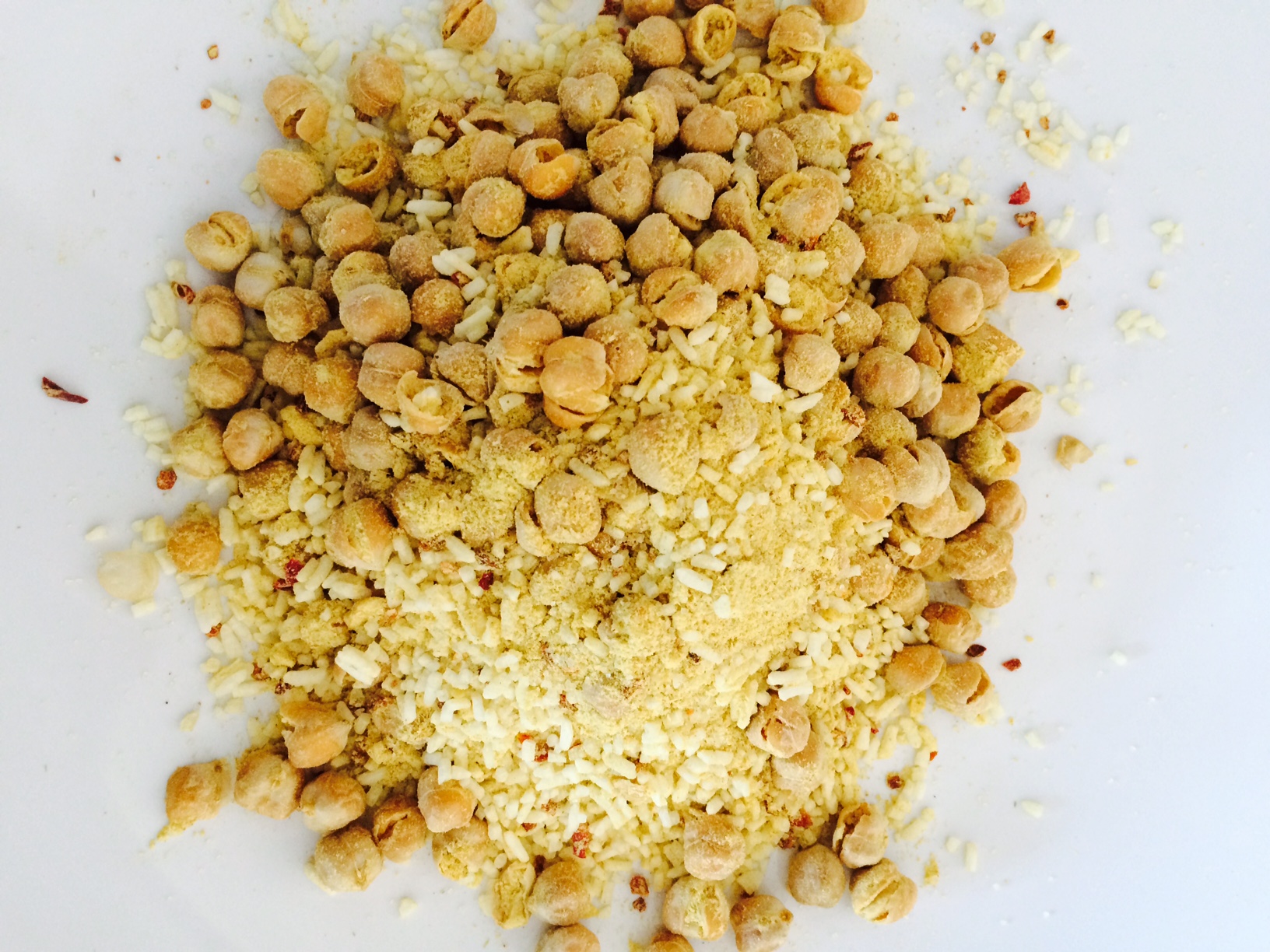
This dish was far too hot and spicy for me! I definitely can’t see myself eating this after a day’s running in the desert! It’s supposed to stand for 10 minutes to re-hydrate but I found that the chickpeas were hard and crunchy. The dish just didn’t do it for me. The lack of taste and blandness might have something to do with the fact that it is gluten-free and also very low in fat.
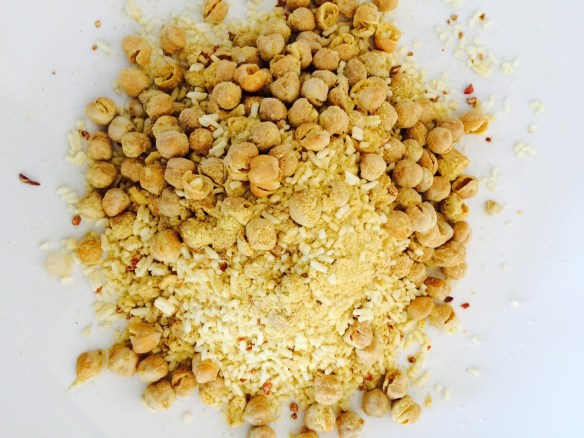

Chickpea

FullSizeRender (5)

Rating:

  • Price: ****
  • Taste: *  
  • Energy/Weight ratio: ***
  • Nutritional Value: ***
  • Convenience : **  

Nutritional Analysis :

Energy value in Kcal per 100 g (dry product) 334
Energy value per 100 g (kJ) 1396
Energy value per product (Kcal) 601.2
Energy value per product (kJ) 2512.8
Protein per 100 g 9.3
Protein per bag (g) 16.74
Carbohydrates per 100 g 68
Carbohydrates per bag (g) 122.4
Fats per 100 g 2.3
Fats per bag (g) 4.14

Ingredients:

52% rice, 22% chickpeas, sugar, onions, iodised table salt, spices, apple, maltodextrine, paprika, mustard, coriander, cayenne pepper.


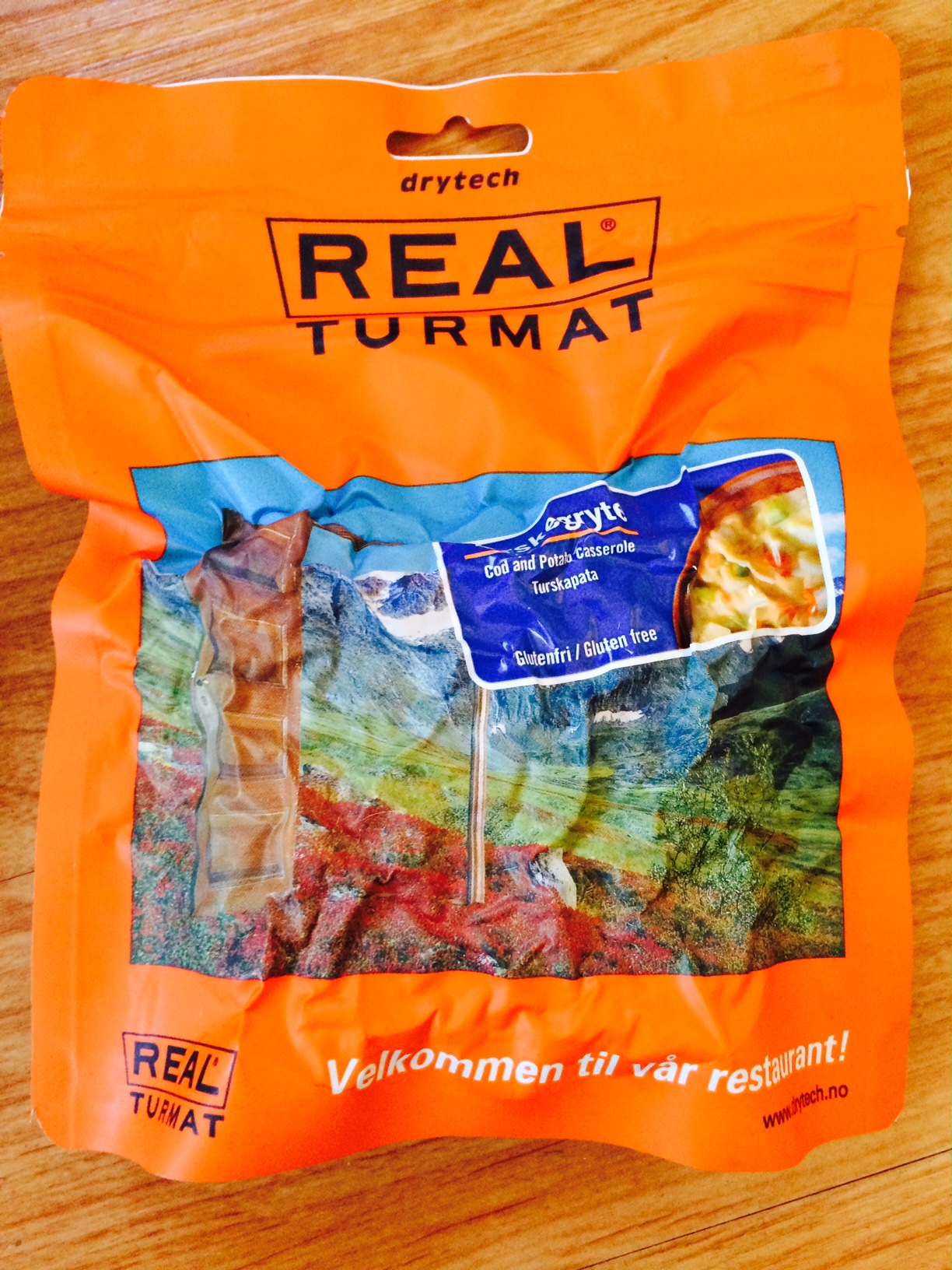
Cod and Potato Casserole by Real Turmat €9.90
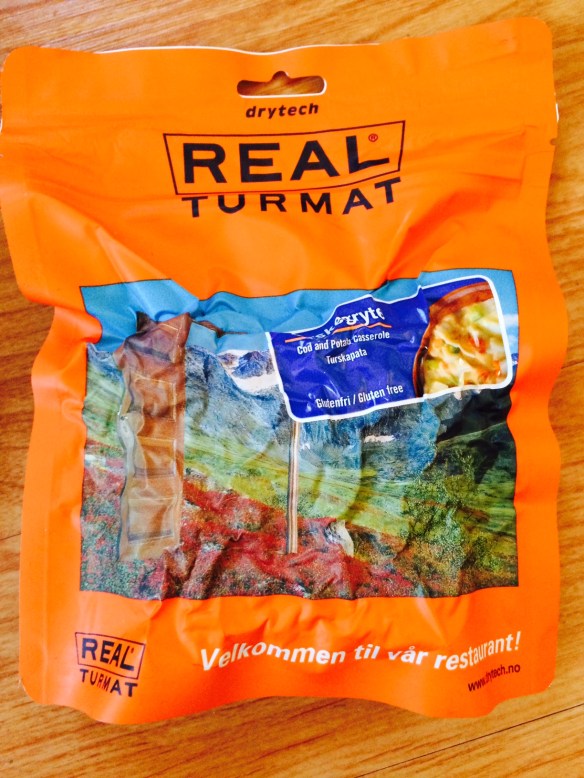
Cod_Potato_Packet

Bland and tasteless. Not very appetizing looking and watery/soupy even after re-hydration. Tastes very floury and more like some bad potato/fish soup rather than a casserole as the name suggests. Very good energy to weight ratio with 501cal/100g and high in both fats and carbs. Another gluten-free option but not for me.
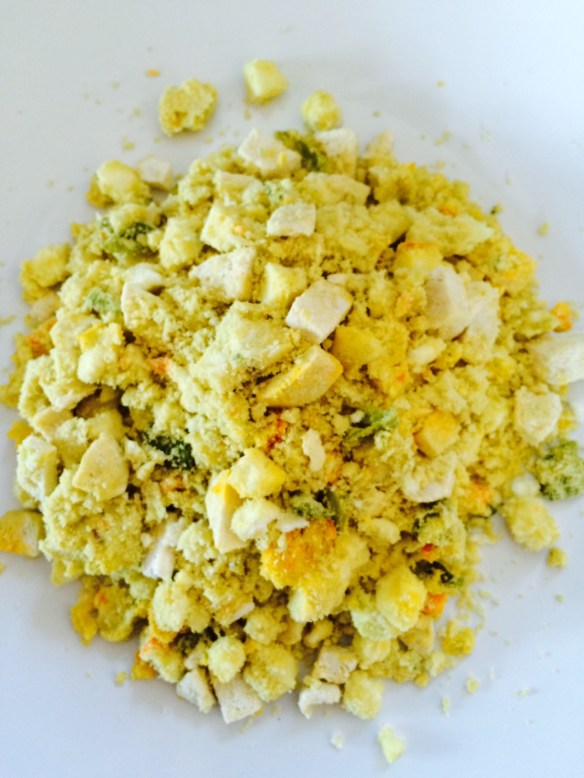

Cod Before

Cod_Potato_Prepared

Rating:

  • Price: *     
  • Taste: *
  • Energy/Weight ratio: *****
  • Nutritional Value: ****
  • Convenience : **

Nutritional Analysis :  

Energy value in Kcal per 100 g (dry product) 501
Energy value per 100 g (kJ) 2090
Energy value per product (Kcal) 536
Energy value per product (kJ) 2230
Protein per 100 g 13
Protein per bag (g) 14
Carbohydrates per 100 g 39
Carbohydrates per bag (g) 42
Fats per 100 g 31
Fats per bag (g) 33 

Ingredients :

Potato, cod pâté 18 % (cod 88%, potato flour, salt), sour cream, green pepper, carrot, onion, wheat flour, soybean oil, fish bouillon, salt and seasoning (celery).


NASI GORENG WITH CHICKEN AND RICE BY TRAVELLUNCH €4.95
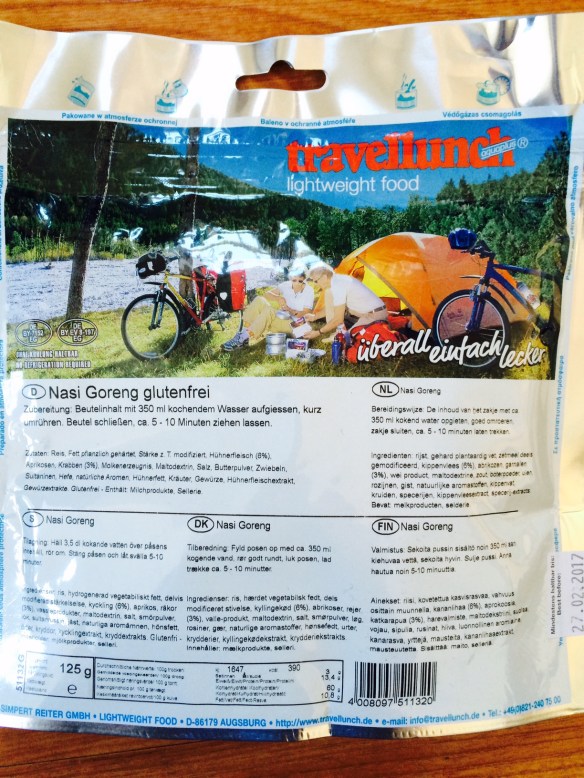
Nasi Goreng Packet

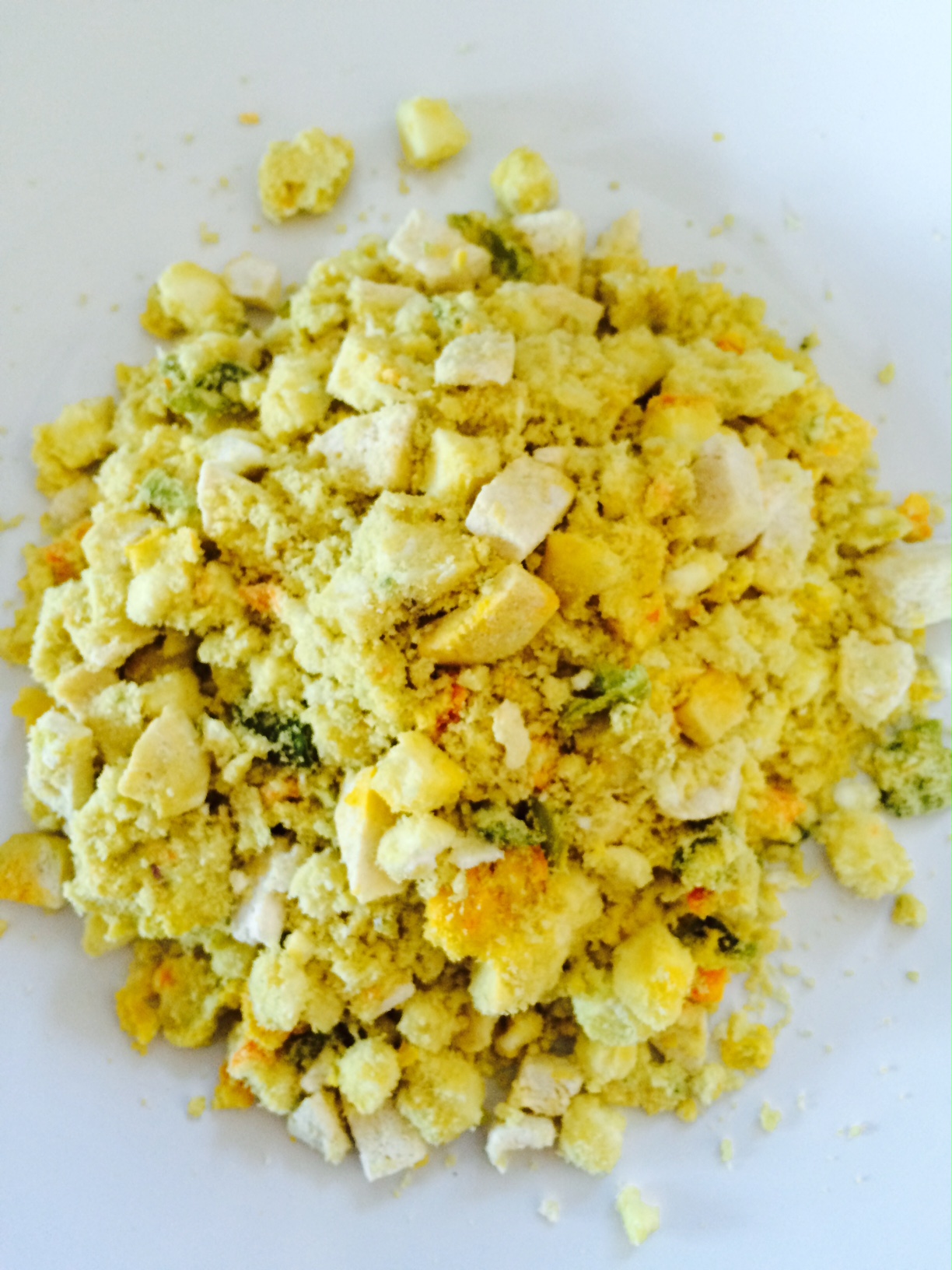
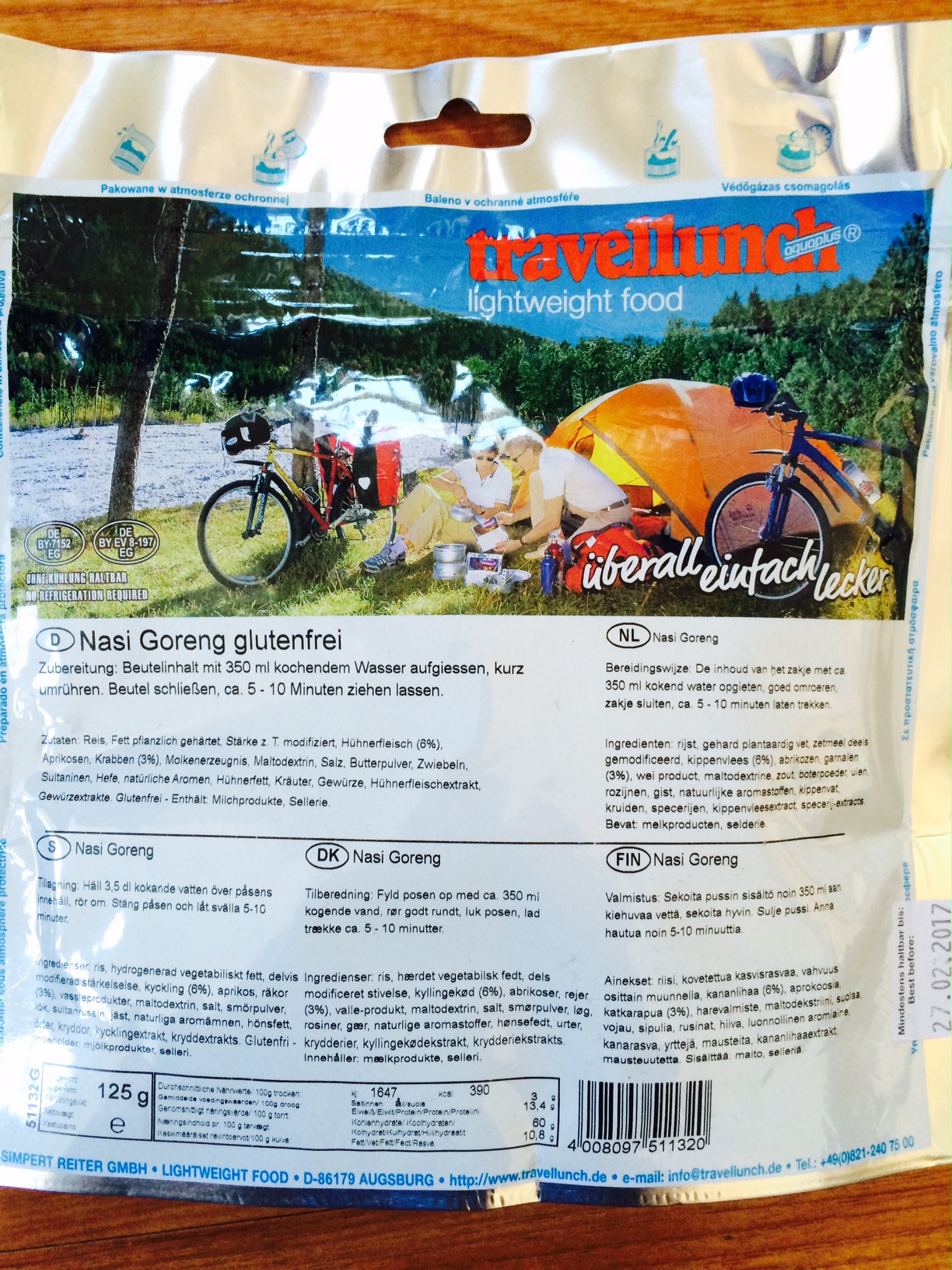
A gluten-free dish and of Indonesian origin. I chose this dish having eaten a lot of Nasi Goreng in the Netherlands. The dish has quite a lot of flavor but the texture is a little odd like so many freeze dried dishes. However, the apricots, sultanas and spices add a nice touch to the dish and the meal is quite flavorsome. Once again the packet is not as practical to open and reseal as other brands. It’s very high in carbs and relatively low in fats compared to some of the other dishes with a very good weight to calorie ratio. Definitely a dish to be consumed pre or post a long day.

Rating:

  • Price: ****
  • Taste: ***
  • Energy/Weight ratio: *****
  • Nutritional Value: ****
  • Convenience : **

Nutritional Analysis :        

Energy value in Kcal per 100 g (dry product) 394
Energy value per 100 g (kJ) 1662
Energy value per product (Kcal) 492
Energy value per product (kJ) 2077
Protein per 100 g 11.9
Protein per bag (g) 14.875
Carbohydrates per 100 g 60.2
Carbohydrates per bag (g) 75.25
Fats per 100 g 11.8
Fats per bag (g) 14.75

Ingredients:

Ingredients: rice, hydrogenated vegetable fat, starch partly modified, chicken (6%), apricots, shrimps (3%), whey product, maltodextrin, salt, butter powder, onions, chicken broth, sultanas, natural flavoring, herbs, spices, spice extracts. Contains: celery.

For more information on the site and to order meals online:

http://www.lyophilise.fr/

CONCLUSION

  • Lyophilise is a very comprehensive site with an impressive list of different freeze-dried brands.
  • The customer service is very friendly & professional.
  • Delivery is fast if the products are in stock.
  • There is an on-line customer service.
  • They provide gluten-free, lactose-free and vegetarian options.
  • There provide special MDS packs that offer a one-stop shopping scenario.

logo


Of Fells and Hills – Salomon Running TV S4 E02

screenshot_492

Check out the new film from The African Attachment and Salomon Running TV – this one is a classic and so great to see the English Lakes, Scotland and some of our legends given the credit and the exposure they deserve.

All content ©salomonrunning and ©theafricanattachment

The term “fell” is an often used Northern England expression for hill or mountain. It is presumed that Shepherds were probably the first ever fell runners with the earliest documented accounts of running in the fells dating back to the 11th Century. By the 19th century organised fell runs began taking place in Cumbria in the United Kingdom. Locals raced each other up and down hills and a sport was born.

In “Of Fells and Hills” we travel with American Writer, Photographer and Trail Runner, Rickey Gates, to the UK to explore and discover the history, culture and legends of the ancient practise of Fell Running.

Listen to an interview with Rickey Gates about his Bob Graham experience with Scott Jurek HERE

Credits:

A PRODUCTION BY THE AFRICAN ATTACHMENT

MUSIC “FINISHES” BY BATALEUR & “I CROSS THIS LAND” BY FINAL MIX ONLINE

VINTAGE VW CAMPER SUPPLIED BY:
http://www.cartyscampers.com

LAKE DISTRICT ACCOMODATION SUPPLIED BY:
Castlerigg Hall Caravan and Camping Park

ARTICLES REPRODUCED WITH THE PERMISSION OF:

MUD SWEAT AND TEARS
http://www.mudsweatandtears.co.uk

THE HERALD AND TIMES GROUP
http://www.heraldscotland.com

THE KESWICK REMINDER:
North Lakeland’s Local Newspaper

THE DAYTONA BEACH NEWS-JOURNAL

THE CUMBERLAND NEWS

RUNNER – A Short Story about a Long Run : Lizzy Hawker

Lizzy Hawker

RUNNER tells a story, it uncovers a journey of the physical, mental and emotional challenges that runners go through at the edge of human endurance. From a school girl running on the streets of London to breaking records on the worlds mountains and toughest races, Lizzy Hawker is an inspiration to anyone who would like to see how far they can go, running or not.

“Lizzy never ceases to enthuse, inspire and amaze! She knows what it truly means to live life to the absolute fullest, step out of your comfort zone and truly test your limits. So much more than a book about running, this memoir is about an enthralling life journey replete with peaks and troughs, highs and lows and many twists and turns. Most importantly, Lizzy reminds all of us to never stop exploring, discovering and challenging ourselves to do more than we think possible.” – Chrissie Wellington MBE

Runner - Lizzy HawkerLizzy Hawker needs no introduction. Often called the Queen of UTMB, her running has inspired many… me included. Her ability to run tough, relentless mountain trail races has also been matched with road running.

100km Women’s World Champion,  five times winner of the UTMB, record holder for the 24-hour and the first woman to stand on the overall winners’ podium at the iconic Spartathlon; Lizzy is a formidable force irrespective of the distance or terrain.

Lizzy’s remarkable spirit was recognised in 2013 when she was awarded National Geographic Adventurer of the Year award for running 320km in the Himalayas from Everest Base Camp to Kathmandu.

RUNNER provides an insight into the mind of one of the most inspiring ladies in the ultra world, Lizzy Hawker.

Order the book HERE

*****

We will have an exclusive interview with Lizzy in the coming weeks so please watch this space.

RUNNER will be published on April 2nd 2015 £12.99 Paperback by Aurum Press

We have two editions to give away as prizes.

Please answer the following question on post your answer on this website:

“How many times has Lizzy won UTMB and what was the fastest time?”

Two winners will be announced after April 18th

Lizzy Hawker website HERE

Aurum Publishing HERE


Pacing Strategy – Marc Laithwaite

Pace

Over the last 4 weeks, we’ve discussed how you can manipulate your diet to enhance fat burning and your endurance performances. This week, we look at the missing piece of the jigsaw, which is training intensity and more importantly, pacing strategy.

The basics of fat metabolism for endurance athletes are simple and based on 2 key factors. First, you can change your diet in some way to enhance fat usage (e.g. riding / running fasted). Next, you can adopt a ride / run strategy (intensity and pacing), which encourages fat usage during training and racing. You can opt to do only one or the other of these things. But in reality, if you couple them both together you’ll have the biggest impact.

We’ve discussed diet, so today we are going to talk about ride and run strategy in terms of pacing and intensity, for running and cycling. So let’s outline some of the basic things, which you may already know and if not, you need to know:

  1. I stressed last week that every session should have a key objective and therefore a key intensity to obtain that objective. The biggest error is people doing ‘hard stuff too easy’ and ‘easy stuff too hard’. Generally they are linked by the fact that if you do the ‘easy stuff too hard’ you’re too knackered the following day to do the ‘hard stuff hard’. As a result, everything tends to fall into a grey, middle area.
  2. The 2 key objectives of the long easy session for ironman competitors or marathon and ultra runners are generally to utilise fat for better fuel economy and to ‘complete the distance’ (time in the saddle or time on feet). If you don’t ride at the correct intensity, you will hit neither of those objectives, due to the following problems:
  3. At lower intensities, total energy expenditure (kcal per hour) is lower and fat usage is higher. This means that only a small amount of energy comes from carbohydrates and your body has the opportunity to practice using fat, which is necessary for the process to become more efficient. OBJECTIVE 1: If you do not run / ride at the correct intensity, you will not develop effective fat burning.
  4. Because riding and running at a higher intensity uses more energy and generates more muscular fatigue, it’s not rocket science that you will have to stop earlier. This is NOT just based on fat / fuel usage, there are other factors at play related to muscle damage and fatigue. As a result, many ironman triathletes or marathon and ultra runners are not reaching target distances and stopping short on long rides or runs. OBJECTIVE 2: If you do not run / ride at the correct intensity, you will not be able to reach your target distances for your training rides and runs.

As outlined above, the 2 key objectives are enhancing fuel use and maximising distance and to achieve both, the intensity must be correct. If you’re using Maffetone as discussed 4 weeks ago, then you’re all set. If you’re not then for most people, the intensity we are discussing is zone 1, which is comfortable conversation pace.

You can use heart rate to monitor your training intensity and cyclists can also use power devices to do the same job. Let’s take heart rate as an example and consider the following scenario as an example:

Tom has a zone 1 cycling heart rate of 118-128 and uses his heart rate monitor when completing all his ironman cycle training. We know that Tom will maximise both his fat usage and can maximise his training distance by holding his heart rate steady within Zone 1.

Avoiding the spikes

One key thing to take into account when riding in Zone 1 is avoiding spikes. If Tom completed his long Sunday ride and reported an average heart rate of 124, it first appears that he has ridden to plan. Unfortunately upon closer inspection, he spent half his time at a heart rate of 148 climbing hills and the other half of his time at 100 rolling down the other side, thereby generating an average of 124. Whilst the AVERAGE looks correct, the TIME IN ZONE was very poor.

Every time you push hard on hills and allow your heart rate to rise out of Zone 1, your metabolism switches from high fat usage to high carbohydrate usage. Not only is there a switch to carbohydrate, you guzzle the fuel as if there’s no marathon to come. I would liken this to driving your car and every time you reach a hill, changing into first gear and flooring the accelerator, for those old enough to remember you can also pull the choke out for good measure.

OBJECTIVE 1: Tom is not practicing fat burning during his ride. Every time he pushes on the hills, fat usage ‘drops out’ and only returns when the body has stabilised a few miles later.

OBJECTIVE 2: Tom is guzzling fuel at such a high rate, he completes 60 miles of his planned 100 mile ride and is pretty knackered so calls it a day. Tom feels that despite the event being 112 miles (plus the marathon to follow), 60 will suffice. Good luck with that one Tom.

Q: Surely if I’m riding harder that’s more beneficial as my fitness will improve?

A: Not really, you’ve failed on both key objectives. If your training is planned correctly, you should be doing other sessions which will include ‘harder riding or running’ to cover that aspect of fitness.

Where does this all this go wrong?

  1. Riding very hilly courses makes it difficult to keep heart rate in zone 1 and it also makes it difficult to ‘flat line’ heart rate, keeping it constant and avoiding spikes. You need to really focus on ‘backing off’ on the climbs and using a heart rate or power meter as a guide.
  2. Riding in a group makes this problem 10 times worse as most cyclists will naturally want to show their counterparts (tends to be relevant for blokes, not women) that they are stronger than anyone else in the group. As a result, Sunday rides can tend to be a short hard interval up each hill, followed by long periods of recovering and spinning at low intensity.

Key points to take away:

  1. Ride to zone and most important, you need to take out the spikes on the hills, to maximise metabolic benefits.
  2. Start easy on your ride. There is a real tendency amongst amateur athletes to ride way too hard in the first hour or two, which results in a huge drop off later in the ride (again, this is more likely in groups). Hold back and soft pedal for the first couple of hours to allow a long aerobic warm up and better energy levels later in the ride.
  3. If you ride with others, your options are to explain the benefits to them and change their mentality, let them go on the hills, change your group or ride alone.
  4. If you are riding more consistently in zone 1, you should make every effort to maximise distance. If you are currently riding 60 miles or running 13 miles in training, by dropping and controlling the heart rate, you should be capable of increasing the distance and progressing closer to 100 for cycling or 20 for running.

– Marc Laithwaite

About Marc:

Sports Science lecturer for 10 years at St Helens HE College.

2004 established The Endurance Coach LTD sports science and coaching business. Worked with British Cycling as physiology support 2008-2008. Previous Triathlon England Regional Academy Head Coach, North West.

In 2006 established Epic Events Management LTD. Now one of the largest event companies in the NW, organising a range of triathlon, swimming and cycling events. EPIC EVENTS also encompasses Montane Trail 26 and Petzl Night Runner events.

In 2010 established Montane Lakeland 50 & 100 LTD. This has now become the UKs leading ultra distance trail running event.

In 2010 established The Endurance Store triathlon, trail running and open water swimming store. Based in Appley Bridge, Wigan, we are the North West’s community store, organising and supporting local athletes and local events.

Check out the endurance store HERE

Endurance Store Logo