
“Ascending Scafell before the detour, runners mentioned torrents of water that at times reached waist height in depth”
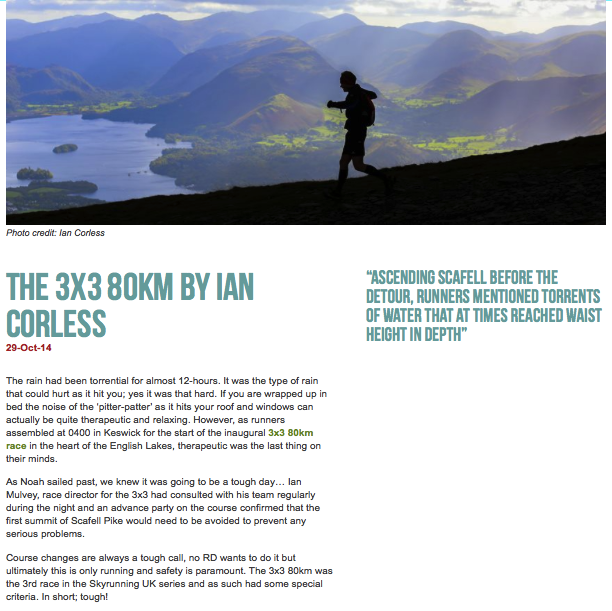
Read my article on the 3×3 80km on RUNULTRA


“Ascending Scafell before the detour, runners mentioned torrents of water that at times reached waist height in depth”
Read my article on the 3×3 80km on RUNULTRA
The 2015 multi-day The Coastal Challenge gets underway in less than 3-months. Runners from all over the world will arrive in San Jose in preparation for the journey down to the coast to Quepos and the 11th edition of the “TCC.”
After a stellar line-up for the 10th edition, Rodrigo Carazo and the TCC team have once again excelled in providing a top quality elite line up making TCC arguably one of the ‘must-do’ multiple day stage races in the world.
Come race day, elite runners will toe the line in Quepos with everyday runners, with one purpose in mind, to embrace an ultimate challenge in the remarkable Talamancas.
Unlike other multi day races, the TCC is supported. Each day camp is moved ahead and awaits the runner’s arrival at the finish. Running light and fast, runners are able to keep equipment to a minimum and as such, racing is extremely competitive. The 2015 edition of the race is proving to be extremely exciting, particularly when one looks at the line up of runners.
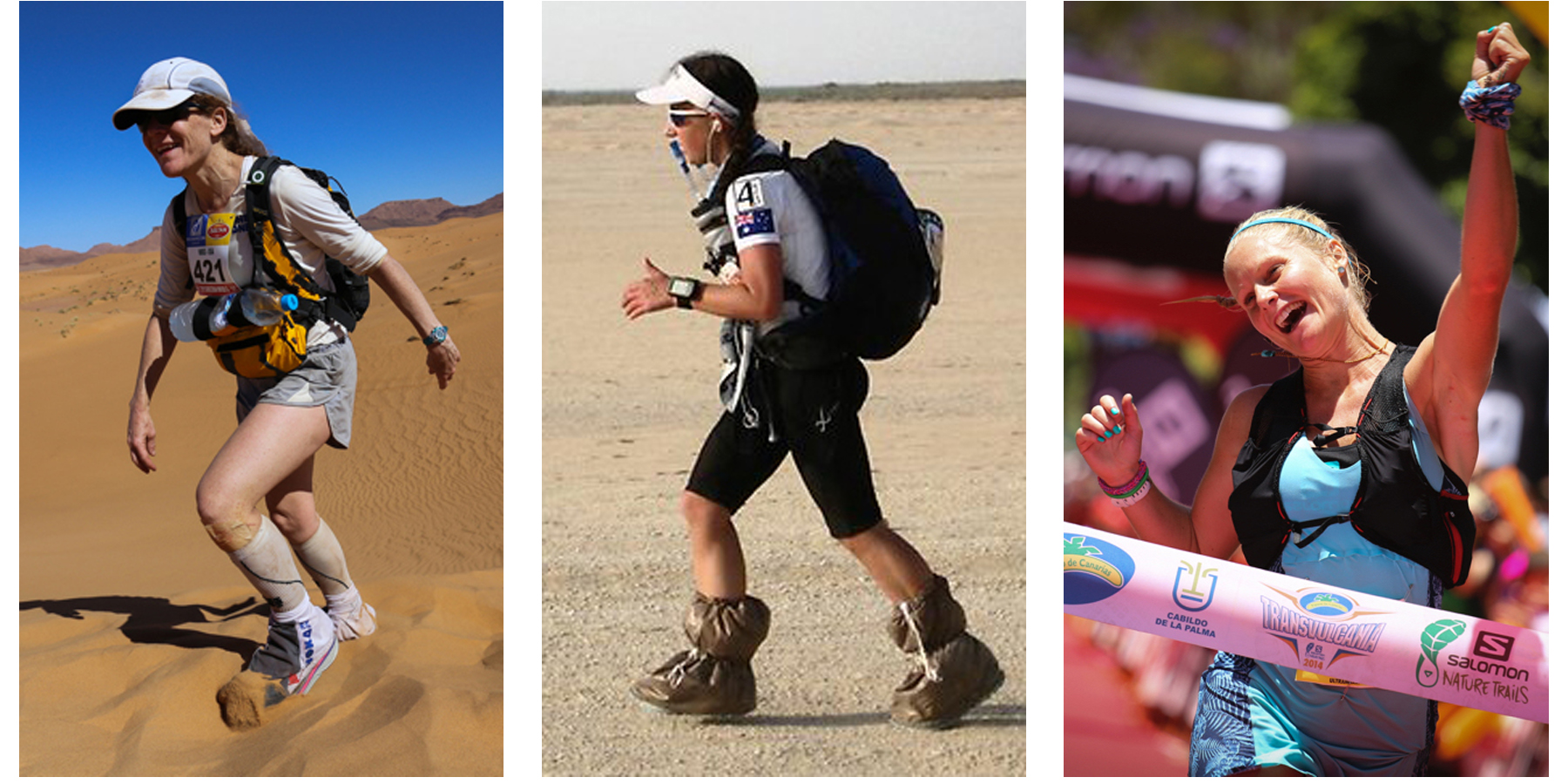
Heading up the ladies field is a trio of hot talent that will without doubt make the race one to remember.
NIKKI KIMBALL
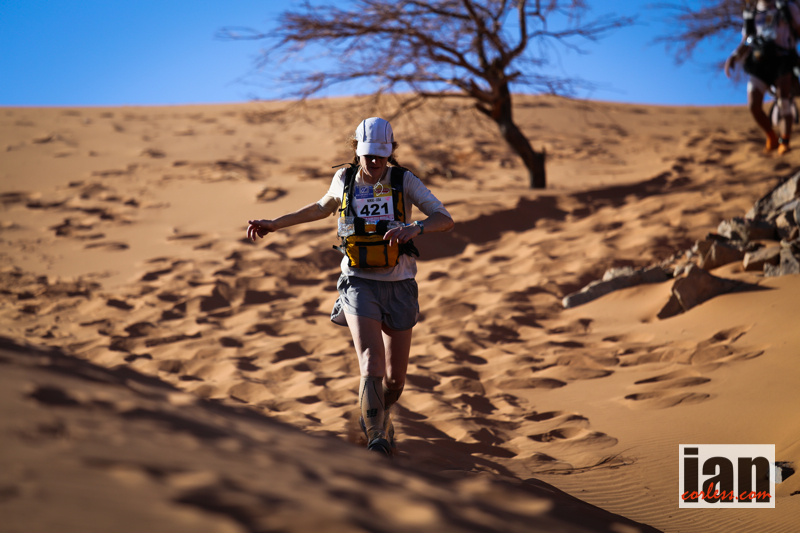
Nikki Kimball on her way to victory in the 2014 MDS.
Nikki Kimball is a legend of female ultra running. A multiple winner of the iconic Western States her palmares are longer than my arm… just this year, Nikki won Run Rabbit Run 100 and the 29th Marathon des Sables. Nikki’s presence in Costa Rica is a defining moment for the TCC. It is a confirmation of the credibility of the race and Nikki’s years of experience will be something to embrace, not only for the other runners but all those involved in the experience.
‘I loved MDS and am excited to add TCC to my stage racing experience. I’ve run MDS, Transrockies (3 times), Jungle Marathon and each was very special in its own way. Each experience will help me in my preparation for TCC. Transrockies, like TCC, transported runner gear and set up their tents, which gives me a sense of racing daily with the speed allowed by running without gear. The Jungle Marathon exposed me to rain forest and the accompanying heat and humidity. And MDS gives me a more recent experience of racing in extreme conditions against great competition. I absolutely loved, though occasionally hated, each event. As for direct comparison with MDS, a few points are obvious: I will be exchanging dry oppressive heat, for humid oppressive heat; varied types of sandy surfaces for wet and rocky footing; desert vistas for close forests and ocean views; and nearly full self sufficiency for the relative luxury of camps with food and sleeping supplies I do not need to carry. I recommend MDS very highly to fellow runners, and believe I will finish TCC similarly impressed.’
Running without a pack and all the weight, do you think it will be a fast race?
‘I actually love the challenge of carrying my entire kit for MDS, but am looking forward to the freedom from gear that TCC will give. Yes, the running is much faster without a heavy pack, and TCC will be very fast in places. Hopefully the technical elements will slow the pace down a bit, as I run more on strength, endurance and technical skill than speed. This is particularly true in the winter when nearly all my training is done on skis. I think anyone peaking her running training for TCC will be running quickly.’
How excited are you to race in Costa Rica?
‘As we said growing up in Vermont, I’m wicked psyched! Seriously, running has given me access to parts of the world I would never otherwise see. And I’ve run in Mexico and South America, but never run between the two. I feel I gain so much from playing with other languages, exploring other cultures and environments, and bonding with runners throughout the world. I cannot wait, not only to run in Costa Rica, but to spend a few days before the event picking up a few more Spanish phrases, meeting local people and splashing in the water while knowing that my friends at home are playing on top of a much colder form of water.’
You will be racing against Anna Frost and Samantha Gash amongst others…. does this excite you?
‘I do not know Samantha, but I very much look forward to meeting her. And, like anyone who has spent time with Anna, I absolutely adore her. I love racing with/against anyone, and Anna is certainly a great talent. But more than that, she is a fantastic person with a depth of character that far exceeds her running achievements. I get to hang with Anna for a week, and that is always great. For that matter, every stage and ultra race I’ve been in (and over 16 years there have been many) attracts great people. From volunteers to elite athletes to less experienced racers looking to see what’s possible, the people of this sport keep me doing it. I’m excited by the top end competition and just as excited to hear stories from TCC participants I have yet to meet.’
ANNA FROST

Anna Frost Skyrunning World Championships 2014 – Chamonix
Anna Frost arrived in Costa Rica for the 10th edition but unfortunately couldn’t race due to an injury set back which was really disappointing for the New Zealander. However, Costa Rica was a cathartic process… Frosty followed up her TCC experience with victory and a course record at Transvulcania La Palma, Speedgoat 50k and Bear 100.
‘I gained so much energy and pleasure out of just being in Costa Rica that I came home almost injury free. I cant wait to get back to explore further and see all of the course. The atmosphere is so much fun, great food, wonderful campsites, beautiful beaches and rain forests and HOT weather! IM SO EXCITED!’
The Coastal Challenge is a supported multi-day race and therefore allows runners to run fast and free. Looking at the quality of the ladies field, I asked Frosty about the 2015 race and if she expected it to be fast?
‘There are a lot of fast trails and dirt roads, long flat beach sections and smooth trails. But in between that there is hard, steep, trail-less, muddy, rain forest covered dirt, spiders, noises? and more to keep the challenge high. But luckily the race has many aid stations so you don’t need to carry too much which means you can move as fast as possible through all of that!’
Nikki Kimball has won MDS and WSER and Sam Gash has just run for 1-month all over South Africa, two real solid runners. How excited are you to test yourself over the multi-day format against these ladies?
‘It will be fantastic to share this race with them. They are both super strong girls and also great friends, so it is going to be so much FUN!’
You ran your first 100-miler recently, do you think that will be a benefit in Costa Rica?
‘Definitely. With each race I undertake I am beginning to understand more about myself, my limits, and what challenges me. This process allows me new ways to overcome obstacles. It will be good to put what I have learnt in practice.’
‘Visiting Costa Rica again. The people and places we see along the way are wonderful! And being able to share that with all the other runners in the Coastal Challenge is so awesome!’
SAMANTHA GASH
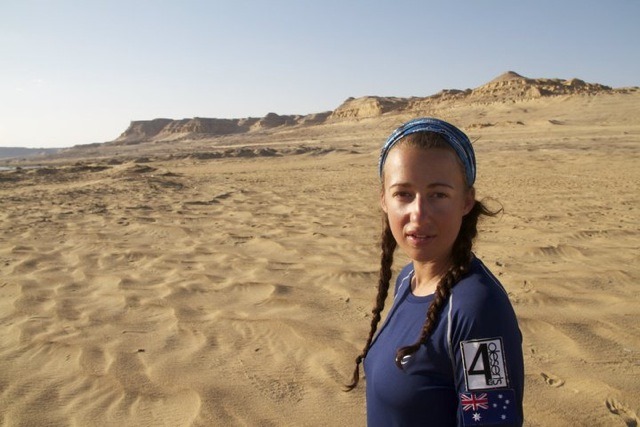
Samanha Gash ©samanthagash
Samantha Gash is the youngest lady to ever complete ‘The Four Deserts’ and was one of the featured runners in the film, ‘The Desert Runners.’ Just last week, Sam has completed an epic journey…
‘Oh boy I have just been on an adventure of a lifetime, one that took me close to 2 years to prepare for. I ran with Mimi Anderson from the UK and side-by-side we ran an ultra every day for 32-days through some pretty challenging terrain. Our run focused on supporting a South African based initiative, so it was pretty special to run through some incredibly remote & rural locations.’
‘It was great preparation for Costa Rica in the sense that a multi day format suits me. However my run along South Africa was an expedition not a race, so the pace was very different. It’s been less than a week since I’ve finished the biggest physical & mental challenge of my life so I’m looking forward to letting both recover for the month of November. Come December I will evaluate how my body is going & hopefully begin to train for the Coastal Challenge. Once I start training again I will need to put my legs through some serious speed work.’
Kimball and Frost need no introduction. Are you looking forward to racing them?
‘Geez these ladies are of a different caliber to me and I predict they will place at the top of field outright. I’ve met Anna a couple of times so I’m looking forward to catching up again & meeting Nikki too. Just to race with them both will be an absolute pleasure; they have had incredible years. Great to see Anna dominate in her first 100-miler; I had no doubt she would also excel over that distance.’
I recently watched ‘The Desert Runners’ again and I must say I love the film and the experiences that you all had, how significant was that process for you?
‘When I did the 4 deserts it was my first experience to ultra running. I fondly look back on that year (2010) as it started my passion into a sport & lifestyle I never really knew existed. What I love about multi stage racing is the relationships you develop with other competitors & volunteers over the duration. Of course there are moments when you are intensely racing but then there are other moments where you are relaxed and are enjoying banter with people you’ve just met. Some of the closest people in my life are people I’ve met in these types of races. I also like the build up you can have over the days. I tend to start a touch more conservatively to let my body adapt and then work into the longer stages.’
You have been fortunate to travel with racing. Costa Rica will be a new experience for you, are you excited?
‘The setting for the race looks spectacular and Rodrigo seems like a top-notch race director. I am also drawn to the race because it offers variety in terrain – mountains, river crossing, single track, rock and glorious beaches.’
Would you like to join these incredible ladies in Costa Rica?
Entries are open in the UK HERE
or HERE for outside the UK.
Links
Official race website HERE and Facebook HERE
You can view images from previous editions HERE
And race day reports from 2014 and 2013 HERE
This is episode 73 of Talk Ultra and on this weeks show we speak with Skyrunner World Series Champ and Mourne Skyline winner, Stevie Kremer. Kim Collison tells us all about his running and his great 2014 season. Landie Greyling discusses running in South Africa and the up and coming Salomon SkyRun. In Talk Training it is episode 3 of our navigation special with Charlie Sproson, the News, a Blog, Up & Coming races and Speedgoat Karl talks busting quads.
NEWS
Mourne Skyline MTR
INTERVIEW with Kim Collison
Raid de la Reunion
Templiers
Benoit Cori 6:36:49
Sylvain Court 6:39:15
Alex Nichols 6:43:14
Sage Canaday 6:45:00
Zach Miller 6:51:01
Nuria Picas 7:51:46
Juliette Benedicto 8:00:33
Magdalena Boulet 8:02:40
Maud Gobert 8:20:18
Aliza Lapierre 8:20:35
Holly Rush 6th
BLOG
#GirlwhatCycles Niandi Carmont tells us all about her new journey in #CyclingforRunners @girlwhatcycles – HERE
INTERVIEW
Stevie Kremer
INTERVIEW
Landie Greyling
GOOD, BAD & UGLY
TALK TRAINING – Navigation part 3 with Charlie Sproson
UP & COMING RACES
Antartica
Last Desert (Antarctica) | 250 kilometers | November 01, 2014 | website
Argentina
Puna Inca Trail | 200 kilometers | November 04, 2014 | website
Australia
New South Wales
Carcoar Cup Ultra Marathon | 60 kilometers | November 02, 2014 | website
Queensland
Blackall 100 | 100 kilometers | November 08, 2014 | website
Blackall 100 – 50 km | 50 kilometers | November 08, 2014 | website
Run to Paradise Ultra Marathon | 74 kilometers | November 09, 2014 | website
Brazil
60k Aceguá a Melo | 60 kilometers | November 09, 2014 | website
Estonia
Haanja Jala100 – 100 km | 100 kilometers | November 01, 2014 | website
France
Aveyron
Trail des Hospitaliers | 75 kilometers | November 02, 2014 | website
Marne
SPARNATRAIL classique | 55 kilometers | November 09, 2014 | website
Germany
North Rhine-Westphalia
Bottroper Herbstwaldlauf – 50 km | 50 kilometers | November 02, 2014 | website
Hong-Kong
Oxfam Trailwalker Hong Kong | 100 kilometers | November 14, 2014 | website
Salomon LT 70 | 70 kilometers | November 01, 2014 | website
India
Bangalore Ultra Marathon – 100 km | 100 kilometers | November 08, 2014 | website
Bangalore Ultra Marathon – 50 km | 50 kilometers | November 08, 2014 | website
Bangalore Ultra Marathon – 75 km | 75 kilometers | November 08, 2014 | website
Himalayan 100 Mile Stage Race | 100 miles | October 31, 2014 | website
Italy
Tuscany
Eroica Running Ultramaratona | 65 kilometers | November 02, 2014 | website
Jordan
Jordan Running Adventure Race – 190 km | 190 kilometers | November 02, 2014 | website
Jordan Running Adventure Race – 70 km | 70 kilometers | November 03, 2014 | website
Morocco
Trans 333 | 333 kilometers | October 31, 2014 | website
Ultra Runners Race 777+++ | 777 kilometers | October 31, 2014 | website
Namibia
100 km of Kalahari | 100 kilometers | November 08, 2014 | website
Desert Ultra | 250 kilometers | November 14, 2014 | website
Nepal
Everest Trail Race | 160 kilometers | November 09, 2014 | website
Manaslu Trail Race | 212 kilometers | November 11, 2014 | website
NEPAL Action Asia 3 day ultra 100km | 100 kilometers | November 01, 2014 | website
Nepal Action Asia Ultra 3 day marathon 60k | 60 kilometers | November 01, 2014 | website
Solukhumbu Trail | 289 kilometers | October 31, 2014 | website
New Zealand
Queen Charlotte Ultramarathon / Relay | 71 kilometers | November 08, 2014 | website
Taranaki Steelformers 100 mile Around the mountain Solo | 100 miles | November 07, 2014 | website
Taranaki Steelformers 150 km Around the mountain Running and Walking Relay | 150 kilometers | November 08, 2014 | website
The Taniwha – 60 km | 60 kilometers | November 08, 2014 | website
Oman
Oman Desert Marathon | 165 kilometers | November 07, 2014 | website
Spain
Valencian Community
Mondúber Utrail | 80 kilometers | November 08, 2014 | website
Thailand
Zulu W 80 km Run | 80 kilometers | November 02, 2014 | website
United Kingdom
Kirklees
White Rose Ultra 60 Mile | 60 miles | November 02, 2014 | website
Northamptonshire
XNRG Druid Challenge | 84 miles | November 07, 2014 | website
Uruguay
ULTRA Maratón Altas Cumbres Serranas 100K Ultra | 100 kilometers | November 01, 2014 | website
ULTRA Maratón Altas Cumbres Serranas 60K Ultra | 60 kilometers | November 01, 2014 | website
USA
Alabama
Pinhoti 100 | 100 miles | November 01, 2014 | website
Arizona
Javelina Jundred 100 Mile Endurance Run | 100 miles | November 01, 2014 | website
California
Almaden Hills 50K Run | 50 kilometers | November 01, 2014 | website
Chino Hills Spring Trail Series 50K | 50 kilometers | November 08, 2014 | website
CTR Lake Chabot Train Run 50 km (Nov) | 50 kilometers | November 08, 2014 | website
Dirty Dare Trail Run 50 km | 50 kilometers | November 01, 2014 | website
Rio Del Lago 100K | 100 kilometers | November 08, 2014 | website
Rio Del Lago 100M | 100 miles | November 08, 2014 | website
Rio Del Lago 50K | 50 kilometers | November 08, 2014 | website
Two Cities Ultra Marathon | 50 kilometers | November 02, 2014 | website
Georgia
Georgia Sky to Summit 50k | 50 kilometers | November 08, 2014 | website
Illinois
Chicago Lakefront 50K | 50 kilometers | November 01, 2014 | website
Indiana
Owen Putnam State Forest 50K | 50 kilometers | November 08, 2014 | website
Owen Putnam State Forest 50 Miles | 50 miles | November 08, 2014 | website
Maryland
Rosaryville Veteran’s Day 50k | 50 kilometers | November 08, 2014 | website
Massachusetts
Stone Cat 50 Mile | 50 miles | November 08, 2014 | website
Missouri
Ozark Trail 100 Mile Endurance Run | 100 miles | November 01, 2014 | website
Nevada
Bootlegger 50K | 50 kilometers | November 08, 2014 | website
Coyote Springs 100K Trail Run | 100 kilometers | November 01, 2014 | website
Coyote Springs 100M Trail Run | 100 miles | November 01, 2014 | website
Coyote Springs 50K Trail Run | 50 kilometers | November 01, 2014 | website
Coyote Springs 50M Trail Run | 50 miles | November 01, 2014 | website
Ragnar Relay Las Vegas | 195 miles | November 07, 2014 | website
New Hampshire
Ghost Train Ultra Race 100M | 100 miles | November 01, 2014 | website
Ghost Train Ultra Race 45M | 45 miles | November 01, 2014 | website
Ghost Train Ultra Race 60M | 60 miles | November 01, 2014 | website
Ghost Train Ultra Race 75M | 75 miles | November 01, 2014 | website
Ghost Train Ultra Race 90M | 90 miles | November 01, 2014 | website
New Jersey
NJ Trail Series One Day – 50K | 50 kilometers | November 08, 2014 | website
New York
Mendon 50K Trail Run | 50 kilometers | November 01, 2014 | website
Oklahoma
Turkey & Taturs 50K Trail Race | 50 kilometers | November 02, 2014 | website
Oregon
Silver Falls 50K Ultra Trail Run | 50 kilometers | November 01, 2014 | website
Tennessee
Nashville Ultra Marathon 50 K Race | 50 kilometers | November 01, 2014 | website
Nashville Ultra Marathon 50 Mile Race | 50 miles | November 01, 2014 | website
Nashville Ultra Marathon 60 K Race | 60 kilometers | November 01, 2014 | website
Nashville Ultra Marathon 70 K Race | 70 kilometers | November 01, 2014 | website
Upchuck 50K Trail Running Race | 50 kilometers | November 08, 2014 | website
Virginia
Mountain Masochist Trail Run | 50 miles | November 01, 2014 | website
Paris Mountain 50 Mile Ultra | 50 miles | November 08, 2014 | website
Washington
First Call 50K | 50 kilometers | November 08, 2014 | website
First Call Veterans Day 50K | 50 kilometers | November 08, 2014 | website
CLOSE
http://traffic.libsyn.com/talkultra/Episode_73_Kremer_Collison_Greyling.mp3
ITunes http://itunes.apple.com/gb/podcast/talk-ultra/id497318073
Libsyn – feed://talkultra.libsyn.com/rss
Website – talkultra.com
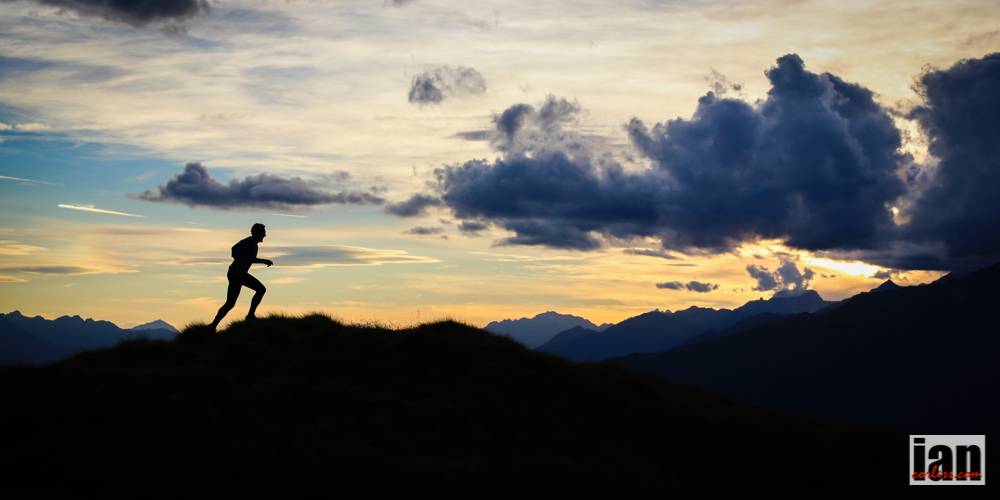
REACH FOR THE SKY!
As one season comes to an end the planning of a new season starts and today we are pleased to announce the calendar for the Skyrunner® World Series and Continental Championships 2015.
In less than three years, Skyrunning has grown to a new level and today, the announcement of the 2015 calendar signifies a significant expansion of the sport and it truly becomes a world series with the addition of the Continental Championships.
It is a very exciting time and in conjunction with the growth of the National Series, it has never been a better time to be a Skyrunner…
Lauri van Houten, executive director for the ISF today provided the details of the new series and lists the full calendar for 2015.
The big news for 2015 is that the Series goes global – more races, more places and, now, the chance to count an extra race in the ranking. The successful 5 SKY/5 ULTRA/ 5 VK formula stays where three results out of five are scored, but now you can choose a fourth race from the Continental Championships of your choice.
Twenty-seven races in nine countries stretch across five continents. Africa, Australia and China make their first appearance together with the rugged mountains north of the Arctic Circle in Norway.
New Skyrunner® National Series will be announced throughout the year, so skyrunning closer to home becomes a tangible reality in: Africa, North & South America, Canada, Czech Republic, France, Greece, Italy, Oceania, Poland, Portugal, Russia and Spain.
Benefits in the Series and Championships include 1,700 race slots, 450 free entries, 250 accommodation and 80 travel slots. The Series final $ 25,000 is redistributed and additional prizes – not just for the winners – are on the way.
We are proud to reconfirm and thank our our partners Salomon, Active Patch 4U, Compressport, Scott Sports, inov-8, Arc’teryx and La Sportiva for their support and look forward to announcing new ones for 2015.

IMPORTANT please note re scoring:
Points will be available in 3 Skyrunner® World Series races + 1 Continental Championship race for each discipline.
SKY
ULTRA
VK
CONTINENTAL CHAMPIONSHIPS
EUROPE
AFRICA
ASIA
N AMERICA
OCEANIA
INFO:
FOLLOW ALL THE NEWS at SKYRUNNING.COM
Delivery will be guaranteed the first week of December.
The calendar has highlights from a great 2014 racing season and includes images of ISF president, Marino Giacometti, Maite Maiora, Stevie Kremer, Jo Meek, Marco De Gasperi, Luis Alberto Hernando, Emelie Forsberg, Zaid Ait Malek, Martin Gaffuri, Kilian Jornet, Francois D’Haene and Anna Frost.
(An additional £5.00 for postage outside UK.)










To pre order, please fill in this request form, importantly, please specify postage within UK or outside UK. You will receive an invoice via Paypal.
Payments are accepted via debit card, credit card or Paypal account.
Add a Talk Ultra Bumper Sticker?

Bicycle races are coming your way
So forget all your duties oh yeah!
Fat bottomed girls they’ll be riding today
So look out for those beauties oh yeah!©Queen
Check out ALL the CYCLING for RUNNER articles HERE
So where do I start? Not quite sure but I am sure that cycling will firm up those weak “runner glutes” and make me a stronger ultra-runner!
But first let me put my story into perspective. I am NOT an ex-elite cyclist like a certain Mr. Talk Ultra. More like a false beginner – I’ve certainly dabbled in road biking and have recently decided to take it a little further and invest myself more seriously in cycling as a cross-training alternative.
What motivated this decision? Cycling is a weight-bearing form of cardio-vascular exercise which is perfect for:
This will not be the first time I use cycling to maintain fitness. A few years ago I was training for a 100-miler and felt excruciating pain when I went out for a run. My suspicions were confirmed by the radiologist. I had multiple stress fractures of the metatarsals caused by a sudden increase in mileage combined with calcium deficiency. This is not uncommon for female ultra-runners. I was told ‘RICE’ (rest, ice, compress, elevate) was what was required. Only problem – I had invested financially and time-wise my 100-miler in South Africa was just 5 weeks away. So I laid off running for 5 weeks and cycled intensely (psychologically I didn’t want to feel undertrained and it was far too early to taper). The 5-week rest from running did me the world of good and by the time I got to the start line the bones in my foot had healed and very little fitness had been lost due to my cycling. In addition to this although I didn’t get my “runner’s high”, I did get a fix from cycling and I didn’t gain any weight.
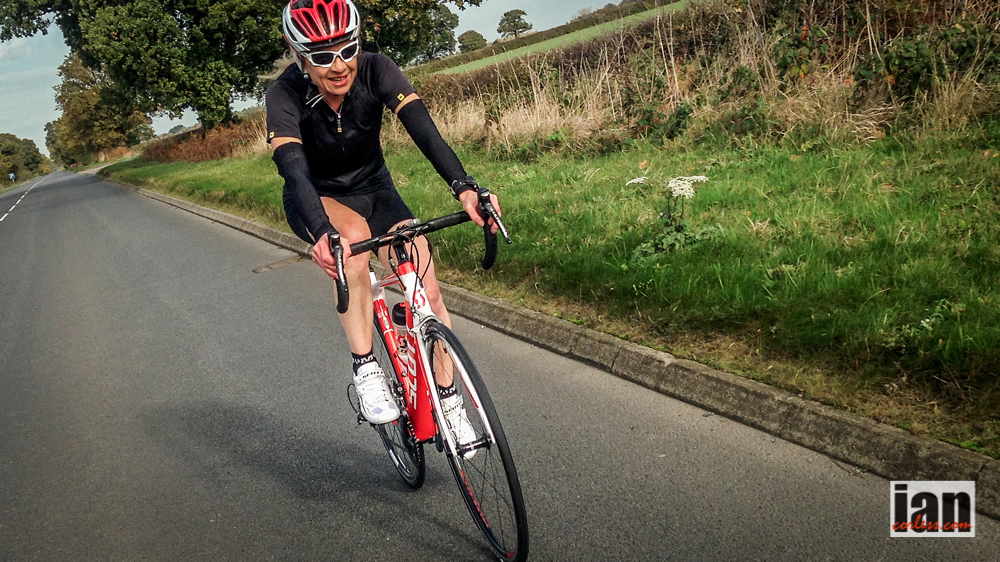
You only have to look at female athletes like Nathalie Mauclair, Emilie Forsberg and Emilie Lecomte to realize that cross-training can be beneficial and help you stay injury-free, add variety and spice to your running by stimulating other group muscles and ultimately increase the longevity of your run career whether you are a professional or not.
Well now that I’ve sold the benefits of cycling for runners let me tell you about my dabbling with the sport:
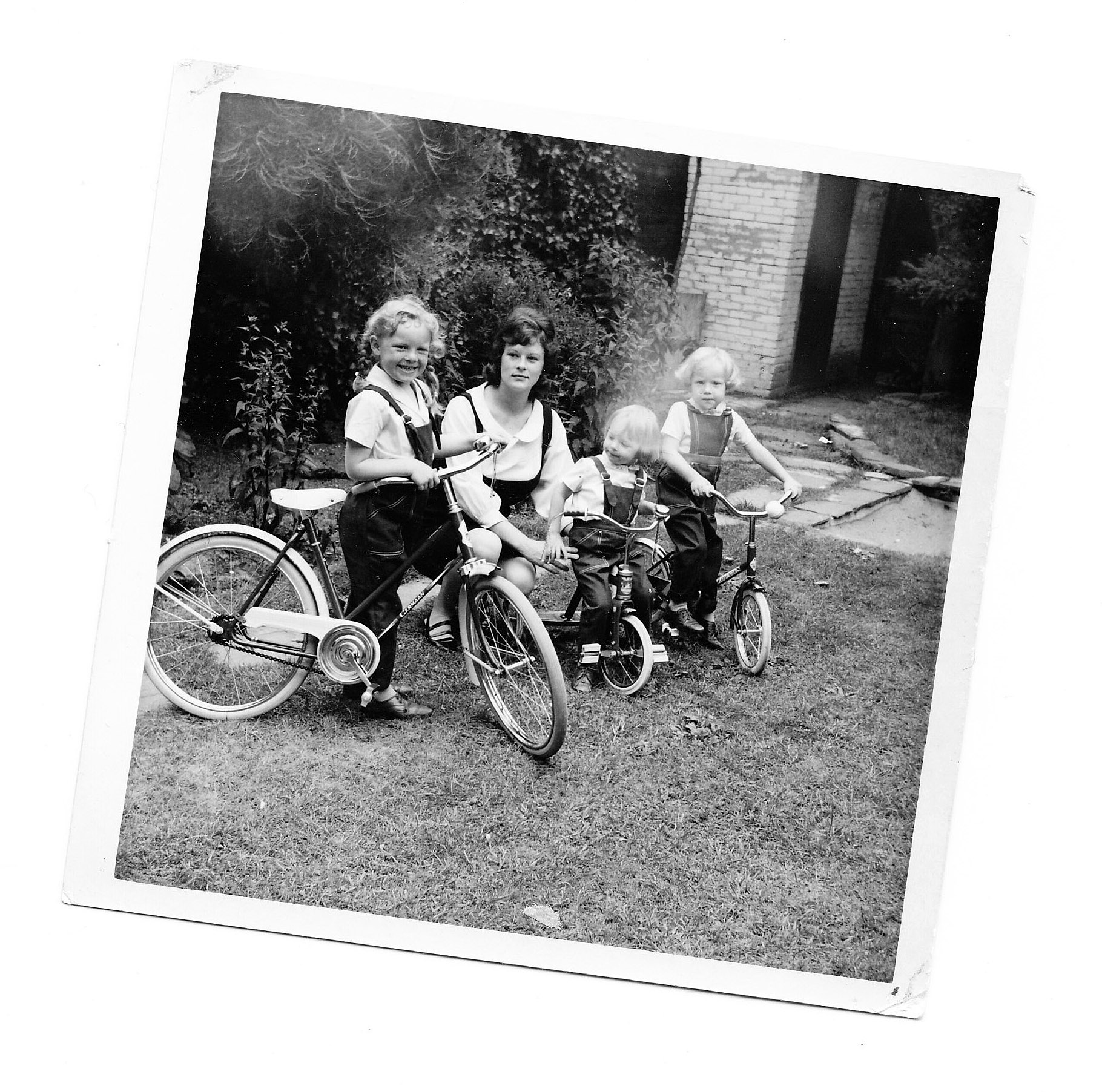
I grew up in the Netherlands where kids are born on bikes so I started cycling relatively long distances when I was 5 – at weekends it wasn’t uncommon for us kids to cycle 20km to the pancake restaurant, eat up a massive Dutch pancake and cycle 20km back home. Then as I grew up into a lazy teenager I put away my bike and only took up cycling again when I was injured as a runner.
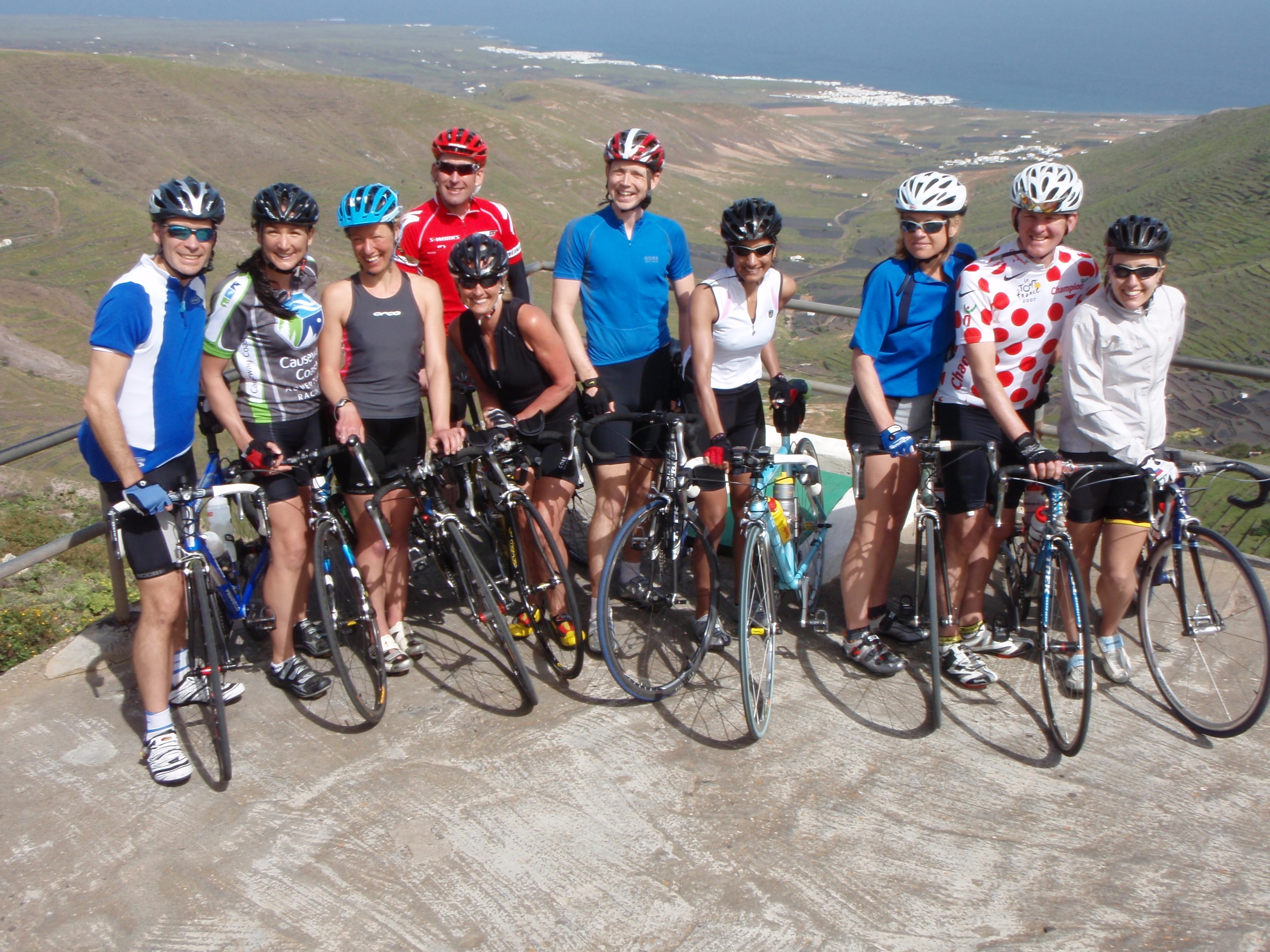
The revelation really came when I attended a triathlon camp in Lanzarote run by my partner Ian Corless who was an ex elite cyclist very keen on triathlon and IM training. Lanzarote is a cyclists’ paradise and here I learnt to use clipless pedals and more importantly experience the thrill of cycling through endless stretches of volcanic landscapes, against strong head-on winds and down scary descents…! I loved it but I didn’t have my own bike and so cycling was limited.
I am now more than motivated to progress, mix things up and not only provide some spice to my training but also I know, cycling will make me a better runner. I hope that my input as a “novice” or “false beginner” who can provide a female perspective will help all of you, especially female ultra-runners out there who want to improve as runners.
So let the fun begin…
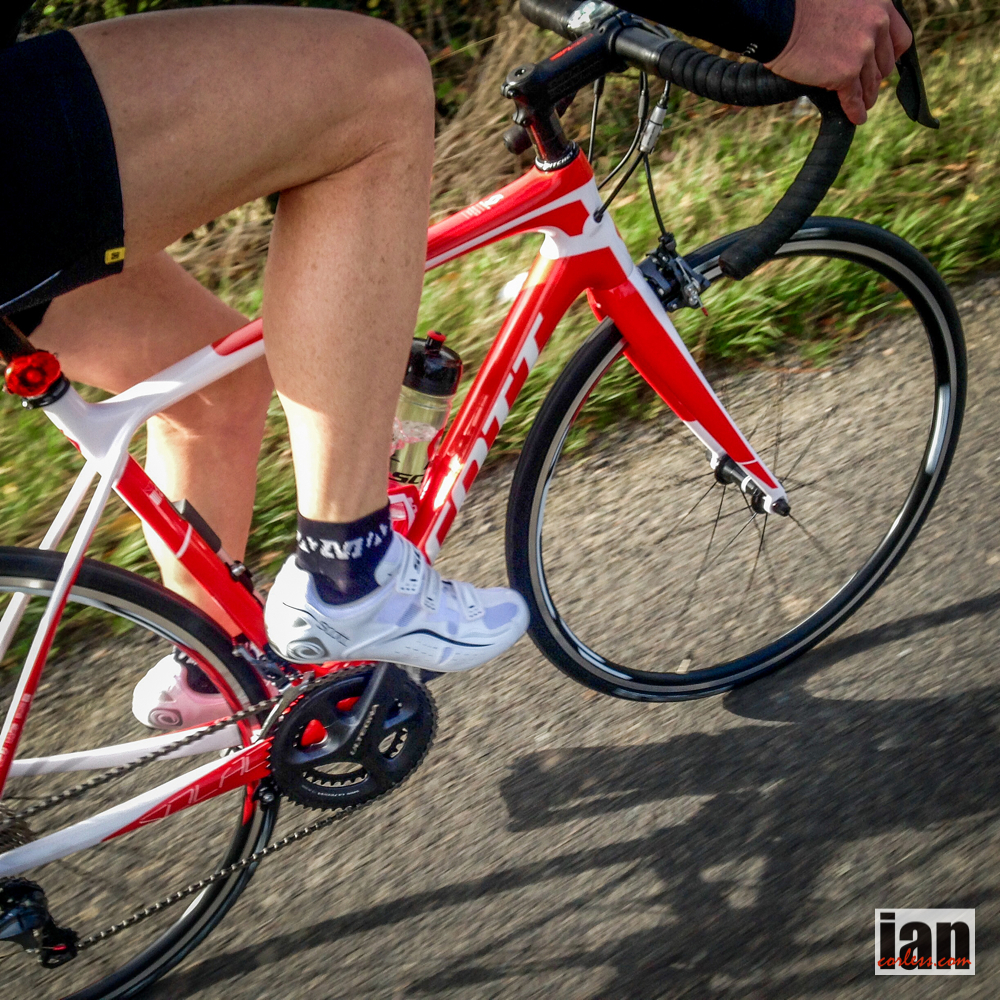
Life is like a bicycle. To keep your balance you must keep moving – Albert Einstein
Ladies, I would love to hear from you… tell me your stories, tell me how you are using cycling for running and importantly, have you got any cycling gossip?
Follow me on Twitter @girlwhatcycles
#CyclingforRunners
Join us on STRAVA
Thanks to SCOTT SPORTS and SUUNTO for the support and backing
Check out SCOTT HERE
Check out SUUNTO HERE

This is a second article in a trio of interviews with Ian Corless, about Navigation for Ultra Runners & more. Read article one HERE
all content ©mountainrun
In the first interview we covered the Basics of Navigation, this encompassed maps, compasses, setting your map & how to set a bearing.
The second interview was moving into intermediate navigation & it consisted of the following information & techniques:
So lets start with:
1) Magnetic Declination or Magnetic Variation:
There are 3 points at which north is seen. 1) True North, 2) Grid North & 3) Magnetic North. We are concerned with Grid North & Magnetic North.
Grid North is what is detailed on a map, its where the North/South grid lines show us the direction of north, according to the grid lines printed on the map. This is almost the same as True North, so we will group True North & Grid North the same. These are fixed points & do not move.
Magnetic North is what your compass needle points towards, being magnetised & this is not a fixed point, it moves over time. Magnetic North is explained as so:
“The North Magnetic Pole is the point on the surface of Earth‘s Northern Hemisphere at which the planet’s magnetic field points vertically downwards (in other words, if a magnetic compass needle is allowed to rotate about a horizontal axis, it will point straight down). There is only one location where this occurs, near (but distinct from) the Geographic North Pole and the Geomagnetic North Pole.
The North Magnetic Pole moves over time due to magnetic changes in the Earth’s core.[1] In 2001, it was determined by the Geological Survey of Canada to lie near Ellesmere Island in northern Canada at 81.3°N 110.8°W. It was situated at 83.1°N 117.8°W in 2005. In 2009, while still situated within the Canadian Arctic territorial claim at 84.9°N 131.0°W,[2] it was moving toward Russia at between 34 and 37 miles (55 and 60 km) per year.[3] As of 2012, the pole is projected to have moved beyond the Canadian Arctic territorial claim to 85.9°N 147.0°W.[2]“
Because we have a variance between True North & Magnetic North, we therefore need to use something called the Magnetic Variation. This is described as follows:
“Magnetic declination or variation is the angle on the horizontal plane between magnetic north (the direction the north end of a compass needle points, corresponding to the direction of the Earth’s magnetic field lines) and true north (the direction along a meridian towards the geographic North Pole). This angle varies depending on position on the Earth’s surface, and changes over time.”
It is also explained more formally, Bowditch defines variation as “the angle between the magnetic and geographic meridians at any place, expressed in degrees and minutes east or west to indicate the direction of magnetic north from true north. The angle between magnetic and grid meridians is called grid magnetic angle, grid variation.
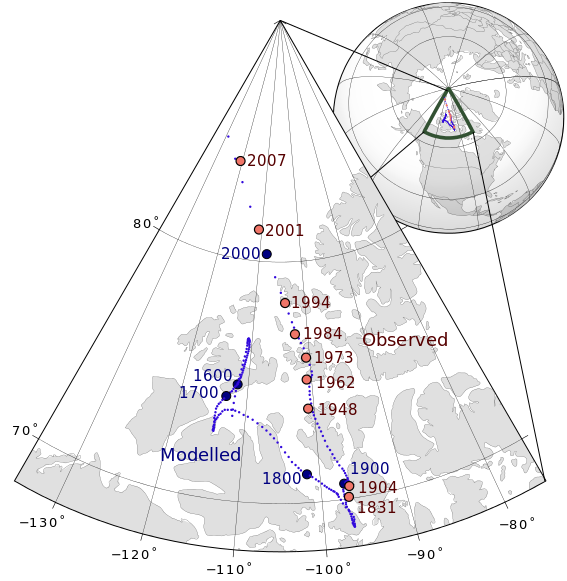
Depending on which country you reside in will then depend on what the Magnetic Variation actually is. For example, if you live in the UK then the Magnetic North is 1.5 degree’s at the start of 2014 west of True North. The reason it is west is that we sit to the east of the Agonic Line or line of Zero Declination where Mag North & True North are the same. There are several points where this occurs around the world. Its a bit technical, but all you need to remember is that the Mag Variation is printed on all maps in the UK to advise what the Mag Variation is at what ever year the map was printed.
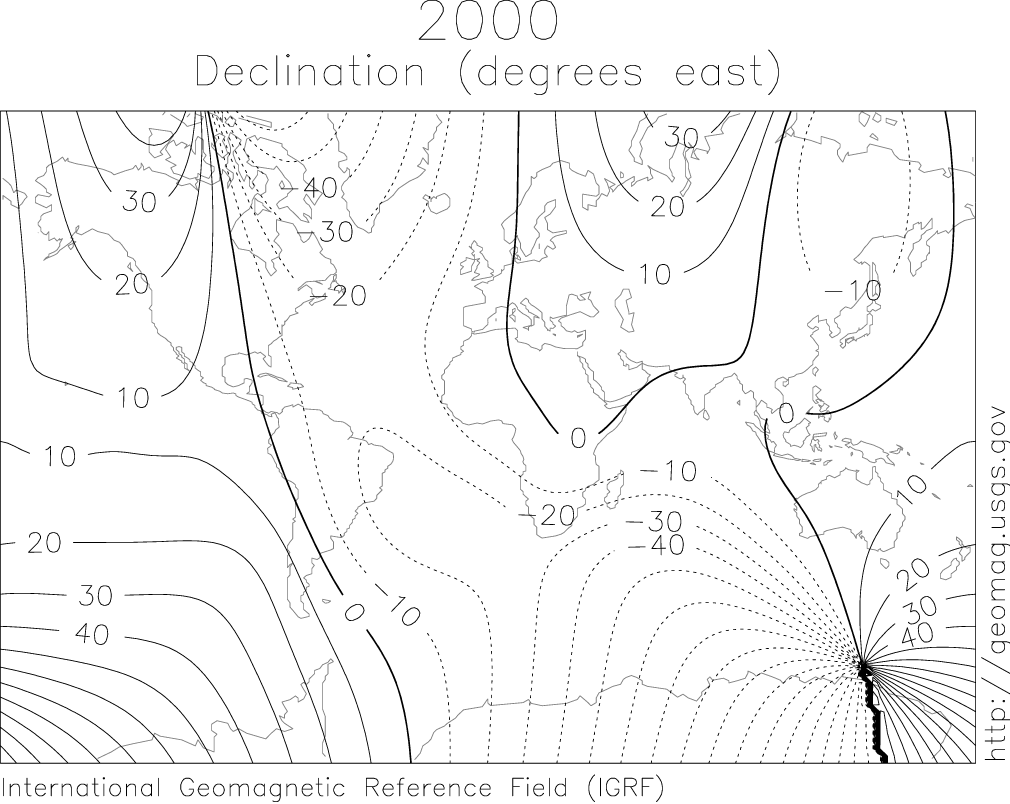
In order to correct your bearing to take into account the Mag Variation, you must adjust the compass 1.5 degrees east of the bearing you have taken, or more easily remembered, add 1.5 degrees on to your compass bearing you have just taken from the map. To make life even more confusing, the Mag Variation in 2015 is 0, therefore Mag Variation need not be corrected for that year, so it is almost not worth making this correction for the next year & certainly if your navigation is broken down into small legs. It really only comes into play right now, if you are travelling over large expanses of land, without any catching features, hand rails etc.
Transversely, if you are using the Mag Variation, remember when making a sighted bearing, whilst relocations, you might want to subtract 1.5 degree’s off your bearing in order to get an accurate bearing when you place the compass on the map. It all depends how accurate you need the bearing to be? Are you looking at a mountain summit? If so, is your bearing really that accurate anyway.
So Mag Variation in the UK is not really necessary right now.
If you are in Europe or other parts of the world like the US, then your Mag Declination/Variation will be different. It should be on the map you are using, if not consult a website like Wiki for more information.
North & South of the Equator.
If you buy your compass in the northern hemisphere, then it is not set to work in the southern hemisphere & visa versa. Silva produce 3 types of compasses to work in 3 different magnetic zones. The best piece of advise is if you are traveling, then buy a compass for use in the zone which you are traveling. Best to contact a company like Silva to get the right compass.
Can I set the declination on a compass, so I can forget about the Mag Variation?
Yes is the answer, but they don’t come at a small price. Most compasses, of reasonable value, like Silva 2NL-360 Explorer will have a Declination Scale on the bevel base plate, this can be used for quick adjustment. If you want to set the mag declination, then you need to purchase a compass capable of doing this, like the Silva 15T-360/6400 Green military compass. Its not really necessary for general use, especially in the UK right now.
Ok, so the confusing Mag Declination/Variation is done. Use at will, just remember to check on the country you are in as to what the variation is & apply it if necessary. Its list on the map you have in your hand, or at least the one you will be using.
2) Grid Numbers & Plotting a Grid Reference
Grid numbers are applied to the grid lines. These are a squared matrix applied to the whole country to divide it into different sections. They are laid out to make squares 100k by 100k, these squares are then broken down to have a further matrix applied giving squares of 1km by 1km. These are the lines/squares printed on your map. The lines running from east to west are numbered from south to north, these are the ‘northings’, the lines running from north to south are numbers west to east, these are called the ‘eastings’. A grid reference is made up of these printed numbers.
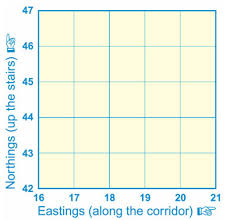
So on the image pictured to the left, we have Eastings along the bottom & Northings running up the side. In order to find a certain grid we need 4 of these numbers. This a 4 figure GR.
We are always given the Eastings first & the Northings second. A 4 figure GR would read as 17 45
Once we understand this we can move to a 6 figure GR. This is done by breaking down each of the squares into a further 10 divisions on either scale, making 100 squares inside the existing square and will allow us to pin point a location to within a 100m square on the ground. A 6 figure GR would be something like 175 454.
This can be taken into a further pin point of 10m squares by using the same logic & so on.
A roamer on your compass can be of great help here to pin point 6 figure GR’s.
Not following? Book on a course….
3) Back Bearings.
Very useful in either re-locating yourself or using a feature to make sure you are looking at what you think your looking at. A back bearing is taken by using a sighting of an identifiable feature, be it a path, summit, building or large reentrant & applying it to the map. This can help you do one of 2 things. 1 – re-locate yourself on a line feature (its hard to relocate with this technique exactly, but it can help your judgement or give you a rough location) or 2 – help you to make sure the feature you are looking at is the same one you are looking at on the map.
Remember that when taking a back bearing, you might need to subtract the Mag Variation to make sure its correct.

To take a back bearing, line the direction of travel arrow at the front of your compass with the feature, make it as exact as possible. Then swivel the rotating bevel so that you line the red end of the needle in the red house/shed, remember the Red in Shed. This is now your bearing set. Next put the compass on the map & line the front side up with the feature you think you are looking at, and move the compass until your orienting lines on the base plate match with the N/S Grid Lines on the map. You should now be able to locate yourself somewhere along the side of the compass.
A back bearing works best if you are already located on a line feature, as this bearing will then cross the line feature at some point, giving you a rough location of where you are on that line feature.
4) Re-Orienting/Re-Locating.
A very necessary skill, used to either make sure you are where you think you are, or as it sounds, to actually re-locate. Once you are adept at this skill, it should be used throughout the day, as you progress through your race or just through the mountains to keep a check on your position, but of course if you are thumbing the map, then it will be a whole lot quicker & easier. When you’re really good at it you will re-locate whilst on the move.
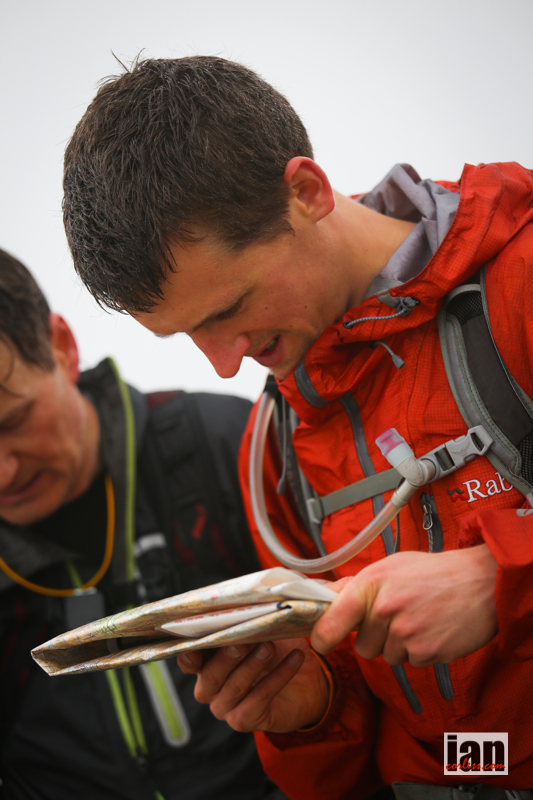
Clients on a recent OMM Mountain Skills Day relocating on Place Fell, Eastern Lakes
How to do it:
Use everything at your disposal. This means look for all the identifiable features you can see, summits, paths, streams, woods, walls, buildings, ruins, sheepfolds etc. Orientate your map, if it is not already! Now match the features on your map to the ground, or visa versa. If your still not sure, then use a back bearing by locating a summit or other feature & take a bearing from it by following what was discussed above.
If you are not on a line feature you will then need to start really assessing the contours & because you have studied your contours well at home, you have a good handle on how to interpret what you are looking at to the features/contours on the ground. Are you in a reentrant, or is there one close by. Is the valley in the right place in front of you in relation to the map.
Re-Location requires lots of practice, the more you do, the better you will get until you can re-orientate whilst on the move.
5) Thumbing the map.
Thumbing the map with compass in hand.

A very simple, but very useful technique. Once you start to get a handle on navigation, map reading & compass work you will be able to fold your map smaller, so not needing so much of it in view. The smaller you can have your map folded, the easier it is to thumb the map. By doing this we mean, fold your map in half, half again and so on until you have a manageable size to hold in your hand. Obviously make sure you can see the area you are in. Now, knowing where you are on the map, put your thumb over this location. Having the map oriented correctly in your hand is very important. As you walk/run along your chosen courses/bearing, you simply move you thumb small increments to keep up to date with your progress.
Why is this useful?
Because you need to be able to locate your rough position on the map at a split second or whilst on the move. When you want to check your surroundings against the map, just pull it up to have a look & your thumb will be placed near to where you are, you can then re-locate very quickly & keep a track of your progress from map to land or the other way round. This is how you will learn to re-locate whilst on the move!
6) Hand-railing.
It is as it sounds, using a handrail to help you on your way as you travel across the land. So what is a handrail? It a feature on the map that allows you to use it as a hand-rail. It is always a line feature & can be as simple as a path, or as obscure as a blind ridge line (by blind I mean rounded & not obvious). Once you have established the handrail is going in the direction of travel you want you can walk/run along it until you need to make your next decision.
Examples of Hand Rails

How do you know when to stop? Use the next technique, a catching feature….
7) Catching Features.
A catching feature again is as it sounds, its a feature that catches you. It can be designed to wake the brain up to say your nearly at your destination, next direction change or just as a marker to what is coming next. You can have as many catching features as you like along your chosen course. Don’t pick too many though, as it will be hard to remember. Try to limit them as wake up calls, or direction changes, but you can still use them as markers to track your progress.
Plenty of Catching Features in the image below:
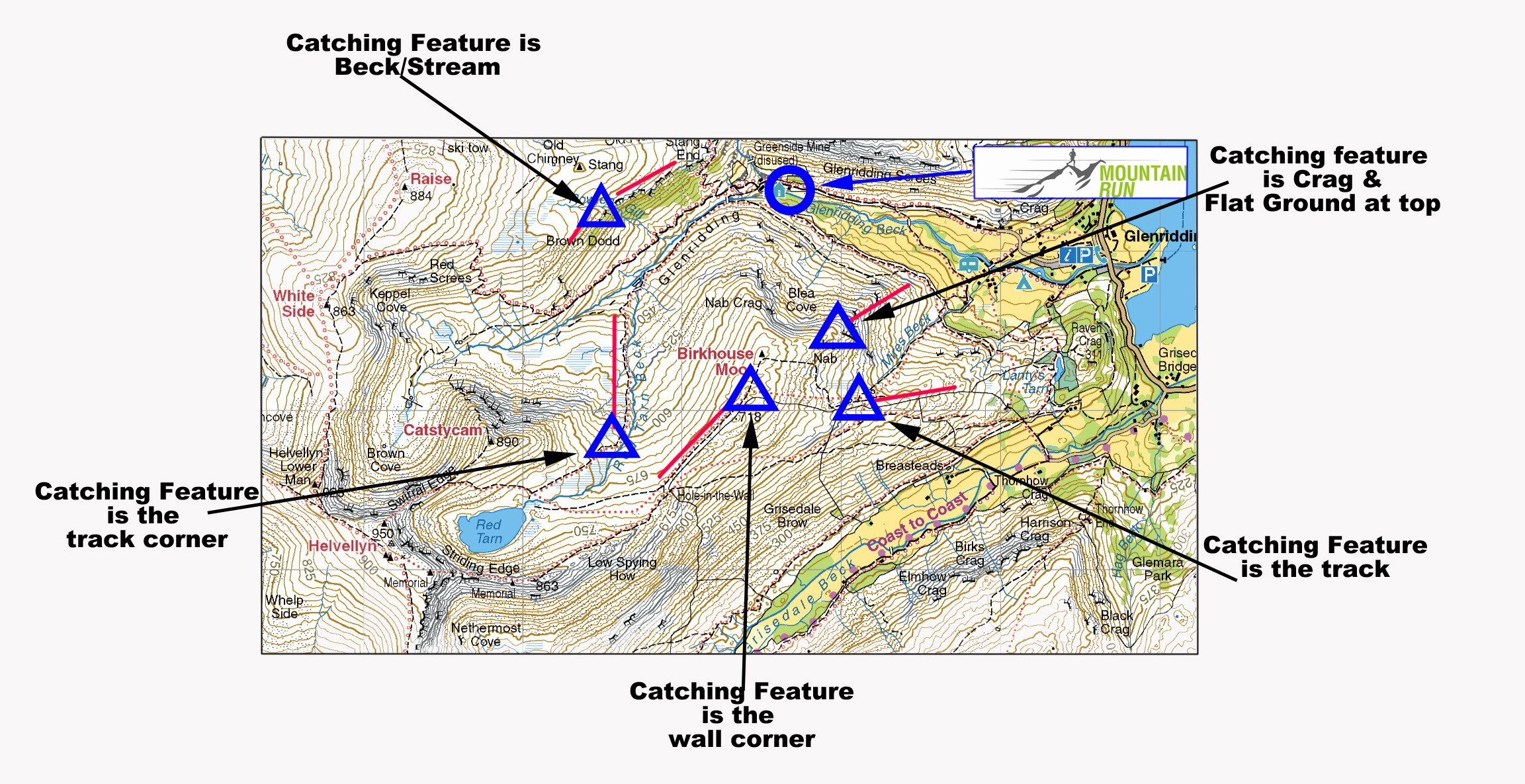
A catching feature might be a wall corner, building, junction in a path or river or a crag that you are moving past. Used in conjunction with thumbing the map & hard rails, you can see that you can really track your progress as you move forwards.
8) Aiming Off.
The last technique in our intermediate navigational skill set. We use aiming off to catch a line feature, that we may then use as our next bearing setter or as a handrail until we reach the next catching feature.
To aim off we use a bearing slightly off to the side of the line feature we are heading for. This can be either left or right, but it need to be obvious, otherwise you might miss it.
Aiming Of below so you don’t miss the control, best practice in foul weather!
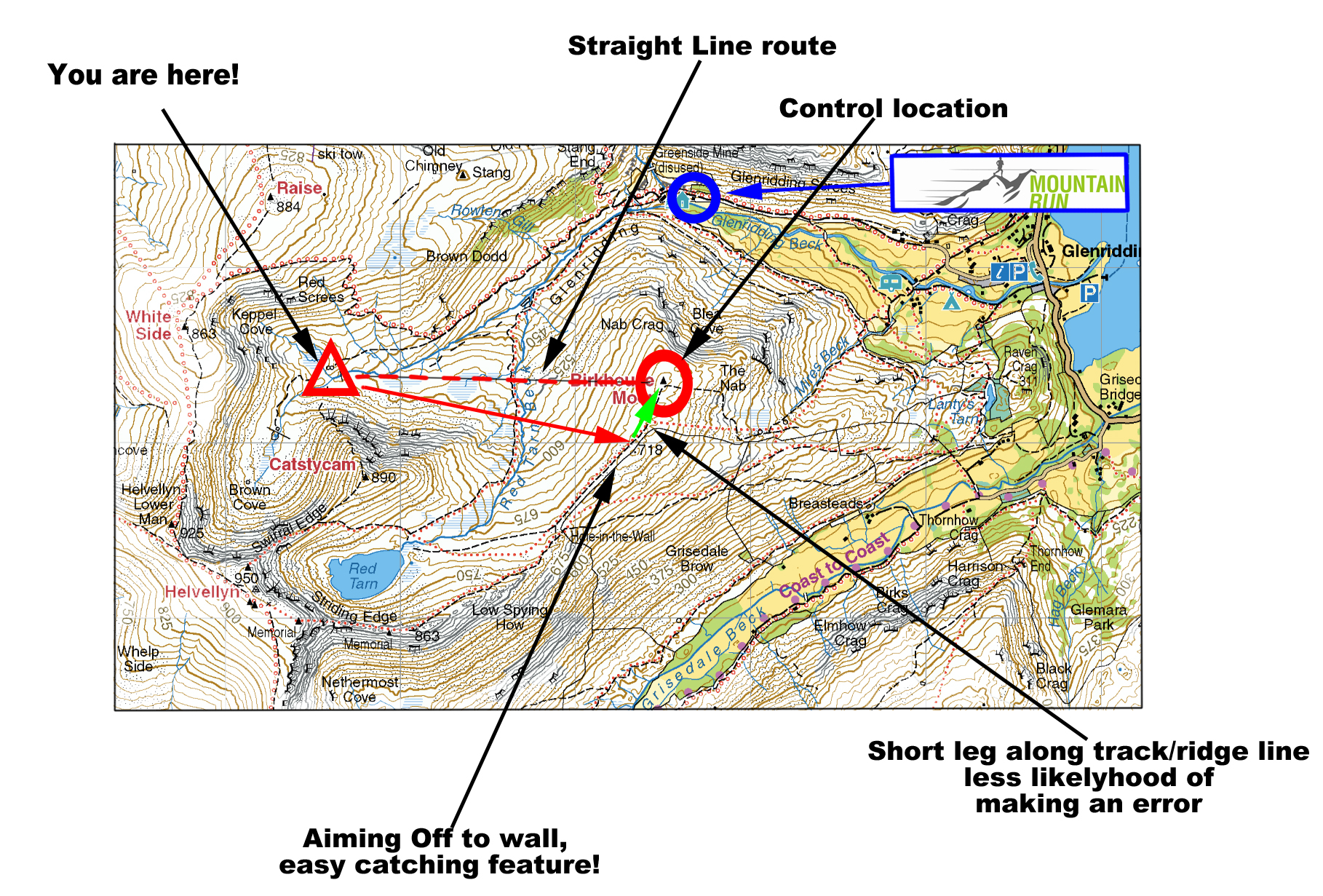
Lets say your travelling across open ground south to north, there is a tarn in front of you running from west to east & you want to catch this feature, but keep moving past it. The weather is in and visibility isn’t what you want it to be. You want to pass the tarn to the east, so you need it to be on the western side of you. How will you know you have passed it, if you can’t see so well due to mist? The tarn might be 500 m long, west to east. By aiming off, rather than passing the tarn on a bearing and checking it off as you go, you are better aiming off your bearing slightly to the west & hitting the tarn, this then gives you an identifiable feature to break up your leg & confirm you are where you think you are. You can then take your next bearing to the location you want to reach, using the techniques of handrails, catching features & possibly aiming off again.
Get these skills dialled in good weather & you can now be ready to head out in to the open fell in inclement weather. Get them dialled in bad weather & your getting ready to head out at night.
Still not got it?
Are you interested in an UltraTrail Nav Day or a Mountain Marathon Skills Day?
Send us your details here:
Philipp Reiter ©iancorless.comHow have the last couple of months been from a racing perspective?
Philipp Retier has had a quite 2014 due to a problematic foot injury. The season started well with a multi day adventure at The Coastal Challenge in Costa Rica and the iconic, Transvulcania. In June, running ground to a halt after running 100-miles in the charity D-Day celebrations in Normandy. Philipp is back on track now and I caught up with him as he prepares for the Salomon SkyRun in South Africa.
How have the last couple of months been from a racing perspective?
Unfortunately I have been injured for the whole summer from a community running event on the flat asphalt road and was not really able to run. I could not think about racing. To stay fit I was cycling quite a lot around my home town – MTB, road bike and cross-bike.
As you can imagine, it was very disappointing for me, but it is great to have a big (running) perspective now at the end of November with the Salomon SkyRun.
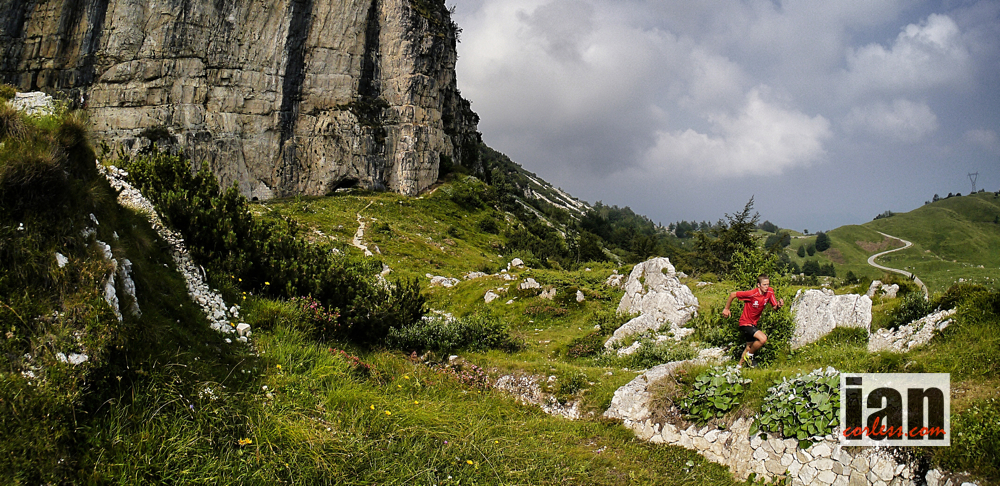
Philipp Reiter, Salomon ©iancorless.com
Do you have any targets between now and your trip to SA?
My studies at the university started in the beginning of October, so I have enough work trying to fit everything in my day; so no races are planned in preparation. I still feel more familiar to cycling than to running at the moment which I have to change in the next weeks.
How’s training going – have you done anything specific for SA?
I have already asked a few participants about the terrain and climate at the SkyRun and figured out that the weather is changing pretty fast – hot and very dry in the valleys, freezing cold and stormy on the ridges. For the cold I can prepare at home and for the hot maybe a few sauna-sessions should be good! As the terrain is very rocky and rough I will run more off-trail at home.
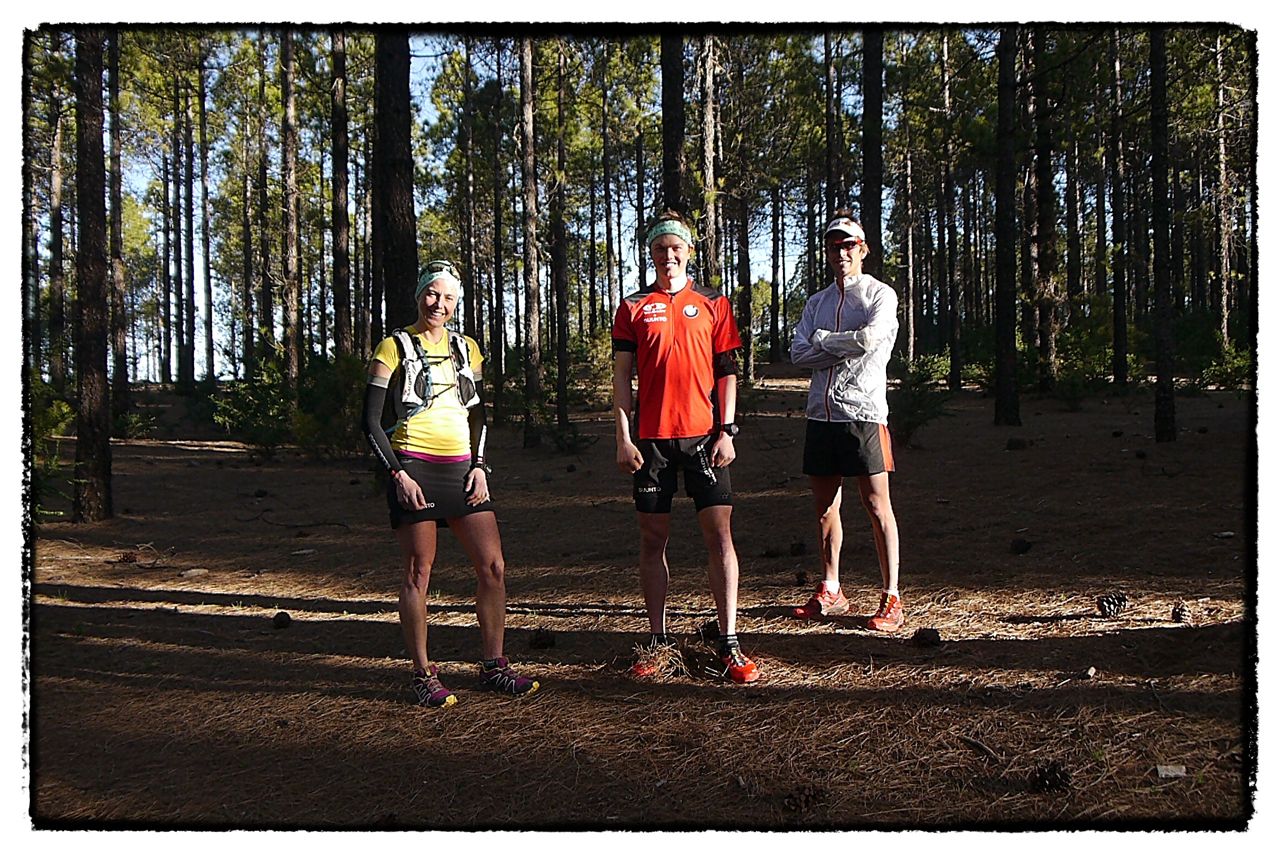
Julia Bottger, Philipp Reiter and Ryan Sandes in Gran Canaria copyright Ian Corless
Maybe you have been brushing up on your navigation and looking at some maps?
Yes, indeed! I was asked to scout routes for a trailrunning stage race here in Germany, so I have done quite a lot of map work trying to find the best, fastest and most beautiful spots. I mainly run around with a map in my hands which could be similar in South Africa…
Are you intimidated by the navigation element of the SkyRun?
Should I? It is totally new for me not to “just” follow the marks in a race but that makes it more interesting. Then it’s not only fast legs and stong lungs to be in a good position but also your brain has to work much more! I am only a bit worried as I have no experience using the compass for navigation or a mobile GPS-device apart from my watch.
The course sounds extreme, particularly if the weather turns. Have you researched the course?
No, not really. I have only watched some videos from the last editions and they made the course and the race look quite tough. It’s not the heat or the cold alone that make me worried but the extreme fast changes of both. So the backpack will be more heavy than in a “normal” race as it’s quite a lot of stuff to carry…
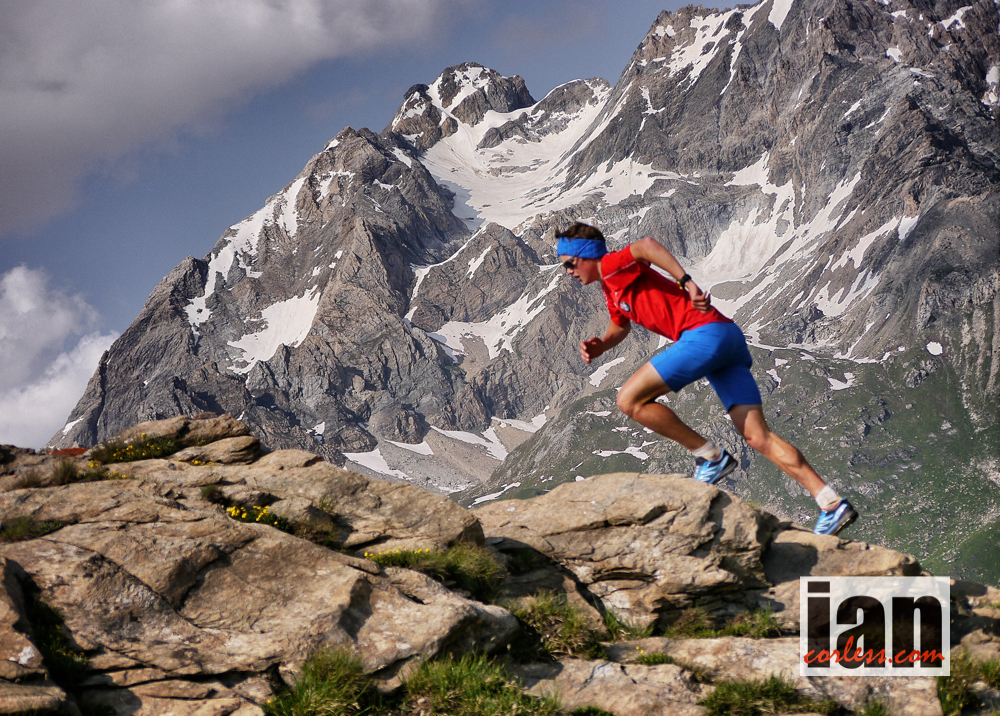
Philipp Reiter, Salomon ©iancorless.com
A strong local contingent will be toeing the line… Iain Don Wauchope, AJ Calitz and so on… do you know much about them?
Yes, I have heared that they are really strong and apart form their fitness they are very familiar to the race route, the climate and the terrain. They know exactly where to find water, how to climb the barbed wired fences,… So, I will just thry to follow them.
Michael De Haast has put up a great price purse should somebody post a great time, is that an incentive for you?
Aaagh, that is a good question. I have read that it’s $10.000 for the first runner who goes under 12 hours! But I guess that is almost impossible and I know that my teammate Ryan Sandes, who is an excellent runner especially in that type of terrain, needed about 12:30h last year. So I am not sure if someone can beat that. It would be a great boost for my student wallet though.
Have you been to SA before?
No, unfortunately not. But one of my climbing friends was there last year for bouldering and he was so excited that he will come back next year. He showed me some pictures – just stunning!
What are you most looking forward to?
The huge untouched landscape, some wild animals you can only see in the zoo at home (giraffes, lions, elephants,…), get to know the SA culture and how it’s connected to the European colony many years ago. Eat the famous steaks. Go running on the table mountain and explore Cape Town – quite a few things to do… maybe I will need to stay?
“The Salomon SkyRun is something completely new. I have been running in the jungle of Costa Rica, the Rocky Mountains in the USA, scrambled in the French Alps and raced on dry Spain islands but it’s was all marked. I never had to care about choosing the best and fastest way, run with a map in my hands and think about not missing the next well to fill up my water bottles. To perform good in this SA adventure I will not only need power in my legs, strong lungs and mental force but also navigation skills and the ability to read the terrain to choose the best way. It’s much more about tactics and planning! – I can’t wait!” Philipp Reiter
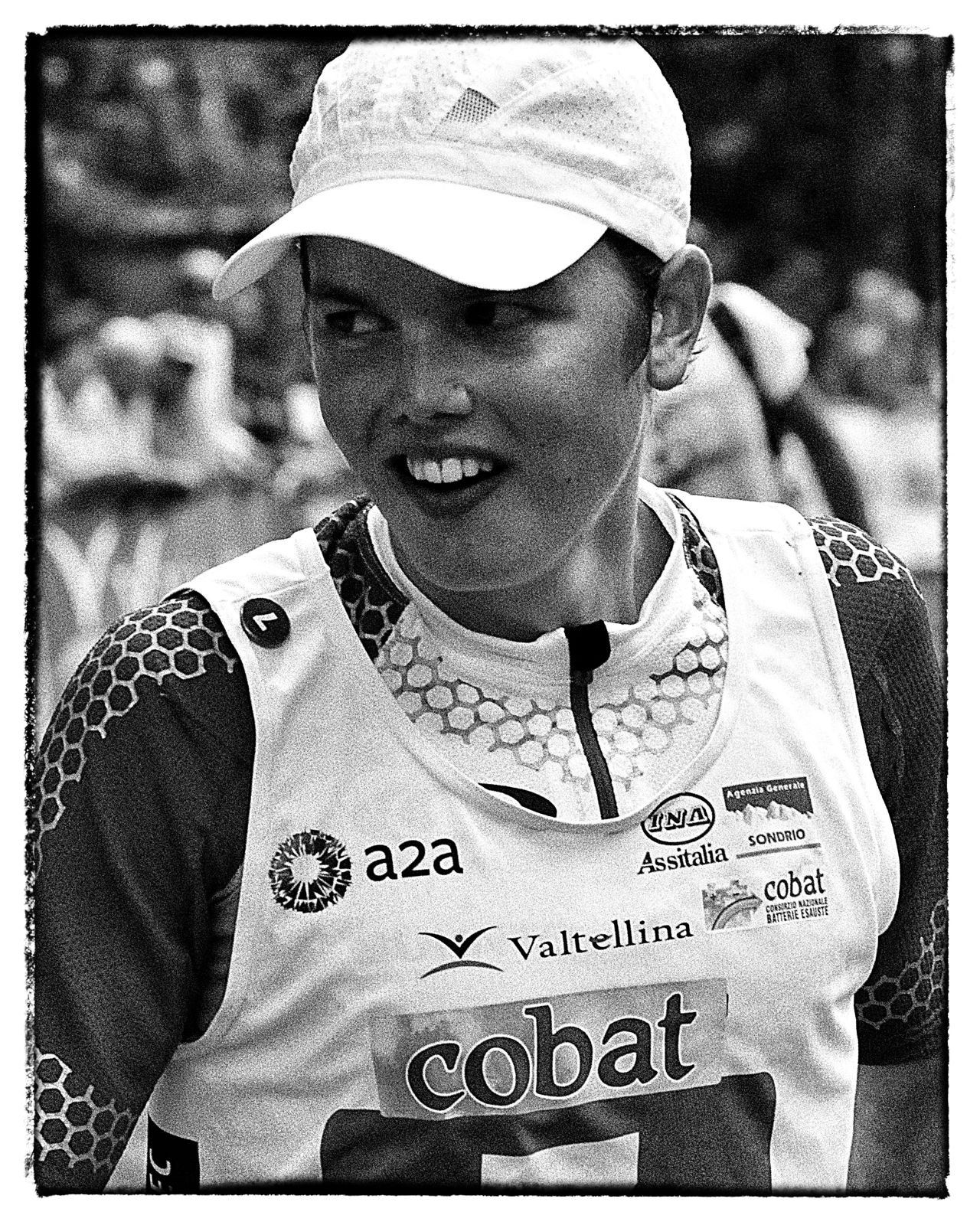
Philipp Reiter at the finish of Trofeo Kima copyright Ian Corless
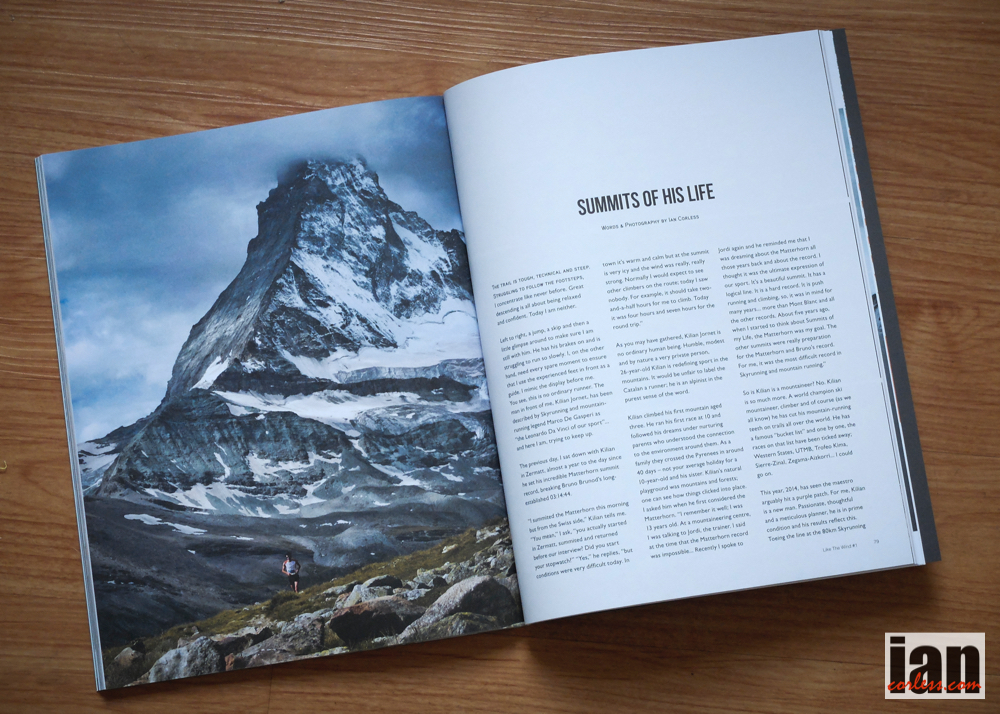
LIKE the WIND issue 3 now available
Please check out edition 3 of LIKE the WIND magazine. This is something that I am really passionate about. It is a great showcase and resource for those who are interested in all things running.
Like the Wind magazine is a collection of stories about running, from the track, trail and road. There are personal anecdotes, inspirational tales and wonderful pictures, all designed to inspire and delight
Launched in February 2014, Like the Wind magazine is printed on responsibly sourced paper certified by the Forest Stewardship Council, so that it is as sustainable as it is beautiful. With a wonderful weight, this magazine looks and feels fantastic and is a real treat to read and collect.
I, like all the other contributors provide our services free of charge. Any profit the magazines makes goes to our designated charities.
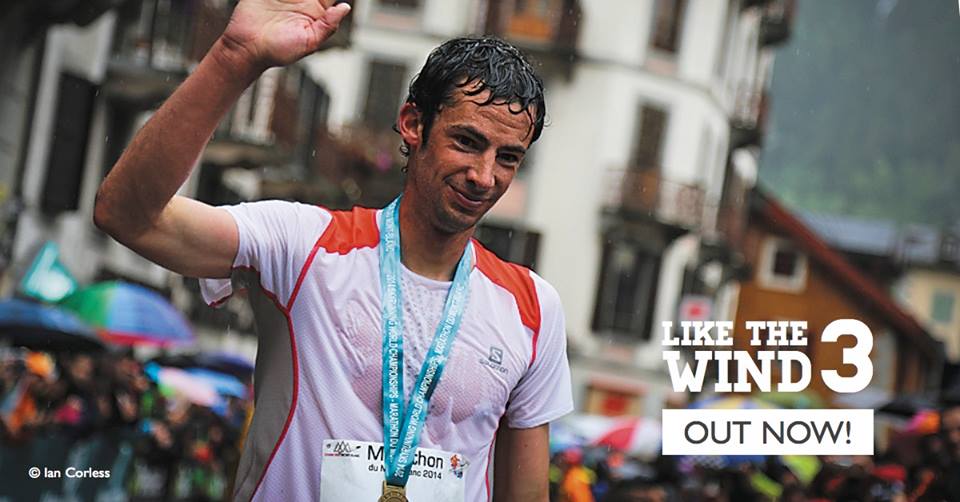
In edition 3, I have an article and images on the inspiring Kilian Jornet. If you would like a copy, please go HERE
Starting next week, LIKE the WIND will have a Pop Up store in London for 1-week (info HERE) please come and check it out.
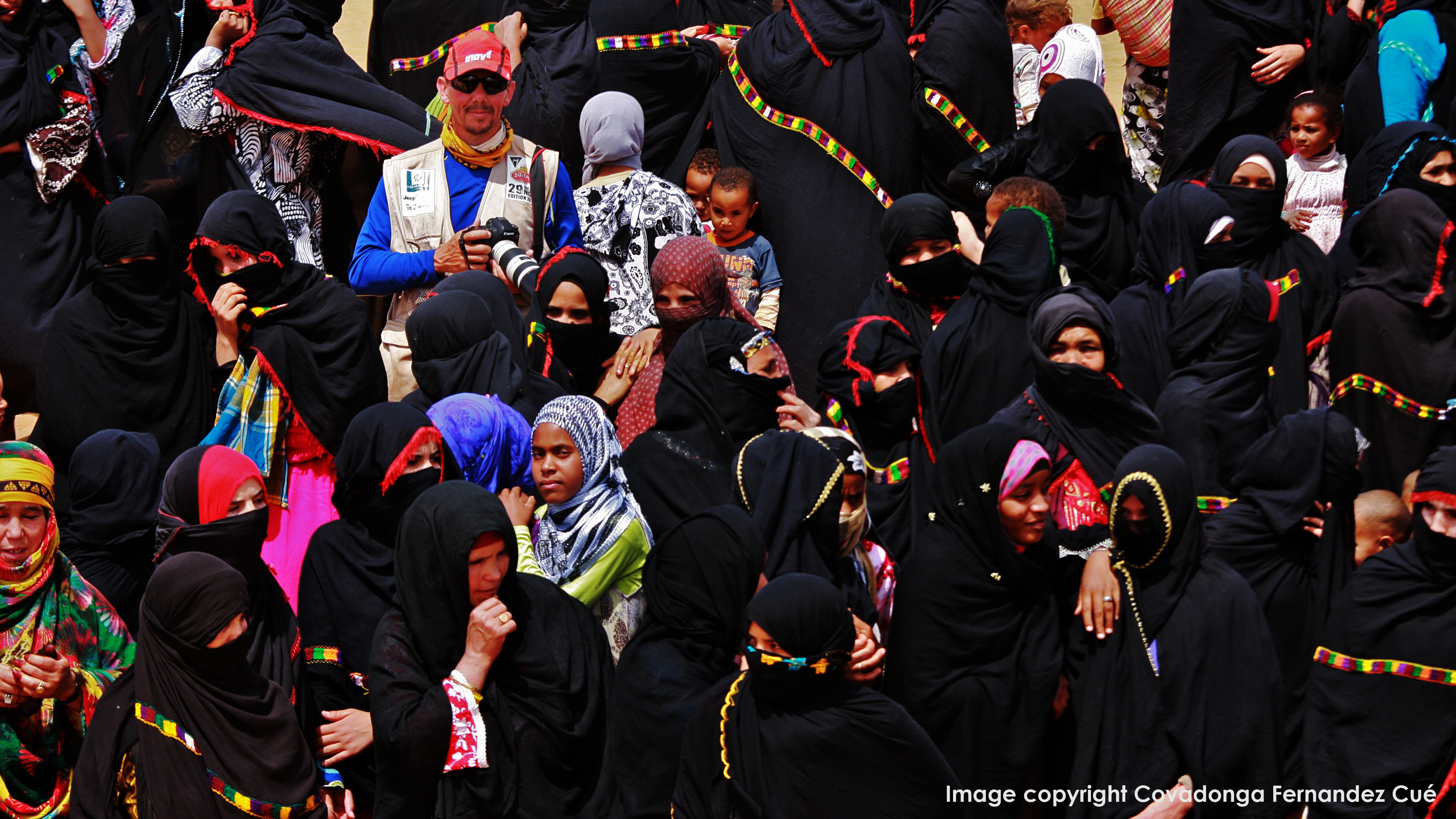
I will be doing a photography workshop on Thursday 30th in the afternoon (book HERE).
I hope to see some of you at some point during the week.
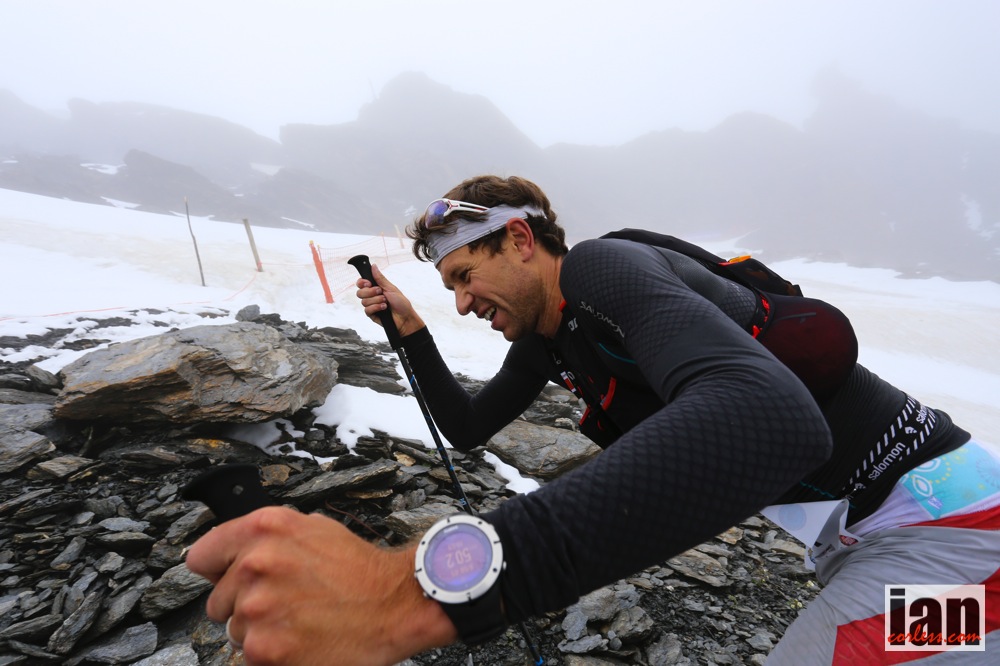
With 5-summits over 2000m, the Raid de la Reunion (Diagonale des Fous) is a great season closer for the UTWT. Now in its 22nd edition, ‘Reunion’ as it is affectionately known has gained legendary status within ultra running circles, not only because of some epic battles that have taken place on the course but also because of the fans, terrain and the tough 164km course and 9000m+ of ascent.
MEN
Francois D’Haene, winner of the 2013 edition and recent winner of the TNFUTMB is without doubt the hot favourite. Currently, he is arguably one of the best 100-mile mountain runners in the world.
Lithuanian, Grinius Gediminas who is 2nd in the overall UTWT ranking may well be a surprise package after a solid and impressive 5th at TNFUTMB and 3rd place at Lavaredo. Will Reunion be one race too many? I don’t think so. He seems to have his head screwed on.
The ever-present Antoine Guillon who recently placed 3rd at Tor des Geants lies 3rd in UTWT rankings and is a consistent performer. I don’t see him winning but a top place is a distinct possibility. Reunion is a tough and long race though. As we have seen in past editions, anything can happen.
 Xavier Thevenard after winning the 2013 TNFUTMB seemed to go into a little bit of a meltdown with the weight of expectation placed upon him. However, he recently came out of the whole with a win at TDS. In doing so, he became the only runner to win at UTMB, CCC and TDS, quite a result. Xavier may well feel at home on Reunion. I think we will see a good run.
Iker Karrera ©iancorless.com
Iker Karrera is a machine on tough courses as his 2013 Tor des Geants confirms. He raced well at Reunion in 2012 but his recent joint 2/3rd with Tofol Castanyer behind Francois D’Haene is a sure sign that he is in form for the 164km adventure. Question is, can he beat Francois?
Pascal Blanc is serious contender and knows the course like the back of his hand. He has a string of top-10 finishes, his highest place being second. In this field his experience will really count.
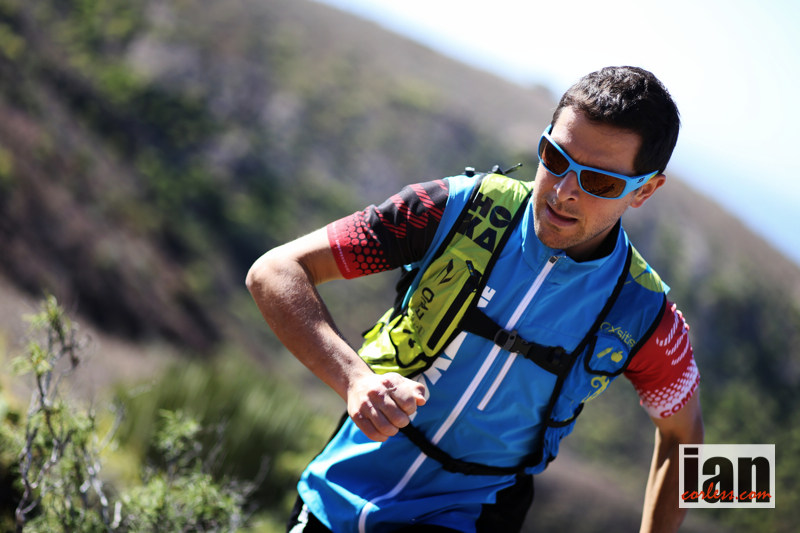
Julien Chorier impressed me no end at Ronda dels Cims in 2013 and then placed 2nd behind Kilian at Hardrock 100. He is meticulous in planning and if he has no back issues, he may very well be the one who can push his fellow Frenchman, Francois D’Haene to the line.
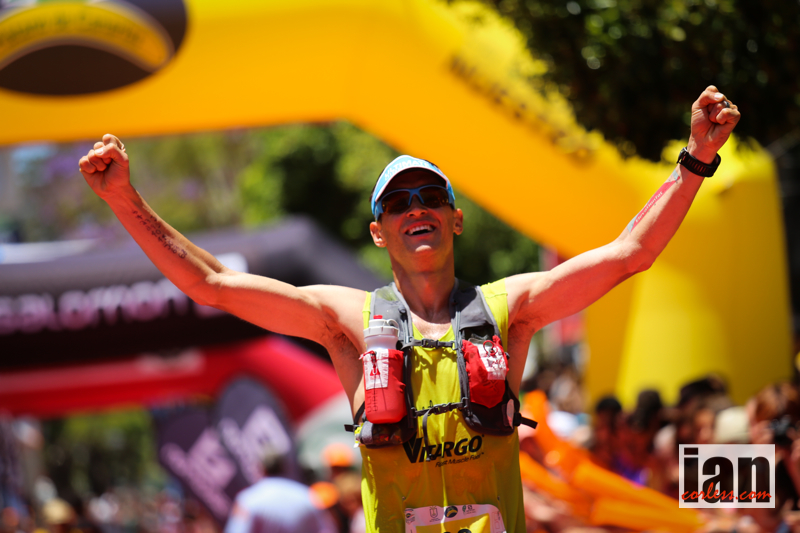 Jason Schlarb (current interview on Talk Ultra) surprised me with 4th at UTMB. He has certainly honed his European mountain skills in 2014. Reunion however is a little more extreme and may well shock Jason. He seems motivated though and the opportunity to race such a quality field will excite him. Expect him to be out of the mix early on and then work his way through the devastation.
Freddy Thevenin placed second last year behind Francois D’Haene but I don’t see him making the podium this year. He is a top-10 contender for sure.
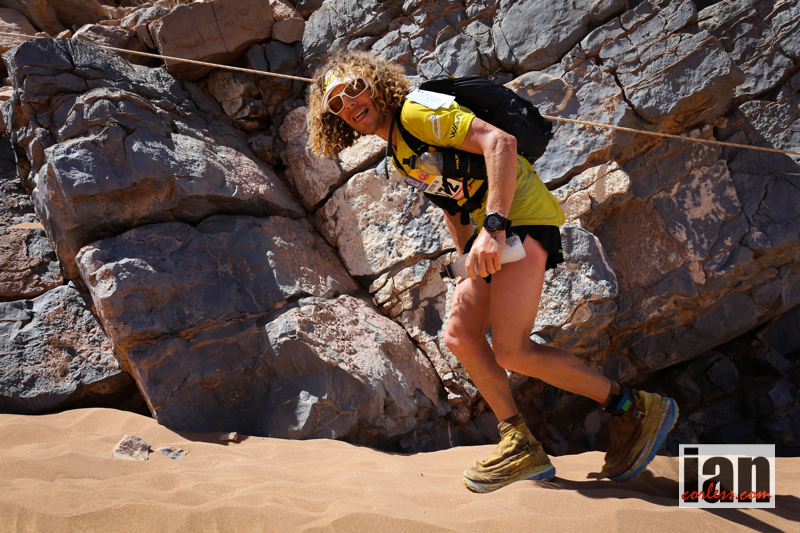 Christophe Le Saux never stops… I am not sure but I think he has done every race in the 2014 UTWT. That is seriously impressive. He will be in the mix, likely top-10 but not a contender for the podium.
I am going to give a shout out for Stuart Air. He’s a Brit who has had quite a year… he ran Hardrock 100 and now Reunion. Great to see someone local, (a Brit) mixing it up with the best in the world.
Ones to watch:
David Pasquio – 5th in 2013
Sondre Amadahl – 7th at UTMB
Tsuyoshi Kaburaki
Javier Dominguez
On a final note, Ryan Sandes leads the 2014 UTWT rankings but will not race.
LADIES
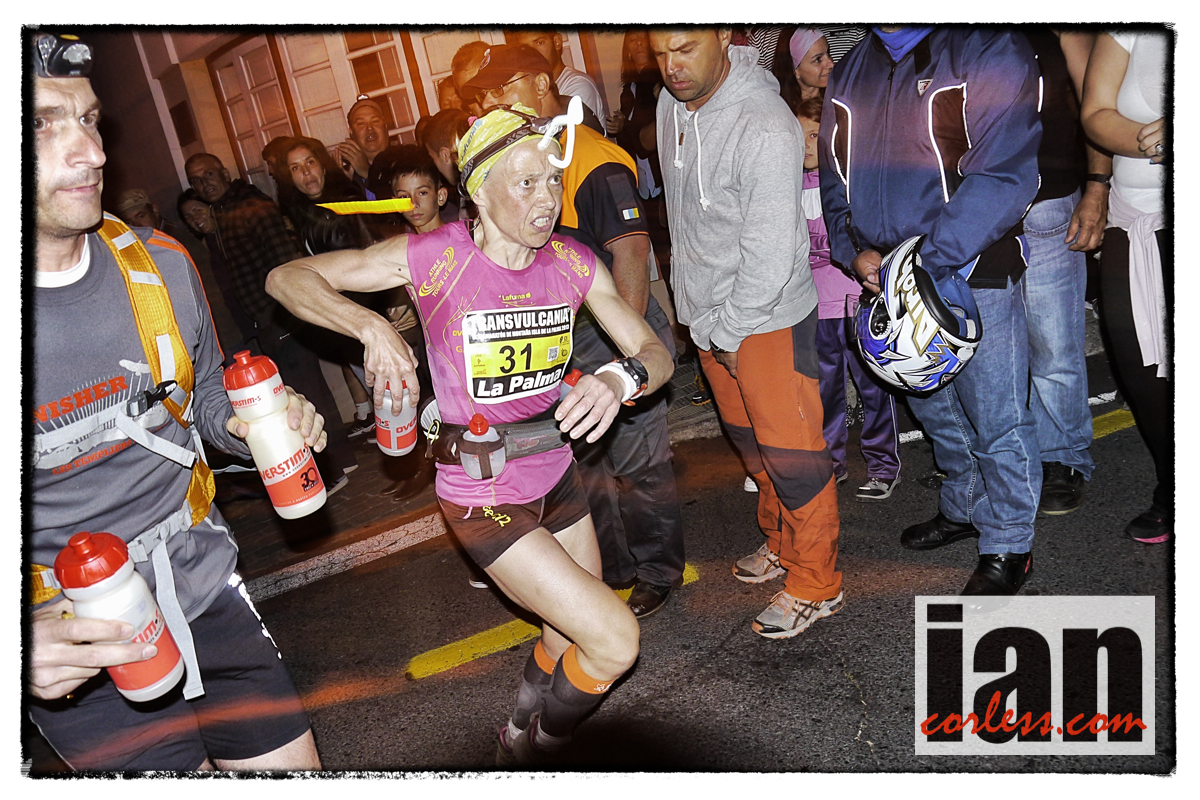
Nathalie Mauclair returns as the 2013, defending champion and I wouldn’t want to bet against her. She ran a great race in 2013 ahead of Emelie Forsberg and in 2014 the French lady has had a string of great results, notably 3rd at UTMB and Western States, Nathalie has speed and endurance; a lethal combination. However, the speed can sometimes upset the apple cart by running too hard/ fast too early.
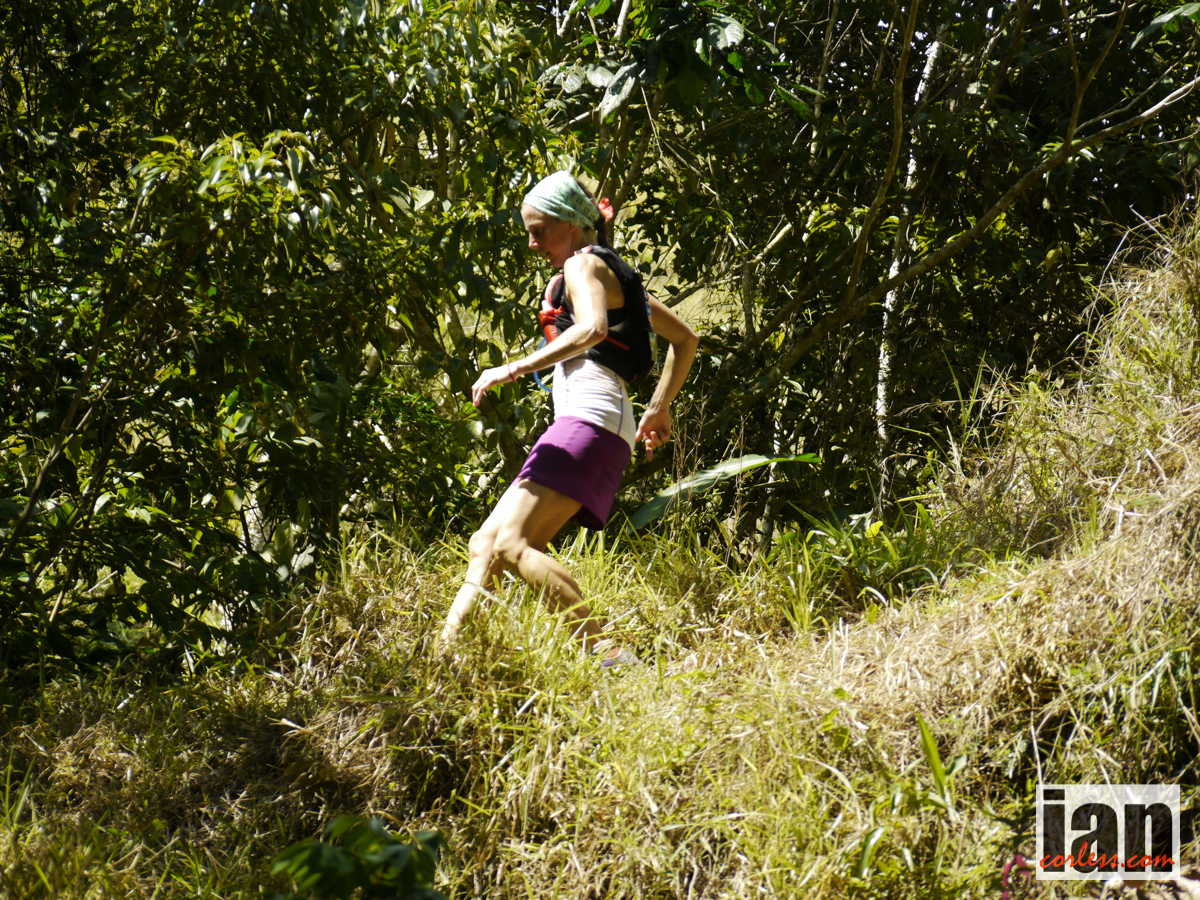
Julia Bottger won the 2014 Ronda dels Cims and knows the Reunion course well. She loves long and technical mountain races and as her results at Tor des Geants show, she will be a definite podium contender here on the island. Julia has had a busy year though. It started in Costa Rica at The Coastal Challenge and post Reunion she still has the Salomon SkyRun to do.
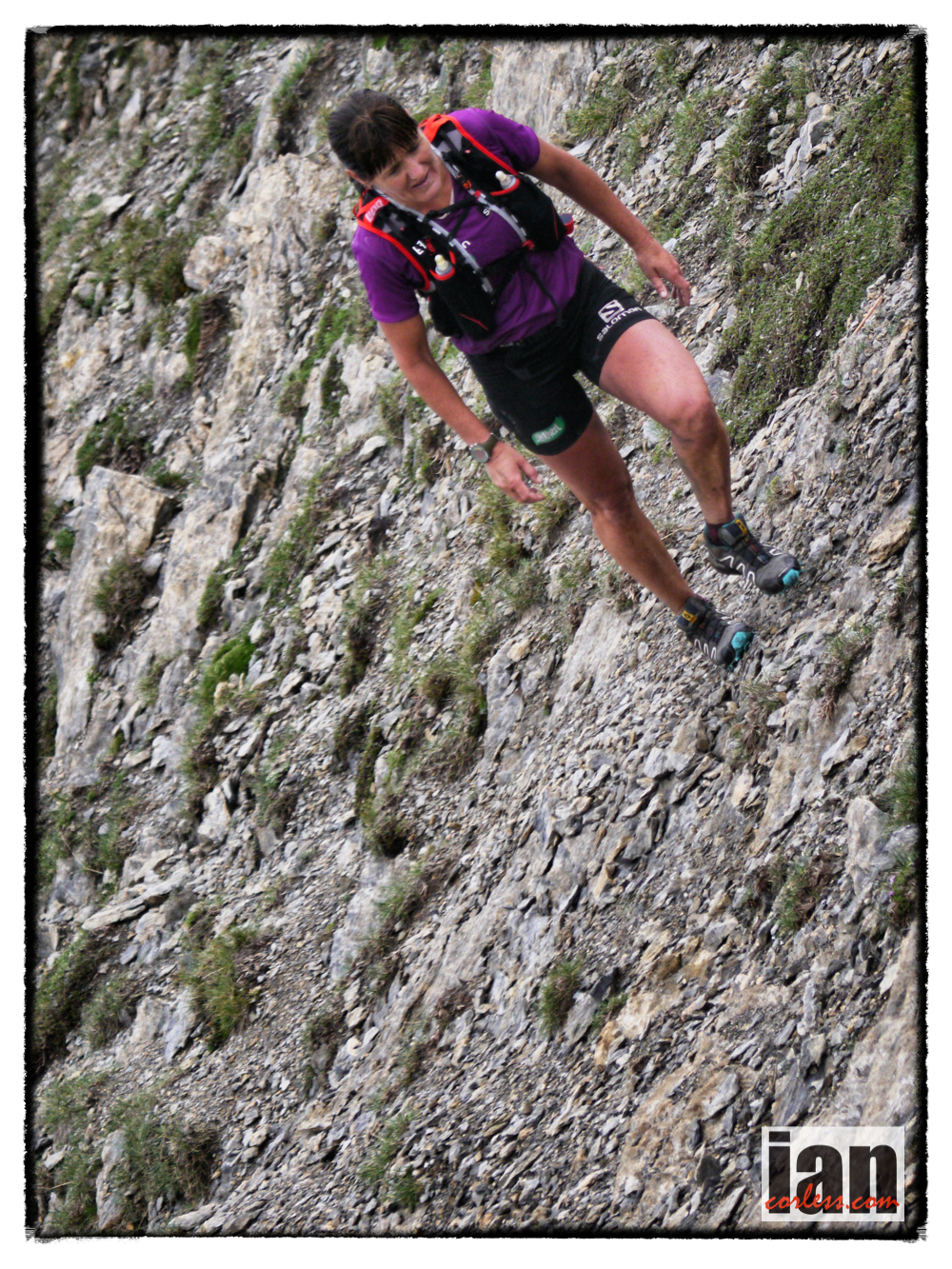
Nerea Martinez ©iancorless.com
Nerea Martinez like Julia embraces tough. She placed 2nd at Ronda dels Cims and has had a string of top results ranking top-5 at Transgrancanaria, UTMF, TDS and she placed 6th at Lavaredo.
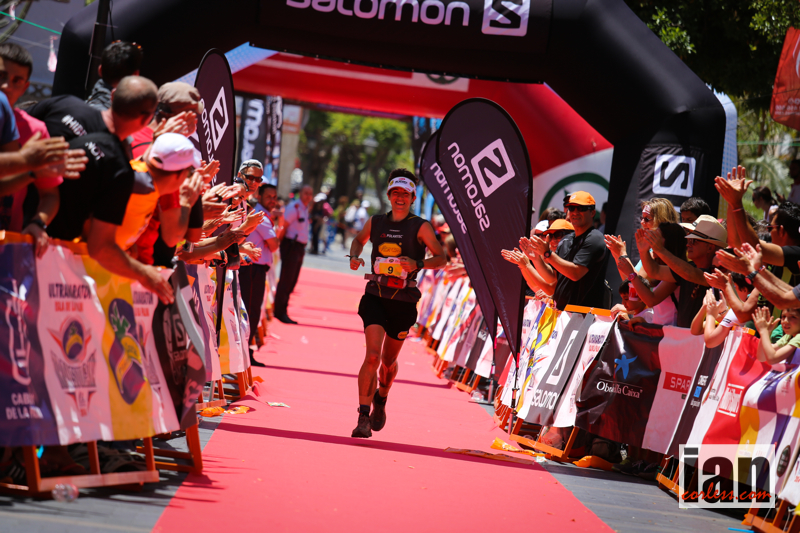
Uxue Fraille knows how to pace herself and can play the waiting game. As the other ladies falter and fail, expect Uxue to move up and contend the podium. Placing 3rd at Transvulcania was a great result early in 2014 and recently placing 5th at UTMB confirms that a podium place at Reunion is a distinct possibility.
Denise Zimmerman placed 3rd at Tor des Geants and although I am sure the other ladies have acknowledged her presence in the race, she may well be a surprise to watchers and followers. Denise is no one trick pony as she has made the podium at Transgrancanaria and placed highly at UTMB in the past.
Finally, Lisa Borzani may mix things up and although she finished 2nd at the 2014 Tor des Geants, I don’t see her having the gusto to rally once again for another big effort. Particularly when you look at her recent results. Back-to-back podium places at Tor and TDS must leave you jaded.
Alexandra Rousset may pull something out of the bag. She placed 4th in 2012 and has won the race previously (2004).
Notably, UTWT series leader Nuria Picas will not run and in addition, neither will Fernanda Maciel and Francesca Canepa.
2500 runners will toe the line and more information is available HERE



![Suunto_logo [ConveWHITE_rted]](https://iancorless.org/wp-content/uploads/2014/10/suunto_logo.jpg)

