International Trail Running Association (ITRA) – Press Release

Introduced a few months ago, the International Trail-Running Association (known as the ITRA), is answering the necessity to organise trail-running as a full discipline and was registered as an association last July. Today, the website http://i-tra.org is active, members have started joining and visitors are able to obtain information… The association’s work doesn’t cease to grow and evolve, the principal motivation being to promote and to develop Trail-Running at the world level by addressing all players in the field.

This press release has been provided by the ITRA. It has been posted impartially to provide an informative resource to the trail and ultra community. Ian Corless


The ITRA is, today a real player in a discipline in full evolution. After two years of reflection, meetings and exchanges we can now talk about the end of the first act?

If Act 1 corresponds to the end of the set-up, yes… the first principles and basic values are well and truly in place… Today the ITRA, due to the preliminary work carried out by 5 working groups, can work towards the development of trail-running as a full sport,respecting the diversity of the cultures and venues, around the same ethical vision of the discipline.

Concretely different but important items such as the establishing of an ethical charter, an international definition of trail-running, a health policy, the management of high calibre athletes and an international ranking, have already been thought through at length and the conclusions are on-line on the website.

Today, the ITRA collaborates with national trail-running associations, national and international federations, and gets involved as a real partner in the promotion of a sports ethic leaning on strong values (authenticity, humility, fair-play, equity, respect, solidarity) alongside not only all trail-running players, but also the general public: the improvement in the quality of organisations and participants safety; facilitating preventive actions concerning health matters and the anti-doping fight; the implementation of an environment-friendly practice and the promotion of sustainable development within trail-running are the priorities. Today the ITRA participates in the organisation of championships and continental or worldwide trail-running circuits which reinforce the visibility of international trail-running.

Who is the ITRA aimed at? And what does it offer them?

The ITRA is open to all players in the field of trail-running, runners whether elite or not, organisers, brands… It wants to give ALL its members the best service by making available the means by which it can live up to expectations of all.

For all race organisers and associations it is the opportunity to join an association which has international representation, a guarantor for the seriousness and quality of the organisation. Help and advice, evaluation the quality of races and establishing a label of quality, health matters and fighting against doping, being put into contact with service providers, development of the member organisations and the optimization of communication,  recommendations for security … as well as other services will be put into action during 2014 in direct response  to clearly expressed opinions.

For brands and equipment manufacturers: Always with the will to gather all the players in the world of Trail-running, the ITRA wishes to take into account their opinion within its various commissions. The performance index published on the ITRA’s website will, from the beginning of 2014, help companies to promote their runners’ results and prize lists and therefore benefit from more visibility.

For the runners, the international performance index established from the results of the previous 2 years, and the year in progress, allows them to see their level in relation to the best athletes in the world. The database already lists more than 320 000 runners from the results of 3 500 races.

The implication of the elite athletes via a commission dedicated to them will mean that events can be organised to suit their requirements. The race Calendar will be available in 2014 and will be regularly updated to give a global vision and help runners to better managetheir season.

Being a member of the ITRA opens the door to participantion in the various debates and to very soon benefit from an individual page for personal information (photo, club membership, team….). Membership already gives access to better and more complete information upon consulting the performance index.

Annual membership costs 5€ for runners and followers, 150€ for associations and companies and for race organisers the cost is in relation to the size of their race starting from 30€.

What are the concrete actions today?

The ITRA is actually acting on several levels.

Security is the 6th sector of work taken on by the ITRA. Indeed, the level of safety during organised trail races world-wide is very varied between one country and another, one race and another. If certain countries like France have, at the initiative of organisers and due to the input of Fédération Française d’Athlétisme, special regulations adapted for trail-running, that is not the case in most othercountries. The ITRA’s security commission, created in October, is comprised of ITRA members or partners who have a lot ofexperience in the security sector. Its objective is to publish, in spring 2014, a text which will evoke recommendations and adviceallowing all organisers, whatever their nationality, to take the necessary precautionary measures and to set up a well adapted securityplan.

In matters concerning health, the association «Athletes For Transparency», an ITRA partner, is actually developing a unique Web service platform which will centralise all the runners’ necessary medical and sporting information. This service will not only allow the runners to follow their medical reports to facilitate their relationships with organisations and to share their training with the community, but also so that organisers can access the necessary information for the implementation of a prevention initiative regarding health.

The ITRA participates in the elaboration of trail-running circuits. A partnership has been made with the Ultra-Trail ® World Tour (UTWT) for the realisation of its ranking to be drawn from the performance index. Elsewhere the ITRA is also a partner of a new Spanish circuit, the Ultra-Trail® Spain Tour which has several races on offer of between 80 and 120km.

Finally in collaboration with the IAU (International Association of Ultra runners), the ITRA is working on France’s candidature for theorganistion of the 2015 Trail-running World Championships and is giving its support to the MaXi Race (86km, 5 600m ascent, aroundthe Lac d’Annecy – 74). The application has been validated by the FFA (Fédération Française d’Athlétisme) and the IAU’s decision isexpected in the next few days.

The ITRA’s objectives are ambitious and, with the vice-presidents Alessandra Nicoletti (ITA) and José Santos (POR), we arededicated to the idea that the ITRA, a non-profit organisation, becomes the reference for Trail-Running thought up by, and for, all theplayers in the field of the discipline

END

Provide us with your feedback 

  1. What are your thoughts about the ITRA?
  2. Does our sport need an ethical charter?
  3. Doping… does our sport have doping and do we need anti-doping?
  4. As a runner do you need to see your performance and how it compares to everyone else?
  5. Does the UTWT or other similar circuits appeal to you?
  6. What are the pluses?
  7. What are the negatives?
The North Face FL Race Vest

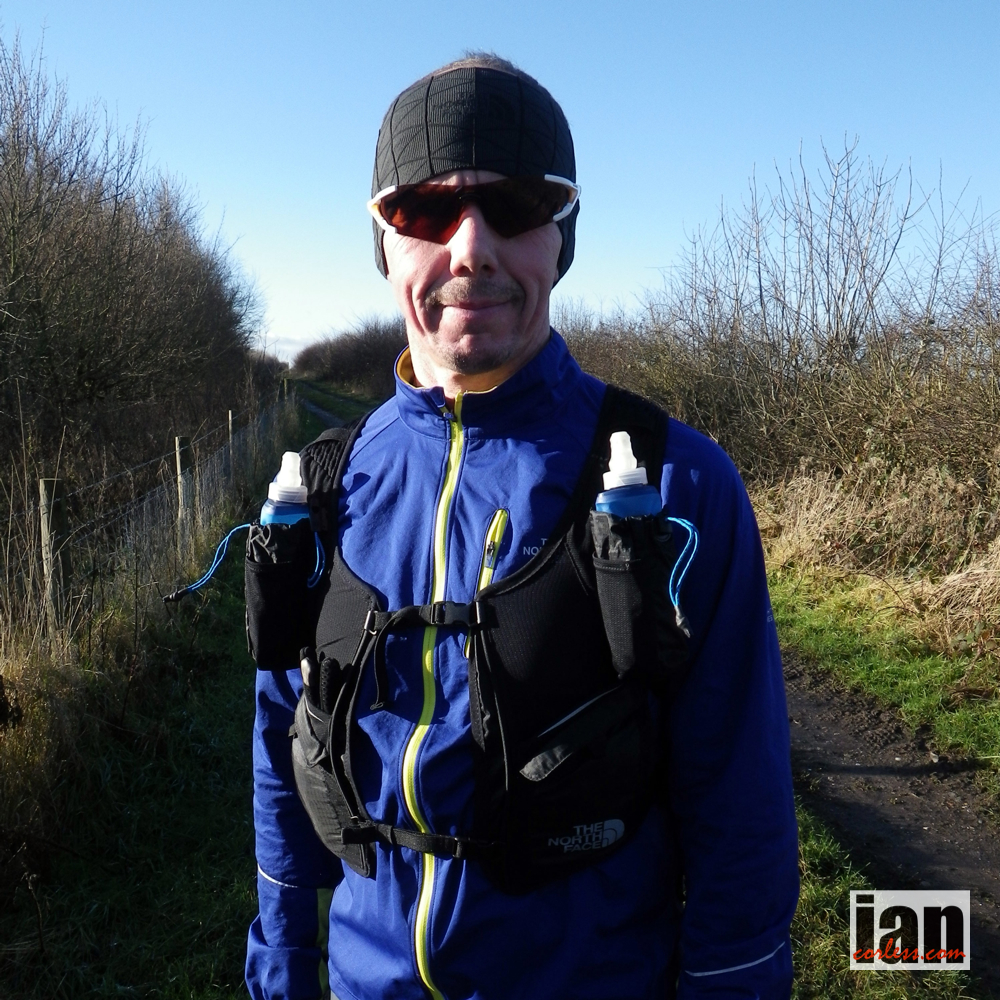
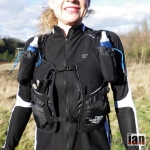
©iancorless.com.IMGP0003

The North Face FL Race Vest is a race vest that has been well over 12-months in the making. I first had a look at this pack in November 2012. It was a prototype that had been created in preparation for Jez Bragg‘s epic run on the Te Araroa Trail in New Zealand.

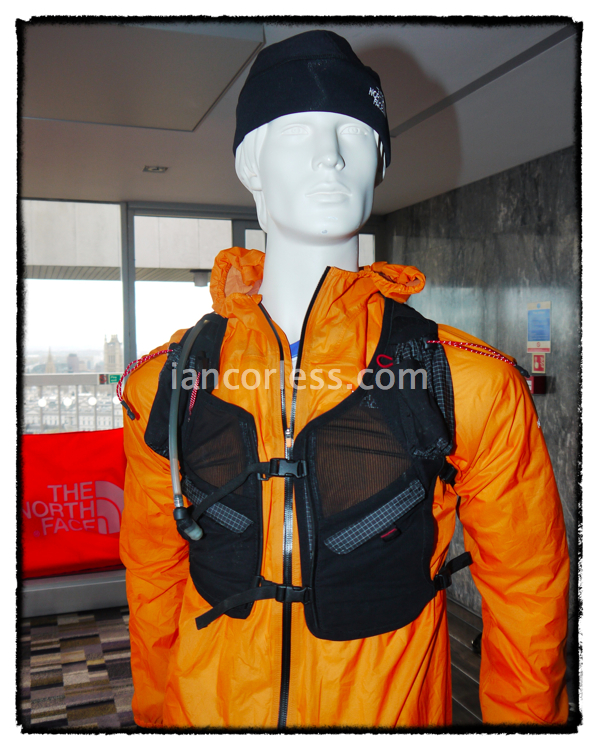
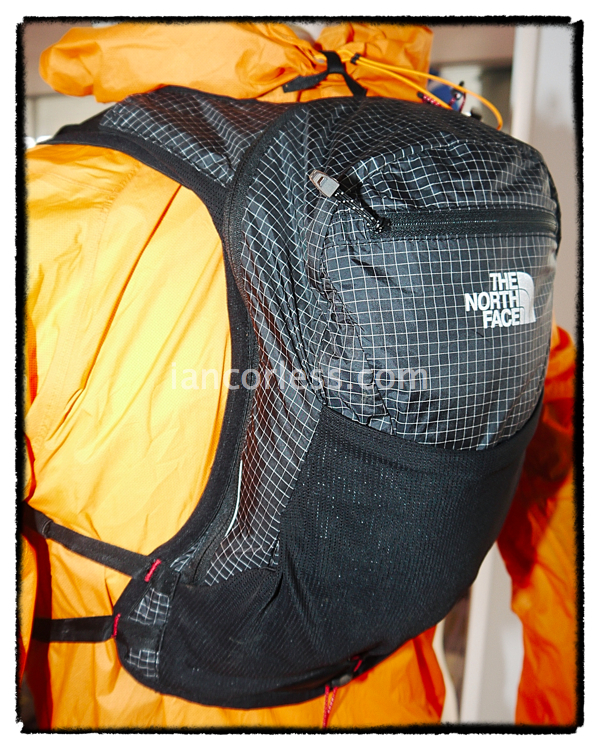
FL prototype 2012

FL prototype 2012

FL prototype 2012

FL prototype 2012

You will see the above images are a more minimalist version of the current FL Race Vest, however, lessons were learnt from the prototype and with feedback from Jez Bragg and Lizzy Hawker, the current model has been developed and tweaked with the TNFUTMB and similar long distance races primarily in mind.

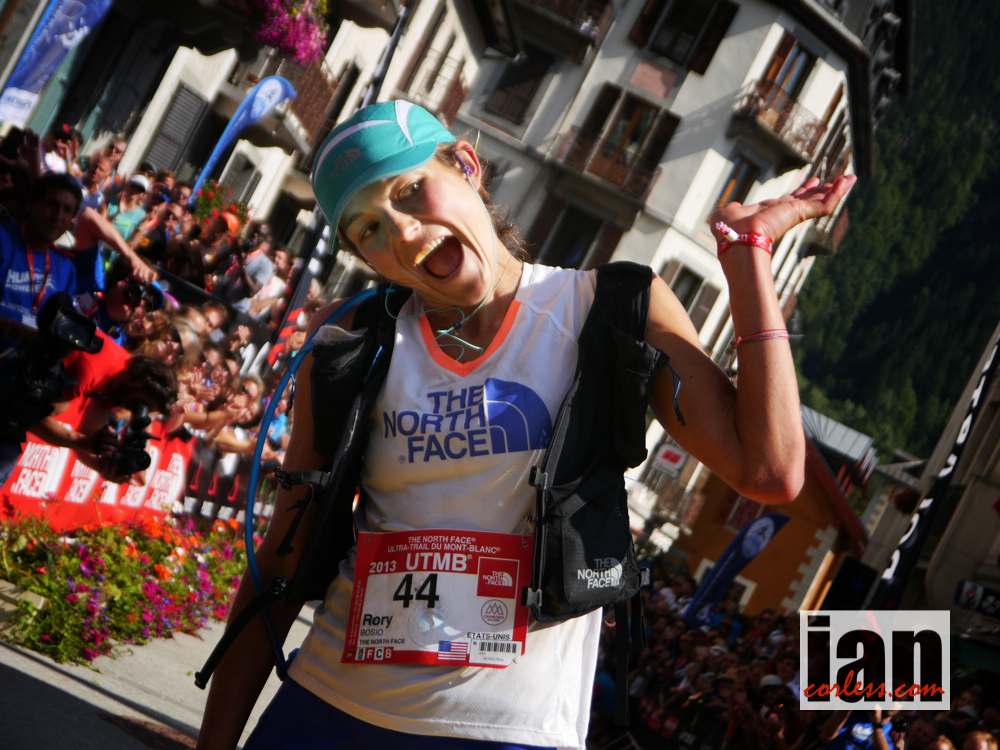
I picked up my current vest just days before the 2013 edition of the TNFUTMB and it was reassuring to see that my vest was exactly the same as the ones being used by Rory Bosio, Jez Bragg and the rest of the TNF team.

Rory Bosio wearing the FL Race Vest after dominating the 2013 TNFUTMB.

Rory Bosio wearing the FL Race Vest after dominating the 2013 TNFUTMB.

Race vests have become the ‘norm’ in regard to race packs. All the leading brands are developing new systems, new sizes and new designs in the quest for the ultimate product. Certainly, Salomon have very much paved the way recently with S-Lab 5lt and 12ltr. In addition, my recent review of the inov-8 Race Ultra Vest had me 99% convinced that in my opinion, this new product by the UK brand was currently the ‘best’ available of its type.

The North Face FL Race Vest sits between the inov-8 Race Ultra and Salomon S-Lab products. Although the inov-8 product is supremely comfortable and perfectly designed, it may just not be big enough for a tough or long race when mandatory kit will stress a packs capacity. By contrast, the Salomon S-Lab 12ltr has been designed with long racing in mind and offers an excellent form fitting pack that many swear by. At 8ltr capacity, the FL Race Vest sits nicely in the middle ground and actually may very well be the perfect size for a mountain 100-mile race like TNFUTMB or similar.

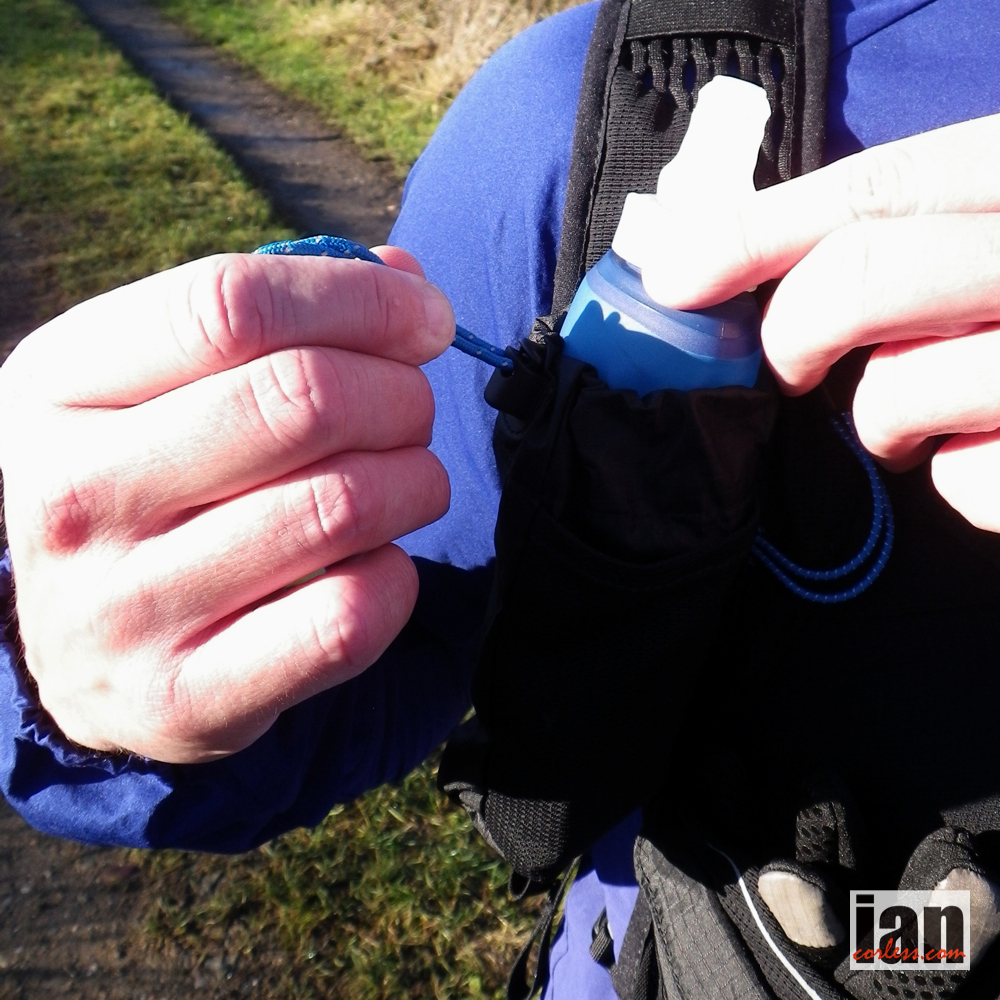
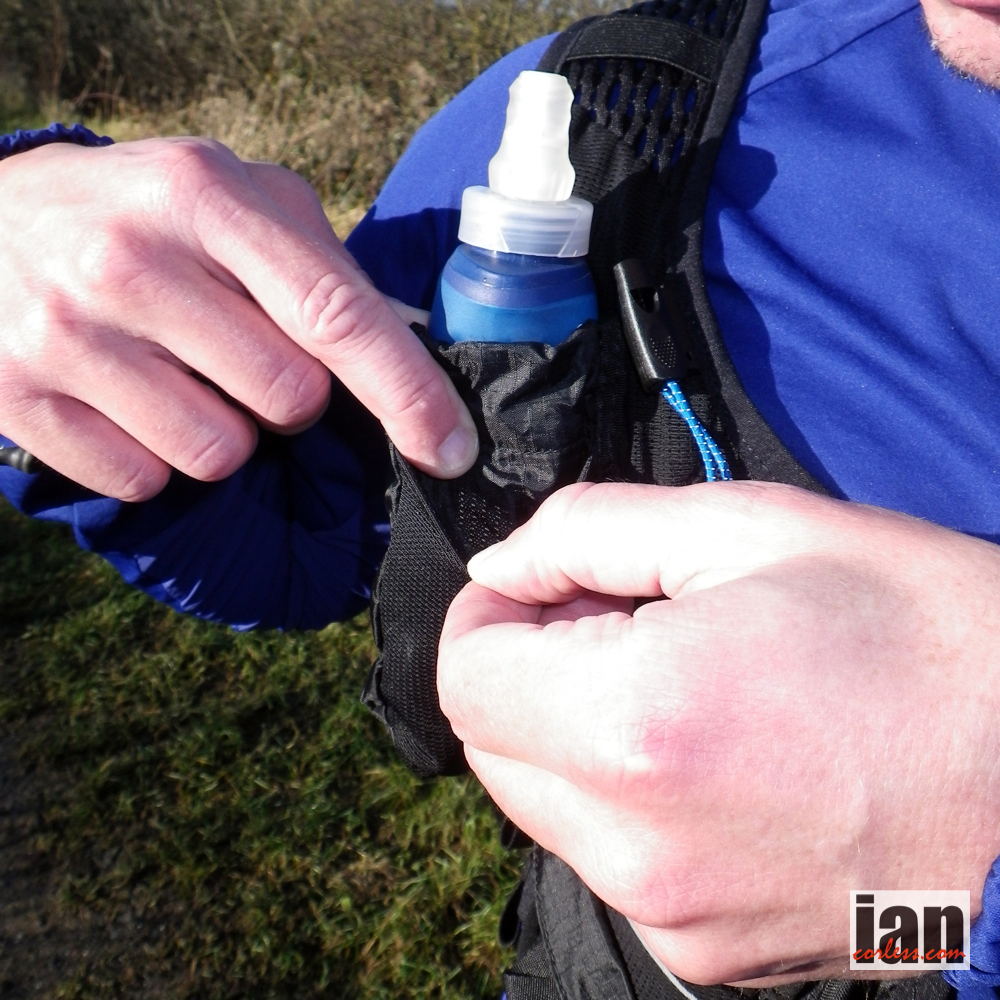
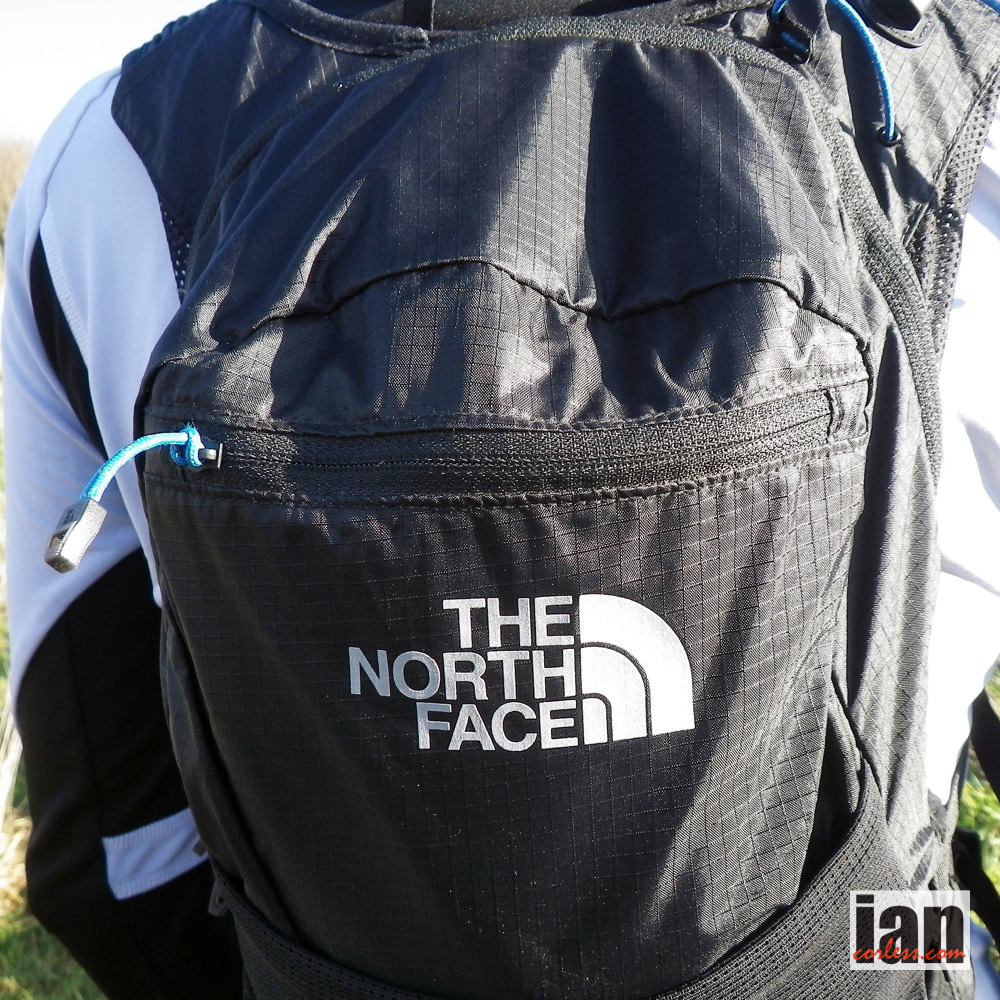
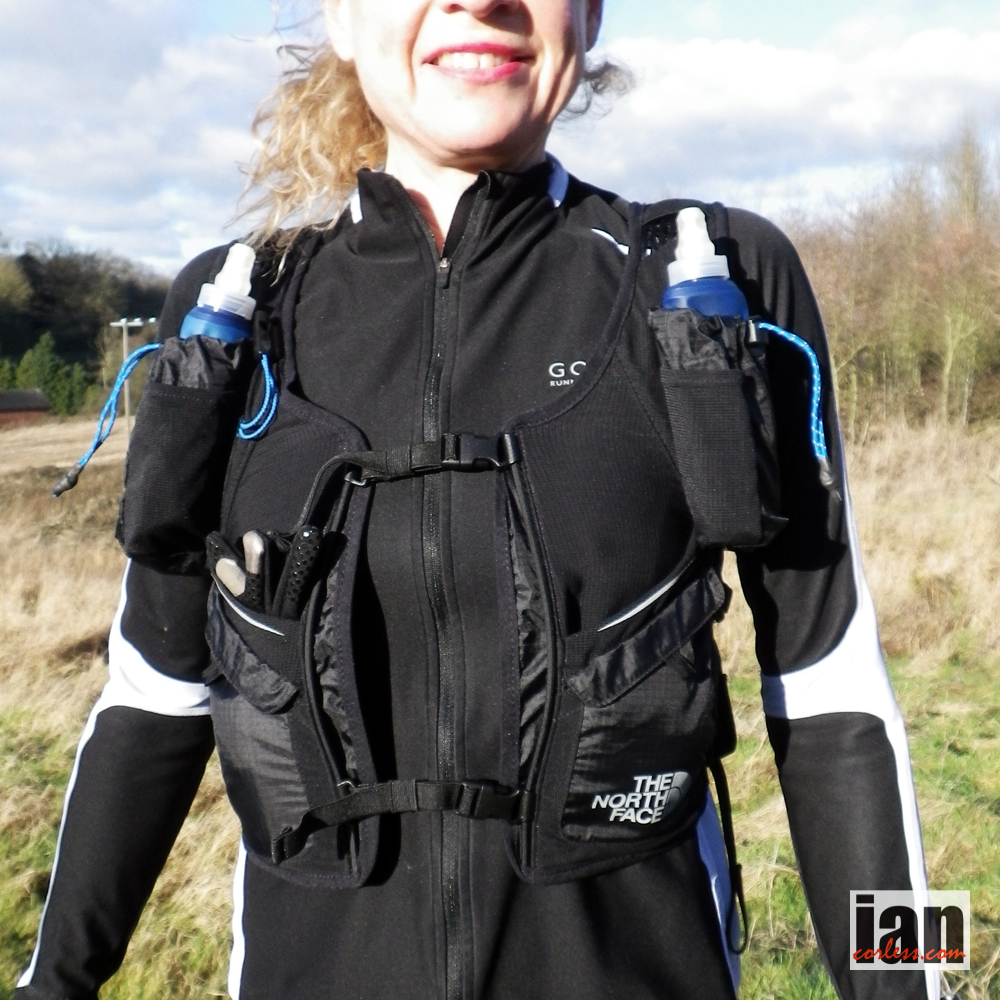
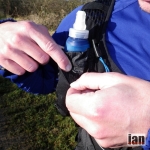
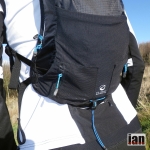
Like all current vests, the FL comes with a bladder that sits inside a mesh pocket within the main compartment of the pack. However, if you are like me, you may very well prefer bottles or soft flasks? The front of the FL has two upper drawstring pockets that can accommodate bottles/small soft flasks or other items. I initially tried two 500ml bottles but found the ‘balance’ all wrong. When running they would feel far too close to my face and noticeable bounce from the weight was annoying. However, replacing the bottles with two smaller soft flasks that could accommodate 250ml each, this irradiated bounce and made the whole system not only infinitely more comfortable but also more practical.
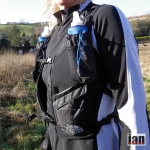
©iancorless.com.IMGP0007

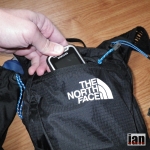
On the outside of the upper pockets are small stretchy mesh pockets that would hold gels or similar products.

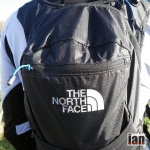
©iancorless.com.IMGP0006

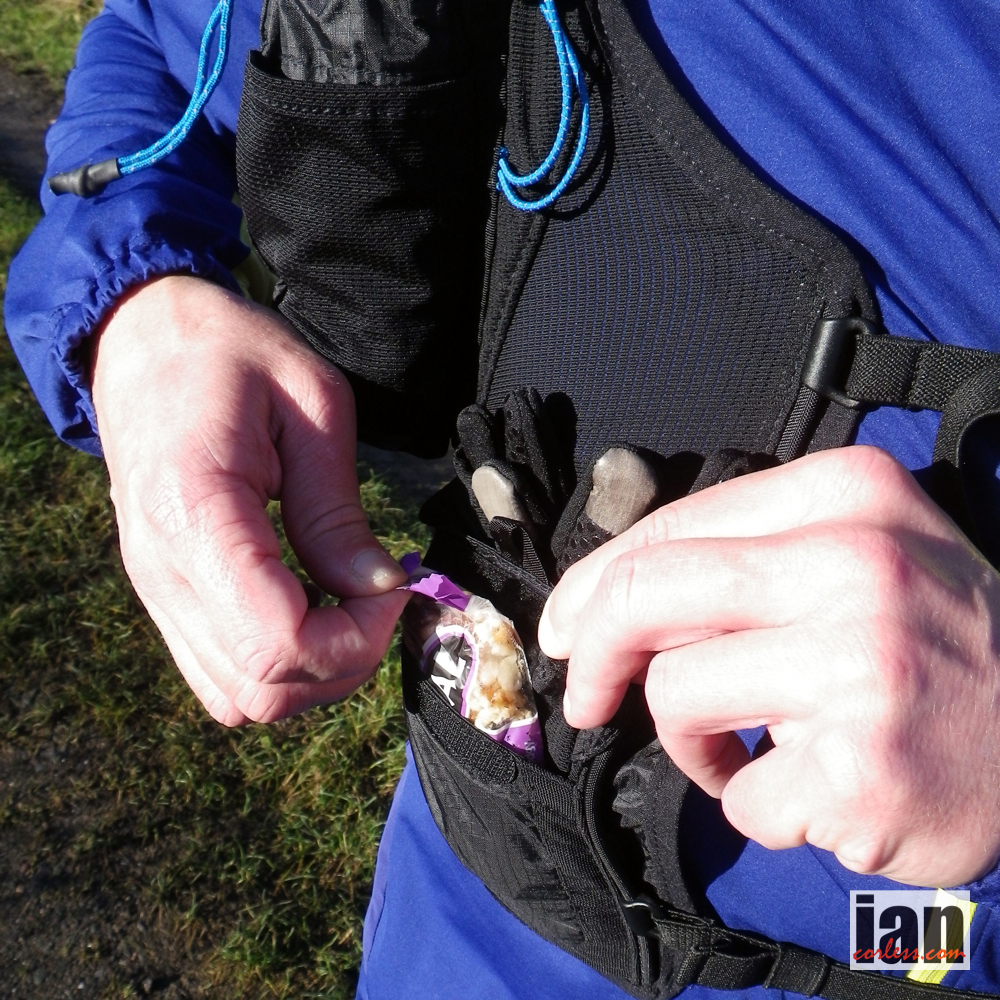
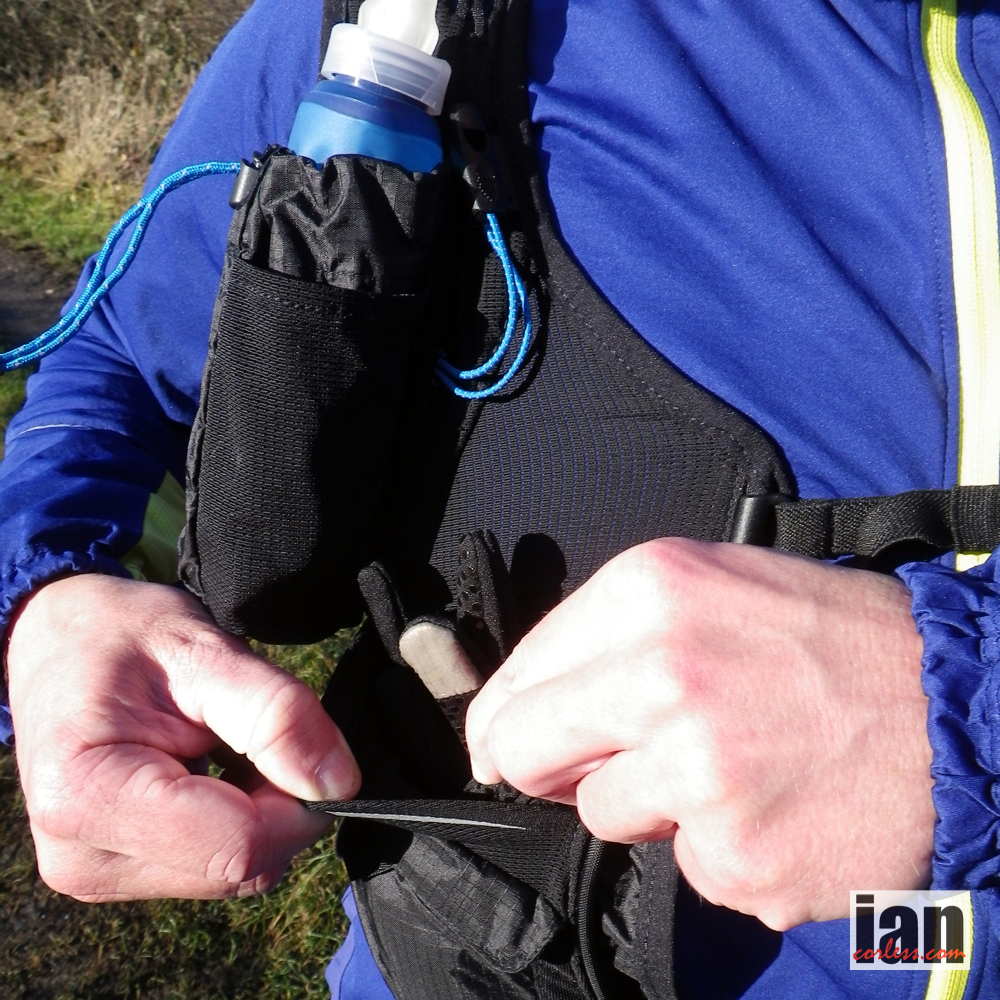
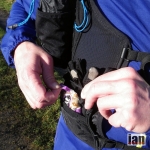
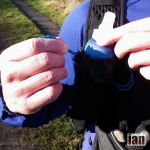
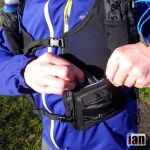
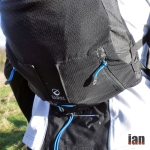
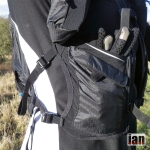
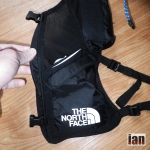
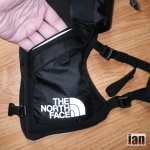
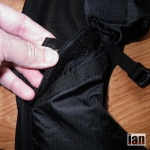
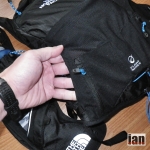
The lower part of the front vest has two Velcro closure pockets that may be useful in holding valuable items such as phone, keys, gps, camera and so on. Equally, you could add any food products for easy access on the go.

©iancorless.com.IMGP0005

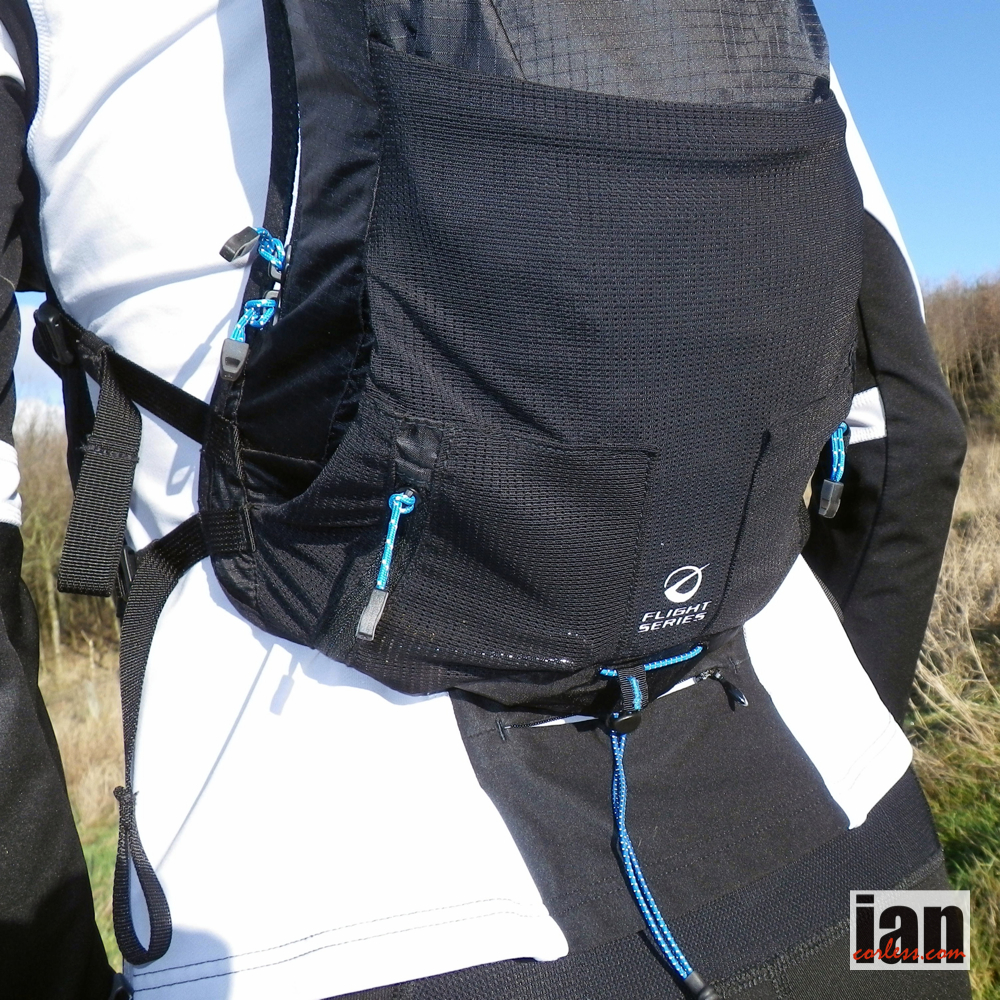
Behind the Velcro pockets are two larger mesh stretch pockets. They are capacious and ideal for gloves, hat or buff type products. In actual fact, they are so spacious you can add soft flasks to increase liquid capacity.

©iancorless.com.IMGP0004

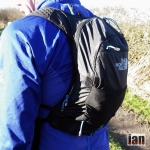
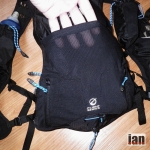
The rear of the pack has an upper zipper pocket that can hold a phone, keys, camera or any other item of value .

©iancorless.com.IMGP0031

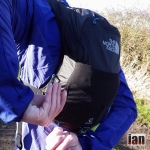
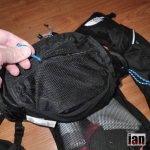
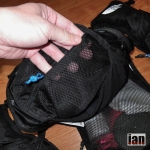
Directly below the upper zip pocket is a capacious stretchy open pocket that can be accessed from the top or the left/ right side. This pocket has been designed so that you may add or remove essential items while still moving… gloves, hat or jacket!

©iancorless.com.IMGP0014

©iancorless.com.IMGP0024

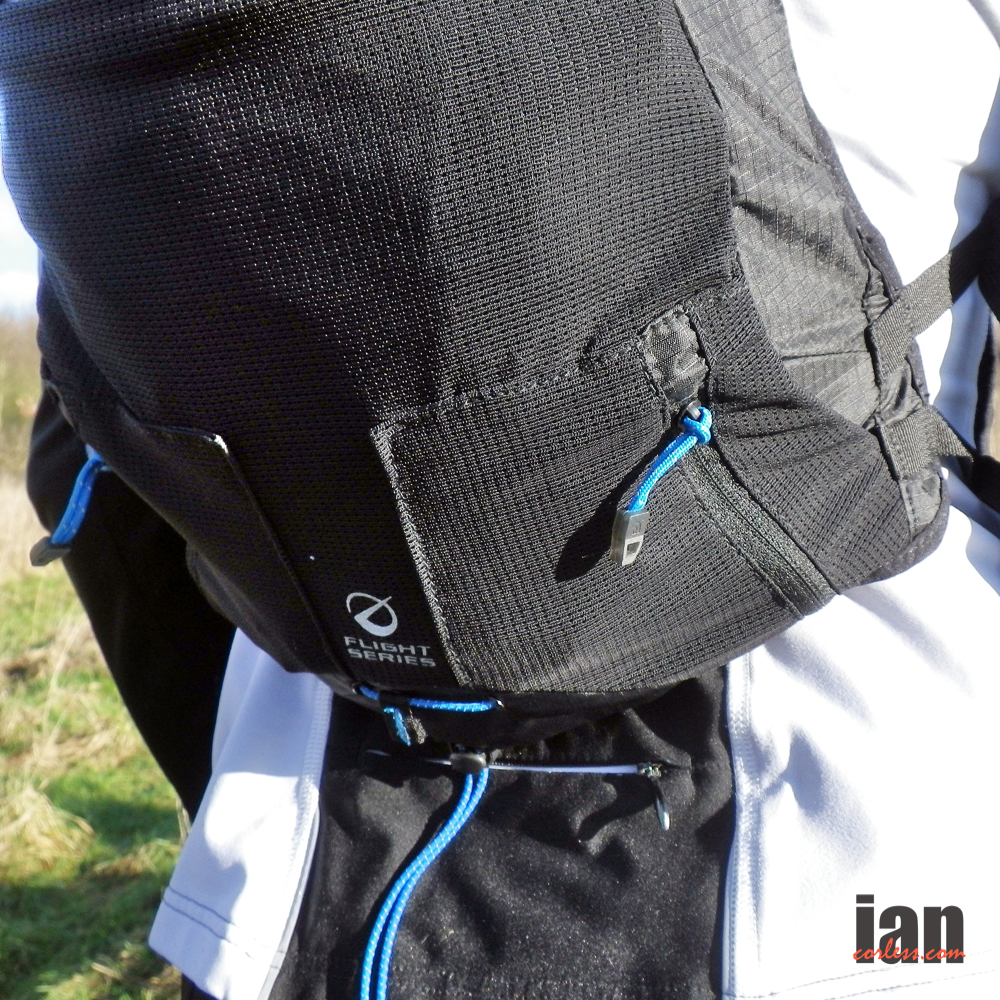
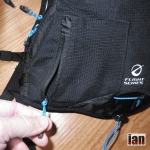
Two smaller zipper products have been added to the left and right hand sides of the larger rear mesh pocket. These pockets may also be accessed without removing the pack. They are small but ideal for money, keys or similar sized items.

©iancorless.com.IMGP0034

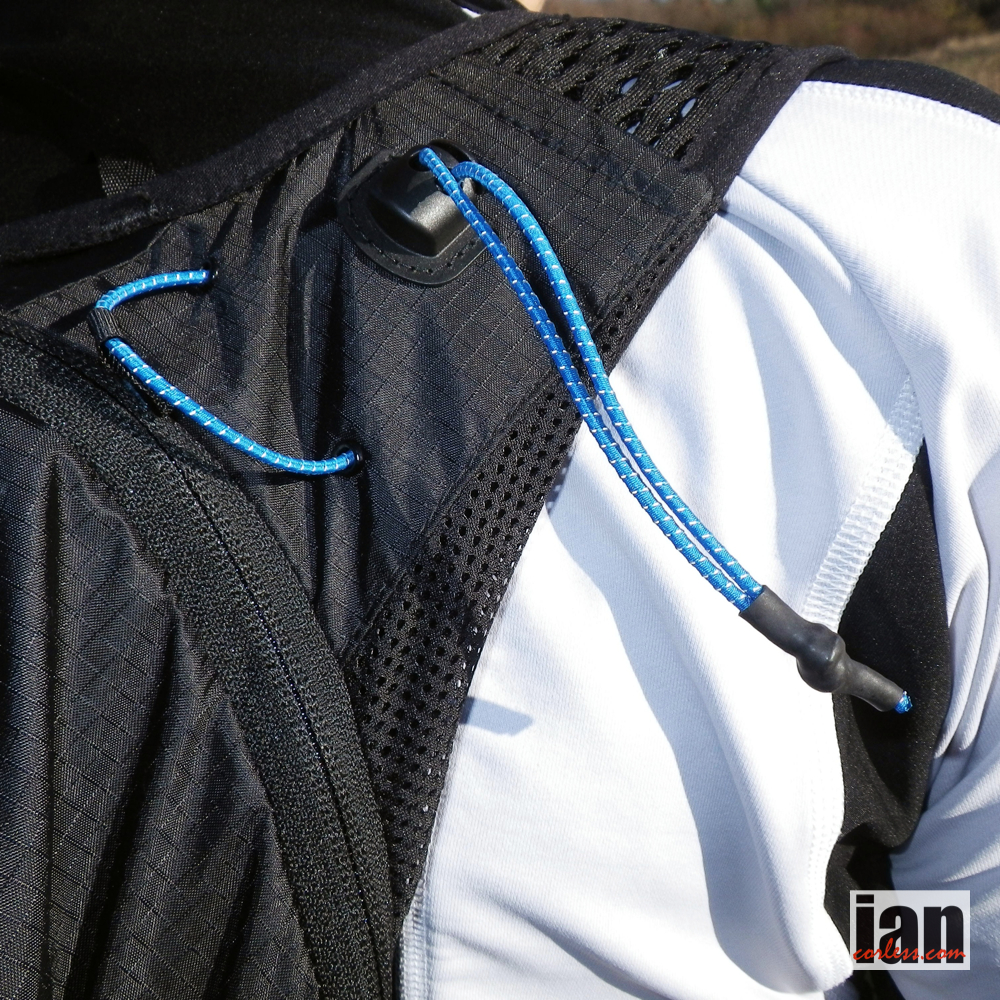
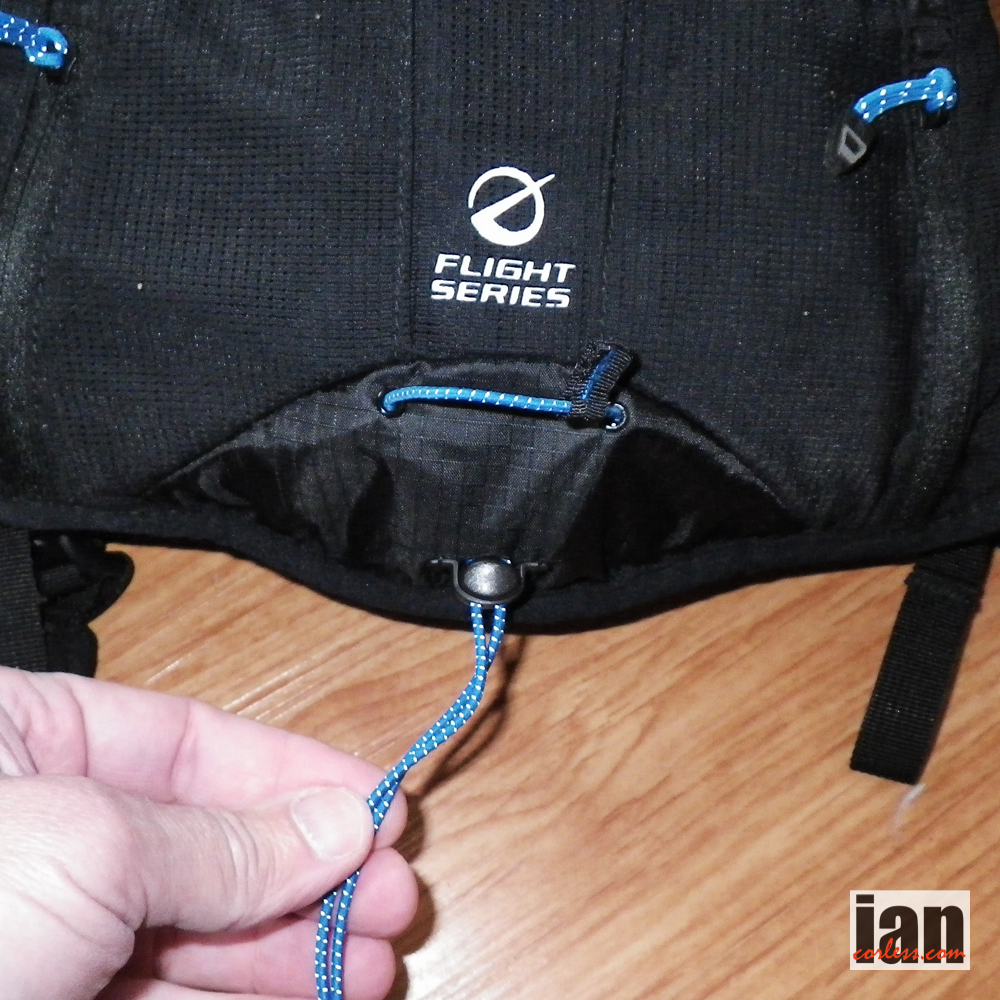
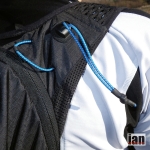
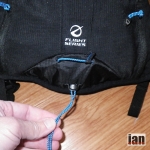
On the upper right hand side of the rear of the pack, is a blue bungee cord designed to hold ‘poles’ when not in use. Equally, at the bottom of pack on the rear is another blue bungee to hold the opposite end of the poles.

©iancorless.com.IMGP0033©iancorless.com.IMGP0101

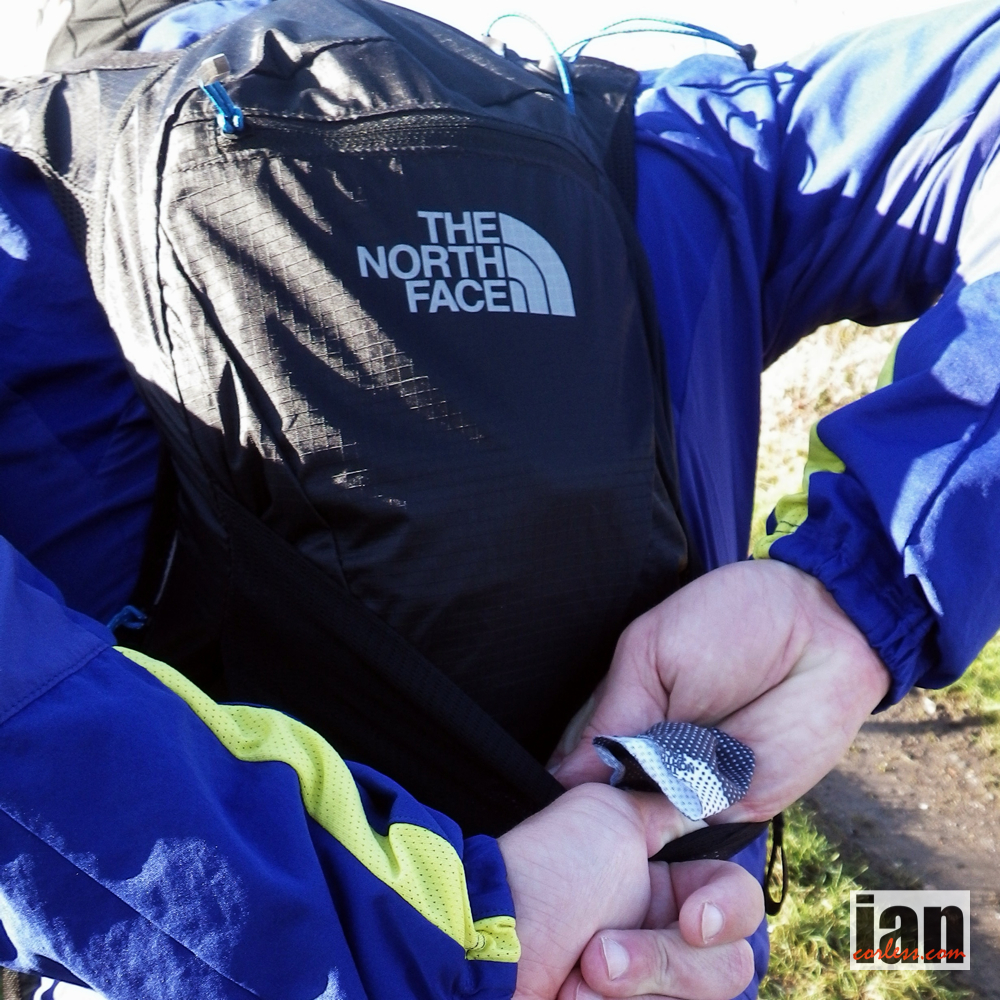
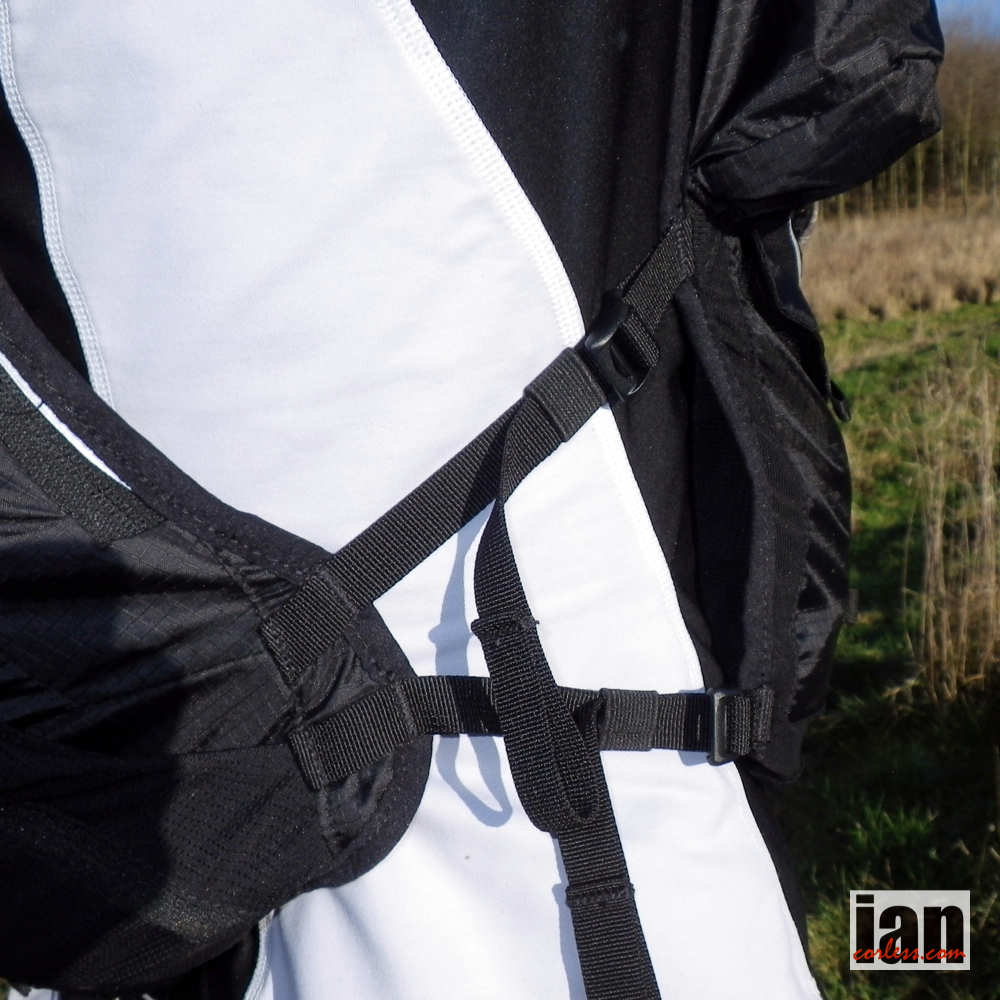
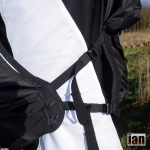
A key feature of the pack is the adjustability on the side and the front. Underneath the arms are two independent straps that may be lengthened or shortened to get just the correct fit.

©iancorless.com.IMGP0035

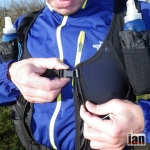
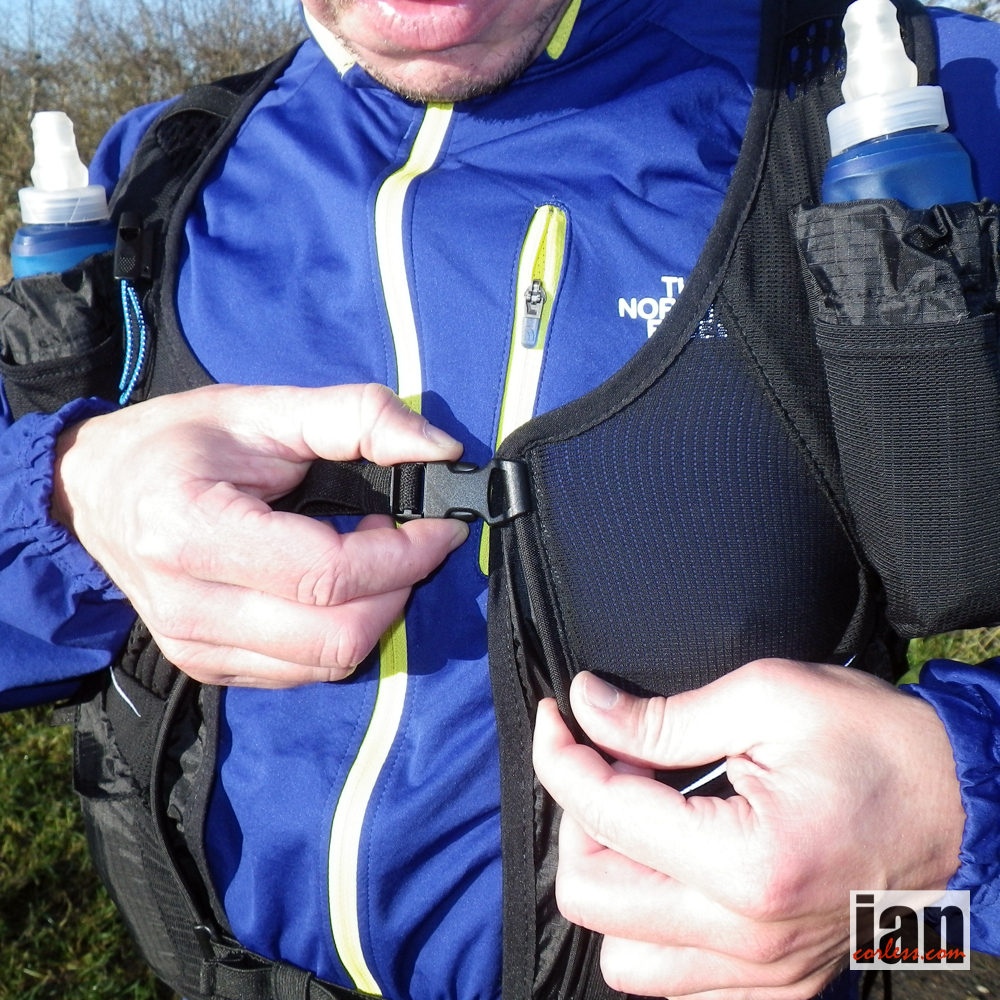
On the front are two adjustable straps that have quick release buckles. The straps may be moved up and down independently to get the correct fit based on your morphology.

©iancorless.com.IMGP0008

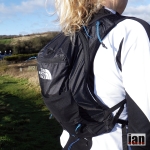
A key point, particularly for ladies, above the pockets on the front are soft panels that stretch and adjust dependent on the size of your boobs/chest. When testing the pack, we ensured that we cross referenced everything with a female perspective. The feedback? ‘The best and most comfortable pack I have used for the female form’.
©iancorless.com.IMGP0028

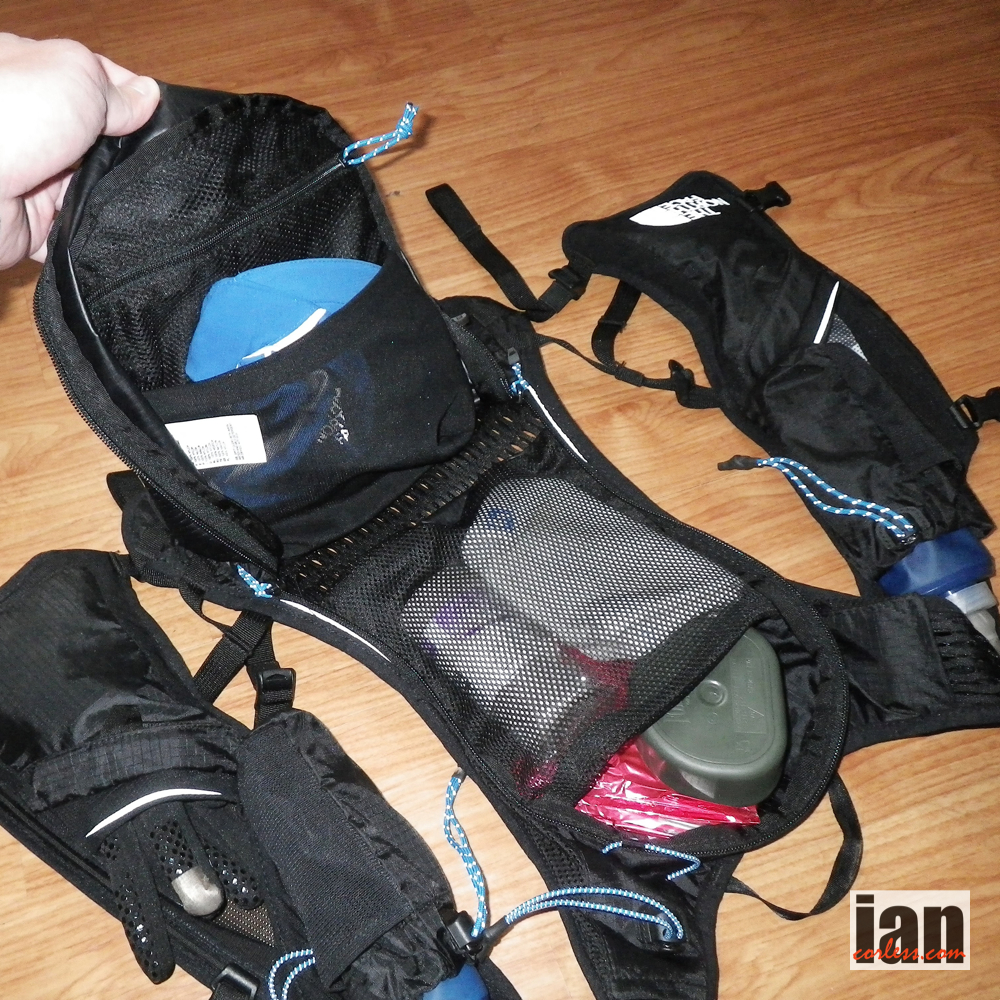
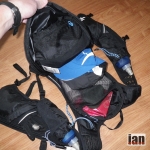
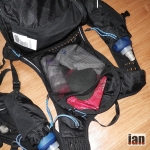
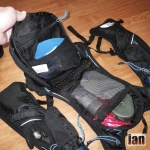
One of the key elements of the pack is the inside of the main compartment. Instead of one large space, it has been compartmentalized to provide storage space for specific items. Of course, this is open to personal taste but as you will see fromm the photographs, this is a great help for a long race when one needs to carry a jacket, over trousers, space blanket, elastic bandages, cup and so on.

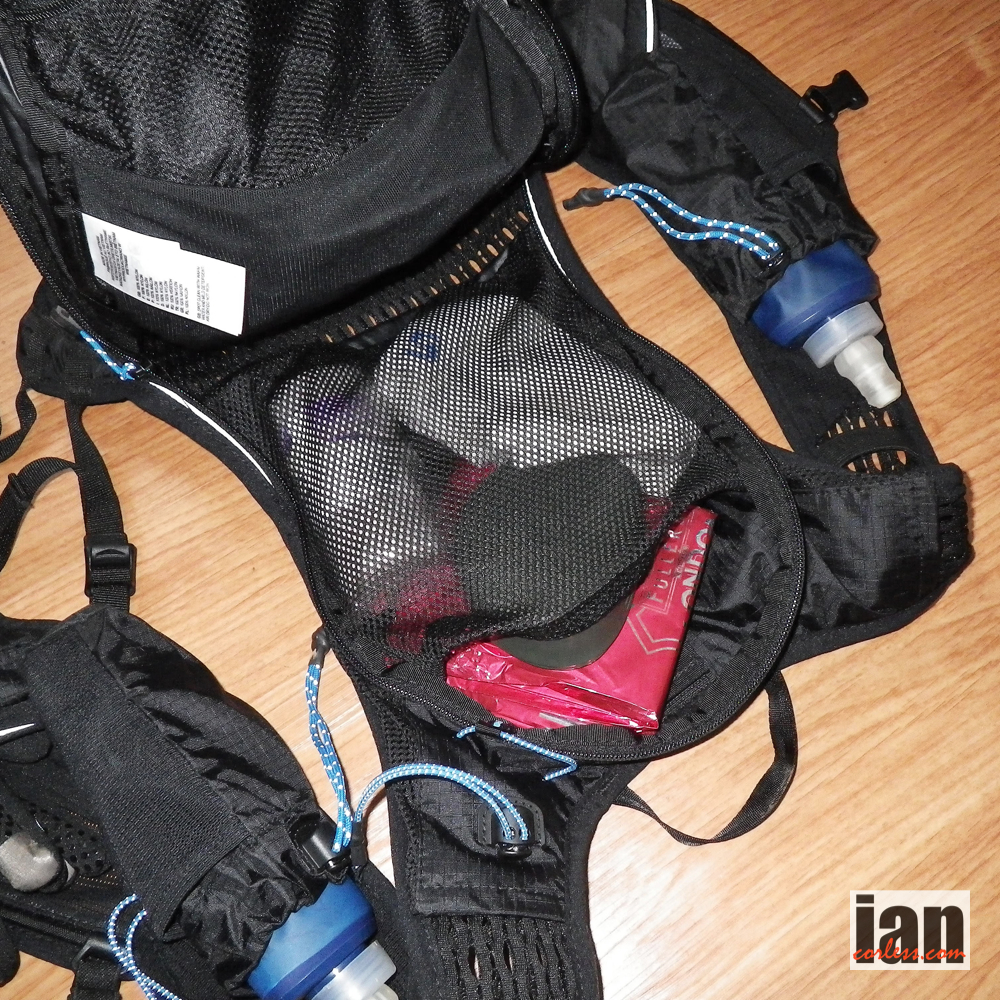
The zipper for the main compartment is full size, allowing the pack to be opened completely. This makes access very easy. On the back panel is a large mesh pocket that would hold the ‘bladder’ if this was your chosen method of hydration. I personally use this for space blanket, elastic bandages, cup, first aid and other mandatory items.

©iancorless.com.IMGP0103

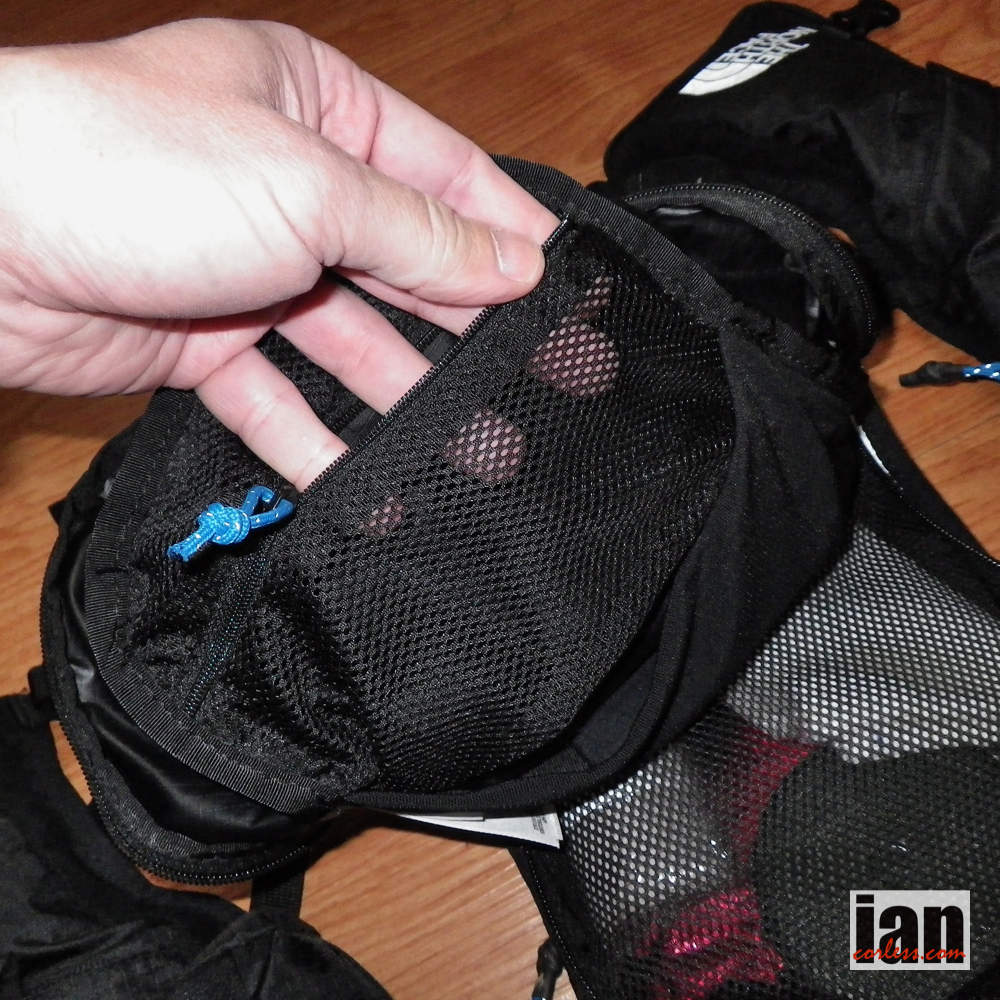
The other side has a larger mesh pocket that is open ended, I add my hat and over trousers here and above is an internal zipper pocket.

©iancorless.com.IMGP0105

The open space between the front panel and back panel is roomy and ideal for a bulkier item such as a fully waterproof jacket.

This FL has been thought out to minute detail. It has perfect storage space built around the needs and desires of a long race when mandatory kit is required. It has also been designed to make access easy and stress free. The added combination of ‘on the go’ access to key areas of the pack while running makes this a serious and top contender for those looking for a fast, light and responsive pack that will allow the user to run stress free.

IN USE and TESTING

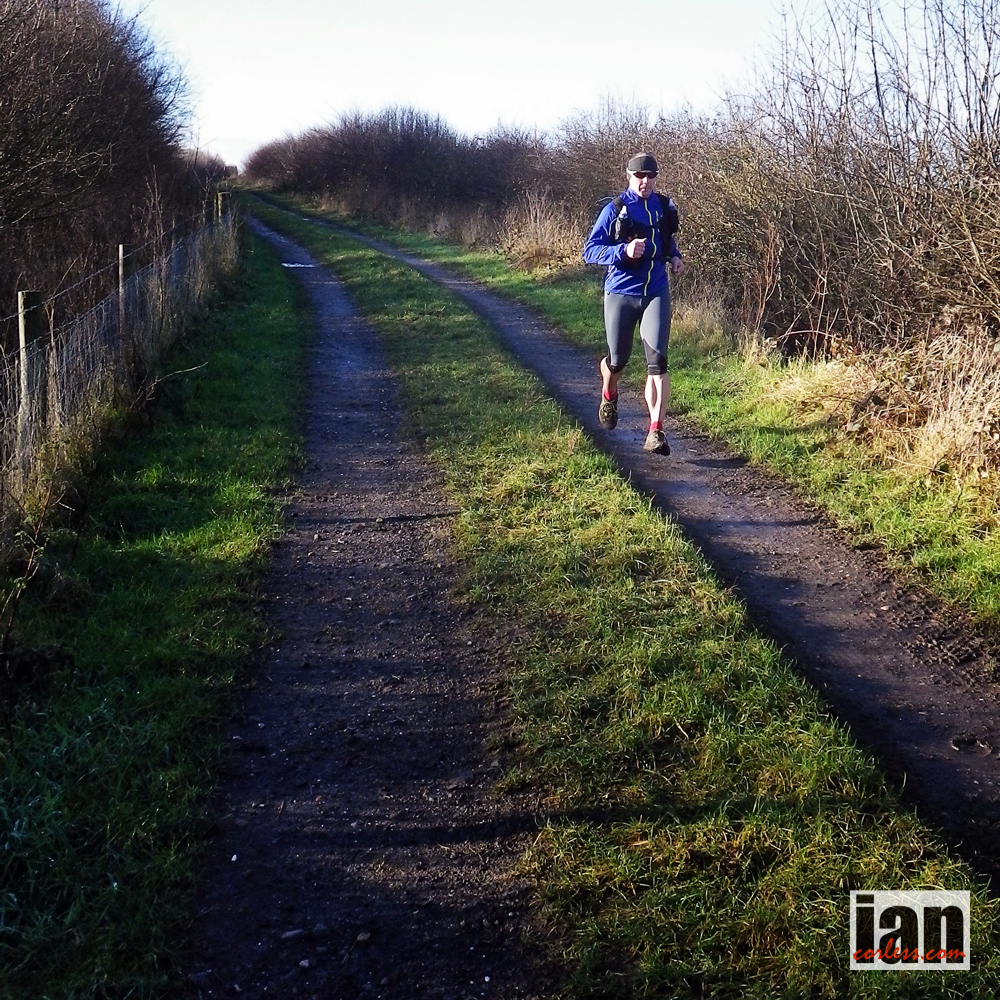
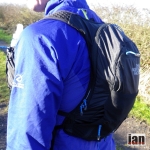
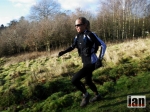
The FL has been on many runs and tested over the last 4-5months. On faster sessions of up to 90-mins and long days in the mountains, this pack holds firm against the body and is a pleasure to wear.

©iancorless.com.IMGP0015

I had no issues on it’s storage capacity. I could fit all my required kit in the pack and it still retained its form and comfort, even when fully loaded.

If I added the bladder to the rear compartment, this certainly did eat into storage space and one had to be a little more creative with packing.

As mentioned previously, I would always prefer to use bottles to a bladder and this may very well be the stumbling block with the FL. Two 250ml soft flasks are not adequate liquid capacity for any long run in the mountains, even when feed stations are on the route. Adding additional soft flasks in the lower stretch pockets on the front of the pack is possible but it feels like a compromise. I did add 500ml flat bottles to these pockets for one run and I thought I had found a solution. However, after an hour my ribs started to hurt with the pressure placed on them. I never did find a full solution for the problem other than, if I was out for a longer time, I used the bladder! Of course this worked and it worked admirably. So, this is very much a personal comment. If you like bladders, this will not be an issue for you.

©iancorless.com.IMGP0040

Running with the pack is a dream. It fits close to the body and does not move or bounce. Access while ‘on the go’ is excellent and you can certainly get food, gels, gloves, hat and even a jacket without stopping if you pack with those objectives in mind.

©iancorless.com.IMGP0055

The side adjustable straps offer on the go adjustment and unlike some other vests that are one size, with the FL if you add or remove layers, you can adjust pack tension while on the go to ensure you maintain a comfortable fit.

The front of the pack with two adjustable straps allows for customised tensioning and as mentioned, the upper stretchy mesh panels will be popular with lady users!

CONCLUSION

The FL is a great pack. It addresses many of the problems we all have when mandatory kit is required. The pockets, internal and external allow you to customise the pack for your own personal needs ensuring that you have stress free training and race days. At 8ltrs, the FL is not ‘too’ big that you can’t use it in training but more importantly, it is not too small that you can’t use it for racing. Certainly, if you only wanted to purchase one pack, this may very well be the ideal purchase.

In use it is extremely comfortable and the ‘open sides’ allow increased airflow providing a more breathable and cooler running experience, certainly in comparison to the Salomon S-Lab.

Verdict? – Very highly recommended.

  • Cost – £85 tbc
  • Availability – Feb 2014
  • The North Face HERE

The female perspective… by Niandi Carmont

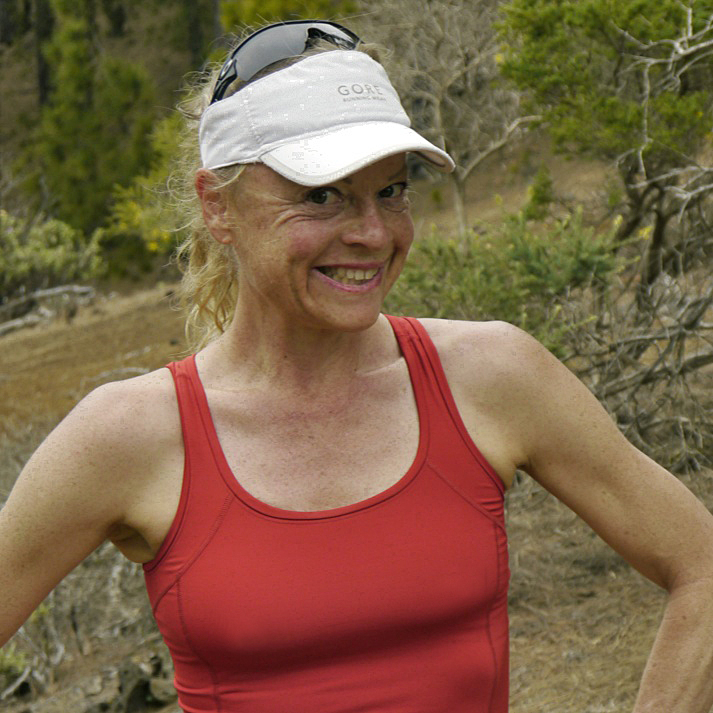
Niandi is South African born, a former resident of Paris, she now lives in the UK. A runner for over 20-years; Niandi has completed Comrades Marathon 13-times, Washie 100 2-times and has finished well over 100 marathons and ultras  all over the world. Currently residing in the UK, Niandi splits her work life between the UK and France.

Niandi


The North Face FL Race Vest

This was my first test run with a race vest. Although no stranger to trials of varying distances ranging from 22km to 160km, I had never found a race vest to my satisfaction and had always resorted to the “safer” choice of race pack. The reasons for this choice are multiple, but basically:

  • Uncomfortable fit and inadaptability to the female morphology
  • Lack of breathability
  • Chafing which can also be linked to female specificity
  • Hydration strategy limited to bladder

In contrast the The North Face FL Race Vest addressed all the above issues:

  • Comfortable fit and perfect adaptability to the female morphology.
  • Very lightweight, breathable mesh back panel and front vest, covering very little surface area but offering maximum storage capacity.
  • No bounce, no uncomfortable rubbing or pull from the straps.
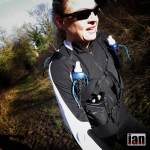
  • The upper front pockets can be used to carry 2 small 250ml bottles with either water or energy drink in addition to a TNF 2L bladder in the back for longer self-sufficiency races. Personally, I find this ideal as I can fill up the bottles on the go at the feed-stations and know exactly how much I am consuming. The bladder can be used in addition to the bottles as a safety measure for races which require more autonomy.

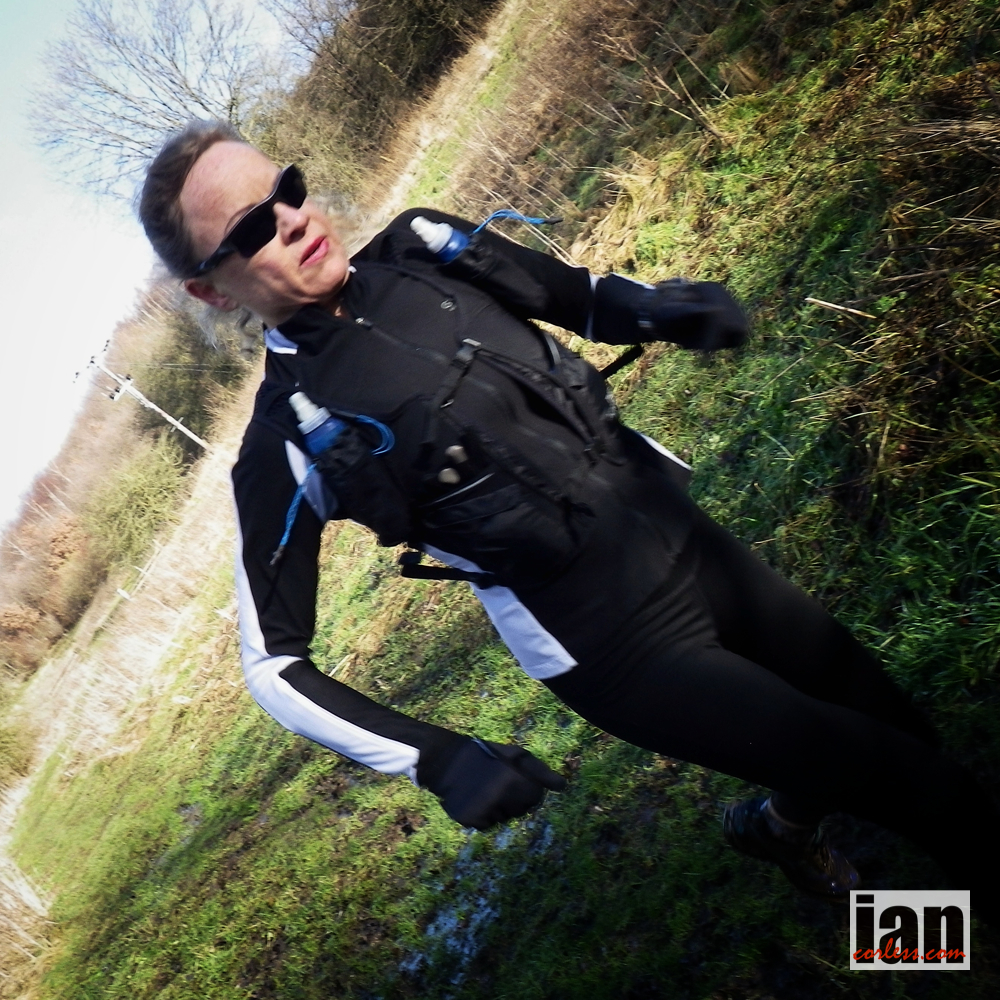
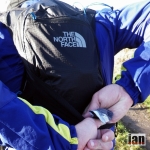
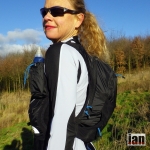
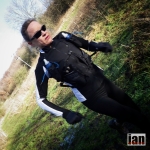
So when I tried the FL Race Vest in my training run I was pleasantly surprised to find I actually forgot I had it on. It wasn’t even a question of getting used to the vest. I instantly felt at ease in it. The front vest fitted perfectly over my chest – a sort of stretchy material which meant it never felt too loose and never to tight allowing the diaphragm to expand naturally and not causing any chafing issues.

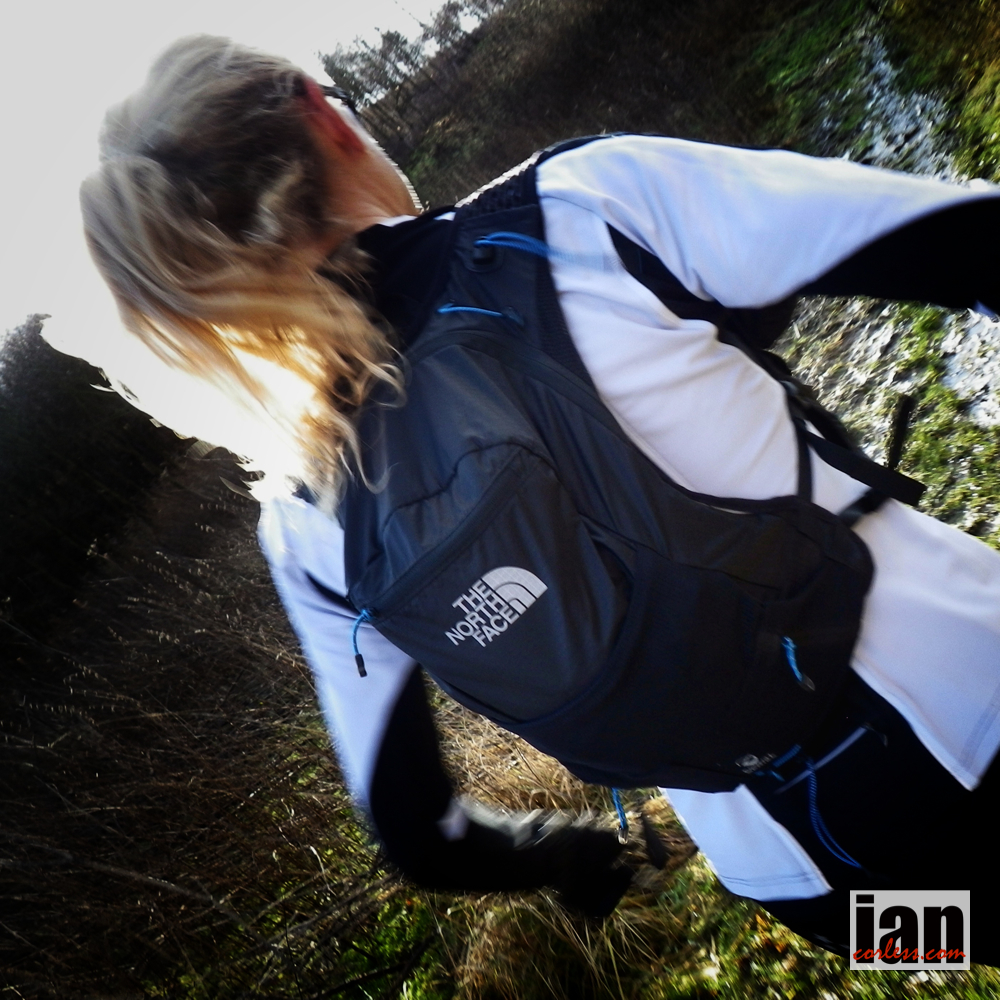
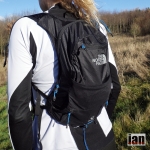
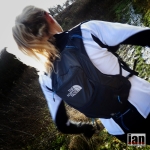
The 8L back pack has a storage capacity suitable for any trail distance between 30km and 160km. There is absolutely no bounce – it sits comfortably in the middle of your back – no sagging to the waistline or bouncing from side-to-side. Two sets of independent straps underneath the arms and 2 sets of buckles/ straps on the front allow you to adjust the vest to fit perfectly. No unnecessary and complicated irritating, dangling straps you find on so many back-packs.

Another bonus is that the vest and pack covers very little surface area thus ensuring better breathability and less over-heating and chafing should you be a heavy sweater.

Hydration-wise as mentioned above the race vest is multi-purpose and depending on the length of the event and frequency of the feed-stations, you can carry bottles in the upper front pockets and/or bladder.

Speed is less of an issue for me but for runners wishing to waste as little time as possible, reaching around for a rain jacket, gloves, hat, head-lamp, Kleenex, energy bars; there are two lower zipped pockets on the vest and behind each of these two mesh pockets. I like this not only because it’s a time saver on technical terrain. In the dark it is also a stress-free option – nothing worse than groping behind you to get hold of a bar when your body is tired and aching all over or you are slipping around on a rocky, muddy descent in the dark. And it saves begging the runner behind to pull out a bar (or tampon) for you!

The back pack is equipped with a small zipped upper pocket – great for mobile phone and a lower mesh pocket for a jacket or over-trousers.

Inside is the bladder compartment, which can also be used for carrying race kit should you prefer, a central compartment and another pocket – so great for compartmentalizing!

Finally, my last pre-requisite – upper and lower draw strings to attach poles diagonally when not in use and the compulsory whistle on the front, should your navigation skills be as poor as mine!

Conclusion

I want it for my next 55km self-sufficiency event at night AND AT £85 it’s a bargain!

Trail Running Magazine – Feb/Mar 2014

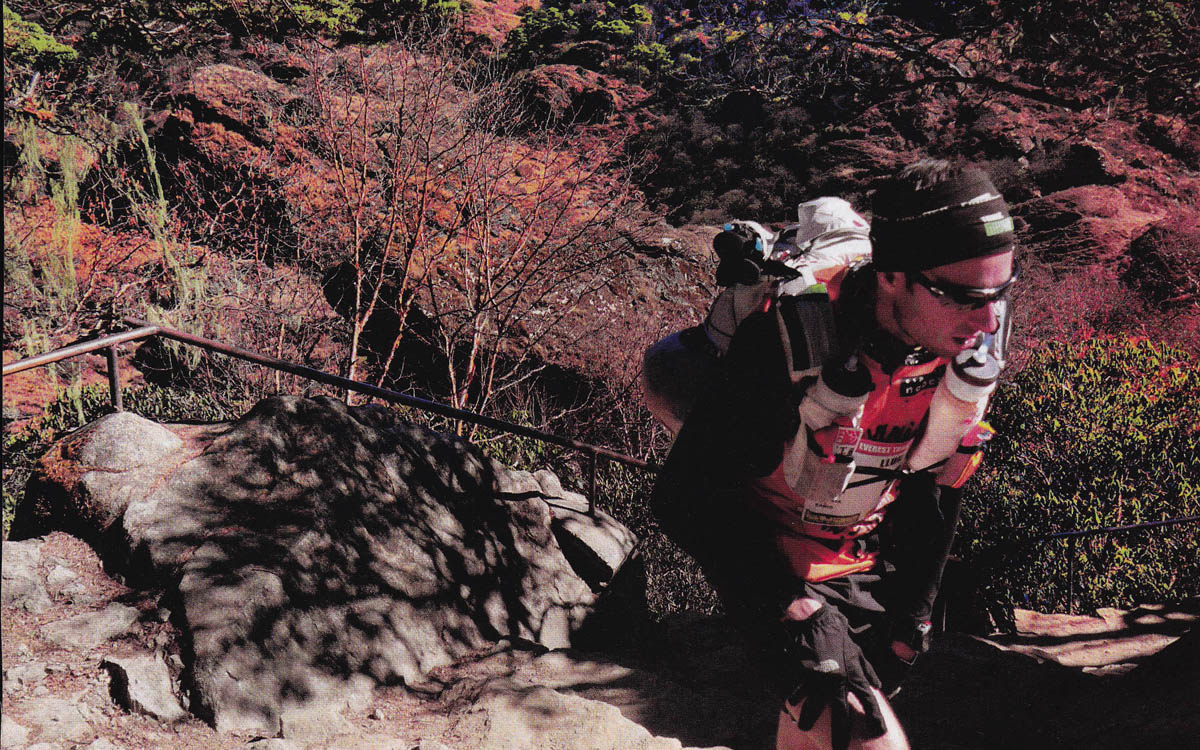
ETRpg1_Trailrunningmag_Feb14The current edition of Trail Running Magazine has several pages of my work. Pages 8 and 9 have a double photo feature on the Everest Trail Race featuring Francisco Salas and Llius Puig.

ETRpg2_Trailtrunningmage_Feb14


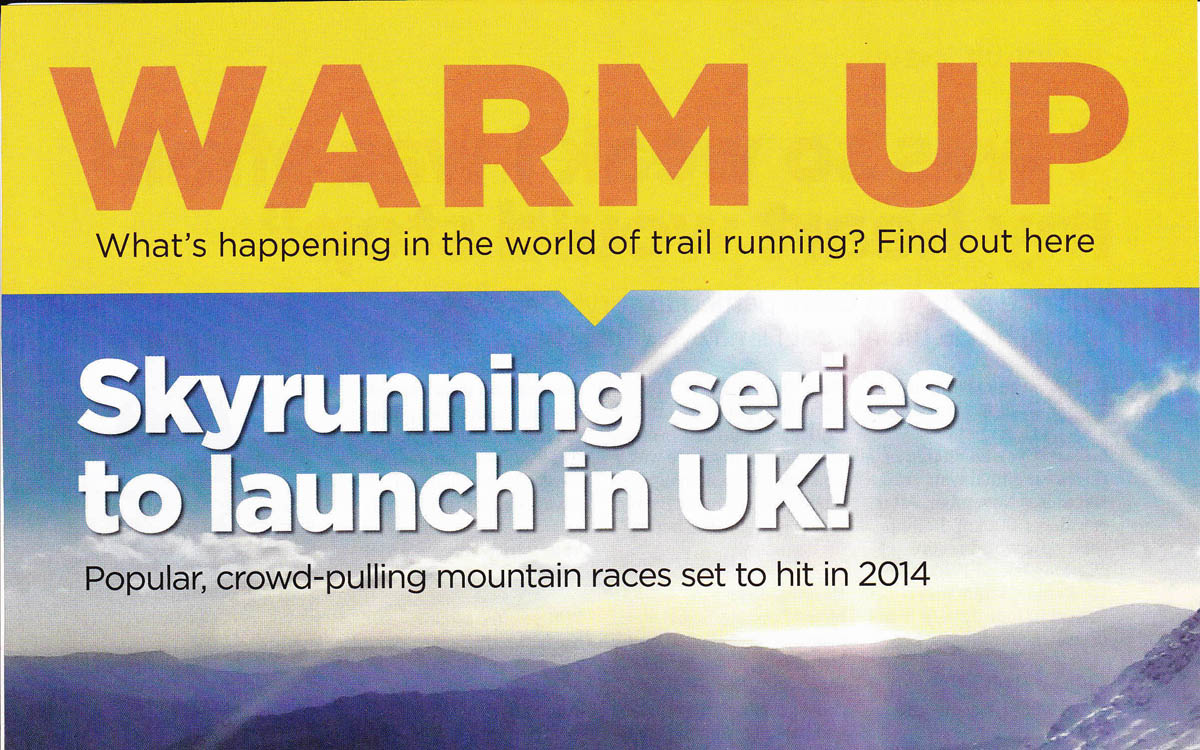
Page 13 also features the launch of Skyrunning UK and the announcement of the 3x3Ultra.

Skyrunninguk_Trailrunningmag_Feb14

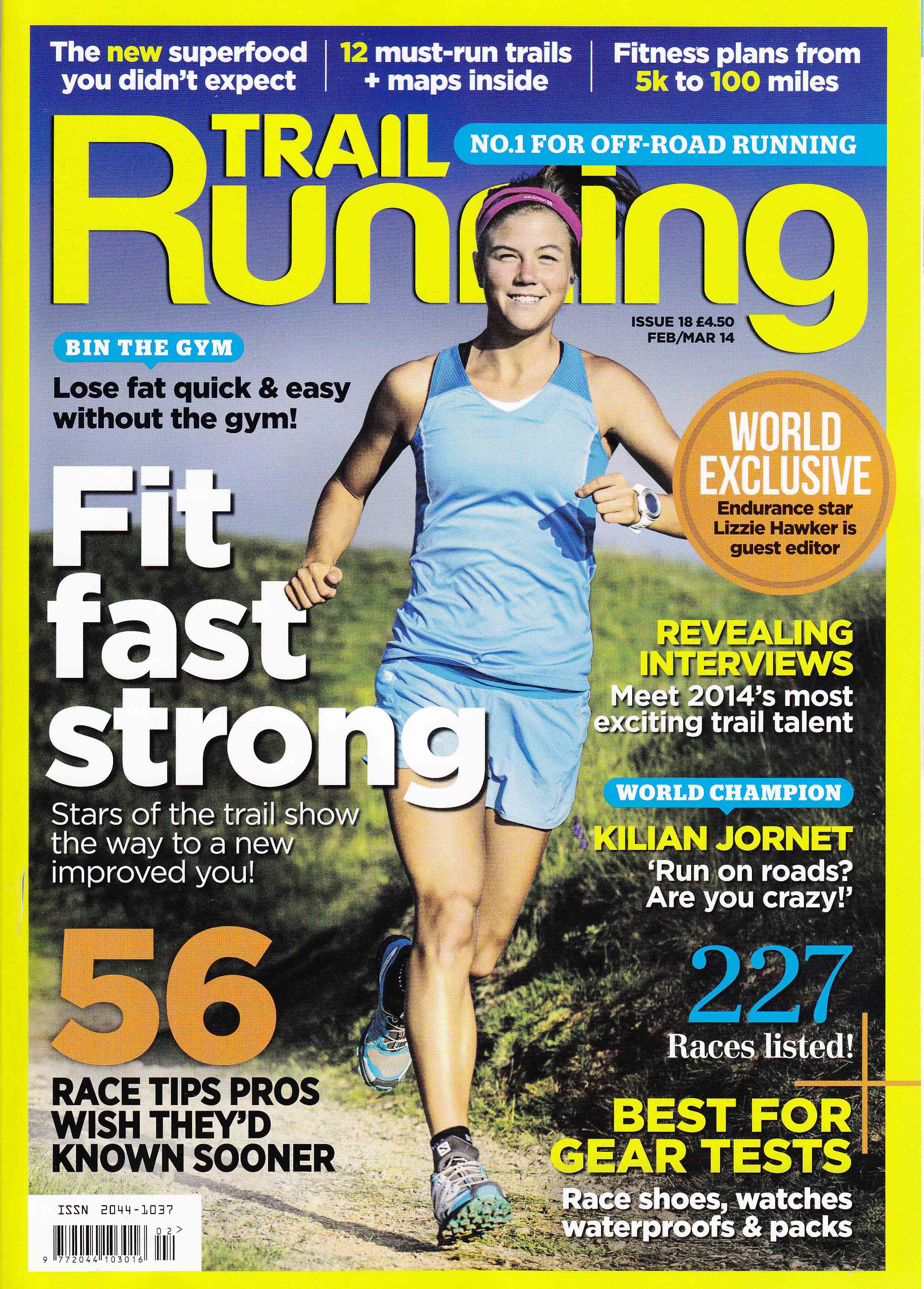
Check out Issue 18 of Trail Running Magazine (Feb/Mar 2014) which also has a great feature on Kilian Jornet and Emelie Forsberg. Guest editor is Lizzy Hawker.

Trailrunningmag_issue18_iancorless.com


Julien Chorier joins Hoka One One

Julien Chorier iancorless.com

Winner of the Ultra Trail Mount Fuji (UTMF) in 2012, two times winner of the Grand Raid de la Reunion, winner of the Hardrock 100, 2011 and the 2013 winner of the Andorra Ultra Trail Vallnord (Rond dels Cims), representing the Salomon International Team, Julien Chorier has decided on a new venture for 2014 signing a new contract with Hoka One One.

Julien, the consummate professional has always been attentive to technological advances and has been sensitive to the ambitions and the sensitivities offered by Team Hoka.

Julien Chorier iancorless.com

Signing a three year contract, Julien has decided to offer impetus to his passion for trail running and will act as ‘Team Captain’. In parallel, Julien will also participate in the development of the Hoka trail community in Europe.

An exciting 2014 awaits for Julien when he will return to Hardrock 100. It proves to be an exciting edition of the race with arguably the best field ever assembled.

Julien Chorier iancorless.com

“After great years in the Salomon team, I thank with my heart for all the support and advice given during these years , I have decided to give a new impetus to my career providing myself with a very important challenge: to race and test myself on new trails , create innovative dynamics in the Hoka team, to make my contribution to product development
and develop a Hoka community in Europe. Hoka honours, both athletically and professionally; my contract offers new opportunities to live my passion for trail . The desire to always innovate and move forward , the stated priority to draw naturally from the requirement of the highest level , involving me full in product development are all factors that convinced me of this new challenge.”

Without doubt, this new departure for Julien will provide exciting moments on the trails of Europe and of course, worldwide.

I personally still think back in awe and wonder at Julien’s performance at Ronda dels Cims in Andorra, 2013. It was a consummate performance of a professional in the form of his life, dominating a race from the front.

Bonne chance Julien!

Links:


Episode 52 – Fejes, Slaughter, Steele, Kremer

Ep52 Talk Ultra ©iancorless.com

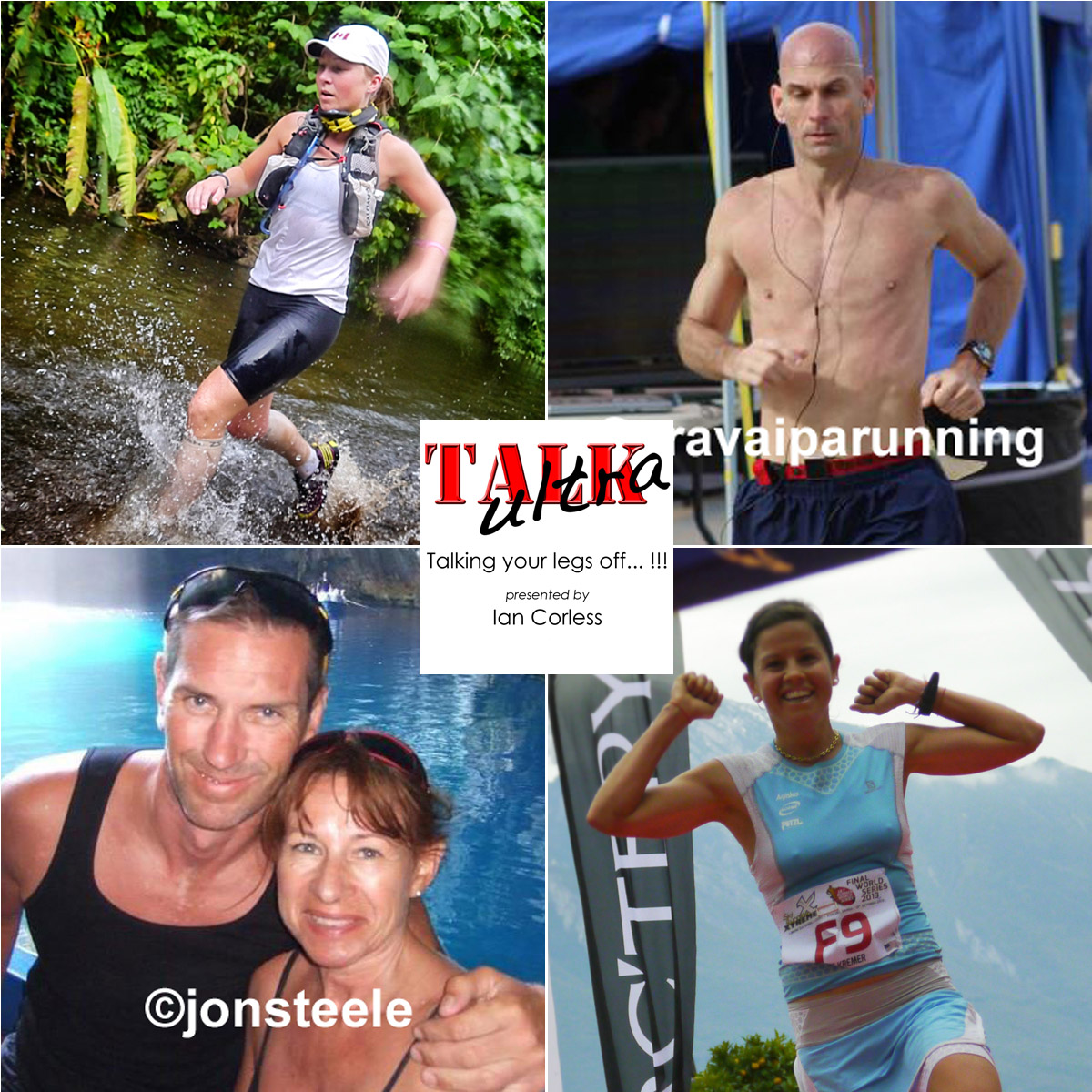
Episode 52 of Talk Ultra We have a full show with two in-depth interviews about running really long… Joe Fejes recently won the Aravaipa Running 6-day event by clocking up 555+ miles and beating running legend, Yiannis Kouros in the process. By contrast, we speak to UK runner Jon Steele who tackled ‘The Hill’ ultra; 160-miles of hill rips on a 2.9m course in under 48-hours. Gemma Slaughter, The Coastal Challenge winner from 2013 talks to us about her expectations as she prepares for the 2014 edition. Emelie Forsberg is back for smilesandmiles, Marc is with us for Talk Training and believe it or not, Speedgoat is on a cruise! That’s great for Talk Ultra as we have the lovely Stevie Kremer joining us as co host.

00:11:31 – NEWS
 
Rob Krar UROY
Michele Yates UROY
Zach Bitter male performance (11:47:21 for 100-miles)
Rory Bosio female performance (7th at UTMB and new CR)
 
The Coastal Challenge, Costa Rica is coming (3-wks) up and for the 10th anniversary it has a stacked field – Anna Frost, Mike Wardian, Nick Clark, Julia Bottger, Philipp Reiter and Jo Meek. In addition, we have last year female champion returning, Gemma Slaughter. Gemma turned up at the race in 2013 a novice and exceeded all her expectations. This year she will return, not only to defend her title but to race against tougher competition. I caught up with Gemma to discuss last years race and her expectations for this year!
 
00:16:08 – Interview – Gemma Slaughter
 
Breaking news for TCC – Carlos Sa and Martin Gaffuri will join the race!
 
Aravaipa Running 6-day
Joe Fejes 555.35m – also USA men’s record
Yiannis Kouros 551.15m – World 55-59 record
Ed Ettinghausen 476.61m – USA 50-54 record
 
1st lady – Liz Bauer 415.72m
 
I caught up with Joe Fejes for an in-depth chat about the 6-day and you can listen to that later in the show…
 
Skyrunning UK is launched with the 3x3Ultra
 
Tour of Helvellyn
  1. Ed Catmur 5:48:17
  2. Andrew Fallas 6:01:50
  3. Anthony ‘Forest’ Bethell 6:15:43
  1. Tracy Dean 6:49:31
  2. Nicky Spinks 7:25:07
  3. Carol Morgan 8:00:29
 
00:57:22 – Blog of the week – Zach Bitter’s 100-mile report on iRunfar – http://www.irunfar.com/2013/12/zach-bitter-us-100-mile-and-12-hour-track-world-records-report.html
00:57:46 – Talk Training – with Marc Laithwaite
 
01:33:30 – Interview with Jon Steele
 
02:25:20 – Interview with Joe Fejes
 
03:15:17 – Smiles and Miles with Emelie Forsberg
03:31:45 – Up and Coming races for the next two weeks:

Australia

Queensland

Bogong to Hotham | 64 kilometers | January 12, 2014 | website

Hares And Hounds 50k Trail Run | 50 kilometers | January 11, 2014 | website

Victoria

Two Bays Trail Run 56km | 56 kilometers | January 12, 2014 | website

Brazil

BR 135 Ultramarathon | 135 miles | January 17, 2014 | website

BR 217 Ultramarathon | 217 miles | January 17, 2014 | website

Brazil 135 Ultramarathon | 135 miles | January 17, 2014 | website

France

Essonne

Raid 28 | 80 kilometers | January 18, 2014 | website

Semiraid 28 | 50 kilometers | January 19, 2014 | website

Eure-et-Loir

Ultra Raid 28 | 120 kilometers | January 18, 2014 | website

Puy-de-Dôme

Trail du Sancy/ Mont-Dore – 80 km | 80 kilometers | January 19, 2014 | website

Germany

Bavaria

Schwabacher Winter Ultra | 56 kilometers | January 19, 2014 | website

Brandenburg

HallenMarathon 50km Ultra-Lauf | 50 kilometers | January 19, 2014 | website

Lower Saxony

7. Lauf PSV Winterlaufserie 100 KM | 100 kilometers | January 11, 2014 | website

7. Lauf PSV Winterlaufserie 50 KM | 50 kilometers | January 11, 2014 | website

8. Lauf PSV Winterlaufserie 100 KM | 100 kilometers | January 18, 2014 | website

8. Lauf PSV Winterlaufserie 50 KM | 50 kilometers | January 18, 2014 | website

North Rhine-Westphalia

Nord Eifel Ultra | 56 kilometers | January 12, 2014 | website

India

Oxfam Trailwalker India | 100 kilometers | January 24, 2014 | website

Ultra India Race | 210 kilometers | January 15, 2014 | website

Netherlands

North Holland

Dutch Coast Ultra by Night 100 km | 50 kilometers | January 17, 2014 | website

Dutch Coast Ultra by Night 50 km | 50 kilometers | January 17, 2014 | website

Dutch Coast Ultra by Night 75 km | 75 kilometers | January 17, 2014 | website

Dutch Coast Ultra by Night (Summer Edition) | 75 kilometers | January 17, 2014 | website

Dutch Coast Ultra by Night (Summer Edition) – 50 km | 50 kilometers | January 17, 2014 | website

New Zealand

Hutt River Trail Ultra Marathon | 60 kilometers | January 18, 2014 | website

Réunion

Transvolcano | 52 kilometers | January 19, 2014 | website

Spain

Valencian Community

GR10-Xtrem Valencia Ultra Trail | 93 kilometers | January 18, 2014 | website

Thailand

Columbia Trails Masters – 50K | 50 kilometers | January 12, 2014 | website

United Kingdom

Anglesey

Coastal Trail Series – Anglesey – Ultra | 34 miles | January 18, 2014 | website

Buckinghamshire

Country to Capital | 45 miles | January 11, 2014 | website

Derbyshire

Montane Spine Race | 268 miles | January 11, 2014 | website

USA

Alabama

Nicholas Wilson Memorial Tashka Trail 50K | 50 kilometers | January 18, 2014 | website

Arizona

San Tan Scramble – 50K | 50 kilometers | January 11, 2014 | website

California

Avalon Benefit 50 Mile Run | 50 miles | January 11, 2014 | website

Crystal Springs 50 Km Trail Run | 50 kilometers | January 11, 2014 | website

Pacifica Foothills Trail Run 50K | 50 kilometers | January 18, 2014 | website

San Diego 50 | 50 miles | January 18, 2014 | website

Steep Ravine 50 km | 50 kilometers | January 18, 2014 | website

Florida

Long Haul 100K | 100 kilometers | January 18, 2014 | website

Long Haul 100M | 100 miles | January 18, 2014 | website

Hawaii

Hilo To Volcano 50k Ultra Marathon and Relay | 50 kilometers | January 18, 2014 | website

H.U.R.T. 100 Mile Endurance Run | 100 miles | January 18, 2014 | website

Idaho

Wilson Creek Frozen 50k | 50 kilometers | January 18, 2014 | website

Iowa

Tripple D Winter Ultramarathon Run | 50 kilometers | January 19, 2014 | website

New York

The Beast of Burden Winter 100 Miler | 100 miles | January 18, 2014 | website

North Carolina

Weymouth Woods 100k Trail Run | 100 kilometers | January 18, 2014 | website

Tennessee

Swampstomper 50k | 50 kilometers | January 19, 2014 | website

Texas

Bandera 100km | 100 kilometers | January 11, 2014 | website

Bandera 50km | 50 kilometers | January 11, 2014 | website

Big Bend 50 | 50 kilometers | January 19, 2014 | website

Utah

Snowshoe Festival 50K | 50 kilometers | January 24, 2014 | website

Virginia

Willis River 50K Trail Run | 50 kilometers | January 12, 2014 | website

Washington

Bridle Trails Winter Running Festival 50 km | 50 kilometers | January 11, 2014 | website

Capitol Peak Mega-Fat Ass 34 miles | 36 miles | January 18, 2014 | website

Wisconsin

Frozen Otter Ultra Trek – 32 Miles | 32 miles | January 18, 2014 | website

Frozen Otter Ultra Trek – 64 Miles | 64 miles | January 18, 2014 | website

03:38:00 – Close
 
03:44:48
LINKS:


CAPE WRATH ULTRA™ – SCOTLAND’S EXPEDITION RACE – MAJOR NEW ULTRA-RUNNING EVENT ANNOUNCED

CapeWrathLogo
From the team that revived the inspirational Dragon’s Back Race™, an extraordinary new adventure has just been announced for June 2016 called the Cape Wrath Ultra™.
Billed as a once in a lifetime ultra-running expedition race, the Cape Wrath Ultra™ will weave 400km through the Highlands of Scotland. Starting in Fort William, the race promises to take competitors on an incredible journey linking ancient footpaths and remote tracks to the furthest northwesterly point of the British Isles, Cape Wrath.
©BenWinston

©BenWinston 

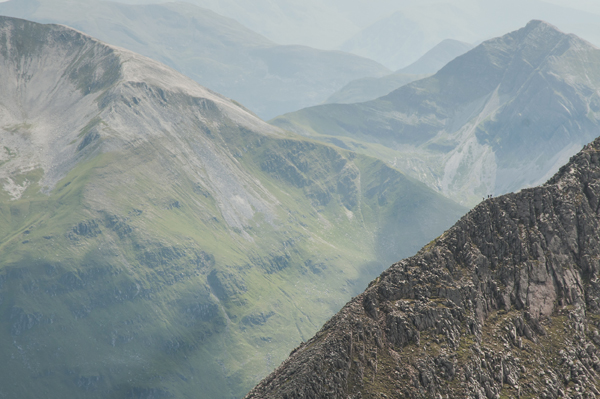
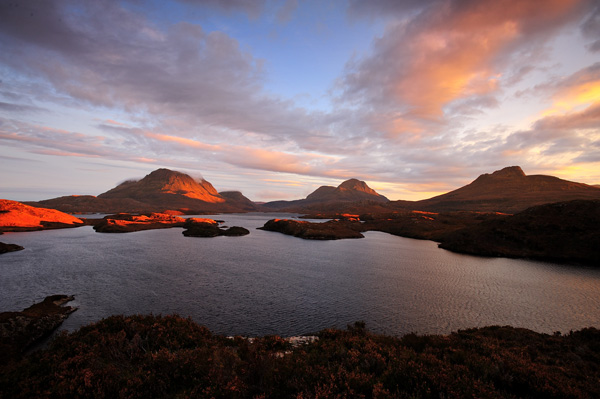
Race organiser, Shane Ohly from Ourea Events, describes the route. “Winding through the beautiful lochs, glens and mountains of the Scottish Highlands, the Cape Wrath Ultra™ is an ultra-running expedition through some of the World’s most inspirational landscapes, including Morar, Knoydart, Kintail, Torridon, Assynt and Sutherland”.
The new race is based on the Cape Wrath Trail, which is considered to be the toughest long distance backpacking trail in the UK. It crosses rugged landscapes, genuine wilderness and has great distances between support points. Hikers usually take at least 20 days to complete the trail and a new Cicerone guidebook published in 2013 has sparked renewed interested in this unofficial long distance footpath.
©DaveCuthbertson

©DaveCuthbertson

Shane Ohly continued. “Our Cape Wrath Ultra™ route will be similar to the Cape Wrath Trail but with some important variations as we mold the journey for an ultra-running perspective. Detailed planning has begun and Gary Tompsett has been appointed as the Race Director and Planner”.
Gary Tompsett is the logical choice for the role, having planned the 2007 Adventure Race World Championships in the same area and having previously worked with Shane Ohly at Rat Race Adventure. Shane Ohly explained, “Living near the Highlands of Scotland, Gary has a deep knowledge of various route options, the terrain, the weather, and the endless possibilities for a rich experience”.
©GaryTompsett

©GaryTompsett
Two previous winter Charlie Ramsay Round record holders together: Gary Tompsett (left) and Shane Ohly (right). The photo is taken moments before Shane Ohly sets off on his epic 2012 record attempt.

 The race is described as a supported ultra-running expedition, in which competitors’ equipment will be transported each day and tented accommodation and all meals provided. This is the same successful formula that Ohly employed when he revived the Dragon’s Back Race™ in 2012.
Ourea Events claim that the Cape Wrath Ultra™ will be the supreme ultra-running trail race. With a 400km canvas through the Scottish Highlands and Ohly and Tompsett’s pedigree – they are both former winter Ramsay Round record holders – in delivering iconic, adventurous and challenging events, who would want to argue!
Entries open in January 2015.
Date: June 2016

Scott T2 Kinabalu Review – Ladies Shoe

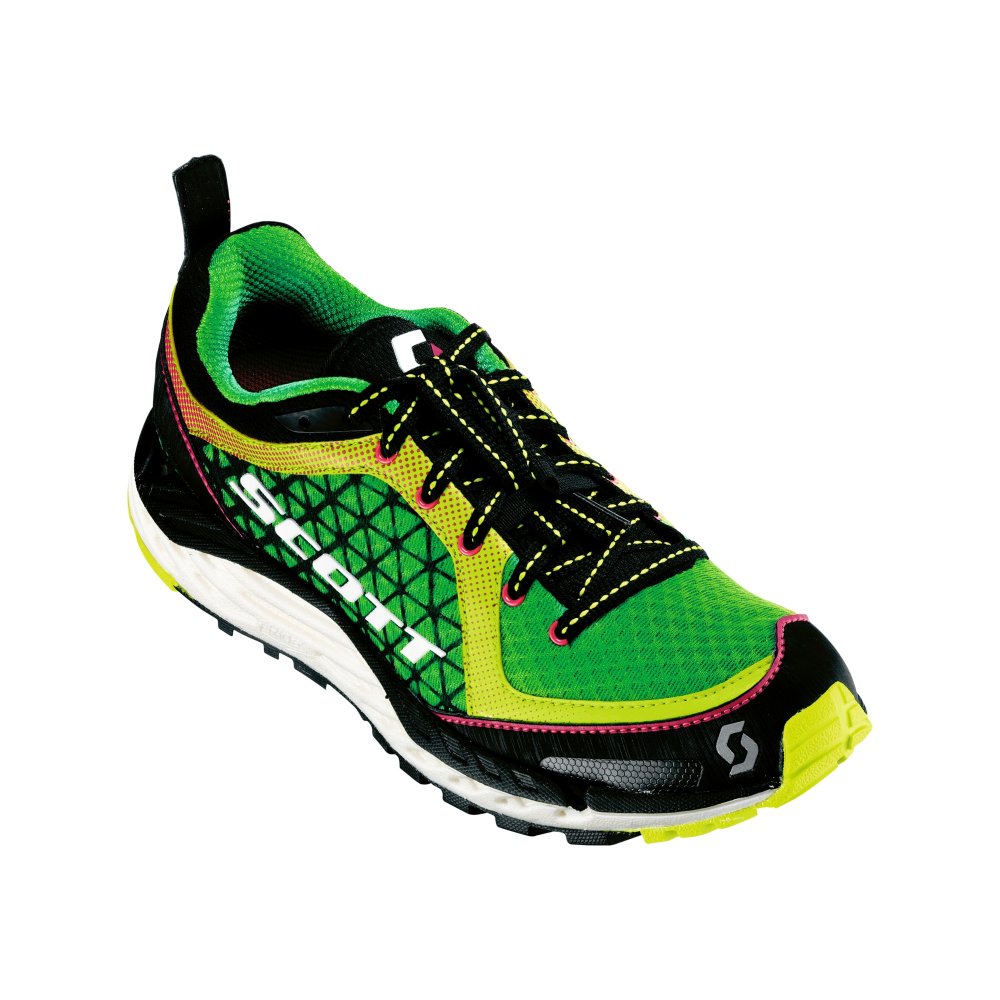
Scott T2 Kinabalu Ladies ©scottrunning

Scott T2 Kinabalu Ladies ©scottrunning

Review by Niandi Carmont

When Scott asked me to test the Women’s T2 Kinabalu, I was very excited to try out a brand of shoe that is not as well known to UK and French trail runners… ‘Scott make bikes don’t they?’ was a typical comment!

Love at first sight… Like most female trail runners, I like a run shoe to look good and admittedly on the outside it’s a sexy shoe – bright green, sporty and light-weight.

But what about the technical and practical specs which are equally important? Well, after having tested the shoe on 200km of intense rocky mountainous terrain in France over one week, I can definitely confirm it is:

•      Durable

•      Comfortable

•      Lightweight

•      Energy efficient

•      Stable

The above qualities were exactly what I was looking for and all my expectations were met.

Durability, stability and eRide™ Technology

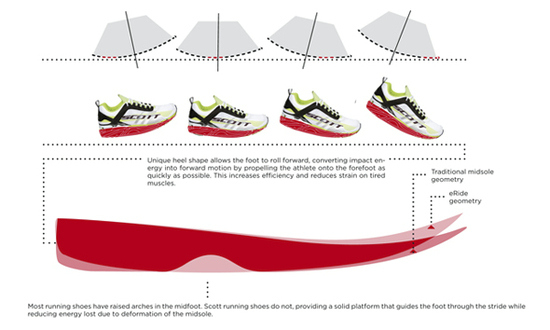
Scott eRide

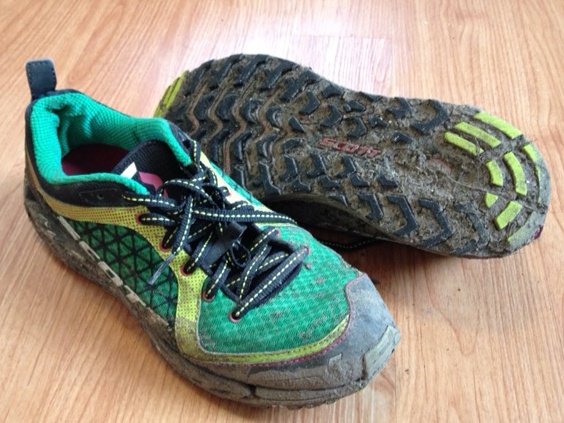
Usually after intense weeks on hard trail terrain like that, my trail shoes “have done their time” but I was surprised to find that the soles were hardly worn.  I have an atypical and asymmetrical running gait, which means I heel strike heavily on one foot and the wear shows after only a few runs on my trail shoes. Not the Scotts though. But then the Scott shoe is built using the patented and scientifically-researched SCOTT’s eRide™ Technology – that unique rocker shape creating a very stable midstance which heel strikers like me strive for. Initially it took a few runs to get used to but I quickly felt the benefit of the rocking motion provided by the shoe and it meant I was heel-striking less and running more efficiently.

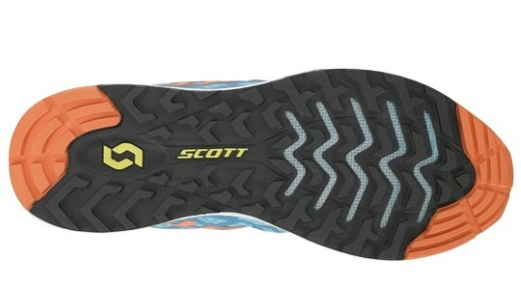
Scott T2 Kinabalu Sole

The shoe has an 11mm drop; in this current climate of ‘low drop is best’ it may mean the T2 will be snubbed by many! Don’t be too hasty. In use, this shoe feels like a much lower drop shoe, primarily due to the eRide™ (rocker). It keeps you on your forefoot with good technique. They are a pleasure to run in.

After the week on rock French trail my soles had hardly worn.  My podiatrist who is an avid cyclist took one look at them and said “this is true Scott quality, great grip, rolling resistance, durability and ride quality”.

photo 4

Shortly after that I departed on a 10-day multi-stage event to Northern India, Rajasthan and as I had luggage restrictions, was faced with the dilemma of taking only one pair of run shoes.  I knew I would be doing a mix of trail, desert, tarmac and dirt road. No hesitation, my multi-purpose, train-adaptable Scotts were in my luggage. Although a winter shoe, they were perfect on all types of terrain. I had no issues transitioning from the Thar Desert to the tarmac road leading to the Taj Mahal. Conditions were hot and humid and as much as the shoes kept my feet dry and warm on muddy, wet British towpath and boggy fells, the breathable mesh upper equally kept my feet cool in Rajasthan. And although I didn’t use gaiters as the desert/dune stages were not too long, I had very little sand in my shoes.

Lightweight

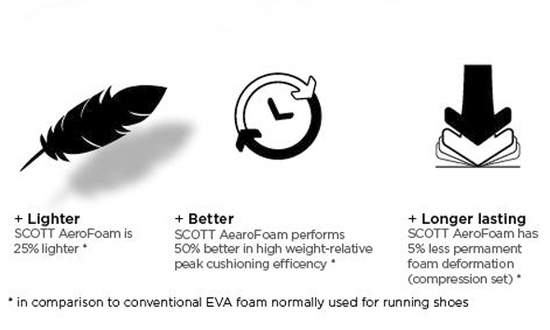
Scott Aerofoam

The shoe features an Aerofoam midsole for reduced weight and it’s definitely lightweight at 265g (UK8) a bonus for me, especially over long ultra-distances or long training sessions. More importantly – it is lightweight but not at the expense of durability or stability. After several runs the midsole ‘bedded’ in and started to mould to my foot providing additional comfort. The sock liner is perforated and the midsole has ‘drainage’ ports to allow water to escape; great for water crossings or wet weather running.

Comfort and adaptability to varied terrain.

Comfort with a capital “C”. This is an important criterion for me whatever the shoe ….but even more so if I’m going to be running long distances on arduous, rocky terrain. Not a blister or hot spot and no chafing. I ran in mud, on dry dusty rocks, shingle, slippery descents – the shoe adapted to all the changes in terrain and weather.  Not surprising as the shoe features wet traction rubber and a water-drainage system. The grip in muddy terrain is great and much appreciated by runners like me who prefer a drier terrain. I felt as in control tackling muddy, British bog as I did on dusty and slippery rocky mountainous French trail or even running down shingly, stony descents.

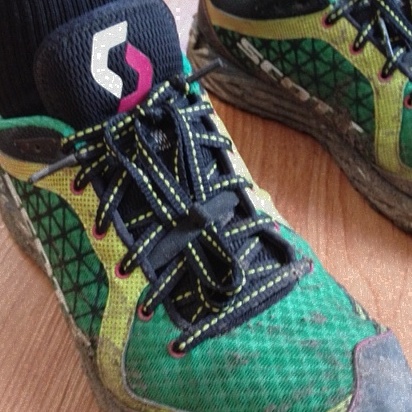
I also liked the bungee lacing system (elastic on the front of the shoe to stow laces) – extra security for a runner like myself who doesn’t want to be tripping over loose laces on a tricky, technical descent.

photo 2

All in all, this is definitely a great winter shoe with great protection and traction at minimal weight.

Female-specific

Needless to say Scott thinks about us ladies too, not only as far as the colour is concerned but also the female-specific fit. By the way, I opted for the bright green colour but the shoe comes in a trendy girly pink too!

Scott T2 Kinabalu Pink

Conclusion

Love them! And I get noticed to:

“Are you wearing Scotts? Didn’t know they made trail shoes!” I get asked.
“Well you bet! And pretty damn good ones at that!” I quickly reply.

Specs

  • Weight 260g for UK8
  • Drop 11mm
  • eRideComposite push-through plate
  • AeroFoamWet traction rubber
  • Lace bungy
  • Upper: Mesh/Synthetic Overlays
  • Lower: EVA/rubber

Scott T2 Kinabalu Men’s Review HERE

About the reviewer – Niandi Carmont

Niandi

Niandi is South African born, a former resident of Paris, she now lives in the UK. A runner for over 20-years; Niandi has completed Comrades Marathon 13-times, Washie 100 2-times and has finished well over 100 marathons and ultras  all over the world. Currently residing in the UK, Niandi splits her work life between the UK and France.

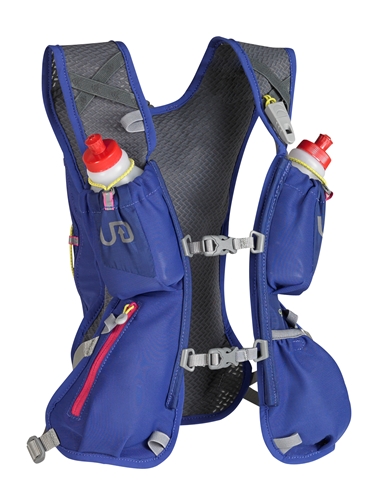
Ultimate Direction, Ultra Vesta by Jenny Jurek – new ladies products

Ultra Vesta ©ultimatedirection

Ultra Vesta ©ultimatedirection

Designed by Jenny Jurek with help from the Women’s Collective, the Ultra Vesta is ergonomically shaped to fit perfectly and perform flawlessly. The plan was to select the best features from all the Signature Series vests, combine them into one great product, then re-design the shape to specifically fit women.

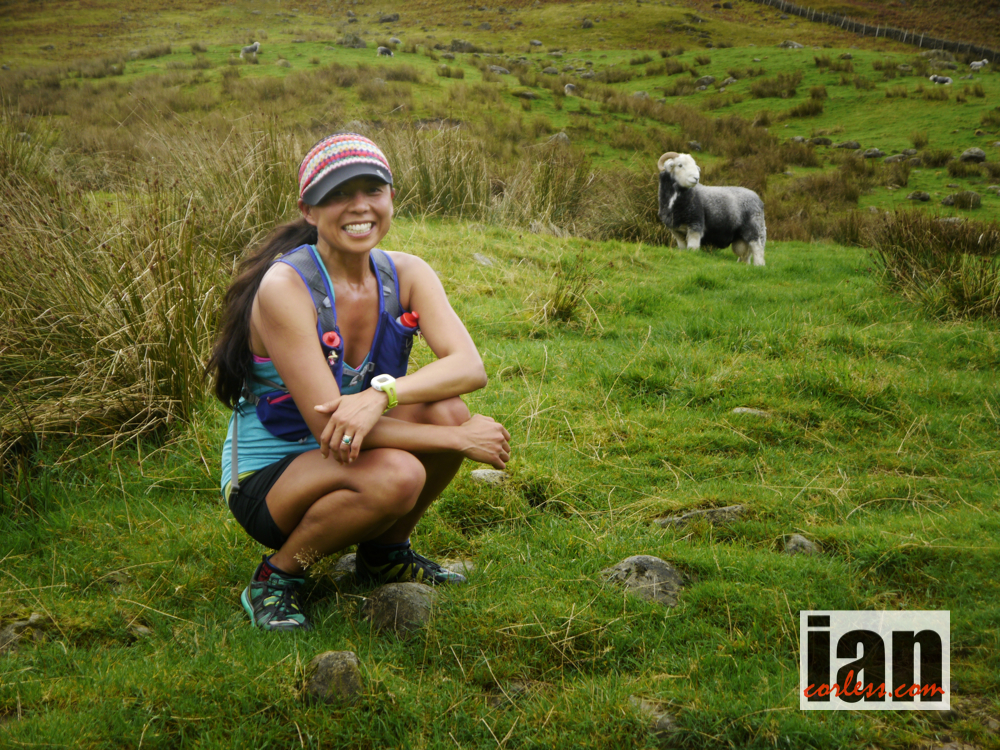
Jenny Jurek in the English Lakes, 2013

Jenny Jurek in the English Lakes, 2013

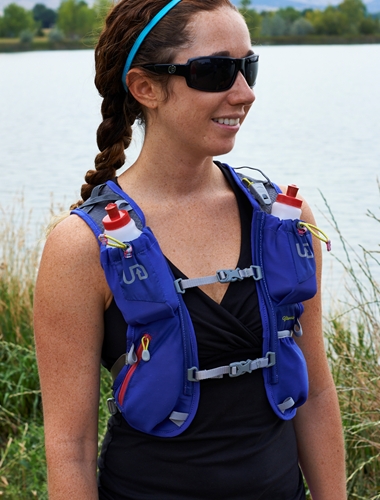
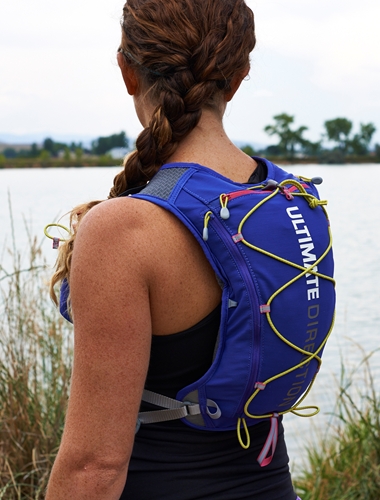
The result is front strap-mounted holsters that offer quick, immediate access to twin 10 ounce water bottles, which are concave against the body, are positioned higher on the chest, and can be folded flat when not in use. The larger volume pockets located low in the front keep your phone, camera, salt tablets, or gels within easy reach while on the move. The main compartment will accommodate a 2L bladder and plenty of gear, and there is an additional horizontal pocket in the rear for quick organization of special items. External and internal bungee cords stabilize the load while the two sternum straps and side adjustment straps give you a customized fit and eliminate bouncing. Moisture-wicking Air Mesh keeps you dry, provides support, and is soft to the touch for all-day comfort. Also included are an ice axe loop, two trekking pole loops, and reflective accents for low-light visibility.

Ultra Vesta Front ©ultimatedirection

Ultra Vesta Front ©ultimatedirection

Ultra Vesta Rear ©ultimatedirection

Ultra Vesta Rear ©ultimatedirection

Specs and Details:

Features (Front):

  • Two 10 oz. bottles are ergonomically positioned
  • Bottle pockets fold flat when not in use or accommodates a camera or phone
  • Large storage pockets are located below the bottles for phone, gels, ect.
  • Two sternum straps slide for custom fit
  • Cool Wick Air Mesh wicks away moisture and is soft to the touch
Features (Back):
 
  • Side adjustment straps allow for customized fit
  • Two vertical zippered pockets in the rear, plus a third horizontal pocket offers ample storage
  • Easily accommodates a 2 liter reservoir or any bottle
  • Ice axe (1) and trekking pole loops (2)
  • External and internal bungee cords stabilize varying capacities
  • Reflective accents for easy visability
Sizing At Chest (Women’s):
 
  • XS/SM: 26 – 38 in. / 66 – 97 cm
  • M/L: 32 – 41 in. / 81 – 104 cm
  • Measure wearing the clothes you intend to wear
  • A vest full of gear will fit smaller

Specs:

  • Volume Capacity: 245 in/ 4L
  • Fluid Capacity: 2 x 10 oz. bottles / 2 x 295 mL
  • Weight: 9 oz. (11 oz. with bottles) / 255 g (312 g with bottles)
  • Height: 11.75 in. / 30 cm
  • Width: 8 in. / 20 cm
  • Depth: 2.5 in. / 6 cm

Materials/Design:

  • Cool Wick Air Mesh: Wicking mesh is lightweight and breathable for optimal ventilation and moisture management
  • 150D Rip Stop: Lightweight fabric provides durability and protection
  • Power Stretch Mesh: Provides versatility with a supportive stretch material that expands for variable capacity

All content ©ultimatedirection – Review to follow

Website HERE

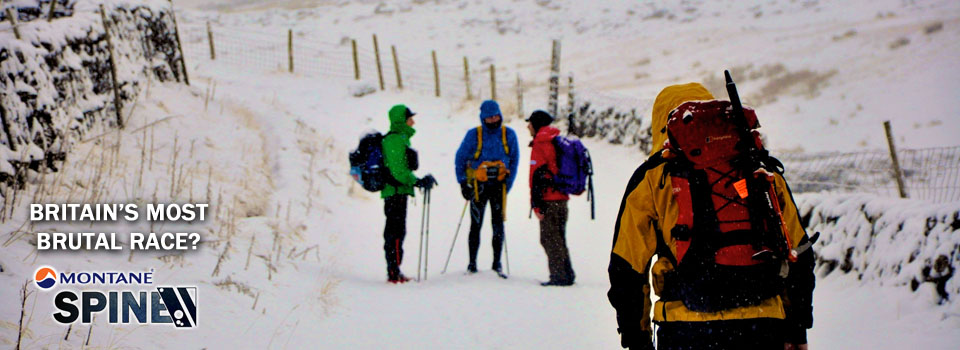
The Spine sponsored by Montane – Britain’s most brutal race

Montane_Spine_Logo

January 11th – 18th 2014

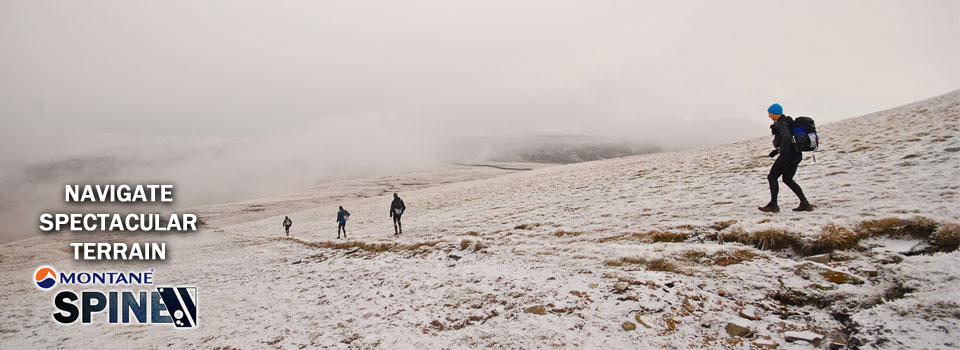
The Spine Race is a 268 mile, non-stop, winter mountain marathon encompassing the entire Pennine Way. Widely recognised as the most demanding National Trail in Britain, the Pennine Way crosses some of the most beautiful, difficult and challenging terrain found in England, including; the Peak District, Cheviots, Yorkshire Dales and Northumberland National Park – finishing on the Scottish Borders.

Competitors have 7 days to complete the race, cut-off 168-hours.

Spine

Ironically, the UK has had a very mild, if not wet and windy, October, November and December. But with this weekend, just as The Spine is set to leave Edale the weather looks to be on the change; temperatures are looking to drop with lows of -6 deg and highs of 7 deg. It most certainly looks like a different race to last years extreme cold, ice and snow. Will the conditions make the race faster?
At 268 miles this is not a multi stage race in a Marathon des Sables style format, this race has a start and a finish. Quite simply, the first one to reach the end wins the race. So this is all about managing your effort and minimising your time resting or sleeping.

The Spine Race was first attempted in January 2012; they witnessed many courageous attempts to finish the 268 mile course. Three athletes would eventually finish. The race was won jointly by Gary Morrison and Steve Thompson, closely followed by Mark Caldwell.

In dramatic circumstances the 2013 Dare 2b Spine Race was won by Eugeni Roselló Sole in an incredible 5d 4h 52m setting a new bench mark for the race and the distance in extreme Arctic conditions. Annabel Gates completed the race as 1st Female in 7d 4h 59m.

2013 finishers:

  • Ian Bowles
  • Jin Cao
  • Mark Cooper
  • Gregory Crowley
  • Paul Dickens
  • Thomas Emke
  • Annabel Gates
  • Richard Lendon
  • Gary Morrison
  • Brian Mullen
  • Eugeni Roselló Sole

Who is running?

The Spine Race is open to anyone with appropriate experience who wishes to test themselves and compete in a truly brutal race.

As Scott Gilmour (RD for the race) says, “Runners will face the most extreme weather conditions England has to offer in a gruelling non-stop, 7 day race from Edale to Kirk Yetholm. It’s not just the conditions that are against you – your own body could become your worst enemy with tiredness, fatigue, sleep deprivation and exposure playing havoc with your performance. To finish runners must be prepared and willing to push themselves harder than ever before.”

Ones to watch in 2014 (alphabetical order):

  • Mimi Anderson – multiple world record holder and really experienced at long distances. Mimi will test the men in the field and push them all the way. “I’m under NO illusions about the difficulty of this event.  I’m looking at it as an adventure rather than a race as it’s about managing yourself properly, getting enough sleep but keeping yourself moving.”
  • Anthony Bethell – relatively new to ultra running but Anthony finished Tor des Geants and is an accomplished fell and mountain runner with a recent top placing at the Tour of Helvellyn.
  • Neil Bryant – Neil is somewhat of an endurance machine. He loves long distances and has won the Viking Way ultra and completed Trans Euorope. Now living in Chamonix he has become used to the cold, snow, ice and mountains. He will do well at the Spine.
  • Annie Garcia – regular long distance competitor with plenty of grit and determination.
  • Mark Hines – Possibly one of the most experienced athletes in the field and plenty of cold weather experience. He knows how to put his head down and keep moving forward. His experiences in the Yukon will put him at a great advantage at the Spine if the weather turns particularly bad.
  • Richard Lendon – Third time at the Spine for Richard. He finished in 2013 and knows what is required to get the job done.
  • Moses Lovstad – Moses finished Hurt100, Transgrancanaria and Tor des Geants in 2013. That puts him in a great place for the Spine.
  • Andy Mouncey – Raced at the Spine in 2013 but DNF’d, pretty sure he is going to be at this years race with more focus. He said on his blog, “This one’s been twelve months in the making, I think I’ve got the leverage this time, but the only way to know is to do.”
  • Eugeni Roselló Sole – last years winner. Enough said!
  • Charlie Sharpe – Another regular competitor at all distances. Moved up a level with his Lakeland 100 performance in 2013 but this race will be a new challenge and test.
  • Charles Sproson – Montane athlete, Charlie is very accomplished and has some notable achievements that will put him in a great place for the Spine. He’s completed the OMM multiple times, done the Bob Graham solo and more importantly completed the Dragons Back in 2012.
  • Others?

Full entrants THE SPINE HERE

Full entrants THE CHALLENGER HERE

The route

Nav

The Montane Spine Race is a 268 mile, non-stop, winter mountain marathon encompassing the entire Pennine Way. Widely recognised as the most demanding National Trail in Britain, the Pennine Way crosses some of the most beautiful, difficult and challenging terrain found in England, including; the Peak District, Cheviots, Yorkshire Dales and Northumberland National Park – finishing on the Scottish Borders.

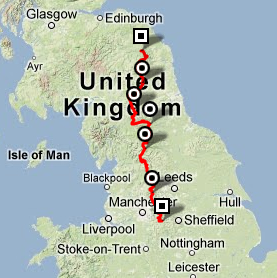
There are 5 checkpoints that you must visit along the route to complete the race. The CP’s are distributed evenly along the course and it is here you will receive hot food and water, resupply, beds and showers (available at 4 of 5 CP’s) and medical attention should you require it. These checkpoints run from the start to the completion of the event. The CP’s are staffed 24/7 to provide as little disruption to your race as possible. They provide a haven from the sometimes hostile weather.

Checkpoints are located at:

  • Hebden Bridge
  • Hawes
  • Middleton-in-Teesdale
  • Alston
  • and Bellingham

A resupply/ drop bag is moved by the RD for you to the next CP as you progress through the race.

Spine Map

The longest day on the race is the second day. This is the longest section of the course between CP’s (approx. 60 miles). In 2012 the average completion time for this section was between 22 and 30 hours. Most competing athletes withdrew at this point of the race.

The Spine Team also monitor the course 24/7 to ensure competitor safety and our support vehicles carry additional hydration for competing athletes (minimum 2 litres per athlete per day). Along with the course monitoring you are permitted the use of a personal support team.

Route Profile

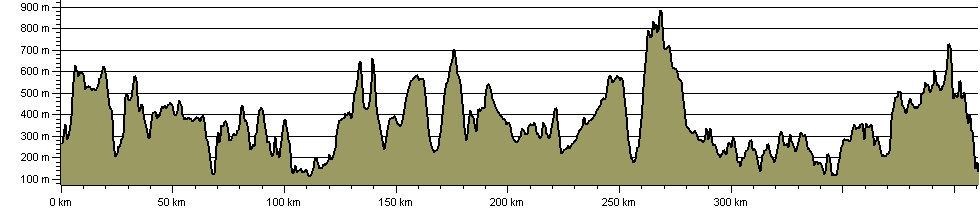
410.5 – 431 Km (255.1 miles – 268 miles dependent on route)
11,195 m (36,729 ft) ascent
890 m (2,920 ft)  maximum height

Spine Profile

Entrants & Updates

You are able to see a list of entrants and follow the leader board HERE

Live Tracking HERE

Additional Race – Spine Challenger

The Montane Spine Challenger is a 108 mile, non-stop, 60 hour, winter mountain marathon between Edale and Hawes. This challenging and extremely technical section of the Pennine Way is not just the baby brother to the Spine Race – it is a physically and psychologically demanding route that demands concentration and respect.

The Spine Challenger is a wickedly difficult event. From appearances 60 hours looks like ample time to easily complete this course; however, appearances can be deceptive. The rugged and very technical nature of this race is mentally taxing as you have to constantly be aware of foot placement. Coupled with the limited daylight hours, and the necessity to run in the dark, you can start to build a very clear picture as to why we had only 1 official Challenger finisher in 2012.

  • RACE WEBSITE available HERE
  • Follow on Twitter @thespinerace

About Montane

MONTANE-2

For over 18 years now Montane® has worked closely with serious mountain professionals working in hostile conditions across the globe as a proving ground for garment design. From the British Antarctic Survey to Langdale Ambleside Mountain Rescue, the busiest Mountain Rescue team in the UK. Professionals who demand tough credentials from their clothing equipment choose Montane®.

Getting the Wally Hayward record by Johan van de Merwe

©iancorless.com.DSCN0518


Introduction

It was in October 2012 when I first heard about Wally Hayward’s indissoluble records. At that stage I was in the prime and peak of my running career. I was set on challenging the 24 hour race record that was uncontested for the past 60 years. Wally Hayward set the South African record of 256.4 km in London on the 21st of November in 1953. On paper the record seemed fully reachable and even undemanding. With the collaboration of my co-club members at the Pietersburg Road Runners and with the added financial aid of Digit Vehicle Tracking we hosted the first 24 hour race within our local community. The race took place on the 31st of March, 2013 and the purpose thereof was to ultimately improve the 24 hour South African record. It was however not as trouble-free as it initially seemed. Even after my best efforts I still missed the record with approximately 3km. I was extremely disheartened, saddened and disenchanted. Hosting the race proofed to be very pricey and I felt as though I disappointed all my family, friends and supporters. As a consequence, I under duress tried to forget about improving the record.

In order to deal with my setback I participated in numerous elongated races. During April to September 2013 I took part in a 6-day race in Hungary where I completed 516km. I furthermore ran the Comrades Marathon and finished it with a time of 7h28. In addition I also did three hundred milers, the Washie Race (13:18:02), the Golden Reef Race (14:41:45) and the Capital Classic Race (14:33:08). My results far exceeded my expectations but it still did not relief my utter sense of dissatisfaction.

Who is Wally Hayward?

©www.wally.org.za

©www.wally.org.za

Wallace (“Wally”) Henry Hayward (10 July 1908 – 28 April 2006) was a South African endurance athlete with a 60-year career. Wally won the Comrades five times and completed the distance of around 90 km the last time just before his eighty-first birthday.

He was born and died in Johannesburg. In 2006 just a few days before the annual Wally Hayward Marathon, Wally passed away.

Comrades Marathon

He won the race for the first time on his first attempt in 1930 at age 21 (the youngest runner at that stage). Only twenty years later he competed again and won it from 1950 to 1954, except for 1952 when he choose to rather represent South Africa at the 1952 Summer Olympics. He finished tenth in the Olympic Marathon event.

In 1951 and 1953 (first athlete under 6 hours) he broke the down-run record, and in 1954 he broke the up-run record and became the oldest man to win the race at age 45 (later overtaken by Vladimir Kotov in 2004). In 1988 he returned once again to participate. He beat half the finishers with a time of 9h44m. Wally’s most dramatic moment came the following year, in 1989, when he completed the down run at the age of 80. There was hardly a dry eye in the stadium as he staggered across the line in an obviously distressed state, making the cut-off time by a mere 1min 57sec, after which he finally quit the race for good. To this day, he has the distinction in the record books of being the oldest finisher in the history of the Comrades Marathon.

Other records

In 1953 he established records in the London to Brighton Marathon, the Bath to London 100-miler and the 24-hour track race. At the 1938 Empire Games in Sydney he won the bronze medal in the 6 miles competition. In the 3 miles contest he finished fourth. Hayward fought in North Africa and Italy during World War 2 and in 1942 earned the British Empire Medal for bravery for his actions near El Alamein in Egypt.

Family

Married Gladys Catto in December 1934 and had one daughter, Gwenolyn in October 1935. In 1957 Wally and Gladys divorced. In 1971 Wally married his second wife, Bertha Bland.

Contoversy

In 1953 he accepted a small donation towards his traveling while competing in the UK. The South African Athletics and Cycling Association declared him a professional, banning him from all amateur events. The ban was finally lifted in 1974.

Wally Hayward Wikipedia - http://en.wikipedia.org/wiki/Wally_Hayward

DECISION

©iancorless.com.IMG_2106

On the 4th of October, 2013 I came across a list of international races. I was interested in determining the amount of 24 hour races that was still to be hosted throughout 2013. At that time I occupied the seventh position for the international 24 hour races. I reflected back over 2013 and realized that there were no races that I was particularly proud of. I wanted to conclude 2013 on a high note but had no idea how to accomplish my goal. It was already October. My body felt fatigued and worn-out and an exceptional achievement seemed utterly impracticable and idealistic. I browsed the internet and discovered a 24 hour race that was scheduled for the 7th of December. The race was to take place in Taipei, Taiwan. While looking at the previous years’ results I realized that the race was a high standing sports event. I later learned that it was classified as a “gold labelled event” according to the International Association of Ultra runners.

I decided to travel to Taipei in order to participate in the race. It was particularly difficult for me to attempt again to improve the South African record only eight months after my setback. It felt as though I was not in the best physical condition so as to take on the challenge. With all the long races in which I participated in during 2013 I never focussed on just training effectively for any race. I mainly focussed on tapering for and recovering after a race. My legs ached incessantly, my muscles felt stiff and I was just not able to practice adequately. I had to decide whether or not my desire to improve the record was stronger than my physical condition.

GAME PLAN

During the first 24 hour race I ran on the 31st of March 2013 I learned a few essential things. I henceforth decided to concentrate solely on the three mistakes I made while preparing for the race in Taipei. My first mistake was that I started much too fast. The second mistake was that I did not eat and the third detrimental mistake was that I tended to pull my body weight to the right side and as a result it affected my overall balance. In October and November I focused on practicing on the racing track without the use of my GPS watch with the intention of establishing a proper pace and the most suitable eating pattern for every five laps.

THE UNKNOWN

Taiwan is a rather unfamiliar and foreign country with its indefinite culture and peculiar eating habits. My greatest concern was that my body would not be able to deal with the outlandish food, eccentric aromas and odd tastes. We decided therefore to take South African food with us on our journey. I specifically packed cheddar cheese, salami, biltong and pvm energy bars. We arrived four days prior to the race in Taiwan with the aim to adjust to their climate. To furthermore prepare adequately I researched all the contestants and studied their unique profiles. The contenders were all world class athletes against whom I had to compete. I harboured mixed emotions of excitement and apprehension. Some of the participants included athletes like the 2013 – 24 hour world champion, The USA’s 100 mile and 12 hour record holder John Olsen, the eight time race champion, Asia’s 24 hour record holder, Ryoichi Sekiya and Asia’s 12 hour, 100 miler and 100 km record holder Yoshikazu Hara, the 24 hour woman record holder Mami Kudo, the Italian 24 hour record holder and the two-time Spartathlon champion Ivan Cuddin.

RACE

©iancorless.com.DSCN0587 copy

I only truly comprehended the magnitude of the race a day before it commenced. It was amazing to witness how the track transformed into an Olympic type of arena. Enormous tents, medical facilities, banners, cones and an impressive platform for introductions and entertainment were erected within a short span of time. I felt rather anxious once the athletes were being formally introduced to the media and while meeting all the various champions and record holders. I was fully aware of the enormity of the race. I was faced with the reality that I had to really do my best in order to compete with my commendable opponents. Shortly before the race started the athletes were introduced to the public and to their personal lap-counters. Each international athlete had the opportunity to write inspirational, encouraging words with their signatures on a big gold label board. I wrote “God will give me strength” not knowing how true it would prove throughout the duration of the race.

A particular doctor was employed to see to the needs and physical welfare of each athlete. All athletes were weighed in, in order to monitor their wellbeing throughout the race. Every single one was weighed on a fourth hour basis when the direction of the race was changed. I was rather shocked to weigh-in on 65.5 kg as I usually only weigh between 60 to 62 kg. I was in mint condition in 2012 just before the Washie race when I only weighed 59.5 kg. The extra weighed had me rather concerned.

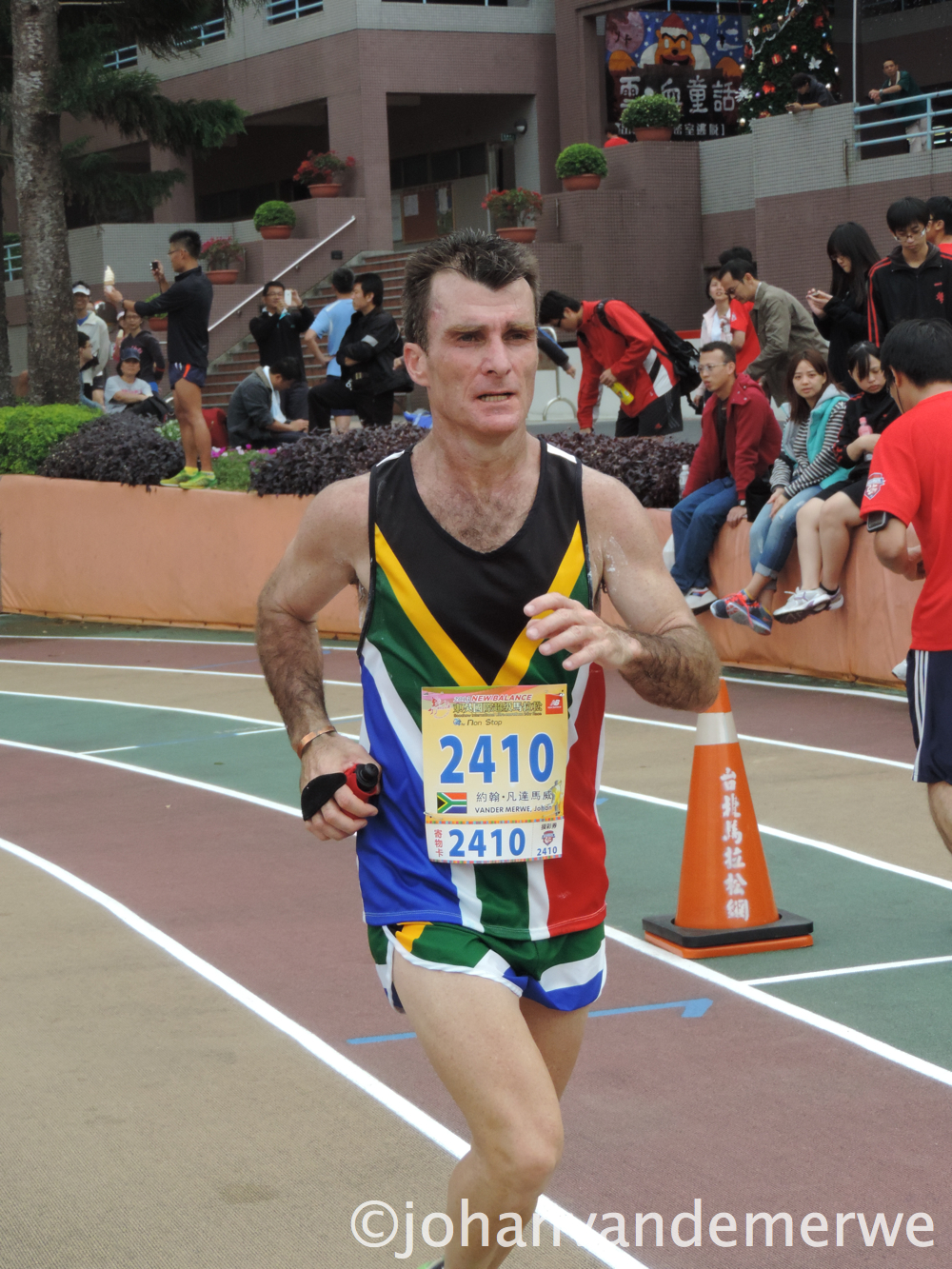
The race commenced at exactly 9h00. I was clothed in my full South African attire that reflected our country’s national colours. The starting gun announced the beginning of the race and I was faced with the moment of truth. All participants was at first hesitant to take the lead. After a few frustrating and exasperating laps I however decided to take the lead. After every fifth lap I took the time to eat something. My wife provided me with various snacks that consisted of cheese, salami and pvm energy bars. I mostly drank 32 GI, water, rehydrate and Sprite. After every 60km I also drank a recovery drink as well as an addition magnesium tablet. After the first three hours I yet again realized that I started too fast. I was still in the lead of approximately 40.8 km, more or less 1km ahead of the Japanese, Hara. Even though I was still running comfortably I was concerned that I was yet again making the same mistakes as I did previously. I felt so poised that I even played cat and mouse games with Oslen and Cudin.

After the first fourth hour the direction of the race changed and the athletes were weighed in. My weight shockingly decreased to 61.5kg. I lost a staggering 4kg within the first hours of the race. The doctor spoke to my wife and informed her that if I lost any more weight that he would be obligated to take me out of the race. I was petrified and tried to make various plans in order to pick up weight. My wife ordered a Mc Donalds burger, but I felt awfully nauseas after the first bite. The last thing I wanted was to throw up during the race. I knew from experience that one can easily loose all your strength within a blink of an eye when you dehydrate. I was fearful and decided to conceal something in my pants in order to ensure that my weight was not less than the previous weigh-in. My wife moreover found two-minute noodles that I was able to eat. I determined to go to a different scale to be weighed. I weighed 62.5kg – it was a great relief. I instinctively decided to stop chasing kilometres and to exclusively focus on improving the record time.

©iancorless.com.DSCN0589

I set a few milestones for myself in the race in order to obtain my goal. I just did not want to make the same mistakes as those I made in Polokwane. On twelve hours however I completed exactly the same kilometres as I completed previously – 145.2km.  I realized that my attempt might be in jeopardy and I set an objective for the 100 mile mark. My 100 mile time was 6 minutes slower than it was in Polokwane. My self-confidence was shot. My time was 13:38 far removed from my expected time of 12:45. Wally completed his 100 miler split during his 24H race in 1953 in a time of 12:47.

I apprehended just how difficult it would be to improve the record time. I knew that it was imperative for me to maintain the correct posture and to proceed regardless of how I felt. My position fell from first to third. My body played tricks on me and I continuously ran to the bathroom without any avail. When looking back it might have been a way for my body to rest. My wife realized what was happening and she kept a close eye on me. She encouraged me not to waste any time.  She warned me before the race that she was going to be rather stern in order to keep me in line. At 22 hours I realized that the record of 256.4 km was well within my reach if I kept my focus. It required a lot of exertion and determination. My body did not want to take in any food or fluids at that stage.

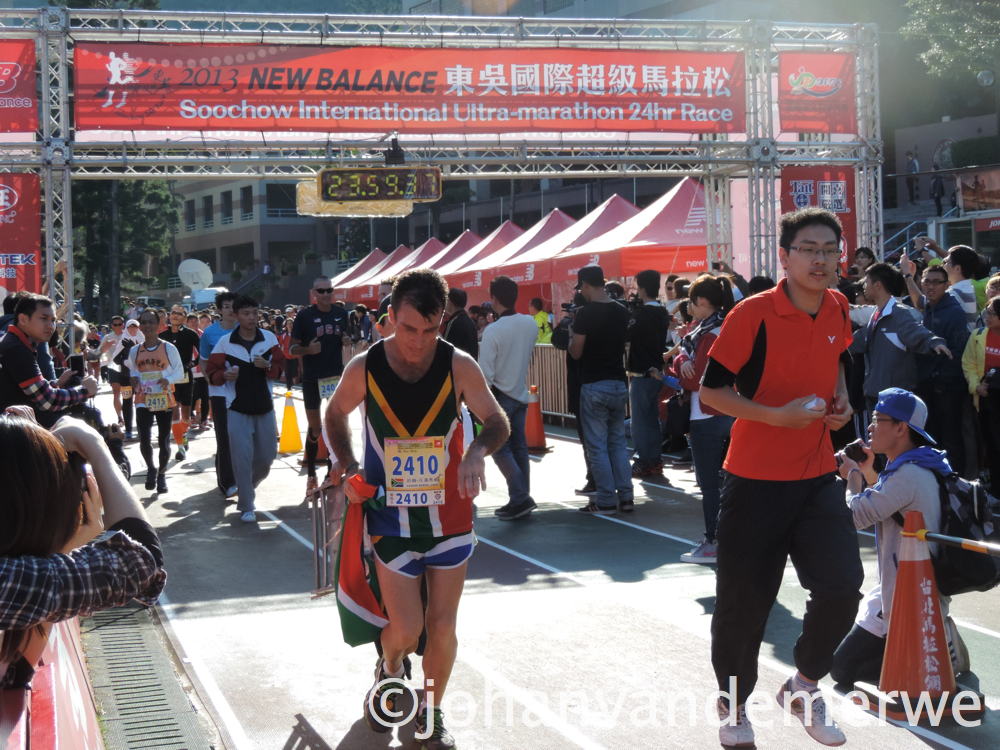
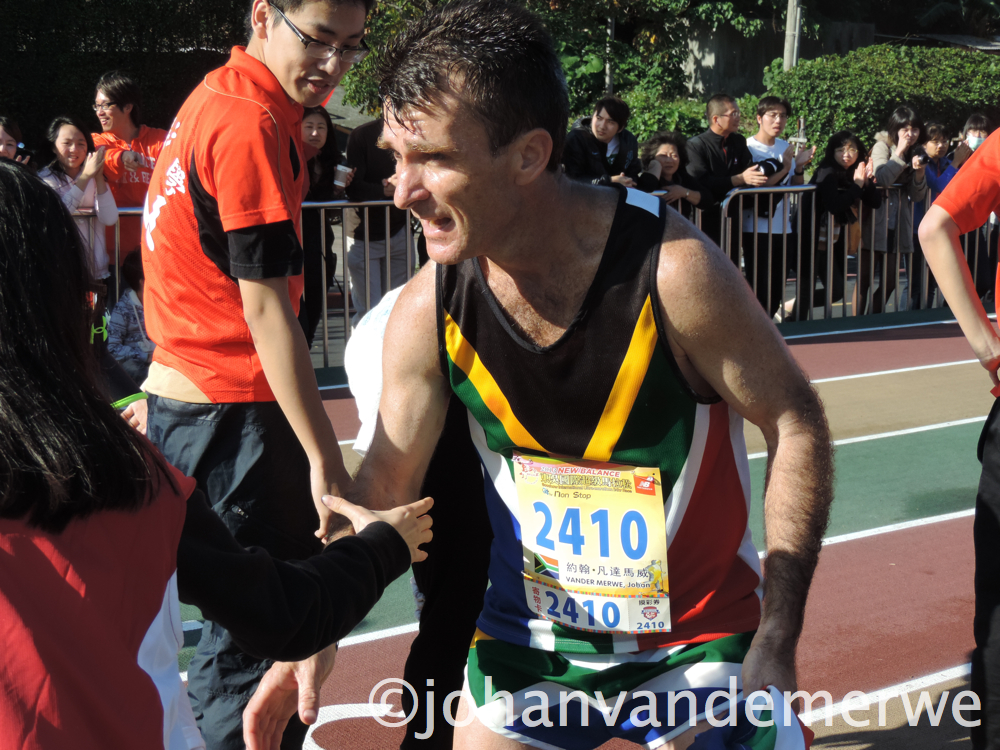
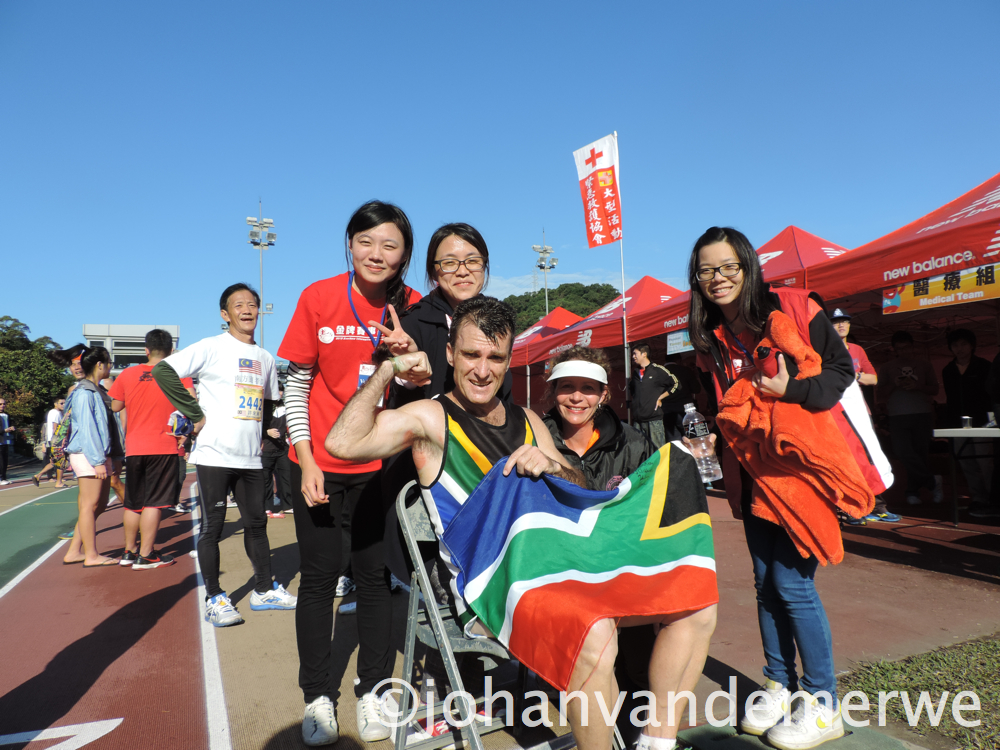
On 23 hours my personal lap counter indicated that I have completed 249km. I still had to do 7.4 km in order to improve the record. I knew I had to step up and increase my pace. I eventually completed the race and improved the record with a total distance of 258.064km.  The South African flag waved proudly above my head as I crossed the finish line.

It is almost anomalous and strange to be without a goal currently. It feels as though I am growing stronger and stronger despite my age. It is imperative for me to set a goal that will serve as my focus point for the next two years. I have my sights set on the 48 hour as well as the 6 day records that seem attainable on paper. The only record that might be within reach is the demanding, arduous SA 100 miler record that was set in 1972 by Derek Kay with a time of 11:56:56.

My biggest rule in running is that you must at all times believe in yourself when you participate no matter how unattainable and gruelling your goal seems. If I work hard and prepare adequately none of my goals will be unfeasible and beyond my reach.

©iancorless.com.DSCN0598


Many thanks to Johan van de Merwe for providing this report and images.

Johan will be interviewed for a future episode of Talk Ultra.