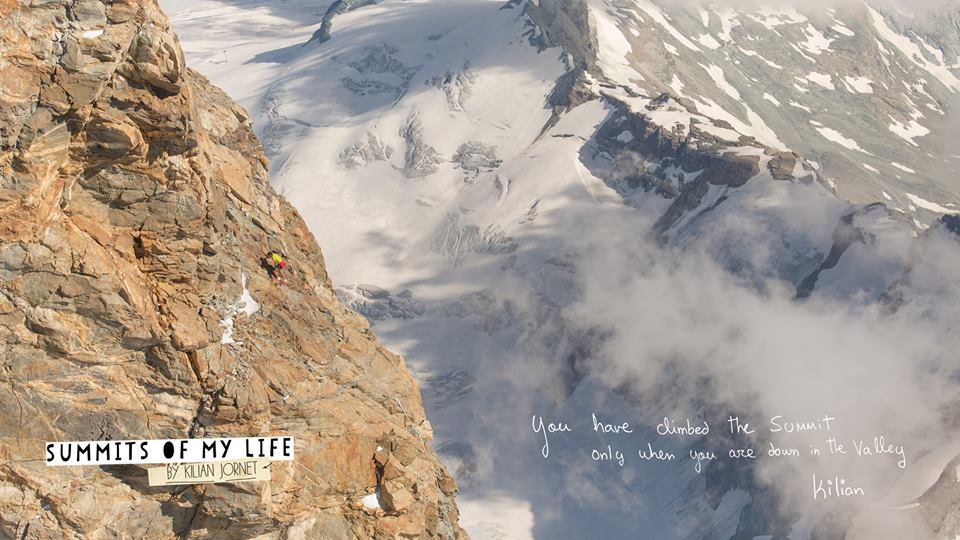
Kilian Jornet – The Matterhorn Summit Interview

Kilian Jornet ©iancorless.com

Kilian Jornet ©iancorless.com

Kilian Jornet – The Matterhorn Interview

August 25th, Zermatt, Switzerland.
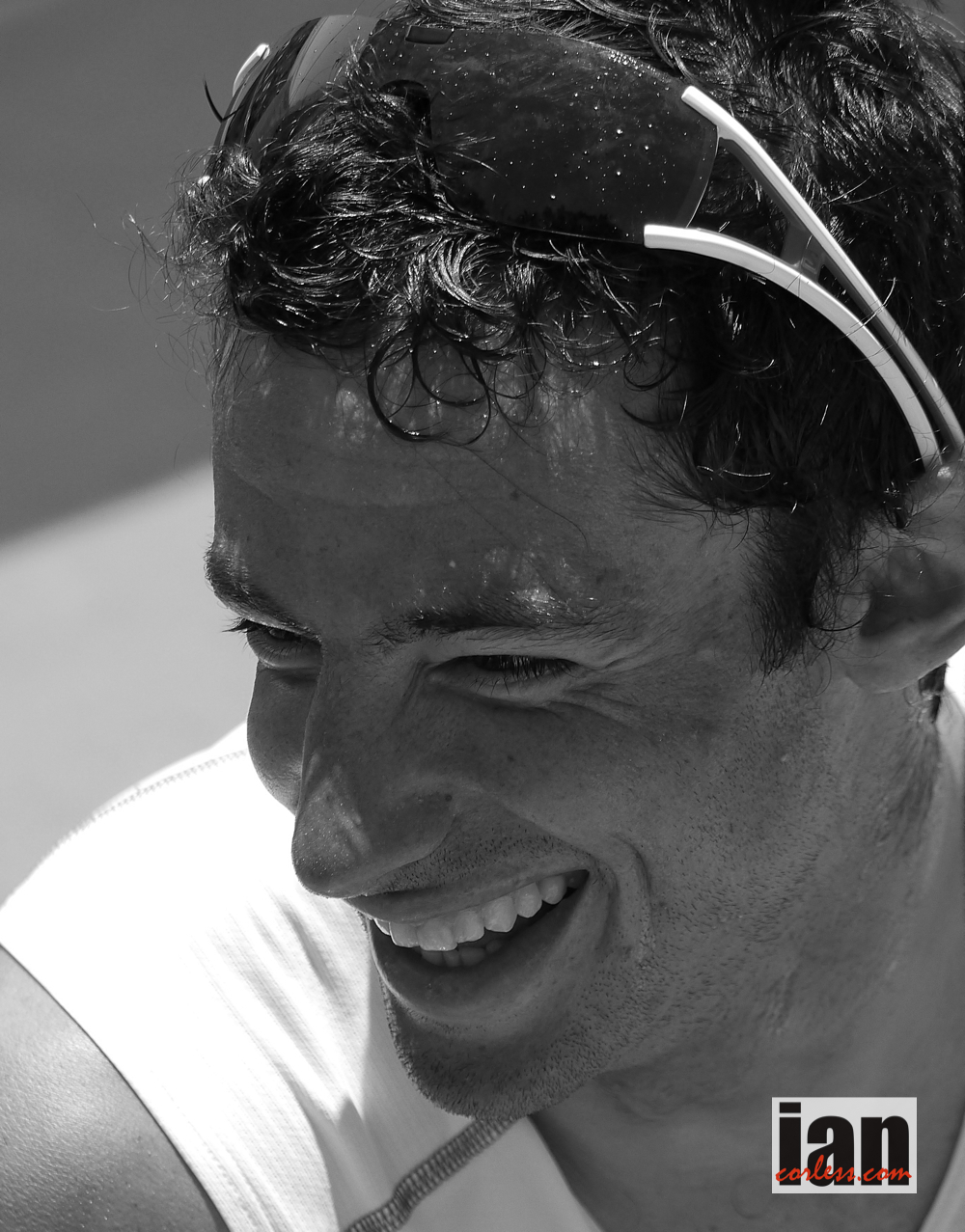
©copyright .iancorless.com.P1080830

Translations

Czech HERE, Italian HERE, Spanish HERE, French HERE

It’s the day after the Matterhorn Ultraks and just four days after Kilian Jornet’s successful attempt on the Matterhorn Summit record attempt from Cervinia. It has been quite a few days for this iconic mountain and although Kilian has excelled on both occasions, we all know, the mountain is still the boss.

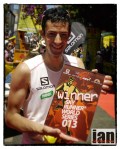
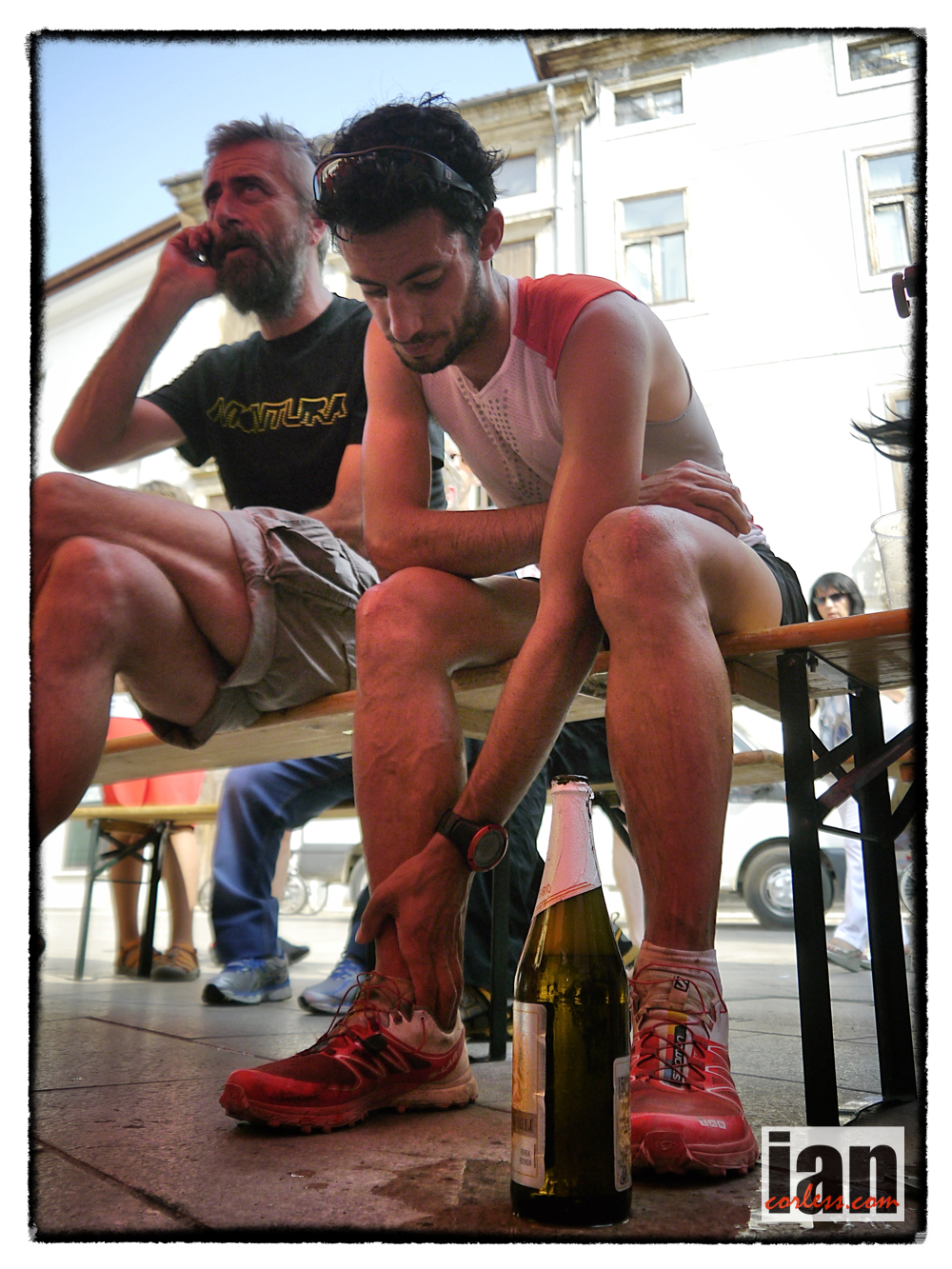
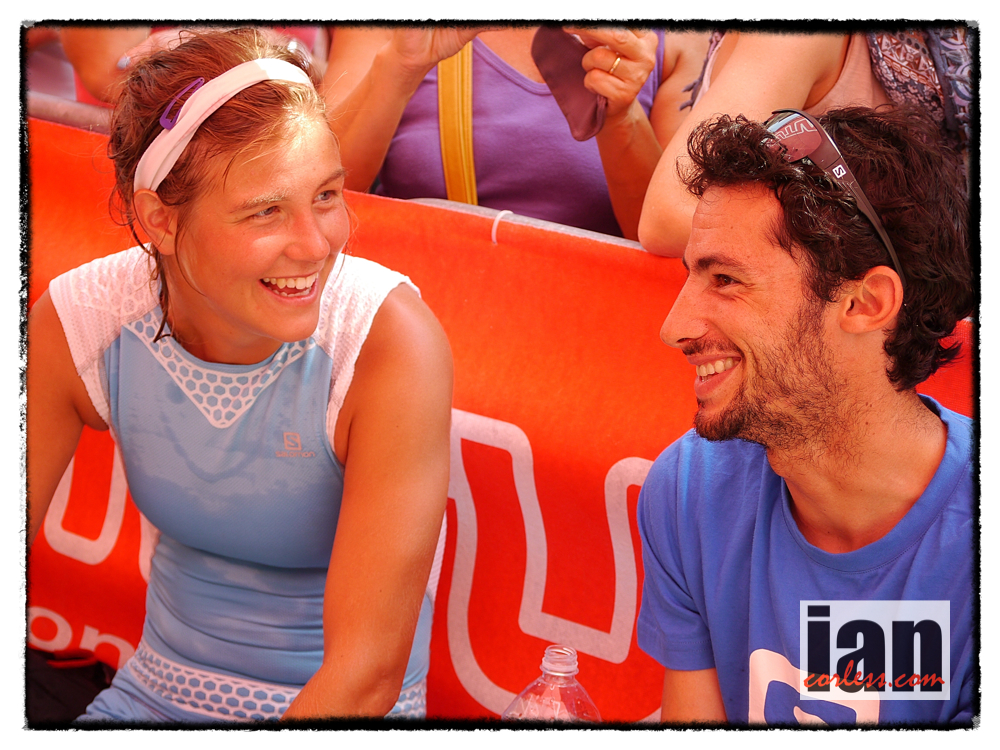
Kilian arrives with Emelie Forsberg looking relaxed and fresh after a late breakfast. I congratulate him (and Emelie) once again on topping the podium at the Skyrunning Matterhorn Ultraks race and ask him how he feels, ‘I am a little tired but feel good. I was certainly tired in the race but I didn’t push too hard. I just did what I needed to do to win the race’.

Our conversation turns the TNF UTMB and we discuss how the race will unfold for the men and women. Kilian and Emelie are animated at the prospect of Julien Chorier, Miguel Heras, Anton Krupicka and the other contenders going head-to-head. Emelie gets excited at the thought of Nuria Picas in the ladies race, it’s her first 100-mile race and of course Emelie knows the Catalan well. We could talk all day but eventually I settle down with Kilian in a quiet corner and we discuss the Matterhorn.

IC: It’s the day after the Matterhorn Ultraks, firstly Kilian, congratulations on your win! Another great race with Luis Alberto Hernando but maybe what is more impressive is that it comes just a couple of days after your Matterhorn Summits. How are you feeling?

KJ: I feel good. It was a super good race with a great atmosphere. To run with Luis Alberto Hernando was super nice. I was very tired before the race, particularly the day before. I used a strategy for the race to take it easy and take the win in the last kilometers. Yes, I think I was much more tired than in other races this year.

IC: We spoke in the Dolomites and we discussed then that your next Summit would be the Matterhorn. You travelled to Cervinia and you lived here for weeks to train. You had the utmost respect for Bruno’s record of 3:14:44. The Matterhorn is a dangerous mountain. You said you needed to learn the mountain, to understand every step. I think in that time you went up and down the mountain multiple times. Just before your attempt you said that the record was in your grasp… what is it like to look at something that is perceived as being an iconic record, a record from 1995, you said in a quote that it was a record you had dreamt of. Something from childhood that you wished you could achieve. It is a massive undertaking. For you it is more than a record, it’s your life.

KJ: I remember it well; I was 13 years old. I entered into a mountaineering center; I was talking to Jordi, the trainer. I said at the time that the record was impossible. I spoke to Jordi recently and he reminded me that I was dreaming about the Matterhorn all those years back and about the record. I thought it was the ultimate expression of our sport. It’s a beautiful summit. It has a logical line. It is a hard record, it is push running and climbing, so, it was in mind for many years… more than Mont Blanc and all the other records. About five years ago when I started to think about Summits of my Life, the Matterhorn was my goal. The other summits were really preparation for the Matterhorn and Bruno’s record. For me, it was the most difficult record in Skyrunning and mountain running. For example, Pikes Peak is not Skyrunning. I was really afraid, not of the mountain as I was climbing a lot but of the time. I summited the Matterhorn nine times before the ascent. The first time you climb you become aware of what is possible. You go up and down and say, wow, this is the time I need to beat. After going up and down nine times I think okay, I know the mountain, I am not going to fall, I know this mountain well. I was aware of where I could go hard and where I needed to go easy. However, the morning of the attempt I was nervous. I thought to myself, will I do this record or will I do four hours?

IC: A few people asked why you made the attempt at 3pm; it seems quite logical that the Matterhorn is a busy mountain so I assume the mountain would have been less busy?

KJ: Yes for sure. It is a busy mountain when conditions are good. When I climbed nine times I saw hardly anyone, just two or three teams. I was alone. The week of the attempt we had good days with warm and dry conditions and everyone was on the mountain. Over one hundred teams! So, I was talking with all the guides and the helpers. We asked the question, what do we do? So many people on the mountain and it would have been impossible. My first idea was to start between 7-8am but it would have been crazy to pass people. We decided to start later. It was the perfect decision. It was warm at the summit and I wore just a t-shirt and nobody was in the way. Everyone was going down or in the hut. I just had the safety guides to help. It was perfect!
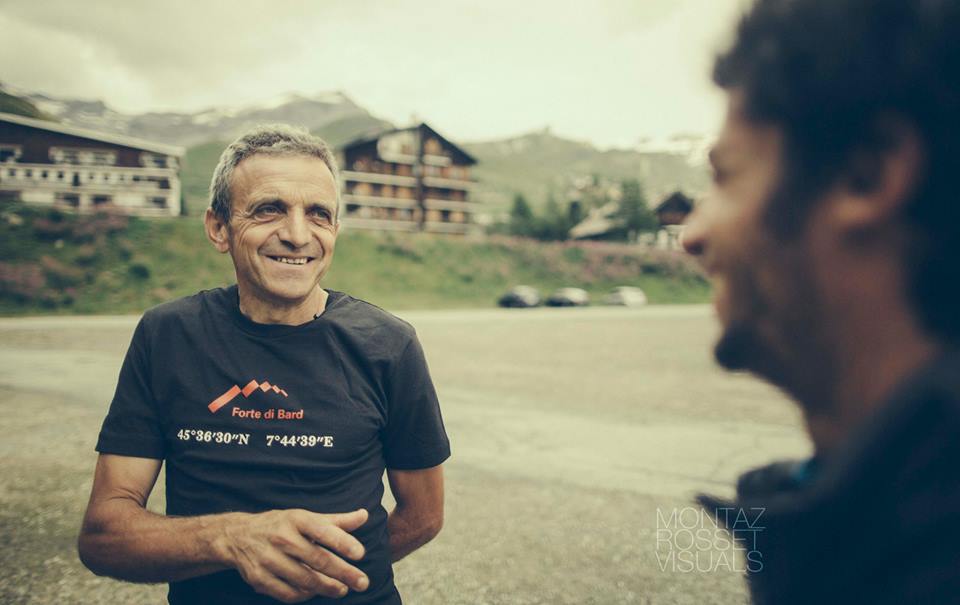
Kilian Jornet-iancorless.com ©sebmontaz all rights reserved

Kilian Jornet-iancorless.com ©sebmontaz all rights reserved

IC: In the build up to the record, you actually met up with Bruno Brunod. Did he go on the mountain with you or did you just talk about your attempt?

KJ: Bruno said he never climbed the Matterhorn after his attempt. We met in Cervinia and discussed his record. What conditions he had, how he prepared, how he was mentally and then we discussed the rope, the short cuts and how he made time. It is funny, Bruno stopped running in 2003 but last year he started running again and he is now preparing Tor des Geants. He never ran long distances; he was afraid. I said, c’mon man, you are strong, and you can do well in these races.

IC: So, Bruno has gone from no running to doing one of the longest races on the calendar, I guess when you are Bruno Brunod you don’t do things by half. When you go on the mountain to learn and understand, what process does that involve? Do you have several options to attempt the summit and therefore you try them or do you have a defined route and then you put that route in your mind so that you know every step. You know you can push in one place and you won’t slip in another place?

KJ: It’s one route. The Lion Ridge is the classic route and the fastest. It is the historical route and the same as Bruno used and those before him. You work out the differences but it is a thin ridge, you have several places that you can pass but yes, it is about planning. It is about knowing where to put your feet, knowing where to push and when not. I think you need to understand the mountain. You have parts in the west and north face and they are thin in the ridge and you can have ice. If you go in the morning you will have ice. If you go after 10am then this will be water so you can go there. You need to spend time to understand how it works, to understand the mountain and its life. Always in the north face it was icy, so I was aware I needed more care. On the west side I could push harder as the rock was warm and the rubber of my shoes would have better grip. It is important to spend time and understand that exactly. For example, if it is cold or windy, my shoes don’t grip the same as a warm day. I need to know this so I know exactly where to go. It is super important to understand the mountain and how the weather conditions are.

IC: On the face of it, people look at you and think you are very relaxed and casual. I know, I have seen you work and I have seen you study a mountain, you know the history, you go into in depth research to make sure these attempts are correct and that you know what you are doing. It is obviously very important. You have mentioned a simple thing like shoe rubber. Did you have special shoes?

KJ: Yes I tried different rubbers. I always used the Salomon Sense but I had different soles, different grades of rubber. For the attempt I used a softer rubber for grip. In the snow any shoe glides. You just need the technique of a flat foot and the ability to push.

IC: What is great about these attempts in comparison to Bruno, for example, in 1995 I guess Bruno stood in the square in Cervinia and just a few people were around probably having a beer, but Marino Giacometti and Lauri Van Houten were instrumental in Bruno’s attempt. They helped finance it, they arranged the safety, they arranged a helicopter and of course they got involved in your attempt. Fortunately for us we had the opportunity to have Seb Montaz follow the process, for those who know Seb, he is like your self a master of his craft. We have had some great glimpses of your summit; short videos are already on YouTube. Clips of you running a ridge jumping a crevice, or sliding down snow. It brings what you do into perspective. We can talk about you going up and down the Matterhorn but it’s easy to think, ok! But we may not have an idea of the difficulty or danger. These videos convey this. It is an important aspect. Is it a way to record you achievement but is it also a way to attract people to the mountains and also let people understand the beauty and danger?

KJ: It is the second for sure. It is not about my achievement. When I stop it will be in my mind. It is more a learning process. It enables the people to join us in the mountain and it enables everyone to understand. It’s beautiful, it is nice but it is also very difficult. It takes preparation, we do take some risks but the videos help motivate and inform. The way I go the mountain is possible but you need to learn. For me, my summit was the Matterhorn; I understood my capacity, my ability and my technical skill. I accept the risk. For everyone else it may be here or close to the home. We want to show and share that you can be light in the mountains and hopefully more people will understand. I go naked to the mountain.
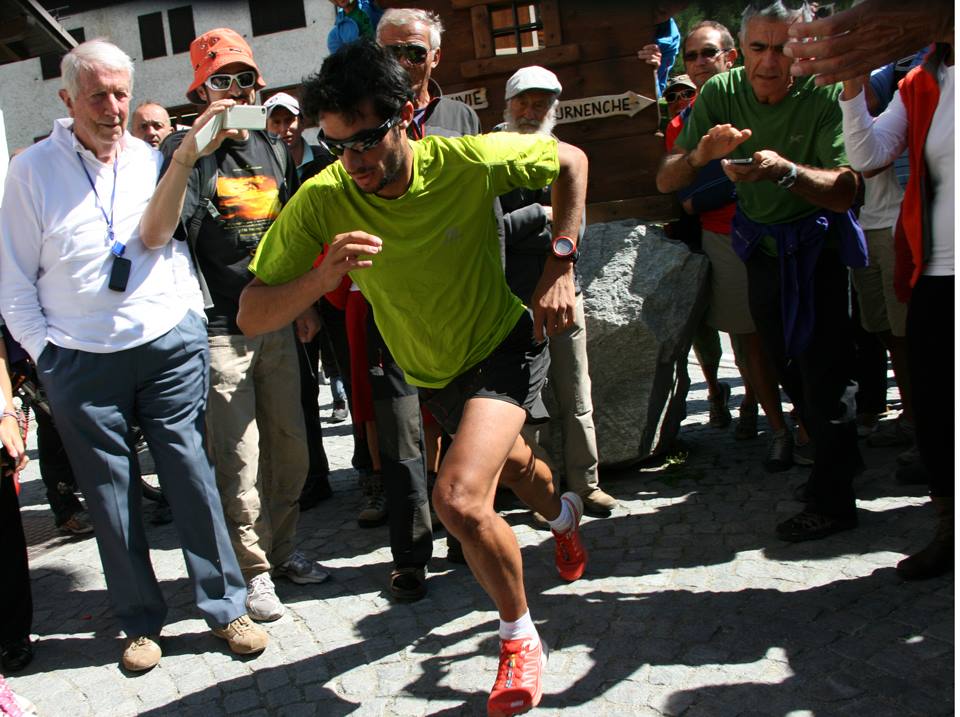
Kilian Jornet ©laurivanhouten_ISF

Kilian Jornet ©laurivanhouten_ISF

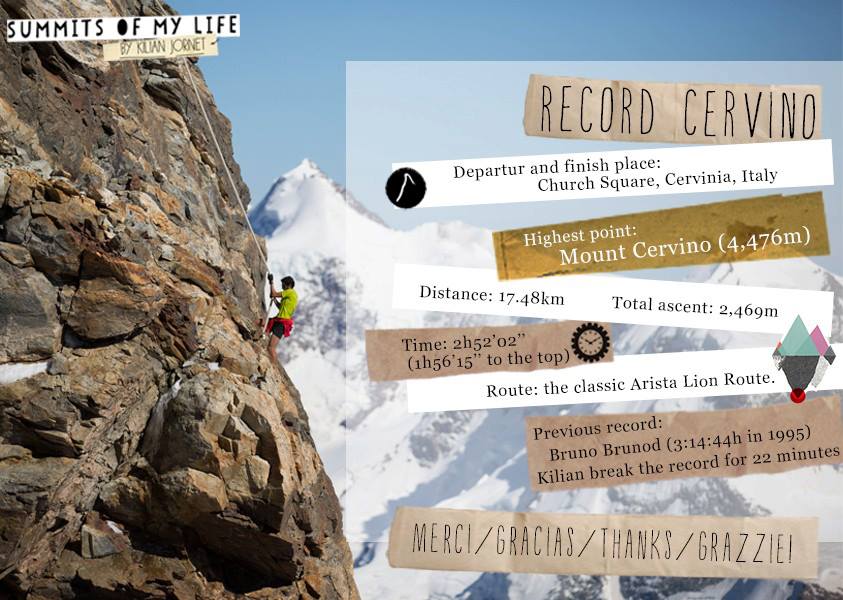
IC: The actual record. You started 3pm from Cervinia. You are in Salomon Sense, shorts, T-shirt and a jacket around your waist. You look like you are going for a run… of course that is what you are doing! You start and in the early stages it is easy and then it becomes tricky, technical, you have ropes, ridges, faces to ascend and so on, how do you process the attempt in your mind. Did you have specific targets, so, did you know what time you wanted to be at a certain place or do you go on feel? I know in the early stages you only had about 3 minutes on Bruno’s record, it was maybe a little too hot but once past a certain point you really opened up time. Of course on the descent you came down super quick. You did 2:52:02 instead of 3:14:44. I believe Bruno predicted 2:52! Were you surprised?

KJ: I was really surprised. When Bruno said 2:52 I said, no way.  I was thinking, I might break the record by 2-3 minutes maximum. Maybe 3:10 would be a good time? During my practice runs I never ran fast because in the hard parts you don’t want to go hard. It’s like a lottery and taking numbers… you leave taking numbers for race day! The only time I went faster was the second day when I trained. I thought, wow, maybe I can beat Bruno’s time. If I am close to Bruno’s time then I can go faster. I spoke to Seb Montaz on the morning of the attempt, he said if you are at the summit within 2 hours it will be so good, you will have time for the downhill. I said, yeah I will be so very happy. When I started the summit attempt it was the afternoon so this was good at the top because it was warm, however, it was warm in the valley too. I don’t like warm. I started with a good pace but it was hard to find the strength. I saw lots of people and friends. Bruno was shouting at me, ski friends shouted, guides from Cervinia, Nuria Picas was there and so on… they gave me energy. I said to myself, I must keep going, I must push. I had Bruno’s time in my mind but I had no prediction of what I could do.
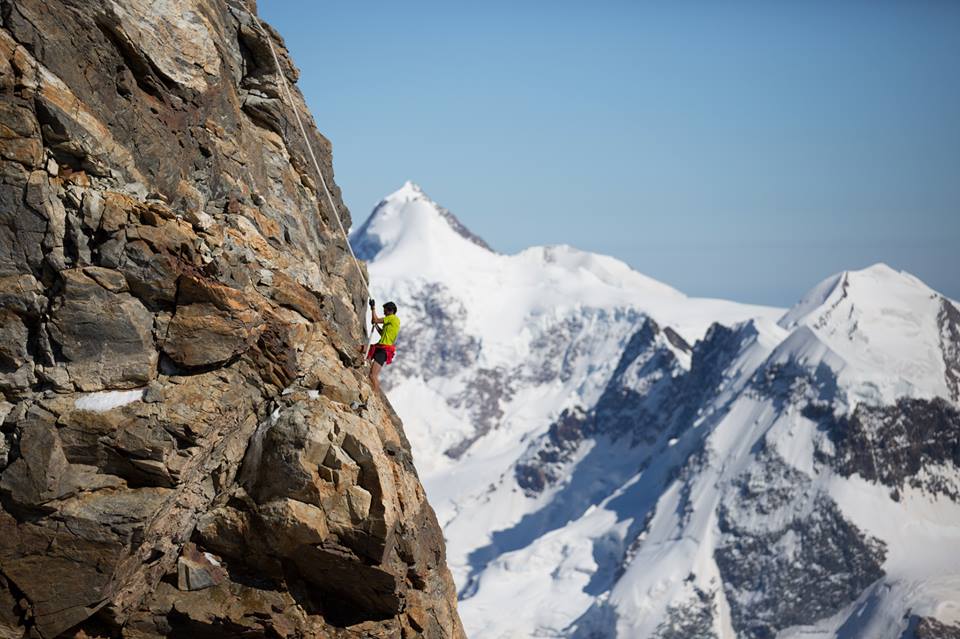
Kilian Jornet-iancorless.com ©sebmontaz all rights reserved

Kilian Jornet-iancorless.com ©sebmontaz all rights reserved

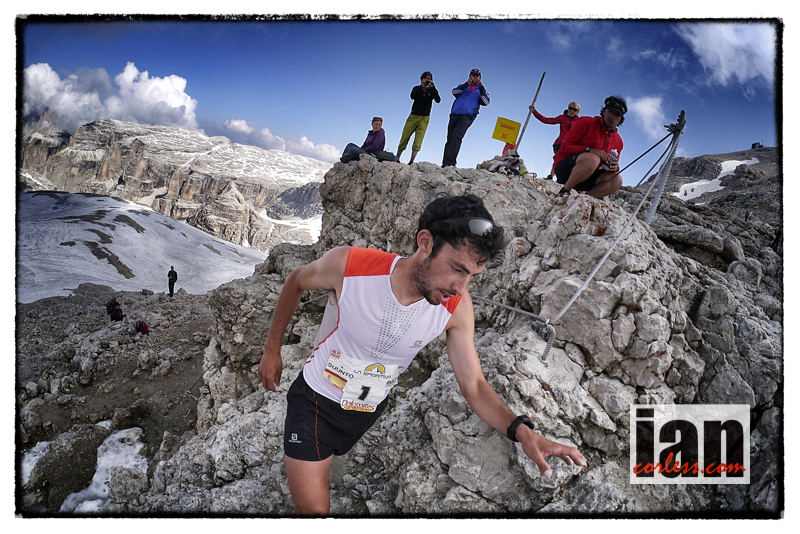
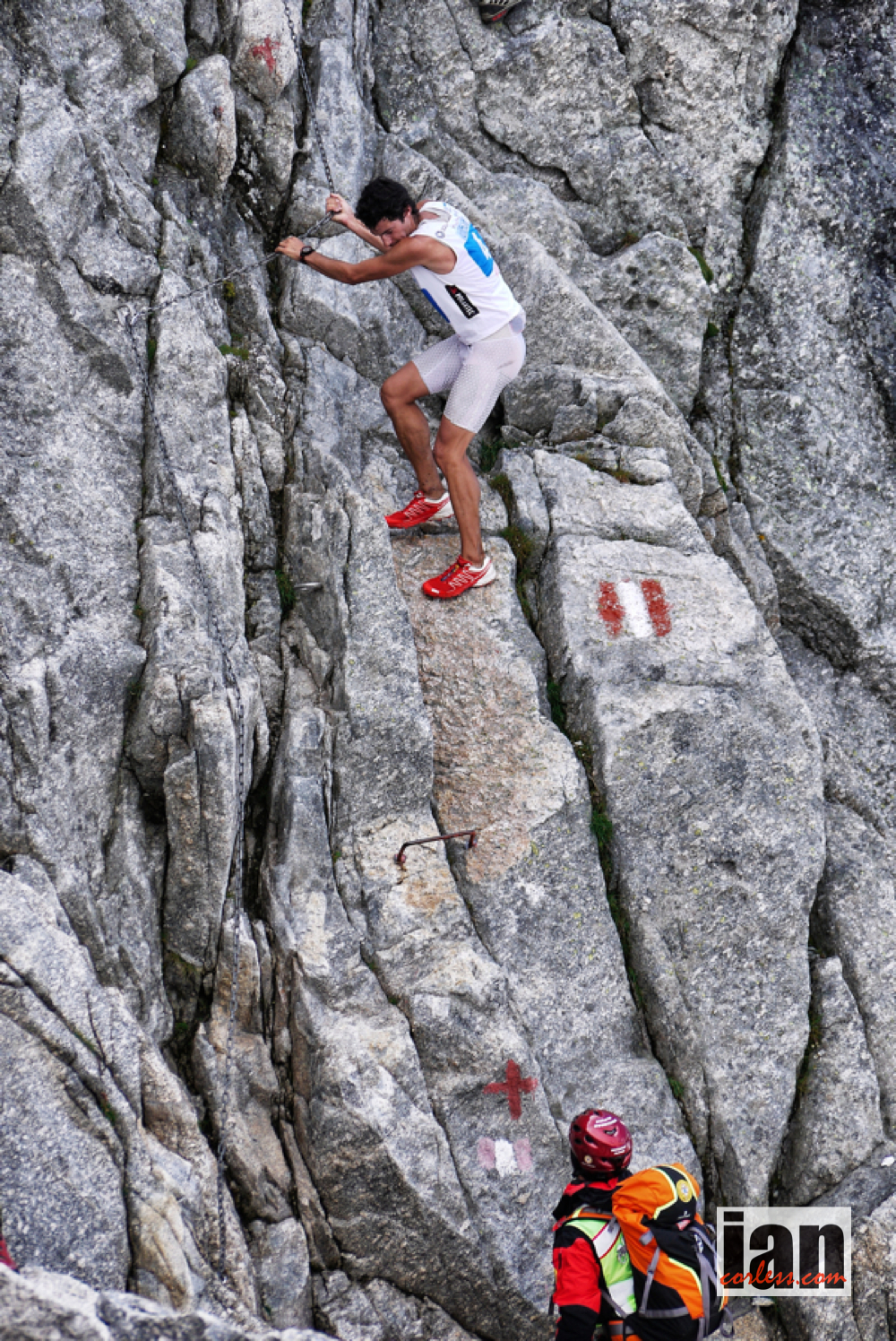
I was close to Bruno’s time until the Leone Col then the ridge starts and then I came into my own. It is where I love to run. It’s technical, you need to climb and you need to push. It is exposed. I love to be exposed on the mountain. From here I was not moving fast but fluid. This is the way to move in this terrain, if you go fast and you go more than you can you will have an accident. Moving fluid allows me to move quickly. I started to gain time all the way up to the summit. I looked at my watch and I saw I was almost 12 minutes in front of Bruno’s time, I said to myself, wow, this is incredible. It is possible! Okay, I said, I can do it. I was happy but I could not disconnect. It is a long down hill to Cervinia; I needed to be sure of every step. The boss of the guides in Cervinia said to me at the summit, you can do it! I started down in deep concentration. I was enjoying it so much; I love to run the technical sections. You don’t push with your legs; you push with your mind. Where to put your feet, where to put your hands, when to glide, when to go faster, when to stop, this is what I love, I was enjoying it so much. When the most technical part stopped, I realized I was almost 20 minutes in front of Bruno; so, the last part was just pushing to the finish.
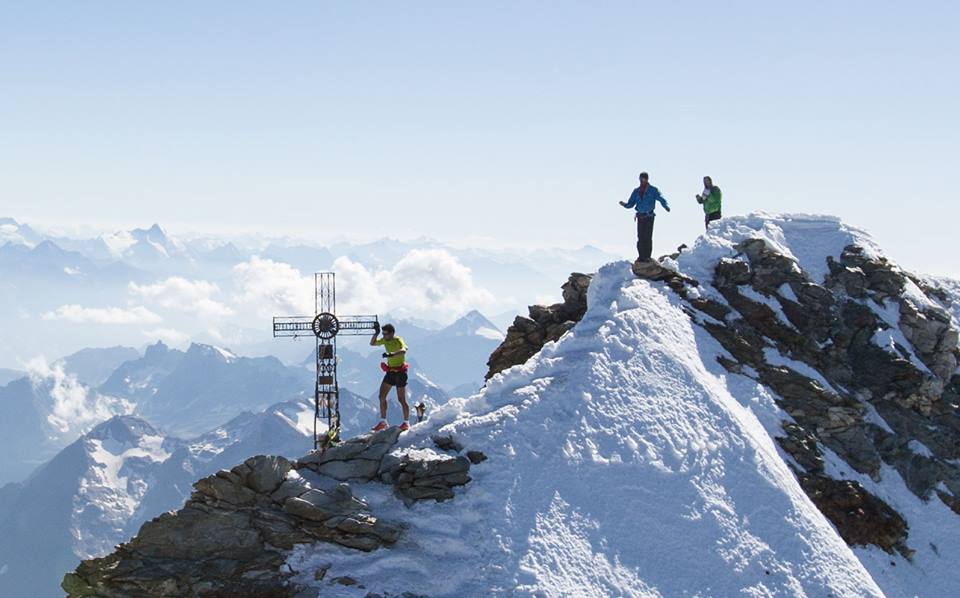
Kilian Jornet-iancorless.com ©sebmontaz all rights reserved

Kilian Jornet-iancorless.com ©sebmontaz all rights reserved

IC: Myself and many other people were very worried about the Matterhorn. We respected the mountain and we anticipated that you would push; pushing brings danger, so when you got to the summit and you knew you were ahead of Bruno’s time did that mean that the descent was easier, you took less risks than if the time had been very close.

KJ: Yes of course. If I had been at the summit in 2:10 I wouldn’t have come down at the speed I did. I would have taken more risks. I also think that this doesn’t work! Many people who saw me said that I was going down very fast, they said I looked really fluid and that I wasn’t taking risks yet I was very fast. I think this is the way to go down the mountain. If you take risks the body position is different, you can’t glide as well and so on. You lean back and this slows you. If you feel confident, you can go fast. I think maybe I could have gained 6-7 seconds by taking risks. It’s nothing! These 6 or 7 seconds may have been my life… I knew the route very well and I had no need to take additional risks. I just wanted to be confident. My mother was on the mountain and she had bad memories of when she climbed the Matterhorn for the first time but if you climb again and again, you know it’s risky but it isn’t necessary to take risks, it is about being confident.
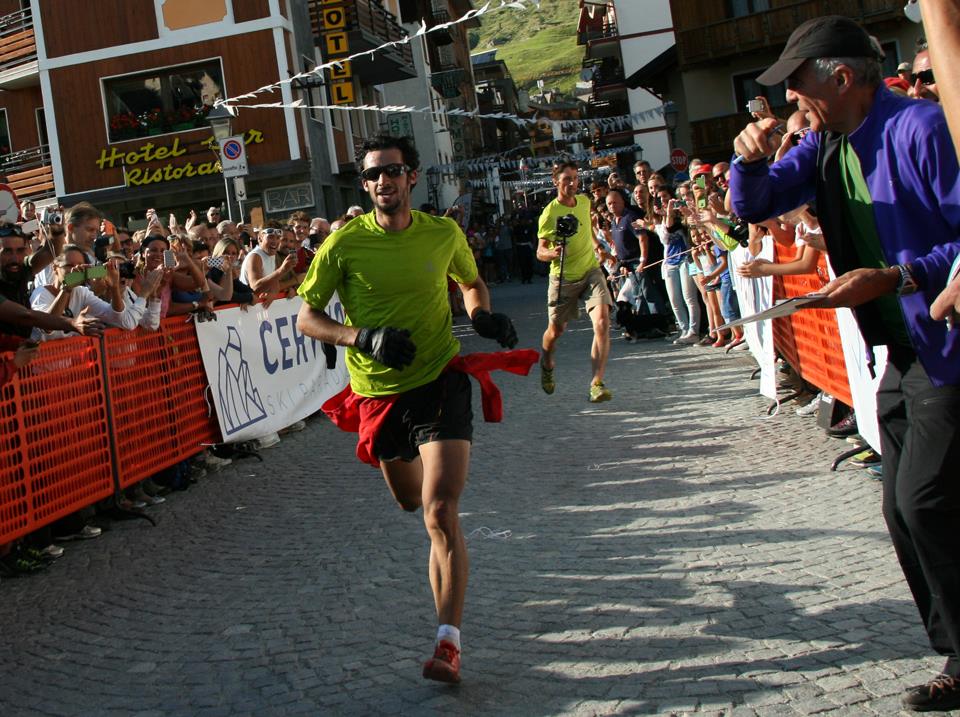
Kilian Jornet ©laurivanhouten_ISF

Kilian Jornet ©laurivanhouten_ISF

IC: When you arrived in Cervinia, it was like the end of a race. It was incredible. The barriers were out. It was almost like the race finish here in Zermatt. Did this surprise you?

KJ: Yes, I was completely surprised. I was in Cervinia for three weeks sleeping in my van in preparation for the attempt. I was surprised by the reception by everyone. For example, the first day I climbed the Matterhorn I was with Emelie. We climbed with running shoes and when we reached the top, the mountain guides said, ‘wow, you are going with run shoes. Congratulations. Do you want to try the Matterhorn record, can we help you? Tell us the day, we want to help you’. There is not another place that is like this, we usually get the response of, ‘What are you doing here in run shoes, this is ridiculous’. Not in Cervinia, they wanted to help us right from the start. Every time I climbed it was so open, the support was great. I was always asked, ‘tell us what day you go and we will help. We want to be on the mountain to help and support you’. It was the same for the hotels in Cervinia, they offered me showers or they said if I needed anything such as Internet that I could use the Wi-Fi. It was an incredible ambience. People were happy that I was in Cervinia to do the record and they got behind me. I think this was the most beautiful part of the record. I went just with my van, I was alone to climb but everyone was supporting the team and myself. It was so easy then to do the record. The day before my attempt, I made a call to the mountain rescue and said, ‘Tomorrow I go’. He replied, ‘Okay, how many people do you need? We will put people in the mountains for safety in case you have a mistake’. He called the mountain guides and they said, okay, we will put people here and here. The guides had finished work at midday on Wednesday and then they returned to the mountain to support me. It is unique. The reception was so fantastic.

Great video here on YouTube ©Martin Mikloš

IC: It was incredible the level of support you got. Knowing you, you would have quite happily got out of your van, started in the square and returned with no fuss. Marino Giacometti made a very good point, these record attempts do need to be verified, it does need an element of proof that you do go to the top and do come back down. Of course we are not questioning your honesty. But for future records a structure needs to be in place. I guess if we set a standard for the future it can only be a good thing. Does that mean for future attempts such as Elbrus in Russia, will you start to incorporate this system.

KJ: Yes, I know I need someone to do the chrono and I am aware I need someone at the summit. For Mont Blanc, I had people from the Tourist Office to confirm my attempt and I had guides at the summit. I also have the gps files on my Suunto. At the Matterhorn it wasn’t an issue, we had everyone in place and it was almost taken out of my hands. For example, Marino Giacometti did the chrono in Cervinia but the guides etc. were fully behind the attempt and they verified the route. My chrono was radioed to all the guides on the mountain so my progress could be monitored. It is important to be true. It is just like doping control… it is about integrity, my intentions are 100%, it is important to do a record in the correct way. I am aware that many ‘FKT’s have no control, I personally believe in the people but when you see the world and see the problems, I am aware of the issues of how people can not be honest.

IC: What was great about this attempt, because you had a team of people up the mountain, we had time checks back that meant that we could Tweet and Facebook times to the world. This was so exciting. Social media became alive following you. I think we stopped so many people from working. They wanted to follow. It is interesting from my perspective because it is what I do, but I guess the concept of someone running up and down a mountain and that message being sent around the world, some may think, why is that interesting? But it is so exciting; the updates had people glued to your progress. Can you relate to it or do you just think about the mountain?

Video courtesy of Seb Montaz ©sebmontaz

KJ: When I am on the mountain. I am 100% focused. I need to be in my moment and think about where I put my feet, how fast do I go. If my mind wanders I will loose time or maybe my life, so I was super focused on moving as quickly as possible. It is just the mountain and I. The social media and the photography I leave to others. For example, Seb was in the helicopter but I never saw or heard it even though he was so close. This is because I needed to be 100% committed. I think this is nice. In racing I think for the last three years I have managed my effort and therefore I don’t need to focus as much but this was completely different. It was like the first time I raced ten years ago when I was super focused. It is a super nice feeling.

IC: Certainly social media has made what you are doing so accessible which is great for us but it is also great for you and everyone else involved. I guess now your energy focuses on Russia and Mt Elbrus?

KJ: Yes, I need to relax a little first…

IC: You said that to me last time, when I interviewed you in the Dolomites. You told me you wouldn’t race for a month and then you went to Sierre-Zinal.

KJ: Ah yes, I was close to Sierre-Zinal, it was just the other side of the Matterhorn, so it was good training. Plus it was the 40th edition. Now I take a couple of weeks with no racing but I will train a lot, I love that; I need to do it to be alive. I will train but not race until UROC in the US. I will focus on Elbrus for the next few weeks; I want to go to Russia before UROC, maybe the 15th September. I will plan around that date and train at altitude.

IC: So does that mean you will do the Elbrus summit before UROC?

KJ: Yes, I think so. After UROC I have Skyrunner World Series, Limone Extreme and the then Diagonale des Fous, so, after this I want a break.

IC: You say a break, does that mean ski mountaineering?

KJ: It means one week of no training and then I will be in the mountains for November and December but I won’t race.

IC: Okay, we will follow you and see if you do race… Kilian it has been fantastic for you to give me so much time to talk about the Matterhorn. It’s great to get such an insight. Finally, when are we going to see the full edited Seb Montaz movie of this year or the recent summit?

KJ: We are working on it and of course we will work more after Elbrus. November and December will see much of the work being done in edit, so we hope before the end of the year. Maybe late December?

IC: Perfect. Thank you so much for your time.
Kilian Jornet-iancorless.com ©sebmontaz all rights reserved

Kilian Jornet-iancorless.com ©sebmontaz all rights reserved

The Matterhorn – A history and perspective
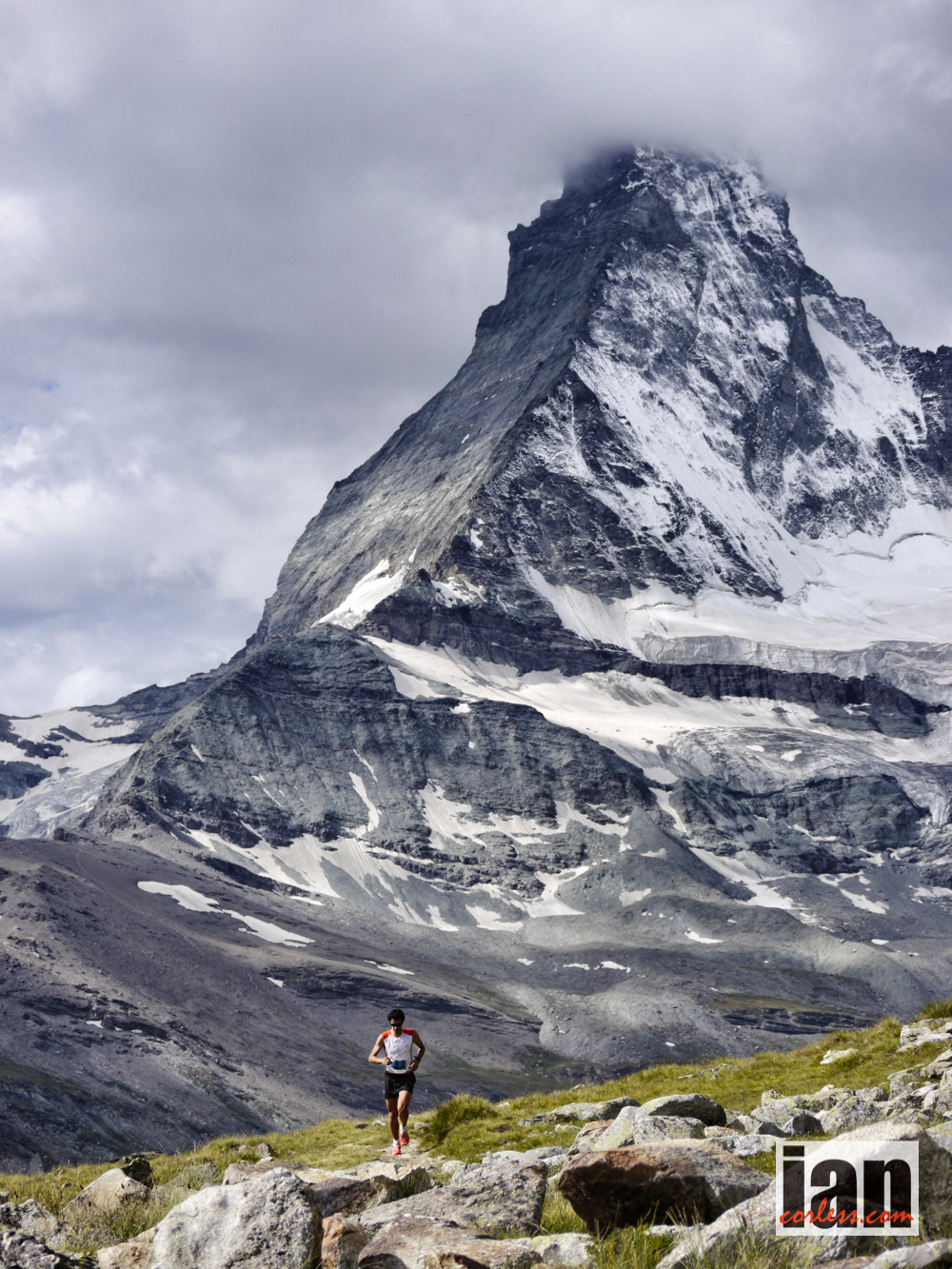
“It is a technical mountain. Bruno Brunod has a record of 3:14:44. It is a technical route that is not difficult BUT if I fall, I will die! I need to know the route very well, I need to spend time on the mountain, and I need to learn every step.” Kilian Jornet, July 2013.

Monte Cervino (Italian) or Mont Cervin (French) or Just the Matterhorn is a mountain on the border between Switzerland and Italy. At 4,478 meters (14,690 ft) high, it one of the highest peaks in the Alps. It consists of four steep faces, striking above the glaciers that surround it. Overlooking the town of Zermatt it is an iconic mountain and possibly ‘the’ most photographed mountain in the world. It is a mountain that dreams are mad of. Kilian Jornet is no different, “I have been dreaming about this record since I was 15”.

Ironically, the Matterhorn was one of the last great Alpine peaks to be climbed and the first ascent by Edward Whymper in 1865 brought an end to the ‘Golden age of alpinism (The period between Alfred Wills ascent of the Wetterhorn in 1854 and Whymper’s ascent of the Matterhorn in 1865, this period saw many peaks in the Alps have first ascents)

Since 1865 to 1995 it has been described as one of the deadliest peaks in the Alps, over five hundred lives have been lost in this 130yr period. I guess the first ascent in 1865 showed us the danger potential when four climbers fell to their deaths on the descent.

The Matterhorn has two distinct summit, both situated on a 100-metre-long rocky ridge: the Swiss summit with a height of 4,477.5 meters (14,690 ft) on the east and the Italian summit with a height of 4,476.4 meters (14,686 ft) on the west. Their names originated from the first ascents, not for geographic reasons, as both are located on the border. Each summer a large number of mountaineers try to climb the Matterhorn via the northeast Hörnli ridge, the most popular route to the summit.

Small patches of snow and ice cling to the faces of the Matterhorn, but the faces are steep and regular avalanches occur. Snow hurtles down the four sides and accumulates on the glaciers at the base of each face.

Four main ridges separate the four faces of the Matterhorn and therefore it offers four distinct routes.  The least difficult technical climb and by far the most popular is the Hörnli Ridge, which lies between the east, and north faces and it faces the town of Zermatt. The Zmutt Ridge (west), between the north and west faces is, according to Collomb, “the classic route up the mountain, it’s the longest ridge and also the most disjointed.

The Lion Ridge, lying between the south and west face is the Italian normal route.  It is the shortest route on the mountain and has fixed ropes in place but many think it to be a far superior climb, particularly when compared to Hörnli Ridge. Furggen Ridge is the final offering, it is the hardest offering and in good conditions is not too difficult, and it does however have a reputation.
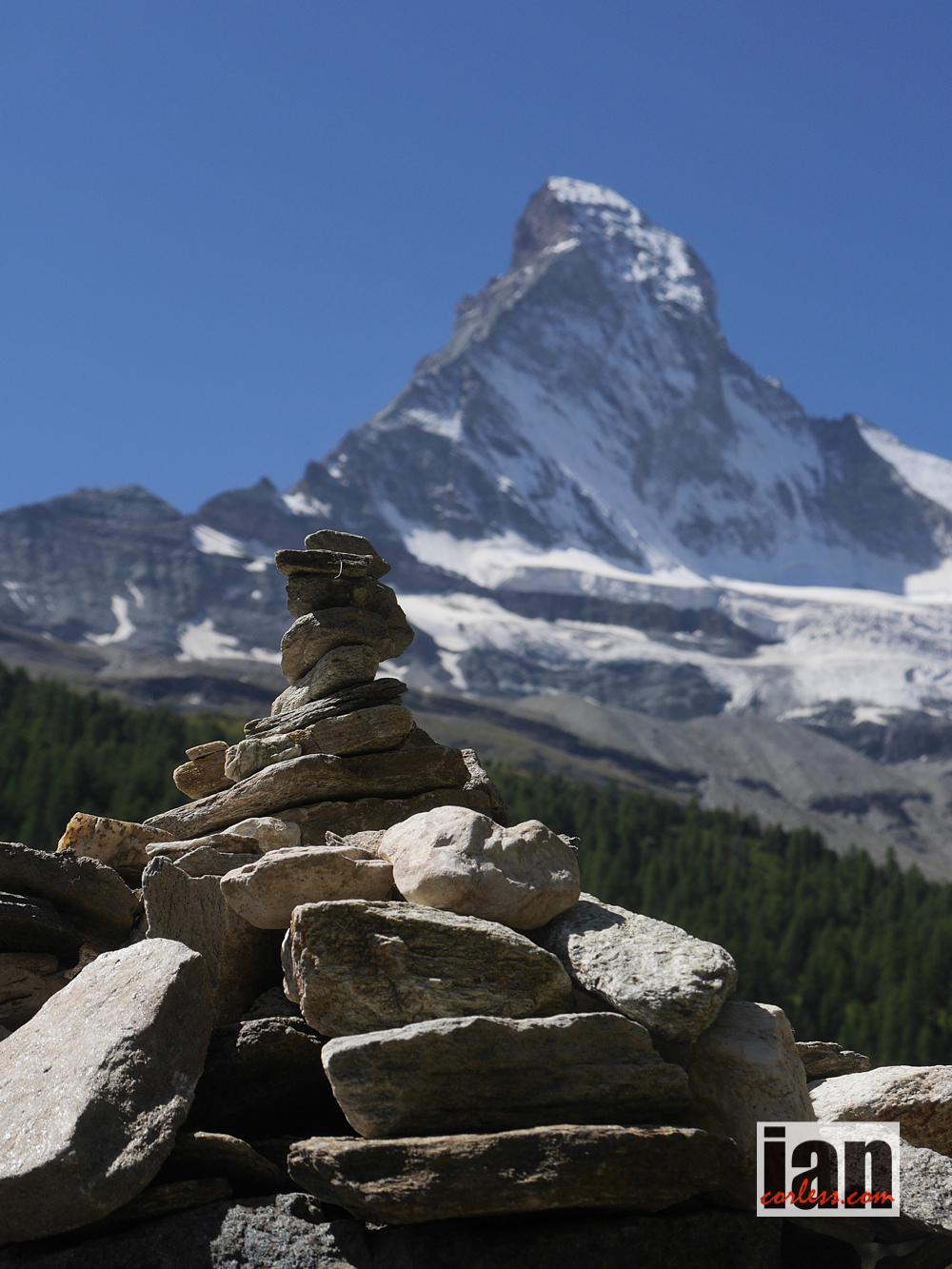
©copyright .iancorless.com.P1000082J.J and J.P Maquignaz made the first ascent of the Italian ridge as it is climbed today in 1867 but Kilian Jornet had his eyes on Bruno Brunod’s record set in 1995 when he did Breuil-Cervinia to the Matterhorn summit and back in an astonishing time of 3:14:44. In addition, Bruno also has the record for climbing the Matterhorn, again from Breuil-Cervinia just to the summit in a time of 2:10.

Back in 1995, Skyrunning president, Marino Giacometti and Executive Director, Lauri Van Houten were not only present but also helped finance Bruno’s attempt. Lauri still says how the thought of it, “brings shivers down my back”.  Lauri and Marino both acknowledge the danger and undertaking that Kilian had given himself. “I remember standing in the square in Cervinia and about 3 hours 10 min had elapsed. There was a real buzz and noise and then somebody shouted, he’s coming! We all ignored it; we thought it couldn’t be possible… but minutes later Bruno appeared. It was a magical moment, one I will never forget”, says Lauri.

Bruno is very much considered the father of Skyrunning. His exploits, to this day seem to go beyond human limit. Without doubt, Kilian Jornet is in the same mold and in real terms, Bruno has lead the way for what Kilian now wants to achieve with his Summits project. Kilian’s final Summit will be Everest. Bruno himself attempted Everest; he however gave up when at a height of 8.200mt (26,900 feet) due to very hard weather conditions.

Bruno’s passion and time is now focused on his construction company, however, just recently he joined Kilian on the Matterhorn as he prepared for his Matterhorn attempt. Two masters together discussing the mountain. Without doubt, Bruno played a big part in the successful attempt by Kilian and ironically he predicted a time of 2:52:00. Maybe Bruno knows Kilian better than Kilian?

Bruno’s records:

  • Matterhorn uphill and downhill from Cervinia in 3:14
  • Monte Rosa uphill and downhill from Gressoney in 4:45
  • Aconcagua uphill and downhill in 5:57
  • Kilimanjaro uphill on the Marangu Route in 5:38
  • Mount Elbert uphill in 1:54
  • Three times winner of the Becca di Nona SkyRace (2002 – 2003 – 2004)

See ISF recognised records at skyrunning.com
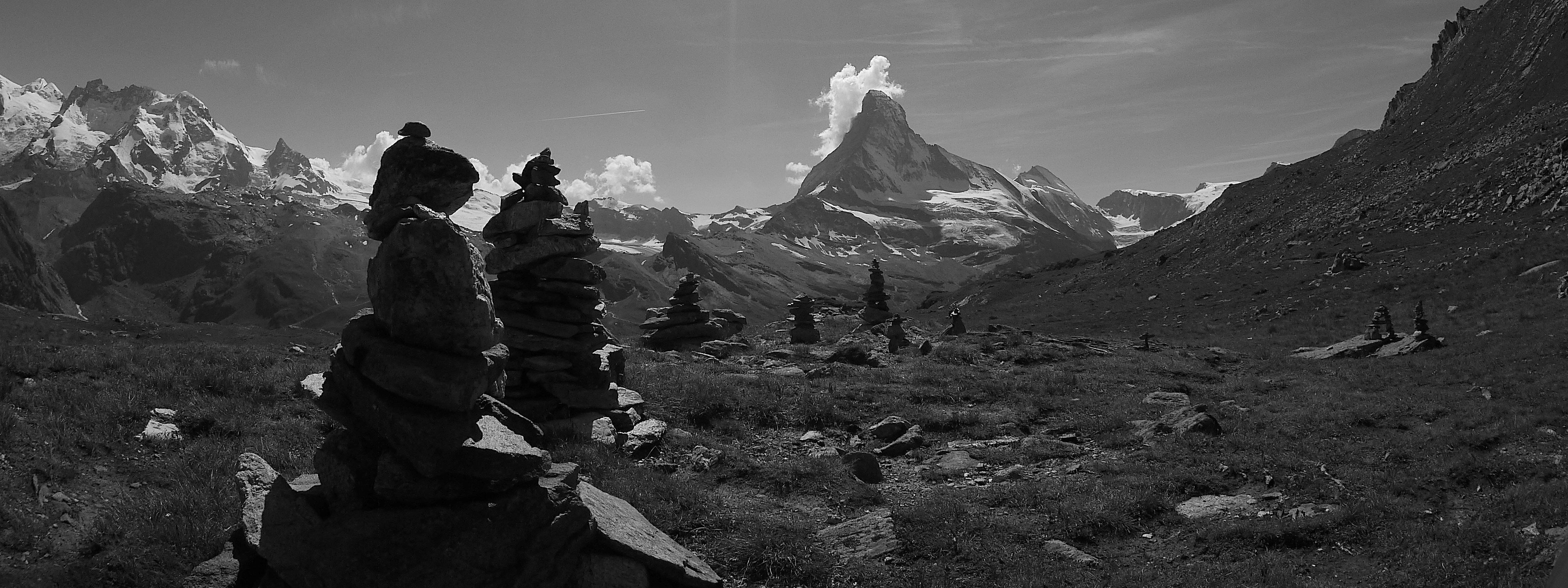
The Matterhorn ©iancorless.com all rights reserved

The Matterhorn ©iancorless.com all rights reserved

READ THE KILIAN JORNET INTERVIEW, pre MATTERHORN HERE

CREDITS:

Firstly, a big thank you to Kilian Jornet, for his time, his patience and his inspiration.

Interview conducted by Ian Corless ©iancorless.com no reproduction or quoting without prior permission, all rights reserved.

Images provided by: iancorless.com, Lauri van Houten (ISF) or Seb Montaz – all protected under © copyright. No reproduction without permission.

Video ©sebmontaz
https://www.facebook.com/photo.php?v=10200896714474535

The Matterhorn – Kilian Jornet

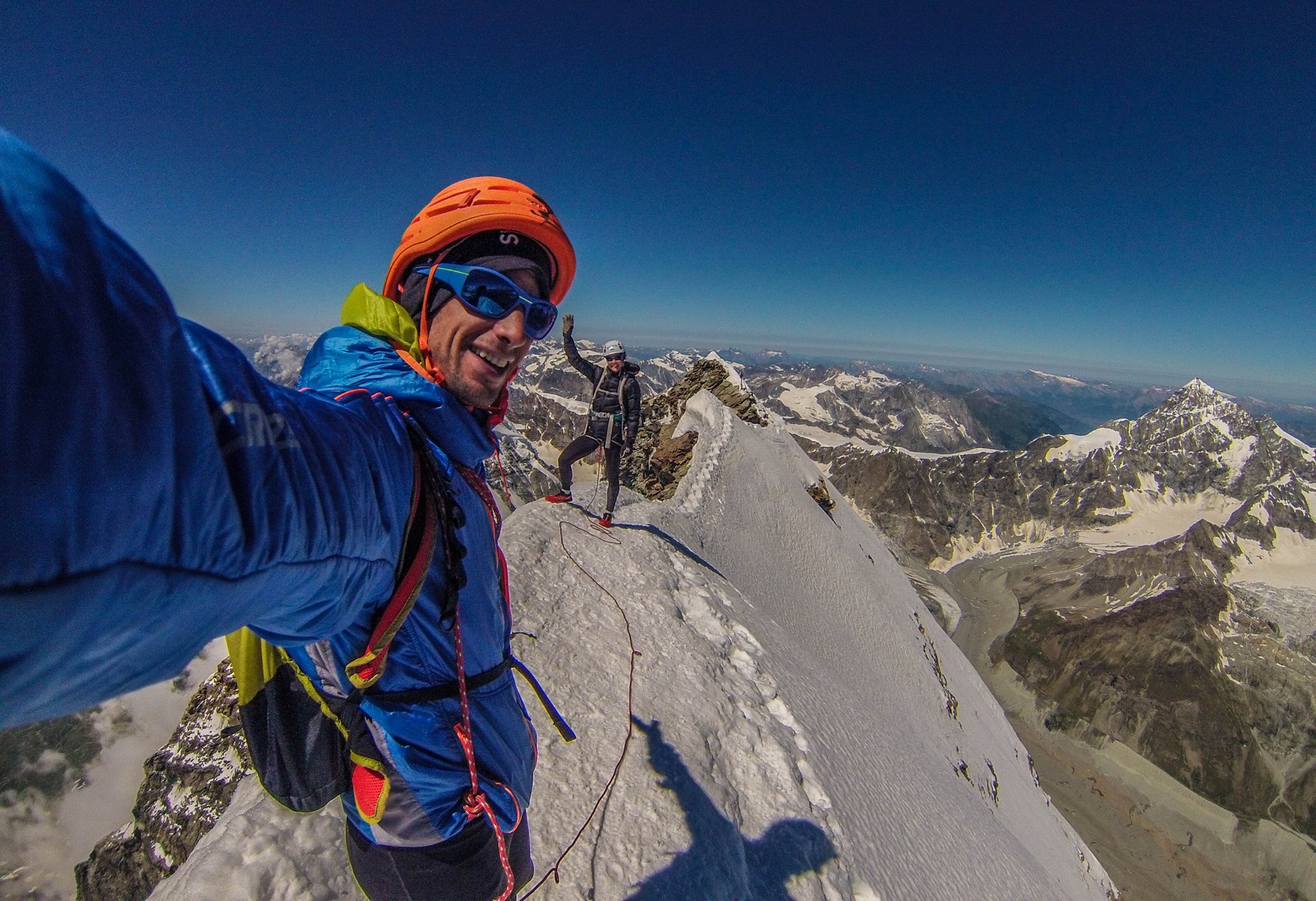
Image taken by Kilian Jornet, Friday Aug 2nd w/ Emelie Forsberg at the summit of the Matterhorn copyright: Kilian Jornet

Image taken by Kilian Jornet, Friday Aug 2nd w/ Emelie Forsberg at the summit of the Matterhorn copyright: Kilian Jornet

“It is a technical mountain. Bruno Brunod has a record of 3:14. It is a technical route that is not difficult BUT if I fall, I will die! I need to know the route very well, I need to spend time on the mountain, and I need to learn every step.” Kilian Jornet, July 2013.

Monte Cervino (Italian) or Mont Cervin (French) or Just the Matterhorn is a mountain on the border between Switzerland and Italy. At 4,478 meters (14,690 ft) high, it one of the highest peaks in the Alps. It consists of four steep faces, striking above the glaciers that surround it. Overlooking the town of Zermatt it is an iconic mountain and possibly ‘the’ most photographed mountain in the world. It is a mountain that dreams are made of. Kilian Jornet is no different, “I have been dreaming about this record since I was 15”.

Ironically, the Matterhorn was one of the last great Alpine peaks to be climbed and the first ascent by Edward Whymper in 1865 brought an end to the ‘Golden age of alpinism (The period between Alfred Wills ascent of the Wetterhorn in 1854 and Whymper’s ascent of the Matterhorn in 1865, this period saw many peaks in the Alps have first ascents)

Since 1865 to 1995 it has been described as one of the deadliest peaks in the Alps, over five hundred lives have been lost in this 130yr period. I guess the first ascent in 1865 showed us the danger potential when four climbers fell to their deaths on the descent.

The Matterhorn has two distinct summit, both situated on a 100-metre-long rocky ridge: the Swiss summit with a height of 4,477.5 meters (14,690 ft) on the east and the Italian summit with a height of 4,476.4 meters (14,686 ft) on the west. Their names originated from the first ascents, not for geographic reasons, as both are located on the border. Each summer a large number of mountaineers try to climb the Matterhorn via the northeast Hörnli ridge, the most popular route to the summit.

Small patches of snow and ice cling to the faces of the Matterhorn, but the faces are steep and regular avalanches occur. Snow hurtles down the four sides and accumulates on the glaciers at the base of each face.

Four main ridges separate the four faces of the Matterhorn and therefore it offers four distinct routes.  The least difficult technical climb and by far the most popular is the Hörnli Ridge, which lies between the east, and north faces and it faces the town of Zermatt. The Zmutt Ridge (west), between the north and west faces is, according to Collomb, “the classic route up the mountain, it’s the longest ridge and also the most disjointed.”

The Lion Ridge, lying between the south and west face is the Italian normal route.  It is the shortest route on the mountain and has fixed ropes in place but many think it to be a far superior climb, particularly when compared to Hörnli Ridge. Furggen Ridge is the final offering, it is the hardest offering and in good conditions is not too difficult, however, it has a reputation.

J.J and J.P Maquignaz made the first ascent of the Italian ridge as it is climbed today in 1867 but Kilian Jornet has his eyes on Bruno Brunod’s record set in 1995 when he did Breuil-Cervinia to the Matterhorn summit and back in an astonishing time of 3:14:44. In addition, Bruno also has the record for climbing the Matterhorn, again from Breuil-Cervinia in a time of 2:10.
Back in 1995, Skyrunning president, Marino Giacometti and Executive Director, Lauri Van Houten were not only present but also helped finance Bruno’s attempt. Lauri still says how the thought of it, “brings shivers down my back”.  Lauri and Marino both acknowledge the danger and undertaking that Kilian has given him self. “I remember standing in the square in Cervinia and about 3 hours ten had elapsed. There was a real buzz and noise and then somebody shouted, he’s coming! We all ignored it; we thought it couldn’t be possible… but minutes later Bruno appeared. It was a magical moment, one I will never forget”, says Lauri.
Bruno is very much considered the father of Skyrunning. His exploits, to this day seem to go beyond human limit. Without doubt, Kilian Jornet is in the same mold and in real terms, Bruno has lead the way for what Kilian now wants to achieve with his Summits project.

Bruno attempted Everest (the final summit for Kilian) he however gave up when at a height of 8.200 mt (26,900 feet) due to very hard weather conditions.

Bruno’s passion and time is now focused on his construction company, however, just recently he joined Kilian on the Matterhorn as he prepared for his Matterhorn attempt, I wonder, will we see a comeback!

Bruno’s records:

  • Matterhorn uphill and downhill from Cervinia in 3:14
  • Monte Rosa uphill and downhill from Gressoney in 4:45
  • Aconcagua uphill and downhill in 5:57
  • Kilimanjaro uphill on the Marangu Rout in 5:38
  • Monte Elbert uphill in 1:54
  • Three times winner of the Becca di Nona skyrace (2002 – 2003 – 2004)

August 21st 2013 at 1500 hours from the church in Cervinia, Kilian Jornet will depart on what I, and many others consider to be his ultimate challenge. The history books will show if his attempt was successful, ultimately though we want Kilian home safe. It’s about being on the edge and deciding what ‘your’ summit is, at this current moment, Kilian’s summit is Breuil-Cervinia to the Matterhorn summit and back in less than 3:14:44.

God speed Kilian!

RUNshots – an inspired run image a day

Runshots


Everyday, an inspired run image straight into your inbox.

Follow at: www.runshots.com

Twitter at: @runshots

©copyright .iancorless.com._1040381

Sierre-Zinal 2013 Race Summary

©copyright .iancorless.com.iancorless.orgIMGP0638glacierdezinal

What a race the 2013 and 40th edition of Sierre-Zinal proved to be. It was an exciting nail biter in the men’s race with a new star and the old guard shining. For the ladies, we had a new lady on top of the podium, a repeat performance for second and third and the UK showing how to be consistent and perform at the highest level.

Men’s race

Marc Lauenstein (Suisse) 2:32:14 took home the win from Juan Carlos Cardona (Colombia) who was Kilian Jornet’s pre race prediction by just 16 seconds in what proved to be a fitting climax to an incredible race. Cardona looked as though he had the race won but Lauenstein pulled something special out of the bag in the closing stages. Very little is known about Marc, however, he is a Swiss orienteering competitor and he won silver at the 2005 and 2006 World long distance orienteering championships.

Mountain running legend and Sierre-Zinal course record holder, Jonathan Wyatt (NZL) proved that experience and pure class can outwit the competition for a 3rd place in a time of 2:33:44.

Although entered in the race for some time, Kilian Jornet decided to run only in the days before the race. He was already at the Matterhorn and preparing for his next ‘Summit’. The temptation to drive from Italy to Switzerland was too great, and although he may very well have raced for ‘fun’ he placed fourth in 2:33:59. After the race he tweeted, “Super, super, happy today with Sierre-Zinal. I was here to enjoy the race and I feel super good. Finished in an unexpected 4th with my best crono!”

Robbie Simpson from the UK proved what an incredible talent he is, running for inov-8 he placed 5th in 2:35:32. It’s a world-class performance in a world-class field. A star of the future!

As you will see from my pre race summary, the 40th edition of Sierre-Zinal was such a tough race to call. Stars like Tofol Castanyer (7th), Rickey Gates (9th), Sage Canaday (17th); all proved that predictions are a fickle area to delve into, particularly in a relatively short and tough mountain race like Sierre-Zinal.

Sage Canaday runs a 2:16 marathon and has had repeated victories in 2012 and 2013. Many of those victories have come with course records. Just recently he won Speedgoat 50k ahead of runners like Anton Krupicka, Max king and Timothy Olson. Now of course here at Sierre-Zinal he may well have been running on ‘jaded’ legs. It is a distinct possibility. Post race he said, “Total muscle failure. Mountain racing in Europe is totally different from the US ultra-trail scene.” It does beg a question, are some of the top guys racing too much or do they need to be more specific in training? Certainly Rickey Gates has proven here that US male runners can perform in Europe, as did Anton Krupicka at Cavalls del Vent in the latter part of 2012. What are your thoughts?

On a final note, Cesar Costa (Martigny) has placed second at Sierre-Zinal three times before. For sure, many of us thought that 2013 may well have been his opportunity, however, he finished in thirteenth with a time 2:42:11.

iancorless.orgIMGP0584glacierdezinal

Ladies race

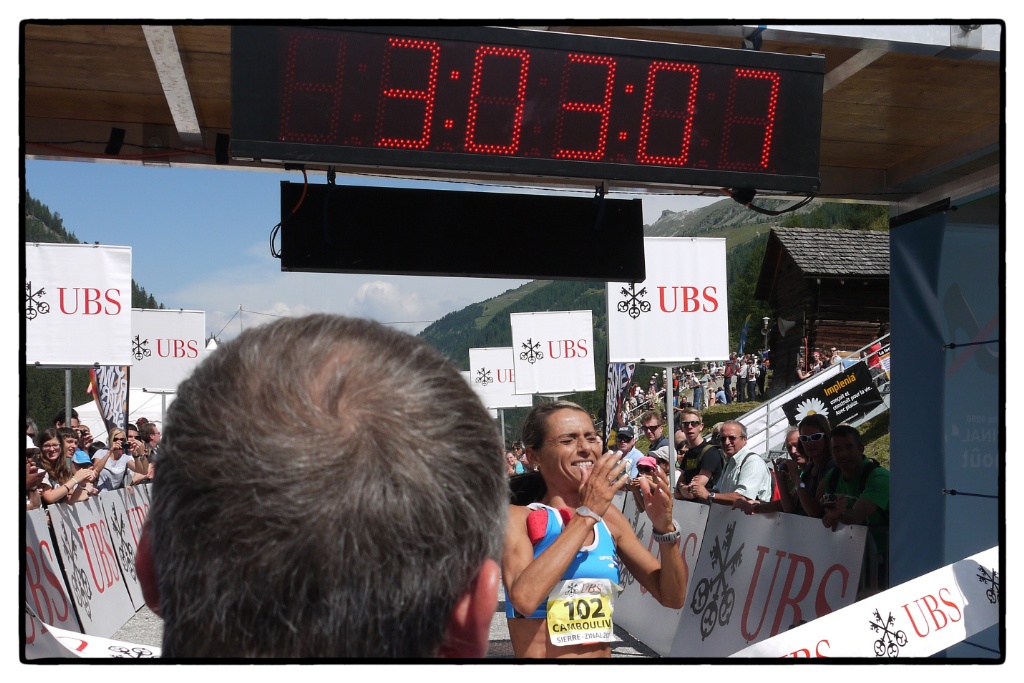
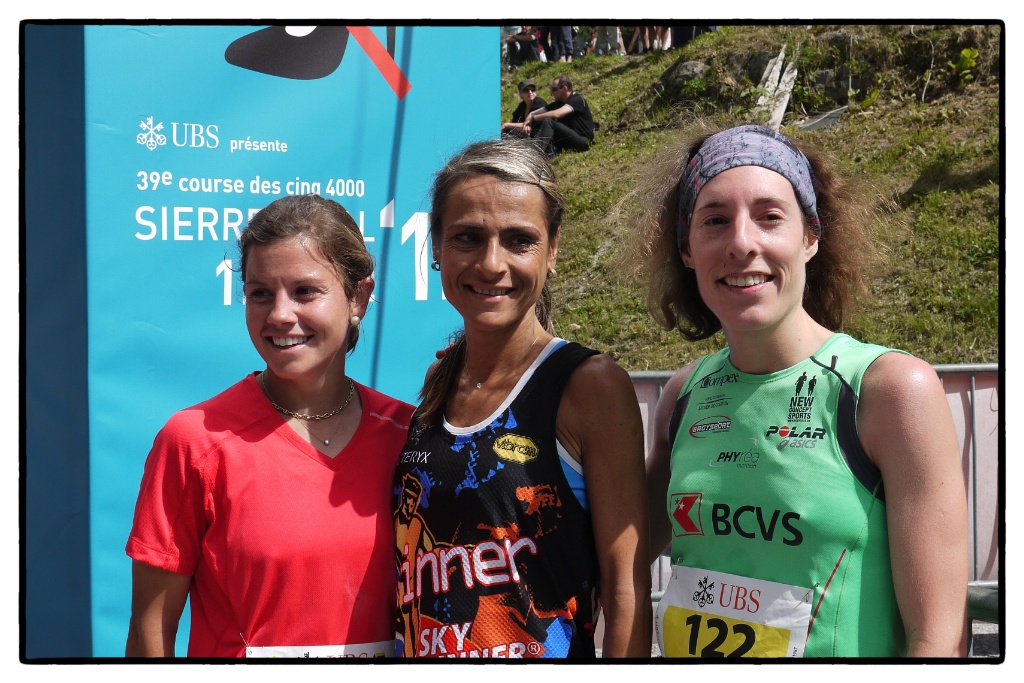
Placing 2nd at Sierre-Zinal in 2012, her first European race, I firmly placed my prediction on Stevie Kremer taking out the win after a stunning twelve months racing. At the finish line, Stevie didn’t disappoint, however, the top spot was not hers. In a repeat of 2012, Stevie placed second, 3:03:12 and Maud Mathys placed third, 3:04:13. It was like déjà vu.

One thing that did change though was the top slot on the podium. Unnoticed by me on the start sheet, Elisa Desco produced a career enhancing performance and she once again proved that after some time away from the sport that good things come to those who wait. Marc De Gasperi (2012 Sierre-Zinal winner) summed it up when he tweeted, “No words enough to say how much YOU deserve this victory! Brava, brava, brava!!!”

Kenyan, Hellen Musyoka set the early pace but in the end placed 4th with a time of 3:04:47 and GB mountain running legend, Angela Mudge proved that experience is what really counts when it comes to Sierre-Zinal with a great fifth place in 3:07:21.

Victoria Wilkinson from Bingley Harries in the UK produced a sterling run to place sixth overall and this was ahead of some sterling competition. For example; 2013 Speedgoat 50k winner, Stephanie Howe placed 11th, Lizzy Hawker 14th (admittedly training for UTMB), Zhana Vokueva 15th and Celine Lafaye 18th.

Without doubt, it was an exceptional weekend of racing and of course, from a UK perspective, it is great to see Robbie Simpson, Angela Mudge and Victoria Wilkinson flying the flag at the front of the top European races.

iancorless.orgIMGP0559glacierdezinal

You can actually watch all the action from the 2013 Sierre-Zinal here:

http://www.rts.ch/video/sport/athletisme/5125770-revivez-la-40e-edition.html

Sierre-Zinal Race Preview 2013

©copyright .iancorless.com.iancorless.orgSierre Zinal 1sirrezinalIt’s a birthday year for this iconic mountain race. 40 years! To celebrate, the race organisation have invited many a past winner.

Considered to be one of the finest mountain races in the world. It was once written that it is to mountain races what the New York Marathon is to marathons. It is the oldest mountain race found in its category in Europe’s mountains.

The location is incredible. Of all the races I attended in 2012, Sierre-Zinal left some incredible memories… you see, the Zinal basin is just an incredible place. Also called, ‘the Race of Five 4000m Peaks’ when you stand in Zinal, look to the Matterhorn, you fully appreciate why. It is quite stunning.

©copyright .iancorless.com.iancorless.orgP1040536sirrezinal

Sierre-Zinal, which takes place in the heart of Valais’ Alps, offers its participants a significant challenge: distance – 31 km, 2200m ascent and 800m descent. Incredible scenery, a warm atmosphere and exceptional organisation explain the success and longevity of this challenge.

As Jonathan Wyatt (record holder of both Sierre-Zinal and the Jungfrau Marathon, as well as a multiple world mountain racing champion) wrote, ‘As a mountain racer you must experience the tradition and history of this race.’

The course records are held by Jonathan Wyatt at 2:29:12 set in 2003 and Anna Pichrtova 2:54:26 set in 2008. If anyone fancies breaking a record in 2013, it would be a great pay day! A CR and a win this weekend, would earn the lucky person 3,000 Swiss Francs.

Legendary Pablo Vigil is a special guest this year. He participated and won the race years back and has become an ambassador for the race and has been instrumental in ensuring a strong American contingent at the race, for example, Stevie Kremer may very well have not participated in 2012 had it not been for Pablo.

This years race, as in any year will have names missing and I guess the big omission will be Marco De Gasperi. He is choosing to race in Italy. So, who will be lining up from the impressive 40-year history of the race?

MEN

©copyright .iancorless.com.P1080586

Despite Kilian Jornet telling me he was having a rest post Trans D’Havet so that he could prepare for his Matterhorn Summits attempt and the ISF Skyrunning Matterhorn Ultraks later in August, it would appear the proximity to Zinal is just too much temptation for him. So, he will make the trip from Cervinia and line up in Sierre for what he says will be a ‘fun’ run. Read into that what you will. When I see Kilian’s name on a start sheet he always must be considered for the podium… however, he may just kick back and enjoy the day. Read my interview with Kilian HERE

©copyright .iancorless.com.P1080155_Snapseed

Sage Canaday is travelling to the race after a strong victory at Speedgoat 50k and although he will be new to the course, I have to think it will suit him. He will need to ensure that he is near  the front in the early stages for the long climb, but once up, the course flattens and he will be able to open up and let his natural speed do the work. If he has a good day and is pushed, we may well see a new course record.

iancorless.orgIancorless_transvulcania_019

Max King has raced at Sierre-Zinal before and from memory he didn’t have a great race. He was around 20th and I think the European style of racing was just too different from what he was used to. However, he is a very different person now. In actual fact, Max raced at the 2012 Zegama-Aizkorri, however, that race was as problematic as his 2011 Sierre-Zinal. It’s a tough call for Max. Definitely top 10 potential and of course he has all the ability to be on the podium. But will he get over the European demons?

Course record holder, Jonathan Wyatt is back at the race and although his pedigree and his history elevates him to a high-profile within the race, one has to wonder how he will perform against top-level competition who are some years younger than him. He still runs and races regularly, but as he told me in Chamonix, it is for fun. We will see ‘Jono’ figure for sure… his ability will set him apart from so many other runners but I think the podium is an option.

iancorless.comiancorless.comP1060841cavallsdelventcavallsdelvent

Tofol Castanyer is finding form after early season injury issues and recently placed 2nd at Giir di Mont. Like Kilian, he will also race at Matterhorn Ultraks. This race won’t tire or affect his Matterhorn performance so we can expect him to run hard and that can only really mean one thing, a podium place is without doubt in his grasp.

©copyright .iancorless.com.P1160125

Rickey Gates also raced at Giir di Mont and placed just behind Tofol. He is obviously finding form after a slightly problematic Ice Trail Tarentaise. Sierre-Zinal will suit him and his speed.

Cesar Costa has finished 2nd at Sierre-Zinal three times, he knows the course like the back of his hand and in the 40th edition will most certainly want to move one place up the podium for the win. He will without doubt be a favourite. Local knowledge and being slightly under the radar to the American runners will play into his hands. He will push hard and for sure, top 3 is an expectation.

Vajin Armstrong from New Zealand has been in Europe for some time. Sage Canaday for sure will be well aware of what this man can do after racing each other at Tarawera in New Zealand earlier this year. Vajin has speed and considering he has had some great results recently: 2nd at Zugspitz behind Philipp Reiter, 2nd at the K78 Swiss Alpine Marathon, one can’t help but think that he will shake things up and turn some heads at the finish in Zinal.
LADIES

©copyright .iancorless.com.P1090905

It all started 12 months ago and the progression has been incredible. Stevie Kremer lined up at Sierre-Zinal completely blown away by the competition and experience that surrounded. Cut to the finish of the race and she was 2nd on the podium. What has followed is a meteoric race in the sport and without doubt, Stevie comes to the 2013 Sierre-Zinal race as my outright favourite. Listen to my recent interview with Stevie HERE

Ladies Winner

Aline Camboulives won the race in 2012. She has experience and ability and for sure, I see her on the podium. But I think Stevie has moved on and has the all the potential to take the race to Aline and not only push her to the finish but to go past her.

Megan Lund is a name I am familiar with but in all honesty, I know little about her. Stevie Kremer has told me that she has great potential and is one to watch on this course. I am aware that she won the race in 2010 but her European performances are few and far between. She has had a baby and as Stevie said, don’t you come back stronger after a baby!?

Ladies Podium

Celine Lafaye has been up at the front of all the Skyrunning races and I don’t see Sierre being any different. She has all the ability and potential to win this race and if she has a good day, she will push Stevie at the front of the race.

Local lady, Maud Mathys finished 3rd last year and will come to the race knowing full well that Stevie is the one to watch. I anticipate she will keep as close to Stevie as possible and try to pull something out of the bag in the latter stages of the race. However, she was five minutes behind Stevie in 2012 and Stevie has moved on. Has Maud progressed at the same level?

Lizzy Hawker

Lizzy Hawker turned up and ran literally at the last minute in 2012. Once again she will toe the line in 2013. I anticipate a top 10 finish but not the podium. Like last year, she will use this as a prep race for her attempt at another UTMB title. Lizzy has also had injury issues and although UTMB is only weeks away, she is still on the road back!

Zhana Vokueva will also be looking to push at the front of the race. She recently raced in the Dolomites at the Skyrunning European Championships but it wasn’t a great weekend for her. She will be looking to get back into form and for sure, would like to repeat or go better than her 5th place in 2012.

Stephanie Howe has just won Speedgoat 50k and like Sage Canaday, that has got to be a great boost going into this race. If she has recovered well from Speedgoat, Stephanie may well be the person to push Stevie all the way to the finish. It will be interesting to see what unfolds.

Finally, 2001 Sierre-Zinal champ and GB mountain running legend, Angela Mudge will toe the line. She has recently raced at a very high level and with some impressive results. I see Angela being a dark horse to the new runners who will know her name but may well dismiss her due to her lack of high profile racing of late.

Without doubt it will be an exciting men’s and ladies race.

Links:

Sierre-Zinal website HERE

Episode 41 – Kremer, Clark, Mills, Whitehead

TU41

Episode 41 of Talk Ultra – We speak to Stevie Kremer 12 months on after she burst on the Skyrunning scene with a 2nd at Sierre-Zinal. We have 15 mins of fame with double leg amputee, Richard Whitehead. An interview with Lakeland 100 winner, Stuart Mills. A catch up with Nick Clark on the Grand Slam of ultra. Smiles and Miles with Emelie Forsberg. The news, a blog, up and coming races. Marc is back for Talk Training and of course, Speedgoat co hosts!

00:07:30 NEWS

Speedgoat 50k

  1. Sage Canaday  5:08:07
  2. Anton Krupicka  5:09:36
  3. Jason Schlarb 5:19:34
  4. Max King 5:29:02
  5. Justin Yates  5:42:24
  6. Luke Nelson  5:47:09
  7. Timothy Olson  5:47:10
  8. Jason Loutitt  5:49:35
  9. Michael Barlow  5:53:37
  10. Ryan Smith  5:53:51
  1. Stephanie Howe  6:17:02 
  2. Jodee Adams-Moore  6:18:06
  3. Ruby Muir   6:25:54
  4. Emma Roca  6:41:21
  5. Krissy Moehl  6:43:54
  6. Becky Wheeler  6:48:43
  7. Silke Koester  6:52:16
  8. Erica Baron  6:55:46
  9. Anita Ortiz 7:02:18
  10. Francesca Canepa  7:05:14

Stockholm 100k

Steve Way 6:40:14, Linus Holmsater 7:24:18 and Frijof Fagerlund 7:29:01

Trans D’Havet

Men

  1. Kilian Jornet (Spain) 08:59:47
  2. Luis Alberto Hernando (Spain) 08:59:49
  3. Casaba Nemeth (Hungary) 09:43:25

Ladies:

  1. Emelie Forsberg (Sweden) 10:21:32
  2. Nuria Picas (Spain) 10:33:34
  3. Uxue Fraile (Spain) 10:34:20

Lakeland 100

  1. Stuart Mills 22:17:50
  2. Charlie Sharpe 23:02:45
  3. Ed Batty 23:07:40
  1. Lizzie Wraith 24:15:06 (smashed old CR)
  2. Debbie Martin Consani 26:02:00,
  3. Julie Gardner 28:16:47

Lakeland 50

  1. Ben Abdelnoor 7:39:26
  2. Riichard Ashton 8:20:58
  3. Robin Houghton 8:33:30
  1. Katherine Brougham 9:44:10
  2. Alice Briscoe 10:35:42
  3. Rachel Ball 10:43:43

WMRA – 10. WMRA World Long Distance Mountain Running

Mitjia Kosovelj won Andrew Davies from Wales 2nd and Ionut Zinca 3rd

Antonella Confortola won Omella Ferrara 2nd and Anna Celisnska 3rd. Have to give a shout out to Claire Gordon from Scotland who was 4th and Anna Lupton from England who was 5th

Hal Koerner and Wolfe – FKT on JMT –HERE 

Ann Trason to run a 100 in September – Idaho Mountain Trail Ultra Festival – HERE

Now the iconic Sierre-Zinal is coming up this weekend. I remember being at this race last year… pre race I got chatting to this shy girl who just seemed a little uncomfortable being surrounded by some of the best in the world. Needless to say, this shy girl performed out of her skin and finished second on the podium. One year on, I catch up with Stevie Kremer and find out what the last 12 months have been like and what the future holds.

00:42:38 INTERVIEW Stevie Kremer

01:16:20 BLOG

We have given Stuart Mills, the Lakeland 100 winner plenty of coverage this week with a long interview, however, his interview does go very much hand-in-hand with his blog… so, this weeks blog is ultrastu.blogspot.co.uk

You can read his very unique and in-depth analysis of how he races. Word of warning… make yourself a coffee. It’s a long one!

Blog HERE

01:17:00 15 MIN OF FAME with Richard Whitehead – http://www.richardwhiteheadrunsbritain.com/

HERE

01:32:40 TALK TRAINING – Marc Laithwaite is back after a busy couple of months. Not only has he been training for an Ironman but also he is the RD for the Lakeland 50 and 100.

01:57:55 SMILESandMILES with Emelie Forsberg – smilesandmiles@yahoo.com

02:20:40 INTERVIEW

This week’s interview is with Brit, Stuart Mills. Stuart as you will hear has a very unusual approach to running… or should I say, training and racing. Without doubt it works! Just the other week, Stuart once again won the Lakeland 100 for a second time. In this in-depth interview we discuss everything. I am sure you will find it fascinating.

03:23:30 MELTZER MOMENT – It’s good, good, good this week

03:29:52 CLARKY’S CORNER – It’s two down and two to go for Clarky and the other ‘Slammers’. Leadville is just around the corner. We catch up with Nick, discuss how Vermont went and what lies ahead…

03:44:22 RACES

Belgium

Trail des Fantômes – 50 km | 50 kilometers | August 17, 2013 | website

Canada

British Columbia

Arc’teryx Squamish 50 | 50 miles | August 10, 2013 | website

Arc’teryx Squamish 50K | 50 kilometers | August 10, 2013 | website

Ontario

Iroquoia Trail Test – 50K | 50 kilometers | August 17, 2013 | website

Quebec

XV de la Vallée- Trans Vallée | 66 kilometers | August 16, 2013 | website

Denmark

Hovedstaden

Ultra Marathon Bornholm | 100 kilometers | August 11, 2013 | website

France

Hautes-Pyrénées

Grand Raid des Pyrénées – l’Ultra | 160 kilometers | August 23, 2013 | website

Isère

Ultra Tour des 4 Massifs | 160 kilometers | August 23, 2013 | website

Ultra Tour des 4 Massifs – 90 km | 90 kilometers | August 23, 2013 | website

Savoie

Tour de la Grande Casse | 62 kilometers | August 18, 2013 | website

Trail du Galibier | 55 kilometers | August 18, 2013 | website

Germany

Bavaria

Allgäu Panorama Ultra Trail | 69 kilometers | August 18, 2013 | website

Berlin

100MeilenBerlin | 100 miles | August 17, 2013 | website

Ireland

Ulster

Quadrathon | 169 kilometers | August 15, 2013 | website

Kenya

Kenya Highlands Race | 75 kilometers | August 10, 2013 | website

Mongolia

Mongolia Sunrise to Sunset 100K | 100 kilometers | August 17, 2013 | website

Sweden

Björkliden Arctic Mountain Marathon 50 km | 50 kilometers | August 16, 2013 | website

Björkliden Arctic Mountain Marathon 70 km | 70 kilometers | August 16, 2013 | website

Trans Scania | 246 kilometers | August 10, 2013 | website

Switzerland

Grisons

Swiss Irontrail T141 | 136 kilometers | August 23, 2013 | website

Swiss Irontrail T201 | 201 kilometers | August 23, 2013 | website

Swiss Irontrail T71 | 66 kilometers | August 23, 2013 | website

Trail Marathon 70 KM | 70 kilometers | August 10, 2013 | website

Obwald

MOUNTAINMAN full | 80 kilometers | August 17, 2013 | website

Vaud

Ultra Trail du Barlatay | 81 kilometers | August 17, 2013 | website

United Kingdom

England

ashmei 33 Mile Trail Run | 33 miles | August 18, 2013 | website

North Downs Way 100 | 100 miles | August 10, 2013 | website

USA

Alaska

Resurrection Pass 100 Mile Ultra Trail | 100 miles | August 09, 2013 | website

Resurrection Pass 50 Mile Ultra Trail | 50 miles | August 10, 2013 | website

California

Rattlesnake 50K Ultramarathon | 50 kilometers | August 17, 2013 | website

Run-de-Vous 100M | 100 miles | August 17, 2013 | website

Run-de-Vous 50M | 50 miles | August 17, 2013 | website

Run on the Sly 50K Trail Run | 50 kilometers | August 18, 2013 | website

Colorado

GORE-TEX TransRockies Run – Run3 | 59 miles | August 13, 2013 | website

GORE-TEX TransRockies Run – TRR6 | 120 miles | August 13, 2013 | website

Leadville Trail 100 Run | 100 miles | August 17, 2013 | website

Michigan

Marquette Trail 50 Kilometer | 50 kilometers | August 17, 2013 | website

Marquette Trail 50 Mile | 50 miles | August 17, 2013 | website

Minnesota

Ragnar Relay Great River | 200 miles | August 16, 2013 | website

Nevada

Extraterrestrial Full Moon Midnight 51 km | 51 kilometers | August 17, 2013 | website

New Jersey

Wildcat Ridge Romp 100k | 100 kilometers | August 10, 2013 | website

Wildcat Ridge Romp 50k | 50 kilometers | August 10, 2013 | website

Wildcat Ridge Romp 50M | 50 miles | August 10, 2013 | website

New York

Beast of Burden Summer 100 Miler | 100 miles | August 17, 2013 | website

Oregon

Where’s Waldo 100k Ultra | 100 kilometers | August 17, 2013 | website

Utah

Kat’cina Mosa 100K Mountain Challenge Run | 100 kilometers | August 10, 2013 | website

Vermont

100on100 Heart of Vermont Relay | 100 miles | August 18, 2013 | website

Washington

Angels Staircase 50K | 50 kilometers | August 11, 2013 | website

Angels Staircase 60K | 60 kilometers | August 11, 2013 | website

Wyoming

El Vaquero Loco 50K | 50 kilometers | August 10, 2013 | website

03:46:44 CLOSE

03:51:01

LINKS

ITunes http://itunes.apple.com/gb/podcast/talk-ultra/id497318073

Website – talkultra.com


Matterhorn Ultraks Race Preview

image copyright Matterhorn Ultraks - www.

image copyright Matterhorn Ultraks – www.

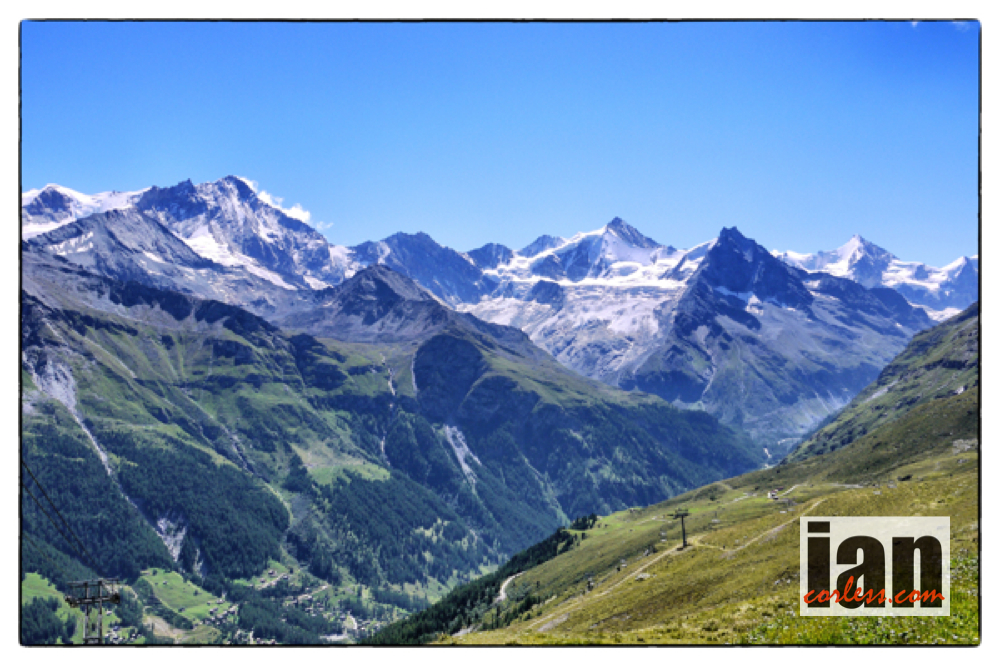
On the Italian border of the Canton of Valais in the west of Switzerland, at the end of the 30 km-long Nikolaital, lies Zermatt, the village at the foot of the Matterhorn, the most photographed mountain in the world. Zermatt epitomizes their image of Switzerland; high alpine, awe-inspiring and original. Almost one-third of the 4,000-metre mountains in the Alps are grouped around this word-famous health resort, which has been visited by mountaineers from all around the world since the first successful ascent of the Matterhorn in 1865. The hotels and restaurants are world-class, and the ski area is not only the highest in the Alps – it is also one of the best developed and most convenient in the world. The climate is of an excellent quality; with 300 sunny days a year, there is less rainfall than anywhere else in Switzerland. The air in Zermatt is clear, dry and clean, because, since 1947, only electric cars without a combustion engine are allowed to operate in the village. Things are a little different in Zermatt. Zermatt – A world of its own.

The ISF Skyrunning Matterhorn Ultraks is the penultimate race in the SkyUltra series. It will be a magical race, 46 km long with 
D+ : 3’600 m | D- : 3’600 m. It has a great combination of wild open spaces, high mountains and a course that will require a thrilling combination of speed and technique. The highest summit of Gonnergrat at 3100m will be a test for all, however, at the summit it offers incredible panoramic views and of course, the ever-present Matterhorn will dominate.

Want to race? limited places are still available at ultraks.com

Men

©copyright .iancorless.com.iancorless.orgP1050995trofeokima

Kilian Jornet comes to this race the outright favorite. At the ISF Skyrunning European Championships he came away with three gold’s in VK, Sky and Ultra. Post Trans D’Havet he moved over to Cervinia (Italy) and he is now preparing meticulously for his next ‘Summit’, a speed attempt up and down the Matterhorn itself. He will be prepared and adapted for everything that the Ultraks can throw at him.

©copyright .iancorless.com.P1100958

Breaking news just in, 14th August. Luis Alberto Hernando to join the line up at Ultraks. Of course this is great news. Luis is one person that has pushed Kilian Jornet throughout 2012. He placed second at Transvulcania, he pushed Kilian to the line at Zegama, placed third at Mont Blanc and of course, Kilian and Luis crossed the line together to be crowned European Skyrunning Champions at Trans D’Havet. One thing is for sure, Luis will push Kilian and all the other contenders for the top spot right to the line!

iancorless.comiancorless.comP1060841cavallsdelventcavallsdelvent

Tofol Castanyer has had a troubled early 2013 with a series of injuries, however, a win at Salomon Four Trails and a second place at the recent Giir di Mont means he is coming back in form. If he has a good day, he will certainly be up at the front pushing with Kilian.

©copyright .iancorless.com.P1090837

Michel Lanne secured a joint win with teammate, Francois D’Haene at the Mont Blanc Marathon ultra event but then had to miss Trans D’Havet due to an injury.  Michel, along with Tofol, Philipp, and Cameron will dictate the early pace at the front and as his reputation confirms, he has all the ability and potential to make the podium. *injured

©copyright .iancorless.com._1160111

Philipp Reiter romped to a great podium place at Ice Trail Tarentaise and was ready to repeat his performance or move up the podium at Trans D’Havet, however, a bad fall in the first 30% of the race unfortunately meant some time in hospital and recuperation. At this stage his recovery is progressing well and we hope that he will toe the line in Zermatt.

©copyright .iancorless.com._1020259

Cameron Clayton has had a very impressive rise in the ultra world. He is young and races just one-way; hard! He applied that principal at Transvulcania La Palma and lead the race in the early stages but later faded to still secure a top placing. At Western States, his first hundred miler, he applied the same principal but came unstuck. Just the other weekend he raced at Speedgoat 50k but I am sure this was very much ‘getting back into racing’ race post Western. If he is making a trip from the US to Zermatt, you can be sure of one thing; he will turn up to run hard and win. Question is, will he be able to? Most certainly he has all the ability to mix it up at the front and push his peers. Cameron is an exciting addition to the race line up.

©copyright .iancorless.com._1150416

Nicola Golinelli had a great race at Mont Blanc Marathon and then placed in the top fifteen at Dolomites Skyrace. It wasn’t a great race for him; he certainly would have expected to be at the front end of the race. So, with that in mind, Nicola will be looking to put the record straight at Ultraks.

©copyright .iancorless.com._1070209

Florian Reichert and Didier Zago, both had similar stories to Arc’teryx teammate, Nicola Golinelli. Great racing and top ten placing’s at Mont Blanc and then below par performances in Canazei at the Dolomites Skyrace. Didier is experienced and will bounce back, Florian however is new to Skyrunning and once again found the Dolomites and its combination of steep gradients and snow another learning curve. However, he is a sub 2:30 marathon runner and the Ultraks course will suit his abilities.

Ben Abdelnoor is coming to Zermatt after an impressive win and new course record at the Lakeland 50 in the UK. For sure he is going to relish the opportunity to push against some of the best in the world. Joining Ben we have his new inov-8 teammate, Erik-Dagsson Haugsness. Erik from Norway placed fifth at Mont Blanc Marathon and is certainly a name to watch in the future.

©copyright .iancorless.com.P1100161

Tadei Pivk has consistently performed in 2013 with great results at Zegama and Dolomites Skyrace; without doubt he will be coming to Zermatt to move from third place on the podium to second or even the top. Watch this space, without doubt he will add spice to the front of the race.

©copyright .iancorless.com.P1160237

Stuart Air from the UK is starting to get a reputation for himself within the Skyrunning calendar. With little fanfare he turned up at the brutal Ronda dels Cims and placed thirteenth overall, he then followed this up with nineteenth at Ice Trail Tarentaise. He will participate at Matterhorn Ultraks as a guest for Scott Running. At 46km, the race may very well be a little too short and too fast for him, but it will be great to see how he performs.

The men’s field at Ultraks has great depth, Nicolas Pianet, Dai Matsumoto and representation from Russian Skyrunning, Diedre-Matxacuca, Euskal Herriko Mendi Lasterkarien Selekzioa and the FEEC will mean that an iconic and fast race awaits us.

Ladies

©copyright .iancorless.com.P1170935

Emelie Forsberg, how can you bet against her? Her rise in the sport is meteoric and after winning at San Francisco in late 2012, Emelie has rarely been off the top of the podium. Her 2013 result sheet is incredible and like Kilian, she is becoming a dominant leader in the sport. Her recent results and performance ability at any distance from VK to Ultra puts her way ahead of the competition at Ultraks. I honestly don’t see anyone coming close, particularly if Emelie decides to push.

©copyright .iancorless.com.P1170096

Silvia Serafini does offer a glimmer of hope at the front of the race and like Emelie, Silvia has also had a speedy rise in the sport. Just recently everything has started to click. A podium place at Dolomites Skyrace and while Emelie was dominating Trans D’Havet; Silvia topped the podium at Giir di Mont. For sure, Silvia will be Emelie’s biggest rival at Ultraks.

©copyright .iancorless.com._1140181

Anna Lupton had a troubled performance at Zegama and then found some consistency at Mont Blanc Marathon. She has recently raced in Poland and will be coming to the Matterhorn with several weeks’ recovery and training, so, she may well perform as she would expect and add some pressure to the front of the race.

Ragna Debats, Aitziber Ibarbia Beloki, Anna Comet Pascua, Paloma Lobera Grau and Eugenia Miro Figueras all have the potential to make the podium and it will be interesting to see who has the strength on the day to push the outright favorites to the line.

LINKS: 

Skyrunning HERE

Race start list HERE

Matterhorn Ultraks website HERE

Race start 0700 am 24th August 2013.

Kilian Jornet – An Interview

©copyright .iancorless.com.iancorless_DSC7992facesofkima

As another day draws to an end and the sun creeps behind the mountains, I catch up with Kilian Jornet outside his hotel on the outskirts of Canazei in the Dolomites. Looking fresh and relaxed he is on his iPhone, no doubt tweeting and replying to many of the messages he will have received congratulating him on another stunning win in the ISF Skyrunning Dolomites Skyrace. Just forty-eight hours earlier he had also won the Dolomites Vertical Kilometer.

©copyright .iancorless.com._1130911

Kilian needs no introduction. He is without doubt the leading example of everything that is great about our sport, not only on the trails, but also off them. He is the superstar of the sport. Always in the limelight, always in demand, I have been fortunate to see both sides in close quarters for some time now. It’s not just racing! Kilian has so many demands placed upon him, that it is miraculous that he can perform at the consistently high level that he does.

©copyright .iancorless.com.P1170383_Snapseed

After our chat he must prepare for a long drive to Switzerland the following day for a four-hour meeting. Returning the same day to Canazei he will then leave for Verona, attend a meeting and then depart for the ISF Skyrunning Trans D’Havet ultra, he will attend three stores to do signings, photos and maybe go for a run. It is a hectic, full on, non-stop life. Despite all this, despite all the pressures placed upon him, I have never witnessed him say no to a photograph or an autograph. His dedication to the sport, his fans and al those around him is remarkable, so, when I ask to take up some of his valuable time for a chat it is always with a sense of guilt… I, just like you, want to hear what he has to say; I want his thoughts and his input. But at the same time, I also want to leave him, let him relax and just find some downtime away from the buzz that his ability as a runner attracts.

©copyright .iancorless.com.iancorless.comiancorless.comP1070105facesofcavallsfacesofcavalls

So, when I chat, although I would love that full hour with him so that I can go deep, ask about his life, talk through his progression I don’t. I set myself a fifteen-minute deadline, conscious of the fact that when I ask in the future, I hope, Kilian will always say yes!

Racing at the Dolomites Skyrace just hours before he had a close race; just three seconds…. Not many people can push Kilian to the line like that!

©copyright .iancorless.com._1150372

IC – Another great win Kilian and this time you had a real battle on your hands with your old adversary, Marco De Gasperi. You won by just three seconds, an incredible race!

KJ – Yes, a hard and incredible race. It’s always great to race Marco and today was very hard. During the race it’s hard and then it is beautiful afterwards. This is how we like it.

IC- Many people think that when they see a start list with your name on it, that you are automatically going to win. However, when we see Marco’s name, it’s great because we know he will push you along… Luis Alberto Hernando can do this too. Do you relish the opportunity to race these people so that you are pushed?

KJ – I think people think I am going to win but in my mind it is not like that. When I see Marco or Luis is in a race I think, this is going to be super hard. For sure, it is motivating. I relish competition. For the last three weeks I have done many races, for example the VK I have just done and the Skyrace when competition is tough that is what I like. I knew here at the Skyrace it would be tough against Marco. He likes short distances and I knew that he would go hard from the start. I needed to push myself. It may be easy from the outside to look in and think I am going to win but it is much harder than this.

IC – I agree, we all know your ability. Your skill in the mountains and your skill as a runner are without question. It is unfair to assume that you can race Ice Trail, the VK, The Skyrace and then go to Trans D’Havet and for us all to assume that you will win… when you approach a race like the Dolomites Skyrace and particularly this year with lots of snow, you must think that plays to your advantages, is that correct?

©copyright .iancorless.com.P1160962

KJ – I know this race. I know the route quite well. I have raced here twice before. The snow wasn’t great for racing this year. It was soft, so not ideal to race fast. The snow wasn’t an advantage this year, however, it was more of an advantage to know the route. When I started with Marco I pushed on the uphill, at the top I had 20 seconds so I thought, we will do the downhill together. The downhill you need the correct line, so it was important to get the best line and if you are in front or if you have someone in front it is easy to follow, so, it would have been impossible to drop Marco. I was sure we would finish together. For me, I thought Marco would be stronger uphill. I thought he would start fast. But when I was with him uphill, I knew it would be a race to the line.

IC – Now Emelie Forsberg keeps tweeting about sprint sessions and interval work. The last time I spoke to her, she told me that she was going to make you do some speed work! After that VK finish when you sprinted from third place to take the win and then in the Skyrace finish you won by three seconds, does that mean you are not telling us something?

(Laughs)

KJ – I am improving in my sprint for sure. I am not a sprinter, in SkiMo I am a bad sprinter, but yes, I always have a little speed for the last meters. It is something I never train so I need to work on this, it’s good for me to train and work on this. Sometimes when you follow someone it’s better… last week we tried to catch Chamois, it was impossible but good for sprint training.

©copyright .iancorless.com._1150158

IC – Well it has worked! I mentioned the VK. The VK here is a tough course, very steep. I actually went up myself, boy it was tough and steep. Watching you three race up, I am guessing you placed yourself in third so that you could surprise the others. Did you have a race plan to use this tactic?

KJ – It’s a very particular VK, I have raced here three times before and I never felt good. So I was a little afraid, not afraid, I mean not confident. For all three races, (VK, Sky and Ultra) the VK is the race I was less confident about. It is a specialist race and it suited runners like Urban Zemmer. I was thinking before the start that I needed to relax and then when I saw that I was in good shape I tried to follow Urban, he is the best at this discipline. I was following and in the steep parts he was super strong, it was really difficult to be in touch with him. When it was less steep I could run and I felt better. It was okay. I needed to make sure I didn’t loose time or contact. When I saw the finish, I thought it was perfect for the sprint.

IC – It was an impressive sprint. I watched a clip on YouTube, you put your poles together, you went down the outside and then that final 50m is a wall. You have to grit your teeth and get up as quick as possible. Now one thing that many were interested in, is the fact that you used poles. Not something that you use a lot, the VK here is so steep that it would be foolish not to use them. What advantages do they bring?

KJ- I don’t use poles often for running but in SkiMo I use them everyday! I am extremely used to them. For years I used them everyday for 6-7 months. It is a particular exercise that you need to work on. On a VK like this it is like having four legs because you have the arms and upper body and you can really push. So when it is really steep it makes a big difference.

©copyright .iancorless.com.P1170764

IC – Canazei is over and in 5-6 days you will race at Trans D’Havet*, it is the third event in the European Skyrunning Championships, you will be up against Luis Alberto Hernando, he will be arriving at that race fresh. You have lots of racing in your body, how do you think this race will be go?

KJ – It will be a great fight, I haven’t seen the list of other racers but I am sure it will be quality. I am in good shape. I am strong. Mont Blanc Marathon a few weeks ago was a fast race, Ice Trail Tarentaise was like a long training session and then the two races here makes it hard but I am good. I hope I can keep this shape for one week and then I will rest. Yes, it will be hard, Luis is strong this season and of course he hasn’t raced recently, he is focused on Trans D’Havet it is going to be hard but the hardest part of the race is the 0100am start… that is horrible.

(Laughter)

*Kilian and Luis Alberto raced head-to-head at Trans D’Havet and both crossed the line together in what will be seen as a defining moment of the sport, read my race report HERE

IC – You flippantly talk about races such as Mont Blanc and Ice Trail. Particularly Ice Trail, you said it was easy but everybody else thought it was super tough… you are here now for the VK and Sky but you have missed your Chamonix-Mont Blanc-Chamonix record… super impressive! A fantastic achievement, many look and find it difficult to comprehend how someone under human power can do something like this. What is it in the Summits project that has illuminated the fire within you to push to new depths?

©copyright .iancorless.com.iancorless.orgP1050990trofeokima

KJ – Summits it is about pushing in the mountains. It is about being light. It is more than records, a record is nice but it is about being light and moving fast. How light can I be in the mountains? If you are light you need to be fast to be safe. Mont Blanc took a lot of time. We had too much snow early season, I attempted  ‘CMBC’ after Mont Blanc Marathon but it wasn’t the correct time. The snow wasn’t correct. The week before my attempt I was in the mountains everyday to form an opinion on when was the best time and when the best day would be. It was all about timing. It is not like a race. Here you need to be in the mountains, to understand. Every mountain is different; you need to understand how it works how it breathes. I had perfect conditions for my attempt and the perfect day. I was with Mateo Jacquemoud for all the uphill and most of the downhill so it was just pushing, pushing each other. (Note – Mateo fell on the downhill and insisted that Kilian carry on)

©copyright .iancorless.com.iancorless.orgP1060017trofeokima

IC – You mentioned a couple of great points. The one I concentrate on most is the need of understanding the mountain. It is very easy for people to follow Talk Ultra, websites or blogs and look at what you do and think, Chamonix-Mont Blanc-Chamonix, I can do that! But it is a real risk, a real understanding of the mountain is required, you make it look easy, I know that it is not. Do you feel you have a responsibility to those who follow you?

KJ – I saw Alex Honnold do soloing in Yosemite, I saw Ueli Steck doing the north face of the Eiger, and it is not because of this that I would do an attempt. It is inspiring but it is important not to follow. We can all have our goals, our own summits, but of course when we do these things, we have a responsibility. Chamonix is accessible, many people climb every year, and I am not dangerous but every year people die. That is because of rock falls, avalanches etc… you need to know the mountain, you need to know yourself and you need to know your limits. We take risks when we go, of course, but we accept those risks based on our ability.

©copyright .iancorless.com.P1160456

IC – It is about your personal summits and about you understanding what risks you can take, about how light, how fast you can go?

KJ – Yes, it is about knowing each persons capacity and knowing the conditions, the mountain conditions change daily. Maybe one day you have the capacity and conditions but the next day it changes. I know people who climb a mountain and then they say it was easy… It is not like that! Today they climbed but another day maybe more wet, cold, snowing and everything changes; it is no longer the same mountain. Nobody is stronger than the mountain. You need to understand that, you need to take time, spend time in the mountains and understand them.

©copyright .iancorless.com.P1170822

IC – The Matterhorn will be your next summit?

KJ – After Trans D’Havet I will take a break. I plan to stay more than one month without a race to recover and then prepare for the Matterhorn. It is a technical mountain. Bruno Brunod has a record of 3:14. It is a technical route that is not difficult BUT if I fall, I will die! I need to know the route very well, I need to spend time on the mountain, and I need to learn every step.

IC – And the process? Will it be going on the mountain everyday, working routes and understanding how the mountain adapts to the weather?

KJ – Yes I will be in Cervinia (Italian side of the Matterhorn) with my van and I will stay for at least a month. I know many guides in the area and I also know that it has too much snow at the moment but during this time I will go up and down, up and down etc… I need to know everything. I think Bruno climbed thirty times before the record attempt; so, I need to go up 10-15 times at least.

IC – And your attempt, will that come before or after the ISF Skyrunning Matterhorn Ultraks?

KJ – It depends on the weather? I planned Mont Blanc for May but snow made it impossible… I actually did it in June! I have planned the Matterhorn for late August or early September, however, the mountain will decide.

Image taken by Kilian Jornet, Friday Aug 2nd w/ Emelie Forsberg at the summit of the Matterhorn copyright: Kilian Jornet

Image taken by Kilian Jornet, Friday Aug 2nd w/ Emelie Forsberg at the summit of the Matterhorn copyright: Kilian Jornet

IC – Kilian, thank you so much for your time. I wish you all the very best for the coming months.

KJ – Thank you so much Ian, see you at the Matterhorn!

©copyright .iancorless.com.P1080586You can listen to this interview on Episode 40 of TALK ULTRA – HERE 

WANT TO WIN A SIGNED BOOK BY KILIAN JORNET?

PLEASE GO HERE AND ADD YOUR ANSWER TO THE QUESTION.

LINKS:

  • Dolomites Vertical Kilometer HERE
  • Dolomites Vertical Kilometer IMAGES HERE
  • Dolomites Skyrace HERE
  • Dolomites Skyrace IMAGES HERE
  • Trans D’Havet HERE
  • Trans D’Havet IMAGES HERE
  • Kilian Jornet HERE
  • Summits of my Life HERE
  • Salomon Running HERE

Trans D’Havet – RACE SUMMARY

Trans D’Havet was the concluding race in the ISF European Skyrunning Championships. Following on from the VK and SKY race in Canazei last weekend, the 80km Trans D’Havet was always going to be a test of many aspects of human will and the power to dig deep and find something from within. However, little did we know how deep some people are able to go?

©copyright .iancorless.com.P1170507

Runners assembled in Piovene Roccchette for the 0100am start. It was quite a site, local revelers were dancing and drinking while around them, lycra clad runners milled around waiting for the off. The arrival of Kilian Jornet, Luis Alberto Hernando, Nuria Picas, Emelie Forsberg and Philipp Reiter created some additional buzz as locals and participants in the race looked for a photo opportunity or an autograph.

With five minutes to go, it was already 27 degrees, it was going to be a very hot race! Missing from the start line was Luis Alberto; he had unfortunately received some devastating personal news. After some contemplation, he decided to run. Goodness knows what he felt like. Of course we can only guess and this is not the place to pursue that thought. With his decision to race confirmed, on the stroke of one, the masses disappeared into the dark.

©copyright .iancorless.com.P1170463

The route is a spectacular one, which winds through the Piccole Dolomiti between the Veneto and Trentino Alto Adige on the Pasubio and Carega group. These mountains are the setting for some of the bloodiest battles in the First World War. Starting with 1000m altitude to Mount Summano the course goes up and down taking in, Forte Rione on Monte Novegno, Monte Alba and Passo Xomo. Taking in fifty-two tunnels that have total distance of some 6km the course offer much variety. With over halfway completed, runners pass Monte Cornetto and then the final big climb to the highest point of the course at 2238m, leaving the Passo Campogrosso runners climb to the Faccaroli refuge. From here the course looks to be downhill but 12km of ups and downs await before the finish line in Valdagno.

©copyright .iancorless.com.P1170486

Luis Alberto and Kilian Jornet started together and finished together. Matching each other over every meter of the 80km course, it would maybe appear that a decision was made to race the rest of the field but not each other. They had occasional time gaps but that was more due to natural breaks and feed stations. Ultimately, the decision to cross the line together was the correct one, the statement made in the finishing straight said far more that any one individual victory. Today was ’really’ about trail and Skyrunning. Kilian has a photo book titled, ‘Trail running for me is not about running’ and today both he and Luis proved it. It was an honor to witness that moment.

©copyright .iancorless.com.P1170764

©copyright .iancorless.com.P1170770

Csaba Nemeth from Hungry was doing a great job in the European Championships and his efforts paid off, his consistent pace and strong climbing in the growing daily temperatures secured him a third place. Podium prospect Philipp Reiter unfortunately had to pull out of the race after falling and damaging his knee.

©copyright .iancorless.com._1160274The ladies race was always going to come down to a battle between Nuria Picas and Emelie Forsberg. Emelie has had a stunning 2013 and her calendar of late has seen her race multiple times and place 2nd at Mont Blanc Marathon, 1st at Ice Trail Tarentaise, 2nd at Dolomites VK, 1st at Dolomites Skyrace and then of course she was coming to Italy to tackle 80km’s with over 5000m+ of vertical gain and ascent against a fresh Nuria.

©copyright .iancorless.com._1160353

Emelie had a small gap in the early stages but as per usual, both Emelie and Nuria ran together again, on the final big climb from Campogrosso, Emelie had a two-minute lead and then extended that, continually pulling away. With the throttle open, the gap extended and she scored a convincing victory. Equally impressive, once again she placed 10th overall.

©copyright .iancorless.com.P1170625 Nuria arrived in Valdagno and looked to be a spent force. The temperatures were now around the mid 30’s and the combination of heat and pace had cooked her. She said after the race. ‘The miles just didn’t tick past today. I had to push for everyone and it was a tough day’.

©copyright .iancorless.com.P1170664

©copyright .iancorless.com._1070726The third podium spot actually turned out to be an exciting battle. Taken by Uxue Fraile, less than a minute after Nuria, this confirmed the stranglehold by Spain both in the men’s and ladies events over the ultra distance.

©copyright .iancorless.com.P1170705

The ISF Skyrunning European Championships have been a great success. We have seen some incredible racing over VK, Sky and Ultra and the locations, terrain and temperatures have been varied; what more could you want!

Full results and classifications of how the European rankings stand will be posted later today.

Results:

Men

  1. Kilian Jornet (Spain) 08:59:47
  2. Luis Alberto Hernando (Spain) 08:59:49
  3. Casaba Nemeth (Hungary) 09:43:25

Ladies:

  1. Emelie Forsberg (Sweden) 10:21:32
  2. Nuria Picas (Spain) 10:33:34
  3. Uxue Fraile (Spain) 10:34:20

Links:

Skyrunning HERE

Trans D’Havet HERE

RACE DAY IMAGES HERE