Winter Running and Adventure Essentials – What Goes In The Pack?

All running, particularly in the mountains, remote areas and particularly if going ‘solo’ brings an element of danger that must be managed. Winter and extreme conditions do increase risks and I discussed this in an in-depth article on Winter Running HERE

Following on from the article, I have had many questions to elaborate on the pack and the equipment I would use for day-to-day adventures and then how I would expand that equipment list for more adventurous and specific trips.

Firstly, understand yourself and your level of experience. I write about this in the article above, but it is worth emphasizing that no two people are the same. The ethos of ‘fast and light’ is great if you can go fast… BUT and this is a big BUT, what happens if you can’t go fast? What happens if you fall, are immobilized, waiting for help or a rescue?

Imagine a scene, stuck on a mountain side, you have broken your leg. You were moving fast and so were warm. But now you are still, the temperature is dropping well below zero and you are unable to move or generate heat. It’s a disaster waiting to happen, and THIS is the scenario you MUST think off when packing for an adventure.

I have a simple attitude of it’s better to carry it and not needed it.

Weather can change in minutes at any time of the year, especially in a mountain environment. However, in winter the changes are often far more extreme, Hypothermia can hit in minutes and it is deadly.

Preparation is key and assessing what ‘may’ happen on any adventure or run is crucially important to make sure that a day or multiple day’s activity remains safe.

The equipment list below are my personal choices, and I must stress here that I have tested many variables and brands to come up with the list below. Importantly, there is most definitely multiple ways and solutions to any problem, so, while my list below could be seen a perfect shopping list, it’s also fun to find out what works for you.

YOU AND WHAT YOU WEAR

What you wear for a run/ adventure should come as second nature, but it can often be a real dilemma understanding how to balance the layers so that you don’t overheat or equally, get too cold.

Read about GETTING LAYERED HERE

Personally, I find the most difficult temperatures around 0 to +5 degrees C (32-49 Fahrenheit.) It’s cold enough to make you feel chilled (often will feel damp too) but within 15-minutes of running you feel warm.

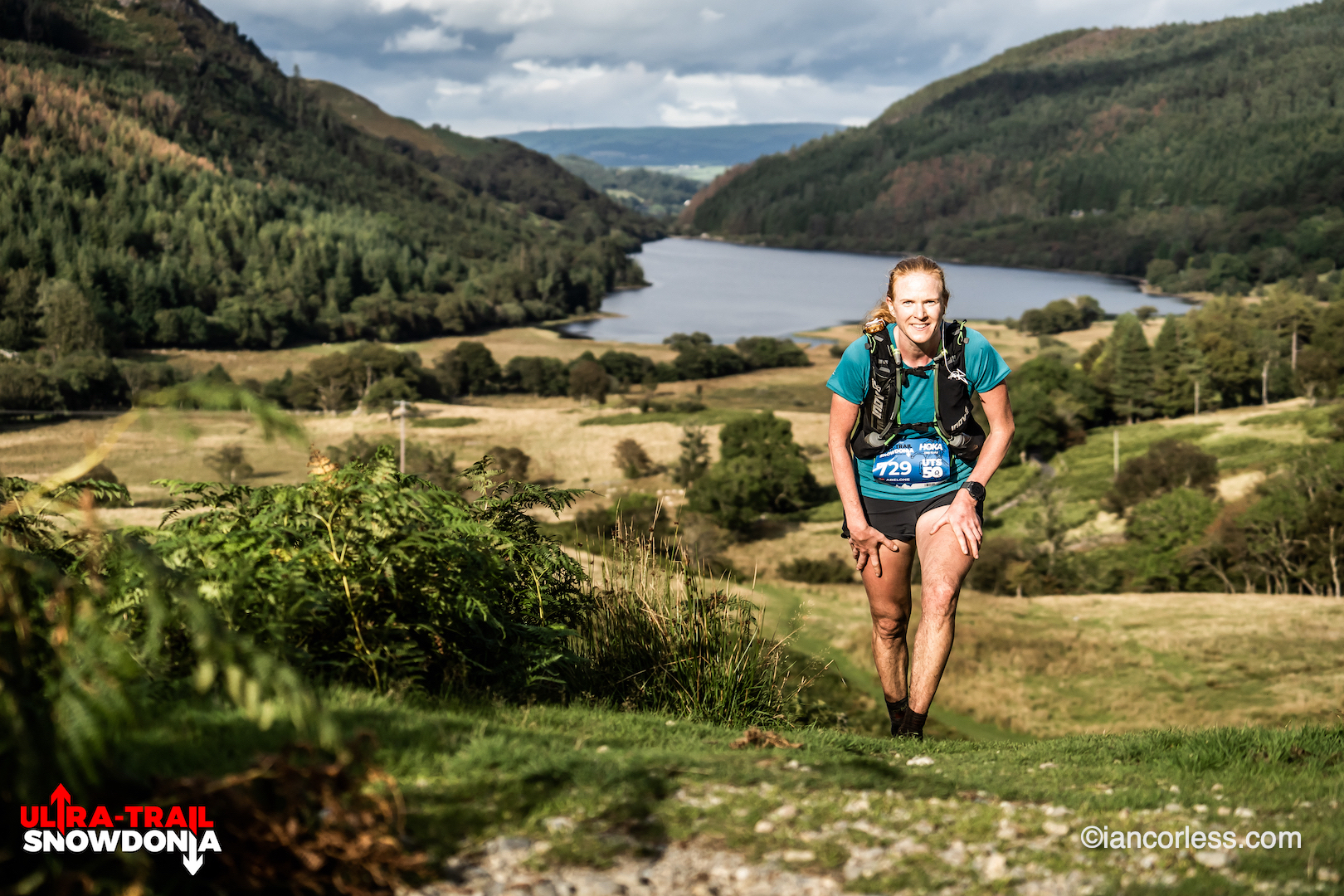
inov-8 ambassador, Abelone Lyng

The starting point for me is a merino wool base layer, it naturally helps regulate body temperature, remains warm when wet, transports sweat away from the body, and is very good in regard to odors. Icebreaker is my product of choice and they have a simple system of 150/175/200 and 260 products, the higher the number, the thicker and warmer the product. I personally find 150 ideal, especially for running and active sports.

My jacket will balance warmth, breathability and protection from the wind, Haglöfs L.I.M Hybrid Hood manages to balance all these elements in a really lightweight package. It can even be worn directly against the skin. The inov-8 Technical Mid Hoodie is also a good choice.

Leg wear will depend on the weather and arguably I would potentially look at 3 scenarios. On milder winter days hovering around 0C I would use my standard inov-8 run tights. 0 to -10C I would use a thicker winter tight, potentially with wind block panels on the front by Swix. Below -10 and I would use Icebreaker 150 merino underneath the thicker Swix tights.

Keeping feet warm is essential in winter and again, based on weather, temperature and conditions. I will go with one of three scenarios: Merino woolneoprene socks or Sealskinz. My default is neoprene as it works well in most conditions. It’s not unusual to wear two pairs of socks in winter, say a merino liner and thicker over sock or a merino liner inside Sealskinz, keep this in mind when getting winter run shoes, you may need a half-size larger shoe?

Hands, like feet, need to be warm. I use Icebreaker liners, with either inov-8 Extreme Thermo Mitt which is incredibly warm.

I wear a Buff or similar product around my neck, and I use a Haglöfs Fanatic hat which manages to be always warm, but not too warm!

Vj Sport Xero 5 here

Shoes will depend on conditions but for me, once winter arrives, I usually require a winter shoe with studs to provide grip, particularly in ice. The VJ Xero 5 works exceptionally well. Of course, in most scenarios you could use your favourite trail shoes and carry micro crampons which you can add and remove as required. However, if you know you will be in snow/ ice all day, a specific winter shoe provides a much more enjoyable experience.

Finally glasses with a specific winter lens are often essential to protect from cold air, snow and reflected brightness from snow. I use Oakley Radar.

THE PACK

Black Diamond Distance 15 is a somewhat unique pack that manages to appeal to trail runners and alpinist/ climbers who have discovered that all important link-up of sports coming together for unique adventures and/or fastpacking. These adventures tend to entail a bit of easy climbing, some scrambling, some fell running and some walking – or just about whatever you can string together.

Black Diamond Distance 15 balances running and alpinism perfectly.

A hybrid between running and climbing pack, the Distance 15 fits snug to your body and is stable with minimal bounce. The main compartment of the pack includes a quick draw-string main opening which Black Diamond say is waterproof – it is not! Please use a waterproof bag inside like those provided by Sea to Summit. A zippered security pocket inside is ideal for a wallet and there is a stretch mesh divider that will hold a bladder, or it can be used for storing nylon or dyneema.

Elasticated compression straps either side of the main bag are ideal for reducing the volume of the pack and keeping everything tight together and they can be used to secure a pair of ice axes that also have specific storage at the bottom of the back and security buckles that pass through the ice axe head. Integrated into the main compartment (on each side) are ‘Quiver Sleeves’ for Black Diamond Z-folding walking poles. The front of the pack has a vest fit with two adjustable straps and two 4-way stretch zippered pockets and four front stretch pockets that will hold soft flasks, snacks or any other essential ‘on-the-go’ items.

IN THE PACK

Icebreaker 150 top and bottom

Spare base layer, top and bottom – These would be duplicates of the Icebreaker 150 as worn.

Spare socks – Merino run sock.

Jacket

Mid layer/ insulation – In winter, I will already be wearing a mid-layer, either the Haglöfs or inov-8 as mentioned above. My additional insulation would be down and the Haglöfs Essens is an incredible all season product. It has warmth, very low weight and first-class goose down with 800 CUIN filling that it is DWR treated – the filling stays dry for up to 10,000 minutes with exposure to wet conditions.

Barrier shorts

*Barrier Shorts – Haglöfs make an excellent, light and packable barrier short for the extreme cold.

Haglöfs Gore-Tex Paclite

Waterproof jacket – The inov-8 Ultrashell Pro is an excellent very lightweight waterproof jacket but in winter I will usually take a heavier duty Gore-Tex Paclite L.I.M jacket by Haglöfs.

inov-8 Trailpant

Waterproof pants – inov-8 Trailpant waterproof and breathable designed for really cold, wet conditions.

Icebreaker liner gloves

Liner gloves – I would carry an additional pair of Icebreaker merino as mention above.

Sentinel by Mountain Equipment
Black Diamond waterproof over mitt

Outer gloves – I would typically carry two outer gloves as I suffer with cold hands, a warm Sentinel mitt by Mountain Equipment and a waterproof over mitt by Black Diamond.

Hat – Spare hat as above.

Buff – Spare as above.

Food and hydration – In winter, a main issue can be frozen bottles, so I carry one or two small Thermos flasks with coffee, sweet tea or hot chocolate. It can make a big difference to have this option. For snacks I will use energy bars, Kvikk Lunsj or similar. Always a good idea to plan a cafe stop on longer runs too!

Phone – I use an iPhone and I make sure I have mapping software such as Footpath and what3words for emergency use.

Petzl e-lite
Silva Trail Runner Free

Headtorch – A simple Petzl e-lite as a ‘just-in-case’ for all runs but if running at night I use a Silva.

Small knife

Knife – Victorinox.

Mountain wipes

Wipes – Wipes.

Waterproof liner bag

Waterproof liner bag – (maybe 2 depending on needs) – Sea to Summit make excellent lightweight bags to make sure all spare clothes etc remain dry.

Survival bivi

Bivvi – Terra Nova Survival bivi that is fully waterproof, breathable and has a simple drawcord closure. It packs away into a small stuff sack.

Hand and feet heat pads

Heat pads – An essential back-up for hands and feet by Nevercold or similar.

First aid – Lifesystems small emergency kit in waterproof protection.

Additional power.

Batteries/ Battery pack – Modern tech doesn’t last long in extreme cold so carrying a back-up battery can be a good idea, Goal Zero make good products.

Map and Compass – As applicable.

Garmin inReach

*InReach tracker – Garmin.

Folding Z Poles

*Poles – Black Diamond Z-Pole Carbon.

Micro crampons

*Crampons – You need to be very specific with crampons and the shoes you use them with, however, a pair of Snowline are a good back-up.

Camp Corsa

*Ice Axe – Camp Corsa – lightest ice axe out there for low angle glacier travel, ski mountaineering and adventure racing.

Atlas Race 22

*Snowshoes – Atlas Race 22.

*Hand Ice Studs – Isvidda Isdubb If you are running on the ice, it is important that you use ice hand studs both for your own and others’ safety. (These are often sold for those ice fishing.)

All items with * are only applicable based on the adventure, the type of terrain, weather conditions and personal experience. The inReach is a wonderful security blanket that is arguably ideal for any run/ adventure but if you have a phone (with power) at least you have one emergency back-up. However, phones don’t always have reception.

Running across a frozen lake, Norway.

LIGHTERPACK is a great online tool that helps you manage equipment and keep track of pack weight and contents, HERE is an example of what is listed above.

SUMMARY

Winter adventures are incredible and exhilarating. On a personal level, I find them more challenging and exciting than many Spring/ Summer trips due to the added complexity. However, that complexity can prove to be fatal.

Don’t compromise in winter. Be prepared.

The above list of equipment is designed to show you what is possible and how to make weight as minimal as possible without losing efficacy of the items. You could go away and purchase this list of items and you’d have all you need for winter running.

However, if you are like me, looking around, testing items and comparing is part of the fun… It’s actually what I have been doing for years, that is how this list came about.

So, do the research, make sure you not only have what you need for an adventure but make sure you have all the extras needed should a situation arise leaving you vulnerable.

Further Reading:

Ice Running HERE

Winter Running HERE

Embrace Winter HERE

Winter Camping & Fastpacking HERE

Please support this website. I believe everyone deserves to read quality, independent and factual articles – that’s why this website is open to all. Free press has never been so vital. I hope I can keep providing independent articles with your help. Any contribution, however big or small, is so valuable to help finance regular content. Please support me on Patreon HERE.

Follow on:

Instagram – @iancorlessphotography

Twitter – @talkultra

facebook.com/iancorlessphotography

Web – www.iancorless.com

Web – www.iancorlessphotography.com

Image sales –www.iancorless.photoshelter.com

Episode 203 – Jamil Coury

Episode 203 of Talk Ultra has a chat Jamil Coury about racing in Covid times. Speedgoat co-hosts.


Talk Ultra needs your help! 
We have set up a Patreon page, this is the easiest way to support Talk Ultra and help us continue to create! 
Many thanks to our Patrons who have helped via PATREON
Donate HERE


NEWS

  • Check FKT website for latest updates https://fastestknowntime.com/
  • La Sportiva VK Boa shoe review HERE
  • Moonlight head lamp review HERE
  • inov-8 Roclite Pro boot review HERE
  • Review of 2020 HERE
  • Icbebug Pytho 5 Review HERE
  • inov-8 Mudclaw G260 Review HERE
  • inov-8 G270 Long-Term Review HERE
  • Fuelling for a Multi-Day like MDS HERE
  • Episode 201 – Simen Holvik HERE
  • Winter Running – Hints n Tips HERE
  • Timothy Olson TCC2021 HERE
  • Icebug Route Winter Studded Shoe Review HERE
  • Haglöfs LIM Essens Jacket Review HERE
  • 12 – 24 Week Multi-Day Training Plans now available HERE
  • 100-Mile Training Plan now available HERE
  • The Ultimate Guide to Desert Multi-Day Racing (updated) HERE
  • Join the #FEB406 Challenge (run 406km in February) HERE

INTERVIEW : JAMIL COURY

Share us on Facebook – Talk Ultra FB HERE  

Tweet us on Twitter – Talk Ultra on Twitter HERE  

Instagram – HERE  

And use good old word mouth.   

Importantly, go to iTunes and subscribe so that you automatically get our show when it’s released we are also available on Stitcher for iOS, Android and Web Player and now Tunein. We are also on Spotify too.   

Spotify HERE  

ITunes HERE  

Stitcher You can listen on iOS HERE

Android HERE or via a web player HERE  

Please support this website. I believe everyone deserves to read quality, independent and factual articles – that’s why this website is open to all. Free press has never been so vital. I hope I can keep providing independent articles with your help. Any contribution, however big or small, is so valuable to help finance regular content. Please support me on Patreon HERE.

Follow on:

Instagram – @iancorlessphotography

Twitter – @talkultra

facebook.com/iancorlessphotography

Web – www.iancorless.com

Web – www.iancorlessphotography.com

Image sales –www.iancorless.photoshelter.com

Episode 202 – Emily Hawgood

Episode 202 of Talk Ultra has a chat Emily Hawgood who placed 3rd at Bandera 100km and has just joined the adidas Terrex Team.


Talk Ultra needs your help! 


We have set up a Patreon page and we are offering some great benefits for Patrons… you can even join us on the show! This is the easiest way to support Talk Ultra and help us continue to create! 
Many thanks to our Patrons who have helped via PATREON


Donate HERE


NEWS

Check FKT website for latest updates https://fastestknowntime.com/

La Sportiva VK Boa shoe review HERE

Moonlight head lamp review HERE

inov-8 Roclite Pro boot review HERE

Review of 2020 HERE

Icbebug Pytho 5 Review HERE

inov-8 Mudclaw G260 Review HERE

inov-8 G270 Long-Term Review HERE

Fuelling for a Multi-Day like MDS HERE

Episode 201 – Simen Holvik HERE

Winter Running – Hints n Tips HERE

Timothy Olson TCC2021 HERE

Haglöfs L.I.M Essens Jacket Review HERE

Icebug Route Winter Studded Shoe Review HERE

INTERVIEW : EMILY HAWGOOD

Share us on Facebook

Talk Ultra FB HERE  

Tweet us on Twitter HERE  

Instagram – HERE  

Spotify HERE  

ITunes HERE  

Stitcher You can listen on iOS HERE, Android HERE or via a web player HERE  

Haglöfs L.I.M Essens Jacket Review

Haglöfs have been a premium brand for more than a century developing outstanding outdoor products that combine a strong sense of Swedish heritage with a commitment to sustainability and innovation. The launch of L.I.M (Less Is More) personified the essence of lightness. In Spring 2020, Haglöfs updated the L.I.M Series – lightweight, high-performance products that deliver uncompromised performance when taken up mountains and into the wilderness, anywhere in the world.

The L.I.M Essens Jacket Men is currently my go-to jacket for any running or mountain adventure, quite simply, it’s the best product I have tried. It combines three key elements perfectly: low weight, small pack size and warmth.

Quite simply, ‘Essens’ is the essence of lightness. The warmth and very low weight is attributed to extremely light and durable material and first-class goose down with 800 CUIN filling. Importantly, the down is treated with fluorocarbon-free DWR which works so well that the filling stays dry for up to 10,000 minutes with exposure to wet conditions. 

This is a game changer… Down has always been known to have the lowest weight and smallest pack size, however, previous incarnations would mean that any wet or damp weather would leave the filling useless.

Now, with fluorocarbon-free DWR, down has all the benefits ans wet weather performance of a synthertic filling such as Primaloft, but with the huge advantages of low weight and packing size of down. The Nikwax Hydrophobic Down can be washed with an appropriate Nikwax (Nikwax Down Wash Direct) product.

Fit is superb both in female and male versions with excess fabric reduced to a minimum. Features are minimal and notably there is no hood, no chest pocket and two hand pockets with no zips, to save weight.

The jacket will fold and compress in to one of these pockets if required.

It has a mini-box quilted construction which ensures the down is spread evenly over the jacket leaving no cold spots. The fill is 800 CUIN. The DWR repels water and dirt making the Essens a perfect all-year round insulating layer.

A full-length zipper allows flexibility in regulatimg temperature and for cold conditions it has a high nick with chin guard. The bottom of the jacket and cuffs have a simple elastic construction to reduce drafts and maintain low weight.

IN USE

The Essens jacket has been with me on all my runs since receiving the product. I pretty much always run with a pack and due to the Essens low weight, small pack size and flexibility in all weathers, there has never been a reason not to take it. My male medium weighs 160g which is up there as one of the lightest down jackets available. The ability to maintain loft and insulation irrespective of conditions has been a game changer, be that on a run from home or more notably on a multi-day fastpack when weight v warmth is key. This is a product that works for any adventure, be that in the snowy mountains or for example on stage race like Marathon des Sables in the Sahara desert. Fit is neither slim or spacious, it seems to fit just right with enough flexibility in the arms, the back and sleeve length are optimised for outdoor use. Added to a merino base layer, it provide incredible warmth on cold days. Should you stop for a break, it provides ideal insulation to retain warmth before heading off again. On tough, challenging and wild days, the Essens is a superb insulating layer underneath a waterproof such as Haglöfs L.I.M Jacket which has minimalist design, is easy to pack, light and made from GORE-TEX Paclite® PLUS.

CONCLUSION

There is nothing to dislike in the L.I.M Essens Jacket, in all honesty it is the best I have tried. The warmth and comfort is incredible for such a lightweight jacket. The packing size and weight is difficult to beat. As I said, there is no reason not to take this on any run as it is the perfect insulating layer, irrespective of the weather.

RRP £200 available in 4-colours, sizes XS to XL male and female versions.

To clarify, this is not a paid review.

Please support this website. I believe everyone deserves to read quality, independent and factual articles – that’s why this website is open to all. Free press has never been so vital. I hope I can keep providing independent articles with your help. Any contribution, however big or small, is so valuable to help finance regular content. Please support me on Patreon HERE.

Follow on:

Instagram – @iancorlessphotography

Twitter – @talkultra

facebook.com/iancorlessphotography

Web – www.iancorless.com

Web – www.iancorlessphotography.com

Image sales –www.iancorless.photoshelter.com

Episode 200 – Seb Conrad and Jill Wheatley

Episode 200 of Talk Ultra has a chat with #phantamsm24h runner, Seb Conrad who joined Kilian Jornet on the track setting a great distance for 12-hours and an incredible time for 100-miles. We also chat in-depth with Jill Wheatley who’s life changed after a brain injury and loss of vision.


Talk Ultra is now on Tunein – just another way to make the show available for those who prefer not to use iTunes – HERE  You can download the Tunein APP HERE
Talk Ultra needs your help! 


We have set up a Patreon page and we are offering some great benefits for Patrons… you can even join us on the show! This is the easiest way to support Talk Ultra and help us continue to create! 
Many thanks to our Patrons who have helped via PATREON
Donate HERE


NEWS

Check FKT website for latest updates https://fastestknowntime.com/

La Sportiva VK Boa shoe review HERE

Moonlight head lamp review HERE

inov-8 Roclite Pro boot review HERE

Ice Running HERE

Andrea Huser HERE

Shining some light on headlamps HERE


INTERVIEW : SEB CONRAD

Camp 2 on Ama Dablam ©jillwheatley
Summit Ama Dablam ©jillwheatley

INTERVIEW : JILL WHEATLEY website link. to Mountains of my Mind HERE


Follow on:

Instagram – @iancorlessphotography

Twitter – @talkultra

facebook.com/iancorlessphotography

Web – www.iancorless.com

Web – www.iancorlessphotography.com

Image sales –www.iancorless.photoshelter.com

Importantly, go to iTunes and subscribe so that you automatically get our show when it’s released we are also available on Stitcher for iOS, Android and Web Player and now Tunein. We are also on Spotify too.   

02:21:31

Episode 200

Spotify HERE  

ITunes HERE  

You can listen on iOS HERE

Android HERE 

or via a web player HERE  

Episode 199 – Hayden Hawks and Camille Herron

Episode 199 of Talk Ultra we talk with Hayden Hawks and Camille Herron who both won JFK50.

Talk Ultra needs your help! 
We have set up a Patreon page and we are offering some great benefits for Patrons… you can even join us on the show! This is the easiest way to support Talk Ultra and help us continue to create! 
Many thanks to our Patrons who have helped via PATREON
Donate HERE

NEWS

Check FKT website for latest updates https://fastestknowntime.com/

Kilian Jornet Phantasm article HERE

La Sportiva VK Boa shoe review HERE

Moonlight head lamp review HERE

inov-8 Roclite Pro boot review HERE 

Silva Trail Runner Free review HERE

How to choose a headlamp article HERE

Layered clothing article HERE

In other news…

INTERVIEW : HAYDEN HAWKS

INTERVIEW : CAMILLE HERRON

Share us on Facebook – Talk Ultra FB HERE  

Tweet us on Twitter – Talk Ultra on Twitter HERE  

Instagram – HERE  

And use good old word mouth.   

Importantly, go to iTunes and subscribe so that you automatically get our show when it’s released we are also available on Stitcher for iOS, Android and Web Player and now Tunein. We are also on Spotify too.   

Please support Talk Ultra by becoming a Patreon at www.patreon.com/talkultra and THANKS to all our Patrons who support us. 

Spotify HERE  

ITunes HERE  

Stitcher 

You can listen on iOS HERE

Android HERE 

or via a web player HERE  

Shining Some Light On Headlamps For Running

Winter is looming. It’s dark in the morning and darkness arrives earlier and earlier in the evening. The lure of a treadmill or training in a gym is just not an option for some and therefore the need to be outdoors getting in some fresh air is essential for day-to-day function. So, if you are going to keep running during the winter months a headlamp is going to be essential. Here is a guide to help you make the correct choice.

Headlamps are an important piece of kit and arguably one that is ‘mandatory’ when heading to the trails, particularly during winter months or when racing. It may be light when you leave home, but have you noticed how suddenly the light switch is flicked off and how quickly light disappears. If you are on the road (with streetlights) this is not too much of an issue but if you are off-road, you are going to need a light that illuminates the trail, has durability and good battery life.

BEAM 

One thing I hate about running at night is that I eventually fall into the beam and I feel that I am in a tunnel. It affects my mind, my vision and my concentration. Many head torches have ‘beam options’ that usually are ‘narrow’ or ‘wide’. This option is an essential item to allow you to adapt to the environment and your vision needs.

Morning arrives in a trail race in the USA.

NARROW will focus the beam. For example, you may be running single-track and need vision in a very specific area. You need to see roots, rocks or any other obstacles. The narrow beam will facilitate your vision and allow you to make on-the–go decisions without losing speed.

WIDE as it suggests provides a softer more widespread light that provides a much more general field of view. This tends to work well with clearer skies or on open trail when obstacles are reduced.

Some head torches have two lamps, one wide and one narrow that provides the best of both worlds. some headlamps allow ‘variations’ between wide and narrow.

BRIGHTNESS

Brightness is measured in lumens and while many think more lumens are better, this is not always the case. Brightness is a key consideration for faster sports such as skiing and Mountain Biking when the need to react at speed is paramount. But for running, the pace is lower and therefore the need for a really bright light is not essential. Many headlamps have several settings, for example, a 400-lumen product may have a 50, 200 and 400 setting. This is useful when using a headlamp in mixed lighting/ darkness scenarios. If running on roads with streetlights, you may only need to be visible and then 50 lumens is ideal. However, if you are on dark forest trails with no ambient light, 400 lumens will be required.

In addition, some products have a ‘flash’ option that can be used for safety.  

Manually adjusting brightness with 1, 2 or 3 clicks is for me preferable to some of the new head torches that ‘auto-adjust’ to conditions. I have issues with these when in fog, mist, rain and so on as the sensor becomes confused. It over engineers a simple problem that a button click resolves.

Racing a VK during the night in a rainstorm. A double bean headlamp providing wide and narrow light.

Be careful of ‘boost’ modes, they are designed to produce brighter light for shorter periods, they will eat through battery life.

Understand your needs and be specific when purchasing. A light that provides too much power can be turned down BUT a light with not enough lumen cannot be turned up.

Also, when looking at power and brightness, this goes hand-in-hand with the beam. A narrow beam may well require less power because the beam is so concentrated, however, when on wide, you may wish to up the power as the light provided is softer.

BATTERY LIFE

Battery life, lumen power and weight are a delicate balancing act. Quite simply, autonomy comes from a larger battery and that will always mean more weight. If you are using a bright headlamp on a full power setting, then you need to balance this combination and understand your needs.

If you use a headlamp occasionally, using conventional batteries such as AAA or AA may be an option. However, regular headlamp use will almost certainly require rechargeable batteries which are better on cost and the environment.

Top tip: Choose a headlamp that can switch between conventional batteries and rechargeable seamlessly. Not only does this provide the best of both worlds but it will also allow you the opportunity to always have conventional batteries as a backup.

Silva Trail Runner Free can change from AAA to rechargeable.

Another key consideration is the option to use the batteries on and off the headband. The reasons for this are twofold:

The more power/ autonomy you need, the heavier the battery will be. The option to store in a pack or pocket is considerably more comfortable.

In colder weather, batteries last longer if warm. Storing off the head and in a pocket close to your torso will provide more autonomy.

Silva Trail Runner Free has a Hybrid case that takes AAA and rechargeable and can be used off the head.

Be specific. If you run typically 1-2 hours on dark trails, a 400-lumen light will be ideal, and the batteries will last for the duration of the run.

If you are running and you know you will have 8-hours or more under darkness, you will almost certainly need one spare set of batteries and maybe even two! So, the option to change rechargeable batteries and/or use conventional batteries can be a deal breaker. The Silva Trail Runner Free balances this perfectly with multiple options available.

On a final note, batteries can either fit in the lamp unit at the front (typically 2 x AA or 3 x AAA) or at the rear in a battery box that is sealed from the weather. The latter option usually means that you will have more power and the light will have more autonomy, but you will need to check! Is one better than the other? It all depends on your preference; I have found that a lamp at the front and batteries at the back balances the light well when in use. However, I do like the simplicity of everything in the head unit as it does allow you to use the light in other scenarios.

ADJUSTMENTS

Headlamps will tilt and some swivel. The tilt function is most important and will allow you to adjust the angle of the light based on your running style. This is important as we all have different run styles. You want the beam to be in a natural position taking into account your head angle whilst running and what field of vision you require. Usually, 2-3 meters ahead is ideal as this allows a natural run pace without slowing due to vision problems. If the trail is gnarly, you may need to adjust the angle, power and beam so that you are able to see obstacles.

Fog and mist can cause issues for any headlamp. Instinctively you try to increase the light to improve visibility only to find the light bounces back and makes visibility worse. In this scenario, using a light on your chest or waist can make improvements – just like they way fog lights on a car work. Simply removing the torch from your head and holding in your hand will improve matters considerably. Some actually prefer chest or waist mounted lights all the time. Personally I do not. I think they are a good addition to a headlamp but not a replacement.

Adjusting beam power is useful when reading maps.

Nearly all head torches use an elastic system to stretch around the head and hold the light in place. One or two also include a strap that goes over the top of the head too. This adds extra stability but often is a problem when wearing hats and so on. Ultimately you just want something that is comfortable.

SUMMARY

Night running is awesome. If you haven’t tried it, head out with friends at first, you will feel more secure as It can take some getting used to as you may feel disorientated.

But once you have the feel for it, it will be something you embrace and of course it adds some spice to your running.

If snow falls, embrace the opportunity of dark skies, white snow and the glow of a light!

Recommendations:

Moonlight Mountain Gear provide very powerful lights beyond 2000 lumens HERE

Silva Trail Runner Free specifically for running that takes AAA and rechargeable HERE

Please support this website. I believe everyone deserves to read quality, independent and factual articles – that’s why this website is open to all. Free press has never been so vital. I hope I can keep providing independent articles with your help. Any contribution, however big or small, is so valuable to help finance regular content. Please support me on Patreon HERE.

Follow on:

Instagram – @iancorlessphotography

Twitter – @talkultra

facebook.com/iancorlessphotography

Web – www.iancorless.com

Web – www.iancorlessphotography.com

Image sales –www.iancorless.photoshelter.com

Episode 198 – Mike McLean, Molly Bazilchuk and Jack Scott

Episode 198 of Talk Ultra brings interviews with Michael McLean, winner of the 120km Thailand by UTMB, Molly Bazilchuk who won the  first edition of the Rondane 100 in Norway and Jack Scott from the UK about his recent FKT.


Talk Ultra needs your help! 
We have set up a Patreon page and we are offering some great benefits for Patrons… you can even join us on the show! This is the easiest way to support Talk Ultra and help us continue to create! 
Many thanks to our Patrons who have helped via PATREON
Donate HERE


NEWS

Check FKT website for latest updates https://fastestknowntime.com/

Tim Tollefson and Nicole Bitter win at Javelina.

Pau Capell continued his personal projects and followed up UTMB and Trail Menorca solo by running in Tenerife starting at the sea, summiting Mt Teide and then dropping back down to sea level setting a new FKT 6:13:20 for the 55km route.

REVIEWS:

La Sportiva VK Boa shoe review HERE
Moonlight head lamp review HERE
inov-8 Roclite Pro boot review HERE

In other news…


00:11:11 INTERVIEW : MIKE MCLEAN

01:09:00 INTERVIEW : MOLLY BAZILCHUK

1:52:15 INTERVIEW : JACK SCOTT

02:22:06

Episode 198

Spotify HERE  

ITunes HERE  

Stitcher 

You can listen on iOS HERE, Android HERE or via a web player HERE  

Website – talkultra.com

Follow on:

Instagram – @iancorlessphotography

Twitter – @talkultra

facebook.com/iancorlessphotography

Web – www.iancorless.com

Web – www.iancorlessphotography.com

Image sales –www.iancorless.photoshelter.com

Episode 196 – Kristian Morgan and Jon Albon

Episode 196 – Kristian Morgan talks about setting an FKT on the South West Coast Path and multiple World Champion, Jon Albon, talks about ‘Finding My Feet’ for Endurancesports.tv.

*****

Talk Ultra is now on Tunein – just another way to make the show available for those who prefer not to use iTunes – HERE  You can download the Tunein APP HERE

Talk Ultra needs your help! 
We have set up a Patreon page and we are offering some great benefits for Patrons… you can even join us on the show! This is the easiest way to support Talk Ultra and help us continue to create! 
Many thanks to our Patrons who have helped via PATREON

Donate HERE

****

NEWS
FKT’s posted on last show:
* Franco Colle new FKT on Monte Rosa from Gressoney* Nadir Maguet – Gran Paradiso FKT 2:02:32* Erik Clavery GR10 9 days 9 hours and a few minutes* Davide Magnini Ortles FKT 2:18:15* Kim Collison 24h Lakes achieves 78 Peaks* Sabrina Verjeee Wainwrights (wishes not to claim)* Dylan Bowman Loowit Trail 5:11:49* Josh Pulattie Oregon Coast Trail 12 days 10 hours 25 min* Candice Burt Tahoe Rim Trail 2 days 12 hours 47 min* John Kelly Pennine Way 2 days 16 hours 40 min* Sarah Hansel (57:43) & Joey Campanelli (41:00) for Nolans 14* Tom Hollins Dales Mountain 30 (130 miles, 30 summits) 41 hrsAdam Kimble new FKT on Tahoe Rim Trail, USADamian Hall new FKT for the Pennine Way, UKAdam Jacobs new FKT for Hertfordshire Way, UKCarla Molinaro new FKT for the JOGLE, UKBeth Pascall new FKT for the Bob Graham Round, UK and set 5th fastest time.Rhys Jenkins sets new FKT on the Wales Coastal Path #fkt! 870 miles. Time TBC but 20 days 9hrs 35 mins – 2hr 20mins off the record. Lindsey Ulrich new FKT Pacific Crest TrailMarilyne Marchand-Gouin new FKT Clorado TrailMikaela Osler new FKT Colorado TrailWouter Berghuijs new FKT Via Alpina SwitzerlandChristof Teuscher new FKT Eagles 33
Pau Capell runs UTMB in 21:17Finlay Wild runs the Ramsey Round 14:42Carol Morgan 24hr Lakeland record with 65 topsWonderland Trail in the USA, Kaytlyn Gerbin set a new female FKT. Dylan Bowman (16:58) set the FKT only to have it broken 1-week later by Tyler Green, now 16:40:55Kirsty Hewitson Steve Parr Round 62 fells 117mDiego Pasoz on the Via Alpina new FKTDan Lawson JOGLE 9d 21h 14mRyan Sandes 13 Peaks Challenge 13:41:10Donnie Campbell continues his Munro challengeKilian does a VK in less than 30 min and then follows up with 10km on the road in sub 30 min

NEW UPDATES: Check FKT website for latest updates https://fastestknowntime.com/

ARTICLES:

Embrace Winter HERE

*****

INTERVIEW : KRISTIAN MORGAN

*****

INTERVIEW : JON ALBON

endurancesports.tv

With the NEW documentary featuring Jon Albon (Finding my Feet) live on www.endurancesports.tv as of Friday 2nd October.

We’ve created a special code so that our listeners can access the documentary, and everything else on the channel using a limited edition 50% offer lasting 6 months, click this link http://bit.ly/50offReward and enter the code “50_Reward”.

*****

Please support Talk Ultra by becoming a Patron at www.patreon.com/talkultra and THANKS to all our Patrons who support us. Rand Haley and Simon Darmody get a mention on the show here for ‘Becoming 100k Runners’ with a high-tier Patronage. 

*****

Spotify HERE

 ITunes HERE 

Stitcher 

You can listen on iOS HERE

Android HERE or via a web player HERE 

Libsyn – HERE 

Tunein – HERE 

Website – talkultra.com

Embrace Winter for New Adventures

The passing of September and the arrival of October can signify dread and a sense of despair in many as daylight disappears and the weather changes. However, one of the secrets of ‘surviving’ this new season is to embrace it. Don’t look at the negatives, on the contrary, the perceived negatives are actually positives. Seasons exist for a reason.

Lethargy, low mood and the perceived feel to hibernate are all characteristics we feel during the winter months and first off, don’t fight it, accept that winter brings an opportunity to recharge, relax, read a book, catch up on some movies, light a fire, get a blanket and yes curl up on the sofa and relax. There is no harm or guilt in this.

SAD (Seasonal Effective Disorder) is something we all can feel and yes, some feel it considerably more than others, particularly if Serotonin is reduced and this is often treated with drugs. But light, or the lack of it, is a great contributor. Top tip – Look at changing the bulbs on your lights to ‘daylight’ balanced and when required, adjust brightness throughout the day to help simulate the natural passing of light. It’s a great and easy way to help simulate the variable light intensity changes in one normal day.

Mindset is a key factor to a successful winter and once you get the mind tuned, you will soon appreciate and embrace the possibilities that the winter season can bring, especially as a runner or someone who enjoys outdoor life and activity.

As in all things, we are individuals and as such, we all treat circumstances and changes in different ways. I personally see winter as an opportunity to do things I could not do in spring and summer. I see the challenges that winter will bring as a test, both physical and mental and I look upon it as an opportunity to learn and adjust. Resources and circumstances do go a long way in making my ability to adapt successful, so, to start off, look at these aspects and put yourself in a good place before the cold, wet and dark hits.

In a discussion with a friend over a glass of wine, I was surprised to hear our discussion begin to deteriorate…

“I just hate this time of year. The daylight is leaving us earlier and earlier each day, the light is already arriving so late in the morning and I can feel the damp starting to creep into my body. It will be only a matter of weeks before I am in perpetual cold and dark, I cannot wait for spring!”

It is easy to see from the above quote that before winter has begun, my friend is defeated. I smiled and laughed with him and turned the conversation around.

“Yes, the darkness is coming as is the cold, the wet, the snow and the ice,” I replied. “But what a remarkable opportunity this brings. Just think about it. Cozy nights at home with candles and a movie. Adventures in the snow. Running with a head torch. Learning a new skill. Reading and yes, I could go on and on. Winter for me is just a wonderful opportunity and I cannot wait for it to begin.”
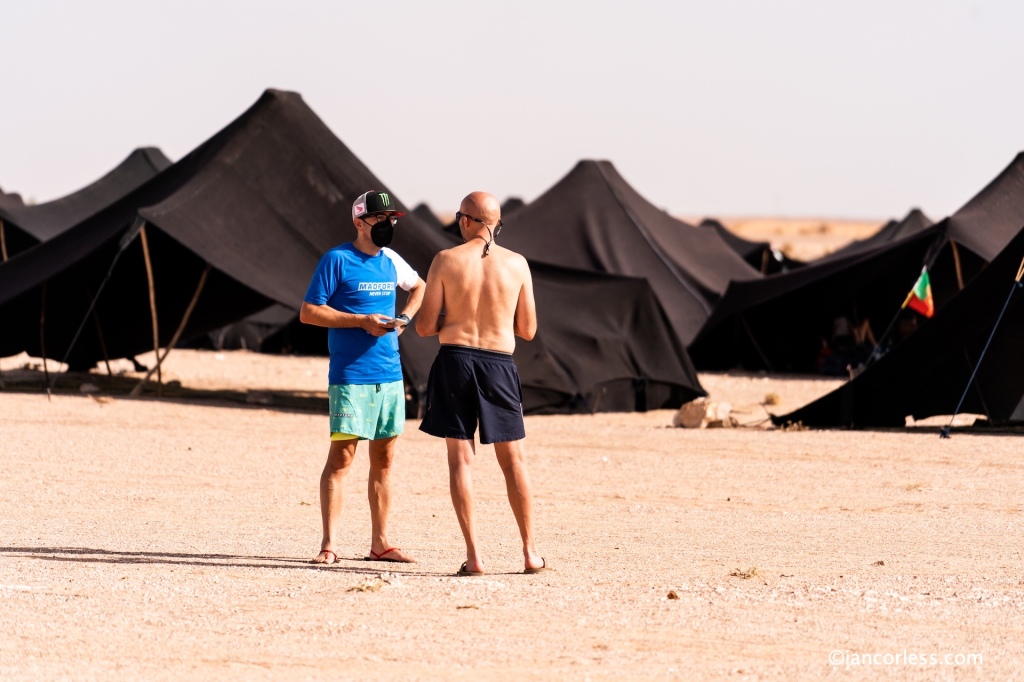
I already felt like a winner as mentally I was prepared and excited for the opportunity, whereas my friend, was already starting the hibernation process.

EMBRACE THE WINTER

I strongly believe that embracing winter and making the most of the season starts with mindset. With a good mindset as outlined above, you will already be in a great place to start.

Marino Giacometti, founder of skyrunning also made the summit on race day – ‘for fun!’

As runner’s and outdoor enthusiasts, we are all at different abilities and yes, we all have different reasons why we do what we do. A great example being an elite runner may well look at winter as an opportunity to address weaknesses and maybe spend more time in a gym working on strength and core.

Monte Rosa Skymarathon

A running enthusiast may well just want to tick over, keep fit and maintain a healthy weight during winter months. And then there is the outdoor enthusiast who may well accept that running is something that will go on a back burner for the coming months and accept that walking, indoor cycling, skiing, gym work and so on is the way forward. Whatever group you fall in, take a couple of hours with a pen and paper and self asses how the last year has been and what you want to achieve the following year, this will help provide some specific goals over the winter to keep focused. This planning and assessment can be as simple as complicated as you wish.

As an example, mine is to embrace the season and the weather and to seize every opportunity. I will hone my head torch running. I will practice my ice and snow running. I will experience my first snow shoeing and I look forward to multi-day snow adventures that will carry me from one point to another in a self-sufficient way. But I also want to write more. I want to read a couple of books that I have never found the time for and I also want to embrace the downtime to rest and recover. My connection with nature and breaking from the digital world is integral to a healthy existence and that cannot stop just because the season has changed.

CLOTHING

We have all heard it before, “There is no such thing as bad weather, just bad clothing.” It’s true I am afraid. Clothing is one of the key essentials that makes any winter adventure not only bearable and enjoyable. As outdoor people, we have never been as lucky. Technology in apparel has now progressed to a level that we can be warm and dry in super-light products. The downside of course is cost and yes, gearing up for winter can be expensive.
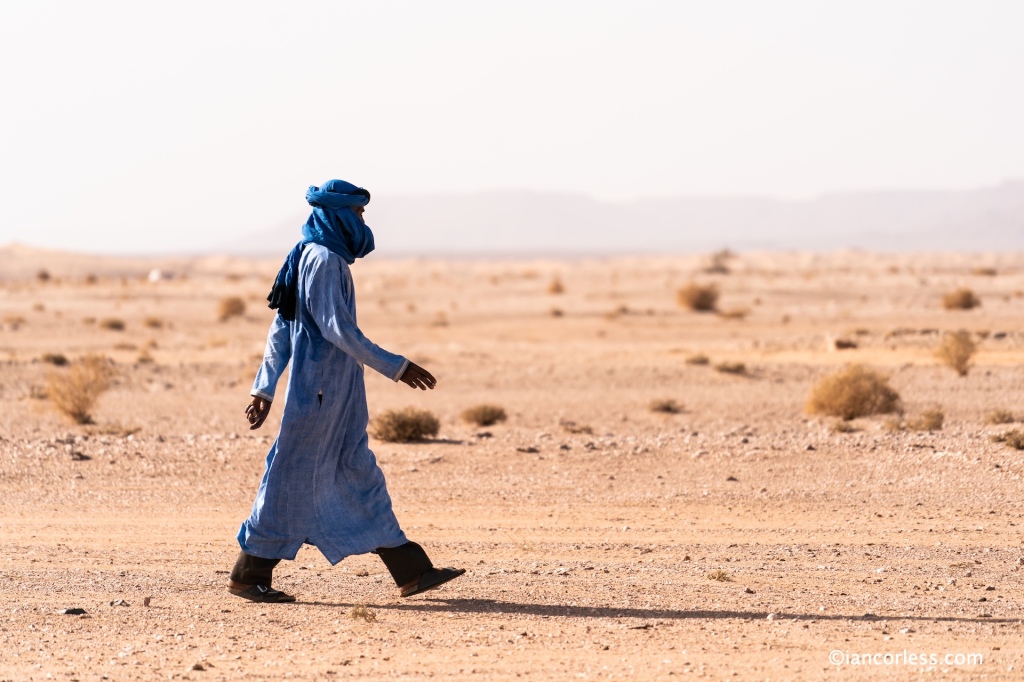
Layering is key with apparel, starting with warm layers against the skin, insulating layers on top and then waterproof and windproof layers as the final touch that will protect from the elements. Merino is great as a base layer and I have a long sleeve top and legs as a starting point. Now of course, I may or may not use them as this depends on the outdoor exercise I am doing. As an example, I would wear the top if running but not the legs. A mid-layer is more often than not either Primaloft, down or synthetic. Each has its place but if you could only choose one, Primaloft (or similar) would be the most versatile due to its ability to retain warmth when wet and still be lightweight. The outer layer should be waterproof and windproof with taped seams and again, it is essential to have jacket and trousers.

The above looks at the core, but if you are like me, the extremities are my most vulnerable in winter and after getting frost nip both in my toes and fingers on the summit of Monte Rosa several years ago, I know need to ensure that I have multiple options for keeping my feet and hands warm. I use Merino base layer socks and gloves which are very thin. For my feet, I then add thicker Merino socks over and inn certain scenarios I have even used Gore-Tex or Neoprene over socks. For my hands, mitts always provide the most warmth and I will use them as first choice. If I need finger dexterity, I often purchase gloves several sizes too big that will allow for multiple layers to retain warmth.

A hat, buff and glasses add the finishing touches. A good hat is one of the easiest ways to retain heat inside the body. A Buff is perfect for around the neck, pulled over one’s nose and mouth to keep out cold air or you can use as a hat. Glasses are an essential to keep out the elements from my eyes and particularly essential if doing any outdoor activity in snow.

Finally, footwear is an absolutely key element to make any outdoor activity successful. There is no one-stop solution here and as a runner, your everyday trail shoes may be ideal for a bulk of your runs, however, specific conditions require specific shoes.

Mud/ Wet – You need an aggressive outsole that will grip and gain traction not only of sloppy wet mud but also on tree routes, rocks, gravel and a multitude of other surfaces. Top recommendations are VJ Sport and inov-8 who have been producing shoes to handle the elements for years. Personal favorites are the XTRM (here) and X-Talon(here.)

Snow/ Ice – In soft snow, the shoes that you use for mud/wet will usually work fine providing adequate grip. However, ice brings new challenges and many runner’s avoid ice at all costs. However, products exist that allow for running in such conditions. Firstly, you can micro-crampons (Snowline or Nortec as examples) that simply adapt any running shoe for ice.

I personally prefer a specific shoe, such as the VJ Sport Xante (here) which as all the attributes of my favorite trail shoes and the added grip from 20 studs. Or the Arctic Talon (here) by inov-8.

Xante

Arctic Talon

As a final note on footwear, I use boots and more substantial crampons when venturing in to more alpine and challenging terrain. Read about a trip to the Atlas Mountains here. There is no one answer here but if moving fast and light, the new inov-8 Rocltite Pro G 400 (here) is a great cross over and then I use two specific mountain boots, La Sportiva G5 (here) or the Trango Extreme (here.)

There is no one solution here and having the options to adjust clothing based on weather conditions is key.

Top Tips:

  • Carry a pack that will allow you to carry options of clothing. For example, it may well be dry when you leave but rain could come at any time, make sure you have waterproof layers with you.
  • Take off and add clothing as you exercise. When it’s cold, we often start with many layers as the first 15 min can feel uncomfortable. However, our core soon warms up. Take the layers off early to avoid sweating. Sweating is not your friend in cold climates. Be prepared to add and take off as required. One of the many reasons many people do not, is because it can disrupt the flow of exercise, however, a little time stopping pays dividends in the long term.
  • Avoid getting base or mid layers wet.
  • Carry an extra base layer.
  • Protect extremities – hands, feet, nose, ears and lips.
  • Protect skin with sun block as and when required and post-exercise use a moisturizer – winter is hard on exposed skin.
  • Start easy and build into any outdoor activity allowing for a gradual warm up.
  • Have appropriate footwear.
  • Don’t forget to drink.
  • Take snacks/ food and even a flask or consider the option to obtain hot drinks.

SAFETY

Even at the most basic level, winter brings extra challenges and risk. A simple road run has increased danger due to increased challenges not only for you as a runner, but for those who are sharing the outdoors with you – drivers! Reduced visibility, challenging conditions under foot and on the road can make that simple road run feel like an assault course, so, accept that sometimes staying indoors and or going to the gym is a better option. But we don’t want to be forced to stay indoors and why should we? If you have the correct apparel and footwear, all is good, yes? Well, nearly… Running on the road and I would most definitely consider adding the following:

  • Wear bright clothes or wear a reflective vest such as the Ultra Performance (here) which is minimal and light.
  • Add a flashing light to your arm and ankle. Example here.
  • Use a head torch.
  • Take a phone.

Moving from road to trail and the risk from traffic is reduced greatly especially if one can start immediately on trail with no road running involved. Therefore, the need to wear reflective clothing can be reduced. But the risk of falling is greatly reduced and depending on where you are, that risk can be potentially life threatening. So, adjust safety measures based on:

  • When you are running.
  • Where you are running.
  • The duration of the run.
  • If running alone.

Running for 1-hour on a local trail is very different than a multi-hour adventure. I personally have a standard kit list and I take the basic on every run. It’s an overkill for the 1-hour runs and for the longer sessions, I add to it as required and dictated to by location and conditions.

  • Spare Merino base layer.
  • Spare gloves.
  • Lightweight waterproof jacket.
  • Lightweight waterproof pants.
  • Space blanket.
  • Head torch.
  • Mobile phone.
  • First aid.
  • 500ml water.
  • Snack

The above, is my absolute basic kit that will go in a lightweight pack.

I then add equipment based on:

  • What am I doing?
  • Where am I doing it?
  • When I am doing it?
  • What are the options exist to cut short my adventure?
  • How remote will I be?
  • What are the risks involved?
  • What weather can I expect?
  • What is the worst-case scenario?

The above is a great start point. Even a local run has great risk if one is alone. Imagine running in the forest with snow on the ground, the temperature is just below zero and you are at least 30-minutes from anyone else. If you hit the deck, sprain an ankle, break a bone or whatever, you are suddenly stationary in subzero temperature. This is high risk.

Adapting to the environment, conditions and challenges is not something to be feared. It is actually fun! I go back to the mindset approach at the beginning, I see this as an opportunity, an experience to learn and a great potential to be taken out of my comfort zone.

What equipment/ advice can make a run/ adventure safer and address the list of questions above?

  • If possible, share any trip with another person. It’s more social and you have a backup.
  • Check weather conditions.
  • Tell a friend/ family member where you are going and when you will be back.
  • Have a phone and if necessary, an additional charger. It’s worth considering purchasing a phone that is not a smartphone – battery life is usually amazing.
  • Carry a tracker such as Garmin InReach or Spot.
  • Think layers and have base layer, warm layers, waterproof layers, hat, gloves and buff. On a personal note, I take spare gloves, socks and a base layer should I get wet and need the comfort and warmth of dry layers.
  • Know where you are going and have a map and compass. A GPX file is also a great option for watch/ smartphone.

Specific equipment:

  • Carry micro-crampons if you think snow/ ice is high risk.
  • Carry a bivvy bag which can be a life saver if stuck in a remote location with an inability to move.
  • Goggles are better than glasses if you are in a blizzard or strong winds.
  • Carry an ice axe if venturing anywhere with winter conditions.
  • Hand spikes for ice (more details below).
  • Snowshoes (more details below).

In many scenarios, common sense comes in to play and quite simply, a little extra weight and safety is far better than the alternative. Accept in winter that you will move slower and in a different way.

WHAT OPTIONS EXIST IN WINTER

This question can be asked in two ways, firstly, one’s head can be lowered, shoulders dropped, hands below the waste, a look of desperation on the face and, “What options exist in winter…?” The person asking this question has already decided that the answer is none!
For me, the way to ask this question is standing upright, huge smile on my face and the question, “What options exist in winter?” Already has me ready and primed to list a plethora of activities to keep even the most hardened sport enthusiast occupied for quite some time.

  • Night running.
  • Snow running.
  • Ice running.
  • Road running.
  • Climbing
  • Ice climbing.
  • Hiking
  • Fastpacking
  • Snow shoeing.
  • Learn something new.
  • Spend time with family and friends.

And the list goes on! Location, finances and available time all have a bearing on what is and what is not possible. One thing is for sure, possibilities are endless.

Night Running.

Quite simply, you need your run apparel and appropriate equipment as listed above. Importantly you need a head torch. Not all head torches are the same and an investment in the right kit early on saves money later. If you are running in the city with a great deal of ambient light and just the odd foray on trail, you may well get away with a budget torch and something around 200 lumens would work. However, if you are heading into the pitch black, running in forest, venturing into the mountains and pushing the darkness envelope, you are going to need a specific tool for the job. As an example, Norwegian lighting company Moonlight (here) provide head torches from 700 to 7000 lumens. Be specific on your needs and requirements and importantly consider autonomy, beam direction and spread, options for spare batteries and the option to keep the battery in apparel while still using the head torch, especially important in very cold environment when warmth will make the battery last longer.

Snow Running.

Layer up so that you have the flexibility to reduce heat and get warm as required. In many scenarios, particularly soft snow, a good aggressive trail shoe will work. However, consider the risk of ice so carry micro spikes. If in the mountains, knowledge and experience of snow conditions would be advisable. Be prepared with additional equipment such as poles and ice axe. Needless to say, gloves are really important.

Ice Running.

Use micro spikes for specific shoes as mentioned previously to ensure that you have grip and traction. In some places, Norway and Canada a good example, summer lakes freeze over and they become an incredible playground. Caution, safety and experience is required and if you have never run this way before, take advice from those that have. Importantly run with hand spikes (pictured below) available at all times should a disaster happen – these help you get out of a situation.

  • Measure the ice.
  • What is a safe thickness? 4 inches or more is ideal.
  • Check the ice colour – clear blue or green is good.
  • Fresh ice is best.
  • Know rescue techniques.

Climbing.

Mountains in winter offer an incredible playground and if you are new or inexperienced, the first option would be to sign up for a weekend trip with experienced professionals. The equipment requirements, techniques and safety measures vary considerably.

Ice Climbing.

No need to venture outside. In 2019 as an example, I started on a series of indoor ice climbing lessons which has now set me up for experiencing ice climbing outdoors. There is obviously a need for specific equipment: helmet, glasses, harness, ice axes, boots and crampons. However, most places, indoor or outdoor, offer the option to hire equipment as part of the lessons.

Snow Shoeing.

Fimbulvetr Hikr-X

A great winter exercise that provides an alternative to skiing or snowboarding that is an extension of running. Snowshoes basically allow you to float and not sink in the snow. But there is a difference to snow hiking and snow running, both in the shoe used and the type of snow. Run snowshoes are smaller, allow for a more natural gait and require the snow to be har packed. Whereas in soft snow, you need a much larger snowshoe to stop you sinking in the ground. Either option provides a great challenge and workout. Of course, races exist that require snow running both with and without snowshoes, so, if you are signed up or plan to race like this in the future, seize the opportunity. Abelone Lyng (here), winner of the Ice Ultra does winter snow shoeing trips in Norway.

Fast Packing.

Peak Design Field Pouch attached to a Montane Pack when Fastpacking in Nepal.

Snow, ice and cold weather doesn’t mean that multi-day adventures need to stop, on the contrary. Find a route, plan accordingly, have the correct equipment and off you go. These adventures can involve winter camping (you need a 4-season tent, appropriate matt and sleeping bag) or you can run/ hike form hut-to-hut or hotel-to-hotel. You are only limited by your imagination. Accept that you will move slower. Nepal is a magical playground for winter adventures.

Hiking.

Wrap up and include the family. Sport and our pursuit of it can often be selfish, not purposely, but we can get engrossed in challenge and adventure and often exclude the ones we love. Share the journey.

Training Camp.

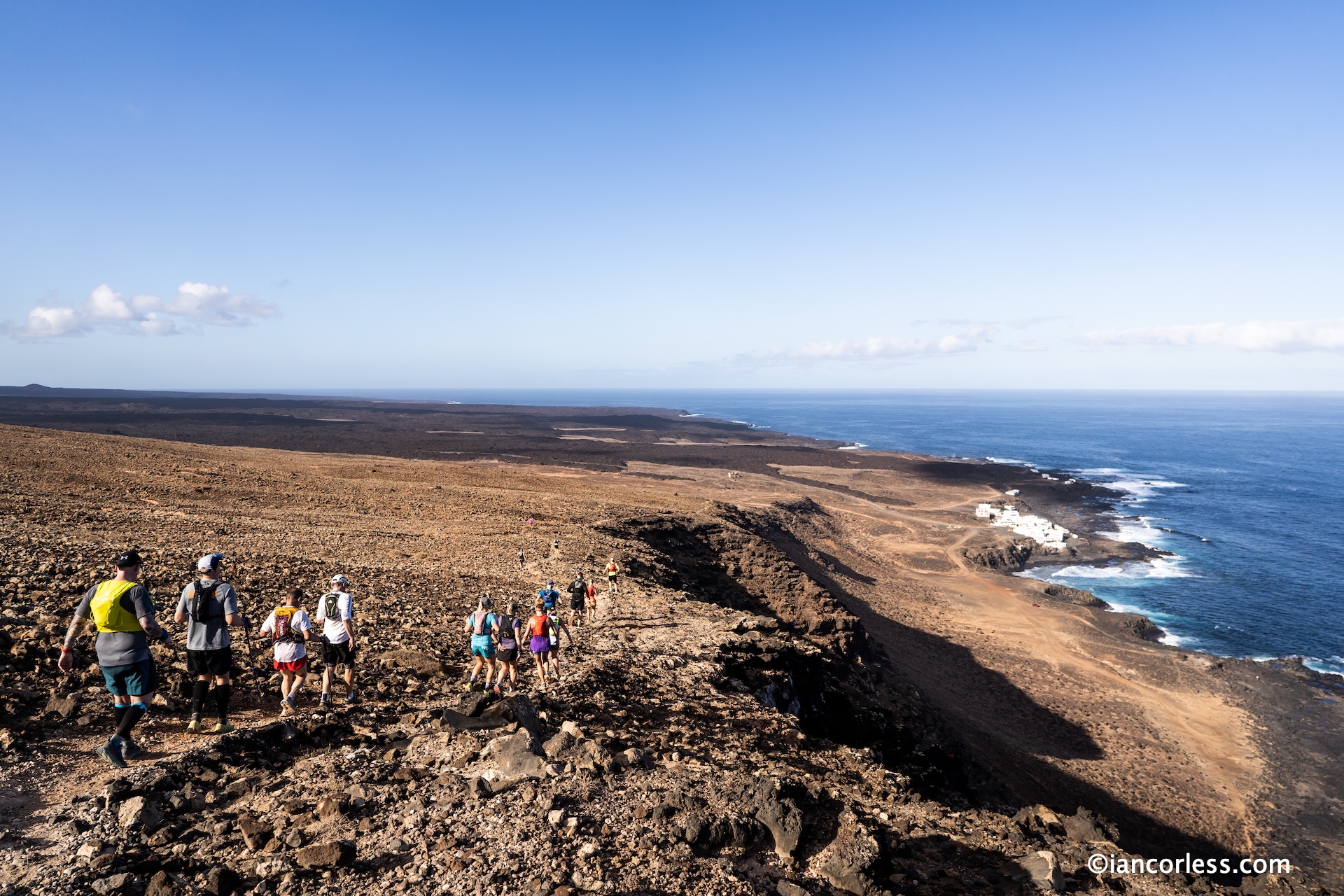
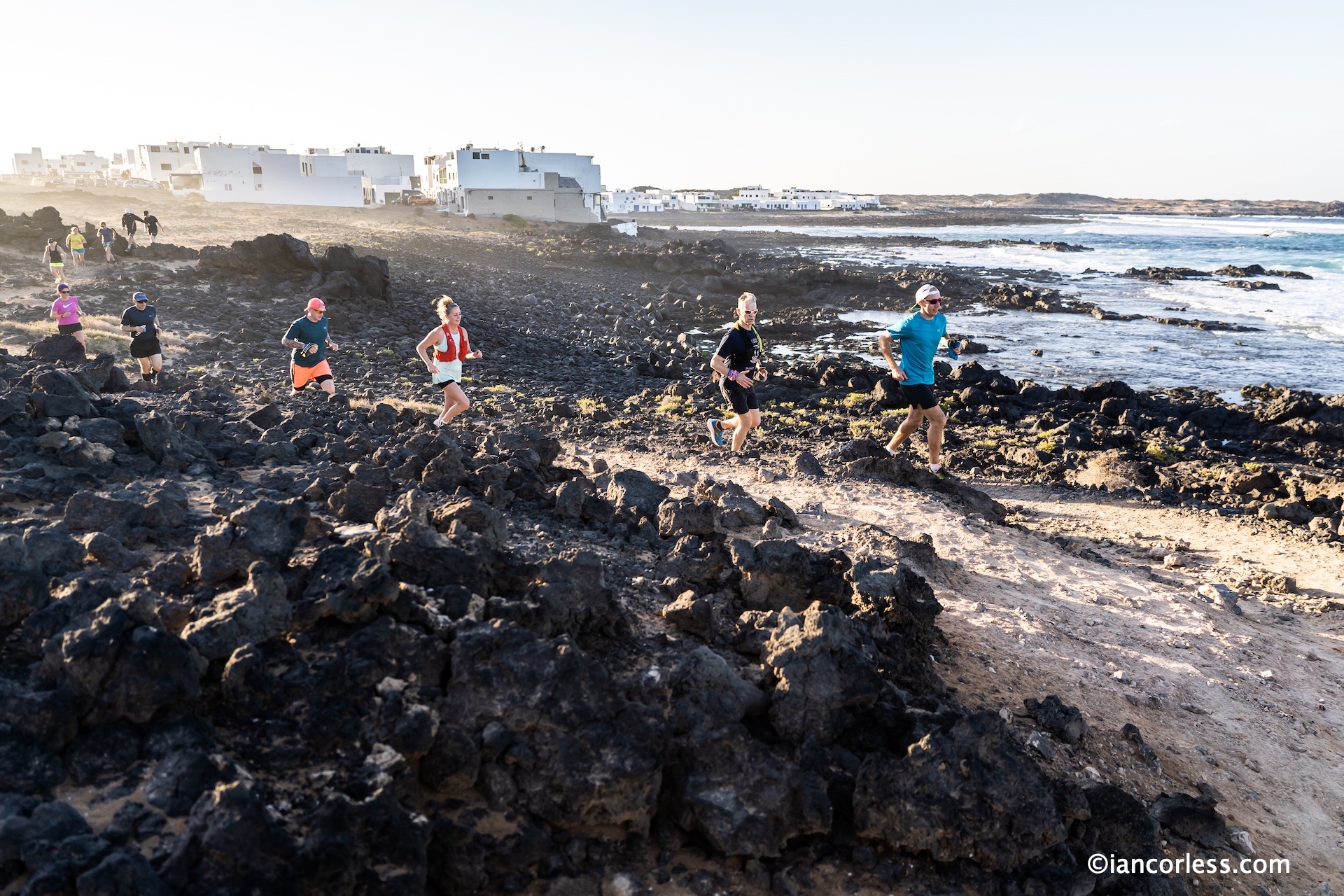
Consider a training camp, maybe this could be something in warm weather to break up the winter months. I have been organizing a warm weather camp every January in Lanzarote for over 10-years, info here.

Other options:

  • Sign up for a challenge.
  • Make it social.
  • Add variety.
  • Train in the home.
  • Rest.
  • Learn something new.
  • Enroll in a class.

CONCLUSION

Ultimately, don’t letter winter get you in a spiral of mood swings, depression and locked indoors. It’s all about the mind and understanding that the variety winter brings is actually far more exciting and challenging than good weather and dry predictable trails.

Seize the conditions. Plan accordingly. Have the correct equipment. Test yourself with something new and trust me, by the time Spring comes around you may well be a little disappointed.

Please support this website. I believe everyone deserves to read quality, independent and factual articles – that’s why this website is open to all. Free press has never been so vital. I hope I can keep providing independent articles with your help. Any contribution, however big or small, is so valuable to help finance regular content. Please support me on Patreon HERE.

Follow on:

Instagram – @iancorlessphotography

Twitter – @talkultra

facebook.com/iancorlessphotography

Web – www.iancorless.com

Web – www.iancorlessphotography.com

Image sales –www.iancorless.photoshelter.com