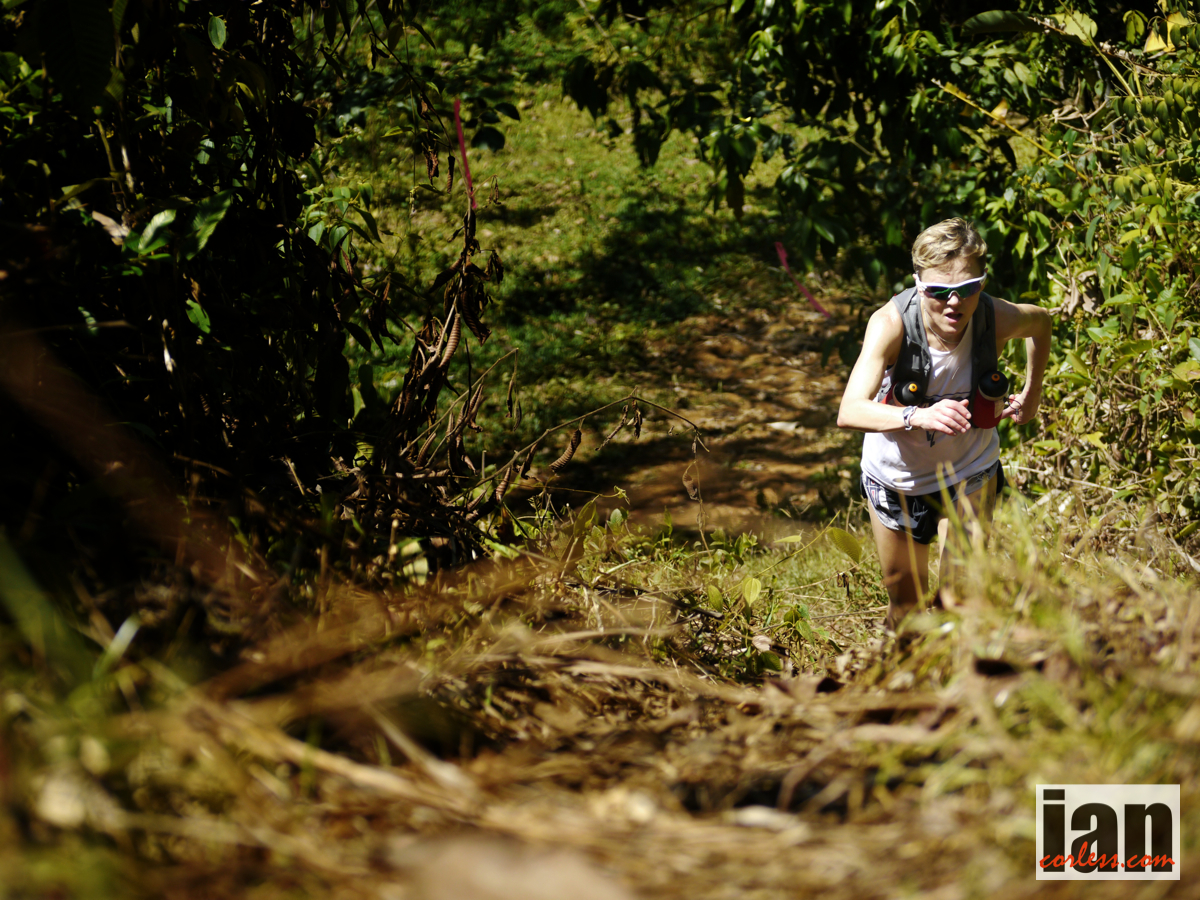
MEEK and mild – The Jo Meek interview

©iancorless.com_1120572all images ©iancorless.com – all rights reserved

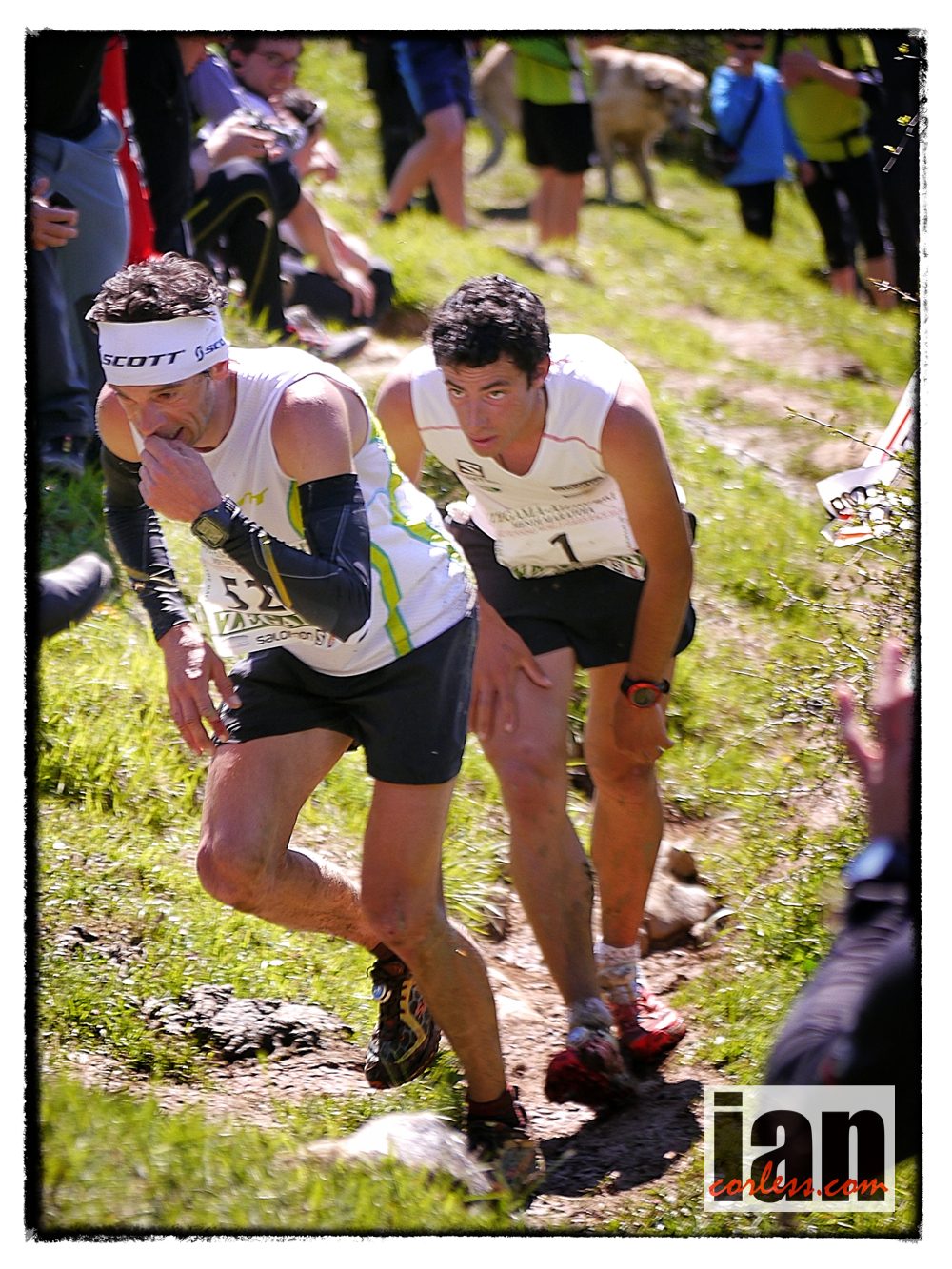
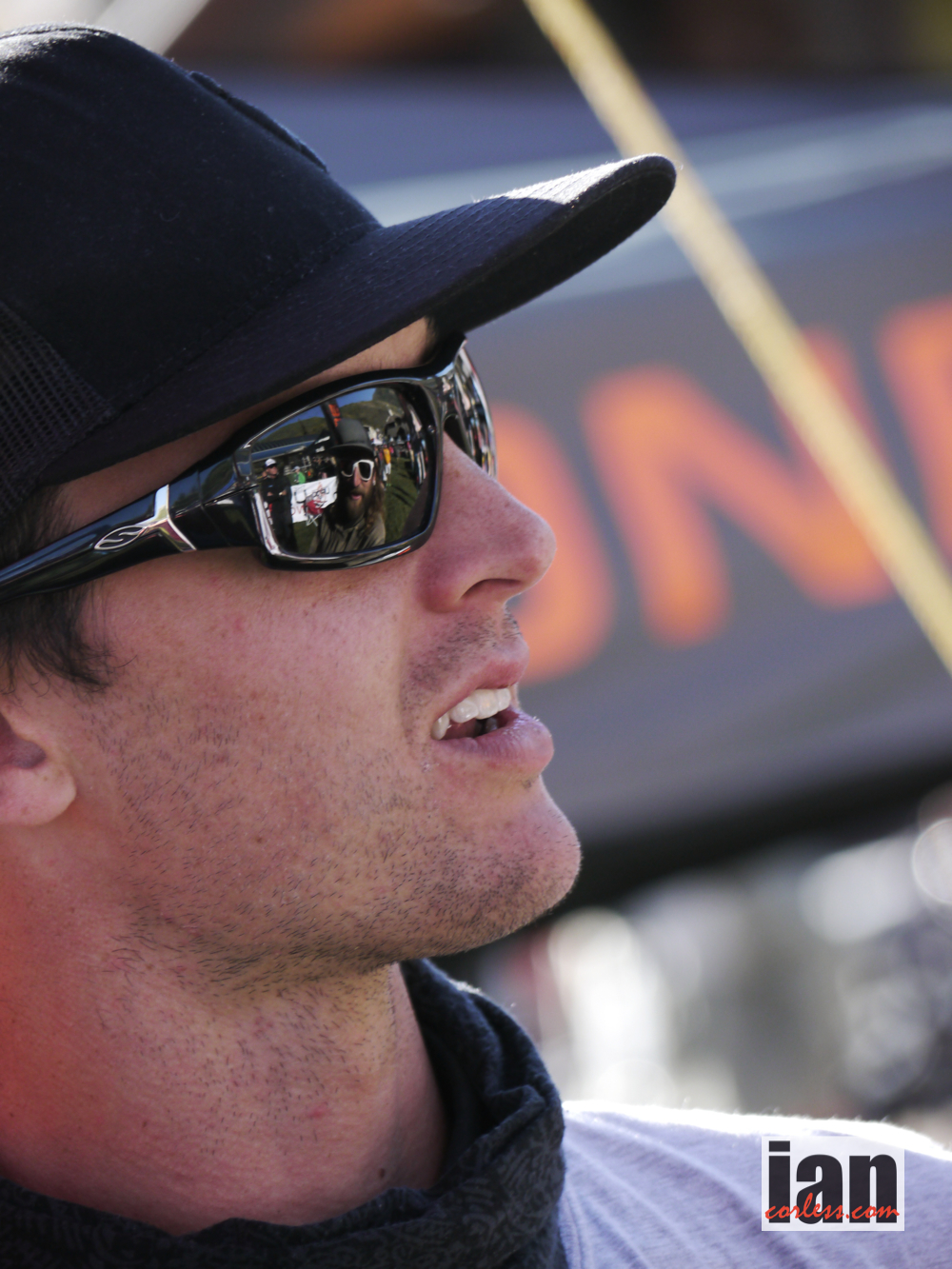
The eyes tell the story… they look through you. Deep in focus, almost blinkered like a horse, Jo Meek has only one purpose. To run as fast and as efficiently as possible over 6-days and when crossing the final finish tape, be crowned winner of the 10th edition of the 2014 The Costal Challenge in Costa Rica.

I had seen this look once before, at the end of stage-1 of the 2013 Marathon des Sables. Sitting in a bivouac, Jo Meek had just excelled on the first day of the race. I like others looked around in wonder and asked the question, ‘who is Jo Meek?’

No more questions needed to be asked, at the end of the 28th Marathon des Sables, we all were well aware who Jo was, she was the lady who had just placed 2nd overall behind Meghan Hicks at her first Marathon des Sables.

When you excel at one race it’s easy for many to look on and say, ‘It was first time luck.’ Not that Jo needed to prove anything, certainly not to me! I had seen her race; I had witnessed the dedication and focus as Jo pushed herself daily to get the best she could out of her body.

Switching from the dunes of the Sahara to the beaches and rainforest of Costa Rica was always going to be a cathartic moment for Jo, particularly when one considered the competition she would be up against; Julia Bottger (Salomon), Veronica Bravo (Adventure Racer from Chile) and Anna Frost (Salomon). Unfortunately, ‘Frosty’ had to withdraw from the race just days before the start in Quepos on doctor’s orders. Disappointed at not having the opportunity to test herself against one of the best female mountain/ ultra runners in the world, Jo focused and said, ‘It changes nothing. I am here to race and race hard. I would have loved to have Anna push me but you know what, I can push myself pretty hard.’

As we all found out, Jo can push herself pretty hard; maybe too hard at times? On day-1 of the TCC, Jo raced like a demon. Unaffected by the Costa Rican heat and humidity, she put 45-minutes into the female competition and set the platform on which to build for an incredible victory at the 10th edition of the race.

Back in the UK after a recovery week in Costa Rica, I caught up with Jo as she attempted to move house… a house that she had purchased without seeing! Yes, Jo had purchased a house she hadn’t seen. When I asked her in Costa Rica about this, Jo replied, ‘I was too involved in my training, I had one focus, to be in the best shape for the TCC. I just didn’t have time to go and look at it. I convinced myself it would be okay…’

©iancorless.com_1130144

IC: A year ago I was talking to you at your surprise 2nd place at MDS. You have now been out to Costa Rica, a very different environment in comparison to the Sahara, raced against stronger competition? And you have won an incredible victory over 6 –tough days of racing. How do you feel?

JM: I feel really pleased. I have complete satisfaction from the race. It’s possible to sometimes come away with question marks but I have none. I feel that the effort I put in was rewarded appropriately. I put a great amount of dedication into this race and sacrificed lots.

IC: Yes, you had that steely MDS look in your eyes. Like blinkers. You dedicate yourself to the task and I guess knowing in advance what the competition was going to be like at TCC and having the MDS experience inside you, you were able to be far more specific in training. I know post MDS that you thought you had maybe been a little over cautious. You could have run quicker? So, did you go to TCC with all guns blazing and take each day as a race?

JM: Yes I did. I remember listening to Ryan Sandes on Talk Ultra and he said it was amazing how quickly one recovers. I thought, I do recover well and I had nothing to loose. I know from MDS that I had been cautious, for example on the last day I pushed hard. Had I done that everyday the result may have been different but it’s difficult to say. So, at TCC I wanted to give it everything. I had prepared for the heat and my training was good.
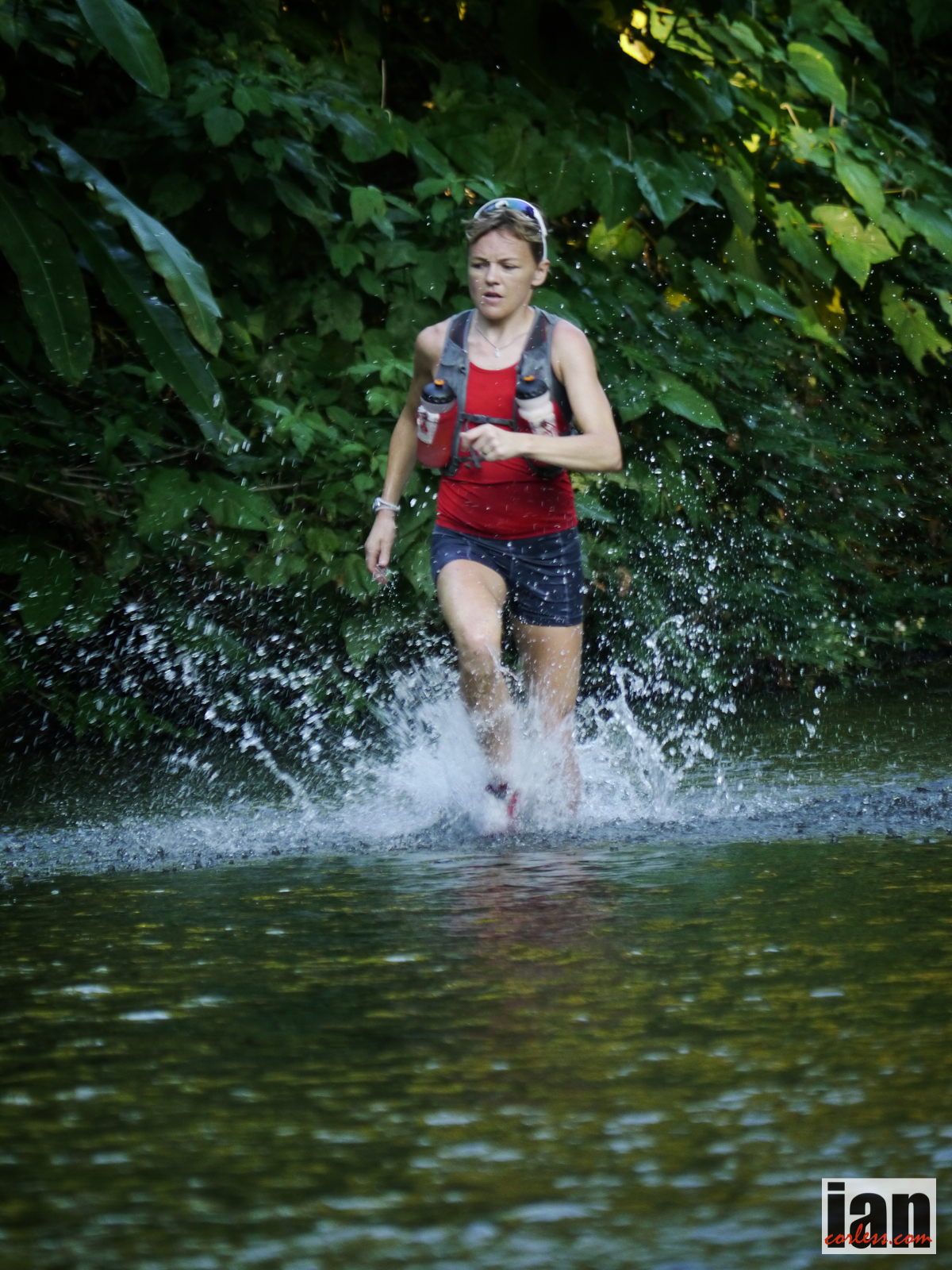
 ©iancorless.com_1150601

IC: You have just mentioned that you committed yourself from day-1. Needless to say, TCC day-1 was impressive. You put 45-mins into the competition, impressive, particularly when we look at the ladies who you were racing against. Of course it gave you a real buffer. A safety net. The biggest issue on day-1 for everyone (except you) was the massive contrast in European weather and Costa Rican weather. Even in Costa Rica itself, the temperatures between San Jose and the coast were remarkable. As you approach the coast the heat goes up along with the humidity. Day-1 has a later start so you are straight into the heat… mid 30’s and closer to 40 at the height of the day. But it did not affect you and the main reason for this was 10-days training in a heat chamber.

JM: Yes. I was prepared. I gave everything on that first day. I had assumed that the competition would have done the same? Using a heat chamber is only a case of contacting Universities and they are usually willing to help. I assumed some heat work would put me on a par. As it turned out it wasn’t the heat that struck me but the pace! We were running slower than I expected so I ran at what was comfortable for me and nobody ran with me. I then ran scared thinking I had made a mistake that I was going to pay for.

IC: Now you have had an opportunity to reflect on TCC can you tell us about the heat chamber, how did it benefit you, are there any crossovers between MDS and TCC prep?

JM: I did the same sort of training. I followed a marathon program but I did more back-to-back runs. Essentially you are training for the same thing. In the heat chamber I was under the guidance of the team. I told them I would do whatever I needed to do… They told me I needed 10-days. You actually don’t need to exercise in the heat chamber, you can just sit inside but it takes longer. I could sit for 3-hours or run for 1-hour. I am dedicated, I am focused, and that’s a really big thing.

IC: Lets talk about the training. When you say a classic marathon program, I guess you are talking about a speed session, hill session and then long runs. Of course, you were training for multi-day so you built from 1-long run to back-to-back long runs. What did a peak week look like; I guess this was 3-4 weeks out from the TCC?
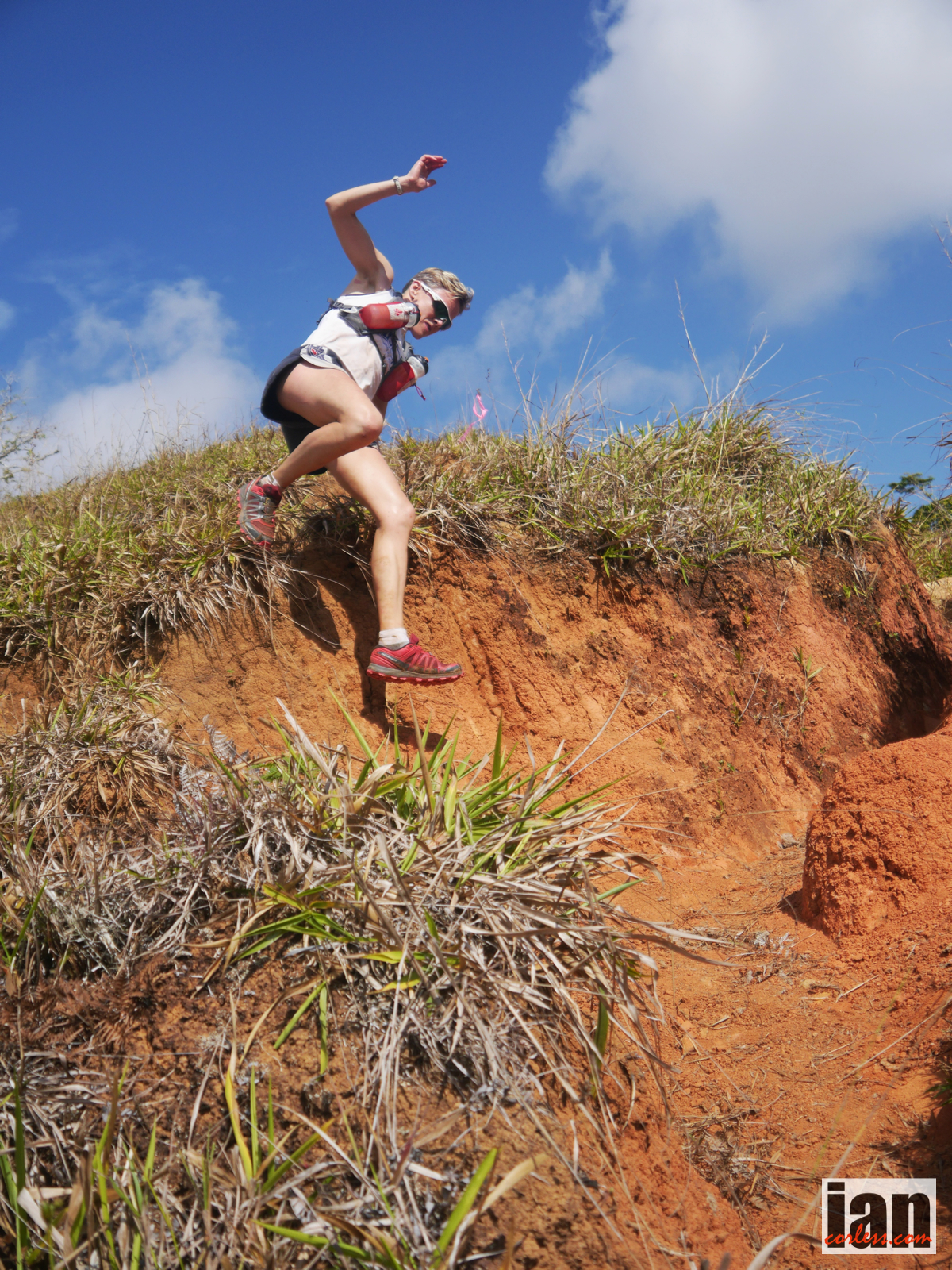
 ©iancorless.comP1130161

JM: Yes, 4-weeks out and then I would taper. You are right; I would do a speed session, a threshold run, a hill session and then long runs that would build to back-to-back runs. What you can’t afford to do is not let yourself recover in terms of, if you have done a long run and made it fast, you need to recover. It was all about balance. You need to be sensible and listen to your body. I would do 2.5-3-hours normally for a normal long session, whereas my long run for TCC was 4-hours; but at a slower pace. I wanted to make sure I could incorporate hills to prepare me for the hills of TCC.

IC: Back-to-back sessions, was that 2 x 4-hour runs?

JM: No, I did 3 back-to-back 3-hour runs.

IC: So, 9-hours split over 3-days; I presume when you did this you eased back of speed and hill work?

JM: I actually kept the sessions. In actual fact, that week I did a race. You have to remember, the long runs were really slow. It was just a case of recovering from a food and nutrition perspective. The runs actually didn’t damage my muscles. I am sensible after each run. I rest. For the 3 back-to-backs I took a day off work to make sure I had the best platform from which to build.

IC: So you planned this into work. You took a day off work and you treated this very much from a professional perspective. Feet up after the run, concentrate of food and hydration and make sure you are in the best place.

JM: Yes it was like being a full time athlete. Of course day-to-day life gets in the way; cook dinner and walk the dog for example. I just took this relaxed and in my own time.

IC: How did you break speed sessions down? Many ultra runners look at speed sessions as something that they don’t need to do. But that is not the case, you actually need endurance and speed, so, how do you work this to your benefit, how did you go about speed sessions?

JM: It is difficult to answer as we are all individual and it depends on your race. You need to target your sessions at the pace you want to achieve and then sometimes faster. I would do some track work running 400’s or I would do 1-mile reps. I guess you need to vary what you do… try to enjoy it! We all think, speed; it’s going to hurt. But if you find sessions you enjoy it makes a big difference. Also try training with others.
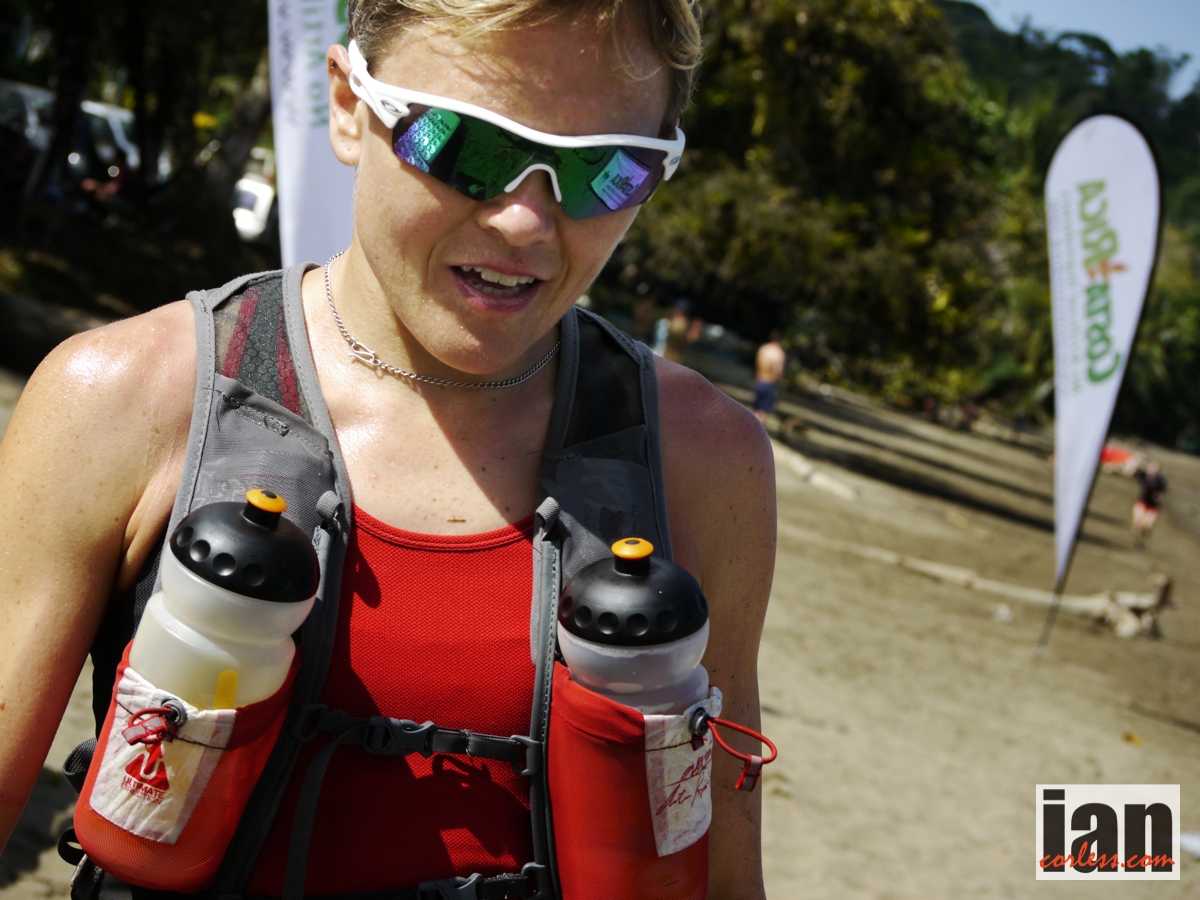
 ©iancorless.com_1160267

IC: So you had your plan, you did speed, you did strength, you did hills, you did back-to-backs but you realized that to give you an edge or in your terms an equal playing field was that you needed to adapt to the heat. It was a variable. It was one thing you couldn’t account for. You did 10-days consecutive in a heat chamber?

JM: Yes, 10-days.

IC: What is day-1 like?

JM: Oh you think I will never be able to run in this? I went in thinking that I would run at ‘pace’ but actually you run at a slow pace as they don’t want your temperature to rise too quickly. It feels bearable at the start. They monitor the core temperature and mine went too high after 30-min so then I had to walk and rest to keep it under control. It’s not as physically as hard as you may think. It’s all about core temperature.

IC: What is important is the lesson that we can all learn. You trained in the UK; you did the heat sessions, which gave you massive temperature and humidity fluctuations. You got that process over with before arriving in Costa Rica. By contrast, nearly all the runners had to go through that process on day-1 of the race… for example; Philipp Reiter had a really tough 1st day. He was overheating and red, he was trying to control himself but to no avail. However his recovery was phenomenal. He recovered so well to come back strong on day-2.

JM: That is the benefit of being 20!

IC: Yes, for sure that helped. However, had Philipp and the others got day-1 over with in a heat chamber it would have made a massive difference. It could have been the difference between top-3 and a win.

When you went back to the heat chamber how was the adaptation?

JM: Mentally I was more prepared. On day-1 I felt nauseous and tired but I guess it just gets easier. By day-3 my resting core had reduced dramatically. It gets easier and easier unless you are a moron like me and fall off the treadmill.

(Laughter)

IC: Mmmm yes, you did make a mess of your face. Not the best thing to land on in the final days of prep in the build up to an important race!

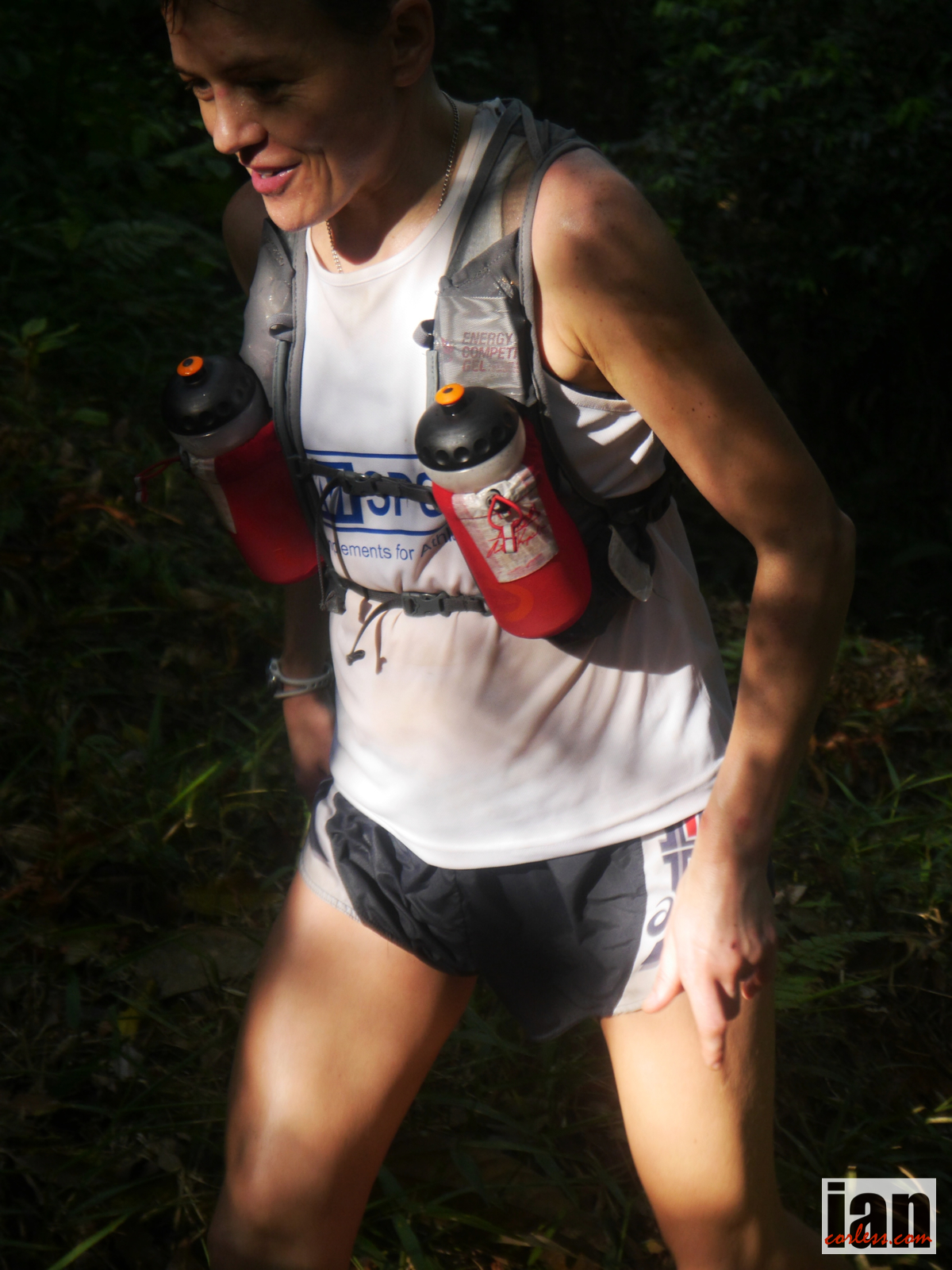
So, you adapted in the heat chamber. The process went exceptionally well and pretty much after the last session you made your way to Costa Rica. It’s a shock, isn’t it? Time changes, a day of registration, logistics and presswork, an early bed and then a very early start the following day that starts at 3am. A transfer by bus to the coast and before you know it, day-1 starts at 0930 just as the heat of the day is beating down. It’s hot, really hot, however it caused you no problems. You had that amazing first day. Post day-1 you said you felt great. You had taken the race on, you had pushed yourself and you had stamped your authority on the race. How did the rest of the race unfold for you? You had a couple of key moments; day-3 in the river section start when you struggled with the technicality, ironically, very similar to the male winner; Mike Wardian. You and he are very similar runners, you both run well on fast terrain but less so on technical terrain.  However, as the race progressed you both adapted and became far more efficient.
©iancorless.comP1120273

JM: Yes, without doubt.

IC: Moving up hill and covering technical ground became so much better for both of you.

Lets go back to that day-3 start when you had Veronica Bravo and Julia Bottger ahead of you, did you think you were loosing the race?

JM: When you can’t see runners you immediately think you are loosing 45-mins. It’s funny. However, when it is so technical you can’t think about anything other than what is below your feet and what is ahead. I just had to follow the course markers and cover the ground as best as I could. All the time I was thinking, I just need to get on the flat or get on a good hill and start chasing and pulling time back.

IC: You got through the section and you started to chase. You clawed back the time, you caught Julia and Veronica and then on the final beach section in 40-deg heat you pulled away and got another stage win. You re-established your dominance of the race. It must have been a great day and a great boost?

JM: The 3rd day was the longest and most emotional day. It almost felt like the end of the race. I was very emotional. Had someone been waiting for me at the end I would have cried. Even though I still had 3-days of racing ahead I had concentrated so much it had exhausted me. Having got through that it was a case of maintaining it. But as you very well know, I like to race and continued that way. I didn’t want to take anything for granted. I could have fallen and hurt myself and with Veronica and Julia chasing, I couldn’t be complacent. I raced hard to the end.

IC: Post race you said one day in particular is the day that you got things wrong that impacted on the final 2-days, was that day-4?

JM: I gave everything on day-3 and then I continued to race on day-4 when I didn’t need to?

IC: Yes, we had that conversation when I said to you, ‘you know what, you have a 60-min lead so be sensible. You have no need to put yourself in the ground. Consolidate what you have and be sensible.’ But in true Jo Meek fashion you continued to push…

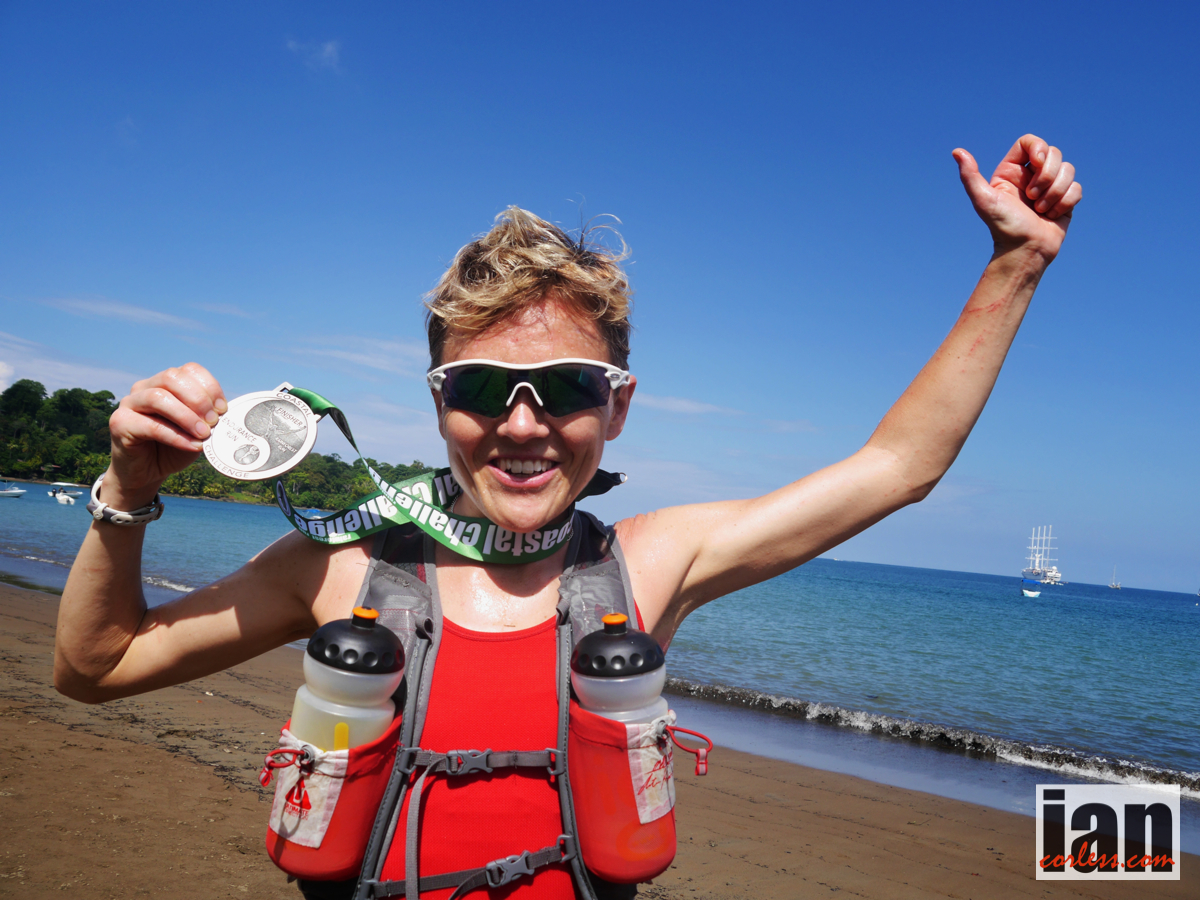
Day-5 was significant. You had been in the lead and then Julia came back to you with about 10-km to go. It was the final feed station. You had a 60-min lead, so, overall victory was secure.
 ©iancorless.comP1130916

JM: I was at the feed and Julia arrived and I thought, ‘Oh my goodness, I thought I have to go.’ I ran, ran hard and closed out the final 10-km like a stand-alone session. I finished out of breath with hands on knees.

IC: Funny, when I saw you, you said, ‘I am an idiot.’

JM: I did.

IC: When I asked why, you explained the situation. Of course you have now reflected and I hope you realize that it wasn’t clever racing? You could have still had a bad moment on the last day and needed the reserves.

JM: Oh yes. I am well aware. What hurt me on the last day were sore quads. It was all the descending from the previous days. So I ran the last day within myself, however, had I thought Julia would have really pushed I would have found something, some extra energy.

IC: You have 2-great experiences under your belt. Marathon des Sables provided an introduction into multi-day racing and you performed maybe beyond our expectations but not beyond your own and now you have the victory at The Coastal Challenge. You have confirmed yourself as someone who can race hard, day-after-day, so, what are the hints ‘n’ tips you can provide for multi-day racing?

JM: Assess what you as an individual want from the race and then train accordingly. You must have a goal. Do you want to compete or complete? It makes a big difference. If you get your mind it the right place it is half of the battle. Prepare mentally, don’t be scared of the environment. Do what you can do and make sure that is clear. Have a great understanding of your body and how it recovers. Give yourself what you need. Without doubt eating after exercise within an hour is key, especially for multi-day racing or training. Rest when you get an opportunity; elevate your legs. For sure your feet and ankles will get tired. Relax, eat, drink and let everything settle. If you can sleep, do so. It provides great recovery. Ultimately, common sense prevails and the body is an amazing thing.

IC: TCC and MDS are very different. At MDS you had to be self-sufficient and carry a pack whereas at TCC tents and food were provided so you could run light, you just needed a hydration pack. Of course it’s a level playing field as everyone must do the same but from your perspective what are the pros and cons from both races and which did you prefer?

JM: That is very tricky. At TCC having food in abundance is obviously great. You can eat when you want and as much as you want so that makes recovery easy. However, everyone has that option so it’s not a personal advantage it’s just a different scenario. At MDS you can use this to your advantage, if you have planned well and your nutrition is optimum for your own personal needs then of course your competition may have not, so this can be something you work into a positive. It requires more planning. It’s a game of calories v weight. I like the challenge of the MDS scenario but equally your running style changes; your speed changes and you are carrying the burden of the pack.  I guess it depends if you prefer faster racing or a more expedition type of approach.

IC: It’s a crazy question but MDS compared to TCC, which race, all things considered was the hardest race?
 ©iancorless.comP1140703

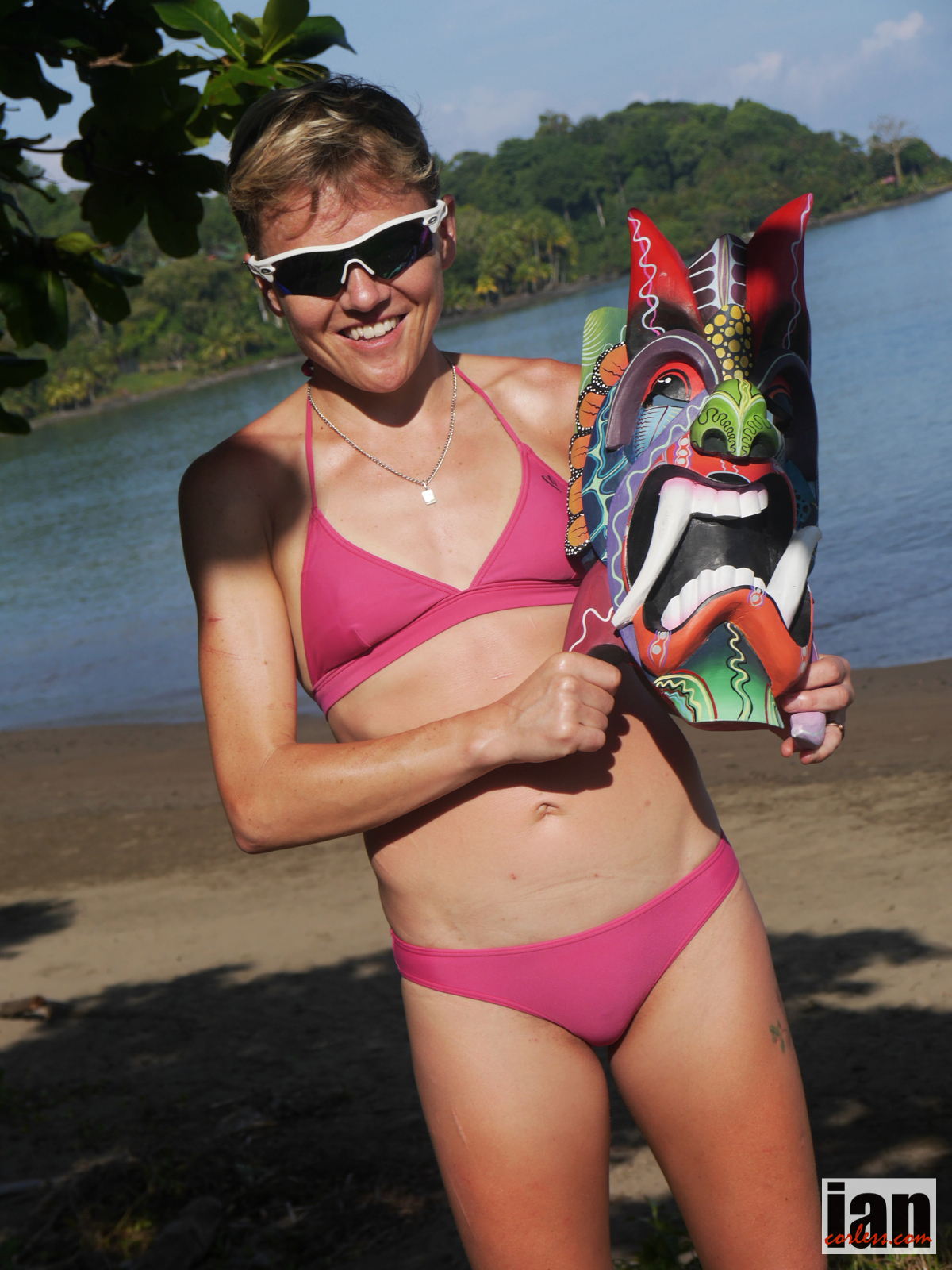
JM: The Coastal Challenge course. It has everything, ascending and descending, the damage the course did to my legs was far greater than the MDS. I found the MDS was harder from a food perspective, it took me 4-5 weeks post MDS to put the weight back on. The Coastal Challenge course tests the body and mind and the continual changes of terrain keep you guessing and working hard.

IC: So what is next, recovery is first and foremost I guess?

JM: I want to prove myself as an ultra runner. I want to run in a GB vest. I will try to qualify for GB in a trail race. I’d like to do more stage races and I have entered Comrades in June. That will be an interesting test and very different to what I have currently achieved.

IC: Finally, Costa Rica, what was the experience like for you, can you sum it up?

JM: The race is incredible. Where else can you run (or walk) in such an amazing place! The organizers have created a race and a route that often is inaccessible to most; riverbeds, jungle and plains. I probably didn’t look around too much while racing but I stayed for 1-week afterwards and I had a holiday. I went diving, saw a whale, I walked, went white water rafting and saw plenty of wildlife. It’s just an incredible and exciting place. Even if you did just the race you would come away with a whole new outlook. It really is incredible.

LINKS:

TCC 2014 race images – HERE

The 2015 The Coastal Challenge is now available to book. Want a discount? Use the form below for early bird booking.

Race Website – HERE

← Back

Thank you for your response. ✨

SCOTT sports partner with Skyrunning

Marco De Gasperi ©iancorless.com

Marco De Gasperi ©iancorless.com

The ISF is pleased to announce SCOTT Sports will partner with the 2014 Skyrunner® World Series, joining other prestigious outdoor brands: Salomon, Arc’teryx, inov-8, La Sportiva and Compressport.

SCOTT Sports will be present not only with a team of top international runners, but will again be present as main sponsor at the successful Matterhorn Ultraks, fourth race in the Sky Series.

The international team of world-class athletes includes Italian Marco De Gasperi, six-time World Mountain Running Champion and top level skyrunner; American Joe Gray, USA Mountain Runner of the year and top finisher at the Course de Sierre-Zinal; vertical and sky specialist Celine Lafaye from France, 10th on the ISF Sky Ranking; and, from Spain, Pablo Villa, a top placer in the 2012 TDS and the 2013 Gore-Tex Transalpine Run.

The SCOTT team also counts American distance runner Meghan Arbogast, a top finisher at UTMV and Western States, she recently won the USATF Trail National Championship together with new entry Jodee Adams-Moore who will be launching her skyrunning season at the Transvulcania Ultramarathon on May 10.  SCOTT Running Director, Scott McCoubrey commented, “Jodee is a perfect fit for the SCOTT team.  She is an extremely versatile runner, with a passion for the mountains and running on the trails.  Based on her recent success, it should be a blast watching her performances this year.” New British talent Stu Air will join her at Transvulcania.

SCOTT ambassador Ian Sharman, 100-mile champion – winner and record holder of the Grand Slam of Ultrarunning – is director of the newly launched US Skyrunner® Series.
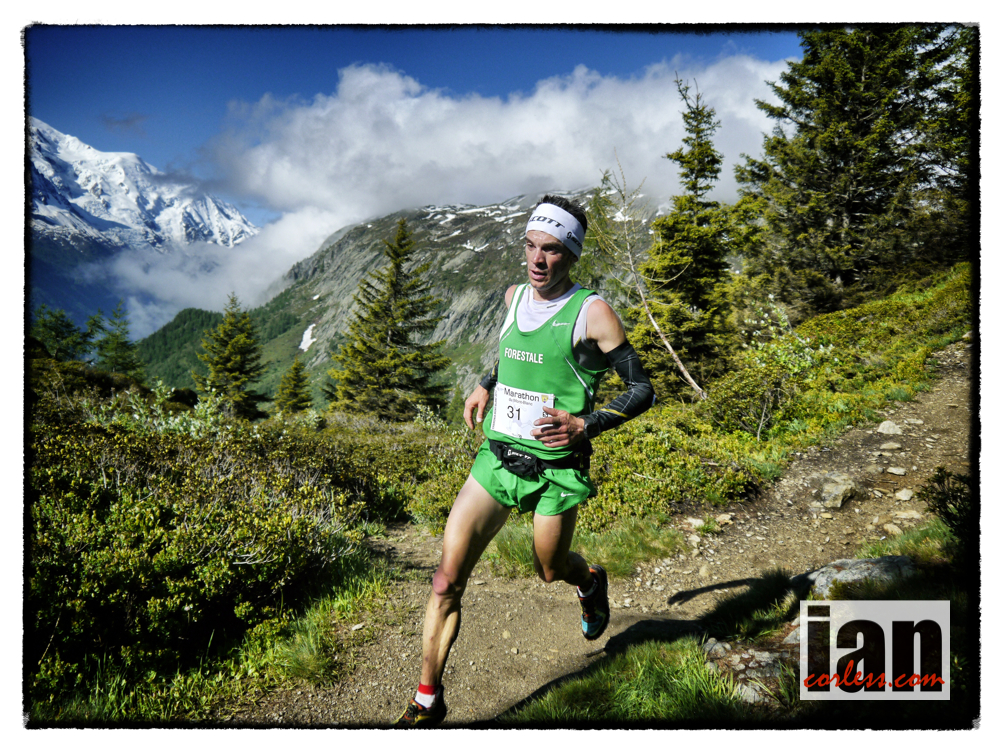
SCOTT Sports has enjoyed much success with the Kinabalu trail shoe – named after the 4,000m Malaysian mountain which has represented the final of the Skyrunner® World Series on many occasions. SCOTT athlete Marco De Gasperi set the standing race record here.

Marco De Gasperi ©iancorless.com

Marco De Gasperi ©iancorless.com

Alongside the Kinabalu, new styles include Trail Rocket and Grip 3.0 are proposed for 2014 together with the new runningcollection – available at the principal Skyrunner® World Series races.

Marino Giacometti, ISF president, commented, “We’re very pleased to welcome on board SCOTT with their team and excellent products.  Since the age of 17 when Marco De Gasperi ran his first skyrunning race on Monte Rosa, he has been a great ambassador for the sport and we’re proud to see him at the pinnacle of his career.  We look forward to have the rest of the talented team competing at the races – who knows who the next great champion will be!”

Joscha Harms, SCOTT Softgoods and Running Marketing Manager, concludes, “SCOTT Sports is a leading brand for high functioning sporting goods, and is known for innovative products with unique designs. We are happy to collaborate with the Skyrunner World Series to position our Running division as a high functioning trailrunning brand in a very competitive market. We believe that this, paired with our strong products and outstanding performances of our athletes, will increase our brand credibility and integrity within the market.”

SCOTT Trail running team members

Marco De Gasperi (ITA)

Ian Sharman (GBR)

Joe Gray (USA)

Jodee Adams-Moore (USA)

Meghan Arbogast (USA)

Ryan Bak (USA)

Celine Lafaye (FRA)

Pablo Manuel Villa (ESP)

Simona Staicu (HUN)

Stu Air (GBR)

Jeremy Humphrey (USA)

Fabian Alraun (GER)

Gerd Frick (ITA)

Adam Kovacs (HUN)

Stephan Wenk (SUI)


SCOTT Sports

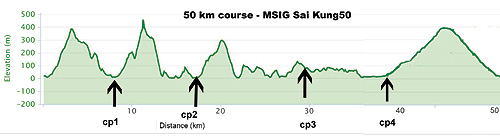
Stuart Air heads to Honk Kong for the MSIG Sai Kung 50

Stuart Air at Ice Trail Tarentaise ©iancorless.com

Stuart Air at Ice Trail Tarentaise ©iancorless.com

Brit, Stuart Air (Scott Running) heads to Hong Kong this weekend to participate in the MSIG Sai Kung 50. Stuart had an incredible 2013, new to Skyrunning, he performed exceptionally well at the very tough Andorra Ultra Trail, Ronda dels Cims with a 13th place. Stuart then followed this up with a top placing at Ice Trail Tarentaise against world class competition.

Post Ronda dels Cims ≠©iancorless.com

Post Ronda dels Cims ≠©iancorless.com

Not content with two tough races, Stuart placed himself on the start line of Tor des Geants. Placing well overall, Stuart set a fastest time for any Brit at the event.

Stuart’s participation at MSIG Sai Kung 50 starts 2014 on the right foot, arguably, Stuart has an incredible year ahead. Hardrock 100 awaits… yes, Stuart was extremely fortunate to be drawn out of the hat and will now line up against one of the most competitive fields ever assembled at the race.

Stuart very much considers himself an Alpinist; embracing the opportunity to go to the mountains, fast and light, Stuart loves vertical and technical terrain.

Coming from a relatively mild but wet UK winter, Stuart feels prepared for the challenge ahead, ‘Training has gone well in the Lake District and Wales’ Stuart said in an interview by Michael Maddess, ‘I have clocked up 60-70 miles and 4000m of vertical per week. The weather has been a challenge, but strong winds, rain and snow all help with the training.’

elevation50newcopyweb

LINKS

Scott Trail Rocket Shoe

Scott Trail Rocket

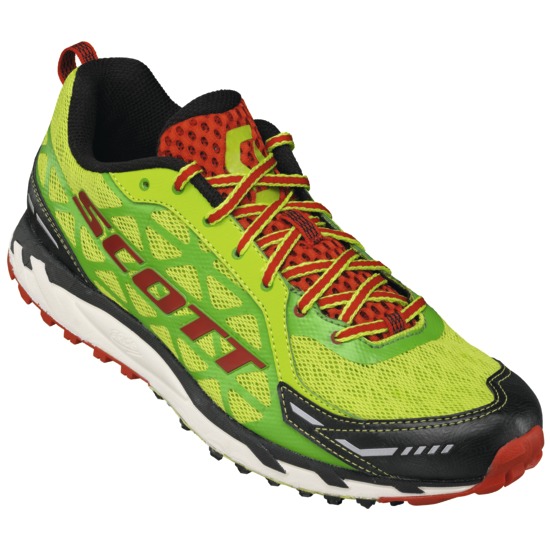
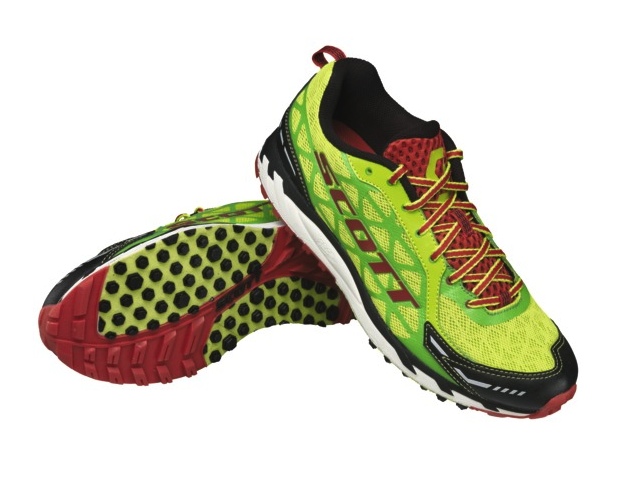
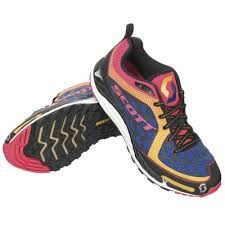
Following on from the extremely successful and popular T2 Kinabalu (review HERE and ladies review HERE) Scott have produced an out and out trail running race shoe aptly named the Trail Rocket.

Sporting many features from the T2 Kinabalu this new incarnation in principal is a completely different beast. The aggressive outsole from the T2 is gone leaving a shoe (and grip) that will fly along on dry and hard pack trail, however, if mud is your thing on first impressions the T2 will be a far better choice.

Scott Trail Rocket SoleFollowing the trend for low drop shoes, the Trail Rocket now has a 5mm heel to toe drop in comparison to the 11mm drop of the T2. However, don’t look at this as an either/ or option. The T2 and Trail Rocket are worlds apart and as such the appropriate shoe should be chosen depending on many factors. I very much see owners of the T2 purchasing the Trail Rocket for faster and shorter sessions and Trail Rocket owners looking to purchase the T2 for longer days when terrain could be very unpredictable.

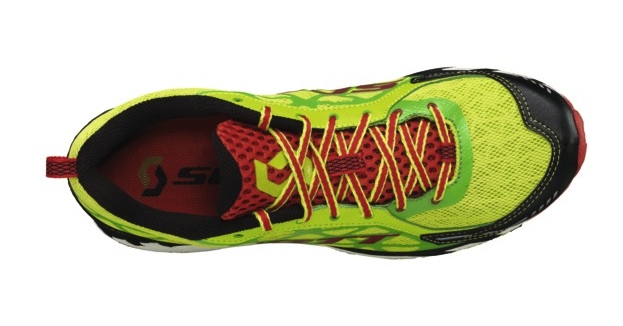
Scott Trail Rocket UpperThe upper is very breathable with a wide toe box, snug heel compartment that provides a solid and secure fit and importantly, toe protection is good should you have any unwanted encounters with rocks or obstacles on the trail. The shoe is designed to work well with or without socks, the choice is yours. Sizing is true to size, however, if you are going without socks you may want to check what works for you. Lacing is solid and depending on your preferred lacing method the shoe holds firm to the foot and is extremely comfortable. The laces themselves have stretch and once tied hold firm and don’t come loose. Missing from the front of the shoe is the elastic bungee that could hold and retain excess lace (see T2 review). I don’t understand this? It was a simple addition that added no weight but provided a really practical solution to a problem that exists for all runners unless you use Salomon!

Scott Trail Rocket Pair

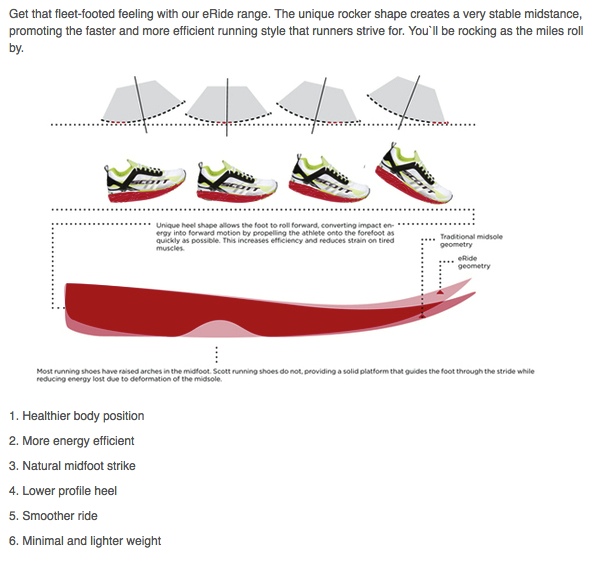
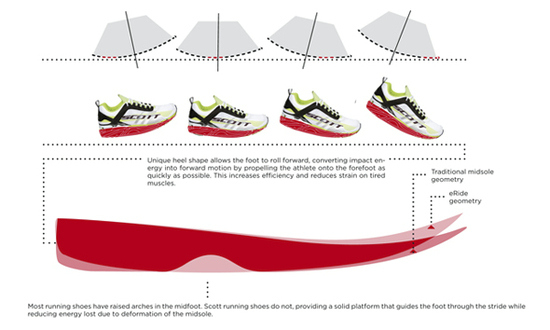
They are lightweight and versatile trail shoes designed for maximum performance for racing and fast training and as such they won’t appeal to everyone. The minimalistic design in combination with the eRide™ Technology promotes an efficient, natural and fast running style. Arguably, the eRide™ (rocker) is not required for this model of shoe as a 5mm drop will almost certainly mean that your run form should already be good and mid to forefoot landing is normal. However, should you be transitioning to lower drop shoes the eRide™ will help guide you on your way.

eRide

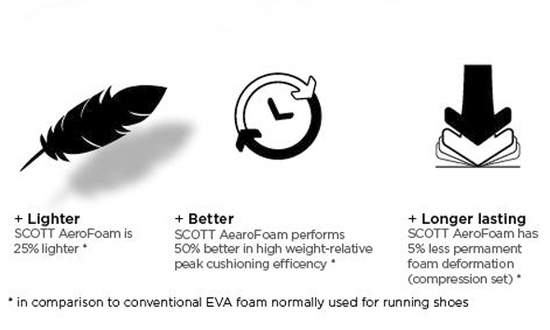
As you would expect, the shoes weigh in at a light 260g (UK9) which is obviously due to the minimalist design and Aerofoam.

Aerofoam

Forefoot cushioning is 17.5 and rear cushioning 22.5 providing a shoe that still provides good cushioning and protection. How far can you run in them? Well it very much depends on your form, adaptation and technique. Without doubt I think we will see many efficient runners covering 100-miles in this shoe, however, for many it will be a great mountain marathon shoe, 50k or 50-mile race option shoe.

Scott Trail Rocket Side

Importantly, the shoe has no rock plate and that my prove an issue for many?

Slipping the shoe on you have that confirmed comfort feeling inherited from the T2 Kinabalu, so, it’s fair to say that if you are a fan of its beefier brother you are going to like the Trail Rocket.

You zip along feeling very light and although this is considered a more minimalist racing shoe, overall comfort is great.

On road it performs exceptionally well, that is a real bonus for many of us who may need to transition to trail either by connecting roads or maybe you need to access trail with a jog to and from home.

On hard trail and rock you fly along. The Trail Rocket has great response and promotes a faster pace… that may or may not be a good thing? Certainly if you are new to ultra racing or looking to complete rather than compete, the Trail Rocket may not be the shoe for you. I would recommend the T2 and use the Trail Rocket for faster training sessions or shorter trail races.

The lack of a rock plate was noticeable when on continued rocky or gnarly ground. It wasn’t an issue or caused any problems, BUT if I was doing a long race over continually tough and technical terrain then this would become a problem and for sure, my feet would be tired. This is not a fault of the shoe, one just needs to choose the appropriate shoe for the terrain and length of session

Ultimately, the Trail Rocket is a great shoe. It doesn’t replace the T2 in any way, in actual fact it compliments it and I therefore I see Trail Rocket owners having a pair of T2’s and vice versa.

Recommended!

Specs:

  • Drop 5mm
  • Upper – mesh with synthetic overlays
  • Lower – eva/ rubber

Scott Running website HERE

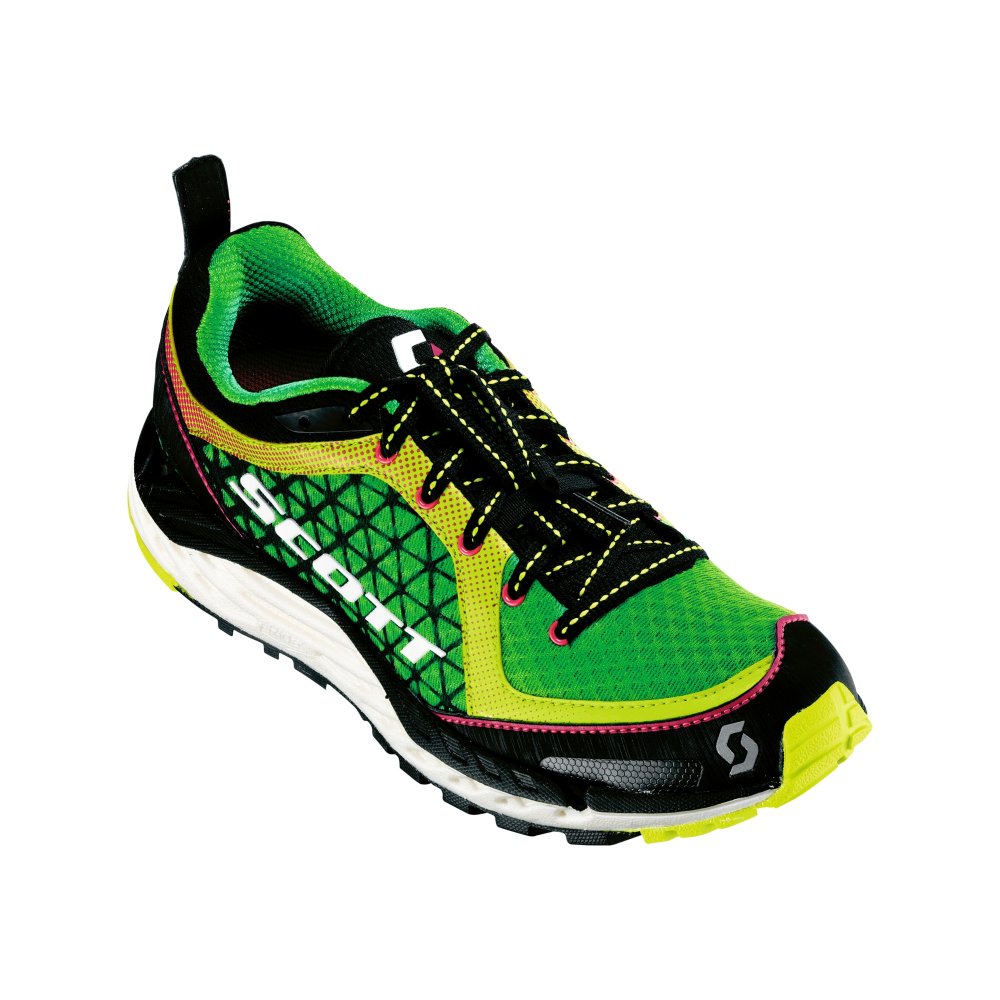
Scott T2 Kinabalu Review – Ladies Shoe

Scott T2 Kinabalu Ladies ©scottrunning

Scott T2 Kinabalu Ladies ©scottrunning

Review by Niandi Carmont

When Scott asked me to test the Women’s T2 Kinabalu, I was very excited to try out a brand of shoe that is not as well known to UK and French trail runners… ‘Scott make bikes don’t they?’ was a typical comment!

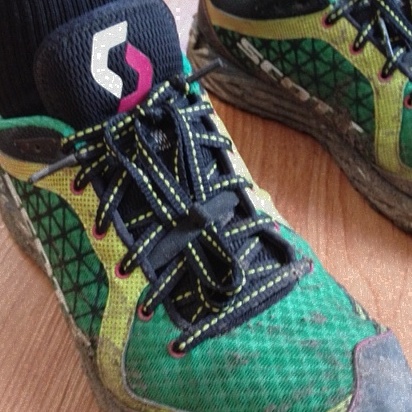
Love at first sight… Like most female trail runners, I like a run shoe to look good and admittedly on the outside it’s a sexy shoe – bright green, sporty and light-weight.

But what about the technical and practical specs which are equally important? Well, after having tested the shoe on 200km of intense rocky mountainous terrain in France over one week, I can definitely confirm it is:

•      Durable

•      Comfortable

•      Lightweight

•      Energy efficient

•      Stable

The above qualities were exactly what I was looking for and all my expectations were met.

Durability, stability and eRide™ Technology

Scott eRide

Usually after intense weeks on hard trail terrain like that, my trail shoes “have done their time” but I was surprised to find that the soles were hardly worn.  I have an atypical and asymmetrical running gait, which means I heel strike heavily on one foot and the wear shows after only a few runs on my trail shoes. Not the Scotts though. But then the Scott shoe is built using the patented and scientifically-researched SCOTT’s eRide™ Technology – that unique rocker shape creating a very stable midstance which heel strikers like me strive for. Initially it took a few runs to get used to but I quickly felt the benefit of the rocking motion provided by the shoe and it meant I was heel-striking less and running more efficiently.

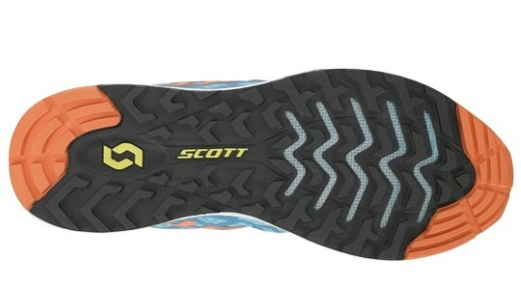
Scott T2 Kinabalu Sole

The shoe has an 11mm drop; in this current climate of ‘low drop is best’ it may mean the T2 will be snubbed by many! Don’t be too hasty. In use, this shoe feels like a much lower drop shoe, primarily due to the eRide™ (rocker). It keeps you on your forefoot with good technique. They are a pleasure to run in.

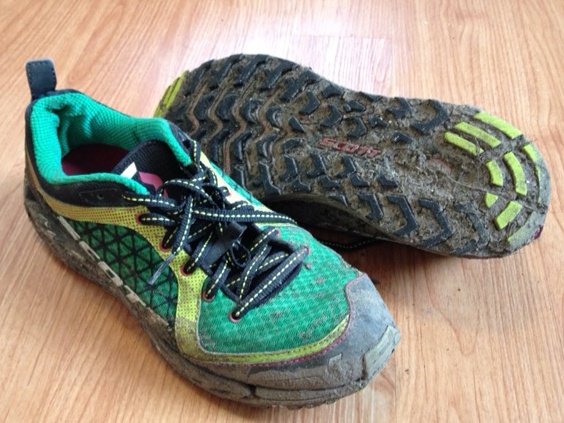
After the week on rock French trail my soles had hardly worn.  My podiatrist who is an avid cyclist took one look at them and said “this is true Scott quality, great grip, rolling resistance, durability and ride quality”.

photo 4

Shortly after that I departed on a 10-day multi-stage event to Northern India, Rajasthan and as I had luggage restrictions, was faced with the dilemma of taking only one pair of run shoes.  I knew I would be doing a mix of trail, desert, tarmac and dirt road. No hesitation, my multi-purpose, train-adaptable Scotts were in my luggage. Although a winter shoe, they were perfect on all types of terrain. I had no issues transitioning from the Thar Desert to the tarmac road leading to the Taj Mahal. Conditions were hot and humid and as much as the shoes kept my feet dry and warm on muddy, wet British towpath and boggy fells, the breathable mesh upper equally kept my feet cool in Rajasthan. And although I didn’t use gaiters as the desert/dune stages were not too long, I had very little sand in my shoes.

Lightweight

Scott Aerofoam

The shoe features an Aerofoam midsole for reduced weight and it’s definitely lightweight at 265g (UK8) a bonus for me, especially over long ultra-distances or long training sessions. More importantly – it is lightweight but not at the expense of durability or stability. After several runs the midsole ‘bedded’ in and started to mould to my foot providing additional comfort. The sock liner is perforated and the midsole has ‘drainage’ ports to allow water to escape; great for water crossings or wet weather running.

Comfort and adaptability to varied terrain.

Comfort with a capital “C”. This is an important criterion for me whatever the shoe ….but even more so if I’m going to be running long distances on arduous, rocky terrain. Not a blister or hot spot and no chafing. I ran in mud, on dry dusty rocks, shingle, slippery descents – the shoe adapted to all the changes in terrain and weather.  Not surprising as the shoe features wet traction rubber and a water-drainage system. The grip in muddy terrain is great and much appreciated by runners like me who prefer a drier terrain. I felt as in control tackling muddy, British bog as I did on dusty and slippery rocky mountainous French trail or even running down shingly, stony descents.

I also liked the bungee lacing system (elastic on the front of the shoe to stow laces) – extra security for a runner like myself who doesn’t want to be tripping over loose laces on a tricky, technical descent.

photo 2

All in all, this is definitely a great winter shoe with great protection and traction at minimal weight.

Female-specific

Needless to say Scott thinks about us ladies too, not only as far as the colour is concerned but also the female-specific fit. By the way, I opted for the bright green colour but the shoe comes in a trendy girly pink too!

Scott T2 Kinabalu Pink

Conclusion

Love them! And I get noticed to:

“Are you wearing Scotts? Didn’t know they made trail shoes!” I get asked.

“Well you bet! And pretty damn good ones at that!” I quickly reply.

Specs

  • Weight 260g for UK8
  • Drop 11mm
  • eRideComposite push-through plate
  • AeroFoamWet traction rubber
  • Lace bungy
  • Upper: Mesh/Synthetic Overlays
  • Lower: EVA/rubber

Scott T2 Kinabalu Men’s Review HERE

About the reviewer – Niandi Carmont

Niandi

Niandi is South African born, a former resident of Paris, she now lives in the UK. A runner for over 20-years; Niandi has completed Comrades Marathon 13-times, Washie 100 2-times and has finished well over 100 marathons and ultras  all over the world. Currently residing in the UK, Niandi splits her work life between the UK and France.

The North Face Endurance Challenge, San Francisco, 50-mile Championships Preview (Men)

San Francisco 50 TNFEC50

My head hurts… it’s December, what happened to the ‘off-season’. Not only do we no longer have an off-season but The North Face have arguably assembled one of the most competitive fields in the 2013 season. Way back in April I was writing about the ‘race of the year’. Of course, it was Transvulcania La Palma. This was followed by another ‘race of the year’, Western States. I then followed this with another race of the year, Zegama and so on… you get the picture! Ultra running and mountain running is booming and as such, we are all seeing the benefits, not only from a watching and a following perspective but also from a racer perspective. It is now possible to have several peaks in one year and TNF may very well have hit on a winning formula with such a competitive race in December.  It’s late enough in the season to have recovered from recent previous efforts, such as UROC or Run Rabbit Run and equally far enough away from ‘key’ races in 2014 to allow for adequate RnR.

Okay, deep breath… here we go.

Miguel Heras TNFUTMB 2013 ©iancorless.com

Miguel Heras TNFUTMB 2013 ©iancorless.com

Miguel Heras returns after winning the race in 2012. His time of 5:33 in lousy conditions confirmed his ability if any was needed. Having said that, Miguel is used to rough-n-tough weather and as such, may very well have excelled in the conditions over his US contemporaries. Also the 2012 race did have issues over course marking which did lead to several runners going astray. I take nothing away from Miguel, he is a class act and although 2013 has been a difficult season for him, his second place at TNFUTMB proves that he is back. He followed this with a quality performance at Cavalls del Vent so without doubt he is a contender for the win. However, this field is stacked.

Dakota Jones UROC 2013 ©iancorless.com

Dakota Jones UROC 2013 ©iancorless.com

Dakota Jones is back racing and embracing the trails after a quiet start to 2013 and some escape in the mountains. In addition, Dakota became an ‘RD’ in 2013 which primarily caused him to miss TNFUTMB and refocus on UROC. That refocus nearly worked and certainly with 5-miles to go at UROC he looked as though he had the race in the bag. However, Rob Krar pulled something out of the bag and relegated Dakota to second that day. In fine form, Dakota departed for Japan to repeat his 2012 win at Hasetsune Cup, however, disaster struck and he had a tough day and a dnf. Without doubt, Dakota will be recovered and focused on winning at San Francisco. He will be looking for a repeat performance similar to San Juan Solstice 50m when he broke Matt Carpentar’s record.

Sage Canaday UROC ©iancorless.com

Sage Canaday UROC ©iancorless.com

Sage Canaday will bring his speed to this race and along with Cameron Clayton and maybe, Max King. They will be out at the front pushing the pace. Sage has had a mixed 2013 in the sense that he has occasionally pushed and failed below his own demanding standards. His great runs at Tarawera, Transvulcania La Palma and Lake Sonoma may well fall into insignificance in Sage’s own mind as I feel he may well dwell on his performances at Sierre-Zinal and UROC. Don’t get me wrong; I am a big Sage fan. He has all the ability to go out and win San Fran but I just wonder what effect recent performances will have on his confidence. In real terms, caution may well prove a huge bonus allowing him to hold back early on and keep his powder dry for the final 30% were he can use all that natural speed and ability. Unfortunately Sage has Flu – will not start

Cameron Clayton Transvulcania ©iancorless.com

Cameron Clayton Transvulcania ©iancorless.com

Cameron Clayton will be feeling somewhat inspired and motivated coming into San Fran after his 3rd place at UROC behind Rob Krar and Dakota Jones. Cameron was 3rd at this race last year and although he has had a full season, you can’t rule him out from pulling something special out of the bag for that $10,000 prize. His 2013 season has been fulfilled with top placing’s at Transvulcania and Lake Sonoma, however, he has had a few below par performances which I think ultimately were more due to a niggling foot and other health issues. All looks good now though.

Rob Krar UROC ©iancorless.com

Rob Krar UROC ©iancorless.com

Rob Krar, wow, what can we say about Rob that hasn’t already been said. Arguably, one of ‘THE’ ultra runners of the year after his rim-to-rim exploits, Western States run (his first 100) and then his incredible win at UROC. He raced just the other weekend at JFK50 and dropped leaving question marks in his own mind. However, the ‘drop’ may very well have just saved his legs and without doubt, don’t be surprised if he is on top of the podium at the end of the weekends festivities.

Timmy Olson TNFUTMB ©iancorless.com

Timmy Olson TNFUTMB ©iancorless.com

Timmy Olson repeated his victory at Western States, always the sign of a true champion when you can go back to a race and do it again…! He raced at Tarawera and made the podium, he just missed the podium at Transvulcania and dug real deep at TNFUTMB. Surprisingly after such a tough TNFUTMB he then raced Run Rabbit Run on what must have been a tired body. He certainly has an autopilot but I can’t help but think this race will be all about fulfilling sponsorship requirements and showing face. Having said that, showing face will probably still result in a top-10 and should he get his race face on, don’t be surprised if Timmy gets a podium place.

Ryan Sandes Gran Canaria ©iancorless.com

Ryan Sandes Gran Canaria ©iancorless.com

Ryan Sandes has had ‘one of those years’ that he will be keen to get over! I was with Ryan in Gran Canaria in March, he was all fired up for an exciting season ahead and then injury hit forcing him to miss Western States. Healed, Ryan returned to Leadville in the hope of repeating his 2011 victory, however, injury reappeared. He has tackled some personal projects in South Africa and recently raced in Patagonia. Ryan will be looking to finish 2013 on a high and may just well go under the radar after a quiet year.

Max King La Palma ©iancorless.com

Max King La Palma ©iancorless.com

Max King has not had a repeat of his 2012 season. Winner of the 2012 JFK and UROC, Max was an unstoppable rollercoaster and along with sage Canaday was just on fire. In 2013 he had planned to mix things up and race at different distances and represent the USA in multiple disciplines, it didn’t go to plan and he has been plagued with an ankle problem. If he is recovered and inform, Max will be up at the helm with Cameron and Sage dropping fast minute miles an looking to be the last man standing at the end.

Alex Nichols Chamonix ©iancorless.com

Alex Nichols Chamonix ©iancorless.com

Alex Nichols placed 5th last year and will come to this race confident after a great 2013 season racing in the Skyrunning calendar. In particular, he has plenty of speed uphill and has improved his down hill speed. 2013 may well just be the year that he moves a couple of places higher on the podium.

Francois D'Haene UTMB ©iancorless.com

Francois D’Haene UTMB ©iancorless.com

Francois D’Haene was last years 2nd place, approximately 13-mins behind his Salomon teammate, Miguel Heras. Francois has raced less in 2013 due to the pressures of owning a vineyard, however, when he has raced, he has been in top form. His was 2nd at Ice-Trail Tarentaise behind Kilian Jornet, he was joint winner at Mont-Blanc Marathon 80k Ultra with Michel Lanne and his recent dominance at the super tough Raid de la Reunion (Diagonale de Fous) means that his presence at San Fran surely means he is a podium contender. *Update “Finally my season ends sooner than expected …since my fall in Death Valley tuesday with a shock in the ribs I hope but I have finally abdicate … So I would support the team tomorrow.”

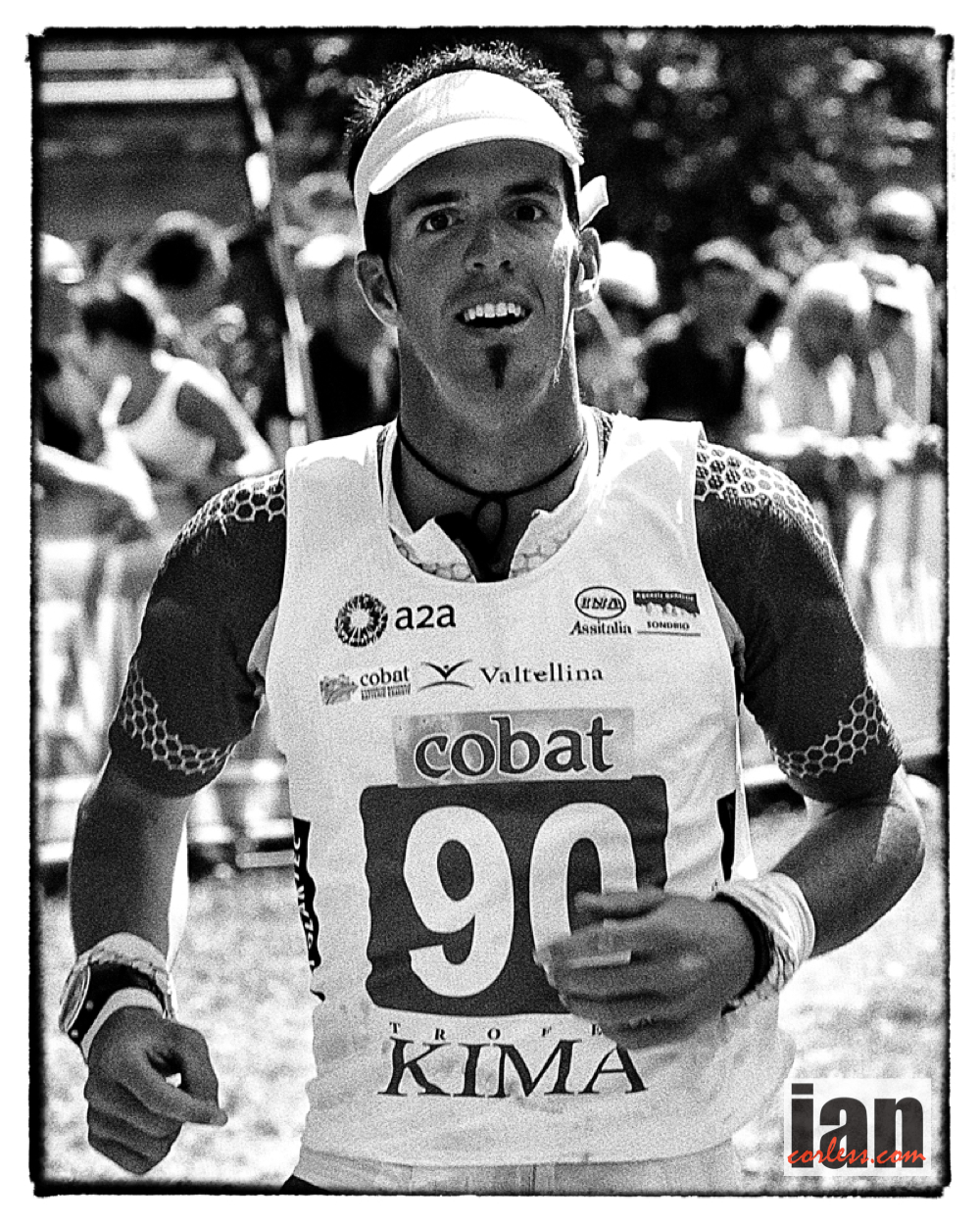
Michel Lanne Trofeo Kima ©iancorless.com

Michel Lanne Trofeo Kima ©iancorless.com

Michel Lanne is another consistent performer who may well do very well at this race. He had a great run with teammate Francois D’Haene at Mont-Blanc but then picked up an injury. In addition, he has also become a dad! December may well prove to be a great time of year; his life will have settled a little, he will be over his injury and without doubt he will be excited to race in the US.

Dylan Bowman UROC ©iancorless.com

Dylan Bowman UROC ©iancorless.com

My final hot tip for a podium place goes to Dylan Bowman. Dylan had a great Western States and turned up at TNFUTMB in the form of his life but had a freak training accident, which caused him to miss the race. He has a new coach and he is going to be looking to release some of that UTMB frustration.

So who else… it seems crazy that I am not writing about the names below in more depth. But I have previewed above who I think may well take out the top-3 slots

  • Mike Wolfe – was 11th last year and set an incredible FKT this year with Hal he could win this race!.
  • Adam Campbell – 4th last year and I may regret not adding him above?
  • Mike Foote – great 2013 UTMB but been quiet recently.
  • Hal Koerner – Think he will be on TNF duty.
  • Karl Meltzer – Karl says he has no chance in such a fast and ‘short’ field. If it were a 100-miles he would be listed above.
  • Matt Flaherty – another who should maybe be above but he was 2nd at JFK just a week ago, maybe a little tired?.
  • Mike Wardian – anything can happen…. Mike is an unpredictable phenomenon.
  • David Riddle – may or may not race with injury?
  • Gary Gellin – 9th last year.
  • Ryan Ghelfi – 5th at UROC and I may regret not adding him above too.
  • Rickey Gates – mixed 2013 but always a contender.
  • Jorge Maravilla – top 20 in 2012.
  • Martin Gaffuri  – great season on the Skyrunning calendar.
  • And finally, Greg Vollet who continues to amaze and surprise every time he races.

So, there you have it. A super stacked crazy race to end the year, the top-3 are any bodies guess. I have tried to provide a little insight but just don’t be surprised if we see a completely unexpected performance and a surprise win.

Ladies preview HERE.

Scott Jurek in The Guardian

Scott Jurek ©iancorless.com

Following on from Scott Jurek’s trip to the UK and his one day trip to the English Lakes, Nick Mead follows up with an interview for ‘The Running Blog’ in The Guardian.

You can read the full article HERE

Very happy to have provided the image of Scott (with rainbow) taken in the Langdale Valley.

View my images HERE and purchase images HERE

SCOTT JUREK’S bucket list

Scott Jurek ©iancorless.com

Scott Jurek, ultrarunner  and bestselling author of Eat and Run.

A dominant force in the  sport of ultrarunning for years and a runner who has gained, Legendary status. Way back In 1999, an unknown runner, Scott took the lead in WSER100 (Western States Endurance Run and) never looked back and went on to win the race. Scott then followed this amazing result up with six more wins; an unprecedented seven WSER wins in a row. It is extremely doubtful that those consecutive performances will ever be bettered or equaled. Scott has won races all over the world and at all distances; Spartathlon, Hardrock-100,  Badwater-135 and in 2010 he set an all American record for 24-hours (165.7-miles) which was recently broken by Mike Morton.

Scott become a household name when the book, Born to Run became an international bestseller. The book chronicled the story of running and how the sport has developed. It discussed shoe design and explored the amazing Tarahumara Indians. Scott travelled to Mexico and spent time and immersed himself in the local culture. The experience changed many peoples perspectives and although Scott is not a ‘barefoot’ runner, the book and the stories told pioneered the current trend for minimalist and barefoot running.

Hailed as one of the top runners of the decade by the Washington Times and he was crowned Ultra Runner of the Year three times by Runners World.

Since 2010 Scott has raced very little as he finished writing his book, Eat and Run and then travelled the world to promote it. In the book he combines his passions for running and his Vegan diet.

He returned to racing the 100-mile distance earlier this year at Leadville 100 and placed in the top 10. He has admitted that retirement is near. However, he does still have a few objectives on his bucket list.

So, what is on that bucket list?

Follow Scott on Twitter @scottjurek

Take a look at the images from his ‘Day in the Lakes’ with local runners and his wife, Jenny. HERE