An integral part of the Skyrunner® World Series, the RUT 28km is considered by many in the US and Europe to be a pure Skyrunning race with a logical course that goes up and down with an abundance of technical trail. The race offers extremely steep and technical terrain in many sections of the course and loose rock is a real hazard.
Covering 28km what this race lacks in distance is made up for in technicality and challenge. With 2375m of vertical gain this 28km course is basically the RUT 50km on steroids as it includes all 3 major climbs of its bigger brother.
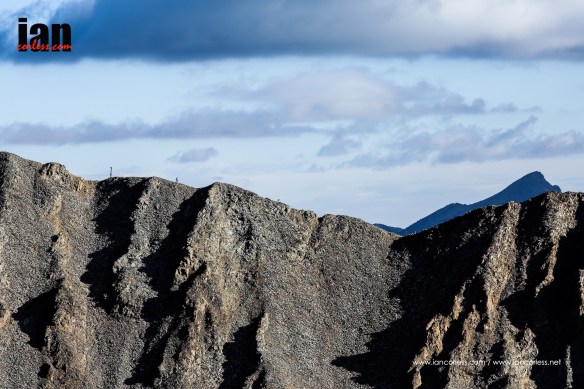
The highest point of the race comes at Lone Peak which tops out just above 3000m. Altitude, technical running and exposure from the elements, cold and strong winds makes the 28k one seriously tough race!
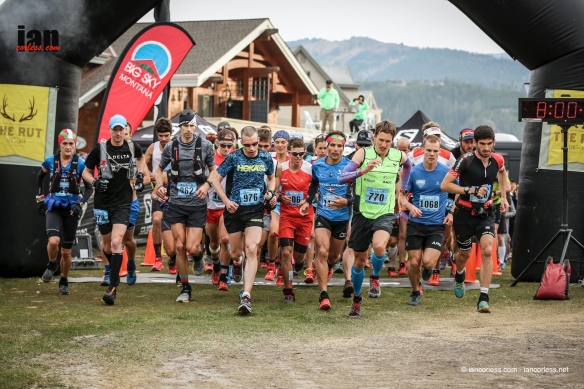
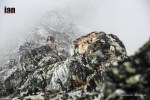
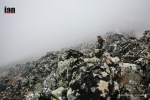
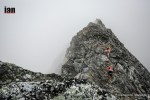
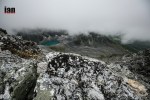
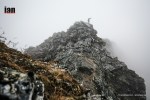
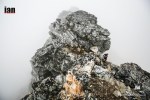
Three wave starts with 5-minute gaps avoided congestion on the course with all the top elites departing in wave 1 on the stroke of 0800. Despite forecasts for inclement weather, conditions were excellent for running and maybe just a little chilly for spectating. The summit of Lone Peak was shrouded in mist and cloud and remained that way for much of the day as the wind moved one block of cloud only replace it with another.
Dakota Jones returning to racing after a lay off with injury was the early protagonist pulling away and extending a gap over an inform Hassan Ait Chaou.
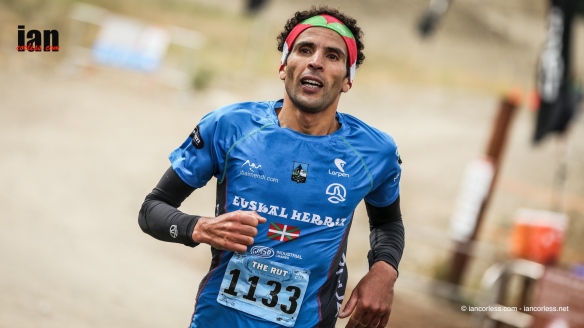
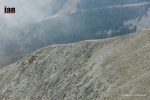
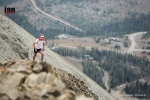
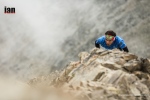
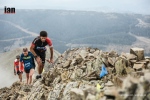
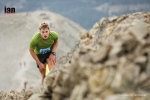
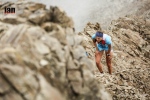
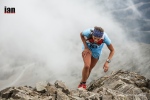
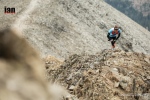
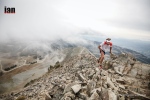
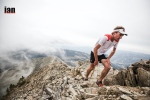
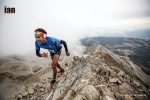
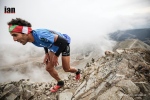
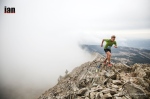
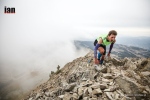
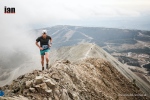
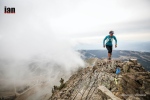
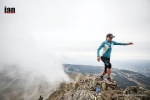
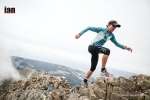
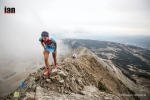
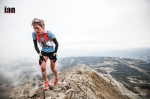
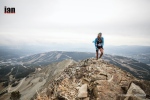
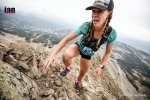
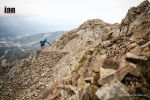
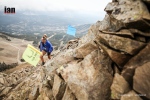
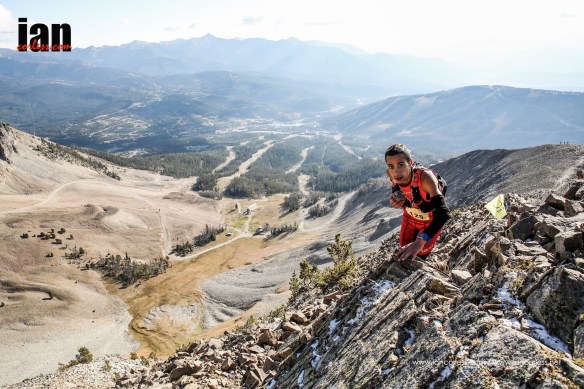
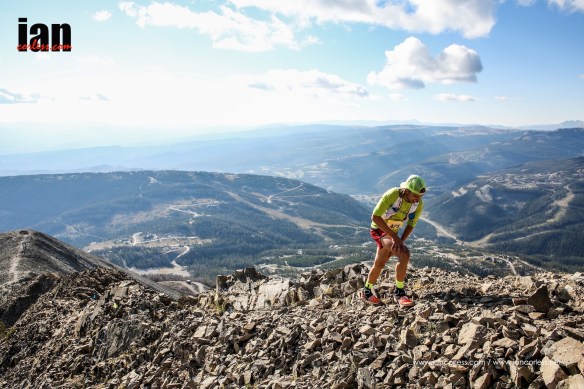
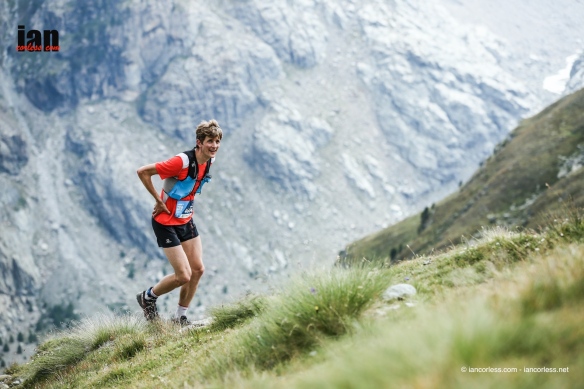
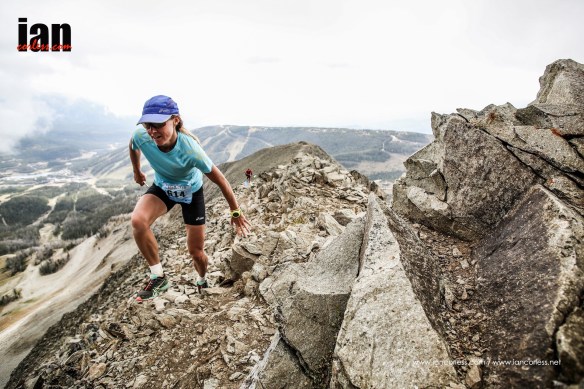
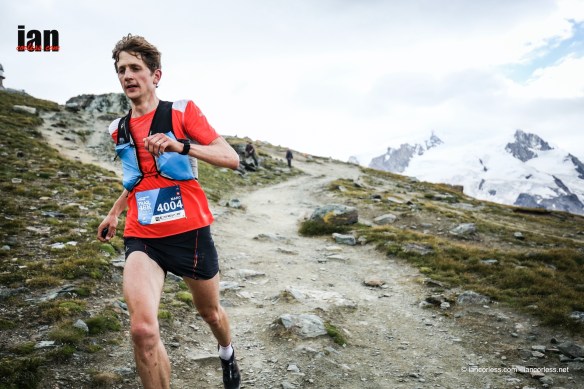
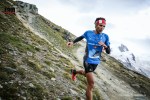
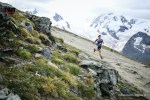
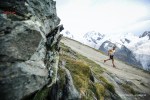
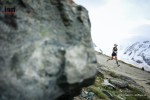
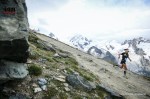
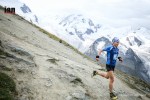
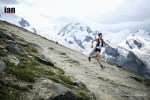
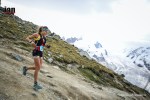
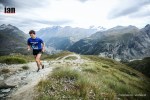
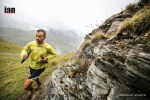
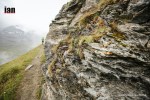
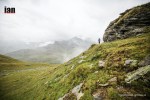
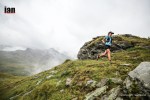
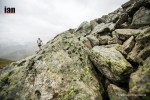
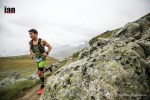
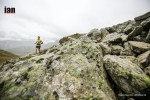
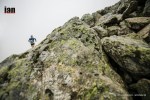
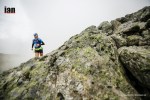
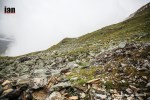
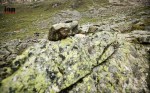
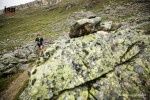
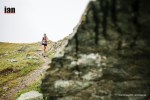
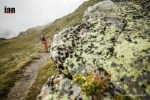
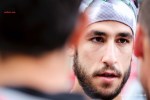
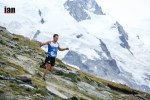
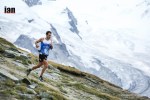
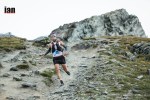
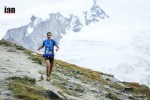
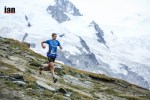
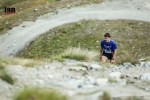
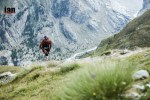
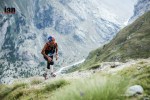
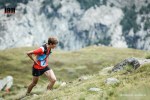
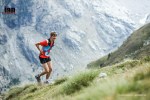
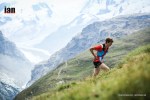
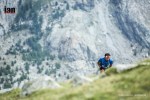
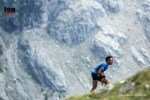
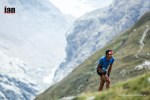
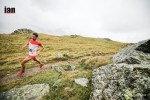
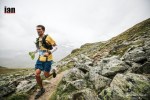
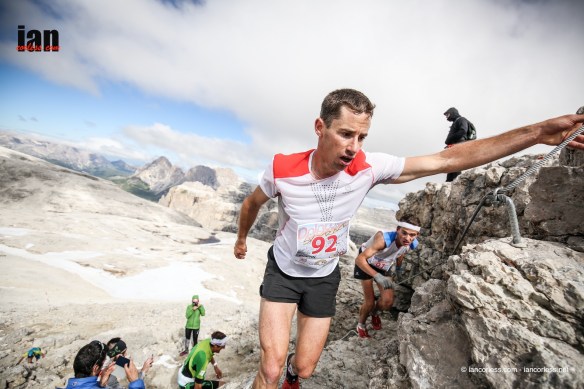
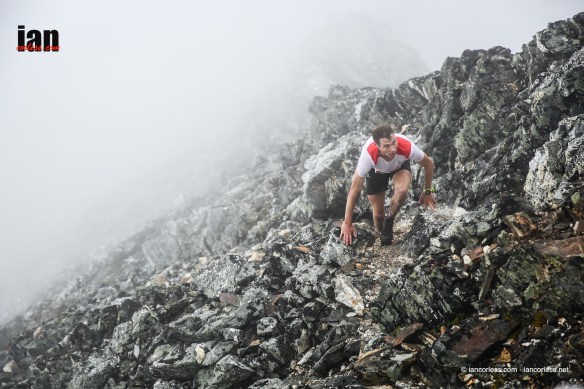
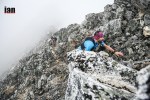
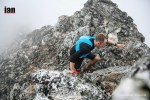
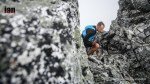
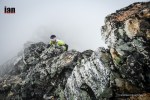
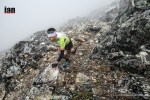
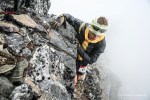
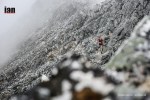
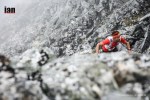
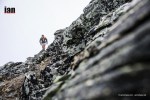
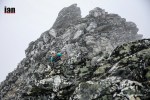
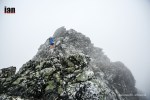
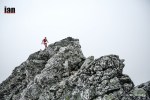
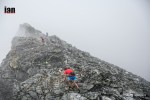
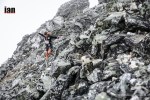
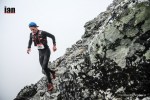
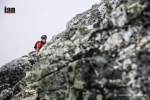
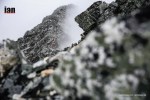
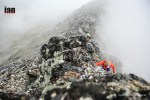
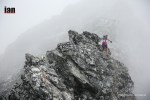
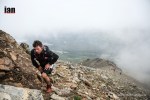
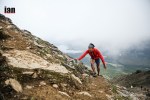
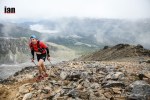
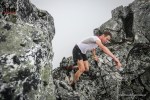
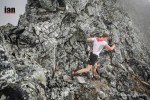
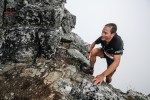
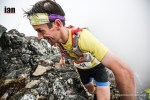
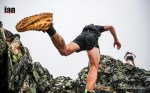
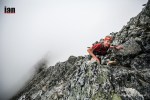
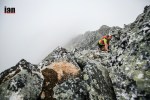
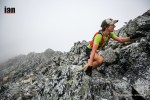
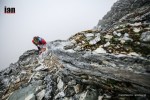
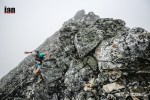
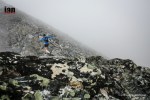
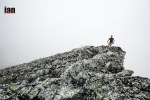
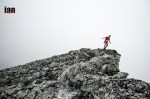
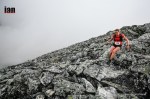
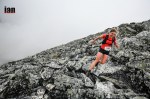
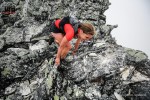
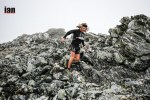
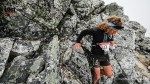
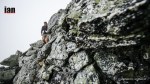
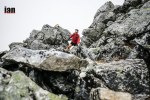
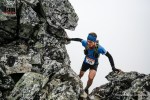
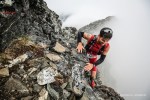
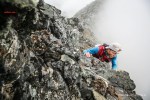
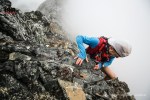
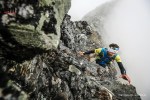
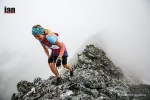
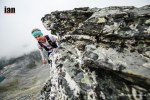
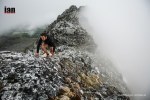
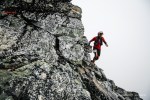
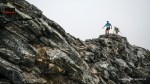
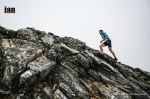
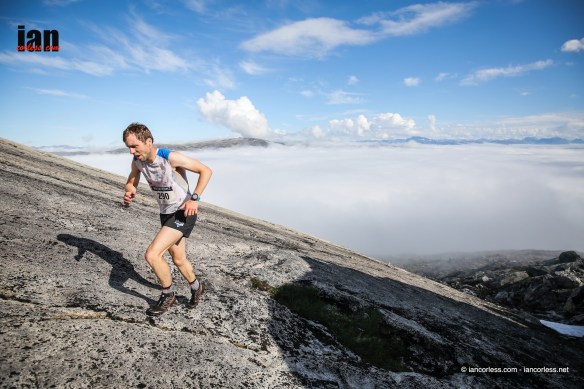
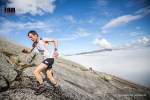
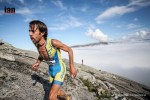
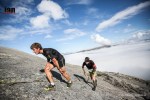
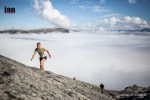
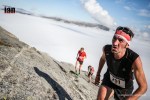
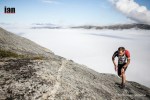
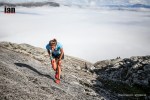
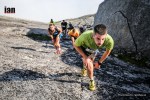
Climbing up to Lone Peak summit Dakota was looking relaxed and barring a fall or injury was looking strong for victory. Hassan equally looked relaxed and calm, constantly looking forward he had his eyes on the American in the distance with one objective, to chase him down.
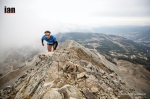
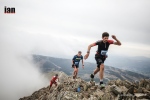
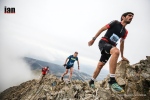
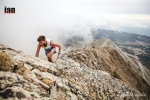
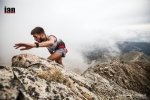
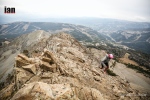
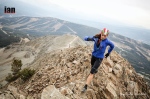
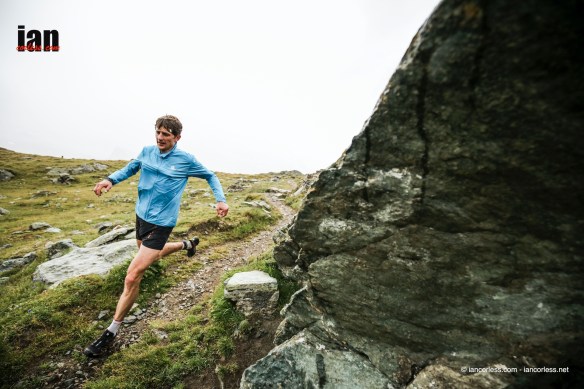
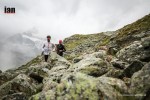
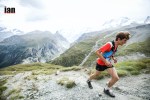
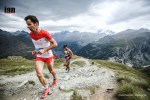
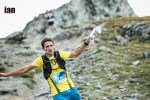
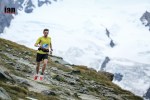
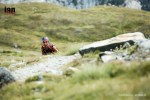
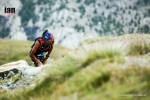
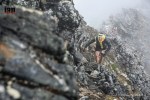
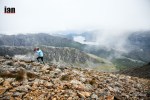
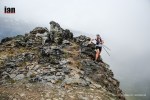
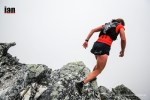
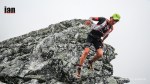
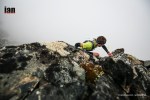
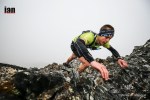
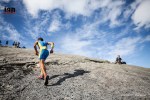
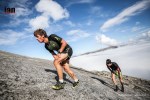
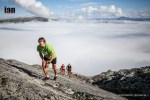
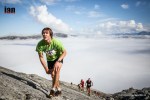
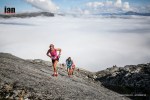
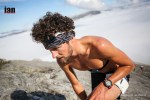
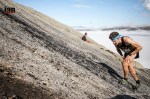
Michael Barlow pushed and following behind was a small group of 3 containing Kiril Nikolov, Jan Megabit Sole and Timmy Parr.
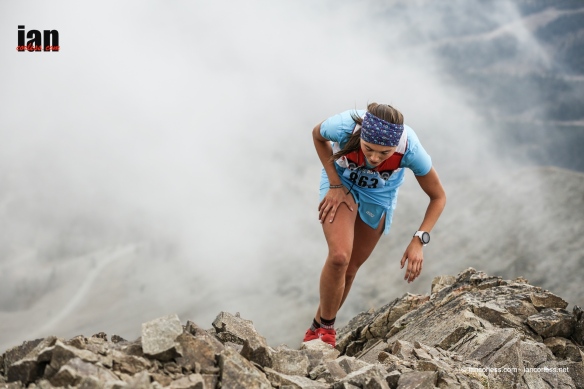
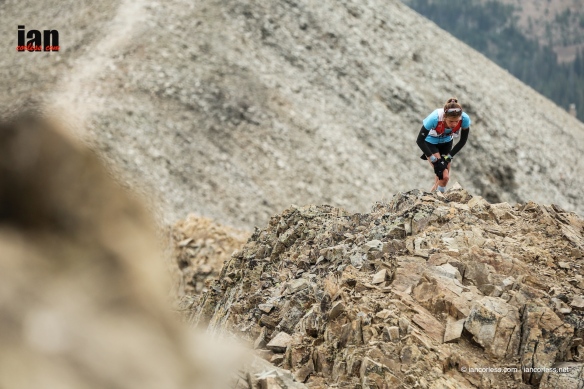
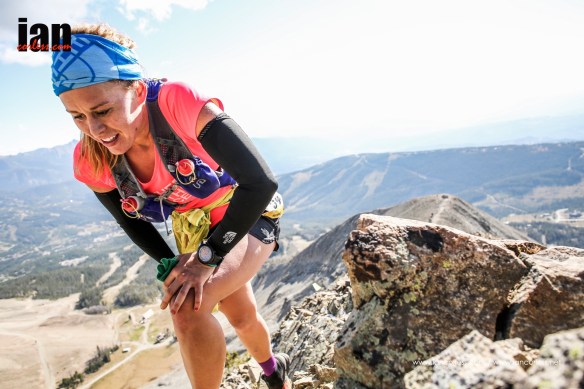
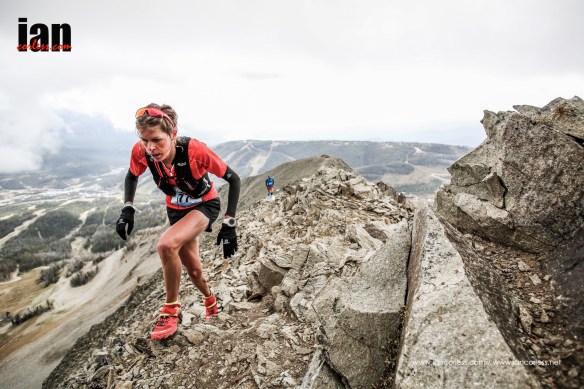
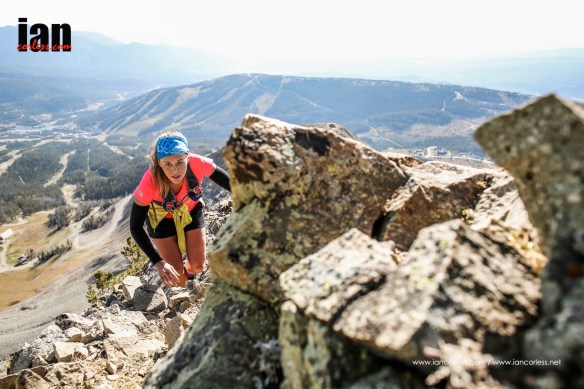
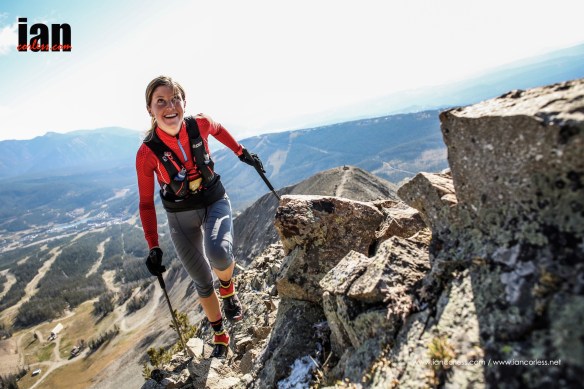
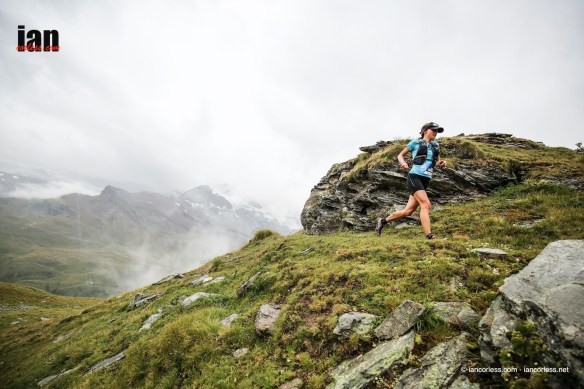
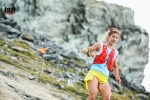
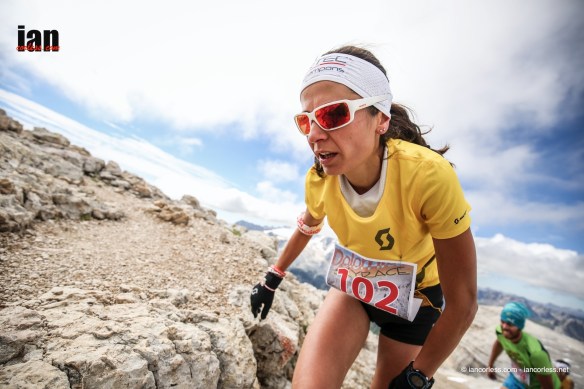
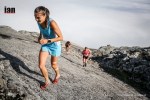
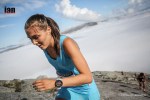
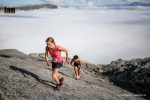
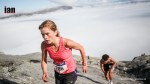
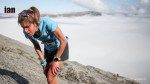
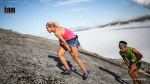
In the ladies race it came as no surprise that Megan Kimmel took the bull by the horns and lead the race from the front as she so often does. Victory at the 2015 edition of the race no doubt helping with her confidence levels and her ability to judge her pace and effort over the 28km. Yngvild Kaspersen pursued and behind last year’s 2nd place, Laura Orgue was holding off Najeeby Quinn and Sarah Pizzo.
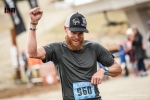
On the descent of Lone Peak as the runners made their way to the latter sections of the course, disaster struck for Dakota and he rolled an ankle that would later cause him to pull out of the race. This opened the door for Hassan and he never looked back crossing the line for a well-earned victory almost 8-minutes ahead of 2nd place. Behind all hell was breaking loose and Bulgarian Kiril put in a big effort to place 2nd ahead of Jan Megabit Sole and Michael Barlow who had a head-to-head full on sprint for the line. Timmy Parr placed 5th and Lone Peak VK winner, Andrej Fejfar placed 6th.
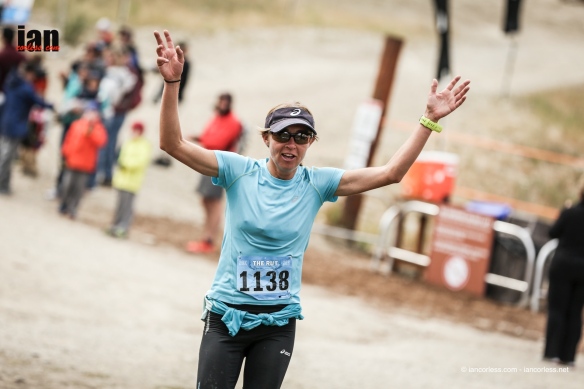
It may come as no surprise that lady on fire Megan Kimmel once again pulled off another incredible Skyrunning victory showing that she is ‘the’ lady to beat at the moment. Yngvild ran a very strong 2nd and crossed the line with a huge smile just over 7-minutes back and Laura Orgue, winner of the previous days VK finished 3rd despite having taken a fall.
Post-race, many of the runners expressed how technical the downhill section was but Megan Kimmel took it all in her stride:
“I felt good today and I was certainly more confident having run and won the race last year. The temperatures were ideal for running, yes, it was a little cold and windy at the Lone Peak summit but that didn’t last long. This is a really technical course in places and I was happy to consolidate my lead and take no risks. I will now race in Limone in October.”
Hassan Ait Chaou is certainly on form and this is a well-deserved victory:
“The race was okay, I suffered with the altitude and it caused me headaches but I kept the pace. I held myself back on the first climb and then pushed hard on the downhill. I am really happy to take this victory!”
Attention now turns to Sundays 50km event which will start at 0600 local time and the weather forecast is not good – fingers crossed! You can read a preview of the race HERE.
Results:
1 Megan Kimmel 3:36:26
2 Yngvild Kaspersen +7:05
3 Laura Orgue +19:50
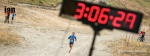
1 Hassan Ait Chaou 3:06:40
2 Kiril Nikolov +7:55
3 Jan Megabit Sole +8:20
Thanks to the support of our Partner Migu Xempower, Sponsor Alpina Watches and Official Pool Suppliers, Scott Running, Compressport and Salomon.
About Skyrunner® World Series
Skyrunning was founded in 1992 by Italian Marino Giacometti, President of the International Skyrunning Federation which sanctions the discipline worldwide and sports the tagline: Less cloud. More sky.
The Skyrunner® World Series was launched in 2004 and has grown to represent the peak of outdoor running defined by altitude and technicality. In 2016, the Series, composed of four disciplines, features 23 races in 15 venues on three continents.
iancorless.com is the official photographer and media partner for the Skyrunner® World Series Follow on:
This is Episode 118 of Talk Ultra and this week is going to be a short and sharp show… it’s all about the UTMB races and Trofeo Kima. We have interviews with Jo Meek who placed 2nd lady at the CCC and Damian Hall who placed 19th in the UTMB and recently completed a ‘FKT’ on the South West Coast Path in the UK. This weeks show is co hosted by Albert Jorquera.
Firstly, this show is being recorded in the USA on the day of the RUT VK and so therefore we are somewhat pressed for time… joining me is a co-host is my good buddy and fellow Skyrunning hack, Albert Jorquera.
If you haven’t guessed, Albert is from Spain!
Karl is on the AT as many of you will know, Speedboat has passed halfway on the AT. He really is doing great, racking up some daily mileage and as you can guess is going through some real highs and lows. We are posting 7-day updates on my website so please check out the links on the show notes. I need to give out a bog thanks to Red Bull who hooked us up with Eric, Karl’s chief crew and I had a chat with him on day 19.
Albert, what do you reckon, 2100 miles in under 50 days, trying to average somewhere between 45-50 miles a day?
RUNNING BEYOND BOOK well I have a first copy in my hand and I have to say I am somewhat pleased and happy. It’s taken a couple of years and at times it never felt quite real. The book in my hand confirms it is real and Spanish, German, Italian and UK versions will be available in the coming months. I believe Spain is first (September) Italy is October and the UK November. I don’t have a date on the German edition yet! – HERE
00:32:00 NEWS
TROFEO KIMA HERE
Bhim Gurung 6:10 new CR
Marco De Gasperi 6:12
Leo Viret 6:15
Emelie Forsberg 7:49
Ruth Croft 8:02
Emanuela Brizio 8:21
UTMB WEEKEND
OCC
Xavier Thévenard (France) won the 55k OCC race with 5:28 on the clock. Marathon des Sables sensation Rachid El Morabity (Morocco) was second, 15 minutes back. Mercedes Arcos (Spain) cruised to the front of the women’s field in 6:54.
CCC
Michel Lanne (France) in 12:10, five minutes ahead of Ruy Ueda (Japan). Mimmi Kotka (Sweden) gained the women’s victory in 13:42, 27 minutes better than second-place Jo Meek (U.K.).
INTERVIEW with JO MEEK
TDS
Pau Capell (Spain), Yeray Duran (Spain), and Franco Colle (Italy) filled the men’s podium with 14:45, 15:14, and 15:32 finish times, respectively. Delphine Avenier (France) led the women with an 18:46 winning time with Meredith Edwards (U.S.) took second 13 minutes back.
Big Sky Montana hosts the Run the Rut weekend of racing, the next step in the 2016 Skyrunner® World Series; 3-days, 3 races and 3 incredible experiences. Located between the wonderful town of Bozeman and the iconic Yellowstone Park, if ever a race existed that should combine with a holiday experience, this is it.
Big Sky sits between Bozeman and Yellowstone and the isolated Lone Peak mountain provides a stunning backdrop for the Run the Rut races of VK, Sky and Ultra. The advantages of using a ski resort as a race hub are clear to see. Utilising what would be ski runs in winter, it’s easy to understand why the Rut has gained a reputation for providing a tough and technical test even for the most experienced runner.
In just a couple of years the Rut races have become a flagship race in the USA. This is primarily due to the technical nature of the trails. You see, access to open land and mountains is not the same as in Europe. Strict land management is in place and ‘off-trail’ races just don’t exist. The Rut have managed to work around this by using the Big Sky resort which does not have to comply with land permission issues.
Vertical K
On Friday the VK kicks off the action from the Big Sky Resort up to the summit of Lone Peak at an altitude just short of 3000m gaining 3,632 feet in just over three miles.
Ondrej Fejfar from the Czech Republic is potentially one of the favourites for a podium place but without doubt, Ferran Teixido is the odds-on winner as he currently heads up the SWS VK ranking. Chris Mocko (plans to run all 3 races over the weekend) placed 7th at the 2016 Western States 100 which obviously shows great ability, how that transfers to a VK is difficult to say. Experienced Skyrunner Luke Nelson who recently raced in Norway at the Tromso SkyRace will look to do the double here at the Rut also racing in the SkyRace too. Brendan Trimboli was the recent winner of Squamish 50k, again, like Mocko, it’s difficult to predict how these skills will transfer to an all out VK effort… We can expect Brendan to be in the mix. Seth Swanson is also on the start list as is Jan Margarit and both could potentially produce a surprise in this all out vertical race.
Laura Orgue is without doubt the heads and shoulders favourite for the VK, this is her speciality. Recently she has been a little jaded and she had a below par performance at the VK in Tromso, however, I predict a victory at Lone Peak. Strong competition will come from Laura’s teammate Yngvild Kaspersen and we can anticipate Corrine Malcolm and Sarah Bard to contest the podium. As a note, Laura and Yngvild will also run the SkyRace.
SkyUltra 50km
The ultra gains 10,500 feet of elevation and as with all the other races visits the summit of Lone Peak but in a less pleasing and aesthetic run. Don’t get me wrong, it’s a great course but the SkyRace has the more logical and pure course.
The men’s race is an interesting one with Cristofer Clemente and Matt Skyrock both returning after success in the 2015 race. Cristofer has been injured of late so this race may well provide a return to form.
Mike Aish 2nd at the recent Leadville Silver Rush is potentially a contender for the podium and Matias Saari, Morgan Elliott and Paddy O’Leary are all expected to be in the mix with recent victories at Angels Creek 50m, Power of Four 50k and Canyons 100k respectively. Noah Brautigam placed just outside the top-10 in the same race last year and he may well contest a higher place this year. Chris Mocko would have been a contender for the podium but he will already have a VK and SkyRace in his legs. Nicholas Martin is the odds on favourite for victory and he will no doubt slip under the radar but watch out, victory is his for the taking! Finally, Roger Vinas is also one to watch.
The ladies’ race is an interesting one with Ida Nilsson heading up the field after her impressive Transvulcania victory, however, the Rut has many technical sections and Ida does like to run… Still my tip for victory (or 2nd*)! Alicia Shay may well push Ida for the first past the post and in all honesty, it could go anyway. Ashley recently won the Flagstaff SkyRace and Alicia was 4th behind Ida at Transvulcania.
Hillary Allen was 5th last year but has progressed considerably in the last 12-months, for me, she is a stronger runner and providing that she is fresh a higher placing is a possibility this year.
Martina Valmassoi and Kristina Pattison placed 3rd and 4th in the 2015 edition and both have been racing and strong and consistently recently – the top 5 is wide open! Anna Comet will also race and like all the ladies mentioned before her, she has podium and almost definitely top-5 potential. Strong competition will also come from Denali Strabel, Anne Wheatly, Sarah Woerner. But I save the big surprise for the last, expect Anne Lise Rousset* to be the wild card who takes the bull by the horns and wins the race outright or at worst as a head-to-head battle with Ida for victory and takes 2nd.
SkyRace
For me, the SkyRace is the most pleasing race of the Rut weekend as the proportion of vertical gain and descent, technical running all blend together in the most logical and pleasing race.
Marc Lauenstein after placing 2nd at Zegama-Aizkorri (behind Kilian) and recently winning Matterhorn Ultraks heads up the race along with an inform Dakota Jones. This duo certainly brings an interesting dynamic to the race and we can expect a proper head-to-head battle, especially with Dakota’s recent win at Squamish 50k and victory at Broken Arrow SkyRace. For me though, Marc gets the nod! Hassan Ait Chaou has been on fire this year and although he hasn’t taken a big victory he has always been close, recent highlights came at SkyRace Comapedrosa and Matterhorn Ultraks. Micha Steiner is a rising star of the Skyrunning ranks and we can expect him to do well, he was racing at an extremely high level at the recent Dolomites SkyRace until a couple of falls knocked his confidence. Eric Strabel may well be the one who really shakes things up as he has been a dominant force in Alaska. His results at Mount Marathon will bode well for the ascent and descent of Lone Peak. Luke Nelson, Justin Ricks, Timmy Parr are all runners who will be in the mix, the race is possibly a little short for Luke but Justin and Timmy have local knowledge – it will play a huge advantage. Kirin Nikolov, Greg Vollet (?), Ondrei Fejfar, Ted Farley, Michael Barlow and Eugeni Gil Ocana make up the other top contenders for the top-10.
It’s fair to say the ladies’ race will be all about Megan Kimmel and Laura Orgue. It’s going to be an exciting head-to-head and one that I think Megan will take. She has been on fire and her recent victory at Matterhorn Ultraks was impressive. Laura can no doubt push Megan but with a VK in her legs and recent fatigue I think she may well be racing for 2nd. But Yngvild Kaspersen is not to be ruled out, this lady goes up and down super quick and after a break through victory in Hong Kong last year and victory at Zegama-Aizkorri in 2016, the Rut podium is there for the taking! Ragna Debats is 2nd in the SWS and is performing consistently well in 2016 – that is what the series is all about! I see her in the mix but not on top of the podium. I have Ashley Erba listed in the SkyUltra too but I think her strength may well fall in the SkyRace and considering this race is before the ultra, this is where the performance will come. Marta Molist, Sarah Pizzo, Maria Zorroza and Aitziber Ibarbia are all ones to watch for top-10 placings.
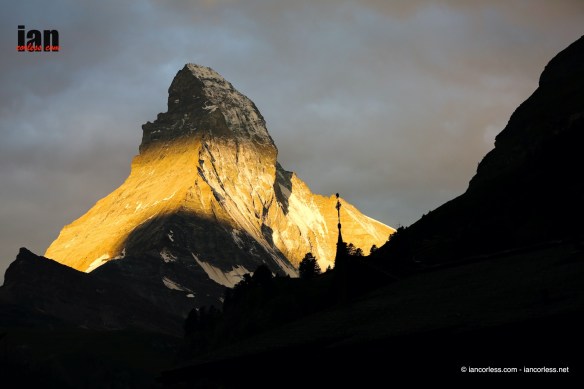
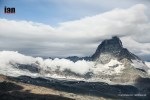
The Matterhorn provides a stunning backdrop for Switzerland’s Matterhorn Ultraks race, a 46km Skyrunning race with 3600m of positive and negative gain. Now in its 4th edition, the race once again is in the Skyrunner® World Series – a magical race that provides a circular journey that starts and concludes in the picture postcard mountain town of Zermatt.
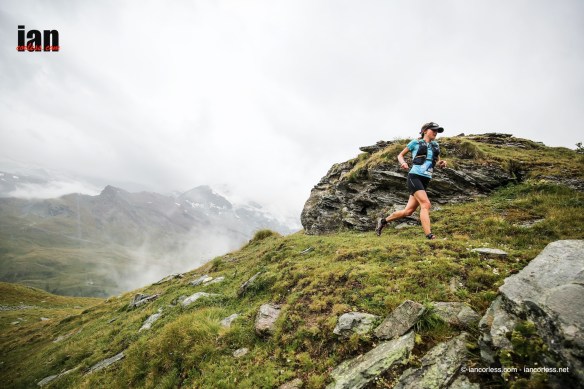
The day started well with wispy white clouds penetrating the blue of the sky, we all knew though that it wasn’t going to last… with 2 hours of running the sky turned grey, the rain arrived and low mist enveloped the mountains; the beautiful Matterhorn was gone!
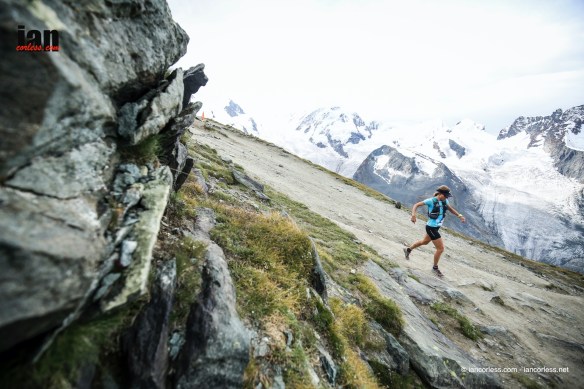
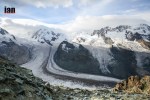
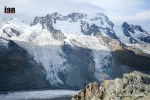
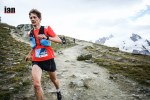
Wild expansive space, high mountains and the 3100m Gornergrat provides the high point of the race and the first indication of how this mountain game of chess was going to play out. Christian Mathys was a surprise arrival pushing the pace closely followed by Marc Lauenstein (pre-race favourite) and Nepalese runner, Tirtha Tamang.
In the ladies’ race, Megan Kimmel from the USA was already dictating the race and the pace opening up a substantial gap on a chasing Elisa Desco from Italy and Michaela Mertova who was looking very strong.
It’s a brutal opening 14km to open any race and as such, those opening km’s can be decisive in who crosses the finish line first.
Megan Kimmel from the USA ran hard from the gun in 2015 setting the pace against a world-class field, “Anytime you get the rhythm in the up, the down, or the flat, the body is abruptly put into one of these other actions. It is steep enough to grind you to a walk on a lot of the uphill and has fair bits of technical descent.”
A 1000m drop from the summit is broken by a small climb at Riffelalp and then Furi follows at 24km at 1880m. Two short sharp climbs follow, the first to Schwarzsee at 2583m and approximately 28km covered. Here Mathys was leading Tamang and Launstein followed minutes behind. It was difficult to tell if Lauenstein was going through a bad patch, he just smiled and pushed on.
Kimmel picks up her race, “I was comfortably leading the race for the first 30k. When I mean comfortable, I mean it seemed fairly effortless in a racing sense. I was moving with the terrain on the uphill’s and I was holding back on the descents because it was a long race with a lot of transitions.” Kimmel’s lead was substantial and she was running her own race. Behind, barring an accident, the other ladies were running for 2nd.
A drop down to 2200m from Schwarzsee was followed with another 500m+ climb and then what follows is mostly a flat runnable plateau that gently weaves up, down and left to right all the way to Trift. Lauenstein had taken the lead now and was flying, Mathys chased but the gap was opening up with every minute that passed.
A short kick up of 100 to 200m follows Trift and then a fast and furious drop of almost 1000m over a distance of 6km leads to the finish line in Zermatt and the assembled crowds. Lauenstein sealed victory in 4:47:01, just a few minutes outside Kilian Jornet’s course record. Mathy’s held on for an excellent 2nd in 5:51:56 and Tamang placed 3rd in 4:53:03. Once again Hassan Ait Chaou ran an excellent 4th place and last year’s winner and course designer, Martin Anthamatten finished 6th.
Kimmel, the 2015 Dolomites SkyRace winner, after strongly leading the ladies race for the whole race, clinched victory with 20+-minute lead to Michaela Mertova, their respective times 5:23:15 and 5:46:21. Cilia Chiron backed up her great Dolomites SkyRace performance with 3rd and Oihana Kortazar placed 4th. Elisa Desco who had run in 2nd place did not finish due to a fall.
Skyrunning is not just about the uphill and more often than not, it’s the downhill that determines the winner. Today was all about patience and consistency. Racing is often a mental journey as much physical, Kimmel and Lauenstein today proved this at the Matterhorn.
Thanks to the support of our Partner Migu Xempower, Sponsor Alpina Watches and Official Pool Suppliers, Scott Running, Compressport and Salomon.
About Skyrunner® World Series
Skyrunning was founded in 1992 by Italian Marino Giacometti, President of the International Skyrunning Federation which sanctions the discipline worldwide and sports the tagline: Less cloud. More sky.
The Skyrunner® World Series was launched in 2004 and has grown to represent the peak of outdoor running defined by altitude and technicality. In 2016, the Series, composed of four disciplines, features 23 races in 15 venues on three continents.
iancorless.com is the official photographer and media partner for the Skyrunner® World Series Follow on:
The stunning Matterhorn provides the stunning backdrop for Switzerland’s Matterhorn Ultraks race, a 46km Skyrunning race with 3600m of positive and negative gain – the next race in the Skyrunner® World Series 2016. It’s a magical race that provides a circular journey that starts and concludes in the picture postcard mountain town of Zermatt.
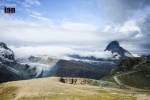
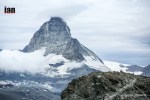
Wild expansive space, high mountains and the 3100m Gornergrat provides the high point of the race where the ever present lone peak of the Matterhorn shadows the race and runners with its majestic beauty.
Zermatt, located 1600m above altitude provides the focal point for this high altitude race. It’s a town of contrasts, tourists flood in to trawl the streets, shop and snap ‘selfies’ while in and amongst them, hardcore mountaineers head upwards with packs, ropes, cramp-ons and ice axes. Like a photo on a luxury box of chocolates, Zermatt is a beautiful place steeped in history. It’s a logical start and finishing place for such an iconic race.
Renowned for its tough opening kilometers, the Matterhorn Ultraks immediately heads to the sky via Sunnegga at 2260m all the way to the high point Gornergrat at 3130m. It’s a brutal 14km to open any race and as such, those opening km’s can be decisive in who crosses the finish line first.
2015 Champions, Martin Anthamatten and Elisa Desco return to Switzerland for the 4th edition of the race and as such they are the favourites. Desco just last weekend placed 3rd at Sierre-Zinal, the question mark will be, as she recovered? For Anthamatten, his last performance was at the Skyrunning World Championships.
It’s fair to say the men’s race is wide open, no doubt impacted upon by the recent Tromso SkyRace and next weekend’s Trofeo Kima. SWS race leader, Tadei Pivk is currently injured and that leaves an opening for valuable points.
Bhim Gurung who won the inaugural Yading race excelled at the high altitude in China and although this race tops out at 3100m in Switzerland, it will not register on the Nepalese runner’s radar. Strong competition and maybe the hot favourite will be Marc Lauenstein.
Hassan Ait Chou has a solid history in Zermatt and his recent podium at the SkyRace Comapedrosa indicates that he may well be in for a good run. Pablo Villa, Oscar Casal Mir and Marc Casal Mir will also contend the podium along with Adrien Michaud.
Lining up against Desco is Megan Kimmel who had a stunning race in 2015 only to later in the latter stages. Something tells me that won’t happen this year and for me, she is odds on favourite for victory!
Oihana Kortazar leads the other podium contenders after a recent top placing at SkyRace Comapedrosa and Celia Chiron who placed 3rd at the Dolomites SkyRace will no doubt be looking for a repeat performance. Ragna Debats,Aziziber Ibarbia and Marta Molist are other top runners who will be at the ‘pointy’ end of the race!
Course records were set in 2013 by Kilian Jornet and 2014 by Stevie Kremer, their respective times 4:43:05 and 5:18:43.
Race day is Saturday 20th August and the Matterhorn Ultraks 46k race will get underway at 0730
Thanks to the support of our Partner Migu Xempower, Sponsor Alpina Watches and Official Pool Suppliers, Scott Running, Compressport and Salomon.
About Skyrunner® World Series
Skyrunning was founded in 1992 by Italian Marino Giacometti, President of the International Skyrunning Federation which sanctions the discipline worldwide and sports the tagline: Less cloud. More sky.
The Skyrunner® World Series was launched in 2004 and has grown to represent the peak of outdoor running defined by altitude and technicality. In 2016, the Series, composed of four disciplines, features 23 races in 15 venues on three continents.
iancorless.com is the official photographer and media partner for the Skyrunner® World Series Follow on:
La Sportiva have been making shoes for a long time, 80+ years! So it feels somewhat crazy that it’s only now that I have slipped on a pair of La Sportiva shoes for a test. I travel a great deal, particularly in Italy and it’s fair to say that Italians are loyal to the Italian brand that are based just outside Canazei in the Dolomites. Adding to the irony, I have driven past the La Sportiva factory many times on my way to the Dolomites SkyRace, year after year.
To provide a perspective of the foothold (pun intended) that the brand has in this area, La Sportiva shoes are the ‘norm’ and yes, even Salomon take 2nd place. The brand is that big!
I digress, needless to say, 80+ years of history and a desire to bring technical footwear to consumers so we can enjoy the playground is the heritage that La Sportiva trade on.
The BUSHIDO shoe (which means way of the warrior) is not a new shoe, not at all. But it is a popular shoe and one that I have been recommended time and time again. So, finally I took the plunge and grabbed a pair.
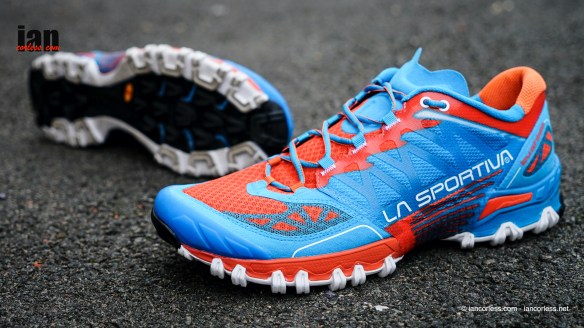
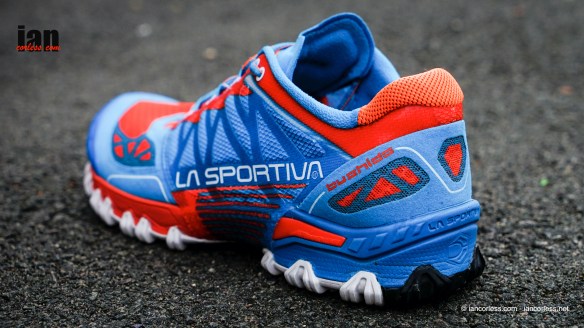
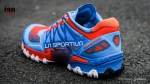
Like all shoes, different colour ways are available and the BUSHIDO comes in a pretty cool looking black and yellow. I unfortunately got a pair of turquoise and orange (?) – not my favourite colours. Oh vanity…
The BUSHIDO doesn’t look light and at 300g (give or take) they are certainly at the heavier end of shoes that I wear. But then again, everything is relative, this shoe looks like it means business and therefore, as in the way of the warrior, maybe the build quality and weight needs to reflect that?
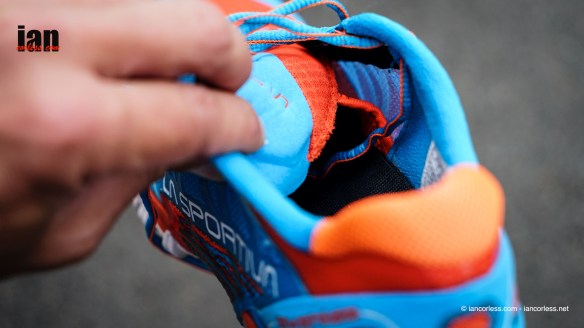
Slipping the shoe on I was really surprised with the hold the shoe had on my foot. It has a gusseted tongue which La Sportiva call an ‘Internal Slip-On Construction’ and I have to say that the BUSHIDO comes close to Salomon’s ‘Endofit’ as witnessed on the ‘Sense’ range for example. This is a huge compliment to the La Sportiva shoe. I test and wear shoes all the time and Salomon is still the benchmark in terms of how a shoe holds a foot.
Standing up things didn’t feel right? I did my usual walk around, flex the forefoot, bounce around a little and then I stopped. I asked myself the question internally, ‘are these shoes neutral and what is the drop?’
I checked – 6mm drop and neutral.
After running over 100 miles in these shoes I still really question these facts. The BUSHIDO for me does not feel neutral. Actually, I would almost go as far to say that they have a pretty aggressive arch support. I noticed it immediately and the more I ran in the shoes, the more I noticed it.
A 6mm drop should have had me feeling comfortable mid to forefoot striking but no, I felt as though the heal of the shoe was getting in the way. I haven’t had a low drop shoe feel this way before. It may well come from the 13mm to 19mm cushioning at the front and the rear? Yes, the BUSHIDO is a cushioned shoe. The Scott Kinabalu Supertrac (for example) has plenty of cushioning, loads of grip and an 8mm drop and they feel considerably ‘lower’ than the BUSHIDO. I use 8mm drop day-to-day and for long runs and I regularly use and run in 4mm drop for shorter/ faster sessions. However, the BUSHIDO never felt like a 6mm drop. I have found it difficult to pinpoint why but at all times I felt the heel was too pronounced.
Running at first felt somewhat awkward and cumbersome with the shoe lacking flex and feel. It’s rare these days that shoe feels so stiff out of the box. I thought, a few runs and they will soften up. They never did…
I have to say, I was on a slippery slope. I had waited to try the BUSHIDO for quite some time and with every run I was realising that I disliked them more and more.
The build quality is somewhat bullet proof: good toe protection in a TPU toe cap, a dual density compressed rock guard in the midsole, a TPU shank and IPS (impact brake system) and my conclusion? This shoe is completely over engineered and just doesn’t allow me to feel or enjoy the trail in a way that a good shoe should. For a ‘neutral’ shoe I felt as though I was being ‘guided’ with every foot strike as though my mind and my foot were saying, ‘let’s do this’ and then the BUSHIDO would step in and shout at me, ‘NO – YOU ARE DOING THIS!’
This relationship wasn’t going to last.
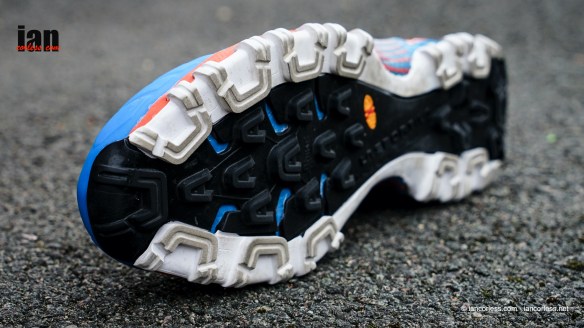
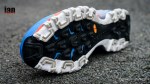
The outsole is unique with round edges and has two different sections, black and white. In simple terms it’s two different compounds that provide grip on a multitude of surfaces. This works well on dry trail, rocks and gnarly terrain and they grip well on wet rock. However, the outsole won’t handle mud – it’s just not aggressive enough. The black compound is sticky and grips whereas the white compound is more durable provide traction for off camber and irregular trail. Underneath all this you may well just see a flicker of blue? This is the rock plate which protects you (and your foot) from anything sharp, irregular or nasty. Like I said this shoe is bullet proof but all of the above and 13/19mm cushioning make for an unresponsive shoe which lacks feel.
The TPU cradle adds to the problem. This cradle wraps up into the midsole and holds the foot firm. It provides a cradle which the foot sits in. This for me is not really a ‘neutral’ shoe. I want my foot to be free and neutral – not guided.
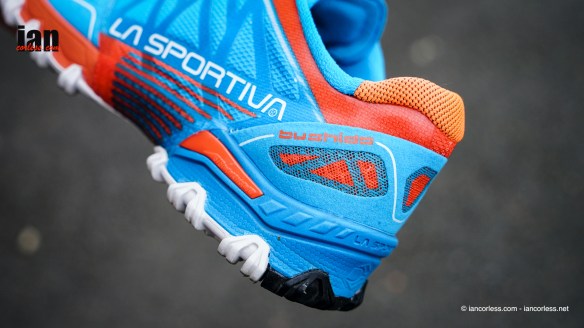
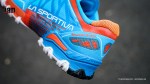
In the rear of the shoe you can see a little orange piece of plastic which is called ‘STB Control’ – again, the word ‘control’ – I think you are beginning to realise that the BUSHIDO is fighting me and my feet. Also at the rear is another cage like system that holds my heel. More stability, more support designed to hold the foot and stop it rolling or losing control.
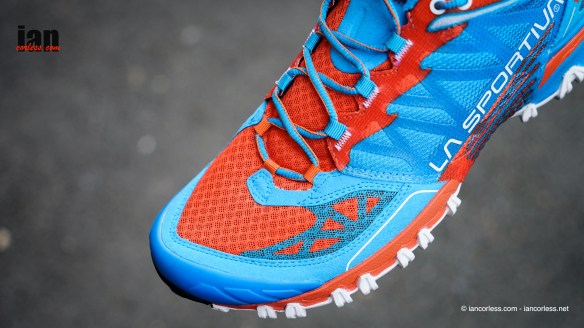
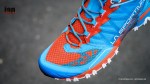
The upper is soft and breathable and as I mentioned has the gusseted fit which really is the high point of the shoe. There are no seams so you could, if you wish, go sockless. The tongue is slightly padded adding to the comfort and should you really want to pull your laces tight, this will add some additional protection.
On the sides of the upper there is some reinforcement going into the lace zone and the lace section is additionally reinforced allowing laces to be pulled as tight or as loose as possible. This area follows the theme of the shoe in my opinion – stability, reinforcement and guiding.
The heel cup is tight and secure and is too high potentially causing an issue on the achilles. My left heel rubbed on run one and continued to rub on every run after causing me to add some protection for the test runs.
The toe box has a narrower and more precision fit which works really well for me. The BUSHIDO is designed for the mountains and I don’t want my toes moving left to right when I need reassurance. Of course, if you need a wider toe box this may well not suit you so make sure you try them. Toe protection is excellent.
I wear a UK9.5 and these shoes were true to size. I think it would be easy to think that the BUSHIDO sizes small on first impressions but I would say no! The shoe is designed to fit and hold your foot and so therefore, my advice would be start off with like-for-like sizes and see how you get on.
In conclusion, I have to say that the BUSHIDO and myself just didn’t get on. The shoe has loads of pluses, in particular the sock like fit. On paper I should have liked the shoe – 6mm drop and neutral fit rings all the correct bells. But no! The BUSHIDO at all times felt over engineered, too supportive, lacking feel and I have to say, of all the shoes I have tested in the last few years, this is one shoe that I won’t go back to.
But, many runners out there like this shoe so maybe I am the odd one out? If you are looking for a durable shoe, with loads of protection, a low ‘ish’ drop and plenty of security and guidance – this is the shoe for you… the BUSHIDO does all these things well, maybe too well?
Specs from La Sportiva
Weight 300g
UpperAirMesh/ Thermal Adhesive Microfiber/ High Frequency Welded Ripstop/ TPU Toe Cap
With performance driven design, the Bushido is perfect for technical terrain and provides added stability over stones, roots and branches on the trail. The “STB Control” construction utilizes a TPU frame that wraps under foot to provide maximum stability, responsiveness, and reduce overall weight.
Internal slip-on construction fits the foot like a sock without causing excessive pressure.
Outsole lugs have rounded edges and wrap over the midsole to provide added traction and enhance stability on off camber terrain.
Not even the 24-hour daylight could illuminate the landscape, the mountains and fjords were lost. Cloud shrouded the 3rd edition of the Tromsø SkyRace®, the first race in the new Skyrunner® Extreme Series.
Tromsø SkyRace®, is the brainchild of Kilian Jornet and Emelie Forsberg, with 2 high profile race directors like this, it’s not necessary to ask, ‘how technical is the race?’ You just know it’s going to be possibly one of the toughest races out there. Previous editions have confirmed this, in 2015, Jonathan Albon won the race in a new course record 6:08:41 and Salomon Team Manager Greg Vollet said, “It was crazy, but it was awesome! Certainly one of the most difficult races in the world!”
Hundreds of runners departed from the new start (and finish) outside The Edge Hotel, Tromso. It must be noted, that this new start and finish adds 8km’s onto what was an already tough course. Running what looks like a figure of 8 drawing, the route takes in 2 mountain summits: Tromsdalstind (1.238m) and Hamperokken (1.404m) which must be run twice; out and back! Crossing snow fields, rivers, dense forest and of course technical ridges, 4600m elevation awaited the runners but that statistic is only part of the story. It’s the technicality that makes this race hard.
Steep descents, challenging terrain and the ridge running at Hamperokken requires 110% focus. This IS NOT a race for everyone.
“The Hamperokken ridge is difficult. For much of it I was using both my hands and feet for purchase. At one point of the razor edge ridge we had to jump a gap from one rock to another. It was funny to see how our little contingent had gone from racing to simply traversing this dangerous section together.” – Jonathan Albon
It requires a level of skill, devotion and commitment that not every runner has. Purists would say that Skyrunning may well finally be harking back to the glory days of the late 80’s or early 90’s when Giacometti, Meraldi, Brunod pioneered a new sport on the slopes of Monte Rosa and Mont-Blanc.
Skyrunner® World silver medalist for the SKY distance and recent winner at SkyRace Comapedrosa, Tom Owens was the odds-on favourite for victory and it was no surprise that he dictated the pace from the front. His arrival at Hamperokken ridge in 1st place was to plan, however, the proximity of 2ndFinlay Wild and 3rd Jonathan Albon confirmed that the race ahead was going to be a tough one!. They were only separated by seconds!
The ridge offers no room to pass and crossing from one end to the other is all about being comfortable with the challenge and doing so at ones own pace. On the descent the trio stayed together but Tom moved ahead approximately 300m from the top of the final summit and made his move. Jonathan and Finlay pursued but Tom was once again running the race of his life; he was just too quick. Last years’ winner Jonathan Albon held on for 2nd and Finlay Wild placed 3rd just behind, it was an incredible race and a Brit 1, 2, 3 podium.
Tom said post-race, “This is just like three of the hardest fell races you could ever run with a load of technical sections and the ridge was just incredible. Kilian and Emelie have created a beautiful (and hard) race. What a start to the Extreme Series!”
The ladies race was dictated by pre-race favourite, Jasmin Paris and she arrived at Hamperokken ridge in 1st. Looking relaxed and composed, Jasmin was running as hard as she needed still feeling jaded from recent FKT efforts and racing. Moving along the ridge she smiled, she was having fun.
Over the final half of the course Jasmin extended her lead and victory was never in doubt.
Last year, Malene Blikken Haukoy placed 3rd and this year she was running a comfortable 2nd on home terrain. Her ony threat came from Martina Valmassoi but her lead was comfortable and she cruised to the line securing the 2nd podium slot.
Martina Valmassoi running one of the longest and hardest races of her life like the two ladies in-front of her looked settled for the final podium place and the finish line could not arrive soon enough.
Jasmin, Like Tom Owens reveled in the ‘British’ like conditions that Norway and Tromso provided, “It’s just an incredible race. I loved the ridge, it was so much fun and the terrain and temperatures made me feel at home. Now I am really looking forward to returning to Scotland for the Salomon Glencoe Skyline!”
One thing is for sure, Kilian and Emelie have created something quite special in Tromso, it has set the stage for Trofeo Kima, the Salomon Glencoe Skyline and the Skyrunner® Extreme Series. The ‘Extreme’ series may not be for everyone but Skyrunner’s can dream to achieve the skill level and fitness required to take part in the ultimate mountain running experience. For sure it’s Skyrunning but it’s Skyrunning with bells on, it’s alpinism without the clutter.
Results
Jasmin Paris 8:43:53
Malena Haukøy 9:10:20
Martina Valmassoi 9:44:02
Tom Owens 6:45:15
Jonathan Albon 6:53:25
Finlay Wild 6:55:03
Thanks to the support of our Partner Migu Xempower, Sponsor Alpina Watches and Official Pool Suppliers, Scott Running, Compressport and Salomon.
About Skyrunner® World Series
Skyrunning was founded in 1992 by Italian Marino Giacometti, President of the International Skyrunning Federation which sanctions the discipline worldwide and sports the tagline: Less cloud. More sky.
The Skyrunner® World Series was launched in 2004 and has grown to represent the peak of outdoor running defined by altitude and technicality. In 2016, the Series, composed of four disciplines, features 23 races in 15 venues on three continents.
iancorless.com is the official photographer and media partner for the Skyrunner® World Series Follow on:
Starting from the sea and climbing directly to the 1044m of the summit of Blamann, the highest summit on Kvaloya island, the Blåmann Vertical Kilometer® is everything a Skyrunning race should be and the route personifies the sea-to-summit concept.
Unlike other VK’s, this route is more like a mini mountain race as the terrain twists and turns with a variety of mixed terrain. The early stage of soft boggy ground soon give way to huge slabs of rocks that at times require low grade climbing to cover. The use of poles offer no advantage as the race most definitely requires scrambling and ‘hands-on’ climbing.
Just 20 minutes from Tromso, the Blåmann Vertical Kilometer® is a race to embrace.
As expected, the newly crowned Skyrunning World Champion, Stian Angermund dictated the pace and the race on the steep slopes from the sea. In the early stages the course was shrouded by mist and cloud but as Stian zoomed up the climb, the mist lifted and above was a glorious day of blue skies and fluffy clouds. By the midway point, Stian had a clear lead over Andorran, Ferran Tpeixido and while other runners power walked with hand-on-knees, Stian ran looking relaxed but breathing hard.
At the summit, Stian crossed the line in 37:00 exactly, Ferran trailed by 31-seconds and David Thibaud placed 3rd in 39:50.
The ladies race turned into a ‘nail biter’ as last minute entry, Emelie Forsberg dictated the early pace obviously feeling feisty after a long recovery process from injury.
At the midway point, Emelie lead the way with Yngvild Kaspersen hot on her heals. Trailing by approximately 30 seconds, Laura Orgue and Hilde Alders pursued.
Laura was not having a good day though, the VK specialist was obviously tired from racing at the Skyrunning World Championships and last weekends victory at the SkyRace Comapedrosa.
Hilde though was on fire. She caught Yngvild and Emelie and in the closing stages it was a neck and neck race with Yngvild leading the way followed by Hilde and Emelie in third. It looked as though this would be the finishing order and then Emelie released an incredible sprint… taking a different line, she zoomed past the other two just as Hilde responded. It was like watching a sprint in the Tour de France.
Emelie crossed the line first in 44:49 (tbc), Hilde placed second and Yngvild 3rd, all separated just by seconds. Laura Orgue finished 4th having eased back.
Attention now turns to tomorrow and the Tromsø SkyRace® which will start at 0800.
Thanks to the support of our Partner Migu Xempower, Sponsor Alpina Watches and Official Pool Suppliers, Scott Running, Compressport and Salomon.
About Skyrunner® World Series
Skyrunning was founded in 1992 by Italian Marino Giacometti, President of the International Skyrunning Federation which sanctions the discipline worldwide and sports the tagline: Less cloud. More sky.
The Skyrunner® World Series was launched in 2004 and has grown to represent the peak of outdoor running defined by altitude and technicality. In 2016, the Series, composed of four disciplines, features 23 races in 15 venues on three continents.
iancorless.com is the official photographer and media partner for the Skyrunner® World Series Follow on:
Last week and the week before, EPO, DOPING and the UTMB was the hot topic after Gonzalo Callisto’s positive test. Everyone was talking about it… this week it’s all gone quiet. That can’t happen! You can catch up on my posts below.
There are far too many questions unanswered, there are far too many people being quiet and if we want to eradicate doping from Mountain, Ultra and Trail running – we need to keep talking and discussing.
I was approached by Outside Magazine and they asked me a few questions. I am pretty sure that what gets used or published will be an edited version and with that in mind here are my thoughts, un-edited.
In light of the latest news from UTMB, what you think this positive test means for the sport?
One has to embrace the positive test as a good thing as it confirms that preventative measures against doping are working. This positive was an ‘in competition’ test which only confirms the need for out of competition testing and blood passports. Of course, the answer is always that testing is too expensive. We have to act now and be proactive. I don’t have the answers but I do feel that we could start to address certain issues that would help. Maybe it’s time that we ask (for example) the top 100 male and top 50 female runners as listed on ITRA to pay for a regular medical? Sage Canaday recently released a full report on his medical status to ‘prove’ he is clean; that’s a good thing! (See below). Athletes of course may well say that they can’t afford it but this is where sponsors come in maybe? We cannot keep making excuses as to why we can’t but find ways to make sure we can! We are at the very early stages of doping in our sport and if we don’t act now it will only become worse and God forbid, we could end up like cycling or athletics.
Do you think doping is really becoming something to worry about, or is this a case of an outlier?
We need to worry, yes! This is not the first positive test, it maybe a high profile conviction, but it would be foolish to think that this is an isolated incident.
Are people starting to talk about doping more in ultarunning than before? Or maybe a better way of asking this is how are the athletes you know, talking about this subject and what it means for the sport?
I certainly have witnessed more discussion about doping and of course this was highlighted at the end of 2015 at San Francisco 50. This was a moment when the sport really looked at itself and many questions were asked. It actually became quite nasty at times and I think a sense of perspective was lost. For example, WMRA (World Mountain Running Association) and Skyrunning have been testing athletes for many years. They have very much paved the way but they acknowledge they can only do so much. In competition testing costs 1000’s of euros or dollars for one event and of course, only urine can be tested. Many say it takes an idiot to to be caught ‘in competition’ but it happens. I go back to blood passports – we really need them for elite, professional and sponsored runners. Some races do not have a ‘PED’ policy and San Francisco highlighted the need for races and RD’s to address this in the rules of the race. Western States for example has re-written its race rules to say that any runner who has had a positive conviction cannot race. Many runners have asked for a lifetime ban for any positive test and they have been vocal about this. I personally am reluctant to go down this route… I do believe that mistakes can happen in drug testing but I am not an expert. This creates a whole new debate and raises questions about the lasting effects of a doping program. For example, we used to have two positive tests and out, I liked that but apparently that has been deemed unfair?
Are people starting to test more for doping than in previous years? What has this looked like?
As mentioned previously, WMRA and Skyrunning have been testing for many years but not at all events. Skyrunning for example had its World Championships in Spain in July, they had three events, VK, SKY and ULTRA and WADA performed tests at all three race distances. The problem comes, once again with cost. At the Skyrunning World Championships, 12 athletes were tested. The make and female winner in each category (making 6) and then 6random tests. Let’s assume testing at an event is $10,000 – who pays? Do we add a surcharge on every runners entry fee? Does that race find a sponsor to cover the cost? Do we rely on a wealthy donor or do we approach all the major brands in the sport and say, you must pay! It’s a complex matter and this is why doping control is a rarity in contrast to the norm. Let’s look at races such as Speedgoat 50k, Run Rabbit Run and San Francisco 50 – these races have some substantial prize money, in some scenarios it could mean a pay check of $10,000+ for a win. Yet nobody has any idea if the winner is clean? Moving away from trail running and looking at ultra road running, Comrades in South Africa has huge prize money and it has a very chequered past with doping: Max King, Ellie Greenwood, Sage Canaday and Michael Wardian (amongst others) have all witnessed the impact of it first hand.
What is your own experience with testing?
I attend races as a photographer and a journalist so in reality, I have little experience of the drug testing process. However, I am a media partner for Skyrunning and I have been present and seen the processes undertaken at several major events where doping control has been in place by WADA. For example, I was at the Skyrunning World Champions on July, 22, 23rd and 24th. I also experienced doping control at Limone Extreme in 2015 and Mont-Blanc 80k in 2014 amongst others.
Do you think the tests, or the conversation about doping in general in ultras is lacking? What could be done better?
Certainly the positive test of Gonzalo Calisto has raised some major flaws in the communication process. I have done extensive research over the last weeks and my conclusions have been quite worrying. I will elaborate:
Gonzalo Calisto was tested after placing 5th at UTMB by French drug control – AFLD In August 2015.
AFLD have a written policy that a positive test is given to (in this case) the runner within three weeks.
The runner is then entitled to appeal and ask for a B sample test.
This process can then go backwards and forwards for several weeks and in this scenario (as I understand it) months. Don’t get me wrong, the runner has rights and it’s only fair that he or she has every opportunity to clear his or her name.
In June 2016 the IAAF released its current banned list.
On July 18/19th British Ultrarunner Robbie Britton noticed that Gonzalo Calisto was convicted of EPO and banned till March 2017.
I picked up the case and contacted UTWT and UTMB directly and asked were they aware of this conviction? I later found out, no!
Within 12 hours, UTMB released a press release disqualifying Gonzalo Calisto of doping.
The above raised so many questions for me:
1. How was it possible that Gonzalo Calisto had tested positive but UTMB did not know?
2. Why was his period of exclusion dated till March 2017 when he had been tested in August 2015?
3. Why had the IAAF only published this in June 2016?
I asked questions of the UTMB and the IAAF. In both scenarios they were both helpful.
1. To cut a long story short it would appear that when an athlete is tested positive, the testing control, in this scenario AFLD, are not required to inform the race. REALLY? A race has a runner place 5th, the runner is tested, the runner is found guilty, due process is run and then a positive is confirmed and a sanction is put in place without the race being told…. C’mon that HAS to change! Had it not been for the eagle eyes of Robbie Britton and me grabbing the bull by the horns, nobody ‘may’ have known?
2. IAAF explained the ‘due process’ to me and although they were not able to supply specifics, they did say that these things can often take much longer than we would all like and that 6 months is not unusual. Considering Calisto was tested on the last day of August, that potentially could take us to February or March the following year.
3. The IAAF then confirmed that an error had been made! As I pointed out to them, why was Calisto banned till March 2017? The answer: Calisto’s ban and records were amended from a memo dated March 2016 and it was therefore human error. Calisto’s ban dates actually run from March 2016 to March 2018. This coincided with point 2 above and a lengthy due process where one assumes Calisto tried to clear his name.
4. From the March conviction, Calisto’s records then entered the IAAF system and his conviction was uploaded to the ‘sanctioned athletes’ list in June 2016.
5. The IAAF confirmed to me that AFLD did not have to notify UTMB of a conviction but they would look into it?
So, for UTMB to be aware that an athlete had cheated at a previous edition of their race it would appear that the only option open to them is to check daily on the IAAF website for any additions to the sanctioned athlete list.
I could go on…
Why do you think the sport has stayed clean for so long, and what might be changing that would compel people to cheat?
The sport hasn’t been clean for so long. That is a naive viewpoint. Doping has existed in trail running for ages but if you don’t have testing or a blood passport, how would you know that…? I like to use an example and I must be clear here, I don’t doubt the integrity of the runner I use as an example. Karl Meltzer, my co-host for Talk Ultra podcast has won more 100 mile races than anyone. He has even won Run Rabbit Run and he took home $10,000+ He has been running ULTRA’s for 20+ years. You know how many times he has been tested for PED use? NEVER. Need I say more… This is why our sport has bean ‘clean’ for so long, no testing!
For the most part it seems like the conversation around doping in ultras is relatively new, and also that cheating might be a new thing too. Do you think there’s a chance for race directors, athletes, etc. to get out in front of this and keep the sport clean before it becomes the kind of large-scale issue it is in some other sports?
The Calisto case has raised eyebrows, we need to latch on to that momentum and we need to consider many of my points above but let’s be clear, Calisto is not the first!
On a final note we need to keep this discussion open, we need to keep asking questions and we need to find answers and solutions. It’s too easy to say it’s too expensive, too difficult and so on. We could start by:
Blood passports for runners
Regular in and out of competition testing
Positive results MUST be sent to a race or RD as soon as possible if a positive test came from a race.
IAAF need to find a way to communicate ‘new’ sanctioned athletes to the relevant sport discipline. This is where ITRA or maybe an athlete commission could be set up.
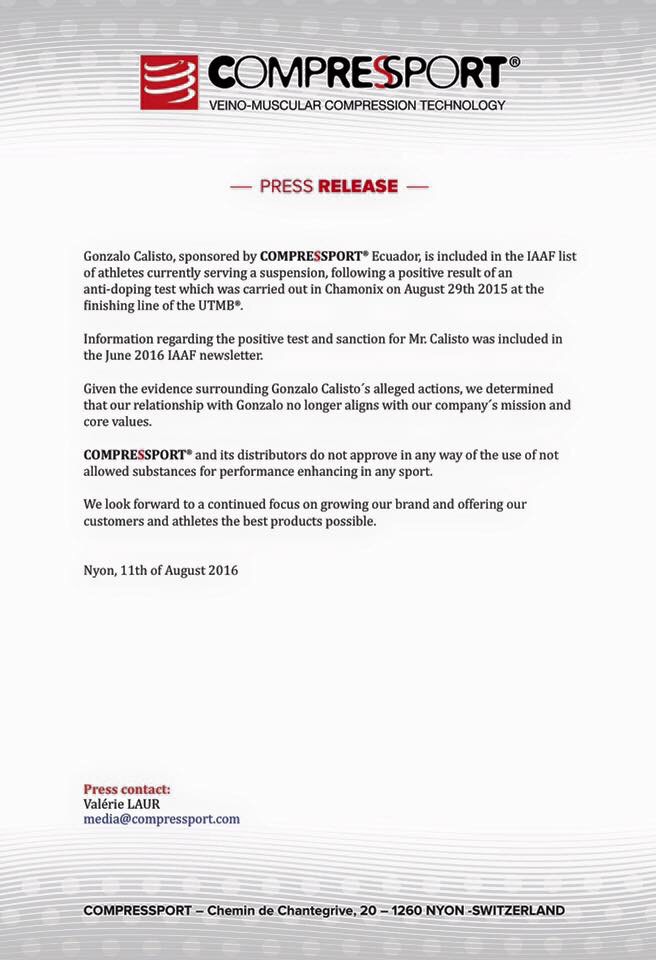
We, as runners, journalists, sponsors and so on must be loud and clear that doping is not welcome and we must do all we can to work together. In the Calisto case I have still not seen or heard any public statement from his sponsors, Movistar and Compressport. Compressport did contact me to say that they were ‘looking into it!’ What does that mean…? They also said that Callisto’s sponsorship with Compressport was with a local distributor and not the International division. As far as I am concerned, local or International, Calisto is still representing a brand and that brand gains attention. And also what about the races that Calisto has run and placed in in post August 2015? The IAAF now confirms the suspension dates back to that time and until March 2018. Not one word, not one public statement from any race that I have seen… do these races condone doping? What about the runners who placed top 5 or top 10 only to loose a place… come on, speak up!
Update August 12th and Compressport respond
A great place to start is here, Sage Canaday has just recently posted his results online for all to see. Let’s lead by example!
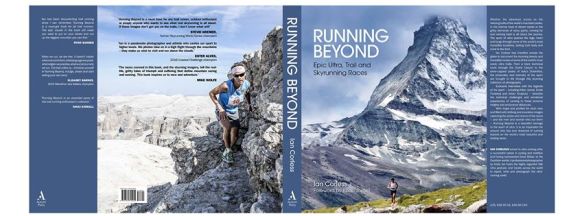
I am pleased to say that my new book, RUNNING BEYOND is now available on pre-order at Amazon (HERE). English version will be available November 3rd and Spanish, Italian, German and US versions will be available tbc.
Foreword is by Kilian Jornet.
“Ian has been there to witness the stories. He knows the sport, he practices it and he has been involved in many different aspects, all of which provides him with a great overview. He has the strength and character to work many hours, even practicing his own ultra with cameras in order to capture the emotions and the passion from inside the sport. Ian has immense enthusiasm, and his commitment to following a race knows no bounds.” – Kilian Jornet
****
RUNNING BEYOND BOOK
by Ian Corless
Foreword by Kilian Jornet
Published by Aurum Press
Available in the UK from November 3rd 2016
Translated into French, Spanish, Italian and German (release dates to follow)
“Ian has been documenting trail running since I can remember. His images, writing and podcasts have played a major role in showcasing our sport and growing it into the global sport it has become today… Ian is extremely passionate and really understands what trail running is about, and this you can see in his incredible images. Ian’s images capture the runners emotion; the natural beauty and race atmosphere – making me want to put on my shoes and head out the door for a run. Running Beyond is a must get book for all trail runners.”
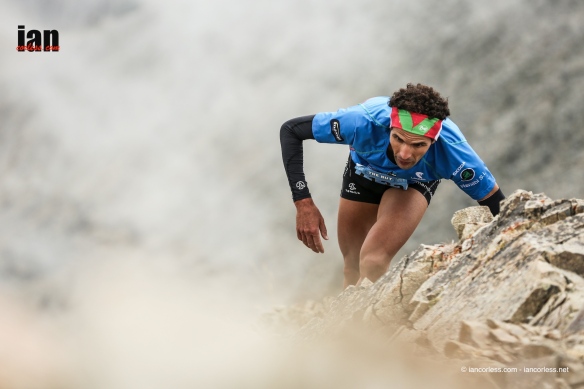

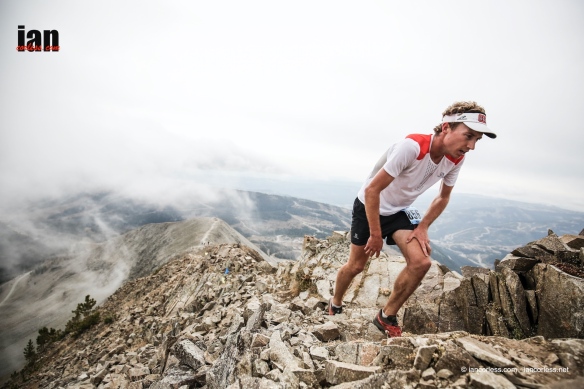
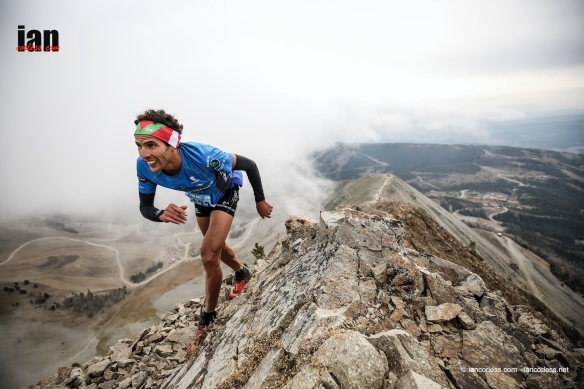 Climbing up to Lone Peak summit Dakota was looking relaxed and barring a fall or injury was looking strong for victory. Hassan equally looked relaxed and calm, constantly looking forward he had his eyes on the American in the distance with one objective, to chase him down.
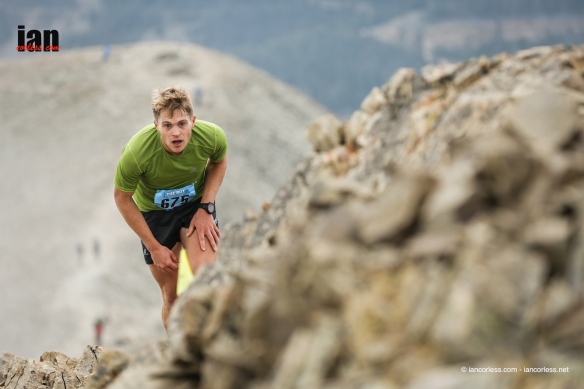 Michael Barlow pushed and following behind was a small group of 3 containing Kiril Nikolov, Jan Megabit Sole and Timmy Parr.

















































































 IAN CORLESS