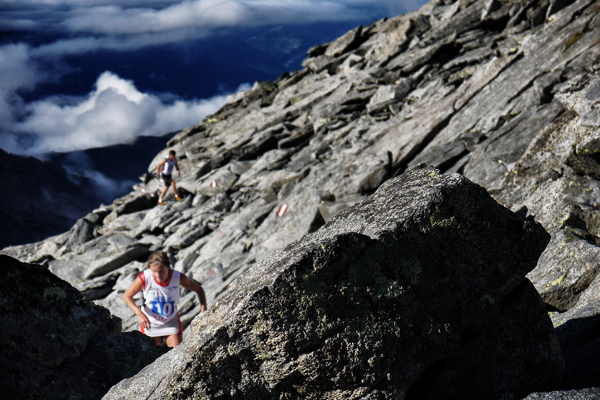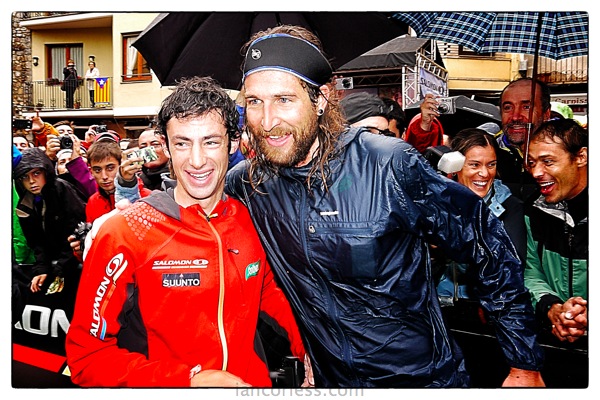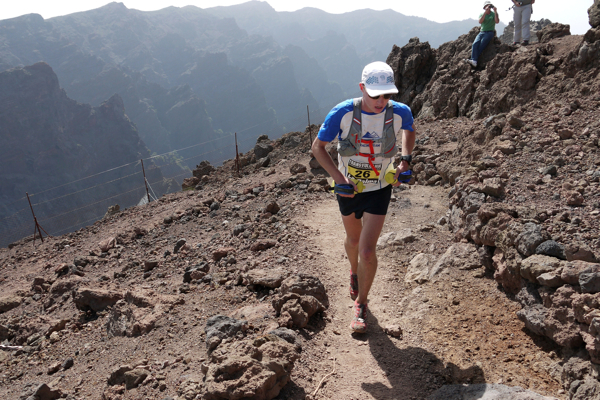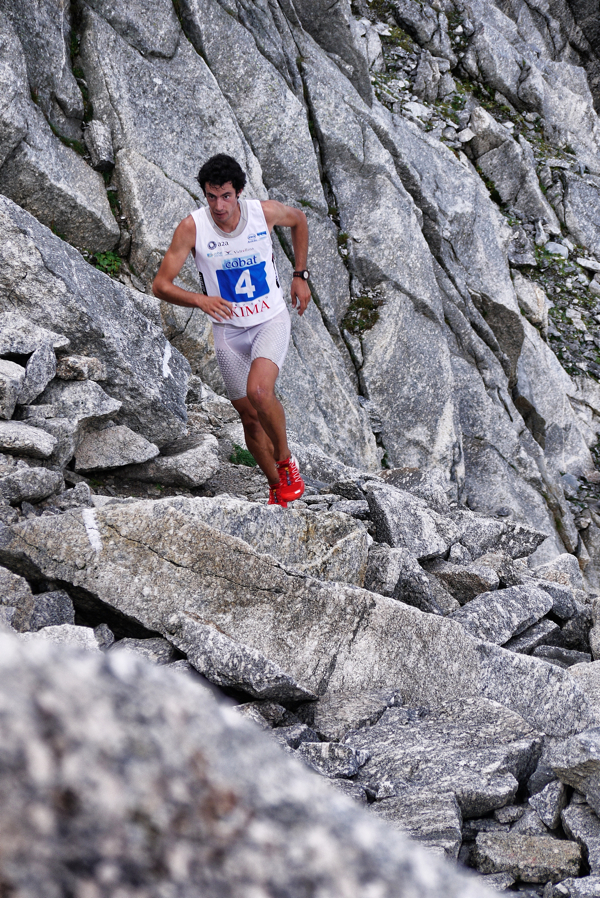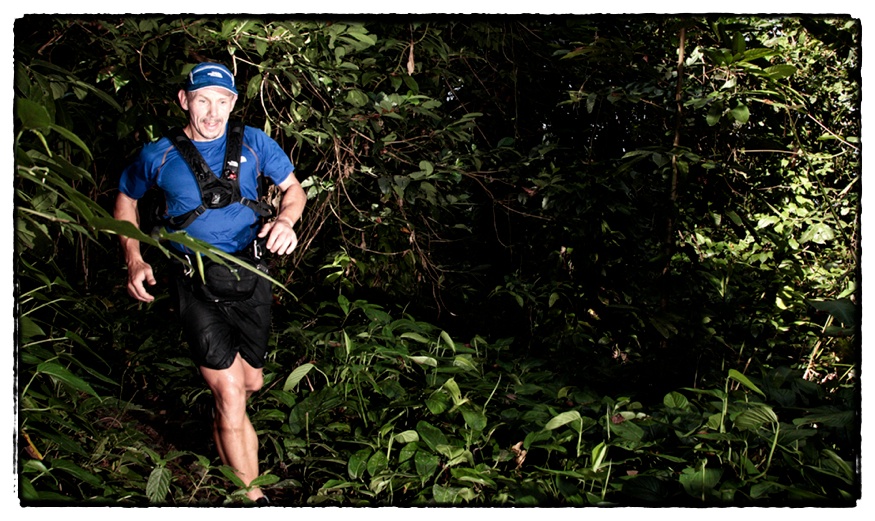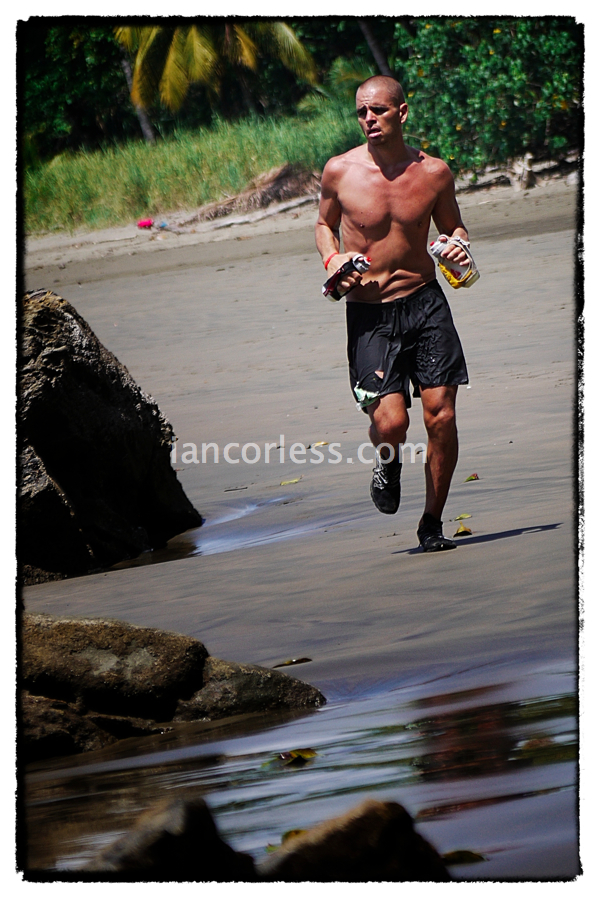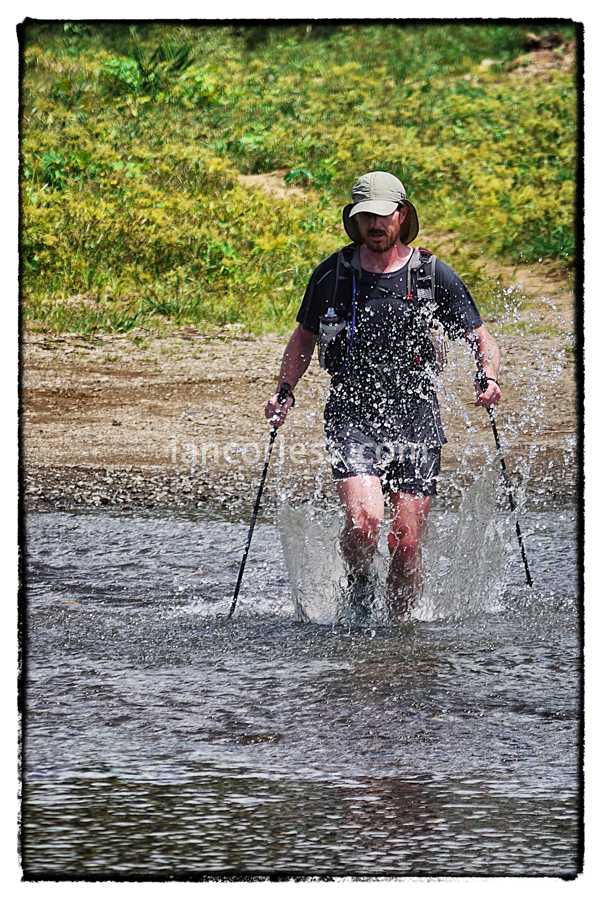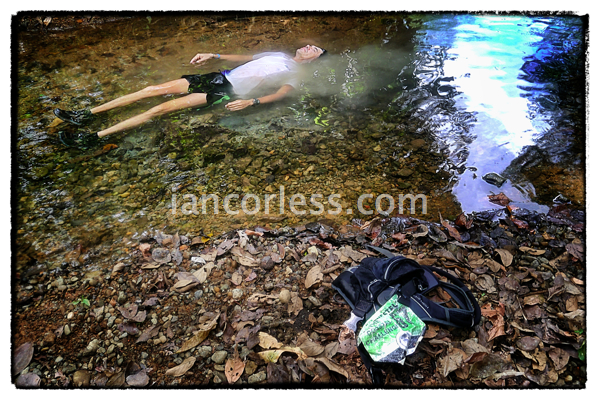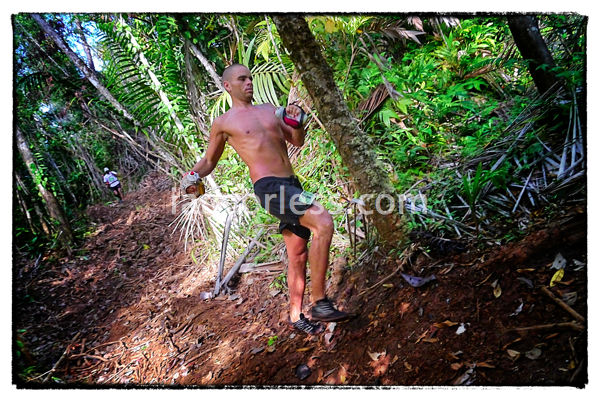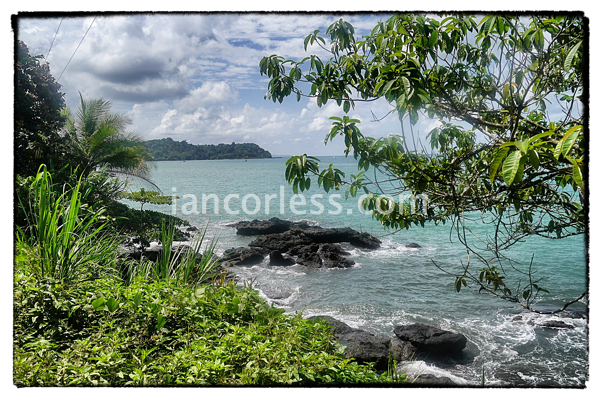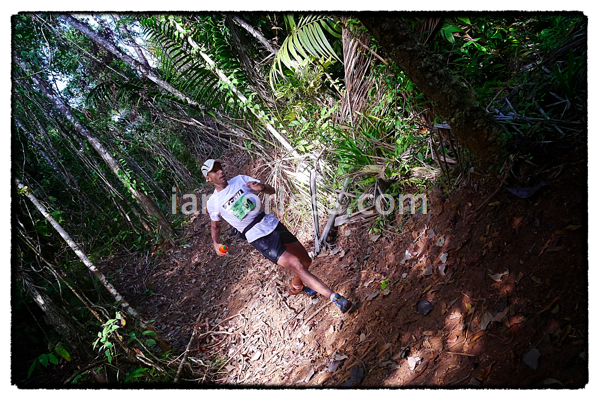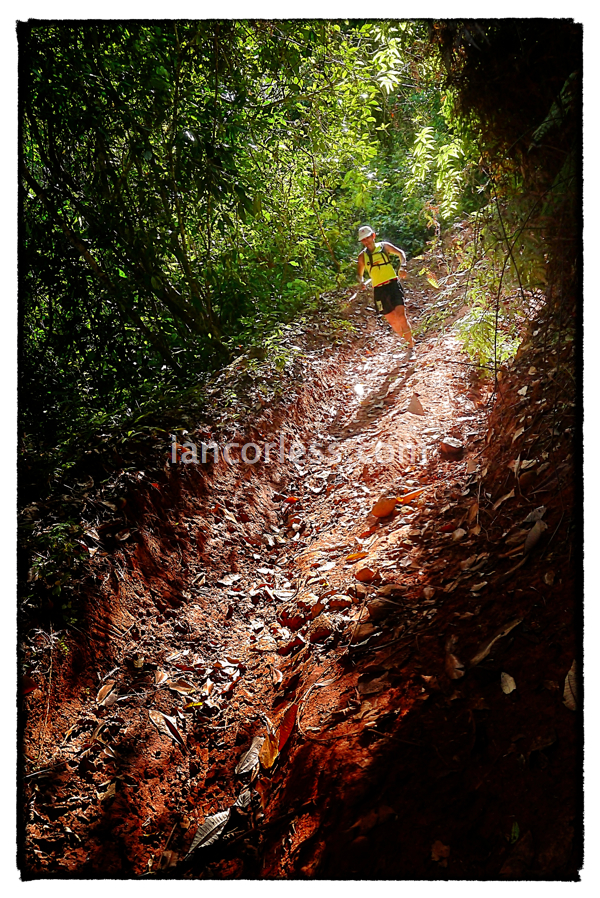
Skyrunning World Series Participants 2013

Skyrunning Image Banner 2_Snapseed

SWS – champions choice

Building on the 2012 Skyrunner® World Series success and the introduction of the Ultras, 2013 prepares for an even bigger star-studded cast.

ISF-logo

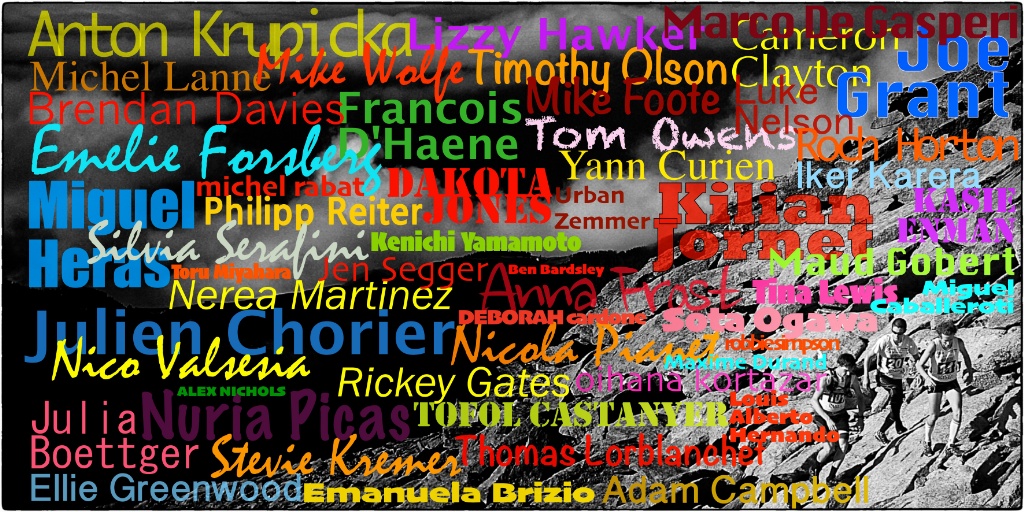
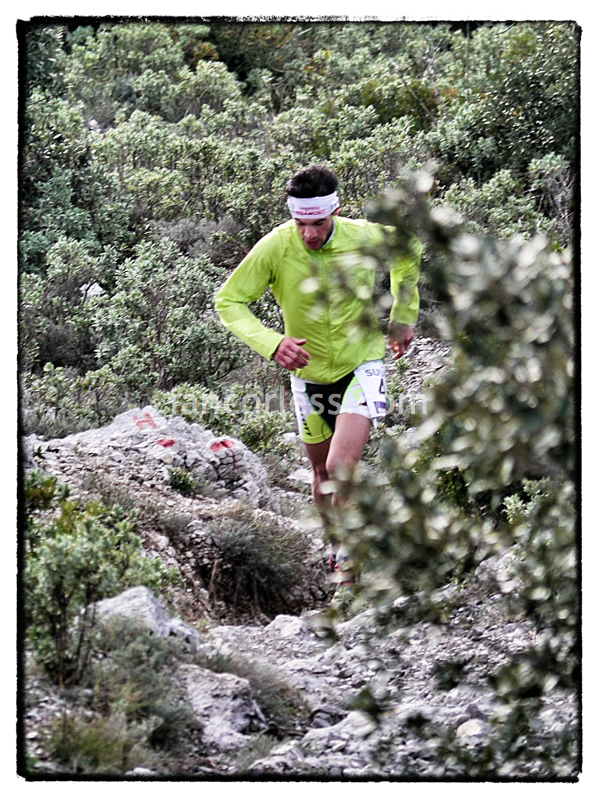
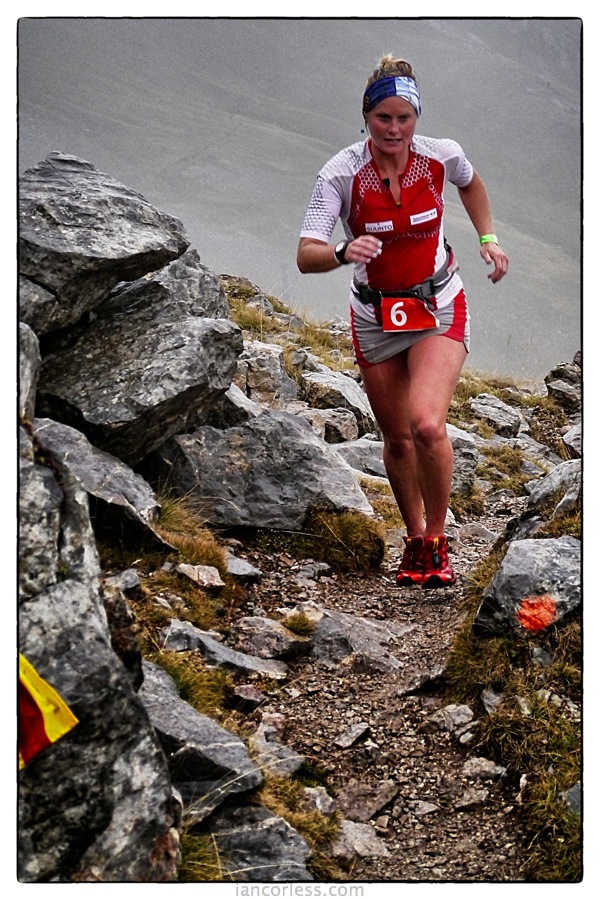
The line-up of champions is headed by 2012 SWS winners Kilian Jornet, Emelie Forsberg and Nuria Picas, joined by past world champions Emanuela Brizio, Oihana Kortazar, Luis Alberto Hernando and Tofol Castanyer and WMRA champions Marco De Gasperi and Stevie Kremer.

Nuria Picas copyright Ian Corless

Nuria Picas copyright Ian Corless

Philipp Reiter copyright Ian Corless

Philipp Reiter copyright Ian Corless

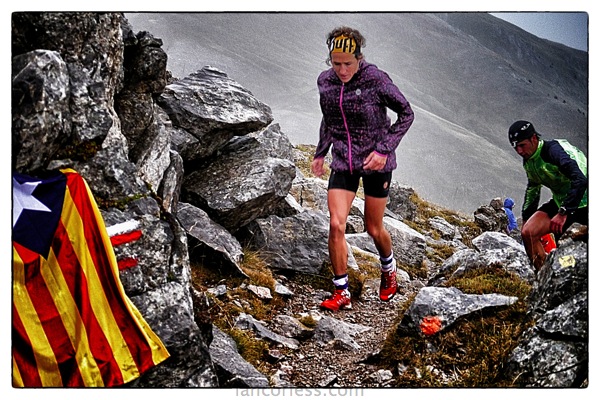
Emelie Forsberg copyright Ian Corless

Emelie Forsberg copyright Ian Corless

With some of the big American ultra legends crossing the pond last year to get a taste of skyrunning, the word is out!  Joining them this year: Anton Krupicka, Dakota Jones, Rickey Gates, Mike Foote, Timothy Olson, Joe Grant….

Kilian and Tony Krupicka copyright Ian Corless

Kilian and Tony Krupicka copyright Ian Corless

Dakota Jones copyright Ian Corless

Dakota Jones copyright Ian Corless

It’s full immersion for Kilian Jornet who, with his unique skills, will participate in no less than all three Series:  Vertical, Sky and Ultra!

Kilian Jornet copyright Ian Corless

Kilian Jornet copyright Ian Corless

Lizzy Hawker will be toeing the start-line at the Series’ first 100-miler while Anna Frost will take part in both the Sky and the Ultra Series.  The mix includes Phillip Reiter and Julia Böttger from Germany, top French names:  Francois d’Haene, Julien Chorier, Michel Lanne, Yann Curien, Maud Gobert and Stephanie Jimenez, Britons Andy Symonds and Tom Owens, Canada’s Adam Campbell.

Marco de Gasperi - copyright Ian Corless

Marco de Gasperi – copyright Ian Corless

Anna Frost copyright Ian Corless

Anna Frost copyright Ian Corless

Strong team participation is engaged right across the Series headed by the heavy-duty Salomon team as well as hefty, international line-ups from inov-8, La Sportiva, Salomon Agisko and Arc’teryx, The North Face, Haglöfs, Montrail, Scott as well teams from Spain, Italy, Russia, Japan

Take a look at the mix here.  Have we got everybody?

You’re still in time to join the throng and remember, if you’re competing in the World Series, there’s always a slot available for you.

Follow us for who goes where as the skyrunning season unfolds.

Follow the action on Skyrunning HERE

Follow on Talk Ultra HERE

On Twitter @talkultra

Bungle in the Jungle – A guide

iancorless.comP1050500

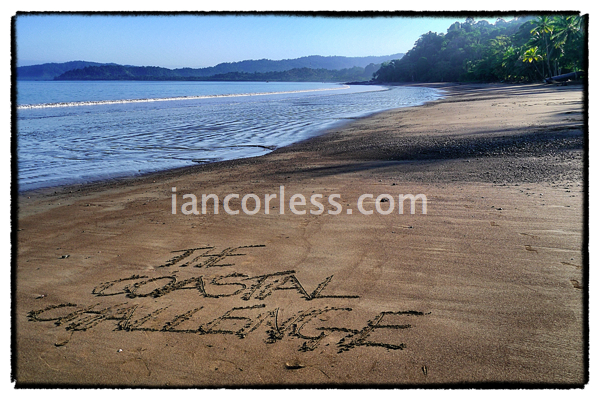
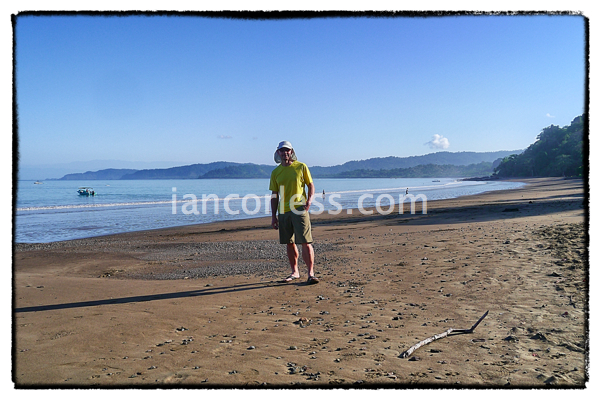
No matter how experienced, no matter how long you have been running, you can always learn something…. My recent trip to Costa Rica and The Coastal Challenge which took place in a rainforest made me realize that I knew very little about running in heat with high humidity, running in a rain forest and also running on consecutive days in this environment.
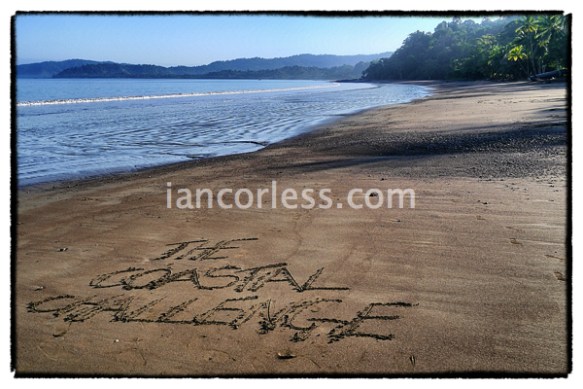
iancorless.comP1070278

I am quite meticulous in my planning. I like to tick boxes, cross ‘to do’s’ off a list and feel content that when I am at an airport travelling to a race that I feel that I have done everything I possibly can to get the best out of myself and the race when I arrive at my destination.
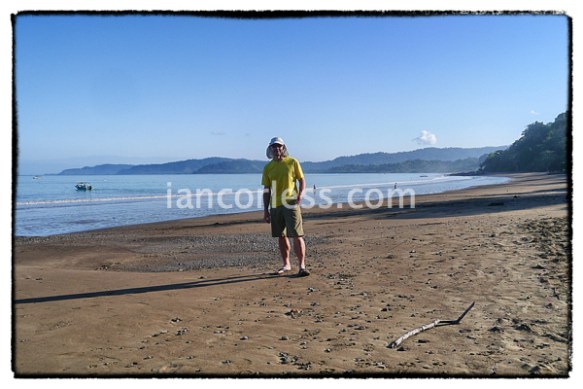
iancorless.comP1070287

Costa Rica was nothing like this….

I only found out I was going about four weeks before, so, that 12-20 week training plan that I would have created to then taper into an event didn’t exist. I was realistically just a week or two weeks away from the taper. When you add to this that since January 2012 I hadn’t been training due to knee issues. Of course I had been ‘working out’ but I hadn’t been training. Nothing specific. Training had consisted of runs every other day with the longest being at 2hrs 15m, other days had been cross training, plenty of time on the stairmaster and stretching and core.

My brief was not to race at The Coastal Challenge. This was a good thing, however, I was working as a journalist and my need to document, photograph and experience the course would mean getting involved.
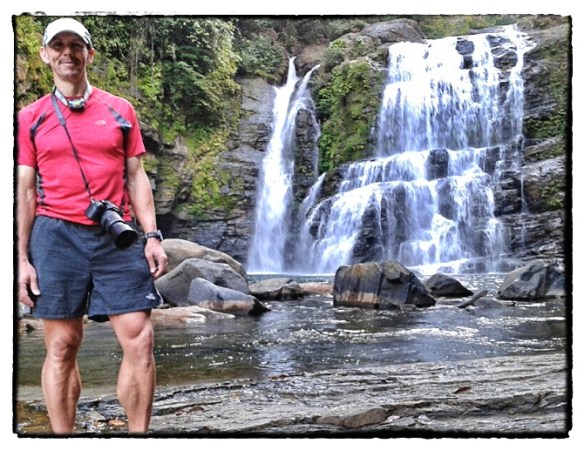
screenshot_163

My plan was simple. Start the day on the course at a great advantage point, photograph the front runners and then run to the end capturing more images, experience the terrain and then write up and download photos at the end of the day. Simple!

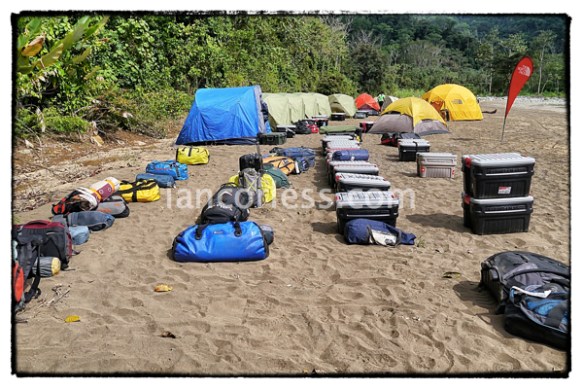
In addition to running we would be staying in a different campsite each day. Luggage and tents would be transferred ahead and food was provided.
iancorless.comP1050310

So what did I learn?

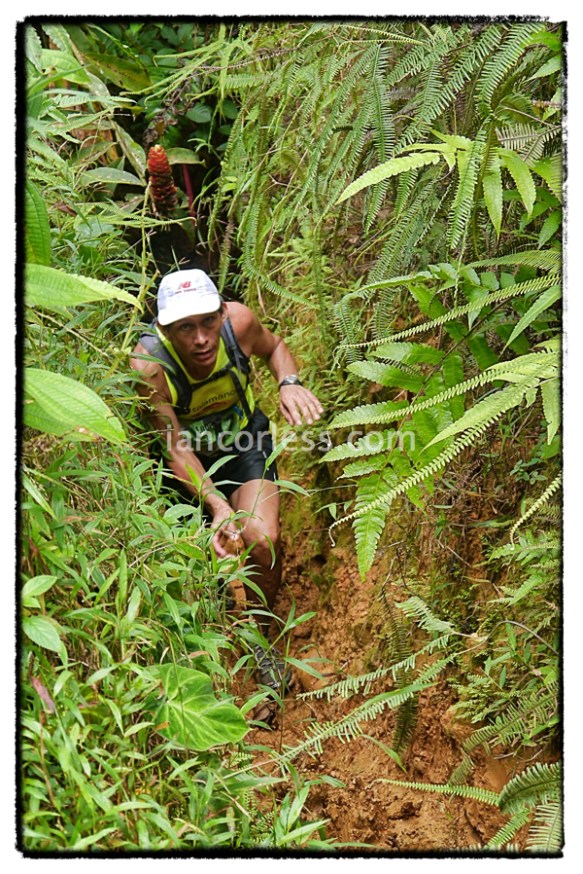
Pacing & Hydration: Costa Rica is hot and humid. Oh yes, hot and humid. Coming from a UK winter the shock is pretty drastic. But I found it manageable. You certainly need to adjust many things and you need to make those adjustments on day one. In simple terms you need to ‘slow down’ and ‘hydrate’ more. Within 10-15 minutes of exercise your body is soaked and your clothing is completely wet.

iancorless.comP1060672

It stays that way all day so get used to it. Sweat rates vary but in the excessive humidity and adding exercise to this it is fair to assume that 750ml + will be required per hour. Replacing electrolytes will also be important so look into what works for you. Runners used a combination of ‘adding’ electrolyte to water or taking salt tabs. Day one of our race started with a 10k road section, in retrospect this was designed to ease the runners into the terrain and heat/humidity, however, I think it actually allowed to many fresh runners to run too quick right from the gun.

iancorless.comP1050728

By the time they reached CP1 and the start of the jungle many were already in trouble… they didn’t know it at that point but they certainly knew it in the final 25% of the day. By pushing too hard at the beginning of the day they couldn’t then pull back the deficits in the latter stages  and suffered. By the end of day one, the race had several drops and a far too large group suffering from dehydration.

Feet: Oh boy. Multi stage races are renowned for damaging feet but really this shouldn’t happen. If you look after your feet, have the correct socks and the correct shoes it should all be straightforward. Of course unexpected things can happen such as a little rubbing and the odd blister BUT at TCC I saw people with literally no skin left on bruised and damaged feet. I am actually amazed that some of these runners managed to finish the race. The rainforest will guarantee several things:

  • Your feet will be hot
  • Your feet will be wet regularly
  • Your feet will be twisted and turned
  • Over the six days you will run/walk over 200k
iancorless.comP1060512

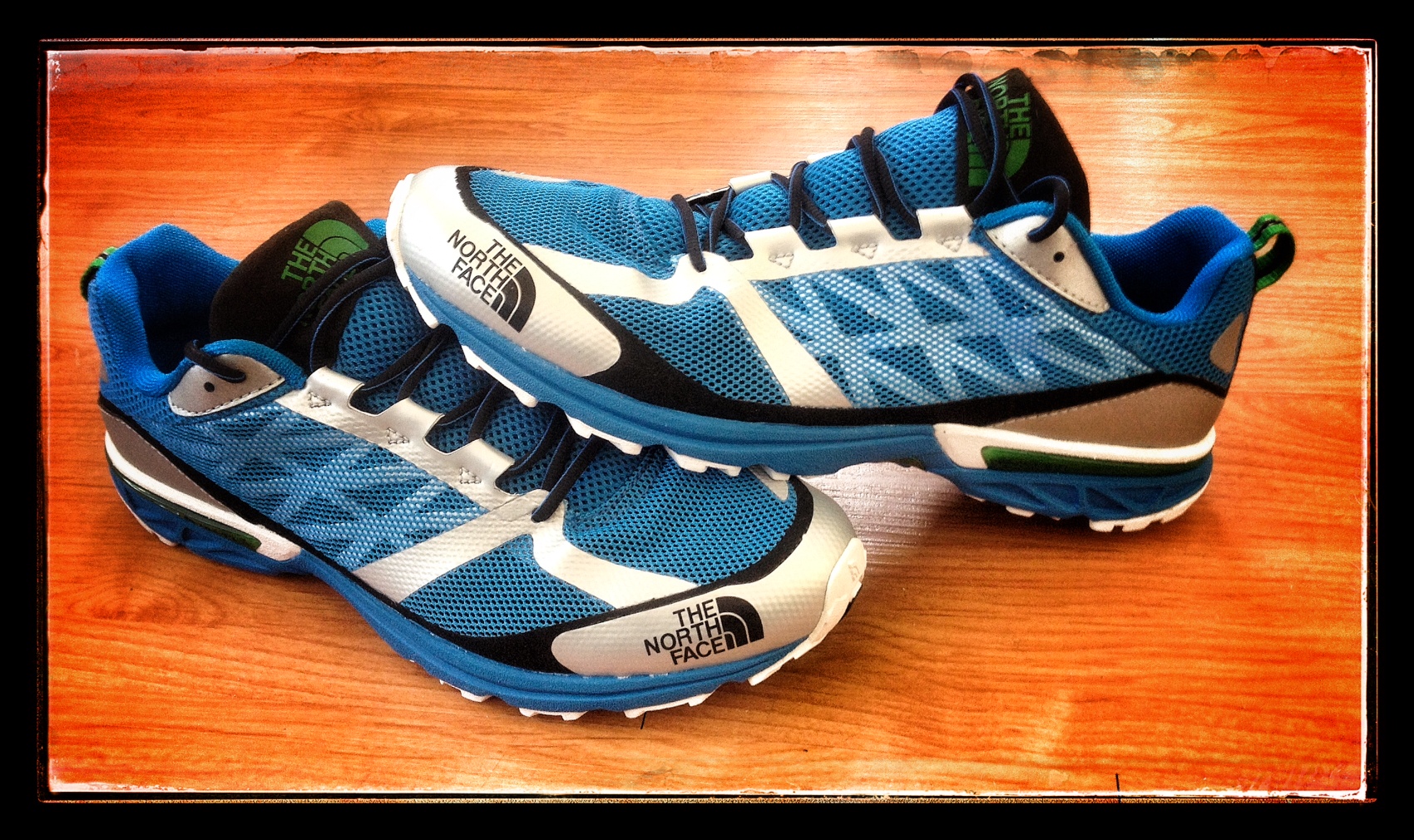
With the above in mind you need to plan accordingly. This race is not self sufficient so this is a big advantage. Why? Well for a start you can bring several run shoes. I took the two ‘styles’ of shoe, Salomon Speedcross 3 and TNF Hayasa,
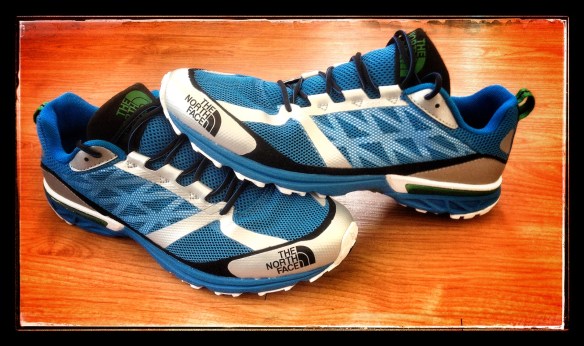
photo 3

I had two pairs of each. One my correct size and the other pair a ½ size larger (just in case). A larger shoe will allow some room should my feet expand. The two styles of shoe also allowed me options in regard to ‘grip’. The Speedcross is far more aggressive than the Hayasa. Certainly something with an aggressive tread suited the environment.
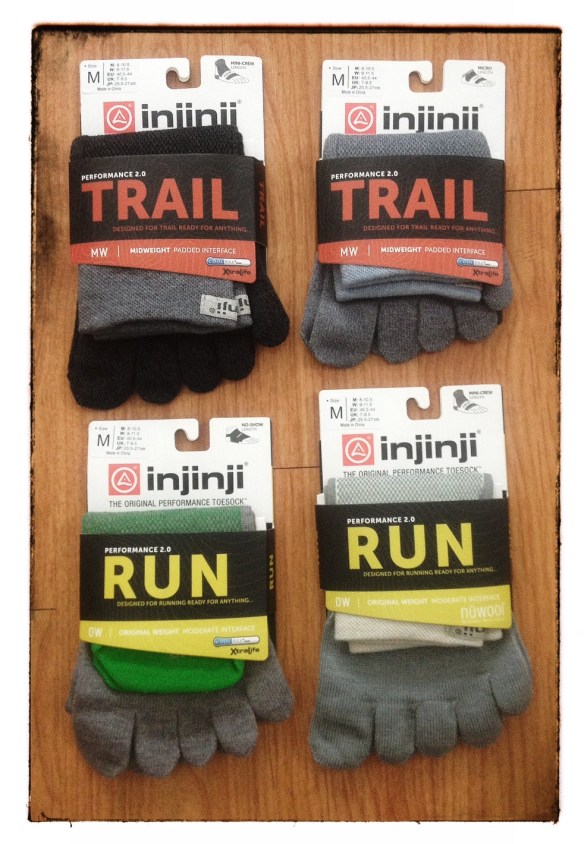
photo 2

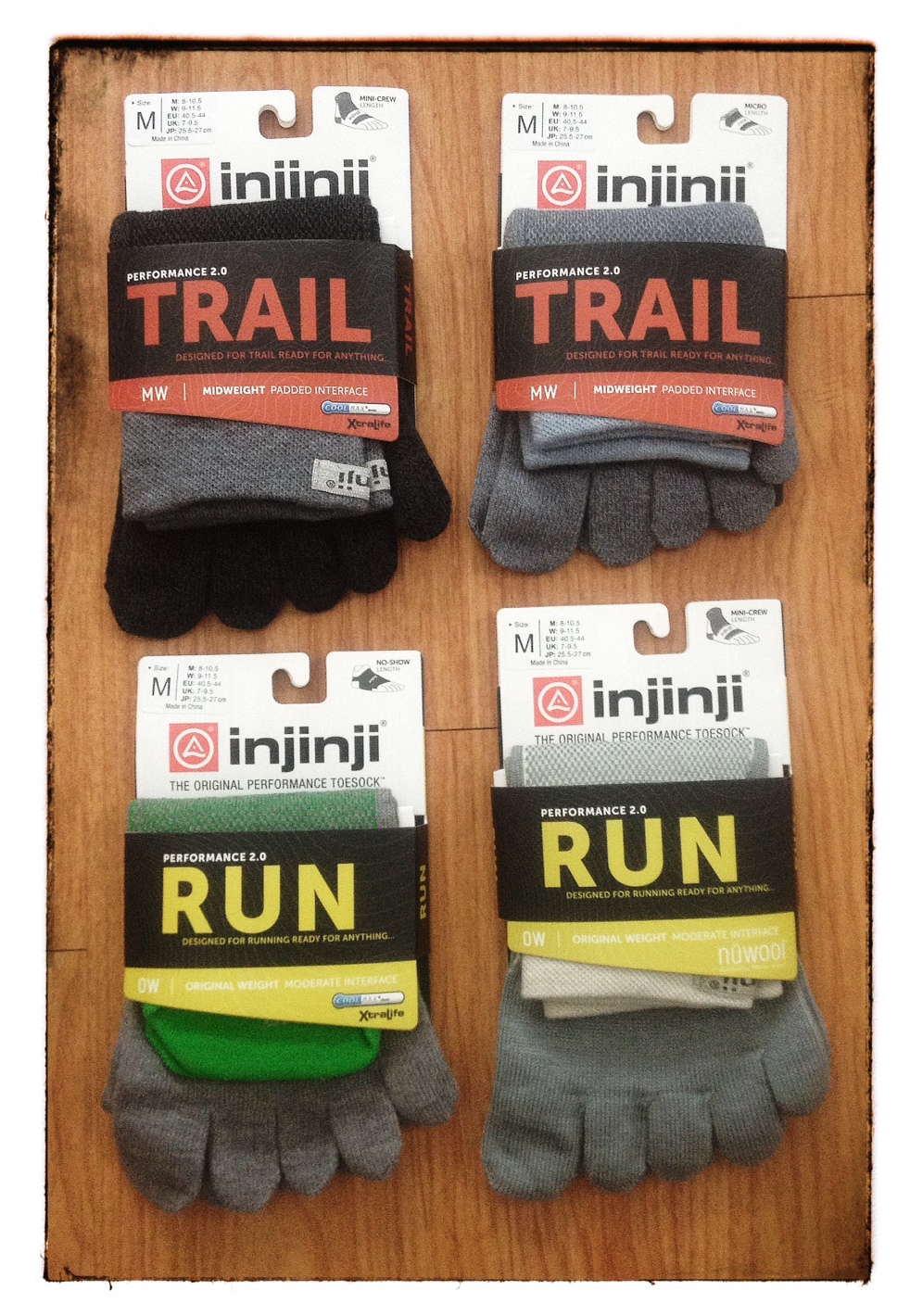
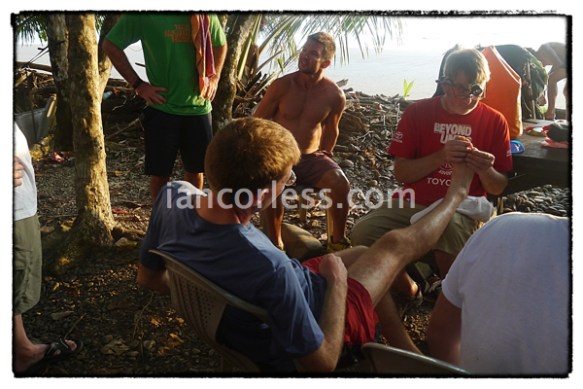
Socks, like shoes are personal but I am a firm believer in Injinji socks. Each toe is in its own ‘little pocket’. This for me reduces the possibility of problems or issues and over the 6 days of the race I never got one blister! The race had a foot doctor. Without him some runners would have been out of the race. If you have this option, take advantage.
iancorless.comP1080841

In training understand what you will be doing at your race. Practice walking, running, climbing, descending and run with wet feet. Find out what does and doesn’t work. Get the mistakes out of the way before you start the race.

I did not tape my feet prior to running and I added no Vaseline. After each day the first thing I did was to remove socks and shoes, clean them and the wear flip flops to allow them to breath.

*note – many of the runners who had problems had worn shoes too big. They had expected feet to expand but on day one and day two, the ‘larger’ shoes had allowed the foot to move within the shoe and consequently the foot had blistered. I am a firm believer that the shoe should ‘fit’. Excessive movement is a recipe for disaster.

iancorless.comP1060516

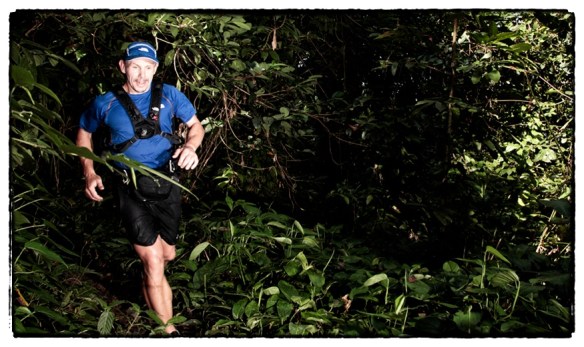
Clothing:  Six days racing means six sets of kit. As far as I was concerned. It’s a simple strategy. You run in one set, get showered and cleaned up, put another set on to relax post run and then you use that kit the next day. I was fortunate that The North Face did provide me with some clothing but not six days worth.
Stage 6 TCC_Snapseed

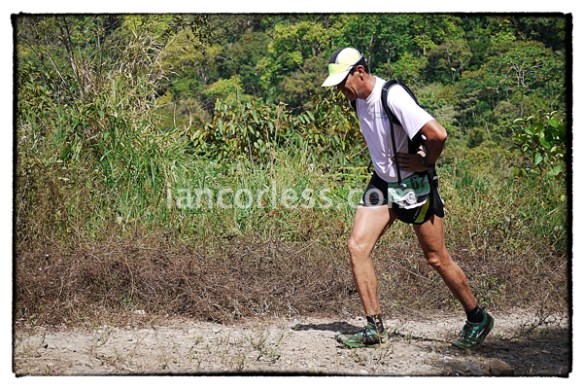
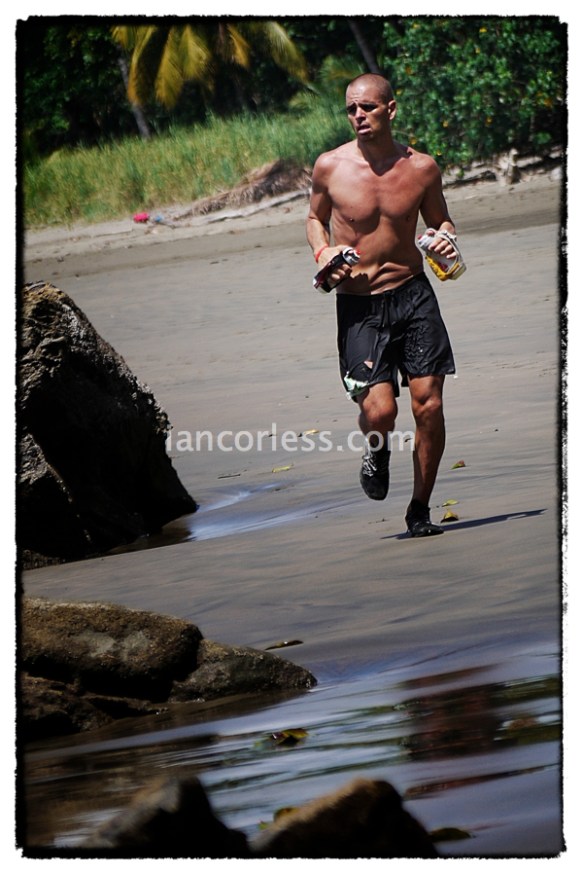
I added my existing TNF stock to the pile. Clothing is personal but the key elements for the jungle are comfort and the ability to wick sweat. I wore T-shirts instead of vests to cover my shoulders (always vulnerable) and I wore loose baggy shorts. It’s not rocket science but shirts with a mesh back certainly help with breathability, especially if using a pack. Race winner, Dave James wore no top! I don’t recommend this… it works for him but his skin looked well adjusted to the sun and I am sure he applied protection too.
iancorless.comP1080627

Dave also wasn’t using a pack, he used hand bottles only. Ladies have a multitude of kit options available to them, ‘looks’ can be far more important to some than functionality. However, simple functionality works best (in my opinion). Some ladies wore ‘strappy’ tops that offered minimal coverage on the shoulders and after 5+ hours on the trails the inevitable would happen… very unusual tan lines and some sunburn.


TNF Mica 1 Tent

TNF Mica 1 Tent

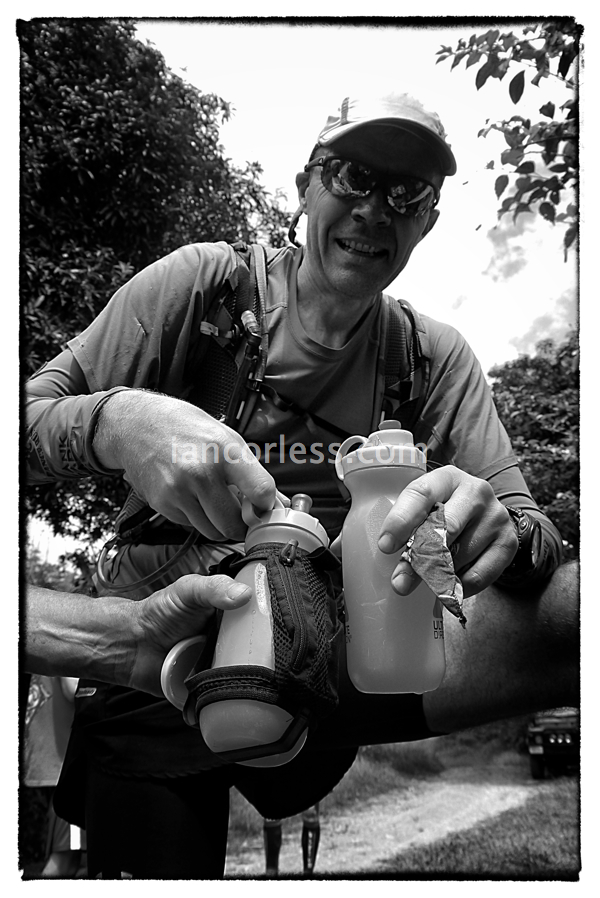
Equipment: This race was supported with feed stations. We had no ‘essential’ kit needs other than carrying adequate liquid supplies. Dave James was the only person in the race who used just hand bottles. Everyone else used a pack of some description. In my opinion, some used packs that were way too big and heavy. I am not sure what some people were carrying but the heat, humidity and long days on the trail should mean ‘minimal’ is a priority. Bladders or bottles? I have to say I am a bottle fan. Bladders are just too awkward.
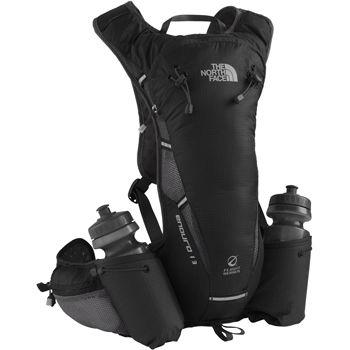
northface-enduro13-2012-med

I used the TNF Enduro 13 pack with two bottles that sit on the waist. In the pack I was carrying two cameras inside and one camera which I added to the waist belt. However, this pack can also take a bladder too. So, if required I could have carried 3 liters. Had I been ‘racing’ I most certainly would have done this on the two long stages as feed stations were wider apart. Always best to stick to just water in a bladder to avoid problems with taste and bacteria. In regard to ‘essential’ kit I had a whistle, first aid kit, some food, purification tablets, phone, cash, small pocketknife and additional sun cream. With regular feed stations and such a hot climate it really wasn’t necessary to carry anything else.

iancorless.comP1060664

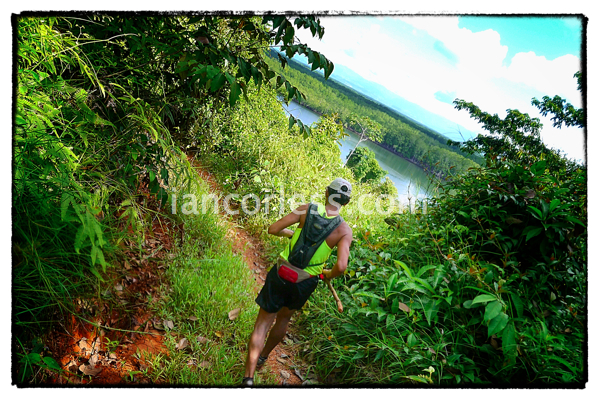
Tips on the trail: Run in the shade whenever you can. I found that as the day got hotter it was effective to run all shaded sections and then reduce pace or power walk in the open sun sections to regulate temperature.

On hills I power walked as fast as I could. On some sections of the course, depending on your run style and ability, ‘poles’ may well have been useful.
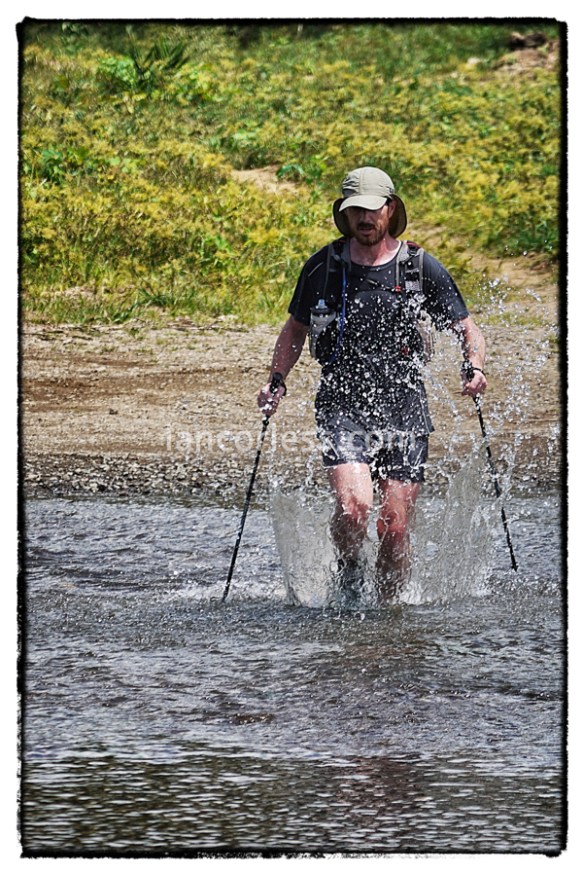
iancorless.comP1080883

Descents on the whole were easy, however, one stage in particular was brutal. It’s always a good idea to practice going down hill. Poles again may have been useful BUT vegetation can be very thick and poles would have got caught and may very well have been an additional hazard. Remember that you want to reduce fatigue and impact as much as possible. This is not a one-day race but a six-day race. Short steps reduce the impact.

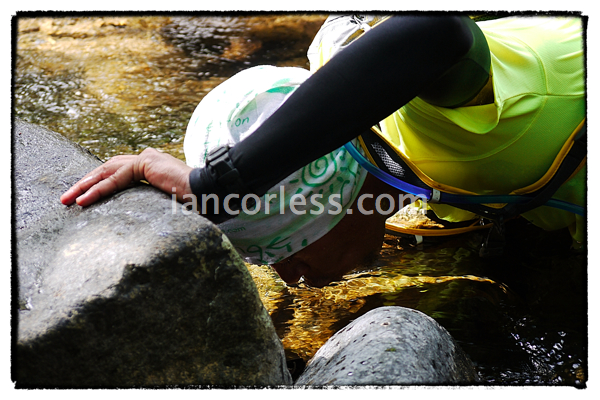
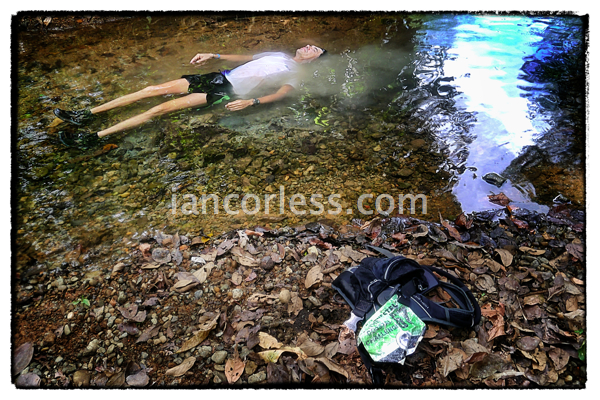
Utilize all water on the course! Any chance you get, submerge yourself in water crossings, wet your head, wet your neck and take a minute to let your core temperature drop before moving on. The route has plenty of opportunities for this, it’s crazy not to take advantage of it. I
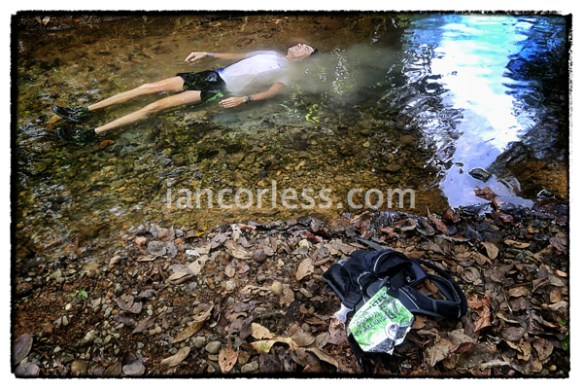
iancorless.comP1060860

f you find ‘flowing’ water that is not near farmland then use it to drink. Many runners did this and as far as I know, nobody had issues. I carry ‘purification tablets’ just in case. Better safe than sorry.
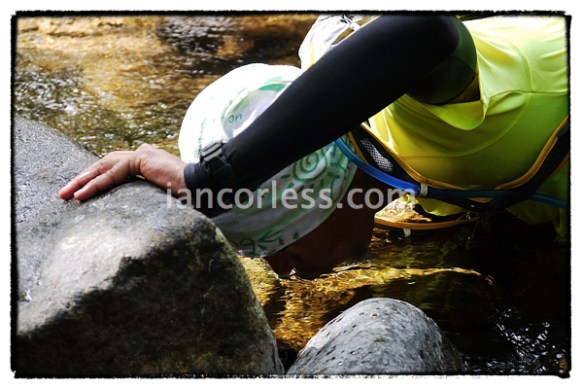
iancorless.comP1080816

Feed stations are important. Always refill your bottles and take on energy. If you are struggling take some time out. Five minutes in the shade can make a world of difference.
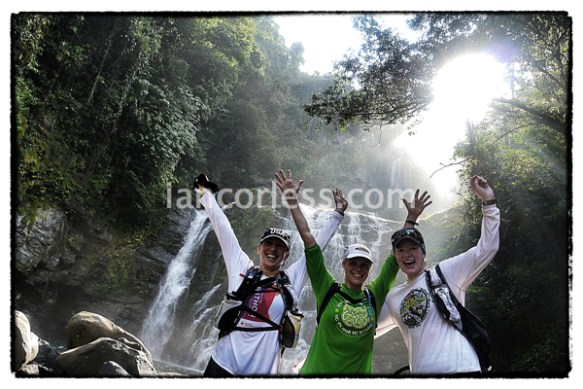
iancorless.comP1060328

Depending on your ability, ‘buddying up’ is a great idea. If your plan is to maximize the experience and not race then buddy running can make the experience far more rewarding and potentially less stressful. The course was exceptionally well marked but you could go off course and many did. A buddy is a nice security blanket. In actual fact, 2nd and 3rd placed ladies in the 2013 edition buddied for the last two stages.

You are in a jungle so wildlife is all around you. You hear it all the time but the reality is that you see very little. All wildlife is far more scared of us than we are of them. Main issues may come from snakes or spiders. In thick vegetation its wise to look at foot and hand placement just to make sure!

iancorless.comP1050684

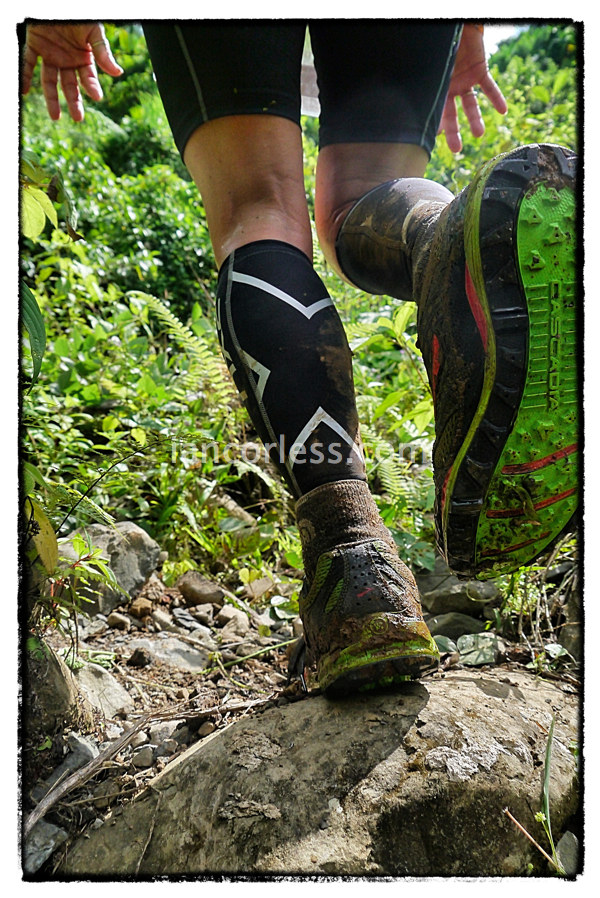
Calf guards (or compression) on one or two stages would have been good. I personally prefer not to have additional skin coverage so that I can keep cool, however, one stage in particular had undergrowth that was well above knee height and it did cut, graze and irritate my legs.

Camp life: Camp was a great place. You had very little to worry about as food and drinks are provided. It becomes a social mecca in the sun. Sites were strategically placed next to the sea or a river so you could swim or cool down that way. All sites had toilet and shower facilities (some better than others). Important factors were:

  • Tent/ Hammock
  • Clothes
  • Kit

iancorless.comP1060484

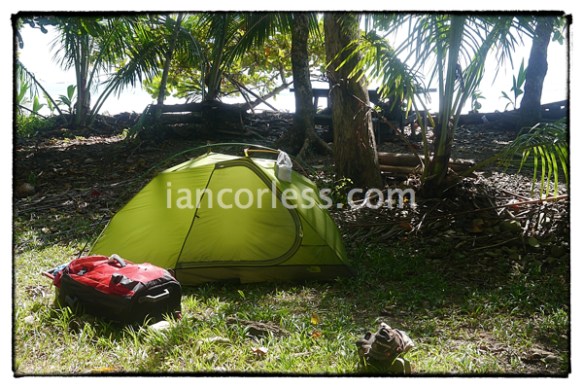
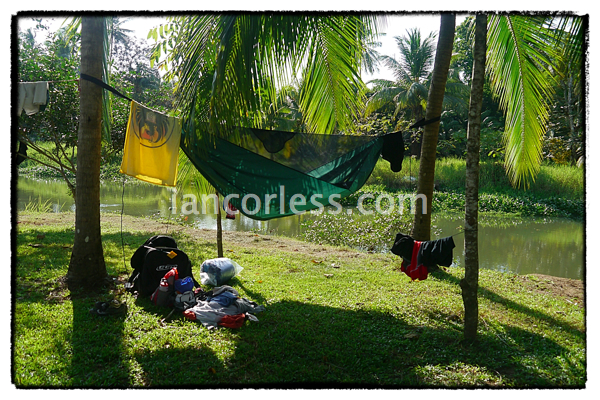
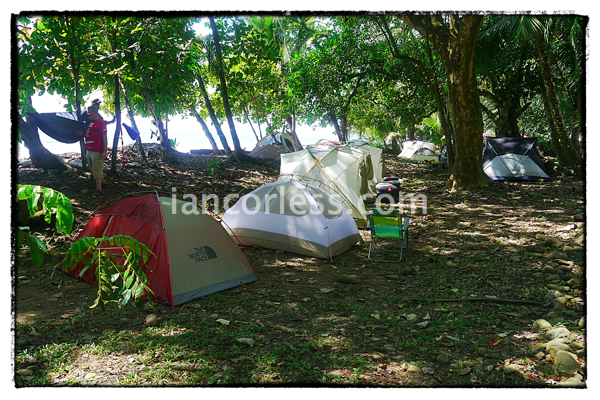
Tents that pitch ‘inner only’ are essential. It is so hot you need nothing else. Of course, it is a rainforest so make sure you bring the flysheet just in case. Other than a few short showers we had no rain (unusual apparently). I use a small one man tent, the TNF Mica 1 and it was perfect. I had an sleeping matt and inflatable pillow. I didn’t use a sleeping bag but I did take a ‘sleeping bag liner’ for any potentially cold or chilly nights. I slept in my next day run kit.

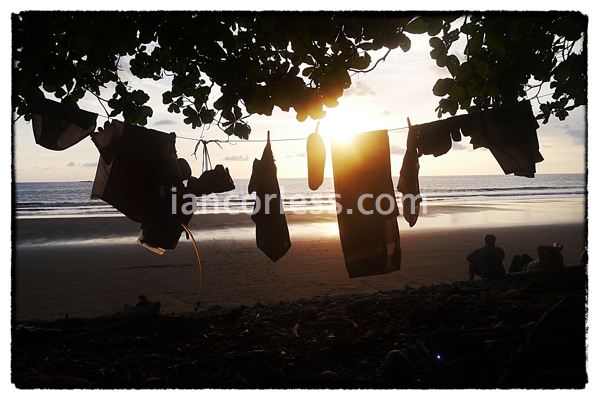
Your clothes and kit are outside all night, so, the organization recommend  ‘spacepackers’ they are waterproof containers that hold all your kit. They are a good idea but hopeless for travel. One or two people had large ‘Stanley’ toolboxes that had wheels and a pull handle; much better idea.

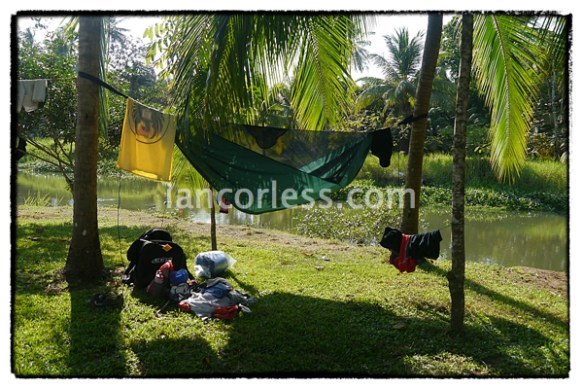
iancorless.comP1060489 iancorless.comP1060685

I used a TNF ‘Basecamp’ bag which was waterproof and easy to transport. I also had a TNF waterproof rucksack. It was essential. In this I stored my computer, cameras, cables, phone, microphone, etc, etc. I can’t recommend this pack enough.
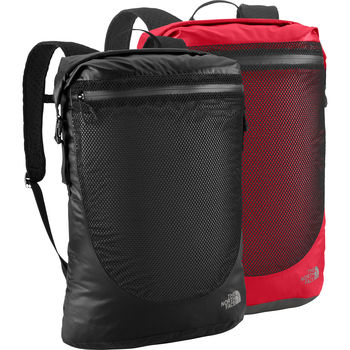
Waterproof Pack

Waterproof Pack

I had a full medical kit that included everything that I would need. It had all sorts of medication, scissors, tapes, creams, antiseptics etc to cover pretty much all eventualities. The race does have a medical team and foot doc but you should be responsible for all the essentials.

I carried very little additional clothing. I had lightweight long travel pants, travel shorts, hat with neck cover and some lightweight shirts all supplied by Arc’teryx. Perfect!

Arcteryx

I had one lightweight showerproof/ windproof jacket should it be required. I didn’t need it at any point during or after the racing but San Jose before and after the race was much cooler. It came in handy then.

Flip flops or similar are essential!

I had one towel, a travel towel that you can get from any ‘outdoor’ store. Small pack size and dries quickly.

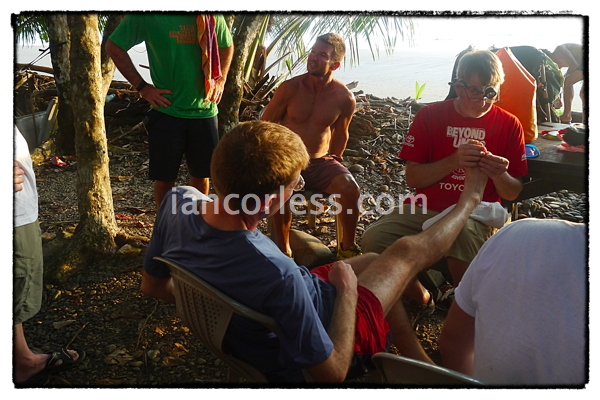
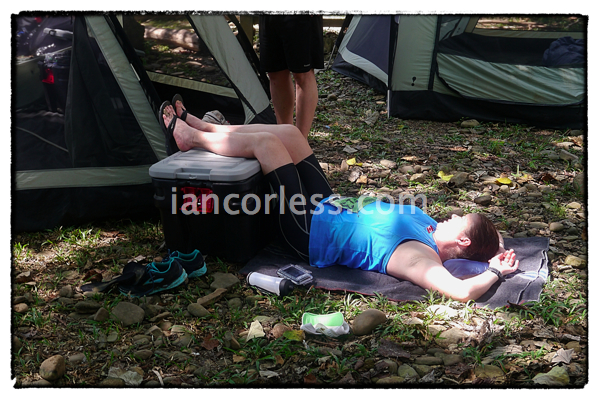
RECOVERY: Important. After each stage, recover. Drink, eat, look after your feet and then get some time with your legs in cool water and elevate. Find some shade and relax. Get a massage if it’s a possibility. At the TCC they had a team of masseurs.

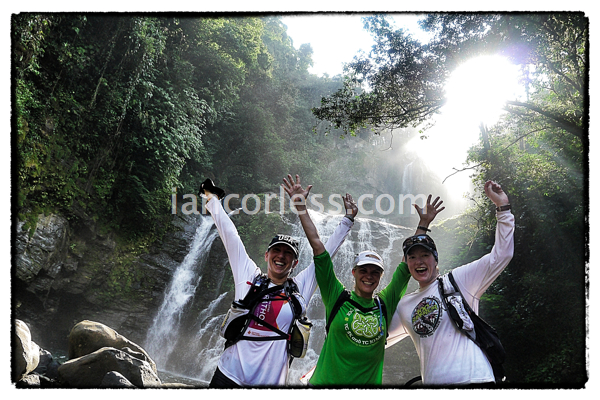
Extras: Don’t get too involved in the racing. The course (and others) has so much to see and experience that you don’t want to get to the end and it be a blur. I feel very fortunate that I ran with cameras and had a job to do. I had to stop, look around, decide on photo opportunities and often wait. I really feel as though I experienced the rainforest. I will never forget sitting in the middle of a river at 0600 one morning waiting for the runners to run towards me. I saw birds, snakes, monkeys and I heard so much more… special moments that all added to the experience.

Stage racing is all about bonding and making friends. I am pretty sure that every runner left with so many more new friends. Go into these experiences with open arms and you will leave with them full.

Understand that before you start you will need to dig deep. This may be a holiday but it is no picnic. The Coastal Challenge is a tough course. The dnf’s and drop downs to the shorter Adventure category confirm this. But it is achievable for everyone. If you get day one and day two right, three, four, five and six fall into place. It’s not meant to be easy. If you understand that, the outcome will be a positive one.

Essential Kit:

  • Run shoes 2 pairs
  • Run kit for six days – tops, shorst and socks (I recommend 6 sets)
  • Rucksack that can hold 2-3 litres – bottles/ bladder or both
  • Medical supplies
  • Food for on the trail
  • Whistle
  • Sun Cream
  • Electrolytes
  • Hat
  • Sunglasses
  • Travel Towel
  • Tent that pitches inner only
  • Waterproof bag or box for all kit
  • Additional waterproof bag for electronics
  • Phone
  • Pocket Knife
  • Money
  • Credit Card

Optional Kit:

  • Run Poles
  • Gaiters
  • Sleeping bag
  • Music (ipod or similar)
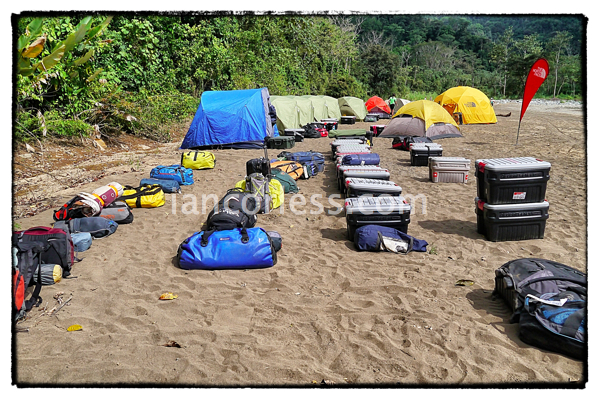
The Coastal Challenge – Summary

iancorless.comP1070278All things must come to an end…. the atmosphere around camp was a little subdued. Some participants looked relieved that they didn’t have to squeeze a pair of shoes onto blistered feet. For others, they seemed sad that another day on awesome Costa Rican trails didn’t await.

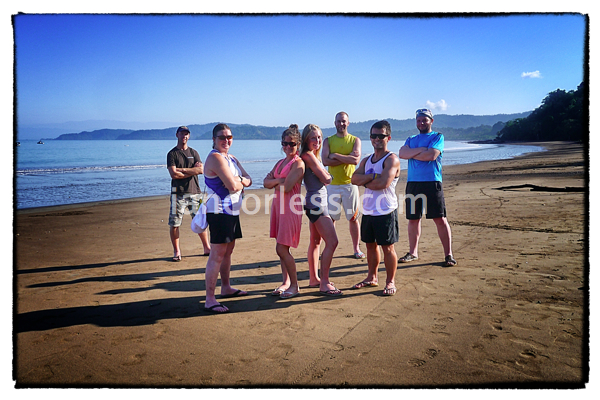
iancorless.comP1070268Some required quiet time away from the camp to walk Drake Beach as the sun welcomed a new day. Others huddled in groups telling stories of water crossings, quad busting descents and dehydration.

Ultimately every person had a story. A unique story, personal to themselves that they would hold within them forever. No matter how low the low points, the day after never seems so bad. If it was easy, everyone would do it…. The Coastal Challenge offers some very testing terrain with relentless heat and humidity to provide an overall race experience that will test each and every person. To cross the line on the final day requires commitment, dedication and some luck.

iancorless.comP1070267

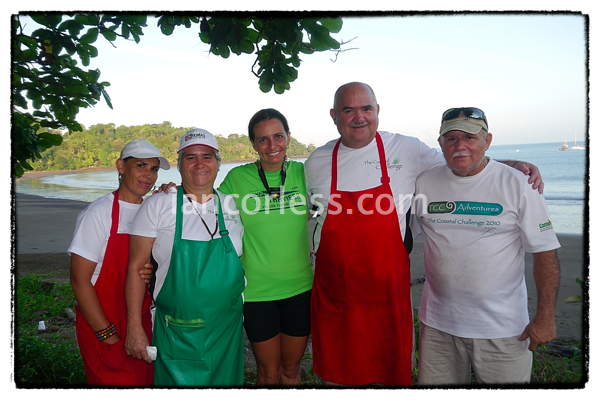
The logistics of mobilizing a camp and moving it everyday in tough terrain is nothing short of remarkable. The course marking and dedication from the TCC crew was available for all to see. This is no easy race to run, but it is certainly no easy race to coordinate. The catering team showed a dedication not often seen… rising at 0200 to have breakfast ready for 0400, break down camp, move to the next location, set up and then cook lunch ready for the runners arrival. Clear lunch and then prepare dinner all for the process to be repeated again. Respect

iancorless.comP1070256Marking the course was done before the race and then every stage had TCC crew heading out in front of the race to ensure that nobody would get lost. While the race was underway, the camp crew would mobilise moving luggage, tents and all other elements of base camp and then set up again. All this in searing heat… tough wor

iancorless.comP1060485Base camp had a full medical team and feet specialists to ensure that everyone could be in the best shape possible to start the next day. It’s a really important aspect of multi stage racing and without it, many would not see the fin

iancorless.comP1060512Stage races are not meant to be easy! Was the The Coastal Challenge too hard? No, of course not. Was it hard? Yes, without doubt.

Several runners at TCC had participated in Marathon des Sables several times, on questioning they all said that The Coastal Challenge was a much harder race. The combination of heat, humidity, climbing and tough technical terrain was a much greater test of mind and

iancorless.comP1070292A key aspect of this race is camp life. An opportunity to relax in beautiful locations, make new friends and sleep under the stars. Strangers by the end of day 1 became best friends by day 2. The comradeship, the willingness to sacrifice time to help another is a great thing to see. One persons suffering was taken on by others and the burden shared.

With the race over these friendships will continue and no doubt be renewed at other races in the future.

But it was time to l

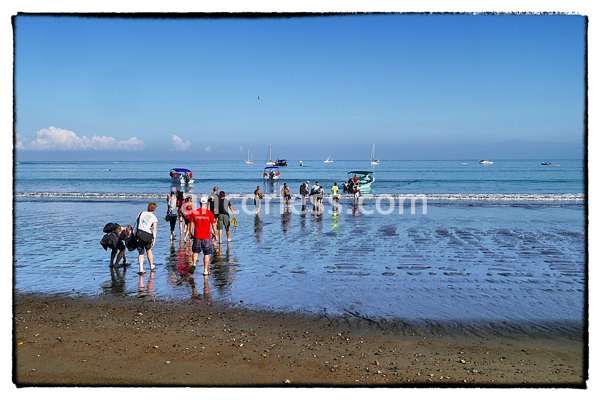
iancorless.comP1070293The excitement and beauty of the six previous days was repeated with an incredible journey by boat to our bus that would eventually return everyone to San Jose and a comfortable b

iancorless.comP1070344It was time to switch off, let the experience soak in and remember what had been achieved.

Congratulations to Dave James and Gemma Slaughter for the respective wins in the Expedition category.

Ultimately though, the credit goes to every participant who battled and endured the TCC Expedition or Adventure category. Tam Miller from Vancouver Canada summed it up for me when she said:

“I feel whole and complete and I have no unfinished business”

Pura Vida!

You can read day to day blog posts here:

And you can view images from each day here:

Images available to view on FLICKR

The Coastal Challenge – Day 5

iancorless.comP1060718

Not sure if it’s a good thing or a bad thing, but 3-4 hours broken sleep seems to be no problem here in Costa Rica. The catering team were crashing pans and chatting at 0200 as they prepared our 0400 breakfast. No animal sounds or crashing waves to break the slumber, today it was the pitter-patter of rain. Not large quantities, it was splash, splash, splash, splash; big drops of rain. When I opened my tent a mist covered the camp providing an eerie feeling to glow of headlamps.

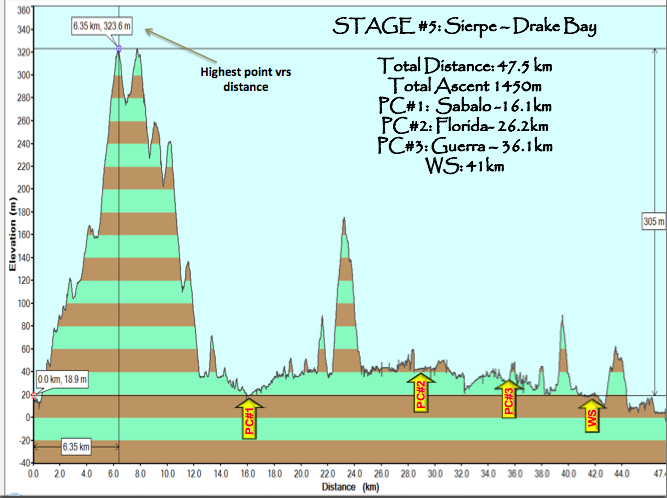
TCC stg 5

iancorless.comP1060729

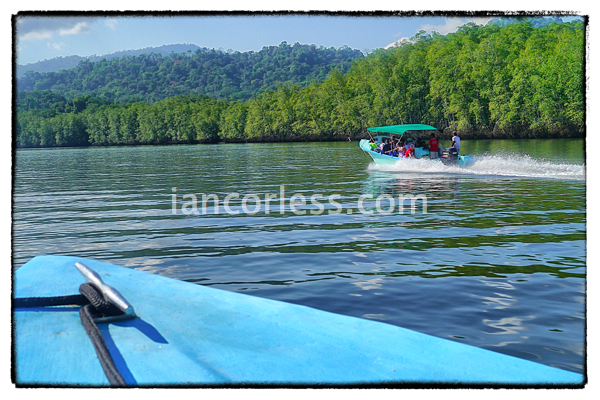
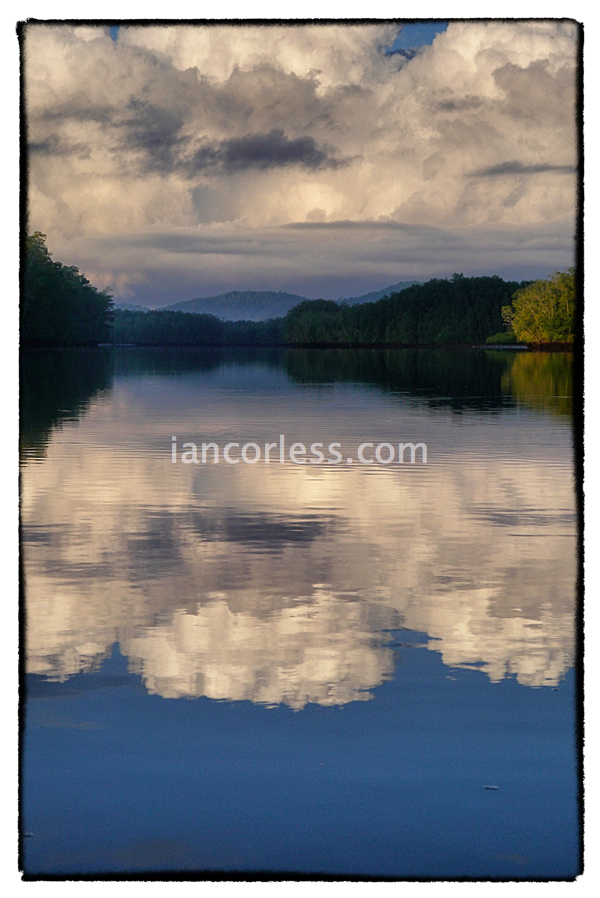
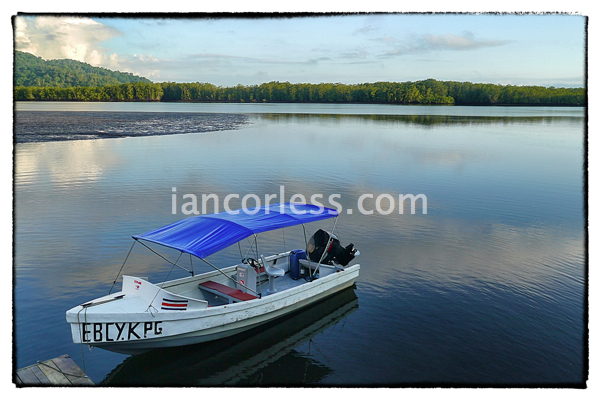
Today’s stage required a short bus transfer and then a ferry to the race start. We transferred, waved the runners off and then had the use of a speedboat to make our way to CP2. No roads to this location…. I have to say the boat trip was a real treat. We saw the sunrise and wildlife emerge for a new day. The driver showed off a little by opening the throttle and weaving from right to left. At our stop point we transferred to the grounds of a private house and set up. I ran into the trail heading toward CP1 to pick my spot and await the front-runners.

iancorless.comP1060761

iancorless.comP1060773

iancorless.comP1060797

At 0600 the runners departed. Dave James had had rough night with broken sleep and was feeling a little under the weather. Would this provide an opportunity for Ismael?

iancorless.comP1060807

Todays course had less elevation but some of the most beautiful scenery. Dense rainforest with muddy/clay trails, single track that widened to double track and fire trail. Farming fields with long grass and lush vegetation. Water-crossings of varied in size and length. Just before the finish, a small section of road and a few hundred meters of idyllic beach. It had everything.

iancorless.comP1060895

Running a little behind predicted time, Dave arrived with Ismael just behind. This was about 1km before CP2 and just over 2 hours into the race.

iancorless.comP1060809

“Looking good Dave” I shouted… no response! Mmm he’s not having a good day I thought to myself. Despite what internal dilemmas he may be having he moved from left to right foot with ease. As Ismael passed, he waved with a big smile. He was obviously enjoying the day and course.

iancorless.comP1060813

Next to arrive was Jose Lopez who is currently placed 3rd overall. He was certainly finding the tough and slippery clay trail less to his liking than James and Dris. I ran into CP2 with him and then left ahead to capture additional images.

iancorless.comP1060802

The sun was rising high now and provided greater light as it broke through the patches in the dense canopy above. A small descent with slippery clay provided an opportunity to get an image of Henry Monestel. I then decided to run with him through to the next CP some 10km away.

iancorless.comP1060818

The canopy provided some great shade but when you moved out into the open sections, the sun hit and it hit hard. The difference between the two must have been 20 degrees! The logical thing is to run the shade and jog/ powerwalk the sun sections. It worked well. Every now and again I went ahead, captured an image and then ran with Henry again. The many streams provided an opportunity to completely submerge us and reduce our core temperature or take of a hat and soak it, so important when the heat and humidity is so high.

iancorless.comP1060860

CP3 arrived and no other runners were in sight. I decided to push on keeping Henry for company. Up trail and down trail, Palm trees everywhere. The diversity and difference in the vegetation is incredible. In no time CP4 arrived and I waited a little while in the hope I would see some other runners.

iancorless.comP1060891

Rodrigo Curazo, RD for the race told confirmed that Dave was struggling. He had arrived at the CP just behind Ismael but they had left together. Lopez currently in 3rd was also struggling. Ultimately the overall positions in the race wouldn’t change but certainly the fight for overall 3rd place was on.

iancorless.comP1080902

A steep climb straight out of the CP and then the trail dropped to a small village, a right turn and then a water crossing. It was the final section of the race now and a short stretch of road provided access to an awesome stretch of beach and the finish of stage 5.

iancorless.comP1060898

Dave and Ismael ran the beach together with Ismael taking the stage win by 1 second. Lopez held on to 3rd place despite his issues.

iancorless.comP1060906

For the ladies, Gemma Slaughter did exactly what she said she would do and attacked! Behind Hale and Meyer worked together to hopefully pull back some time but it was all to no avail. Gemma ran onto the beach beaming safe in the knowledge that had she not only won the stage but also confirmed that her consistency will almost certainly secure her the overall win now. By the time Hale & Meyer crossed the line (together) they were another 35 minutes behind giving Slaughter a 1-hour margin.

iancorless.comP1060953

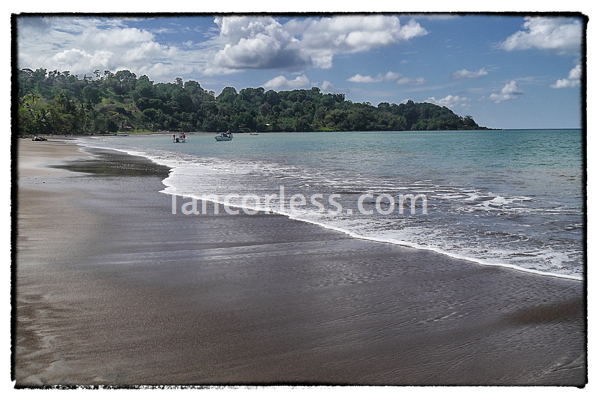
The setting for today’s stage was a remarkable testament not only to the diversity and beauty that Costa Rica offers but also a testament to Rodrigo and his team who provided access to trails that nobody runs on. The final setting at Drakes Beach is a picture postcard setting and our campsite is little more than 100m from the waters edge.

iancorless.comP1060943

Days running and relaxing afterwards don’t get much better than what The Coastal Challenge have offered today. Apparently, tomorrow’s stage, a circular loop back to our campsite is also ‘special’. I can’t wait. We also get another night at this incredible campsite.

Pura Vida!

Tomorrows stage is the final of the race and a loop circuit back to our day 5 campsite.

TCC stg 6

 A full set of images from day 5 can be viewed HERE

Results for stage

  1. I Dris 11:11
  2. D James 11:12
  3. J Lopez 12:17
  1. G Slaughter 12:57
  2. I Hale 1:32
  3. A Meyer 1:32

Episode 28 Geoff Roes & Emelie Forsberg

Talk Ultra - Geoff Roes, Emelie Forsberg


Episode 28 of Talk Ultra has an interview with Geoff Roes who in the 2010 edition of Western States 100 set a new CR and became a star in the film, Unbreakable. We also have an interview with rising female star Emelie Forsberg. We discuss her incredible 2012 and what lies in store for 2013. In Talk Training we have the ‘Rockdoc’ telling us all about Kinesiology taping. We have A Year in the life of…, part 2 of our MDS special, the news, a blog, a Meltzer Moment and the up and coming races.

Show timings:

00:00:45 Start

00:13:23  A year in the life of – Amanda Hyatt

00:27:17 News

003805 Blog – Jez Bragg has just completed the Teararoa in New Zealand. Catch up on his whole experience via his blog HERE

00:38:45 Talk Training with Paul Coker from Rocktape – website HERE

01:16:05 Back to Karl

01:20:16 Geoff Roes website here

Date of Birth:
April 14, 1976

Place of Birth:
Syracuse, NY

Current Home town: 
Juneau, AK (May-Aug) & Nederland, CO (Sept-April)

Primary Race Distance:
50k and up.

Other hobbies or sports:
Snowshoeing, XC skiing, Mountain Biking, Bike Touring, Cooking, Writing

What MHW/Montrail gear and clothing is in your quiver for a typical day at/ on the trail? 
Montrail Mountain Masochist, Mountain Hardwear Effusion Jacket, Mountain Hardwear Fluid Race Vest, Mountain Hardwear Way Too Cool tops.

How were you introduced to your sport?
Came to Ultrarunning on my own. It just sounded fun to try to run a 50k.

What inspires you? 
I’m most inspired by getting out in the mountains and exploring new places.

What advice would you give to newcomers to (your sport) today? 
Try to enjoy every run you go out on. If you’re not enjoying the running that your doing, try some new things until you are.

What the first thing you look forward to doing after a long run / race?
Seeing friends, family, and other racers at the finish… and drinking a beer.

How do you balance your training schedule with your “real” job? 
I’m one of the lucky few in the sport whose training is my “real job.”

In 10 years I hope to be…
Getting as much satisfaction out of my life as I am now.

Six-word bio: 
Living for Now. Happy and easy.

When singing karaoke, what song do you sing to bring down the house?
Have never, and likely will never sing karaoke

What music gets you fired up?
I don’t listen to music to get fired up. The music I do listen to tends to be music which has more of the opposite effect, keeping me calm and mellow, which I think is a lot more beneficial in ultrarunning, a sport that requires so much patience and ability to take things as they come.

CAREER HIGHLIGHTS

  • February 2012, Iditarod Trail Invitational – 1st place in foot division
  • September 2011, UROC 100k – 1st place
  • March 2011, Chuckanut 50k – 1st place, Course Record
  • July 2010, Crow Pass Crossing – 1st place, Course Record
  • June 2010, Western States 100 – 1st place, Course Record
  • November 2009, Mountain Masochist 50 – 1st place, Course Record
  • September 2009, Wasatch 100 – 1st place, Course Record
  • February 2006, Little Su 50k– 1st place, First Ultramarathon

Course records:

  • Susitna 100
  • Resurrection Pass 50
  • Resurrection Pass 100
  • Crow Pass Crossing
  • Wasatch 100
  • Mountain Masochist 50
  • North Face Endurance Challenge 50 – Bear Mountain
  • Western States 100
  • Run Rabbit Run 50
  • Chuckanut 50k
  • DRTE 100
  • UROC 100k

Geoff Roes results here

02:03:32 Emelie Forsberg website here

Member of Salomon International team and a devoted lover of the mountains. The best time is the time out in the mountains where the clock and the world outside doesn’t  count. In the summertime I run in them and in winter time I go skiing. When I’m not in out in the mountains I do some studying.

Follow me here with projects, races and my lifestyle on my my way through the mountains!

Results 2012

  • Winner of the world championship in the skyrace serie.
  • Winner of Salomon trail tour Sweden.
  • 2nd place at 3 Peaks UK
  • 3rd place at Zegama Marathon Spain
  • 1st place at Kilians Classic, France
  • 1st place and new record at Dolomites Skyrace, Italy
  • 1st place at Pikes Peak Marathon
  • 2nd place at Trofeo KIMA, Italy
  • 3rd place at Cavalls del vent, Spain
  • 1st place at Kinabalu, Malaysia

02:33:32 Back to Karl

02:40:40 Meltzer Moment

02:46:06 MDS Special – Tobias Mews

03:00:08 Up & coming Races for the next two weeks

030132 Close

030522

The Coastal Challenge – Day 2

Saverge Valley to Dominical Beach via Brujo, Dos Boscas and Hatillo

iancorless.comP1050873

The sound didn’t stop… a million ‘Chichara’ echoed into the night providing the most awesome soundtrack to a night in a tent! Believe it or not, most people hit the sack by 1930hrs. For a few adventurous runners it was 2000hrs.

The heat had subsided but it was still a warm and humid night. Tents are pitched ‘inner’ only so as to allow for more airflow and sleeping bag? No, no, no… most definitely not required.

TCC stg 2

0330 alarms disturbed the now quiet beach. The Chichara had finally gone for some RnR, it was our turn to disturb them. The kitchen staff had once again done an incredible job. These guys are doing an endurance event themselves. Cook breakfast for 0400, pack up and load up, move to the next stage finish, unpack and set up and then start cooking ready for the arrival of the runners. Provide lunch and then cook dinner. The next day, do it all again.

iancorless.comP1050391

I went ahead of the race today, as I wanted to climb to the second summit at 760m and capture images on the way as the front-runners came towards me. This section of the course had dense forest, mud and a whole mixture of different terrain. It was ‘proper’ jungle! I was on the trail by 0630 and I anticipated the front-runners around 0815.

iancorless.comP1050398

Back at camp runners assembled and started at 0545 with the start of a new days light. The sky was red… it was going to be a hot day. Total distance for the day was 39km but CP1 and CP2 although only 11k apart on this terrain and with the heat, this is quite far. Carrying enough liquid was essential.

iancorless.comP1050432

Day 1’s eagerness was tempered with a little carried over fatigue and the realization that this was going to be a much harder day. Dave James in the lead by 46 mins overall was going to run with Ismael Dris today. He had said to me the night before “I have no need to run any harder that Dris wants too, it will be nice to spend time with him on the trail”.

iancorless.comP1050478

Like clockwork they arrived at my ‘hiding place’ at around 0825. Dave, looked very relaxed and in control with no shirt and two hand bottles. Dris looked less secure as he immediately fell behind. They sped past with Dave stopping for a moment “make sure you go up Ian, the trail is awesome, some really dense undergrowth” and they were off!

iancorless.comP1050500

Monestel and Lopez placed 3rd and 4th and held these positions to the end. Dripped in sweat they ran along the trail eyes focused on each step ahead.

iancorless.comP1050532

I headed up the trail and the undergrowth closed in. It was really great to see. Noises wrung out from all around me. You can’t pinpoint anyone sound, it’s just a carcophony of noise. However the roar I had heard earlier (twice) did prick up my ears.

iancorless.comP1050548

Just before I reached the summit a bunch of runners came through, obviously using the approach of safety in numbers. And then the first lady, Tricia Lopez from Costa Rica.

iancorless.comP1050591

I continued up the trail and then turned and started my run back to the finish line. The objective to track Tricia and get a selection of images and then leapfrog to get some images on the beach.

iancorless.comP1050662By this stage Dave and Ismael had finished the day in just over 5hr (5:01), 3rd place Monestel arrived 1hr and 20 mins later.

The beach section, although completely flat seemed to be the ‘gripe’ of the day. By this time runners were dehydrated, tired and just wanted to finish. However, it did have a couple of great water crossings to help cool everyone down,

iancorless.comP1050819

iancorless.comP1050886

iancorless.comP1050938

Tricia held on to her advantage and crossed the line first lady at 1:14 pm, some 2 hours and 22 mins after the lead men, Angela Mayer from the USA and Gemma Slaughter finished in joint 2nd just 10 minutes behind Tina. They had definitely closed over the latter stages.

iancorless.comP1050862

The Coastal Challenge is all about participation and as Kami Holtz, Pam Nielsen (both from Minnesota) and Helen Lavin (California) all first timers at The Coastal Challenge are as they say themselves, ‘middle of the packer’ but they had a great day finishing in just over 8 hours – “It was a challenging course, it was muddy, technical with tough climbs but we are rewarded with beautiful views. It is what we are here for. However, the beach at the end went on forever. Plus the sun was up at this point just beating down on us.”

You can see a full set of images from today HERE

Results and other additional race information are available on the race website HERE

Tomorrow

Stage 3 is a longer and tougher stage. Starting at Dominical Beach we head up and up to a highpoint of 800m but this terrain includes river running and some stunning waterfalls. At 48k it will test already tired runners and again, we have another beach finish.

TCC stg 3

2014 SKYRUNNING WORLD CHAMPIONSHIPS

Skyrunning Logo

A recipe for success – the world’s top athletes, a dream location, three challenging events. 

Two important firsts are announced by the International Skyrunning Federation today:  the 2014 Skyrunning World Championships will include the ultra distance for the first time and Chamonix, the most iconic outdoor sports arena, will host the events at the end of June, 2014.

chamonix-ultra-web

January 30, 2013

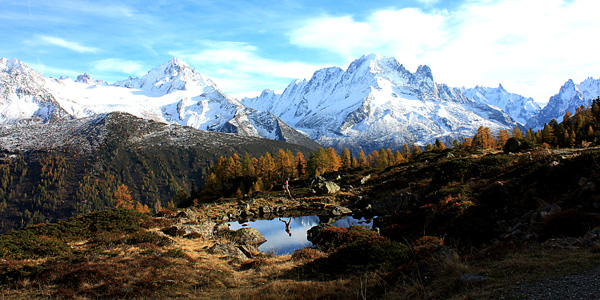
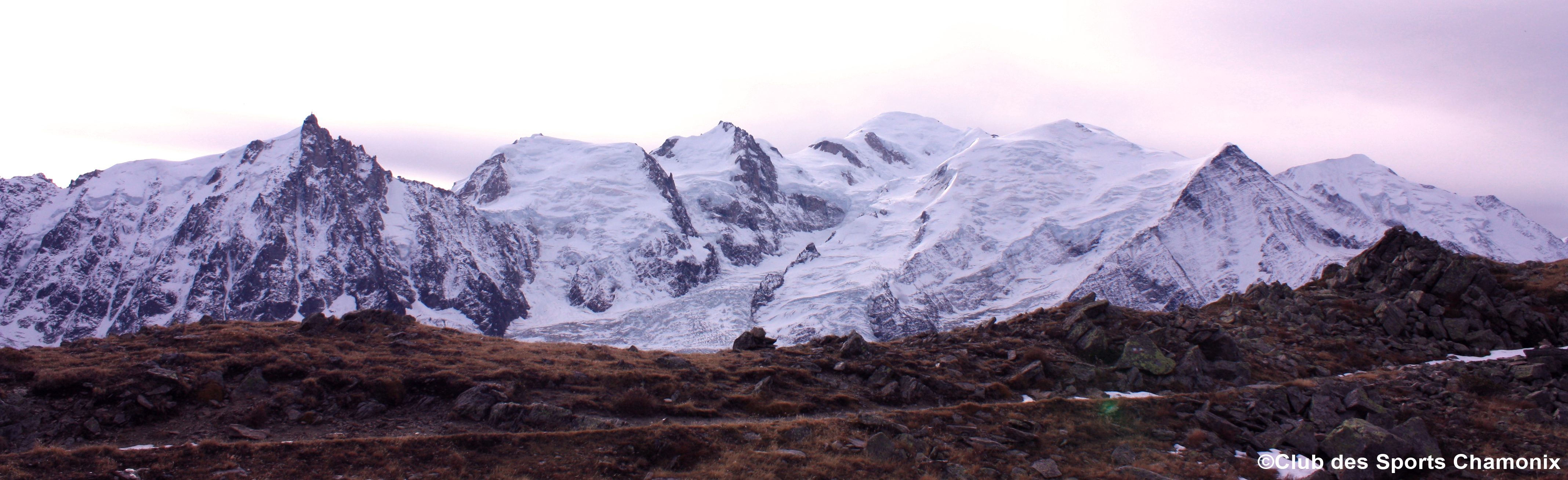
Chamonix, France, offering the most famous and spectacular mountain panorama, will stage the second Skryunning World Championships at the end of June, 2014.

2014 world champs

Three distances will be disputed:

– The short, steep Vertical KM – 1,000 metres skywards – by night.  A timed race, it will test your VO2 max to the limit.

– The Mont-Blanc Marathon – the 42 km course starts in Chamonix and finishes at 2,016m altitude, gathering 2,511m elevation gain and 1,490m on the downhill, this beautiful trail offers some of the best scenery of the Mont Blanc massif.

– The Mont-Blanc 80KM – an exclusive, new course to be inaugurated this year, it features a challenging 6,000 metres of vertical climb along ridges, over snow fields, crossing into Swiss territory and traversing glaciers in a point to point loop from the town of Chamonix.

The races are open to both individuals and teams. Individual World titles are at stake in each discipline as well as a combined title, based on the best results of two out of three races.  Countries will be ranked according to the best results of three men and one woman in all three disciplines.

IMG_9748 copie

Held every four years, the Championships represent the second edition since the inauguration of the ISF in 2008 and the first time that the ultra distance is included.

In occasion of the first Skyrunning World Championships in 2010, winners of the individual titles were Urban Zemmer (Italy) and Laetitia Roux (France) for the Vertical Kilometer®; Kilian Jornet (Spain) and Laetitia Roux (France) for the SkyMarathon®, and the combined titles went to Nicola Golinelli (Italy) and Laetitia Roux (France).  The country ranking was headed by Italy, followed by Spain and France for a total of 13 nations.

The bid for the 2014 Skyrunning World Championships has been awarded to the experienced and highly competent local organiser, the Club des Sport Chamonix, which manages year-round major international sports events.

Marino Giacometti, ISF President, commented:  “We’re proud to present the World Championships in Chamonix and, with the support of the Club des Sport, we’re confident the events will be a perfect showcase for skyrunning and draw the best in the world for some intense competition.”

In 2013, the Vertical KM and the Mont-Blanc Marathon will feature on the Skyrunner® World Series calendar for the first time, an occasion to gather the world’s top athletes and thousands of participants for a preview of what is to come in 2014 – a competition to set your heart racing – starting right now!

Programme, race and entry details will be published at a later date.  In the meantime see here for details of the 2013 events.  Subscribe to our newsletter for all the news and follow us on twitter and Facebook for updates.

Skyrunning website HERE


Episode 27 – Talk Ultra

Episode 27 Talk Ultra


Episode 27 of Talk Ultra – Fast man of the moment, Sage Canaday tells us about how he got into running and all about his transition to ultra. Joe Grant gives us an update on how his prepartion is going for his attempt at the 350 mile Iditarod Trail Invitational in Alaska. We also speak to Dave James who had a win at Coldwater Rumble recently and heads out to The Coastal Challenge in Costa Rica on Feb 1st. We have talk tainining, a year in the life of, the news, a blog, a Meltzer Moment, up and coming races and we have the start of a new special on the build up to the 2013 Marathon des Sables.

00:00:00

00:00:45 Start

00:10:00 ‘A year in the life of…’ – this week it is Tyler’s turn to tell us what he has been up to since Christmas.

00:21:35 The News


00:33:20 An interview with Dave James who had a recent win at the Coldwater Rumble and heads out to The Coastal Challenge on Feb 1st 2013.

Email from Andrew Bentley  – Following the tragedy in Glencoe this last weekend four climbers killed, is there any chance would you be able to put a shout out about this http://www.justgiving.com/Luke-Bradley Chris Bell was a keen bike and triathlon racer, winning numerous races, some of which I was fortunate enough to be his team mate for. Chris was always the faster one- his dedication to being fast was unmatched. 

01:00:23 Back to the News

01:05:00 Joe Grant needs no introduction… his 2nd place at the 2012 Hardrock was a great result. In February 2013 he will be taking part in the 2013 350m Iditarod Invitational Trail. He gives us an update on how his preparation is going.

01:37:50 Back to the News

01:43:30 Blog – Gary Robbinshttp://www.gary-robbins.com

01:44:10 Talk Training with Marc Laithwaite – running as we get older.

02:13:22 Interview with Sage Canaday

As a 2-time Olympic trials qualifier, Sage has competed at a national class level.  In 2007 he was the youngest participant in the Olympic marathon trials at the age of 21.

A native of Oregon, Sage ran for Newberg High School and placed 13th in the state cross country meet his senior year. Determined to run DI in college, Sage traveled across the country to run for LetsRun.com co-founder Robert Johnson at Cornell University. At Cornell Sage not only qualified for the 2008 US Olympic trials marathon (junior year) – he also won the Ivy League Conference title for 10,000m on the track and qualified as an individual for the 2007 NCAA Championships in cross country.

Sage ran as a Brooks-sponsored elite runner on the post-collegiate Hansons-Brooks Distance Project team from August of 2009 to February 2012.  His running resume from their website can be found here. During his time at Hansons, Sage placed 17th overall at the 2010 Bank of America Chicago Marathon (8th American in the race), and placed 5th in the 2011 Rock n’ Roll New Orleans Mardi Gras half marathon with a personal best time of 1:04:32. Sage also ran a personal best marathon time  of 2:16:52 at the Rock ‘n’ Roll San Diego Marathon that year (2011). In his final race wearing the Hansons singlet, Sage placed 43rd in the US Olympic Trials marathon in Houston with a 2:18:24.

At the start of 2012 Sage started ultra marathons and trail running. In his ultra debut had earned a 2nd place overall finish at the Chuckanut 50k in Bellingham, WA in March after missing a turn and running off course for 8 minutes. In June 2012, Sage won the Mt. Washington Road Race in 58:27…the fastest time ever by an American on the all uphill course. In July 2012 Sage won the White River 50 in 6:16 and bettered Anton Krupicka’s course record by over 9 minutes on the 50 mile course.

Sage looks to continue competing at a high level on the roads and trails at distances from the half marathon to 100k for the rest of the year with a focus on representing the US at the 2012 World Mountain Running Championships in Italy.

Sage’s Personal Bests and Career highlights: 

  • 1500m: 3:55 (2009)

  • Mile: 4:17 (2009)
  • 3k: 8:22   (2009)
  • 5K: 14:29 (2009)
  • 8k: 23:48 (2008)
  • 10k: 29:47 (2009)
  • 10-miles: 49:01 (2011)
  • Half Marathon: 1:04:32 (2011)
  • Marathon: 2:16:52 (2011)

03:00:50 A Meltzer Moment with Speedgoat Karl

03:06:20 Marathon des Sables spécial with Stuart Rae

03:21:05 Up & Coming Races

03:22:40 Close

03:26:06 end

http://traffic.libsyn.com/talkultra/Episode_27_Canaday_Grant_James.mp3

Libsyn – feed://talkultra.libsyn.com/rss

Website – talkultra.com

Salomon Sense Mantra

Salomon Sense Mantra

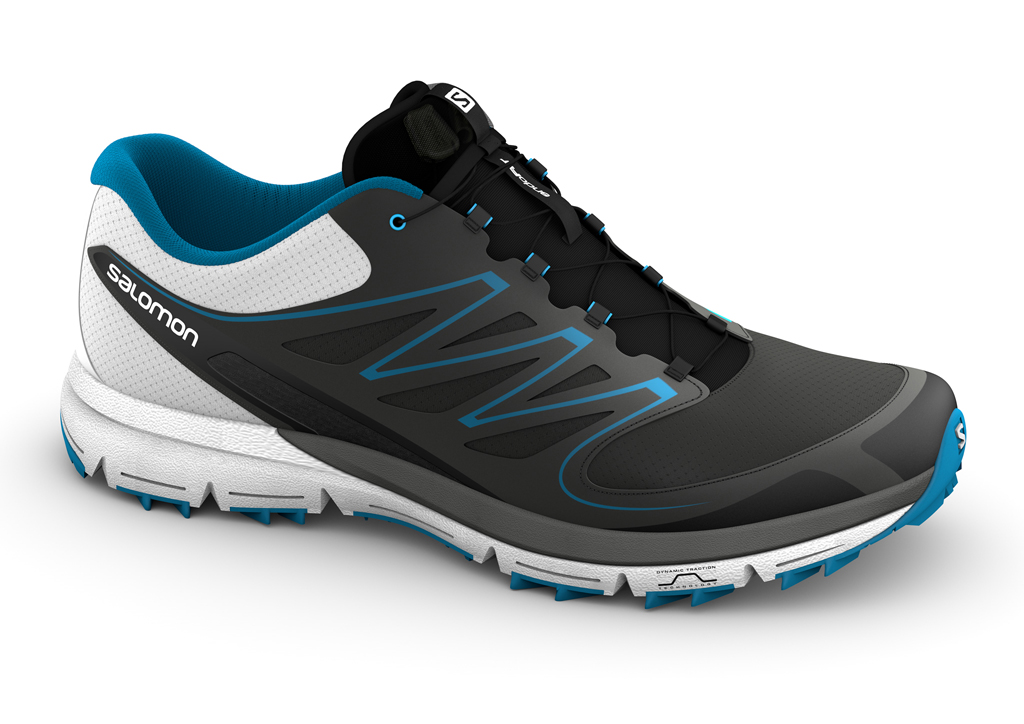
The Salomon Sense Mantra may very well be a shoe that introduces ‘new’ runners to mid or forefoot running with cushioning and comfort and a 6mm drop or provide efficient runners with a shoe of greater comfort over longer distances.

The ‘Mantra’ is the the second brother to the S-Lab Sense that Kilian Jornet used in winning the 2011 WS100, the first brother being the ‘new’ S-Lab Sense Ultra.

Why the Mantra?

Well, the Sense and Sense Ultra at 4mm ‘drop’ may very well be two of the most desirable shoes in the run market place at the moment, but for many it may very well be a step too far… especially if coming from a conventional road or trail shoe with a 12mm drop.

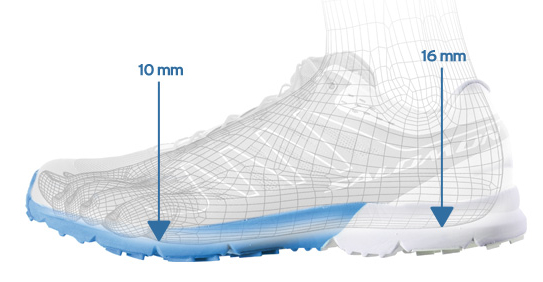
Drop? What’s that then… well in the Mantra the ‘drop’ is 6mm. Clearly shown in this image.

Heel Drop Salomon Sense Mantra

Drop is quite simply the difference between heel and toe height. The ‘lower’ the drop, in theory, the more natural the foot strike. It has long been proven that a mid to forefoot strike is far better for efficiency. However, until the ‘barefoot‘ and ‘minimalist‘ movement primarily fuelled by Chris McDougall’s book ‘Born to Run‘, many of us probably didn’t even know what our shoe drop was…

Drop isn’t everything though. Cushioning is also really important. In the Mantra the cushioning at the front of the shoe is 10mm and 16mm at the rear, so, a cushioned shoe!

This additional cushioning combined with a 6mm drop clearly means that the Mantra is firmly placed at enticing two types of runner:

  • Firstly, Sense or Sense Ultra users who want a low drop shoe with additional cushioning for longer races or training.
  • Secondly, runners who have been using ‘conventional’ shoes who would like to move to a lower drop and improve run technique with a mid – forefoot strike.

The Mantra in a nutshell offers a little more cushioning than it’s S-Lab brothers, a little more protection and a longer OS Tendon to return more energy. The lower heel drop will allow tendons/muscles to absorb more shock from the running motion and remove stress away from joints. Ultimately, this improvement in run technique will provide greater running efficient for less effort, less injury and a more balanced runner.

OS Tendon? This provides a balanced flex within the shoe and according to Salomon provides improved energy return.

Key Features of the shoe:

Endofit : This is one of the key features of the Sense range that I love. It is an internal sleeve within the shoe, almost like a sock. It does mean that the ‘Sense’ range can be a little awkward to get on at first making you even question if you have the right size shoe. But once your foot slides in you are rewarded with a tight fitting shoe that grips the foot providing a firm, secure and confident feel. Designed for Kilian Jornet so that he could run without a sock. Please keep this in mind. I have gone true to size and use a thin sock and they feel great. If you are planning on using a more padded sock you may need a half size larger.

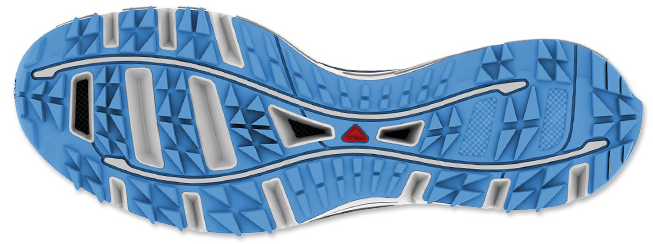
Salomon Sense Mantra sole

Dynamic Traction : A Salomon patented system allowing for maximum surface area and traction. Designed for ‘Road to Trail’ the Dynamic Traction grips in the dry and provides security in mud.

Profeet Film : Quite literally a thin fim that runs through the top of the midsole to provide security and protection from the trail that you will run on.

Sensifit :  The upper wraps the foot for precision.

Quicklace : A renowned feature of all Salomon shoes with a ‘garage’ the top of the tongue to store excess lace.

Weight is around 260g for a UK9.5 so it compares well to the Sense Ultra at 230g and The North Face Single Track Hayasa at 280g (this shoe has a 10mm drop).

Testing

Early days yet but as one would imagine,  this shoe brings many benefits to an already growing shoe collection. As an alternative to lighter and lower drop shoes such as the Sense or Sense Ultra, the Mantra will provide some welcome additional comfort on those longer days on road or trail.

Watch this blog and I will be back with an update as the miles and mud accumulates.

Salomon Running available HERE

UROC – Ultra Race of Champions

uroc

Registration opens today. Will you be toeing the line (for the Ultra Race of Champions) on September 28th in Breckenridge?

 www.ultraroc.com

The season closing race for the Ultra Skyrunning Championships. Of course it’s some 9 months away. But as the race fills up and you are made aware of ‘who’ is taking part in this race, you don’t want to look back and think… I wish I had entered in January!

Skyrunning Logo

Vail, Colorado, January 15th, 2013 – Registration for the Ultra Race of Champions, the Championship for the sport of ultra distance running is set to open on January 15th 2013 at 12 noon mountain standard time (MST), or 2pm eastern standard time (EST) at http://www.ultraroc.com. The date for the 2013 Ultra Race of Champions will be September 28th.

“We are very excited,”

says J. Russell Gill III, Ultra Race of Champions Event Director and Bad to the Bone Endurance Sports CEO.

“A lot of work goes into making this event possible, and it will be thrilling to see it all come together on race day. With UROC as the Skyrunner® World Series Ultra Final, I cannot wait to see how to field shapes up this year. We have already been getting inquiries from several top runners, whose names are right now top secret. After we open registration and as we confirm some of the elite athletes, we will be posting them regularly on the race website and on Facebook.”

“UROC is open to everyone,”

says Francesca Conte, Ultra Race of Champions President,

“and I am very excited to see what kind of response we get from the international audience, particularly from Europe. The International Skyrunning® Federation has been promoting the event as the Series final for months, and a lot of our Facebook Likes have been from Europe”.

Several factors contribute to the appeal of the race. As the ultra running championship, the race attracts most of the elite runners from the USA. As the Skyrunner® World Series Ultra Final, the race will now attract an even larger international field, and many of the best European athletes. The spectacular backdrop of the Colorado Rockies and the point to point course from Breckenridge to Frisco, to Copper Mountain, to Minturn and to finish in Vail Village is a big draw for runners of all backgrounds passionate about running in the mountains. Lastly, the Vail name is nationally and internationally recognized as a summer destination location.  The point to point course is contingent upon US Forest Service permit approval.

Runners will be able to register beginning on January 15th, 2013 at www.ultraroc.com

So what you waiting for….