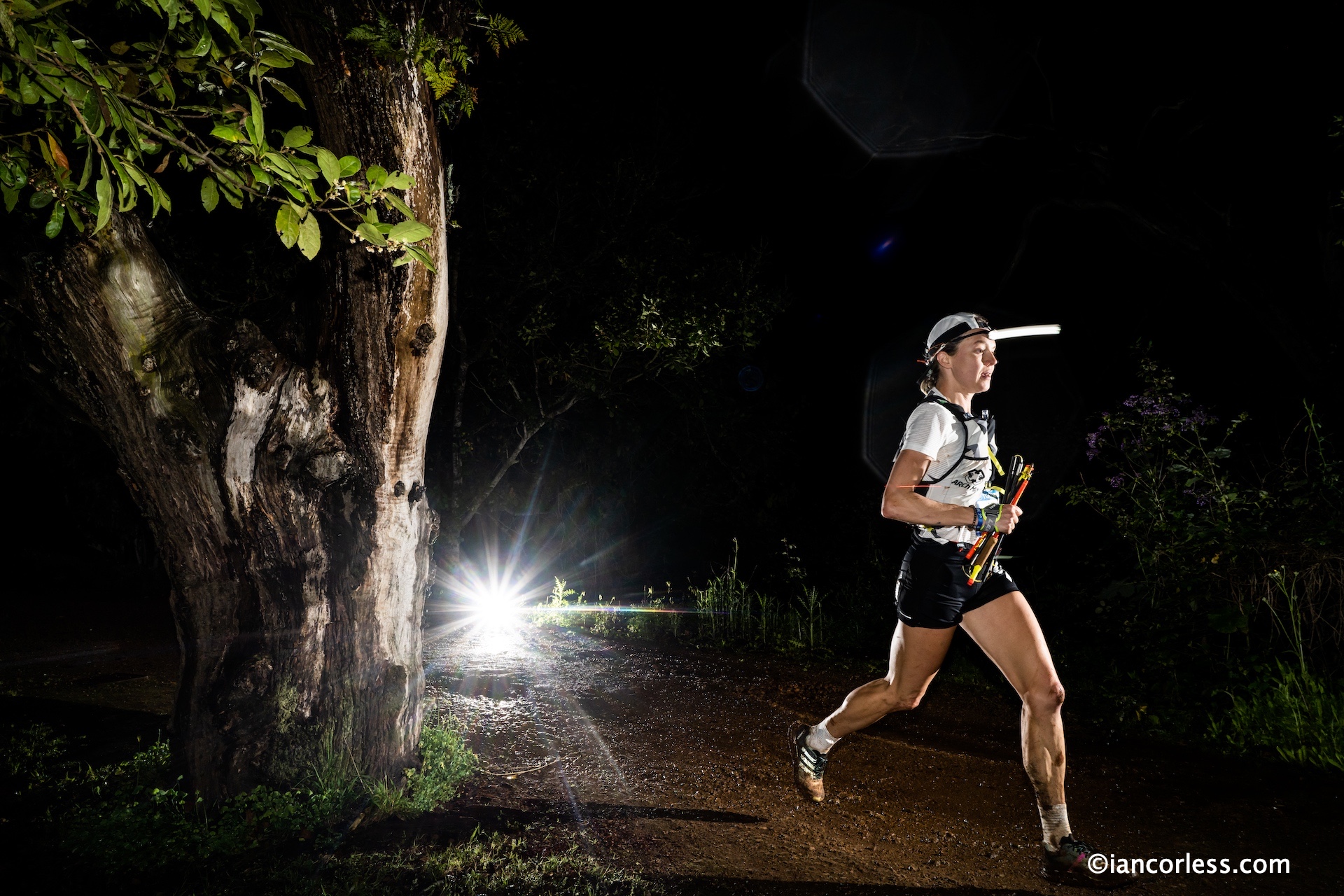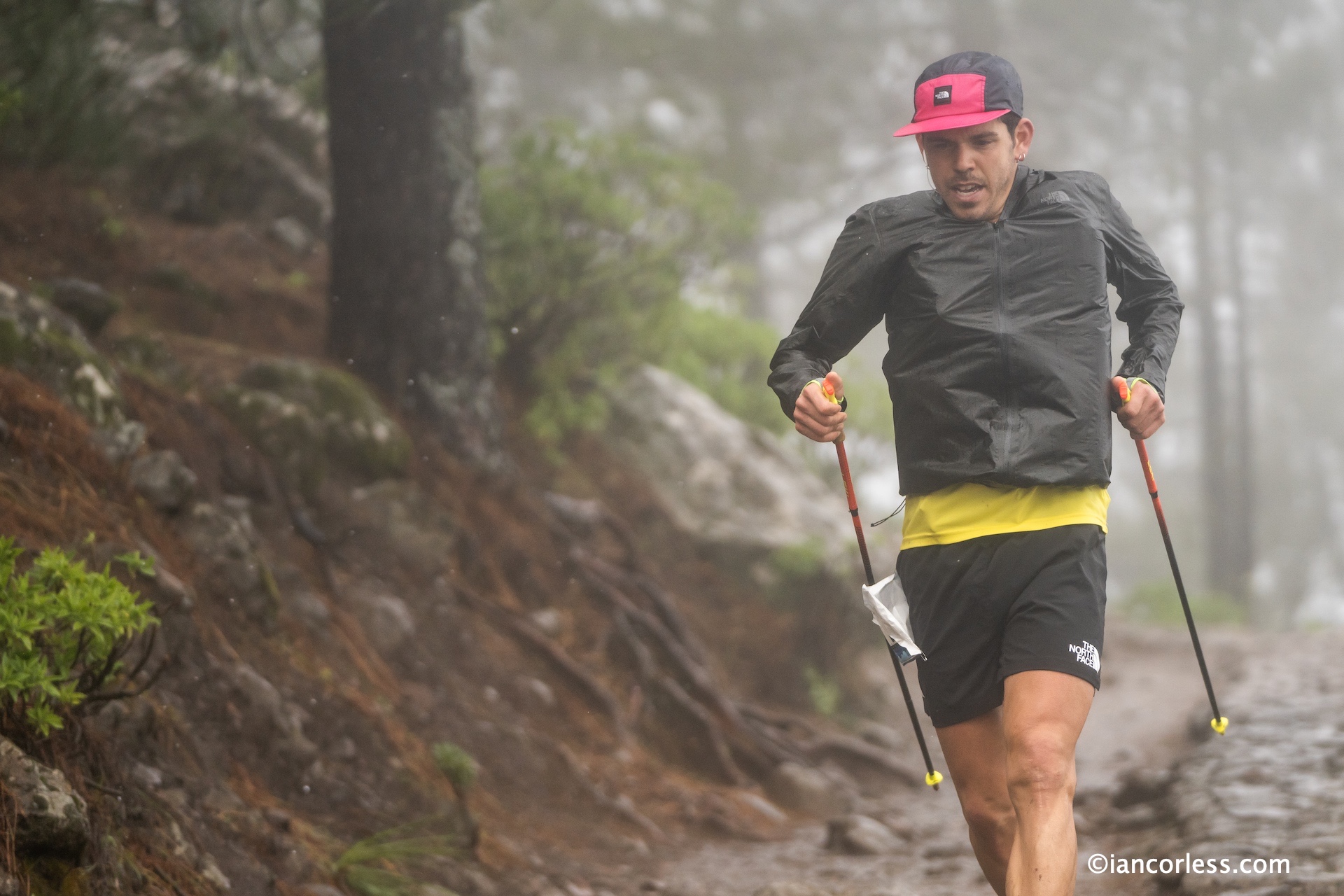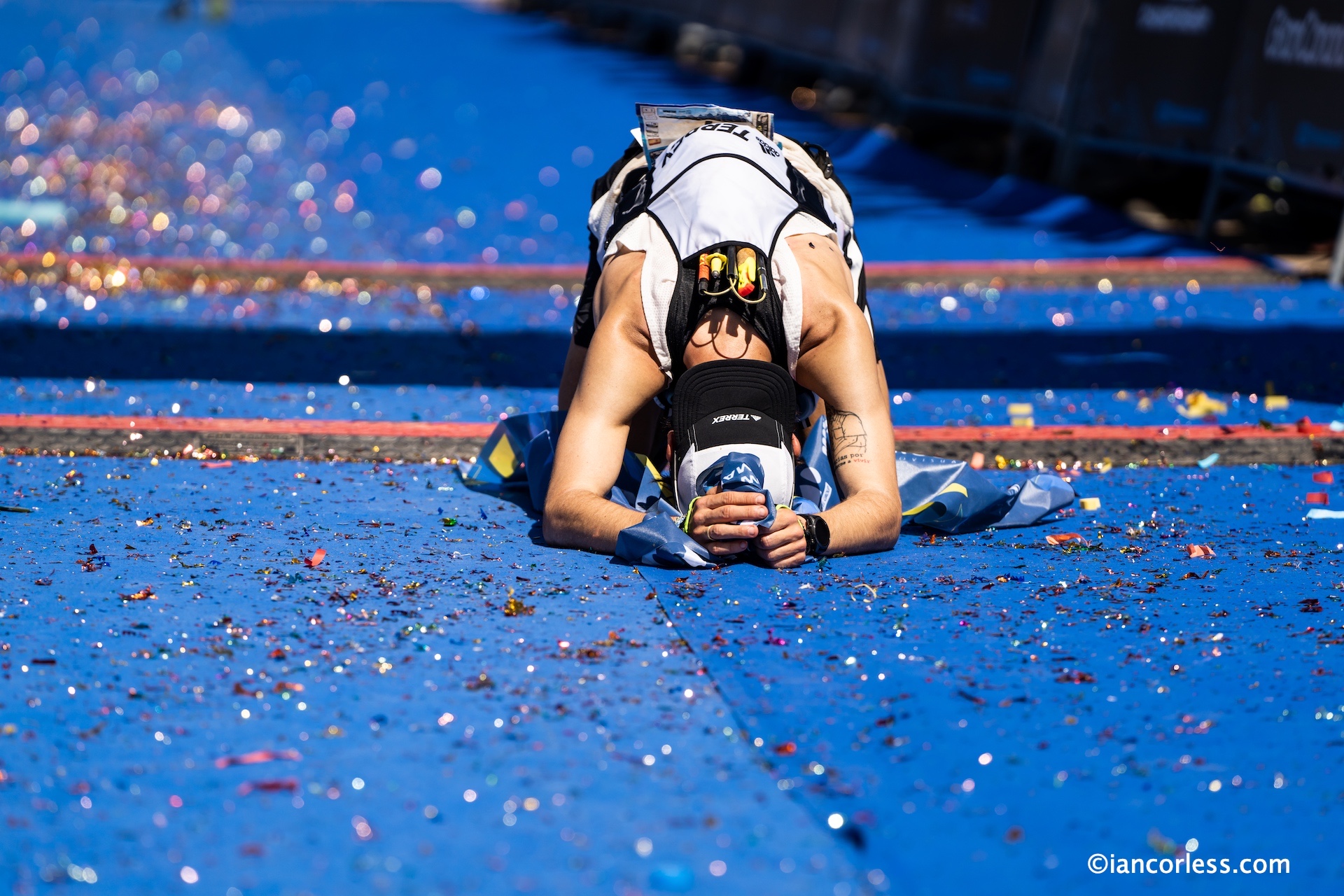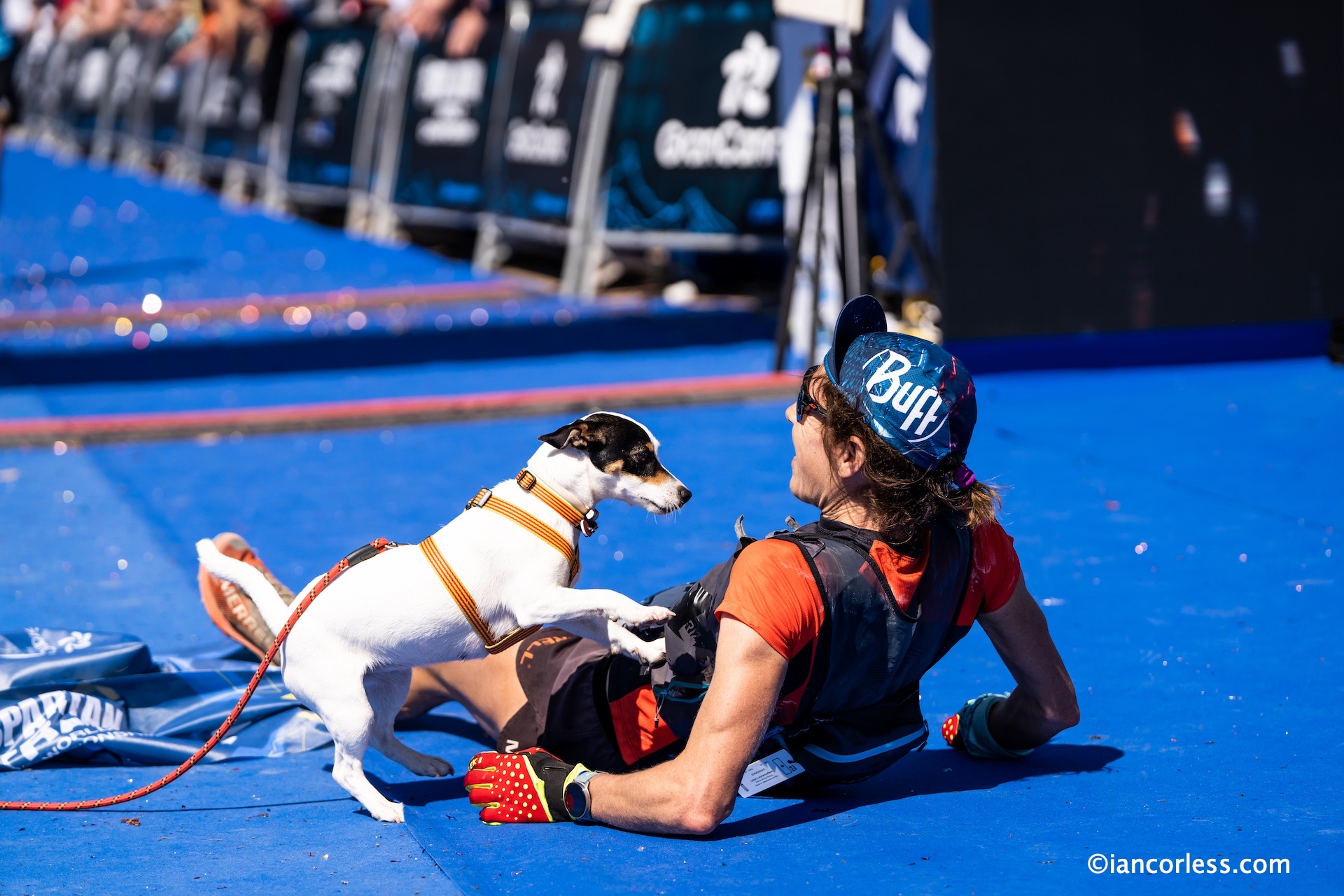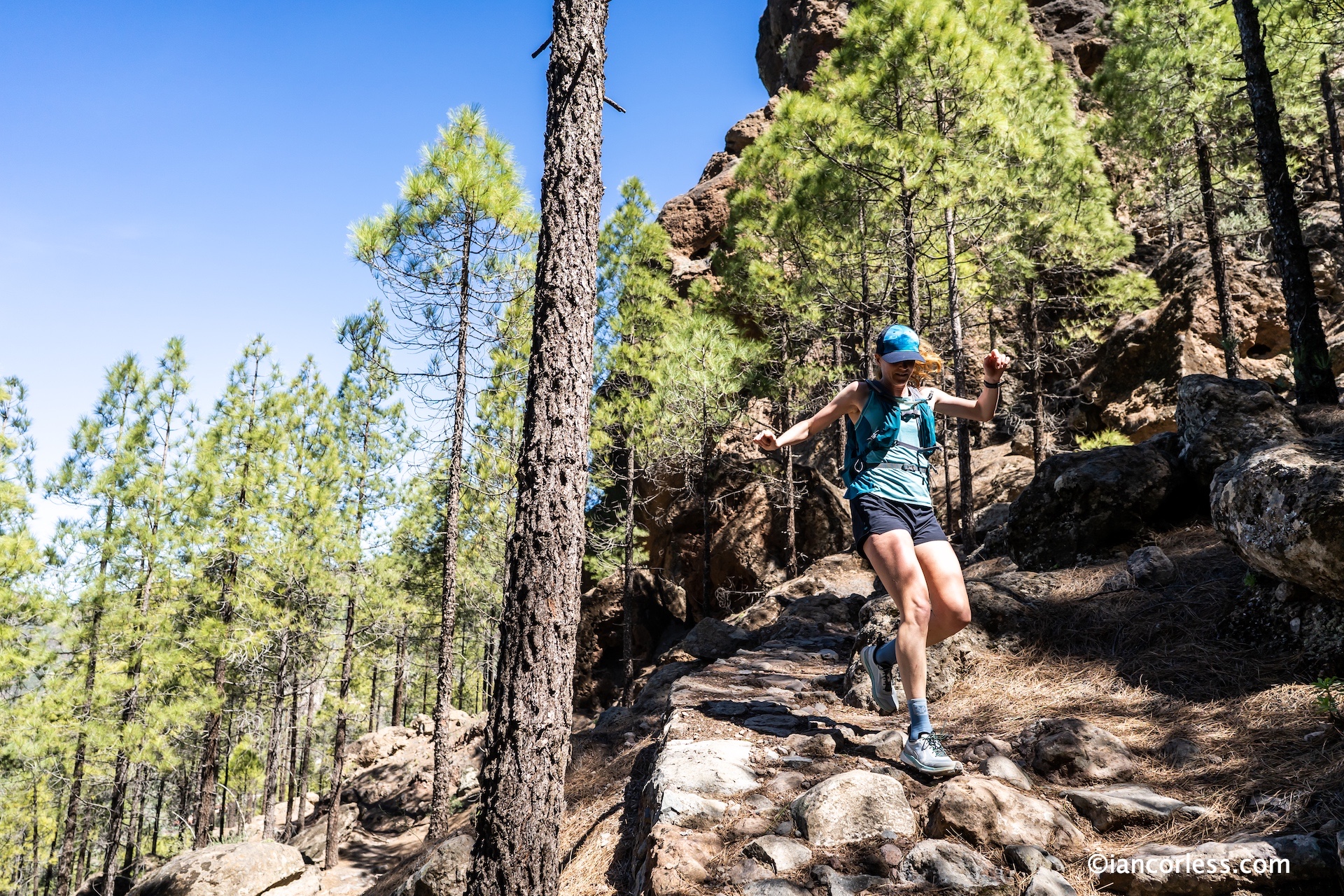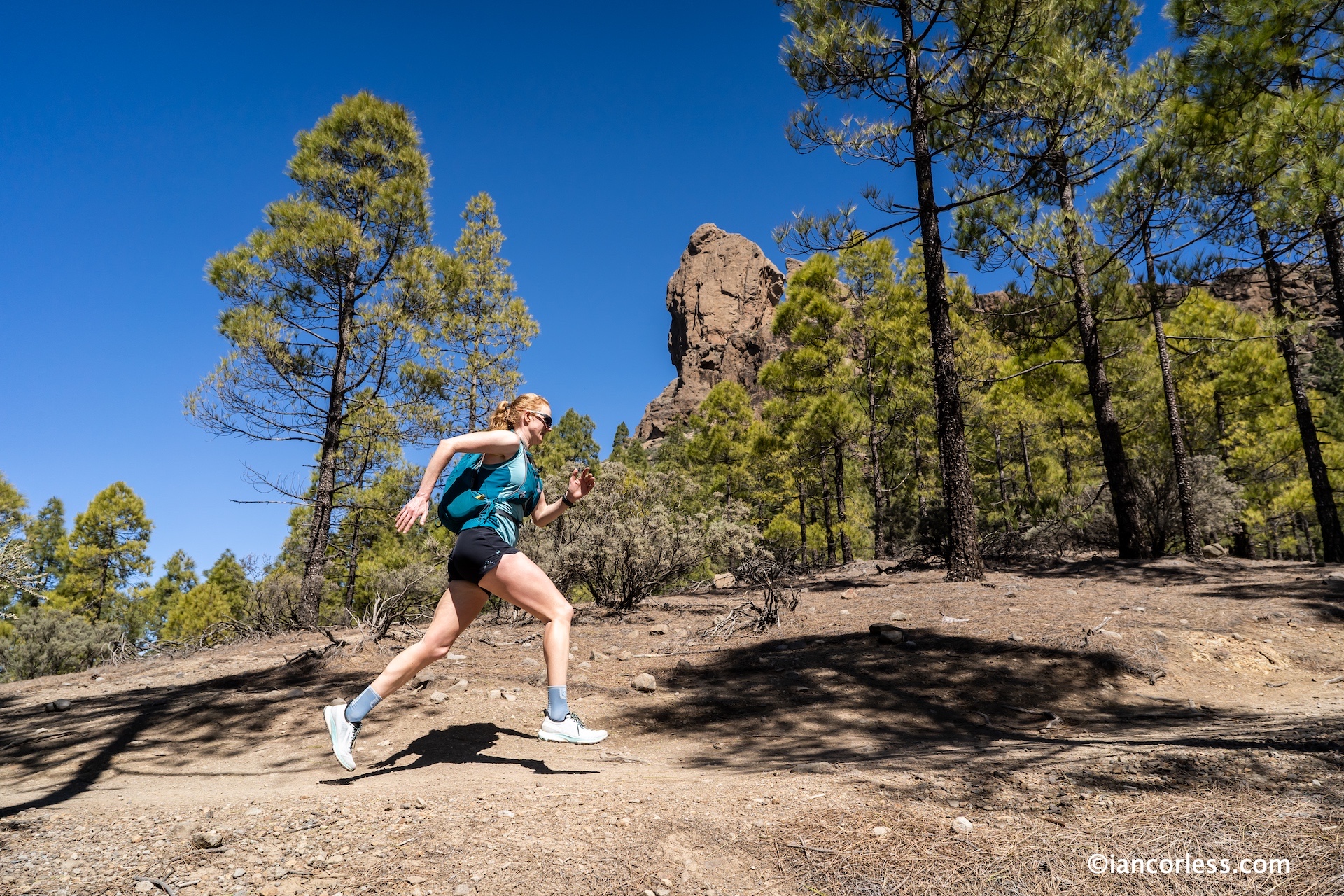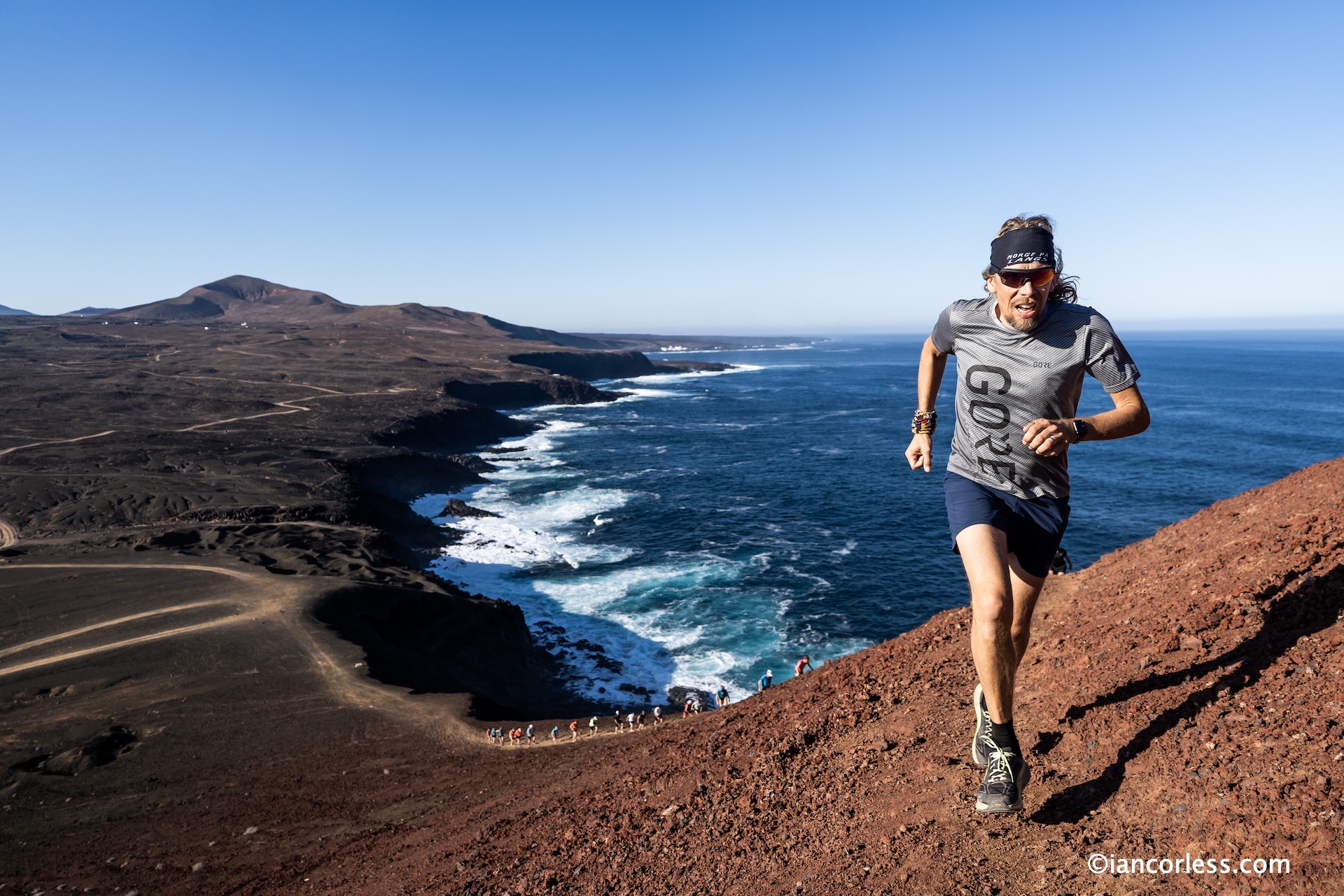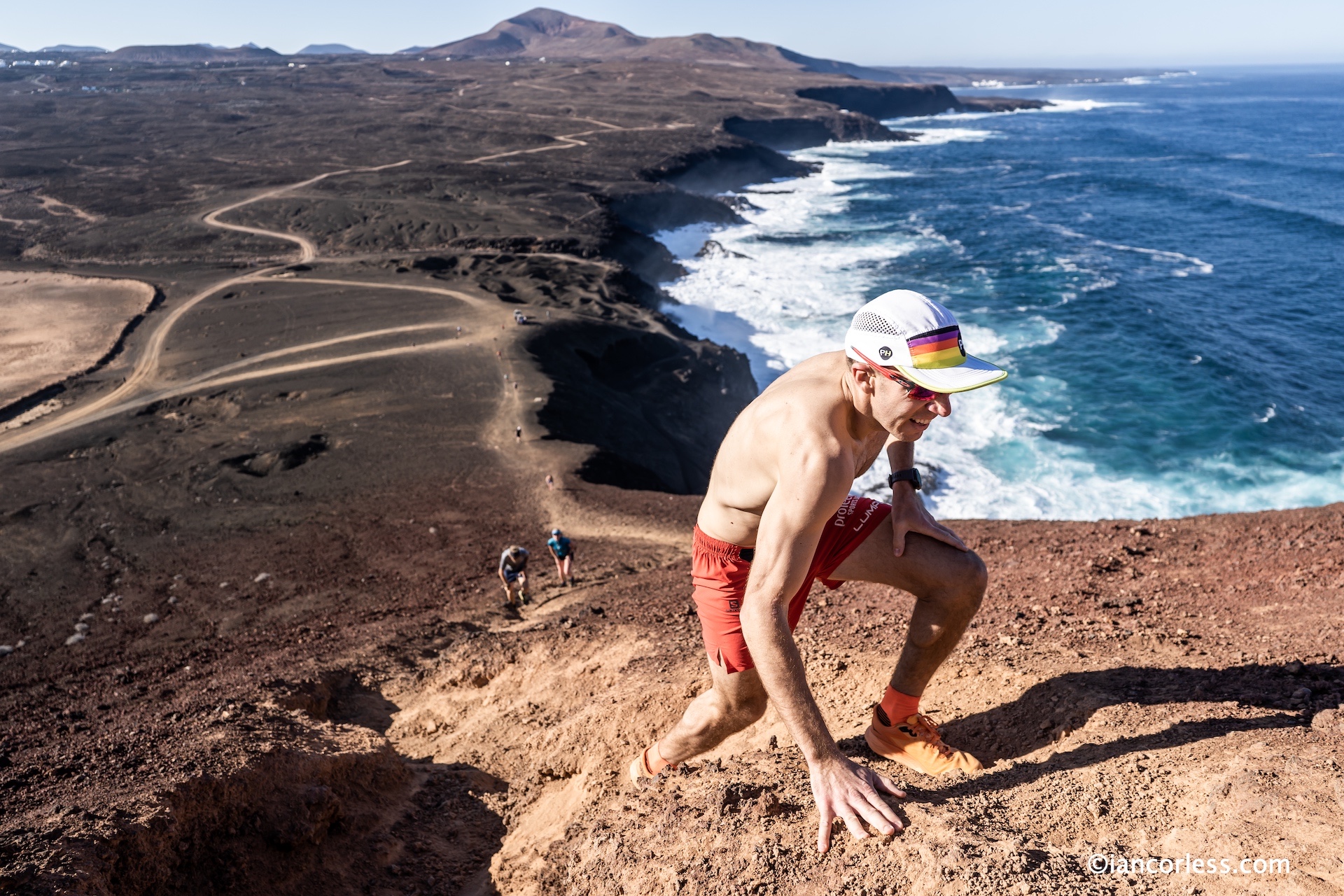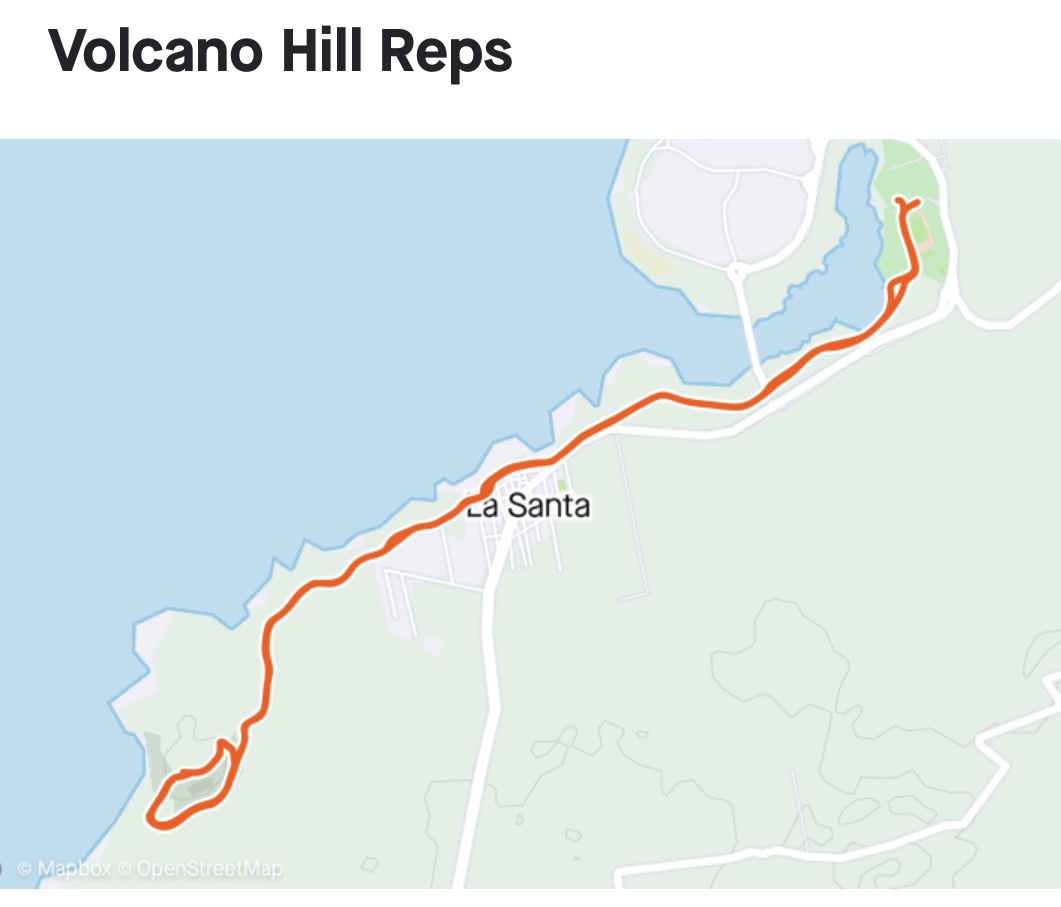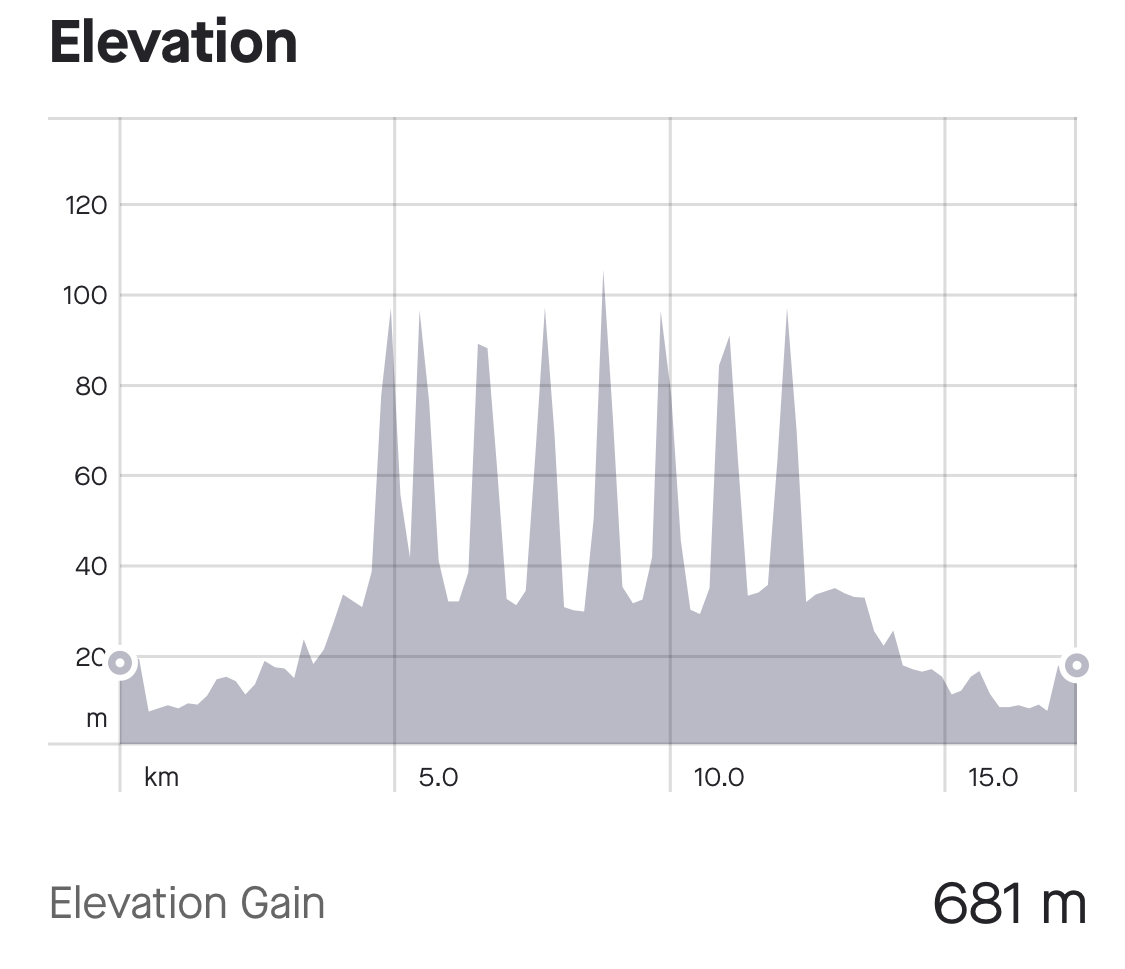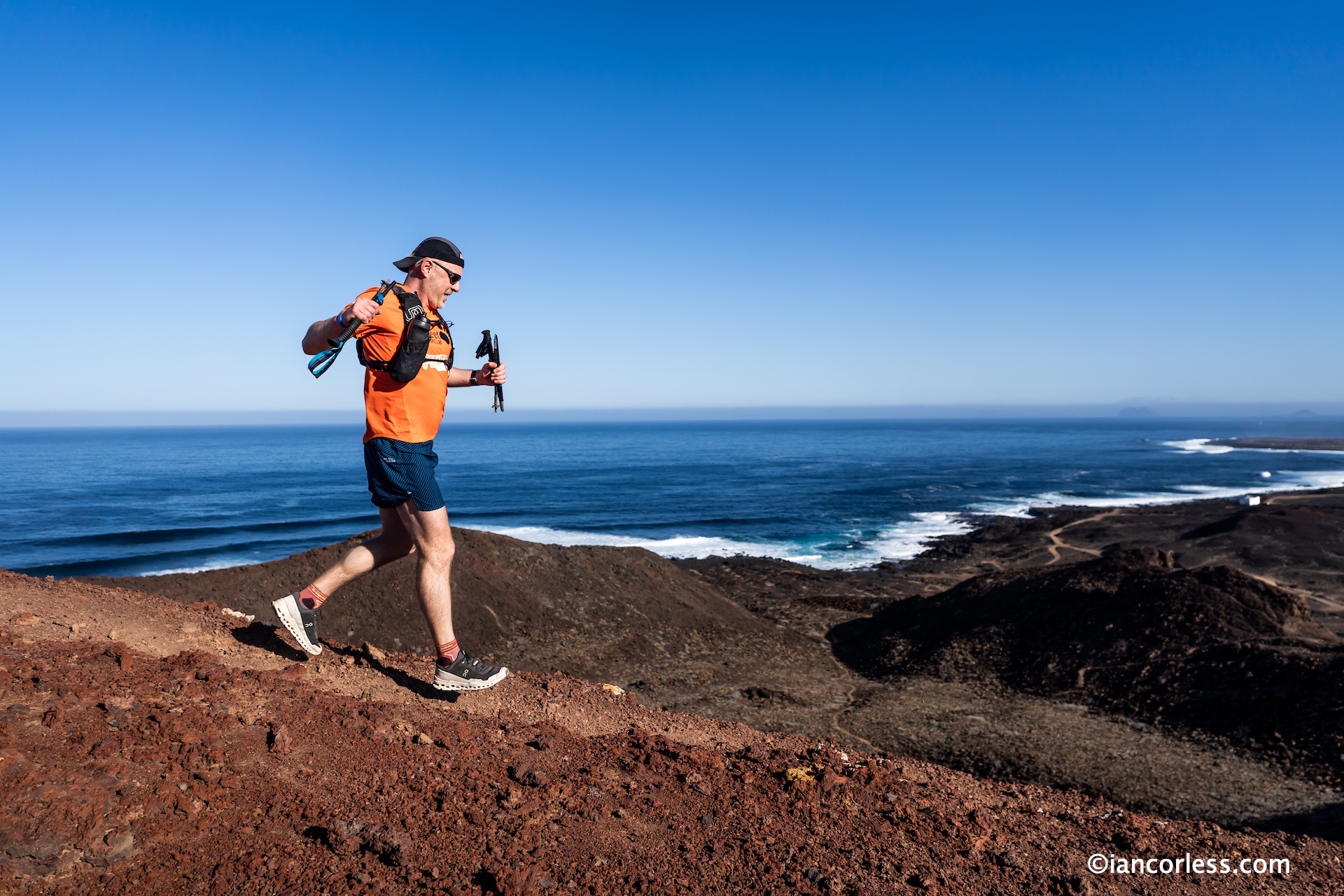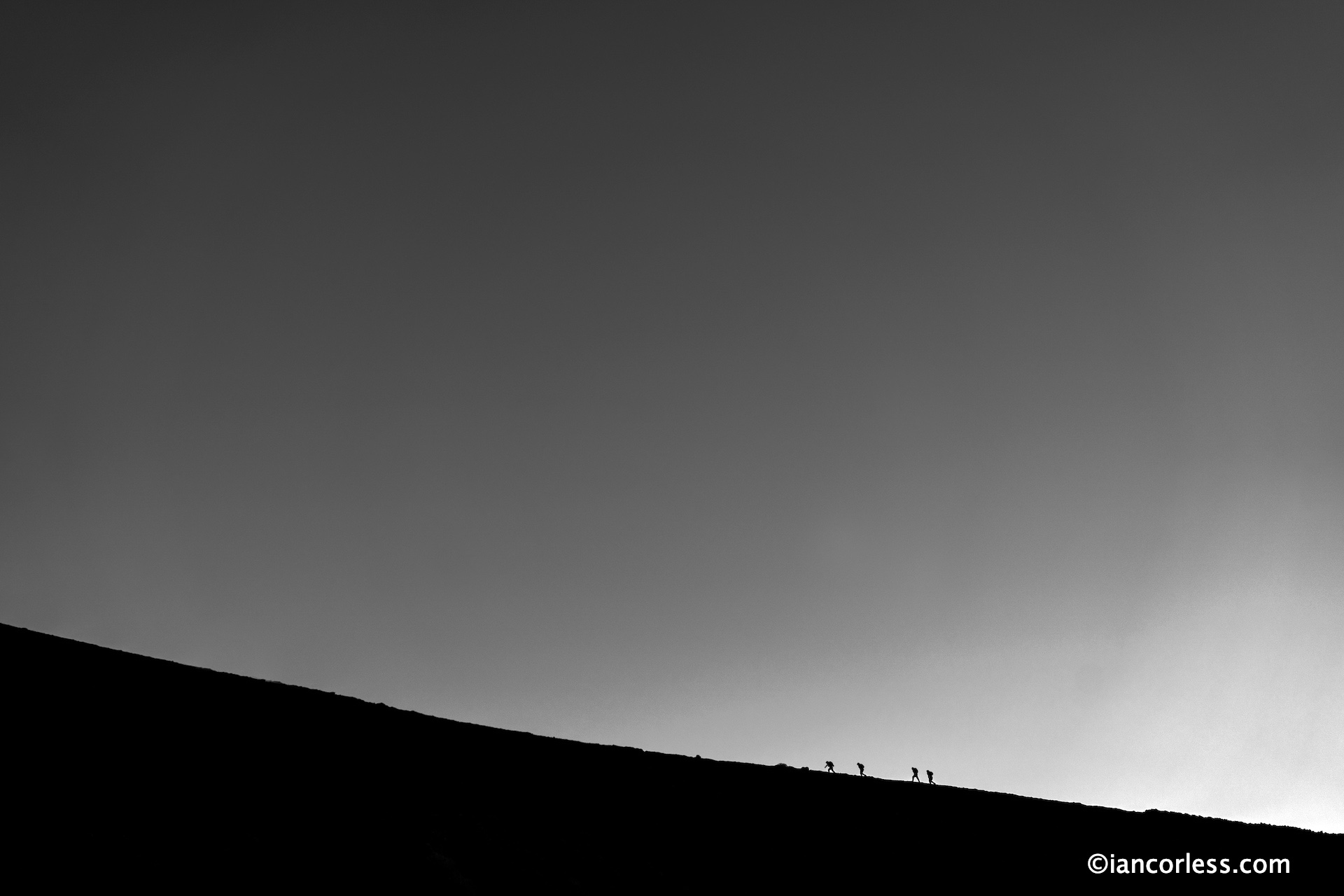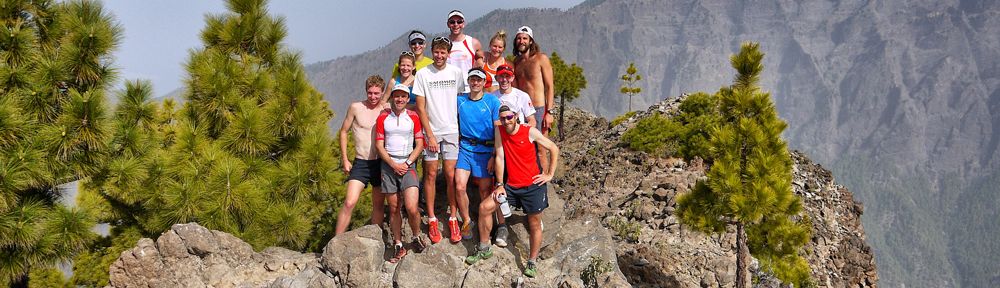
Day 3 of the Lanzarote Multi-Day Training Camp kicked off with volcano hill reps. This session has been on the camp for 6-years and is always a favourite.
Leaving Club La Santa we pass through La Santa village and then arrive at Subida el Picacho for the hill reps. We recommend 6 loops, some do a little less, some do a little more. Ultimately, with the warm up and warm down, most get over 16km and 500 to 700m vert. A great session.
Of course, each loop has a downhill section that allows recovery time but also the possibility to practice downhill run technique on challenging terrain.
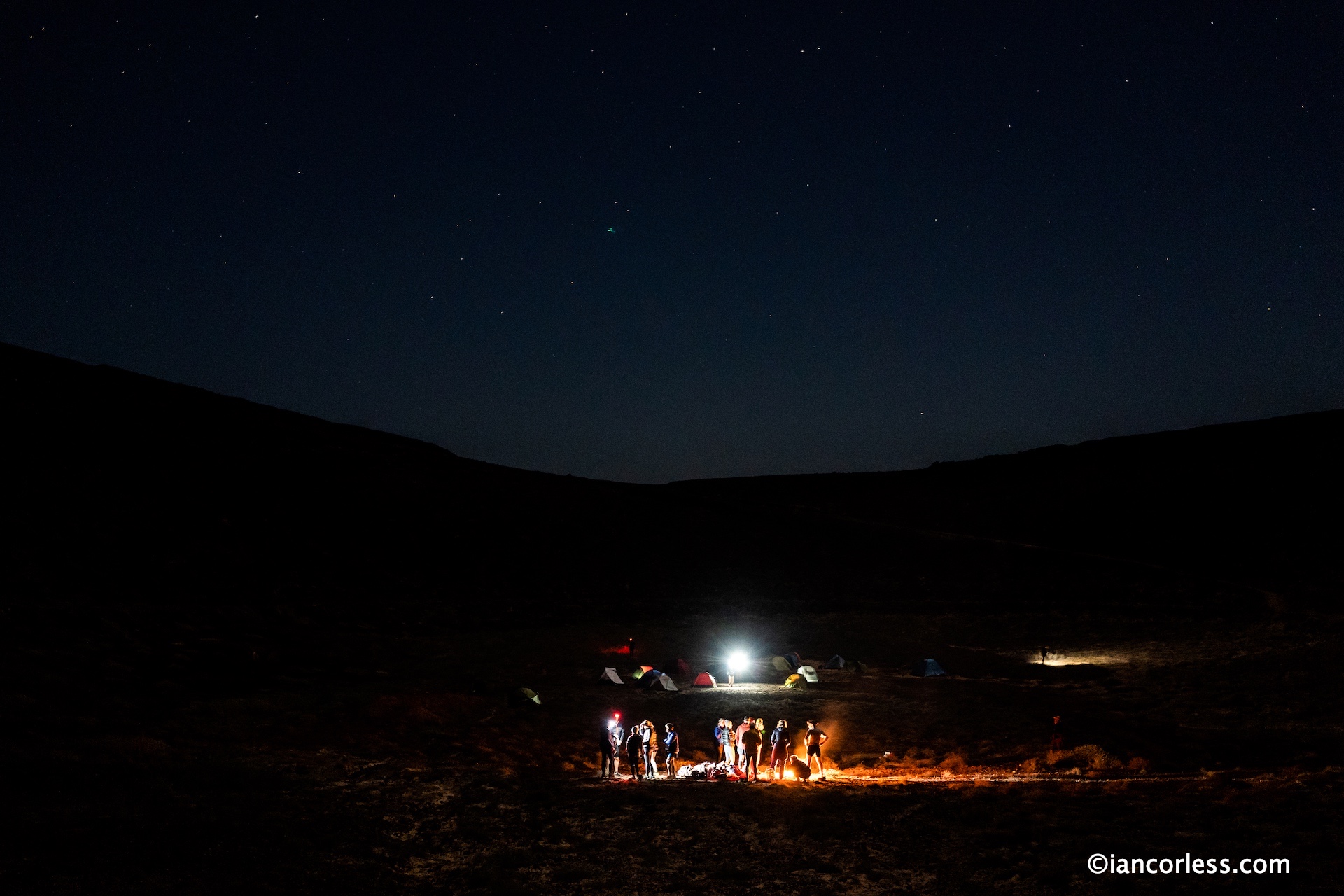
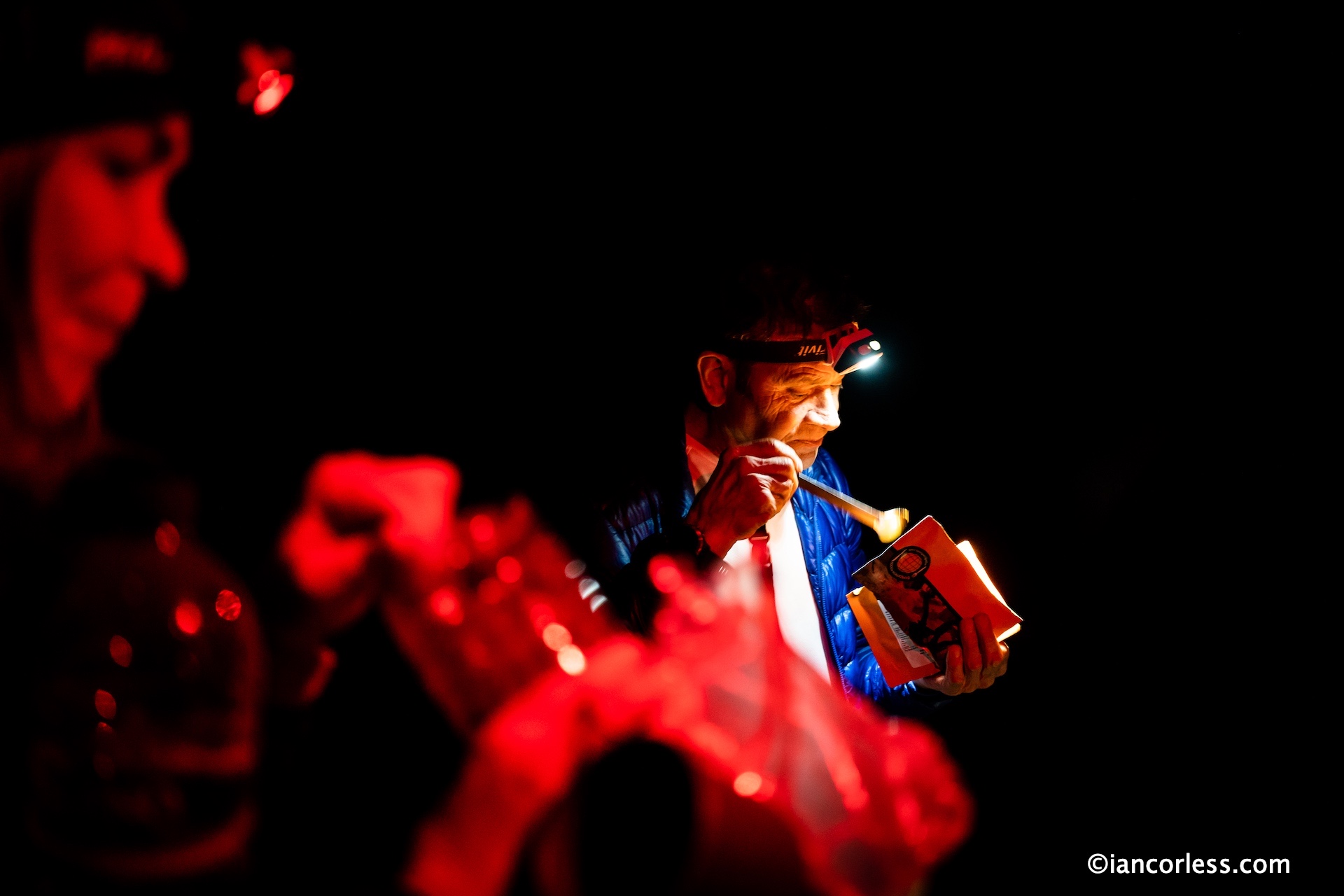
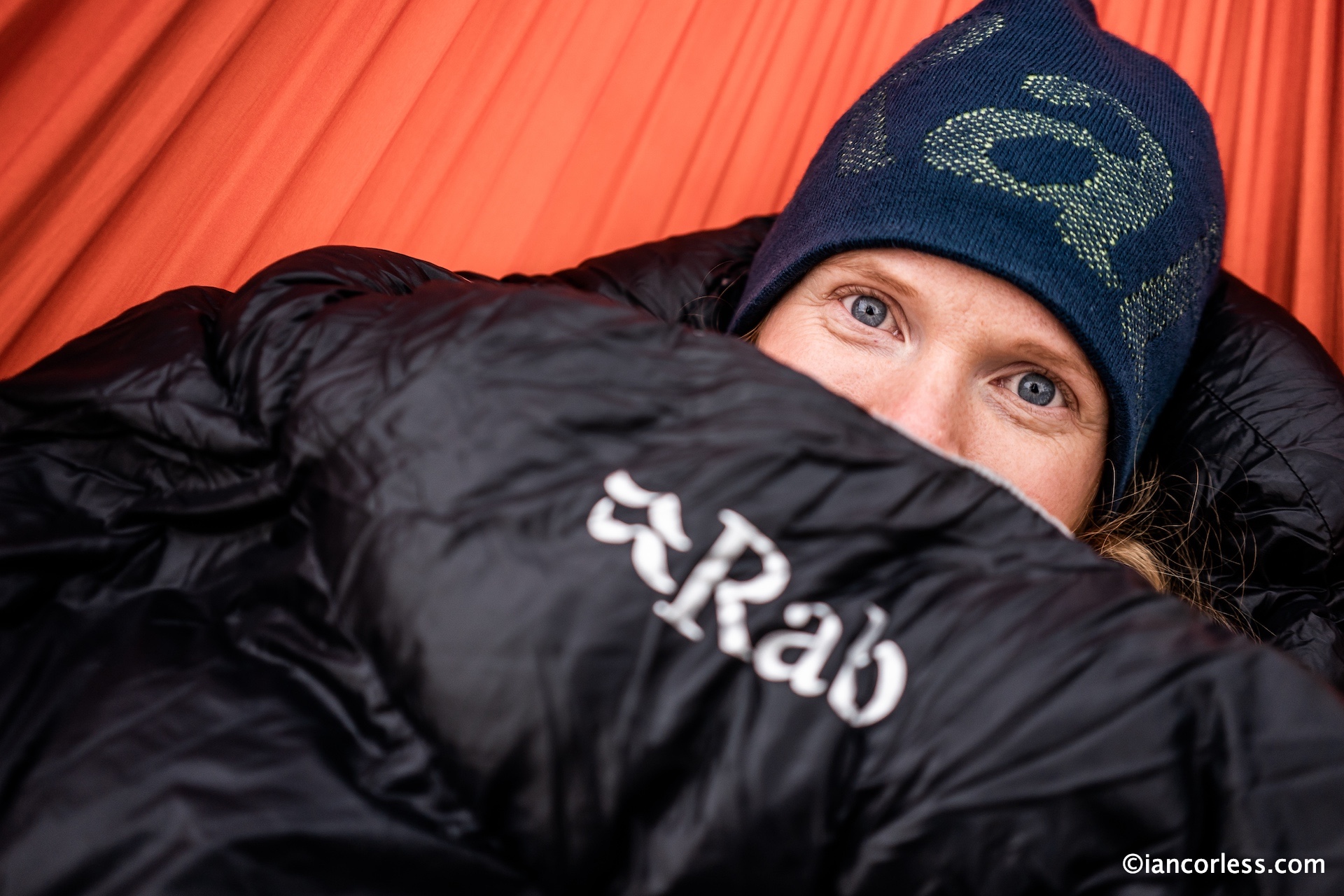
An extended break for lunch was followed with an 8-mile/ 12-km run/walk for an overnight bivouac. This session is done in a self-sufficient manner (with the exception of tents/ water which are transported) allowing each participant to test packs, sleeping bag, clothing and food.
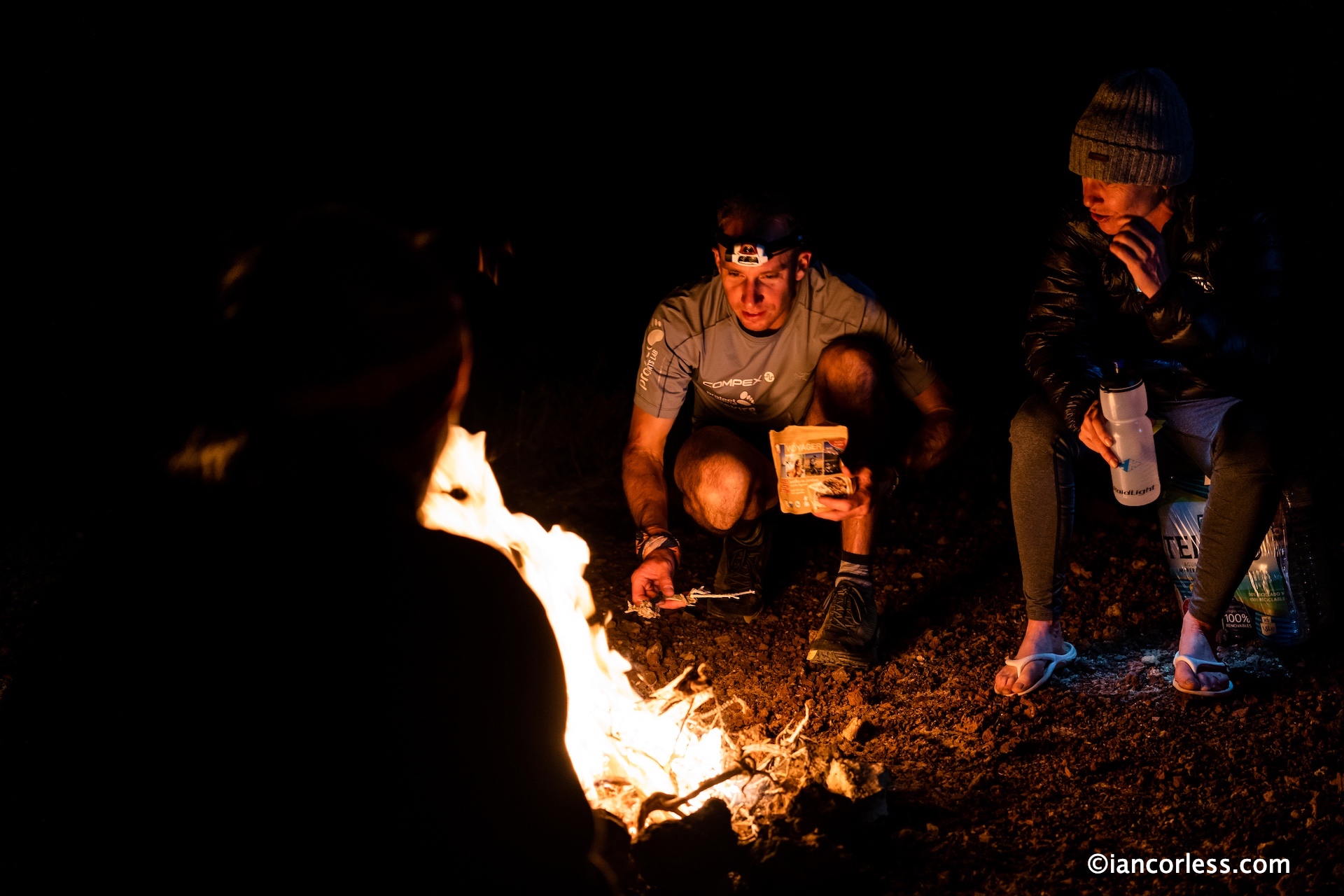
Tents pitched, we had a fire and beautiful calm and warm night was relished by all as they tested dehydrated meals.
Eventually bed called…
During the night, the wind came in full force making for a sleepless night for all. With most participants using pop-up or cheap tents (for convenience) it proved for some comical experiences. Sorry Liz 😉
The morning was an hilarious mess of broken tents and tired bodies. Everyone somehow seeing the funny side of the experience.
Please support this website. I believe everyone deserves to read quality, independent and factual articles – that’s why this website is open to all. Free press has never been so vital. I hope I can keep providing independent articles with your help. Any contribution, however big or small, is so valuable to help finance regular content. Please support me on Patreon HERE.
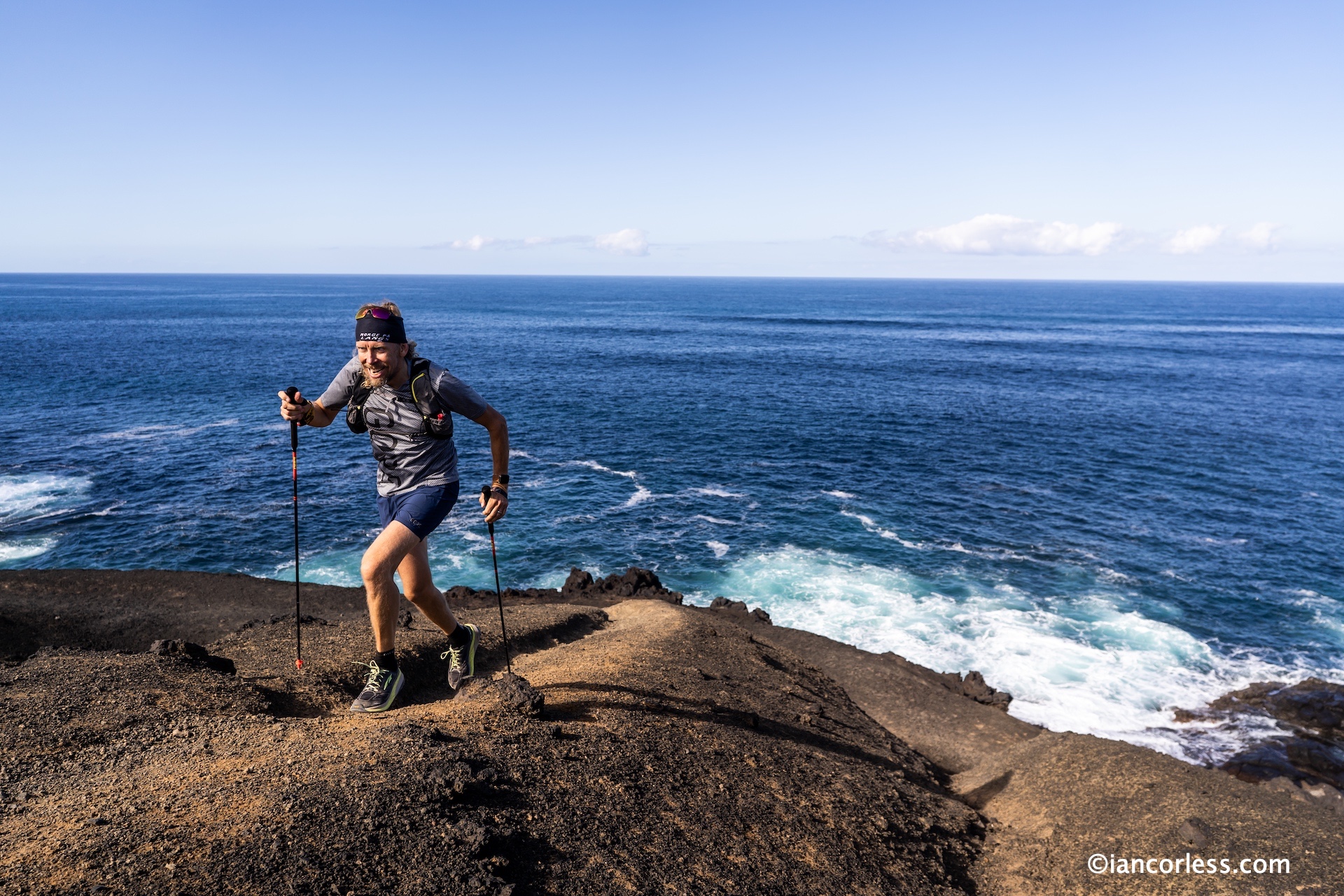
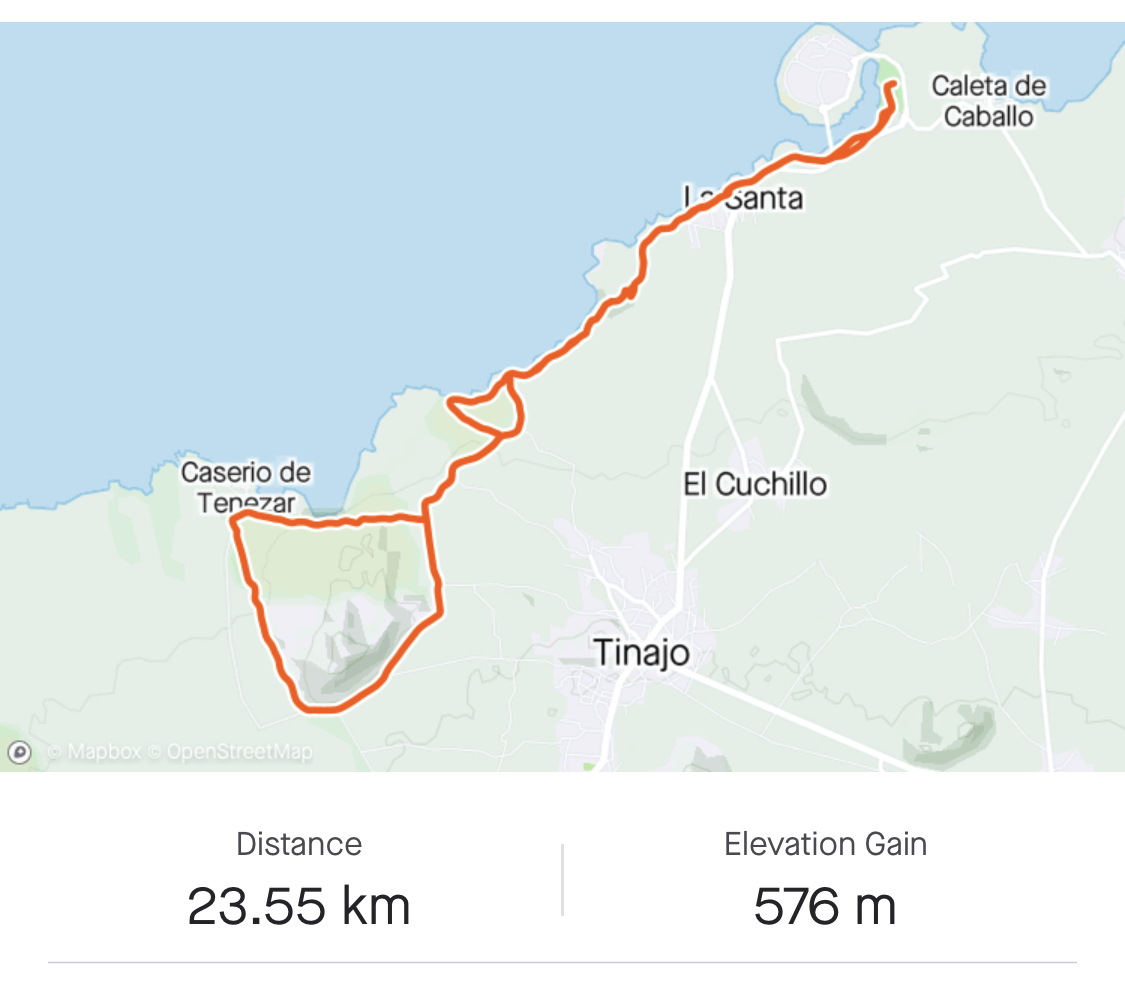
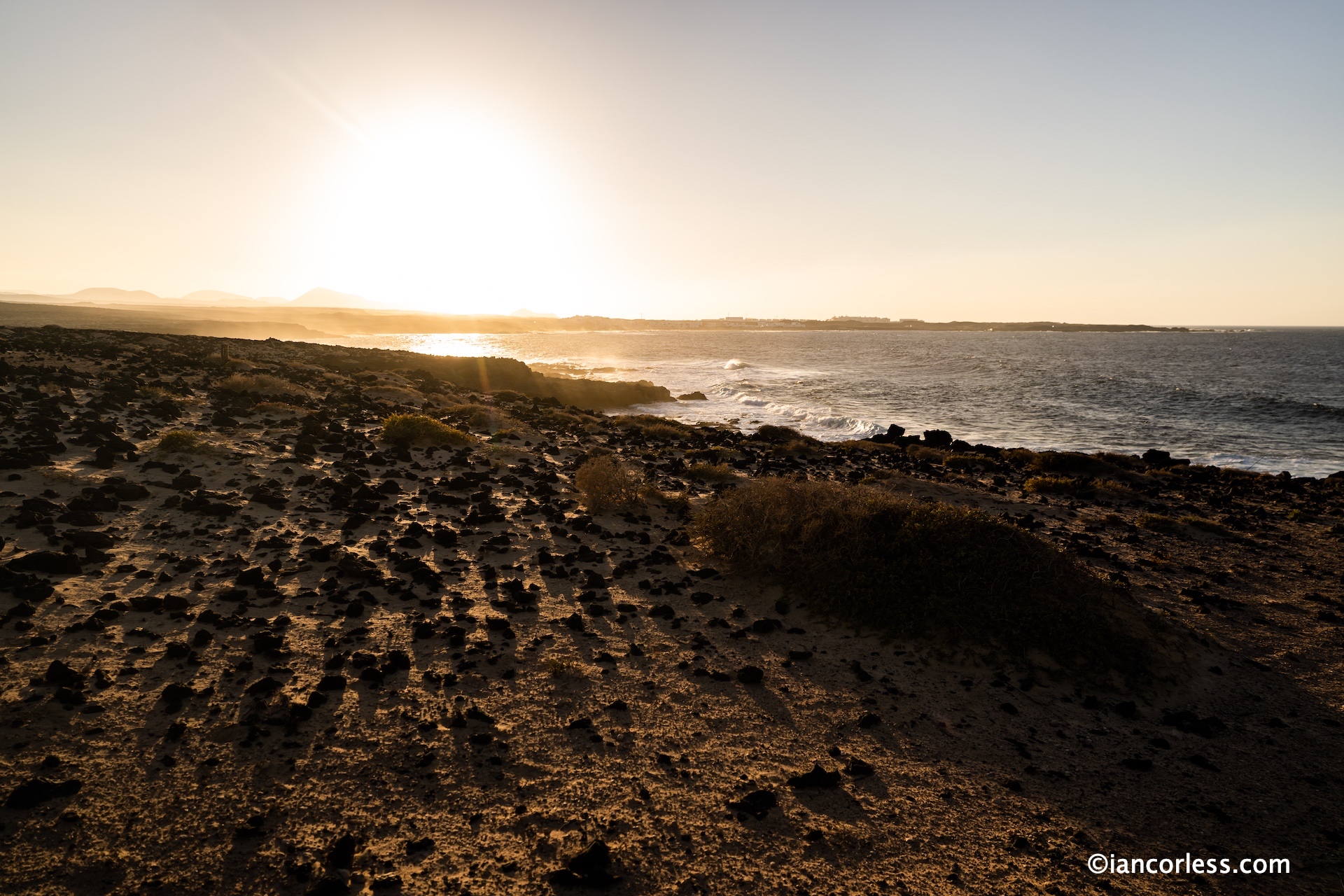
It was day-2 of the Lanzarote Multi-Day Training Camp and the first full day. It started with a brilliant 23.5km/ 15-mile coastal run starting from Club La Santa and heading out along the coast passing through La Santa village, circumnavigating a volcano and then hugging a single-track all the way to Caserio de Tenezar before travelling around Teneza Peak and then re-tracing back to Club La Santa.
We had four groups with Pierre Meslet leading the fast group, Sondre Amdahl and Ian Corless leading groups 2 and 3 which combined running with walking and then Inge Nijkamp leading the walkers.
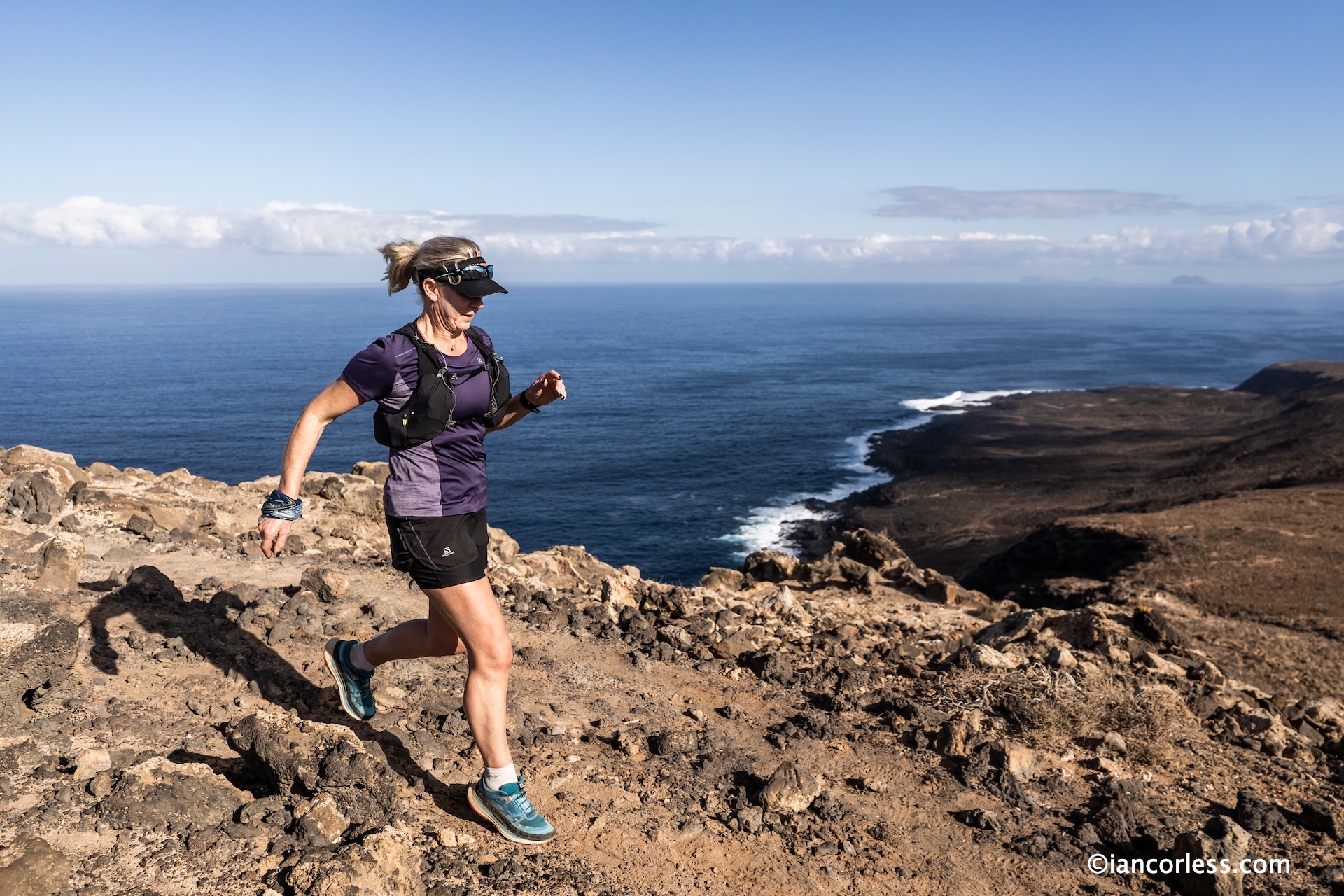
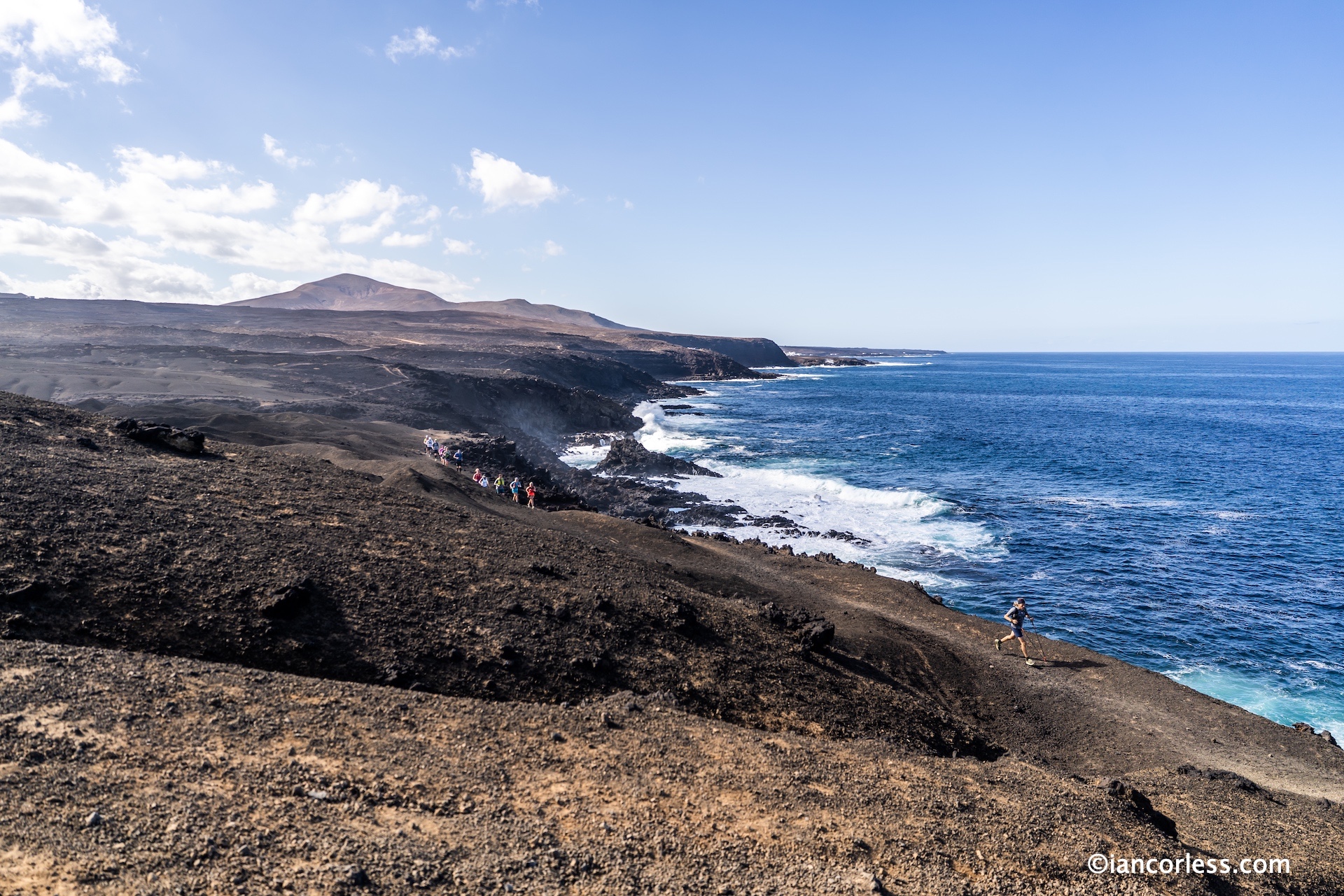
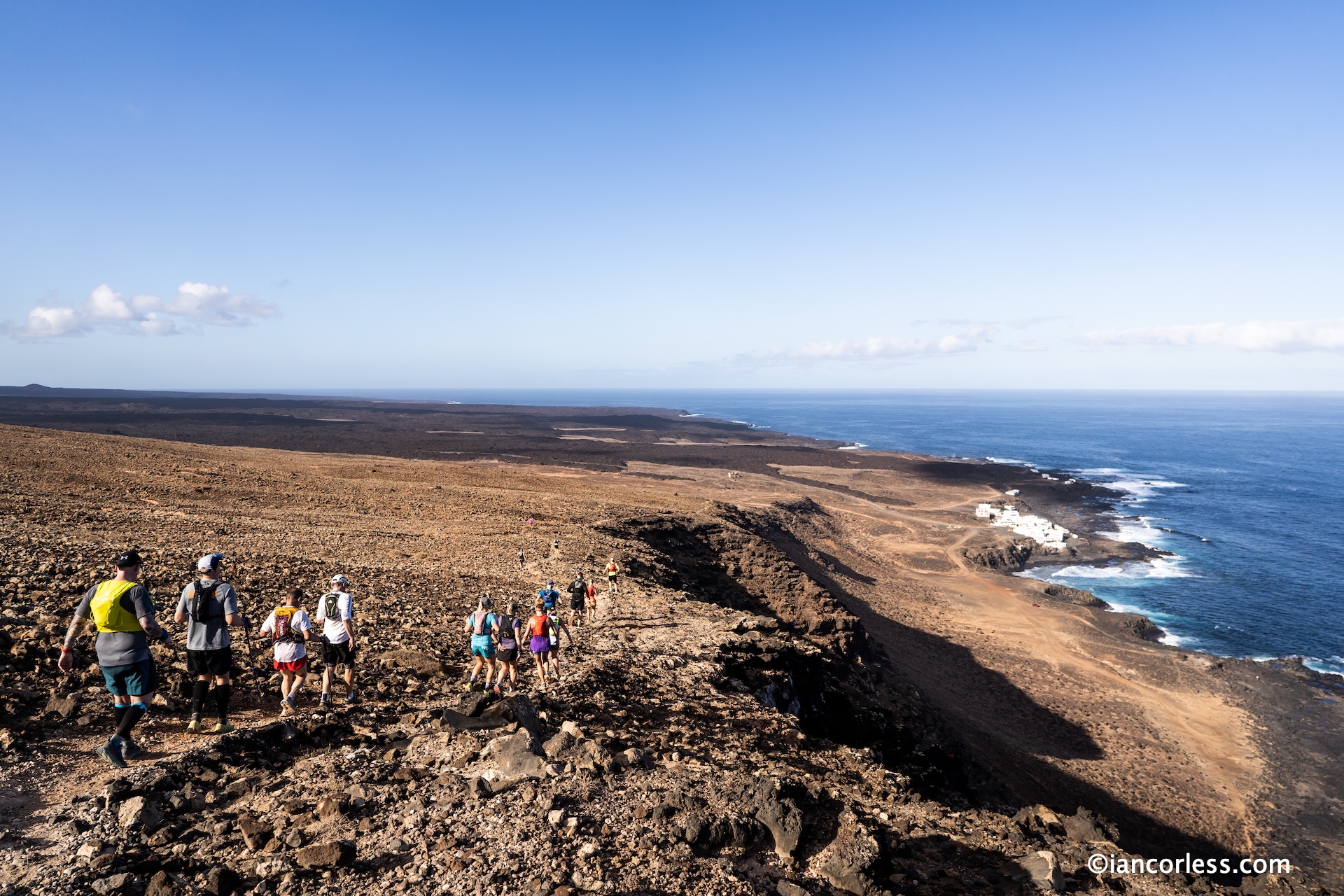
The trail offers stunning views and a mixture of technical trail, dirt roads, rocks and sand.
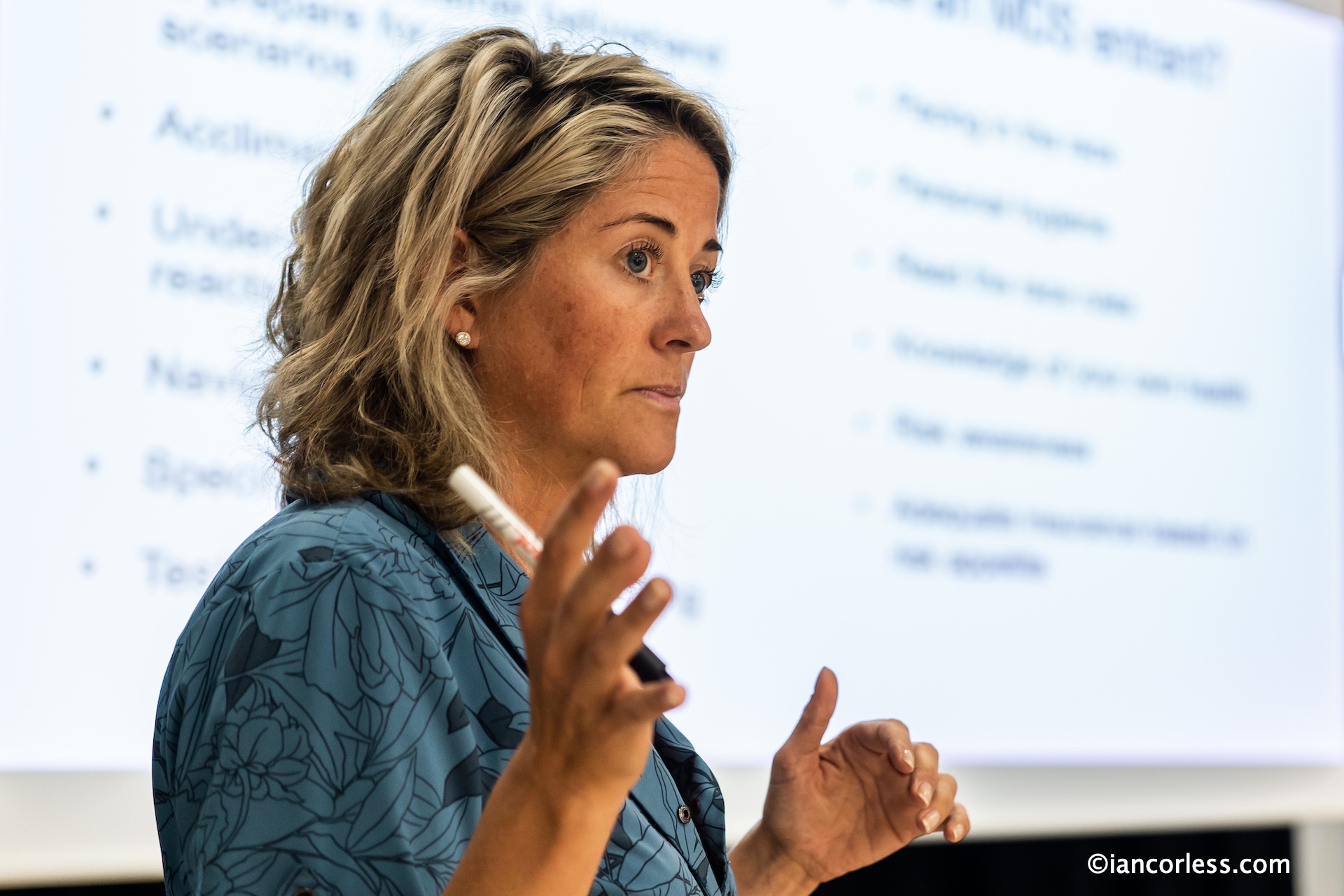
After lunch, Elisabet Barnes did a 2-hour talk on multi-day racing, self-sufficiency, planning and preparation.
With a long day almost done, at 1730 an easy 3-5km (3-miles) run concluded the day to loosen off the legs.
Please support this website. I believe everyone deserves to read quality, independent and factual articles – that’s why this website is open to all. Free press has never been so vital. I hope I can keep providing independent articles with your help. Any contribution, however big or small, is so valuable to help finance regular content. Please support me on Patreon HERE.
Three runners. Three loops. One Team. The concept of the adidas Infinite Trails is a bold one. Take three run routes of varying distance, take three runners, each running their own loop varying in distance from 15km to 40km. Quite simply, add the three individual finishing times together to see who the fastest team can be.
Now in its third edition, 2018 being the first followed by a hugely successful 2019 edition that elevated the event to a whole new level. As such, 2020 was hugely anticipated edition rolling on from the growth of 2019, unfortunately, a certain pandemic changed those plans.
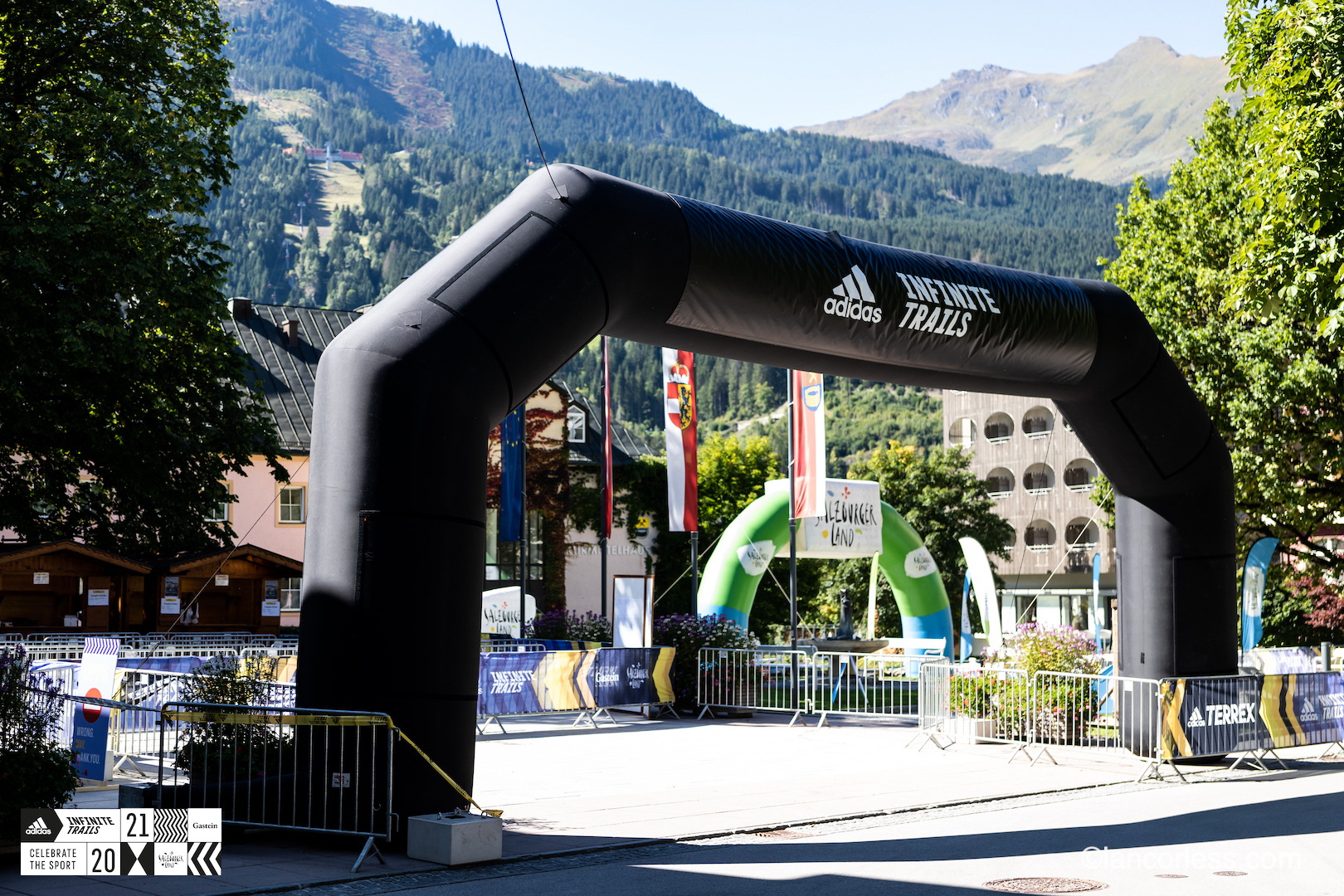
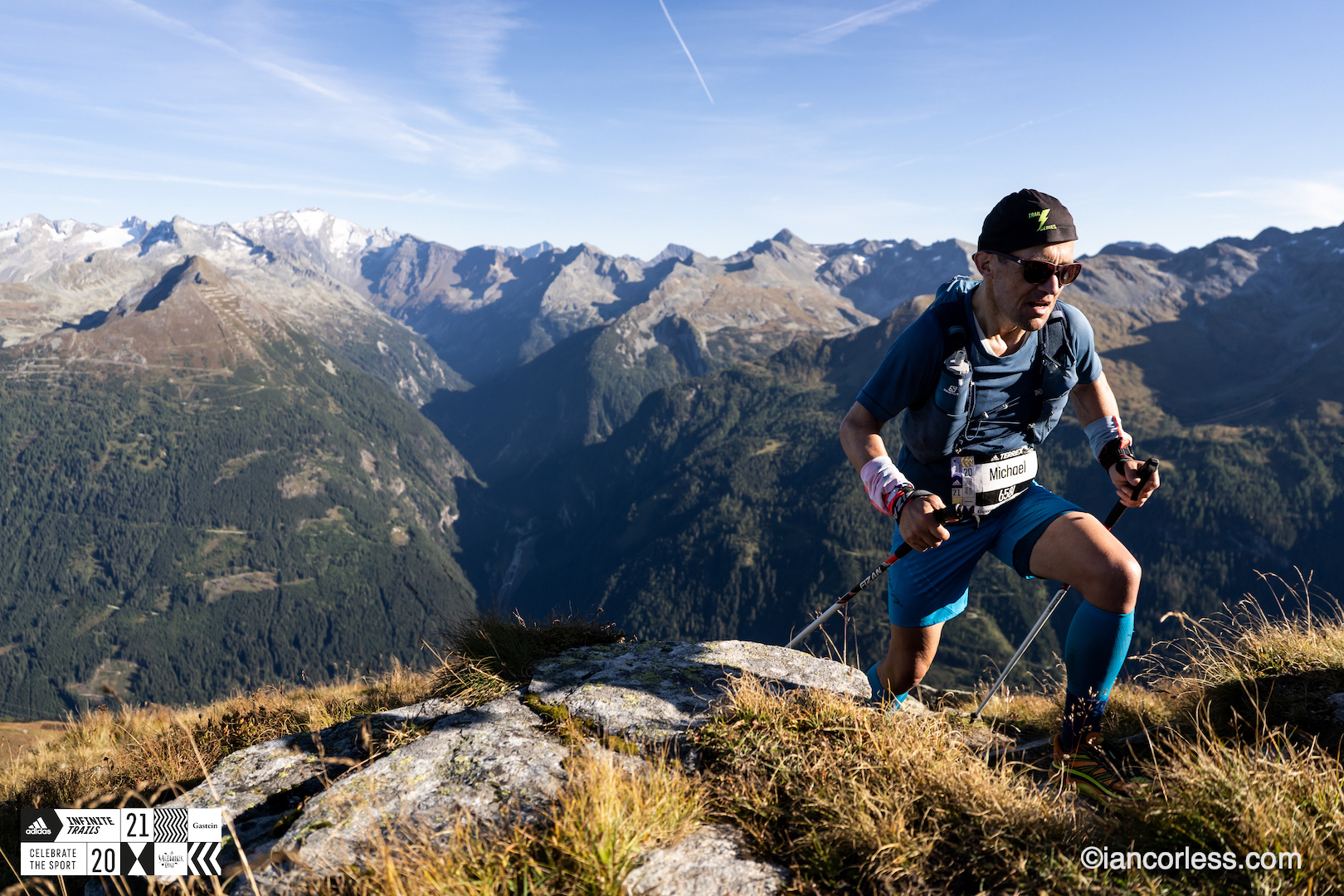
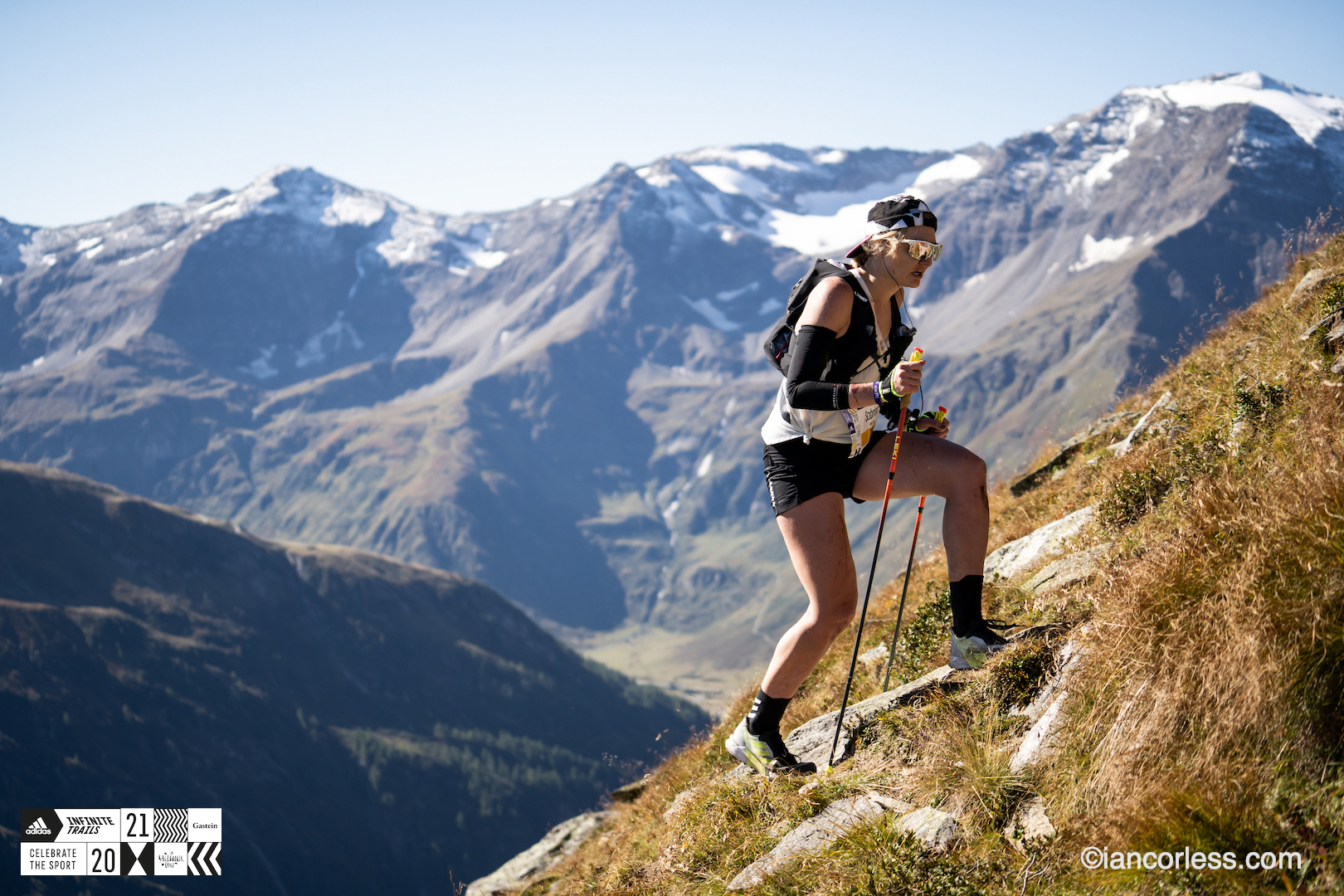
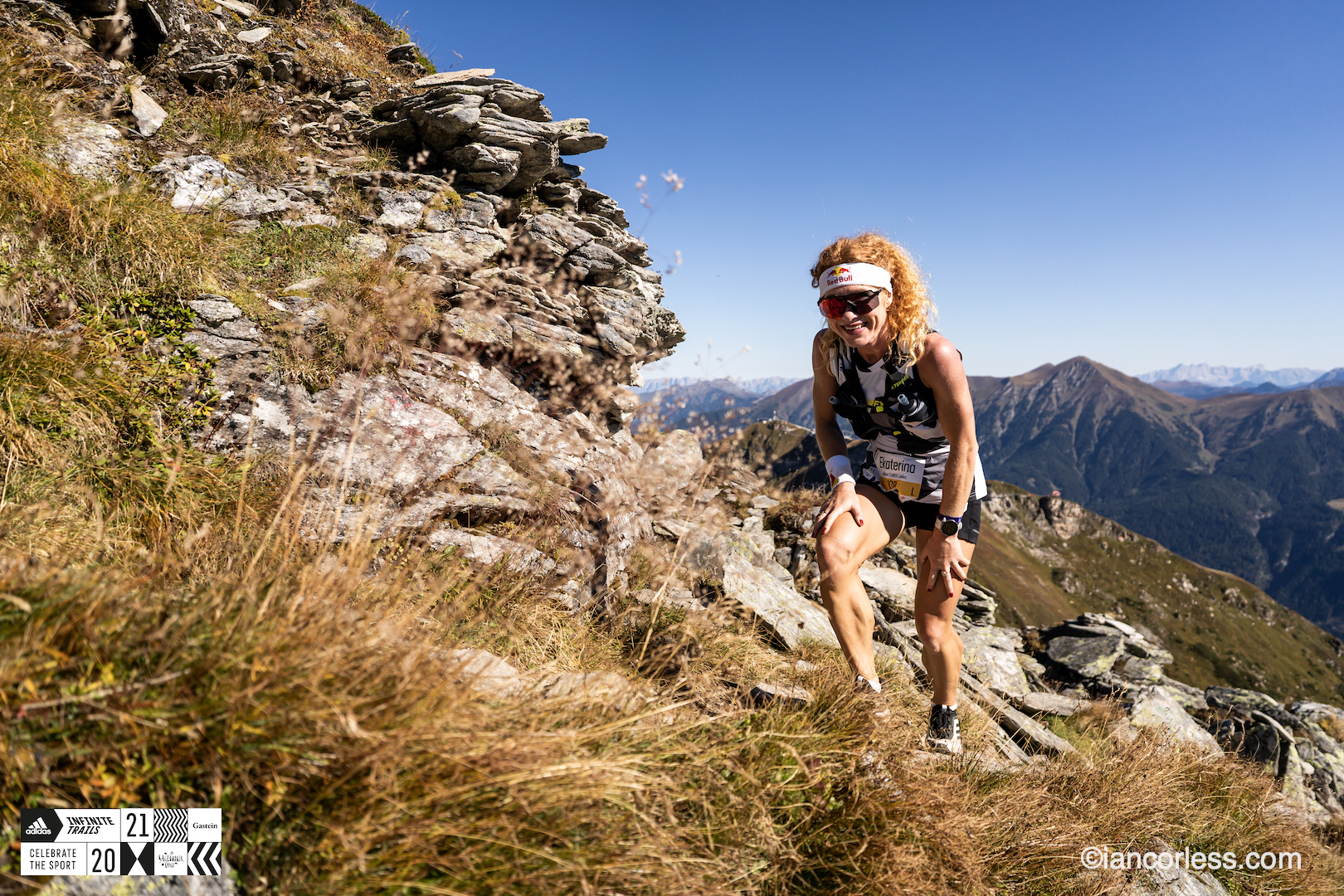
Working within very specific parameters, the 2021 edition had less runners, new loops for the relay race of 20, 30 and 40km, a new solo 65km/15km race and a smaller athlete village. It would be easy to think that the 2021 version would be disappointing… Not at all! Mike and Sonja of Planet Talk, with the help of a truly dedicated team, once again managed to pull off an event that sets the benchmark for all running events.
Incredible organization and planning are at the hub of adidas Infinite Trails and it’s why the event is a success. No stone is left unturned, every eventuality is looked at and planned for. It’s a dream event to run and work on.
The weekend started with a very controlled registration process meeting COVID guidelines. Race briefing was done digitally, and one has to wonder if race briefings in the future will always be done this way? It’s time efficient and arguably more thorough.
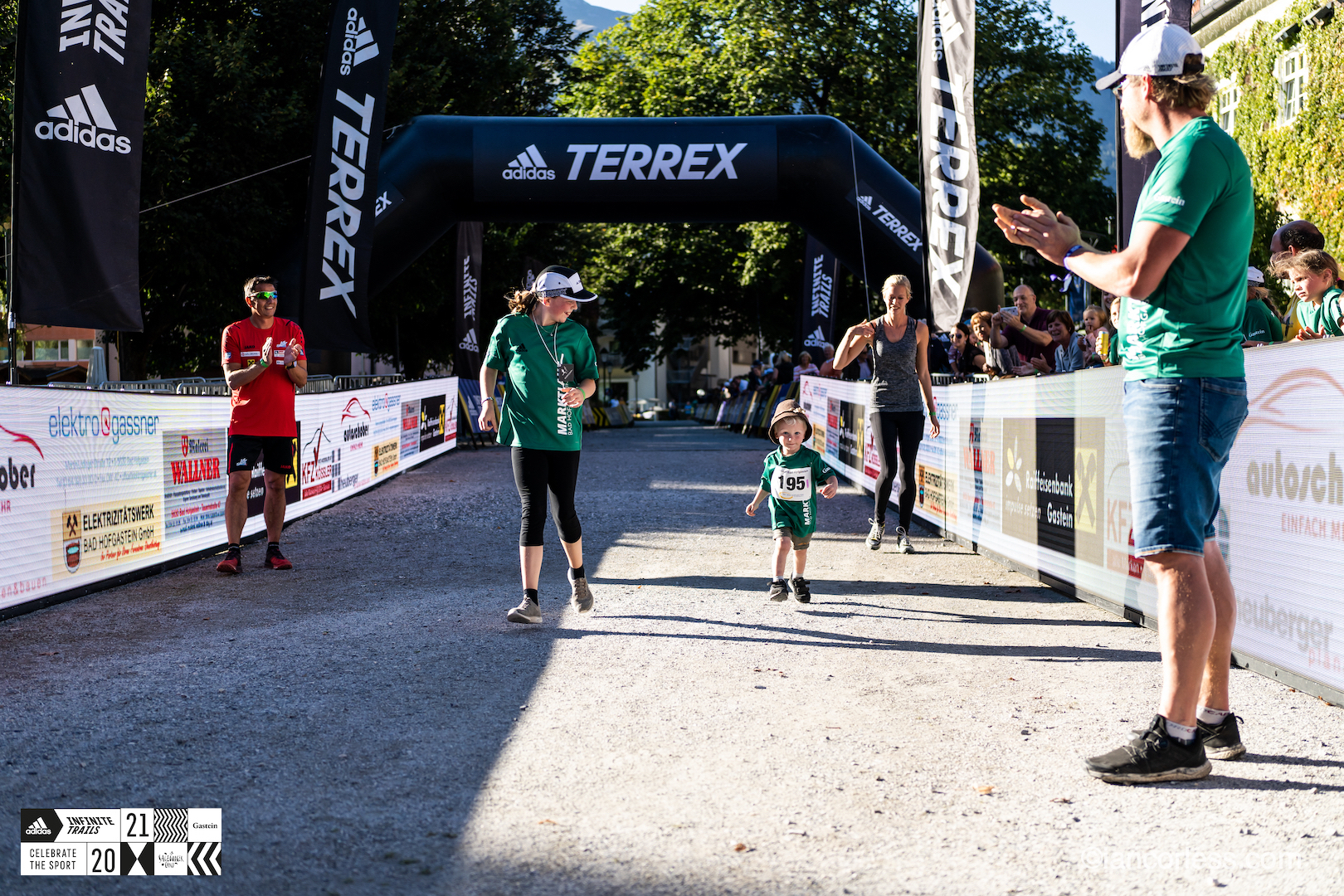
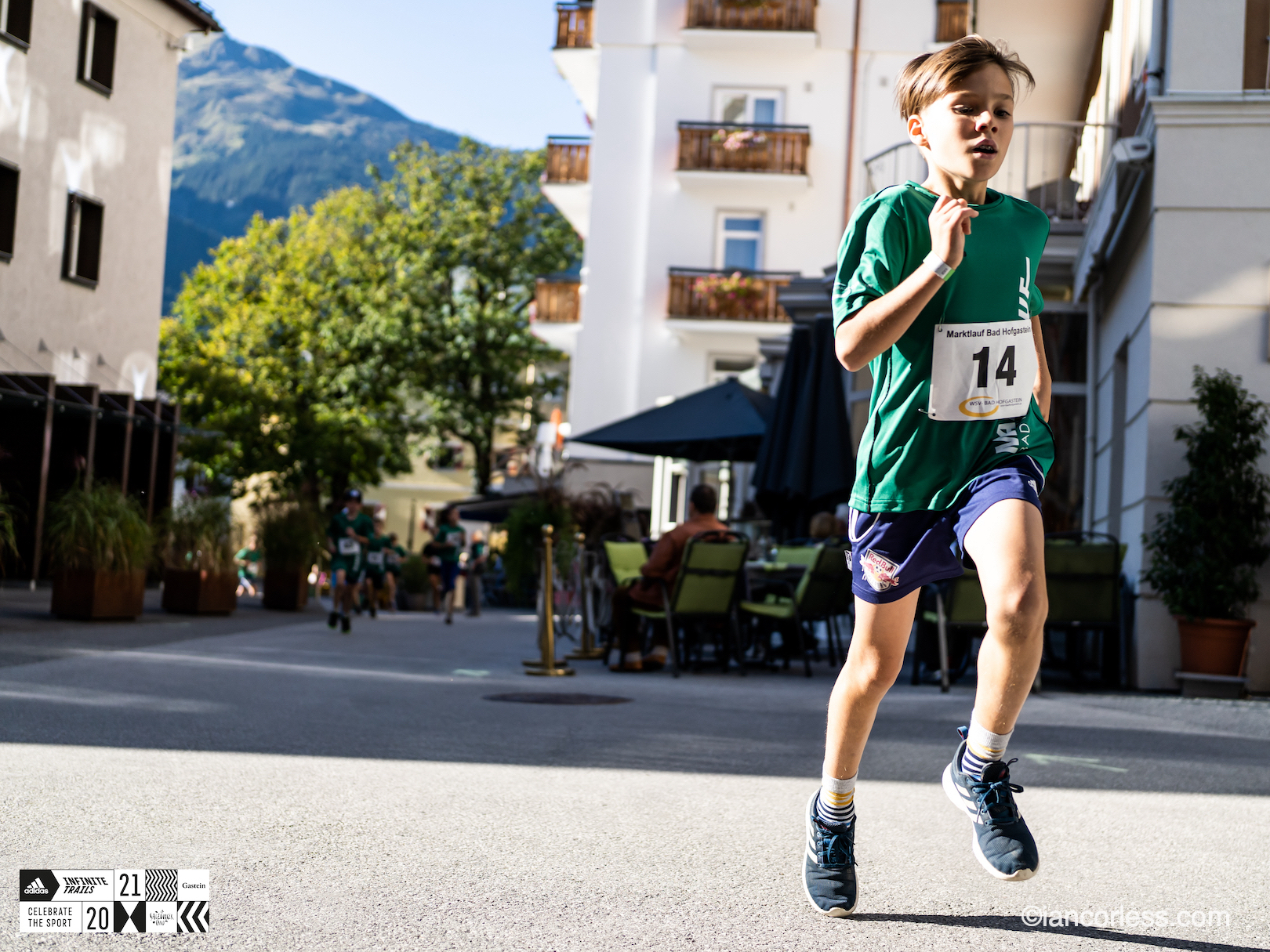
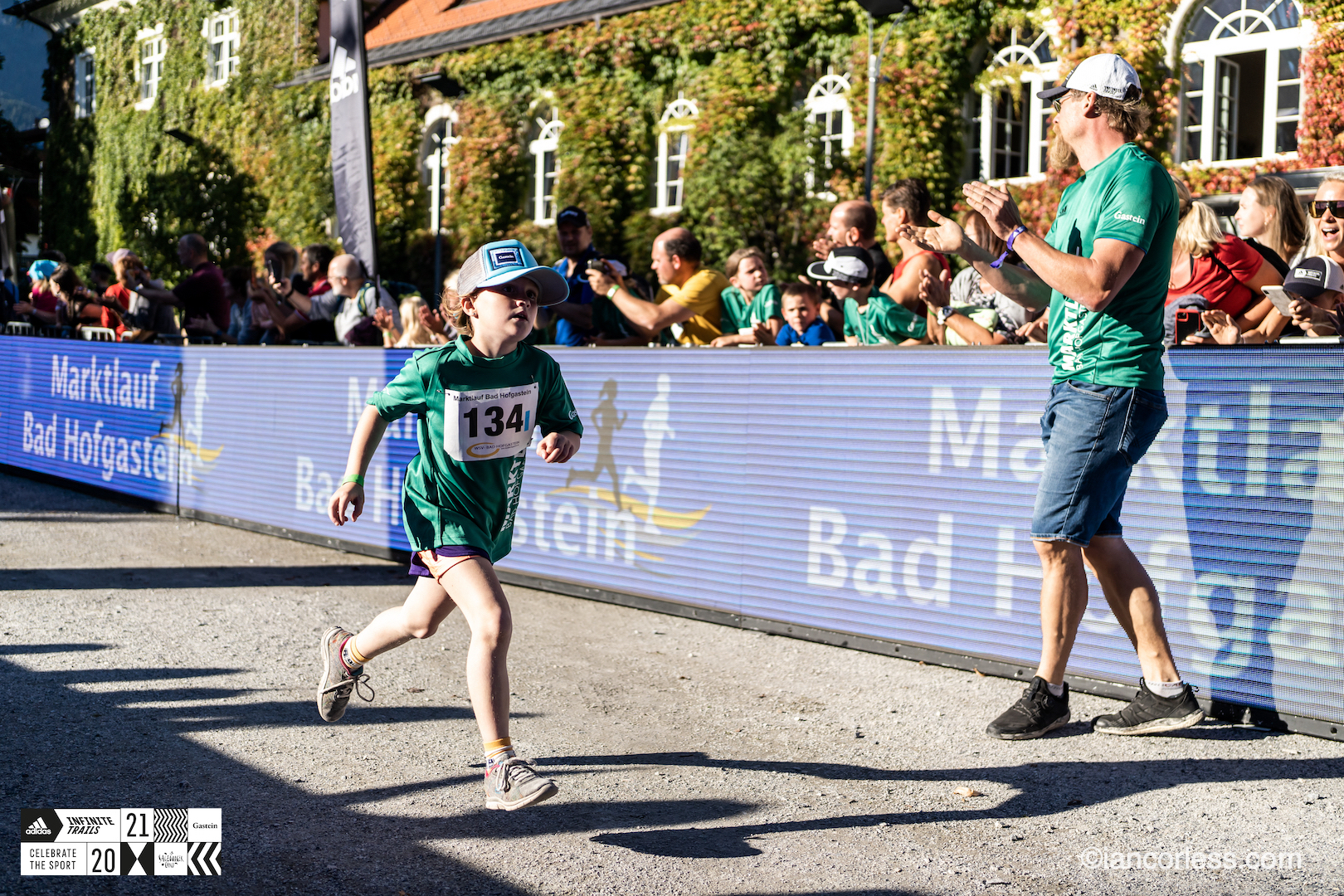
The ‘Market Run’ started in the afternoon and with it, racers of all ages tackled shorter distances around Bad Hofgastein. Of course, the highlight was the children. It’s so special to see kids run and run fast with no thought of pace.
Saturday was race day and this is where the format changed to previous editions. In 2019, runners ran the first loop only first and then passed the timing chip to their teammate on completion at the finish. The second runner would then go on their own loop of a new distance to repeat the process once again. The third loop would follow the same process and the conclusion at the start/finish area would provide a total accumulative time.
For 2021, all loops started at the same time with the three team members lining up and then departing on their respective loops at 0700. The 65km solo loop started 30 minutes earlier, the solo 15km starting at 0900. The format worked extremely well and provided a plethora of finishes starting firstly with the 15km loop and lastly with solo runners arriving at darkness for the 65km loop.
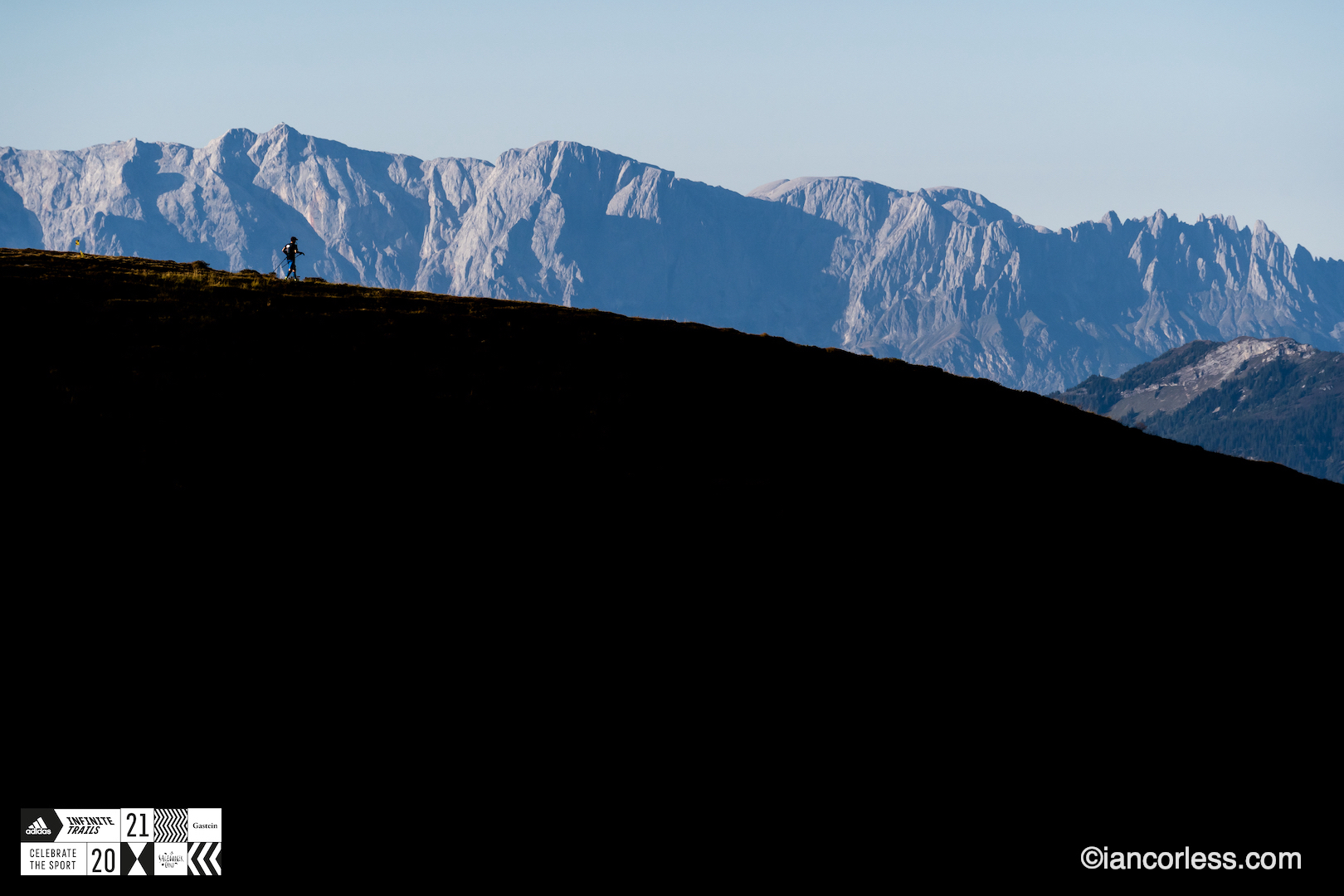
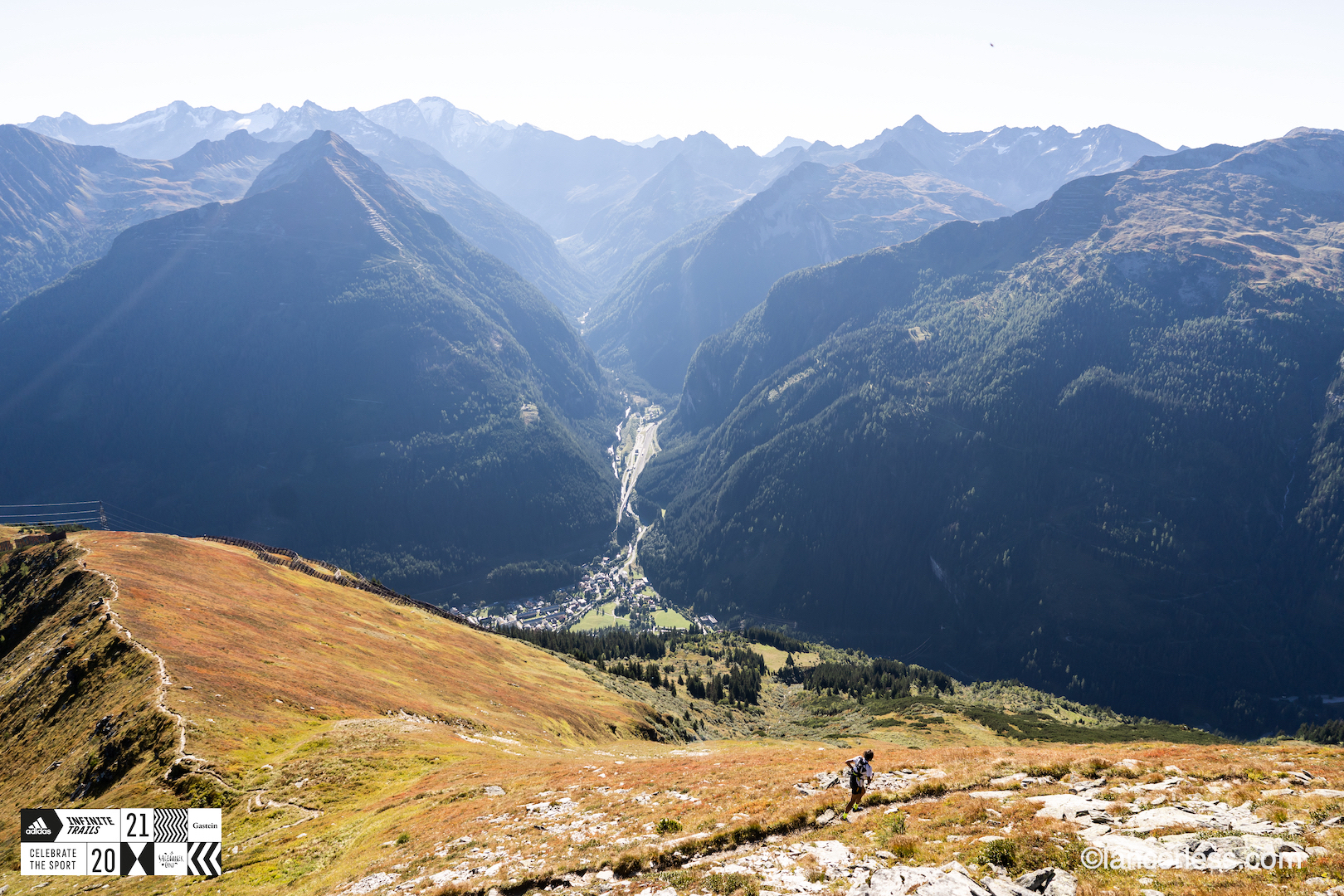
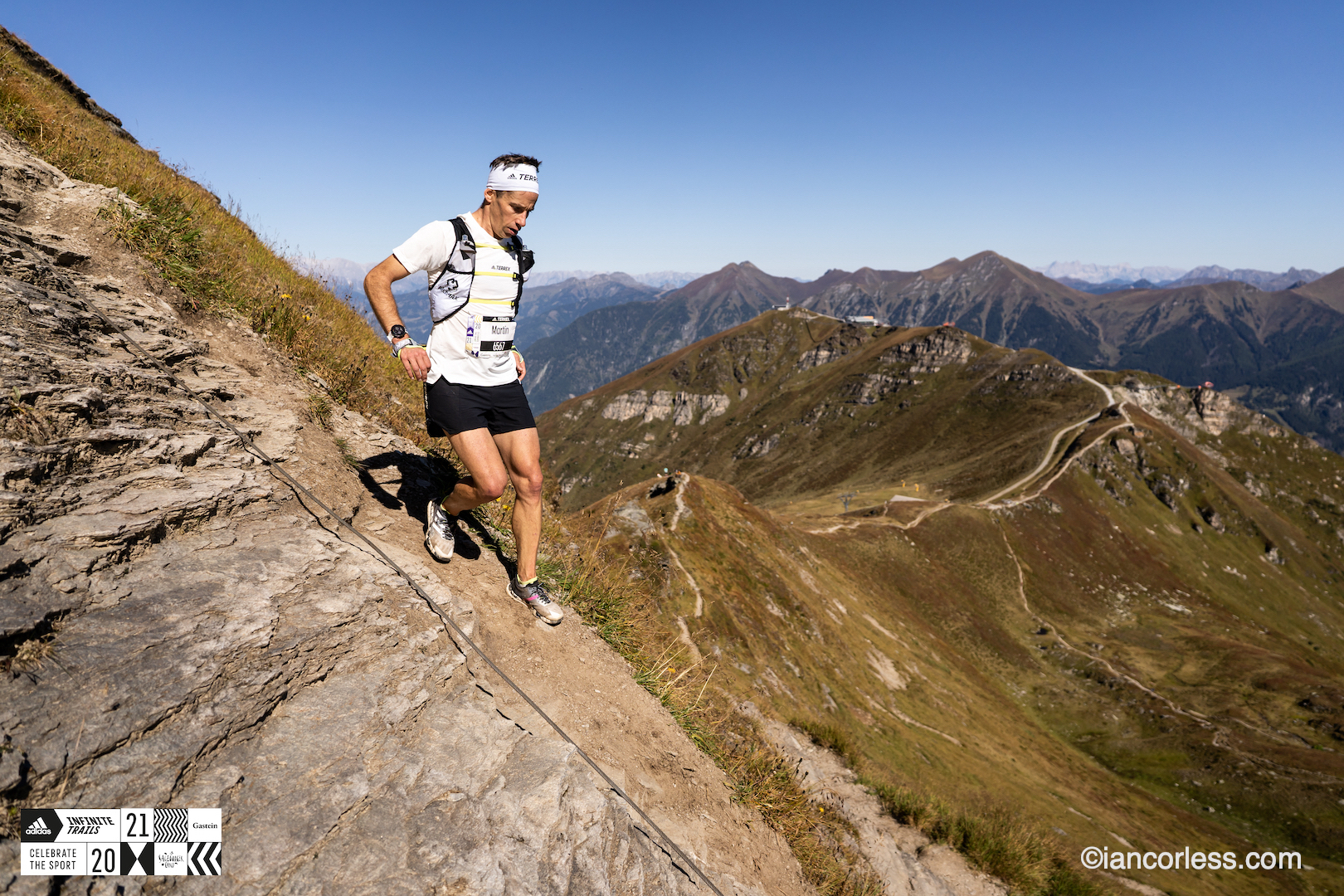
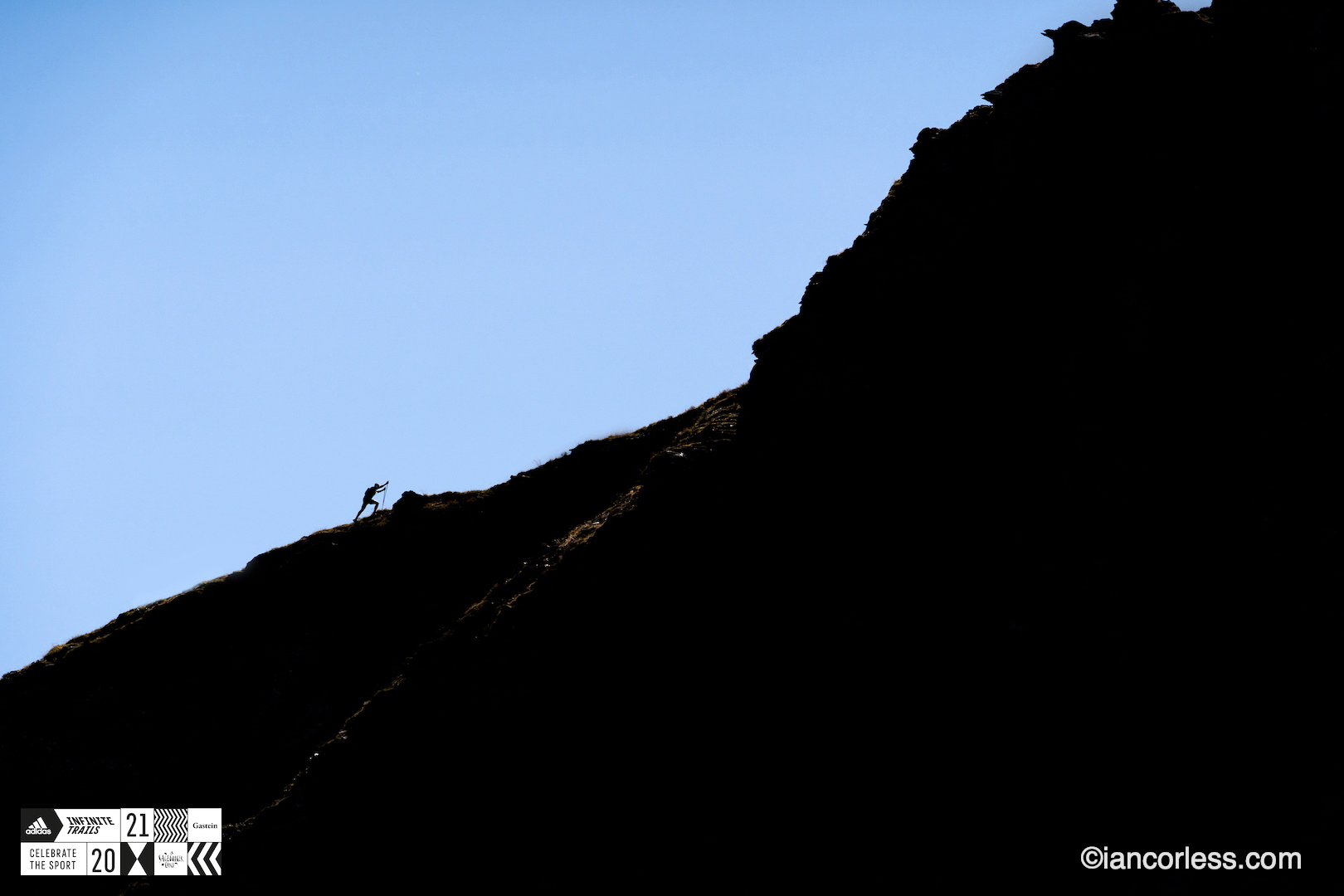
Austria and Gastein is a playground for trail runners, the three loops providing a perfect showcase for the highlights of the area. Only the 65km loop provided a full 360 journey including the highlights of Gamskarkogel, Graukogel and Tischkogel.
Races within a race bring an exciting element to adidas Infinite Trails. There is individual accolade as each runner passes their own finish line, but it’s only at the end that three runners will know if they have won the event; the three individual times added together to bring one finish time.
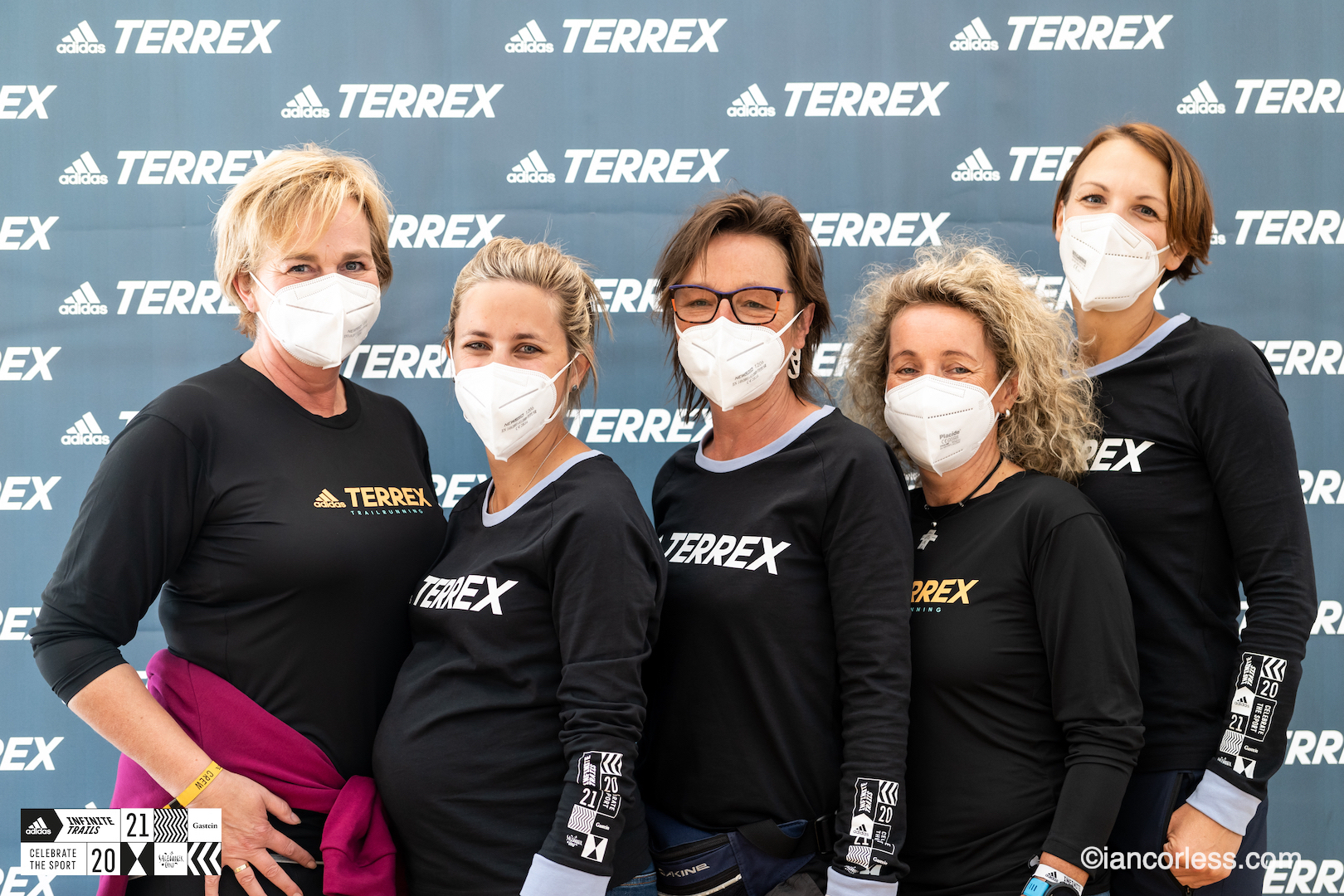
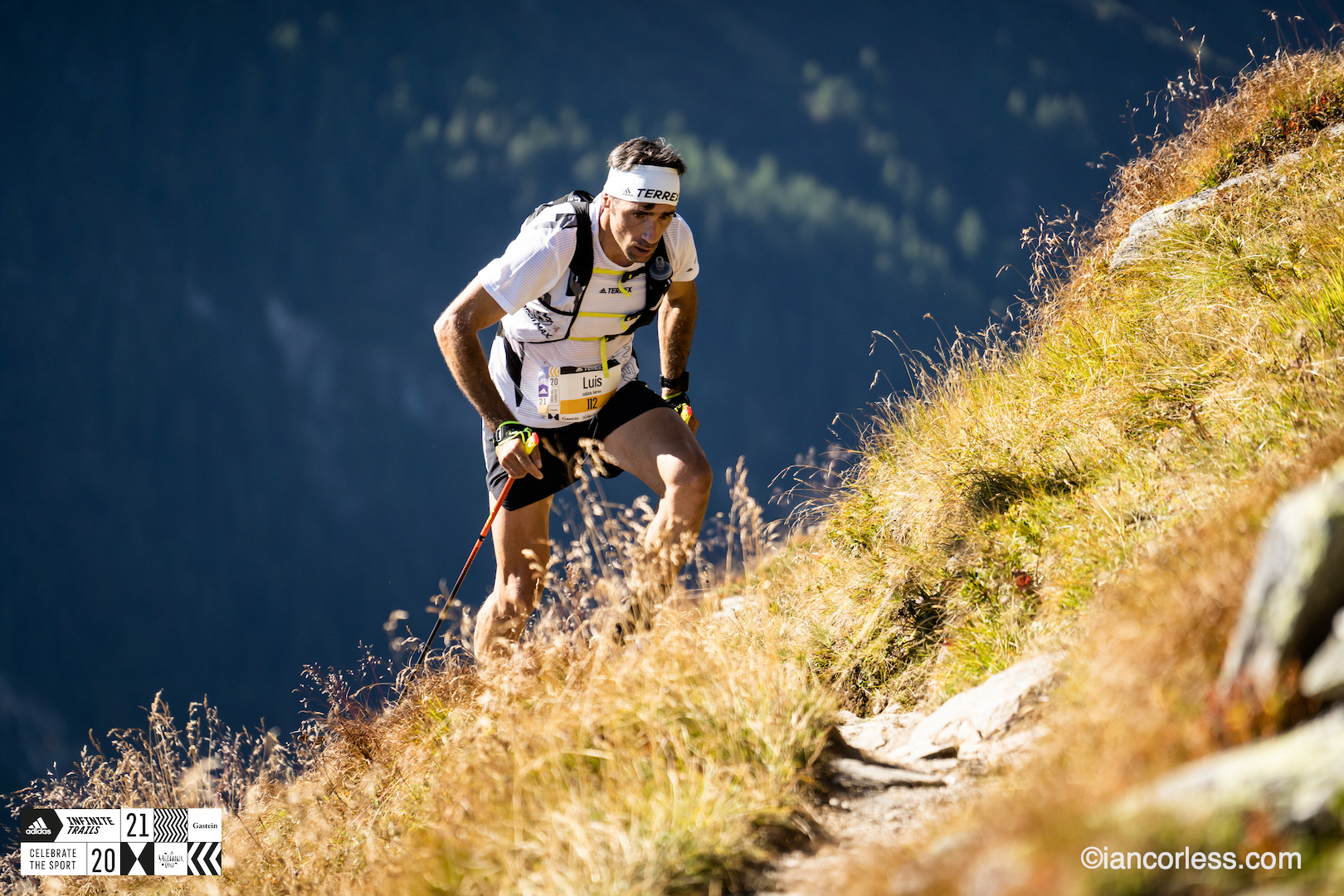
The adidas Terrex Team fielded a star-studded line up, even more impressive coming so soon after hard efforts at UTMB. As always, the #oneteam ethos was paramount and for those who would not race, they would crew and support the others.
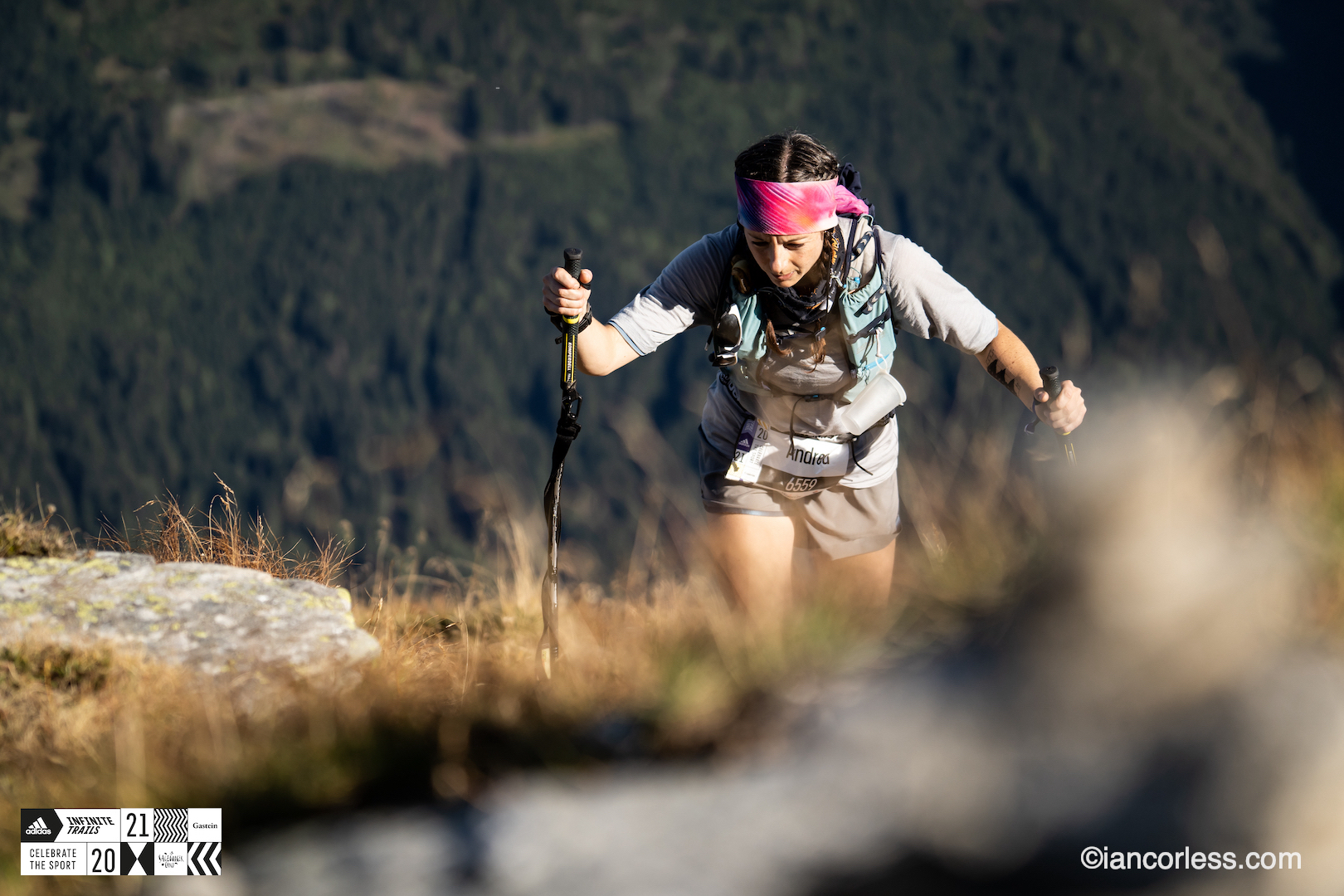
Importantly though, the 2021 edition was all about inclusion and participation, of course, there were individual and team winners, but importantly, there were no losers. The adidas Infinite Trails was full of achievement, happiness, and pride. It was good to all come together again, enjoy the trails, a great atmosphere, and all glory in a combined stunning weekend of running joy, very much the #oneteam ethos working for a whole community of likeminded people who wanted to celebrate the sport!
Bad Hofgastein provided a perfect hub for a weekend like this and the after party achieved a whole new level of awesomeness as it moved to the Alpentherme for water, music, drinks, and food.
2021 may well have been a transition year for the adidas Infinite Trails, one thing is for sure though, we all received a resounding confirmation that the race is here to stay. Something this good should be a must for all.
I said this in 2019, but I’d love to see other brands field teams to go head-to-head to see who the best with three runners over three loops can be. And you? Plan now, find two friends, create a team name and join us in Bad Hofgastein next year for the adidas Infinite Trails. Or if you fancy the full and immersive 360 journey, why not contemplate the 65km solo run, it’s a toughie, but very rewarding.
Please support this website. I believe everyone deserves to read quality, independent and factual articles – that’s why this website is open to all. Free press has never been so vital. I hope I can keep providing independent articles with your help. Any contribution, however big or small, is so valuable to help finance regular content. Please support me on Patreon HERE.
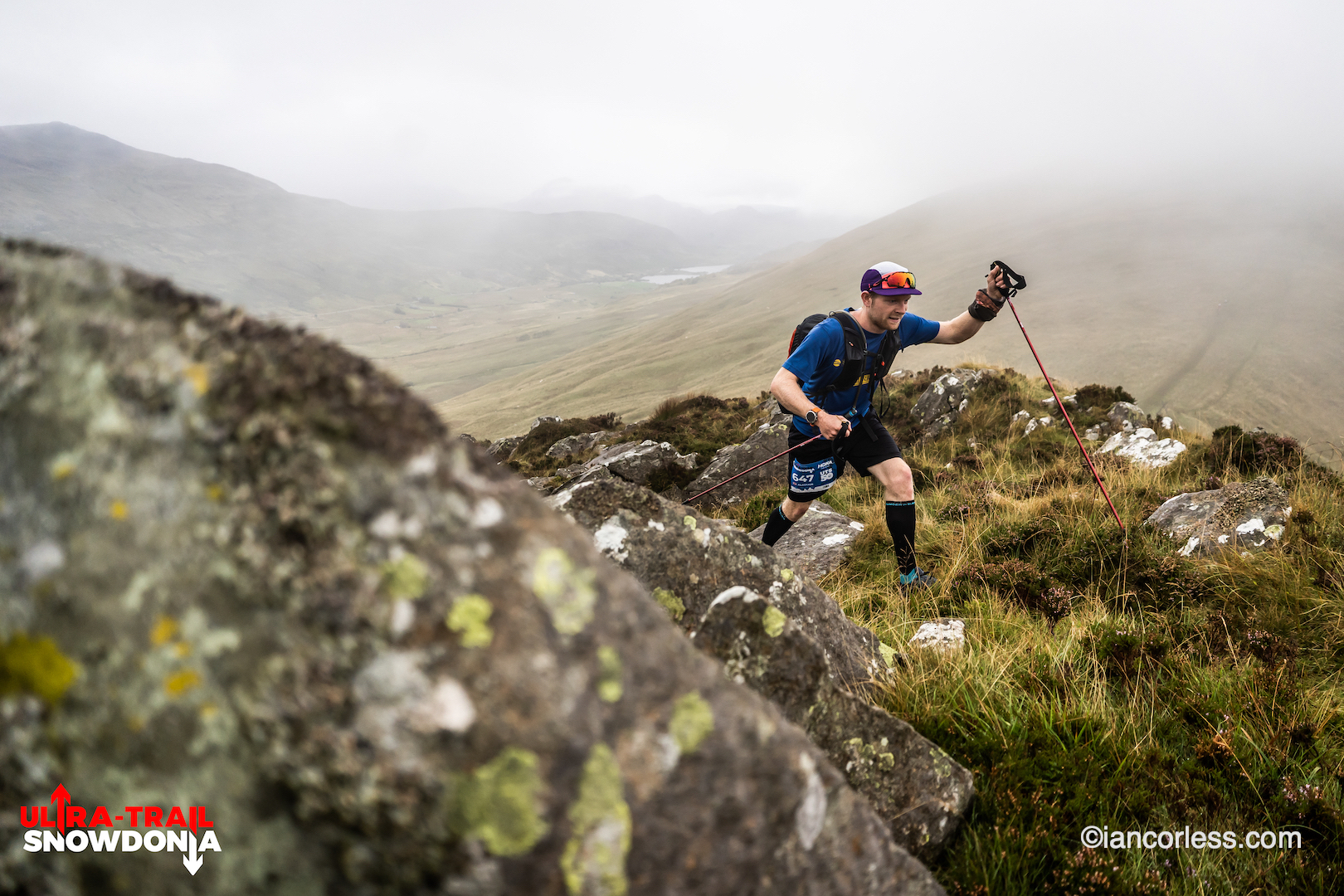
Persistent rain, low cloud, poor visibility, mud, bogs, wet rocks, climbs and descents that made even the most adapted legs scream in pain, yes, that was Ultra Trail Snowdonia 2021.
Missing in 2020 due to the dreaded ‘C’ word, the UTS returned in 2021 to Capel Curig as part of the Ultra Trail World Tour and supported by Hoka One One to confirm the dream of Michael Jones of Apex Running – A big UTMB style weekend of racing in the heart of Wales.
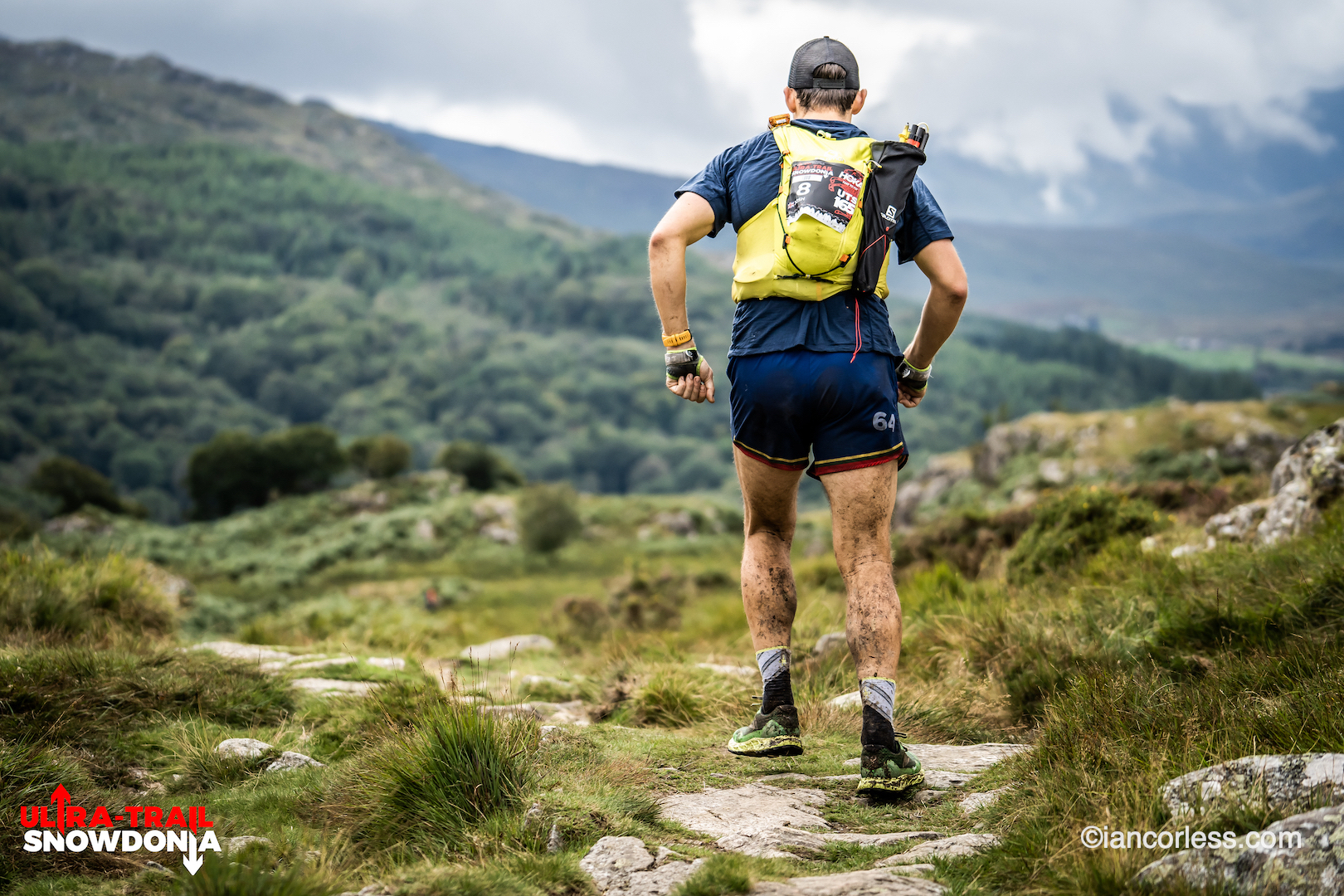
With distances of 50km, 100km and the whopping 165km, one word was touted pretty much everywhere all weekend, brutal! And it was… A savage weekend of racing but as Michael says, ‘beautifully beyond belief, savage beyond reason.’
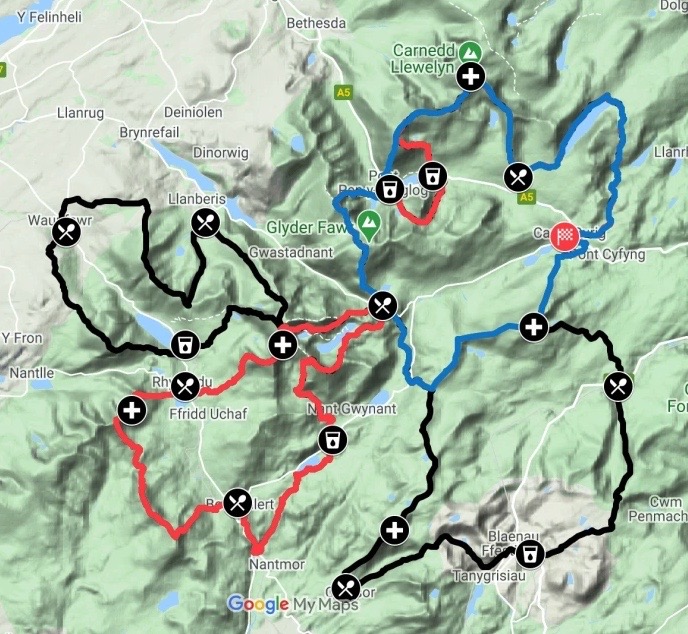
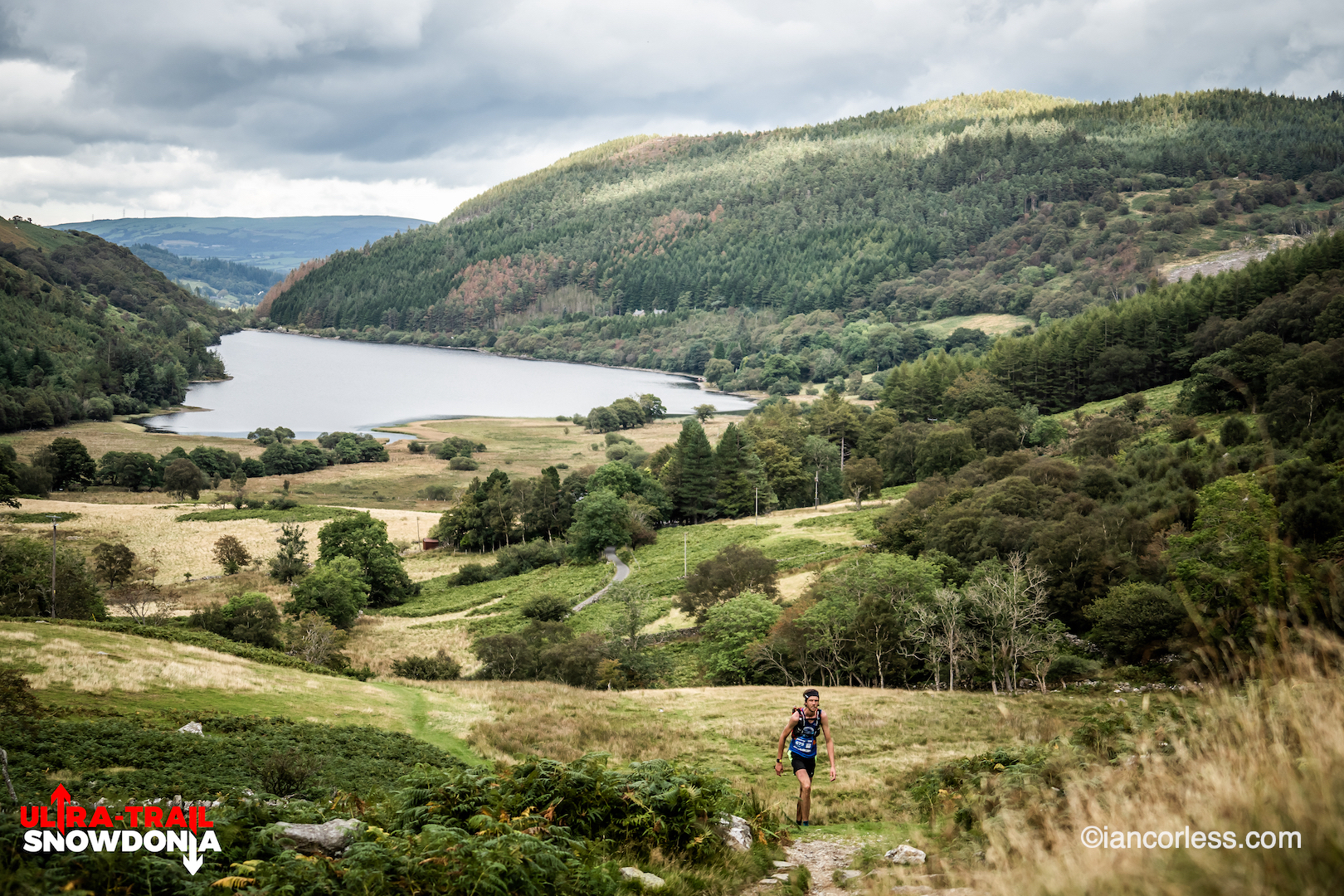
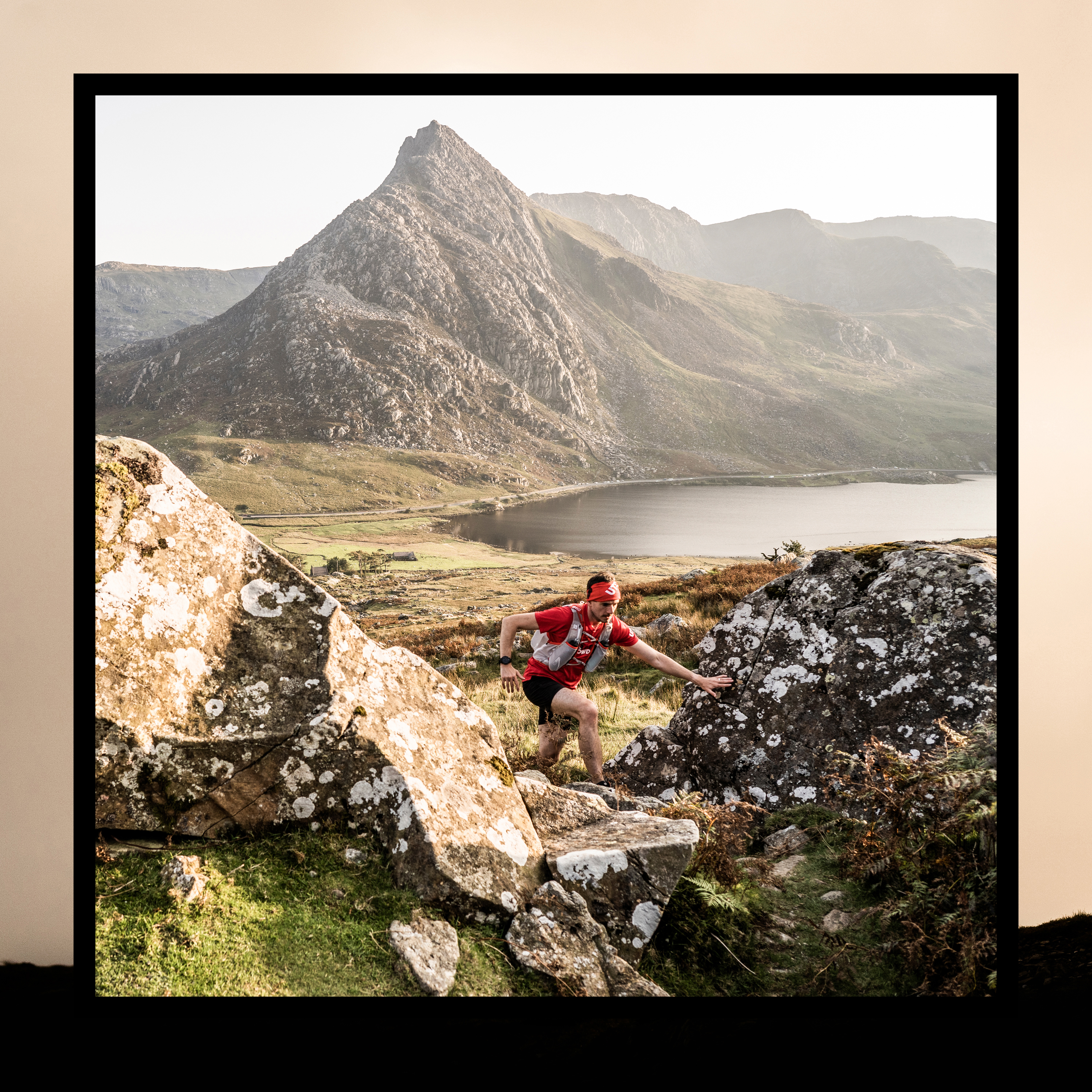
Despite the rain, despite the lack of views, Wales was a stunning playground for trail running. Let’s be clear here, there is no ‘easy’ running at UTS. The 50km is a wonderfully challenging route that may well have surprised many with some of its technical challenges, particularly the climb from Ogwen up to Carnedd Dafydd, compensated for what could be then considered a ‘relatively’ easy run in to the finish via Lyn Cowlyd and Blaen-Y-Nant.
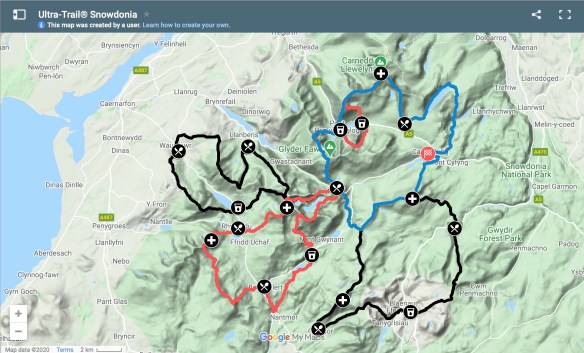
The 100km route followed the early miles of the UTS50 all the way to Pen-Y-Pass but then headed along the Miners’ Track for an extended loop to return via the Pyg Track heading off to Y Garn, a loop around Tryfan and then head up to Carnedd Dafydd via a different route to the 50km and then follow the same run in to the finish.
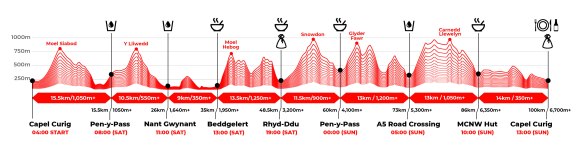
The 165km is well, just a monster! As expected, it created carnage amongst the competitors. It’s a relentless beasting of mind and body that passes through the whole of Snowdonia. The 100km and 50km routes all utilizing sections of this all-encompassing journey but only the 165km giving the full perspective of how beautiful and hard the Welsh mountains are. As with all races at UTS, it started and concluded in Capel Curig. Heading off to Blaenau Ffestiniog, Croesor it then picked up the 50km and 100km routes to Pen-Y-Pass. Nantmoor, Moel Hebdog, Llyn-y-Gadair and then after Yr Wyddfa it followed the Snowdon Ranger Path for an extended loop before returning via the Snowdon Massif and Pyg Track to Pen-y-Pass. From here, the 100km and 165km routes were identical all the way back to Capel Curig.
Tremayne Dill Cowdry summed it up: “45 hours to do just over 100 miles and every minute of that was a hard slog. Mountains, bog, wet rock, tough nav on a marked course, sleep deprivation, mist, rain and the terrain!! Very little was even runnable. I can’t imagine a 100 miler more difficult than that. Easily the hardest I’ve done and definitely the hardest in the UK. I was going ok although I would have happily dropped given the chance but my feet succumb to the permanent wet and I had to hobble the last 20-ish miles…
Stunning landscape
As with all races, someone has to cross the line first, and of course there was stunning performances all weekend. However, the real sense of achievement came firstly from toeing the line and being in with a chance of completing a journey. The second came from completing the journey. Every medal was hard earned.
Josh Bakker-Dyos
In the 165km event, Josh Bakker-Dyos lead from the start and while many expected him to blow up, so fast was his pace, he never did. He was relentless and consistent crossing the line in 28:51:43. It was easy to say, ‘he made it look easy!’ But for every other runner who crossed the 165km line, it was very clear, there was nothing easy on this route! Toby Hazelwood was less than 60-minutes behind in second, 29:45:17, another stunning run! Adam Jeffs rounded the podium with 34:09:54. Alice Sheldon and Becky Wightman were the only female finishers, 45:09:55 and 47:41:06 their hard-earned efforts stopping the clock – a brutal two nights and days out in the Welsh mountains. Only 32 completed the race.
Mark Darbyshire
The 100km route was won, but not dominated by Lakeland 100 champ, Mark Darbyshire ahead of Josh Wade and Jack Scott. Mark crossed in 14:25:47 with 14:33:36 going to second. It was 16:02:05 elapsed before the third crossed the line. Sarah Stavely (21:41:03) won the women’s race with Kajsa Holgersson and Julie Finn in second and third, 22:28:49 and 22:44:53.
Lauren Woodwiss
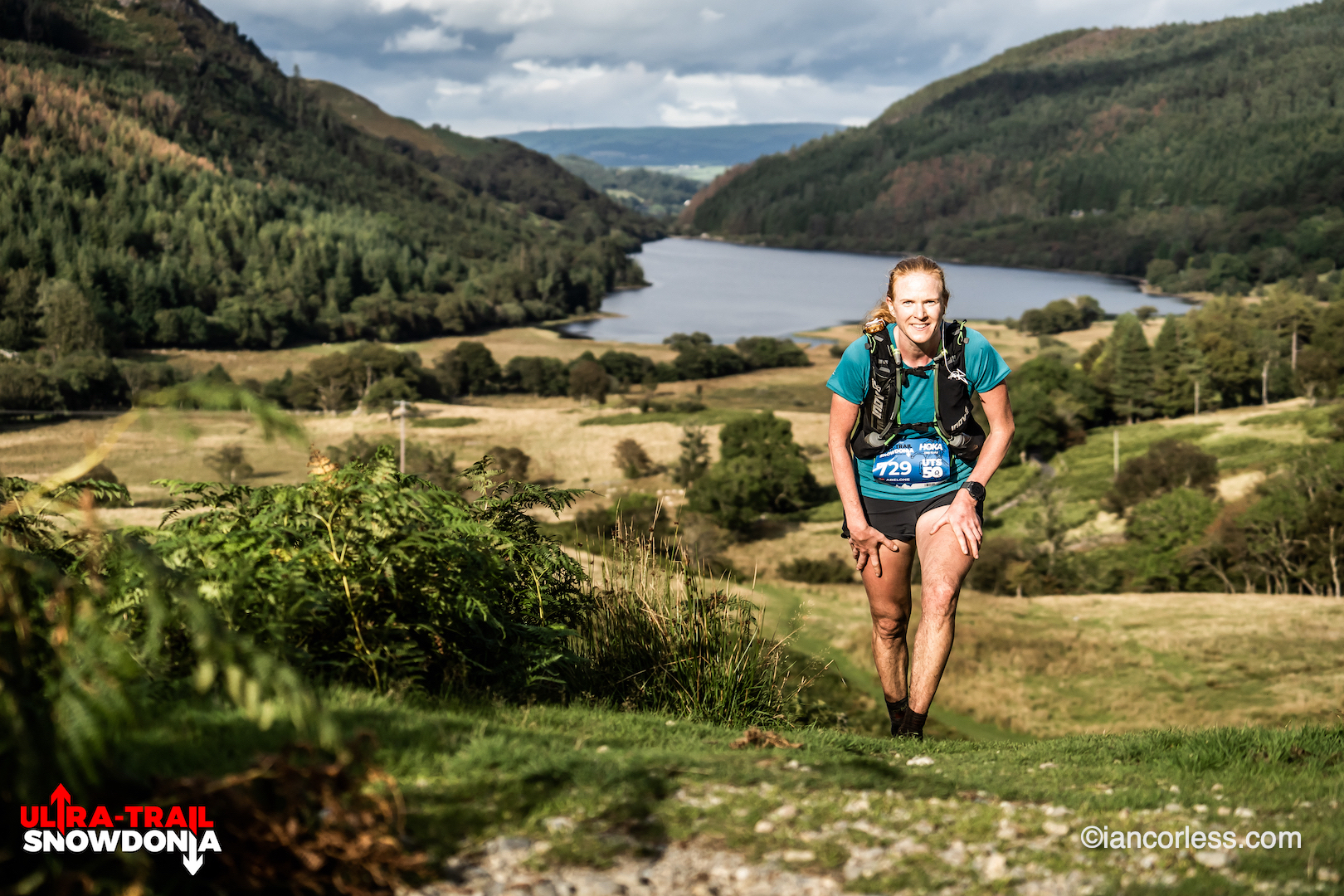
Harry Jones flew around the UTS 50 route and looked as strong at the finish as when he started, his 6:13:33 a stunning time. It was 6:56:54 elapsed before second place Will Simmons crossed ahead of Spencer Shaw in 7:14:53. Lauren Woodwiss, like Jones, lead from the start dictating an excellent pace over the 50km route and completed her journey in an excellent 7:54:18. Celia Waring placed second in 8:36:18 and Abelone Lyng from Norway, moved up from outside the top-10 women to eventually finish third in 8:43:16 after sprinting for the line ahead of Jenna Shail who was just 13-seconds behind.
As Capel Curig slowly returned to some normality on Sunday, it was easy to see that the UTS will become one of the ultimate trail running events not only in the UK but the world. It may not have all the glamour and glitz of Chamonix and the UTMB. It’s a much more grass roots event, some would say a ‘true’ trail running event. Ultimately though, Wales was the hero of the weekend offering stunning routes. This landscape combined with the vision of Michael Jones of Apex Running and a team of dedicated volunteers and supporters will make UTS a ‘one to do!’ However, if you are thinking about the 165 event? Think long hard and without doubt, train hard, it’s a beautifully brutal beast.
‘beautifully beyond belief, savage beyond reason.’
Please support this website. I believe everyone deserves to read quality, independent and factual articles – that’s why this website is open to all. Free press has never been so vital. I hope I can keep providing independent articles with your help. Any contribution, however big or small, is so valuable to help finance regular content. Please support me on Patreon HERE.
Coronavirus pretty much wiped out the 2020 racing calendar and unfortunately, UTS was a casualty at the 11th hour. Gladly, UTS returns for 2021 bigger and better than ever… Supported by Hoka One One® and now part of the Ultra-Trail® World Tour, UTS is the UK’s answer to other big European ultras! Learn more about the Ultra-Trail® World Tour HERE.
Michael Jones of Apex Running Co is a runner himself, so, he has understood the need and desire to race, but also abide by government guidelines and provide a safe race – a thankless task for anyone. Michael has been positive though, always looking ahead, planning and working within government guidelines to bring a safe and stunning weekend of racing to Wales.
Three events that show Snowdonia at its best. The 50km has a 14-hour cut-off, the 100km 33-hours and the 165km a whopping 50-hour limit. Needless to say, 3 very tough events in a tough and challenging part of the world. Covering an area of 827 square miles and established in 1951, Snowdonia is the second largest National Park in the UK and home to the highest peaks in the UK outside of Scotland. From its 37 miles of beautiful beaches where you can surf, to rugged, ridge-laden mountain peaks and an array of pristine lakes inbetween: there is something to please every outdoor enthusiast here! Keen to learn a bit more about beautiful Snowdonia? A great place to start is the Snowdonia National Park Authority website HERE.
The 165km event is the main event of the weekend starting at 11am on Friday 10th September. A route that starts and finishes in Capel Curig, it’s a monster of a challenge.
Each distance features 3300/6700/10,000m+ elevation gain, on predominantly technical mountain trails. This makes UTS one of, if not THE toughest Ultra-Trail® events in the world. UTS isn’t just challenging for the sake of it though. With routes that explore Snowdonia’s most scenic valleys, rugged peaks and epic landscapes, these race routes are truly the most beautiful in the UK!
Entry lists are available to viewvia the UTS website. While most entrants are from the UK, there is a multinational feel with Poland, Sweden, Norway, South Africa, Ireland, Italy, Lithuania, New Zealand, Portugal, Czech Republic, Australia, Spain, USA, Germany, Netherlands and more… listed on the start sheets.
The UTS 165 is the stand-out and flagship event offering a stunningly brutal and beautiful tour of the Snowdonia National Park. Starting in Capel Curig, the route takes in the most notable peaks of north Wales.
UTS 100 has technical trails, epic views and is a highlight tour of north Wales.
Arguably, the UTS 50 is an entry level race but still requires respect for the challenges that Wales and its mountains can bring.
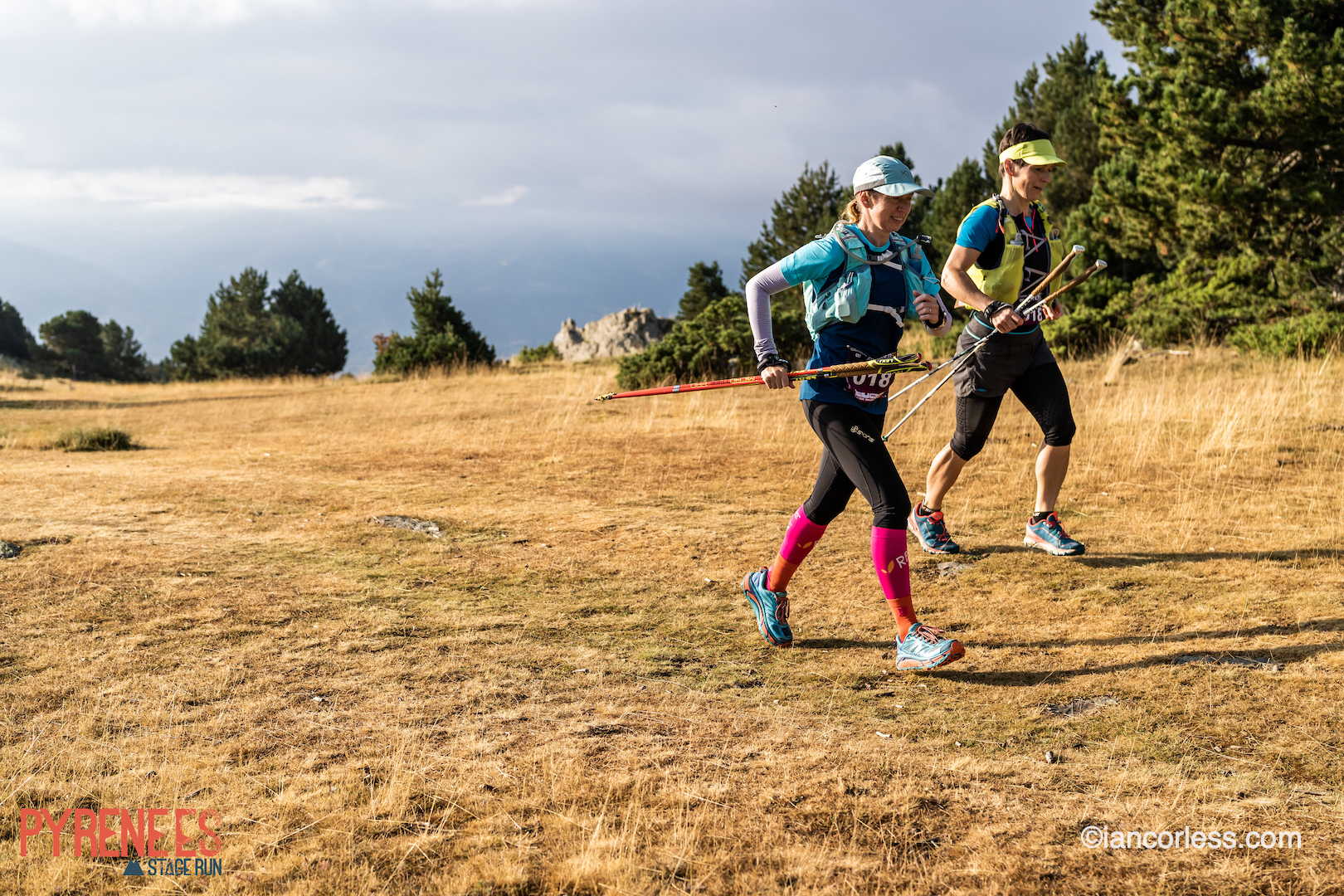
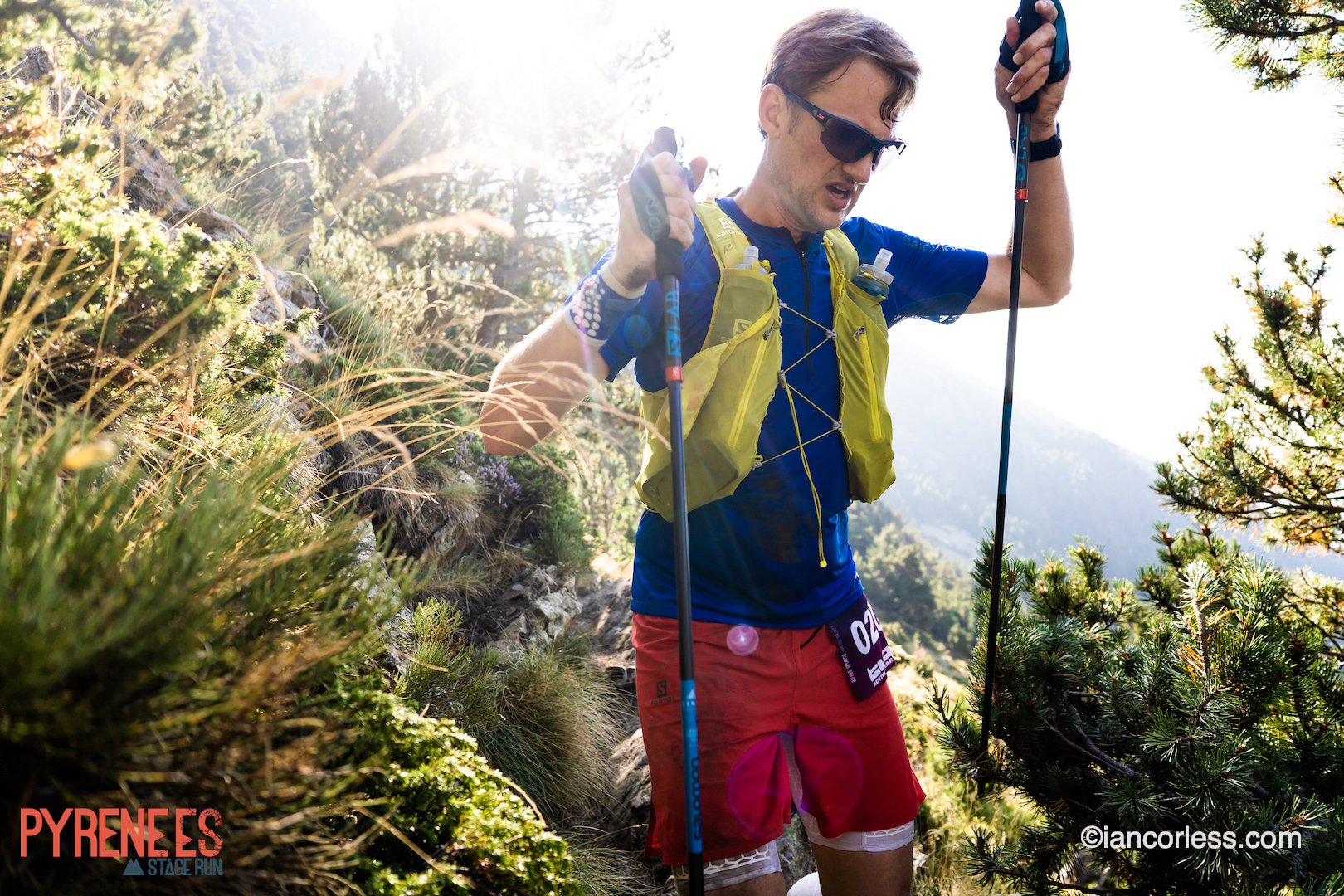
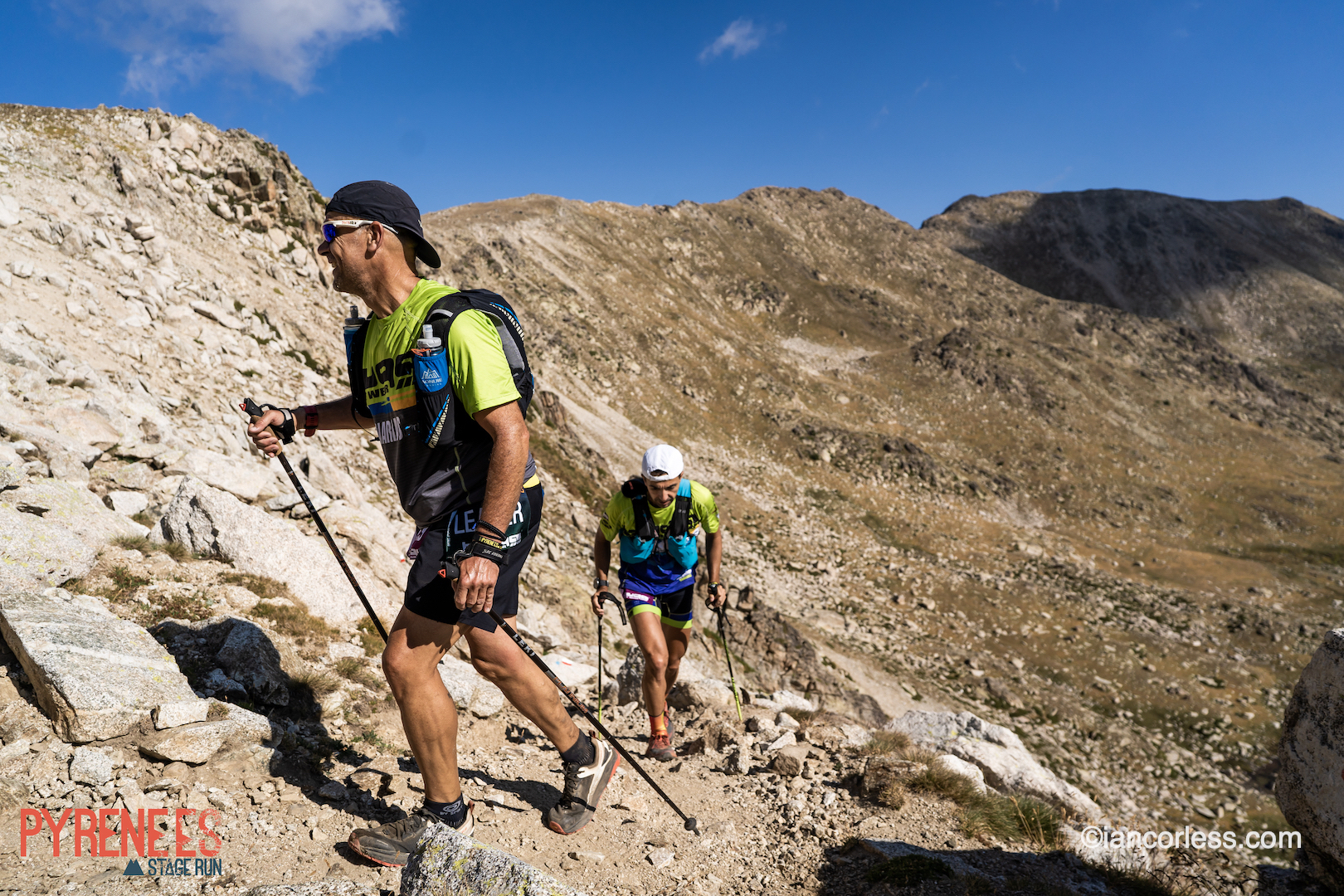
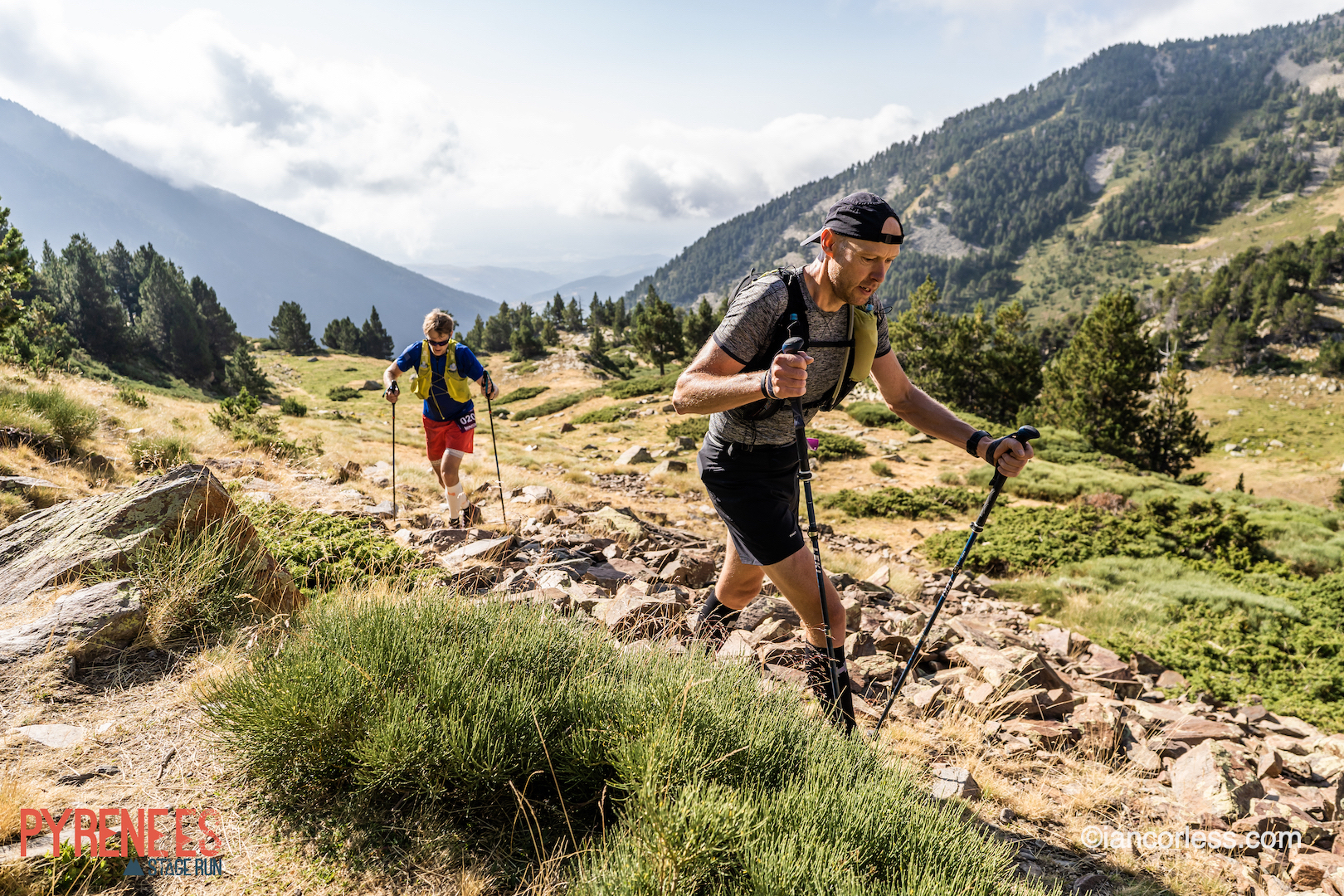
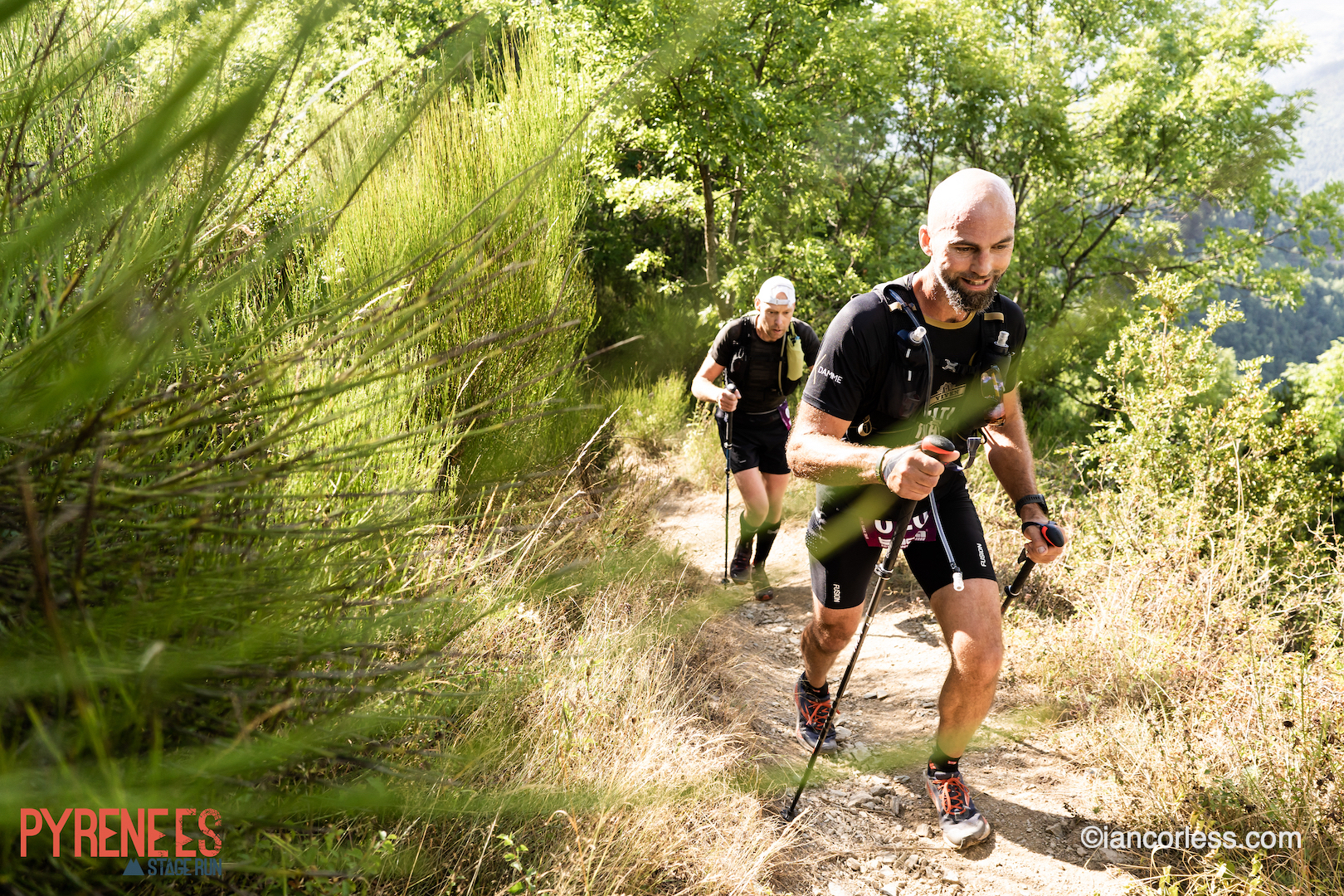
It was the penultimate day of the 2021 Pyrenees Stage Run, 26.6km with 1820m+ starting in Tavascan and concluding in Esterri d’Àneu.
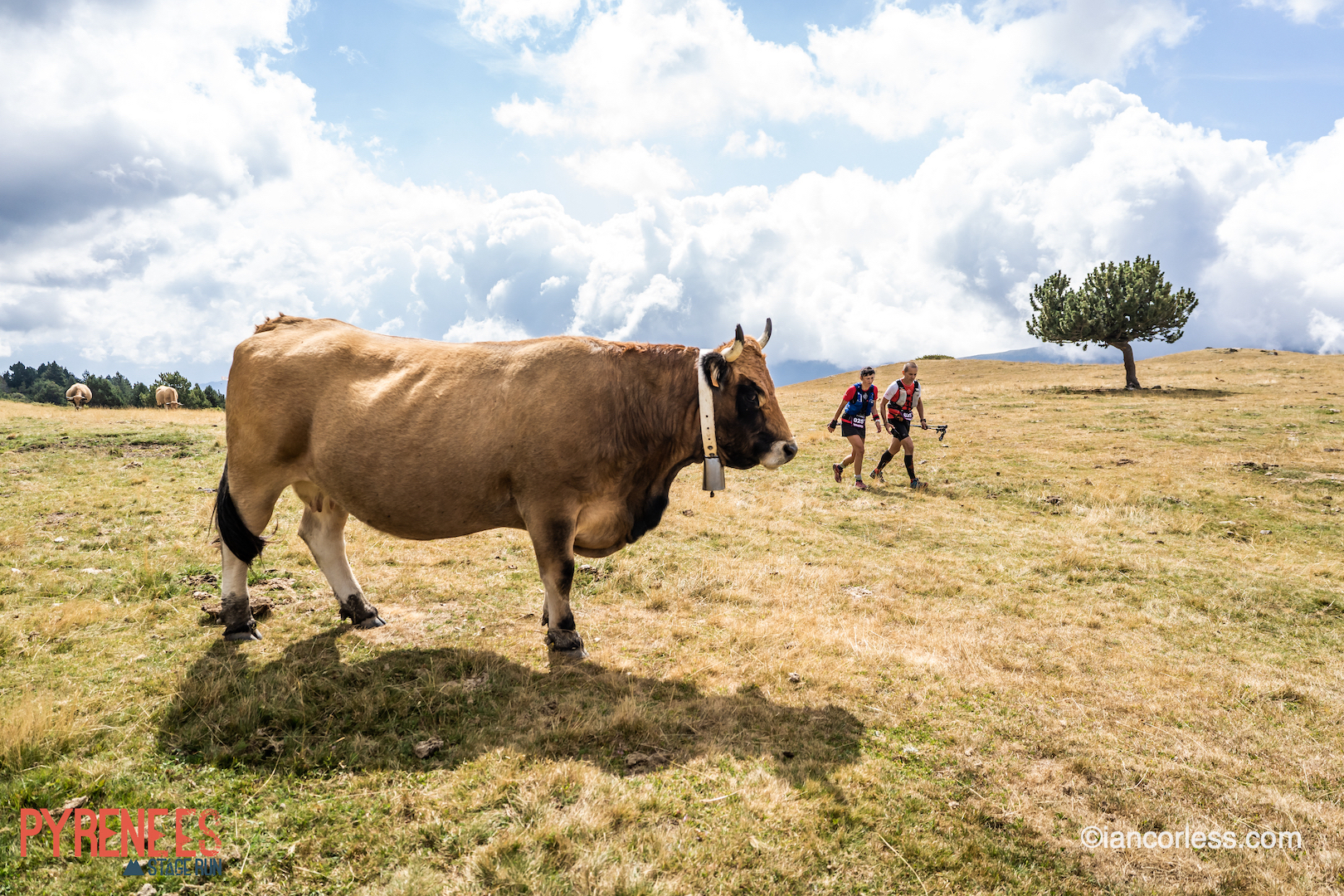
Crossing the last part of the Pallars Sobirà region to face Vall d’Aran, past participants had enthusiastically proclaimed that this was a spectacular day, and they were correct.
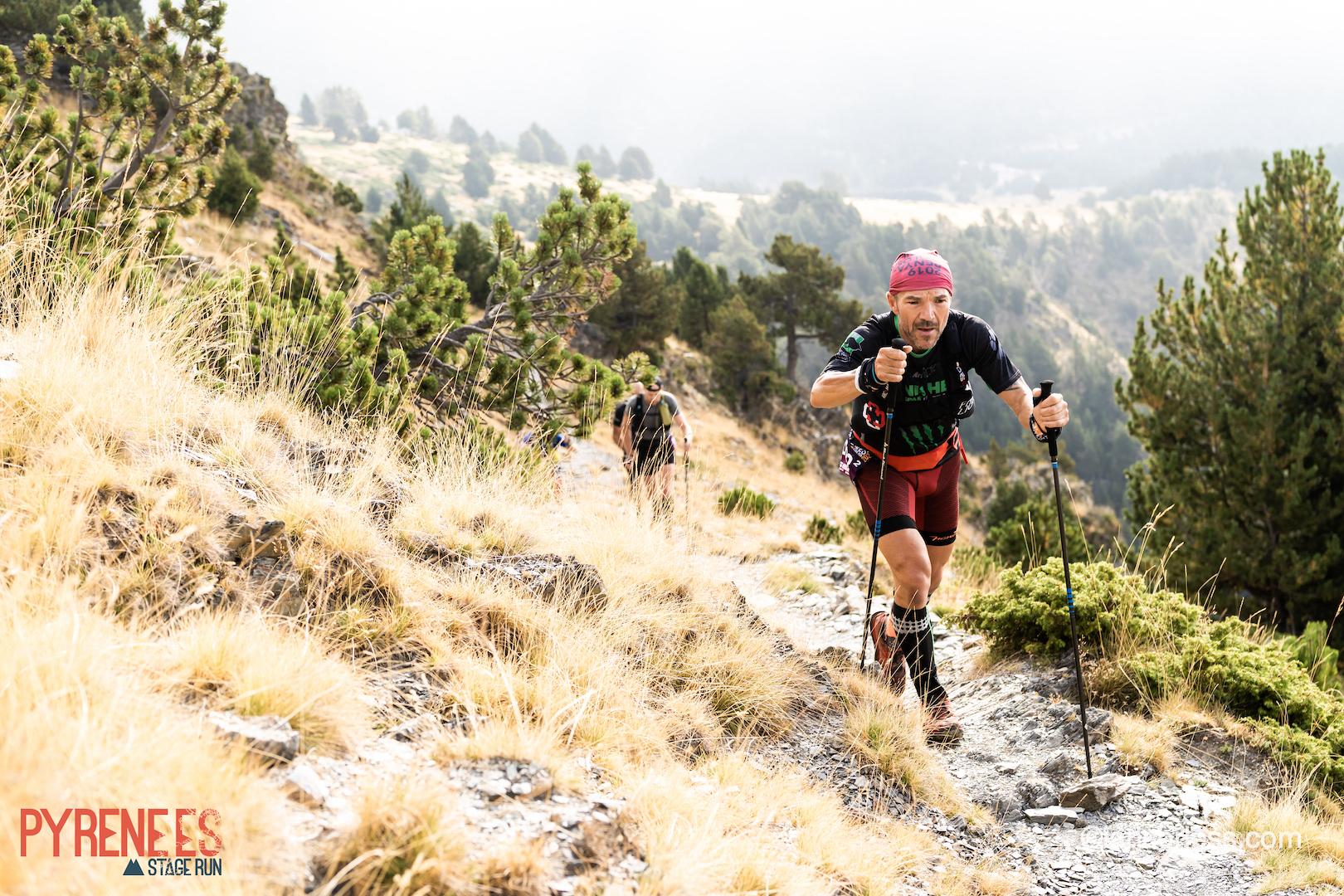
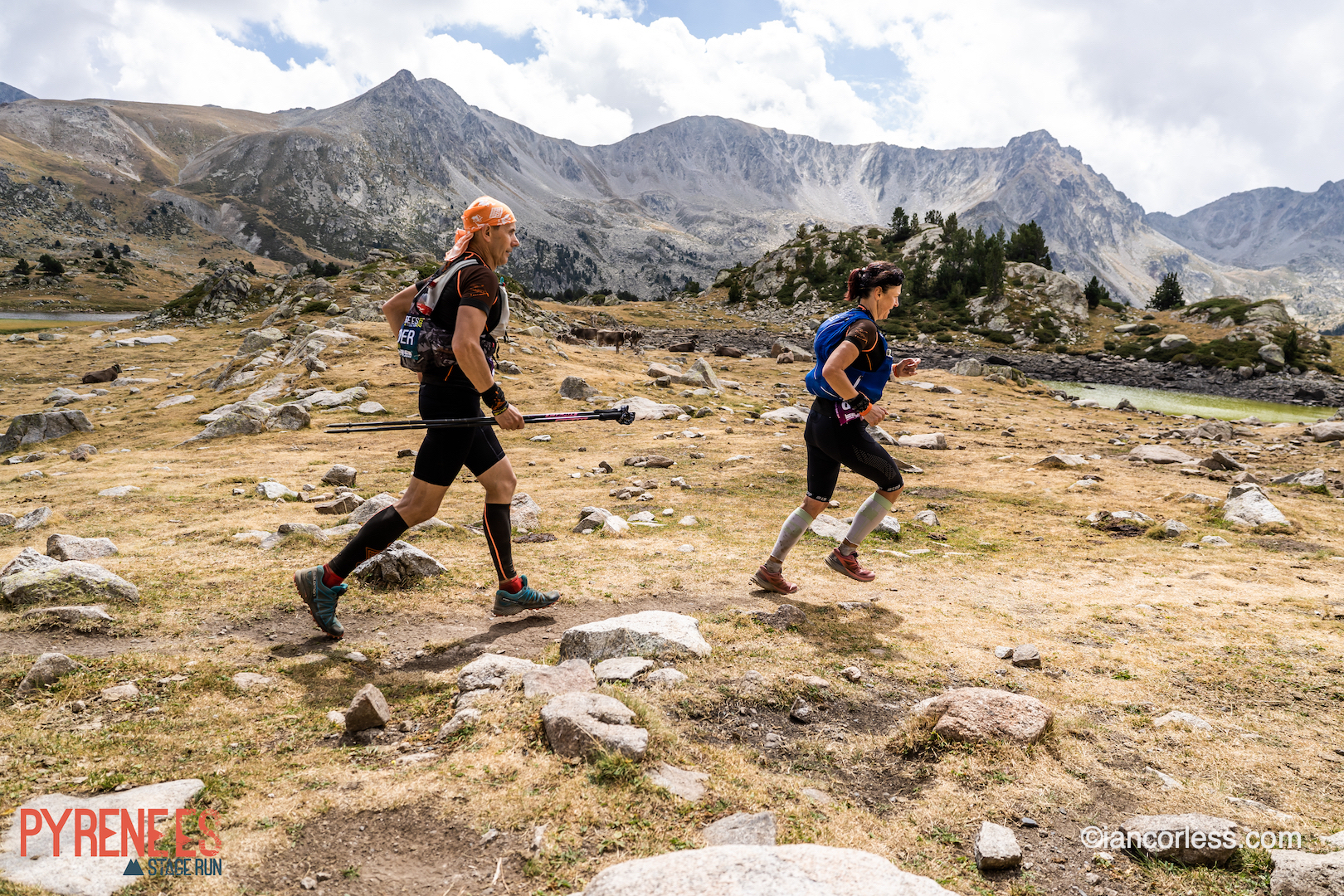
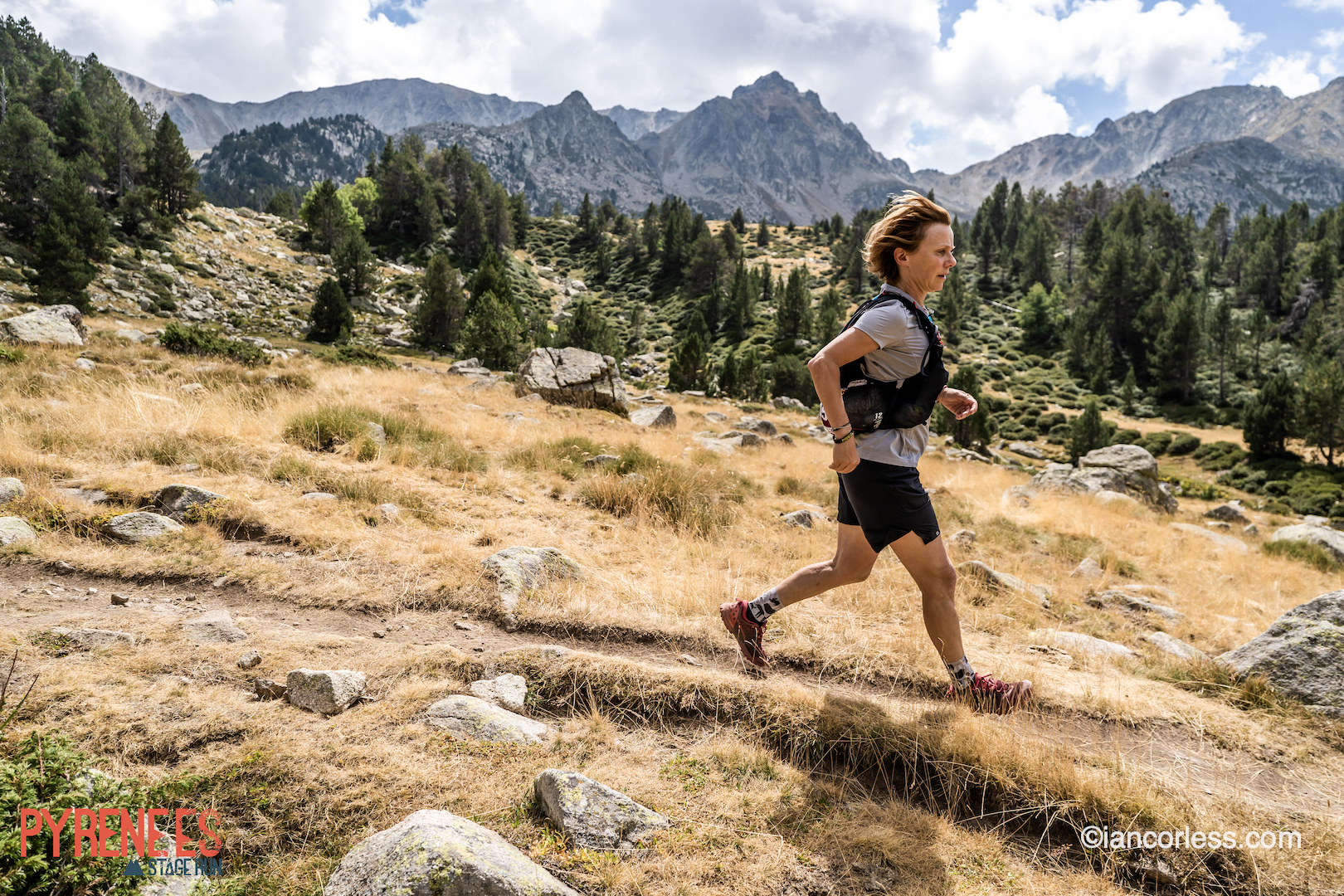
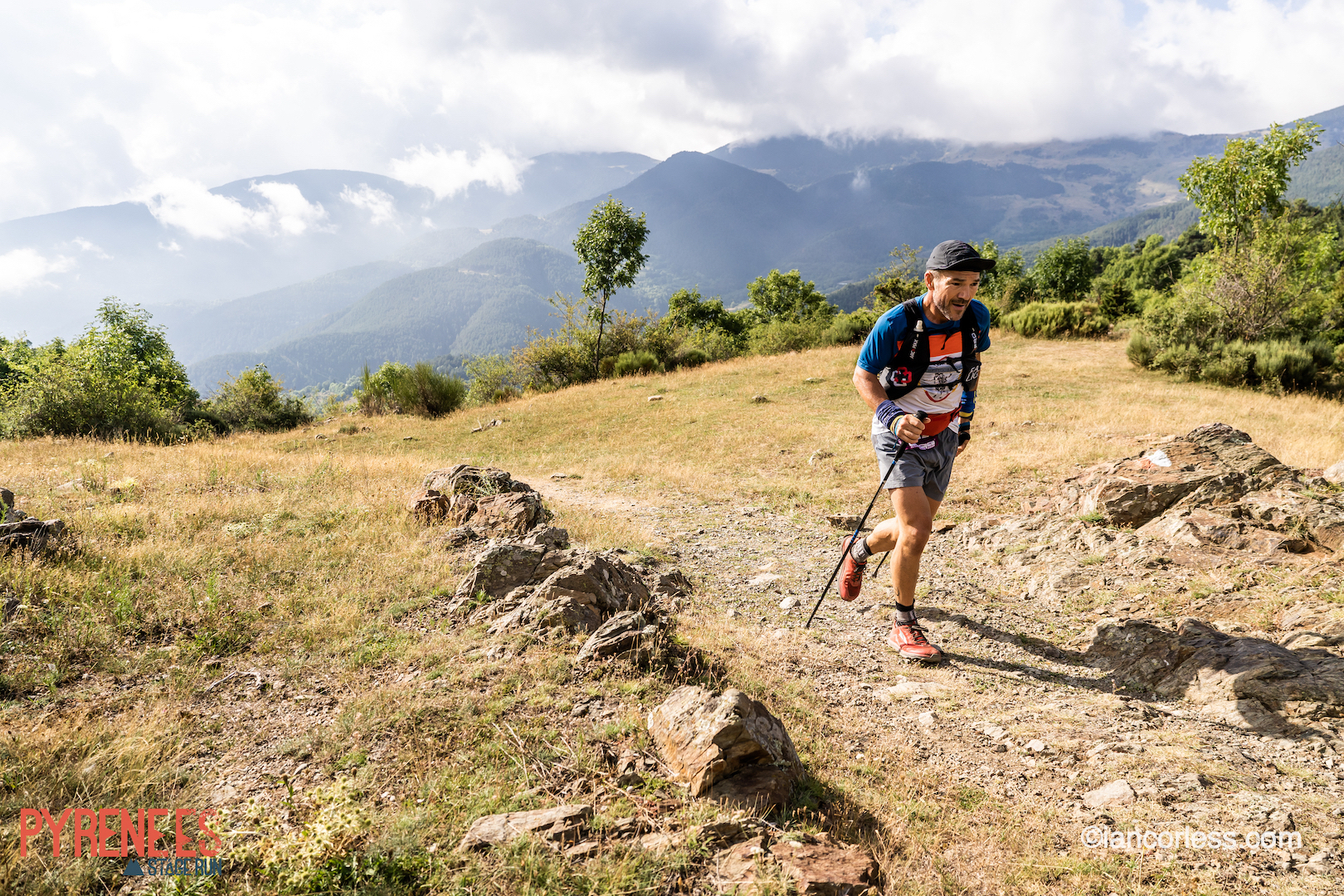
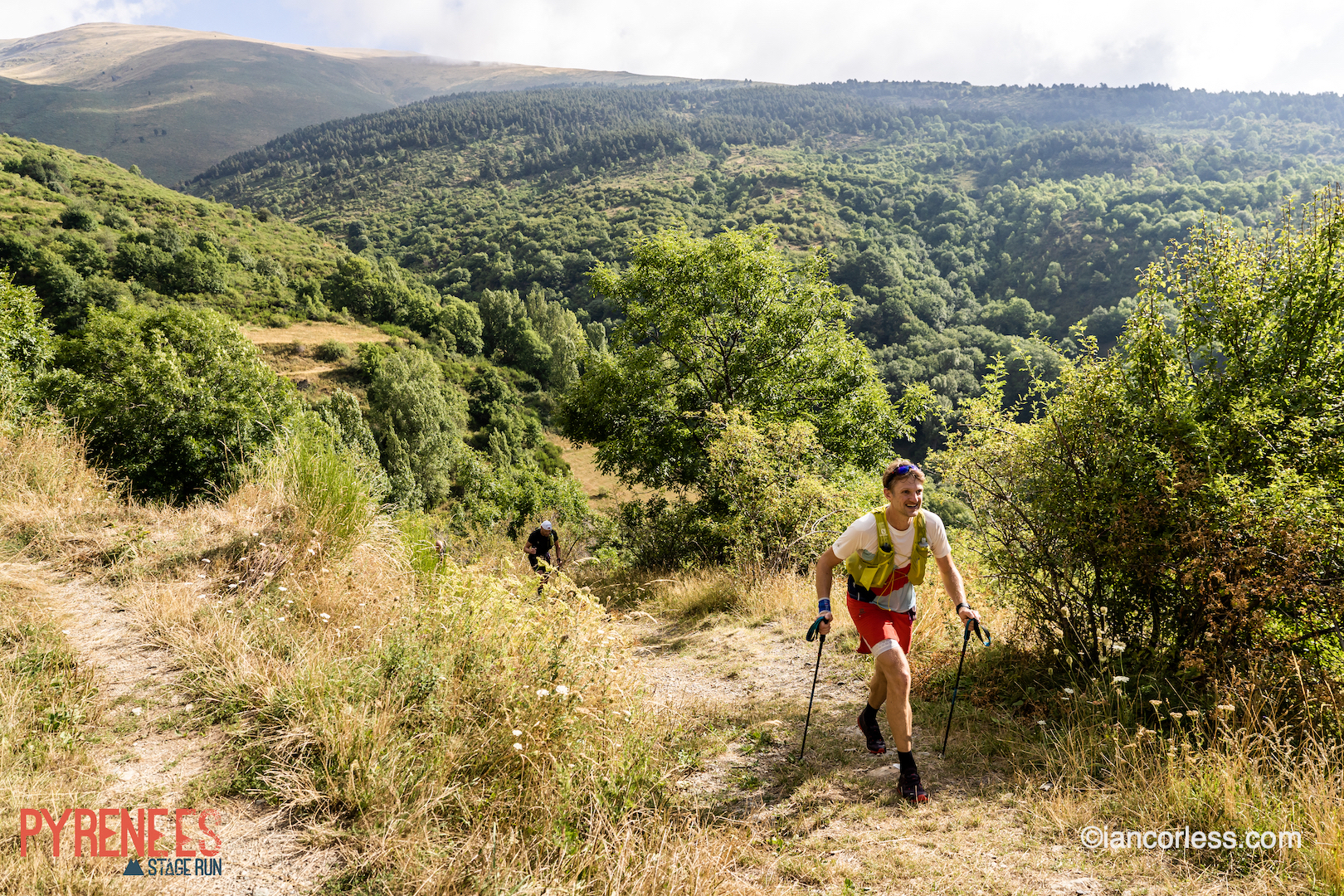
The early 6km of climbing to La Pleta del Prat (1720m) were mostly on forest trails, however, from the ski station, the landscape opened up offering stunning views of the surrounding mountains. The highlights of the day were the lakes of Estany de Mascarida and Collada dels Tres Estanys.
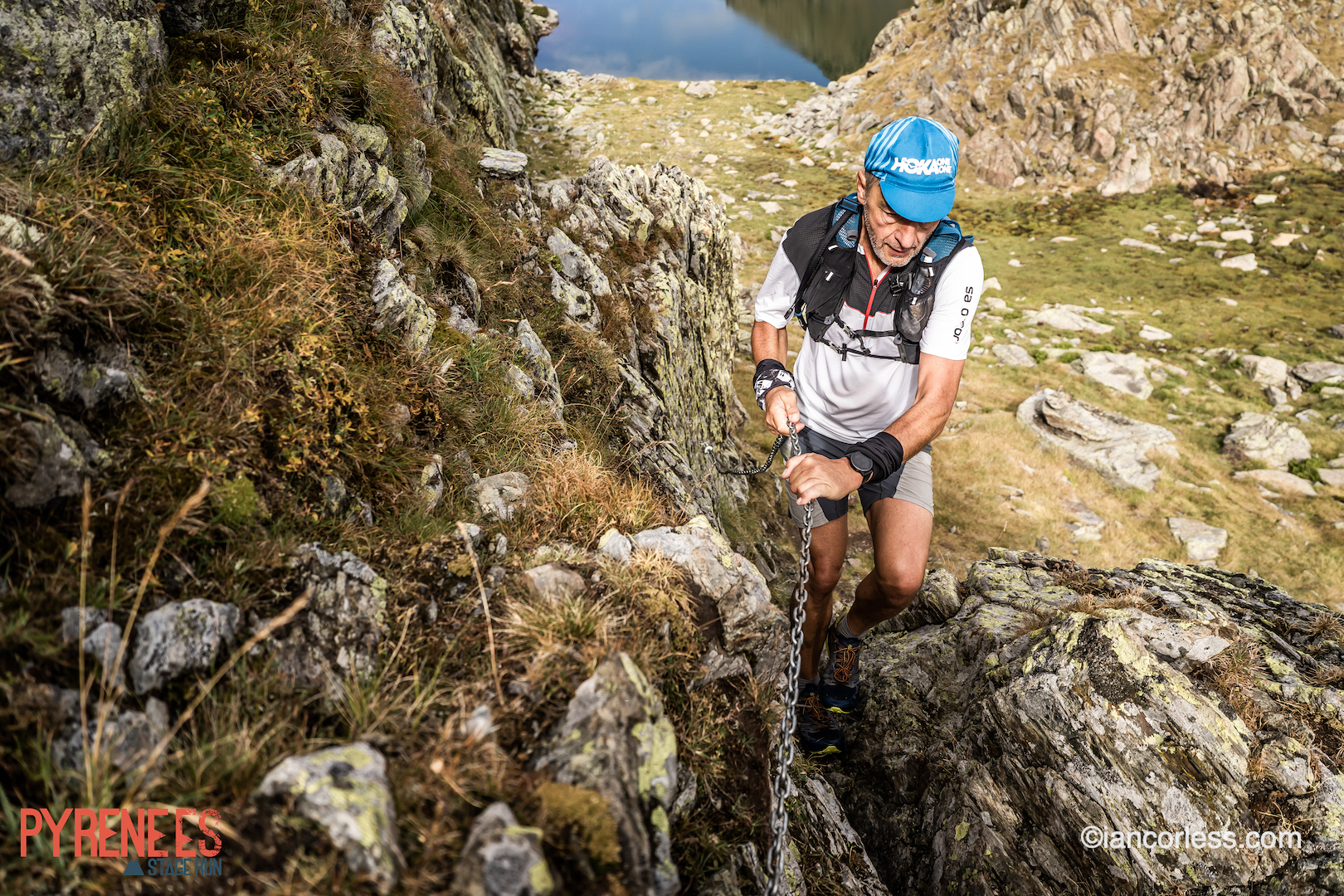
The highpoint of the day coming at 2646m and with it scree slopes, rope sections and after Collada dels Tres Estanys some small chained sections.
It was a wow day, the landscape truly spectacular.
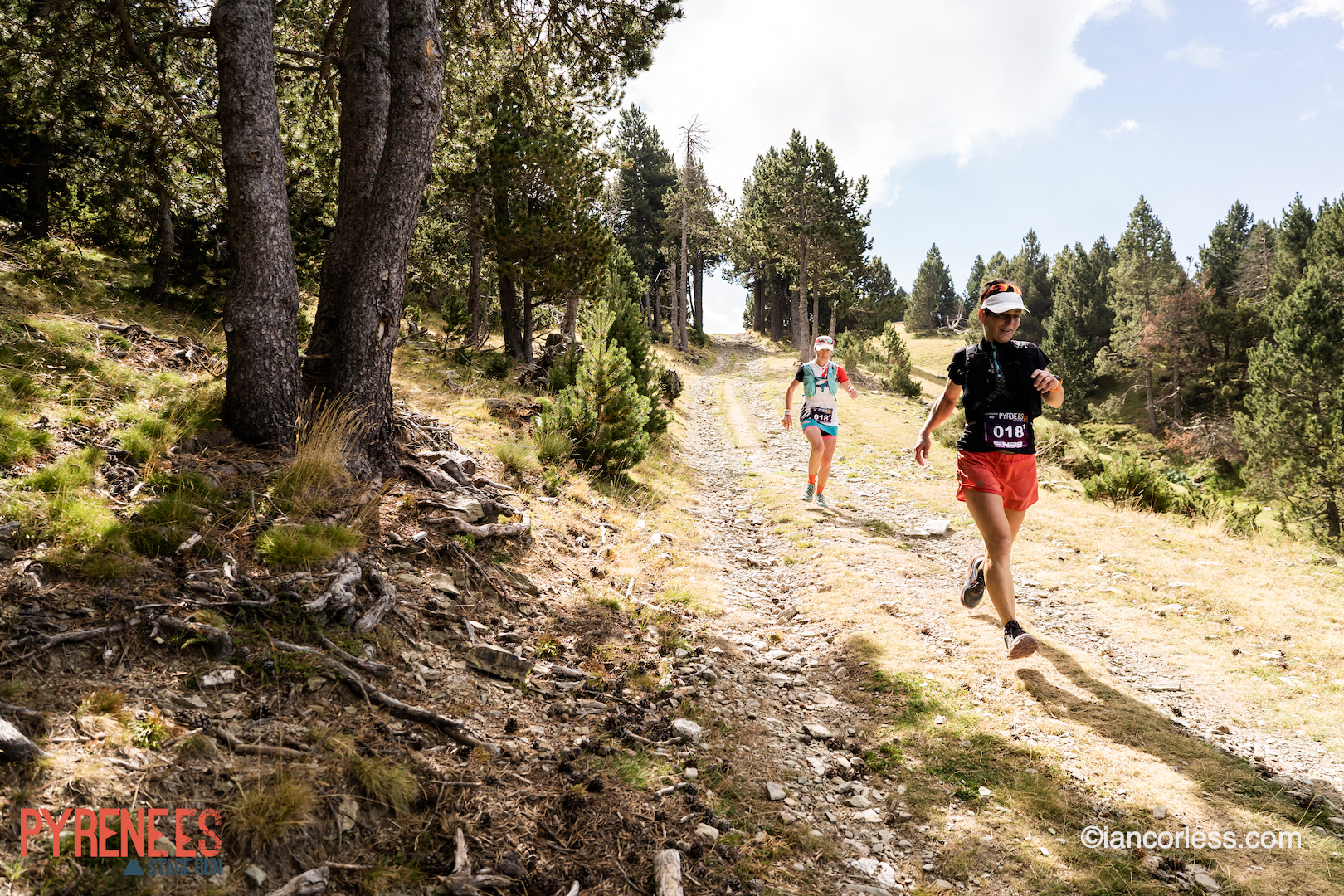
Pont de Graus and Unarre broke up the long 16km downhill to the finish that would sap tired legs.
Parc Naturel de L’Ailt Pirineu gave way to Parc Nacional d”Aigüestortes I Estany de Sant Maurici and the finish in Esterri d’Àneu was a welcome conclusion to a beautiful day.
Tomorrow, stage 7 will conclude the PSR and while the runners bodies will welcome the conclusion of a tough 240km journey, there is already a hint of sadness that this experience is coming to close.
The PSR is most definitely a run experience that gives an all encompassing run journey through a remarkable part of the world. Of course, there are those who will finish first, but this 7-day journey feels much more like a run than a race.
The PSR can be followed live through the website of the race, https://psr.run, and every day a video and photographs of the stages will be published on their social networks.
The Pyrenees Stage Run would not be possible without the main sponsorship of Turga Active Wear, Garmin, Puigcerdà, Encamp (And) Vall del Madriu-Perafita-Claror and bifree sports.
Please support this website. I believe everyone deserves to read quality, independent and factual articles – that’s why this website is open to all. Free press has never been so vital. I hope I can keep providing independent articles with your help. Any contribution, however big or small, is so valuable to help finance regular content. Please support me on Patreon HERE.
The longest day of the race travelling from Puigcerdà to Encamp in Andorra. A tough and challenging 47.5km with 2600m+ over some stunning and remarkable terrain that would leave the runners weary from the effort but rejuvenated by the views.
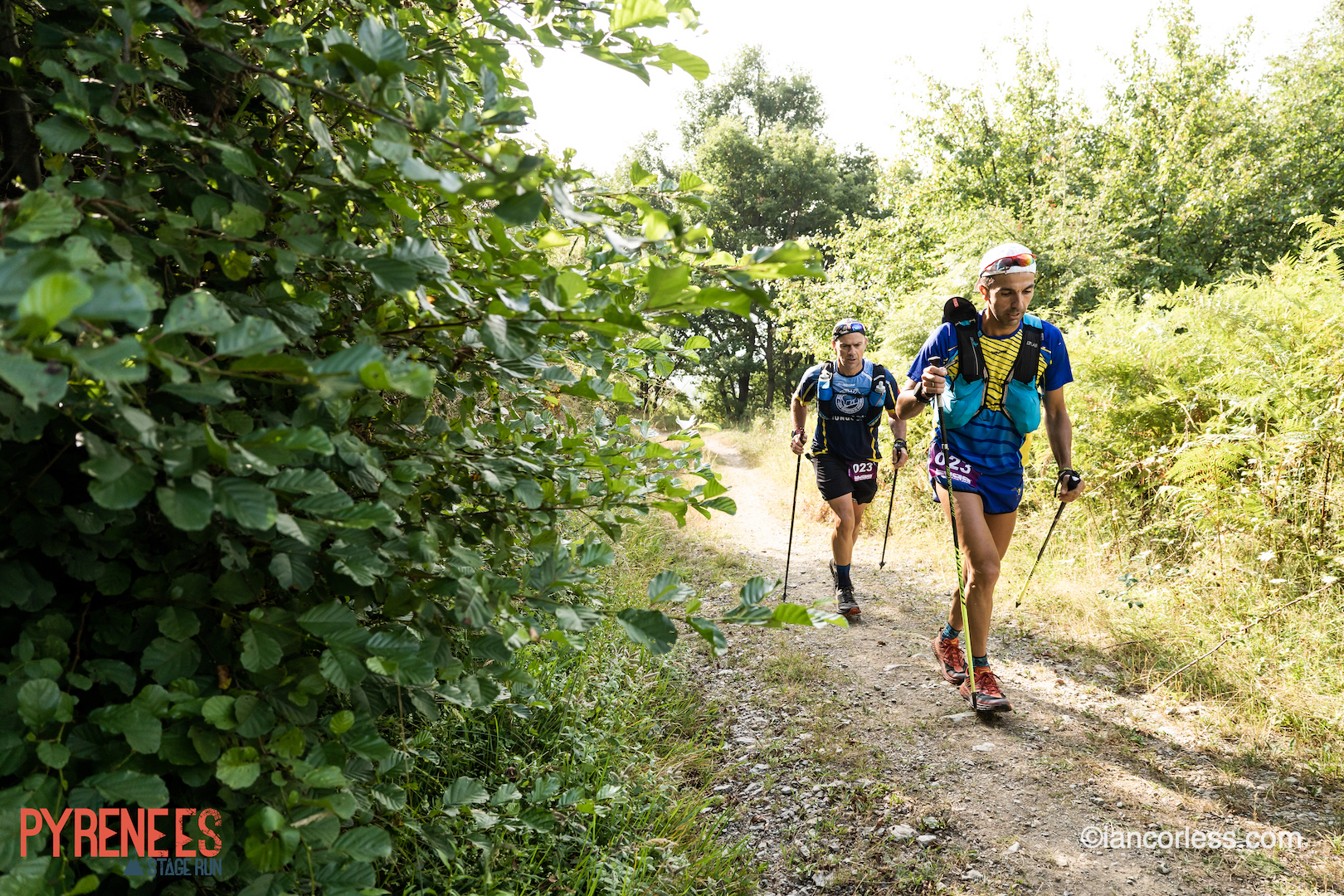
The early km’s were easy but soon the trail pointed to the sky and by 18km’s Guils-Fontanera had been passed and Refugi de Malniu opened up the gateway to the try challenges of this stage.
The climb to Portella D’Engorgs at 2696m sapping the energy of all only to be followed by a descent to Cabana D’Esparvers at 2060m and then another climb to 2543m and Coll de L’Illa. Looking at the profile, one may think that the final 15km is all downhill… Think again, it’s a challenging run with many false flats and technical terrain only to sap the legs and energy before the arrival in Andorra.
The day was always going to be feared and rightly so, 47km is never an easy run, even when fresh, let alone after already a couple of challenging days. The weather forecast also was less than favorable with storms and rain forecast for the afternoon, gladly it only arrived at 4pm and lasted for 30-minutes.
Relentless in beauty, the stage had it all with wide open valleys, technical single-track, tough and hard climbs and leg busting descents. It was a day to survive for many, the promise of an easier 20km stage the day after.
As in the previous days, the results were the same, “Tuga Canarias” team of Gilberto Molina and Carmelo Gonzalez once again won. However, second place went to “The Ultrazzz” team of Wim Debbaut, Thomas Swankaert and Kurt Dhont with Jesús and Mario Delgado of the “The Sigobros Century” placing 3rd.
In the female category, Marcela Mikulecka and Petra Buresova of “Runsport Team” dominated followed by mother and daughter, Jeanette Rogers and Kerrianne Rogers of “Running Holidays France.”
Jaroslaw and Natalia Haczyk of “BeerRunners” lead the mixed category ahead of “B-Running” team Bastian Mathijssen and Birgit Van Bockxmeer are followed by Steffen Rothe i Kathrin Litterst of “Black Forest.”
The Pyrenees Stage Run would not be possible without the main sponsorship of Turga Active Wear, Garmin, Puigcerdà, Encamp (And) Vall del Madriu-Perafita-Claror and bifree sports.
Stage 4 is just 20k but with 1900m+.
The PSR can be followed live through the website of the race, https://psr.run, and every day a video and photographs of the stages will be published on their social networks.
Please support this website. I believe everyone deserves to read quality, independent and factual articles – that’s why this website is open to all. Free press has never been so vital. I hope I can keep providing independent articles with your help. Any contribution, however big or small, is so valuable to help finance regular content. Please support me on Patreon HERE.
The Pyrenees Stage Run 2021 got underway yesterday, Sunday August 29th from Ribes de Freser. The challenge? 240km over 7-days allowing participants to fully appreciate the beauty of the Pyrenees.
A linear route, the journey concludes in Salardú with a 32.8km distance and 2300m+
Running in teams of 2 or 3 participants, the Pyrenees Stage Run arguably is a running holiday, with tough and challenging days and then relaxing post-race with a shower, bed, fresh clothes and excellent dinner each evening.
Stage 1 concluding in Queralbs after 34.3km and 2180m+ with highlights of Emprius de Pardines, Balandrau at 2585m (the highest point peak of the day), Col de Tres Pics, Coma de Vaca and finally Santuari de Núria before the drop to Queralbs. It was a successful day with all runners achieving the cut-off times. However, as always happens in any run,, injury hit forcing one runner not to make the start for day 2.
The ‘Tuna Canarias’ team of Gilberto Molina and Carmel Gonzales dictated the pace over the challenging terrain in Capçaleres del Ter I Freser Natural Park. A highlight of the day was the panoramic views from Balandrau Peak. Passing Refugio de Montaña the temptation to stop, take a cold drink and snack may well be tempting distraction but the Santuari dr Núria was waiting and then the finish.
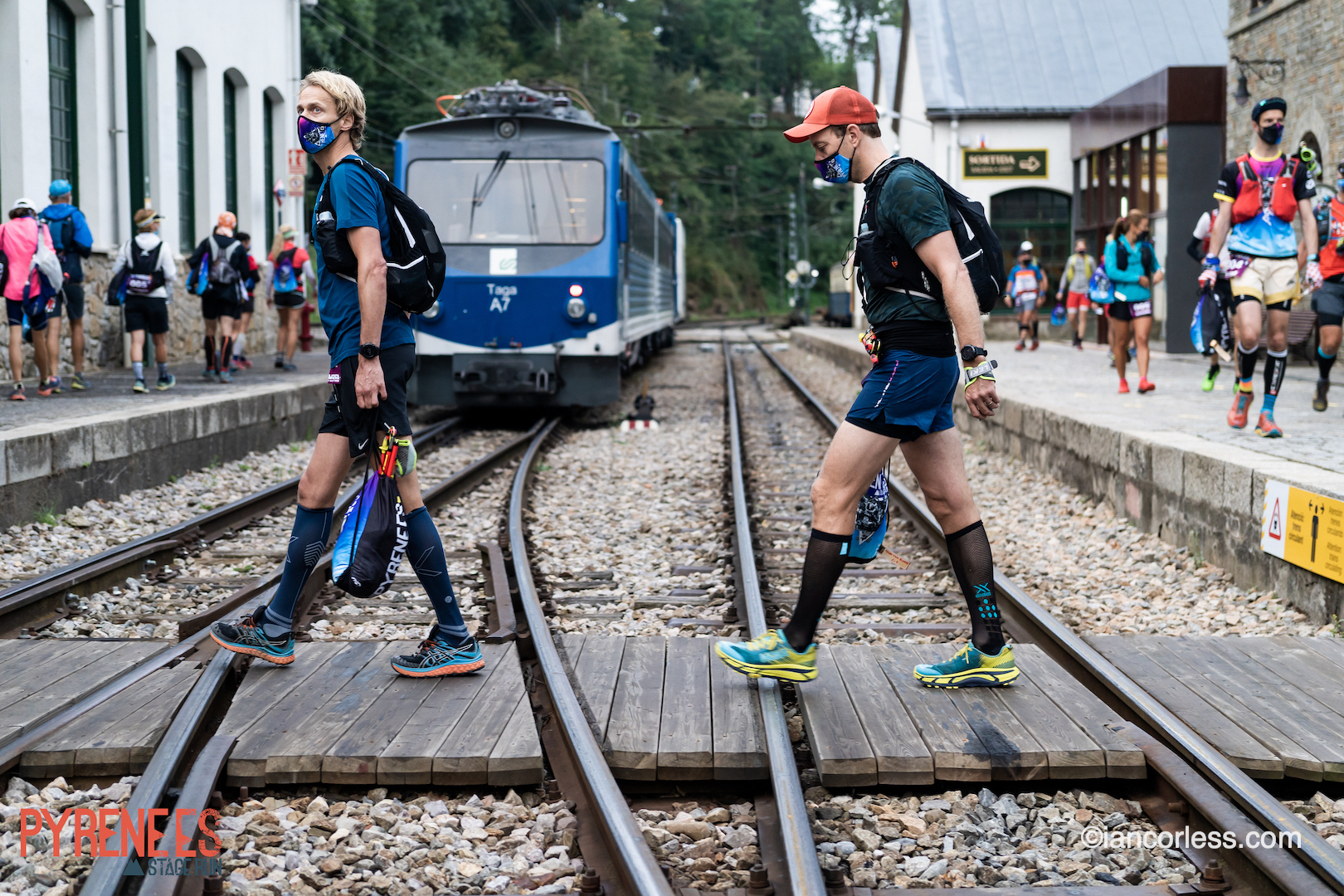
Stage 2 started with the Cremella train journey back to the finish line of day 1 and a relatively late start of 0815. The 37,4km that lay ahead with 1700m+ was in comparison to stage 1, ‘easy’ running!
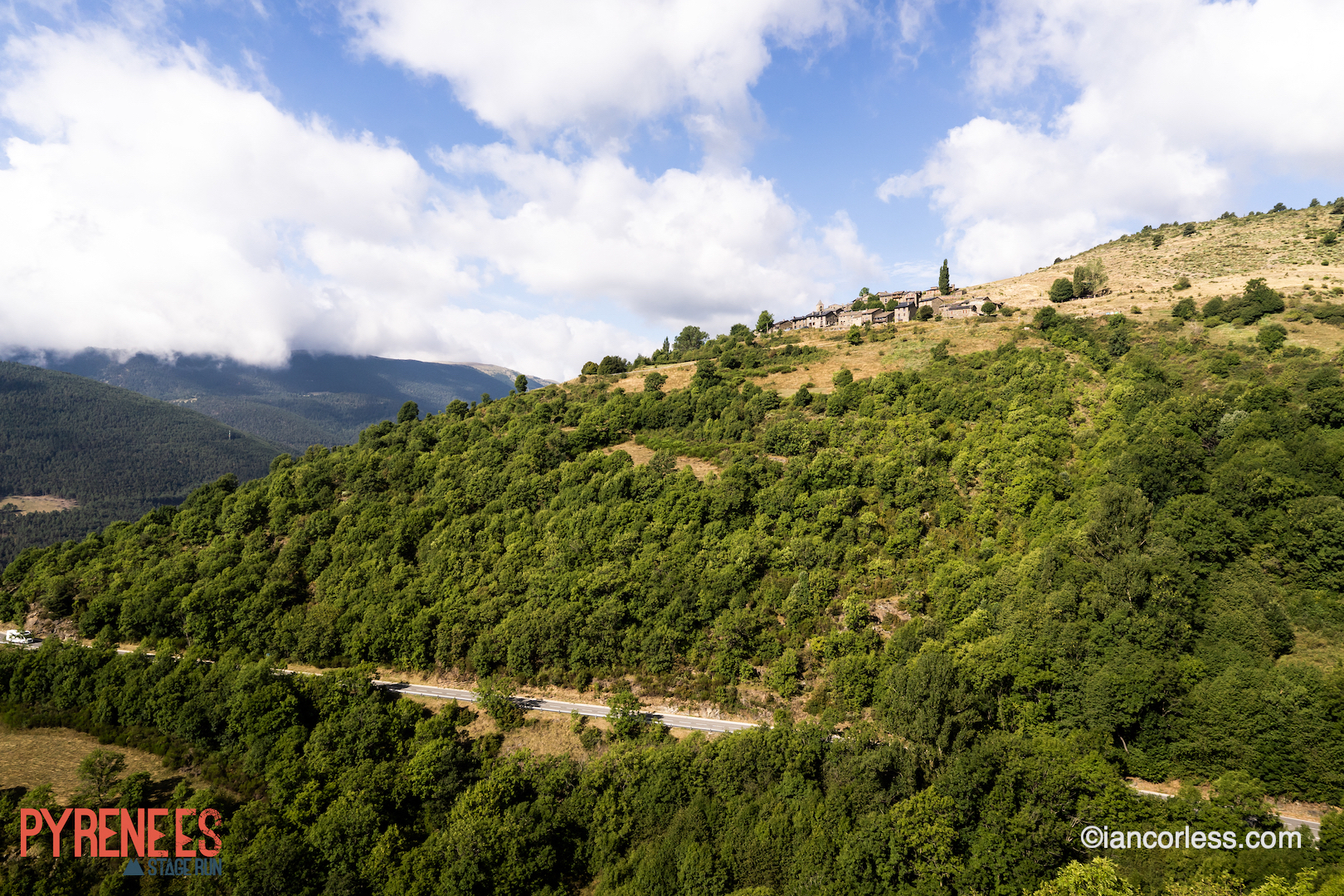
Concluding in Puigcerdà the route was almost 100% GR11 track with little technicality but some stunning views.
Starting with a climb over the first 7km to Collet De Les Barraques, the route then dropped down to Can Fosses at 10km and the second lowest elevation point of the day. The following 12km was all about gently climbing to Coll de la Creu de Meians at 1992m via the pretty town of Dòrria. Coll Marcer followed and then the route dropped to Vilallobent before 5km of road to the stage 2 conclusion in the capital of Cerdanya, Puigercerdà.
The race is so far it is dominated by “Tuga Canarias” team of Gilberto Molina and Carmelo Gonzalez. Jesús and Mario Delgado of the “The Sigobros Century” follow and the “The Ultrazzz” team of Wim Debbaut, Thomas Swankaert and Kurt Dhont are 3rd in the in the men’s category.
In the female category, Marcela Mikulecka and Petra Buresova of “Runsport Team” have a strong lead after another excellent day, followed by mother and daughter, Jeanette Rogers and Kerrianne Rogers of “Running Holidays France.”
Finally, in the mixed category Jaroslaw and Natalia Haczyk of “BeerRunners” lead “B-Running” team Bastian Mathijssen and Birgit Van Bockxmeer are followed by Steffen Rothe i Kathrin Litterst of “Black Forest.”
The Pyrenees Stage Run would not be possible without the main sponsorship of Turga Active Wear, Garmin, Puigcerdà, Encamp (And), Vall del Madriu-Perafita-Claror and the organisation of bifree sports.
The event enters Andorra on Tuesday for stage 3, the longest of the race at 47km and 2600m+ The runners have 12 hours to finish the route.
The PSR can be followed live through the website of the race, https://psr.run, and every day a video and photographs of the stages will be published on their social networks.
Please support this website. I believe everyone deserves to read quality, independent and factual articles – that’s why this website is open to all. Free press has never been so vital. I hope I can keep providing independent articles with your help. Any contribution, however big or small, is so valuable to help finance regular content. Please support me on Patreon HERE.
Episode 212 has an interview withBeth Pascall who won the iconic Western States 100-mile. The show is co-hosted by Abelone Lyng.
Talk Ultra needs your help! We have set up a Patreon page and we are offering some great benefits for Patrons… you can even join us on the show! This is the easiest way to support Talk Ultra and help us continue to create! Many thanks to our Patrons who have helped via PATREON Donate HERE
NEWS
Firstly, apologies for the lack of a show recently. It’s been one of those periods when life and travel have taken over and after the rollercoaster of the last 18-months, I personally decided to go with the flow and not force anything. Abelone, who is co-hosting with me, has joined me on many and adventure recently and we have enjoyed the disconnect and trail time. We have run many miles, climbed many mountains, fastpacked, camped wild and soaked in the best of what Norway has to offer… July has been a good month to re-connect. I also started to travel again with races, a stunning trip to Lofoten for The Arctic Triple, a race in Hardanger, a four day (the UT4M) in France and just recently, the Stranda Fjord Trail race and this weekend, as the show is released, the Rondane 100.
Next week I head to Chamonix for build up to UTMB and some news on that to follow later in the show.
Scott Jurek is back on the Appalachian Trail and Speedgoat Karl is with him. Scott is once again taking on the 2190-mile journey travelling south looking to set an FKT for the second time, he departed August 4th at 0730. Scott set the record in 2015 travelling north. Karel Sabbe holds the fastest time of 41-days, 7-hours and 39-minutes. *Update, news came in after recording that Scott had to stop after injury.
Talking of FKT’s, Timmy Olson set a new record on the Pacific Crest Trail, 51-days, 16-hours and 15-minutes for the 2653-mile journey. Supported by his family, Krista his wife heavily preganant, this journey was far more than just running. From the outside looking in, it was a truly inspirational journey. We hoe to chat with Tim soon!
Simen Holvik set a new record for the Norg Pa Langs (road) in Norway, 25-days 15-hours and 20-minutes.
Kilian Jornet once again the legendary Sierre-Zinal for the 9th time. 31km, 200m of vert in 2:31, the dude is a GOAT. Huge shout to the UK1s Robbie Simpson in 2nd and Cesare Maestri in 3rd. Maud Mathys won the women’s race (already a 2x champ) in 2:46 ahead of Nienke Brinkman and Anais Sabre.
Tromso Skyrace was won by Therese Arvik and Lars Olaf Haaheim, the race usually has excellent competitors from outside Norway, however, the ongoing Covid restrictions impacted on an international field.
Abelone and myself were in Stranda, Norway, for the Stranda Fjord Trail Race – I focussed on the 100km but there was a 48km and 25km. This course needs to be experienced – it is stunning! Please read the race report and view the images.
TransRockies in Colorado was won by Cody Reed and Grace Staberg, the duo running the 6-day solo in 15:59 and 18:35.
Next week the build up to UTMB starts and Talk Ultra is going to be providing in-depth content, behind the scenes of the adidas Terrex Team. We are going to be discussing many subjects and although the full line up of interviews are not confirmed, you can expect chat with the team manager, in-depth chat with one of the shoe designers, emphasis on women in trail running, chats with legends of the sport and of course, chat with up and coming stars.
La Sportiva CYKLON shoe review HERE listen to Episode 208 of Talk Ultra is a special show with DANIEL FEENEY and Jonathan Wyatt discussing the collaboration between BOA and La Sportiva for the new, Cyklon shoe.
Please support this website. I believe everyone deserves to read quality, independent and factual articles – that’s why this website is open to all. Free press has never been so vital. I hope I can keep providing independent articles with your help. Any contribution, however big or small, is so valuable to help finance regular content. Please support me on Patreon HERE.
Kristian Aalerud arriving at the first summit at 0500 hours.
The words epic, beautiful and brutal get used a great deal in ultra-running and I get it. For many of us, any journey can entail all those things on a personal level and that is why you toe the line…
However, here in Stranda Fjord, Møre go Romsdal, Norway, one of the most truly spectacular experiences is waiting for you to toe the line.
Missing in 2020 due the Coronavirus pandemic, the Stranda Fjord Trail Race returned with three races, 25km, 48km and the new 100km distance. The latter offering a full and immersive 360 experience of what this magical area of Norway has to offer.
Let’s be honest, Norway as a location is arguably one of the most beautiful places in the world, and as a runner or outdoor enthusiast, the options and possibilities are endless, be that in the south or north.
Stranda, part of the Sunnmøre region, is a small place located on one of the west Norwegian fjords. Often accessed via ferry from Liabygda, it can also be accessed by road from Grodås. In proximity to Alesund, Åndalsnes, Loen and others, it’s a wonderful and magical area to explore.
No better place for sunrise!
The 25km and 48km races use much of the opening miles of the 100km route, however, after reaching the summit of Fremste Blåhornet at 1478m they return to Stranda via Heimste Blåhornet, Løfonnfjellet and Rødesthornet. The 25km then concludes in Stranda and the 48km continues for another loop summiting at Roaldshornet at 1230m and then following on to Blåfjellet and Skurdahornet before descending all the way down to the finish line. Both races are tough, challenging, and demanding and should not be underestimated. There is little easy running here, the climbing is hard, the descents can be tricky, and the terrain varies in technicality, at times harsh on the body and mind, the only easy running is in the final sections of road to the finish line. This is reflected in the winning times, Jack Kosky 6:16:21 and Sara-Rebekka Færø Linde 7:14:34 taking top honours in the 48km and Anders Haga and Anita Iversen Lilleskare winning the 25km in 2:31:01 and 3:12:17 respectively.
Øystein Røen
The main event of the weekend, the 100km race. Is for many only a dream. To say it’s tough would not do the course justice, it’s mind blowing in the challenge. Beautifully brutal as one runner said. Offering a 360 clockwise experience of this stunning area of Norway, the Stranda Fjord Trail Race 100km route is quite simply, one of the most stunning routes I have experienced.
Relentless is the only way to describe. The course does contain some areas where you can switch off and just run, but they are few and far between. The opening miles maybe offering many a false illusion of the severity to come. The hard work starts to really kick in with approximately 20km covered at Liavarden. What follows are walls of grass, rock, scree, stone slabs, technical ridges, vertical climbing and challenging descending.
The race is truly a hands on experience.Linda Hovde had lead the race early on, probably starting to hard.
Reaching the summit of Fremste Blåhornet at 1478m, 23km covered, and every runner was under no illusion of the challenge ahead. The terrain rocky, slow and hard, the panoramic views at sunrise quite simple stunning. Following on to Lissje Blåhornet and a technical ridge section offered exposure and scrambling before dropping down to the valley and easier running to the aid station on the road of Dalevegen and 28km distance.
Descending Slogen
A short section of road was followed with more climbing, an out-and-back to another peak and then the Liasætra aid station.
Easy running before Slogen.
Valley running to Patchellhytta DNT cabin and then the relentless out-and-back climb to the iconic Slogen at 1564m. This climb being one of the highlights of the route offers a challenge, especially near the top when hands-on-knee climbing turns to scrambling and easy climbing.
The final push to Slogen summit.The view from Slogen.
The summit offering a stunning panorama but there is little time to enjoy the view. Descending via the way you came, eventually you turn left in the valley and make your way to Velleseter, Brunstadsætra, Storevatnet, and then the road section that leads to the final section of the course, 80km covered.
Felix Weber approaching Roaldshornet.
The climb to summit Roaldshornet at 1230m is long, the summit at 86km and it would be easy to think it’s all downhill from here. Considering what has gone before, it’s fair to say that it is. Eventually the 100km joins with the final section of the 48km track and the run in to the finish is welcome and hard earned.
Rocks and more rocks.
Be warned, this route is tough!
Kristian Aalerud set a hard pace at the start of the race and while nobody really knew how long this 100km would take, best estimations were 17-hours for the winning time. Kristian crossed in 15:49:31. A spectacular time.
Øystein Røen for much of the day had run in 2nd place, however, Felix Weber moved ahead to take the 2nd podium spot, Øystein settling for 3rd, 17:03:12 and 17:25:38 respectively.
Ida Jahren Herud ran a smart race
Ida Jahren Herud ran a smart race, easing in to the day and eventually taking over the lead to finish in 22:25:12. Linda Hovde had lead the race early on, probably starting too hard she slipped down the field and eventually finishing in 28:29:34 in 2nd place. They were the only two women to complete the course!
In total, 20 completed the distance reflecting the severity of the challenge. It’s also important to note that the start list was drastically reduced to ongoing restrictions from the Covid pandemic.
One thing is for sure, running 25km, 48km or 100km in this area of Norway is not easy, ask anyone who toed the line of the respective distances.
There is something truly magical here, I can only encourage and emphasise that you ‘need’ to add Strand Fjord Trail Race to your bucket list.
Beautiful and Brutal!
You will not be disappointed with the experience of racing here, BUT come prepared, you are going to earn that finish medal.
Please support this website. I believe everyone deserves to read quality, independent and factual articles – that’s why this website is open to all. Free press has never been so vital. I hope I can keep providing independent articles with your help. Any contribution, however big or small, is so valuable to help finance regular content. Please support me on Patreon HERE.