Ian is a photographer, writer, reviewer and blogger at iancorless.com. Ian is currently travelling the world capturing stories from some of the most iconic ultras on the planet. Ian is also creative director and host of an ultra running podcast called Talk Ultra. The show is available every 2 weeks 'for free' on iTunes and talkultra.com.
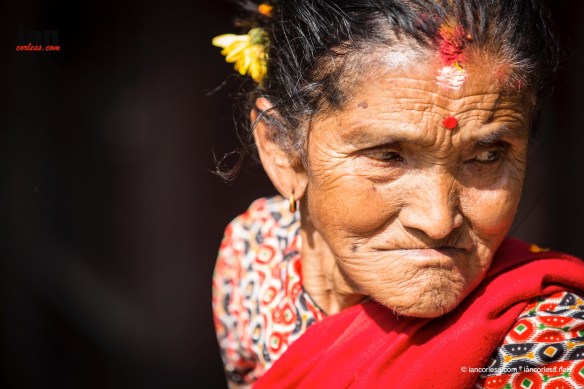
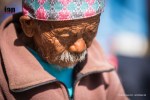
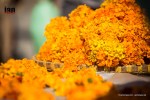
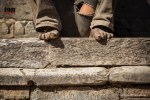
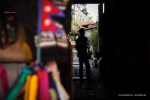
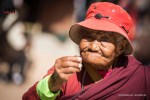
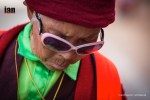
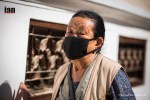
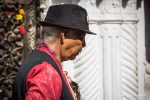
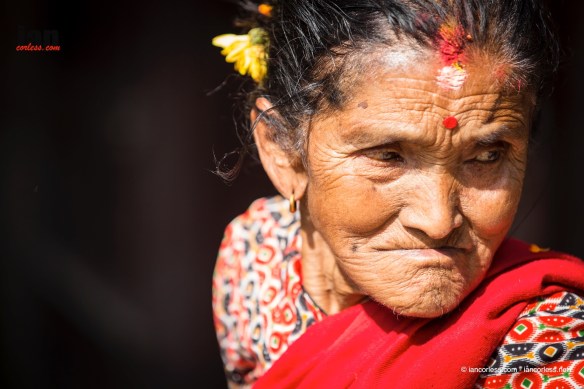
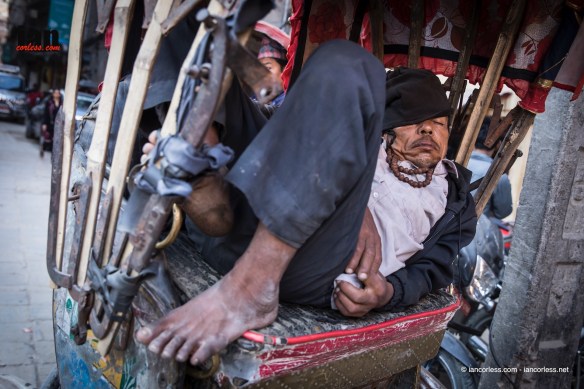
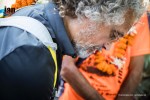
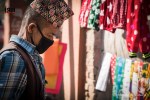
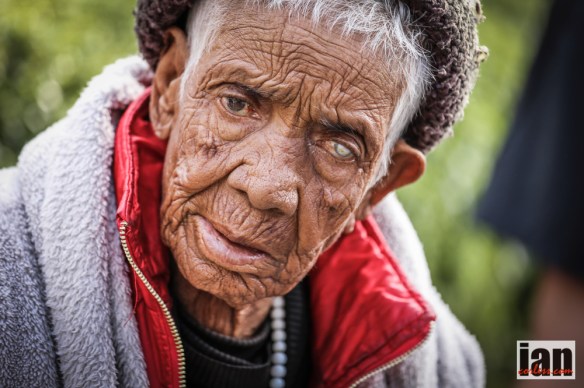
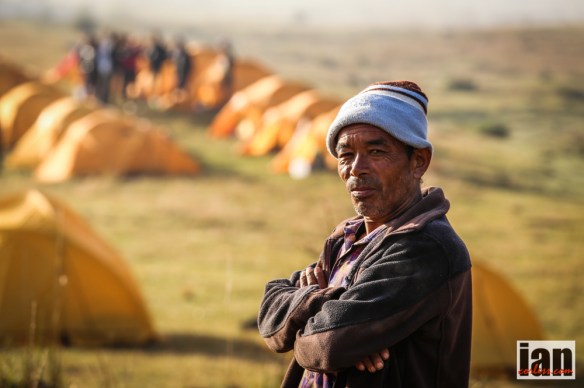
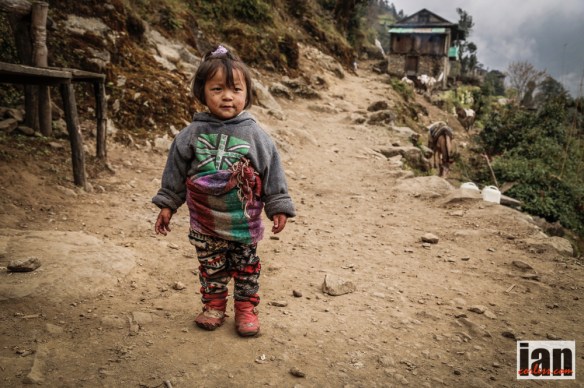
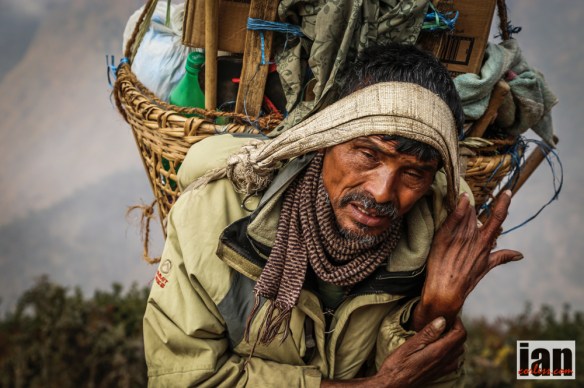
Today was a relaxing day in Kathmandu soaking up the sights, sounds, colour but most importantly, for me, the people!
Nepal and the Nepalese people fascinate me.
The day started with a morning in Patan – Patan, an ancient fortified town, was founded in 745 AD by Vanraj Chavda, the most prominent king of the Chavda Kingdom. He named the city Anhilpur Patan or “Anhilwad Patan” after his close friend and Prime Minister Anhil shepherd. (wikipedia).
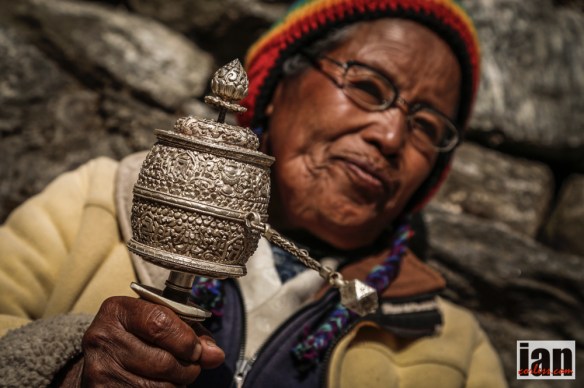
And the midday around the Boudhanath Stupa (or Bodnath Stupa) which is the largest stupa in Nepal and the holiest Tibetan Buddhist temple outside Tibet. It is the center of Tibetan culture in Kathmandu and rich in Buddhist symbolism. The stupa is located in the town of Boudha, on the eastern outskirts of Kathmandu. (sacred-destinations).
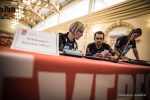
The close of the day allowed runners to obtain race numbers, have equipment checked and as I write this, the race briefing is about to start.
Tomorrow we leave Kathmandu for Jiri, a journey of 7-8 hours and our first overnight camp. Racing will start on Thursday at 0900.
The 2016 Everest Trail Race has begun… as with all races, it starts with a journey and as I am sure you all know, some are more bearable than others. This was a good one! We departed Heathrow on Nov 6th in the early evening, a 4-hour flight to Istanbul was followed with a short wait time before a red-eye flight through the night to arrive in Kathmandu for midday the following day.
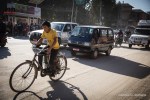
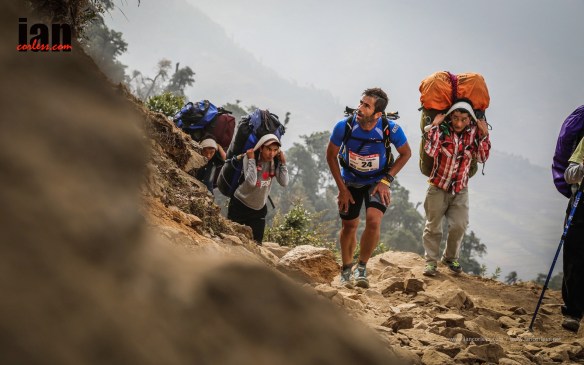
The Nepal/ Kathmandu impact hits immediately – noise, colour, cars, motorbikes, buses, dust and people are everywhere!
A short journey to our hotel is followed by a simple pre-registration of athletes; the official race briefing will take place tomorrow. Everyones tired but a new day has kicked in leaving everyone unsure if they should be eating lunch or breakfast? Eyes are watery and red, hair is a little dishevelled and wild, but the anticipation of the 2016 ETR has everyone wired and excited.
It’s time to unpack, prepare and organise equipment for the race that starts in three days time but first a little exploring – the bustling streets of Tamil await and provide a quick and rapid immersion into the wonders of Nepal and it’s people.
Tomorrow, Monday, is a day of organised exploring to the Monkey Temple and Durba Square; a hub of history for this region of Nepal.
Sleep deprived, it’s a short day for everyone, bed calls and tomorrow the 2016 Everest Trail Race experience really begins for all concerned.
Racing starts on Thursday10th November
Day 1 – Departing Jiri at 0900 runners will cover two major peaks, Mali at just over 2400m and Deurali Pass (2700m).
Day 2 – Leaving Bhandar, non-stop climbing follows a short 4km descent; firstly, to Gompa (Golla) at 3010m, a small downhill section follows of 2km and then a climb to Pikey Peak at 4068m. It’s a tough-tough day and the sting in the tail comes at the very end with a very short and steep ascent to Jase Bhajyang.
Day 3 – Jase Bhanjyang to Kharikhola
Stage 3 is all about running downhill, however, the finish is brutal ascent to Kharikhola at 2100m. Leaving Jase Bhanjyang runners have a short ascent of 2km to 3800m and then an 8km descent to Jumbesi, CP1. A 6km climb to just over 3000m is then followed with a 4km descent to Lharpa and CP2. Another 3km climb to 3000m and then a brutal leg-sapping drop from 3000m to 1500m in 10km before the final sting in the tail, a 3km climb to the finish.
Day 4 – Kharikhola to Llegada
Departing the monastery, a small descent awaits the runners of just 4km before a long tough climb to Kari La (CP1) at 2900m. From here the course goes up and down all around 2700/2800m for approximately 10km before a very steep descent to CP2 at Surke (2200m). A continual climb to CP3 at Cheplung continues to the arrival at Phakding/ Llegaga.
Day 5 – Phakding to Llegada
Leaving Phakding at 2600m runners will only gain 200m in the first 8km. CP1 Namche Bazar is at 10km (3400m). Phunki Tenga at 17.5km (3300m) now will offer the runners the most spectacular views of Everest and the other 8000m peaks. This sight will spur them on for the kick in the tail; the 2km climb from 3300m to 3700m and the finish at Tengboche.
Day 6 – Thyangboche to Lukla
The final stage of the ETR re-traces much of the same ground of Day-5 but (obviously) in the opposite direction. The main difference comes after Phakding when the trail splits and participants go left climbing to the finish in Lukla.
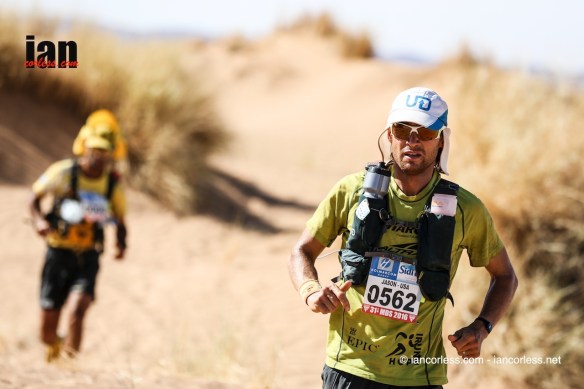
Jason Schlarb shot to notoriety after winning Run Rabbit Run 100-mile race in 2013. What has followed is a rise through the ultra ranks. A 4th place at UTMB placed Jason as one of the most successful Americans ever to perform at the big dance in Chamonix – a race that has proven elusive for Americans to crack until recently. The true sign of a true champion is when they go back to a race and win again… Jason did this at Run Rabbit Run winning again in 2015. However, all previous results pale into insignificance after Jason crossed the line hand-in-hand with Kilian Jornet at the 2016 Hardrock 100.
Hardrock, a low-key event in comparison to some of the big ‘hundos’ is for many the epitome of the mountain ultra world – with 100 miles to cover and relentless vertical gain at altitude, it is the grandad event that all other races look up to. For Jason to win it alongside arguably the greatest mountain runner in the world is a huge accolade.
However, before Jason ran the Hardrock 100 event, in winter of the same year, he covered the Hardrock 100 route on skis – a first! It was quite the event and experience and what followed was an immersion into the heat of the Sahara.
Jason raced the 2016 Marathon des Sables and found it a real challenge, I wondered, what was it about multi-day racing that appeals to him, after all, he has a reputation of being a single stage racer.
“One of the aspects of stage racing I appreciate the most, is being able to spend quality time with other athletes over multiple days. There are great opportunities to make life long friends at stage races. I really look forward to reuniting with my Norwegian Altra teammate Sondre Amdahl at TCC. Sondre and I have raced together on a number of occasions and we both raced at Marathon des Sables, he placed 8th and I was 12th. I wouldn’t mind setting things right and beating Sondre at the Costal Challenge in February :)”
But I wondered, is racing for multiple days harder than racing for one day?
“Stage racing creates prolonged drama, excitement and amazing entertainment for both spectators and athletes alike, what is there to not like about that? Stage racing, to me, is far more difficult. One must perform well day-after-day and juggle an extended game of being patient and balancing effort.”
At Marathon des Sables I had noticed that a lack of rest and a lack of calories made the Sharan challenge difficult for Jason, although TCC is not a completely self-sufficient race, I asked Jason what are the challenges he thinks he may encounter during The Coastal Challenge?
“For me, the Coastal Challenge presents a unique obstacle of performing well in a hot and humid climate while living and training in a snowy and cold climate. I will also need to focus on speed training this winter to be ready for faster, lower altitude running verse my usual high altitude, mountain running. Staying blister and generally injury free over multiple days of racing is also a big task at the Coastal Challenge.”
Snow and cold temperatures are not ideal preparation for the heat, humidity, rainforests, long stretches of beaches and technical trail of Costa Rica – is this going to be perfect running terrain or a real challenge?
“Traveling through wild lands is always a thing of perfection in my mind, but that perfection always presents challenge – that’s why we do it! I love Costa Rica. My family lived there for 2 years while I was at University, so, I always look forward to going back.”
You have already mentioned that you will have snow and cold temperatures to deal with in the build up to TCC. You have also said that you will need some speed but will you do any specific training for Costa Rica and what are the race plans for later in 2017?
“TCC is my only winter race this year, so most all of my training this winter will be geared towards performing well at TCC. Transvulcania in May will be my next focus race followed by a return to Hardrock 100 in July and hopefully Grand Raid/Diagonal des Fous in October.”
Have you thought about equipment, shoe choices and other details for the race?
“I have not figured out my race kit for TCC yet. While I almost always race in Altra Paradigms, I am pretty confident I will be racing in a different, higher traction shoe called the Altra King MT (coming out next year). I’ll use a Ultimate Direction racing vest, but besides that, I have some work to do selecting equipment.”
TCC and Costa Rica has a reputation for being a relaxed and enjoyable race – do you think holidays that combine a race are a good idea?
“Absolutely. I’ve paired holiday travel both alone and with my family my whole trail running career. Europe, New Zealand, Iceland, you name it! Importantly though, holiday and racing can be two in the same for me, but it isn’t easy to do. I have failed before at properly managing the balance (UTMB this last summer, for example) between traveling, holiday, fun, training and racing abroad. Balancing things with clear boundaries, a plan and discipline is essential. As far as enjoying myself before and after each stage, that just depends on the day, my mood, physical condition, performance etc…”
As one season comes to an end and Jason prepares for 2017, I ask what he is most looking forward to?
“I look forward to escaping winter for a fantastic world class event in Costa Rica. I am very excited to both prepare for and experience the Costal Challenge.”
The Coastal Challenge is a multi-day race over 6-days starting in the southern coastal town of Quepos, Costa Rica and finishing at the stunning Drake Bay on the Osa Peninsula, The Coastal Challenge is an ultimate multi-day running experience.
Intense heat, high humidity, ever-changing terrain, stunning views, Costa Rican charm, exceptional organisation; the race encompasses Pura Vida! Unlike races such as the Marathon des Sables, ‘TCC’ is not self-sufficient, but don’t be fooled, MDS veterans confirm the race is considerably harder and more challenging than the Saharan adventure.
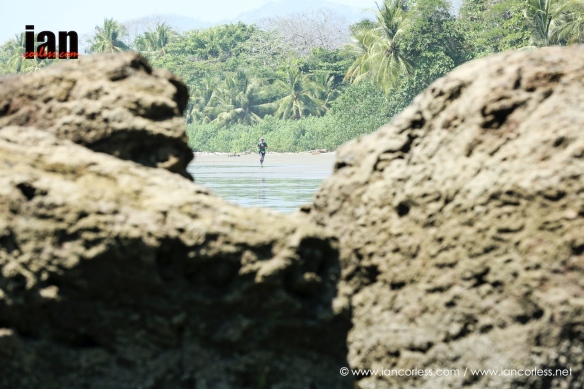
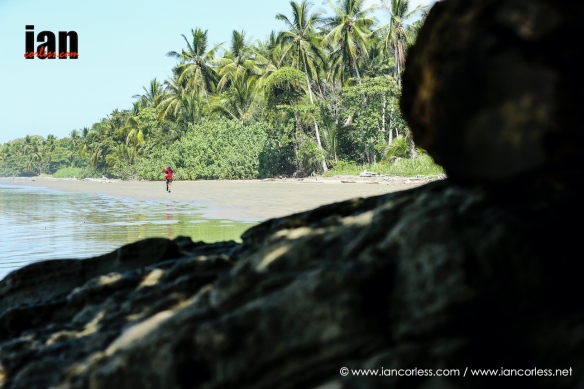
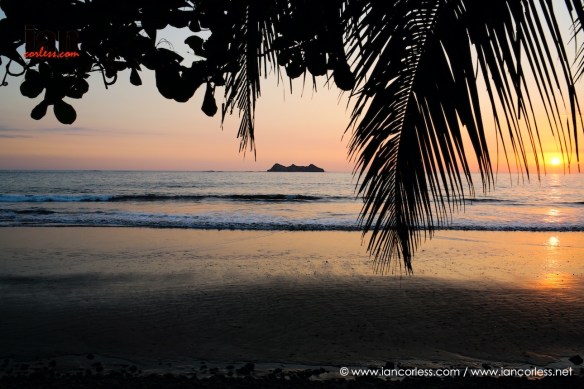
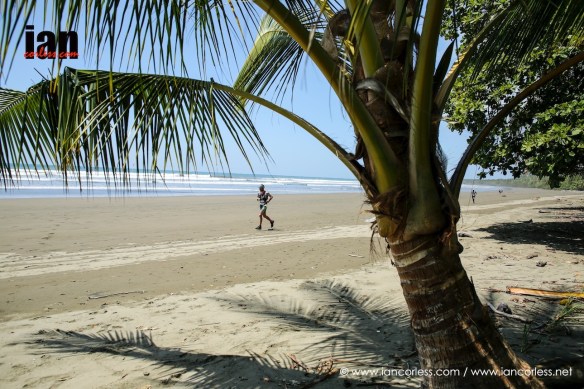
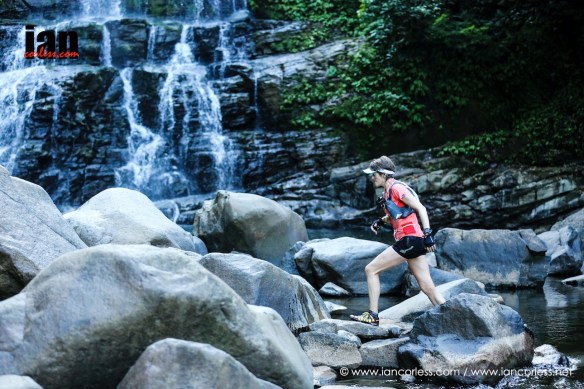
Hugging the coastline, the race travels in and out of the stunning Talamanca mountain range via dense forest trails, river crossings, waterfalls, long stretches of golden beaches backed by palm trees, dusty access roads, high ridges and open expansive plains. At times technical, the combination of so many challenging elements are only intensified by heat and high humidity that slowly but surely reduces even the strongest competitors to exhausted shells by the arrival of the finish line.
The Coastal Challenge which will take place Feb 10th – 19th, 2017.
Episode 122 of Talk Ultra and we have a 1 hour interview with Pete Kostelnick all about his amazing, record breaking run across the USA. Ryan Sandes talks Raid de la Reunion and Casey Morgan talks about Madeira’s EcoTrail Funchal and the Everest Trail Race. The show is co-hosted by my good buddy from the Twin Cities, Kurt Decker.
RUNNING BEYOND BOOK is now published and available worldwide HERE
I pledge to honor myself, competitors, sponsors, sport and society by choosing to stay clean of performance enhancing drugs. Choosing to not play by the rules steals from hard working athletes who choose to do the right thing and challenges the health and integrity of sport. I will be a positive example in the community as an advocate and ambassador for clean sport. I pledge that I have and will always train clean, compete clean and live clean.
I agree to be an outspoken advocate of clean sport
I agree to donate $25,000 to CSC charity partner if I ever test positive
*plus other pledges for brands, amateurs etc
Lanes of Change
Awareness
We are in this together. The more voices that speak in unity, the stronger we are.
Testing
It is time to intervene. Through our partners, we will support, aid and equip current drug testing regimes with the best and most updated tools and research.
Advocacy
We are a community with purpose. It is about the ecosystem of sport working together. We want it to be known that we support people over performances, and we celebrate honesty, integrity and transparency above all.
Restoration
We are human, and we all make mistakes. Together with our partners, we provide a safe place for those who have doped or spoke out against those that have.
IAU TRAIL WORLD CHAMPIONSHIPS
Luis Alberto Hernando 8:20
Nicolas Martin 8:30
Benoit Cori 8:30
Caroline Chaverot 9:39 – for me, THE ultra runner of the year!
Azara Garcia 9:44
Ragna Debats 9:47
VK FULLY
Nadir Maguet 30:17
Urban Zemmer 30:28
Marco Moletto 30:28 and Kilian Jornet 30:33
Christel Dewalle 35:57
Beatrice Delflorian 38:42
Serena Vittori 39:04
TEMPLIERS 76K
Miguel Heras (Spain). Now 41 years old, Heras turned back the clock with his second-straight win, adding to September victory at Ultra Pirineu. Here, Heras overtook Jared Hazen (U.S.) with some 6k to go to win in 6:45. Hazen used a mid-race surge to break things open and then held on for second in 6:49. Cedric Fleureton (France) was third in 6:56.
Jasmin Nunige (Switzerland) won Ultravasan for the second time, and went on to run 8:00 here for the win, improving on last year’s finish by four minutes. Yngvild Kaspersen (Norway) stepped up in distance and ran strong for a second-place 8:13. I Núria Picas (Spain), who had seesawed with Kaspersen throughout, was third in 8:22.
IAU 24 HOUR
Dan Lawson from the UK took out the win (Dan has placed 3rd at Badwater and 2nd at Spartathlon) with 162 miles – ouch! Ondrej Velicka 2nd with 160 miles.
Maria Jansson set a new European record 155.74 miles – ouch! Patricia Bereznowska was 2nd with 150 miles.
RAID DE LA REUNION
Francois d’Haene 23:44 that is 3 victories in 4 years
Antoine Guillon 24:15
Javi Dominguez 24:36 – who has had an incredible and consistent year
Andrea Huser 28:00
Juliette Blanchet 29:26
Emma Roca 30:10
00:50:00 INTERVIEW with RYAN SANDES
JAVELINA JUNDRED
Zach Bitter 13:30 beating Hal Koerner’s benchmark 13:47
Brett Sanborn 15:15
Ryan Kaiser 16:40
Dana Anderson 21:03
Adela Salt 21:32
Amy Rasor 22:17
Heather Anish Anderson sets new FKT for the 800 mile Arizona Trail – 19 days, 17 hours and 9 minutes
ECOTRAIL FUNCHAL MADEIRA
In the 80km race,Julien Chorier lead from the front and had a stunning day on the trails of Madeira. He arrived in Funchal looking strong.Casey Morgan placed 2nd just 6-minutes behind the Frenchman andJavi Bodaswas 3rd, 19-minutes later. For the ladies,Wasmes Wasmestook a conniving victory 14-minutes ahed ofNadia MeroniandSylvie Benechwas 3rd, 1-hour after 2nd place.
01:28:07 INTERVIEW with CASEY MORGAN
DAVE MACKEY – an amazing and inspiring story unfolds
On Monday, October 24, Pete Kostelnick broke the longstanding record for running across the U.S. Kostelnick linked the San Francisco and New York City Halls in 42 days, 6 hours, bettering a 1980 46-day, 8-hour record set by Frank Giannino, Jr. Other than a lone zero-mile day early in the run, Kostelnick knocked out 70-plus miles day after day.
HEADS UP – I will be in Nepal for the next two weeks so, I won’t be putting out a ‘normal’ show. However, I have something special lined up. As many of you will know, Adam Campbell had a near fatal climbing accident just 9 weeks ago. I am pleased to say the recovery and healing process is going well. I caught up with Adam and I discussed the whole process and what lessons we can all learn from this in a 1-hour special. Episode 123 of Talk Ultra will be published automatically on Friday October 18th with a simple introduction and close.
Tom Owens is without doubt one of the most inspiring runners from the UK who performs consistently on the world stage. Fell runner, ultra runner and Skyrunner, Tom has pushed the world best.
Back in the day, Tom forged a reputation for himself with Andy Symonds at the Transalpine run where the duo were a formidable force. In recent years, Tom has mixed fell running and Skyrunning. In 2012, Tom placed 2nd behind Kilian Jornet at the iconic Trofeo Kima, he looked set to dominate the Skyrunning circuit but injury hit. Time away and keeping fit doing cyclocross, it was 2014 when the Glasgow based runner finally re-emerged at Transvulcania.
Transvulcania was a surprise return… renowned for running shorter races, Tom stepped up to 70+km – an unknown commodity. Class shone through and he placed 6th. A 3rd at Ice Trail Tarentaise and then 4th at Trofeo Kima and we all knew – Tom was back.
2015 started really well with a win overseas at the Buffalo Stampede in Australia, 6th at Matterhorn Ultraks and arguably his best result came with 4th in the IAU Trail World Championships in Annecy.
Roll on to 2016 and Tom focused on the Skyrunning Extreme Series that combined all the elements that make Tom, the great runner that he is. Technical trails, altitude, distance and an ability to adapt to an ever-changing landscape. Victory at Tromso SkyRace and 5th at Trofeo Kima set Tom up for a potential overall title.
Going into the Glencoe Skyline, a head-to-head being Tom and Jon Albon whet everyones appetites. On the day, Albon excelled and it was 2nd for the Scot.
As 2016 comes to a close, Tom is looking ahead to 2017. Not known for his ability to handle heat and humidity, I wondered why Costa Rica?
“It looks beautiful, exciting and warm! I always like to escape the Scottish Winter for a week big volume warm weather running in January or February – it seems to set me up well for the rest of the year.”
And what about the heat and humidity?
“The heat and humidity will be massively challenging. I’ve not worked out how to run well in these conditions. It will be my first big block of running in 2017 and so interesting to see how the body holds up. I also find running in sand really tough…”
Costa Rica may well prove to be much more of a test of running. We all know Tom can handle the rough and technical stuff – the river and bouldering sections will put the fell/ Skyrunner in the terrain that he loves. But Costa Rica will have sand too, albeit not soft sand. It may well be a whole new learning curve.
“It’s going to be real challenge for sure but that is what makes it interesting! I will be at a disadvantage against pure multi-day runners but I will embrace it. Running day-after day is not really a problem, I love the technical stuff but it’s the heat and humidity that will really test me as I have already mentioned. I have really suffered in such races with cramps (I’m a big sweater) such as at Transvulcania, Buffalo Stampede and the recent World Trail Champs.”
Scotland and the UK is not going to be the ideal place train for a Costa Rican race in February, I wondered if Tom had any specific training plans to be prepared?
“I’m looking forward to trying some different strategies to cope with the heat – I hope the TCC will help me with the some of the other objectives that will take place in remainder of the year. In regard to training, I will aim to get back into regular running mid/late December or early January and build up some endurance. Beyond Coastal Challenge I have no 2017 plans yet. I only ended the 2016 season a couple of days ago – it was a really long (from Feb till end October) and fun season but now i’m enjoying a break and not doing any planning at the moment.”
Competition in the men’s race will be fierce, the recent announcement of Sondre Amdahl’s participation will no doubt focus the mind of Tom and the other male competitors. But a physical and mental rest is required before thinking about 2017. One thing is for sure, Tom always races to win and he will be prepared come February.
About the race:
The Coastal Challenge is a multi-day race over 6-days starting in the southern coastal town of Quepos, Costa Rica and finishing at the stunning Drake Bay on the Osa Peninsula, The Coastal Challenge is an ultimate multi-day running experience.
Intense heat, high humidity, ever-changing terrain, stunning views, Costa Rican charm, exceptional organisation; the race encompasses Pura Vida! Unlike races such as the Marathon des Sables, ‘TCC’ is not self-sufficient, but don’t be fooled, MDS veterans confirm the race is considerably harder and more challenging than the Saharan adventure.
Hugging the coastline, the race travels in and out of the stunning Talamanca mountain range via dense forest trails, river crossings, waterfalls, long stretches of golden beaches backed by palm trees, dusty access roads, high ridges and open expansive plains. At times technical, the combination of so many challenging elements are only intensified by heat and high humidity that slowly but surely reduces even the strongest competitors to exhausted shells by the arrival of the finish line.
The Coastal Challenge which will take place Feb 10th – 19th, 2017.
It seems a lifetime since I started putting this book together and although the Italian, Spanish and German versions were released in October, it’s so satisfying to finally have the English version released today.
The book will be available in store in all good book sellers and of course one of the easiest solutions for purchasing is via Amazon.
Please note that RUNNING BEYOND has been given a different name in Italy, Germany and Spain. A Swedish version is also planned – more news on that to follow.
The book has 240 pages of images and words that encapsulate some of the worlds most iconic ultra, trail and skyrunning races.
The book is hard bound with a dust cover and is ideal for a coffee table, dimensions are 12 inches by 10 inches.
To coincide with the launch of the book, a limited number of signed copies are available on a first come, first served basis. A book can be dedicated to you or another person if required.
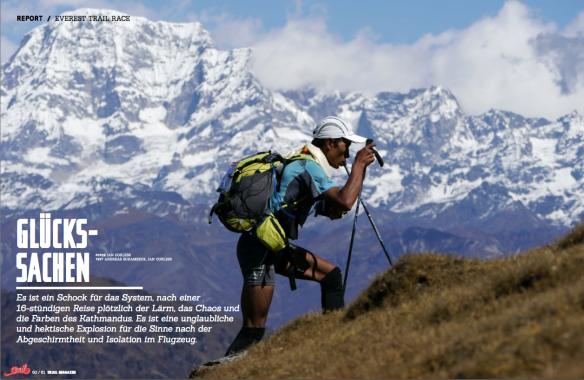
Set against one of the most iconic and awe-inspiring backdrops on the planet, the Everest Trail Race is one of the world’s toughest high-altitude ultra-marathons. I had the pleasure to attend the 2013 and 2014 and I am pleased to say for 2016, I am going back…
Nepal, the Himalayas, the Nepalese people and the amazing trails that lead to the stunning vistas of Everest, Tawache, Ama Dablam, Nuptse, Lohtse and Thamserku from the amazing Tengboche (Thyangboche) Monastery are some of the most memorable moments I have ever had.
On my first visit, I was told Nepal would change me and it did. It’s a cacophony of sound, visuals and emotion.
From the noisy and frenetic streets of Kathmandu to the isolation of camping under the stars at the monastery at Kharikhola, Nepal and its people cemented itself within my heart and I know that participants of the 2016 ETR are in for a very special experience.
Winding through the remote Solukhumbu region of the Himalayas in Nepal, the ETR takes place over six punishing days and covers a distance of 160-km with over 25,000m of vertical gain.
Terrain is mixed and the daily distances are, on paper, relatively short. Don’t be fooled though. Altitude and technical trails make the ETR a very specific challenge. Daily altitude gain starts 3,000 meters up to 5,950. It’s a breathtaking route that starts in Jiri and follows an incredible route that would eventually lead to the base camp of Everest.
Runners will trace the footsteps of Edmund Hillary and Tenzing Norgay, the first man to reach the summit of Everest, along with Hillary, who was born in the Tengboche area in a village called Thani.
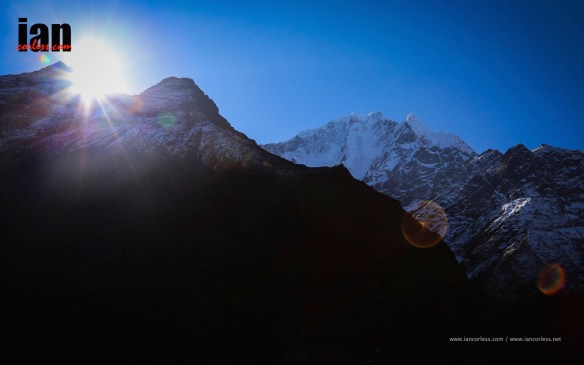
Participants will experience breath-taking views of not only one, but also several of the world’s tallest mountains: Everest, Lothse, Ama Dablam, Tamseku, Kangtega, Makalu and Kanchenjunga. On the fifth day, arriving at Tenggboche the Himalayan backdrop is magnificent providing a wonderful boost before returning to Lukla via Namche Bazaar.
A self-sufficient race, participants must carry all they need with the exception of food for meals and a tent. Breakfast and dinner is provided and all the runners sleep in 2-man tents.
Temperatures vary greatly from warm sunny days to icy cold nights. Remember, the runners carry everything they need, so, shorts and T-shirts for the day and a down jacket, multiple layers and a very warm sleeping bag for the night. As with most multi-day races, a change of clothes is a luxury and a shower almost non-existent.
The route is only accessible by foot or helicopter, so, the challenge is equally tough for the race team.
The Everest Trail Race is without doubt the journey and experience of a lifetime.
“You reach the highest point of the day and you are breathing hard, short shallow breaths. You think you must stop, that you can’t go on, but then you settle into a sustainable rhythm. Your body is adapting to the workload, to the altitude and with that realisation you feel a rush of empowerment that motivates you to run right past the foot of Everest.”
Schedule:
6th November – Travel to Kathmandu
7th November – Kathmandu
8th November – Sight-seeing in Kathmandu
9th November – Transfer to Jiri
Race dates 10th – 15th November.
Day 1 10th – 22 km (+ 3800 m ascent)
Day 2 11th – 24 km (+ 5300 m ascent)
Day 3 12th – 37 km (+ 6600 m ascent)
Day 4 13th – 28 km (+ 4500 m ascent)
Day 5 14th – 20 km (+ 3200 m ascent)
Day 6 15th – 30 km (+ 5200 m ascent)
16th November – Return to Kathmandu
17th November – Relaxing day in Kathmandu
18th November – Return home
The actual routes and formats change every year. The Race Director, Jordi Abad and his team spend over a month meticulously planning routes that are made public before the event starts.
Competitors camp overnight in two-man tents provided by the ETR. The tents are transported stage-by-stage and await the runners at the end of each day. Meals are provided each night in a large food tent. It provides a wonderful and most memorable sound each evening as the sound of weary laughter echoes around camp.
Race Route (to be confirmed)
Day 1 – Departing Jiri at 0900 runners will cover two major peaks, Mali at just over 2400m and Deurali Pass (2700m).
Day 2 – Leaving Bhandar, non-stop climbing follows a short 4km descent; firstly, to Gompa (Golla) at 3010m, a small downhill section follows of 2km and then a climb to Pikey Peak at 4068m. It’s a tough-tough day and the sting in the tail comes at the very end with a very short and steep ascent to Jase Bhajyang.
Day 3 – Jase Bhanjyang to Kharikhola
Stage 3 is all about running downhill, however, the finish is brutal ascent to Kharikhola at 2100m. Leaving Jase Bhanjyang runners have a short ascent of 2km to 3800m and then an 8km descent to Jumbesi, CP1. A 6km climb to just over 3000m is then followed with a 4km descent to Lharpa and CP2. Another 3km climb to 3000m and then a brutal leg-sapping drop from 3000m to 1500m in 10km before the final sting in the tail, a 3km climb to the finish.
Day 4 – Kharikhola to Llegada
Departing the monastery, a small descent awaits the runners of just 4km before a long tough climb to Kari La (CP1) at 2900m. From here the course goes up and down all around 2700/2800m for approximately 10km before a very steep descent to CP2 at Surke (2200m). A continual climb to CP3 at Cheplung continues to the arrival at Phakding/ Llegaga.
Day 5 – Phakding to Llegada
Leaving Phakding at 2600m runners will only gain 200m in the first 8km. CP1 Namche Bazar is at 10km (3400m). Phunki Tenga at 17.5km (3300m) now will offer the runners the most spectacular views of Everest and the other 8000m peaks. This sight will spur them on for the kick in the tail; the 2km climb from 3300m to 3700m and the finish at Tengboche.
Day 6 – Thyangboche to Lukla
The final stage of the ETR re-traces much of the same ground of Day-5 but (obviously) in the opposite direction. The main difference comes after Phakding when the trail splits and participants go left climbing to the finish in Lukla.
Ones to watch.
The ETR is very much a race about an experience and a journey, however, a race will take place and as in previous years, this will be very competitive at the front.
From the UK, Casey Morgan will be one of the main contenders for overall victory. In 2016 he has raced consistently well in tough and mountainous races all over the world. The big question will come with his ability to handle high altitude.
Miguel Capo Soler placed 17th at the 2014 Marathon des Sables but his best result came in 2013 when he placed 3rd along with 10th at Lavaredo Ultra Trail.
Roger Vinas has had an incredible 2016 racing the Skyrunner World Series – the technical trails and altitude of Nepal should not be a problem for this talented runner.
Ismael Dris placed 18th at the 2015 Marathon des Sables, 2nd at the 2013 The Coastal Challenge and has raced Everest Trail Race on one previous occasion.
Sarah Davies from the UK placed 2nd lady in the 2016 Spine Challenger and also won the Malvern Hills Ultra. Adapting to the cold shouldn’t be a problem, the altitude will be a question mark.
Argentina will be represented by Paula Haimovich, Vanesa Levi and Daniela Alderete.
The 2016 edition of the race has a main sponsor – The Elements Pure Coconut Water. Other official sponsors are Compressport, 225ers, ways gps and Burq.
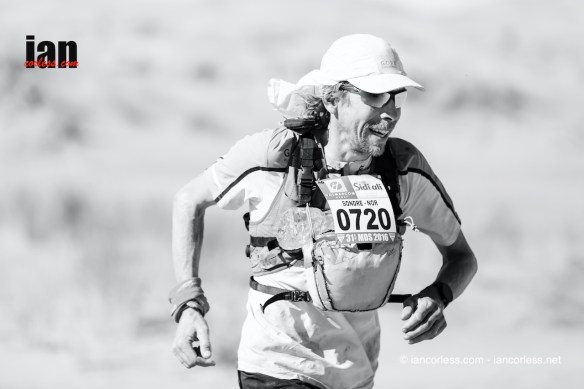
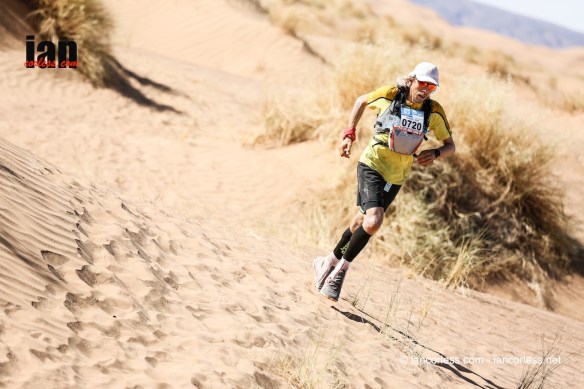
Sondre Amdahl has been on a roll over the last couple of years running amongst the best runners in the world and on multiple occasions excelling with a string of consistent top-10 results.
I guess the journey really started in 2013 when Sondre placed 4th at Transgrancanaria (83km) and 10th at the CCC. In 2014, the Norwegian runner stepped up to the 125km Transgrancanaria race and placed 6th, ultimately though, the breakthrough came at UTMB with 7th followed up with a 17th at Diagonale Des Fous on Reunion Island.
The 2015 season started really well with 2nd at Hong Kong 100 and moving up the ranks to 4th at Transgrancanaria – a race Sondre loves! 15th at Western States and 4th at UTMF set the stage for 2016 and Sondre’s first attempt at the Marathon des Sables were he placed 9th amongst a highly competitive field.
“The main attraction with multi-day racing is that it takes longer! When I travel to the other side of the world, I appreciate that I can run more than “just” one day and night, like in a typical 100-mile race,” Sondre said when I asked about the appeal of the Sahara and MDS. “Multi-day racing also has a more social component to it. You meet more people and have more time to hang out with other passionate runners. Even though I’ve only done one multi-day (MDS in April 2016), I find the lack of recovery/rest and sleep makes it hard to race hard day-after-day.”
Sondre is hooked on the format of racing for multiple days and as I write this he will head to Oman to race in the desert once again. However, never wanting to stand still and always seeking a new challenge, the heat, humidity and varied terrain of Costa Rica has lured Sondre to The Coastal Challenge.
“Of course it will be a challenge, but I love technical trails and elevation change. I think the TCC course fits my running style. I guess the biggest challenge for me will be the heat and the humidity! I live in one of the coldest places in Norway and in February the normal day temperature is minus ten/fifteen degrees Celsius. My heat acclimatisation needs to be spot on.”
Costa Rica is a magical place and so different to the baron almost featureless Sahara Desert. Having raced all over the world in stunning mountains, on isolated trails, I wondered why Costa Rica?
“The tropical climate is a real attraction and it will be a great escape from the cold winter in Norway. I can’t wait to run on the beach and explore the rainforest.”
Renowned for specific training, Sondre often immerses himself in preparation for a key race. As he has said, Norway is not going to be the ideal training ground for a high humidity race with hot temperature. It begs the question, how will he train for this challenge?
“TCC will be my main target for the winter/spring of 2017. I have had a couple of easy months after a DNS at the Tor des Géants (due to injury). I feel a lot better now, and I’m ready for a good block of training in November, December and January to prepare for TCC. This training block will include the Oman Desert Marathon and a 115 km race in Hong Kong on New Years eve. I will also train in Gran Canaria in January to be 100 percent prepared for TCC.”
Sondre is leaving nothing to chance and peaking for a race so early in season can bring with it some risks, the racing calendar is so full and long now! I therefore wondered what his 2017 schedule will look like and I also wondered would we see more multi-day races?
“I will run the Jungle Ultra in Peru (6-day stage race) in early June of 2017. And may be Hardrock? I also want to go back to Reunion and run the Diagonales Des Fous in October.”
Marathon des Sables provided an opportunity to test equipment and be self-sufficient. It’s a challenge carrying ones own kit and I know only too well that not having enough food can be a real test, especially when racing hard. TCC is not a self-sufficient race and so therefore calories shouldn’t be an issue, however, I wondered about equipment such as shoe choices and other details for the race?
“I haven’t thought too much about this yet, but I guess I’ll use the Superior and/or the Lone Peak shoes from Altra. TCC will be fantastic as I just need to run with liquid and some food. I wont be weighed down by a 6.5kg pack. Being in my own tent but with all the other runners also provides a great compromise over a race such as MDS. I can have some privacy if I need it but I can still share the community spirit that a multi-stage race brings. I think for those who are looking for a challenge but also some comfort, TCC is perfect for this. I can’t wait!”
TCC and Costa Rica has a reputation for being a relaxed and enjoyable race – do you think holidays that combine a race are a good idea?
“For me personally, the race and holiday combo is just perfect. I will be racing for sure, that is my DNA But I know that when I get back home again, I will remember (and appreciate) camp life and the social aspect way more than the race result.”
The 2017 TCC is just a few months away, the ladies’ line-up is already looking incredible with 2016 champion Ester Alves returning. 2015 MDS champion and 2016 TCC runner up, Elisabet Barnes will also return. Add to the mix Everest Trail Race two-time winner, Anna Comet, and one thing is for sure, Sondre may need to watch out for the ladies’ as competition, never mind the men…
A multi-day race over 6-days starting in the southern coastal town of Quepos, Costa Rica and finishing at the stunning Drake Bay on the Osa Peninsula, The Coastal Challenge is an ultimate multi-day running experience.
Intense heat, high humidity, ever-changing terrain, stunning views, Costa Rican charm, exceptional organisation; the race encompasses Pura Vida! Unlike races such as the Marathon des Sables, ‘TCC’ is not self-sufficient, but don’t be fooled, MDS veterans confirm the race is considerably harder and more challenging than the Saharan adventure.
Hugging the coastline, the race travels in and out of the stunning Talamanca mountain range via dense forest trails, river crossings, waterfalls, long stretches of golden beaches backed by palm trees, dusty access roads, high ridges and open expansive plains. At times technical, the combination of so many challenging elements are only intensified by heat and high humidity that slowly but surely reduces even the strongest competitors to exhausted shells by the arrival of the finish line.
The Coastal Challenge which will take place Feb 10th – 19th, 2017.
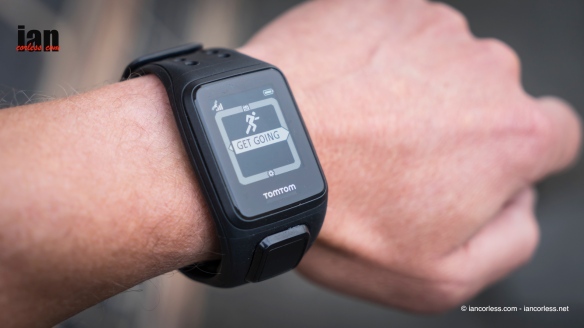
I had anticipated not to like the TOMTOM Spark Music GPS Fitness Watch, I had some preconceived snobby ideas that as a ‘GPS’ this was not a serious watch for a runner.
I was wrong.
But not completely wrong.
Before reading on, let me cut to the chase and tell you my conclusions after testing the watch for a few months – I love it! It has limitations and it’s not perfect, but, if you want to train and run with music, the Spark Music is just brilliant. The downside by far is the battery life and therefore if you plan on training or racing for 4+ hours, this watch has limitations.
The Review
The TOMTOM Spark Music will hold 3GB of music (approx 500 songs), links to earphones via Bluetooth, works for running, swimming, cycling and indoor training, interval training settings, has GPS tracking, goal setting (steps, etc.), sleep tracking, wireless syncing to a phone app, water resistant to 50m, custom/ changeable straps and all in a very sleek looking ultra-slim design with a backlit face that glows after placing the palm of your hand over the face of the watch. In addition, you can get the watch with two different strap sizes, small and large. This is particularly good for those with a smaller wrist who hate a watch flapping around because they are unable to tighten the strap enough.
Importantly, before using the watch, connect the watch to your computer and download MYLAPS (TOMTOM software) and go to https://mysports.tomtom.com/app/login/ and create an account.
When you connect your watch, it takes you through a step-by-step process and it also keeps the GPS up to date.
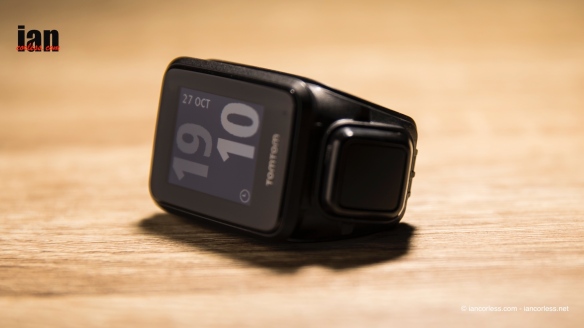
First off, the Spark Music is a good looking watch. I chose the all black version but colourful versions are available. It’s a slim watch and sleek and the strap has a unique three-point fastening system that works well. The strap is removable so that you can re-charge the watch and connect to your computer via a USB cable. This function allows you to purchase replaceable straps or maybe you’d like a selection of straps? That way you can colour co-ordinate… not something I am interested in but the option is there. Using the Spark Music just as a watch, with an alarm set every day, the battery lasts somewhere between 2-3 weeks but it does vary. Start to play music, use the GPS and so on and this changes dramatically. More on that later.
The watch face is backlit and to turn it on, you cover the face of the watch with the palm of your hand. Remove your hand and the screen glows for a few seconds – magic!
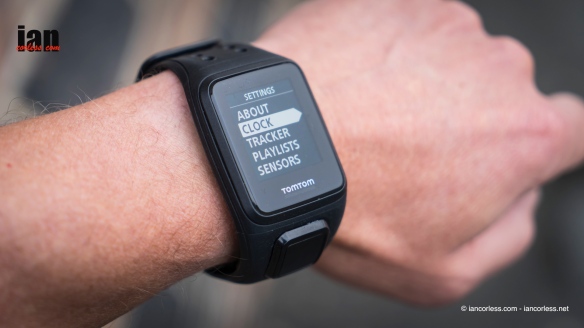
The watch is operated by one large square button which toggles 4-ways. Up, down, left and right.
Pressing DOWN
You see a menu:
ABOUT – tells you how much battery you have left, storage, if ‘QuickGPS’ is on, what version of software
CLOCK – alarm, time and 12/24 hour options
TRACKER – set goals and sleep
PLAYLISTS – tells you what music is on the watch
SENSORS – heart and bike (for this version, they are extras)
PHONE – sync and pair
FLIGHT MODE
OPTIONS – units, buzz, demo, night, lock
PROFILE – voice, weight, height, age, gender
STANDARDS
Pressing UP
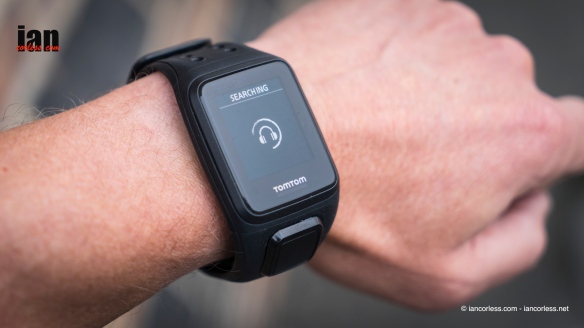
This is how you connect Bluetooth earphones and play music
Pressing LEFT
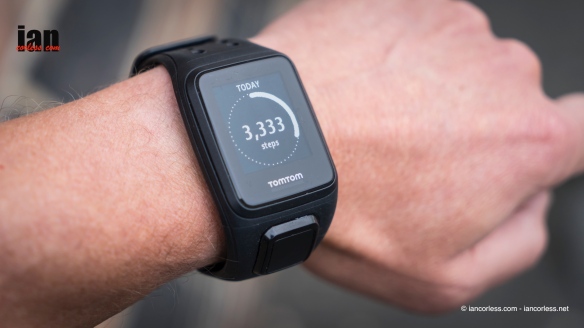
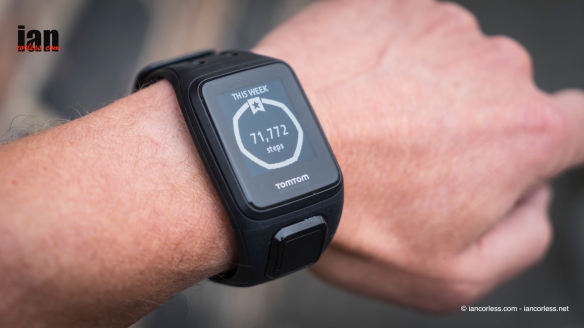
This scrolls through – Steps today, steps this week.
You can also scroll up and down after clicking left which shows – Sleep, calories burnt, distance covered etc.
Pressing RIGHT
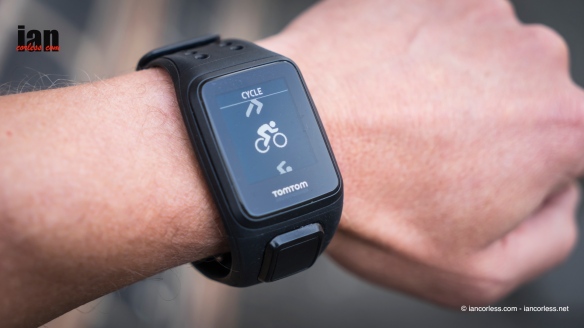
Shows you the sports and you then click DOWN to select your chosen sport – RUN, CYCLE, SWIM, TREADMILL, GYM, INDOOR, FREESTYLE, STOPWATCH. Once the sport is chosen, you then wait for the GPS to connect (if applicable).
The watch will say, ‘Please Wait’.
Once connected it will buzz and say ‘GET GOING’.
HOW IT WORKS
Depending on which version of the watch you have, you may have earphones supplied or you will need to purchase Bluetooth earphones. Pairing at first was a little tricky but once paired, every time I wanted to listen to music, the earphones and watch connected seamlessly. Music plays automatically but you can go into the menu and fast forward, reverse or pause. Sound quality was excellent on both supplied earphones and pair of £29.95 Philips Sports Earphones. I say excellent, I mean great for running. The watch does come with some pre-loaded ‘Running Trax’ by Ministry of Sound which is upbeat and has a good tempo.
Choose the sport you are doing as listed: RUN, CYCLE, SWIM, TREADMILL, GYM, INDOOR, FREESTYLE, STOPWATCH. Needless to say you can’t listen to music while swimming and it’s a very bad idea to listen to music while cycling.
The GPS took around 5-minutes to connect on the first use and then after that, usually 10-30 seconds. Obviously if you move to a new location or country, connection may be slow for the first time while it acquires satellites.
The display is clear and it’s easy to see elapsed time, pace and so on by scrolling through the screens.
To stop the watch in exercise mode you press LEFT and you are given a ‘Pause’ screen. Another press LEFT and you have stopped a session.
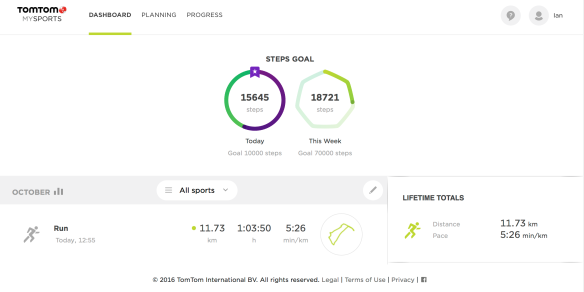
Once home, you can upload your train session via Bluetooth to the ‘MySports’ TOMTOM App on any smartphone. I recommend that you use the USB cable provided and connect the watch to your laptop. By doing this, you not only transfer your training session but you also make sure the GPS data is up to date and your watch charges.
You can also send the data to other accounts such as STRAVA.
IN USE
This watch is perfect for daily training sessions when you may be out for just 20-minutes or maybe up to 4-hours. The ability to run, go to the gym, run on a treadmill and have music playing via Bluetooth earphones offers real freedom. It’s a huge selling point of this GPS unit and for my daily run sessions of 40-minutes plus it has become my preferred unit. The main reason being that I no longer need to carry an iPod or Phone to play music.
As a watch it works. Nuff said. It tells me the time and I can set an alarm for the morning. One nice function is that the watch monitors my daily steps, movement and keeps track of my sleep and daily distance. For those of us who need an incentive to cover 10,000 steps a day, this unit is great at encouraging this.
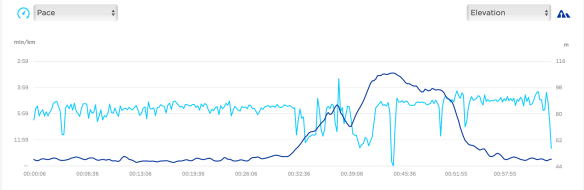
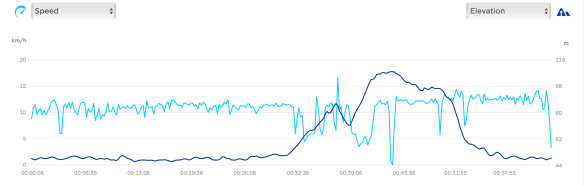
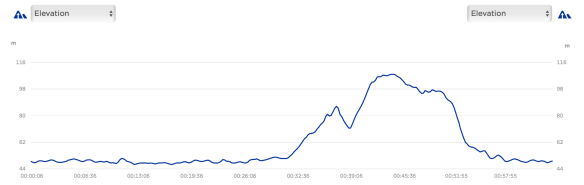
The recorded information from any training session is pretty standard. You get a map of your run, splits, pace, elevation and so on. Within MySports you can also send the recorded data to other websites such as STAVA.
In comparison to my Suunto and Garmin GPS units, the Spark Music records GPS data (speed, time, distance) in line with the other units. As I always say, any GPS will have some +/- discrepancy when recording data.
The cycling function is basic but it has support for cycling sensors that can record speed/cadence. You can also connect a HR strap should you wish.
Swimming works in a pool and NOT open water. You need to configure the pool size in settings and then off you go. As is the case with all swimming watches, it works both with flip and open (non-flip) turns. The Spark works by measuring acceleration, and unexpected changes.
Other functions exist for indoor training and there is a stopwatch.
The charging cable is solid and connects to the watch in a reassuring way.
CONCLUSION
The Spark Music is very much designed for enthusiasts and those who like to go for a run, the odd cycle and maybe regularly visit the gym or pool.
It also works as a great tool to incentivize more activity and the daily activity tracker is great for giving an idea of how active or in-active you have been.
The music player for me is the big reason for using this watch. Combining a sports watch with music just makes sense and it works really well.
This watch is not for those who run, cycle, swim or do any sport for a long time as unfortunately, the Spark Music’s biggest drawback is battery life. As a watch it will last 2-3 weeks but if you run for say 60-75mins with the GPS active and music playing, the battery can drop to say 50%.
BUT… and this is a big but, I still think the TOMTOM Spark Music has a place. During a normal week, my training sessions are usually anything from 40-minutes to 2-hours (if I am lucky) and the watch/music combination is brilliant. As a tip, just make sure you charge the watch daily. Like I said earlier, when you return from a run, cycle, swim or indoor session, take off the watch, connect to your computer, let your training upload and then remove the watch when it is charged.
The TOMTOM Spark Music wouldn’t replace or do the job of an all-singing and all-dancing Suunto or Garmin device. But then again, Suunto or Garmin don’t play music! This is why, for me, the Spark Music has a place when training.
If I was out on a big adventure, running a long race or training session or I was on a multi-day adventure then the TOMTOM just wouldn’t be up to the job. But it does daily sessions really well and listening to tunes while sweating is a huge plus. I guess it’s all in the name, TOMTOM call this a ‘Fitness Watch’ and for most people it will be an ideal addition to help provide motivation on a daily basis.





















































































































 You have already mentioned that you will have snow and cold temperatures to deal with in the build up to TCC. You have also said that you will need some speed but will you do any specific training for Costa Rica and what are the race plans for later in 2017?







































 IAN CORLESS