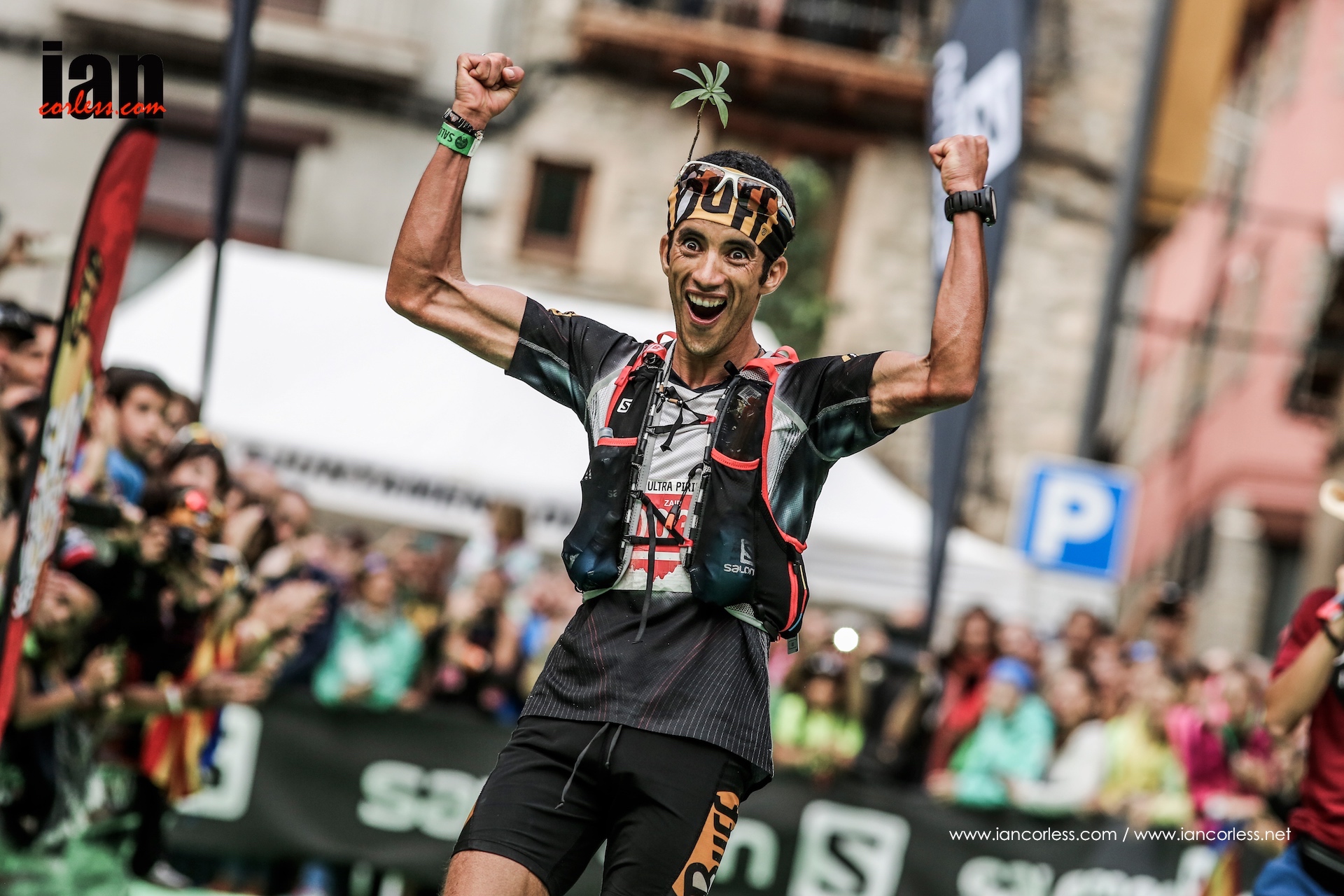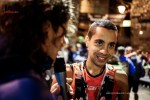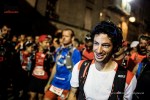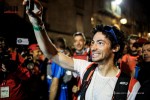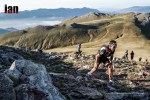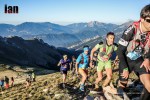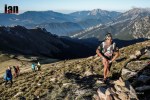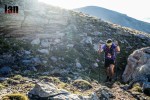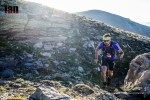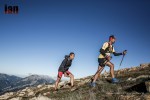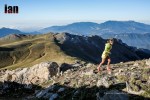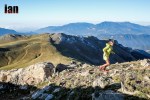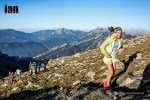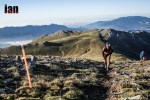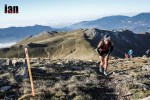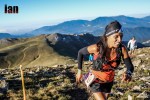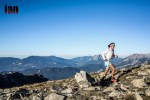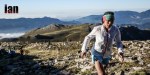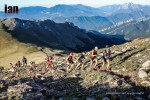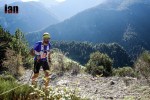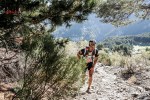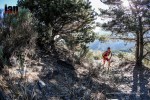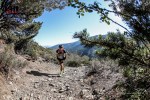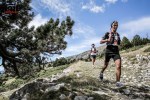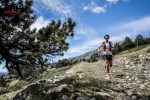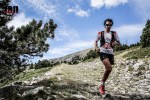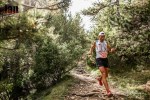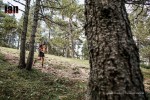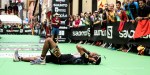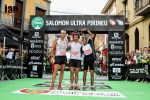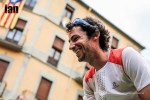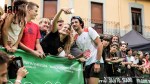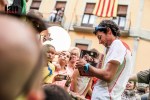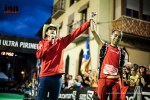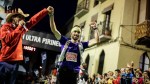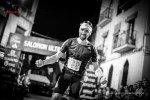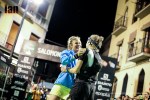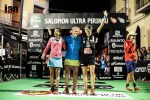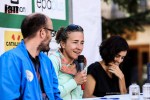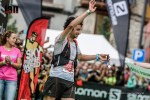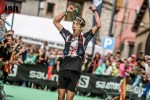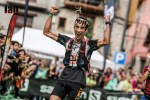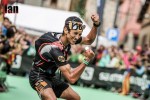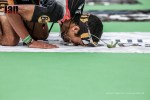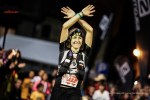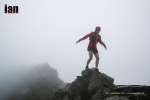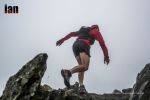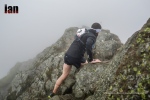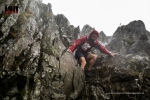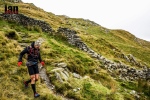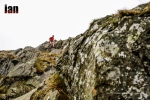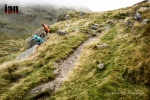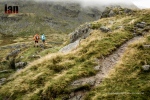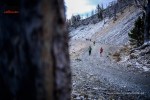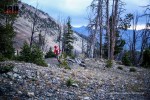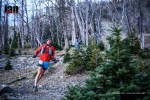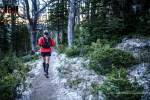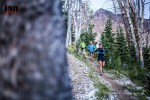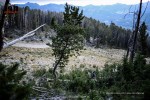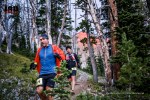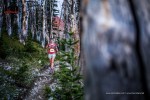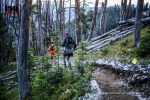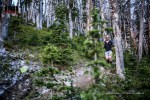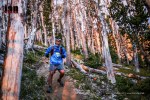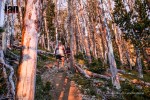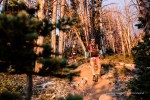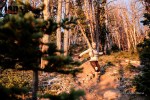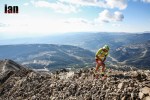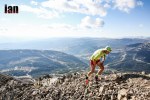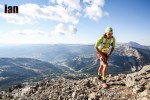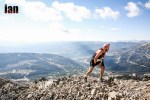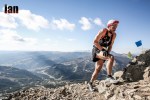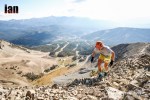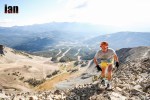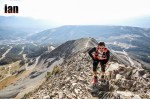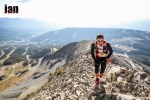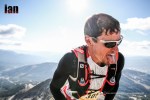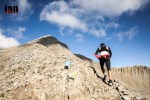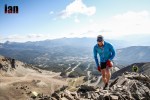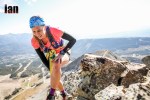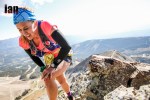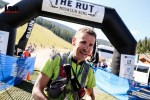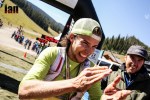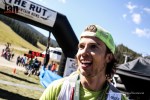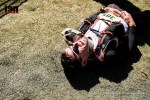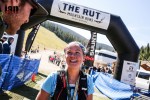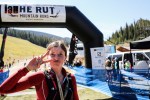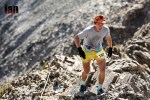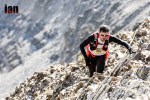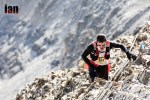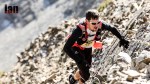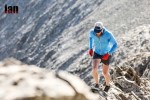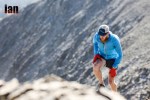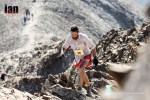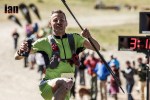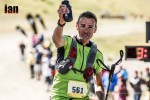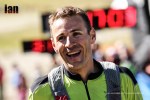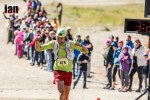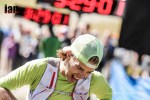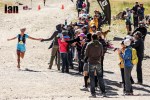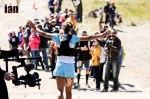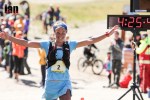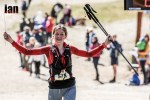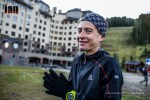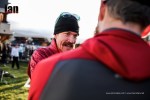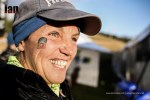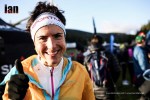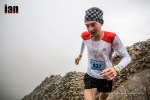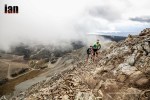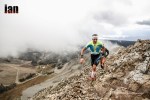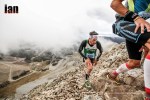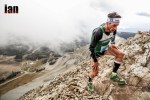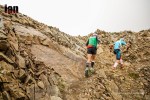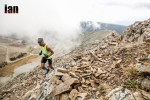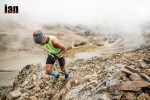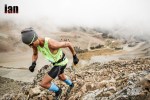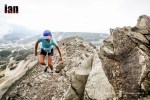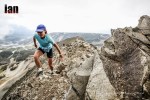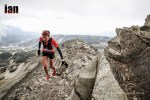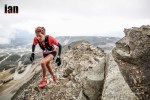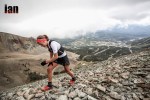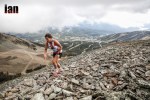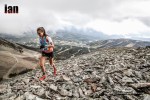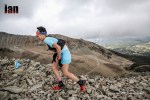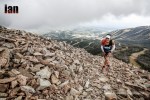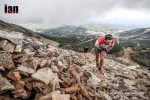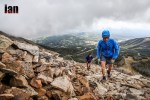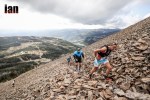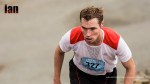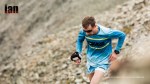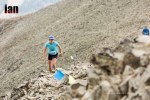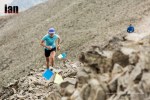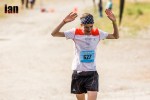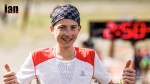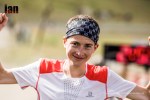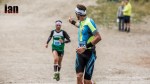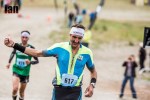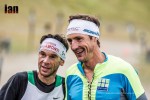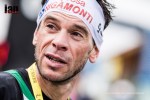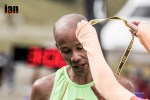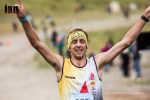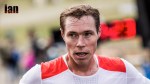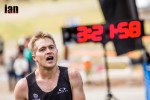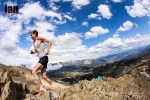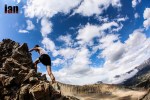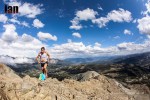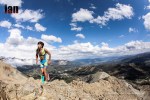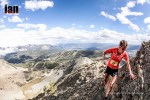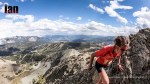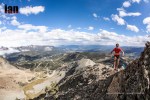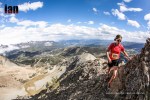
Jonathan Albon – Tromsø Champion Race Report

©iancorless.com_Tromso2015-4645


Listen to a full in-depth interview with Jonathan Albon on

TALK ULTRA Podcast Episode 92 out on Friday 7th August.


There are many reasons Tromsø SkyRace was set to be one of the highlights of my year. Although a race, I was most looking forward to running in the mountains, crossing streams and the wilderness that this event was set to deliver. There were two race distances – the Tromsdalstind (short) and Hamperokken (long). I’d be taking on the full Hamperokken skyrace which is actually classed as an ultra, more for the time it would take to complete as a opposed to the distance, which was only a modest 45km but had a huge 4400m of elevation gain.

3984594_orig

Knowing this was what lay before me it was with a sadistic smile that I learnt the night before the race that the ski lift to the start wouldn’t open in time so we would have to make our own way up to the start! ‘A good warm up’ Kilian said – well, he was probably right.

Jonathan’s race stats:

45.1km Distance

4,373Elevation

5:48:11 Moving Time

8:10/km Avg Pace

5,842 Calories

screenshot_557 screenshot_558


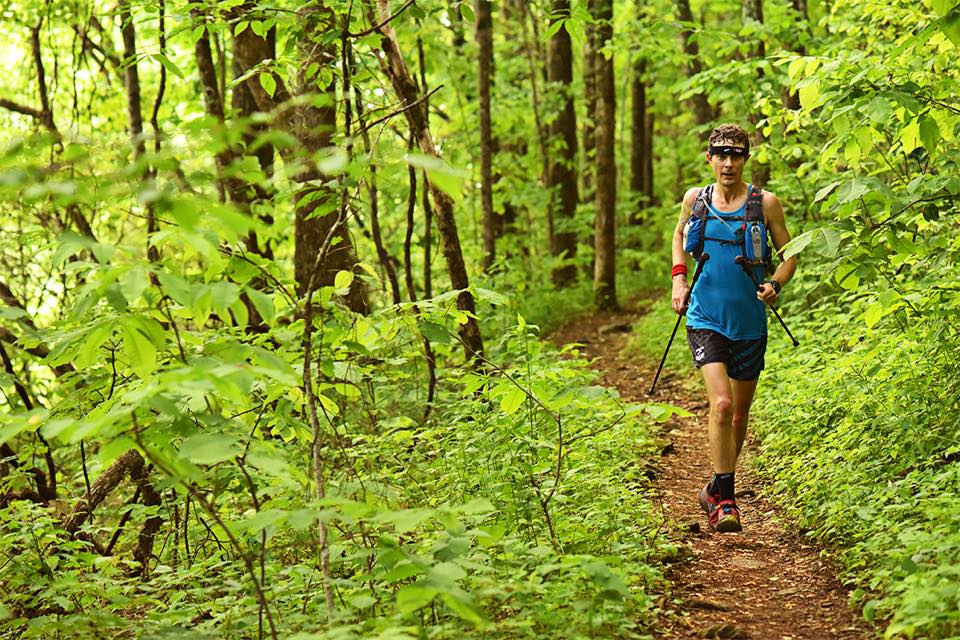
After reaching the start it wasn’t long before we were off. In an attempt to run my own race (unlike in previous races this year) I tried to start easy, warming up into it. It was hard judging were I was placed anyway as the short course started at the same time so I was content with just running. I started with the mindset that I didn’t care where I would place, I would run in the mountains and enjoy myself. So that is what I did. It wasn’t until the top of the first summit, Tromsdalstind, where we turned for a big descent splitting from the short course that I started to get a feel that I was in the top 10.

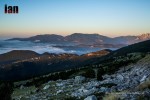
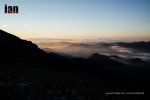
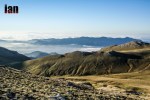
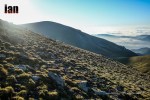
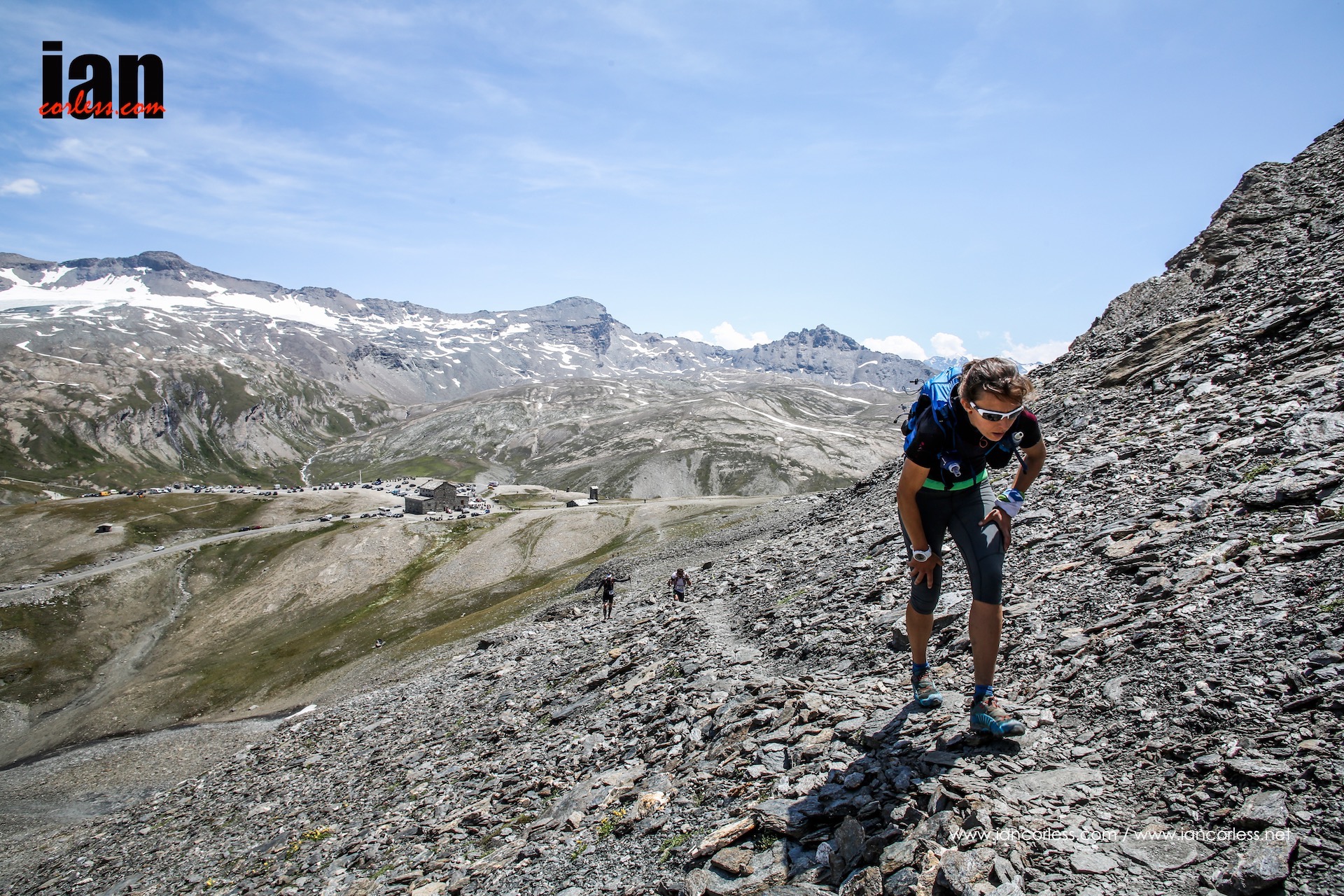
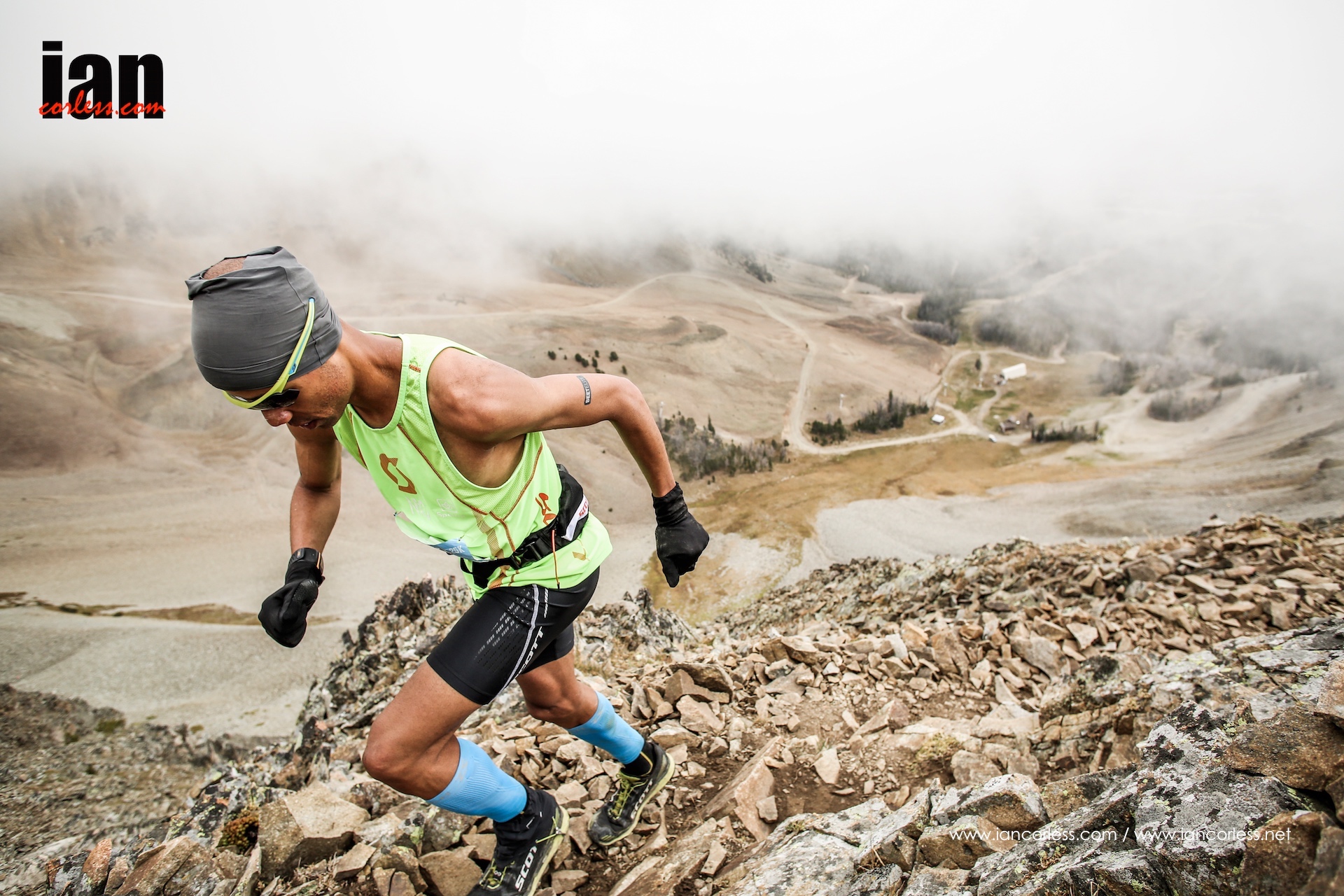
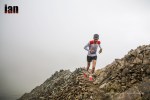
The summit was covered in snow and the route turned to just drop of the other side of the plateau over what looked like a cliff. It wasn’t until getting closer that you could see it was in fact an extremely steep snowy slope with a rope to assist descent. Thankfully this section wasn’t long but there were plenty more snow fields to slip and slide down on the rest of the descent. The majority though was on loose rocky terrain and steep muddy tracks. Before long I was reaching the valley floor and out of the thick fog, for the first time I could see further than a couple of hundred meters and the sight was surreal.

©iancorless.com_Tromso2015-4640I had settled into a position next to a Swiss guy called Pascal Egli. He seemed to have the same happy attitude I had towards the race and we talked, joked and laughed as we crossed one of the only flat sections on the course between the two mountains.

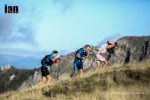
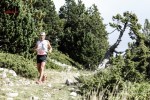
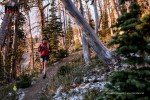
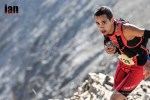
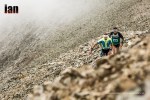
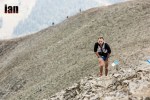
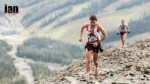
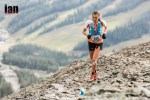
Reaching the base of the big climb, Hamperokken, we were still together. After a third of the climb I let him go. I had by this point learnt he had come third in the Dolomites skyrace and had only finished something like 40 seconds behind Stian Angermund in the Tromsø vertical kilometer. I definitely didn’t feel worthy to be holding with him and felt I was either holding him back or I was pushing too hard. As it happened he never got more than 10m away. Running the majority but hiking the steepest gradients we were making good time…and catching people, passing two on the climb we just got another two as the ridge started. This put us in a group of 4 with only 1 guy ahead in the lead.

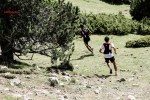
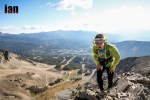
©iancorless.com_Tromso2015-4585I noticed one of our group was Eirik Haugsnes. I’m not sure there would be anyone I would rather be following through what was one of the craziest sections of any race I have ever done. Eirik was last years winner and lives in the Troms area.

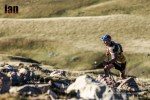
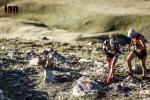
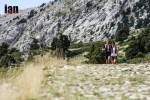
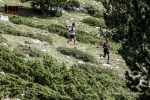
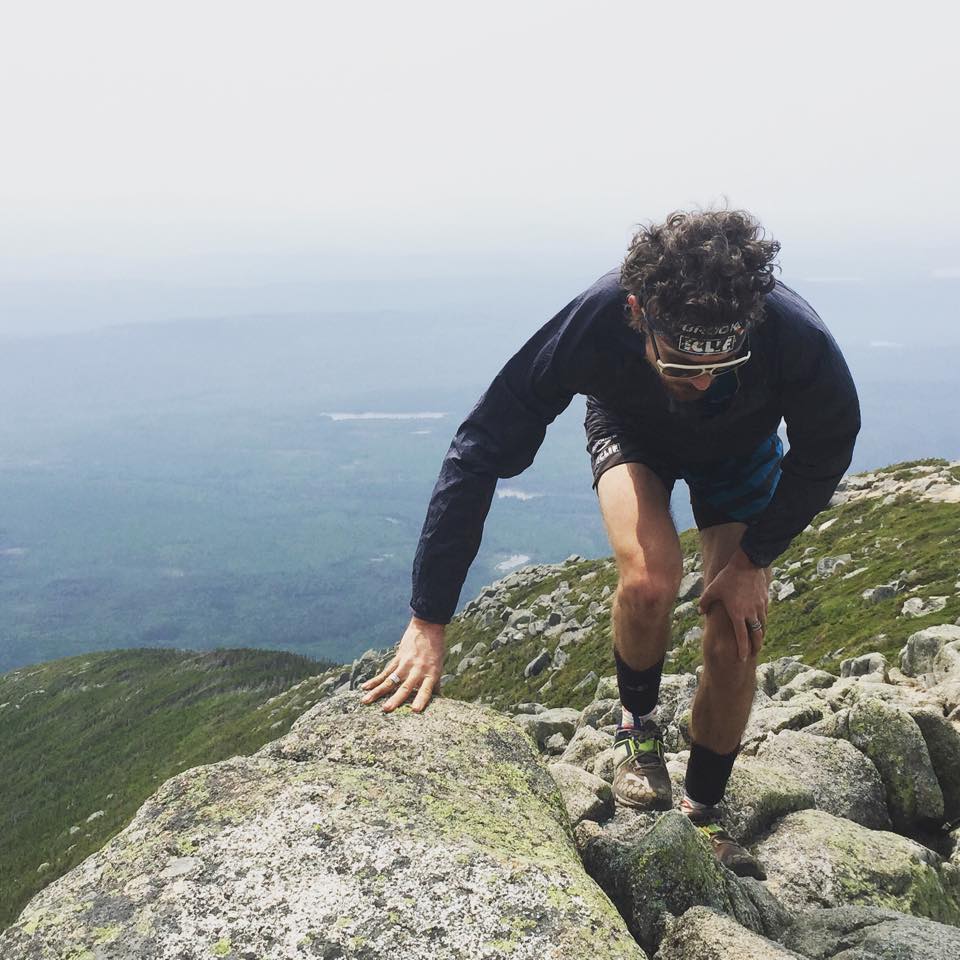
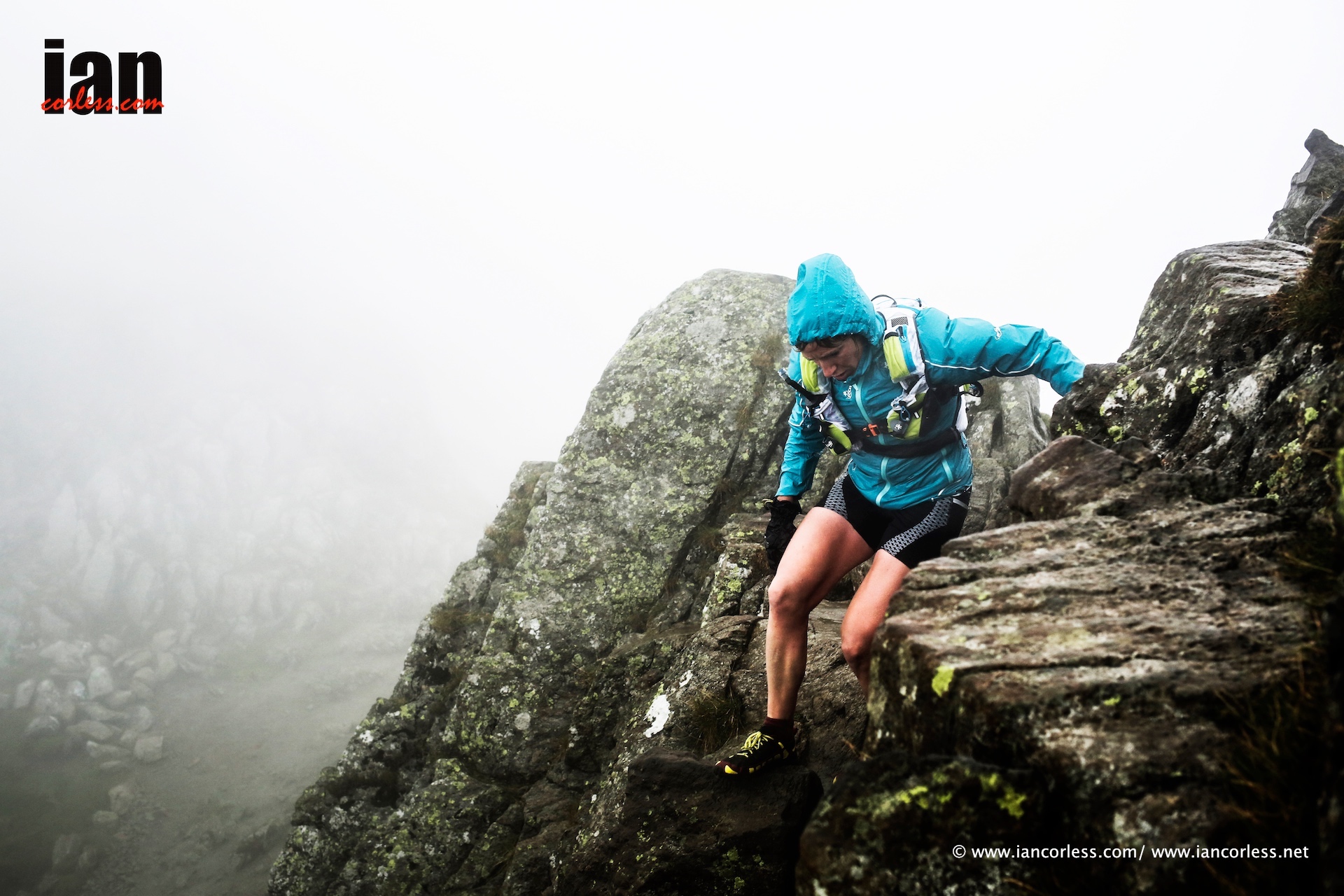
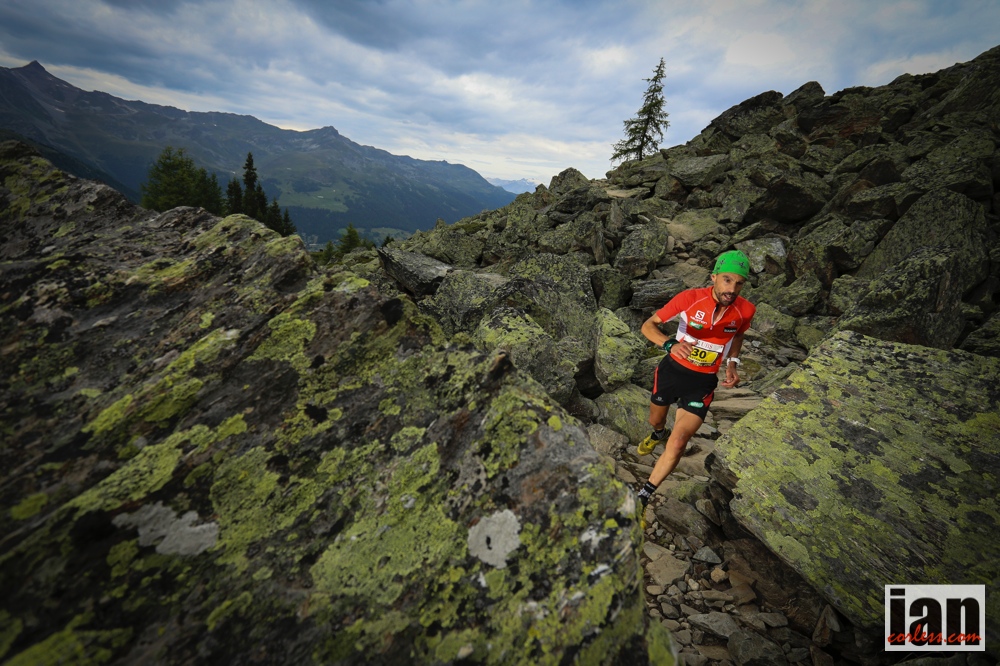
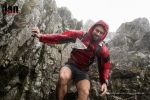
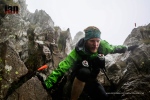
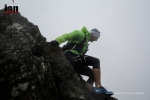
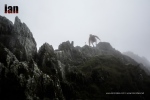
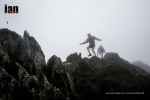
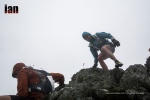
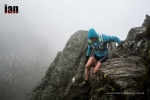
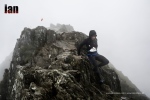
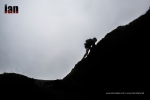
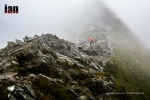
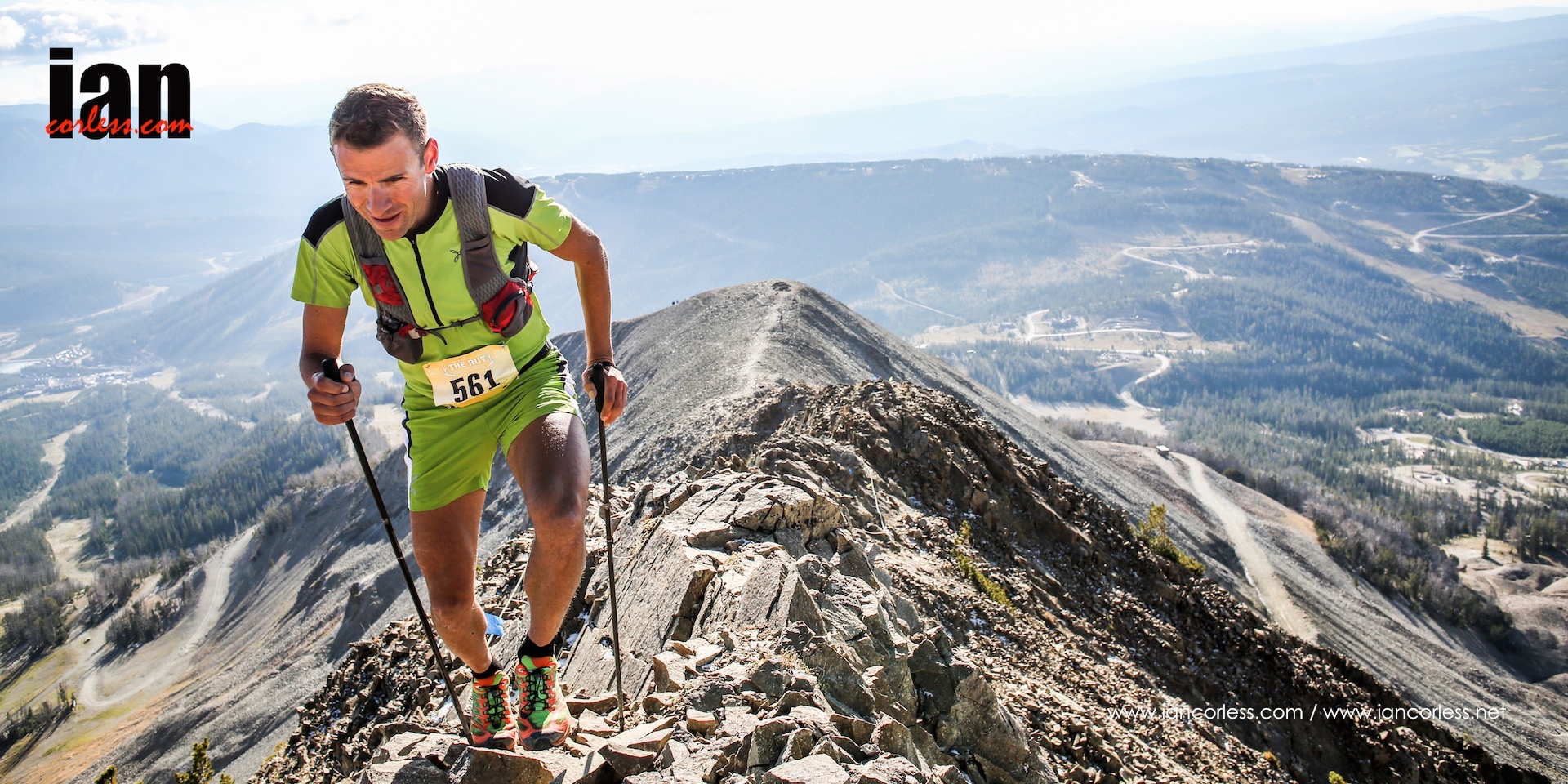
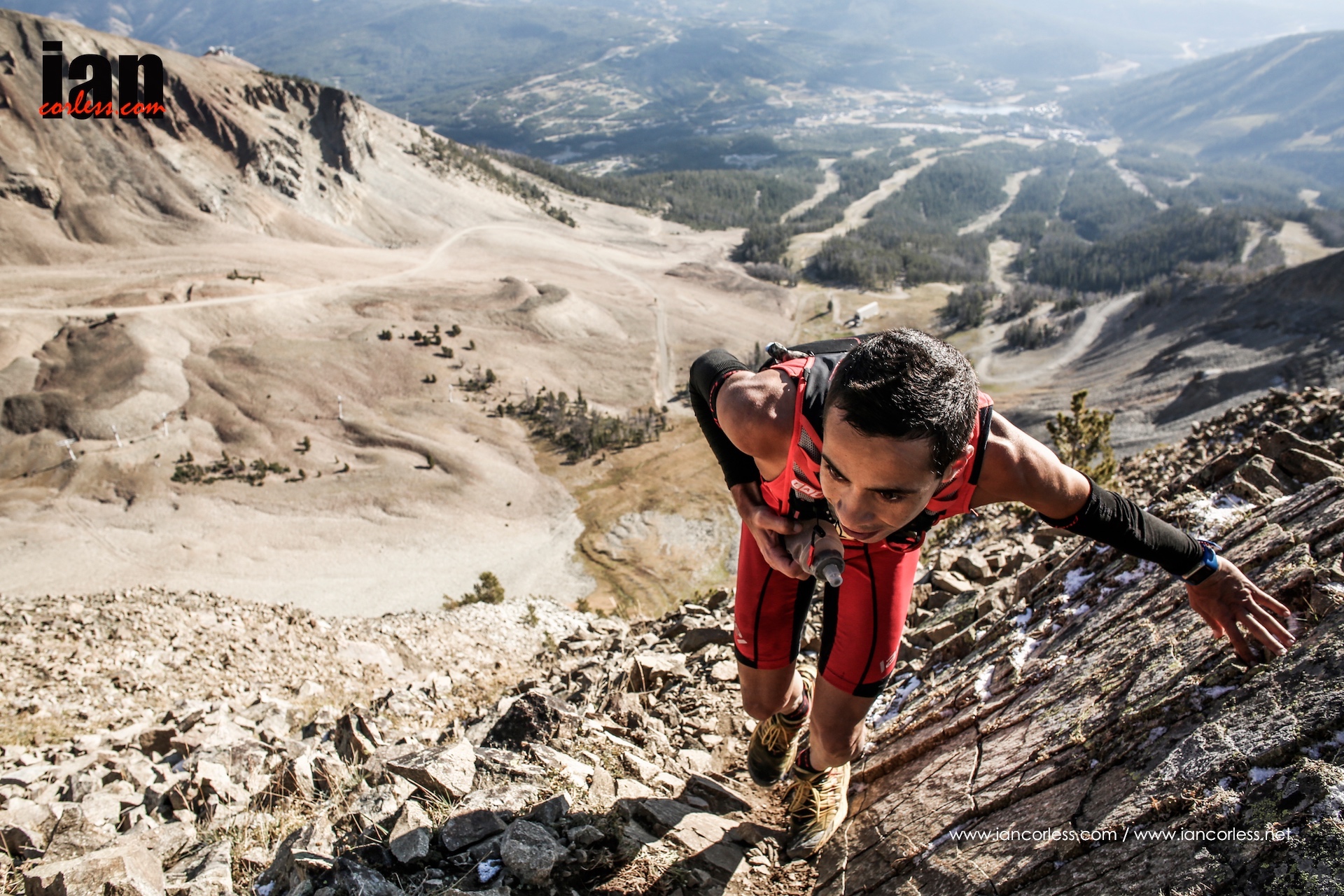
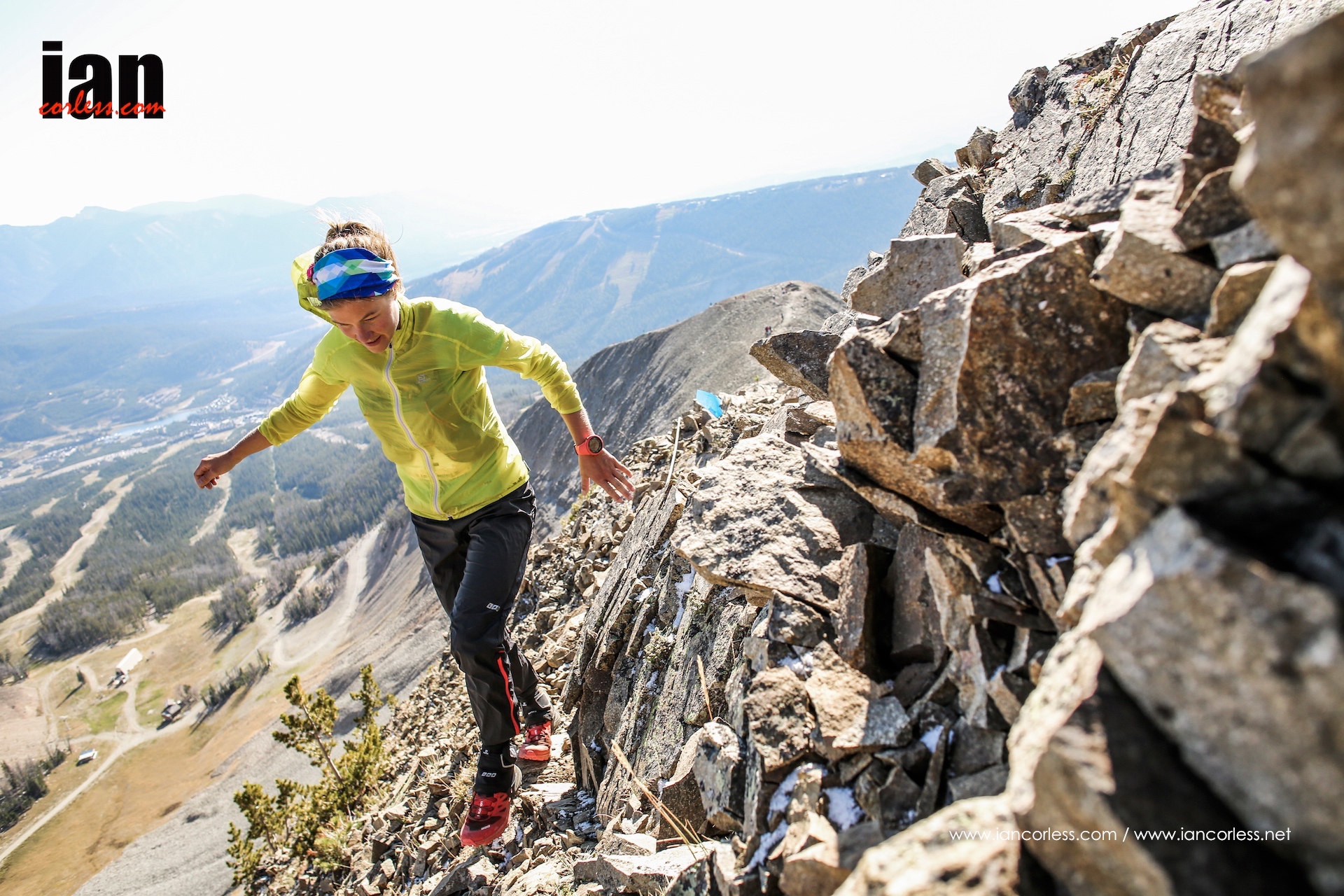
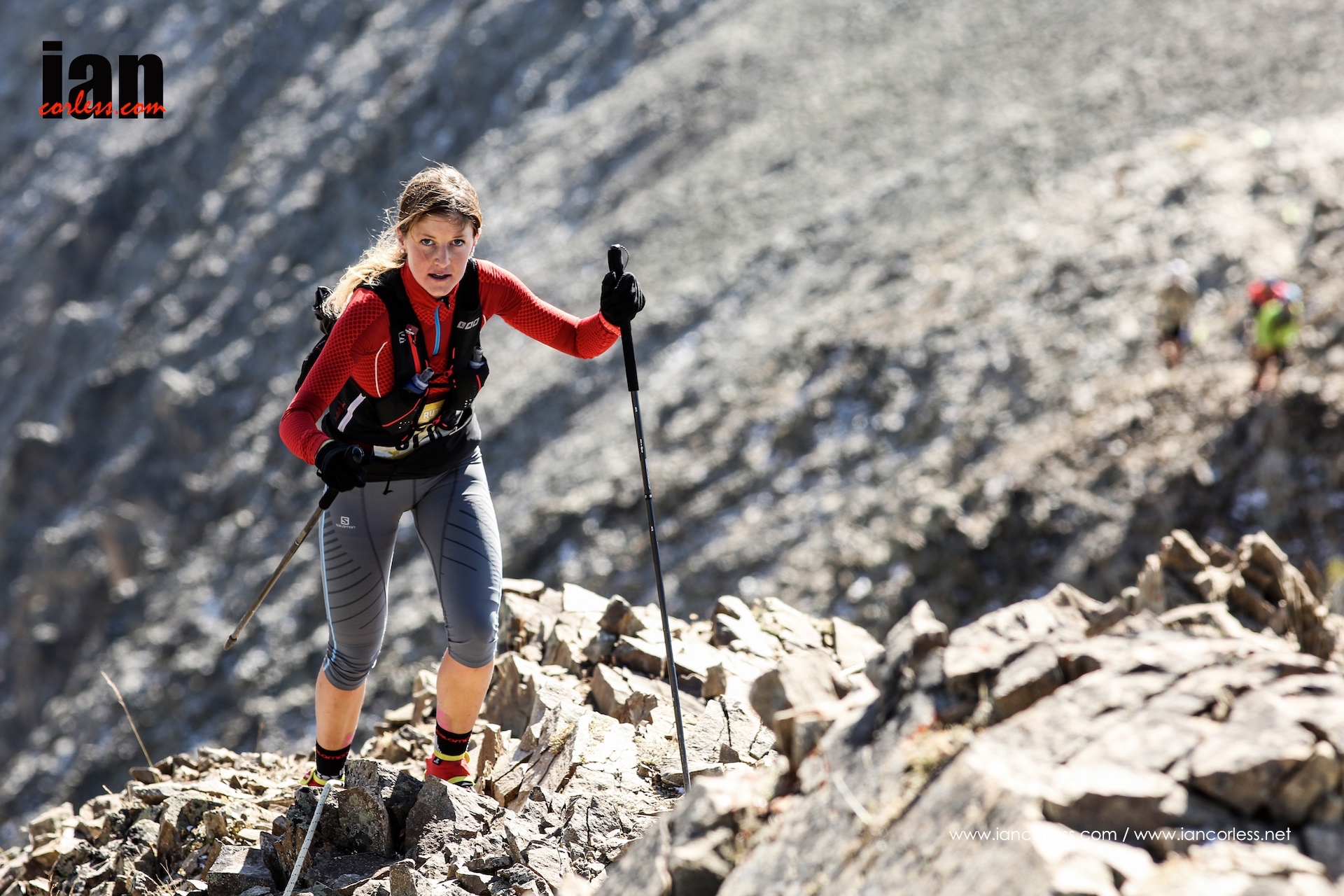
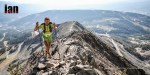
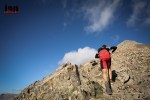
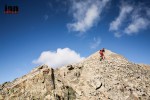
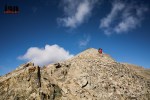
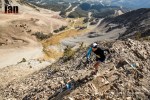
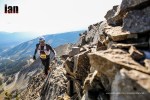
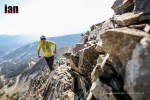
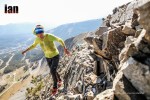
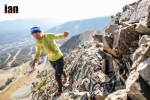
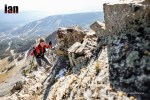
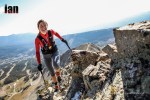
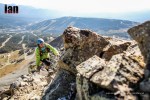
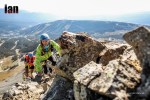
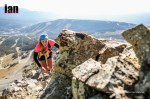
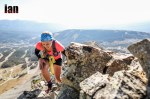
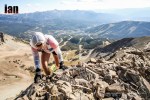
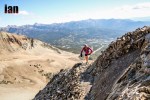
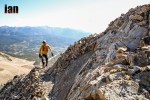
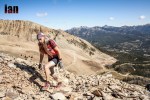
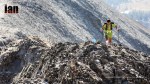
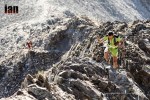
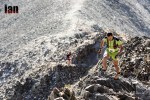
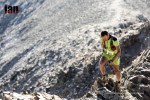
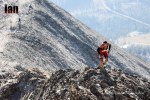
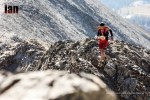
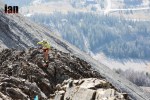
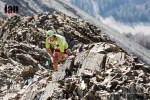
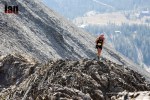
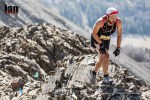
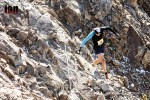
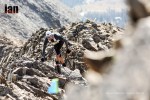
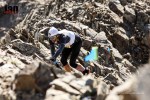
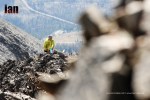
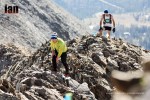
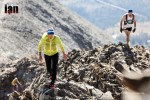
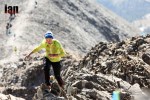
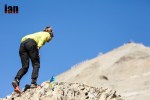
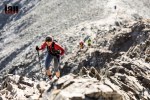
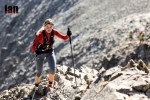
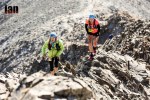
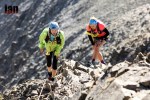
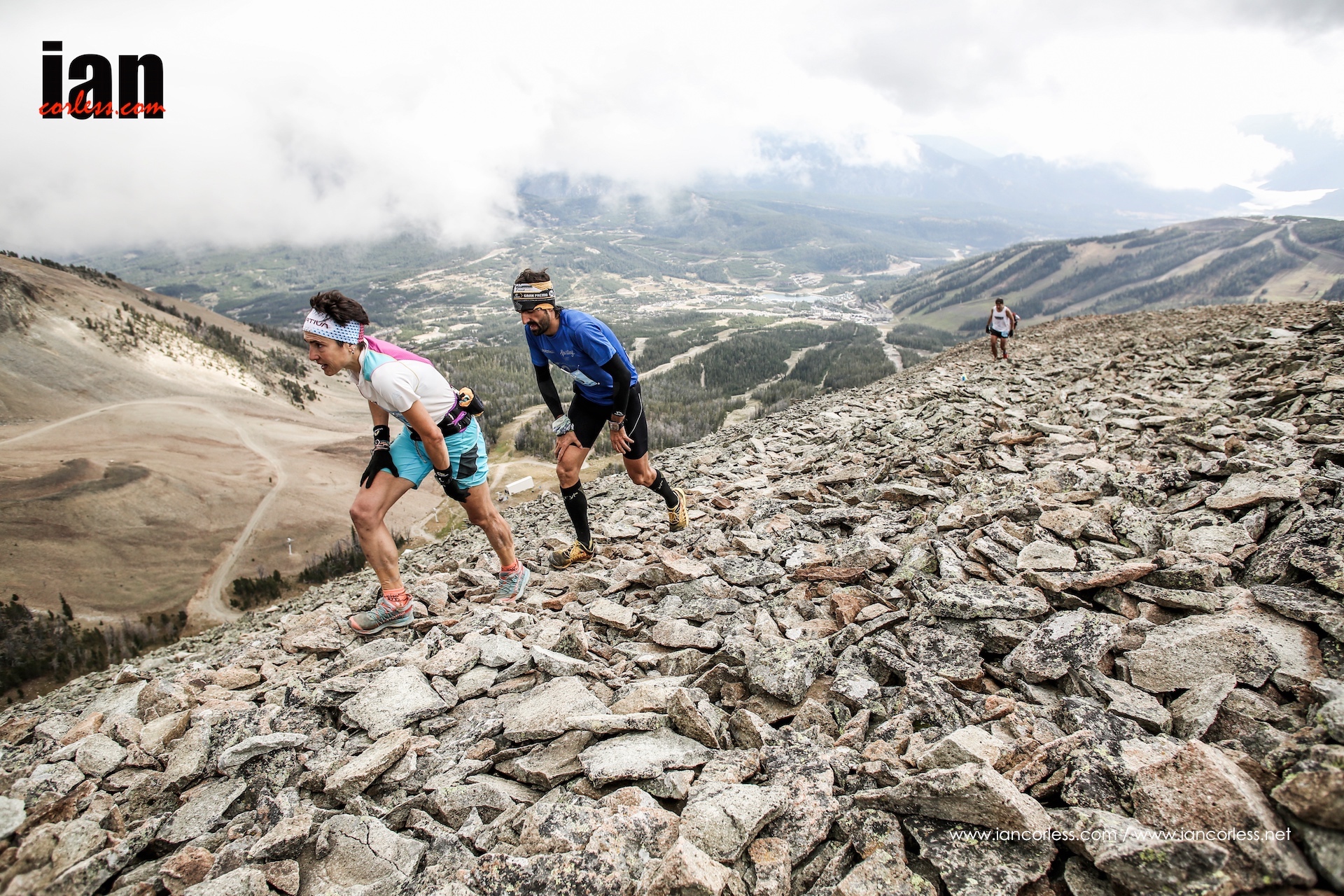
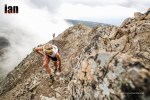
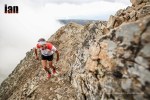
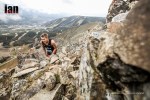
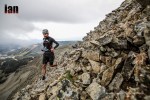
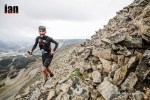
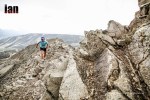
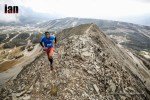
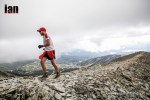
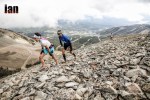
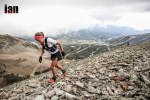
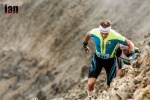
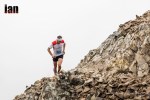
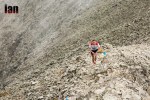
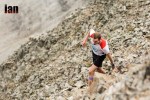
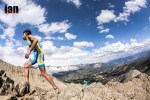
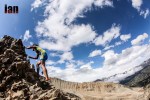
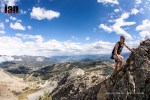
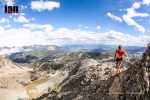
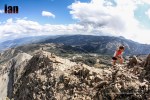
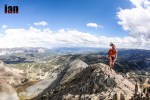
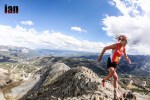
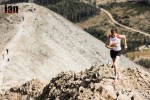
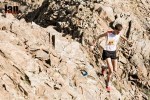
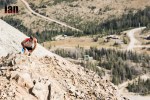
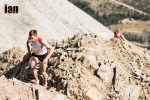
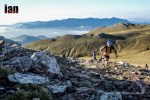
Describing the Hamperokekn ridge is difficult. For much of it I was using both my hands and feet for purchase. At one point of the razor edge ridge we had to jump a gap from one rock to another. It was funny to see how our little contingent had gone from racing to simply traversing this dangerous section together. I found myself at the back of the group least experienced in this sort of scrambling and twice found rocks tumbling down towards me from above.

The last 50m ascent to the top was described by Kilian in the race briefing as grade 3 scrambling. I’d describe it as ‘f***ing scary’. With this done it didn’t take long for the race to resume; as soon as we summited the group split as we started to descend. We had crossed paths with the leader, Alberto Hernando, on the way up and were only 2 minutes behind after over 3 hours of racing!

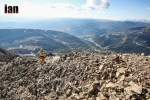
The descent was again as technical as it gets with large boulder fields and steep snowy slides. One particular section that sticks in my mind is where we traversed on snow just 5meters above where it dropped into freezing blue water of a big lake – one slide and you were toast (or ice more likely).

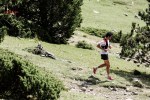
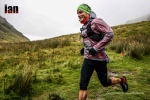
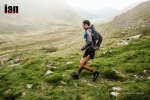
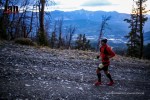
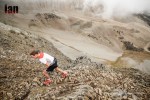
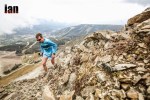
It was shortly after this point that the race started in earnest for me. As the four of us reunited crossing a boulder field it was clear my VJ Irocks were providing far more grip than my competitors shoes. This enabled me to pull away skipping over the rocks bouncing from boulder to boulder. Reaching more even ground with a small lead I just decided to run on and kept putting one foot in front of the other as fast as possible all the way back to the valley floor.

1125066_origComing back into the aid station I learnt I was 1 minute 30 seconds behind Alberto in first. Not thinking I had a hope in hell of catching him I continued to run at a comfortable but fast pace enjoying the brief flat section. Just two kilometers later I noticed I was gaining on a competitor traveling in the same direction as me, I double took not believing my eyes but I had just closed a big lead in next to no time. Coming up behind him I startled him as I don’t think he was expecting to see an Englishman popp up to say hello. I moved passed and at the foot of the last big climb heard a yelp from behind. I immediately stopped and turned, starting to head back, but he shouted at me motioning to continue. It looked as if he had gone over on his ankle. Obeying his command I turned back to the climb ahead.

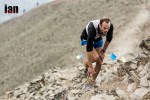
I knew in my head this was a deciding moment. I would either start to climb and feel good or I would feel terrible and my chances would be nil. Either way I would know within a couple of hundred meters…so I started to climb. I can’t say it was easy but I was doing it. Moving uphill I was pleased with the strength I had. This section was too steep to run or even hike in some places, so using hands and feet I steadily clawed my way up.

About half way I hit the first of the snowfields, remembering coming down with such speed I was now confused as to whether I was meant to follow the same line back up. The snow was only just soft enough to dig a little purchase in with my feet and every step forward resulted in sliding half of one back. So wrapping a buff around each hand I started to claw my way up this too. Hand over foot I slowly made progress.

After 900m of climbing and 300 vertical meters from the top I started to hear the whisper of cow bells on the summit. Knowing the climb was nearly done worsened my condition, but slowly, painfully I was getting there, all the while thinking I had competitors hot on my heels. The last 40 meters were back up the same steep snow slope with a rope and thankfully some snow stairs someone had made (legends). Using the rope to help haul myself up I was there. 3rd and final big climb done and all I could say was ‘I’m f***d’ as a response to everyone’s encouragement.

©iancorless.com_Tromso2015-6804

Now for the descent and a slow gradual climb towards the finish. It wasn’t time to relax, energy started to flow back as I took my first few steps downwards and concentration took over brute force. The path was rocky and technical but also twisting. The thick fog made it hard to see the flags and I had to once backtrack 10meters up to find the correct route. Kicking myself, I still thought I was being hunted by my competition.

This technical path soon gave way to a sweeping trail following a small river and down into the woods and the last aid station. Now just 6km of undulating but climbing track remained and I started to play with the idea I had done it.

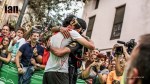
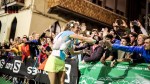
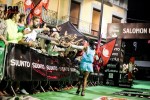
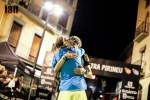
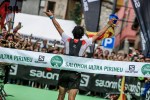
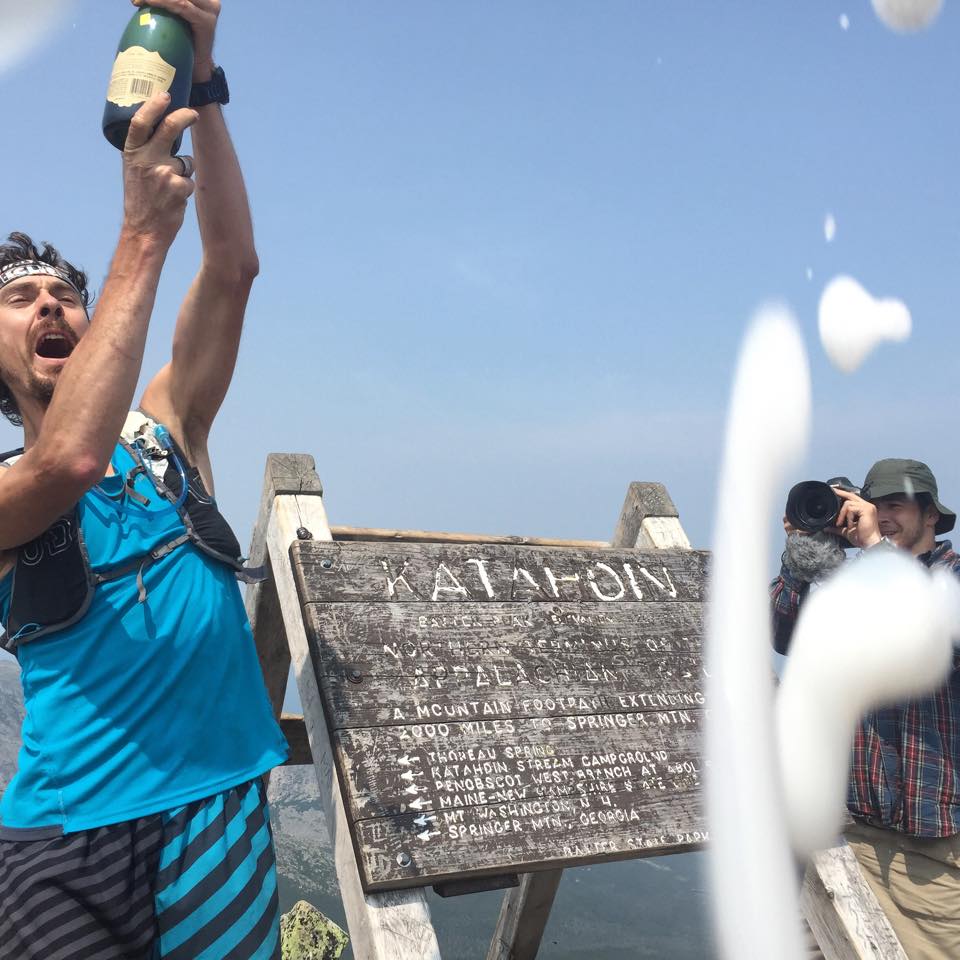
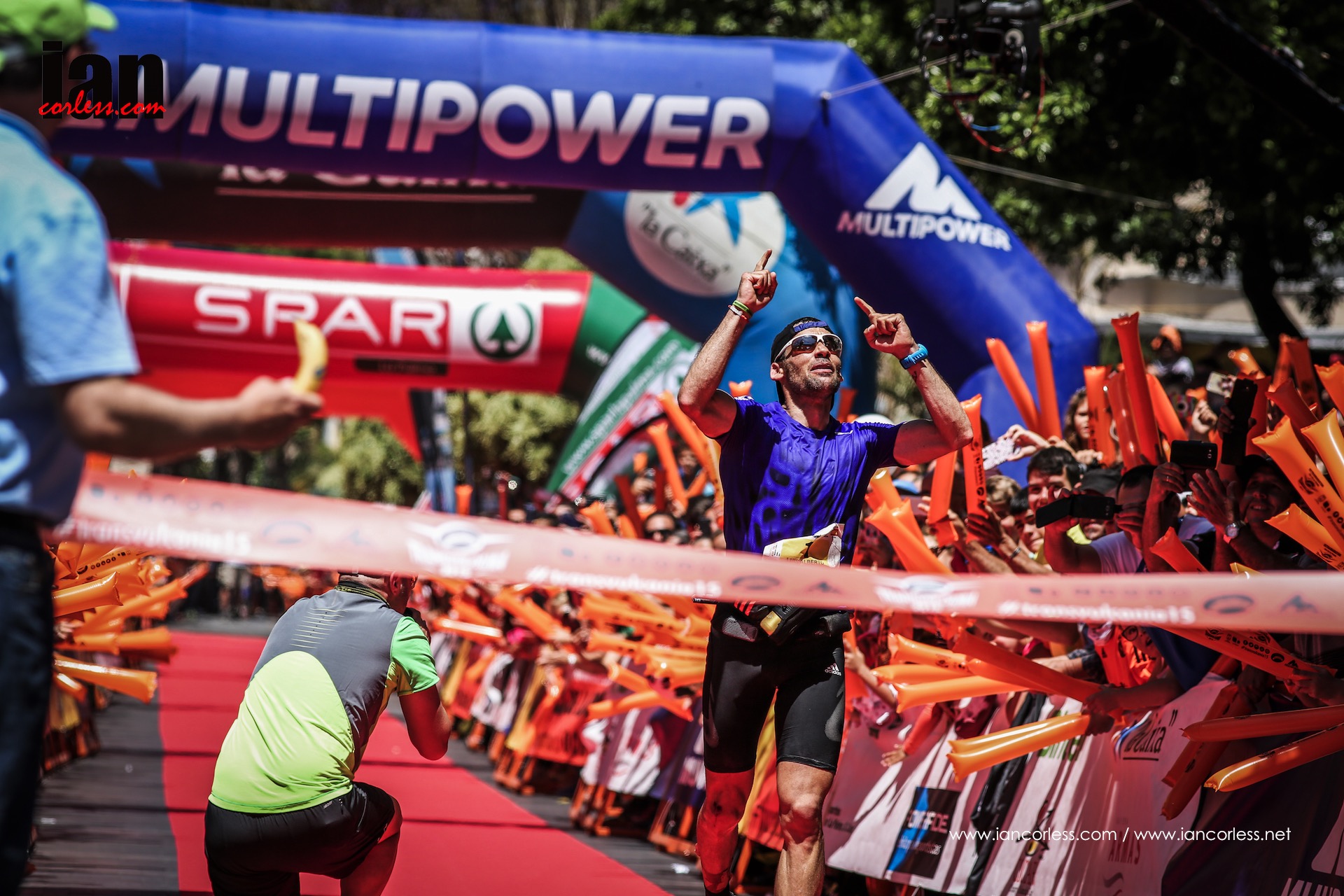
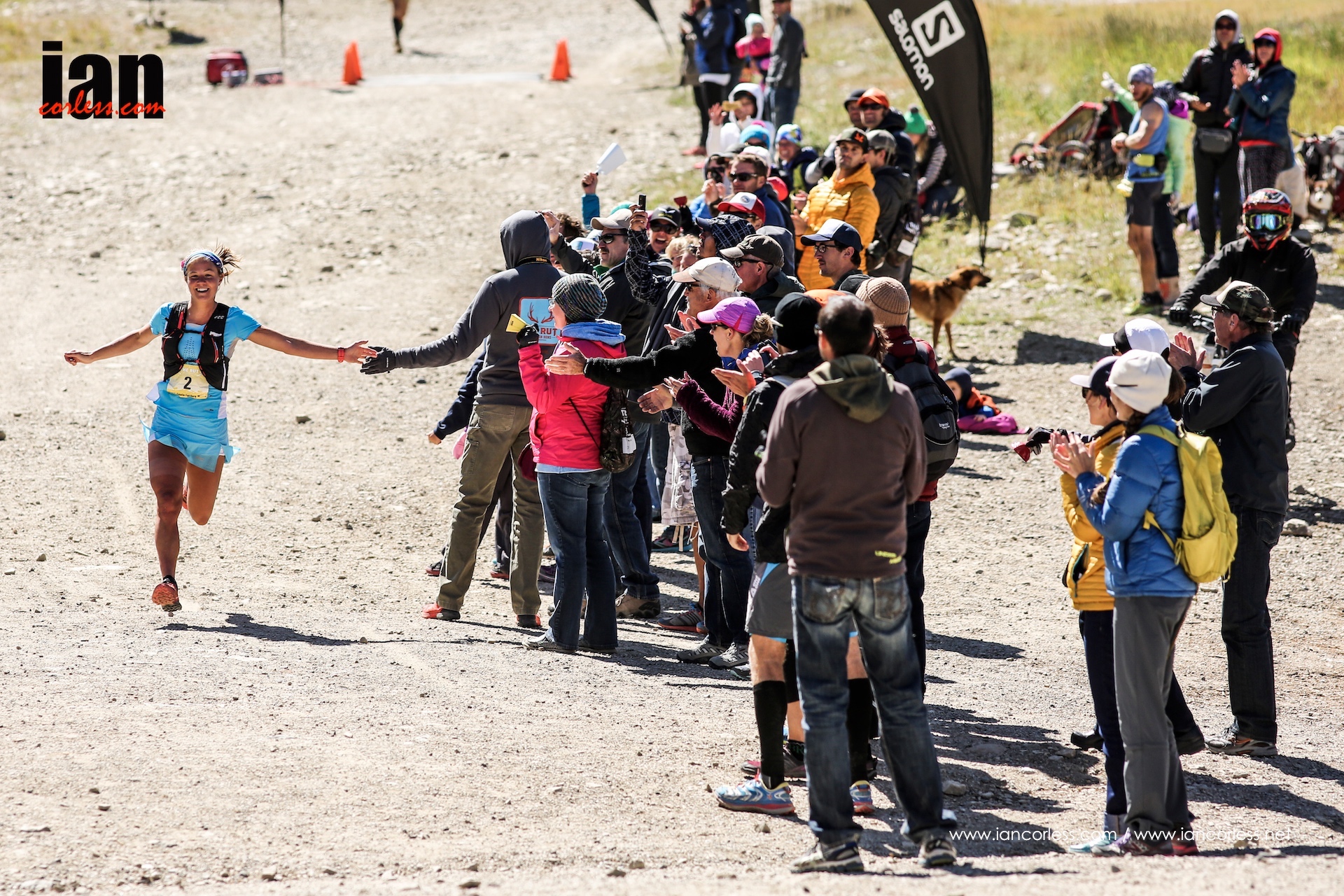
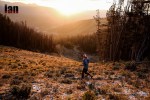
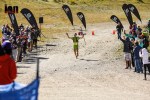
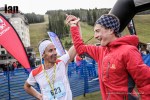
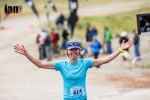
I managed to keep a run going the entire way and soon found myself going past groups of people cheering and ringing cowbells. I was getting closer but every time the trail dipped I thought it was for the final time to the finish, only to find another rise around the corner. I still had no idea how far back my competitors where but couldn’t bring myself to gun it, so keeping a safe pace where I knew I would have some gas in the legs for a sprint finish I finally crested the last rise and dropped round to the finish. Giving my now wife a hug I then crossed the finish line and had done what I would always have thought to be impossible…I had won a skyrace.
©iancorless.com_Tromso2015-7188
This post is published with permission from ©jonathanalbon
Read a race summary here
View race images here
Jonathan Albon is an athlete first known for his success within the up and coming UK obstacle course racing (OCR) scene. He has now taken his exploits global, adding the title of OCR World Champion and Spartan World Champion to his name. Jonathan has enjoyed a busy 2014 where he has proved unbeaten in OCR as well as winning races such as Man v Horse, The Welsh 1000m Peaks Race and TelemarksHelten. He also achieved a remarkable 14th place finish in the Limone Extreme Skyrace and now victory at Tromso SkyRace.
website HERE

CYCLING for RUNNERS – ‘Why can’t runners cycle quickly?’

Cycling for Runners Logo

What’s the difference in terms of fitness between running and cycling? Why doesn’t running necessarily make you a great cyclist or vice versa? They are both endurance activities, both aerobic and both use your legs, but what’s the difference?

Marc Laithwaite from the Endurance Coach asks the question:

‘Why can’t runners cycle quickly?’

The answer to some extent lies in the way we test cyclists and runners. People who visit us for VO2 testing will follow a set protocol, based on whether it’s a run or bike test. The run test starts by running on a treadmill at a slow speed and every minute the speed gets faster until they either jump off or they are ‘fired off’ the back of the treadmill. As the treadmill gets quicker, they have to move their legs faster. Their ‘cadence’ is increased to allow them to stay on the treadmill, but the ‘resistance’ doesn’t really change. When you are running, the resistance is pretty constant, you have to lift the weight of your leg and push your body weight forwards, not a great deal changes as the treadmill gets faster, you just need to move more quickly.

The cyling test is different. We start by asking people to cycle at 90 revolutions per minute and they must maintain that throughout the test (unlike running the cadence / leg speed does not change, it stays the same). Each minute we increase the resistance and it gets harder to turn the pedals, so unlike the run test, the resistance is increasing throughout the test. The test ends when they are no longer able to maintain the 90 revolutions per minute. In some ways, it’s almost like doing a strength exercise such as the ‘leg press’ and as each minute passes, we add a little more weight until they can’t keep going.

What can we draw from the above?

There is an element of strength involved in cycling that isn’t required for running. You can call it strength or ‘muscular endurance’ (call it whatever you like), but the basic fact is that you have to work against high levels of resistance during cycling that don’t apply to running.

What about gears and cadence?

Ok, so at this point you might be thinking there’s a way round this. Rather than being strong, you can use an easier gear and pedal faster! Yes, to come extent you can and we see this a lot with runners who take up cycling, they prefer to spin easier gears rather than pushing big gears at lower cadences. However, there’s only so far you can take this aproach. If you increase your cadence from 90 to 100 to go faster, what happens after that? Do you increase to 110? 120? 130!!??

Here’s our basic observations about the problems often encountered by runners who take up cycling:

1. They lack the basic strength and struggle most frequently on flat courses, where the ability to push ‘big gears’ counts the most.

2. This can generally be identified by a simple 5 second maximal sprint test, which results in a poor power output.

3. Runners tend to favour spinning easier gears and may well favour a ‘compact’ or ‘triple’ chainset.

4. On longer, gradual climbs, runners tend to come into their own and can perform relatively well (long gradual hills are the best courses and flat ‘time trial’ courses are the worst in terms of race performance).

5. Shorter / steeper hills on rolling courses may also be an issue as they lack the ‘short term’ power to maintain speed.

6. When runners complete cycle testing sessions we commonly hear this: “My heart and lungs felt fine, it’s just my legs, I couldn’t turn the pedals, there was too much resistance”

7. It’s more common in females than males and it’s more common as age increases.

8. When people enter Ironman triathlon, they make a presumption that riding long and slow to build endurance is the way forwards. After all, Ironman is all about endurance right? Maybe not.

Here’s the simple truth. If you want to be an ‘UBER’ biker for non-drafting triathlon or cycle time trials, you really need to be able to generate a high power output and push big gears. Either that or you need to pick your courses very well to suit your strengths. There’s a lot of confusion and poor advice regarding the best cycling cadence, which has lead to confusion regarding the physical requirements and training for a fast bike time. People get told every day that you should ‘spin a higher cadence’ when cycling, which is misleading and leads to misunderstanding. In many cases, it makes people slower cyclists and fails to tackle their prime weakness.

On that bombshell… lets discuss cycle cadence in more detail.

There’s a lot of confusion and poor advice regarding the best cycling cadence, which has lead to confusion regarding the physical requirements and training for a fast bike time. People get told every day that you should ‘spin a higher cadence’ when cycling, which is misleading and leads to misunderstanding. In many cases, it makes people slower cyclists and fails to tackle their prime weakness. Let’s discuss a little further and clarify some of the misleading advice.

1. There are different kinds of cycle racing. In triathlon events, the cycle stage (unless you’re elite) is a time trial. It’s you against the clock and there’s no drafting allowed. Time trials require a high power output which is consistent. There’s no repeated accelerations or ‘attacks’, it’s just you, riding at a constant power output.

2. Cycle road racing, crit racing or elite triathlon is not a time trial, it’s a bunch ride. It’s much easier to ride in the draft of the bunch and riders will therefore cycle at higher cadences in easier gears, whilst still maintaining their position in the group. Bunch racing will often include changes in pace, accelerations, attacks and chasing. It’s impossible to accelerate well, if you’re pushing a ‘big gear’, for that reason, bunch racing tends to favour higher cadences and easier gears.

3. Triathletes who ride with cyclists are often told ‘it’s better and more eficient to ride at higher cadences’. That is true for cyclists who ride in bunch races, so whilst the advice is correct for their specific circumstances, it doesn’t mean it’s right for triathletes.

4. Pretty much all studies on the subject show that slower cadences use less oxygen, results in lower heart rate and require less fuel than higher cadences. Many cyclists who ride ‘time trials’ rather than road races favour big gears and slower cadences. Former British champion Nik Bowdler use a 77 tooth chain ring and rode at 65rpm. Chrissie Wellington followed the same approach, riding a much lower cadence as she found it reduced her breathing and heart rate significantly.

Cadence V Gearing

Cadence and gearing are not the same thing. If someone is told to spin at a high cadence up hills, we presume that we should choose a very easy gear. If we’re told to ride with a slower cadence, we associate that with a big gear. You will often see pro riders spinning a higher cadence up hills, don’t be fooled into thinking they are using a compact chainset or a very easy gear, they are strong enough to spin a larger gear. Simply changing into a very easy gear to allow you to spin, will result in you going slowly. The reason you are forced to use an easy gear is a basic lack of ability to produce a high force, so you are not tackling the problem at hand.

Take away tips:

1. You need to use bigger gears at some point if you want to ride faster

2. To use bigger gears you need to have the basic leg strength (often lacking in runners, moreso ladies)

3. Slower cadences are more efficient for time trials and faster cadences are better for changes of pace on technical courses and bunch races

4. As a rider, you should be capable of adapting your cadence to suit the race

5. Don’t just start pushing huge gears in an attempt to tackle the problem, be wary of injury

6. Don’t keep reaching for the gear shifter every time you hit the smallest incline, this isn’t helping

7. If strength is very poor, you may want to consider a simple strength routine in the gym as a basic start point


Join us on STRAVA

TIS-Strava-Logo-big-square-600x340-e1354741369637

Thanks to SCOTT SPORTS and SUUNTO for the support and backing

Print

Check out SCOTT HERE

Suunto_logo [ConveWHITE_rted]

Check out SUUNTO HERE

Lizzie Wraith GB & NI international to race Mourne Skyline MTR

©iancorless.com_DragonsBack2015Day2-5763
Today (Monday 3rd August 2015), NiRunning and Mourne Skyline MTR are pleased to announce that current Great Britain & Northern Ireland international and podium finisher at the recent Dragons Back 200 mile Ultra, Lizzie Wraith, will race this year’s Mourne Skyline Mountain-Trail Race.  Lizzie, a previous winner of the Lakeland 100 Ultra, will join this year’s Lakeland 100 and Lakeland 50 winners Paul Tierney and Jayson Cayvill on the start line, as well as a plethora of talent form around the globe.
©iancorless.com_DragonsBack2015Day1-5026
The North Face Lavaredo Ultra Trail podium finisher is enthusiastic about taking on the another event in the Skyrunning UK Series after victory at last year’s 3X3 Ultra in Keswick.  Speaking about the Mourne Skyline MTR, Lizzie said:
“I’m really looking forward to running the Mourne Skyline MTR as I’ve never been to Ireland and it’s been on my bucket list for a long time. The terrain looks really beautiful and technical which is what I love, however 35km is a bit of a sprint for me, I’d better start doing some speed-work!”
©iancorless.com_DragonsBack2015Day1-4135
Mourne Skyline MTR Race Director Ryan Maxwell added:
“To have an athlete of Lizzie’s stature compete at the event is a huge bonus for everyone.  Lizzie has performed well at some of the world’s toughest events – look at her performance at the recent Dragons Back Race – going into that off the back of being ill and not only finishing, but claiming a top three finish, was incredible.  Again this year, the entry list reads like a ‘who’s who’ of mountain-trail running in the UK and Ireland which not only excites me, but makes me appreciate the support we have received from everyone.   There will be athletes from fourteen countries coming to Northern Ireland to take part in the Mourne Skyline MTR (and ‘GTR’), which as the Race Director makes me extremely proud.  We hope to add further additions to the line-up in the coming weeks and will do our utmost to ensure that the race exceeds expectations.”
 
Although the Mourne Skyline MTR is now full (except for elite entry applications), you can still be part of an excellent weekend of racing by taking on the Mourne Skyline ‘Granite Trail Race’, a 2 mile uphill only night time race, which will take place on Friday 23rd October 2015 (7.30pm).  
More information is available on the official race website HERE.

Tromsö Skyrace 2015 – Race Summary

©iancorless.com_Tromso2015-7188The mountains and fjords were lost in and amongst light persistent rain and cloud for the 2nd edition of the Tromsö Skyrace part of the ultra Skyrunner® World Series.

View race images HERE

Not even the 24-hour daylight could illuminate the proceedings, it was going to be a tough grey day. But despite the monotone, colour was in abundance; runners, race staff and marshals added that.

Anticipation worldwide for the Tromso Skyrace was high, and it’s clear to understand why. The race had 2 high profile race directors in Kilian Jornet and Emelie Forsberg, it had a world class field assembled and if offered arguably one of the toughest and most challenging 45km of any race, worldwide!

“It was crazy, but it was awesome! Certainly one of the most difficult race in the world!” – Greg Vollet

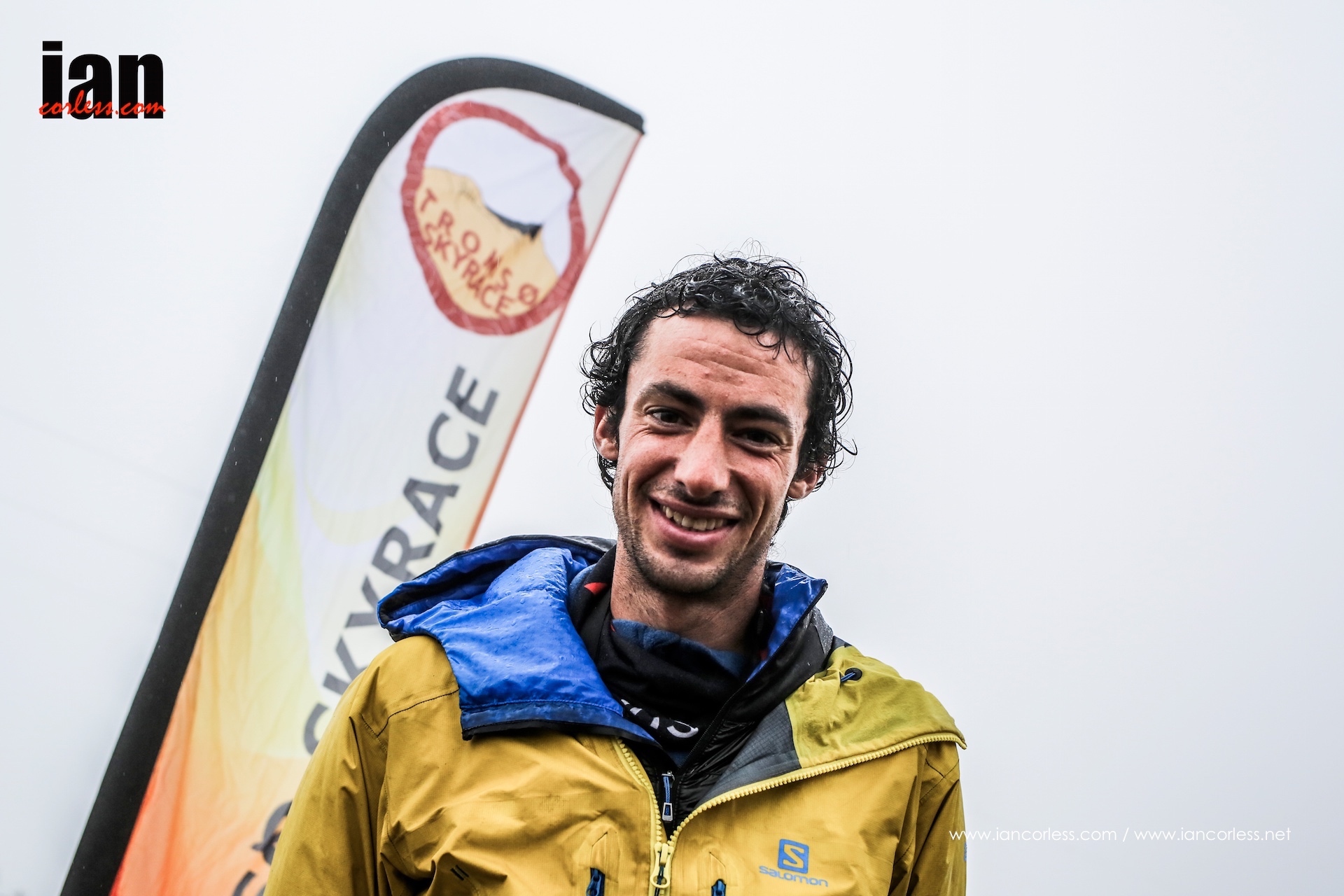
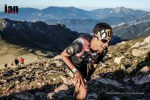
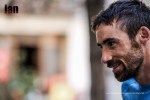
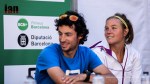
4600m elevation awaited the runners but that statistic is only part of the story. It’s the technicality that makes this race hard. Steep descents, challenging terrain and the ridge running at Hamperokken requires 110% focus. This IS NOT a race for everyone. It requires a level of skill, devotion and commitment that not every runner has. 2014 champion, Eirik Haugsness summed it up when he said:

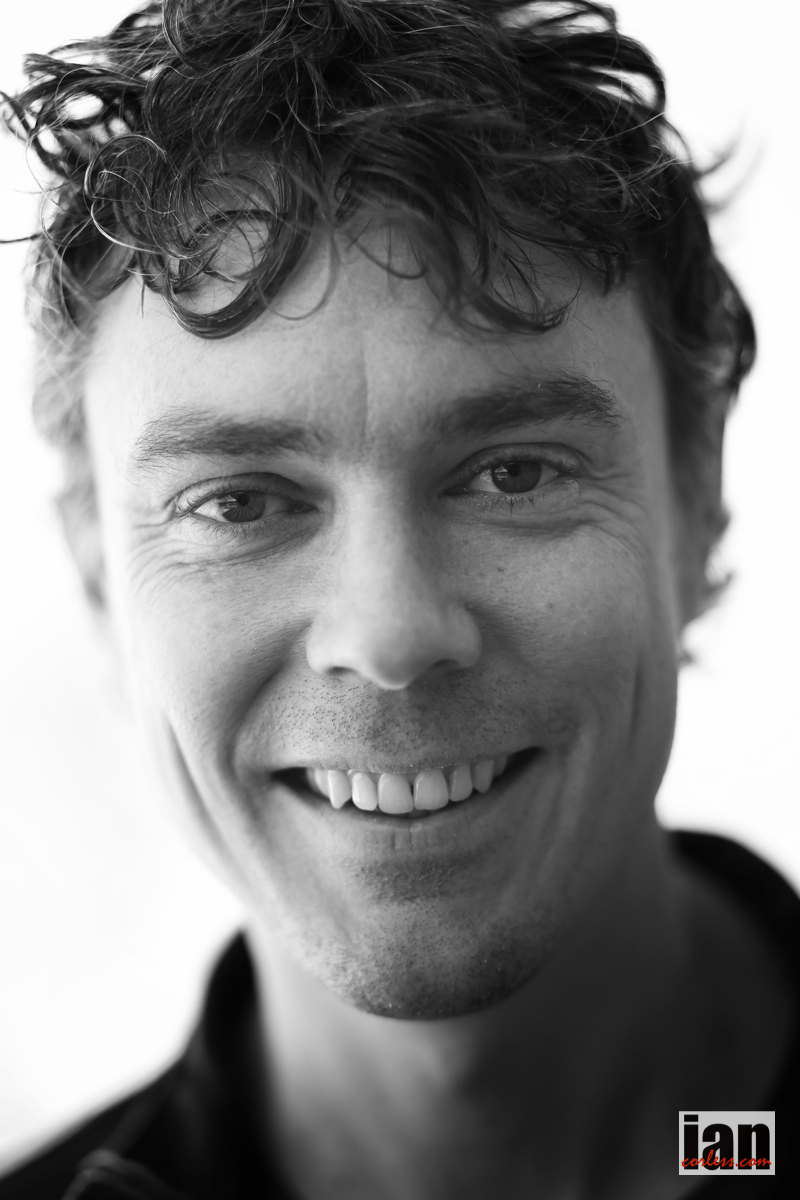
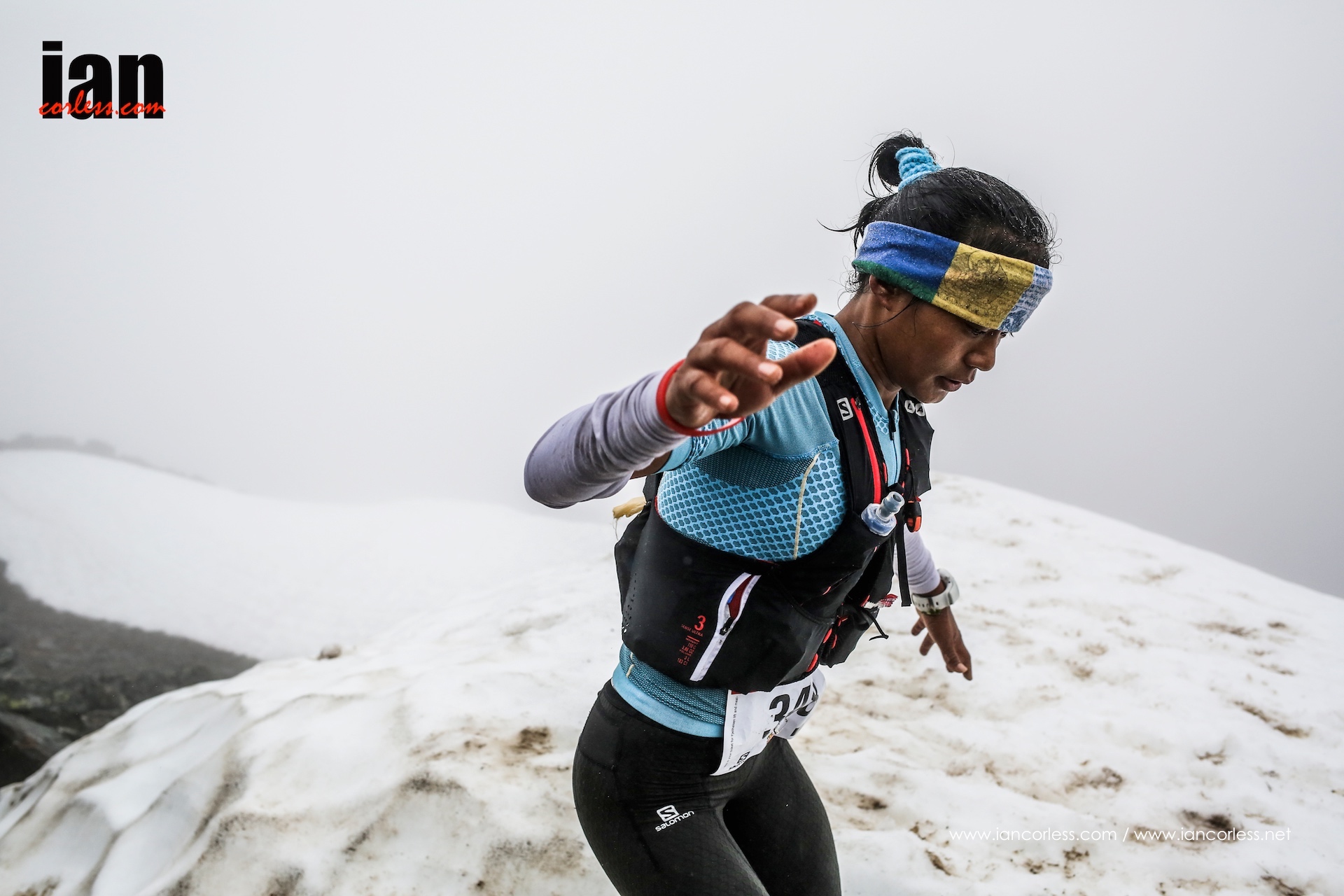
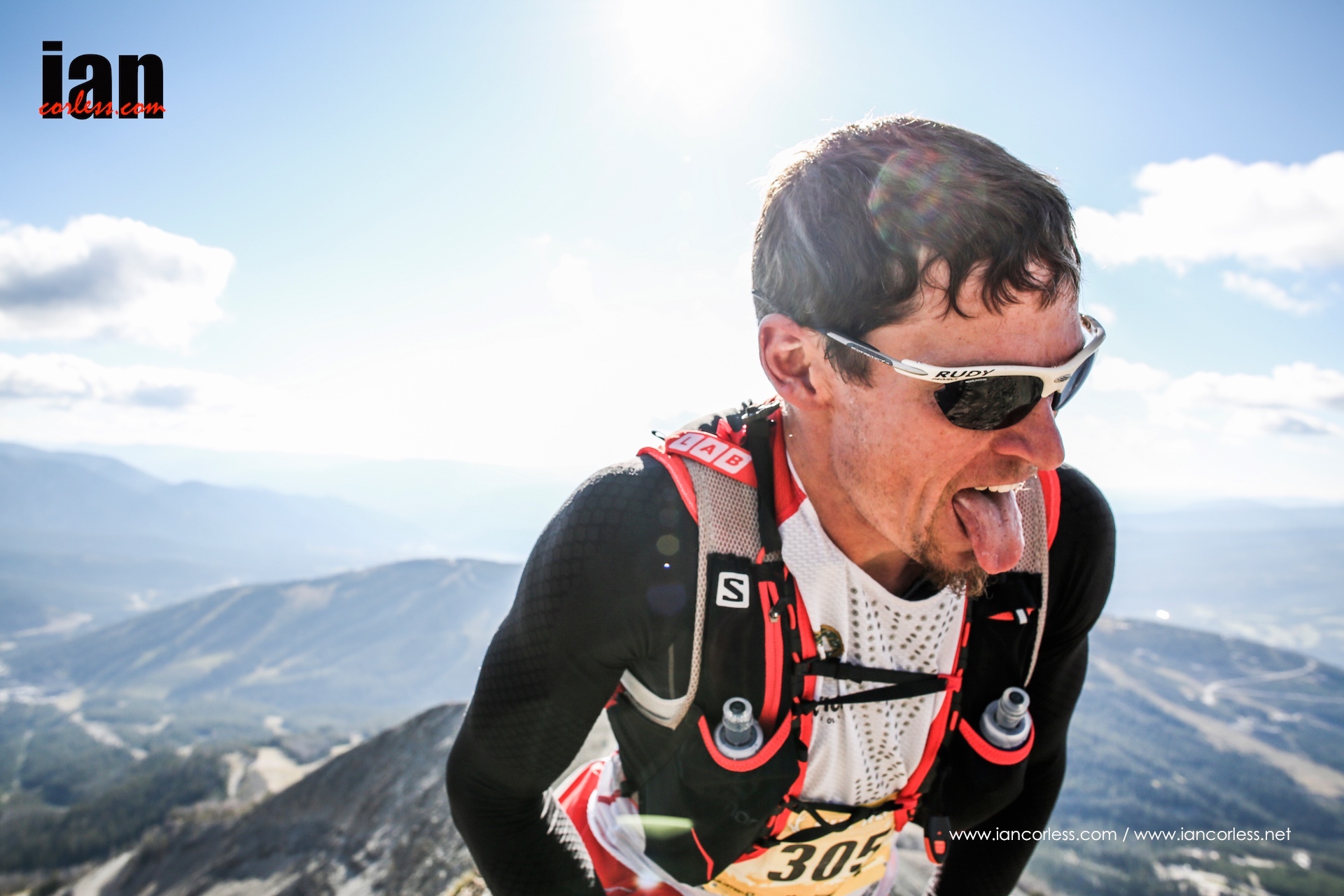
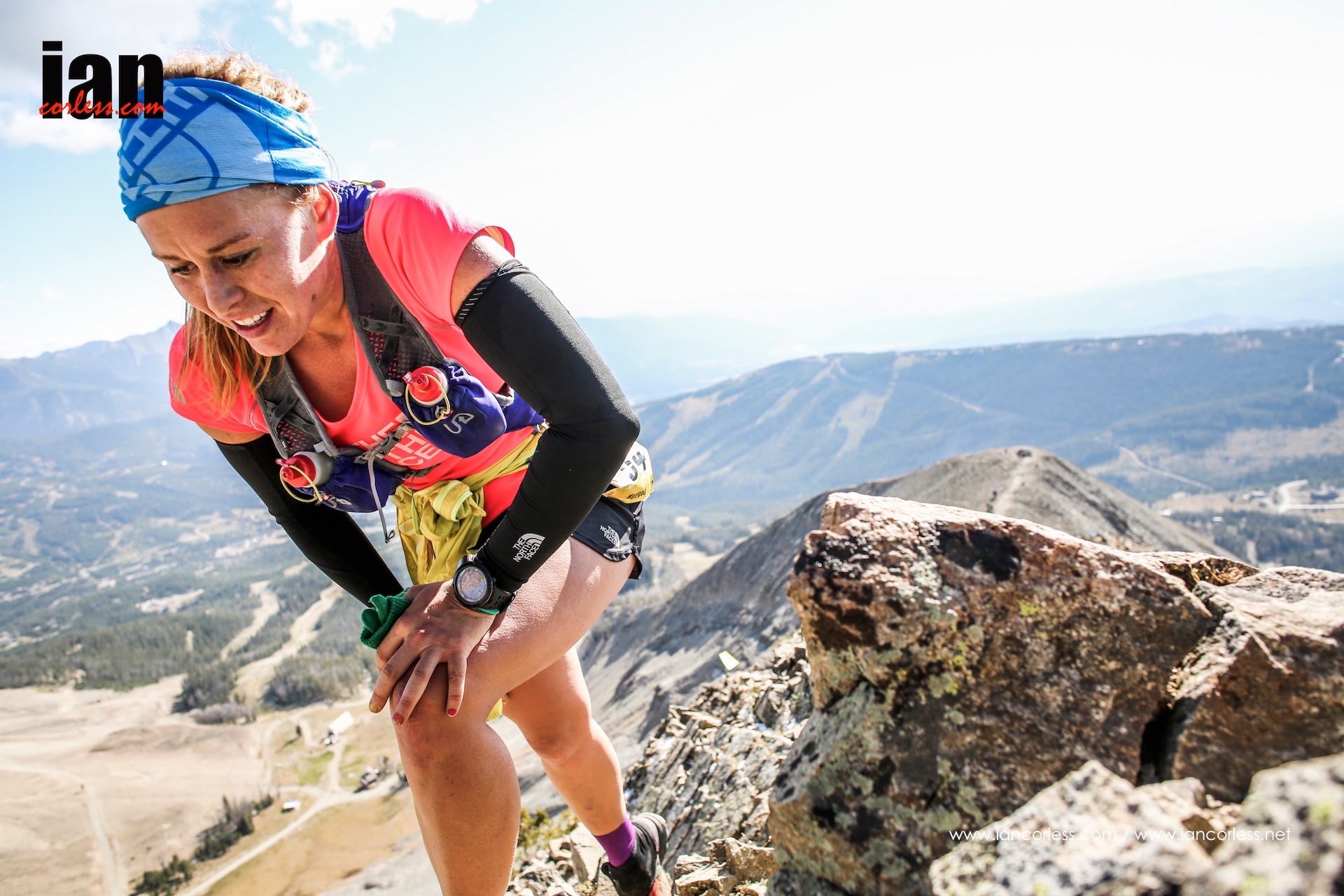
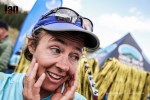
“As you can see on my face – this race is an intense experience.”

©iancorless.com_Tromso2015-4645

Intense it was and I can say, having climbed all the way to the final summit and located myself on the ridge to capture the front runners, the climb or the ridge did not disappoint. On the contrary, at times it was quite intimidating!

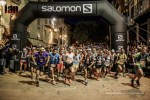
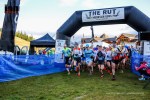
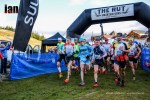
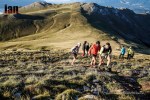
400 runners departed from Fjellheisen at 10am and they had to run what looks like a figure of 8 course that takes in 2 mountain summits: Tromsdalstind (1.238m) and Hamperokken (1.404m). Crossing snow fields, rivers, dense forest and of course technical ridges, the race was made even more challenging with the weather and the ‘slick’ conditions underfoot.

©iancorless.com_Tromso2015-4585

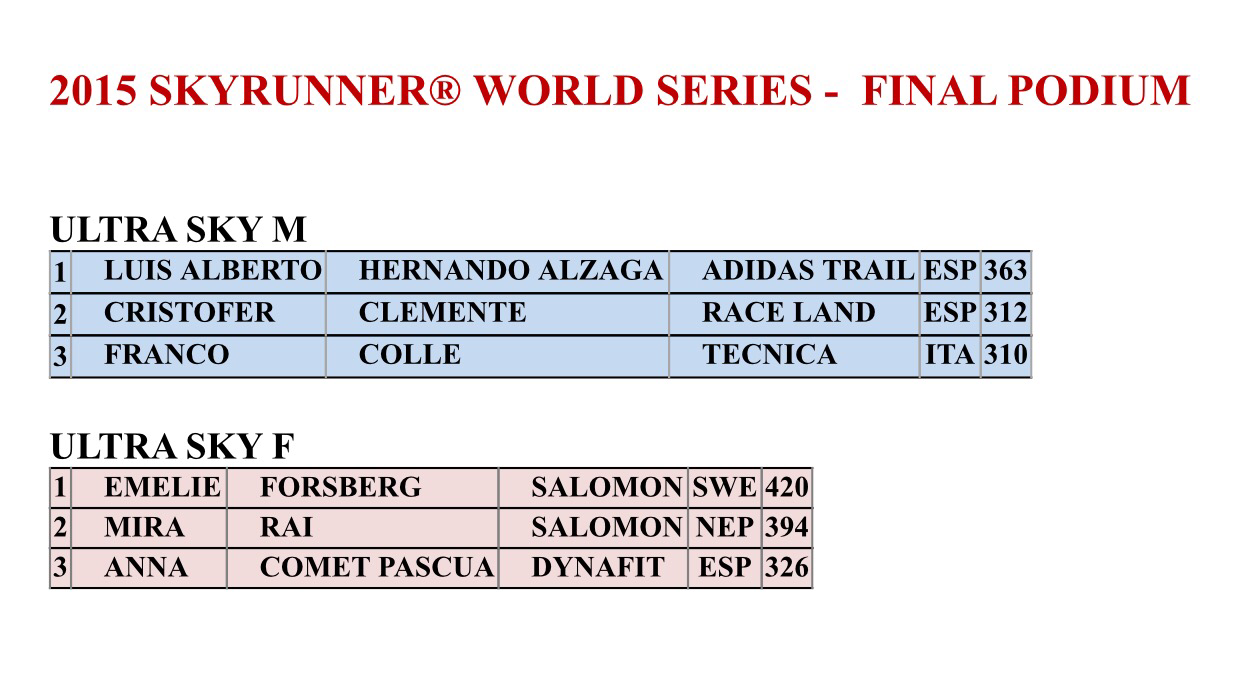
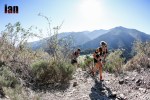
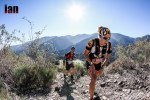
Skyrunner® World and European Champion for the Ultra distance, Luis Alberto Hernando was the odds-on favourite for victory and it was no surprise that he dictated the pace from the front. His arrival at Hamperokken ridge in 1st place was no surprise, however, the proximity of 2nd, 3rd, 4th and 5th was. They were only minutes behind! The charge was lead by Eirik Haugsness but Jonathon Albon was hot on his heels, as was Pascal Egli and Rolf Einar Jensen.

©iancorless.com_Tromso2015-4643

Post race Haugsness commented that this group of 4 had agreed not to ‘race’ the ridge. It was a wise choice. It offers no room to pass and crossing from one end to the other is all about being comfortable with the challenge and doing so at ones own pace.

“At about 1100m the famous Hamperokken ridge proper starts, this is like a combination of the Aonach Eagach (Scotland) and Crib Goch Ridges (Wales) but with fewer escape paths. It is solid grade II scrambling in parts with a few very short sections that are maybe grade III” – Shane Ohly, RD for the Glen Coe Skyline

On the descent though Albon moved ahead and went in pursuit of Hernando.

“I was running with the group and I thought, I can go quicker than this so I did,” said Albon after the race.

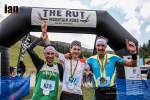
Albon caught Hernando before the final climb and then slowly but surely opened up a gap as the Spaniard started to seize with tiredness and fatigue. Albon took victory 17-minutes clear and although he came to this race a relative unknown, his win has turned heads. Coming from an obstacle racing background where he has been a world champion, this course suited him perfectly. It was a stunning win and boy-oh-boy is great to see a Brit on top of the podium. Hernando held on for 2nd and Einar Jensen took the final podium place.

©iancorless.com_Tromso2015-5085

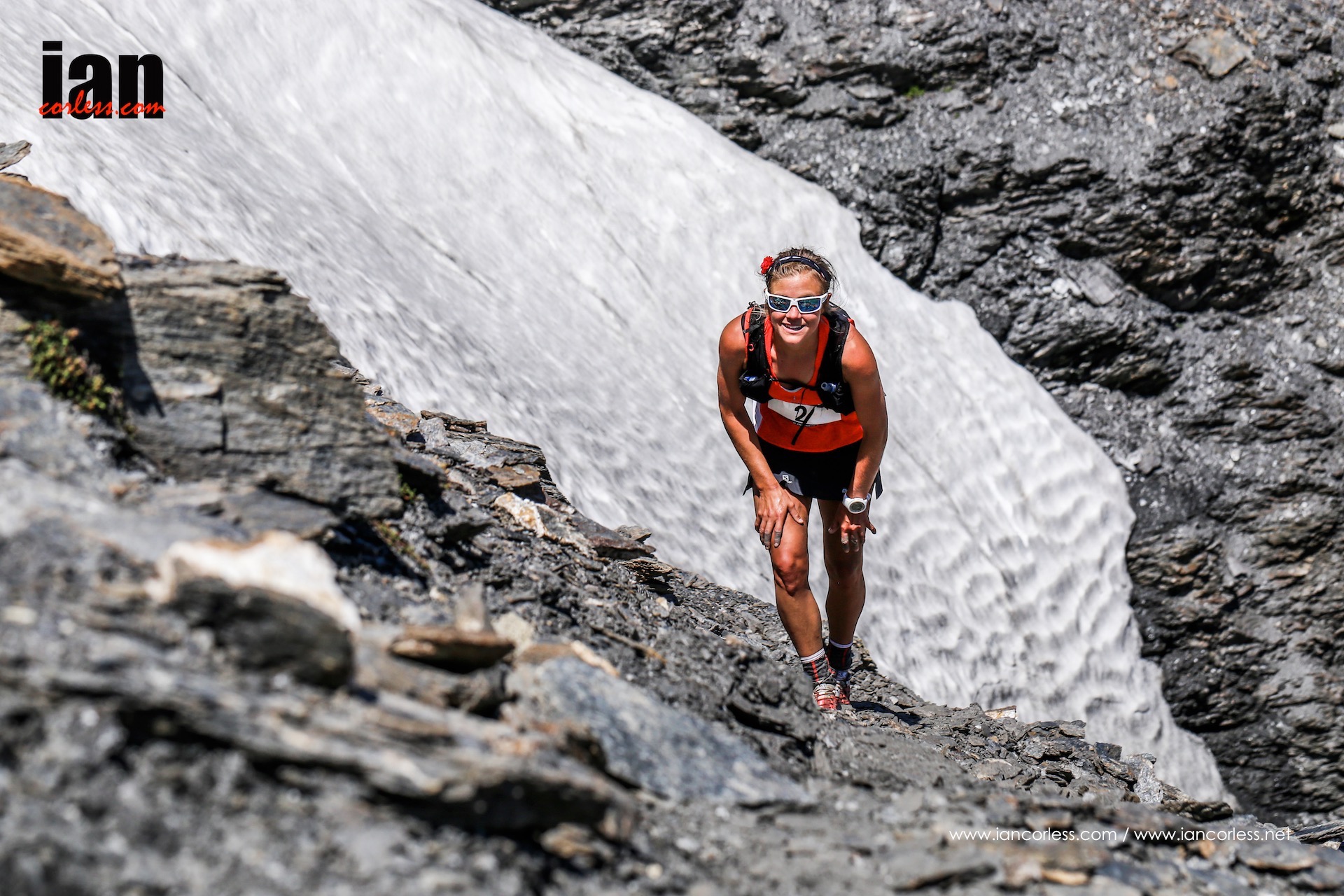
The ladies race actually had a very similar feel to the men’s race. Race director, Emelie Forsberg had decided some time ago that she would run her own race and formulated a plan with co-race director Kilian Jornet and the team of marshals and helpers to facilitate that. Like Hernando, Forsberg is the current Skyrunner® World Champion and European Champion for the ultra distance, so although victory was a distinct possibility it was not guaranteed.

©iancorless.com_Tromso2015-5182

Forsberg arrived at Hamperokken ridge in 1st just like Hernando but was closely followed by Maite Maiora and Mira Rai. Norwegian Malena Haukøy was in 4th place but looked strong and composed.

©iancorless.com_Tromso2015-5129

Over the final half of the course Forsberg slowly extended a small lead and Mira Rai pursued. Maite Maiora took a tumble on the descent from Hamperokken and although she received no permanent injury, it did impact on her race causing her to slow. Rai moved into 2nd (who also fell) and local girl Malena Haukøy moved ahead of Maiora and took an excellent 3rd on the podium.

©iancorless.com_Tromso2015-5282

111 runners completed the course before the midnight cut-off time. Of course the stories and experiences of an epic day in the mountains will continue to be revealed in the coming days and weeks. One thing is for sure, Kilian and Emelie have created something quite special in Tromso. It’s a race that harks back to the roots of Skyrunning. It’s alpinism without the clutter. But be warned, this race is not for everyone and as such, just like Trofeo Kima in Italy, you need to ensure that you are prepared for the challenge that the Tromso Skyrace will throw at you. Roll on 2016.

©iancorless.com_Tromso2015-7205

As a footnote, it was incredible to see how Kilian and Emelie used their passion for running to provide this experience for all. Of course no event can happen without an incredible team of volunteers and helpers and at Tromsö they had this help in abundance. But Kilian was a man possessed. He was course marking, writing reports, taking photographs ensuring everyones safety on the route and to top it all off he was at the finish to welcome everyone with a smile and a medal. It was impressive to see. Bravo! And as Emelie would say:

‘All great races finish with a cinnamon bun!”

©iancorless.com_Tromso2015-7095

 View race images HERE

Results

  1. Emelie Forsberg 7:09:54
  2. Mira Rai 7:23:09
  3. Malena Haukøy 7:31:29
  1. Jonathon Albon 6:08:41
  2. Luis Alberto Hernando 6:25:54
  3. Rolf Einar Jensen 6:28:51

Tromso Skyrace logo

©iancorless.com_Tromso2015-7202 

Tromsö Skyrace 2015 – Race Images

©iancorless.com_Tromso2015-4645

What an incredible day in the mountains. Kilian and Emelie really did add some mountain meat to the bones of the Skyrunning calendar and the Skyrunner World Series.

It was a wet, grey, misty and claggy making mountain conditions difficult for all. In the ladies race, Emelie Forsberg came out on top in a highly competitive race and for the men, Jonathon Albon from the UK turned quite a few heads with an incredible performance.

Race summary to follow.

Results

1. Emelie Forsberg 7:09:54
2. Mira Rai 7:23:09
3. Malena Haukøy 7:31:29

1. Jonathon Albon 6:08:41
2.  Luis Alberto Hernando 6:25:54
3. Rolf Einar Jensen 6:28:51

Tromsö VK 2015 – Race images and summary

©iancorless.com_Tromso2015-4102

Tromsö, Norway was shrouded in mist and low cloud today. Ironic considering that the previous days had glorious sunshine and blue skies. At 3pm, leaving the sea of the Ersfjord fjord runners faced a vertical climb of 1.044m reaching the top of Store Blåmann; the first VK in Tromsö.

It’s a technical course that mixes many different terrain types to make this an ultimate challenge for the VK specialist and novice. 117 runners made it to the top having crossed several sections on large rocks, boulders, scrambling sections and snow.

©iancorless.com_Tromso2015-3844From the beginning of the race, a small group of strong athletes pushed at the front with local, Stian Angermund pushing ahead of Pascal Egli and Remi Bonnet. Slovenian Nejk Kuhar and the Norwegian Thorbjorn Ludvigsen chased hard but were loosing ground at the mid point. Angermund obviously wanted victory on home soil and sealed the top podium slot with a strong finish in a remarkable 35:20. Remi Bonnet moved up into 2nd an Pascal Egli completed the podium.

©iancorless.com_Tromso2015-4109Yngvild Kaspersen from Tromsö followed up a great run at Dolomites SkyRace and pushed race director Emelie Forsberg all the way to the line. But Forsberg managed to win (43:41) by just 1 second after a sprint on the last rocky section before the summit. Maite Maiora took the final podium place.

Tromsö and race directors, Kilian Jornet and Emelie Forsberg pulled out all the stops to make this VK a very special occasion. It was like a group of friends assembling and undertaking a fun day of running in a very casual and informal way. But the planning and experience was well established ahead of the race and all went smoothly. Kilian post race said:

“Everyone was very positive and happy and I am really pleased we had no issues. It was a success!”

Many of the runners will now rest and look to do ‘the double’ and get ready for Sunday’s events; The Hamperokken SkyRace, part of the for the Ultra SkyRunner® World Series  and the Tromsdalstind SkyRace of 21km. Both races will start at 10am.

Results 

1. Stian Hovind-Angermund 35:20
2. Remi Bonnet 35:42
3. Pascal Egli 36:05

1.   Emelie Forsberg 43:41
2.   Yngvild Kaspersen 43:42
3.   Maite Maiora 45:10

Results clasificación 

Multi-Day (Desert) Training Camp, Lanzarote 28th Jan – 4th Feb 2016

Join Marathon des Sables 2015 ladies champion, Elisabet Barnes and a team of multi-day experienced runners for an incredible 7 day training camp on the island of Lanzarote, just off the coast of Morocco.   Located at the iconic Club La Santa resort, our training camp will provide you with all the knowledge, experience and practical training to make your next multi-day adventure a success.  

Lanzarote offers a variety of terrain that can be found in many desert races and therefore it’s the ideal training ground to prepare and acclimatise for an up and coming challenge.

The camp will provide workshops where it will be possible to discuss and test apparel and specific multi-day kit.

You’ll be able to try dehydrated food and test your hydration strategy in a real situation.

You’ll spend a night out under the stars in your sleeping bag and importantly, you’ll be able to test your pack and work out what works and what doesn’t work.

In addition to all this you’ll have 7 days of training geared towards your targets based around your ability and experience. This camp is for everyone; experienced or novice.

Club La Santa as a resort offers a great base and all facilities are included. This is great for relaxation, an opportunity to cross train or more importantly it’s perfect for friends and family to join you as a plethora of opportunities are available.

A full detailed weekly schedule and plan will be provided in due course. Rest assured, if you are taking part in a multi-day race then this is the training camp for you.  

Costs are £800.00 per person based on sharing an apartment with one other person (Children are welcome for free if sharing, max 1 per apartment).

Food is not included, however, you are in self catering apartments should this be preferable to eating at facilities within Club La Santa or at restaurants in La Santa village.

Flights are extra and cheap options are available via Easyjet from many UK airports.

The camp runs Thursday 28th Jan to Thursday 4th Feb and spaces are limited!

Camp cost £800 (early booking discounts now have expired, apartments and places now on application)

This includes a self catering apartment on a share basis. Inclusion in the above schedule and access to all facilities within the Club La Santa complex. 

non-running partner cost is £500 or £530.00 if they wish to attend the Volcano walk which is suitable for all abilities.

Balance deadline is now due on booking due to the proximity of the training camp.

If you are interested, please email us using the contact form on this website and we will get back to you ASAP.

← Back

Thank you for your response. ✨


Do you like it on your back? In your hand? Or around your waist?

screenshot_550

With temperatures rising and longer lighter days for many of us in Europe and North America, we can hopefully all get out and run more. But as we all know, or maybe we don’t, we need to consider several things when running in the heat:

  • It’s harder
  • You sweat more
  • You need more fluid

We need to adapt. So what happens when the mercury rises?

Question, do you prefer it:

  •  On your back?
  •  In your hand?
  •  Around your waist?

Of course I am talking about your method of hydration.


READ THE FULL ARTICLE ON RUNULTRA HERE

run-ultra-logo

Tromsö Skyrace 2015 Preview – “Soul running between the sky and the sea!”

screenshot_549

It’s the 2nd edition of the Tromsö Skyrace and although the 2 race directors won’t thank me for adding a spotlight onto them, one has to admit that Emelie Forsberg and Kilian Jornet as RD’s really does add a plus to an event.

If you were a cynic, you may well think that the race just uses the two Skyrunning stars as a vehicle for promotion! If you do, you could not be more wrong! Just a glance at Facebook this last 2 weeks has provided us all with a real insight into how ‘hands-on’ Kilian and Emelie have been in getting this race off the ground and ready for an increased audience.

The duo brings a true love of the mountains and a desire for technical terrain to a larger audience and with the Tromsö Skyrace the challenge is a tough one! Edition 1 had many a runner saying that it was the most extreme and technical 45km’s they had ever run. That I am sure would place a big smile on Kilian’s and Emilie’s’ faces. Using inspirational race like Trofeo Kima as an influence on the Tromsö Skyrace, the race is set to be a classic that will run for a great deal of time.

Located in Tromsö, Norway, the race embraces the wilderness and 24-hour days with fjords and glaciers as a backdrop. In the words of Kilian and Emelie, it is “Soul running between the sky and the sea!”

In summary:

  • Kilian Jornet and Emelie Forsberg: two world-class race ambassadors
  • Tromsö, a remarkable landscape
  • Three races
  • International yet familiar race
  • Eco-responsive race

300 runners in total will arrive in Tromsö for what I am sure will be an amazing, awe inspiring experience that they will hold and cherish for a long time to come. After all, the race does take place in the Norwegian Arctic Circle.

“First we just started to talk about how cool it was that in the north we can run 24 hours in light during the summer. And then we started to talk about what we think Skyrunning is and how we would like a race that includes all the key ingredients; trails, summits, ridges off trail aid stations, a consideration for the environment and so on! We decided to make a course that comes close to the city but still has all the key ingredients that we want in a race, summits, wilderness and technical parts! We are so happy about the route!”


Friday will start with a Blamann VK, 2.6km in length and 1044m of vertical gain make this race a true challenge for those who like to push themselves on a steep gradient.

The Tromsdalstind Skyrace has 19km length and 1600m elevation and the key race for the weekend is the Hamperokken Skyrace which is part of the Ultra Skyrunner® World Series and has 42km length and 4100m of vertical gain.

So who is running?

VK

©iancorless.com_DolomitesVK2015-0381

Nejc Kuhar heads up a strong VK race and as Skyrunner® World Series leader for the VK distance he is a firm favourite for the title in Tromsö.

©iancorless.com_DolomitesSkyRace2015-1850

However, Eirik Haugsness and Thorbjorn Ludvigsen are almost certainly going to want to represent themselves highly and what is a ‘local’ race.

Rising star, Remi Bonnet will also be a key contender as will Ferran Texeido but the dark horse may well be Stian Hovind so keep an eye on him, he is my dark horse for the top of the podium.

©iancorless.com_DolomitesVK2015-0764

The ladies VK race is wide open and maybe not surprisingly, Emelie Forsberg may well be a hot favourite for victory.

©iancorless.com_ITT2015-9160

Azara Garcia will almost certainly contend the podium, as will Therese Sjursen and Ekatarina Mityaaeva.

©iancorless.com_ITT2015-8588

Mira Rai will also run but I think the Nepalese runner is still finding her feet in these short vertical races. I am sure she will be looking to the Ultra on Sunday for her best performance.


ULTRA

I fully appreciate that 42km is not an ultra, so please don’t email in and point this out! The Tromso Skyrace gains ‘ultra’ status due to the demanding course, technicality and because of the time it will take to complete the course. As we said earlier, this is NO easy race! If in doubt, the winning time from 2014 was 6:38:30!

Men

©iancorless.com_ITT2015-9841

Skyrunning World and European Champion for the Ultra distance, Luis Alberto Hernando will toe the line in Tromso and one has to say, he is the man to beat. He has been on fire in 2014 with victory and Transvulcania, Ice Trail Tarentaise and 2nd place at the IAU World Trail Championships.

©iancorless.com_ITT2015-9129

Franco Colle equally has been a revelation in 2015. His victory at Tor des Geants in 2014 placed him on the radar for any race over 100-miles but this year he has nailed Mont-Blanc 80km and Ice Trail Tarentaise. One to watch!

©iancorless.com_©iancorless.com-3134MontBlancVK_2014

Last years winner, Eirik Haugsness is going to have his work cut-out to top the podium in 2015 but Tromso is a race that holds a special place for him and that always adds so those essential extra percentages when you need to dig deep.

Philipp Reiter has had a quiet 2015; no doubt university has placed a demand on his time. Tromso however will suit the young Germans skill set and I am almost certain we can expect to feel his presence at the front of the race.

©iancorless.com_USM2015-5633

Cristofer Clemente adds to the front-end action and has consistently performed well in 2015 with a string of top 10 placing.

©iancorless.com-0430Kima2014_

Salomon team manager, Greg Vollet can never be ruled out of the front end action and I see that Canadian Adam Campbell is on the start list but I am not sure if he will run after a sterling effort at Hardrock 100.

Local talent will provide a huge surprise factor and here Emelie provides me with some valuable inside information:

Lars Eirik Skjervheim is a member of the Norwegian ski mountaineering team and a very good runner. He has had a struggle with an injury but if he is in good shape he could be on the podium, I think?

Ola Hovdenak was 2nd in 2014 and loves technical trail.

Sven Are Paulsen is a Tromsö X- country skier, that last year got really into Skyrunning! Top 10!

Kristian Ulriksen is a fast roadrunner from Tromso; lets see how he handles the technical trails.

And finally,

©iancorless.com-0543Kima2014_

Aurélien Dunand-Pallaz, Zigor Iturrieta (in hospital for an operation), Florian Reichert, Jan Bartas and Stu Air will all figure in or around the top 10 and my dark horse tip goes to Dan Doherty who may well be the surprise package of the whole race.


Ladies

©iancorless.com_DolomitesSkyRace2015-2428

Mira Rai may well excel in the tough and challenging conditions of Tromso. Her victory at Mont-Blanc 80km was a revelation but recent races at the Dolomites VK and Dolomites Skyrace were mixed. Maybe they were too short? Tromso may well be short in distance but in time, it’s a long race that will play into Mira’s hands.

©iancorless.com_DolomitesSkyRace2015-2319

Maite Maiora is a Skyrunning specialist and specializes in the Sky distance. However, she nailed Transvulcania in 2014 and that therefore elevates her up the ‘one-to-watch’ to THE one to watch.

Australian rising star, Lucy Bartholomew will also run the race and this will be a big test. But I strongly believe it’s a test that she will rise too. The podium may well be a long shot this early in her career but I don’t think she will be too far off.

Malene Hakoy is a Norwegian ski mountaineer, she won Hornidal runt this year and placed second overall… one to watch!

Hilde Aders placed top 10 in the Dolomites VK and placed 2 in Hornidal Runt this year.

Finally, a real dark horse shout out for Shiri Leventhal; I am sure she won’t thank me for pointing a spotlight at her but she made the podium at Everest Trail Race a few years ago and may well be a surprise package. Also, Heather Ohly from the UK may well make an impact on the top-10.

Needless to say, Tromsö Skyrace is going to over a seriously exciting weekend of running in an amazing part of the world and what almost certainly will be and incredible course.

I can’t wait!

You can follow the race in words and images here at iancorless.com on Facebook HERE on Twitter @talkultra and on Instagram @iancorlessphotography
also follow Skyrunning via the official facebook page HERE on Twitter HERE and via the website HERE

Tromso Skyrace logo

Marmot24 2015 – Race Summary and Images

©iancorless.com_Marmot242015-2179

The inaugural Marmot24 took place in 2014 and it proved to be one of the most challenging races of its type on the race calendar. Using a score format, participants raced over 12 or 24 hours on tough northern Lakeland terrain. Adding to the difficulty, the weather was grim. Yes, it was one seriously tough race.

This year another tough and challenging course was created in Southern Scotland (the Lowther Hills close to Dumfries) by Gary Tompsett. Once again using a score format (all controls had the same points) the objective for participants was to visit and accumulate points from as many controls as possible spread over an area of 200 square km’s. Needless to say, the potential for any 1 or 2-man (or woman or mixed) team to gain a 100% score was almost impossible.
©iancorless.com_Marmot242015-3168

However, several teams excelled in the tough conditions.

In contrast to 2014 when the 12-hour runners started at midnight, this year, all competitors started at midday. A centrally based camp would allow runners to return as often as they like to rest, sleep, eat and then go back out on the course. For the committed, they never returned until the end!

100 runners took on the challenge and although clear blue skies bathed base camp and the northern hills, the southern part of the course had looming clouds that unfortunately (unexpectedly) provided a very wet and miserable day.

©iancorless.com_Marmot242015-2698

From the off it was apparent that the northern fells seemed to be the preferred choice with clusters of controls offering good point scoring potential. The terrain may well have been more demanding in regard to elevation but underfoot it was dry, firm and fast. The south by contrast was flatter but extremely boggy. This boggy ground combined with wet weather made the south of the course not ideal. But sometimes you only find this out once you have committed yourself.
Route planning was extremely varied; some teams would start south, others in the north. Clockwise or anti-clockwise. The route options were endless and thus tracking and following of the event was very much a lottery.

©iancorless.com_Marmot242015-1670

One consensus for many appeared to be the potential to spend 10-12 hours on the fells, call in the HQ for food, maybe some sleep and a change of clothes and then head back out. However, once you get back in camp, immerse yourself in a warm sleeping bag, it can be difficult to get back out on what turned out to be a very chilly July night.

Rain had been falling for hours in the south and this resulted in many a runner bringing their race to an end with the 12-hour cut off. However, those who had gone north were much better prepared for a night out and some wild camped, bivvied or pushed on through.

©iancorless.com_Marmot242015-2536

Jim Tinnion, a regular competitor at these events (The Spine, Dragons Back and so on) commented post race:

“Lowther Hills was a super tough location with running as rough as you can imagine and some desperate descents. Happy with 2nd mixed pair: we didn’t quite have enough to match a great run by Simon and Carmen. Amazing stars last night at a freezing bivvy. Sleeping in survival bags isn’t ideal but we got a couple of hours sleep 15 miles after dinner in the Wanlockhead Inn. Brilliant event, very highly recommended but far and away the hardest mountain marathon challenge I know of.”

Teams had travelled from all over the UK and Europe to participate in this new and ground breaking event. Post race, they all concurred that the terrain and the difficult conditions had provided them all with an ultimate test. Bogs, marshes, bracken and ferns were a new experience to the ‘Europeans’ and it was clear to see the impact. ©iancorless.com_Marmot242015-3202

Top honors in the 12-hour went to Chris Baynham-Hughes who sweeped up a remarkable 25 controls. He was fast, in control and used supreme navigational skills and fitness to dominate the tough and challenging event. He timed his run perfectly finishing at Dursideer HQ in the final 15-minutes before the midnight chime. Full 12-hour results HERE. Sarah Fuller was 1st lady and Hamish Waring and Andy Heaton were the first pair.

The 24-hour race came down to a nail biter between Peter Wilkie and Rick Ansell. These hard core mountain men stayed out all night, pushed on through and looked to gain maximum points before returning back to base. They both accumulated 36 controls but Rick Ansell took top honors as he returned just 6-minutes before Peter. They don’t get much closer than that! Full 24-hour results HERE. Barry McElearney and Graham Cleminson were the first pair and Charlotte Turner and Lydia Farzin-Nia were the first ladies pair. No solo ladies ran the event.

Post race participants recovered with a bowl of hot chilli and of course route choices and course discussions took place, one thing became apparent; he combination of tough Scottish terrain, variable weather and wide spread controls set the Marmot24 apart from other events and it’s a format that was welcomed. Roll on 2016!

A full set of race images are available HERE

Race website HERE

Ourea_Events_Logo(600)