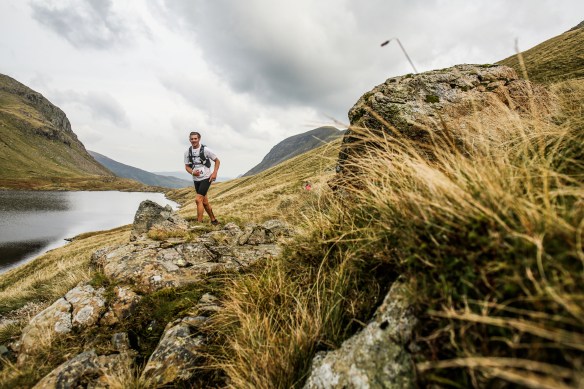
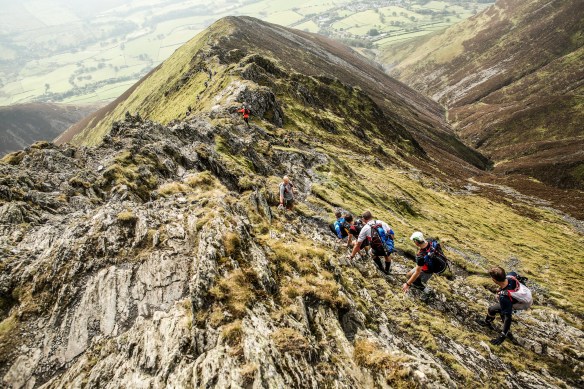
“This is a long run in wild terrain. If you are at the start line wearing a t-shirt and shorts carrying nothing but a bum bag, expect us to be asking a few questions. If the weather is bad, then pack extra kit. This event is not like many other ultras in the UK calendar – it goes up on to the high fells and STAYS up there so don’t take any chances.”
The ‘Lakes in a Day’ is a point-to-point race that starts in the northern Lakeland town of Caldbeck. The route heads directly south all the way to Cartmel passing through four major points; Threlkeld, Ambleside, Finisthwaite (a small hamlet) and then Newby Bridge before the finish in Cartmel.
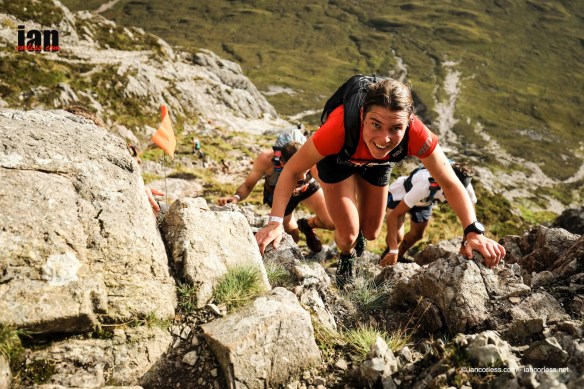
It’s a race that requires endurance, technical skill and the ability to navigate – this is not a race with a marked route! Maps for the race are provided with a very clearly defined route which must be adhered to, the only exception being in the early stages when the runners leave Nether Row and head to the summit of Blencathara.
Unlike many ‘true’ navigation events, the use of a GPS is allowed and a GPX route is provided for runners in advance so that they can download it.
The route is almost split into two halves. The tough and challenging terrain of the high fells in the early stages takes in some classic Lakeland terrain such as Blencathra, Hall’s Fell, Helvellyn and Grizedale Tarn before heading up Fairfield and dropping down to Ambleside.
After Ambleside, there is a transition into the lowland fells from Ambleside. The second half of the race is all about survival after the tough opening miles.
The route heads to the west of Windermere and heads down in an almost straight line passing through Newby Bridge an on to Cartmel.
Kim Collison was the champion in 2015 and his time obliterated the old course record, his time of 9:12:07 won him £500 which is also on offer in 2016 for the fleet of foot!. Post race he said, ‘It was one of those days. I felt really good and the conditions were perfect. I just made the most of it!’
Helen Leigh was equally impressive in 2015 and it turned out an expensive day for race director James Thurlow – Helen also set a course record 11:00:10 to bag £500.
The 2016 line-up can be viewed here and the race website is available here for any last minute information. The race route is available to view and download here and on race day, it is possible to follow live by tacker here.
Race start is 0800 Saturday 8th October.
Over 400 runners will toe the line for an epic, if not lengthy and challenging day in the Lakeland mountains and fells.
Episode 120 – Alex Nichols tells us all about his first 100-miler and how how he won it! Emelie Forsberg tells us about her return to Kima and finding solace and new skills in India. Jasmin Paris is on fire and we sum up an incredible 2016 and ‘another’ round record and finally Speedgoat Karl answers your questions about the Appalachian Trail FKT.
KARL ON THE AT
Some questions from listeners:
Daniel “DJ” Denton Funny: will he burn the van because it has his permanent stench after not showering for over 40 days, and, Serious: did the experience result in a deeper bond/relationship with is father and wife?
Seth Holling What was his thoughts on the smokies? Was the smokies tougher or easier than expected? Would he recommend tacklinnog the smokies first (NB) or last (SB)? Also, did he find a sixer that was left for him at Davenport gap where the AT crosses I-40 🍺
Chris Morgan Ask Karl if he had to push through any injuries?
And if he did how did he do it and did they go away? Or did they become something that needed constant management.
Florian Schuetz What made the difference compared to his previous attempts? Why did he manage to break the time this year? Better fitness, no injuries, mental game, etc.
Brett Slater I’d be interested in his foot care regimen and how he avoids calf issues.
David Nowaczewski Ask him what the heck happened on the day he was found face down on the trail?
Ray Jackson Jr. Ask him how it feels to finally be home and in a place where he can rest without deadlines.
Stephen Cousins What are Karl’s thoughts about Kaiha Bertolini?
Paul Weir I’d ask Karl, what was it like having scott help you beat his record?
Brett Hillier Advice for anyone trying to attempt a long distance FKT?
Gary Broughton When Scott Jurek broke the record, people called it his ‘masterpiece’. Does Karl consider this his masterpiece?
Meghan Kennihan Ask his thoughts on the supposed girl that broke his record unsupported two days after him Kailia
Francis Pardo Details on fueling strategy. Did it change over the course of time?
Matt Dooley Was there any luxury he missed /craved on the trail
Finn Melanson In almost every aspect for a speed record attempt, going SOBO is a completely different hike than going NOBO. Should there be separate records for direction?
Garrett English Does he still feel 2190 miles isn’t that far?
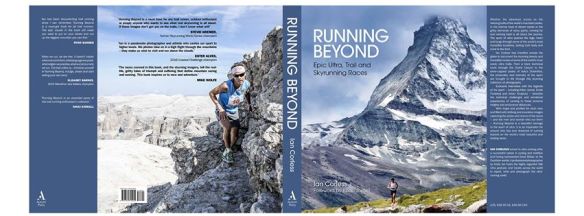
RUNNING BEYOND BOOK is now available in Spain, Germany and Italy and the UK edition will be delivered to UK audiences, USA audiences and Southern Hemisphere audiences from November 3rd: more info – HERE
In the SkyRace (39km) Joe Gray did the double ahead of Tayte Pollman and Patrick Parsel – 4:00, 4:00.3 and 4:11 respectively.
Alicia Shay (now Vargo) won the ladies 4:51 ahead of Kristi Knecht and Sandi Nypaver 4:53 and 4:54
GRAND TO GRAND
Florian Vieux and Emilie Leconte won the self-supported race with Sebastien Nain and Elisabet Barnes taking 2nd.
UTMF
Became a ‘really’ short race due to bad weather and Dylan Bowman and Fernanda Maciel ran great races to win the 27-mile race
ULTRA PIRINEU
Miguel Heras was back to winning ways with a dominant performance and just missed Kilian’s record. he finished in 12:05.Jessed Hernandez and Cristofer Clemente was 3rd. Cristofer became Skyrunner World Series champion for the Ultra distance.
Gemma Arenas tool the race win and Skyrunner World Series. Hillary Allen and Anna Comet placed 2nd and 3rd in the race.
Jasmin Paris sets another FKT on a UK round in wales
00:29:00 INTERVIEW with Jasmin Paris
BEAR 100
Kaci Lickteig and Mick Jurynec/ Ryan Weibel (joint) won in 20:27 and 19:33
Rob Krar was back with a victory at Berkeley Trail Adventure 50 mile
Racing in any running race requires a specific and targeted approach to your objective. The objective can be a one day race of a short distance, a medium distance race such as a marathon or maybe you are going to run long, 50 miles or more… You may even be running for multiple days?
The important thing to remember is that ‘training’ and ‘racing’ are 2 separate things and your fuelling approach should reflect this.
Any long distance event will require you (a unique individual) to utilise fat as a fuel source. You can teach your body to utilise a greater amount of fat as fuel and also to use less calories overall, making you more economical.
Other factors come into play, for example, someone who will be in the top 5% of the race results will have different needs to a runner in the final 5%. However, fat as a fuel is used and we can all adapt.
If you follow the guidance below over a 12-16 week training period you will adapt to fat usage.
Run at the correct intensity -slow and steady. Find out a specific heart rate zone in which to work. Maffetone method is a good starting place.
Avoid fluctuations in intensity when training long, average heart rate or power output are NOT the critical figures, it’s TIME IN ZONE that counts.
Eat foods which are balanced with low GI (glycemic index) carbohydrates and fats to encourage fat usage and avoid sugar spikes.
Avoid gels and sugar products based on point 3 above.
What happens during the race?
Let’s assume that while racing you burn 700kcal per hour, 50% of which comes from carbohydrate and 50% of which comes from fat. Carbohydrate loss is the one to worry about, in this scenario, 350cals (50% of 700). 350kcal of carbohydrate equates to 88 grams of carbohydrate (4 kcal per gram).
Here’s the big problem!
Most individuals can only absorb approximately 60g+/- of carbohydrate per hour.
A simple way to look at this is by looking at ‘you’ as a car ferry. The cars that you will fit in the ferry boat carry carbohydrate, lets say 10g per car. Your car ferry only holds so many cars… in our scenario it is 6!
But we have already worked out that you as an individual burning 50/50 carb and fat require 88g of carb. That is 8.8 cars.
So, you line up 9 cars on the dock every hour but only 6 fit. This leaves 3 on the dock. The boat sails away, comes back 1-hour later and 9 new cars have arrived in addition to the 3 you left waiting…
This is the same as adding carbs through your intestine wall to your blood stream. If you carry on missing 2.8 cars every hour, one thing is guaranteed to happen – you will either need to slow down or you will blow up!
As stated, a typical person can absorb 60gram +/- per hour.
For our example above, that means that you’re going to fall short. You’re using 88 grams per hour and you can only replace 60 grams per hour. That’s a 28 gram / 112 kcal per hour deficit.
If you try to eat more (an additional 2.8 cars) every hour, it’s unlikely to be digested and will simply sit in your stomach or intestines without providing energy. That may be okay for 1-hour, possibly 2 but then the classic scenario of stomach distress happens. How many runners have you talked to that have complained of stomach distress while running?
It’s really important that you understand, eating more food doesn’t mean you’ll have more energy and it may well mean that you’ll face stomach upsets.
Our above scenario works on the presumption that you are only using 700kcal per hour, bigger people and less efficient people may be using more? Our scenario also assumes that 50% is coming from fat and 50% fro carb – that may not be the case at all! In-fact, as much as 80-100% of energy may be coming from carbohydrate! A disaster for the endurance athlete.
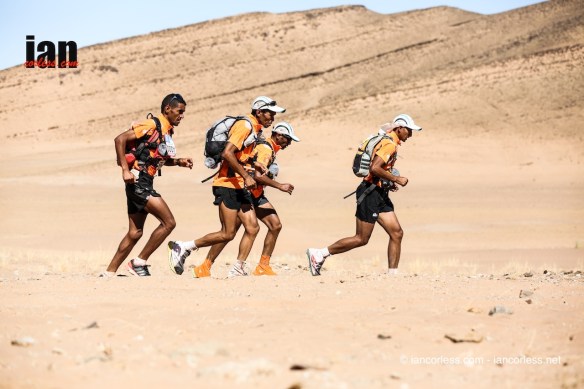
Take multi-day racing for example when you are racing day-after-day with compromised recovery and limited calories. You just simply cannot carry enough carbohydrates to sustain you over the period of an event, particularly if it is a self-sufficient event such as the Marathon des Sables.
To move forward effectively armed with good knowledge about you as a person, you need to address 3 questions:
How many calories do I burn per hour?
How many of those calories come from fat and carbohydrate?
How many calories and what percentage of fat/ carb should I be taking in as a consequence?
Do a 1 hour run at your ‘race pace’ and then use your heart rate monitor to calculate how many calories per hour you are using when exercising at that intensity. These figures can be somewhat unpredictable but it will provide a starting point from which to work from.
Most heart rate monitors will use your age and weight to work out kcal per hour. This will only give you an approximate calorie burn per hour and won’t tell you what % of energy comes from carb/ fat. There are some tools on the internet such as: http://www.braydenwm.com/calburn.htm which can help to give you a basic idea.
Working scenario:
Billy is 43, weighs 82 kg and is racing a 100 mile race, he falls into a category of 65 carb /35 fat fuel usage. Billy has one main objective – to complete the event without major disaster and to run as much as possible. Billy running at his proposed race pace will use 820 Kcal per hour, so the calculation works like this:
65/35
Fat contribution: 820 Kcal x 35% = 287 Kcal
Carbohydrate contribution: 820 Kcal x 65% = 533 Kcal
Calories from fat do not need to be replaced – we all have plenty of stores. However, carbohydrate NEEDS replenishing and the body can only hold so much. 1g of carb is 4kcal. So, Billy will require 133g per hour!
Uh oh! We have already clearly said that around 60g of carb per hour is all that we can take. Billy is in trouble… he is missing out on 73g per hour. Remember the car ferry and the cars sitting on the dock waiting to get on the boat – Billy, racing over 100-miles will need a multi-story car park for the cars that won’t fit on his boat.
Although Billy is a ’sample’ case, this scenario happens time and time again in races all over the world.
How do you solve this problem?
Billy needs to utilise fat as a fuel more and be less reliant on carb.
The body is pretty clever. It is able to switch its metabolism. So, in the case of Billy, the availability of carbohydrate is becoming an issue, as a result the body will start to utilise fat stores. This is a good thing. Yes? Well yes but one thing will have to happen – Billy will need to slow down. Now for many of us, that is not an issue as a finish is a primary goal. However, this can be hard to take and yes, you may well feel lousy. More importantly, pre-race objectives may go out of the window… target times will be lost and a possible top-10 (if that was an objective) will also go out of the window.
Let’s cut to the chase
If more of your energy comes from fat, you’re less likely to run out of carbohydrate. The best athletes in the world require energy (Kcal) to run at race speed. If a large chunk of that energy requirement comes from fat, their total carbohydrate use is reduced.
As an example, by making changes to Billy’s training and diet, the new version arrives for the 100-mile race using only 700Kcal per hour and 55% of energy is being provided by fat.
A quick maths calculation reveals the following:
1. He’s using 315 Kcal of carbohydrate per hour on the run, compared to the previous figure of 533
2. With his intake of 60 grams per hour (240 Kcal), he now only has a deficit of 75 Kcal per hour compared previously with 292 Kcal (73 grams)
3. As a consequence, Billy could run the whole 100-mile race with a smile.
In conclusion:
For you to run an ultra feeling comfortable, relaxed, efficient and on target, you need to go away and find out:
How many calories do you burn per hour?
How many of those calories come from fat and carbohydrate?
How many calories and what percentage of fat/ carb should I be taking in as a consequence?
You may well find that you need some specific help in working out some of the data and figures outlined above.
A Metabolic Rate Test HERE and a Metabolic Test is the way forward HERE.
In training (not all training, just the slow/ steady runs):
To recap earlier points:
Run at the correct intensity – slow and steady. Find out a specific heart rate zone in which to work. Maffetone method is a good starting place.
Avoid fluctuations in intensity, average heart rate or power output are NOT the critical figures, it’s TIME IN ZONE that counts.
Eat foods which are balanced with low GI (glycymic index) carbohydrates and fats to encourage fat usage and avoid sugar spikes.
Avoid gels and sugar products.
Finally, daily diet plays a key role in overall adaptation. Simple sugars, processed food and so on are all bad in day-to-day life for an endurance athlete. Keep them at a minimum and as a treat.
Periodise your eating just as you would training.
Think about dietary fat and fat-burning and think low carb.
A low carb and high fat (LCHF) diet forces ones body to burn fat. As you will now know, fat stores are pretty much unlimited even in the skinniest guy or girl. Optimising ones body to use fat will use less carbs and allow you to perform longer. This becomes even more relevant in long endurance events, especially when the pace is slower and the energy requirement to run at a certain pace is lower.
Notice I say low carb and not no carb! Carb has a place in your diet, it just needs to be consumed at the correct times and make sure the carbs you eat are low GI and good quality. Avoid white pasta, white bread, anything refined and potatoes for example (high GI) and eat sweet potato, beans, whole grains (but be careful) and plenty of vegetables (low GI).
Protein is also key for recovery, muscle growth and repair.
A typical runners diet, broken down into percentages of fat, protein and carb would have often (and in many cases still does) look like this:
Carb 60%
Protein 15%
Fat 25%
The modern day ultra, endurance or multistage runner has percentages that look like this:
Fat 50%
Protein 30%
Carb 20%
Of course, we have all been told that high fat is bad for us but sugar and in particular, refined sugar is the real evil and in day-to-day life it just doesn’t help you as an ultra runner.
Note though, fat should be good quality – oily fish, nuts, seeds, good quality meat, olive oil and so on. Bad fats are the obvious ones such as crisps etc.
Periodise your food intake
Just like you will plan training – intervals, hills, long runs and so on. Food should also be planned in-line with training and racing needs. I will write more on this in another post.
In simple terms:
Train fasted for long runs and keep your pace low to promote fat burning. Actually eating fat before a long run has benefits in helping and promoting fat burn. As does coffee. Try Bulletproof coffee before long and slow runs, read here
Recovery consume a little good quality carbohydrate post training, ideally within a window of 30 to 40-minutes and include good quality lean proteins.
Racing
When racing a long distance race, you as a runner will be far more efficient at using the calories that you have within your body if you follow the guidelines above. We have already said that the body can only hold so much carbohydrate, so, if you have your fat burning turned on you will go longer. Your food requirements whilst racing will also change and you will require less sugary products to keep you going.
Pace (the speed you run) will also impact on how the carb/ fat ratio is used. Runners who are racing (looking for a top placing) incorporate different methods to perform. Often called, ‘train low and race high’ – Timothy Olson for example is a good example. Timothy eats high-fat and low carb in training and day-to-day life but when he races he uses sugar (such as gels) to fuel him during the run. His training has adapted him to use less gels (he uses more fat as fuel), last longer and each sugar smack he gets while racing has less work to do as his carb stores are always being used in conjunction with fat.
Carb loading has been used for years and it’s often misunderstood. How many times have you seen or heard a runner gorging on carb for days before a race – why? We already know that our body can hold so much stored carb (approx 2500 cal) so, when we ‘carb load’ we are basically making sure that our carb stores are full pre a race. Don’t over indulge. It will just sit in your stomach, cause discomfort and make you feel lethargic and more than likely, you will add weight to your frame. As a guide in the 24-hour period before your race, keep a balanced diet but up the carb % say from 20 to 35/40%. Again, make this good carb – low GI.
What is key here is finding what works for you.
“The benefits of low carbs really start to distinguish themselves when you get beyond the marathon, because you’re definitely running out of carbs then,” – Jeff Volek
Always check with a medical professional before making any drastic change to your eating or training regime. The information provided in this post is designed to make you question and pursue an opportunity to enhance your training and racing and we stress that you must find out what personally works for you.
Thanks to Marc Laithwaite for his contribution to this post.
Jasmin Paris does it again…. following on from her incredible 15:24 Bob Graham Round and her 16:13 Ramsay Round. This weekend, Jasmin completed the Paddy Buckley in 18:33 (tbc). That is the UK’s ‘BIG 3 ROUNDS’ completed.
“Paddy Buckley round in 18.33. Had to dig deeper than ever before. Huge thanks to an incredible team for making it possible. Time for a rest!” – Via Jasmin on Twitter
The Paddy Buckley, also sometimes known as the WCR, (Welsh Classical Round) is the Welsh equivalent of the BGR. Considered tougher than the BGR, a record attempt can be considered to take at least 1-hour longer.
Covering approximately 61-miles and 8500m +/- of ascent, the route takes in 47 ‘tops’ within Snowdonia.
Wendy Dodds was the first to complete the round way back in 1982, her time was 25:38. Like most rounds, the aim is to complete the round in sub 24, this was first done in 1985 by Martin Stone. He ran 23:26.
The route as one may guess, was devised by Paddy Buckley and it may be started at any point and can be completed in a clockwise or anti-clockwise direction.
Jasmin very clearly had a desire to complete and maybe set three records on all three rounds in 2016. An incredible feat, especially when one considers what she has also achieved in addition. A 3rd place at the Skyrunning World Championships, 6th place at her first 100-mile race; UTMB. Victory at Tromso SkyRace and the Salomon Glen Coe Skyline which also provided a world series title for the Skyrunner World Series in the Extreme category.
This Paddy Buckley result, in addition to all the other results listed, well and truly places Jasmin as one of the most interesting prospects in the fell, trail, mountain, ultra and Skyrunning world.
Congratulations Jasmin!
The previous ladies record was set in 2013 by Nicky Spinks in a time of 19:02. Therefore, once ratified, Jasmin Paris will hold records on all 3 rounds.
Fastest aggregate time for the three rounds in one year was by Adrian Belton – completed over 29 days in 1989.
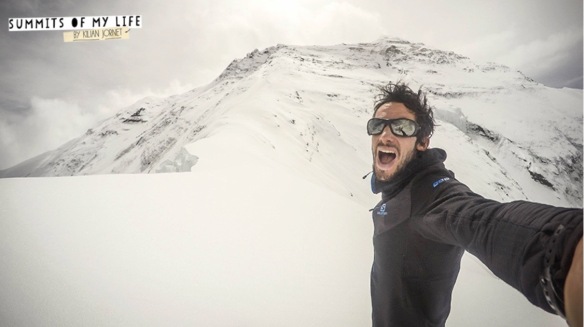
“Time was running out and conditions on the mountain weren’t changing. The unstable weather continued and there continued to be a high risk of avalanches on the higher reaches. We left the mountain feeling somewhat frustrated. We were well acclimatized and could climb without taking serious risks, but at the same time we were very satisfied with the activities that we had been able to carry out.” – Kilian Jornet
The mountain is always the boss. The day that you don’t respect the mountain may well be the last day that you spend in the playground. I am pleased to say that Kilian as an adventurer and mountaineer has progresses not only physically but mentally. He some this up well when despite obvious eagerness to reach the summit of Everest, he was able to step back and think, ‘We had to postpone the challenge of climbing Everest because a rapid ascent would expose us to the risk of accidents.’
I for one am happy to hear Kilian speak these words. The mountain will always be there.
“I’m very happy with what I’ve learned these last few weeks in the Himalayas. We’ve seen what things work and what needs to change. We have learned and personally I have grown as a climber. The expedition has left us feeling very positive in spite of not being able to reach the summit.” – Kilian Jornet
Importantly, Kilian looks at this expedition not as failure but as a stepping stone to a future successful attempt.
In his own words you can read his thoughts on his SOML post HERE.
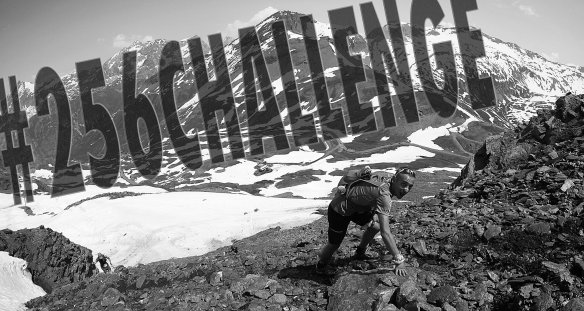
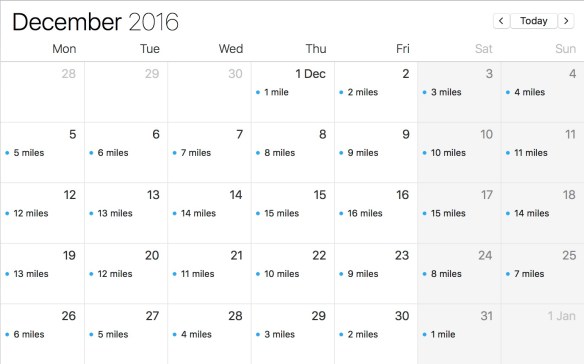
In 2015, we came up with a challenge to run 256 miles in one month. Yes, 256 miles! December can be a tough time for many when the motivation to get outdoors can be hard. So….
Who fancies the #256CHALLENGE ?
Kick start 2017 feeling strong and motivated with a fantastic base of endurance from which to build.
How does it work?
Well actually it is pretty simple…
For the first 16 days of December you run the miles that correspond to the day. 1-mile on the 1st, 2 on the 2nd, 3 on the 3rd and so on to the 16th.
On the 17th you go back down… 15, 14, 13, 12 and so on.
It’s a brilliant pyramid session and one that will give you 256-miles for the month of December. No one day is too long but just look at the week of the 12th when you will rack up 99 miles. For many that may well be a ‘normal’ training week but for most it will be the biggest week of their training life!
The advantage of the #256CHALLENGE is that it builds slowly, stresses you (and probably makes you overreach) and then allows you to step back down gradually, allowing for recovery and all in time for a serious blow out for the New Year!
Who is in?
To help add additional motivation we encourage you to monitor and share your progress. You can download a log sheet PAGES HERE (for Mac) or EXCEL HERE (for word).
Share your daily runs on Facebook and Twitter using #256CHALLENGE log your runs on one of the log sheets above and ideally upload your run sessions to Strava. Once December is completed forward your log sheets and we will pick a winner.
The first person drawn from the hat will receive a signed copy of
Ultra running to Spain is like football to the UK, the fans are a passionate motivated bunch of individuals who come together as a whole to create a cohesive army of fanatical supporters. Baga, the home of Ultra Pirineu is located in Catalonia; it may come as no surprise that the Catalans take support to the next level. The final race in the 2016 Skyrunner® World Series, the race was always going to be a competitive one!
110km in length, with 6800m of positive gain, the race takes place in the Cadi-Moixero Natural Park. On paper, the route looks almost like a badly drawn figure of eight laid on its side. The profile, a little like the dental record for a great white shark as it includes several key peaks, the highest coming very early in the race with just 14km covered at Niu, 2500m high. Comprised of primarily trail (75%), the route also includes a small percentage of asphalt and track. It’s a tough and challenging race that has often been made considerably more challenging due to inclement weather.
The Cadi-Moixero Natural Park is the hub for the racing, established in 1983, it stretches more than 30km over the mountain ranges of Serra de Moixero and Serra del Cadi; both part of the Pre-Pyrenees.
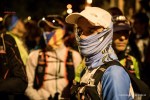
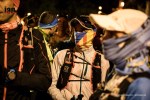
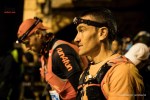
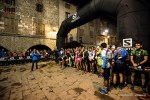
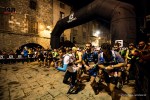
From the off, the racing is hard. The narrow streets of Baga, an enclosed medieval square start and the charge of 1000 runners at the toll of 0700 make the opening minutes a heart pounding, adrenaline rushed sprint. Ironic for a race that will take the winner 12+ hours.
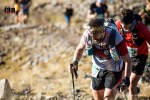
Immediately it’s hand-on-knees and straight into the first and highest climb of the day. It’s a dangerous mountain to start a race with. The effort and commitment just to get to the top requires a 100% effort, and this is all coming in the opening hours of a very long day on an exceptionally tough course. Finally breaking the tree line, the rugged terrain reveals itself and the first peak, with refuge, finally will come into sight. On a clear day, the views are incredible. The crowd support phenomenal. It’s a frenzy of noise, cowbells and screaming. In the men’s race, Remigio Huaman dictated the early pace followed by Miguel Heras. Gemma Arenas started the day as she would continue, from the front followed by Hillary Allen. The race was on between the two of them for the SWS 2016 title – if either won the race, they would be the champion for 2016.
What goes up must come down and the first descent is single track, off-camber trails with technical sections in and amongst trees. Sections of via ferratta are present on rock; a clear sign of the severity of the terrain. Rolling terrain provides some respite but it is early days.
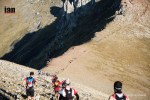
Dropping down, a short climb at 28km, ‘Serrat’ leads to another long descent and an aid at ‘Bellver.’ A third of the race completed, a long and relentless series of climbing takes place over the following 25km’s through ‘Cortals’ and ‘Aguilo’ to the 2nd highest point of the race at 2300m, Pass de Gassolans. Miguel Heras had now built up a lead of over 20-minutes. It was a lead he would not relinquish… behind, Remigio, after strong opening km’s had dropped from the race opening the doorway for Jessed Hernandes and Cristofer Clemente was pacing his race well slowly moving up. Gemma Arenas was still leading the ladies race with a gap of approximately 12-minutes, Hillary was 2nd and Anna Comet had moved into third.
Alternating hiking and running, the race is all about economy of effort for those at the front of the race, it’s about effort management to sustain the energy to the line and hopefully victory. For everyone else, it is survival. At 70km covered, the race may well be considered to be downhill to the finish in Baga, but no, the race has a series of false flats with a couple of brutal cardiac moments that arrive at 86km and 96km; the latter a technical ascent of 1000m to Sant Jordi at 1500m altitude. It’s a stunningly scenic canyon and if it was maybe not for uncontrollable fatigue, it would be a highlight of the race.
The final 10km drop to the line is broken up with another 200m climb with 6km or so to go, the rapturous high-five welcome from thousands in Baga providing some compensation for the efforts left on the mountains and trails of the Cadi-Moixero Natural Park.
Miguel Heras arrived first in just over 12-hours (12:05). Finally, some luck for the Spaniard who has had some intense highs and lows over the years. Jesse Hernandes and Cristofer Clemente placed 2nd and 3rd, 12:40 and 12:47 respectively.. Cristofer successful in his bid to be the Skyrunner World Series Champion in 2016.
As darkness came, so did the rain. Torrential rain! Hillary Allen pursued Gemma hard over the final km’s, she could potentially smell the Skrunner crown… However, Gemma held on to win in 15:20. Hillary completed in 15:37 and Anna Comet placed 3rd in 15:49. Gemma was crowned 2016 Skyrunner World Series champion.
Final Skyrunner World Series Ranking 2016 for the Ultra distance
Gemma Arenas 290 points
Anne-Lise Rousset 276 points
Hillary Allen 272 points
Cristofer Clemente 294 points
Nicolas Martin 188 points
Roger Vinas 180 points
Thanks to the support of our Partner Migu Xempower, Sponsor Alpina Watches and Official Pool Suppliers, Scott Running, Compressport and Salomon.
About Skyrunner® World Series
Skyrunning was founded in 1992 by Italian Marino Giacometti, President of the International Skyrunning Federation which sanctions the discipline worldwide and sports the tagline: Less cloud. More sky.
The Skyrunner® World Series was launched in 2004 and has grown to represent the peak of outdoor running defined by altitude and technicality. In 2016, the Series, composed of four disciplines, features 23 races in 15 venues on three continents.
iancorless.com is the official photographer and media partner for the Skyrunner® World Series Follow on:
This is Episode 119 of Talk Ultra and we have a 1-hour special interview with Speedgoat Karl Meltzer on his incredible record breaking FKT on the AT. We also have interviews with the male and female winners of the Superior 100, Mallory Richard and Frank Pipp. We have the news and Ian is going solo!
KARL ON THE AT
On Sept. 18 at 3:38 a.m Karl “Speedgoat” Meltzer emerged from the Appalachian Trail’s southern terminus at Springer Mountain, Ga., and set a new Appalachian Trail thru-hike speed record with a time of 45 days 22 hours and 38 minutes. Meltzer started his supported run at 5 a.m. on Aug. 3 from Mt. Katahdin, Maine, and averaged approximately 47 miles per day at a pace of 3.2 miles per hour. Meltzer’s time beats the previous record by more than 10 hours, which was set by Scott Jurek in 2015.
The project, in planning for more than two years, was accomplished with a small core crew consisting of Meltzer’s father, Karl Sr., and crew chief Eric Belz. Others joined the crew to support Meltzer for short periods throughout the hike, including Meltzer’s wife and fellow ultrarunners. The crew traveled alongside Meltzer every day, providing him with food, water, medical attention and logistical support. Meals were prepared and taken in a van, which also served as Meltzer and Belz’s sleeping quarters.
00:09:39 INTERVIEW WITH SPEEDGOAT
RUNNING BEYOND BOOK well I have a first copy in my hand and I have to say I am somewhat pleased and happy. It’s taken a couple of years and at times it never felt quite real. The book in my hand confirms it is real and Spanish, German, Italian and UK versions will be available in the coming months. I believe Spain is first (September) Italy is October and the UK November. I don’t have a date on the German edition yet! – HERE
Pipp crossed the line in 20:24:00 a superior, Superior 100 champion. His run for a rookie 100-mile runner was incredible. Uhan had run a clever and smart race, he had saved something for those closing challenging miles and he pulled away from Jenkins and Schwarz-Lowe. His finish 22:46 was a solid 8-minutes ahead of Jenkins who had no doubt had the race of his life… he had managed to pull ahead of Schwarz-Lowe and take the final podium place by just 1-minute. But this only tells half the story. In the closing miles, under darkness, tired, fatigued and lacking focus, Jenkins had run into a head height true branch that cut his head open sending him flat to the ground. Somehow he managed to pick himself up and find the effort and pace to hold off a charging Schwarz-Lowe.
Richard finished next, first lady and 5th overall with a new course record 23:51. Her performance was stunning and almost looked effortless. It was impressive! Tina Johnson finished 2nd and Stephanie Hoff 3rd, 29:50 and 30:52 respectively. Queen of the Superior 100 finished 4th in 31:07 and in doing so, achieved her 16th buckle.
02:20:22 INTERVIEW with MALLORY RICHARD
RUN RABBIT RUN
Alex Nichols runs his first 100 wins in 17:57 and takes home 12,000 dollars. Nice! Mark Hammon 2nd in 19:19 and Kyle Curtin 3rd 19:27. Incredibly Jeff Browning was 4th… he is having some year!
Courtney Dawalter won the ladies race (not a nam I know) ahead of Alissa St Laurent and Nicole Kalogeropoulos. Their times 21:23, 22:38 and 23:10.
Notable drops were Nikki Kimball who has won the race in the past and Sage Canaday dropped in the men’s race.
WASATCH 100
Darcy Piceu came from behind to win in 23:15 and Trevor Fuchs 21:13
DEVILS RIDGE 70K
Yun Yanqiao run 6:30 to finish 11 minutes in front of Francois D’Haene. In the women’s race, Lucy Bartholomew pipped Sally McRae.
The 2016 Skyrunner® World Series championship for the ULTRA distance will be decided in Spain this coming weekend at the Ultra Pirineu located 2-hours north of Barcelona in the Parc Natural del Cadí Moixeró.
A 110km race with 6800m of ascent, Ultra Pirineu is a seriously tough way to end a season. As the last race in the calendar, a 20% points bonus is available and therefore a good placing is required to guarantee a podium place for the 2016 series.
Cristofer Clemente, recent winner of the RUT placed 5th at Ultra Pirineu in 2015 and this year is leading the Skyrunner® World Series ranking. He will be looking for a strong showing in the race but more importantly, he will be working out calculations to make sure that he retains his position at the top of the series.
Roger Viñas has been a revelation in 2016 consistently racing and performing to accumulate points and place within the top-3 of the Skyrunner® World Series. His presence at Ultra Pirineu is two-fold just like Cristofer, have a good race but more importantly retain his position within the ranking.
Legendary runner Miguel Heras, will toe the line and he is no stranger to the Ultra Pirineu. He placed 1st in the race in 2010 and 2011 and in 3rd in 2015. Miguel is one of the most talented runners in the world but is often prone to injury. When he is in-form, he is often unstoppable and he may well be looking for the good old days of 2010 and 2011 in 2016.
Pau Capell has consistently grown as a runner over the past few years and this was confirmed with victory at the TDS and a strong performance at Transgrancanaria earlier this year – along with Cristofer, I see Pau being a potential winner of the race.
Yeray Duran, although not contesting the Skyrunner® World Series is a potential winner of the race and like Pau has slowly but surely impressed over the last couple of years with strong and dominant performances.
Dimitry Mityaev had a stunning race at High Trail Vanoise which unfortunately left him injured. However, if he is fit and has the form shown in France, he may well be a podium contender.
Marcin Swierc currently is placed 4th in the Skyrunner® World Series and his placing and the placing of Roger Vinas and Cristofer Clemente may well be instrumental in his opportunity to move up and on to the podium – remember a 20% bonus is available.
Nuno Silva (5th) Remigio Huaman (6th) and Fulvio Dapit (8th) are all top-10 contenders on the Skyrunner® World Series and with this race coming so late in the season, many possibilities are available for a jump upon the rankings.
Francesc Soler, Cristobal Adell and Toti Bes make up the other main contenders for the top-10 places.
In the ladies’ race, Ida Nilsson is without doubt the hot favourite for victory after showing fine form at the season’s opener in La Palma, Transvulcania! Recently, Ida backed this up with victory at the RUT. Ida does like to run and the relentless 6800m of vertical in Spain will test her.
The USA’s Hillary Allen (2nd on ranking) is making the long journey to Spain to participate in the final race of the series in the hope to gain more points after placing 2nd at Ultra SkyMarathon Madeira and 3rd at the RUT.
Gemma Arenas, like Hillary, has been consistently gaining points in the Skyrunner® World Series in 2015. She won in Madeira and last year placed 4th at Ultra Pirineu. A recent ‘dnf’ at UTMB may well leave Gemma feeling a little tired? It’s all to fight for in Spain.
Anna Comet (6th) and Kristina Pattison (5th) have been ever-presents on the 2016 series and they have both placed consistently. Here in Spain, they may well find that little extra to move up the rankings and gain additional important points. Tina Bes will also be a contender for the podium.
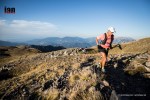
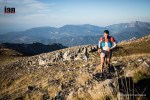
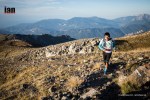
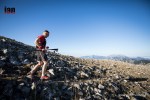
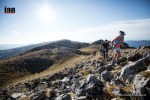
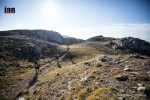
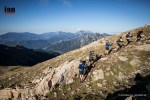
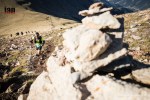
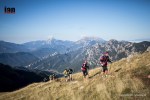
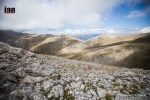
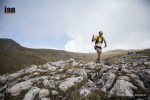
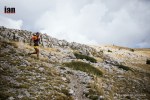
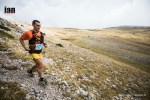
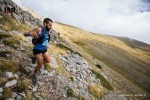
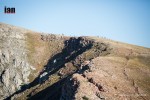
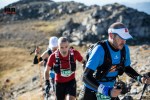
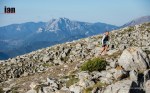
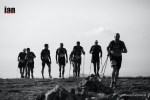
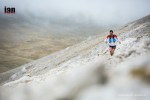
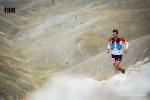
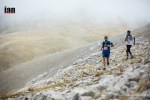
A huge ball may well come from Maite Maiora who usually prefers the SKY distance. In recent years she has raced longer distances and we have seen her on the podium at races such as Transvulcania. Recently she was crowned Skyrunning World Champion at the Buff Epic. The terrain here in Spain suits this fierce competitor.
As with any race, we can expect surprises. Action starts on Saturday and you can follow as the race unfolds via the usual social media feeds and live via tracking on the race website.
Thanks to the support of our Partner Migu Xempower, Sponsor Alpina Watches and Official Pool Suppliers, Scott Running, Compressport and Salomon.
About Skyrunner® World Series
Skyrunning was founded in 1992 by Italian Marino Giacometti, President of the International Skyrunning Federation which sanctions the discipline worldwide and sports the tagline: Less cloud. More sky.
The Skyrunner® World Series was launched in 2004 and has grown to represent the peak of outdoor running defined by altitude and technicality. In 2016, the Series, composed of four disciplines, features 23 races in 15 venues on three continents.
iancorless.com is the official photographer and media partner for the Skyrunner® World Series Follow on:
Extreme! Yes, it was… that was the consensus as the Skyline Scotland’s Salomon Glencoe Skyline drew to a conclusion after only its 2nd edition.
Last year, Skyrunning superstar Emelie Forsberg, travelled to Scotland to take part in the first edition of the race. She placed 2nd overall and won the female category. After the race she said that ‘this’ race truly is one of the best races out there!
Cut to 2016 and Skyline Scotland developed a VK race and SKY race to join the Glencoe Skyline which had gained the approval from the ISF (International Skyrunning Federation) to be one of three races that would make a new ‘SkyExtreme’ category in 2016. This three race series also include Tromso SkyRace and the iconic, Trofeo Kima.
Many had said that Skyrunning in the UK was not possible.
Ask again – not one participant in the 2016 edition of the race would question the legitimacy of how extreme this race was.
Gaining Skyrunner® Extreme Series status also has a huge impact on the participants taking part. It’s fair to say, that the 2016 edition of the race had arguably one of the greatest fields ever assembled for a mountain race.
Coming into this edition, Jonathan Albon and Tom Owens were the hot favourites to take away the title of Skyrunner® Extreme Series champion and in the ladies race, Jasmin Paris after victory in Tromso was a likely female champion.
The race played out as expected with Tom Owens and Jon Albon pushing each other throughout the early stages of the race with strong competition coming from Marc Lauenstein, Finlay Wild and Salomon team manager, Greg Vollet. It was Jonathan Albon though that snapped the elastic pulling away for Tom Owens running on home soil. Pre-race predictions were blown out of the water and Jonathan crossed the line first in a blistering 6:33:52. To put this time in perspective, it is over 1-hour faster than the 2015 course with additional distance and vertical gain.
Tom Owens suffered with foot issues throughout the race but battled all the time. He finished 2nd in 6:37:21. Zegama-Aizkorri and Matterhorn Ultraks winner Marc Lauenstein, although not competing for the Skyrunner® Extreme Series title was always a potential contender for victory or the podium and he didn’t disappoint in finishing 3rd in 6:54:37. As Marc came to the end of one of the more technical sections of the race, the infamous Aonach Eagach, he said, “This is one seriously technical and challenging race!”
Local man and Ben Nevis expert, Finlay Wild placed 4th and Greg Vollet 5th, their times 7:00:57 and 7:10:19.
In the ladies’ race, Jasmin Paris lead from the gun and although Ruth Croft did catch her at one point, Jasmin placed her foot on the gas and pulled away becoming not only a convincing Salomon Glencoe Skyline winner but also a Skyrunner® Extreme Series champion. Quite incredible when you consider that just recently she placed 6th at UTMB. Jasmin’s time of 8:15:56 will be considered a CR for this new course.
Malene Bikken Haukoy ran a savvy race pacing herself in the early stages to move up through the field and eventually place 2nd in the ladies’ race in 8:23:04. Her podium finish in Tromso SkyRace also providing valuable points for the Skyrunner® Extreme Series.
Sarah Ridgway is now the leader of the Skyrunning UK Series and her 3rd place on the ladies podium showed incredible consistency, her time 8:44:40.
Ruth Croft found today’s course a challenge after placing 2nd at Trofeo Kima recently. Despite difficulties though, Ruth ran a strong race gaining valuable points for the Skyrunner® Extreme Series.
Martina Valmassoi rounded out the top 5.
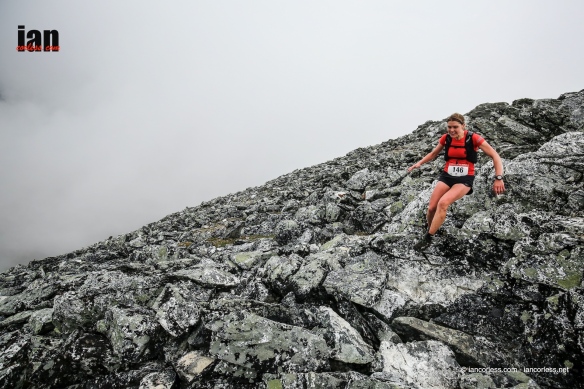
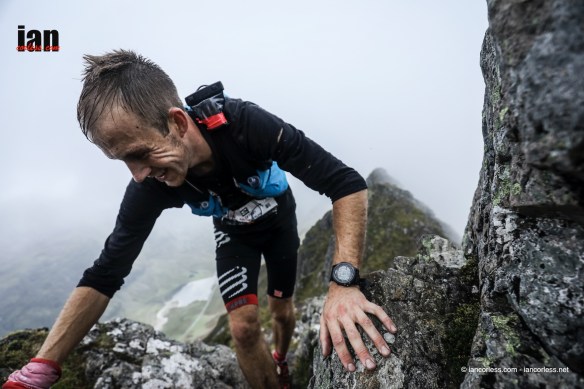
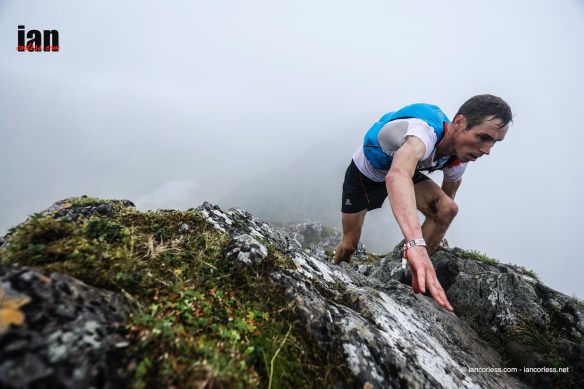
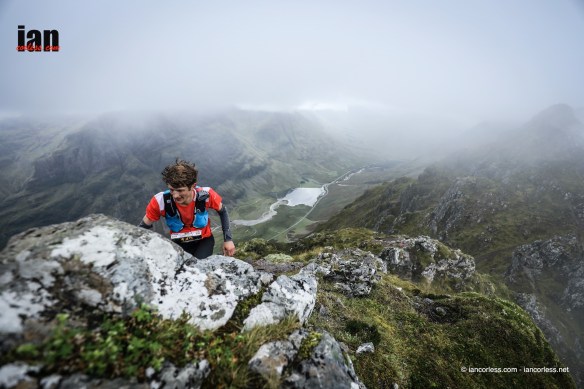
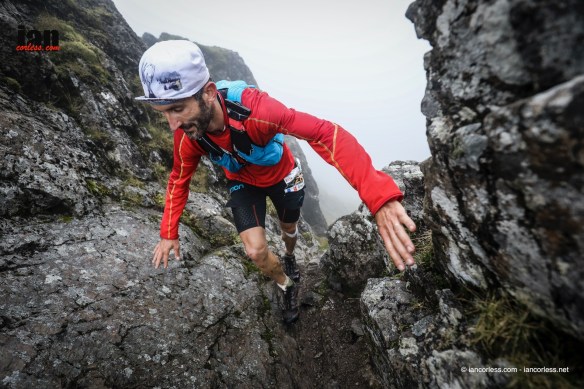
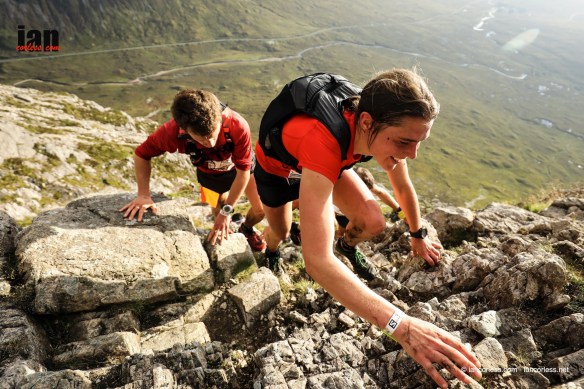
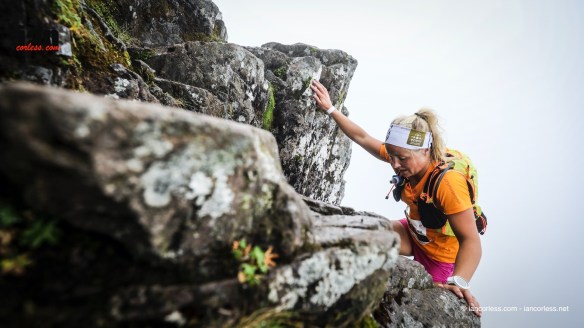
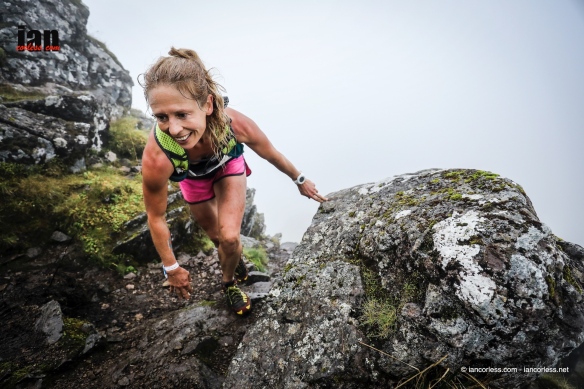
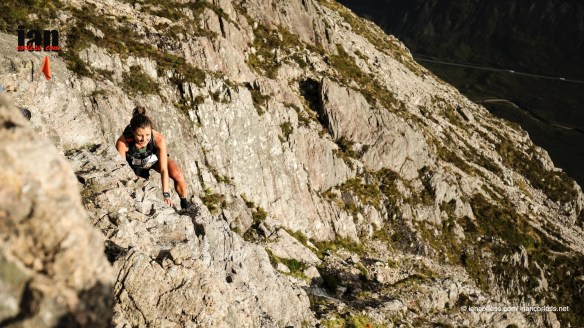
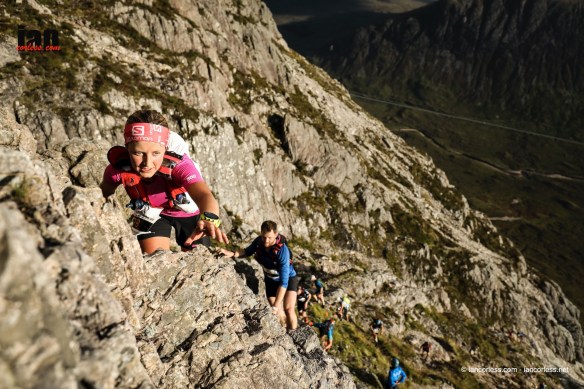
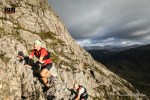
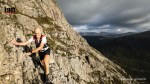
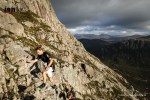
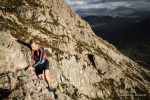
The Salomon Glencoe Skyline route features long and sustained sections of scrambling terrain, which is roughly equivalent to moderate standard rock climbing. In addition, the race traverses high and remote mountainous terrain, which is at times impossible to retreat from and may be subject to severe and rapidly changing weather. The day started in glorious sunshine but as predicted, a weather system arrived late morning making the crossing off the Aonach Eagach a wet one with limited visibility due to clag and mist.
As expected, the race had many dropouts due to the severe course and inclement weather in the latter half of the day. Ultimately though, the feedback and response has been incredible.
2016 was the start of really big things for the UK Skyrunning scene and the Salomon Glencoe Skyline is not only paving the way and setting the benchmark within the UK but also for Europe and farther afield.
RESULTS
Jonathan Albon 6:33:52
Tom Owens 6:37:21
Marc Lauenstein 6:54:37
Finlay Wild 7:00:57
Greg Vollet 7:10:19
Jasmin Paris 8:15:56
Malene Bikken Haukoy 8:23:04
Sarah Ridgway 8:44:40
Ruth Croft 9:10:33
Martina Valmassoi 9:14:37
Extreme Series ranking. Final* Men
1. Jonathan Albon (GBR) – 208 points
2. Tom Owens (GBR) – 205.6 points
3. Finlay Wild (GBR) – 164.4 points
4. Andew Fallas (GBR) – 143 points
5. Sota Ogawa (JAP) – 128.4 points














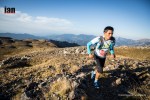
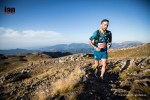

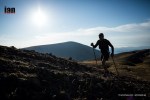
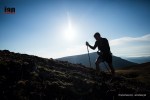
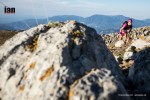
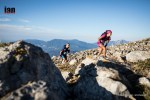
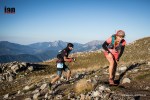


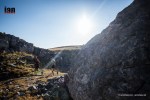
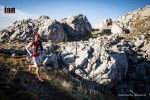

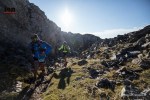


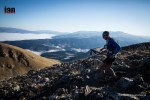
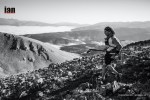
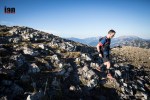



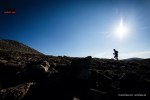

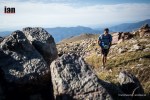
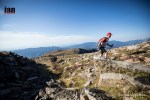
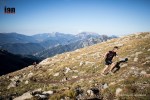


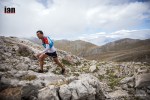


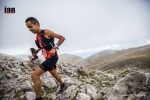
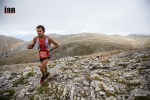
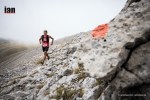
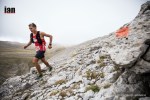
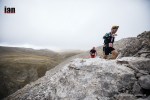
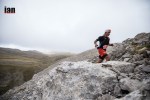
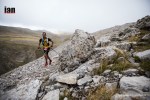
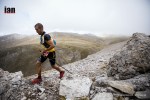
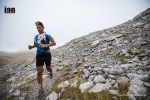

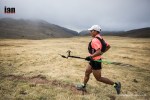





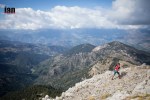


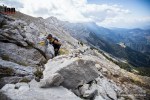
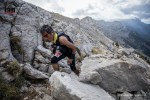

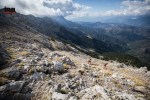

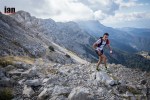
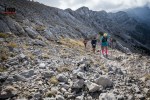
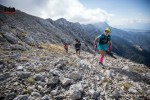

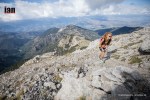

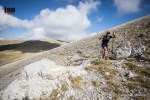
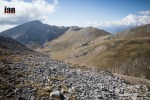
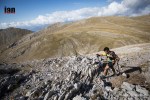
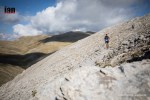
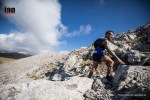
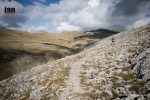
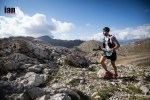
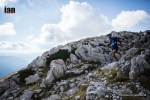











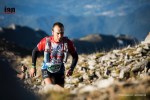
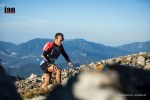

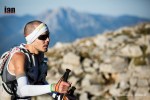














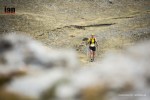



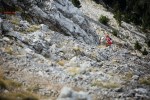



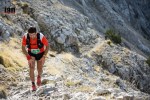





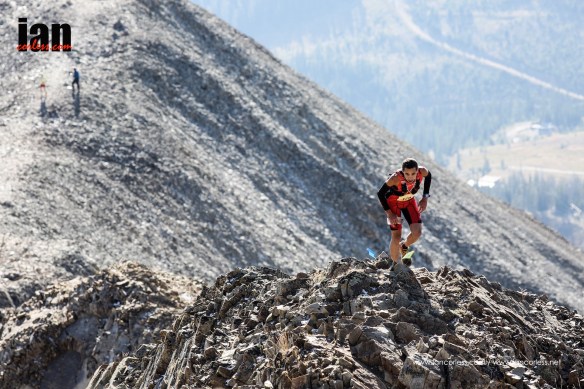
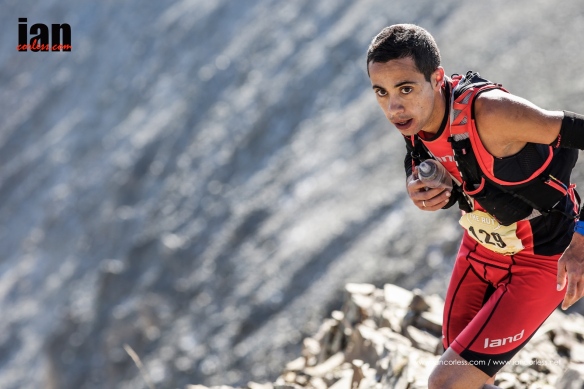
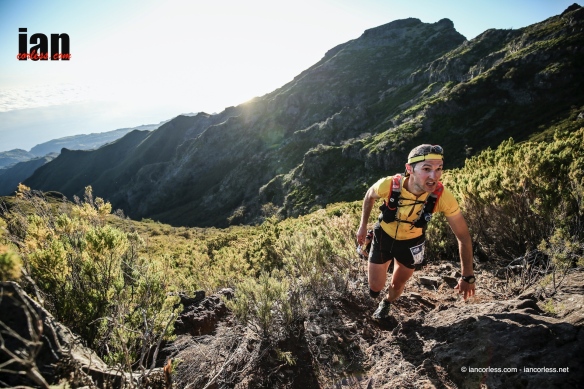
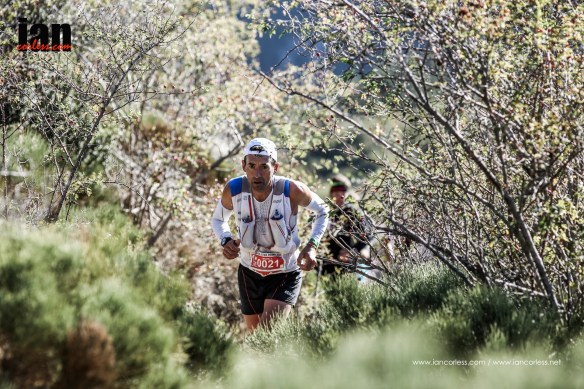

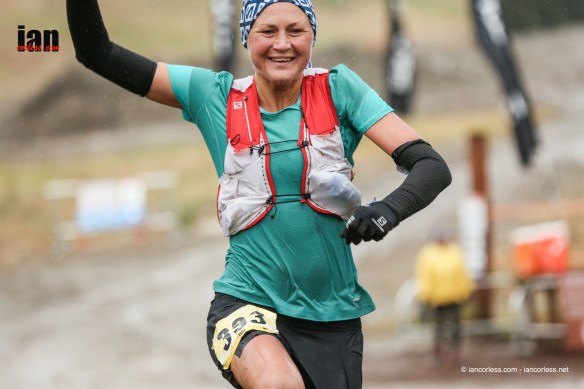
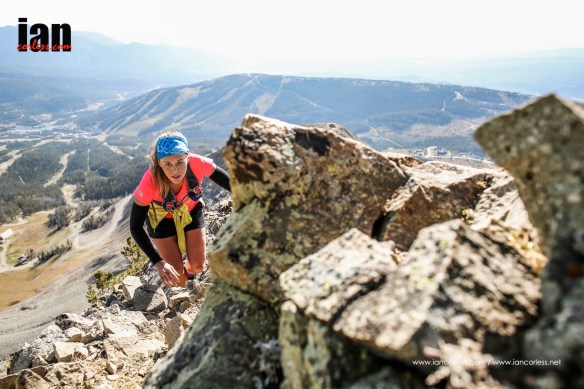

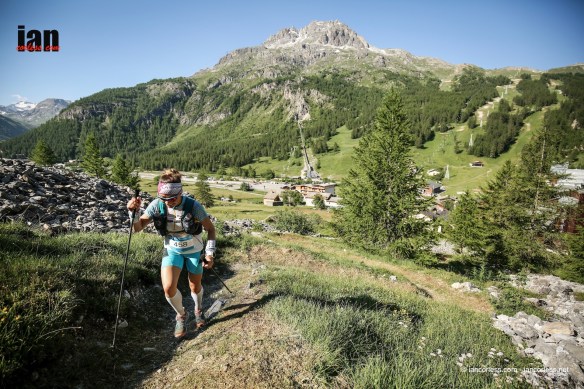
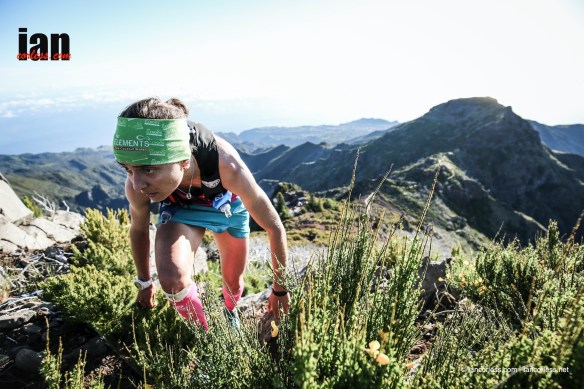
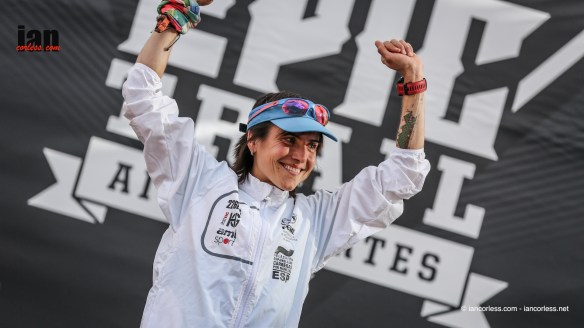 A huge ball may well come from Maite Maiora who usually prefers the SKY distance. In recent years she has raced longer distances and we have seen her on the podium at races such as Transvulcania. Recently she was crowned Skyrunning World Champion at the Buff Epic. The terrain here in Spain suits this fierce competitor.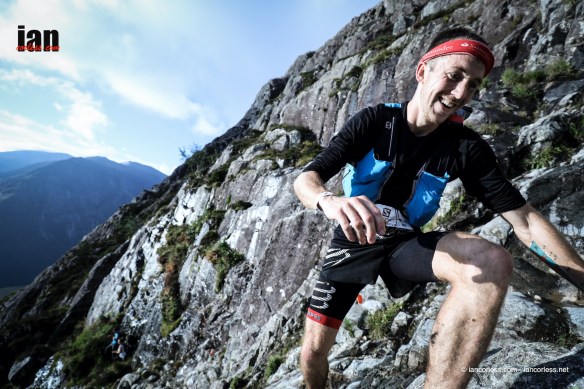






















































 IAN CORLESS