The Ultimate Equipment Guide to MDS Racing 2025/ 2026

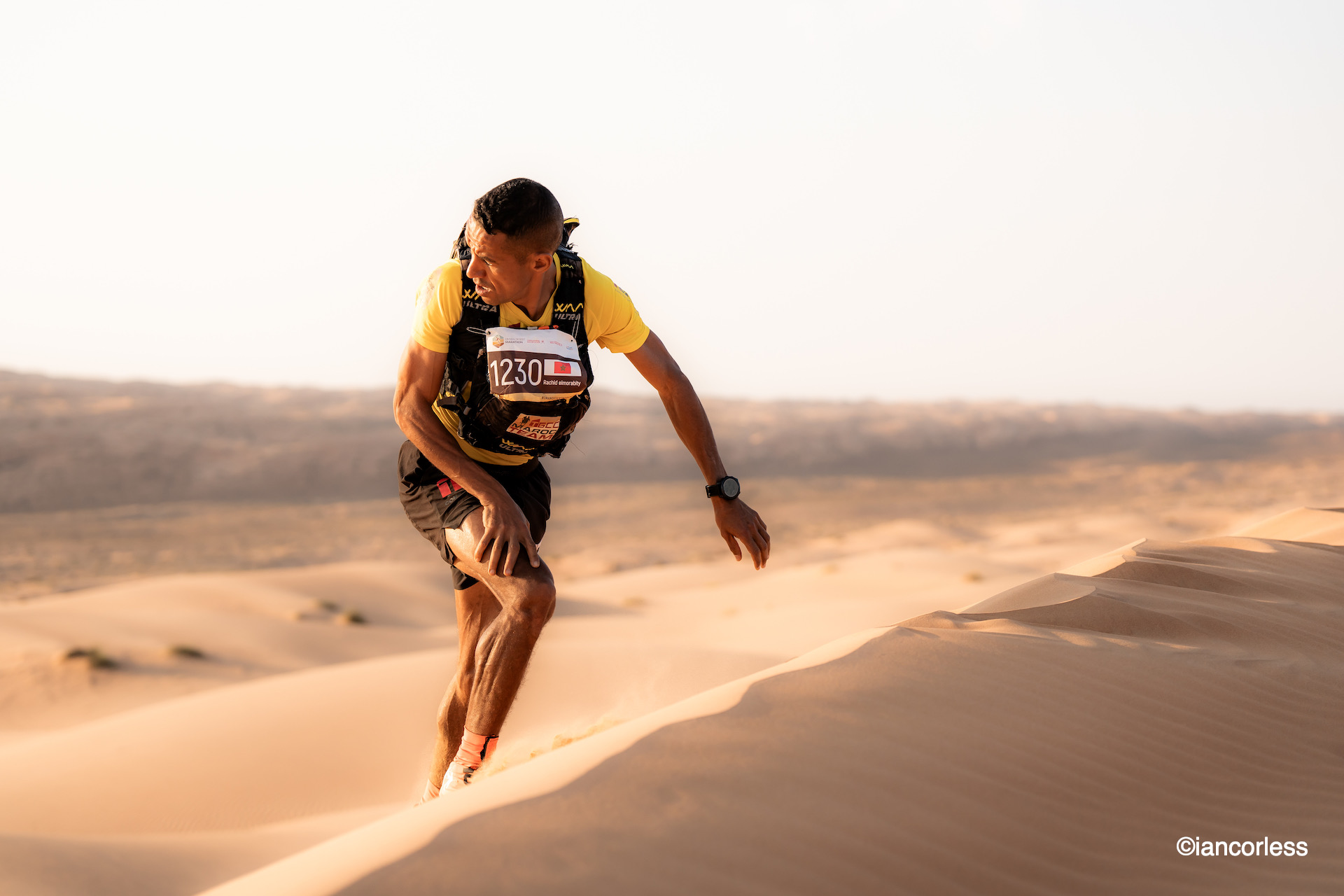
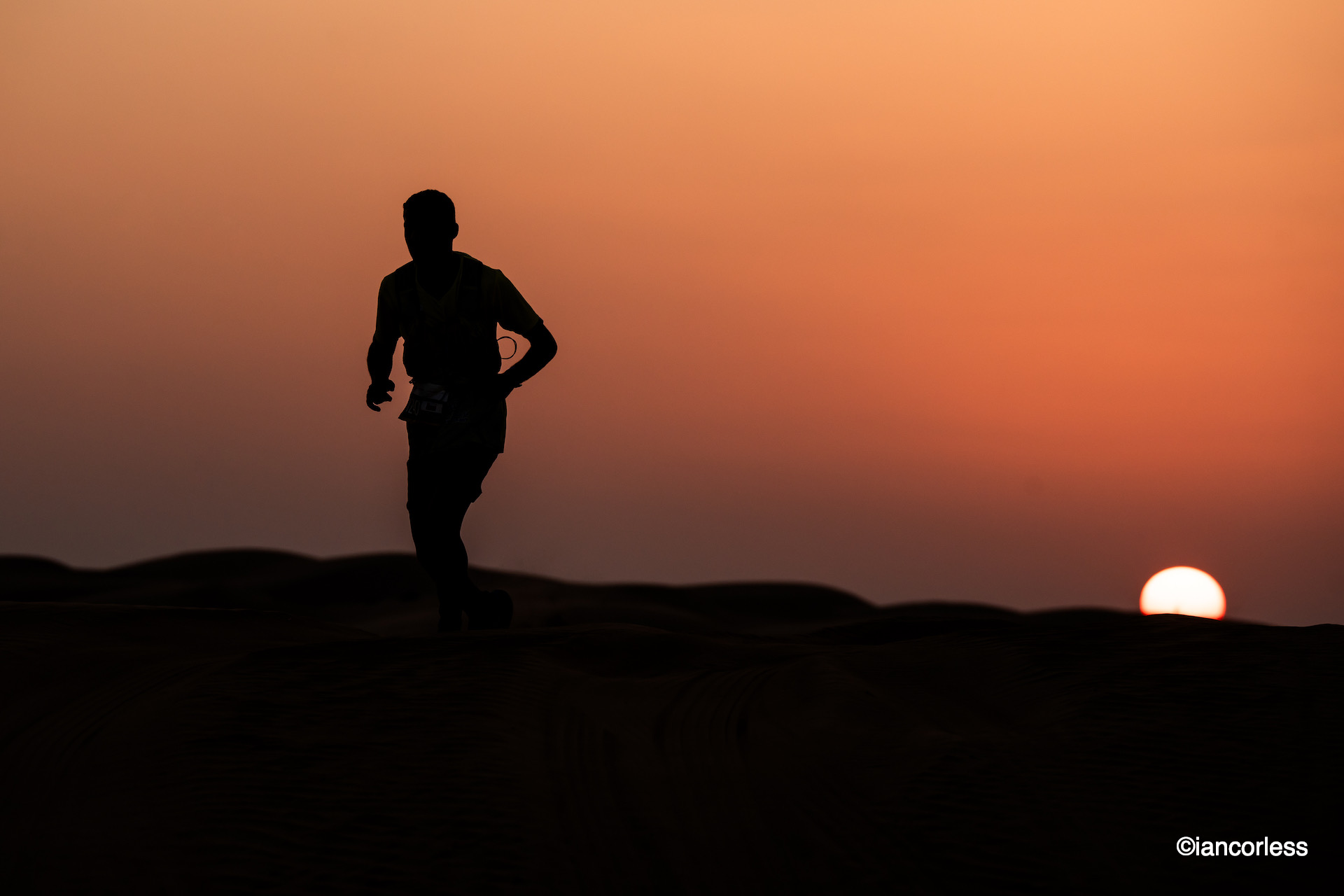
©iancorless.com_MDS2016-3382

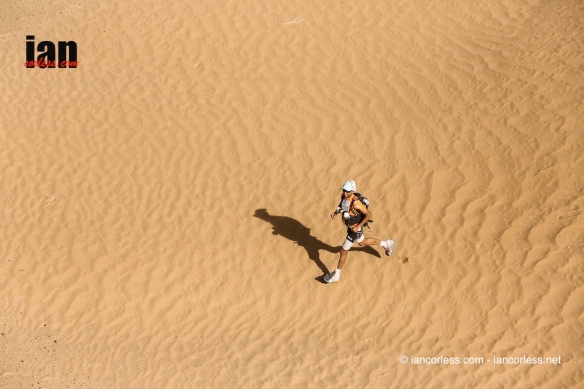
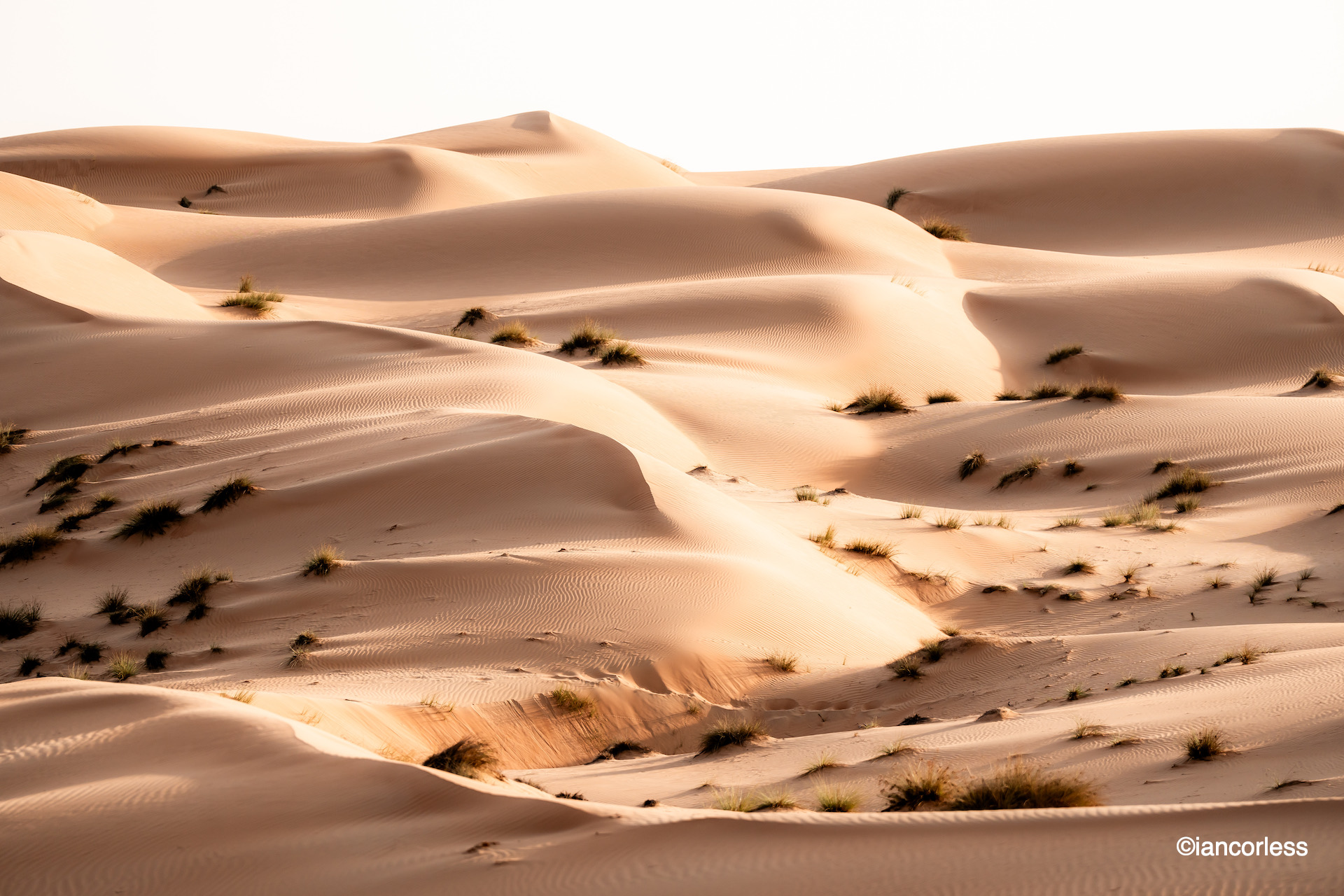
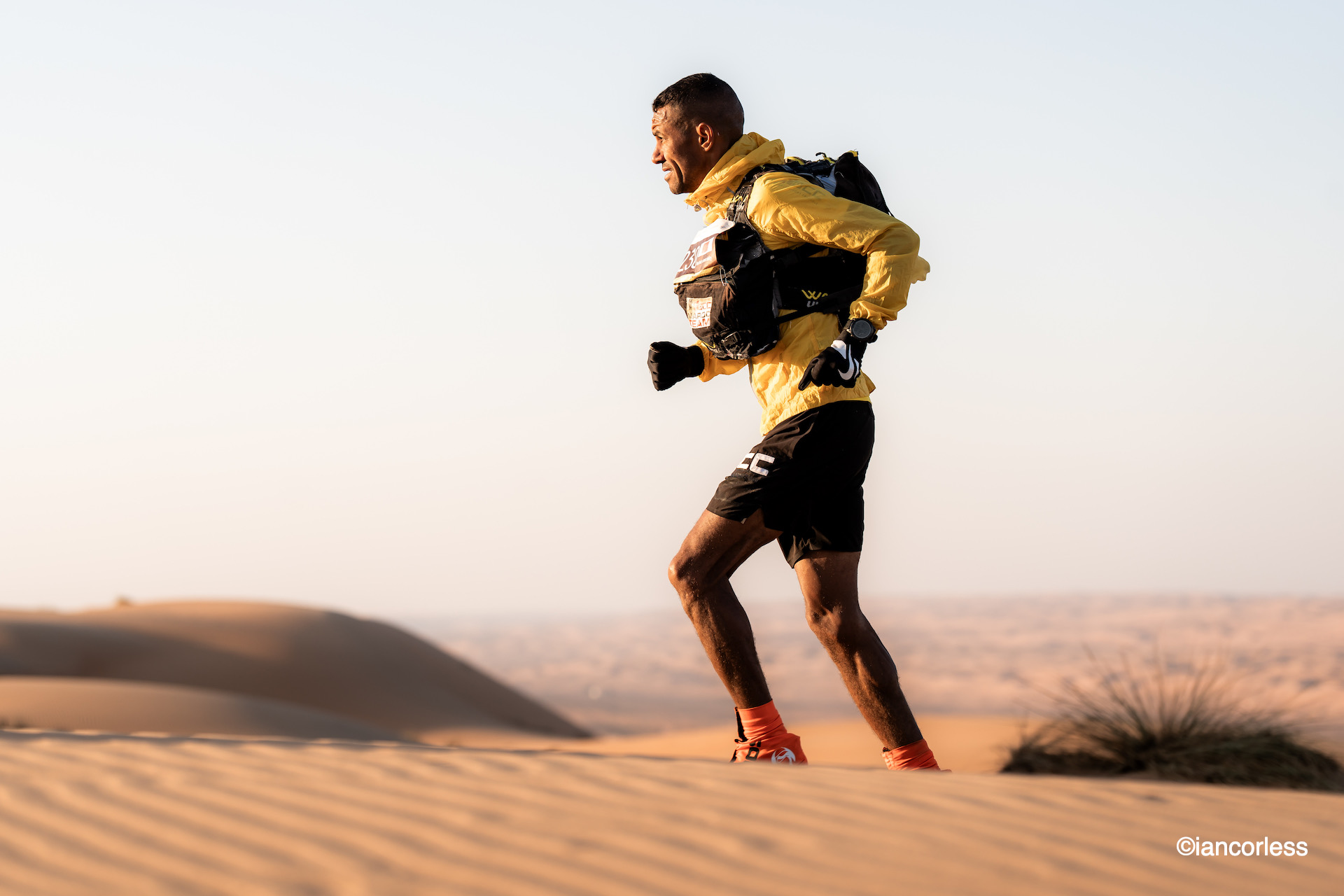
Desert running brings many challenges and running in a desert for multiple days brings a whole new set of challenges.

For 40 years, the Marathon des Sables (MDS)has defined the edge of human endurance. It began as a wild idea—could someone run across the Sahara carrying everything they needed to survive? That idea sparked a revolution. MDS became the godfather of the ultra-stage race, a test of self-sufficiency, resilience, and pure grit. Over time, it expanded beyond its roots: the MDS 120, the exploratory MDS TREK, the demanding MDS RAID, and the mind-bending MDS Crazy Loops. Each one a new take on the same promise, to push the limits of what a runner can handle.

Also read

Fuelling for a Multi-Day HERE

How to choose a Sleeping Bag HERE

Top Tips to better Multi-Day Running HERE

Fastpacking Guide HERE

Winter Fastpacking HERE

Walking with poles HERE

Walking efficiency when climbing HERE

Long Term Goal Setting HERE

MDS as it is affectionately known paved the way not only for multi-day desert racing but ‘all’ multi-day racing, be that in snow, ice, rainforest, jungle or the mountains. If multi-day racing was the mafia, MDS would be the Corleone family.

All multi-day races have followed and tried to replicate the MDS format, however, the reality is, I have yet to experience a race that matches the size, the scale, the organisation and awe-inspiring splendour of what MDS has created in the Sahara. Ask anyone, despite experience, despite achievement, MDS is usually ‘on the bucket list!’ It’s fair to say, that MDS is directly attributable for many new ultra-runners. You see, MDS offers more than just running, it offers a challenge, it offers something quite unique – the Sahara and the MDS strips the runner back to basics and deprives them of all luxuries so that they are stripped raw. Runners find themselves in the desert.

2024 and onwards:

2024 saw a new team take over the MDS brand, at the head, Cyril Gauthier and Olivier Cerbeland. Significant changes took place for the 38th (2024) MDS Legendary pioneered at what was the HMDS format (now MDS 120) and they remained for 2025 and moving forward.. There are 3 key points:

Point 1:

Legendary is now 6 timed stages and not 5 stages with a charity stage. The distance will be, +/- 250km’s. The long day in 2024 was stage 3, for 2025 this will be stage 4.

Point 2:

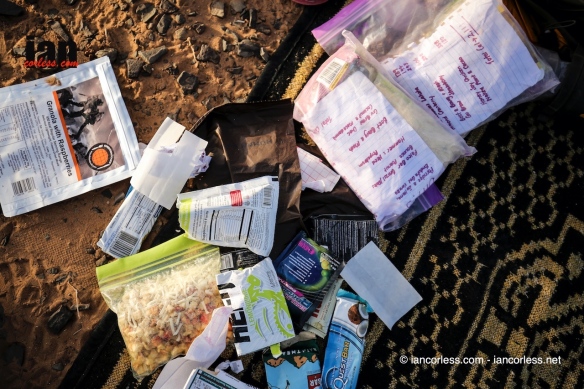
MDS events are contested in food self-sufficiency: only water, in limited quantities but sufficient to cover the needs of an athlete evolving in the desert, is provided to you each day. You must take along for your entire stay in the desert everything you need to eat and prepare to eat (freeze-dried meals, semolina, cereal bars, stove, etc.). This self-sufficiency will include the day of your arrival in the desert, and the day of control preceding the race. *Trek is exempt from food self-sufficiency.

Point 3:

You must arrange your own travel to race destination. As usual, MDS will take care of you from your arrival airport, this will depend on race location. Typically, free shuttles will be offered from one key airport. You will thus have the possibility of anticipating or extending your stay, or of being joined by your family, much more simply than before.

It is recommended you listen to a podcast with co-owner and CEO Cyril Gauthier. Listen HERE.

MDS Events, 2025 moving forward:

LEGENDARY the iconic 6-stage, 250km race celebrating 40-years in 2026.

MDS 120 (used to be HMDS) this is 3-stages over 4-days with distance options of 70/ 100 or 120km.

MDS TREK this is similar to the MDS 120 format, however, there is no self-sufficiency, more comfortable accommodation and additional facilities, an excellent introduction to the MDS.

MDS RAID an event for more experienced athletes that is undertaken in teams of two, over approximately 90-120km’s, typically, two distance options are provided. The format is similar to MDS 120 with 3-stages over 4-days. One night will be undertaken under the stars with no bivouac.

MDS ULTRA new for 2025, a 100-mile or 100km single stage race with a 40-hour cut off.

MDS CRAZY LOOPS three new events for 2025 undertaken in ski resorts, the format is to run as many loops as possible in 24-hours. The loops will be typically, 3-5km’s in length.

DESTINATIONS:

Morocco – has multiple events: Atlantic Coast, Legendary, MDS Ultra, MDS 120 Morocco, and MDS Trek.

Namibia – a MDS Raid event

Turkey MDS 120

France – Crazy Loops – La Rosière and Courchavel

FuerteventuraMDS 120

JordanMDS 120

PeruMDS 120 – This event takes place every 3-years.

****

If you have entered MDS or another self-sufficient multi-day race or adventure, you will be asking:

“What equipment do I need?”

This question is the same for many other desert races but I need to be clear, not all races are the same. For example, MDS requires the runner to be completely self-sufficient. This harks back to Bauer’s pioneering expedition in 1984. The runner must carry ‘all’ they need for the duration of the event, the only exception being:
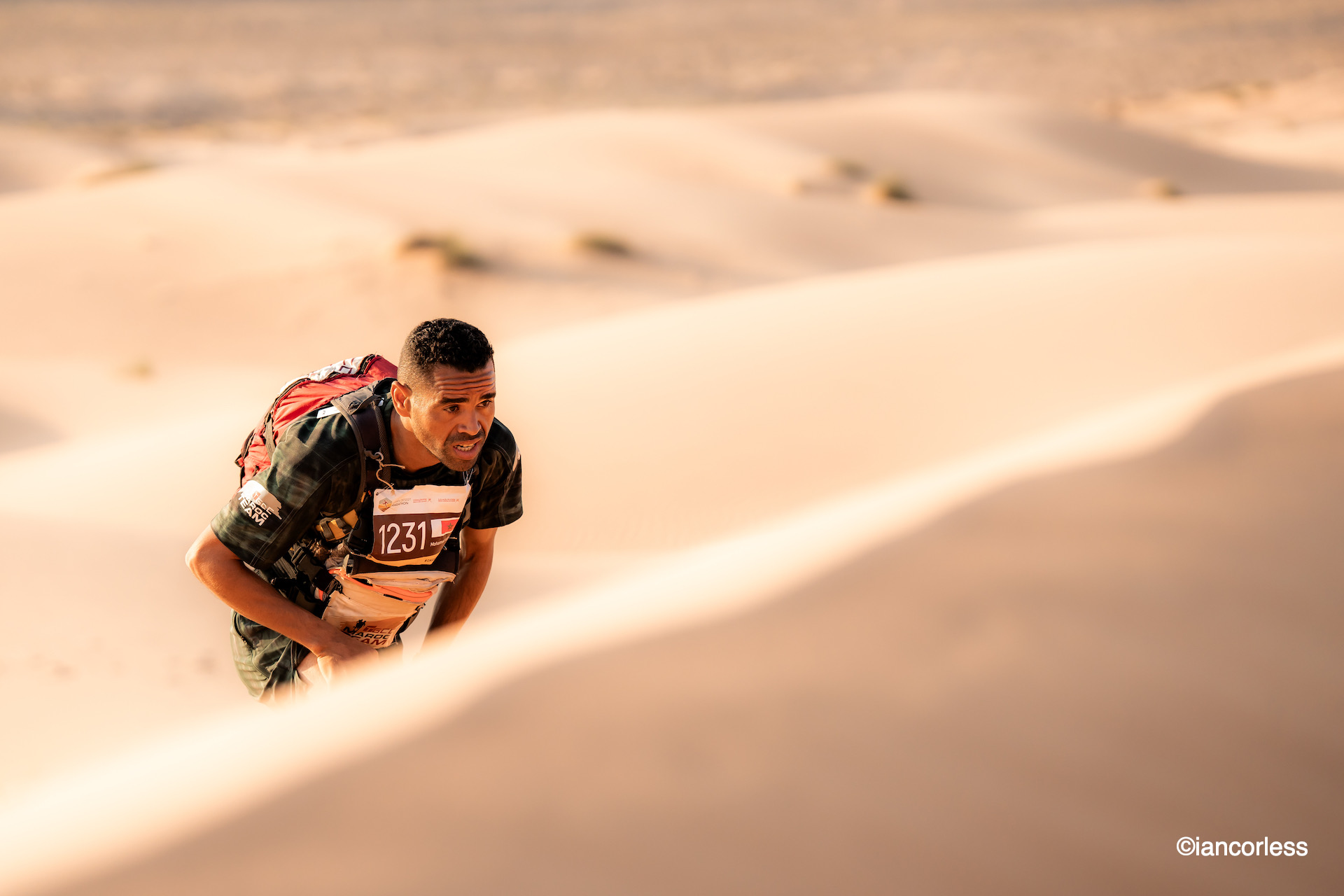
©iancorless.com_MDS2016-6596

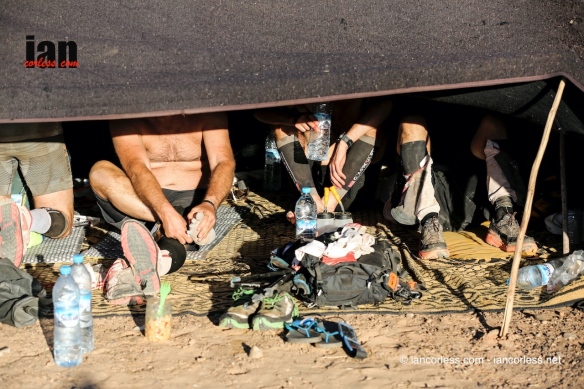
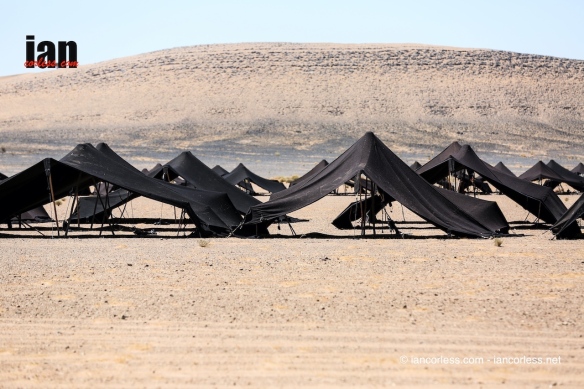
Bivouac – A simple tent cover is provided at the end of each day and this tent must be shared with 7 other runners. This is specific to Legendary. Other MDS events, MDS 120 as an example, runner’s a re provided solo-occupancy small yellow WAA tents.

Water – Water is provided in bivouac and out on the course. Whilst running, water is abundant and not rationed. At the end of the day, you are provided 5ltr of water which must last to CP1 the following day.

Anything else the runner needs must be carried – pack, sleeping bag, sleeping mat, food, snacks, luxuries etc.…

The Detail
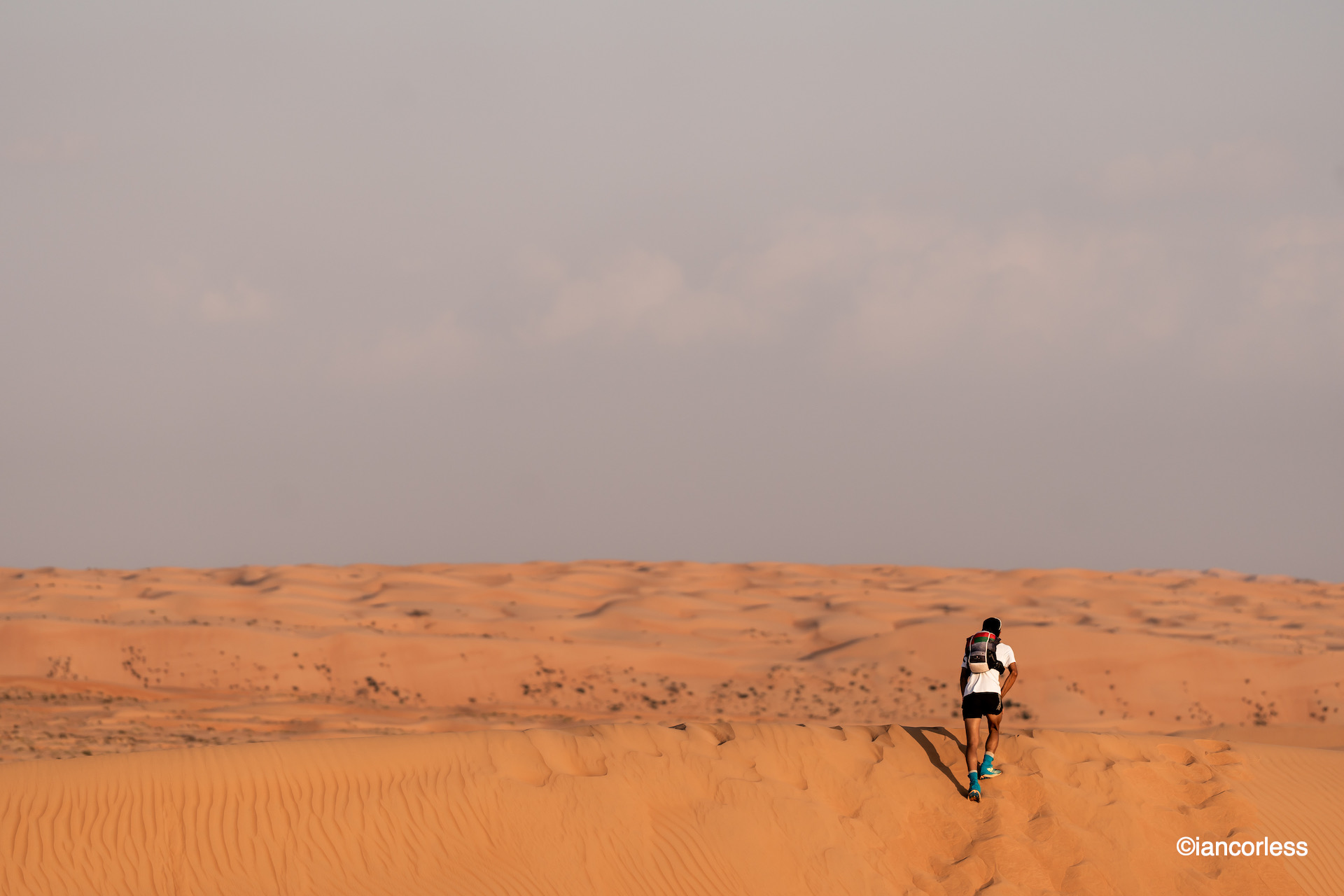
©iancorless.com_MDS2016-1419

Let’s be clear, it is important to note that equipment will not make you complete any race. What it can do is make the process easier and more comfortable. Equipment is something we all must take to any race and finding out what works and doing the research is part of the fun.

If you want to increase your chances of completing your chosen race, commit to the training required, get your head in the correct place and then finish off with the appropriate equipment for the job. Far too many stress about what equipment they need and neglect the appropriate training.
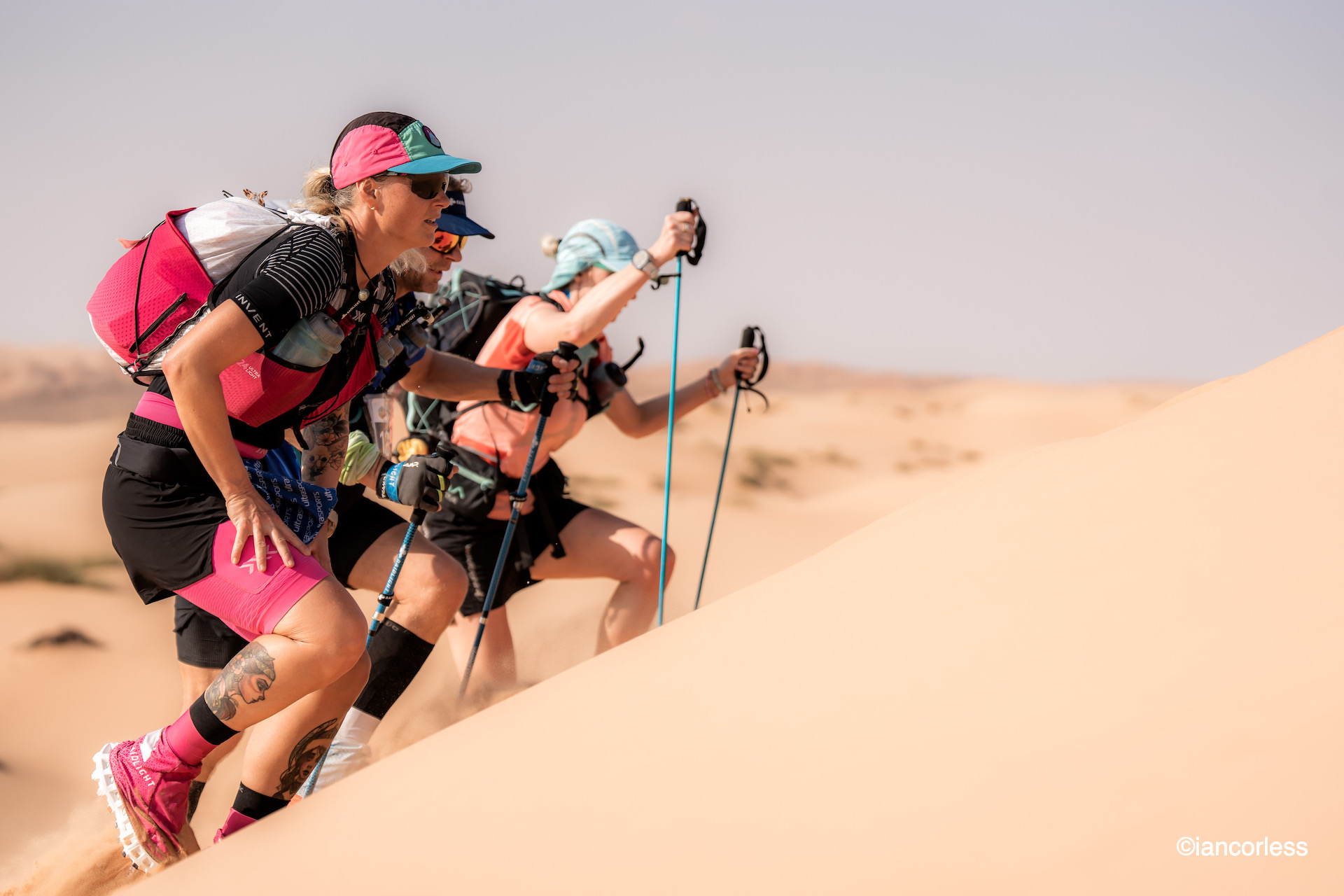
©iancorless.com_MDS2016_Day0_0004

Multi-day racing in its purest form should be very simple. However, over the year’s deciding what equipment to take has become increasingly more complicated.

It shouldn’t be complicated and in all honesty, it isn’t!

Here is just a list of absolute essentials, one could say that this list is mandatory:

  • Hat
  • Sunglasses
  • Buff
  • Jacket (usually down)
  • T-Shirt
  • Shorts/ Skort
  • Socks
  • Shoes
  • Gaiters
  • Rucksack
  • Sleeping Mat (optional)
  • Sleeping bag
  • Head Torch
  • Flip-flops or similar
  • Toilet paper
  • Personal medical kit (feet etc.)
  • Spot Tracker (supplied at MDS, optional at other races)
  • Road Book (supplied)
  • Stock cubes
  • *Food for the required days
  • **Mandatory kit
  • ***Water

Optional items:

  • Warm jacket (usually down that packs small and light) – I consider this essential and not optional
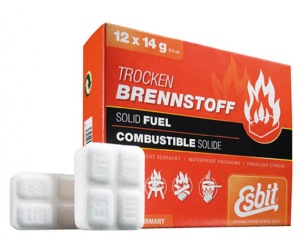
  • Stove and fuel blocks
  • Sleeping bag liner
  • Spare socks
  • Walking Poles
  • Goggles
  • Spare clothes (?)

Luxuries:

  • Mp3 player
  • Phone
  • Solar charger
  • Kitchen sink…

Perspective:

©iancorless.com_MDS2016-8805

Any multi-day race has (arguably) five types of participant:

  1. The elite races who will contest the high-ranking positions.
  2. Top age groupers who will look to race for a high place and test themselves overall.
  3. Competitive runners looking for a challenge.
  4. Those who wish to complete and not compete.
  5. Newbies who are out of their comfort zone looking to finish at all costs.

©iancorless.com_MDS2016-6293

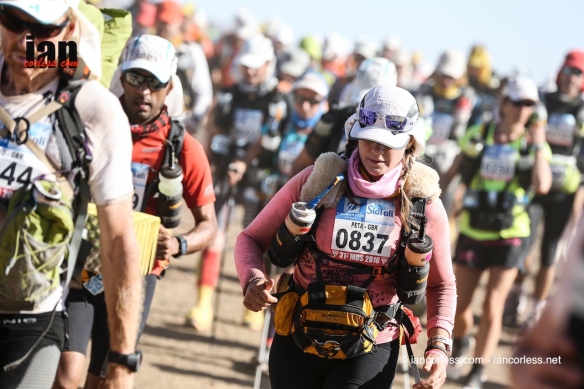
When one looks at kit and requirements, it’s easy to think that the needs of the top elites in group 1 will vary from those in group 5. I would arguably say no! All the runners need the same things; they all must carry the same mandatory kit and they all must carry the same minimum food requirement.

©iancorless.com_MDS2016-0541

I think the differences come with experience. Novices and newbies will more than likely prepare for the unknown, the ‘just in case’ scenario. Whereas top runners will be on a minimum, the absolute minimum. Groups 2- 4 are a mix of groups 1 and 5 and they fall somewhere between.

So, for me, groups 2, 3, 4 and 5 should (where possible) aim to be like group 1. The only key difference comes with shoe choice. Runners who will spend much longer on their feet and out on the course will most definitely need a shoe that can withstand that pressure and the shoe must also be good for walking. Groups 2-5 never fully appreciate (often until it’s too late) how much they will walk in a desert race.

EQUIPMENT IN DETAIL

When looking at equipment, I am going to provide a brief synopsis and then some recommendations. I will then supply ‘my’ equipment list.

I strongly advice using a tool such as LIGHTERPACK which is a great tool. Here is an example of one of my personal fastpack lists.

Remember WAA is the official equipment of MDS and you can purchase many of the key items via their website HERE

Hat – A hat is essential to keep the sun off your head; options exist that have a neck cover built in to avoid that delicate area that will almost certainly be in the sun all day.

Sunglasses – So many choice, but you need a good pair that has ideally a large lens to protect the eye. Some desert specific sunglasses include a brow pad that helps stop sweat dripping in your eye. Do you need prescription? If so, I use prescription Oakley and they are excellent. Do you need goggles? Yes and no. If you have good sunglasses with good coverage, then no. However, should a sand storm hit, it can be uncomfortable. Goggles guarantee no sand in the eyes.

Buff – A buff or even two are essential. One around the neck helps keep the sun off and you can also wet it to help reduce core temperature. In wind and sand storms, the Buff is lifted and protects mouth, nose and sometimes eyes. A spare Buff is a luxury but worth considering.

Jacket – Jacket choice will depend on sleeping bag choice. If you are using a light bag, a lightweight down jacket is an essential item. Häglofs, Yeti, Mont Bell, Rab and others have exceleent super light options.

T-Shirt – It’s not rocket science, you will have been running in a shirt already, if it works, why change it? I read countless arguments about should it be black or white – you know what, it doesn’t ‘really’ matter. Look at the elite runners, they are often sponsored and have little or no choice on colour. However, lighter colours reflect heat. Comfort however is key.

Shorts/ Skort – Same answer as T-Shirt.

Socks – Getting the correct socks are key for any race and like I have said for shirt and shorts, if you have socks that work, why change? So many options exist but for me I am a firm believer in Injinji toe socks.

Shoes – Read HERE – Shoes are personal and must be suited to you, the individual. Consider your gait (neutral, supinate or pronate), consider time on feet, consider your weight, consider how much you will walk (and then double it) also consider shoe drop and how much cushioning you need. It’s impossible to recommend any one shoe because of these variables. You will see top runners using a lighter shoe, remember, these shoes only need to last 20-30 hours. However, you may well need a shoe for 40, 50 or 60-hours. Do you need a trail shoe? No, you don’t need a trail shoe but I would say that many trail shoes are more durable as they are designed for the rough and tumble of variable terrain. Do you need an aggressive outsole? No, you don’t, but I do think some grip is better than none and therefore I would use a trail shoe over road. Protection? Toe box protection is a good idea as deserts include lots or rocks, far more than you may think. Do I need a size bigger? Shoe sizing does depend on what is ‘normal’ for you. I always recommend a thumb nail of space above the big toe, you don’t need any more than this. Recommendations of going a size is bigger is bad advice in my opinion. A shoe that is too large allows your foot to move, a moving foot causes friction, friction causes blisters and the rest is the same old story that I see at desert races all over the world. However, I would recommend a shoe with a little more width in the toe box, this will allow for some comfort as the days progress. If you are prone to feet swelling, discomfort, blisters and so on, get a strategy sorted before you head out to your chosen race.

Gaiters – Are essential and they should be sewn and glued on to the shoe to guarantee that no sand can enter. WAA provide race gaiters.

Rucksack – A rucksack is one of the most essential items for the race as it will hold on your kit for the duration of the event. Many versions exist and the type of pack you choose depends on many things: Male/ Female, Small/ Large, Tall/ Short and so on. Some packs just don’t work for some people. You also need to consider if you need a front pack to hold essential items. How will you drink on the go? How much do you plan to run in comparison to walk? I have some simple advice:

  • Keep the pack as small as possible, if you have a bigger pack you will just fill it.
  • Keep the pack simple – far too many packs are over complicated and messy
  • Keep the pack light
  • Make sure that drinks are accessible, easy to use and don’t bounce
  • See how the pack feels full with all food and then see how the pack feels with 5-days food missing.
  • Make sure you can access ‘on the go’ essentials.

Needless to say, WAA is arguably the most popular pack at MDS. However, find what works for you.

Sleeping Mat (optional) – Inflatable, Foam or no mat. I’m a firm believer in taking a mat, the weight v comfort is a no brainer. I would also choose an inflatable mat even though it does run a risk of puncture. However, with good admin, good care, and years of using inflatable I have never had an issue. A foam mat is guaranteed to last the race but for me is large and cumbersome. Look at products from Thermarest, Sea to Summit, Klymvit and OMM.

Sleeping bag – Like the pack, a sleeping bag is a key item is it is likely to be the largest and heaviest item (except food and water) that you will carry. A sleeping bag is important as a good night’s rest is key for day-to-day running. I will always go with a sleeping bag and down jacket scenario is this for me provides less weight, less packed size, more flexibility and the option to get warmer at night by wearing the jacket inside the bag. Problem is, this comes at a price. Also, consider your size, shoulder width, height and so on. Some bags are very small whereas bags such as PHD and Yeti can be purchased in small, medium or large. Recommended bags are PHD (custom or off-the peg), Yeti, Western Mountaineering, Häglofs, RAB, OMM (not down) and Raidlight. Read HERE

Head Torch – Don’t compromise, you need a good head-torch that provides enough light for running in a black desert at night. Don’t use rechargeable or a torch with gizmos. You just ideally need variable power, a red-light option so you don’t disturb others at night and it will either take AA or AAA batteries. Recommendations are Black Diamond, Petzl, Silva or LED Lenser.

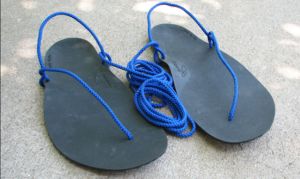
Flip-flops – Free slippers that hotels give away are popular as they are small, fold and are lightweight. However, they don’t stay on and they don’t protect from thorns or stones. Cheap, lightweight plastic or rubber flip flops work for me. I have seen some improvised flip-flops made from run shoe insoles and some string. It’s that group 1 to group 5 scenario again!

Personal medical kit (feet etc.) – Foot care is essential and although many races have a medical team on hand to look after you and your feet, understanding how to do this yourself is key. learn foot care and treatment and understand how to tape your feet. Ready-made foot care kits are available such as this at MyRaceKit here

Spot Tracker (supplied at MDS, optional at other races)

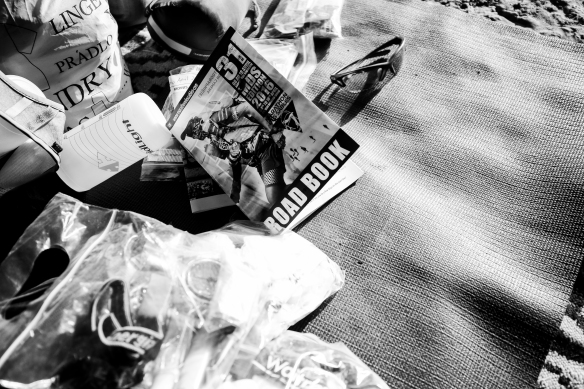
Road Book (supplied)

*Food for the required days – (see clarification below). Food is very personal and it’s imperative you find out what works for you based on your size, gender, calorie burn and speed of running. The front runners will use carbohydrate and fat as fuel as they will run at a faster pace and therefore they will potentially fuel ‘during’ each stage with carbs. However, as you move through the pack going into groups 2-5 the need for fat as a fuel is more important and therefore ALL runners before heading out to any multi-stage race should ideally have taught their bodies to use fat – we have an unlimited supply of this fuel! Post run it’s important to repair, we need protein for this and re-stock energy supplies, we need carbs for this. Dehydrated meals for many runners form the basis of a morning meal and evening meal. Many options are available, some people can eat anything, others are very particular. Keep in mind allergies such as gluten intolerance and decide in advance will you go hot or cold food. For me, the additional weight of a Titanium stove and fuel is worth it for hot food and a drink. We sampled some dehydrated food in 2015 HERE. In 2015 I worked hard to reduce pack weight to the minimum with a coaching client and we made sure we dialled food choices in to provide desired calorie needs but also keep weight low.

Recommended meals FIREPOT

As an example:

  • Dehydrated Meals x6 672g
  • Dried Mango 93g x 4 372g
  • Porridge 59g x 7 413g
  • Coffee 1g x 10 10g
  • Peanut Butter 33g x 5 165g
  • Honey 21g x 8 168g
  • Mini Salami 10g x 10 100g
  • Tropical Mix Bag 194g
  • Sesame Bites 27g x 6 162g
  • Dried Banana Block 270g
  • Mixed Nuts 200g x 2 400g
  • Macademia Nuts Bag 153g
  • Cranberries Bag 175g
  • Pitta Wraps 296g

Total Weight 3550g

**Mandatory kit – see clarification

***Water – see clarification

EQUIPMENT LIST as an example
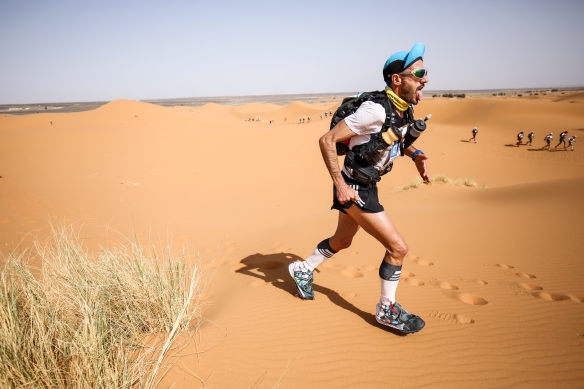
©iancorless.com_MDS2016_Day1_0013

It’s important to note that equipment must be specific to the race you are doing and race conditions. The list below is an example of equipment for Marathon des Sables. However, if I was going to Atacama or the Grand to Grand (both self-sufficient) I would be looking at a heavier and warmer sleeping bag and a warmer jacket. Temperatures at night get much colder than the Sahara. The Grand to Grand can also have rain, so that would need consideration.

It’s important to note that equipment will not make you complete any race. What it can do is make the process easier and more comfortable. If you were looking for a one-stop solution, I would say that if you went away and purchased the equipment list below, you would have a comfortable and successful race. The exceptions come with shoes, that is personal and food. Food choices below are personal but a good example, you must find what works for you.

Also, note that minimum pack weight (on day one) at MDS is 6.5kg. So, you can keep purchasing lighter and lighter and then find that you are too light. I have done this. The plus side of this, is that lighter equipment allows you to take more food and/ or more options – again a good thing. For example, in my equipment list, I could go with a slightly lighter jacket, I could not take poles and I could leave the iPods at home and that would allow me 2 or 3 more dehydrated meals. However, I would prefer the equipment I want and am happy with and add 2,3,4 or 500g for the first day. Remember, the pack gets lighter as the day’s pass.

WEARING:

Hat: A good hat that will keep the sun off your head, the option to have neck coverage is a good idea and ideally make sure the inside of the peak is black. It reduces flare from the sand.

Shirt: A good t-shirt that provides coverage for the shoulders, is light and breathable.

Shorts: Lightweight shorts that cause no irritation or friction.

Socks: Injinji Trail Midweight or Injinji Outdoor 2.0 (which is Merino wool)
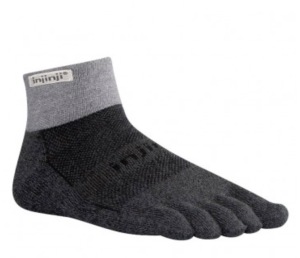
injinji-midweight

Shoes: Ultimately a shoe must fit you and fit well. There is no need to go larger, on the contrary, a shoe that is too large allows ones foot to move, a moving foot creates friction and friction creates blisters! However, a wider toe box can be a good option, depending on individual foot shape. Read HERE about how a shoe should fit. Consider how long you will be on your feet, the demands on a shoe are very different for someone who will finish in 20-hours in comparison to someone who will take 60-hours. Consider body weight too; a heavier individual may well need a more substantial shoe. For a race like MDS, a trail shoe is not essential, but for most preferable. Good shoe options for ‘neutral’ runners: Nike Wildhorse, inov-8 Trail Talon, Hoka One One are very popular and for zero-drop enthusiasts, Altra and inov-8 Terraultra G270. Gaiters are essential and typically Raidlight or MyRaceKit are the most popular. You can glue them on (with care and ideally some experience) but most people have them sewn on via Kevin Bradley at Alex Shoe Repairs.

Watch: Coros Vertix  and Garmin Enduro are the two key considerations to last any MDS event on one charge

Buff: Any

Glasses: Look for sunglasses that fill well, cover the eyes so as to be suitable for sandstorms. You need a good strong lens that blocks the sun, however, photochromatic offers flexibility. Oakley (and others) offer the option for prescription lenses. I would avoid using contact lenses, there can be endless problems, sand and eyes do not mix well!
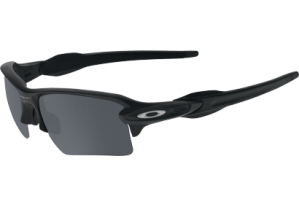
oakley-flak-20-xl-matte-black-black-iridium

IN THE PACK:

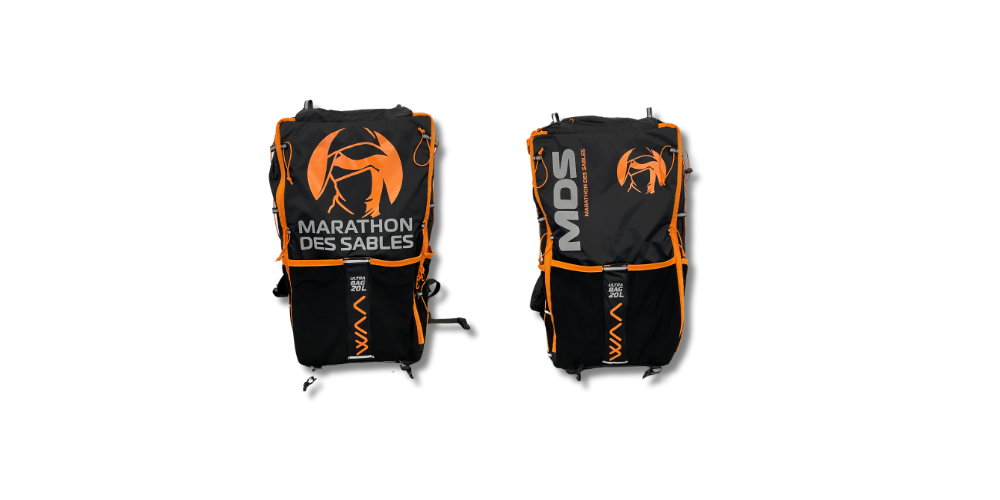
WAA Ultrabag has been designed for the race and is the most popular.
Häglofs Essens 160g – is super light jacket with treated down suitable for a multitude of conditions – here

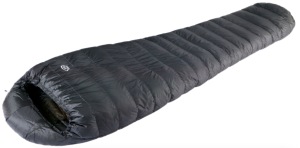
PHD Minimus K Sleeping Bag 380g – PHD work for me, you can have them custom made with or without zips and they are excellent. Yeti make a bag that is more than 100g lighter but I prefer the warmth and comfort of the PHD. Here
phd-minim-ultra-k

Thermarest Prolite Small 310g – Small, comfortable and you can double up and use it as padding in your pack OR Sea to Summit (here)

 thermarest-prolite-small

Black Diamond Carbon Z Poles 290g – Lightweight and folding that provide 4-wheel drive when walking.

black-diamond-carbon-z-pole

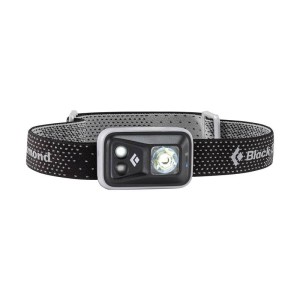
Black Diamond Spot Headtorch w/ batteries and spares 120g – Powerful (200 lumens), lightweight with many varied settings.
 black-diamond-spot

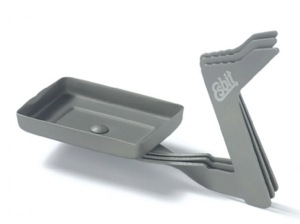
Esbit Stove 11g – Small, lightweight and simple.
esbit-stove

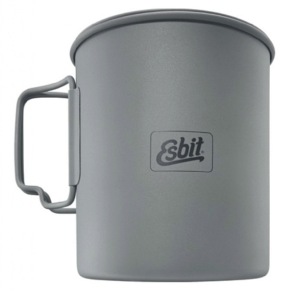
Esbit Titanium Pot 106g – Small, lightweight and durable.
esbit-pot 

Esbit Fuel 168g

esbit-fuel

iPod Shuffle x2 64g – Life saver

Spare Socks 91g – Injinji Trail Midweight or Injinji Outdoor 2.0 (which is Merino wool) 

Flip-Flops 150g – But Xero True Feel are good.
 sandals

Total Weight 2406g If I was looking to be very minimalist and as light as possible, I would not take the stove, pot and fuel and the poles, total 1831g. But, I would probably prefer the option for hot food/ drinks and work around no poles, so total weight would be 2116g.

Note – with constant changing weather in MDS locations, a waterproof jacket is highly recommended!

EXTRAS:

  • Compeed 22g
  • Sportshield 8g
  • Corn Wraps 8g
  • Spork 10g
  • Pen Knife 22g
  • Compass 32g
  • Matches 20g
  • Savlon Antiseptic 18g
  • Toothpaste 36g
  • Tooth Brush 15g
  • Superglue 3g
  • Space Blanket 60g
  • Hand Gel 59g
  • Wipes 85g
  • Toilet Paper 36g
  • Safety Pins 5g
  • Ear Plugs 2g
  • Venom Pump 28g
  • Blindfold 15g
  • Sun Cream 80g
  • Whistle 15g
  • Signal Mirror 12g
  • SPOT Tracker 113g

Total Weight 806g

TOTALS:

Pack and Main Kit Contents: 2406g

Extras: 806g

Food: 3550g

Total 6762g

This pack weight includes poles and cooking utensils plus luxuries like Mp3

 (water would be added to this weight)
©iancorless.com_MDS2016_Day0_0022

IN SUMMARY

©iancorless.com_MDS2016-8441

I enjoy the process of looking at kit, looking at the options available and working out what is best for me and my situation. In some respects, I am lucky as I can test many items out in the market place and decide what I do and what I don’t like. However, trust me, products these days are so good that you can’t go wrong with almost any of the choices. Yeti, PHD, Haglofs etc. all make great sleeping bags, they will all work. Mountain Hardwear, Yeti, Mont-Bell etc. down jackets are all excellent, they all work. I could go on, but you get the picture. Like I said at the beginning, multi-day and desert racing is not complicated, don’t make it so. The only item you need to be sure on is shoes, make sure you get that right. But then again, I am sure you were running before you entered your multi-day race? You were using run shoes, be them road or trail and one must assume that they gave you no problems? If the answer is yes – why change them!

©iancorless.com_MDS2016-5188

Finally, we all love equipment and gadgets, it’s fun to go shopping and get new items. However, being physically fit and mentally strong is what will get you to the finish line – equipment is just part of the process, remember that.

Good luck!
 ©iancorless.com_MDS2016-7106

Clarification:

*Food (As required at Marathon des Sables)

He/she must select the type of food best suited to his/her personal needs, health, weather conditions, weight and backpack conditions. We remind you that airlines strictly forbid the carrying of gas (for cooking) on board either as hand luggage or otherwise. Each competitor must have 14 000 k/calories, that is to say a minimum of 2,000 k/calories per day, otherwise he/she will be penalized (see ART. 27 and 28). Any food out of its original packaging must be equipped, legibly, of the nutrition label shown on the product concerned. Any food out its original packaging must be equipped, legibly, of the nutrition label shown on the product concerned. 

**Mandatory Kit (as specified at Marathon des Sables)

  • 10 safety pins
  • Compass 1deg precision
  • Whistle
  • Knife
  • Disinfectant
  • 12 stock cubes
  • Signal mirror
  • Survival blanket
  • Sun cream
  • 200-euro note
  • Passport
  • Medical certificate

***Water (as specified for Marathon des Sables)

Why not join our Multi-Day Training Camp in Lanzarote. The camp takes place in January each year.

Information HERE

RESOURCES

Interested in another MDS event in 2025?

A full calendar of dates and destinations are available HERE

Instagram – @iancorlessphotography

Twitter – @talkultra

facebook.com/iancorlessphotography

Web – www.iancorless.com

Web – www.iancorlessphotography.com

Follow on:

Instagram – @iancorlessphotography

Twitter – @talkultra

facebook.com/iancorlessphotography

Web – www.iancorless.com

Web – www.iancorlessphotography.com

Image sales –www.iancorless.photoshelter.com

MDS Morocco Atlantic Coast 2025 – Stage 1

Photo by Ian Corless

The 2025 Marathon des Sables calendar kicks-off the a new event, MDS Morocco Atlantic Coast, a great addition to the MDS line-up and now the fourth event in the country, the others, Legendary, MDS Morocco and MDS Morocco Trek.

Photo by Ian Corless

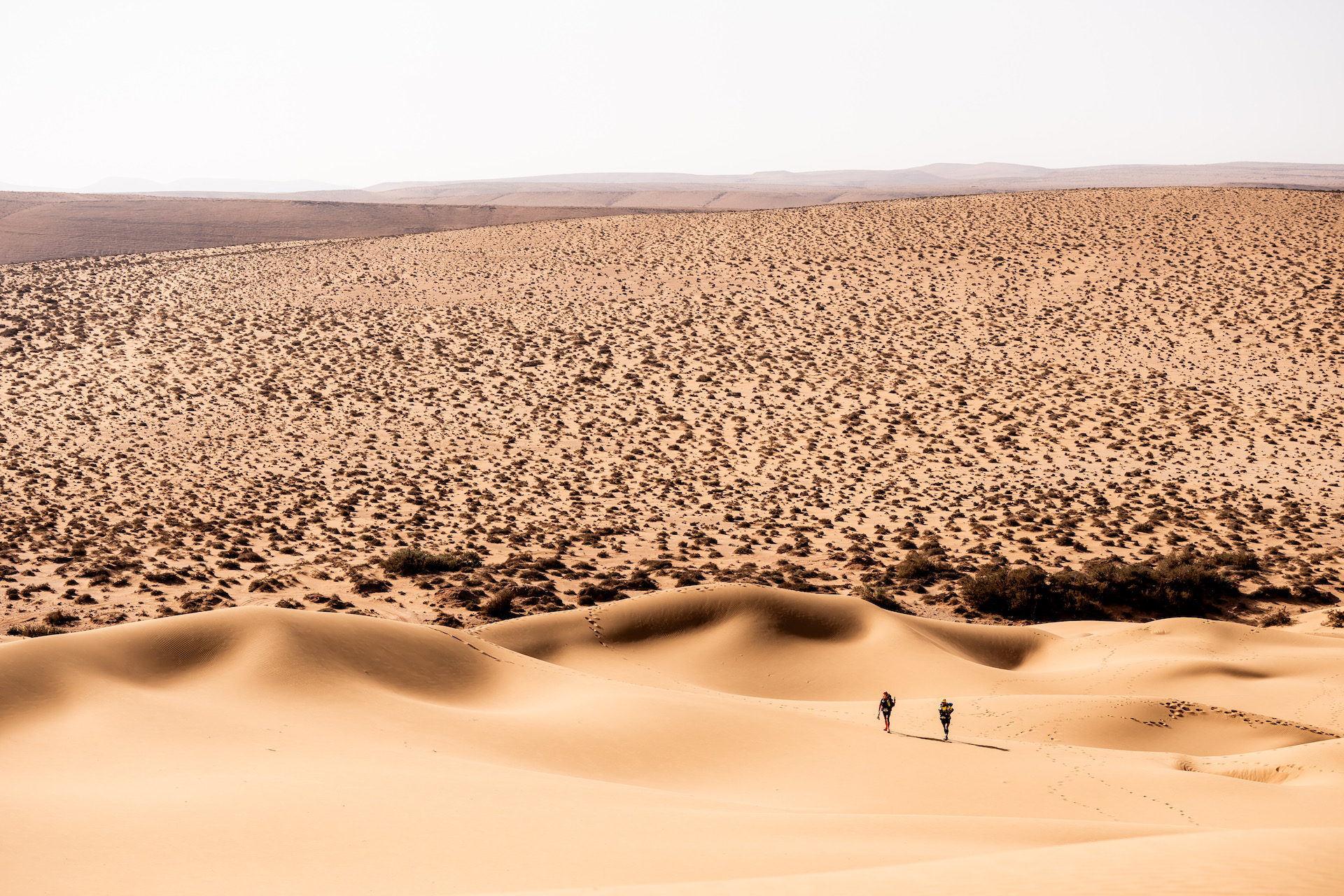
Located close to Agadir, the MDS Morocco Atlantic Coast explores a new area of this magical country.

Photo by Ian Corless

For stage 1 it was a very early start of 0300 for the drive from Agadir and the start line.

Photo by Ian Corless

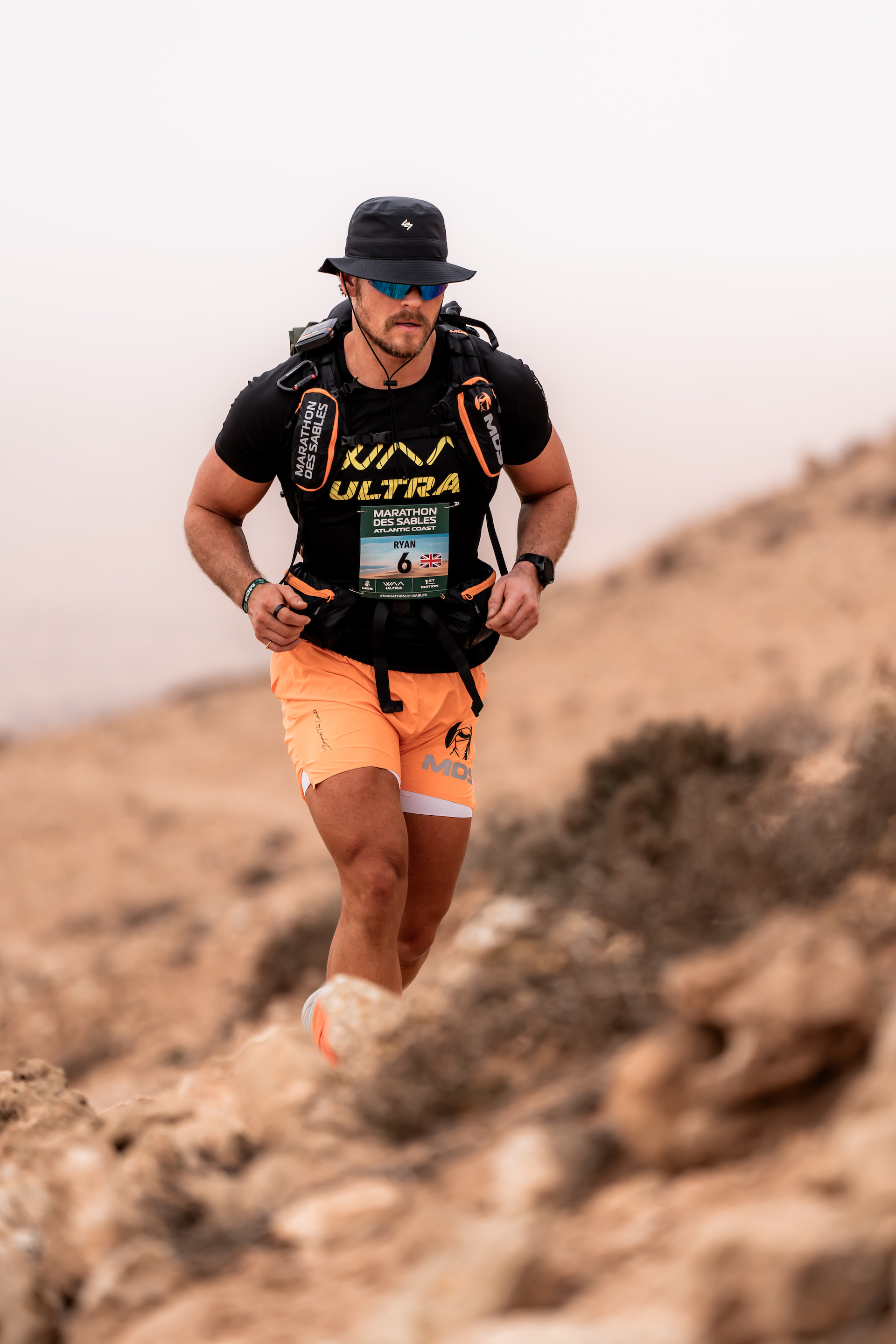
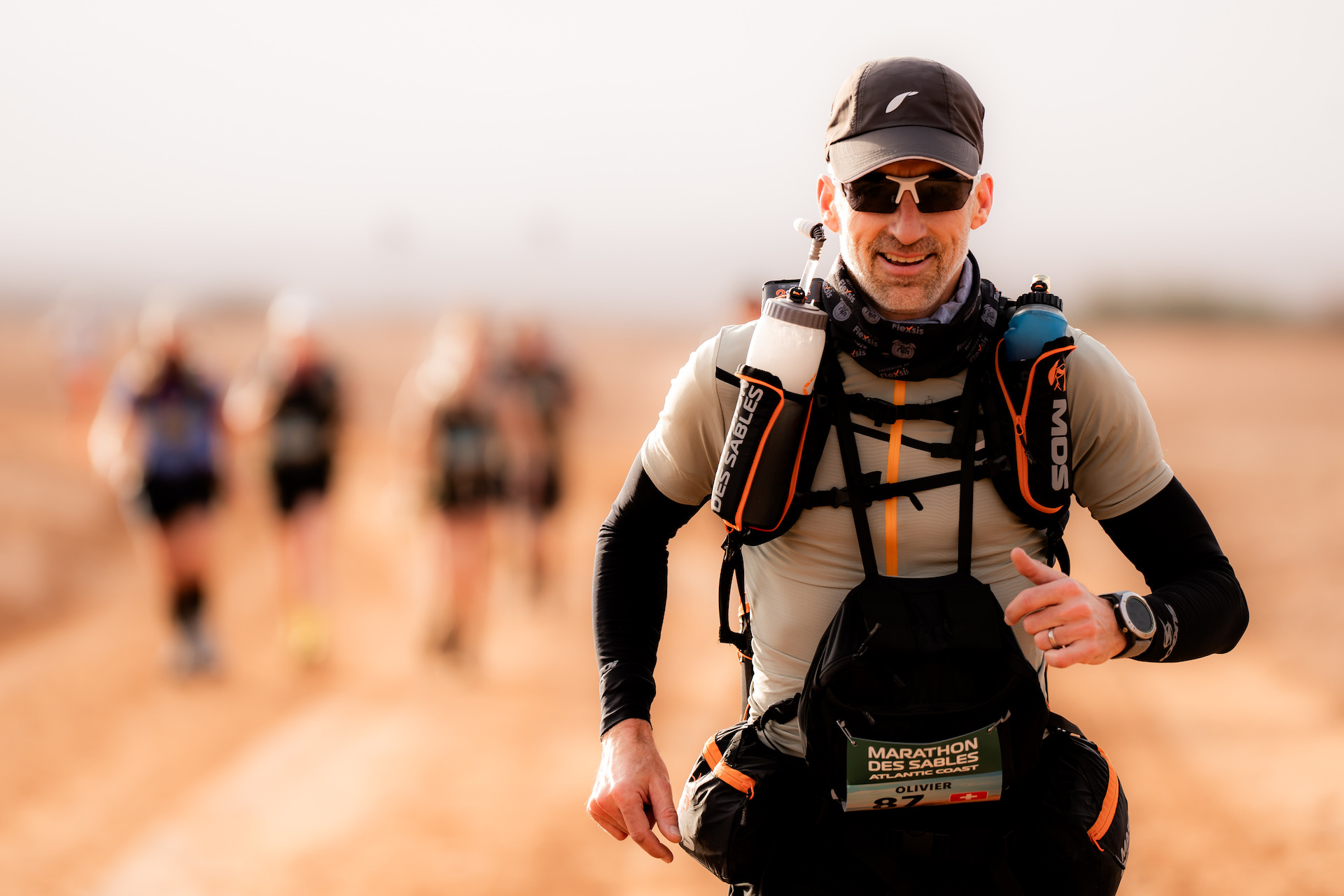
Kicking-off at 0930, 170 runners from 27 nationalities started the 23km journey with 344m+ heading north to the coastline of the Atlantic Coast. Of the 170 participants, 50% of the field are women, MDS once again pioneering the way for female participation in ultra races.

Photo by Ian Corless

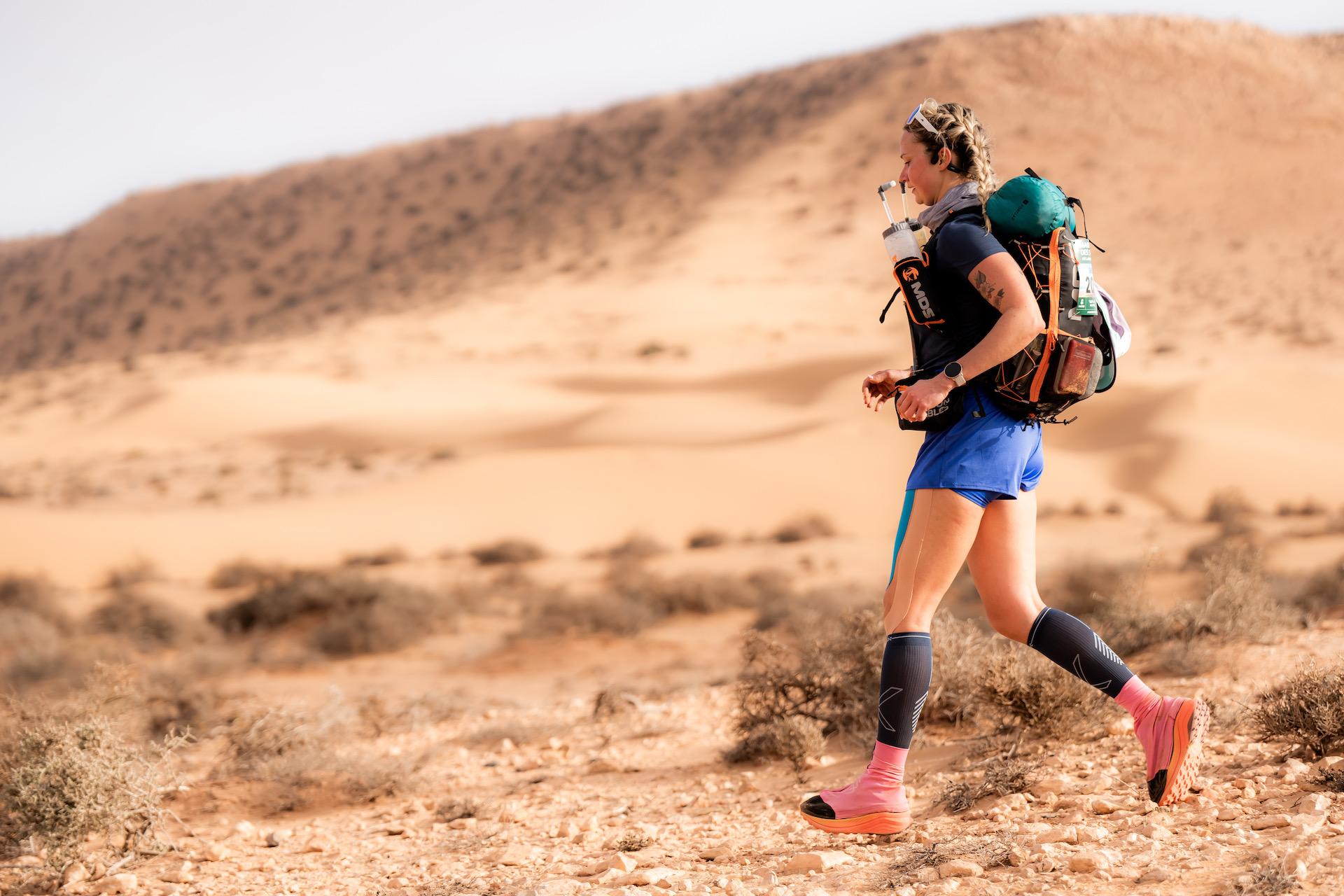
The day started with hard pack runnable terrain making for easy km’s before a dune passage, followed by a gorge and finally high dunes with the glimmer of the ocean in the distance. Cloud and a chill in the air soon moved away to leave blue skies and daily high temperatures of 27-degrees.

Photo by Ian Corless

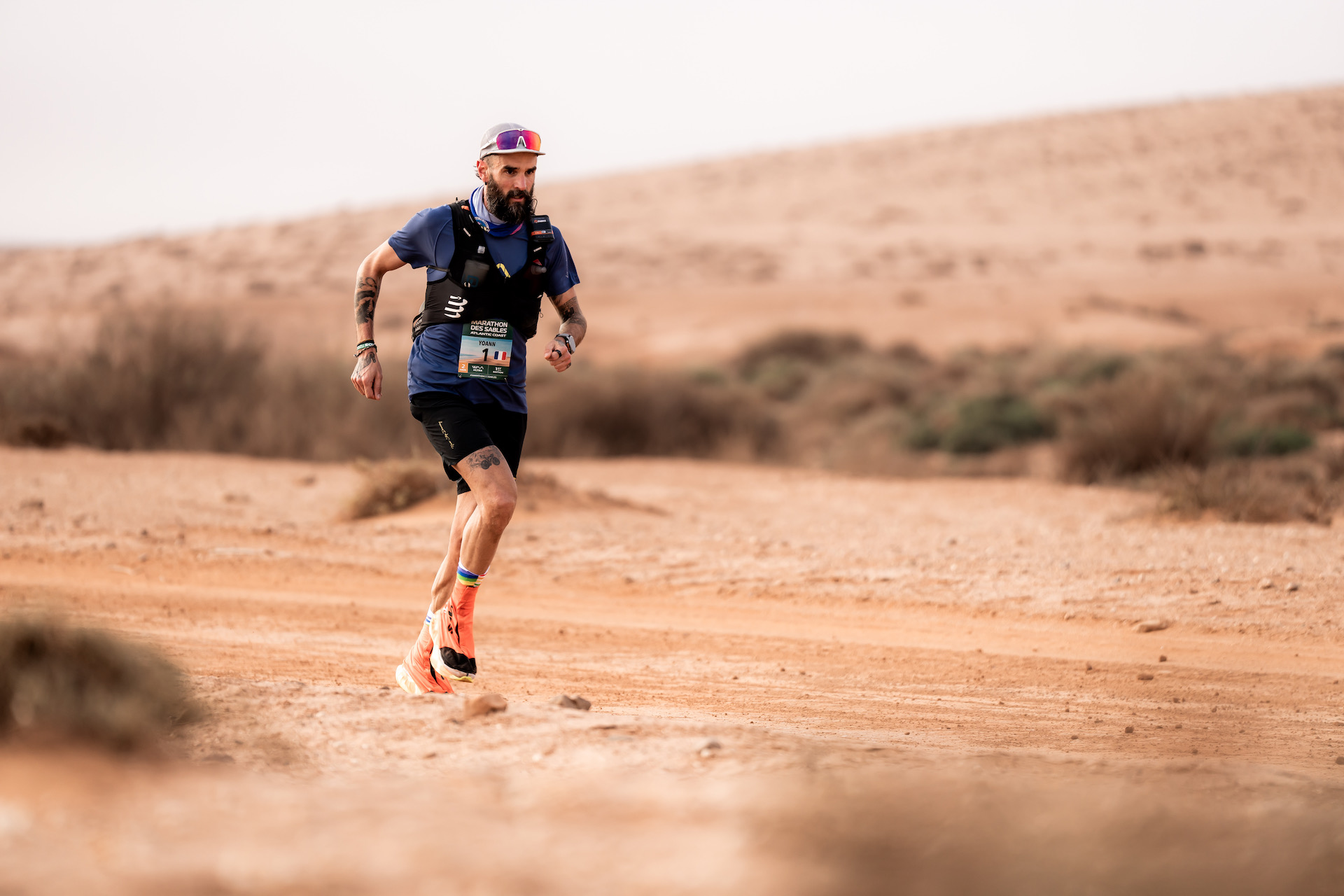
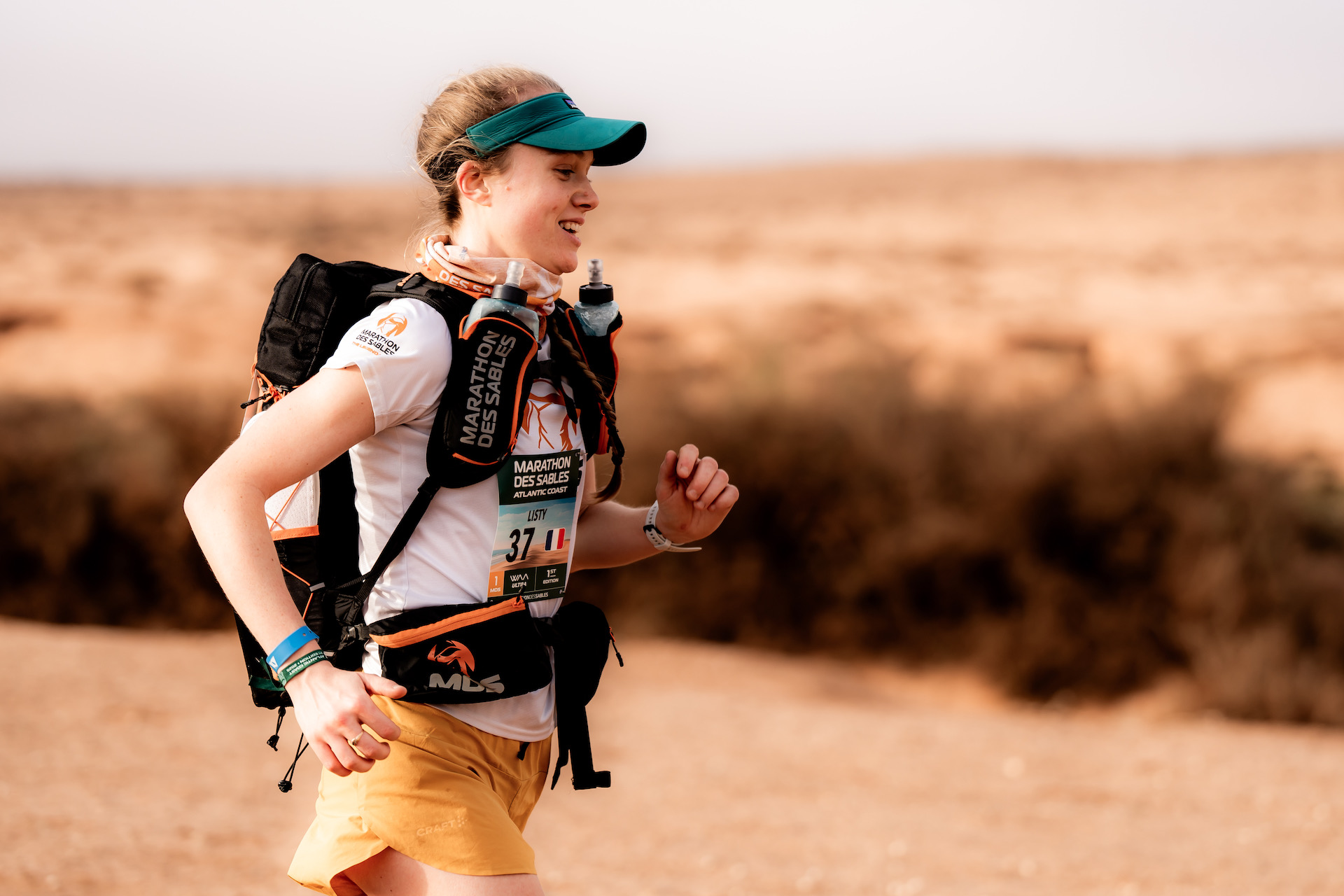
Yoann Stuck and Listy Mazille dominated the day. Yoann finishing the day in a super-fast 01:49:52 ahead of Göran Schrey and Stephan Bawey, 02:01:30 and 02:01:52 respectively.

For the women, Listy crossed the line in 02:16:58, a huge gap opened up with Janina Beck 2nd in 02:39:43. Anne-Caroline Kusinierz was 3rd in 02:43:08.

Full race results HERE

Photo by Ian Corless

Tomorrow, stage 2, is ‘the long day’ when participants can choose one of three distances, 19.7km, 41.2km or 54.5km.

Photo by Ian Corless

Interested in joining an MDS event in 2025? A full calendar of dates and destinations are available HERE

Instagram – @iancorlessphotography

Twitter – @talkultra

facebook.com/iancorlessphotography

Web – www.iancorless.com

Web – www.iancorlessphotography.com

Oman Desert Marathon 165km 2025 – Stage 4

Photo by Ian Corless

It was a morning of relaxation in bivouac, today, stage 4, has the participants starting at staggered times based on ranking. The first departure 1400, the second 1500 and lastly, the fast group at 1700.

The start times are designed to allow all participants to experience the Oman Desert under darkness.

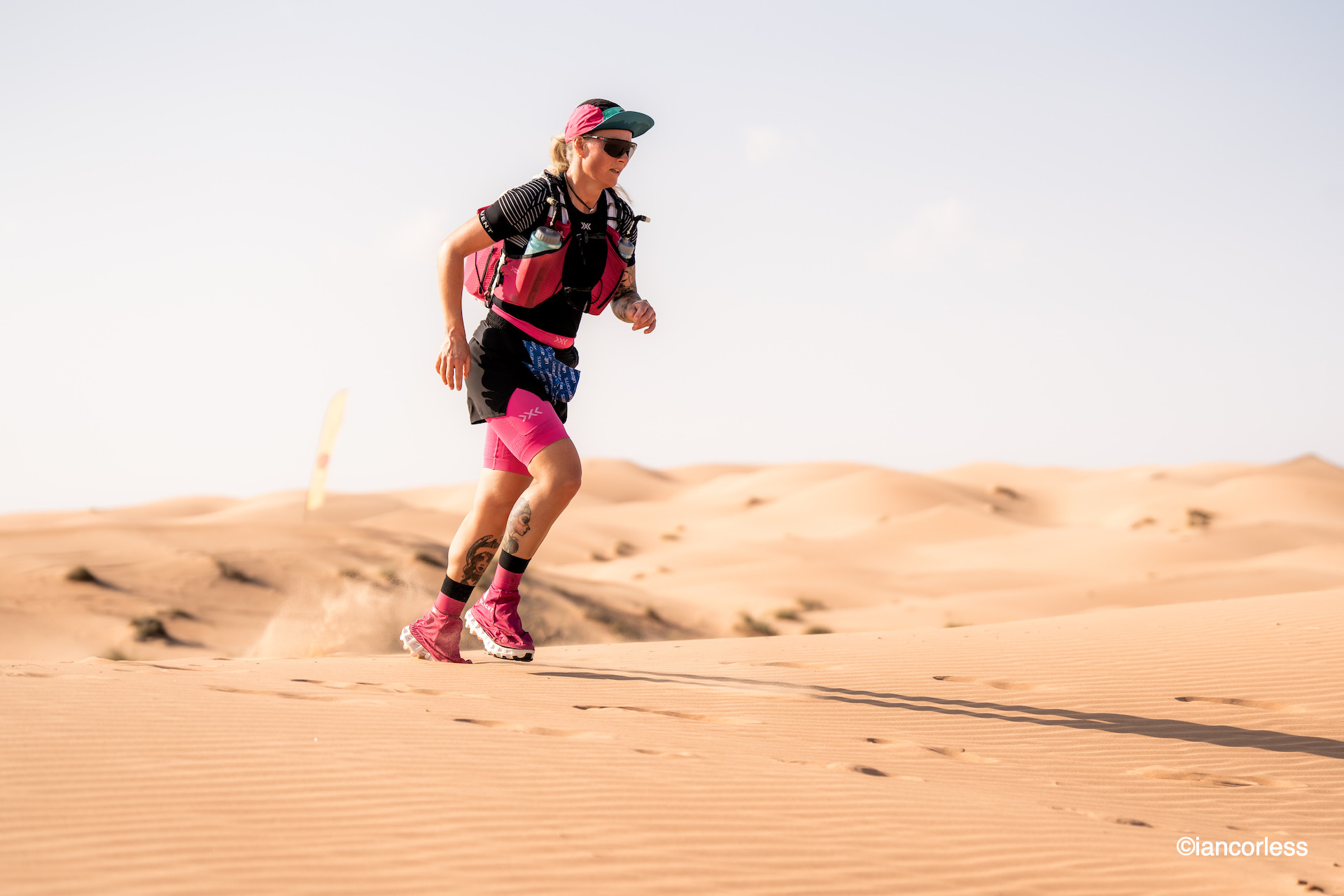
The 30km stage starts with 6.8km’s of dunes and then after a left turn, the route takes a direct line to the finish line and final bivouac night before the final stage tomorrow.

Aziza – Photo by Ian Corless

In the 1500 departure, the top women raced head-to-head and unsurprisingly, Aziza Raji once again dominated in 03:59:21 followed by Lydia Oldham, 04:20:23 and today Tanja Schoenenborn, 04:46:13, had a very strong day finishing 30-minutes ahead of Sally Ford.

Tanja – Photo by Ian Corless

In the men’s race, it was all guns blazing from the off with Rachid El Morabity setting a super fast pace. It came as a surprise as he has taken the first three stages very relaxed.

Rachid – Photo by Ian Corless

He pushed ahead and at cp1 had an 8-minute lead. He continued the charge and crossed the line in 02:37:43.

Photo by Ian Corless

Behind, Saleh Alsaidi and Mohamed El Morabity chased both pushing each other hard. The elastic eventuall snapped and Mohamed pulled away to cross in 02:44:22, 6-minutes 39-seconds behind his brother. Saleh secured third in 02:50:06.

Photo by Ian Corless

The final and fifth stage tomorrow will have the participants run a 21km stage. It’s a flat and fast stage with just a short section of dunes to start the day.

Photo by Ian Corless

Stage 4 results HERE

Full results HERE

Photo by Ian Corless

Oman Desert Marathon website HERE

Photo by Ian Corless

Instagram – @iancorlessphotography

Twitter – @talkultra

facebook.com/iancorlessphotography

Web – www.iancorless.com

Web – www.iancorlessphotography.com

Oman Desert Marathon 165km 2025 – Stage 2

Photo by Ian Corless

Stage 1 was a tough day, the talk in bivouac was all about the relentless sand and how the final 10km was relentlessly tough.

It was an early sleep for most and the night was a cold one. Temperatures plummeted, especially in the early hour of the following morning.

Tired! – Photo by Ian Corless

Bivouac came to life around 0500 and stage 2 eventually started at 0700.

Rachid – Photo by Ian Corless

The early km’s were relatively easy and cool. So cool that Rachid wore a windbreaker and gloves… He actually did not remove them all day despite the temperatures rising to 27-degrees.

Photo by Ian Corless

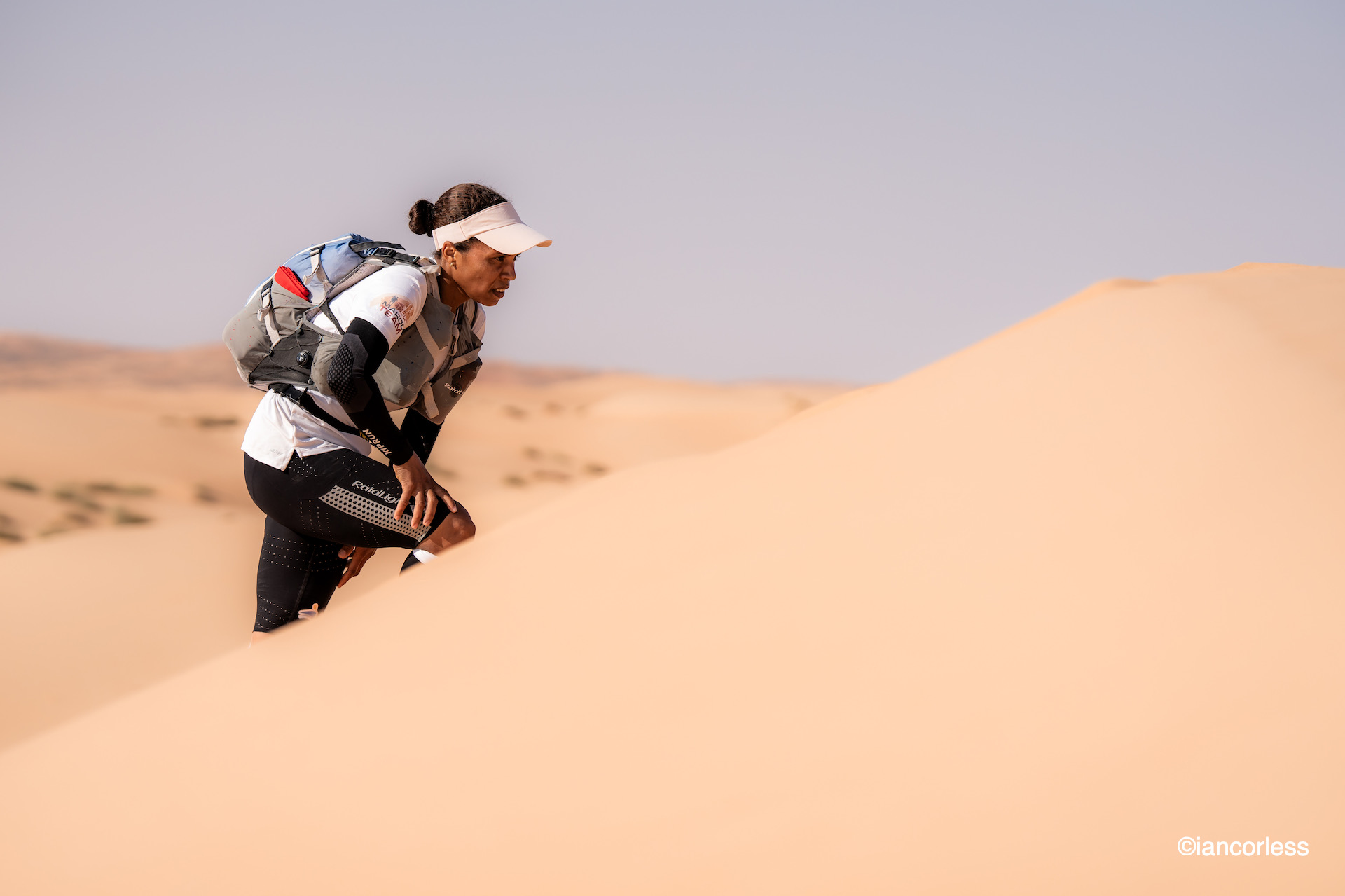
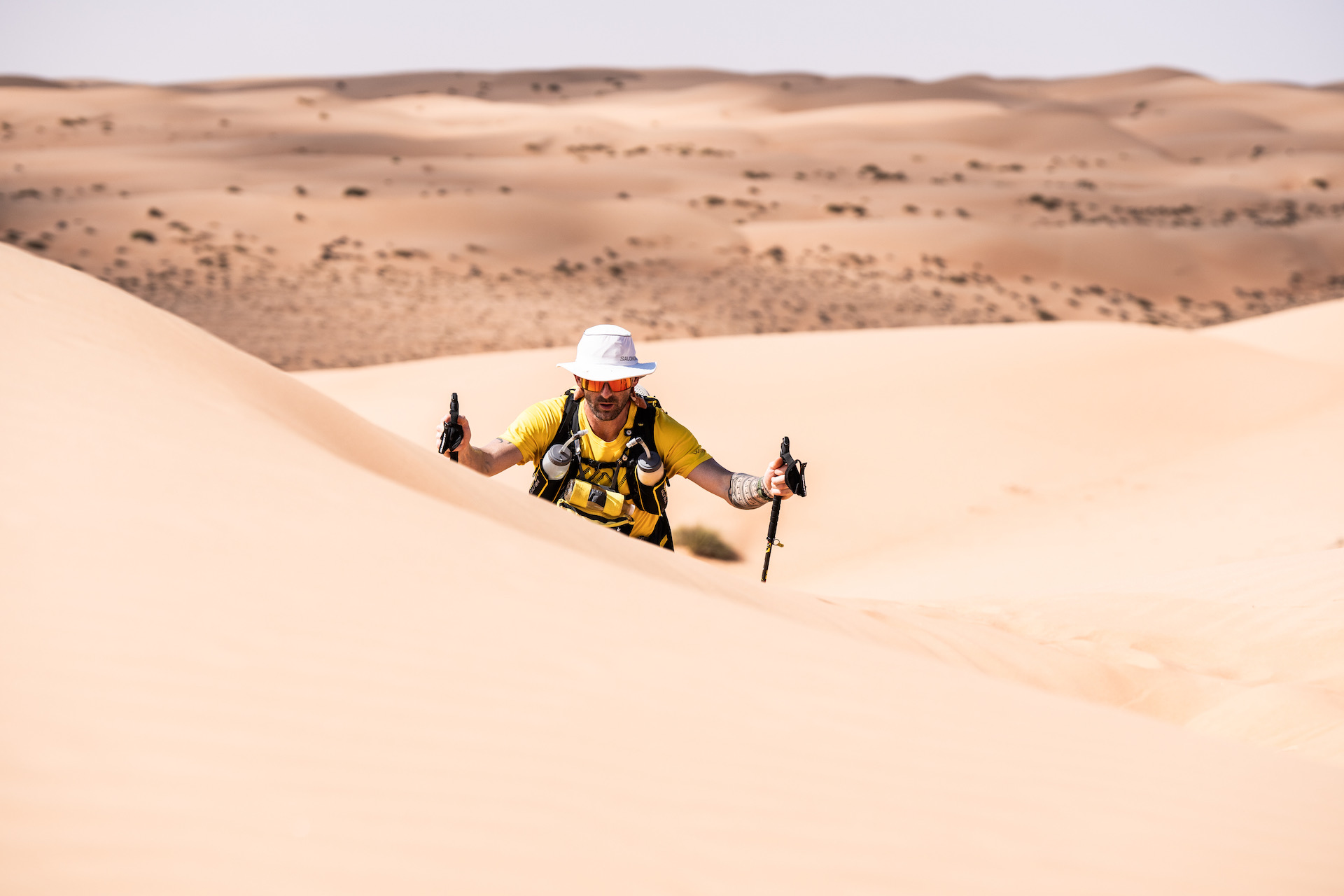
The highlight of the day was a dune section with sunrise. Pure magic with high views of the surrounding landscape.

Photo by Ian Corless

While there is no ‘easy’ running here in Oman, the km’s after the dunes were relatively flat and easy.

With Mohamed taking victory on stage 1, a slender 4-seconds ahead of his brother, Rachid, all the action would be around the Moroccan.

Photo by Ian Corless

The local Omani runner’s, especially Salah Al Saidi did all they could to put him under pressure but Mohamed is too strong. In the final 10km’s he made his move and opened a gap for the stage win in 3:05:54.

Stage 2 of the 2025 Oman Desert Marathon was full of action and spectacular dunes. Mohamed El Morabity and Aziza Raji took the stage wins!
Mohamed – Photo by Ian Corless

Rachid did an amazing job to finish 2nd, 3:09:26 and Saleh 3rd in 3:10:01.

Rachid – Photo by Ian Corless

Rachid by contrast was taking it easy, with 20km’s covered he was 5-minutes behind the leaders, however, the attack came and he closed the gap effortlessly and then forged ahead with on of the Al Said.

Aziza – Photo by Ian Corless

For the women, Aziza Raji was once again making the sand and the dunes look easy. Lydia Oldham, Sally Ford and Tanja Schoenenborn are all close together, but they are fighting for second.

Lydia – Photo by Ian Corless

Tomorrow is another 40km stage, followed by stage 4 which starts late afternoon and goes into the night.

Race results are HERE

Oman Desert Marathon website HERE

Photo by Ian Corless

Instagram – @iancorlessphotography

Twitter – @talkultra

facebook.com/iancorlessphotography

Web – www.iancorless.com

Web – www.iancorlessphotography.com

Marathon des Sables – The Legendary : NEWS FOUR – Mar 2024

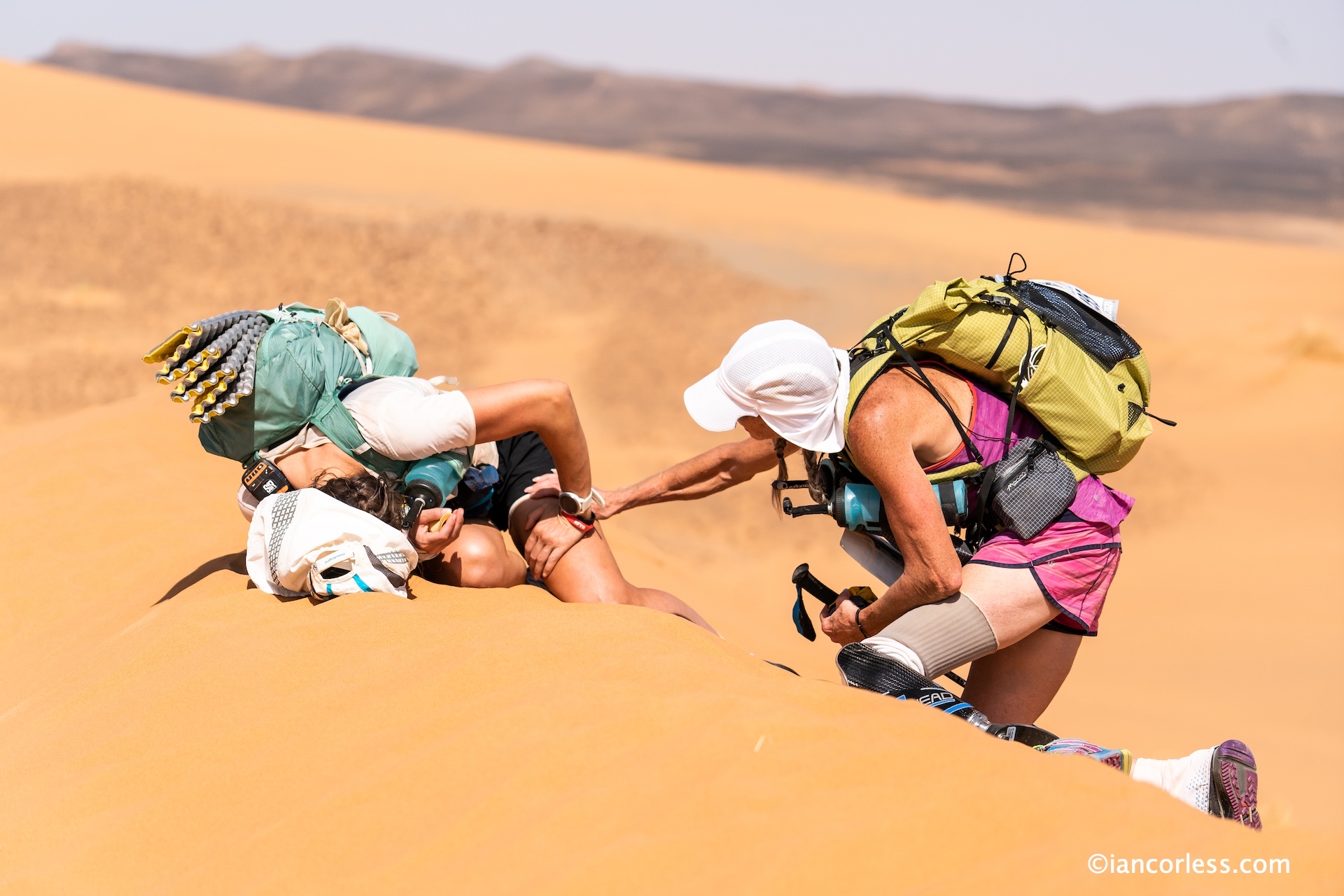
There is not much shade in the Sahara, so, don’t rely on it.

Marathon des Sables – The Legendary will soon be here and now is the perfect time to make sure that you plan for a series of protocols to acclimate to heat and the stress of heat before arriving in Morocco.

In simple terms, you need to impose heat stress on the body that will simulate the conditions you will race in when in the Sahara.

Heat exhaustion brings you to a stop and may well mean a withdrawal from the race.

Acclimation to heat should be done close to competition, ideally sub 21-days and ideally in the final 14 and 7-days. Statistics show that 5-sessions (or more) offer a more fulfilled adaptation. The pseudo motor function (sweat rate) takes a little longer to occur, but all the other measurements, cardiovascular and lowering core body temp occurs quite rapidly. However, 5-10 sessions will allow even greater adaption, and provides better results in particular with sweat rate.

Now of course, if one is fortunate with time, the best scenario is to travel to the race location and adapt naturally in the environment of the race. Reality is though, few of us have this option and we must therefore simulate the stress of heat. The most obvious and effective protocols take place in an environmental heat chamber. Sessions could be performed every 2-days in a 14-day window. Adaptation from exposure diminishes rapidly, so, there is no need to do this too far away from the chosen event. 

Expense can be an issue and therefore there are other possibilities. Keep training as planned and add layers of clothing while training. Post training, when already hot from the stresses of a run, you could then take a hot bath which will raise core temperature. One can also consider Bikram Yoga and use saunas. The reality is though, while some of these interventions will have some benefit, and most certainly, they are better than nothing, it is not something that can be recommended completely as it is harder to prescribe and measure.

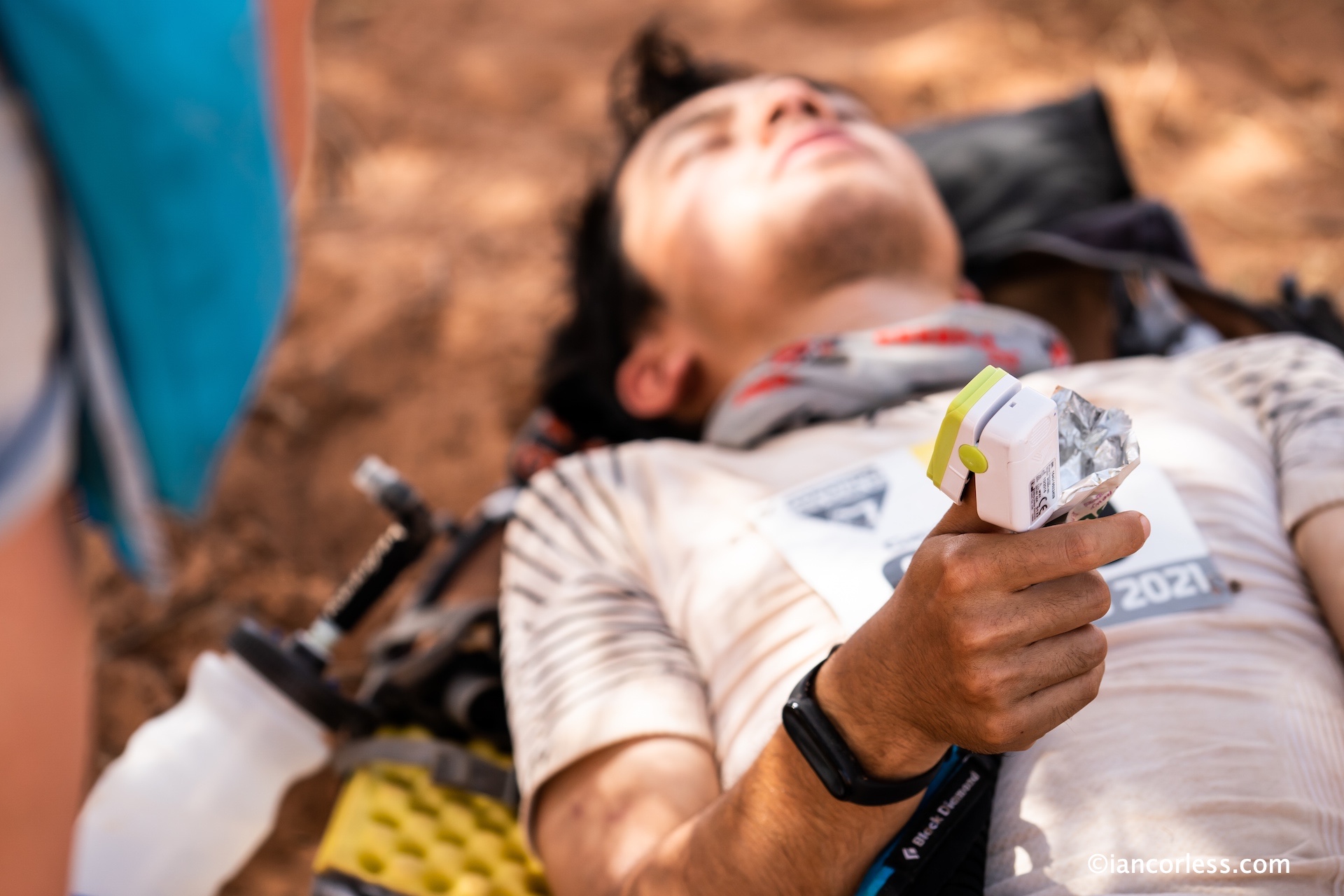
When it all goes wrong, shade and an IV drip may be required.

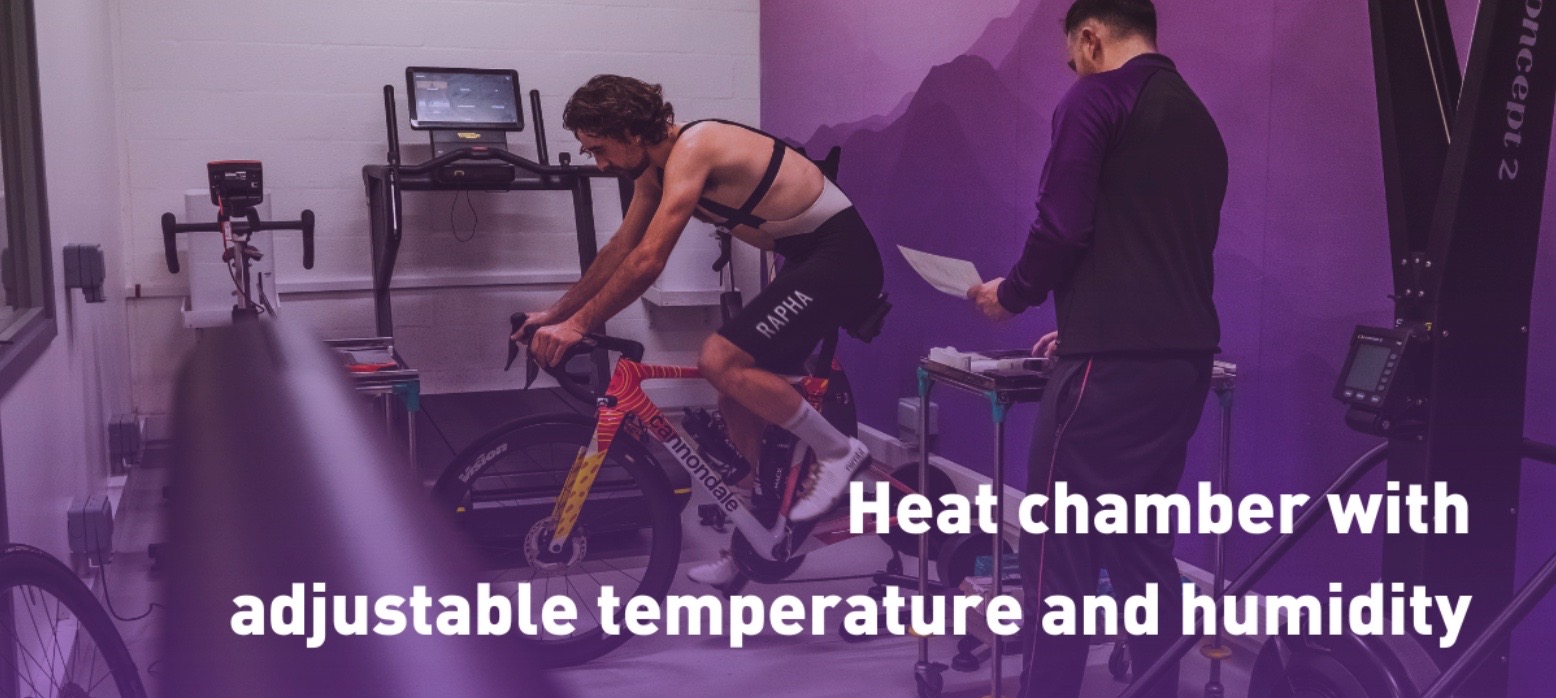
Environmental heat chamber

Environmental heat chamber is controlled and measured and in addition is monitored by a professional who gradually controls and analyses the stimulus to ensure maximum benefit and importantly, safety. In regard to session length, sub 60-minutes is usually adequate and this allows the body to get hot enough.

Image (c) Loughborough Sport

The use of a rectal thermometer is used to ensure that you reach the required thermal stimulus. Body weight is measured when naked and then this figure is used to measure fluid intake and sweat rate. Urine tests may be done to look at hydration status. It’s important that a client leaves re-hydrated after a session.

Image (c) Loughborough Sport

It’s important to remember, these sessions are about heat adaptation, they are not training sessions. A treadmill or bicycle is used and many testers prefer the bike as it adds less impact to the body and fatigue.

A 5-minute check will include heart rate, core temperature, skin temperature, perception of thermal environment, how hot does the client think it is? And finally, the tester usually asks how comfortable the client is. Then, the protocol will begin.

The target is a core temperature of 38.5 degrees in each session, which is ideal for pseudo motor and thermo functions to be maximised. Measuring the thermal strain is key. It usually takes about 30-minutes to get to 38.5 degrees depending on the individual. But external factors do have an impact. The session is about controlling and meeting a fixed criteria.

The first two sessions are often a challenge and then by session three, improvements can be noticed with the greatest improvement coming after day five with seven sessions being a great target to work towards. Total exposure is more important than days, so, if challenged for time, it is possible to do two tests per day, say AM and PM. As stressed above, the optimal time window is in the 14-days counting down to the event or race.

Loughborough Sport in the UK offer specific heat acclimation – book HERE

All runners in the Sahara will be faced with physical and perceptual challenges that will have negative effects on performance if not acclimated.

They will be slower, frustrated, dehydrated and have a potential of heat stroke and ultimately they may not finish the race.

Acclimating to heat pre-race prepares the body for the challenge to come!

Too hot? Cool down.

When in the race, if you experience negative effects of heat, is there anything that can be done?

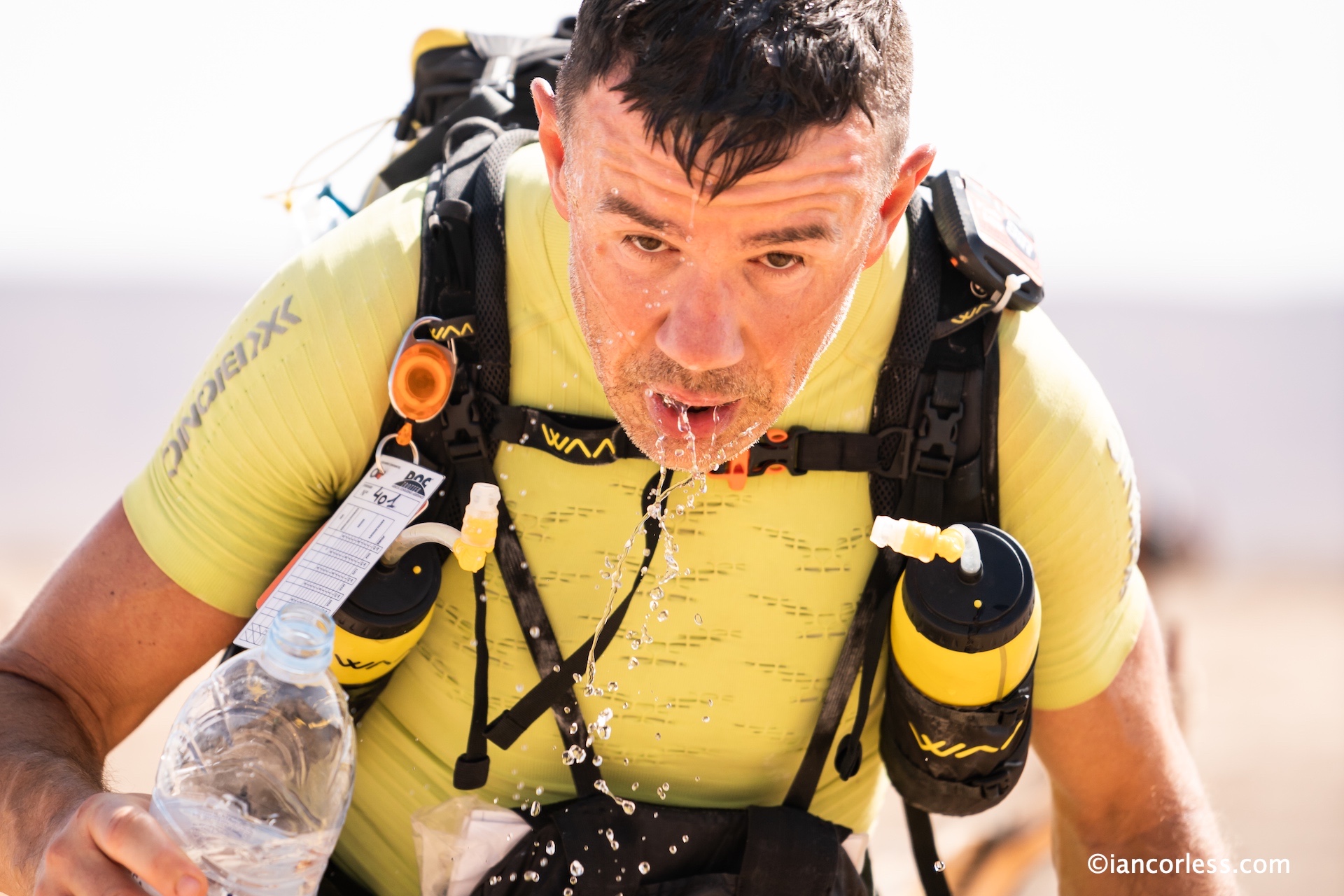
Yes, slow down, try to cool down as much as possible, seek shade at aid stations, rest and allow the core to lower. Hydrate and use spare water to provide a perceptual cooling: water on your face, head, forearms and neck will help a little with this.

Conclusion:

When one runs, you use muscle mass and this generates heat. When you then exercise in a hot environment, particularly if it is greater than skin temperature, then this makes it very difficult to get rid of heat. Humans are not the most efficient mechanically, so this energy from contracting muscles, potentially around 20 to 30% of the mechanical energy being made is converted to chemical energy, that means 70%, maybe even more, needs to be eradicated in the environment. If the environment is hot, for example, the Sahara, a challenge is imposed to eradicate the heat and what often happens is is that the heat is stored and one feels hotter and this then has a cascade effect of issues and problems, physiologically and perceptually.

Physiologically there is an increase in skin temperature as it is directly impacted upon by the environment. There will be an increased demand for blood flow that needs to go to muscle to provide it with oxygen/ energy to run, but also there is a competition for blood flow to the skin. In order to thermo regulate, blood is competing with muscles and skin and that creates an impact on one’s cardiovascular system. Typically, heart rate will increase due to the increased workload sending blood to muscles and skin. Body core temperature will increase. Sweet rate will also increase and therefore the percentage of water loss will increase and the consequence of this is dehydration – a deficit in body water with onward complications.

Trained individuals can gain thermal adaptations, irrespective of environment. For example, if you are training everyday, particularly at a high percentage of VO2max, one will create heat and this will require a higher sweat rate and therefore adaptation takes place. But, interventions should be in place both acute and chronic, to minimise the effect of environment on performance. Environment, will always have an impact on performance, no matter which athlete. So, make a plan now to adapt and acclimate in the final 14-days pre-race!

This article is based on a podcast (episode 191 of Talk Ultra) with Dr Jodie Moss PhD Sports Physiology, MSc Sports Nutrition.

Catch up on the previous posts

NEWS ONE Here

NEWS TWO Here

NEWS THREE Here

Follow on:

Instagram – @iancorlessphotography

Twitter – @talkultra

facebook.com/iancorlessphotography

Web – www.iancorless.com

Web – www.iancorlessphotography.com

Image sales –www.iancorless.photoshelter.com

Oman Desert Marathon 2024 – Stage 3

Stage 3 of the Oman Desert Marathon has a delayed start to ensure that participants experience the desert at night. With three waves: 10am, midday and 2pm (slower to faster runners respectively) the participants would cover the 47km stage in daylight and then transition to darkness.

Consider by race director, Said, stage 3 would include one of the most spectacular dune sections on the race, timed to coincide with the sun getting lower in the sky and for the lucky ones, maybe sunset would take place as the dune section came to an end.

Coming after the 55km long day, the later starts were welcomed and allowed for additional rest and recovery, however, the fatigue was starting to show on faces and bodies.

As the race got underway, it was clear that the men’s race would have a different approach, with Ghaith Al said pushing hard at the front, while behind, Saleh Al said and Rachid El Morabity ran together. Ultimately, it was an attempt to break Rachid. It didn’t work, but it was a valiant effort and one that rewarded Ghaith with the stage win in 5:03:39.

Behind, Saleh and Rachid ran together and crossed the line 5:10:29 and 5:10:39 respectively.

The women’s race had little drama with Aziza Raji and Aziza El Amrany running together and crossing the line in 6:56:35. The duo looked strong and relaxed. They will be a force to be reckoned with at Marathon des Sables this year.

Behind, once again, Veronique Messina ran a strong 3rd place in 7:49:56.

Albert Jorquera and Pol Makuri had a long day completing in 11:17. They are both very focussed mentally and strong physically. It has been a joy to watch the two of them work together and quite simply. Pol is an inspiration.

Results online HERE

Follow on:

Instagram – @iancorlessphotography

Twitter – @talkultra

facebook.com/iancorlessphotography

Web – www.iancorless.com

Web – www.iancorlessphotography.com

Image sales –www.iancorless.photoshelter.com

Oman Desert Marathon 2023 Preview

Rachid El Morabity

It’s countdown time to the 2023 Oman Desert Marathon.

Now in its 8th edition, the Oman Desert Marathon will take place January 21st to 24th. A self-sufficient race, the race takes place over 4-stages with a total distance of 165-kms.

January offers excellent conditions for a desert adventure, with highs anticipated and 25-degrees and lows of 17-degrees.

A unique race, the route provides participants the opportunity to explore and discover untouched sands and the highest dunes of Oman while running 47, 55, 42 and 21km.

“The OMD, changed my perspective on ultra-marathon running for the better. The desert is magical and beautiful, but will test you mentally and physically to your limit, but you will be a better person from it. The OMD event should be on every runner’s calendar.” – Adam May.

Arrival in Oman will be on January 20th with transfers to Al Jawharat Resort in Bidiyah. The afternoon will taken up with admin protocols and a race dinner.

  • Stage 1 – 47km
  • Satge 2 – 55km
  • Stage 3 – 42km
  • Stage 4 – 21km

Daily start times fluctuate and interestingly, Stage 3 has three starts, 1200, 1400 and 1600.

Stage 4 has an 0800 start with the race concluded by 1300 at the Al Jawharat Resort in Bidiyah resort. In the evening, an award ceremony and prize giving will take place.

The Runner’s

While Omani runner’s will make up the majority of the field, there are participants from Spain, France, Ukraine, Italy, Germany, Poland, Britain, Belgium, Switzerland and not surprisingly, Morocco will have the main contenders for overall victory.

King of the desert, Rachid El Morabity, 9x winner of the Marathon des Sables will once again lead the field and he is without doubt, the hot favourite for overall victory.

Mohammed El Morabity

Rachid’s brother, Mohammed, will be his main contender and should Rachid have a bad day, his brother will be able to pounce.

Aziz Raji

For the women, desert specialist, Aziz Raji, also a winner of Marathon des Sables, will be the main protagonist not only for the female victory, but quite possibly, a highly-ranked overall placing.

How to follow:

Daily reports and images will be issued on this website (connection allowing) each evening and a full and detailed race summary will follow after January 24th. On IG, @iancorlessphotography and @marathonoman 

We look forward to welcoming you to the Oman Desert Marathon experience.

Follow on:

Instagram – @iancorlessphotography

Twitter – @talkultra

facebook.com/iancorlessphotography

Web – www.iancorless.com

Web – www.iancorlessphotography.com

Image sales –www.iancorless.photoshelter.com
Lanzarote Multi-Day Training Camp 2023 – Nearly sold out!

We announced earlier this week that the Lanzarote Multi-Day Training Camp 2023 would have two ’Special Guests’ and this has resulted in a surge of entries for 2023.


Rachid El Morabity the 8x MDS champion will join us Friday to Monday for run sessions and a 2-hour talk/ workshop on MDS, Multi-Day running and ‘What goes in the pack?’ of a champion.
‘Dead Man Running,’ 

Kevin Webber will join us for the whole week looking after a walking group and providing a 2-hour talk and workshop telling his incredible story of his Prostrate Cancer diagnosis and how he has embraced running and adventure to not only inspire others but to raise money for charity and raise the bar of what is possible as a human.


RECENT NEWS


It has been great to confirm Tom Evans will once again join us. Tom guided on the 2018 Training Camp after placing 3rd at the 2017 Marathon des Sables. It was the start of an incredible story that has resulted in victory at CCC, Tarawera Ultra, and a 3rd place at the iconic, Western States 100-mile race in the USA. 


Rab athlete Abelone Lyng should have joined the camp in 2022 but unfortunately had to withdraw late in 2021 due to the pandemic situation and her role in the medical profession. We are pleased to confirm that Abelone will join us for 2023. Abelone has won the Ice Ultra and placed 4th at The Coastal Challenge. An adventurer, ultra, trail and mountain runner, Abelone is a specialist fastpacker who loves to travel solo or with friends.


Pierre Meslet, a physiotherapist, placed 9th at the 2021 Marathon des Sables and joined us in Lanzarote Jan 2022. Pierre provided excellent guiding, a superb talk and the added bonus of offering the 2022 attendees with the option of treatment. A huge success, Pierre returns in 2023.


LATEST INFO
Currently, we only have 4-apartments remaining for 2023 which will sold on a first come, first served basis. If you’d like to join us, don’t wait too long…


Latest deal (2 available) – We do have the option to add 3 adults in a 1-Bed apartment (2 single beds and 1 sofa bed) at the price of £875 pp making a saving of £170 pp on the normal ’shared’ occupancy price. Please email if this is an option you are interested in.


WEBSITE HERE

BOOKING FORM HERE

Follow on:

Instagram – @iancorlessphotography

Twitter – @talkultra

facebook.com/iancorlessphotography

Web – www.iancorless.com

Web – www.iancorlessphotography.com

Image sales –www.iancorless.photoshelter.com
Lanzarote Multi-Day Training Camp 2023 – NOW TAKING BOOKINGS!

12th January to 19th January, 2023.
Club La Santa, Lanzarote

Missing the 2021 camp due to the pandemic made the ’22’ camp even sweeter. Some may say it was the best camp yet…? To be fair, we think they are all great.

You can read summaries for 2022 HERE

Volcano hill reps, a highlight of the week.

We have so many attendees returning year-after-year and this keeps me on my toes always looking for something new. In the last two editions we have added a ‘Long Day’ that is a point-to-point run offering an opportunity to see and experience new trails. In 2022 we added some new routes that offered a little more technicality and vertical meters.

2023 WILL BE THE BEST YET

Rachid at the 2021 MDS on stage 1.

First and foremost, we will have some new coaches and special guests. The big news is that 8x Marathon des Sables champion, ‘King of the Desert,’ Rachid El Morabity will join us, arriving Friday 13th and departing Monday 16th. He will join us for two runs, provide a 2-hour Talk & Worskshop and yes, I am pretty sure you will all get an opportunity to have a photo taken with him.

The amazing and inspirational, ‘Dead Man Running,’ Kevin Webber will join us for the whole week. He will look to inspire each and every attendee by quite literally, leading by example. As Kevin says, “Got told my prostate cancer may kill me in 2yrs but here I am, nearly 5 years later running ultra marathons, raising awareness and funds for Prostate Cancer UK!”

With some new routes, new talks and workshops, new guests, the 2023 Multi-Day Training Camp will take what is already a special and unique formula and take it up several notches.

Book HERE

It doesn’t stop there though!

More news will come in the coming week as we finalise ‘Lanza 23!’
We hope you will join us, once again, for an epic 7-days in Lanzarote.

Booking form HERE

Information HERE

Follow on:

Instagram – @iancorlessphotography

Twitter – @talkultra

facebook.com/iancorlessphotography

Web – www.iancorless.com

Web – www.iancorlessphotography.com

Image sales –www.iancorless.photoshelter.com

Long Term Goal Setting and Planning for Ultra Running

The Long Term Goal

©iancorless.com_Lanza2016-03044

Recently I have produced several articles that have been created to help runners formulate a plan for a new year of racing and training. The articles have been as follows:

  • Planning a Running and Racing Year HERE
  • To Base Train or not to Base Train HERE
  • Base Training HERE
  • How long should the long run be? HERE
  • In addition, I wrote several articles on walking and how important it is to practice this for:
  • Ultra running HERE
  • Walking with poles HERE
  • Walking efficiency when climbing HERE

Recently I was involved in a series of discussions about the Marathon des Sables. One thing that became very clear is the panic and apprehension many runners feel about a goal that may well be a ‘one-off’ or lifetime goal.

Experienced runners will know how to goal set, they will know how to periodise and plan their training so that they hopefully arrive at a target event in peak form. This was discussed in Planning a Running and Racing Year (HERE). However, goals that go beyond one macrocycle (one year) require a much greater perspective and overview. If you are new to running, well, it can be just terrifying.

A great deal of advice can be extremely counter productive as it makes many runners feel inadequate, inexperienced, lacking confidence and in the worse scenarios even questioning if they should even go ahead with the race.

Let’s be clear. Everyone is an individual, I have yet to find two runners who need the same training plan or structure. However, certain scenarios work for all and it is with this in mind that I am writing this post.

©iancorless.com_Lanza2016-02987

JOIN MY LANZAROTE TRAINING CAMP, JANUARY HERE

Why set a long term goal?

Long term goals provide incredible motivation to step out of the door and to train. You will have heard the saying, ‘if it was easy, everyone would do it!’

To that end, iconic races such as UTMB and Marathon des Sables, are races that for many are the ultimate race, they are races to be built up to and therefore a macrocycle is not enough time to prepare; hence long term goal setting.

Irrespective of experience, two key words come in to play when setting a long term plan: Structured and Progressive.

In this scenario, I am using goal setting for Marathon des Sables.

STRUCTURE

A macrocycle is one training year and this is broken down into mesocycles. It may sound like a fancy word but a mesocycle is a series of blocks of training that make up one macrocycle. For purposes of explanation, let’s assume that you are running the Marathon des Sables which takes place in April 2020.

I always recommend getting a year planner so that you get a big picture of what lies ahead. Fourteen months may seem like a long way off, it is, no need to panic, but also don’t become complacent. What’s important here is experience. I am therefore going to have two runners.

Please Note – This guide below is geared towards someone who aims to run as much as possible at MDS. Very few run all of MDS and most walk considerably more than they think. For me, walking is a key element to a very successful training plan. The structure below still applies, the sessions would adjust accordingly.

Runner A has run a marathon, runs to keep fit and has set the lifetime goal of Marathon des Sables. Priority is completion.

Runner B has been running for years, eats marathons for breakfast, races ultra races regularly and is going to Marathon des Sables as a challenge, to test him or herself and plans to compete over complete.

You don’t need to be a rocket scientist to work out that runner A and runner B need completely different training plans and strategies. Keeping in mind that A has less experience, more insecurities and a great deal of anxiety about the big target, I will talk through the possible planning cycle for A.

Let’s break down the macrocycle. As I said, we have twelve months (+/-) to play with, so a schedule may look like this:

Phase 1: Apr, May with C race objective (half-marathon).

Phase 2: June, July, Aug with B race objective (marathon to 50km).

Phase 3: Sep, Oct, Nov with A race objective (multi-day race)

Phase 4: Dec, Jan with B race objective and/ or specific warm weather training camp.

Phase 5: Feb, Mar.

Phase 6: Apr – A race.

Phase 1

Is all about consistent and regular running based on available time, ability and commitments. Set yourself a C race target for the end of this period. It could be a half marathon. It’s always good to have intermediate targets to work to and we often use C and  B races as stepping stones to an A race, in this scenario, Marathon des Sables.

Be realistic here, it’s important. Ask yourself a couple of key questions:

How many days can I train?

How many hours a week can I train?

We are going to assume that running three/four days is possible every week with a fourth/ fifth day for cross training and strength work. A microcycle (week) in phase 1 may well look like:

  • Tuesday – key day
  • Thursday – key day
  • Saturday – Cross training
  • Sunday – key day

In phase 1 we want to just walk, run or walk/ run and build a base of fitness from which to build. No need to rush in and panic. Be sensible and progressive. A safe way to do this is build for three weeks and on the fourth week rest and recover, Yes, rest and recovery is just as important as running.
Use the 10-20% rule and never add more time than this to each run. An example for the first month may look like:

screenshot_93

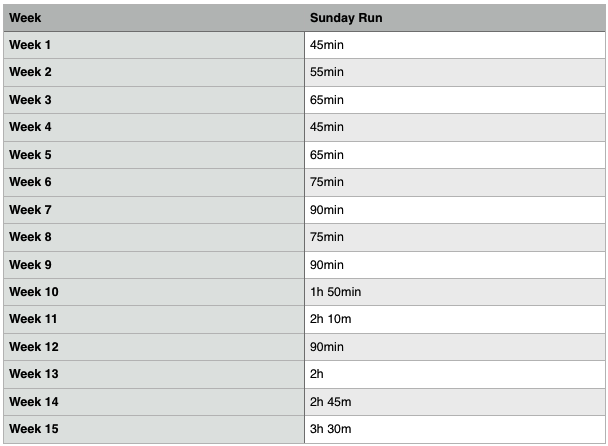
Over this phase, you would eventually cap the length of time for the Tuesday and Thursday runs at 60 to 90-minutes and the Sunday run would progress to 3-hours 30-minutes as follows:

screenshot_94

Use this system in phase 1 building week on week over four months to lay a great foundation of progressive miles and time on feet. If you have built progressively, your Sunday long run will have progressed to over three hours which puts you in a great place for a C run target.

A marathon would be a good C target at the end of phase 1. You wouldn’t taper for a race like this, it would be a training run that would be added to your plan.

Phase 2

You have phase 1 under your belt and the confidence of completing a C target. Phase 2 now builds and at the end of this phase you will have a B race target as a goal. This race should be challenging but not so challenging that it becomes intimidating or breaks you. If you ran a half marathon as a C race, then your B race could be a marathon. If your C race was a marathon, then your B race may be a marathon or 50km race if you feel that training is going very well?

It’s also important now to think ahead to Phase 3 and an intermediate A race target that will motivate you and boost your confidence for phase 4, 5 and 6.

Also think about planning and booking heat chamber sessions or equivalent for the final build up phase just before the race; this usually takes place in the final 2-3 weeks and sessions go quickly.

In the UK, a race takes place in November called the Druids. It’s a three day race where runners take on a marathon for three consecutive days. It’s a perfect ‘mini’ Marathon des Sables scenario and a great opportunity to test clothing, pack, fitness and build confidence.

Assuming that four days training are still possible and that you have had no injury issues or problems, we can now progress training building on endurance in the long runs and adding some faster/ strength sessions during the week.

A week may look like this:

  • Tuesday – Hills.
  • Thursday – Speed
  • Saturday – Cross training and strength.
  • Sunday – Long run.

As in phase 1, progression is really important and the plan would actually change and evolve over this period with each month looking different.

screenshot_95

The above plan is a guide and this is where a run coach can step in and provide structure and remove the guess work away from how the plan is put together. It’s all about placing the right emphasis at the right place and at the right time.

You will see how month 3 changes from months 1 and 2 so that it is specific to the B target at the end of this mesocycle.

Phase 3

You have just completed your longest run in a B race, be that 50k, 50m or somewhere in-between and your confidence is sky high. You now have an A race on the horizon (November) that involves three back-to back marathons and suddenly your appreciation of what is required is much clearer. You respect the Marathon des Sables target but now it is less intimidating as you have moved your way up through logical and incremental steps.

Another three month phase of training that allows is to fine tune and hone in on the racing skills required.

As you may expect, phase 3 starts with recovery from your B race target. You will need to cross train or just run easy for 3-4 days. By the time the weekend comes around, you will feel as though recovery is well on the way, don’t rush. Take your time and the following week run easy Tuesday and Thursday for up to 60-minutes and then do 60 and a 90-minute run on Saturday and build on the Sunday run. An example of phase 3 is below. Please remember, YOU are an individual with specific needs and what I provide below is a possible structure leading to an A race in November.

screenshot_96

The A race at the end of November provides a significant marker in your training. The experience will allow you an opportunity to find out what worked, what didn’t work, how your kit worked, what was good, what was bad and so on.

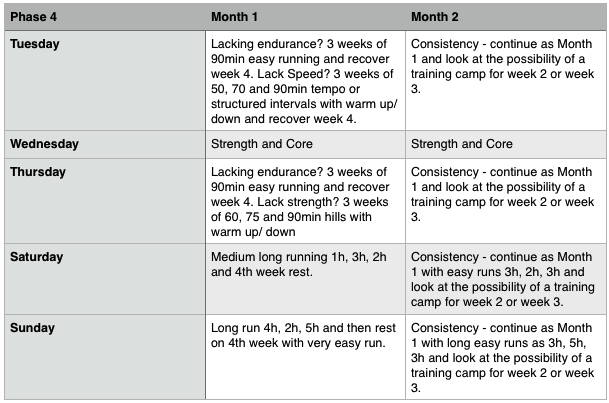
December is now upon you and Phase 4 is an opportunity to look at weaknesses and work on them so that you are in great shape to take on Phase 5 which is the final period before your key race.

1. If you lacked endurance in your November A race, keep working on consistency and build endurance with time on feet.

2. If you lacked speed and want to run faster, December is a perfect opportunity to cut back on distance and long runs and add some speed work.

3. Due to the demands of running with a pack, running long and all the associated fatigue, make sure that you incorporate a strength and core routine to make you a stronger runner. It’s easy to say here, ‘I don’t have the time!” You do, cut down your run time on a Tuesday and Thursday and free up time for strength and core. Maybe you can even find an extra day in your week (Wednesday) to allow you to work on this. Alternatively, work on strength and core at home maybe while watching television? The time is there, you just need to find it and be creative.

4. Practice walking. Effective and fast walking is a key weapon to a successful race in any long ultra or multi-day race.

With a new year coming, April and the heat of the Sahara looms on the horizon. January provides a perfect opportunity for a warm weather training camp just as the weather is wet, miserable and cold in Europe.

©iancorless.com_Lanza2016-05531

Fancy a Training Camp?

I run a week long camp in Lanzarote that provides the perfect opportunity to test everything in a real situation. We even provide a bivouac experience. You can listen to client feedback below and info HERE.

screenshot_97

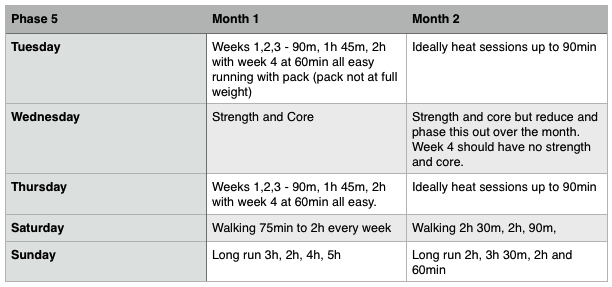
Phase 5 is the last phase and ultimately you have 6 weeks to get prepared and ready for your key race. If you attended a training camp you will now have a full appreciation of everything that you need to do. That may be changing kit, more time on feet, looking at nutrition or even a combination of all elements

Now is the time to make sure you have all your admin sorted – insurance, medical, compulsory kit and so on.

Don’t leave anything to chance now. If in doubt about equipment, contact MyRaceKit, they are able to provide expert advice in regard to everything that you will need.

Think about heat and how you will adapt. With luck, back in phase 2 or 3 you will have thought ahead and booked time in a heat chamber. Ideally this will take place in the final 2-3 weeks before the race. No sessions booked? Train in a gym with additional layers, take a sauna, do Bikram Yoga etc

Again, consistency is key here. You have been training for this long term goal for sometime, don’t do anything silly, don’t do a long run that is really long; you up your chances of injury risk. Remember, training is about ALL the sessions you have done and not just one session

Pack weight is a consideration and get it as close to 6.5kg as possible. On day-1, when you add water it will be 8kg. BE CAREFUL training with too much weight, it is a guaranteed route to injury. For sure, do some sessions with weight, be progressive and slowly build up. Just do one session per week in the final phase and only do 1 or 2 sessions with pack at 8kg and do not go too long.

screenshot_98

Phase 6 is race time.

Be organised, be prepared, think of everything and have the race of your life.

It’s in this final phase when you are so close that little things can go wrong. Be prepared as best as you can. You can’t account for the unexpected but reduce chances of anything going wrong by taking no risks.

The information provided above is designed to provide an outline and a guide on how to plan for a long term goal. Although you may be able to take this plan away and use it, please be sensible and assess your own experience, fitness and goals. Importantly, the scenario provided is with a multi-day race in mind, you would need to tweak and adjust this for a single stage race or a mountain ultra for example.

I can’t emphasise enough that we are all individual, so you need to find out what works for you.

Good luck.

©iancorless.com_Lanza2016-03269

If you enjoyed this article, think about becoming a Patron and supporting Talk Ultra podcast and this website on Patreon HERE

support_patreon